NYS Science Power Pack Study Guide
Science Blueprint
Part 1: Scientific Inquiry & Skills
NYS GRADE 8 EXAM
Lab Notes
Variables & Setup
-
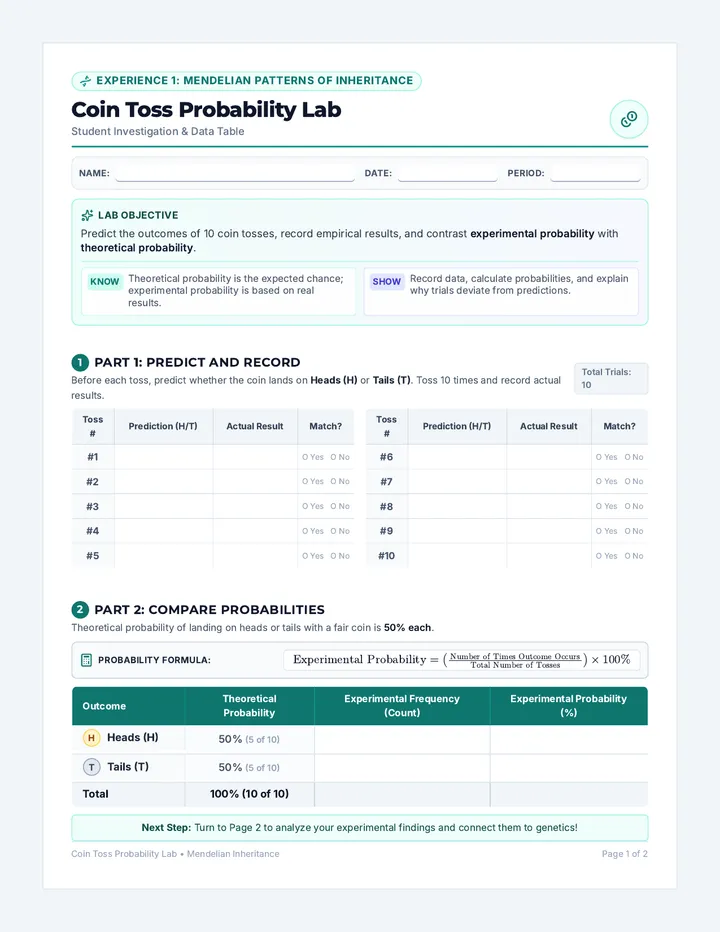
Independent Variable (IV)
The factor you change on purpose. (The "cause")
-
Dependent Variable (DV)
The factor that is measured. (The "effect")
-
Constants / Controls
Factors that must stay the same for a fair test.
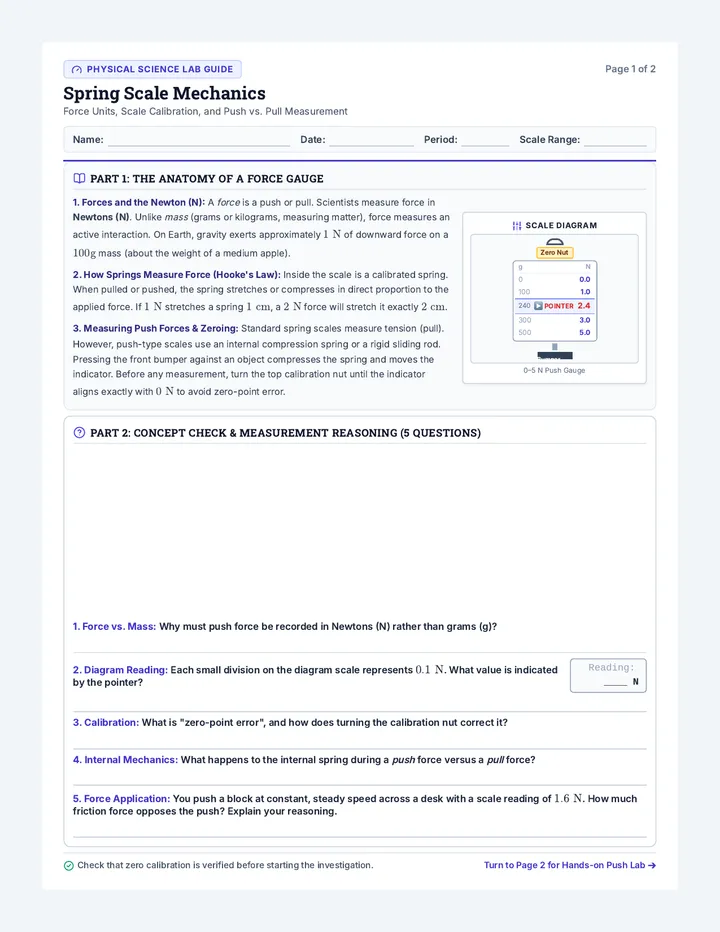
Measurement Tools
| Measure | Metric Unit | Tool |
|---|
| Mass | Grams (g) | Triple Beam Balance |
| Volume | Liters (L/mL) | Graduated Cylinder |
| Length | Meters (m/cm) | Metric Ruler |
| Temp | Celsius (°C) | Thermometer |
Mastering the Graph
DRY MIX
- Dependent
- Responding
- Y-axis
- Manipulated
- Independent
- X-axis
Final Check Checklist
- Title: "The Effect of [IV] on [DV]"
- Scale: Use even increments (e.g., 2, 4, 6... not 2, 5, 11...)
- Labels: Include units in parentheses (e.g., Time (sec))
- Accuracy: Use a pencil and ruler; plot points clearly.
- Inference: A logical conclusion based on your evidence.
Self-Check: Note one thing to remember about variables:
Science Blueprint
Part 2: Matter, Energy & Motion
Properties of Matter
Density D = M / V
Water density is 1.0 g/mL. Less = Float. More = Sink.
Physical
Looks change, but substance is the same (Phase changes).
Chemical
New substance is born (Burning, Rusting, Digestion).
Atomic Structure
- Protons: (+) Positive, in nucleus.
- Neutrons: (0) Neutral, in nucleus.
- Electrons: (-) Negative, orbit nucleus.
- Element ID = Number of Protons
Energy & Force
Kinetic vs. Potential
K: Energy of motion. P: Stored energy.
Newton's Laws
- Inertia: Resistance to change in motion.
- F = M × A: Relates force, mass, and accel.
- Pairs: Equal and opposite reaction forces.
Energy Forms
Mechanical Chemical Thermal Electrical Nuclear Light
Self-Check: Write the speed formula:
Science Blueprint
Part 3: The Living Environment
Cell Systems
- Nucleus: Controls cell; contains genetic info.
- Mitochondria: Produces energy (ATP).
- Cell Membrane: Controls transport in/out.
- Chloroplast: (Plants) Captures solar energy.
Levels of Organization
Cell Tissue Organ System Organism
Genetics
Reproduction: Asexual (1 parent, same DNA) vs. Sexual (2 parents, varied DNA).
Genotype
The Letters (Tt)
Phenotype
Appearance
Natural Selection:
Traits that aid survival are passed down to future generations.
Human Body
Digestive: Nutrients.
Respiratory: Gas exchange.
Circulatory: Transport.
Excretory: Waste removal.
Skeletal: Support.
Nervous: Control.
Ecology
- • Producers
- • Consumers
- • Decomposers
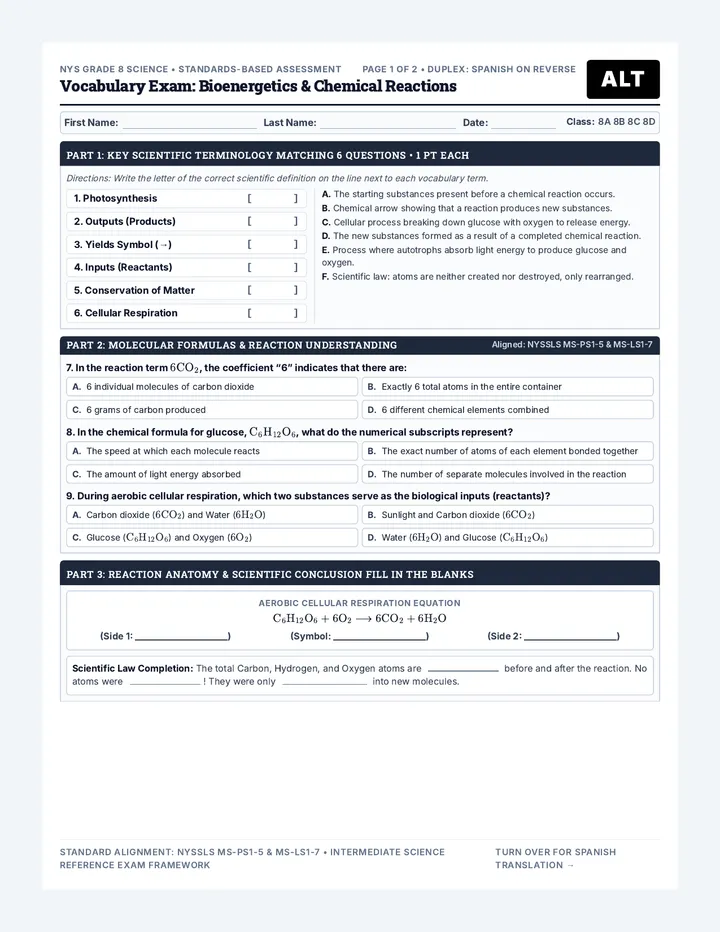
Photosynthesis
Sun + H2O + CO2 → Glucose + O2
Respiration
Glucose + O2 → Energy + H2O + CO2
Self-Check: Define homeostasis:
Science Blueprint
Part 4: Earth & Space Science
Earth Systems
The Rock Cycle
- Igneous: Cooling of magma.
- Sedimentary: Cemented sediments (fossils!).
- Metamorphic: Heat and pressure.
Plate Tectonics: Moved by convection currents in the mantle.
Astronomy
Seasons: Earth's 23.5° tilt + Revolution.
Day/Night: Earth's Rotation (24 hrs).
Moon Phases: Revolution around Earth (~1 month).
Tides: Caused by Moon's gravity.
Meteorology
High Pressure (H): Happy, dry, clear.
Low Pressure (L): Lousy, wet, cloudy.
Water Cycle: Evap → Condense → Precip.
Erosion
Weathering: Breaking down of rock.
Erosion: Moving sediments (Water/Wind/Ice).
Deposition: Dropping sediments.
Atmosphere
Gas layer
Hydrosphere
All water
Lithosphere
Solid crust
Self-Check: Name the force that drives plate tectonics: