Thanksgiving Retold Student Packet
Reading Comprehension
Name: Date:
The Story of Thanksgiving
How an Autumn Harvest Gathering Became a National Tradition
Informational Text
Key Words to Know
Harvest Crops gathered at the end of the growing season.
Wampanoag Native people living in New England for thousands of years.
Proclamation An official public announcement by a leader.
Tradition A custom or practice passed down through generations.
1 The Autumn Harvest of 1621
Long before European settlers arrived, Native American tribes celebrated harvest festivals each fall to give thanks for corn, beans, and squash. In the fall of 1621, English settlers called Pilgrims celebrated their first successful corn harvest in Plymouth (present-day Massachusetts). About ninety members of the local Wampanoag tribe joined the English colonists for a three-day feast. They shared wild fowl, deer (venison), and cornmeal. This historic gathering was a temporary alliance between two different cultures.
2 How It Became a National Holiday (1863)
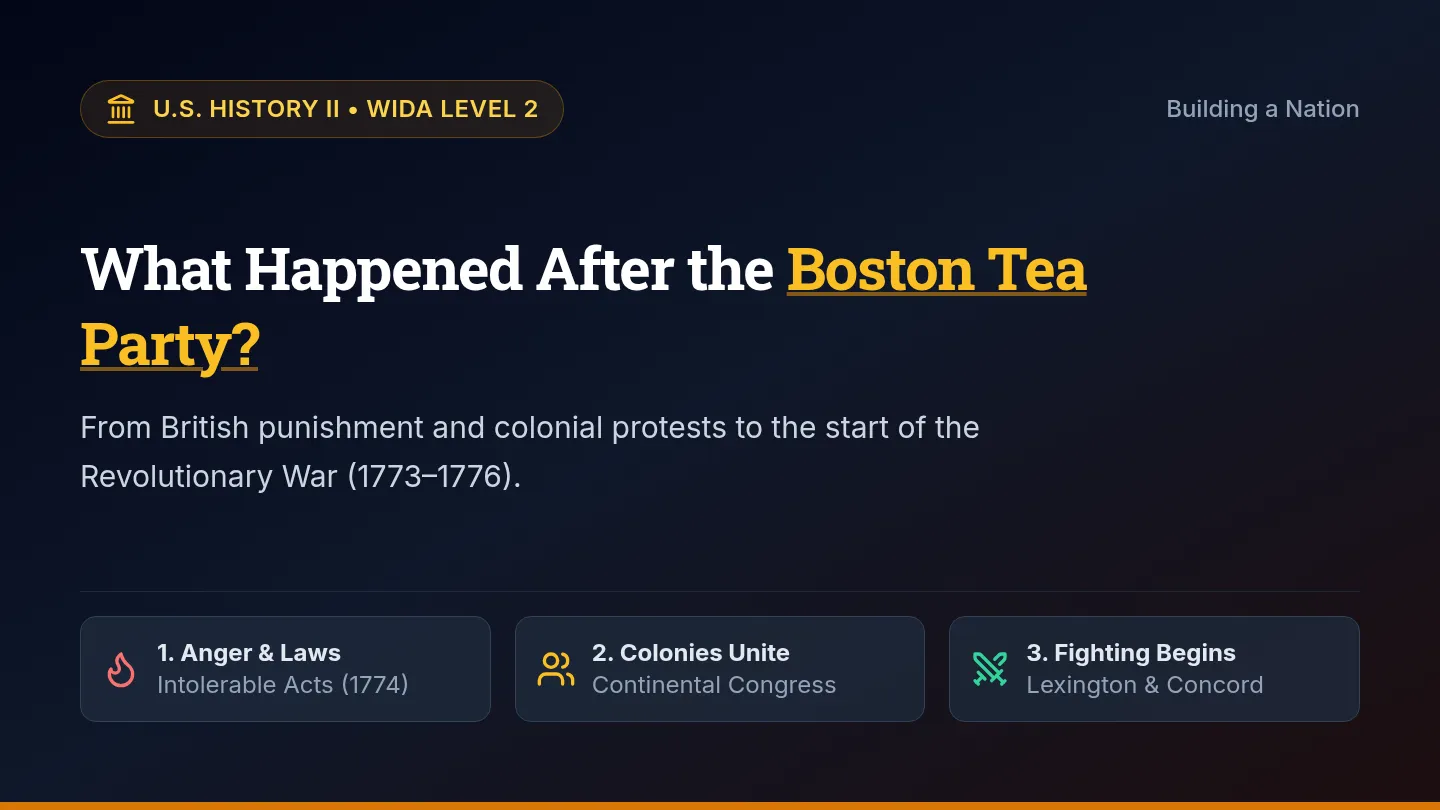
For over two hundred years, Thanksgiving was not a national holiday. Different states chose their own dates, and some did not celebrate at all. A magazine editor named Sarah Josepha Hale believed Thanksgiving could help unite people. She wrote letters to five different presidents over 36 years. Finally, in October 1863 during the American Civil War, President Abraham Lincoln issued an official proclamation declaring the last Thursday of November as a national day of Thanksgiving.
3 Changing Traditions Across Time
Over time, Thanksgiving traditions changed as the country grew. Foods like cranberry sauce, roasted turkey, stuffing, and pumpkin pie became holiday staples. In 1924, large department stores began sponsoring city parades with marching bands and giant balloons. In 1934, the first national Thanksgiving football game was broadcast on the radio. Today, millions of families travel to gather together, express gratitude, and help others in their communities by volunteering.
Traditions Timeline: From 1621 to Today
Visual Reference Guide
Year 1621
The 3-Day Harvest Feast
- Wampanoag & Pilgrims
- Deer, wild fowl, & cornmeal
- Celebrated crop survival
Year 1863
National Proclamation
- Sarah J. Hale's campaign
- Signed by Abraham Lincoln
- Created to unite the nation
Present Day
Modern Celebrations
- Family meal & gratitude
- Parades & football games
- Community volunteering
Comprehension Practice
Show what you learned from the informational passage.
Student Name:
A Word Bank Fill-In
Use each word from the bank once.
Wampanoag Harvest Lincoln Tradition
The Native American tribe that shared the 1621 feast was the tribe.
A gathering to collect crops at the end of a growing season is called a .
President Abraham declared Thanksgiving an official national holiday in 1863.
A custom or celebration passed down through families across generations is a .
B Multiple Choice
5. Why did Sarah Josepha Hale campaign for a national holiday?
A To sell holiday magazines
B To help unite the country during division
C To start a new football league
D To create a summer vacation
6. Which food was part of the original 1621 harvest meal?
A Pumpkin pie and whipped cream
B Canned cranberry sauce
C Deer (venison) and wild fowl
D Sweet potato casserole
C Tradition Matching: Past & Present
Write the matching letter (A-D) on each line.
7. 1621 Plymouth Gathering
8. Sarah Josepha Hale
9. 1924 Department Stores
10. Present Day Celebration
A. Wrote letters to 5 presidents to make it a holiday
B. Three-day harvest meal with venison and corn
C. Giving thanks, volunteer service, family travel
D. Introduced giant balloon parades in major cities
D Written Response
11. Name one way Thanksgiving celebrations today are different from the harvest feast in 1621.
Sentence Starter: One difference is that today people celebrate by...
12. Why do you think expressing gratitude (giving thanks) is still the central idea of Thanksgiving today?
Sentence Starter: Expressing gratitude remains important because...
Thanksgiving Retold Sub Guide
Substitute Teacher Guide & Answer Key
Thanksgiving Retold: Past and Present
Lesson Duration: 45–50 Mins
Pacing Plan
- 0–8 min: Review vocabulary & activate prior knowledge.
- 8–22 min: Read passage aloud or in partner pairs.
- 22–40 min: Students complete practice (Parts A–D).
- 40–45 min: Group review & collect packets.
Instructional Supports
- • Point students to the Key Words box and Timeline before reading.
- • Model Question 1 together on the board.
- • Allow paired reading for developing readers.
- • Remind students to use the sentence starters.
Fast Finisher Task
Students who finish early can flip to the back of page 2 and write 3 things they are personally grateful for, or sketch a side-by-side drawing of the 1621 feast vs. their family feast.
Full Packet Answer Key & Scoring Guidance
Part A: Word Bank (4 pts)
-
- Wampanoag
-
- Harvest
-
- Lincoln
-
- Tradition
Part B: Multiple Choice (2 pts)
- Correct: B
Sarah J. Hale wanted to heal national division during the Civil War.
- Correct: C
Deer (venison) and wild fowl were documented in 1621.
Part C: Matching (4 pts)
-
- B (Harvest meal with venison)
-
- A (Wrote to 5 presidents)
-
- D (Giant balloon parades)
-
- C (Gratitude, volunteering, travel)
Part D: Short Answer Exemplars & Rubric (4 pts total) 2 pts per question: 1 pt for accurate detail + 1 pt for complete sentence
Question 11 (Differences Then vs. Now):
Acceptable Answers: Modern traditions include parades, football games on TV, volunteer food drives, travel across long distances, or modern foods (pies, cranberry sauce) rather than wild game and cornmeal.
"One difference is that today people celebrate by watching football and giant balloon parades instead of hunting wild game."