Lenny.com
Explore
Create
ActivitiesNewMathEnglish Language ArtsScience & EngineeringSocial StudiesGlobal LanguagesHealth & Physical EducationSpecial EducationCounseling & Life SkillsArts & CreativityESL
Lenny.com
Lenny.com
Explore
Create
ActivitiesNewMathEnglish Language ArtsScience & EngineeringSocial StudiesGlobal LanguagesHealth & Physical EducationSpecial EducationCounseling & Life SkillsArts & CreativityESL
Lenny.com
Lenny.com

Solutions

Lenny for EducatorsLenny for SchoolsLenny for Districts

Product

ExploreSign inCreateSupportAbout

Resources

Getting startedMTSS Acceleration Program

Newsletters

School Funding Newsletter

© 2026 Lenny Learning Inc.

TermsPrivacyAccessibility
LinkedInInstagramX
Lenny
Social StudiesSocial Studies PracticesLocation WordsMapsOrder EventsChronology and CausationEvaluating SourcesHistorical ThinkingGeography, Humans, & the EnvironmentAmerican Symbols and LandmarksCitiesStatesState CapitalsRegions of the United StatesGeographic SkillsPhysical GeographyHuman GeographyRegional GeographyGeography of AfricaGeography of AsiaGeography of EuropeGeography of OceaniaGeography of the AmericasSociety and Environment of EuropeSociety and Environment of AsiaSociety and Environment of The AmericasSociety and Environment of the Middle EastSociety and Environment of AfricaHistoryPrehistoryComparing Ancient River CivilizationsAncient MesopotamiaAncient Egypt and KushAncient South AsiaEarly ChinaGreeceRome and the Byzantine EmpireAncient World HistoryNative Peoples of North AmericaNative Peoples of Mesoamerica and South AmericaAfrican EmpiresMedieval AsiaMedieval EuropeThe Silk RoadMedieval HistoryIslamic EmpiresWorld ReligionsRenaissance PeriodAge of ExplorationThe Thirteen ColoniesThe American RevolutionUS History Early RepublicFounding of the United StatesUS History AntebellumUS Civil WarReconstruction PeriodThe Gilded AgeUS ImperialismWorld ImperialismWorld War IUS History 1920sGreat DepressionWorld War IIThe Cold WarUS History 1950-60sUS History 1960s-70sWorld History 20th CenturyContemporary US HistoryContemporary World HistoryHolidaysCivics and GovernmentCitizenshipGovernment FoundationsThe ConstitutionUS ConstitutionExecutive BranchLegislative BranchJudicial BranchState and LocalPolitical ParticipationPublic PolicyPolitical SystemsPower and AuthoritySocial MovementsDefining DevianceTheories of DevianceCrime and Criminal JusticeEconomicsBasic Economic PrinciplesSupply and DemandWhat is MoneyEconomic FundamentalsMicroeconomicsMacroeconomicsBanking and FinanceEconomic SystemsGlobal EconomicsCorporations and PowerThe Changing WorkplaceUnemployment and LaborClass and InequalitySocial MobilityGlobal InequalityPsychologyHistory of PsychologyPsychology as a ScienceBrain and Nervous SystemNeuroscience and BehaviorGenetics and BehaviorSleep and ConsciousnessSensory ProcessesPerceptual OrganizationClassical ConditioningOperant ConditioningObservational LearningCognitive LearningMemory ProcessesThinking and Problem SolvingLanguage and CognitionTheories of MotivationStress and CopingPrenatal and Infant DevelopmentChildhood DevelopmentAdolescent DevelopmentAdulthood and AgingSelf and IdentitySocial CognitionSocial InfluenceAttraction and RelationshipsGroup BehaviorPrejudice and DiscriminationAnxiety and Mood DisordersClinical PsychologyForensic PsychologyPhilosophy & EthicsIntroduction to PhilosophyMajor Philosophers & IdeasMind and Body ProblemFree Will vs DeterminismEthics & MoralityReligion & PhilosophyPolitical Philosophy

Caesar Crossing Reading Passage

A 3rd-grade reading passage and comprehension activity based on Chapter 10 ("Julius Caesar: Crossing the Rubicon") of the Roman Empire unit. Features a 124-word, three-paragraph text alongside vocabulary callouts and text-dependent questions.

LHLucy Hellerman

Caesar Crossing Reading Passage

A 3rd-grade reading passage and comprehension activity based on Chapter 10 ("Julius Caesar: Crossing the Rubicon") of the Roman Empire unit. Features a 124-word, three-paragraph text alongside vocabulary callouts and text-dependent questions.

LHLucy Hellerman

You might also like

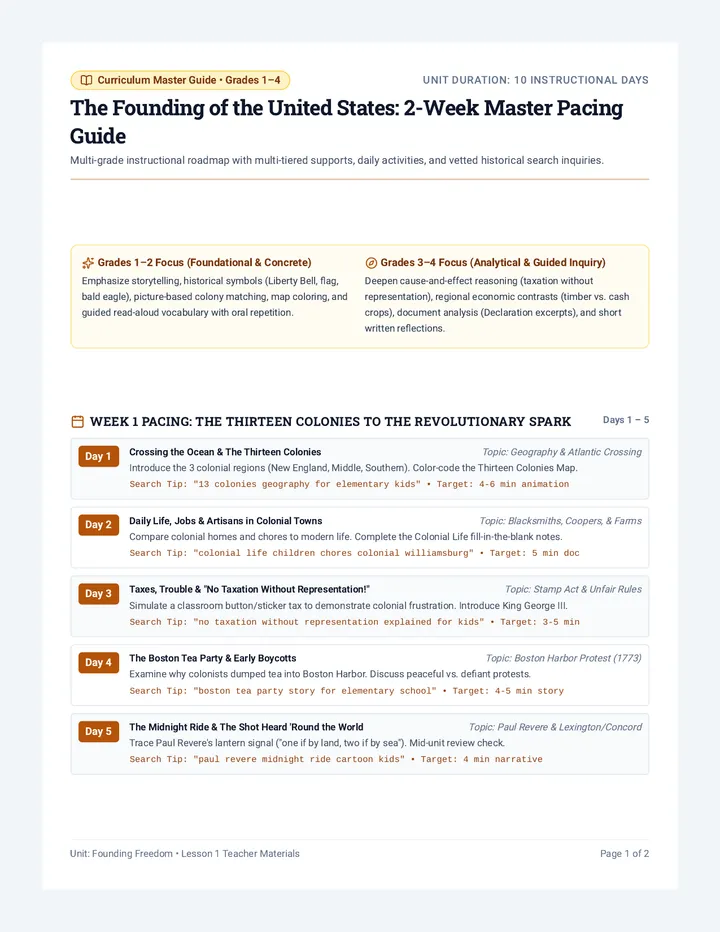
Founding America Teacher Guide

Founding Freedom

A comprehensive two-week social studies unit for elementary students (grades 1-4) exploring the founding of the United States. Covers the Thirteen Colonies, colonial life, the road to independence, key historical figures, the Constitution, and national symbols.

AR

Alexander Rhea

5
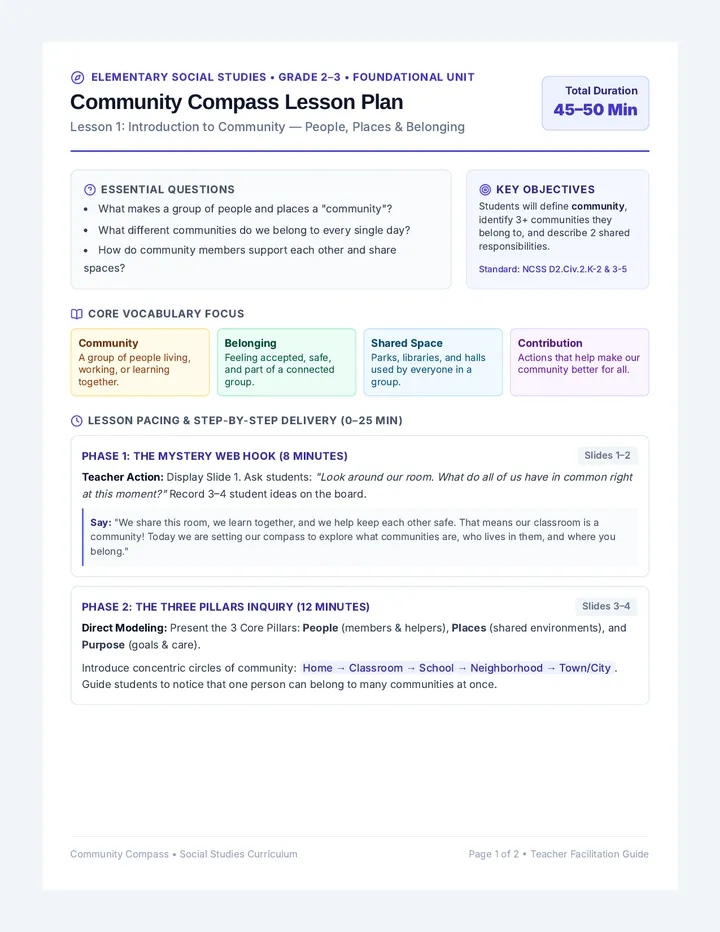
Community Compass Lesson Plan

Community Compass

A foundational social studies lesson introducing students to what a community is, how members help each other, and the different communities we belong to. Students explore shared places, roles, and responsibilities through guided inquiry, visual mapping, and collaborative discussion.

Lenny Avatar
Lenny
4
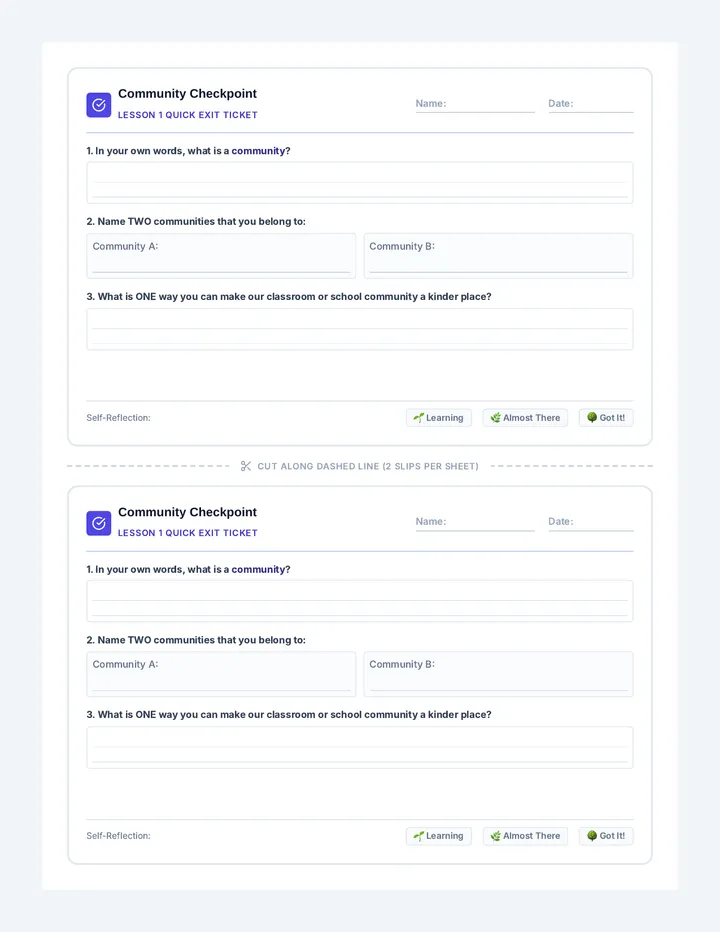
Community Checkpoint Exit Ticket

Community Checkpoint Exit Ticket

A 1-page print-friendly formative assessment exit ticket formatted as two identical half-sheet slips with a clean cut line. Students define community in their own words, identify their personal communities, and write one actionable contribution.

Lenny Avatar
Lenny
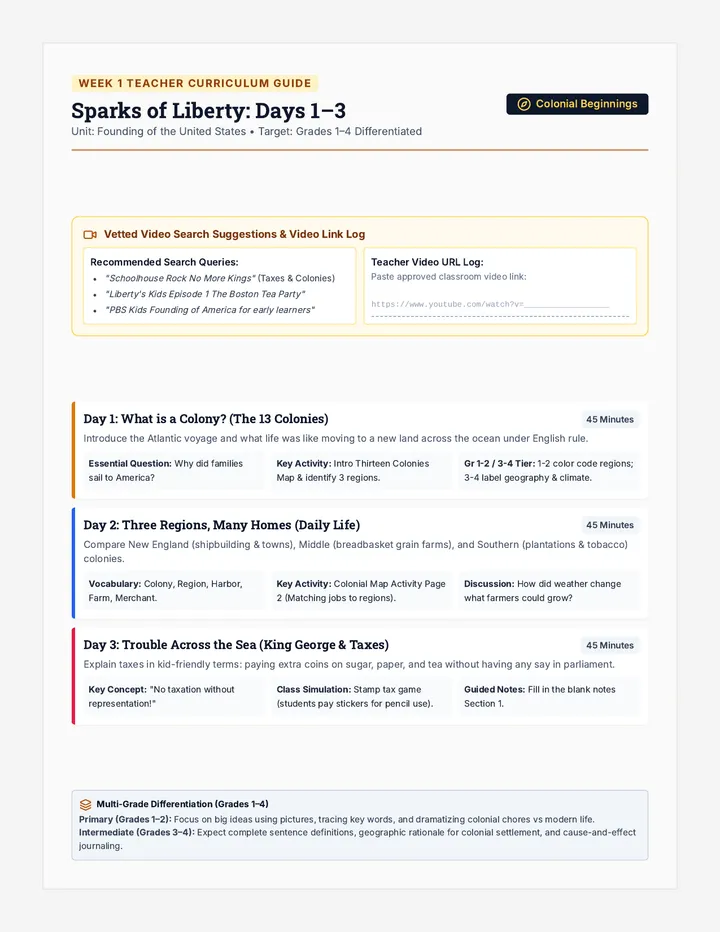
Sparks Pacing Guide

Founding Freedom

A two-week, comprehensive elementary history unit exploring the birth of the United States for 1st through 4th grade learners. Students discover the thirteen colonies, the causes of the revolution, the Declaration of Independence, the Constitution, and enduring American symbols through interactive maps, guided notes, vocabulary cards, and vetted media guides.

Lenny Avatar
Lenny
8
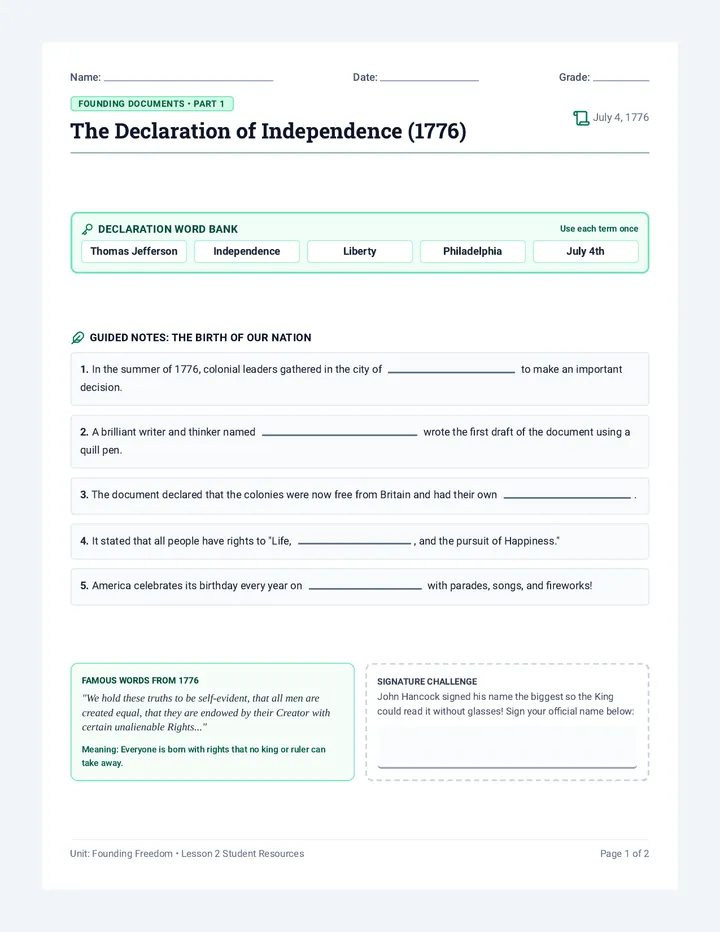
Freedom Documents Guided Notes

Birth of a Nation

A week-long investigation of the Declaration of Independence, key Revolutionary leaders, the Constitutional Convention, and the Bill of Rights. Students explore foundational democratic ideas and national symbols.

AR

Alexander Rhea

2
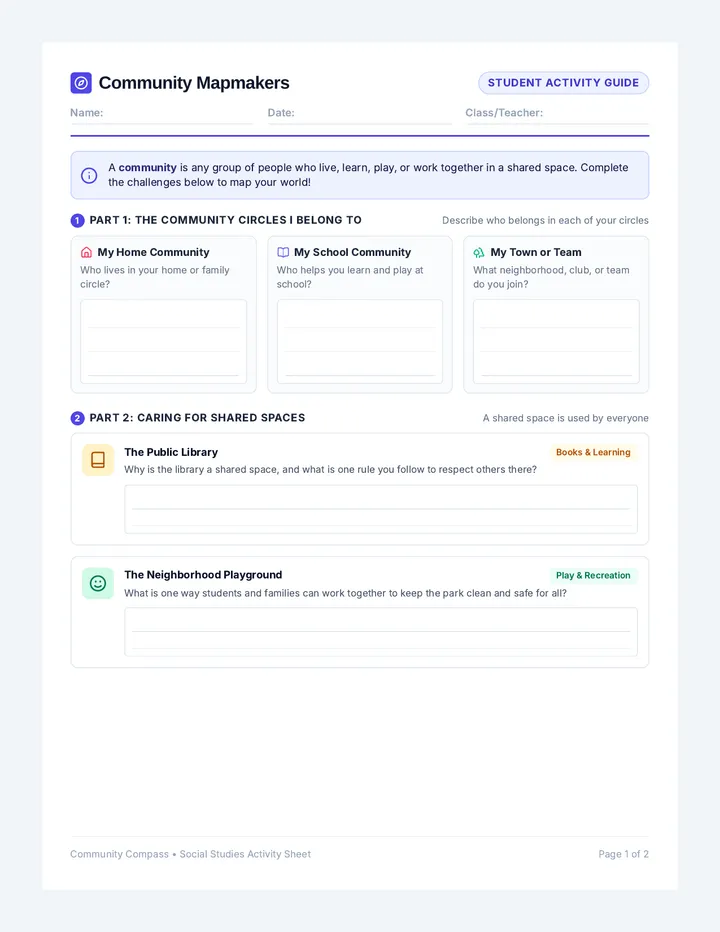
Community Mapmakers Worksheet

Community Mapmakers Worksheet

A 2-page print-ready student activity worksheet. Students map out the overlapping communities they belong to, analyze shared community spaces and rules, design a new community gathering blueprint, and solve real-world community citizenship scenarios.

Lenny Avatar
Lenny
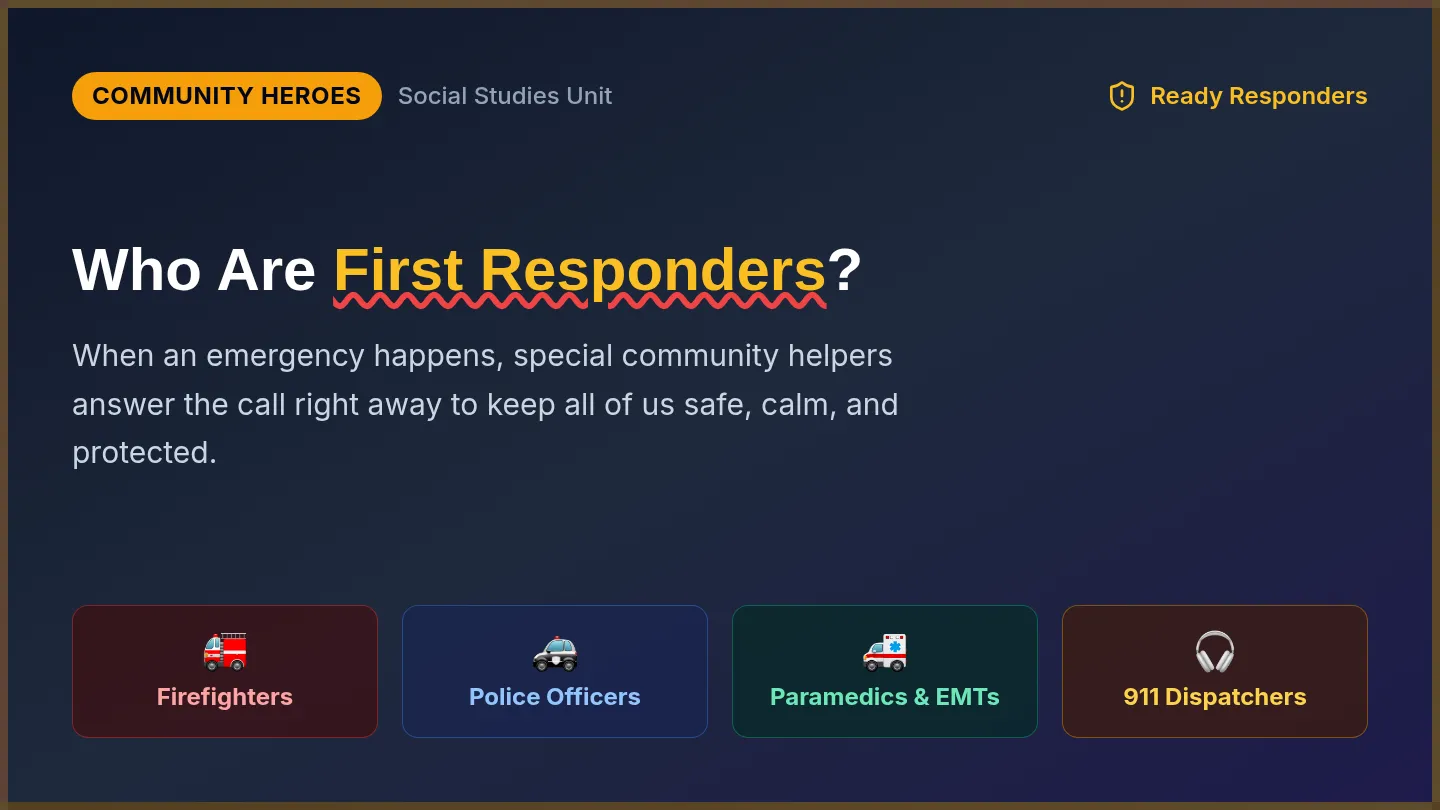
Duty Call Slides

Ready Responders

An early elementary social studies sequence exploring community first responders, their emergency vehicles and tools, workplace stations, and crucial safety rules. Students build neighborhood awareness, emergency preparedness, and civic gratitude.

IM

Isabella Montiel

6
Founding America Teacher Guide

Colony to Revolution

A week-long exploration of the thirteen original colonies, colonial life, and the rising tensions that ignited the American Revolution. Students discover regional geography, analyze key protest events, and build foundational historical vocabulary.

AR

Alexander Rhea

3
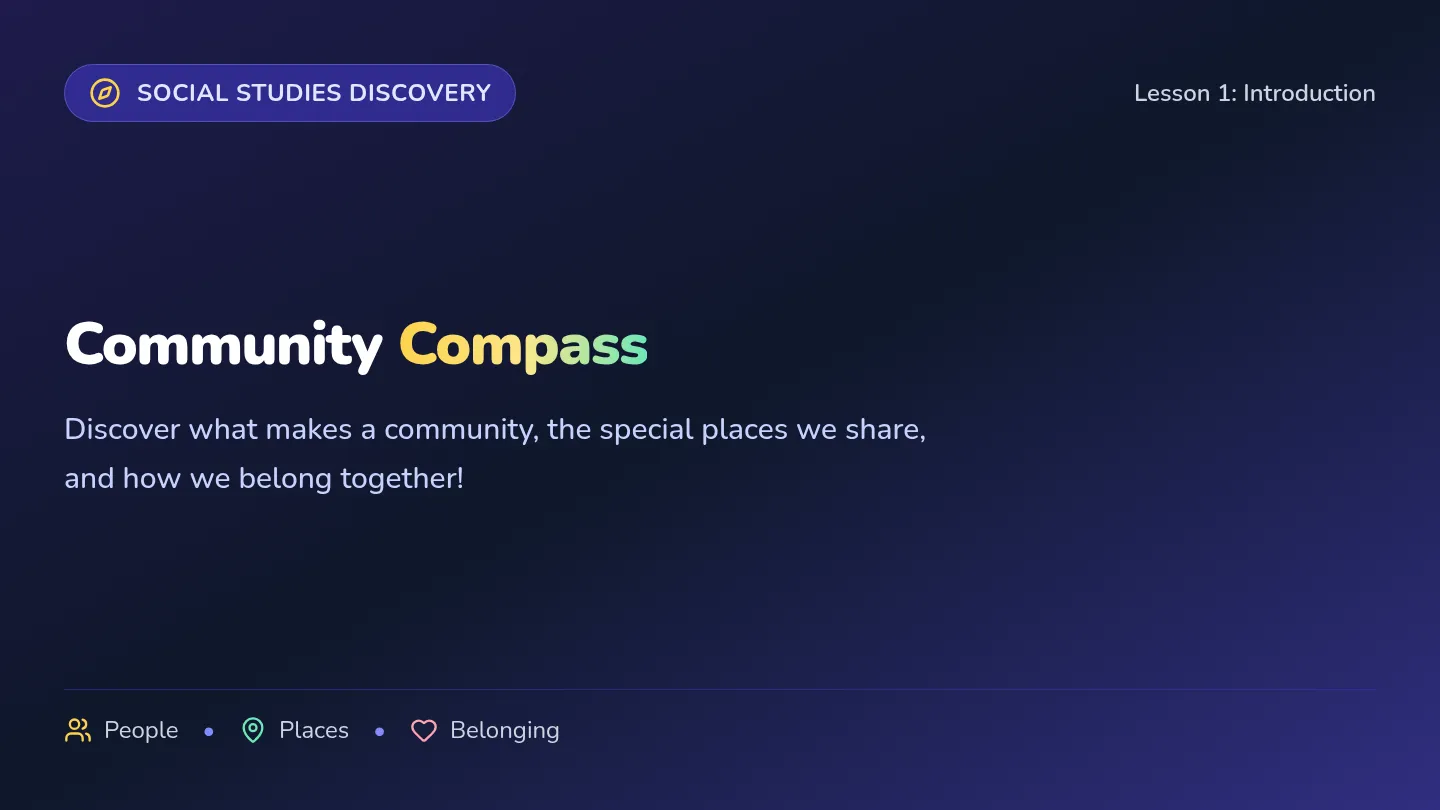
Community Compass Slides

Community Compass Slides

An engaging 7-slide presentation introducing what makes a community, the three core pillars (people, places, purpose), overlapping communities, and how students can be helpful members. Designed with high-contrast visuals and clean pedagogical pacing.

Lenny Avatar
Lenny
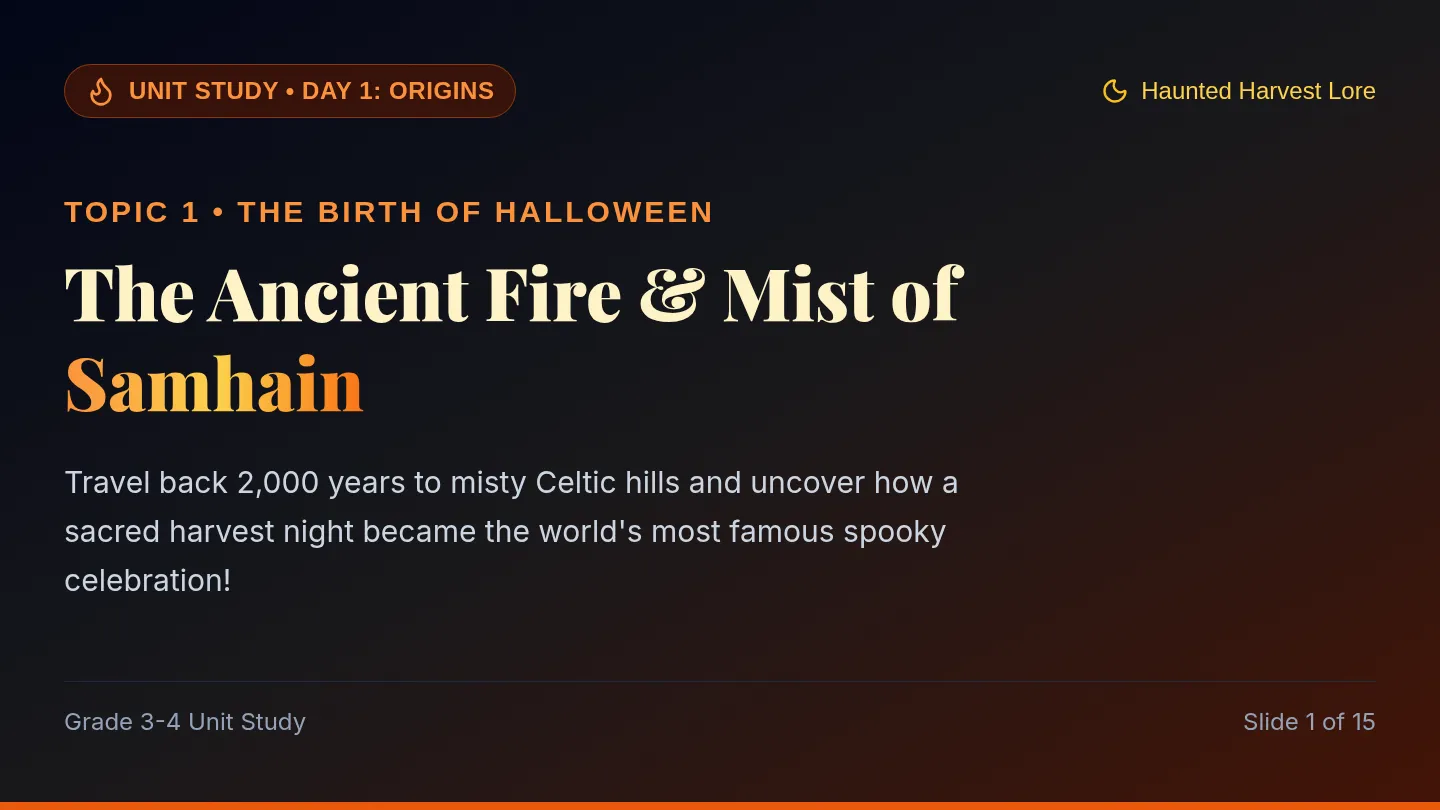
Samhain Origins Slides

Haunted Harvest Lore

A comprehensive 4-day spooky history and cultural unit exploring the ancient roots, costuming traditions, trick-or-treating customs, and modern evolution of Halloween.

AJ

Amber Jones

8
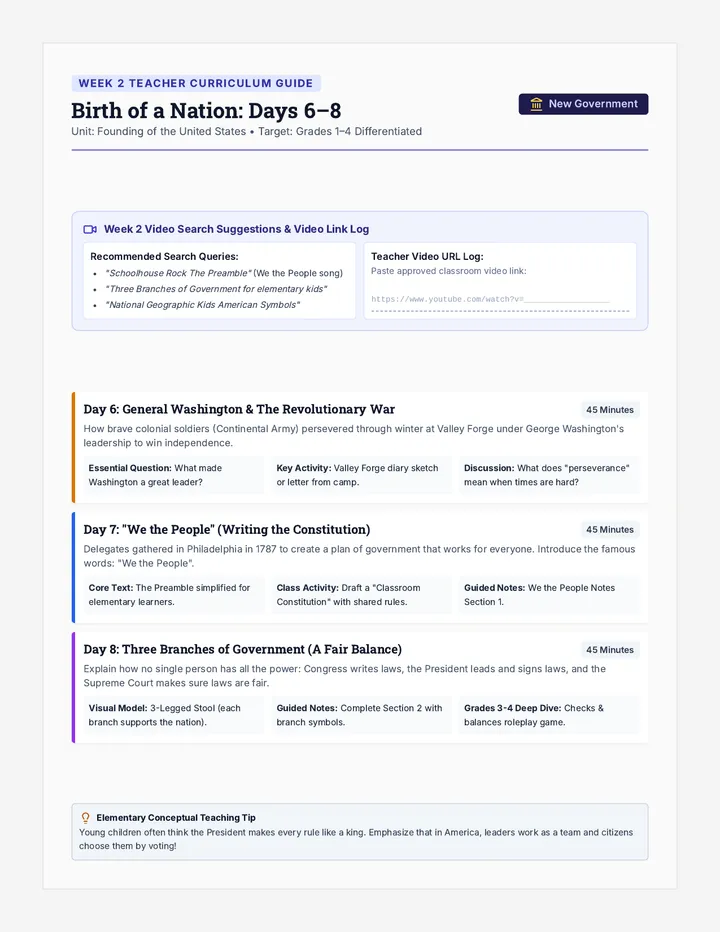
Nation Builders Pacing Guide

Birth of a Nation

Week 2 guides 1st through 4th graders through the birth of the new government, from George Washington's leadership to drafting the Constitution, protecting liberties in the Bill of Rights, and celebrating patriotic symbols. Features guided notes, symbol discovery activities, an assessment quest, and a 5-day pacing guide.

Lenny Avatar
Lenny
4
Community Compass Lesson Plan

Community Compass Lesson Plan

A comprehensive 2-page teacher lesson plan and facilitation guide for introducing the concept of community. Features essential questions, timed instructional pacing, guided discussion scripts, scaffolding strategies, and assessment rubrics.

Lenny Avatar
Lenny