Colony Trail Slides 3rd Grade History & Life Skills • Day 1
Unit: Colony Crew
Founders & Footprints
Journey to the 13 Colonies
Discover who crossed the wide Atlantic Ocean, why they sailed into the unknown, and the life skills they used to build new communities together!
1
Why They Came
2
New England Life
3
Teamwork Skills
Why Sail Across the Ocean?
Founding Motives
Religious Freedom
Groups like the Pilgrims and Puritans wanted to worship peacefully in their own way without kings telling them how to pray.
Example: Massachusetts Colony
Land & Opportunity
In Europe, regular families could not own land. In North America, they could farm rich soil and build a better future for their children.
Example: Virginia & Carolinas
Trade & Second Chance
Traders came to sell timber and furs. Others, like settlers in Georgia, were given a fresh start away from European debts and prisons.
Example: New York & Georgia
Life Skill Connection: People took brave risks and made planful decisions to find safety and happiness!
Meet New England
MA, NH, CT, RI
The Natural Environment
Rocky Soil & Cold Winters
New England had thin, rocky dirt and long, freezing snowy winters. Large-scale farming was impossible, so families grew only what they ate.
⭐ Solution: Settlers turned to the thick forests and cold Atlantic ocean!
How They Earned a Living
Shipbuilding & Fishing
Colonies like Massachusetts used tall pine trees for ship masts and caught codfish and whales to feed towns and trade with other nations.
⭐ Solution: Harbor towns became busy centers of commerce and skilled carpenters!
Did You Know? The ocean gave New England settlers both food and their main highway! Adaptation in Action
Colonial Life Skills: Surviving Together
Skills for Life
Cooperation
Settlers held barn-raisings where entire towns gathered to construct neighbors' homes and storage buildings in a single day.
Town Meetings
Citizens met in meetinghouses to discuss road repairs, schools, and safety rules. Everyone practiced peaceful communication.
Resilience (Grit)
When crops froze or supplies ran low, settlers did not quit. They solved problems creatively and helped one another pull through.
Life Lesson: No colonial family could survive alone—community cooperation made survival possible!
Day 1 Note-Taking & Reflection
Grab Your Notes!
What We Learned Today
✓ Settlers left Europe seeking religious freedom and land.
✓ New England colonies relied on timber, fishing, and shipbuilding.
✓ Early Americans practiced cooperation and problem solving daily.
Think & Share Prompt
"If you were traveling on a wooden ship to start a new colony, what life skill would be most helpful to your team?"
✍️ Complete your Day 1 Guided Notes worksheet now!
Coming Tomorrow: The Middle "Breadbasket" Colonies & Skilled Trades! Colony Crew • Day 1
Founders Journey Notes Founders and Footprints Notes
Day 1 • 3rd Grade History & Life Skills
Unit: Colony Crew
Name:
Date:
Word Bank (Use each word once)
Atlantic freedom rocky shipbuilding cooperation thirteen
1 Part 1: Crossing the Ocean
1. Settlers traveled across the wide Ocean to settle along the eastern coast of North America.
2. Over time, England established separate American colonies.
3. Many groups, like the Pilgrims and Puritans, left Europe in search of religious so they could worship peacefully.
2 Part 2: New England Environment & Industry
4. In New England, farming was hard because of long freezing winters and thin, soil.
5. Settlers used thick pine forests and deep ocean waters for fishing and to trade goods by sea.
3 Part 3: Daily Life Skills
6. To build cabins and harvest food, neighbors practiced by helping each other at town barn-raisings.
7. Colonists gathered in town halls to practice respectful listening and make fair community rules.
Life Skill Reflection: Teamwork in My Life
Colonial families survived by helping one another every day. Write 1 or 2 sentences describing one way you can show cooperation with your classmates or family today:
Colony Crew • Day 1 Fill-in-the-Blank Notes Keep this sheet safe in your History Folder! 📂
Daily Trade Slides 3rd Grade History & Life Skills • Day 2
Unit: Colony Crew
Farms, Markets & Skilled Hands
Bread, Crops, and Trades
Travel south from rocky New England to meet grain farmers, blacksmiths, and traders. Learn how goods were made, traded, and shared!
1
The Breadbasket
2
Southern Farming
3
Artisan Trades
The Middle Colonies: "The Breadbasket"
NY, PA, NJ, DE
Rich Soil & Fair Weather
Grains for Everyone
The Middle Colonies had deep, fertile soil and longer growing seasons. Farmers produced huge fields of wheat, barley, rye, and oats.
🥖 Nickname: Known as the "Breadbasket" because their flour fed all thirteen colonies!
Mills & Busy Rivers
Gristmills & Commerce
Farmers hauled grain to water-powered gristmills where giant millstones ground kernels into fine flour. Philadelphia and New York became busy trading ports.
🚢 Trade Hub: Shipped flour barrels to Europe and the Caribbean islands!
People from Germany, Ireland, and the Netherlands lived together and shared farming techniques!
The Southern Colonies: Warm & Fertile
MD, VA, NC, SC, GA
Long, Warm Growing Seasons
Warm sunshine and plentiful rain allowed southern farmers to plant huge agricultural fields that stayed green for almost eight months each year.
What is a "Cash Crop"?
Instead of just feeding one family, crops like tobacco, rice, and indigo (blue dye plant) were grown in large amounts specifically to sell for money!
Southern rivers were so wide that cargo ships sailed right up to farm docks to load barrels! Geography Matters
Skilled Hands: Colonial Trades & Barter
Life Skills
The Blacksmith
Heated iron in roaring fires to shape horseshoe nails, axes, plow blades, and cooking pots for townspeople.
The Cooper
Crafted wooden barrels to store and ship salted meat, apples, flour, and cider safely across ocean journeys.
The Barter System
Coins were scarce! A farmer would trade sacks of grain for a pair of sturdy shoes from the cobbler.
Life Skill Connection: Learning a valuable craft and trading fairly built trust across the community!
Interdependence: We Need Each Other!
Big Idea
How the Colonies Connected
➡️ New England built ships and caught fish.
➡️ Middle colonies baked flour and grew grain.
➡️ Southern colonies grew tobacco, rice, and dyes.
Day 2 Activity
"Fill in your Day 2 Guided Notes sheet and complete the Trade Matchup challenge!"
💡 Tomorrow: When King George placed unfair taxes, the 13 colonies joined hands!
Unit: Colony Crew • Day 2 Coming Tomorrow: The Road to the Revolutionary War!
Farms and Trades Notes Farms and Fast Trade Notes
Day 2 • 3rd Grade History & Life Skills
Unit: Colony Crew
Name:
Date:
Word Bank (Use each word once)
Breadbasket cash crop wheat blacksmith barter interdependence
1 Part 1: The Middle Colonies
1. The Middle Colonies were known as the Colonies because they grew abundant grains to make flour.
2. Farmers harvested huge fields of rye, oats, and to feed people in all three colonial regions.
2 Part 2: The Southern Colonies
3. The Southern Colonies had warm sunshine and long growing seasons ideal for growing a such as tobacco, rice, and indigo to sell for profit.
4. Large farms often sat right along wide rivers so ships could load cargo barrels easily.
3 Part 3: Trades and Bartering
5. An artisan called a used hot iron, hammers, and an anvil to make nails, horseshoe shoes, and farm tools.
6. When coins were hard to find, colonists used the system to exchange goods and services directly with neighbors.
7. When different regions depend on one another for things they cannot make themselves, it is called .
Life Skill Reflection: Fair Trades in Everyday Life
Colonial bartering only worked when both people felt the trade was fair and honest. If you traded a book with a friend, how would you make sure both of you were happy with the deal?
Colony Crew • Day 2 Fill-in-the-Blank Notes Keep this sheet safe in your History Folder! 📂
Revolution Road Slides 3rd Grade History & Life Skills • Day 3
Unit: Colony Crew
Uniting for Liberty
Thirteen Colonies, One Voice
Discover how thirteen very different colonies learned to communicate, support each other, and stand up against unfair British laws to shape the Revolutionary War!
1
Trouble with the King
2
Joining Hands
3
Revolution Begins
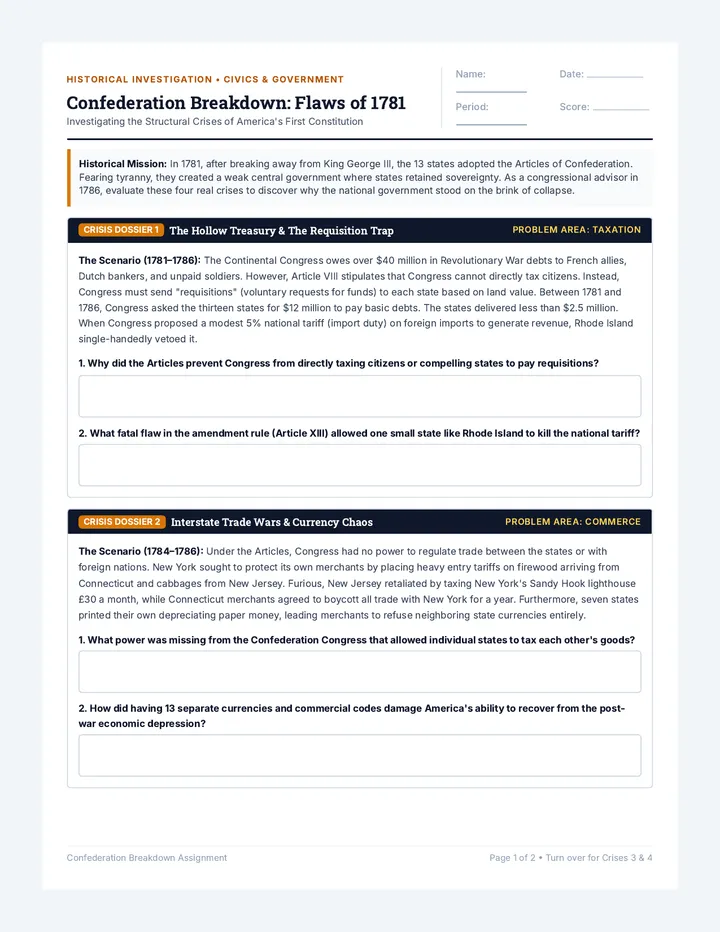
Trouble Across the Ocean: Unfair Taxes
King George III
Taxes Without a Say
The Stamp Act & Tea Tax
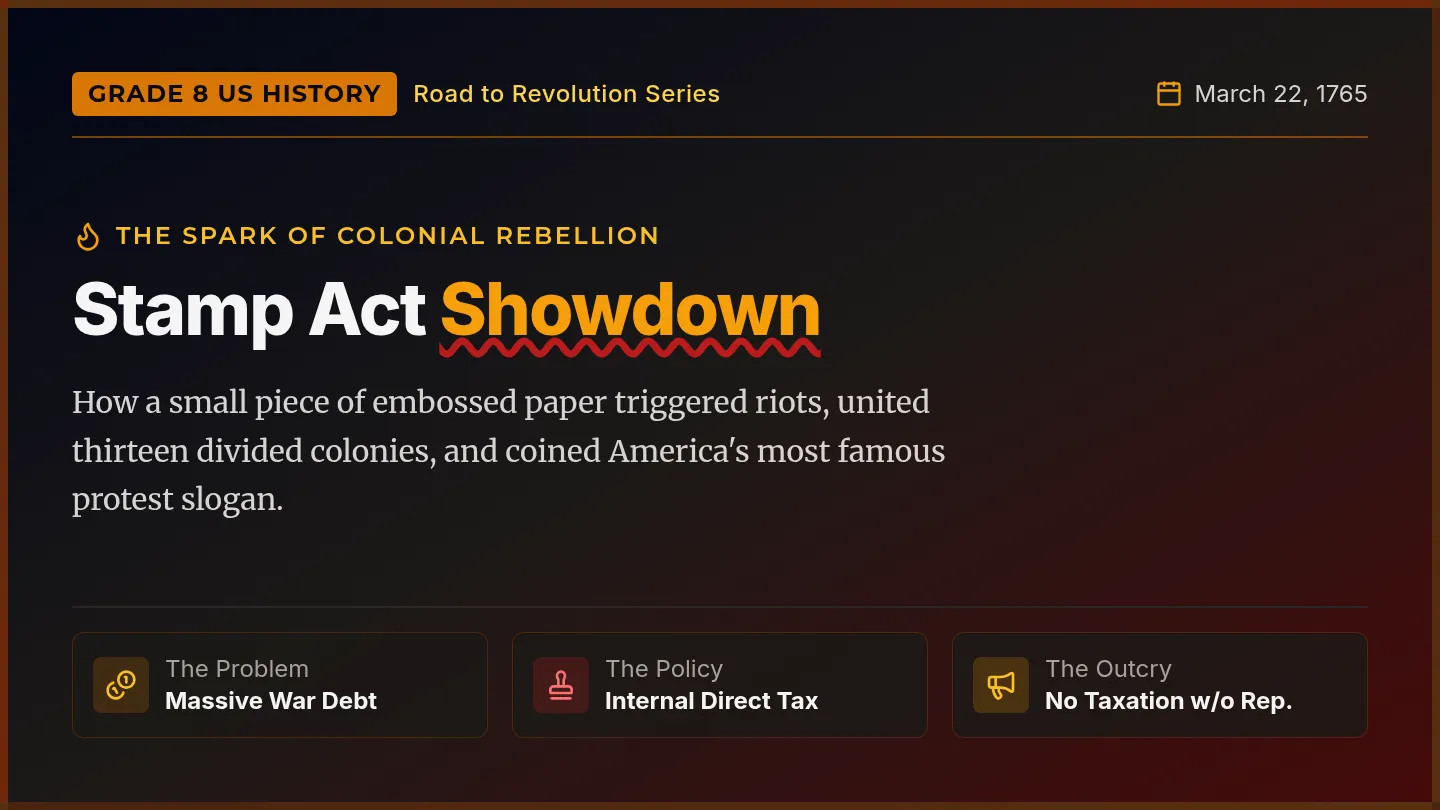
The British government spent lots of money fighting wars. To pay its debts, it forced colonists to pay extra fees on newspapers, tea, sugar, and paper!
Colonial Frustration
"No Taxation Without Representation!"
Colonists felt this was unfair because they had zero leaders in the British Parliament to vote or speak up for their rights.
Life Skill Connection: When rules feel unfair, healthy leaders speak up with clear words and peaceful unity!
How the Colonies Learned Teamwork
From 13 to 1
Committees of Letters
Riders carried letters on horseback from Boston to Virginia so all 13 colonies knew what was happening.
Boycotting British Goods
Together, families agreed not to buy British tea or cloth. Women spun their own thread to show unity.
The First Congress
Colony leaders met in Philadelphia in 1774 to write a peaceful petition asking the King for fair treatment.
Benjamin Franklin's famous motto: "Join, or Die!" Teamwork was their greatest strength. Unity is Strength
The Spark of the Revolutionary War
1775-1776
Lexington and Concord (1775)
The "Shot Heard 'Round the World"
In Massachusetts, local colonial farmers (called Minutemen) stood their ground when British soldiers marched to seize supplies. The Revolutionary War had begun!
🔔 The 13 colonies sent soldiers to form one Continental Army under George Washington!
Declaration of Independence (1776)
A New Nation is Born
Leaders signed a historic document stating all people have rights to "Life, Liberty, and the pursuit of Happiness." The thirteen colonies officially became the United States of America!
⭐ Working together turned 13 small colonies into a free country!
Life Skill Takeaway: Big challenges can feel overwhelming, but cooperating as a team creates lasting success!
Ready for the Colony Crew Quiz!
Final Assessment
1
Day 1 Review
Why colonists sailed across the ocean & how New Englanders built ships and cooperated.
2
Day 2 Review
Middle "Breadbasket" wheat, Southern cash crops, skilled artisans, and fair bartering.
3
Day 3 Review
Unfair taxes, colonial teamwork, and how standing together sparked the Revolutionary War.
Next Step: Complete your 12-Question Mini Quiz!
You've Got This! 🌟
Colonial History Quiz Thirteen Colonies History & Life Skills Quiz
Unit: Colony Crew • 3rd Grade Assessment (Questions 1–8 of 12)
Total Score: _____ / 12
Name:
Date:
A
Part 1: Multiple Choice (Circle the best answer)
1. Why did groups like the Pilgrims and Puritans travel across the Atlantic Ocean?
A) To search for gold buried in high mountains
B) To practice their religion freely without a king's control
C) To build large factories powered by steam
2. Why did New England settlers focus on shipbuilding and fishing instead of large farming?
A) The soil was thin and rocky, and winters were very cold
B) They did not know how to plant seeds
C) King George ordered them never to eat vegetables
3. Why were the Middle Colonies nicknamed the "Breadbasket" Colonies?
A) They wove beautiful baskets made of pine needles
B) They grew grains like wheat and rye that were ground into flour
C) They only baked bread once every seven years
4. What was a major "cash crop" grown in the warm Southern Colonies to sell for money?
A) Pine trees and maple syrup
B) Whales and lobsters
C) Tobacco, rice, and indigo
5. What does the term "interdependence" mean?
A) People and regions depending on each other for goods and help
B) Living alone on an island without ever talking to neighbors
C) Refusing to trade food with anyone else
B
Part 2: Colonial Trades Matchup (Write the matching letter)
6. Blacksmith
7. Cooper
8. Barter
A. Exchanging goods without using metal coins
B. Crafted wooden barrels to transport apples, flour, and fish
C. Heated iron to forge horseshoes, tools, and nails
Page 1 of 2 Turn page over to continue (Questions 9–12) ➔
Thirteen Colonies History & Life Skills Quiz
Unit: Colony Crew • Continued (Questions 9–12 of 12)
Page 2 of 2
Student Name:
C
Part 3: The Road to the Revolutionary War (Fill in the Blank)
Word Box: taxes boycott united
9. Colonists became angry with King George because Britain placed unfair on tea, paper, and glass without giving colonists a voice in government.
10. To show their peaceful disagreement, colonial families decided to British goods by refusing to buy them.
11. Even though the thirteen colonies had different climates and jobs, they together as one team to protect their freedom during the Revolutionary War.
D
Part 4: Life Skills in Action (Short Answer)
12. The thirteen colonies were very different from each other, but they learned to work together like a sports team or classroom team. Describe one reason why teamwork was important to the colonies, and give one example of how teamwork helps you in third grade:
How teamwork helped the 13 colonies:
How teamwork helps you in school or at home:
Review Tip: Check that you have answered all 12 questions before handing your quiz to your teacher!
Colony Crew • Unit Assessment Great job exploring our nation's history! ⭐
Colonial Quiz Answer Key Colonial History Quiz Answer Key
Teacher Reference
Unit: Colony Crew • 3rd Grade Assessment Guide (12 Points Total)
Grade Scale: 12 Pts Total
Learning Objectives Checked: Reasons for settling (Q1), New England economy (Q2), Middle colonies (Q3), Southern cash crops (Q4), Interdependence (Q5), Trades (Q6-8), Road to Revolution (Q9-11), Life Skills & Unity (Q12).
A Part 1: Multiple Choice Answers (1 Pt Each)
1. B Pilgrims and Puritans sought religious freedom to worship without government control.
1 pt
2. A Thin, rocky soil and severe winters led settlers to timber, shipbuilding, and fishing.
1 pt
3. B The Middle Colonies grew abundant wheat, rye, and oats that were ground into flour.
1 pt
4. C Cash crops grown for cash profit were tobacco, rice, and indigo.
1 pt
5. A Interdependence is relying on one another for mutual survival and trade.
1 pt
B Part 2: Matching Answers (1 Pt Each)
6. C — Blacksmith: Heated iron to forge tools/horseshoes.
7. B — Cooper: Built wooden barrels for transport.
8. A — Barter: Direct exchange of goods without coins.
C Part 3: Fill in the Blank Answers (1 Pt Each)
9. taxes — King George and Parliament taxed goods (Stamp Act, Tea Act) without representation.
10. boycott — Refusing to buy British items to protest peacefully.
11. united (or united together ) — The colonies joined together as one team in the war.
D Part 4: Short Answer Rubric & Exemplars (Question 12 — 1 Pt)
Scoring Criteria (1 Point Total):
0.5 pt: Student accurately connects teamwork to colonial success (e.g., sharing food, forming one army, writing letters).0.5 pt: Student provides a reasonable third-grade life connection (e.g., cleaning up the classroom, sports, group projects).
Sample Exemplar: "Teamwork helped the colonies because no single colony had everything it needed or could win the war alone. In third grade, teamwork helps when we work in groups to build science projects or clean up our classroom together."
Colony Crew • Teacher Assessment Key Differentiated Support: Accept oral responses or scribe support for emerging writers.