History Detectives Workbook HISTORY DETECTIVES
Do Now (U1L01)
Name:
Date:
Team:
Getting to Know You
Answer the questions in full sentences so your teacher can get to know you as a history detective!
What is your favorite book? What do you like about it?
Have you ever traveled outside of your city? If not, where do you want to visit and why?
[ VINTAGE CLASSROOM PHOTO ]
If you could have lunch with one famous person, who would it be? Why?
Have you ever taken a history class before?
YES
NO
What most excites you about studying history this year?
What is one fact you want your teacher to know about you?
PAGE 1 © 2026 UNCOMMON SCHOOLS, INC.
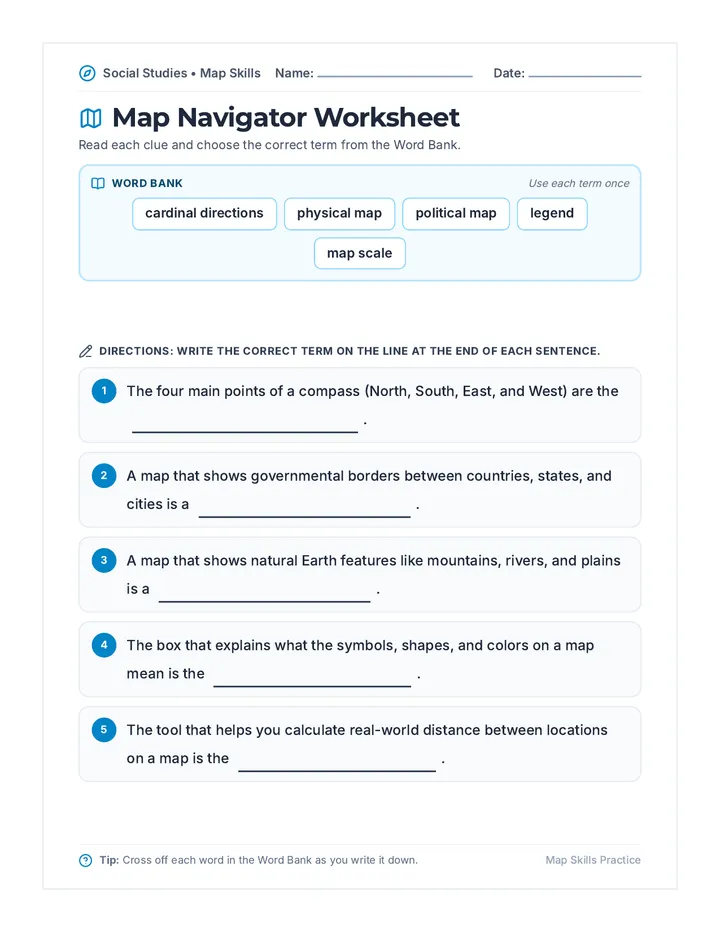
Map Minute
Geography is the study of where things are in the world. Help us find the continents and oceans!
B
E
D
F
G
C
A
3
2
2
1
4
5
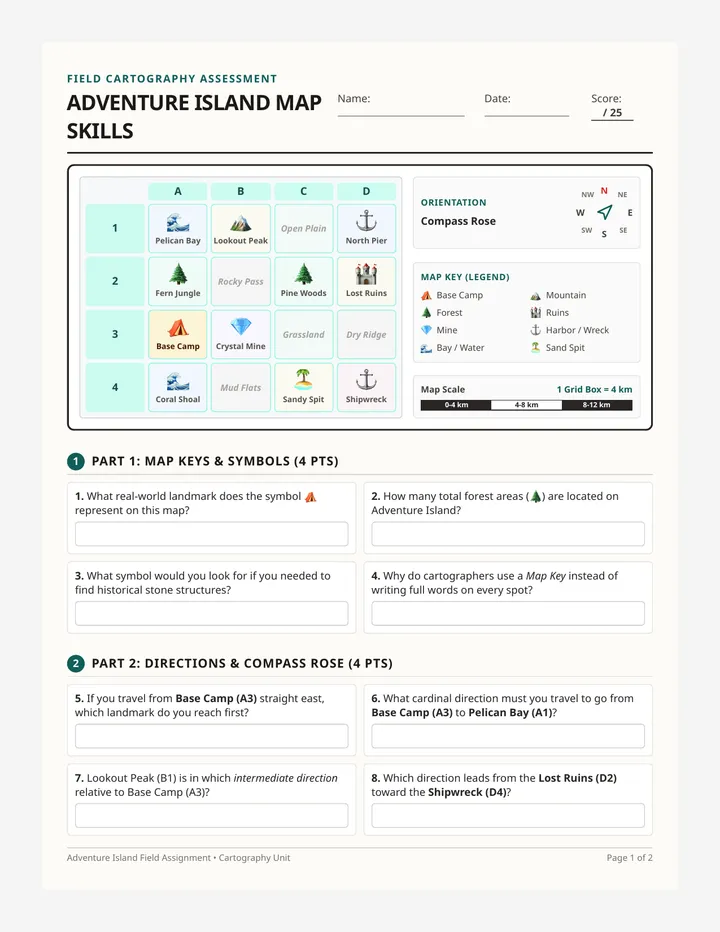
World Map
Continents
A.
B.
C.
D.
E.
F.
G.
Oceans
Word Bank
Antarctica North America Europe South America Africa Australia Asia Atlantic Ocean Indian Ocean Pacific Ocean Arctic Ocean Southern Ocean
A continent is...
An ocean is...
PAGE 2 © 2026 UNCOMMON SCHOOLS, INC.
WHY STUDY HISTORY?
Classwork (U1L01)
Welcome to a new year! One of the best things about history is that you get to practice your reading, writing, and thinking. Today we will see why history is so important!
"It is important to know where we came from. History helps us understand who we are today."
SONIA SOTOMAYOR, Supreme Court Justice
"History repeats itself, so you might want to pay attention."
QUAVO, Rapper in Migos
"History depends on the new generation to write a new chapter."
LAMELO BALL, Basketball Star
Why should we study history?
Give at least two reasons based on the quotes above!
1
2
PAGE 3 © 2026 UNCOMMON SCHOOLS, INC.
Activity #2: What Will We Learn About?
This year, we will travel back to the ancient world. Circle the two topics that most excite you!
🏺
Ancient Egypt
🐘
Ancient India
🏮
Ancient China
🏛️
Ancient Greece
🛡️
Ancient Rome
🏰
Medieval Europe
🕌
Islamic World
👑
Ancient West Africa
1 I’m most excited to learn about because...
2 One fact I know about is...
3 One question I have about these topics is...
PAGE 4 © 2026 UNCOMMON SCHOOLS, INC.
Reading to Learn
Underline important details and write notes in the margin!
Homework (U1L01)
The Past Detectives
Social scientists are like detectives. They study people who lived a long time ago. There are three main types of history detectives: archaeologists, historians, and geographers.
1
Archaeologists: Digging Up the Past
Archaeologists dig in the dirt to find things people left behind. They look for artifacts . An artifact is anything made or used by humans. This can be tools, coins, or clothes. They ask: "Who lived here?"
[ ARCHAEOLOGIST DIG PHOTO ]
2
Historians: Recording the Past
Historians are record keepers. They study what people wrote down. They read documents like letters, diaries, and books. They want to know: "What happened in the past? Why did it happen?"
3
Geographers: Mapping the Past
Geographers study the land. They look at maps and the environment. They want to see how people used the land to stay alive. They ask: "Where did people live? How did they use water and plants?"
4
History can be hard to study if there is no evidence. Sometimes there are big gaps in time with no clues! Scientists use their best theories to solve these mysteries.
Margin Notes
1 According to the text, who are the detectives who study the past?
2 Reread paragraph 4. What is one problem scientists face when studying the past?
PAGE 5 © 2026 UNCOMMON SCHOOLS, INC.
Be a History Detective
Look at the clues from the cave and answer the mystery questions!
"In a place called Lascaux, France, four teenagers found a secret cave. On the walls, they found huge paintings of animals like horses and bulls. The paintings were thousands of years old!"
🐂
Cave Sketch A
🐎
Cave Sketch B
🦌
Cave Sketch C
🐆
Cave Sketch D
1 Who do you think created these large cave paintings?
2 What do you think these paintings mean?
3 What can historians do to learn more about these paintings?
PAGE 6 © 2026 UNCOMMON SCHOOLS, INC.
Frozen Bridge Slides First Footsteps: Lesson 1
THE FROZEN
BRIDGE
Discovery: Beringia and the Ice Age
Today's Mission
OBJECTIVES
Explain how the Ice Age made a land bridge appear.
Identify Beringia on a world map.
The Big Chill
World of Ice
Massive sheets of ice called Glaciers covered the Earth.
🏔️
Lower Oceans
So much water turned into ice that the ocean levels dropped!
THE LAND BRIDGE
Dry land where there used to be ocean!
When the water went down, a bridge of land appeared between Asia and North America .
Scientists call this land bridge Beringia .
🌍
Beringia
Detective
Checkpoint!
If the glaciers melted today, what would happen to Beringia?
Frozen Bridge Worksheet THE FROZEN BRIDGE
Lesson 1: Beringia
Detective:
DO NOW
What is geography? (Circle one answer)
The study of outer space
The study of where things are in the world
Mapping Beringia
Continent A
Continent B
Land Bridge appeared here!
World Map
Detective Tasks:
Label Asia and North America .
Circle the Beringia land bridge in yellow.
Draw a blue line to show the ocean level dropping.
LESSON 1: THE FROZEN BRIDGE © 2026 UNCOMMON SCHOOLS, INC.
EXIT TICKET
Prove your discovery! (Lesson 1)
1. Why did the ocean level go down during the Ice Age?
2. What was the name of the land bridge?
Detective Reflection:
How do you feel about your first investigation?
READY FOR MORE NEED A CLUE
PAGE 2 CASE FILE: BERINGIA
Artifact Hunters Slides Lesson 2
ARTIFACT
HUNTERS
Why did they cross?
Today's Mission
OBJECTIVES
🦣
Explain why humans followed mammoths across Beringia.
Identify artifacts like spear points as evidence.
Following the Food
The Mammoth Move
Early humans were hunters. They followed herds of mammoths and other large animals for food.
🦣
Survival
The animals crossed the land bridge to find grass. Humans followed them to stay alive!
CLUES IN THE DIRT
How do we know they were there?
Archaeologists found artifacts —things people made and left behind.
They found sharp stone spear points and tools made of bone.
⛏️
Artifacts
The Clue Case
What is one thing you would find if you were an archaeologist digging in Beringia?
Artifact Hunters Worksheet ARTIFACT HUNTERS
Lesson 2: Evidence
Detective:
DO NOW
What was the name of the land bridge humans crossed? (Unscramble the word)
B E R I N G I A
Hunt for Clues
🦣
THE MAMMOTH
Early humans followed these animals to hunt for food.
⛏️
THE ARTIFACT
Things people made, like spear points, found in the ground.
Discovery Mission:
Imagine you are digging in the ground. Circle the artifacts you would find from early humans:
Stone Spear Point
Bone Tool
Cell Phone
Old Coin
Mammoth Bone
Video Game
LESSON 2: ARTIFACT HUNTERS © 2026 UNCOMMON SCHOOLS, INC.
EXIT TICKET
Prove your discovery! (Lesson 2)
1. Why did early humans follow the mammoths across the land bridge?
2. What is an artifact? Give one example found by archaeologists.
Detective Reflection:
One reason I'm glad I wasn't a mammoth hunter:
PAGE 2 CASE FILE: ARTIFACTS
Coastal Voyagers Slides Lesson 3
COASTAL
VOYAGERS
Did they come by boat?
Today's Mission
OBJECTIVES
🛶
Describe the Coastal Route theory of migration.
Explain why boats and the "Kelp Highway" were important.
The Ocean Path
Faster than Walking
Some scientists think people arrived earlier by using boats to follow the Pacific coast.
The Kelp Highway
The ocean had seaweed (kelp) and many fish for food. This made the journey possible!
🐟
Two Pathways
How did they really get here?
Land Bridge
"We walked across ice and dirt!"
🦣
Coastal Route
"We rowed along the shore!"
🛶
Both theories could be true!
The Kelp Case
Why was it better to be on the coast during the Ice Age than inland?
Coastal Voyagers Worksheet COASTAL VOYAGERS
Lesson 3: Ocean Path
Detective:
DO NOW
What is an artifact? (Recall from Lesson 2)
The Boat Mission
🛶
THE KELP HIGHWAY
Coastal Route
Ocean Task:
Circle the 3 things that helped humans travel along the coast:
Small Boats
Snowmobiles
Seaweed (Kelp)
Fishing Spears
LESSON 3: COASTAL VOYAGERS © 2026 UNCOMMON SCHOOLS, INC.
EXIT TICKET
Prove your discovery! (Lesson 3)
1. How was the Coastal Route different from the Land Bridge?
2. Why did scientists name it the "Kelp Highway"?
Ocean Observation:
One reason I would like to travel by boat instead of walking:
PAGE 2 CASE FILE: OCEAN PATH
Southward Bound Slides v2 Lesson 4
JOURNEY
SOUTH
The road to South America
Today's Mission
OBJECTIVES
Map the migration route from North to South America.
Identify the timeline of when humans arrived.
The Great Spread
Moving South
Over thousands of years, humans spread out across North America , then through Central America , and finally into South America .
🌎
The Timeline
Scientific evidence suggests humans arrived between:
25,000 - 14,000
One Big Journey
Adapting to different homes
🏔️
Mountains
🌴
Rainforests
🏜️
Deserts
🌊
Ocean Shores
The first Americans learned to live in many amazing places!
Detective Final!
"How long ago did the first humans arrive in the Americas?"
— MISSION COMPLETE —
Southward Bound Worksheet THE LONG JOURNEY
Lesson 4: Spreading South
Detective:
DO NOW
What were the two ways humans got to the Americas? (Check two)
Flying on giant birds
Walking across a land bridge (Beringia)
Using boats to travel along the coast
The Big Spread
N. America
S. America
Western Hemisphere
Mapping Challenge:
Draw a red line showing the journey from North America to South America.
Write S.A. on South America and N.A. on North America.
LESSON 4: SOUTHWARD JOURNEY © 2026 UNCOMMON SCHOOLS, INC.
EXIT TICKET
Mission Wrap-Up! (Lesson 4)
1. According to evidence, how long ago did humans reach South America?
200 years ago
14,000 years ago
2. What was one challenge travelers faced moving into South America?
Final Discovery:
One thing I learned about the first Americans this week:
PAGE 2 MISSION COMPLETE
Pharaohs Everyday Life Worksheet ANCIENT EGYPT
Reading Check: Pharaohs & People
History Detective:
Mission Briefing
Use the information from Chapter 2: Pharaohs and Everyday People to answer the detective questions below!
Section 1: The Leaders
What were the three names Egyptians called their rulers?
What were two important jobs the pharaoh had to do?
Section 2: Daily Life
Look at the picture on page 6. What was the ancient queen doing that people still do today?
Why did Egyptians wear green and black eye makeup? Give two reasons from the text.
EGYPT CASE FILE #1 © 2026 UNCOMMON SCHOOLS, INC.
Ancient Egypt Continued...
Part 2
Section 3: Building and Boats
What two materials did workers use to make bricks? How did they make the bricks get hard and strong?
Why was the Nile River important for travel? What was one thing the boats carried?
Detective Challenge
The text says Egyptians had things we find in our homes today. Name one other thing you see in the pictures that looks like something we use now!
Case Solved?
What is the most interesting fact you learned about everyday life in ancient Egypt?
PAGE 2 © 2026 UNCOMMON SCHOOLS, INC.