Cocina Tradicional Research Assignment
Student Name:
Date:
Period:
Latin American Culinary Heritage
Cocina Tradicional
Research Assignment: 5 Traditional Culinary Tools of Mexico & Latin America
Points 100
Assignment Overview: Culinary tools carry centuries of Indigenous engineering, art, and agricultural tradition. In this project, you will investigate 5 authentic ancestral tools that defined Mexican and Latin American culinary history and remain vital in home kitchens and gastronomy today.
Project Requirements & Instructions
1
Minimum 2 Complete Sentences
Every research question requires at least two full, detailed sentences.
2
Bilingual Option
You may write your answers in English or in Spanish with academic tone.
3
Visual Artifact Analysis
Carefully examine each provided tool photograph to identify materials, textures, and shape.
4
Original Voice & Sources
Synthesize in your own words. Record reliable books and websites in Part 3.
Grading Criteria (100 Points Total)
Historical Accuracy (30 pts)
Sentence Quality (30 pts)
Visual Analysis (20 pts)
Reflection & Sources (20 pts)
Thorough answers explaining materials, origins, and techniques.
All 30 questions meet the 2+ complete sentences standard.
Demonstrates accurate understanding of tool morphology and usage.
Thoughtful 3 reflection answers + verified source citations.
Assignment Completion Checklist: Check off as you complete each tool investigation
- El Molcajete 2. El Metate 3. El Comal 4. Olla de Barro 5. El Metlapil
Part 1: Tool Investigation • Tool 01 of 05
1. El Molcajete — Stone Mortar
Material: Basalto Volcánico
Cultural Context Note (Nahuatl: mōlcaxitl):
Carved from porous volcanic basalt, the molcajete has three carved legs and seasoned micro-crevices that impart mineral depth to crushed chiles, tomatoes, and garlic. Answer each prompt in at least 2 complete sentences.

1. What is a molcajete, and what is it made of? Min. 2 Sentences
2. What foods are traditionally prepared in a molcajete? Min. 2 Sentences
3. How was the molcajete used in ancient Mexican cultures? Min. 2 Sentences
4. How do you use a molcajete to make salsa? Min. 2 Sentences
5. In which countries or regions is the molcajete commonly used? Min. 2 Sentences
6. Why is the molcajete important to Mexican food culture? Min. 2 Sentences
Unit: Latin American Culinary Heritage Page 2 of 7 • Traditional Tools Investigation
Part 1: Tool Investigation • Tool 02 of 05
2. El Metate — Grinding Stone
Material: Piedra Volcánica
Cultural Context Note (Nahuatl: metlatl):
A monumental Mesoamerican inclined stone slab supported by three legs. For millennia, cooks knelt before the metate daily to grind nixtamalized corn dough (masa) and cacao. Answer each question in at least 2 complete sentences.
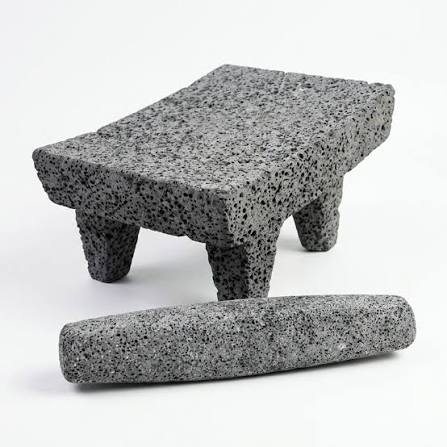
1. What is a metate, and what materials are used to make it? Min. 2 Sentences
2. What foods are traditionally ground on a metate? Min. 2 Sentences
3. How did Indigenous peoples use the metate in the past? Min. 2 Sentences
4. How does a person grind corn using a metate? Min. 2 Sentences
5. What is the difference between a metate and a molcajete? Min. 2 Sentences
6. Why was the metate important for preparing traditional foods? Min. 2 Sentences
Unit: Latin American Culinary Heritage Page 3 of 7 • Traditional Tools Investigation
Part 1: Tool Investigation • Tool 03 of 05
3. El Comal — Griddle
Material: Barro / Acero / Hierro
Cultural Context Note (Nahuatl: comalli):
The flat, smooth griddle positioned over hearth stones or burners. It provides dry radiant heat necessary for cooking raw tortillas to puff perfectly and dry-toasting chiles and spices without burning them.
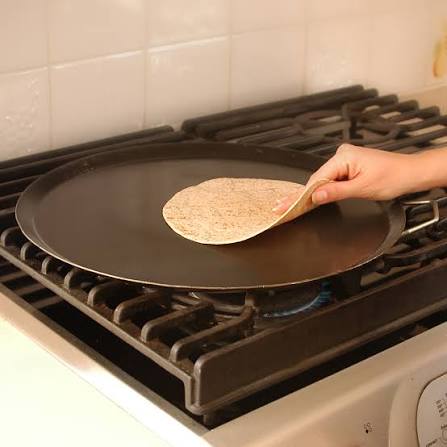
1. What is a comal, and what materials can it be made from? Min. 2 Sentences
2. What foods are commonly cooked on a comal? Min. 2 Sentences
3. How was the comal used in traditional Mexican homes? Min. 2 Sentences
4. How is a comal used to cook tortillas? Min. 2 Sentences
5. How is a traditional comal different from a modern frying pan? Min. 2 Sentences
6. Why is the comal important in Mexican and Latin American cuisine? Min. 2 Sentences
Unit: Latin American Culinary Heritage Page 4 of 7 • Traditional Tools Investigation
Part 1: Tool Investigation • Tool 04 of 05
4. La Olla de Barro — Clay Cooking Pot
Material: Barro Rojo / Terracotta
Cultural Context Note:
Handcrafted earthenware pots with distinctive bulbous bellies. Clay retains gentle, uniform thermal energy, allowing beans (frijoles de olla), stews, and café de olla to simmer slowly, enhancing earthy flavor profiles.
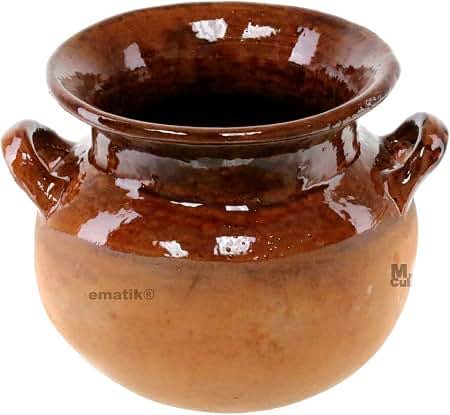
1. What is an olla de barro, and how is it made? Min. 2 Sentences
2. What types of food are prepared in a clay pot? Min. 2 Sentences
3. How can cooking in clay affect the flavor or texture of food? Min. 2 Sentences
4. How did families traditionally use clay pots? Min. 2 Sentences
5. What are the differences between a clay pot and a metal pot? Min. 2 Sentences
6. Why is handmade pottery important in Latin American culture? Min. 2 Sentences
Unit: Latin American Culinary Heritage Page 5 of 7 • Traditional Tools Investigation
Part 1: Tool Investigation • Tool 05 of 05
5. El Metlapil — Grinding Stone
Material: Basalto Volcánico
Cultural Context Note (Nahuatl: metlapilli — "child of the metate"):
The cylindrical, tapered stone hand-roller used as the active grinding partner of the metate. Held with both hands, its weight and friction crush softened kernels and cacao seeds across the stone bed.
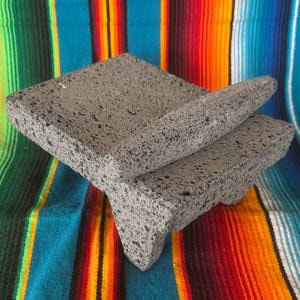
1. What is a metlapil, and what is it made of? Min. 2 Sentences
2. What is the purpose of a metlapil? Min. 2 Sentences
3. How is a metlapil used with a metate? Min. 2 Sentences
4. What foods can be ground using a metlapil? Min. 2 Sentences
5. How did people use this tool before modern kitchen appliances existed? Min. 2 Sentences
6. Why is the metlapil an important part of traditional food preparation? Min. 2 Sentences
Unit: Latin American Culinary Heritage Page 6 of 7 • Traditional Tools Investigation
Culinary Synthesis & Analysis
Part 2: Final Reflection
2–3 Complete Sentences per Prompt
1. Which traditional kitchen tool did you find the most interesting? Explain why.
2. Which tool would you like to use at home? What would you prepare with it?
3. How do these tools help preserve the cultural traditions of Latin America?
Academic Integrity & Research
Part 3: Sources Log
Record Reliable Websites, Books & Articles
Source Title / Website Name
Author or Institution
URL or Book Publication Date
1
2
3
4
Student Honor Pledge: I have used my own words and verified these reliable sources.
Signature:
Unit: Latin American Culinary Heritage Page 7 of 7 • Synthesis & Academic Bibliography