Physical, cognitive, and socio-emotional milestones from infancy through adolescence. Examines major theories of growth including attachment, cognitive stages, and moral development.
Une série de modules de formation destinés aux conseillers pédagogiques pour renforcer leur expertise en ingénierie de formation continue, spécifiquement appliquée à l'enseignement du français à l'école primaire.
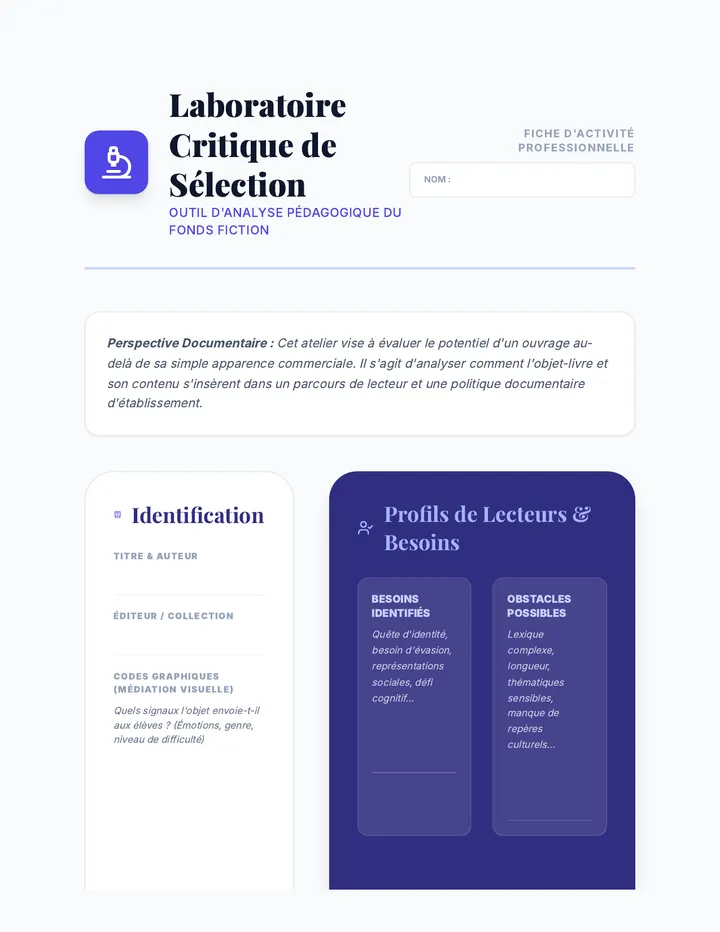
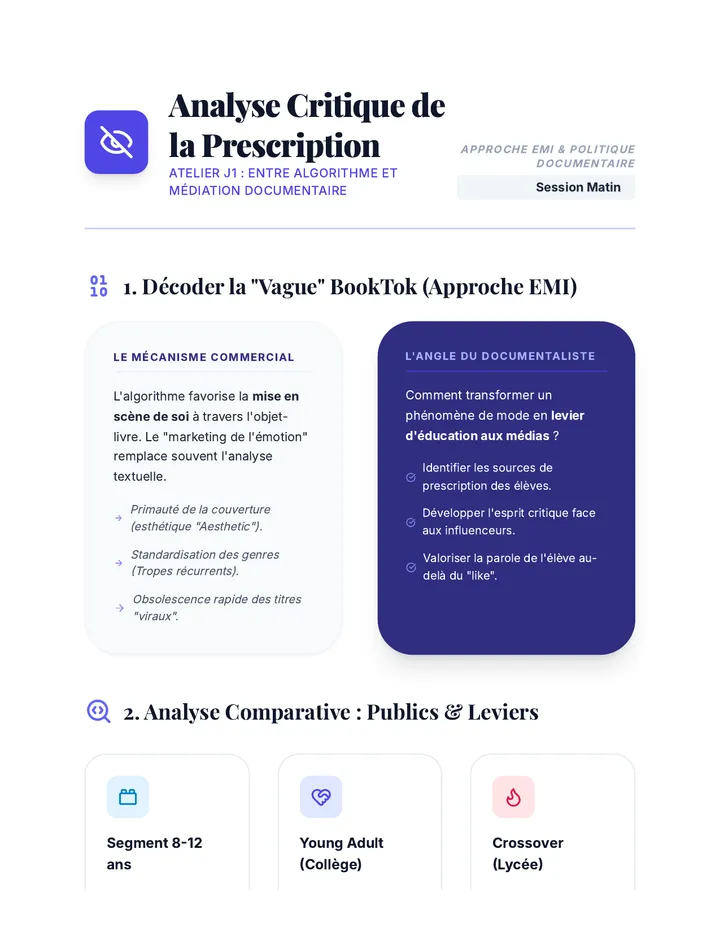
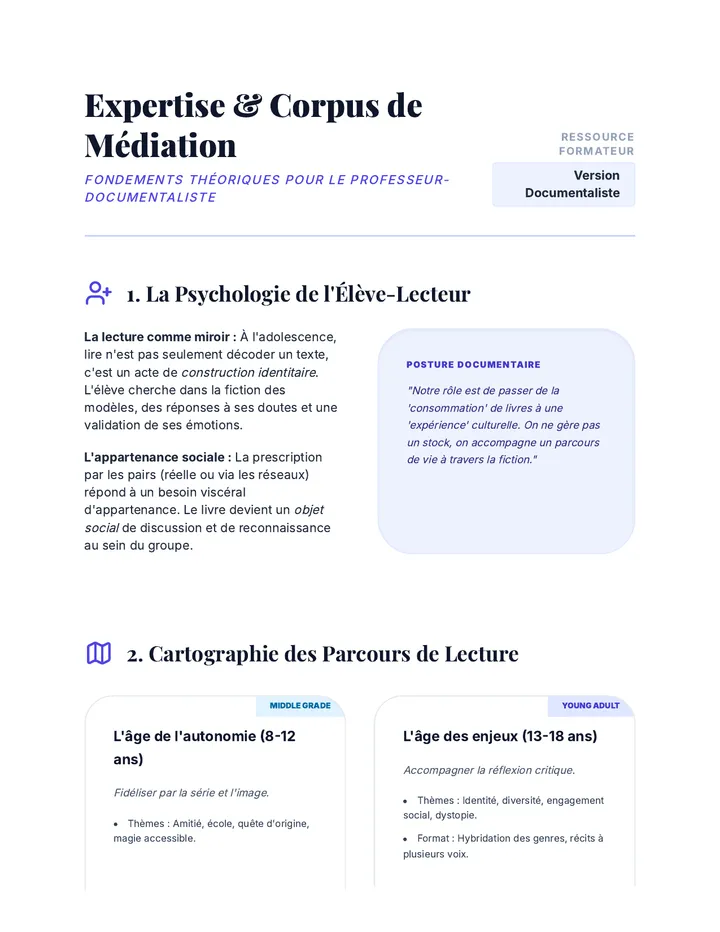
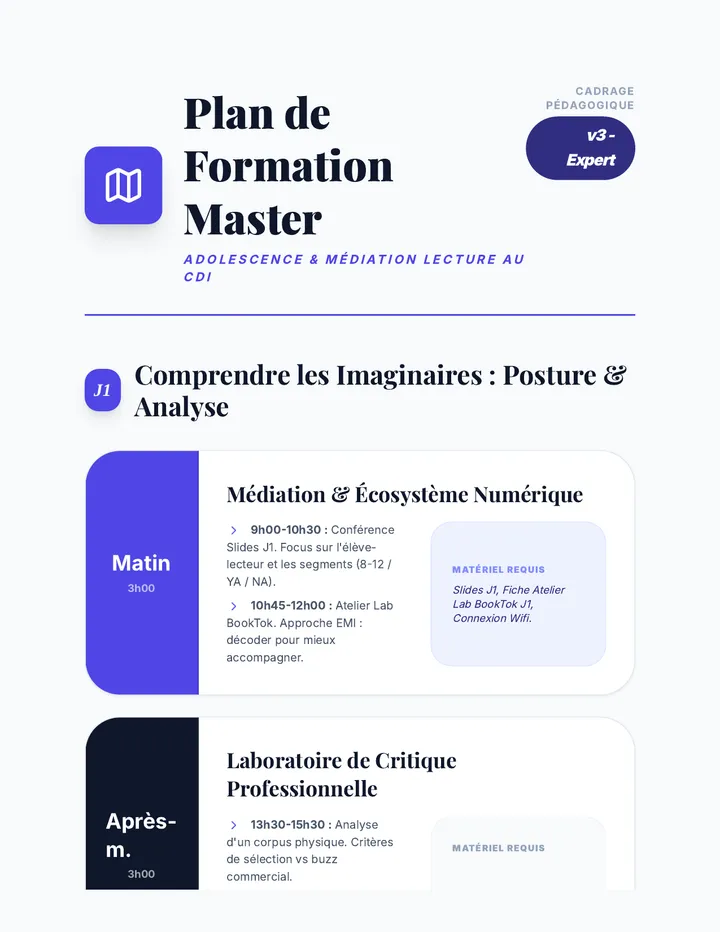
Une formation pour les professeurs-documentalistes centrée sur la médiation culturelle et l'accompagnement des pratiques de lecture des adolescents. L'objectif est de concilier la réalité de l'édition actuelle avec les missions pédagogiques du CDI.
Une séquence de sensibilisation aux enjeux du numérique pour les classes de CM1-CM2, couvrant l'identité numérique, la sécurité, la santé et l'impact environnemental. Cette séquence vise à former des citoyens numériques responsables et éclairés.
An 8-lesson series for 4th-grade girls to foster self-love and appreciation for diverse cultures, specifically addressing race and ethnicity through identity exploration, family history, and cultural traditions.
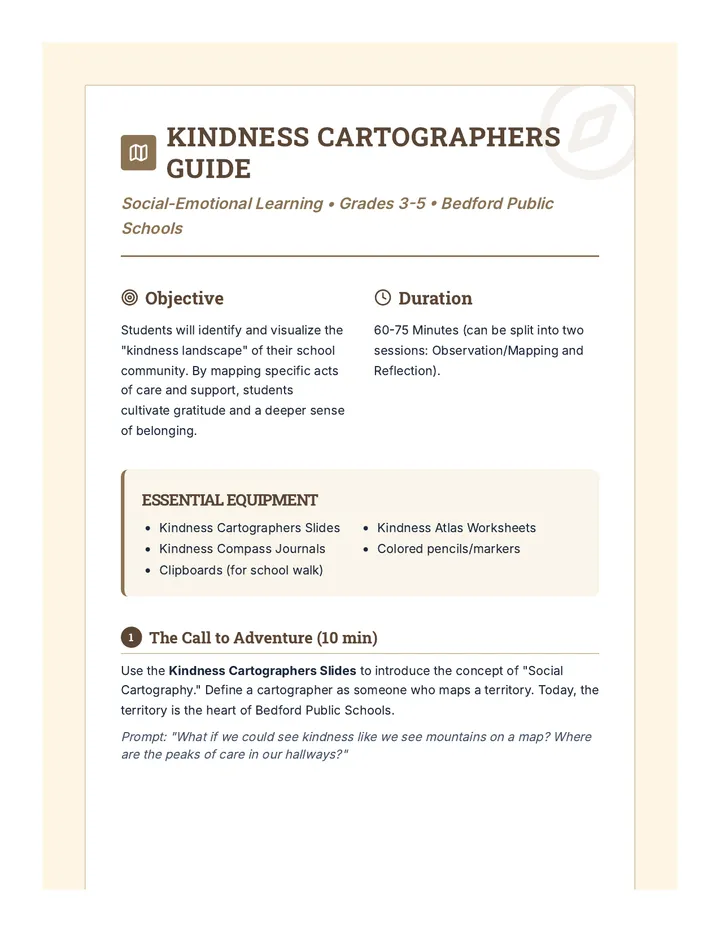
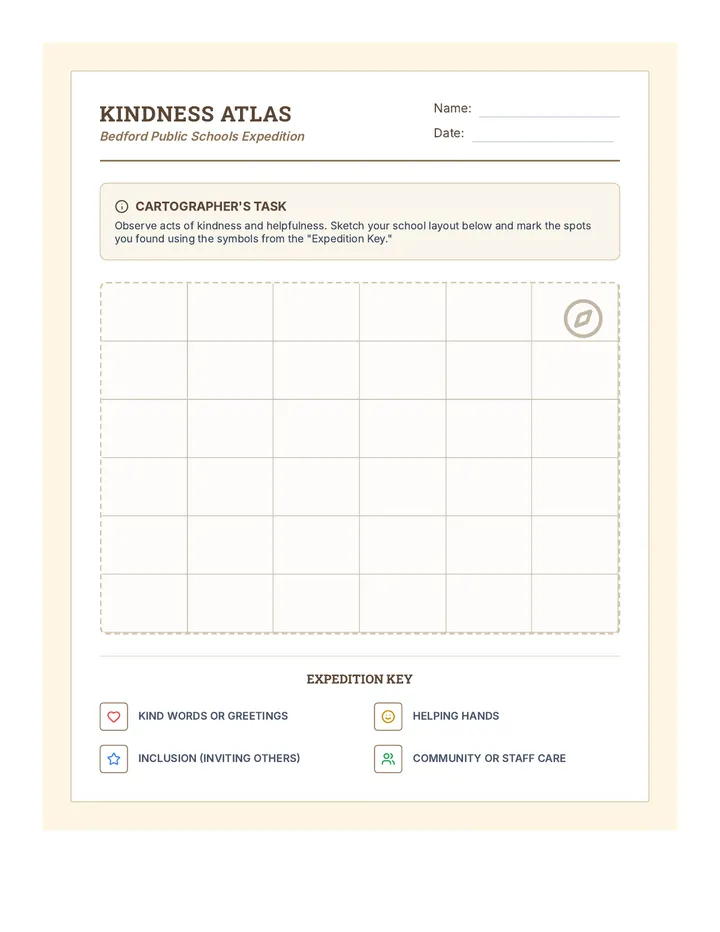
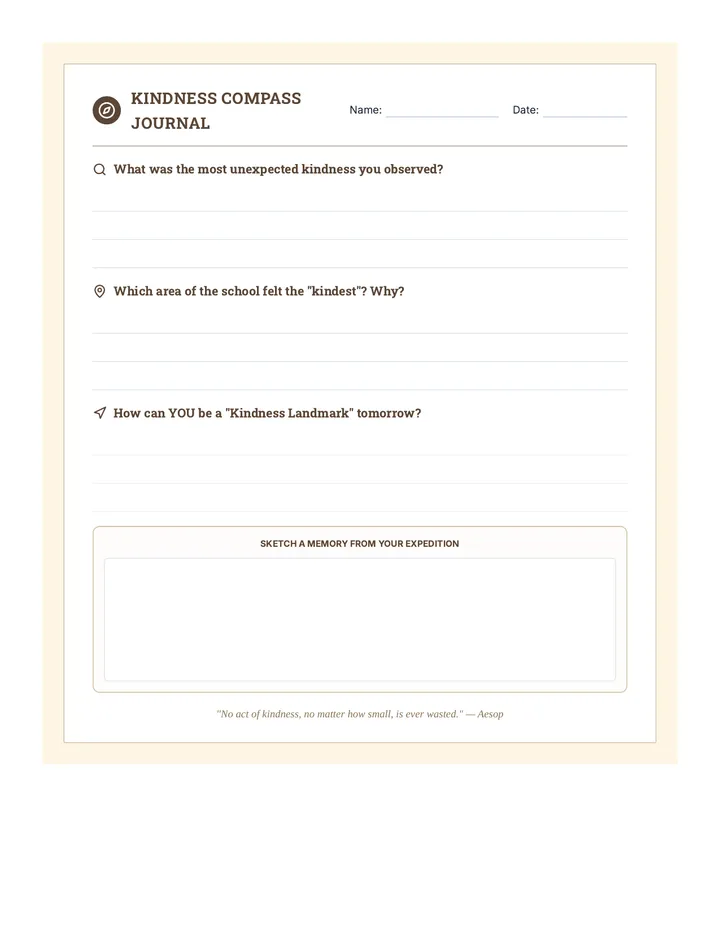
A multi-disciplinary sequence for elementary students that combines social-emotional learning about community kindness with a social studies unit on the American Revolution, exploring how community values shape history.
A comprehensive 3rd-grade unit focused on self-identity, distinguishing between internal and external characteristics, exploring Indigenous and Mexica narratives, and culmininating in creative self-expression.
This sequence guides students through the biological and psychological progression of human life from conception to toddlerhood, analyzing prenatal stages, environmental risks, neonatal reflexes, milestones, and attachment theories.
An undergraduate psychology sequence exploring the mechanisms of bonding, relationship maintenance, and dissolution through Attachment Theory and other major theoretical frameworks. Students analyze how early childhood models influence adult intimacy, explore Sternberg's Triangular Theory, and evaluate Rusbult's Investment Model to predict relationship stability.
A journey through the diverse ways families and cultures shape our identities. Students explore family structures, traditions, roles, and cultural heritage to build a sense of belonging and respect for diversity.
This sequence explores the psychosocial aspects of adolescence, using Erik Erikson's framework to examine identity formation, social influence, digital presence, and family dynamics. Students analyze how internal conflicts and external pressures shape the transition to adulthood.
This sequence explores the foundational psychological theories of early childhood attachment, including Harlow's contact comfort, Ainsworth's Strange Situation, Erikson's psychosocial stages, and infant temperament. Students analyze experimental data and behavioral patterns to understand how early social-emotional bonds shape future human development.
This sequence explores the rapid physical and cognitive expansion during the first two years of life. Students will move from understanding innate biological reflexes to complex voluntary motor skills, Piaget's sensorimotor stage, and the emergence of language through observational labs and experimental analysis.
A high school child development lesson using a jigsaw strategy to explore Piaget's four stages of cognitive development, featuring expert research and peer-to-peer teaching.
This lesson uses a relatable analogy of a candy store tantrum to introduce the complex historical concept of appeasement, helping students understand why giving in to aggression can lead to greater conflict.
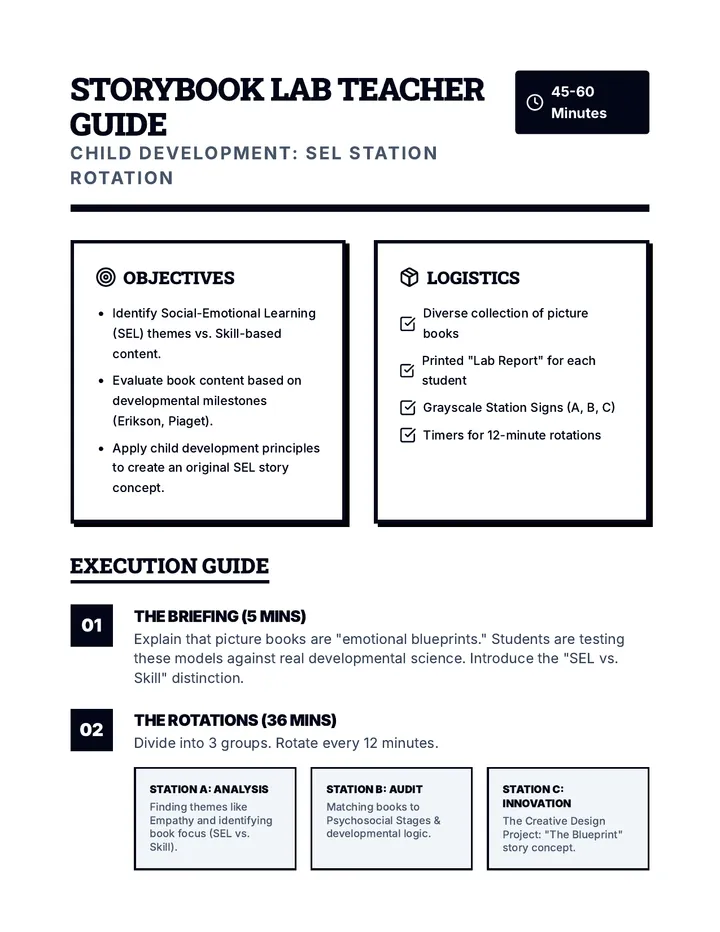
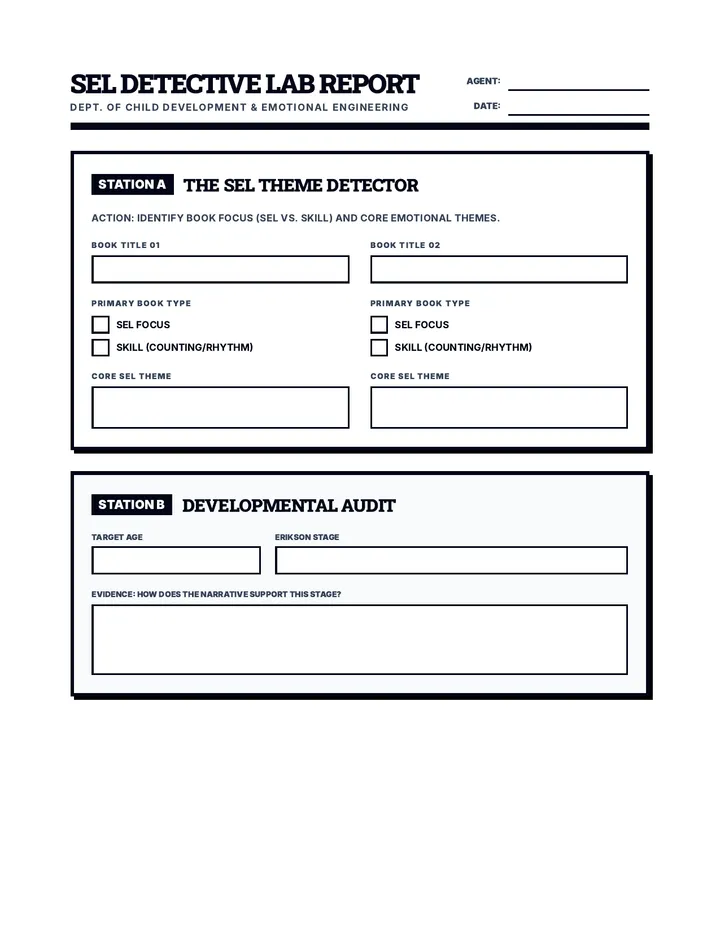
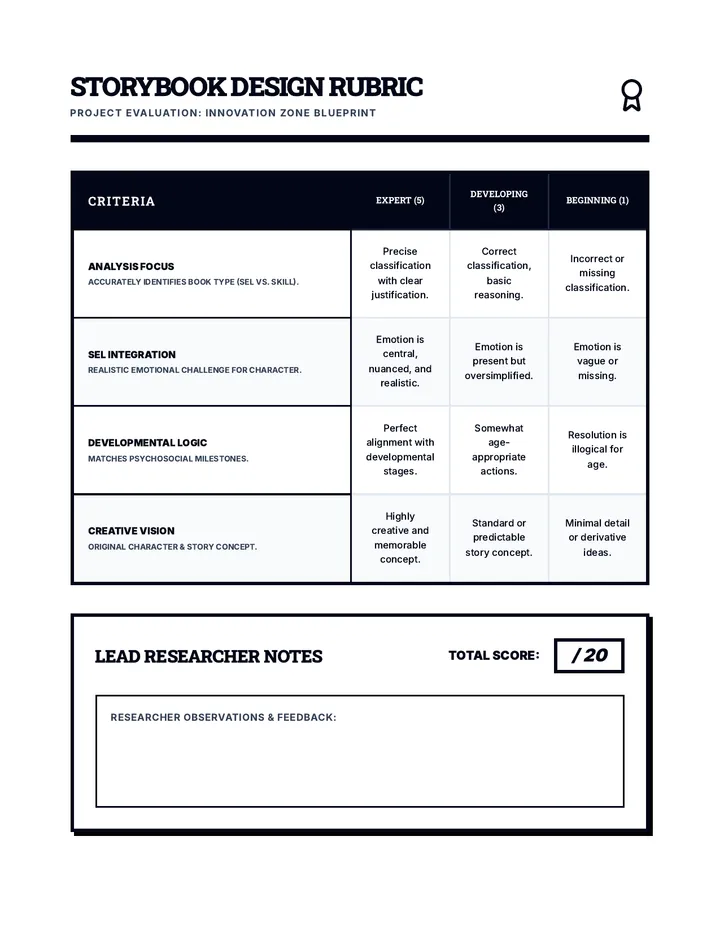
A high-energy station rotation activity where high school students analyze child development through the lens of social-emotional learning (SEL) in picture books, culminating in a creative book design project.
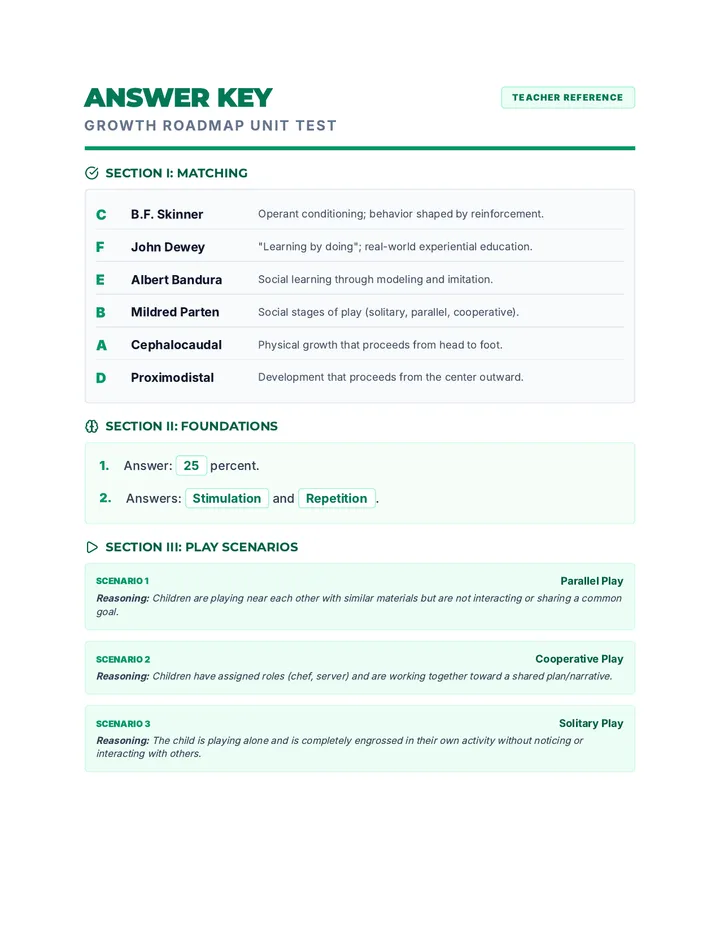
A comprehensive assessment covering developmental domains, brain growth, major ECE theorists, and strategies for supporting young children's self-concept and identity.
Students will apply their knowledge of bonding, attachment, and child development to create an informative brochure for parents of preschoolers.
A comprehensive 99-minute lesson exploring child development theorists (Piaget, Erikson, Vygotsky, Bowlby) with a focus on infancy, featuring collaborative research and guided note-taking.
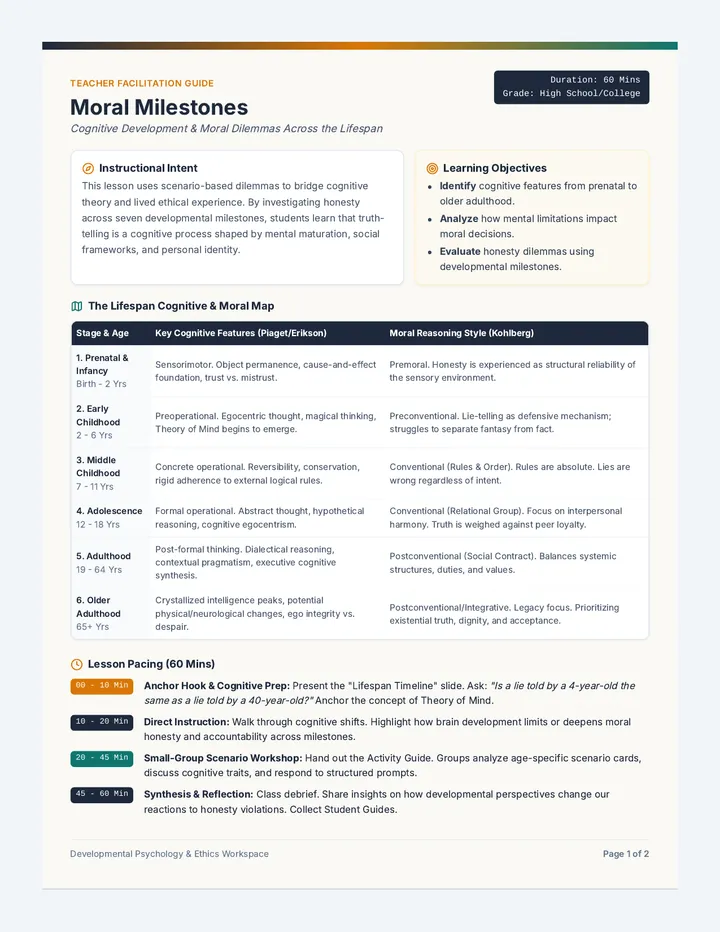
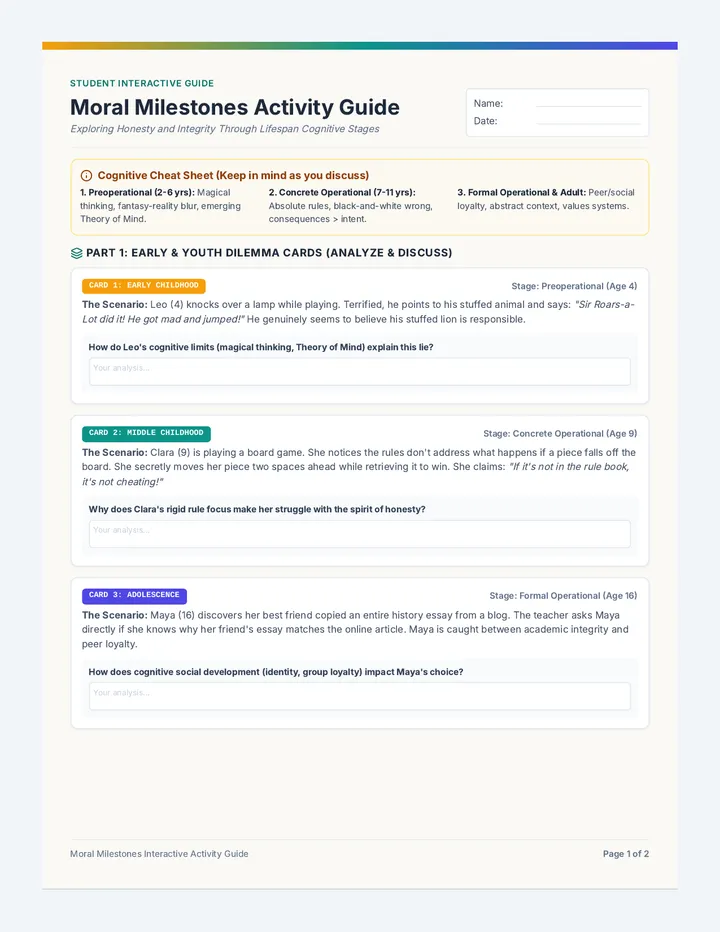
A comprehensive lesson examining the stages of cognitive development from prenatal through older adulthood. Students analyze real-world moral dilemmas involving honesty and integrity to understand how cognitive maturation shapes ethical reasoning.
A lesson introducing the concept of family, its definition, and its importance as a social unit.
A project-based learning unit exploring human development across the lifespan, focusing on social-emotional, cognitive, and physical growth through creative, higher-order thinking tasks.
A comprehensive lesson introducing Lev Vygotsky's sociocultural theory of cognitive development. Students will explore the Zone of Proximal Development, the role of Scaffolding, and the importance of the More Knowledgeable Other through collaborative activities.
A sociology and history lesson exploring the transition from industrial to post-industrial society, focusing on economic shifts, educational expansion, and changes in family structure.
A psychology-focused history lesson for grades 10-12 analyzing how Louis XIV's childhood trauma during the Fronde shaped his absolute rule, personality, and use of power.