Lenny.com
Explore
Create
ActivitiesNewMathEnglish Language ArtsScience & EngineeringSocial StudiesGlobal LanguagesHealth & Physical EducationSpecial EducationCounseling & Life SkillsArts & CreativityESL
Lenny.com
Lenny.com
Explore
Create
ActivitiesNewMathEnglish Language ArtsScience & EngineeringSocial StudiesGlobal LanguagesHealth & Physical EducationSpecial EducationCounseling & Life SkillsArts & CreativityESL
Lenny.com
Lenny.com

Solutions

Lenny for EducatorsLenny for SchoolsLenny for Districts

Product

ExploreSign inCreateSupportAbout

Resources

Getting startedMTSS Acceleration Program

Newsletters

School Funding Newsletter

© 2026 Lenny Learning Inc.

TermsPrivacyAccessibility
LinkedInInstagramX
Lenny
Social StudiesSocial Studies PracticesLocation WordsMapsOrder EventsChronology and CausationEvaluating SourcesHistorical ThinkingGeography, Humans, & the EnvironmentAmerican Symbols and LandmarksCitiesStatesState CapitalsRegions of the United StatesGeographic SkillsPhysical GeographyHuman GeographyRegional GeographyGeography of AfricaGeography of AsiaGeography of EuropeGeography of OceaniaGeography of the AmericasSociety and Environment of EuropeSociety and Environment of AsiaSociety and Environment of The AmericasSociety and Environment of the Middle EastSociety and Environment of AfricaHistoryPrehistoryComparing Ancient River CivilizationsAncient MesopotamiaAncient Egypt and KushAncient South AsiaEarly ChinaGreeceRome and the Byzantine EmpireAncient World HistoryNative Peoples of North AmericaNative Peoples of Mesoamerica and South AmericaAfrican EmpiresMedieval AsiaMedieval EuropeThe Silk RoadMedieval HistoryIslamic EmpiresWorld ReligionsRenaissance PeriodAge of ExplorationThe Thirteen ColoniesThe American RevolutionUS History Early RepublicFounding of the United StatesUS History AntebellumUS Civil WarReconstruction PeriodThe Gilded AgeUS ImperialismWorld ImperialismWorld War IUS History 1920sGreat DepressionWorld War IIThe Cold WarUS History 1950-60sUS History 1960s-70sWorld History 20th CenturyContemporary US HistoryContemporary World HistoryHolidaysCivics and GovernmentCitizenshipGovernment FoundationsThe ConstitutionUS ConstitutionExecutive BranchLegislative BranchJudicial BranchState and LocalPolitical ParticipationPublic PolicyPolitical SystemsPower and AuthoritySocial MovementsDefining DevianceTheories of DevianceCrime and Criminal JusticeEconomicsBasic Economic PrinciplesSupply and DemandWhat is MoneyEconomic FundamentalsMicroeconomicsMacroeconomicsBanking and FinanceEconomic SystemsGlobal EconomicsCorporations and PowerThe Changing WorkplaceUnemployment and LaborClass and InequalitySocial MobilityGlobal InequalityPsychologyHistory of PsychologyPsychology as a ScienceBrain and Nervous SystemNeuroscience and BehaviorGenetics and BehaviorSleep and ConsciousnessSensory ProcessesPerceptual OrganizationClassical ConditioningOperant ConditioningObservational LearningCognitive LearningMemory ProcessesThinking and Problem SolvingLanguage and CognitionTheories of MotivationStress and CopingPrenatal and Infant DevelopmentChildhood DevelopmentAdolescent DevelopmentAdulthood and AgingSelf and IdentitySocial CognitionSocial InfluenceAttraction and RelationshipsGroup BehaviorPrejudice and DiscriminationAnxiety and Mood DisordersClinical PsychologyForensic PsychologyPhilosophy & EthicsIntroduction to PhilosophyMajor Philosophers & IdeasMind and Body ProblemFree Will vs DeterminismEthics & MoralityReligion & PhilosophyPolitical Philosophy

Laissez Faire Market

A hands-on simulation where students explore capitalism, competition, supply and demand, and laissez-faire economics through an active sticker marketplace.

TSThomas Salzarulo

Laissez Faire Market

A hands-on simulation where students explore capitalism, competition, supply and demand, and laissez-faire economics through an active sticker marketplace.

TSThomas Salzarulo
$ ______

Simulación del Mercado de Laissez-Faire • Página 1 de 2 Pasa a la página 2 para las Rondas 3 y 4 y la Reflexión Final →

$

ACCIÓN DEL MERCADO Y REFLEXIÓN FINAL

Página 2

PASO 3

Ronda 3: El Desafío Económico (2 Minutos)

2 Min

Noticia de Última Hora: ¡Tendencia y Alta Demanda!

Un tipo especial de calcomanía tiene de pronto altísima demanda. Todos los clientes quieren comprarla.

Opciones para los Vendedores:

  • Subir el precio: Los clientes pagarán más por la moda.
  • Mantener el precio: Se venderán de inmediato.
  • Guardar producto: Esperar a que el precio suba más.

Principio de Oferta y Demanda:

Cuando la Demanda supera a la Oferta, los precios suben porque los compradores compiten por productos escasos.

PASO 4

Ronda 4: El Dilema del Gobierno y Votación Grupal (3 Minutos)

3 Min

El Dilema: Una tienda cobra $5 por una calcomanía, mientras otra cobra solo $1. Clientes molestos exigen que el gobierno intervenga y fije precios máximos.

OPCIÓN A: El Gobierno Interviene

Fija un precio límite máximo obligatorio. (Intervención Estatal)

OPCIÓN B: El Libre Mercado Decide

El gobierno no interviene; los clientes eligen dónde comprar. (Laissez-Faire)

¡Levanta la mano para votar cuando tu docente dé la señal!

Reflexión Final: Conecta la Simulación con el Laissez-Faire

Responde en oraciones completas en los espacios en blanco a continuación.

1. ¿Por qué las tiendas bajaron sus precios u ofrecieron ofertas especiales durante la competencia?

2. ¿Cómo influyó la demanda de los clientes (lo que querían comprar) en los precios de los negocios?

3. ¿Cuáles fueron algunas ventajas (beneficios) de permitir que las empresas decidieran sus propios precios?

4. ¿Qué problemas podrían ocurrir en la economía real si el gobierno casi nunca interviene?

Simulación del Mercado de Laissez-Faire • Página 2 de 2 Economía y Libre Empresa • Laboratorio Práctico

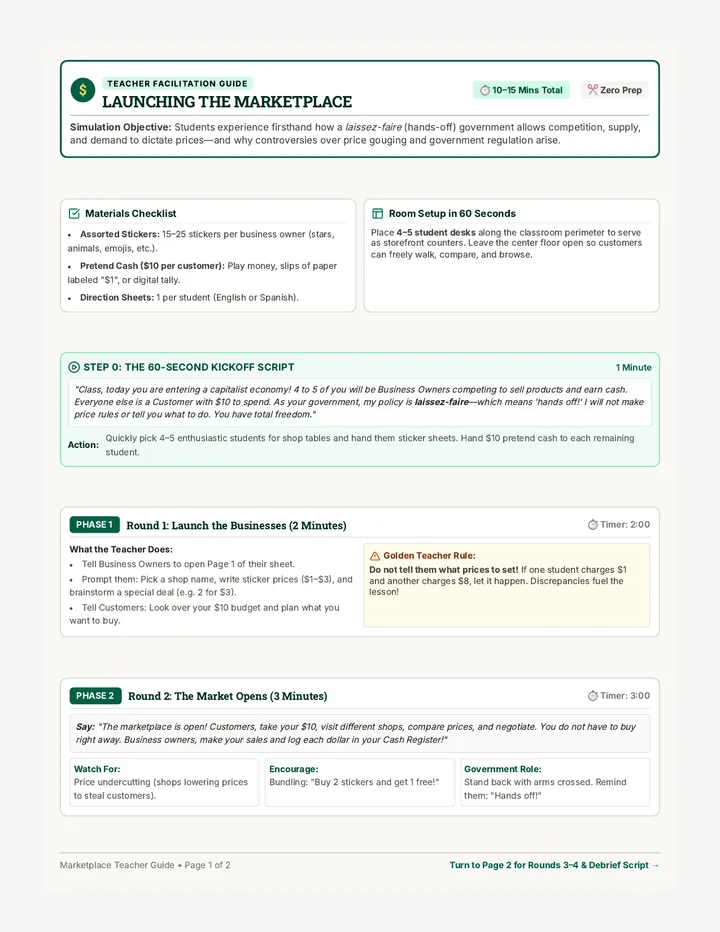
Government Role: Stand back with arms crossed. Remind them: "Hands off!"

Marketplace Teacher Guide • Page 1 of 2 Turn to Page 2 for Rounds 3–4 & Debrief Script →

$

MARKET TWISTS & DEBRIEF FACILITATION

Page 2

PHASE 3

Round 3: The Demand Shock (2 Minutes)

⏱️ Timer: 2:00

Teacher Script (Dramatic Announcement): "Breaking news! A massive social media trend just hit the market. Customers suddenly only want [Gold Star / Shiny Holographic] stickers! Demand for this item is through the roof!"

Prompt the Business Owners: "If you have this sticker, what are you going to charge now? Will you raise your price or keep it the same?"

Key Concept to Highlight: High Demand + Limited Supply = Sellers gain pricing power (prices surge).

PHASE 4

Round 4: Government Dilemma & Class Vote (3 Minutes)

⏱️ Timer: 3:00

Say: "Hold on! We have customer outrage. Shop A is charging $5 for one sticker, while Shop B only charges $1. Buyers are demanding that the government step in to protect consumers and cap prices at $2!"

Vote Option A: Intervention Government caps prices at $2 to make items fair.

Vote Option B: Laissez-Faire Government stays out; buyers can just boycott.

Take a quick show of hands. Explain: Option B preserves pure laissez-faire capitalism; Option A introduces economic regulation.

Final Debrief Discussion Key (Teacher Reference)

Q1: Why did businesses lower prices or offer deals?

Expected Answer: To compete with rival shops and attract customers who were walking away.

Q2: How did customer demand affect prices?

Expected Answer: When everyone wanted the same trend sticker, sellers could raise prices without losing buyers.

Q3: What were advantages of letting businesses decide?

Expected Answer: Freedom to innovate, fast transactions, freedom of choice, and naturally competitive prices.

Q4: What problems develop if government rarely interferes?

Expected Answer: Price gouging on necessities, unfair monopolies, misleading advertising, and consumer inequality.

IEP / ELL Scaffolding: Pair language learners with supportive partners during customer shopping rounds. Sentence frames on student sheets
Marketplace Teacher Guide • Page 2 of 2 Laissez-Faire Economic Simulation

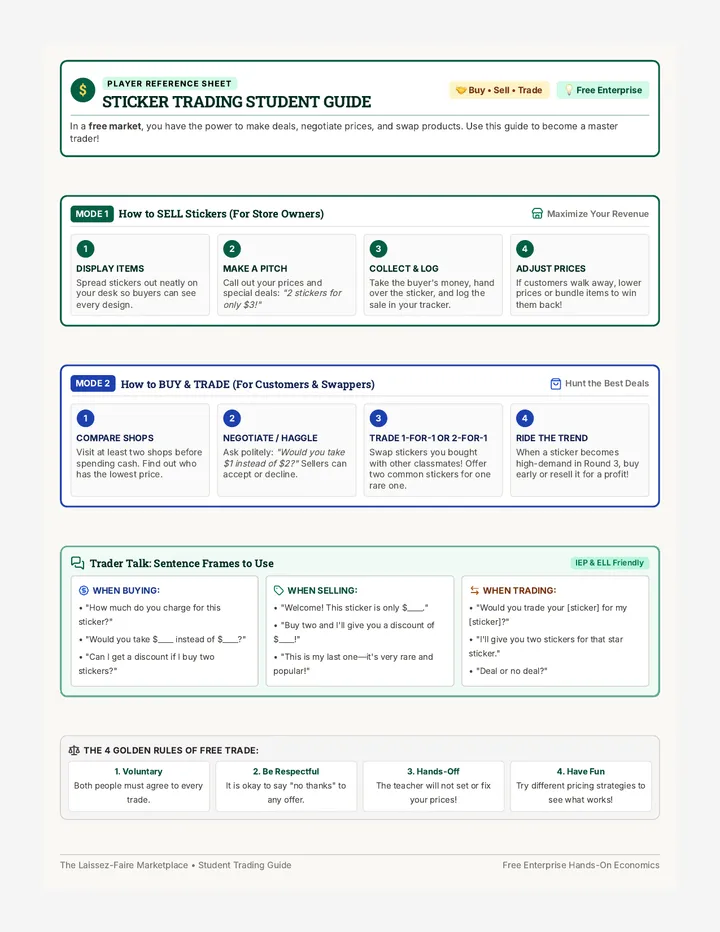
2. Be Respectful It is okay to say "no thanks" to any offer.

3. Hands-Off The teacher will not set or fix your prices!

4. Have Fun Try different pricing strategies to see what works!

The Laissez-Faire Marketplace • Student Trading Guide Free Enterprise Hands-On Economics

You might also like

Provenance Sleuths Slides

Curator Studio

A comprehensive project sequence guiding high school students through professional museum curation, artifact evaluation, historical storytelling, and polished exhibit design.

Lenny Avatar
Lenny
6
Neolithic Revolution Slides

Dawn of Agriculture

A foundational Pre-AP World History lesson exploring the causes and consequences of the Neolithic Revolution. Students compare Paleolithic foraging with Neolithic agriculture through a deep-time timeline, analyze Jared Diamond's arguments on biogeographic luck and linguistic diffusion in Document 1, and interpret global agricultural origins and modern productivity in Document 2.

JM

Justin Montalvo

2
Sticker Trading Student Guide

Sticker Trading Student Guide

A student-friendly visual guide explaining step-by-step how to sell, buy, negotiate, and trade stickers during the marketplace simulation, complete with sentence frames and trading rules.

TS

Thomas Salzarulo

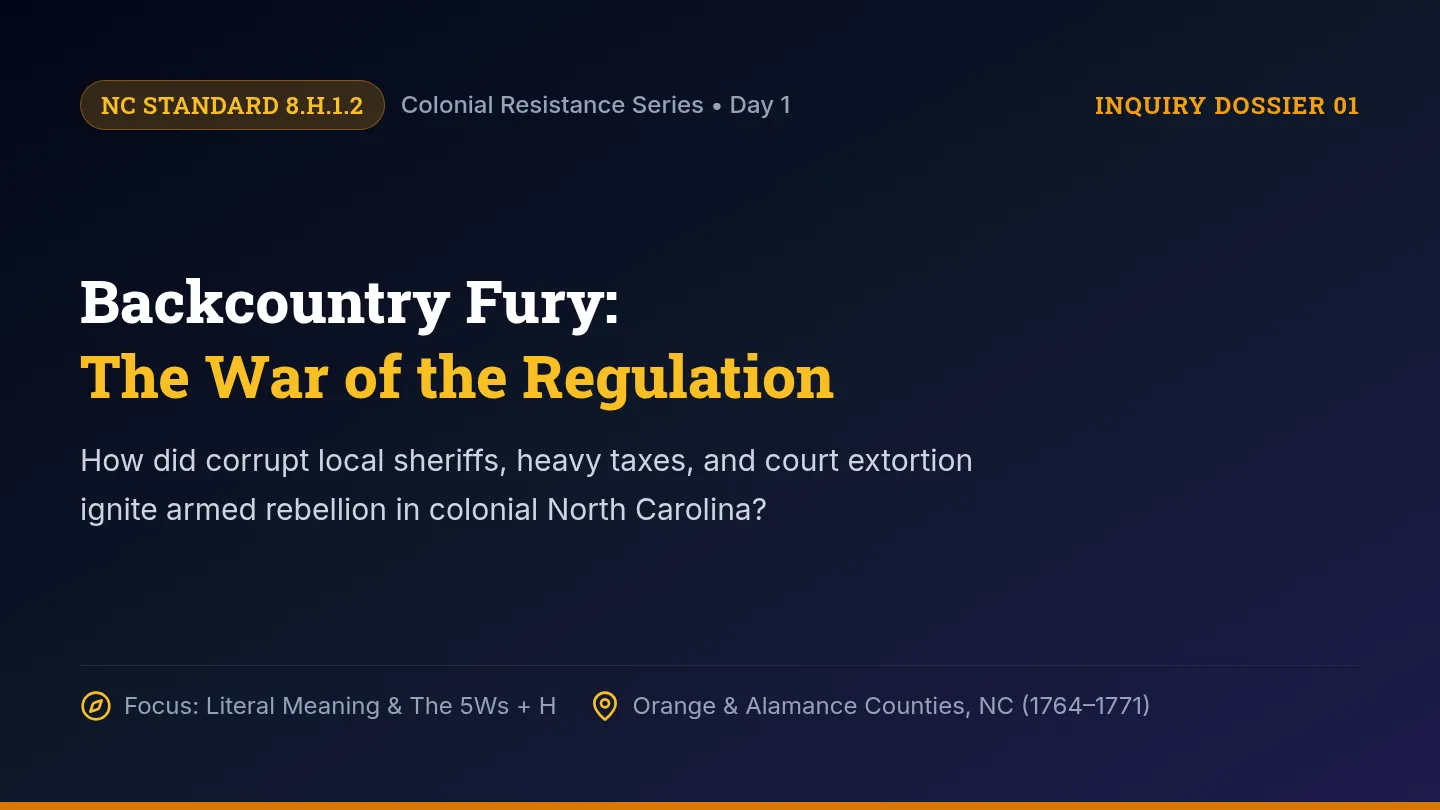
Backcountry Fury Slides

Tar Heel Voices

A multi-day inquiry sequence examining primary sources from pivotal moments of colonial and revolutionary resistance in North Carolina. Students decode literal meaning (who, what, when, where, why, and how) and analyze historical context in alignment with NC standard 8.H.1.2.

TC

Teresa Compton

6
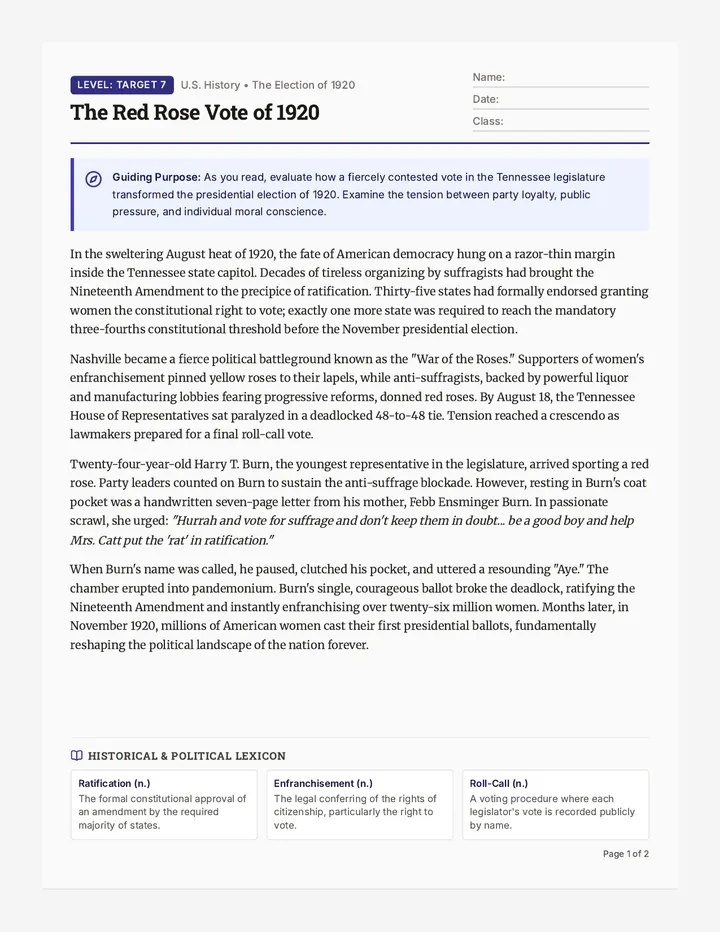
Ballot Battle Seventh Worksheet

Ballot Box Revolution

A differentiated reading unit exploring the historic 1920 election and the struggle for women's suffrage. Features three tiered reading passages spanning 7th, 5th, and 4th grade levels, alongside standards-aligned questions addressing main idea, inferencing, and theme, plus an educator answer key.

Z

Zimmer

4
Marketplace Setup Teacher Guide

Marketplace Setup Teacher Guide

A clear step-by-step facilitation guide for teachers to set up and run the Laissez-Faire Marketplace simulation, including teacher scripts, timing, and debrief discussion anchors.

TS

Thomas Salzarulo

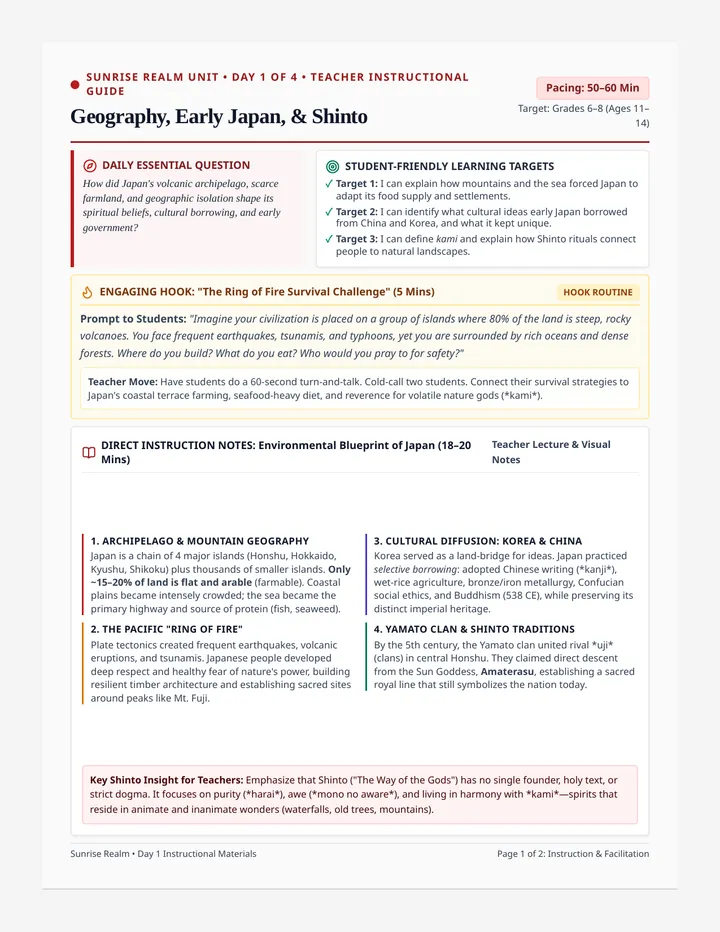
Island Realm Teacher Guide

Sunrise Realm

A comprehensive 4-day middle school social studies unit exploring Ancient and Medieval Japan from geography and Shinto through the Heian Golden Age, feudal samurai society, and the Mongol invasions to Tokugawa isolation.

DB

Danielle Burham

10
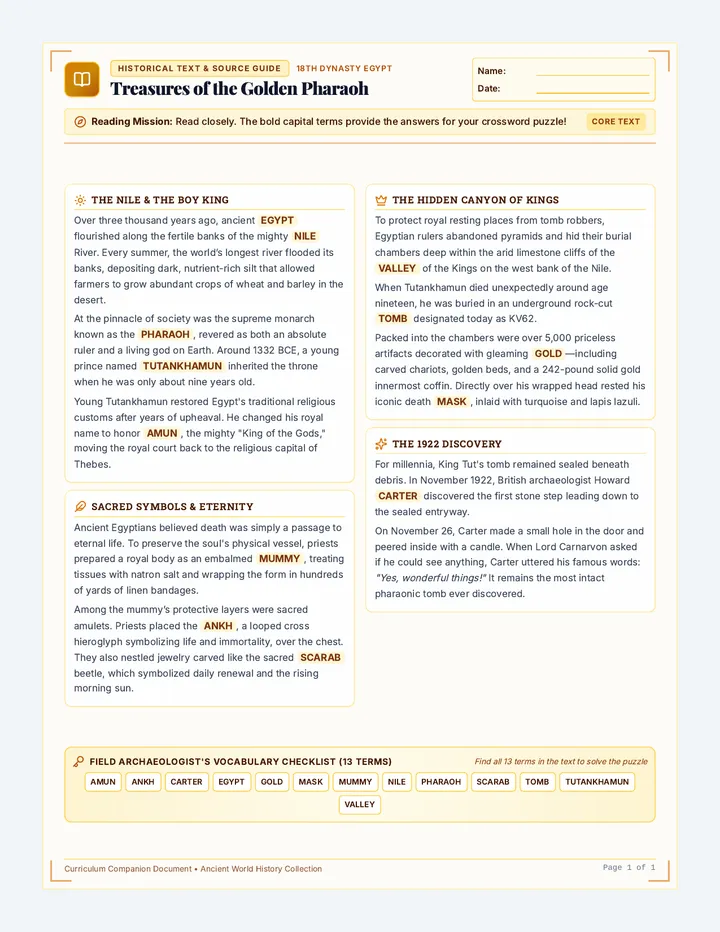
Golden Pharaoh Reading Passage

Golden Pharaoh

An immersive discovery lesson on King Tutankhamun and Ancient Egypt featuring an informational historical reading passage, an interlocking crossword puzzle worksheet, and a teacher answer key.

SZ

Sandra Zoerhoff

3
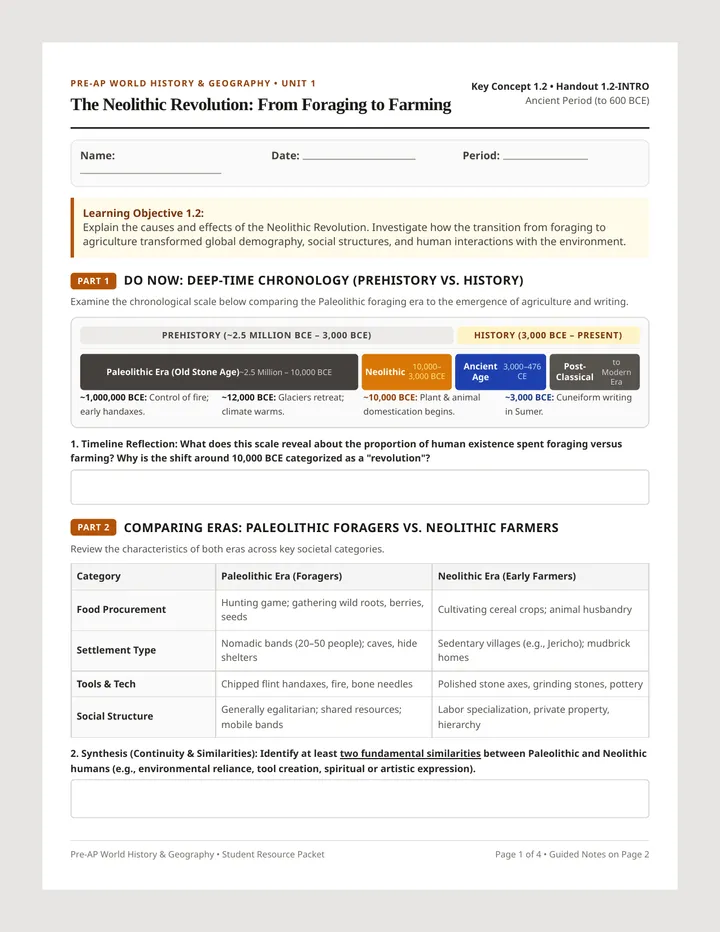
Neolithic Revolution Worksheet

Neolithic Revolution Worksheet

A comprehensive 4-page Pre-AP World History student packet featuring a Deep-Time timeline Do Now, an era comparison matrix, slide-aligned fill-in-the-blank guided notes synchronized with the updated 11-slide deck (Slides 6, 7, and 9), Handout 1.2-INTRO source analysis, and the Assess 1.2 causation claim writing task.

JM

Justin Montalvo

Business Blueprint Slides

Market Makers

A hands-on introductory curriculum that equips students with foundational business acumen and marketing savvy through practical entrepreneurial challenges, financial basics, and campaign design.

D

despinoza

9
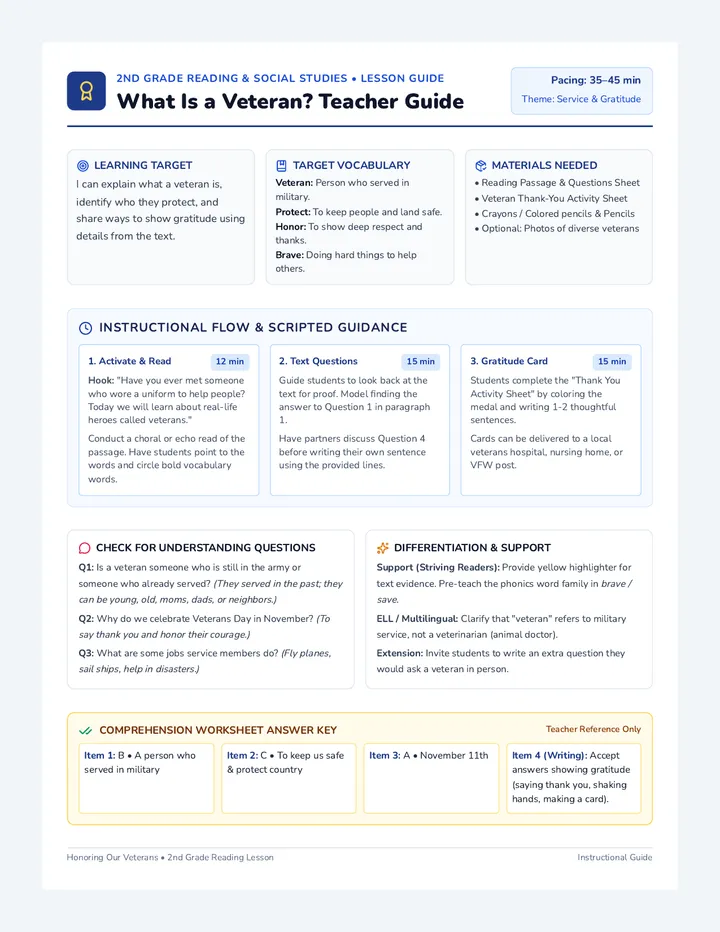
Veterans Lesson Teacher Guide

Honoring Our Veterans

A differentiated 1st and 2nd grade reading comprehension lesson exploring what a veteran is, military helpers, and gratitude. Includes grade-tailored teacher guides, decodable passages with comprehension checks, and hands-on thank-you card projects.

MK

monica keller

6
Neolithic Revolution Slides

Neolithic Revolution Slides

A 12-slide interactive Day 1 Pre-AP World History presentation introducing the causes and consequences of the Neolithic Revolution. Features a prominent transition slide inserted between the guided notes and synthesis directing students to open their workbooks to Pages 9 and 10 to begin document analysis.

JM

Justin Montalvo