Dust Blizzard Survival Worksheet The Daily Dust
Special Educational Edition
Vol. 1930 • February 5, 1936
Name:
Date:
Dust Blizzard Survival
The true story of the Great Plains' toughest decade.
The Great Plow Up
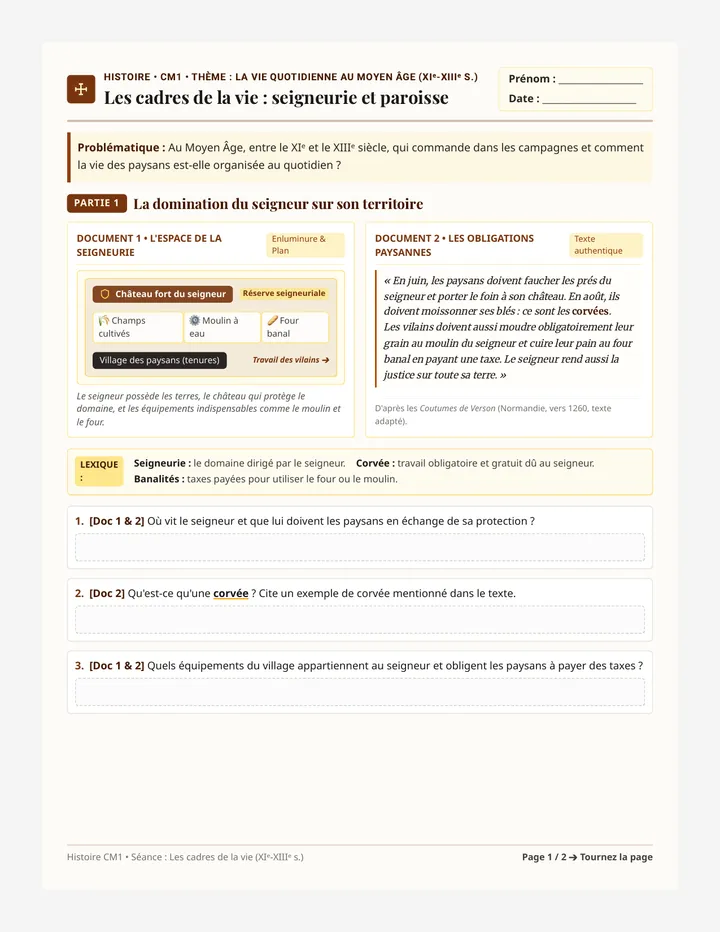
In the 1920s, farmers in the Great Plains (states like Oklahoma, Texas, and Kansas) thought they had found a gold mine in the soil. They used new tractors to rip up the native prairie grass and plant millions of acres of wheat. This was called the "Great Plow Up." But the prairie grass had deep roots that held the soil in place. Without the grass, nothing was left to protect the ground from the wind.
Did you know? A single dust storm in 1934 carried 350 million tons of soil across the country, reaching all the way to New York City!
When the Rain Stopped
In 1931, a massive drought began. For nearly ten years, very little rain fell on the Great Plains. The wheat died, and the exposed soil turned into fine, dry powder. High winds picked up this dirt, creating "Dust Blizzards." These dust storms were so thick that people couldn't see their own hands in front of their faces. Dust got everywhere—into houses, into food, and even into people's lungs, causing a sickness called "dust pneumonia."
The Long Journey West
Life became impossible for many. Their farms were buried in sand, and they couldn't grow food to eat or sell. Hundreds of thousands of people packed their belongings onto old cars and headed west toward California. These travelers were often called "Okies." They hoped to find work picking fruit or vegetables, but life on the road was hard, and many people in the West didn't welcome them.
Healing the Earth
To stop the disaster, the government started the Soil Conservation Service . They paid farmers to use new techniques, like "contour plowing," to keep soil from blowing away. The government also planted 200 million trees in a giant "Shelterbelt" from Canada to Texas to block the wind. Slowly, as the rain returned and the new farming methods took hold, the land began to heal.
A massive dust cloud approaches a farmhouse in Kansas, circa 1935.
Key Vocabulary
Drought: A long period with little or no rain.Prairie: A large open area of grassland.Migration: Moving from one place to another to live.Conservation: Protecting and saving natural resources like soil.
QUICK FACT
Families would hang wet sheets over their windows to try and catch the dust before it came inside. It rarely worked!
Witness Reflection: Check Your Understanding
1. How did the "Great Plow Up" change the land before the drought started?
2. Describe a "Dust Blizzard." Why were these storms dangerous for people's health?
3. Why did many families (the "Okies") decide to leave their homes and head to California?
4. What is one way the government helped farmers fix the land and stop the dust?
5. Critical Thinking: If you were a child living during the Dust Bowl, what would be the hardest part of your day? Explain why.
Dust Blizzard Survival Answer Key The Daily Dust
Teacher Answer Key
Reference Only - Do Not Distribute
ANSWER KEY
Dust Blizzard Survival Worksheet
1. How did the "Great Plow Up" change the land before the drought started?
The Great Plow Up removed the native prairie grasses that had deep roots holding the soil in place. Without these roots, the soil became loose and unprotected, making it easy for the wind to blow it away once the land dried out.
2. Describe a "Dust Blizzard." Why were these storms dangerous for people's health?
A Dust Blizzard was a massive, thick dust storm that blocked out the sun and made it impossible to see. They were dangerous because people breathed in the fine dust, which caused a lung sickness called "dust pneumonia."
3. Why did many families (the "Okies") decide to leave their homes and head to California?
Families left because they could no longer grow crops to eat or sell, and their farms were often buried under sand. They moved to California in hopes of finding work picking fruit and vegetables in a place that wasn't affected by the dust.
4. What is one way the government helped farmers fix the land and stop the dust?
Students may mention: (1) Creating the Soil Conservation Service to teach new farming methods like contour plowing, or (2) Planting the "Shelterbelt," a line of 200 million trees to act as a windbreak across the Great Plains.
5. Critical Thinking: If you were a child living during the Dust Bowl, what would be the hardest part of your day? Explain why.
Answers will vary. Students might suggest: the difficulty of breathing or stay healthy, the constant cleaning of dust that gets into everything, the sadness of leaving their home/friends behind to move West, or the fear of the dark "Dust Blizzard" clouds.
Grading Rubric
Proficient (4-5 pts)
Answers are clear, use evidence from the text, and demonstrate a strong understanding of the causes and effects.
Developing (2-3 pts)
Answers are partially correct but may lack specific details or misidentify a key concept like migration or conservation.
Emerging (0-1 pts)
Answers are incomplete or do not reflect information provided in the reading passage.
Dust Bowl Ordeal Slides The Dust Bowl
Hard Times on the Great Plains
The Great Plow Up
In the 1920s, farmers removed millions of acres of native prairie grass to plant wheat.
The grass had deep roots that held the soil together. Without the grass, the dirt was loose.
A tractor plowing the dry Plains soil.
The Skies Turn Dry
Starting in 1931, the rain stopped falling for almost 10 years.
High winds began picking up the dry, loose soil, creating "Dust Blizzards."
"The dust was so thick you could not see your own hand held out in front of your face. It felt like living in a chimney."
Surviving the Storms
Dirty Food
Dust got into every meal. Families ate quickly before the dust settled on their plates.
Dust Pneumonia
Breathing the dirt made people sick. Children were forced to wear masks to school.
Wet Sheets
Moms hung wet sheets over windows to trap dust, but the dirt still found a way in.
Heading West
Unable to grow crops or pay bills, 2.5 million people left the Great Plains.
Many headed to California on Route 66. These families were called "Okies."
Target: California
Healing the Land
Soil Conservation
The government taught farmers to plow in curves (contour plowing) to hold water in the soil.
The Shelterbelt
Over 200 million trees were planted to block the wind and protect the land.
By 1939, the rains finally returned, ending the Dust Bowl era.
Talk About It
What was the biggest mistake farmers made that led to the Dust Bowl?
If a dust storm was coming right now, what would you do to prepare?
Why is it important for us to take care of our soil today?
Dust Bowl Ordeal Teaching Guide Teaching Guide: Dust Bowl Ordeal
Grade Level: 4th Grade Subject: Social Studies / History Duration: 60-90 Minutes
Objectives
Identify the human and environmental causes of the Dust Bowl.
Describe the daily challenges faced by families during "Dust Blizzards."
Explain the reasons for migration to California and the "Okie" experience.
Evaluate the government's role in soil conservation and recovery.
Key Vocabulary
Drought: Period of no rain.
Great Plow Up: Over-farming era.
Okie: Migrant farm worker.
Conservation: Saving resources.
Dust Blizzard: Severe dust storm.
Shelterbelt: Tree windbreaks.
Instructional Sequence
00-10
The Hook: "Total Darkness"
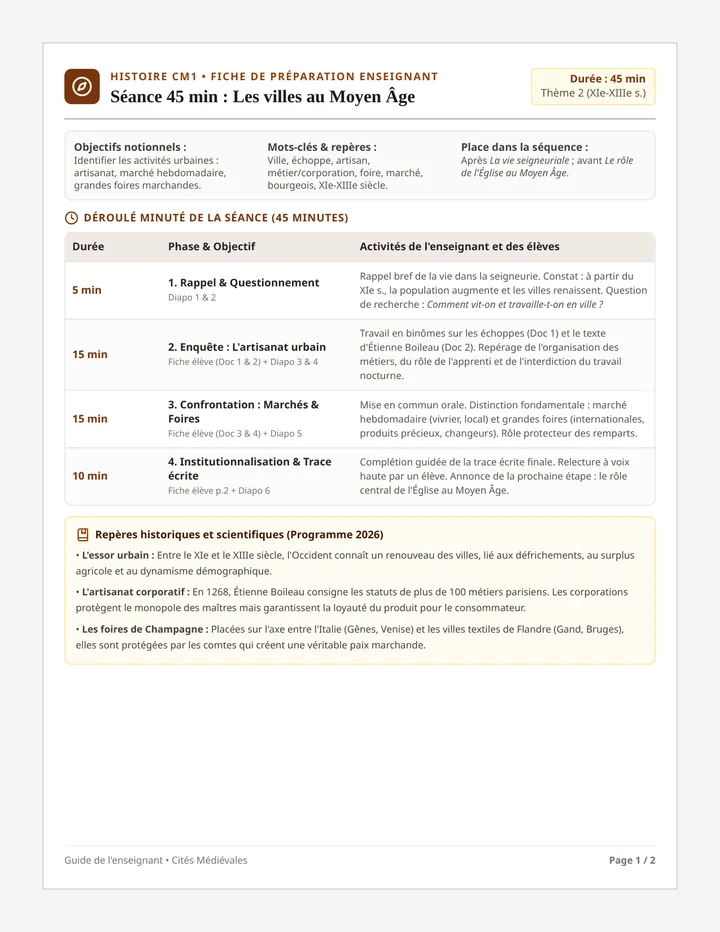
Turn off the lights in the classroom. Ask students to imagine it's 2:00 PM and they can't see their own hands. Explain that during the Dust Bowl, "Dust Blizzards" could turn day into night in minutes. Use Slide 1 to introduce the era.
10-30
Direct Instruction: The Perfect Storm
Use Slides 2-6 to explain the timeline. Emphasize that it wasn't just nature—the "Great Plow Up" was a human choice that made the drought worse.Teacher Tip: Show the "Wet Sheet" slide and ask students why they think it didn't work (the dust was fine like flour).
30-50
Guided Reading & Analysis
Distribute the "Dust Blizzard Survival Worksheet." Read the passage aloud or in pairs. Have students highlight evidence for the causes of the Dust Bowl in one color and the government response in another.
50-60+
Discussion & Witness Reflection
Use Slide 7 for a whole-class discussion. Focus on the human element: why would people stay? Why would they leave? Students complete the "Critical Thinking" question on the worksheet as their exit ticket.
Differentiation Strategies
Support
Provide a "Cloze" version of the reading with fill-in-the-blanks for key terms. Use more visual aids from the slides to explain "contour plowing."
Challenge
Ask students to research "The Grapes of Wrath" (at an appropriate level) or write a diary entry from the perspective of an "Okie" arriving in California.
Background for the Teacher
The Dust Bowl (1930–1936) was a man-made and natural disaster. Decades of "sod-busting" removed the protective prairie grasses. When a major drought hit, the exposed topsoil became airborne. The Roosevelt administration's response—the Soil Conservation Service and the CCC's Shelterbelt—represented a turning point in federal environmental policy, moving toward sustainable land management.