Lenny.com
Explore
Create
ActivitiesNewMathEnglish Language ArtsScience & EngineeringSocial StudiesGlobal LanguagesHealth & Physical EducationSpecial EducationCounseling & Life SkillsArts & CreativityESL
Lenny.com
Lenny.com
Explore
Create
ActivitiesNewMathEnglish Language ArtsScience & EngineeringSocial StudiesGlobal LanguagesHealth & Physical EducationSpecial EducationCounseling & Life SkillsArts & CreativityESL
Lenny.com
Lenny.com

Solutions

Lenny for EducatorsLenny for SchoolsLenny for Districts

Product

ExploreSign inCreateSupportAbout

Resources

Getting startedMTSS Acceleration Program

Newsletters

School Funding Newsletter

© 2026 Lenny Learning Inc.

TermsPrivacyAccessibility
LinkedInInstagramX
Lenny

Native Peoples of Mesoamerica and South America

Social structures, agricultural systems, and architectural achievements of the Maya, Aztec, and Inca civilizations. Examines cultural legacies and environmental adaptations across Mesoamerica and the Andean region.

Social StudiesSocial Studies PracticesLocation WordsMapsOrder EventsChronology and CausationEvaluating SourcesHistorical ThinkingGeography, Humans, & the EnvironmentAmerican Symbols and LandmarksCitiesStatesState CapitalsRegions of the United StatesGeographic SkillsPhysical GeographyHuman GeographyRegional GeographyGeography of AfricaGeography of AsiaGeography of EuropeGeography of OceaniaGeography of the AmericasSociety and Environment of EuropeSociety and Environment of AsiaSociety and Environment of The AmericasSociety and Environment of the Middle EastSociety and Environment of AfricaHistoryPrehistoryComparing Ancient River CivilizationsAncient MesopotamiaAncient Egypt and KushAncient South AsiaEarly ChinaGreeceRome and the Byzantine EmpireAncient World HistoryNative Peoples of North AmericaNative Peoples of Mesoamerica and South AmericaAfrican EmpiresMedieval AsiaMedieval EuropeThe Silk RoadMedieval HistoryIslamic EmpiresWorld ReligionsRenaissance PeriodAge of ExplorationThe Thirteen ColoniesThe American RevolutionUS History Early RepublicFounding of the United StatesUS History AntebellumUS Civil WarReconstruction PeriodThe Gilded AgeUS ImperialismWorld ImperialismWorld War IUS History 1920sGreat DepressionWorld War IIThe Cold WarUS History 1950-60sUS History 1960s-70sWorld History 20th CenturyContemporary US HistoryContemporary World HistoryHolidaysCivics and GovernmentCitizenshipGovernment FoundationsThe ConstitutionUS ConstitutionExecutive BranchLegislative BranchJudicial BranchState and LocalPolitical ParticipationPublic PolicyPolitical SystemsPower and AuthoritySocial MovementsDefining DevianceTheories of DevianceCrime and Criminal JusticeEconomicsBasic Economic PrinciplesSupply and DemandWhat is MoneyEconomic FundamentalsMicroeconomicsMacroeconomicsBanking and FinanceEconomic SystemsGlobal EconomicsCorporations and PowerThe Changing WorkplaceUnemployment and LaborClass and InequalitySocial MobilityGlobal InequalityPsychologyHistory of PsychologyPsychology as a ScienceBrain and Nervous SystemNeuroscience and BehaviorGenetics and BehaviorSleep and ConsciousnessSensory ProcessesPerceptual OrganizationClassical ConditioningOperant ConditioningObservational LearningCognitive LearningMemory ProcessesThinking and Problem SolvingLanguage and CognitionTheories of MotivationStress and CopingPrenatal and Infant DevelopmentChildhood DevelopmentAdolescent DevelopmentAdulthood and AgingSelf and IdentitySocial CognitionSocial InfluenceAttraction and RelationshipsGroup BehaviorPrejudice and DiscriminationAnxiety and Mood DisordersClinical PsychologyForensic PsychologyPhilosophy & EthicsIntroduction to PhilosophyMajor Philosophers & IdeasMind and Body ProblemFree Will vs DeterminismEthics & MoralityReligion & PhilosophyPolitical Philosophy

Videos

Exploring the Maya: Math, Pyramids, and Ancient Secrets

Exploring the Maya: Math, Pyramids, and Ancient Secrets

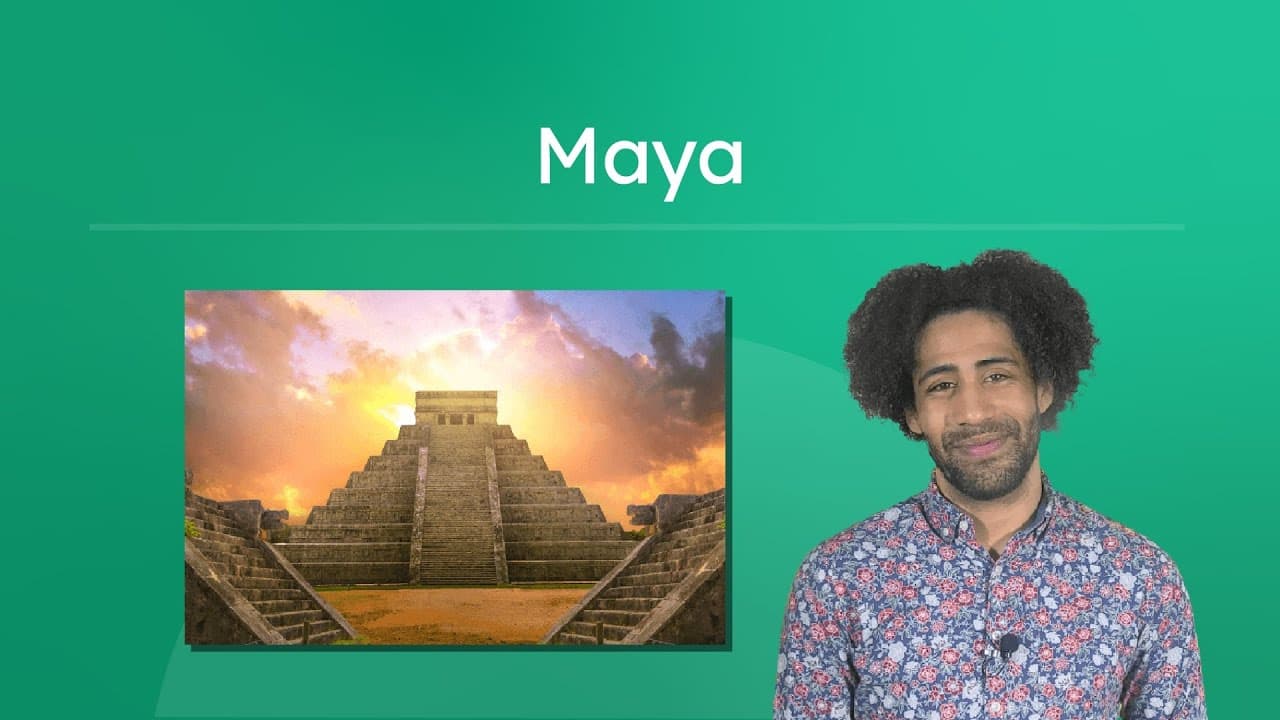
This engaging educational video explores the history, culture, and achievements of the ancient Maya civilization in Central America. Hosted by a narrator and his robot companion, Mia, the lesson introduces students to the unique Maya base-20 mathematics system, contrasting it with the modern base-10 system. It covers the timeline of the Maya civilization, from its early development parallel to the Olmecs to its Classic Period peak involving monumental architecture like pyramids and temples, and finally its mysterious decline.

Miacademy & MiaPrep Learning ChannelMiacademy & MiaPrep Learning Channel

11mins 16s

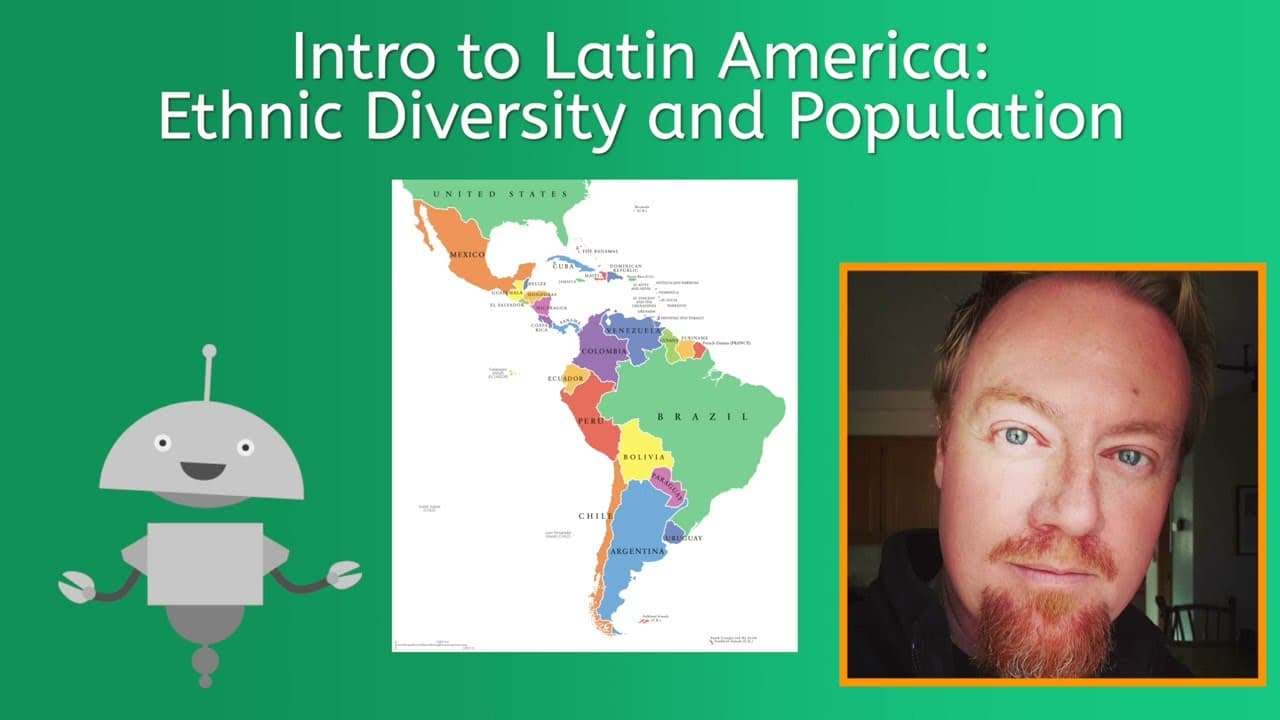
Exploring Ethnic Diversity and Population Patterns in Latin America

Exploring Ethnic Diversity and Population Patterns in Latin America

This educational video provides a comprehensive overview of the ethnic diversity and demographic characteristics of Latin America. It begins by exploring the historical roots of the region's cultural mosaic, detailing the influences of Indigenous peoples, European colonizers (Spanish, French, British, German), African populations, and Asian immigrants. Specific case studies highlight unique cultural blends, such as the Afro-French culture of Haiti, the German influence on Mexican music and beer, and the Chinese heritage in Peru. The second half of the video shifts focus to human geography and demographics, utilizing population pyramids to analyze specific countries. It examines the aging population of Cuba due to healthcare and emigration, the youthful and growing Indigenous population of Bolivia, and the unique migration patterns visible in Belize's demographic data. The narrator explains how these population structures impact economies and future growth. Ideally suited for geography and social studies classrooms, this video connects history to contemporary culture and introduces students to demographic analysis. It provides concrete examples of cultural diffusion and push/pull factors in migration, making complex sociological concepts accessible through visual data and historical narrative. Teachers can use this resource to teach map skills, graph interpretation, and the lasting impacts of colonization.
Miacademy & MiaPrep Learning ChannelMiacademy & MiaPrep Learning Channel

8mins 17s

Exploring the People and Settlement of Latin America

Exploring the People and Settlement of Latin America

This educational video provides a comprehensive overview of the human geography of Latin America, focusing on the diverse origins of its people and their unique settlement patterns. The narrator breaks down the population into three primary historical groups: Native peoples who migrated across Beringia, European colonizers (primarily Spanish and Portuguese), and Africans brought via the slave trade. It further explores how these groups mixed over centuries to create distinct cultural identities like Mestizo and Mulatto, explaining the historical context and modern implications of these terms. The second half of the video shifts to settlement geography, analyzing where people live and why. It highlights the traditional preference for coastal living due to trade and transportation, but also examines the unique high-altitude settlements of the Andes, such as La Paz and La Rinconada. A significant portion is dedicated to the concept of a "forward capital," using Brasília as a case study for how governments attempt to shift population density and economic opportunity inland from the coast. For educators, this video serves as an excellent resource for World Geography, Social Studies, and Latin American History units. It connects historical events (colonization, slavery) directly to modern demographics and urban planning. The content covers essential geography concepts like urbanization, migration push/pull factors, and human-environment interaction, making it a versatile tool for teaching how history shapes the physical distribution of people today.

Miacademy & MiaPrep Learning ChannelMiacademy & MiaPrep Learning Channel

8mins 55s

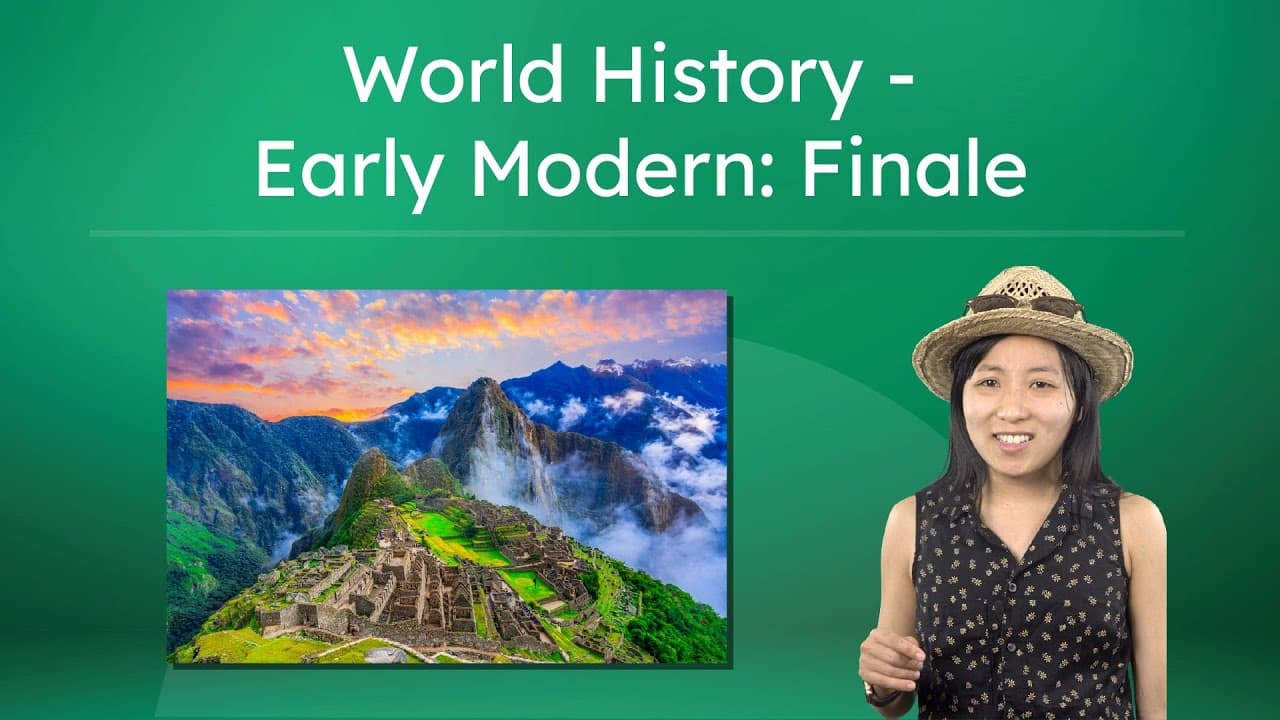
Is History Everywhere? A Global Tour of Resistance and Remembrance

Is History Everywhere? A Global Tour of Resistance and Remembrance

In this engaging finale to a World History course, the narrator takes viewers on a virtual "world tour vacation" to demonstrate that history is present everywhere we look. Using a travel narrative framework, the video visits three distinct locations—Cusco, Peru; Isandlwana, South Africa; and Hiroshima, Japan—to explore how historical events shape modern landscapes and cultural identity. The video moves beyond a dry recitation of dates, instead focusing on the enduring legacy of resistance, conflict, and the universal desire for peace. The content highlights three specific historical moments: the rebellion of Túpac Amaru II against Spanish colonial rule in Peru, the Zulu victory over British forces at the Battle of Isandlwana, and the solemn remembrance of the atomic bombing at the Peace Memorial Park in Hiroshima. Through these examples, the video explores profound themes including indigenous resistance to colonialism, the fragility of imperial power, and the importance of historical memory in preventing future tragedies. This video serves as an excellent capstone for a World History unit or as a standalone lesson on historical significance. It demonstrates how to connect past events to present-day locations, encouraging students to look for history in their own surroundings. Educators can use the specific case studies to discuss the long-term impacts of imperialism and war, or use the video's framework to launch a "history is everywhere" inquiry project where students investigate local statues, battlefields, or memorials.

Miacademy & MiaPrep Learning ChannelMiacademy & MiaPrep Learning Channel

11mins 3s

Exploring the People and Culture of Central America

Exploring the People and Culture of Central America

This educational video provides a comprehensive overview of the diverse demographics and rich cultural heritage of Central America. It explores the region's unique population blend, examining the distinct histories of African, Native American, European, and Mestizo communities. The narrator breaks down specific demographic data for countries like Belize, Panama, Guatemala, and Costa Rica, explaining historical reasons for these population distributions, such as the formation of Maroon communities by escaped slaves and indigenous groups.

Miacademy & MiaPrep Learning ChannelMiacademy & MiaPrep Learning Channel

8mins 39s

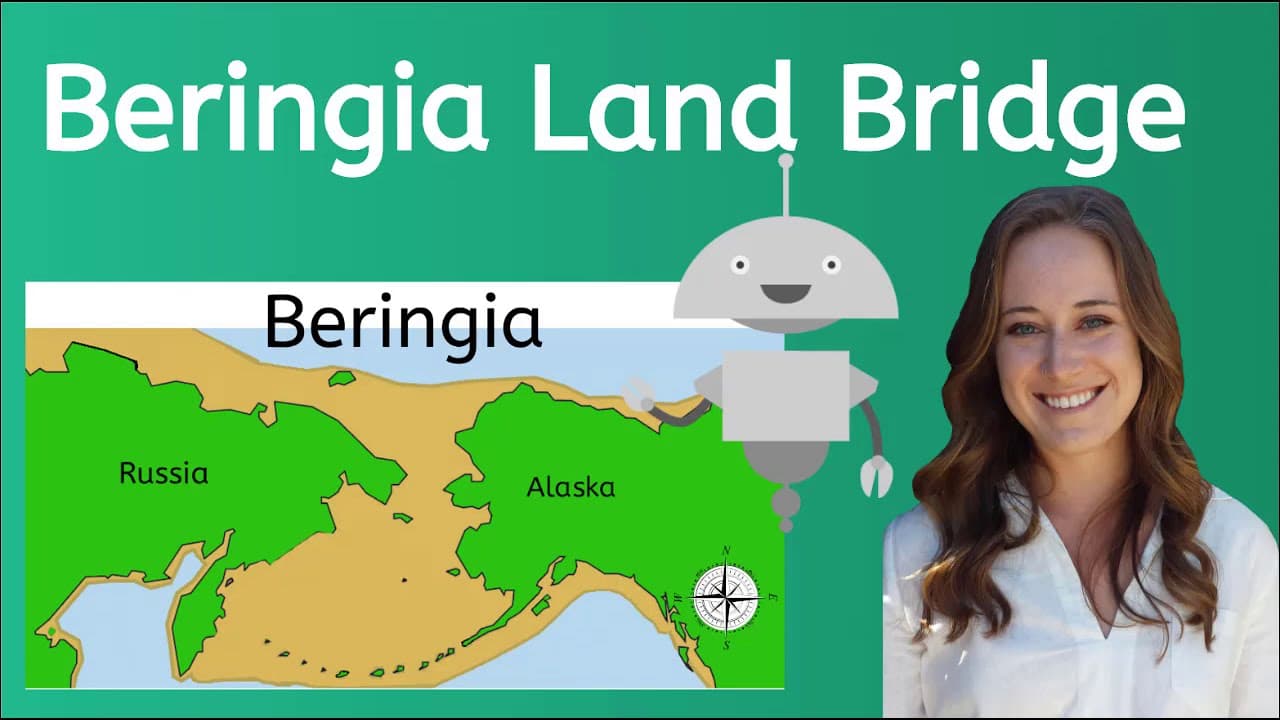
How the First People Migrated to the Americas

How the First People Migrated to the Americas

This educational video explores the scientific theory of how the first humans migrated to the Americas via the Beringia Land Bridge. It explains the geographical and climatic conditions of the Ice Age that lowered sea levels, exposing a land connection between present-day Russia and Alaska. The video details the migration routes taken by these early people as they moved through North America down to South America. The content covers key interdisciplinary concepts including geography, earth science, and anthropology. It defines important terms like "migration" and explains the push factors that cause populations to move, such as the search for food, resources, or safety. The video also introduces students to how scientists use evidence to reconstruct the past, specifically looking at how anthropologists use DNA analysis and how archaeologists use artifacts like bronze tools and jade masks to trace human origins. This resource is highly valuable for social studies and history classrooms studying early human civilizations or Native American history. It provides a clear visual representation of complex concepts like changing coastlines and migration patterns. Teachers can use this video to illustrate the intersection of geography and history, demonstrating how physical landscapes shape human movement and settlement patterns.

Miacademy & MiaPrep Learning ChannelMiacademy & MiaPrep Learning Channel

4mins 50s

Materials

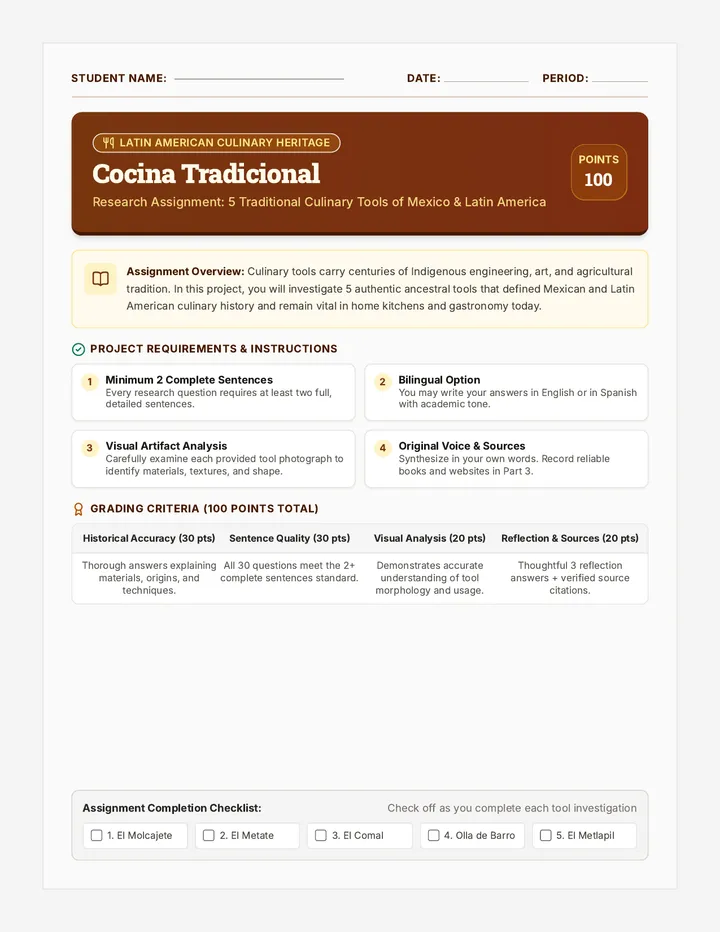
Cocina Tradicional Research Assignment

Cocina Tradicional Research Assignment

A 7-page research assignment packet on 5 traditional Mexican and Latin American kitchen tools (El Molcajete, El Metate, El Comal, La Olla de Barro, and El Metlapil), now featuring authentic photographic references for each tool, guided question prompts, reflection questions, and a formal sources log.

GJ

Gerardo Jimenez Ramirez

Ancient Creativity Comprehension Packet

Ancient Creativity Comprehension Packet

A 4-page scaffolded reading and writing comprehension packet for 7th-grade social studies, tailored for a Chinese-speaking WIDA Level 2 English learner. Includes bilingual vocabulary glossaries (English, Simplified Chinese, and Pinyin), chunked passages, visual icons, comprehension checks, and guided sentence-frame writing exercises.

KC

Kasie Costopulos

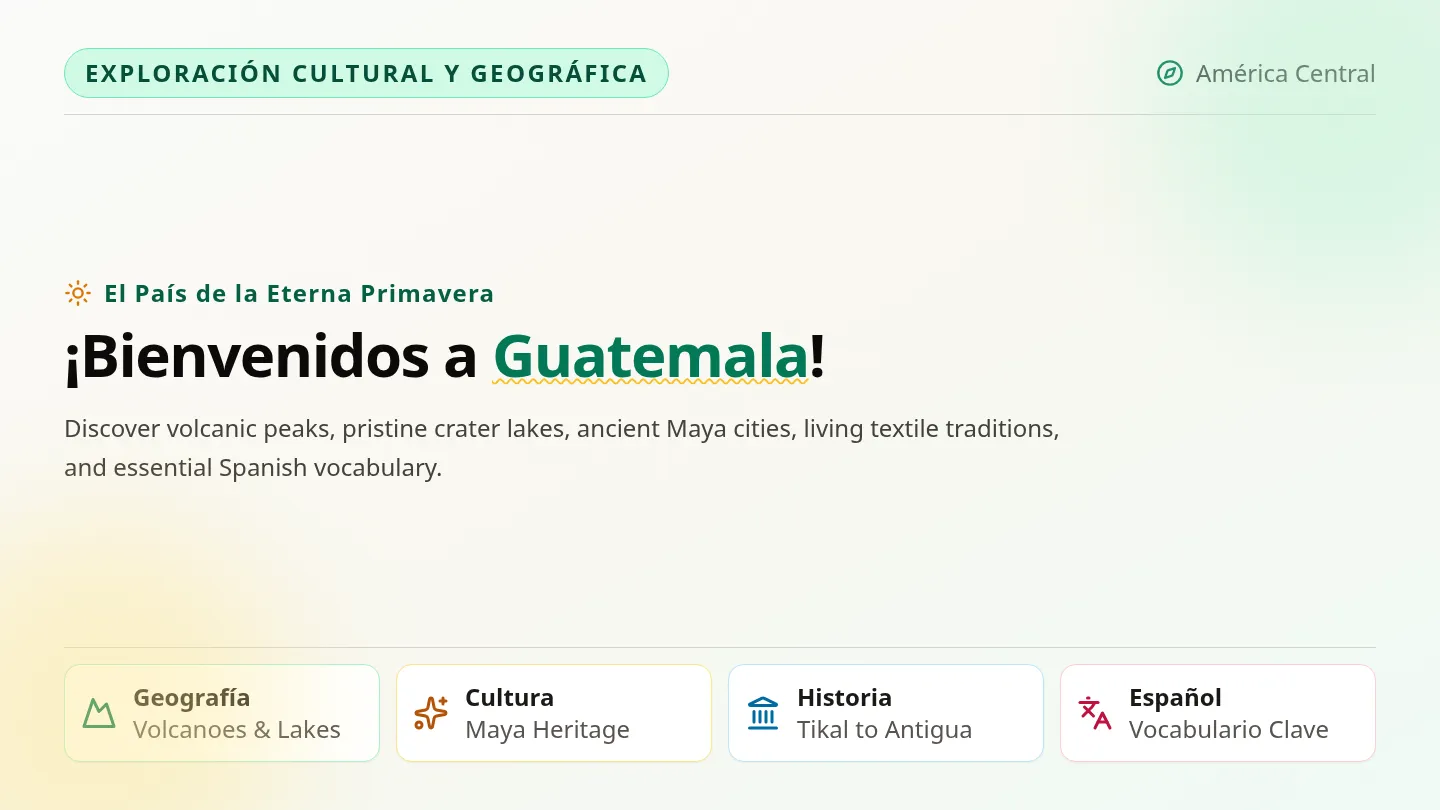
Guatemala Discovery Slides

Guatemala Discovery Slides

An expanded 11-slide presentation exploring Guatemala's geography, Maya heritage, historical milestones, sacred Maya symbols with ancestral words, and living traditions.

MI

Maria Ipina

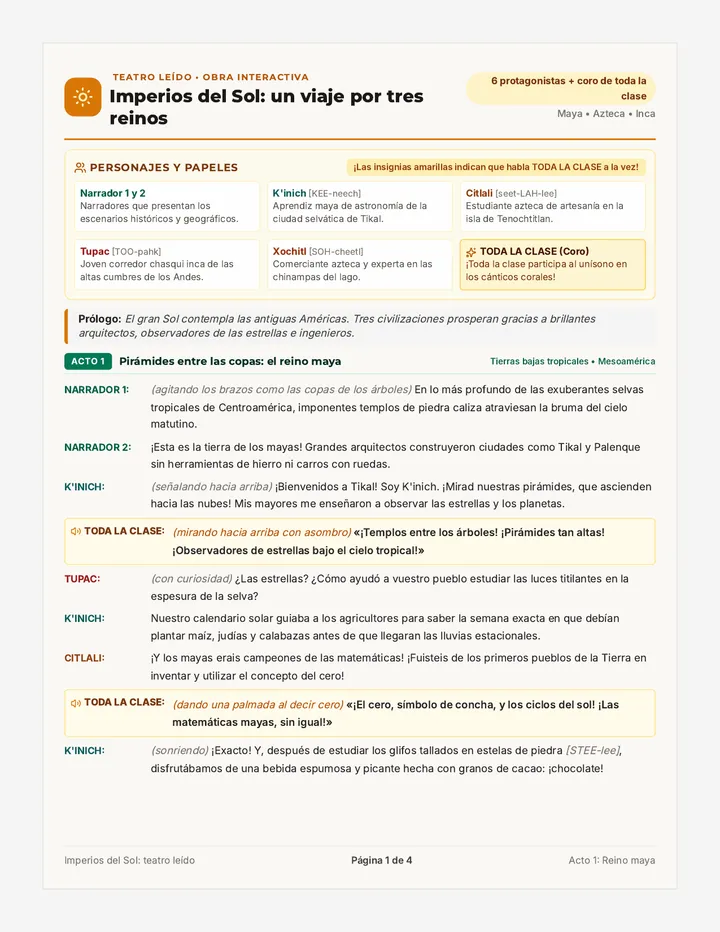
Empires of the Sun Script

Empires of the Sun Script

A four-page 4th-grade readers theatre script featuring six lead roles plus dynamic whole-class choral chants and call-and-response lines across the Maya, Aztec, and Inca civilizations.

J

jennifercreightonnegron

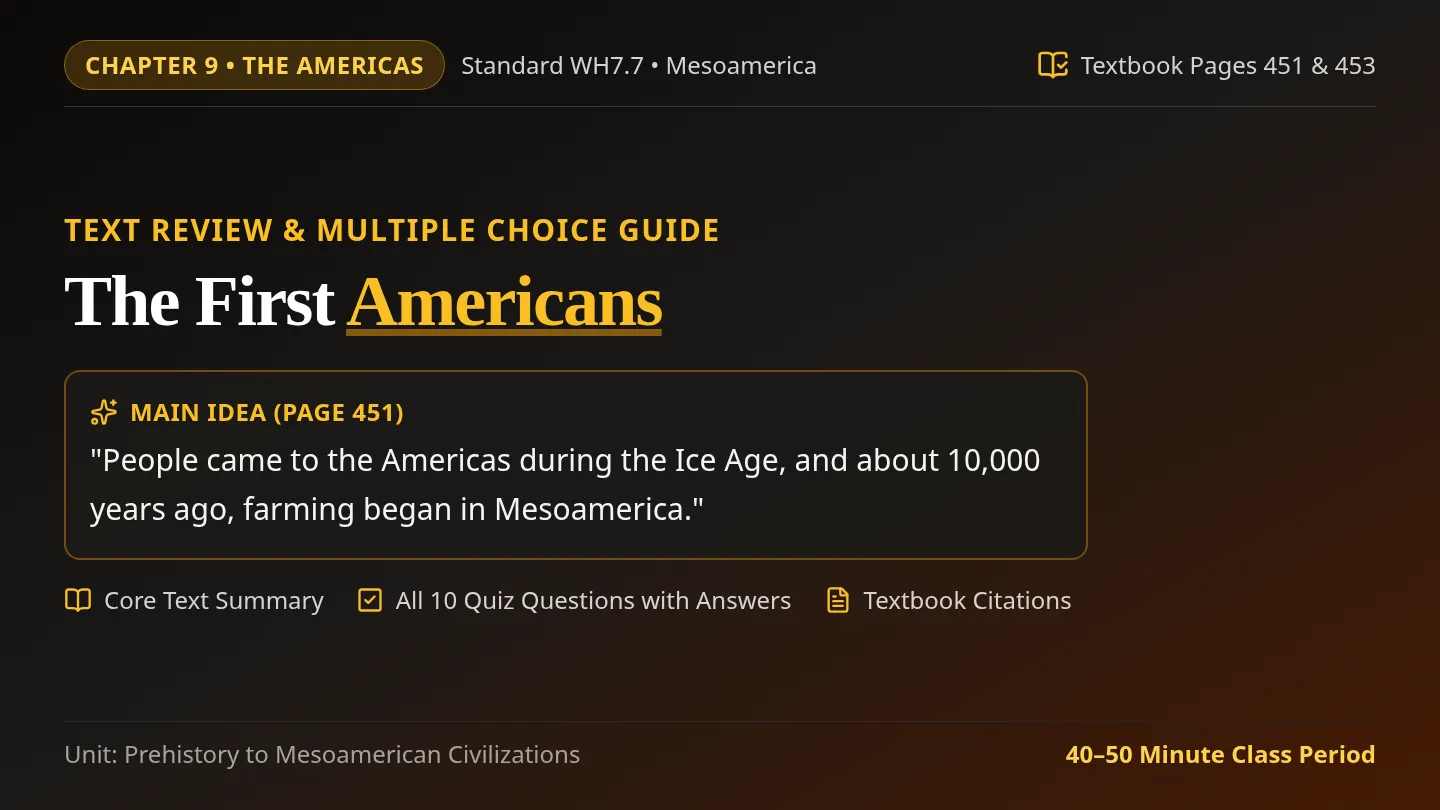
First Americans Review Slides

First Americans Review Slides

A complete 16-slide presentation for a 40–50 minute class reviewing 'The First Americans' (pp. 451 & 453) with key concepts, vocabulary, and dedicated review slides for all 10 worksheet multiple choice questions with revealed answers and textbook evidence.

MA

Maria Avery

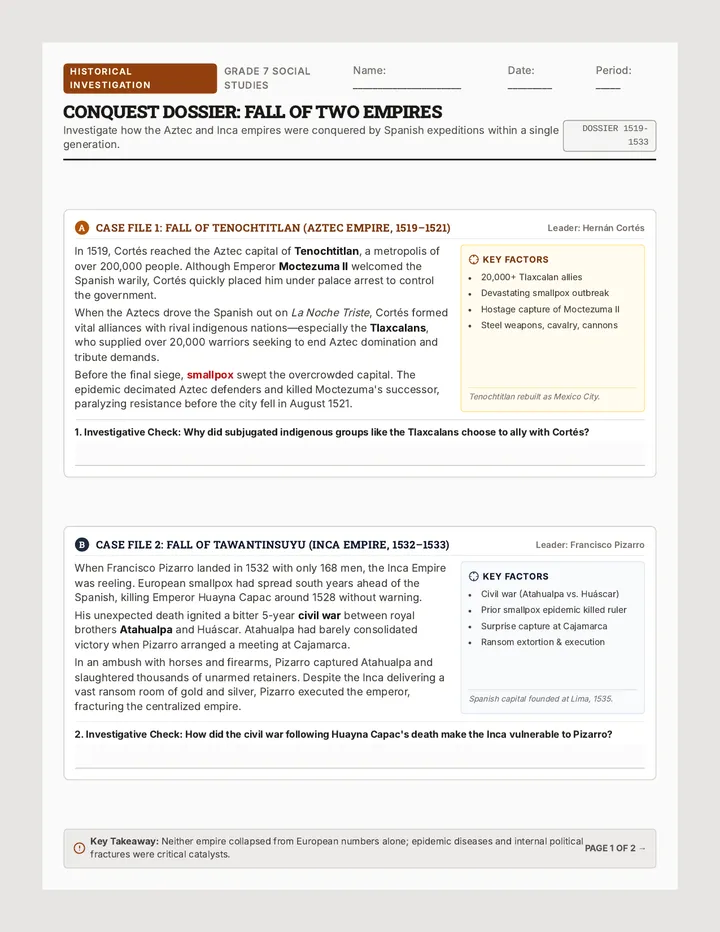
Conquest Dossier Worksheet

Conquest Dossier Worksheet

A two-page 7th-grade comparative history worksheet investigating the Spanish conquest of the Aztec and Inca empires. Students analyze primary context case files on Cortés and Pizarro, complete a four-factor comparative matrix, and write an evidence-based historical argument.

KM

Kinsley Manion

Sequences

Curriculum Blueprint Document v2

History Horizon Sequence

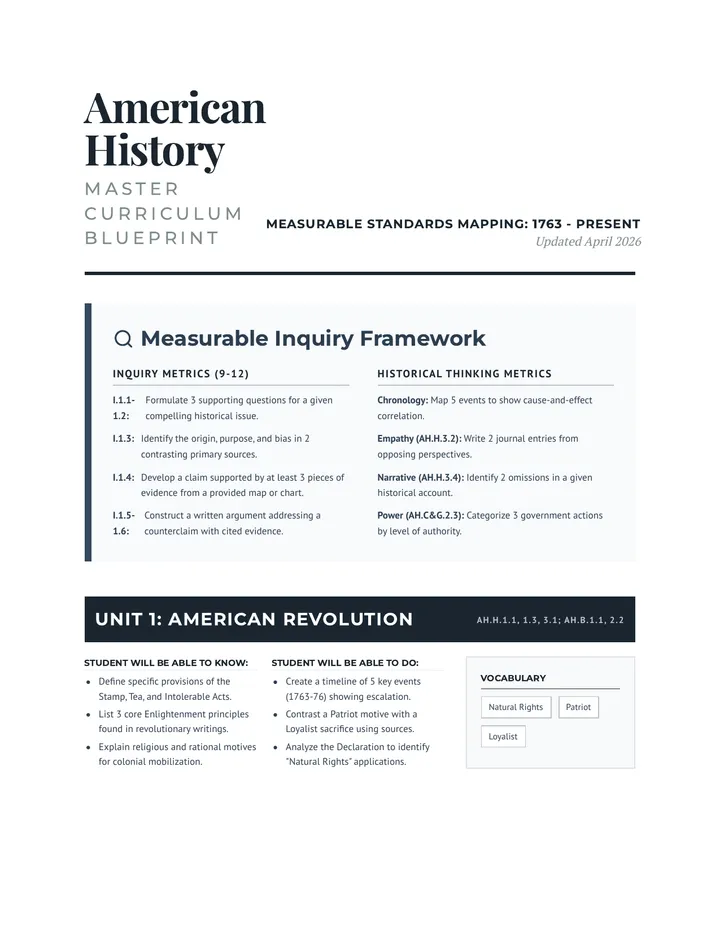
A comprehensive high school curriculum plan for American History, covering 13 units from the American Revolution to the modern era, aligned with North Carolina Social Studies standards.

AK

Amity Kea

21
Olmec Explorer Guide

Empire Builders of the Americas

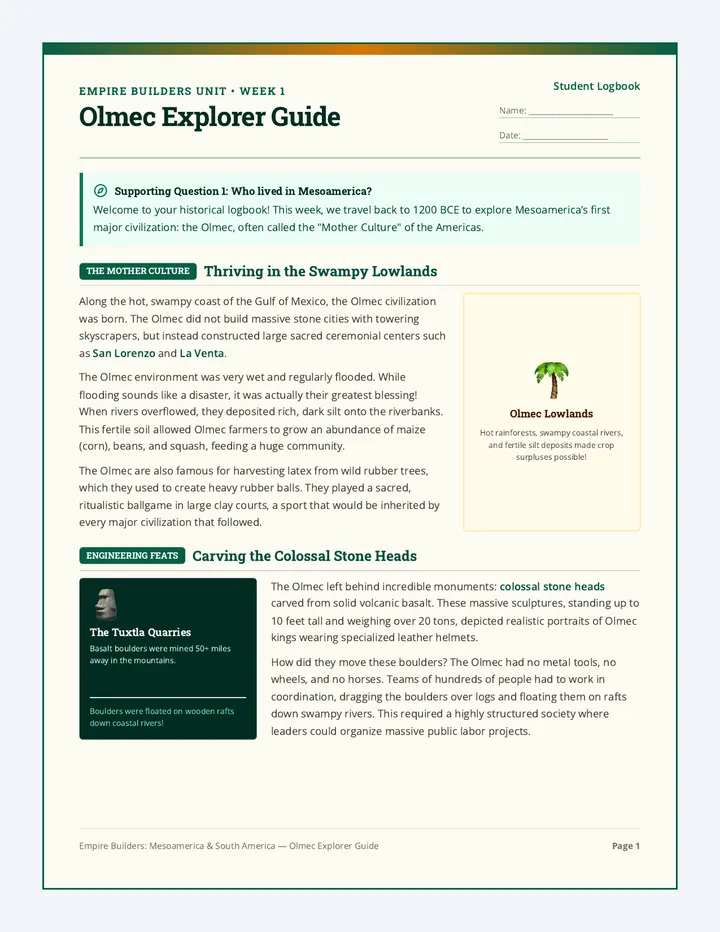
A comprehensive 4th-grade social studies unit where students analyze the Olmec, Maya, Aztec, and Inca civilizations. Through primary-source-style document analysis, geographical exploration, and civic action, students discover what made these empires successful and apply ancient engineering solutions to improve the modern City of Surprise.

SS

Steffany Schroeder

41
Interconnectivity Practice Questions

AP MCQ Vault

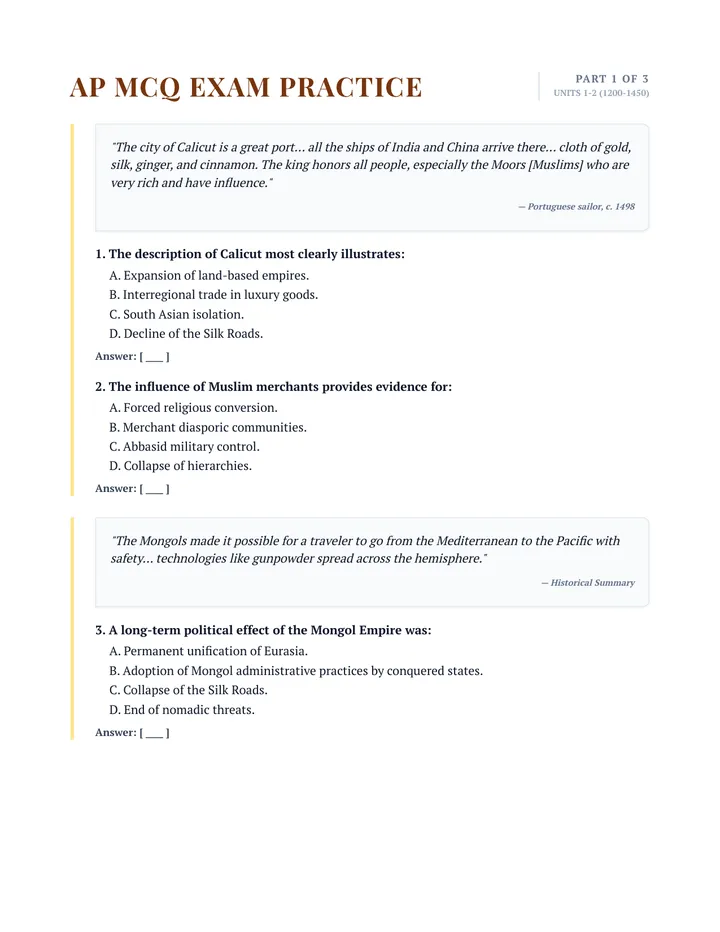
A focused AP World History practice series consisting exclusively of stimulus-based multiple choice questions and detailed answer keys covering Units 1-9.

J

james.shaw

6
History Detectives Workbook

First Footsteps

A 4-lesson unit exploring the first human migrations to the Americas. Students investigate the Bering Land Bridge and Coastal Route theories using maps and archaeological evidence, tracing the journey from Asia down to South America between 25,000 and 14,000 years ago.

JJ

Julie Johns

10
Clash of Worlds Slides

Worlds Collide

A deep dive into the 16th-century contact between European powers and indigenous American civilizations, exploring the complexities of conquest, resistance, and the emergence of a new global order.

AB

Amity Bradford

7
Collision Slides

Unheard Voices Exploring the Impact

This sequence critically examines the Age of Exploration from the perspective of Indigenous peoples in the Americas. Students analyze primary accounts, debunk myths of passive reception, and explore the complexity of interactions including trade, alliance, conflict, and resistance.

15

Lessons

Explorer Epochs Wall Chart

Early World Explorers

A comprehensive lesson on early world exploration from 300 BCE to 1500 CE, focusing on the geographical, cultural, and religious impacts of key explorers across different continents.

J

jcasey

14
Early Civilizations Review Worksheet

Early Civilizations

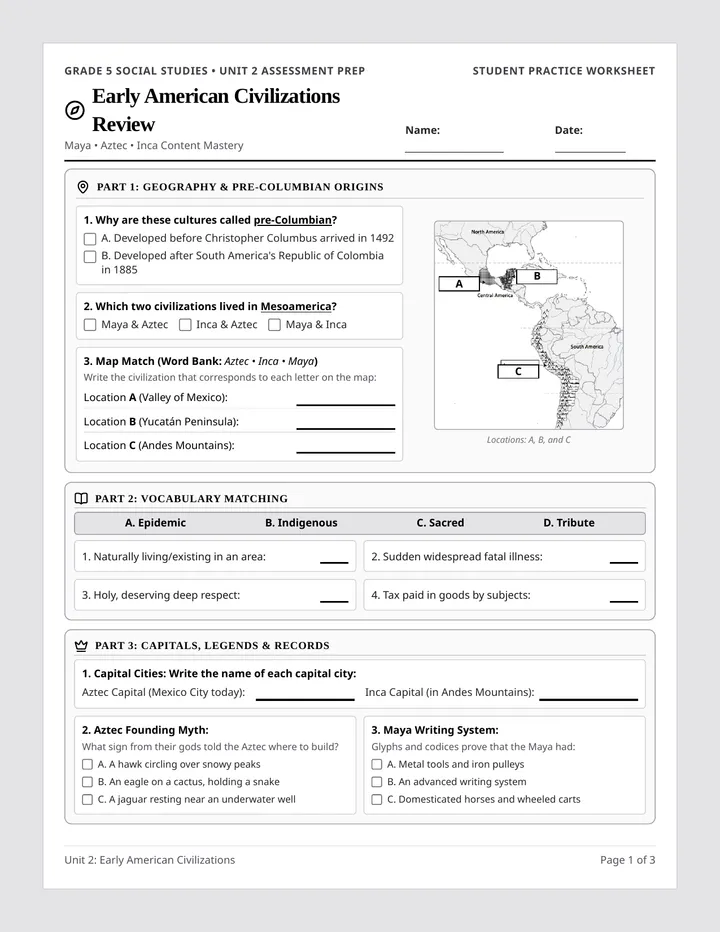
A unit covering the Maya, Aztec, and Inca civilizations, focusing on geography, cultural achievements, environmental engineering, and Spanish contact.

A

Amy.Cannon

2
Civilization Quest Choice Board

Civilization Quest

An extension resource lesson containing a non-digital, highly engaging choice board designed for fast finishers studying CKLA Grade 5 Unit 2 (Maya, Aztec, Inca civilizations). It supports key writing standards including compare and contrast.

A

Amy.Cannon

4
Empire Echoes Notes Key

Ancient American Empires

A comprehensive exploration of the Maya, Aztec, and Inca civilizations, focusing on their geography, social structures, and lasting achievements. Students will use guided notes to capture key details during a direct instruction lecture.

CW

Crystal Wade

7
Roots of Resilience Teacher Guide

Roots of Resilience

A high-energy, visual-focused lesson for freshman EL students exploring the intersection of Black and Hispanic identities through key historical figures in sports, arts, and civil rights.

M

mmanning

8
Swamp Sovereigns Teacher Guide

Swamp Sovereigns

A comprehensive grade 5 history and engineering lesson exploring the advanced agricultural and architectural feats of Tenochtitlan. Students investigate chinampas, aqueducts, and lake-bound city planning through a reading passage, collaborative station rotations, and design challenges.

U

4