Lenny.com
Explore
Create
ActivitiesNewMathEnglish Language ArtsScience & EngineeringSocial StudiesGlobal LanguagesHealth & Physical EducationSpecial EducationCounseling & Life SkillsArts & CreativityESL
Lenny.com
Lenny.com
Explore
Create
ActivitiesNewMathEnglish Language ArtsScience & EngineeringSocial StudiesGlobal LanguagesHealth & Physical EducationSpecial EducationCounseling & Life SkillsArts & CreativityESL
Lenny.com
Lenny.com

Solutions

Lenny for EducatorsLenny for SchoolsLenny for Districts

Product

ExploreSign inCreateSupportAbout

Resources

Getting startedMTSS Acceleration Program

Newsletters

School Funding Newsletter

© 2026 Lenny Learning Inc.

TermsPrivacyAccessibility
LinkedInInstagramX
Lenny

Social Movements

Historical and contemporary collective actions used to influence public policy and achieve social change. Examines strategies like grassroots organizing, protests, and legislative lobbying across various rights-based movements.

Social StudiesSocial Studies PracticesLocation WordsMapsOrder EventsChronology and CausationEvaluating SourcesHistorical ThinkingGeography, Humans, & the EnvironmentAmerican Symbols and LandmarksCitiesStatesState CapitalsRegions of the United StatesGeographic SkillsPhysical GeographyHuman GeographyRegional GeographyGeography of AfricaGeography of AsiaGeography of EuropeGeography of OceaniaGeography of the AmericasSociety and Environment of EuropeSociety and Environment of AsiaSociety and Environment of The AmericasSociety and Environment of the Middle EastSociety and Environment of AfricaHistoryPrehistoryComparing Ancient River CivilizationsAncient MesopotamiaAncient Egypt and KushAncient South AsiaEarly ChinaGreeceRome and the Byzantine EmpireAncient World HistoryNative Peoples of North AmericaNative Peoples of Mesoamerica and South AmericaAfrican EmpiresMedieval AsiaMedieval EuropeThe Silk RoadMedieval HistoryIslamic EmpiresWorld ReligionsRenaissance PeriodAge of ExplorationThe Thirteen ColoniesThe American RevolutionUS History Early RepublicFounding of the United StatesUS History AntebellumUS Civil WarReconstruction PeriodThe Gilded AgeUS ImperialismWorld ImperialismWorld War IUS History 1920sGreat DepressionWorld War IIThe Cold WarUS History 1950-60sUS History 1960s-70sWorld History 20th CenturyContemporary US HistoryContemporary World HistoryHolidaysCivics and GovernmentCitizenshipGovernment FoundationsThe ConstitutionUS ConstitutionExecutive BranchLegislative BranchJudicial BranchState and LocalPolitical ParticipationPublic PolicyPolitical SystemsPower and AuthoritySocial MovementsDefining DevianceTheories of DevianceCrime and Criminal JusticeEconomicsBasic Economic PrinciplesSupply and DemandWhat is MoneyEconomic FundamentalsMicroeconomicsMacroeconomicsBanking and FinanceEconomic SystemsGlobal EconomicsCorporations and PowerThe Changing WorkplaceUnemployment and LaborClass and InequalitySocial MobilityGlobal InequalityPsychologyHistory of PsychologyPsychology as a ScienceBrain and Nervous SystemNeuroscience and BehaviorGenetics and BehaviorSleep and ConsciousnessSensory ProcessesPerceptual OrganizationClassical ConditioningOperant ConditioningObservational LearningCognitive LearningMemory ProcessesThinking and Problem SolvingLanguage and CognitionTheories of MotivationStress and CopingPrenatal and Infant DevelopmentChildhood DevelopmentAdolescent DevelopmentAdulthood and AgingSelf and IdentitySocial CognitionSocial InfluenceAttraction and RelationshipsGroup BehaviorPrejudice and DiscriminationAnxiety and Mood DisordersClinical PsychologyForensic PsychologyPhilosophy & EthicsIntroduction to PhilosophyMajor Philosophers & IdeasMind and Body ProblemFree Will vs DeterminismEthics & MoralityReligion & PhilosophyPolitical Philosophy

Videos

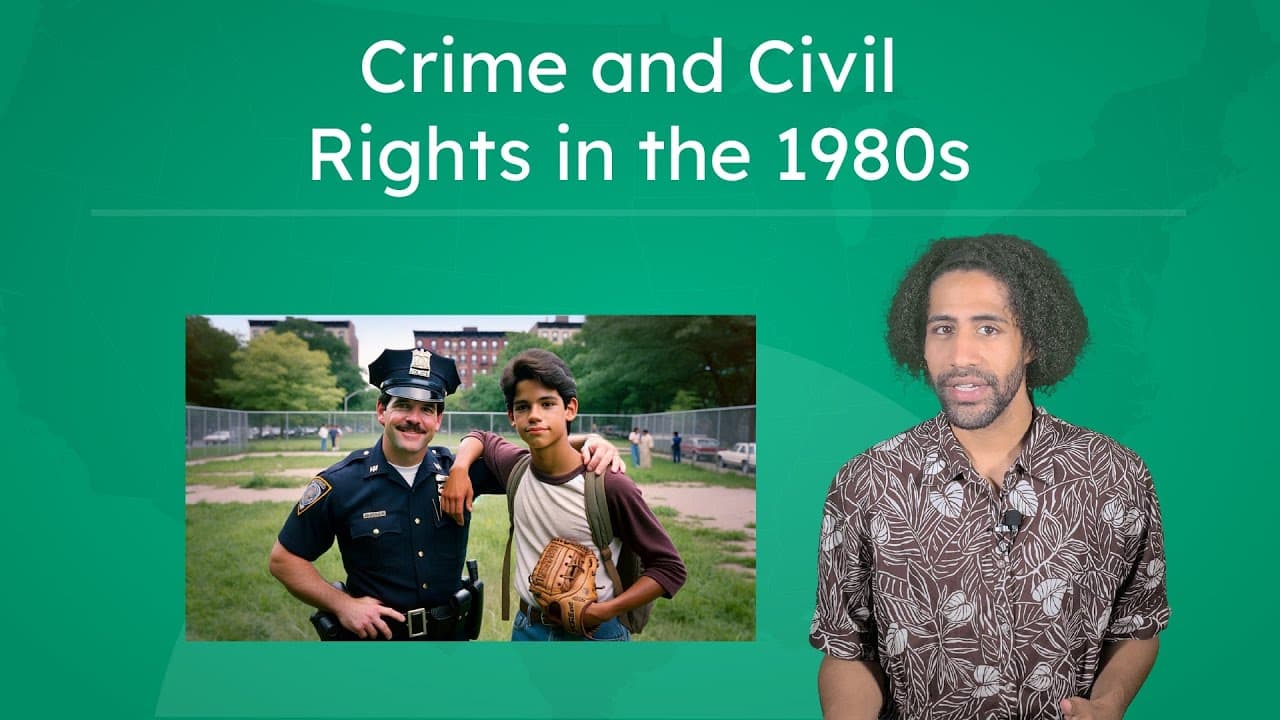
Crime, Civil Rights, and the War on Drugs in the 1980s

Crime, Civil Rights, and the War on Drugs in the 1980s

This video explores the complex intersection of crime, criminal justice reform, and civil rights in the United States during the 1980s through the eyes of a fictional narrator, Jamie. Set against the backdrop of the South Bronx, the video weaves a personal narrative with historical analysis to explain how the "War on Drugs" and "Law and Order" policies transformed the American legal landscape. It details specific policy changes like mandatory minimum sentencing and the shift away from rehabilitation, while simultaneously illustrating their human cost through Jamie's family experiences. The content delves into key historical themes including the crack cocaine epidemic, the disparity in sentencing between crack and powder cocaine, the rise of mass incarceration, and the strained relationship between law enforcement and minority communities. It critically examines the intended goals of these reforms—reducing crime and restoring order—versus their unintended consequences, such as the disproportionate imprisonment of Black and Latino citizens and the long-term socio-economic impacts on inner-city neighborhoods. For educators, this video serves as a powerful tool to humanize statistical data and abstract legal concepts. It provides a balanced platform to discuss controversial topics like stop-and-frisk, racial profiling, and the efficacy of punitive vs. rehabilitative justice. The narrative structure helps students connect emotionally with the material, making complex sociological and historical concepts accessible for high school US History, Civics, or Sociology classrooms.
Miacademy & MiaPrep Learning ChannelMiacademy & MiaPrep Learning Channel

12mins 45s

Defining Heroes and Traitors in American History

Defining Heroes and Traitors in American History

This educational video explores the complex and often subjective definitions of "hero" and "traitor" through three distinct case studies from American history. The narrator challenges students to look beyond simple definitions and consider how historical context, personal values, and perspective shape these labels. The video examines John Adams' controversial defense of British soldiers after the Boston Massacre, Colonel John Chivington's role in the horrific Sand Creek Massacre, and Carry Nation's radical "hatchetations" during the temperance movement. The video delves into deep ethical questions about justice, duty, and morality. It asks students to evaluate whether John Adams was a traitor to the colonial cause or a hero of justice for defending the enemy. It contrasts Chivington's self-proclaimed heroism in protecting settlers with the brutal reality of massacring peaceful Cheyenne and Arapaho people. Finally, it analyzes Carry Nation's crusade against alcohol, asking if her violent methods undermined her virtuous goals. Each segment includes pauses for reflection and specific guiding questions. Teachers can use this video to foster critical thinking and historical analysis skills. It serves as an excellent anchor for lessons on the American Revolution, Native American history, or the Prohibition era. By presenting historical figures who defy easy categorization, the video encourages students to engage with nuance and ambiguity. It is particularly useful for sparking debates about the rule of law, the ethics of war, and the validity of different protest methods.

Miacademy & MiaPrep Learning ChannelMiacademy & MiaPrep Learning Channel

11mins 30s

The Murder of Emmett Till: A Catalyst for the Civil Rights Movement

The Murder of Emmett Till: A Catalyst for the Civil Rights Movement

This episode of Crash Course Black American History, hosted by Clint Smith, examines the tragic 1955 murder of 14-year-old Emmett Till in Mississippi and its profound impact on the Civil Rights Movement. The video details the events leading up to his kidnapping by Roy Bryant and J.W. Milam, the brutal murder, and the subsequent trial that resulted in a hasty acquittal by an all-white jury. Central to the narrative is the courageous decision by Emmett's mother, Mamie Till, to hold an open-casket funeral, allowing the world to witness the brutality of white supremacy through the publication of photographs in Jet magazine. The video explores key themes such as the systemic failure of the justice system in the Jim Crow South, the vital role of Black-owned media (like the Chicago Defender and Jet) in exposing racial terror, and the concept of double jeopardy. It highlights how domestic terrorism was used to enforce social hierarchy and how this specific event galvanized Black Americans to mobilize for civil rights. The host also connects historical events to the present day, using a personal anecdote about visiting the National Museum of African American History and Culture to illustrate how recent this history truly is. For educators, this video serves as a powerful tool to teach about the catalyst of the modern Civil Rights Movement and the realities of life under Jim Crow. It provides a nuanced look at how legal structures protected perpetrators of racial violence and how media was used as a form of resistance. The content allows for deep discussions on the ethics of photojournalism, the limitations of the legal system, and the intergenerational trauma of racism, making it highly relevant for American History, Civics, and Social Justice curricula.

CrashCourseCrashCourse

11mins 45s

Reclaiming Sovereignty: The Land Back Movement Explained

Reclaiming Sovereignty: The Land Back Movement Explained

This episode of Crash Course Native American History explores the "Land Back" movement, a decentralized effort by Indigenous peoples to reclaim authority over stolen land and resources. Hosted by Che Jim, the video breaks down the concept beyond slogans and hashtags, defining it as a multifaceted approach to asserting tribal sovereignty. It examines various methods used to achieve these goals, ranging from legal battles and government settlements to voluntary "settler rent" and direct action protests like blockades.

CrashCourseCrashCourse

10mins 19s

Women in the 19th Century: Reform and Rights

Women in the 19th Century: Reform and Rights

This fast-paced and informative history lesson explores the complex role of women in 19th-century United States history. Host John Green moves beyond the simple timeline of suffrage to examine the legal, social, and economic structures that defined women's lives, including the concepts of "coverture," "Republican Motherhood," and the "Cult of Domesticity." The video illustrates how American women, though legally barred from political participation, leveraged their perceived moral authority to drive massive social changes through reform movements like temperance and abolition. Key themes include the intersection of the abolitionist movement with the women's rights movement, the economic impact of the Market Revolution on gender roles, and the struggle against the legal doctrine of coverture. The video highlights key historical figures such as Elizabeth Cady Stanton, Lucretia Mott, Sojourner Truth, and the Grimké sisters, while explaining the strategic differences between various reform groups. For educators, this resource serves as an excellent synthesis of social history, connecting disparate events like the Seneca Falls Convention and the temperance movement into a cohesive narrative. It challenges students to understand historical agency, analyzing how disenfranchised groups found ways to exert political influence and reshape democratic institutions long before they secured the right to vote.

CrashCourseCrashCourse

13mins 11s

Island Hopping: A Journey Through Polynesian History and Culture

Island Hopping: A Journey Through Polynesian History and Culture

This educational video takes students on a comprehensive tour of Polynesia, exploring its geography, history, and rich cultural traditions. Hosted by an engaging narrator named Brian, the journey begins by defining the Polynesian Triangle—anchored by Hawaii, New Zealand, and Easter Island—and tracing the incredible maritime migration of the Lapita people thousands of years before European explorers. The video uses maps, historical photos, and animations to visualize the vast distances traveled by early settlers in outrigger canoes.

Miacademy & MiaPrep Learning ChannelMiacademy & MiaPrep Learning Channel

10mins 34s

Materials

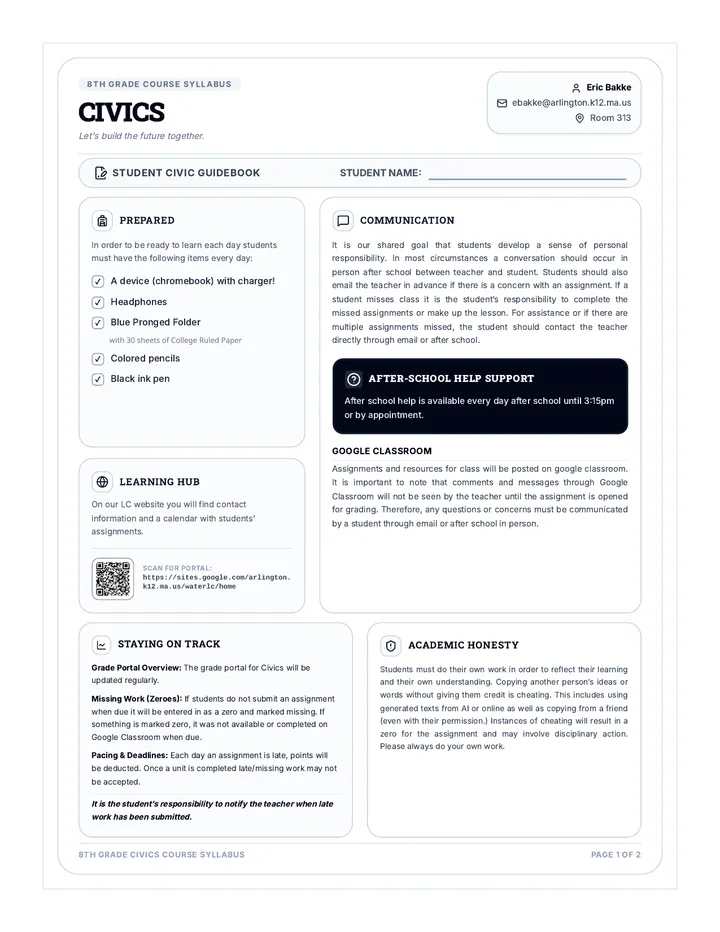
Civics Class Syllabus

Civics Class Syllabus

Civics Class Syllabus updated with an extra large QR code filling approximately half of the Digital Spaces container for maximum visibility and effortless scanning.

E

ebakke

Central American Freedom Reading Worksheet

Central American Freedom Reading Worksheet

A Grade 8-9 dual-language reading and multiple-choice worksheet covering Central American Independence Day (September 15, 1821). Features a 4-paragraph parallel English and Spanish text alongside 6 standards-aligned bilingual multiple choice questions assessing key historical concepts, leaders, and civic traditions.

GJ

Gerardo Jimenez Ramirez

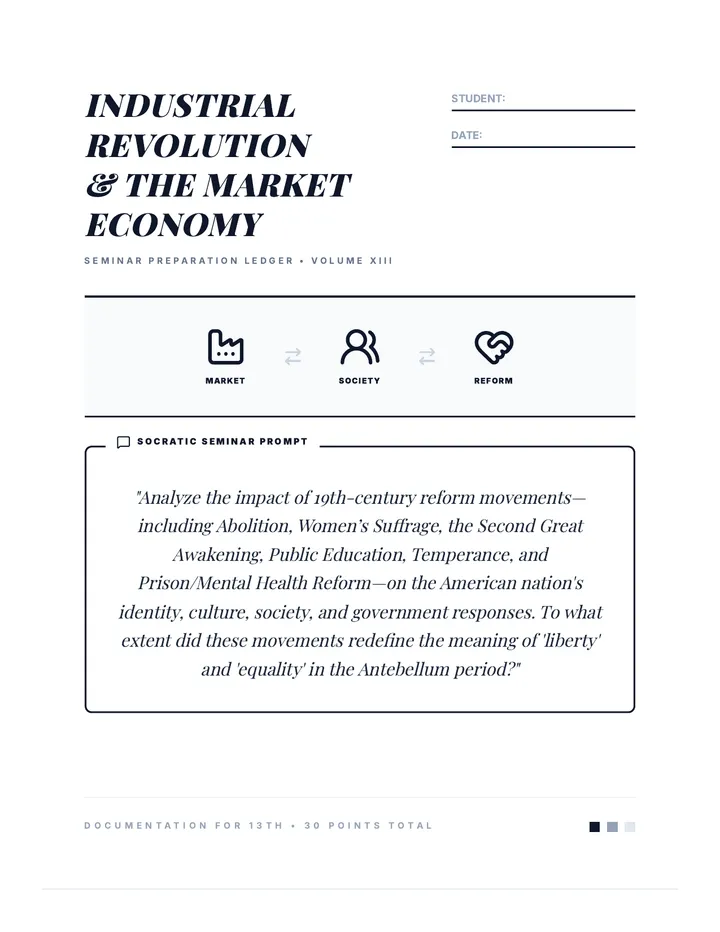
Market Economy Seminar Ledger

Market Economy Seminar Ledger

A detailed 5-page seminar preparation ledger for the Industrial Revolution and Market Economy lesson. Features a dedicated cover page with relevant historical icons and a prominent Socratic prompt, three separate article analysis pages, and a final synthesis evaluation. Writing lines are darkened for optimal print quality.

JG

Joshua Griffith

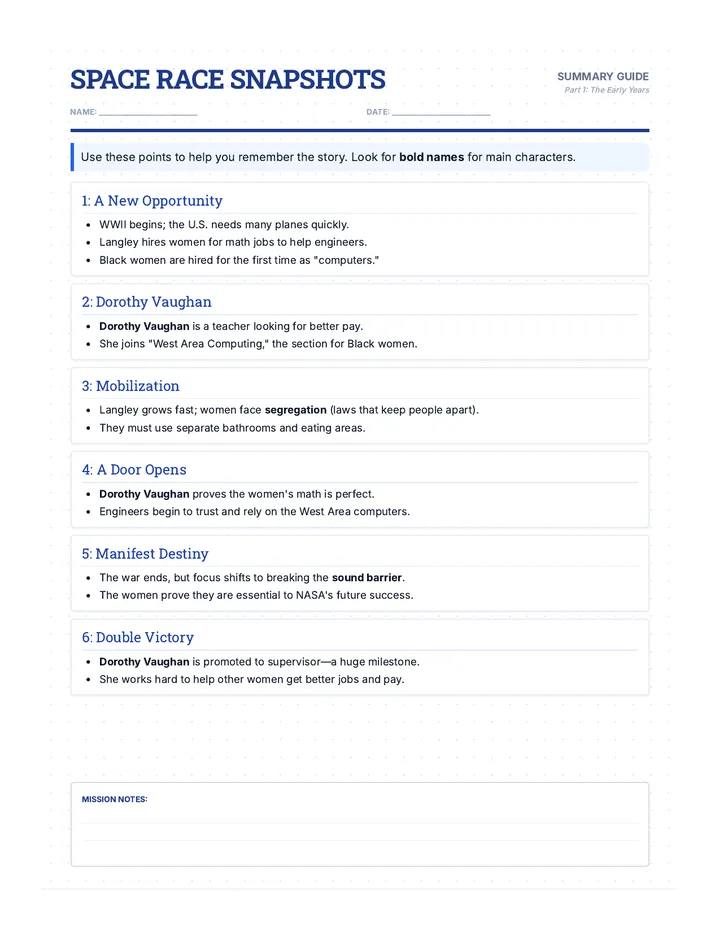
Space Race Snapshots Summary Guide

Space Race Snapshots Summary Guide

A four-page chapter-by-chapter summary guide for "Hidden Figures" (Young Readers Edition), designed specifically for struggling readers. It features bulleted main points, bolded character names, and a clean, high-contrast NASA-inspired layout to support comprehension and tracking of the narrative.

M

mattiea

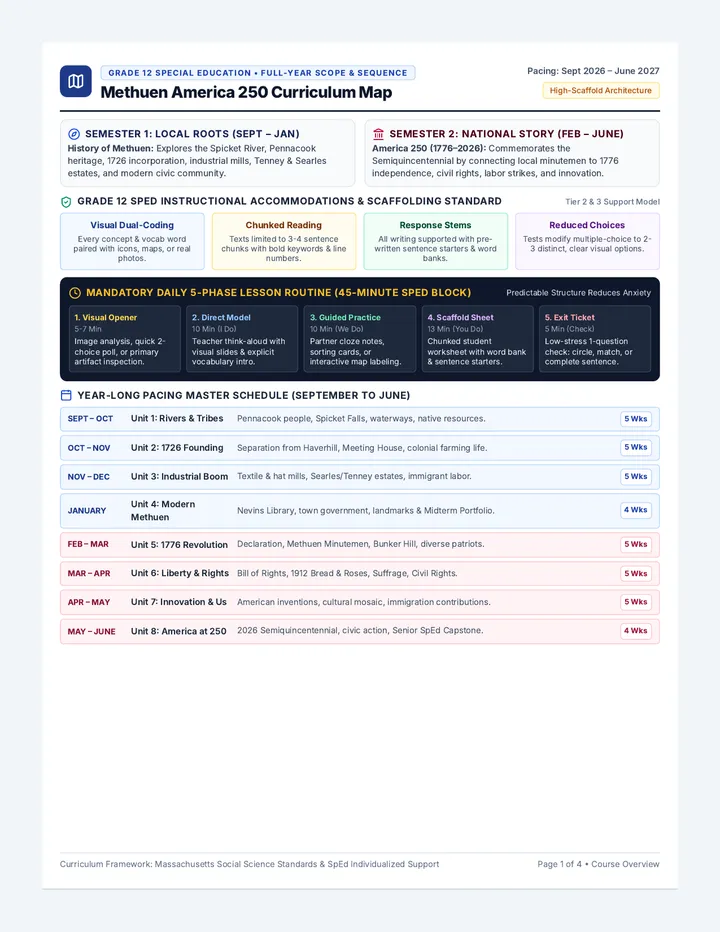
Methuen America 250 Curriculum Map

Methuen America 250 Curriculum Map

A comprehensive, year-long curriculum map and instructional guide for Grade 12 Special Education covering Methuen History (September to January) and America 250 (February to June). Includes unit-by-unit essential questions, key topics, core vocabulary, visual openers, chunked worksheets, exit tickets, modified tests, and a dedicated SpEd implementation toolkit.

L

lialiano

Liberty Ledger Assignment

Liberty Ledger Assignment

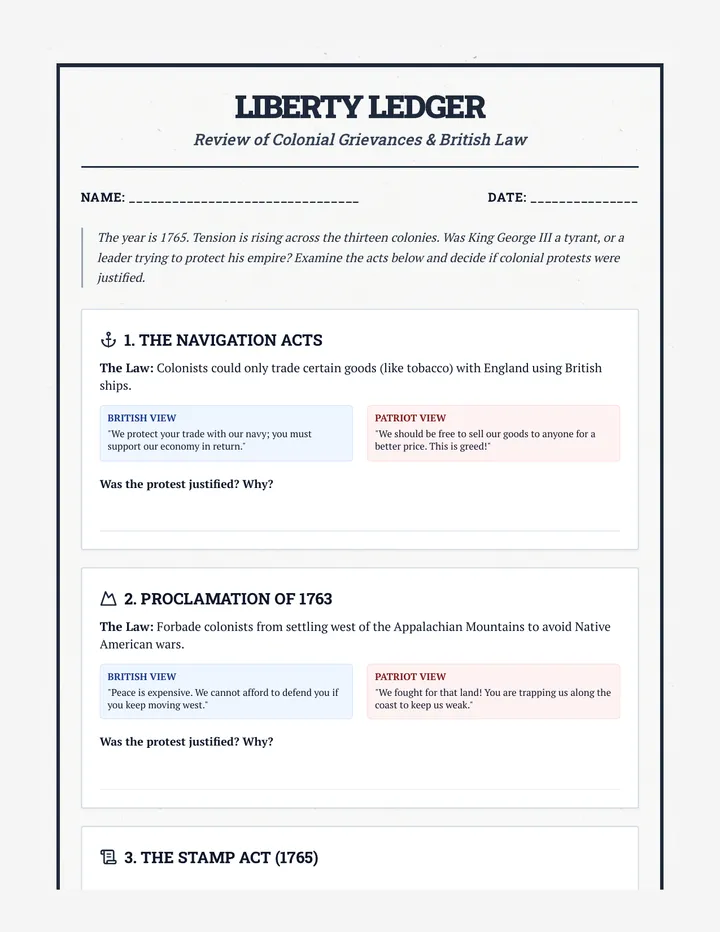
A two-sided homework assignment reviewing the Navigation Acts, Proclamation of 1763, and the Stamp Act. It prompts students to evaluate both British and Patriot perspectives to determine if colonial protests were justified. Margins have been significantly reduced for better print utilization on standard paper.

EK

Emily Kemnitz

Sequences

Invention Boom Slides

Modern Era Odyssey

A 13-day journey through modern American history, from the Industrial Revolution to the present day, focusing on key historical figures and major conflicts as outlined in the 5th Grade TEKS. Each lesson is designed for a quick 30-minute block, integrating multimedia and primary source analysis.

CH

Courtney Holdren

49
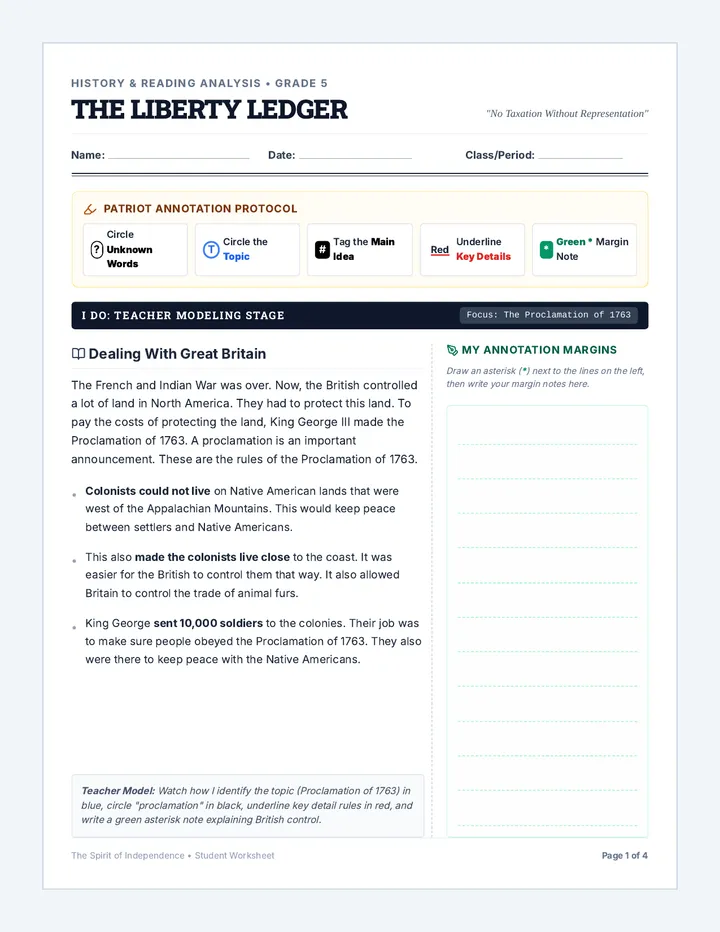
Liberty Ledger Annotation Worksheet

Spirit of Independence

A fifth-grade social studies and active reading unit exploring the growing friction between Great Britain and the American colonies, focusing on the causes, consequences, and motivated actions that led to the American Revolution.

MN

Monica Nava

7
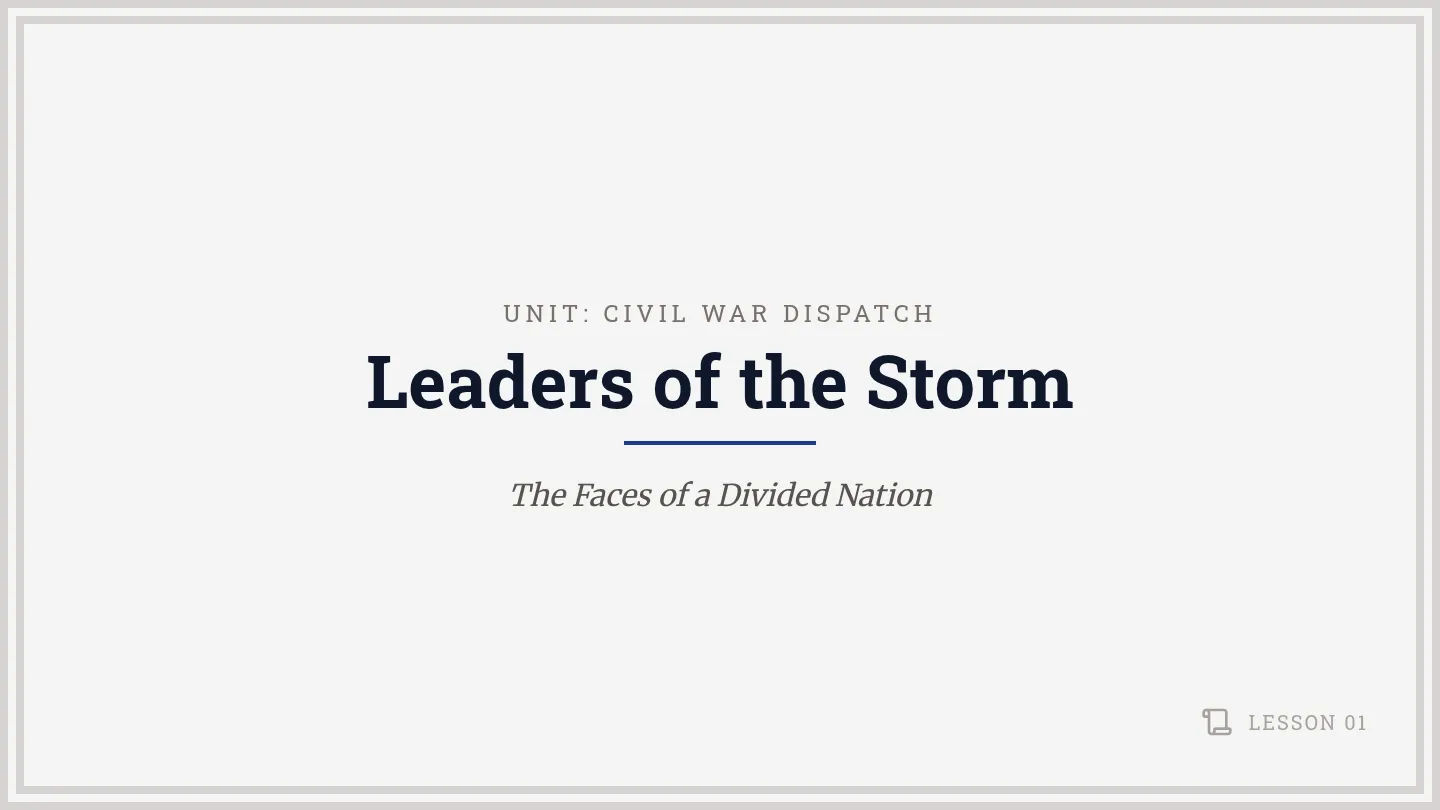
Leaders of the Storm Slides

Civil War Dispatch

A comprehensive 4-lesson unit for 5th grade exploring the pivotal figures, major conflicts, and the courageous escape routes of the American Civil War. Students engage with historical primary-source styles while learning about leadership and the quest for freedom.

IA

Isabella Adkins

12
Thirteen Friends Worksheet

Democratic Foundations

A series of lessons exploring the foundational documents and processes of the United States government, from the birth of the nation to the creation of modern laws.

SB

Stephanie Bizeur

40
Unity Roadmap Teacher Guide

Unity and Growth

A modified Modern US History curriculum (Founding to Present) for Tier 2 and 3 special education students, based on Grade 11 Social Studies standards. Focuses on government, industrialization, world wars, and civil rights.

D

dfleisch

26
Conflict Cards Activity

Century Crossroads

A comprehensive assessment sequence covering the pivotal moments of 20th-century US history, from the build-up to World War II through the height of the Cold War and the diverse Civil Rights movements.

AH

Ashley Hopf

16

Lessons

History Sprint Pacing Guide

STAAR History Sprint

A comprehensive pacing guide and activity resource designed to cover the remaining 11th Grade US History TEKS before the STAAR test on April 16th. This lesson provides a day-by-day calendar for A/B block schedules and high-engagement activities for each remaining historical era.

BB

Bridgette Burdick

51
Border Lines Activity

Harriet Tubman Escape

A lesson exploring Harriet Tubman's 1850 escape and the significance of the Mason-Dixon Line as a geographical and legal boundary in the pre-Civil War United States.

TL

Tanya Larson

46
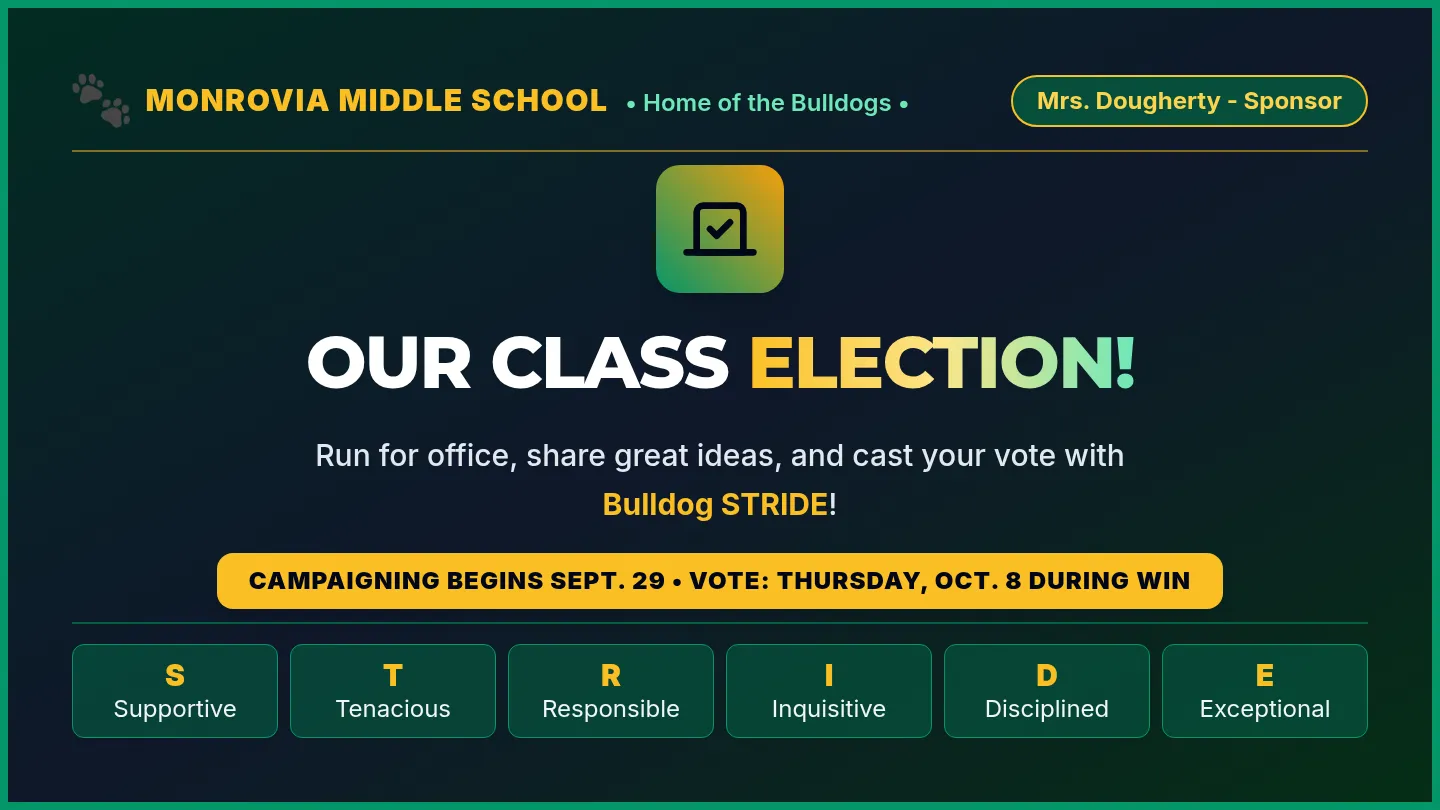
Ballot Blitz Slides

Ballot Blitz

A comprehensive classroom election simulation where students explore democratic principles, develop campaign platforms, and participate in a guided secret-ballot election.

AD

amee dougherty

6
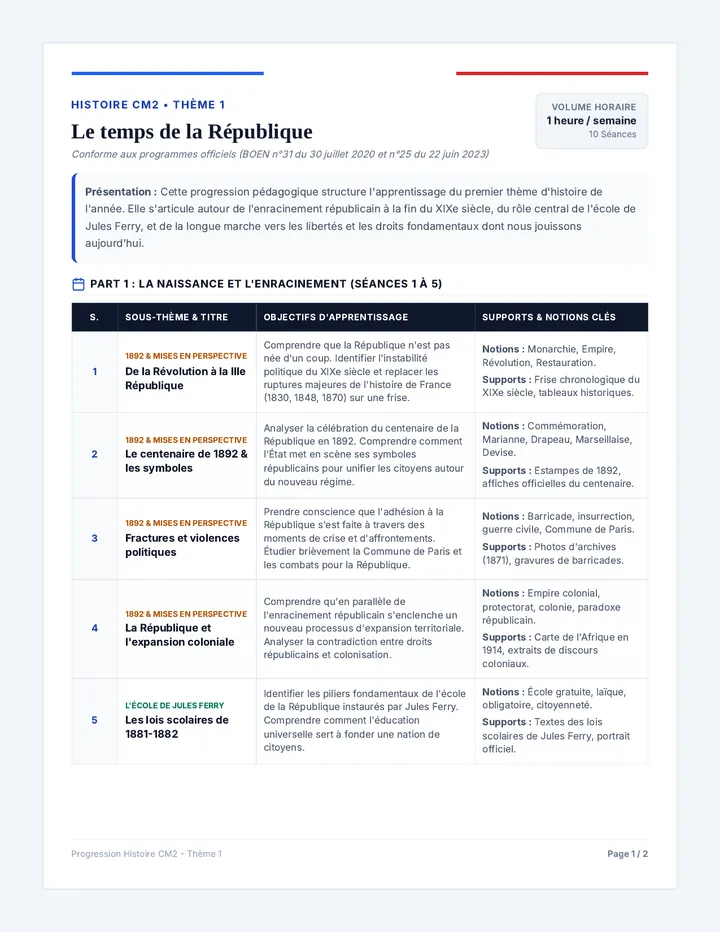
Progression Annuelle Histoire CM2

Le Temps de la République

Une progression pédagogique de 10 séances d'histoire pour le CM2, couvrant l'intégralité du premier thème 'Le temps de la République' selon les programmes officiels de 2020 et 2023. Elle structure la mise en perspective historique de 1892, l'école de Jules Ferry, ainsi que la conquête des libertés, droits et devoirs.

AC

anne chandelier

37
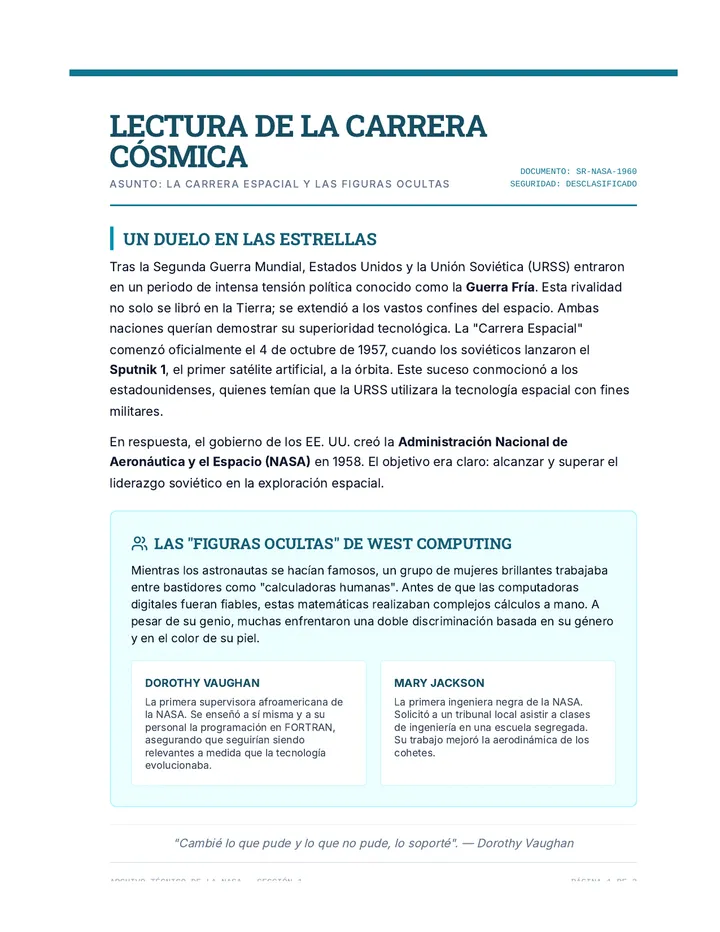
Cosmic Race Reading Text

Stellar Rivalry

A comprehensive exploration of the Space Race, highlighting the technological competition between the US and USSR, the essential contributions of African American women at NASA, and the international agreements that keep space a peaceful frontier.

RM

Robyn MacDonald

16
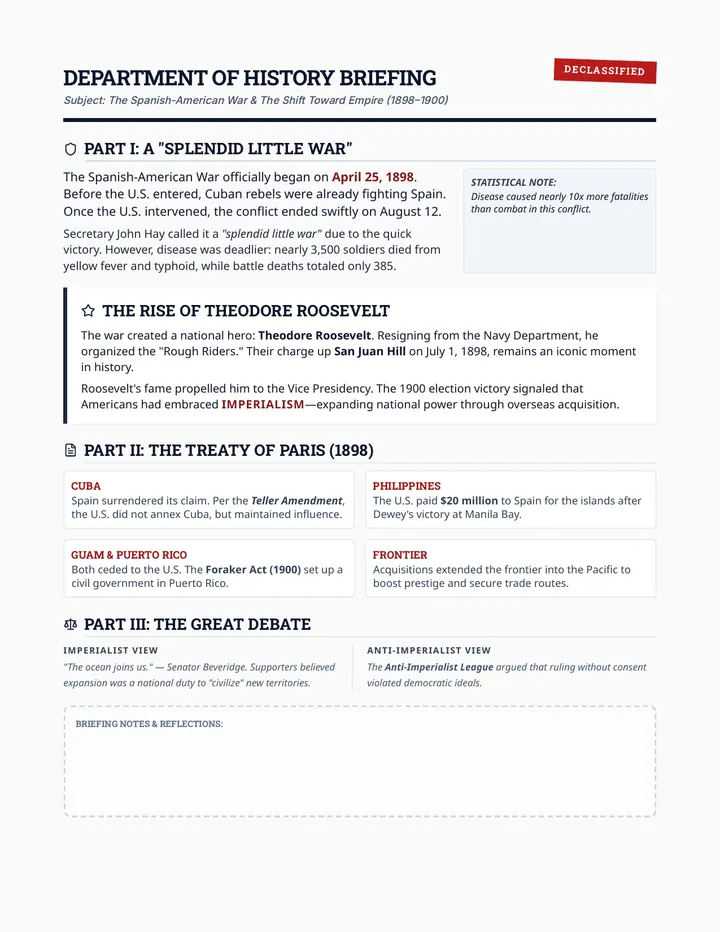
Imperial Shift Briefing Handout

Splendid Little War

This lesson explores the Spanish-American War, focusing on Theodore Roosevelt's rise, the Treaty of Paris, and the United States' transition from isolationism to an imperial power. Students will analyze the motives and arguments surrounding the annexation of the Philippines and other territories.

GE

Genevieve Eubanks

12