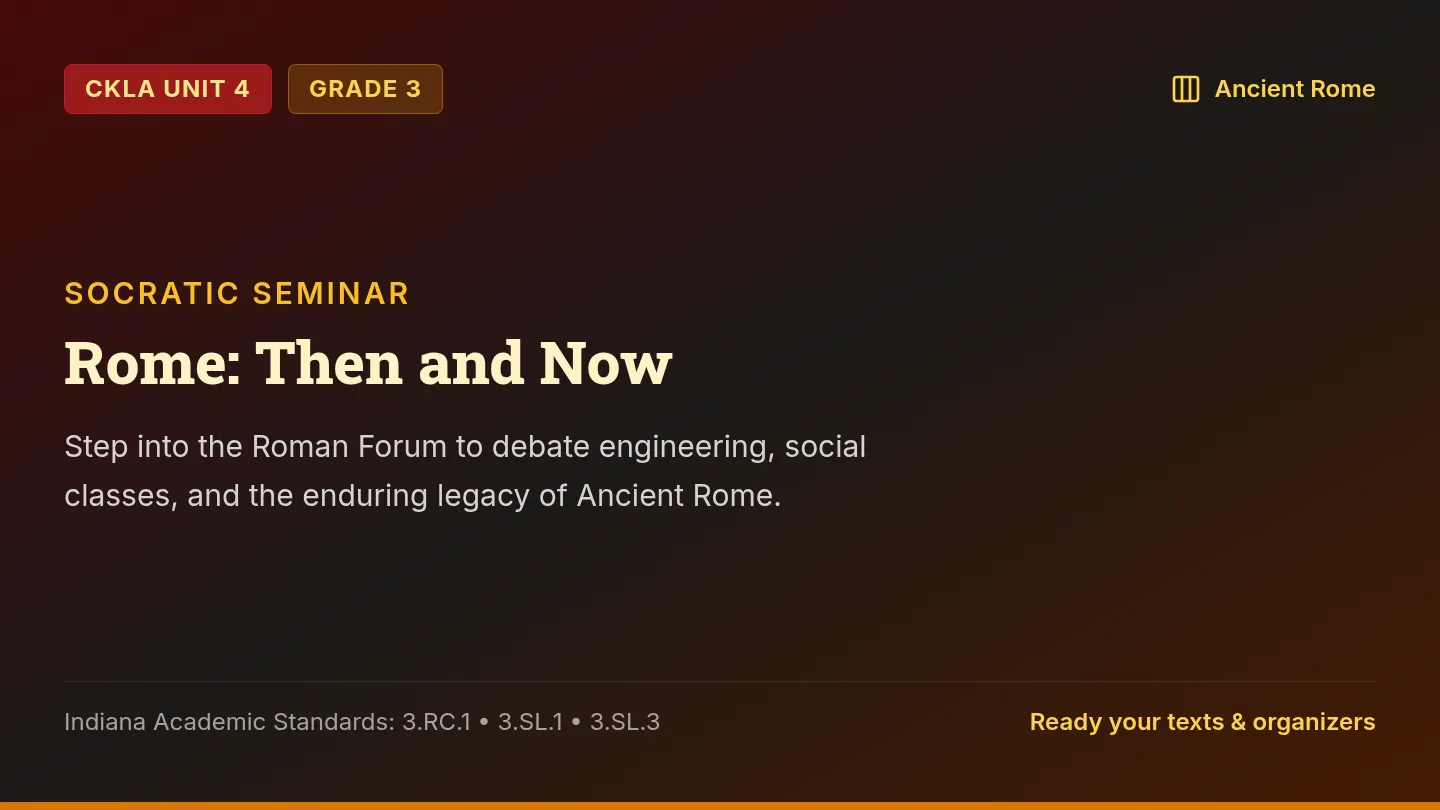
A five-day comprehensive Middle Ages classroom game sequence covering Chapters 1 through 9, where 48 third graders represent five medieval estates, solve reader evidence quests, roll dice, and navigate 30 historical fortune scenarios.
Quest Points + Scenario Balance = Day 1 Grand Total
Quest Pts
Scenario Pts
=
Day 1 Total
Estate Reflection: In 1–2 sentences, how did your role's power in the Middle Ages help or hurt your score today?
Feudal Fortune Team Work • Day 1 Page 2 of 2
Feudal Fortune Tournament • Day 2 Master Script Page 1 of 2
Day 2 Reader Question Bank • Chapter 3
Knights & Castles Question Key
Teacher Answer Key
CHAPTER 3: "Gloomy Castles and Jousting Knights" Reader pp. 18–27
Q1. Why were knights usually the sons of wealthy, influential families?
Key: Becoming a knight was very expensive because you had to afford horses, weapons, full armor, and someone to train you. (p. 19)
Q2. What were the two stages of training before becoming a knight, and what duties did each do?
Key: First a page (dressed and served the lord, practiced sword/horse). Then a squire (groomed horses, cleaned armor, trained with heavier lance and rode into battle). (p. 20)
Q3. What was the "Code of Chivalry" and what did it require knights to do?
Key: A code of honorable behavior requiring knights to serve their lord, be brave, protect the Church and weaker members of society, and treat captured knights as honored guests. (p. 21)
Q4. What four key defense features made medieval stone castles hard to capture?
Key: Thick outer stone walls, gatehouse, drawbridge that could be raised, deep water moat, towers, and the central stone keep. (pp. 23–25)
Q5. Why was daily life inside a castle considered gloomy and cold rather than comfortable?
Key: Castles were built for military protection, not comfort; small windows gave little light, fires gave little heat, and toilets emptied straight into the moat or pit. (p. 23, 26)
Turn Pacing Check (48 Students in Motion)
Have tables hold up their completed ledger when finished answering. Once 7 of 10 tables hold up their books, announce a 15-second countdown. This maintains high momentum and excitement without letting 3rd graders lose focus!
Castles and Jousts Guide • Day 2 Page 2 of 2
Gain / Loss
_____ pts
Event 3: ______________
______________________________________
Gain / Loss
_____ pts
Day 2 Scenario Event Balance:
____ pts
Two-Day Cumulative Tournament Standings
Day 1 Total
Day 2 Quests
Day 2 Scenarios
Joust Bonus
Grand Day 2 Total
Knightly Reflection: Why did medieval society create rules of chivalry instead of letting armed knights do whatever they wanted?
Chivalry Quest Team Ledger • Day 2 Page 2 of 2
Feudal Fortune Tournament • Day 3 Master Script Page 1 of 2
Day 3 Reader Question Bank • Chapter 4
Towns & Guilds Question Key
Teacher Answer Key
CHAPTER 4: "Merchants, Markets, and Mud: Towns in the Middle Ages" Reader pp. 28–37
Q1. Between 1000 and 1350 CE, what caused towns to grow, and what new class of people emerged?
Key: Growth of trade and business (commerce); the middle class (merchants and craftsmen) emerged. (p. 30)
Q2. What were guilds and what three things did they control?
Key: Organizations of merchants and craftsmen; they controlled wages, prices, and the quality of goods. (pp. 30–31)
Q3. What are the three stages of training to become a master craftsman?
Key: 1) Apprentice (unpaid, lives with master), 2) Journeyman (paid daily employee), 3) Master Craftsman (submits a masterpiece accepted by the guild). (pp. 34–35)
Q4. What was a town charter and why was it so important to townspeople?
Key: A special legal document granted by a lord that gave townspeople the right to make their own laws and govern themselves. (p. 32)
Q5. Why were medieval towns so disease-ridden and fire-prone?
Key: Overcrowded wooden houses with thatched roofs caught fire easily; no indoor toilets (chamber pots dumped into streets), polluted water, and disease-carrying rats/fleas. (p. 33)
3rd Grade Big Question Wrap-Up (Reader Connection)
Close the game with the Reader's Big Question: "How did the growth of trade during the Middle Ages change feudal society?"
"Before towns, power belonged almost entirely to lords who owned land and controlled serfs. As trade grew, craftsmen and merchants gained money, formed guilds, bought charters, and created a middle class that forever transformed medieval Europe!"
Towns and Guilds Guide • Day 3 Page 2 of 2
Gain / Loss
_____ pts
Event 3: ______________
______________________________________
Gain / Loss
_____ pts
Day 3 Scenario Event Balance:
____ pts
Three-Day Mid-Tournament Leaderboard Check
Day 1 Total
Day 2 Total
Day 3 Total
3-Day Subtotal
Estate Reflection: How did the rise of craft guilds and town charters start shifting power away from feudal lords?
Guild Master Team Ledger • Day 3 Page 2 of 2
Day 4 Reader Question Bank • Chapters 5 & 6
Church & Conquest Question Key
Teacher Answer Key
CHAPTER 5: "The Power of the Church" Reader pp. 38–47
Q1. What tax did all Christians have to pay to the Church, and what fraction was it?
Key: A tithe, which was one-tenth (1/10) of a person's earnings or farm produce. (p. 42)
Q2. What is a beginner monk called, and what ceremony happens when taking permanent vows?
Key: A novice; in the ceremony, they vow obedience, poverty, not to marry, and the top of their head is shaved (tonsure). (p. 44)
Q3. Why were monks and nuns so important for preserving books and ancient knowledge?
Key: Before printing presses existed, monks and nuns in the scriptorium copied ancient Greek and Roman books by hand with quills and ink. (p. 43, 45)
CHAPTER 6: "1066: The Battle that Changed History" Reader pp. 48–57
Q4. How did the English army defend Senlac Hill, and what fatal mistake did they make?
Key: They created a tight shield wall. When Norman knights faked retreats, English soldiers left the wall to pursue them, breaking their defensive line. (pp. 49–50)
Q5. On what holiday was William crowned king, and what famous book did he order to count kingdom wealth?
Key: Christmas Day, 1066 in Westminster Abbey; the Domesday Book (Great & Little Domesday) to record wealth and taxes. (pp. 51–52)
Q6. What 231-foot embroidered cloth tells the story of the Norman Conquest, and what new language was born?
Key: The Bayeux Tapestry; Anglo-Saxon (Old English) blended with Norman French and Latin to create Middle English. (pp. 53, 55)
Teaching Note: 48 Students Collaboration
Remind students that monasteries admitted boys from all walks of life—even serfs! This gives Serf and Monks/Nuns teams an exciting shared historical connection during today's rounds.
Faith and Conquest Guide • Day 4 Page 2 of 2
______________________________________
Gain / Loss
_____ pts
Day 4 Scenario Event Balance:
____ pts
Four-Day Tournament Leaderboard Calculation
Day 1 Total
Day 2 Total
Day 3 Total
Day 4 Net
4-Day Standing
Estate Insight: Why was William the Conqueror's Domesday Book feared by ordinary people in England?
Faith and Conquest Ledger • Day 4 Page 2 of 2
Realm Champions
Earth-Nourishers
Shields of the Realm
Master Builders
Keepers of the Charter
Keepers of Light and Wisdom
Feudal Fortune Tournament • Day 5 Finale Guide Page 1 of 2
Day 5 Reader Question Bank • Chapters 7, 8 & 9
Kings & A Changing World Key
Teacher Answer Key
CHAPTER 7: "Henry II and Law and Order" Reader pp. 58–67
Q1. What was trial by ordeal, and how did Henry II create a fairer legal system?
Key: Accused had to hold hot metal or be thrown into water to prove innocence; Henry II created a circuit court system with traveling judges and common law. (p. 60)
Q2. Who was Thomas Becket, and what tragedy happened inside Canterbury Cathedral?
Key: Archbishop of Canterbury who disagreed with Henry II; four knights heard Henry's angry words and murdered Becket while he knelt in prayer. (pp. 61–62)
CHAPTER 8: "The Wayward King: King John and the Magna Carta" Reader pp. 68–77
Q3. Why did English nobles rebel against King John in 1215 CE?
Key: He lost ancestral lands in France, raised heavy taxes on nobles and merchants, claimed Church property, and limited hunting in royal forests. (pp. 68–70)
Q4. What is Magna Carta and what crucial limit did it place on the king's power?
Key: The "Great Charter" sealed in June 1215; it stated the king must consult nobles before raising taxes and is subject to the rule of law. (pp. 71–72)
CHAPTER 9: "A Changing World" Reader pp. 78–87
Q5. Who was Joan of Arc, and what incredible feat did she accomplish at age 17?
Key: A French peasant girl who believed God called her; she led French soldiers to free Orléans from English control and helped crown Charles VII. (pp. 80–81)
Q6. What two major inventions helped bring an end to the Middle Ages?
Key: Cannons/firearms (made knights and stone castle walls obsolete) and Johannes Gutenberg's printing press (1450 CE, made books affordable). (pp. 84–85)
Kings and Change Guide • Day 5 Finale Page 2 of 2
Gain / Loss
_____ pts
Event 3: ______________
______________________________________
Gain / Loss
_____ pts
Day 5 Scenario Event Balance:
____ pts
Complete 5-Day Grand Tournament Championship Standing
Day 1 Total
Day 2 Total
Day 3 Total
Day 4 Total
Day 5 Total
Realm Crown
Unit Synthesis: How did Magna Carta, longbows, and printing presses help bring an end to the Middle Ages?
Kings and Change Ledger • Day 5 Finale Page 2 of 2