Legal Eagle Facilitator Guide Legal Eagle Facilitator Guide
Topic: Substantive vs. Procedural Liberties
10th-12th GRADE
Social Studies / Civics
Learning Objective
Students will evaluate the tension between substantive (guilt/facts) and procedural (due process/steps) liberties by participating in a mock trial scenario based on the Fourth and Fourteenth Amendments.
Duration: 50 Mins
5m: The Hook10m: Video & Analysis25m: Mock Trial Procedure10m: Closure & Vote
Essential Content
Substantive Liberties
"Limits on WHAT the government can do."
Example: Congress cannot establish a national religion. It protects the core freedom itself.
Procedural Liberties
"Limits on HOW the government must act."
Example: The 4th Amendment's warrant requirement. It protects the process of enforcing laws.
Instructional Steps
1
The Hook: Crime Show Reality Check (5 min)
Show a brief clip of a cinematic arrest. Pose the question: "What rights do they have right now?"
Listen for "Miranda Rights," "Lawyer," or "Warrant."
Ask: "Do those rights protect their innocence or do they protect the process ?"
2
Video: Crash Course Analysis (10 min)
Watch Civil Rights & Liberties #23 (Focus on 1:37–2:17). Use the following discussion prompts:
"Why does Craig Benzine say the 14th Amendment is the 'most important'? How did it change who the Bill of Rights applies to?"
3
The Mock Trial: Procedural vs. Substantive (25 min)
Divide the class into three groups: Prosecution , Defense , and The Bench (Judges) .
Defense: Focus exclusively on procedural violations (Illegal search, no warrant).Prosecution: Focus on substantive facts (The suspect is clearly guilty, the evidence is real).Judges: Draft a ruling based on the 14th Amendment and Mapp v. Ohio .
TEACHER BACKGROUND: Mapp v. Ohio (1961)
Dollree Mapp's house was searched for a bombing suspect without a warrant. Police found obscene materials instead. The Supreme Court ruled that evidence obtained in violation of the Fourth Amendment (Procedural) cannot be used in state courts. This is the Exclusionary Rule . It incorporates the Bill of Rights to the states via the 14th Amendment's Due Process clause.
Mock Trial Scenarios Packet Evidence: Exhibit A
Docket: The State v. Alex Reed
CASE NUMBER: #SC-1961-MAPP | CLASSIFICATION: PROCEDURAL REVIEW
Prosecution
Your goal is Substantive Justice . Argue that the facts don't lie. A crime was committed, evidence was found, and the public must be protected from a guilty person.
Defense
Your goal is Procedural Justice . Argue that the government must follow the "Due Process" rules. If the police break the law, the evidence cannot be used.
The Bench
Your goal is Constitutional Fidelity . Listen to both sides. Decide if the "Exclusionary Rule" should apply based on the 14th Amendment's Due Process clause.
Incident Report: The Anonymous Tip
The Incident: Police received an anonymous phone call stating that Alex Reed was hiding a stash of stolen electronics in their basement. The caller did not provide their name or explain how they knew this information.
The Search: Officers arrived at Reed’s house. When Reed asked for a warrant, the lead officer waved a piece of scrap paper in the air and said, "Here’s your warrant." The officers pushed past Reed and searched the basement.
The Discovery: They found exactly what the tipster described: fifteen high-end laptops reported stolen from the local high school last week. Reed was arrested on the spot.
The Twist: During the booking process, it was discovered that the "scrap paper" was actually just a grocery list. There was no warrant. The search was conducted entirely without legal authorization.
Prosecution Arguments (Substantive)
Defense Arguments (Procedural)
Courtroom Record
Name:
Date:
1. Procedural Liberty Check
Identify the specific procedural right that was violated in this scenario. Which amendment(s) protect this right?
2. Substantive Fact Check
Identify the substantive facts of the case. Is there any doubt that the defendant committed the crime? Explain.
3. The Ruling (Self-Reflection)
In your opinion, should the laptops be "excluded" as evidence? If the laptops are excluded, the thief goes free. If they are allowed, the police are allowed to break the law. What is the greater danger to society?
"It is better that ten guilty persons escape than that one innocent suffer."
Official Case Document
Class Use Only
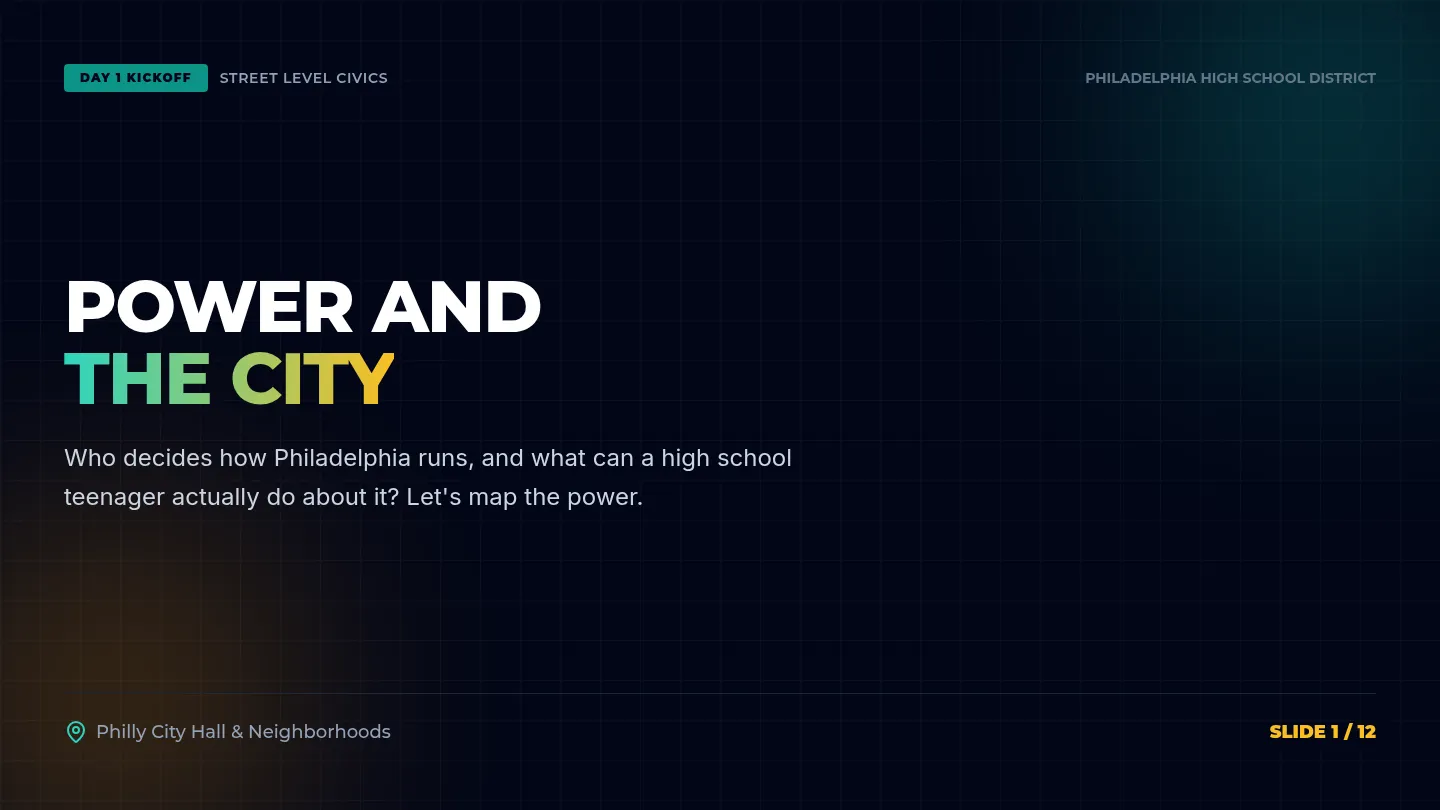
Liberty Laws Slides Liberty Laws &
Legal Eagles
Substantive vs. Procedural Rights
The Hook
Watch the clip of the arrest.
"What rights do they have right now?"
Discussion: 5 Minutes
Defining the Terms
Civil Liberties
Limitations on the government.
Things the government cannot do to you.
Civil Rights
Curbs on the power of majorities.
Guarantees of equal citizenship and protection from discrimination.
The "Legal Eagle" Breakdown
Substantive
Limits on WHAT the government can do.
Example: No national religion.
Procedural
Limits on HOW the government acts.
Example: Search warrant required.
"Procedural = The Steps"
Crash Course: Civil Liberties
Watch: 1:37 - 2:17
Embedded media
The 14th Amendment Pivot
Incorporation
Applying the Bill of Rights to the states one case at a time.
"No state shall... deprive any person of life, liberty, or property, without due process of law."
Mapp v. Ohio (1961)
Illegal evidence is excluded.
Gitlow v. New York (1925)
Free Speech applies to states.
Mock Trial
1
Prosecution
Focus on the Facts .
2
Defense
Focus on the Process .
3
Judges
Apply Due Process .
Refer to Case Packets
The Final Verdict
"Should a guilty person go free if their procedural rights were violated?"
YES
NO