Ancient Ancestors Stat Cards
Bio Anthro Dossier Hominin Evolution Field Cards • Series 01
NAME: DATE: SHEET 1 OF 2
Ardipithecus ramidus
"Ardi"
Time: ~4.4 Million Years Ago (Ma) • Region: Aramis, Middle Awash (Ethiopia)
Fossil Ref: ARA-VP-6/500
Habitat: Dense Woodland Forest
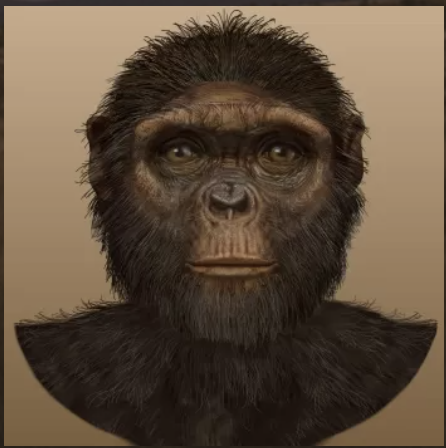
Reconstruction • Female ("Ardi")
Locomotion Type Facultative
Facultative Bipedalism: Capable of walking upright on 2 legs when on the ground, yet retains a divergent grasping big toe for arboreal climbing.
Cranial Capacity 300 – 350 cc ≈ Chimpanzee (~20% human)
♂ Male ~3 ft 11 in ~110 lbs
♀ Female ~3 ft 11 in ~110 lbs
Key Physical Evolutionary Development
Transitional Pelvis & Grasping Big Toe: Upper pelvis was broad and reoriented like later upright hominins for two-legged balance, while retaining an opposable big toe and long fingers for climbing trees.
Key Behavioral Development
Reduced Canine Dimorphism & Social Harmony: Both sexes had blunt, reduced canines without sharpening edges, indicating minimized male-male combat and higher cooperative pair bonding in dense forests.
DIMORPHISM: Low (Males and females roughly same size) DIET: Omnivorous / Soft fruits, leaves, nuts CARD #01
Cut along dashed line to separate cards
Australopithecus afarensis
"Lucy" / "Selam"
Time: ~3.85 – 2.95 Million Years Ago (Ma) • Region: Hadar (Ethiopia), Laetoli (Tanzania), Kenya
Fossil Ref: AL 288-1
Habitat: Savannah Woodland & Lake Basins
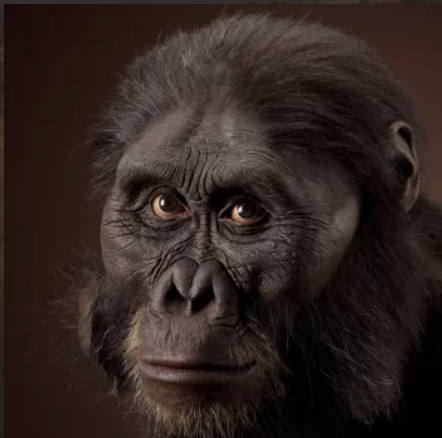
Reconstruction • Female ("Lucy")
Locomotion Type Habitual Biped
Habitual (Regular) Bipedalism: Walked upright on two legs as standard daily transport on the ground (evidenced by Laetoli footprints), while curved fingers aided tree climbing.
Cranial Capacity 380 – 500 cc Average ~430 cc (~33% human)
♂ Male ~4 ft 11 in ~92 lbs
♀ Female ~3 ft 5 in ~64 lbs
Key Physical Evolutionary Development
Human-like Striding Foot & Valgus Knee: In-line big toe with an arched foot and inward-angled thighbone centered the body over the knees, creating energy-efficient upright walking across open savannahs.
Key Behavioral Development
Cooperative Band Living & Open Foraging: The "First Family" fossil deposit indicates multi-individual groups living and foraging together for collective defense against predators on mixed terrain.
DIMORPHISM: High (Males ~45% heavier than females) DIET: Broad generalist / Seeds, roots, tubers, leaves CARD #02
Bio Anthro Dossier Hominin Evolution Field Cards • Series 01
NAME: DATE: SHEET 2 OF 2
Paranthropus boisei
"Nutcracker Man" / "Zinj"
Time: ~2.3 – 1.2 Million Years Ago (Ma) • Region: Olduvai Gorge (Tanzania), Lake Turkana (Kenya)
Fossil Ref: OH 5
Habitat: Arid Open Grasslands & Wetlands
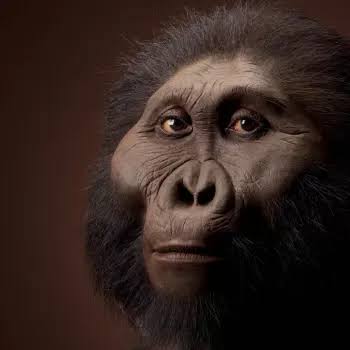
Reconstruction • Male ("Zinj")
Locomotion Type Obligate Biped
Obligate Bipedalism: Exclusively committed to two-legged ground walking as primary locomotion. Fully adapted for terrestrial striding.
Cranial Capacity 500 – 550 cc Average ~510 cc (~38% human)
♂ Male ~4 ft 6 in ~108 lbs
♀ Female ~4 ft 1 in ~75 lbs
Key Physical Evolutionary Development
Robust Megadont Chewing Apparatus: Huge flat molars (4x modern human size) with thick enamel, flared cheekbones, and a bony top ridge (sagittal crest) anchoring gigantic chewing muscles.
Key Behavioral Development
Specialized "Fallback" Dietary Niche: Consumed tough, fibrous C4 savannah plants (grasses, sedges, roots), allowing them to thrive in drying climates alongside early Homo without direct food competition.
DIMORPHISM: High (Pronounced sagittal crest in males) EVOLUTION: Robust side-branch (Not direct human ancestor) CARD #03
Cut along dashed line to separate cards
Homo habilis
"Handy Man" / "First Toolmaker"
Time: ~2.4 – 1.4 Million Years Ago (Ma) • Region: Olduvai Gorge (Tanzania), Koobi Fora (Kenya), S. Africa
Fossil Ref: KNM-ER 1813 / OH 7
Habitat: Mosaic Grassland & Lake Margins
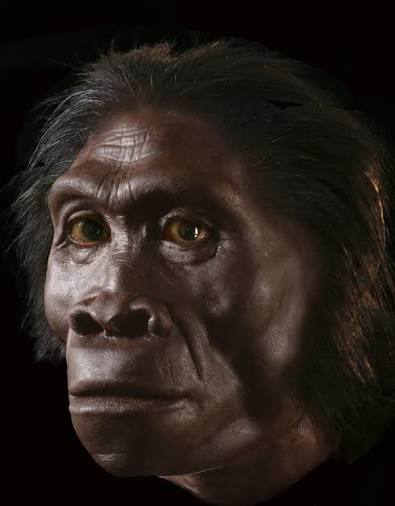
Reconstruction • Female (KNM-ER 1813)
Locomotion Type Obligate Biped
Obligate Bipedalism: Ground-dwelling upright walking was mandatory for daily survival. Modern arches and pelvis with slightly long arms.
Cranial Capacity 510 – 750 cc Average ~610 cc (~45% human)
♂ Male ~4 ft 3 in ~82 lbs
♀ Female ~3 ft 3 in ~70 lbs
Key Physical Evolutionary Development
Encephalization & Precision Grip: Marked cranial enlargement (+35% increase) paired with reduced jaw size and broad fingertips capable of fine tool gripping and manipulation.
Key Behavioral Development
Oldowan Toolmaking & Marrow Scavenging: First systematic creators of flaked pebble choppers (Oldowan Mode 1) used to cut meat and crack bones for calorie-dense bone marrow.
GENUS HOMO: Marks the dawn of tool-assisted human lineage DIET: High-quality omnivore / Marrow, scavenged meat, tubers CARD #04
Hominin Glossary Slides
Glossary • Part 1 Anatomy & Locomotion
Key Physical Evolutionary Traits
Morphology
Cranial Capacity
Braincase Volume (cc)
The internal volume of the skull measured in cubic centimeters. Documents progressive brain expansion (encephalization) along the human lineage.
Field Card Benchmark:
Ardi (325 cc) → H. habilis (610 cc: +35% jump)
Bipedalism Types
Locomotion Commitment
Facultative: Capable of walking upright, but retains climbing limbs. Obligate: Anatomically committed to ground walking as primary transport.
Field Card Benchmark:
Ardi (grasping toe) vs. Lucy & Homo (arched foot)
Megadontia
Robust Chewing Anatomy
Enormous flat molars with thick enamel, anchored by a raised bony skull crest (sagittal crest) that supports massive temporalis chewing muscles.
Field Card Benchmark:
Paranthropus boisei ("Nutcracker Man" OH 5)
FOSSIL FOOTSTEPS • BIOLOGICAL ANTHROPOLOGY SLIDE 01
Glossary • Part 2 Culture & Subsistence
Key Behavioral Developments
Adaptation
Oldowan Industry
Mode 1 Stone Tools
The earliest systematic stone tool culture (~2.6–1.5 Ma). Cobbles flaked to produce sharp edges for butchering animal carcasses and processing plants.
Field Card Benchmark:
Manufactured systematically by Homo habilis
Marrow Scavenging
High-Calorie Foraging
Using stone hammerstones to smash large animal limb bones, accessing fatty, calorie-dense marrow untouched by carnivore teeth to support brain growth.
Field Card Benchmark:
Nutritional driver of encephalization in early Homo
Fallback Foods
Ecological Resilience
Tough, low-quality dietary resources (seeds, roots, coarse C4 grasses) eaten during dry seasons when preferred soft fruits are unavailable.
Field Card Benchmark:
Enabled P. boisei to survive alongside early Homo
FOSSIL FOOTSTEPS • BIOLOGICAL ANTHROPOLOGY SLIDE 02