Lenny.com
Explore
Create
ActivitiesNewMathEnglish Language ArtsScience & EngineeringSocial StudiesGlobal LanguagesHealth & Physical EducationSpecial EducationCounseling & Life SkillsArts & CreativityESL
Lenny.com
Lenny.com
Explore
Create
ActivitiesNewMathEnglish Language ArtsScience & EngineeringSocial StudiesGlobal LanguagesHealth & Physical EducationSpecial EducationCounseling & Life SkillsArts & CreativityESL
Lenny.com
Lenny.com

Solutions

Lenny for EducatorsLenny for SchoolsLenny for Districts

Product

ExploreSign inCreateSupportAbout

Resources

Getting startedMTSS Acceleration Program

© 2026 Lenny Learning Inc.

TermsPrivacyAccessibility
LinkedInInstagramX
Lenny

History of Psychology

Evolution of psychological thought from philosophical origins to modern scientific methodology. Examines foundational schools of thought including structuralism, functionalism, and behaviorism alongside key figures like Wundt and James.

Social StudiesSocial Studies PracticesLocation WordsMapsOrder EventsChronology and CausationEvaluating SourcesHistorical ThinkingGeography, Humans, & the EnvironmentAmerican Symbols and LandmarksCitiesStatesState CapitalsRegions of the United StatesGeographic SkillsPhysical GeographyHuman GeographyRegional GeographyGeography of AfricaGeography of AsiaGeography of EuropeGeography of OceaniaGeography of the AmericasSociety and Environment of EuropeSociety and Environment of AsiaSociety and Environment of The AmericasSociety and Environment of the Middle EastSociety and Environment of AfricaHistoryPrehistoryComparing Ancient River CivilizationsAncient MesopotamiaAncient Egypt and KushAncient South AsiaEarly ChinaGreeceRome and the Byzantine EmpireAncient World HistoryNative Peoples of North AmericaNative Peoples of Mesoamerica and South AmericaAfrican EmpiresMedieval AsiaMedieval EuropeThe Silk RoadMedieval HistoryIslamic EmpiresWorld ReligionsRenaissance PeriodAge of ExplorationThe Thirteen ColoniesThe American RevolutionUS History Early RepublicFounding of the United StatesUS History AntebellumUS Civil WarReconstruction PeriodThe Gilded AgeUS ImperialismWorld ImperialismWorld War IUS History 1920sGreat DepressionWorld War IIThe Cold WarUS History 1950-60sUS History 1960s-70sWorld History 20th CenturyContemporary US HistoryContemporary World HistoryHolidaysCivics and GovernmentCitizenshipGovernment FoundationsThe ConstitutionUS ConstitutionExecutive BranchLegislative BranchJudicial BranchState and LocalPolitical ParticipationPublic PolicyPolitical SystemsPower and AuthoritySocial MovementsDefining DevianceTheories of DevianceCrime and Criminal JusticeEconomicsBasic Economic PrinciplesSupply and DemandWhat is MoneyEconomic FundamentalsMicroeconomicsMacroeconomicsBanking and FinanceEconomic SystemsGlobal EconomicsCorporations and PowerThe Changing WorkplaceUnemployment and LaborClass and InequalitySocial MobilityGlobal InequalityPsychologyHistory of PsychologyPsychology as a ScienceBrain and Nervous SystemNeuroscience and BehaviorGenetics and BehaviorSleep and ConsciousnessSensory ProcessesPerceptual OrganizationClassical ConditioningOperant ConditioningObservational LearningCognitive LearningMemory ProcessesThinking and Problem SolvingLanguage and CognitionTheories of MotivationStress and CopingPrenatal and Infant DevelopmentChildhood DevelopmentAdolescent DevelopmentAdulthood and AgingSelf and IdentitySocial CognitionSocial InfluenceAttraction and RelationshipsGroup BehaviorPrejudice and DiscriminationAnxiety and Mood DisordersClinical PsychologyForensic PsychologyPhilosophy & EthicsIntroduction to PhilosophyMajor Philosophers & IdeasMind and Body ProblemFree Will vs DeterminismEthics & MoralityReligion & PhilosophyPolitical Philosophy

Videos

Innovation, Mass Culture, and the Ethics of Progress (1880-1914)

Innovation, Mass Culture, and the Ethics of Progress (1880-1914)

This video explores the dynamic period between 1880 and 1914, often called the Progressive Era or the Belle Époque, examining the explosion of scientific and technological innovation that defined the age. It details how industrial powers like Britain, the United States, and Germany funded research and public health initiatives, highlighting key figures like Josephine Cochrane, George Soper, and Madame C.J. Walker. The narrative explains the shift from a survival-based economy to a consumer culture driven by mass media, advertising, and the rise of the middle class. The video delves into the complex relationship between capitalism, industrialization, and popular culture, illustrating how wealthy industrialists influenced scientific progress and how businesses shaped consumer desires. Crucially, it also addresses the darker side of this era, discussing the rise of pseudosciences like phrenology and eugenics. It explains how scientific language was misused to justify racism, oppression, and unethical experimentation, grounding these concepts in the historical context of Social Darwinism. For educators, this resource serves as an excellent synthesis of early modern history, connecting technological advancements with social and ethical questions. It challenges students to consider the moral implications of progress, asking the big-picture question: "Just because we can, does it mean we should?" It is particularly useful for World History and U.S. History units on the Industrial Revolution, providing diverse examples of inventors and prompting critical thinking about the double-edged sword of scientific discovery.
Miacademy & MiaPrep Learning ChannelMiacademy & MiaPrep Learning Channel

11mins 20s

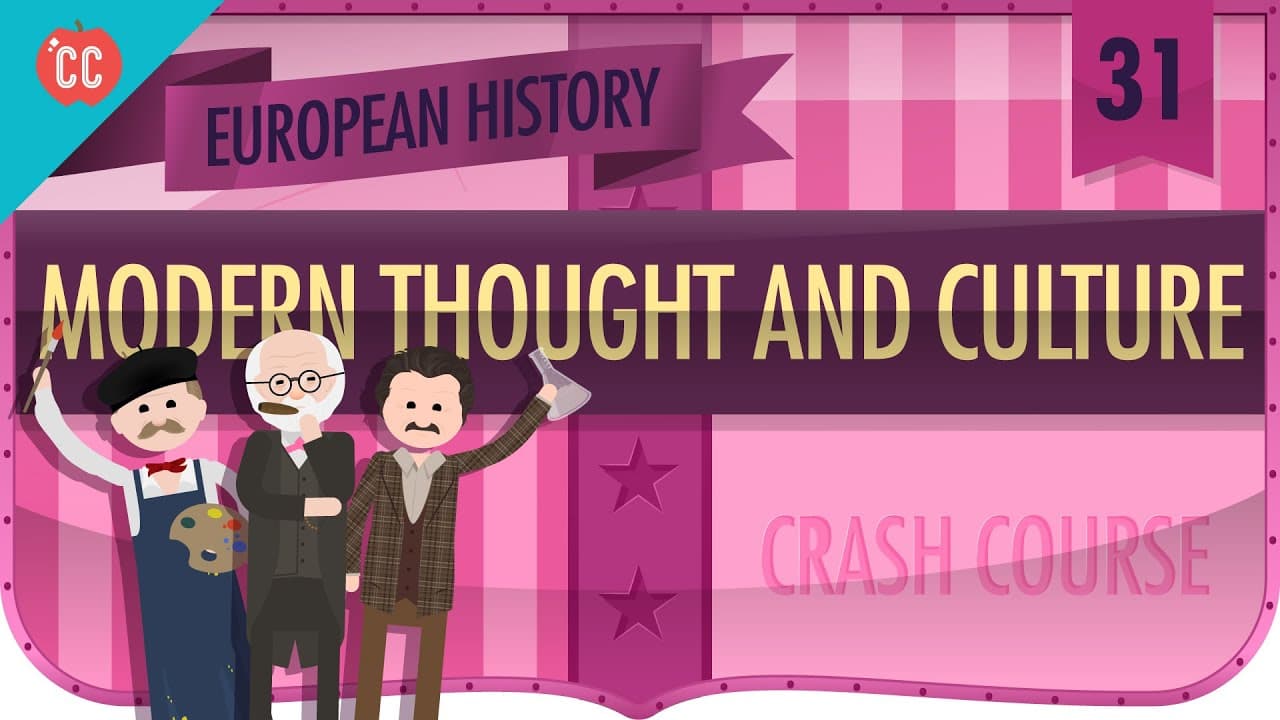
How Modernism Transformed Art, Science, and Philosophy

How Modernism Transformed Art, Science, and Philosophy

This educational video from Crash Course European History explores the profound cultural and intellectual shifts that occurred in Europe around the turn of the 20th century. Host John Green examines the rise of Modernism, a movement characterized by the rejection of traditional forms and the embrace of uncertainty, subjectivity, and innovation. The video covers the transition from Realism to Impressionism and Cubism in art, the departure from classical ballet in dance, and the move from Newtonian physics to Quantum Theory and Relativity in science. The content delves into key themes such as the breakdown of absolute truths, the exploration of the human subconscious, and the impact of non-European influences on Western culture. Significant figures like Sigmund Freud, Friedrich Nietzsche, Albert Einstein, and Pablo Picasso are discussed in depth, highlighting how their revolutionary ideas challenged the Enlightenment's focus on rationality and objective reality. The video illustrates how these disruptions in art, science, and philosophy mirrored the political and social upheavals of the era. For educators, this resource serves as an excellent synthesis of the intellectual history of the early 1900s. It provides a multidisciplinary approach, connecting visual arts, music, physics, and psychology to explain the "paradigm shift" that defined the modern era. The video is particularly useful for helping students understand abstract concepts like relativity, psychoanalysis, and existential philosophy by grounding them in their historical context and demonstrating how they shaped the 20th-century worldview.

CrashCourseCrashCourse

15mins 9s

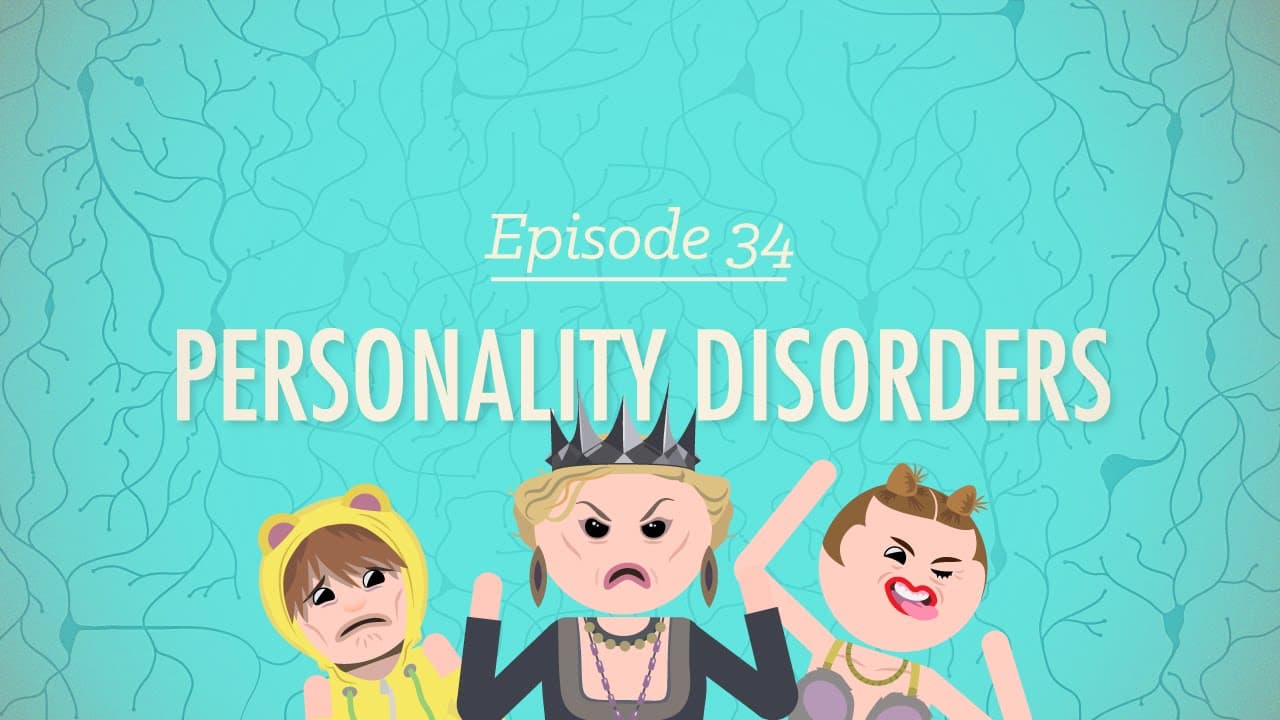
Personality Disorders: Crash Course Psychology #34

Personality Disorders: Crash Course Psychology #34

This educational video provides a comprehensive overview of personality disorders, explaining how they differ from other psychological conditions due to their enduring, inflexible nature and often ego-syntonic characteristics. The host, Hank Green, breaks down the ten specific personality disorders listed in the DSM-5, organizing them into three distinct clusters: Cluster A (odd/eccentric), Cluster B (dramatic/emotional/impulsive), and Cluster C (anxious/fearful/avoidant). This structured approach helps viewers categorize complex behaviors and understand the nuances between similar-sounding diagnoses. The content dives deeply into two specific and often misunderstood disorders: Borderline Personality Disorder (BPD) and Antisocial Personality Disorder. It explores the complex interplay of biological, genetic, and environmental factors that contribute to these conditions, such as the "bio-psycho-social" roots of BPD and the neurological differences observed in those with antisocial traits. The video also discusses historical perspectives, modern diagnostic challenges, and the potential future shift toward a "dimensional model" of diagnosis rather than rigid categories. For educators, this video serves as an excellent resource for psychology and health classes. It demystifies conditions often sensationalized in media, like psychopathy and sociopathy, replacing stigma with scientific understanding. By explaining the neurological underpinnings—such as reduced frontal lobe activity in violent offenders—and the impact of childhood trauma, it fosters empathy and critical thinking. Teachers can use this to spark discussions on nature vs. nurture, the criminal justice system's intersection with mental health, and the importance of early intervention.

CrashCourseCrashCourse

10mins 58s

Sequences

Grand Plan Révisions Document

Odyssée Philo

Un programme de révision complet couvrant les 17 notions du baccalauréat de philosophie, structuré par grands domaines thématiques pour une compréhension transversale.

NL

Noémie L

2
Plan Annuel de Philosophie Document

Odyssée de la Pensée

Un parcours complet pour l'année de Terminale Générale couvrant les 17 notions du programme de philosophie à travers des problématiques transversales, des auteurs clés et des repères conceptuels.

2
Pengantar Psikologi Industri Slides

Dinamika Kerja

A foundational sequence introducing undergraduate psychology students to the core concepts, history, and applications of Industrial and Organizational Psychology.

3
Whole Over Parts Slides

The Mind's Eye

This sequence explores Gestalt psychology, examining how the human brain organizes sensory information into coherent patterns. Students progress from historical theory to practical application in modern design and visual media.

12
Perception Lab Slides

Perception Lab Gestalt Principles

This sequence explores Gestalt psychology and how the human brain organizes sensory information into meaningful patterns. Students progress from historical foundations to identifying specific principles (proximity, similarity, closure, etc.) in abstract diagrams and real-world media.

14
Sophists Philosophers Slides

Ethical Argumentation and Manipulative Tactics

An advanced rhetorical study for undergraduate students focusing on the intersection of logic, ethics, and persuasion. This sequence explores historical philosophical debates, modern marketing tactics, and the personal responsibility of the speaker.

15

Lessons

Testing Trap Comic

The Testing Trap

An exploration of the history, mechanics, and fairness of standardized testing through the lens of a neurodivergent student's experience. This lesson uses a retro-style comic to illustrate the disconnect between traditional testing and real-world intelligence.

J

JLaytner

3
Mind Profile Slides

Criminal Mindset

This lesson explores Hans Eysenck's criminal personality theory, focusing on the biological and environmental factors that contribute to criminal behavior and identifying the four higher-order factors of personality.

KB

Kimberly Buiel

3
Mind Games Lesson Plan

Mind Games Psychology Controversies

A high school social science lesson exploring the ethical complexities and foundational impact of the Stanford Prison Experiment, Little Albert, and Bobo Doll studies. Students analyze the tension between scientific discovery and human rights while learning about modern ethical standards like informed consent and IRBs.

HD

Hannah Delohery

4
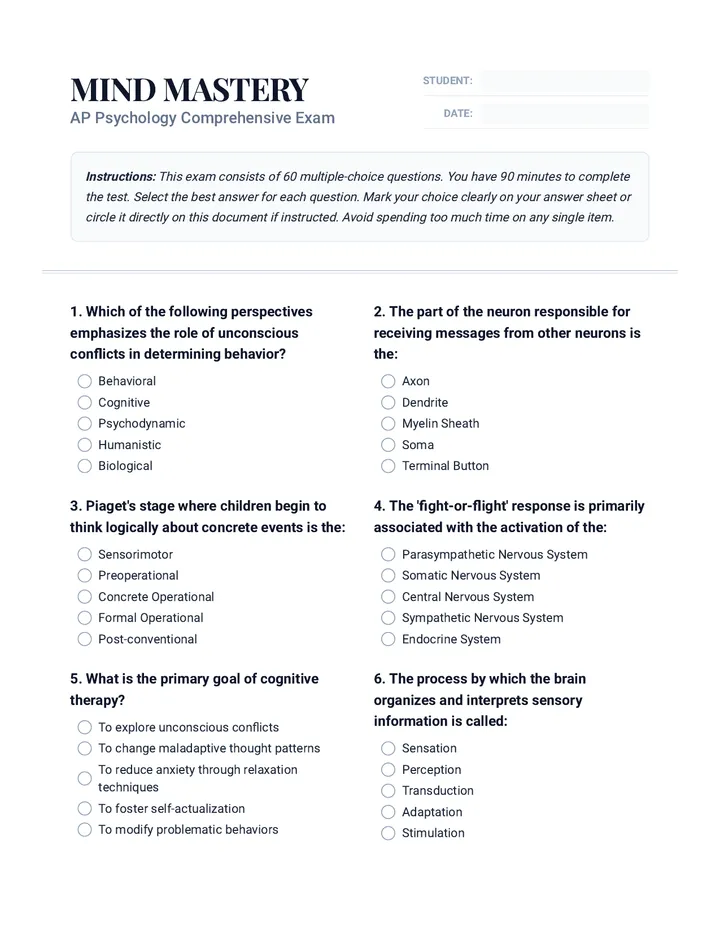
Mind Mastery Exam Test

Mind Mastery Exam

A comprehensive 90-minute assessment covering the breadth of the AP Psychology curriculum, including a 60-question multiple-choice exam, a post-exam reflection, and a detailed study guide for review.

DL

Dr. Lisa Lamb

8
Mind Maps Slides

Mind Maps

An exploration of psychological theories of intelligence, covering Spearman's general intelligence, Gardner's multiple intelligences, Sternberg's triarchic model, and the concept of emotional intelligence. Students will compare different models and reflect on how intelligence is measured and defined.

DL

Dr. Lisa Lamb

4
Stigma Science Teacher Guide

Stigma Smashers

A high school psychology lesson exploring the historical roots of mental health stigma and how scientific advancement shifts public perception from supernatural to biological explanations. Students engage in a research sprint to compare historical treatment methods with modern scientific standards.

3