Lenny.com
Explore
Create
ActivitiesNewMathEnglish Language ArtsScience & EngineeringSocial StudiesGlobal LanguagesHealth & Physical EducationSpecial EducationCounseling & Life SkillsArts & CreativityESL
Lenny.com
Lenny.com
Explore
Create
ActivitiesNewMathEnglish Language ArtsScience & EngineeringSocial StudiesGlobal LanguagesHealth & Physical EducationSpecial EducationCounseling & Life SkillsArts & CreativityESL
Lenny.com
Lenny.com

Solutions

Lenny for EducatorsLenny for SchoolsLenny for Districts

Product

ExploreSign inCreateSupportAbout

Resources

Getting startedMTSS Acceleration Program

Newsletters

School Funding Newsletter

© 2026 Lenny Learning Inc.

TermsPrivacyAccessibility
LinkedInInstagramX
Lenny

The American Revolution

Colonial grievances, Enlightenment ideals, and major military engagements during the war for independence. Examines the social and political impacts of the Treaty of Paris and the formation of a sovereign republic.

Social StudiesSocial Studies PracticesLocation WordsMapsOrder EventsChronology and CausationEvaluating SourcesHistorical ThinkingGeography, Humans, & the EnvironmentAmerican Symbols and LandmarksCitiesStatesState CapitalsRegions of the United StatesGeographic SkillsPhysical GeographyHuman GeographyRegional GeographyGeography of AfricaGeography of AsiaGeography of EuropeGeography of OceaniaGeography of the AmericasSociety and Environment of EuropeSociety and Environment of AsiaSociety and Environment of The AmericasSociety and Environment of the Middle EastSociety and Environment of AfricaHistoryPrehistoryComparing Ancient River CivilizationsAncient MesopotamiaAncient Egypt and KushAncient South AsiaEarly ChinaGreeceRome and the Byzantine EmpireAncient World HistoryNative Peoples of North AmericaNative Peoples of Mesoamerica and South AmericaAfrican EmpiresMedieval AsiaMedieval EuropeThe Silk RoadMedieval HistoryIslamic EmpiresWorld ReligionsRenaissance PeriodAge of ExplorationThe Thirteen ColoniesThe American RevolutionUS History Early RepublicFounding of the United StatesUS History AntebellumUS Civil WarReconstruction PeriodThe Gilded AgeUS ImperialismWorld ImperialismWorld War IUS History 1920sGreat DepressionWorld War IIThe Cold WarUS History 1950-60sUS History 1960s-70sWorld History 20th CenturyContemporary US HistoryContemporary World HistoryHolidaysCivics and GovernmentCitizenshipGovernment FoundationsThe ConstitutionUS ConstitutionExecutive BranchLegislative BranchJudicial BranchState and LocalPolitical ParticipationPublic PolicyPolitical SystemsPower and AuthoritySocial MovementsDefining DevianceTheories of DevianceCrime and Criminal JusticeEconomicsBasic Economic PrinciplesSupply and DemandWhat is MoneyEconomic FundamentalsMicroeconomicsMacroeconomicsBanking and FinanceEconomic SystemsGlobal EconomicsCorporations and PowerThe Changing WorkplaceUnemployment and LaborClass and InequalitySocial MobilityGlobal InequalityPsychologyHistory of PsychologyPsychology as a ScienceBrain and Nervous SystemNeuroscience and BehaviorGenetics and BehaviorSleep and ConsciousnessSensory ProcessesPerceptual OrganizationClassical ConditioningOperant ConditioningObservational LearningCognitive LearningMemory ProcessesThinking and Problem SolvingLanguage and CognitionTheories of MotivationStress and CopingPrenatal and Infant DevelopmentChildhood DevelopmentAdolescent DevelopmentAdulthood and AgingSelf and IdentitySocial CognitionSocial InfluenceAttraction and RelationshipsGroup BehaviorPrejudice and DiscriminationAnxiety and Mood DisordersClinical PsychologyForensic PsychologyPhilosophy & EthicsIntroduction to PhilosophyMajor Philosophers & IdeasMind and Body ProblemFree Will vs DeterminismEthics & MoralityReligion & PhilosophyPolitical Philosophy

Videos

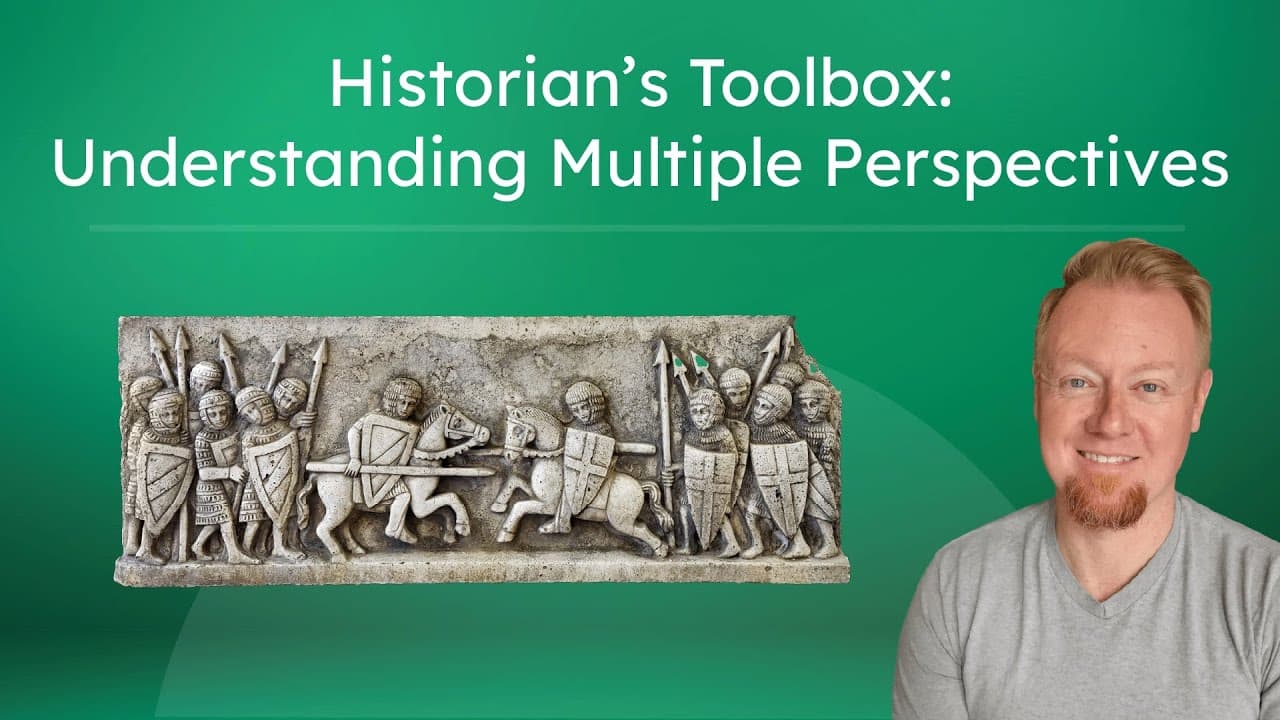
Discovering History Through Multiple Perspectives

Discovering History Through Multiple Perspectives

This engaging educational video introduces students to the critical historical concept of historiography—specifically, the importance of analyzing multiple perspectives to understand the past. Through a clever retelling of "Jack and the Beanstalk" from the Giant's point of view, the narrator demonstrates how changing the storyteller changes the story itself. The video transitions from this accessible analogy to real-world historical examples, showing how differently events are perceived depending on who is telling the tale.

Miacademy & MiaPrep Learning ChannelMiacademy & MiaPrep Learning Channel

11mins 43s

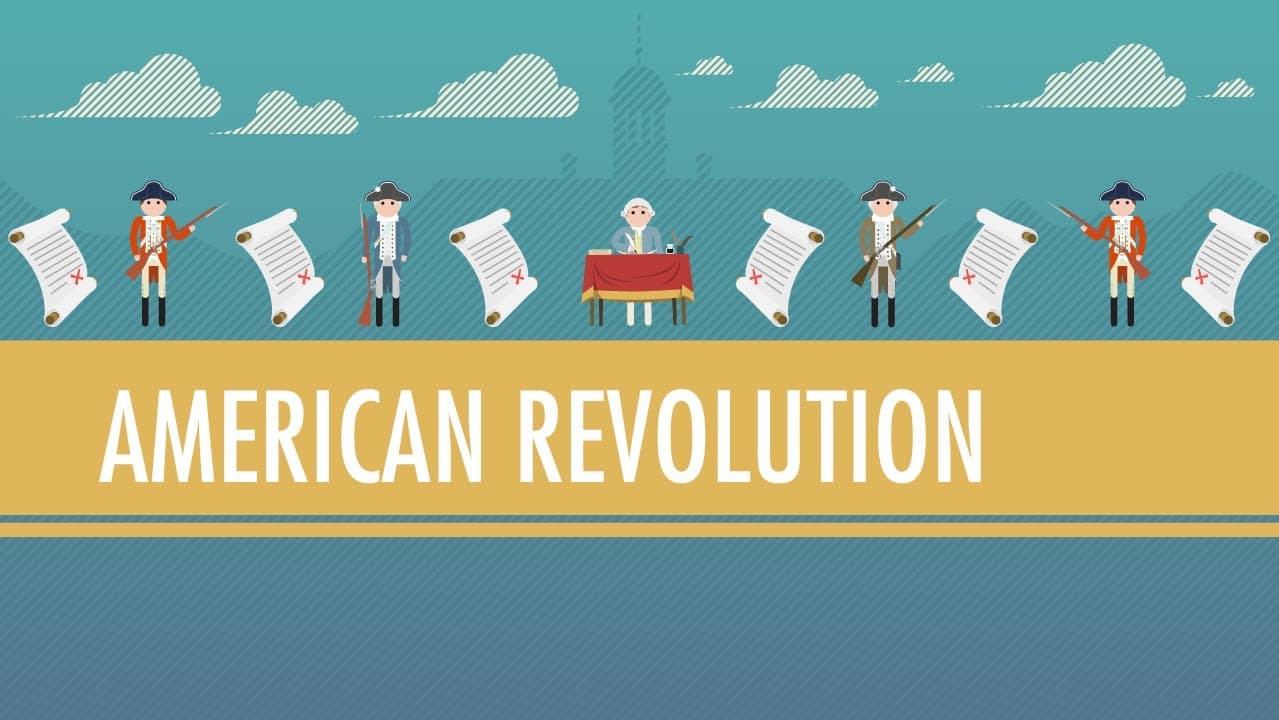
How the American Revolution Actually Happened

How the American Revolution Actually Happened

In this fast-paced and nuanced overview of the American Revolution, John Green moves beyond a simple timeline of battles to explore the complex causes and contradictory outcomes of the war. The video connects the end of the Seven Years' War and British debt to the imposition of taxes like the Stamp Act and Townshend Acts, explaining how these economic pressures catalyzed a desire for self-governance. It distinguishes between the "War for Independence" and the actual "Revolution," challenging viewers to consider how revolutionary the event truly was for different groups of people. Key themes include the intellectual roots of the revolution in the Enlightenment, specifically the ideas of John Locke and Immanuel Kant regarding liberty and property rights. The video critically examines the hypocrisy inherent in the founding era, contrasting the soaring rhetoric of "all men are created equal" with the reality of slavery and the exclusion of women and non-property owners from political power. It highlights that for many—especially slaves, women, and the poor—the power structure remained largely unchanged despite the overthrow of the monarchy. For educators, this video serves as an excellent tool for teaching critical historical analysis rather than just rote memorization. It prompts students to evaluate historical narratives, understand the difference between political independence and social revolution, and discuss the complexities of the Founding Fathers. The content supports lessons on the Declaration of Independence, the influence of philosophical movements on political action, and the evolution of American democratic ideals.

CrashCourseCrashCourse

11mins 27s

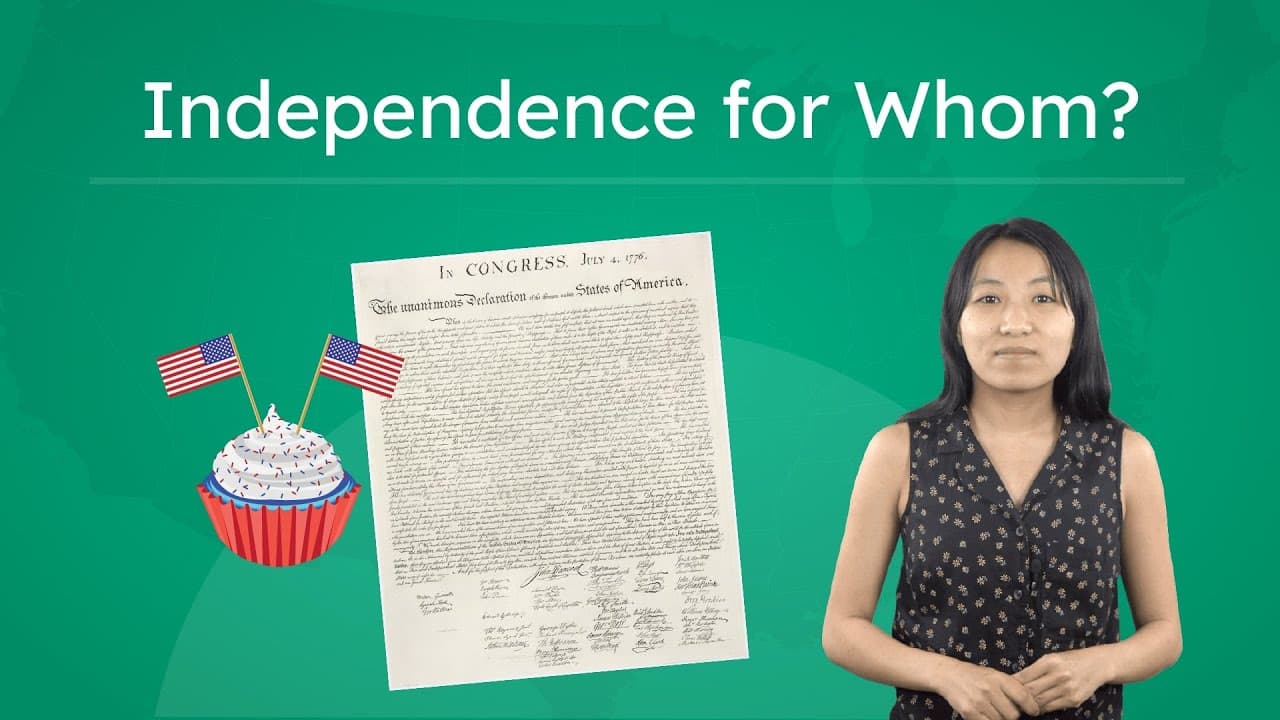
Whose Independence? Diverse Responses to the Declaration

Whose Independence? Diverse Responses to the Declaration

This video provides a critical examination of the immediate aftermath of the signing of the Declaration of Independence, focusing specifically on the populations excluded from its promises. While popular narratives often depict a universal celebration, this lesson explores how the ideals of "life, liberty, and the pursuit of happiness" contrasted sharply with the reality for women, Native Americans, and enslaved and free Black people in the colonies. It highlights how these marginalized communities interpreted and utilized the language of the Declaration to advocate for their own rights, introducing key figures like Abigail Adams, Prince Hall, and Elizabeth Freeman. The content further expands the narrative scope by analyzing the reactions of the British Crown and American Loyalists. It details King George III's furious response, viewing the Declaration as treason, and the intellectual counter-arguments posed by Loyalists like John Lind. The video also touches upon the internal contradictions of the Founding Fathers, discussing the removal of the slavery clause to appease Southern colonies and the economic motivations of the wealthy signers. For educators, this resource serves as an excellent tool for teaching historical perspective and critical thinking. It moves beyond the "textbook" version of the Fourth of July to reveal a complex tapestry of reactions. Teachers can use this video to launch discussions about the gap between American ideals and historical realities, the agency of marginalized groups in early America, and the global ripple effects of the Declaration in places like France and Haiti.
Miacademy & MiaPrep Learning ChannelMiacademy & MiaPrep Learning Channel

11mins 28s

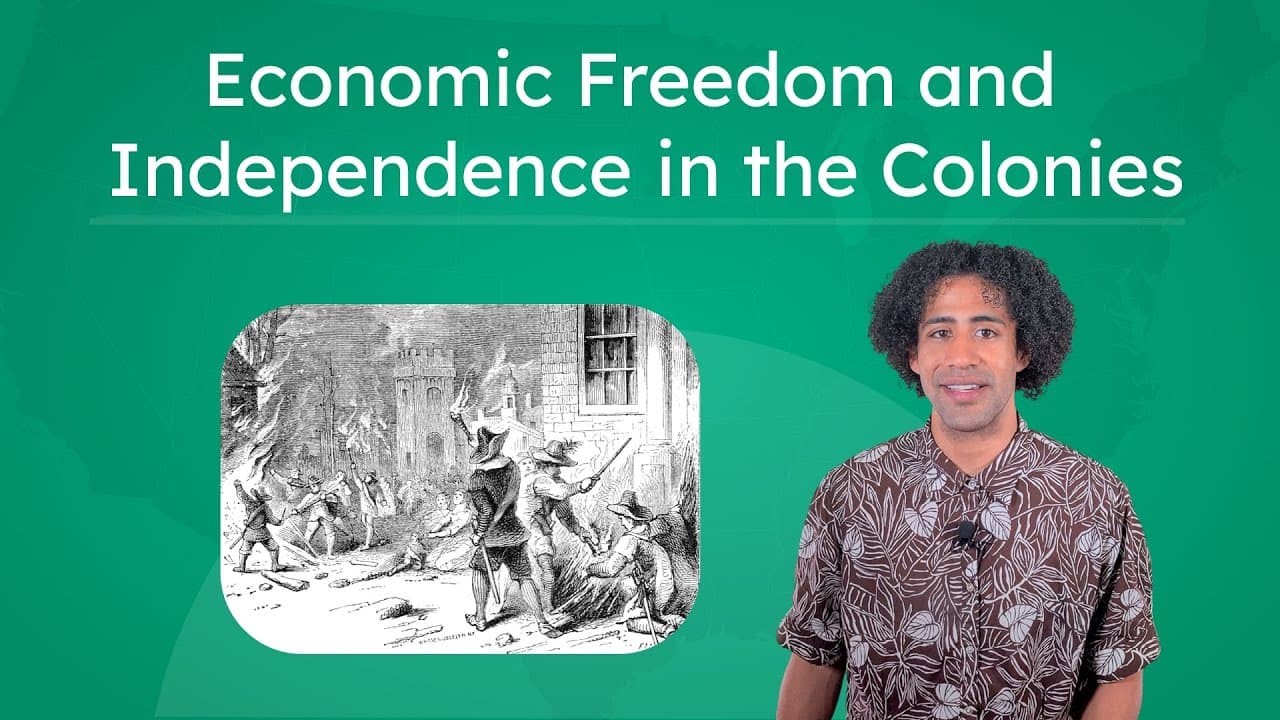
How Economics and Property Shaped the Road to Revolution

How Economics and Property Shaped the Road to Revolution

This educational video provides an in-depth analysis of the economic and political factors that led to the American Revolution, specifically focusing on the relationship between property ownership and political power. The host explores the social hierarchy of colonial Virginia, illustrating how the gentry consolidated control through land ownership and voting restrictions, which eventually fueled internal conflicts like Bacon's Rebellion. The narrative then shifts to the 18th century, explaining how "salutary neglect" allowed a robust local economy to flourish, raising the standard of living for free colonists while simultaneously entrenching chattel slavery through racial codes.

Miacademy & MiaPrep Learning ChannelMiacademy & MiaPrep Learning Channel

13mins 11s

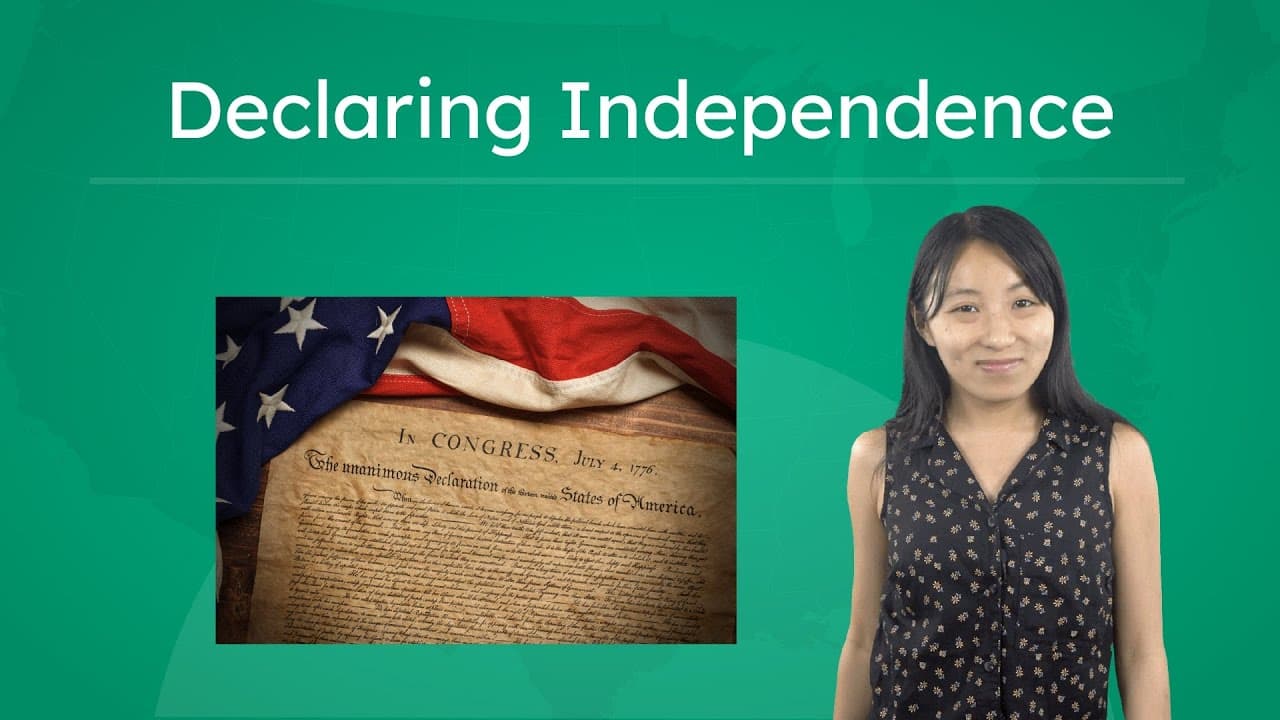
Understanding the Declaration: Grievances, Rights, and Vision

Understanding the Declaration: Grievances, Rights, and Vision

This engaging video lesson breaks down the historical context, content, and lasting impact of the Declaration of Independence. Using an accessible analogy about persuading people to support a cause, the host transitions into the challenges the Founding Fathers faced in uniting the colonies against the British Crown. The video systematically categorizes the colonists' grievances—such as taxation without representation and lack of self-governance—and contrasts them with their specific demands for a new nation.

Miacademy & MiaPrep Learning ChannelMiacademy & MiaPrep Learning Channel

9mins 29s

How the Seven Years War Led to the American Revolution

How the Seven Years War Led to the American Revolution

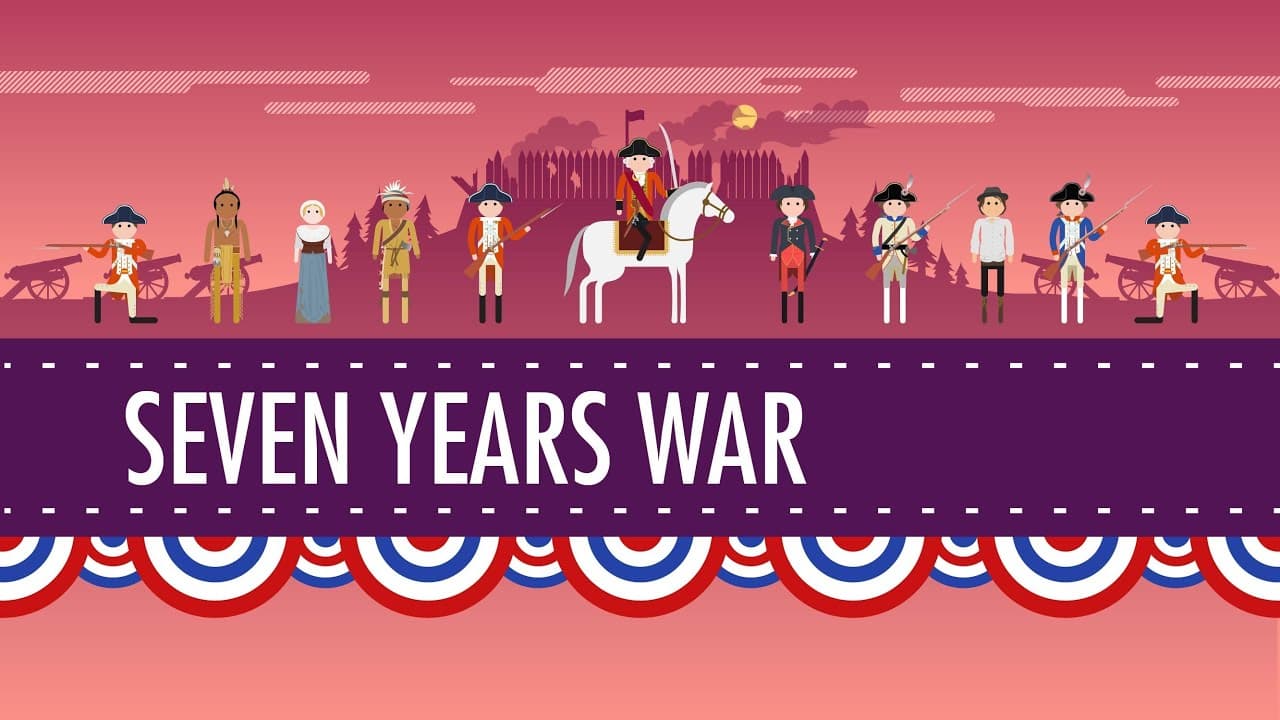
In this fast-paced and engaging episode of Crash Course US History, John Green explores the global conflict known as the Seven Years War (or the French and Indian War) and its pivotal role in setting the stage for the American Revolution. The video moves beyond simple dates and battles to examine the complex economic and social forces at play, specifically focusing on the economic theory of mercantilism and how the colonial drive for land and resources sparked a global conflagration.

CrashCourseCrashCourse

10mins 40s

Materials

Central American Freedom Reading Worksheet

Central American Freedom Reading Worksheet

A Grade 8-9 dual-language reading and multiple-choice worksheet covering Central American Independence Day (September 15, 1821). Features a 4-paragraph parallel English and Spanish text alongside 6 standards-aligned bilingual multiple choice questions assessing key historical concepts, leaders, and civic traditions.

GJ

Gerardo Jimenez Ramirez

Figures Révolutionnaires Fiche Synthèse

Figures Révolutionnaires Fiche Synthèse

Fiche d'étude synthétique présentant les huit figures majeures de l'indépendance des États-Unis, leurs rôles politiques, militaires et diplomatiques, ainsi qu'une frise chronologique des repères clés.

CS

Carlos Santos

Revolutionary Ideas Worksheet

Revolutionary Ideas Worksheet

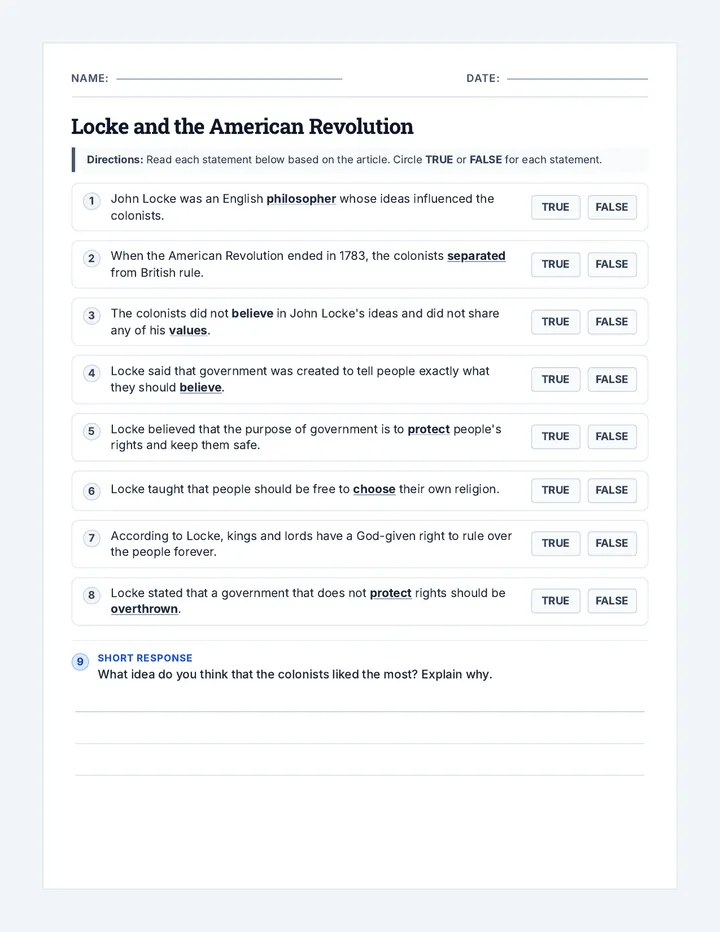
A foundational True or False reading comprehension worksheet on John Locke and the American Revolution, including an added short open-response question for student reflection.

CM

Christie Mercuri

Expansion Territorial Mapa Didactico

Expansion Territorial Mapa Didactico

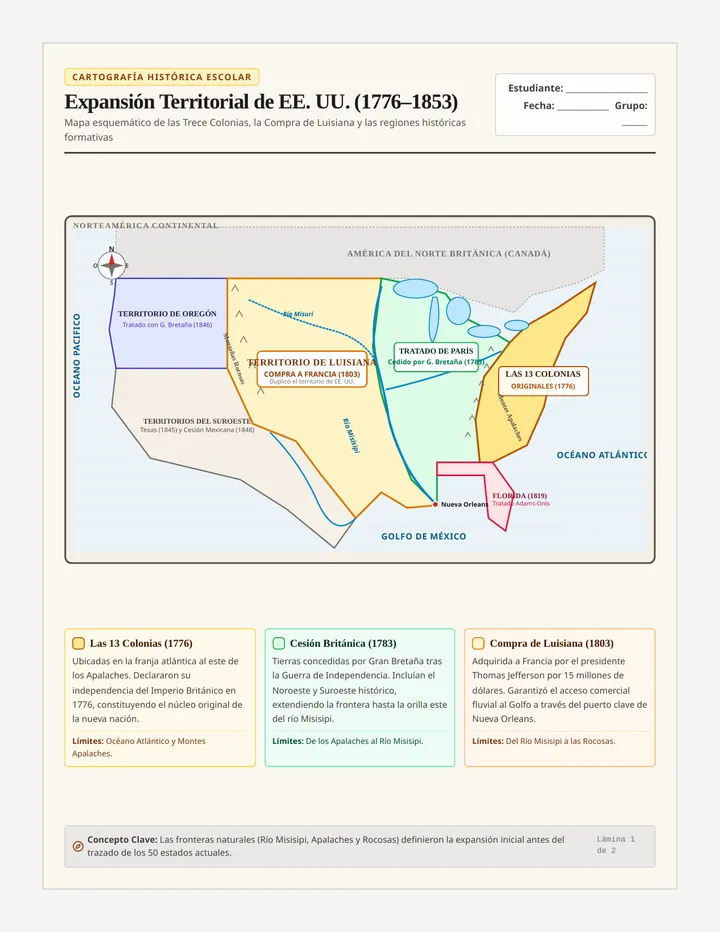
Mapa histórico esquemático de Estados Unidos que ilustra las Trece Colonias, el Territorio de Luisiana y las etapas clave de la expansión territorial temprana sin fronteras estatales modernas. Incluye una lámina de referencia cartográfica detallada y una ficha pedagógica de análisis y comprensión histórica.

CS

Carlos Santos

Figures de l'Indépendance Fiche

Figures de l'Indépendance Fiche

Fiche pédagogique recto combinant repères biographiques synthétiques et exercices d'application sur les figures majeures de la Révolution américaine : Washington, Jefferson, Franklin et Lafayette.

CS

Carlos Santos

Boston Massacre Absent Worksheet

Boston Massacre Absent Worksheet

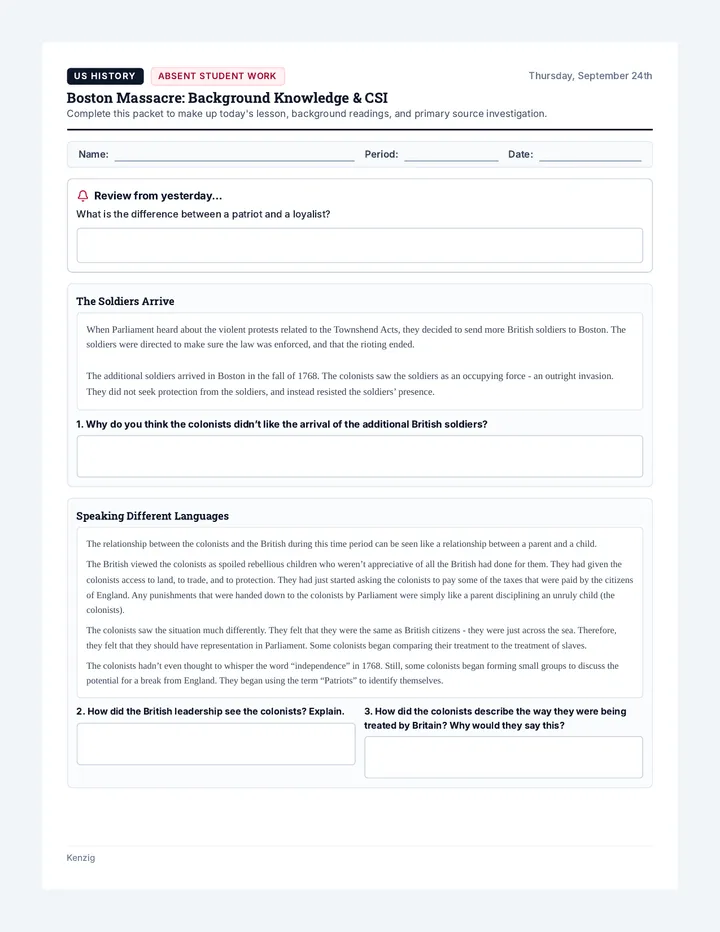
A printable 3-page absent student packet featuring the exact verbatim readings, questions, and Source E primary source testimony from the classroom slideshow, formatted with ample handwriting space for middle school students.

KK

Kayla Kenzig

Sequences

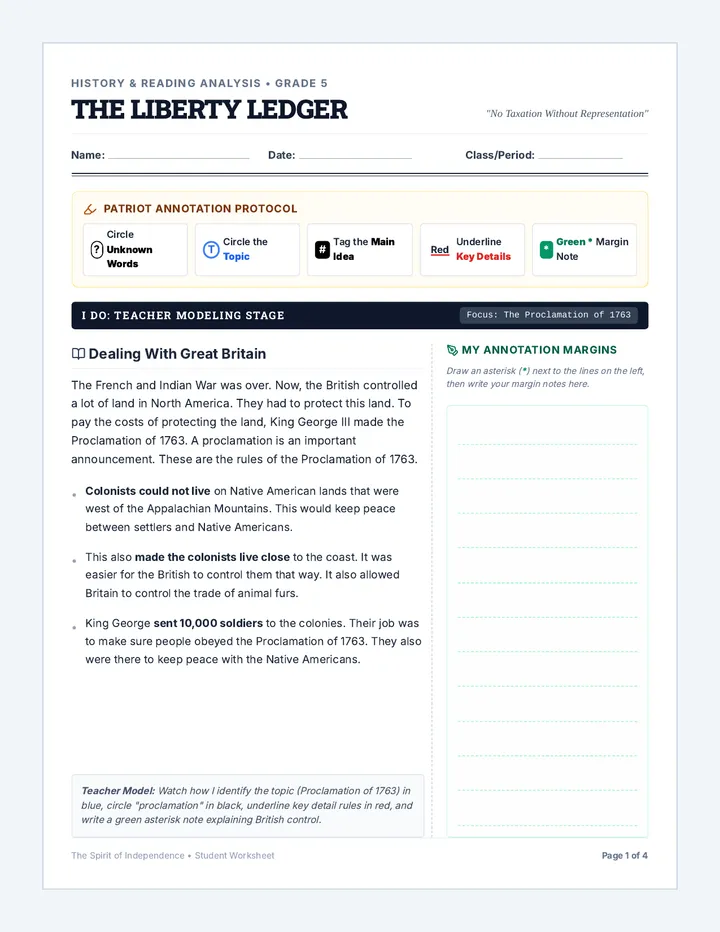
Liberty Ledger Annotation Worksheet

Spirit of Independence

A fifth-grade social studies and active reading unit exploring the growing friction between Great Britain and the American colonies, focusing on the causes, consequences, and motivated actions that led to the American Revolution.

MN

Monica Nava

7
Teacher Facilitation Guide

Revolutionary Dilemmas

A comprehensive book club unit for the historical fiction novel 'My Brother Sam is Dead', focusing on the moral complexities of the Revolutionary War, character transformation, and historical context.

KL

Kim Leary

8
Thirteen Friends Worksheet

Democratic Foundations

A series of lessons exploring the foundational documents and processes of the United States government, from the birth of the nation to the creation of modern laws.

SB

Stephanie Bizeur

40
Rocky Ridges Slides

Northeast Navigator

A 5-lesson sequence exploring the geography, climate, resources, culture, and states of the Northeast region of the United States. Students will engage with reading passages, comprehension activities, and a states-and-capitals matching game.

NP

Natalie Pelletier

15
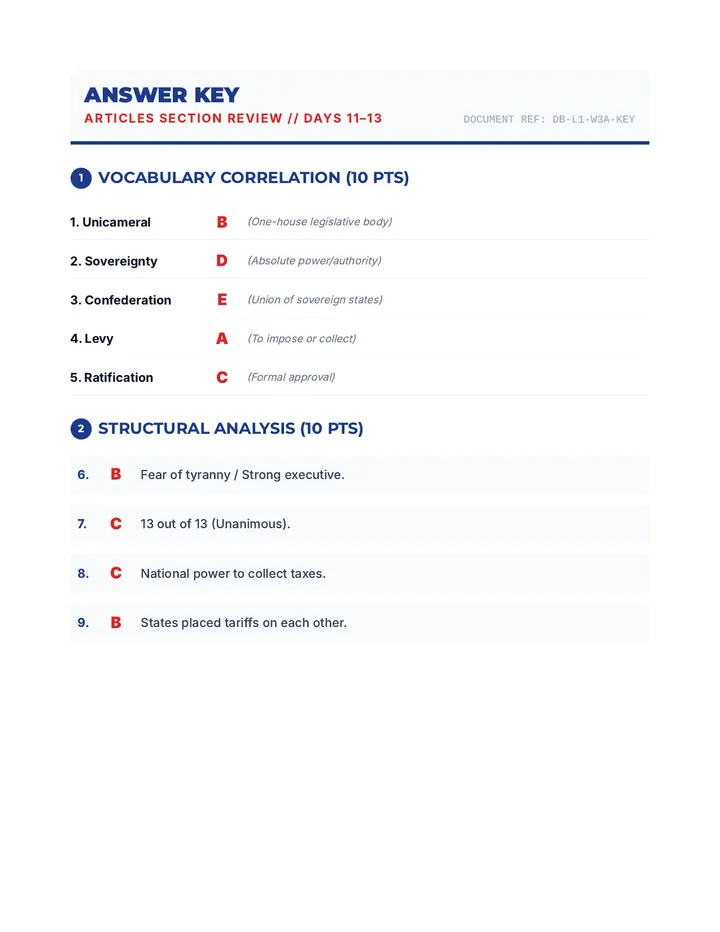
Articles Section Review Key

Democracy Blueprint

A comprehensive 90-day independent study program for high school government, covering everything from philosophical foundations to modern policy and civic participation.

LF

Lindsey Foulks

35
Roots of Republicanism Reader

Foundations of Freedom Remediation Packet

A 7-day comprehensive remediation sequence focused on the philosophical, historical, and individual foundations of American government. Designed for students needing mastery of TEKS 1 and 12B, the unit features structured readers, skill-building worksheets, and a cumulative assessment.

CE

Chelsea Elliott

16

Lessons

History Sprint Pacing Guide

STAAR History Sprint

A comprehensive pacing guide and activity resource designed to cover the remaining 11th Grade US History TEKS before the STAAR test on April 16th. This lesson provides a day-by-day calendar for A/B block schedules and high-engagement activities for each remaining historical era.

BB

Bridgette Burdick

51
Massachusetts Milestones Slideshow

New England Chronicles

An expansive journey through the history of New England, divided into state-by-state volumes. This series provides middle school students with 180 daily historical warm-ups, exploring major milestones from pre-colonial times to modern innovations.

SF

Steven Flint

6
Compromise Conundrum Activity Signs

Compromise Conundrum

A 45-minute stand-alone lesson centered on the Constitutional Convention's debate over representation and the Three-Fifths Compromise. It includes chunked reading for accessibility, a high-engagement 'Four Corners' activity, and a graphic organizer assessment designed for formal observation alignment with the Danielson Framework.

SA

Senta Agnello-Shelton

11
Reason for Revolution Worksheet V4 Refined Final

Architects of Liberty

A lesson exploring how Enlightenment philosophers like Locke, Montesquieu, and Voltaire influenced the founding documents and structure of the United States government.

KB

Kenneth Brown

10
Chronicle Study Guide Student

Modern Era Mastery

A comprehensive review and assessment package covering World History from the Enlightenment through the Cold War, aligned with state standards.

AH

Ashley Hopf

16
Explorer Epochs Wall Chart

Early World Explorers

A comprehensive lesson on early world exploration from 300 BCE to 1500 CE, focusing on the geographical, cultural, and religious impacts of key explorers across different continents.

J

jcasey

14