Lenny.com
Explore
Create
ActivitiesNewMathEnglish Language ArtsScience & EngineeringSocial StudiesGlobal LanguagesHealth & Physical EducationSpecial EducationCounseling & Life SkillsArts & CreativityESL
Lenny.com
Lenny.com
Explore
Create
ActivitiesNewMathEnglish Language ArtsScience & EngineeringSocial StudiesGlobal LanguagesHealth & Physical EducationSpecial EducationCounseling & Life SkillsArts & CreativityESL
Lenny.com
Lenny.com

Solutions

Lenny for EducatorsLenny for SchoolsLenny for Districts

Product

ExploreSign inCreateSupportAbout

Resources

Getting startedMTSS Acceleration Program

Newsletters

School Funding Newsletter

© 2026 Lenny Learning Inc.

TermsPrivacyAccessibility
LinkedInInstagramX
Lenny

Macroeconomics

Aggregate economic indicators including GDP, inflation, and unemployment rates. Examines how fiscal and monetary policies influence national growth, stability, and international trade.

Social StudiesSocial Studies PracticesLocation WordsMapsOrder EventsChronology and CausationEvaluating SourcesHistorical ThinkingGeography, Humans, & the EnvironmentAmerican Symbols and LandmarksCitiesStatesState CapitalsRegions of the United StatesGeographic SkillsPhysical GeographyHuman GeographyRegional GeographyGeography of AfricaGeography of AsiaGeography of EuropeGeography of OceaniaGeography of the AmericasSociety and Environment of EuropeSociety and Environment of AsiaSociety and Environment of The AmericasSociety and Environment of the Middle EastSociety and Environment of AfricaHistoryPrehistoryComparing Ancient River CivilizationsAncient MesopotamiaAncient Egypt and KushAncient South AsiaEarly ChinaGreeceRome and the Byzantine EmpireAncient World HistoryNative Peoples of North AmericaNative Peoples of Mesoamerica and South AmericaAfrican EmpiresMedieval AsiaMedieval EuropeThe Silk RoadMedieval HistoryIslamic EmpiresWorld ReligionsRenaissance PeriodAge of ExplorationThe Thirteen ColoniesThe American RevolutionUS History Early RepublicFounding of the United StatesUS History AntebellumUS Civil WarReconstruction PeriodThe Gilded AgeUS ImperialismWorld ImperialismWorld War IUS History 1920sGreat DepressionWorld War IIThe Cold WarUS History 1950-60sUS History 1960s-70sWorld History 20th CenturyContemporary US HistoryContemporary World HistoryHolidaysCivics and GovernmentCitizenshipGovernment FoundationsThe ConstitutionUS ConstitutionExecutive BranchLegislative BranchJudicial BranchState and LocalPolitical ParticipationPublic PolicyPolitical SystemsPower and AuthoritySocial MovementsDefining DevianceTheories of DevianceCrime and Criminal JusticeEconomicsBasic Economic PrinciplesSupply and DemandWhat is MoneyEconomic FundamentalsMicroeconomicsMacroeconomicsBanking and FinanceEconomic SystemsGlobal EconomicsCorporations and PowerThe Changing WorkplaceUnemployment and LaborClass and InequalitySocial MobilityGlobal InequalityPsychologyHistory of PsychologyPsychology as a ScienceBrain and Nervous SystemNeuroscience and BehaviorGenetics and BehaviorSleep and ConsciousnessSensory ProcessesPerceptual OrganizationClassical ConditioningOperant ConditioningObservational LearningCognitive LearningMemory ProcessesThinking and Problem SolvingLanguage and CognitionTheories of MotivationStress and CopingPrenatal and Infant DevelopmentChildhood DevelopmentAdolescent DevelopmentAdulthood and AgingSelf and IdentitySocial CognitionSocial InfluenceAttraction and RelationshipsGroup BehaviorPrejudice and DiscriminationAnxiety and Mood DisordersClinical PsychologyForensic PsychologyPhilosophy & EthicsIntroduction to PhilosophyMajor Philosophers & IdeasMind and Body ProblemFree Will vs DeterminismEthics & MoralityReligion & PhilosophyPolitical Philosophy

Videos

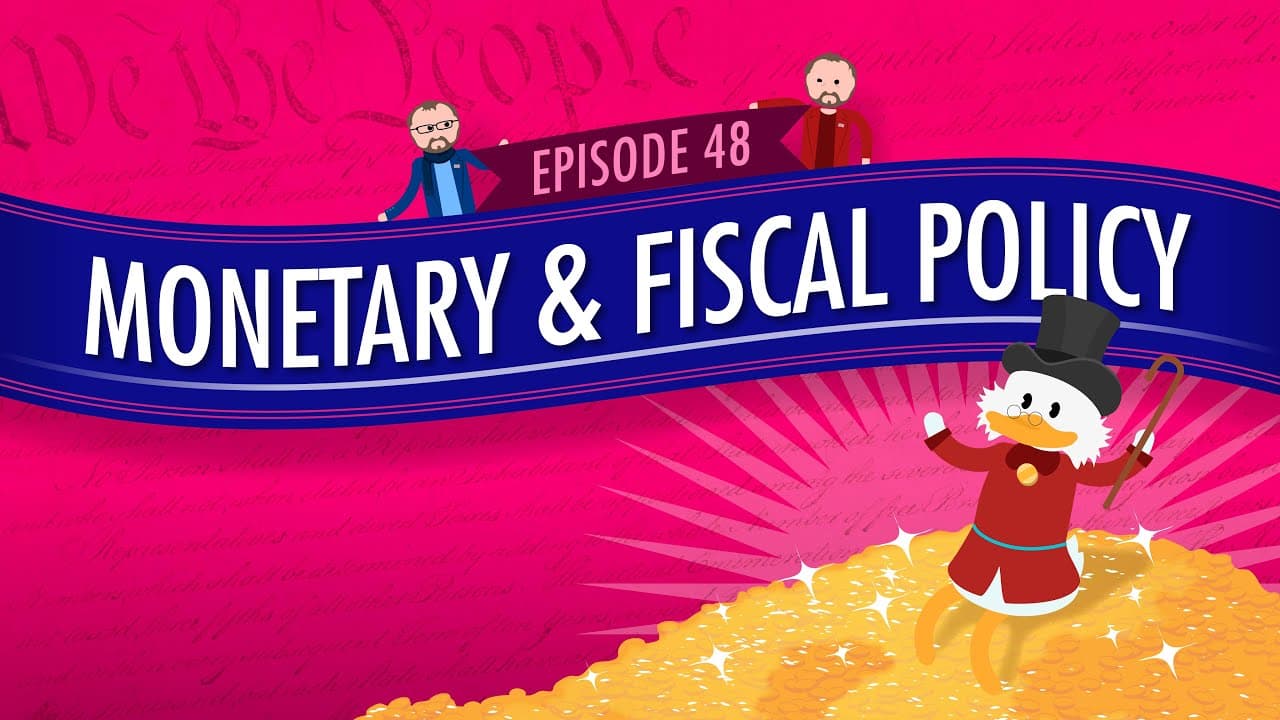
Understanding Monetary and Fiscal Policy: The Fed, Taxes, and Spending

Understanding Monetary and Fiscal Policy: The Fed, Taxes, and Spending

This episode of Crash Course Government and Politics dives into the complex machinery of United States economic policy, specifically distinguishing between monetary policy and fiscal policy. Host Craig Benzine explains how the Federal Reserve manages the money supply and interest rates to influence the economy (monetary policy) and contrasts this with how Congress and the President manage taxation and spending (fiscal policy). The video breaks down the specific levers available to the government, such as the discount rate, reserve requirements, and open market operations. The video explores key themes including the structure and function of the Federal Reserve System, the causes of inflation, and the political challenges surrounding fiscal policy. It delves into the debate over supply-side economics, the history of tax rates in the US, and the critical difference between discretionary spending (like defense) and mandatory spending (like Social Security and Medicare). The narrative highlights why political gridlock regarding taxes and spending often leaves monetary policy as the primary tool for economic stabilization. For educators, this video serves as an excellent primer for units on macroeconomics or the executive branch's role in the economy. It simplifies abstract concepts like 'fractional reserve banking' and 'open market operations' through clear visuals and humor. The breakdown of the federal budget effectively demonstrates the difficulty of balancing the budget, helping students move beyond simple political rhetoric to understand the structural constraints of government spending.

CrashCourseCrashCourse

9mins 19s

How the Federal Reserve Steers the Economy

How the Federal Reserve Steers the Economy

This informative video uses an extended analogy of a car to explain the complex functions of the Federal Reserve and its role in the United States economy. It demystifies how the "Fed" acts as the central bank, regulating the money supply and clearing financial transactions to keep the economic "engine" running smoothly. The narration breaks down how the Federal Reserve monitors economic health through key indicators like inflation, GDP, and unemployment data. The core of the video focuses on Monetary Policy, detailing the three specific tools the Federal Reserve uses to steer the economy: reserve requirements, the discount rate, and open market operations. Through clear visual flowcharts, the video demonstrates the cause-and-effect relationship between these tools and the broader economy, explaining how the Fed decides whether to "hit the gas" (stimulate growth) or "pump the brakes" (slow down inflation). Ideally suited for high school economics and civics curricula, this video transforms abstract financial concepts into concrete, relatable examples. Teachers can use it to scaffold lessons on government intervention, financial literacy, and macroeconomics. It provides a solid foundation for understanding how central banking decisions impact everyday life, from interest rates on car loans to the price of goods at the store.

Miacademy & MiaPrep Learning ChannelMiacademy & MiaPrep Learning Channel

12mins 29s

How Reaganomics Changed the US Economy in the 1980s

How Reaganomics Changed the US Economy in the 1980s

This video provides a balanced and accessible examination of the economic policies of the 1980s under President Ronald Reagan, often referred to as "Reaganomics" or "Trickle-Down Economics." It explores the transition from the economic stagnation of the 1970s to the consumer boom of the 80s, breaking down complex concepts like deregulation, tax cuts, and international trade. Through fictional case studies of businesses and workers, the narrative illustrates how these policies aimed to stimulate growth by reducing burdens on corporations and wealthy individuals, with the theory that prosperity would "trickle down" to the average American.

Miacademy & MiaPrep Learning ChannelMiacademy & MiaPrep Learning Channel

12mins 55s

The History of Conflict in the Congo and Africa's World War

The History of Conflict in the Congo and Africa's World War

This educational video provides a comprehensive historical analysis of the Democratic Republic of Congo (DRC) from its decolonization in 1960 through the devastating conflicts known as "Africa's World War." Hosted by John Green, the video explores the structural challenges left by Belgian colonialism, the rise of the dictator Mobutu Sese Seko, and the complex geopolitical web that led to the First and Second Congo Wars. It specifically connects the Rwandan Genocide to the destabilization of the Congo, illustrating how regional ethnic tensions and refugee crises sparked continent-wide warfare. The content delves into key themes such as the "resource curse," examining how the Congo's vast mineral wealth (gold, diamonds, coltan) has paradoxically fueled violence and corruption rather than prosperity. It also analyzes the concepts of kleptocracy and clientelism under Mobutu, the impact of Cold War politics on African leadership, and the shifting dynamics of international intervention, ranging from Western financial institutions like the IMF to recent infrastructure deals with China. For educators, this resource is invaluable for teaching modern World History, African Studies, and Geopolitics. It helps students move beyond stereotypes of "backwardness" to understand the specific historical, economic, and political drivers of instability in Central Africa. The video provides a rigorous framework for discussing difficult topics like genocide, neo-colonialism, and the ethics of global supply chains, making it highly relevant for high school and undergraduate classrooms dealing with post-colonial history and international relations.
CrashCourseCrashCourse

12mins 57s

The Rise and Impact of Industrial Capitalism

The Rise and Impact of Industrial Capitalism

This educational video provides a comprehensive overview of capitalism's emergence during the Industrial Revolution, contrasting it with the preceding feudal system. It uses a modern-day analogy of a t-shirt business to explain complex economic concepts like profit, supply and demand, and market exchange before diving into the historical realities of Industrial England. The narrator introduces key figures like Adam Smith and concepts such as laissez-faire economics, explaining how the shift from subsistence farming to mass production fundamentally changed society. The video presents a balanced analysis of industrial-era capitalism by detailing both its significant benefits—such as self-determination, innovation, and massive economic growth (GDP)—and its severe drawbacks. These drawbacks include extreme wealth inequality, worker exploitation (including child labor and dangerous conditions), the rise of monopolies, and environmental degradation. The content highlights the complexities of the system, showing how it led to both unprecedented prosperity for some and difficult lives for others. For educators, this resource serves as an excellent primer for units on the Industrial Revolution, Economics, or World History. It effectively breaks down abstract economic terms into digestible examples and provides clear visual data (graphs on GDP and wages) that allow for quantitative analysis in the classroom. The video concludes by setting the stage for government regulation and the rise of labor unions, making it a perfect bridge to lessons on social reform movements.

Miacademy & MiaPrep Learning ChannelMiacademy & MiaPrep Learning Channel

17mins 35s

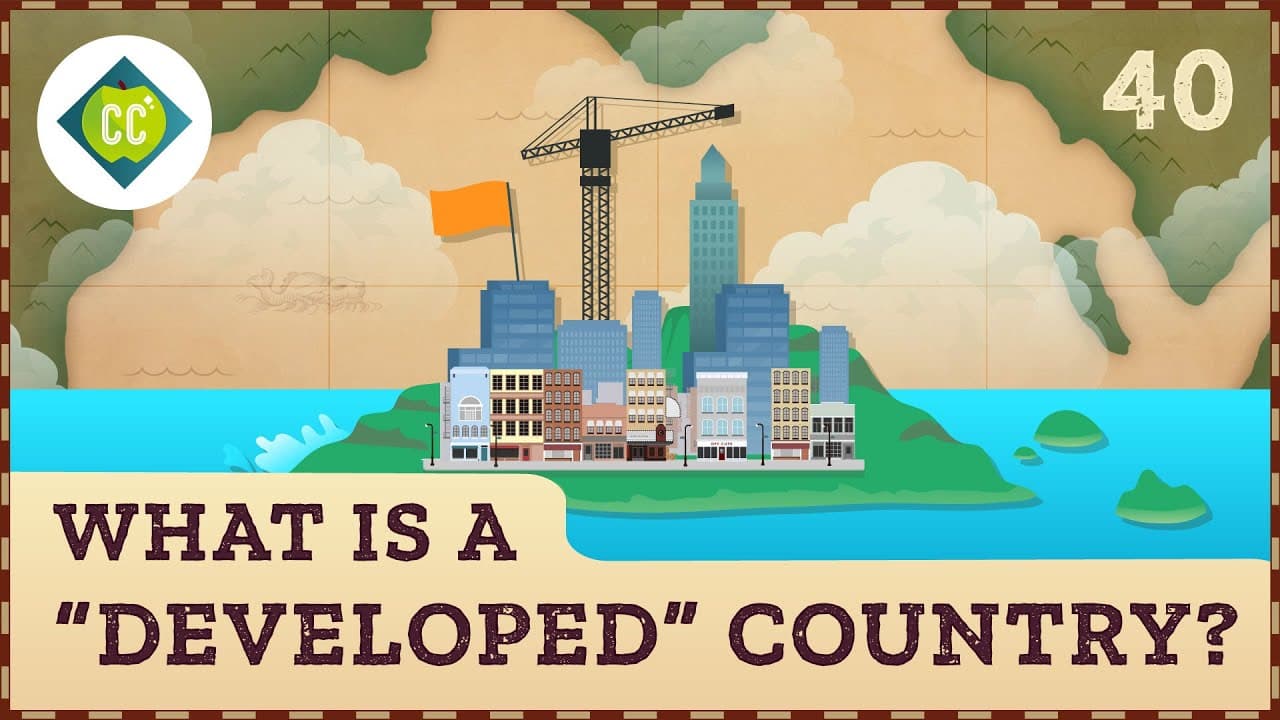
How Geography Defines Development and Wealth

How Geography Defines Development and Wealth

This educational video explores the complex geographic and economic concept of "development," focusing on the Middle East and North Africa (MENA) region as a primary case study. Hosted by Alizé Carrère for Crash Course Geography, the video challenges traditional definitions of wealth and power by contrasting the resource-rich United Arab Emirates with Lebanon—a country with significant natural advantages but historical and political struggles. It delves into how historical narratives, particularly colonialism, have shaped modern perceptions of which countries are considered "developed" or "developing." Key themes include the evolution of terminology from "First/Third World" to "Global North/South," the limitations of using Gross Domestic Product (GDP) as the sole measure of success, and the impact of international debt and austerity measures on lower-income nations. The video introduces alternative metrics like the Human Development Index (HDI), Gender Inequality Index (GII), and Gross National Happiness, urging viewers to consider social well-being and sustainability alongside economic growth. For educators, this resource serves as an excellent tool for high school Geography, Economics, and World History classrooms. It encourages critical thinking about data and global inequality, asking students to question how we measure success and who gets to define it. The content seamlessly bridges physical geography (resources like oil and water) with human geography (politics, economics, and culture), making it ideal for units on global development, economic systems, or the modern Middle East.

CrashCourseCrashCourse

12mins 29s

Materials

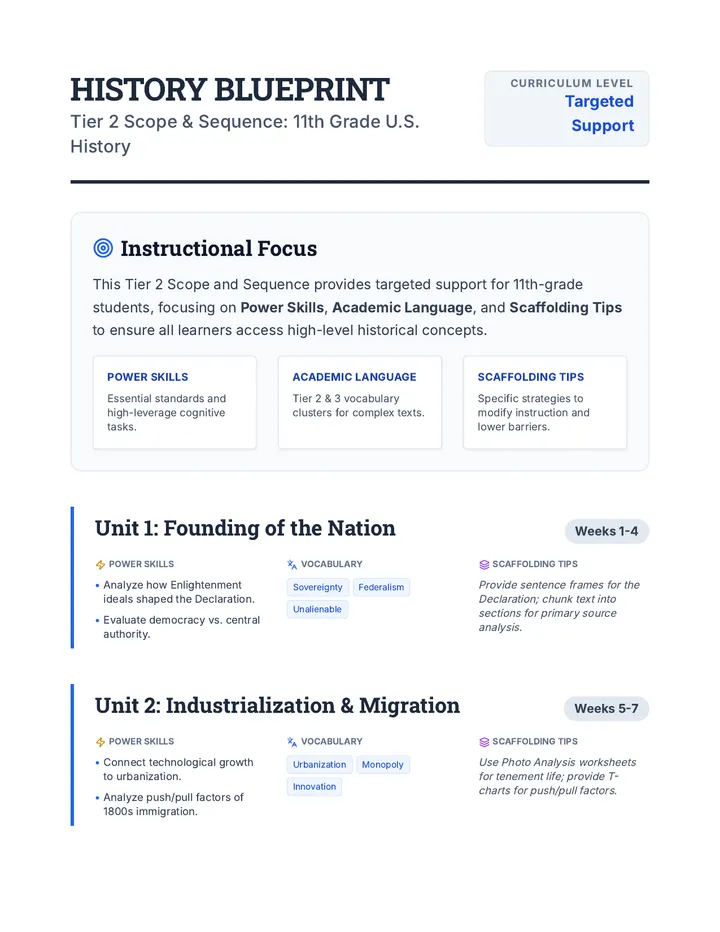
History Blueprint Scope and Sequence

History Blueprint Scope and Sequence

An updated Tier 2 Scope and Sequence for 11th Grade U.S. History, now including specific scaffolding tips for each unit alongside power skills and academic vocabulary. The layout is optimized for teacher reference with instructional strategies tailored for targeted support.

D

dfleisch

Inflation Time Machine Worksheet

Inflation Time Machine Worksheet

A comprehensive two-page economics worksheet that connects the BLS Consumer Price Index (CPI) inflation calculator to major US historical economic eras from 1913 to the present. Students analyze purchasing power shifts, compare deflationary and stagflationary periods, and evaluate real versus nominal values.

MQ

Melanie Quick

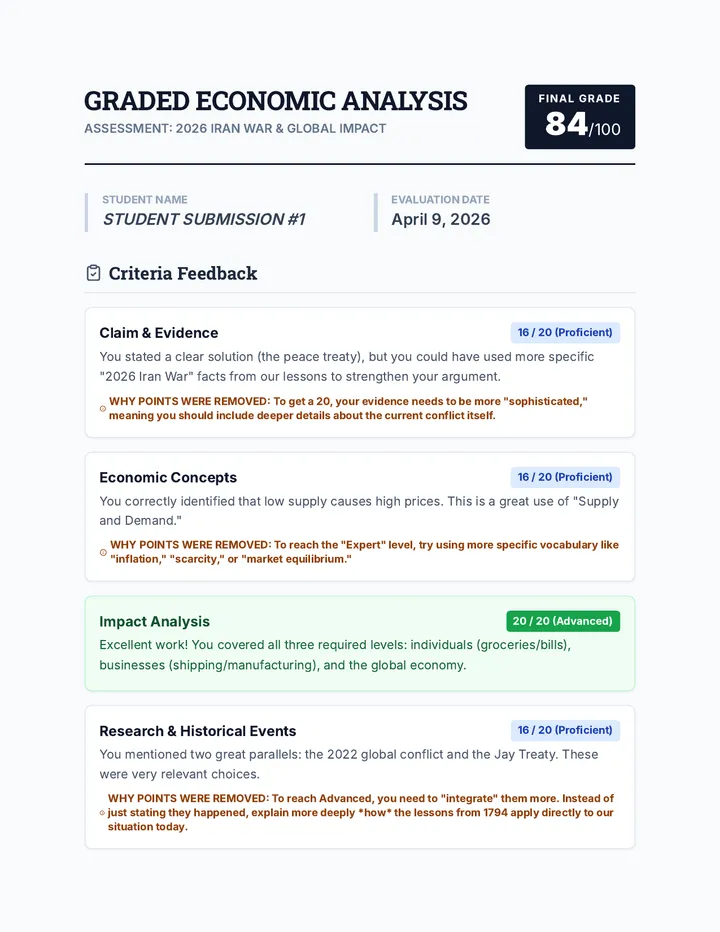
Graded Energy Analysis Report

Graded Energy Analysis Report

A detailed feedback report for a student's essay on the 2026 energy crisis, featuring a clear points breakdown, specific reasons for score deductions, and encouraging instructor notes based on a provided rubric.

SB

Shanna Brady

Tier 2 History Blueprint

Tier 2 History Blueprint

A comprehensive teacher-facing curriculum blueprint for a high school Economics course, featuring power skills, targeted vocabulary, and scaffolding strategies across five key units. The design uses a professional "blueprint" aesthetic with clear sectioning and visual icons.

D

dfleisch

Sequences

Economics Essentials Facilitation Guide

Economics Essentials Packet

A 7-day remediation packet for 12th-grade economics focusing on fundamental concepts like scarcity, supply and demand, economic systems, and international trade, scaffolded for accessibility.

CE

Chelsea Elliott

29
Unity Roadmap Teacher Guide

Unity and Growth

A modified Modern US History curriculum (Founding to Present) for Tier 2 and 3 special education students, based on Grade 11 Social Studies standards. Focuses on government, industrialization, world wars, and civil rights.

D

dfleisch

26
Mobilization Intro Slides

Global Conflict WWII

A comprehensive 2-day unit covering World War II for 11th Grade US History, aligned with TEKS. It focuses on the transition from isolationism to total war, the home front experience, major turning points in both the European and Pacific theaters, and the strategic decisions that ended the conflict.

BB

Bridgette Burdick

17
Era of Crisis Study Guide

Superpowers and Scandals

A comprehensive unit covering United States history from 1960 to 1980, focusing on the Cold War, domestic policy, and political scandals.

AH

Ashley Hopf

5
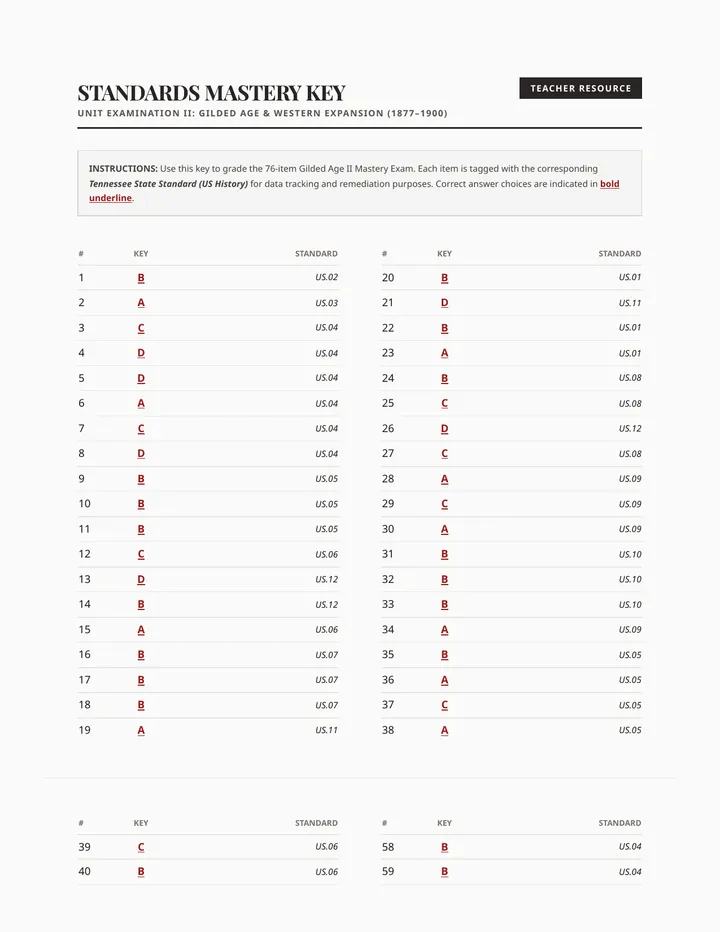
Gilded Age II Standards Key

Modern America Mastery

A comprehensive curriculum sequence covering late 19th and early 20th-century American history, focusing on economic transformation, Western expansion, global imperialism, and the impact of the Great War.

A

Andrew

29
Legislative Leader Unit Guide

Capitol Insiders

A comprehensive one-week unit on the Legislative Branch tailored for Pennsylvania high school students. The unit covers the structure of the US Congress and the PA General Assembly, the law-making process, and the influence of interest groups, culminating in a simple, independent legislative proposal project.

M

morgan.mcgough

12

Lessons

History Sprint Pacing Guide

STAAR History Sprint

A comprehensive pacing guide and activity resource designed to cover the remaining 11th Grade US History TEKS before the STAAR test on April 16th. This lesson provides a day-by-day calendar for A/B block schedules and high-engagement activities for each remaining historical era.

BB

Bridgette Burdick

51
Modern Era Reader Part 1

The Modern Ledger

A comprehensive exploration of the 1990s through the modern day, covering technological shifts, political milestones, military conflicts, and cultural evolution in the United States.

CE

Chelsea Elliott

20
Latin American Ledger Reading

The Latin American Ledger Project

A regional investigation into the social and economic consequences of global warming in Latin America, focusing on human displacement, glacial melt in the Andes, and agricultural shifts. Students analyze a detailed text and construct a Claim-Evidence-Reasoning (CER) argument.

GJ

Gerardo Jimenez Ramirez

10
Conflict Debrief Guide

Price of Conflict

A comprehensive 45-minute exploration into the multifaceted impacts of armed conflict, covering human, economic, social, and environmental costs that persist long after the fighting stops.

KJ

Katia Jones

4
Mission Briefing Teacher Guide

Modern Era Missions

A 100-minute station-based lesson covering pivotal events from the 1970s to the modern era, including Stagflation, the Camp David Accords, Reaganomics, and the War on Terror. Students rotate through four 20-minute missions using primary sources, political cartoons, data mapping, and manipulatives to master STAAR-aligned content.

LF

Lindsey Foulks

9
Chronicle Study Guide Student

Modern Era Mastery

A comprehensive review and assessment package covering World History from the Enlightenment through the Cold War, aligned with state standards.

AH

Ashley Hopf

16