Lenny.com
Explore
Create
ActivitiesNewCurriculumNewMathEnglish Language ArtsScience & EngineeringSocial StudiesGlobal LanguagesHealth & Physical EducationSpecial EducationCounseling & Life SkillsArts & CreativityESL
Lenny.com
Lenny.com
Explore
Create
ActivitiesNewCurriculumNewMathEnglish Language ArtsScience & EngineeringSocial StudiesGlobal LanguagesHealth & Physical EducationSpecial EducationCounseling & Life SkillsArts & CreativityESL
Lenny.com
Lenny.com

Solutions

Lenny for EducatorsLenny for SchoolsLenny for Districts

Product

ExploreSign inCreateSupportAbout

Resources

Getting startedMTSS Acceleration Program

Newsletters

School Funding Newsletter

© 2026 Lenny Learning Inc.

TermsPrivacyAccessibility
LinkedInInstagramX
Lenny
Social StudiesSocial Studies PracticesLocation WordsMapsOrder EventsChronology and CausationEvaluating SourcesHistorical ThinkingGeography, Humans, & the EnvironmentAmerican Symbols and LandmarksCitiesStatesState CapitalsRegions of the United StatesGeographic SkillsPhysical GeographyHuman GeographyRegional GeographyGeography of AfricaGeography of AsiaGeography of EuropeGeography of OceaniaGeography of the AmericasSociety and Environment of EuropeSociety and Environment of AsiaSociety and Environment of The AmericasSociety and Environment of the Middle EastSociety and Environment of AfricaHistoryPrehistoryComparing Ancient River CivilizationsAncient MesopotamiaAncient Egypt and KushAncient South AsiaEarly ChinaGreeceRome and the Byzantine EmpireAncient World HistoryNative Peoples of North AmericaNative Peoples of Mesoamerica and South AmericaAfrican EmpiresMedieval AsiaMedieval EuropeThe Silk RoadMedieval HistoryIslamic EmpiresWorld ReligionsRenaissance PeriodAge of ExplorationThe Thirteen ColoniesThe American RevolutionUS History Early RepublicFounding of the United StatesUS History AntebellumUS Civil WarReconstruction PeriodThe Gilded AgeUS ImperialismWorld ImperialismWorld War IUS History 1920sGreat DepressionWorld War IIThe Cold WarUS History 1950-60sUS History 1960s-70sWorld History 20th CenturyContemporary US HistoryContemporary World HistoryHolidaysCivics and GovernmentCitizenshipGovernment FoundationsThe ConstitutionUS ConstitutionExecutive BranchLegislative BranchJudicial BranchState and LocalPolitical ParticipationPublic PolicyPolitical SystemsPower and AuthoritySocial MovementsDefining DevianceTheories of DevianceCrime and Criminal JusticeEconomicsBasic Economic PrinciplesSupply and DemandWhat is MoneyEconomic FundamentalsMicroeconomicsMacroeconomicsBanking and FinanceEconomic SystemsGlobal EconomicsCorporations and PowerThe Changing WorkplaceUnemployment and LaborClass and InequalitySocial MobilityGlobal InequalityPsychologyHistory of PsychologyPsychology as a ScienceBrain and Nervous SystemNeuroscience and BehaviorGenetics and BehaviorSleep and ConsciousnessSensory ProcessesPerceptual OrganizationClassical ConditioningOperant ConditioningObservational LearningCognitive LearningMemory ProcessesThinking and Problem SolvingLanguage and CognitionTheories of MotivationStress and CopingPrenatal and Infant DevelopmentChildhood DevelopmentAdolescent DevelopmentAdulthood and AgingSelf and IdentitySocial CognitionSocial InfluenceAttraction and RelationshipsGroup BehaviorPrejudice and DiscriminationAnxiety and Mood DisordersClinical PsychologyForensic PsychologyPhilosophy & EthicsIntroduction to PhilosophyMajor Philosophers & IdeasMind and Body ProblemFree Will vs DeterminismEthics & MoralityReligion & PhilosophyPolitical Philosophy

StuCo Member Handbook

A 3-page printable Student Council (StuCo) Member Handbook for PPEP TEC High School covering the December 2026–May 2027 plan: purpose, goals, membership and roles, biweekly 5-step meeting plan, monthly activity calendar, event planning checklist, and shared expectations.

SHStacey Hersch

You might also like

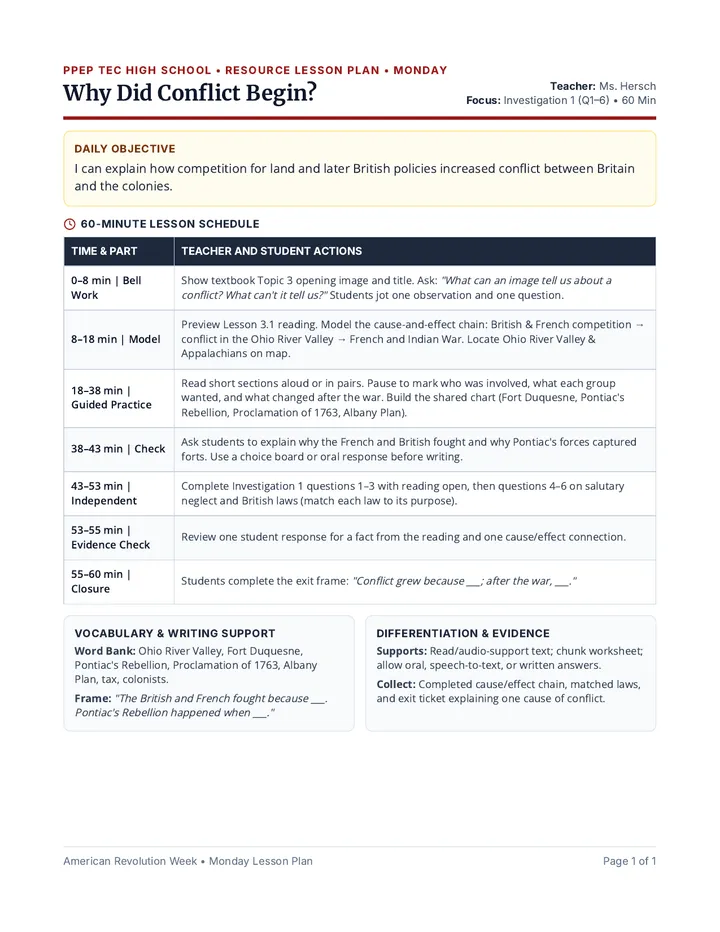
Monday Conflict Lesson Plan

American Revolution Week

A four-day high school resource ELA and U.S. History sequence (Monday–Thursday) tracing the causes of the American Revolution, the colonies' push for independence, soldiers' primary source experiences, and postwar outcomes. Built with simplified readings, visual timelines and diagrams, and writing scaffolds.

SH

Stacey Hersch

16
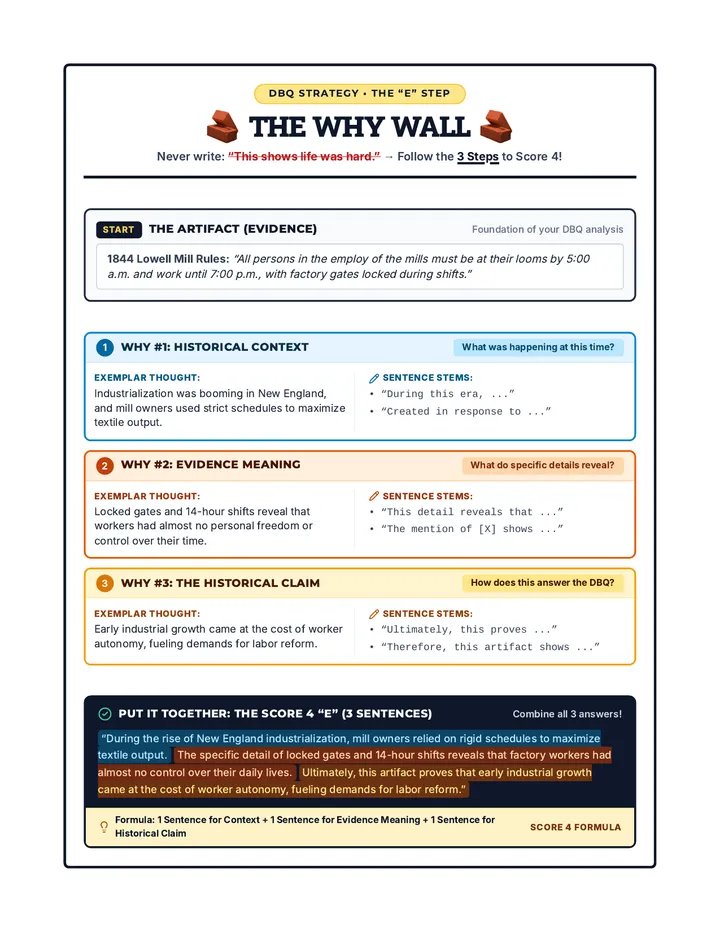
DBQ Why Wall Anchor Chart

DBQ Evidence Analysis

Anchor charts guiding students through explaining historical artifacts and primary source evidence for Document-Based Questions using Historical Context, Evidence Meaning, and Historical Claim.

A

awechsler

5
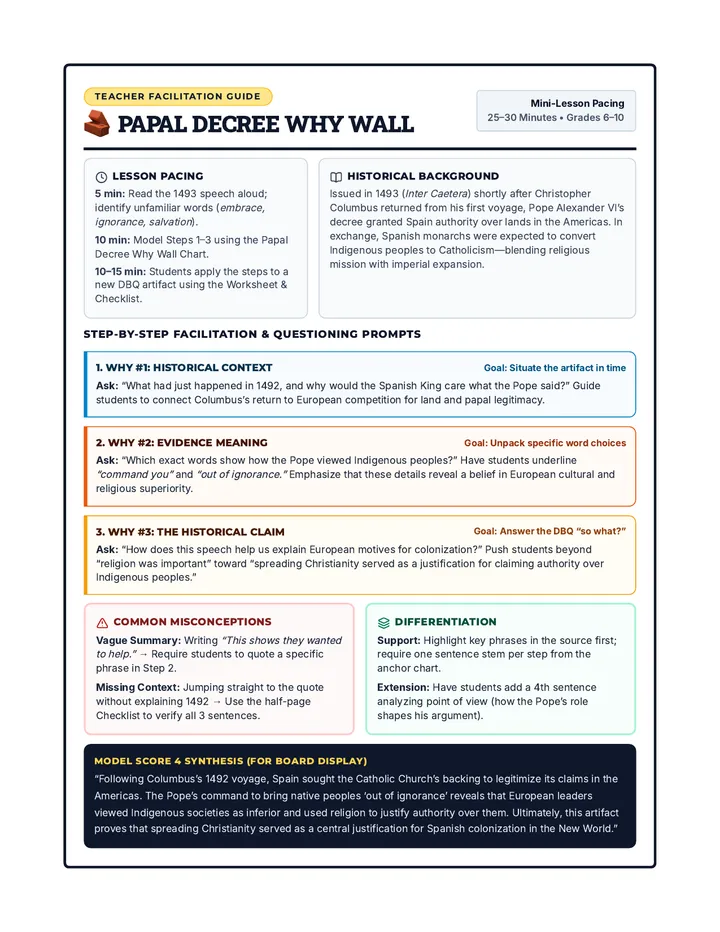
Papal Decree Teacher Guide

Papal Decree Teacher Guide

A one-page teacher facilitation guide for the Papal Decree Why Wall Chart. Includes lesson pacing, historical background on Pope Alexander VI's 1493 decree, step-by-step questioning prompts for Context, Evidence Meaning, and Historical Claim, plus common misconceptions and differentiation strategies.

A

awechsler

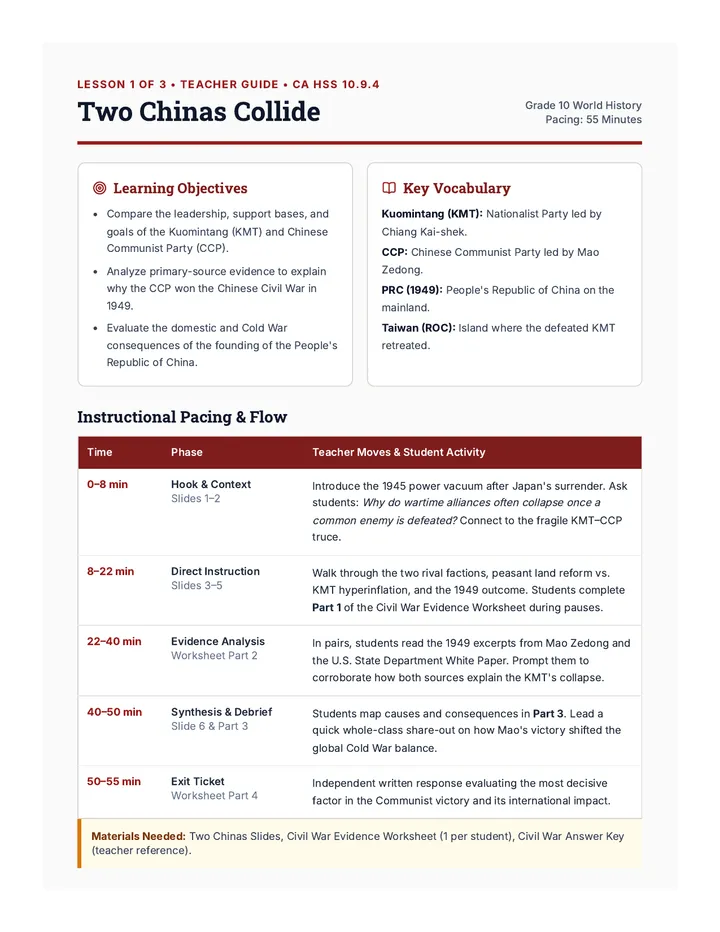
Two Chinas Lesson Plan

Red China Upheavals

A three-lesson Grade 10 World History sequence analyzing the Chinese Civil War, Mao Zedong's revolutionary campaigns, and post-Mao economic reforms culminating in the 1989 Tiananmen Square uprising (CA HSS 10.9.4). Students examine primary-source evidence, cause-and-effect relationships, and competing historical perspectives.

ST

Spencer Thomas

12
Thursday Outcomes Lesson Plan

Revolution War Outcomes

Thursday lesson (Investigation 4, Questions 19–24 and Final Briefing) summarizing key turning points and outcomes of the Revolutionary War—from Saratoga and Yorktown to the Treaty of Paris and postwar rights—and guiding students through the three-part Final Briefing.

SH

Stacey Hersch

4
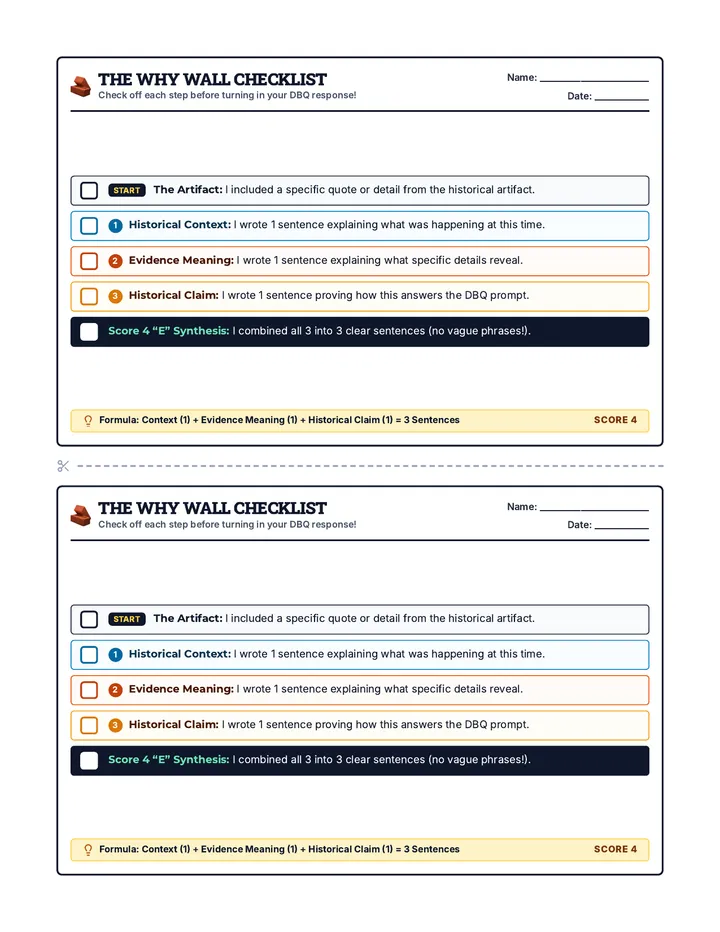
DBQ Why Wall Checklist

DBQ Why Wall Checklist

A printable half-page student self-checklist (two identical checklists per page with a cut line) aligned to the DBQ Why Wall strategy. Helps students verify they included artifact evidence, Historical Context, Evidence Meaning, Historical Claim, and the 3-sentence synthesis.

A

awechsler

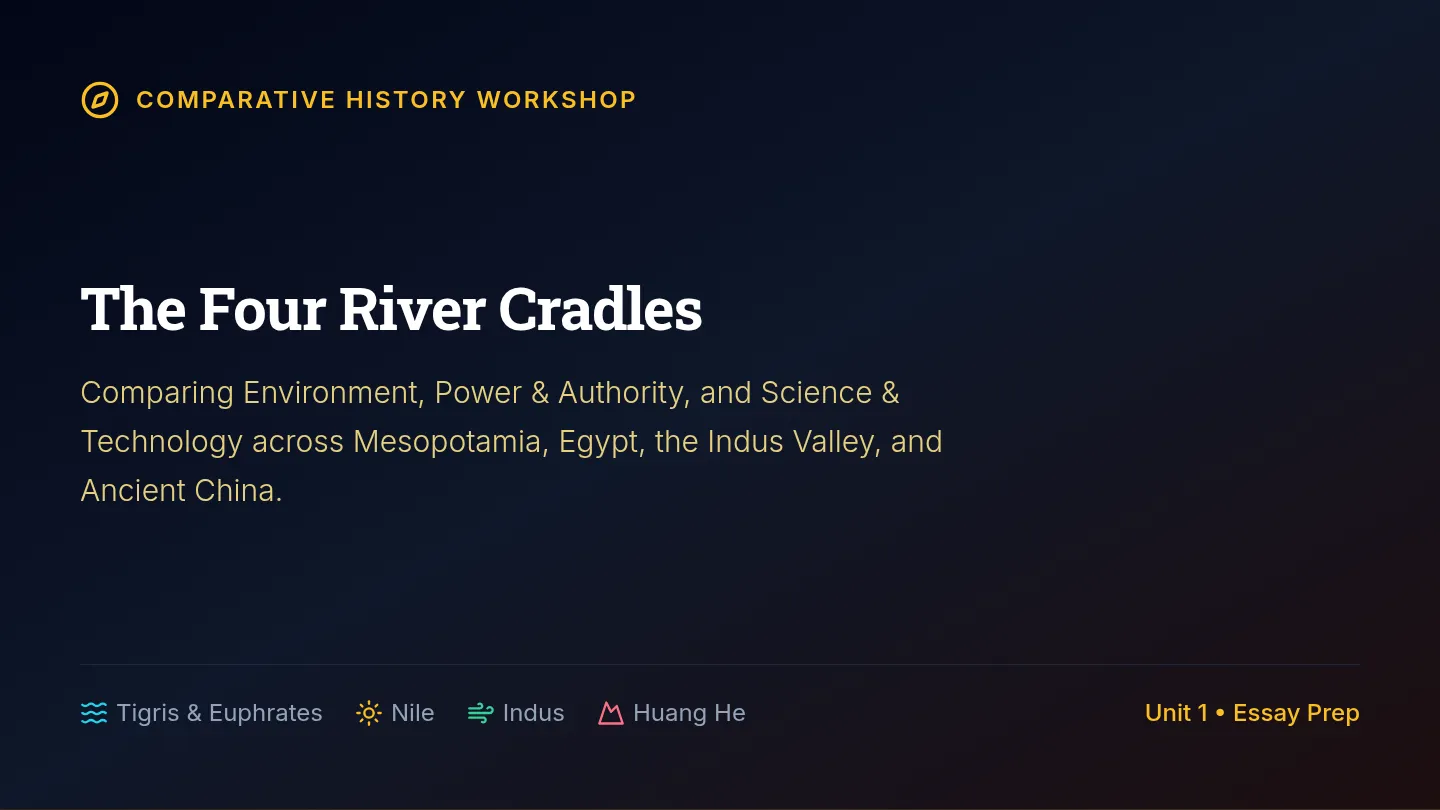
Civilization Comparison Slides

River Valley Essay Workshop

A comprehensive multi-day writing sequence guiding students through comparative analysis of the four ancient river valley civilizations, thesis statement formulation, structured five-paragraph essay outlining, and differentiated composition.

E

ebakke

8
Tuesday Independence Lesson Plan

Road to Independence

Tuesday lesson (Investigation 2, Questions 7–12) tracing how colonial protests and political events—from the Stamp Act and Boston Tea Party to Common Sense—moved the colonies toward independence and contrasted Patriot goals with Britain's monarchy.

SH

Stacey Hersch

4
DBQ Why Wall Worksheet

DBQ Why Wall Worksheet

A printable one-page blank student worksheet aligned to the DBQ Why Wall Anchor Charts. Features Name and Date fields, an evidence recording box, three scaffolded analysis steps (Historical Context, Evidence Meaning, and Historical Claim) with sentence stems, and a lined 3-sentence synthesis writing area.

A

awechsler

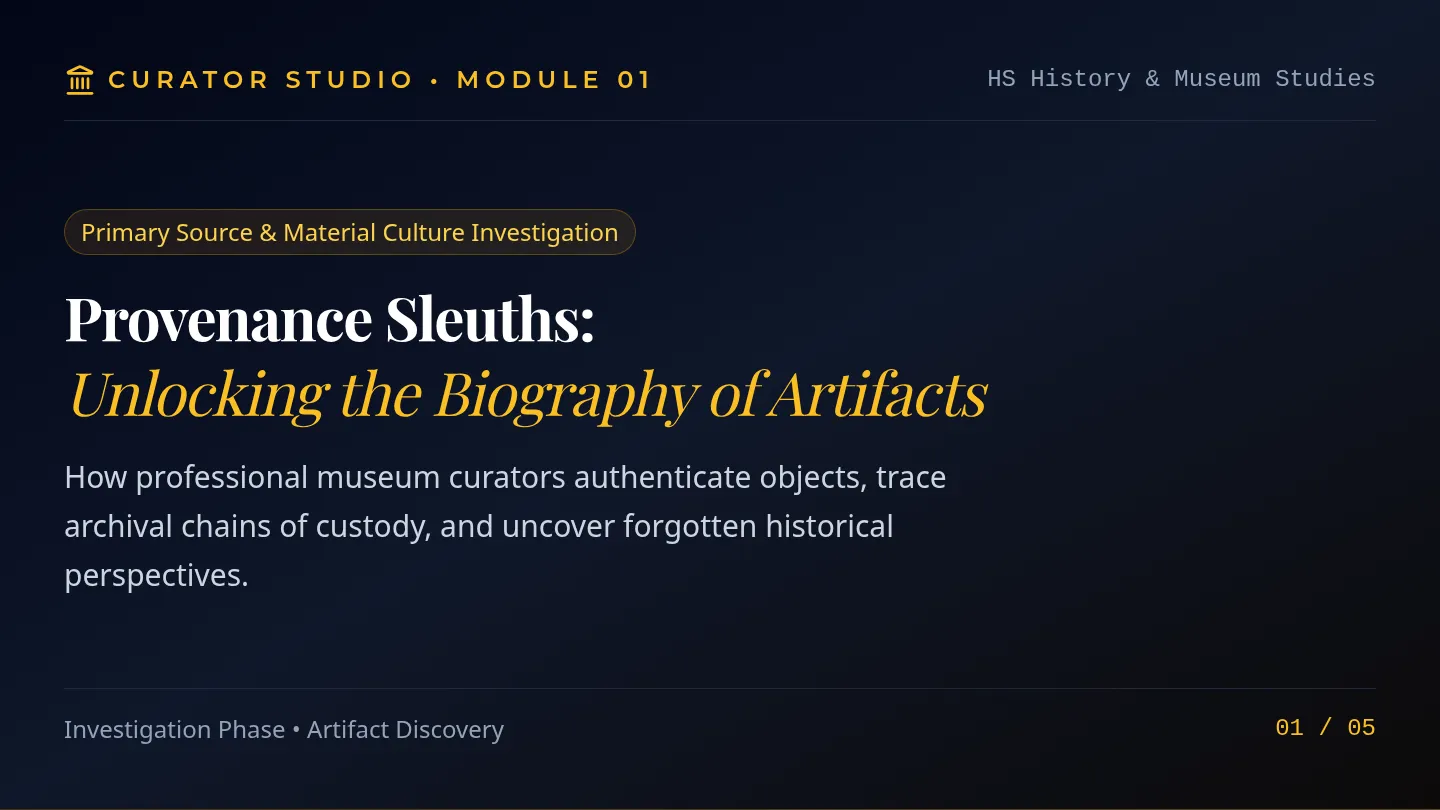
Provenance Sleuths Slides

Curator Studio

A comprehensive project sequence guiding high school students through professional museum curation, artifact evaluation, historical storytelling, and polished exhibit design.

MK

Ms. Kathryn Greene

6
Monday Conflict Lesson Plan

Conflict Sparks Begin

Monday lesson (Investigation 1, Questions 1–6) exploring why conflict began between Britain, France, Indigenous nations, and the American colonies, including the Ohio River Valley, Fort Duquesne, Pontiac's Rebellion, the Proclamation of 1763, the Albany Plan, and British laws.

SH

Stacey Hersch

4
Papal Decree Why Wall Chart

Papal Decree Why Wall Chart

A one-page Social Studies DBQ anchor chart using Pope Alexander VI's 1493 speech to the Spanish King as the model artifact. Guides students through Historical Context, Evidence Meaning, and Historical Claim with exemplar thoughts, sentence stems, and a color-coded 3-sentence synthesis formula.

A

awechsler