Lenny.com
Explore
Create
ActivitiesNewCurriculumNewMathEnglish Language ArtsScience & EngineeringSocial StudiesGlobal LanguagesHealth & Physical EducationSpecial EducationCounseling & Life SkillsArts & CreativityESL
Lenny.com
Lenny.com
Explore
Create
ActivitiesNewCurriculumNewMathEnglish Language ArtsScience & EngineeringSocial StudiesGlobal LanguagesHealth & Physical EducationSpecial EducationCounseling & Life SkillsArts & CreativityESL
Lenny.com
Lenny.com

Solutions

Lenny for EducatorsLenny for SchoolsLenny for Districts

Product

ExploreSign inCreateSupportAbout

Resources

Getting startedMTSS Acceleration Program

Newsletters

School Funding Newsletter

© 2026 Lenny Learning Inc.

TermsPrivacyAccessibility
LinkedInInstagramX
Lenny
Social StudiesSocial Studies PracticesLocation WordsMapsOrder EventsChronology and CausationEvaluating SourcesHistorical ThinkingGeography, Humans, & the EnvironmentAmerican Symbols and LandmarksCitiesStatesState CapitalsRegions of the United StatesGeographic SkillsPhysical GeographyHuman GeographyRegional GeographyGeography of AfricaGeography of AsiaGeography of EuropeGeography of OceaniaGeography of the AmericasSociety and Environment of EuropeSociety and Environment of AsiaSociety and Environment of The AmericasSociety and Environment of the Middle EastSociety and Environment of AfricaHistoryPrehistoryComparing Ancient River CivilizationsAncient MesopotamiaAncient Egypt and KushAncient South AsiaEarly ChinaGreeceRome and the Byzantine EmpireAncient World HistoryNative Peoples of North AmericaNative Peoples of Mesoamerica and South AmericaAfrican EmpiresMedieval AsiaMedieval EuropeThe Silk RoadMedieval HistoryIslamic EmpiresWorld ReligionsRenaissance PeriodAge of ExplorationThe Thirteen ColoniesThe American RevolutionUS History Early RepublicFounding of the United StatesUS History AntebellumUS Civil WarReconstruction PeriodThe Gilded AgeUS ImperialismWorld ImperialismWorld War IUS History 1920sGreat DepressionWorld War IIThe Cold WarUS History 1950-60sUS History 1960s-70sWorld History 20th CenturyContemporary US HistoryContemporary World HistoryHolidaysCivics and GovernmentCitizenshipGovernment FoundationsThe ConstitutionUS ConstitutionExecutive BranchLegislative BranchJudicial BranchState and LocalPolitical ParticipationPublic PolicyPolitical SystemsPower and AuthoritySocial MovementsDefining DevianceTheories of DevianceCrime and Criminal JusticeEconomicsBasic Economic PrinciplesSupply and DemandWhat is MoneyEconomic FundamentalsMicroeconomicsMacroeconomicsBanking and FinanceEconomic SystemsGlobal EconomicsCorporations and PowerThe Changing WorkplaceUnemployment and LaborClass and InequalitySocial MobilityGlobal InequalityPsychologyHistory of PsychologyPsychology as a ScienceBrain and Nervous SystemNeuroscience and BehaviorGenetics and BehaviorSleep and ConsciousnessSensory ProcessesPerceptual OrganizationClassical ConditioningOperant ConditioningObservational LearningCognitive LearningMemory ProcessesThinking and Problem SolvingLanguage and CognitionTheories of MotivationStress and CopingPrenatal and Infant DevelopmentChildhood DevelopmentAdolescent DevelopmentAdulthood and AgingSelf and IdentitySocial CognitionSocial InfluenceAttraction and RelationshipsGroup BehaviorPrejudice and DiscriminationAnxiety and Mood DisordersClinical PsychologyForensic PsychologyPhilosophy & EthicsIntroduction to PhilosophyMajor Philosophers & IdeasMind and Body ProblemFree Will vs DeterminismEthics & MoralityReligion & PhilosophyPolitical Philosophy

Store Layout Guided Notes

A two-page printable guided notes packet that follows along in exact slide order with the Retail Store Layouts presentation, covering customer flow, the transition zone, five store layout types, retail fixtures, and display components. Includes structured fill-in-the-blank prompts and a short wrap-up design reflection.

JJennifer.Leber

You might also like

Day One Lesson Plan

Two Nations One Land

A two-day instructional sequence exploring the Mashantucket Pequot Tribal Nation and the Mohegan Tribe of Connecticut. Students examine each nation's history, culture, and contemporary community, then compare the two nations while recognizing each as distinct and sovereign.

G

garcial

10
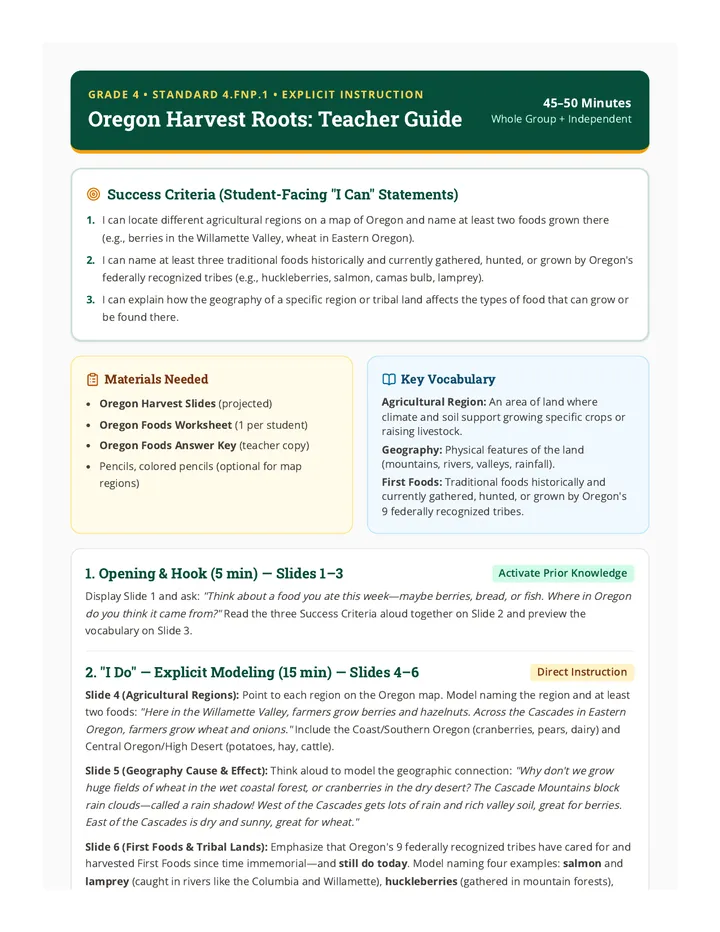
Oregon Harvest Teacher Guide

Oregon Harvest Roots

An explicit-instruction 4th-grade lesson targeting standard 4.FNP.1, exploring Oregon's agricultural regions, the traditional First Foods of Oregon's federally recognized tribes, and how geography shapes what grows and thrives across the state.

ST

Sheri Torres

7
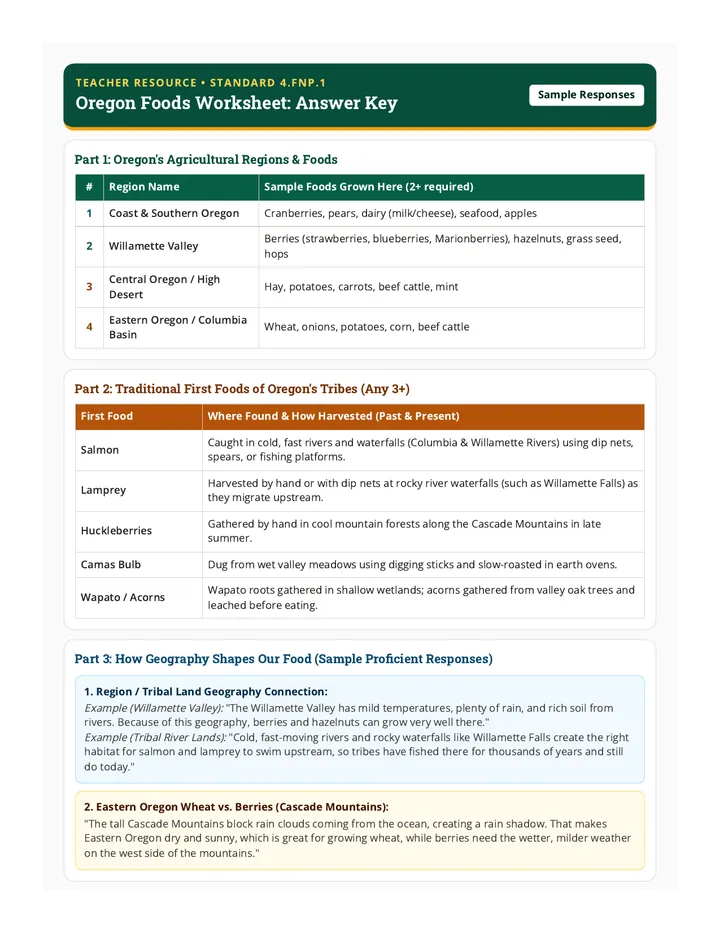
Oregon Foods Answer Key

Oregon Foods Answer Key

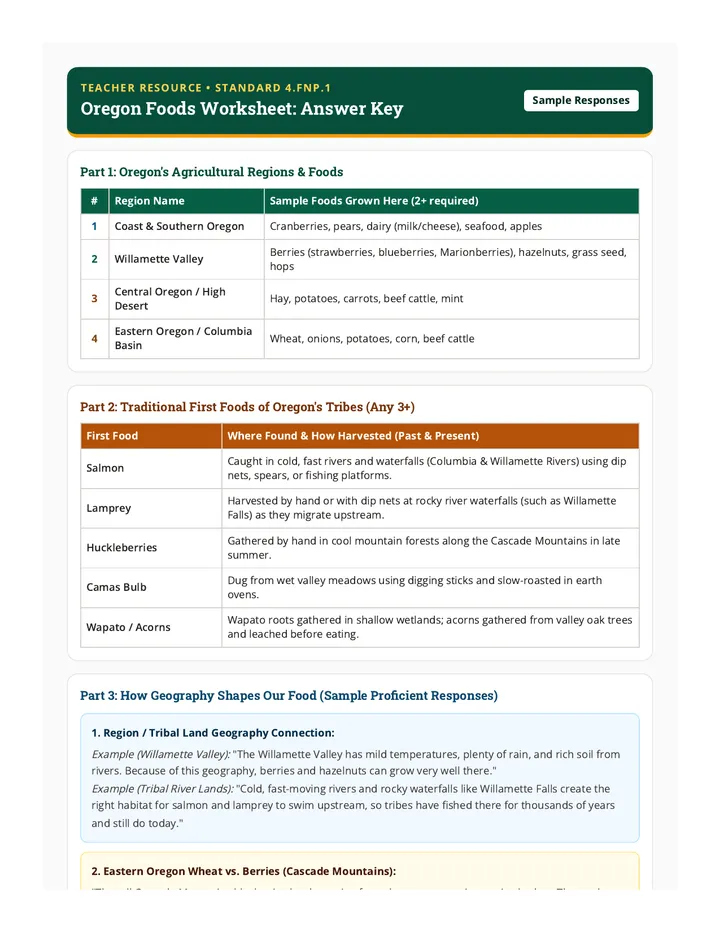
A 1-page teacher answer key for the Oregon Foods Worksheet, providing sample proficient responses for all agricultural regions, traditional First Foods of Oregon's federally recognized tribes, and geography cause-and-effect explanations.

ST

Sheri Torres

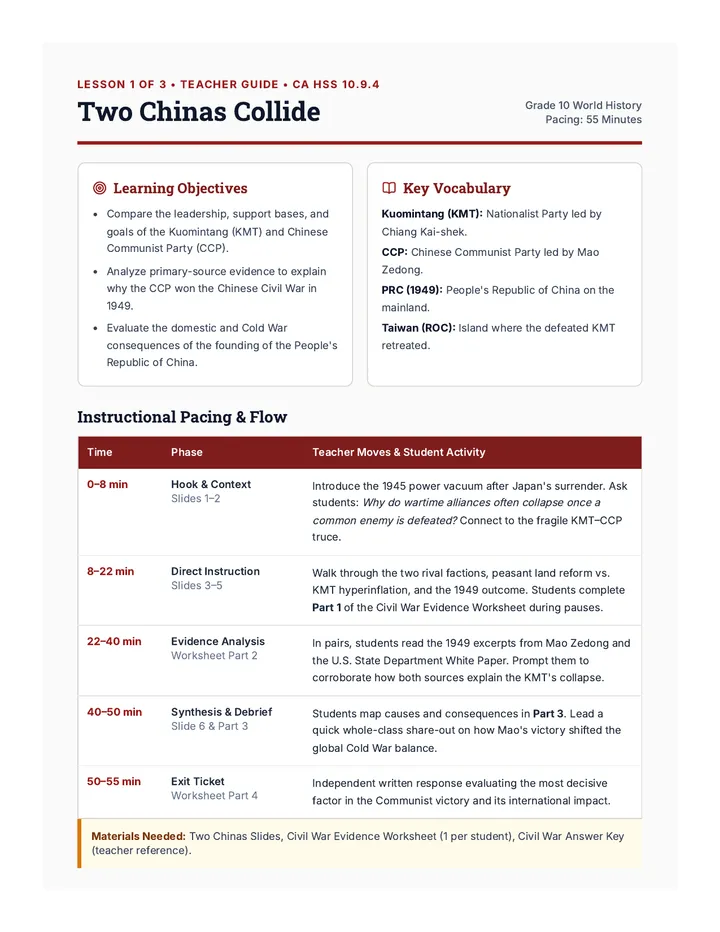
Two Chinas Lesson Plan

Red China Upheavals

A three-lesson Grade 10 World History sequence analyzing the Chinese Civil War, Mao Zedong's revolutionary campaigns, and post-Mao economic reforms culminating in the 1989 Tiananmen Square uprising (CA HSS 10.9.4). Students examine primary-source evidence, cause-and-effect relationships, and competing historical perspectives.

ST

Spencer Thomas

12
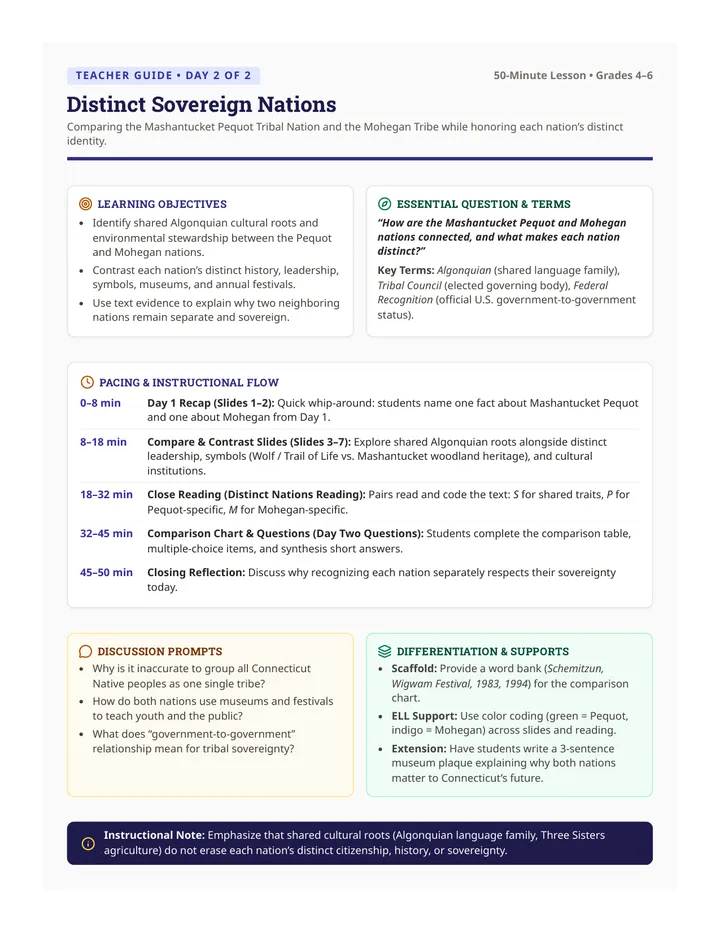
Day Two Lesson Plan

Distinct Sovereign Nations

Day 2 deepens students' understanding of how the Mashantucket Pequot and Mohegan nations compare in their shared Algonquian roots and distinct histories, institutions, and traditions in Connecticut today.

G

garcial

5
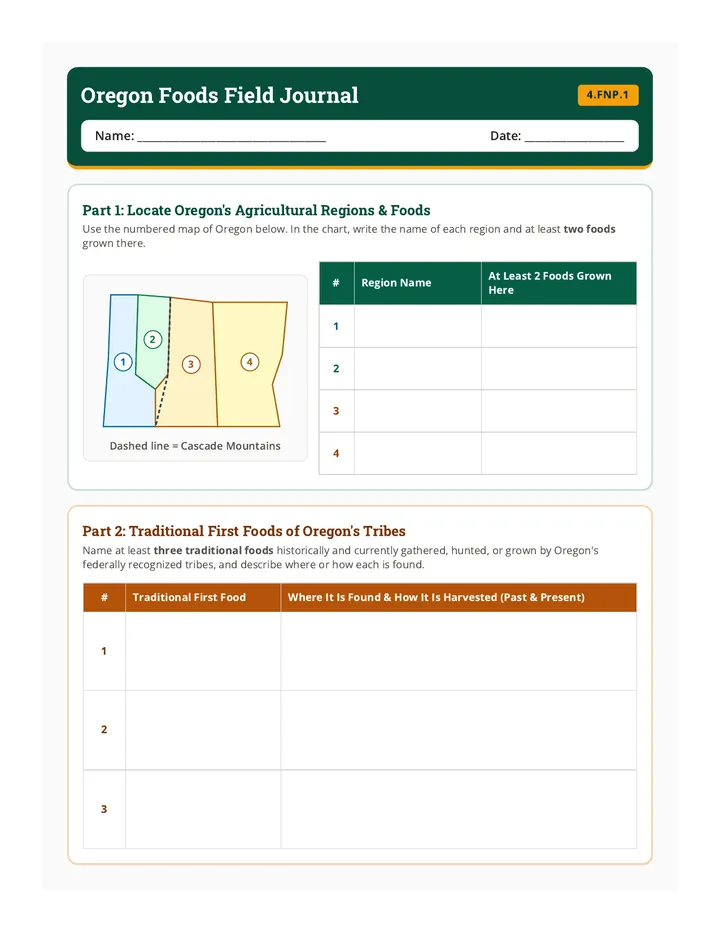
Oregon Foods Worksheet

Oregon Foods Worksheet

A 2-page printable 4th-grade student worksheet targeting standard 4.FNP.1, featuring an Oregon agricultural regions map and food chart, a First Foods tribal harvest organizer, geography cause-and-effect writing prompts, and an exit ticket self-check.

ST

Sheri Torres

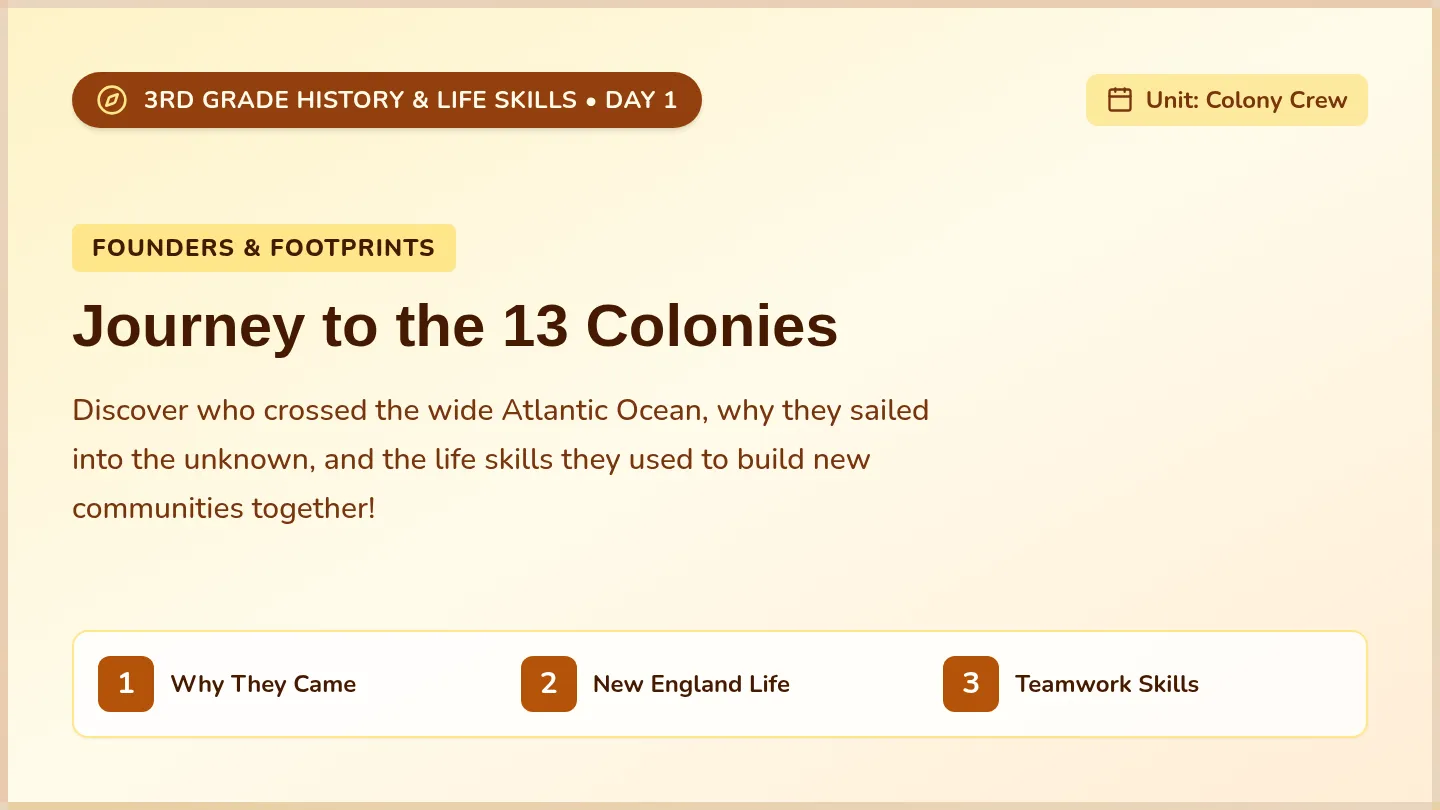
Colony Trail Slides

Colony Crew

A 3-day third grade history and life skills unit exploring the Thirteen Colonies, why diverse settlers founded them, daily survival and economic skills, and how intercolonial teamwork sparked the Revolutionary War.

AR

Alexander Rhea

7
Day One Lesson Plan

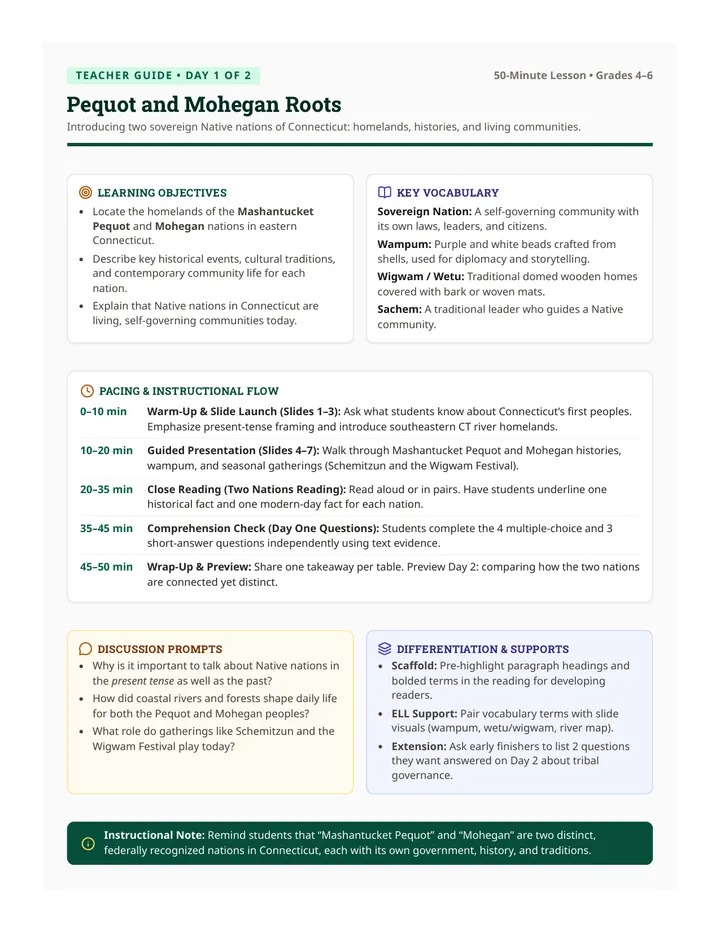
Pequot and Mohegan Roots

Day 1 introduces the Mashantucket Pequot Tribal Nation and the Mohegan Tribe as living sovereign nations in Connecticut, exploring their homelands, histories, and cultural traditions through slides, an informational reading, and comprehension questions.

G

garcial

5
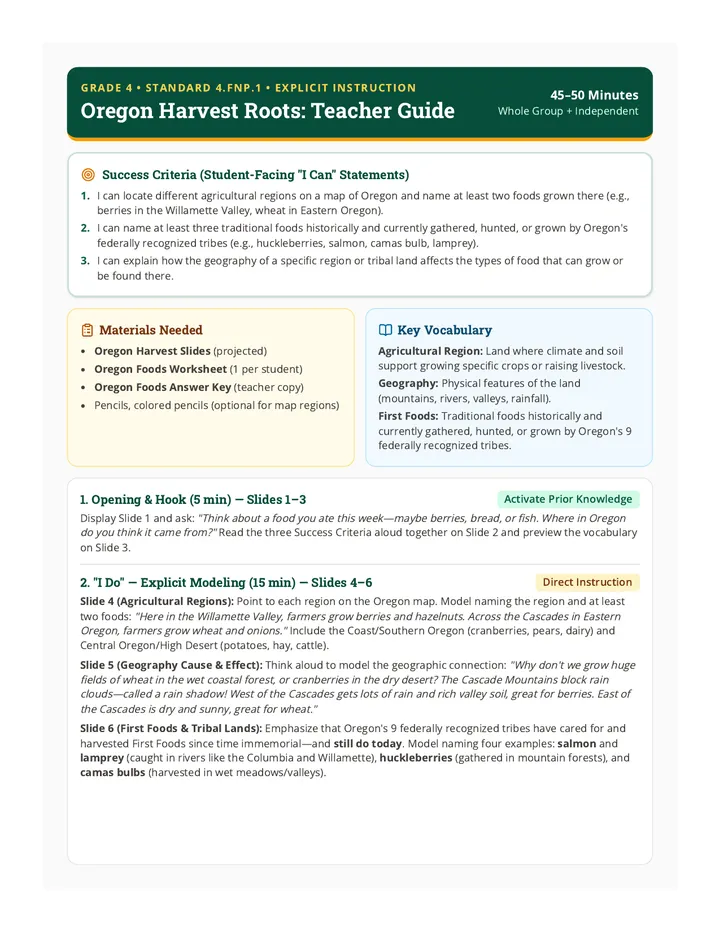
Oregon Harvest Teacher Guide

Oregon Harvest Teacher Guide

A 2-page explicit-instruction teacher guide for 4th grade targeting standard 4.FNP.1, including learning targets, pacing, scripted I Do/We Do/You Do phases, vocabulary, and differentiation strategies.

ST

Sheri Torres

First Steps Lesson Plan

Ancestor Trailblazers

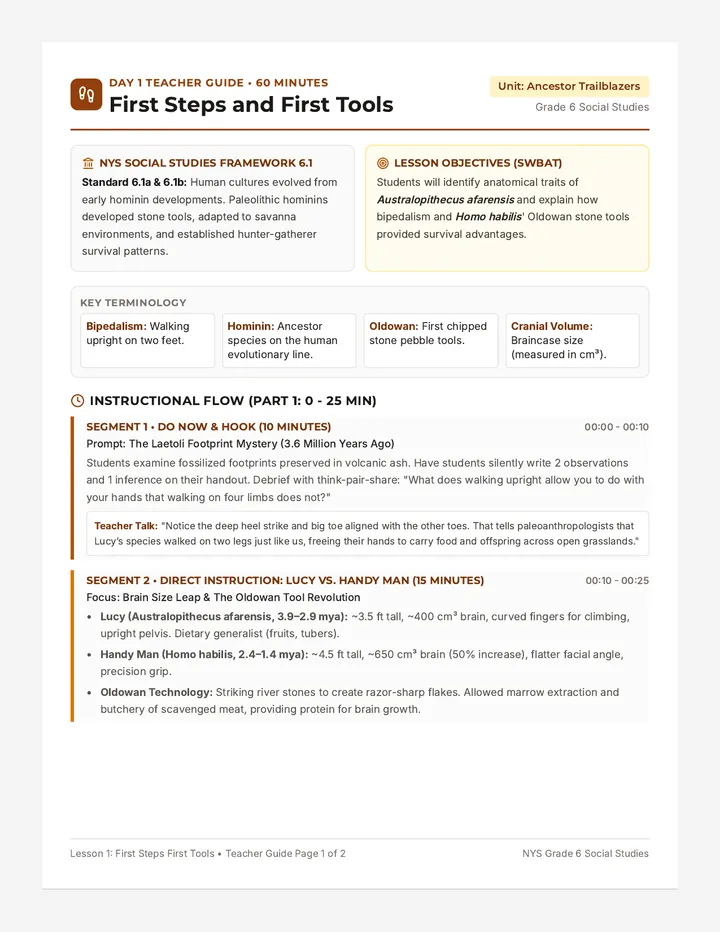
A 3-day 6th-grade social studies mini-unit exploring the five major human ancestors through fossil evidence, environmental adaptations, and material culture, aligned to NYS Framework Standard 6.1 and culminating in an ancestor trading card project.

A

awechsler

9
Prairie Populists Slides

Harvest of Reform

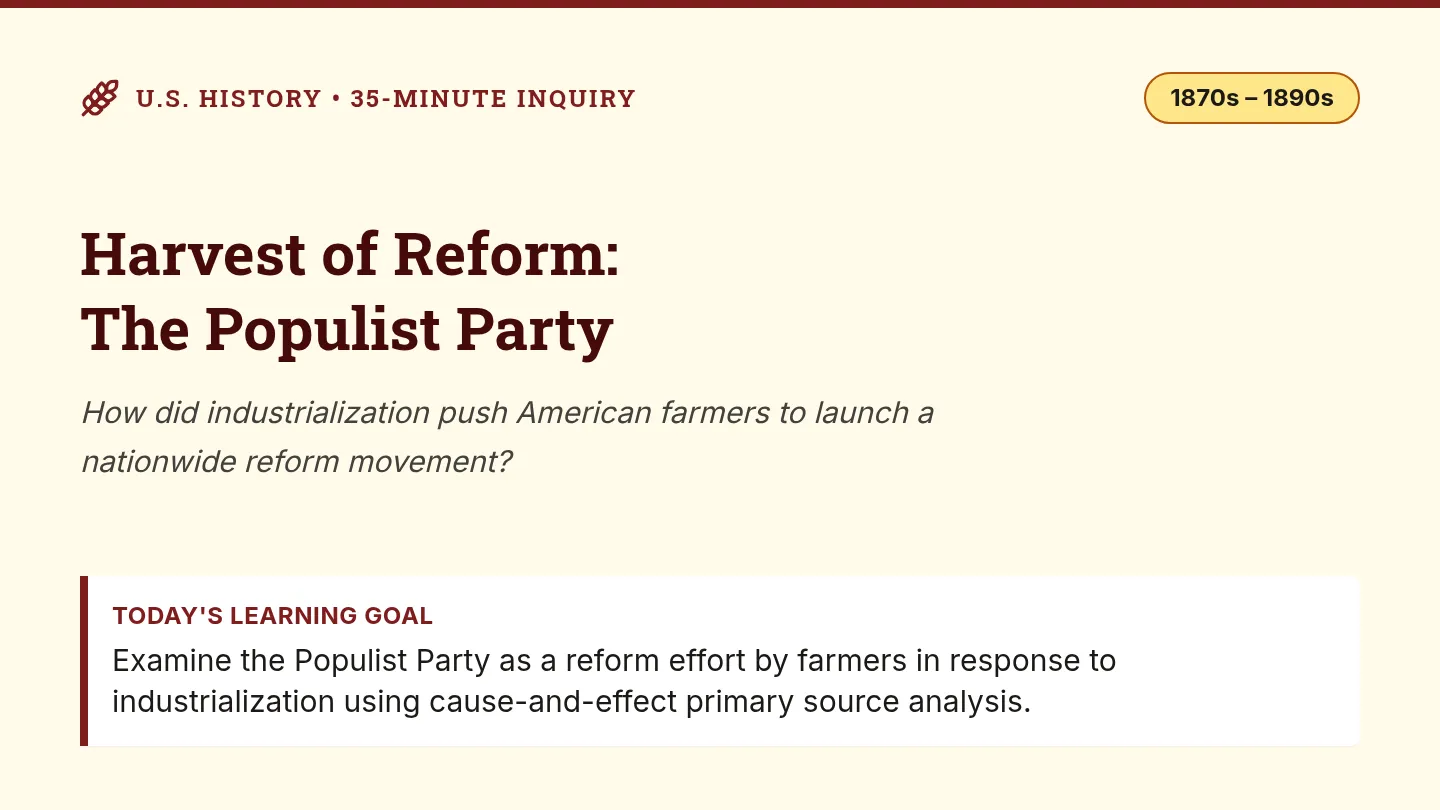
A 35-minute inquiry lesson where students examine the rise of the Populist Party as an agrarian reform movement responding to late-19th-century industrialization through primary source cause-and-effect analysis.

A

aross

4
Oregon Foods Answer Key

Oregon Foods Answer Key

A 1-page teacher answer key for the Oregon Foods Worksheet, providing sample proficient responses for all agricultural regions, traditional First Foods of Oregon's federally recognized tribes, and geography cause-and-effect explanations.

ST

Sheri Torres