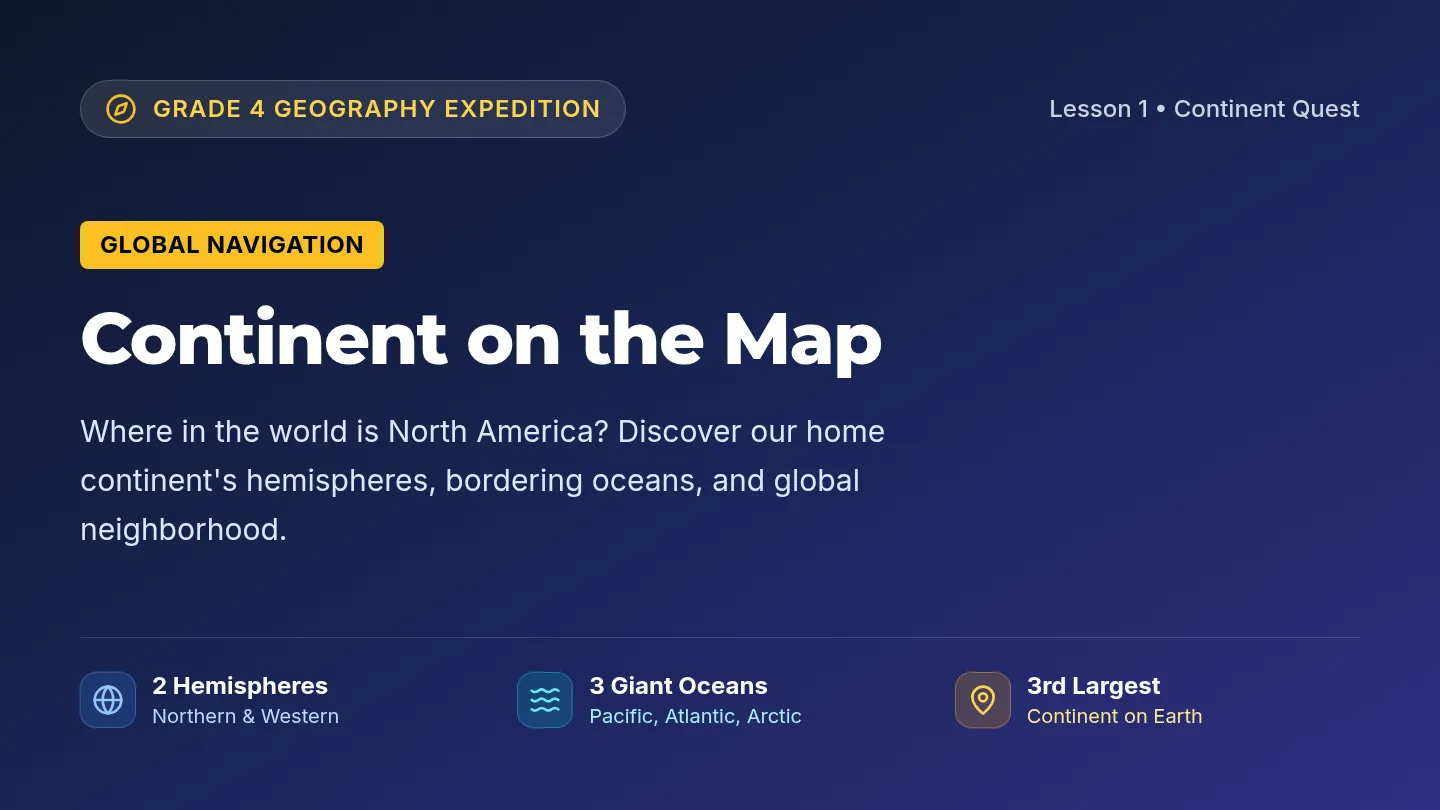
| Day 1 | What Is a Map? | map, location, place, geography | Explore different types of maps. Discuss what maps show us and why we use them. Students identify things they notice on different maps. |
| Day 2 | Parts of a Map | title, symbol, key, legend, compass rose | Identify the important parts of a map. Practice using a map key and symbols to find information. |
| Day 3 | Map Directions | north, south, east, west, direction | Introduce the four cardinal directions. Students practice giving and following directions using a simple map. |
| Day 4 | Describing Location | near, far, between, next to, above, below | Practice describing where objects and places are located on a map. Students use complete sentences to describe locations. |
| Day 5 | Maps and Numbers | distance, approximately, about, greater, less, round | Use distances and other numbers connected to maps to practice rounding to the nearest 10 and 100. Students describe numbers using complete sentences. |
| Day 6 | Where Is Yellowstone? | Yellowstone, national park, state, location, region | Locate the United States, New York, Wyoming, and Yellowstone on a map. Compare the locations of New York and Yellowstone. |
| Day 7 | Yellowstone's Habitat | habitat, ecosystem, environment, landscape, forest, grassland, mountain, river | Explore pictures and maps of Yellowstone. Identify different parts of the landscape and discuss what makes Yellowstone a habitat for animals. |
| Day 8 | Meet the Wolves | wolf, pack, predator, prey, hunt, survive, protect, territory | Connect to When the Wolves Came Back. Learn about wolves and how they live. Students use new vocabulary to describe wolves. |
| Day 9 | Yellowstone Animals | elk, bison, bear, coyote, beaver, species, animal | Learn about animals that live in Yellowstone. Sort animals by characteristics and discuss what different animals need to survive. |
| Day 10 | What Do Animals Need? | food, water, shelter, resources, survive, depend | Discuss the basic needs of animals and how animals depend on their habitat for resources. Students create simple sentences about animal needs. |