Traces physical and cognitive transformations from young adulthood through late life. Connects developmental theories with social transitions like career shifts, retirement, and bereavement.
This graduate-level sequence analyzes the neurobiological and psychosocial drivers of adolescence, focusing on the 'Dual Systems Model' of brain development, puberty's impact, identity formation, and the transition to emerging adulthood. Students evaluate modern risk behaviors and mental health trends through a biopsychosocial lens.
This sequence explores the critical domain of social-emotional development in childhood, focusing on Attachment Theory, temperament, and emotional regulation. Students engage with primary literature and behavioral coding to evaluate how early bonds influence long-term developmental trajectories and clinical outcomes.
A comprehensive 12th-grade psychology unit exploring the foundational theories of attachment, psychosocial development, and parenting styles. Students investigate how early social bonds and environments shape long-term psychological resilience through case studies, simulations, and a final design project.
A graduate-level exploration of aging that shifts the focus from deficit-based models to resilience, wisdom, and cognitive optimization. Students will critique established models, analyze the 'positivity effect,' and investigate interventions that promote successful aging.
A graduate-level examination of the macro-level systems shaping aging, focusing on demographics, ageism, retirement psychology, environmental fit, and caregiving policy.
A graduate-level exploration of Thanatology, examining the historical, psychological, and clinical dimensions of death and bereavement. Students will analyze shifting mortality paradigms, critique traditional stage theories, simulate advance care planning, and master modern grief models like the Dual Process Model and Prolonged Grief Disorder criteria.
This graduate-level sequence examines the psychological and sociological shifts of midlife. Students explore role transitions including the 'Sandwich Generation,' career plateaus, and identity renegotiation, applying developmental theories to clinical and systemic contexts.
An advanced seminar sequence for graduate students critiquing the research methodologies and foundational theories of adult development, focusing on longitudinal designs, cohort effects, and theoretical synthesis.
This undergraduate sequence explores the psychological, cultural, and clinical dimensions of death, dying, and bereavement. Students analyze models of the dying process, ethical dilemmas in end-of-life care, and the complex trajectory of grief and resilience in survivors.
This sequence explores the psychosocial and cognitive milestones of young and middle adulthood, focusing on the transitions from emerging adulthood through the midlife correction. Students will apply Erikson's theories, Sternberg's love components, and the Big Five personality traits to understand the complexities of relationships, careers, and personal growth.
A comprehensive 12th-grade psychology sequence exploring the physical, cognitive, and emotional realities of aging and death. Students move from sensory simulations of late adulthood to analyzing neurocognitive disorders and the psychological processes of grief and bereavement.
This sequence examines the psychological, social, and cognitive changes from young adulthood through late life. Students apply developmental theories like Erikson's and Arnett's to understand how the 'social clock' and biological maturation shape the human experience.
A lesson exploring the ethical complexities of end-of-life medical decisions through real-world case studies and discussion.
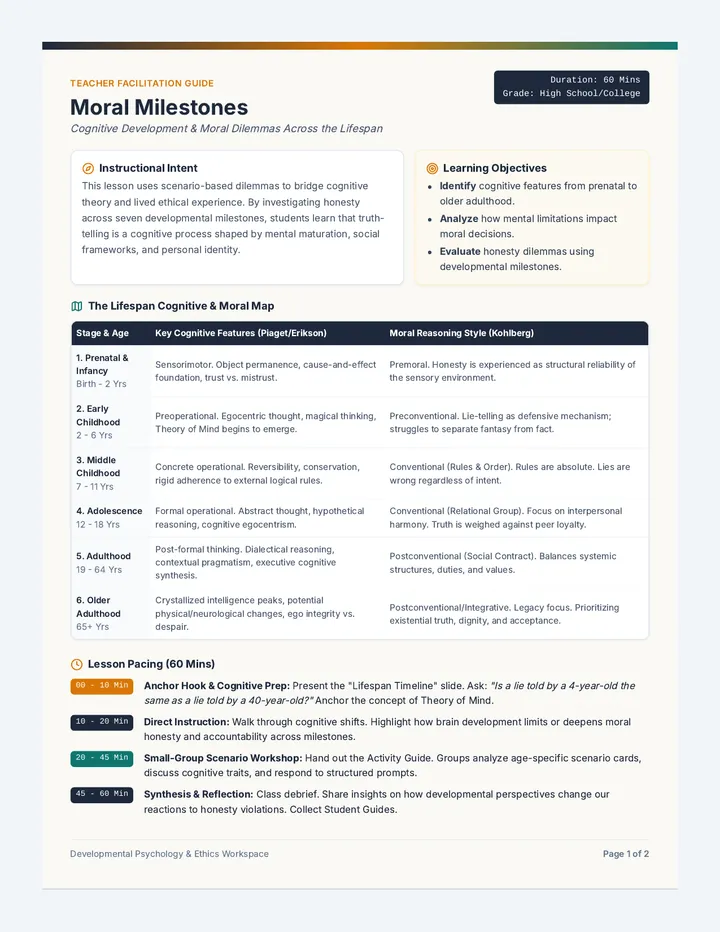
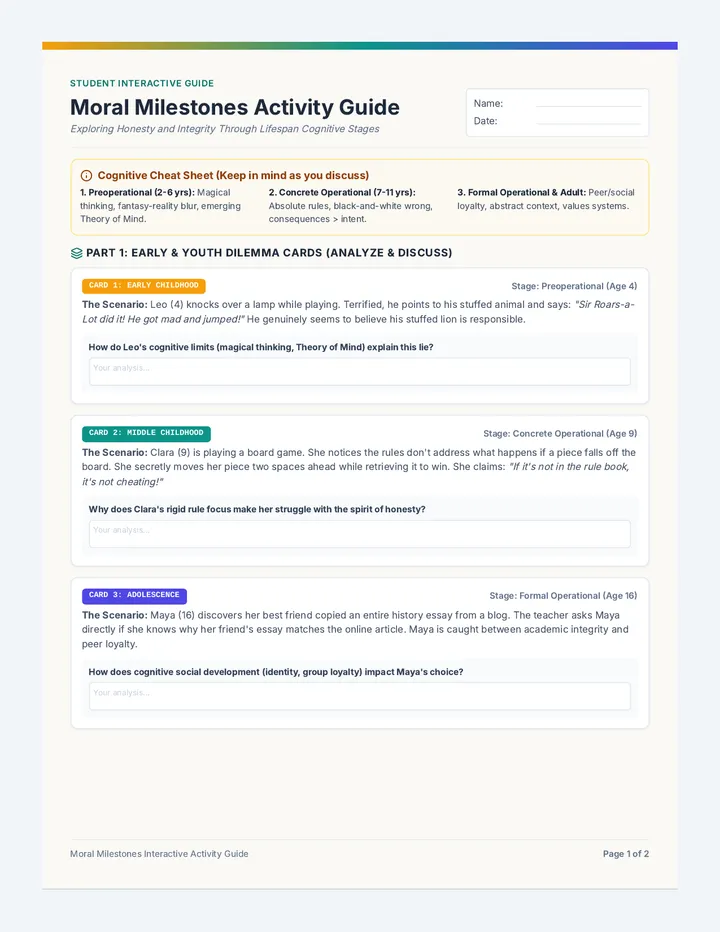
A comprehensive lesson examining the stages of cognitive development from prenatal through older adulthood. Students analyze real-world moral dilemmas involving honesty and integrity to understand how cognitive maturation shapes ethical reasoning.
A project-based learning unit exploring human development across the lifespan, focusing on social-emotional, cognitive, and physical growth through creative, higher-order thinking tasks.
This lesson introduces 9th-grade students to the core concepts of human development across the lifespan, exploring physical, cognitive, and socioemotional changes through an interactive presentation.
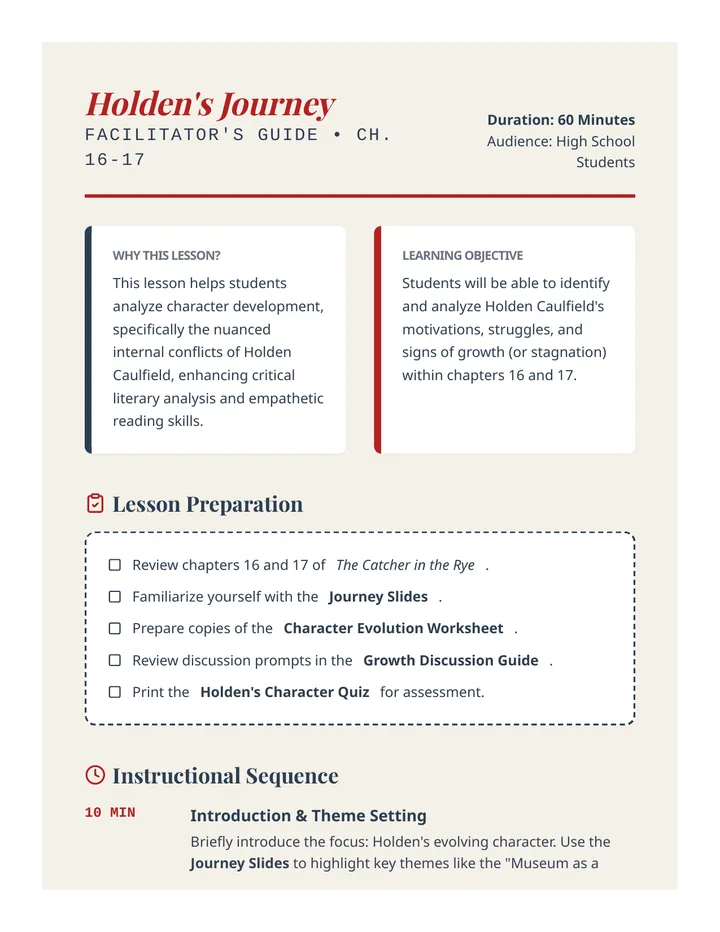
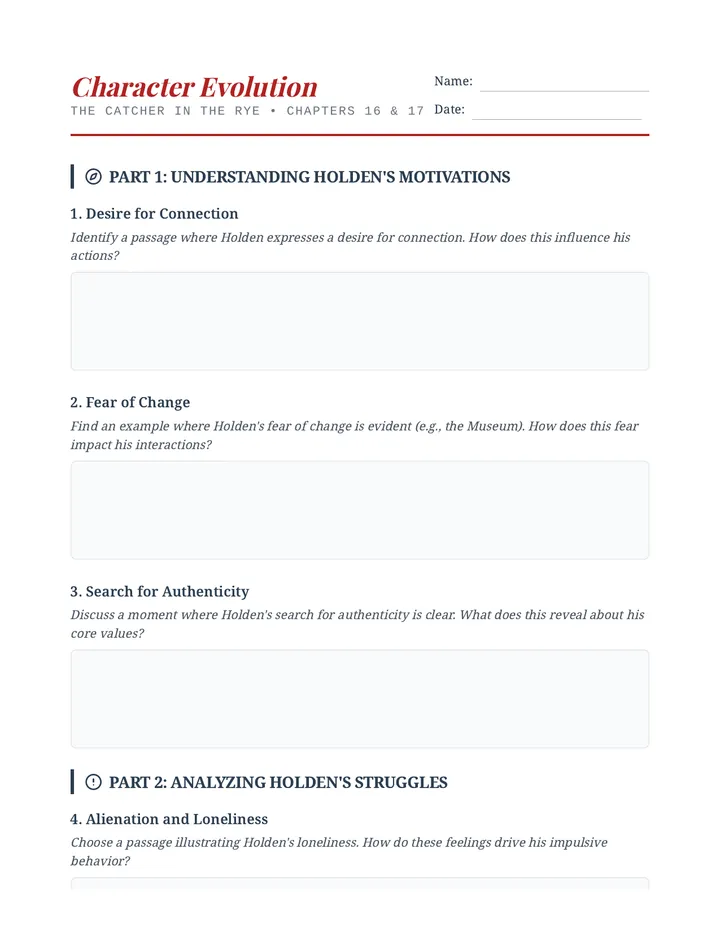
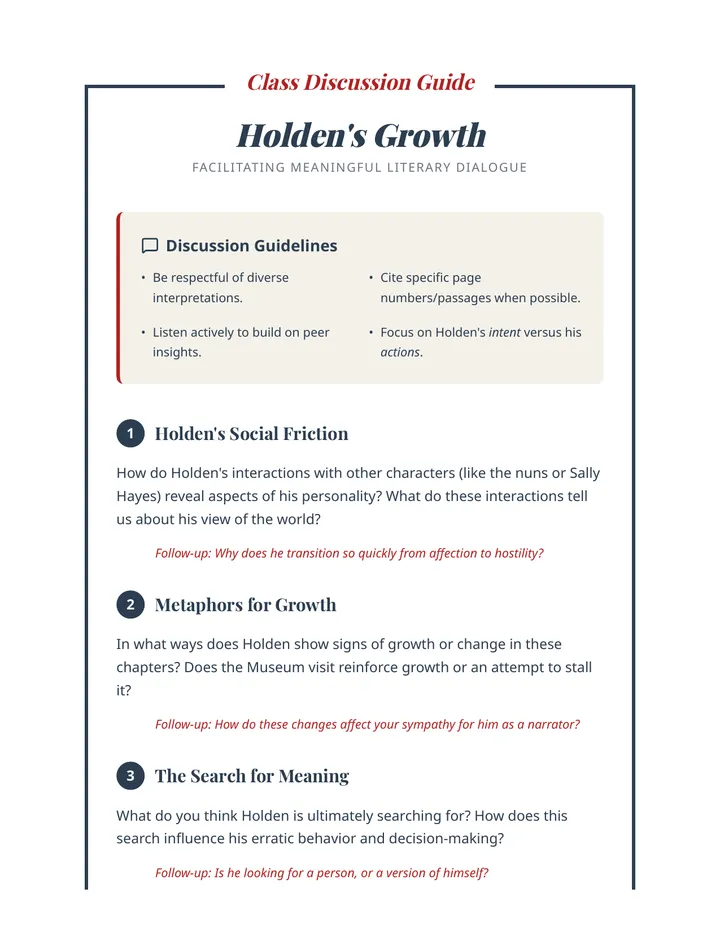
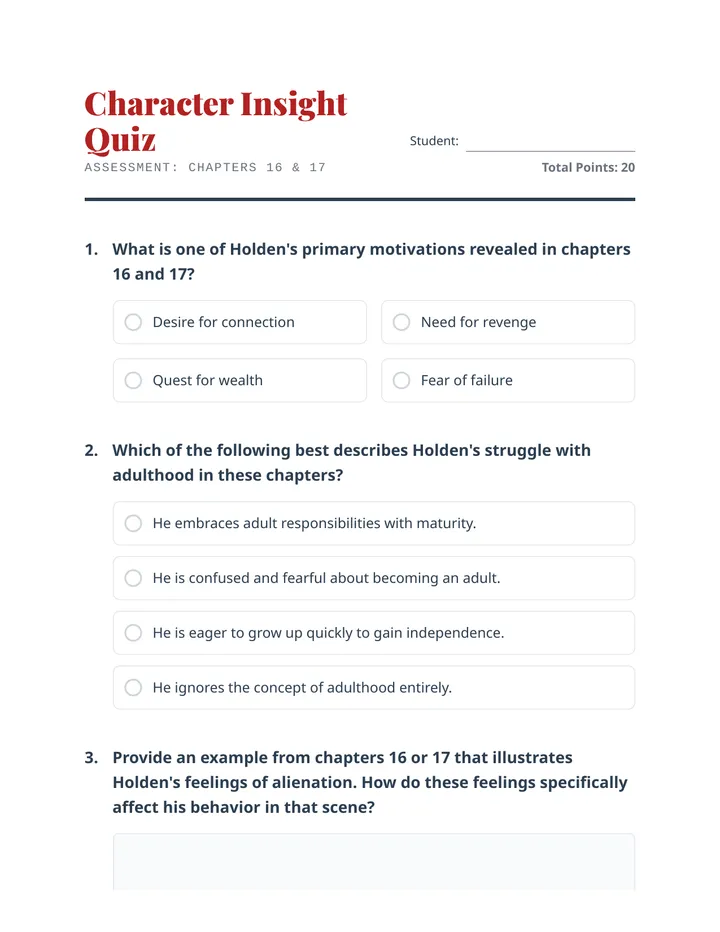
An in-depth analysis of Holden Caulfield's character development during the pivotal scenes of chapters 16 and 17 in 'The Catcher in the Rye.'
A sociology and history lesson exploring the transition from industrial to post-industrial society, focusing on economic shifts, educational expansion, and changes in family structure.