An advanced seminar sequence for graduate students critiquing the research methodologies and foundational theories of adult development, focusing on longitudinal designs, cohort effects, and theoretical synthesis.
A complete, printable study system of high-contrast, large-print double-sided flashcards covering all 128 questions of the citizenship test, optimized for easy home or classroom printing and maximum readability.
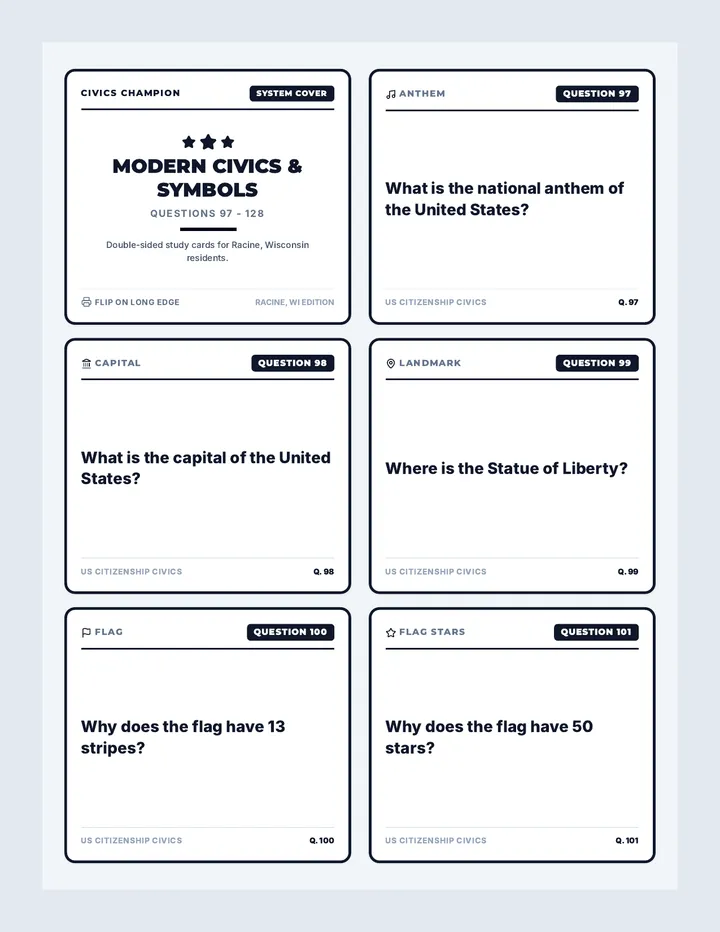
High-contrast, printable double-sided study cards for Questions 97-128 of the citizenship test, covering recent history, geography, symbols, and holidays.
High-contrast, printable double-sided flashcards for Questions 97-128 of the citizenship test. Features a premium 2x3 grid layout with perfect duplex alignment, cover card, study tracker, and progress checklist.
A unit exploring the foundations of humanistic psychology, focusing on person-centered approaches, therapeutic relationships, and the drive toward self-actualization.
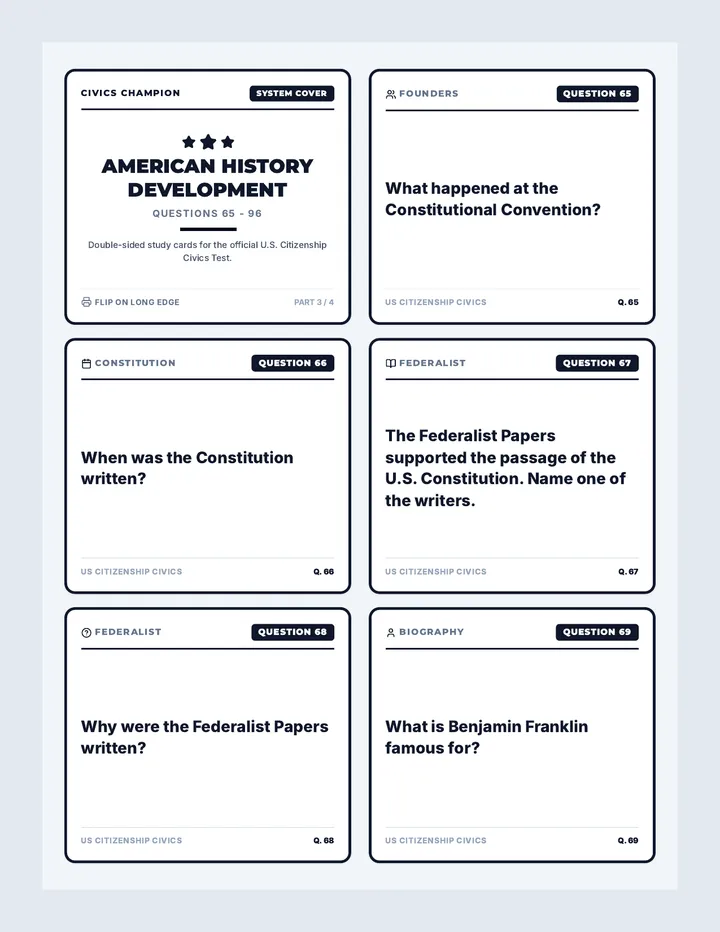
High-contrast, printable double-sided study cards for Questions 65-96 of the citizenship test, covering early colonial times, the Revolutionary War, the Civil War, and the late 1800s.
High-contrast, printable double-sided flashcards for Questions 65-96 of the citizenship test. Features a premium 2x3 grid layout with perfect duplex alignment, cover card, study tracker, and progress checklist.
A comprehensive 5-part curriculum exploring social neuroscience through a macro social work lens, focusing on systemic change, practitioner wellbeing, and collective action.
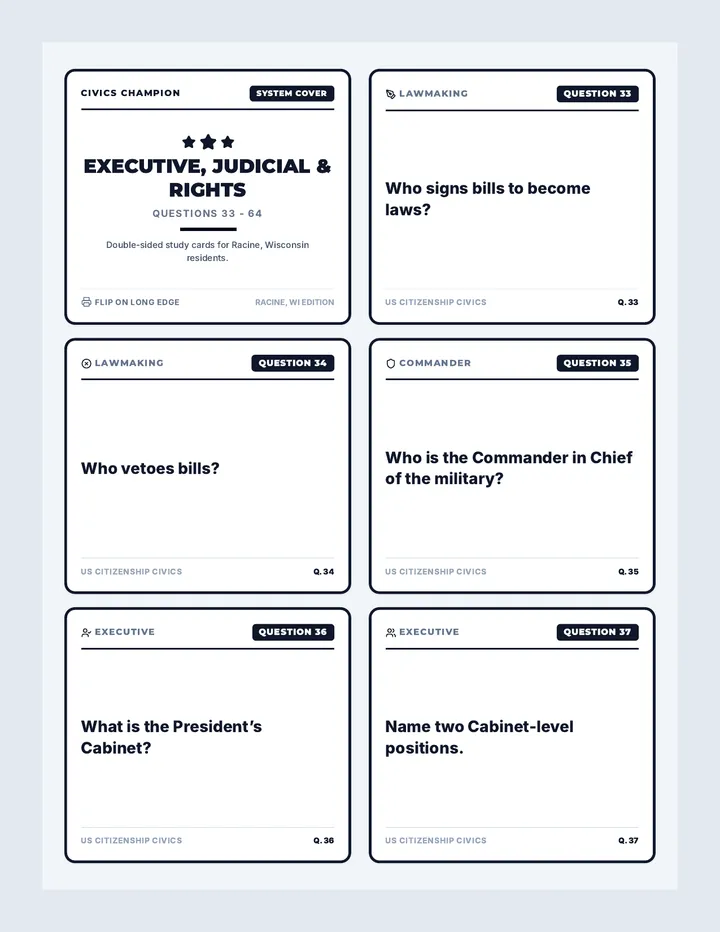
High-contrast, printable double-sided study cards for Questions 33-64 of the citizenship test, covering the Executive and Judicial branches, rights and responsibilities, and early American history.
High-contrast, printable double-sided flashcards for Questions 33-64 of the citizenship test, customized for Racine, Wisconsin. Features Tony Evers (Governor) and Madison (Capital) as specific answers.
A 5-week immersive ethics storyline following the evolution of a single nonprofit organization as it navigates a massive corporate grant, data ethics, policy clashes, and eventual sustainability crises.
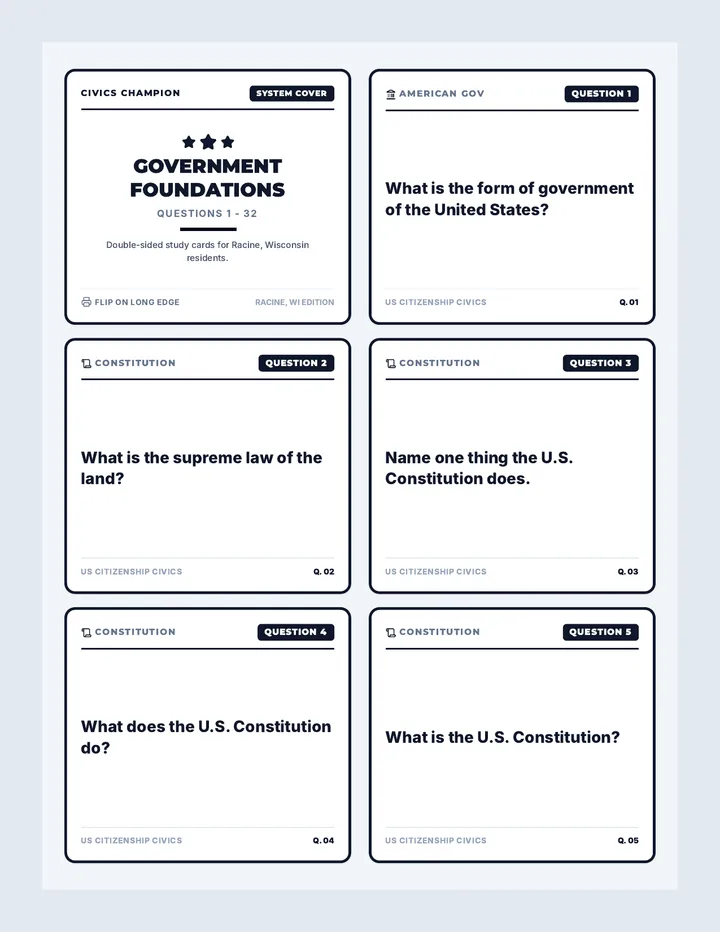
High-contrast, printable double-sided study cards for Questions 1-32 of the citizenship test, focusing on the principles of American democracy, the system of government, and the legislative branch.
High-contrast, printable double-sided flashcards for Questions 1-32 of the citizenship test, customized for Racine, Wisconsin. Features Tammy Baldwin, Ron Johnson, and Bryan Steil as specific representatives.