Psychological theories of interpersonal attraction, attachment styles, and factors influencing long-term relationship maintenance. Examines evolutionary perspectives and sociocultural impacts on human connection.
Updated outline slide with a navy blue background and sky blue text/accents for a professional look.
A comprehensive unit exploring social-emotional learning and civic responsibility, connecting the concepts of personal relationships and the systems of government that bind a community together.
An undergraduate psychology sequence exploring the mechanisms of bonding, relationship maintenance, and dissolution through Attachment Theory and other major theoretical frameworks. Students analyze how early childhood models influence adult intimacy, explore Sternberg's Triangular Theory, and evaluate Rusbult's Investment Model to predict relationship stability.
This sequence explores human development from conception through the first two years, covering prenatal stages, teratogens, neonatal reflexes, motor milestones, Piaget's sensorimotor stage, and attachment theory. Students analyze the interplay between biology and environment in shaping early human life.
A comprehensive 10th-grade psychology unit exploring the biological, cognitive, and social factors that drive human attraction and the maintenance of long-term relationships.
A comprehensive 9th Grade Psychology unit exploring the physical, cognitive, and social development of infants during their first year of life. Students investigate developmental milestones, Piaget's theories, attachment styles, and language acquisition, culminating in a project where they design developmentally appropriate tools for infants.
A comprehensive undergraduate sequence analyzing the psychological mechanisms, recruitment tactics, and systemic vulnerabilities associated with human trafficking. Students move from debunking media myths to deconstructing complex grooming cycles, digital predatory behavior, and labor exploitation structures.
A research-oriented graduate sequence exploring the mechanisms of long-term relationship persistence, communication patterns, cultural influences, and post-dissolution growth through the lens of social psychology.
This graduate-level psychology sequence explores Attachment Theory from its developmental origins to clinical applications in adult psychotherapy. Students examine the neurobiological underpinnings of social bonding, assess adult attachment through narrative analysis, and learn evidence-based interventions for restructuring insecure bonds.
An advanced seminar series for graduate students exploring the biological and social underpinnings of human attraction, from evolutionary mandates to neurochemical drivers and digital proximity.
This sequence critically examines the biological, cognitive, and social forces that drive interpersonal attraction, from evolutionary roots to modern digital and cultural contexts. Students will evaluate competing theories through empirical data analysis, mapping exercises, and comparative studies.
This 12th-grade psychology sequence explores the biological, cognitive, and social factors influencing human connection. Students analyze foundational theories—from evolutionary mate selection to Gottman’s research on conflict—to understand how relationships form, evolve, and persist.
This sequence explores the psychological foundations of human relationships, from initial attraction and attachment styles to Sternberg's Triangular Theory of Love and Gottman's research on conflict, concluding with a cross-cultural analysis of mating practices.
A comprehensive 99-minute lesson exploring child development theorists (Piaget, Erikson, Vygotsky, Bowlby) with a focus on infancy, featuring collaborative research and guided note-taking.
A lesson introducing the concept of family, its definition, and its importance as a social unit.
A lesson focusing on the daily hardships and psychological toll of trench warfare during World War I, designed for students reading at a middle school level.
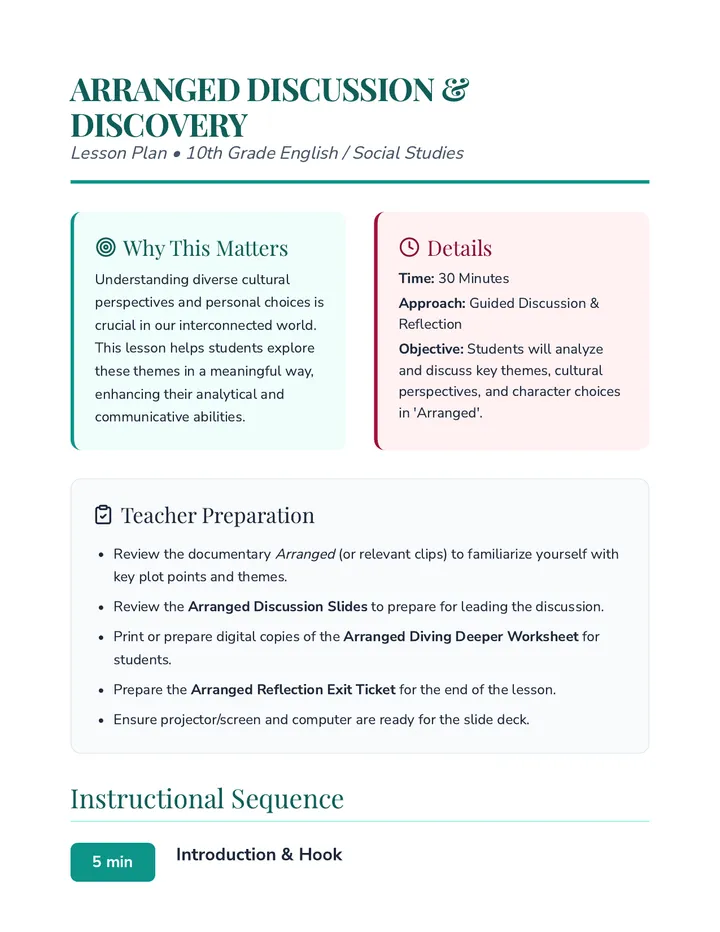
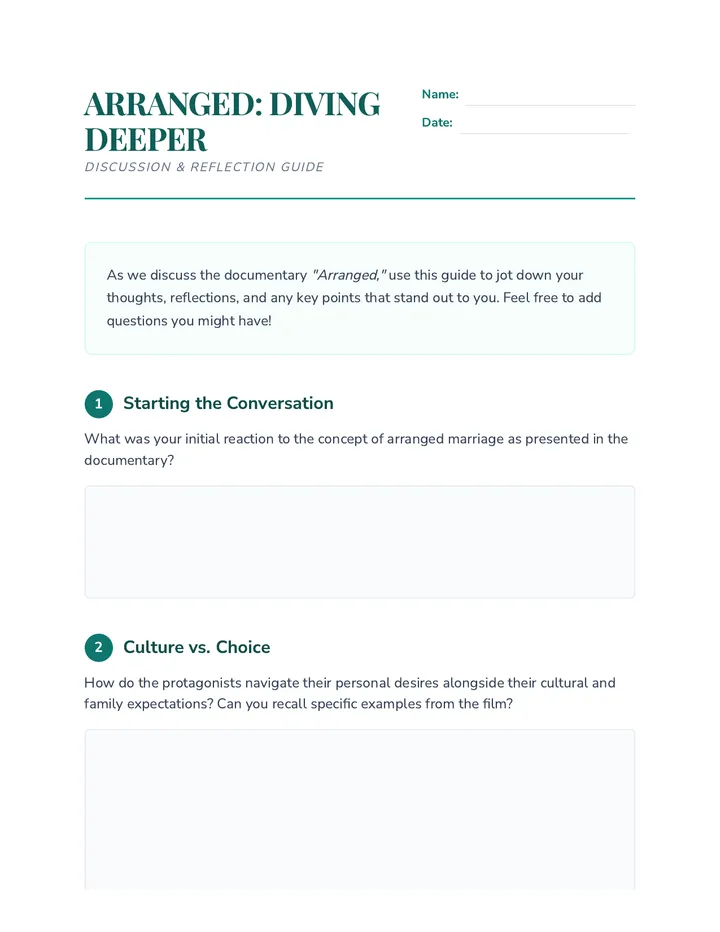
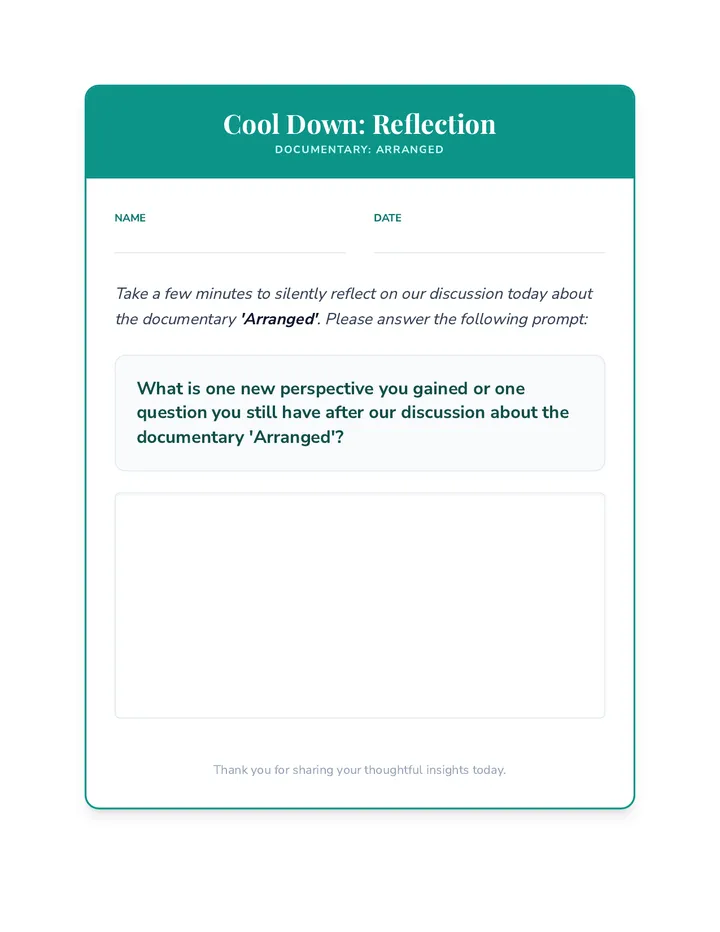
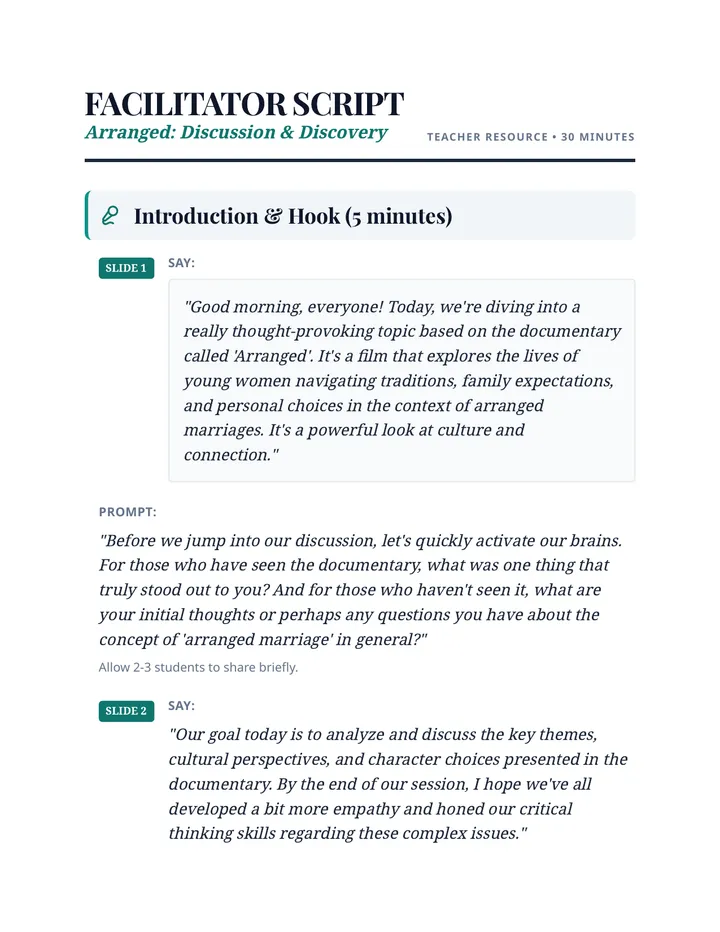
A 30-minute lesson for 10th-grade students exploring themes of cultural identity, family expectations, and personal choice through the lens of the documentary 'Arranged'. Students engage in deep discussion and personal reflection.
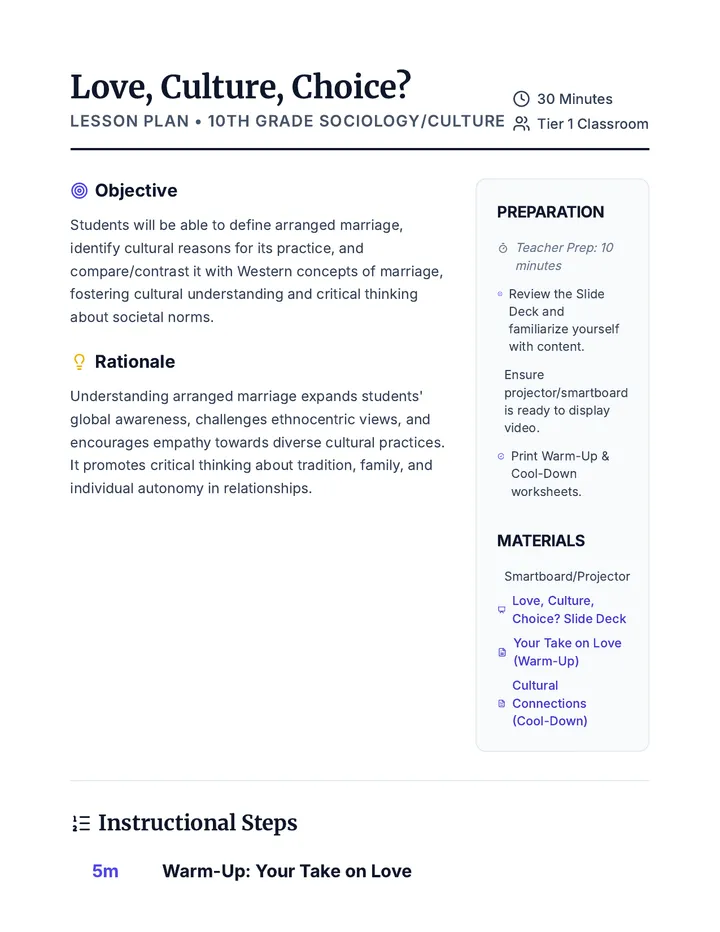
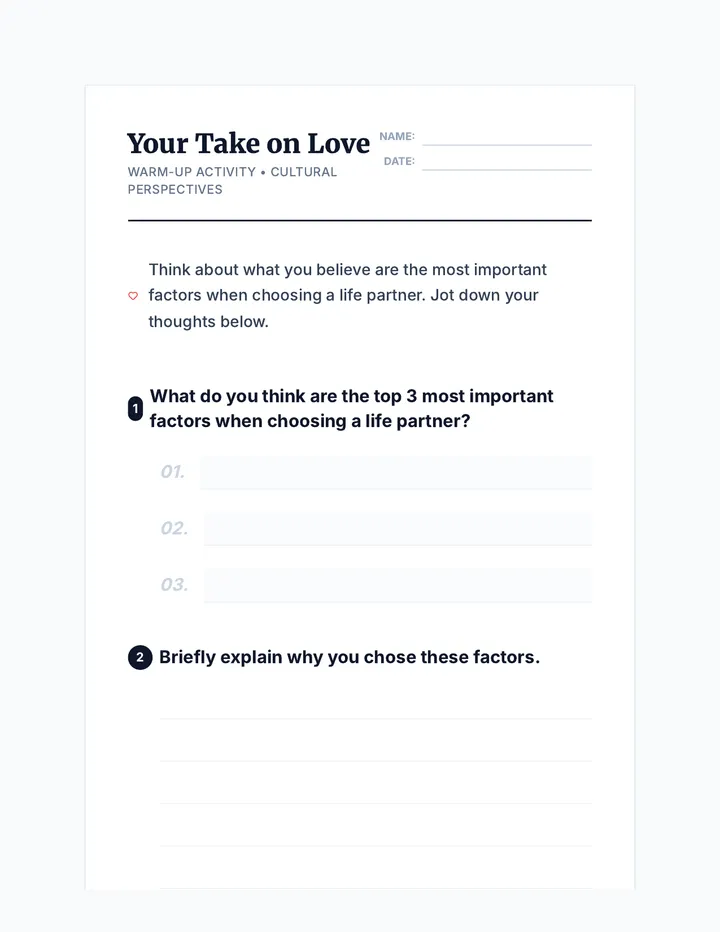
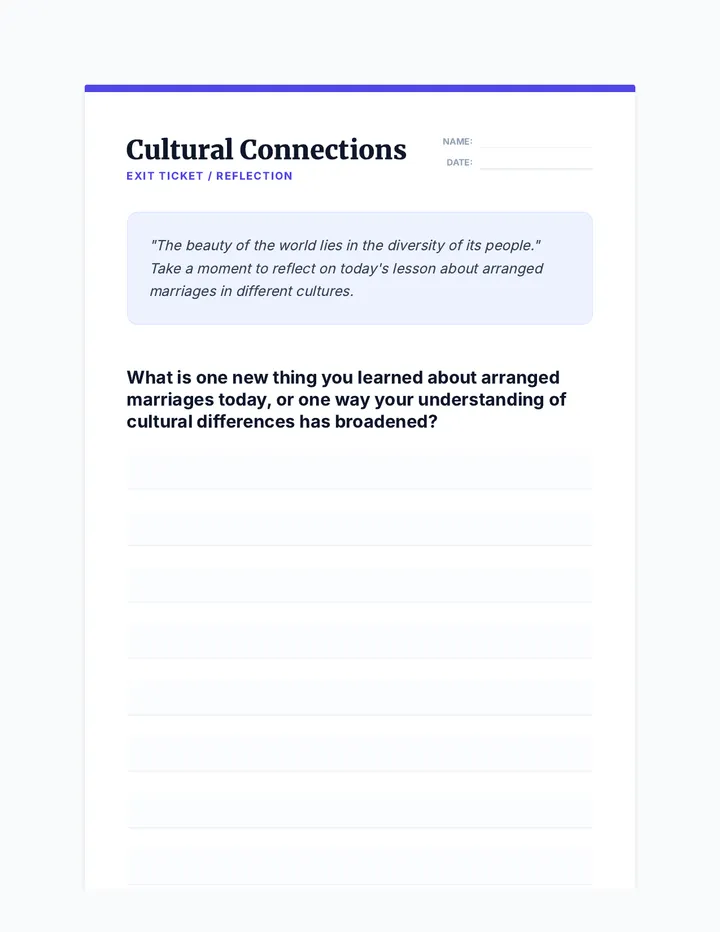
This 30-minute lesson explores the concept of arranged marriages across different cultures, prompting 10th-grade students to critically analyze societal norms, individual agency, and cultural diversity.
In this undergraduate psychology lesson, students critique evolutionary perspectives on anxiety and design a behavioral activation intervention for happiness. They analyze Katarina Blom's TEDx talk, explore key studies on negativity bias and social connection, and create a targeted "Happiness Intervention" for college freshmen.
A high school psychology/sociology lesson exploring the Social Brain Hypothesis, the evolutionary transition from physical grooming to vocal gossip, and the modern implications of Dunbar's Number in a digital age.