Fundamental principles of supply, demand, and monetary systems alongside micro- and macroeconomic structures. Examines the impact of corporate power, labor market dynamics, and global systems on social mobility and class inequality.
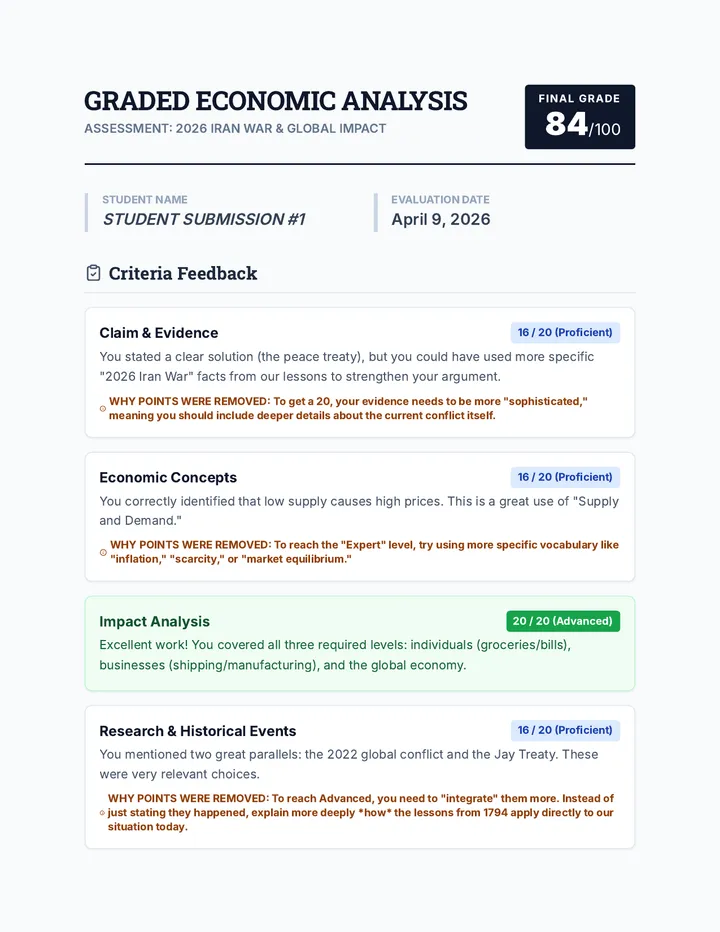
This Economics lesson investigates the causes and consequences of hyperinflation in Weimar Germany following World War I. Students will analyze historical data to understand how printing money led to one of the most famous economic collapses in history.
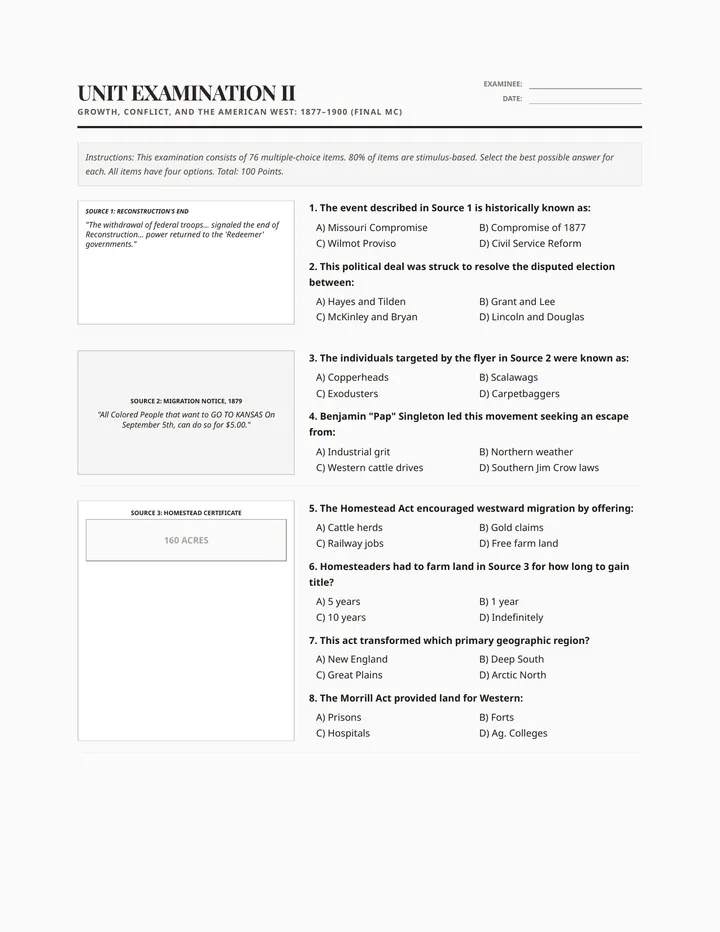
A lesson examining the Populist Party's Omaha Platform of 1892, its agrarian roots, and its long-term impact on American political and economic policy through the Progressive Era.
A comprehensive introduction for Kindergarteners to the basics of economy, covering the difference between goods and services, how money is earned through work, and how it is used in a marketplace.
A 1st Grade financial literacy unit exploring the origins of money, the concept of value, why prices change (inflation), and the connection between work and purchasing power. Students move from understanding barter systems to planning their own purchases.
This sequence introduces 2nd-grade students to fundamental economic concepts including the difference between goods and services, the roles of producers and consumers, the history of trade/barter, and the function of money in a community.
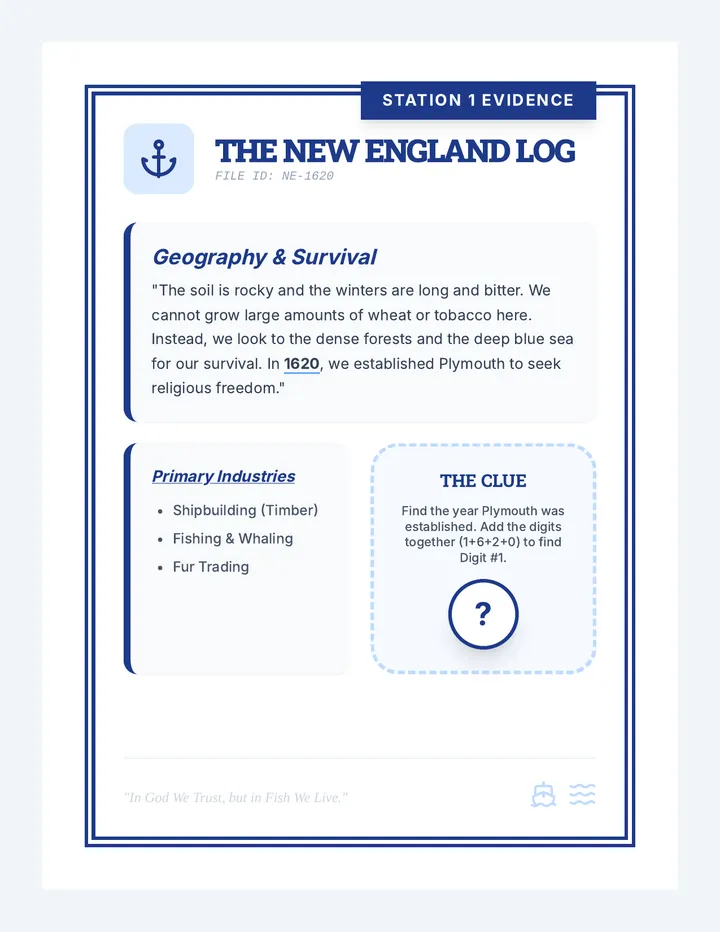
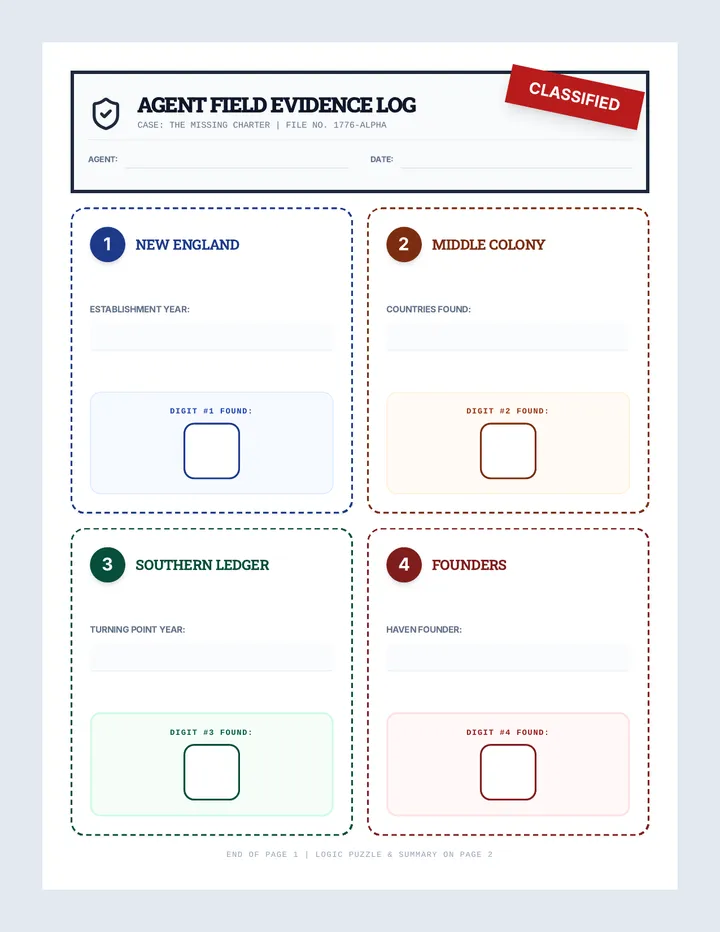
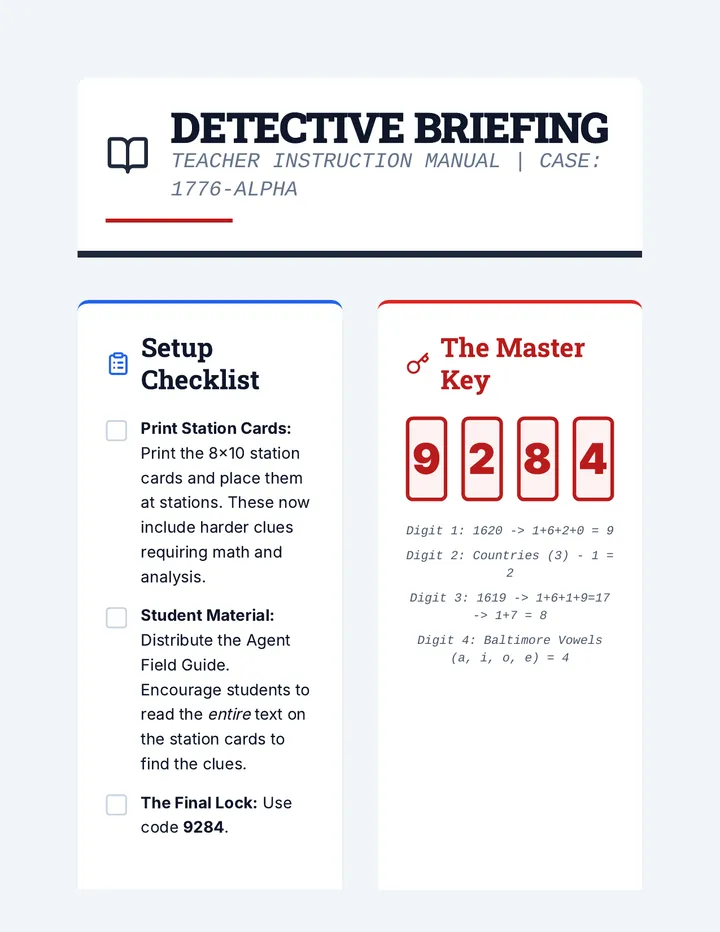
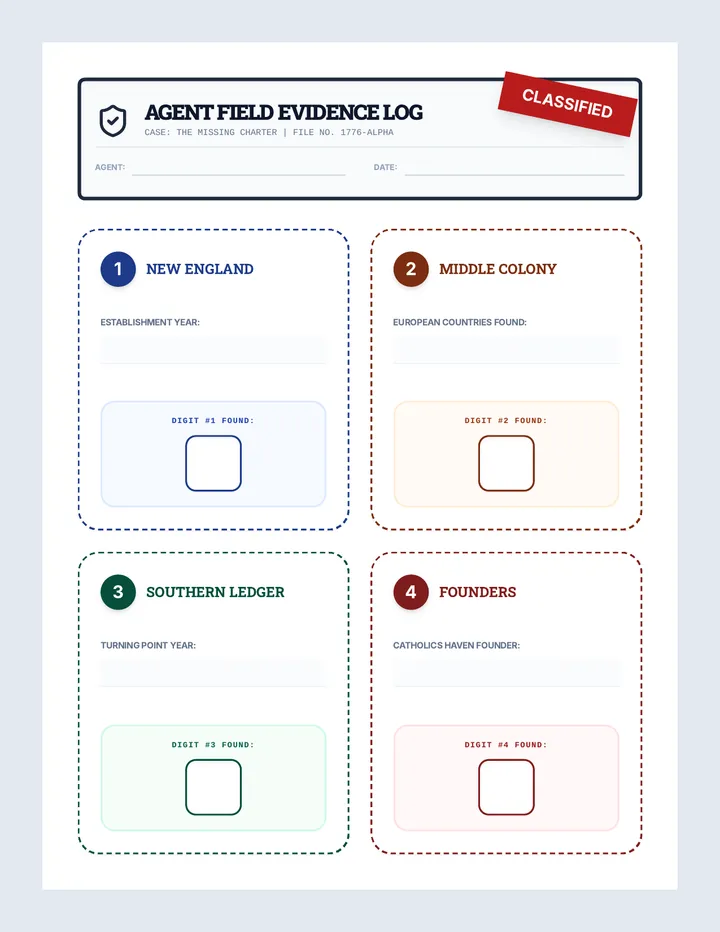
A comprehensive unit for 4th graders exploring how the geography and climate of the New England, Middle, and Southern colonies shaped their unique economies and ways of life. Through map analysis, simulations, and creative projects, students connect physical environments to human industry.
This sequence explores the decline of the feudal system in Medieval Europe through 4th-grade appropriate investigations of trade, law, disease, and cultural exchange. Students will understand how these factors shifted power from lords to kings and commoners, leading toward the modern era.
A Kindergarten sequence exploring the evolution of money from natural objects (shells and beans) to physical currency (metal and paper), global variations, digital forms (cards and taps), and future inventions. Students learn that money is a tool for exchange that has changed over time.
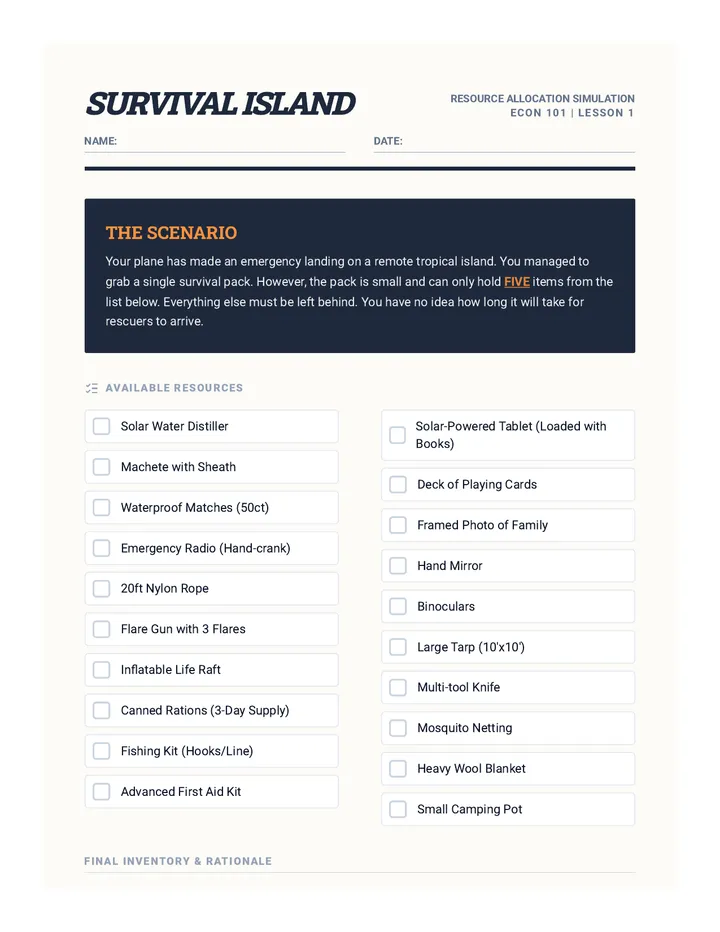
A Kindergarten economics sequence that introduces the basics of money, focusing on the difference between needs and wants, the concept of scarcity, making economic choices (opportunity cost), and the importance of saving.
This Kindergarten sequence introduces students to the concept of earning money through work. It explores community roles, distinguishes between work and play, simulates a classroom economy, and explains the difference between goods and services, culminating in a reflection on how families use earned income.
A Kindergarten sequence exploring the transition from bartering to using money. Students learn through simulation, role-play, and creative design why a common currency makes trading easier.
This 1st Grade sequence introduces the fundamentals of economics by exploring how money is earned through work, the difference between goods and services, and the importance of saving for the future. Students engage in classroom simulations and goal-setting to make abstract financial concepts concrete and actionable.
A 1st Grade sequence exploring the evolution of exchange, from the difficulties of bartering to the convenience of modern currency, helping students understand money as a problem-solving tool.
This immersive sequence guides second-grade students through the evolution of trade, from bartering to modern currency. Students participate in simulations to discover the inefficiencies of direct trade and the necessity of money as a medium of exchange, unit of account, and store of value.
Students explore the evolution of money from the barter system to digital currency, identifying the three primary functions of money: medium of exchange, unit of account, and store of value. through hands-on simulations and creative workshops.
This sequence introduces Kindergarten students to foundational economic concepts through concrete experiences. Students explore the difference between needs and wants, encounter scarcity through a limited resource simulation, practice decision-making with trade-offs, and participate in a classroom market using earned tokens.
A graduate-level exploration of the Mongol Empire as a precursor to modern globalization, utilizing systems theory, environmental history, and network analysis to understand Eurasian integration.
A comprehensive 4th-grade sequence exploring how money circulates through economies, the role of central banks, global exchange, and modern digital transactions. Students use systems thinking to map the flow of currency and simulate economic stability.
A macroeconomic exploration for 5th graders, covering the transition from barter to currency, the causes of inflation, the role of central banks, and global exchange rates. Students engage in simulations to understand why money has value and how economic stability is maintained.
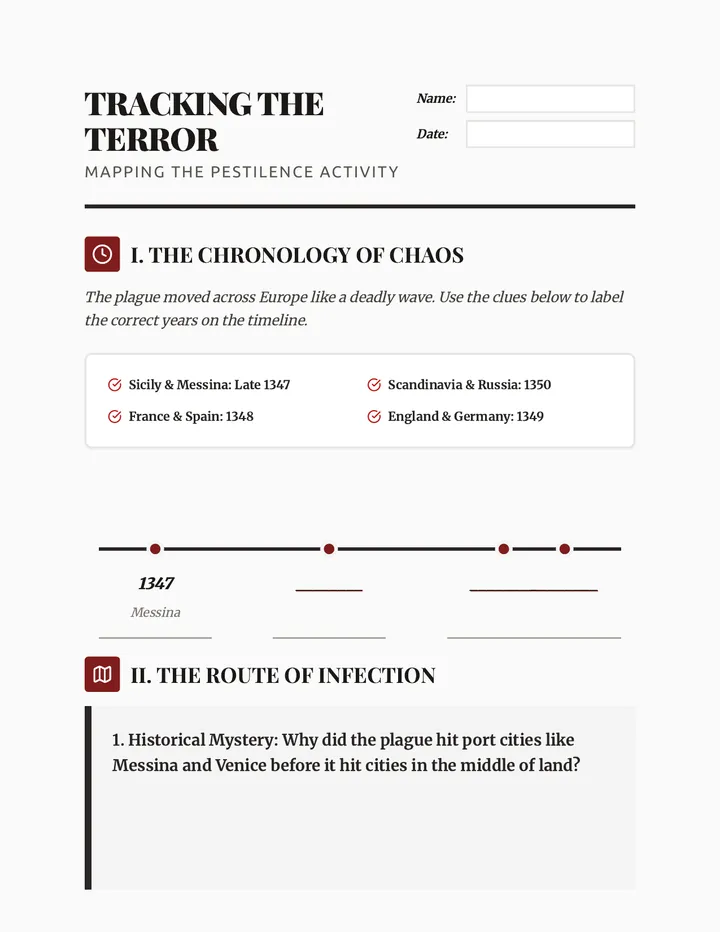
A comprehensive 9th-grade unit exploring the economic mechanics, logistics, and cultural consequences of the Silk Road trade networks. Students investigate supply and demand, simulate caravan travel, map the spread of the Black Death, and analyze artistic diffusion.
A comprehensive 5-lesson exploration of the West region of the United States, covering geography, climate, resources, culture, and states/capitals through reading passages and interactive activities.
A comprehensive 4-day station rotation covering US history from the 1970s to the 2000s, aligned with TEKS 10 and 11. Students explore major political, economic, and social shifts through primary sources, data analysis, and interactive tasks.
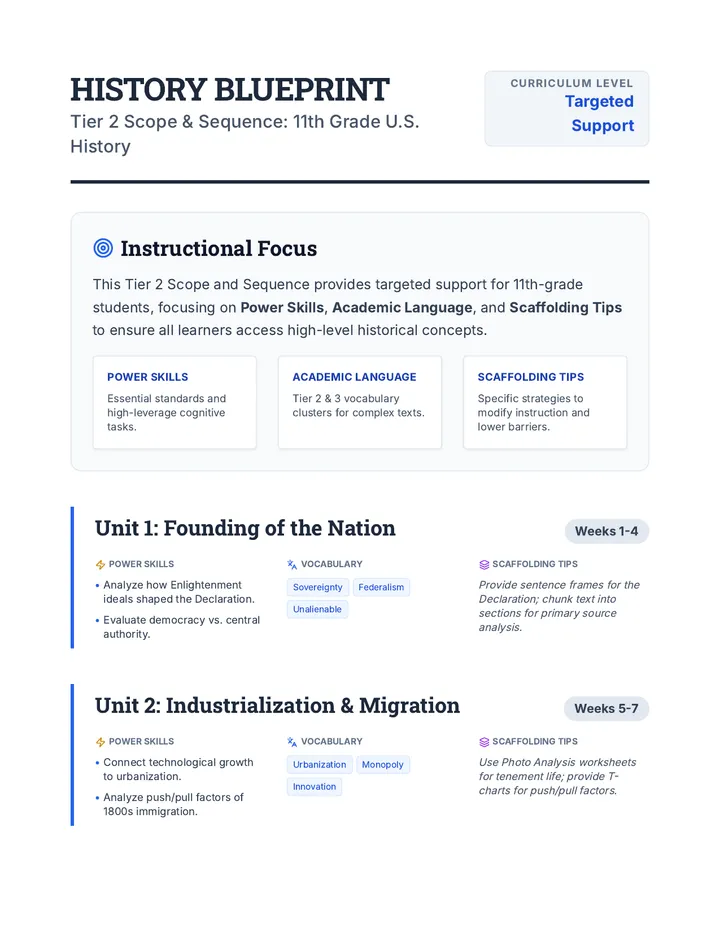
A comprehensive 2-day unit covering World War II for 11th Grade US History, aligned with TEKS. It focuses on the transition from isolationism to total war, the home front experience, major turning points in both the European and Pacific theaters, and the strategic decisions that ended the conflict.
A comprehensive journey through the Midwest region, covering its geography, economy, and culture in bite-sized 20-minute sessions.
A 5-lesson sequence exploring the geography, climate, resources, culture, and states of the Northeast region of the United States. Students will engage with reading passages, comprehension activities, and a states-and-capitals matching game.
A series of three investigative modules where middle school students analyze hypothetical disruptions to science, history, and society to develop critical cause-and-effect reasoning skills.
A geography sequence exploring the economic relationships between North American countries, focusing on the role of geography, infrastructure, and trade agreements in creating economic interdependence.
A lesson examining the symbiotic relationship between Venice and the Ottoman Empire, focusing on how geography shaped their economic and political power. Students analyze trade networks, resource interdependence, and the eventual shift in global exploration.
A high school economics and history sequence exploring how the Black Death fundamentally reshaped European labor markets, social hierarchies, and economic structures through the lens of supply and demand.
A high school economics unit exploring why markets sometimes fail to provide essential services, focusing on the characteristics of public vs. private goods and the free rider problem.
A Kindergarten sequence focused on introducing the concepts of scarcity, supply and demand, and resource management through hands-on simulations, sharing strategies, and problem-solving activities.
A hands-on introduction to economics for 1st graders, covering goods, services, producers, consumers, and the basic forces of supply and demand through a classroom 'Market Town' simulation.
This sequence introduces 2nd-grade students to basic economic principles like supply, demand, and value. Through classroom inventories, auctions, and a marketplace simulation, students explore how the availability of items and people's desire for them influence price and trade.
A project-based sequence where 6th-grade students design persuasive campaigns for arts education. Students explore the value of the arts, analyze stakeholder perspectives, and craft compelling narratives and visuals to advocate for community arts programs.
This sequence explores the economic and political power of the Ghana and Mali Empires. Students analyze geography, trade systems, leadership, and the intellectual legacy of Timbuktu to understand how resource control builds civilizations.
A comprehensive examination of US imperialism in the Pacific, focusing on the legal, political, and commercial motivations for expansion. This undergraduate sequence traces the shift from continental expansion to overseas empire, culminating in the Supreme Court's definition of "unincorporated" territories.
An academic exploration of the intellectual and social frameworks justifying late 19th-century US expansionism, focusing on the Frontier Thesis, naval strategy, and racial ideology.
A high school history unit exploring the underlying economic and resource-driven motivations of World War II, moving beyond purely ideological narratives to understand the role of scarcity and expansionism.
A lesson sequence exploring the economic consequences of imperial centralization and warfare through the lens of the Mughal Empire's most famous rulers, Akbar and Aurangzeb. Students evaluate how budget trade-offs and religious policies impact long-term national stability.
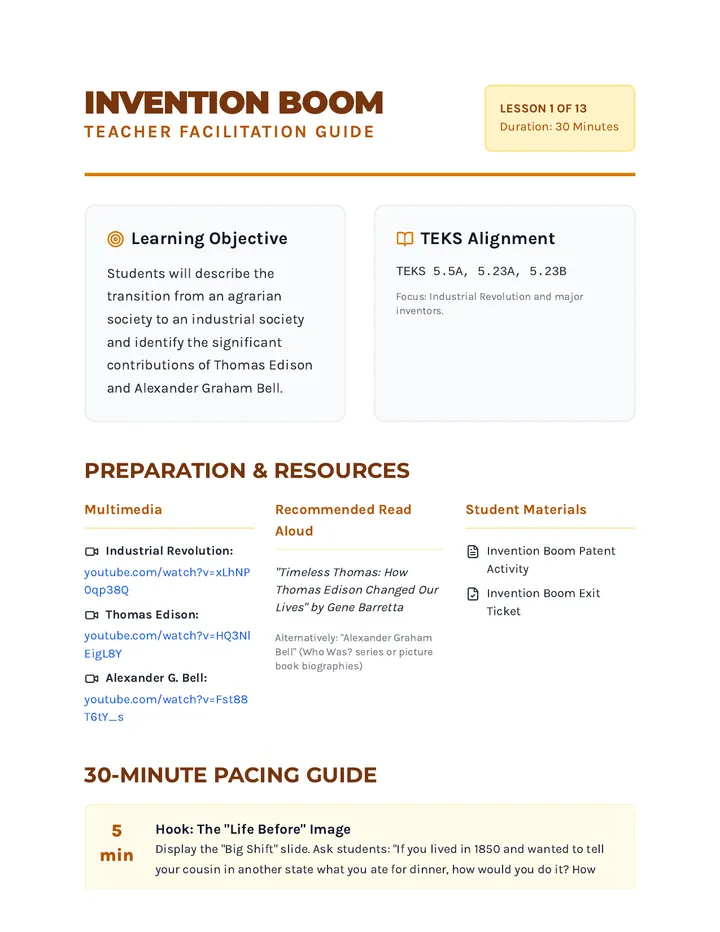
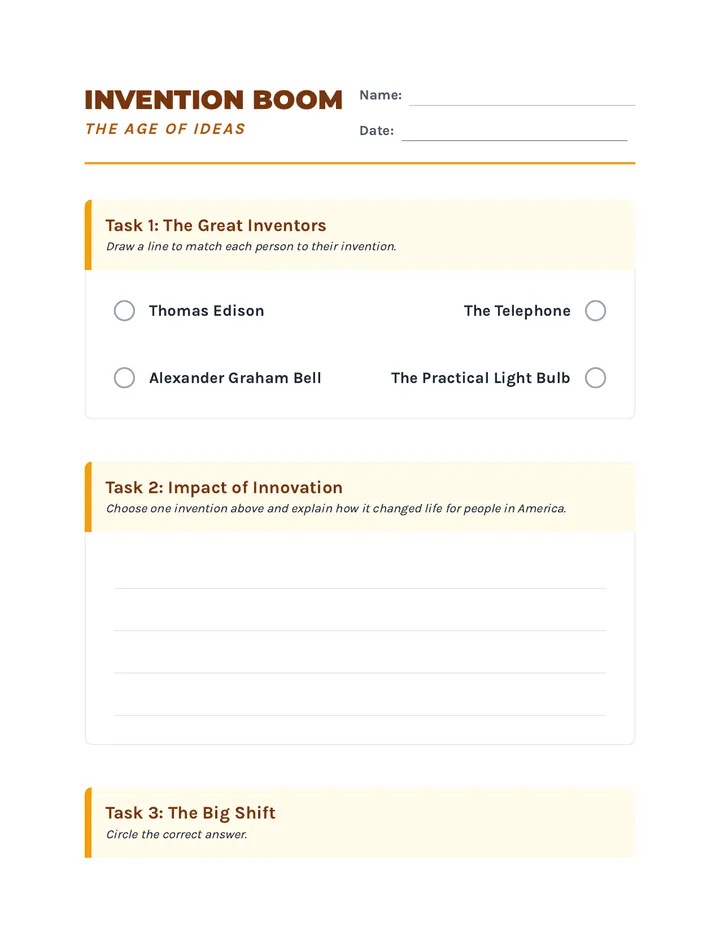
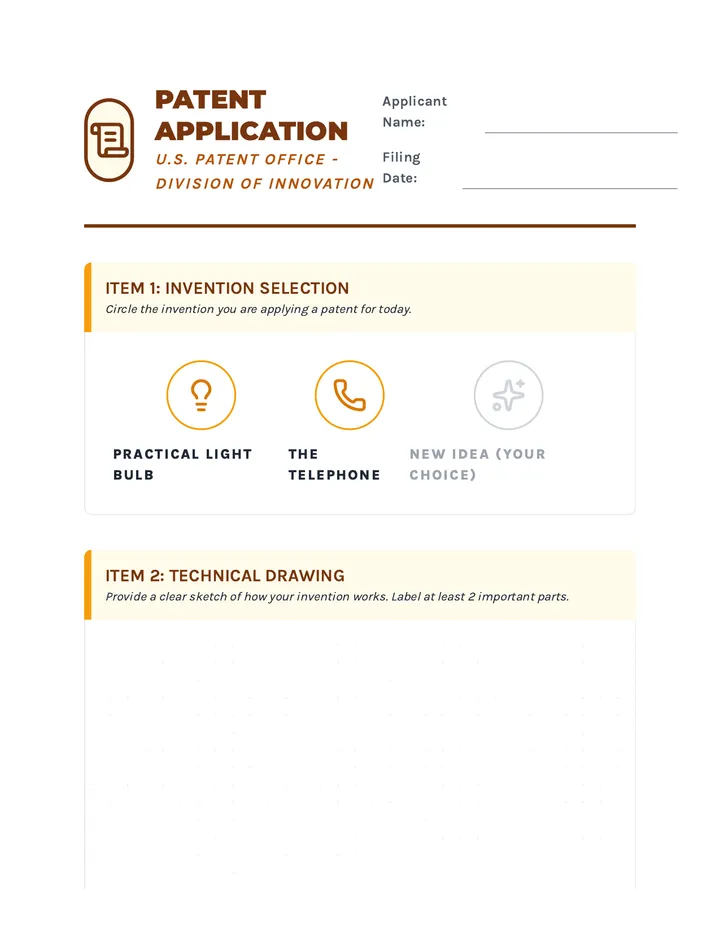
A sequence exploring the transition from agrarian societies to industrial hubs, focusing on the social, economic, and physical changes in 18th-century England.
This sequence explores the evolution of the US tax system and the ethical debates surrounding different tax structures. Students will investigate the concept of 'fairness' in financial policy and design their own tax system for a fictional nation.
A comprehensive introduction to the purpose of taxation for 6th graders, focusing on public vs. private goods, government responsibilities, and the collective benefits of pooled resources. Students explore how taxes fund the community infrastructure they use every day through simulations, data analysis, and debates.
A comprehensive unit for 9th-grade students exploring the mechanics, ethics, and societal impact of the United States tax system. Students move from basic tax types to complex budget analysis and policy debates, building both financial literacy and civic understanding.
A middle school civics and financial literacy sequence exploring how tax revenue is collected and utilized by federal, state, and local governments to fund public goods and services. Students progress from defining public goods to designing their own community budget.
An introductory sequence for 8th graders exploring the purpose, structure, and ethical dimensions of the U.S. tax system. Students will learn how tax revenue funds public goods across federal, state, and local levels while debating the fairness of different tax structures.
A Kindergarten sequence introducing the economic concepts of choices and opportunity cost. Students learn that choosing one thing means giving up another through games, stories, and reflection.
This Kindergarten sequence introduces the foundational economic concept of distinguishing between essential needs and discretionary wants through interactive discussions, sorting activities, and simple budgeting simulations. Students move from identifying survival items to making prioritized choices, building a baseline for financial literacy.
A 1st Grade sequence introducing economic decision-making and the concept of opportunity cost. Students explore trade-offs through interactive games, a token shop simulation, and reflective journaling.
This sequence equips graduate students with the skills to analyze economic data and translate it into persuasive policy briefs for arts advocacy, culminating in a simulated legislative hearing.
Students transition from passive observers of the arts to active advocates by developing a strategic communications campaign for a local arts initiative. The sequence covers stakeholder mapping, rhetorical strategies, data visualization, digital campaigning, and public speaking.
A simulation-based sequence where 6th-grade students act as members of a fictional Community Arts Grant Council to evaluate proposals, understand funding models, and make difficult resource allocation decisions.
Students transition from passive observers to active arts advocates by learning cultural policy, economic impact analysis, and strategic communication. This sequence culminates in a comprehensive advocacy campaign presentation to secure sustainable support for the arts.
This graduate-level sequence investigates the economic motivations behind early 20th-century US foreign policy. It examines the shift from territorial conquest to 'Dollar Diplomacy,' focusing on the entanglement of state power with private corporate interests in the Caribbean, Central America, and East Asia.
A 12th-grade history sequence exploring the shift in US foreign policy in Latin America from the Panama Canal to Wilson's Moral Diplomacy. Students use simulations, primary source analysis, and comparative studies to evaluate the motivations and impacts of interventionism.
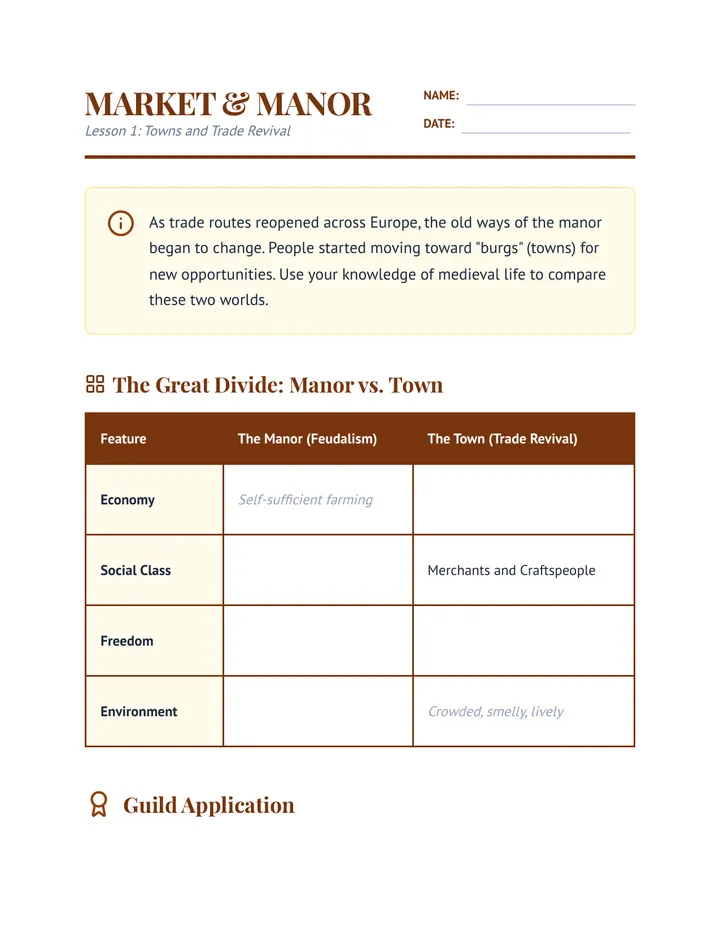
Students explore the economic and social structure of medieval Europe by analyzing the manor system. They investigate geographic requirements for survival, agricultural innovations like the three-field system, the specialized roles of community members, and the daily lives of serfs versus nobility, culminating in the design of their own self-sufficient manor.
A 1st-grade sequence exploring basic economic principles including the difference between needs and wants, scarcity, and the logic of making choices with limited resources. Students participate in a market simulation to apply their learning.
A graduate-level exploration of inductive logic, analogical reasoning, and causal inference within professional contexts like law and policy. Students learn to evaluate the cogency of probabilistic arguments and apply Mill's Methods to complex, real-world data scenarios.
This sequence explores the final chapters of the Cold War, from the diplomatic easing of tensions to the dramatic collapse of the Soviet Union and its lasting impact on modern global politics.
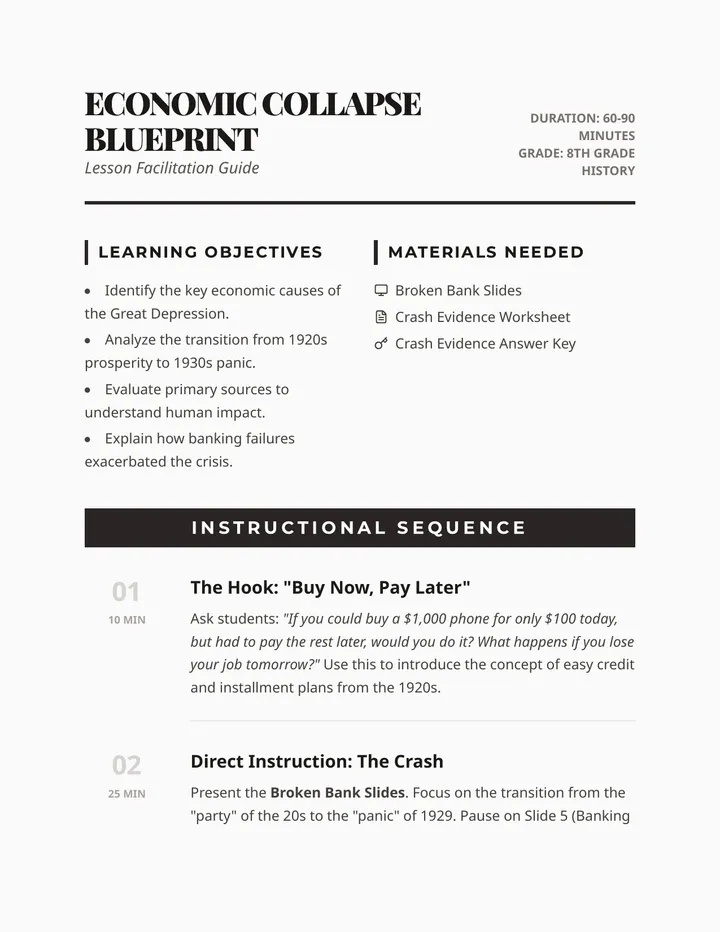
This sequence explores the economic drivers of the 1920s, focusing on mass production, the rise of consumer culture, and the systemic risks of credit and installment buying. Students analyze how industrial efficiency led to a middle-class boom while also creating structural weaknesses that contributed to the Great Depression.
A sequence focused on the economic boom of the 1920s, covering the assembly line, the impact of the automobile, mass media, and the rise of consumer credit. Students analyze how manufacturing and financial shifts transformed American daily life and set the stage for the Great Depression.
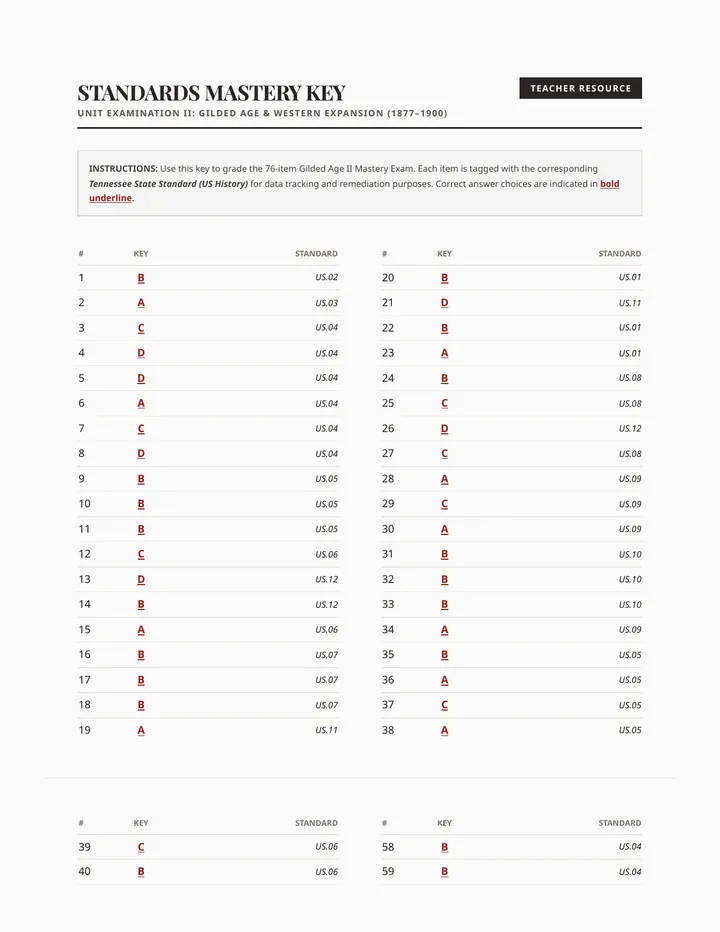
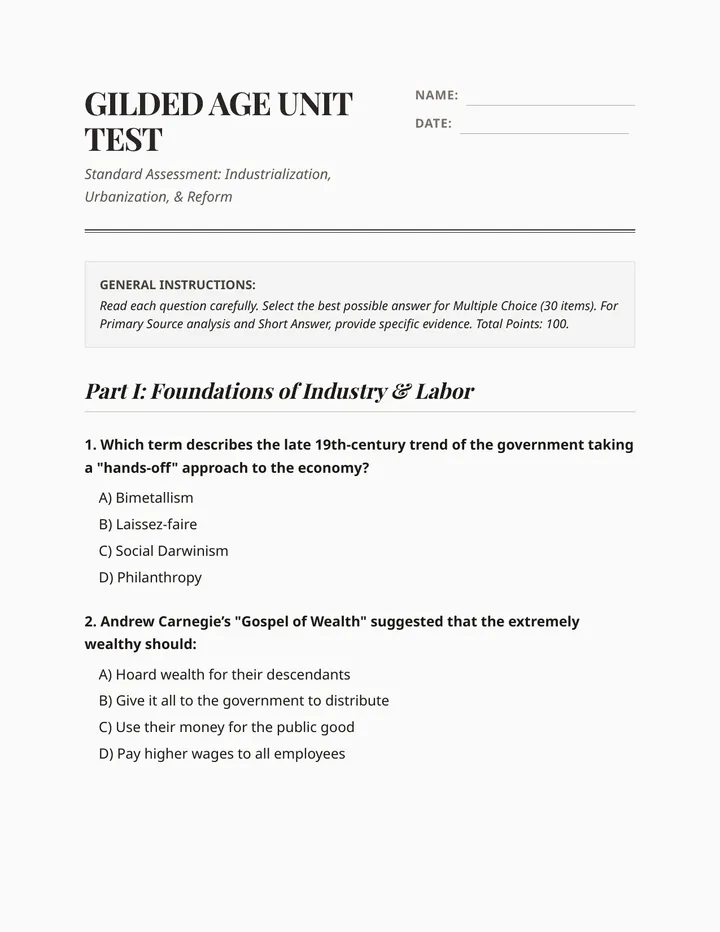
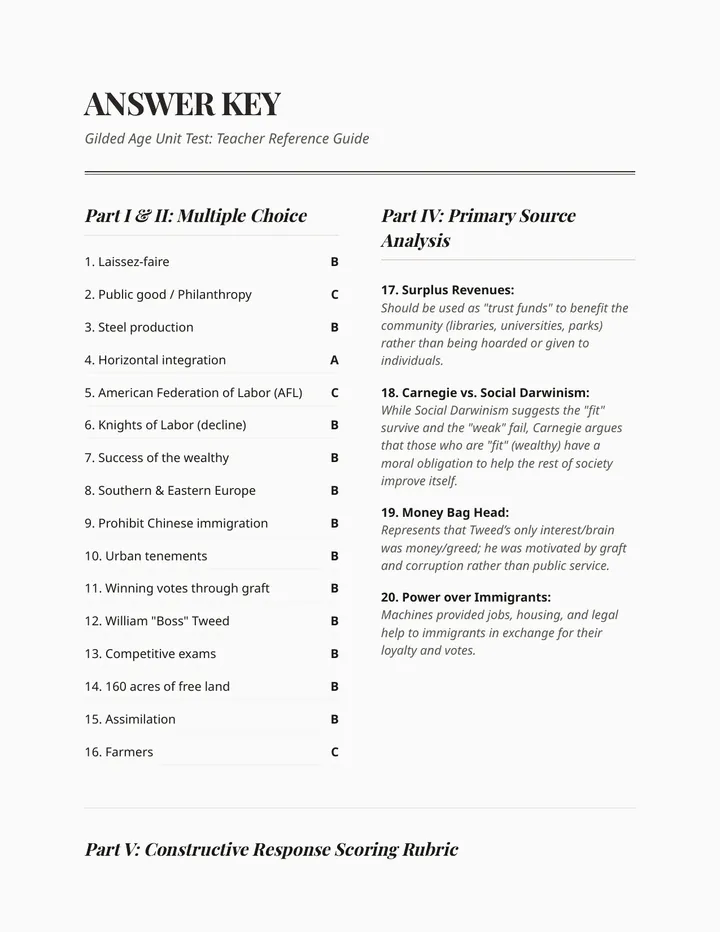
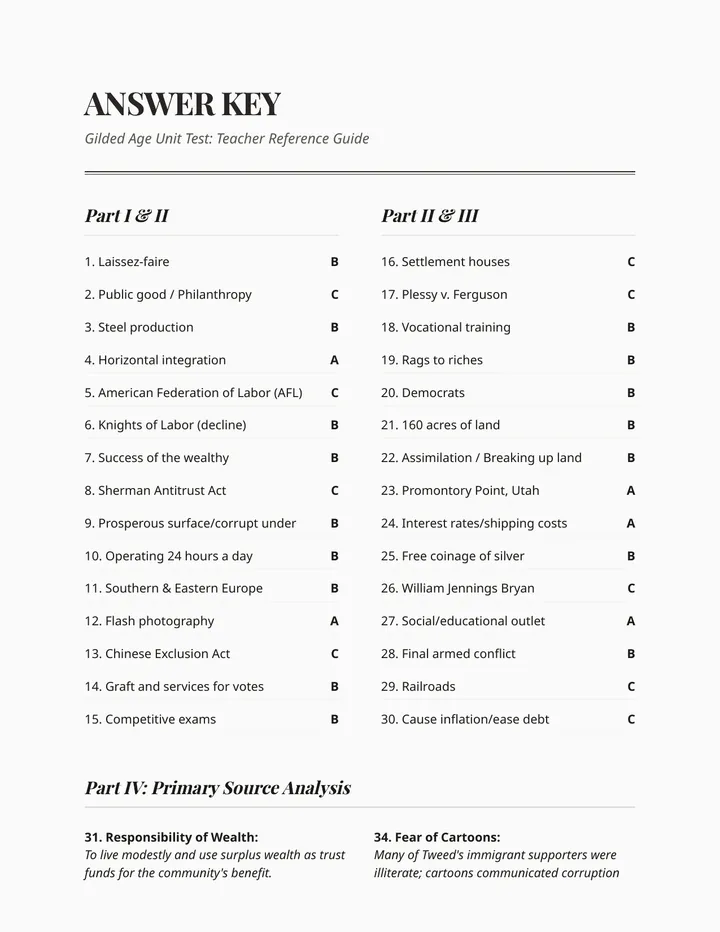
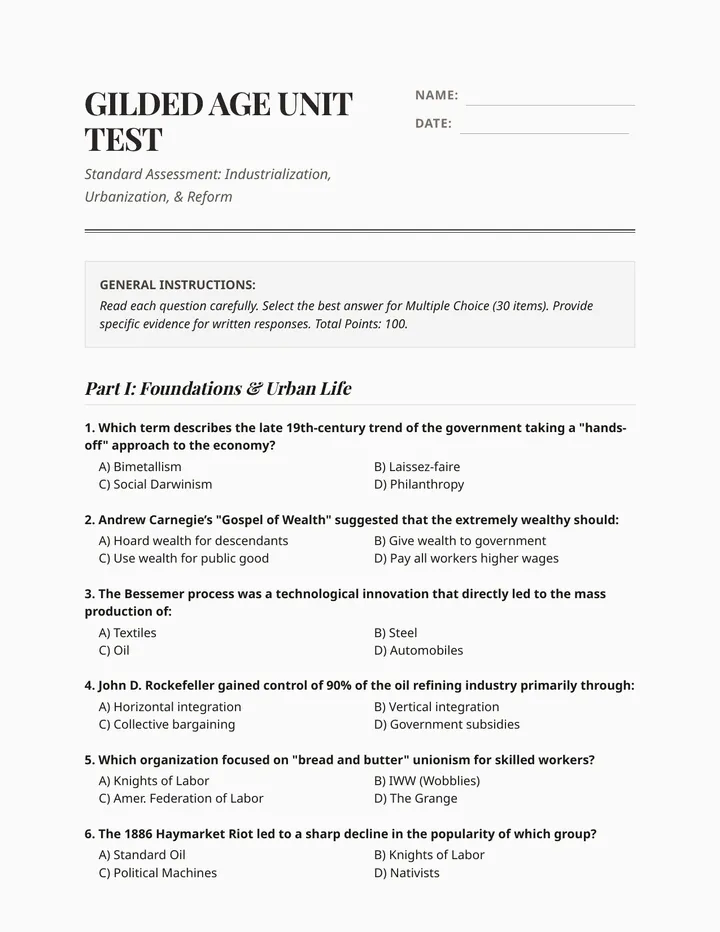
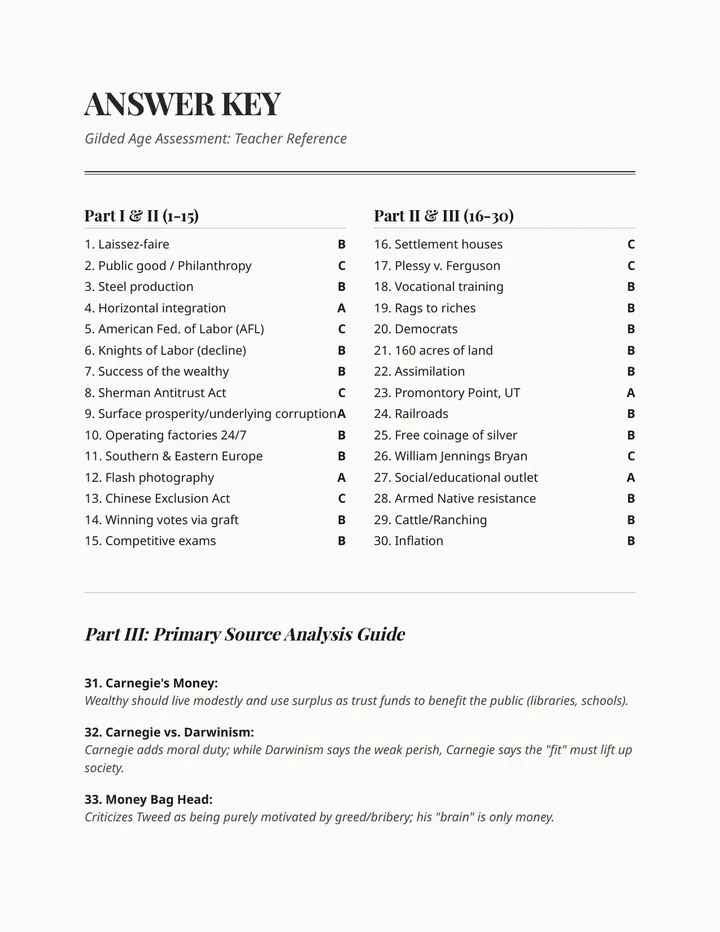
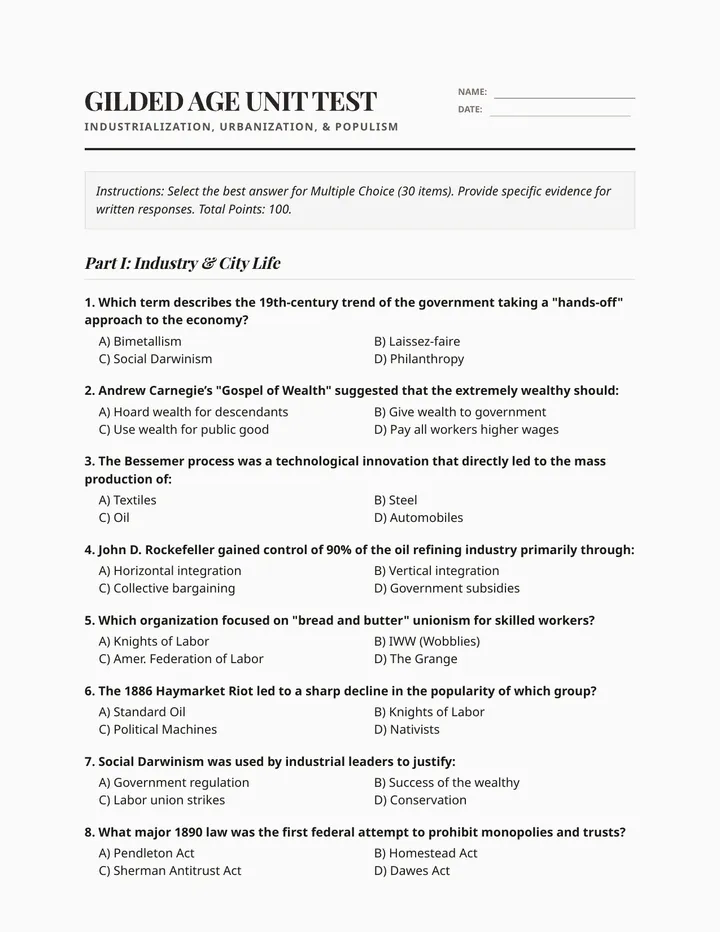
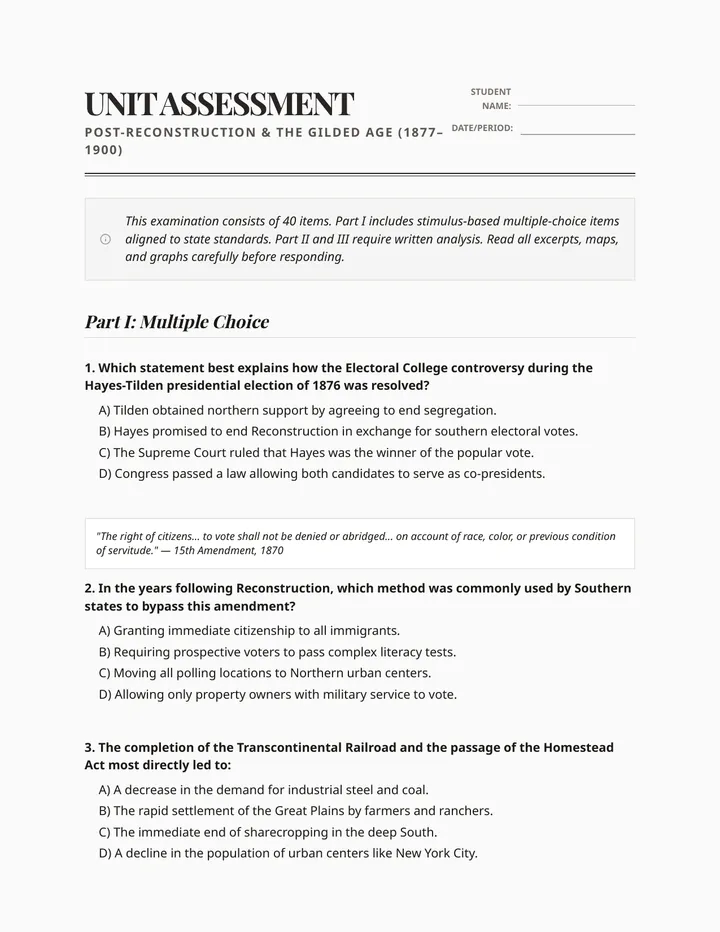
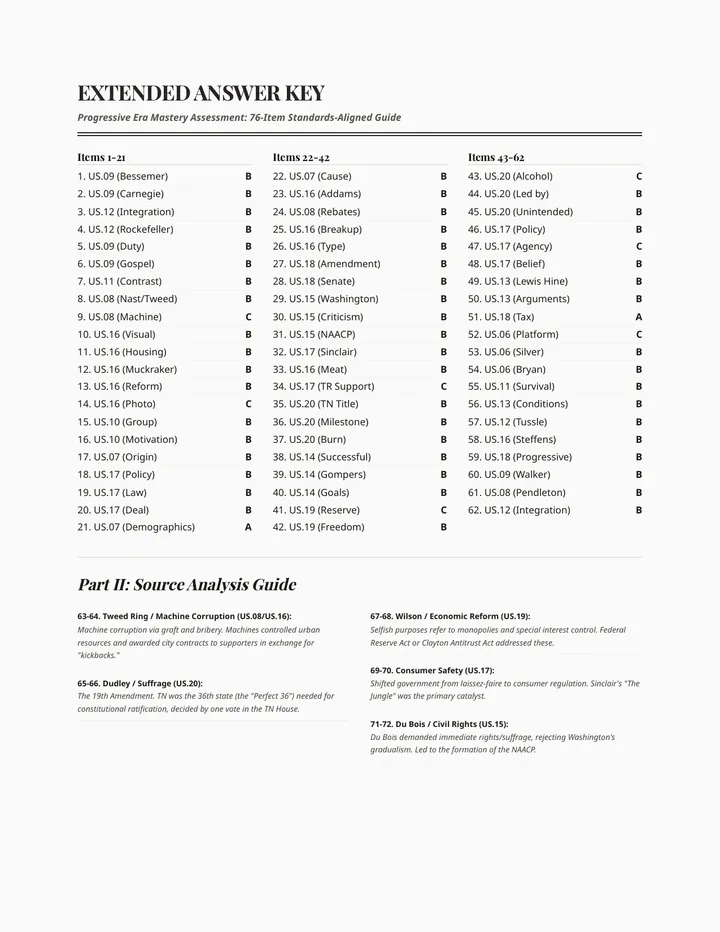
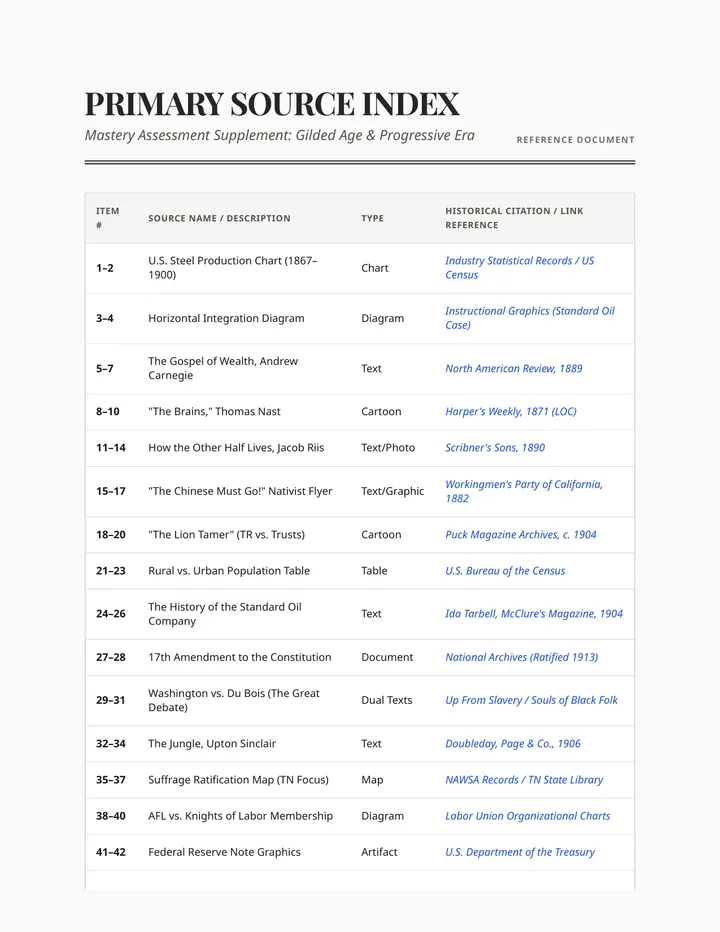
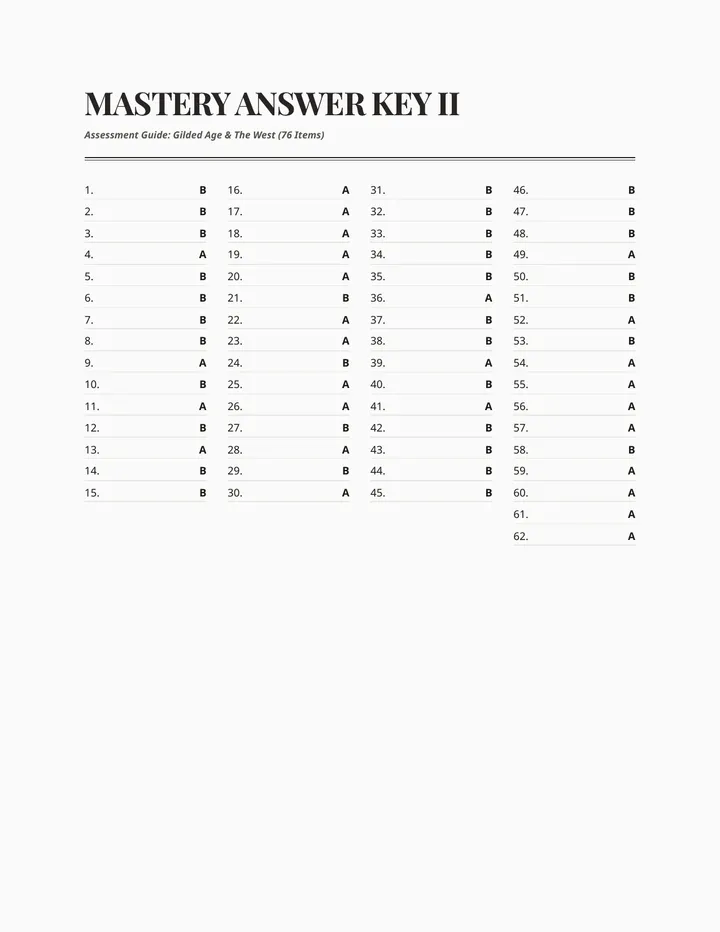
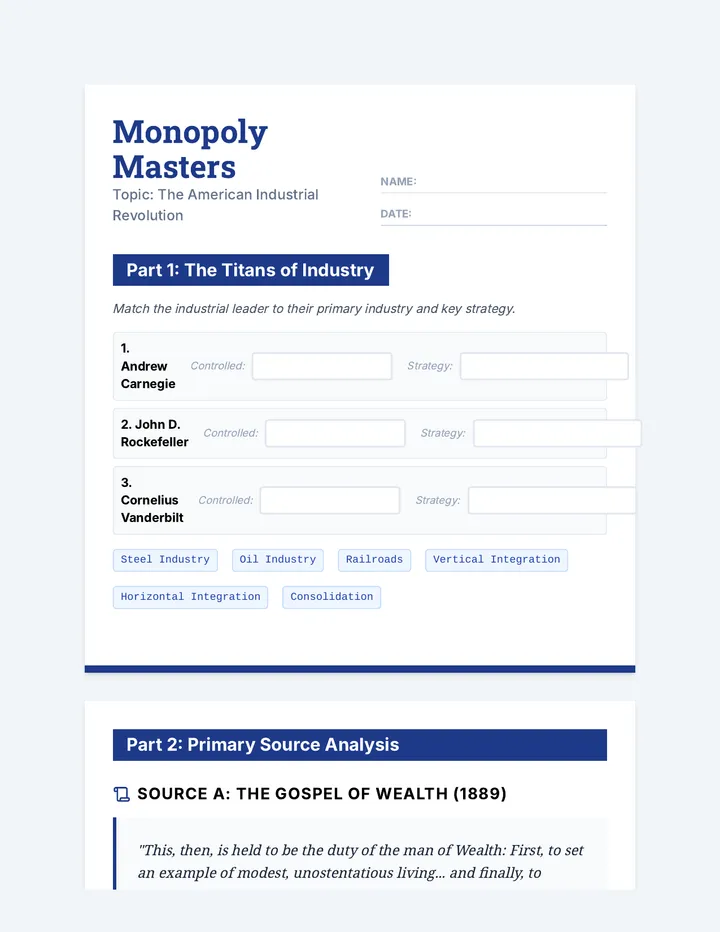
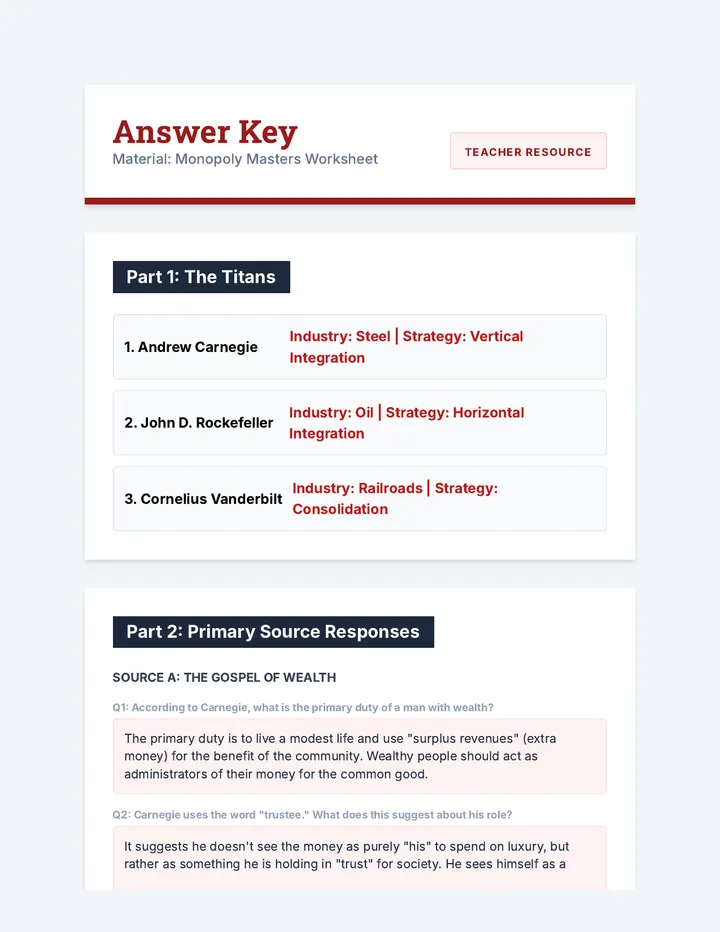
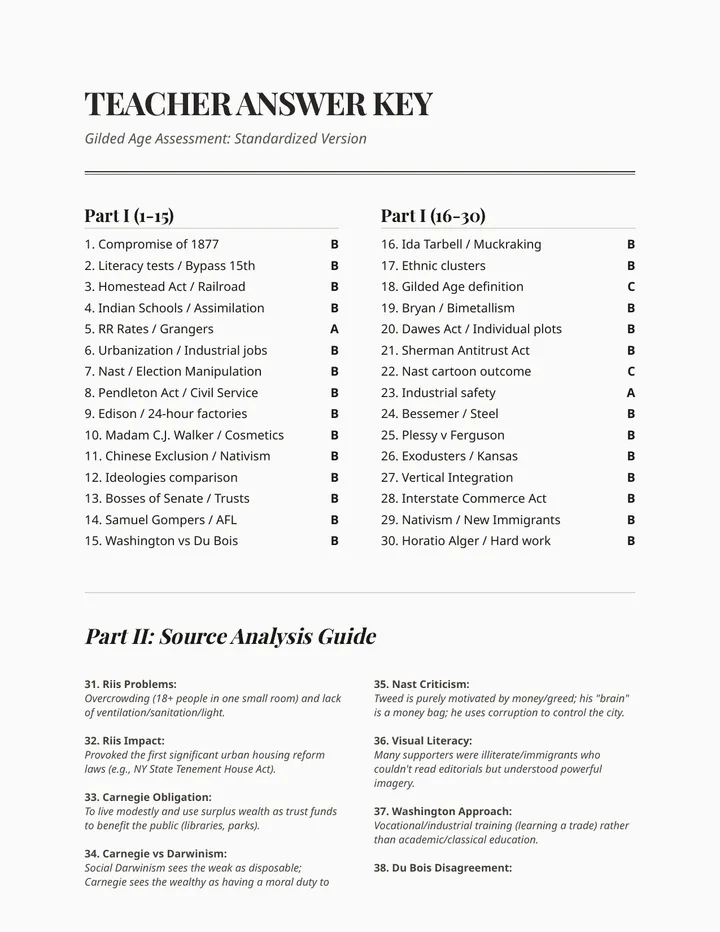
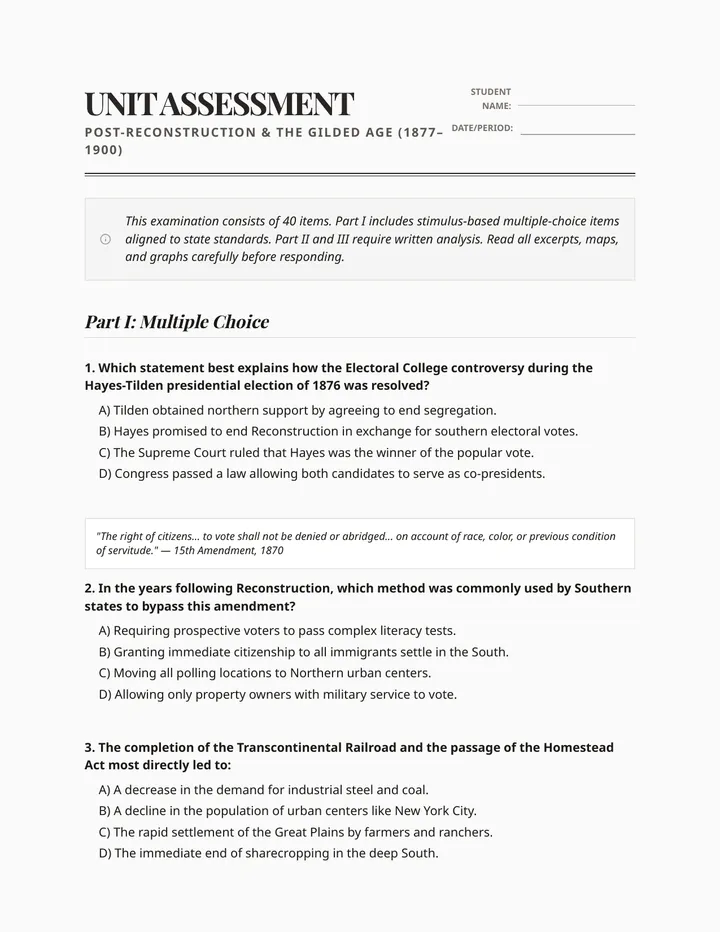
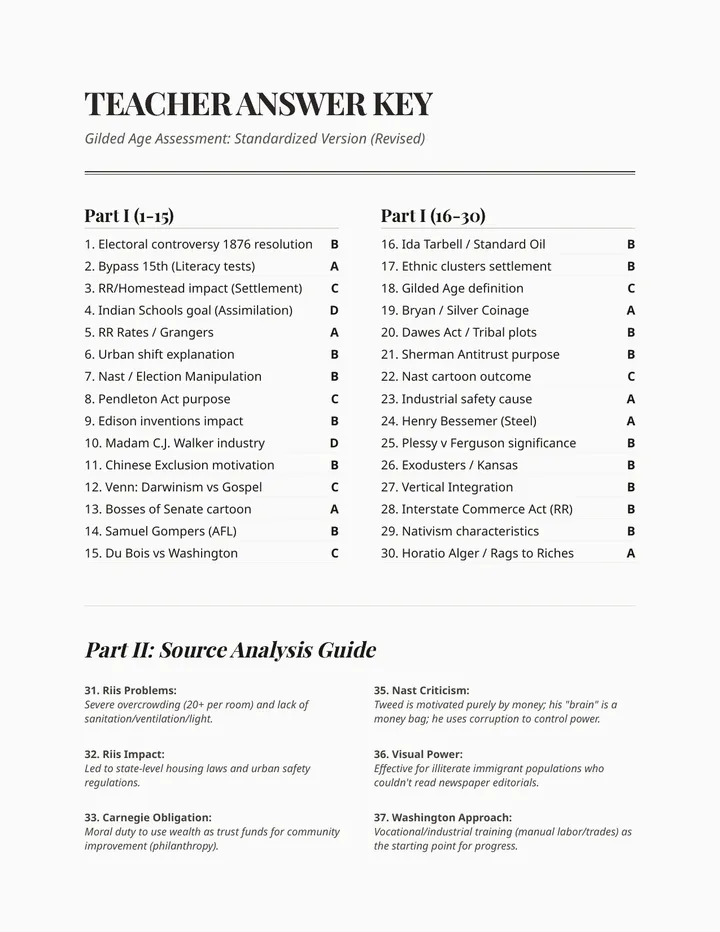
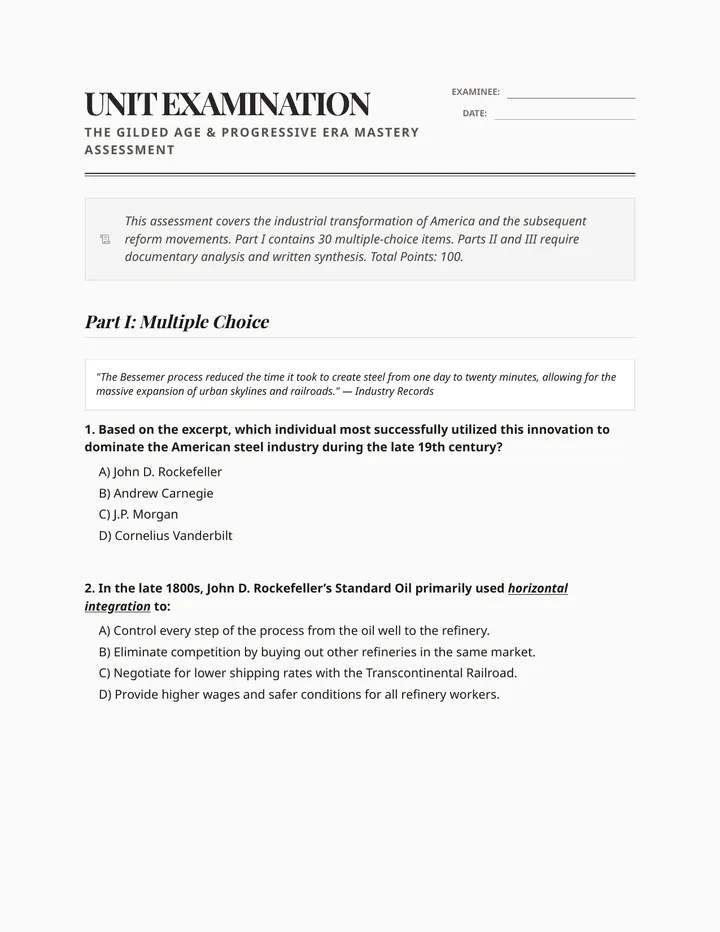
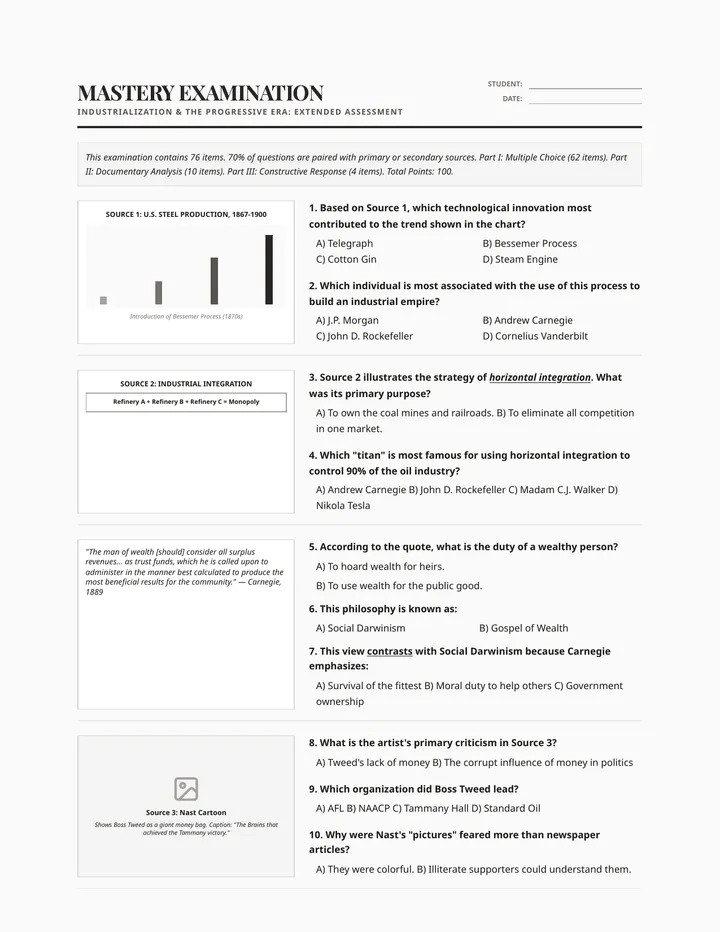
This unit explores the economic explosion of the Gilded Age, focusing on the transcontinental railroad, the rise of industrial tycoons, and the birth of modern corporate structures. Students analyze the tension between massive economic growth and the ethical costs of monopolies.
A comprehensive 5th-grade history sequence exploring the rapid industrialization, technological innovations, and urbanization of the American Gilded Age. Students analyze the impact of railroads, steel, and new inventions on daily life and the economy.
An advanced historiographical exploration of Gilded Age inequality, corporate power, and social resistance, designed for graduate-level seminar instruction. This sequence moves beyond narrative history to deconstruct shifting historical interpretations of the era's political economy.
A comprehensive 5-lesson unit exploring the unique geography, climate, natural resources, diverse cultures, and political boundaries of the Southwest region of the United States.
A 5-lesson unit exploring the geography, climate, resources, and culture of the Southeast United States, concluding with a states and capitals challenge.
A unit exploring the modern challenges and historical legacy of Eastern Europe, focusing on the intersection of geography, economy, and culture.
A high school economics sequence focused on the Arabian Peninsula, exploring the impact of oil wealth, the necessity of economic diversification, and the stark wealth inequalities caused by conflict.
A 12th-grade history sequence exploring the transition of the United States into a global power at the turn of the 20th century. Students analyze psychological, strategic, economic, and ideological motivations through primary source analysis and inquiry-based activities.
A comprehensive undergraduate sequence analyzing the socio-political, economic, and environmental factors that shape nutrition guidelines and food group accessibility. Students move from historical critiques of the Food Pyramid to proposing modernized, equitable dietary policies.
A graduate-level sequence focused on the rigorous evaluation of academic research, methodology, and institutional bias in the context of competitive debate and public speaking. Students learn to deconstruct study designs, identify statistical fallacies, and perform evidence indictments to challenge the validity of opposing data.
This sequence explores the early Ming Dynasty's shift from unprecedented maritime exploration to strict isolationism. Students analyze the reign of Hongwu, the massive Treasure Fleets of Zheng He, and the internal court conflicts between Eunuchs and Scholar-Officials that ultimately changed the course of global history.
An undergraduate-level exploration of cannabis through the lens of public health, legal history, and social equity. This sequence analyzes the transition from prohibition to regulation, focusing on harm reduction and evidence-based policy.
A sequence exploring the methodological intersection of statistics and history, focusing on cliometrics, time-series analysis, and the debate between qualitative and quantitative historical causation.
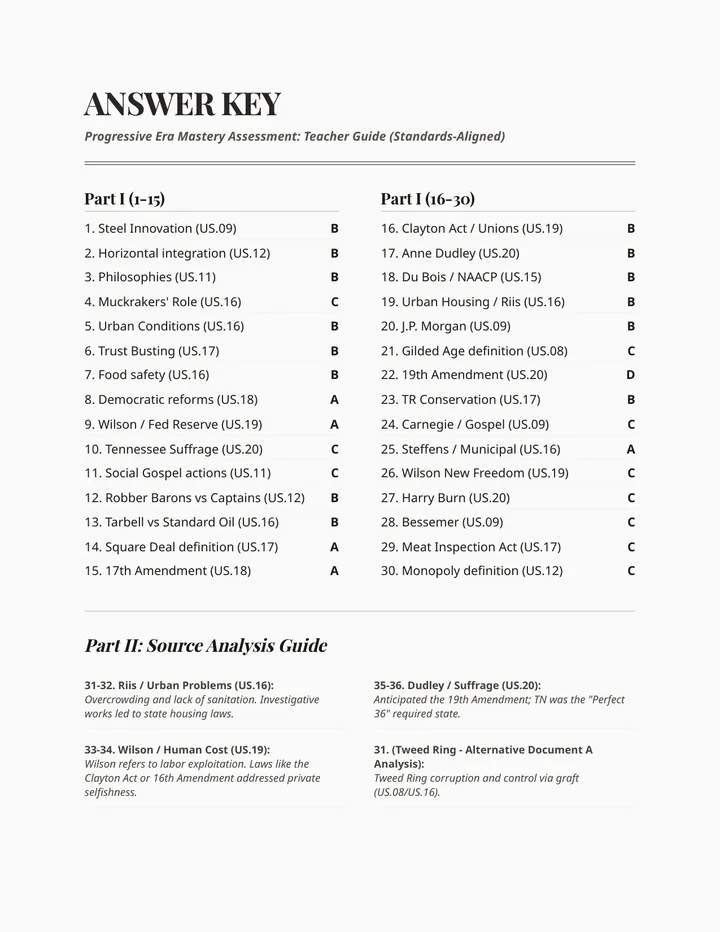
A short unit focusing on the rise of labor unions, the Industrial Revolution's impact on workers, and the subsequent social reform movements including education and abolitionism.
A sequence exploring the Gilded Age, focusing on industrial growth, the rise of labor unions, and the struggle for workers' rights in the late 19th century.
A rigorous undergraduate sequence exploring the economic divergence of the British North American colonies. Students analyze the transition from servitude to slavery, the influence of religious ideology on market regulation, and the complexities of the Atlantic mercantilist system.
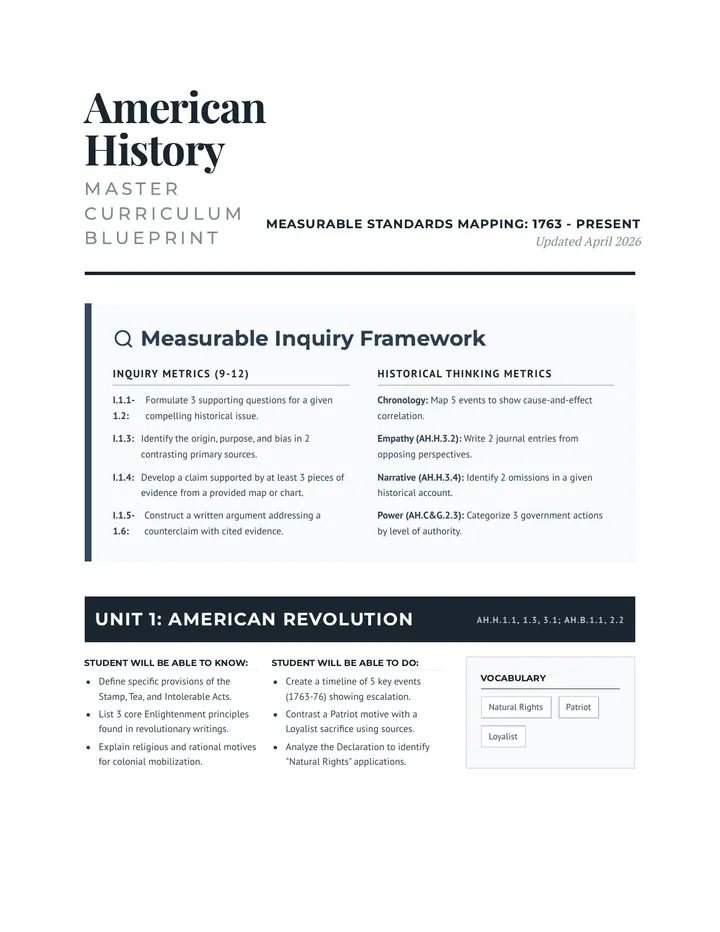
This high school US History sequence explores the multifaceted motivations behind American imperialism at the turn of the 20th century. Students analyze primary sources from Frederick Jackson Turner, Alfred Thayer Mahan, and Josiah Strong to evaluate the economic, strategic, and ideological 'push factors' that led the United States to look beyond its borders.
This graduate-level sequence examines the internal opposition to American expansionism at the turn of the 20th century. Through case studies of the Anti-Imperialist League, labor unions, and the Black press, students explore the complex and often contradictory motivations of those who challenged the Treaty of Paris and the Philippine-American War, culminating in a rigorous Senate debate simulation.
A rigorous 5-lesson unit for 9th graders exploring the domestic debate over US expansionism. Students analyze the Anti-Imperialist League, deconstruct primary source arguments, and engage in a formal debate on whether American imperialism is compatible with democratic ideals.
This sequence guides students through the fundamental shift in United States foreign policy during the late 19th century, moving from isolationism to expansionism. Students investigate the tripartite motivations of economic growth, military strategy, and cultural ideology that drove American imperialism through primary source analysis and mapping activities.
A 5th-grade history sequence exploring the transition from the feudal Middle Ages to the early modern period. Students analyze how the devastation of the Black Death triggered economic shifts, the rise of the merchant class, and the growth of towns, setting the stage for the Renaissance.
Students investigate the economic foundation of medieval life by exploring the manor system, agricultural innovations, and specialized labor, culminating in the design of their own self-sufficient community.
This sequence explores the rigid social hierarchy of Medieval Europe, focusing on the development of the feudal system as a response to the chaos following the fall of Rome. Students will examine the roles of monarchs, lords, knights, and peasants, and evaluate the trade-offs between security and freedom.
A comprehensive sequence for 11th-grade students focusing on labor trafficking and economic exploitation. Students will learn to identify indicators of forced labor, analyze global supply chains, understand the vulnerabilities of migrant workers, and recognize signs of exploitation in their own communities.
A comprehensive 5th Grade US History unit exploring the strategic and moral impact of the Emancipation Proclamation, the contribution of Black soldiers, and the complex legal and social struggles of the Reconstruction era.
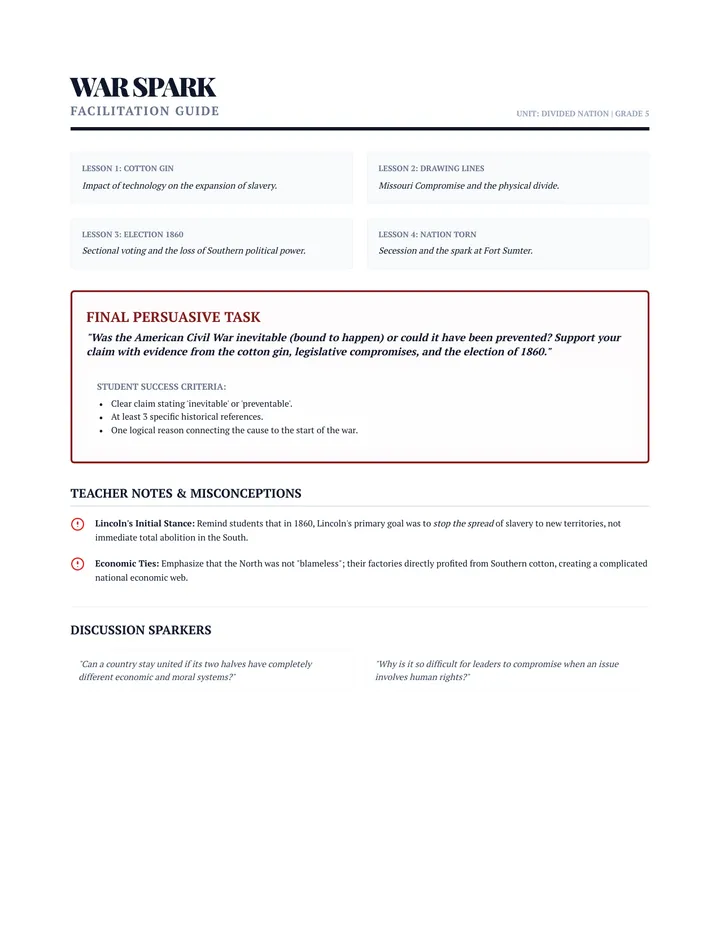
This sequence guides 4th-grade students through the origins, leadership, and pivotal moments of the American Civil War, emphasizing regional differences, the causes of secession, and the human experience of the conflict.
A high-stakes review series for the U.S. History STAAR exam, focusing on major eras, turning points, and key figures using a 'Mission-Based' archival theme.
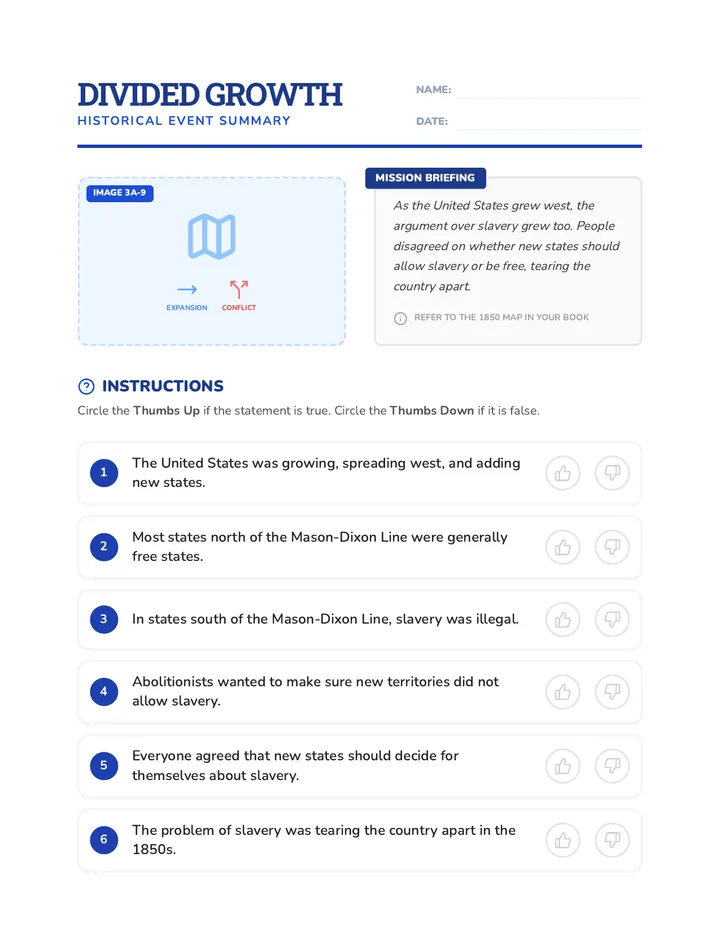
A lesson sequence focusing on the sectional differences (economic, cultural, and political) that led to the American Civil War, featuring map analysis and a cause-and-effect chain activity.
This sequence examines the psychological and ethical limits of positive reinforcement. Students analyze the 'Overjustification Effect', the impact of rewards on creativity, and the ethics of behavioral nudging, concluding with a critical audit of real-world incentive systems.
Students participate in an immersive simulation where they navigate the world of arts policy and resource allocation. They take on roles in a community debate over funding priorities, learning about public budgeting, perspective-taking, and the necessity of civic engagement.
A 6-lesson sequence divided by grade level (5th, 6th, and 7th), celebrating 100 years of Black history through school values. Each grade explores two distinct lessons focusing on community joy, personal excellence, and mental health advocacy.
This 11th-grade US History sequence explores the domestic opposition to US expansionism at the turn of the 20th century. Students analyze the Anti-Imperialist League, the constitutional implications of the Insular Cases, and the ideological divide between republicanism and empire.
A deep-dive case study into the annexation of Hawaii, exploring the collision of indigenous sovereignty, missionary influence, and corporate interests. Students analyze the transition from a recognized sovereign monarchy to a US territory, evaluating the ethical and political implications of imperialism.
A deep dive into the intellectual, economic, and strategic foundations of American Imperialism at the turn of the 20th century, exploring the tension between profit and principle.
This sequence analyzes the systemic factors that contribute to human trafficking and the legal frameworks designed to combat it. Students explore how systemic inequalities like homelessness, the foster care system, and systemic racism increase trafficking risk and evaluate the effectiveness of policies like the TVPA.
This sequence investigates the mechanisms of US hegemony in Latin America and the Caribbean, focusing on the transition from military conquest to economic stewardship. Students analyze the Roosevelt Corollary, Dollar Diplomacy, and Wilsonian Idealism through specific case studies in Panama, the Dominican Republic, and Mexico.
An exploration of the 1920s economic boom, focusing on mass production, consumerism, credit, and the eventual market crash. Students analyze the sustainability of this period's prosperity and its impact on various social groups.
A comprehensive 5-lesson unit exploring the economic drivers of the 1920s, the emergence of consumer culture, the agricultural crisis, and the systemic failures that led to the 1929 Stock Market Crash. Students analyze the tension between urban prosperity and rural poverty through data, simulations, and primary sources.
This undergraduate-level sequence explores the 1920s through its deep societal polarization, examining the tensions between urban modernization and reactionary social forces. Students analyze primary sources, economic data, and cultural artifacts to evaluate the decade's contradictions and the structural weaknesses leading to the Great Depression.
This advanced 12th-grade sequence explores the 1920s as the birthplace of modern American cultural conflicts. Students analyze the tension between emerging modernism—driven by consumerism, jazz, and changing gender roles—and the reactionary responses of traditionalism, nativism, and religious fundamentalism.
A graduate-level exploration of the intersection of religion, commerce, and art along the Silk Road and maritime routes during the Tang and Song eras. This sequence focuses on the 'materiality of faith'—how religious institutions acted as economic drivers, technology hubs, and agents of cross-cultural syncretism in Medieval Asia.
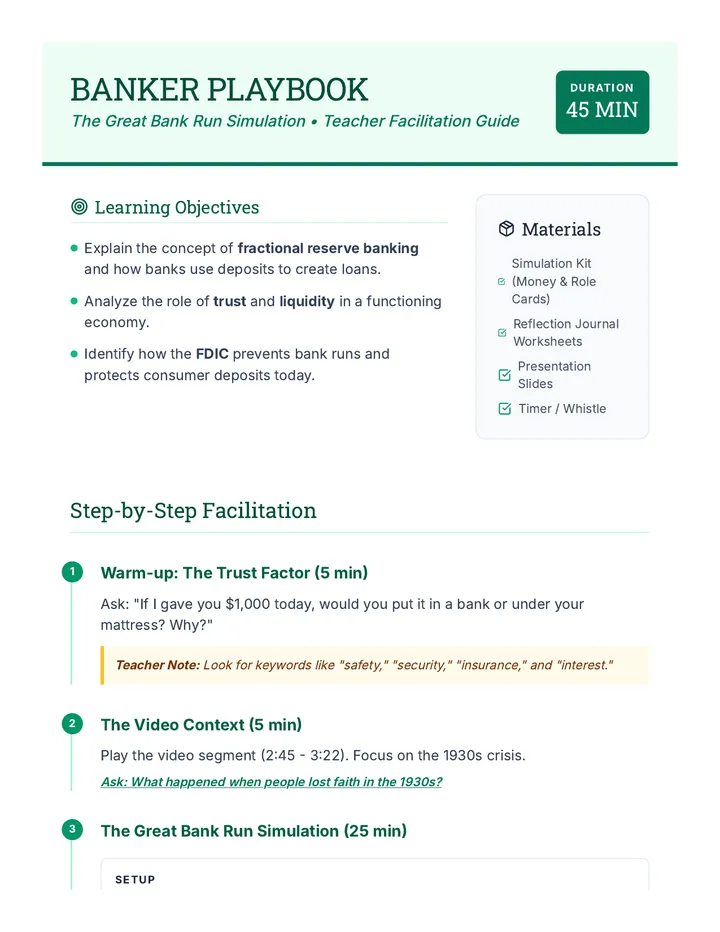
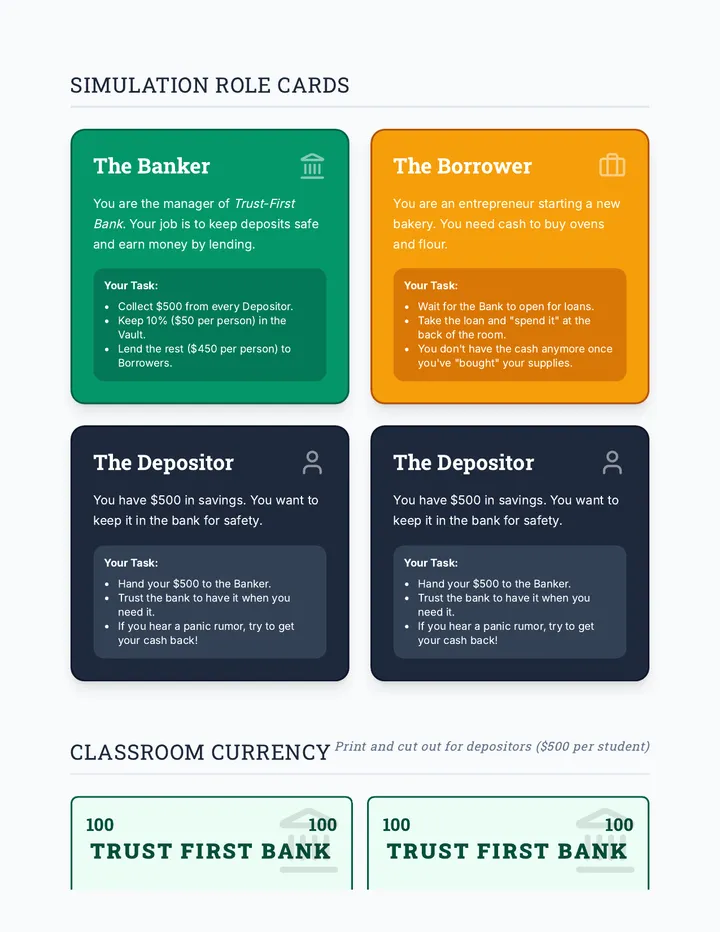
A 5-lesson sequence for 2nd-grade students exploring the basics of earning, banking, interest, and setting personal savings goals. Students transition from physical currency to understanding financial institutions and long-term planning.
This 5-lesson sequence explores the 'Song Dynasty Economic Revolution,' analyzing the technological and economic innovations that placed China at the forefront of global development. Students examine agricultural breakthroughs, the 'Four Great Inventions,' financial systems like paper money, and the urbanization depicted in the Qingming Scroll to understand the conditions required for rapid innovation.
A project-based exploration of Ancient Egyptian and Kushite architecture as tools for political messaging, labor organization, and economic control. Students analyze the evolution of pyramids, the economic power of temples, and the propaganda strategies of pharaohs like Hatshepsut and Ramses II.
A 10th-grade history sequence examining how religious ideology, specifically the concept of Ma'at and divine kingship, legitimized political power in Ancient Egypt and Kush. Students analyze the standard theocratic model, the crisis of the Amarna Period, and the subsequent restoration of order.
A 5-lesson sequence for 6th-grade students investigating the architectural feats and maritime trade networks of Aksum and Great Zimbabwe through archaeological evidence and historical analysis.
A deep dive into the Spanish-American and Philippine-American Wars, examining media influence, diplomatic failure, strategic annexation, and the ethical costs of global empire building.
A 5-lesson unit exploring US foreign policy in Latin America from the late 19th to early 20th century, focusing on the shift from protectionism to interventionism through the Big Stick, Dollar, and Moral Diplomacy models.
A project-based exploration of US expansion in the Pacific, focusing on the annexation of Hawaii and the Open Door Policy in China. Students analyze the role of corporate interests, diplomatic maneuvering, and the resistance of local populations to understand the mechanics of American imperialism.
This sequence explores the evolution of US foreign policy in Latin America through the administrations of Roosevelt, Taft, and Wilson. Students engage in a strategic analysis of the 'Big Stick,' 'Dollar Diplomacy,' and 'Moral Diplomacy' approaches, using the Panama Canal as a primary case study and simulating diplomatic decision-making.
This sequence examines US intervention in Latin America through the lens of diplomatic strategy and presidential foreign policy. Students analyze the 'Big Stick,' 'Dollar,' and 'Moral' diplomacies, simulate the Panama Canal acquisition, and evaluate the long-term impacts of US hegemony.
A comprehensive exploration of US interventionism in Latin America during the early 20th century, focusing on the evolution of foreign policy from the Roosevelt Corollary to Wilson's Moral Diplomacy. Students analyze primary sources, political cartoons, and economic data to evaluate the impact of American hegemony.
This advanced graduate-level sequence focuses on the deconstruction of implicit ideologies, theoretical underpinnings, and rhetorical silences in complex academic and historical texts. Students move from identifying hidden frameworks to evaluating disciplinary interpretations and defending their own critical stances in a hermeneutic seminar.
A comprehensive unit for 7th grade students exploring the ideological roots of the Cold War, the division of Europe, and the early conflicts between the US and USSR through simulations, map analysis, and case studies.
A deep-dive investigation into how narrative nonfiction explores systemic societal issues. Students analyze context, bias, and systemic roots before engaging in a formal Socratic Seminar.
This undergraduate sequence explores the agency of African Americans during the Reconstruction era, moving beyond narratives of victimhood to highlight active social, economic, and political restructuring. Students engage with archival records, economic data, and primary sources to analyze how freedpeople defined and fought for the meaning of freedom.
A 5-lesson unit for 4th graders exploring the successes and failures of the Freedmen's Bureau during the Reconstruction era. Students use primary sources to investigate education, family reunification, and the economic challenges of a rebuilding nation.
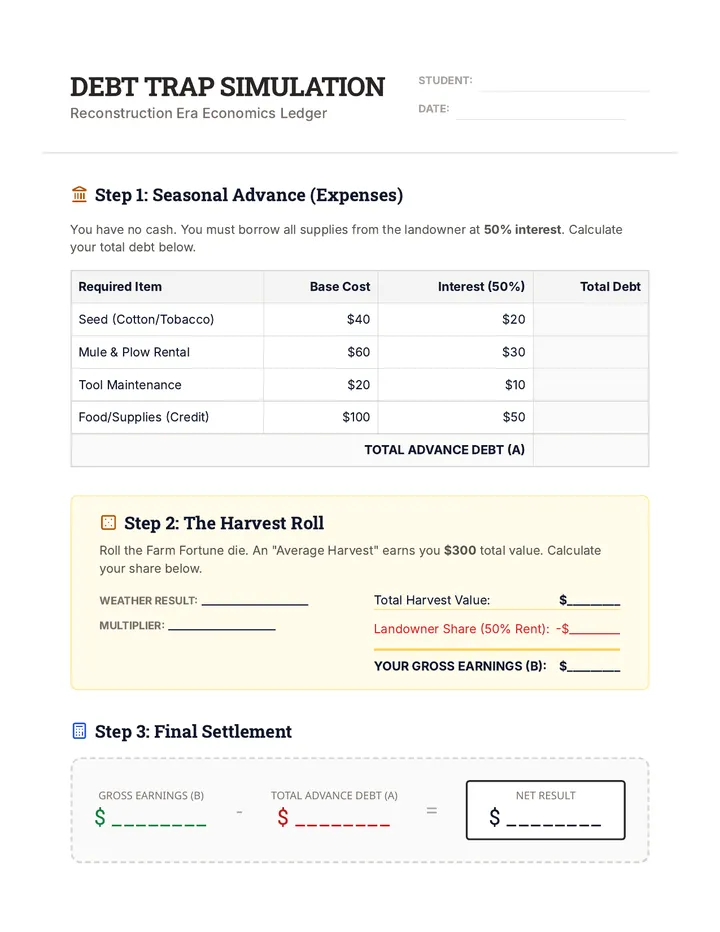
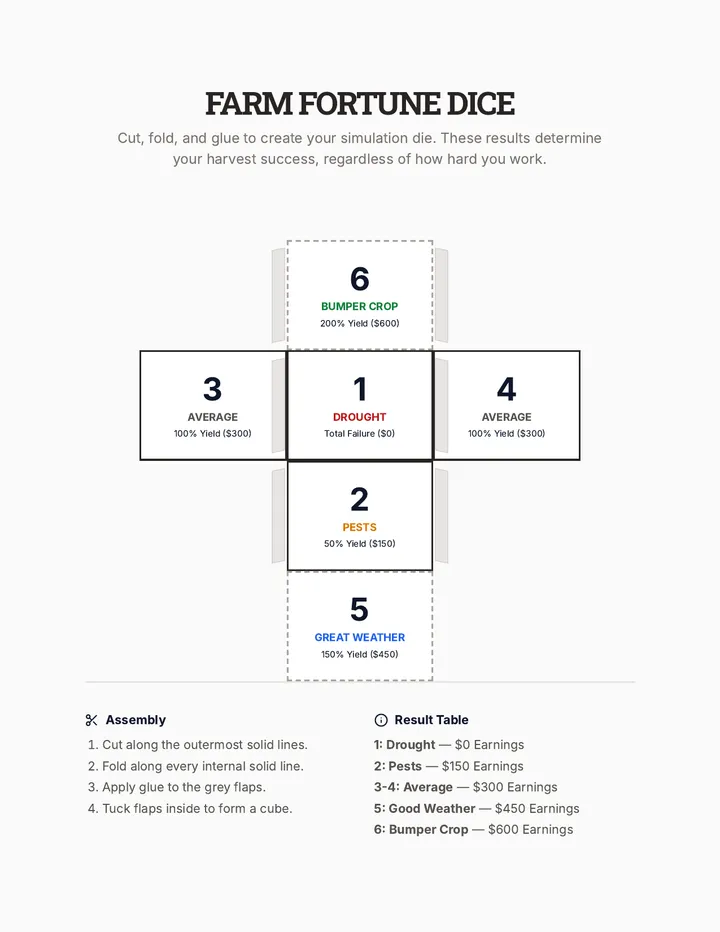
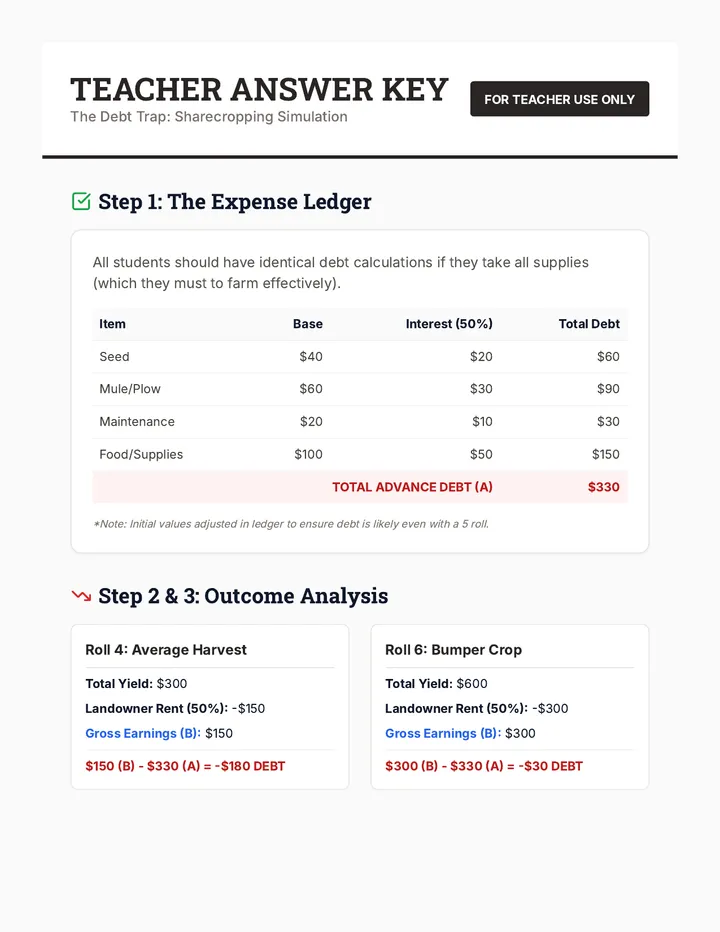
An 11th-grade history unit exploring Reconstruction through the lens of Black agency, institutional growth, and the economic and social barriers of the New South. Students investigate the Freedmen's Bureau, the rise of Black schools and churches, the trap of sharecropping, the first Black congressmen, and the violent resistance to progress.
An advanced graduate-level exploration of statecraft, legal systems, and ideological shifts from the Tang to the Ming dynasties, focusing on the evolution of the imperial bureaucracy.
This sequence examines the social and economic realities of the Reconstruction era, shifting focus from Washington D.C. to the lived experiences in the South. Students explore the efforts of the Freedmen's Bureau, the economic trap of sharecropping, and the violent backlash that led to the rise of Jim Crow laws.
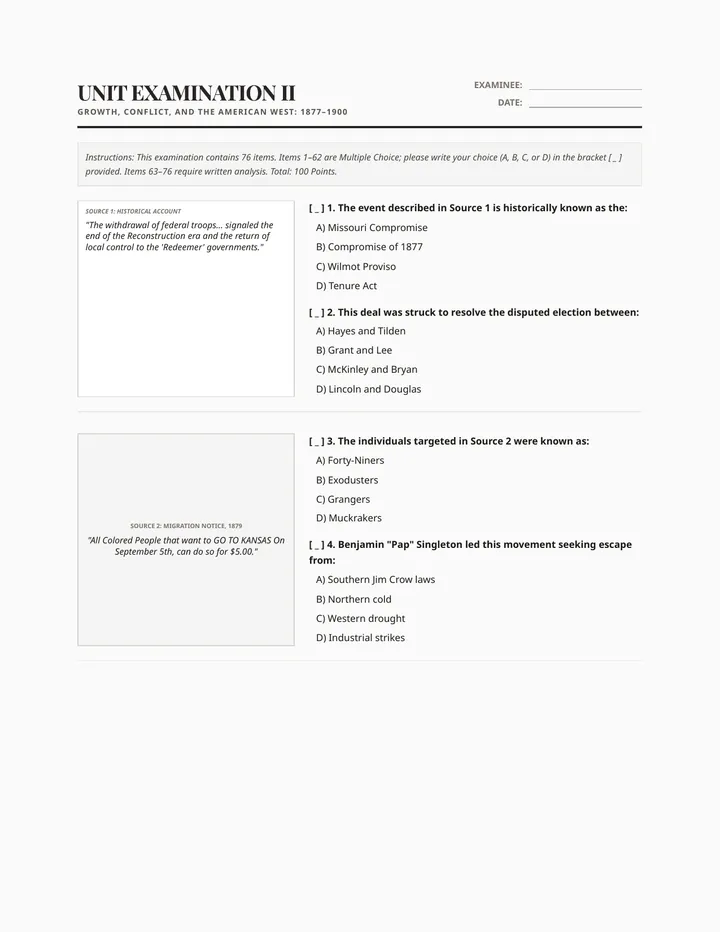
This sequence explores the social and economic restructuring of the post-Civil War South, focusing on the rise and fall of Reconstruction. Students analyze the Freedmen's Bureau, the economic trap of sharecropping, the rise of racial terrorism, and the political compromises that led to the Jim Crow era.
A comprehensive investigation into the social and economic restructuring of the American South after the Civil War. Students explore the hope of the Freedmen's Bureau, the trap of sharecropping, the rise of racial violence, and the political compromise that paved the way for the Jim Crow era.
A 4th-grade social studies unit exploring the historical and modern evolution of work, focusing on the impact of technology, automation, the gig economy, and remote work.
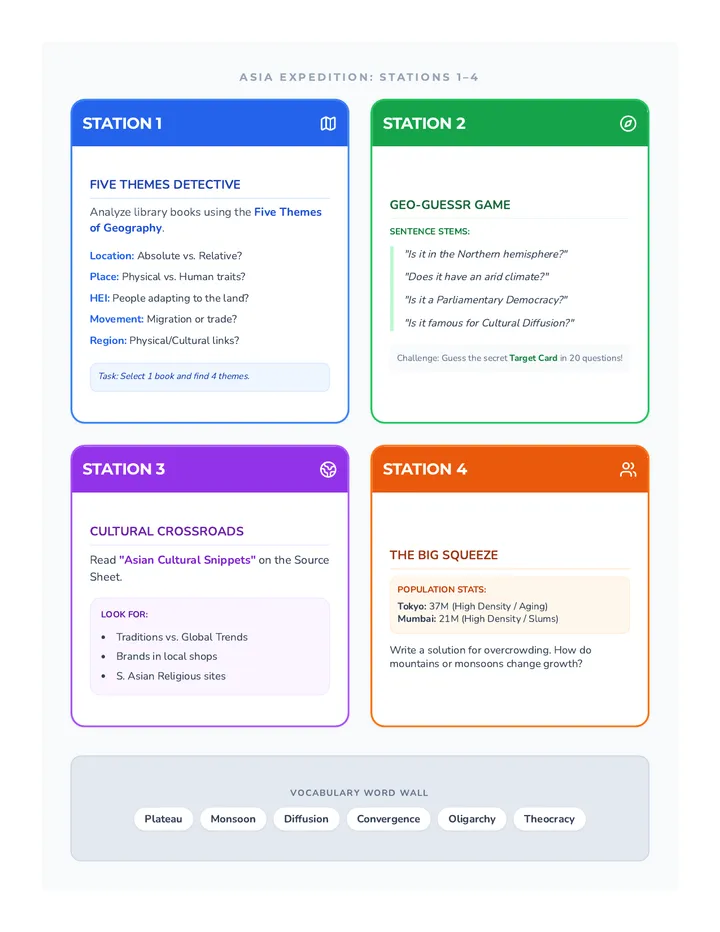
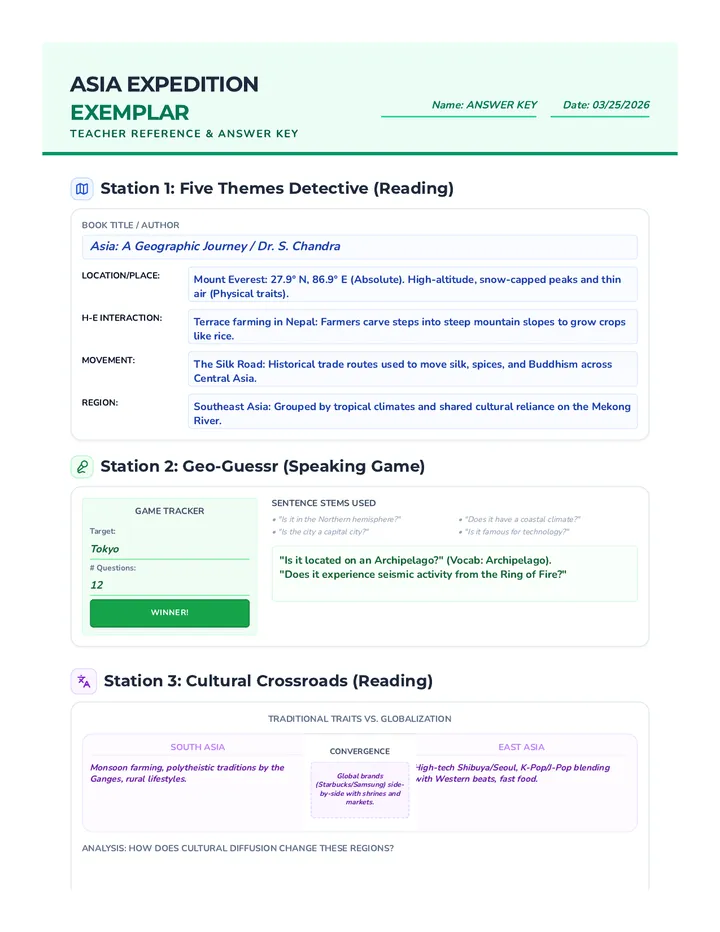
This sequence explores the dynamic intersection of ancient traditions and modern innovations in China. Students analyze changes in housing, transportation, technology, and arts to understand how a society balances its heritage with rapid development through a 'Time Traveler' project-based approach.
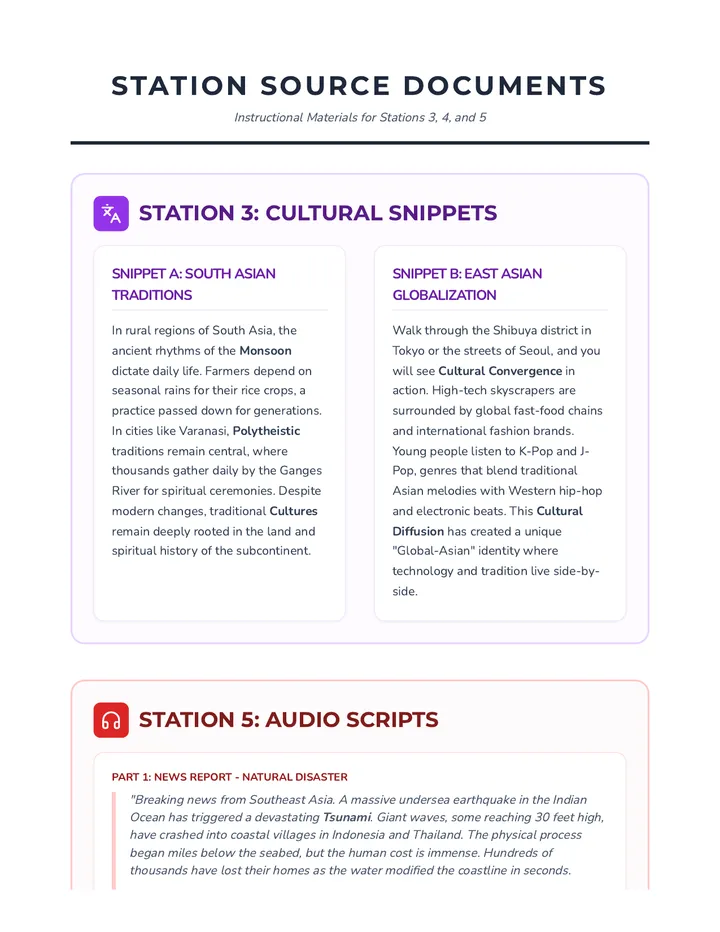
This inquiry-based sequence explores the rapid modernization of China through technology, pop culture, and urbanization, bridging the gap between historical China and today's high-tech reality.
A comprehensive 5-lesson unit for 11th-grade students examining the economic, technological, and cultural dimensions of globalization. Students analyze global supply chains, the digital revolution, cultural homogenization, labor rights, and future transnational crises.
This sequence analyzes the concept of 'Total War' and its impact on civilian populations, economies, and social structures during World War I. Students explore government expansion, propaganda, the role of women, and the suppression of dissent, moving from initial enthusiasm to social fracturing and exhaustion by 1918.
This sequence explores the concept of 'Total War' during WWI, focusing on how nations mobilized entire populations, the role of women, the impact of rationing, and the use of propaganda to shape public opinion. Students will analyze the US entry into the war and the global contributions of colonial troops, culminating in a creative media project.
A comprehensive 5-lesson unit for 9th-grade students exploring the concept of Total War during WWI, focusing on the home front, propaganda, women's roles, colonial involvement, and the Armenian Genocide.
This sequence explores the domestic impact of World War II in the United States, focusing on industrial mobilization, propaganda, shifting social roles for women and minorities, and the tension between national security and civil liberties. Students will analyze primary sources and data to evaluate how 'total war' reshaped the American social and economic landscape.
A game-based economics unit for 3rd graders exploring the shift from traditional employment to the gig economy, covering job types, technology's role, and financial literacy.
A 3rd-grade inquiry into how technology, from simple machines to robotics and software, has transformed the workplace over time. Students explore productivity, automation, and future job trends.
This 4th Grade Economics sequence explores the evolution of the workplace, comparing traditional employment with the modern gig economy. Through immersive classroom simulations, students experience the trade-offs between job stability and freelance flexibility while developing financial literacy and entrepreneurial skills.
This sequence explores how technology has historically and currently transformed the workplace, focusing on the shift from manual labor to automation and digital environments. Students evaluate the economic impacts of these changes and predict future career trends.
This sequence examines the profound structural transformations in the American economy between 1815 and 1860, analyzing how the Market Revolution created distinct regional identities and set the stage for sectional conflict.