Lenny LearningLenny
Create
Explore
Workspace
LoginSign up
MathEnglish Language ArtsScience & EngineeringSocial StudiesGlobal LanguagesHealth & Physical EducationSpecial EducationCounseling & Life SkillsArts & CreativityESL
Lenny LearningLenny
Lenny Learning
About
Training
Pricing
Support
Contact
© 2026 Lenny Learning Inc.
Social StudiesSocial Studies PracticesLocation WordsMapsOrder EventsChronology and CausationEvaluating SourcesHistorical ThinkingGeography, Humans, & the EnvironmentAmerican Symbols and LandmarksCitiesStatesState CapitalsRegions of the United StatesGeographic SkillsPhysical GeographyHuman GeographyRegional GeographyGeography of AfricaGeography of AsiaGeography of EuropeGeography of OceaniaGeography of the AmericasSociety and Environment of EuropeSociety and Environment of AsiaSociety and Environment of The AmericasSociety and Environment of the Middle EastSociety and Environment of AfricaHistoryPrehistoryComparing Ancient River CivilizationsAncient MesopotamiaAncient Egypt and KushAncient South AsiaEarly ChinaGreeceRome and the Byzantine EmpireAncient World HistoryNative Peoples of North AmericaNative Peoples of Mesoamerica and South AmericaAfrican EmpiresMedieval AsiaMedieval EuropeThe Silk RoadMedieval HistoryIslamic EmpiresWorld ReligionsRenaissance PeriodAge of ExplorationThe Thirteen ColoniesThe American RevolutionUS History Early RepublicFounding of the United StatesUS History AntebellumUS Civil WarReconstruction PeriodThe Gilded AgeUS ImperialismWorld ImperialismWorld War IUS History 1920sGreat DepressionWorld War IIThe Cold WarUS History 1950-60sUS History 1960s-70sWorld History 20th CenturyContemporary US HistoryContemporary World HistoryHolidaysCivics and GovernmentCitizenshipGovernment FoundationsThe ConstitutionUS ConstitutionExecutive BranchLegislative BranchJudicial BranchState and LocalPolitical ParticipationPublic PolicyPolitical SystemsPower and AuthoritySocial MovementsDefining DevianceTheories of DevianceCrime and Criminal JusticeEconomicsBasic Economic PrinciplesSupply and DemandWhat is MoneyEconomic FundamentalsMicroeconomicsMacroeconomicsBanking and FinanceEconomic SystemsGlobal EconomicsCorporations and PowerThe Changing WorkplaceUnemployment and LaborClass and InequalitySocial MobilityGlobal InequalityPsychologyHistory of PsychologyPsychology as a ScienceBrain and Nervous SystemNeuroscience and BehaviorGenetics and BehaviorSleep and ConsciousnessSensory ProcessesPerceptual OrganizationClassical ConditioningOperant ConditioningObservational LearningCognitive LearningMemory ProcessesThinking and Problem SolvingLanguage and CognitionTheories of MotivationStress and CopingPrenatal and Infant DevelopmentChildhood DevelopmentAdolescent DevelopmentAdulthood and AgingSelf and IdentitySocial CognitionSocial InfluenceAttraction and RelationshipsGroup BehaviorPrejudice and DiscriminationAnxiety and Mood DisordersClinical PsychologyForensic PsychologyPhilosophy & EthicsIntroduction to PhilosophyMajor Philosophers & IdeasMind and Body ProblemFree Will vs DeterminismEthics & MoralityReligion & PhilosophyPolitical Philosophy

Economics

SequencesLessonsMaterialsVideos
  1. Social Studies

Economics

SequencesLessonsMaterialsVideos

Fundamental principles of supply, demand, and monetary systems alongside micro- and macroeconomic structures. Examines the impact of corporate power, labor market dynamics, and global systems on social mobility and class inequality.

Basic Economic PrinciplesFundamental concepts of scarcity, supply and demand, and opportunity cost. Examines how individuals and societies allocate limited resources to satisfy unlimited wants.
Supply and DemandFundamental market interactions between product availability and consumer desire. Analyzes price determination through equilibrium and explores factors causing shifts in supply and demand curves.
What is MoneyHistorical evolution of exchange from barter systems to modern digital currency. Examines the fundamental functions of money as a medium of exchange, unit of account, and store of value.
Economic FundamentalsBasic principles of scarcity, opportunity cost, and market dynamics. Introduces supply and demand, resource allocation, and the role of incentives in decision-making.
MicroeconomicsIndividual and firm-level decision-making processes, supply and demand dynamics, and market structures. Examines resource allocation, price determination, and elasticity within specific economic environments.
MacroeconomicsAggregate economic indicators including GDP, inflation, and unemployment rates. Examines how fiscal and monetary policies influence national growth, stability, and international trade.
Banking and FinanceInterest rates, credit systems, and the functions of central banking within global markets. Equips learners with foundational knowledge of personal finance, investment strategies, and monetary policy.
Economic SystemsFundamental structures of traditional, command, market, and mixed economies. Examines how different societies allocate resources, determine production, and manage distribution through various levels of government intervention and private enterprise.
Global EconomicsAnalyzes international trade dynamics, currency fluctuations, and global market interdependencies. Addresses the roles of international organizations like the IMF and World Trade Organization in regulating global commerce.
Corporations and PowerCorporate structures, legal personhood, and the socio-economic influence of multinational firms. Examines how lobbying, monopolies, and labor practices shape public policy and global markets.
The Changing WorkplaceImpact of automation, remote work, and the gig economy on modern labor markets. Examines how technological shifts and globalization redefine career paths and workplace demographics.
Unemployment and LaborUnemployment rate calculation, labor force participation, and the distinction between frictional, structural, and cyclical unemployment. Addresses wage equilibrium, collective bargaining, and the impact of technological shifts on the workforce.
Class and InequalityWealth distribution patterns, socioeconomic stratification, and systemic causes of income disparity. Analyzes the impacts of social mobility and institutional barriers on global and local scales.
Social MobilityIntergenerational income trends, educational access, and socioeconomic status shifts over time. Analyzes the impact of policy, wealth distribution, and labor market structures on economic opportunity.
Global InequalityDisparities in wealth distribution, GDP per capita, and standards of living across different nations and regions. Analyzes systemic causes like historical legacies, trade policies, and unequal access to infrastructure.
Video
From Earth to Cake: How We Use Natural Resources

From Earth to Cake: How We Use Natural Resources

This educational video from Crash Course Kids explores the fundamental relationship between human communities and natural resources. It begins by establishing that humans, like all animals, have basic survival needs—food, water, and shelter—which are met by resources provided by the Earth. The host explains how the availability of these resources dictates where communities form, illustrating why major cities are rarely found in deserts or on mountain peaks, but rather in locations rich with water and agricultural potential. The video introduces the concept of "transformation," explaining that raw materials from the Earth usually require processing to become useful products. Using the engaging example of baking a cake, the host breaks down the supply chain of everyday items. She traces ingredients like water, flour, and eggs back to their natural sources (reservoirs and farms) and explains how energy—derived from oil, gas, sun, wind, or water—is required to mix and bake these ingredients. This step-by-step investigation helps students visualize the invisible web connecting finished goods to raw natural resources. For educators, this video serves as an excellent bridge between geography, environmental science, and economics. It provides concrete definitions for key vocabulary like "resource," "community," "agriculture," and "cultivate." Teachers can use the "cake investigation" model to have students trace the origins of other common items, fostering a deeper appreciation for the environment and an understanding of supply chains, energy consumption, and human dependence on the natural world.

Crash Course KidsCrash Course Kids

3mins 15s

Video
How Economics Affects Your Daily Life

How Economics Affects Your Daily Life

This introductory video demystifies the concept of economics, moving beyond stereotypes of complex math and stock markets to define it as the study of choices, resources, and societal impact. The host explains that economics is fundamentally about how individuals, families, and communities manage limited resources to meet their needs and wants. Through relatable examples like a family budget and a town council's tax decisions, students learn that every economic choice involves trade-offs and consequences.

Miacademy & MiaPrep Learning ChannelMiacademy & MiaPrep Learning Channel

10mins 53s

Video
Understanding Economics: Resources, Production, and Money

Understanding Economics: Resources, Production, and Money

This engaging educational video introduces students to the fundamental concepts of economics, breaking down a complex subject into digestible components. Hosted by a lively presenter named Kylie, the video moves beyond the complicated dictionary definition of economics to focus on three core pillars: resources, production, and money. It uses relatable examples, including digital marketplaces and everyday items like ice cream and cars, to explain how goods and services are created, distributed, and consumed. Key themes explored include the three types of resources (natural, human, and capital), the distinction between tangible goods and intangible services, and the concept of productivity. The video also covers the history of trade by explaining the barter system versus modern currency, including digital forms of money. Special attention is given to the role of the consumer and the importance of efficiency in business production. For educators, this video serves as an excellent foundational tool for social studies and financial literacy units. It clarifies abstract economic terms through visual aids and concrete examples, making it easy for students to grasp how the economy functions around them. The content naturally leads into classroom activities involving resource identification, mock marketplaces, or discussions about how students earn and spend money in their own lives.

Miacademy & MiaPrep Learning ChannelMiacademy & MiaPrep Learning Channel

6mins 18s

Video
How Market Economies Work: Producers, Consumers, and Choice

How Market Economies Work: Producers, Consumers, and Choice

This engaging educational video introduces students to the fundamental concepts of a market economy through the relatable analogy of a robot named Mia running a lemonade stand. The narrator guides viewers through the core mechanics of how market economies function, contrasting them with traditional economies by explaining who answers the three basic economic questions: what to produce, how to produce, and for whom to produce. The video uses the fictional political platform of "Mabel Marketforce" to frame these concepts, making abstract economic theory accessible and concrete. The video explores key themes including the interaction between producers and consumers, the role of supply and demand, and the driving force of competition and profit. It emphasizes individual freedom and choice while also critically examining the potential downsides of a pure market system, such as lack of government oversight, income inequality, and the failure to provide non-profitable public goods like roads. Visuals include animated characters, real-world stock footage, and clear on-screen text summaries. For educators, this resource serves as an excellent introduction to economic systems. It features built-in pause points with reflection questions that encourage active participation and critical thinking. Teachers can use the lemonade stand example to help students understand entrepreneurship, while the discussion on the pros and cons of market economies provides a springboard for deeper debates about government involvement in the economy and civic responsibility.

Miacademy & MiaPrep Learning ChannelMiacademy & MiaPrep Learning Channel

10mins 11s

Video
How Natural Resources and Innovation Built US Wealth

How Natural Resources and Innovation Built US Wealth

This educational video explores the primary factors that contributed to the United States becoming one of the wealthiest and most populous nations in the world. It provides a historical and geographical overview of how the country utilized its vast landscape and innovative spirit to build a global superpower. The narrative structure breaks down this growth into four distinct pillars: natural resources, transportation, communication technology, and the economic system of free enterprise. The video delves into specific historical details, ranging from the crops cultivated by Indigenous peoples (including forgotten plants like goosefoot and sumpweed) to the evolution of American industry from timber and coal to modern renewable energy. It traces the technological timeline from keelboats and steam engines to the internet, illustrating how shrinking travel and communication times accelerated economic growth. Finally, it examines the role of the American political and economic philosophy in fostering a competitive market. For educators, this video serves as an excellent synthesizer of geography, history, and economics. It helps students understand the causal links between physical resources (like rivers and mineral deposits) and human innovation (like canals and telegraphs). It is particularly useful for units on U.S. Geography, the Industrial Revolution, or Introduction to Economics, offering clear visual maps and data points that explain regional specializations within the United States.

Miacademy & MiaPrep Learning ChannelMiacademy & MiaPrep Learning Channel

9mins 27s

Video
How to Talk Like an Economist: Producers, Consumers, and Goods

How to Talk Like an Economist: Producers, Consumers, and Goods

This engaging video introduces students to the foundational vocabulary and concepts of economics, demystifying complex terms by connecting them to everyday life. The host begins by attempting to decipher a dense quote by Adam Smith before pivoting to a more accessible approach: learning to "talk like an economist." The video systematically breaks down three core pillars of economic understanding: the three basic economic questions that drive production, the roles of producers and consumers, and the distinction between goods and services.

Miacademy & MiaPrep Learning ChannelMiacademy & MiaPrep Learning Channel

10mins 45s

Video
Exploring American Culture and Rebellion in the 1950s

Exploring American Culture and Rebellion in the 1950s

Join an engaging time-travel adventure back to the 1950s to explore the dynamic clash between mainstream American culture and the rising counterculture movements. Through a narrative road trip across the decade, the video examines the strict societal expectations of the post-war era—including consumerism, suburban conformity, traditional gender roles, and racial segregation—and contrasts them with the rebellious groups that challenged these norms. The host guides viewers through four distinct stops, offering a clear and accessible breakdown of complex sociological and historical concepts. Key historical themes are explored through specific examples, contrasting the "American Dream" of consumerism with the anti-materialist Beatniks, the suburban nuclear family with Betty Friedan's "The Feminine Mystique," and compliant youth culture with the rebellious Greasers. The video also delves into the racial tensions of the era, highlighting how Rock 'n' Roll music and figures like Elvis Presley bridged racial divides and challenged Jim Crow norms, paving the way for the civil rights movements of the 1960s. This video is an excellent resource for social studies and history classrooms, providing a structured framework for understanding the 1950s beyond the "Happy Days" stereotype. It defines critical vocabulary like "conformity," "materialism," and "counterculture" on-screen, making it easy for students to grasp abstract ideas. Teachers can use this video to spark discussions about how historical social movements influence modern society, the role of youth in driving social change, and the evolution of American cultural values.

Miacademy & MiaPrep Learning ChannelMiacademy & MiaPrep Learning Channel

10mins 38s

Video
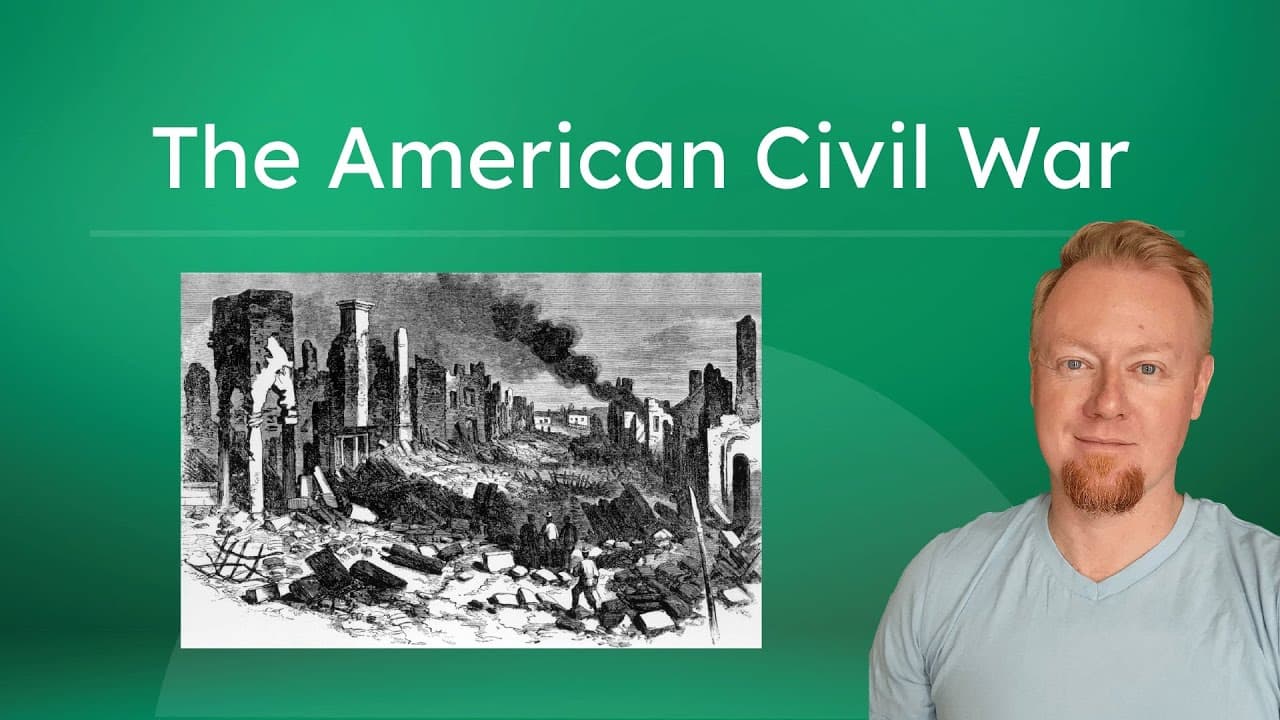
Causes and Aftermath of the American Civil War

Causes and Aftermath of the American Civil War

This comprehensive educational video provides a detailed overview of the American Civil War, tracing its origins from deep-seated economic and political divisions between the North and South to the lasting impacts of the Reconstruction era. It uses a clear, inquiry-based structure centered around four guiding questions that explore the causes of the conflict, the specific events that triggered the outbreak of war, the human and financial toll of the fighting, and the major changes that occurred in the United States afterward. The content delves into complex historical themes, including the failure of political compromises like the Missouri Compromise and the Compromise of 1850, the legal ramifications of the Dred Scott decision, and the economic drivers behind slavery. It doesn't shy away from the harsh realities of the era, discussing the casualities of war, the assassination of President Lincoln, and the subsequent rise of Jim Crow laws that undermined the progress of the 13th Amendment. For educators, this video serves as an excellent anchor for a unit on the Civil War and Reconstruction. Its structured approach allows teachers to pause and discuss specific historical milestones, while the inclusion of maps, graphs, and primary source quotes offers multiple entry points for analysis. It effectively connects the political machinations of the 1850s to the social struggles of the post-war era, helping students understand the long-term consequences of this pivotal chapter in American history.

Miacademy & MiaPrep Learning ChannelMiacademy & MiaPrep Learning Channel

11mins 10s

Video
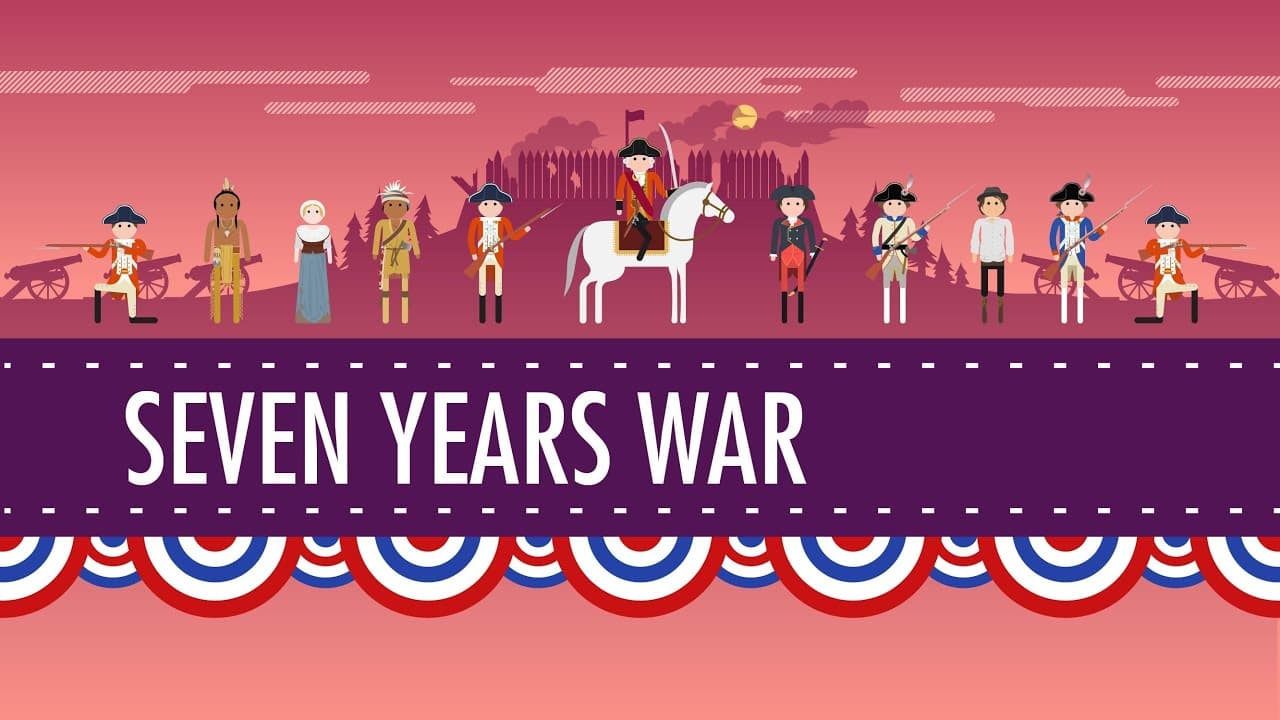
How the Seven Years War Led to the American Revolution

How the Seven Years War Led to the American Revolution

In this fast-paced and engaging episode of Crash Course US History, John Green explores the global conflict known as the Seven Years War (or the French and Indian War) and its pivotal role in setting the stage for the American Revolution. The video moves beyond simple dates and battles to examine the complex economic and social forces at play, specifically focusing on the economic theory of mercantilism and how the colonial drive for land and resources sparked a global conflagration.

CrashCourseCrashCourse

10mins 40s

Video
Understanding the Four Types of Economic Systems

Understanding the Four Types of Economic Systems

This educational video provides a comprehensive overview of the four primary economic systems: Traditional, Free Market, Command, and Mixed. It begins by introducing the fundamental problem of economics—scarcity—and the three basic questions every society must answer: What to produce? How to produce it? And how to distribute it? The narrator explains how different societies answer these questions based on their values, resources, and level of government involvement. The content explores key themes such as the role of supply and demand, government regulation versus market freedom, and the impact of economic structures on daily life. It contrasts the efficiency and innovation of free markets with the stability and equity aimed for in command economies, ultimately introducing the mixed economy as a balanced approach used by most modern nations. Specific concepts like monopolies, bartering, and consumer sovereignty are defined and illustrated. For educators, this video serves as an excellent foundational tool for units on economics, civics, or geography. It simplifies complex economic theories into digestible segments with clear examples, making it suitable for introducing economic systems. The video includes built-in pause points with reflection questions, allowing teachers to easily facilitate classroom discussions, check for understanding, and encourage critical thinking about the trade-offs inherent in each system.

Miacademy & MiaPrep Learning ChannelMiacademy & MiaPrep Learning Channel

11mins 56s

Video
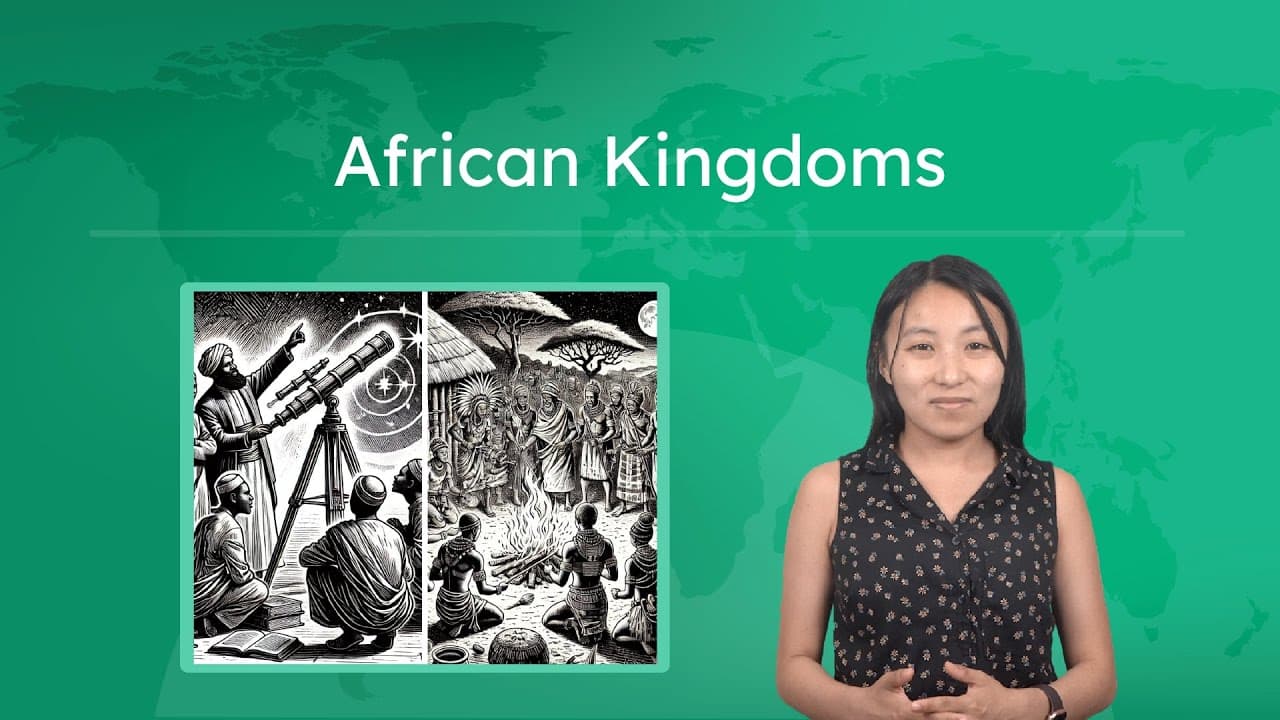
How Trade and Learning Built the Empires of West Africa

How Trade and Learning Built the Empires of West Africa

This educational video explores the rich history of West African civilizations during the Middle Ages, specifically focusing on the empires of Ghana, Mali, and Songhai. It details how the trans-Saharan trade routes served as more than just economic arteries for gold and salt; they were superhighways for the exchange of ideas, religion, and technology. The narrative highlights the pivotal role of geography, specifically the Sahara Desert, and how overcoming its challenges led to prosperity and global connection. Themes include the economic mechanics of the gold-salt trade, the spread and impact of Islam, and the reverence for education in cities like Timbuktu. The video examines key historical figures such as Mansa Musa and Askia the Great, illustrating how their leadership styles and policies regarding trade and religion shaped their respective empires. It also delves into specific intellectual achievements in astronomy, mathematics, architecture, and medicine that flourished in centers of learning like the University of Sankore. For educators, this video is an excellent resource for World History units covering African civilizations or the Middle Ages. It moves beyond simple dates and names to explain the *causes* of the rise of these empires—specifically the interplay between economic control and cultural development. It provides natural pause points for critical thinking questions and connects historical events to tangible innovations that students can understand, making it a strong anchor for lessons on economic systems, cultural diffusion, or historical geography.

Miacademy & MiaPrep Learning ChannelMiacademy & MiaPrep Learning Channel

14mins 15s

Video
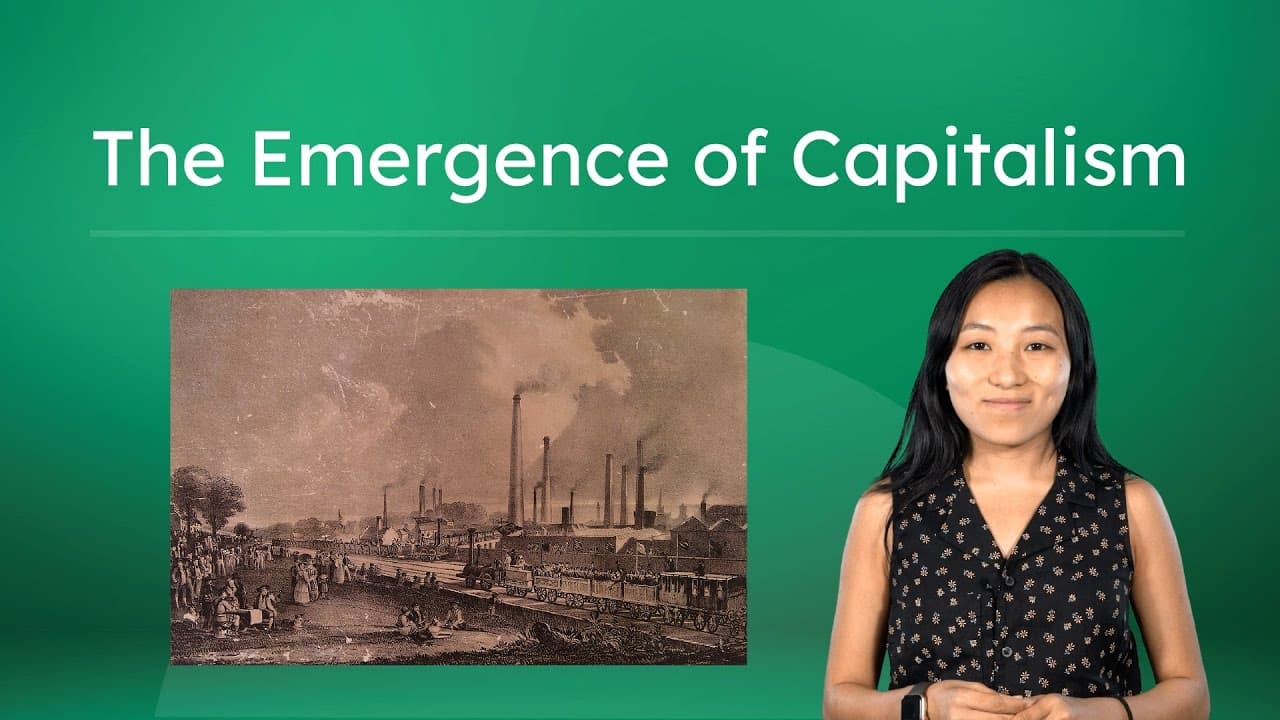
The Rise and Impact of Industrial Capitalism

The Rise and Impact of Industrial Capitalism

This educational video provides a comprehensive overview of capitalism's emergence during the Industrial Revolution, contrasting it with the preceding feudal system. It uses a modern-day analogy of a t-shirt business to explain complex economic concepts like profit, supply and demand, and market exchange before diving into the historical realities of Industrial England. The narrator introduces key figures like Adam Smith and concepts such as laissez-faire economics, explaining how the shift from subsistence farming to mass production fundamentally changed society. The video presents a balanced analysis of industrial-era capitalism by detailing both its significant benefits—such as self-determination, innovation, and massive economic growth (GDP)—and its severe drawbacks. These drawbacks include extreme wealth inequality, worker exploitation (including child labor and dangerous conditions), the rise of monopolies, and environmental degradation. The content highlights the complexities of the system, showing how it led to both unprecedented prosperity for some and difficult lives for others. For educators, this resource serves as an excellent primer for units on the Industrial Revolution, Economics, or World History. It effectively breaks down abstract economic terms into digestible examples and provides clear visual data (graphs on GDP and wages) that allow for quantitative analysis in the classroom. The video concludes by setting the stage for government regulation and the rise of labor unions, making it a perfect bridge to lessons on social reform movements.

Miacademy & MiaPrep Learning ChannelMiacademy & MiaPrep Learning Channel

17mins 35s

Video
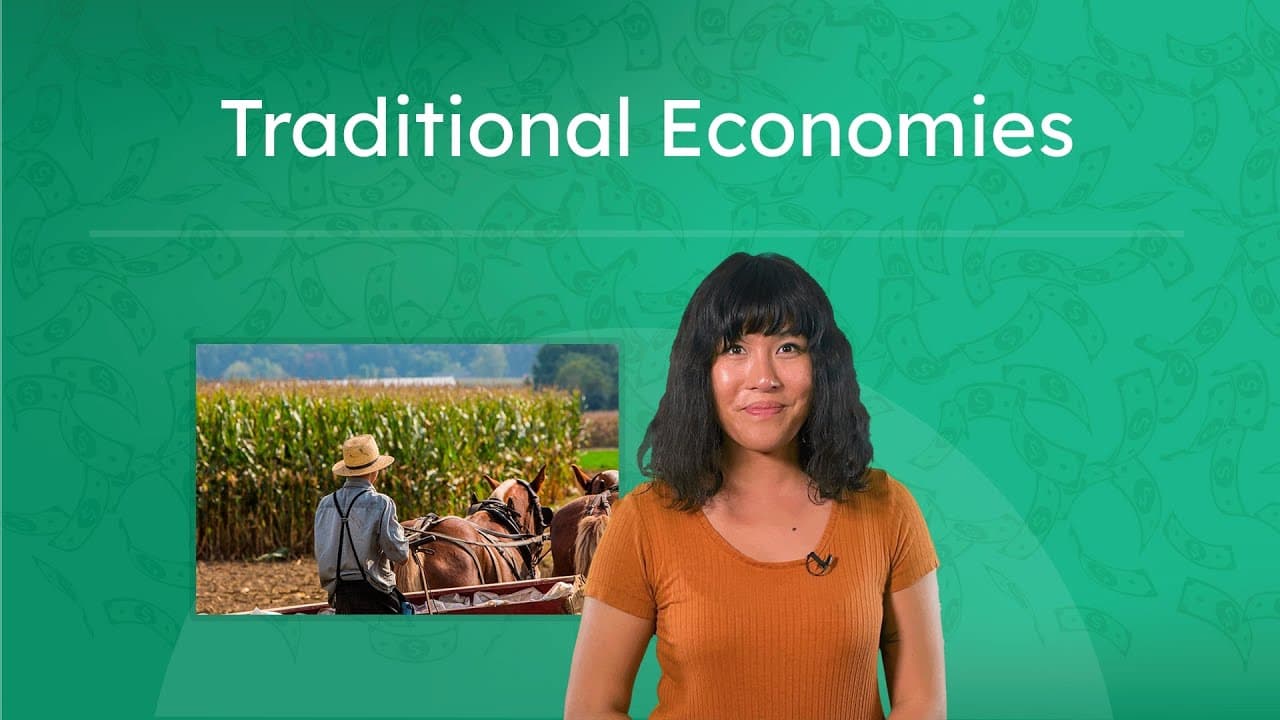
How Traditional Economies Work

How Traditional Economies Work

This engaging educational video introduces students to the concept of a Traditional Economy using a fictional election scenario involving a candidate named "Tom Tratticon." Through a conversation between a host and an animated robot named Mia, the video breaks down how traditional economies answer the three basic economic questions based on custom, habit, and ritual. It contrasts modern market-driven approaches with subsistence-based living, where production is focused on survival rather than profit. The video explores key characteristics of traditional economies, including the lack of entrepreneurship, the reliance on ancestral methods (like horse-drawn plows), and the focus on community needs over individual wants. It highlights real-world examples of traditional practices that survive in the modern world, such as artisanal cheese making, weaving, and instrument crafting, explaining why some communities fight to preserve these methods for cultural heritage or quality reasons. Finally, the video presents a balanced view of the pros and cons of this economic system. It discusses the security of knowing one's social role and having needs met by the community, weighed against the lack of economic freedom, innovation, and personal choice. This resource is excellent for Economics and Social Studies classrooms to help students understand diverse economic systems and the tension between tradition and modernization.

Miacademy & MiaPrep Learning ChannelMiacademy & MiaPrep Learning Channel

10mins 51s

Video
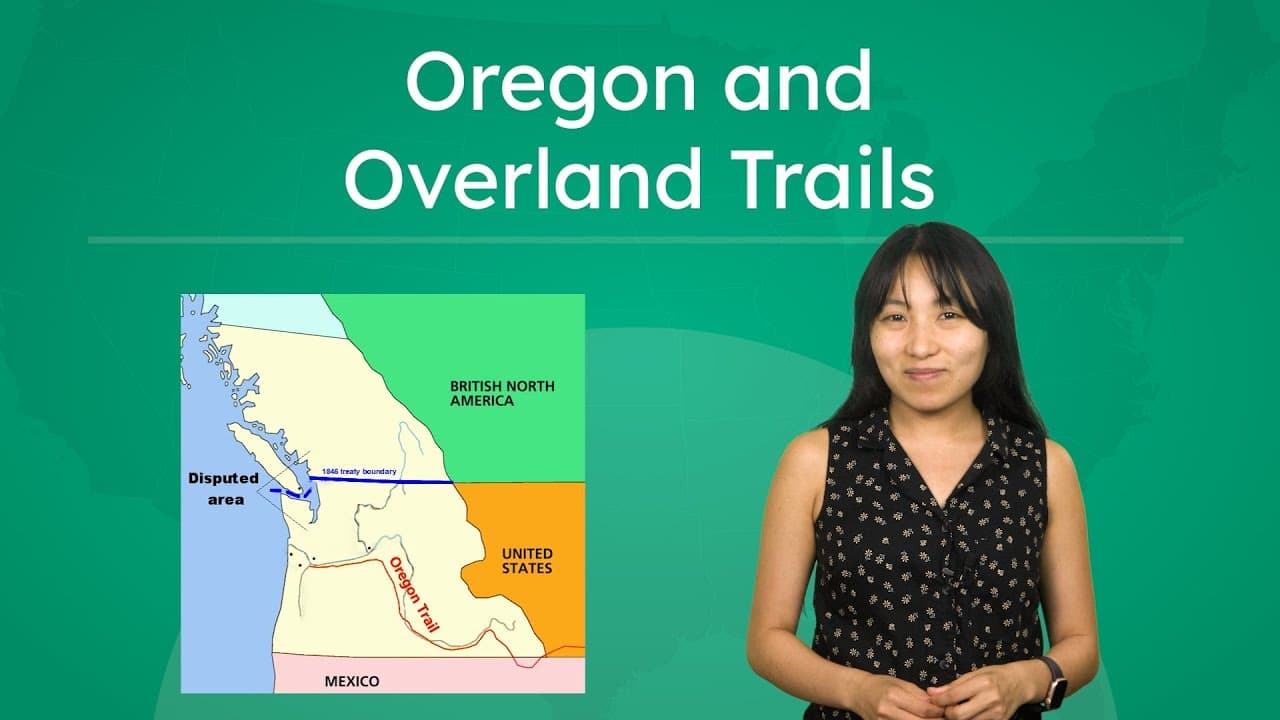
How the Oregon Trail and Treaties Shaped the American West

How the Oregon Trail and Treaties Shaped the American West

This educational video explores the history of United States expansion into the Oregon Country and the development of major overland trails during the mid-19th century. It details the progression from early exploration by Lewis and Clark to the economic activities of fur traders and mountain men, which paved the way for mass migration. The narrative explains the geopolitical tensions between the United States and Great Britain, culminating in the Oregon Treaty of 1846 which established the 49th parallel boundary. The video highlights the economic motivations behind westward expansion, specifically the lucrative beaver fur trade initiated by John Jacob Astor and the eventual allure of gold. It breaks down the specific routes travelers took—including the Oregon, California, Santa Fe, and Mormon trails—and connects these pathways to modern settlement patterns in the American West. Key historical figures like James K. Polk and his campaign slogan "54-40 or Fight" are discussed in the context of international diplomacy. Teachers can use this video to illustrate the concept of Manifest Destiny and the practical mechanics of how the American map was drawn. It provides excellent opportunities to discuss the intersection of economics, geography, and politics. The content is well-suited for explaining why specific cities like Salt Lake City and San Francisco developed where they did, and how natural geography and early trade routes shaped the political boundaries of the United States.

Miacademy & MiaPrep Learning ChannelMiacademy & MiaPrep Learning Channel

7mins 21s

Video
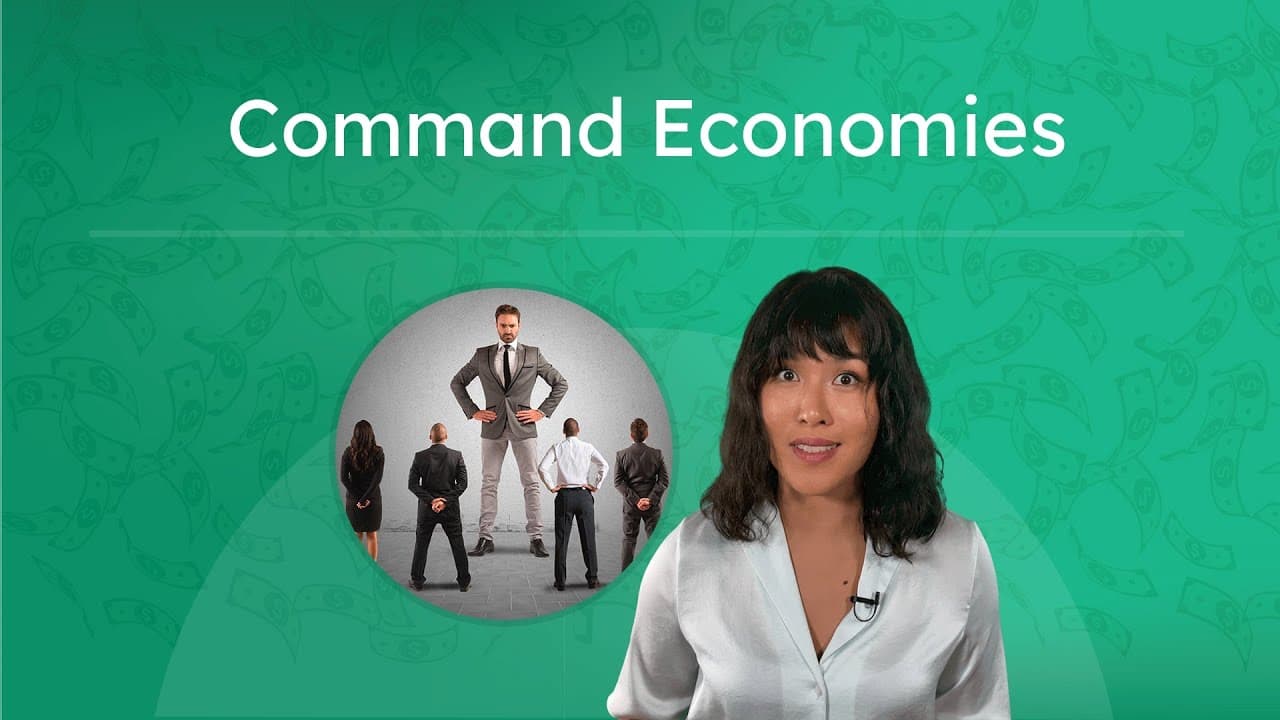
How Command Economies Work

How Command Economies Work

This educational video introduces students to the concept of a command economy, contrasting it with the previously discussed market economy. Through the character of "Commander Carl" and the fictional town of "Communiville," the narrator explains how a central government creates economic plans, determining exactly what goods are produced, how they are manufactured, and who receives them. The video explores the rationale behind this system—prioritizing the collective good over individual profit—and uses clear visual examples to illustrate abstract economic concepts. The content dives deep into the mechanisms of government control, addressing the three fundamental economic questions: what to produce, how to produce it, and for whom. It highlights specific scenarios where command economies might be advantageous, such as during wartime mobilization or for providing universal public services like healthcare and transportation. Conversely, the video provides a balanced critique by discussing significant downsides, including the "incentive problem," lack of innovation, inefficiency in meeting consumer demands, and the high risk of corruption when power is overly centralized. For educators, this video serves as an excellent foundational tool for social studies, civics, and economics units. It simplifies complex systemic differences into relatable narratives, making it easy to spark classroom discussions about fairness, efficiency, and the role of government. The built-in pause points allow teachers to stop and facilitate critical thinking activities, asking students to predict outcomes or debate the ethical implications of government-controlled resources versus free-market systems.

Miacademy & MiaPrep Learning ChannelMiacademy & MiaPrep Learning Channel

13mins 3s

Video
Understanding Scarcity and Economic Choice

Understanding Scarcity and Economic Choice

This educational video introduces students to the fundamental economic concept of scarcity. Hosted by an engaging presenter named B, the lesson begins with a relatable scenario of shopping in a favorite store to illustrate the tension between unlimited human wants and limited resources. The video breaks down the specific limitations that cause scarcity—money, time, and exclusivity—and clearly defines it as the core problem that the field of economics seeks to solve.

Miacademy & MiaPrep Learning ChannelMiacademy & MiaPrep Learning Channel

9mins 15s

Video
Introduction to Economic Systems: The Three Basic Questions

Introduction to Economic Systems: The Three Basic Questions

This video introduces students to the fundamental concept of economic systems, explaining how societies organize the production and distribution of goods. Through a conversation between a host and an animated robot named Mia, the video demystifies economics by breaking it down into three essential questions: what to produce, how to produce it, and for whom to produce it. It establishes that an economic system is essentially the "rulebook" a society follows to answer these questions and balance individual wants with community needs. Key themes include the categorization of economic systems into four main types (Traditional, Market, Command, and Mixed) and the distinction between formal economic terms and political buzzwords like capitalism, socialism, and communism. The video emphasizes that economics is not just an abstract academic subject but a practical reality that affects everyday life, including product availability, prices, and business competition. For educators, this resource serves as an engaging hook to start a unit on economics. It simplifies complex definitions and provides relatable analogies, such as running a lemonade stand, to help students understand how macroeconomic policies impact individual businesses. The video sets the stage for deeper exploration of specific systems by highlighting the role of stakeholders like producers, consumers, and the government in shaping economic rules.

Miacademy & MiaPrep Learning ChannelMiacademy & MiaPrep Learning Channel

6mins 18s

Video
How Geography Shaped the First Civilization: Mesopotamia Explained

How Geography Shaped the First Civilization: Mesopotamia Explained

This educational video explores the rise of the first civilization in Mesopotamia, located in modern-day Iraq between the Tigris and Euphrates rivers. It explains how geography played a crucial role in the development of human society, transforming nomadic hunter-gatherers into settled farmers through the fertile soil of the "Fertile Crescent." The narrator guides students through the transition from the Stone Age to the Bronze Age, highlighting key innovations like irrigation, the plow, and the domestication of animals. The video delves into the challenges posed by the region's geography, such as unpredictable flooding and lack of natural defenses, and how early humans engineered solutions like levees, canals, and city walls. It connects these environmental factors to the growth of urban centers, job specialization, and the creation of a stable food surplus, which are identified as the foundational elements of civilization. Finally, the concept of cultural diffusion is introduced to explain how Mesopotamian innovations in farming, writing, and government spread to other regions like Egypt. The video includes built-in pauses for critical thinking and prediction, making it an excellent tool for middle school social studies classrooms to introduce Ancient History, human-environment interaction, and the economic foundations of society.

Miacademy & MiaPrep Learning ChannelMiacademy & MiaPrep Learning Channel

7mins 43s

Video
Fixed vs. Variable Costs: How Businesses Budget

Fixed vs. Variable Costs: How Businesses Budget

This video provides a clear and engaging introduction to the economic concepts of fixed and variable costs, using relatable examples like a lemonade stand, a cat toy business, and a food truck. The host, Mia, breaks down complex business terminology into digestible definitions, explaining that fixed costs (like rent or salaries) remain constant regardless of production, while variable costs (like raw materials) fluctuate based on output. The video uses animation and real-world scenarios to illustrate how these costs impact business planning and profitability. The content explores the nuances of why variable costs change, citing production levels and fluctuating resource prices. It also delves into the strategic implications of each cost type, discussing the predictability of fixed costs versus the flexibility of variable costs. Through the narrative of Mia's lemonade stand, students see these concepts in action as she faces decisions about building a fancy stand versus using an old table, and how to react when the price of sugar doubles. This practical application bridges the gap between abstract definitions and real-world decision-making. For educators, this video serves as an excellent foundational resource for units on financial literacy, entrepreneurship, or introductory economics. It encourages critical thinking through embedded guiding questions that ask students to apply what they've learned to new scenarios (Javier's food truck and Rebecca's jewelry business). The video naturally leads to classroom activities involving budgeting, business planning, and risk assessment, helping students understand the financial mechanics behind everyday businesses.

Miacademy & MiaPrep Learning ChannelMiacademy & MiaPrep Learning Channel

12mins 26s

Video
How Spanish Silver Shaped the World Economy

How Spanish Silver Shaped the World Economy

In this installment of Crash Course World History, John Green explores the immense global impact of the Spanish Empire during the 16th and 17th centuries. The video details how Spain's conquest of the Aztec and Inca empires led to the extraction of massive amounts of silver, specifically from the Potosí mines in modern-day Bolivia. Green explains how this influx of precious metals didn't just affect Spain, but created the first truly global market, linking the Americas, Europe, and China in a complex web of trade and economics. The video dives deep into the unintended economic consequences of this wealth, specifically the concept of inflation. It illustrates how Spain's mismanagement of its silver windfall, combined with endless wars funded by that silver, ultimately weakened the empire rather than strengthening it. Simultaneously, the narrative shifts to East Asia, explaining how a change in Chinese tax policy created a insatiable demand for silver that eventually destabilized the Ming Dynasty's economy as well. This resource is highly valuable for history and economics classrooms as it moves beyond simple narratives of conquest to analyze systemic global connections. It helps students understand complex economic principles like inflation and supply and demand within a historical context. By connecting the mita labor system of the Incas to Spanish mining practices and finally to Chinese silk markets, the video demonstrates how local decisions can have profound global ripples, a concept central to understanding modern globalization.

CrashCourseCrashCourse

10mins 46s

Video
The History of Money: Debt, Barter, and War

The History of Money: Debt, Barter, and War

Hosted by John Green, this episode of Crash Course World History challenges the traditional economic narrative that money evolved naturally from barter systems to solve logistical problems. Instead, it presents anthropologist David Graeber's theory that complex credit and debt systems existed long before coinage, and that physical money (coins) emerged primarily as a tool for states to fund wars and professional armies.

CrashCourseCrashCourse

14mins 4s

Video
How the Federal Reserve Steers the Economy

How the Federal Reserve Steers the Economy

This informative video uses an extended analogy of a car to explain the complex functions of the Federal Reserve and its role in the United States economy. It demystifies how the "Fed" acts as the central bank, regulating the money supply and clearing financial transactions to keep the economic "engine" running smoothly. The narration breaks down how the Federal Reserve monitors economic health through key indicators like inflation, GDP, and unemployment data. The core of the video focuses on Monetary Policy, detailing the three specific tools the Federal Reserve uses to steer the economy: reserve requirements, the discount rate, and open market operations. Through clear visual flowcharts, the video demonstrates the cause-and-effect relationship between these tools and the broader economy, explaining how the Fed decides whether to "hit the gas" (stimulate growth) or "pump the brakes" (slow down inflation). Ideally suited for high school economics and civics curricula, this video transforms abstract financial concepts into concrete, relatable examples. Teachers can use it to scaffold lessons on government intervention, financial literacy, and macroeconomics. It provides a solid foundation for understanding how central banking decisions impact everyday life, from interest rates on car loans to the price of goods at the store.

Miacademy & MiaPrep Learning ChannelMiacademy & MiaPrep Learning Channel

12mins 29s

Video
Understanding Economics: Resources, Production, and Money

Understanding Economics: Resources, Production, and Money

This engaging educational video introduces students to the fundamental concepts of economics, breaking down a complex subject into digestible components. Hosted by a lively presenter named Kylie, the video moves beyond the complicated dictionary definition of economics to focus on three core pillars: resources, production, and money. It uses relatable examples, including digital marketplaces and everyday items like ice cream and cars, to explain how goods and services are created, distributed, and consumed. Key themes explored include the three types of resources (natural, human, and capital), the distinction between tangible goods and intangible services, and the concept of productivity. The video also covers the history of trade by explaining the barter system versus modern currency, including digital forms of money. Special attention is given to the role of the consumer and the importance of efficiency in business production. For educators, this video serves as an excellent foundational tool for social studies and financial literacy units. It clarifies abstract economic terms through visual aids and concrete examples, making it easy for students to grasp how the economy functions around them. The content naturally leads into classroom activities involving resource identification, mock marketplaces, or discussions about how students earn and spend money in their own lives.

Miacademy & MiaPrep Learning ChannelMiacademy & MiaPrep Learning Channel

6mins 18s

Video
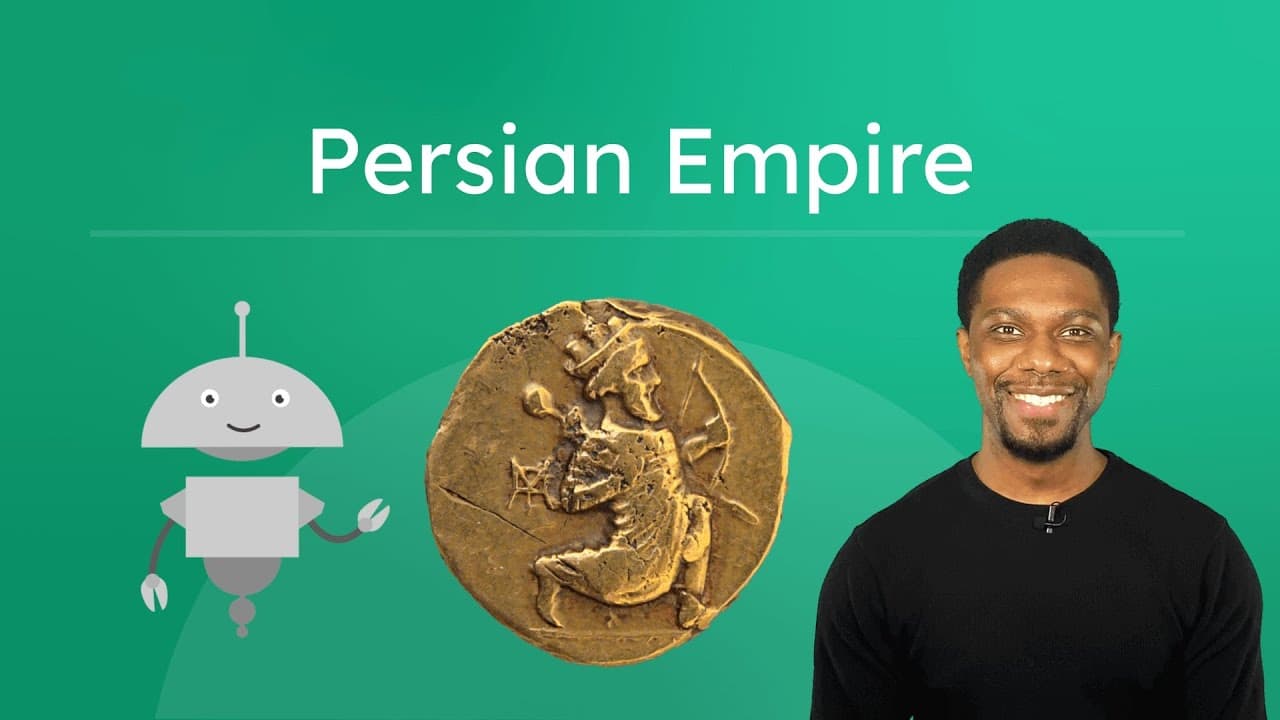
Exploring the Power and Culture of the Persian Empire

Exploring the Power and Culture of the Persian Empire

This educational video provides a comprehensive overview of the Ancient Persian Empire, designed for middle school history students. Narrated by an engaging host, the lesson breaks down the empire's vast geography spanning three continents, its efficient government structure utilizing satraps, and its innovative economic systems including the Royal Road and the gold Daric coin. The video uses maps, historical imagery, and on-screen text to make these complex historical structures accessible.

Miacademy & MiaPrep Learning ChannelMiacademy & MiaPrep Learning Channel

9mins 3s

Video
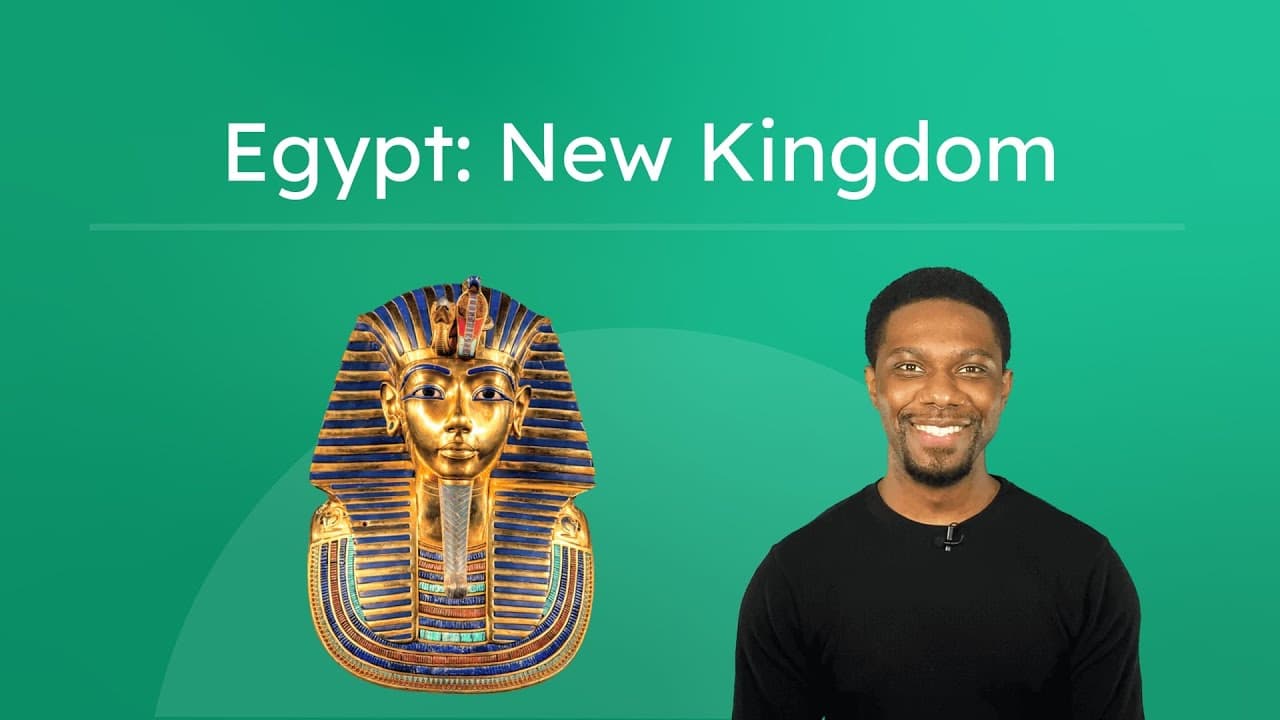
The Rise and Legacy of Egypt's New Kingdom

The Rise and Legacy of Egypt's New Kingdom

Join an exciting virtual field trip to the Valley of the Kings to explore the New Kingdom of Ancient Egypt, a period known as the civilization's "Golden Age." This video guides students through the rise of the empire following the expulsion of the Hyksos, detailing the military innovations and political strategies that allowed Egypt to expand its territory from Nubia to Western Asia. It introduces key historical figures including Ahmose, the religious reformer Akhenaten, the famous "boy king" Tutankhamun, and the powerful female pharaoh Hatshepsut. The content delves into the significant advancements of the era across political, economic, and cultural domains. Students will learn about the centralization of power by pharaohs, the development of a complex bureaucracy for food storage, and the introduction of standardized measurements and banking systems that facilitated international trade. The video also highlights the shift in religious practices, the artistic evolution towards more realistic depictions, and the monumental architecture designed to project power and longevity. This resource is an excellent tool for middle school social studies and world history classrooms. It uses engaging visuals of tombs, artifacts, and maps to make ancient history tangible. Teachers can use this video to discuss themes of imperialism, religious conflict, economic standardization, and the lasting legacy of ancient civilizations on the modern world, making it a versatile asset for units on the Ancient Near East.

Miacademy & MiaPrep Learning ChannelMiacademy & MiaPrep Learning Channel

8mins 23s

Video
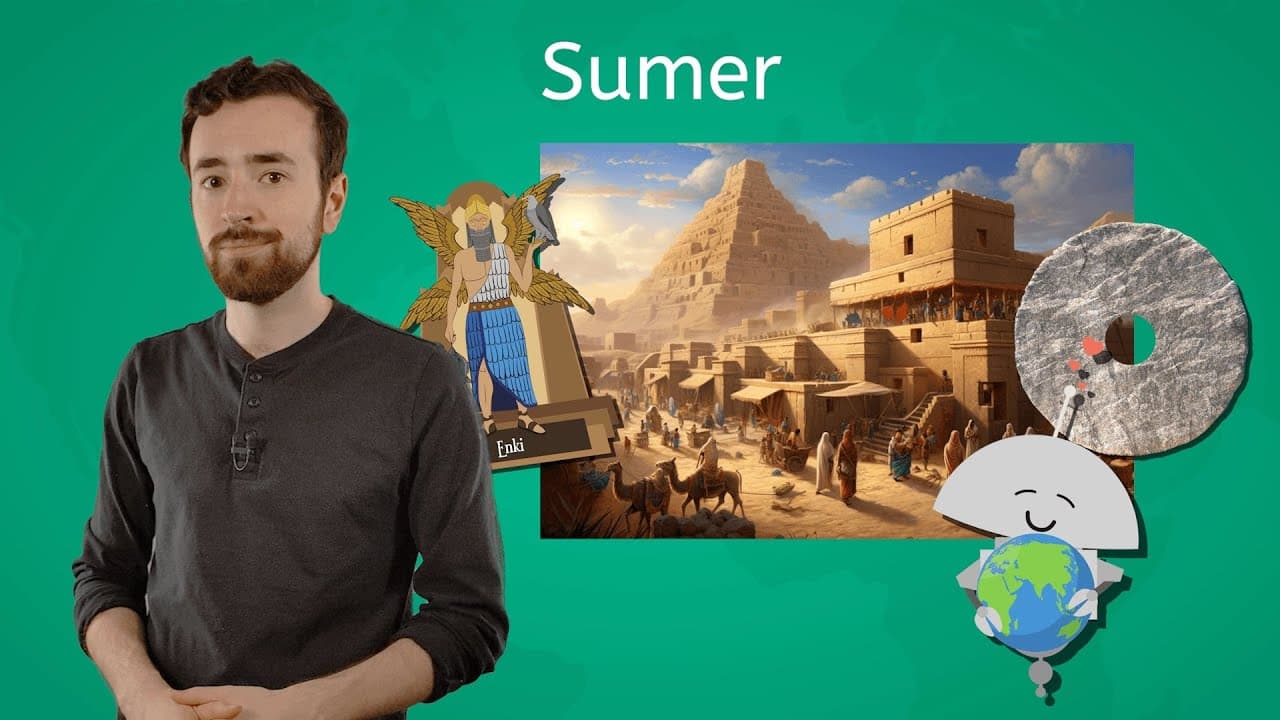
The Inventions and Innovations of Ancient Sumer

The Inventions and Innovations of Ancient Sumer

This engaging educational video explores the ancient civilization of Sumer, located in Mesopotamia, and its profound impact on human history. The video breaks down Sumerian society into five key categories of advancement: political, religious, cultural, economic, and technological. It explains how Sumer developed city-states, complex religious systems involving ziggurats and polytheism, the first writing system (cuneiform), and foundational economic practices like banking and trade networks. The content highlights specific inventions that revolutionized the world, such as the wheel, the plow, the sailboat, and a base-60 mathematical system still used for measuring time today. It also delves into the social structure of Sumer, examining the hierarchy from kings and priests down to farmers and enslaved people, as well as gender roles within the society. Designed for middle school history curriculums, this video provides a comprehensive overview of how Sumerian innovations laid the groundwork for future civilizations. It encourages students to recognize the enduring legacy of these ancient advancements in their modern lives, making connections between ancient history and contemporary systems of government, economy, and technology.

Miacademy & MiaPrep Learning ChannelMiacademy & MiaPrep Learning Channel

13mins 7s

Video
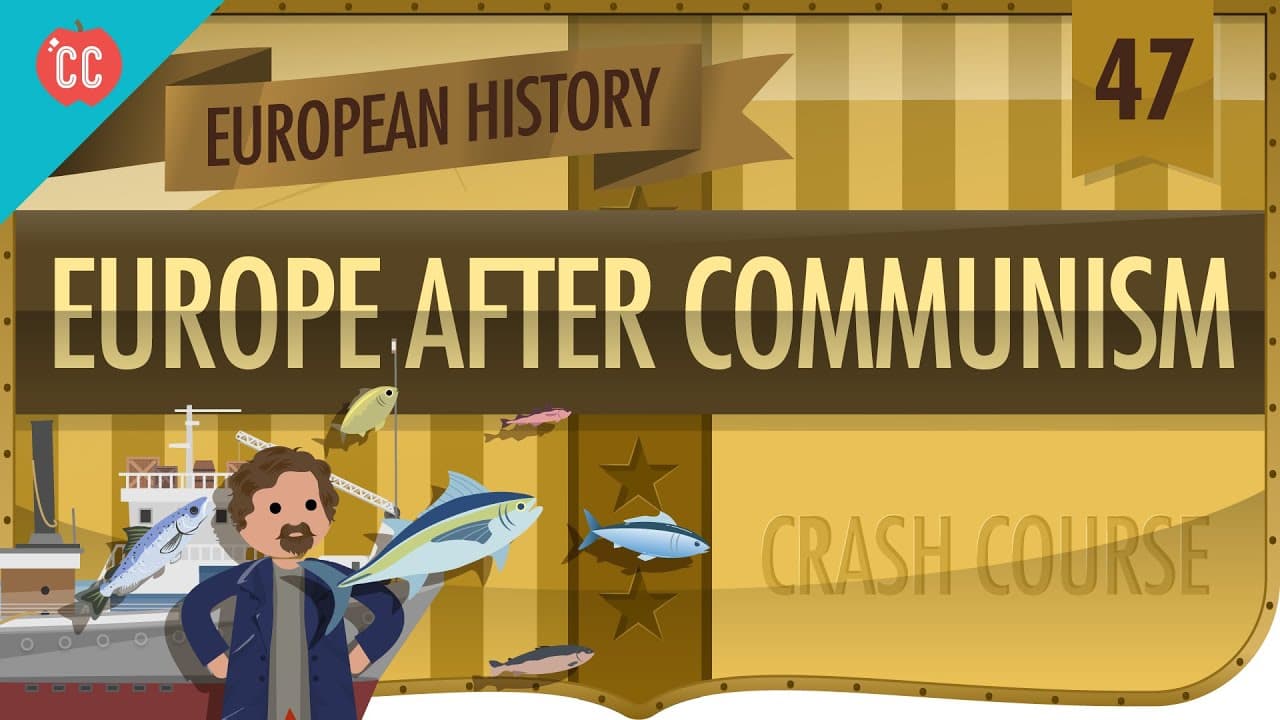
Post-Communist Europe: The EU, Ethnic Conflict, and Economic Change

Post-Communist Europe: The EU, Ethnic Conflict, and Economic Change

This educational video explores the complex and often turbulent history of Europe following the collapse of communism in 1989. Hosted by John Green, the video examines the difficult transition from command economies to capitalism, highlighting the rise of kleptocracies, hyperinflation, and the drastic drop in living standards that plagued many Eastern European nations. It contrasts these economic struggles with the simultaneous efforts toward integration in Western Europe through the formation of the European Union and the expansion of NATO. The content delves into the darker side of this era, specifically the violent breakup of Yugoslavia. It provides a sobering overview of the ethnic conflicts, the Bosnian War, and the Srebrenica massacre, discussing how politicians weaponized ethnic nationalism. The video also covers the creation of the Euro, the Maastricht Treaty, and the tension between national sovereignty and international cooperation. For educators, this video serves as an excellent resource for teaching modern European history, global studies, or economics. It offers a balanced view of globalization, illustrating both its benefits—such as peace and consumer access—and its drawbacks, including loss of local control and cultural homogenization. The "Thought Bubble" segment on fishing regulations provides a concrete case study for classroom debates on the role of government regulation versus individual economic freedom.

CrashCourseCrashCourse

13mins 25s

Video
Why We Use Money Instead of Barter

Why We Use Money Instead of Barter

This educational video provides a comprehensive introduction to the concept of money, explaining its fundamental role in economics compared to the barter system. Hosted by a presenter who uses relatable examples, the video breaks down why direct trading of goods (barter) becomes inefficient in complex societies and how money solves the "double coincidence of wants" problem. It distinguishes between the abstract concept of money as a system of value and currency as the physical manifestation of that value.

Miacademy & MiaPrep Learning ChannelMiacademy & MiaPrep Learning Channel

10mins 38s

Video
Andrew Jackson and the Rise of American Politics

Andrew Jackson and the Rise of American Politics

This educational video from Crash Course US History explores the pivotal era known as the Age of Jackson, roughly spanning 1820 to 1850. Host John Green explains how American democracy expanded during this period, moving away from property requirements for voting and ushering in universal white male suffrage. The video details the collapse of the Era of Good Feelings and the subsequent rise of the Second Party System, contrasting the new Democratic Party led by Andrew Jackson with the opposing Whig Party. It provides a nuanced look at Jackson's presidency, covering his controversial use of executive power, the Nullification Crisis, the Bank War, and the Indian Removal Act. Key historical themes explored include the tension between federal and state power, the economic shifts of the Market Revolution, and the growing sectionalism over slavery that foreshadowed the Civil War. The video delves into the specific policies of the American System—tariffs, infrastructure, and the national bank—and how they polarized the nation. It also critically examines the treatment of Native Americans, specifically the forced removal of the Cherokee nation on the Trail of Tears, highlighting the conflict between the executive and judicial branches. For educators, this video serves as an excellent synthesis of complex political and economic concepts essential for understanding 19th-century America. It helps students connect the origins of modern political campaigning and party dynamics to this era. The content is particularly useful for AP US History courses or high school government classes, as it illustrates the practical application of checks and balances (or the failure thereof) and the evolution of the American presidency into a more powerful executive office.

CrashCourseCrashCourse

15mins 5s

Video
Why the Articles of Confederation Failed: Money, Debt, and Rebellion

Why the Articles of Confederation Failed: Money, Debt, and Rebellion

This educational video explores the critical political and economic challenges facing the newly formed United States under the Articles of Confederation during the post-Revolutionary War era. Using an accessible "pizza party" analogy, the narrator explains complex concepts like the weakness of the central government and the difficulty of decision-making among the thirteen states. The video details specific economic hardships including rampant inflation, hyperinflation, and the lack of a unified banking system, helping students understand why the initial government structure was unsustainable. The content dives deep into the consequences of these economic failures, specifically focusing on the plight of Revolutionary War veterans and farmers who faced debt and imprisonment. It provides a clear, step-by-step breakdown of Shays' Rebellion, defining legal terms like "lien" and "foreclosure" to explain the motivations behind the uprising. The narrative effectively connects these historical events to the realization that a stronger national government was necessary, setting the stage for the Constitutional Convention. For educators, this video serves as an excellent bridge between the Revolutionary War and the drafting of the Constitution. The use of modern analogies (ordering pizza for a group) makes abstract political theory concrete for students. It is particularly useful for teaching the causes of the Constitution, basic economic principles like inflation and debt, and the specific historical significance of Shays' Rebellion as a catalyst for political change.

Miacademy & MiaPrep Learning ChannelMiacademy & MiaPrep Learning Channel

7mins 16s

Video
The Rise of Civilization in Mesopotamia: Writing, Taxes, and Empires

The Rise of Civilization in Mesopotamia: Writing, Taxes, and Empires

In this installment of Crash Course World History, John Green explores the rise of civilization in Mesopotamia, the 'land between two rivers.' The video examines how the geography of the Tigris and Euphrates valleys shaped the culture, religion, and politics of early city-states like Uruk and Babylon. It breaks down foundational developments including the invention of writing (cuneiform), the creation of early legal systems (Hammurabi's Code), and the evolution of political power from temple priests to kings.

CrashCourseCrashCourse

12mins 6s

Video
The Rise and Fall of the Mongol Empire in China

The Rise and Fall of the Mongol Empire in China

This educational video provides a comprehensive overview of the Mongol conquest of China, tracing the rise of the Mongol Empire from Genghis Khan's initial attacks on the Great Wall to the establishment of the Yuan Dynasty under Kublai Khan. It explores the military strategies used to breach Chinese defenses, the administrative innovations implemented to rule such a vast territory, and the eventual fall of the empire due to rebellion. The narrative highlights how a nomadic warrior culture adapted to govern a sophisticated civilization. Key themes include the synthesis of Mongol and Chinese cultures, the importance of infrastructure like the relay station system, and the revitalization of the Silk Road. The video details how Mongol rule facilitated a "Pax Mongolica" that allowed for unprecedented trade and cultural exchange between East and West, bringing Chinese inventions like paper money and gunpowder to Europe while introducing western goods and ideas to China. It also covers the pre-existing Tang and Song dynasties to provide historical context. For educators, this video serves as an excellent core resource for World History units on Ancient China or the Mongol Empire. It features built-in pause points with inquiry-based questions that encourage students to think critically about military strategy, governance, and the economic impact of global trade networks. The content bridges geography, economics, and history, making it suitable for interdisciplinary lessons on how infrastructure and tolerance can impact the success of an empire.

Miacademy & MiaPrep Learning ChannelMiacademy & MiaPrep Learning Channel

12mins 18s

Video
How the Civil War Ended Slavery and Transformed the Nation

How the Civil War Ended Slavery and Transformed the Nation

In this installment of Crash Course US History, John Green moves beyond the battles and generals of the Civil War to explore its profound political, social, and economic consequences. The video tackles complex questions surrounding Abraham Lincoln's role as the "Great Emancipator," analyzing the strategic and legal limitations of the Emancipation Proclamation while crediting Lincoln for his persistence in securing the 13th Amendment. It also examines how the war transformed the United States from a loose collection of states into a unified, industrialized nation-state. Key themes include the shift in the war's purpose from preserving the Union to ending slavery, the impact of new military technologies and photography on public perception, and the massive expansion of federal power. The video highlights significant legislation passed during the war, such as the Homestead Act and the Pacific Railway Act, which shaped the country's future development. It also discusses the "singularization" of the United States, marking a cultural shift from seeing the country as a plural collection of states ("the United States are") to a single entity ("the United States is"). This video is an excellent resource for high school history classrooms. It encourages critical thinking about historical memory, challenges simplified narratives about emancipation, and connects the events of the 1860s to modern American government and identity. Teachers can use it to spark discussions about the reliability of primary sources (via Matthew Brady's photography), the role of government during crises, and the nuances of historical leadership.

CrashCourseCrashCourse

10mins 54s

Video
How Mercantilism Shaped the American Colonies

How Mercantilism Shaped the American Colonies

This engaging educational video explores the economic theory of mercantilism and its profound impact on the development of the American colonies. Through a mix of humor, historical dramatizations, and clear animated graphics, the video breaks down complex economic concepts like balance of trade, protectionism, and the Navigation Acts. It explains how England's desire for wealth and power shaped colonial life, trade restrictions, and regional economies. The content details the specific roles of the New England, Middle, and Southern colonies within the British Empire, illustrating how geography dictated economic specialization. It visualizes the Triangular Trade routes and the flow of raw materials, manufactured goods, and enslaved people. The video also critically examines the social consequences of this system, presenting a pyramid of colonial social order that places the wealthy gentry at the top and enslaved and indentured populations at the bottom. Teachers can use this video to introduce the economic motivations behind colonization or to bridge the gap between early settlement and the rising tensions that led to the American Revolution. The video includes built-in pause points for note-taking and guiding questions, making it an excellent tool for interactive classroom viewing or independent study. It effectively connects economic policy to social structures, helping students understand how money and power dictated the lives of early Americans.

Miacademy & MiaPrep Learning ChannelMiacademy & MiaPrep Learning Channel

11mins 52s

Video
Why the Weimar Republic Failed: Inflation and Instability

Why the Weimar Republic Failed: Inflation and Instability

This educational video explores the tumultuous period in Europe following World War I, with a specific focus on the struggles of the newly formed Weimar Republic in Germany. It examines the difficult transition from monarchies to democracies across the continent, highlighting the political instability caused by coalition governments and the rise of extremist ideologies. The narrative uses relatable analogies, such as a pizza parlor scenario, to explain complex economic concepts like inflation and hyperinflation. The video details the severe challenges Germany faced, including the burden of war reparations from the Treaty of Versailles, the hyperinflation of 1923, and the political fragmentation that weakened the democratic government. It also covers international efforts to stabilize the region, such as the Dawes Plan, the Locarno Treaties, and the Kellogg-Briand Peace Pact. The content sets the stage for understanding the conditions that eventually led to the rise of fascism and World War II. For educators, this resource serves as an excellent primer on the interwar period. It simplifies complex economic mechanisms like hyperinflation through visual graphs and concrete examples. The video includes built-in pause points with guiding questions, making it ready-made for classroom interaction, while also providing primary source imagery—such as children playing with stacks of worthless cash—to spark historical inquiry and discussion.

Miacademy & MiaPrep Learning ChannelMiacademy & MiaPrep Learning Channel

11mins 2s

Video
How Banks Use Loans to Grow the Economy

How Banks Use Loans to Grow the Economy

This video provides a clear and accessible introduction to the role of banks, loans, and money in the economy. Using the relatable example of a friend starting a mobile dog grooming business, the narrator explains how banks operate as businesses that generate profit through interest on loans. It breaks down key banking concepts including principal, interest, reserve requirements, and the flow of money between savers, the bank, and borrowers.

Miacademy & MiaPrep Learning ChannelMiacademy & MiaPrep Learning Channel

9mins 29s

Video
How World War II Transformed the American Home Front

How World War II Transformed the American Home Front

In this installment of Crash Course US History, John Green explores how World War II transformed the United States domestically, shifting the focus from the battlefields abroad to the dramatic social and economic changes occurring on the home front. The video details how the war acted as a catalyst for ending the Great Depression, vastly expanding the size and scope of the federal government, and fundamentally altering the American economy through massive spending, rationing, and industrial mobilization.

CrashCourseCrashCourse

14mins 23s

Video
How Spanish Silver Shaped the World Economy

How Spanish Silver Shaped the World Economy

In this installment of Crash Course World History, John Green explores the immense global impact of the Spanish Empire during the 16th and 17th centuries. The video details how Spain's conquest of the Aztec and Inca empires led to the extraction of massive amounts of silver, specifically from the Potosí mines in modern-day Bolivia. Green explains how this influx of precious metals didn't just affect Spain, but created the first truly global market, linking the Americas, Europe, and China in a complex web of trade and economics. The video dives deep into the unintended economic consequences of this wealth, specifically the concept of inflation. It illustrates how Spain's mismanagement of its silver windfall, combined with endless wars funded by that silver, ultimately weakened the empire rather than strengthening it. Simultaneously, the narrative shifts to East Asia, explaining how a change in Chinese tax policy created a insatiable demand for silver that eventually destabilized the Ming Dynasty's economy as well. This resource is highly valuable for history and economics classrooms as it moves beyond simple narratives of conquest to analyze systemic global connections. It helps students understand complex economic principles like inflation and supply and demand within a historical context. By connecting the mita labor system of the Incas to Spanish mining practices and finally to Chinese silk markets, the video demonstrates how local decisions can have profound global ripples, a concept central to understanding modern globalization.

CrashCourseCrashCourse

10mins 46s

Video
How Geography Shapes Global Food Security

How Geography Shapes Global Food Security

This educational video explores the complex field of agricultural geography, examining why food insecurity persists in a world that produces enough calories to feed everyone. Host Alizé Carrère guides viewers through the intricate web of historical, political, economic, and environmental factors that determine who has access to food. The narrative moves from local examples of farming to global systems, explaining how colonialism, the Columbian Exchange, and various agricultural revolutions have shaped our modern food landscape. The video covers critical themes including the distinction between subsistence and commercial farming, the shift from polyculture to monoculture, and the impact of the Green Revolution. It delves into the geography of hunger, explaining concepts like food deserts and the difference between food availability and food access. Significant attention is paid to how historical events, such as the triangular trade and colonization, disrupted indigenous food systems and established export-oriented economies that still influence global food distribution today. For educators, this resource serves as a powerful tool to connect geography, history, and economics. It moves beyond simple definitions to show students the systems thinking required to understand global challenges. The video provides excellent opportunities for classroom discussions on food justice, the environmental impacts of industrial agriculture, and the importance of biodiversity. It is particularly useful for units on human geography, economic development, and sustainability.

CrashCourseCrashCourse

11mins 32s

Video
Introduction to Economics: Scarcity, Choices, and Incentives

Introduction to Economics: Scarcity, Choices, and Incentives

This fast-paced, engaging video serves as the introductory episode to the Crash Course Economics series, hosted by Jacob Clifford and Adriene Hill. It dispels common myths about economics—clarifying that it isn't just about the stock market or getting rich—and defines the subject as the study of people and choices. Through the core concepts of scarcity and opportunity cost, the hosts explain how individuals, businesses, and governments make decisions when resources are limited. The video uses humor, including a cameo by The Muppets, and historical examples to make abstract concepts concrete. The video covers several foundational economic topics: the definition of economics, the principle of scarcity, opportunity cost, cost-benefit analysis, and the role of incentives. It explores the "Guns or Butter" trade-off using military spending as an example and discusses how incentives can sometimes lead to unintended consequences (perverse incentives), illustrated by a historical rat bounty program in Vietnam. Finally, it clearly distinguishes between Microeconomics (individual and business decisions) and Macroeconomics (national economy, inflation, unemployment). For educators, this video is an excellent hook for a high school economics unit. It provides a high-energy overview that humanizes the subject and connects it to students' daily lives (like the choice to watch the video versus sleeping). It offers multiple entry points for classroom discussion, from the ethics of government spending to the analysis of personal decision-making, making it a versatile tool for introducing the economic way of thinking.

CrashCourseCrashCourse

12mins 9s

Video
How Banks Use Loans to Grow the Economy

How Banks Use Loans to Grow the Economy

This video provides a clear and accessible introduction to the role of banks, loans, and money in the economy. Using the relatable example of a friend starting a mobile dog grooming business, the narrator explains how banks operate as businesses that generate profit through interest on loans. It breaks down key banking concepts including principal, interest, reserve requirements, and the flow of money between savers, the bank, and borrowers.

Miacademy & MiaPrep Learning ChannelMiacademy & MiaPrep Learning Channel

9mins 29s

Video
Using Economic Indicators to Guide Business Decisions

Using Economic Indicators to Guide Business Decisions

This engaging educational video uses a relatable narrative about a robot named Mia and her lemonade stand to explain complex macroeconomic concepts. The host helps Mia decide whether to expand her successful stand into a brick-and-mortar store by analyzing key economic indicators. By grounding abstract concepts in a concrete business scenario, the video demonstrates how the broader economy directly influences individual business success and consumer behavior. Key themes include the relationship between macroeconomic health and microeconomic decisions, specific economic indicators like Gross Domestic Product (GDP), unemployment rates, wages, inflation (CPI), and consumer confidence. The video also covers business cycles (expansion and contraction) and emphasizes the importance of using data rather than intuition to make strategic business moves. For educators, this video serves as an excellent bridge between theoretical economics and practical application. It transforms dry statistics into decision-making tools, showing students why unemployment numbers or inflation rates actually matter to everyday people and business owners. It is ideal for lessons on financial literacy, entrepreneurship, and introduction to economics, providing clear definitions and visual examples of how to interpret economic data.

Miacademy & MiaPrep Learning ChannelMiacademy & MiaPrep Learning Channel

9mins 35s

Video
How World War II Transformed the American Home Front

How World War II Transformed the American Home Front

In this installment of Crash Course US History, John Green explores how World War II transformed the United States domestically, shifting the focus from the battlefields abroad to the dramatic social and economic changes occurring on the home front. The video details how the war acted as a catalyst for ending the Great Depression, vastly expanding the size and scope of the federal government, and fundamentally altering the American economy through massive spending, rationing, and industrial mobilization.

CrashCourseCrashCourse

14mins 23s

Video
How Market Demand Shifts in Economics

How Market Demand Shifts in Economics

This educational video provides a comprehensive overview of market demand in economics, distinguishing between changes in "quantity demanded" caused by price fluctuations and changes in "demand" caused by non-price factors. The narrator uses relatable examples like fidget spinners, pizza, and video game consoles to explain complex economic concepts, making them accessible to students. The lesson visualizes these concepts through demand curves, demonstrating the difference between movement along a curve versus shifting the entire curve to the left or right. The video breaks down the five key "shifters of demand" (non-price factors): Income, Consumer Preference, Demographic Characteristics, Expectations of Future Prices, and Price of Related Goods. Each factor is defined and illustrated with specific scenarios, such as how a holiday bonus changes buying power or how the Baby Boom impacted the toy industry. The video also covers the Law of Demand, noting the inverse relationship between price and demand. Ideally suited for high school economics or social studies curriculums, this resource helps teachers explain the mechanics of market economies. It offers clear definitions, visual graphing examples, and pause points for student reflection. The content bridges the gap between theoretical graphs and real-world consumer behavior, allowing students to analyze how their own purchasing decisions are influenced by various market forces.

Miacademy & MiaPrep Learning ChannelMiacademy & MiaPrep Learning Channel

10mins 11s

Video
How to Fix the Wealth Gap: Market vs. Government Solutions

How to Fix the Wealth Gap: Market vs. Government Solutions

This educational video explores the complex issue of income inequality through the fictional town of "Marketville," contrasting the lives of wealthy and struggling residents. It provides a balanced examination of potential solutions, categorized into market-based strategies (like equal pay policies, employee training, and social impact investing) and government-based interventions (such as minimum wage laws, Universal Basic Income, and progressive taxation). The video breaks down economic concepts like "regressive" versus "progressive" taxes, the function of NGOs, and the debate surrounding government involvement in the economy. It uses clear visual metaphors, such as balancing scales and receipt breakdowns, to explain how different policies affect individuals across the income spectrum. Ideal for high school economics and civics classrooms, this resource encourages critical thinking by presenting arguments for and against various approaches. It features built-in pause points with reflection questions, asking students to adopt different perspectives and predict arguments, making it a ready-to-use tool for sparking classroom debate and deeper understanding of economic policy.

Miacademy & MiaPrep Learning ChannelMiacademy & MiaPrep Learning Channel

12mins 14s

Video
How Cities Grow and Connect: Understanding Urban Geography

How Cities Grow and Connect: Understanding Urban Geography

This educational video provides a comprehensive introduction to Urban Geography, exploring how cities form, grow, and function within global systems. It begins by examining the historical and modern significance of cities, using Guangzhou, China, as a primary case study to illustrate rapid urbanization and the transition from agrarian to industrial economies. The video defines critical terminology such as megacities, metacities, and megalopolises, while explaining the challenges geographers face in creating a universal definition for "urban" areas.

CrashCourseCrashCourse

11mins 15s

Video
How Monopolies Form and Impact the Economy

How Monopolies Form and Impact the Economy

This educational video uses a relatable grocery store analogy to explain the economic concept of monopolies. It breaks down complex business structures into digestible examples, starting with the basic definition of a monopoly as a single seller with no competition. The video details the specific mechanisms of how monopolies form, specifically distinguishing between horizontal integration (buying competitors) and vertical integration (owning the supply chain), while also introducing the historical concept of "trusts." The content presents a balanced view of the economic impact of monopolies by exploring both the arguments for and against them. It outlines potential benefits such as price stability, economies of scale, and technological investment, while contrasting these with significant drawbacks like price gouging, supply manipulation, and poor product quality. The narrator uses the recurring example of apple prices to make these abstract economic theories concrete for students. For educators, this video serves as an excellent foundational resource for units on Economics or U.S. History (specifically the Industrial Revolution and Gilded Age). It simplifies high-level vocabulary and concepts, making it easy to bridge into deeper discussions about antitrust laws, historical figures like Rockefeller and Carnegie, or modern-day debates about big tech companies. The clear definitions and visual diagrams provide strong scaffolding for visual learners.

Miacademy & MiaPrep Learning ChannelMiacademy & MiaPrep Learning Channel

8mins 27s

Video
How the Market Revolution Transformed Early America

How the Market Revolution Transformed Early America

This educational video provides a fast-paced and comprehensive overview of the Market Revolution in the United States during the first half of the 19th century. Hosted by John Green, the video explores how America shifted from a Jeffersonian agrarian society of subsistence farmers to a Hamiltonian commercial and industrial power. It details the explosion of new technologies—including canals, steamboats, railroads, and the telegraph—that dramatically lowered transportation costs and connected local markets into a national economy. The content dives deep into the structural changes that accompanied this economic shift, such as the development of the factory system, the legal creation of corporations with limited liability, and the crucial role the government played in financing infrastructure and protecting business interests through Supreme Court rulings. It also examines the social consequences of these changes, including the migration of people westward (Manifest Destiny), the influx of immigrants to fill factory jobs, and the changing nature of labor from task-oriented work to time-disciplined wage labor. For educators, this video serves as an excellent anchor for units on 19th-century US History, industrialization, or economics. It connects historical events to literary movements like Transcendentalism and works like Herman Melville's "Bartleby the Scrivener," offering interdisciplinary opportunities. The video challenges students to think critically about the definition of freedom, the relationship between government and business, and the human cost of economic progress, making it a valuable tool for high school history and social studies classrooms.

CrashCourseCrashCourse

14mins 11s

Video
Understanding the Four Types of Economic Systems

Understanding the Four Types of Economic Systems

This educational video provides a comprehensive overview of the four primary economic systems: Traditional, Free Market, Command, and Mixed. It begins by introducing the fundamental problem of economics—scarcity—and the three basic questions every society must answer: What to produce? How to produce it? And how to distribute it? The narrator explains how different societies answer these questions based on their values, resources, and level of government involvement. The content explores key themes such as the role of supply and demand, government regulation versus market freedom, and the impact of economic structures on daily life. It contrasts the efficiency and innovation of free markets with the stability and equity aimed for in command economies, ultimately introducing the mixed economy as a balanced approach used by most modern nations. Specific concepts like monopolies, bartering, and consumer sovereignty are defined and illustrated. For educators, this video serves as an excellent foundational tool for units on economics, civics, or geography. It simplifies complex economic theories into digestible segments with clear examples, making it suitable for introducing economic systems. The video includes built-in pause points with reflection questions, allowing teachers to easily facilitate classroom discussions, check for understanding, and encourage critical thinking about the trade-offs inherent in each system.

Miacademy & MiaPrep Learning ChannelMiacademy & MiaPrep Learning Channel

11mins 56s

Video
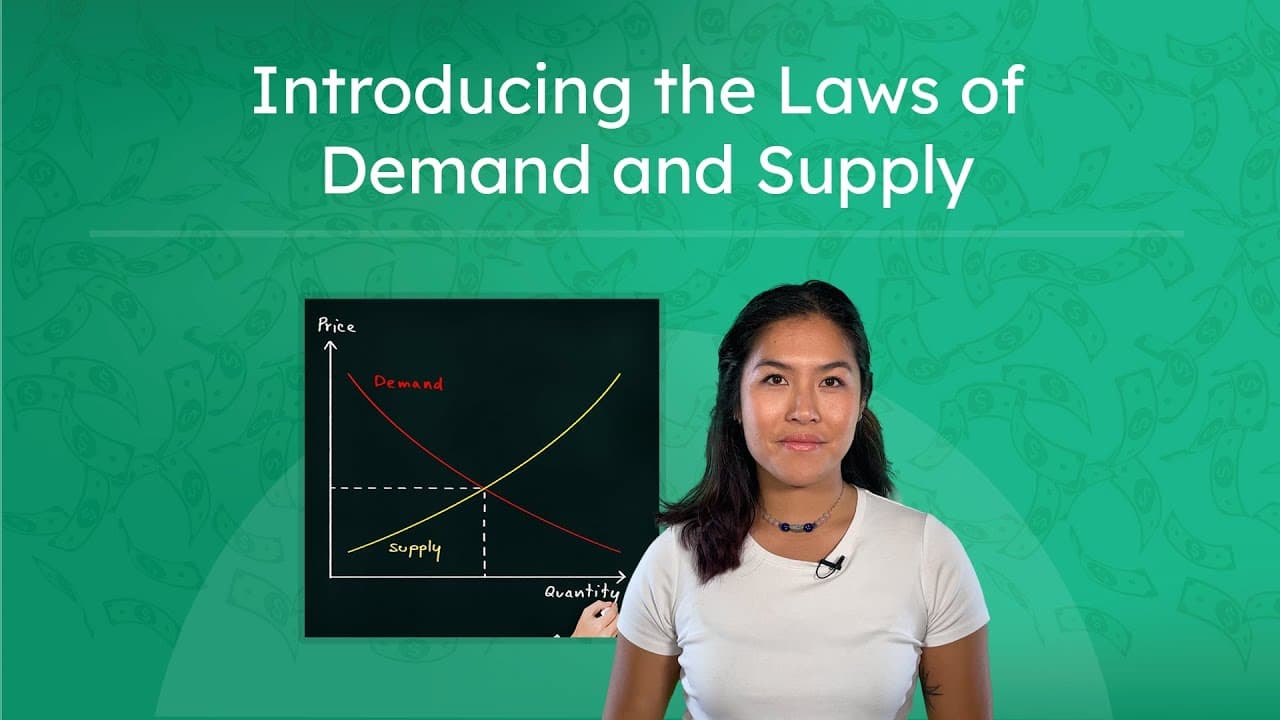
Understanding Supply, Demand, and How Prices Are Set

Understanding Supply, Demand, and How Prices Are Set

This engaging video introduces students to the fundamental economic principles that determine how prices are set in a marketplace. Hosted by Kylie, the video breaks down complex concepts like supply, demand, and scarcity into easy-to-understand definitions with relatable real-world examples. It guides viewers through the roles of producers and consumers, explaining how their interactions shape the economy. The video explores key themes including the relationship between supply availability and consumer demand, the impact of scarcity on pricing (using natural resources as examples), and the concept of value versus quality. It demystifies why prices fluctuate for items like gasoline or trendy clothing, helping students understand the market forces at play behind everyday purchases. For educators, this resource is an excellent tool for teaching financial literacy and social studies. It provides a structured four-step guide for setting prices—determining demand, assessing scarcity, checking competitor prices, and ensuring value—which can be directly applied in classroom entrepreneurship projects, math lessons on money, or social studies units on economics.

Miacademy & MiaPrep Learning ChannelMiacademy & MiaPrep Learning Channel

6mins 7s

Video
The Economics of Labor Unions and the Industrial Revolution

The Economics of Labor Unions and the Industrial Revolution

This educational video bridges the gap between U.S. History and Economics by analyzing the labor movements of the Industrial Revolution through an economic lens. Instead of portraying the conflict merely as "heroes versus villains," the video examines the systemic forces—such as supply and demand, profit motives, and competition—that drove the decisions of both business owners and workers. It explains how urbanization created a surplus of labor that kept wages low and how workers used collective organization to disrupt revenue and force negotiations. Key themes include the definition and role of labor unions, the calculation of profit (Revenue - Costs), the impact of supply and demand on wages, and the economic cycle wherein higher worker wages can lead to increased consumer demand and job creation. The video also touches on historical context, such as the post-WWII "Golden Age" of unions and the harsh working conditions of the late 19th century. This resource is highly valuable for social studies and economics classrooms. It provides a neutral framework for understanding labor disputes, defines essential vocabulary like "collective bargaining" and "labor," and uses clear graphics to illustrate complex economic cycles. Teachers can use this video to help students move beyond memorizing dates of strikes to understanding the underlying economic incentives that shape workforce relations today.

Miacademy & MiaPrep Learning ChannelMiacademy & MiaPrep Learning Channel

12mins 32s

Video
Fixed vs. Variable Costs: How Businesses Budget

Fixed vs. Variable Costs: How Businesses Budget

This video provides a clear and engaging introduction to the economic concepts of fixed and variable costs, using relatable examples like a lemonade stand, a cat toy business, and a food truck. The host, Mia, breaks down complex business terminology into digestible definitions, explaining that fixed costs (like rent or salaries) remain constant regardless of production, while variable costs (like raw materials) fluctuate based on output. The video uses animation and real-world scenarios to illustrate how these costs impact business planning and profitability. The content explores the nuances of why variable costs change, citing production levels and fluctuating resource prices. It also delves into the strategic implications of each cost type, discussing the predictability of fixed costs versus the flexibility of variable costs. Through the narrative of Mia's lemonade stand, students see these concepts in action as she faces decisions about building a fancy stand versus using an old table, and how to react when the price of sugar doubles. This practical application bridges the gap between abstract definitions and real-world decision-making. For educators, this video serves as an excellent foundational resource for units on financial literacy, entrepreneurship, or introductory economics. It encourages critical thinking through embedded guiding questions that ask students to apply what they've learned to new scenarios (Javier's food truck and Rebecca's jewelry business). The video naturally leads to classroom activities involving budgeting, business planning, and risk assessment, helping students understand the financial mechanics behind everyday businesses.

Miacademy & MiaPrep Learning ChannelMiacademy & MiaPrep Learning Channel

12mins 26s

Video
Why Markets Fail: Externalities, Public Goods, and Monopolies

Why Markets Fail: Externalities, Public Goods, and Monopolies

This educational video provides a comprehensive introduction to the economic concept of market failure. It begins by contrasting a successful market in equilibrium—where supply meets demand—with instances where the market fails to allocate resources efficiently. The narration uses clear, relatable metaphors like a "perfect" town called Marketville that suddenly faces storm clouds, helping students visualize abstract economic principles. The video explores key themes including supply and demand, market equilibrium, and the specific causes of market failure such as externalities, public goods, and lack of competition. It uses concrete examples, such as a lemonade stand causing neighborhood trash (negative externality), a factory polluting a river to save costs, and the neglect of public roads because they aren't profitable. The content also touches upon the social and political consequences of these failures, including health risks and social unrest. For educators, this video is a valuable tool for high school Economics or Civics curricula. It breaks down complex vocabulary like "efficient allocation" and "externalities" into digestible segments with built-in pause points for student reflection. The video naturally prompts discussions about the role of government in correcting market inefficiencies, making it an excellent springboard for lessons on public policy, environmental regulations, and economic ethics.

Miacademy & MiaPrep Learning ChannelMiacademy & MiaPrep Learning Channel

11mins 42s

Video
Solving Negative Externalities: Market vs. Government Solutions

Solving Negative Externalities: Market vs. Government Solutions

This educational video uses a relatable fictional narrative about "Marketville" and a local beekeeper named Betty Buzzins to explain the complex economic concept of negative externalities. When Betty's honey business booms, the town enjoys the product, but residents suffer from an increase in bee stings—a classic negative externality. The video introduces a character named "Balanced Bridget" to explore how these unintended side effects can be managed without destroying the business.

Miacademy & MiaPrep Learning ChannelMiacademy & MiaPrep Learning Channel

10mins 38s

Video
How Supply and Demand Find Balance

How Supply and Demand Find Balance

This educational video provides a comprehensive introduction to the economic concept of market equilibrium, using relatable analogies and clear graphical representations. It begins by comparing the negotiation process at a flea market to how broader economic markets function, eventually defining market equilibrium as the sweet spot where supply meets demand. The host uses a fictional video game console, "FrostBite," to demonstrate how to plot supply and demand curves on a graph and identify the equilibrium price and quantity. The video explores the advantages of achieving market equilibrium, such as price stability, the prevention of surpluses and shortages, and efficient resource allocation. Conversely, it explains the concept of disequilibrium, illustrating the negative impacts of excess supply (surplus) and excess demand (shortage). The content delves into the specific market forces that cause these imbalances, such as price gouging during shortages or intense competition during surpluses. Finally, the video teaches students how to analyze shifts in the market. It demonstrates how external factors—like a natural disaster affecting blueberry crops or a sudden trend like fidget spinners—shift the supply and demand curves, thereby changing the equilibrium price. The lesson concludes with a summary and applies these concepts to a recurring example of a food truck business, encouraging students to think critically about pricing strategies.

Miacademy & MiaPrep Learning ChannelMiacademy & MiaPrep Learning Channel

13mins

Video
Understanding the Laws of Supply and Demand

Understanding the Laws of Supply and Demand

This educational video provides a clear and structured introduction to the fundamental economic concepts of supply and demand. The narrator distinguishes between the "Law of Demand" and the "Law of Supply," explaining that while they interact to drive market prices, they are independent forces. The video breaks down complex economic theory into accessible components, using the relatable example of buying a new pair of sneakers to illustrate how price influences both consumer desire and producer willingness to sell. The content explores key themes including the definition of market economies, the difference between consumer-centered and producer-centered measurements, and the graphical representation of economic data. It introduces essential tools such as demand/supply schedules (tables) and demand/supply curves (graphs), explicitly teaching students how to interpret the relationship between price (y-axis) and quantity (x-axis). Ideally suited for middle and high school economics or social studies curriculums, this video serves as a foundational resource for financial literacy. It features built-in pause points with guiding questions that encourage active recall and critical thinking. Teachers can use the specific data sets provided in the video to help students practice graphing, making the abstract concepts of market forces concrete and measurable.

Miacademy & MiaPrep Learning ChannelMiacademy & MiaPrep Learning Channel

10mins 37s

Video
Exploring the Four Types of Economic Resources

Exploring the Four Types of Economic Resources

This educational video introduces students to the fundamental economic concept of resources, also known as factors of production, using an engaging corn farming analogy. Hosted by "Farmer B," the lesson breaks down the complex inputs required to create goods and services into four distinct categories: Natural Resources, Capital Resources, Human Resources, and Goods (specifically distinguishing between intermediate and final goods). The video uses clear visual examples—from tractors and seeds to labor and factory processing—to make abstract economic definitions concrete and understandable for students. Key themes include the classification of resources, the distinction between intermediate and final goods, and the relationship between available resources and the three basic economic questions: What to produce? How to produce? and Who to produce for? The content also explores how changes in the quantity or quality of these resources directly impact a producer's ability to create goods, demonstrating the concept of economic growth and contraction through practical examples like acquiring more land or using genetically improved seeds. This video is highly valuable for Social Studies and Economics classrooms as it provides a structured framework for analyzing production. Teachers can use it to launch units on supply and demand, business structures, or economic geography. The built-in guiding questions serve as natural pause points for checking understanding, while the "Farmer B" narrative offers a cohesive storyline that helps students retain the definitions of Natural, Capital, and Human resources by anchoring them to a familiar real-world scenario.

Miacademy & MiaPrep Learning ChannelMiacademy & MiaPrep Learning Channel

11mins 28s

Video
How to Make Decisions Using Cost-Benefit Analysis

How to Make Decisions Using Cost-Benefit Analysis

This video introduces students to the economic concept of Cost-Benefit Analysis, moving beyond simple decision-making methods like coin flipping or basic pro-con lists. The host explains that while small choices might not require deep thought, significant life decisions carry consequences that demand a structured approach. Viewers learn that Cost-Benefit Analysis involves comparing what is gained against what is given up (including opportunity costs) to determine the most logical course of action. The core of the video breaks down the process into five distinct steps: identifying the decision, listing all costs and benefits, assigning a numerical value to each factor based on personal importance, comparing the totals, and making a final decision. To make this abstract concept concrete, the host walks through a relatable example of a student deciding whether to take a part-time job, weighing factors like earning money against losing free time and study hours. Finally, the lesson expands the scope of the concept to show its real-world relevance beyond personal choices. It explains how businesses use this analysis for production and pricing strategies, and how governments rely on it for setting taxes, interest rates, and regulations. This connects the personal skill of decision-making to macro-level economic policies, helping students understand how major societal decisions are calculated.

Miacademy & MiaPrep Learning ChannelMiacademy & MiaPrep Learning Channel

12mins 12s

Video
How Your T-Shirt Explains the Global Economy

How Your T-Shirt Explains the Global Economy

In this energetic installment of Crash Course World History, John Green tackles the complex subject of globalization by focusing primarily on international trade and cultural exchange. Using the lifecycle of a simple cotton t-shirt as a central case study, the video illustrates how economic interdependence connects farmers in the US, textile workers in low-wage countries, and consumers worldwide. It breaks down the drivers of modern globalization, including multinational corporations, cheap shipping, and reduced government regulations. The video explores both the benefits and drawbacks of this interconnected system. It highlights how globalization has lifted hundreds of millions out of poverty in developing nations through manufacturing jobs, while simultaneously disrupting industries in developed nations and raising questions about environmental sustainability and labor conditions. The narrative also touches on cultural globalization, discussing migration, remittances, and the blending of global cultures through food, media, and sports. For educators, this video serves as an excellent primer for units on modern economics, human geography, or contemporary history. It provides concrete examples that make abstract economic concepts tangible for students. The "Journey of a T-Shirt" segment offers a perfect launchpad for classroom activities involving supply chain mapping, while the discussion on cultural homogenization versus diversification provides rich material for debates and essays.

CrashCourseCrashCourse

11mins 51s

Video
The Rise and Impact of Industrial Capitalism

The Rise and Impact of Industrial Capitalism

This educational video provides a comprehensive overview of capitalism's emergence during the Industrial Revolution, contrasting it with the preceding feudal system. It uses a modern-day analogy of a t-shirt business to explain complex economic concepts like profit, supply and demand, and market exchange before diving into the historical realities of Industrial England. The narrator introduces key figures like Adam Smith and concepts such as laissez-faire economics, explaining how the shift from subsistence farming to mass production fundamentally changed society. The video presents a balanced analysis of industrial-era capitalism by detailing both its significant benefits—such as self-determination, innovation, and massive economic growth (GDP)—and its severe drawbacks. These drawbacks include extreme wealth inequality, worker exploitation (including child labor and dangerous conditions), the rise of monopolies, and environmental degradation. The content highlights the complexities of the system, showing how it led to both unprecedented prosperity for some and difficult lives for others. For educators, this resource serves as an excellent primer for units on the Industrial Revolution, Economics, or World History. It effectively breaks down abstract economic terms into digestible examples and provides clear visual data (graphs on GDP and wages) that allow for quantitative analysis in the classroom. The video concludes by setting the stage for government regulation and the rise of labor unions, making it a perfect bridge to lessons on social reform movements.

Miacademy & MiaPrep Learning ChannelMiacademy & MiaPrep Learning Channel

17mins 35s

Video
Exploring the Geography and Culture of Turkey, Iran, and Cyprus

Exploring the Geography and Culture of Turkey, Iran, and Cyprus

This educational video takes students on a comprehensive journey through three key nations in Southwest Asia: Turkey, Iran, and Cyprus. Hosted by an engaging narrator, the lesson explores the physical geography, government structures, economic drivers, and rich cultural traditions of these countries. It highlights how they are geographically linked to the Fertile Crescent and explores their unique positions as bridges between Europe and Asia.

Miacademy & MiaPrep Learning ChannelMiacademy & MiaPrep Learning Channel

11mins 24s

Video
Exploring South America's Northern Tropics: Geography and Culture

Exploring South America's Northern Tropics: Geography and Culture

This video provides a comprehensive geographic and cultural overview of the Northern Tropics region of South America, specifically examining French Guiana, Suriname, Guyana, Venezuela, and Colombia. The narration breaks down the region's diverse physical geography, ranging from the Amazon rainforest and the Guiana Highlands to the Andean peaks and coastal plains. It contrasts the unique colonial histories of each territory, explaining how French, Dutch, British, and Spanish influences have shaped the modern linguistic and religious demographics of the population. Key themes include the economic reliance on natural resources and agriculture, with deep dives into Venezuela's oil-dependent economy and subsequent crisis, as well as Colombia's coffee industry and struggles with the illegal drug trade. The video also highlights the impact of historical migration patterns, including the legacy of the trans-Atlantic slave trade and Asian indentured servitude, on the current ethnic composition of these nations. For educators, this video serves as a powerful tool for comparative regional studies in geography and economics. It allows for rich discussions on human-environment interaction, the "resource curse" in developing economies, and the lasting effects of colonialism. The content bridges physical geography with contemporary social issues, making it ideal for units on Latin America, global economics, or cultural geography.

Miacademy & MiaPrep Learning ChannelMiacademy & MiaPrep Learning Channel

11mins 52s

Video
Course Preview: Intellectual Property and Economics

Course Preview: Intellectual Property and Economics

In this channel update and course preview, host John Green announces the conclusion of the World History series and introduces two upcoming courses: Intellectual Property and Economics. The video serves as a transition point for the channel, explaining the shift in hosts and topics for the coming season. The video outlines the scope of the new series. First, it introduces a mini-series on Intellectual Property and Copyright Law hosted by Stan Muller, emphasizing its relevance to creators and internet users. Second, it previews Crash Course Economics, hosted by Adriene Hill and Jacob Clifford, with Green humorously highlighting the complexity of discussing capitalism's pros and cons. Finally, Green discusses his temporary departure to focus on writing a book. While primarily an announcement, this video acts as an excellent 'hook' or syllabus introduction for teachers starting units on Economics, Civics, or Media Literacy. It helps set expectations for students, introduces the new instructors, and briefly touches on the 'why' behind studying intellectual property and economic systems, sparking initial curiosity.

CrashCourseCrashCourse

1min 56s

Video
How Cotton Became King: The Economics of Slavery

How Cotton Became King: The Economics of Slavery

In this episode of Crash Course Black American History, Clint Smith explores the profound economic entanglement of the cotton industry and the institution of slavery in the United States. The video details how cotton became the first mass consumer commodity, transforming the U.S. into a global economic superpower while simultaneously entrenching the brutal system of chattel slavery. It explains how the invention of the cotton gin in 1793 by Eli Whitney inadvertently revitalized slavery by making cotton processing exponentially more efficient, leading to an insatiable demand for land and enslaved labor. The narrative expands beyond the Southern plantations to illustrate the complicity of the Northern United States and European powers, particularly Great Britain. Viewers learn that Northern banks, insurance companies, and textile mills were deeply invested in the cotton trade, debunking the myth that slavery was solely a Southern issue. The video highlights how the wealth generated by enslaved people fueled the Industrial Revolution and created economic disparities that persist today. Critically, the video connects historical events to modern sociological realities, specifically the racial wealth gap. Smith explains how centuries of unpaid labor, followed by systems like sharecropping and the denial of property rights, prevented Black families from building generational wealth. This resource is excellent for helping students understand the economic foundations of American history, the systemic nature of inequality, and the long-term consequences of historical policies on present-day society.

CrashCourseCrashCourse

12mins 11s

Video
WWI Home Front: Total War and the Peace of Paris

WWI Home Front: Total War and the Peace of Paris

This episode of Crash Course European History explores the concept of "Total War" during World War I, shifting the focus from the trenches to the "Home Front." John Green explains how the war mobilized entire populations, transforming economies and social structures. The video details how civilians, including women and children, became integral to the war effort through factory work, farming, and enduring rationing, while also examining the social tensions that arose regarding gender roles, inflation, and class inequality. The narrative broadens to cover the devastation on the Eastern Front, the plight of refugees, and the collapse of empires. It discusses the political truces that initially united nations and how hunger and hardship eventually eroded that unity, leading to revolutions. The video also covers the 1919 Paris Peace Conference, contrasting Woodrow Wilson's idealism with the punitive desires of European leaders, resulting in the Treaty of Versailles and a redrawn map of Europe. For educators, this video is an excellent resource for teaching the social impact of war, beyond just military strategy. It connects economic forces like inflation to social unrest and provides a nuanced look at the "peace" that followed WWI, setting the stage for WWII. It is particularly useful for discussing the changing roles of women, the concept of nationalism vs. internationalism, and the geopolitical restructuring of the 20th century.

CrashCourseCrashCourse

14mins 7s

Video
How the Seven Years War Led to the American Revolution

How the Seven Years War Led to the American Revolution

In this fast-paced and engaging episode of Crash Course US History, John Green explores the global conflict known as the Seven Years War (or the French and Indian War) and its pivotal role in setting the stage for the American Revolution. The video moves beyond simple dates and battles to examine the complex economic and social forces at play, specifically focusing on the economic theory of mercantilism and how the colonial drive for land and resources sparked a global conflagration.

CrashCourseCrashCourse

10mins 40s

Video
How Command Economies Work

How Command Economies Work

This educational video introduces students to the concept of a command economy, contrasting it with the previously discussed market economy. Through the character of "Commander Carl" and the fictional town of "Communiville," the narrator explains how a central government creates economic plans, determining exactly what goods are produced, how they are manufactured, and who receives them. The video explores the rationale behind this system—prioritizing the collective good over individual profit—and uses clear visual examples to illustrate abstract economic concepts. The content dives deep into the mechanisms of government control, addressing the three fundamental economic questions: what to produce, how to produce it, and for whom. It highlights specific scenarios where command economies might be advantageous, such as during wartime mobilization or for providing universal public services like healthcare and transportation. Conversely, the video provides a balanced critique by discussing significant downsides, including the "incentive problem," lack of innovation, inefficiency in meeting consumer demands, and the high risk of corruption when power is overly centralized. For educators, this video serves as an excellent foundational tool for social studies, civics, and economics units. It simplifies complex systemic differences into relatable narratives, making it easy to spark classroom discussions about fairness, efficiency, and the role of government. The built-in pause points allow teachers to stop and facilitate critical thinking activities, asking students to predict outcomes or debate the ethical implications of government-controlled resources versus free-market systems.

Miacademy & MiaPrep Learning ChannelMiacademy & MiaPrep Learning Channel

13mins 3s

Video
Managing and Conserving the Colorado River Watershed

Managing and Conserving the Colorado River Watershed

This educational video provides a comprehensive look at water resource management using the Colorado River watershed as a primary case study. It begins by examining how major cities like Phoenix rely on freshwater for diverse needs ranging from agriculture and manufacturing to domestic use and recreation. The video illustrates the complexity of watersheds, explaining how multiple states and millions of people depend on the same interconnected water system, necessitating careful management and cooperation. The content explores the historical and modern challenges of water conservation, introducing the Colorado River Compact of 1922 which divided the watershed into Upper and Lower Basins to manage allocation. It transitions into current environmental challenges, using data visualization to show how rising temperatures and climate change are accelerating evaporation and causing droughts. The video distinguishes between human overuse and natural depletion, emphasizing that legal frameworks alone are insufficient to protect water supplies in a changing climate. Finally, the video outlines actionable solutions for water conservation across three levels: government regulations, technological innovations (like drip irrigation and desalination), and personal community actions. This resource is highly valuable for environmental science and geography classrooms as it connects abstract concepts like the water cycle to real-world civic issues, encouraging students to analyze data and consider their own role in sustainable resource management.

Miacademy & MiaPrep Learning ChannelMiacademy & MiaPrep Learning Channel

10mins 23s

Video
How the Progressive Era Changed America

How the Progressive Era Changed America

This fast-paced educational video explores the Progressive Era in the United States, a period of significant political and social reform aimed at addressing the problems caused by industrialization, urbanization, and political corruption. Host John Green explains how the era was defined by a tension between the desire for government by experts and the push for greater democratic participation, highlighting the complex and often contradictory nature of the movement. The video covers a wide array of topics including the rise of muckraking journalism with Upton Sinclair's 'The Jungle,' the labor movement and the IWW, the implementation of 'Taylorism' in workplaces, and the philosophical split between Booker T. Washington and W.E.B. Du Bois regarding civil rights. It critically examines how progressive reforms simultaneously expanded democracy through measures like the 17th Amendment while restricting it through Jim Crow laws and voter suppression tactics in the South. For educators, this resource serves as an excellent anchor for units on the Gilded Age and Progressive Era. It connects economic theory to social realities, illustrates the power of media in shaping public policy, and provides a nuanced view of American history that acknowledges both the achievements and failures of the progressive movement. The video encourages students to draw parallels between historical labor and social issues and contemporary debates about inequality and government intervention.

CrashCourseCrashCourse

15mins 1s

Video
How Trade Barriers Impact the Global Economy

How Trade Barriers Impact the Global Economy

This educational video provides a comprehensive overview of trade barriers and their impact on the global economy. Using the relatable example of the denim jean industry, the narrator explains complex economic concepts like tariffs, quotas, subsidies, and product standards. The video explores how governments use these tools to protect domestic industries while also examining the unintended consequences such as higher consumer prices and trade wars. The content dives deep into the mechanisms of international trade, illustrating how policies intended to help local manufacturers can lead to market inefficiencies and retaliation from trading partners. It balances economic theory with real-world historical examples, such as the US textile industry in the 1800s, Cold War embargoes against the Soviet Union, and sanctions against South Africa during the apartheid era. Ideal for high school economics and social studies classrooms, this resource helps students understand the delicate balance between protectionism and free trade. It features interactive 'check-in' moments that prompt viewers to apply what they've learned to new scenarios, fostering critical thinking about government policy, national security, and consumer rights.

Miacademy & MiaPrep Learning ChannelMiacademy & MiaPrep Learning Channel

14mins 44s

Video
How to Fix the Wealth Gap: Market vs. Government Solutions

How to Fix the Wealth Gap: Market vs. Government Solutions

This educational video explores the complex issue of income inequality through the fictional town of "Marketville," contrasting the lives of wealthy and struggling residents. It provides a balanced examination of potential solutions, categorized into market-based strategies (like equal pay policies, employee training, and social impact investing) and government-based interventions (such as minimum wage laws, Universal Basic Income, and progressive taxation). The video breaks down economic concepts like "regressive" versus "progressive" taxes, the function of NGOs, and the debate surrounding government involvement in the economy. It uses clear visual metaphors, such as balancing scales and receipt breakdowns, to explain how different policies affect individuals across the income spectrum. Ideal for high school economics and civics classrooms, this resource encourages critical thinking by presenting arguments for and against various approaches. It features built-in pause points with reflection questions, asking students to adopt different perspectives and predict arguments, making it a ready-to-use tool for sparking classroom debate and deeper understanding of economic policy.

Miacademy & MiaPrep Learning ChannelMiacademy & MiaPrep Learning Channel

12mins 14s

Video
Exploring Central Europe: People, Culture, and History

Exploring Central Europe: People, Culture, and History

This comprehensive video provides an in-depth geographical and cultural overview of Central Europe, covering Germany, Switzerland, Austria, Hungary, Liechtenstein, Slovakia, the Czech Republic, and Slovenia. It moves beyond basic map locations to explore the demographics, history, economy, and rich cultural traditions of the region. Viewers will learn about population dynamics, including the high population density of Germany and the region-wide trend of declining birth rates, alongside an analysis of economic powerhouses like Germany and Switzerland.

Miacademy & MiaPrep Learning ChannelMiacademy & MiaPrep Learning Channel

9mins 38s

Video
Introduction to Economic Systems: The Three Basic Questions

Introduction to Economic Systems: The Three Basic Questions

This video introduces students to the fundamental concept of economic systems, explaining how societies organize the production and distribution of goods. Through a conversation between a host and an animated robot named Mia, the video demystifies economics by breaking it down into three essential questions: what to produce, how to produce it, and for whom to produce it. It establishes that an economic system is essentially the "rulebook" a society follows to answer these questions and balance individual wants with community needs. Key themes include the categorization of economic systems into four main types (Traditional, Market, Command, and Mixed) and the distinction between formal economic terms and political buzzwords like capitalism, socialism, and communism. The video emphasizes that economics is not just an abstract academic subject but a practical reality that affects everyday life, including product availability, prices, and business competition. For educators, this resource serves as an engaging hook to start a unit on economics. It simplifies complex definitions and provides relatable analogies, such as running a lemonade stand, to help students understand how macroeconomic policies impact individual businesses. The video sets the stage for deeper exploration of specific systems by highlighting the role of stakeholders like producers, consumers, and the government in shaping economic rules.

Miacademy & MiaPrep Learning ChannelMiacademy & MiaPrep Learning Channel

6mins 18s

Video
How Florence Sparked the Renaissance

How Florence Sparked the Renaissance

This engaging educational video explores the origins and impact of the Renaissance, focusing on Florence, Italy, as the birthplace of this cultural revolution. The narrator guides viewers through the transition from the Middle Ages to the modern era, explaining how a rediscovery of ancient Greek and Roman ideas sparked new ways of thinking about human potential. The video utilizes famous artworks, historical examples, and clear definitions to make complex historical concepts accessible. Key themes include the philosophy of Humanism, the influence of wealthy patrons like the Medici family, the decline of feudalism, and the impact of the Black Death on social structures. It also covers significant technological and cultural shifts, such as the invention of the printing press, the rise of secularism, the use of perspective in art, and the transition to writing in the vernacular. This resource is highly valuable for World History and Art History classrooms. It breaks down the abstract causes of the Renaissance into concrete factors—economic prosperity, trade, and crisis recovery. Teachers can use the built-in discussion questions to prompt critical thinking about how historical events shape culture and how modern technology compares to the printing press in spreading ideas.

Miacademy & MiaPrep Learning ChannelMiacademy & MiaPrep Learning Channel

12mins 40s

Video
The Truth About Jamestown, Pilgrims, and Puritans

The Truth About Jamestown, Pilgrims, and Puritans

This fast-paced and engaging history lesson dives into the complex realities of early English colonization in North America, moving beyond the simplified myths often taught in elementary school. Host John Green contrasts the two primary English settlements: the profit-driven, struggling colony of Jamestown in Virginia and the religiously motivated, family-oriented colonies of New England. The video explores how these distinct origins—one based on tobacco and indentured servitude, the other on religious community and subsistence farming—created deep-seated regional differences that would shape American history.

CrashCourseCrashCourse

12mins 26s

Video
Exploring the Arabian Peninsula: From Deserts to Skyscrapers

Exploring the Arabian Peninsula: From Deserts to Skyscrapers

This educational video provides a comprehensive geography and social studies lesson on the Arabian Peninsula. It explores the region's physical characteristics, from the vast Arabian Desert to the Sarawat Mountains, and examines the political landscape, contrasting the wealthy monarchies of the Gulf with the republic of Yemen. The narration delves into the cultural fabric of the region, discussing the origins of Islam, the transition from nomadic Bedouin lifestyles to modern urbanization, and the importance of hospitality and collective values in Arab culture. The video addresses key economic factors, specifically the discovery of oil in the 1930s that led to rapid modernization and wealth for nations like Saudi Arabia, Qatar, and the UAE. It also candidly discusses current challenges, including the humanitarian crisis in Yemen, issues of gender inequality, and the region's future economic diversification away from oil. The content includes specific data points on population growth, GDP per capita, and safety rankings to provide a factual basis for understanding the region. Ideal for middle and high school social studies classes, this video serves as an excellent introduction to the Middle East. It explicitly invites critical thinking through built-in pause points that ask students to consider the implications of state religions and collectivist cultural mindsets. Teachers can use this resource to teach map skills, comparative government, economic development, and cultural awareness, debunking common stereotypes about the region being solely "desert and danger" by highlighting its diversity and modern advancements.

Miacademy & MiaPrep Learning ChannelMiacademy & MiaPrep Learning Channel

10mins 16s

Video
Evolution of US Foreign Policy: From Isolation to Superpower

Evolution of US Foreign Policy: From Isolation to Superpower

This educational video provides a comprehensive overview of United States foreign policy, tracing its evolution from the nation's founding to the modern era. It begins by establishing the Constitutional roles of the Executive, Legislative, and Judicial branches in crafting foreign policy, clarifying the balance of power between the President and Congress. The narrative then moves chronologically, highlighting George Washington's initial advice of isolationism and the shift toward interventionism through the Monroe Doctrine, territorial expansion, and the World Wars. The video explores the US's transition into a global superpower during the 20th century, covering the Cold War, the containment of communism, and post-9/11 military engagements. It also addresses contemporary issues such as foreign aid, trade deficits with nations like China, the rise of new economic powers like India, and global challenges like climate change and nuclear proliferation. The content emphasizes how historical events have shaped current diplomatic relationships and military presence worldwide. Designed for civics and history classrooms, this resource helps students connect historical precedents to current events. It concludes with a strong message about civic engagement, encouraging students to understand these complex issues so they can participate effectively in the democratic process through voting and debate. The video is an excellent tool for teaching the practical application of checks and balances and the history of America's role on the world stage.

Miacademy & MiaPrep Learning ChannelMiacademy & MiaPrep Learning Channel

9mins 54s

Video
What Our Taxes Pay For: A Guide to Government Services

What Our Taxes Pay For: A Guide to Government Services

This educational video provides a comprehensive overview of how tax dollars are utilized across the three levels of government in the United States: federal, state, and local. Building upon the concept of federalism, the narrator breaks down specific services and programs funded by taxes, illustrating the tangible benefits citizens receive in exchange for their contributions. The video systematically categorizes expenditures, making the complex flow of public funds understandable for students. Key themes include the distinction between federal responsibilities (such as national defense, Social Security, and interstate highways), state responsibilities (primarily education and state law enforcement), and local responsibilities (including emergency services, libraries, and city maintenance). The video emphasizes that while taxes are often viewed negatively, they are the necessary engine behind essential services that protect and support the population. For educators, this resource serves as an excellent tool for Civics and Social Studies units on government structure and economics. It helps students connect abstract concepts of taxation to the real-world infrastructure and safety networks they encounter daily. The clear segmentation allows teachers to focus on specific levels of government or use the entire video to compare and contrast the roles of different jurisdictions.

Miacademy & MiaPrep Learning ChannelMiacademy & MiaPrep Learning Channel

7mins 37s

Video
Fighting for the Emerald Isle: The Story of Irish Home Rule

Fighting for the Emerald Isle: The Story of Irish Home Rule

This educational video provides a comprehensive overview of Ireland's long struggle for independence from British rule, tracing the historical relationship between the two nations from the 12th century to the modern day. It explores the origins of the cultural and religious divide between the Catholic Irish population and Protestant English settlers, detailing key events such as the Anglo-Norman invasion, Oliver Cromwell's conquest, and the implementation of the Penal Laws.

Miacademy & MiaPrep Learning ChannelMiacademy & MiaPrep Learning Channel

10mins 32s

Video
Causes of the American Revolution: Taxes, Tea, and Common Sense

Causes of the American Revolution: Taxes, Tea, and Common Sense

In this engaging installment of Crash Course US History, John Green explores the complex origins of the American Revolution, carefully distinguishing between the political revolution and the military War for Independence. The video traces the timeline of escalating tensions between Great Britain and the colonies following the Seven Years' War, explaining how British debt led to a series of unpopular taxes—the Sugar Act, Stamp Act, and Townshend Acts—and how the colonists' response evolved from disorganized grumbling to coordinated boycotts and unified political action. Key themes include the concept of "taxation without representation," the economic motivations behind colonial protests, and the philosophical shift from seeking rights as Englishmen to demanding natural rights as human beings. Green highlights crucial events like the Boston Massacre, the Boston Tea Party, and the convening of the Continental Congress, while also spotlighting influential figures like Thomas Paine, whose pamphlet "Common Sense" played a pivotal role in shifting public opinion toward independence. For educators, this video serves as an excellent overview of the causal chain leading to 1776. It moves beyond simple dates and battles to examine the ideological and economic drivers of the conflict. The content is ideal for analyzing cause-and-effect relationships in history, understanding the power of propaganda and political writing, and discussing the difference between legislative disputes and revolutionary change. The fast-paced narration is supported by animations and primary source analysis, making it a high-yield resource for secondary social studies classrooms.

CrashCourseCrashCourse

12mins 19s

Video
How the Federal Reserve Steers the Economy

How the Federal Reserve Steers the Economy

This informative video uses an extended analogy of a car to explain the complex functions of the Federal Reserve and its role in the United States economy. It demystifies how the "Fed" acts as the central bank, regulating the money supply and clearing financial transactions to keep the economic "engine" running smoothly. The narration breaks down how the Federal Reserve monitors economic health through key indicators like inflation, GDP, and unemployment data. The core of the video focuses on Monetary Policy, detailing the three specific tools the Federal Reserve uses to steer the economy: reserve requirements, the discount rate, and open market operations. Through clear visual flowcharts, the video demonstrates the cause-and-effect relationship between these tools and the broader economy, explaining how the Fed decides whether to "hit the gas" (stimulate growth) or "pump the brakes" (slow down inflation). Ideally suited for high school economics and civics curricula, this video transforms abstract financial concepts into concrete, relatable examples. Teachers can use it to scaffold lessons on government intervention, financial literacy, and macroeconomics. It provides a solid foundation for understanding how central banking decisions impact everyday life, from interest rates on car loans to the price of goods at the store.

Miacademy & MiaPrep Learning ChannelMiacademy & MiaPrep Learning Channel

12mins 29s

Video
How Ancient Trade Routes Connected the World

How Ancient Trade Routes Connected the World

This video explores the concept of global interconnectedness long before the advent of the internet or modern transportation. Starting with a relatable family dinner scene, the narrator challenges viewers to consider the origins of their food and clothing, using this as a springboard to introduce the historical mechanism of trade. The video defines cultural diffusion and illustrates how ancient trade routes like the Silk Road, Indian Ocean maritime routes, Trans-Saharan network, and Mediterranean Sea served as the "superhighways" of the ancient world, linking distant civilizations. Key themes include the definition and impact of cultural diffusion, the geography of major ancient trade networks, and the specific exchange of goods, ideas, technologies, and religions. The video highlights how the Indian Ocean trade facilitated the spread of Islam, how the Trans-Saharan route moved gold and salt, and how the Mediterranean connected Europe to ancient wisdom. It also details the "Four Great Inventions" of Ancient China—paper, printing, the compass, and gunpowder—and their profound effects on global society. For educators, this video serves as an excellent introduction to units on World History, global trade, or ancient civilizations. It features built-in "pause points" that invite students to check the tags on their own clothes, brainstorm inventions, and reflect on historical impacts, making it highly interactive. By connecting the abstract concept of cultural diffusion to tangible items like spices and clothing, the video helps students visualize how historical economic activities shaped the political, religious, and technological landscape of the modern world.

Miacademy & MiaPrep Learning ChannelMiacademy & MiaPrep Learning Channel

11mins 42s

Video
Why the Bronze Age Civilizations Collapsed

Why the Bronze Age Civilizations Collapsed

In this episode of Crash Course World History, John Green explores the mysterious collapse of the Bronze Age civilizations in the Eastern Mediterranean around 1200 BCE. The video challenges the traditional narrative of separate, isolated civilizations by demonstrating how Egypt, the Hittites, the Mycenaeans, and others formed a highly interconnected international system defined by trade, diplomacy, and war. It examines the evidence for this interdependence, including the famous Uluburun shipwreck and the Amarna Letters.

CrashCourseCrashCourse

12mins 58s

Video
The Rise and Impact of Industrial Capitalism

The Rise and Impact of Industrial Capitalism

This educational video provides a comprehensive overview of capitalism's emergence during the Industrial Revolution, contrasting it with the preceding feudal system. It uses a modern-day analogy of a t-shirt business to explain complex economic concepts like profit, supply and demand, and market exchange before diving into the historical realities of Industrial England. The narrator introduces key figures like Adam Smith and concepts such as laissez-faire economics, explaining how the shift from subsistence farming to mass production fundamentally changed society. The video presents a balanced analysis of industrial-era capitalism by detailing both its significant benefits—such as self-determination, innovation, and massive economic growth (GDP)—and its severe drawbacks. These drawbacks include extreme wealth inequality, worker exploitation (including child labor and dangerous conditions), the rise of monopolies, and environmental degradation. The content highlights the complexities of the system, showing how it led to both unprecedented prosperity for some and difficult lives for others. For educators, this resource serves as an excellent primer for units on the Industrial Revolution, Economics, or World History. It effectively breaks down abstract economic terms into digestible examples and provides clear visual data (graphs on GDP and wages) that allow for quantitative analysis in the classroom. The video concludes by setting the stage for government regulation and the rise of labor unions, making it a perfect bridge to lessons on social reform movements.

Miacademy & MiaPrep Learning ChannelMiacademy & MiaPrep Learning Channel

17mins 35s

Video
How Market Demand Shifts in Economics

How Market Demand Shifts in Economics

This educational video provides a comprehensive overview of market demand in economics, distinguishing between changes in "quantity demanded" caused by price fluctuations and changes in "demand" caused by non-price factors. The narrator uses relatable examples like fidget spinners, pizza, and video game consoles to explain complex economic concepts, making them accessible to students. The lesson visualizes these concepts through demand curves, demonstrating the difference between movement along a curve versus shifting the entire curve to the left or right. The video breaks down the five key "shifters of demand" (non-price factors): Income, Consumer Preference, Demographic Characteristics, Expectations of Future Prices, and Price of Related Goods. Each factor is defined and illustrated with specific scenarios, such as how a holiday bonus changes buying power or how the Baby Boom impacted the toy industry. The video also covers the Law of Demand, noting the inverse relationship between price and demand. Ideally suited for high school economics or social studies curriculums, this resource helps teachers explain the mechanics of market economies. It offers clear definitions, visual graphing examples, and pause points for student reflection. The content bridges the gap between theoretical graphs and real-world consumer behavior, allowing students to analyze how their own purchasing decisions are influenced by various market forces.

Miacademy & MiaPrep Learning ChannelMiacademy & MiaPrep Learning Channel

10mins 11s

Video
Understanding Food Energy and Human Population Growth

Understanding Food Energy and Human Population Growth

This educational video from Crash Course Geography explores the complex relationship between food energy, biological ecosystems, and human population growth. Host Alizé Carrère breaks down the journey of energy from the sun to our plates, explaining scientific concepts like photosynthesis, food chains, trophic levels, and the 10% rule of energy transfer efficiency. The video connects these biological principles to human geography, illustrating how dietary choices and economic development impact the environment.

CrashCourseCrashCourse

10mins 12s

Video
How Your T-Shirt Explains the Global Economy

How Your T-Shirt Explains the Global Economy

In this energetic installment of Crash Course World History, John Green tackles the complex subject of globalization by focusing primarily on international trade and cultural exchange. Using the lifecycle of a simple cotton t-shirt as a central case study, the video illustrates how economic interdependence connects farmers in the US, textile workers in low-wage countries, and consumers worldwide. It breaks down the drivers of modern globalization, including multinational corporations, cheap shipping, and reduced government regulations. The video explores both the benefits and drawbacks of this interconnected system. It highlights how globalization has lifted hundreds of millions out of poverty in developing nations through manufacturing jobs, while simultaneously disrupting industries in developed nations and raising questions about environmental sustainability and labor conditions. The narrative also touches on cultural globalization, discussing migration, remittances, and the blending of global cultures through food, media, and sports. For educators, this video serves as an excellent primer for units on modern economics, human geography, or contemporary history. It provides concrete examples that make abstract economic concepts tangible for students. The "Journey of a T-Shirt" segment offers a perfect launchpad for classroom activities involving supply chain mapping, while the discussion on cultural homogenization versus diversification provides rich material for debates and essays.

CrashCourseCrashCourse

11mins 51s

Video
How the United States Annexed Hawaii

How the United States Annexed Hawaii

This educational video provides a comprehensive overview of American imperialism in the Pacific during the late 19th century, with a specific focus on the annexation of Hawaii. Through a balanced narrative, it explores the dual perspectives of the United States' expansionist goals and the Native Hawaiian experience. The video traces the timeline from early whaling and missionary contact to the rise of the sugar industry, the overthrow of Queen Liliuokalani, and the eventual annexation in 1898. It utilizes historical photographs, maps, and modern footage to illustrate the economic, military, and cultural shifts that occurred during this pivotal era. The content highlights key themes such as economic motivation behind imperialism (sugar and pineapple plantations), the strategic military importance of Pearl Harbor, and the concepts of sovereignty and cultural assimilation. It creates a framework for analyzing imperialism by evaluating whether it made the U.S. "richer, stronger, and safer," while contrasting this with the loss of self-rule, environmental degradation, and cultural suppression faced by the indigenous population. The video also emphasizes the resilience of Hawaiian culture and the preservation of traditions like hula and language in the face of colonization. For educators, this video serves as an excellent tool to teach the complexities of U.S. foreign policy and the human cost of expansion. It includes built-in pause points with critical thinking questions that ask students to step into the shoes of historical figures and evaluate the fairness of trade agreements and political actions. It effectively bridges economics, geography, and social studies, making it suitable for units on the Gilded Age, American Imperialism, or indigenous studies.

Miacademy & MiaPrep Learning ChannelMiacademy & MiaPrep Learning Channel

11mins 33s

Video
How People, Goods, and Ideas Move Around the World

How People, Goods, and Ideas Move Around the World

This educational video explores "Movement," one of the five core themes of geography, and its critical role in facilitating globalization. Hosted by Justin in an airport setting, the video breaks down the concept into three distinct categories: the movement of goods through global supply chains, the movement of people through migration and travel, and the movement of ideas through historical trade routes and modern technology like the internet. By using relatable examples—such as the lifecycle of a cotton T-shirt, personal stories of international travelers, and the impact of social media on political movements—the video illustrates how interconnected the modern world has become. The video delves into complex economic concepts like supply chains and economic interdependence, explaining how a disruption in one part of the world (like a factory closing in Bangladesh) can have ripple effects globally. It also humanizes migration by introducing characters like Akash and Marisol, showing how individuals contribute economically and culturally to both their home and host countries. Furthermore, it analyzes the double-edged sword of the digital age, discussing how the internet accelerates the spread of culture and democracy (citing the Arab Spring) but also facilitates the spread of misinformation. For educators, this resource serves as an excellent anchor for units on globalization, human geography, or economics. It provides concrete, visual models for abstract concepts, making it easier for students to understand their own place in the global system. The video encourages critical thinking about consumption, the impact of travel, and digital literacy, offering numerous jumping-off points for classroom activities ranging from supply chain mapping to debates about the role of social media in society.

Miacademy & MiaPrep Learning ChannelMiacademy & MiaPrep Learning Channel

11mins 26s

Video
How Cotton Became King: The Economics of Slavery

How Cotton Became King: The Economics of Slavery

In this episode of Crash Course Black American History, Clint Smith explores the profound economic entanglement of the cotton industry and the institution of slavery in the United States. The video details how cotton became the first mass consumer commodity, transforming the U.S. into a global economic superpower while simultaneously entrenching the brutal system of chattel slavery. It explains how the invention of the cotton gin in 1793 by Eli Whitney inadvertently revitalized slavery by making cotton processing exponentially more efficient, leading to an insatiable demand for land and enslaved labor. The narrative expands beyond the Southern plantations to illustrate the complicity of the Northern United States and European powers, particularly Great Britain. Viewers learn that Northern banks, insurance companies, and textile mills were deeply invested in the cotton trade, debunking the myth that slavery was solely a Southern issue. The video highlights how the wealth generated by enslaved people fueled the Industrial Revolution and created economic disparities that persist today. Critically, the video connects historical events to modern sociological realities, specifically the racial wealth gap. Smith explains how centuries of unpaid labor, followed by systems like sharecropping and the denial of property rights, prevented Black families from building generational wealth. This resource is excellent for helping students understand the economic foundations of American history, the systemic nature of inequality, and the long-term consequences of historical policies on present-day society.

CrashCourseCrashCourse

12mins 11s

Video
Applying Economic Concepts to Real-Life Decisions

Applying Economic Concepts to Real-Life Decisions

This educational video uses an engaging game show format titled "Adulting Adventures: Economics Edition" to bridge the gap between abstract economic theory and real-world application. Hosted by a character named "B," the show follows a recent high school graduate named Alex as she navigates three critical life scenarios: buying a car, managing daily expenses like coffee, and entering the job market. Through these relatable situations, the video demonstrates how economics is not just a school subject but a practical set of life skills for decision-making.

Miacademy & MiaPrep Learning ChannelMiacademy & MiaPrep Learning Channel

12mins 17s

Video
The 17th Century Crisis and the Thirty Years' War

The 17th Century Crisis and the Thirty Years' War

This episode of Crash Course European History explores the tumultuous 17th century, often referred to as the "17th Century Crisis." Host John Green breaks down the converging catastrophes that defined the era: the climate shifts of the Little Ice Age, the economic turmoil of the Price Revolution, and the devastation of the Thirty Years' War. The video provides a comprehensive look at how environmental factors, economics, and religious conflict intersected to create one of the deadliest periods in European history. The content delves deep into the Thirty Years' War (1618–1648), detailing its origins in the Defenestration of Prague and tracking its four major phases: Bohemian, Danish, Swedish, and French. It highlights key historical figures like Ferdinand II, Gustavus Adolphus, and Albrecht von Wallenstein, while not shying away from the brutal reality of warfare, famine, and disease that decimated the Central European population. For educators, this video serves as a powerful tool to teach AP European History concepts, specifically the interaction between geography, politics, and religion. It illustrates how local religious disputes escalated into a continent-wide political conflict and challenges students to consider historical cause-and-effect relationships, particularly how climate and economy drive political instability.

CrashCourseCrashCourse

13mins 30s

Video
How the Coffee Industry Explains the Global Economy

How the Coffee Industry Explains the Global Economy

This educational video uses the relatable example of opening a coffee shop to explain the complex concepts of economic geography and global supply chains. Hosted by Justin, the video introduces a character named Lauren who needs to understand the economic activities required to run her business. It systematically breaks down the four levels of economic activity—primary (resource extraction), secondary (manufacturing), tertiary (services), and quaternary (intellectual services)—using specific examples from the coffee industry to make these abstract categories concrete for students. Beyond defining the sectors, the video explores the geographic factors that determine where these activities take place: location (climate/resources), infrastructure, and population. It demonstrates why a city like Lauren's is ideal for tertiary and quaternary activities but unsuited for primary ones like farming. This naturally leads to a discussion on globalization, showing how different regions specialize based on their strengths and trade to create a finished product. For educators, this resource is an excellent tool for social studies, geography, or economics units. It provides a clear framework for analyzing any industry and helps students understand the interconnected nature of the modern world. The video includes built-in pause points with questions, making it ready-made for active classroom viewing, discussion, and critical thinking about the benefits and challenges of the global economy.

Miacademy & MiaPrep Learning ChannelMiacademy & MiaPrep Learning Channel

11mins 36s

Video
How Market Economies Work: Producers, Consumers, and Choice

How Market Economies Work: Producers, Consumers, and Choice

This engaging educational video introduces students to the fundamental concepts of a market economy through the relatable analogy of a robot named Mia running a lemonade stand. The narrator guides viewers through the core mechanics of how market economies function, contrasting them with traditional economies by explaining who answers the three basic economic questions: what to produce, how to produce, and for whom to produce. The video uses the fictional political platform of "Mabel Marketforce" to frame these concepts, making abstract economic theory accessible and concrete. The video explores key themes including the interaction between producers and consumers, the role of supply and demand, and the driving force of competition and profit. It emphasizes individual freedom and choice while also critically examining the potential downsides of a pure market system, such as lack of government oversight, income inequality, and the failure to provide non-profitable public goods like roads. Visuals include animated characters, real-world stock footage, and clear on-screen text summaries. For educators, this resource serves as an excellent introduction to economic systems. It features built-in pause points with reflection questions that encourage active participation and critical thinking. Teachers can use the lemonade stand example to help students understand entrepreneurship, while the discussion on the pros and cons of market economies provides a springboard for deeper debates about government involvement in the economy and civic responsibility.

Miacademy & MiaPrep Learning ChannelMiacademy & MiaPrep Learning Channel

10mins 11s

Video
How Farmers Help Our Community Grow

How Farmers Help Our Community Grow

This engaging episode of "Clubhouse Social Studies" introduces young learners to the vital role farmers play as community helpers. Hosted by Justin and his animated alien friend Plato, the video features a simulated video call interview with a local farmer, Mr. Walter James. Through this interaction, students get an inside look at farm life, moving beyond simple animal identification to understand the broader economic and social contributions of agriculture. The video explores several key themes, including the variety of crops grown on a farm (vegetables and apple orchards), the purpose of raising livestock (goats for milk/soap/cheese and chickens for eggs), and the specific tools farmers use to do their work (tractors, pitchforks, hoes). It also touches on the concept of supply chains, explaining how farm products reach local grocery stores, restaurants, and food pantries, highlighting the farmer's role in feeding the community and providing local jobs. For educators, this video serves as an excellent anchor for units on Community Helpers, Farm-to-Table concepts, or basic economics. The mix of animation, live-action host, and stock footage keeps students engaged while delivering concrete vocabulary and concepts. It provides clear examples of how goods are produced and distributed, making abstract economic concepts accessible to early elementary students.

Miacademy & MiaPrep Learning ChannelMiacademy & MiaPrep Learning Channel

7mins 48s

Video
How Trade Barriers Impact the Global Economy

How Trade Barriers Impact the Global Economy

This educational video provides a comprehensive overview of trade barriers and their impact on the global economy. Using the relatable example of the denim jean industry, the narrator explains complex economic concepts like tariffs, quotas, subsidies, and product standards. The video explores how governments use these tools to protect domestic industries while also examining the unintended consequences such as higher consumer prices and trade wars. The content dives deep into the mechanisms of international trade, illustrating how policies intended to help local manufacturers can lead to market inefficiencies and retaliation from trading partners. It balances economic theory with real-world historical examples, such as the US textile industry in the 1800s, Cold War embargoes against the Soviet Union, and sanctions against South Africa during the apartheid era. Ideal for high school economics and social studies classrooms, this resource helps students understand the delicate balance between protectionism and free trade. It features interactive 'check-in' moments that prompt viewers to apply what they've learned to new scenarios, fostering critical thinking about government policy, national security, and consumer rights.

Miacademy & MiaPrep Learning ChannelMiacademy & MiaPrep Learning Channel

14mins 44s

Video
How the Black Death Reshaped Medieval Europe

How the Black Death Reshaped Medieval Europe

This educational video provides a comprehensive overview of the Black Death (Bubonic Plague) and its profound impact on medieval Europe. It traces the origins of the plague from Asia along the Silk Road, explains the biological transmission through fleas and rats, and details how trade routes facilitated its rapid spread across the continent. The narrative uses maps and animations to visualize the trajectory of the disease from coastal ports to inland cities. Beyond the biology and timeline, the video deeply explores the social, economic, and cultural transformations triggered by the pandemic. It examines how the massive loss of life paradoxically led to better wages and rights for peasants, shifted power from kings to local governments, and sparked advancements in medicine, sanitation, and education. The content addresses misconceptions of the time, such as the miasma theory, and connects these historical events to the eventual rise of the Renaissance. This resource is highly valuable for history and social studies classrooms as it moves beyond just the "horror" of the plague to analyze its long-term structural effects on civilization. It offers excellent opportunities to teach cause-and-effect relationships in history, the intersection of biology and geography, and basic economic principles like supply and demand in a labor shortage. The concluding comparison to modern healthcare challenges makes the history relevant to contemporary students.

Miacademy & MiaPrep Learning ChannelMiacademy & MiaPrep Learning Channel

12mins 34s

Video
How Monopolies Form and Impact the Economy

How Monopolies Form and Impact the Economy

This educational video uses a relatable grocery store analogy to explain the economic concept of monopolies. It breaks down complex business structures into digestible examples, starting with the basic definition of a monopoly as a single seller with no competition. The video details the specific mechanisms of how monopolies form, specifically distinguishing between horizontal integration (buying competitors) and vertical integration (owning the supply chain), while also introducing the historical concept of "trusts." The content presents a balanced view of the economic impact of monopolies by exploring both the arguments for and against them. It outlines potential benefits such as price stability, economies of scale, and technological investment, while contrasting these with significant drawbacks like price gouging, supply manipulation, and poor product quality. The narrator uses the recurring example of apple prices to make these abstract economic theories concrete for students. For educators, this video serves as an excellent foundational resource for units on Economics or U.S. History (specifically the Industrial Revolution and Gilded Age). It simplifies high-level vocabulary and concepts, making it easy to bridge into deeper discussions about antitrust laws, historical figures like Rockefeller and Carnegie, or modern-day debates about big tech companies. The clear definitions and visual diagrams provide strong scaffolding for visual learners.

Miacademy & MiaPrep Learning ChannelMiacademy & MiaPrep Learning Channel

8mins 27s

Video
How Imperialism Transformed the Pacific Rim

How Imperialism Transformed the Pacific Rim

This educational video explores the expansion of Western colonial powers into the Pacific Rim during the age of imperialism. It specifically examines three distinct case studies: the Dutch in the East Indies (modern-day Indonesia), the French in Indochina (specifically Vietnam), and the United States in Hawaii. The narrator guides students through the historical context of each region before colonization, the methods used by foreign powers to gain control, and the resulting economic and social shifts that occurred.

Miacademy & MiaPrep Learning ChannelMiacademy & MiaPrep Learning Channel

10mins 27s

Video
How Big Business Shaped the Gilded Age

How Big Business Shaped the Gilded Age

This educational video explores the Gilded Age in American history, specifically focusing on the rapid rise of big business in the late 19th century. Using the accessible analogy of the board game Monopoly, the narrator introduces complex economic and historical concepts in a way that is engaging for students. The video breaks down the era into three main sections: the factors that fueled industrial growth, the profiles of key industrial figures, and the broader impact of this growth on American society.

Miacademy & MiaPrep Learning ChannelMiacademy & MiaPrep Learning Channel

11mins 45s

Video
The History of Conflict in the Congo and Africa's World War

The History of Conflict in the Congo and Africa's World War

This educational video provides a comprehensive historical analysis of the Democratic Republic of Congo (DRC) from its decolonization in 1960 through the devastating conflicts known as "Africa's World War." Hosted by John Green, the video explores the structural challenges left by Belgian colonialism, the rise of the dictator Mobutu Sese Seko, and the complex geopolitical web that led to the First and Second Congo Wars. It specifically connects the Rwandan Genocide to the destabilization of the Congo, illustrating how regional ethnic tensions and refugee crises sparked continent-wide warfare. The content delves into key themes such as the "resource curse," examining how the Congo's vast mineral wealth (gold, diamonds, coltan) has paradoxically fueled violence and corruption rather than prosperity. It also analyzes the concepts of kleptocracy and clientelism under Mobutu, the impact of Cold War politics on African leadership, and the shifting dynamics of international intervention, ranging from Western financial institutions like the IMF to recent infrastructure deals with China. For educators, this resource is invaluable for teaching modern World History, African Studies, and Geopolitics. It helps students move beyond stereotypes of "backwardness" to understand the specific historical, economic, and political drivers of instability in Central Africa. The video provides a rigorous framework for discussing difficult topics like genocide, neo-colonialism, and the ethics of global supply chains, making it highly relevant for high school and undergraduate classrooms dealing with post-colonial history and international relations.

CrashCourseCrashCourse

12mins 57s

Video
How Your T-Shirt Explains the Global Economy

How Your T-Shirt Explains the Global Economy

In this energetic installment of Crash Course World History, John Green tackles the complex subject of globalization by focusing primarily on international trade and cultural exchange. Using the lifecycle of a simple cotton t-shirt as a central case study, the video illustrates how economic interdependence connects farmers in the US, textile workers in low-wage countries, and consumers worldwide. It breaks down the drivers of modern globalization, including multinational corporations, cheap shipping, and reduced government regulations. The video explores both the benefits and drawbacks of this interconnected system. It highlights how globalization has lifted hundreds of millions out of poverty in developing nations through manufacturing jobs, while simultaneously disrupting industries in developed nations and raising questions about environmental sustainability and labor conditions. The narrative also touches on cultural globalization, discussing migration, remittances, and the blending of global cultures through food, media, and sports. For educators, this video serves as an excellent primer for units on modern economics, human geography, or contemporary history. It provides concrete examples that make abstract economic concepts tangible for students. The "Journey of a T-Shirt" segment offers a perfect launchpad for classroom activities involving supply chain mapping, while the discussion on cultural homogenization versus diversification provides rich material for debates and essays.

CrashCourseCrashCourse

11mins 51s

Video
The Rise of American Imperialism in Latin America

The Rise of American Imperialism in Latin America

This educational video provides a comprehensive overview of United States imperialism in Latin America during the late 19th and early 20th centuries. It explores the transition of the U.S. from a developing nation to a global imperial power, using the Spanish-American War of 1898 as a central turning point. The narrator connects everyday items like bananas and sugar to complex historical events, making the geopolitical motivations of the era accessible to students. Key themes include the economic and security motivations behind imperialism, the Monroe Doctrine, the concept of "Big Stick Diplomacy," and the Roosevelt Corollary. The video details specific historical events such as the explosion of the USS Maine, the acquisition of territories like Puerto Rico and the Philippines, and the political maneuvering behind the construction of the Panama Canal. It also addresses the influence of European expansion (the Scramble for Africa) on American foreign policy decisions. For educators, this video serves as an excellent anchor for units on US History or World History. It effectively breaks down the "why" behind historical events—linking business interests and national security to foreign intervention. The inclusion of guiding questions and clear definitions of terms like "Imperialism" and "Big Stick Diplomacy" makes it a ready-made resource for structuring classroom discussions and reinforcing vocabulary.

Miacademy & MiaPrep Learning ChannelMiacademy & MiaPrep Learning Channel

10mins 53s

Video
Comparing Democrats and Republicans: History and Stances

Comparing Democrats and Republicans: History and Stances

This educational video provides a comprehensive overview of the history, evolution, and core beliefs of the two major political parties in the United States: the Democratic Party and the Republican Party. It begins by exploring the origins of the American political system, highlighting George Washington's initial warnings against factions and tracing the lineage from early Federalists and Democratic-Republicans to the modern parties we know today. The narrative explains how historical figures like Alexander Hamilton, Thomas Jefferson, Abraham Lincoln, and Franklin D. Roosevelt shaped these organizations. The video then shifts to a detailed comparison of the contemporary platforms of both parties. It systematically breaks down their differing stances on critical issues including taxation, government spending, trade, labor laws, healthcare, foreign policy, environmental protection, and social issues like gun control and the death penalty. Using clear visual charts, it contrasts the Democratic preference for larger government services and regulation with the Republican preference for smaller government, free markets, and individual liberties. For educators, this video serves as an essential, neutral resource for civics and U.S. history classrooms. It helps students move beyond partisan rhetoric to understand the philosophical and practical differences that drive American politics. By presenting complex policy disagreements in a structured, side-by-side format, it enables students to analyze political debates critically and understand the historical context behind current events.

Miacademy & MiaPrep Learning ChannelMiacademy & MiaPrep Learning Channel

10mins 46s

Video
How the United States Annexed Hawaii

How the United States Annexed Hawaii

This educational video provides a comprehensive overview of American imperialism in the Pacific during the late 19th century, with a specific focus on the annexation of Hawaii. Through a balanced narrative, it explores the dual perspectives of the United States' expansionist goals and the Native Hawaiian experience. The video traces the timeline from early whaling and missionary contact to the rise of the sugar industry, the overthrow of Queen Liliuokalani, and the eventual annexation in 1898. It utilizes historical photographs, maps, and modern footage to illustrate the economic, military, and cultural shifts that occurred during this pivotal era. The content highlights key themes such as economic motivation behind imperialism (sugar and pineapple plantations), the strategic military importance of Pearl Harbor, and the concepts of sovereignty and cultural assimilation. It creates a framework for analyzing imperialism by evaluating whether it made the U.S. "richer, stronger, and safer," while contrasting this with the loss of self-rule, environmental degradation, and cultural suppression faced by the indigenous population. The video also emphasizes the resilience of Hawaiian culture and the preservation of traditions like hula and language in the face of colonization. For educators, this video serves as an excellent tool to teach the complexities of U.S. foreign policy and the human cost of expansion. It includes built-in pause points with critical thinking questions that ask students to step into the shoes of historical figures and evaluate the fairness of trade agreements and political actions. It effectively bridges economics, geography, and social studies, making it suitable for units on the Gilded Age, American Imperialism, or indigenous studies.

Miacademy & MiaPrep Learning ChannelMiacademy & MiaPrep Learning Channel

11mins 33s

Video
Jesse Jackson and the Rise of Operation PUSH

Jesse Jackson and the Rise of Operation PUSH

This episode of Crash Course Black American History explores the life and legacy of Reverend Jesse Jackson and the organization he founded, Operation PUSH (People United to Save Humanity). Hosted by Clint Smith, the video bridges the gap between the major Civil Rights victories of the 1960s and the economic and political struggles that followed in the 1970s and 80s. It details how the movement shifted from battling legal segregation to addressing economic disparities through grassroots organizing and political coalition building. The content provides a deep dive into the historical context surrounding the founding of PUSH, including the limitations of President Lyndon B. Johnson's "Great Society," the impact of "White Flight" on urban education, and the rise of Reaganomics in the 1980s. It traces Jackson's evolution from a young aide to Dr. Martin Luther King Jr. to a presidential candidate who championed the "Rainbow Coalition," a concept uniting diverse marginalized groups under a common banner of justice. For educators, this video is an invaluable resource for teaching the continuity of the Civil Rights movement beyond the 1960s. It offers clear explanations of complex economic policies, the strategy behind economic boycotts, and the importance of political rhetoric. It serves as an excellent tool for discussing the intersection of race, class, and politics in modern American history, helping students understand the roots of contemporary social activism.

CrashCourseCrashCourse

11mins 31s

Video
The Rise and Impact of Industrial Capitalism

The Rise and Impact of Industrial Capitalism

This educational video provides a comprehensive overview of capitalism's emergence during the Industrial Revolution, contrasting it with the preceding feudal system. It uses a modern-day analogy of a t-shirt business to explain complex economic concepts like profit, supply and demand, and market exchange before diving into the historical realities of Industrial England. The narrator introduces key figures like Adam Smith and concepts such as laissez-faire economics, explaining how the shift from subsistence farming to mass production fundamentally changed society. The video presents a balanced analysis of industrial-era capitalism by detailing both its significant benefits—such as self-determination, innovation, and massive economic growth (GDP)—and its severe drawbacks. These drawbacks include extreme wealth inequality, worker exploitation (including child labor and dangerous conditions), the rise of monopolies, and environmental degradation. The content highlights the complexities of the system, showing how it led to both unprecedented prosperity for some and difficult lives for others. For educators, this resource serves as an excellent primer for units on the Industrial Revolution, Economics, or World History. It effectively breaks down abstract economic terms into digestible examples and provides clear visual data (graphs on GDP and wages) that allow for quantitative analysis in the classroom. The video concludes by setting the stage for government regulation and the rise of labor unions, making it a perfect bridge to lessons on social reform movements.

Miacademy & MiaPrep Learning ChannelMiacademy & MiaPrep Learning Channel

17mins 35s

Video
How Monopolies Form and Impact the Economy

How Monopolies Form and Impact the Economy

This educational video uses a relatable grocery store analogy to explain the economic concept of monopolies. It breaks down complex business structures into digestible examples, starting with the basic definition of a monopoly as a single seller with no competition. The video details the specific mechanisms of how monopolies form, specifically distinguishing between horizontal integration (buying competitors) and vertical integration (owning the supply chain), while also introducing the historical concept of "trusts." The content presents a balanced view of the economic impact of monopolies by exploring both the arguments for and against them. It outlines potential benefits such as price stability, economies of scale, and technological investment, while contrasting these with significant drawbacks like price gouging, supply manipulation, and poor product quality. The narrator uses the recurring example of apple prices to make these abstract economic theories concrete for students. For educators, this video serves as an excellent foundational resource for units on Economics or U.S. History (specifically the Industrial Revolution and Gilded Age). It simplifies high-level vocabulary and concepts, making it easy to bridge into deeper discussions about antitrust laws, historical figures like Rockefeller and Carnegie, or modern-day debates about big tech companies. The clear definitions and visual diagrams provide strong scaffolding for visual learners.

Miacademy & MiaPrep Learning ChannelMiacademy & MiaPrep Learning Channel

8mins 27s

Video
The Progressive Presidents: Roosevelt, Taft, and Wilson

The Progressive Presidents: Roosevelt, Taft, and Wilson

In this installment of Crash Course US History, John Green explores the Progressive Era through the lens of three key presidents: Theodore Roosevelt, William Howard Taft, and Woodrow Wilson. The video examines how the role of the federal government expanded significantly during the early 20th century, moving away from laissez-faire economics toward active regulation of big business and protection of social welfare. It contrasts the differing political philosophies of the time, such as Roosevelt's "New Nationalism" versus Wilson's "New Freedom," while highlighting the chaotic four-way election of 1912. The video delves deeply into the foreign policies of these presidents, challenging the notion that Progressivism was solely a domestic movement. It details the "Big Stick" diplomacy of Roosevelt, the "Dollar Diplomacy" of Taft, and the "Moral Diplomacy" of Wilson, showing how each led to increased U.S. intervention in Latin America and the Caribbean. Specific historical events like the construction of the Panama Canal, the occupation of Veracruz, and the pursuit of Pancho Villa are used to illustrate the contradictions between American ideals of freedom and its imperialistic actions abroad. This resource is highly valuable for high school history classrooms, particularly AP US History, as it synthesizes complex political and economic concepts into an engaging narrative. It provides concrete examples of federal legislation (like the Clayton Antitrust Act and the Federal Reserve Act) and constitutional amendments (16th, 17th, 18th, 19th) that reshaped American society. Teachers can use this video to spark discussions on the definition of the "modern presidency," the balance between liberty and government control, and the historical roots of American foreign policy.

CrashCourseCrashCourse

15mins 7s

Video
The Unique and Harrowing Experiences of Black Women in American Slavery

The Unique and Harrowing Experiences of Black Women in American Slavery

This installment of Crash Course Black American History, hosted by Clint Smith, examines the distinct and harrowing experiences of Black women during the era of American slavery. While outlining the shared brutality of enslavement for all Black people, the video focuses on how gender specifically shaped the exploitation of Black women. It covers the economic valuation of enslaved women, the nature of their labor in both domestic and field settings, and the specific laws enacted to ensure their children inherited their enslaved status.

CrashCourseCrashCourse

12mins 23s

Video
Exploring Economic Sustainability and the Global Economy

Exploring Economic Sustainability and the Global Economy

This educational video introduces students to the concept of economic sustainability through the metaphor of a "Global Fair." Hosted by a narrator named Justin, the video explores how businesses and governments can build strong economies that support current populations without compromising the future. The lesson is structured around three main "exhibits" corresponding to the three pillars of sustainability: Environmental Protection, Social Inclusion, and Economic Growth. The video covers a wide range of complex economic and environmental topics using real-world case studies. It examines the shift from linear to circular economies using Apple as an example, explains carbon emissions trading through the European Union's policies, and discusses the impact of electric vehicles with Ford. It delves into social sustainability by analyzing global wage gaps, the Rana Plaza tragedy, and fair trade practices with Starbucks. Finally, it addresses economic growth and diversification, using Saudi Arabia's "Vision 2030" and Google's investment in AI as examples of adapting to a changing world. For educators, this video serves as an excellent anchor for units on globalization, economics, or environmental science. It transforms abstract economic theories into concrete examples using recognizable brands, making the content highly relevant to students. The clear segmentation of the video allows teachers to either watch the whole piece or focus on specific pillars (environment, social justice, or economic growth) for targeted lessons.

Miacademy & MiaPrep Learning ChannelMiacademy & MiaPrep Learning Channel

12mins 31s

Video
How the Market Revolution Transformed Early America

How the Market Revolution Transformed Early America

This educational video provides a fast-paced and comprehensive overview of the Market Revolution in the United States during the first half of the 19th century. Hosted by John Green, the video explores how America shifted from a Jeffersonian agrarian society of subsistence farmers to a Hamiltonian commercial and industrial power. It details the explosion of new technologies—including canals, steamboats, railroads, and the telegraph—that dramatically lowered transportation costs and connected local markets into a national economy. The content dives deep into the structural changes that accompanied this economic shift, such as the development of the factory system, the legal creation of corporations with limited liability, and the crucial role the government played in financing infrastructure and protecting business interests through Supreme Court rulings. It also examines the social consequences of these changes, including the migration of people westward (Manifest Destiny), the influx of immigrants to fill factory jobs, and the changing nature of labor from task-oriented work to time-disciplined wage labor. For educators, this video serves as an excellent anchor for units on 19th-century US History, industrialization, or economics. It connects historical events to literary movements like Transcendentalism and works like Herman Melville's "Bartleby the Scrivener," offering interdisciplinary opportunities. The video challenges students to think critically about the definition of freedom, the relationship between government and business, and the human cost of economic progress, making it a valuable tool for high school history and social studies classrooms.

CrashCourseCrashCourse

14mins 11s

Video
The Geography of Climate Change: Ice Cores and Global Warming

The Geography of Climate Change: Ice Cores and Global Warming

This comprehensive educational video from Crash Course Geography explores the complex science and social implications of climate change. Hosted by Alizé Carrère, the video begins with a personal narrative about the disappearance of the Okjökull glacier in Iceland, setting the stage for a deeper investigation into how our planet's landscapes are shifting. It meticulously distinguishes between the terms "climate change" and "global warming," clarifying that while the former refers to long-term shifts in weather patterns (both natural and human-caused), the latter specifically describes the recent rapid rise in Earth's average surface temperature due to human activities.

CrashCourseCrashCourse

13mins

Video
How the Government Creates and Regulates the Market Economy

How the Government Creates and Regulates the Market Economy

In this episode of Crash Course Government and Politics, host Craig Benzine explores the complex and often controversial relationship between the United States government and the market economy. While many people view the "free market" as a natural phenomenon separate from the state, Benzine argues that a functioning market economy is actually impossible without government structure. He details the specific ways the government intervenes not just to regulate, but to create the conditions necessary for commerce to exist. The video breaks down eight primary roles the government plays in the economy: establishing law and order to prevent theft and fraud, defining rules of property ownership, governing rules of exchange (what can and cannot be sold), setting market standards like weights and measures, providing public goods that markets fail to produce, creating a competent labor force through education, ameliorating negative externalities like pollution, and promoting competition through anti-trust laws. This resource is highly valuable for Civics, Government, and Economics classrooms as it bridges the gap between political theory and economic reality. It moves beyond simple debates of "big vs. small government" to examine the mechanical functions of the state in daily economic life. By using concrete examples—from the Hamburglar to leaded gasoline—it makes abstract economic concepts like "externalities" and "public goods" accessible and relevant to students.

CrashCourseCrashCourse

9mins 39s

Video
Investigating the Causes and Effects of the Great Recession

Investigating the Causes and Effects of the Great Recession

This educational video investigates the causes and far-reaching effects of the Great Recession of the late 2000s. Adopting the persona of a lead investigator, the narrator guides students through a "case study" of the U.S. economy, tracing the disaster from the deregulation of the banking industry and the subprime mortgage boom to the collapse of the housing bubble. It simplifies complex financial concepts like mortgage-backed securities and credit freezes, explaining how a crisis in the housing market infected the entire global financial system.

Miacademy & MiaPrep Learning ChannelMiacademy & MiaPrep Learning Channel

9mins 19s

Video
Mapping the Future: How Geography Explores Virtual Space, Smart Cities, and the Anthropocene

Mapping the Future: How Geography Explores Virtual Space, Smart Cities, and the Anthropocene

In this series finale of Crash Course Geography, the video synthesizes the core geographic concepts of Space, Place, and Human-Environment Interactions to explore the future of our planet. It examines how digital technology is reshaping our understanding of "space" through virtual connectivity and "place" through the tension between global homogenization and local identity movements like "Slow Cities." The host challenges viewers to consider how geography is evolving from physical maps to data landscapes. The content dives deep into modern geographic challenges, including the "Anthropocene" era, the ethics of "Surveillance Capitalism" in smart cities, and the potential (and perils) of geoengineering to combat climate change. It contrasts the commodification of personal data with the "Open Data" movement, framing these as geographic issues of territory and resource extraction. This video is an excellent resource for high school Social Studies, Geography, and Environmental Science classrooms. It connects abstract geographic theory to tangible modern issues students face daily—social media algorithms, climate anxiety, and urban design. It encourages critical thinking about how students participate in shaping their physical and digital environments, making it a powerful tool for discussions on civics, technology ethics, and sustainability.

CrashCourseCrashCourse

12mins 48s

Video
How Patents Work: From Magic 8-Balls to DNA

How Patents Work: From Magic 8-Balls to DNA

This installment of Crash Course Intellectual Property dives deep into the complex world of Patent Law. Host Stan Muller explains the fundamental trade-off of patents: the government grants a temporary monopoly to an inventor in exchange for the public disclosure of how the invention works. The video traces the history of patents from 15th-century Venice to the US Constitution, establishing the economic rationale behind protecting intellectual property.

CrashCourseCrashCourse

9mins 51s

Video
How Offshoring Impacts the Global Supply Chain

How Offshoring Impacts the Global Supply Chain

This educational video provides a comprehensive introduction to the concept of offshoring within the context of the global supply chain. Hosted by a narrator named Justin, the video uses the relatable example of a sneaker company moving production to Vietnam to explain complex economic concepts. It breaks down the definitions of offshoring and multinational corporations (MNCs), distinguishing between manufacturing offshoring (moving factories) and service offshoring (moving customer support). The video specifically uses Apple as a case study to illustrate how different economic sectors (secondary, tertiary, quaternary) are distributed globally. The content explores the primary motivations behind offshoring, such as reducing labor costs, avoiding trade barriers like tariffs, navigating business regulations, and capitalizing on government incentives. It addresses the economic mechanics of why a company like Samsung might move production from China to Vietnam to bypass US tariffs. Furthermore, the video dives into the concept of economic interdependence, explaining how countries rely on one another for goods, services, and jobs. From a pedagogical standpoint, this video serves as an excellent stimulus for critical thinking about globalization. It presents a balanced view of the impacts of offshoring, weighing the benefits—lower consumer prices and job creation in developing nations—against the drawbacks—job losses in home countries, potential exploitation of workers, and environmental degradation. It encourages students to form their own opinions on corporate responsibility versus government regulation, making it ideal for units on geography, economics, and civics.

Miacademy & MiaPrep Learning ChannelMiacademy & MiaPrep Learning Channel

10mins 43s

Video
How the Federal Reserve Steers the Economy

How the Federal Reserve Steers the Economy

This informative video uses an extended analogy of a car to explain the complex functions of the Federal Reserve and its role in the United States economy. It demystifies how the "Fed" acts as the central bank, regulating the money supply and clearing financial transactions to keep the economic "engine" running smoothly. The narration breaks down how the Federal Reserve monitors economic health through key indicators like inflation, GDP, and unemployment data. The core of the video focuses on Monetary Policy, detailing the three specific tools the Federal Reserve uses to steer the economy: reserve requirements, the discount rate, and open market operations. Through clear visual flowcharts, the video demonstrates the cause-and-effect relationship between these tools and the broader economy, explaining how the Fed decides whether to "hit the gas" (stimulate growth) or "pump the brakes" (slow down inflation). Ideally suited for high school economics and civics curricula, this video transforms abstract financial concepts into concrete, relatable examples. Teachers can use it to scaffold lessons on government intervention, financial literacy, and macroeconomics. It provides a solid foundation for understanding how central banking decisions impact everyday life, from interest rates on car loans to the price of goods at the store.

Miacademy & MiaPrep Learning ChannelMiacademy & MiaPrep Learning Channel

12mins 29s

Video
How 21st Century Economics and Identity Shaped Modern Europe

How 21st Century Economics and Identity Shaped Modern Europe

This educational video from Crash Course European History explores the tumultuous first two decades of the 21st century in Europe. Host John Green contrasts the initial optimism of the new millennium—characterized by EU expansion and technological innovation—with the series of economic and social shocks that followed. The narrative covers the global impact of financial crises starting in the 1990s, the Great Recession of 2008, and how economic instability fueled social unrest and identity politics across the continent. The video provides a critical examination of the rise of populism and authoritarianism in modern Europe, specifically profiling Vladimir Putin in Russia and Viktor Orbán in Hungary. It connects these political shifts to the refugee crisis triggered by the Syrian Civil War and the subsequent rise in xenophobia and nationalism, culminating in the Brexit vote. The content also highlights cultural shifts, discussing how globalization and migration have diversified European society, influencing everything from sports to literature. For educators, this resource serves as a vital tool for connecting contemporary current events with historical trends. It helps students understand complex concepts like "illiberal democracy," the domino effects of global economics, and the distinction between patriotism and nationalism. By presenting modern history through both macro-economic lenses and individual human stories (via Nobel Prize winner Svetlana Alexievich), the video encourages students to analyze how systemic shocks influence human behavior and political systems.

CrashCourseCrashCourse

12mins 46s

Video
The Progressive Presidents: Roosevelt, Taft, and Wilson

The Progressive Presidents: Roosevelt, Taft, and Wilson

In this installment of Crash Course US History, John Green explores the Progressive Era through the lens of three key presidents: Theodore Roosevelt, William Howard Taft, and Woodrow Wilson. The video examines how the role of the federal government expanded significantly during the early 20th century, moving away from laissez-faire economics toward active regulation of big business and protection of social welfare. It contrasts the differing political philosophies of the time, such as Roosevelt's "New Nationalism" versus Wilson's "New Freedom," while highlighting the chaotic four-way election of 1912. The video delves deeply into the foreign policies of these presidents, challenging the notion that Progressivism was solely a domestic movement. It details the "Big Stick" diplomacy of Roosevelt, the "Dollar Diplomacy" of Taft, and the "Moral Diplomacy" of Wilson, showing how each led to increased U.S. intervention in Latin America and the Caribbean. Specific historical events like the construction of the Panama Canal, the occupation of Veracruz, and the pursuit of Pancho Villa are used to illustrate the contradictions between American ideals of freedom and its imperialistic actions abroad. This resource is highly valuable for high school history classrooms, particularly AP US History, as it synthesizes complex political and economic concepts into an engaging narrative. It provides concrete examples of federal legislation (like the Clayton Antitrust Act and the Federal Reserve Act) and constitutional amendments (16th, 17th, 18th, 19th) that reshaped American society. Teachers can use this video to spark discussions on the definition of the "modern presidency," the balance between liberty and government control, and the historical roots of American foreign policy.

CrashCourseCrashCourse

15mins 7s

Video
How the Declaration of Independence Sparked a Continuous Revolution

How the Declaration of Independence Sparked a Continuous Revolution

This educational video explores the concept of the "unfinished revolution" in American history, arguing that the principles embedded in the Declaration of Independence created a framework for continuous social and political change. The narrator, Caroline, guides viewers through three major historical movements—the abolition of slavery, the labor movement, and the civil rights movement—demonstrating how each utilized the Declaration's ideals to challenge the status quo and expand democratic rights.

Miacademy & MiaPrep Learning ChannelMiacademy & MiaPrep Learning Channel

8mins 2s

Video
How the Consumer Price Index Measures Inflation

How the Consumer Price Index Measures Inflation

This educational video provides a comprehensive introduction to the Consumer Price Index (CPI), a critical economic indicator used to measure inflation. The host breaks down complex economic concepts into digestible segments, starting with a definition of inflation and moving into the specific mechanics of how the CPI is calculated using a theoretical "basket of goods." The video uses clear visuals and relatable examples to explain how economists track price changes across over 200 categories of goods and services, from housing and healthcare to food and transportation. The content goes beyond simple definitions to critically analyze the limitations of the CPI. It discusses nuances such as quality improvements in products, the introduction of new goods, income inequality, and the relationship between price hikes and wage growth. The narrator explains why CPI might not perfectly reflect an individual's personal cost of living and how different demographics experience inflation differently. This critical lens encourages students to look at economic statistics as useful but imperfect tools that need context. Finally, the video connects these macroeconomic concepts to personal finance and government policy. It explains how understanding CPI affects individual budgeting, career choices, and long-term planning like saving for college. It also touches on how governments use this data to enact policies like interest rate adjustments. This makes the video highly applicable for high school Economics, Civics, and Financial Literacy classrooms, bridging the gap between abstract economic theory and real-world decision-making.

Miacademy & MiaPrep Learning ChannelMiacademy & MiaPrep Learning Channel

12mins 23s

Video
How the 1950s Created the Modern American Consumer

How the 1950s Created the Modern American Consumer

This educational video explores the dramatic economic and social shifts in the United States during the 1950s that led to the rise of a massive consumer economy. It details how post-war government policies, technological innovations, and the expansion of credit transformed American life, creating a booming middle class. The narrator explains the economic cycle where higher wages and union membership fueled spending, which in turn created more jobs, establishing a self-sustaining loop of prosperity for many Americans.

Miacademy & MiaPrep Learning ChannelMiacademy & MiaPrep Learning Channel

12mins 10s

Video
How Reaganomics Changed the US Economy in the 1980s

How Reaganomics Changed the US Economy in the 1980s

This video provides a balanced and accessible examination of the economic policies of the 1980s under President Ronald Reagan, often referred to as "Reaganomics" or "Trickle-Down Economics." It explores the transition from the economic stagnation of the 1970s to the consumer boom of the 80s, breaking down complex concepts like deregulation, tax cuts, and international trade. Through fictional case studies of businesses and workers, the narrative illustrates how these policies aimed to stimulate growth by reducing burdens on corporations and wealthy individuals, with the theory that prosperity would "trickle down" to the average American.

Miacademy & MiaPrep Learning ChannelMiacademy & MiaPrep Learning Channel

12mins 55s

Video
The History of Conflict in the Congo and Africa's World War

The History of Conflict in the Congo and Africa's World War

This educational video provides a comprehensive historical analysis of the Democratic Republic of Congo (DRC) from its decolonization in 1960 through the devastating conflicts known as "Africa's World War." Hosted by John Green, the video explores the structural challenges left by Belgian colonialism, the rise of the dictator Mobutu Sese Seko, and the complex geopolitical web that led to the First and Second Congo Wars. It specifically connects the Rwandan Genocide to the destabilization of the Congo, illustrating how regional ethnic tensions and refugee crises sparked continent-wide warfare. The content delves into key themes such as the "resource curse," examining how the Congo's vast mineral wealth (gold, diamonds, coltan) has paradoxically fueled violence and corruption rather than prosperity. It also analyzes the concepts of kleptocracy and clientelism under Mobutu, the impact of Cold War politics on African leadership, and the shifting dynamics of international intervention, ranging from Western financial institutions like the IMF to recent infrastructure deals with China. For educators, this resource is invaluable for teaching modern World History, African Studies, and Geopolitics. It helps students move beyond stereotypes of "backwardness" to understand the specific historical, economic, and political drivers of instability in Central Africa. The video provides a rigorous framework for discussing difficult topics like genocide, neo-colonialism, and the ethics of global supply chains, making it highly relevant for high school and undergraduate classrooms dealing with post-colonial history and international relations.

CrashCourseCrashCourse

12mins 57s

Video
How the New Deal Transformed the Role of Government

How the New Deal Transformed the Role of Government

In this installment of Crash Course US History, John Green explores the complex legacy of Franklin D. Roosevelt's New Deal. The video breaks down the massive set of government programs initiated during the Great Depression into two conceptual frameworks: the "Three Rs" (Relief, Recovery, and Reform) and the chronological division between the First and Second New Deals. It examines how these programs fundamentally shifted the relationship between the American citizenry and the federal government, moving from a laissez-faire approach to one where economic security became a guaranteed liberty.

CrashCourseCrashCourse

14mins 57s

Video
How the Great Depression Fueled the Rise of European Dictators

How the Great Depression Fueled the Rise of European Dictators

This episode of Crash Course European History explores the tumultuous period following the 1929 US stock market crash, illustrating how economic disaster rippled across the Atlantic to destabilize Europe. Host John Green explains the direct correlation between the Great Depression and the rise of authoritarian regimes, specifically focusing on the ascendance of Adolf Hitler in Germany and the consolidation of power by Joseph Stalin in the Soviet Union. The video details how economic desperation creates fertile ground for extremist ideologies that promise stability and national rejuvenation at the cost of liberty and human rights. Key themes include the fragility of democracy during economic crises, the mechanics of totalitarian control, and the sociological concept of "negative integration"—unifying a group by defining and demonizing a common enemy. The video contrasts the methods of fascism and communism while highlighting their shared reliance on terror, propaganda, and state violence. It covers significant historical events such as the Holodomor (famine in Ukraine), the Great Purge, the Night of the Long Knives, the Nuremberg Laws, and the Spanish Civil War. For educators, this video serves as a powerful tool to teach the interwar period. It moves beyond dates and battles to examine the social and psychological factors that allowed dictators to gain popular support. By connecting the US economy to European politics and highlighting the global spread of authoritarianism (including Japan and Spain), it helps students understand the interconnected nature of modern history. It provides a nuanced look at how ordinary citizens can become complicit in atrocity through propaganda and the gradual erosion of moral norms.

CrashCourseCrashCourse

16mins 34s

Video
Investigating the Causes and Effects of the Great Recession

Investigating the Causes and Effects of the Great Recession

This educational video investigates the causes and far-reaching effects of the Great Recession of the late 2000s. Adopting the persona of a lead investigator, the narrator guides students through a "case study" of the U.S. economy, tracing the disaster from the deregulation of the banking industry and the subprime mortgage boom to the collapse of the housing bubble. It simplifies complex financial concepts like mortgage-backed securities and credit freezes, explaining how a crisis in the housing market infected the entire global financial system.

Miacademy & MiaPrep Learning ChannelMiacademy & MiaPrep Learning Channel

9mins 19s

Video
The Rise and Legacy of Egypt's New Kingdom

The Rise and Legacy of Egypt's New Kingdom

Join an exciting virtual field trip to the Valley of the Kings to explore the New Kingdom of Ancient Egypt, a period known as the civilization's "Golden Age." This video guides students through the rise of the empire following the expulsion of the Hyksos, detailing the military innovations and political strategies that allowed Egypt to expand its territory from Nubia to Western Asia. It introduces key historical figures including Ahmose, the religious reformer Akhenaten, the famous "boy king" Tutankhamun, and the powerful female pharaoh Hatshepsut. The content delves into the significant advancements of the era across political, economic, and cultural domains. Students will learn about the centralization of power by pharaohs, the development of a complex bureaucracy for food storage, and the introduction of standardized measurements and banking systems that facilitated international trade. The video also highlights the shift in religious practices, the artistic evolution towards more realistic depictions, and the monumental architecture designed to project power and longevity. This resource is an excellent tool for middle school social studies and world history classrooms. It uses engaging visuals of tombs, artifacts, and maps to make ancient history tangible. Teachers can use this video to discuss themes of imperialism, religious conflict, economic standardization, and the lasting legacy of ancient civilizations on the modern world, making it a versatile asset for units on the Ancient Near East.

Miacademy & MiaPrep Learning ChannelMiacademy & MiaPrep Learning Channel

8mins 23s

Video
How Florence Sparked the Renaissance

How Florence Sparked the Renaissance

This engaging educational video explores the origins and impact of the Renaissance, focusing on Florence, Italy, as the birthplace of this cultural revolution. The narrator guides viewers through the transition from the Middle Ages to the modern era, explaining how a rediscovery of ancient Greek and Roman ideas sparked new ways of thinking about human potential. The video utilizes famous artworks, historical examples, and clear definitions to make complex historical concepts accessible. Key themes include the philosophy of Humanism, the influence of wealthy patrons like the Medici family, the decline of feudalism, and the impact of the Black Death on social structures. It also covers significant technological and cultural shifts, such as the invention of the printing press, the rise of secularism, the use of perspective in art, and the transition to writing in the vernacular. This resource is highly valuable for World History and Art History classrooms. It breaks down the abstract causes of the Renaissance into concrete factors—economic prosperity, trade, and crisis recovery. Teachers can use the built-in discussion questions to prompt critical thinking about how historical events shape culture and how modern technology compares to the printing press in spreading ideas.

Miacademy & MiaPrep Learning ChannelMiacademy & MiaPrep Learning Channel

12mins 40s

Video
Exploring Global Agricultural Systems and Their Impact

Exploring Global Agricultural Systems and Their Impact

This video explores the complex world of agricultural ecosystems, moving beyond the stereotype of vast North American wheat fields to examine how food is produced globally. It breaks down farming into distinct scales—from subsistence and small-holder farms to massive industrial operations—and categorizes them based on inputs, land use, and crop diversity. The narration explains critical geographic and economic concepts like polyculture versus monoculture, intensive versus extensive farming, and the impact of vertical integration in the food supply chain. Using the Philippines as a central case study, the video analyzes how historical colonization and modern globalization have shaped land tenure and food security. It connects the physical geography of a region (like the Banaue Rice Terraces) with human geography, discussing how economic policies and corporate agribusinesses influence local farmers. The content dives deep into the social and environmental costs of agriculture, addressing labor rights, migrant worker vulnerabilities, soil degradation, and water scarcity. This resource is highly valuable for high school social studies, geography, and environmental science classrooms. It provides a nuanced look at the "farm to table" concept by revealing the economic structures and historical forces behind food production. Teachers can use this video to spark discussions on sustainable development, the ethics of global trade, the difference between organic and industrial farming, and the future of food security in a changing climate.

CrashCourseCrashCourse

11mins 40s

Video
The Roaring Twenties: Economics, Culture, and Contradictions

The Roaring Twenties: Economics, Culture, and Contradictions

This high-energy educational video deconstructs the popular mythology of the "Roaring Twenties" in American history. While acknowledging the era's famous jazz, flappers, and bootleggers, host John Green digs deeper into the economic and political realities that defined the decade. The video explores the dominance of laissez-faire capitalism, the pro-business policies of Republican presidents, and the explosion of consumer culture driven by credit and new technologies like the automobile and radio. Beyond economics, the video examines the profound cultural tensions of the 1920s. It covers the Harlem Renaissance and the Great Migration, highlighting the artistic and political resistance of Black Americans. Conversely, it addresses the reactionary backlash characterized by the resurgence of the Ku Klux Klan, severe immigration restrictions, and religious fundamentalism exemplified by the Scopes Monkey Trial. The narrative emphasizes the contradictions between increased civil liberties for some and rising intolerance for others. For educators, this resource serves as an excellent tool for teaching the complexities of the interwar period. It moves students beyond the surface-level glamour of the era to understand the structural economic weaknesses that led to the Great Depression and the cultural wars that mirror modern political divides. The video provides rich opportunities to discuss wealth inequality, the tension between science and religion, and the definition of "American" identity.

CrashCourseCrashCourse

13mins 12s

Video
How the Dutch East India Company Changed Capitalism Forever

How the Dutch East India Company Changed Capitalism Forever

This episode of Crash Course World History explores the history of the Dutch East India Company (Verenigde Oostindische Compagnie or VOC), arguably the first modern multinational corporation. John Green explains how the VOC revolutionized global economics through financial innovations like the stock market, fractional shares, and corporate governance. The video details how the Dutch overtook the Portuguese and competed with the British to dominate the valuable spice trade in the 17th century. The narrative contrasts the VOC's financial sophistication with its brutal enforcement of monopolies. Key themes include the relationship between capitalism and violence, the concept of a corporate entity operating with sovereign powers (waging war, minting money), and the human cost of economic efficiency. The video specifically covers the ruthless strategies of Governor-General Jan Pieterszoon Coen and the devastation of the Banda Islands for nutmeg control. For educators, this video serves as an excellent bridge between economics and history. It explains complex financial concepts—such as interest rates, futures markets, and bonds—within a historical narrative. It prompts critical thinking about the ethics of corporate power, the definition of a state, and the historical roots of modern global capitalism, making it applicable for World History, Economics, and Civics classrooms.

CrashCourseCrashCourse

15mins 40s

Video
Comparing Western European Nations: Government, Economy, and Culture

Comparing Western European Nations: Government, Economy, and Culture

This educational video provides a comprehensive tour of five Western European nations: the United Kingdom, Ireland, the Netherlands, Belgium, and Luxembourg. Acting as a virtual field trip, the narrator guides students through a comparative analysis of these countries, moving beyond simple geography to explore the distinct political, economic, and social fabrics that define the region. The video breaks down complex topics into digestible segments, covering government structures, European Union membership, languages, demographics, religion, and economic indicators. Key themes include the distinction between constitutional monarchies and republics, the impact of the European Union and Brexit, and the relationship between religious history and political borders, particularly in Ireland. The video presents data-rich comparisons of population density, life expectancy, and GDP per capita, offering surprising contrasts with the United States. It concludes by highlighting the unique cultural contributions of each nation, from Belgian chocolate and Dutch architecture to British music and Irish dance. This resource is highly valuable for middle and high school social studies classrooms. It serves as an excellent introduction to European geography or a comparative politics unit. Teachers can use the statistical data presented to teach graphing and analysis skills, while the historical context of Irish independence provides a case study for conflict and resolution. The video’s structured approach allows educators to pause and discuss specific topics like economic freedom or cultural identity effectively.

Miacademy & MiaPrep Learning ChannelMiacademy & MiaPrep Learning Channel

9mins 27s

Video
How Governments Influence Markets

How Governments Influence Markets

This video provides a comprehensive introduction to the relationship between government systems and economic markets. It begins by defining what a market is and the three fundamental economic questions every society must answer: what to produce, how to produce it, and who to produce it for. The narrator explains that while markets allow for the exchange of goods and services, governments play a critical role in providing stability, security, and ensuring citizens' basic needs are met to prevent social unrest.

Miacademy & MiaPrep Learning ChannelMiacademy & MiaPrep Learning Channel

8mins 35s

Video
How Agriculture, Trade, and Slavery Transformed Europe

How Agriculture, Trade, and Slavery Transformed Europe

This episode of Crash Course European History shifts focus from the political battles of kings and queens to the transformative changes in everyday life during the early modern period (roughly 1500-1750). Host John Green explores how the Commercial and Agricultural Revolutions fundamentally altered European society, moving it from a subsistence economy to one of surplus and global trade. The video examines how innovations in farming—like crop rotation, new tools, and the introduction of New World crops like the potato—led to a population boom, even amidst ongoing religious wars.

CrashCourseCrashCourse

15mins 34s

Video
Navigating 21st Century Challenges in American Democracy

Navigating 21st Century Challenges in American Democracy

This video serves as an introduction to a Civics unit focused on contemporary challenges facing the United States in the 21st century. It begins by recapping the role of public policy and public opinion in a democracy before transitioning to specific modern issues. The narrator, Caroline, guides viewers through complex topics including the digital revolution, data privacy, disinformation, immigration history, and the rising tide of political polarization. The content bridges local concerns, like housing prices, with global economic structures. Key themes include the tension between political division and national unity, the impact of technology on democratic discourse, and the historical continuity of political conflict (referencing the Alien and Sedition Acts). The video emphasizes that despite these challenges, Americans share a "Revolutionary Tradition" and a commitment to liberty that binds the nation together. For educators, this video provides a versatile launchpad for discussions on media literacy, current events, and civic responsibility. It encourages critical thinking about how personal issues connect to broader political structures and challenges students to look beyond partisan polarization to find shared values. The inclusion of historical context helps ground modern debates, making it an excellent resource for high school Civics, Government, and U.S. History classrooms.

Miacademy & MiaPrep Learning ChannelMiacademy & MiaPrep Learning Channel

8mins 21s

Video
Thinking Critically About Economic News and Policy

Thinking Critically About Economic News and Policy

This educational video adopts a game-show format titled "Adulting Adventures: Economics Edition" to teach students how to critically analyze economic news and policy. Hosted by a character named Bea with a contestant named Alex, the video guides viewers through three distinct rounds: "Navigating the News," "Economic Citizenship," and "Global Citizenship." Through these scenarios, students learn to look beyond headlines, evaluate public infrastructure proposals, and weigh the pros and cons of globalization in their local communities.

Miacademy & MiaPrep Learning ChannelMiacademy & MiaPrep Learning Channel

11mins 18s

Video
Exploring the Six Branches of the U.S. Military

Exploring the Six Branches of the U.S. Military

This educational video provides a comprehensive overview of the United States Armed Forces, framing military service as a significant form of civic engagement. It breaks down the structure of the U.S. military into its six distinct branches—Army, Navy, Marine Corps, Air Force, Coast Guard, and Space Force—explaining the unique history, primary function, and operational domain of each. The narrator details how the military acts not just as a combat force, but as a vast organization offering hundreds of diverse career paths ranging from mechanics and food service to financial management and computer science. Key themes explored include the concept of the military as a volunteer force, the distinction between active duty and reserve components like the National Guard, and the immense scale of U.S. defense spending compared to other nations. The video utilizes graphs to visualize data, such as the comparative size of each branch and the U.S. defense budget versus the rest of the world. It also touches upon the historical origins of the branches, noting that the Army, Navy, and Marines actually predate the official formation of the United States. For educators, this video serves as an excellent resource for Civics, Government, and U.S. History classrooms. It moves beyond simple definitions to discuss the military's role in global trade, democracy promotion, and national defense. It helps students distinguish between the branches—a common point of confusion—and introduces the concept of citizen-soldiers through the Reserves and National Guard. The content is well-suited for discussions about national priorities, the federal budget, civic duty, and career and technical education (CTE) pathways.

Miacademy & MiaPrep Learning ChannelMiacademy & MiaPrep Learning Channel

8mins 4s

Video
How the New Deal Transformed the Role of Government

How the New Deal Transformed the Role of Government

In this installment of Crash Course US History, John Green explores the complex legacy of Franklin D. Roosevelt's New Deal. The video breaks down the massive set of government programs initiated during the Great Depression into two conceptual frameworks: the "Three Rs" (Relief, Recovery, and Reform) and the chronological division between the First and Second New Deals. It examines how these programs fundamentally shifted the relationship between the American citizenry and the federal government, moving from a laissez-faire approach to one where economic security became a guaranteed liberty.

CrashCourseCrashCourse

14mins 57s

Video
How Reaganomics Changed the US Economy in the 1980s

How Reaganomics Changed the US Economy in the 1980s

This video provides a balanced and accessible examination of the economic policies of the 1980s under President Ronald Reagan, often referred to as "Reaganomics" or "Trickle-Down Economics." It explores the transition from the economic stagnation of the 1970s to the consumer boom of the 80s, breaking down complex concepts like deregulation, tax cuts, and international trade. Through fictional case studies of businesses and workers, the narrative illustrates how these policies aimed to stimulate growth by reducing burdens on corporations and wealthy individuals, with the theory that prosperity would "trickle down" to the average American.

Miacademy & MiaPrep Learning ChannelMiacademy & MiaPrep Learning Channel

12mins 55s

Video
How the Federal Reserve Steers the Economy

How the Federal Reserve Steers the Economy

This informative video uses an extended analogy of a car to explain the complex functions of the Federal Reserve and its role in the United States economy. It demystifies how the "Fed" acts as the central bank, regulating the money supply and clearing financial transactions to keep the economic "engine" running smoothly. The narration breaks down how the Federal Reserve monitors economic health through key indicators like inflation, GDP, and unemployment data. The core of the video focuses on Monetary Policy, detailing the three specific tools the Federal Reserve uses to steer the economy: reserve requirements, the discount rate, and open market operations. Through clear visual flowcharts, the video demonstrates the cause-and-effect relationship between these tools and the broader economy, explaining how the Fed decides whether to "hit the gas" (stimulate growth) or "pump the brakes" (slow down inflation). Ideally suited for high school economics and civics curricula, this video transforms abstract financial concepts into concrete, relatable examples. Teachers can use it to scaffold lessons on government intervention, financial literacy, and macroeconomics. It provides a solid foundation for understanding how central banking decisions impact everyday life, from interest rates on car loans to the price of goods at the store.

Miacademy & MiaPrep Learning ChannelMiacademy & MiaPrep Learning Channel

12mins 29s

Video
The Reagan Revolution: Politics, Economics, and the Cold War

The Reagan Revolution: Politics, Economics, and the Cold War

This episode of Crash Course US History explores the presidency of Ronald Reagan and the significant political shift known as the 'Reagan Revolution.' Host John Green analyzes how Reagan built a winning coalition of economic conservatives, the religious right, and Cold War hawks to win the 1980 election against Jimmy Carter. The video delves into the core tenets of Reagan's domestic policy, specifically 'supply-side' or 'trickle-down' economics, examining the theory behind tax cuts and deregulation versus the economic realities of the 1980s, including rising national debt and wealth inequality. The narrative also covers Reagan's foreign policy, tracing the evolution from aggressive anti-Soviet rhetoric and massive military spending (including the controversial 'Star Wars' program) to diplomatic breakthroughs with Mikhail Gorbachev that helped de-escalate the Cold War. The video provides a balanced look at the era, highlighting both the economic boom for Wall Street and the struggles of lower-income Americans, including the rise in homelessness. Finally, the video unpacks the complexities of the Iran-Contra scandal, using it to discuss executive power and accountability. This resource is excellent for helping students navigate the complexities of modern American conservatism, the economic theories that still drive political debate today, and the end of the Cold War. It encourages critical thinking about 'Great Man' history versus the role of broader social forces.

CrashCourseCrashCourse

14mins 20s

Video
How Imperialism Transformed the Pacific Rim

How Imperialism Transformed the Pacific Rim

This educational video explores the expansion of Western colonial powers into the Pacific Rim during the age of imperialism. It specifically examines three distinct case studies: the Dutch in the East Indies (modern-day Indonesia), the French in Indochina (specifically Vietnam), and the United States in Hawaii. The narrator guides students through the historical context of each region before colonization, the methods used by foreign powers to gain control, and the resulting economic and social shifts that occurred.

Miacademy & MiaPrep Learning ChannelMiacademy & MiaPrep Learning Channel

10mins 27s

Video
How to Fix the Wealth Gap: Market vs. Government Solutions

How to Fix the Wealth Gap: Market vs. Government Solutions

This educational video explores the complex issue of income inequality through the fictional town of "Marketville," contrasting the lives of wealthy and struggling residents. It provides a balanced examination of potential solutions, categorized into market-based strategies (like equal pay policies, employee training, and social impact investing) and government-based interventions (such as minimum wage laws, Universal Basic Income, and progressive taxation). The video breaks down economic concepts like "regressive" versus "progressive" taxes, the function of NGOs, and the debate surrounding government involvement in the economy. It uses clear visual metaphors, such as balancing scales and receipt breakdowns, to explain how different policies affect individuals across the income spectrum. Ideal for high school economics and civics classrooms, this resource encourages critical thinking by presenting arguments for and against various approaches. It features built-in pause points with reflection questions, asking students to adopt different perspectives and predict arguments, making it a ready-to-use tool for sparking classroom debate and deeper understanding of economic policy.

Miacademy & MiaPrep Learning ChannelMiacademy & MiaPrep Learning Channel

12mins 14s

Video
Life Under Stalin: Terror and Totalitarianism in the Soviet Union

Life Under Stalin: Terror and Totalitarianism in the Soviet Union

This educational video provides an in-depth exploration of life in the Soviet Union under Joseph Stalin's totalitarian rule. Using a mix of narration, historical photography, and clear definitions, the video explains how Stalin consolidated power after Lenin's death and transformed Russia into a police state. It covers the mechanisms of control used by the regime, including the secret police (NKVD), the Great Purge, the Gulag system, and the suppression of religion and free speech. The video also details Stalin's economic policies, specifically the command economy, Five-Year Plans, and the forced collectivization of agriculture. It highlights the stark contrast between the regime's propaganda of progress and the grim reality of famine, shortages, and the loss of millions of lives. The role of women in the workforce and the indoctrination of youth through the education system are also examined. This resource is highly valuable for World History classrooms as it breaks down complex political concepts like totalitarianism, command economies, and personality cults into accessible segments. It encourages critical thinking about the human cost of rapid industrialization and the dangers of unchecked government power. The video includes built-in pause points with guiding questions, making it an excellent tool for structured classroom discussions or independent study.

Miacademy & MiaPrep Learning ChannelMiacademy & MiaPrep Learning Channel

11mins 30s

Video
How Sectionalism Divided America Before the Civil War

How Sectionalism Divided America Before the Civil War

This educational video provides a comprehensive analysis of the sectional differences between the Northern and Southern United States that precipitated the American Civil War. Moving beyond simple timelines, the narrator breaks down the conflict into three distinct categories: economic disparities, cultural divides, and conflicting political ideologies. The video uses the dramatic historical event of the caning of Senator Charles Sumner as a framing device to illustrate how deep the animosity had run by the 1850s. The content explores how the North's industrial economy, fueled by immigrant labor and government infrastructure, clashed with the South's agrarian, slave-based economy. It details how these economic realities created two distinct cultures: a mobile, urbanizing North versus a rigid, rural Southern hierarchy. Furthermore, it explains how these differences led to incompatible interpretations of the Constitution regarding state versus federal power and the rights of individuals. For educators, this video serves as an excellent foundational tool for a Civil War unit. It moves students beyond memorizing battles to understanding the structural causes of the war. The video includes built-in guiding questions and pause points, making it ready-made for interactive classroom viewing. It is particularly useful for teaching students how to categorize historical causes (economic, social, political) and analyze how regional differences can fracture a nation.

Miacademy & MiaPrep Learning ChannelMiacademy & MiaPrep Learning Channel

11mins 54s

Video
How World War II Transformed the American Home Front

How World War II Transformed the American Home Front

In this installment of Crash Course US History, John Green explores how World War II transformed the United States domestically, shifting the focus from the battlefields abroad to the dramatic social and economic changes occurring on the home front. The video details how the war acted as a catalyst for ending the Great Depression, vastly expanding the size and scope of the federal government, and fundamentally altering the American economy through massive spending, rationing, and industrial mobilization.

CrashCourseCrashCourse

14mins 23s

Video
Exploring Economic Sustainability and the Global Economy

Exploring Economic Sustainability and the Global Economy

This educational video introduces students to the concept of economic sustainability through the metaphor of a "Global Fair." Hosted by a narrator named Justin, the video explores how businesses and governments can build strong economies that support current populations without compromising the future. The lesson is structured around three main "exhibits" corresponding to the three pillars of sustainability: Environmental Protection, Social Inclusion, and Economic Growth. The video covers a wide range of complex economic and environmental topics using real-world case studies. It examines the shift from linear to circular economies using Apple as an example, explains carbon emissions trading through the European Union's policies, and discusses the impact of electric vehicles with Ford. It delves into social sustainability by analyzing global wage gaps, the Rana Plaza tragedy, and fair trade practices with Starbucks. Finally, it addresses economic growth and diversification, using Saudi Arabia's "Vision 2030" and Google's investment in AI as examples of adapting to a changing world. For educators, this video serves as an excellent anchor for units on globalization, economics, or environmental science. It transforms abstract economic theories into concrete examples using recognizable brands, making the content highly relevant to students. The clear segmentation of the video allows teachers to either watch the whole piece or focus on specific pillars (environment, social justice, or economic growth) for targeted lessons.

Miacademy & MiaPrep Learning ChannelMiacademy & MiaPrep Learning Channel

12mins 31s

Video
How People, Goods, and Ideas Move Around the World

How People, Goods, and Ideas Move Around the World

This educational video explores "Movement," one of the five core themes of geography, and its critical role in facilitating globalization. Hosted by Justin in an airport setting, the video breaks down the concept into three distinct categories: the movement of goods through global supply chains, the movement of people through migration and travel, and the movement of ideas through historical trade routes and modern technology like the internet. By using relatable examples—such as the lifecycle of a cotton T-shirt, personal stories of international travelers, and the impact of social media on political movements—the video illustrates how interconnected the modern world has become. The video delves into complex economic concepts like supply chains and economic interdependence, explaining how a disruption in one part of the world (like a factory closing in Bangladesh) can have ripple effects globally. It also humanizes migration by introducing characters like Akash and Marisol, showing how individuals contribute economically and culturally to both their home and host countries. Furthermore, it analyzes the double-edged sword of the digital age, discussing how the internet accelerates the spread of culture and democracy (citing the Arab Spring) but also facilitates the spread of misinformation. For educators, this resource serves as an excellent anchor for units on globalization, human geography, or economics. It provides concrete, visual models for abstract concepts, making it easier for students to understand their own place in the global system. The video encourages critical thinking about consumption, the impact of travel, and digital literacy, offering numerous jumping-off points for classroom activities ranging from supply chain mapping to debates about the role of social media in society.

Miacademy & MiaPrep Learning ChannelMiacademy & MiaPrep Learning Channel

11mins 26s

Video
Global Conflict and Total War: The End of World War I

Global Conflict and Total War: The End of World War I

This educational video provides a comprehensive overview of the latter half of World War I, detailing how a European conflict expanded into a global war involving Africa, Asia, and North America. It explains the strategic importance of colonies for resources, the entry of major powers like the United States and the Ottoman Empire, and the disastrous Gallipoli campaign. The narrative transitions into the concept of "Total War," illustrating how the conflict reshaped civilian life through mass mobilization, women entering the workforce, economic rationing, and government propaganda. The video explores several key historical themes including imperialism, the definition and impact of total war, the role of propaganda and censorship in shaping public opinion, and the geopolitical shifts that occurred as empires collapsed. It covers significant events such as the sinking of the Lusitania, the Russian Revolution, and the signing of the Treaty of Versailles. The content highlights the staggering human and economic costs of the war and foreshadows the rise of totalitarian regimes. For educators, this video serves as an excellent anchor for a unit on the Great War. It features clear definitions of complex terms like "Total War," "Price Controls," and "Armistice," supported by historical photographs and animated maps. The video structure, which includes built-in pauses for guiding questions, allows teachers to easily segment the lesson for note-taking and class discussion. It effectively connects military history with social history, making it valuable for exploring both the battlefield and the home front.

Miacademy & MiaPrep Learning ChannelMiacademy & MiaPrep Learning Channel

10mins 52s

Video
Rebuilding the World: The Aftermath of World War II

Rebuilding the World: The Aftermath of World War II

This educational video provides a comprehensive overview of the global aftermath of World War II, focusing on the devastation in Europe and Japan, the pursuit of justice through war crime trials, and the geopolitical shifts that set the stage for the Cold War. It contrasts the immediate destruction and displacement of millions with the eventual recovery and modernization of nations like Japan. The narrative guides viewers through the physical and economic challenges faced by survivors, the political vacuums that led to the rise of new governments, and the ideological struggle between capitalism and communism.

Miacademy & MiaPrep Learning ChannelMiacademy & MiaPrep Learning Channel

11mins 25s

Video
Causes and Global Consequences of the Great Depression

Causes and Global Consequences of the Great Depression

This educational video provides a comprehensive overview of the Great Depression, examining its root causes, the mechanisms of the economic collapse, and the subsequent global impact. It moves beyond the stock market crash to explore structural weaknesses in the 1920s economy, such as income inequality and agricultural overproduction, while explaining complex financial concepts like "buying on margin" in accessible terms. The video illustrates the cyclical nature of economic depression, showing how a downturn in one sector led to layoffs and reduced consumption, spiraling into a wider crisis. It also highlights the international scope of the Depression, connecting American bank failures to economic struggles in Europe, Asia, and Latin America. This global perspective helps students understand the interconnectedness of modern economies. Finally, the video compares how different nations responded to the crisis, contrasting the approaches of Great Britain and Scandinavia with Franklin D. Roosevelt's "New Deal" in the United States. This comparative analysis makes it an excellent resource for history and economics classrooms, offering teachers a solid foundation for discussing government intervention, economic policy, and the resilience of democratic institutions during times of crisis.

Miacademy & MiaPrep Learning ChannelMiacademy & MiaPrep Learning Channel

11mins 15s

Video
The Unique and Harrowing Experiences of Black Women in American Slavery

The Unique and Harrowing Experiences of Black Women in American Slavery

This installment of Crash Course Black American History, hosted by Clint Smith, examines the distinct and harrowing experiences of Black women during the era of American slavery. While outlining the shared brutality of enslavement for all Black people, the video focuses on how gender specifically shaped the exploitation of Black women. It covers the economic valuation of enslaved women, the nature of their labor in both domestic and field settings, and the specific laws enacted to ensure their children inherited their enslaved status.

CrashCourseCrashCourse

12mins 23s

Video
Causes and Aftermath of the American Civil War

Causes and Aftermath of the American Civil War

This comprehensive educational video provides a detailed overview of the American Civil War, tracing its origins from deep-seated economic and political divisions between the North and South to the lasting impacts of the Reconstruction era. It uses a clear, inquiry-based structure centered around four guiding questions that explore the causes of the conflict, the specific events that triggered the outbreak of war, the human and financial toll of the fighting, and the major changes that occurred in the United States afterward. The content delves into complex historical themes, including the failure of political compromises like the Missouri Compromise and the Compromise of 1850, the legal ramifications of the Dred Scott decision, and the economic drivers behind slavery. It doesn't shy away from the harsh realities of the era, discussing the casualities of war, the assassination of President Lincoln, and the subsequent rise of Jim Crow laws that undermined the progress of the 13th Amendment. For educators, this video serves as an excellent anchor for a unit on the Civil War and Reconstruction. Its structured approach allows teachers to pause and discuss specific historical milestones, while the inclusion of maps, graphs, and primary source quotes offers multiple entry points for analysis. It effectively connects the political machinations of the 1850s to the social struggles of the post-war era, helping students understand the long-term consequences of this pivotal chapter in American history.

Miacademy & MiaPrep Learning ChannelMiacademy & MiaPrep Learning Channel

11mins 10s

Video
Why and How People Move: The Geography of Migration

Why and How People Move: The Geography of Migration

This educational video from Crash Course Geography provides a comprehensive overview of human migration, using the vast Indian diaspora as a primary case study to illustrate key concepts. Hosted by Alizé Carrère, the video breaks down the "how" and "why" of human movement, moving beyond simple definitions to explore the complex historical, economic, and environmental drivers behind migration. It covers a wide range of migration types, from the historical indentured labor systems in Trinidad and Tobago to ancient monsoon-driven trade routes, and modern political displacements like the 1972 expulsion of Asians from Uganda.

CrashCourseCrashCourse

11mins 16s

Video
Student Protests, Prague Spring, and the Rise of Feminism in 1968

Student Protests, Prague Spring, and the Rise of Feminism in 1968

This educational video explores the turbulent year of 1968 and the surrounding era of protest in Europe, examining both Western student movements and Eastern resistance to Soviet rule. It contrasts the "30 Glorious Years" of post-war economic growth with the rising dissatisfaction among students and workers who criticized consumerism, imperialism, and structural inequality. The narrative covers key events including the student strikes in Paris, the Prague Spring in Czechoslovakia, and the subsequent Soviet invasion. The video delves deeply into specific social movements, highlighting the role of technology and media in internationalizing protests against the Vietnam War and colonial injustices. It provides a nuanced look at the "Prague Spring" under Alexander Dubček and the tragic protest of Jan Palach. Furthermore, it addresses the rise of second-wave feminism in Europe, critiquing the sexism present even within revolutionary student organizations and discussing the concept of the "second shift" for working women. For educators, this resource serves as an excellent case study in civil unrest, political ideology, and social change. It connects abstract political theories (Marxism, liberalism) to concrete historical events and human stories. Teachers can use the video to spark discussions on the effectiveness of different protest strategies, the role of youth in politics, and the contrasting struggles for freedom in democratic versus communist societies during the Cold War.

CrashCourseCrashCourse

12mins 28s

Video
Understanding Monetary and Fiscal Policy: The Fed, Taxes, and Spending

Understanding Monetary and Fiscal Policy: The Fed, Taxes, and Spending

This episode of Crash Course Government and Politics dives into the complex machinery of United States economic policy, specifically distinguishing between monetary policy and fiscal policy. Host Craig Benzine explains how the Federal Reserve manages the money supply and interest rates to influence the economy (monetary policy) and contrasts this with how Congress and the President manage taxation and spending (fiscal policy). The video breaks down the specific levers available to the government, such as the discount rate, reserve requirements, and open market operations. The video explores key themes including the structure and function of the Federal Reserve System, the causes of inflation, and the political challenges surrounding fiscal policy. It delves into the debate over supply-side economics, the history of tax rates in the US, and the critical difference between discretionary spending (like defense) and mandatory spending (like Social Security and Medicare). The narrative highlights why political gridlock regarding taxes and spending often leaves monetary policy as the primary tool for economic stabilization. For educators, this video serves as an excellent primer for units on macroeconomics or the executive branch's role in the economy. It simplifies abstract concepts like 'fractional reserve banking' and 'open market operations' through clear visuals and humor. The breakdown of the federal budget effectively demonstrates the difficulty of balancing the budget, helping students move beyond simple political rhetoric to understand the structural constraints of government spending.

CrashCourseCrashCourse

9mins 19s

Video
How the Federal Reserve Steers the Economy

How the Federal Reserve Steers the Economy

This informative video uses an extended analogy of a car to explain the complex functions of the Federal Reserve and its role in the United States economy. It demystifies how the "Fed" acts as the central bank, regulating the money supply and clearing financial transactions to keep the economic "engine" running smoothly. The narration breaks down how the Federal Reserve monitors economic health through key indicators like inflation, GDP, and unemployment data. The core of the video focuses on Monetary Policy, detailing the three specific tools the Federal Reserve uses to steer the economy: reserve requirements, the discount rate, and open market operations. Through clear visual flowcharts, the video demonstrates the cause-and-effect relationship between these tools and the broader economy, explaining how the Fed decides whether to "hit the gas" (stimulate growth) or "pump the brakes" (slow down inflation). Ideally suited for high school economics and civics curricula, this video transforms abstract financial concepts into concrete, relatable examples. Teachers can use it to scaffold lessons on government intervention, financial literacy, and macroeconomics. It provides a solid foundation for understanding how central banking decisions impact everyday life, from interest rates on car loans to the price of goods at the store.

Miacademy & MiaPrep Learning ChannelMiacademy & MiaPrep Learning Channel

12mins 29s

Video
How Reaganomics Changed the US Economy in the 1980s

How Reaganomics Changed the US Economy in the 1980s

This video provides a balanced and accessible examination of the economic policies of the 1980s under President Ronald Reagan, often referred to as "Reaganomics" or "Trickle-Down Economics." It explores the transition from the economic stagnation of the 1970s to the consumer boom of the 80s, breaking down complex concepts like deregulation, tax cuts, and international trade. Through fictional case studies of businesses and workers, the narrative illustrates how these policies aimed to stimulate growth by reducing burdens on corporations and wealthy individuals, with the theory that prosperity would "trickle down" to the average American.

Miacademy & MiaPrep Learning ChannelMiacademy & MiaPrep Learning Channel

12mins 55s

Video
The History of Conflict in the Congo and Africa's World War

The History of Conflict in the Congo and Africa's World War

This educational video provides a comprehensive historical analysis of the Democratic Republic of Congo (DRC) from its decolonization in 1960 through the devastating conflicts known as "Africa's World War." Hosted by John Green, the video explores the structural challenges left by Belgian colonialism, the rise of the dictator Mobutu Sese Seko, and the complex geopolitical web that led to the First and Second Congo Wars. It specifically connects the Rwandan Genocide to the destabilization of the Congo, illustrating how regional ethnic tensions and refugee crises sparked continent-wide warfare. The content delves into key themes such as the "resource curse," examining how the Congo's vast mineral wealth (gold, diamonds, coltan) has paradoxically fueled violence and corruption rather than prosperity. It also analyzes the concepts of kleptocracy and clientelism under Mobutu, the impact of Cold War politics on African leadership, and the shifting dynamics of international intervention, ranging from Western financial institutions like the IMF to recent infrastructure deals with China. For educators, this resource is invaluable for teaching modern World History, African Studies, and Geopolitics. It helps students move beyond stereotypes of "backwardness" to understand the specific historical, economic, and political drivers of instability in Central Africa. The video provides a rigorous framework for discussing difficult topics like genocide, neo-colonialism, and the ethics of global supply chains, making it highly relevant for high school and undergraduate classrooms dealing with post-colonial history and international relations.

CrashCourseCrashCourse

12mins 57s

Video
The Rise and Impact of Industrial Capitalism

The Rise and Impact of Industrial Capitalism

This educational video provides a comprehensive overview of capitalism's emergence during the Industrial Revolution, contrasting it with the preceding feudal system. It uses a modern-day analogy of a t-shirt business to explain complex economic concepts like profit, supply and demand, and market exchange before diving into the historical realities of Industrial England. The narrator introduces key figures like Adam Smith and concepts such as laissez-faire economics, explaining how the shift from subsistence farming to mass production fundamentally changed society. The video presents a balanced analysis of industrial-era capitalism by detailing both its significant benefits—such as self-determination, innovation, and massive economic growth (GDP)—and its severe drawbacks. These drawbacks include extreme wealth inequality, worker exploitation (including child labor and dangerous conditions), the rise of monopolies, and environmental degradation. The content highlights the complexities of the system, showing how it led to both unprecedented prosperity for some and difficult lives for others. For educators, this resource serves as an excellent primer for units on the Industrial Revolution, Economics, or World History. It effectively breaks down abstract economic terms into digestible examples and provides clear visual data (graphs on GDP and wages) that allow for quantitative analysis in the classroom. The video concludes by setting the stage for government regulation and the rise of labor unions, making it a perfect bridge to lessons on social reform movements.

Miacademy & MiaPrep Learning ChannelMiacademy & MiaPrep Learning Channel

17mins 35s

Video
How Geography Defines Development and Wealth

How Geography Defines Development and Wealth

This educational video explores the complex geographic and economic concept of "development," focusing on the Middle East and North Africa (MENA) region as a primary case study. Hosted by Alizé Carrère for Crash Course Geography, the video challenges traditional definitions of wealth and power by contrasting the resource-rich United Arab Emirates with Lebanon—a country with significant natural advantages but historical and political struggles. It delves into how historical narratives, particularly colonialism, have shaped modern perceptions of which countries are considered "developed" or "developing." Key themes include the evolution of terminology from "First/Third World" to "Global North/South," the limitations of using Gross Domestic Product (GDP) as the sole measure of success, and the impact of international debt and austerity measures on lower-income nations. The video introduces alternative metrics like the Human Development Index (HDI), Gender Inequality Index (GII), and Gross National Happiness, urging viewers to consider social well-being and sustainability alongside economic growth. For educators, this resource serves as an excellent tool for high school Geography, Economics, and World History classrooms. It encourages critical thinking about data and global inequality, asking students to question how we measure success and who gets to define it. The content seamlessly bridges physical geography (resources like oil and water) with human geography (politics, economics, and culture), making it ideal for units on global development, economic systems, or the modern Middle East.

CrashCourseCrashCourse

12mins 29s

Video
How the New Deal Transformed the Role of Government

How the New Deal Transformed the Role of Government

In this installment of Crash Course US History, John Green explores the complex legacy of Franklin D. Roosevelt's New Deal. The video breaks down the massive set of government programs initiated during the Great Depression into two conceptual frameworks: the "Three Rs" (Relief, Recovery, and Reform) and the chronological division between the First and Second New Deals. It examines how these programs fundamentally shifted the relationship between the American citizenry and the federal government, moving from a laissez-faire approach to one where economic security became a guaranteed liberty.

CrashCourseCrashCourse

14mins 57s

Video
Using Economic Indicators to Guide Business Decisions

Using Economic Indicators to Guide Business Decisions

This engaging educational video uses a relatable narrative about a robot named Mia and her lemonade stand to explain complex macroeconomic concepts. The host helps Mia decide whether to expand her successful stand into a brick-and-mortar store by analyzing key economic indicators. By grounding abstract concepts in a concrete business scenario, the video demonstrates how the broader economy directly influences individual business success and consumer behavior. Key themes include the relationship between macroeconomic health and microeconomic decisions, specific economic indicators like Gross Domestic Product (GDP), unemployment rates, wages, inflation (CPI), and consumer confidence. The video also covers business cycles (expansion and contraction) and emphasizes the importance of using data rather than intuition to make strategic business moves. For educators, this video serves as an excellent bridge between theoretical economics and practical application. It transforms dry statistics into decision-making tools, showing students why unemployment numbers or inflation rates actually matter to everyday people and business owners. It is ideal for lessons on financial literacy, entrepreneurship, and introduction to economics, providing clear definitions and visual examples of how to interpret economic data.

Miacademy & MiaPrep Learning ChannelMiacademy & MiaPrep Learning Channel

9mins 35s

Video
The Progressive Presidents: Roosevelt, Taft, and Wilson

The Progressive Presidents: Roosevelt, Taft, and Wilson

In this installment of Crash Course US History, John Green explores the Progressive Era through the lens of three key presidents: Theodore Roosevelt, William Howard Taft, and Woodrow Wilson. The video examines how the role of the federal government expanded significantly during the early 20th century, moving away from laissez-faire economics toward active regulation of big business and protection of social welfare. It contrasts the differing political philosophies of the time, such as Roosevelt's "New Nationalism" versus Wilson's "New Freedom," while highlighting the chaotic four-way election of 1912. The video delves deeply into the foreign policies of these presidents, challenging the notion that Progressivism was solely a domestic movement. It details the "Big Stick" diplomacy of Roosevelt, the "Dollar Diplomacy" of Taft, and the "Moral Diplomacy" of Wilson, showing how each led to increased U.S. intervention in Latin America and the Caribbean. Specific historical events like the construction of the Panama Canal, the occupation of Veracruz, and the pursuit of Pancho Villa are used to illustrate the contradictions between American ideals of freedom and its imperialistic actions abroad. This resource is highly valuable for high school history classrooms, particularly AP US History, as it synthesizes complex political and economic concepts into an engaging narrative. It provides concrete examples of federal legislation (like the Clayton Antitrust Act and the Federal Reserve Act) and constitutional amendments (16th, 17th, 18th, 19th) that reshaped American society. Teachers can use this video to spark discussions on the definition of the "modern presidency," the balance between liberty and government control, and the historical roots of American foreign policy.

CrashCourseCrashCourse

15mins 7s

Video
How the Reformation Transformed European Politics

How the Reformation Transformed European Politics

This episode of Crash Course European History explores the complex interplay between the spreading Protestant Reformation and the consolidation of state power in 16th-century Europe. Host John Green explains how religious reform didn't just change churches but fundamentally altered how monarchs governed, collected taxes, and waged war. The video details how leaders like Henry VIII and Henry IV of France manipulated religious allegiance to secure political authority, often leading to violent conflicts like the French Wars of Religion and the launch of the Spanish Armada. Key themes include the rise of centralized state power, the fragmentation of Protestantism into sects like Calvinism and Anabaptism, and the emergence of 'politiques'—rulers who prioritized political stability over religious uniformity. The video provides in-depth looks at John Calvin's theocracy in Geneva, the doctrine of predestination, the concept of iconoclasm, and the economic consequences of constant warfare and inflation caused by New World silver. For educators, this video is an excellent tool for teaching AP European History or World History units on the Reformation. It connects theological concepts to concrete political outcomes, offering clear definitions of complex terms like 'theocracy,' 'Gallicanism,' and 'iconoclasm.' The narrative structure helps students understand the shift from medieval feudalism to early modern nation-states, illustrating how religion acted as both a unifying and dividing force in European society.

CrashCourseCrashCourse

13mins 38s

Video
Exploring the Geography, History, and Cultures of Southern Africa

Exploring the Geography, History, and Cultures of Southern Africa

This educational video provides a comprehensive overview of the countries in Southern Africa, excluding the nation of South Africa. It covers a wide range of topics including physical geography, history, economics, politics, and culture. The video uses maps, statistical data, and vibrant stock footage to illustrate the diversity and complexity of the region, touching upon nations like Angola, Botswana, Zimbabwe, Zambia, Mozambique, Namibia, Lesotho, and Eswatini (Swaziland). It breaks down complex geopolitical concepts into digestible segments suitable for middle and high school students. The content explores key themes such as the legacy of colonialism, the "resource curse" in economies heavily dependent on mining versus agriculture, and the struggle for political stability and democracy. It contrasts the development levels of different nations, highlighting Botswana's relative success compared to the challenges faced by countries like Zimbabwe and Angola. The video also delves into physical characteristics like the Kalahari Desert and Victoria Falls, as well as demographic trends, religious composition, and health statistics like life expectancy. For educators, this video serves as an excellent anchor for a unit on African geography or global studies. It provides distinct data points (GDP, Freedom House scores, population projections) that can be used for comparative analysis activities. The included discussion prompts about the relationship between agricultural employment and poverty, as well as the pros and cons of resource-based economies, offer immediate opportunities for critical thinking and classroom debate. The video's structured approach makes it easy to segment into lessons on geography, history, or economics.

Miacademy & MiaPrep Learning ChannelMiacademy & MiaPrep Learning Channel

8mins 42s

Video
How the 1950s Created the Modern American Consumer

How the 1950s Created the Modern American Consumer

This educational video explores the dramatic economic and social shifts in the United States during the 1950s that led to the rise of a massive consumer economy. It details how post-war government policies, technological innovations, and the expansion of credit transformed American life, creating a booming middle class. The narrator explains the economic cycle where higher wages and union membership fueled spending, which in turn created more jobs, establishing a self-sustaining loop of prosperity for many Americans.

Miacademy & MiaPrep Learning ChannelMiacademy & MiaPrep Learning Channel

12mins 10s

Video
Exploring US Population: Immigration, Distribution, and Density

Exploring US Population: Immigration, Distribution, and Density

This comprehensive video explores the demographic history and current geography of the United States. It begins by tracing the four major waves of immigration that formed the nation, from early European settlers and the forced migration of enslaved Africans to modern influxes from Latin America and Asia. The narrative explains how these movements shaped the cultural and ethnic landscape of the country. The video then shifts focus to population distribution, identifying key "megalopolises" like the Northeast Corridor and Chicagoland, while analyzing the economic and geographic factors that drive growth in cities like Atlanta, Miami, and Los Angeles. It details specific urban challenges, including infrastructure strain, economic inequality, and environmental concerns like water scarcity in the West. Finally, the lesson covers population density and demographics, using population pyramids to explain birth rates, replacement rates, and the aging workforce. Teachers can use this video to illustrate concepts of human geography, urbanization, and the relationship between historical migration trends and modern economic centers.

Miacademy & MiaPrep Learning ChannelMiacademy & MiaPrep Learning Channel

18mins 59s

Video
How to Fix the Wealth Gap: Market vs. Government Solutions

How to Fix the Wealth Gap: Market vs. Government Solutions

This educational video explores the complex issue of income inequality through the fictional town of "Marketville," contrasting the lives of wealthy and struggling residents. It provides a balanced examination of potential solutions, categorized into market-based strategies (like equal pay policies, employee training, and social impact investing) and government-based interventions (such as minimum wage laws, Universal Basic Income, and progressive taxation). The video breaks down economic concepts like "regressive" versus "progressive" taxes, the function of NGOs, and the debate surrounding government involvement in the economy. It uses clear visual metaphors, such as balancing scales and receipt breakdowns, to explain how different policies affect individuals across the income spectrum. Ideal for high school economics and civics classrooms, this resource encourages critical thinking by presenting arguments for and against various approaches. It features built-in pause points with reflection questions, asking students to adopt different perspectives and predict arguments, making it a ready-to-use tool for sparking classroom debate and deeper understanding of economic policy.

Miacademy & MiaPrep Learning ChannelMiacademy & MiaPrep Learning Channel

12mins 14s

Video
Exploring the Arabian Peninsula: From Deserts to Skyscrapers

Exploring the Arabian Peninsula: From Deserts to Skyscrapers

This educational video provides a comprehensive geography and social studies lesson on the Arabian Peninsula. It explores the region's physical characteristics, from the vast Arabian Desert to the Sarawat Mountains, and examines the political landscape, contrasting the wealthy monarchies of the Gulf with the republic of Yemen. The narration delves into the cultural fabric of the region, discussing the origins of Islam, the transition from nomadic Bedouin lifestyles to modern urbanization, and the importance of hospitality and collective values in Arab culture. The video addresses key economic factors, specifically the discovery of oil in the 1930s that led to rapid modernization and wealth for nations like Saudi Arabia, Qatar, and the UAE. It also candidly discusses current challenges, including the humanitarian crisis in Yemen, issues of gender inequality, and the region's future economic diversification away from oil. The content includes specific data points on population growth, GDP per capita, and safety rankings to provide a factual basis for understanding the region. Ideal for middle and high school social studies classes, this video serves as an excellent introduction to the Middle East. It explicitly invites critical thinking through built-in pause points that ask students to consider the implications of state religions and collectivist cultural mindsets. Teachers can use this resource to teach map skills, comparative government, economic development, and cultural awareness, debunking common stereotypes about the region being solely "desert and danger" by highlighting its diversity and modern advancements.

Miacademy & MiaPrep Learning ChannelMiacademy & MiaPrep Learning Channel

10mins 16s

Video
Post-War Europe: The Welfare State and the Rise of the European Union

Post-War Europe: The Welfare State and the Rise of the European Union

This video provides a comprehensive overview of European history in the immediate aftermath of World War II, specifically focusing on the period from 1945 to the 1970s. It contrasts the divergent paths taken by Western Europe and the Eastern Bloc regarding economic recovery, industrialization, and social organization. Host John Green explores how Western nations developed the "Welfare State" and moved toward economic integration through the European Economic Community (the precursor to the EU), while Eastern nations under Soviet influence pursued rapid industrialization and "Goulash Communism." The video delves into key themes such as the rise of consumer culture, the invention of the "teenager" as a demographic, and the philosophical shift toward Existentialism in response to the horrors of the war. It examines how ordinary life changed through the availability of household appliances and goods like Coca-Cola, symbolizing a new "democratized luxury." Additionally, it addresses the complex social issues of the time, including the changing roles of women, the lingering effects of anti-Semitism, and the incomplete reckoning with Nazi crimes. For educators, this resource serves as an excellent tool for teaching the Cold War not just as a geopolitical conflict, but as a clash of economic systems and lifestyles. It provides concrete examples of how macro-political decisions affected daily life, from the food people ate to the furniture they bought. The video effectively links economic history with cultural and philosophical history, making it valuable for interdisciplinary lessons connecting social studies, economics, and sociology.

CrashCourseCrashCourse

15mins 57s

Video
How Brazil Pursued Economic Growth and Modernization

How Brazil Pursued Economic Growth and Modernization

This video provides a comprehensive overview of Brazil's economic history, tracing its development from a colonial agrarian society to a modern industrial power. It examines the country's "pursuit of growth" by analyzing key historical phases, including the legacy of Portuguese land grants, the transition away from slavery, the industrialization efforts of the mid-20th century, and the economic boom known as the "Brazilian Miracle" under military rule. The narrative connects these historical events to contemporary issues, explaining how past policies have shaped current economic realities. The central themes explored include extreme wealth inequality, the challenges of land redistribution, and the tension between economic progress and social equity. The video delves into specific economic concepts such as inflation, urbanization, and the shift from agriculture to the service industry. It highlights the persistence of poverty despite Brazil having one of the largest economies in the world, paying particular attention to the disparities between the wealthy elite and the working class, as well as the struggles of marginalized communities in the Amazon. For educators, this resource serves as an excellent case study for Geography, Economics, and World History classes. It offers concrete data and historical context to discuss complex topics like the Gini coefficient (implied through land ownership stats), the impacts of military dictatorships on development, and the push-pull factors of urbanization. The video allows teachers to spark discussions on whether economic growth always equates to improved standards of living for the general population.

Miacademy & MiaPrep Learning ChannelMiacademy & MiaPrep Learning Channel

12mins 39s

Video
Understanding Stagflation and the 1970s Economic Shift

Understanding Stagflation and the 1970s Economic Shift

In this installment of Crash Course US History, John Green explores the complex and often maligned decade of the 1970s. Moving beyond the disco era stereotypes, the video delves into the profound economic shifts that defined the period, specifically the phenomenon of "stagflation"—a combination of stagnant economic growth and high inflation that perplexed economists and policymakers alike. It examines the decline of American manufacturing, the rise of global competition, and the energy crises that shocked the American way of life. The video provides detailed coverage of the presidencies of Gerald Ford and Jimmy Carter, analyzing their domestic policies and struggles to manage the struggling economy. Key topics include the end of the post-WWII economic boom, the impact of the oil shocks, the Camp David Accords, the Iran Hostage Crisis, and the shifting geopolitical landscape of the Cold War. The narrative connects these events to a broader "crisis of confidence" in American institutions. For educators, this video serves as an excellent resource for explaining the transition from the New Deal era to the rise of conservatism in the 1980s. It offers clear explanations of difficult economic concepts like stagflation and the misery index, while providing primary source analysis through Carter's "Malaise" speech. The content helps students understand the roots of modern political debates surrounding energy, regulation, and America's role in the Middle East.

CrashCourseCrashCourse

13mins 23s

Video
How the Great Depression Fueled the Rise of European Dictators

How the Great Depression Fueled the Rise of European Dictators

This episode of Crash Course European History explores the tumultuous period following the 1929 US stock market crash, illustrating how economic disaster rippled across the Atlantic to destabilize Europe. Host John Green explains the direct correlation between the Great Depression and the rise of authoritarian regimes, specifically focusing on the ascendance of Adolf Hitler in Germany and the consolidation of power by Joseph Stalin in the Soviet Union. The video details how economic desperation creates fertile ground for extremist ideologies that promise stability and national rejuvenation at the cost of liberty and human rights. Key themes include the fragility of democracy during economic crises, the mechanics of totalitarian control, and the sociological concept of "negative integration"—unifying a group by defining and demonizing a common enemy. The video contrasts the methods of fascism and communism while highlighting their shared reliance on terror, propaganda, and state violence. It covers significant historical events such as the Holodomor (famine in Ukraine), the Great Purge, the Night of the Long Knives, the Nuremberg Laws, and the Spanish Civil War. For educators, this video serves as a powerful tool to teach the interwar period. It moves beyond dates and battles to examine the social and psychological factors that allowed dictators to gain popular support. By connecting the US economy to European politics and highlighting the global spread of authoritarianism (including Japan and Spain), it helps students understand the interconnected nature of modern history. It provides a nuanced look at how ordinary citizens can become complicit in atrocity through propaganda and the gradual erosion of moral norms.

CrashCourseCrashCourse

16mins 34s

Video
Life Under Stalin: Terror and Totalitarianism in the Soviet Union

Life Under Stalin: Terror and Totalitarianism in the Soviet Union

This educational video provides an in-depth exploration of life in the Soviet Union under Joseph Stalin's totalitarian rule. Using a mix of narration, historical photography, and clear definitions, the video explains how Stalin consolidated power after Lenin's death and transformed Russia into a police state. It covers the mechanisms of control used by the regime, including the secret police (NKVD), the Great Purge, the Gulag system, and the suppression of religion and free speech. The video also details Stalin's economic policies, specifically the command economy, Five-Year Plans, and the forced collectivization of agriculture. It highlights the stark contrast between the regime's propaganda of progress and the grim reality of famine, shortages, and the loss of millions of lives. The role of women in the workforce and the indoctrination of youth through the education system are also examined. This resource is highly valuable for World History classrooms as it breaks down complex political concepts like totalitarianism, command economies, and personality cults into accessible segments. It encourages critical thinking about the human cost of rapid industrialization and the dangers of unchecked government power. The video includes built-in pause points with guiding questions, making it an excellent tool for structured classroom discussions or independent study.

Miacademy & MiaPrep Learning ChannelMiacademy & MiaPrep Learning Channel

11mins 30s

Video
From Earth to Cake: How We Use Natural Resources

From Earth to Cake: How We Use Natural Resources

This educational video from Crash Course Kids explores the fundamental relationship between human communities and natural resources. It begins by establishing that humans, like all animals, have basic survival needs—food, water, and shelter—which are met by resources provided by the Earth. The host explains how the availability of these resources dictates where communities form, illustrating why major cities are rarely found in deserts or on mountain peaks, but rather in locations rich with water and agricultural potential. The video introduces the concept of "transformation," explaining that raw materials from the Earth usually require processing to become useful products. Using the engaging example of baking a cake, the host breaks down the supply chain of everyday items. She traces ingredients like water, flour, and eggs back to their natural sources (reservoirs and farms) and explains how energy—derived from oil, gas, sun, wind, or water—is required to mix and bake these ingredients. This step-by-step investigation helps students visualize the invisible web connecting finished goods to raw natural resources. For educators, this video serves as an excellent bridge between geography, environmental science, and economics. It provides concrete definitions for key vocabulary like "resource," "community," "agriculture," and "cultivate." Teachers can use the "cake investigation" model to have students trace the origins of other common items, fostering a deeper appreciation for the environment and an understanding of supply chains, energy consumption, and human dependence on the natural world.

Crash Course KidsCrash Course Kids

3mins 15s

Video
How Monopolies Form and Impact the Economy

How Monopolies Form and Impact the Economy

This educational video uses a relatable grocery store analogy to explain the economic concept of monopolies. It breaks down complex business structures into digestible examples, starting with the basic definition of a monopoly as a single seller with no competition. The video details the specific mechanisms of how monopolies form, specifically distinguishing between horizontal integration (buying competitors) and vertical integration (owning the supply chain), while also introducing the historical concept of "trusts." The content presents a balanced view of the economic impact of monopolies by exploring both the arguments for and against them. It outlines potential benefits such as price stability, economies of scale, and technological investment, while contrasting these with significant drawbacks like price gouging, supply manipulation, and poor product quality. The narrator uses the recurring example of apple prices to make these abstract economic theories concrete for students. For educators, this video serves as an excellent foundational resource for units on Economics or U.S. History (specifically the Industrial Revolution and Gilded Age). It simplifies high-level vocabulary and concepts, making it easy to bridge into deeper discussions about antitrust laws, historical figures like Rockefeller and Carnegie, or modern-day debates about big tech companies. The clear definitions and visual diagrams provide strong scaffolding for visual learners.

Miacademy & MiaPrep Learning ChannelMiacademy & MiaPrep Learning Channel

8mins 27s

Video
The 17th Century Crisis and the Thirty Years' War

The 17th Century Crisis and the Thirty Years' War

This episode of Crash Course European History explores the tumultuous 17th century, often referred to as the "17th Century Crisis." Host John Green breaks down the converging catastrophes that defined the era: the climate shifts of the Little Ice Age, the economic turmoil of the Price Revolution, and the devastation of the Thirty Years' War. The video provides a comprehensive look at how environmental factors, economics, and religious conflict intersected to create one of the deadliest periods in European history. The content delves deep into the Thirty Years' War (1618–1648), detailing its origins in the Defenestration of Prague and tracking its four major phases: Bohemian, Danish, Swedish, and French. It highlights key historical figures like Ferdinand II, Gustavus Adolphus, and Albrecht von Wallenstein, while not shying away from the brutal reality of warfare, famine, and disease that decimated the Central European population. For educators, this video serves as a powerful tool to teach AP European History concepts, specifically the interaction between geography, politics, and religion. It illustrates how local religious disputes escalated into a continent-wide political conflict and challenges students to consider historical cause-and-effect relationships, particularly how climate and economy drive political instability.

CrashCourseCrashCourse

13mins 30s

Video
Causes of the American Revolution: Taxes, Tea, and Common Sense

Causes of the American Revolution: Taxes, Tea, and Common Sense

In this engaging installment of Crash Course US History, John Green explores the complex origins of the American Revolution, carefully distinguishing between the political revolution and the military War for Independence. The video traces the timeline of escalating tensions between Great Britain and the colonies following the Seven Years' War, explaining how British debt led to a series of unpopular taxes—the Sugar Act, Stamp Act, and Townshend Acts—and how the colonists' response evolved from disorganized grumbling to coordinated boycotts and unified political action. Key themes include the concept of "taxation without representation," the economic motivations behind colonial protests, and the philosophical shift from seeking rights as Englishmen to demanding natural rights as human beings. Green highlights crucial events like the Boston Massacre, the Boston Tea Party, and the convening of the Continental Congress, while also spotlighting influential figures like Thomas Paine, whose pamphlet "Common Sense" played a pivotal role in shifting public opinion toward independence. For educators, this video serves as an excellent overview of the causal chain leading to 1776. It moves beyond simple dates and battles to examine the ideological and economic drivers of the conflict. The content is ideal for analyzing cause-and-effect relationships in history, understanding the power of propaganda and political writing, and discussing the difference between legislative disputes and revolutionary change. The fast-paced narration is supported by animations and primary source analysis, making it a high-yield resource for secondary social studies classrooms.

CrashCourseCrashCourse

12mins 19s

Video
How Slavery Was Created: The Legal Evolution in the Colonies

How Slavery Was Created: The Legal Evolution in the Colonies

This educational video from Crash Course Black American History provides a nuanced examination of how the institution of slavery took root and evolved in the American colonies. It moves beyond simple dates to explore the economic motivations behind slavery, specifically the concept of mercantilism and the desire to minimize production costs. The video details the transition from using indentured servants to the systemic enslavement of Africans, highlighting the specific legal and social shifts that codified slavery into law based on race.

CrashCourseCrashCourse

10mins 55s

Video
Introduction to Economic Systems: The Three Basic Questions

Introduction to Economic Systems: The Three Basic Questions

This video introduces students to the fundamental concept of economic systems, explaining how societies organize the production and distribution of goods. Through a conversation between a host and an animated robot named Mia, the video demystifies economics by breaking it down into three essential questions: what to produce, how to produce it, and for whom to produce it. It establishes that an economic system is essentially the "rulebook" a society follows to answer these questions and balance individual wants with community needs. Key themes include the categorization of economic systems into four main types (Traditional, Market, Command, and Mixed) and the distinction between formal economic terms and political buzzwords like capitalism, socialism, and communism. The video emphasizes that economics is not just an abstract academic subject but a practical reality that affects everyday life, including product availability, prices, and business competition. For educators, this resource serves as an engaging hook to start a unit on economics. It simplifies complex definitions and provides relatable analogies, such as running a lemonade stand, to help students understand how macroeconomic policies impact individual businesses. The video sets the stage for deeper exploration of specific systems by highlighting the role of stakeholders like producers, consumers, and the government in shaping economic rules.

Miacademy & MiaPrep Learning ChannelMiacademy & MiaPrep Learning Channel

6mins 18s

Video
How World War II Transformed the American Home Front

How World War II Transformed the American Home Front

In this installment of Crash Course US History, John Green explores how World War II transformed the United States domestically, shifting the focus from the battlefields abroad to the dramatic social and economic changes occurring on the home front. The video details how the war acted as a catalyst for ending the Great Depression, vastly expanding the size and scope of the federal government, and fundamentally altering the American economy through massive spending, rationing, and industrial mobilization.

CrashCourseCrashCourse

14mins 23s

Video
Exploring Modes of Transportation on Land, Water, and Air

Exploring Modes of Transportation on Land, Water, and Air

This engaging video introduces young learners to the concept of transportation, exploring the various ways people and goods move from place to place. The host begins by demonstrating the physical effort of walking and running, leading into a discussion about how vehicles make travel easier and faster. The video categorizes transportation into clear modes: land travel (cars, bikes, trains), water travel (boats, ships), and air travel (planes, rockets), explaining the basic mechanics and uses for each. The lesson explores key themes such as human-powered versus engine-powered vehicles, the distinction between personal travel and cargo transport, and the different environments where vehicles operate. Specific examples include the difference between canoes and rowboats, the function of subways in cities, and how airplanes connect distant continents. It effectively uses visual aids like maps and diverse footage of vehicles to illustrate these concepts. For educators, this video serves as an excellent anchor for social studies and science units on communities and movement. It provides a structured way to help students categorize vehicles, understand the purpose of different modes of transport, and introduces basic geography concepts through a travel scenario. The content naturally leads to discussions about community helpers, trade, and engineering, making it a versatile tool for early elementary classrooms.

Miacademy & MiaPrep Learning ChannelMiacademy & MiaPrep Learning Channel

7mins 27s

Video
How the Government Creates and Regulates the Market Economy

How the Government Creates and Regulates the Market Economy

In this episode of Crash Course Government and Politics, host Craig Benzine explores the complex and often controversial relationship between the United States government and the market economy. While many people view the "free market" as a natural phenomenon separate from the state, Benzine argues that a functioning market economy is actually impossible without government structure. He details the specific ways the government intervenes not just to regulate, but to create the conditions necessary for commerce to exist. The video breaks down eight primary roles the government plays in the economy: establishing law and order to prevent theft and fraud, defining rules of property ownership, governing rules of exchange (what can and cannot be sold), setting market standards like weights and measures, providing public goods that markets fail to produce, creating a competent labor force through education, ameliorating negative externalities like pollution, and promoting competition through anti-trust laws. This resource is highly valuable for Civics, Government, and Economics classrooms as it bridges the gap between political theory and economic reality. It moves beyond simple debates of "big vs. small government" to examine the mechanical functions of the state in daily economic life. By using concrete examples—from the Hamburglar to leaded gasoline—it makes abstract economic concepts like "externalities" and "public goods" accessible and relevant to students.

CrashCourseCrashCourse

9mins 39s

Video
How Ancient Trade Routes Connected the World

How Ancient Trade Routes Connected the World

This video explores the concept of global interconnectedness long before the advent of the internet or modern transportation. Starting with a relatable family dinner scene, the narrator challenges viewers to consider the origins of their food and clothing, using this as a springboard to introduce the historical mechanism of trade. The video defines cultural diffusion and illustrates how ancient trade routes like the Silk Road, Indian Ocean maritime routes, Trans-Saharan network, and Mediterranean Sea served as the "superhighways" of the ancient world, linking distant civilizations. Key themes include the definition and impact of cultural diffusion, the geography of major ancient trade networks, and the specific exchange of goods, ideas, technologies, and religions. The video highlights how the Indian Ocean trade facilitated the spread of Islam, how the Trans-Saharan route moved gold and salt, and how the Mediterranean connected Europe to ancient wisdom. It also details the "Four Great Inventions" of Ancient China—paper, printing, the compass, and gunpowder—and their profound effects on global society. For educators, this video serves as an excellent introduction to units on World History, global trade, or ancient civilizations. It features built-in "pause points" that invite students to check the tags on their own clothes, brainstorm inventions, and reflect on historical impacts, making it highly interactive. By connecting the abstract concept of cultural diffusion to tangible items like spices and clothing, the video helps students visualize how historical economic activities shaped the political, religious, and technological landscape of the modern world.

Miacademy & MiaPrep Learning ChannelMiacademy & MiaPrep Learning Channel

11mins 42s

Video
How the Reformation Transformed European Politics

How the Reformation Transformed European Politics

This episode of Crash Course European History explores the complex interplay between the spreading Protestant Reformation and the consolidation of state power in 16th-century Europe. Host John Green explains how religious reform didn't just change churches but fundamentally altered how monarchs governed, collected taxes, and waged war. The video details how leaders like Henry VIII and Henry IV of France manipulated religious allegiance to secure political authority, often leading to violent conflicts like the French Wars of Religion and the launch of the Spanish Armada. Key themes include the rise of centralized state power, the fragmentation of Protestantism into sects like Calvinism and Anabaptism, and the emergence of 'politiques'—rulers who prioritized political stability over religious uniformity. The video provides in-depth looks at John Calvin's theocracy in Geneva, the doctrine of predestination, the concept of iconoclasm, and the economic consequences of constant warfare and inflation caused by New World silver. For educators, this video is an excellent tool for teaching AP European History or World History units on the Reformation. It connects theological concepts to concrete political outcomes, offering clear definitions of complex terms like 'theocracy,' 'Gallicanism,' and 'iconoclasm.' The narrative structure helps students understand the shift from medieval feudalism to early modern nation-states, illustrating how religion acted as both a unifying and dividing force in European society.

CrashCourseCrashCourse

13mins 38s

Video
How the 1950s Created the Modern American Consumer

How the 1950s Created the Modern American Consumer

This educational video explores the dramatic economic and social shifts in the United States during the 1950s that led to the rise of a massive consumer economy. It details how post-war government policies, technological innovations, and the expansion of credit transformed American life, creating a booming middle class. The narrator explains the economic cycle where higher wages and union membership fueled spending, which in turn created more jobs, establishing a self-sustaining loop of prosperity for many Americans.

Miacademy & MiaPrep Learning ChannelMiacademy & MiaPrep Learning Channel

12mins 10s

Video
Causes and Aftermath of the American Civil War

Causes and Aftermath of the American Civil War

This comprehensive educational video provides a detailed overview of the American Civil War, tracing its origins from deep-seated economic and political divisions between the North and South to the lasting impacts of the Reconstruction era. It uses a clear, inquiry-based structure centered around four guiding questions that explore the causes of the conflict, the specific events that triggered the outbreak of war, the human and financial toll of the fighting, and the major changes that occurred in the United States afterward. The content delves into complex historical themes, including the failure of political compromises like the Missouri Compromise and the Compromise of 1850, the legal ramifications of the Dred Scott decision, and the economic drivers behind slavery. It doesn't shy away from the harsh realities of the era, discussing the casualities of war, the assassination of President Lincoln, and the subsequent rise of Jim Crow laws that undermined the progress of the 13th Amendment. For educators, this video serves as an excellent anchor for a unit on the Civil War and Reconstruction. Its structured approach allows teachers to pause and discuss specific historical milestones, while the inclusion of maps, graphs, and primary source quotes offers multiple entry points for analysis. It effectively connects the political machinations of the 1850s to the social struggles of the post-war era, helping students understand the long-term consequences of this pivotal chapter in American history.

Miacademy & MiaPrep Learning ChannelMiacademy & MiaPrep Learning Channel

11mins 10s

Video
How the US Grew: Westward Expansion and the Civil War

How the US Grew: Westward Expansion and the Civil War

This educational video provides a comprehensive overview of United States history from the late 1700s through the end of the Civil War in 1865. Narrated by Maya, the video chronicles the rapid growth of the nation, starting with immigration from Europe and the addition of new states, moving through major land acquisitions like the Louisiana Purchase, and detailing the conflicts that arose from this expansion, including the War of 1812 and the Mexican-American War. It explains how economic differences and the moral crisis of slavery drove a wedge between the North and South, leading to the secession of Southern states. Key historical themes include Westward Expansion, the displacement of Native Americans, the industrial revolution's impact (railroads, cotton, coal), and the political turmoil surrounding slavery. The video introduces critical figures such as Meriwether Lewis, William Clark, Abraham Lincoln, Ulysses S. Grant, and Robert E. Lee. It also covers significant events like the Gold Rush, the Oregon Trail, and the assassination of President Lincoln. For educators, this video serves as an excellent timeline anchor, helping students visualize the chronological progression of the 19th century. It connects geography to history by showing how physical expansion fueled political conflict. The content is well-suited for introducing a unit on the Civil War or Westward Expansion, providing a high-level summary that can be paused for deeper dives into specific topics like the treatment of Indigenous peoples or the economics of the plantation system.

Miacademy & MiaPrep Learning ChannelMiacademy & MiaPrep Learning Channel

8mins 18s

Video
How Conflict and Crisis Built the Modern American Economy

How Conflict and Crisis Built the Modern American Economy

This educational video provides a comprehensive overview of how three major global events—World War I, the Great Depression, and World War II—transformed the United States from a regional power into a global economic superpower. The narrative begins by contrasting daily life in 1915 versus 1945, highlighting the dramatic shifts in technology, education, and labor that occurred in just thirty years. It then systematically analyzes how wartime demands and economic crises forced the federal government to expand its role in the domestic economy, shifting from a laissez-faire approach to becoming a major employer, regulator, and consumer. The video explores key economic themes such as Gross Domestic Product (GDP), unemployment rates, and federal debt. It uses clear animated charts to visualize how government spending surged during wartime and the New Deal, effectively reducing unemployment and driving industrial growth. The content explains complex concepts like the military-industrial complex (without using the term explicitly, but describing the mechanism) and the connection between government funding for war research and modern consumer technologies like the internet and commercial aviation. For educators, this resource serves as an excellent bridge between units on military history and economics. It moves beyond just dates and battles to explain the structural changes in American society. The video includes built-in pause points with guiding questions, making it ready-to-use for checking understanding. It is particularly useful for explaining the origins of the modern American middle class, the concept of the "teenager," and the lasting impact of the New Deal and WWII on the federal government's size and scope.

Miacademy & MiaPrep Learning ChannelMiacademy & MiaPrep Learning Channel

13mins 35s

Video
How Trade Barriers Impact the Global Economy

How Trade Barriers Impact the Global Economy

This educational video provides a comprehensive overview of trade barriers and their impact on the global economy. Using the relatable example of the denim jean industry, the narrator explains complex economic concepts like tariffs, quotas, subsidies, and product standards. The video explores how governments use these tools to protect domestic industries while also examining the unintended consequences such as higher consumer prices and trade wars. The content dives deep into the mechanisms of international trade, illustrating how policies intended to help local manufacturers can lead to market inefficiencies and retaliation from trading partners. It balances economic theory with real-world historical examples, such as the US textile industry in the 1800s, Cold War embargoes against the Soviet Union, and sanctions against South Africa during the apartheid era. Ideal for high school economics and social studies classrooms, this resource helps students understand the delicate balance between protectionism and free trade. It features interactive 'check-in' moments that prompt viewers to apply what they've learned to new scenarios, fostering critical thinking about government policy, national security, and consumer rights.

Miacademy & MiaPrep Learning ChannelMiacademy & MiaPrep Learning Channel

14mins 44s

Video
How Command Economies Work

How Command Economies Work

This educational video introduces students to the concept of a command economy, contrasting it with the previously discussed market economy. Through the character of "Commander Carl" and the fictional town of "Communiville," the narrator explains how a central government creates economic plans, determining exactly what goods are produced, how they are manufactured, and who receives them. The video explores the rationale behind this system—prioritizing the collective good over individual profit—and uses clear visual examples to illustrate abstract economic concepts. The content dives deep into the mechanisms of government control, addressing the three fundamental economic questions: what to produce, how to produce it, and for whom. It highlights specific scenarios where command economies might be advantageous, such as during wartime mobilization or for providing universal public services like healthcare and transportation. Conversely, the video provides a balanced critique by discussing significant downsides, including the "incentive problem," lack of innovation, inefficiency in meeting consumer demands, and the high risk of corruption when power is overly centralized. For educators, this video serves as an excellent foundational tool for social studies, civics, and economics units. It simplifies complex systemic differences into relatable narratives, making it easy to spark classroom discussions about fairness, efficiency, and the role of government. The built-in pause points allow teachers to stop and facilitate critical thinking activities, asking students to predict outcomes or debate the ethical implications of government-controlled resources versus free-market systems.

Miacademy & MiaPrep Learning ChannelMiacademy & MiaPrep Learning Channel

13mins 3s

Video
The Geography of Water: Precipitation, Drought, and Rights

The Geography of Water: Precipitation, Drought, and Rights

This educational video from Crash Course Geography explores the vital connection between physical geography—specifically precipitation patterns—and human geography. It begins by explaining the science behind where and why rain falls, detailing concepts like the hydrological cycle, the continental effect, and orographic precipitation (rain shadows). The narrator, Alizé Carrère, uses maps to demonstrate the correlation between global precipitation and population density, establishing the fundamental rule that "where there is water, there are people." The video then shifts focus to the United States, examining the Great Plains and the Colorado River Basin as case studies for what happens when human settlement misaligns with physical reality. It covers historical events like the Dust Bowl, explaining how a misunderstanding of the semi-arid climate led to disaster. The narrative deepens into the politics of water, discussing the "Prior Appropriation Doctrine," the 1922 Colorado River Compact, and the construction of massive infrastructure like the Hoover Dam to control water resources. Finally, the video addresses modern geopolitical challenges, including the over-allocation of the Colorado River, the tension between urban growth and agricultural needs, and the proposal to privatize water rights. It highlights the often-overlooked water rights of Native American tribes and concludes with a discussion on whether water should be treated as a commodity or a human right. This resource is excellent for teaching the intersection of environmental science, history, and civics.

CrashCourseCrashCourse

10mins 30s

Video
How the Progressive Era Changed America

How the Progressive Era Changed America

This fast-paced educational video explores the Progressive Era in the United States, a period of significant political and social reform aimed at addressing the problems caused by industrialization, urbanization, and political corruption. Host John Green explains how the era was defined by a tension between the desire for government by experts and the push for greater democratic participation, highlighting the complex and often contradictory nature of the movement. The video covers a wide array of topics including the rise of muckraking journalism with Upton Sinclair's 'The Jungle,' the labor movement and the IWW, the implementation of 'Taylorism' in workplaces, and the philosophical split between Booker T. Washington and W.E.B. Du Bois regarding civil rights. It critically examines how progressive reforms simultaneously expanded democracy through measures like the 17th Amendment while restricting it through Jim Crow laws and voter suppression tactics in the South. For educators, this resource serves as an excellent anchor for units on the Gilded Age and Progressive Era. It connects economic theory to social realities, illustrates the power of media in shaping public policy, and provides a nuanced view of American history that acknowledges both the achievements and failures of the progressive movement. The video encourages students to draw parallels between historical labor and social issues and contemporary debates about inequality and government intervention.

CrashCourseCrashCourse

15mins 1s

Video
How Market Economies Work: Producers, Consumers, and Choice

How Market Economies Work: Producers, Consumers, and Choice

This engaging educational video introduces students to the fundamental concepts of a market economy through the relatable analogy of a robot named Mia running a lemonade stand. The narrator guides viewers through the core mechanics of how market economies function, contrasting them with traditional economies by explaining who answers the three basic economic questions: what to produce, how to produce, and for whom to produce. The video uses the fictional political platform of "Mabel Marketforce" to frame these concepts, making abstract economic theory accessible and concrete. The video explores key themes including the interaction between producers and consumers, the role of supply and demand, and the driving force of competition and profit. It emphasizes individual freedom and choice while also critically examining the potential downsides of a pure market system, such as lack of government oversight, income inequality, and the failure to provide non-profitable public goods like roads. Visuals include animated characters, real-world stock footage, and clear on-screen text summaries. For educators, this resource serves as an excellent introduction to economic systems. It features built-in pause points with reflection questions that encourage active participation and critical thinking. Teachers can use the lemonade stand example to help students understand entrepreneurship, while the discussion on the pros and cons of market economies provides a springboard for deeper debates about government involvement in the economy and civic responsibility.

Miacademy & MiaPrep Learning ChannelMiacademy & MiaPrep Learning Channel

10mins 11s

Video
Exploring New Zealand: Geography, History, and Culture

Exploring New Zealand: Geography, History, and Culture

This educational video provides a comprehensive overview of New Zealand, known to the indigenous Maori as Aotearoa or "The Land of the Long White Cloud." The lesson begins with a fascinating analysis of human migration patterns, highlighting New Zealand's status as the last major landmass on Earth to be settled by humans—occurring roughly 50,000 years after neighboring Australia. The host guides viewers through the country's unique geography, situated on the Ring of Fire, and compares the distinct climates and topographies of the populous North Island versus the rugged South Island.

Miacademy & MiaPrep Learning ChannelMiacademy & MiaPrep Learning Channel

12mins 10s

Video
How the Cold War Began: From Allies to Enemies

How the Cold War Began: From Allies to Enemies

This educational video from Crash Course European History explores the origins and early years of the Cold War, detailing the transition from the uneasy alliance of World War II to a bipolar world divided between the United States and the Soviet Union. Host John Green explains how diplomatic conferences at Yalta and Potsdam set the stage for post-war tensions, leading to the division of Germany and the erecting of the "Iron Curtain." The video covers the ideological, economic, and military escalations that defined the era, including the Marshall Plan, the Berlin Airlift, and the nuclear arms race. The content delves into key themes such as the geopolitical restructuring of Europe, the role of propaganda and fear in daily life, and the globalization of the conflict through proxy wars like the Korean War. It examines the contrasting post-war realities of a wealthy United States versus a devastated Soviet Union and how these disparities influenced international relations. The video also highlights cultural impacts, referencing literature like George Orwell's *1984* and the rise of spy fiction, illustrating how the Cold War permeated popular culture and individual psychology. For educators, this video serves as an excellent primer for units on 20th-century history, international relations, or government. It helps students understand complex concepts like containment, spheres of influence, and mutual assured destruction without getting bogged down in military tactics. The Thought Bubble segment offers a valuable comparison of daily life in the East and West, providing a springboard for discussions on media literacy, propaganda, and the human cost of ideological conflict.

CrashCourseCrashCourse

14mins 46s

Video
How Decolonization Reshaped the World After WWII

How Decolonization Reshaped the World After WWII

This educational video explores the complex and often violent process of decolonization that reshaped the world following World War II. It examines how European powers lost control of their empires in Asia and Africa, highlighting the distinct paths to independence taken by nations such as India, China, Kenya, and Algeria. The narrative contrasts negotiated transfers of power with brutal wars of liberation, providing specific historical examples of the human cost involved in these transitions. Key themes include the impact of the Cold War on emerging nations, the concept of neo-imperialism, and the psychological dimensions of colonization as articulated by thinkers like Frantz Fanon. The video also discusses the phenomenon of reverse migration, where colonized peoples moved to Europe to rebuild war-torn infrastructure, facing racism and discrimination in the process. It connects these historical events to cultural shifts, such as the rejection of Western dress codes and the influence of immigrant musicians on Western pop culture. For educators, this video serves as a powerful resource for teaching 20th-century World or European History. It moves beyond simple dates and maps to address the nuances of post-colonial infrastructure, the economic dependence created by foreign aid systems, and the lasting legacy of partition violence. The video provides graphic primary source quotes that can spark deep classroom discussions about human rights, the ethics of war, and the ongoing challenges faced by the Global South.

CrashCourseCrashCourse

13mins 23s

Video
Exploring the Geography and Culture of Turkey, Iran, and Cyprus

Exploring the Geography and Culture of Turkey, Iran, and Cyprus

This educational video takes students on a comprehensive journey through three key nations in Southwest Asia: Turkey, Iran, and Cyprus. Hosted by an engaging narrator, the lesson explores the physical geography, government structures, economic drivers, and rich cultural traditions of these countries. It highlights how they are geographically linked to the Fertile Crescent and explores their unique positions as bridges between Europe and Asia.

Miacademy & MiaPrep Learning ChannelMiacademy & MiaPrep Learning Channel

11mins 24s

Video
Thinking Critically About Economic News and Policy

Thinking Critically About Economic News and Policy

This educational video adopts a game-show format titled "Adulting Adventures: Economics Edition" to teach students how to critically analyze economic news and policy. Hosted by a character named Bea with a contestant named Alex, the video guides viewers through three distinct rounds: "Navigating the News," "Economic Citizenship," and "Global Citizenship." Through these scenarios, students learn to look beyond headlines, evaluate public infrastructure proposals, and weigh the pros and cons of globalization in their local communities.

Miacademy & MiaPrep Learning ChannelMiacademy & MiaPrep Learning Channel

11mins 18s

Video
Why the 1848 Revolutions Swept Europe and Failed

Why the 1848 Revolutions Swept Europe and Failed

This educational video from Crash Course European History explores the tumultuous year of 1848, a time when a wave of revolutions swept across Europe. Narrated by John Green, the video dissects the complex web of causes behind these uprisings, ranging from the devastation of the Irish Potato Famine and the "Hungry Forties" to the social and economic dislocations caused by the Industrial Revolution. It explains how traditional agrarian systems were failing and how new political ideologies like liberalism, nationalism, and socialism began to challenge the established monarchical order. The video provides a detailed tour of the specific revolutionary movements in France, the German states, the Austrian Empire, Italy, and Poland. It introduces key historical figures such as Louis Napoleon, Klemens von Metternich, and Karl Marx, while explaining pivotal concepts like the "springtime of Nations" and the friction between different revolutionary classes. The narrative highlights how the initial successes of these revolutions were often undone by internal disunity between middle-class liberals and working-class radicals, allowing conservative forces to reassert control. For educators, this resource serves as an excellent synthesis of 19th-century European political history. It helps students understand the connection between economic hardship and political action, the difficulty of coalition-building in politics, and the origins of modern political spectrums. The video concludes by asking critical historical questions about the value of revolution, noting that while many political goals failed, the revolutions successfully ended serfdom in Austria, changing the lives of millions.

CrashCourseCrashCourse

16mins 25s

Video
The Columbian Exchange: How Plants, Animals, and People Changed the World

The Columbian Exchange: How Plants, Animals, and People Changed the World

This educational video explores the profound global impact of the Columbian Exchange, starting with a relatable hook about pizza ingredients to illustrate how interconnected our modern food sources are. The host defines the Columbian Exchange as the transfer of plants, animals, people, and ideas between the Old World (Europe, Africa, Asia) and the New World (the Americas) following Columbus's voyages. The narrative is structured around three main pillars of impact: environmental changes, social shifts, and economic transformations. The video delves deep into specific examples of exchange, detailing how Old World livestock like cattle and horses transformed landscapes and lifestyles in the Americas, while New World crops like maize and potatoes fueled population explosions in Europe, Africa, and Asia. It does not shy away from the darker consequences of this era, explicitly discussing the environmental degradation caused by plantation farming and the human tragedy of the Atlantic slave trade. The content connects these historical events to the formation of a true global economy. For educators, this video serves as an excellent anchor for units on the Age of Exploration, global trade, or agricultural history. It moves beyond simple lists of traded goods to analyze cause-and-effect relationships, such as how the potato famine-proofed parts of Europe or how the horse revolutionized Native American warfare. The clear structure allows teachers to segment the video for focused discussions on environmental science, economics, or social justice within a historical context.

Miacademy & MiaPrep Learning ChannelMiacademy & MiaPrep Learning Channel

13mins 52s

Video
Exploring the Geography, History, and Cultures of Southern Africa

Exploring the Geography, History, and Cultures of Southern Africa

This educational video provides a comprehensive overview of the countries in Southern Africa, excluding the nation of South Africa. It covers a wide range of topics including physical geography, history, economics, politics, and culture. The video uses maps, statistical data, and vibrant stock footage to illustrate the diversity and complexity of the region, touching upon nations like Angola, Botswana, Zimbabwe, Zambia, Mozambique, Namibia, Lesotho, and Eswatini (Swaziland). It breaks down complex geopolitical concepts into digestible segments suitable for middle and high school students. The content explores key themes such as the legacy of colonialism, the "resource curse" in economies heavily dependent on mining versus agriculture, and the struggle for political stability and democracy. It contrasts the development levels of different nations, highlighting Botswana's relative success compared to the challenges faced by countries like Zimbabwe and Angola. The video also delves into physical characteristics like the Kalahari Desert and Victoria Falls, as well as demographic trends, religious composition, and health statistics like life expectancy. For educators, this video serves as an excellent anchor for a unit on African geography or global studies. It provides distinct data points (GDP, Freedom House scores, population projections) that can be used for comparative analysis activities. The included discussion prompts about the relationship between agricultural employment and poverty, as well as the pros and cons of resource-based economies, offer immediate opportunities for critical thinking and classroom debate. The video's structured approach makes it easy to segment into lessons on geography, history, or economics.

Miacademy & MiaPrep Learning ChannelMiacademy & MiaPrep Learning Channel

8mins 42s

Video
Exploring Central Europe: People, Culture, and History

Exploring Central Europe: People, Culture, and History

This comprehensive video provides an in-depth geographical and cultural overview of Central Europe, covering Germany, Switzerland, Austria, Hungary, Liechtenstein, Slovakia, the Czech Republic, and Slovenia. It moves beyond basic map locations to explore the demographics, history, economy, and rich cultural traditions of the region. Viewers will learn about population dynamics, including the high population density of Germany and the region-wide trend of declining birth rates, alongside an analysis of economic powerhouses like Germany and Switzerland.

Miacademy & MiaPrep Learning ChannelMiacademy & MiaPrep Learning Channel

9mins 38s

Video
World War II: The Battle for Food and Resources

World War II: The Battle for Food and Resources

This episode of Crash Course World History takes a unique approach to World War II by examining it not through the traditional lens of "Good vs. Evil" or military strategy, but as a battle for resources—specifically food. John Green argues that the quest for "autarky," or self-sufficiency, drove the expansionist policies of Germany and Japan, who sought agricultural land to feed their populations and insulate themselves from trade blockades. The video explores how these motivations influenced major strategic decisions, such as Hitler's invasion of the Soviet Union and Japan's colonization of Korea and Formosa. The narrative delves into the devastating human consequences of this resource war, highlighting that more people died from starvation and hunger-related diseases than from military combat. It provides shocking statistics regarding the Bengal Famine, the starvation of Japanese soldiers, and the caloric deficits faced by civilians in the USSR and China. The video also contrasts these hardships with the relatively well-fed status of American and British troops, illustrating how logistics and supply chains determined the war's outcome as much as firepower. For educators, this video offers a powerful tool to teach economic causes of conflict and the civilian impact of total war. It moves beyond battle maps to discuss the concept of "Lebensraum" (living space) as an agricultural necessity and introduces students to the complex ethics of colonial resource extraction during wartime. It serves as an excellent prompt for discussions on global interdependence versus isolationism, the logistics of warfare, and how resource scarcity continues to drive global conflict today.

CrashCourseCrashCourse

11mins 2s

Video
How 19th Century Imperialism Shaped the Modern World

How 19th Century Imperialism Shaped the Modern World

This episode of Crash Course European History explores the complex and often brutal history of 19th-century European imperialism. Host John Green examines the paradox of European nations expanding rights and democracy at home while simultaneously stripping rights and sovereignty from people across Asia, Africa, and the Pacific. The video details the economic motivations behind expansion, such as the demand for raw materials like palm oil, rubber, and diamonds, and the specific mechanisms used to enforce control. Key themes include the "Tools of Empire"—technological advancements like steamships, machine guns, railroads, and the medical breakthrough of quinine—that enabled Europeans to penetrate and dominate the interiors of Africa and Asia. The video also highlights the shift in justification for empire from religious conversion to "Social Darwinism," a pseudoscientific belief in racial superiority used to excuse exploitation. Crucially, the video moves beyond the perspective of the colonizers to focus on indigenous resistance and experience. It covers the Opium Wars in China, the Indian Rebellion of 1857, and forms of non-violent resistance such as "reproductive strikes" in the Congo and Caribbean. This resource is invaluable for helping students understand the systemic nature of colonialism, the technological disparity of the era, and the lasting geopolitical legacy of these events.

CrashCourseCrashCourse

13mins 14s

Video
The Geography of Climate Change: Ice Cores and Global Warming

The Geography of Climate Change: Ice Cores and Global Warming

This comprehensive educational video from Crash Course Geography explores the complex science and social implications of climate change. Hosted by Alizé Carrère, the video begins with a personal narrative about the disappearance of the Okjökull glacier in Iceland, setting the stage for a deeper investigation into how our planet's landscapes are shifting. It meticulously distinguishes between the terms "climate change" and "global warming," clarifying that while the former refers to long-term shifts in weather patterns (both natural and human-caused), the latter specifically describes the recent rapid rise in Earth's average surface temperature due to human activities.

CrashCourseCrashCourse

13mins

Video
How Your T-Shirt Explains the Global Economy

How Your T-Shirt Explains the Global Economy

In this energetic installment of Crash Course World History, John Green tackles the complex subject of globalization by focusing primarily on international trade and cultural exchange. Using the lifecycle of a simple cotton t-shirt as a central case study, the video illustrates how economic interdependence connects farmers in the US, textile workers in low-wage countries, and consumers worldwide. It breaks down the drivers of modern globalization, including multinational corporations, cheap shipping, and reduced government regulations. The video explores both the benefits and drawbacks of this interconnected system. It highlights how globalization has lifted hundreds of millions out of poverty in developing nations through manufacturing jobs, while simultaneously disrupting industries in developed nations and raising questions about environmental sustainability and labor conditions. The narrative also touches on cultural globalization, discussing migration, remittances, and the blending of global cultures through food, media, and sports. For educators, this video serves as an excellent primer for units on modern economics, human geography, or contemporary history. It provides concrete examples that make abstract economic concepts tangible for students. The "Journey of a T-Shirt" segment offers a perfect launchpad for classroom activities involving supply chain mapping, while the discussion on cultural homogenization versus diversification provides rich material for debates and essays.

CrashCourseCrashCourse

11mins 51s

Video
Post-Communist Europe: The EU, Ethnic Conflict, and Economic Change

Post-Communist Europe: The EU, Ethnic Conflict, and Economic Change

This educational video explores the complex and often turbulent history of Europe following the collapse of communism in 1989. Hosted by John Green, the video examines the difficult transition from command economies to capitalism, highlighting the rise of kleptocracies, hyperinflation, and the drastic drop in living standards that plagued many Eastern European nations. It contrasts these economic struggles with the simultaneous efforts toward integration in Western Europe through the formation of the European Union and the expansion of NATO. The content delves into the darker side of this era, specifically the violent breakup of Yugoslavia. It provides a sobering overview of the ethnic conflicts, the Bosnian War, and the Srebrenica massacre, discussing how politicians weaponized ethnic nationalism. The video also covers the creation of the Euro, the Maastricht Treaty, and the tension between national sovereignty and international cooperation. For educators, this video serves as an excellent resource for teaching modern European history, global studies, or economics. It offers a balanced view of globalization, illustrating both its benefits—such as peace and consumer access—and its drawbacks, including loss of local control and cultural homogenization. The "Thought Bubble" segment on fishing regulations provides a concrete case study for classroom debates on the role of government regulation versus individual economic freedom.

CrashCourseCrashCourse

13mins 25s

Video
How Cotton Became King: The Economics of Slavery

How Cotton Became King: The Economics of Slavery

In this episode of Crash Course Black American History, Clint Smith explores the profound economic entanglement of the cotton industry and the institution of slavery in the United States. The video details how cotton became the first mass consumer commodity, transforming the U.S. into a global economic superpower while simultaneously entrenching the brutal system of chattel slavery. It explains how the invention of the cotton gin in 1793 by Eli Whitney inadvertently revitalized slavery by making cotton processing exponentially more efficient, leading to an insatiable demand for land and enslaved labor. The narrative expands beyond the Southern plantations to illustrate the complicity of the Northern United States and European powers, particularly Great Britain. Viewers learn that Northern banks, insurance companies, and textile mills were deeply invested in the cotton trade, debunking the myth that slavery was solely a Southern issue. The video highlights how the wealth generated by enslaved people fueled the Industrial Revolution and created economic disparities that persist today. Critically, the video connects historical events to modern sociological realities, specifically the racial wealth gap. Smith explains how centuries of unpaid labor, followed by systems like sharecropping and the denial of property rights, prevented Black families from building generational wealth. This resource is excellent for helping students understand the economic foundations of American history, the systemic nature of inequality, and the long-term consequences of historical policies on present-day society.

CrashCourseCrashCourse

12mins 11s

Video
How Reason Challenged Tradition in the Enlightenment

How Reason Challenged Tradition in the Enlightenment

This video provides a fast-paced and comprehensive overview of the Enlightenment, a pivotal period in European history where reason and rational investigation began to challenge traditional authority and superstition. Hosted by John Green, the video explores how the scientific revolution's emphasis on observation shifted to social and political spheres, influencing everything from religion and government to fashion and daily life. It highlights the tension between the high-minded ideals of philosophers and the gritty realities of 18th-century Europe, including the persistence of slavery and religious intolerance. The content covers a wide array of key themes, including the shift from supernatural to natural explanations for events like earthquakes, the rise of the public sphere through salons and coffeehouses, and the emergence of new economic theories like free trade. It introduces major figures such as Voltaire, Rousseau, Montesquieu, Diderot, Adam Smith, and Immanuel Kant, explaining their contributions to concepts like individual liberty, the social contract, and the separation of church and state. The video also critically examines the contradictions of the era, noting how Enlightenment reason was sometimes used to justify new forms of inequality. For educators, this resource is an excellent tool for High School European History or World History curriculums. It helps students connect abstract philosophical ideas to tangible historical changes, such as the French Revolution and the abolition of slavery. The video's discussion of satire and the "General Will" offers rich opportunities for analyzing primary sources and debating the balance between individual rights and collective security.

CrashCourseCrashCourse

16mins 23s

Video
Understanding Food Energy and Human Population Growth

Understanding Food Energy and Human Population Growth

This educational video from Crash Course Geography explores the complex relationship between food energy, biological ecosystems, and human population growth. Host Alizé Carrère breaks down the journey of energy from the sun to our plates, explaining scientific concepts like photosynthesis, food chains, trophic levels, and the 10% rule of energy transfer efficiency. The video connects these biological principles to human geography, illustrating how dietary choices and economic development impact the environment.

CrashCourseCrashCourse

10mins 12s

Video
The History and Future of the World's Deadliest Disease

The History and Future of the World's Deadliest Disease

This comprehensive educational video explores the biological, historical, and sociological impact of Tuberculosis (TB), the deadliest infectious disease in human history. Hosted by John Green, the lecture bridges the gap between science and the humanities, explaining not only the pathology of the Mycobacterium tuberculosis bacterium but also how human culture has interpreted, romanticized, and stigmatized the disease over centuries. It traces the journey of TB from the "romantic" consumption of 19th-century poets to its modern status as a disease of poverty and inequality. The content delves into deep themes including the social construction of illness, the history of medicine, and systemic racism in public health. It examines how TB was once dubbed the "White Man's Plague" and associated with creative genius, only to be later weaponized as a mark of racial inferiority and filth once it became prevalent in marginalized communities. The video also covers the biological mechanisms of antibiotic resistance, the co-epidemic with HIV/AIDS, and the political economics of pharmaceutical development. For educators, this video serves as a powerful interdisciplinary tool. In biology classrooms, it illustrates bacterial growth, latency, and antibiotic resistance. In history and social studies, it provides a case study on how industrialization, colonialism, and prejudice shape public health outcomes. The narrative arc challenges students to consider who gets access to life-saving medical care and why, making it an excellent anchor for discussions on global health equity and bioethics.

CrashCourseCrashCourse

49mins 57s

Video
Why and How People Move: The Geography of Migration

Why and How People Move: The Geography of Migration

This educational video from Crash Course Geography provides a comprehensive overview of human migration, using the vast Indian diaspora as a primary case study to illustrate key concepts. Hosted by Alizé Carrère, the video breaks down the "how" and "why" of human movement, moving beyond simple definitions to explore the complex historical, economic, and environmental drivers behind migration. It covers a wide range of migration types, from the historical indentured labor systems in Trinidad and Tobago to ancient monsoon-driven trade routes, and modern political displacements like the 1972 expulsion of Asians from Uganda.

CrashCourseCrashCourse

11mins 16s

Video
How Ancient Trade Routes Connected the World

How Ancient Trade Routes Connected the World

This video explores the concept of global interconnectedness long before the advent of the internet or modern transportation. Starting with a relatable family dinner scene, the narrator challenges viewers to consider the origins of their food and clothing, using this as a springboard to introduce the historical mechanism of trade. The video defines cultural diffusion and illustrates how ancient trade routes like the Silk Road, Indian Ocean maritime routes, Trans-Saharan network, and Mediterranean Sea served as the "superhighways" of the ancient world, linking distant civilizations. Key themes include the definition and impact of cultural diffusion, the geography of major ancient trade networks, and the specific exchange of goods, ideas, technologies, and religions. The video highlights how the Indian Ocean trade facilitated the spread of Islam, how the Trans-Saharan route moved gold and salt, and how the Mediterranean connected Europe to ancient wisdom. It also details the "Four Great Inventions" of Ancient China—paper, printing, the compass, and gunpowder—and their profound effects on global society. For educators, this video serves as an excellent introduction to units on World History, global trade, or ancient civilizations. It features built-in "pause points" that invite students to check the tags on their own clothes, brainstorm inventions, and reflect on historical impacts, making it highly interactive. By connecting the abstract concept of cultural diffusion to tangible items like spices and clothing, the video helps students visualize how historical economic activities shaped the political, religious, and technological landscape of the modern world.

Miacademy & MiaPrep Learning ChannelMiacademy & MiaPrep Learning Channel

11mins 42s

Video
How Your T-Shirt Explains the Global Economy

How Your T-Shirt Explains the Global Economy

In this energetic installment of Crash Course World History, John Green tackles the complex subject of globalization by focusing primarily on international trade and cultural exchange. Using the lifecycle of a simple cotton t-shirt as a central case study, the video illustrates how economic interdependence connects farmers in the US, textile workers in low-wage countries, and consumers worldwide. It breaks down the drivers of modern globalization, including multinational corporations, cheap shipping, and reduced government regulations. The video explores both the benefits and drawbacks of this interconnected system. It highlights how globalization has lifted hundreds of millions out of poverty in developing nations through manufacturing jobs, while simultaneously disrupting industries in developed nations and raising questions about environmental sustainability and labor conditions. The narrative also touches on cultural globalization, discussing migration, remittances, and the blending of global cultures through food, media, and sports. For educators, this video serves as an excellent primer for units on modern economics, human geography, or contemporary history. It provides concrete examples that make abstract economic concepts tangible for students. The "Journey of a T-Shirt" segment offers a perfect launchpad for classroom activities involving supply chain mapping, while the discussion on cultural homogenization versus diversification provides rich material for debates and essays.

CrashCourseCrashCourse

11mins 51s

Video
From the Wheel to the Web: How Technology Drives Globalization

From the Wheel to the Web: How Technology Drives Globalization

This video provides an engaging historical overview of how technology has driven globalization from ancient times to the present day. Hosted by an energetic narrator, the lesson breaks down technological progress into three main eras: early tools of connection like the wheel and compass, the "Age of Acceleration" featuring the telephone and airplane, and the modern Digital Web. Through these stages, the video illustrates how inventions have progressively shrunk the world, facilitating the rapid exchange of goods, people, and ideas. Key themes include the concept of globalization, cultural diffusion, and the societal impact of mass communication. The video uses specific historical examples—such as the Protestant Reformation fueled by the printing press and the Arab Spring organized via social media—to show how technology doesn't just change how we communicate, but fundamental aspects of culture, politics, and daily life. It also touches on modern concepts like global supply chains and the digital divide. For educators, this video is an excellent tool for Social Studies, Geography, and History classrooms. It effectively bridges the gap between ancient history and students' digital lives, making abstract concepts like "cultural diffusion" concrete through relatable examples like sushi and K-pop. The clear segmentation of the video allows teachers to pause and focus on specific technologies, while the built-in discussion questions provide ready-made opportunities for checking understanding and critical thinking.

Miacademy & MiaPrep Learning ChannelMiacademy & MiaPrep Learning Channel

11mins 12s

Video
Why the Bronze Age Civilizations Collapsed

Why the Bronze Age Civilizations Collapsed

In this episode of Crash Course World History, John Green explores the mysterious collapse of the Bronze Age civilizations in the Eastern Mediterranean around 1200 BCE. The video challenges the traditional narrative of separate, isolated civilizations by demonstrating how Egypt, the Hittites, the Mycenaeans, and others formed a highly interconnected international system defined by trade, diplomacy, and war. It examines the evidence for this interdependence, including the famous Uluburun shipwreck and the Amarna Letters.

CrashCourseCrashCourse

12mins 58s

Video
How the Cold War Began: From Allies to Enemies

How the Cold War Began: From Allies to Enemies

This educational video from Crash Course European History explores the origins and early years of the Cold War, detailing the transition from the uneasy alliance of World War II to a bipolar world divided between the United States and the Soviet Union. Host John Green explains how diplomatic conferences at Yalta and Potsdam set the stage for post-war tensions, leading to the division of Germany and the erecting of the "Iron Curtain." The video covers the ideological, economic, and military escalations that defined the era, including the Marshall Plan, the Berlin Airlift, and the nuclear arms race. The content delves into key themes such as the geopolitical restructuring of Europe, the role of propaganda and fear in daily life, and the globalization of the conflict through proxy wars like the Korean War. It examines the contrasting post-war realities of a wealthy United States versus a devastated Soviet Union and how these disparities influenced international relations. The video also highlights cultural impacts, referencing literature like George Orwell's *1984* and the rise of spy fiction, illustrating how the Cold War permeated popular culture and individual psychology. For educators, this video serves as an excellent primer for units on 20th-century history, international relations, or government. It helps students understand complex concepts like containment, spheres of influence, and mutual assured destruction without getting bogged down in military tactics. The Thought Bubble segment offers a valuable comparison of daily life in the East and West, providing a springboard for discussions on media literacy, propaganda, and the human cost of ideological conflict.

CrashCourseCrashCourse

14mins 46s

Video
Imperialism in Western Asia and North Africa

Imperialism in Western Asia and North Africa

This educational video explores the history of European imperialism in Western Asia and North Africa during the 19th and early 20th centuries. It provides a detailed look at the decline of the Ottoman Empire and the subsequent power vacuum that led European powers, particularly Great Britain and Russia, to vie for control over strategic territories and resources. The video covers key historical events such as "The Great Game" over Afghanistan, the rise of economic imperialism in Persia (modern-day Iran), and the British occupation of Egypt following the construction of the Suez Canal. A central theme of the video is the distinction between direct military conquest and economic imperialism. It illustrates this through the example of the Anglo-Persian Oil Company and the Tobacco Regie concession in Persia, showing how foreign control of local industries sparked nationalist uprisings like the Persian Tobacco Boycott. The video also examines the modernization efforts in Egypt under Muhammad Ali and how the financial burden of the Suez Canal eventually led to the loss of Egyptian sovereignty. This resource is highly valuable for World History classrooms as it connects 19th-century imperialism to modern geopolitical tensions in the Middle East. By highlighting the long-term consequences of foreign intervention—such as the seeds of anti-Western sentiment and the "scars" of imperialism—it helps students understand current events through a historical lens. The video features clear definitions, maps, and guided questions, making it an effective tool for teaching complex concepts like spheres of influence and geopolitical strategy.

Miacademy & MiaPrep Learning ChannelMiacademy & MiaPrep Learning Channel

10mins 25s

Video
How International Organizations Protect the Environment

How International Organizations Protect the Environment

This educational video uses a superhero theme to introduce students to the concept of international environmental cooperation. It explains that while individual actions matter, global challenges like climate change and pollution require global solutions coordinated by international organizations. The video specifically highlights the United Nations Environment Programme (UNEP) and its role in fostering cooperation among nations to tackle environmental threats.

Miacademy & MiaPrep Learning ChannelMiacademy & MiaPrep Learning Channel

10mins 39s

Video
The Real Causes of the Great Depression

The Real Causes of the Great Depression

In this installment of Crash Course US History, John Green explores the complex causes and devastating effects of the Great Depression. The video challenges the common misconception that the Stock Market Crash of 1929 was the sole cause of the economic collapse, instead presenting it as a symptom of deeper structural issues. Green details the perfect storm of factors that led to the crisis, including America's weak banking system, the freezing of credit, massive agricultural overproduction, and the tangled web of international debt and reparations following World War I. The narrative examines the response of the Hoover administration, critiquing the inadequacy of relying on volunteerism and limited government intervention in the face of unprecedented economic failure. It explains difficult economic concepts like deflation and the gold standard in accessible terms, using analogies to help students grasp why the economy ground to a halt. The video also highlights the profound social impact of the Depression, discussing the rise of "Hoovervilles," the bonus marchers, and the disproportionate effect on minority communities. For educators, this video serves as a crucial resource for moving students beyond a superficial understanding of the 1930s. It provides a platform to discuss the role of government in stabilizing economies, the difference between correlation and causation in history, and the human cost of macroeconomic failure. The content bridges the gap between the Roaring Twenties and the New Deal, setting the stage for understanding the massive expansion of federal power that followed.

CrashCourseCrashCourse

14mins 27s

Video
Exploring New Zealand: Geography, History, and Culture

Exploring New Zealand: Geography, History, and Culture

This educational video provides a comprehensive overview of New Zealand, known to the indigenous Maori as Aotearoa or "The Land of the Long White Cloud." The lesson begins with a fascinating analysis of human migration patterns, highlighting New Zealand's status as the last major landmass on Earth to be settled by humans—occurring roughly 50,000 years after neighboring Australia. The host guides viewers through the country's unique geography, situated on the Ring of Fire, and compares the distinct climates and topographies of the populous North Island versus the rugged South Island.

Miacademy & MiaPrep Learning ChannelMiacademy & MiaPrep Learning Channel

12mins 10s

Video
How Trade Barriers Impact the Global Economy

How Trade Barriers Impact the Global Economy

This educational video provides a comprehensive overview of trade barriers and their impact on the global economy. Using the relatable example of the denim jean industry, the narrator explains complex economic concepts like tariffs, quotas, subsidies, and product standards. The video explores how governments use these tools to protect domestic industries while also examining the unintended consequences such as higher consumer prices and trade wars. The content dives deep into the mechanisms of international trade, illustrating how policies intended to help local manufacturers can lead to market inefficiencies and retaliation from trading partners. It balances economic theory with real-world historical examples, such as the US textile industry in the 1800s, Cold War embargoes against the Soviet Union, and sanctions against South Africa during the apartheid era. Ideal for high school economics and social studies classrooms, this resource helps students understand the delicate balance between protectionism and free trade. It features interactive 'check-in' moments that prompt viewers to apply what they've learned to new scenarios, fostering critical thinking about government policy, national security, and consumer rights.

Miacademy & MiaPrep Learning ChannelMiacademy & MiaPrep Learning Channel

14mins 44s

Video
How 21st Century Economics and Identity Shaped Modern Europe

How 21st Century Economics and Identity Shaped Modern Europe

This educational video from Crash Course European History explores the tumultuous first two decades of the 21st century in Europe. Host John Green contrasts the initial optimism of the new millennium—characterized by EU expansion and technological innovation—with the series of economic and social shocks that followed. The narrative covers the global impact of financial crises starting in the 1990s, the Great Recession of 2008, and how economic instability fueled social unrest and identity politics across the continent. The video provides a critical examination of the rise of populism and authoritarianism in modern Europe, specifically profiling Vladimir Putin in Russia and Viktor Orbán in Hungary. It connects these political shifts to the refugee crisis triggered by the Syrian Civil War and the subsequent rise in xenophobia and nationalism, culminating in the Brexit vote. The content also highlights cultural shifts, discussing how globalization and migration have diversified European society, influencing everything from sports to literature. For educators, this resource serves as a vital tool for connecting contemporary current events with historical trends. It helps students understand complex concepts like "illiberal democracy," the domino effects of global economics, and the distinction between patriotism and nationalism. By presenting modern history through both macro-economic lenses and individual human stories (via Nobel Prize winner Svetlana Alexievich), the video encourages students to analyze how systemic shocks influence human behavior and political systems.

CrashCourseCrashCourse

12mins 46s

Video
How Reaganomics Changed the US Economy in the 1980s

How Reaganomics Changed the US Economy in the 1980s

This video provides a balanced and accessible examination of the economic policies of the 1980s under President Ronald Reagan, often referred to as "Reaganomics" or "Trickle-Down Economics." It explores the transition from the economic stagnation of the 1970s to the consumer boom of the 80s, breaking down complex concepts like deregulation, tax cuts, and international trade. Through fictional case studies of businesses and workers, the narrative illustrates how these policies aimed to stimulate growth by reducing burdens on corporations and wealthy individuals, with the theory that prosperity would "trickle down" to the average American.

Miacademy & MiaPrep Learning ChannelMiacademy & MiaPrep Learning Channel

12mins 55s

Video
Global Teamwork: Exploring Supranational Organizations

Global Teamwork: Exploring Supranational Organizations

This educational video provides a comprehensive introduction to supranational organizations, exploring how and why independent states choose to cooperate on a global scale. Hosted by a narrator named Justin, the video takes students on a virtual "tour" of three major organizations: the United Nations (UN), the European Union (EU), and the African Union (AU). It defines what a supranational organization is and examines the three primary types of cooperation fostered by these groups: political, economic, and environmental. The video delves into complex geopolitical concepts such as national sovereignty, diplomacy, and the long-term impacts of colonialism. It uses specific real-world examples to illustrate abstract ideas, including the Paris Agreement for environmental standards, the Schengen Agreement for open borders in Europe, the Euro as a common currency, and the AU's peacekeeping mission in Somalia. The narrative critically examines the trade-offs of membership, specifically why states surrender some of their sovereignty to gain the benefits of collective security and economic strength. For educators, this video serves as an excellent anchor for units on World Geography, Civics, or Global Studies. It simplifies high-level political science concepts into accessible terms using clear visuals and maps. The content naturally leads to classroom discussions about current events, the balance between national independence and global interdependence, and the challenges nations face when trying to solve problems that cross borders, such as climate change and war.

Miacademy & MiaPrep Learning ChannelMiacademy & MiaPrep Learning Channel

11mins 28s

Video
How Cotton Became King: The Economics of Slavery

How Cotton Became King: The Economics of Slavery

In this episode of Crash Course Black American History, Clint Smith explores the profound economic entanglement of the cotton industry and the institution of slavery in the United States. The video details how cotton became the first mass consumer commodity, transforming the U.S. into a global economic superpower while simultaneously entrenching the brutal system of chattel slavery. It explains how the invention of the cotton gin in 1793 by Eli Whitney inadvertently revitalized slavery by making cotton processing exponentially more efficient, leading to an insatiable demand for land and enslaved labor. The narrative expands beyond the Southern plantations to illustrate the complicity of the Northern United States and European powers, particularly Great Britain. Viewers learn that Northern banks, insurance companies, and textile mills were deeply invested in the cotton trade, debunking the myth that slavery was solely a Southern issue. The video highlights how the wealth generated by enslaved people fueled the Industrial Revolution and created economic disparities that persist today. Critically, the video connects historical events to modern sociological realities, specifically the racial wealth gap. Smith explains how centuries of unpaid labor, followed by systems like sharecropping and the denial of property rights, prevented Black families from building generational wealth. This resource is excellent for helping students understand the economic foundations of American history, the systemic nature of inequality, and the long-term consequences of historical policies on present-day society.

CrashCourseCrashCourse

12mins 11s

Video
Exploring Comparative Advantage and Balance of Trade

Exploring Comparative Advantage and Balance of Trade

This educational video provides a comprehensive overview of two fundamental economic concepts: comparative advantage and the balance of trade. Through the examples of Brazil (an agricultural powerhouse) and Japan (a technological hub), the video illustrates how countries decide which goods to specialize in and trade. It breaks down the mathematical logic behind opportunity costs, showing why it benefits nations to trade even for goods they could produce themselves.

Miacademy & MiaPrep Learning ChannelMiacademy & MiaPrep Learning Channel

11mins 19s

Video
How People, Goods, and Ideas Move Around the World

How People, Goods, and Ideas Move Around the World

This educational video explores "Movement," one of the five core themes of geography, and its critical role in facilitating globalization. Hosted by Justin in an airport setting, the video breaks down the concept into three distinct categories: the movement of goods through global supply chains, the movement of people through migration and travel, and the movement of ideas through historical trade routes and modern technology like the internet. By using relatable examples—such as the lifecycle of a cotton T-shirt, personal stories of international travelers, and the impact of social media on political movements—the video illustrates how interconnected the modern world has become. The video delves into complex economic concepts like supply chains and economic interdependence, explaining how a disruption in one part of the world (like a factory closing in Bangladesh) can have ripple effects globally. It also humanizes migration by introducing characters like Akash and Marisol, showing how individuals contribute economically and culturally to both their home and host countries. Furthermore, it analyzes the double-edged sword of the digital age, discussing how the internet accelerates the spread of culture and democracy (citing the Arab Spring) but also facilitates the spread of misinformation. For educators, this resource serves as an excellent anchor for units on globalization, human geography, or economics. It provides concrete, visual models for abstract concepts, making it easier for students to understand their own place in the global system. The video encourages critical thinking about consumption, the impact of travel, and digital literacy, offering numerous jumping-off points for classroom activities ranging from supply chain mapping to debates about the role of social media in society.
Miacademy & MiaPrep Learning ChannelMiacademy & MiaPrep Learning Channel

11mins 26s

Video
WWI Home Front: Total War and the Peace of Paris

WWI Home Front: Total War and the Peace of Paris

This episode of Crash Course European History explores the concept of "Total War" during World War I, shifting the focus from the trenches to the "Home Front." John Green explains how the war mobilized entire populations, transforming economies and social structures. The video details how civilians, including women and children, became integral to the war effort through factory work, farming, and enduring rationing, while also examining the social tensions that arose regarding gender roles, inflation, and class inequality. The narrative broadens to cover the devastation on the Eastern Front, the plight of refugees, and the collapse of empires. It discusses the political truces that initially united nations and how hunger and hardship eventually eroded that unity, leading to revolutions. The video also covers the 1919 Paris Peace Conference, contrasting Woodrow Wilson's idealism with the punitive desires of European leaders, resulting in the Treaty of Versailles and a redrawn map of Europe. For educators, this video is an excellent resource for teaching the social impact of war, beyond just military strategy. It connects economic forces like inflation to social unrest and provides a nuanced look at the "peace" that followed WWI, setting the stage for WWII. It is particularly useful for discussing the changing roles of women, the concept of nationalism vs. internationalism, and the geopolitical restructuring of the 20th century.

CrashCourseCrashCourse

14mins 7s

Video
How Globalization Connects the World: Then and Now

How Globalization Connects the World: Then and Now

This engaging educational video explores the history and evolution of globalization, tracing human connection from ancient trade routes to the modern digital age. The narrator defines globalization as the process of increasing interconnectedness and dependence between people, businesses, and countries. The video contrasts early examples like the Silk Road, Indian Ocean trade networks, and the Columbian Exchange with today's high-speed, technology-driven global economy. It highlights three major catalysts for modern acceleration: technology, global supply chains, and international cooperation through supranational organizations.

Miacademy & MiaPrep Learning ChannelMiacademy & MiaPrep Learning Channel

10mins 35s

Video
How Geography Defines Development and Wealth

How Geography Defines Development and Wealth

This educational video explores the complex geographic and economic concept of "development," focusing on the Middle East and North Africa (MENA) region as a primary case study. Hosted by Alizé Carrère for Crash Course Geography, the video challenges traditional definitions of wealth and power by contrasting the resource-rich United Arab Emirates with Lebanon—a country with significant natural advantages but historical and political struggles. It delves into how historical narratives, particularly colonialism, have shaped modern perceptions of which countries are considered "developed" or "developing." Key themes include the evolution of terminology from "First/Third World" to "Global North/South," the limitations of using Gross Domestic Product (GDP) as the sole measure of success, and the impact of international debt and austerity measures on lower-income nations. The video introduces alternative metrics like the Human Development Index (HDI), Gender Inequality Index (GII), and Gross National Happiness, urging viewers to consider social well-being and sustainability alongside economic growth. For educators, this resource serves as an excellent tool for high school Geography, Economics, and World History classrooms. It encourages critical thinking about data and global inequality, asking students to question how we measure success and who gets to define it. The content seamlessly bridges physical geography (resources like oil and water) with human geography (politics, economics, and culture), making it ideal for units on global development, economic systems, or the modern Middle East.

CrashCourseCrashCourse

12mins 29s

Video
How 19th Century Imperialism Shaped the Modern World

How 19th Century Imperialism Shaped the Modern World

This episode of Crash Course European History explores the complex and often brutal history of 19th-century European imperialism. Host John Green examines the paradox of European nations expanding rights and democracy at home while simultaneously stripping rights and sovereignty from people across Asia, Africa, and the Pacific. The video details the economic motivations behind expansion, such as the demand for raw materials like palm oil, rubber, and diamonds, and the specific mechanisms used to enforce control. Key themes include the "Tools of Empire"—technological advancements like steamships, machine guns, railroads, and the medical breakthrough of quinine—that enabled Europeans to penetrate and dominate the interiors of Africa and Asia. The video also highlights the shift in justification for empire from religious conversion to "Social Darwinism," a pseudoscientific belief in racial superiority used to excuse exploitation. Crucially, the video moves beyond the perspective of the colonizers to focus on indigenous resistance and experience. It covers the Opium Wars in China, the Indian Rebellion of 1857, and forms of non-violent resistance such as "reproductive strikes" in the Congo and Caribbean. This resource is invaluable for helping students understand the systemic nature of colonialism, the technological disparity of the era, and the lasting geopolitical legacy of these events.

CrashCourseCrashCourse

13mins 14s

Video
How Offshoring Impacts the Global Supply Chain

How Offshoring Impacts the Global Supply Chain

This educational video provides a comprehensive introduction to the concept of offshoring within the context of the global supply chain. Hosted by a narrator named Justin, the video uses the relatable example of a sneaker company moving production to Vietnam to explain complex economic concepts. It breaks down the definitions of offshoring and multinational corporations (MNCs), distinguishing between manufacturing offshoring (moving factories) and service offshoring (moving customer support). The video specifically uses Apple as a case study to illustrate how different economic sectors (secondary, tertiary, quaternary) are distributed globally. The content explores the primary motivations behind offshoring, such as reducing labor costs, avoiding trade barriers like tariffs, navigating business regulations, and capitalizing on government incentives. It addresses the economic mechanics of why a company like Samsung might move production from China to Vietnam to bypass US tariffs. Furthermore, the video dives into the concept of economic interdependence, explaining how countries rely on one another for goods, services, and jobs. From a pedagogical standpoint, this video serves as an excellent stimulus for critical thinking about globalization. It presents a balanced view of the impacts of offshoring, weighing the benefits—lower consumer prices and job creation in developing nations—against the drawbacks—job losses in home countries, potential exploitation of workers, and environmental degradation. It encourages students to form their own opinions on corporate responsibility versus government regulation, making it ideal for units on geography, economics, and civics.

Miacademy & MiaPrep Learning ChannelMiacademy & MiaPrep Learning Channel

10mins 43s

Video
From the Wheel to the Web: How Technology Drives Globalization

From the Wheel to the Web: How Technology Drives Globalization

This video provides an engaging historical overview of how technology has driven globalization from ancient times to the present day. Hosted by an energetic narrator, the lesson breaks down technological progress into three main eras: early tools of connection like the wheel and compass, the "Age of Acceleration" featuring the telephone and airplane, and the modern Digital Web. Through these stages, the video illustrates how inventions have progressively shrunk the world, facilitating the rapid exchange of goods, people, and ideas. Key themes include the concept of globalization, cultural diffusion, and the societal impact of mass communication. The video uses specific historical examples—such as the Protestant Reformation fueled by the printing press and the Arab Spring organized via social media—to show how technology doesn't just change how we communicate, but fundamental aspects of culture, politics, and daily life. It also touches on modern concepts like global supply chains and the digital divide. For educators, this video is an excellent tool for Social Studies, Geography, and History classrooms. It effectively bridges the gap between ancient history and students' digital lives, making abstract concepts like "cultural diffusion" concrete through relatable examples like sushi and K-pop. The clear segmentation of the video allows teachers to pause and focus on specific technologies, while the built-in discussion questions provide ready-made opportunities for checking understanding and critical thinking.

Miacademy & MiaPrep Learning ChannelMiacademy & MiaPrep Learning Channel

11mins 12s

Video
How Railroads Reshaped Time, Space, and Society

How Railroads Reshaped Time, Space, and Society

In this episode of Crash Course World History, John Green explores the Industrial Revolution through the specific lens of the railroad. Rather than focusing solely on the mechanics of steam engines, the video delves into the profound sociological and psychological shifts caused by rail travel, drawing heavily from Wolfgang Schivelbusch's book 'The Railway Journey'. It examines how railroads fundamentally altered human perceptions of time, space, and nature, introducing concepts like standard time zones and the 'annihilation of time and space.' The video investigates the cultural anxiety that accompanied this technological leap. It discusses how high-speed travel changed the way people looked at landscapes—turning detailed nature into a blur—and how it influenced social behaviors, such as reading on public transport to avoid conversation. The narrative also covers the medical history of 'railway spine,' a precursor to the diagnosis of traumatic neurosis, illustrating how new technologies often bring new fears and psychological categories. Ideally suited for high school history and sociology students, this video serves as a powerful tool for connecting past technological revolutions to current ones. By comparing the disruption of the railroad to the disruption of the internet and smartphones, John Green helps students understand that the anxiety surrounding rapid technological change is a recurring historical theme. It challenges the notion that all change equals progress, encouraging critical thinking about innovation.

CrashCourseCrashCourse

12mins 31s

Video
How Offshoring Impacts the Global Supply Chain

How Offshoring Impacts the Global Supply Chain

This educational video provides a comprehensive introduction to the concept of offshoring within the context of the global supply chain. Hosted by a narrator named Justin, the video uses the relatable example of a sneaker company moving production to Vietnam to explain complex economic concepts. It breaks down the definitions of offshoring and multinational corporations (MNCs), distinguishing between manufacturing offshoring (moving factories) and service offshoring (moving customer support). The video specifically uses Apple as a case study to illustrate how different economic sectors (secondary, tertiary, quaternary) are distributed globally. The content explores the primary motivations behind offshoring, such as reducing labor costs, avoiding trade barriers like tariffs, navigating business regulations, and capitalizing on government incentives. It addresses the economic mechanics of why a company like Samsung might move production from China to Vietnam to bypass US tariffs. Furthermore, the video dives into the concept of economic interdependence, explaining how countries rely on one another for goods, services, and jobs. From a pedagogical standpoint, this video serves as an excellent stimulus for critical thinking about globalization. It presents a balanced view of the impacts of offshoring, weighing the benefits—lower consumer prices and job creation in developing nations—against the drawbacks—job losses in home countries, potential exploitation of workers, and environmental degradation. It encourages students to form their own opinions on corporate responsibility versus government regulation, making it ideal for units on geography, economics, and civics.

Miacademy & MiaPrep Learning ChannelMiacademy & MiaPrep Learning Channel

10mins 43s

Video
Exploring the Four Sectors of the Global Economy

Exploring the Four Sectors of the Global Economy

This video provides a comprehensive overview of global economic activity, tracing the evolution of human work from the Stone Age to the modern information economy. It begins by establishing a historical context, explaining how early humans transitioned from hunter-gatherers to farmers, eventually leading to specialization and trade. The core of the video defines and categorizes the four major economic sectors: Primary (raw materials), Secondary (manufacturing), Tertiary (retail), and Quaternary (services and information), providing clear examples for each. Key themes include the classification of industries, the relationship between natural resources and economic sectors, and the metrics used to measure national development. The video explains the concepts of cottage industries versus commercial ventures and introduces economic indicators like Gross Domestic Product (GDP) and per capita income. It visualizes global data to differentiate between developing, emerging, and developed nations based on their dominant economic sectors. For educators, this resource is an excellent tool for Geography, Economics, and Social Studies classrooms. It offers built-in pause points for student reflection and practical application, such as identifying economic sectors within their immediate environment. The content effectively bridges history and modern economics, helping students understand how the products they use daily travel through a complex global supply chain and how a country's economic structure impacts its standard of living.

Miacademy & MiaPrep Learning ChannelMiacademy & MiaPrep Learning Channel

10mins 58s

Video
How Gentrification Reshapes Cities: A San Francisco Case Study

How Gentrification Reshapes Cities: A San Francisco Case Study

This educational video explores the complex process of gentrification through the lens of San Francisco's Mission District. Hosted by an "urban planner in training," the video defines key geographic and economic concepts such as urban revitalization, suburban reversal, and tertiary versus quaternary economic activities. It explains the mechanics of how low-income neighborhoods attract investment, leading to renovation and modernization, but also rising costs of living.

Miacademy & MiaPrep Learning ChannelMiacademy & MiaPrep Learning Channel

10mins 53s

Video
Women in the 19th Century: Reform and Rights

Women in the 19th Century: Reform and Rights

This fast-paced and informative history lesson explores the complex role of women in 19th-century United States history. Host John Green moves beyond the simple timeline of suffrage to examine the legal, social, and economic structures that defined women's lives, including the concepts of "coverture," "Republican Motherhood," and the "Cult of Domesticity." The video illustrates how American women, though legally barred from political participation, leveraged their perceived moral authority to drive massive social changes through reform movements like temperance and abolition. Key themes include the intersection of the abolitionist movement with the women's rights movement, the economic impact of the Market Revolution on gender roles, and the struggle against the legal doctrine of coverture. The video highlights key historical figures such as Elizabeth Cady Stanton, Lucretia Mott, Sojourner Truth, and the Grimké sisters, while explaining the strategic differences between various reform groups. For educators, this resource serves as an excellent synthesis of social history, connecting disparate events like the Seneca Falls Convention and the temperance movement into a cohesive narrative. It challenges students to understand historical agency, analyzing how disenfranchised groups found ways to exert political influence and reshape democratic institutions long before they secured the right to vote.

CrashCourseCrashCourse

13mins 11s

Video
The Rise and Fall of Napoleon Bonaparte

The Rise and Fall of Napoleon Bonaparte

In this episode of Crash Course European History, John Green explores the complex life and legacy of Napoleon Bonaparte. The video traces Napoleon's meteoric rise from a Corsican military student to the Emperor of France, detailing how he navigated the chaos of the French Revolution to establish a new form of authoritarian rule that blended Roman imperial imagery with modern bureaucratic efficiency. The content delves deep into both his domestic and foreign impacts. Domestically, it examines the Napoleonic Code, which standardized laws and modernized the economy but severely curtailed the rights of women. Internationally, it covers his sweeping military campaigns across Europe, his disastrous invasion of Russia, and the subsequent rise of nationalism among conquered peoples. The video highlights the tension between his role as a modernizer who spread educational and legal reforms and his status as a dictator who reinstated aristocracy and censorship. This resource is invaluable for history classrooms as it moves beyond the simple "great man" narrative. It encourages students to critically evaluate historical figures by contrasting Napoleon's military genius and administrative reforms with his authoritarianism and regressive social policies. The inclusion of art history (comparing David and Goya) and the focus on the invasion of Russia provide excellent opportunities for cross-disciplinary learning.

CrashCourseCrashCourse

15mins 54s

Video
Global Conflict and Total War: The End of World War I

Global Conflict and Total War: The End of World War I

This educational video provides a comprehensive overview of the latter half of World War I, detailing how a European conflict expanded into a global war involving Africa, Asia, and North America. It explains the strategic importance of colonies for resources, the entry of major powers like the United States and the Ottoman Empire, and the disastrous Gallipoli campaign. The narrative transitions into the concept of "Total War," illustrating how the conflict reshaped civilian life through mass mobilization, women entering the workforce, economic rationing, and government propaganda. The video explores several key historical themes including imperialism, the definition and impact of total war, the role of propaganda and censorship in shaping public opinion, and the geopolitical shifts that occurred as empires collapsed. It covers significant events such as the sinking of the Lusitania, the Russian Revolution, and the signing of the Treaty of Versailles. The content highlights the staggering human and economic costs of the war and foreshadows the rise of totalitarian regimes. For educators, this video serves as an excellent anchor for a unit on the Great War. It features clear definitions of complex terms like "Total War," "Price Controls," and "Armistice," supported by historical photographs and animated maps. The video structure, which includes built-in pauses for guiding questions, allows teachers to easily segment the lesson for note-taking and class discussion. It effectively connects military history with social history, making it valuable for exploring both the battlefield and the home front.

Miacademy & MiaPrep Learning ChannelMiacademy & MiaPrep Learning Channel

10mins 52s

Video
How Cities Grow and Connect: Understanding Urban Geography

How Cities Grow and Connect: Understanding Urban Geography

This educational video provides a comprehensive introduction to Urban Geography, exploring how cities form, grow, and function within global systems. It begins by examining the historical and modern significance of cities, using Guangzhou, China, as a primary case study to illustrate rapid urbanization and the transition from agrarian to industrial economies. The video defines critical terminology such as megacities, metacities, and megalopolises, while explaining the challenges geographers face in creating a universal definition for "urban" areas.

CrashCourseCrashCourse

11mins 15s

Video
How the Declaration of Independence Sparked a Continuous Revolution

How the Declaration of Independence Sparked a Continuous Revolution

This educational video explores the concept of the "unfinished revolution" in American history, arguing that the principles embedded in the Declaration of Independence created a framework for continuous social and political change. The narrator, Caroline, guides viewers through three major historical movements—the abolition of slavery, the labor movement, and the civil rights movement—demonstrating how each utilized the Declaration's ideals to challenge the status quo and expand democratic rights.

Miacademy & MiaPrep Learning ChannelMiacademy & MiaPrep Learning Channel

8mins 2s

Video
Understanding Stagflation and the 1970s Economic Shift

Understanding Stagflation and the 1970s Economic Shift

In this installment of Crash Course US History, John Green explores the complex and often maligned decade of the 1970s. Moving beyond the disco era stereotypes, the video delves into the profound economic shifts that defined the period, specifically the phenomenon of "stagflation"—a combination of stagnant economic growth and high inflation that perplexed economists and policymakers alike. It examines the decline of American manufacturing, the rise of global competition, and the energy crises that shocked the American way of life. The video provides detailed coverage of the presidencies of Gerald Ford and Jimmy Carter, analyzing their domestic policies and struggles to manage the struggling economy. Key topics include the end of the post-WWII economic boom, the impact of the oil shocks, the Camp David Accords, the Iran Hostage Crisis, and the shifting geopolitical landscape of the Cold War. The narrative connects these events to a broader "crisis of confidence" in American institutions. For educators, this video serves as an excellent resource for explaining the transition from the New Deal era to the rise of conservatism in the 1980s. It offers clear explanations of difficult economic concepts like stagflation and the misery index, while providing primary source analysis through Carter's "Malaise" speech. The content helps students understand the roots of modern political debates surrounding energy, regulation, and America's role in the Middle East.

CrashCourseCrashCourse

13mins 23s

Video
How Cities Grew and Immigration Transformed America

How Cities Grew and Immigration Transformed America

This fast-paced educational video explores the dramatic transformation of the United States from a rural nation to an urban industrial powerhouse during the late 19th and early 20th centuries. Host John Green details the massive population shift toward cities, driven by technological advancements in agriculture and an unprecedented wave of immigration. The video breaks down the specific demographics of these new urban dwellers, distinguishing between earlier immigrants from Northern Europe and the "new" immigrants from Southern and Eastern Europe, as well as Asia. The content dives deep into the immigrant experience, examining why people left their home countries (push factors) and what drew them to America (pull factors). It highlights the contributions of specific groups, such as the Irish in construction and domestic service, Germans in brewing, and Chinese laborers in the West. Crucially, the video does not shy away from the intense discrimination and nativism these groups faced, detailing legal barriers like the Chinese Exclusion Act and the social stratification that defined the Gilded Age city. For educators, this video serves as an excellent anchor for units on the Gilded Age, Industrialization, or Immigration. It connects technological progress (skyscrapers, mass transit) with social consequences (tenements, segregation of wealth). The visual storytelling, including maps and primary source documents, helps students visualize the explosion of urban growth and understand the roots of modern American multiculturalism.

CrashCourseCrashCourse

12mins 45s

Video
The 1990s Tech Boom and the Dot-Com Bubble Explained

The 1990s Tech Boom and the Dot-Com Bubble Explained

This video explores the transformative era of the 1990s technology boom and the subsequent dot-com bubble through the narrative of a fictional character named Malcolm. It traces the evolution of the tech sector from the early days of personal computing hardware and software to the explosion of the internet and e-commerce. The video explains how these innovations dramatically increased economic productivity and changed daily life for workers and consumers alike. The content breaks down complex economic concepts by using relatable analogies, such as a lemonade stand to explain an economic bubble. Key themes include the distinctions between hardware, software, and internet companies, the relationship between technology and workplace productivity, and the cycle of economic growth, speculation, and recession. It specifically highlights how the "Wild West" mentality of early internet startups led to inflated stock values based on hype rather than profit. For educators, this video serves as an excellent tool for connecting U.S. history with economics and computer science. It provides a clear, visual explanation of the "New Economy" of the 90s, helping students understand the origins of today's digital world while learning foundational financial literacy concepts like stock market speculation, bubbles, and business cycles.

Miacademy & MiaPrep Learning ChannelMiacademy & MiaPrep Learning Channel

12mins 57s

Video
How Labor Unions Fought for the 8-Hour Workday

How Labor Unions Fought for the 8-Hour Workday

This educational video provides a comprehensive overview of the history and impact of labor unions in the United States, specifically focusing on the movement for the eight-hour workday. It traces the journey from the harsh working conditions of the 19th century—where sixteen-hour days were common—to the federal legislation that established modern labor standards under the New Deal. The video explains key concepts such as collective bargaining, strikes, and the role of major organizations like the American Federation of Labor.

Miacademy & MiaPrep Learning ChannelMiacademy & MiaPrep Learning Channel

9mins 18s

Video
How Globalization Impacts Human Rights

How Globalization Impacts Human Rights

This educational video explores the complex relationship between human rights and globalization, using real-world examples to make abstract concepts accessible to students. Hosted by a narrator named Justin, the video begins by defining human rights as the basic freedoms and protections belonging to every person, while acknowledging the historical atrocities like genocide and colonization that necessitated a global agreement on these rights. It introduces the Universal Declaration of Human Rights (UDHR) established by the UN in 1948 and discusses the role of organizations like the International Labour Organization (ILO) in protecting workers. The video investigates how globalization acts as a double-edged sword. On one hand, it shows how connectivity and social media (referencing the Arab Spring) can spread awareness and empower citizens to demand justice. On the other hand, it highlights the negative impacts, such as companies exploiting weak labor laws in developing nations to lower costs—a phenomenon illustrated through a detailed case study of the "Fast Fashion" industry and the Rana Plaza tragedy in Bangladesh. It explains how economic demands can lead to displacement of indigenous communities and unsafe working conditions. Finally, the video challenges students to consider their role as global citizens and consumers. It encourages critical thinking about the supply chains behind everyday products and emphasizes that globalization is not neutral—it reflects human choices. The content is designed to spark discussions on civics, economics, history, and ethics, helping students understand how their personal choices connect to broader global human rights issues.

Miacademy & MiaPrep Learning ChannelMiacademy & MiaPrep Learning Channel

11mins 19s

Video
Globalization: Is It Good or Bad?

Globalization: Is It Good or Bad?

In the finale of Crash Course World History, John Green tackles the complex and multifaceted topic of globalization, examining whether it is ultimately a positive or negative force for humanity. Rather than offering a simple binary answer, the video explores how the shift toward a global economy has fundamentally altered human psychology, shifting the focus in the West from production to consumption and fostering a rise in individualism. It analyzes the transition from agricultural and manufacturing economies to service sectors and how this disconnects people from the physical realities of the goods they consume. The video delves into several critical themes arising from this global interconnectedness, including the strain on the environment due to resource extraction and population growth, the cultural shifts regarding family and sexuality, and the uneven distribution of wealth. It also highlights the global trend toward democracy and the reduction of major pandemics, while acknowledging that globalization has not ended warfare or ethnic violence. Specific case studies, such as the rapid urbanization of China and the end of apartheid in South Africa, are used to illustrate these massive historical tides. For educators, this video serves as an excellent capstone for a World History or Economics unit. It challenges students to think critically about their own place in history and the impact of their daily choices. By framing history not just as the deeds of 'great men' but as the collective result of billions of individual actions, it empowers students to see themselves as historical agents. The video's open-ended conclusion regarding climate change and the future invites rich classroom debate about sustainability, civic responsibility, and the direction of our global society.

CrashCourseCrashCourse

13mins 55s

Video
Mapping the Future: How Geography Explores Virtual Space, Smart Cities, and the Anthropocene

Mapping the Future: How Geography Explores Virtual Space, Smart Cities, and the Anthropocene

In this series finale of Crash Course Geography, the video synthesizes the core geographic concepts of Space, Place, and Human-Environment Interactions to explore the future of our planet. It examines how digital technology is reshaping our understanding of "space" through virtual connectivity and "place" through the tension between global homogenization and local identity movements like "Slow Cities." The host challenges viewers to consider how geography is evolving from physical maps to data landscapes. The content dives deep into modern geographic challenges, including the "Anthropocene" era, the ethics of "Surveillance Capitalism" in smart cities, and the potential (and perils) of geoengineering to combat climate change. It contrasts the commodification of personal data with the "Open Data" movement, framing these as geographic issues of territory and resource extraction. This video is an excellent resource for high school Social Studies, Geography, and Environmental Science classrooms. It connects abstract geographic theory to tangible modern issues students face daily—social media algorithms, climate anxiety, and urban design. It encourages critical thinking about how students participate in shaping their physical and digital environments, making it a powerful tool for discussions on civics, technology ethics, and sustainability.

CrashCourseCrashCourse

12mins 48s

Video
Analyzing Job Growth and Unemployment Statistics

Analyzing Job Growth and Unemployment Statistics

This educational video provides a clear and critical look at two major economic indicators: job growth and the unemployment rate. Hosted by a presenter named B, the lesson moves beyond simple definitions to explore the nuances of labor statistics. It explains how the economy functions in cycles of expansion and contraction, using a "snowball effect" analogy to demonstrate how hiring leads to spending, which in turn leads to more hiring. The video contrasts the positive news of job creation with the reality that unemployment numbers can be misleading if context—such as the quality of jobs, seasonal fluctuations, and workforce participation—is ignored. The content delves into specific scenarios that complicate economic data, such as recent graduates entering the workforce (increasing the unemployment rate despite no jobs being lost) or discouraged workers leaving the labor pool (lowering the unemployment rate artificially). It also highlights the importance of wage growth and the distinction between high-paying sectors like technology and lower-paying service industry roles. By using real-world examples, like holiday retail hiring or regional manufacturing declines, the video teaches students to look deeper than the headlines. For educators, this video serves as an excellent tool for Economics, Civics, and Social Studies classrooms. It encourages critical thinking by asking students to question statistics and political claims about the economy. It is particularly useful for teaching units on macroeconomics, labor markets, or media literacy, as it provides students with the framework to analyze news reports and political speeches regarding economic health.

Miacademy & MiaPrep Learning ChannelMiacademy & MiaPrep Learning Channel

9mins 10s

Video
Exploring the Six Characteristics of a Civilization

Exploring the Six Characteristics of a Civilization

This educational video provides a comprehensive overview of the fundamental characteristics that define a civilization. Using an engaging "survival game" scenario as a hook, the narrator guides students through the six primary traits of civilization: political structure, urban areas, technology, shared communication, social structure, and monuments. The video also discusses religion as a significant, though debated, seventh characteristic, offering a complete framework for analyzing ancient and modern societies. The content moves beyond simple definitions to explore two critical concepts: interconnectedness and cultural diffusion. It explains how these characteristics do not exist in isolation; for example, advancements in technology (like irrigation) directly impact social structures by allowing for job specialization. Furthermore, the video illustrates how civilizations share and spread these traits through trade routes like the Silk Road, travel, and conquest, using historical examples like the spread of Egyptian culture in Africa and Greek culture through Alexander the Great's empire. Ideally suited for middle and early high school social studies curricula, this video serves as an excellent introduction to units on Ancient Mesopotamia, Egypt, or general World History. It helps students develop systems thinking by visualizing how geography, government, and economics are woven together. Teachers can use this resource to help students audit historical societies, understand the causal relationships between technological innovation and social change, and analyze the legacy of ancient monuments.

Miacademy & MiaPrep Learning ChannelMiacademy & MiaPrep Learning Channel

8mins 13s

Video
Applying Economic Concepts to Real-Life Decisions

Applying Economic Concepts to Real-Life Decisions

This educational video uses an engaging game show format titled "Adulting Adventures: Economics Edition" to bridge the gap between abstract economic theory and real-world application. Hosted by a character named "B," the show follows a recent high school graduate named Alex as she navigates three critical life scenarios: buying a car, managing daily expenses like coffee, and entering the job market. Through these relatable situations, the video demonstrates how economics is not just a school subject but a practical set of life skills for decision-making.

Miacademy & MiaPrep Learning ChannelMiacademy & MiaPrep Learning Channel

12mins 17s

Video
Crime, Civil Rights, and the War on Drugs in the 1980s

Crime, Civil Rights, and the War on Drugs in the 1980s

This video explores the complex intersection of crime, criminal justice reform, and civil rights in the United States during the 1980s through the eyes of a fictional narrator, Jamie. Set against the backdrop of the South Bronx, the video weaves a personal narrative with historical analysis to explain how the "War on Drugs" and "Law and Order" policies transformed the American legal landscape. It details specific policy changes like mandatory minimum sentencing and the shift away from rehabilitation, while simultaneously illustrating their human cost through Jamie's family experiences. The content delves into key historical themes including the crack cocaine epidemic, the disparity in sentencing between crack and powder cocaine, the rise of mass incarceration, and the strained relationship between law enforcement and minority communities. It critically examines the intended goals of these reforms—reducing crime and restoring order—versus their unintended consequences, such as the disproportionate imprisonment of Black and Latino citizens and the long-term socio-economic impacts on inner-city neighborhoods. For educators, this video serves as a powerful tool to humanize statistical data and abstract legal concepts. It provides a balanced platform to discuss controversial topics like stop-and-frisk, racial profiling, and the efficacy of punitive vs. rehabilitative justice. The narrative structure helps students connect emotionally with the material, making complex sociological and historical concepts accessible for high school US History, Civics, or Sociology classrooms.

Miacademy & MiaPrep Learning ChannelMiacademy & MiaPrep Learning Channel

12mins 45s

Video
How the 1950s Created the Modern American Consumer

How the 1950s Created the Modern American Consumer

This educational video explores the dramatic economic and social shifts in the United States during the 1950s that led to the rise of a massive consumer economy. It details how post-war government policies, technological innovations, and the expansion of credit transformed American life, creating a booming middle class. The narrator explains the economic cycle where higher wages and union membership fueled spending, which in turn created more jobs, establishing a self-sustaining loop of prosperity for many Americans.

Miacademy & MiaPrep Learning ChannelMiacademy & MiaPrep Learning Channel

12mins 10s

Video
Jesse Jackson and the Rise of Operation PUSH

Jesse Jackson and the Rise of Operation PUSH

This episode of Crash Course Black American History explores the life and legacy of Reverend Jesse Jackson and the organization he founded, Operation PUSH (People United to Save Humanity). Hosted by Clint Smith, the video bridges the gap between the major Civil Rights victories of the 1960s and the economic and political struggles that followed in the 1970s and 80s. It details how the movement shifted from battling legal segregation to addressing economic disparities through grassroots organizing and political coalition building. The content provides a deep dive into the historical context surrounding the founding of PUSH, including the limitations of President Lyndon B. Johnson's "Great Society," the impact of "White Flight" on urban education, and the rise of Reaganomics in the 1980s. It traces Jackson's evolution from a young aide to Dr. Martin Luther King Jr. to a presidential candidate who championed the "Rainbow Coalition," a concept uniting diverse marginalized groups under a common banner of justice. For educators, this video is an invaluable resource for teaching the continuity of the Civil Rights movement beyond the 1960s. It offers clear explanations of complex economic policies, the strategy behind economic boycotts, and the importance of political rhetoric. It serves as an excellent tool for discussing the intersection of race, class, and politics in modern American history, helping students understand the roots of contemporary social activism.

CrashCourseCrashCourse

11mins 31s

Video
Innovation, Mass Culture, and the Ethics of Progress (1880-1914)

Innovation, Mass Culture, and the Ethics of Progress (1880-1914)

This video explores the dynamic period between 1880 and 1914, often called the Progressive Era or the Belle Époque, examining the explosion of scientific and technological innovation that defined the age. It details how industrial powers like Britain, the United States, and Germany funded research and public health initiatives, highlighting key figures like Josephine Cochrane, George Soper, and Madame C.J. Walker. The narrative explains the shift from a survival-based economy to a consumer culture driven by mass media, advertising, and the rise of the middle class. The video delves into the complex relationship between capitalism, industrialization, and popular culture, illustrating how wealthy industrialists influenced scientific progress and how businesses shaped consumer desires. Crucially, it also addresses the darker side of this era, discussing the rise of pseudosciences like phrenology and eugenics. It explains how scientific language was misused to justify racism, oppression, and unethical experimentation, grounding these concepts in the historical context of Social Darwinism. For educators, this resource serves as an excellent synthesis of early modern history, connecting technological advancements with social and ethical questions. It challenges students to consider the moral implications of progress, asking the big-picture question: "Just because we can, does it mean we should?" It is particularly useful for World History and U.S. History units on the Industrial Revolution, providing diverse examples of inventors and prompting critical thinking about the double-edged sword of scientific discovery.

Miacademy & MiaPrep Learning ChannelMiacademy & MiaPrep Learning Channel

11mins 20s

Video
How Sectionalism Divided America Before the Civil War

How Sectionalism Divided America Before the Civil War

This educational video provides a comprehensive analysis of the sectional differences between the Northern and Southern United States that precipitated the American Civil War. Moving beyond simple timelines, the narrator breaks down the conflict into three distinct categories: economic disparities, cultural divides, and conflicting political ideologies. The video uses the dramatic historical event of the caning of Senator Charles Sumner as a framing device to illustrate how deep the animosity had run by the 1850s. The content explores how the North's industrial economy, fueled by immigrant labor and government infrastructure, clashed with the South's agrarian, slave-based economy. It details how these economic realities created two distinct cultures: a mobile, urbanizing North versus a rigid, rural Southern hierarchy. Furthermore, it explains how these differences led to incompatible interpretations of the Constitution regarding state versus federal power and the rights of individuals. For educators, this video serves as an excellent foundational tool for a Civil War unit. It moves students beyond memorizing battles to understanding the structural causes of the war. The video includes built-in guiding questions and pause points, making it ready-made for interactive classroom viewing. It is particularly useful for teaching students how to categorize historical causes (economic, social, political) and analyze how regional differences can fracture a nation.

Miacademy & MiaPrep Learning ChannelMiacademy & MiaPrep Learning Channel

11mins 54s

Video
The Life and Evolution of Malcolm X

The Life and Evolution of Malcolm X

This video provides a comprehensive biography of Malcolm X, moving beyond the simplified narrative that often portrays him merely as a violent foil to Dr. Martin Luther King Jr. It traces his life from his tumultuous childhood marked by white supremacist violence and the loss of his parents, through his incarceration and transformation within the Nation of Islam, to his pilgrimage to Mecca and final evolution as a human rights leader. The video emphasizes his intellectual journey, highlighting how self-education and personal experience constantly reshaped his philosophy. The content explores complex themes including Black Nationalism, self-determination, systemic racism, and the psychological impact of oppression. It details the philosophy of the Nation of Islam, the concept of "Black is Beautiful," and the specific critiques Malcolm X leveled against the mainstream civil rights movement's focus on desegregation. It also covers the internal politics that led to his assassination, including his split from Elijah Muhammad and FBI surveillance. For educators, this resource is invaluable for teaching the Civil Rights Movement with necessary nuance. It helps students understand the diversity of thought within Black activism, the importance of economic independence in civil rights struggles, and the global context of the movement (connecting to decolonization in Africa). The video serves as an excellent prompt for discussions on how historical figures evolve, the role of literacy in liberation, and the difference between civil rights and human rights.

CrashCourseCrashCourse

14mins 25s

Video
Reading the City: How Urban Spaces Are Structured

Reading the City: How Urban Spaces Are Structured

This educational video explores the internal structure of cities, treating them as texts that reveal their history, culture, and economic development. The host, Alizé Carrère, introduces key urban geography models, specifically the Concentric Zone Model based on Chicago, to explain how cities organize themselves around a Central Business District and expand outward in rings of varying land use. The video contrasts North American urban development—characterized by industrialization, suburban sprawl, and car dependency—with the historic structure of Islamic cities like Fez, Morocco, where climate and cultural values of privacy shape a very different urban form. Key themes include the impact of transportation technology on city layout, the concept of "invasion and succession" in neighborhoods, and the transition from monocentric to polycentric metropolitan structures. The video also delves into how physical geography and climate necessitate different architectural solutions, comparing wide American grids with the narrow, shaded streets of North African medinas. For educators, this video is an invaluable resource for AP Human Geography and social studies classrooms. It provides concrete examples of abstract concepts like urban models, gentrification, and zoning. It encourages students to look at their own local environments critically, identifying the historical layers and socio-economic patterns that define the neighborhoods they live in.

CrashCourseCrashCourse

11mins 52s

Video
The Rise and Impact of Industrial Capitalism

The Rise and Impact of Industrial Capitalism

This educational video provides a comprehensive overview of capitalism's emergence during the Industrial Revolution, contrasting it with the preceding feudal system. It uses a modern-day analogy of a t-shirt business to explain complex economic concepts like profit, supply and demand, and market exchange before diving into the historical realities of Industrial England. The narrator introduces key figures like Adam Smith and concepts such as laissez-faire economics, explaining how the shift from subsistence farming to mass production fundamentally changed society. The video presents a balanced analysis of industrial-era capitalism by detailing both its significant benefits—such as self-determination, innovation, and massive economic growth (GDP)—and its severe drawbacks. These drawbacks include extreme wealth inequality, worker exploitation (including child labor and dangerous conditions), the rise of monopolies, and environmental degradation. The content highlights the complexities of the system, showing how it led to both unprecedented prosperity for some and difficult lives for others. For educators, this resource serves as an excellent primer for units on the Industrial Revolution, Economics, or World History. It effectively breaks down abstract economic terms into digestible examples and provides clear visual data (graphs on GDP and wages) that allow for quantitative analysis in the classroom. The video concludes by setting the stage for government regulation and the rise of labor unions, making it a perfect bridge to lessons on social reform movements.

Miacademy & MiaPrep Learning ChannelMiacademy & MiaPrep Learning Channel

17mins 35s

Video
How Economics and Property Shaped the Road to Revolution

How Economics and Property Shaped the Road to Revolution

This educational video provides an in-depth analysis of the economic and political factors that led to the American Revolution, specifically focusing on the relationship between property ownership and political power. The host explores the social hierarchy of colonial Virginia, illustrating how the gentry consolidated control through land ownership and voting restrictions, which eventually fueled internal conflicts like Bacon's Rebellion. The narrative then shifts to the 18th century, explaining how "salutary neglect" allowed a robust local economy to flourish, raising the standard of living for free colonists while simultaneously entrenching chattel slavery through racial codes.

Miacademy & MiaPrep Learning ChannelMiacademy & MiaPrep Learning Channel

13mins 11s

Video
How the Black Death Reshaped Medieval Europe

How the Black Death Reshaped Medieval Europe

This educational video provides a comprehensive overview of the Black Death (Bubonic Plague) and its profound impact on medieval Europe. It traces the origins of the plague from Asia along the Silk Road, explains the biological transmission through fleas and rats, and details how trade routes facilitated its rapid spread across the continent. The narrative uses maps and animations to visualize the trajectory of the disease from coastal ports to inland cities. Beyond the biology and timeline, the video deeply explores the social, economic, and cultural transformations triggered by the pandemic. It examines how the massive loss of life paradoxically led to better wages and rights for peasants, shifted power from kings to local governments, and sparked advancements in medicine, sanitation, and education. The content addresses misconceptions of the time, such as the miasma theory, and connects these historical events to the eventual rise of the Renaissance. This resource is highly valuable for history and social studies classrooms as it moves beyond just the "horror" of the plague to analyze its long-term structural effects on civilization. It offers excellent opportunities to teach cause-and-effect relationships in history, the intersection of biology and geography, and basic economic principles like supply and demand in a labor shortage. The concluding comparison to modern healthcare challenges makes the history relevant to contemporary students.

Miacademy & MiaPrep Learning ChannelMiacademy & MiaPrep Learning Channel

12mins 34s

Video
Women in the 19th Century: Reform and Rights

Women in the 19th Century: Reform and Rights

This fast-paced and informative history lesson explores the complex role of women in 19th-century United States history. Host John Green moves beyond the simple timeline of suffrage to examine the legal, social, and economic structures that defined women's lives, including the concepts of "coverture," "Republican Motherhood," and the "Cult of Domesticity." The video illustrates how American women, though legally barred from political participation, leveraged their perceived moral authority to drive massive social changes through reform movements like temperance and abolition. Key themes include the intersection of the abolitionist movement with the women's rights movement, the economic impact of the Market Revolution on gender roles, and the struggle against the legal doctrine of coverture. The video highlights key historical figures such as Elizabeth Cady Stanton, Lucretia Mott, Sojourner Truth, and the Grimké sisters, while explaining the strategic differences between various reform groups. For educators, this resource serves as an excellent synthesis of social history, connecting disparate events like the Seneca Falls Convention and the temperance movement into a cohesive narrative. It challenges students to understand historical agency, analyzing how disenfranchised groups found ways to exert political influence and reshape democratic institutions long before they secured the right to vote.

CrashCourseCrashCourse

13mins 11s

Video
How Cotton Became King: The Economics of Slavery

How Cotton Became King: The Economics of Slavery

In this episode of Crash Course Black American History, Clint Smith explores the profound economic entanglement of the cotton industry and the institution of slavery in the United States. The video details how cotton became the first mass consumer commodity, transforming the U.S. into a global economic superpower while simultaneously entrenching the brutal system of chattel slavery. It explains how the invention of the cotton gin in 1793 by Eli Whitney inadvertently revitalized slavery by making cotton processing exponentially more efficient, leading to an insatiable demand for land and enslaved labor. The narrative expands beyond the Southern plantations to illustrate the complicity of the Northern United States and European powers, particularly Great Britain. Viewers learn that Northern banks, insurance companies, and textile mills were deeply invested in the cotton trade, debunking the myth that slavery was solely a Southern issue. The video highlights how the wealth generated by enslaved people fueled the Industrial Revolution and created economic disparities that persist today. Critically, the video connects historical events to modern sociological realities, specifically the racial wealth gap. Smith explains how centuries of unpaid labor, followed by systems like sharecropping and the denial of property rights, prevented Black families from building generational wealth. This resource is excellent for helping students understand the economic foundations of American history, the systemic nature of inequality, and the long-term consequences of historical policies on present-day society.

CrashCourseCrashCourse

12mins 11s

Video
How Cities Can Grow Sustainably

How Cities Can Grow Sustainably

This educational video explores the concept of urban sustainability using the city-state of Singapore as a primary case study. Hosted by a narrator named Justin, the video defines key terms like 'ecological footprint' and 'urban heat island effect,' illustrating the environmental challenges faced by growing cities. It breaks down how urbanization often leads to increased fossil fuel consumption, water scarcity, and higher temperatures, before pivoting to solutions. The video introduces various sustainable development strategies such as controlling urban sprawl, implementing mixed-use developments, investing in public transportation, and utilizing green infrastructure like rain gardens and permeable pavements. It specifically highlights Singapore's 'Gardens by the Bay' and 'Supertrees' as real-world examples of how technology and nature can be integrated to generate solar power, collect rainwater, and cool the city. Finally, the video addresses the socio-economic trade-offs of sustainability, introducing the concept of gentrification. It explains how eco-friendly improvements can raise property values, potentially displacing lower-income residents. This resource is highly valuable for geography and environmental science classrooms, offering a balanced look at the intersection of human innovation, environmental stewardship, and social equity.

Miacademy & MiaPrep Learning ChannelMiacademy & MiaPrep Learning Channel

11mins 23s

Video
Reconstruction: The Struggle for Freedom and the Bargain of 1877

Reconstruction: The Struggle for Freedom and the Bargain of 1877

This installment of Crash Course US History explores the tumultuous period of Reconstruction (1865-1877) following the American Civil War. Host John Green examines the competing visions for rebuilding the nation held by President Andrew Johnson and the Radical Republicans in Congress. The video details the significant legislative achievements of the era, including the 13th, 14th, and 15th Amendments, while contrasting these legal victories with the harsh economic reality of sharecropping that replaced slavery in the South. The narrative delves into the social and political upheavals of the time, highlighting the brief period of African American political participation and the subsequent violent backlash from white supremacist groups like the KKK. It addresses the "myths" of Reconstruction often perpetuated by popular culture, such as the film *Gone with the Wind*, and corrects misconceptions about corruption and governance during this era. Special attention is given to the Black Codes and the struggle for genuine economic independence among freed people. Teachers can use this video to help students understand the complexities of post-war peace, the origins of Jim Crow laws, and the critical role of the federal government in protecting civil rights. The video concludes with an in-depth look at the Election of 1876 and the "Bargain of 1877," which effectively ended Reconstruction, offering a springboard for discussions about the Electoral College, political compromise, and the long-term legacy of this incomplete revolution.

CrashCourseCrashCourse

13mins

Video
Why and How People Move: The Geography of Migration

Why and How People Move: The Geography of Migration

This educational video from Crash Course Geography provides a comprehensive overview of human migration, using the vast Indian diaspora as a primary case study to illustrate key concepts. Hosted by Alizé Carrère, the video breaks down the "how" and "why" of human movement, moving beyond simple definitions to explore the complex historical, economic, and environmental drivers behind migration. It covers a wide range of migration types, from the historical indentured labor systems in Trinidad and Tobago to ancient monsoon-driven trade routes, and modern political displacements like the 1972 expulsion of Asians from Uganda.

CrashCourseCrashCourse

11mins 16s

Video
How the American Revolution Actually Happened

How the American Revolution Actually Happened

In this fast-paced and nuanced overview of the American Revolution, John Green moves beyond a simple timeline of battles to explore the complex causes and contradictory outcomes of the war. The video connects the end of the Seven Years' War and British debt to the imposition of taxes like the Stamp Act and Townshend Acts, explaining how these economic pressures catalyzed a desire for self-governance. It distinguishes between the "War for Independence" and the actual "Revolution," challenging viewers to consider how revolutionary the event truly was for different groups of people. Key themes include the intellectual roots of the revolution in the Enlightenment, specifically the ideas of John Locke and Immanuel Kant regarding liberty and property rights. The video critically examines the hypocrisy inherent in the founding era, contrasting the soaring rhetoric of "all men are created equal" with the reality of slavery and the exclusion of women and non-property owners from political power. It highlights that for many—especially slaves, women, and the poor—the power structure remained largely unchanged despite the overthrow of the monarchy. For educators, this video serves as an excellent tool for teaching critical historical analysis rather than just rote memorization. It prompts students to evaluate historical narratives, understand the difference between political independence and social revolution, and discuss the complexities of the Founding Fathers. The content supports lessons on the Declaration of Independence, the influence of philosophical movements on political action, and the evolution of American democratic ideals.

CrashCourseCrashCourse

11mins 27s

Video
The Era of Assimilation: Boarding Schools and the Dawes Act

The Era of Assimilation: Boarding Schools and the Dawes Act

This episode of Crash Course Native American History explores the devastating era of forced assimilation policies enacted by the United States government in the late 19th and early 20th centuries. The video details how, after exhausting military and treaty-based strategies, the government pivoted to a policy of "killing the Indian to save the man." Host Che Jim explains the two main prongs of this strategy: the Indian Boarding School system designed to erase cultural identity in children, and the Dawes Act (General Allotment Act) designed to break up communal tribal lands and enforce private property ownership. The content delves into the harrowing realities of boarding schools like Carlisle, where children were stripped of their names, languages, and hair, and often subjected to abuse. It also unpacks the complex legal and economic mechanisms of the Dawes Act, including the introduction of "blood quantum" to determine competency and citizenship, leading to the massive loss of 90 million acres of Native land. The video highlights key historical figures who resisted these policies, such as Zitkala-Ša and Chief Big Elk, and discusses the long-term consequences like land fractionation and intergenerational trauma. For educators, this video serves as a crucial resource for teaching the "darker chapters" of US history often glossed over. It connects policy decisions to human impact, explaining how bureaucratic terms like "allotment" and "fee simple" translated to cultural genocide and poverty. It provides a foundation for discussions on human rights, the definition of citizenship, institutional racism, and the resilience of Indigenous peoples who are today reclaiming their languages and cultures.

CrashCourseCrashCourse

11mins 3s

Video
How Wealth and Public Opinion Shape Government Policy

How Wealth and Public Opinion Shape Government Policy

This educational video provides a critical analysis of how public opinion and wealth distribution influence government policy in the United States. It begins by defining public opinion and explaining its theoretical role in a representative democracy—guiding politicians to address the needs of their constituents. The video uses the example of healthcare reform to illustrate how public sentiment can lead to legislative action, while also acknowledging the complex reality of political maneuvering.

Miacademy & MiaPrep Learning ChannelMiacademy & MiaPrep Learning Channel

12mins 16s

Video
How Historians Explain the Rise of the West

How Historians Explain the Rise of the West

In this installment of Crash Course World History, John Green explores the complex field of historiography—the study of how history is written—by examining the debated topic of "The Rise of the West." Rather than simply recounting dates and battles, the video analyzes how different historians and social scientists have attempted to explain why Western nations (Europe and North America) became politically and economically dominant in the modern era. Green deconstructs the very definitions of "The West" and "Rise," challenging viewers to consider the inherent biases in these terms. The video contrasts several major theories: geographical determinism, the military dominance argument of Victor Davis Hanson, the institutional approach of Acemoglu and Robinson (Why Nations Fail), Francis Fukuyama's focus on the Rule of Law, and Ian Morris's data-driven "Social Development Index." It dives deep into concepts like inclusive versus extractive institutions, the role of property rights, and the distinction between correlation and causation in historical analysis. This resource is an invaluable tool for teaching students to think like historians. It demonstrates that history is not a static set of facts but an ongoing argument fueled by the writer's perspective, training, and tools. Teachers can use this video to introduce high-level concepts such as historiography, historical bias, and the interdisciplinary nature of history, showing how economics, political science, and geography all shape our understanding of the past.

CrashCourseCrashCourse

11mins 53s

Video
The Rise and Fall of Napoleon Bonaparte

The Rise and Fall of Napoleon Bonaparte

In this episode of Crash Course European History, John Green explores the complex life and legacy of Napoleon Bonaparte. The video traces Napoleon's meteoric rise from a Corsican military student to the Emperor of France, detailing how he navigated the chaos of the French Revolution to establish a new form of authoritarian rule that blended Roman imperial imagery with modern bureaucratic efficiency. The content delves deep into both his domestic and foreign impacts. Domestically, it examines the Napoleonic Code, which standardized laws and modernized the economy but severely curtailed the rights of women. Internationally, it covers his sweeping military campaigns across Europe, his disastrous invasion of Russia, and the subsequent rise of nationalism among conquered peoples. The video highlights the tension between his role as a modernizer who spread educational and legal reforms and his status as a dictator who reinstated aristocracy and censorship. This resource is invaluable for history classrooms as it moves beyond the simple "great man" narrative. It encourages students to critically evaluate historical figures by contrasting Napoleon's military genius and administrative reforms with his authoritarianism and regressive social policies. The inclusion of art history (comparing David and Goya) and the focus on the invasion of Russia provide excellent opportunities for cross-disciplinary learning.

CrashCourseCrashCourse

15mins 54s

Video
Urbanization, Labor, and Leisure in Industrial Britain

Urbanization, Labor, and Leisure in Industrial Britain

This educational video provides a comprehensive overview of life in Great Britain during the Industrial Revolution and the Victorian Era. It examines the massive demographic shift caused by urbanization as families moved from the countryside to crowded cities like Manchester and London in search of factory work. The content contrasts the brutal realities of working-class life—including dangerous working conditions, child labor, and unsanitary slums plagued by cholera—with the emergence of a middle class and the subsequent "Leisure Revolution." The video explores key themes such as the social and economic consequences of rapid industrialization, the widening wage gap between social classes, and the public health crises that resulted from poor urban planning. It also delves into the cultural shifts of the time, highlighting how different classes spent their free time, from seaside vacations and the Great Exhibition to reading "Penny Dreadfuls" and playing parlor games. For educators, this video serves as an excellent anchor for units on the Industrial Revolution, World History, or Economics. It connects abstract economic concepts like the wage gap and disposable income to tangible historical examples. The video's structured approach, utilizing guiding questions and pauses for reflection, makes it a ready-made classroom tool for stimulating discussion about the human cost of technological progress and the roots of modern urban society.
Miacademy & MiaPrep Learning ChannelMiacademy & MiaPrep Learning Channel

11mins 17s

Video
Why American Politics Has Become So Polarized

Why American Politics Has Become So Polarized

This educational video provides a comprehensive overview of political polarization in the United States, exploring its definition, causes, and potential solutions. Using relatable scenarios like a tense Thanksgiving dinner, the video explains how American politics has shifted from a centrist consensus in the 1990s to the divided ideological extremes of today. It breaks down complex political science concepts into accessible terms, using data and historical context to illustrate the widening gap between political parties and the electorate.

Miacademy & MiaPrep Learning ChannelMiacademy & MiaPrep Learning Channel

11mins 53s

Video
Jesse Jackson and the Rise of Operation PUSH

Jesse Jackson and the Rise of Operation PUSH

This episode of Crash Course Black American History explores the life and legacy of Reverend Jesse Jackson and the organization he founded, Operation PUSH (People United to Save Humanity). Hosted by Clint Smith, the video bridges the gap between the major Civil Rights victories of the 1960s and the economic and political struggles that followed in the 1970s and 80s. It details how the movement shifted from battling legal segregation to addressing economic disparities through grassroots organizing and political coalition building. The content provides a deep dive into the historical context surrounding the founding of PUSH, including the limitations of President Lyndon B. Johnson's "Great Society," the impact of "White Flight" on urban education, and the rise of Reaganomics in the 1980s. It traces Jackson's evolution from a young aide to Dr. Martin Luther King Jr. to a presidential candidate who championed the "Rainbow Coalition," a concept uniting diverse marginalized groups under a common banner of justice. For educators, this video is an invaluable resource for teaching the continuity of the Civil Rights movement beyond the 1960s. It offers clear explanations of complex economic policies, the strategy behind economic boycotts, and the importance of political rhetoric. It serves as an excellent tool for discussing the intersection of race, class, and politics in modern American history, helping students understand the roots of contemporary social activism.

CrashCourseCrashCourse

11mins 31s

Video
Exploring Africa: Geography, History, and Culture

Exploring Africa: Geography, History, and Culture

This comprehensive educational video provides a detailed overview of the African continent, structured into four main sections: physical characteristics, history, people and culture, and economic structures. Hosted by Taylor, the video begins with an engaging safari skit before diving into a structured lesson that uses maps, images, and statistics to paint a broad picture of the diverse continent. It covers major geographical features like the Sahara, the Nile, and the Great Rift Valley, while also addressing the rich history of civilizations from Ancient Egypt to the Kingdom of Mali. The narrative addresses complex topics such as the origins of humanity, the impact of the transatlantic slave trade, European colonization, and the challenges of modern independence. It connects historical events—like the drawing of colonial borders—to current issues such as political conflict and economic struggles. The video highlights the contrast between Africa's immense natural wealth in resources like gold and diamonds versus its economic challenges, including low GDP per capita and infrastructure issues. Ideally suited for middle and high school social studies classrooms, this resource serves as an excellent introduction to African geography and history. It encourages active learning by prompting students to use a physical map to locate features and engages critical thinking with questions about the legacy of colonialism and future economic prospects. Teachers can use this video to launch units on world geography, discuss the effects of imperialism, or analyze global economic disparities.

Miacademy & MiaPrep Learning ChannelMiacademy & MiaPrep Learning Channel

15mins 37s

Video
How Gentrification Reshapes Cities: A San Francisco Case Study

How Gentrification Reshapes Cities: A San Francisco Case Study

This educational video explores the complex process of gentrification through the lens of San Francisco's Mission District. Hosted by an "urban planner in training," the video defines key geographic and economic concepts such as urban revitalization, suburban reversal, and tertiary versus quaternary economic activities. It explains the mechanics of how low-income neighborhoods attract investment, leading to renovation and modernization, but also rising costs of living.

Miacademy & MiaPrep Learning ChannelMiacademy & MiaPrep Learning Channel

10mins 53s

Video
How Wealth and Public Opinion Shape Government Policy

How Wealth and Public Opinion Shape Government Policy

This educational video provides a critical analysis of how public opinion and wealth distribution influence government policy in the United States. It begins by defining public opinion and explaining its theoretical role in a representative democracy—guiding politicians to address the needs of their constituents. The video uses the example of healthcare reform to illustrate how public sentiment can lead to legislative action, while also acknowledging the complex reality of political maneuvering.

Miacademy & MiaPrep Learning ChannelMiacademy & MiaPrep Learning Channel

12mins 16s

Video
How Slave Codes Enforced Racial Hierarchy in Colonial America

How Slave Codes Enforced Racial Hierarchy in Colonial America

In this episode of Crash Course Black American History, Clint Smith explores the origins and impact of "Slave Codes"—the set of laws passed in the American colonies to legally distinct Black people (both enslaved and free) from white colonists and to cement a racial hierarchy. The video details how these laws were not merely about labor management but were designed to protect the economic "investment" of enslavers by stripping Black people of basic rights, limiting their movement, and criminalizing their independence. The video examines specific historical statutes from colonies like Virginia, Maryland, South Carolina, and New York, illustrating how the legal system evolved to make slavery hereditary and permanent. Key concepts such as "partus sequitur ventrem" (the condition of the child follows the mother) are explained to show how the law was manipulated to ensure a perpetual labor force. The narrative highlights the hypocrisy of colonists demanding liberty from Britain while simultaneously constructing a legal framework to deny liberty to Black Americans. For educators, this video serves as a crucial resource for teaching the systemic nature of racism and slavery in the United States. It moves beyond the view of slavery as just a labor system and reveals it as a legal and social structure designed to oppress. It is an excellent tool for High School US History and Civics classrooms to spark discussions about how laws can be used to enforce inequality and how the legacy of these colonial codes influences modern legal and social disparities.

CrashCourseCrashCourse

8mins 30s

Video
How Sectionalism Divided America Before the Civil War

How Sectionalism Divided America Before the Civil War

This educational video provides a comprehensive analysis of the sectional differences between the Northern and Southern United States that precipitated the American Civil War. Moving beyond simple timelines, the narrator breaks down the conflict into three distinct categories: economic disparities, cultural divides, and conflicting political ideologies. The video uses the dramatic historical event of the caning of Senator Charles Sumner as a framing device to illustrate how deep the animosity had run by the 1850s. The content explores how the North's industrial economy, fueled by immigrant labor and government infrastructure, clashed with the South's agrarian, slave-based economy. It details how these economic realities created two distinct cultures: a mobile, urbanizing North versus a rigid, rural Southern hierarchy. Furthermore, it explains how these differences led to incompatible interpretations of the Constitution regarding state versus federal power and the rights of individuals. For educators, this video serves as an excellent foundational tool for a Civil War unit. It moves students beyond memorizing battles to understanding the structural causes of the war. The video includes built-in guiding questions and pause points, making it ready-made for interactive classroom viewing. It is particularly useful for teaching students how to categorize historical causes (economic, social, political) and analyze how regional differences can fracture a nation.

Miacademy & MiaPrep Learning ChannelMiacademy & MiaPrep Learning Channel

11mins 54s

Video
Understanding Karl Marx: Alienation, Exploitation, and Dialectical Materialism

Understanding Karl Marx: Alienation, Exploitation, and Dialectical Materialism

This episode of Crash Course Political Theory provides a comprehensive introduction to the political and economic philosophy of Karl Marx, distinguishing his theoretical contributions from the political systems often associated with his name. Hosted by Ellie Anderson, the video breaks down complex concepts like dialectical materialism, alienation, and exploitation, explaining how Marx inverted Hegelian philosophy to focus on material conditions rather than abstract ideas as the drivers of history.

CrashCourseCrashCourse

13mins 18s

Video
The History of the Mexican Revolution and Civil War

The History of the Mexican Revolution and Civil War

This educational video provides a comprehensive overview of the Mexican Revolution, tracing its origins from the dictatorship of Porfirio Díaz through the chaotic civil war and concluding with the establishment of the PRI's long-standing political dominance. It explores the complex web of alliances and betrayals among key figures like Francisco Madero, Pancho Villa, Emiliano Zapata, Venustiano Carranza, and Álvaro Obregón, explaining how their conflicting visions for Mexico led to a decade of bloodshed and political upheaval. The content highlights key historical themes such as the struggle for land reform, the tension between foreign investment and national sovereignty, and the difficulty of transitioning from military revolution to stable governance. It specifically breaks down the significance of the Constitution of 1917, detailing its progressive reforms regarding labor rights, education, and land ownership, while noting the gap between these written ideals and their actual enforcement during the period. For educators, this video serves as an excellent anchor for World History or Latin American Studies units. It helps students navigate the confusing timeline of the revolution by breaking it into distinct phases: the initial overthrow of Díaz, the counter-revolution against Madero, the civil war between revolutionary factions, and the eventual institutionalization of the revolution. The video uses guiding questions and pause points to encourage critical thinking about the definition of a successful revolution and the costs of political stability.

Miacademy & MiaPrep Learning ChannelMiacademy & MiaPrep Learning Channel

10mins 21s

Video
The History and Future of the World's Deadliest Disease

The History and Future of the World's Deadliest Disease

This comprehensive educational video explores the biological, historical, and sociological impact of Tuberculosis (TB), the deadliest infectious disease in human history. Hosted by John Green, the lecture bridges the gap between science and the humanities, explaining not only the pathology of the Mycobacterium tuberculosis bacterium but also how human culture has interpreted, romanticized, and stigmatized the disease over centuries. It traces the journey of TB from the "romantic" consumption of 19th-century poets to its modern status as a disease of poverty and inequality. The content delves into deep themes including the social construction of illness, the history of medicine, and systemic racism in public health. It examines how TB was once dubbed the "White Man's Plague" and associated with creative genius, only to be later weaponized as a mark of racial inferiority and filth once it became prevalent in marginalized communities. The video also covers the biological mechanisms of antibiotic resistance, the co-epidemic with HIV/AIDS, and the political economics of pharmaceutical development. For educators, this video serves as a powerful interdisciplinary tool. In biology classrooms, it illustrates bacterial growth, latency, and antibiotic resistance. In history and social studies, it provides a case study on how industrialization, colonialism, and prejudice shape public health outcomes. The narrative arc challenges students to consider who gets access to life-saving medical care and why, making it an excellent anchor for discussions on global health equity and bioethics.
CrashCourseCrashCourse

49mins 57s

Video
How to Fix the Wealth Gap: Market vs. Government Solutions

How to Fix the Wealth Gap: Market vs. Government Solutions

This educational video explores the complex issue of income inequality through the fictional town of "Marketville," contrasting the lives of wealthy and struggling residents. It provides a balanced examination of potential solutions, categorized into market-based strategies (like equal pay policies, employee training, and social impact investing) and government-based interventions (such as minimum wage laws, Universal Basic Income, and progressive taxation). The video breaks down economic concepts like "regressive" versus "progressive" taxes, the function of NGOs, and the debate surrounding government involvement in the economy. It uses clear visual metaphors, such as balancing scales and receipt breakdowns, to explain how different policies affect individuals across the income spectrum. Ideal for high school economics and civics classrooms, this resource encourages critical thinking by presenting arguments for and against various approaches. It features built-in pause points with reflection questions, asking students to adopt different perspectives and predict arguments, making it a ready-to-use tool for sparking classroom debate and deeper understanding of economic policy.

Miacademy & MiaPrep Learning ChannelMiacademy & MiaPrep Learning Channel

12mins 14s

Video
Why and How People Move: The Geography of Migration

Why and How People Move: The Geography of Migration

This educational video from Crash Course Geography provides a comprehensive overview of human migration, using the vast Indian diaspora as a primary case study to illustrate key concepts. Hosted by Alizé Carrère, the video breaks down the "how" and "why" of human movement, moving beyond simple definitions to explore the complex historical, economic, and environmental drivers behind migration. It covers a wide range of migration types, from the historical indentured labor systems in Trinidad and Tobago to ancient monsoon-driven trade routes, and modern political displacements like the 1972 expulsion of Asians from Uganda.

CrashCourseCrashCourse

11mins 16s

Video
How Cotton Became King: The Economics of Slavery

How Cotton Became King: The Economics of Slavery

In this episode of Crash Course Black American History, Clint Smith explores the profound economic entanglement of the cotton industry and the institution of slavery in the United States. The video details how cotton became the first mass consumer commodity, transforming the U.S. into a global economic superpower while simultaneously entrenching the brutal system of chattel slavery. It explains how the invention of the cotton gin in 1793 by Eli Whitney inadvertently revitalized slavery by making cotton processing exponentially more efficient, leading to an insatiable demand for land and enslaved labor. The narrative expands beyond the Southern plantations to illustrate the complicity of the Northern United States and European powers, particularly Great Britain. Viewers learn that Northern banks, insurance companies, and textile mills were deeply invested in the cotton trade, debunking the myth that slavery was solely a Southern issue. The video highlights how the wealth generated by enslaved people fueled the Industrial Revolution and created economic disparities that persist today. Critically, the video connects historical events to modern sociological realities, specifically the racial wealth gap. Smith explains how centuries of unpaid labor, followed by systems like sharecropping and the denial of property rights, prevented Black families from building generational wealth. This resource is excellent for helping students understand the economic foundations of American history, the systemic nature of inequality, and the long-term consequences of historical policies on present-day society.

CrashCourseCrashCourse

12mins 11s

Video
How the New Deal Excluded Black Americans During the Great Depression

How the New Deal Excluded Black Americans During the Great Depression

This educational video from Crash Course Black American History examines the disparate impact of the Great Depression on Black Americans compared to the broader population. It provides a nuanced analysis of the New Deal, exploring how groundbreaking economic policies that built the white middle class frequently excluded Black citizens through specific legislative loopholes and local administration. The narrator, Clint Smith, connects these historical economic decisions to the persistent racial wealth gap seen in the United States today. The video covers several critical themes, including systemic economic inequality, the political strategy of the Roosevelt administration, and the specific mechanisms of exclusion within the Social Security Act and the Wagner Act. It also highlights Black agency and resilience, detailing the contributions of the "Black Cabinet," the cultural preservation work of Zora Neale Hurston through the WPA, and grassroots organizing led by figures like Ella Baker. For educators, this resource serves as an essential tool for teaching the complexities of the New Deal era beyond the traditional narrative of universal progress. It offers concrete examples of how "race-neutral" language in legislation can produce racially discriminatory outcomes, making it highly valuable for civics, government, and U.S. history classrooms. The video encourages critical thinking about government policy, historical compromise, and the long-term structural origins of economic disparity.

CrashCourseCrashCourse

11mins 53s

Video
How the New Deal Transformed the Role of Government

How the New Deal Transformed the Role of Government

In this installment of Crash Course US History, John Green explores the complex legacy of Franklin D. Roosevelt's New Deal. The video breaks down the massive set of government programs initiated during the Great Depression into two conceptual frameworks: the "Three Rs" (Relief, Recovery, and Reform) and the chronological division between the First and Second New Deals. It examines how these programs fundamentally shifted the relationship between the American citizenry and the federal government, moving from a laissez-faire approach to one where economic security became a guaranteed liberty.

CrashCourseCrashCourse

14mins 57s

Video
Women in the 19th Century: Reform and Rights

Women in the 19th Century: Reform and Rights

This fast-paced and informative history lesson explores the complex role of women in 19th-century United States history. Host John Green moves beyond the simple timeline of suffrage to examine the legal, social, and economic structures that defined women's lives, including the concepts of "coverture," "Republican Motherhood," and the "Cult of Domesticity." The video illustrates how American women, though legally barred from political participation, leveraged their perceived moral authority to drive massive social changes through reform movements like temperance and abolition. Key themes include the intersection of the abolitionist movement with the women's rights movement, the economic impact of the Market Revolution on gender roles, and the struggle against the legal doctrine of coverture. The video highlights key historical figures such as Elizabeth Cady Stanton, Lucretia Mott, Sojourner Truth, and the Grimké sisters, while explaining the strategic differences between various reform groups. For educators, this resource serves as an excellent synthesis of social history, connecting disparate events like the Seneca Falls Convention and the temperance movement into a cohesive narrative. It challenges students to understand historical agency, analyzing how disenfranchised groups found ways to exert political influence and reshape democratic institutions long before they secured the right to vote.

CrashCourseCrashCourse

13mins 11s

Video
How the Consumer Price Index Measures Inflation

How the Consumer Price Index Measures Inflation

This educational video provides a comprehensive introduction to the Consumer Price Index (CPI), a critical economic indicator used to measure inflation. The host breaks down complex economic concepts into digestible segments, starting with a definition of inflation and moving into the specific mechanics of how the CPI is calculated using a theoretical "basket of goods." The video uses clear visuals and relatable examples to explain how economists track price changes across over 200 categories of goods and services, from housing and healthcare to food and transportation. The content goes beyond simple definitions to critically analyze the limitations of the CPI. It discusses nuances such as quality improvements in products, the introduction of new goods, income inequality, and the relationship between price hikes and wage growth. The narrator explains why CPI might not perfectly reflect an individual's personal cost of living and how different demographics experience inflation differently. This critical lens encourages students to look at economic statistics as useful but imperfect tools that need context. Finally, the video connects these macroeconomic concepts to personal finance and government policy. It explains how understanding CPI affects individual budgeting, career choices, and long-term planning like saving for college. It also touches on how governments use this data to enact policies like interest rate adjustments. This makes the video highly applicable for high school Economics, Civics, and Financial Literacy classrooms, bridging the gap between abstract economic theory and real-world decision-making.

Miacademy & MiaPrep Learning ChannelMiacademy & MiaPrep Learning Channel

12mins 23s

Video
The Rise and Impact of Industrial Capitalism

The Rise and Impact of Industrial Capitalism

This educational video provides a comprehensive overview of capitalism's emergence during the Industrial Revolution, contrasting it with the preceding feudal system. It uses a modern-day analogy of a t-shirt business to explain complex economic concepts like profit, supply and demand, and market exchange before diving into the historical realities of Industrial England. The narrator introduces key figures like Adam Smith and concepts such as laissez-faire economics, explaining how the shift from subsistence farming to mass production fundamentally changed society. The video presents a balanced analysis of industrial-era capitalism by detailing both its significant benefits—such as self-determination, innovation, and massive economic growth (GDP)—and its severe drawbacks. These drawbacks include extreme wealth inequality, worker exploitation (including child labor and dangerous conditions), the rise of monopolies, and environmental degradation. The content highlights the complexities of the system, showing how it led to both unprecedented prosperity for some and difficult lives for others. For educators, this resource serves as an excellent primer for units on the Industrial Revolution, Economics, or World History. It effectively breaks down abstract economic terms into digestible examples and provides clear visual data (graphs on GDP and wages) that allow for quantitative analysis in the classroom. The video concludes by setting the stage for government regulation and the rise of labor unions, making it a perfect bridge to lessons on social reform movements.

Miacademy & MiaPrep Learning ChannelMiacademy & MiaPrep Learning Channel

17mins 35s

Video
Understanding Economic Cycles: Boom, Bust, and Recessions

Understanding Economic Cycles: Boom, Bust, and Recessions

This educational video provides a clear and accessible introduction to the complex topic of economic cycles and how we measure the health of an economy. It breaks down the natural ebb and flow of market economies, defining key phases such as expansion, peak, contraction, and trough, and explains the technical definition of a recession. The host uses relatable examples, such as the contrast between the Roaring Twenties and the Great Depression, to illustrate these concepts concretely. Beyond basic definitions, the video explores why economic news can often feel contradictory or disconnected from personal reality. It highlights how different industries, geographic regions, and income levels experience economic changes differently—explaining why a booming national economy might not feel that way to everyone. This nuance introduces students to the importance of perspective when analyzing social data. For educators, this resource serves as an excellent primer for units on economics, financial literacy, or civics. It encourages critical thinking by providing specific questions students can ask to evaluate economic claims, rather than just accepting headlines. The video fosters data literacy by introducing indicators like GDP, employment rates, and inflation, making it a valuable tool for teaching students how to interpret real-world information.
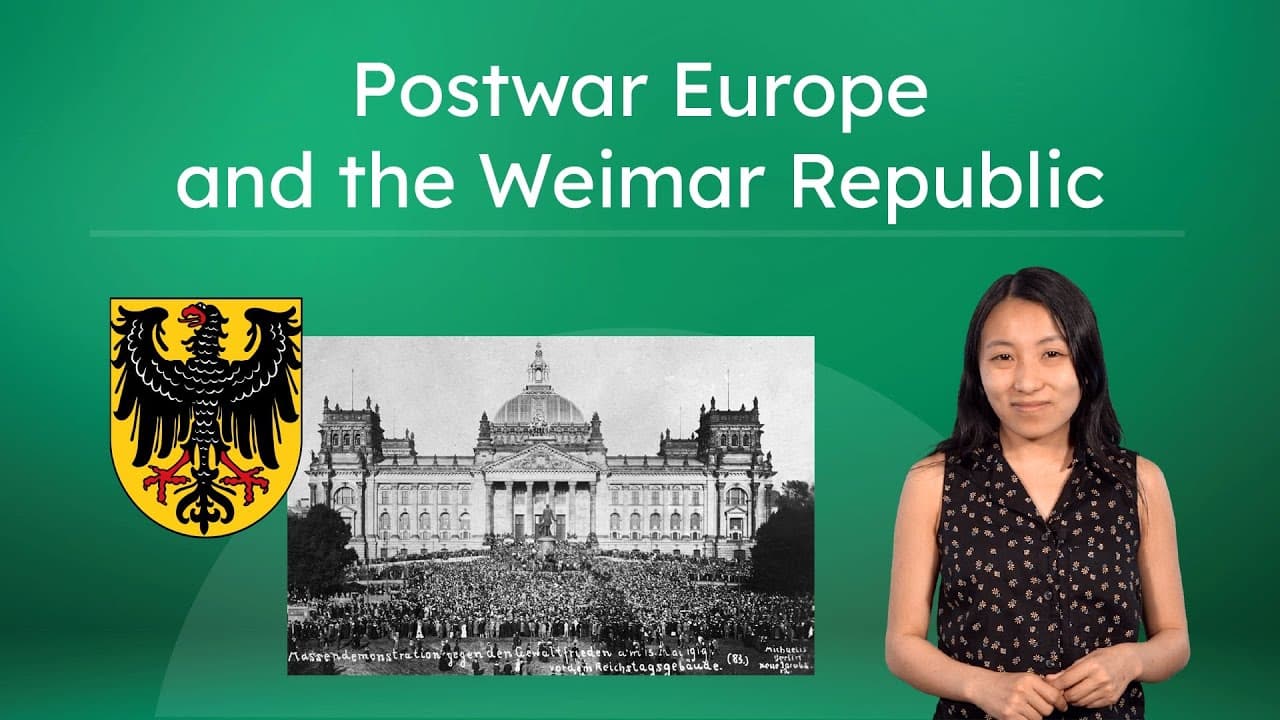
Miacademy & MiaPrep Learning ChannelMiacademy & MiaPrep Learning Channel

9mins 43s