Lenny LearningLenny
Create
Explore
Workspace
LoginSign up
MathEnglish Language ArtsScience & EngineeringSocial StudiesGlobal LanguagesHealth & Physical EducationSpecial EducationCounseling & Life SkillsArts & CreativityESL
Lenny LearningLenny
Lenny Learning
About
Training
Pricing
Support
Contact
© 2026 Lenny Learning Inc.
Social StudiesSocial Studies PracticesLocation WordsMapsOrder EventsChronology and CausationEvaluating SourcesHistorical ThinkingGeography, Humans, & the EnvironmentAmerican Symbols and LandmarksCitiesStatesState CapitalsRegions of the United StatesGeographic SkillsPhysical GeographyHuman GeographyRegional GeographyGeography of AfricaGeography of AsiaGeography of EuropeGeography of OceaniaGeography of the AmericasSociety and Environment of EuropeSociety and Environment of AsiaSociety and Environment of The AmericasSociety and Environment of the Middle EastSociety and Environment of AfricaHistoryPrehistoryComparing Ancient River CivilizationsAncient MesopotamiaAncient Egypt and KushAncient South AsiaEarly ChinaGreeceRome and the Byzantine EmpireAncient World HistoryNative Peoples of North AmericaNative Peoples of Mesoamerica and South AmericaAfrican EmpiresMedieval AsiaMedieval EuropeThe Silk RoadMedieval HistoryIslamic EmpiresWorld ReligionsRenaissance PeriodAge of ExplorationThe Thirteen ColoniesThe American RevolutionUS History Early RepublicFounding of the United StatesUS History AntebellumUS Civil WarReconstruction PeriodThe Gilded AgeUS ImperialismWorld ImperialismWorld War IUS History 1920sGreat DepressionWorld War IIThe Cold WarUS History 1950-60sUS History 1960s-70sWorld History 20th CenturyContemporary US HistoryContemporary World HistoryHolidaysCivics and GovernmentCitizenshipGovernment FoundationsThe ConstitutionUS ConstitutionExecutive BranchLegislative BranchJudicial BranchState and LocalPolitical ParticipationPublic PolicyPolitical SystemsPower and AuthoritySocial MovementsDefining DevianceTheories of DevianceCrime and Criminal JusticeEconomicsBasic Economic PrinciplesSupply and DemandWhat is MoneyEconomic FundamentalsMicroeconomicsMacroeconomicsBanking and FinanceEconomic SystemsGlobal EconomicsCorporations and PowerThe Changing WorkplaceUnemployment and LaborClass and InequalitySocial MobilityGlobal InequalityPsychologyHistory of PsychologyPsychology as a ScienceBrain and Nervous SystemNeuroscience and BehaviorGenetics and BehaviorSleep and ConsciousnessSensory ProcessesPerceptual OrganizationClassical ConditioningOperant ConditioningObservational LearningCognitive LearningMemory ProcessesThinking and Problem SolvingLanguage and CognitionTheories of MotivationStress and CopingPrenatal and Infant DevelopmentChildhood DevelopmentAdolescent DevelopmentAdulthood and AgingSelf and IdentitySocial CognitionSocial InfluenceAttraction and RelationshipsGroup BehaviorPrejudice and DiscriminationAnxiety and Mood DisordersClinical PsychologyForensic PsychologyPhilosophy & EthicsIntroduction to PhilosophyMajor Philosophers & IdeasMind and Body ProblemFree Will vs DeterminismEthics & MoralityReligion & PhilosophyPolitical Philosophy

Civics and Government

SequencesLessonsMaterialsVideos
  1. Social Studies

Civics and Government

SequencesLessonsMaterialsVideos

Structural foundations of the US government, including the Constitution and the three branches of power at federal, state, and local levels. Examines political participation, public policy, and the sociological frameworks of deviance and criminal justice.

CitizenshipRights, responsibilities, and the legal process of naturalization within a democratic framework. Examines the importance of civic participation, ethical engagement, and the balance between individual liberties and community obligations.
Government FoundationsHistorical origins of democracy, the separation of powers, and the U.S. Constitution. Connects Enlightenment philosophies to foundational documents like the Bill of Rights.
The ConstitutionFundamental principles of U.S. governance, including the Preamble, Articles, and the Bill of Rights. Examines the separation of powers, checks and balances, and the amendment process.
US ConstitutionPrinciples of American democracy through the three branches of government, checks and balances, and the Bill of Rights. Examines the amendment process and the distribution of power between federal and state authorities.
Executive BranchConstitutional roles of the President, Vice President, and Cabinet in enforcing federal laws. Examines the structure of the federal bureaucracy, veto powers, and presidential responsibilities as Commander-in-Chief.
Legislative BranchBicameral structure, law-making procedures, and the delegated powers of the U.S. Congress. Examines the legislative process, committee roles, and the system of checks and balances between the House and Senate.
Judicial BranchStructure and function of the federal court system, emphasizing the Supreme Court and the power of judicial review. Analyzes constitutional interpretation and the legal procedures governing the American justice system.
State and LocalStructures and functions of state, county, and municipal governments. Addresses the division of power between federal and subnational entities alongside the delivery of local public services.
Political ParticipationVoting mechanisms, election cycles, and diverse forms of civic engagement like lobbying and grassroots activism. Analyzes the influence of political parties, interest groups, and public opinion on democratic decision-making.
Public PolicyProcesses of identifying societal problems, formulating solutions, and implementing legislative frameworks. Analyzes the influence of interest groups, public opinion, and research on local and national decision-making.
Political SystemsComparative analysis of democratic, authoritarian, and hybrid governance models across the globe. Examines power distribution, leadership selection processes, and the role of constitutional frameworks in defining state authority.
Power and AuthorityExamines sources of political legitimacy and the distribution of power within various governance systems. Distinguishes between coercive force and legal-rational authority while addressing how societies establish and limit leadership influence.
Social MovementsHistorical and contemporary collective actions used to influence public policy and achieve social change. Examines strategies like grassroots organizing, protests, and legislative lobbying across various rights-based movements.
Defining DevianceAnalysis of social norms, labeling theory, and the shifting definitions of acceptable behavior across different cultures. Examines how formal and informal sanctions enforce social control and influence legal frameworks.
Theories of DevianceAnalyzes sociological perspectives on norm violations and societal reactions. Examines strain, labeling, and conflict theories to understand how legal and social systems define and manage deviance.
Crime and Criminal JusticeConstitutional foundations of the legal system, law enforcement procedures, and judicial proceedings. Addresses due process, categories of criminal offenses, and the functions of the correctional system.
Video
Using Revolutionary Traditions to Create Social Change

Using Revolutionary Traditions to Create Social Change

This educational video explores how the core principles of the United States' founding documents—the Declaration of Independence and the Constitution—created a "revolutionary tradition" that has been utilized by marginalized groups to effect social change. It defines key concepts like popular sovereignty, natural rights, and the distinction between suffrage (voting) and mass democracy (participation outside the voting booth). The video argues that these founding ideals provide a "measuring stick" against which society can be judged and improved.

Miacademy & MiaPrep Learning ChannelMiacademy & MiaPrep Learning Channel

12mins 18s

Video
How Religion in America Evolved Through History

How Religion in America Evolved Through History

This educational video provides a comprehensive overview of the evolution of the religious landscape in the United States, tracing its roots from a predominantly Protestant colonial society to a diverse modern nation. The narrator uses relatable analogies to explain complex social dynamics before diving into key historical periods, specifically focusing on how the Great Awakening reinforced early Christian dominance and how subsequent waves of immigration introduced Catholicism, Judaism, and Eastern philosophies to the American cultural fabric. Key themes explored include the tension between the constitutional promise of religious freedom (the Free Exercise Clause) and the historical reality of discrimination faced by minority groups. The video presents case studies on Jewish immigrants fleeing antisemitism and Chinese immigrants arriving during the Gold Rush, highlighting both their contributions and the systemic barriers they encountered, such as the Immigration Act of 1924. It defines important concepts like "religious revival," "secularism," and "antisemitism" within their historical contexts. For educators, this video serves as an excellent resource for U.S. History and Civics units. It connects abstract constitutional rights to concrete historical events, allowing students to analyze demographic shifts and discuss the social impacts of immigration. The video features built-in pause points for document analysis activities, making it a ready-to-use tool for teaching about the First Amendment, the history of immigration policy, and the value of cultural diversity.

Miacademy & MiaPrep Learning ChannelMiacademy & MiaPrep Learning Channel

11mins 56s

Video
How the Cold War Shaped America

How the Cold War Shaped America

This fast-paced educational video provides a comprehensive overview of the Cold War, framing it not just as a geopolitical struggle but as an era that fundamentally reshaped the United States between 1945 and 1990. Hosted by John Green, the video explores the origins of the conflict, contrasting the post-WWII positions of the United States and the Soviet Union. It explains the ideological battle between capitalism and communism and details key American strategies like the policy of containment, the Truman Doctrine, and the Marshall Plan, which aimed to stop the spread of Soviet influence in Europe and Asia. The narrative digs deep into how foreign policy decisions impacted domestic life in America. It covers the creation of the national security state (CIA, NSC), the nuclear arms race, and the cultural impact of living under the constant threat of annihilation. Significant attention is given to the "Red Scare" and McCarthyism, illustrating how the fear of communism led to loyalty oaths, espionage trials (the Rosenbergs), and a political climate where dissent was often equated with disloyalty. The video also highlights unintended domestic benefits, such as the construction of the interstate highway system and increased funding for education and science. For educators, this resource serves as an excellent anchor for units on 20th-century history, foreign policy, or civics. It challenges students to think critically about the definition of "war," the trade-offs between security and liberty, and how international relations can dictate domestic social agendas. The video includes primary source analysis (NSC-68) and connects historical events to modern concepts of freedom and government responsibility, making it a versatile tool for stimulating high-level classroom discussion and analysis.

CrashCourseCrashCourse

13mins 34s

Video
Understanding Rights, Responsibilities, and the Social Contract

Understanding Rights, Responsibilities, and the Social Contract

This educational video explores the foundational concepts of United States citizenship, focusing on the relationship between rights and responsibilities. It begins by using a relatable analogy of a car loan contract to explain the "Social Contract" theory derived from Enlightenment thinker John Locke. The host explains how this theory influenced the Founding Fathers to create a government where citizens sacrifice some absolute freedom in exchange for the protection of their natural rights.

Miacademy & MiaPrep Learning ChannelMiacademy & MiaPrep Learning Channel

11mins 18s

Video
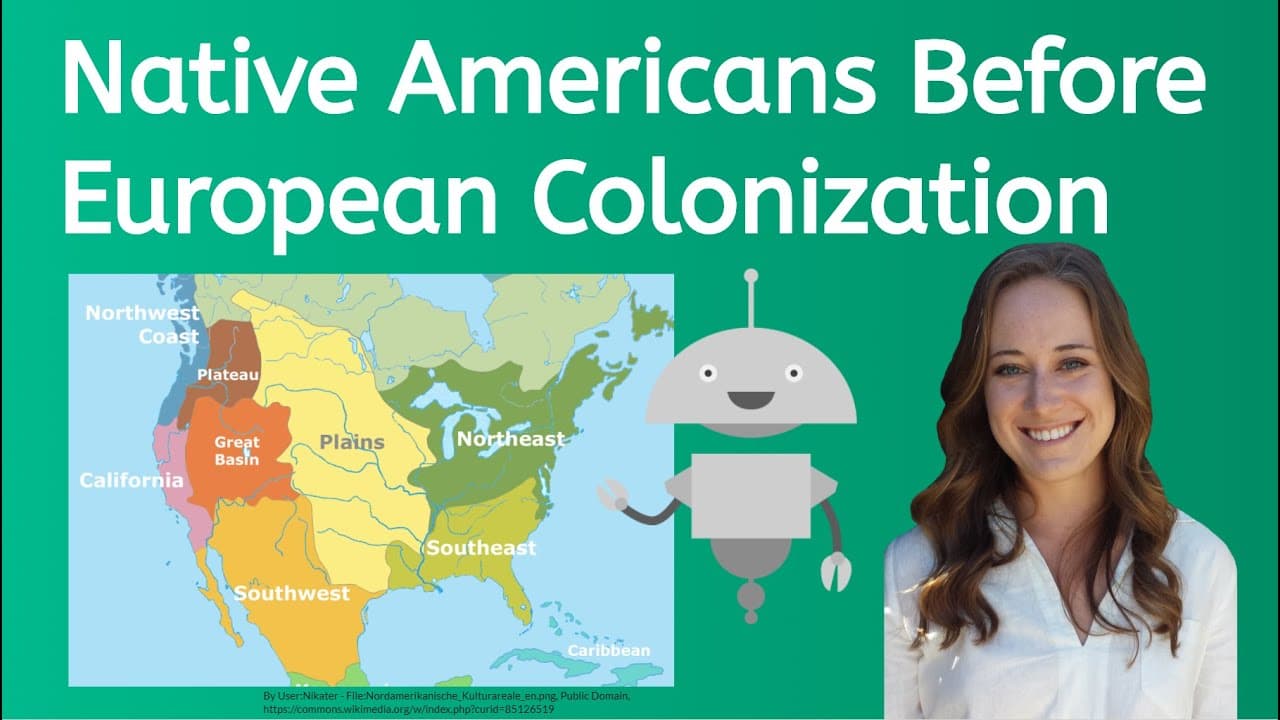
Exploring Native American Cultures Before Colonization

Exploring Native American Cultures Before Colonization

This educational video provides a comprehensive overview of Native American life across what is now the continental United States before European colonization. It breaks down the continent into specific geographic regions—Northeast, Southeast, Great Plains, Southwest, and Northwest/West—and examines how the distinct environments of each area shaped the cultures, economies, and lifestyles of the indigenous peoples who lived there. The narrator explains how different tribes adapted to their surroundings, from the agricultural societies of the East to the nomadic bison hunters of the Plains and the salmon fishers of the West. Key themes explored include the relationship between geography and culture, the diversity of political systems (ranging from the democratic Iroquois League to hierarchical chiefdoms), and technological innovations like irrigation and architectural styles. The video highlights specific tribes such as the Iroquois, Cherokee, Cheyenne, Pueblo, and Chinook, illustrating their unique housing structures, food sources, and spiritual beliefs. It emphasizes that Native American history is not a monolith but a tapestry of distinct, complex societies that thrived for thousands of years before European contact. For educators, this video serves as an excellent foundational resource for units on US History, geography, and indigenous cultures. It offers clear opportunities for comparative analysis, allowing students to contrast how different groups solved similar human needs—like shelter and food—based on available resources. The visual maps and clear categorization make it easy for students to organize information, while concepts like the "Three Sisters" agriculture and the Iroquois League's influence on democracy provide rich entry points for interdisciplinary learning in science and civics.

Miacademy & MiaPrep Learning ChannelMiacademy & MiaPrep Learning Channel

9mins 56s

Video
Defining Heroes and Traitors in American History

Defining Heroes and Traitors in American History

This educational video explores the complex and often subjective definitions of "hero" and "traitor" through three distinct case studies from American history. The narrator challenges students to look beyond simple definitions and consider how historical context, personal values, and perspective shape these labels. The video examines John Adams' controversial defense of British soldiers after the Boston Massacre, Colonel John Chivington's role in the horrific Sand Creek Massacre, and Carry Nation's radical "hatchetations" during the temperance movement. The video delves into deep ethical questions about justice, duty, and morality. It asks students to evaluate whether John Adams was a traitor to the colonial cause or a hero of justice for defending the enemy. It contrasts Chivington's self-proclaimed heroism in protecting settlers with the brutal reality of massacring peaceful Cheyenne and Arapaho people. Finally, it analyzes Carry Nation's crusade against alcohol, asking if her violent methods undermined her virtuous goals. Each segment includes pauses for reflection and specific guiding questions. Teachers can use this video to foster critical thinking and historical analysis skills. It serves as an excellent anchor for lessons on the American Revolution, Native American history, or the Prohibition era. By presenting historical figures who defy easy categorization, the video encourages students to engage with nuance and ambiguity. It is particularly useful for sparking debates about the rule of law, the ethics of war, and the validity of different protest methods.

Miacademy & MiaPrep Learning ChannelMiacademy & MiaPrep Learning Channel

11mins 30s

Video
Understanding Government and Politics: The Engine and the Driver

Understanding Government and Politics: The Engine and the Driver

This engaging educational video introduces students to the fundamental concepts of government and politics, distinguishing clearly between the two often-confused terms. Using accessible analogies—specifically comparing government to a car's engine and politics to the driver—the narrator explains how these systems function to organize society. The video emphasizes that government is a tool for social control and management, while politics is the process by which decisions are made regarding society's direction and resource distribution. Key themes include the distinction between power and authority, the crucial role of individual rights in checking government power, and the concept of "mass politics" where ordinary citizens participate through voting, debating, and protesting. The lesson also explores the historical origins of governance, tracing it back to family units, clans, and early agricultural societies like the Natufians, showing how increased population density necessitated written laws and formal structures. This resource is highly valuable for Civics and Social Studies classrooms as it simplifies abstract political science concepts into tangible examples. It empowers students by highlighting their role as future active citizens who hold the ultimate political power. The video sets a strong foundation for units on the Constitution, types of government, or the evolution of human civilization.

Miacademy & MiaPrep Learning ChannelMiacademy & MiaPrep Learning Channel

8mins 39s

Video
Why the Roman Empire Survived Until the 15th Century

Why the Roman Empire Survived Until the 15th Century

In this installment of Crash Course World History, John Green challenges the traditional narrative that the Roman Empire fell in 476 CE. Instead, he argues that the empire merely shifted its center of gravity eastward to Constantinople, where it survived and thrived as the Byzantine Empire for another thousand years. The video explores the strategic advantages of the East, the continuity of Roman law and culture, and the evolution of Christianity into the Eastern Orthodox tradition. Key themes include the fluidity of historical periodization, the intersection of religion and politics (specifically the concept of Caesaropapism), and the preservation of legal systems. The video highlights the reign of Emperor Justinian and Empress Theodora, detailing their contributions to Roman law through the Digest and Institutes, their massive building projects like the Hagia Sophia, and their handling of political unrest like the Nika Riots. For educators, this video serves as an excellent tool for AP World History or general high school history classes to discuss how historians define "empires" and "falls." It provides a clear contrast between the chaotic fragmentation of Western Europe and the centralized, wealthy stability of the Byzantine East. It also offers opportunities to discuss gender roles in history through the figure of Theodora and the long-term impact of Roman civil law on modern European legal systems.

CrashCourseCrashCourse

12mins 44s

Video
What Is a President and What Do They Do?

What Is a President and What Do They Do?

This engaging social studies video introduces young students to the role and responsibilities of the President of the United States. Through a friendly host and a humorous robot sidecharacter named Plato, the video breaks down complex civics concepts into digestible information. It covers where the president lives, their role in making laws with Congress, their duties as Commander-in-Chief, and the requirements for holding office. Key themes include the structure of the U.S. government, the difference between a monarchy and a democracy, and the electoral process. The video explains how citizens vote to choose their leader, contrasting this with kings and queens who are born into power. It also touches upon term limits, the importance of laws in maintaining fairness, and the President's role in international relations. For educators, this video serves as an excellent foundational resource for units on government, elections, or Presidents' Day. It simplifies abstract political concepts using relatable analogies, such as voting for a movie to watch or deciding on dinner. The content provides a springboard for classroom activities involving mock elections, writing prompts about leadership, and discussions about the rights and responsibilities of citizens.

Miacademy & MiaPrep Learning ChannelMiacademy & MiaPrep Learning Channel

6mins 1s

Video
How U.S. Foreign Policy Evolved: Isolationism to Imperialism

How U.S. Foreign Policy Evolved: Isolationism to Imperialism

This educational video explores the evolution of United States foreign policy throughout the 19th and early 20th centuries, using an engaging analogy of a teenager going through different life phases. The narrator breaks down complex political concepts into three main categories: Isolationism, Interventionism, and Imperialism. By comparing a nation's growth to human development, the video makes abstract historical strategies accessible and relatable for students.

Miacademy & MiaPrep Learning ChannelMiacademy & MiaPrep Learning Channel

12mins 18s

Video
How Campaigns and Elections Work in the US

How Campaigns and Elections Work in the US

This educational video provides a comprehensive overview of the political campaign and election process in the United States. It breaks down the complex system into three main sections: the democratic principles that underpin elections (such as popular sovereignty and federalism), the practical steps of a campaign (from declaring candidacy to the general election), and the critical issues that can affect election integrity, specifically focusing on gerrymandering. The video uses a mix of humor, clear definitions, and real-world examples to make these abstract concepts accessible. Key themes explored include the role of civic associations and special interest groups, the advantages held by incumbents, the function of political conventions, and the mechanics of redistricting. The video delves into advanced civics topics like the difference between partisan and racial gerrymandering, referencing specific Supreme Court cases like Rucho v. Common Cause. It emphasizes how the structure of federalism influences the election process at both state and national levels. For educators, this video serves as an excellent core resource for Civics, Government, or U.S. History units. It clearly defines essential vocabulary like 'incumbent,' 'platform,' and 'primary,' while also encouraging critical thinking about the fairness and efficacy of the current system. The built-in 'Show What You Know' review segments provide natural pause points for formative assessment, allowing teachers to check for understanding before moving to the next topic.

Miacademy & MiaPrep Learning ChannelMiacademy & MiaPrep Learning Channel

11mins 16s

Video
How Slave Codes Enforced Racial Hierarchy in Colonial America

How Slave Codes Enforced Racial Hierarchy in Colonial America

In this episode of Crash Course Black American History, Clint Smith explores the origins and impact of "Slave Codes"—the set of laws passed in the American colonies to legally distinct Black people (both enslaved and free) from white colonists and to cement a racial hierarchy. The video details how these laws were not merely about labor management but were designed to protect the economic "investment" of enslavers by stripping Black people of basic rights, limiting their movement, and criminalizing their independence. The video examines specific historical statutes from colonies like Virginia, Maryland, South Carolina, and New York, illustrating how the legal system evolved to make slavery hereditary and permanent. Key concepts such as "partus sequitur ventrem" (the condition of the child follows the mother) are explained to show how the law was manipulated to ensure a perpetual labor force. The narrative highlights the hypocrisy of colonists demanding liberty from Britain while simultaneously constructing a legal framework to deny liberty to Black Americans. For educators, this video serves as a crucial resource for teaching the systemic nature of racism and slavery in the United States. It moves beyond the view of slavery as just a labor system and reveals it as a legal and social structure designed to oppress. It is an excellent tool for High School US History and Civics classrooms to spark discussions about how laws can be used to enforce inequality and how the legacy of these colonial codes influences modern legal and social disparities.

CrashCourseCrashCourse

8mins 30s

Video
How Elizabeth Key Sued for Her Freedom and Won

How Elizabeth Key Sued for Her Freedom and Won

This episode of Crash Course Black American History tells the remarkable true story of Elizabeth Key, a biracial woman born in 1630s Virginia who successfully sued for her freedom. Hosted by Clint Smith, the video explores the early colonial era when the legal distinctions between indentured servitude and slavery were not yet fully calcified. It details Key's background as the daughter of an enslaved mother and a white English father, her unjust imprisonment beyond her indentured term, and the groundbreaking legal battle she waged alongside her husband and lawyer, William Grinstead. The video delves into complex historical themes including the intersectionality of race, gender, and religion in colonial law. It breaks down the three specific legal arguments Key used to win her case: her father's status as a free white man, her baptism as a Christian, and the specific terms of her original indenture contract. The narrative highlights how colonial courts struggled with questions of lineage and status before the hardening of racialized slave codes later in the century. For educators, this video serves as a powerful case study for understanding the evolution of slavery in America. It moves beyond generalized narratives to show specific human agency and legal maneuvering. It is particularly useful for demonstrating that racial categories were constructed over time through legal systems. The video concludes with a critical reflection on justice, noting that while Key's story has a happy ending, it was the exception to the rule, prompting students to question the fairness of a legal system where freedom often depended on luck rather than justice.

CrashCourseCrashCourse

7mins 52s

Video
Why We Study History: The Early Modern Era Explained

Why We Study History: The Early Modern Era Explained

This engaging educational video serves as a comprehensive introduction to an Early Modern World History course, covering the pivotal period from 1750 to 1950. The host begins by establishing the personal relevance of history, connecting students' current identities to the struggles, triumphs, and decisions of their ancestors. It moves beyond dates and facts to emphasize history as a tool for empathy, understanding societal changes, and learning from past mistakes to shape a better future. The video outlines the course structure in three distinct parts: (1) Absolutism to Revolution, exploring the Enlightenment and the shift from monarchies to democracies; (2) Industrialism to Imperialism, detailing how technological shifts led to global competition for resources and colonization; and (3) The World at War, covering the devastation of World war I and II. It also introduces critical historical thinking skills, such as analyzing primary sources, understanding cause and effect, and evaluating credibility. For educators, this video is an excellent course opener or unit introduction. It provides a "historian's toolbox" framework that teachers can reference throughout the year, encouraging students to "zoom out" for the big picture and "zoom in" for multiple perspectives. The content addresses difficult topics like slavery, oppression, and war with sensitivity, making it a strong launchpad for discussions about historical empathy and the ethical responsibilities of global citizens.

Miacademy & MiaPrep Learning ChannelMiacademy & MiaPrep Learning Channel

11mins 23s

Video
Constructing the Constitution: Compromises and the Electoral College

Constructing the Constitution: Compromises and the Electoral College

This educational video provides a detailed exploration of the political transition from the Articles of Confederation to the United States Constitution. It uses accessible analogies, such as ordering pizza for a party, to explain complex political challenges like interstate disagreements and the inefficiency of the early American government. The narrative covers the failure of the Articles of Confederation following Shays' Rebellion, leading to the Constitutional Convention of 1787 where delegates gathered to create a stronger national system.

Miacademy & MiaPrep Learning ChannelMiacademy & MiaPrep Learning Channel

8mins 19s

Video
Causes of the American Revolution: Taxes, Tea, and Common Sense

Causes of the American Revolution: Taxes, Tea, and Common Sense

In this engaging installment of Crash Course US History, John Green explores the complex origins of the American Revolution, carefully distinguishing between the political revolution and the military War for Independence. The video traces the timeline of escalating tensions between Great Britain and the colonies following the Seven Years' War, explaining how British debt led to a series of unpopular taxes—the Sugar Act, Stamp Act, and Townshend Acts—and how the colonists' response evolved from disorganized grumbling to coordinated boycotts and unified political action. Key themes include the concept of "taxation without representation," the economic motivations behind colonial protests, and the philosophical shift from seeking rights as Englishmen to demanding natural rights as human beings. Green highlights crucial events like the Boston Massacre, the Boston Tea Party, and the convening of the Continental Congress, while also spotlighting influential figures like Thomas Paine, whose pamphlet "Common Sense" played a pivotal role in shifting public opinion toward independence. For educators, this video serves as an excellent overview of the causal chain leading to 1776. It moves beyond simple dates and battles to examine the ideological and economic drivers of the conflict. The content is ideal for analyzing cause-and-effect relationships in history, understanding the power of propaganda and political writing, and discussing the difference between legislative disputes and revolutionary change. The fast-paced narration is supported by animations and primary source analysis, making it a high-yield resource for secondary social studies classrooms.

CrashCourseCrashCourse

12mins 19s

Video
Exploring the Roles and Powers of the U.S. President

Exploring the Roles and Powers of the U.S. President

This engaging civics video breaks down the complex roles and powers of the United States President, moving beyond the simple definition of "leader" to explore the specific duties mandated by the Constitution and those established by tradition. The video uses a direct-to-camera presentation style mixed with humor, clear graphics, and definitions to explain how the Executive Branch operates within the federal government. It categorizes presidential powers into three distinct areas: those solely from the Constitution, those combining Constitution and tradition, and those born entirely of tradition. The content explores key roles such as Chief Executive, Commander in Chief, Chief Diplomat, Chief Legislator, Chief of State, and Chief of Economy. It clearly defines important civics vocabulary like "executive order," "pardon," "reprieve," and "treaty," while explaining the checks and balances inherent in the system—such as the Senate's role in ratifying treaties and Congress's role in passing the budget. The video emphasizes that the President is not a king but a civilian leader subject to the rule of law. Ideal for middle and high school civics classrooms, this video provides a structured framework for understanding the Executive Branch. It includes built-in assessment opportunities ("Show What You Know" segments) that allow teachers to pause and check for understanding. The clear categorization of powers helps students distinguish between written law and political norms, a critical skill for analyzing current events and historical presidencies.

Miacademy & MiaPrep Learning ChannelMiacademy & MiaPrep Learning Channel

10mins 30s

Video
Defining Political Parties and Ideologies in America

Defining Political Parties and Ideologies in America

This video provides a comprehensive overview of the United States' two-party political system and dissects the complex meanings behind the terms "liberal" and "conservative." It challenges common partisan stereotypes by defining these concepts not just as party labels, but through the lens of legal interpretation, the role of government, and individual freedom. The host explains the difference between electoral politics and mass democracy, establishing a foundational understanding of how citizens interact with their government. Key themes include the structural nature of the two-party system, the philosophical differences between strict and loose constructionism regarding the Constitution, and the political spectrum ranging from radical to reactionary. The video emphasizes that political identity is often fluid and situational rather than static, using real-world examples like college tuition and taxes to show how an individual's perspective might shift based on their life circumstances. It also introduces the concept of the "status quo" to explain how political positions relative to specific laws can change over time. This video is highly valuable for high school Civics, Government, or AP US Government classes. It helps students move beyond "red team vs. blue team" thinking to understand the philosophical underpinnings of political disagreements. Teachers can use it to introduce the political spectrum, facilitate debates about specific policy issues, or help students analyze current events through a more nuanced, academic lens rather than a purely partisan one.

Miacademy & MiaPrep Learning ChannelMiacademy & MiaPrep Learning Channel

10mins 37s

Video
The 1980s Culture Wars: Origins and Impact

The 1980s Culture Wars: Origins and Impact

This educational video explores the origins and dynamics of the "culture wars" that came to define American society in the 1980s. It traces the roots of this conflict back to the social upheavals of the 1960s and 1970s, contrasting the mainstream values of conformity and tradition with the countercultural push for peace, individualism, and social justice. The video defines the two primary opposing forces—Conservatives, represented by the Christian Right and President Ronald Reagan, and Progressives, who found influence in pop culture outlets like MTV and music by artists such as Bruce Springsteen. The content delves into specific ideological battlegrounds of the era, specifically the debates over religion in public schools and abortion rights. It clearly delineates the arguments for both sides: the Conservative desire to uphold traditional moral and religious values in public institutions, and the Progressive advocacy for the separation of church and state and individual bodily autonomy. The narration connects these historical debates to the broader concept of defining an "American identity." For educators, this video serves as an excellent primer on political polarization and social history. It encourages students to practice historical empathy by examining differing viewpoints without immediate judgment. The built-in pause points and reflection questions make it a ready-to-use tool for stimulating classroom discussion about how historical values shape current political landscapes, helping students understand that modern societal divisions have deep historical roots.

Miacademy & MiaPrep Learning ChannelMiacademy & MiaPrep Learning Channel

13mins 51s

Video
How Media Technology Changed US Government

How Media Technology Changed US Government

This educational video explores the historical evolution and significance of the media in the United States government, often referred to as the "Fourth Estate." It traces the development of communication technologies from the printing press and early newspapers to radio, television, and the modern dominance of the internet and social media. The narration explains how each technological leap changed the way politicians communicate with citizens and how citizens receive information about their government. The content highlights key historical moments, such as the First Amendment's ratification, the first radio election broadcast in 1920, and the pivotal Kennedy-Nixon debates of 1960 which demonstrated the power of visual media. It also critically analyzes the current landscape, discussing concepts like media bias, echo chambers, misinformation, and the democratization of content creation where anyone can act as "the media." For educators, this video serves as an excellent primer for Civics and Media Literacy units. It encourages students to think critically about where they get their news, the pros and cons of instant communication, and the importance of consulting multiple sources to form accurate opinions. The video provides a balanced look at how technology has both empowered citizens and created new challenges for democratic discourse.

Miacademy & MiaPrep Learning ChannelMiacademy & MiaPrep Learning Channel

10mins 56s

Video
Evolution of US Foreign Policy: From Isolation to Superpower

Evolution of US Foreign Policy: From Isolation to Superpower

This educational video provides a comprehensive overview of United States foreign policy, tracing its evolution from the nation's founding to the modern era. It begins by establishing the Constitutional roles of the Executive, Legislative, and Judicial branches in crafting foreign policy, clarifying the balance of power between the President and Congress. The narrative then moves chronologically, highlighting George Washington's initial advice of isolationism and the shift toward interventionism through the Monroe Doctrine, territorial expansion, and the World Wars. The video explores the US's transition into a global superpower during the 20th century, covering the Cold War, the containment of communism, and post-9/11 military engagements. It also addresses contemporary issues such as foreign aid, trade deficits with nations like China, the rise of new economic powers like India, and global challenges like climate change and nuclear proliferation. The content emphasizes how historical events have shaped current diplomatic relationships and military presence worldwide. Designed for civics and history classrooms, this resource helps students connect historical precedents to current events. It concludes with a strong message about civic engagement, encouraging students to understand these complex issues so they can participate effectively in the democratic process through voting and debate. The video is an excellent tool for teaching the practical application of checks and balances and the history of America's role on the world stage.

Miacademy & MiaPrep Learning ChannelMiacademy & MiaPrep Learning Channel

9mins 54s

Video
Exploring the American Revolution: Battles, Ideas, and Contradictions

Exploring the American Revolution: Battles, Ideas, and Contradictions

This fast-paced and engaging educational video dives deep into the American Revolution, moving beyond simple battle tactics to explore the complex social and political shifts—and stagnations—of the era. Host John Green challenges students to consider whether the American Revolution was truly "revolutionary" by examining who actually benefited from the war. While covering key military turning points like Saratoga and Yorktown, the narrative places equal weight on the experiences of soldiers, women, Native Americans, and enslaved people, offering a more nuanced view of the founding era than traditional textbooks often provide. Key themes include the contrast between the war's idealistic rhetoric and the reality of life for marginalized groups. The video tackles the "hypocrisy of liberty" by discussing how the Founding Fathers fought for freedom while maintaining a system of slavery. It introduces critical historical concepts such as "Republican Motherhood," the strategic differences between the British and Continental armies, and the varying motivations for different groups to join the fight. The role of international intervention, specifically from France, is also highlighted as a decisive factor in the war's outcome. For educators, this resource is an excellent tool for high school U.S. History and Civics classrooms. It serves as a powerful springboard for discussions about historical memory, the definition of freedom, and the long-term impacts of the Revolution on American society. Teachers can use the video's analysis to help students critique primary sources, understand historical irony, and evaluate the complexities of the founding documents in the context of the late 18th century.

CrashCourseCrashCourse

12mins 41s

Video
How US Elections Work: The Constitution, Plurality, and Two Parties

How US Elections Work: The Constitution, Plurality, and Two Parties

This fast-paced educational video explores the fundamental structures, rules, and theories behind elections in the United States. Hosted by Craig Benzine, the video moves beyond media coverage of campaigns to examine the constitutional and legal frameworks that dictate how elections actually work. It clarifies the division of power between federal and state governments in running elections, explaining that while the Constitution sets basic guidelines, individual states hold significant control over the "times, places, and manner" of elections. The video dives deep into political science concepts like "Adverse Selection" and the "Plurality Rule" (often called winner-take-all), using animated diagrams to demonstrate how these mathematical realities inevitably lead to the United States' two-party system through Duverger's Law. It also covers the history of voting rights, referencing key Constitutional amendments (12th, 17th, 24th, 26th) and the Voting Rights Act of 1965. For educators, this resource is an essential tool for high school Civics and Government classrooms. It helps students transition from a surface-level understanding of voting to a structural analysis of the political system. By explaining *why* the system produces specific outcomes (like why third parties rarely win), it empowers students to engage critically with political institutions rather than just observing candidates.

CrashCourseCrashCourse

8mins 46s

Video
The Progressive Presidents: Roosevelt, Taft, and Wilson

The Progressive Presidents: Roosevelt, Taft, and Wilson

In this installment of Crash Course US History, John Green explores the Progressive Era through the lens of three key presidents: Theodore Roosevelt, William Howard Taft, and Woodrow Wilson. The video examines how the role of the federal government expanded significantly during the early 20th century, moving away from laissez-faire economics toward active regulation of big business and protection of social welfare. It contrasts the differing political philosophies of the time, such as Roosevelt's "New Nationalism" versus Wilson's "New Freedom," while highlighting the chaotic four-way election of 1912. The video delves deeply into the foreign policies of these presidents, challenging the notion that Progressivism was solely a domestic movement. It details the "Big Stick" diplomacy of Roosevelt, the "Dollar Diplomacy" of Taft, and the "Moral Diplomacy" of Wilson, showing how each led to increased U.S. intervention in Latin America and the Caribbean. Specific historical events like the construction of the Panama Canal, the occupation of Veracruz, and the pursuit of Pancho Villa are used to illustrate the contradictions between American ideals of freedom and its imperialistic actions abroad. This resource is highly valuable for high school history classrooms, particularly AP US History, as it synthesizes complex political and economic concepts into an engaging narrative. It provides concrete examples of federal legislation (like the Clayton Antitrust Act and the Federal Reserve Act) and constitutional amendments (16th, 17th, 18th, 19th) that reshaped American society. Teachers can use this video to spark discussions on the definition of the "modern presidency," the balance between liberty and government control, and the historical roots of American foreign policy.

CrashCourseCrashCourse

15mins 7s

Video
How Federal Indian Law Shapes Native Sovereignty

How Federal Indian Law Shapes Native Sovereignty

This episode of Crash Course Native American History tackles the incredibly complex and often confusing subject of Federal Indian Law. Host Che Jim explains that this isn't just a single set of rules, but a centuries-long accumulation of treaties, court cases, executive orders, and statutes that define the legal relationship between the United States government and Native nations. The video uses the metaphor of a tangled string of Christmas lights to visualize how messy and interconnected these legal precedents are, covering everything from international travel to criminal jurisdiction. The video explores three main levels of impact: the individual, the community, and the land. It provides concrete examples for each, such as the Haudenosaunee lacrosse team's struggle to travel on their own passports, the jurisdictional crisis contributing to the Missing and Murdered Indigenous Women (MMIW) epidemic, and the legal hurdles regarding land use and hunting rights. The concept of "Domestic Dependent Nations" is introduced to explain how tribes retain sovereignty while still being subject to U.S. federal power. For educators, this video is a vital resource for civics, government, and U.S. history classes. It moves beyond abstract definitions of sovereignty to show real-world consequences of legal technicalities. It addresses hard truths about systemic inequalities while also highlighting Indigenous resilience and legal victories, such as the restoration of hunting rights and the revival of traditional ecological practices like clam gardening to combat climate change.

CrashCourseCrashCourse

10mins 44s

Video
How Constitutional Amendments Changed Government Structure

How Constitutional Amendments Changed Government Structure

This educational video explores the specific amendments to the U.S. Constitution that altered the structure and function of the federal government, rather than just focusing on individual rights. It categorizes these amendments into two main groups: those dealing with general government procedures (like taxation and congressional pay) and those specifically refining the office of the Presidency (including elections, terms, and succession). The video provides a chronological and thematic breakdown of Amendments 10, 11, 12, 16, 17, 20, 22, 23, 25, and 27. Key historical contexts are provided for each, such as the *Chisholm v. Georgia* Supreme Court case leading to the 11th Amendment and FDR's four terms leading to the 22nd Amendment. It effectively uses visual aids like maps, historical photos, and diagrams to explain complex concepts like Federalism and the Electoral College. Teachers can use this video to deepen students' understanding of U.S. Civics beyond the Bill of Rights. It is particularly useful for units on the Constitution, the Executive Branch, and the evolution of American democracy. The content explains *why* the government operates the way it does today, making abstract political rules concrete through historical examples.

Miacademy & MiaPrep Learning ChannelMiacademy & MiaPrep Learning Channel

8mins 46s

Video
Exploring the Clinton Presidency and the 1990s

Exploring the Clinton Presidency and the 1990s

In this episode of Crash Course US History, John Green explores the 1990s and the presidency of Bill Clinton. The video covers the complex domestic and foreign landscape of the decade, from the booming economy fueled by the tech revolution and the internet to the dark failures of international intervention in Rwanda and the Balkans. It examines Clinton's political strategy of 'triangulation,' his battles with a Republican-led Congress under Newt Gingrich, and the eventual scandal and impeachment that marred his second term. The content delves into key themes such as globalization, the rise of the 'New Democrat,' and the intensifying culture wars of the late 20th century. It breaks down significant policy shifts like welfare reform, the 'Don't Ask, Don't Tell' military policy, and the controversial 1994 Crime Bill that led to mass incarceration. The video also highlights the demographic shifts in America due to immigration reform and the widening economic gap despite overall prosperity. For educators, this video serves as an excellent synthesis of modern American history, connecting political decisions to long-term societal trends. It provides opportunities to discuss the role of the US in post-Cold War geopolitics, the impact of technology on the economy, and the polarization of American politics. The video handles sensitive topics like the Monica Lewinsky scandal and the Rwandan genocide with historical context, making it a robust resource for high school US History and Civics classrooms.

CrashCourseCrashCourse

15mins 38s

Video
Exploring Your Legal Rights: Bill of Rights Amendments 4-8

Exploring Your Legal Rights: Bill of Rights Amendments 4-8

This educational video provides a comprehensive overview of the "Legal Rights" found in the United States Constitution, specifically focusing on Amendments 4 through 8 of the Bill of Rights. Through a mix of direct narration, on-screen text definitions, and illustrative case studies, the video explains how these amendments restrict government power and protect the rights of the accused. It uses the fictional town of "Burgerville" to illustrate due process concepts before diving into the specific legal protections guaranteed to all citizens. The video breaks down complex legal terminology into accessible definitions, covering key concepts such as probable cause, warrants, due process, double jeopardy, and self-incrimination. It specifically highlights the landmark Supreme Court case *Miranda v. Arizona*, explaining the origin and necessity of the "Miranda Rights" used in law enforcement today. Each amendment is examined individually, clarifying specific protections like the right to a speedy trial, legal counsel, and protection against cruel and unusual punishment. Ideal for Civics, Government, and U.S. History classrooms, this resource helps students understand the balance between police authority and individual liberty. By defining technical vocabulary (like indictment, plaintiff, and class action) and providing historical context, it equips students with the knowledge to participate in the legal system and understand their constitutional protections.

Miacademy & MiaPrep Learning ChannelMiacademy & MiaPrep Learning Channel

7mins 5s

Video
Native American Sovereignty Explained: The Legal Battle of the Chinook Nation

Native American Sovereignty Explained: The Legal Battle of the Chinook Nation

This educational video explores the complex legal and historical concept of Native American tribal sovereignty in the United States, using the ongoing struggle of the Chinook Indian Nation for federal recognition as a central case study. The host, Che Jim, explains that while the Chinook people have a distinct culture, history, and government that predates the U.S., they are not currently recognized as a sovereign nation by the federal government, which impacts their rights to land, resources, and self-governance. The video delves into key legal frameworks that define the relationship between tribes and the U.S. government, including the Constitution's Indian Commerce Clause and the landmark "Marshall Trilogy" Supreme Court cases. It defines critical terms like "sovereignty," "domestic dependent nations," and "plenary power," illustrating how these legal definitions have historically been used to both recognize and limit tribal authority. The content covers the practical implications of sovereignty today, such as the ability to form police forces, levy taxes, manage healthcare during pandemics, and negotiate compacts for economic development like casinos. For educators, this video serves as a powerful tool for teaching Civics, U.S. Government, and American History. It provides a nuanced explanation of the "nation-to-nation" relationship that is often misunderstood, moving beyond simple definitions to explore the contradictions and legal gray areas inherent in federal Indian law. It connects historical events like the 1950s Termination Era to modern-day issues like the Chinook Nation's 2017 lawsuit, making it excellent for discussions on civil rights, constitutional law, and the resilience of Indigenous cultures.

CrashCourseCrashCourse

11mins 22s

Video
How the US Government Checks and Balances Power

How the US Government Checks and Balances Power

In this fast-paced and engaging episode of Crash Course Government and Politics, host Craig Benzine breaks down two of the most fundamental concepts of the American political system: Separation of Powers and Checks and Balances. Through the use of humor, historical examples, and a "Clone Zone" skit, the video clarifies the distinct roles of the Legislative, Executive, and Judicial branches as defined by Articles I, II, and III of the Constitution. It explains that while the branches have separate primary functions—making, executing, and interpreting laws—they are inextricably linked through a system designed to prevent any single branch from becoming too powerful. The video dives deep into the specific mechanisms each branch uses to limit the others, moving beyond simple definitions to explore practical applications. Viewers learn how Congress can impeach officials and control the budget, how the President can veto laws and appoint judges, and how the Supreme Court can declare acts unconstitutional. The narrative effectively uses historical examples, such as President Nixon's pardon and the steel seizure case, to illustrate these abstract concepts in action. Ideal for Civics and Government classrooms, this resource helps students understand not just *what* the government does, but *why* it is structured this way. It concludes with an analysis of James Madison's Federalist Paper No. 51, connecting the structural design of the Constitution to the founders' views on human nature and the necessity of "ambition counteracting ambition." This video serves as an excellent primer for understanding the intentional friction built into the U.S. government.

CrashCourseCrashCourse

8mins 31s

Video
Beyond the President: The Vice President and Cabinet Explained

Beyond the President: The Vice President and Cabinet Explained

This educational video provides an in-depth look at the Executive Branch of the United States government, moving beyond the presidency to explore the critical roles of the Vice President and the Cabinet. It details the constitutional requirements, selection processes, and responsibilities associated with these positions, highlighting how the executive branch functions as a massive team rather than a one-person show. The video uses historical examples, such as George Washington's original cabinet and the relationship between early presidents and vice presidents, to illustrate how these roles have evolved over time. The content breaks down the specific duties of key Cabinet departments, including the \"Original Four\"—State, Treasury, Defense, and Justice—explaining how they support the President in managing national affairs. It also covers the Vice President's dual role as the President of the Senate and a key advisor, as well as the importance of other staff members like the Chief of Staff. The video clarifies the checks and balances involved, particularly the Senate's role in confirming appointments. For educators, this video serves as an excellent resource for Civics and U.S. History units. It transforms abstract government structures into concrete examples, making it easier for students to understand federal administration. The clear explanations of department functions and the visuals of historical figures help contextualize the scale of the executive branch, making it a perfect launchpad for lessons on government hierarchy, the separation of powers, and career exploration in public service.

Miacademy & MiaPrep Learning ChannelMiacademy & MiaPrep Learning Channel

9mins 26s

Video
How the Constitution Functions as a Social Contract

How the Constitution Functions as a Social Contract

This educational video introduces students to the concept of constitutional government by drawing a relatable analogy to the "Terms and Conditions" agreements found in modern apps and software. It breaks down complex political philosophy into digestible parts, starting with the idea of a social contract as proposed by Jean-Jacques Rousseau. The narrator explains that just as users agree to terms to use an app, citizens and governments enter a social contract where citizens give up certain absolute freedoms in exchange for the protection of rights and an organized society. The video identifies and defines three core principles of constitutional government: Rule of Law (society is governed by laws, not individuals), Limited Government (government authority is restricted), and Popular Sovereignty (the ultimate power rests with the people). It emphasizes that a constitution serves as a written instrument that clearly outlines the powers of the government and, crucially, guarantees specific rights to the citizens that the government cannot infringe upon. Designed for civics and government classrooms, this resource is highly valuable for bridging the gap between abstract political theory and students' daily lives. It includes built-in pause points with reflection questions, making it an interactive tool for introducing the U.S. Constitution. The video concludes with a powerful call to civic engagement, reminding students that an informed citizenry is essential for democracy to function and that they must "vote, debate, and participate."

Miacademy & MiaPrep Learning ChannelMiacademy & MiaPrep Learning Channel

10mins 49s

Video
Exploring Concurrent Powers: How the U.S. Government Shares Authority

Exploring Concurrent Powers: How the U.S. Government Shares Authority

This educational video provides a comprehensive overview of concurrent powers within the United States' system of federalism. It explains how power is shared between the federal government and state governments, moving beyond the basic concept of delegated and reserved powers to explore the specific responsibilities held by both simultaneously. The narrator breaks down complex constitutional concepts into digestible categories, illustrating how both levels of government possess the authority to make laws, collect taxes, enforce public safety, and maintain infrastructure.

Miacademy & MiaPrep Learning ChannelMiacademy & MiaPrep Learning Channel

8mins 36s

Video
Understanding Federalism and the Constitutional Debates

Understanding Federalism and the Constitutional Debates

This educational video introduces students to the concept of Federalism through the lens of the historical debates surrounding the ratification of the United States Constitution. Using a relatable analogy of a difficult classroom group project, the narrator explains the tension and compromise required during the Constitutional Convention. The video defines key political terms including federalism, ratification, and factions, while outlining the central conflict between the Federalists, who favored a strong national government, and the Anti-Federalists, who advocated for stronger state powers.

Miacademy & MiaPrep Learning ChannelMiacademy & MiaPrep Learning Channel

6mins 5s

Video
How Debates Created the Bill of Rights

How Debates Created the Bill of Rights

This educational video explores the historical origins and necessity of the Bill of Rights, framing it through the intense debates between Federalists and Anti-Federalists during the ratification of the U.S. Constitution. Using a relatable analogy of a school group project, the narrator explains how conflict and compromise were essential to finalizing the Constitution. The video details the specific fears Anti-Federalists held regarding vague clauses like the Supremacy Clause and their concern that a strong federal government could become tyrannical without explicit protections for individuals and states.

Miacademy & MiaPrep Learning ChannelMiacademy & MiaPrep Learning Channel

5mins 22s

Video
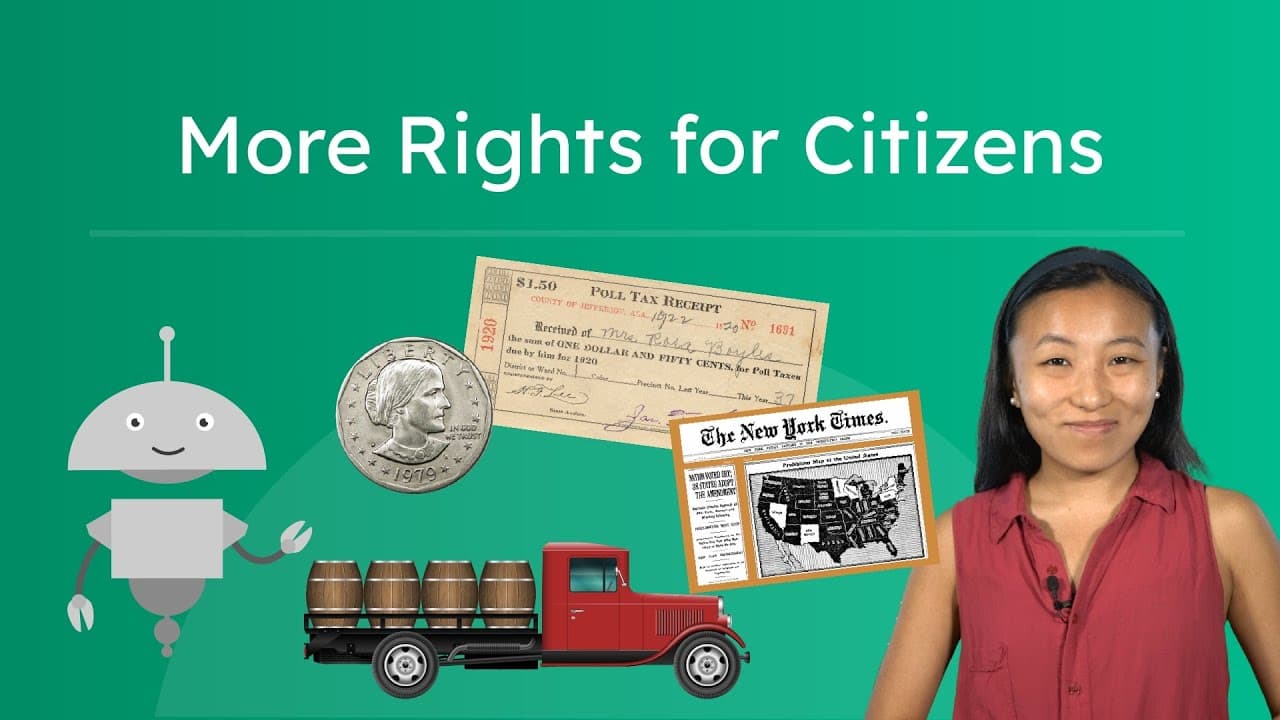
How Constitutional Amendments Expanded Citizen Rights

How Constitutional Amendments Expanded Citizen Rights

This educational video provides a comprehensive overview of the United States Constitutional amendments that expand citizen rights beyond the original Bill of Rights. Narrated by a student host named Caroline alongside an animated robot character, the video systematically categorizes these amendments into logical groups: the Ninth Amendment (unenumerated rights), Post-Civil War Amendments (13, 14, 15), Voting Rights Amendments (17, 19, 23, 24, 26), and Prohibition Amendments (18, 21). The content connects historical events to legal changes, explaining how the Civil War led to the abolition of slavery and definitions of citizenship, how the women's suffrage movement achieved the 19th Amendment, and how the Vietnam War influenced lowering the voting age to 18. It also tackles the unique case of Prohibition—the only time an amendment restricted rights and was subsequently repealed. The video utilizes historical photographs, maps, and clear text overlays to make complex constitutional history accessible. Teachers can use this video to help students understand the living nature of the Constitution and the specific struggles that led to the expansion of American democracy. It is an excellent resource for Civics and U.S. History units, offering clear definitions of key amendments while highlighting the ongoing importance of voting and civic participation.

Miacademy & MiaPrep Learning ChannelMiacademy & MiaPrep Learning Channel

8mins

Video
The Federalism Championship: States' Rights vs. Federal Power

The Federalism Championship: States' Rights vs. Federal Power

This engaging educational video introduces the complex concept of Federalism through a creative boxing match metaphor, pitting "States' Rights" against "Federal Power" in a battle for the direction of the nation. The host, Caroline, serves as the ring announcer and educator, guiding students through the definitions of strict versus loose interpretations of the U.S. Constitution and how these opposing views shape American governance. The video serves as both a review of foundational political principles and an introduction to the structure of the U.S. federal system. Key themes explored include the balance of power between national and state governments, the historical context of the Federalist vs. Anti-Federalist debates, and the structure of the three branches of government at both levels. The video emphasizes that conflict and debate are not negative side effects but intentional features of the system designed to limit government overreach and ensure liberty through checks and balances. For educators, this video is a high-utility resource for Civics and Government units. It simplifies abstract political science concepts using visual analogies and humor. The video is structurally designed for classroom use, featuring explicit "Show What You Know" pause points where questions appear on screen, allowing teachers to stop the video and facilitate immediate formative assessment without any extra preparation.

Miacademy & MiaPrep Learning ChannelMiacademy & MiaPrep Learning Channel

7mins 41s

Video
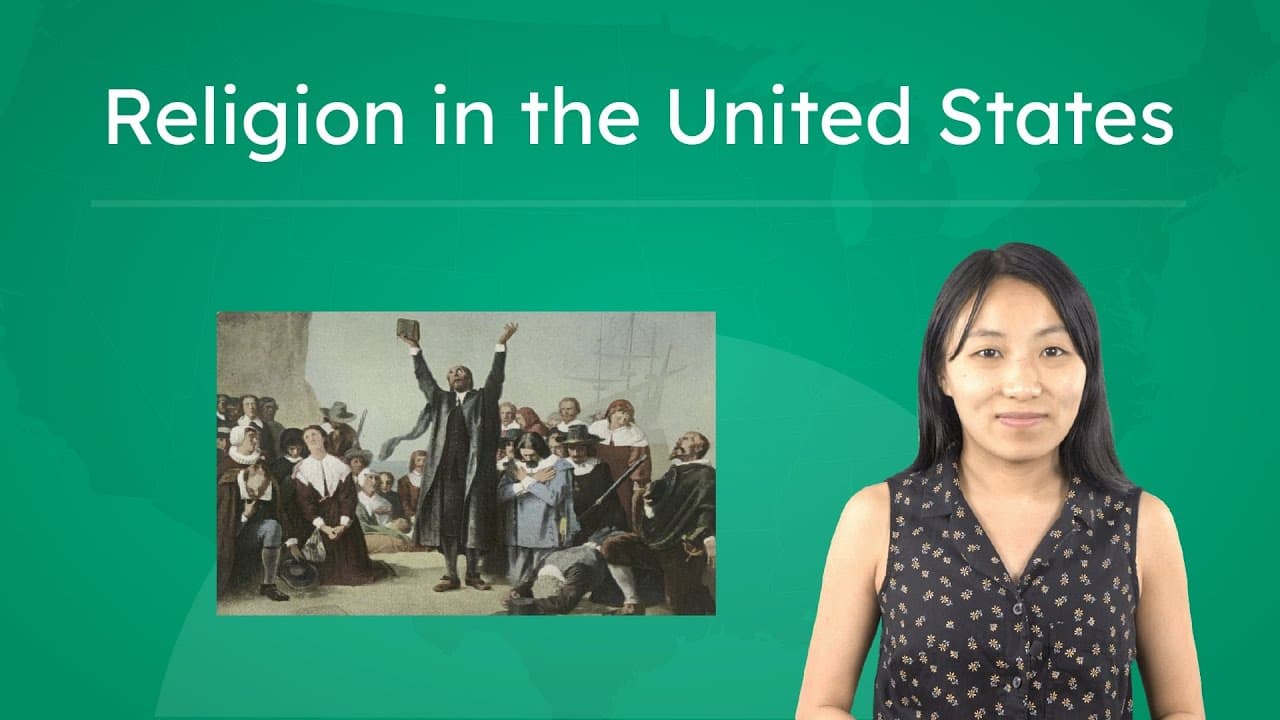
The History of Religion and Diversity in America

The History of Religion and Diversity in America

This educational video explores the evolution of the religious landscape in the United States, tracing the journey from a predominantly Protestant nation to a diverse "kaleidoscope" of faiths. The narrator guides students through three major historical phases: the dominance of Protestant Christianity reinforced by the Great Awakening, the diversification brought about by waves of immigration, and the challenges of discrimination faced by minority religious groups. Through clear definitions and historical examples, the video connects these past events to the modern cultural fabric of America. Key themes include the tension between religious freedom and societal discrimination, the impact of immigration on cultural demographics, and the role of religious revivals in American history. The video specifically highlights the Great Awakening's effect on Protestantism, the influx of Catholic and non-Christian immigrants in the 19th century, and a detailed case study on the antisemitism faced by Jewish immigrants. It emphasizes how legal protections like the First Amendment often conflicted with social realities. This resource is highly valuable for U.S. History and Civics classrooms. It provides a structured framework for understanding how American society became religiously diverse. Teachers can use the built-in pause points to facilitate analysis of primary sources (like Jonathan Edwards' sermons) or discuss the gap between constitutional ideals and historical practices. The video encourages critical thinking about tolerance, diversity, and the immigrant experience.

Miacademy & MiaPrep Learning ChannelMiacademy & MiaPrep Learning Channel

11mins 56s

Video
Understanding the U.S. Constitution and Bill of Rights

Understanding the U.S. Constitution and Bill of Rights

This engaging educational video provides a comprehensive and child-friendly introduction to the United States Constitution. It breaks down the document's structure into three main parts: the Preamble, the seven Articles, and the Amendments. The narrator simplifies complex civics concepts, explaining that the Constitution is the "highest law in the land" and establishes a government that is "for the people, by the people." A significant portion of the video is dedicated to the Bill of Rights, walking students through the first ten amendments with relatable examples and clear definitions of rights and freedoms. Key themes include the structure of the U.S. government, individual liberties, and the historical context of the nation's founding. The video highlights specific amendments, such as the freedom of speech (1st), the right to a speedy trial (6th), and the abolition of slavery (13th). It also covers the historical significance of the Constitutional Convention of 1787, introducing key figures like George Washington and James Madison, known as the "Father of the Constitution." The connection between Constitution Day and Citizenship Day is also explored, emphasizing the value of American citizenship. For educators, this video is a versatile tool for social studies and civics curricula. It transforms abstract political concepts into concrete examples students can understand, such as comparing the 4th Amendment to privacy in one's home or the 9th Amendment to the right to build a snowman. It serves as an excellent anchor for lessons on the three branches of government, the importance of laws, or commemorative activities for Constitution Day in September.

Homeschool PopHomeschool Pop

17mins 40s

Video
The U.S. Constitution and Bill of Rights Explained

The U.S. Constitution and Bill of Rights Explained

This educational video provides a comprehensive overview of the United States Constitution and the Bill of Rights, serving as an essential primer on American civics. It begins by establishing the historical context, explaining why the original Articles of Confederation were replaced and how the Founding Fathers convened in Philadelphia in 1787 to draft a stronger framework for government. The host, Maya, guides viewers through the structure of the Constitution, breaking down the Preamble and the seven Articles that define the three branches of government and federal relations. The video dedicates a significant portion of its runtime to the Bill of Rights, clarifying that these first ten amendments were added to protect individual liberties in response to citizen concerns. It lists each of the first ten amendments with clear, simplified explanations of the freedoms they secure, such as free speech, the right to bear arms, and protection against unreasonable searches. It also briefly touches upon later amendments, specifically highlighting voting rights changes in the 19th and 26th amendments. For educators, this resource is a valuable tool for introducing or reviewing the structure of the U.S. government. Its systematic breakdown of the Articles (I-VII) and the Bill of Rights (1-10) makes it ideal for note-taking exercises, memorization, and understanding the distinct roles of the Legislative, Executive, and Judicial branches. The clear visual aids and straightforward narration help demystify complex political terminology for students in upper elementary and middle school grades.

Miacademy & MiaPrep Learning ChannelMiacademy & MiaPrep Learning Channel

9mins 16s

Video
The Treaty of Versailles and the Failed Peace of World War I

The Treaty of Versailles and the Failed Peace of World War I

This educational video provides a comprehensive overview of the Treaty of Versailles, the peace agreement that officially ended World War I. Using a mix of news-broadcast style reenactments and direct instruction, the video breaks down the complex diplomatic goals of the "Big Four" nations—Britain, France, Italy, and the United States—during the Paris Peace Conference. It details the conflicting agendas of leaders like Woodrow Wilson, who sought lasting peace through his Fourteen Points, versus European leaders who demanded reparations and territorial concessions from Germany. The content meticulously explains the specific terms of the treaty, including the controversial Article 231 "War Guilt Clause," the staggering reparations demanded of Germany, and the significant redrawing of European and Middle Eastern borders. It highlights how the treaty established new nations while simultaneously planting seeds of resentment in Germany. The video also covers the domestic political battle in the United States regarding the League of Nations and the eventual rejection of the treaty by the U.S. Senate. This resource is highly valuable for history classrooms as it connects the diplomatic decisions of 1919 directly to the geopolitical tensions that led to World War II. By exploring the perspectives of both the victors and the defeated, it allows students to analyze how a peace treaty intended to end all wars ultimately laid the groundwork for future conflict. The video uses visual aids, maps, and guided questions to help students grasp these complex historical cause-and-effect relationships.

Miacademy & MiaPrep Learning ChannelMiacademy & MiaPrep Learning Channel

10mins 3s

Video
How Federal Indian Law Shapes Native Sovereignty

How Federal Indian Law Shapes Native Sovereignty

This episode of Crash Course Native American History tackles the incredibly complex and often confusing subject of Federal Indian Law. Host Che Jim explains that this isn't just a single set of rules, but a centuries-long accumulation of treaties, court cases, executive orders, and statutes that define the legal relationship between the United States government and Native nations. The video uses the metaphor of a tangled string of Christmas lights to visualize how messy and interconnected these legal precedents are, covering everything from international travel to criminal jurisdiction. The video explores three main levels of impact: the individual, the community, and the land. It provides concrete examples for each, such as the Haudenosaunee lacrosse team's struggle to travel on their own passports, the jurisdictional crisis contributing to the Missing and Murdered Indigenous Women (MMIW) epidemic, and the legal hurdles regarding land use and hunting rights. The concept of "Domestic Dependent Nations" is introduced to explain how tribes retain sovereignty while still being subject to U.S. federal power. For educators, this video is a vital resource for civics, government, and U.S. history classes. It moves beyond abstract definitions of sovereignty to show real-world consequences of legal technicalities. It addresses hard truths about systemic inequalities while also highlighting Indigenous resilience and legal victories, such as the restoration of hunting rights and the revival of traditional ecological practices like clam gardening to combat climate change.

CrashCourseCrashCourse

10mins 44s

Video
Affirmative Action: History and Supreme Court Rulings

Affirmative Action: History and Supreme Court Rulings

This episode of Crash Course Government and Politics provides a comprehensive overview of affirmative action in the United States, exploring its definition, legal history, and the intense political debate surrounding it. Host Craig Benzine navigates the complex topic by focusing on how the Supreme Court has interpreted affirmative action policies through the lens of the 14th Amendment's Equal Protection Clause. The video distinguishes between "equality of opportunity" and "equality of outcome" and uses analogies to explain the differing perspectives on these policies. The content dives deep into landmark Supreme Court cases that have shaped current laws, specifically Regents of the University of California v. Bakke (1973), Adarand Constructors v. Peña (1995), and the 2003 Michigan cases (Gratz v. Bollinger and Grutter v. Bollinger). It explains critical legal concepts like "strict scrutiny," "compelling government interest," and "narrowly tailored" policies. Additionally, it covers state-level reactions, such as California's Proposition 209, and analyzes the statistical impact of these bans on university enrollment. For educators, this video is an invaluable resource for teaching the judicial branch, civil rights, and constitutional interpretation. It models civil discourse on a polarized issue by presenting legal facts and historical context without taking a partisan stance. It serves as an excellent primer for classroom debates on admissions policies, discussions on the role of government in correcting historical wrongs, and lessons on how the Supreme Court balances individual rights against state interests.

CrashCourseCrashCourse

7mins 14s

Video
Thomas Jefferson's Presidency and Contradictions

Thomas Jefferson's Presidency and Contradictions

This episode of Crash Course US History explores the complex presidency of Thomas Jefferson, the third President of the United States. Host John Green examines the election of 1800, often called the "Revolution of 1800," and contrasts Jefferson's idealized agrarian vision for America with the pragmatic realities he faced in office. The video navigates through significant events including the Louisiana Purchase, the Barbary Wars, and the Embargo Act of 1807, while analyzing how these actions often contradicted Jefferson's own strict constructionist philosophy. A major focus of the video is the deep moral contradiction at the heart of Jefferson's life and legacy: his authorship of the Declaration of Independence and rhetoric about liberty versus his status as a lifelong slave owner who held racist views. The video details Gabriel's Rebellion to illustrate the enslaved people's desire for freedom and discusses the landmark Supreme Court case Marbury v. Madison, which established the principle of judicial review. This resource is highly valuable for high school American History and Civics classrooms. It moves beyond a simple biography to challenge students to think critically about historical figures who are "revered and reviled." It provides excellent entry points for discussions on the role of the Supreme Court, the elasticity of the Constitution, and the unintended economic consequences of foreign policy.

CrashCourseCrashCourse

13mins 19s

Video
How the Three Branches of U.S. Government Work Together

How the Three Branches of U.S. Government Work Together

This educational video provides a clear and structured overview of the United States government's three branches, explaining the fundamental concept of a representative democracy. It breaks down how the U.S. government is organized to ensure a separation of powers, preventing any single entity from gaining too much control. The narrator introduces the specific roles, responsibilities, and key members of the Legislative, Executive, and Judicial branches in a way that is accessible for elementary and middle school students. The content explores the distinct functions of Congress (Senate and House of Representatives) in making laws, the President's role in enforcing laws and leading the military, and the Supreme Court's duty to interpret laws and the Constitution. It also covers essential vocabulary such as legislation, veto, unconstitutional, and diplomacy, while explaining the checks and balances inherent in the system, such as how judges are appointed for life or how the President can veto legislation. For educators, this video serves as an excellent foundational resource for civics and social studies units. It simplifies complex political structures into digestible segments with clear visual aids, making it ideal for introducing the Constitution or government systems. The video can spark meaningful classroom discussions about why rules are important, how decisions are made in a group, and the importance of having different people in charge of different tasks to ensure fairness.

Miacademy & MiaPrep Learning ChannelMiacademy & MiaPrep Learning Channel

5mins 24s

Video
How the Electoral College Works: History and Mechanics

How the Electoral College Works: History and Mechanics

This educational video provides a comprehensive overview of the United States Electoral College, exploring its historical origins, the debates that shaped it, and its modern-day mechanics. Hosted by Justin from MiaPrep, the lesson breaks down complex civics concepts into digestible segments, starting with the Constitutional Convention of 1787. It explains why the Founding Fathers were hesitant to establish a direct popular vote and details the three main proposals considered before the Electoral College was adopted as a compromise between congressional selection and direct election.

Miacademy & MiaPrep Learning ChannelMiacademy & MiaPrep Learning Channel

9mins 47s

Video
The Fish Wars and the Fight for Native American Food Sovereignty

The Fish Wars and the Fight for Native American Food Sovereignty

This educational video explores the critical concept of "Food Sovereignty" within Native American history, using the dramatic story of Billy Frank Jr. and the Fish Wars as a central narrative. It details how Native nations in the Pacific Northwest fought to protect their treaty-guaranteed fishing rights against state encroachment, culminating in the landmark 1974 Boldt Decision. The host explains that food sovereignty is not just about nutrition, but about the legal and cultural right of Indigenous peoples to define their own food systems and manage the resources that have sustained them for millennia. The video covers several key historical and cultural themes, including the devastating impact of colonization on Indigenous food sources—most notably the mass slaughter of the buffalo to subjugate the Great Sioux Nation. It also examines the complicated history of frybread, tracing its origins to the rations provided during forced displacements like the Navajo Long Walk, and discussing its dual status today as both a symbol of resilience and a contributor to health disparities. The narrative connects these historical events to modern revitalization efforts, such as the "Three Sisters" agricultural projects and the rise of Indigenous chefs. For educators, this video serves as a powerful interdisciplinary tool connecting American history, civics, environmental science, and health. It provides concrete examples of civil disobedience and legal battles outside the typical Civil Rights Movement curriculum. Teachers can use it to spark discussions about the importance of treaties, the ecological relationship between people and the land, and how historical policies continue to shape modern health and economic realities for Native communities.

CrashCourseCrashCourse

10mins 56s

Video
Exploring Concurrent Powers: How the U.S. Government Shares Authority

Exploring Concurrent Powers: How the U.S. Government Shares Authority

This educational video provides a comprehensive overview of concurrent powers within the United States' system of federalism. It explains how power is shared between the federal government and state governments, moving beyond the basic concept of delegated and reserved powers to explore the specific responsibilities held by both simultaneously. The narrator breaks down complex constitutional concepts into digestible categories, illustrating how both levels of government possess the authority to make laws, collect taxes, enforce public safety, and maintain infrastructure.

Miacademy & MiaPrep Learning ChannelMiacademy & MiaPrep Learning Channel

8mins 36s

Video
How Media Technology Changed US Government

How Media Technology Changed US Government

This educational video explores the historical evolution and significance of the media in the United States government, often referred to as the "Fourth Estate." It traces the development of communication technologies from the printing press and early newspapers to radio, television, and the modern dominance of the internet and social media. The narration explains how each technological leap changed the way politicians communicate with citizens and how citizens receive information about their government. The content highlights key historical moments, such as the First Amendment's ratification, the first radio election broadcast in 1920, and the pivotal Kennedy-Nixon debates of 1960 which demonstrated the power of visual media. It also critically analyzes the current landscape, discussing concepts like media bias, echo chambers, misinformation, and the democratization of content creation where anyone can act as "the media." For educators, this video serves as an excellent primer for Civics and Media Literacy units. It encourages students to think critically about where they get their news, the pros and cons of instant communication, and the importance of consulting multiple sources to form accurate opinions. The video provides a balanced look at how technology has both empowered citizens and created new challenges for democratic discourse.

Miacademy & MiaPrep Learning ChannelMiacademy & MiaPrep Learning Channel

10mins 56s

Video
How State Constitutions Shaped the US Government

How State Constitutions Shaped the US Government

This educational video explores the foundational role of state governments in the American political system, specifically focusing on how early state constitutions served as blueprints for the U.S. Constitution. It traces the historical transition from colonies to states, noting that some colonies drafted constitutions even before the Declaration of Independence. The video breaks down the evolution of state government structure, emphasizing the creation of three co-equal branches—legislative, executive, and judicial—and the early implementation of checks and balances. Key themes include the principles of republican government such as the rule of law, popular sovereignty, and federalism. The narrator explains complex civics vocabulary like "bicameral legislature" and "power of the purse" using accessible analogies, such as comparing government documents to house blueprints. The video also highlights the protection of individual rights through state Bills of Rights, which predated the federal Bill of Rights. For educators, this video is an excellent resource for Civics and U.S. History units. It provides a clear framework for understanding the relationship between state and federal power, helping students grasp why the U.S. system looks the way it does. The content includes built-in assessment questions ("Show What You Know") that allow teachers to check for understanding throughout the viewing experience, making it a ready-to-use tool for introducing constitutional concepts.

Miacademy & MiaPrep Learning ChannelMiacademy & MiaPrep Learning Channel

8mins 1s

Video
Exploring the Rights of the Accused: Amendments 4 through 8

Exploring the Rights of the Accused: Amendments 4 through 8

This educational video provides a comprehensive breakdown of Amendments 4 through 8 of the United States Constitution, often referred to as the "court-related amendments." Hosted by Caroline, the video moves beyond simple recitation of the text to explain the historical context behind these additions to the Bill of Rights. It details how specific grievances against the British government—such as the Coercive Acts and the Stamp Act—directly influenced the Founding Fathers to include protections for those suspected, accused, or convicted of crimes. The video systematically examines each amendment from the Fourth to the Eighth, translating 18th-century legal language into accessible modern concepts. It covers critical topics including protection against unreasonable search and seizure, the right against self-incrimination ("pleading the fifth"), the guarantee of a speedy and public trial, the right to legal counsel, and the prohibition of cruel and unusual punishment. It also clarifies the distinction between criminal and civil court proceedings regarding the right to a jury trial. For educators, this resource serves as an excellent anchor for units on the Bill of Rights, Due Process, or the Judicial System. It effectively bridges the gap between abstract legal principles and their practical applications, making it easier for students to understand why these rights exist and how they function in the modern legal system. The clear visual aids and structured pacing allow teachers to pause and discuss specific rights individually, fostering deeper classroom engagement with civics content.

Miacademy & MiaPrep Learning ChannelMiacademy & MiaPrep Learning Channel

8mins 12s

Video
How the Electoral College Works to Elect the President

How the Electoral College Works to Elect the President

This educational video provides a comprehensive overview of the United States Electoral College, the unique system used to elect the President and Vice President. Hosted by an engaging narrator, the video breaks down the constitutional origins of the system, specifically Article II and the 12th Amendment, explaining why the system was created and how it has evolved from the original method where political rivals could end up in the same administration.

Miacademy & MiaPrep Learning ChannelMiacademy & MiaPrep Learning Channel

10mins 17s

Video
The U.S. Constitution and Bill of Rights Explained

The U.S. Constitution and Bill of Rights Explained

This educational video provides a comprehensive overview of the United States Constitution and the Bill of Rights, serving as an essential primer on American civics. It begins by establishing the historical context, explaining why the original Articles of Confederation were replaced and how the Founding Fathers convened in Philadelphia in 1787 to draft a stronger framework for government. The host, Maya, guides viewers through the structure of the Constitution, breaking down the Preamble and the seven Articles that define the three branches of government and federal relations. The video dedicates a significant portion of its runtime to the Bill of Rights, clarifying that these first ten amendments were added to protect individual liberties in response to citizen concerns. It lists each of the first ten amendments with clear, simplified explanations of the freedoms they secure, such as free speech, the right to bear arms, and protection against unreasonable searches. It also briefly touches upon later amendments, specifically highlighting voting rights changes in the 19th and 26th amendments. For educators, this resource is a valuable tool for introducing or reviewing the structure of the U.S. government. Its systematic breakdown of the Articles (I-VII) and the Bill of Rights (1-10) makes it ideal for note-taking exercises, memorization, and understanding the distinct roles of the Legislative, Executive, and Judicial branches. The clear visual aids and straightforward narration help demystify complex political terminology for students in upper elementary and middle school grades.

Miacademy & MiaPrep Learning ChannelMiacademy & MiaPrep Learning Channel

9mins 16s

Video
Understanding the Constitutional Powers of the US President

Understanding the Constitutional Powers of the US President

This educational video from the Crash Course Government and Politics series provides a comprehensive introduction to the American Presidency, focusing specifically on the constitutional framework that defines the office. Host Craig Benzine moves beyond the specific individuals who hold the office to examine the institution itself, detailing the qualifications required to become president and the unique method of election through the Electoral College. The video breaks down the specific roles assigned to the president by the Constitution, distinguishing between the powers explicitly written in the document and the informal powers that have evolved over time. Key themes include the distinction between formal (expressed) and informal powers, with a deep dive into five specific categories of formal power found in Article II of the Constitution: Military, Judicial, Diplomatic, Legislative, and Executive. The video uses animated segments to explain the President's role as Commander-in-Chief, the power to make treaties and appoint officials, the evolution of the State of the Union address, and the veto power. It also touches upon the philosophical debate regarding constitutional interpretation through a recurring skit involving "clones" representing strict constructionist versus flexible interpretation viewpoints. For educators, this video serves as an excellent foundational resource for high school Civics and Government units. It clarifies complex concepts like the Electoral College and the separation of powers with humor and fast-paced visuals that maintain student engagement. The content is particularly useful for helping students understand the limits originally placed on the executive branch by the Founding Fathers and sets the stage for discussions on how presidential power has expanded significantly over the last two centuries.

CrashCourseCrashCourse

6mins 30s

Video
Native American Sovereignty Explained: The Legal Battle of the Chinook Nation

Native American Sovereignty Explained: The Legal Battle of the Chinook Nation

This educational video explores the complex legal and historical concept of Native American tribal sovereignty in the United States, using the ongoing struggle of the Chinook Indian Nation for federal recognition as a central case study. The host, Che Jim, explains that while the Chinook people have a distinct culture, history, and government that predates the U.S., they are not currently recognized as a sovereign nation by the federal government, which impacts their rights to land, resources, and self-governance. The video delves into key legal frameworks that define the relationship between tribes and the U.S. government, including the Constitution's Indian Commerce Clause and the landmark "Marshall Trilogy" Supreme Court cases. It defines critical terms like "sovereignty," "domestic dependent nations," and "plenary power," illustrating how these legal definitions have historically been used to both recognize and limit tribal authority. The content covers the practical implications of sovereignty today, such as the ability to form police forces, levy taxes, manage healthcare during pandemics, and negotiate compacts for economic development like casinos. For educators, this video serves as a powerful tool for teaching Civics, U.S. Government, and American History. It provides a nuanced explanation of the "nation-to-nation" relationship that is often misunderstood, moving beyond simple definitions to explore the contradictions and legal gray areas inherent in federal Indian law. It connects historical events like the 1950s Termination Era to modern-day issues like the Chinook Nation's 2017 lawsuit, making it excellent for discussions on civil rights, constitutional law, and the resilience of Indigenous cultures.

CrashCourseCrashCourse

11mins 22s

Video
How the Constitution Functions as a Social Contract

How the Constitution Functions as a Social Contract

This educational video introduces students to the concept of constitutional government by drawing a relatable analogy to the "Terms and Conditions" agreements found in modern apps and software. It breaks down complex political philosophy into digestible parts, starting with the idea of a social contract as proposed by Jean-Jacques Rousseau. The narrator explains that just as users agree to terms to use an app, citizens and governments enter a social contract where citizens give up certain absolute freedoms in exchange for the protection of rights and an organized society. The video identifies and defines three core principles of constitutional government: Rule of Law (society is governed by laws, not individuals), Limited Government (government authority is restricted), and Popular Sovereignty (the ultimate power rests with the people). It emphasizes that a constitution serves as a written instrument that clearly outlines the powers of the government and, crucially, guarantees specific rights to the citizens that the government cannot infringe upon. Designed for civics and government classrooms, this resource is highly valuable for bridging the gap between abstract political theory and students' daily lives. It includes built-in pause points with reflection questions, making it an interactive tool for introducing the U.S. Constitution. The video concludes with a powerful call to civic engagement, reminding students that an informed citizenry is essential for democracy to function and that they must "vote, debate, and participate."

Miacademy & MiaPrep Learning ChannelMiacademy & MiaPrep Learning Channel

10mins 49s

Video
The Dred Scott Decision: A Fight for Freedom and Citizenship

The Dred Scott Decision: A Fight for Freedom and Citizenship

This educational video from Crash Course Black American History provides an in-depth analysis of the landmark Supreme Court case *Dred Scott v. Sandford*. Hosted by Clint Smith, the video explores the life of Dred Scott, an enslaved man who sued for his freedom after living in free territories, and the complex legal battle that ensued. It details the journey of the case from local St. Louis courts to the highest court in the land, setting the stage for one of the most consequential legal decisions in American history. The video examines key themes including the definition of citizenship, the legal status of enslaved people, and the intense political tensions between free and slave states during the 1850s. It breaks down Chief Justice Roger Taney's infamous majority opinion, which not only denied Scott his freedom but also declared that Black people could not be citizens and that Congress had no authority to ban slavery in the territories. The narrative connects these legal rulings to the acceleration of the American Civil War and the lasting legacy of systemic racism. For educators, this resource serves as a crucial tool for teaching the causes of the Civil War, the history of the Supreme Court, and the evolution of civil rights in America. It helps students understand how legal precedents can shape social realities and offers a clear explanation of complex concepts like the Missouri Compromise and the 14th Amendment. The video concludes by connecting the 1857 ruling to broader sociological impacts on Black Americans and immigrants, providing rich material for classroom discussions on justice and equality.

CrashCourseCrashCourse

11mins 36s

Video
The Progressive Presidents: Roosevelt, Taft, and Wilson

The Progressive Presidents: Roosevelt, Taft, and Wilson

In this installment of Crash Course US History, John Green explores the Progressive Era through the lens of three key presidents: Theodore Roosevelt, William Howard Taft, and Woodrow Wilson. The video examines how the role of the federal government expanded significantly during the early 20th century, moving away from laissez-faire economics toward active regulation of big business and protection of social welfare. It contrasts the differing political philosophies of the time, such as Roosevelt's "New Nationalism" versus Wilson's "New Freedom," while highlighting the chaotic four-way election of 1912. The video delves deeply into the foreign policies of these presidents, challenging the notion that Progressivism was solely a domestic movement. It details the "Big Stick" diplomacy of Roosevelt, the "Dollar Diplomacy" of Taft, and the "Moral Diplomacy" of Wilson, showing how each led to increased U.S. intervention in Latin America and the Caribbean. Specific historical events like the construction of the Panama Canal, the occupation of Veracruz, and the pursuit of Pancho Villa are used to illustrate the contradictions between American ideals of freedom and its imperialistic actions abroad. This resource is highly valuable for high school history classrooms, particularly AP US History, as it synthesizes complex political and economic concepts into an engaging narrative. It provides concrete examples of federal legislation (like the Clayton Antitrust Act and the Federal Reserve Act) and constitutional amendments (16th, 17th, 18th, 19th) that reshaped American society. Teachers can use this video to spark discussions on the definition of the "modern presidency," the balance between liberty and government control, and the historical roots of American foreign policy.

CrashCourseCrashCourse

15mins 7s

Video
How the Red Scare Challenged American Freedom

How the Red Scare Challenged American Freedom

This educational video provides a comprehensive overview of the Second Red Scare in the United States, exploring the widespread fear of communism that gripped the nation during the late 1940s and 1950s. It uses the metaphor of a spider web to illustrate how paranoia trapped American society, examining the causes of this hysteria including the spread of communism abroad and the Soviet Union's development of nuclear weapons. The narrator explains how these external threats translated into internal suspicion, leading neighbors to turn against neighbors and the government to implement aggressive investigation tactics. The video details the government's significant role in fueling the Red Scare through specific mechanisms like President Truman's Loyalty Order, the House Un-American Activities Committee (HUAC), and the rise of Senator Joseph McCarthy. It defines key terms such as McCarthyism and explains high-profile events like the trial of Alger Hiss and the blacklisting of the Hollywood Ten. The narrative critically examines how these government actions aimed at national security often violated fundamental civil liberties. Designed for the classroom, this resource is structured around essential guiding questions that prompt students to evaluate the balance between freedom and security. It specifically breaks down how four key freedoms—speech, association, press, and privacy—were compromised during this era. The video encourages critical thinking about historical patterns of fear and the fragility of constitutional rights during times of crisis, making it an excellent tool for U.S. History and Civics lessons.

Miacademy & MiaPrep Learning ChannelMiacademy & MiaPrep Learning Channel

13mins 24s

Video
How Identity Politics Challenges Classical Liberalism

How Identity Politics Challenges Classical Liberalism

This video from Crash Course Political Theory explores the complex tension between classical liberalism and identity politics, using the debate over affirmative action as a primary case study. It examines the foundational concepts of American democracy, such as the social contract and individual liberty, and questions whether these "colorblind" ideals are sufficient to address historical and systemic inequalities. Host Ellie Anderson introduces key political philosophers like John Locke, John Stuart Mill, Carol Pateman, Charles Mills, and Iris Marion Young to provide a theoretical framework for understanding modern political discourse. The video delves into two contrasting approaches to justice: "identity blindness," which argues that laws should be neutral regarding race and gender to ensure fairness, and "identity politics," which asserts that acknowledging social identities is necessary to correct past wrongs and achieve true equality. It traces the history of affirmative action in college admissions, referencing the 2023 Supreme Court decision, and analyzes arguments from both sides regarding fairness, diversity, and the risks of tribalism or essentialism. For educators, this resource is an excellent tool for high school Civics, Government, and Philosophy classrooms. It models how to analyze current events through the lens of political theory, helping students move beyond surface-level opinions to understand the deep philosophical disagreements that drive American politics. It encourages critical thinking about concepts like fairness, equal opportunity, and the common good, making it a powerful springboard for classroom debates and analytical writing assignments.

CrashCourseCrashCourse

11mins 40s

Video
Exploring the Types of Taxes in the United States

Exploring the Types of Taxes in the United States

This educational video provides a comprehensive overview of the United States tax system, breaking down revenue collection across three main levels of government: federal, state, and local. Hosted by Caroline, the lesson begins by connecting the abstract concept of taxation to the tangible reality of a paycheck stub, explaining how tax dollars fund essential services ranging from NASA space missions to local libraries. It demystifies the complex web of deductions that most citizens encounter, such as Social Security and Medicare, while also introducing broader economic concepts like graduated income tax rates. The content explores a wide variety of specific tax types, distinguishing between those levied on income, consumption, and property. Key topics include the federal income tax structure, capital gains, corporate taxes, tariffs on imported goods, and excise taxes on specific products like gasoline. It further differentiates how state governments rely on sales and income taxes, whereas local municipalities primarily depend on property taxes to fund community services. The video also touches on modern revenue streams like tolls and lodging taxes. Beyond the technical definitions, the video offers high educational value for civics and financial literacy curriculums. It engages students with a segment on "weird taxes"—such as New York's tax on sliced bagels or Kansas's hot air balloon tax—to illustrate how tax laws can be specific and sometimes quirky. By the end, students gain a clear understanding of civic responsibility and the financial mechanisms that support public infrastructure, making this an excellent resource for introduction to economics or government classes.

Miacademy & MiaPrep Learning ChannelMiacademy & MiaPrep Learning Channel

8mins 45s

Video
Exploring the History and Forms of Democracy

Exploring the History and Forms of Democracy

This educational video provides a comprehensive overview of the history, definitions, and forms of democracy. It begins by tracing the roots of democratic government back to Ancient Athens, introducing key historical figures like Cleisthenes and explaining foundational Greek concepts such as the Boule and Ecclesia. The narration breaks down the etymology of the word "democracy" and connects ancient practices to modern civic responsibilities. The core of the video analyzes three distinct forms of democracy: Direct, Pluralist, and Representative. Using relatable analogies like a family vacation planning session, it explains how direct democracy functions versus the efficiency and challenges of representative systems. It also explores the concept of pluralism, where various interest groups compete to influence policy, and contrasts this with authoritarian or single-view systems. For educators, this resource serves as an excellent primer for Civics and Government units. It moves beyond simple definitions to explore the "how" and "why" of government structures. The video emphasizes the critical role of the citizen, encouraging students not just to understand the system, but to actively participate through voting, debating, and staying informed. It is particularly useful for introducing the concept of a Republic and the balance between government efficiency and individual accountability.

Miacademy & MiaPrep Learning ChannelMiacademy & MiaPrep Learning Channel

11mins 24s

Video
How Federal Indian Law Shapes Native Sovereignty

How Federal Indian Law Shapes Native Sovereignty

This episode of Crash Course Native American History tackles the incredibly complex and often confusing subject of Federal Indian Law. Host Che Jim explains that this isn't just a single set of rules, but a centuries-long accumulation of treaties, court cases, executive orders, and statutes that define the legal relationship between the United States government and Native nations. The video uses the metaphor of a tangled string of Christmas lights to visualize how messy and interconnected these legal precedents are, covering everything from international travel to criminal jurisdiction. The video explores three main levels of impact: the individual, the community, and the land. It provides concrete examples for each, such as the Haudenosaunee lacrosse team's struggle to travel on their own passports, the jurisdictional crisis contributing to the Missing and Murdered Indigenous Women (MMIW) epidemic, and the legal hurdles regarding land use and hunting rights. The concept of "Domestic Dependent Nations" is introduced to explain how tribes retain sovereignty while still being subject to U.S. federal power. For educators, this video is a vital resource for civics, government, and U.S. history classes. It moves beyond abstract definitions of sovereignty to show real-world consequences of legal technicalities. It addresses hard truths about systemic inequalities while also highlighting Indigenous resilience and legal victories, such as the restoration of hunting rights and the revival of traditional ecological practices like clam gardening to combat climate change.

CrashCourseCrashCourse

10mins 44s

Video
How Religion in America Evolved Through History

How Religion in America Evolved Through History

This educational video provides a comprehensive overview of the evolution of the religious landscape in the United States, tracing its roots from a predominantly Protestant colonial society to a diverse modern nation. The narrator uses relatable analogies to explain complex social dynamics before diving into key historical periods, specifically focusing on how the Great Awakening reinforced early Christian dominance and how subsequent waves of immigration introduced Catholicism, Judaism, and Eastern philosophies to the American cultural fabric. Key themes explored include the tension between the constitutional promise of religious freedom (the Free Exercise Clause) and the historical reality of discrimination faced by minority groups. The video presents case studies on Jewish immigrants fleeing antisemitism and Chinese immigrants arriving during the Gold Rush, highlighting both their contributions and the systemic barriers they encountered, such as the Immigration Act of 1924. It defines important concepts like "religious revival," "secularism," and "antisemitism" within their historical contexts. For educators, this video serves as an excellent resource for U.S. History and Civics units. It connects abstract constitutional rights to concrete historical events, allowing students to analyze demographic shifts and discuss the social impacts of immigration. The video features built-in pause points for document analysis activities, making it a ready-to-use tool for teaching about the First Amendment, the history of immigration policy, and the value of cultural diversity.

Miacademy & MiaPrep Learning ChannelMiacademy & MiaPrep Learning Channel

11mins 56s

Video
Women in the 19th Century: Reform and Rights

Women in the 19th Century: Reform and Rights

This fast-paced and informative history lesson explores the complex role of women in 19th-century United States history. Host John Green moves beyond the simple timeline of suffrage to examine the legal, social, and economic structures that defined women's lives, including the concepts of "coverture," "Republican Motherhood," and the "Cult of Domesticity." The video illustrates how American women, though legally barred from political participation, leveraged their perceived moral authority to drive massive social changes through reform movements like temperance and abolition. Key themes include the intersection of the abolitionist movement with the women's rights movement, the economic impact of the Market Revolution on gender roles, and the struggle against the legal doctrine of coverture. The video highlights key historical figures such as Elizabeth Cady Stanton, Lucretia Mott, Sojourner Truth, and the Grimké sisters, while explaining the strategic differences between various reform groups. For educators, this resource serves as an excellent synthesis of social history, connecting disparate events like the Seneca Falls Convention and the temperance movement into a cohesive narrative. It challenges students to understand historical agency, analyzing how disenfranchised groups found ways to exert political influence and reshape democratic institutions long before they secured the right to vote.

CrashCourseCrashCourse

13mins 11s

Video
How Election Day and Voting Work

How Election Day and Voting Work

This engaging animated video provides a comprehensive introduction to Election Day in the United States, specifically tailored for elementary students. It explains the timing of Election Day (generally the first Tuesday in November), clarifies the schedule of presidential versus midterm elections, and defines the core purpose of voting as a way for citizens to make decisions about their government. The narrator uses a friendly, energetic tone to break down civic concepts into digestible parts, covering how the "government of the people, by the people" functions through the ballot box. The content explores several key themes including the mechanics of voting, the difference between voting in person versus by mail, and the role of polling places in the community. It highlights the cultural significance of the "I Voted" sticker as a symbol of civic pride and responsibility. The video also touches on the frequency of elections, using a timeline to show how federal elections occur every two years, alternating between presidential and midterm cycles. For educators, this video serves as an excellent anchor for lessons on civics, calendar math, and community engagement. It addresses common student questions—such as why we don't vote every year or if everyone has to vote on the same day—and provides a non-partisan explanation of the democratic process. It is particularly useful for establishing a foundational understanding of civic duty before running a classroom mock election or discussing current events during election season.

Homeschool PopHomeschool Pop

6mins 45s

Video
The Dred Scott Decision: A Fight for Freedom and Citizenship

The Dred Scott Decision: A Fight for Freedom and Citizenship

This educational video from Crash Course Black American History provides an in-depth analysis of the landmark Supreme Court case *Dred Scott v. Sandford*. Hosted by Clint Smith, the video explores the life of Dred Scott, an enslaved man who sued for his freedom after living in free territories, and the complex legal battle that ensued. It details the journey of the case from local St. Louis courts to the highest court in the land, setting the stage for one of the most consequential legal decisions in American history. The video examines key themes including the definition of citizenship, the legal status of enslaved people, and the intense political tensions between free and slave states during the 1850s. It breaks down Chief Justice Roger Taney's infamous majority opinion, which not only denied Scott his freedom but also declared that Black people could not be citizens and that Congress had no authority to ban slavery in the territories. The narrative connects these legal rulings to the acceleration of the American Civil War and the lasting legacy of systemic racism. For educators, this resource serves as a crucial tool for teaching the causes of the Civil War, the history of the Supreme Court, and the evolution of civil rights in America. It helps students understand how legal precedents can shape social realities and offers a clear explanation of complex concepts like the Missouri Compromise and the 14th Amendment. The video concludes by connecting the 1857 ruling to broader sociological impacts on Black Americans and immigrants, providing rich material for classroom discussions on justice and equality.

CrashCourseCrashCourse

11mins 36s

Video
Whose Independence? Diverse Responses to the Declaration

Whose Independence? Diverse Responses to the Declaration

This video provides a critical examination of the immediate aftermath of the signing of the Declaration of Independence, focusing specifically on the populations excluded from its promises. While popular narratives often depict a universal celebration, this lesson explores how the ideals of "life, liberty, and the pursuit of happiness" contrasted sharply with the reality for women, Native Americans, and enslaved and free Black people in the colonies. It highlights how these marginalized communities interpreted and utilized the language of the Declaration to advocate for their own rights, introducing key figures like Abigail Adams, Prince Hall, and Elizabeth Freeman. The content further expands the narrative scope by analyzing the reactions of the British Crown and American Loyalists. It details King George III's furious response, viewing the Declaration as treason, and the intellectual counter-arguments posed by Loyalists like John Lind. The video also touches upon the internal contradictions of the Founding Fathers, discussing the removal of the slavery clause to appease Southern colonies and the economic motivations of the wealthy signers. For educators, this resource serves as an excellent tool for teaching historical perspective and critical thinking. It moves beyond the "textbook" version of the Fourth of July to reveal a complex tapestry of reactions. Teachers can use this video to launch discussions about the gap between American ideals and historical realities, the agency of marginalized groups in early America, and the global ripple effects of the Declaration in places like France and Haiti.

Miacademy & MiaPrep Learning ChannelMiacademy & MiaPrep Learning Channel

11mins 28s

Video
How Political Machines Controlled the Gilded Age

How Political Machines Controlled the Gilded Age

This engaging educational video explores the complex concept of political machines during the American Gilded Age, using an accessible metaphor of a corrupt amusement park to explain how these organizations operated. The host breaks down the mechanics of how political bosses consolidated power by trading essential services—like jobs, housing, and infrastructure—for votes and loyalty from the growing immigrant populations in overcrowded cities.

Miacademy & MiaPrep Learning ChannelMiacademy & MiaPrep Learning Channel

11mins 15s

Video
The Extraordinary Life and Legacy of Frederick Douglass

The Extraordinary Life and Legacy of Frederick Douglass

This episode of Crash Course Black American History explores the extraordinary life and legacy of Frederick Douglass, one of the most influential figures in American history. Hosted by Clint Smith, the video traces Douglass's journey from his birth into slavery in Maryland to his escape and subsequent rise as a world-renowned orator, writer, and abolitionist. It details the pivotal moments that shaped his worldview, including his covert education, his physical resistance against a "slave-breaker," and his escape to the North with the critical assistance of Anna Murray. The video delves into key themes such as the power of literacy as a tool for liberation, the strategic use of rhetoric to shift public opinion, and the complex political landscape of the mid-19th century. It highlights Douglass's career as an editor of *The North Star*, his advocacy for women's rights, and his influential relationship with Abraham Lincoln during the Civil War, where he pushed for Black enlistment as a path to citizenship. For educators, this resource serves as a powerful anchor for units on the Civil War, the abolitionist movement, or American literature. It humanizes a historical icon, moving beyond simple facts to explore his internal motivations, his partnership with his wife Anna, and his unwavering faith in the face of systemic oppression. The content naturally sparks discussions about resistance, the importance of education, and the definition of American citizenship.

CrashCourseCrashCourse

12mins 19s

Video
Equal Protection: How the Law Protects Diverse Groups

Equal Protection: How the Law Protects Diverse Groups

This educational video from the Crash Course Government and Politics series explores the expansive reach of the 14th Amendment's Equal Protection Clause. While often associated with the Civil Rights Movement of the 1960s, the host Craig Benzine explains how legal protections against discrimination have evolved to cover a wide range of groups, including Asian Americans, Latinos, immigrants, Native Americans, people with disabilities, and the LGBTQ+ community. The video utilizes humor and clear examples to navigate complex legal histories and Supreme Court rulings. The content focuses heavily on the concept of "discrete and insular minorities" and how the judicial system acts to protect groups that may lack the political power to defend themselves through the legislative process alone. Key historical moments are analyzed, such as the Chinese Exclusion Act and the Americans with Disabilities Act, alongside landmark Supreme Court cases like Wong Kim Ark v. U.S., Lau v. Nichols, and Obergefell v. Hodges. The narrative demonstrates how the definition of "We the People" has legally expanded over time. For educators, this resource serves as an excellent tool for teaching Civil Rights beyond the textbook basics. It helps students understand the mechanisms of legal change—specifically how court decisions interpret the Constitution to apply to modern contexts. It provides a nuanced look at citizenship, the difference between documented and undocumented immigrant rights, and the shifting legal landscape regarding marriage equality and accessibility, making it highly relevant for civics, history, and government classrooms.

CrashCourseCrashCourse

8mins 40s

Video
Using Revolutionary Traditions to Create Social Change

Using Revolutionary Traditions to Create Social Change

This educational video explores how the core principles of the United States' founding documents—the Declaration of Independence and the Constitution—created a "revolutionary tradition" that has been utilized by marginalized groups to effect social change. It defines key concepts like popular sovereignty, natural rights, and the distinction between suffrage (voting) and mass democracy (participation outside the voting booth). The video argues that these founding ideals provide a "measuring stick" against which society can be judged and improved.

Miacademy & MiaPrep Learning ChannelMiacademy & MiaPrep Learning Channel

12mins 18s

Video
Meeting the Helpers in Our Neighborhood

Meeting the Helpers in Our Neighborhood

This engaging educational video introduces young learners to the concept of a community and the important roles that different people play within it. Hosted by Justin in "The Clubhouse" alongside his animated alien friend Plato, the video breaks down what a neighborhood is—comprising stores, schools, libraries, and homes—and defines a community as the people who live and work there together. It uses clear examples and mixed-media visuals (combining live-action host segments with animations and stock footage) to explain how neighbors support one another.

Miacademy & MiaPrep Learning ChannelMiacademy & MiaPrep Learning Channel

6mins 8s

Video
Jesse Jackson and the Rise of Operation PUSH

Jesse Jackson and the Rise of Operation PUSH

This episode of Crash Course Black American History explores the life and legacy of Reverend Jesse Jackson and the organization he founded, Operation PUSH (People United to Save Humanity). Hosted by Clint Smith, the video bridges the gap between the major Civil Rights victories of the 1960s and the economic and political struggles that followed in the 1970s and 80s. It details how the movement shifted from battling legal segregation to addressing economic disparities through grassroots organizing and political coalition building. The content provides a deep dive into the historical context surrounding the founding of PUSH, including the limitations of President Lyndon B. Johnson's "Great Society," the impact of "White Flight" on urban education, and the rise of Reaganomics in the 1980s. It traces Jackson's evolution from a young aide to Dr. Martin Luther King Jr. to a presidential candidate who championed the "Rainbow Coalition," a concept uniting diverse marginalized groups under a common banner of justice. For educators, this video is an invaluable resource for teaching the continuity of the Civil Rights movement beyond the 1960s. It offers clear explanations of complex economic policies, the strategy behind economic boycotts, and the importance of political rhetoric. It serves as an excellent tool for discussing the intersection of race, class, and politics in modern American history, helping students understand the roots of contemporary social activism.

CrashCourseCrashCourse

11mins 31s

Video
The Reconstruction Amendments and Their Legacy

The Reconstruction Amendments and Their Legacy

This educational video provides a comprehensive analysis of the Reconstruction Amendments—the 13th, 14th, and 15th Amendments to the U.S. Constitution—passed in the wake of the Civil War. It explains the legal intent of these amendments: abolishing slavery, establishing citizenship and equal protection, and granting voting rights. The video breaks down complex legal concepts like "due process" and "birthright citizenship" using historical examples and court cases. The narrative critically examines how these constitutional advancements were undermined by state and local actions following the end of Reconstruction. It explores the loopholes and lack of enforcement that allowed for the rise of Jim Crow laws, Black Codes, and discriminatory practices like debt peonage and vagrancy laws. The video highlights specific Supreme Court cases, such as *Yick Wo v. Hopkins* and *Buck v. Bell*, to demonstrate how the amendments were applied (or ignored) regarding immigrants and those deemed "mentally deficient." This resource is highly valuable for U.S. History and Civics classrooms. It moves beyond a surface-level definition of the amendments to explore the nuanced reality of their historical application. Teachers can use this video to spark discussions about systemic inequality, the difference between written law and enforcement, and the evolution of civil rights in America. It connects historical events to broader themes of citizenship, immigration, and bioethics.

Miacademy & MiaPrep Learning ChannelMiacademy & MiaPrep Learning Channel

12mins 33s

Video
Push, Pull, and Policy: The History of US Immigration

Push, Pull, and Policy: The History of US Immigration

This educational video provides a comprehensive historical overview of United States immigration and citizenship policies from the Early Republic through the mid-20th century. The narrator guides viewers through five distinct eras, examining how the definition of who belongs in America has evolved over time. The video begins with the etymology of the word "immigrate" and moves through key legislative milestones, including the Naturalization Act of 1790, the Chinese Exclusion Act of 1882, and the implementation of the quota system. The content explores complex themes such as push and pull factors for migration, the rise of industrialization, and the social backlashes known as nativism and xenophobia. It candidly discusses sensitive historical topics like the eugenics movement and how pseudoscientific racism influenced government policy, specifically through the biased Dillingham Commission. The video also highlights the contributions of immigrants to American culture and economy, balancing the narrative of restriction with one of opportunity and growth. For educators, this resource serves as an excellent anchor for units on US History, Civics, or Human Geography. It breaks down dense historical concepts into digestible segments using visual aids, primary source imagery, and clear definitions of academic vocabulary. The video encourages critical thinking about how historical definitions of race, ethnicity, and nationality were constructed and used to shape the demographics of the United States, providing a necessary context for understanding modern immigration debates.

Miacademy & MiaPrep Learning ChannelMiacademy & MiaPrep Learning Channel

11mins 56s

Video
The History and Secrets of the Statue of Liberty

The History and Secrets of the Statue of Liberty

This engaging educational video explores the fascinating history, engineering, and symbolism behind the Statue of Liberty. It begins with a humorous skit introducing Emma Lazarus's famous poem, "The New Colossus," before diving into the statue's origins as a gift from France. The video details the collaborative effort between French artist Frédéric-Auguste Bartholdi and engineer Gustave Eiffel, explaining how the massive structure was designed, built, and transported across the ocean. The narrative covers the financial challenges faced during the project and how ordinary citizens, including schoolchildren, helped fund the pedestal. It breaks down the specific symbolism of the statue's features—such as the seven rays of the crown representing the seven continents and seas—and explains the scientific process of oxidation that turned the copper statue green. The video also highlights key historical events, including the statue's dedication in 1886 and repairs following World War I. Ideally suited for elementary and middle school social studies classes, this video provides a comprehensive look at one of America's most enduring symbols. Teachers can use it to support lessons on U.S. history, immigration, national landmarks, and even basic chemistry concepts. The inclusion of interactive quiz questions and fun facts about the statue's size makes it an excellent tool for sparking student engagement and discussion.

Miacademy & MiaPrep Learning ChannelMiacademy & MiaPrep Learning Channel

16mins 34s

Video
How Termination and Relocation Policies Threatened Native Sovereignty

How Termination and Relocation Policies Threatened Native Sovereignty

This episode of Crash Course Native American History explores the tumultuous "Relocation and Termination Era" (1953-1968), a period when the United States government sought to end its treaty obligations to Native nations. Host Che Jim explains how post-WWII economic pressures led to policies designed to assimilate Native Americans by moving them to urban centers and legally dissolving tribal governments. The video details the devastating economic and cultural impacts of these policies, specifically using the Menominee tribe of Wisconsin as a case study. The narrative examines the specifics of the Indian Relocation Act and the Termination Act, highlighting the gap between the government's promises of "freedom" and equality versus the reality of poverty, loss of land, and discrimination. It illustrates how tribes like the Menominee, who were economically self-sufficient, were targeted and subsequently plunged into financial ruin when their federal status was revoked. The video also touches on the experiences of those who moved to cities, facing systemic barriers and isolation. Critically, the video concludes with a story of resilience and civic action. It details how the Menominee, led by figures like Ada Deer and the organization DRUMS, successfully fought to reverse these policies and achieve the restoration of their tribal status in 1973. This video is an excellent resource for teaching about tribal sovereignty, the impacts of federal policy on marginalized groups, and the power of political organizing to effect change.

CrashCourseCrashCourse

12mins 8s

Video
Why We Study History: The Early Modern Era Explained

Why We Study History: The Early Modern Era Explained

This engaging educational video serves as a comprehensive introduction to an Early Modern World History course, covering the pivotal period from 1750 to 1950. The host begins by establishing the personal relevance of history, connecting students' current identities to the struggles, triumphs, and decisions of their ancestors. It moves beyond dates and facts to emphasize history as a tool for empathy, understanding societal changes, and learning from past mistakes to shape a better future. The video outlines the course structure in three distinct parts: (1) Absolutism to Revolution, exploring the Enlightenment and the shift from monarchies to democracies; (2) Industrialism to Imperialism, detailing how technological shifts led to global competition for resources and colonization; and (3) The World at War, covering the devastation of World war I and II. It also introduces critical historical thinking skills, such as analyzing primary sources, understanding cause and effect, and evaluating credibility. For educators, this video is an excellent course opener or unit introduction. It provides a "historian's toolbox" framework that teachers can reference throughout the year, encouraging students to "zoom out" for the big picture and "zoom in" for multiple perspectives. The content addresses difficult topics like slavery, oppression, and war with sensitivity, making it a strong launchpad for discussions about historical empathy and the ethical responsibilities of global citizens.

Miacademy & MiaPrep Learning ChannelMiacademy & MiaPrep Learning Channel

11mins 23s

Video
The Murder of Emmett Till: A Catalyst for the Civil Rights Movement

The Murder of Emmett Till: A Catalyst for the Civil Rights Movement

This episode of Crash Course Black American History, hosted by Clint Smith, examines the tragic 1955 murder of 14-year-old Emmett Till in Mississippi and its profound impact on the Civil Rights Movement. The video details the events leading up to his kidnapping by Roy Bryant and J.W. Milam, the brutal murder, and the subsequent trial that resulted in a hasty acquittal by an all-white jury. Central to the narrative is the courageous decision by Emmett's mother, Mamie Till, to hold an open-casket funeral, allowing the world to witness the brutality of white supremacy through the publication of photographs in Jet magazine. The video explores key themes such as the systemic failure of the justice system in the Jim Crow South, the vital role of Black-owned media (like the Chicago Defender and Jet) in exposing racial terror, and the concept of double jeopardy. It highlights how domestic terrorism was used to enforce social hierarchy and how this specific event galvanized Black Americans to mobilize for civil rights. The host also connects historical events to the present day, using a personal anecdote about visiting the National Museum of African American History and Culture to illustrate how recent this history truly is. For educators, this video serves as a powerful tool to teach about the catalyst of the modern Civil Rights Movement and the realities of life under Jim Crow. It provides a nuanced look at how legal structures protected perpetrators of racial violence and how media was used as a form of resistance. The content allows for deep discussions on the ethics of photojournalism, the limitations of the legal system, and the intergenerational trauma of racism, making it highly relevant for American History, Civics, and Social Justice curricula.

CrashCourseCrashCourse

11mins 45s

Video
The Extraordinary Life and Legacy of Frederick Douglass

The Extraordinary Life and Legacy of Frederick Douglass

This episode of Crash Course Black American History explores the extraordinary life and legacy of Frederick Douglass, one of the most influential figures in American history. Hosted by Clint Smith, the video traces Douglass's journey from his birth into slavery in Maryland to his escape and subsequent rise as a world-renowned orator, writer, and abolitionist. It details the pivotal moments that shaped his worldview, including his covert education, his physical resistance against a "slave-breaker," and his escape to the North with the critical assistance of Anna Murray. The video delves into key themes such as the power of literacy as a tool for liberation, the strategic use of rhetoric to shift public opinion, and the complex political landscape of the mid-19th century. It highlights Douglass's career as an editor of *The North Star*, his advocacy for women's rights, and his influential relationship with Abraham Lincoln during the Civil War, where he pushed for Black enlistment as a path to citizenship. For educators, this resource serves as a powerful anchor for units on the Civil War, the abolitionist movement, or American literature. It humanizes a historical icon, moving beyond simple facts to explore his internal motivations, his partnership with his wife Anna, and his unwavering faith in the face of systemic oppression. The content naturally sparks discussions about resistance, the importance of education, and the definition of American citizenship.

CrashCourseCrashCourse

12mins 19s

Video
Thomas Jefferson's Presidency and Contradictions

Thomas Jefferson's Presidency and Contradictions

This episode of Crash Course US History explores the complex presidency of Thomas Jefferson, the third President of the United States. Host John Green examines the election of 1800, often called the "Revolution of 1800," and contrasts Jefferson's idealized agrarian vision for America with the pragmatic realities he faced in office. The video navigates through significant events including the Louisiana Purchase, the Barbary Wars, and the Embargo Act of 1807, while analyzing how these actions often contradicted Jefferson's own strict constructionist philosophy. A major focus of the video is the deep moral contradiction at the heart of Jefferson's life and legacy: his authorship of the Declaration of Independence and rhetoric about liberty versus his status as a lifelong slave owner who held racist views. The video details Gabriel's Rebellion to illustrate the enslaved people's desire for freedom and discusses the landmark Supreme Court case Marbury v. Madison, which established the principle of judicial review. This resource is highly valuable for high school American History and Civics classrooms. It moves beyond a simple biography to challenge students to think critically about historical figures who are "revered and reviled." It provides excellent entry points for discussions on the role of the Supreme Court, the elasticity of the Constitution, and the unintended economic consequences of foreign policy.

CrashCourseCrashCourse

13mins 19s

Video
Using Revolutionary Traditions to Create Social Change

Using Revolutionary Traditions to Create Social Change

This educational video explores how the core principles of the United States' founding documents—the Declaration of Independence and the Constitution—created a "revolutionary tradition" that has been utilized by marginalized groups to effect social change. It defines key concepts like popular sovereignty, natural rights, and the distinction between suffrage (voting) and mass democracy (participation outside the voting booth). The video argues that these founding ideals provide a "measuring stick" against which society can be judged and improved.

Miacademy & MiaPrep Learning ChannelMiacademy & MiaPrep Learning Channel

12mins 18s

Video
How the New Deal Transformed the Role of Government

How the New Deal Transformed the Role of Government

In this installment of Crash Course US History, John Green explores the complex legacy of Franklin D. Roosevelt's New Deal. The video breaks down the massive set of government programs initiated during the Great Depression into two conceptual frameworks: the "Three Rs" (Relief, Recovery, and Reform) and the chronological division between the First and Second New Deals. It examines how these programs fundamentally shifted the relationship between the American citizenry and the federal government, moving from a laissez-faire approach to one where economic security became a guaranteed liberty.

CrashCourseCrashCourse

14mins 57s

Video
How Cases Reach the Supreme Court

How Cases Reach the Supreme Court

This episode of Crash Course Government and Politics demystifies the complex procedural journey a legal case takes to reach the Supreme Court of the United States. Host Craig Benzine breaks down the rigorous screening process, explaining that out of thousands of petitions, only a tiny fraction are actually heard by the nine justices. The video moves beyond simple definitions to illustrate the mechanical steps of the judicial system, from the initial appeal to the final written opinion.

CrashCourseCrashCourse

6mins 54s

Video
Affirmative Action: History and Supreme Court Rulings

Affirmative Action: History and Supreme Court Rulings

This episode of Crash Course Government and Politics provides a comprehensive overview of affirmative action in the United States, exploring its definition, legal history, and the intense political debate surrounding it. Host Craig Benzine navigates the complex topic by focusing on how the Supreme Court has interpreted affirmative action policies through the lens of the 14th Amendment's Equal Protection Clause. The video distinguishes between "equality of opportunity" and "equality of outcome" and uses analogies to explain the differing perspectives on these policies. The content dives deep into landmark Supreme Court cases that have shaped current laws, specifically Regents of the University of California v. Bakke (1973), Adarand Constructors v. Peña (1995), and the 2003 Michigan cases (Gratz v. Bollinger and Grutter v. Bollinger). It explains critical legal concepts like "strict scrutiny," "compelling government interest," and "narrowly tailored" policies. Additionally, it covers state-level reactions, such as California's Proposition 209, and analyzes the statistical impact of these bans on university enrollment. For educators, this video is an invaluable resource for teaching the judicial branch, civil rights, and constitutional interpretation. It models civil discourse on a polarized issue by presenting legal facts and historical context without taking a partisan stance. It serves as an excellent primer for classroom debates on admissions policies, discussions on the role of government in correcting historical wrongs, and lessons on how the Supreme Court balances individual rights against state interests.

CrashCourseCrashCourse

7mins 14s

Video
The Murder of Emmett Till: A Catalyst for the Civil Rights Movement

The Murder of Emmett Till: A Catalyst for the Civil Rights Movement

This episode of Crash Course Black American History, hosted by Clint Smith, examines the tragic 1955 murder of 14-year-old Emmett Till in Mississippi and its profound impact on the Civil Rights Movement. The video details the events leading up to his kidnapping by Roy Bryant and J.W. Milam, the brutal murder, and the subsequent trial that resulted in a hasty acquittal by an all-white jury. Central to the narrative is the courageous decision by Emmett's mother, Mamie Till, to hold an open-casket funeral, allowing the world to witness the brutality of white supremacy through the publication of photographs in Jet magazine. The video explores key themes such as the systemic failure of the justice system in the Jim Crow South, the vital role of Black-owned media (like the Chicago Defender and Jet) in exposing racial terror, and the concept of double jeopardy. It highlights how domestic terrorism was used to enforce social hierarchy and how this specific event galvanized Black Americans to mobilize for civil rights. The host also connects historical events to the present day, using a personal anecdote about visiting the National Museum of African American History and Culture to illustrate how recent this history truly is. For educators, this video serves as a powerful tool to teach about the catalyst of the modern Civil Rights Movement and the realities of life under Jim Crow. It provides a nuanced look at how legal structures protected perpetrators of racial violence and how media was used as a form of resistance. The content allows for deep discussions on the ethics of photojournalism, the limitations of the legal system, and the intergenerational trauma of racism, making it highly relevant for American History, Civics, and Social Justice curricula.

CrashCourseCrashCourse

11mins 45s

Video
How Elizabeth Key Sued for Her Freedom and Won

How Elizabeth Key Sued for Her Freedom and Won

This episode of Crash Course Black American History tells the remarkable true story of Elizabeth Key, a biracial woman born in 1630s Virginia who successfully sued for her freedom. Hosted by Clint Smith, the video explores the early colonial era when the legal distinctions between indentured servitude and slavery were not yet fully calcified. It details Key's background as the daughter of an enslaved mother and a white English father, her unjust imprisonment beyond her indentured term, and the groundbreaking legal battle she waged alongside her husband and lawyer, William Grinstead. The video delves into complex historical themes including the intersectionality of race, gender, and religion in colonial law. It breaks down the three specific legal arguments Key used to win her case: her father's status as a free white man, her baptism as a Christian, and the specific terms of her original indenture contract. The narrative highlights how colonial courts struggled with questions of lineage and status before the hardening of racialized slave codes later in the century. For educators, this video serves as a powerful case study for understanding the evolution of slavery in America. It moves beyond generalized narratives to show specific human agency and legal maneuvering. It is particularly useful for demonstrating that racial categories were constructed over time through legal systems. The video concludes with a critical reflection on justice, noting that while Key's story has a happy ending, it was the exception to the rule, prompting students to question the fairness of a legal system where freedom often depended on luck rather than justice.

CrashCourseCrashCourse

7mins 52s

Video
How Human Rights Movements Evolved in the 1970s

How Human Rights Movements Evolved in the 1970s

This educational video explores the evolution of major human rights movements in the United States as they transitioned from the 1960s into the 1970s. Using a narrative framework of discovering old newspapers in an attic, the host guides students through the shifting goals and strategies of the Civil Rights Movement, the Women's Liberation Movement, and the LGBTQ+ Rights Movement. The video highlights how these groups moved from initial struggles for basic legal recognition to more complex battles for political representation, economic empowerment, and social acceptance. Key historical themes include the rise of the Black Power movement following Martin Luther King Jr.'s assassination, the legislative pushes for the Equal Rights Amendment and reproductive rights (Roe v. Wade), and the emergence of the Gay Liberation movement following the Stonewall Riots. The content emphasizes cause-and-effect relationships in history, showing how specific events—like the assassination of leaders or police raids—triggered changes in activist strategies. For educators, this video serves as an excellent synthesis tool for US History or Civics units. It connects disparate social movements by identifying common threads like the shift toward political office holding and community-based support systems. The video includes built-in pause points with inquiry questions, making it ready-to-use for checking understanding and sparking classroom discussion about the legacy of these movements in modern society.

Miacademy & MiaPrep Learning ChannelMiacademy & MiaPrep Learning Channel

12mins 36s

Video
How the Three Branches of U.S. Government Work Together

How the Three Branches of U.S. Government Work Together

This educational video provides a clear and structured overview of the United States government's three branches, explaining the fundamental concept of a representative democracy. It breaks down how the U.S. government is organized to ensure a separation of powers, preventing any single entity from gaining too much control. The narrator introduces the specific roles, responsibilities, and key members of the Legislative, Executive, and Judicial branches in a way that is accessible for elementary and middle school students. The content explores the distinct functions of Congress (Senate and House of Representatives) in making laws, the President's role in enforcing laws and leading the military, and the Supreme Court's duty to interpret laws and the Constitution. It also covers essential vocabulary such as legislation, veto, unconstitutional, and diplomacy, while explaining the checks and balances inherent in the system, such as how judges are appointed for life or how the President can veto legislation. For educators, this video serves as an excellent foundational resource for civics and social studies units. It simplifies complex political structures into digestible segments with clear visual aids, making it ideal for introducing the Constitution or government systems. The video can spark meaningful classroom discussions about why rules are important, how decisions are made in a group, and the importance of having different people in charge of different tasks to ensure fairness.

Miacademy & MiaPrep Learning ChannelMiacademy & MiaPrep Learning Channel

5mins 24s

Video
The Dred Scott Decision: A Fight for Freedom and Citizenship

The Dred Scott Decision: A Fight for Freedom and Citizenship

This educational video from Crash Course Black American History provides an in-depth analysis of the landmark Supreme Court case *Dred Scott v. Sandford*. Hosted by Clint Smith, the video explores the life of Dred Scott, an enslaved man who sued for his freedom after living in free territories, and the complex legal battle that ensued. It details the journey of the case from local St. Louis courts to the highest court in the land, setting the stage for one of the most consequential legal decisions in American history. The video examines key themes including the definition of citizenship, the legal status of enslaved people, and the intense political tensions between free and slave states during the 1850s. It breaks down Chief Justice Roger Taney's infamous majority opinion, which not only denied Scott his freedom but also declared that Black people could not be citizens and that Congress had no authority to ban slavery in the territories. The narrative connects these legal rulings to the acceleration of the American Civil War and the lasting legacy of systemic racism. For educators, this resource serves as a crucial tool for teaching the causes of the Civil War, the history of the Supreme Court, and the evolution of civil rights in America. It helps students understand how legal precedents can shape social realities and offers a clear explanation of complex concepts like the Missouri Compromise and the 14th Amendment. The video concludes by connecting the 1857 ruling to broader sociological impacts on Black Americans and immigrants, providing rich material for classroom discussions on justice and equality.

CrashCourseCrashCourse

11mins 36s

Video
Evolution of US Foreign Policy: From Isolation to Superpower

Evolution of US Foreign Policy: From Isolation to Superpower

This educational video provides a comprehensive overview of United States foreign policy, tracing its evolution from the nation's founding to the modern era. It begins by establishing the Constitutional roles of the Executive, Legislative, and Judicial branches in crafting foreign policy, clarifying the balance of power between the President and Congress. The narrative then moves chronologically, highlighting George Washington's initial advice of isolationism and the shift toward interventionism through the Monroe Doctrine, territorial expansion, and the World Wars. The video explores the US's transition into a global superpower during the 20th century, covering the Cold War, the containment of communism, and post-9/11 military engagements. It also addresses contemporary issues such as foreign aid, trade deficits with nations like China, the rise of new economic powers like India, and global challenges like climate change and nuclear proliferation. The content emphasizes how historical events have shaped current diplomatic relationships and military presence worldwide. Designed for civics and history classrooms, this resource helps students connect historical precedents to current events. It concludes with a strong message about civic engagement, encouraging students to understand these complex issues so they can participate effectively in the democratic process through voting and debate. The video is an excellent tool for teaching the practical application of checks and balances and the history of America's role on the world stage.

Miacademy & MiaPrep Learning ChannelMiacademy & MiaPrep Learning Channel

9mins 54s

Video
The Reconstruction Amendments and Their Legacy

The Reconstruction Amendments and Their Legacy

This educational video provides a comprehensive analysis of the Reconstruction Amendments—the 13th, 14th, and 15th Amendments to the U.S. Constitution—passed in the wake of the Civil War. It explains the legal intent of these amendments: abolishing slavery, establishing citizenship and equal protection, and granting voting rights. The video breaks down complex legal concepts like "due process" and "birthright citizenship" using historical examples and court cases. The narrative critically examines how these constitutional advancements were undermined by state and local actions following the end of Reconstruction. It explores the loopholes and lack of enforcement that allowed for the rise of Jim Crow laws, Black Codes, and discriminatory practices like debt peonage and vagrancy laws. The video highlights specific Supreme Court cases, such as *Yick Wo v. Hopkins* and *Buck v. Bell*, to demonstrate how the amendments were applied (or ignored) regarding immigrants and those deemed "mentally deficient." This resource is highly valuable for U.S. History and Civics classrooms. It moves beyond a surface-level definition of the amendments to explore the nuanced reality of their historical application. Teachers can use this video to spark discussions about systemic inequality, the difference between written law and enforcement, and the evolution of civil rights in America. It connects historical events to broader themes of citizenship, immigration, and bioethics.

Miacademy & MiaPrep Learning ChannelMiacademy & MiaPrep Learning Channel

12mins 33s

Video
Who Can Become a Citizen? The History of U.S. Naturalization

Who Can Become a Citizen? The History of U.S. Naturalization

This educational video provides a comprehensive historical overview of United States citizenship, distinguishing it from immigration and exploring the legal frameworks that have defined who belongs in America. It begins by transporting viewers to Ellis Island in 1906 to set the scene, then clarifies the distinction between residency and citizenship. The narrator breaks down the three primary methods of acquiring citizenship: *jus sanguinis* (right of blood), *jus soli* (right of soil/birthright), and naturalization, explaining the legal origins and implications of each. The content dives deep into the historical barriers and challenges to citizenship faced by marginalized groups. It details the significance of the 14th Amendment and examines specific challenges to birthright citizenship, such as the Chinese Exclusion Act and the case of Wong Kim Ark, as well as the exclusion of Indigenous peoples until the Indian Citizenship Act of 1924. The video also critically examines the naturalization process for immigrants, highlighting how racial pseudoscience (like phrenology), fluctuating residency requirements, and arbitrary "good moral character" clauses were historically used to restrict access to citizenship. This resource is highly valuable for Civics and U.S. History classrooms as it helps students understand the evolving definition of "American." It directly addresses hard history, such as the use of pseudoscience to justify racism in policy-making and the specific exclusion of Chinese and Indigenous people. The video includes built-in pause points for reflection and note-taking, making it an interactive tool for exploring concepts of inclusion, exclusion, and the rights associated with citizenship.

Miacademy & MiaPrep Learning ChannelMiacademy & MiaPrep Learning Channel

11mins

Video
Why the Roman Empire Survived Until the 15th Century

Why the Roman Empire Survived Until the 15th Century

In this installment of Crash Course World History, John Green challenges the traditional narrative that the Roman Empire fell in 476 CE. Instead, he argues that the empire merely shifted its center of gravity eastward to Constantinople, where it survived and thrived as the Byzantine Empire for another thousand years. The video explores the strategic advantages of the East, the continuity of Roman law and culture, and the evolution of Christianity into the Eastern Orthodox tradition. Key themes include the fluidity of historical periodization, the intersection of religion and politics (specifically the concept of Caesaropapism), and the preservation of legal systems. The video highlights the reign of Emperor Justinian and Empress Theodora, detailing their contributions to Roman law through the Digest and Institutes, their massive building projects like the Hagia Sophia, and their handling of political unrest like the Nika Riots. For educators, this video serves as an excellent tool for AP World History or general high school history classes to discuss how historians define "empires" and "falls." It provides a clear contrast between the chaotic fragmentation of Western Europe and the centralized, wealthy stability of the Byzantine East. It also offers opportunities to discuss gender roles in history through the figure of Theodora and the long-term impact of Roman civil law on modern European legal systems.

CrashCourseCrashCourse

12mins 44s

Video
Defining Heroes and Traitors in American History

Defining Heroes and Traitors in American History

This educational video explores the complex and often subjective definitions of "hero" and "traitor" through three distinct case studies from American history. The narrator challenges students to look beyond simple definitions and consider how historical context, personal values, and perspective shape these labels. The video examines John Adams' controversial defense of British soldiers after the Boston Massacre, Colonel John Chivington's role in the horrific Sand Creek Massacre, and Carry Nation's radical "hatchetations" during the temperance movement. The video delves into deep ethical questions about justice, duty, and morality. It asks students to evaluate whether John Adams was a traitor to the colonial cause or a hero of justice for defending the enemy. It contrasts Chivington's self-proclaimed heroism in protecting settlers with the brutal reality of massacring peaceful Cheyenne and Arapaho people. Finally, it analyzes Carry Nation's crusade against alcohol, asking if her violent methods undermined her virtuous goals. Each segment includes pauses for reflection and specific guiding questions. Teachers can use this video to foster critical thinking and historical analysis skills. It serves as an excellent anchor for lessons on the American Revolution, Native American history, or the Prohibition era. By presenting historical figures who defy easy categorization, the video encourages students to engage with nuance and ambiguity. It is particularly useful for sparking debates about the rule of law, the ethics of war, and the validity of different protest methods.

Miacademy & MiaPrep Learning ChannelMiacademy & MiaPrep Learning Channel

11mins 30s

Video
Causes and Aftermath of the American Civil War

Causes and Aftermath of the American Civil War

This comprehensive educational video provides a detailed overview of the American Civil War, tracing its origins from deep-seated economic and political divisions between the North and South to the lasting impacts of the Reconstruction era. It uses a clear, inquiry-based structure centered around four guiding questions that explore the causes of the conflict, the specific events that triggered the outbreak of war, the human and financial toll of the fighting, and the major changes that occurred in the United States afterward. The content delves into complex historical themes, including the failure of political compromises like the Missouri Compromise and the Compromise of 1850, the legal ramifications of the Dred Scott decision, and the economic drivers behind slavery. It doesn't shy away from the harsh realities of the era, discussing the casualities of war, the assassination of President Lincoln, and the subsequent rise of Jim Crow laws that undermined the progress of the 13th Amendment. For educators, this video serves as an excellent anchor for a unit on the Civil War and Reconstruction. Its structured approach allows teachers to pause and discuss specific historical milestones, while the inclusion of maps, graphs, and primary source quotes offers multiple entry points for analysis. It effectively connects the political machinations of the 1850s to the social struggles of the post-war era, helping students understand the long-term consequences of this pivotal chapter in American history.

Miacademy & MiaPrep Learning ChannelMiacademy & MiaPrep Learning Channel

11mins 10s

Video
The U.S. Constitution and Bill of Rights Explained

The U.S. Constitution and Bill of Rights Explained

This educational video provides a comprehensive overview of the United States Constitution and the Bill of Rights, serving as an essential primer on American civics. It begins by establishing the historical context, explaining why the original Articles of Confederation were replaced and how the Founding Fathers convened in Philadelphia in 1787 to draft a stronger framework for government. The host, Maya, guides viewers through the structure of the Constitution, breaking down the Preamble and the seven Articles that define the three branches of government and federal relations. The video dedicates a significant portion of its runtime to the Bill of Rights, clarifying that these first ten amendments were added to protect individual liberties in response to citizen concerns. It lists each of the first ten amendments with clear, simplified explanations of the freedoms they secure, such as free speech, the right to bear arms, and protection against unreasonable searches. It also briefly touches upon later amendments, specifically highlighting voting rights changes in the 19th and 26th amendments. For educators, this resource is a valuable tool for introducing or reviewing the structure of the U.S. government. Its systematic breakdown of the Articles (I-VII) and the Bill of Rights (1-10) makes it ideal for note-taking exercises, memorization, and understanding the distinct roles of the Legislative, Executive, and Judicial branches. The clear visual aids and straightforward narration help demystify complex political terminology for students in upper elementary and middle school grades.

Miacademy & MiaPrep Learning ChannelMiacademy & MiaPrep Learning Channel

9mins 16s

Video
Reclaiming Sovereignty: The Land Back Movement Explained

Reclaiming Sovereignty: The Land Back Movement Explained

This episode of Crash Course Native American History explores the "Land Back" movement, a decentralized effort by Indigenous peoples to reclaim authority over stolen land and resources. Hosted by Che Jim, the video breaks down the concept beyond slogans and hashtags, defining it as a multifaceted approach to asserting tribal sovereignty. It examines various methods used to achieve these goals, ranging from legal battles and government settlements to voluntary "settler rent" and direct action protests like blockades.

CrashCourseCrashCourse

10mins 19s

Video
How the U.S. Judicial Branch and Supreme Court Work

How the U.S. Judicial Branch and Supreme Court Work

This educational video provides a comprehensive overview of the Judicial Branch of the United States government, with a specific focus on the Supreme Court. It breaks down the structure of the federal court system, distinguishing the Judicial branch from the Legislative and Executive branches. The narrator explains the unique characteristics of federal judgeships, including life terms and the appointment process, while debunking common misconceptions about constitutional requirements for office. The video explores the history and evolution of the Supreme Court, from its early itinerant days to its permanent home in Washington D.C., and details the fluctuation in the number of justices before settling on nine. Key constitutional concepts such as the separation of powers, checks and balances, and judicial review are illustrated through concrete examples, including an explanation of how the Court interprets the First Amendment. For educators, this resource serves as an excellent core text for Civics and Government units. It simplifies complex procedural details—like the nomination and confirmation process—into digestible segments. The video is particularly useful for sparking discussions about the pros and cons of life tenure for judges, the importance of an independent judiciary, and the interpretation of the Constitution in modern times.

Miacademy & MiaPrep Learning ChannelMiacademy & MiaPrep Learning Channel

7mins 17s

Video
How Culture and Power Shape the Landscape

How Culture and Power Shape the Landscape

This installment of Crash Course Geography explores the intricate relationship between culture, identity, and the physical environments humans create. Host Alizé Carrère introduces the field of cultural geography, demonstrating how abstract concepts like values, beliefs, and social norms leave a visible imprint on the world—known as the "cultural landscape." Using Kuala Lumpur, Malaysia as a primary case study, the video illustrates how diverse ethnic and religious groups coexist, mix, and influence the architecture, food, and daily life of a city. The video addresses complex and sensitive themes regarding how cultures interact, distinguishing between natural "acculturation" (mixing like a stew) and forced "assimilation" (erasing identity). It candidly discusses power dynamics, tackling heavy subjects such as the social construction of race, the history of indigenous residential schools, xenophobia, and the plight of stateless nations. By examining how dominant groups can marginalize others, the content provides a geographical framework for understanding social justice issues. For educators, this resource is invaluable for AP Human Geography, Sociology, and World History curriculums. It moves beyond simple definitions to foster critical thinking about how power shapes space and identity. The video provides clear vocabulary and engaging visual metaphors—like the "cultural canvas"—that help students decode the signals in their own neighborhoods while navigating difficult conversations about racism and historical trauma with empathy and academic rigor.

CrashCourseCrashCourse

12mins 5s

Video
How the War on Drugs Fueled Mass Incarceration

How the War on Drugs Fueled Mass Incarceration

This installment of Crash Course Black American History provides an in-depth analysis of the "War on Drugs," examining its origins, implementation, and devastating impact on Black communities in the United States. Hosted by Clint Smith, the video traces the evolution of drug policy from the "War on Crime" in the 1960s under LBJ, through the official declaration by Richard Nixon, to the escalation under Ronald Reagan and Bill Clinton. It highlights how policies that were ostensibly about public safety evolved into mechanisms of mass incarceration that disproportionately targeted Black and Brown Americans.

CrashCourseCrashCourse

13mins 4s

Video
The Theories Behind Prison, Punishment, and Abolition

The Theories Behind Prison, Punishment, and Abolition

This episode of Crash Course Political Theory explores the history, philosophy, and future of the prison system. Host Ellie Anderson examines why societies punish, moving from historical corporal punishment to the development of the modern prison system in the late 1700s. The video breaks down complex concepts like Jeremy Bentham's Panopticon and Michel Foucault's theories on surveillance, helping students understand how physical structures and social observation influence human behavior.

CrashCourseCrashCourse

11mins 3s

Video
Beyond the President: The Vice President and Cabinet Explained

Beyond the President: The Vice President and Cabinet Explained

This educational video provides an in-depth look at the Executive Branch of the United States government, moving beyond the presidency to explore the critical roles of the Vice President and the Cabinet. It details the constitutional requirements, selection processes, and responsibilities associated with these positions, highlighting how the executive branch functions as a massive team rather than a one-person show. The video uses historical examples, such as George Washington's original cabinet and the relationship between early presidents and vice presidents, to illustrate how these roles have evolved over time. The content breaks down the specific duties of key Cabinet departments, including the \"Original Four\"—State, Treasury, Defense, and Justice—explaining how they support the President in managing national affairs. It also covers the Vice President's dual role as the President of the Senate and a key advisor, as well as the importance of other staff members like the Chief of Staff. The video clarifies the checks and balances involved, particularly the Senate's role in confirming appointments. For educators, this video serves as an excellent resource for Civics and U.S. History units. It transforms abstract government structures into concrete examples, making it easier for students to understand federal administration. The clear explanations of department functions and the visuals of historical figures help contextualize the scale of the executive branch, making it a perfect launchpad for lessons on government hierarchy, the separation of powers, and career exploration in public service.

Miacademy & MiaPrep Learning ChannelMiacademy & MiaPrep Learning Channel

9mins 26s

Video
How the Civil War Ended Slavery and Transformed the Nation

How the Civil War Ended Slavery and Transformed the Nation

In this installment of Crash Course US History, John Green moves beyond the battles and generals of the Civil War to explore its profound political, social, and economic consequences. The video tackles complex questions surrounding Abraham Lincoln's role as the "Great Emancipator," analyzing the strategic and legal limitations of the Emancipation Proclamation while crediting Lincoln for his persistence in securing the 13th Amendment. It also examines how the war transformed the United States from a loose collection of states into a unified, industrialized nation-state. Key themes include the shift in the war's purpose from preserving the Union to ending slavery, the impact of new military technologies and photography on public perception, and the massive expansion of federal power. The video highlights significant legislation passed during the war, such as the Homestead Act and the Pacific Railway Act, which shaped the country's future development. It also discusses the "singularization" of the United States, marking a cultural shift from seeing the country as a plural collection of states ("the United States are") to a single entity ("the United States is"). This video is an excellent resource for high school history classrooms. It encourages critical thinking about historical memory, challenges simplified narratives about emancipation, and connects the events of the 1860s to modern American government and identity. Teachers can use it to spark discussions about the reliability of primary sources (via Matthew Brady's photography), the role of government during crises, and the nuances of historical leadership.

CrashCourseCrashCourse

10mins 54s

Video
How the New Deal Transformed the Role of Government

How the New Deal Transformed the Role of Government

In this installment of Crash Course US History, John Green explores the complex legacy of Franklin D. Roosevelt's New Deal. The video breaks down the massive set of government programs initiated during the Great Depression into two conceptual frameworks: the "Three Rs" (Relief, Recovery, and Reform) and the chronological division between the First and Second New Deals. It examines how these programs fundamentally shifted the relationship between the American citizenry and the federal government, moving from a laissez-faire approach to one where economic security became a guaranteed liberty.

CrashCourseCrashCourse

14mins 57s

Video
The U.S. Constitution and Bill of Rights Explained

The U.S. Constitution and Bill of Rights Explained

This educational video provides a comprehensive overview of the United States Constitution and the Bill of Rights, serving as an essential primer on American civics. It begins by establishing the historical context, explaining why the original Articles of Confederation were replaced and how the Founding Fathers convened in Philadelphia in 1787 to draft a stronger framework for government. The host, Maya, guides viewers through the structure of the Constitution, breaking down the Preamble and the seven Articles that define the three branches of government and federal relations. The video dedicates a significant portion of its runtime to the Bill of Rights, clarifying that these first ten amendments were added to protect individual liberties in response to citizen concerns. It lists each of the first ten amendments with clear, simplified explanations of the freedoms they secure, such as free speech, the right to bear arms, and protection against unreasonable searches. It also briefly touches upon later amendments, specifically highlighting voting rights changes in the 19th and 26th amendments. For educators, this resource is a valuable tool for introducing or reviewing the structure of the U.S. government. Its systematic breakdown of the Articles (I-VII) and the Bill of Rights (1-10) makes it ideal for note-taking exercises, memorization, and understanding the distinct roles of the Legislative, Executive, and Judicial branches. The clear visual aids and straightforward narration help demystify complex political terminology for students in upper elementary and middle school grades.

Miacademy & MiaPrep Learning ChannelMiacademy & MiaPrep Learning Channel

9mins 16s

Video
How the Federal Bureaucracy Works and Why It Exists

How the Federal Bureaucracy Works and Why It Exists

This video provides a fast-paced and humorous overview of the U.S. Federal Bureaucracy, demystifying a concept often associated with red tape and inefficiency. Host Craig Benzine explains what bureaucracy actually is—a complex structure of offices, tasks, and rules used by large institutions to coordinate work—and outlines its three primary functions: implementing laws, making and enforcing rules, and settling disputes. The video challenges common negative perceptions by highlighting the necessity of expertise and efficiency in managing a large nation. Key themes include the constitutional implications of bureaucratic power, particularly regarding the separation of powers and the "fourth branch" of government phenomenon. The video explores the rule-making process, using the FCC and net neutrality as examples of how regulations act as laws. It also delves into the debate surrounding privatization versus public service, the distinction between civil servants and political appointees, and the often-overlooked difference between federal and state bureaucracies (like the DMV). For educators, this resource serves as an excellent anchor for units on the Executive Branch or Public Administration. It moves beyond dry definitions to discuss the practical realities of governance, such as why Congress delegates power to agencies and how citizens can participate in the regulatory process through public comments. The content encourages critical thinking about the balance between democratic accountability and administrative efficiency.

CrashCourseCrashCourse

6mins 59s

Video
How a Bill Becomes a Federal Law in the US

How a Bill Becomes a Federal Law in the US

This educational video provides a clear, step-by-step explanation of the legislative process in the United States, detailing exactly how an idea transforms into a federal law. Hosted by a presenter with supporting animations, the video breaks down complex civics concepts into digestible stages, starting from the initial conception of an idea to the final signature by the President. It clarifies the roles of the Legislative and Executive branches, emphasizing the system of checks and balances inherent in American government. Key themes explored include the structure of the federal government, the specific journey of a bill through the House of Representatives and the Senate, and the various outcomes a bill can face, such as passing, dying in committee, or being vetoed. The video introduces important political vocabulary like "sponsor," "committee," "veto," "pocket veto," and "filibuster," explaining each term with simple analogies and visuals. It also highlights the difficulty of passing legislation, noting that only about 5% of bills actually become laws. For educators, this video is an excellent resource for Civics and Social Studies units on government structure. It moves beyond a simple overview by including specific procedural details like the "hopper," committee research, and the specific majorities needed for different actions. Teachers can use this to scaffold lessons on the legislative branch, inspire classroom simulations of Congress, or help students understand their own power as citizens to contact representatives with ideas for laws.

Miacademy & MiaPrep Learning ChannelMiacademy & MiaPrep Learning Channel

7mins 3s

Video
How U.S. Foreign Policy Evolved: Isolationism to Imperialism

How U.S. Foreign Policy Evolved: Isolationism to Imperialism

This educational video explores the evolution of United States foreign policy throughout the 19th and early 20th centuries, using an engaging analogy of a teenager going through different life phases. The narrator breaks down complex political concepts into three main categories: Isolationism, Interventionism, and Imperialism. By comparing a nation's growth to human development, the video makes abstract historical strategies accessible and relatable for students.

Miacademy & MiaPrep Learning ChannelMiacademy & MiaPrep Learning Channel

12mins 18s

Video
Causes and Aftermath of the American Civil War

Causes and Aftermath of the American Civil War

This comprehensive educational video provides a detailed overview of the American Civil War, tracing its origins from deep-seated economic and political divisions between the North and South to the lasting impacts of the Reconstruction era. It uses a clear, inquiry-based structure centered around four guiding questions that explore the causes of the conflict, the specific events that triggered the outbreak of war, the human and financial toll of the fighting, and the major changes that occurred in the United States afterward. The content delves into complex historical themes, including the failure of political compromises like the Missouri Compromise and the Compromise of 1850, the legal ramifications of the Dred Scott decision, and the economic drivers behind slavery. It doesn't shy away from the harsh realities of the era, discussing the casualities of war, the assassination of President Lincoln, and the subsequent rise of Jim Crow laws that undermined the progress of the 13th Amendment. For educators, this video serves as an excellent anchor for a unit on the Civil War and Reconstruction. Its structured approach allows teachers to pause and discuss specific historical milestones, while the inclusion of maps, graphs, and primary source quotes offers multiple entry points for analysis. It effectively connects the political machinations of the 1850s to the social struggles of the post-war era, helping students understand the long-term consequences of this pivotal chapter in American history.

Miacademy & MiaPrep Learning ChannelMiacademy & MiaPrep Learning Channel

11mins 10s

Video
How State and Local Governments Work

How State and Local Governments Work

This educational video provides a clear and accessible introduction to the structure and functions of state and local governments in the United States. It breaks down complex civics concepts into age-appropriate explanations, using analogies like "managers" and "club presidents" to explain the roles of Governors and Mayors. The video creates a distinction between the three branches of state government (Executive, Legislative, and Judicial) and the more direct governance found in towns and cities. The content explores key themes of civic structure, leadership roles, and community management. It details the specific responsibilities of each branch of government, such as making laws, deciding punishments, and managing budgets. Furthermore, it highlights the practical services provided by local governments, including road maintenance, garbage pickup, and park safety, making abstract government concepts concrete for young learners. For educators, this video serves as an excellent foundational tool for social studies and civics units. It explains how citizens can interact with their government—specifically through voting and attending city council meetings—empowering students to understand their own agency within their community. The clear visual aids and relatable examples (like fixing a broken swing) make it easy to spark classroom discussions about community needs and leadership.

Miacademy & MiaPrep Learning ChannelMiacademy & MiaPrep Learning Channel

4mins 16s

Video
How the U.S. President Governs and Uses Executive Power

How the U.S. President Governs and Uses Executive Power

This fast-paced educational video dives deep into the structure and function of the United States Executive Branch, moving beyond just the person of the President to explore the vast bureaucracy that supports the office. Hosted by Craig Benzine, the video breaks down the hierarchy of the White House Staff, the Executive Office of the President (EOP), the Cabinet, and Independent Agencies, explaining how these various bodies help implement and enforce the law.

CrashCourseCrashCourse

9mins 23s

Video
The War on Terror: Balancing National Security and Civil Liberties

The War on Terror: Balancing National Security and Civil Liberties

This educational video provides a comprehensive overview of the United States' "War on Terror" following the September 11 attacks, utilizing a virtual museum tour format to explore complex historical and political themes. The video is structured around three main exhibits: defining the tactics of the War on Terror, examining foreign policy decisions in Afghanistan and Iraq, and analyzing domestic policy changes within the US. It breaks down key strategies such as counterterrorism, preemptive strikes, and intelligence sharing, while also addressing the controversial invasion of Iraq regarding Weapons of Mass Destruction and the hunt for Osama bin Laden.

Miacademy & MiaPrep Learning ChannelMiacademy & MiaPrep Learning Channel

12mins 15s

Video
How the Electoral College Works to Elect the President

How the Electoral College Works to Elect the President

This educational video provides a comprehensive overview of the United States Electoral College, the unique system used to elect the President and Vice President. Hosted by an engaging narrator, the video breaks down the constitutional origins of the system, specifically Article II and the 12th Amendment, explaining why the system was created and how it has evolved from the original method where political rivals could end up in the same administration.

Miacademy & MiaPrep Learning ChannelMiacademy & MiaPrep Learning Channel

10mins 17s

Video
The Real Causes of the Great Depression

The Real Causes of the Great Depression

In this installment of Crash Course US History, John Green explores the complex causes and devastating effects of the Great Depression. The video challenges the common misconception that the Stock Market Crash of 1929 was the sole cause of the economic collapse, instead presenting it as a symptom of deeper structural issues. Green details the perfect storm of factors that led to the crisis, including America's weak banking system, the freezing of credit, massive agricultural overproduction, and the tangled web of international debt and reparations following World War I. The narrative examines the response of the Hoover administration, critiquing the inadequacy of relying on volunteerism and limited government intervention in the face of unprecedented economic failure. It explains difficult economic concepts like deflation and the gold standard in accessible terms, using analogies to help students grasp why the economy ground to a halt. The video also highlights the profound social impact of the Depression, discussing the rise of "Hoovervilles," the bonus marchers, and the disproportionate effect on minority communities. For educators, this video serves as a crucial resource for moving students beyond a superficial understanding of the 1930s. It provides a platform to discuss the role of government in stabilizing economies, the difference between correlation and causation in history, and the human cost of macroeconomic failure. The content bridges the gap between the Roaring Twenties and the New Deal, setting the stage for understanding the massive expansion of federal power that followed.

CrashCourseCrashCourse

14mins 27s

Video
How Government, Interest Groups, and Media Shape Public Opinion

How Government, Interest Groups, and Media Shape Public Opinion

This educational video from Crash Course Government and Politics explores the complex forces that shape public opinion in the United States. Host Craig Benzine moves beyond individual political ideologies to examine how public opinion forms in the "aggregate," focusing on three primary drivers: the government itself, private interest groups, and the media. The video breaks down the specific mechanisms each group uses, from presidential "bully pulpits" and press releases to interest group advertising campaigns and media "framing" of news stories. The content delves into historical examples to illustrate these concepts, such as Franklin D. Roosevelt's fireside chats, the Clinton administration's healthcare struggles against the "Harry and Louise" ad campaign, and the decline of public trust following the Vietnam War and Watergate scandal. It also explains sophisticated media literacy concepts like "priming" (preparing the public to view an issue a certain way) and "framing" (how an issue is interpreted), providing students with tools to critically analyze the information they consume. For educators, this video serves as an excellent anchor for units on political socialization, media literacy, or the interaction between government and the governed. It offers clear definitions of high-level political science terms and encourages critical thinking about the sources of our own beliefs. The video's fast-paced, humorous style helps make dry concepts like "video news releases" and "policy commercials" accessible and engaging for high school students.

CrashCourseCrashCourse

7mins 21s

Video
Defining the Federal Bureaucracy and Tracing Its Origins

Defining the Federal Bureaucracy and Tracing Its Origins

This educational video provides a comprehensive introduction to the concept of the Federal Bureaucracy within the United States government. Hosted by an engaging narrator who utilizes a time-travel theme, the video defines key terms such as "bureaucracy" and "govern," explaining that the federal bureaucracy consists of the unelected officials, agencies, and departments that carry out the policy decisions of the Executive Branch. The lesson breaks down complex political science definitions into accessible language suitable for middle and high school students.

Miacademy & MiaPrep Learning ChannelMiacademy & MiaPrep Learning Channel

10mins 49s

Video
How the Rise of Conservatism Reshaped the US

How the Rise of Conservatism Reshaped the US

This episode of Crash Course US History explores the rise of the conservative movement in American politics during the 1960s and 1970s, challenging the common perception of the era as solely defined by liberal counterculture. John Green explains how the Republican Party began to gain a foothold in the traditionally Democratic South through the "Southern Strategy" and the appeal of candidates like Barry Goldwater and Richard Nixon. The video details the ideological fusion of free-market libertarians and moral conservatives who united against communism and "big government," setting the stage for the modern political landscape. Key themes include the political realignment of the Deep South following the Civil Rights Act, the significance of the 1964 and 1968 elections, and the emergence of the "Silent Majority." The video also covers the backlash against the sexual revolution and the feminist movement, specifically discussing the defeat of the Equal Rights Amendment (ERA) and the impact of Roe v. Wade. Additionally, it examines the paradox of Richard Nixon's presidency—marked by conservative rhetoric but surprisingly liberal domestic policies like the creation of the EPA—before concluding with the Watergate scandal. For educators, this video is an excellent resource for teaching political realignment, the complexity of the Nixon administration, and the origins of the "Culture Wars." It helps students understand that historical eras are rarely monolithic; while hippies and war protestors garnered headlines, a powerful conservative undercurrent was simultaneously reshaping American politics. The content provides a nuanced look at how trust in the federal government eroded during this period, culminating in the resignation of a president.

CrashCourseCrashCourse

14mins 51s

Video
The Bush Years: 9/11, War in Iraq, and Katrina

The Bush Years: 9/11, War in Iraq, and Katrina

This educational video provides a fast-paced and comprehensive overview of the George W. Bush presidency, covering the pivotal events that shaped the early 21st century United States. Host John Green navigates through the controversial 2000 election, the September 11 terrorist attacks, the subsequent War on Terror, the invasions of Afghanistan and Iraq, and significant domestic events like Hurricane Katrina and the 2008 financial crisis. The video balances domestic policy analysis with a heavy focus on foreign affairs, reflecting the era's geopolitical dominance. Key themes include the tension between national security and civil liberties, the evolving definition of American freedom, and the impact of political polarization. Green explores the "Bush Doctrine" of preemptive war, the implementation of the Patriot Act, and the economic shifts that led to a "jobless recovery" and eventual recession. The video also touches upon social issues exposed by Hurricane Katrina and the changing landscape of American manufacturing. For educators, this resource serves as an excellent summary of modern U.S. history, ideal for AP U.S. History or Civics courses. It offers critical entry points for discussing the Electoral College, executive power during wartime, and the long-term consequences of foreign intervention. The inclusion of primary source analysis via a "Mystery Document" provides a model for historical inquiry, while the balanced presentation of controversial topics encourages critical thinking about recent political history.

CrashCourseCrashCourse

15mins 27s

Video
How the Electoral College Works: History and Mechanics

How the Electoral College Works: History and Mechanics

This educational video provides a comprehensive overview of the United States Electoral College, exploring its historical origins, the debates that shaped it, and its modern-day mechanics. Hosted by Justin from MiaPrep, the lesson breaks down complex civics concepts into digestible segments, starting with the Constitutional Convention of 1787. It explains why the Founding Fathers were hesitant to establish a direct popular vote and details the three main proposals considered before the Electoral College was adopted as a compromise between congressional selection and direct election.

Miacademy & MiaPrep Learning ChannelMiacademy & MiaPrep Learning Channel

9mins 47s

Video
How World War II Transformed the American Home Front

How World War II Transformed the American Home Front

In this installment of Crash Course US History, John Green explores how World War II transformed the United States domestically, shifting the focus from the battlefields abroad to the dramatic social and economic changes occurring on the home front. The video details how the war acted as a catalyst for ending the Great Depression, vastly expanding the size and scope of the federal government, and fundamentally altering the American economy through massive spending, rationing, and industrial mobilization.

CrashCourseCrashCourse

14mins 23s

Video
Understanding the Constitutional Powers of the US President

Understanding the Constitutional Powers of the US President

This educational video from the Crash Course Government and Politics series provides a comprehensive introduction to the American Presidency, focusing specifically on the constitutional framework that defines the office. Host Craig Benzine moves beyond the specific individuals who hold the office to examine the institution itself, detailing the qualifications required to become president and the unique method of election through the Electoral College. The video breaks down the specific roles assigned to the president by the Constitution, distinguishing between the powers explicitly written in the document and the informal powers that have evolved over time. Key themes include the distinction between formal (expressed) and informal powers, with a deep dive into five specific categories of formal power found in Article II of the Constitution: Military, Judicial, Diplomatic, Legislative, and Executive. The video uses animated segments to explain the President's role as Commander-in-Chief, the power to make treaties and appoint officials, the evolution of the State of the Union address, and the veto power. It also touches upon the philosophical debate regarding constitutional interpretation through a recurring skit involving "clones" representing strict constructionist versus flexible interpretation viewpoints. For educators, this video serves as an excellent foundational resource for high school Civics and Government units. It clarifies complex concepts like the Electoral College and the separation of powers with humor and fast-paced visuals that maintain student engagement. The content is particularly useful for helping students understand the limits originally placed on the executive branch by the Founding Fathers and sets the stage for discussions on how presidential power has expanded significantly over the last two centuries.

CrashCourseCrashCourse

6mins 30s

Video
The Stonewall Rebellion and the Activism of Marsha P. Johnson

The Stonewall Rebellion and the Activism of Marsha P. Johnson

This episode of Crash Course Black American History explores the Stonewall Rebellion and the life of one of its most iconic figures, Marsha P. Johnson. Hosted by Clint Smith, the video details the systemic police harassment and criminalization of the LGBTQ+ community in the 1960s that led to the uprising at the Stonewall Inn in June 1969. It examines the myths and realities surrounding the rebellion, including the debated role of Johnson herself during the initial outbreak of resistance. The narrative broadens to cover the aftermath, including the first Pride parades and the formation of activist organizations like the Gay Liberation Front. The video provides a deep dive into the biography of Marsha P. Johnson, a Black transgender woman who navigated homelessness, sex work, and severe mental health struggles while becoming a tireless advocate for gay rights. It highlights her friendship with Sylvia Rivera and their co-founding of STAR (Street Transvestite Action Revolutionaries) to support homeless transgender youth. The content addresses the complexities of historical figures, urging viewers to see Johnson not just as a two-dimensional hero, but as a complex human being who faced significant trauma, including sexual assault and institutionalization, yet remained a pivotal force for change. For educators, this video serves as a powerful resource for teaching the intersections of Civil Rights and LGBTQ+ history. It provides critical opportunities to discuss how laws and societal norms affect marginalized groups, the evolution of social justice movements from spontaneous protests to organized political action, and the importance of intersectionality in activism. The video also opens the door for nuanced discussions about historical memory, the reliability of oral histories versus written records, and how society chooses to remember its icons.

CrashCourseCrashCourse

11mins 59s

Video
Defining Heroes and Traitors in American History

Defining Heroes and Traitors in American History

This educational video explores the complex and often subjective definitions of "hero" and "traitor" through three distinct case studies from American history. The narrator challenges students to look beyond simple definitions and consider how historical context, personal values, and perspective shape these labels. The video examines John Adams' controversial defense of British soldiers after the Boston Massacre, Colonel John Chivington's role in the horrific Sand Creek Massacre, and Carry Nation's radical "hatchetations" during the temperance movement. The video delves into deep ethical questions about justice, duty, and morality. It asks students to evaluate whether John Adams was a traitor to the colonial cause or a hero of justice for defending the enemy. It contrasts Chivington's self-proclaimed heroism in protecting settlers with the brutal reality of massacring peaceful Cheyenne and Arapaho people. Finally, it analyzes Carry Nation's crusade against alcohol, asking if her violent methods undermined her virtuous goals. Each segment includes pauses for reflection and specific guiding questions. Teachers can use this video to foster critical thinking and historical analysis skills. It serves as an excellent anchor for lessons on the American Revolution, Native American history, or the Prohibition era. By presenting historical figures who defy easy categorization, the video encourages students to engage with nuance and ambiguity. It is particularly useful for sparking debates about the rule of law, the ethics of war, and the validity of different protest methods.

Miacademy & MiaPrep Learning ChannelMiacademy & MiaPrep Learning Channel

11mins 30s

Video
Historical Roots of September 11: Decades in the Making

Historical Roots of September 11: Decades in the Making

This educational video provides a comprehensive historical analysis of the events leading up to the September 11, 2001 terrorist attacks. Rather than focusing solely on the day itself, the content traces the geopolitical roots of the conflict back through the 20th century, examining Western intervention in West Asia, the discovery of oil, the Soviet-Afghan War, and the subsequent rise of the Taliban and Al Qaeda. It explains the motivations behind these extremist groups while carefully distinguishing their ideology from the Islamic faith practiced by billions worldwide. The video explores key themes of cause and effect in history, specifically how foreign policy decisions and international interventions can have long-term, often unforeseen consequences. It delves into the concepts of extremism, terrorism, and the complex relationship between the United States and West Asia. The narrative also addresses the aftermath of the attacks, highlighting the initial surge of patriotism in America as well as the unfortunate rise of Islamophobia, ultimately advocating for unity and understanding. For educators, this resource serves as an excellent tool for contextualizing 9/11 within a broader historical framework. It moves beyond the "what" to answer the "why," helping students understand the complex web of historical events that precipitated the attacks. The video features built-in review questions and pauses, making it ready-made for classroom instruction. It is particularly useful for units on U.S. history, global studies, and civics, providing a balanced perspective that encourages critical thinking about foreign policy and tolerance.

Miacademy & MiaPrep Learning ChannelMiacademy & MiaPrep Learning Channel

13mins

Video
The Theories Behind Prison, Punishment, and Abolition

The Theories Behind Prison, Punishment, and Abolition

This episode of Crash Course Political Theory explores the history, philosophy, and future of the prison system. Host Ellie Anderson examines why societies punish, moving from historical corporal punishment to the development of the modern prison system in the late 1700s. The video breaks down complex concepts like Jeremy Bentham's Panopticon and Michel Foucault's theories on surveillance, helping students understand how physical structures and social observation influence human behavior.

CrashCourseCrashCourse

11mins 3s

Video
Exploring the Conflicts Between Morality, Legality, and Justice

Exploring the Conflicts Between Morality, Legality, and Justice

This educational video explores the complex and often conflicting relationships between morality, legality, and justice within a democratic society. Through the use of relatable analogies like sharing a pizza and a footrace, the host breaks down abstract philosophical and civic concepts into understandable segments. The video defines each of the three core pillars—morality as subjective values, justice as fair treatment, and legality as what is permitted by law—while introducing students to historical philosophers like Kant and Mill, as well as modern neuroscientific perspectives on moral behavior. The content delves deep into different types of justice, including distributive, retributive, procedural, and social justice. It uses specific examples such as tax codes, drug policy enforcement, and self-defense laws to illustrate how these concepts apply to real-world governance. The video challenges viewers to think critically about why it is so difficult for a diverse society to agree on what is "right," highlighting the tension between individual moral compasses and collective legal frameworks. This resource is highly valuable for Civics, Government, and Philosophy classrooms. It provides a structured framework for discussing controversial topics by grounding them in academic definitions rather than opinion. Teachers can use the embedded pauses and guiding questions to facilitate class discussions on equity versus equality, the purpose of punishment, and the origins of our moral beliefs, helping students develop critical thinking and civic literacy skills.

Miacademy & MiaPrep Learning ChannelMiacademy & MiaPrep Learning Channel

11mins 15s

Video
How Culture and Power Shape the Landscape

How Culture and Power Shape the Landscape

This installment of Crash Course Geography explores the intricate relationship between culture, identity, and the physical environments humans create. Host Alizé Carrère introduces the field of cultural geography, demonstrating how abstract concepts like values, beliefs, and social norms leave a visible imprint on the world—known as the "cultural landscape." Using Kuala Lumpur, Malaysia as a primary case study, the video illustrates how diverse ethnic and religious groups coexist, mix, and influence the architecture, food, and daily life of a city. The video addresses complex and sensitive themes regarding how cultures interact, distinguishing between natural "acculturation" (mixing like a stew) and forced "assimilation" (erasing identity). It candidly discusses power dynamics, tackling heavy subjects such as the social construction of race, the history of indigenous residential schools, xenophobia, and the plight of stateless nations. By examining how dominant groups can marginalize others, the content provides a geographical framework for understanding social justice issues. For educators, this resource is invaluable for AP Human Geography, Sociology, and World History curriculums. It moves beyond simple definitions to foster critical thinking about how power shapes space and identity. The video provides clear vocabulary and engaging visual metaphors—like the "cultural canvas"—that help students decode the signals in their own neighborhoods while navigating difficult conversations about racism and historical trauma with empathy and academic rigor.

CrashCourseCrashCourse

12mins 5s

Video
Why Communities Form: Three Historical Case Studies

Why Communities Form: Three Historical Case Studies

This educational video explores the concept of "community" through the lens of United States history, using three distinct historical case studies to answer the essential question: "What purpose do communities serve?" The video begins with a relatable analogy of a summer camp to define a community as a group sharing common interests or circumstances. It then transitions into a detailed examination of three specific American communities that formed for different reasons: economic opportunity, safety and cultural identity, and religious freedom. The content covers Deadwood, South Dakota, formed during the Gold Rush despite treaties with the Lakota Sioux; Greenwood (Black Wall Street) in Tulsa, Oklahoma, formed as a safe haven and economic hub for African Americans amidst segregation; and the Amana Colonies in Iowa, established by Pietists seeking religious freedom and a communal lifestyle. Each segment analyzes why the community formed, how it was structured, and how it evolved over time, touching on significant historical events like the violation of the Treaty of Fort Laramie and the Tulsa Race Massacre. Teachers can use this video to introduce units on sociology, Westward Expansion, or Civil Rights. It provides a structured framework for comparing different types of societal organizations and introduces complex historical realities—such as the displacement of Indigenous peoples and racial violence—in an accessible, age-appropriate manner. The video includes built-in pause points with graphic organizer prompts, making it an excellent tool for guided note-taking and comparative analysis in the classroom.

Miacademy & MiaPrep Learning ChannelMiacademy & MiaPrep Learning Channel

12mins

Video
How the War on Drugs Fueled Mass Incarceration

How the War on Drugs Fueled Mass Incarceration

This installment of Crash Course Black American History provides an in-depth analysis of the "War on Drugs," examining its origins, implementation, and devastating impact on Black communities in the United States. Hosted by Clint Smith, the video traces the evolution of drug policy from the "War on Crime" in the 1960s under LBJ, through the official declaration by Richard Nixon, to the escalation under Ronald Reagan and Bill Clinton. It highlights how policies that were ostensibly about public safety evolved into mechanisms of mass incarceration that disproportionately targeted Black and Brown Americans.

CrashCourseCrashCourse

13mins 4s

Video
Analyzing Moral Arguments Regarding Slavery

Analyzing Moral Arguments Regarding Slavery

This educational video provides a structured analysis of the moral arguments used both to oppose and to defend the institution of slavery in the United States. The lesson begins by introducing general concepts of morality through philosophers like Kant, Mill, and Confucius, before transitioning to the specific historical context of the 19th-century abolitionist movement. The host utilizes a comparative chart to organize arguments based on Christian principles, Enlightenment ideals, and concepts of natural rights.

Miacademy & MiaPrep Learning ChannelMiacademy & MiaPrep Learning Channel

12mins 37s

Video
How Fashion Trends Tell the Story of U.S. History

How Fashion Trends Tell the Story of U.S. History

This engaging educational video invites students on a virtual "field trip" to a museum of American fashion to explore how clothing trends have historically mirrored and catalyzed major societal shifts. Hosted by an energetic narrator named Mia, the video uses the lens of fashion to examine four distinct pillars of U.S. history: the environment, political change, the economy, and social change. Through specific artifacts like Levi's jeans, flapper dresses, flour sack clothing, and zoot suits, complex historical concepts are made tangible and relatable. Key themes include the relationship between natural resources and apparel (such as the impact of the feather trade on bird populations), the connection between women's suffrage and the liberation of female dress codes in the 1920s, and the stark contrast between the luxury of the Roaring Twenties and the resourcefulness required during the Great Depression. Additionally, the video delves into how fashion serves as cultural expression and a flashpoint for prejudice, specifically highlighting the Zoot Suit Riots and the Mexican-American experience during World War II. For educators, this resource offers a unique cross-disciplinary approach to teaching 20th-century American history. By anchoring abstract eras in concrete visual examples—like the transition from restrictive Victorian gowns to loose 1920s silhouettes—it helps students visualize the "spirit of the times." The video is structured with built-in pause points and guiding questions, making it an excellent tool for inquiry-based learning, prompting students to analyze how material culture reflects the values, struggles, and economics of the people who wear it.

Miacademy & MiaPrep Learning ChannelMiacademy & MiaPrep Learning Channel

11mins 30s

Video
How Federal Indian Law Shapes Native Sovereignty

How Federal Indian Law Shapes Native Sovereignty

This episode of Crash Course Native American History tackles the incredibly complex and often confusing subject of Federal Indian Law. Host Che Jim explains that this isn't just a single set of rules, but a centuries-long accumulation of treaties, court cases, executive orders, and statutes that define the legal relationship between the United States government and Native nations. The video uses the metaphor of a tangled string of Christmas lights to visualize how messy and interconnected these legal precedents are, covering everything from international travel to criminal jurisdiction. The video explores three main levels of impact: the individual, the community, and the land. It provides concrete examples for each, such as the Haudenosaunee lacrosse team's struggle to travel on their own passports, the jurisdictional crisis contributing to the Missing and Murdered Indigenous Women (MMIW) epidemic, and the legal hurdles regarding land use and hunting rights. The concept of "Domestic Dependent Nations" is introduced to explain how tribes retain sovereignty while still being subject to U.S. federal power. For educators, this video is a vital resource for civics, government, and U.S. history classes. It moves beyond abstract definitions of sovereignty to show real-world consequences of legal technicalities. It addresses hard truths about systemic inequalities while also highlighting Indigenous resilience and legal victories, such as the restoration of hunting rights and the revival of traditional ecological practices like clam gardening to combat climate change.

CrashCourseCrashCourse

10mins 44s

Video
Meeting the Librarian: Community Helpers Explained

Meeting the Librarian: Community Helpers Explained

In this engaging episode of Clubhouse Social Studies, Justin and his alien friend Plato introduce young learners to the important role of librarians as community helpers. Through a mix of animation, catchy music, and a simulated video call with a librarian named Jessica, the video explores the various functions of a public library beyond just housing books. Students learn how librarians create welcoming spaces, assist with research, facilitate community events, and provide access to technology. The video covers key themes such as community roles, the definition of research, and the diverse services libraries offer, including storytime, computer access, and special clubs. It specifically highlights how libraries serve as safe, inclusive hubs where people of all ages can learn and connect. The concept of 'research' is broken down into simple terms—"looking up information"—making it accessible for early elementary students. For educators, this video serves as an excellent introduction to a unit on community helpers or a preparatory tool before a class library visit. It provides a clear, friendly explanation of what students can expect from a librarian and models how to ask questions about a profession. The content naturally bridges social studies with literacy skills, encouraging students to view the library as a resource for both information and community engagement.

Miacademy & MiaPrep Learning ChannelMiacademy & MiaPrep Learning Channel

8mins 56s

Video
Duties and Responsibilities of U.S. Citizens Explained

Duties and Responsibilities of U.S. Citizens Explained

This educational video provides a clear and structured breakdown of the obligations and voluntary actions that define United States citizenship. The narrator distinguishes between "duties"—mandatory actions required by law with legal consequences for non-compliance—and "responsibilities"—voluntary actions that contribute to the common good but are not legally enforced. The content is presented with clear visual aids, on-screen text, and real-world examples to help students differentiate between these two critical civic concepts. The video explores key themes of civic engagement, the legal system, and community participation. It details specific duties such as paying taxes, serving on a jury, registering for the Selective Service, and obeying laws. Conversely, it outlines responsibilities like voting in federal and local elections, staying informed about government issues, volunteering, and communicating with elected officials. A significant portion of the video emphasizes the importance of local government, encouraging students to look beyond just national politics. For educators, this video serves as an excellent foundational resource for Civics and Government units. It clarifies complex terms like "selective service" and "jury summons" while providing practical advice for young citizens, such as registering to vote upon turning eighteen. The video creates natural opportunities for classroom discussions about why certain actions are mandatory while others are voluntary, and how active participation shapes a democratic society.

Miacademy & MiaPrep Learning ChannelMiacademy & MiaPrep Learning Channel

9mins 48s

Video
How Westward Expansion Divided America

How Westward Expansion Divided America

This educational video explores the complex history of Westward Expansion in the United States during the 19th century, linking the concept of Manifest Destiny to the eventual outbreak of the Civil War. It examines how the drive to settle the frontier was motivated by a desire for land, freedom, and the spread of democratic values, while simultaneously exposing deep hypocrisies regarding the treatment of Native Americans and the expansion of slavery. The narrator details the political mechanisms of statehood, such as the Northwest Ordinance, and explains how the addition of new territories upset the delicate balance of power in Congress. Key historical themes include the ideology of Manifest Destiny, the democratization of voting rights for white men, the forced removal of indigenous populations (Trail of Tears), and the economic entrenchment of slavery in the South. The video specifically highlights critical turning points like the Missouri Compromise of 1820 and the election of Abraham Lincoln, demonstrating how territorial growth fueled sectional tensions between the North and South. Ideally suited for middle and high school U.S. History curriculums, this video serves as an excellent primer on the causes of the Civil War. It encourages students to think critically about American values by contrasting the ideals of the Declaration of Independence with the realities of Indian Removal and slavery. Teachers can use the built-in guiding questions to facilitate class discussions on how geography shapes politics and how economic interests can drive social conflict.

Miacademy & MiaPrep Learning ChannelMiacademy & MiaPrep Learning Channel

11mins 23s

Video
Roles and Responsibilities in the US Court System

Roles and Responsibilities in the US Court System

This educational video provides a comprehensive overview of the United States court system, focusing specifically on how citizens interact with the judiciary. It breaks down the origins of the court system from the Constitution and the Judiciary Act of 1789, while also reviewing key Constitutional Amendments that protect citizens' rights during legal proceedings. The video explains the different levels of courts—from local district courts to the Supreme Court—and categorizes the types of legal issues handled, including citations, misdemeanors, felonies, and civil cases. The content offers a detailed look at the specific roles individuals play within the courtroom, defining terms like defendant, plaintiff, prosecutor, defense attorney, juror, and witness. It explains the procedures associated with each role, such as arraignments, plea entries, jury selection, and the difference between bench and jury trials. Special attention is given to the responsibilities of jurors, including the requirement for unanimous verdicts in criminal cases, and the obligations of witnesses, such as responding to subpoenas and avoiding perjury. For educators, this video serves as an excellent foundational resource for civics and government units. It demystifies legal terminology and processes that students often hear about but may not fully understand. Teachers can use this video to prepare students for mock trial activities, to spark discussions about civic duty and the importance of jury service, or to help students understand the practical applications of the Bill of Rights in everyday life.

Miacademy & MiaPrep Learning ChannelMiacademy & MiaPrep Learning Channel

9mins 38s

Video
How United States Elections and Voting Work

How United States Elections and Voting Work

This educational video provides a comprehensive overview of the United States election system and voting process. Hosted by an engaging narrator, the lesson breaks down the complex machinery of democracy into understandable segments, covering the timing of federal elections, the differences between primary and general elections, and the various mechanisms of direct democracy like referendums and recalls. It emphasizes the importance of "down-ballot" local races which often have a more direct impact on daily life than national headlines suggest.

Miacademy & MiaPrep Learning ChannelMiacademy & MiaPrep Learning Channel

9mins 20s

Video
Understanding Local Government: Counties, Cities, and Towns

Understanding Local Government: Counties, Cities, and Towns

This video provides a comprehensive overview of local government structures in the United States, distinguishing between county and municipal systems. Hosted by a narrator named Caroline, the lesson begins by drawing attention to the often-overlooked yard signs of local elections, contrasting them with high-profile presidential campaigns. It argues that while the "shop local" movement is popular, civic engagement in local politics often lags behind, despite local government having a more direct impact on citizens' daily lives.

Miacademy & MiaPrep Learning ChannelMiacademy & MiaPrep Learning Channel

9mins 11s

Video
How the Federal Bureaucracy Works and Why It Exists

How the Federal Bureaucracy Works and Why It Exists

This video provides a fast-paced and humorous overview of the U.S. Federal Bureaucracy, demystifying a concept often associated with red tape and inefficiency. Host Craig Benzine explains what bureaucracy actually is—a complex structure of offices, tasks, and rules used by large institutions to coordinate work—and outlines its three primary functions: implementing laws, making and enforcing rules, and settling disputes. The video challenges common negative perceptions by highlighting the necessity of expertise and efficiency in managing a large nation. Key themes include the constitutional implications of bureaucratic power, particularly regarding the separation of powers and the "fourth branch" of government phenomenon. The video explores the rule-making process, using the FCC and net neutrality as examples of how regulations act as laws. It also delves into the debate surrounding privatization versus public service, the distinction between civil servants and political appointees, and the often-overlooked difference between federal and state bureaucracies (like the DMV). For educators, this resource serves as an excellent anchor for units on the Executive Branch or Public Administration. It moves beyond dry definitions to discuss the practical realities of governance, such as why Congress delegates power to agencies and how citizens can participate in the regulatory process through public comments. The content encourages critical thinking about the balance between democratic accountability and administrative efficiency.

CrashCourseCrashCourse

6mins 59s

Video
Exploring U.S. Territories and Citizenship Rights

Exploring U.S. Territories and Citizenship Rights

This educational video provides a comprehensive overview of United States territories, clarifying the legal and political distinctions between states and territories. Hosted by a presenter interacting with an animated character named Mia, the video explores the geography, history of acquisition, and cultural makeup of five major U.S. territories: Puerto Rico, Guam, the U.S. Virgin Islands, the Northern Mariana Islands, and American Samoa. It specifically addresses the complex issue of citizenship, explaining why people born in these territories are generally U.S. citizens but lack full voting rights in federal elections. A significant portion of the video is dedicated to the unique case of American Samoa, where residents are U.S. nationals rather than citizens. The video presents a balanced examination of the arguments for and against granting birthright citizenship to American Samoans, weighing civil rights principles against concerns over preserving traditional cultural land ownership and customs (Fa'a Samoa). This deep dive helps students understand that citizenship laws are nuanced and deeply intertwined with history and culture. This resource is highly valuable for Civics, U.S. Government, and U.S. History classrooms. It helps students dismantle the misconception that the U.S. ends at the borders of the 50 states and introduces critical concepts such as sovereignty, federal representation, and the rights of citizens versus nationals. The content is structured with clear pause points and guiding questions, making it an excellent tool for prompting classroom debates about democracy, equality, and cultural preservation.

Miacademy & MiaPrep Learning ChannelMiacademy & MiaPrep Learning Channel

11mins 39s

Video
Managing and Conserving the Colorado River Watershed

Managing and Conserving the Colorado River Watershed

This educational video provides a comprehensive look at water resource management using the Colorado River watershed as a primary case study. It begins by examining how major cities like Phoenix rely on freshwater for diverse needs ranging from agriculture and manufacturing to domestic use and recreation. The video illustrates the complexity of watersheds, explaining how multiple states and millions of people depend on the same interconnected water system, necessitating careful management and cooperation. The content explores the historical and modern challenges of water conservation, introducing the Colorado River Compact of 1922 which divided the watershed into Upper and Lower Basins to manage allocation. It transitions into current environmental challenges, using data visualization to show how rising temperatures and climate change are accelerating evaporation and causing droughts. The video distinguishes between human overuse and natural depletion, emphasizing that legal frameworks alone are insufficient to protect water supplies in a changing climate. Finally, the video outlines actionable solutions for water conservation across three levels: government regulations, technological innovations (like drip irrigation and desalination), and personal community actions. This resource is highly valuable for environmental science and geography classrooms as it connects abstract concepts like the water cycle to real-world civic issues, encouraging students to analyze data and consider their own role in sustainable resource management.

Miacademy & MiaPrep Learning ChannelMiacademy & MiaPrep Learning Channel

10mins 23s

Video
Exploring Government Types and Geographical Challenges

Exploring Government Types and Geographical Challenges

This educational video explores the fundamental purpose of government and the various forms it takes around the world. Hosted by Justin, the lesson begins in Washington D.C., using familiar landmarks to introduce the core functions of government: maintaining sovereignty, defining territory, and managing populations through laws and services. It breaks down the four essential characteristics of a state, explaining why a government is necessary to uphold the other three.

Miacademy & MiaPrep Learning ChannelMiacademy & MiaPrep Learning Channel

11mins 26s

Video
The Fish Wars and the Fight for Native American Food Sovereignty

The Fish Wars and the Fight for Native American Food Sovereignty

This educational video explores the critical concept of "Food Sovereignty" within Native American history, using the dramatic story of Billy Frank Jr. and the Fish Wars as a central narrative. It details how Native nations in the Pacific Northwest fought to protect their treaty-guaranteed fishing rights against state encroachment, culminating in the landmark 1974 Boldt Decision. The host explains that food sovereignty is not just about nutrition, but about the legal and cultural right of Indigenous peoples to define their own food systems and manage the resources that have sustained them for millennia. The video covers several key historical and cultural themes, including the devastating impact of colonization on Indigenous food sources—most notably the mass slaughter of the buffalo to subjugate the Great Sioux Nation. It also examines the complicated history of frybread, tracing its origins to the rations provided during forced displacements like the Navajo Long Walk, and discussing its dual status today as both a symbol of resilience and a contributor to health disparities. The narrative connects these historical events to modern revitalization efforts, such as the "Three Sisters" agricultural projects and the rise of Indigenous chefs. For educators, this video serves as a powerful interdisciplinary tool connecting American history, civics, environmental science, and health. It provides concrete examples of civil disobedience and legal battles outside the typical Civil Rights Movement curriculum. Teachers can use it to spark discussions about the importance of treaties, the ecological relationship between people and the land, and how historical policies continue to shape modern health and economic realities for Native communities.

CrashCourseCrashCourse

10mins 56s

Video
How Campaigns and Elections Work in the US

How Campaigns and Elections Work in the US

This educational video provides a comprehensive overview of the political campaign and election process in the United States. It breaks down the complex system into three main sections: the democratic principles that underpin elections (such as popular sovereignty and federalism), the practical steps of a campaign (from declaring candidacy to the general election), and the critical issues that can affect election integrity, specifically focusing on gerrymandering. The video uses a mix of humor, clear definitions, and real-world examples to make these abstract concepts accessible. Key themes explored include the role of civic associations and special interest groups, the advantages held by incumbents, the function of political conventions, and the mechanics of redistricting. The video delves into advanced civics topics like the difference between partisan and racial gerrymandering, referencing specific Supreme Court cases like Rucho v. Common Cause. It emphasizes how the structure of federalism influences the election process at both state and national levels. For educators, this video serves as an excellent core resource for Civics, Government, or U.S. History units. It clearly defines essential vocabulary like 'incumbent,' 'platform,' and 'primary,' while also encouraging critical thinking about the fairness and efficacy of the current system. The built-in 'Show What You Know' review segments provide natural pause points for formative assessment, allowing teachers to check for understanding before moving to the next topic.

Miacademy & MiaPrep Learning ChannelMiacademy & MiaPrep Learning Channel

11mins 16s

Video
The Federalism Championship: States' Rights vs. Federal Power

The Federalism Championship: States' Rights vs. Federal Power

This engaging educational video introduces the complex concept of Federalism through a creative boxing match metaphor, pitting "States' Rights" against "Federal Power" in a battle for the direction of the nation. The host, Caroline, serves as the ring announcer and educator, guiding students through the definitions of strict versus loose interpretations of the U.S. Constitution and how these opposing views shape American governance. The video serves as both a review of foundational political principles and an introduction to the structure of the U.S. federal system. Key themes explored include the balance of power between national and state governments, the historical context of the Federalist vs. Anti-Federalist debates, and the structure of the three branches of government at both levels. The video emphasizes that conflict and debate are not negative side effects but intentional features of the system designed to limit government overreach and ensure liberty through checks and balances. For educators, this video is a high-utility resource for Civics and Government units. It simplifies abstract political science concepts using visual analogies and humor. The video is structurally designed for classroom use, featuring explicit "Show What You Know" pause points where questions appear on screen, allowing teachers to stop the video and facilitate immediate formative assessment without any extra preparation.

Miacademy & MiaPrep Learning ChannelMiacademy & MiaPrep Learning Channel

7mins 41s

Video
How US Elections Work: The Constitution, Plurality, and Two Parties

How US Elections Work: The Constitution, Plurality, and Two Parties

This fast-paced educational video explores the fundamental structures, rules, and theories behind elections in the United States. Hosted by Craig Benzine, the video moves beyond media coverage of campaigns to examine the constitutional and legal frameworks that dictate how elections actually work. It clarifies the division of power between federal and state governments in running elections, explaining that while the Constitution sets basic guidelines, individual states hold significant control over the "times, places, and manner" of elections. The video dives deep into political science concepts like "Adverse Selection" and the "Plurality Rule" (often called winner-take-all), using animated diagrams to demonstrate how these mathematical realities inevitably lead to the United States' two-party system through Duverger's Law. It also covers the history of voting rights, referencing key Constitutional amendments (12th, 17th, 24th, 26th) and the Voting Rights Act of 1965. For educators, this resource is an essential tool for high school Civics and Government classrooms. It helps students transition from a surface-level understanding of voting to a structural analysis of the political system. By explaining *why* the system produces specific outcomes (like why third parties rarely win), it empowers students to engage critically with political institutions rather than just observing candidates.

CrashCourseCrashCourse

8mins 46s

Video
How the US Court System Is Structured

How the US Court System Is Structured

This episode of Crash Course Government and Politics breaks down the complex hierarchy of the United States court system. Host Craig Benzine uses engaging analogies and visuals to explain the dual structure of state and federal courts, detailing how cases originate in trial courts and potentially move up the appellate ladder to the Supreme Court. The video clarifies the critical distinction between original and appellate jurisdiction, explaining why most cases never reach the highest court in the land. The content explores the specific criteria required for federal courts to hear a case, such as issues involving federal law, treaties, or constitutional questions. It provides a detailed look at the 'rules of access' that the Supreme Court uses to filter cases, including concepts like standing, mootness, and ripeness. The video also demystifies the geographical organization of the 12 Circuit Courts of Appeals and how regional differences can influence legal outcomes. For educators, this video serves as an excellent foundational resource for units on the Judicial Branch, Federalism, or Civil Rights. It effectively translates dense legal terminology into accessible concepts using visual metaphors like ladders and avocados. The explanation of why the Supreme Court refuses to hear the vast majority of cases helps students understand the limitations of judicial power and the procedural hurdles involved in American litigation.

CrashCourseCrashCourse

6mins 59s

Video
What Powers Do State and Local Governments Have?

What Powers Do State and Local Governments Have?

This educational video provides a comprehensive overview of Federalism in the United States, specifically focusing on the reserved powers of state governments as outlined in the 9th and 10th Amendments. It explains the constitutional basis for the separation of powers not just between branches, but between the federal and state levels. The narration guides viewers through the specific responsibilities that states hold, distinguishing them from federal authority.

Miacademy & MiaPrep Learning ChannelMiacademy & MiaPrep Learning Channel

6mins 12s

Video
How State Governments Work: The Executive and Legislative Branches

How State Governments Work: The Executive and Legislative Branches

This educational video provides a comprehensive overview of the structure and function of state governments within the United States, specifically focusing on the Executive and Legislative branches. The narrator explains how state constitutions mirror the federal constitution, detailing the separation of powers and the specific roles of elected officials like Governors and state legislators. The video uses practical examples, such as elevator inspections and power grid management, to illustrate how state government impacts daily life more directly than the federal government. Key themes include the concept of federalism, distinguishing between enumerated, reserved, and concurrent powers. The video breaks down complex civics concepts using visual aids like Venn diagrams to show where state and federal authority overlap (e.g., law enforcement, taxation). It also covers the logistical aspects of government, such as term limits, bicameral versus unicameral legislatures, and age requirements for office, highlighting the variations that exist from state to state. For educators, this video serves as an excellent core resource for a Civics or Government unit. It moves beyond abstract definitions to concrete applications, encouraging students to understand who is accountable for specific public services. The built-in "Show What You Know" review segments provide natural stopping points for formative assessment, allowing teachers to check for understanding before moving to the next topic. The content effectively bridges the gap between constitutional theory and the practical reality of how states are governed.

Miacademy & MiaPrep Learning ChannelMiacademy & MiaPrep Learning Channel

9mins 16s

Video
Who Owns the Past? The Debate Over Native American Artifacts

Who Owns the Past? The Debate Over Native American Artifacts

This educational video explores the complex ethical and historical debate surrounding the repatriation of Native American artifacts and ancestral remains from museums to indigenous tribes. Using a balanced case study approach, the host examines the historical context of how these items were acquired—often through displacement and construction projects like the Tennessee Valley Authority—and defines the concept of repatriation. The video systematically presents arguments from both perspectives: the museum's role in preservation, education, and accessibility versus the indigenous communities' rights to cultural heritage, spiritual practice, and justice. Key themes include the ethics of archaeology, Native American history, cultural property rights, and the balance between scientific inquiry and religious/cultural respect. The video touches upon the history of US expansion, the displacement of indigenous peoples, and the modern movements to rectify historical wrongs through the return of sacred items. For educators, this video serves as an excellent prompt for critical thinking and debate. It moves beyond simple historical facts to ask deep essential questions about ownership, morality, and how history is told. It is ideal for Social Studies and Civics classrooms to spark discussions on whether museums act as guardians of universal knowledge or custodians of stolen property, helping students evaluate competing claims and understand the nuances of historical justice.

Miacademy & MiaPrep Learning ChannelMiacademy & MiaPrep Learning Channel

11mins 1s

Video
What Is a State? Understanding Political Geography

What Is a State? Understanding Political Geography

This educational video introduces students to the core concepts of political geography, specifically focusing on the precise definitions of 'state' and 'nation' which differ from their everyday usage. The host, Justin, clarifies the four essential characteristics required for a political entity to be considered a state: territory, population, government, and sovereignty. Through clear explanations and visual examples, the video distinguishes between political states (like countries) and subdivisions (like U.S. states), using California as a case study to explain the concept of sovereignty. The video further explores the complex relationships between nations (people) and states (political entities) by categorizing them into four types: nation-states, multinational states, multistate nations, and stateless nations. Real-world examples—including Japan, Canada, the Somali people, and the Kurdish people—are used to illustrate these concepts in a practice activity. The content also touches upon the powerful force of nationalism, explaining why groups seek self-determination and how nationalist movements can shape global politics. This resource is highly valuable for social studies and geography classrooms, particularly for AP Human Geography or World Geography courses. It addresses common misconceptions about political terminology and provides a framework for understanding current global conflicts and borders. The built-in quizzes and pause points allow teachers to check for understanding in real-time, making it an interactive tool for introducing complex political structures.

Miacademy & MiaPrep Learning ChannelMiacademy & MiaPrep Learning Channel

11mins 33s

Video
Machiavelli and the Ethics of Political Power

Machiavelli and the Ethics of Political Power

This educational video from Crash Course Political Theory explores the controversial philosophy of Niccolò Machiavelli and his seminal work, 'The Prince.' Rather than dismissing Machiavelli simply as a teacher of evil, the host analyzes his concept of political realism—the idea that effective leadership often requires making morally difficult or 'not good' choices to maintain the state's stability. The video bridges the gap between the 16th century and the modern era by examining how these ideas manifest in the concept of 'Realpolitik.' The content draws powerful connections between Machiavelli's theories and the actions of modern political figures, specifically focusing on Henry Kissinger's controversial career during the Cold War. It delves into the ethical dilemma of 'dirty hands' in politics: is it acceptable for a leader to compromise their morals to achieve a greater good? The video also introduces perspectives from other major political thinkers like Max Weber, Carl Schmitt, Hannah Arendt, and Catherine Zuckert to provide a balanced and nuanced debate. For educators, this resource serves as an excellent prompt for deep classroom discussions about civics, history, and ethics. It challenges students to move beyond black-and-white moralizing and consider the complex trade-offs inherent in governance. By comparing historical theory with 20th-century events like the Vietnam War and diplomatic relations with China, the video helps students understand the practical applications—and devastating consequences—of political realism.

CrashCourseCrashCourse

13mins 1s

Video
From Absolute Kings to Constitutional Rights: The English Civil War

From Absolute Kings to Constitutional Rights: The English Civil War

This episode of Crash Course European History explores the tumultuous 17th-century struggle in Britain between the concept of the "Divine Right of Kings" and the rising power of Parliament. It details the reigns of the Stuart monarchs—James I, Charles I, Charles II, and James II—tracing how their attempts to enforce absolute rule and religious uniformity led to the English Civil War, the execution of a king, and a temporary military dictatorship under Oliver Cromwell. The video delves into the complex intersection of religion and politics, highlighting how conflicts between Catholics, Anglicans, and Puritans fueled social unrest, civil war, and eventually the "Glorious Revolution." It examines the pivotal transition from absolutism to constitutionalism, culminating in the English Bill of Rights of 1689, which established parliamentary sovereignty and limited monarchical power. For educators, this resource serves as an essential primer on the foundations of modern Western democracy. It connects historical events to the influential political philosophies of Thomas Hobbes and John Locke, demonstrating how the chaos of the 17th century birthed the concepts of natural rights—life, liberty, and property—that directly influenced the founding documents of the United States and other modern democracies.

CrashCourseCrashCourse

14mins 36s

Video
How the Constitution Functions as a Social Contract

How the Constitution Functions as a Social Contract

This educational video introduces students to the concept of constitutional government by drawing a relatable analogy to the "Terms and Conditions" agreements found in modern apps and software. It breaks down complex political philosophy into digestible parts, starting with the idea of a social contract as proposed by Jean-Jacques Rousseau. The narrator explains that just as users agree to terms to use an app, citizens and governments enter a social contract where citizens give up certain absolute freedoms in exchange for the protection of rights and an organized society. The video identifies and defines three core principles of constitutional government: Rule of Law (society is governed by laws, not individuals), Limited Government (government authority is restricted), and Popular Sovereignty (the ultimate power rests with the people). It emphasizes that a constitution serves as a written instrument that clearly outlines the powers of the government and, crucially, guarantees specific rights to the citizens that the government cannot infringe upon. Designed for civics and government classrooms, this resource is highly valuable for bridging the gap between abstract political theory and students' daily lives. It includes built-in pause points with reflection questions, making it an interactive tool for introducing the U.S. Constitution. The video concludes with a powerful call to civic engagement, reminding students that an informed citizenry is essential for democracy to function and that they must "vote, debate, and participate."

Miacademy & MiaPrep Learning ChannelMiacademy & MiaPrep Learning Channel

10mins 49s

Video
How the US Two-Party System Began

How the US Two-Party System Began

This educational video explores the historical origins of the two-party political system in the United States, tracing its roots back to the ratification of the Constitution. It begins by acknowledging modern political frustrations—corruption, polarization, and protests—and reveals that these divisions have existed since the nation's founding. The narrator highlights George Washington's prescient warning against political factions in his Farewell Address before delving into the ideological split between Federalists and Anti-Federalists regarding the balance of power between federal and state governments. Key themes include the interpretation of the Constitution (strict vs. loose construction), the tension between the Supremacy Clause and the Tenth Amendment, and the specific rivalry between Alexander Hamilton and Thomas Jefferson. The video uses clear comparison charts to breakdown the opposing viewpoints on government authority, economic policy, and individual liberty. It also features a dramatized re-enactment of the famous "Dinner Table Bargain," illustrating how early political compromises shaped the nation's capital and financial system. This resource is highly valuable for middle and high school Civics and U.S. History classrooms. It clarifies complex constitutional concepts like "reserved powers" and "federal authority" through visual aids and historical narrative. Teachers can use the built-in pause points and guiding questions to facilitate discussions on why the U.S. settled into a two-party system and how early constitutional debates parallel modern political disagreements between liberals and conservatives.

Miacademy & MiaPrep Learning ChannelMiacademy & MiaPrep Learning Channel

12mins 34s

Video
Understanding Government and Politics: The Engine and the Driver

Understanding Government and Politics: The Engine and the Driver

This engaging educational video introduces students to the fundamental concepts of government and politics, distinguishing clearly between the two often-confused terms. Using accessible analogies—specifically comparing government to a car's engine and politics to the driver—the narrator explains how these systems function to organize society. The video emphasizes that government is a tool for social control and management, while politics is the process by which decisions are made regarding society's direction and resource distribution. Key themes include the distinction between power and authority, the crucial role of individual rights in checking government power, and the concept of "mass politics" where ordinary citizens participate through voting, debating, and protesting. The lesson also explores the historical origins of governance, tracing it back to family units, clans, and early agricultural societies like the Natufians, showing how increased population density necessitated written laws and formal structures. This resource is highly valuable for Civics and Social Studies classrooms as it simplifies abstract political science concepts into tangible examples. It empowers students by highlighting their role as future active citizens who hold the ultimate political power. The video sets a strong foundation for units on the Constitution, types of government, or the evolution of human civilization.

Miacademy & MiaPrep Learning ChannelMiacademy & MiaPrep Learning Channel

8mins 39s

Video
Exploring the History and Forms of Democracy

Exploring the History and Forms of Democracy

This educational video provides a comprehensive overview of the history, definitions, and forms of democracy. It begins by tracing the roots of democratic government back to Ancient Athens, introducing key historical figures like Cleisthenes and explaining foundational Greek concepts such as the Boule and Ecclesia. The narration breaks down the etymology of the word "democracy" and connects ancient practices to modern civic responsibilities. The core of the video analyzes three distinct forms of democracy: Direct, Pluralist, and Representative. Using relatable analogies like a family vacation planning session, it explains how direct democracy functions versus the efficiency and challenges of representative systems. It also explores the concept of pluralism, where various interest groups compete to influence policy, and contrasts this with authoritarian or single-view systems. For educators, this resource serves as an excellent primer for Civics and Government units. It moves beyond simple definitions to explore the "how" and "why" of government structures. The video emphasizes the critical role of the citizen, encouraging students not just to understand the system, but to actively participate through voting, debating, and staying informed. It is particularly useful for introducing the concept of a Republic and the balance between government efficiency and individual accountability.

Miacademy & MiaPrep Learning ChannelMiacademy & MiaPrep Learning Channel

11mins 24s

Video
Understanding the Rwandan Genocide: History and Warning Signs

Understanding the Rwandan Genocide: History and Warning Signs

This educational video provides a comprehensive overview of the 1994 Rwandan Genocide, designed for high school social studies curricula. It begins by establishing the immediate catalyst—the assassination of President Juvénal Habyarimana—before delving into the historical context of the conflict between the Hutu and Tutsi ethnic groups. The video explicitly defines genocide and breaks down the specific "warning signs" that preceded the violence, such as symbolization, discrimination, dehumanization, and the use of propaganda, using Rwanda's history as a case study to illustrate each concept. The content explores the critical role of colonial history, specifically how Belgian rule formalized ethnic divisions through identity cards, and examines the failure of the international community to intervene effectively. It discusses the United Nations' limitations at the time, the withdrawal of peacekeepers, and the eventual establishment of the International Criminal Tribunal for Rwanda (ICTR) and the "Responsibility to Protect" doctrine. The narrative emphasizes that genocide is a process, not a sudden accident, and highlights the importance of recognizing early warning signs. For educators, this video serves as a powerful tool for teaching about human rights, international relations, and African history. It provides a structured framework for analyzing how prejudice escalates into mass violence, making it highly applicable for lessons on media literacy (analyzing propaganda), civics (international responsibility), and history. The video concludes with a message of resilience and the importance of memorialization, offering a constructive path forward for classroom discussion on how societies heal and prevent future atrocities.

Miacademy & MiaPrep Learning ChannelMiacademy & MiaPrep Learning Channel

12mins 9s

Video
How Art Shapes Politics: From Plato to Modern Protest

How Art Shapes Politics: From Plato to Modern Protest

This educational video from Crash Course Political Theory explores the complex and enduring relationship between art and politics, tracing the debate from ancient philosophy to modern social movements. Host Ellie Anderson investigates whether art can ever truly be separated from politics, starting with Plato's concept of the "Ancient Quarrel" between rational philosophy and emotional art. The video examines how political regimes, specifically Nazi Germany, recognized the power of art to shape public consciousness and used it as a tool for propaganda while suppressing "degenerate" modernism. The narrative then shifts to how artists themselves engage with politics, contrasting two major theoretical approaches: "Committed Art" (represented by Bertolt Brecht), which places its political agenda front and center to spark critical thinking, and "Autonomous Art" (represented by Theodor Adorno), which argues that art is most political when it refuses to engage directly with political topics and remains obscure or avant-garde. The video also touches on Walter Benjamin's ideas about the democratization of art through mechanical reproduction. Finally, the video connects these theories to contemporary issues by analyzing the controversy surrounding Confederate monuments in Richmond, Virginia. It highlights artist Kehinde Wiley's "Rumors of War" sculpture as a powerful example of how modern art can reclaim public spaces and challenge historical narratives. This resource is excellent for helping students understand media literacy, the function of propaganda, the role of monuments in society, and the power of artistic expression in shaping political discourse.

CrashCourseCrashCourse

12mins 45s

Video
Life Under Stalin: Terror and Totalitarianism in the Soviet Union

Life Under Stalin: Terror and Totalitarianism in the Soviet Union

This educational video provides an in-depth exploration of life in the Soviet Union under Joseph Stalin's totalitarian rule. Using a mix of narration, historical photography, and clear definitions, the video explains how Stalin consolidated power after Lenin's death and transformed Russia into a police state. It covers the mechanisms of control used by the regime, including the secret police (NKVD), the Great Purge, the Gulag system, and the suppression of religion and free speech. The video also details Stalin's economic policies, specifically the command economy, Five-Year Plans, and the forced collectivization of agriculture. It highlights the stark contrast between the regime's propaganda of progress and the grim reality of famine, shortages, and the loss of millions of lives. The role of women in the workforce and the indoctrination of youth through the education system are also examined. This resource is highly valuable for World History classrooms as it breaks down complex political concepts like totalitarianism, command economies, and personality cults into accessible segments. It encourages critical thinking about the human cost of rapid industrialization and the dangers of unchecked government power. The video includes built-in pause points with guiding questions, making it an excellent tool for structured classroom discussions or independent study.

Miacademy & MiaPrep Learning ChannelMiacademy & MiaPrep Learning Channel

11mins 30s

Video
How Simón Bolívar Liberated South America

How Simón Bolívar Liberated South America

This educational video provides a comprehensive overview of the life and legacy of Simón Bolívar, known as 'The Liberator' of South America. It contextualizes his work within the broader Age of Revolutions, connecting the Latin American independence movements to the American, French, and Haitian revolutions. The narrative follows Bolívar's journey from a wealthy Venezuelan creole to a revolutionary leader who played a crucial role in liberating six nations from Spanish rule. The video explores key historical themes including the rigid colonial social hierarchy (the caste system) that fueled resentment among creoles and mixed-race populations, the impact of Enlightenment ideals, and the geopolitical catalyst of Napoleon's invasion of Spain. It delves into the military and political struggles Bolívar faced, his partnership with Haiti, and the rise and eventual collapse of his dream of a unified Gran Colombia. For educators, this resource serves as an excellent case study for understanding the complexities of post-colonial nation-building. It highlights how social inequality drives revolution and illustrates the difficulties of establishing stable governance in diverse territories. The video uses maps, diagrams, and reenactments to make complex political history accessible, making it valuable for World History units on revolutions, Latin American history, or political science discussions on leadership and governance.

Miacademy & MiaPrep Learning ChannelMiacademy & MiaPrep Learning Channel

11mins 15s

Video
How Westward Expansion Led to the Civil War

How Westward Expansion Led to the Civil War

This educational video provides a comprehensive overview of the political tensions and legislative compromises in the United States between the Revolutionary War and the Civil War. It uses the metaphor of holding a "wolf by the ears" to explain the nation's precarious relationship with slavery. The video details how westward expansion forced the country to repeatedly confront the issue of slavery, leading to a series of fragile compromises designed to maintain a balance of power between free and slave states in Congress. Key historical events and legislation are broken down chronologically, including the Northwest and Southwest Ordinances, the Missouri Compromise, the Wilmot Proviso, and the Kansas-Nebraska Act. The narration explains how these events shifted the political landscape from a debate over representation to a moral conflict over the institution of slavery itself. It also explores the constitutional arguments regarding states' rights versus federal authority and how these differing interpretations justified secession for the South and preservation of the Union for the North. Teachers can use this video to help students visualize the geographic polarization of the country through its use of historical maps and political cartoons. It is an excellent tool for explaining complex political concepts like popular sovereignty and sectionalism. The video includes built-in pause points with guiding questions, making it ready-made for interactive classroom discussion or independent study.

Miacademy & MiaPrep Learning ChannelMiacademy & MiaPrep Learning Channel

12mins 20s

Video
How Authoritarian Socialism Controls Truth and Economies

How Authoritarian Socialism Controls Truth and Economies

This educational video provides a deep dive into the mechanisms of authoritarian socialism, exploring how these regimes control both information and economies. The narrator, Justin, begins by examining the psychological tools used by authoritarian systems, specifically propaganda and cognitive dissonance, to manipulate citizens' perception of reality. The video explains how truth is often subverted to maintain the status quo and the authority of the state, using the famous "2+2=5" analogy to illustrate how political pressure can force individuals to accept falsehoods.

Miacademy & MiaPrep Learning ChannelMiacademy & MiaPrep Learning Channel

12mins 18s

Video
How Urban Planning Shapes Our Cities and Lives

How Urban Planning Shapes Our Cities and Lives

This educational video from Crash Course Geography explores the complex world of urban planning and how the design of our cities reflects deeper social, political, and economic relationships. The host, Alizé Carrère, guides viewers through the concepts of 'built environments' and 'urban geography,' illustrating how cities are not just collections of buildings but physical manifestations of cultural values and power dynamics. The video uses specific models and historical examples to demonstrate how planning decisions impact residents' lives, often reinforcing existing inequalities. Key themes include the Latin American City Model, which highlights the lasting impact of colonialism on urban structure, and a detailed case study of Brasília, a planned city that aimed for a utopian future but encountered the messy reality of human growth. The video also tackles difficult topics in North American urban history, specifically addressing 'white flight,' the construction of the interstate highway system, redlining, and urban renewal. These segments explain how systemic racism was engineered into the physical landscape of American cities. For educators, this video is an invaluable resource for connecting physical geography to social justice and history. It provides concrete examples of abstract concepts like 'zones of disamenity' and 'eminent domain.' Teachers can use this video to spark critical discussions about how their own students' neighborhoods were designed, compare different models of urban living, and analyze how historical policies continue to shape current economic realities.

CrashCourseCrashCourse

11mins 17s

Video
Reclaiming Sovereignty: The Land Back Movement Explained

Reclaiming Sovereignty: The Land Back Movement Explained

This episode of Crash Course Native American History explores the "Land Back" movement, a decentralized effort by Indigenous peoples to reclaim authority over stolen land and resources. Hosted by Che Jim, the video breaks down the concept beyond slogans and hashtags, defining it as a multifaceted approach to asserting tribal sovereignty. It examines various methods used to achieve these goals, ranging from legal battles and government settlements to voluntary "settler rent" and direct action protests like blockades.

CrashCourseCrashCourse

10mins 19s

Video
The Rise of Absolute Monarchy in Europe

The Rise of Absolute Monarchy in Europe

This engaging educational video explores the transition from feudal societies to absolute monarchies in Europe during the 16th and 17th centuries. It specifically focuses on the reigns of Louis XIV of France and Philip II of Spain to illustrate how monarchs consolidated power. The video breaks down complex political concepts through clear visual metaphors, contrasting the decentralized nature of feudalism with the centralized, bureaucratic control of absolutism. Key themes include the 'Divine Right of Kings,' the structure of feudal reciprocity versus absolute authority, the role of religious conflict in strengthening monarchical power, and the emergence of the modern nation-state. It delves into how absolute rulers managed economies, armies, and religious institutions to maintain control, using historical examples like the construction of Versailles and the Spanish Armada. For educators, this video serves as an excellent anchor for units on the Age of Absolutism or the transition from the Middle Ages to the Early Modern period. It offers built-in pause points with critical thinking questions, making it ready-made for classroom discussion. The content connects political theory with tangible historical events, helping students understand how the consolidation of power shaped national identities and modern geopolitical borders.

Miacademy & MiaPrep Learning ChannelMiacademy & MiaPrep Learning Channel

11mins 10s

Video
Understanding Liberalism: Liberty, Rights, and the Social Contract

Understanding Liberalism: Liberty, Rights, and the Social Contract

This educational video from the Crash Course Political Theory series explores the complex philosophy of Liberalism, moving beyond the common political usage of the term to its roots as a philosophy centered on liberty and individual rights. Hosted by Ellie Anderson, the video traces the evolution of liberal thought from the 1600s social contract theories of Thomas Hobbes and John Locke to modern interpretations by John Rawls and Isaiah Berlin. It tackles difficult questions about what happens when individual rights conflict and how a democratic society balances freedom with equality. The content dives deep into key political concepts including the State of Nature, the Social Contract, the Veil of Ignorance, and the crucial distinction between Negative Liberty (freedom from interference) and Positive Liberty (the capacity for self-determination). It also addresses historical contradictions within classical liberalism, such as its coexistence with slavery and colonialism, and introduces contemporary debates regarding multiculturalism and group rights versus individual rights. For educators, this video serves as an excellent anchor for units on political philosophy, civics, or government. It provides a structured framework for students to understand abstract concepts like justice and fairness. The video offers concrete metaphors—like the ride-sharing app for the social contract or the job applicant for positive/negative liberty—that make complex theories accessible. It naturally prompts critical thinking and classroom debate regarding current events, social justice, and the role of government.

CrashCourseCrashCourse

12mins 24s

Video
Understanding the Declaration: Grievances, Rights, and Vision

Understanding the Declaration: Grievances, Rights, and Vision

This engaging video lesson breaks down the historical context, content, and lasting impact of the Declaration of Independence. Using an accessible analogy about persuading people to support a cause, the host transitions into the challenges the Founding Fathers faced in uniting the colonies against the British Crown. The video systematically categorizes the colonists' grievances—such as taxation without representation and lack of self-governance—and contrasts them with their specific demands for a new nation.

Miacademy & MiaPrep Learning ChannelMiacademy & MiaPrep Learning Channel

9mins 29s

Video
Why Borders Matter: Maps, Shapes, and Sovereignty

Why Borders Matter: Maps, Shapes, and Sovereignty

This engaging educational video explores the complex world of political geography through a relatable analogy of a backyard dispute between neighbors. By comparing a property line disagreement to international border conflicts, the host breaks down abstract geopolitical concepts like sovereignty, resource rights, and cultural boundaries into easily understandable terms. The video transitions between a live-action skit and detailed map animations to illustrate how borders are defined, why they change over time, and how they function in the real world. The content covers essential geography curriculum topics including the difference between physical and political maps, types of borders (demarcated, delimited, natural, and geometric), and state morphology (the shapes of countries). It specifically defines and provides real-world examples for five key state shapes: compact, prorupted, elongated, fragmented, and perforated. Additionally, it tackles advanced concepts like enclaves and exclaves, using visual diagrams to clarify these often-confusing terms. For educators, this video serves as an excellent anchor for units on World Geography or Human Geography. It transforms dry vocabulary into a narrative about solving a conflict, making it perfect for introducing state shapes or discussing the causes of geopolitical tension. The clear definitions and visual examples of countries like Namibia, Chile, and South Africa provide ready-made case studies for classroom analysis.

Miacademy & MiaPrep Learning ChannelMiacademy & MiaPrep Learning Channel

11mins 52s

Video
The Global History of Non-Violent Resistance

The Global History of Non-Violent Resistance

This installment of Crash Course World History reframes the narrative of the 20th century, moving beyond the traditional focus on World Wars and genocide to explore the parallel rise of global non-violent resistance movements. John Green argues that while the century was undeniably violent, it also birthed a sophisticated, interconnected web of peace movements that spanned continents. The video traces the intellectual lineage of non-violence, connecting Leo Tolstoy's Christian anarchism to Mahatma Gandhi's Satyagraha, and demonstrating how these ideas flowed back to the West to influence the American Civil Rights Movement and anti-war activists. The video provides a comparative historical analysis of various non-violent struggles, including the Indian independence movement, anti-colonial efforts in Vietnam and Egypt, the Rosenstrasse protest in Nazi Germany, and the Prague Spring in Czechoslovakia. It highlights key concepts like 'ahimsa' (non-injury) and 'satyagraha' (truth-force) and examines the strategic logic behind civil disobedience. Significant attention is given to the cross-pollination of ideas, showing how activists like Bayard Rustin and Martin Luther King Jr. adapted Gandhian tactics for the American context. For educators, this resource serves as an excellent tool for teaching the global interconnectedness of historical events and political philosophies. It challenges students to analyze the efficacy of non-violence as a political tool against varying degrees of oppression. The video is particularly useful for units on the 20th century, human rights, decolonization, and civics, offering concrete case studies that allow for rich comparative analysis and discussion about the nature of power and resistance.

CrashCourseCrashCourse

12mins 49s

Video
How Sectionalism Divided America Before the Civil War

How Sectionalism Divided America Before the Civil War

This educational video provides a comprehensive analysis of the sectional differences between the Northern and Southern United States that precipitated the American Civil War. Moving beyond simple timelines, the narrator breaks down the conflict into three distinct categories: economic disparities, cultural divides, and conflicting political ideologies. The video uses the dramatic historical event of the caning of Senator Charles Sumner as a framing device to illustrate how deep the animosity had run by the 1850s. The content explores how the North's industrial economy, fueled by immigrant labor and government infrastructure, clashed with the South's agrarian, slave-based economy. It details how these economic realities created two distinct cultures: a mobile, urbanizing North versus a rigid, rural Southern hierarchy. Furthermore, it explains how these differences led to incompatible interpretations of the Constitution regarding state versus federal power and the rights of individuals. For educators, this video serves as an excellent foundational tool for a Civil War unit. It moves students beyond memorizing battles to understanding the structural causes of the war. The video includes built-in guiding questions and pause points, making it ready-made for interactive classroom viewing. It is particularly useful for teaching students how to categorize historical causes (economic, social, political) and analyze how regional differences can fracture a nation.

Miacademy & MiaPrep Learning ChannelMiacademy & MiaPrep Learning Channel

11mins 54s

Video
How Constitutional Amendments Changed Government Structure

How Constitutional Amendments Changed Government Structure

This educational video explores the specific amendments to the U.S. Constitution that altered the structure and function of the federal government, rather than just focusing on individual rights. It categorizes these amendments into two main groups: those dealing with general government procedures (like taxation and congressional pay) and those specifically refining the office of the Presidency (including elections, terms, and succession). The video provides a chronological and thematic breakdown of Amendments 10, 11, 12, 16, 17, 20, 22, 23, 25, and 27. Key historical contexts are provided for each, such as the *Chisholm v. Georgia* Supreme Court case leading to the 11th Amendment and FDR's four terms leading to the 22nd Amendment. It effectively uses visual aids like maps, historical photos, and diagrams to explain complex concepts like Federalism and the Electoral College. Teachers can use this video to deepen students' understanding of U.S. Civics beyond the Bill of Rights. It is particularly useful for units on the Constitution, the Executive Branch, and the evolution of American democracy. The content explains *why* the government operates the way it does today, making abstract political rules concrete through historical examples.

Miacademy & MiaPrep Learning ChannelMiacademy & MiaPrep Learning Channel

8mins 46s

Video
The U.S. Constitution and Bill of Rights Explained

The U.S. Constitution and Bill of Rights Explained

This educational video provides a comprehensive overview of the United States Constitution and the Bill of Rights, serving as an essential primer on American civics. It begins by establishing the historical context, explaining why the original Articles of Confederation were replaced and how the Founding Fathers convened in Philadelphia in 1787 to draft a stronger framework for government. The host, Maya, guides viewers through the structure of the Constitution, breaking down the Preamble and the seven Articles that define the three branches of government and federal relations. The video dedicates a significant portion of its runtime to the Bill of Rights, clarifying that these first ten amendments were added to protect individual liberties in response to citizen concerns. It lists each of the first ten amendments with clear, simplified explanations of the freedoms they secure, such as free speech, the right to bear arms, and protection against unreasonable searches. It also briefly touches upon later amendments, specifically highlighting voting rights changes in the 19th and 26th amendments. For educators, this resource is a valuable tool for introducing or reviewing the structure of the U.S. government. Its systematic breakdown of the Articles (I-VII) and the Bill of Rights (1-10) makes it ideal for note-taking exercises, memorization, and understanding the distinct roles of the Legislative, Executive, and Judicial branches. The clear visual aids and straightforward narration help demystify complex political terminology for students in upper elementary and middle school grades.

Miacademy & MiaPrep Learning ChannelMiacademy & MiaPrep Learning Channel

9mins 16s

Video
How a Bill Becomes a Federal Law in the US

How a Bill Becomes a Federal Law in the US

This educational video provides a clear, step-by-step explanation of the legislative process in the United States, detailing exactly how an idea transforms into a federal law. Hosted by a presenter with supporting animations, the video breaks down complex civics concepts into digestible stages, starting from the initial conception of an idea to the final signature by the President. It clarifies the roles of the Legislative and Executive branches, emphasizing the system of checks and balances inherent in American government. Key themes explored include the structure of the federal government, the specific journey of a bill through the House of Representatives and the Senate, and the various outcomes a bill can face, such as passing, dying in committee, or being vetoed. The video introduces important political vocabulary like "sponsor," "committee," "veto," "pocket veto," and "filibuster," explaining each term with simple analogies and visuals. It also highlights the difficulty of passing legislation, noting that only about 5% of bills actually become laws. For educators, this video is an excellent resource for Civics and Social Studies units on government structure. It moves beyond a simple overview by including specific procedural details like the "hopper," committee research, and the specific majorities needed for different actions. Teachers can use this to scaffold lessons on the legislative branch, inspire classroom simulations of Congress, or help students understand their own power as citizens to contact representatives with ideas for laws.

Miacademy & MiaPrep Learning ChannelMiacademy & MiaPrep Learning Channel

7mins 3s

Video
How Supreme Court Rulings Expanded Congressional Power

How Supreme Court Rulings Expanded Congressional Power

This educational video explores the constitutional tension between federal and state powers through the lens of two critical clauses: the General Welfare Clause and the Necessary and Proper Clause (also known as the Elastic Clause). Using a boxing match metaphor, the narrator introduces the historical conflict between Federalists and Anti-Federalists, connecting them to modern political ideologies. The video analyzes how the Supreme Court serves as the referee in this conflict, interpreting vague constitutional language to define the scope of Congressional authority.

Miacademy & MiaPrep Learning ChannelMiacademy & MiaPrep Learning Channel

8mins 39s

Video
How Slavery Was Written Into the US Constitution

How Slavery Was Written Into the US Constitution

This educational video from Crash Course Black American History provides a critical examination of the United States Constitution's relationship with slavery. Host Clint Smith explores the disconnect between the nation's founding ideals of liberty and the reality of the legal structures created in 1787. The video utilizes a personal metaphor about identity to help students understand how a nation can claim to be one thing while practicing another, specifically addressing how the Constitution entrenched a racial caste system despite never explicitly using the word "slave." The content focuses deeply on two specific constitutional mechanisms: the Three-Fifths Compromise and the Slave Trade Clause (Article 1, Section 9). It breaks down the political mathematics behind the Three-Fifths Compromise, explaining how it artificially inflated Southern political power in the House of Representatives and the Electoral College. Furthermore, it analyzes the economic motivations behind the Slave Trade Clause, which prevented federal restriction of the international slave trade for twenty years, highlighting the complicity of both Northern and Southern states in the economics of slavery. For educators, this video serves as a powerful tool for teaching US Government, Civics, and American History. It moves beyond a superficial reverence for the Founding Fathers to a nuanced analysis of historical complexity, encouraging students to "hold multiple truths" simultaneously: that the Founders created a framework for democracy while also protecting the institution of slavery. This resource is excellent for sparking debates about political compromise, historical memory, and the long-term impacts of these founding decisions on American society.

CrashCourseCrashCourse

10mins 26s

Video
How State and Local Governments Work

How State and Local Governments Work

This educational video provides a clear and accessible introduction to the structure and functions of state and local governments in the United States. It breaks down complex civics concepts into age-appropriate explanations, using analogies like "managers" and "club presidents" to explain the roles of Governors and Mayors. The video creates a distinction between the three branches of state government (Executive, Legislative, and Judicial) and the more direct governance found in towns and cities. The content explores key themes of civic structure, leadership roles, and community management. It details the specific responsibilities of each branch of government, such as making laws, deciding punishments, and managing budgets. Furthermore, it highlights the practical services provided by local governments, including road maintenance, garbage pickup, and park safety, making abstract government concepts concrete for young learners. For educators, this video serves as an excellent foundational tool for social studies and civics units. It explains how citizens can interact with their government—specifically through voting and attending city council meetings—empowering students to understand their own agency within their community. The clear visual aids and relatable examples (like fixing a broken swing) make it easy to spark classroom discussions about community needs and leadership.

Miacademy & MiaPrep Learning ChannelMiacademy & MiaPrep Learning Channel

4mins 16s

Video
How Congressional Elections Work and Why Incumbents Win

How Congressional Elections Work and Why Incumbents Win

This educational video from Crash Course Government and Politics provides a fast-paced, comprehensive overview of how United States Congressional elections operate. Host Craig Benzine breaks down the constitutional requirements for House and Senate elections, the differences between the two chambers, and the significant role that state laws play in determining election mechanics. The video moves beyond basic civics to explore the political realities of running for office, including the immense cost of campaigns and the structural advantages that incumbents hold over challengers. A major focus of the video is the concept of "Incumbency Advantage," explaining statistically and practically why sitting members of Congress are re-elected at such high rates (around 90% for the House). It introduces key political science concepts like the "Franking Privilege," "Casework," and "Pork Barrel" spending, illustrating how these tools help politicians maintain their seats. The visual "Thought Bubble" segment vividly animates these concepts, making abstract political strategies concrete for students. The video concludes by introducing political scientist David Mayhew's theory of "The Electoral Connection," which posits that members of Congress are primarily motivated by the desire to get re-elected. It categorizes congressional behavior into three main activities: Advertising, Credit Claiming, and Position Taking. This framework provides teachers with a powerful analytical lens for students to decode current political news, helping them understand that legislative actions are often strategic moves designed to appeal to voters.

CrashCourseCrashCourse

8mins 58s

Video
How Westward Expansion Led to the Civil War

How Westward Expansion Led to the Civil War

This educational video provides a comprehensive overview of the political tensions and legislative compromises in the United States between the Revolutionary War and the Civil War. It uses the metaphor of holding a "wolf by the ears" to explain the nation's precarious relationship with slavery. The video details how westward expansion forced the country to repeatedly confront the issue of slavery, leading to a series of fragile compromises designed to maintain a balance of power between free and slave states in Congress. Key historical events and legislation are broken down chronologically, including the Northwest and Southwest Ordinances, the Missouri Compromise, the Wilmot Proviso, and the Kansas-Nebraska Act. The narration explains how these events shifted the political landscape from a debate over representation to a moral conflict over the institution of slavery itself. It also explores the constitutional arguments regarding states' rights versus federal authority and how these differing interpretations justified secession for the South and preservation of the Union for the North. Teachers can use this video to help students visualize the geographic polarization of the country through its use of historical maps and political cartoons. It is an excellent tool for explaining complex political concepts like popular sovereignty and sectionalism. The video includes built-in pause points with guiding questions, making it ready-made for interactive classroom discussion or independent study.

Miacademy & MiaPrep Learning ChannelMiacademy & MiaPrep Learning Channel

12mins 20s

Video
How Government Regulates the Media and Internet

How Government Regulates the Media and Internet

This episode of Crash Course Government and Politics explores the complex relationship between the United States government and the media. Host Craig Benzine breaks down how different forms of media—print, broadcast, and the internet—are subject to varying levels of government regulation. The video explains the historical context of the First Amendment's role in protecting the press while highlighting the specific limitations that exist, such as libel laws and national security concerns. The content dives deep into the role of the Federal Communications Commission (FCC) in managing the public airwaves, detailing key regulations like the Fairness Doctrine, the Equal Time Rule, and the Right of Rebuttal. It contrasts the strict regulation of broadcast media with the relatively unregulated nature of print and the evolving legal landscape of the internet. Significant Supreme Court cases, including New York Times v. United States and FCC v. Pacifica, are used to illustrate how legal precedents have shaped what Americans read, watch, and hear. Finally, the video addresses modern issues such as media consolidation and Net Neutrality. It explains how the Telecommunications Act of 1996 led to massive media mergers and debates whether internet service providers should be regulated as public utilities. This resource is excellent for Civics and Government classrooms to help students understand the balance between free speech, corporate interests, and the government's responsibility to serve the public interest.

CrashCourseCrashCourse

9mins 16s

Video
How the Three Branches of U.S. Government Work Together

How the Three Branches of U.S. Government Work Together

This educational video provides a clear and structured overview of the United States government's three branches, explaining the fundamental concept of a representative democracy. It breaks down how the U.S. government is organized to ensure a separation of powers, preventing any single entity from gaining too much control. The narrator introduces the specific roles, responsibilities, and key members of the Legislative, Executive, and Judicial branches in a way that is accessible for elementary and middle school students. The content explores the distinct functions of Congress (Senate and House of Representatives) in making laws, the President's role in enforcing laws and leading the military, and the Supreme Court's duty to interpret laws and the Constitution. It also covers essential vocabulary such as legislation, veto, unconstitutional, and diplomacy, while explaining the checks and balances inherent in the system, such as how judges are appointed for life or how the President can veto legislation. For educators, this video serves as an excellent foundational resource for civics and social studies units. It simplifies complex political structures into digestible segments with clear visual aids, making it ideal for introducing the Constitution or government systems. The video can spark meaningful classroom discussions about why rules are important, how decisions are made in a group, and the importance of having different people in charge of different tasks to ensure fairness.

Miacademy & MiaPrep Learning ChannelMiacademy & MiaPrep Learning Channel

5mins 24s

Video
The Battle Over Reconstruction: Johnson vs. Congress

The Battle Over Reconstruction: Johnson vs. Congress

This educational video provides a comprehensive overview of the early Reconstruction era following the assassination of Abraham Lincoln, focusing on the tumultuous presidency of Andrew Johnson. It details the ideological and political conflict between President Johnson, a Southern Democrat who favored leniency toward the former Confederacy, and the Radical Republicans in Congress who sought to secure rights for formerly enslaved people. The narrative covers key events such as the passing of Black Codes, the Civil Rights Act of 1866, the 14th Amendment, and the Military Reconstruction Acts. The video explores central themes of executive versus legislative power, systemic racism, and the definition of citizenship. It highlights the struggle to define the status of freed people through the lens of Johnson's white supremacist policies and Congress's legislative counterattacks, culminating in Johnson's impeachment. The content explains how these historical decisions shaped the trajectory of American civil rights and the reintegration of Southern states. For educators, this video serves as an excellent resource for teaching the complexities of the Reconstruction era beyond just dates and battles. It clearly defines difficult concepts like impeachment, vetoes, and constitutional amendments while providing context for the rise of Jim Crow laws through the explanation of Black Codes. The video is well-suited for sparking discussions about checks and balances, the enduring impact of policy on social justice, and the difficulties of national reunification after civil war.

Miacademy & MiaPrep Learning ChannelMiacademy & MiaPrep Learning Channel

10mins 7s

Video
Exploring 1990s Political Polarization Through Talk Radio

Exploring 1990s Political Polarization Through Talk Radio

This educational video explores the increasing political polarization in the United States during the 1990s through the lens of political talk radio. Using a creative format where the narrator drives through traffic while tuning into different radio stations, the video demonstrates how liberal and conservative media outlets spun key historical events differently. It covers major political moments including President George H.W. Bush's tax increase, Bill Clinton's election and tax reforms, the 1993 Health Security Act, the 1994 Republican Revolution, the 1996 Welfare Reform, and Clinton's impeachment.

Miacademy & MiaPrep Learning ChannelMiacademy & MiaPrep Learning Channel

12mins 31s

Video
How a Bill Becomes a Law: The Hurdles of Legislation

How a Bill Becomes a Law: The Hurdles of Legislation

This fast-paced and engaging video demystifies the complex legislative process of the United States government, explaining exactly how a bill becomes a law. Going beyond the catchy tunes of Schoolhouse Rock, the host breaks down the procedural reality of Congress, detailing the specific steps a piece of legislation must survive—from introduction and committee markup to floor debates, conference committees, and presidential action. The video uses the hypothetical "Helicopter Name Bill" to illustrate these steps concretely.

CrashCourseCrashCourse

7mins 1s

Video
How the System of Checks and Balances Works

How the System of Checks and Balances Works

This educational video uses an engaging metaphor of "Rock, Paper, Scissors" to explain the complex system of checks and balances within the United States government. Hosted by a relatable presenter, the video reviews the three branches of government—Legislative, Executive, and Judicial—and demonstrates how each branch holds specific powers that limit the authority of the others. The content creates a hypothetical scenario involving a law that bans technology for teenagers to make abstract political concepts concrete and relevant to student lives. The video explores key civics topics including the separation of powers, the legislative process, the presidential veto, congressional override, and judicial review. It details specific mechanisms like the two-thirds vote required to override a veto and the Senate's role in confirming Supreme Court justices. The narrative emphasizes how these constitutional safeguards prevent any single branch from abusing power, protecting citizens' rights. For educators, this resource is an excellent tool for simplifying high-level government concepts for middle school students. It transforms the dry mechanics of government into a dynamic interaction, helping students visualize how the branches compete and cooperate. The video provides clear "pause points" for class prediction and discussion, making it ideal for introductory civics lessons or units on the U.S. Constitution.

Miacademy & MiaPrep Learning ChannelMiacademy & MiaPrep Learning Channel

9mins 9s

Video
Understanding the War of 1812 and its Consequences

Understanding the War of 1812 and its Consequences

This fast-paced educational video explores the complexities, causes, and consequences of the War of 1812, often cited as America's first declared war. Host John Green breaks down the primary motivations behind the conflict, ranging from British impressment of American sailors and trade restrictions to the desire for Canadian land and the expansion into Native American territories. The video challenges the traditional narrative by highlighting that while the war ended in a military stalemate between the U.S. and Britain, it had devastating and permanent consequences for Native American tribes.

CrashCourseCrashCourse

12mins 43s

Video
The Bush Years: 9/11, War in Iraq, and Katrina

The Bush Years: 9/11, War in Iraq, and Katrina

This educational video provides a fast-paced and comprehensive overview of the George W. Bush presidency, covering the pivotal events that shaped the early 21st century United States. Host John Green navigates through the controversial 2000 election, the September 11 terrorist attacks, the subsequent War on Terror, the invasions of Afghanistan and Iraq, and significant domestic events like Hurricane Katrina and the 2008 financial crisis. The video balances domestic policy analysis with a heavy focus on foreign affairs, reflecting the era's geopolitical dominance. Key themes include the tension between national security and civil liberties, the evolving definition of American freedom, and the impact of political polarization. Green explores the "Bush Doctrine" of preemptive war, the implementation of the Patriot Act, and the economic shifts that led to a "jobless recovery" and eventual recession. The video also touches upon social issues exposed by Hurricane Katrina and the changing landscape of American manufacturing. For educators, this resource serves as an excellent summary of modern U.S. history, ideal for AP U.S. History or Civics courses. It offers critical entry points for discussing the Electoral College, executive power during wartime, and the long-term consequences of foreign intervention. The inclusion of primary source analysis via a "Mystery Document" provides a model for historical inquiry, while the balanced presentation of controversial topics encourages critical thinking about recent political history.

CrashCourseCrashCourse

15mins 27s

Video
The English Civil War: Kings, Parliament, and the Rule of Law

The English Civil War: Kings, Parliament, and the Rule of Law

This educational video provides a comprehensive overview of the English Civil War, tracing its origins from the signing of the Magna Carta to the execution of King Charles I and the rise of Oliver Cromwell. It explores the fundamental conflict between the concept of the "Divine Right of Kings" and the "Rule of Law," detailing how religious tensions, financial struggles, and power disputes between the Monarchy and Parliament boiled over into armed conflict. The narrative explains key historical figures like James I, Charles I, and Oliver Cromwell, and clarifies the distinctions between the Royalist Cavaliers and Parliamentary Roundheads. Key themes include the evolution of democratic principles, the dangers of absolute power, and the intersection of religion and politics. The video highlights how the struggle for power in 17th-century England established precedents for modern constitutional government, specifically examining the Petition of Right and the role of the New Model Army. It confronts complex questions about whether war is a valid tool for political resolution and if dictatorial rule is ever justified in times of chaos. For educators, this video serves as an excellent anchor for units on European History, the decline of absolutism, or the development of democratic institutions. It includes built-in pause points with critical thinking questions that ask students to evaluate historical decisions, making it ready-made for classroom discussion. The content effectively bridges the gap between medieval feudalism and the early modern era, providing a clear cause-and-effect narrative that helps students understand why the English monarchy functions differently than its continental counterparts.

Miacademy & MiaPrep Learning ChannelMiacademy & MiaPrep Learning Channel

11mins 8s

Video
The Delegated Powers of the U.S. Federal Government Explained

The Delegated Powers of the U.S. Federal Government Explained

This educational video provides a comprehensive overview of the delegated powers of the United States federal government as outlined in the Constitution. It distinguishes between the powers of the state and federal governments, specifically focusing on the roles of the legislative and executive branches. The video details specific constitutional articles that grant powers such as declaring war, coining money, regulating commerce, and managing foreign relations, while explaining how the system of checks and balances functions within these delegations. The content explores the practical application of these powers through the creation of federal agencies like the FDA, FAA, and CDC, connecting the abstract "Necessary and Proper" clause to modern-day government functions. It also delves into the rationale behind a strong central government, using the concept of "E Pluribus Unum" and the practical benefits of a unified currency and military to explain why the Founding Fathers designed the system this way. For educators, this video is an excellent resource for Civics and U.S. Government units. It clearly defines complex terminology like "delegated powers," "naturalization," and "interstate commerce" using visual examples and historical context. The video serves as a strong foundation for discussions on federalism, the interpretation of the Constitution, and the ongoing balance of power between state and national authorities.

Miacademy & MiaPrep Learning ChannelMiacademy & MiaPrep Learning Channel

8mins 27s

Video
Navigating Economic Crises in U.S. History

Navigating Economic Crises in U.S. History

This educational video explores how the United States government has historically intervened during times of significant economic crisis. Using an extended metaphor of a ship navigating through a storm, the host guides students through three distinct eras: the post-Revolutionary War debt crisis of 1789, the economic devastation of the South during Reconstruction (1865), and the Great Depression of the 1930s. The video examines the specific challenges of each era and the corresponding government policies enacted to stabilize the nation. Key themes include the balance between government intervention and free markets, the impact of war on national economies, and the evolution of the federal government's role in ensuring economic security. Specific historical topics covered include the Tariff Act of 1789, the transition from slavery to sharecropping, the Freedman's Bureau, the Stock Market Crash of 1929, and FDR's New Deal policies (Relief, Recovery, and Reform). This video is a valuable resource for U.S. History and Civics classrooms as it synthesizes complex economic history into an accessible narrative. It actively engages students by posing "guiding questions" and encouraging them to pause and predict government actions before the answers are revealed. This structure supports critical thinking and helps students connect historical precedents to broader economic concepts like tariffs, inflation, and social safety nets.

Miacademy & MiaPrep Learning ChannelMiacademy & MiaPrep Learning Channel

11mins 17s

Video
How the Cold War Heated Up in Korea and Vietnam

How the Cold War Heated Up in Korea and Vietnam

In this fast-paced and comprehensive installment of Crash Course US History, John Green explores how the Cold War "heated up" in Asia through two major conflicts: the Korean War and the Vietnam War. Moving beyond just military tactics, the video examines the ideological roots of these conflicts, specifically the American policy of containment and the "Domino Theory" that drove US intervention in the region. It details the progression of the Korean War, often called the "Forgotten War," explaining how a civil conflict turned into an international proxy war involving China and the UN. The bulk of the video focuses on the Vietnam War, tracing its origins from French colonialism to the escalations under Presidents Kennedy, Johnson, and Nixon. It provides a critical look at the political decisions behind the war, including the Gulf of Tonkin Resolution and the eventual "Vietnamization" policy. Green highlights the brutal nature of jungle warfare, the devastating bombing campaigns, and significant events like the Tet Offensive and the My Lai Massacre that shifted public perception. Critically for educators, this video connects foreign policy to domestic history, explaining how the Vietnam War fundamentally altered American society. It covers the rise of the anti-war movement, the socioeconomic disparities of the draft, and the release of the Pentagon Papers. The analysis concludes by discussing the war's lasting legacy: the erosion of public trust in the federal government and the end of the consensus that Americans generally supported their government's foreign policy decisions.

CrashCourseCrashCourse

13mins 42s

Video
How US Political Campaigns Work and Finance Laws Explained

How US Political Campaigns Work and Finance Laws Explained

This episode of Crash Course Government and Politics dives deep into the complex machinery of American political campaigns. Host Craig Benzine breaks down exactly what a campaign is—an organized drive to get a candidate elected—and explores the intricate structures behind them, from local volunteers to national committees like the DNC and RNC. The video explains the primary function of campaigns: to provide voters with the information necessary to choose their representatives, while also examining the various methods used to disseminate that information, such as stump speeches, debates, and modern digital advertising. A significant portion of the video is dedicated to the controversial and confusing world of campaign finance. It traces the history of regulations from the Federal Election Campaign Act of 1971 to the McCain-Feingold Act of 2002, and finally to the landmark Citizens United Supreme Court decision. Viewers will learn about the critical legal distinction between limiting campaign *donations* versus limiting campaign *spending*, the rise of PACs, Super PACs, and 527 groups, and the constitutional arguments equating money with free speech. For educators, this video is an essential resource for high school Civics and Government units on elections. It moves beyond simple definitions to tackle the nuanced debate between preventing corruption and protecting free speech. The content provides a balanced look at why campaigns are so long and expensive, offering data-driven context—comparing election spending to national potato chip consumption—that helps students critically evaluate common media narratives about money in politics.

CrashCourseCrashCourse

9mins 36s

Video
How Voters Decide: The Three Factors Influencing American Elections

How Voters Decide: The Three Factors Influencing American Elections

In this episode of Crash Course Government and Politics, host Craig Benzine explores the complex psychology and political science behind how American voters make decisions at the ballot box. While we might like to think every vote is a carefully weighed policy decision, the video reveals that voting behavior is largely driven by three distinct factors: party loyalty, candidate characteristics, and specific political issues. Craig explains that for most voters, the single strongest predictor of their vote is simply the political party they identify with, often influenced by their family upbringing.

CrashCourseCrashCourse

7mins 36s

Video
How Students Led the Civil Rights Movement

How Students Led the Civil Rights Movement

This educational video from Crash Course Black American History explores the pivotal role that students and young people played in the Civil Rights Movement. While historical narratives often focus on singular charismatic leaders like Dr. Martin Luther King Jr., this episode highlights how the courage, organization, and persistence of ordinary high school and college students drove significant social change. The video specifically examines three major student-led initiatives: the integration of Central High School by the Little Rock Nine, the lunch counter sit-ins sparked by the Greensboro Four, and the Freedom Rides organized by groups like SNCC (Student Non-Violent Coordinating Committee). The video delves into the specific strategies of "non-violent direct action," explaining that it was not passive but an active, disciplined, and dangerous tactic that required immense self-control. It details the harrowing experiences of the Little Rock Nine facing mob violence and the National Guard, the rapid spread of the sit-in movement across 55 cities, and the violence faced by Freedom Riders in Alabama. The narrative connects these historical events to the organizational genius of figures like Ella Baker, who empowered students to form their own independent leadership structures. For educators, this video serves as a powerful tool to engage students by showing them historical figures their own age who shaped American history. It moves beyond the "Great Man" theory of history to show grassroots organizing in action. It provides clear definitions of key organizations (NAACP, SCLC, SNCC, CORE) and legal contexts (Brown v. Board of Education) while inviting students to reflect on their own agency and capacity to effect change in their communities today.

CrashCourseCrashCourse

13mins 27s

Video
Reform and Revolution in Post-Napoleonic Europe

Reform and Revolution in Post-Napoleonic Europe

This educational video explores the turbulent period of European history between the fall of Napoleon in 1815 and the widespread revolutions of 1848. It examines the tension between the conservative order established by the Congress of Vienna and the rising tides of liberalism, nationalism, and socialism. The narrative covers significant geopolitical shifts, including Latin American independence movements, the Decembrist Revolt in Russia, the Greek War of Independence, and the 1830 Revolution in France. Key themes include the struggle for popular sovereignty against absolutist monarchies, the impact of industrialization on social structures, and the emergence of new political ideologies like Utopian Socialism. The video details specific historical events such as the Peterloo Massacre in Britain and the passing of the Great Reform Act of 1832, illustrating how public pressure and activism began to force incremental changes in governance and voting rights across the continent. For educators, this video serves as an excellent overview of the "Age of Isms" and the political unrest that defined early 19th-century Europe. It connects complex political theories to tangible historical events, making abstract concepts accessible. The content is particularly useful for analyzing the causes of social unrest, the evolution of modern democracy, and the role of art and literature (via Romanticism) in shaping political movements.

CrashCourseCrashCourse

14mins 6s

Video
Regulating Online Speech in a Digital World

Regulating Online Speech in a Digital World

This educational video explores the complex relationship between free speech, democratic values, and content moderation in the digital age. It begins by distinguishing between government-protected civil liberties and the rights of private social media platforms to moderate content, introducing key legal frameworks like Section 230 of the Communications Decency Act. The narrator explains how social media companies have essentially created their own "platform law" to police content, acting as arbitrators of truth without the checks and balances of traditional government institutions. The video details the mechanisms of content moderation, including user flagging and artificial intelligence, while highlighting the limitations of AI in detecting nuance like sarcasm. It then categorizes potential solutions to the disinformation crisis into four approaches: Public-to-Private (like Germany's NetzDG law), Government interventions (such as internal referral units or content filters), Market-based solutions (adjusting algorithms for social value), and Consumer-focused strategies (teaching digital literacy and signaling authority). This resource is highly valuable for Civics, Government, and Media Literacy classrooms. It moves beyond simple definitions to analyze the structural challenges of regulating online speech. Teachers can use this video to spark high-level debates about censorship, corporate responsibility, and the trade-offs between safety and freedom. It provides concrete examples of global policies, making it an excellent tool for comparative government studies and discussions on digital citizenship.

Miacademy & MiaPrep Learning ChannelMiacademy & MiaPrep Learning Channel

13mins 18s

Video
Understanding Government and Politics: The Engine and the Driver

Understanding Government and Politics: The Engine and the Driver

This engaging educational video introduces students to the fundamental concepts of government and politics, distinguishing clearly between the two often-confused terms. Using accessible analogies—specifically comparing government to a car's engine and politics to the driver—the narrator explains how these systems function to organize society. The video emphasizes that government is a tool for social control and management, while politics is the process by which decisions are made regarding society's direction and resource distribution. Key themes include the distinction between power and authority, the crucial role of individual rights in checking government power, and the concept of "mass politics" where ordinary citizens participate through voting, debating, and protesting. The lesson also explores the historical origins of governance, tracing it back to family units, clans, and early agricultural societies like the Natufians, showing how increased population density necessitated written laws and formal structures. This resource is highly valuable for Civics and Social Studies classrooms as it simplifies abstract political science concepts into tangible examples. It empowers students by highlighting their role as future active citizens who hold the ultimate political power. The video sets a strong foundation for units on the Constitution, types of government, or the evolution of human civilization.

Miacademy & MiaPrep Learning ChannelMiacademy & MiaPrep Learning Channel

8mins 39s

Video
How Campaigns and Elections Work in the US

How Campaigns and Elections Work in the US

This educational video provides a comprehensive overview of the political campaign and election process in the United States. It breaks down the complex system into three main sections: the democratic principles that underpin elections (such as popular sovereignty and federalism), the practical steps of a campaign (from declaring candidacy to the general election), and the critical issues that can affect election integrity, specifically focusing on gerrymandering. The video uses a mix of humor, clear definitions, and real-world examples to make these abstract concepts accessible. Key themes explored include the role of civic associations and special interest groups, the advantages held by incumbents, the function of political conventions, and the mechanics of redistricting. The video delves into advanced civics topics like the difference between partisan and racial gerrymandering, referencing specific Supreme Court cases like Rucho v. Common Cause. It emphasizes how the structure of federalism influences the election process at both state and national levels. For educators, this video serves as an excellent core resource for Civics, Government, or U.S. History units. It clearly defines essential vocabulary like 'incumbent,' 'platform,' and 'primary,' while also encouraging critical thinking about the fairness and efficacy of the current system. The built-in 'Show What You Know' review segments provide natural pause points for formative assessment, allowing teachers to check for understanding before moving to the next topic.

Miacademy & MiaPrep Learning ChannelMiacademy & MiaPrep Learning Channel

11mins 16s

Video
How Economics and Property Shaped the Road to Revolution

How Economics and Property Shaped the Road to Revolution

This educational video provides an in-depth analysis of the economic and political factors that led to the American Revolution, specifically focusing on the relationship between property ownership and political power. The host explores the social hierarchy of colonial Virginia, illustrating how the gentry consolidated control through land ownership and voting restrictions, which eventually fueled internal conflicts like Bacon's Rebellion. The narrative then shifts to the 18th century, explaining how "salutary neglect" allowed a robust local economy to flourish, raising the standard of living for free colonists while simultaneously entrenching chattel slavery through racial codes.

Miacademy & MiaPrep Learning ChannelMiacademy & MiaPrep Learning Channel

13mins 11s

Video
Defining Political Parties and Ideologies in America

Defining Political Parties and Ideologies in America

This video provides a comprehensive overview of the United States' two-party political system and dissects the complex meanings behind the terms "liberal" and "conservative." It challenges common partisan stereotypes by defining these concepts not just as party labels, but through the lens of legal interpretation, the role of government, and individual freedom. The host explains the difference between electoral politics and mass democracy, establishing a foundational understanding of how citizens interact with their government. Key themes include the structural nature of the two-party system, the philosophical differences between strict and loose constructionism regarding the Constitution, and the political spectrum ranging from radical to reactionary. The video emphasizes that political identity is often fluid and situational rather than static, using real-world examples like college tuition and taxes to show how an individual's perspective might shift based on their life circumstances. It also introduces the concept of the "status quo" to explain how political positions relative to specific laws can change over time. This video is highly valuable for high school Civics, Government, or AP US Government classes. It helps students move beyond "red team vs. blue team" thinking to understand the philosophical underpinnings of political disagreements. Teachers can use it to introduce the political spectrum, facilitate debates about specific policy issues, or help students analyze current events through a more nuanced, academic lens rather than a purely partisan one.

Miacademy & MiaPrep Learning ChannelMiacademy & MiaPrep Learning Channel

10mins 37s

Video
The War on Terror: Balancing National Security and Civil Liberties

The War on Terror: Balancing National Security and Civil Liberties

This educational video provides a comprehensive overview of the United States' "War on Terror" following the September 11 attacks, utilizing a virtual museum tour format to explore complex historical and political themes. The video is structured around three main exhibits: defining the tactics of the War on Terror, examining foreign policy decisions in Afghanistan and Iraq, and analyzing domestic policy changes within the US. It breaks down key strategies such as counterterrorism, preemptive strikes, and intelligence sharing, while also addressing the controversial invasion of Iraq regarding Weapons of Mass Destruction and the hunt for Osama bin Laden.

Miacademy & MiaPrep Learning ChannelMiacademy & MiaPrep Learning Channel

12mins 15s

Video
How the World Wide Web Transformed the 90s

How the World Wide Web Transformed the 90s

This educational video takes students on a time-traveling adventure back to the 1990s to explore the invention and profound impact of the World Wide Web. Through a narrative frame where the host, Anthony, and his robot companion, Mia, get trapped inside a computer, viewers meet 'Webster,' a guide to the digital past. The video breaks down the history of the internet versus the World Wide Web, introducing key milestones like the 1989 invention by a British scientist and the explosion of usage by the late 90s. The content is structured around three primary pillars of impact: Social, Economic, and Political. Socially, it covers the shift from physical libraries to search engines (Ask Jeeves, Google), the birth of instant communication (AIM, Email), and the rise of social media and misinformation. Economically, it explains the 'Dot Com' boom, the birth of e-commerce giants like Amazon and eBay, and new career paths in tech. Politically, it discusses how the 1992 election utilized email for the first time and how digital platforms revolutionized voter engagement and activism. This resource is highly valuable for Social Studies and History classrooms as it connects recent history to students' current digital lives. It effectively contrasts life 'before' and 'after' the web, helping students appreciate the technological conveniences they often take for granted while critically analyzing the double-edged sword of instant information. The video includes built-in pause points with discussion questions, making it ready-to-use for interactive classroom instruction.

Miacademy & MiaPrep Learning ChannelMiacademy & MiaPrep Learning Channel

13mins 4s

Video
The 1980s Culture Wars: Origins and Impact

The 1980s Culture Wars: Origins and Impact

This educational video explores the origins and dynamics of the "culture wars" that came to define American society in the 1980s. It traces the roots of this conflict back to the social upheavals of the 1960s and 1970s, contrasting the mainstream values of conformity and tradition with the countercultural push for peace, individualism, and social justice. The video defines the two primary opposing forces—Conservatives, represented by the Christian Right and President Ronald Reagan, and Progressives, who found influence in pop culture outlets like MTV and music by artists such as Bruce Springsteen. The content delves into specific ideological battlegrounds of the era, specifically the debates over religion in public schools and abortion rights. It clearly delineates the arguments for both sides: the Conservative desire to uphold traditional moral and religious values in public institutions, and the Progressive advocacy for the separation of church and state and individual bodily autonomy. The narration connects these historical debates to the broader concept of defining an "American identity." For educators, this video serves as an excellent primer on political polarization and social history. It encourages students to practice historical empathy by examining differing viewpoints without immediate judgment. The built-in pause points and reflection questions make it a ready-to-use tool for stimulating classroom discussion about how historical values shape current political landscapes, helping students understand that modern societal divisions have deep historical roots.

Miacademy & MiaPrep Learning ChannelMiacademy & MiaPrep Learning Channel

13mins 51s

Video
The Reagan Revolution: Politics, Economics, and the Cold War

The Reagan Revolution: Politics, Economics, and the Cold War

This episode of Crash Course US History explores the presidency of Ronald Reagan and the significant political shift known as the 'Reagan Revolution.' Host John Green analyzes how Reagan built a winning coalition of economic conservatives, the religious right, and Cold War hawks to win the 1980 election against Jimmy Carter. The video delves into the core tenets of Reagan's domestic policy, specifically 'supply-side' or 'trickle-down' economics, examining the theory behind tax cuts and deregulation versus the economic realities of the 1980s, including rising national debt and wealth inequality. The narrative also covers Reagan's foreign policy, tracing the evolution from aggressive anti-Soviet rhetoric and massive military spending (including the controversial 'Star Wars' program) to diplomatic breakthroughs with Mikhail Gorbachev that helped de-escalate the Cold War. The video provides a balanced look at the era, highlighting both the economic boom for Wall Street and the struggles of lower-income Americans, including the rise in homelessness. Finally, the video unpacks the complexities of the Iran-Contra scandal, using it to discuss executive power and accountability. This resource is excellent for helping students navigate the complexities of modern American conservatism, the economic theories that still drive political debate today, and the end of the Cold War. It encourages critical thinking about 'Great Man' history versus the role of broader social forces.

CrashCourseCrashCourse

14mins 20s

Video
Machiavelli and the Ethics of Political Power

Machiavelli and the Ethics of Political Power

This educational video from Crash Course Political Theory explores the controversial philosophy of Niccolò Machiavelli and his seminal work, 'The Prince.' Rather than dismissing Machiavelli simply as a teacher of evil, the host analyzes his concept of political realism—the idea that effective leadership often requires making morally difficult or 'not good' choices to maintain the state's stability. The video bridges the gap between the 16th century and the modern era by examining how these ideas manifest in the concept of 'Realpolitik.' The content draws powerful connections between Machiavelli's theories and the actions of modern political figures, specifically focusing on Henry Kissinger's controversial career during the Cold War. It delves into the ethical dilemma of 'dirty hands' in politics: is it acceptable for a leader to compromise their morals to achieve a greater good? The video also introduces perspectives from other major political thinkers like Max Weber, Carl Schmitt, Hannah Arendt, and Catherine Zuckert to provide a balanced and nuanced debate. For educators, this resource serves as an excellent prompt for deep classroom discussions about civics, history, and ethics. It challenges students to move beyond black-and-white moralizing and consider the complex trade-offs inherent in governance. By comparing historical theory with 20th-century events like the Vietnam War and diplomatic relations with China, the video helps students understand the practical applications—and devastating consequences—of political realism.

CrashCourseCrashCourse

13mins 1s

Video
The Life and Evolution of Malcolm X

The Life and Evolution of Malcolm X

This video provides a comprehensive biography of Malcolm X, moving beyond the simplified narrative that often portrays him merely as a violent foil to Dr. Martin Luther King Jr. It traces his life from his tumultuous childhood marked by white supremacist violence and the loss of his parents, through his incarceration and transformation within the Nation of Islam, to his pilgrimage to Mecca and final evolution as a human rights leader. The video emphasizes his intellectual journey, highlighting how self-education and personal experience constantly reshaped his philosophy. The content explores complex themes including Black Nationalism, self-determination, systemic racism, and the psychological impact of oppression. It details the philosophy of the Nation of Islam, the concept of "Black is Beautiful," and the specific critiques Malcolm X leveled against the mainstream civil rights movement's focus on desegregation. It also covers the internal politics that led to his assassination, including his split from Elijah Muhammad and FBI surveillance. For educators, this resource is invaluable for teaching the Civil Rights Movement with necessary nuance. It helps students understand the diversity of thought within Black activism, the importance of economic independence in civil rights struggles, and the global context of the movement (connecting to decolonization in Africa). The video serves as an excellent prompt for discussions on how historical figures evolve, the role of literacy in liberation, and the difference between civil rights and human rights.

CrashCourseCrashCourse

14mins 25s

Video
Jesse Jackson and the Rise of Operation PUSH

Jesse Jackson and the Rise of Operation PUSH

This episode of Crash Course Black American History explores the life and legacy of Reverend Jesse Jackson and the organization he founded, Operation PUSH (People United to Save Humanity). Hosted by Clint Smith, the video bridges the gap between the major Civil Rights victories of the 1960s and the economic and political struggles that followed in the 1970s and 80s. It details how the movement shifted from battling legal segregation to addressing economic disparities through grassroots organizing and political coalition building. The content provides a deep dive into the historical context surrounding the founding of PUSH, including the limitations of President Lyndon B. Johnson's "Great Society," the impact of "White Flight" on urban education, and the rise of Reaganomics in the 1980s. It traces Jackson's evolution from a young aide to Dr. Martin Luther King Jr. to a presidential candidate who championed the "Rainbow Coalition," a concept uniting diverse marginalized groups under a common banner of justice. For educators, this video is an invaluable resource for teaching the continuity of the Civil Rights movement beyond the 1960s. It offers clear explanations of complex economic policies, the strategy behind economic boycotts, and the importance of political rhetoric. It serves as an excellent tool for discussing the intersection of race, class, and politics in modern American history, helping students understand the roots of contemporary social activism.

CrashCourseCrashCourse

11mins 31s

Video
How Gentrification Reshapes Cities: A San Francisco Case Study

How Gentrification Reshapes Cities: A San Francisco Case Study

This educational video explores the complex process of gentrification through the lens of San Francisco's Mission District. Hosted by an "urban planner in training," the video defines key geographic and economic concepts such as urban revitalization, suburban reversal, and tertiary versus quaternary economic activities. It explains the mechanics of how low-income neighborhoods attract investment, leading to renovation and modernization, but also rising costs of living.

Miacademy & MiaPrep Learning ChannelMiacademy & MiaPrep Learning Channel

10mins 53s

Video
How United States Elections and Voting Work

How United States Elections and Voting Work

This educational video provides a comprehensive overview of the United States election system and voting process. Hosted by an engaging narrator, the lesson breaks down the complex machinery of democracy into understandable segments, covering the timing of federal elections, the differences between primary and general elections, and the various mechanisms of direct democracy like referendums and recalls. It emphasizes the importance of "down-ballot" local races which often have a more direct impact on daily life than national headlines suggest.

Miacademy & MiaPrep Learning ChannelMiacademy & MiaPrep Learning Channel

9mins 20s

Video
How Constitutional Amendments Expanded Citizen Rights

How Constitutional Amendments Expanded Citizen Rights

This educational video provides a comprehensive overview of the United States Constitutional amendments that expand citizen rights beyond the original Bill of Rights. Narrated by a student host named Caroline alongside an animated robot character, the video systematically categorizes these amendments into logical groups: the Ninth Amendment (unenumerated rights), Post-Civil War Amendments (13, 14, 15), Voting Rights Amendments (17, 19, 23, 24, 26), and Prohibition Amendments (18, 21). The content connects historical events to legal changes, explaining how the Civil War led to the abolition of slavery and definitions of citizenship, how the women's suffrage movement achieved the 19th Amendment, and how the Vietnam War influenced lowering the voting age to 18. It also tackles the unique case of Prohibition—the only time an amendment restricted rights and was subsequently repealed. The video utilizes historical photographs, maps, and clear text overlays to make complex constitutional history accessible. Teachers can use this video to help students understand the living nature of the Constitution and the specific struggles that led to the expansion of American democracy. It is an excellent resource for Civics and U.S. History units, offering clear definitions of key amendments while highlighting the ongoing importance of voting and civic participation.

Miacademy & MiaPrep Learning ChannelMiacademy & MiaPrep Learning Channel

8mins

Video
The Stonewall Rebellion and the Activism of Marsha P. Johnson

The Stonewall Rebellion and the Activism of Marsha P. Johnson

This episode of Crash Course Black American History explores the Stonewall Rebellion and the life of one of its most iconic figures, Marsha P. Johnson. Hosted by Clint Smith, the video details the systemic police harassment and criminalization of the LGBTQ+ community in the 1960s that led to the uprising at the Stonewall Inn in June 1969. It examines the myths and realities surrounding the rebellion, including the debated role of Johnson herself during the initial outbreak of resistance. The narrative broadens to cover the aftermath, including the first Pride parades and the formation of activist organizations like the Gay Liberation Front. The video provides a deep dive into the biography of Marsha P. Johnson, a Black transgender woman who navigated homelessness, sex work, and severe mental health struggles while becoming a tireless advocate for gay rights. It highlights her friendship with Sylvia Rivera and their co-founding of STAR (Street Transvestite Action Revolutionaries) to support homeless transgender youth. The content addresses the complexities of historical figures, urging viewers to see Johnson not just as a two-dimensional hero, but as a complex human being who faced significant trauma, including sexual assault and institutionalization, yet remained a pivotal force for change. For educators, this video serves as a powerful resource for teaching the intersections of Civil Rights and LGBTQ+ history. It provides critical opportunities to discuss how laws and societal norms affect marginalized groups, the evolution of social justice movements from spontaneous protests to organized political action, and the importance of intersectionality in activism. The video also opens the door for nuanced discussions about historical memory, the reliability of oral histories versus written records, and how society chooses to remember its icons.

CrashCourseCrashCourse

11mins 59s

Video
Crime, Civil Rights, and the War on Drugs in the 1980s

Crime, Civil Rights, and the War on Drugs in the 1980s

This video explores the complex intersection of crime, criminal justice reform, and civil rights in the United States during the 1980s through the eyes of a fictional narrator, Jamie. Set against the backdrop of the South Bronx, the video weaves a personal narrative with historical analysis to explain how the "War on Drugs" and "Law and Order" policies transformed the American legal landscape. It details specific policy changes like mandatory minimum sentencing and the shift away from rehabilitation, while simultaneously illustrating their human cost through Jamie's family experiences. The content delves into key historical themes including the crack cocaine epidemic, the disparity in sentencing between crack and powder cocaine, the rise of mass incarceration, and the strained relationship between law enforcement and minority communities. It critically examines the intended goals of these reforms—reducing crime and restoring order—versus their unintended consequences, such as the disproportionate imprisonment of Black and Latino citizens and the long-term socio-economic impacts on inner-city neighborhoods. For educators, this video serves as a powerful tool to humanize statistical data and abstract legal concepts. It provides a balanced platform to discuss controversial topics like stop-and-frisk, racial profiling, and the efficacy of punitive vs. rehabilitative justice. The narrative structure helps students connect emotionally with the material, making complex sociological and historical concepts accessible for high school US History, Civics, or Sociology classrooms.

Miacademy & MiaPrep Learning ChannelMiacademy & MiaPrep Learning Channel

12mins 45s

Video
Defining Heroes and Traitors in American History

Defining Heroes and Traitors in American History

This educational video explores the complex and often subjective definitions of "hero" and "traitor" through three distinct case studies from American history. The narrator challenges students to look beyond simple definitions and consider how historical context, personal values, and perspective shape these labels. The video examines John Adams' controversial defense of British soldiers after the Boston Massacre, Colonel John Chivington's role in the horrific Sand Creek Massacre, and Carry Nation's radical "hatchetations" during the temperance movement. The video delves into deep ethical questions about justice, duty, and morality. It asks students to evaluate whether John Adams was a traitor to the colonial cause or a hero of justice for defending the enemy. It contrasts Chivington's self-proclaimed heroism in protecting settlers with the brutal reality of massacring peaceful Cheyenne and Arapaho people. Finally, it analyzes Carry Nation's crusade against alcohol, asking if her violent methods undermined her virtuous goals. Each segment includes pauses for reflection and specific guiding questions. Teachers can use this video to foster critical thinking and historical analysis skills. It serves as an excellent anchor for lessons on the American Revolution, Native American history, or the Prohibition era. By presenting historical figures who defy easy categorization, the video encourages students to engage with nuance and ambiguity. It is particularly useful for sparking debates about the rule of law, the ethics of war, and the validity of different protest methods.

Miacademy & MiaPrep Learning ChannelMiacademy & MiaPrep Learning Channel

11mins 30s

Video
The Murder of Emmett Till: A Catalyst for the Civil Rights Movement

The Murder of Emmett Till: A Catalyst for the Civil Rights Movement

This episode of Crash Course Black American History, hosted by Clint Smith, examines the tragic 1955 murder of 14-year-old Emmett Till in Mississippi and its profound impact on the Civil Rights Movement. The video details the events leading up to his kidnapping by Roy Bryant and J.W. Milam, the brutal murder, and the subsequent trial that resulted in a hasty acquittal by an all-white jury. Central to the narrative is the courageous decision by Emmett's mother, Mamie Till, to hold an open-casket funeral, allowing the world to witness the brutality of white supremacy through the publication of photographs in Jet magazine. The video explores key themes such as the systemic failure of the justice system in the Jim Crow South, the vital role of Black-owned media (like the Chicago Defender and Jet) in exposing racial terror, and the concept of double jeopardy. It highlights how domestic terrorism was used to enforce social hierarchy and how this specific event galvanized Black Americans to mobilize for civil rights. The host also connects historical events to the present day, using a personal anecdote about visiting the National Museum of African American History and Culture to illustrate how recent this history truly is. For educators, this video serves as a powerful tool to teach about the catalyst of the modern Civil Rights Movement and the realities of life under Jim Crow. It provides a nuanced look at how legal structures protected perpetrators of racial violence and how media was used as a form of resistance. The content allows for deep discussions on the ethics of photojournalism, the limitations of the legal system, and the intergenerational trauma of racism, making it highly relevant for American History, Civics, and Social Justice curricula.

CrashCourseCrashCourse

11mins 45s

Video
Reclaiming Sovereignty: The Land Back Movement Explained

Reclaiming Sovereignty: The Land Back Movement Explained

This episode of Crash Course Native American History explores the "Land Back" movement, a decentralized effort by Indigenous peoples to reclaim authority over stolen land and resources. Hosted by Che Jim, the video breaks down the concept beyond slogans and hashtags, defining it as a multifaceted approach to asserting tribal sovereignty. It examines various methods used to achieve these goals, ranging from legal battles and government settlements to voluntary "settler rent" and direct action protests like blockades.

CrashCourseCrashCourse

10mins 19s

Video
Women in the 19th Century: Reform and Rights

Women in the 19th Century: Reform and Rights

This fast-paced and informative history lesson explores the complex role of women in 19th-century United States history. Host John Green moves beyond the simple timeline of suffrage to examine the legal, social, and economic structures that defined women's lives, including the concepts of "coverture," "Republican Motherhood," and the "Cult of Domesticity." The video illustrates how American women, though legally barred from political participation, leveraged their perceived moral authority to drive massive social changes through reform movements like temperance and abolition. Key themes include the intersection of the abolitionist movement with the women's rights movement, the economic impact of the Market Revolution on gender roles, and the struggle against the legal doctrine of coverture. The video highlights key historical figures such as Elizabeth Cady Stanton, Lucretia Mott, Sojourner Truth, and the Grimké sisters, while explaining the strategic differences between various reform groups. For educators, this resource serves as an excellent synthesis of social history, connecting disparate events like the Seneca Falls Convention and the temperance movement into a cohesive narrative. It challenges students to understand historical agency, analyzing how disenfranchised groups found ways to exert political influence and reshape democratic institutions long before they secured the right to vote.

CrashCourseCrashCourse

13mins 11s

Video
Island Hopping: A Journey Through Polynesian History and Culture

Island Hopping: A Journey Through Polynesian History and Culture

This educational video takes students on a comprehensive tour of Polynesia, exploring its geography, history, and rich cultural traditions. Hosted by an engaging narrator named Brian, the journey begins by defining the Polynesian Triangle—anchored by Hawaii, New Zealand, and Easter Island—and tracing the incredible maritime migration of the Lapita people thousands of years before European explorers. The video uses maps, historical photos, and animations to visualize the vast distances traveled by early settlers in outrigger canoes.

Miacademy & MiaPrep Learning ChannelMiacademy & MiaPrep Learning Channel

10mins 34s

Video
Jesse Jackson and the Rise of Operation PUSH

Jesse Jackson and the Rise of Operation PUSH

This episode of Crash Course Black American History explores the life and legacy of Reverend Jesse Jackson and the organization he founded, Operation PUSH (People United to Save Humanity). Hosted by Clint Smith, the video bridges the gap between the major Civil Rights victories of the 1960s and the economic and political struggles that followed in the 1970s and 80s. It details how the movement shifted from battling legal segregation to addressing economic disparities through grassroots organizing and political coalition building. The content provides a deep dive into the historical context surrounding the founding of PUSH, including the limitations of President Lyndon B. Johnson's "Great Society," the impact of "White Flight" on urban education, and the rise of Reaganomics in the 1980s. It traces Jackson's evolution from a young aide to Dr. Martin Luther King Jr. to a presidential candidate who championed the "Rainbow Coalition," a concept uniting diverse marginalized groups under a common banner of justice. For educators, this video is an invaluable resource for teaching the continuity of the Civil Rights movement beyond the 1960s. It offers clear explanations of complex economic policies, the strategy behind economic boycotts, and the importance of political rhetoric. It serves as an excellent tool for discussing the intersection of race, class, and politics in modern American history, helping students understand the roots of contemporary social activism.

CrashCourseCrashCourse

11mins 31s

Video
The Power, Resilience, and History of Native American Women

The Power, Resilience, and History of Native American Women

Hosted by Lily Gladstone, this episode of Crash Course Native American History explores the pivotal and diverse roles of Native women, Femmes, and Two-Spirit people from pre-contact times to the present day. It challenges the monolithic view of Native gender roles by highlighting the existence of matriarchal and matrilineal societies, such as the Diné (Navajo), where women hold significant economic and decision-making power. The video details historical figures like the warrior Buffalo Calf Road Woman and the diplomat Jikonsaseh, who helped found the Haudenosaunee Confederacy, illustrating that Native women have always served as leaders, healers, and protectors of their nations. The video also tackles the dark history of colonization and its specific targeting of Indigenous women to destabilize tribal societies. It addresses difficult topics including the imposition of European patriarchal values, the forced sterilization of thousands of Native women in the 1970s, and the ongoing crisis of Missing and Murdered Indigenous Women (MMIW). The narrative explains how settler colonialism disrupted traditional gender balances and how systemic failures in law enforcement continue to impact Native communities today. Despite these challenges, the video emphasizes resilience and modern activism. It profiles influential leaders like Elouise Cobell, who successfully sued the U.S. government for billions in mismanagement of funds, and Deb Haaland, the first Native American cabinet secretary. For the classroom, this resource is invaluable for teaching about gender studies, civil rights, and the complex legal and social history of Native Americans. It provides students with a nuanced understanding of how historical trauma and contemporary triumph coexist in Indigenous communities.

CrashCourseCrashCourse

13mins 42s

Video
How Students Led the Civil Rights Movement

How Students Led the Civil Rights Movement

This educational video from Crash Course Black American History explores the pivotal role that students and young people played in the Civil Rights Movement. While historical narratives often focus on singular charismatic leaders like Dr. Martin Luther King Jr., this episode highlights how the courage, organization, and persistence of ordinary high school and college students drove significant social change. The video specifically examines three major student-led initiatives: the integration of Central High School by the Little Rock Nine, the lunch counter sit-ins sparked by the Greensboro Four, and the Freedom Rides organized by groups like SNCC (Student Non-Violent Coordinating Committee). The video delves into the specific strategies of "non-violent direct action," explaining that it was not passive but an active, disciplined, and dangerous tactic that required immense self-control. It details the harrowing experiences of the Little Rock Nine facing mob violence and the National Guard, the rapid spread of the sit-in movement across 55 cities, and the violence faced by Freedom Riders in Alabama. The narrative connects these historical events to the organizational genius of figures like Ella Baker, who empowered students to form their own independent leadership structures. For educators, this video serves as a powerful tool to engage students by showing them historical figures their own age who shaped American history. It moves beyond the "Great Man" theory of history to show grassroots organizing in action. It provides clear definitions of key organizations (NAACP, SCLC, SNCC, CORE) and legal contexts (Brown v. Board of Education) while inviting students to reflect on their own agency and capacity to effect change in their communities today.

CrashCourseCrashCourse

13mins 27s

Video
How Women Transformed the Progressive Era

How Women Transformed the Progressive Era

This installment of Crash Course US History explores the pivotal role of women during the Progressive Era, challenging the notion that the 19th Amendment was the sole achievement of the period. Host John Green argues that the years between 1890 and 1920, often called the "Women's Era," saw women actively reshaping the United States through participation in the workforce, consumer activism, and social reform movements like temperance and settlement houses. The video illustrates how economic independence and education were crucial prerequisites to political power. The content covers a wide range of topics including the Women's Christian Temperance Union (WCTU), the rise of mass consumerism and the National Consumers League, the birth control movement led by Margaret Sanger, and the diverse strategies within the suffrage movement itself. It highlights key figures such as Jane Addams, Florence Kelley, Charlotte Perkins Gilman, and Alice Paul, providing a nuanced look at the internal conflicts regarding race, class, and tactics (militant vs. moderate) that defined the struggle for equality. For educators, this video serves as an essential resource for teaching the complexity of social change. It moves beyond a simple timeline of voting rights to examine the intersectionality of labor, gender, and civil liberties. Teachers can use this video to spark discussions on how social movements build power, the concept of "private" vs. "public" spheres for women, and the historical context of modern debates surrounding reproductive rights and the Equal Rights Amendment.

CrashCourseCrashCourse

13mins 31s

Video
The Real Story of the Underground Railroad: Facts vs. Fiction

The Real Story of the Underground Railroad: Facts vs. Fiction

This educational video from Crash Course Black American History provides a nuanced and historically accurate examination of the Underground Railroad, dismantling common myths while highlighting the true heroism involved. Host Clint Smith explains that the railroad was not a literal train system nor a centralized organization, but rather a loose network of individuals—primarily Black abolitionists—who risked their lives to help enslaved people find freedom. The video profiles key figures like William Still, the "Father of the Underground Railroad," and examines the specific terminology used within the network, such as conductors, stations, and station masters. The content explores critical themes regarding the agency of enslaved people, correcting the historical narrative that often centers benevolent white allies. It delves into the geography of escape, revealing that freedom seekers didn't just head North to Canada, but also South to Mexico and the Caribbean. The video also tackles complex topics like the Fugitive Slave Law of 1850, the pseudoscience of "drapetomania," and the statistical reality that while the Underground Railroad was symbolically powerful, only a small fraction of the enslaved population successfully escaped, which underscores the brutality of the system rather than a lack of desire for freedom. For educators, this video is an invaluable tool for teaching critical historical thinking and source analysis. It provides opportunities to discuss how history is recorded and remembered, contrasting popular folklore with documented evidence like William Still's records. It allows teachers to facilitate deep discussions about resistance, the legal structures protecting slavery, and the diverse geography of freedom in the Americas. The video is particularly useful for moving students beyond a surface-level understanding of the Underground Railroad to a more complex appreciation of Black resistance strategies.

CrashCourseCrashCourse

12mins 45s

Video
The Fish Wars and the Fight for Native American Food Sovereignty

The Fish Wars and the Fight for Native American Food Sovereignty

This educational video explores the critical concept of "Food Sovereignty" within Native American history, using the dramatic story of Billy Frank Jr. and the Fish Wars as a central narrative. It details how Native nations in the Pacific Northwest fought to protect their treaty-guaranteed fishing rights against state encroachment, culminating in the landmark 1974 Boldt Decision. The host explains that food sovereignty is not just about nutrition, but about the legal and cultural right of Indigenous peoples to define their own food systems and manage the resources that have sustained them for millennia. The video covers several key historical and cultural themes, including the devastating impact of colonization on Indigenous food sources—most notably the mass slaughter of the buffalo to subjugate the Great Sioux Nation. It also examines the complicated history of frybread, tracing its origins to the rations provided during forced displacements like the Navajo Long Walk, and discussing its dual status today as both a symbol of resilience and a contributor to health disparities. The narrative connects these historical events to modern revitalization efforts, such as the "Three Sisters" agricultural projects and the rise of Indigenous chefs. For educators, this video serves as a powerful interdisciplinary tool connecting American history, civics, environmental science, and health. It provides concrete examples of civil disobedience and legal battles outside the typical Civil Rights Movement curriculum. Teachers can use it to spark discussions about the importance of treaties, the ecological relationship between people and the land, and how historical policies continue to shape modern health and economic realities for Native communities.

CrashCourseCrashCourse

10mins 56s

Video
The History of the Mexican Revolution and Civil War

The History of the Mexican Revolution and Civil War

This educational video provides a comprehensive overview of the Mexican Revolution, tracing its origins from the dictatorship of Porfirio Díaz through the chaotic civil war and concluding with the establishment of the PRI's long-standing political dominance. It explores the complex web of alliances and betrayals among key figures like Francisco Madero, Pancho Villa, Emiliano Zapata, Venustiano Carranza, and Álvaro Obregón, explaining how their conflicting visions for Mexico led to a decade of bloodshed and political upheaval. The content highlights key historical themes such as the struggle for land reform, the tension between foreign investment and national sovereignty, and the difficulty of transitioning from military revolution to stable governance. It specifically breaks down the significance of the Constitution of 1917, detailing its progressive reforms regarding labor rights, education, and land ownership, while noting the gap between these written ideals and their actual enforcement during the period. For educators, this video serves as an excellent anchor for World History or Latin American Studies units. It helps students navigate the confusing timeline of the revolution by breaking it into distinct phases: the initial overthrow of Díaz, the counter-revolution against Madero, the civil war between revolutionary factions, and the eventual institutionalization of the revolution. The video uses guiding questions and pause points to encourage critical thinking about the definition of a successful revolution and the costs of political stability.

Miacademy & MiaPrep Learning ChannelMiacademy & MiaPrep Learning Channel

10mins 21s

Video
The Rise and Fall of the Reconstruction Era

The Rise and Fall of the Reconstruction Era

This educational video from Crash Course Black American History, hosted by Clint Smith, provides a comprehensive overview of the Reconstruction Era (1865-1877) in the United States. It explores the tumultuous period following the Civil War, examining how the nation attempted to rebuild and redefine itself without the institution of slavery. The video details the pivotal legislative achievements of the era, including the 13th, 14th, and 15th Amendments, while contrasting these legal victories with the harsh realities of sharecropping, racial violence, and systemic obstacles that Black Americans continued to face. The content dives deep into key historical themes such as the role of the Freedmen's Bureau, the surge of Black political power in the South, and the critical contributions of Black women to the fight for equality. It also addresses the violent white supremacist backlash, specifically the rise of the Ku Klux Klan and the political maneuvering of the Compromise of 1877 that ultimately ended Reconstruction. Smith challenges the historical narrative that Reconstruction was a failure of governance, arguing instead that it was a promising democratic experiment violently overthrown. For educators, this video serves as an essential resource for teaching US History, Civics, and Social Studies. It provides clear definitions of complex historical concepts like "40 acres and a mule" and the "prison labor loophole" in the 13th Amendment. The video is excellent for sparking classroom discussions about systemic racism, the fragility of democracy, and the long-lasting economic and political impacts of the post-Civil War era. It offers a nuanced perspective that helps students connect 19th-century history to contemporary conversations about incarceration, voting rights, and wealth inequality.

CrashCourseCrashCourse

13mins 59s

Video
The Theories Behind Prison, Punishment, and Abolition

The Theories Behind Prison, Punishment, and Abolition

This episode of Crash Course Political Theory explores the history, philosophy, and future of the prison system. Host Ellie Anderson examines why societies punish, moving from historical corporal punishment to the development of the modern prison system in the late 1700s. The video breaks down complex concepts like Jeremy Bentham's Panopticon and Michel Foucault's theories on surveillance, helping students understand how physical structures and social observation influence human behavior.

CrashCourseCrashCourse

11mins 3s

Video
The Extraordinary Life and Legacy of Frederick Douglass

The Extraordinary Life and Legacy of Frederick Douglass

This episode of Crash Course Black American History explores the extraordinary life and legacy of Frederick Douglass, one of the most influential figures in American history. Hosted by Clint Smith, the video traces Douglass's journey from his birth into slavery in Maryland to his escape and subsequent rise as a world-renowned orator, writer, and abolitionist. It details the pivotal moments that shaped his worldview, including his covert education, his physical resistance against a "slave-breaker," and his escape to the North with the critical assistance of Anna Murray. The video delves into key themes such as the power of literacy as a tool for liberation, the strategic use of rhetoric to shift public opinion, and the complex political landscape of the mid-19th century. It highlights Douglass's career as an editor of *The North Star*, his advocacy for women's rights, and his influential relationship with Abraham Lincoln during the Civil War, where he pushed for Black enlistment as a path to citizenship. For educators, this resource serves as a powerful anchor for units on the Civil War, the abolitionist movement, or American literature. It humanizes a historical icon, moving beyond simple facts to explore his internal motivations, his partnership with his wife Anna, and his unwavering faith in the face of systemic oppression. The content naturally sparks discussions about resistance, the importance of education, and the definition of American citizenship.

CrashCourseCrashCourse

12mins 19s

Video
The War on Terror: Balancing National Security and Civil Liberties

The War on Terror: Balancing National Security and Civil Liberties

This educational video provides a comprehensive overview of the United States' "War on Terror" following the September 11 attacks, utilizing a virtual museum tour format to explore complex historical and political themes. The video is structured around three main exhibits: defining the tactics of the War on Terror, examining foreign policy decisions in Afghanistan and Iraq, and analyzing domestic policy changes within the US. It breaks down key strategies such as counterterrorism, preemptive strikes, and intelligence sharing, while also addressing the controversial invasion of Iraq regarding Weapons of Mass Destruction and the hunt for Osama bin Laden.

Miacademy & MiaPrep Learning ChannelMiacademy & MiaPrep Learning Channel

12mins 15s

Video
How Human Rights Movements Evolved in the 1970s

How Human Rights Movements Evolved in the 1970s

This educational video explores the evolution of major human rights movements in the United States as they transitioned from the 1960s into the 1970s. Using a narrative framework of discovering old newspapers in an attic, the host guides students through the shifting goals and strategies of the Civil Rights Movement, the Women's Liberation Movement, and the LGBTQ+ Rights Movement. The video highlights how these groups moved from initial struggles for basic legal recognition to more complex battles for political representation, economic empowerment, and social acceptance. Key historical themes include the rise of the Black Power movement following Martin Luther King Jr.'s assassination, the legislative pushes for the Equal Rights Amendment and reproductive rights (Roe v. Wade), and the emergence of the Gay Liberation movement following the Stonewall Riots. The content emphasizes cause-and-effect relationships in history, showing how specific events—like the assassination of leaders or police raids—triggered changes in activist strategies. For educators, this video serves as an excellent synthesis tool for US History or Civics units. It connects disparate social movements by identifying common threads like the shift toward political office holding and community-based support systems. The video includes built-in pause points with inquiry questions, making it ready-to-use for checking understanding and sparking classroom discussion about the legacy of these movements in modern society.

Miacademy & MiaPrep Learning ChannelMiacademy & MiaPrep Learning Channel

12mins 36s

Video
How the New Deal Excluded Black Americans During the Great Depression

How the New Deal Excluded Black Americans During the Great Depression

This educational video from Crash Course Black American History examines the disparate impact of the Great Depression on Black Americans compared to the broader population. It provides a nuanced analysis of the New Deal, exploring how groundbreaking economic policies that built the white middle class frequently excluded Black citizens through specific legislative loopholes and local administration. The narrator, Clint Smith, connects these historical economic decisions to the persistent racial wealth gap seen in the United States today. The video covers several critical themes, including systemic economic inequality, the political strategy of the Roosevelt administration, and the specific mechanisms of exclusion within the Social Security Act and the Wagner Act. It also highlights Black agency and resilience, detailing the contributions of the "Black Cabinet," the cultural preservation work of Zora Neale Hurston through the WPA, and grassroots organizing led by figures like Ella Baker. For educators, this resource serves as an essential tool for teaching the complexities of the New Deal era beyond the traditional narrative of universal progress. It offers concrete examples of how "race-neutral" language in legislation can produce racially discriminatory outcomes, making it highly valuable for civics, government, and U.S. history classrooms. The video encourages critical thinking about government policy, historical compromise, and the long-term structural origins of economic disparity.

CrashCourseCrashCourse

11mins 53s

Video
How Ida B. Wells Used Journalism to Fight Lynching

How Ida B. Wells Used Journalism to Fight Lynching

This episode of Crash Course Black American History profiles the life and legacy of Ida B. Wells-Barnett, a pioneering journalist and activist who dedicated her life to exposing the truth about lynching in the American South. Hosted by Clint Smith, the video traces Wells' journey from her birth into slavery in Mississippi to her emergence as an international anti-lynching crusader. It details her early career as a teacher and journalist, her legal battles against segregation on trains, and the pivotal tragedy at the People's Grocery in Memphis that catalyzed her lifelong mission. The narrative highlights how Wells used investigative reporting and statistical data to dismantle white supremacist narratives, specifically the "rape myth" used to justify mob violence. The video explores several key historical themes, including the rise of Historically Black Colleges and Universities (HBCUs) during Reconstruction, the use of lynching as a tool of social and economic control during the Jim Crow era, and the intersectionality of Black women's activism. It examines the specific strategies Wells employed, such as publishing under a pseudonym to ensure her safety, taking her campaign internationally to Great Britain to pressure the U.S. government, and co-founding major organizations like the NAACP and the National Association of Colored Women. The video also touches on the personal costs of activism and the constant threat of violence faced by those who challenged the status quo. For educators, this video serves as a powerful resource for teaching about the post-Reconstruction era, media literacy, and the history of civil rights activism before the 1950s. It provides a nuanced look at how historical narratives are constructed and deconstructed, showing students the power of data and journalism in fighting injustice. The video connects historical events to modern movements, illustrating the continuity of the struggle for racial justice. It is particularly useful for discussions on the specific mechanisms of systemic racism and the courage required to document and speak truth to power.

CrashCourseCrashCourse

11mins 34s

Video
Exploring the Clinton Presidency and the 1990s

Exploring the Clinton Presidency and the 1990s

In this episode of Crash Course US History, John Green explores the 1990s and the presidency of Bill Clinton. The video covers the complex domestic and foreign landscape of the decade, from the booming economy fueled by the tech revolution and the internet to the dark failures of international intervention in Rwanda and the Balkans. It examines Clinton's political strategy of 'triangulation,' his battles with a Republican-led Congress under Newt Gingrich, and the eventual scandal and impeachment that marred his second term. The content delves into key themes such as globalization, the rise of the 'New Democrat,' and the intensifying culture wars of the late 20th century. It breaks down significant policy shifts like welfare reform, the 'Don't Ask, Don't Tell' military policy, and the controversial 1994 Crime Bill that led to mass incarceration. The video also highlights the demographic shifts in America due to immigration reform and the widening economic gap despite overall prosperity. For educators, this video serves as an excellent synthesis of modern American history, connecting political decisions to long-term societal trends. It provides opportunities to discuss the role of the US in post-Cold War geopolitics, the impact of technology on the economy, and the polarization of American politics. The video handles sensitive topics like the Monica Lewinsky scandal and the Rwandan genocide with historical context, making it a robust resource for high school US History and Civics classrooms.

CrashCourseCrashCourse

15mins 38s

Video
Course Preview: Intellectual Property and Economics

Course Preview: Intellectual Property and Economics

In this channel update and course preview, host John Green announces the conclusion of the World History series and introduces two upcoming courses: Intellectual Property and Economics. The video serves as a transition point for the channel, explaining the shift in hosts and topics for the coming season. The video outlines the scope of the new series. First, it introduces a mini-series on Intellectual Property and Copyright Law hosted by Stan Muller, emphasizing its relevance to creators and internet users. Second, it previews Crash Course Economics, hosted by Adriene Hill and Jacob Clifford, with Green humorously highlighting the complexity of discussing capitalism's pros and cons. Finally, Green discusses his temporary departure to focus on writing a book. While primarily an announcement, this video acts as an excellent 'hook' or syllabus introduction for teachers starting units on Economics, Civics, or Media Literacy. It helps set expectations for students, introduces the new instructors, and briefly touches on the 'why' behind studying intellectual property and economic systems, sparking initial curiosity.

CrashCourseCrashCourse

1min 56s

Video
How the World Wide Web Transformed the 90s

How the World Wide Web Transformed the 90s

This educational video takes students on a time-traveling adventure back to the 1990s to explore the invention and profound impact of the World Wide Web. Through a narrative frame where the host, Anthony, and his robot companion, Mia, get trapped inside a computer, viewers meet 'Webster,' a guide to the digital past. The video breaks down the history of the internet versus the World Wide Web, introducing key milestones like the 1989 invention by a British scientist and the explosion of usage by the late 90s. The content is structured around three primary pillars of impact: Social, Economic, and Political. Socially, it covers the shift from physical libraries to search engines (Ask Jeeves, Google), the birth of instant communication (AIM, Email), and the rise of social media and misinformation. Economically, it explains the 'Dot Com' boom, the birth of e-commerce giants like Amazon and eBay, and new career paths in tech. Politically, it discusses how the 1992 election utilized email for the first time and how digital platforms revolutionized voter engagement and activism. This resource is highly valuable for Social Studies and History classrooms as it connects recent history to students' current digital lives. It effectively contrasts life 'before' and 'after' the web, helping students appreciate the technological conveniences they often take for granted while critically analyzing the double-edged sword of instant information. The video includes built-in pause points with discussion questions, making it ready-to-use for interactive classroom instruction.

Miacademy & MiaPrep Learning ChannelMiacademy & MiaPrep Learning Channel

13mins 4s

Video
Global Teamwork: Exploring Supranational Organizations

Global Teamwork: Exploring Supranational Organizations

This educational video provides a comprehensive introduction to supranational organizations, exploring how and why independent states choose to cooperate on a global scale. Hosted by a narrator named Justin, the video takes students on a virtual "tour" of three major organizations: the United Nations (UN), the European Union (EU), and the African Union (AU). It defines what a supranational organization is and examines the three primary types of cooperation fostered by these groups: political, economic, and environmental. The video delves into complex geopolitical concepts such as national sovereignty, diplomacy, and the long-term impacts of colonialism. It uses specific real-world examples to illustrate abstract ideas, including the Paris Agreement for environmental standards, the Schengen Agreement for open borders in Europe, the Euro as a common currency, and the AU's peacekeeping mission in Somalia. The narrative critically examines the trade-offs of membership, specifically why states surrender some of their sovereignty to gain the benefits of collective security and economic strength. For educators, this video serves as an excellent anchor for units on World Geography, Civics, or Global Studies. It simplifies high-level political science concepts into accessible terms using clear visuals and maps. The content naturally leads to classroom discussions about current events, the balance between national independence and global interdependence, and the challenges nations face when trying to solve problems that cross borders, such as climate change and war.

Miacademy & MiaPrep Learning ChannelMiacademy & MiaPrep Learning Channel

11mins 28s

Video
What Are Public Goods and Why Do We Need Them?

What Are Public Goods and Why Do We Need Them?

This video provides a clear and engaging introduction to the economic concept of public goods, using the fictional town of Marketville to illustrate the challenges of market failures. Through the example of missing streetlights, the narrator explains the two defining characteristics of public goods: non-excludability and non-rivalry. The video breaks down these complex terms with relatable examples, demonstrating why private markets often fail to provide these essential services and why governments typically step in to fill the gap. The content explores both the benefits and drawbacks of public goods. It highlights positive externalities like public health, environmental protection, and community building, while also addressing challenges such as funding through unpopular taxes, the potential for overuse (Tragedy of the Commons), and maintenance issues. The narrator encourages viewers to think critically about how political decisions and budget cuts affect the availability of these resources in their own communities. Ideal for high school economics and civics classrooms, this video addresses the "Free Rider Problem" and the concept of underprovision. It serves as an excellent foundation for lessons on government spending, tax policy, and civic responsibility, helping students understand the balance between individual costs and collective benefits in a society.

Miacademy & MiaPrep Learning ChannelMiacademy & MiaPrep Learning Channel

10mins 48s

Video
How Lobbying Influences Government and Laws

How Lobbying Influences Government and Laws

This educational video explores the complex world of lobbying in the United States government, breaking down how individuals and groups legally attempt to influence laws and public policy. It begins with the historical anecdote of Ulysses S. Grant in the Willard Hotel lobby to explain the term's origin before diving into the mechanics of modern influence. The narrator defines key concepts such as bribery, conflicts of interest, and the various organizational structures used to sway legislators, including Political Action Committees (PACs), advocacy groups, and special interest groups. A significant portion of the video is dedicated to the ethical gray areas surrounding money in politics. It introduces critical terms like "astroturfing"—the practice of masking the sponsors of a message to make it appear as a grassroots movement—and distinguishes between legitimate advocacy and potential corruption. The content contrasts the legal rights of groups to petition the government with the potential for financial resources to overshadow the will of ordinary constituents. For educators, this video serves as a vital tool for Civics and Government curricula. It encourages critical thinking by repeatedly pausing to ask students to evaluate the ethics of specific practices, such as whether elected officials should accept gifts or if PACs should be legal. It connects abstract political concepts to concrete examples like the ADL, AARP, and the Sierra Club, helping students understand the diverse ecosystem of political influence beyond just the ballot box.

Miacademy & MiaPrep Learning ChannelMiacademy & MiaPrep Learning Channel

12mins 21s

Video
From Isolation to Intervention: How US Foreign Policy Changed After WWII

From Isolation to Intervention: How US Foreign Policy Changed After WWII

This educational video provides a comprehensive overview of the dramatic shift in United States domestic and foreign policy from the post-World War I era through the Cold War. It explores how the United States transitioned from a nation favoring isolationism and a small peacetime military to a global superpower with an interventionist foreign policy and a large standing army. The narrator explains the historical context behind these changes, highlighting how public opinion evolved due to the devastation of global wars, the rise of communism, and the threat of nuclear annihilation.

Miacademy & MiaPrep Learning ChannelMiacademy & MiaPrep Learning Channel

10mins 59s

Video
Understanding Liberalism: Liberty, Rights, and the Social Contract

Understanding Liberalism: Liberty, Rights, and the Social Contract

This educational video from the Crash Course Political Theory series explores the complex philosophy of Liberalism, moving beyond the common political usage of the term to its roots as a philosophy centered on liberty and individual rights. Hosted by Ellie Anderson, the video traces the evolution of liberal thought from the 1600s social contract theories of Thomas Hobbes and John Locke to modern interpretations by John Rawls and Isaiah Berlin. It tackles difficult questions about what happens when individual rights conflict and how a democratic society balances freedom with equality. The content dives deep into key political concepts including the State of Nature, the Social Contract, the Veil of Ignorance, and the crucial distinction between Negative Liberty (freedom from interference) and Positive Liberty (the capacity for self-determination). It also addresses historical contradictions within classical liberalism, such as its coexistence with slavery and colonialism, and introduces contemporary debates regarding multiculturalism and group rights versus individual rights. For educators, this video serves as an excellent anchor for units on political philosophy, civics, or government. It provides a structured framework for students to understand abstract concepts like justice and fairness. The video offers concrete metaphors—like the ride-sharing app for the social contract or the job applicant for positive/negative liberty—that make complex theories accessible. It naturally prompts critical thinking and classroom debate regarding current events, social justice, and the role of government.

CrashCourseCrashCourse

12mins 24s

Video
How Media Influence Shapes Public Policy and Opinion

How Media Influence Shapes Public Policy and Opinion

This educational video explores the critical relationship between the media, public opinion, and government policy. Using the classic fable of "The Boy Who Cried Wolf" as an analogy, the narrator demonstrates how credibility and trust are essential for a functioning press. The video breaks down the media's influence into three key areas: public awareness, public discussion, and public opinion. It examines how independent journalism can act as a watchdog—using the Watergate scandal as a primary example—while contrasting this with the dangers of commercialized media, where profit motives can lead to apathy, sensationalism, and a reliance on pre-packaged government narratives. Key themes include the impact of media consolidation on journalistic standards, the tension between corporate profits and public interest, and the correlation between media consumption and voter turnout. The video provides historical statistics on voter participation relative to media landscape changes and discusses modern challenges like "coordinated inauthentic behavior" and disinformation campaigns on social media platforms. It also defines authoritarianism's reliance on state-controlled media to manipulate public perception. For educators, this resource serves as an excellent tool for teaching media literacy and civics. It challenges students to analyze where their information comes from and understand the economic forces that shape the news. The video encourages critical thinking about how the "official version" of events may crowd out independent reporting and provides a framework for understanding how a healthy, diverse media landscape is essential for a thriving democracy.

Miacademy & MiaPrep Learning ChannelMiacademy & MiaPrep Learning Channel

13mins 40s

Video
Regulating Online Speech in a Digital World

Regulating Online Speech in a Digital World

This educational video explores the complex relationship between free speech, democratic values, and content moderation in the digital age. It begins by distinguishing between government-protected civil liberties and the rights of private social media platforms to moderate content, introducing key legal frameworks like Section 230 of the Communications Decency Act. The narrator explains how social media companies have essentially created their own "platform law" to police content, acting as arbitrators of truth without the checks and balances of traditional government institutions. The video details the mechanisms of content moderation, including user flagging and artificial intelligence, while highlighting the limitations of AI in detecting nuance like sarcasm. It then categorizes potential solutions to the disinformation crisis into four approaches: Public-to-Private (like Germany's NetzDG law), Government interventions (such as internal referral units or content filters), Market-based solutions (adjusting algorithms for social value), and Consumer-focused strategies (teaching digital literacy and signaling authority). This resource is highly valuable for Civics, Government, and Media Literacy classrooms. It moves beyond simple definitions to analyze the structural challenges of regulating online speech. Teachers can use this video to spark high-level debates about censorship, corporate responsibility, and the trade-offs between safety and freedom. It provides concrete examples of global policies, making it an excellent tool for comparative government studies and discussions on digital citizenship.

Miacademy & MiaPrep Learning ChannelMiacademy & MiaPrep Learning Channel

13mins 18s

Video
Shaping the Post-War World: Human Rights and the Birth of Israel

Shaping the Post-War World: Human Rights and the Birth of Israel

This educational video examines the profound shift in United States foreign policy following World War II, specifically focusing on the emergence of international human rights. It connects the atrocities of the war, including the Holocaust and the use of atomic weapons, to the creation of new global institutions and legal frameworks intended to prevent future catastrophes. The narrative explains the founding of the United Nations, the drafting of the Universal Declaration of Human Rights, and the definition of genocide. The video also delves into the complex geopolitical landscape of the post-war era, covering the United States' role in the establishment of the State of Israel. It explores the competing motivations behind US support, ranging from humanitarian concerns and religious connections to Cold War strategy against Soviet influence. Crucially, the video presents multiple perspectives, acknowledging both the Jewish historical claim to the land and the Palestinian experience of displacement (the Nakba), as well as critiques regarding colonialism and self-determination. Designed for high school history classrooms, this resource serves as an excellent primer for units on the Cold War, international relations, or human rights. It encourages students to think critically about the tension between national sovereignty and international oversight, and how historical decisions continue to shape modern geopolitical conflicts. The inclusion of pause points and graphic organizer prompts makes it ready-made for interactive note-taking and classroom engagement.

Miacademy & MiaPrep Learning ChannelMiacademy & MiaPrep Learning Channel

12mins 1s

Video
The Extraordinary Life and Legacy of Frederick Douglass

The Extraordinary Life and Legacy of Frederick Douglass

This episode of Crash Course Black American History explores the extraordinary life and legacy of Frederick Douglass, one of the most influential figures in American history. Hosted by Clint Smith, the video traces Douglass's journey from his birth into slavery in Maryland to his escape and subsequent rise as a world-renowned orator, writer, and abolitionist. It details the pivotal moments that shaped his worldview, including his covert education, his physical resistance against a "slave-breaker," and his escape to the North with the critical assistance of Anna Murray. The video delves into key themes such as the power of literacy as a tool for liberation, the strategic use of rhetoric to shift public opinion, and the complex political landscape of the mid-19th century. It highlights Douglass's career as an editor of *The North Star*, his advocacy for women's rights, and his influential relationship with Abraham Lincoln during the Civil War, where he pushed for Black enlistment as a path to citizenship. For educators, this resource serves as a powerful anchor for units on the Civil War, the abolitionist movement, or American literature. It humanizes a historical icon, moving beyond simple facts to explore his internal motivations, his partnership with his wife Anna, and his unwavering faith in the face of systemic oppression. The content naturally sparks discussions about resistance, the importance of education, and the definition of American citizenship.

CrashCourseCrashCourse

12mins 19s

Video
The History and Ethics of the Tuskegee Syphilis Study

The History and Ethics of the Tuskegee Syphilis Study

This educational video from Crash Course Black American History, hosted by Clint Smith, provides a comprehensive examination of the Tuskegee Syphilis Study (1932-1972). It details how the United States Public Health Service recruited 600 Black men in Macon County, Alabama, under the guise of receiving free health care, only to withhold life-saving treatment for syphilis to observe the disease's progression. The video explores the historical context of scientific racism that fueled the study, the specific unethical methodologies employed, and the devastating impact on the men, their families, and the broader Black community's trust in the medical system. The narrative delves into the complex layers of the study, including the role of the Great Depression and poverty in coercing participation, the lack of informed consent, and the involvement of Black medical professionals like Nurse Eunice Rivers. It highlights the eventual exposure of the study by whistleblower Peter Buxtun in 1972, the subsequent class-action lawsuit led by Fred Gray, and the resulting changes in medical ethics laws, including the National Research Act of 1974 and the establishment of Institutional Review Boards. For educators, this video is a powerful tool for teaching about bioethics, civil rights history, and systemic racism in healthcare. It connects historical events to contemporary issues, such as medical mistrust and health disparities, encouraging students to think critically about the responsibilities of scientific institutions. The video serves as a case study for understanding the importance of informed consent and the long-term sociological effects of unethical government actions.

CrashCourseCrashCourse

13mins 48s

Video
How the Civil War Ended Slavery and Transformed the Nation

How the Civil War Ended Slavery and Transformed the Nation

In this installment of Crash Course US History, John Green moves beyond the battles and generals of the Civil War to explore its profound political, social, and economic consequences. The video tackles complex questions surrounding Abraham Lincoln's role as the "Great Emancipator," analyzing the strategic and legal limitations of the Emancipation Proclamation while crediting Lincoln for his persistence in securing the 13th Amendment. It also examines how the war transformed the United States from a loose collection of states into a unified, industrialized nation-state. Key themes include the shift in the war's purpose from preserving the Union to ending slavery, the impact of new military technologies and photography on public perception, and the massive expansion of federal power. The video highlights significant legislation passed during the war, such as the Homestead Act and the Pacific Railway Act, which shaped the country's future development. It also discusses the "singularization" of the United States, marking a cultural shift from seeing the country as a plural collection of states ("the United States are") to a single entity ("the United States is"). This video is an excellent resource for high school history classrooms. It encourages critical thinking about historical memory, challenges simplified narratives about emancipation, and connects the events of the 1860s to modern American government and identity. Teachers can use it to spark discussions about the reliability of primary sources (via Matthew Brady's photography), the role of government during crises, and the nuances of historical leadership.

CrashCourseCrashCourse

10mins 54s

Video
Understanding the Rwandan Genocide: History and Warning Signs

Understanding the Rwandan Genocide: History and Warning Signs

This educational video provides a comprehensive overview of the 1994 Rwandan Genocide, designed for high school social studies curricula. It begins by establishing the immediate catalyst—the assassination of President Juvénal Habyarimana—before delving into the historical context of the conflict between the Hutu and Tutsi ethnic groups. The video explicitly defines genocide and breaks down the specific "warning signs" that preceded the violence, such as symbolization, discrimination, dehumanization, and the use of propaganda, using Rwanda's history as a case study to illustrate each concept. The content explores the critical role of colonial history, specifically how Belgian rule formalized ethnic divisions through identity cards, and examines the failure of the international community to intervene effectively. It discusses the United Nations' limitations at the time, the withdrawal of peacekeepers, and the eventual establishment of the International Criminal Tribunal for Rwanda (ICTR) and the "Responsibility to Protect" doctrine. The narrative emphasizes that genocide is a process, not a sudden accident, and highlights the importance of recognizing early warning signs. For educators, this video serves as a powerful tool for teaching about human rights, international relations, and African history. It provides a structured framework for analyzing how prejudice escalates into mass violence, making it highly applicable for lessons on media literacy (analyzing propaganda), civics (international responsibility), and history. The video concludes with a message of resilience and the importance of memorialization, offering a constructive path forward for classroom discussion on how societies heal and prevent future atrocities.

Miacademy & MiaPrep Learning ChannelMiacademy & MiaPrep Learning Channel

12mins 9s

Video
Comparing Democrats and Republicans: History and Stances

Comparing Democrats and Republicans: History and Stances

This educational video provides a comprehensive overview of the history, evolution, and core beliefs of the two major political parties in the United States: the Democratic Party and the Republican Party. It begins by exploring the origins of the American political system, highlighting George Washington's initial warnings against factions and tracing the lineage from early Federalists and Democratic-Republicans to the modern parties we know today. The narrative explains how historical figures like Alexander Hamilton, Thomas Jefferson, Abraham Lincoln, and Franklin D. Roosevelt shaped these organizations. The video then shifts to a detailed comparison of the contemporary platforms of both parties. It systematically breaks down their differing stances on critical issues including taxation, government spending, trade, labor laws, healthcare, foreign policy, environmental protection, and social issues like gun control and the death penalty. Using clear visual charts, it contrasts the Democratic preference for larger government services and regulation with the Republican preference for smaller government, free markets, and individual liberties. For educators, this video serves as an essential, neutral resource for civics and U.S. history classrooms. It helps students move beyond partisan rhetoric to understand the philosophical and practical differences that drive American politics. By presenting complex policy disagreements in a structured, side-by-side format, it enables students to analyze political debates critically and understand the historical context behind current events.

Miacademy & MiaPrep Learning ChannelMiacademy & MiaPrep Learning Channel

10mins 46s

Video
The History of the Mexican Revolution and Civil War

The History of the Mexican Revolution and Civil War

This educational video provides a comprehensive overview of the Mexican Revolution, tracing its origins from the dictatorship of Porfirio Díaz through the chaotic civil war and concluding with the establishment of the PRI's long-standing political dominance. It explores the complex web of alliances and betrayals among key figures like Francisco Madero, Pancho Villa, Emiliano Zapata, Venustiano Carranza, and Álvaro Obregón, explaining how their conflicting visions for Mexico led to a decade of bloodshed and political upheaval. The content highlights key historical themes such as the struggle for land reform, the tension between foreign investment and national sovereignty, and the difficulty of transitioning from military revolution to stable governance. It specifically breaks down the significance of the Constitution of 1917, detailing its progressive reforms regarding labor rights, education, and land ownership, while noting the gap between these written ideals and their actual enforcement during the period. For educators, this video serves as an excellent anchor for World History or Latin American Studies units. It helps students navigate the confusing timeline of the revolution by breaking it into distinct phases: the initial overthrow of Díaz, the counter-revolution against Madero, the civil war between revolutionary factions, and the eventual institutionalization of the revolution. The video uses guiding questions and pause points to encourage critical thinking about the definition of a successful revolution and the costs of political stability.

Miacademy & MiaPrep Learning ChannelMiacademy & MiaPrep Learning Channel

10mins 21s

Video
Lifting As We Climb: The Black Women's Club Movement

Lifting As We Climb: The Black Women's Club Movement

This episode of Crash Course Black American History explores the vital yet often overlooked history of the Black Women's Club Movement. Host Clint Smith details how, in the face of the Jim Crow era's specific violence and dehumanization of Black women, these women organized themselves into a powerful political force. The video traces the movement from its origins in the late 19th century, spurred by the need to protect Black women's images and lives, through its peak influence, to its evolution under leaders like Mary McLeod Bethune. The content highlights key historical figures such as Josephine St. Pierre Ruffin, Mary Church Terrell, and Ida B. Wells-Barnett, explaining how they mobilized middle-class Black women to advocate not just for their own rights, but for the uplift of the entire Black community. It introduces the concept of intersectionality before the term existed, showing how these women navigated the dual burdens of racism and sexism to fight for suffrage, education, and anti-lynching legislation. For educators, this video provides a crucial bridge between the Reconstruction era and the Civil Rights Movement of the 1960s. It offers a nuanced look at Black agency, the strategy of "respectability politics" (and its limitations), and the organizational infrastructure that laid the groundwork for future social justice battles. It is an excellent resource for discussing the role of women in history, the complexities of social movements, and the specific challenges faced by Black women in America.

CrashCourseCrashCourse

11mins

Video
How the Federal Reserve Steers the Economy

How the Federal Reserve Steers the Economy

This informative video uses an extended analogy of a car to explain the complex functions of the Federal Reserve and its role in the United States economy. It demystifies how the "Fed" acts as the central bank, regulating the money supply and clearing financial transactions to keep the economic "engine" running smoothly. The narration breaks down how the Federal Reserve monitors economic health through key indicators like inflation, GDP, and unemployment data. The core of the video focuses on Monetary Policy, detailing the three specific tools the Federal Reserve uses to steer the economy: reserve requirements, the discount rate, and open market operations. Through clear visual flowcharts, the video demonstrates the cause-and-effect relationship between these tools and the broader economy, explaining how the Fed decides whether to "hit the gas" (stimulate growth) or "pump the brakes" (slow down inflation). Ideally suited for high school economics and civics curricula, this video transforms abstract financial concepts into concrete, relatable examples. Teachers can use it to scaffold lessons on government intervention, financial literacy, and macroeconomics. It provides a solid foundation for understanding how central banking decisions impact everyday life, from interest rates on car loans to the price of goods at the store.

Miacademy & MiaPrep Learning ChannelMiacademy & MiaPrep Learning Channel

12mins 29s

Video
Breaking Barriers: How Sports Changed American Society

Breaking Barriers: How Sports Changed American Society

This educational video explores the significant role sports played in influencing social reforms throughout 20th-century American history. Hosted from a virtual stadium called the "Mia-Olympics," the narrator guides students through the history of segregation and gender discrimination in athletics. The video highlights how sports mirrored societal prejudices while simultaneously serving as a battleground for civil rights and gender equality.

Miacademy & MiaPrep Learning ChannelMiacademy & MiaPrep Learning Channel

12mins 41s

Video
Understanding Government and Politics: The Engine and the Driver

Understanding Government and Politics: The Engine and the Driver

This engaging educational video introduces students to the fundamental concepts of government and politics, distinguishing clearly between the two often-confused terms. Using accessible analogies—specifically comparing government to a car's engine and politics to the driver—the narrator explains how these systems function to organize society. The video emphasizes that government is a tool for social control and management, while politics is the process by which decisions are made regarding society's direction and resource distribution. Key themes include the distinction between power and authority, the crucial role of individual rights in checking government power, and the concept of "mass politics" where ordinary citizens participate through voting, debating, and protesting. The lesson also explores the historical origins of governance, tracing it back to family units, clans, and early agricultural societies like the Natufians, showing how increased population density necessitated written laws and formal structures. This resource is highly valuable for Civics and Social Studies classrooms as it simplifies abstract political science concepts into tangible examples. It empowers students by highlighting their role as future active citizens who hold the ultimate political power. The video sets a strong foundation for units on the Constitution, types of government, or the evolution of human civilization.

Miacademy & MiaPrep Learning ChannelMiacademy & MiaPrep Learning Channel

8mins 39s

Video
The French Revolution: From Liberty to Terror

The French Revolution: From Liberty to Terror

This fast-paced educational video provides a comprehensive overview of the French Revolution, tracing its origins from the financial and agricultural crises of the late 18th century to the rise of Napoleon Bonaparte. Hosted by John Green, the video explores how a nation ruled by an absolute monarchy transformed into a republic based on the principles of liberty, equality, and fraternity, before descending into the violence of the Terror. It examines the complex interplay between Enlightenment ideals, class struggle, and political radicalism. Key themes include the shift from subjects to citizens, the tension between liberty and order, the role of women in the revolution, and the birth of modern political ideologies (left vs. right). The video highlights pivotal moments like the Storming of the Bastille, the Women's March on Versailles, and the execution of Louis XVI, while also discussing the intellectual reactions from figures like Edmund Burke and Mary Wollstonecraft. For educators, this resource serves as an excellent anchor for units on European history, revolutions, or civics. It helps students understand the chaotic nature of political change and challenges them to evaluate the cost of progress. The video connects historical events to modern concepts of human rights and nationalism, providing numerous entry points for class debates on whether violent revolution is justified to achieve democratic ends.

CrashCourseCrashCourse

15mins 29s

Video
Exploring Central Asia: The Land of the Stans

Exploring Central Asia: The Land of the Stans

This educational video provides a comprehensive geographical and cultural overview of Central Asia, focusing on the five "Stan" countries: Kazakhstan, Kyrgyzstan, Tajikistan, Turkmenistan, and Uzbekistan. The narrator, Brian, guides viewers through the region's physical geography, including its towering mountain ranges, vast deserts, and the Caspian Sea, while also delving into the environmental challenges such as the shrinking Aral Sea. The video connects these physical features to the human experience, explaining how the landscape has shaped nomadic traditions and modern life. The content explores a wide range of topics including the etymology of the suffix "-stan," the region's history under the Soviet Union, and the current political and economic climates of these newly formed nations. It highlights key demographic data, religious practices, and unique cultural elements like eagle hunting, fermented mare's milk, and the ancient tradition of improvisational poetry battles. The video also touches on serious subjects like government corruption and economic reliance on commodities. For educators, this video serves as an excellent resource for World Geography, Social Studies, and History classes. It effectively illustrates the intersection of physical geography and human culture, offers a case study on environmental impact (the Aral Sea), and introduces students to a region often underrepresented in standard curricula. The mix of maps, data charts, and cultural footage provides multiple entry points for lesson activities ranging from map analysis to discussions on political freedom and environmental stewardship.
Miacademy & MiaPrep Learning ChannelMiacademy & MiaPrep Learning Channel

10mins 42s

Video
Restoring Order After Napoleon: The Congress of Vienna

Restoring Order After Napoleon: The Congress of Vienna

This educational video from Crash Course European History explores the aftermath of the French Revolution and the Napoleonic Wars, focusing on the Congress of Vienna in 1815. Host John Green explains how major European powers—Britain, Prussia, Russia, Austria, and a defeated France—convened to redraw the map of Europe and restore the "old order" of monarchy and aristocracy. The video details the political maneuvering of key figures like Klemens von Metternich and Charles Maurice de Talleyrand, illustrating how they established a "Balance of Power" intended to prevent future massive conflicts and check the expansion of nations like Russia. The video also delves deeply into the ideological and cultural shifts of the time. It contrasts the conservative political backlash, championed by thinkers like Edmund Burke who valued tradition and stability, against the lingering revolutionary spirit. Significant attention is given to the rise of Romanticism as a cultural reaction against Enlightenment rationality. Through examples in literature (Mary Shelley, Alexander Pushkin) and art, the video highlights how the era began to prioritize emotion, nature, and the past over reason and industrialization. For educators, this video serves as an excellent bridge between the age of revolutions and the modern era. It provides crucial context for understanding 19th-century geopolitics, the concept of the "Concert of Europe," and the tension between conservative institutions and rising liberal/nationalist movements. The juxtaposition of political history with art and literature offers interdisciplinary opportunities to discuss how cultural movements reflect and react to political realities, making it highly valuable for World History, European History, and Humanities curriculums.
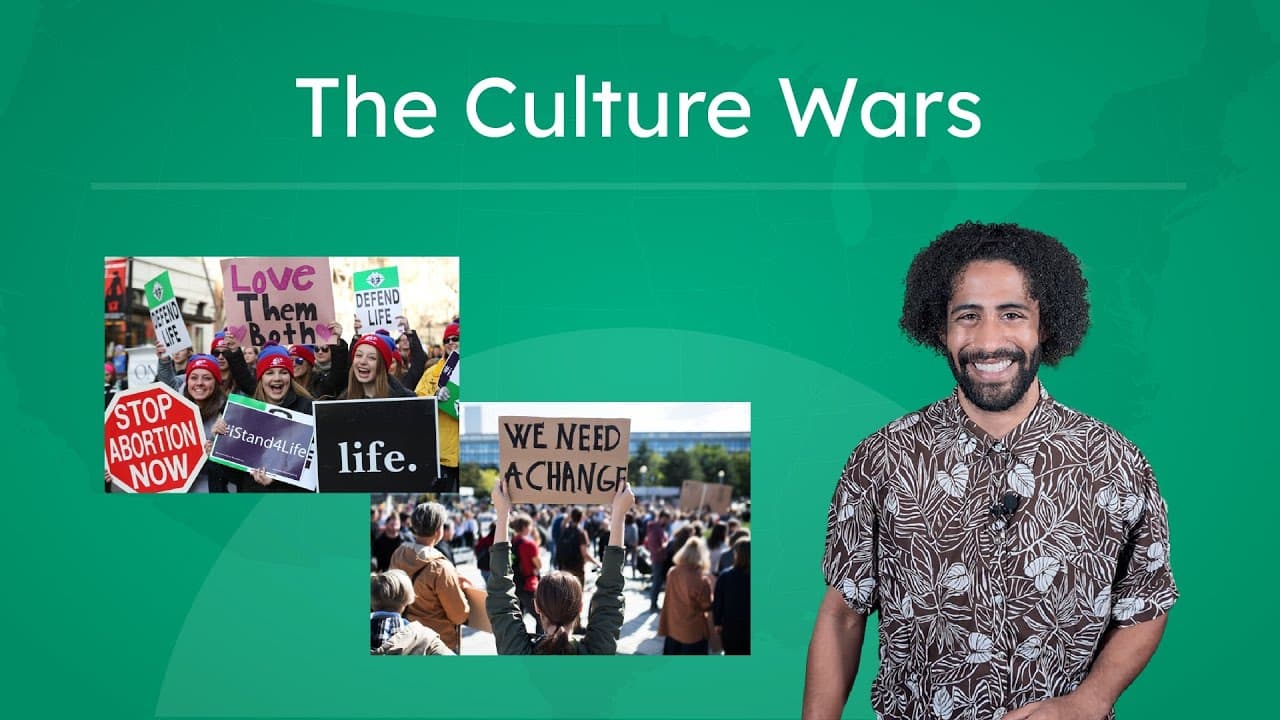
CrashCourseCrashCourse

14mins 1s

Video
How José de San Martín Led South America's Southern Liberation

How José de San Martín Led South America's Southern Liberation

This educational video explores the history of the independence movements in southern South America, focusing specifically on the Rio de la Plata region and the campaigns of José de San Martín. It begins by establishing the context of Spanish colonial administration, explaining the system of Viceroyalties (Virreinatos) and the geopolitical tensions with Portugal that led to the creation of the Viceroyalty of the Rio de la Plata. The narrative covers early unrest, including the rebellion of Túpac Amaru II, and the external catalysts like the Napoleonic Wars that sparked the drive for independence. The video details the life and military achievements of José de San Martín, tracing his journey from a Spanish military officer to a revolutionary leader. It highlights his strategic genius in crossing the Andes to liberate Chile alongside Bernardo O'Higgins and his subsequent campaign to liberate Peru. The video also touches upon the famous meeting between San Martín and Simón Bolívar in Guayaquil, offering historical theories about their secret discussion regarding the future government of the newly independent nations. Ideally suited for middle and high school World History or Latin American Studies curricula, this video provides a clear framework for understanding the complexities of Latin American independence. It addresses the diverse causes of revolution, the challenges of nation-building, and the persistent social inequalities facing indigenous populations even after political liberation. Teachers can use this resource to discuss military strategy, political philosophy (monarchy vs. republic), and the lasting legacy of colonialism.

Miacademy & MiaPrep Learning ChannelMiacademy & MiaPrep Learning Channel

10mins 2s

Video
How Leadership Styles Shaped the Mughal Empire

How Leadership Styles Shaped the Mughal Empire

This educational video presents a comparative case study of two major emperors of the Mughal Empire in India: Akbar and Aurangzeb. It begins by contextualizing the Mughal Empire within the "First Global Age," mentioning contemporaries like the Ottomans, Ashanti, Tokugawa Shogunate, and Qing Dynasty. The narrative then focuses on how these two specific leaders managed the immense challenge of governing a vast, religiously and culturally diverse population. The video contrasts Akbar's policies of religious tolerance, cultural integration, and decentralized administration with Aurangzeb's later approach of strict centralization, religious orthodoxy, and relentless military expansion. Key themes explored include the impact of leadership styles on political stability, the role of religious tolerance in unifying diverse populations, and the economic consequences of continuous warfare. The video delves into specific historical examples, such as Akbar's "Divine Faith" discussions and tax reforms versus Aurangzeb's imposition of Islamic law and the reinstatement of taxes on non-Muslims. It highlights the direct correlation between these administrative choices and the empire's rise and eventual decline. For educators, this video serves as an excellent tool for teaching cause-and-effect in history and comparative governance. It transforms abstract political concepts into concrete examples by pitting two distinct ruling philosophies against one another. The content encourages critical thinking by asking students to evaluate which leadership style was more effective and why, making it highly applicable for units on World History, Asian Studies, or Civics. The clear visual aids, including maps and historical miniature paintings, help students visualize the geography and culture of the period.

Miacademy & MiaPrep Learning ChannelMiacademy & MiaPrep Learning Channel

9mins 50s

Video
Building Empires: The Rise of Russia and Prussia

Building Empires: The Rise of Russia and Prussia

In this installment of Crash Course European History, John Green explores the dramatic rise of two major European powers during the 17th and 18th centuries: Russia and Brandenburg-Prussia. The video details how these states transformed from relatively minor players into dominant empires through centralized state-building, military expansion, and modernization efforts. It specifically focuses on the reigns of Peter the Great in Russia and the Hohenzollern dynasty in Prussia, highlighting their strategies for consolidating power and the immense social costs associated with their ambitions. Key historical themes include the concept of absolute monarchy, the paradox of modernization, and the relationship between rulers and the ruled. The video examines Peter the Great's westernization of Russia—from the construction of St. Petersburg to the beard tax—and contrasts it with Prussia's unique development as a "large army with a small state attached." It also critically analyzes the institution of serfdom, explaining how noble power over the peasantry was often strengthened in exchange for service to the state, a process known as "re-feudation." This resource is highly valuable for history classrooms as it provides a clear comparative analysis of state-building in Eastern Europe versus Western Europe. It helps students understand the mechanisms of political power, the impact of geography on military strategy, and the human cost of empire-building. The video's engaging narrative and critical questions about the nature of progress and vulnerability make it an excellent tool for sparking discussions about historical ethics and the definition of a "modern" state.

CrashCourseCrashCourse

14mins 56s

Video
The Rise of Austria and Prussia: Absolutism in Central Europe

The Rise of Austria and Prussia: Absolutism in Central Europe

This video explores the dramatic rise of two Central European powers, Austria and Prussia, in the wake of the Thirty Years' War. It details the shift from medieval feudalism to modern absolutism, explaining how devastation and power vacuums paved the way for strong, centralized monarchies. The narrative contrasts the militaristic rise of the Hohenzollern dynasty in Prussia with the dynastic challenges and reforms of the Habsburgs in Austria under Maria Theresa. Key historical themes include the concept of Absolutism versus Enlightened Absolutism, the role of militarism in state-building, and the geopolitical rivalries that shaped modern Europe. The video specifically covers critical events such as the Pragmatic Sanction, the War of the Austrian Succession, and the Seven Years' War, illustrating how personal rivalries between rulers like Frederick the Great and Maria Theresa escalated into global conflicts. For educators, this resource serves as an excellent case study in comparative government and political history. It breaks down complex dynastic politics into understandable narratives using maps, humor, and clear definitions. Teachers can use this video to discuss the impact of individual leadership styles on national development, the changing role of women in power, and the historical roots of German dualism.

Miacademy & MiaPrep Learning ChannelMiacademy & MiaPrep Learning Channel

11mins 55s

Video
Exploring the History and Forms of Democracy

Exploring the History and Forms of Democracy

This educational video provides a comprehensive overview of the history, definitions, and forms of democracy. It begins by tracing the roots of democratic government back to Ancient Athens, introducing key historical figures like Cleisthenes and explaining foundational Greek concepts such as the Boule and Ecclesia. The narration breaks down the etymology of the word "democracy" and connects ancient practices to modern civic responsibilities. The core of the video analyzes three distinct forms of democracy: Direct, Pluralist, and Representative. Using relatable analogies like a family vacation planning session, it explains how direct democracy functions versus the efficiency and challenges of representative systems. It also explores the concept of pluralism, where various interest groups compete to influence policy, and contrasts this with authoritarian or single-view systems. For educators, this resource serves as an excellent primer for Civics and Government units. It moves beyond simple definitions to explore the "how" and "why" of government structures. The video emphasizes the critical role of the citizen, encouraging students not just to understand the system, but to actively participate through voting, debating, and staying informed. It is particularly useful for introducing the concept of a Republic and the balance between government efficiency and individual accountability.

Miacademy & MiaPrep Learning ChannelMiacademy & MiaPrep Learning Channel

11mins 24s

Video
How Modern Monarchies Work Today

How Modern Monarchies Work Today

This educational video provides a comprehensive overview of modern-day monarchies, challenging the common misconception that kings and queens are merely relics of the past or fairy tales. The narrator, Brian, guides viewers through a detailed analysis of the 44 monarchies currently in existence, explaining how they function in the 21st century. The video breaks down the distinctions between hereditary and elected monarchies, as well as the critical differences between absolute and constitutional monarchies, using clear definitions, maps, and statistical breakdowns. Key themes explored include political geography, systems of government, and the balance of power. The video delves into complex concepts such as "Head of State" versus "Supreme Authority," and examines specific case studies ranging from the ceremonial monarchies of Scandinavia to the absolute power structures in the Middle East. It also highlights unique governance models like the diarchy in Eswatini and the landless Sovereign Military Order of Malta. A balanced discussion on the advantages (national identity, stability) and disadvantages (cost, potential for corruption) of these systems is also presented. For educators, this video is a valuable resource for Social Studies and Civics units on world governments. It offers a clear, visual way to compare authoritarian and democratic structures, making abstract political concepts concrete through real-world examples. The content supports learning objectives related to understanding global political systems, analyzing the roles of government leaders, and evaluating the pros and cons of different constitutional arrangements.

Miacademy & MiaPrep Learning ChannelMiacademy & MiaPrep Learning Channel

9mins 40s

Video
How Religion Shaped the American Colonies

How Religion Shaped the American Colonies

This educational video provides an engaging overview of the complex relationship between religion and government in Colonial America. It explores how diverse religious views influenced the formation of colonial governments, laws, and social norms. The narrative contrasts restrictive colonies, such as the Puritan-controlled New England colonies and Anglican-dominated Southern colonies, with more tolerant examples like William Penn's Quaker-founded Pennsylvania. It breaks down difficult concepts like theocracy and the separation of church and state using historical examples and clear definitions. The video covers several key historical themes, including the motivations for European migration, the persecution of religious minorities, and the early roots of religious freedom in the United States. It specifically examines three case studies: the Puritans/Pilgrims (restrictive), the Anglicans (hierarchical and restrictive), and the Quakers (tolerant and egalitarian). Additionally, the video addresses the experiences of minority groups often left out of the main narrative, including Jewish communities, Native Americans, and enslaved Africans, highlighting their resilience in preserving their beliefs. For educators, this resource is an excellent tool for middle and high school Social Studies classrooms. It serves as a foundational lesson for understanding the First Amendment and the historical context of the separation of church and state. The video is structured with built-in guiding questions and review segments, making it perfect for interactive viewing. It encourages students to analyze cause-and-effect relationships between belief systems and political structures, fostering critical thinking about how history shapes modern society.

Miacademy & MiaPrep Learning ChannelMiacademy & MiaPrep Learning Channel

11mins 50s

Video
The Northern Renaissance: Books, Politics, and Radical Ideas

The Northern Renaissance: Books, Politics, and Radical Ideas

This educational video explores the spread of Renaissance ideas from Italy to Northern Europe, examining how the movement transformed as it crossed the Alps. It begins by identifying the printing press as the technological catalyst that democratized knowledge, allowing ideas to travel faster and reach wider audiences than ever before. The narrative then delves into how Northern Humanists adapted Italian concepts to fit their own cultural and religious contexts, often focusing more on religious reform and social ethics than the aesthetic glorification of the individual seen in Italy. The content profiles four pivotal thinkers who shaped Western political and social thought: Desiderius Erasmus, the "Prince of the Humanists" who advocated for a middle path of religious reform; Niccolò Machiavelli, whose treatise "The Prince" established modern political realism; Thomas More, whose "Utopia" imagined an idealistic communal society; and Christine de Pizan, an early feminist who challenged the misogyny of her time. Through these figures, the video illustrates the tension between idealism and realism that defined the era. For the classroom, this video serves as an excellent bridge between the artistic Renaissance and the political/religious upheavals of the Reformation. It provides rich opportunities to discuss the impact of media technology on society, debate the ethics of political power (is it better to be loved or feared?), and analyze how historical context shapes philosophical outlooks. The video effectively demonstrates how the Renaissance was not a monolith but a diverse movement with conflicting values and visions for the future.

CrashCourseCrashCourse

14mins 2s

Video
How Propaganda and Prejudice Led to the Holocaust

How Propaganda and Prejudice Led to the Holocaust

This educational video provides a crucial historical overview of the conditions in Europe and Germany that precipitated the Holocaust. Opening with archival footage from the Nuremberg Trials, it defines the Holocaust as the systematic state-sponsored murder of six million Jews and millions of others by the Nazi regime. The video juxtaposes the vibrant, diverse, and integrated lives of Jewish Europeans before the war with the rising tide of antisemitism that Adolf Hitler and the Nazi Party weaponized to gain power. The content explores key historical themes including the history of antisemitism in Europe (referencing the Dreyfus Affair and pogroms), the economic and political instability of post-WWI Germany, and the systematic use of propaganda. It details how the Nazis used newspapers, posters, and films to dehumanize Jewish people, blaming them for Germany's loss in World War I and economic hardships. The video specifically analyzes the psychological mechanisms of scapegoating and how constant exposure to hateful messaging normalized prejudice among ordinary citizens. For educators, this resource serves as an essential foundation for a unit on World War II or the Holocaust. It moves beyond simple dates and battles to explain the *why* and *how* of genocide, focusing on the gradual erosion of democratic norms and the power of propaganda. It provides excellent opportunities to discuss media literacy, the dangers of stereotyping, and the fragility of civil rights, making it highly relevant for history, civics, and social emotional learning curriculums.

Miacademy & MiaPrep Learning ChannelMiacademy & MiaPrep Learning Channel

11mins 50s

Video
What Is a State? Understanding Political Geography

What Is a State? Understanding Political Geography

This educational video introduces students to the core concepts of political geography, specifically focusing on the precise definitions of 'state' and 'nation' which differ from their everyday usage. The host, Justin, clarifies the four essential characteristics required for a political entity to be considered a state: territory, population, government, and sovereignty. Through clear explanations and visual examples, the video distinguishes between political states (like countries) and subdivisions (like U.S. states), using California as a case study to explain the concept of sovereignty. The video further explores the complex relationships between nations (people) and states (political entities) by categorizing them into four types: nation-states, multinational states, multistate nations, and stateless nations. Real-world examples—including Japan, Canada, the Somali people, and the Kurdish people—are used to illustrate these concepts in a practice activity. The content also touches upon the powerful force of nationalism, explaining why groups seek self-determination and how nationalist movements can shape global politics. This resource is highly valuable for social studies and geography classrooms, particularly for AP Human Geography or World Geography courses. It addresses common misconceptions about political terminology and provides a framework for understanding current global conflicts and borders. The built-in quizzes and pause points allow teachers to check for understanding in real-time, making it an interactive tool for introducing complex political structures.

Miacademy & MiaPrep Learning ChannelMiacademy & MiaPrep Learning Channel

11mins 33s

Video
Understanding Liberalism: Liberty, Rights, and the Social Contract

Understanding Liberalism: Liberty, Rights, and the Social Contract

This educational video from the Crash Course Political Theory series explores the complex philosophy of Liberalism, moving beyond the common political usage of the term to its roots as a philosophy centered on liberty and individual rights. Hosted by Ellie Anderson, the video traces the evolution of liberal thought from the 1600s social contract theories of Thomas Hobbes and John Locke to modern interpretations by John Rawls and Isaiah Berlin. It tackles difficult questions about what happens when individual rights conflict and how a democratic society balances freedom with equality. The content dives deep into key political concepts including the State of Nature, the Social Contract, the Veil of Ignorance, and the crucial distinction between Negative Liberty (freedom from interference) and Positive Liberty (the capacity for self-determination). It also addresses historical contradictions within classical liberalism, such as its coexistence with slavery and colonialism, and introduces contemporary debates regarding multiculturalism and group rights versus individual rights. For educators, this video serves as an excellent anchor for units on political philosophy, civics, or government. It provides a structured framework for students to understand abstract concepts like justice and fairness. The video offers concrete metaphors—like the ride-sharing app for the social contract or the job applicant for positive/negative liberty—that make complex theories accessible. It naturally prompts critical thinking and classroom debate regarding current events, social justice, and the role of government.

CrashCourseCrashCourse

12mins 24s

Video
Nationalism and the Modernization of Japan

Nationalism and the Modernization of Japan

In this installment of Crash Course World History, John Green explores the complex and transformative concept of nationalism during the 19th century. The video begins by defining the often-slippery concept of the "nation-state"—a centralized government exercising authority over a distinctive territory with a relatively homogeneous culture—and distinguishing it from earlier forms of empire and governance. Green explains how nationalism was not just a European phenomenon involving Germany or Italy, but a global shift that influenced regions from Egypt to India. The core of the video focuses on a detailed case study of Japan to illustrate how nationalism functions as a tool for modernization and survival. It traces Japan's history from the stability of the Tokugawa Shogunate, through the destabilizing arrival of Commodore Matthew Perry and American warships, to the revolutionary Meiji Restoration. Green details how the Japanese leadership dismantled the feudal samurai system to build a modern nation-state capable of resisting Western imperialism, largely by adopting Western methods like conscription and compulsory education. For educators, this video serves as an excellent anchor for units on the 19th century, political ideologies, or Asian history. It effectively connects abstract political theory (what makes a nation?) with concrete historical events (the end of the samurai). The video also addresses the "dark side" of nationalism, showing how domestic consolidation often leads to external aggression and imperialism, providing a nuanced view that avoids glorifying the concept.

CrashCourseCrashCourse

11mins 53s

Video
How Command Economies Work

How Command Economies Work

This educational video introduces students to the concept of a command economy, contrasting it with the previously discussed market economy. Through the character of "Commander Carl" and the fictional town of "Communiville," the narrator explains how a central government creates economic plans, determining exactly what goods are produced, how they are manufactured, and who receives them. The video explores the rationale behind this system—prioritizing the collective good over individual profit—and uses clear visual examples to illustrate abstract economic concepts. The content dives deep into the mechanisms of government control, addressing the three fundamental economic questions: what to produce, how to produce it, and for whom. It highlights specific scenarios where command economies might be advantageous, such as during wartime mobilization or for providing universal public services like healthcare and transportation. Conversely, the video provides a balanced critique by discussing significant downsides, including the "incentive problem," lack of innovation, inefficiency in meeting consumer demands, and the high risk of corruption when power is overly centralized. For educators, this video serves as an excellent foundational tool for social studies, civics, and economics units. It simplifies complex systemic differences into relatable narratives, making it easy to spark classroom discussions about fairness, efficiency, and the role of government. The built-in pause points allow teachers to stop and facilitate critical thinking activities, asking students to predict outcomes or debate the ethical implications of government-controlled resources versus free-market systems.

Miacademy & MiaPrep Learning ChannelMiacademy & MiaPrep Learning Channel

13mins 3s

Video
How the Constitution Functions as a Social Contract

How the Constitution Functions as a Social Contract

This educational video introduces students to the concept of constitutional government by drawing a relatable analogy to the "Terms and Conditions" agreements found in modern apps and software. It breaks down complex political philosophy into digestible parts, starting with the idea of a social contract as proposed by Jean-Jacques Rousseau. The narrator explains that just as users agree to terms to use an app, citizens and governments enter a social contract where citizens give up certain absolute freedoms in exchange for the protection of rights and an organized society. The video identifies and defines three core principles of constitutional government: Rule of Law (society is governed by laws, not individuals), Limited Government (government authority is restricted), and Popular Sovereignty (the ultimate power rests with the people). It emphasizes that a constitution serves as a written instrument that clearly outlines the powers of the government and, crucially, guarantees specific rights to the citizens that the government cannot infringe upon. Designed for civics and government classrooms, this resource is highly valuable for bridging the gap between abstract political theory and students' daily lives. It includes built-in pause points with reflection questions, making it an interactive tool for introducing the U.S. Constitution. The video concludes with a powerful call to civic engagement, reminding students that an informed citizenry is essential for democracy to function and that they must "vote, debate, and participate."

Miacademy & MiaPrep Learning ChannelMiacademy & MiaPrep Learning Channel

10mins 49s

Video
How Borders Create Conflict: Geopolitics and State Shapes

How Borders Create Conflict: Geopolitics and State Shapes

This educational video explores the complex relationship between political geography, state morphology (shapes), and international conflict. Using the specific case study of the Nagorno-Karabakh conflict between Armenia and Azerbaijan, it illustrates advanced geopolitical concepts such as superimposed borders, exclaves, and proxy wars. The host explains how borders are often arbitrary snapshots in time rather than permanent features, highlighting the difference between natural and artificial boundaries. The video covers a wide range of AP Human Geography concepts, including the classification of state shapes (compact, fragmented, elongated, prorupted) and boundary types (antecedent, subsequent, consequent, superimposed, relic). It delves into the specific history of the Caucasus region to explain how Soviet-era border drawing created lasting ethnic and territorial tensions. Additionally, it expands the scope to maritime borders, explaining the Law of the Sea (UNCLOS) and the ongoing geopolitical tensions in the South China Sea. For educators, this resource is an invaluable tool for connecting abstract political science definitions to real-world humanitarian and political issues. It demonstrates how "lines on a map" have tangible consequences for the people living there, affecting everything from economic self-sufficiency to war. The video provides a clear framework for analyzing current events through the lens of political geography, making it highly relevant for high school social studies and geography curriculums.

CrashCourseCrashCourse

11mins 58s

Video
From Absolute Kings to Constitutional Rights: The English Civil War

From Absolute Kings to Constitutional Rights: The English Civil War

This episode of Crash Course European History explores the tumultuous 17th-century struggle in Britain between the concept of the "Divine Right of Kings" and the rising power of Parliament. It details the reigns of the Stuart monarchs—James I, Charles I, Charles II, and James II—tracing how their attempts to enforce absolute rule and religious uniformity led to the English Civil War, the execution of a king, and a temporary military dictatorship under Oliver Cromwell. The video delves into the complex intersection of religion and politics, highlighting how conflicts between Catholics, Anglicans, and Puritans fueled social unrest, civil war, and eventually the "Glorious Revolution." It examines the pivotal transition from absolutism to constitutionalism, culminating in the English Bill of Rights of 1689, which established parliamentary sovereignty and limited monarchical power. For educators, this resource serves as an essential primer on the foundations of modern Western democracy. It connects historical events to the influential political philosophies of Thomas Hobbes and John Locke, demonstrating how the chaos of the 17th century birthed the concepts of natural rights—life, liberty, and property—that directly influenced the founding documents of the United States and other modern democracies.

CrashCourseCrashCourse

14mins 36s

Video
How Slave Codes Enforced Racial Hierarchy in Colonial America

How Slave Codes Enforced Racial Hierarchy in Colonial America

In this episode of Crash Course Black American History, Clint Smith explores the origins and impact of "Slave Codes"—the set of laws passed in the American colonies to legally distinct Black people (both enslaved and free) from white colonists and to cement a racial hierarchy. The video details how these laws were not merely about labor management but were designed to protect the economic "investment" of enslavers by stripping Black people of basic rights, limiting their movement, and criminalizing their independence. The video examines specific historical statutes from colonies like Virginia, Maryland, South Carolina, and New York, illustrating how the legal system evolved to make slavery hereditary and permanent. Key concepts such as "partus sequitur ventrem" (the condition of the child follows the mother) are explained to show how the law was manipulated to ensure a perpetual labor force. The narrative highlights the hypocrisy of colonists demanding liberty from Britain while simultaneously constructing a legal framework to deny liberty to Black Americans. For educators, this video serves as a crucial resource for teaching the systemic nature of racism and slavery in the United States. It moves beyond the view of slavery as just a labor system and reveals it as a legal and social structure designed to oppress. It is an excellent tool for High School US History and Civics classrooms to spark discussions about how laws can be used to enforce inequality and how the legacy of these colonial codes influences modern legal and social disparities.

CrashCourseCrashCourse

8mins 30s

Video
The Real Story of the Underground Railroad: Facts vs. Fiction

The Real Story of the Underground Railroad: Facts vs. Fiction

This educational video from Crash Course Black American History provides a nuanced and historically accurate examination of the Underground Railroad, dismantling common myths while highlighting the true heroism involved. Host Clint Smith explains that the railroad was not a literal train system nor a centralized organization, but rather a loose network of individuals—primarily Black abolitionists—who risked their lives to help enslaved people find freedom. The video profiles key figures like William Still, the "Father of the Underground Railroad," and examines the specific terminology used within the network, such as conductors, stations, and station masters. The content explores critical themes regarding the agency of enslaved people, correcting the historical narrative that often centers benevolent white allies. It delves into the geography of escape, revealing that freedom seekers didn't just head North to Canada, but also South to Mexico and the Caribbean. The video also tackles complex topics like the Fugitive Slave Law of 1850, the pseudoscience of "drapetomania," and the statistical reality that while the Underground Railroad was symbolically powerful, only a small fraction of the enslaved population successfully escaped, which underscores the brutality of the system rather than a lack of desire for freedom. For educators, this video is an invaluable tool for teaching critical historical thinking and source analysis. It provides opportunities to discuss how history is recorded and remembered, contrasting popular folklore with documented evidence like William Still's records. It allows teachers to facilitate deep discussions about resistance, the legal structures protecting slavery, and the diverse geography of freedom in the Americas. The video is particularly useful for moving students beyond a surface-level understanding of the Underground Railroad to a more complex appreciation of Black resistance strategies.

CrashCourseCrashCourse

12mins 45s

Video
How Plessy v. Ferguson Legalized Segregation

How Plessy v. Ferguson Legalized Segregation

This educational video from Crash Course Black American History provides a comprehensive analysis of the landmark 1896 Supreme Court case, Plessy v. Ferguson. Hosted by Clint Smith, the video details the story of Homer Plessy, a mixed-race man from New Orleans who participated in a carefully orchestrated act of civil disobedience to challenge the Separate Car Act of 1890. It explains the legal arguments presented, the Supreme Court's 7-1 ruling that established the "separate but equal" doctrine, and the sole dissenting opinion that argued the Constitution should be colorblind. The video explores complex themes including the social construction of race, the "one-drop rule," and the strategic nature of civil rights activism. It highlights how the Committee of Citizens planned Plessy's arrest as a test case, debunking the myth that such events were random acts of defiance. Furthermore, it examines the devastating long-term impact of the ruling, which legalized racial segregation and ushered in the Jim Crow era that oppressed Black Americans for nearly seventy years. For educators, this resource is an invaluable tool for teaching U.S. History, Civics, and Government. It moves beyond a surface-level timeline of events to explore the mechanics of the judicial system and how laws can be used to both fight and perpetuate oppression. The video provides clear definitions of constitutional amendments and offers a nuanced look at the specific legal language used to justify segregation, making it an excellent anchor for discussions on systemic racism, legal precedent, and the history of civil rights in America.

CrashCourseCrashCourse

10mins 36s

Video
The Power, Resilience, and History of Native American Women

The Power, Resilience, and History of Native American Women

Hosted by Lily Gladstone, this episode of Crash Course Native American History explores the pivotal and diverse roles of Native women, Femmes, and Two-Spirit people from pre-contact times to the present day. It challenges the monolithic view of Native gender roles by highlighting the existence of matriarchal and matrilineal societies, such as the Diné (Navajo), where women hold significant economic and decision-making power. The video details historical figures like the warrior Buffalo Calf Road Woman and the diplomat Jikonsaseh, who helped found the Haudenosaunee Confederacy, illustrating that Native women have always served as leaders, healers, and protectors of their nations. The video also tackles the dark history of colonization and its specific targeting of Indigenous women to destabilize tribal societies. It addresses difficult topics including the imposition of European patriarchal values, the forced sterilization of thousands of Native women in the 1970s, and the ongoing crisis of Missing and Murdered Indigenous Women (MMIW). The narrative explains how settler colonialism disrupted traditional gender balances and how systemic failures in law enforcement continue to impact Native communities today. Despite these challenges, the video emphasizes resilience and modern activism. It profiles influential leaders like Elouise Cobell, who successfully sued the U.S. government for billions in mismanagement of funds, and Deb Haaland, the first Native American cabinet secretary. For the classroom, this resource is invaluable for teaching about gender studies, civil rights, and the complex legal and social history of Native Americans. It provides students with a nuanced understanding of how historical trauma and contemporary triumph coexist in Indigenous communities.

CrashCourseCrashCourse

13mins 42s

Video
The Murder of Emmett Till: A Catalyst for the Civil Rights Movement

The Murder of Emmett Till: A Catalyst for the Civil Rights Movement

This episode of Crash Course Black American History, hosted by Clint Smith, examines the tragic 1955 murder of 14-year-old Emmett Till in Mississippi and its profound impact on the Civil Rights Movement. The video details the events leading up to his kidnapping by Roy Bryant and J.W. Milam, the brutal murder, and the subsequent trial that resulted in a hasty acquittal by an all-white jury. Central to the narrative is the courageous decision by Emmett's mother, Mamie Till, to hold an open-casket funeral, allowing the world to witness the brutality of white supremacy through the publication of photographs in Jet magazine. The video explores key themes such as the systemic failure of the justice system in the Jim Crow South, the vital role of Black-owned media (like the Chicago Defender and Jet) in exposing racial terror, and the concept of double jeopardy. It highlights how domestic terrorism was used to enforce social hierarchy and how this specific event galvanized Black Americans to mobilize for civil rights. The host also connects historical events to the present day, using a personal anecdote about visiting the National Museum of African American History and Culture to illustrate how recent this history truly is. For educators, this video serves as a powerful tool to teach about the catalyst of the modern Civil Rights Movement and the realities of life under Jim Crow. It provides a nuanced look at how legal structures protected perpetrators of racial violence and how media was used as a form of resistance. The content allows for deep discussions on the ethics of photojournalism, the limitations of the legal system, and the intergenerational trauma of racism, making it highly relevant for American History, Civics, and Social Justice curricula.

CrashCourseCrashCourse

11mins 45s

Video
What Our Taxes Pay For: A Guide to Government Services

What Our Taxes Pay For: A Guide to Government Services

This educational video provides a comprehensive overview of how tax dollars are utilized across the three levels of government in the United States: federal, state, and local. Building upon the concept of federalism, the narrator breaks down specific services and programs funded by taxes, illustrating the tangible benefits citizens receive in exchange for their contributions. The video systematically categorizes expenditures, making the complex flow of public funds understandable for students. Key themes include the distinction between federal responsibilities (such as national defense, Social Security, and interstate highways), state responsibilities (primarily education and state law enforcement), and local responsibilities (including emergency services, libraries, and city maintenance). The video emphasizes that while taxes are often viewed negatively, they are the necessary engine behind essential services that protect and support the population. For educators, this resource serves as an excellent tool for Civics and Social Studies units on government structure and economics. It helps students connect abstract concepts of taxation to the real-world infrastructure and safety networks they encounter daily. The clear segmentation allows teachers to focus on specific levels of government or use the entire video to compare and contrast the roles of different jurisdictions.

Miacademy & MiaPrep Learning ChannelMiacademy & MiaPrep Learning Channel

7mins 37s

Video
How Police Officers Help Our Community

How Police Officers Help Our Community

This engaging educational video introduces young learners to the role of police officers as vital community helpers. Hosted by Justin and his robot friend Plato in their "Clubhouse," the lesson frames police work around the concepts of safety, assistance, and community support. Through a mix of animation, catchy songs, and a video call interview with a real police officer named Officer Darria, students learn that police officers are approachable figures whose primary job is to help people when they are in trouble or need assistance. The video explores several key themes regarding law enforcement duties appropriate for early elementary students. It covers the daily responsibilities of officers, such as patrolling neighborhoods, enforcing traffic laws to keep roads safe, and responding to emergencies alongside firefighters and paramedics. Special attention is given to the tools of the trade, including badges, radios, patrol cars, and even forensic concepts like fingerprints. It also introduces specialized units, explaining how trained dogs and horses assist officers in their work. Ideally suited for early childhood and lower elementary social studies curriculums, this video serves as an excellent resource for units on "Community Helpers." It helps demystify the police for children, fostering a sense of safety and trust. Teachers can use the segment on fingerprints to introduce basic science concepts, or use the story of the lost child to spark important class discussions about safety procedures when shopping or in public places.

Miacademy & MiaPrep Learning ChannelMiacademy & MiaPrep Learning Channel

9mins 32s

Video
The Stonewall Rebellion and the Activism of Marsha P. Johnson

The Stonewall Rebellion and the Activism of Marsha P. Johnson

This episode of Crash Course Black American History explores the Stonewall Rebellion and the life of one of its most iconic figures, Marsha P. Johnson. Hosted by Clint Smith, the video details the systemic police harassment and criminalization of the LGBTQ+ community in the 1960s that led to the uprising at the Stonewall Inn in June 1969. It examines the myths and realities surrounding the rebellion, including the debated role of Johnson herself during the initial outbreak of resistance. The narrative broadens to cover the aftermath, including the first Pride parades and the formation of activist organizations like the Gay Liberation Front. The video provides a deep dive into the biography of Marsha P. Johnson, a Black transgender woman who navigated homelessness, sex work, and severe mental health struggles while becoming a tireless advocate for gay rights. It highlights her friendship with Sylvia Rivera and their co-founding of STAR (Street Transvestite Action Revolutionaries) to support homeless transgender youth. The content addresses the complexities of historical figures, urging viewers to see Johnson not just as a two-dimensional hero, but as a complex human being who faced significant trauma, including sexual assault and institutionalization, yet remained a pivotal force for change. For educators, this video serves as a powerful resource for teaching the intersections of Civil Rights and LGBTQ+ history. It provides critical opportunities to discuss how laws and societal norms affect marginalized groups, the evolution of social justice movements from spontaneous protests to organized political action, and the importance of intersectionality in activism. The video also opens the door for nuanced discussions about historical memory, the reliability of oral histories versus written records, and how society chooses to remember its icons.

CrashCourseCrashCourse

11mins 59s

Video
How Ida B. Wells Used Journalism to Fight Lynching

How Ida B. Wells Used Journalism to Fight Lynching

This episode of Crash Course Black American History profiles the life and legacy of Ida B. Wells-Barnett, a pioneering journalist and activist who dedicated her life to exposing the truth about lynching in the American South. Hosted by Clint Smith, the video traces Wells' journey from her birth into slavery in Mississippi to her emergence as an international anti-lynching crusader. It details her early career as a teacher and journalist, her legal battles against segregation on trains, and the pivotal tragedy at the People's Grocery in Memphis that catalyzed her lifelong mission. The narrative highlights how Wells used investigative reporting and statistical data to dismantle white supremacist narratives, specifically the "rape myth" used to justify mob violence. The video explores several key historical themes, including the rise of Historically Black Colleges and Universities (HBCUs) during Reconstruction, the use of lynching as a tool of social and economic control during the Jim Crow era, and the intersectionality of Black women's activism. It examines the specific strategies Wells employed, such as publishing under a pseudonym to ensure her safety, taking her campaign internationally to Great Britain to pressure the U.S. government, and co-founding major organizations like the NAACP and the National Association of Colored Women. The video also touches on the personal costs of activism and the constant threat of violence faced by those who challenged the status quo. For educators, this video serves as a powerful resource for teaching about the post-Reconstruction era, media literacy, and the history of civil rights activism before the 1950s. It provides a nuanced look at how historical narratives are constructed and deconstructed, showing students the power of data and journalism in fighting injustice. The video connects historical events to modern movements, illustrating the continuity of the struggle for racial justice. It is particularly useful for discussions on the specific mechanisms of systemic racism and the courage required to document and speak truth to power.

CrashCourseCrashCourse

11mins 34s

Video
The Theories Behind Prison, Punishment, and Abolition

The Theories Behind Prison, Punishment, and Abolition

This episode of Crash Course Political Theory explores the history, philosophy, and future of the prison system. Host Ellie Anderson examines why societies punish, moving from historical corporal punishment to the development of the modern prison system in the late 1700s. The video breaks down complex concepts like Jeremy Bentham's Panopticon and Michel Foucault's theories on surveillance, helping students understand how physical structures and social observation influence human behavior.

CrashCourseCrashCourse

11mins 3s

Video
How the US Court System Is Structured

How the US Court System Is Structured

This episode of Crash Course Government and Politics breaks down the complex hierarchy of the United States court system. Host Craig Benzine uses engaging analogies and visuals to explain the dual structure of state and federal courts, detailing how cases originate in trial courts and potentially move up the appellate ladder to the Supreme Court. The video clarifies the critical distinction between original and appellate jurisdiction, explaining why most cases never reach the highest court in the land. The content explores the specific criteria required for federal courts to hear a case, such as issues involving federal law, treaties, or constitutional questions. It provides a detailed look at the 'rules of access' that the Supreme Court uses to filter cases, including concepts like standing, mootness, and ripeness. The video also demystifies the geographical organization of the 12 Circuit Courts of Appeals and how regional differences can influence legal outcomes. For educators, this video serves as an excellent foundational resource for units on the Judicial Branch, Federalism, or Civil Rights. It effectively translates dense legal terminology into accessible concepts using visual metaphors like ladders and avocados. The explanation of why the Supreme Court refuses to hear the vast majority of cases helps students understand the limitations of judicial power and the procedural hurdles involved in American litigation.

CrashCourseCrashCourse

6mins 59s

Video
The History and Ethics of the Tuskegee Syphilis Study

The History and Ethics of the Tuskegee Syphilis Study

This educational video from Crash Course Black American History, hosted by Clint Smith, provides a comprehensive examination of the Tuskegee Syphilis Study (1932-1972). It details how the United States Public Health Service recruited 600 Black men in Macon County, Alabama, under the guise of receiving free health care, only to withhold life-saving treatment for syphilis to observe the disease's progression. The video explores the historical context of scientific racism that fueled the study, the specific unethical methodologies employed, and the devastating impact on the men, their families, and the broader Black community's trust in the medical system. The narrative delves into the complex layers of the study, including the role of the Great Depression and poverty in coercing participation, the lack of informed consent, and the involvement of Black medical professionals like Nurse Eunice Rivers. It highlights the eventual exposure of the study by whistleblower Peter Buxtun in 1972, the subsequent class-action lawsuit led by Fred Gray, and the resulting changes in medical ethics laws, including the National Research Act of 1974 and the establishment of Institutional Review Boards. For educators, this video is a powerful tool for teaching about bioethics, civil rights history, and systemic racism in healthcare. It connects historical events to contemporary issues, such as medical mistrust and health disparities, encouraging students to think critically about the responsibilities of scientific institutions. The video serves as a case study for understanding the importance of informed consent and the long-term sociological effects of unethical government actions.

CrashCourseCrashCourse

13mins 48s

Video
How State Judicial Systems Work

How State Judicial Systems Work

This educational video provides a comprehensive overview of state judicial systems in the United States, explaining how they function parallel to yet distinct from the federal court system. Using a clear hierarchical triangle model, the narrator breaks down the different levels of state courts, from the "inferior" or lower courts that handle minor offenses and traffic violations, up through superior courts handling felonies, to the appellate courts and finally the State Supreme Court. The video uses a detective theme to engage students in uncovering the "missing link" of state government branches. The content covers essential civics topics including the specific jurisdictions of various courts (family, juvenile, district, superior), the difference between trial courts and appellate courts, and the distinction between criminal and civil cases. It also delves into the complex and varied methods used to select state judges, discussing the differences between appointments, partisan elections, and nonpartisan elections. Key vocabulary such as "appellate jurisdiction," "magistrate," "felony," and "misdemeanor" is defined in context. For educators, this video serves as a foundational tool for Civics and Government units. It clarifies the often-overlooked state court system, which handles 97% of U.S. litigation. The video includes built-in checking for understanding activities, such as drawing a court hierarchy triangle and a reflection prompt on judicial selection. It encourages students to research their own specific state's structure, making it highly adaptable for classrooms across the country.

Miacademy & MiaPrep Learning ChannelMiacademy & MiaPrep Learning Channel

7mins 56s

Video
The History of Slavery in the United States

The History of Slavery in the United States

This educational video provides a comprehensive introduction to the history of slavery in the United States, designed for middle-grade students. It begins by defining slavery as a system where humans are treated as property without choice or pay, and traces the origins from the Trans-Atlantic Slave Trade beginning in 1619 to the abolition of slavery in 1865. The video does not shy away from the harsh realities of the era, discussing the brutal conditions of the Middle Passage, the trauma of slave auctions and family separation, and the physical violence used to enforce the system. The narrative covers the legal and social structures that maintained slavery, including the Slave Codes that prohibited literacy and gathering, and the economic reliance of the South on slave labor for cotton and tobacco production. It explains the political divide between Free States and Slave States that eventually led to the Civil War and the formation of the Confederacy. The video also highlights the distinct differences between field and house labor and the meager living conditions within slave quarters. Finally, the video extends beyond the Emancipation Proclamation to discuss the immediate aftermath of the Civil War. It introduces the concept of sharecropping, explaining how legal slavery was replaced by economic systems that continued to oppress Black Americans. This resource serves as a foundational tool for history classrooms, helping students understand the systemic nature of slavery and its lasting impact on American history.

Miacademy & MiaPrep Learning ChannelMiacademy & MiaPrep Learning Channel

9mins 8s

Video
How the Supreme Court Decides Civil Rights Cases

How the Supreme Court Decides Civil Rights Cases

This educational video explores the complexities of the Equal Protection Clause of the 14th Amendment, distinguishing between civil liberties and civil rights. It delves into how the Supreme Court evaluates discrimination cases through different levels of judicial scrutiny, specifically focusing on strict scrutiny for protected classes and the rational basis test for other government actions. The host explains the legal frameworks used to determine when discrimination is unconstitutional and when it is legally permissible. The content breaks down the "levels of scrutiny"—strict, intermediate, and rational basis—that courts apply to laws targeting specific groups. It uses the "Thought Bubble" segment to explain the concept of "discrete and insular minorities" and why the judicial system offers them special protection. The video also analyzes key historical Supreme Court cases, including Plessy v. Ferguson, Korematsu v. United States, and the landmark Brown v. Board of Education decision, explaining the shift from legal precedents to sociological arguments in ending segregation. For educators, this video provides a robust framework for teaching constitutional law, the judicial process, and the history of civil rights in the United States. It offers clear definitions of complex legal terms and tests, making it an excellent resource for AP Government, Civics, and American History classes. The video facilitates discussions on the role of the judiciary in protecting minority rights and how legal interpretations of equality have evolved over time.

CrashCourseCrashCourse

8mins 16s

Video
How Hurricane Katrina Exposed Systemic Inequality

How Hurricane Katrina Exposed Systemic Inequality

This episode of Crash Course Black American History provides a profound and personal examination of Hurricane Katrina, framing it not merely as a natural disaster, but as a catastrophic failure of government and infrastructure exacerbated by systemic racism. Host Clint Smith, a native of New Orleans who was 17 when the storm hit, weaves his own traumatic experience of evacuation with a rigorous historical analysis of the event. The video explores how decades of housing segregation forced Black residents into the most vulnerable low-lying areas and how the subsequent levee failures were a result of engineering negligence rather than just the storm's fury. The content delves deep into the disparities of the evacuation and recovery efforts, highlighting how poverty and lack of transportation left over 100,000 people stranded. It covers specific incidents of injustice, such as police blocking the Crescent City Connection bridge and the Danziger Bridge shootings. Furthermore, the video analyzes the long-term demographic shifts of New Orleans due to gentrification and displacement, illustrating how the city's reconstruction often excluded the very Black families who had lived there for generations. For educators, this video serves as a powerful tool to teach the intersection of environmental science, sociology, and civics. It challenges students to look beyond the immediate weather event to understand the 'unnatural' causes of the disaster—specifically how policy decisions, funding priorities, and racial prejudice intersect to create vulnerability. It provides a crucial case study for discussions on federalism, environmental justice, climate change, and the ongoing impact of historical segregation on modern American life.

CrashCourseCrashCourse

15mins 4s

Video
Exploring the Rights of the Accused: Amendments 4 through 8

Exploring the Rights of the Accused: Amendments 4 through 8

This educational video provides a comprehensive breakdown of Amendments 4 through 8 of the United States Constitution, often referred to as the "court-related amendments." Hosted by Caroline, the video moves beyond simple recitation of the text to explain the historical context behind these additions to the Bill of Rights. It details how specific grievances against the British government—such as the Coercive Acts and the Stamp Act—directly influenced the Founding Fathers to include protections for those suspected, accused, or convicted of crimes. The video systematically examines each amendment from the Fourth to the Eighth, translating 18th-century legal language into accessible modern concepts. It covers critical topics including protection against unreasonable search and seizure, the right against self-incrimination ("pleading the fifth"), the guarantee of a speedy and public trial, the right to legal counsel, and the prohibition of cruel and unusual punishment. It also clarifies the distinction between criminal and civil court proceedings regarding the right to a jury trial. For educators, this resource serves as an excellent anchor for units on the Bill of Rights, Due Process, or the Judicial System. It effectively bridges the gap between abstract legal principles and their practical applications, making it easier for students to understand why these rights exist and how they function in the modern legal system. The clear visual aids and structured pacing allow teachers to pause and discuss specific rights individually, fostering deeper classroom engagement with civics content.

Miacademy & MiaPrep Learning ChannelMiacademy & MiaPrep Learning Channel

8mins 12s

Video
Defining Heroes and Traitors in American History

Defining Heroes and Traitors in American History

This educational video explores the complex and often subjective definitions of "hero" and "traitor" through three distinct case studies from American history. The narrator challenges students to look beyond simple definitions and consider how historical context, personal values, and perspective shape these labels. The video examines John Adams' controversial defense of British soldiers after the Boston Massacre, Colonel John Chivington's role in the horrific Sand Creek Massacre, and Carry Nation's radical "hatchetations" during the temperance movement. The video delves into deep ethical questions about justice, duty, and morality. It asks students to evaluate whether John Adams was a traitor to the colonial cause or a hero of justice for defending the enemy. It contrasts Chivington's self-proclaimed heroism in protecting settlers with the brutal reality of massacring peaceful Cheyenne and Arapaho people. Finally, it analyzes Carry Nation's crusade against alcohol, asking if her violent methods undermined her virtuous goals. Each segment includes pauses for reflection and specific guiding questions. Teachers can use this video to foster critical thinking and historical analysis skills. It serves as an excellent anchor for lessons on the American Revolution, Native American history, or the Prohibition era. By presenting historical figures who defy easy categorization, the video encourages students to engage with nuance and ambiguity. It is particularly useful for sparking debates about the rule of law, the ethics of war, and the validity of different protest methods.

Miacademy & MiaPrep Learning ChannelMiacademy & MiaPrep Learning Channel

11mins 30s

Video
Analyzing the Presidency of Barack Obama: Triumphs and Challenges

Analyzing the Presidency of Barack Obama: Triumphs and Challenges

This educational video provides a comprehensive overview of Barack Obama's life and presidency, contextualizing his historic election within the broader scope of Black American history. It begins by contrasting the segregated America of the 1930s with the 2008 election, offering a powerful look at how much changed in a single lifetime. Host Clint Smith details Obama's early life, education, and political rise, before diving into the major policy achievements of his administration, including the Affordable Care Act and the recovery from the Great Recession. The video does not shy away from the complexities of Obama's tenure, exploring the intense political polarization and racial backlash that emerged, including the 'birther' movement and the rise of the Tea Party. It examines significant racial flashpoints like the arrest of Henry Louis Gates Jr. and the killing of Trayvon Martin, discussing how these events challenged the narrative of a 'post-racial' America. The analysis covers the administration's specific efforts to address systemic issues affecting Black communities, such as sentencing reform and the 'My Brother's Keeper' initiative. Educators can use this video to teach students about contemporary U.S. history, the legislative process, and the evolving conversation around race in the 21st century. It serves as an excellent case study for understanding executive power, political partisanship, and the intersection of biography and history. The content encourages critical thinking about the legacy of the first Black president and provides a nuanced framework for discussing the Black Lives Matter movement and modern political divides.

CrashCourseCrashCourse

14mins 51s

Video
How Local Governments Work: Services, Laws, and Funding

How Local Governments Work: Services, Laws, and Funding

This educational video provides a comprehensive overview of the scope and authority of local governments within the United States. It begins by establishing the connection between state constitutions and the creation of local municipalities through charters. The narrator explains how local governments regulate daily life through ordinances and zoning laws, ensuring public safety and order. The video then transitions into the practical services provided to citizens, ranging from public schools and emergency services to water treatment and waste management, while also touching on complex topics like the privatization of public utilities.

Miacademy & MiaPrep Learning ChannelMiacademy & MiaPrep Learning Channel

8mins 48s