Lenny LearningLenny
Create
Explore
Workspace
LoginSign up
MathEnglish Language ArtsScience & EngineeringSocial StudiesGlobal LanguagesHealth & Physical EducationSpecial EducationCounseling & Life SkillsArts & CreativityESL
Lenny LearningLenny
Lenny Learning
About
Training
Pricing
Support
Contact
© 2026 Lenny Learning Inc.

Social Studies Practices

SequencesLessonsMaterialsVideos
  1. Social Studies

Social Studies Practices

SequencesLessonsMaterialsVideos

Analytical frameworks for interpreting history, geography, and civic information. Equips learners with tools for chronological sequencing, map literacy, and critical evaluation of primary and secondary sources.

Social StudiesSocial Studies PracticesLocation WordsMapsOrder EventsChronology and CausationEvaluating SourcesHistorical ThinkingGeography, Humans, & the EnvironmentAmerican Symbols and LandmarksCitiesStatesState CapitalsRegions of the United StatesGeographic SkillsPhysical GeographyHuman GeographyRegional GeographyGeography of AfricaGeography of AsiaGeography of EuropeGeography of OceaniaGeography of the AmericasSociety and Environment of EuropeSociety and Environment of AsiaSociety and Environment of The AmericasSociety and Environment of the Middle EastSociety and Environment of AfricaHistoryPrehistoryComparing Ancient River CivilizationsAncient MesopotamiaAncient Egypt and KushAncient South AsiaEarly ChinaGreeceRome and the Byzantine EmpireAncient World HistoryNative Peoples of North AmericaNative Peoples of Mesoamerica and South AmericaAfrican EmpiresMedieval AsiaMedieval EuropeThe Silk RoadMedieval HistoryIslamic EmpiresWorld ReligionsRenaissance PeriodAge of ExplorationThe Thirteen ColoniesThe American RevolutionUS History Early RepublicFounding of the United StatesUS History AntebellumUS Civil WarReconstruction PeriodThe Gilded AgeUS ImperialismWorld ImperialismWorld War IUS History 1920sGreat DepressionWorld War IIThe Cold WarUS History 1950-60sUS History 1960s-70sWorld History 20th CenturyContemporary US HistoryContemporary World HistoryHolidaysCivics and GovernmentCitizenshipGovernment FoundationsThe ConstitutionUS ConstitutionExecutive BranchLegislative BranchJudicial BranchState and LocalPolitical ParticipationPublic PolicyPolitical SystemsPower and AuthoritySocial MovementsDefining DevianceTheories of DevianceCrime and Criminal JusticeEconomicsBasic Economic PrinciplesSupply and DemandWhat is MoneyEconomic FundamentalsMicroeconomicsMacroeconomicsBanking and FinanceEconomic SystemsGlobal EconomicsCorporations and PowerThe Changing WorkplaceUnemployment and LaborClass and InequalitySocial MobilityGlobal InequalityPsychologyHistory of PsychologyPsychology as a ScienceBrain and Nervous SystemNeuroscience and BehaviorGenetics and BehaviorSleep and ConsciousnessSensory ProcessesPerceptual OrganizationClassical ConditioningOperant ConditioningObservational LearningCognitive LearningMemory ProcessesThinking and Problem SolvingLanguage and CognitionTheories of MotivationStress and CopingPrenatal and Infant DevelopmentChildhood DevelopmentAdolescent DevelopmentAdulthood and AgingSelf and IdentitySocial CognitionSocial InfluenceAttraction and RelationshipsGroup BehaviorPrejudice and DiscriminationAnxiety and Mood DisordersClinical PsychologyForensic PsychologyPhilosophy & EthicsIntroduction to PhilosophyMajor Philosophers & IdeasMind and Body ProblemFree Will vs DeterminismEthics & MoralityReligion & PhilosophyPolitical Philosophy
Location WordsPrepositions of place and spatial awareness concepts for early learners. Identifies positional relationships using terms like in, on, under, beside, and between.
MapsCartographic principles including map symbols, legends, and scale. Develops spatial reasoning through the study of political, physical, and thematic maps.
Order EventsChronological sequencing of narratives, historical timelines, and multi-step processes. Develops logical reasoning through the use of transition words and visual organizers.
Chronology and CausationTemporal sequencing of historical events to distinguish between correlation and causation. Develops skills in identifying triggers, short-term impacts, and long-term consequences across different eras.
Evaluating SourcesCriteria for assessing credibility, authority, and bias in digital and print media. Strengthens critical thinking skills needed to identify misinformation and verify evidence.
Historical ThinkingPrimary source analysis, contextualization, and corroboration strategies for evaluating evidence. Strengthens the ability to identify perspectives and build arguments based on diverse historical viewpoints.
Video
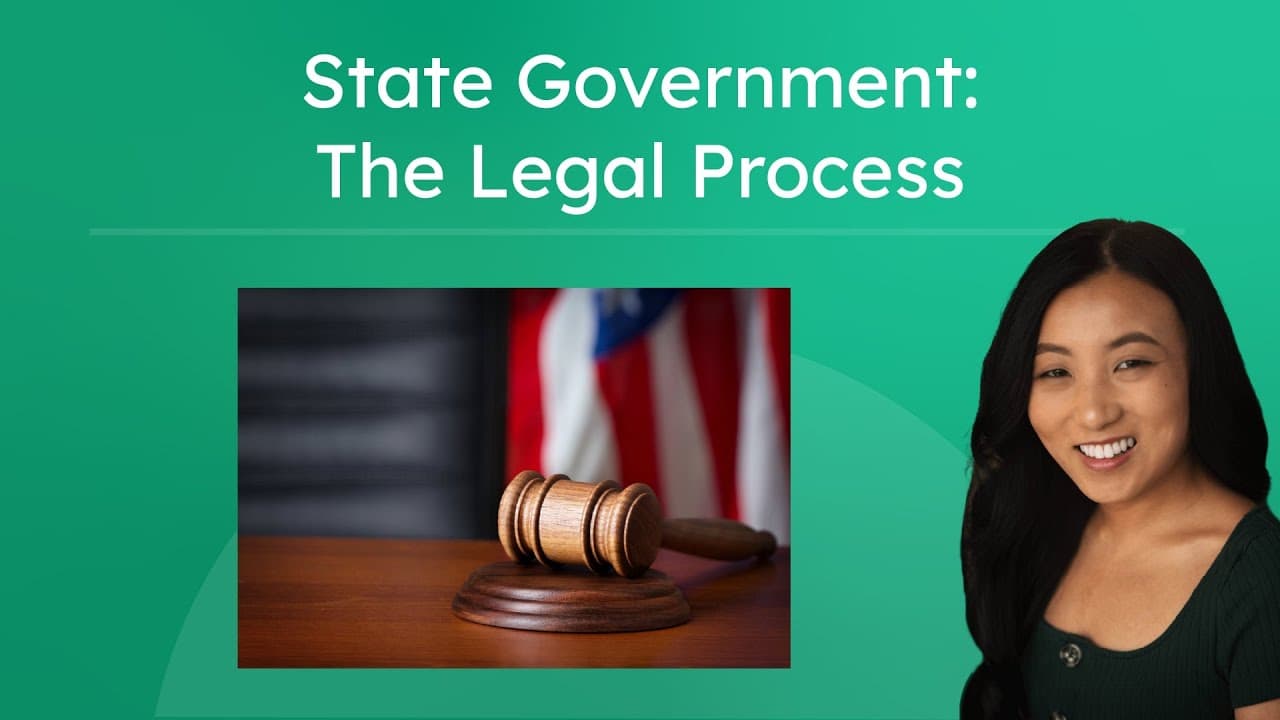
How the Criminal Legal Process Works: From Investigation to Trial

How the Criminal Legal Process Works: From Investigation to Trial

This educational video provides a comprehensive overview of the criminal legal process within the United States state government system. Hosted by a narrator named Caroline, the lesson guides students through the chronological stages of a criminal case, beginning with the initial police investigation and moving through the indictment, arraignment, trial, and potential appeal. It emphasizes the concept of "due process" and explains how the 4th, 5th, 6th, and 14th Amendments protect citizens' rights at each stage of the judicial journey.

Miacademy & MiaPrep Learning ChannelMiacademy & MiaPrep Learning Channel

9mins 7s

Video
How a Bill Becomes a Federal Law in the US

How a Bill Becomes a Federal Law in the US

This educational video provides a clear, step-by-step explanation of the legislative process in the United States, detailing exactly how an idea transforms into a federal law. Hosted by a presenter with supporting animations, the video breaks down complex civics concepts into digestible stages, starting from the initial conception of an idea to the final signature by the President. It clarifies the roles of the Legislative and Executive branches, emphasizing the system of checks and balances inherent in American government. Key themes explored include the structure of the federal government, the specific journey of a bill through the House of Representatives and the Senate, and the various outcomes a bill can face, such as passing, dying in committee, or being vetoed. The video introduces important political vocabulary like "sponsor," "committee," "veto," "pocket veto," and "filibuster," explaining each term with simple analogies and visuals. It also highlights the difficulty of passing legislation, noting that only about 5% of bills actually become laws. For educators, this video is an excellent resource for Civics and Social Studies units on government structure. It moves beyond a simple overview by including specific procedural details like the "hopper," committee research, and the specific majorities needed for different actions. Teachers can use this to scaffold lessons on the legislative branch, inspire classroom simulations of Congress, or help students understand their own power as citizens to contact representatives with ideas for laws.

Miacademy & MiaPrep Learning ChannelMiacademy & MiaPrep Learning Channel

7mins 3s

Video
Exploring Early North American Settlement and Indigenous Cultures

Exploring Early North American Settlement and Indigenous Cultures

This educational video provides a comprehensive overview of early North American settlement, tracing the migration of the first peoples across the Beringia land bridge through various developmental periods including the Paleoindian, Archaic, Woodland, and Mississippian eras. It explores how geography influenced the development of distinct cultures across different regions, from the Arctic Inuit to the Southwest Pueblo peoples, highlighting specific adaptations in shelter, food sources, and social structures. Key themes include human migration, environmental adaptation, and cultural diversity. The video breaks down the timeline of pre-contact history, distinguishing between nomadic bands and complex tribal societies. It also addresses important sociological concepts, such as the distinction between a "tribe" and a "band," and provides a nuanced discussion on the terminology of "Indigenous Peoples" versus "Native Americans," emphasizing the importance of using specific self-identifiers. For educators, this resource serves as an excellent introduction to pre-Columbian US History. It encourages critical thinking by asking students to consider the utility and limitations of historical generalizations. The video includes built-in pause points with guiding questions, making it ready-to-use for checking comprehension and sparking classroom discussions about identity, geography, and the deep history of the American continent.

Miacademy & MiaPrep Learning ChannelMiacademy & MiaPrep Learning Channel

10mins 26s

Video
Planning a Birthday Party Using a Calendar

Planning a Birthday Party Using a Calendar

In this engaging educational video, Justin invites students into the 'Clubhouse' to help him plan a surprise 90th birthday party for his grandpa. The narrative centers on using a calendar as a practical tool to organize this important event, transforming abstract concepts of time into a concrete, goal-oriented activity. Justin guides viewers through the process of identifying the current month (July) versus the event month (December) and calculating the time in between. The video explores key themes of temporal organization, including identifying months of the year, locating specific dates, understanding days of the week, and the logic of scheduling 'before' and 'after' an event. It specifically covers how to count the months between two points in time, how to determine the day of the week a specific date falls on, and the reasoning behind moving an event to a weekend. Additionally, it introduces the concept of working backward from a deadline to schedule necessary preparations like sending invitations and decorating. For educators, this video serves as an excellent practical application of calendar skills for early elementary students. It moves beyond simple identification of dates to critical thinking about time management and planning. Teachers can use this video to launch lessons on personal organization, sequencing events, or as a real-world math application for counting time intervals. The step-by-step planning process models executive functioning skills that are valuable for young learners.

Miacademy & MiaPrep Learning ChannelMiacademy & MiaPrep Learning Channel

4mins 33s

Video
How the Supreme Court Works and Reviews Laws

How the Supreme Court Works and Reviews Laws

This educational video provides a comprehensive overview of the United States Supreme Court, the highest court in the federal judiciary. It breaks down the complex processes of the Court, from how cases are selected via a "writ of certiorari" to the oral arguments and the final voting conference. The narration clarifies that the Court focuses on issues of national importance and constitutionality rather than determining guilt or innocence in typical criminal cases, and it explains the different types of opinions justices can write: majority, dissenting, and concurring. The video delves deeply into the concept of "judicial review," tracing its origins to the landmark case Marbury v. Madison. It explains how this power allows the Court to establish precedence and declare laws or executive actions unconstitutional. The content also addresses the critical role of checks and balances, presenting common criticisms of the Court's power and illustrating the limits of that power through the historical example of Worcester v. Georgia, where President Andrew Jackson famously challenged the Court's ability to enforce its rulings. Designed for civics and government classes, this resource is highly valuable for helping students understand the judicial branch's function beyond just "interpreting laws." It connects abstract legal concepts to historical events and provides clear definitions of terminology like "precedence" and "certiorari." Teachers can use this video to launch discussions on the separation of powers, the importance of an independent judiciary, and the tension between the branches of government.

Miacademy & MiaPrep Learning ChannelMiacademy & MiaPrep Learning Channel

8mins 44s

Video
Creating and Reading Timelines

Creating and Reading Timelines

In this engaging social studies lesson, Justin introduces students to the concept of timelines using a personal narrative about his recent beach vacation. The video simplifies the abstract concept of time by breaking it down into manageable segments—past, present, and future—and visually demonstrating how to organize events chronologically. Through bright visuals and relatable examples, students learn how to structure a story from beginning to end. Key themes explored include chronological order, the definitions of past, present, and future, and the use of sequencing vocabulary like "first," "next," and "last." The video also covers the structural components of a timeline, such as the base line, tick marks representing time intervals, and the convention of reading timelines from left to right. This video is highly valuable for early elementary classrooms as it provides a concrete visual model for sequencing. Teachers can use it to introduce history skills, help students organize their own narratives for writing, or practice logical sequencing. It serves as an excellent foundation for understanding how history is recorded and how personal growth or events can be tracked over time.

Miacademy & MiaPrep Learning ChannelMiacademy & MiaPrep Learning Channel

5mins 37s

Video
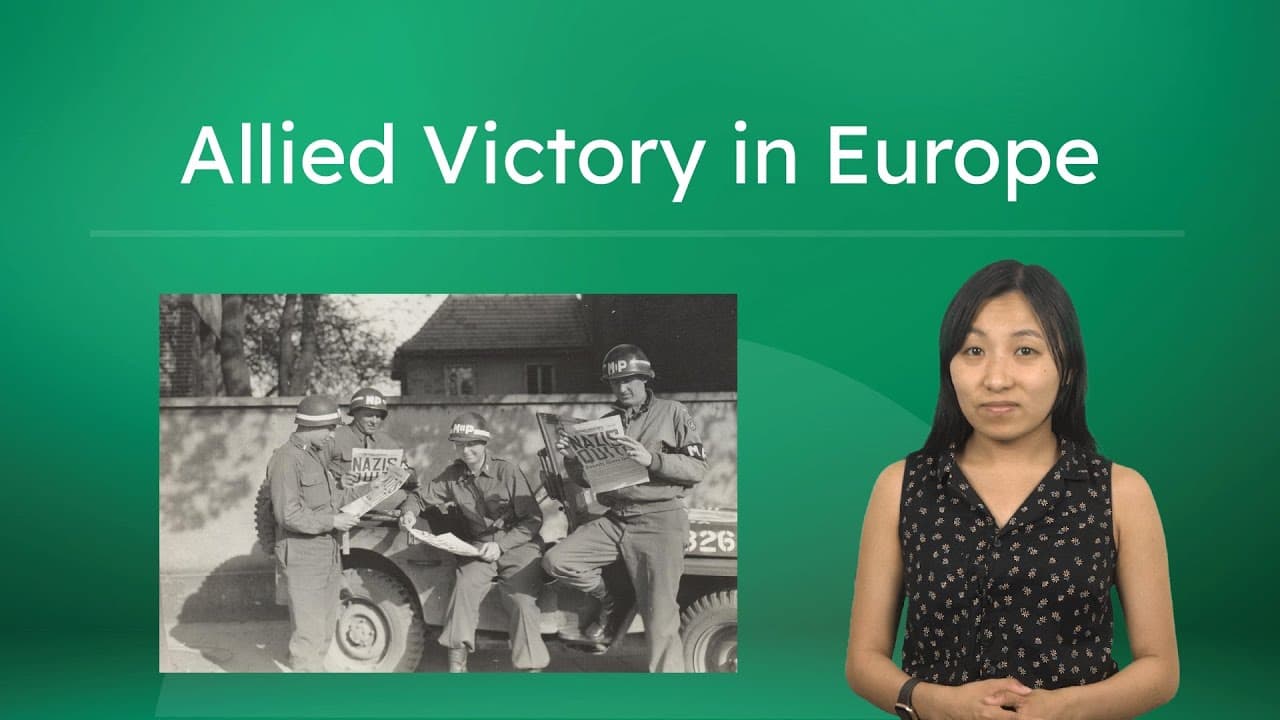
How the Allied Powers Won the War in Europe

How the Allied Powers Won the War in Europe

This educational video provides a comprehensive overview of the strategic turning points that led to the Allied victory in the European theater of World War II. It begins by setting the geopolitical stage in 1942 and 1943, highlighting early shifts in momentum such as the Battle of Stalingrad and the invasion of Italy. The narrative then delves into the diplomatic complexities of the war, using a dramatized reenactment of the Tehran Conference to illustrate the negotiations between the 'Big Three'—Roosevelt, Churchill, and Stalin—regarding the opening of a Western Front.

Miacademy & MiaPrep Learning ChannelMiacademy & MiaPrep Learning Channel

11mins 10s

Video
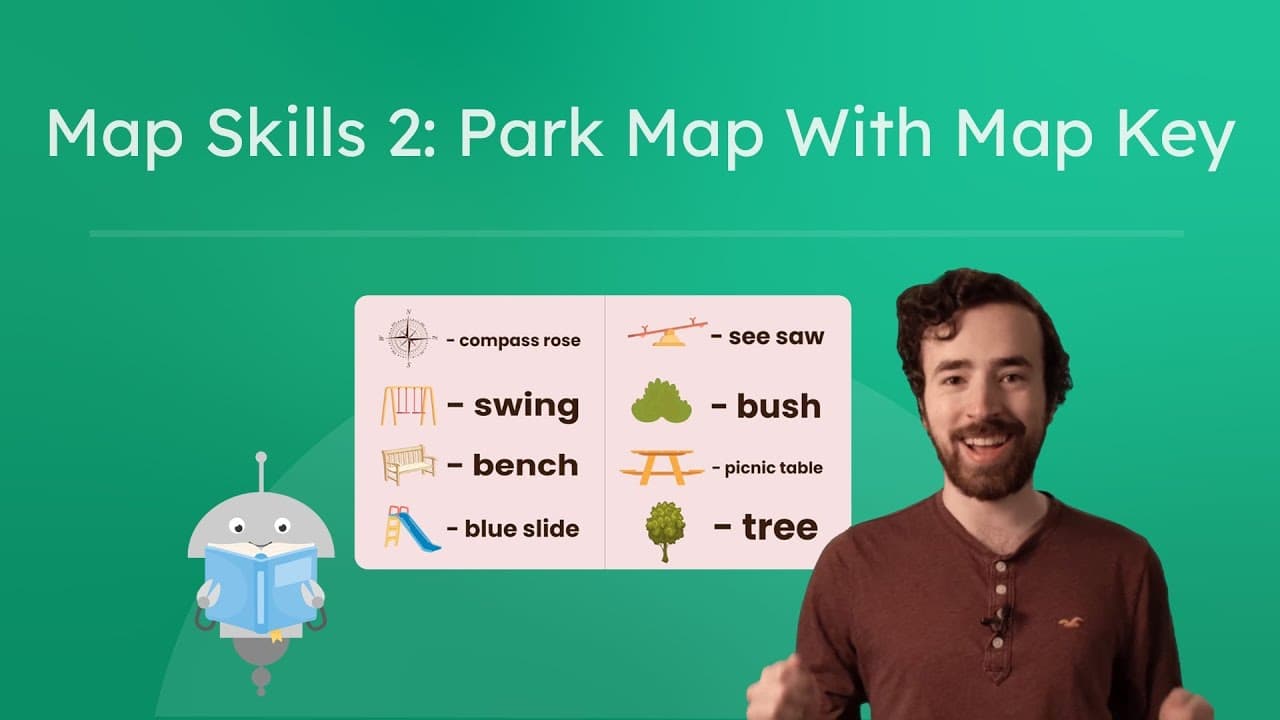
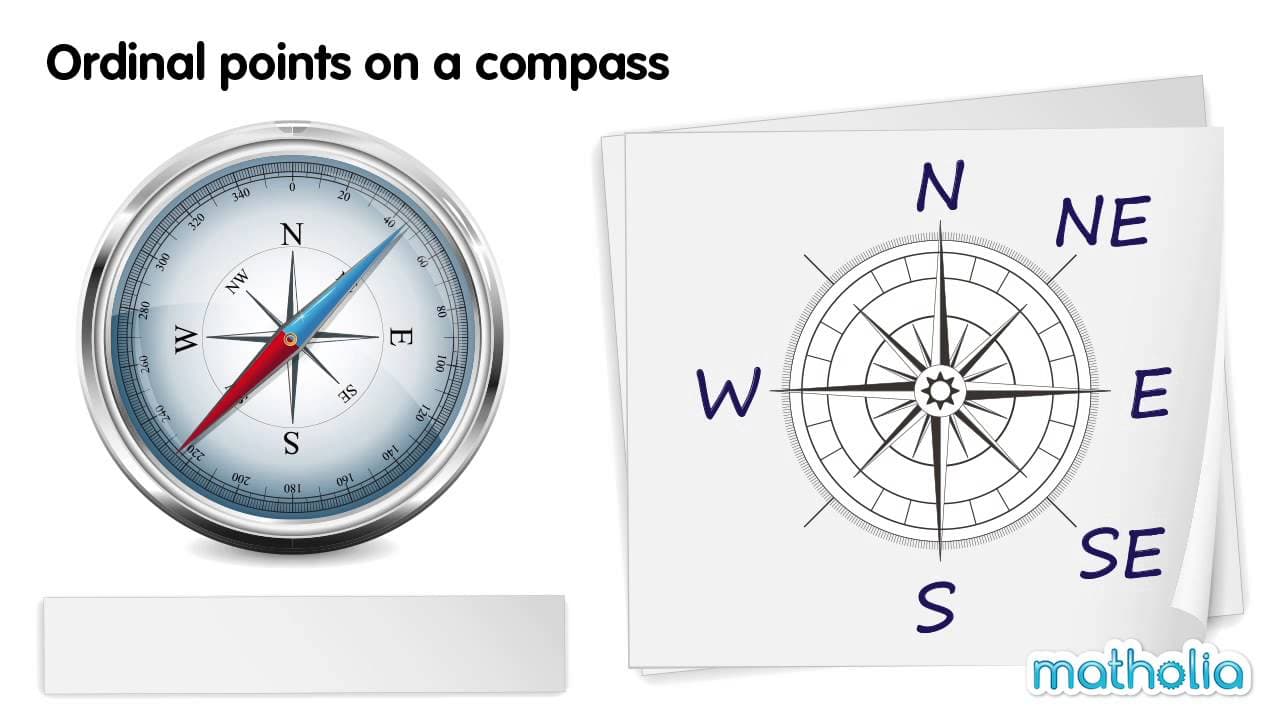
Reading Compass Directions: The Ordinal Points

Reading Compass Directions: The Ordinal Points

This educational video provides a clear and structured introduction to the ordinal (or intercardinal) points of a compass. Building upon the basic cardinal directions of North, South, East, and West, the video demonstrates how intermediate directions are named based on the two cardinal points they lie between. Through a visual demonstration using a realistic compass needle and a diagram, viewers learn to identify, name, and abbreviate North-East (NE), South-East (SE), South-West (SW), and North-West (NW). The video explores key themes of spatial orientation, map reading skills, and the terminology of navigation. It explicitly distinguishes between cardinal points and ordinal points, helping students understand the logic behind the naming convention (e.g., why it is "North-East" and not "East-North"). The systematic presentation reinforces the cyclical nature of the compass rose. For educators, this resource is an excellent tool for introducing map skills and geography concepts in lower elementary grades. It visually bridges the gap between abstract direction names and the physical movement of a compass needle. Teachers can use this video to scaffold lessons on reading maps, giving directions, or understanding location relative to a fixed point, making it valuable for both Social Studies and Math (spatial reasoning) curriculums.

MatholiaChannelMatholiaChannel

1min 41s

Video
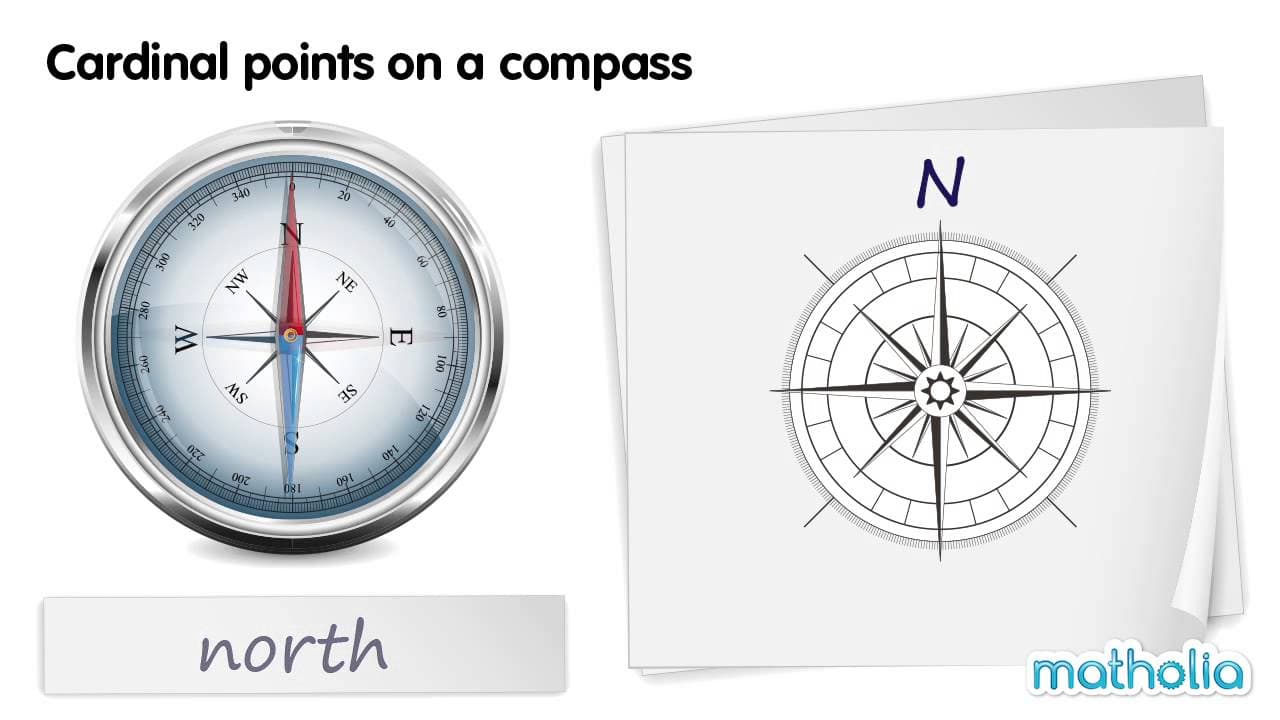
Understanding Cardinal Directions on a Compass

Understanding Cardinal Directions on a Compass

This concise educational video introduces young learners to the compass and the four cardinal directions: North, South, East, West. Using clear, high-quality animations of a realistic compass alongside a simplified compass rose diagram, the video systematically demonstrates how the red needle points to each direction. It provides a visual and auditory explanation of how to identify directionality using this essential navigational tool. The video focuses on two main themes: identifying the parts of a compass (specifically the directional needle) and associating the four primary directions with their names and abbreviations (N, E, S, W). It steps through each direction individually, allowing students to see the needle move and establish a mental connection between the visual position (up, right, down, left) and the corresponding directional term. For educators, this resource serves as an excellent foundational tool for geography and social studies units on maps and navigation. It is particularly useful for introducing the concept of orientation before moving on to map reading skills. Teachers can use this video to help students understand that 'up' on a map typically corresponds to North, and to introduce the standard abbreviations used on maps and globes. The clear pacing makes it suitable for young children learning spatial concepts for the first time.

MatholiaChannelMatholiaChannel

1min 21s

Video
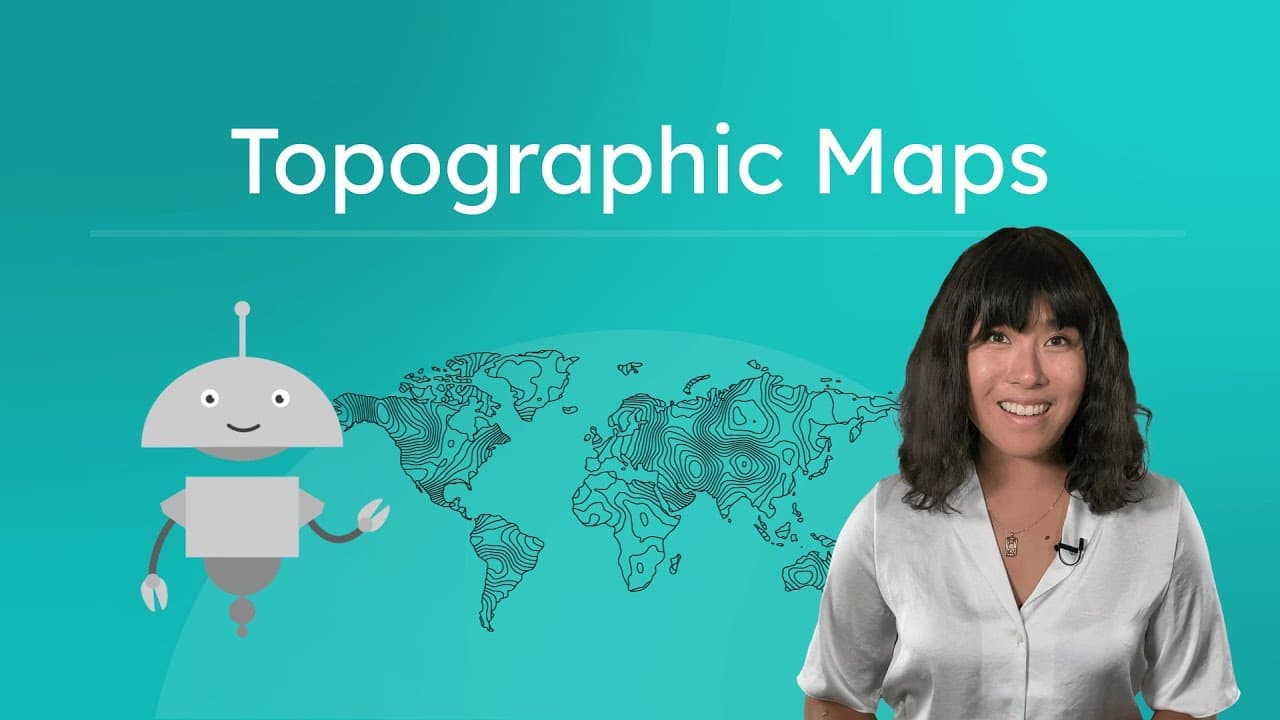
How to Read Relief and Topographic Maps

How to Read Relief and Topographic Maps

This educational video provides a clear and engaging introduction to three specific types of maps: political, relief, and topographic. While acknowledging that most students are familiar with political maps that show country borders, the narrator explains that these are insufficient for understanding the physical features of the Earth. The video then transitions into a detailed explanation of relief maps, which use color gradients to depict elevation, and topographic maps, which use contour lines to show the shape and height of landforms with precision. The content explores key geographical concepts such as elevation, relief (the difference between highest and lowest points), and topography. It uses visual examples to demonstrate how to interpret color coding on relief maps—where darker often means higher on land but deeper in water—and how to read contour lines on topographic maps, including how line spacing indicates slope steepness. The video actively engages viewers by asking them to pause and interpret visual data, fostering critical thinking skills related to spatial reasoning. For educators, this video serves as an excellent foundational resource for Earth Science and Geography units. It effectively bridges the gap between seeing a flat map and visualizing a three-dimensional world. Teachers can use this video to launch lessons on map reading skills, landform identification, or preparing for outdoor activities like hiking where understanding terrain is crucial. The clear definitions and side-by-side comparisons make complex spatial concepts accessible to students.

Miacademy & MiaPrep Learning ChannelMiacademy & MiaPrep Learning Channel

8mins 52s

Video
Why Borders Matter: Maps, Shapes, and Sovereignty

Why Borders Matter: Maps, Shapes, and Sovereignty

This engaging educational video explores the complex world of political geography through a relatable analogy of a backyard dispute between neighbors. By comparing a property line disagreement to international border conflicts, the host breaks down abstract geopolitical concepts like sovereignty, resource rights, and cultural boundaries into easily understandable terms. The video transitions between a live-action skit and detailed map animations to illustrate how borders are defined, why they change over time, and how they function in the real world. The content covers essential geography curriculum topics including the difference between physical and political maps, types of borders (demarcated, delimited, natural, and geometric), and state morphology (the shapes of countries). It specifically defines and provides real-world examples for five key state shapes: compact, prorupted, elongated, fragmented, and perforated. Additionally, it tackles advanced concepts like enclaves and exclaves, using visual diagrams to clarify these often-confusing terms. For educators, this video serves as an excellent anchor for units on World Geography or Human Geography. It transforms dry vocabulary into a narrative about solving a conflict, making it perfect for introducing state shapes or discussing the causes of geopolitical tension. The clear definitions and visual examples of countries like Namibia, Chile, and South Africa provide ready-made case studies for classroom analysis.

Miacademy & MiaPrep Learning ChannelMiacademy & MiaPrep Learning Channel

11mins 52s

Video
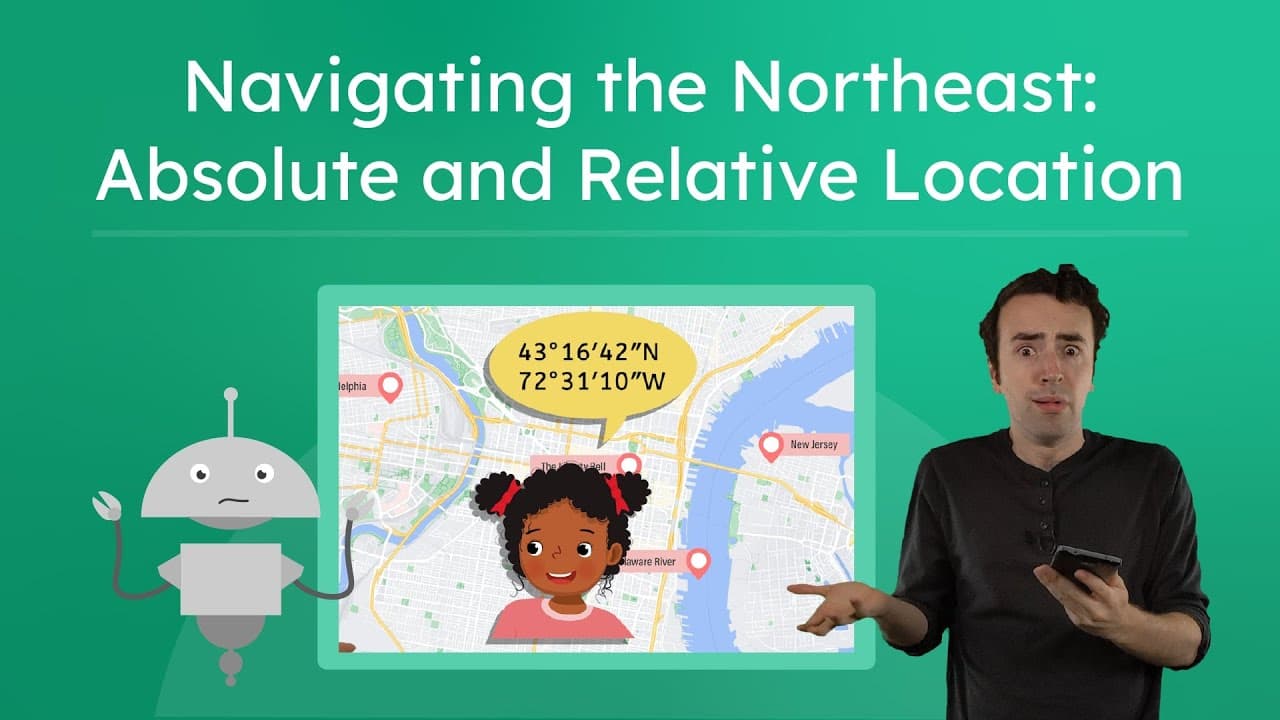
Using Maps to Understand Life in the Western US

Using Maps to Understand Life in the Western US

This educational video takes students on a virtual road trip to the Western United States to master advanced map-reading skills. Hosted by a narrator named Justin, the lesson moves beyond simply identifying locations to teaching critical thinking skills: drawing conclusions and making inferences. The video explicitly distinguishes between these two concepts, defining drawing conclusions as forming ideas based on presented information, and making inferences as combining that information with prior knowledge to guess details not directly shown.

Miacademy & MiaPrep Learning ChannelMiacademy & MiaPrep Learning Channel

8mins 30s

Video
How U.S. Foreign Policy Evolved: Isolationism to Imperialism

How U.S. Foreign Policy Evolved: Isolationism to Imperialism

This educational video explores the evolution of United States foreign policy throughout the 19th and early 20th centuries, using an engaging analogy of a teenager going through different life phases. The narrator breaks down complex political concepts into three main categories: Isolationism, Interventionism, and Imperialism. By comparing a nation's growth to human development, the video makes abstract historical strategies accessible and relatable for students.

Miacademy & MiaPrep Learning ChannelMiacademy & MiaPrep Learning Channel

12mins 18s

Video
Designing Your Dream City: Urbanization Explained

Designing Your Dream City: Urbanization Explained

In this engaging educational video, viewers are "hired" as urban planners and tasked with designing a master plan for their own fictional dream city. The host, Justin, guides students through the fundamental principles of urban geography by exploring how cities have historically developed and what makes them successful today. The video uses a mix of historical context, such as early river valley civilizations, and modern examples like Japan's high-speed rail system to illustrate key concepts.

Miacademy & MiaPrep Learning ChannelMiacademy & MiaPrep Learning Channel

12mins 8s

Video
Reading the City: How Urban Spaces Are Structured

Reading the City: How Urban Spaces Are Structured

This educational video explores the internal structure of cities, treating them as texts that reveal their history, culture, and economic development. The host, Alizé Carrère, introduces key urban geography models, specifically the Concentric Zone Model based on Chicago, to explain how cities organize themselves around a Central Business District and expand outward in rings of varying land use. The video contrasts North American urban development—characterized by industrialization, suburban sprawl, and car dependency—with the historic structure of Islamic cities like Fez, Morocco, where climate and cultural values of privacy shape a very different urban form. Key themes include the impact of transportation technology on city layout, the concept of "invasion and succession" in neighborhoods, and the transition from monocentric to polycentric metropolitan structures. The video also delves into how physical geography and climate necessitate different architectural solutions, comparing wide American grids with the narrow, shaded streets of North African medinas. For educators, this video is an invaluable resource for AP Human Geography and social studies classrooms. It provides concrete examples of abstract concepts like urban models, gentrification, and zoning. It encourages students to look at their own local environments critically, identifying the historical layers and socio-economic patterns that define the neighborhoods they live in.

CrashCourseCrashCourse

11mins 52s

Video
Learning Cardinal Directions and How to Read a Map

Learning Cardinal Directions and How to Read a Map

This engaging educational video introduces young learners to the fundamentals of map reading and cardinal directions. Hosted by an enthusiastic guide named Justin, the video uses clear visual aids, humor, and a catchy original song to explain how to use a compass and a compass rose to navigate. The lesson transitions from understanding physical direction to applying those concepts on a simple neighborhood map called "Cookieville," helping students visualize abstract spatial concepts.

Miacademy & MiaPrep Learning ChannelMiacademy & MiaPrep Learning Channel

5mins 24s

Video
How the First People Migrated to the Americas

How the First People Migrated to the Americas

This educational video explores the scientific theory of how the first humans migrated to the Americas via the Beringia Land Bridge. It explains the geographical and climatic conditions of the Ice Age that lowered sea levels, exposing a land connection between present-day Russia and Alaska. The video details the migration routes taken by these early people as they moved through North America down to South America. The content covers key interdisciplinary concepts including geography, earth science, and anthropology. It defines important terms like "migration" and explains the push factors that cause populations to move, such as the search for food, resources, or safety. The video also introduces students to how scientists use evidence to reconstruct the past, specifically looking at how anthropologists use DNA analysis and how archaeologists use artifacts like bronze tools and jade masks to trace human origins. This resource is highly valuable for social studies and history classrooms studying early human civilizations or Native American history. It provides a clear visual representation of complex concepts like changing coastlines and migration patterns. Teachers can use this video to illustrate the intersection of geography and history, demonstrating how physical landscapes shape human movement and settlement patterns.

Miacademy & MiaPrep Learning ChannelMiacademy & MiaPrep Learning Channel

4mins 50s

Video
Exploring the Physical Geography of Central America

Exploring the Physical Geography of Central America

This educational video provides a comprehensive overview of the physical geography of Central America, describing it as an isthmus connecting North and South America. It details the region's seven countries, unique climate zones determined by elevation and coastal proximity, and major physical features like mountain ranges and volcanoes. The narrator explains how the region acts as a bridge for the American Cordillera and highlights the significant impact of tectonic plate activity on the landscape. The video explores key themes such as vertical climate zones, comparing the "permanent spring" of lower elevations to the colder, subsistence-farming zones higher up. It also contrasts the tropical wet climate of the Caribbean coast with the wet/dry climate of the Pacific coast. Significant attention is given to the region's biodiversity, including cloud forests and the unique ecosystem of Lake Nicaragua, which hosts freshwater sharks. For educators, this video is a valuable resource for Geography and Earth Science units. It connects physical features to human activity, explaining where crops like coffee and corn are grown versus where subsistence farming occurs. It also addresses natural hazards, discussing the impact of earthquakes and hurricanes like Hurricane Mitch, making it excellent for discussions on human-environment interaction and the vulnerability of developing regions to natural disasters.

Miacademy & MiaPrep Learning ChannelMiacademy & MiaPrep Learning Channel

9mins 58s

Video
Decoding Maps: How Cartography Shapes Our Reality

Decoding Maps: How Cartography Shapes Our Reality

This fast-paced and visually engaging video explores the complex world of cartography, moving beyond simple navigation to show how maps tell stories, display data, and influence our perception of reality. It breaks down the difference between reference maps and thematic maps, introducing specific types like choropleth, dot density, and cartograms. Through clear examples, the video demonstrates how each map type offers a unique "lens" on data while also possessing inherent limitations or distortions. The content delves into the subjectivity of map-making, explaining that every map is the result of human choices regarding projection, data selection, and design. It uses historical examples, such as Marshall Islands stick charts and Cold War-era propaganda maps, to illustrate how maps serve different cultural and political purposes. The video highlights how color, symbols, and projection choices (like the Mercator vs. Fuller projection) can manipulate how we view geopolitical power dynamics. For educators, this resource is an excellent tool for teaching geography, data literacy, and critical thinking. It encourages students to question who made a map and why, rather than accepting it as an objective truth. The video provides natural entry points for discussions about bias in media, the challenges of translating a 3D world to 2D surfaces, and the importance of recognizing indigenous histories and land rights in modern geography.

CrashCourseCrashCourse

10mins 30s

Video
How the United States Annexed Hawaii

How the United States Annexed Hawaii

This educational video provides a comprehensive overview of American imperialism in the Pacific during the late 19th century, with a specific focus on the annexation of Hawaii. Through a balanced narrative, it explores the dual perspectives of the United States' expansionist goals and the Native Hawaiian experience. The video traces the timeline from early whaling and missionary contact to the rise of the sugar industry, the overthrow of Queen Liliuokalani, and the eventual annexation in 1898. It utilizes historical photographs, maps, and modern footage to illustrate the economic, military, and cultural shifts that occurred during this pivotal era. The content highlights key themes such as economic motivation behind imperialism (sugar and pineapple plantations), the strategic military importance of Pearl Harbor, and the concepts of sovereignty and cultural assimilation. It creates a framework for analyzing imperialism by evaluating whether it made the U.S. "richer, stronger, and safer," while contrasting this with the loss of self-rule, environmental degradation, and cultural suppression faced by the indigenous population. The video also emphasizes the resilience of Hawaiian culture and the preservation of traditions like hula and language in the face of colonization. For educators, this video serves as an excellent tool to teach the complexities of U.S. foreign policy and the human cost of expansion. It includes built-in pause points with critical thinking questions that ask students to step into the shoes of historical figures and evaluate the fairness of trade agreements and political actions. It effectively bridges economics, geography, and social studies, making it suitable for units on the Gilded Age, American Imperialism, or indigenous studies.

Miacademy & MiaPrep Learning ChannelMiacademy & MiaPrep Learning Channel

11mins 33s

Video
Exploring Earth's Seven Continents and Five Oceans

Exploring Earth's Seven Continents and Five Oceans

Join Jessi and her feathered friends, Webb and Bill the ducks, for an exciting global expedition right from the classroom! This engaging video introduces young learners to the concept of a globe as a model of the Earth, distinguishing between the blue water that covers most of our planet and the colorful landmasses where people and animals live. Through clear animations and a physical globe demonstration, students will visualize the Earth as a sphere rather than a flat map. The video systematically breaks down the Earth's geography into its major components: the seven continents and the five oceans. It guides viewers through a tour of North America, South America, Africa, Europe, Asia, Australia, and Antarctica, highlighting their relative locations and sizes. Following the land tour, the lesson dives into the hydrosphere, explaining the difference between fresh and salt water and identifying the Pacific, Atlantic, Indian, Arctic, and Southern Oceans. Ideal for early elementary geography units, this resource simplifies complex spatial concepts into digestible facts. It addresses the difference between continents and countries, visualizes the vastness of the oceans compared to land, and helps students locate their own place on the planet. The use of puppets and high-contrast animations makes abstract geographical concepts concrete and memorable for young students.

SciShow KidsSciShow Kids

4mins 8s

Video
How Place Names Shape Identity and Power

How Place Names Shape Identity and Power

This episode of Crash Course Geography explores the subfield of Human Geography through the lens of "toponyms," or place names, illustrating how names reflect power, history, and culture. The video uses the specific case study of Denali (formerly Mount McKinley) in Alaska to demonstrate how political power at different scales—local, national, and global—influences the identity of a place. It explains that geography is not just about memorizing locations, but understanding the complex spatial relationships between people, power, and the environment. Key themes include the concepts of "Place" versus "Space," the impact of colonization on indigenous landscapes, and the geographic concept of "Scale." The video breaks down how naming a location is an act of claiming ownership and shaping perception. It details the historical struggle between the Athabascan name "Denali" and the imposed name "Mount McKinley," using this narrative to introduce broader geographic concepts like political, economic, and urban geography, as well as formal and perceptual regions. For educators, this video is an invaluable resource for introducing AP Human Geography concepts, specifically within the units on Cultural Patterns and Processes or Political Organization of Space. It provides a concrete, high-interest example of how abstract concepts like "cultural erasure" and "scales of analysis" play out in the real world. The video encourages students to critically examine the maps they use and understand the historical narratives embedded in the names of their own local communities.

CrashCourseCrashCourse

10mins 11s

Video
Exploring Symbols: What They Are and What They Mean

Exploring Symbols: What They Are and What They Mean

In this engaging introduction to social studies, students explore the concept of symbols—images or objects that stand for something else. Hosted in a colorful "Club House" setting, the video uses familiar examples like hearts and four-leaf clovers to explain how symbols communicate meaning without words. The friendly host and his alien friend, Plato, guide viewers through identifying common symbols found in everyday life and their specific meanings. The video progresses from simple emotional and luck-based symbols to civic and national symbols. It introduces the recycling loop, the American flag, the Statue of Liberty, the Bald Eagle, and the Washington Monument. Each example is accompanied by a clear explanation of what it represents, such as freedom, the fifty states, or history. The content seamlessly blends cartoon animations with real-world photographs to help students bridge abstract concepts with reality. This resource is highly valuable for early elementary classrooms introducing civics, community helpers, or visual literacy. It provides a concrete foundation for understanding how we communicate ideas through imagery. Teachers can use this video to spark discussions about symbols in the classroom, school, and community, helping students decode the visual world around them and understand the importance of national identity and shared meaning.

Miacademy & MiaPrep Learning ChannelMiacademy & MiaPrep Learning Channel

5mins 39s

Video
Exploring the US States and Capitals by Region

Exploring the US States and Capitals by Region

This educational video provides a comprehensive overview of the United States geography, breaking down the country into four major regions: the Northeast, Midwest, South, and West. Hosted by Kylie from Miacademy, the lesson guides viewers through all 50 states, identifying each state's location on the map and its capital city. Beyond simple memorization, the video introduces key geographical concepts such as how regions are defined by shared culture, climate, and history. Throughout the tour, the video highlights significant landmarks and interesting facts to help students retain information. Viewers learn about Mount Washington in the Northeast, the agricultural significance of the Midwest, the cultural musical roots of the South, and the diverse landscapes of the West, from Alaska's mountains to Hawaii's islands. It specifically addresses common points of confusion, such as the difference between Washington state and Washington D.C., and clarifies that New York City is not the capital of New York. This resource is highly valuable for elementary social studies classrooms as a foundational tool for U.S. geography units. Teachers can use it to introduce the concept of regionalism, practice map skills, or as a review tool for state capitals. The clear visual maps and distinct categorization make a large topic manageable, allowing for segmented viewing where classes can focus on one region at a time for deeper study.

Miacademy & MiaPrep Learning ChannelMiacademy & MiaPrep Learning Channel

8mins 2s

Video
How Geography Shapes Air Temperature: Latitude, Oceans, and Elevation

How Geography Shapes Air Temperature: Latitude, Oceans, and Elevation

This educational video from Crash Course Geography explores the complex factors that determine global air temperature patterns, moving beyond simple weather reports to understanding the "why" behind climate differences. Using the extreme environment of Siberia as a primary case study, the host breaks down how physical geography shapes the lived experience of humans, plants, and animals in different regions. The content is structured around four critical geographic questions: latitude, proximity to water (continentality), elevation, and land use (urban vs. rural). It delves into scientific concepts such as insolation, specific heat, albedo, and the urban heat island effect. The video connects these physical mechanics to human impacts, discussing how temperature influences culture, agriculture, and social equity, specifically highlighting the disparities in heat exposure within cities like Phoenix, Arizona. For educators, this video serves as an excellent anchor for units on climate, physical geography, or environmental justice. It provides a clear analytical framework that students can apply to any location on Earth. The video effectively visualizes abstract data like isotherms and specific heat, making it a valuable tool for bridging the gap between scientific theory and real-world observations.

CrashCourseCrashCourse

10mins 52s

Video
How the Silk Roads Spread Ideas and Religions

How the Silk Roads Spread Ideas and Religions

This educational video explores the concept of cultural diffusion through the historical lens of the Silk Roads. While often remembered for the trade of luxury goods like silk and spices, the video argues that the most significant exchange was actually invisible: the spread of ideas, worldviews, and religious beliefs. Host Alizé Carrère guides viewers through how religions like Buddhism, Islam, and Christianity spread and evolved across Asia, Africa, and Europe via these networks, illustrating complex geographic concepts such as relocation, expansion, contagion, and hierarchical diffusion.

CrashCourseCrashCourse

11mins 30s

Video
Discovering the Golden Age of Ancient China

Discovering the Golden Age of Ancient China

This educational video explores the reunification and subsequent "Golden Age" of Ancient China under the Sui and Tang dynasties. Narrated by Mia, it takes students on a journey through a timeline of chaos following the Han Dynasty to the stability established by the Sui. The video details significant technological advancements, including the Four Great Inventions (gunpowder, paper, printing, and the compass) and the construction of the massive Grand Canal, highlighting how these innovations connected the world and fueled economic growth. The content dives deep into the cultural explosion of the Tang Dynasty, showcasing its poetry, landscape paintings, ceramics, music, and cuisine. It emphasizes the aesthetic and social values of the time, illustrating how art and daily life were intertwined. Furthermore, the video addresses the philosophical and religious landscape of the era, specifically examining how Buddhism and Confucianism coexisted and complemented one another to guide social behavior and spiritual life. This resource is highly valuable for World History curriculums, offering a clear, engaging overview of a complex historical period. It provides opportunities to discuss the impact of technology on society, the role of infrastructure in economic development, and the syncretism of religious beliefs. Teachers can use the embedded questions to check for understanding and the rich visuals of artifacts and maps to anchor lessons on geography and art history.

Miacademy & MiaPrep Learning ChannelMiacademy & MiaPrep Learning Channel

10mins 10s

Video
Comparing Primary and Secondary Historical Sources

Comparing Primary and Secondary Historical Sources

This educational video uses the 1893 Chicago World's Fair as a case study to explain the critical difference between primary and secondary sources in historical analysis. The narrator breaks down definitions of each source type before presenting concrete examples: a first-hand letter written by a fair attendee in 1893 (primary) and a modern National Park Service article about the fair (secondary). Through this comparison, viewers learn how to distinguish between direct observation and retrospective analysis. The video explores key themes of historical perspective, bias, and the construction of historical narratives. It specifically highlights how primary sources capture immediate, subjective experiences (like the spectacle of the Egyptian exhibit), while secondary sources provide broader context and critical analysis that may be unavailable to contemporary witnesses (such as the structural sexism faced by women organizers). The video uses a Venn diagram to visually map out where these accounts overlap and diverge. For educators, this resource is an excellent tool for teaching historical thinking skills and source evaluation. It moves beyond simple definitions to demonstrate *how* historians use different sources to build a complete picture of the past. The video includes a built-in pause for student reflection and concludes with a powerful metaphor about history being a "conversation between the past and the present," helping students understand that history is an evolving interpretation rather than a static set of facts.

Khan AcademyKhan Academy

5mins 1s

Video
How to Critically Evaluate News Media

How to Critically Evaluate News Media

This educational video introduces students to the essential skill of media literacy, focusing on how to distinguish between trustworthy and untrustworthy news sources. Through a narrative set in "Media Metropolis," the host explains that while responsible citizens should stay informed, they must also consume news thoughtfully. The video uses relatable analogies—like a fibbing cousin versus an honest aunt—to explain the concepts of source credibility and content reliability before diving into more complex analysis techniques.

Miacademy & MiaPrep Learning ChannelMiacademy & MiaPrep Learning Channel

10mins 33s

Video
Whose Independence? Diverse Responses to the Declaration

Whose Independence? Diverse Responses to the Declaration

This video provides a critical examination of the immediate aftermath of the signing of the Declaration of Independence, focusing specifically on the populations excluded from its promises. While popular narratives often depict a universal celebration, this lesson explores how the ideals of "life, liberty, and the pursuit of happiness" contrasted sharply with the reality for women, Native Americans, and enslaved and free Black people in the colonies. It highlights how these marginalized communities interpreted and utilized the language of the Declaration to advocate for their own rights, introducing key figures like Abigail Adams, Prince Hall, and Elizabeth Freeman. The content further expands the narrative scope by analyzing the reactions of the British Crown and American Loyalists. It details King George III's furious response, viewing the Declaration as treason, and the intellectual counter-arguments posed by Loyalists like John Lind. The video also touches upon the internal contradictions of the Founding Fathers, discussing the removal of the slavery clause to appease Southern colonies and the economic motivations of the wealthy signers. For educators, this resource serves as an excellent tool for teaching historical perspective and critical thinking. It moves beyond the "textbook" version of the Fourth of July to reveal a complex tapestry of reactions. Teachers can use this video to launch discussions about the gap between American ideals and historical realities, the agency of marginalized groups in early America, and the global ripple effects of the Declaration in places like France and Haiti.

Miacademy & MiaPrep Learning ChannelMiacademy & MiaPrep Learning Channel

11mins 28s

Video
The History of Money: Debt, Barter, and War

The History of Money: Debt, Barter, and War

Hosted by John Green, this episode of Crash Course World History challenges the traditional economic narrative that money evolved naturally from barter systems to solve logistical problems. Instead, it presents anthropologist David Graeber's theory that complex credit and debt systems existed long before coinage, and that physical money (coins) emerged primarily as a tool for states to fund wars and professional armies.

CrashCourseCrashCourse

14mins 4s

Video
How the Indus Valley Civilization Rose and Fell

How the Indus Valley Civilization Rose and Fell

This engaging episode of Crash Course World History explores the Indus Valley Civilization, one of the largest and most mysterious ancient societies in human history. Host John Green guides viewers through the rise and fall of this Bronze Age culture, examining its sophisticated urban planning, extensive trade networks, and the puzzling lack of weapons or evidence of warfare. The video also tackles the broader historical concept of what defines a "civilization" and the inherent biases in how historians classify different human societies. Key themes include the relationship between geography and settlement, specifically the importance of reliable river flooding for agriculture; the role of archaeology in reconstructing history without decipherable written records; and the comparison of social structures across different ancient cultures. The video highlights specific artifacts like the famous animal seals and architectural marvels like the Great Bath of Mohenjo-Daro to illustrate the uniqueness of the Indus Valley people. For the classroom, this video is an excellent resource for introducing Ancient River Valley Civilizations or units on archaeology and historical inquiry. It models critical thinking by questioning established historical narratives—such as the definition of "barbarian"—and demonstrating how historians form theories based on physical evidence. The fast-paced, humorous delivery helps make complex anthropological concepts accessible and relevant to high school students.

CrashCourseCrashCourse

9mins 35s

Video
Understanding Economic Cycles: Boom, Bust, and Recessions

Understanding Economic Cycles: Boom, Bust, and Recessions

This educational video provides a clear and accessible introduction to the complex topic of economic cycles and how we measure the health of an economy. It breaks down the natural ebb and flow of market economies, defining key phases such as expansion, peak, contraction, and trough, and explains the technical definition of a recession. The host uses relatable examples, such as the contrast between the Roaring Twenties and the Great Depression, to illustrate these concepts concretely. Beyond basic definitions, the video explores why economic news can often feel contradictory or disconnected from personal reality. It highlights how different industries, geographic regions, and income levels experience economic changes differently—explaining why a booming national economy might not feel that way to everyone. This nuance introduces students to the importance of perspective when analyzing social data. For educators, this resource serves as an excellent primer for units on economics, financial literacy, or civics. It encourages critical thinking by providing specific questions students can ask to evaluate economic claims, rather than just accepting headlines. The video fosters data literacy by introducing indicators like GDP, employment rates, and inflation, making it a valuable tool for teaching students how to interpret real-world information.

Miacademy & MiaPrep Learning ChannelMiacademy & MiaPrep Learning Channel

9mins 43s

Video
Civics Simulation: United States v. Mia and the Limits of Free Speech

Civics Simulation: United States v. Mia and the Limits of Free Speech

This educational video presents a fictional Supreme Court case, "United States v. Mia," to teach students about the First Amendment and the complexities of freedom of speech. Through a mock trial format, viewers explore whether a student's viral digital artwork, which criticized a government law and sparked civil disobedience, is protected speech or criminal incitement. The video encourages students to act as Supreme Court justices, weighing arguments from both the defense and the prosecution. The narrative serves as a practical application of four major historical legal precedents: Tinker v. Des Moines, Texas v. Johnson, Schenck v. United States, and Brandenburg v. Ohio. By applying these real-world rulings to a hypothetical scenario involving social media and digital protests, the video makes abstract constitutional concepts concrete and relevant to modern students. This resource is highly valuable for Civics and U.S. Government classrooms. It moves beyond simple definitions of rights to the higher-order skill of legal analysis. Teachers can use this video to structure a classroom debate, introduce the judicial process, or help students understand the nuanced boundaries between protected expression and dangerous speech in the digital age.

Miacademy & MiaPrep Learning ChannelMiacademy & MiaPrep Learning Channel

9mins 54s

Video
How the Media Shapes Political Information and Public Opinion

How the Media Shapes Political Information and Public Opinion

This fast-paced educational video explores the complex relationship between the media and the American political system. It breaks down the primary function of the media as a supplier of information that lowers "information costs" for citizens, allowing them to make decisions without doing primary research themselves. The host, Craig Benzine, categorizes media into print, broadcast, and the internet, analyzing the strengths and weaknesses of each format in terms of depth, reach, and speed. The video delves deeply into the factors that influence news coverage, moving beyond simple accusations of partisan bias. It examines three main drivers of news content: the journalists themselves, the politicians who act as sources (using strategies like leaks and press releases), and the consumers whose viewing habits dictate what stories are profitable to cover. Special attention is paid to structural biases, such as the media's preference for conflict and scandal over compromise and policy details. For educators, this resource serves as an excellent foundation for media literacy and civics units. It moves students past surface-level debates about "fake news" to understanding the institutional mechanics of journalism. It provides a framework for analyzing why certain stories dominate the news cycle while others—often involving working-class issues or complex policy nuances—are ignored, empowering students to become more critical consumers of political information.

CrashCourseCrashCourse

8mins 45s

Video
The Real Story of the Underground Railroad: Facts vs. Fiction

The Real Story of the Underground Railroad: Facts vs. Fiction

This educational video from Crash Course Black American History provides a nuanced and historically accurate examination of the Underground Railroad, dismantling common myths while highlighting the true heroism involved. Host Clint Smith explains that the railroad was not a literal train system nor a centralized organization, but rather a loose network of individuals—primarily Black abolitionists—who risked their lives to help enslaved people find freedom. The video profiles key figures like William Still, the "Father of the Underground Railroad," and examines the specific terminology used within the network, such as conductors, stations, and station masters. The content explores critical themes regarding the agency of enslaved people, correcting the historical narrative that often centers benevolent white allies. It delves into the geography of escape, revealing that freedom seekers didn't just head North to Canada, but also South to Mexico and the Caribbean. The video also tackles complex topics like the Fugitive Slave Law of 1850, the pseudoscience of "drapetomania," and the statistical reality that while the Underground Railroad was symbolically powerful, only a small fraction of the enslaved population successfully escaped, which underscores the brutality of the system rather than a lack of desire for freedom. For educators, this video is an invaluable tool for teaching critical historical thinking and source analysis. It provides opportunities to discuss how history is recorded and remembered, contrasting popular folklore with documented evidence like William Still's records. It allows teachers to facilitate deep discussions about resistance, the legal structures protecting slavery, and the diverse geography of freedom in the Americas. The video is particularly useful for moving students beyond a surface-level understanding of the Underground Railroad to a more complex appreciation of Black resistance strategies.

CrashCourseCrashCourse

12mins 45s

Video
How the Civil War Ended Slavery and Transformed the Nation

How the Civil War Ended Slavery and Transformed the Nation

In this installment of Crash Course US History, John Green moves beyond the battles and generals of the Civil War to explore its profound political, social, and economic consequences. The video tackles complex questions surrounding Abraham Lincoln's role as the "Great Emancipator," analyzing the strategic and legal limitations of the Emancipation Proclamation while crediting Lincoln for his persistence in securing the 13th Amendment. It also examines how the war transformed the United States from a loose collection of states into a unified, industrialized nation-state. Key themes include the shift in the war's purpose from preserving the Union to ending slavery, the impact of new military technologies and photography on public perception, and the massive expansion of federal power. The video highlights significant legislation passed during the war, such as the Homestead Act and the Pacific Railway Act, which shaped the country's future development. It also discusses the "singularization" of the United States, marking a cultural shift from seeing the country as a plural collection of states ("the United States are") to a single entity ("the United States is"). This video is an excellent resource for high school history classrooms. It encourages critical thinking about historical memory, challenges simplified narratives about emancipation, and connects the events of the 1860s to modern American government and identity. Teachers can use it to spark discussions about the reliability of primary sources (via Matthew Brady's photography), the role of government during crises, and the nuances of historical leadership.

CrashCourseCrashCourse

10mins 54s

Video
Why We Study History: The Early Modern Era Explained

Why We Study History: The Early Modern Era Explained

This engaging educational video serves as a comprehensive introduction to an Early Modern World History course, covering the pivotal period from 1750 to 1950. The host begins by establishing the personal relevance of history, connecting students' current identities to the struggles, triumphs, and decisions of their ancestors. It moves beyond dates and facts to emphasize history as a tool for empathy, understanding societal changes, and learning from past mistakes to shape a better future. The video outlines the course structure in three distinct parts: (1) Absolutism to Revolution, exploring the Enlightenment and the shift from monarchies to democracies; (2) Industrialism to Imperialism, detailing how technological shifts led to global competition for resources and colonization; and (3) The World at War, covering the devastation of World war I and II. It also introduces critical historical thinking skills, such as analyzing primary sources, understanding cause and effect, and evaluating credibility. For educators, this video is an excellent course opener or unit introduction. It provides a "historian's toolbox" framework that teachers can reference throughout the year, encouraging students to "zoom out" for the big picture and "zoom in" for multiple perspectives. The content addresses difficult topics like slavery, oppression, and war with sensitivity, making it a strong launchpad for discussions about historical empathy and the ethical responsibilities of global citizens.

Miacademy & MiaPrep Learning ChannelMiacademy & MiaPrep Learning Channel

11mins 23s

Video
Decoding Maps: How Cartography Shapes Our Reality

Decoding Maps: How Cartography Shapes Our Reality

This fast-paced and visually engaging video explores the complex world of cartography, moving beyond simple navigation to show how maps tell stories, display data, and influence our perception of reality. It breaks down the difference between reference maps and thematic maps, introducing specific types like choropleth, dot density, and cartograms. Through clear examples, the video demonstrates how each map type offers a unique "lens" on data while also possessing inherent limitations or distortions. The content delves into the subjectivity of map-making, explaining that every map is the result of human choices regarding projection, data selection, and design. It uses historical examples, such as Marshall Islands stick charts and Cold War-era propaganda maps, to illustrate how maps serve different cultural and political purposes. The video highlights how color, symbols, and projection choices (like the Mercator vs. Fuller projection) can manipulate how we view geopolitical power dynamics. For educators, this resource is an excellent tool for teaching geography, data literacy, and critical thinking. It encourages students to question who made a map and why, rather than accepting it as an objective truth. The video provides natural entry points for discussions about bias in media, the challenges of translating a 3D world to 2D surfaces, and the importance of recognizing indigenous histories and land rights in modern geography.

CrashCourseCrashCourse

10mins 30s

Video
Defining Heroes and Traitors in American History

Defining Heroes and Traitors in American History

This educational video explores the complex and often subjective definitions of "hero" and "traitor" through three distinct case studies from American history. The narrator challenges students to look beyond simple definitions and consider how historical context, personal values, and perspective shape these labels. The video examines John Adams' controversial defense of British soldiers after the Boston Massacre, Colonel John Chivington's role in the horrific Sand Creek Massacre, and Carry Nation's radical "hatchetations" during the temperance movement. The video delves into deep ethical questions about justice, duty, and morality. It asks students to evaluate whether John Adams was a traitor to the colonial cause or a hero of justice for defending the enemy. It contrasts Chivington's self-proclaimed heroism in protecting settlers with the brutal reality of massacring peaceful Cheyenne and Arapaho people. Finally, it analyzes Carry Nation's crusade against alcohol, asking if her violent methods undermined her virtuous goals. Each segment includes pauses for reflection and specific guiding questions. Teachers can use this video to foster critical thinking and historical analysis skills. It serves as an excellent anchor for lessons on the American Revolution, Native American history, or the Prohibition era. By presenting historical figures who defy easy categorization, the video encourages students to engage with nuance and ambiguity. It is particularly useful for sparking debates about the rule of law, the ethics of war, and the validity of different protest methods.

Miacademy & MiaPrep Learning ChannelMiacademy & MiaPrep Learning Channel

11mins 30s

Video
How Government, Interest Groups, and Media Shape Public Opinion

How Government, Interest Groups, and Media Shape Public Opinion

This educational video from Crash Course Government and Politics explores the complex forces that shape public opinion in the United States. Host Craig Benzine moves beyond individual political ideologies to examine how public opinion forms in the "aggregate," focusing on three primary drivers: the government itself, private interest groups, and the media. The video breaks down the specific mechanisms each group uses, from presidential "bully pulpits" and press releases to interest group advertising campaigns and media "framing" of news stories. The content delves into historical examples to illustrate these concepts, such as Franklin D. Roosevelt's fireside chats, the Clinton administration's healthcare struggles against the "Harry and Louise" ad campaign, and the decline of public trust following the Vietnam War and Watergate scandal. It also explains sophisticated media literacy concepts like "priming" (preparing the public to view an issue a certain way) and "framing" (how an issue is interpreted), providing students with tools to critically analyze the information they consume. For educators, this video serves as an excellent anchor for units on political socialization, media literacy, or the interaction between government and the governed. It offers clear definitions of high-level political science terms and encourages critical thinking about the sources of our own beliefs. The video's fast-paced, humorous style helps make dry concepts like "video news releases" and "policy commercials" accessible and engaging for high school students.

CrashCourseCrashCourse

7mins 21s

Video
How the Scientific Revolution Changed the World

How the Scientific Revolution Changed the World

This educational video provides a comprehensive overview of the Scientific Revolution during the Renaissance, tracing its roots from the Islamic Golden Age to its profound impact on European society and the modern world. The narrative explains how the shift from relying on tradition and religious authority to using observation, experimentation, and reason transformed humanity's understanding of the universe. It highlights the interconnectedness of global history by acknowledging the crucial role Islamic scholars played in preserving and advancing Greek and Roman knowledge, which later fueled European scientific breakthroughs. The video profiles key historical figures including Ibn al-Haytham and Al-Khwarizmi from the Islamic world, and Copernicus, Galileo, and Isaac Newton from Europe. It details their specific contributions—from the development of algebra and optics to the heliocentric theory and the laws of gravity. Beyond the science, the video explores the ripple effects of these discoveries, explaining how the scientific method influenced navigation, global trade, economic power, and even political philosophies leading to democracy and human rights. This resource is highly valuable for World History, Science, and Social Studies classrooms. It encourages interdisciplinary learning by connecting scientific progress with political and social change. Teachers can use this video to teach the importance of critical thinking, the value of cross-cultural knowledge exchange, and the historical struggle between established authority and new evidence-based ideas.

Miacademy & MiaPrep Learning ChannelMiacademy & MiaPrep Learning Channel

12mins 40s

Video
Native American Cultures and Spanish Colonization

Native American Cultures and Spanish Colonization

This high-energy educational video serves as the introductory episode to US History, challenging traditional narratives about pre-Columbian America and early Spanish colonization. Host John Green deconstructs the concept of "primitive" versus "civilized" societies, arguing against the Eurocentric view that Native Americans were backward simply because they lacked specific technologies like the wheel or written language. The video provides a sweeping overview of the diverse and complex Native American cultures that existed before 1492, ranging from the Pueblo peoples of the Southwest to the Iroquois Confederacy in the Northeast, highlighting their sophisticated political structures, religious beliefs, and approaches to property ownership. The narrative transitions to the arrival of the Spanish, detailing their exploration and colonization efforts in Florida and the American Southwest. It covers key figures like Ponce de León and Cabeza de Vaca, the devastating impact of European diseases, and the imposition of the Encomienda system. A significant portion of the video is dedicated to the Pueblo Revolt of 1680, a successful indigenous uprising that forced the Spanish to retreat and subsequently alter their colonial policies. The episode concludes by introducing the "Black Legend"—the idea that the English exaggerated Spanish cruelty to justify their own imperial ambitions—and emphasizes the importance of recognizing historical biases inherent in written records. For educators, this video is an invaluable tool for launching a US History course because it immediately establishes critical thinking habits regarding historical perspective and historiography. It moves beyond rote memorization of explorers' names to explore deep cultural clashes regarding gender roles, religion, and land use. The content is specifically aligned with AP US History (Period 1) frameworks but is accessible to general high school audiences. It provides rich opportunities to discuss how history is constructed, who gets to tell the story, and the complexity of cultural interactions beyond simple conqueror/conquered narratives.

CrashCourseCrashCourse

11mins 20s

Video
How Hinduism and Buddhism Shaped Ancient India

How Hinduism and Buddhism Shaped Ancient India

In this installment of Crash Course World History, John Green tackles the complex and vibrant history of India, focusing on the development of two major world religions: Hinduism and Buddhism. The video navigates the challenges of studying Indian history, such as the vast diversity of the subcontinent and the biases of British historians, before diving into the structural foundations of Indian society. Green explains the origins of the caste system through the Vedic myth of Purusha and connects it to the concepts of Dharma (duty), Karma (action/consequence), and Samsara (the cycle of rebirth), illustrating how these spiritual beliefs enforced social cohesion for millennia. The narrative then shifts to the story of Siddhartha Gautama and the birth of Buddhism as a reaction to the rigid social hierarchy of Hinduism. Green details the Four Noble Truths and the Eightfold Path, explaining Buddhism's appeal to lower-caste individuals. The video also covers the Mauryan Empire under Emperor Ashoka, a warrior-turned-pacifist who attempted to rule through Buddhist principles (Dhamma) after witnessing the devastation of war. Special attention is given to Ashoka's pillars and stupas as historical artifacts. For educators, this video is an invaluable tool for simplifying abstract religious and philosophical concepts. It provides a clear framework for comparing Hinduism and Buddhism, exploring how religious beliefs shape political structures, and discussing the concept of historical bias. The engaging animations and humor make difficult topics like the caste system and metaphysical ethics accessible to high school students, serving as a perfect launchpad for discussions on social stratification, religious syncretism, and ancient governance.

CrashCourseCrashCourse

12mins 17s

Video
The Strategic Breakdown of the American Civil War

The Strategic Breakdown of the American Civil War

John Green leads a fast-paced and comprehensive overview of the American Civil War, specifically focusing on the causes, strategic advantages, and political realities rather than just battle tactics. The video rigorously addresses the primary cause of the war—slavery—while debunking common alternative explanations like state's rights or economic differences, using primary sources and historical data to support the consensus view. It examines the profound differences in resources between the Union and the Confederacy, including population, manufacturing capabilities, and transportation infrastructure. The narrative moves beyond simple resource comparison to explore why the war lasted so long despite the Union's material superiority. It highlights the strategic shifts under Generals like Ulysses S. Grant and William Tecumseh Sherman, introducing the concept of total war and attrition. The video also dives into the motivations of individual soldiers, contrasting the lofty religious and political rhetoric with the gritty reality of conscription and peer pressure. For educators, this resource serves as an excellent anchor for units on the Civil War, offering opportunities to discuss historical causality, the importance of logistics in warfare, and the role of politics in military outcomes. It provides clear statistical data for analysis and critical turning points—specifically Gettysburg, Vicksburg, and the capture of Atlanta—that shifted public opinion and ensured Abraham Lincoln's reelection, ultimately sealing the fate of the Confederacy.

CrashCourseCrashCourse

12mins 1s

Video
How Media Institutions Influence Policy and Journalism

How Media Institutions Influence Policy and Journalism

This educational video explores the complex relationship between media institutions, journalism, and public policy in the United States. It begins by defining the media and journalism, establishing the press as the unofficial "fourth branch of government" intended to check power by informing citizens. The lesson analyzes how the First Amendment protects this role but also highlights how the commercialization of media—shifting from a public good to a profit-driven industry—has created tensions between journalistic integrity and financial gain. The video delves into the historical evolution of media regulations, specifically the Communications Act of 1934 and the subsequent deregulation that led to massive corporate consolidation. A significant portion of the analysis focuses on the Digital Revolution, examining how the internet and social media platforms have transformed news consumption. It introduces critical concepts like "manufactured amplification," algorithms, and echo chambers, explaining how these mechanisms often prioritize sensationalism and disinformation over factual reporting to maximize user engagement and profit. For educators, this video serves as a powerful tool for teaching media literacy and civics. It challenges students to look beyond the headlines and understand the structural forces shaping the information they consume. By using real-world examples, such as the reporting during the lead-up to the Iraq War and MIT studies on the spread of falsehoods online, the video encourages critical thinking about source credibility, confirmation bias, and the civic responsibility of citizens to seek truth in a crowded information landscape.

Miacademy & MiaPrep Learning ChannelMiacademy & MiaPrep Learning Channel

13mins 42s

Video
The Real History of the Vikings: Trade, Exploration, and Sagas

The Real History of the Vikings: Trade, Exploration, and Sagas

In this fast-paced and humorous overview, John Green challenges the popular stereotypes of Vikings as merely bloodthirsty warriors wearing horned helmets. The video explores the historical reality of the Norse people between 750 and 1100 CE, revealing a complex society primarily driven by agriculture, trade, and settlement rather than just plunder. It examines how the Vikings expanded from Scandinavia to places as diverse as Kiev, Constantinople, Iceland, Greenland, and North America, establishing a massive trade network that connected the world.

CrashCourseCrashCourse

11mins 18s

Video
Native American Cultures and Spanish Colonization

Native American Cultures and Spanish Colonization

This high-energy educational video serves as the introductory episode to US History, challenging traditional narratives about pre-Columbian America and early Spanish colonization. Host John Green deconstructs the concept of "primitive" versus "civilized" societies, arguing against the Eurocentric view that Native Americans were backward simply because they lacked specific technologies like the wheel or written language. The video provides a sweeping overview of the diverse and complex Native American cultures that existed before 1492, ranging from the Pueblo peoples of the Southwest to the Iroquois Confederacy in the Northeast, highlighting their sophisticated political structures, religious beliefs, and approaches to property ownership. The narrative transitions to the arrival of the Spanish, detailing their exploration and colonization efforts in Florida and the American Southwest. It covers key figures like Ponce de León and Cabeza de Vaca, the devastating impact of European diseases, and the imposition of the Encomienda system. A significant portion of the video is dedicated to the Pueblo Revolt of 1680, a successful indigenous uprising that forced the Spanish to retreat and subsequently alter their colonial policies. The episode concludes by introducing the "Black Legend"—the idea that the English exaggerated Spanish cruelty to justify their own imperial ambitions—and emphasizes the importance of recognizing historical biases inherent in written records. For educators, this video is an invaluable tool for launching a US History course because it immediately establishes critical thinking habits regarding historical perspective and historiography. It moves beyond rote memorization of explorers' names to explore deep cultural clashes regarding gender roles, religion, and land use. The content is specifically aligned with AP US History (Period 1) frameworks but is accessible to general high school audiences. It provides rich opportunities to discuss how history is constructed, who gets to tell the story, and the complexity of cultural interactions beyond simple conqueror/conquered narratives.

CrashCourseCrashCourse

11mins 20s

Video
Understanding the Events and Impact of September 11, 2001

Understanding the Events and Impact of September 11, 2001

This educational video provides a comprehensive and sensitive timeline of the events of September 11, 2001. Narrated with a focus on historical accuracy and emotional resonance, the video reconstructs the morning's tragic events minute-by-minute, tracking the four hijacked flights: American Airlines Flight 11, United Airlines Flight 175, American Airlines Flight 77, and United Airlines Flight 93. It utilizes primary source audio from Air Traffic Control, archival news footage from major networks, and maps to visualize the unfolding crisis, taking students from the routine start of the day to the collapse of the Twin Towers and the attack on the Pentagon. Beyond the timeline of destruction, the video emphasizes themes of resilience, heroism, and national unity. It highlights the bravery of the passengers on Flight 93, the tireless efforts of first responders at Ground Zero, and the immediate outpouring of patriotism and global solidarity that followed. The narrative shifts from the confusion and horror of the attacks to the human spirit's capacity to endure and rebuild, featuring President George W. Bush's iconic "bullhorn speech" at Ground Zero as a pivotal moment of resolve. For educators, this resource serves as a foundational tool for teaching modern U.S. history. It includes a thoughtful content warning and emotional check-in, making it a safe entry point for discussing difficult topics. The inclusion of real-time media coverage helps students understand the confusion and "fog of war" experienced by the nation, while the focus on first responders and community support offers constructive angles for civic learning and social-emotional discussions about handling tragedy.

Miacademy & MiaPrep Learning ChannelMiacademy & MiaPrep Learning Channel

16mins 3s

Video
Black Americans and the Fight for Freedom in the Civil War

Black Americans and the Fight for Freedom in the Civil War

This educational video from Crash Course Black American History, hosted by Clint Smith, re-examines the American Civil War through the lens of Black Americans. Rather than focusing on well-trodden narratives of generals and battle tactics, the video centers on the agency, contributions, and experiences of Black people—both enslaved and free—during the conflict. It establishes slavery as the unequivocal cause of the war using primary source declarations from seceding states, dismantling arguments about state's rights or economics that ignore the central role of human chattel slavery. The video explores several key themes, including the political evolution of the war from preserving the Union to abolishing slavery, the strategic implementation of the Emancipation Proclamation, and the varied roles Black people played. It highlights the over 186,000 Black soldiers who fought for the Union, as well as the vital contributions of Black women like Harriet Tubman and Susie Baker King Taylor who served as spies, nurses, and teachers. It also addresses the concept of "contraband camps" and the legal mechanisms like the Confiscation Acts that allowed the Union to absorb runaway enslaved people. For educators, this resource is invaluable for teaching a more inclusive and accurate history of the Civil War. It challenges the "Lost Cause" narrative and provides students with concrete examples of Black resistance and participation. The video connects military service to claims for citizenship, referencing Frederick Douglass, and complicates the narrative of emancipation by discussing the uneven and violent process of ending slavery, culminating in Juneteenth. It is an excellent tool for stimulating discussions about historical memory, the definition of citizenship, and the strategic versus moral dimensions of political decision-making.

CrashCourseCrashCourse

14mins 12s

Video
How Native Nations Reclaimed Control: The Self-Determination Era

How Native Nations Reclaimed Control: The Self-Determination Era

This episode of Crash Course Native American History explores the pivotal shift from the "Termination Era" to the "Self-Determination Era" in U.S. federal Indian policy. Beginning with the dramatic 1969 Occupation of Alcatraz by the "Indians of All Tribes," the video traces how Native American activism catalyzed a fundamental change in how the U.S. government interacts with Native Nations. Host Che Jim explains how this movement forced the government to abandon assimilation policies in favor of policies that support tribal sovereignty and self-governance. The video details key legislative victories, including the Indian Self-Determination and Education Assistance Act of 1975 and the Indian Child Welfare Act (ICWA) of 1978. It contrasts the traumatic history of assimilationist boarding schools with modern tribal-run schools that incorporate Native languages and culture, showing concrete examples of how local control improves student outcomes. The narrative also addresses the complexities and ongoing challenges of this era, such as BIA mismanagement and the struggle for federal recognition. For educators, this resource is invaluable for teaching Civil Rights history beyond the standard narrative, highlighting Indigenous activism and modern governance. It provides clear definitions of complex political concepts like sovereignty and self-determination while offering tangible examples of their impact on education, healthcare, and family welfare. The video effectively connects historical protests to contemporary issues, making it a powerful tool for high school U.S. History, Government, and Sociology classrooms.

CrashCourseCrashCourse

10mins 56s

Video
How the Mongols and Ming Shaped China

How the Mongols and Ming Shaped China

This engaging educational video takes students on a journey through the later dynasties of China, specifically focusing on the Mongol invasion that established the Yuan Dynasty and the subsequent "Golden Age" of the Ming Dynasty. The narrator uses accessible analogies—like building blocks and "capture the flag"—to explain complex historical events such as Genghis Khan's conquest and the cyclical nature of dynastic rule. Viewers explore monumental achievements like the expansion of the Great Wall, the construction of the Forbidden City, and the voyages of Zheng He. The content highlights key themes including military conquest, cultural assimilation, economic prosperity, and the pivotal shift from global exploration to isolationism under the "Closed Door" policy. It emphasizes how China's culture, arts, and philosophies (like Confucianism and Taoism) influenced neighboring regions such as Japan and Korea, and how trade routes like the Silk Road connected China to the wider world. For educators, this video serves as an excellent anchor for units on Ancient World History or Asian Studies. It simplifies abstract concepts like "dynastic cycles" and "cultural diffusion" into relatable terms. The video's clear structure, with stated learning objectives and review summaries, makes it easy to integrate into lesson plans involving architectural study, historical debates on isolationism, or mapping exercises of ancient trade routes.

Miacademy & MiaPrep Learning ChannelMiacademy & MiaPrep Learning Channel

10mins 47s

Video
How US Political Campaigns Work and Finance Laws Explained

How US Political Campaigns Work and Finance Laws Explained

This episode of Crash Course Government and Politics dives deep into the complex machinery of American political campaigns. Host Craig Benzine breaks down exactly what a campaign is—an organized drive to get a candidate elected—and explores the intricate structures behind them, from local volunteers to national committees like the DNC and RNC. The video explains the primary function of campaigns: to provide voters with the information necessary to choose their representatives, while also examining the various methods used to disseminate that information, such as stump speeches, debates, and modern digital advertising. A significant portion of the video is dedicated to the controversial and confusing world of campaign finance. It traces the history of regulations from the Federal Election Campaign Act of 1971 to the McCain-Feingold Act of 2002, and finally to the landmark Citizens United Supreme Court decision. Viewers will learn about the critical legal distinction between limiting campaign *donations* versus limiting campaign *spending*, the rise of PACs, Super PACs, and 527 groups, and the constitutional arguments equating money with free speech. For educators, this video is an essential resource for high school Civics and Government units on elections. It moves beyond simple definitions to tackle the nuanced debate between preventing corruption and protecting free speech. The content provides a balanced look at why campaigns are so long and expensive, offering data-driven context—comparing election spending to national potato chip consumption—that helps students critically evaluate common media narratives about money in politics.

CrashCourseCrashCourse

9mins 36s

Video
The True History of First Contact and Native American Resistance

The True History of First Contact and Native American Resistance

This episode of Crash Course Native American History challenges the traditional narrative of "First Contact" between Indigenous peoples and Europeans. Hosted by Che Jim, the video deconstructs the simplified story of Christopher Columbus's 1492 voyage, exposing the misconceptions surrounding his discovery and highlighting the devastating impact of colonization, including disease, enslavement, and genocide. It moves beyond the single moment of contact to explore a centuries-long process of interaction, resistance, and survival. The video explores complex historical themes such as the Doctrine of Discovery, which provided the legal justification for land seizure, and the "virgin soil" epidemic myth, arguing that disease was only one factor alongside war and starvation. It highlights specific events like the California Genocide during the Gold Rush, the strategic alliances formed by tribes during the colonial wars, and the legal battles of the Lakota Sioux regarding the Black Hills. The narrative emphasizes Indigenous agency, showing that Native peoples were not merely passive victims but active participants who utilized diplomacy, trade, and warfare to survive. For educators, this resource provides a critical lens for teaching U.S. History. It offers opportunities to analyze primary sources like Papal Bulls and government decrees, discuss the long-term impacts of historical labels (such as "extinct" populations), and connect history to modern science through the discussion of Taino DNA evidence. It is an essential tool for helping students understand the nuances of colonization and the resilience of Native American cultures.

CrashCourseCrashCourse

12mins 9s

Video
How the Printing Press Revolutionized Education

How the Printing Press Revolutionized Education

This educational video explores the transformative impact of the printing press on education and society during the Renaissance. It begins by contrasting modern diverse classrooms with the exclusive, limited educational systems of the Middle Ages, where books were hand-copied rarities and schooling was a privilege reserved primarily for wealthy males and the clergy. The narrative explains how Gutenberg's invention democratized knowledge, leading to higher literacy rates, the spread of humanism, and the Protestant Reformation. The video also introduces viewers to key historical figures and philosophers who shaped educational theory, including Erasmus, Thomas Hobbes, Jean-Jacques Rousseau, and Confucius. It contrasts their varying views on the purpose of education—from fostering independent thought to maintaining social order. Furthermore, it traces the evolution of educational institutions, highlighting the slow inclusion of the middle class and the significant delay in public education for girls. For educators, this video serves as an excellent tool to connect technological innovation with social change. It encourages critical thinking about how access to information shapes society, making it highly relevant for discussions on current digital information ages. The content naturally leads to lessons on historical inequality, the history of communication, and the philosophy of learning, making it versatile for World History and Civics classrooms.

Miacademy & MiaPrep Learning ChannelMiacademy & MiaPrep Learning Channel

12mins 17s

Video
The Great Schism: The Church's Historic Breakup

The Great Schism: The Church's Historic Breakup

This engaging world history video breaks down the Great Schism of 1054, framing the historic split between the Roman Catholic and Eastern Orthodox churches as a "dramatic breakup" between two empires. Using relatable analogies like sibling rivalries and arguments between best friends, the narrator explains complex historical concepts such as excommunication, the role of the Pope versus the Patriarch, and the theological disputes over religious icons. The video traces the history from the initial split of the Roman Empire through the rise of Christianity, leading up to the formal separation and its long-term consequences. The content explores key themes of political power versus religious authority, cultural divergence, and cause-and-effect in history. It details how the Roman and Byzantine Empires drifted apart due to language, geography, and leadership disputes, culminating in mutual excommunication. Furthermore, it connects this religious divide to significant geopolitical shifts, specifically the weakening of the Byzantine Empire, the Crusades, and the eventual fall of Constantinople to the Ottoman Empire. For educators, this video serves as an excellent introduction to the Middle Ages and Church history. It transforms a potentially dry topic into an accessible narrative by using a "mystery question" format that encourages active viewing. The video includes built-in pause points for student predictions and utilizes clear maps and animations to visualize the geographic divide. It effectively scaffolds vocabulary like "schism" and "excommunicate," making it a valuable tool for middle school social studies curriculums focusing on World History and geography.

Miacademy & MiaPrep Learning ChannelMiacademy & MiaPrep Learning Channel

11mins 25s

Video
How the Electoral College Works: History and Mechanics

How the Electoral College Works: History and Mechanics

This educational video provides a comprehensive overview of the United States Electoral College, exploring its historical origins, the debates that shaped it, and its modern-day mechanics. Hosted by Justin from MiaPrep, the lesson breaks down complex civics concepts into digestible segments, starting with the Constitutional Convention of 1787. It explains why the Founding Fathers were hesitant to establish a direct popular vote and details the three main proposals considered before the Electoral College was adopted as a compromise between congressional selection and direct election.

Miacademy & MiaPrep Learning ChannelMiacademy & MiaPrep Learning Channel

9mins 47s

Video
Causes of the American Revolution: Taxes, Tea, and Common Sense

Causes of the American Revolution: Taxes, Tea, and Common Sense

In this engaging installment of Crash Course US History, John Green explores the complex origins of the American Revolution, carefully distinguishing between the political revolution and the military War for Independence. The video traces the timeline of escalating tensions between Great Britain and the colonies following the Seven Years' War, explaining how British debt led to a series of unpopular taxes—the Sugar Act, Stamp Act, and Townshend Acts—and how the colonists' response evolved from disorganized grumbling to coordinated boycotts and unified political action. Key themes include the concept of "taxation without representation," the economic motivations behind colonial protests, and the philosophical shift from seeking rights as Englishmen to demanding natural rights as human beings. Green highlights crucial events like the Boston Massacre, the Boston Tea Party, and the convening of the Continental Congress, while also spotlighting influential figures like Thomas Paine, whose pamphlet "Common Sense" played a pivotal role in shifting public opinion toward independence. For educators, this video serves as an excellent overview of the causal chain leading to 1776. It moves beyond simple dates and battles to examine the ideological and economic drivers of the conflict. The content is ideal for analyzing cause-and-effect relationships in history, understanding the power of propaganda and political writing, and discussing the difference between legislative disputes and revolutionary change. The fast-paced narration is supported by animations and primary source analysis, making it a high-yield resource for secondary social studies classrooms.

CrashCourseCrashCourse

12mins 19s

Video
Understanding Economic Cycles: Boom, Bust, and Recessions

Understanding Economic Cycles: Boom, Bust, and Recessions

This educational video provides a clear and accessible introduction to the complex topic of economic cycles and how we measure the health of an economy. It breaks down the natural ebb and flow of market economies, defining key phases such as expansion, peak, contraction, and trough, and explains the technical definition of a recession. The host uses relatable examples, such as the contrast between the Roaring Twenties and the Great Depression, to illustrate these concepts concretely. Beyond basic definitions, the video explores why economic news can often feel contradictory or disconnected from personal reality. It highlights how different industries, geographic regions, and income levels experience economic changes differently—explaining why a booming national economy might not feel that way to everyone. This nuance introduces students to the importance of perspective when analyzing social data. For educators, this resource serves as an excellent primer for units on economics, financial literacy, or civics. It encourages critical thinking by providing specific questions students can ask to evaluate economic claims, rather than just accepting headlines. The video fosters data literacy by introducing indicators like GDP, employment rates, and inflation, making it a valuable tool for teaching students how to interpret real-world information.

Miacademy & MiaPrep Learning ChannelMiacademy & MiaPrep Learning Channel

9mins 43s

Video
How Geography Helps Track and Solve Medical Mysteries

How Geography Helps Track and Solve Medical Mysteries

This educational video from Crash Course Geography explores the fascinating field of medical geography, demonstrating how spatial analysis helps track, predict, and prevent the spread of disease. Hosted by Alizé Carrère, the video bridges the gap between geography and public health, showing how maps are essential tools for medical detectives. It defines key epidemiological terms like pathogen, host, endemic, epidemic, and prevalence, while distinguishing between infectious and noncommunicable diseases. The content uses compelling real-world case studies to illustrate these concepts, including the 2010 cholera outbreak in Haiti, lead poisoning in Nigeria and Flint, Michigan, and the historic work of Dr. John Snow in London. It also examines the geography of healthcare access, comparing rural hospital closures in the United States with healthcare density issues in rural India. For educators, this video is an excellent resource for connecting STEM concepts with social studies. It provides concrete examples of how geographic skills apply to real-world crises and introduces students to career paths in epidemiology and public health. The video fosters critical thinking about environmental justice, global health equity, and the social determinants of health.

CrashCourseCrashCourse

11mins 54s

Video
Surviving the Middle Passage: Resistance and the Transatlantic Slave Trade

Surviving the Middle Passage: Resistance and the Transatlantic Slave Trade

This episode of Crash Course Black American History provides an in-depth examination of the Transatlantic Slave Trade, specifically focusing on the Middle Passage. Host Clint Smith guides viewers through the harrowing 400-year history of the trade, detailing the logistics of the Triangular Trade, the geographic distribution of enslaved Africans (debunking the misconception that most came directly to the US), and the brutal conditions faced aboard slave ships. The video balances high-level statistics with intimate primary source narratives, particularly from Olaudah Equiano, to humanize the millions of lives stolen and lost. The video explores complex themes including the definition of chattel slavery versus other forms of servitude, the role of European companies like the Royal African Company, and the specific history of Charleston, South Carolina, as a major port of entry. A significant portion of the analysis is dedicated to the concept of resistance, challenging the passive victim narrative by highlighting how enslaved people fought back through revolts, refusal to eat, and even suicide. The host also emphasizes the importance of language, advocating for the use of "enslaved person" over "slave" to center the humanity of the victims. For educators, this resource serves as a powerful tool for high school history curriculums. It addresses sensitive but critical aspects of American history, including torture and sexual violence, with necessary context and gravity. The video provides excellent opportunities for analyzing primary sources, understanding the economic drivers of historical events, and discussing the sociological concepts of "social death" and agency. It is essential for units on the Atlantic World, early American history, and Black history.

CrashCourseCrashCourse

13mins 8s

Video
How Westward Expansion Divided America

How Westward Expansion Divided America

This educational video explores the complex history of Westward Expansion in the United States during the 19th century, linking the concept of Manifest Destiny to the eventual outbreak of the Civil War. It examines how the drive to settle the frontier was motivated by a desire for land, freedom, and the spread of democratic values, while simultaneously exposing deep hypocrisies regarding the treatment of Native Americans and the expansion of slavery. The narrator details the political mechanisms of statehood, such as the Northwest Ordinance, and explains how the addition of new territories upset the delicate balance of power in Congress. Key historical themes include the ideology of Manifest Destiny, the democratization of voting rights for white men, the forced removal of indigenous populations (Trail of Tears), and the economic entrenchment of slavery in the South. The video specifically highlights critical turning points like the Missouri Compromise of 1820 and the election of Abraham Lincoln, demonstrating how territorial growth fueled sectional tensions between the North and South. Ideally suited for middle and high school U.S. History curriculums, this video serves as an excellent primer on the causes of the Civil War. It encourages students to think critically about American values by contrasting the ideals of the Declaration of Independence with the realities of Indian Removal and slavery. Teachers can use the built-in guiding questions to facilitate class discussions on how geography shapes politics and how economic interests can drive social conflict.

Miacademy & MiaPrep Learning ChannelMiacademy & MiaPrep Learning Channel

11mins 23s

Video
Chinese and Mexican Immigrants in the American West

Chinese and Mexican Immigrants in the American West

This video explores the significant role of Chinese and Mexican immigrants in the American West during the late 19th century, contrasting the "Old Immigrant" waves from Western Europe with these "New Immigrant" groups. It examines the complex push and pull factors that drove migration, including the California Gold Rush, political instability, and the demand for railroad labor. Crucially, it clarifies the unique position of Mexican residents who became foreigners in their own land following the Mexican-American War. The content dives deep into the systemic discrimination these groups faced, detailing specific legislation like the Chinese Exclusion Act of 1882 and California's Anti-Vagrancy Act, which the video explicitly compares to the Black Codes of the Reconstruction South. It discusses how these communities responded to hostility by forming resilience-building cultural enclaves—Chinatowns and Barrios—that preserved traditions while fostering economic survival. For educators, this video serves as a powerful tool to teach about the intersection of immigration, labor, and civil rights. It challenges students to analyze legal primary sources, compare historical forms of discrimination, and recognize the lasting cultural and economic contributions of these communities to the modern American West. The video includes built-in discussion pauses that encourage critical thinking about integration and systemic inequality.

Miacademy & MiaPrep Learning ChannelMiacademy & MiaPrep Learning Channel

10mins 38s

Video
Native American Sovereignty Explained: The Legal Battle of the Chinook Nation

Native American Sovereignty Explained: The Legal Battle of the Chinook Nation

This educational video explores the complex legal and historical concept of Native American tribal sovereignty in the United States, using the ongoing struggle of the Chinook Indian Nation for federal recognition as a central case study. The host, Che Jim, explains that while the Chinook people have a distinct culture, history, and government that predates the U.S., they are not currently recognized as a sovereign nation by the federal government, which impacts their rights to land, resources, and self-governance. The video delves into key legal frameworks that define the relationship between tribes and the U.S. government, including the Constitution's Indian Commerce Clause and the landmark "Marshall Trilogy" Supreme Court cases. It defines critical terms like "sovereignty," "domestic dependent nations," and "plenary power," illustrating how these legal definitions have historically been used to both recognize and limit tribal authority. The content covers the practical implications of sovereignty today, such as the ability to form police forces, levy taxes, manage healthcare during pandemics, and negotiate compacts for economic development like casinos. For educators, this video serves as a powerful tool for teaching Civics, U.S. Government, and American History. It provides a nuanced explanation of the "nation-to-nation" relationship that is often misunderstood, moving beyond simple definitions to explore the contradictions and legal gray areas inherent in federal Indian law. It connects historical events like the 1950s Termination Era to modern-day issues like the Chinook Nation's 2017 lawsuit, making it excellent for discussions on civil rights, constitutional law, and the resilience of Indigenous cultures.
CrashCourseCrashCourse

11mins 22s

Video
The Power, Resilience, and History of Native American Women

The Power, Resilience, and History of Native American Women

Hosted by Lily Gladstone, this episode of Crash Course Native American History explores the pivotal and diverse roles of Native women, Femmes, and Two-Spirit people from pre-contact times to the present day. It challenges the monolithic view of Native gender roles by highlighting the existence of matriarchal and matrilineal societies, such as the Diné (Navajo), where women hold significant economic and decision-making power. The video details historical figures like the warrior Buffalo Calf Road Woman and the diplomat Jikonsaseh, who helped found the Haudenosaunee Confederacy, illustrating that Native women have always served as leaders, healers, and protectors of their nations. The video also tackles the dark history of colonization and its specific targeting of Indigenous women to destabilize tribal societies. It addresses difficult topics including the imposition of European patriarchal values, the forced sterilization of thousands of Native women in the 1970s, and the ongoing crisis of Missing and Murdered Indigenous Women (MMIW). The narrative explains how settler colonialism disrupted traditional gender balances and how systemic failures in law enforcement continue to impact Native communities today. Despite these challenges, the video emphasizes resilience and modern activism. It profiles influential leaders like Elouise Cobell, who successfully sued the U.S. government for billions in mismanagement of funds, and Deb Haaland, the first Native American cabinet secretary. For the classroom, this resource is invaluable for teaching about gender studies, civil rights, and the complex legal and social history of Native Americans. It provides students with a nuanced understanding of how historical trauma and contemporary triumph coexist in Indigenous communities.
CrashCourseCrashCourse

13mins 42s

Video
How Gentrification Reshapes Cities: A San Francisco Case Study

How Gentrification Reshapes Cities: A San Francisco Case Study

This educational video explores the complex process of gentrification through the lens of San Francisco's Mission District. Hosted by an "urban planner in training," the video defines key geographic and economic concepts such as urban revitalization, suburban reversal, and tertiary versus quaternary economic activities. It explains the mechanics of how low-income neighborhoods attract investment, leading to renovation and modernization, but also rising costs of living.

Miacademy & MiaPrep Learning ChannelMiacademy & MiaPrep Learning Channel

10mins 53s

Video
How the Civil War Ended Slavery and Transformed the Nation

How the Civil War Ended Slavery and Transformed the Nation

In this installment of Crash Course US History, John Green moves beyond the battles and generals of the Civil War to explore its profound political, social, and economic consequences. The video tackles complex questions surrounding Abraham Lincoln's role as the "Great Emancipator," analyzing the strategic and legal limitations of the Emancipation Proclamation while crediting Lincoln for his persistence in securing the 13th Amendment. It also examines how the war transformed the United States from a loose collection of states into a unified, industrialized nation-state. Key themes include the shift in the war's purpose from preserving the Union to ending slavery, the impact of new military technologies and photography on public perception, and the massive expansion of federal power. The video highlights significant legislation passed during the war, such as the Homestead Act and the Pacific Railway Act, which shaped the country's future development. It also discusses the "singularization" of the United States, marking a cultural shift from seeing the country as a plural collection of states ("the United States are") to a single entity ("the United States is"). This video is an excellent resource for high school history classrooms. It encourages critical thinking about historical memory, challenges simplified narratives about emancipation, and connects the events of the 1860s to modern American government and identity. Teachers can use it to spark discussions about the reliability of primary sources (via Matthew Brady's photography), the role of government during crises, and the nuances of historical leadership.

CrashCourseCrashCourse

10mins 54s

Video
Exploring Earth's Seven Continents and Five Oceans

Exploring Earth's Seven Continents and Five Oceans

Join Jessi and her feathered friends, Webb and Bill the ducks, for an exciting global expedition right from the classroom! This engaging video introduces young learners to the concept of a globe as a model of the Earth, distinguishing between the blue water that covers most of our planet and the colorful landmasses where people and animals live. Through clear animations and a physical globe demonstration, students will visualize the Earth as a sphere rather than a flat map. The video systematically breaks down the Earth's geography into its major components: the seven continents and the five oceans. It guides viewers through a tour of North America, South America, Africa, Europe, Asia, Australia, and Antarctica, highlighting their relative locations and sizes. Following the land tour, the lesson dives into the hydrosphere, explaining the difference between fresh and salt water and identifying the Pacific, Atlantic, Indian, Arctic, and Southern Oceans. Ideal for early elementary geography units, this resource simplifies complex spatial concepts into digestible facts. It addresses the difference between continents and countries, visualizes the vastness of the oceans compared to land, and helps students locate their own place on the planet. The use of puppets and high-contrast animations makes abstract geographical concepts concrete and memorable for young students.

SciShow KidsSciShow Kids

4mins 8s

Video
Learning to Read a Map Key with Hide and Seek

Learning to Read a Map Key with Hide and Seek

This engaging educational video introduces young learners to the concept of reading maps through the use of a map key. Using a relatable analogy, the host connects the familiar concept of emojis on a phone to symbols on a map, making abstract geographic concepts accessible to early elementary students. The video features a clear, step-by-step breakdown of a park map's key, identifying common symbols like slides, picnic tables, and trees. The core of the video is an interactive "Hide and Seek" game where students apply their new knowledge to find three missing puppies on a map of a park. The host provides riddle-like clues based on map symbols (e.g., "near something tall and blue"), encouraging viewers to actively scan the map and deduce locations. This segment reinforces spatial reasoning and symbol recognition in a fun, low-stakes environment. The lesson concludes with an animated rap music video that broadens the scope to include cardinal directions (North, South, East, West) and physical geographic features like mountains and rivers. Teachers can use this video to introduce a unit on geography, map skills, or spatial thinking. It effectively bridges the gap between concrete objects and their abstract representations, providing a solid foundation for more advanced social studies topics.

Miacademy & MiaPrep Learning ChannelMiacademy & MiaPrep Learning Channel

7mins 22s

Video
Navigating the Northeast: Absolute vs. Relative Location

Navigating the Northeast: Absolute vs. Relative Location

This engaging educational video takes students on a virtual road trip through the Northeast United States to explore and master the geographical concepts of absolute and relative location. Through a humorous narrative of a traveler navigating from Vermont to Philadelphia, the host demonstrates the practical differences between these two methods of describing position. Viewers learn that while absolute location provides precise coordinates or addresses perfect for strangers to an area, relative location relies on landmarks and comparisons, which works best for locals.

Miacademy & MiaPrep Learning ChannelMiacademy & MiaPrep Learning Channel

8mins 21s

Video
Exploring Europe: Countries, Regions, and Landmarks

Exploring Europe: Countries, Regions, and Landmarks

This educational video provides a comprehensive tour of the continent of Europe, designed for elementary and middle school students. Hosted by a presenter named Kylie, the video breaks down the continent into six specific geographic regions: Central, Eastern, Northern, Southern, Southeastern, and Western Europe. It combines map visuals with photos of landmarks, animals, and cultural elements to give viewers a well-rounded understanding of European geography. The content covers essential geographical concepts such as hemispheres, landlocked countries, and transcontinental nations. It details the climates, native wildlife, and major languages spoken in each region. The video also highlights famous landmarks like the Eiffel Tower, the Colosseum, and Big Ben, while touching upon historical elements like the Roman Empire and the origins of the name "Europe." For educators, this video serves as an excellent introduction to world geography units. It offers clear visual aids for map skills and introduces vocabulary like "peninsula" (implied through visuals), "landlocked," and "transcontinental." It can spark learning about cultural diversity, different climate zones within a single continent, and the political geography of modern Europe.

Miacademy & MiaPrep Learning ChannelMiacademy & MiaPrep Learning Channel

9mins 11s

Video
Comparing Primary and Secondary Historical Sources

Comparing Primary and Secondary Historical Sources

This educational video uses the 1893 Chicago World's Fair as a case study to explain the critical difference between primary and secondary sources in historical analysis. The narrator breaks down definitions of each source type before presenting concrete examples: a first-hand letter written by a fair attendee in 1893 (primary) and a modern National Park Service article about the fair (secondary). Through this comparison, viewers learn how to distinguish between direct observation and retrospective analysis. The video explores key themes of historical perspective, bias, and the construction of historical narratives. It specifically highlights how primary sources capture immediate, subjective experiences (like the spectacle of the Egyptian exhibit), while secondary sources provide broader context and critical analysis that may be unavailable to contemporary witnesses (such as the structural sexism faced by women organizers). The video uses a Venn diagram to visually map out where these accounts overlap and diverge. For educators, this resource is an excellent tool for teaching historical thinking skills and source evaluation. It moves beyond simple definitions to demonstrate *how* historians use different sources to build a complete picture of the past. The video includes a built-in pause for student reflection and concludes with a powerful metaphor about history being a "conversation between the past and the present," helping students understand that history is an evolving interpretation rather than a static set of facts.

Khan AcademyKhan Academy

5mins 1s

Video
The Scramble for Africa and the Struggle for South Africa

The Scramble for Africa and the Struggle for South Africa

This educational video provides a comprehensive overview of the "Scramble for Africa," explaining how European powers divided the African continent in the late 19th century without regard for existing ethnic or linguistic boundaries. The lesson begins with a relatable analogy of a stranger taking over one's house to help students empathize with the African experience of colonization. It then details the 1884-1885 Berlin Conference, the transition from subsistence farming to cash crops, and the exploitation of natural resources like diamonds and gold. The video specifically zooms in on the complex history of South Africa, detailing the conflicts between three main groups: the indigenous Zulu Kingdom, the Dutch settlers (Boers), and the British Empire. It covers key historical events including the Battle of Isandlwana, the Great Trek, and the Boer Wars. The narrative highlights the concepts of total war, guerilla warfare, and the establishment of concentration camps, while also acknowledging the often-overlooked role and suffering of Black South Africans during these European conflicts. For educators, this resource serves as an excellent core lesson for World History units on Imperialism. It simplifies complex geopolitical maneuvers using clear maps and analogies while encouraging critical thinking about the long-term impacts of colonization. The video includes built-in pause points with guiding questions, making it ready-to-use for checking understanding and facilitating classroom discussions about borders, sovereignty, and historical perspective.

Miacademy & MiaPrep Learning ChannelMiacademy & MiaPrep Learning Channel

10mins 5s

Video
The Murder of Emmett Till: A Catalyst for the Civil Rights Movement

The Murder of Emmett Till: A Catalyst for the Civil Rights Movement

This episode of Crash Course Black American History, hosted by Clint Smith, examines the tragic 1955 murder of 14-year-old Emmett Till in Mississippi and its profound impact on the Civil Rights Movement. The video details the events leading up to his kidnapping by Roy Bryant and J.W. Milam, the brutal murder, and the subsequent trial that resulted in a hasty acquittal by an all-white jury. Central to the narrative is the courageous decision by Emmett's mother, Mamie Till, to hold an open-casket funeral, allowing the world to witness the brutality of white supremacy through the publication of photographs in Jet magazine. The video explores key themes such as the systemic failure of the justice system in the Jim Crow South, the vital role of Black-owned media (like the Chicago Defender and Jet) in exposing racial terror, and the concept of double jeopardy. It highlights how domestic terrorism was used to enforce social hierarchy and how this specific event galvanized Black Americans to mobilize for civil rights. The host also connects historical events to the present day, using a personal anecdote about visiting the National Museum of African American History and Culture to illustrate how recent this history truly is. For educators, this video serves as a powerful tool to teach about the catalyst of the modern Civil Rights Movement and the realities of life under Jim Crow. It provides a nuanced look at how legal structures protected perpetrators of racial violence and how media was used as a form of resistance. The content allows for deep discussions on the ethics of photojournalism, the limitations of the legal system, and the intergenerational trauma of racism, making it highly relevant for American History, Civics, and Social Justice curricula.

CrashCourseCrashCourse

11mins 45s

Video
The History of the Conflict in Israel and Palestine

The History of the Conflict in Israel and Palestine

This fast-paced educational video provides a comprehensive historical overview of the conflict between Israel and Palestine, challenging the common misconception that the struggle is the result of ancient religious hatreds. Narrated by John Green, the video traces the roots of the modern conflict back to the late 19th century, examining the rise of competing nationalisms—Zionism and Arab nationalism—under the Ottoman Empire and the subsequent British Mandate. It details the complex web of contradictory promises made by the British during World War I, the impact of the Holocaust and World War II, and the pivotal 1948 and 1967 wars that shaped the current geopolitical map. Key themes explored include the effects of colonialism and "divide and rule" policies, the role of international bodies like the United Nations, and the tension between security and sovereignty. The video covers critical events such as the UN Partition Plan, the Nakba, the Intifadas, the rise of the PLO and Hamas, and the failed peace processes of the 1990s and 2000s. It places significant emphasis on understanding the legitimacy of the historical narratives held by both sides, framing the conflict as a dispute over land and nationhood rather than purely theology. For educators, this video serves as an essential primer for High School World History or Current Events units. It models historical thinking by analyzing primary sources, maps, and shifting demographics. The content encourages students to move beyond polarizing headlines and understand the internal logic of both Israeli and Palestinian perspectives. It provides a neutral, fact-based foundation for discussing difficult topics like military occupation, terrorism, refugees, and the two-state solution, making it a powerful tool for fostering critical thinking and empathy.

CrashCourseCrashCourse

12mins 53s

Video
Investigating the Causes of World War I

Investigating the Causes of World War I

This engaging educational video adopts a creative "detective" persona to investigate the complex origins of World War I. Framed as a murder mystery solving the assassination of Archduke Franz Ferdinand, the video breaks down the long-term geopolitical tensions that turned a single event into a global conflict. It systematically explores the "facts," the "scene," and the "murder" to help students understand the causality of history. Key themes include the four main causes of the war: Nationalism, Imperialism, Militarism, and Alliances. The video provides detailed explanations of specific historical contexts, such as the Franco-Prussian War, the decline of the Ottoman Empire, the "Powder Keg" of the Balkans, and the web of secret treaties between European powers like Germany, Austria-Hungary, Russia, France, and Britain. It also profiles key figures like Otto von Bismarck, Kaiser Wilhelm II, and Gavrilo Princip. For educators, this video serves as an excellent anchor for a unit on WWI. Its unique narrative structure keeps students engaged while simplifying complex political concepts through clear definitions and map visualizations. The video includes built-in pause points for checking understanding and encourages critical thinking about how regional disputes can escalate into world-altering events.

Miacademy & MiaPrep Learning ChannelMiacademy & MiaPrep Learning Channel

10mins 9s

Video
How Joan of Arc Turned the Tide of the Hundred Years' War

How Joan of Arc Turned the Tide of the Hundred Years' War

This engaging educational video explores the life and legacy of Joan of Arc, a teenage peasant girl who became a pivotal figure in the Hundred Years' War between France and England. Through a mix of dramatic reenactments featuring Joan and Bishop Pierre Cauchon, alongside clear narration and animated graphics, the video breaks down the complex causes of the war, including the crisis of succession and the failing system of feudalism.

Miacademy & MiaPrep Learning ChannelMiacademy & MiaPrep Learning Channel

9mins 58s

Video
Chinese and Mexican Immigrants in the American West

Chinese and Mexican Immigrants in the American West

This video explores the significant role of Chinese and Mexican immigrants in the American West during the late 19th century, contrasting the "Old Immigrant" waves from Western Europe with these "New Immigrant" groups. It examines the complex push and pull factors that drove migration, including the California Gold Rush, political instability, and the demand for railroad labor. Crucially, it clarifies the unique position of Mexican residents who became foreigners in their own land following the Mexican-American War. The content dives deep into the systemic discrimination these groups faced, detailing specific legislation like the Chinese Exclusion Act of 1882 and California's Anti-Vagrancy Act, which the video explicitly compares to the Black Codes of the Reconstruction South. It discusses how these communities responded to hostility by forming resilience-building cultural enclaves—Chinatowns and Barrios—that preserved traditions while fostering economic survival. For educators, this video serves as a powerful tool to teach about the intersection of immigration, labor, and civil rights. It challenges students to analyze legal primary sources, compare historical forms of discrimination, and recognize the lasting cultural and economic contributions of these communities to the modern American West. The video includes built-in discussion pauses that encourage critical thinking about integration and systemic inequality.

Miacademy & MiaPrep Learning ChannelMiacademy & MiaPrep Learning Channel

10mins 38s

Video
How U.S. Foreign Policy Evolved: Isolationism to Imperialism

How U.S. Foreign Policy Evolved: Isolationism to Imperialism

This educational video explores the evolution of United States foreign policy throughout the 19th and early 20th centuries, using an engaging analogy of a teenager going through different life phases. The narrator breaks down complex political concepts into three main categories: Isolationism, Interventionism, and Imperialism. By comparing a nation's growth to human development, the video makes abstract historical strategies accessible and relatable for students.

Miacademy & MiaPrep Learning ChannelMiacademy & MiaPrep Learning Channel

12mins 18s

Video
Discovering the Golden Age of Ancient China

Discovering the Golden Age of Ancient China

This educational video explores the reunification and subsequent "Golden Age" of Ancient China under the Sui and Tang dynasties. Narrated by Mia, it takes students on a journey through a timeline of chaos following the Han Dynasty to the stability established by the Sui. The video details significant technological advancements, including the Four Great Inventions (gunpowder, paper, printing, and the compass) and the construction of the massive Grand Canal, highlighting how these innovations connected the world and fueled economic growth. The content dives deep into the cultural explosion of the Tang Dynasty, showcasing its poetry, landscape paintings, ceramics, music, and cuisine. It emphasizes the aesthetic and social values of the time, illustrating how art and daily life were intertwined. Furthermore, the video addresses the philosophical and religious landscape of the era, specifically examining how Buddhism and Confucianism coexisted and complemented one another to guide social behavior and spiritual life. This resource is highly valuable for World History curriculums, offering a clear, engaging overview of a complex historical period. It provides opportunities to discuss the impact of technology on society, the role of infrastructure in economic development, and the syncretism of religious beliefs. Teachers can use the embedded questions to check for understanding and the rich visuals of artifacts and maps to anchor lessons on geography and art history.

Miacademy & MiaPrep Learning ChannelMiacademy & MiaPrep Learning Channel

10mins 10s

Video
The Real Story of the Underground Railroad: Facts vs. Fiction

The Real Story of the Underground Railroad: Facts vs. Fiction

This educational video from Crash Course Black American History provides a nuanced and historically accurate examination of the Underground Railroad, dismantling common myths while highlighting the true heroism involved. Host Clint Smith explains that the railroad was not a literal train system nor a centralized organization, but rather a loose network of individuals—primarily Black abolitionists—who risked their lives to help enslaved people find freedom. The video profiles key figures like William Still, the "Father of the Underground Railroad," and examines the specific terminology used within the network, such as conductors, stations, and station masters. The content explores critical themes regarding the agency of enslaved people, correcting the historical narrative that often centers benevolent white allies. It delves into the geography of escape, revealing that freedom seekers didn't just head North to Canada, but also South to Mexico and the Caribbean. The video also tackles complex topics like the Fugitive Slave Law of 1850, the pseudoscience of "drapetomania," and the statistical reality that while the Underground Railroad was symbolically powerful, only a small fraction of the enslaved population successfully escaped, which underscores the brutality of the system rather than a lack of desire for freedom. For educators, this video is an invaluable tool for teaching critical historical thinking and source analysis. It provides opportunities to discuss how history is recorded and remembered, contrasting popular folklore with documented evidence like William Still's records. It allows teachers to facilitate deep discussions about resistance, the legal structures protecting slavery, and the diverse geography of freedom in the Americas. The video is particularly useful for moving students beyond a surface-level understanding of the Underground Railroad to a more complex appreciation of Black resistance strategies.

CrashCourseCrashCourse

12mins 45s

Video
Why the Bronze Age Civilizations Collapsed

Why the Bronze Age Civilizations Collapsed

In this episode of Crash Course World History, John Green explores the mysterious collapse of the Bronze Age civilizations in the Eastern Mediterranean around 1200 BCE. The video challenges the traditional narrative of separate, isolated civilizations by demonstrating how Egypt, the Hittites, the Mycenaeans, and others formed a highly interconnected international system defined by trade, diplomacy, and war. It examines the evidence for this interdependence, including the famous Uluburun shipwreck and the Amarna Letters.

CrashCourseCrashCourse

12mins 58s

Video
How the First People Migrated to the Americas

How the First People Migrated to the Americas

This educational video explores the scientific theory of how the first humans migrated to the Americas via the Beringia Land Bridge. It explains the geographical and climatic conditions of the Ice Age that lowered sea levels, exposing a land connection between present-day Russia and Alaska. The video details the migration routes taken by these early people as they moved through North America down to South America. The content covers key interdisciplinary concepts including geography, earth science, and anthropology. It defines important terms like "migration" and explains the push factors that cause populations to move, such as the search for food, resources, or safety. The video also introduces students to how scientists use evidence to reconstruct the past, specifically looking at how anthropologists use DNA analysis and how archaeologists use artifacts like bronze tools and jade masks to trace human origins. This resource is highly valuable for social studies and history classrooms studying early human civilizations or Native American history. It provides a clear visual representation of complex concepts like changing coastlines and migration patterns. Teachers can use this video to illustrate the intersection of geography and history, demonstrating how physical landscapes shape human movement and settlement patterns.

Miacademy & MiaPrep Learning ChannelMiacademy & MiaPrep Learning Channel

4mins 50s

Video
Discovering History Through Multiple Perspectives

Discovering History Through Multiple Perspectives

This engaging educational video introduces students to the critical historical concept of historiography—specifically, the importance of analyzing multiple perspectives to understand the past. Through a clever retelling of "Jack and the Beanstalk" from the Giant's point of view, the narrator demonstrates how changing the storyteller changes the story itself. The video transitions from this accessible analogy to real-world historical examples, showing how differently events are perceived depending on who is telling the tale.

Miacademy & MiaPrep Learning ChannelMiacademy & MiaPrep Learning Channel

11mins 43s

Video
Causes of the American Revolution: Taxes, Tea, and Common Sense

Causes of the American Revolution: Taxes, Tea, and Common Sense

In this engaging installment of Crash Course US History, John Green explores the complex origins of the American Revolution, carefully distinguishing between the political revolution and the military War for Independence. The video traces the timeline of escalating tensions between Great Britain and the colonies following the Seven Years' War, explaining how British debt led to a series of unpopular taxes—the Sugar Act, Stamp Act, and Townshend Acts—and how the colonists' response evolved from disorganized grumbling to coordinated boycotts and unified political action. Key themes include the concept of "taxation without representation," the economic motivations behind colonial protests, and the philosophical shift from seeking rights as Englishmen to demanding natural rights as human beings. Green highlights crucial events like the Boston Massacre, the Boston Tea Party, and the convening of the Continental Congress, while also spotlighting influential figures like Thomas Paine, whose pamphlet "Common Sense" played a pivotal role in shifting public opinion toward independence. For educators, this video serves as an excellent overview of the causal chain leading to 1776. It moves beyond simple dates and battles to examine the ideological and economic drivers of the conflict. The content is ideal for analyzing cause-and-effect relationships in history, understanding the power of propaganda and political writing, and discussing the difference between legislative disputes and revolutionary change. The fast-paced narration is supported by animations and primary source analysis, making it a high-yield resource for secondary social studies classrooms.

CrashCourseCrashCourse

12mins 19s

Video
Why We Study History: The Early Modern Era Explained

Why We Study History: The Early Modern Era Explained

This engaging educational video serves as a comprehensive introduction to an Early Modern World History course, covering the pivotal period from 1750 to 1950. The host begins by establishing the personal relevance of history, connecting students' current identities to the struggles, triumphs, and decisions of their ancestors. It moves beyond dates and facts to emphasize history as a tool for empathy, understanding societal changes, and learning from past mistakes to shape a better future. The video outlines the course structure in three distinct parts: (1) Absolutism to Revolution, exploring the Enlightenment and the shift from monarchies to democracies; (2) Industrialism to Imperialism, detailing how technological shifts led to global competition for resources and colonization; and (3) The World at War, covering the devastation of World war I and II. It also introduces critical historical thinking skills, such as analyzing primary sources, understanding cause and effect, and evaluating credibility. For educators, this video is an excellent course opener or unit introduction. It provides a "historian's toolbox" framework that teachers can reference throughout the year, encouraging students to "zoom out" for the big picture and "zoom in" for multiple perspectives. The content addresses difficult topics like slavery, oppression, and war with sensitivity, making it a strong launchpad for discussions about historical empathy and the ethical responsibilities of global citizens.

Miacademy & MiaPrep Learning ChannelMiacademy & MiaPrep Learning Channel

11mins 23s

Video
The Extraordinary Life and Legacy of Frederick Douglass

The Extraordinary Life and Legacy of Frederick Douglass

This episode of Crash Course Black American History explores the extraordinary life and legacy of Frederick Douglass, one of the most influential figures in American history. Hosted by Clint Smith, the video traces Douglass's journey from his birth into slavery in Maryland to his escape and subsequent rise as a world-renowned orator, writer, and abolitionist. It details the pivotal moments that shaped his worldview, including his covert education, his physical resistance against a "slave-breaker," and his escape to the North with the critical assistance of Anna Murray. The video delves into key themes such as the power of literacy as a tool for liberation, the strategic use of rhetoric to shift public opinion, and the complex political landscape of the mid-19th century. It highlights Douglass's career as an editor of *The North Star*, his advocacy for women's rights, and his influential relationship with Abraham Lincoln during the Civil War, where he pushed for Black enlistment as a path to citizenship. For educators, this resource serves as a powerful anchor for units on the Civil War, the abolitionist movement, or American literature. It humanizes a historical icon, moving beyond simple facts to explore his internal motivations, his partnership with his wife Anna, and his unwavering faith in the face of systemic oppression. The content naturally sparks discussions about resistance, the importance of education, and the definition of American citizenship.

CrashCourseCrashCourse

12mins 19s

Video
The Real Causes of the Great Depression

The Real Causes of the Great Depression

In this installment of Crash Course US History, John Green explores the complex causes and devastating effects of the Great Depression. The video challenges the common misconception that the Stock Market Crash of 1929 was the sole cause of the economic collapse, instead presenting it as a symptom of deeper structural issues. Green details the perfect storm of factors that led to the crisis, including America's weak banking system, the freezing of credit, massive agricultural overproduction, and the tangled web of international debt and reparations following World War I. The narrative examines the response of the Hoover administration, critiquing the inadequacy of relying on volunteerism and limited government intervention in the face of unprecedented economic failure. It explains difficult economic concepts like deflation and the gold standard in accessible terms, using analogies to help students grasp why the economy ground to a halt. The video also highlights the profound social impact of the Depression, discussing the rise of "Hoovervilles," the bonus marchers, and the disproportionate effect on minority communities. For educators, this video serves as a crucial resource for moving students beyond a superficial understanding of the 1930s. It provides a platform to discuss the role of government in stabilizing economies, the difference between correlation and causation in history, and the human cost of macroeconomic failure. The content bridges the gap between the Roaring Twenties and the New Deal, setting the stage for understanding the massive expansion of federal power that followed.

CrashCourseCrashCourse

14mins 27s

Video
How Brazil Gained Independence Through a Bloodless Revolution

How Brazil Gained Independence Through a Bloodless Revolution

This engaging world history video explores the unique path Brazil took to achieve independence from Portugal, distinguishing it from the violent revolutions that characterized much of the Americas. Using a relatable analogy of a teenager losing their driver's license, the host explains how Brazil went from a colony to the seat of the Portuguese Empire and finally to an independent nation. The video details the economic foundations of colonial Brazil, primarily relying on red dye from Brazilwood and plantation agriculture driven by the forced labor of millions of enslaved Africans.

Miacademy & MiaPrep Learning ChannelMiacademy & MiaPrep Learning Channel

10mins 47s

Video
How Supreme Court Rulings Expanded Congressional Power

How Supreme Court Rulings Expanded Congressional Power

This educational video explores the constitutional tension between federal and state powers through the lens of two critical clauses: the General Welfare Clause and the Necessary and Proper Clause (also known as the Elastic Clause). Using a boxing match metaphor, the narrator introduces the historical conflict between Federalists and Anti-Federalists, connecting them to modern political ideologies. The video analyzes how the Supreme Court serves as the referee in this conflict, interpreting vague constitutional language to define the scope of Congressional authority.

Miacademy & MiaPrep Learning ChannelMiacademy & MiaPrep Learning Channel

8mins 39s

Video
Debunking Common Myths in Native American History

Debunking Common Myths in Native American History

In this inaugural episode of Crash Course Native American History, host Che Jim takes viewers on a critical journey through the "Hall of Myths and Misconceptions" to dismantle pervasive stereotypes about Indigenous peoples. The video systematically addresses and debunks four major myths: the romanticized narrative of the First Thanksgiving, the "Vanishing Indian" trope perpetuated by Hollywood Westerns, the controversy surrounding Native American sports mascots, and the stereotype of the "Rich Casino Indian." Through a mix of humor, historical evidence, animations, and expert citations, the video contrasts popular cultural narratives with the complex, often difficult realities of history and modern existence. Key themes explored include the power of media representation, the psychological impact of stereotypes on Native youth, and the legal and economic realities of Tribal sovereignty. The video delves into specific historical events, such as the Wampanoag's strategic alliance with Pilgrims and the dark history behind the "Redskin" slur, linking them to contemporary issues like the Washington Football Team's name change. It also clarifies misunderstandings regarding government benefits, taxation, and the Indian Gaming Regulatory Act, providing a nuanced look at the relationship between Tribal nations and the U.S. government. This video is an invaluable resource for high school social studies and history classrooms. It serves as a powerful tool for media literacy, helping students distinguish between historical fact and cultural myth. Teachers can use it to spark discussions about the ethics of representation, the lasting effects of colonization, and the importance of Indigenous perspectives in American history. By addressing common misconceptions head-on, it lays a foundation for students to engage more deeply and accurately with Native American history and current events.

CrashCourseCrashCourse

12mins 35s