Lenny LearningLenny
Create
Explore
Workspace
LoginSign up
MathEnglish Language ArtsScience & EngineeringSocial StudiesGlobal LanguagesHealth & Physical EducationSpecial EducationCounseling & Life SkillsArts & CreativityESL
Lenny LearningLenny
Lenny Learning
About
Training
Pricing
Support
Contact
© 2026 Lenny Learning Inc.

Geography, Humans, & the Environment

SequencesLessonsMaterialsVideos
  1. Social Studies

Geography, Humans, & the Environment

SequencesLessonsMaterialsVideos

Physical and human characteristics of global regions, focusing on the interplay between societies and their environments across Asia, Africa, Europe, and Oceania. Develops spatial thinking through geographic tools, state-level analysis, and the study of urban development and cultural landmarks.

Social StudiesSocial Studies PracticesLocation WordsMapsOrder EventsChronology and CausationEvaluating SourcesHistorical ThinkingGeography, Humans, & the EnvironmentAmerican Symbols and LandmarksCitiesStatesState CapitalsRegions of the United StatesGeographic SkillsPhysical GeographyHuman GeographyRegional GeographyGeography of AfricaGeography of AsiaGeography of EuropeGeography of OceaniaGeography of the AmericasSociety and Environment of EuropeSociety and Environment of AsiaSociety and Environment of The AmericasSociety and Environment of the Middle EastSociety and Environment of AfricaHistoryPrehistoryComparing Ancient River CivilizationsAncient MesopotamiaAncient Egypt and KushAncient South AsiaEarly ChinaGreeceRome and the Byzantine EmpireAncient World HistoryNative Peoples of North AmericaNative Peoples of Mesoamerica and South AmericaAfrican EmpiresMedieval AsiaMedieval EuropeThe Silk RoadMedieval HistoryIslamic EmpiresWorld ReligionsRenaissance PeriodAge of ExplorationThe Thirteen ColoniesThe American RevolutionUS History Early RepublicFounding of the United StatesUS History AntebellumUS Civil WarReconstruction PeriodThe Gilded AgeUS ImperialismWorld ImperialismWorld War IUS History 1920sGreat DepressionWorld War IIThe Cold WarUS History 1950-60sUS History 1960s-70sWorld History 20th CenturyContemporary US HistoryContemporary World HistoryHolidaysCivics and GovernmentCitizenshipGovernment FoundationsThe ConstitutionUS ConstitutionExecutive BranchLegislative BranchJudicial BranchState and LocalPolitical ParticipationPublic PolicyPolitical SystemsPower and AuthoritySocial MovementsDefining DevianceTheories of DevianceCrime and Criminal JusticeEconomicsBasic Economic PrinciplesSupply and DemandWhat is MoneyEconomic FundamentalsMicroeconomicsMacroeconomicsBanking and FinanceEconomic SystemsGlobal EconomicsCorporations and PowerThe Changing WorkplaceUnemployment and LaborClass and InequalitySocial MobilityGlobal InequalityPsychologyHistory of PsychologyPsychology as a ScienceBrain and Nervous SystemNeuroscience and BehaviorGenetics and BehaviorSleep and ConsciousnessSensory ProcessesPerceptual OrganizationClassical ConditioningOperant ConditioningObservational LearningCognitive LearningMemory ProcessesThinking and Problem SolvingLanguage and CognitionTheories of MotivationStress and CopingPrenatal and Infant DevelopmentChildhood DevelopmentAdolescent DevelopmentAdulthood and AgingSelf and IdentitySocial CognitionSocial InfluenceAttraction and RelationshipsGroup BehaviorPrejudice and DiscriminationAnxiety and Mood DisordersClinical PsychologyForensic PsychologyPhilosophy & EthicsIntroduction to PhilosophyMajor Philosophers & IdeasMind and Body ProblemFree Will vs DeterminismEthics & MoralityReligion & PhilosophyPolitical Philosophy
American Symbols and LandmarksNational symbols like the flag and bald eagle alongside historical landmarks such as the Statue of Liberty. Examines their origins and significance to American identity.
CitiesUrbanization patterns, city planning, and the impact of human settlement on the physical environment. Examines infrastructure, resource management, and social dynamics in metropolitan areas.
StatesPolitical boundaries, capital cities, and regional landmarks within specific national territories. Examines the intersection of state-level governance, local demographics, and unique cultural identities.
State CapitalsIdentification and location of the fifty U.S. state capitals within their respective regions. Connects administrative centers to geographic landmarks and historical development.
Regions of the United StatesDistinct physical features, climates, and natural resources across the Northeast, Southeast, Midwest, Southwest, and West. Examines how geographic characteristics shape regional economies, cultures, and human-environment interactions.
Geographic SkillsCartographic interpretation, spatial reasoning, and the use of tools like GIS and coordinate systems. Develops proficiency in analyzing data patterns, scale, and human-environment relationships through map-based evidence.
Physical GeographyEarth’s natural landforms, climate zones, and tectonic processes define the physical environment. Examines how water systems and ecosystems shape the planet’s surface across various regions.
Human GeographySpatial patterns of human activity, including population growth, migration, and cultural diffusion. Analyzes the relationship between human societies and their geographic surroundings.
Regional GeographyDistinct physical and human characteristics of world regions, emphasizing spatial distributions and cultural landscapes. Examines the complex interactions between human populations and their specific environments across different continents.
Geography of AfricaDiverse biomes, major waterways, and tectonic features across the continent's five regions. Connects physical landscapes to human settlement patterns, resource management, and cultural development.
Geography of AsiaMajor landforms, river systems, and climate zones across the Asian continent. Examines how diverse environments shape human settlement, economic activities, and cultural development in various subregions.
Geography of EuropePhysical landforms, climate zones, and political boundaries across the European continent. Examines the relationship between diverse landscapes and human settlement patterns.
Geography of OceaniaPhysical landforms, climates, and natural resources across Australia, New Zealand, and the Pacific Islands. Examines human adaptation to diverse environments ranging from coral atolls to arid continental deserts.
Geography of the AmericasPhysical landscapes, climate zones, and human-environment interactions across North, Central, and South America. Examines how diverse terrains and natural resources shape cultural development and economic patterns throughout the Western Hemisphere.
Society and Environment of EuropeInteractions between European populations and diverse landscapes through land use, urbanization, and resource management. Examines regional climate challenges and sustainable environmental policies across the continent.
Society and Environment of AsiaGeographic features, environmental adaptation, and urban development across East, South, and Southeast Asia. Analyzes the impact of monsoons, mountain ranges, and river systems on human societies and resource management.
Society and Environment of The AmericasGeographical features, biodiversity, and human-environment interactions throughout North, Central, and South America. Analyzes how diverse ecosystems influence settlement patterns, economic activities, and cultural traditions.
Society and Environment of the Middle EastInteraction between arid climates, water scarcity, and urbanization across Southwest Asia and North Africa. Examines how natural resources like petroleum shape regional economies and geopolitical relations.
Society and Environment of AfricaDiverse biomes, resource distribution, and climate patterns across the African continent. Analyzes how geography shapes cultural identity, human migration, and modern urbanization.
Video
The Era of Assimilation: Boarding Schools and the Dawes Act

The Era of Assimilation: Boarding Schools and the Dawes Act

This episode of Crash Course Native American History explores the devastating era of forced assimilation policies enacted by the United States government in the late 19th and early 20th centuries. The video details how, after exhausting military and treaty-based strategies, the government pivoted to a policy of "killing the Indian to save the man." Host Che Jim explains the two main prongs of this strategy: the Indian Boarding School system designed to erase cultural identity in children, and the Dawes Act (General Allotment Act) designed to break up communal tribal lands and enforce private property ownership. The content delves into the harrowing realities of boarding schools like Carlisle, where children were stripped of their names, languages, and hair, and often subjected to abuse. It also unpacks the complex legal and economic mechanisms of the Dawes Act, including the introduction of "blood quantum" to determine competency and citizenship, leading to the massive loss of 90 million acres of Native land. The video highlights key historical figures who resisted these policies, such as Zitkala-Ša and Chief Big Elk, and discusses the long-term consequences like land fractionation and intergenerational trauma. For educators, this video serves as a crucial resource for teaching the "darker chapters" of US history often glossed over. It connects policy decisions to human impact, explaining how bureaucratic terms like "allotment" and "fee simple" translated to cultural genocide and poverty. It provides a foundation for discussions on human rights, the definition of citizenship, institutional racism, and the resilience of Indigenous peoples who are today reclaiming their languages and cultures.

CrashCourseCrashCourse

11mins 3s

Video
Exploring Government Types and Geographical Challenges

Exploring Government Types and Geographical Challenges

This educational video explores the fundamental purpose of government and the various forms it takes around the world. Hosted by Justin, the lesson begins in Washington D.C., using familiar landmarks to introduce the core functions of government: maintaining sovereignty, defining territory, and managing populations through laws and services. It breaks down the four essential characteristics of a state, explaining why a government is necessary to uphold the other three.

Miacademy & MiaPrep Learning ChannelMiacademy & MiaPrep Learning Channel

11mins 26s

Video
Exploring the US States and Capitals by Region

Exploring the US States and Capitals by Region

This educational video provides a comprehensive overview of the United States geography, breaking down the country into four major regions: the Northeast, Midwest, South, and West. Hosted by Kylie from Miacademy, the lesson guides viewers through all 50 states, identifying each state's location on the map and its capital city. Beyond simple memorization, the video introduces key geographical concepts such as how regions are defined by shared culture, climate, and history. Throughout the tour, the video highlights significant landmarks and interesting facts to help students retain information. Viewers learn about Mount Washington in the Northeast, the agricultural significance of the Midwest, the cultural musical roots of the South, and the diverse landscapes of the West, from Alaska's mountains to Hawaii's islands. It specifically addresses common points of confusion, such as the difference between Washington state and Washington D.C., and clarifies that New York City is not the capital of New York. This resource is highly valuable for elementary social studies classrooms as a foundational tool for U.S. geography units. Teachers can use it to introduce the concept of regionalism, practice map skills, or as a review tool for state capitals. The clear visual maps and distinct categorization make a large topic manageable, allowing for segmented viewing where classes can focus on one region at a time for deeper study.

Miacademy & MiaPrep Learning ChannelMiacademy & MiaPrep Learning Channel

8mins 2s

Video
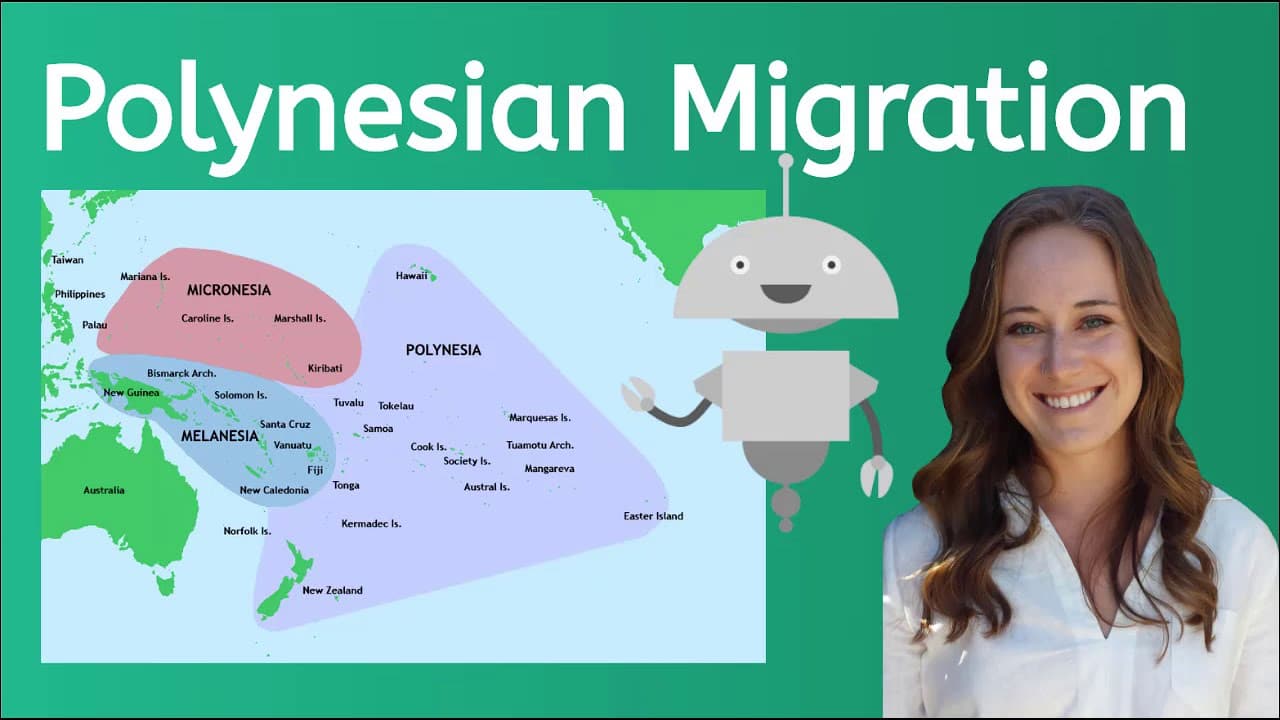
How the United States Annexed Hawaii

How the United States Annexed Hawaii

This educational video provides a comprehensive overview of American imperialism in the Pacific during the late 19th century, with a specific focus on the annexation of Hawaii. Through a balanced narrative, it explores the dual perspectives of the United States' expansionist goals and the Native Hawaiian experience. The video traces the timeline from early whaling and missionary contact to the rise of the sugar industry, the overthrow of Queen Liliuokalani, and the eventual annexation in 1898. It utilizes historical photographs, maps, and modern footage to illustrate the economic, military, and cultural shifts that occurred during this pivotal era. The content highlights key themes such as economic motivation behind imperialism (sugar and pineapple plantations), the strategic military importance of Pearl Harbor, and the concepts of sovereignty and cultural assimilation. It creates a framework for analyzing imperialism by evaluating whether it made the U.S. "richer, stronger, and safer," while contrasting this with the loss of self-rule, environmental degradation, and cultural suppression faced by the indigenous population. The video also emphasizes the resilience of Hawaiian culture and the preservation of traditions like hula and language in the face of colonization. For educators, this video serves as an excellent tool to teach the complexities of U.S. foreign policy and the human cost of expansion. It includes built-in pause points with critical thinking questions that ask students to step into the shoes of historical figures and evaluate the fairness of trade agreements and political actions. It effectively bridges economics, geography, and social studies, making it suitable for units on the Gilded Age, American Imperialism, or indigenous studies.

Miacademy & MiaPrep Learning ChannelMiacademy & MiaPrep Learning Channel

11mins 33s

Video
The Bald Eagle: America's Symbol of Strength and Freedom

The Bald Eagle: America's Symbol of Strength and Freedom

This educational video introduces young learners to the Bald Eagle as a primary national symbol of the United States. Hosted in a friendly "Clubhouse" setting, the video bridges the gap between science and social studies by explaining how the eagle's physical characteristics—such as its immense strength, keen eyesight, and impressive wingspan—make it a fitting representation of American values like freedom and power. It also defines what a "symbol" is, referencing previous lessons to build continuity. The content covers a wide range of topics including the geographical habitat of the Bald Eagle (exclusive to North America), the etymology of its name, and its significance in Native American cultures. A major portion of the video is dedicated to decoding the Great Seal of the United States, breaking down the specific meanings behind the olive branch, arrows, and the eagle's gaze. The video concludes with a segment featuring community helpers explaining what the eagle symbolizes to them personally. For educators, this video serves as an excellent anchor for units on American symbols, civics, and introductory geography. It provides concrete examples for abstract concepts like "symbolism" and "representation." The interdisciplinary nature allows teachers to connect social studies standards with science facts, while the "Mia on the Move" segment encourages social-emotional learning by linking national symbols to personal character traits like bravery and determination.

Miacademy & MiaPrep Learning ChannelMiacademy & MiaPrep Learning Channel

8mins 7s

Video
How US Expansion Reshaped the Environment

How US Expansion Reshaped the Environment

This educational video explores the profound environmental consequences of United States westward expansion and industrial development from the 19th century through the 1930s. Using the dramatic backdrop of the Dust Bowl as a hook, the narrator guides viewers through a historical journey that examines how human settlement, farming practices, and resource extraction altered the physical landscape. The video connects historical events like the decimation of the bison population and the clearing of forests in the Pacific Northwest to ecological principles, illustrating the direct link between human activity and environmental health. Key themes include the interaction between humans and their environment, the unintended consequences of technological and agricultural progress, and the rise of the conservation movement. The video specifically highlights the causes of the Dust Bowl, the ecological role of keystone species like bison and bees, and the political response to environmental degradation led by figures like Theodore Roosevelt. It contrasts the destructive practices of the era with the establishment of the National Park system, fostering a discussion on stewardship and sustainability. For educators, this resource serves as an excellent bridge between Social Studies and Science curriculums. It effectively visualizes abstract historical concepts through primary source photography and engaging reenactments, making the environmental costs of expansion tangible for students. The built-in pause points and guiding questions provide ready-made opportunities for classroom discussion, checking for understanding, and critical thinking about how past environmental decisions continue to shape our world today.

Miacademy & MiaPrep Learning ChannelMiacademy & MiaPrep Learning Channel

11mins 57s

Video
How History and Economics Shaped American Architecture

How History and Economics Shaped American Architecture

This educational video explores the history of architecture in the United States by examining how historical events, cultural influences, and economic trends shaped the built environment. From the colonial influences in New Orleans and California to the industrial complexes of the Northeast and the skyscrapers of New York, the narrator guides students through a chronological journey. The video uses specific landmarks to illustrate broader historical concepts like colonialism, industrialization, consumerism, and the Great Depression. The content highlights several key themes: the impact of French and Spanish colonialism on regional styles, the shift from an agrarian to an industrial economy through the lens of textile mills, the rise of consumer culture manifested in department stores, and the symbolic power of skyscrapers during economic hardship. It also addresses social aspects, such as the forced labor of indigenous peoples in California missions and the lives of female factory workers in the Lowell system. For educators, this video serves as an excellent interdisciplinary tool connecting U.S. History, Geography, and Art. It moves beyond memorizing dates to helping students 'read' buildings as primary source artifacts. The video includes built-in pauses and annotation prompts, making it ready-to-use for interactive note-taking sessions or as a flipped classroom assignment. It effectively demonstrates how abstract economic terms like 'vertical integration' and 'consumer culture' physically manifest in the real world.

Miacademy & MiaPrep Learning ChannelMiacademy & MiaPrep Learning Channel

12mins 38s

Video
Historical Roots of September 11: Decades in the Making

Historical Roots of September 11: Decades in the Making

This educational video provides a comprehensive historical analysis of the events leading up to the September 11, 2001 terrorist attacks. Rather than focusing solely on the day itself, the content traces the geopolitical roots of the conflict back through the 20th century, examining Western intervention in West Asia, the discovery of oil, the Soviet-Afghan War, and the subsequent rise of the Taliban and Al Qaeda. It explains the motivations behind these extremist groups while carefully distinguishing their ideology from the Islamic faith practiced by billions worldwide. The video explores key themes of cause and effect in history, specifically how foreign policy decisions and international interventions can have long-term, often unforeseen consequences. It delves into the concepts of extremism, terrorism, and the complex relationship between the United States and West Asia. The narrative also addresses the aftermath of the attacks, highlighting the initial surge of patriotism in America as well as the unfortunate rise of Islamophobia, ultimately advocating for unity and understanding. For educators, this resource serves as an excellent tool for contextualizing 9/11 within a broader historical framework. It moves beyond the "what" to answer the "why," helping students understand the complex web of historical events that precipitated the attacks. The video features built-in review questions and pauses, making it ready-made for classroom instruction. It is particularly useful for units on U.S. history, global studies, and civics, providing a balanced perspective that encourages critical thinking about foreign policy and tolerance.

Miacademy & MiaPrep Learning ChannelMiacademy & MiaPrep Learning Channel

13mins

Video
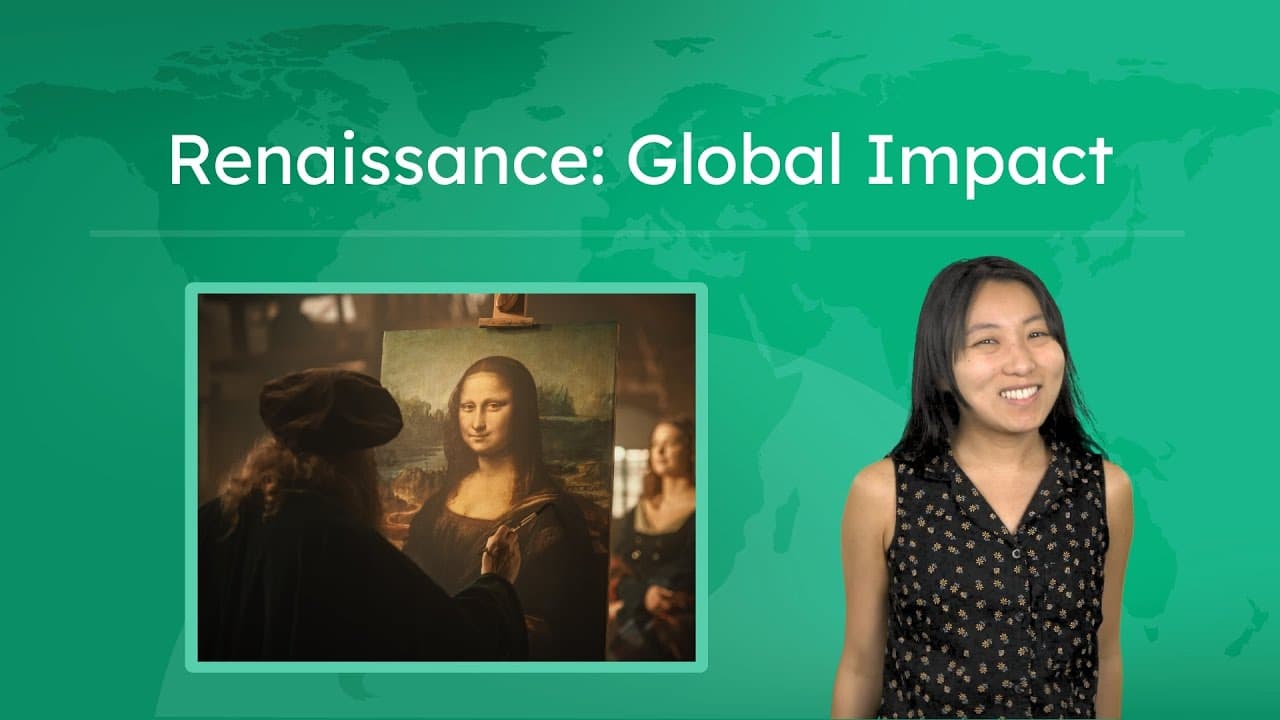
The Global Ripple Effect of the Renaissance

The Global Ripple Effect of the Renaissance

This educational video explores the global impact of the Renaissance using the metaphor of a "ripple effect." Moving beyond the traditional focus on European art, the narrator explains how Renaissance principles of realism, perspective, and humanism spread to the Americas, Africa, and Asia through trade, exploration, and the invention of the printing press. The video illustrates how these ideas blended with local traditions to create unique cultural syntheses in architecture, art, and science. The content highlights specific examples of this cultural exchange, such as the blending of indigenous and European styles in Mexican churches, the influence of realism on Benin bronzes in West Africa, and the scientific exchanges with the Ottoman, Mughal, and Chinese empires. It also delves into how the philosophy of humanism challenged traditional authority structures, influencing leaders like Mughal Emperor Akbar and eventually sparking political changes that led to democratic movements, including the American Revolution. For educators, this video serves as an excellent tool to teach World History beyond a Eurocentric lens. It connects disparate regions through the theme of globalization and cultural diffusion. Teachers can use the specific examples provided—like the Taj Mahal or the US Capitol building—to help students visualize how historical events in one region can shape the cultural and physical landscape of the entire world.

Miacademy & MiaPrep Learning ChannelMiacademy & MiaPrep Learning Channel

12mins 39s

Video
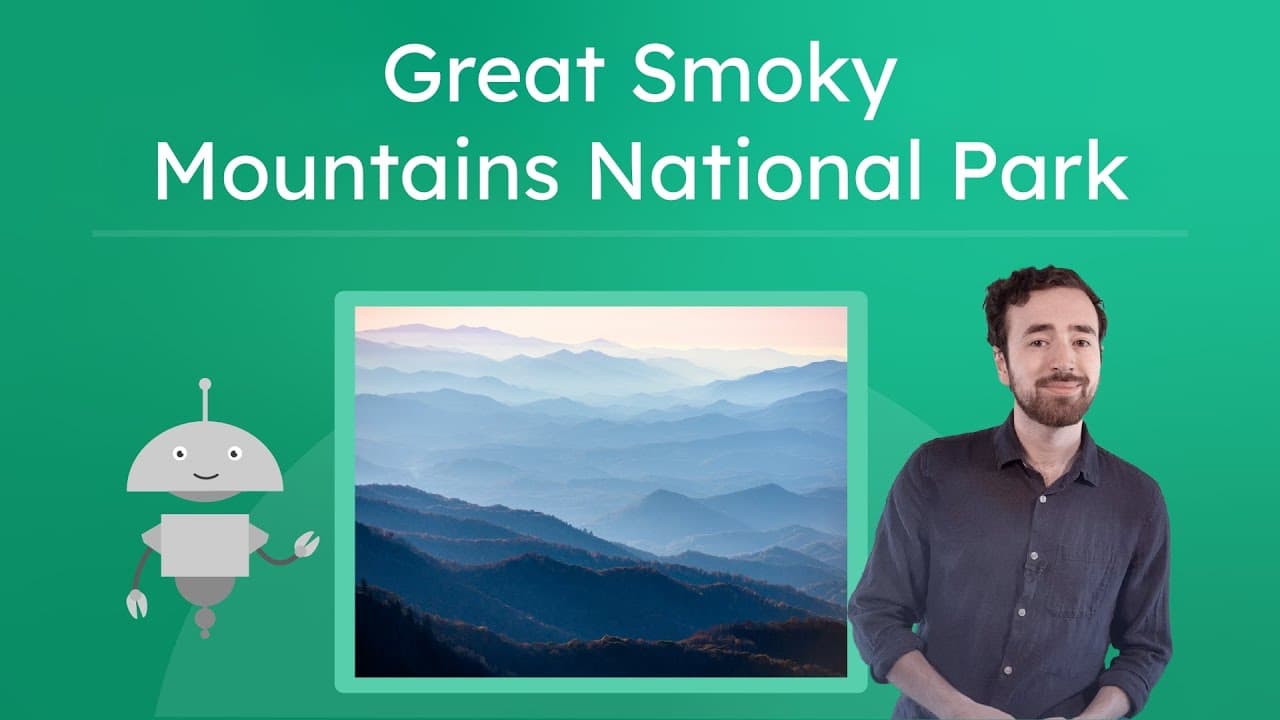
Exploring the History and Nature of the Great Smoky Mountains

Exploring the History and Nature of the Great Smoky Mountains

This engaging educational video explores the history, geography, and biodiversity of the Great Smoky Mountains National Park. Hosted by Justin, the video takes students on a virtual tour of America's most visited national park, explaining its location along the Tennessee-North Carolina border and its geological connection to the Appalachian Mountains. It covers the park's establishment in 1940, detailing the unique grassroots fundraising efforts involving school children that helped make the park a reality. The content highlights the park's incredible biodiversity, including its reputation as the "Salamander Capital of the World," its population of black bears, and the rare phenomenon of synchronous fireflies. It also delves into the human history of the region, featuring preserved log cabins, churches, and the fascinating story of the Walker Sisters, who refused to leave their family farm when the park was created and lived out their days within its borders. For educators, this video serves as a versatile tool for teaching social studies, geography, and environmental science. It illustrates key concepts such as conservation, eminent domain (through the Walker Sisters' story), ecosystems, and civic engagement. The video helps students understand the value of national parks as public resources protected for future generations and connects natural history with cultural heritage.

Miacademy & MiaPrep Learning ChannelMiacademy & MiaPrep Learning Channel

14mins 7s

Video
Exploring the Northeast: History, Cities, and Economy

Exploring the Northeast: History, Cities, and Economy

This educational video provides a comprehensive overview of the Northeast region of the United States. It breaks the analysis into three distinct parts: the geography and climate of the region, the major cities and their cultural significance, and the economic history and current landscape. Narrated by a character named Brian, the video uses maps, photographs, and historical context to explain how this geographically small region has had a massive impact on the country's development. The content covers the nine states comprising the region, distinguishing between the six New England states and the Mid-Atlantic states (New York, New Jersey, Pennsylvania). It explores the concept of a "Megalopolis," specifically the "BosWash" corridor, and details the population density contrasts between states like New Jersey and Maine. The video also highlights key landmarks in major cities like New York City, Boston, Philadelphia, and Pittsburgh, connecting them to historical events like the American Revolution and industrial developments like the steel boom. For educators, this video is a versatile tool for teaching U.S. geography, economics, and history. It explains complex concepts like urbanization, population density, and economic shifts from agriculture to industry in an accessible way. It serves as an excellent introduction to regional studies, allowing students to visualize the connection between physical geography (rivers, waterfalls) and human activity (factories, trade, tourism), making it valuable for social studies curriculums from upper elementary through middle school.

Miacademy & MiaPrep Learning ChannelMiacademy & MiaPrep Learning Channel

10mins 32s

Video
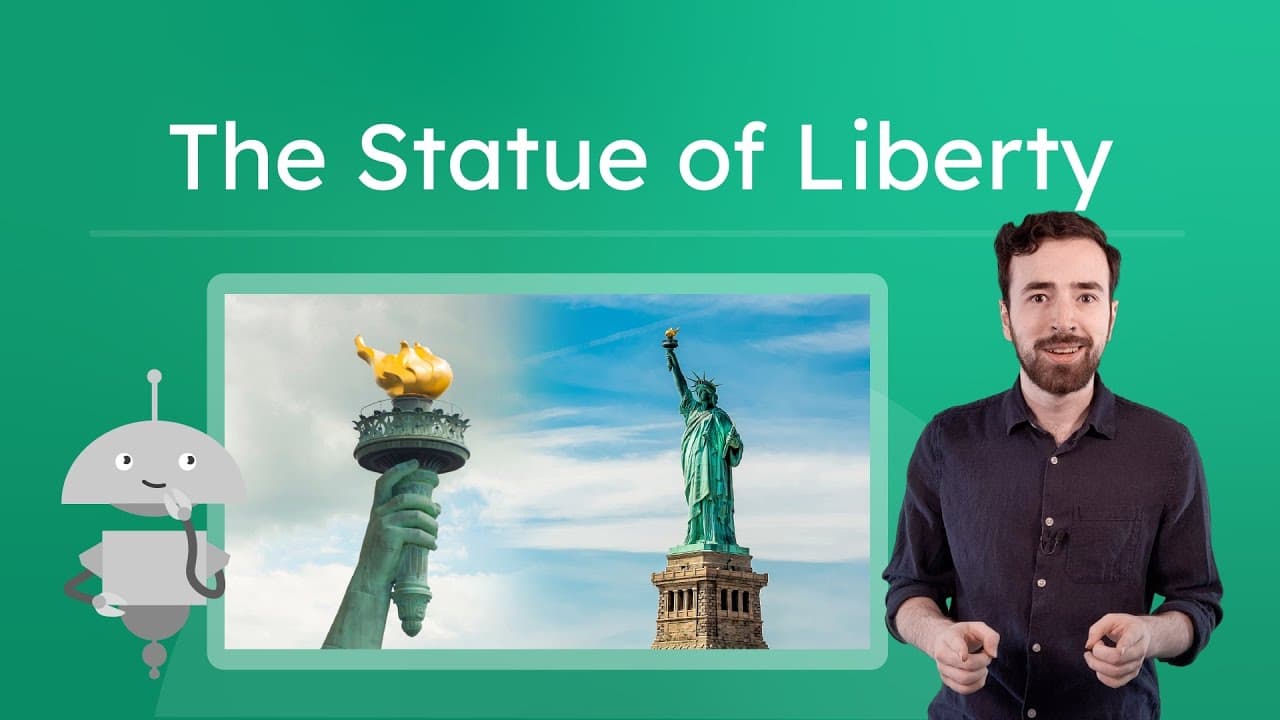
The History and Secrets of the Statue of Liberty

The History and Secrets of the Statue of Liberty

This engaging educational video explores the fascinating history, engineering, and symbolism behind the Statue of Liberty. It begins with a humorous skit introducing Emma Lazarus's famous poem, "The New Colossus," before diving into the statue's origins as a gift from France. The video details the collaborative effort between French artist Frédéric-Auguste Bartholdi and engineer Gustave Eiffel, explaining how the massive structure was designed, built, and transported across the ocean. The narrative covers the financial challenges faced during the project and how ordinary citizens, including schoolchildren, helped fund the pedestal. It breaks down the specific symbolism of the statue's features—such as the seven rays of the crown representing the seven continents and seas—and explains the scientific process of oxidation that turned the copper statue green. The video also highlights key historical events, including the statue's dedication in 1886 and repairs following World War I. Ideally suited for elementary and middle school social studies classes, this video provides a comprehensive look at one of America's most enduring symbols. Teachers can use it to support lessons on U.S. history, immigration, national landmarks, and even basic chemistry concepts. The inclusion of interactive quiz questions and fun facts about the statue's size makes it an excellent tool for sparking student engagement and discussion.

Miacademy & MiaPrep Learning ChannelMiacademy & MiaPrep Learning Channel

16mins 34s

Video
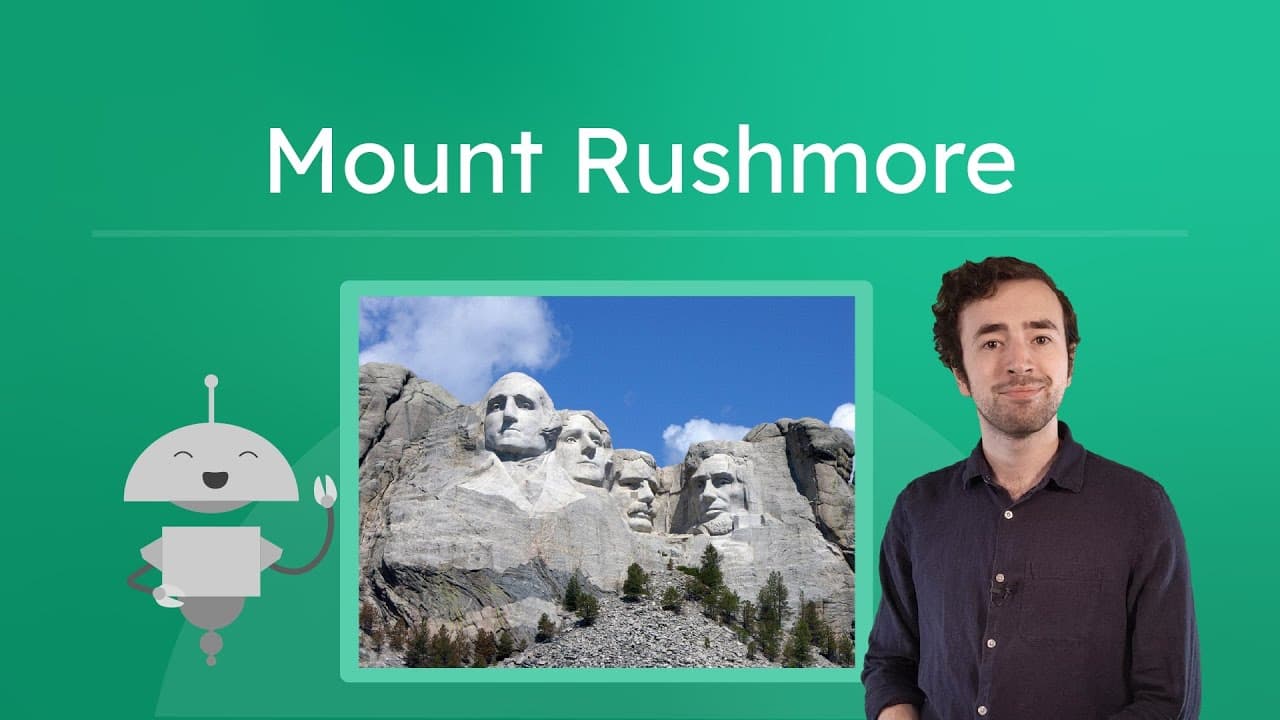
Exploring the History and Secrets of Mount Rushmore

Exploring the History and Secrets of Mount Rushmore

This engaging educational video explores the fascinating history, construction, and significance of Mount Rushmore National Memorial. The narrator takes viewers on a journey to the Black Hills of South Dakota to explain not only who is carved into the mountain but also the incredible engineering feats required to create it. From the original concept intended to attract tourists to the specific reasons why George Washington, Thomas Jefferson, Abraham Lincoln, and Theodore Roosevelt were chosen, the video provides a comprehensive look at this iconic American landmark. The content covers several key themes, including U.S. history and geography, the engineering challenges of carving a mountain, and the cultural complexity of the site. It addresses the naming of the mountain after a New York lawyer, the use of dynamite and the "honeycomb technique" for carving, and the existence of a secret "Hall of Records" behind Lincoln's head. Crucially, the video also presents the perspective of the Lakota Sioux, explaining the sacred nature of the Black Hills and introducing the nearby Crazy Horse Memorial as a counter-monument commissioned by Chief Standing Bear. For educators, this video is a versatile tool for social studies and history classrooms. It moves beyond simple facts to discuss symbolism, historical perspectives, and engineering. Teachers can use it to spark discussions about how we choose to honor history, the technical difficulties of large-scale art, and the importance of understanding multiple cultural viewpoints regarding historical sites. It serves as an excellent launchpad for lessons on the U.S. Presidents, westward expansion, or the preservation of natural and historical spaces.

Miacademy & MiaPrep Learning ChannelMiacademy & MiaPrep Learning Channel

17mins 53s

Video
From Earth to Cake: How We Use Natural Resources

From Earth to Cake: How We Use Natural Resources

This educational video from Crash Course Kids explores the fundamental relationship between human communities and natural resources. It begins by establishing that humans, like all animals, have basic survival needs—food, water, and shelter—which are met by resources provided by the Earth. The host explains how the availability of these resources dictates where communities form, illustrating why major cities are rarely found in deserts or on mountain peaks, but rather in locations rich with water and agricultural potential. The video introduces the concept of "transformation," explaining that raw materials from the Earth usually require processing to become useful products. Using the engaging example of baking a cake, the host breaks down the supply chain of everyday items. She traces ingredients like water, flour, and eggs back to their natural sources (reservoirs and farms) and explains how energy—derived from oil, gas, sun, wind, or water—is required to mix and bake these ingredients. This step-by-step investigation helps students visualize the invisible web connecting finished goods to raw natural resources. For educators, this video serves as an excellent bridge between geography, environmental science, and economics. It provides concrete definitions for key vocabulary like "resource," "community," "agriculture," and "cultivate." Teachers can use the "cake investigation" model to have students trace the origins of other common items, fostering a deeper appreciation for the environment and an understanding of supply chains, energy consumption, and human dependence on the natural world.

Crash Course KidsCrash Course Kids

3mins 15s

Video
Comparing Natural and Human-Made Environments

Comparing Natural and Human-Made Environments

This educational video provides a clear and visually rich comparison between natural environments and human-made environments. It begins by defining the concept of "environment" as the surroundings in which we live, including air, water, land, and ecosystems. The video then takes viewers on a journey through pristine natural landscapes like rainforests, deserts, and mountains, explaining how these areas function without human interference. It contrasts these with human environments such as cities, farms, and industrial zones, illustrating how human ingenuity alters landscapes to suit societal needs.

Next Generation ScienceNext Generation Science

7mins 34s

Video
How Disease Shaped Human History

How Disease Shaped Human History

This episode of Crash Course World History explores the profound impact of disease on human history, challenging the traditional view that history is driven solely by human decisions and actions. Host John Green argues that microorganisms have often been more influential than emperors or generals, shaping the rise and fall of civilizations from ancient river valleys to the modern era. The video covers how the development of agriculture and cities created breeding grounds for epidemics and how trade networks facilitated their spread across continents. Key historical events analyzed include the Plague of Athens, the decline of the Roman Empire, and most notably, the Black Death in medieval Europe. The video details the biological origins of the bubonic plague, its transmission via the Silk Road, and its massive demographic, economic, and religious consequences. It also addresses the "Great Dying" in the Americas following the Columbian Exchange, highlighting the devastating effect of Old World diseases on indigenous populations. For educators, this video serves as an excellent tool for teaching historical causality, human-environment interaction, and the interconnectedness of world regions. It connects biological concepts with historical events, making it suitable for interdisciplinary lessons. The "Thought Bubble" segment provides a clear case study on how demographic shifts (mass death) can lead to economic restructuring (higher wages) and cultural changes, offering tangible examples for students to analyze.

CrashCourseCrashCourse

11mins 37s

Video
The Advanced Engineering of Ancient India's Harappan Civilization

The Advanced Engineering of Ancient India's Harappan Civilization

This engaging educational video introduces students to the Harappan civilization of the Indus Valley, one of the world's earliest urban societies. Beginning with a relatable hook about modern plumbing versus ancient outhouses, the narrator reveals that the Harappans developed sophisticated drainage systems thousands of years ago. The video covers the civilization's geography, emphasizing how the Indus River, Himalayas, and Thar Desert protected and isolated the region while providing fertile land for agriculture.

Miacademy & MiaPrep Learning ChannelMiacademy & MiaPrep Learning Channel

9mins 59s

Video
Using Maps to Understand Life in the Western US

Using Maps to Understand Life in the Western US

This educational video takes students on a virtual road trip to the Western United States to master advanced map-reading skills. Hosted by a narrator named Justin, the lesson moves beyond simply identifying locations to teaching critical thinking skills: drawing conclusions and making inferences. The video explicitly distinguishes between these two concepts, defining drawing conclusions as forming ideas based on presented information, and making inferences as combining that information with prior knowledge to guess details not directly shown.

Miacademy & MiaPrep Learning ChannelMiacademy & MiaPrep Learning Channel

8mins 30s

Video
World Trip: A Journey Through Asia's Geography

World Trip: A Journey Through Asia's Geography

This educational video takes students on a comprehensive geographic tour of the continent of Asia, hosted by a presenter named Kylie. It begins by situating Asia among the seven continents, highlighting its status as the world's largest and most populous continent. The video breaks down the massive continent into five distinct regions: Southeast Asia, East Asia, South Asia, Southwest Asia (the Middle East), and Central Asia. For each region, the narrator describes the climate, key physical features, and lists major countries, providing interesting cultural or geographic facts for many of them. The video covers essential geographic concepts such as hemispheres, oceans, equators, and climate zones (from tropical monsoons to arid deserts). It introduces students to specific vocabulary like "transcontinental countries" (nations spanning two continents like Russia and Turkey) and "landlocked" countries. Additionally, it touches on political geography, briefly mentioning complex situations like the status of Taiwan and Palestine in a neutral, factual manner suitable for intermediate learners. For educators, this resource serves as an excellent introduction or review of Asian geography. It is packed with map visuals that highlight countries and regions, making it ideal for map-labeling activities. The video's structure allows teachers to pause after each region to discuss specific countries, climates, or cultures in depth. It connects geography to real-world topics like population density, trade goods (tea, spices), and biodiversity, offering numerous jumping-off points for research projects and classroom discussions.

Miacademy & MiaPrep Learning ChannelMiacademy & MiaPrep Learning Channel

9mins 12s

Video
How New Technology Transformed Travel and Communication

How New Technology Transformed Travel and Communication

This educational video explores the transformative technological advancements in transportation and communication during the Industrial Revolution. It specifically focuses on the development of the steam engine, the locomotive, the telegraph, and the telephone, detailing key inventors like James Watt, Richard Trevithick, Samuel Morse, and Alexander Graham Bell. The narrative explains how these inventions evolved from inefficient early models to powerful tools that connected the world. Beyond the inventions themselves, the video delves deeply into the economic and social impacts of these technologies. It analyzes how railways lowered the cost of goods, created jobs, and fundamentally changed human geography by allowing people to live further from their workplaces. The video also discusses profound shifts in human perception, such as how standardized train schedules altered society's relationship with time and how travel became democratized across social classes. Teachers can use this video to illustrate the cause-and-effect relationships inherent in the Industrial Revolution. It provides excellent opportunities to discuss how technology shapes culture, economy, and daily life. The content addresses specific historical standards regarding the Industrial Revolution while fostering critical thinking about the broader implications of connectivity and speed in the modern world.

Miacademy & MiaPrep Learning ChannelMiacademy & MiaPrep Learning Channel

9mins 49s

Video
Exploring Modes of Transportation on Land, Water, and Air

Exploring Modes of Transportation on Land, Water, and Air

This engaging video introduces young learners to the concept of transportation, exploring the various ways people and goods move from place to place. The host begins by demonstrating the physical effort of walking and running, leading into a discussion about how vehicles make travel easier and faster. The video categorizes transportation into clear modes: land travel (cars, bikes, trains), water travel (boats, ships), and air travel (planes, rockets), explaining the basic mechanics and uses for each. The lesson explores key themes such as human-powered versus engine-powered vehicles, the distinction between personal travel and cargo transport, and the different environments where vehicles operate. Specific examples include the difference between canoes and rowboats, the function of subways in cities, and how airplanes connect distant continents. It effectively uses visual aids like maps and diverse footage of vehicles to illustrate these concepts. For educators, this video serves as an excellent anchor for social studies and science units on communities and movement. It provides a structured way to help students categorize vehicles, understand the purpose of different modes of transport, and introduces basic geography concepts through a travel scenario. The content naturally leads to discussions about community helpers, trade, and engineering, making it a versatile tool for early elementary classrooms.

Miacademy & MiaPrep Learning ChannelMiacademy & MiaPrep Learning Channel

7mins 27s

Video
The Geography of Water: Precipitation, Drought, and Rights

The Geography of Water: Precipitation, Drought, and Rights

This educational video from Crash Course Geography explores the vital connection between physical geography—specifically precipitation patterns—and human geography. It begins by explaining the science behind where and why rain falls, detailing concepts like the hydrological cycle, the continental effect, and orographic precipitation (rain shadows). The narrator, Alizé Carrère, uses maps to demonstrate the correlation between global precipitation and population density, establishing the fundamental rule that "where there is water, there are people." The video then shifts focus to the United States, examining the Great Plains and the Colorado River Basin as case studies for what happens when human settlement misaligns with physical reality. It covers historical events like the Dust Bowl, explaining how a misunderstanding of the semi-arid climate led to disaster. The narrative deepens into the politics of water, discussing the "Prior Appropriation Doctrine," the 1922 Colorado River Compact, and the construction of massive infrastructure like the Hoover Dam to control water resources. Finally, the video addresses modern geopolitical challenges, including the over-allocation of the Colorado River, the tension between urban growth and agricultural needs, and the proposal to privatize water rights. It highlights the often-overlooked water rights of Native American tribes and concludes with a discussion on whether water should be treated as a commodity or a human right. This resource is excellent for teaching the intersection of environmental science, history, and civics.

CrashCourseCrashCourse

10mins 30s

Video
Why and How People Move: The Geography of Migration

Why and How People Move: The Geography of Migration

This educational video from Crash Course Geography provides a comprehensive overview of human migration, using the vast Indian diaspora as a primary case study to illustrate key concepts. Hosted by Alizé Carrère, the video breaks down the "how" and "why" of human movement, moving beyond simple definitions to explore the complex historical, economic, and environmental drivers behind migration. It covers a wide range of migration types, from the historical indentured labor systems in Trinidad and Tobago to ancient monsoon-driven trade routes, and modern political displacements like the 1972 expulsion of Asians from Uganda.

CrashCourseCrashCourse

11mins 16s

Video
How Urban Planning Shapes Our Cities and Lives

How Urban Planning Shapes Our Cities and Lives

This educational video from Crash Course Geography explores the complex world of urban planning and how the design of our cities reflects deeper social, political, and economic relationships. The host, Alizé Carrère, guides viewers through the concepts of 'built environments' and 'urban geography,' illustrating how cities are not just collections of buildings but physical manifestations of cultural values and power dynamics. The video uses specific models and historical examples to demonstrate how planning decisions impact residents' lives, often reinforcing existing inequalities. Key themes include the Latin American City Model, which highlights the lasting impact of colonialism on urban structure, and a detailed case study of Brasília, a planned city that aimed for a utopian future but encountered the messy reality of human growth. The video also tackles difficult topics in North American urban history, specifically addressing 'white flight,' the construction of the interstate highway system, redlining, and urban renewal. These segments explain how systemic racism was engineered into the physical landscape of American cities. For educators, this video is an invaluable resource for connecting physical geography to social justice and history. It provides concrete examples of abstract concepts like 'zones of disamenity' and 'eminent domain.' Teachers can use this video to spark critical discussions about how their own students' neighborhoods were designed, compare different models of urban living, and analyze how historical policies continue to shape current economic realities.

CrashCourseCrashCourse

11mins 17s

Video
How the Indus Valley Civilization Rose and Fell

How the Indus Valley Civilization Rose and Fell

This engaging episode of Crash Course World History explores the Indus Valley Civilization, one of the largest and most mysterious ancient societies in human history. Host John Green guides viewers through the rise and fall of this Bronze Age culture, examining its sophisticated urban planning, extensive trade networks, and the puzzling lack of weapons or evidence of warfare. The video also tackles the broader historical concept of what defines a "civilization" and the inherent biases in how historians classify different human societies. Key themes include the relationship between geography and settlement, specifically the importance of reliable river flooding for agriculture; the role of archaeology in reconstructing history without decipherable written records; and the comparison of social structures across different ancient cultures. The video highlights specific artifacts like the famous animal seals and architectural marvels like the Great Bath of Mohenjo-Daro to illustrate the uniqueness of the Indus Valley people. For the classroom, this video is an excellent resource for introducing Ancient River Valley Civilizations or units on archaeology and historical inquiry. It models critical thinking by questioning established historical narratives—such as the definition of "barbarian"—and demonstrating how historians form theories based on physical evidence. The fast-paced, humorous delivery helps make complex anthropological concepts accessible and relevant to high school students.

CrashCourseCrashCourse

9mins 35s

Video
Why We Live Where We Do: Understanding Population Geography

Why We Live Where We Do: Understanding Population Geography

This educational video provides a comprehensive overview of human population geography, exploring how and why humans settle in specific locations across the Earth. It breaks down complex demographic concepts into three main categories: population distribution (where people live), population density (how crowded areas are), and population composition (the age and gender breakdown of societies). Through vivid examples ranging from the freezing arctic of Svalbard to the scorching heat of Ethiopia, the video illustrates humanity's remarkable ability to adapt to extreme environments while explaining the geographic and historical factors that dictate settlement patterns. The content delves into the specific variables that influence where cities form, such as proximity to water, availability of natural resources like coal and arable land, and historical trade routes established during colonial eras. It uses side-by-side visual comparisons—such as the density of Hong Kong versus Phoenix, or the housing layouts of Medellin versus Dallas—to make abstract definitions concrete. The video also introduces students to demographic tools like population pyramids, teaching them how to interpret data to understand a country's social challenges, such as Japan's aging population versus India's youth bulge. Ideally suited for middle and high school geography or social studies curricula, this resource serves as an excellent primer for units on human-environment interaction and demographics. It encourages critical thinking by asking students to analyze maps, interpret graphs, and connect global concepts to their local communities. Teachers can use this video to launch discussions about urban planning, resource management, and the future societal needs of different nations based on their current population structures.

Miacademy & MiaPrep Learning ChannelMiacademy & MiaPrep Learning Channel

10mins 23s

Video
Exploring Megacities: Growth, Challenges, and Global Impact

Exploring Megacities: Growth, Challenges, and Global Impact

This educational video explores the concept of megacities—urban areas with populations exceeding 10 million people. Narrated by a host named Justin, the video breaks down the complex factors that contribute to the rise of these massive metropolises, including economic opportunities, government infrastructure investments, and favorable geography. It provides a structured analysis of why people migrate to these hubs and uses real-world examples like São Paulo, Shanghai, and New York to illustrate these points. The content also delves into the significant challenges that arise when cities grow this large, such as severe overcrowding, traffic congestion, and environmental pollution. It offers a balanced view by presenting innovative solutions that urban planners use to tackle these issues, from high-speed rail networks in Shanghai to pedestrian-friendly zones in Barcelona and renewable energy initiatives in Dubai. The video encourages students to think critically about urban planning trade-offs through built-in discussion questions. Finally, the video examines the global influence of megacities beyond their borders. It highlights their role as economic powerhouses, cultural trendsetters (referencing Bollywood in Mumbai and K-Pop in Seoul), and political leaders in international agreements like the Paris Climate Accord. This resource is excellent for geography and social studies classrooms as it connects abstract concepts of urbanization with tangible, contemporary examples that help students understand the interconnected nature of modern human settlements.

Miacademy & MiaPrep Learning ChannelMiacademy & MiaPrep Learning Channel

11mins 21s

Video
How Geography Shapes Air Temperature: Latitude, Oceans, and Elevation

How Geography Shapes Air Temperature: Latitude, Oceans, and Elevation

This educational video from Crash Course Geography explores the complex factors that determine global air temperature patterns, moving beyond simple weather reports to understanding the "why" behind climate differences. Using the extreme environment of Siberia as a primary case study, the host breaks down how physical geography shapes the lived experience of humans, plants, and animals in different regions. The content is structured around four critical geographic questions: latitude, proximity to water (continentality), elevation, and land use (urban vs. rural). It delves into scientific concepts such as insolation, specific heat, albedo, and the urban heat island effect. The video connects these physical mechanics to human impacts, discussing how temperature influences culture, agriculture, and social equity, specifically highlighting the disparities in heat exposure within cities like Phoenix, Arizona. For educators, this video serves as an excellent anchor for units on climate, physical geography, or environmental justice. It provides a clear analytical framework that students can apply to any location on Earth. The video effectively visualizes abstract data like isotherms and specific heat, making it a valuable tool for bridging the gap between scientific theory and real-world observations.

CrashCourseCrashCourse

10mins 52s

Video
How Humans Harnessed Energy to Build Civilization

How Humans Harnessed Energy to Build Civilization

Hosted by Stan Muller, this episode of Crash Course World History explores the fundamental history of human energy consumption based on Alfred Crosby's book "Children of the Sun." The video traces humanity's journey from relying solely on muscle power to mastering fire, domesticating plants and animals, and eventually unlocking the massive energy stores within fossil fuels. It explains how these advancements allowed for civilization building, from the pyramids to modern metropolises, while emphasizing that almost all energy sources ultimately originate from the sun. The video covers key historical turning points including the Agricultural Revolution, the Industrial Revolution, and the modern reliance on electricity and the internal combustion engine. It provides a balanced look at different fuel sources—wood, coal, oil, and nuclear power—analyzing their efficiency, historical impact, and downsides. Significant attention is given to the exponential increase in energy usage since 1850 and the geopolitical and environmental consequences of this shift. For educators, this resource bridges the gap between science and history, demonstrating how physical laws (thermodynamics) shape human progress. It is an excellent tool for discussing the Anthropocene, the trade-offs of technological advancement, and the complex challenge of sustainability. The video sets up discussions on climate change, resource management, and the future of energy, making it highly relevant for both social studies and environmental science curriculums.

CrashCourseCrashCourse

7mins 21s

Video
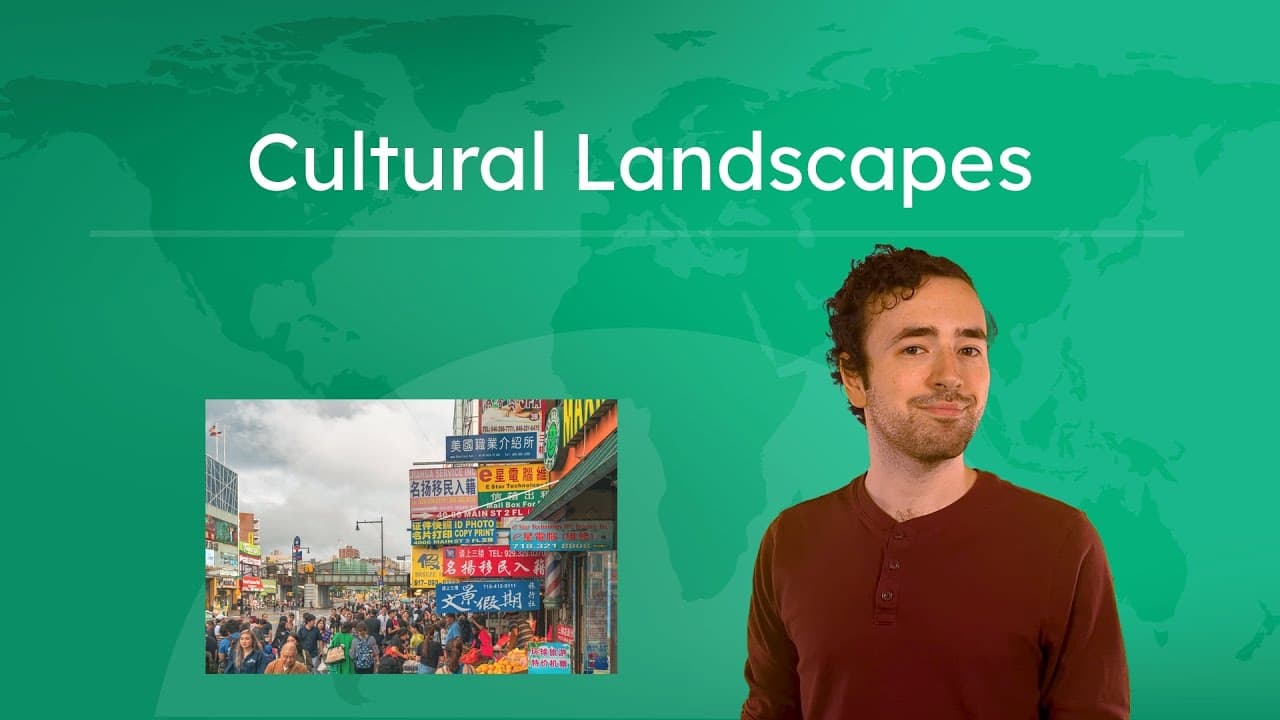
How to Read a Cultural Landscape in Cities

How to Read a Cultural Landscape in Cities

This educational video takes students on a virtual field trip to explore the concept of "cultural landscapes" through the lens of human geography. Hosted by a guide named Justin, the video uses Flushing Chinatown in Queens, New York, as a primary case study to demonstrate how human culture leaves visible imprints on the physical environment. Viewers learn to "read" a neighborhood by analyzing its built environment, land use patterns, signage, architecture, and cultural markers, revealing deep insights into the values and identity of the people who live there. The video delves into complex geographical concepts such as "sequent occupance"—the notion that successive societies leave their cultural imprints on a place, contributing to the cumulative cultural landscape. It traces the history of Queens from the indigenous Lenape people through European colonization, industrialization, and modern immigration. The lesson then shifts to Istanbul, Turkey, providing a comparative analysis of how history (Byzantine, Ottoman, and modern Turkey) is layered within the architecture of the Hagia Sophia. Ideal for geography and social studies classrooms, this resource transforms abstract definitions into concrete visual examples. It encourages students to become active observers of their own communities, prompting them to look for evidence of history, economy, and culture in their everyday surroundings. The video models critical thinking skills by asking students to make inferences based on visual evidence, making it a strong tool for developing visual literacy and geographical reasoning.

Miacademy & MiaPrep Learning ChannelMiacademy & MiaPrep Learning Channel

11mins 14s

Video
Reading the City: How Urban Spaces Are Structured

Reading the City: How Urban Spaces Are Structured

This educational video explores the internal structure of cities, treating them as texts that reveal their history, culture, and economic development. The host, Alizé Carrère, introduces key urban geography models, specifically the Concentric Zone Model based on Chicago, to explain how cities organize themselves around a Central Business District and expand outward in rings of varying land use. The video contrasts North American urban development—characterized by industrialization, suburban sprawl, and car dependency—with the historic structure of Islamic cities like Fez, Morocco, where climate and cultural values of privacy shape a very different urban form. Key themes include the impact of transportation technology on city layout, the concept of "invasion and succession" in neighborhoods, and the transition from monocentric to polycentric metropolitan structures. The video also delves into how physical geography and climate necessitate different architectural solutions, comparing wide American grids with the narrow, shaded streets of North African medinas. For educators, this video is an invaluable resource for AP Human Geography and social studies classrooms. It provides concrete examples of abstract concepts like urban models, gentrification, and zoning. It encourages students to look at their own local environments critically, identifying the historical layers and socio-economic patterns that define the neighborhoods they live in.

CrashCourseCrashCourse

11mins 52s

Video
How the Black Death Reshaped Medieval Europe

How the Black Death Reshaped Medieval Europe

This educational video provides a comprehensive overview of the Black Death (Bubonic Plague) and its profound impact on medieval Europe. It traces the origins of the plague from Asia along the Silk Road, explains the biological transmission through fleas and rats, and details how trade routes facilitated its rapid spread across the continent. The narrative uses maps and animations to visualize the trajectory of the disease from coastal ports to inland cities. Beyond the biology and timeline, the video deeply explores the social, economic, and cultural transformations triggered by the pandemic. It examines how the massive loss of life paradoxically led to better wages and rights for peasants, shifted power from kings to local governments, and sparked advancements in medicine, sanitation, and education. The content addresses misconceptions of the time, such as the miasma theory, and connects these historical events to the eventual rise of the Renaissance. This resource is highly valuable for history and social studies classrooms as it moves beyond just the "horror" of the plague to analyze its long-term structural effects on civilization. It offers excellent opportunities to teach cause-and-effect relationships in history, the intersection of biology and geography, and basic economic principles like supply and demand in a labor shortage. The concluding comparison to modern healthcare challenges makes the history relevant to contemporary students.

Miacademy & MiaPrep Learning ChannelMiacademy & MiaPrep Learning Channel

12mins 34s

Video
How Cities Grow and Connect: Understanding Urban Geography

How Cities Grow and Connect: Understanding Urban Geography

This educational video provides a comprehensive introduction to Urban Geography, exploring how cities form, grow, and function within global systems. It begins by examining the historical and modern significance of cities, using Guangzhou, China, as a primary case study to illustrate rapid urbanization and the transition from agrarian to industrial economies. The video defines critical terminology such as megacities, metacities, and megalopolises, while explaining the challenges geographers face in creating a universal definition for "urban" areas.

CrashCourseCrashCourse

11mins 15s

Video
Exploring the US States and Capitals by Region

Exploring the US States and Capitals by Region

This educational video provides a comprehensive overview of the United States geography, breaking down the country into four major regions: the Northeast, Midwest, South, and West. Hosted by Kylie from Miacademy, the lesson guides viewers through all 50 states, identifying each state's location on the map and its capital city. Beyond simple memorization, the video introduces key geographical concepts such as how regions are defined by shared culture, climate, and history. Throughout the tour, the video highlights significant landmarks and interesting facts to help students retain information. Viewers learn about Mount Washington in the Northeast, the agricultural significance of the Midwest, the cultural musical roots of the South, and the diverse landscapes of the West, from Alaska's mountains to Hawaii's islands. It specifically addresses common points of confusion, such as the difference between Washington state and Washington D.C., and clarifies that New York City is not the capital of New York. This resource is highly valuable for elementary social studies classrooms as a foundational tool for U.S. geography units. Teachers can use it to introduce the concept of regionalism, practice map skills, or as a review tool for state capitals. The clear visual maps and distinct categorization make a large topic manageable, allowing for segmented viewing where classes can focus on one region at a time for deeper study.

Miacademy & MiaPrep Learning ChannelMiacademy & MiaPrep Learning Channel

8mins 2s

Video
Exploring the People and Culture of Northern Europe

Exploring the People and Culture of Northern Europe

This educational video provides a comprehensive tour of Northern Europe, specifically focusing on the nations of Denmark, Finland, Sweden, Norway, and Iceland, as well as the territory of Greenland. The narrator breaks down the region through various lenses of human geography, including population statistics, ethnicity, religious demographics, languages, and political structures. It offers a structured approach to understanding the similarities and differences between these Nordic nations. Key themes explored include the shared history of the region (such as Viking heritage), the prevalence of Lutheran Christianity symbolized by the Nordic Cross flags, and the distinction between Germanic and Uralic languages. The video also highlights important cultural aspects, such as the indigenous Sami and Inuit peoples, progressive social policies, famous literary and artistic contributions (like Hans Christian Andersen and Edvard Munch), and the region's robust economies characterized by high standards of living and mixed market systems. For educators, this video serves as an excellent resource for comparative geography and social studies units. It allows students to analyze how geography influences population density, compare different forms of government (constitutional monarchies vs. parliamentary republics), and understand economic indicators like GDP. The clear presentation of data through maps and charts makes it particularly useful for teaching students how to interpret demographic statistics and connect them to real-world nations.

Miacademy & MiaPrep Learning ChannelMiacademy & MiaPrep Learning Channel

10mins 10s

Video
Managing and Conserving the Colorado River Watershed

Managing and Conserving the Colorado River Watershed

This educational video provides a comprehensive look at water resource management using the Colorado River watershed as a primary case study. It begins by examining how major cities like Phoenix rely on freshwater for diverse needs ranging from agriculture and manufacturing to domestic use and recreation. The video illustrates the complexity of watersheds, explaining how multiple states and millions of people depend on the same interconnected water system, necessitating careful management and cooperation. The content explores the historical and modern challenges of water conservation, introducing the Colorado River Compact of 1922 which divided the watershed into Upper and Lower Basins to manage allocation. It transitions into current environmental challenges, using data visualization to show how rising temperatures and climate change are accelerating evaporation and causing droughts. The video distinguishes between human overuse and natural depletion, emphasizing that legal frameworks alone are insufficient to protect water supplies in a changing climate. Finally, the video outlines actionable solutions for water conservation across three levels: government regulations, technological innovations (like drip irrigation and desalination), and personal community actions. This resource is highly valuable for environmental science and geography classrooms as it connects abstract concepts like the water cycle to real-world civic issues, encouraging students to analyze data and consider their own role in sustainable resource management.

Miacademy & MiaPrep Learning ChannelMiacademy & MiaPrep Learning Channel

10mins 23s

Video
Exploring the Midwest Through Five Types of Maps

Exploring the Midwest Through Five Types of Maps

This educational video continues a virtual road trip across the United States, arriving in the Midwest region to explore how different types of maps provide unique information about a location. Hosted by a narrator named Justin, the video moves beyond basic road maps to introduce five specific thematic maps: political, physical, climate, population, and economic. Each segment explains the purpose of the specific map type and demonstrates how to read its legend and data within the context of the Midwest region. The content focuses on developing map literacy and geographic analysis skills. Key themes include understanding political boundaries and capital cities, identifying physical landforms like plains and the Great Lakes, interpreting climate data, analyzing population density, and understanding economic indicators like household income and natural resources. The video emphasizes that maps are like tools in a toolbox, each designed for a specific job. This resource is highly valuable for Social Studies and Geography classrooms as it transforms abstract map concepts into concrete examples. The video is structured with built-in pause points intended for students to complete accompanying worksheet activities, making it an ideal interactive lesson anchor. Teachers can use this to teach students how to synthesize information from multiple sources to build a comprehensive understanding of a geographic region.

Miacademy & MiaPrep Learning ChannelMiacademy & MiaPrep Learning Channel

5mins 47s

Video
How Humans Adapt, Depend On, and Modify Their Environment

How Humans Adapt, Depend On, and Modify Their Environment

In this engaging geography lesson, the host explores the concept of Human-Environment Interaction through the lens of Los Angeles, California. The video breaks down the three core ways humans relate to their surroundings: adaptation (changing behaviors to survive natural forces), dependency (relying on natural resources for survival), and modification (physically altering the environment). Using real-world examples like earthquake-proof buildings, California's water infrastructure, and the non-native palm trees of LA, the video makes complex geographical concepts relatable and easy to understand. The content dives deep into critical modern issues, connecting geographical theory to current events. It explores the consequences of human dependency on nonrenewable resources like oil and water, discussing the economic impact of droughts and the environmental cost of fossil fuels. The video also covers the global implications of environmental modification, specifically highlighting deforestation in the Amazon rainforest and its connection to climate change, while emphasizing the importance of sustainability. Teachers can use this video to introduce the Five Themes of Geography or to anchor units on environmental science and sustainability. The video features built-in pause points with reflection questions, making it perfect for active classroom viewing. It provides a balanced view of human impact, acknowledging necessary modifications while encouraging students to think critically about sustainable solutions and positive environmental stewardship.

Miacademy & MiaPrep Learning ChannelMiacademy & MiaPrep Learning Channel

11mins 40s

Video
How to Navigate Using Road Maps and Symbols

How to Navigate Using Road Maps and Symbols

This educational video introduces students to the essential skills of reading and using road maps for navigation. Join the host, Justin, on a virtual road trip through the Southern United States as he explains the fundamental components of maps, including keys, compass roses, and scales. The video transitions from general map features to specific road map symbols, teaching viewers how to identify highways, cities, capitals, bodies of water, and political boundaries. The content focuses on practical application, guiding students through a real-world scenario of planning a route from Charlotte, North Carolina, to Columbia, South Carolina, and then on to Charleston. It breaks down how to interpret line types for different roads (like Interstates) and how to recognize state borders. The lesson concludes by connecting traditional map reading skills to modern GPS technology, explaining how digital navigation relies on the same underlying data. This resource is highly valuable for elementary Social Studies and Geography curricula. It transforms abstract symbols into concrete navigational tools, fostering spatial awareness and critical thinking. Teachers can use this video to launch units on map skills, state geography, or transportation, providing a clear visual framework for students to practice planning routes and interpreting spatial data.

Miacademy & MiaPrep Learning ChannelMiacademy & MiaPrep Learning Channel

6mins 36s

Video
Exploring the Physical Geography of Western Europe

Exploring the Physical Geography of Western Europe

This educational video provides a comprehensive overview of the physical and political geography of Western Europe, focusing on five specific nations: the United Kingdom, Ireland, the Netherlands, Belgium, and Luxembourg. It begins by clarifying common misconceptions regarding political terminology, specifically the differences between the United Kingdom, Great Britain, and England, as well as the distinction between the Netherlands and Holland. The narration uses detailed maps to visually distinguish these regions and explains the geographical relationships between the islands and the mainland. The video explores the physical characteristics of the region, describing the topography ranging from the low-lying polders of the Netherlands to the rolling hills and mountains of the British Isles. It highlights the temperate oceanic climate driven by the North Atlantic Current and discusses significant environmental challenges, such as the struggle against flooding in the Low Countries and the relatively low biodiversity due to historical industrialization and urbanization. Key landmarks and capital cities are introduced, emphasizing their cultural and political importance, including Brussels and Luxembourg City as institutional seats of the European Union. Teachers can use this video to help students navigate the often-confusing political geography of the region while integrating concepts of environmental science and human-environment interaction. The segment on the Dutch Delta Works and land reclamation offers excellent opportunities for STEM connections regarding engineering solutions to climate challenges. Additionally, the discussion on biodiversity loss provides a historical perspective on how human development impacts local ecosystems, making this a versatile resource for both geography and environmental science units.

Miacademy & MiaPrep Learning ChannelMiacademy & MiaPrep Learning Channel

8mins 22s

Video
How the US Grew: Westward Expansion and the Civil War

How the US Grew: Westward Expansion and the Civil War

This educational video provides a comprehensive overview of United States history from the late 1700s through the end of the Civil War in 1865. Narrated by Maya, the video chronicles the rapid growth of the nation, starting with immigration from Europe and the addition of new states, moving through major land acquisitions like the Louisiana Purchase, and detailing the conflicts that arose from this expansion, including the War of 1812 and the Mexican-American War. It explains how economic differences and the moral crisis of slavery drove a wedge between the North and South, leading to the secession of Southern states. Key historical themes include Westward Expansion, the displacement of Native Americans, the industrial revolution's impact (railroads, cotton, coal), and the political turmoil surrounding slavery. The video introduces critical figures such as Meriwether Lewis, William Clark, Abraham Lincoln, Ulysses S. Grant, and Robert E. Lee. It also covers significant events like the Gold Rush, the Oregon Trail, and the assassination of President Lincoln. For educators, this video serves as an excellent timeline anchor, helping students visualize the chronological progression of the 19th century. It connects geography to history by showing how physical expansion fueled political conflict. The content is well-suited for introducing a unit on the Civil War or Westward Expansion, providing a high-level summary that can be paused for deeper dives into specific topics like the treatment of Indigenous peoples or the economics of the plantation system.

Miacademy & MiaPrep Learning ChannelMiacademy & MiaPrep Learning Channel

8mins 18s

Video
How Urban Planning Shapes Our Cities and Lives

How Urban Planning Shapes Our Cities and Lives

This educational video from Crash Course Geography explores the complex world of urban planning and how the design of our cities reflects deeper social, political, and economic relationships. The host, Alizé Carrère, guides viewers through the concepts of 'built environments' and 'urban geography,' illustrating how cities are not just collections of buildings but physical manifestations of cultural values and power dynamics. The video uses specific models and historical examples to demonstrate how planning decisions impact residents' lives, often reinforcing existing inequalities. Key themes include the Latin American City Model, which highlights the lasting impact of colonialism on urban structure, and a detailed case study of Brasília, a planned city that aimed for a utopian future but encountered the messy reality of human growth. The video also tackles difficult topics in North American urban history, specifically addressing 'white flight,' the construction of the interstate highway system, redlining, and urban renewal. These segments explain how systemic racism was engineered into the physical landscape of American cities. For educators, this video is an invaluable resource for connecting physical geography to social justice and history. It provides concrete examples of abstract concepts like 'zones of disamenity' and 'eminent domain.' Teachers can use this video to spark critical discussions about how their own students' neighborhoods were designed, compare different models of urban living, and analyze how historical policies continue to shape current economic realities.

CrashCourseCrashCourse

11mins 17s

Video
Fighting for the Emerald Isle: The Story of Irish Home Rule

Fighting for the Emerald Isle: The Story of Irish Home Rule

This educational video provides a comprehensive overview of Ireland's long struggle for independence from British rule, tracing the historical relationship between the two nations from the 12th century to the modern day. It explores the origins of the cultural and religious divide between the Catholic Irish population and Protestant English settlers, detailing key events such as the Anglo-Norman invasion, Oliver Cromwell's conquest, and the implementation of the Penal Laws.

Miacademy & MiaPrep Learning ChannelMiacademy & MiaPrep Learning Channel

10mins 32s

Video
Exploring the Geography and Culture of Turkey, Iran, and Cyprus

Exploring the Geography and Culture of Turkey, Iran, and Cyprus

This educational video takes students on a comprehensive journey through three key nations in Southwest Asia: Turkey, Iran, and Cyprus. Hosted by an engaging narrator, the lesson explores the physical geography, government structures, economic drivers, and rich cultural traditions of these countries. It highlights how they are geographically linked to the Fertile Crescent and explores their unique positions as bridges between Europe and Asia.

Miacademy & MiaPrep Learning ChannelMiacademy & MiaPrep Learning Channel

11mins 24s

Video
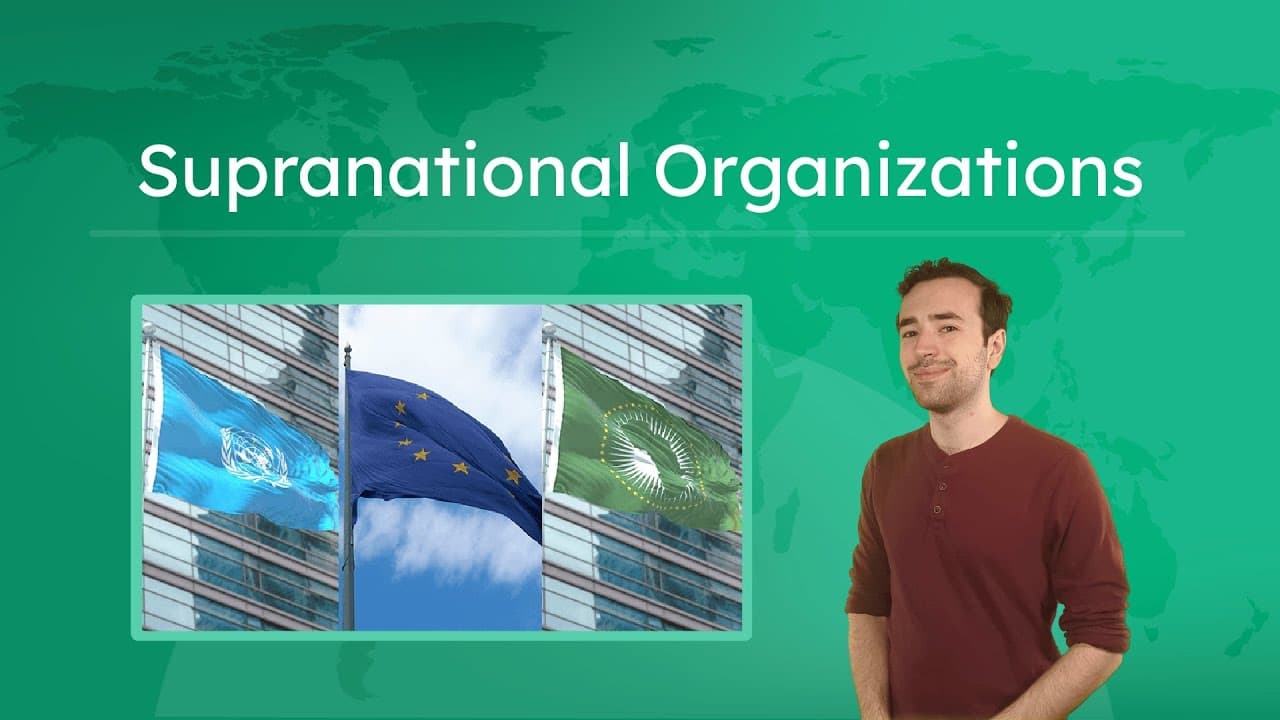
Global Teamwork: Exploring Supranational Organizations

Global Teamwork: Exploring Supranational Organizations

This educational video provides a comprehensive introduction to supranational organizations, exploring how and why independent states choose to cooperate on a global scale. Hosted by a narrator named Justin, the video takes students on a virtual "tour" of three major organizations: the United Nations (UN), the European Union (EU), and the African Union (AU). It defines what a supranational organization is and examines the three primary types of cooperation fostered by these groups: political, economic, and environmental. The video delves into complex geopolitical concepts such as national sovereignty, diplomacy, and the long-term impacts of colonialism. It uses specific real-world examples to illustrate abstract ideas, including the Paris Agreement for environmental standards, the Schengen Agreement for open borders in Europe, the Euro as a common currency, and the AU's peacekeeping mission in Somalia. The narrative critically examines the trade-offs of membership, specifically why states surrender some of their sovereignty to gain the benefits of collective security and economic strength. For educators, this video serves as an excellent anchor for units on World Geography, Civics, or Global Studies. It simplifies high-level political science concepts into accessible terms using clear visuals and maps. The content naturally leads to classroom discussions about current events, the balance between national independence and global interdependence, and the challenges nations face when trying to solve problems that cross borders, such as climate change and war.

Miacademy & MiaPrep Learning ChannelMiacademy & MiaPrep Learning Channel

11mins 28s

Video
How 21st Century Economics and Identity Shaped Modern Europe

How 21st Century Economics and Identity Shaped Modern Europe

This educational video from Crash Course European History explores the tumultuous first two decades of the 21st century in Europe. Host John Green contrasts the initial optimism of the new millennium—characterized by EU expansion and technological innovation—with the series of economic and social shocks that followed. The narrative covers the global impact of financial crises starting in the 1990s, the Great Recession of 2008, and how economic instability fueled social unrest and identity politics across the continent. The video provides a critical examination of the rise of populism and authoritarianism in modern Europe, specifically profiling Vladimir Putin in Russia and Viktor Orbán in Hungary. It connects these political shifts to the refugee crisis triggered by the Syrian Civil War and the subsequent rise in xenophobia and nationalism, culminating in the Brexit vote. The content also highlights cultural shifts, discussing how globalization and migration have diversified European society, influencing everything from sports to literature. For educators, this resource serves as a vital tool for connecting contemporary current events with historical trends. It helps students understand complex concepts like "illiberal democracy," the domino effects of global economics, and the distinction between patriotism and nationalism. By presenting modern history through both macro-economic lenses and individual human stories (via Nobel Prize winner Svetlana Alexievich), the video encourages students to analyze how systemic shocks influence human behavior and political systems.

CrashCourseCrashCourse

12mins 46s

Video
The 17th Century Crisis and the Thirty Years' War

The 17th Century Crisis and the Thirty Years' War

This episode of Crash Course European History explores the tumultuous 17th century, often referred to as the "17th Century Crisis." Host John Green breaks down the converging catastrophes that defined the era: the climate shifts of the Little Ice Age, the economic turmoil of the Price Revolution, and the devastation of the Thirty Years' War. The video provides a comprehensive look at how environmental factors, economics, and religious conflict intersected to create one of the deadliest periods in European history. The content delves deep into the Thirty Years' War (1618–1648), detailing its origins in the Defenestration of Prague and tracking its four major phases: Bohemian, Danish, Swedish, and French. It highlights key historical figures like Ferdinand II, Gustavus Adolphus, and Albrecht von Wallenstein, while not shying away from the brutal reality of warfare, famine, and disease that decimated the Central European population. For educators, this video serves as a powerful tool to teach AP European History concepts, specifically the interaction between geography, politics, and religion. It illustrates how local religious disputes escalated into a continent-wide political conflict and challenges students to consider historical cause-and-effect relationships, particularly how climate and economy drive political instability.

CrashCourseCrashCourse

13mins 30s

Video
Exploring the Major Mountain Ranges of Europe

Exploring the Major Mountain Ranges of Europe

This comprehensive geography lesson takes students on a tour of the European continent's major mountain ranges and geological features. The video begins by explaining the scientific processes behind mountain formation, specifically orogeny (tectonic plate collision) and volcanism, before conducting a region-by-region breakdown of Europe's topography. The narrator uses maps, satellite imagery, and photographs to visually locate and describe key ranges including the Alps, Pyrenees, Carpathians, Urals, and more. Key themes include physical geography, plate tectonics, and the intersection of geography with history and culture. The video highlights how physical features define borders (like the Pyrenees and Urals), influence climate (like the rain shadow of the Scandinavian mountains), and impact human history (such as the destruction of Pompeii by Mt. Vesuvius). It also weaves in cultural folklore, connecting specific mountains to legends like Dracula and the Djinn. This resource is highly valuable for middle and high school social studies and earth science classrooms. It provides a clear visual framework for understanding European geography, moving beyond simple memorization to explain *why* the landscape looks the way it does. Teachers can use this video to support units on European geography, plate tectonics, or as a bridge between physical geography and European history lessons.

Miacademy & MiaPrep Learning ChannelMiacademy & MiaPrep Learning Channel

12mins 10s

Video
How Ancient Trade Routes Connected the World

How Ancient Trade Routes Connected the World

This video explores the concept of global interconnectedness long before the advent of the internet or modern transportation. Starting with a relatable family dinner scene, the narrator challenges viewers to consider the origins of their food and clothing, using this as a springboard to introduce the historical mechanism of trade. The video defines cultural diffusion and illustrates how ancient trade routes like the Silk Road, Indian Ocean maritime routes, Trans-Saharan network, and Mediterranean Sea served as the "superhighways" of the ancient world, linking distant civilizations. Key themes include the definition and impact of cultural diffusion, the geography of major ancient trade networks, and the specific exchange of goods, ideas, technologies, and religions. The video highlights how the Indian Ocean trade facilitated the spread of Islam, how the Trans-Saharan route moved gold and salt, and how the Mediterranean connected Europe to ancient wisdom. It also details the "Four Great Inventions" of Ancient China—paper, printing, the compass, and gunpowder—and their profound effects on global society. For educators, this video serves as an excellent introduction to units on World History, global trade, or ancient civilizations. It features built-in "pause points" that invite students to check the tags on their own clothes, brainstorm inventions, and reflect on historical impacts, making it highly interactive. By connecting the abstract concept of cultural diffusion to tangible items like spices and clothing, the video helps students visualize how historical economic activities shaped the political, religious, and technological landscape of the modern world.

Miacademy & MiaPrep Learning ChannelMiacademy & MiaPrep Learning Channel

11mins 42s

Video
How 19th Century Imperialism Shaped the Modern World

How 19th Century Imperialism Shaped the Modern World

This episode of Crash Course European History explores the complex and often brutal history of 19th-century European imperialism. Host John Green examines the paradox of European nations expanding rights and democracy at home while simultaneously stripping rights and sovereignty from people across Asia, Africa, and the Pacific. The video details the economic motivations behind expansion, such as the demand for raw materials like palm oil, rubber, and diamonds, and the specific mechanisms used to enforce control. Key themes include the "Tools of Empire"—technological advancements like steamships, machine guns, railroads, and the medical breakthrough of quinine—that enabled Europeans to penetrate and dominate the interiors of Africa and Asia. The video also highlights the shift in justification for empire from religious conversion to "Social Darwinism," a pseudoscientific belief in racial superiority used to excuse exploitation. Crucially, the video moves beyond the perspective of the colonizers to focus on indigenous resistance and experience. It covers the Opium Wars in China, the Indian Rebellion of 1857, and forms of non-violent resistance such as "reproductive strikes" in the Congo and Caribbean. This resource is invaluable for helping students understand the systemic nature of colonialism, the technological disparity of the era, and the lasting geopolitical legacy of these events.

CrashCourseCrashCourse

13mins 14s

Video
How Decolonization Reshaped the World After WWII

How Decolonization Reshaped the World After WWII

This educational video explores the complex and often violent process of decolonization that reshaped the world following World War II. It examines how European powers lost control of their empires in Asia and Africa, highlighting the distinct paths to independence taken by nations such as India, China, Kenya, and Algeria. The narrative contrasts negotiated transfers of power with brutal wars of liberation, providing specific historical examples of the human cost involved in these transitions. Key themes include the impact of the Cold War on emerging nations, the concept of neo-imperialism, and the psychological dimensions of colonization as articulated by thinkers like Frantz Fanon. The video also discusses the phenomenon of reverse migration, where colonized peoples moved to Europe to rebuild war-torn infrastructure, facing racism and discrimination in the process. It connects these historical events to cultural shifts, such as the rejection of Western dress codes and the influence of immigrant musicians on Western pop culture. For educators, this video serves as a powerful resource for teaching 20th-century World or European History. It moves beyond simple dates and maps to address the nuances of post-colonial infrastructure, the economic dependence created by foreign aid systems, and the lasting legacy of partition violence. The video provides graphic primary source quotes that can spark deep classroom discussions about human rights, the ethics of war, and the ongoing challenges faced by the Global South.

CrashCourseCrashCourse

13mins 23s

Video
Exploring the People and Culture of Northern Europe

Exploring the People and Culture of Northern Europe

This educational video provides a comprehensive tour of Northern Europe, specifically focusing on the nations of Denmark, Finland, Sweden, Norway, and Iceland, as well as the territory of Greenland. The narrator breaks down the region through various lenses of human geography, including population statistics, ethnicity, religious demographics, languages, and political structures. It offers a structured approach to understanding the similarities and differences between these Nordic nations. Key themes explored include the shared history of the region (such as Viking heritage), the prevalence of Lutheran Christianity symbolized by the Nordic Cross flags, and the distinction between Germanic and Uralic languages. The video also highlights important cultural aspects, such as the indigenous Sami and Inuit peoples, progressive social policies, famous literary and artistic contributions (like Hans Christian Andersen and Edvard Munch), and the region's robust economies characterized by high standards of living and mixed market systems. For educators, this video serves as an excellent resource for comparative geography and social studies units. It allows students to analyze how geography influences population density, compare different forms of government (constitutional monarchies vs. parliamentary republics), and understand economic indicators like GDP. The clear presentation of data through maps and charts makes it particularly useful for teaching students how to interpret demographic statistics and connect them to real-world nations.

Miacademy & MiaPrep Learning ChannelMiacademy & MiaPrep Learning Channel

10mins 10s

Video
The Columbian Exchange: How Plants, Animals, and People Changed the World

The Columbian Exchange: How Plants, Animals, and People Changed the World

This educational video explores the profound global impact of the Columbian Exchange, starting with a relatable hook about pizza ingredients to illustrate how interconnected our modern food sources are. The host defines the Columbian Exchange as the transfer of plants, animals, people, and ideas between the Old World (Europe, Africa, Asia) and the New World (the Americas) following Columbus's voyages. The narrative is structured around three main pillars of impact: environmental changes, social shifts, and economic transformations. The video delves deep into specific examples of exchange, detailing how Old World livestock like cattle and horses transformed landscapes and lifestyles in the Americas, while New World crops like maize and potatoes fueled population explosions in Europe, Africa, and Asia. It does not shy away from the darker consequences of this era, explicitly discussing the environmental degradation caused by plantation farming and the human tragedy of the Atlantic slave trade. The content connects these historical events to the formation of a true global economy. For educators, this video serves as an excellent anchor for units on the Age of Exploration, global trade, or agricultural history. It moves beyond simple lists of traded goods to analyze cause-and-effect relationships, such as how the potato famine-proofed parts of Europe or how the horse revolutionized Native American warfare. The clear structure allows teachers to segment the video for focused discussions on environmental science, economics, or social justice within a historical context.

Miacademy & MiaPrep Learning ChannelMiacademy & MiaPrep Learning Channel

13mins 52s

Video
Why the Bronze Age Civilizations Collapsed

Why the Bronze Age Civilizations Collapsed

In this episode of Crash Course World History, John Green explores the mysterious collapse of the Bronze Age civilizations in the Eastern Mediterranean around 1200 BCE. The video challenges the traditional narrative of separate, isolated civilizations by demonstrating how Egypt, the Hittites, the Mycenaeans, and others formed a highly interconnected international system defined by trade, diplomacy, and war. It examines the evidence for this interdependence, including the famous Uluburun shipwreck and the Amarna Letters.

CrashCourseCrashCourse

12mins 58s

Video
Exploring Europe: The Peninsula of Peninsulas

Exploring Europe: The Peninsula of Peninsulas

This educational video provides a comprehensive geographical tour of Europe, framing the continent as a "peninsula of peninsulas." It begins by explaining the geological forces—specifically tectonic plate movement and glaciation—that shaped Europe's unique coastline and topography. The narrator then systematically explores five major peninsulas: Scandinavian, Jutland, Iberian, Italian, and Balkan, highlighting their specific locations, physical sizes, and defining characteristics. The content covers key geographical themes such as physical landforms (fjords, karst topography, mountains), climate zones (arctic tundra vs. Mediterranean), and human geography. It connects physical features to population distribution, such as why the majority of Scandinavians live in the south, and touches on historical contexts like the agricultural history of Jutland and the political fragmentation of the Balkans. For educators, this video serves as an excellent anchor for units on European geography or physical geology. It uses clear satellite imagery and maps to help students visualize spatial relationships and understand abstract concepts like "balkanization" and "glaciation." Teachers can use this resource to spark discussions on how geography influences culture and economy, or as a visual aid for map-labeling activities.

Miacademy & MiaPrep Learning ChannelMiacademy & MiaPrep Learning Channel

6mins 55s

Video
World War II: Battles, Resources, and the Human Cost

World War II: Battles, Resources, and the Human Cost

This fast-paced educational video provides a comprehensive overview of World War II, moving beyond simple battle summaries to explore the complex causes, global scope, and devastating human cost of the conflict. Host John Green challenges the traditional Western-centric timeline by examining early aggression in China and Japan while covering major turning points like the Battle of Stalingrad, Pearl Harbor, and D-Day. The narrative weaves together military history with economic analysis, specifically arguing that the quest for food resources and land ('Lebensraum') was a primary driver for Axis aggression. The video delves into the darker realities of 'Total War,' discussing the blurring lines between soldiers and civilians, the Holocaust, and the strategic starvation policies like the Nazi Hunger Plan. It critically examines the 'Good vs. Evil' narrative by acknowledging the undemocratic nature of key Allied powers like the Soviet Union and the imperialist policies of Great Britain. The content highlights the contributions of often-overlooked nations, such as Canada and Argentina, providing a truly global perspective. For educators, this resource serves as an excellent synthesizer of vast historical information, perfect for introducing or reviewing the unit. It encourages critical thinking by prompting students to analyze how industrialization and 'progress' were weaponized to commit atrocities. The video's interrogation of Western civilization's moral standing post-WWII offers profound discussion starters for high school history and ethics classes.

CrashCourseCrashCourse

13mins 13s

Video
Aggressive Expansion and the Failure of the League of Nations

Aggressive Expansion and the Failure of the League of Nations

This educational video examines the collapse of international peace in the 1930s through the aggressive expansionist policies of Japan, Italy, and Germany. It connects the aftermath of World War I and the Great Depression to the rise of militaristic regimes that sought national glory through territorial conquest. The narrative highlights the inability of the League of Nations and Western powers to effectively stop these aggressions, setting the stage for World War II. The content covers three specific case studies: Japan’s invasion of Manchuria and China, Italy’s invasion of Ethiopia, and Hitler’s defiance of the Treaty of Versailles culminating in the occupation of the Rhineland. It introduces key historical figures like Emperor Haile Selassie, Benito Mussolini, and Adolf Hitler, while explaining critical concepts such as "appeasement" and "sanctions." For educators, this video serves as an excellent overview of the geopolitical causes of WWII. It structures the complex history into three distinct segments, making it easy to compare and contrast the actions of different Axis powers. The video includes built-in pause points with guiding questions, making it ready-to-use for checking student understanding during a lecture or independent study session.

Miacademy & MiaPrep Learning ChannelMiacademy & MiaPrep Learning Channel

11mins 20s

Video
Exploring the People and Culture of Eastern Europe

Exploring the People and Culture of Eastern Europe

This educational video provides a comprehensive overview of the human geography of Eastern Europe, exploring the region's transition from Soviet influence to modern nation-states. It breaks down the complex demographics, political landscapes, and economic challenges faced by countries like Russia, Poland, Ukraine, and the Baltic states. The narration highlights significant statistics regarding population density, migration patterns, and the lingering effects of historical events like the Chernobyl disaster and the fall of communism. Beyond statistics, the video dives into the rich cultural tapestry of the region, distinguishing between Slavic traditions and the unique heritage of Transcaucasia (Georgia, Armenia, Azerbaijan). Viewers learn about religious diversity, from Eastern Orthodoxy to Islam, and explore vibrant traditions including folk singing, squat dancing, and regional cuisines. The video effectively contrasts the struggles of the past with the optimism of the future, showcasing modern cities and tech hubs. For educators, this video serves as an excellent anchor for units on European geography, post-Soviet history, or cultural studies. It connects abstract concepts like GDP and population density to real-world examples and visualizes the diversity within a region often generalized by the West. The clear segmentation allows teachers to focus specifically on economics, culture, or demographics depending on their lesson goals.

Miacademy & MiaPrep Learning ChannelMiacademy & MiaPrep Learning Channel

11mins 50s

Video
Exploring Central Europe: People, Culture, and History

Exploring Central Europe: People, Culture, and History

This comprehensive video provides an in-depth geographical and cultural overview of Central Europe, covering Germany, Switzerland, Austria, Hungary, Liechtenstein, Slovakia, the Czech Republic, and Slovenia. It moves beyond basic map locations to explore the demographics, history, economy, and rich cultural traditions of the region. Viewers will learn about population dynamics, including the high population density of Germany and the region-wide trend of declining birth rates, alongside an analysis of economic powerhouses like Germany and Switzerland.

Miacademy & MiaPrep Learning ChannelMiacademy & MiaPrep Learning Channel

9mins 38s

Video
Touring the Seven Wonders of the World

Touring the Seven Wonders of the World

This educational video takes students on a virtual tour of seven of the most famous architectural and historical landmarks across the globe. Hosted by Kaleigh, the video provides a structured overview of the Roman Colosseum, Chichen Itza, the Pyramids of Giza, the Great Wall of China, Machu Picchu, Petra, and the Taj Mahal. For each location, the video highlights its geographical location on a world map, the dates of its construction, and its original historical purpose.

Miacademy & MiaPrep Learning ChannelMiacademy & MiaPrep Learning Channel

4mins 56s

Video
How the Silk Roads Spread Ideas and Religions

How the Silk Roads Spread Ideas and Religions

This educational video explores the concept of cultural diffusion through the historical lens of the Silk Roads. While often remembered for the trade of luxury goods like silk and spices, the video argues that the most significant exchange was actually invisible: the spread of ideas, worldviews, and religious beliefs. Host Alizé Carrère guides viewers through how religions like Buddhism, Islam, and Christianity spread and evolved across Asia, Africa, and Europe via these networks, illustrating complex geographic concepts such as relocation, expansion, contagion, and hierarchical diffusion.

CrashCourseCrashCourse

11mins 30s

Video
Life and Government in Ancient Sparta

Life and Government in Ancient Sparta

This engaging educational video transports students back to Ancient Greece to explore the unique and rigorous society of Sparta. Unlike its neighbor Athens, which focused on arts and philosophy, Sparta is presented as a military-centric polis where life revolved around discipline, strength, and service to the state. The video breaks down the complex Spartan political structure, including its dual kingship and the powerful Ephors, while also detailing the rigid social hierarchy of Citizens, Perioikoi, and Helots. Key themes include the contrast between individual freedom and collective duty, the role of geography in shaping political alliances, and the cultural prioritization of military readiness. The narrative covers the intense upbringing of Spartan children, the formation of the Peloponnesian League, and the eventual conflict with Athens. Through animated characters and historical imagery, complex concepts like oligarchy and social stratification are made accessible. For educators, this video serves as an excellent resource for comparing Ancient Greek city-states. It provides clear definitions of specific historical terms and offers natural pause points for discussions about government types and social values. The content connects well with lessons on the Peloponnesian War, ancient political systems, and the diverse cultures within the ancient Mediterranean world.

Miacademy & MiaPrep Learning ChannelMiacademy & MiaPrep Learning Channel

9mins

Video
How Decolonization Reshaped the World After WWII

How Decolonization Reshaped the World After WWII

This educational video explores the complex and often violent process of decolonization that reshaped the world following World War II. It examines how European powers lost control of their empires in Asia and Africa, highlighting the distinct paths to independence taken by nations such as India, China, Kenya, and Algeria. The narrative contrasts negotiated transfers of power with brutal wars of liberation, providing specific historical examples of the human cost involved in these transitions. Key themes include the impact of the Cold War on emerging nations, the concept of neo-imperialism, and the psychological dimensions of colonization as articulated by thinkers like Frantz Fanon. The video also discusses the phenomenon of reverse migration, where colonized peoples moved to Europe to rebuild war-torn infrastructure, facing racism and discrimination in the process. It connects these historical events to cultural shifts, such as the rejection of Western dress codes and the influence of immigrant musicians on Western pop culture. For educators, this video serves as a powerful resource for teaching 20th-century World or European History. It moves beyond simple dates and maps to address the nuances of post-colonial infrastructure, the economic dependence created by foreign aid systems, and the lasting legacy of partition violence. The video provides graphic primary source quotes that can spark deep classroom discussions about human rights, the ethics of war, and the ongoing challenges faced by the Global South.

CrashCourseCrashCourse

13mins 23s

Video
Exploring Ancient Israel and the History of the Hebrews

Exploring Ancient Israel and the History of the Hebrews

This educational video provides a comprehensive overview of Ancient Israel and the Levant, exploring how geography and history intertwined to shape the Hebrew civilization. The host uses engaging analogies, such as baking bread, to introduce the concept of the "Levant" as a rising region and a geographical crossroads between Europe, Africa, and Asia. The video details the physical landscape, including the importance of the Jordan River and the Dead Sea, and explains how early inhabitants adapted to the arid climate through innovations like cisterns.

Miacademy & MiaPrep Learning ChannelMiacademy & MiaPrep Learning Channel

10mins 40s

Video
How Modern Monarchies Work Today

How Modern Monarchies Work Today

This educational video provides a comprehensive overview of modern-day monarchies, challenging the common misconception that kings and queens are merely relics of the past or fairy tales. The narrator, Brian, guides viewers through a detailed analysis of the 44 monarchies currently in existence, explaining how they function in the 21st century. The video breaks down the distinctions between hereditary and elected monarchies, as well as the critical differences between absolute and constitutional monarchies, using clear definitions, maps, and statistical breakdowns. Key themes explored include political geography, systems of government, and the balance of power. The video delves into complex concepts such as "Head of State" versus "Supreme Authority," and examines specific case studies ranging from the ceremonial monarchies of Scandinavia to the absolute power structures in the Middle East. It also highlights unique governance models like the diarchy in Eswatini and the landless Sovereign Military Order of Malta. A balanced discussion on the advantages (national identity, stability) and disadvantages (cost, potential for corruption) of these systems is also presented. For educators, this video is a valuable resource for Social Studies and Civics units on world governments. It offers a clear, visual way to compare authoritarian and democratic structures, making abstract political concepts concrete through real-world examples. The content supports learning objectives related to understanding global political systems, analyzing the roles of government leaders, and evaluating the pros and cons of different constitutional arrangements.

Miacademy & MiaPrep Learning ChannelMiacademy & MiaPrep Learning Channel

9mins 40s

Video
Reading the City: How Urban Spaces Are Structured

Reading the City: How Urban Spaces Are Structured

This educational video explores the internal structure of cities, treating them as texts that reveal their history, culture, and economic development. The host, Alizé Carrère, introduces key urban geography models, specifically the Concentric Zone Model based on Chicago, to explain how cities organize themselves around a Central Business District and expand outward in rings of varying land use. The video contrasts North American urban development—characterized by industrialization, suburban sprawl, and car dependency—with the historic structure of Islamic cities like Fez, Morocco, where climate and cultural values of privacy shape a very different urban form. Key themes include the impact of transportation technology on city layout, the concept of "invasion and succession" in neighborhoods, and the transition from monocentric to polycentric metropolitan structures. The video also delves into how physical geography and climate necessitate different architectural solutions, comparing wide American grids with the narrow, shaded streets of North African medinas. For educators, this video is an invaluable resource for AP Human Geography and social studies classrooms. It provides concrete examples of abstract concepts like urban models, gentrification, and zoning. It encourages students to look at their own local environments critically, identifying the historical layers and socio-economic patterns that define the neighborhoods they live in.

CrashCourseCrashCourse

11mins 52s

Video
How Ancient Trade Routes Connected the World

How Ancient Trade Routes Connected the World

This video explores the concept of global interconnectedness long before the advent of the internet or modern transportation. Starting with a relatable family dinner scene, the narrator challenges viewers to consider the origins of their food and clothing, using this as a springboard to introduce the historical mechanism of trade. The video defines cultural diffusion and illustrates how ancient trade routes like the Silk Road, Indian Ocean maritime routes, Trans-Saharan network, and Mediterranean Sea served as the "superhighways" of the ancient world, linking distant civilizations. Key themes include the definition and impact of cultural diffusion, the geography of major ancient trade networks, and the specific exchange of goods, ideas, technologies, and religions. The video highlights how the Indian Ocean trade facilitated the spread of Islam, how the Trans-Saharan route moved gold and salt, and how the Mediterranean connected Europe to ancient wisdom. It also details the "Four Great Inventions" of Ancient China—paper, printing, the compass, and gunpowder—and their profound effects on global society. For educators, this video serves as an excellent introduction to units on World History, global trade, or ancient civilizations. It features built-in "pause points" that invite students to check the tags on their own clothes, brainstorm inventions, and reflect on historical impacts, making it highly interactive. By connecting the abstract concept of cultural diffusion to tangible items like spices and clothing, the video helps students visualize how historical economic activities shaped the political, religious, and technological landscape of the modern world.

Miacademy & MiaPrep Learning ChannelMiacademy & MiaPrep Learning Channel

11mins 42s

Video
How Asian Intellectuals Responded to Western Imperialism

How Asian Intellectuals Responded to Western Imperialism

In this installment of Crash Course World History, John Green shifts the focus from the "Rise of the West" to the perspectives of those who experienced Western imperialism firsthand. Specifically examining East Asia and the Middle East, the video explores how Asian intellectuals and leaders analyzed the sources of Western power and debated how to respond. Rather than portraying Asian societies as passive victims, the video highlights the active intellectual work done by thinkers like Jamal al-Din al-Afghani, Liang Qichao, and Rabindranath Tagore. The video delves into key themes such as the adoption of Western military and educational models (Self-Strengthening), the rise of nationalism and the nation-state concept in Asia, and the eventual disillusionment with Western liberal democracy. It discusses how early admiration for Western efficiency often turned into a critique of Western materialism and hypocrisy, especially following World War I and the Treaty of Versailles. The content covers specific historical movements including the Tanzimat reforms in the Ottoman Empire, the Self-Strengthening Movement in China, and the complex nature of Indian nationalism. For educators, this video is an invaluable resource for teaching World History from a non-Eurocentric perspective. It challenges students to consider how historical events look different depending on who is telling the story. It provides a nuanced look at the tension between modernization and traditionalism and introduces students to primary source voices that are often omitted from standard textbooks, making it an excellent tool for developing historical empathy and critical thinking skills.

CrashCourseCrashCourse

12mins 55s

Video
How Geography Defines Development and Wealth

How Geography Defines Development and Wealth

This educational video explores the complex geographic and economic concept of "development," focusing on the Middle East and North Africa (MENA) region as a primary case study. Hosted by Alizé Carrère for Crash Course Geography, the video challenges traditional definitions of wealth and power by contrasting the resource-rich United Arab Emirates with Lebanon—a country with significant natural advantages but historical and political struggles. It delves into how historical narratives, particularly colonialism, have shaped modern perceptions of which countries are considered "developed" or "developing." Key themes include the evolution of terminology from "First/Third World" to "Global North/South," the limitations of using Gross Domestic Product (GDP) as the sole measure of success, and the impact of international debt and austerity measures on lower-income nations. The video introduces alternative metrics like the Human Development Index (HDI), Gender Inequality Index (GII), and Gross National Happiness, urging viewers to consider social well-being and sustainability alongside economic growth. For educators, this resource serves as an excellent tool for high school Geography, Economics, and World History classrooms. It encourages critical thinking about data and global inequality, asking students to question how we measure success and who gets to define it. The content seamlessly bridges physical geography (resources like oil and water) with human geography (politics, economics, and culture), making it ideal for units on global development, economic systems, or the modern Middle East.

CrashCourseCrashCourse

12mins 29s

Video
Exploring Economic Sustainability and the Global Economy

Exploring Economic Sustainability and the Global Economy

This educational video introduces students to the concept of economic sustainability through the metaphor of a "Global Fair." Hosted by a narrator named Justin, the video explores how businesses and governments can build strong economies that support current populations without compromising the future. The lesson is structured around three main "exhibits" corresponding to the three pillars of sustainability: Environmental Protection, Social Inclusion, and Economic Growth. The video covers a wide range of complex economic and environmental topics using real-world case studies. It examines the shift from linear to circular economies using Apple as an example, explains carbon emissions trading through the European Union's policies, and discusses the impact of electric vehicles with Ford. It delves into social sustainability by analyzing global wage gaps, the Rana Plaza tragedy, and fair trade practices with Starbucks. Finally, it addresses economic growth and diversification, using Saudi Arabia's "Vision 2030" and Google's investment in AI as examples of adapting to a changing world. For educators, this video serves as an excellent anchor for units on globalization, economics, or environmental science. It transforms abstract economic theories into concrete examples using recognizable brands, making the content highly relevant to students. The clear segmentation of the video allows teachers to either watch the whole piece or focus on specific pillars (environment, social justice, or economic growth) for targeted lessons.

Miacademy & MiaPrep Learning ChannelMiacademy & MiaPrep Learning Channel

12mins 31s

Video
Geography of Faith: How Religion Spreads and Shapes Culture

Geography of Faith: How Religion Spreads and Shapes Culture

This educational video explores the intricate relationship between geography, religion, and culture. Hosted by a narrator named Justin, the lesson begins by observing religious diversity in an urban setting before diving into the geographic origins of major world religions. It examines how faiths like Christianity, Islam, Hinduism, and Buddhism spread from their ancient cultural hearths through processes such as migration, trade, and colonization. The video introduces key human geography concepts, specifically focusing on 'cultural diffusion' and 'cultural integration.' It uses historical examples, such as the spread of Catholicism to Latin America and the subsequent blending with indigenous traditions (demonstrated through art analysis), to illustrate how religions evolve when they move to new regions. The content also addresses how religion influences modern society, shaping ethical codes, dietary restrictions, family structures, and even government systems through theocracies or religiously influenced laws. Teachers can use this video to introduce units on World Geography, Human Culture, or World Religions. It is particularly valuable for visualizing abstract concepts like cultural diffusion and integration. The video provides built-in pause points for classroom discussion on topics like migration effects and the ethics of colonization, making it an interactive tool for critical thinking about how belief systems shape the human experience across the globe.

Miacademy & MiaPrep Learning ChannelMiacademy & MiaPrep Learning Channel

12mins 31s

Video
How the Silk Roads Spread Ideas and Religions

How the Silk Roads Spread Ideas and Religions

This educational video explores the concept of cultural diffusion through the historical lens of the Silk Roads. While often remembered for the trade of luxury goods like silk and spices, the video argues that the most significant exchange was actually invisible: the spread of ideas, worldviews, and religious beliefs. Host Alizé Carrère guides viewers through how religions like Buddhism, Islam, and Christianity spread and evolved across Asia, Africa, and Europe via these networks, illustrating complex geographic concepts such as relocation, expansion, contagion, and hierarchical diffusion.

CrashCourseCrashCourse

11mins 30s

Video
Groundwater: The Invisible Resource Fueling Conflict

Groundwater: The Invisible Resource Fueling Conflict

This educational video from Crash Course Geography explores the critical role of groundwater in the Middle East and North Africa (MENA), a region defined by water scarcity. The video begins by explaining the physical geography of groundwater, defining key concepts such as the water table, zones of saturation and aeration, porosity, and permeability. It clarifies the misconception that aquifers are underground lakes, describing them instead as saturated rock and soil layers that act as vital reservoirs for the world's freshwater supply. The narrative then shifts to human geography, introducing the concept of "hydro-politics"—the intersection of water resources and political conflict. The video uses the Israeli-Palestinian conflict as a primary case study to demonstrate how political borders often fail to align with hydrological boundaries. It details the geopolitical consequences of the Six-Day War and the Oslo II Accords on water access, highlighting the significant disparities in water consumption between Israelis and Palestinians in the West Bank and the pollution issues facing the Coastal Aquifer in Gaza. For educators, this video serves as a powerful bridge between physical science and social studies. It demonstrates how abstract geological features like aquifers directly influence international relations, human rights, and economic development. The content is particularly valuable for discussing resource management, conflict resolution, and the concept of "virtual water"—the hidden water costs embedded in the food and products we consume.

CrashCourseCrashCourse

11mins 6s

Video
The Rise of Civilization in Mesopotamia: Writing, Taxes, and Empires

The Rise of Civilization in Mesopotamia: Writing, Taxes, and Empires

In this installment of Crash Course World History, John Green explores the rise of civilization in Mesopotamia, the 'land between two rivers.' The video examines how the geography of the Tigris and Euphrates valleys shaped the culture, religion, and politics of early city-states like Uruk and Babylon. It breaks down foundational developments including the invention of writing (cuneiform), the creation of early legal systems (Hammurabi's Code), and the evolution of political power from temple priests to kings.

CrashCourseCrashCourse

12mins 6s

Video
Why and How People Move: The Geography of Migration

Why and How People Move: The Geography of Migration

This educational video from Crash Course Geography provides a comprehensive overview of human migration, using the vast Indian diaspora as a primary case study to illustrate key concepts. Hosted by Alizé Carrère, the video breaks down the "how" and "why" of human movement, moving beyond simple definitions to explore the complex historical, economic, and environmental drivers behind migration. It covers a wide range of migration types, from the historical indentured labor systems in Trinidad and Tobago to ancient monsoon-driven trade routes, and modern political displacements like the 1972 expulsion of Asians from Uganda.

CrashCourseCrashCourse

11mins 16s

Video
How History Defined Europe as a Functional Region

How History Defined Europe as a Functional Region

This educational video explores the concept of Europe as a "functional region," examining how its boundaries and influence have been defined not just by physical geography, but by historical connections, trade networks, and cultural legacies. The narrator guides viewers through a chronological journey, starting with the Greco-Roman era and moving through the Crusades, the Age of Exploration, the Scramble for Africa, the Cold War, and finally the modern European Union. The video explains how these events created networks of interaction that extended Europe's "functional" borders far beyond its physical continent. Key themes include the difference between formal and functional regions, the lasting impact of Roman infrastructure and language, the spread of religion (Christianity and Islam), the geopolitical consequences of colonization, and the role of economic integration in the modern era. It specifically addresses how political ideologies during the Cold War divided the continent into two distinct functional zones and how the EU has since worked to reintegrate them through trade and a common currency. For educators, this video serves as an excellent bridge between geography and history, demonstrating how spatial relationships change over time. It provides concrete examples of abstract geographic concepts like "functional regions" and "spheres of influence." Teachers can use this resource to help students understand complex topics such as why French Guiana is part of Europe, how the Roman Empire laid the groundwork for modern Western culture, and the economic rationale behind the European Union.

Miacademy & MiaPrep Learning ChannelMiacademy & MiaPrep Learning Channel

9mins 54s

Video
How Geography Shaped the First Civilization: Mesopotamia Explained

How Geography Shaped the First Civilization: Mesopotamia Explained

This educational video explores the rise of the first civilization in Mesopotamia, located in modern-day Iraq between the Tigris and Euphrates rivers. It explains how geography played a crucial role in the development of human society, transforming nomadic hunter-gatherers into settled farmers through the fertile soil of the "Fertile Crescent." The narrator guides students through the transition from the Stone Age to the Bronze Age, highlighting key innovations like irrigation, the plow, and the domestication of animals. The video delves into the challenges posed by the region's geography, such as unpredictable flooding and lack of natural defenses, and how early humans engineered solutions like levees, canals, and city walls. It connects these environmental factors to the growth of urban centers, job specialization, and the creation of a stable food surplus, which are identified as the foundational elements of civilization. Finally, the concept of cultural diffusion is introduced to explain how Mesopotamian innovations in farming, writing, and government spread to other regions like Egypt. The video includes built-in pauses for critical thinking and prediction, making it an excellent tool for middle school social studies classrooms to introduce Ancient History, human-environment interaction, and the economic foundations of society.

Miacademy & MiaPrep Learning ChannelMiacademy & MiaPrep Learning Channel

7mins 43s

Video
Historical Roots of September 11: Decades in the Making

Historical Roots of September 11: Decades in the Making

This educational video provides a comprehensive historical analysis of the events leading up to the September 11, 2001 terrorist attacks. Rather than focusing solely on the day itself, the content traces the geopolitical roots of the conflict back through the 20th century, examining Western intervention in West Asia, the discovery of oil, the Soviet-Afghan War, and the subsequent rise of the Taliban and Al Qaeda. It explains the motivations behind these extremist groups while carefully distinguishing their ideology from the Islamic faith practiced by billions worldwide. The video explores key themes of cause and effect in history, specifically how foreign policy decisions and international interventions can have long-term, often unforeseen consequences. It delves into the concepts of extremism, terrorism, and the complex relationship between the United States and West Asia. The narrative also addresses the aftermath of the attacks, highlighting the initial surge of patriotism in America as well as the unfortunate rise of Islamophobia, ultimately advocating for unity and understanding. For educators, this resource serves as an excellent tool for contextualizing 9/11 within a broader historical framework. It moves beyond the "what" to answer the "why," helping students understand the complex web of historical events that precipitated the attacks. The video features built-in review questions and pauses, making it ready-made for classroom instruction. It is particularly useful for units on U.S. history, global studies, and civics, providing a balanced perspective that encourages critical thinking about foreign policy and tolerance.

Miacademy & MiaPrep Learning ChannelMiacademy & MiaPrep Learning Channel

13mins

Video
Masters of Iron and Sea: The Hittites and Phoenicians

Masters of Iron and Sea: The Hittites and Phoenicians

This engaging educational video explores two significant ancient civilizations: the maritime Phoenicians and the mountain-dwelling Hittites. Through a compare-and-contrast structure, the narrator explains how geography played a crucial role in shaping the development, economy, and culture of each society. Viewers learn how the mountainous terrain of Phoenicia pushed its people toward the sea to become master shipbuilders and traders, while the rugged highlands of Anatolia forged the Hittites into a military powerhouse known for iron-working and chariots. The video dives deep into the specific technological and cultural achievements of both groups. For the Hittites, the focus is on their pioneering use of iron weapons, two-wheeled chariots, and a legal system recorded on clay tablets that prioritized compensation over physical punishment. For the Phoenicians, the spotlight is on their invention of the phonetic alphabet—the ancestor of modern writing systems—as well as their vast trade networks, establishment of colonies like Carthage, and production of the luxurious Tyrian purple dye. Designed for middle and high school history classrooms, this resource effectively illustrates key social studies concepts such as cultural diffusion, economic specialization, and the impact of physical geography on human history. The video includes interactive moments, such as a decoding activity using the Phoenician alphabet, making it an excellent tool for introducing the Iron Age or for a comparative unit on ancient Mediterranean civilizations.

Miacademy & MiaPrep Learning ChannelMiacademy & MiaPrep Learning Channel

8mins 54s

Video
Exploring the Nations and History of Southwest Asia

Exploring the Nations and History of Southwest Asia

This educational video provides a comprehensive historical and geographical overview of Southwest Asia (often referred to as the Middle East), focusing on the distinction between a "nation" (a people group) and a "country" (a state). It explores the diverse ethnic and religious groups that have inhabited the region for millennia, including Jewish, Palestinian, Persian, Arab, Turkic, and Kurdish peoples. The content traces the rise and fall of major empires—from the Persians and Romans to the Islamic Caliphates and the Ottomans—and explains how these historical layers influence modern demographics.

Miacademy & MiaPrep Learning ChannelMiacademy & MiaPrep Learning Channel

10mins 44s

Video
World War II: Battles, Resources, and the Human Cost

World War II: Battles, Resources, and the Human Cost

This fast-paced educational video provides a comprehensive overview of World War II, moving beyond simple battle summaries to explore the complex causes, global scope, and devastating human cost of the conflict. Host John Green challenges the traditional Western-centric timeline by examining early aggression in China and Japan while covering major turning points like the Battle of Stalingrad, Pearl Harbor, and D-Day. The narrative weaves together military history with economic analysis, specifically arguing that the quest for food resources and land ('Lebensraum') was a primary driver for Axis aggression. The video delves into the darker realities of 'Total War,' discussing the blurring lines between soldiers and civilians, the Holocaust, and the strategic starvation policies like the Nazi Hunger Plan. It critically examines the 'Good vs. Evil' narrative by acknowledging the undemocratic nature of key Allied powers like the Soviet Union and the imperialist policies of Great Britain. The content highlights the contributions of often-overlooked nations, such as Canada and Argentina, providing a truly global perspective. For educators, this resource serves as an excellent synthesizer of vast historical information, perfect for introducing or reviewing the unit. It encourages critical thinking by prompting students to analyze how industrialization and 'progress' were weaponized to commit atrocities. The video's interrogation of Western civilization's moral standing post-WWII offers profound discussion starters for high school history and ethics classes.

CrashCourseCrashCourse

13mins 13s

Video
Holocaust Resistance, Liberation, and the Post-War World

Holocaust Resistance, Liberation, and the Post-War World

This educational video provides a comprehensive overview of the Holocaust beyond the atrocities themselves, focusing on three critical phases: Resistance, Liberation, and the Aftermath. It begins by challenging the narrative of passive victimization, detailing how Jewish communities and other targeted groups resisted Nazi oppression through both armed uprisings (like in the Warsaw Ghetto) and spiritual defiance (maintaining faith, education, and art). The video highlights specific figures such as Mary Berg and Anne Frank, as well as the "Righteous Among the Nations" who risked their lives to save others. Key themes explored include the complexity of resistance (armed vs. non-violent), the psychological toll of liberation (survivor's guilt and the trauma of displacement), and the geopolitical consequences of the Holocaust, including the formation of the State of Israel. It also covers the pursuit of justice through the Nuremberg Trials and the importance of memory and education in preventing future genocides. This resource is highly valuable for history and social studies classrooms as it adds nuance to Holocaust education. It moves beyond statistics to explore the human spirit's resilience and the complicated reality of "freedom" for survivors who had lost everything. The built-in pause points with reflection questions make it an excellent tool for facilitating deep classroom discussions about ethics, justice, and historical empathy.

Miacademy & MiaPrep Learning ChannelMiacademy & MiaPrep Learning Channel

11mins 53s

Video
Reading Compass Directions: The Ordinal Points

Reading Compass Directions: The Ordinal Points

This educational video provides a clear and structured introduction to the ordinal (or intercardinal) points of a compass. Building upon the basic cardinal directions of North, South, East, and West, the video demonstrates how intermediate directions are named based on the two cardinal points they lie between. Through a visual demonstration using a realistic compass needle and a diagram, viewers learn to identify, name, and abbreviate North-East (NE), South-East (SE), South-West (SW), and North-West (NW). The video explores key themes of spatial orientation, map reading skills, and the terminology of navigation. It explicitly distinguishes between cardinal points and ordinal points, helping students understand the logic behind the naming convention (e.g., why it is "North-East" and not "East-North"). The systematic presentation reinforces the cyclical nature of the compass rose. For educators, this resource is an excellent tool for introducing map skills and geography concepts in lower elementary grades. It visually bridges the gap between abstract direction names and the physical movement of a compass needle. Teachers can use this video to scaffold lessons on reading maps, giving directions, or understanding location relative to a fixed point, making it valuable for both Social Studies and Math (spatial reasoning) curriculums.

MatholiaChannelMatholiaChannel

1min 41s

Video
Understanding Cardinal Directions on a Compass

Understanding Cardinal Directions on a Compass

This concise educational video introduces young learners to the compass and the four cardinal directions: North, South, East, West. Using clear, high-quality animations of a realistic compass alongside a simplified compass rose diagram, the video systematically demonstrates how the red needle points to each direction. It provides a visual and auditory explanation of how to identify directionality using this essential navigational tool. The video focuses on two main themes: identifying the parts of a compass (specifically the directional needle) and associating the four primary directions with their names and abbreviations (N, E, S, W). It steps through each direction individually, allowing students to see the needle move and establish a mental connection between the visual position (up, right, down, left) and the corresponding directional term. For educators, this resource serves as an excellent foundational tool for geography and social studies units on maps and navigation. It is particularly useful for introducing the concept of orientation before moving on to map reading skills. Teachers can use this video to help students understand that 'up' on a map typically corresponds to North, and to introduce the standard abbreviations used on maps and globes. The clear pacing makes it suitable for young children learning spatial concepts for the first time.

MatholiaChannelMatholiaChannel

1min 21s

Video
Why We Draw Lines: Understanding Political Boundaries

Why We Draw Lines: Understanding Political Boundaries

This engaging educational video explores the concept of political boundaries, using relatable analogies and historical examples to explain why humans draw lines on maps. Hosted by Justin, the lesson begins with a humorous comparison to siblings sharing a bedroom to introduce the basic idea of territory. It then travels back 4,500 years to ancient Sumer to examine the first recorded border conflict between the cities of Lagash and Umma, illustrating how resource competition and pride drive the creation of boundaries. The video breaks down the three main reasons for boundaries—resources, pride, and legal jurisdiction—using diverse examples ranging from Ancient Egypt to modern-day Russia and Ukraine. It categorizes boundaries into three types: Natural (like the Rio Grande), Geometric (like the straight lines in North Africa), and Cultural (illustrated by tribal groups that transcend political borders). Finally, the lesson clarifies complex political science terminology often confusing for students: the difference between a "Nation" (people), a "State" (political entity), and a "Nation-State," as well as the concept of "Sovereignty." Through clear definitions and real-world examples like the Kurds, the Lakota Sioux, and the dispute in the South China Sea, students gain a comprehensive understanding of political geography.

Miacademy & MiaPrep Learning ChannelMiacademy & MiaPrep Learning Channel

11mins 26s

Video
Drawing Earth from Space and Making Maps

Drawing Earth from Space and Making Maps

In this episode of Sci Kids, host Jessi and her robot mouse friend Squeaks explore how our planet looks from different distances in space to learn about geography and mapping. Through an engaging art project, they investigate why we can see massive features like continents, oceans, and ice caps from the International Space Station, but cannot see smaller details like houses or forts. The video uses real satellite imagery to help young students visualize the Earth as a whole system.

SciShow KidsSciShow Kids

6mins 1s

Video
Exploring Europe: Countries, Regions, and Landmarks

Exploring Europe: Countries, Regions, and Landmarks

This educational video provides a comprehensive tour of the continent of Europe, designed for elementary and middle school students. Hosted by a presenter named Kylie, the video breaks down the continent into six specific geographic regions: Central, Eastern, Northern, Southern, Southeastern, and Western Europe. It combines map visuals with photos of landmarks, animals, and cultural elements to give viewers a well-rounded understanding of European geography. The content covers essential geographical concepts such as hemispheres, landlocked countries, and transcontinental nations. It details the climates, native wildlife, and major languages spoken in each region. The video also highlights famous landmarks like the Eiffel Tower, the Colosseum, and Big Ben, while touching upon historical elements like the Roman Empire and the origins of the name "Europe." For educators, this video serves as an excellent introduction to world geography units. It offers clear visual aids for map skills and introduces vocabulary like "peninsula" (implied through visuals), "landlocked," and "transcontinental." It can spark learning about cultural diversity, different climate zones within a single continent, and the political geography of modern Europe.

Miacademy & MiaPrep Learning ChannelMiacademy & MiaPrep Learning Channel

9mins 11s

Video
A Virtual Field Trip to Antarctica: Wildlife, Climate, and Geography

A Virtual Field Trip to Antarctica: Wildlife, Climate, and Geography

This immersive virtual field trip transports students to Antarctica, the frozen continent at the bottom of the world. The video begins by contextualizing Antarctica's place on Earth relative to the other six continents, before zooming in to explore its unique geography, extreme climate, and status as the world's largest desert. It uses stunning high-definition footage of icebergs, glaciers, and research stations to visualize the environment.

Next Generation ScienceNext Generation Science

12mins

Video
How Your T-Shirt Explains the Global Economy

How Your T-Shirt Explains the Global Economy

In this energetic installment of Crash Course World History, John Green tackles the complex subject of globalization by focusing primarily on international trade and cultural exchange. Using the lifecycle of a simple cotton t-shirt as a central case study, the video illustrates how economic interdependence connects farmers in the US, textile workers in low-wage countries, and consumers worldwide. It breaks down the drivers of modern globalization, including multinational corporations, cheap shipping, and reduced government regulations. The video explores both the benefits and drawbacks of this interconnected system. It highlights how globalization has lifted hundreds of millions out of poverty in developing nations through manufacturing jobs, while simultaneously disrupting industries in developed nations and raising questions about environmental sustainability and labor conditions. The narrative also touches on cultural globalization, discussing migration, remittances, and the blending of global cultures through food, media, and sports. For educators, this video serves as an excellent primer for units on modern economics, human geography, or contemporary history. It provides concrete examples that make abstract economic concepts tangible for students. The "Journey of a T-Shirt" segment offers a perfect launchpad for classroom activities involving supply chain mapping, while the discussion on cultural homogenization versus diversification provides rich material for debates and essays.

CrashCourseCrashCourse

11mins 51s

Video
Using Maps to Understand Life in the Western US

Using Maps to Understand Life in the Western US

This educational video takes students on a virtual road trip to the Western United States to master advanced map-reading skills. Hosted by a narrator named Justin, the lesson moves beyond simply identifying locations to teaching critical thinking skills: drawing conclusions and making inferences. The video explicitly distinguishes between these two concepts, defining drawing conclusions as forming ideas based on presented information, and making inferences as combining that information with prior knowledge to guess details not directly shown.

Miacademy & MiaPrep Learning ChannelMiacademy & MiaPrep Learning Channel

8mins 30s

Video
How Geography Helps Track and Solve Medical Mysteries

How Geography Helps Track and Solve Medical Mysteries

This educational video from Crash Course Geography explores the fascinating field of medical geography, demonstrating how spatial analysis helps track, predict, and prevent the spread of disease. Hosted by Alizé Carrère, the video bridges the gap between geography and public health, showing how maps are essential tools for medical detectives. It defines key epidemiological terms like pathogen, host, endemic, epidemic, and prevalence, while distinguishing between infectious and noncommunicable diseases. The content uses compelling real-world case studies to illustrate these concepts, including the 2010 cholera outbreak in Haiti, lead poisoning in Nigeria and Flint, Michigan, and the historic work of Dr. John Snow in London. It also examines the geography of healthcare access, comparing rural hospital closures in the United States with healthcare density issues in rural India. For educators, this video is an excellent resource for connecting STEM concepts with social studies. It provides concrete examples of how geographic skills apply to real-world crises and introduces students to career paths in epidemiology and public health. The video fosters critical thinking about environmental justice, global health equity, and the social determinants of health.

CrashCourseCrashCourse

11mins 54s

Video
How Borders Create Conflict: Geopolitics and State Shapes

How Borders Create Conflict: Geopolitics and State Shapes

This educational video explores the complex relationship between political geography, state morphology (shapes), and international conflict. Using the specific case study of the Nagorno-Karabakh conflict between Armenia and Azerbaijan, it illustrates advanced geopolitical concepts such as superimposed borders, exclaves, and proxy wars. The host explains how borders are often arbitrary snapshots in time rather than permanent features, highlighting the difference between natural and artificial boundaries. The video covers a wide range of AP Human Geography concepts, including the classification of state shapes (compact, fragmented, elongated, prorupted) and boundary types (antecedent, subsequent, consequent, superimposed, relic). It delves into the specific history of the Caucasus region to explain how Soviet-era border drawing created lasting ethnic and territorial tensions. Additionally, it expands the scope to maritime borders, explaining the Law of the Sea (UNCLOS) and the ongoing geopolitical tensions in the South China Sea. For educators, this resource is an invaluable tool for connecting abstract political science definitions to real-world humanitarian and political issues. It demonstrates how "lines on a map" have tangible consequences for the people living there, affecting everything from economic self-sufficiency to war. The video provides a clear framework for analyzing current events through the lens of political geography, making it highly relevant for high school social studies and geography curriculums.

CrashCourseCrashCourse

11mins 58s

Video
Push and Pull: The Story of Internal Migration in the U.S.

Push and Pull: The Story of Internal Migration in the U.S.

This educational video explores the dynamics of internal migration within the United States during the 19th and 20th centuries through the lens of "push and pull" factors. The narrator uses a relatable opening scenario about moving for college to introduce the concepts of why people leave their homes (push factors) and what draws them to new locations (pull factors). The video then dives into three major historical case studies: the migration of the Latter-day Saints to Utah, the First Great Migration of Black Americans from the South to the North and West, and the Dust Bowl migration of "Okies and Arkies" to California. The content examines the specific social, economic, and political drivers for each group. For the Mormon migration, it highlights religious persecution and the search for a "promised land." For the Great Migration, it frankly discusses the impact of Jim Crow laws, KKK violence, and the economic allure of industrial jobs in the North, alongside cultural explosions like the Harlem Renaissance. Finally, it details the environmental and economic devastation of the Dust Bowl that forced families to travel Route 66 in search of agricultural work in the West. Teachers can use this video to help students understand that migration is rarely random; it is driven by specific historical forces. The video is particularly valuable for its interdisciplinary approach, connecting geography, sociology, and history. It encourages students to analyze primary sources, specifically highlighting the photography of Dorothea Lange, and fosters historical empathy by examining the human cost of displacement and the resilience required to start over.

Miacademy & MiaPrep Learning ChannelMiacademy & MiaPrep Learning Channel

10mins 49s

Video
How Westward Expansion Led to the Civil War

How Westward Expansion Led to the Civil War

This educational video provides a comprehensive overview of the political tensions and legislative compromises in the United States between the Revolutionary War and the Civil War. It uses the metaphor of holding a "wolf by the ears" to explain the nation's precarious relationship with slavery. The video details how westward expansion forced the country to repeatedly confront the issue of slavery, leading to a series of fragile compromises designed to maintain a balance of power between free and slave states in Congress. Key historical events and legislation are broken down chronologically, including the Northwest and Southwest Ordinances, the Missouri Compromise, the Wilmot Proviso, and the Kansas-Nebraska Act. The narration explains how these events shifted the political landscape from a debate over representation to a moral conflict over the institution of slavery itself. It also explores the constitutional arguments regarding states' rights versus federal authority and how these differing interpretations justified secession for the South and preservation of the Union for the North. Teachers can use this video to help students visualize the geographic polarization of the country through its use of historical maps and political cartoons. It is an excellent tool for explaining complex political concepts like popular sovereignty and sectionalism. The video includes built-in pause points with guiding questions, making it ready-made for interactive classroom discussion or independent study.

Miacademy & MiaPrep Learning ChannelMiacademy & MiaPrep Learning Channel

12mins 20s

Video
How to Read a Cultural Landscape in Cities

How to Read a Cultural Landscape in Cities

This educational video takes students on a virtual field trip to explore the concept of "cultural landscapes" through the lens of human geography. Hosted by a guide named Justin, the video uses Flushing Chinatown in Queens, New York, as a primary case study to demonstrate how human culture leaves visible imprints on the physical environment. Viewers learn to "read" a neighborhood by analyzing its built environment, land use patterns, signage, architecture, and cultural markers, revealing deep insights into the values and identity of the people who live there. The video delves into complex geographical concepts such as "sequent occupance"—the notion that successive societies leave their cultural imprints on a place, contributing to the cumulative cultural landscape. It traces the history of Queens from the indigenous Lenape people through European colonization, industrialization, and modern immigration. The lesson then shifts to Istanbul, Turkey, providing a comparative analysis of how history (Byzantine, Ottoman, and modern Turkey) is layered within the architecture of the Hagia Sophia. Ideal for geography and social studies classrooms, this resource transforms abstract definitions into concrete visual examples. It encourages students to become active observers of their own communities, prompting them to look for evidence of history, economy, and culture in their everyday surroundings. The video models critical thinking skills by asking students to make inferences based on visual evidence, making it a strong tool for developing visual literacy and geographical reasoning.

Miacademy & MiaPrep Learning ChannelMiacademy & MiaPrep Learning Channel

11mins 14s

Video
Mapping the World: History, Types, and Essential Skills

Mapping the World: History, Types, and Essential Skills

This comprehensive video introduces students to the fundamental concepts of cartography, tracing the evolution of mapmaking from ancient clay tablets to modern digital visualizations. It begins by exploring how ancient civilizations like the Babylonians, Indians, and Chinese first documented their surroundings to communicate spatial information. The narrative moves through significant historical milestones, including the "birth certificate of America" and the artistic "Leo Belgicus" map, while also sharing the fascinating story of "paper towns" used to catch copyright infringers. The video breaks down the technical aspects of geography by categorizing maps into three main types: physical, political, and special purpose. It provides clear definitions and visual examples for each category, helping students distinguish between maps that show natural features versus human-made boundaries. The instruction then shifts to essential map-reading skills, detailing critical components such as the compass rose, map keys (legends), scale ratios, and the global grid system of latitude and longitude. For educators, this resource serves as an excellent anchor for a geography unit. It combines historical context with practical skills, making it versatile for both social studies and STEM applications. Teachers can use the segment on "paper towns" to spark discussions about intellectual property, while the sections on scale and coordinates offer direct mathematical applications. The video effectively bridges the gap between viewing a map as a simple picture and understanding it as a complex data visualization tool.

Miacademy & MiaPrep Learning ChannelMiacademy & MiaPrep Learning Channel

10mins 25s

Video
How Globalization Connects the World: Then and Now

How Globalization Connects the World: Then and Now

This engaging educational video explores the history and evolution of globalization, tracing human connection from ancient trade routes to the modern digital age. The narrator defines globalization as the process of increasing interconnectedness and dependence between people, businesses, and countries. The video contrasts early examples like the Silk Road, Indian Ocean trade networks, and the Columbian Exchange with today's high-speed, technology-driven global economy. It highlights three major catalysts for modern acceleration: technology, global supply chains, and international cooperation through supranational organizations.

Miacademy & MiaPrep Learning ChannelMiacademy & MiaPrep Learning Channel

10mins 35s

Video
How to Read Relief and Topographic Maps

How to Read Relief and Topographic Maps

This educational video provides a clear and engaging introduction to three specific types of maps: political, relief, and topographic. While acknowledging that most students are familiar with political maps that show country borders, the narrator explains that these are insufficient for understanding the physical features of the Earth. The video then transitions into a detailed explanation of relief maps, which use color gradients to depict elevation, and topographic maps, which use contour lines to show the shape and height of landforms with precision. The content explores key geographical concepts such as elevation, relief (the difference between highest and lowest points), and topography. It uses visual examples to demonstrate how to interpret color coding on relief maps—where darker often means higher on land but deeper in water—and how to read contour lines on topographic maps, including how line spacing indicates slope steepness. The video actively engages viewers by asking them to pause and interpret visual data, fostering critical thinking skills related to spatial reasoning. For educators, this video serves as an excellent foundational resource for Earth Science and Geography units. It effectively bridges the gap between seeing a flat map and visualizing a three-dimensional world. Teachers can use this video to launch lessons on map reading skills, landform identification, or preparing for outdoor activities like hiking where understanding terrain is crucial. The clear definitions and side-by-side comparisons make complex spatial concepts accessible to students.

Miacademy & MiaPrep Learning ChannelMiacademy & MiaPrep Learning Channel

8mins 52s

Video
World Trip: A Journey Through Asia's Geography

World Trip: A Journey Through Asia's Geography

This educational video takes students on a comprehensive geographic tour of the continent of Asia, hosted by a presenter named Kylie. It begins by situating Asia among the seven continents, highlighting its status as the world's largest and most populous continent. The video breaks down the massive continent into five distinct regions: Southeast Asia, East Asia, South Asia, Southwest Asia (the Middle East), and Central Asia. For each region, the narrator describes the climate, key physical features, and lists major countries, providing interesting cultural or geographic facts for many of them. The video covers essential geographic concepts such as hemispheres, oceans, equators, and climate zones (from tropical monsoons to arid deserts). It introduces students to specific vocabulary like "transcontinental countries" (nations spanning two continents like Russia and Turkey) and "landlocked" countries. Additionally, it touches on political geography, briefly mentioning complex situations like the status of Taiwan and Palestine in a neutral, factual manner suitable for intermediate learners. For educators, this resource serves as an excellent introduction or review of Asian geography. It is packed with map visuals that highlight countries and regions, making it ideal for map-labeling activities. The video's structure allows teachers to pause after each region to discuss specific countries, climates, or cultures in depth. It connects geography to real-world topics like population density, trade goods (tea, spices), and biodiversity, offering numerous jumping-off points for research projects and classroom discussions.

Miacademy & MiaPrep Learning ChannelMiacademy & MiaPrep Learning Channel

9mins 12s

Video
How the Environment Shaped Indigenous Civilizations

How the Environment Shaped Indigenous Civilizations

This educational video explores the profound connection between physical environments and the development of early North American civilizations. It begins by defining the etymology of "civilization" and breaks down the causal loop of how environmental resources dictate food production, population growth, social structure, and government complexity. Using modern comparisons like New York City versus rural farmland, the narrator makes abstract sociological concepts accessible to students before diving into historical case studies. The video focuses on two distinct indigenous cultures to illustrate these principles: the Mississippian culture and the Wampanoag Confederacy. It details how the Mississippi River system enabled the agricultural explosion and mound-building society of Cahokia, and how the river network facilitated the spread of their culture. Conversely, it examines the Wampanoag people of the Northeast, highlighting their seasonal housing adaptations (wetu vs. longhouse) and unique matrilineal political structure designed for resource control and defense. For educators, this resource serves as an excellent bridge between geography and history, demonstrating that history is not just a series of events but a result of human adaptation to geography. It provides clear visual models for cause-and-effect relationships in sociology and offers respectful, detailed insights into Native American governance and lifestyle prior to European colonization. The content is ideal for units on Pre-Columbian America, geography, or comparative government.

Miacademy & MiaPrep Learning ChannelMiacademy & MiaPrep Learning Channel

12mins 4s

Video
How Languages Spread and Evolve Around the World

How Languages Spread and Evolve Around the World

This educational video from Crash Course Geography explores the fascinating spatial patterns of language, treating it as a dynamic cultural trait that moves and evolves alongside human migration. Host Alizé Carrère begins with a relatable example—the global etymology of the words "tea" and "chai"—to illustrate how trade routes determine the vocabulary we use today. The video breaks down complex geographic concepts such as relocation diffusion and contagion diffusion, using them to explain how languages spread from cultural hearths and modify over time through interaction.

CrashCourseCrashCourse

10mins 58s

Video
How Geography Defines Development and Wealth

How Geography Defines Development and Wealth

This educational video explores the complex geographic and economic concept of "development," focusing on the Middle East and North Africa (MENA) region as a primary case study. Hosted by Alizé Carrère for Crash Course Geography, the video challenges traditional definitions of wealth and power by contrasting the resource-rich United Arab Emirates with Lebanon—a country with significant natural advantages but historical and political struggles. It delves into how historical narratives, particularly colonialism, have shaped modern perceptions of which countries are considered "developed" or "developing." Key themes include the evolution of terminology from "First/Third World" to "Global North/South," the limitations of using Gross Domestic Product (GDP) as the sole measure of success, and the impact of international debt and austerity measures on lower-income nations. The video introduces alternative metrics like the Human Development Index (HDI), Gender Inequality Index (GII), and Gross National Happiness, urging viewers to consider social well-being and sustainability alongside economic growth. For educators, this resource serves as an excellent tool for high school Geography, Economics, and World History classrooms. It encourages critical thinking about data and global inequality, asking students to question how we measure success and who gets to define it. The content seamlessly bridges physical geography (resources like oil and water) with human geography (politics, economics, and culture), making it ideal for units on global development, economic systems, or the modern Middle East.

CrashCourseCrashCourse

12mins 29s

Video
Comparing Natural and Human-Made Environments

Comparing Natural and Human-Made Environments

This educational video provides a clear and visually rich comparison between natural environments and human-made environments. It begins by defining the concept of "environment" as the surroundings in which we live, including air, water, land, and ecosystems. The video then takes viewers on a journey through pristine natural landscapes like rainforests, deserts, and mountains, explaining how these areas function without human interference. It contrasts these with human environments such as cities, farms, and industrial zones, illustrating how human ingenuity alters landscapes to suit societal needs.

Next Generation ScienceNext Generation Science

7mins 34s

Video
Exploring Tropical Climates and Rainforests

Exploring Tropical Climates and Rainforests

This educational video provides a comprehensive overview of tropical climates, also known as equatorial climates. It explains the geographical location of these zones near the equator, covering approximately one-third of Earth's land surface. The video details the defining characteristics of tropical climates, specifically their consistent high temperatures year-round and significant rainfall, distinguishing their two-season cycle (wet and dry) from the four-season cycle found in temperate regions. The content highlights major tropical rainforest regions including the Amazon Basin in Brazil, the Congo Basin in Africa, and forests throughout Southeast Asia. It emphasizes the incredible biodiversity of these habitats, noting that they are the most diverse land ecosystems on Earth and home to millions of plant and animal species, many of which remain undiscovered. The video features high-quality footage of various rainforest animals such as monkeys, colorful frogs, exotic birds, and insects. The final segment addresses the critical environmental issue of deforestation, showing powerful imagery of logging and land clearing for agriculture and infrastructure. It concludes with a conservation message, urging viewers to understand the importance of protecting these vital ecosystems to ensure the survival of their unique flora and fauna for future generations.

Next Generation ScienceNext Generation Science

2mins 26s

Video
A Virtual Field Trip to Yellowstone National Park

A Virtual Field Trip to Yellowstone National Park

Take students on an immersive virtual field trip to Yellowstone, the world's first national park. This video provides a comprehensive overview of the park's history, geography, and stunning natural features, explaining that it was established by the US Congress in 1872 and spans across Wyoming, Montana, and Idaho. The narration effectively situates the park geographically while highlighting its immense size of nearly 9,000 square kilometers.

Next Generation ScienceNext Generation Science

2mins 42s

Video
From Earth to Cake: How We Use Natural Resources

From Earth to Cake: How We Use Natural Resources

This educational video from Crash Course Kids explores the fundamental relationship between human communities and natural resources. It begins by establishing that humans, like all animals, have basic survival needs—food, water, and shelter—which are met by resources provided by the Earth. The host explains how the availability of these resources dictates where communities form, illustrating why major cities are rarely found in deserts or on mountain peaks, but rather in locations rich with water and agricultural potential. The video introduces the concept of "transformation," explaining that raw materials from the Earth usually require processing to become useful products. Using the engaging example of baking a cake, the host breaks down the supply chain of everyday items. She traces ingredients like water, flour, and eggs back to their natural sources (reservoirs and farms) and explains how energy—derived from oil, gas, sun, wind, or water—is required to mix and bake these ingredients. This step-by-step investigation helps students visualize the invisible web connecting finished goods to raw natural resources. For educators, this video serves as an excellent bridge between geography, environmental science, and economics. It provides concrete definitions for key vocabulary like "resource," "community," "agriculture," and "cultivate." Teachers can use the "cake investigation" model to have students trace the origins of other common items, fostering a deeper appreciation for the environment and an understanding of supply chains, energy consumption, and human dependence on the natural world.

Crash Course KidsCrash Course Kids

3mins 15s

Video
Exploring Earth's Surface: Hills, Valleys, and Plains

Exploring Earth's Surface: Hills, Valleys, and Plains

This educational video provides a visually rich exploration of three fundamental landforms that shape the Earth's surface: hills, valleys, and plains. Through high-quality aerial footage and clear narration, the video defines each landform, explains the geological processes behind their formation—such as erosion, volcanic activity, and sediment deposition—and distinguishes their unique physical characteristics. It moves beyond simple identification to explain the dynamic nature of these landscapes. The content highlights the significant relationship between physical geography and human activity. It illustrates how different landforms dictate land use, from the agricultural potential of fertile plains and valleys to the residential and recreational uses of hills. Specific geological concepts like V-shaped versus U-shaped valleys and the role of drainage systems are introduced, connecting abstract definitions to observable real-world features. For educators, this video serves as an excellent anchor for units on Earth Science, Geography, or Human-Environment Interaction. It seamlessly bridges the gap between physical science (geology) and social studies (human settlement patterns). The clear pacing and specific examples, such as the Great Plains and the Pampas, make it a versatile tool for comparing global landscapes and understanding why civilizations develop in specific locations.

Next Generation ScienceNext Generation Science

4mins 6s

Video
Why the Bronze Age Civilizations Collapsed

Why the Bronze Age Civilizations Collapsed

In this episode of Crash Course World History, John Green explores the mysterious collapse of the Bronze Age civilizations in the Eastern Mediterranean around 1200 BCE. The video challenges the traditional narrative of separate, isolated civilizations by demonstrating how Egypt, the Hittites, the Mycenaeans, and others formed a highly interconnected international system defined by trade, diplomacy, and war. It examines the evidence for this interdependence, including the famous Uluburun shipwreck and the Amarna Letters.

CrashCourseCrashCourse

12mins 58s

Video
How Natural Hazards Become Human Disasters

How Natural Hazards Become Human Disasters

This educational video from Crash Course Geography explores the complex relationship between physical natural events and human society, distinguishing between natural hazards and natural disasters. Host Alizé Carrère challenges viewers to consider that no place on Earth is entirely safe from nature's volatility, whether it be the "Ring of Fire" on the Pacific rim, Tornado Alley in the US, or flood-prone river deltas. The video breaks down the three main drivers of physical events—meteorological, geological, and hydrological—and explains how human geography, specifically where and how we live, turns these events into hazards. The content delves deeply into the concepts of vulnerability and resilience. It examines how social systems, economics, and politics contribute to the severity of disasters, using Hurricane Katrina in New Orleans as a primary case study to illustrate how inequality and infrastructure neglect exacerbate natural threats. Conversely, it highlights the power of indigenous knowledge and social cohesion through the example of the Onge tribe's survival during the 2004 Indian Ocean Tsunami and the community resilience of Kathmandu during the 2015 Gorkha earthquake. For educators, this video is an excellent tool for bridging Earth Science and Social Studies. It moves beyond simple definitions of disasters to foster critical thinking about human-environment interactions, social justice, and urban planning. It provides a framework for students to evaluate risks in their own communities and understand that "resilience" involves not just physical infrastructure, but also social bonds, cultural memory, and equitable policy-making.

CrashCourseCrashCourse

11mins 15s

Video
Using Maps to Understand Life in the Western US

Using Maps to Understand Life in the Western US

This educational video takes students on a virtual road trip to the Western United States to master advanced map-reading skills. Hosted by a narrator named Justin, the lesson moves beyond simply identifying locations to teaching critical thinking skills: drawing conclusions and making inferences. The video explicitly distinguishes between these two concepts, defining drawing conclusions as forming ideas based on presented information, and making inferences as combining that information with prior knowledge to guess details not directly shown.

Miacademy & MiaPrep Learning ChannelMiacademy & MiaPrep Learning Channel

8mins 30s

Video
Exploring Ancient Israel and the History of the Hebrews

Exploring Ancient Israel and the History of the Hebrews

This educational video provides a comprehensive overview of Ancient Israel and the Levant, exploring how geography and history intertwined to shape the Hebrew civilization. The host uses engaging analogies, such as baking bread, to introduce the concept of the "Levant" as a rising region and a geographical crossroads between Europe, Africa, and Asia. The video details the physical landscape, including the importance of the Jordan River and the Dead Sea, and explains how early inhabitants adapted to the arid climate through innovations like cisterns.

Miacademy & MiaPrep Learning ChannelMiacademy & MiaPrep Learning Channel

10mins 40s

Video
Understanding the Four Types of Economic Systems

Understanding the Four Types of Economic Systems

This educational video provides a comprehensive overview of the four primary economic systems: Traditional, Free Market, Command, and Mixed. It begins by introducing the fundamental problem of economics—scarcity—and the three basic questions every society must answer: What to produce? How to produce it? And how to distribute it? The narrator explains how different societies answer these questions based on their values, resources, and level of government involvement. The content explores key themes such as the role of supply and demand, government regulation versus market freedom, and the impact of economic structures on daily life. It contrasts the efficiency and innovation of free markets with the stability and equity aimed for in command economies, ultimately introducing the mixed economy as a balanced approach used by most modern nations. Specific concepts like monopolies, bartering, and consumer sovereignty are defined and illustrated. For educators, this video serves as an excellent foundational tool for units on economics, civics, or geography. It simplifies complex economic theories into digestible segments with clear examples, making it suitable for introducing economic systems. The video includes built-in pause points with reflection questions, allowing teachers to easily facilitate classroom discussions, check for understanding, and encourage critical thinking about the trade-offs inherent in each system.

Miacademy & MiaPrep Learning ChannelMiacademy & MiaPrep Learning Channel

11mins 56s

Video
Mapping the World: History, Types, and Essential Skills

Mapping the World: History, Types, and Essential Skills

This comprehensive video introduces students to the fundamental concepts of cartography, tracing the evolution of mapmaking from ancient clay tablets to modern digital visualizations. It begins by exploring how ancient civilizations like the Babylonians, Indians, and Chinese first documented their surroundings to communicate spatial information. The narrative moves through significant historical milestones, including the "birth certificate of America" and the artistic "Leo Belgicus" map, while also sharing the fascinating story of "paper towns" used to catch copyright infringers. The video breaks down the technical aspects of geography by categorizing maps into three main types: physical, political, and special purpose. It provides clear definitions and visual examples for each category, helping students distinguish between maps that show natural features versus human-made boundaries. The instruction then shifts to essential map-reading skills, detailing critical components such as the compass rose, map keys (legends), scale ratios, and the global grid system of latitude and longitude. For educators, this resource serves as an excellent anchor for a geography unit. It combines historical context with practical skills, making it versatile for both social studies and STEM applications. Teachers can use the segment on "paper towns" to spark discussions about intellectual property, while the sections on scale and coordinates offer direct mathematical applications. The video effectively bridges the gap between viewing a map as a simple picture and understanding it as a complex data visualization tool.

Miacademy & MiaPrep Learning ChannelMiacademy & MiaPrep Learning Channel

10mins 25s

Video
A Virtual Field Trip to Antarctica: Wildlife, Climate, and Geography

A Virtual Field Trip to Antarctica: Wildlife, Climate, and Geography

This immersive virtual field trip transports students to Antarctica, the frozen continent at the bottom of the world. The video begins by contextualizing Antarctica's place on Earth relative to the other six continents, before zooming in to explore its unique geography, extreme climate, and status as the world's largest desert. It uses stunning high-definition footage of icebergs, glaciers, and research stations to visualize the environment.

Next Generation ScienceNext Generation Science

12mins

Video
Exploring the Geography and Cultures of Melanesia and Micronesia

Exploring the Geography and Cultures of Melanesia and Micronesia

This educational video provides a comprehensive geographical and cultural tour of two major subregions of Oceania: Melanesia and Micronesia. Hosted by "Brian from Oceania Explorers," the video uses maps, historical context, and cultural facts to distinguish these regions from one another and from Polynesia. It covers the etymology of the region names, their geological history (Sahul), and the specific island nations contained within each, including Fiji, Papua New Guinea, the Solomon Islands, Vanuatu, the Federated States of Micronesia, Kiribati, the Marshall Islands, Nauru, and Palau. Key themes include the interplay between physical geography and human history, specifically how vast ocean distances influence culture and governance. The video delves into the genetic and linguistic origins of the indigenous populations, differentiating Melanesians (Papuan/Austronesian mix) from Micronesians (Austronesian/Taiwanese origins). It also addresses complex historical topics such as the "Cannibal Isles" stereotype of Fiji, the impact of colonialism, WWII battles like Guadalcanal, and the modern geopolitical significance of US territories and military bases in the region. For educators, this video is a valuable tool for World Geography and Social Studies classrooms. It moves beyond simple map identification to explore concepts like "perceptual vs. formal regions," "Exclusive Economic Zones" (EEZ), and matriarchal societies. The video includes built-in pause points with reflection questions, making it ready-to-use for structured lessons on Pacific history, indigenous migration theories, and the challenges of island governance.

Miacademy & MiaPrep Learning ChannelMiacademy & MiaPrep Learning Channel

10mins 23s

Video
The Fish Wars and the Fight for Native American Food Sovereignty

The Fish Wars and the Fight for Native American Food Sovereignty

This educational video explores the critical concept of "Food Sovereignty" within Native American history, using the dramatic story of Billy Frank Jr. and the Fish Wars as a central narrative. It details how Native nations in the Pacific Northwest fought to protect their treaty-guaranteed fishing rights against state encroachment, culminating in the landmark 1974 Boldt Decision. The host explains that food sovereignty is not just about nutrition, but about the legal and cultural right of Indigenous peoples to define their own food systems and manage the resources that have sustained them for millennia. The video covers several key historical and cultural themes, including the devastating impact of colonization on Indigenous food sources—most notably the mass slaughter of the buffalo to subjugate the Great Sioux Nation. It also examines the complicated history of frybread, tracing its origins to the rations provided during forced displacements like the Navajo Long Walk, and discussing its dual status today as both a symbol of resilience and a contributor to health disparities. The narrative connects these historical events to modern revitalization efforts, such as the "Three Sisters" agricultural projects and the rise of Indigenous chefs. For educators, this video serves as a powerful interdisciplinary tool connecting American history, civics, environmental science, and health. It provides concrete examples of civil disobedience and legal battles outside the typical Civil Rights Movement curriculum. Teachers can use it to spark discussions about the importance of treaties, the ecological relationship between people and the land, and how historical policies continue to shape modern health and economic realities for Native communities.

CrashCourseCrashCourse

10mins 56s

Video
Exploring the Physical Geography of Central America

Exploring the Physical Geography of Central America

This educational video provides a comprehensive overview of the physical geography of Central America, describing it as an isthmus connecting North and South America. It details the region's seven countries, unique climate zones determined by elevation and coastal proximity, and major physical features like mountain ranges and volcanoes. The narrator explains how the region acts as a bridge for the American Cordillera and highlights the significant impact of tectonic plate activity on the landscape. The video explores key themes such as vertical climate zones, comparing the "permanent spring" of lower elevations to the colder, subsistence-farming zones higher up. It also contrasts the tropical wet climate of the Caribbean coast with the wet/dry climate of the Pacific coast. Significant attention is given to the region's biodiversity, including cloud forests and the unique ecosystem of Lake Nicaragua, which hosts freshwater sharks. For educators, this video is a valuable resource for Geography and Earth Science units. It connects physical features to human activity, explaining where crops like coffee and corn are grown versus where subsistence farming occurs. It also addresses natural hazards, discussing the impact of earthquakes and hurricanes like Hurricane Mitch, making it excellent for discussions on human-environment interaction and the vulnerability of developing regions to natural disasters.

Miacademy & MiaPrep Learning ChannelMiacademy & MiaPrep Learning Channel

9mins 58s

Video
Exploring Earth's Seven Continents and Five Oceans

Exploring Earth's Seven Continents and Five Oceans

Join Jessi and her feathered friends, Webb and Bill the ducks, for an exciting global expedition right from the classroom! This engaging video introduces young learners to the concept of a globe as a model of the Earth, distinguishing between the blue water that covers most of our planet and the colorful landmasses where people and animals live. Through clear animations and a physical globe demonstration, students will visualize the Earth as a sphere rather than a flat map. The video systematically breaks down the Earth's geography into its major components: the seven continents and the five oceans. It guides viewers through a tour of North America, South America, Africa, Europe, Asia, Australia, and Antarctica, highlighting their relative locations and sizes. Following the land tour, the lesson dives into the hydrosphere, explaining the difference between fresh and salt water and identifying the Pacific, Atlantic, Indian, Arctic, and Southern Oceans. Ideal for early elementary geography units, this resource simplifies complex spatial concepts into digestible facts. It addresses the difference between continents and countries, visualizes the vastness of the oceans compared to land, and helps students locate their own place on the planet. The use of puppets and high-contrast animations makes abstract geographical concepts concrete and memorable for young students.

SciShow KidsSciShow Kids

4mins 8s

Video
Exploring Antarctica: The Last Continent

Exploring Antarctica: The Last Continent

This comprehensive educational video takes students on a virtual expedition to Antarctica, the Earth's highest, driest, windiest, and coldest continent. Narrated by Brian, the video covers a wide array of topics starting with the history of exploration, detailing the race to the South Pole between Amundsen and Scott, and the legendary survival story of Shackleton. It transitions into a scientific breakdown of the continent's geography, distinguishing between ice sheets, glaciers, ice shelves, and pack ice, while explaining the physics behind sea level rise in relation to melting land ice versus floating ice.

Miacademy & MiaPrep Learning ChannelMiacademy & MiaPrep Learning Channel

13mins 52s

Video
World Trip: A Journey Through Asia's Geography

World Trip: A Journey Through Asia's Geography

This educational video takes students on a comprehensive geographic tour of the continent of Asia, hosted by a presenter named Kylie. It begins by situating Asia among the seven continents, highlighting its status as the world's largest and most populous continent. The video breaks down the massive continent into five distinct regions: Southeast Asia, East Asia, South Asia, Southwest Asia (the Middle East), and Central Asia. For each region, the narrator describes the climate, key physical features, and lists major countries, providing interesting cultural or geographic facts for many of them. The video covers essential geographic concepts such as hemispheres, oceans, equators, and climate zones (from tropical monsoons to arid deserts). It introduces students to specific vocabulary like "transcontinental countries" (nations spanning two continents like Russia and Turkey) and "landlocked" countries. Additionally, it touches on political geography, briefly mentioning complex situations like the status of Taiwan and Palestine in a neutral, factual manner suitable for intermediate learners. For educators, this resource serves as an excellent introduction or review of Asian geography. It is packed with map visuals that highlight countries and regions, making it ideal for map-labeling activities. The video's structure allows teachers to pause after each region to discuss specific countries, climates, or cultures in depth. It connects geography to real-world topics like population density, trade goods (tea, spices), and biodiversity, offering numerous jumping-off points for research projects and classroom discussions.

Miacademy & MiaPrep Learning ChannelMiacademy & MiaPrep Learning Channel

9mins 12s

Video
How the Environment Shaped Indigenous Civilizations

How the Environment Shaped Indigenous Civilizations

This educational video explores the profound connection between physical environments and the development of early North American civilizations. It begins by defining the etymology of "civilization" and breaks down the causal loop of how environmental resources dictate food production, population growth, social structure, and government complexity. Using modern comparisons like New York City versus rural farmland, the narrator makes abstract sociological concepts accessible to students before diving into historical case studies. The video focuses on two distinct indigenous cultures to illustrate these principles: the Mississippian culture and the Wampanoag Confederacy. It details how the Mississippi River system enabled the agricultural explosion and mound-building society of Cahokia, and how the river network facilitated the spread of their culture. Conversely, it examines the Wampanoag people of the Northeast, highlighting their seasonal housing adaptations (wetu vs. longhouse) and unique matrilineal political structure designed for resource control and defense. For educators, this resource serves as an excellent bridge between geography and history, demonstrating that history is not just a series of events but a result of human adaptation to geography. It provides clear visual models for cause-and-effect relationships in sociology and offers respectful, detailed insights into Native American governance and lifestyle prior to European colonization. The content is ideal for units on Pre-Columbian America, geography, or comparative government.

Miacademy & MiaPrep Learning ChannelMiacademy & MiaPrep Learning Channel

12mins 4s

Video
Exploring Earth's Continents, Oceans, and Map Coordinates

Exploring Earth's Continents, Oceans, and Map Coordinates

This educational video provides a comprehensive introduction to world geography, breaking down the planet's structure into understandable categories for students. The narrator, Kylie, guides viewers through the seven continents and five major oceans, explaining the difference between oceans and seas while highlighting key facts like the largest and smallest bodies of land and water. The video uses clear visuals and animations to demonstrate how the spherical Earth is mapped onto 2D surfaces. Key themes include the categorization of landmasses and water bodies, the cardinal directions used for navigation, and the mathematical grid system used to locate specific points on Earth. The video details the concepts of hemispheres created by the Equator and Prime Meridian, explaining how these invisible lines divide the world into Northern, Southern, Eastern, and Western sections. It further delves into latitude and longitude, introducing degrees and coordinates as tools for precise location. This resource is highly valuable for elementary and middle school social studies classrooms as it bridges basic identification skills (naming continents) with more complex spatial reasoning concepts (using a coordinate grid). It establishes foundational vocabulary such as 'hemisphere,' 'meridian,' and 'parallel,' making it an excellent primer for map reading units. Teachers can use this video to transition students from simply looking at maps to understanding the scientific and mathematical systems used to create them.

Miacademy & MiaPrep Learning ChannelMiacademy & MiaPrep Learning Channel

6mins 9s

Video
Exploring Tropical Climates and Rainforests

Exploring Tropical Climates and Rainforests

This educational video provides a comprehensive overview of tropical climates, also known as equatorial climates. It explains the geographical location of these zones near the equator, covering approximately one-third of Earth's land surface. The video details the defining characteristics of tropical climates, specifically their consistent high temperatures year-round and significant rainfall, distinguishing their two-season cycle (wet and dry) from the four-season cycle found in temperate regions. The content highlights major tropical rainforest regions including the Amazon Basin in Brazil, the Congo Basin in Africa, and forests throughout Southeast Asia. It emphasizes the incredible biodiversity of these habitats, noting that they are the most diverse land ecosystems on Earth and home to millions of plant and animal species, many of which remain undiscovered. The video features high-quality footage of various rainforest animals such as monkeys, colorful frogs, exotic birds, and insects. The final segment addresses the critical environmental issue of deforestation, showing powerful imagery of logging and land clearing for agriculture and infrastructure. It concludes with a conservation message, urging viewers to understand the importance of protecting these vital ecosystems to ensure the survival of their unique flora and fauna for future generations.

Next Generation ScienceNext Generation Science

2mins 26s

Video
How 19th Century Imperialism Shaped the Modern World

How 19th Century Imperialism Shaped the Modern World

This episode of Crash Course European History explores the complex and often brutal history of 19th-century European imperialism. Host John Green examines the paradox of European nations expanding rights and democracy at home while simultaneously stripping rights and sovereignty from people across Asia, Africa, and the Pacific. The video details the economic motivations behind expansion, such as the demand for raw materials like palm oil, rubber, and diamonds, and the specific mechanisms used to enforce control. Key themes include the "Tools of Empire"—technological advancements like steamships, machine guns, railroads, and the medical breakthrough of quinine—that enabled Europeans to penetrate and dominate the interiors of Africa and Asia. The video also highlights the shift in justification for empire from religious conversion to "Social Darwinism," a pseudoscientific belief in racial superiority used to excuse exploitation. Crucially, the video moves beyond the perspective of the colonizers to focus on indigenous resistance and experience. It covers the Opium Wars in China, the Indian Rebellion of 1857, and forms of non-violent resistance such as "reproductive strikes" in the Congo and Caribbean. This resource is invaluable for helping students understand the systemic nature of colonialism, the technological disparity of the era, and the lasting geopolitical legacy of these events.

CrashCourseCrashCourse

13mins 14s

Video
Exploring the Geography and Culture of Turkey, Iran, and Cyprus

Exploring the Geography and Culture of Turkey, Iran, and Cyprus

This educational video takes students on a comprehensive journey through three key nations in Southwest Asia: Turkey, Iran, and Cyprus. Hosted by an engaging narrator, the lesson explores the physical geography, government structures, economic drivers, and rich cultural traditions of these countries. It highlights how they are geographically linked to the Fertile Crescent and explores their unique positions as bridges between Europe and Asia.

Miacademy & MiaPrep Learning ChannelMiacademy & MiaPrep Learning Channel

11mins 24s

Video
How Ancient Trade Routes Connected the World

How Ancient Trade Routes Connected the World

This video explores the concept of global interconnectedness long before the advent of the internet or modern transportation. Starting with a relatable family dinner scene, the narrator challenges viewers to consider the origins of their food and clothing, using this as a springboard to introduce the historical mechanism of trade. The video defines cultural diffusion and illustrates how ancient trade routes like the Silk Road, Indian Ocean maritime routes, Trans-Saharan network, and Mediterranean Sea served as the "superhighways" of the ancient world, linking distant civilizations. Key themes include the definition and impact of cultural diffusion, the geography of major ancient trade networks, and the specific exchange of goods, ideas, technologies, and religions. The video highlights how the Indian Ocean trade facilitated the spread of Islam, how the Trans-Saharan route moved gold and salt, and how the Mediterranean connected Europe to ancient wisdom. It also details the "Four Great Inventions" of Ancient China—paper, printing, the compass, and gunpowder—and their profound effects on global society. For educators, this video serves as an excellent introduction to units on World History, global trade, or ancient civilizations. It features built-in "pause points" that invite students to check the tags on their own clothes, brainstorm inventions, and reflect on historical impacts, making it highly interactive. By connecting the abstract concept of cultural diffusion to tangible items like spices and clothing, the video helps students visualize how historical economic activities shaped the political, religious, and technological landscape of the modern world.

Miacademy & MiaPrep Learning ChannelMiacademy & MiaPrep Learning Channel

11mins 42s

Video
The Advanced Engineering of Ancient India's Harappan Civilization

The Advanced Engineering of Ancient India's Harappan Civilization

This engaging educational video introduces students to the Harappan civilization of the Indus Valley, one of the world's earliest urban societies. Beginning with a relatable hook about modern plumbing versus ancient outhouses, the narrator reveals that the Harappans developed sophisticated drainage systems thousands of years ago. The video covers the civilization's geography, emphasizing how the Indus River, Himalayas, and Thar Desert protected and isolated the region while providing fertile land for agriculture.

Miacademy & MiaPrep Learning ChannelMiacademy & MiaPrep Learning Channel

9mins 59s

Video
World Trip: A Journey Through Asia's Geography

World Trip: A Journey Through Asia's Geography

This educational video takes students on a comprehensive geographic tour of the continent of Asia, hosted by a presenter named Kylie. It begins by situating Asia among the seven continents, highlighting its status as the world's largest and most populous continent. The video breaks down the massive continent into five distinct regions: Southeast Asia, East Asia, South Asia, Southwest Asia (the Middle East), and Central Asia. For each region, the narrator describes the climate, key physical features, and lists major countries, providing interesting cultural or geographic facts for many of them. The video covers essential geographic concepts such as hemispheres, oceans, equators, and climate zones (from tropical monsoons to arid deserts). It introduces students to specific vocabulary like "transcontinental countries" (nations spanning two continents like Russia and Turkey) and "landlocked" countries. Additionally, it touches on political geography, briefly mentioning complex situations like the status of Taiwan and Palestine in a neutral, factual manner suitable for intermediate learners. For educators, this resource serves as an excellent introduction or review of Asian geography. It is packed with map visuals that highlight countries and regions, making it ideal for map-labeling activities. The video's structure allows teachers to pause after each region to discuss specific countries, climates, or cultures in depth. It connects geography to real-world topics like population density, trade goods (tea, spices), and biodiversity, offering numerous jumping-off points for research projects and classroom discussions.

Miacademy & MiaPrep Learning ChannelMiacademy & MiaPrep Learning Channel

9mins 12s

Video
Exploring Economic Sustainability and the Global Economy

Exploring Economic Sustainability and the Global Economy

This educational video introduces students to the concept of economic sustainability through the metaphor of a "Global Fair." Hosted by a narrator named Justin, the video explores how businesses and governments can build strong economies that support current populations without compromising the future. The lesson is structured around three main "exhibits" corresponding to the three pillars of sustainability: Environmental Protection, Social Inclusion, and Economic Growth. The video covers a wide range of complex economic and environmental topics using real-world case studies. It examines the shift from linear to circular economies using Apple as an example, explains carbon emissions trading through the European Union's policies, and discusses the impact of electric vehicles with Ford. It delves into social sustainability by analyzing global wage gaps, the Rana Plaza tragedy, and fair trade practices with Starbucks. Finally, it addresses economic growth and diversification, using Saudi Arabia's "Vision 2030" and Google's investment in AI as examples of adapting to a changing world. For educators, this video serves as an excellent anchor for units on globalization, economics, or environmental science. It transforms abstract economic theories into concrete examples using recognizable brands, making the content highly relevant to students. The clear segmentation of the video allows teachers to either watch the whole piece or focus on specific pillars (environment, social justice, or economic growth) for targeted lessons.

Miacademy & MiaPrep Learning ChannelMiacademy & MiaPrep Learning Channel

12mins 31s

Video
Exploring the Geography and Cultures of East and Southeast Asia

Exploring the Geography and Cultures of East and Southeast Asia

This comprehensive educational video takes students on a geographic and cultural journey through East and Southeast Asia. The lesson begins by identifying the specific nations that make up these two distinct regions, from the steppes of Mongolia to the archipelagos of Indonesia. It provides a historical overview that touches on ancient civilizations, the Silk Road, European colonization, and the political shifts of the 20th century, including the rise of communism in China, North Korea, and Vietnam.

Miacademy & MiaPrep Learning ChannelMiacademy & MiaPrep Learning Channel

10mins 22s

Video
How Decolonization Reshaped the World After WWII

How Decolonization Reshaped the World After WWII

This educational video explores the complex and often violent process of decolonization that reshaped the world following World War II. It examines how European powers lost control of their empires in Asia and Africa, highlighting the distinct paths to independence taken by nations such as India, China, Kenya, and Algeria. The narrative contrasts negotiated transfers of power with brutal wars of liberation, providing specific historical examples of the human cost involved in these transitions. Key themes include the impact of the Cold War on emerging nations, the concept of neo-imperialism, and the psychological dimensions of colonization as articulated by thinkers like Frantz Fanon. The video also discusses the phenomenon of reverse migration, where colonized peoples moved to Europe to rebuild war-torn infrastructure, facing racism and discrimination in the process. It connects these historical events to cultural shifts, such as the rejection of Western dress codes and the influence of immigrant musicians on Western pop culture. For educators, this video serves as a powerful resource for teaching 20th-century World or European History. It moves beyond simple dates and maps to address the nuances of post-colonial infrastructure, the economic dependence created by foreign aid systems, and the lasting legacy of partition violence. The video provides graphic primary source quotes that can spark deep classroom discussions about human rights, the ethics of war, and the ongoing challenges faced by the Global South.

CrashCourseCrashCourse

13mins 23s

Video
How Cities Can Grow Sustainably

How Cities Can Grow Sustainably

This educational video explores the concept of urban sustainability using the city-state of Singapore as a primary case study. Hosted by a narrator named Justin, the video defines key terms like 'ecological footprint' and 'urban heat island effect,' illustrating the environmental challenges faced by growing cities. It breaks down how urbanization often leads to increased fossil fuel consumption, water scarcity, and higher temperatures, before pivoting to solutions. The video introduces various sustainable development strategies such as controlling urban sprawl, implementing mixed-use developments, investing in public transportation, and utilizing green infrastructure like rain gardens and permeable pavements. It specifically highlights Singapore's 'Gardens by the Bay' and 'Supertrees' as real-world examples of how technology and nature can be integrated to generate solar power, collect rainwater, and cool the city. Finally, the video addresses the socio-economic trade-offs of sustainability, introducing the concept of gentrification. It explains how eco-friendly improvements can raise property values, potentially displacing lower-income residents. This resource is highly valuable for geography and environmental science classrooms, offering a balanced look at the intersection of human innovation, environmental stewardship, and social equity.

Miacademy & MiaPrep Learning ChannelMiacademy & MiaPrep Learning Channel

11mins 23s

Video
How Geography Helps Track and Solve Medical Mysteries

How Geography Helps Track and Solve Medical Mysteries

This educational video from Crash Course Geography explores the fascinating field of medical geography, demonstrating how spatial analysis helps track, predict, and prevent the spread of disease. Hosted by Alizé Carrère, the video bridges the gap between geography and public health, showing how maps are essential tools for medical detectives. It defines key epidemiological terms like pathogen, host, endemic, epidemic, and prevalence, while distinguishing between infectious and noncommunicable diseases. The content uses compelling real-world case studies to illustrate these concepts, including the 2010 cholera outbreak in Haiti, lead poisoning in Nigeria and Flint, Michigan, and the historic work of Dr. John Snow in London. It also examines the geography of healthcare access, comparing rural hospital closures in the United States with healthcare density issues in rural India. For educators, this video is an excellent resource for connecting STEM concepts with social studies. It provides concrete examples of how geographic skills apply to real-world crises and introduces students to career paths in epidemiology and public health. The video fosters critical thinking about environmental justice, global health equity, and the social determinants of health.

CrashCourseCrashCourse

11mins 54s

Video
Introduction to South and East Asia: Following Marco Polo

Introduction to South and East Asia: Following Marco Polo

This engaging educational video serves as an introduction to a geography and history unit focused on South and East Asia. The presenter uses the historical narrative of Marco Polo's 24-year journey to frame the vastness and mystery of the region for students. By drawing a parallel between a student's first day at a new school and Marco Polo's encounter with foreign cultures, the video helps viewers empathize with the concept of "culture shock" and sensory overload, making distant historical events personally relatable.

Miacademy & MiaPrep Learning ChannelMiacademy & MiaPrep Learning Channel

4mins 57s

Video
Why the Bronze Age Civilizations Collapsed

Why the Bronze Age Civilizations Collapsed

In this episode of Crash Course World History, John Green explores the mysterious collapse of the Bronze Age civilizations in the Eastern Mediterranean around 1200 BCE. The video challenges the traditional narrative of separate, isolated civilizations by demonstrating how Egypt, the Hittites, the Mycenaeans, and others formed a highly interconnected international system defined by trade, diplomacy, and war. It examines the evidence for this interdependence, including the famous Uluburun shipwreck and the Amarna Letters.

CrashCourseCrashCourse

12mins 58s

Video
Understanding El Niño: Causes, Impacts, and Climate Change

Understanding El Niño: Causes, Impacts, and Climate Change

This educational video provides a comprehensive overview of the El Niño climate phenomenon, explaining its scientific mechanisms and its far-reaching global impacts. Hosted by a presenter named Justin, the video begins by distinguishing between weather and climate before diving into the specific atmospheric and oceanic conditions in the Pacific Ocean that create El Niño events. It uses clear animations to demonstrate how weakened trade winds and disrupted upwelling lead to warmer ocean temperatures and altered weather patterns.

Miacademy & MiaPrep Learning ChannelMiacademy & MiaPrep Learning Channel

10mins 34s

Video
Why and How People Move: The Geography of Migration

Why and How People Move: The Geography of Migration

This educational video from Crash Course Geography provides a comprehensive overview of human migration, using the vast Indian diaspora as a primary case study to illustrate key concepts. Hosted by Alizé Carrère, the video breaks down the "how" and "why" of human movement, moving beyond simple definitions to explore the complex historical, economic, and environmental drivers behind migration. It covers a wide range of migration types, from the historical indentured labor systems in Trinidad and Tobago to ancient monsoon-driven trade routes, and modern political displacements like the 1972 expulsion of Asians from Uganda.

CrashCourseCrashCourse

11mins 16s

Video
World War II: The Battle for Food and Resources

World War II: The Battle for Food and Resources

This episode of Crash Course World History takes a unique approach to World War II by examining it not through the traditional lens of "Good vs. Evil" or military strategy, but as a battle for resources—specifically food. John Green argues that the quest for "autarky," or self-sufficiency, drove the expansionist policies of Germany and Japan, who sought agricultural land to feed their populations and insulate themselves from trade blockades. The video explores how these motivations influenced major strategic decisions, such as Hitler's invasion of the Soviet Union and Japan's colonization of Korea and Formosa. The narrative delves into the devastating human consequences of this resource war, highlighting that more people died from starvation and hunger-related diseases than from military combat. It provides shocking statistics regarding the Bengal Famine, the starvation of Japanese soldiers, and the caloric deficits faced by civilians in the USSR and China. The video also contrasts these hardships with the relatively well-fed status of American and British troops, illustrating how logistics and supply chains determined the war's outcome as much as firepower. For educators, this video offers a powerful tool to teach economic causes of conflict and the civilian impact of total war. It moves beyond battle maps to discuss the concept of "Lebensraum" (living space) as an agricultural necessity and introduces students to the complex ethics of colonial resource extraction during wartime. It serves as an excellent prompt for discussions on global interdependence versus isolationism, the logistics of warfare, and how resource scarcity continues to drive global conflict today.

CrashCourseCrashCourse

11mins 2s

Video
How the Indus Valley Civilization Rose and Fell

How the Indus Valley Civilization Rose and Fell

This engaging episode of Crash Course World History explores the Indus Valley Civilization, one of the largest and most mysterious ancient societies in human history. Host John Green guides viewers through the rise and fall of this Bronze Age culture, examining its sophisticated urban planning, extensive trade networks, and the puzzling lack of weapons or evidence of warfare. The video also tackles the broader historical concept of what defines a "civilization" and the inherent biases in how historians classify different human societies. Key themes include the relationship between geography and settlement, specifically the importance of reliable river flooding for agriculture; the role of archaeology in reconstructing history without decipherable written records; and the comparison of social structures across different ancient cultures. The video highlights specific artifacts like the famous animal seals and architectural marvels like the Great Bath of Mohenjo-Daro to illustrate the uniqueness of the Indus Valley people. For the classroom, this video is an excellent resource for introducing Ancient River Valley Civilizations or units on archaeology and historical inquiry. It models critical thinking by questioning established historical narratives—such as the definition of "barbarian"—and demonstrating how historians form theories based on physical evidence. The fast-paced, humorous delivery helps make complex anthropological concepts accessible and relevant to high school students.

CrashCourseCrashCourse

9mins 35s

Video
The Rise of Islam and the Growth of an Empire

The Rise of Islam and the Growth of an Empire

This fast-paced and engaging episode of Crash Course World History provides a comprehensive overview of the origins, beliefs, and early history of Islam. Hosted by John Green, the video traces the religion's beginnings in the 7th century Arabian Peninsula, contextualizing it within the tribal society of Mecca and the geopolitical struggle between the Byzantine and Sassanian Empires. It explores the life of the Prophet Muhammad, the revelations of the Quran, and the rapid expansion of the Islamic community (Ummah) from a small religious group to a major political empire. The video breaks down essential theological concepts, including the Five Pillars of Islam, the role of the Quran as the direct word of God, and the distinction between the Quran and supplementary texts like the Hadith. It also tackles complex historical topics such as the Sunni-Shia split following Muhammad's death, the succession of the "Rightly Guided Caliphs," and the subsequent Umayyad dynasty. Significant attention is paid to debunking common Western misconceptions, such as the idea that Islam spread solely "by the sword" or the myths surrounding the afterlife. For educators, this resource is invaluable for teaching World History, Comparative Religion, or Geography. It helps students navigate a topic that is often misunderstood in the West by focusing on historical facts, primary sources, and the intertwining of religious belief with political governance. The video offers opportunities to discuss the reliability of historical sources, the impact of geography on empire-building, and the lasting cultural and scientific contributions of the Islamic Golden Age.

CrashCourseCrashCourse

12mins 53s

Video
How Empires and Colonialism Shape the Modern World

How Empires and Colonialism Shape the Modern World

This educational video from Crash Course Geography explores the complex definitions and lasting impacts of empires, imperialism, and colonialism. Host Alizé Carrère moves beyond simple definitions to examine how these geopolitical forces shape modern economic and cultural landscapes. The video utilizes frameworks like Dependency Theory and World Systems Theory to explain global inequality, illustrating how historical power dynamics create 'core' and 'periphery' nations with uneven development.

CrashCourseCrashCourse

12mins 19s

Video
How the Silk Roads Spread Ideas and Religions

How the Silk Roads Spread Ideas and Religions

This educational video explores the concept of cultural diffusion through the historical lens of the Silk Roads. While often remembered for the trade of luxury goods like silk and spices, the video argues that the most significant exchange was actually invisible: the spread of ideas, worldviews, and religious beliefs. Host Alizé Carrère guides viewers through how religions like Buddhism, Islam, and Christianity spread and evolved across Asia, Africa, and Europe via these networks, illustrating complex geographic concepts such as relocation, expansion, contagion, and hierarchical diffusion.

CrashCourseCrashCourse

11mins 30s

Video
Exploring Tropical Climates and Rainforests

Exploring Tropical Climates and Rainforests

This educational video provides a comprehensive overview of tropical climates, also known as equatorial climates. It explains the geographical location of these zones near the equator, covering approximately one-third of Earth's land surface. The video details the defining characteristics of tropical climates, specifically their consistent high temperatures year-round and significant rainfall, distinguishing their two-season cycle (wet and dry) from the four-season cycle found in temperate regions. The content highlights major tropical rainforest regions including the Amazon Basin in Brazil, the Congo Basin in Africa, and forests throughout Southeast Asia. It emphasizes the incredible biodiversity of these habitats, noting that they are the most diverse land ecosystems on Earth and home to millions of plant and animal species, many of which remain undiscovered. The video features high-quality footage of various rainforest animals such as monkeys, colorful frogs, exotic birds, and insects. The final segment addresses the critical environmental issue of deforestation, showing powerful imagery of logging and land clearing for agriculture and infrastructure. It concludes with a conservation message, urging viewers to understand the importance of protecting these vital ecosystems to ensure the survival of their unique flora and fauna for future generations.

Next Generation ScienceNext Generation Science

2mins 26s

Video
How Simón Bolívar Liberated South America

How Simón Bolívar Liberated South America

This educational video provides a comprehensive overview of the life and legacy of Simón Bolívar, known as 'The Liberator' of South America. It contextualizes his work within the broader Age of Revolutions, connecting the Latin American independence movements to the American, French, and Haitian revolutions. The narrative follows Bolívar's journey from a wealthy Venezuelan creole to a revolutionary leader who played a crucial role in liberating six nations from Spanish rule. The video explores key historical themes including the rigid colonial social hierarchy (the caste system) that fueled resentment among creoles and mixed-race populations, the impact of Enlightenment ideals, and the geopolitical catalyst of Napoleon's invasion of Spain. It delves into the military and political struggles Bolívar faced, his partnership with Haiti, and the rise and eventual collapse of his dream of a unified Gran Colombia. For educators, this resource serves as an excellent case study for understanding the complexities of post-colonial nation-building. It highlights how social inequality drives revolution and illustrates the difficulties of establishing stable governance in diverse territories. The video uses maps, diagrams, and reenactments to make complex political history accessible, making it valuable for World History units on revolutions, Latin American history, or political science discussions on leadership and governance.

Miacademy & MiaPrep Learning ChannelMiacademy & MiaPrep Learning Channel

11mins 15s

Video
Reclaiming Sovereignty: The Land Back Movement Explained

Reclaiming Sovereignty: The Land Back Movement Explained

This episode of Crash Course Native American History explores the "Land Back" movement, a decentralized effort by Indigenous peoples to reclaim authority over stolen land and resources. Hosted by Che Jim, the video breaks down the concept beyond slogans and hashtags, defining it as a multifaceted approach to asserting tribal sovereignty. It examines various methods used to achieve these goals, ranging from legal battles and government settlements to voluntary "settler rent" and direct action protests like blockades.

CrashCourseCrashCourse

10mins 19s

Video
How José de San Martín Led South America's Southern Liberation

How José de San Martín Led South America's Southern Liberation

This educational video explores the history of the independence movements in southern South America, focusing specifically on the Rio de la Plata region and the campaigns of José de San Martín. It begins by establishing the context of Spanish colonial administration, explaining the system of Viceroyalties (Virreinatos) and the geopolitical tensions with Portugal that led to the creation of the Viceroyalty of the Rio de la Plata. The narrative covers early unrest, including the rebellion of Túpac Amaru II, and the external catalysts like the Napoleonic Wars that sparked the drive for independence. The video details the life and military achievements of José de San Martín, tracing his journey from a Spanish military officer to a revolutionary leader. It highlights his strategic genius in crossing the Andes to liberate Chile alongside Bernardo O'Higgins and his subsequent campaign to liberate Peru. The video also touches upon the famous meeting between San Martín and Simón Bolívar in Guayaquil, offering historical theories about their secret discussion regarding the future government of the newly independent nations. Ideally suited for middle and high school World History or Latin American Studies curricula, this video provides a clear framework for understanding the complexities of Latin American independence. It addresses the diverse causes of revolution, the challenges of nation-building, and the persistent social inequalities facing indigenous populations even after political liberation. Teachers can use this resource to discuss military strategy, political philosophy (monarchy vs. republic), and the lasting legacy of colonialism.

Miacademy & MiaPrep Learning ChannelMiacademy & MiaPrep Learning Channel

10mins 2s

Video
Debunking Latin American Myths and Introducing Europe

Debunking Latin American Myths and Introducing Europe

This educational video serves as a bridge between two units of study: Latin America and Europe. It begins by reviewing and debunking four common misconceptions about Latin America, clarifying geographical and cultural facts regarding the definition of "America," the diversity of countries beyond Mexico, the variety of biomes beyond the rainforest, and the rich, distinct culinary traditions found throughout the region. This section reinforces prior learning and corrects stereotypical thinking. The second half of the video pivots to introducing the continent of Europe. It acknowledges common associations students might have—such as wars and medieval history—before challenging them to look deeper. The narrator introduces the geographic concept of "The Why of Where," explaining how Europe's specific location has historically supported agriculture, industry, and trade, making it a global powerhouse despite its relatively small size and lack of political unity. Teachers can use this video effectively as a review tool at the end of a Latin America unit or as a hook to launch a unit on Europe. It models critical thinking by explicitly identifying and dismantling stereotypes. The content provides excellent opportunities for discussions about human geography, the impact of location on economic development, and the importance of understanding cultural nuance beyond broad generalizations.

Miacademy & MiaPrep Learning ChannelMiacademy & MiaPrep Learning Channel

5mins 29s

Video
How the Oregon Trail and Treaties Shaped the American West

How the Oregon Trail and Treaties Shaped the American West

This educational video explores the history of United States expansion into the Oregon Country and the development of major overland trails during the mid-19th century. It details the progression from early exploration by Lewis and Clark to the economic activities of fur traders and mountain men, which paved the way for mass migration. The narrative explains the geopolitical tensions between the United States and Great Britain, culminating in the Oregon Treaty of 1846 which established the 49th parallel boundary. The video highlights the economic motivations behind westward expansion, specifically the lucrative beaver fur trade initiated by John Jacob Astor and the eventual allure of gold. It breaks down the specific routes travelers took—including the Oregon, California, Santa Fe, and Mormon trails—and connects these pathways to modern settlement patterns in the American West. Key historical figures like James K. Polk and his campaign slogan "54-40 or Fight" are discussed in the context of international diplomacy. Teachers can use this video to illustrate the concept of Manifest Destiny and the practical mechanics of how the American map was drawn. It provides excellent opportunities to discuss the intersection of economics, geography, and politics. The content is well-suited for explaining why specific cities like Salt Lake City and San Francisco developed where they did, and how natural geography and early trade routes shaped the political boundaries of the United States.

Miacademy & MiaPrep Learning ChannelMiacademy & MiaPrep Learning Channel

7mins 21s

Video
The Columbian Exchange: How Plants, Animals, and People Changed the World

The Columbian Exchange: How Plants, Animals, and People Changed the World

This educational video explores the profound global impact of the Columbian Exchange, starting with a relatable hook about pizza ingredients to illustrate how interconnected our modern food sources are. The host defines the Columbian Exchange as the transfer of plants, animals, people, and ideas between the Old World (Europe, Africa, Asia) and the New World (the Americas) following Columbus's voyages. The narrative is structured around three main pillars of impact: environmental changes, social shifts, and economic transformations. The video delves deep into specific examples of exchange, detailing how Old World livestock like cattle and horses transformed landscapes and lifestyles in the Americas, while New World crops like maize and potatoes fueled population explosions in Europe, Africa, and Asia. It does not shy away from the darker consequences of this era, explicitly discussing the environmental degradation caused by plantation farming and the human tragedy of the Atlantic slave trade. The content connects these historical events to the formation of a true global economy. For educators, this video serves as an excellent anchor for units on the Age of Exploration, global trade, or agricultural history. It moves beyond simple lists of traded goods to analyze cause-and-effect relationships, such as how the potato famine-proofed parts of Europe or how the horse revolutionized Native American warfare. The clear structure allows teachers to segment the video for focused discussions on environmental science, economics, or social justice within a historical context.

Miacademy & MiaPrep Learning ChannelMiacademy & MiaPrep Learning Channel

13mins 52s

Video
Exploring the People and Settlement of Latin America

Exploring the People and Settlement of Latin America

This educational video provides a comprehensive overview of the human geography of Latin America, focusing on the diverse origins of its people and their unique settlement patterns. The narrator breaks down the population into three primary historical groups: Native peoples who migrated across Beringia, European colonizers (primarily Spanish and Portuguese), and Africans brought via the slave trade. It further explores how these groups mixed over centuries to create distinct cultural identities like Mestizo and Mulatto, explaining the historical context and modern implications of these terms. The second half of the video shifts to settlement geography, analyzing where people live and why. It highlights the traditional preference for coastal living due to trade and transportation, but also examines the unique high-altitude settlements of the Andes, such as La Paz and La Rinconada. A significant portion is dedicated to the concept of a "forward capital," using Brasília as a case study for how governments attempt to shift population density and economic opportunity inland from the coast. For educators, this video serves as an excellent resource for World Geography, Social Studies, and Latin American History units. It connects historical events (colonization, slavery) directly to modern demographics and urban planning. The content covers essential geography concepts like urbanization, migration push/pull factors, and human-environment interaction, making it a versatile tool for teaching how history shapes the physical distribution of people today.

Miacademy & MiaPrep Learning ChannelMiacademy & MiaPrep Learning Channel

8mins 55s

Video
Geography of Faith: How Religion Spreads and Shapes Culture

Geography of Faith: How Religion Spreads and Shapes Culture

This educational video explores the intricate relationship between geography, religion, and culture. Hosted by a narrator named Justin, the lesson begins by observing religious diversity in an urban setting before diving into the geographic origins of major world religions. It examines how faiths like Christianity, Islam, Hinduism, and Buddhism spread from their ancient cultural hearths through processes such as migration, trade, and colonization. The video introduces key human geography concepts, specifically focusing on 'cultural diffusion' and 'cultural integration.' It uses historical examples, such as the spread of Catholicism to Latin America and the subsequent blending with indigenous traditions (demonstrated through art analysis), to illustrate how religions evolve when they move to new regions. The content also addresses how religion influences modern society, shaping ethical codes, dietary restrictions, family structures, and even government systems through theocracies or religiously influenced laws. Teachers can use this video to introduce units on World Geography, Human Culture, or World Religions. It is particularly valuable for visualizing abstract concepts like cultural diffusion and integration. The video provides built-in pause points for classroom discussion on topics like migration effects and the ethics of colonization, making it an interactive tool for critical thinking about how belief systems shape the human experience across the globe.

Miacademy & MiaPrep Learning ChannelMiacademy & MiaPrep Learning Channel

12mins 31s

Video
How the US Grew: Westward Expansion and the Civil War

How the US Grew: Westward Expansion and the Civil War

This educational video provides a comprehensive overview of United States history from the late 1700s through the end of the Civil War in 1865. Narrated by Maya, the video chronicles the rapid growth of the nation, starting with immigration from Europe and the addition of new states, moving through major land acquisitions like the Louisiana Purchase, and detailing the conflicts that arose from this expansion, including the War of 1812 and the Mexican-American War. It explains how economic differences and the moral crisis of slavery drove a wedge between the North and South, leading to the secession of Southern states. Key historical themes include Westward Expansion, the displacement of Native Americans, the industrial revolution's impact (railroads, cotton, coal), and the political turmoil surrounding slavery. The video introduces critical figures such as Meriwether Lewis, William Clark, Abraham Lincoln, Ulysses S. Grant, and Robert E. Lee. It also covers significant events like the Gold Rush, the Oregon Trail, and the assassination of President Lincoln. For educators, this video serves as an excellent timeline anchor, helping students visualize the chronological progression of the 19th century. It connects geography to history by showing how physical expansion fueled political conflict. The content is well-suited for introducing a unit on the Civil War or Westward Expansion, providing a high-level summary that can be paused for deeper dives into specific topics like the treatment of Indigenous peoples or the economics of the plantation system.

Miacademy & MiaPrep Learning ChannelMiacademy & MiaPrep Learning Channel

8mins 18s

Video
Exploring the Physical Geography of Central America

Exploring the Physical Geography of Central America

This educational video provides a comprehensive overview of the physical geography of Central America, describing it as an isthmus connecting North and South America. It details the region's seven countries, unique climate zones determined by elevation and coastal proximity, and major physical features like mountain ranges and volcanoes. The narrator explains how the region acts as a bridge for the American Cordillera and highlights the significant impact of tectonic plate activity on the landscape. The video explores key themes such as vertical climate zones, comparing the "permanent spring" of lower elevations to the colder, subsistence-farming zones higher up. It also contrasts the tropical wet climate of the Caribbean coast with the wet/dry climate of the Pacific coast. Significant attention is given to the region's biodiversity, including cloud forests and the unique ecosystem of Lake Nicaragua, which hosts freshwater sharks. For educators, this video is a valuable resource for Geography and Earth Science units. It connects physical features to human activity, explaining where crops like coffee and corn are grown versus where subsistence farming occurs. It also addresses natural hazards, discussing the impact of earthquakes and hurricanes like Hurricane Mitch, making it excellent for discussions on human-environment interaction and the vulnerability of developing regions to natural disasters.

Miacademy & MiaPrep Learning ChannelMiacademy & MiaPrep Learning Channel

9mins 58s

Video
How Westward Expansion Divided America

How Westward Expansion Divided America

This educational video explores the complex history of Westward Expansion in the United States during the 19th century, linking the concept of Manifest Destiny to the eventual outbreak of the Civil War. It examines how the drive to settle the frontier was motivated by a desire for land, freedom, and the spread of democratic values, while simultaneously exposing deep hypocrisies regarding the treatment of Native Americans and the expansion of slavery. The narrator details the political mechanisms of statehood, such as the Northwest Ordinance, and explains how the addition of new territories upset the delicate balance of power in Congress. Key historical themes include the ideology of Manifest Destiny, the democratization of voting rights for white men, the forced removal of indigenous populations (Trail of Tears), and the economic entrenchment of slavery in the South. The video specifically highlights critical turning points like the Missouri Compromise of 1820 and the election of Abraham Lincoln, demonstrating how territorial growth fueled sectional tensions between the North and South. Ideally suited for middle and high school U.S. History curriculums, this video serves as an excellent primer on the causes of the Civil War. It encourages students to think critically about American values by contrasting the ideals of the Declaration of Independence with the realities of Indian Removal and slavery. Teachers can use the built-in guiding questions to facilitate class discussions on how geography shapes politics and how economic interests can drive social conflict.

Miacademy & MiaPrep Learning ChannelMiacademy & MiaPrep Learning Channel

11mins 23s

Video
How Brazil Gained Independence Through a Bloodless Revolution

How Brazil Gained Independence Through a Bloodless Revolution

This engaging world history video explores the unique path Brazil took to achieve independence from Portugal, distinguishing it from the violent revolutions that characterized much of the Americas. Using a relatable analogy of a teenager losing their driver's license, the host explains how Brazil went from a colony to the seat of the Portuguese Empire and finally to an independent nation. The video details the economic foundations of colonial Brazil, primarily relying on red dye from Brazilwood and plantation agriculture driven by the forced labor of millions of enslaved Africans.

Miacademy & MiaPrep Learning ChannelMiacademy & MiaPrep Learning Channel

10mins 47s

Video
From Grave Robbing to Repatriation: A History of Native American Archaeology

From Grave Robbing to Repatriation: A History of Native American Archaeology

This episode of Crash Course Native American History explores the complex and often dark relationship between the fields of anthropology and archaeology and Native American communities. Host Che Jim guides viewers through the history of how early scientific curiosity led to the widespread unethical treatment of Indigenous peoples, including the looting of graves, the collection of human remains for museums, and the pseudo-scientific racism used to justify these actions. The video highlights specific historical figures like Thomas Jefferson and Franz Boas, illustrating how even renowned thinkers contributed to these harmful practices under the guise of 'salvage anthropology.' The narrative shifts to the Civil Rights era, focusing on the American Indian Movement (AIM) and the fight for legal protections. It details key legislation such as the National Historic Preservation Act and the landmark Native American Graves Protection and Repatriation Act (NAGPRA) of 1990. The video explains the significance of repatriation—returning ancestors and artifacts to their tribes—and the ongoing challenges tribes face in reclaiming their heritage from institutions. Finally, the video concludes with a look at modern, decolonized archaeology. It contrasts the extractive methods of the past with collaborative projects like the excavation of the Ozette site with the Makah tribe. By showcasing how Indigenous knowledge and scientific methods can work together, the video offers a hopeful perspective on the future of the field, making it an excellent resource for discussing ethics in science, civil rights history, and the importance of cultural sovereignty.

CrashCourseCrashCourse

11mins 37s

Video
The Geography of Water: Precipitation, Drought, and Rights

The Geography of Water: Precipitation, Drought, and Rights

This educational video from Crash Course Geography explores the vital connection between physical geography—specifically precipitation patterns—and human geography. It begins by explaining the science behind where and why rain falls, detailing concepts like the hydrological cycle, the continental effect, and orographic precipitation (rain shadows). The narrator, Alizé Carrère, uses maps to demonstrate the correlation between global precipitation and population density, establishing the fundamental rule that "where there is water, there are people." The video then shifts focus to the United States, examining the Great Plains and the Colorado River Basin as case studies for what happens when human settlement misaligns with physical reality. It covers historical events like the Dust Bowl, explaining how a misunderstanding of the semi-arid climate led to disaster. The narrative deepens into the politics of water, discussing the "Prior Appropriation Doctrine," the 1922 Colorado River Compact, and the construction of massive infrastructure like the Hoover Dam to control water resources. Finally, the video addresses modern geopolitical challenges, including the over-allocation of the Colorado River, the tension between urban growth and agricultural needs, and the proposal to privatize water rights. It highlights the often-overlooked water rights of Native American tribes and concludes with a discussion on whether water should be treated as a commodity or a human right. This resource is excellent for teaching the intersection of environmental science, history, and civics.

CrashCourseCrashCourse

10mins 30s

Video
The Olmecs: Ancient Influencers of Mesoamerica

The Olmecs: Ancient Influencers of Mesoamerica

This engaging educational video introduces students to the Olmec civilization, often described as the "mother culture" or cultural hearth of Mesoamerica. Hosted by an energetic narrator and his robot companion, Mia, the video transports viewers to ancient Central America to explore the geography, timeline, and lasting legacy of the Olmecs. It distinguishes them from the Maya and Aztecs while highlighting the environmental factors of the Gulf of Mexico lowlands that shaped their development around 1400 BCE. Key themes include the examination of Olmec artifacts, most notably the massive colossal stone heads, and an exploration of their complex social structure and religious beliefs, such as the worship of a jaguar god. The video details their significant innovations, including the creation of raised field farming, urban drainage systems, the processing of rubber from latex (giving them their name, "Rubber People"), and the use of obsidian. It also draws parallels between the Olmecs and other ancient civilizations like Egypt and Mesopotamia regarding writing systems and social hierarchies. For educators, this video serves as an excellent anchor for units on Ancient American history. It uses accessible analogies, such as comparing cultural deities to superheroes and the Olmecs to modern "influencers," to make complex historical concepts relatable for middle grade students. The content encourages critical thinking through built-in inquiry questions about archaeology and sociology, making it a versatile tool for both introducing new material and reinforcing concepts of cultural diffusion and historical continuity.

Miacademy & MiaPrep Learning ChannelMiacademy & MiaPrep Learning Channel

9mins 51s

Video
Understanding El Niño: Causes, Impacts, and Climate Change

Understanding El Niño: Causes, Impacts, and Climate Change

This educational video provides a comprehensive overview of the El Niño climate phenomenon, explaining its scientific mechanisms and its far-reaching global impacts. Hosted by a presenter named Justin, the video begins by distinguishing between weather and climate before diving into the specific atmospheric and oceanic conditions in the Pacific Ocean that create El Niño events. It uses clear animations to demonstrate how weakened trade winds and disrupted upwelling lead to warmer ocean temperatures and altered weather patterns.

Miacademy & MiaPrep Learning ChannelMiacademy & MiaPrep Learning Channel

10mins 34s

Video
Exploring the Inca Empire: Masters of the Mountains

Exploring the Inca Empire: Masters of the Mountains

This engaging educational video takes students on a virtual field trip to the ancient Inca civilization, starting high in the Andes Mountains at Machu Picchu. Through the persona of a time-traveling host, viewers explore how the Inca adapted to their challenging mountainous environment through innovative engineering feats like terrace farming and earthquake-resistant architecture. The video breaks down complex historical concepts into accessible segments, covering geography, technological accomplishments, and social structure. Key themes include human-environment interaction, engineering ingenuity, and cultural beliefs. The video details how the Inca transformed steep mountain slopes into arable land, built an extensive road network without the wheel, and developed a unique knot-based record-keeping system called quipus. It also delves into their social hierarchy, religious beliefs centered on nature (animism), and their method of expanding the empire through diplomacy and trade alliances rather than just warfare. For the classroom, this video serves as an excellent core resource for units on Ancient Civilizations, South American History, or indigenous engineering. It features built-in pause points with critical thinking questions that allow teachers to facilitate immediate discussion without preparation. The content bridges subjects by connecting history with geography, agricultural science, and engineering, making it suitable for cross-curricular learning.

Miacademy & MiaPrep Learning ChannelMiacademy & MiaPrep Learning Channel

10mins 34s

Video
How War and Taxes Shaped Latin American Nations

How War and Taxes Shaped Latin American Nations

This World History video analyzes the formation of nation-states in Latin America through the lens of political science and history. Host John Green contrasts the development of Latin American countries with European nations, specifically testing Charles Tilly's famous theory that 'war makes the state.' The video explores why the specific types of conflict in Latin America—primarily civil wars rather than international conquests—led to different political and economic outcomes compared to Europe. The content dives deep into complex themes such as the relationship between taxation and democracy, the role of geography in defining borders, and the lasting impacts of colonial racial hierarchies. It examines how the availability of foreign loans and commodity export revenues allowed Latin American governments to bypass the need to tax (and therefore listen to) their citizens, creating a different social contract than the one found in European democracies. For educators, this resource is an excellent tool for AP World History or Civics classrooms. It moves beyond simple memorization of dates to encourage critical thinking about political systems. Teachers can use it to spark discussions on how external threats foster nationalism versus how internal divisions crumble it, the economic roots of political instability, and why historical models based on Europe don't always apply to the rest of the world.

CrashCourseCrashCourse

12mins 14s

Video
Exploring the People and Culture of Central America

Exploring the People and Culture of Central America

This educational video provides a comprehensive overview of the diverse demographics and rich cultural heritage of Central America. It explores the region's unique population blend, examining the distinct histories of African, Native American, European, and Mestizo communities. The narrator breaks down specific demographic data for countries like Belize, Panama, Guatemala, and Costa Rica, explaining historical reasons for these population distributions, such as the formation of Maroon communities by escaped slaves and indigenous groups.

Miacademy & MiaPrep Learning ChannelMiacademy & MiaPrep Learning Channel

8mins 39s

Video
Exploring Tropical Climates and Rainforests

Exploring Tropical Climates and Rainforests

This educational video provides a comprehensive overview of tropical climates, also known as equatorial climates. It explains the geographical location of these zones near the equator, covering approximately one-third of Earth's land surface. The video details the defining characteristics of tropical climates, specifically their consistent high temperatures year-round and significant rainfall, distinguishing their two-season cycle (wet and dry) from the four-season cycle found in temperate regions. The content highlights major tropical rainforest regions including the Amazon Basin in Brazil, the Congo Basin in Africa, and forests throughout Southeast Asia. It emphasizes the incredible biodiversity of these habitats, noting that they are the most diverse land ecosystems on Earth and home to millions of plant and animal species, many of which remain undiscovered. The video features high-quality footage of various rainforest animals such as monkeys, colorful frogs, exotic birds, and insects. The final segment addresses the critical environmental issue of deforestation, showing powerful imagery of logging and land clearing for agriculture and infrastructure. It concludes with a conservation message, urging viewers to understand the importance of protecting these vital ecosystems to ensure the survival of their unique flora and fauna for future generations.

Next Generation ScienceNext Generation Science

2mins 26s

Video
Why the Bronze Age Civilizations Collapsed

Why the Bronze Age Civilizations Collapsed

In this episode of Crash Course World History, John Green explores the mysterious collapse of the Bronze Age civilizations in the Eastern Mediterranean around 1200 BCE. The video challenges the traditional narrative of separate, isolated civilizations by demonstrating how Egypt, the Hittites, the Mycenaeans, and others formed a highly interconnected international system defined by trade, diplomacy, and war. It examines the evidence for this interdependence, including the famous Uluburun shipwreck and the Amarna Letters.

CrashCourseCrashCourse

12mins 58s

Video
Exploring Central Asia: The Land of the Stans

Exploring Central Asia: The Land of the Stans

This educational video provides a comprehensive geographical and cultural overview of Central Asia, focusing on the five "Stan" countries: Kazakhstan, Kyrgyzstan, Tajikistan, Turkmenistan, and Uzbekistan. The narrator, Brian, guides viewers through the region's physical geography, including its towering mountain ranges, vast deserts, and the Caspian Sea, while also delving into the environmental challenges such as the shrinking Aral Sea. The video connects these physical features to the human experience, explaining how the landscape has shaped nomadic traditions and modern life. The content explores a wide range of topics including the etymology of the suffix "-stan," the region's history under the Soviet Union, and the current political and economic climates of these newly formed nations. It highlights key demographic data, religious practices, and unique cultural elements like eagle hunting, fermented mare's milk, and the ancient tradition of improvisational poetry battles. The video also touches on serious subjects like government corruption and economic reliance on commodities. For educators, this video serves as an excellent resource for World Geography, Social Studies, and History classes. It effectively illustrates the intersection of physical geography and human culture, offers a case study on environmental impact (the Aral Sea), and introduces students to a region often underrepresented in standard curricula. The mix of maps, data charts, and cultural footage provides multiple entry points for lesson activities ranging from map analysis to discussions on political freedom and environmental stewardship.

Miacademy & MiaPrep Learning ChannelMiacademy & MiaPrep Learning Channel

10mins 42s

Video
Global Conflict and Total War: The End of World War I

Global Conflict and Total War: The End of World War I

This educational video provides a comprehensive overview of the latter half of World War I, detailing how a European conflict expanded into a global war involving Africa, Asia, and North America. It explains the strategic importance of colonies for resources, the entry of major powers like the United States and the Ottoman Empire, and the disastrous Gallipoli campaign. The narrative transitions into the concept of "Total War," illustrating how the conflict reshaped civilian life through mass mobilization, women entering the workforce, economic rationing, and government propaganda. The video explores several key historical themes including imperialism, the definition and impact of total war, the role of propaganda and censorship in shaping public opinion, and the geopolitical shifts that occurred as empires collapsed. It covers significant events such as the sinking of the Lusitania, the Russian Revolution, and the signing of the Treaty of Versailles. The content highlights the staggering human and economic costs of the war and foreshadows the rise of totalitarian regimes. For educators, this video serves as an excellent anchor for a unit on the Great War. It features clear definitions of complex terms like "Total War," "Price Controls," and "Armistice," supported by historical photographs and animated maps. The video structure, which includes built-in pauses for guiding questions, allows teachers to easily segment the lesson for note-taking and class discussion. It effectively connects military history with social history, making it valuable for exploring both the battlefield and the home front.

Miacademy & MiaPrep Learning ChannelMiacademy & MiaPrep Learning Channel

10mins 52s

Video
Exploring the Power and Culture of the Persian Empire

Exploring the Power and Culture of the Persian Empire

This educational video provides a comprehensive overview of the Ancient Persian Empire, designed for middle school history students. Narrated by an engaging host, the lesson breaks down the empire's vast geography spanning three continents, its efficient government structure utilizing satraps, and its innovative economic systems including the Royal Road and the gold Daric coin. The video uses maps, historical imagery, and on-screen text to make these complex historical structures accessible.

Miacademy & MiaPrep Learning ChannelMiacademy & MiaPrep Learning Channel

9mins 3s

Video
Exploring Ancient Israel and the History of the Hebrews

Exploring Ancient Israel and the History of the Hebrews

This educational video provides a comprehensive overview of Ancient Israel and the Levant, exploring how geography and history intertwined to shape the Hebrew civilization. The host uses engaging analogies, such as baking bread, to introduce the concept of the "Levant" as a rising region and a geographical crossroads between Europe, Africa, and Asia. The video details the physical landscape, including the importance of the Jordan River and the Dead Sea, and explains how early inhabitants adapted to the arid climate through innovations like cisterns.

Miacademy & MiaPrep Learning ChannelMiacademy & MiaPrep Learning Channel

10mins 40s

Video
Who Was the Greatest Mariner of the 15th Century?

Who Was the Greatest Mariner of the 15th Century?

This fast-paced World History video compares and contrasts three major 15th-century mariners: China's Zheng He, Portugal's Vasco da Gama, and Spain's Christopher Columbus. It moves beyond the traditional Eurocentric narrative of exploration to examine the massive scale of Chinese naval expeditions and the aggressive trading tactics of the Portuguese in the Indian Ocean. The host, John Green, deconstructs common myths surrounding these figures, particularly focusing on the technological disparities between their fleets and their differing motivations—ranging from imperial prestige to religious zeal and economic extortion. The video explores key historical themes such as the 'Tribute System' of the Ming Dynasty, the concept of a 'Trading Post Empire' established by the Portuguese, and the misconceptions regarding Columbus's navigational skills and beliefs. It provides a detailed look at maritime technology, contrasting the gigantic Chinese treasure ships with the modest European vessels, and explains the geopolitical shifts that led nations to either embrace or abandon naval exploration. For educators, this resource serves as an excellent tool for teaching comparative history and critical thinking. It encourages students to evaluate historical "greatness" through different lenses—administrative competence, navigational daring, or long-term historical impact. The video is particularly useful for units on the Age of Exploration, Global Trade Networks, and the shift from regional to global history.

CrashCourseCrashCourse

10mins 38s

Video
The Columbian Exchange: How Plants, Animals, and People Changed the World

The Columbian Exchange: How Plants, Animals, and People Changed the World

This educational video explores the profound global impact of the Columbian Exchange, starting with a relatable hook about pizza ingredients to illustrate how interconnected our modern food sources are. The host defines the Columbian Exchange as the transfer of plants, animals, people, and ideas between the Old World (Europe, Africa, Asia) and the New World (the Americas) following Columbus's voyages. The narrative is structured around three main pillars of impact: environmental changes, social shifts, and economic transformations. The video delves deep into specific examples of exchange, detailing how Old World livestock like cattle and horses transformed landscapes and lifestyles in the Americas, while New World crops like maize and potatoes fueled population explosions in Europe, Africa, and Asia. It does not shy away from the darker consequences of this era, explicitly discussing the environmental degradation caused by plantation farming and the human tragedy of the Atlantic slave trade. The content connects these historical events to the formation of a true global economy. For educators, this video serves as an excellent anchor for units on the Age of Exploration, global trade, or agricultural history. It moves beyond simple lists of traded goods to analyze cause-and-effect relationships, such as how the potato famine-proofed parts of Europe or how the horse revolutionized Native American warfare. The clear structure allows teachers to segment the video for focused discussions on environmental science, economics, or social justice within a historical context.

Miacademy & MiaPrep Learning ChannelMiacademy & MiaPrep Learning Channel

13mins 52s

Video
How Offshoring Impacts the Global Supply Chain

How Offshoring Impacts the Global Supply Chain

This educational video provides a comprehensive introduction to the concept of offshoring within the context of the global supply chain. Hosted by a narrator named Justin, the video uses the relatable example of a sneaker company moving production to Vietnam to explain complex economic concepts. It breaks down the definitions of offshoring and multinational corporations (MNCs), distinguishing between manufacturing offshoring (moving factories) and service offshoring (moving customer support). The video specifically uses Apple as a case study to illustrate how different economic sectors (secondary, tertiary, quaternary) are distributed globally. The content explores the primary motivations behind offshoring, such as reducing labor costs, avoiding trade barriers like tariffs, navigating business regulations, and capitalizing on government incentives. It addresses the economic mechanics of why a company like Samsung might move production from China to Vietnam to bypass US tariffs. Furthermore, the video dives into the concept of economic interdependence, explaining how countries rely on one another for goods, services, and jobs. From a pedagogical standpoint, this video serves as an excellent stimulus for critical thinking about globalization. It presents a balanced view of the impacts of offshoring, weighing the benefits—lower consumer prices and job creation in developing nations—against the drawbacks—job losses in home countries, potential exploitation of workers, and environmental degradation. It encourages students to form their own opinions on corporate responsibility versus government regulation, making it ideal for units on geography, economics, and civics.

Miacademy & MiaPrep Learning ChannelMiacademy & MiaPrep Learning Channel

10mins 43s

Video
How Cultures Connect and Change

How Cultures Connect and Change

This educational video provides a comprehensive overview of how cultures evolve and interact through the processes of diffusion, convergence, and divergence. Opening with the historical anecdote of the "Crash at Crush" train collision as a metaphor for cultural encounters, the video breaks down complex anthropological concepts into digestible lessons. It explores the origins of cultural traits in "hearths" and examines the various mechanisms—trade, invasion, colonization, and communication technology—that facilitate the spread of ideas and behaviors across the globe. The content vividly illustrates these abstract concepts with diverse historical and modern examples. Students learn about the Silk Road, the Roman Empire, and Spanish colonization to understand diffusion and assimilation. The video then pivots to modern cultural convergence, using relatable examples like global sports fandom (Super Bowl vs. World Cup) and the international popularity of Anime and Manga. Finally, it addresses cultural divergence through the poignant history of the Maori and Moriori peoples in New Zealand, demonstrating how isolation and environment shape cultural development. This resource is highly valuable for Social Studies and Geography classrooms as it connects historical events to contemporary student interests. By asking direct questions and providing pause points, it encourages active engagement and critical thinking about how students' own lives are influenced by global cultural flows. The video effectively bridges the gap between ancient history and the digital age, helping learners analyze the role of technology in accelerating cultural exchange.

Miacademy & MiaPrep Learning ChannelMiacademy & MiaPrep Learning Channel

11mins 17s

Video
How Geography Shapes Air Temperature: Latitude, Oceans, and Elevation

How Geography Shapes Air Temperature: Latitude, Oceans, and Elevation

This educational video from Crash Course Geography explores the complex factors that determine global air temperature patterns, moving beyond simple weather reports to understanding the "why" behind climate differences. Using the extreme environment of Siberia as a primary case study, the host breaks down how physical geography shapes the lived experience of humans, plants, and animals in different regions. The content is structured around four critical geographic questions: latitude, proximity to water (continentality), elevation, and land use (urban vs. rural). It delves into scientific concepts such as insolation, specific heat, albedo, and the urban heat island effect. The video connects these physical mechanics to human impacts, discussing how temperature influences culture, agriculture, and social equity, specifically highlighting the disparities in heat exposure within cities like Phoenix, Arizona. For educators, this video serves as an excellent anchor for units on climate, physical geography, or environmental justice. It provides a clear analytical framework that students can apply to any location on Earth. The video effectively visualizes abstract data like isotherms and specific heat, making it a valuable tool for bridging the gap between scientific theory and real-world observations.

CrashCourseCrashCourse

10mins 52s

Video
How the Indus Valley Civilization Rose and Fell

How the Indus Valley Civilization Rose and Fell

This engaging episode of Crash Course World History explores the Indus Valley Civilization, one of the largest and most mysterious ancient societies in human history. Host John Green guides viewers through the rise and fall of this Bronze Age culture, examining its sophisticated urban planning, extensive trade networks, and the puzzling lack of weapons or evidence of warfare. The video also tackles the broader historical concept of what defines a "civilization" and the inherent biases in how historians classify different human societies. Key themes include the relationship between geography and settlement, specifically the importance of reliable river flooding for agriculture; the role of archaeology in reconstructing history without decipherable written records; and the comparison of social structures across different ancient cultures. The video highlights specific artifacts like the famous animal seals and architectural marvels like the Great Bath of Mohenjo-Daro to illustrate the uniqueness of the Indus Valley people. For the classroom, this video is an excellent resource for introducing Ancient River Valley Civilizations or units on archaeology and historical inquiry. It models critical thinking by questioning established historical narratives—such as the definition of "barbarian"—and demonstrating how historians form theories based on physical evidence. The fast-paced, humorous delivery helps make complex anthropological concepts accessible and relevant to high school students.

CrashCourseCrashCourse

9mins 35s

Video
The Rise of Islam and the Growth of an Empire

The Rise of Islam and the Growth of an Empire

This fast-paced and engaging episode of Crash Course World History provides a comprehensive overview of the origins, beliefs, and early history of Islam. Hosted by John Green, the video traces the religion's beginnings in the 7th century Arabian Peninsula, contextualizing it within the tribal society of Mecca and the geopolitical struggle between the Byzantine and Sassanian Empires. It explores the life of the Prophet Muhammad, the revelations of the Quran, and the rapid expansion of the Islamic community (Ummah) from a small religious group to a major political empire. The video breaks down essential theological concepts, including the Five Pillars of Islam, the role of the Quran as the direct word of God, and the distinction between the Quran and supplementary texts like the Hadith. It also tackles complex historical topics such as the Sunni-Shia split following Muhammad's death, the succession of the "Rightly Guided Caliphs," and the subsequent Umayyad dynasty. Significant attention is paid to debunking common Western misconceptions, such as the idea that Islam spread solely "by the sword" or the myths surrounding the afterlife. For educators, this resource is invaluable for teaching World History, Comparative Religion, or Geography. It helps students navigate a topic that is often misunderstood in the West by focusing on historical facts, primary sources, and the intertwining of religious belief with political governance. The video offers opportunities to discuss the reliability of historical sources, the impact of geography on empire-building, and the lasting cultural and scientific contributions of the Islamic Golden Age.

CrashCourseCrashCourse

12mins 53s

Video
How the Columbian Exchange Reshaped the World

How the Columbian Exchange Reshaped the World

In this installment of Crash Course World History, John Green explores the profound and lasting impact of the Columbian Exchange—the transfer of plants, animals, diseases, and people between the Old World and the New World following Columbus's voyages. The video moves beyond the traditional narrative of conquest to focus on the biological and ecological transformation of the planet, arguing that this exchange homogenized the world's biological landscape and fundamentally altered human history.

CrashCourseCrashCourse

12mins 9s

Video
How Empires and Colonialism Shape the Modern World

How Empires and Colonialism Shape the Modern World

This educational video from Crash Course Geography explores the complex definitions and lasting impacts of empires, imperialism, and colonialism. Host Alizé Carrère moves beyond simple definitions to examine how these geopolitical forces shape modern economic and cultural landscapes. The video utilizes frameworks like Dependency Theory and World Systems Theory to explain global inequality, illustrating how historical power dynamics create 'core' and 'periphery' nations with uneven development.

CrashCourseCrashCourse

12mins 19s

Video
How the Silk Road Connected the Ancient World

How the Silk Road Connected the Ancient World

In this engaging installment of Crash Course World History, John Green explores the complex network of trade routes known as the Silk Road. He clarifies that it wasn't a single road nor made of silk, but rather a vast system linking the Mediterranean to East Asia that facilitated the exchange of goods, ideas, and culture. The video uses the journey of a modern t-shirt to illustrate the concept of global interconnectedness, drawing parallels between ancient trade and modern globalization. The video covers several key historical themes, including the pivotal role of nomadic peoples in Central Asia as facilitators of trade, the economic impact of silk production in China and Rome, and the significant cultural diffusion that occurred along these routes. specifically, it details how Buddhism spread and transformed into Mahayana Buddhism as it moved East. It also addresses the darker side of interconnection: the spread of devastating diseases like the Bubonic Plague. For educators, this resource is an excellent tool for visualizing the abstract concept of "cultural diffusion." It moves beyond simple maps to explain the mechanisms of trade (relay systems) and the unintended consequences of connectivity. The humor and fast-paced animations make complex economic and religious history accessible to high school students, while the "Open Letter to Billionaires" provides a springboard for discussing wealth distribution and the political power of the merchant class throughout history.

CrashCourseCrashCourse

10mins 31s

Video
How Ancient Trade Routes Connected the World

How Ancient Trade Routes Connected the World

This video explores the concept of global interconnectedness long before the advent of the internet or modern transportation. Starting with a relatable family dinner scene, the narrator challenges viewers to consider the origins of their food and clothing, using this as a springboard to introduce the historical mechanism of trade. The video defines cultural diffusion and illustrates how ancient trade routes like the Silk Road, Indian Ocean maritime routes, Trans-Saharan network, and Mediterranean Sea served as the "superhighways" of the ancient world, linking distant civilizations. Key themes include the definition and impact of cultural diffusion, the geography of major ancient trade networks, and the specific exchange of goods, ideas, technologies, and religions. The video highlights how the Indian Ocean trade facilitated the spread of Islam, how the Trans-Saharan route moved gold and salt, and how the Mediterranean connected Europe to ancient wisdom. It also details the "Four Great Inventions" of Ancient China—paper, printing, the compass, and gunpowder—and their profound effects on global society. For educators, this video serves as an excellent introduction to units on World History, global trade, or ancient civilizations. It features built-in "pause points" that invite students to check the tags on their own clothes, brainstorm inventions, and reflect on historical impacts, making it highly interactive. By connecting the abstract concept of cultural diffusion to tangible items like spices and clothing, the video helps students visualize how historical economic activities shaped the political, religious, and technological landscape of the modern world.

Miacademy & MiaPrep Learning ChannelMiacademy & MiaPrep Learning Channel

11mins 42s

Video
Introduction to South and East Asia: Following Marco Polo

Introduction to South and East Asia: Following Marco Polo

This engaging educational video serves as an introduction to a geography and history unit focused on South and East Asia. The presenter uses the historical narrative of Marco Polo's 24-year journey to frame the vastness and mystery of the region for students. By drawing a parallel between a student's first day at a new school and Marco Polo's encounter with foreign cultures, the video helps viewers empathize with the concept of "culture shock" and sensory overload, making distant historical events personally relatable.

Miacademy & MiaPrep Learning ChannelMiacademy & MiaPrep Learning Channel

4mins 57s

Video
How Languages Spread and Evolve Around the World

How Languages Spread and Evolve Around the World

This educational video from Crash Course Geography explores the fascinating spatial patterns of language, treating it as a dynamic cultural trait that moves and evolves alongside human migration. Host Alizé Carrère begins with a relatable example—the global etymology of the words "tea" and "chai"—to illustrate how trade routes determine the vocabulary we use today. The video breaks down complex geographic concepts such as relocation diffusion and contagion diffusion, using them to explain how languages spread from cultural hearths and modify over time through interaction.

CrashCourseCrashCourse

10mins 58s

Video
How the Silk Roads Spread Ideas and Religions

How the Silk Roads Spread Ideas and Religions

This educational video explores the concept of cultural diffusion through the historical lens of the Silk Roads. While often remembered for the trade of luxury goods like silk and spices, the video argues that the most significant exchange was actually invisible: the spread of ideas, worldviews, and religious beliefs. Host Alizé Carrère guides viewers through how religions like Buddhism, Islam, and Christianity spread and evolved across Asia, Africa, and Europe via these networks, illustrating complex geographic concepts such as relocation, expansion, contagion, and hierarchical diffusion.

CrashCourseCrashCourse

11mins 30s

Video
Exploring Earth's Surface: Hills, Valleys, and Plains

Exploring Earth's Surface: Hills, Valleys, and Plains

This educational video provides a visually rich exploration of three fundamental landforms that shape the Earth's surface: hills, valleys, and plains. Through high-quality aerial footage and clear narration, the video defines each landform, explains the geological processes behind their formation—such as erosion, volcanic activity, and sediment deposition—and distinguishes their unique physical characteristics. It moves beyond simple identification to explain the dynamic nature of these landscapes. The content highlights the significant relationship between physical geography and human activity. It illustrates how different landforms dictate land use, from the agricultural potential of fertile plains and valleys to the residential and recreational uses of hills. Specific geological concepts like V-shaped versus U-shaped valleys and the role of drainage systems are introduced, connecting abstract definitions to observable real-world features. For educators, this video serves as an excellent anchor for units on Earth Science, Geography, or Human-Environment Interaction. It seamlessly bridges the gap between physical science (geology) and social studies (human settlement patterns). The clear pacing and specific examples, such as the Great Plains and the Pampas, make it a versatile tool for comparing global landscapes and understanding why civilizations develop in specific locations.

Next Generation ScienceNext Generation Science

4mins 6s

Video
Exploring Megacities: Growth, Challenges, and Global Impact

Exploring Megacities: Growth, Challenges, and Global Impact

This educational video explores the concept of megacities—urban areas with populations exceeding 10 million people. Narrated by a host named Justin, the video breaks down the complex factors that contribute to the rise of these massive metropolises, including economic opportunities, government infrastructure investments, and favorable geography. It provides a structured analysis of why people migrate to these hubs and uses real-world examples like São Paulo, Shanghai, and New York to illustrate these points. The content also delves into the significant challenges that arise when cities grow this large, such as severe overcrowding, traffic congestion, and environmental pollution. It offers a balanced view by presenting innovative solutions that urban planners use to tackle these issues, from high-speed rail networks in Shanghai to pedestrian-friendly zones in Barcelona and renewable energy initiatives in Dubai. The video encourages students to think critically about urban planning trade-offs through built-in discussion questions. Finally, the video examines the global influence of megacities beyond their borders. It highlights their role as economic powerhouses, cultural trendsetters (referencing Bollywood in Mumbai and K-Pop in Seoul), and political leaders in international agreements like the Paris Climate Accord. This resource is excellent for geography and social studies classrooms as it connects abstract concepts of urbanization with tangible, contemporary examples that help students understand the interconnected nature of modern human settlements.

Miacademy & MiaPrep Learning ChannelMiacademy & MiaPrep Learning Channel

11mins 21s

Video
Why the Bronze Age Civilizations Collapsed

Why the Bronze Age Civilizations Collapsed

In this episode of Crash Course World History, John Green explores the mysterious collapse of the Bronze Age civilizations in the Eastern Mediterranean around 1200 BCE. The video challenges the traditional narrative of separate, isolated civilizations by demonstrating how Egypt, the Hittites, the Mycenaeans, and others formed a highly interconnected international system defined by trade, diplomacy, and war. It examines the evidence for this interdependence, including the famous Uluburun shipwreck and the Amarna Letters.

CrashCourseCrashCourse

12mins 58s

Video
How Geography Shapes Global Food Security

How Geography Shapes Global Food Security

This educational video explores the complex field of agricultural geography, examining why food insecurity persists in a world that produces enough calories to feed everyone. Host Alizé Carrère guides viewers through the intricate web of historical, political, economic, and environmental factors that determine who has access to food. The narrative moves from local examples of farming to global systems, explaining how colonialism, the Columbian Exchange, and various agricultural revolutions have shaped our modern food landscape. The video covers critical themes including the distinction between subsistence and commercial farming, the shift from polyculture to monoculture, and the impact of the Green Revolution. It delves into the geography of hunger, explaining concepts like food deserts and the difference between food availability and food access. Significant attention is paid to how historical events, such as the triangular trade and colonization, disrupted indigenous food systems and established export-oriented economies that still influence global food distribution today. For educators, this resource serves as a powerful tool to connect geography, history, and economics. It moves beyond simple definitions to show students the systems thinking required to understand global challenges. The video provides excellent opportunities for classroom discussions on food justice, the environmental impacts of industrial agriculture, and the importance of biodiversity. It is particularly useful for units on human geography, economic development, and sustainability.

CrashCourseCrashCourse

11mins 32s

Video
How the Silk Roads Spread Ideas and Religions

How the Silk Roads Spread Ideas and Religions

This educational video explores the concept of cultural diffusion through the historical lens of the Silk Roads. While often remembered for the trade of luxury goods like silk and spices, the video argues that the most significant exchange was actually invisible: the spread of ideas, worldviews, and religious beliefs. Host Alizé Carrère guides viewers through how religions like Buddhism, Islam, and Christianity spread and evolved across Asia, Africa, and Europe via these networks, illustrating complex geographic concepts such as relocation, expansion, contagion, and hierarchical diffusion.

CrashCourseCrashCourse

11mins 30s

Video
Exploring South America's Northern Tropics: Geography and Culture

Exploring South America's Northern Tropics: Geography and Culture

This video provides a comprehensive geographic and cultural overview of the Northern Tropics region of South America, specifically examining French Guiana, Suriname, Guyana, Venezuela, and Colombia. The narration breaks down the region's diverse physical geography, ranging from the Amazon rainforest and the Guiana Highlands to the Andean peaks and coastal plains. It contrasts the unique colonial histories of each territory, explaining how French, Dutch, British, and Spanish influences have shaped the modern linguistic and religious demographics of the population. Key themes include the economic reliance on natural resources and agriculture, with deep dives into Venezuela's oil-dependent economy and subsequent crisis, as well as Colombia's coffee industry and struggles with the illegal drug trade. The video also highlights the impact of historical migration patterns, including the legacy of the trans-Atlantic slave trade and Asian indentured servitude, on the current ethnic composition of these nations. For educators, this video serves as a powerful tool for comparative regional studies in geography and economics. It allows for rich discussions on human-environment interaction, the "resource curse" in developing economies, and the lasting effects of colonialism. The content bridges physical geography with contemporary social issues, making it ideal for units on Latin America, global economics, or cultural geography.

Miacademy & MiaPrep Learning ChannelMiacademy & MiaPrep Learning Channel

11mins 52s

Video
Global Teamwork: Exploring Supranational Organizations

Global Teamwork: Exploring Supranational Organizations

This educational video provides a comprehensive introduction to supranational organizations, exploring how and why independent states choose to cooperate on a global scale. Hosted by a narrator named Justin, the video takes students on a virtual "tour" of three major organizations: the United Nations (UN), the European Union (EU), and the African Union (AU). It defines what a supranational organization is and examines the three primary types of cooperation fostered by these groups: political, economic, and environmental. The video delves into complex geopolitical concepts such as national sovereignty, diplomacy, and the long-term impacts of colonialism. It uses specific real-world examples to illustrate abstract ideas, including the Paris Agreement for environmental standards, the Schengen Agreement for open borders in Europe, the Euro as a common currency, and the AU's peacekeeping mission in Somalia. The narrative critically examines the trade-offs of membership, specifically why states surrender some of their sovereignty to gain the benefits of collective security and economic strength. For educators, this video serves as an excellent anchor for units on World Geography, Civics, or Global Studies. It simplifies high-level political science concepts into accessible terms using clear visuals and maps. The content naturally leads to classroom discussions about current events, the balance between national independence and global interdependence, and the challenges nations face when trying to solve problems that cross borders, such as climate change and war.

Miacademy & MiaPrep Learning ChannelMiacademy & MiaPrep Learning Channel

11mins 28s

Video
Exploring the Power and Culture of the Persian Empire

Exploring the Power and Culture of the Persian Empire

This educational video provides a comprehensive overview of the Ancient Persian Empire, designed for middle school history students. Narrated by an engaging host, the lesson breaks down the empire's vast geography spanning three continents, its efficient government structure utilizing satraps, and its innovative economic systems including the Royal Road and the gold Daric coin. The video uses maps, historical imagery, and on-screen text to make these complex historical structures accessible.

Miacademy & MiaPrep Learning ChannelMiacademy & MiaPrep Learning Channel

9mins 3s

Video
Exploring Europe: Countries, Regions, and Landmarks

Exploring Europe: Countries, Regions, and Landmarks

This educational video provides a comprehensive tour of the continent of Europe, designed for elementary and middle school students. Hosted by a presenter named Kylie, the video breaks down the continent into six specific geographic regions: Central, Eastern, Northern, Southern, Southeastern, and Western Europe. It combines map visuals with photos of landmarks, animals, and cultural elements to give viewers a well-rounded understanding of European geography. The content covers essential geographical concepts such as hemispheres, landlocked countries, and transcontinental nations. It details the climates, native wildlife, and major languages spoken in each region. The video also highlights famous landmarks like the Eiffel Tower, the Colosseum, and Big Ben, while touching upon historical elements like the Roman Empire and the origins of the name "Europe." For educators, this video serves as an excellent introduction to world geography units. It offers clear visual aids for map skills and introduces vocabulary like "peninsula" (implied through visuals), "landlocked," and "transcontinental." It can spark learning about cultural diversity, different climate zones within a single continent, and the political geography of modern Europe.

Miacademy & MiaPrep Learning ChannelMiacademy & MiaPrep Learning Channel

9mins 11s

Video
Exploring Central Europe: People, Culture, and History

Exploring Central Europe: People, Culture, and History

This comprehensive video provides an in-depth geographical and cultural overview of Central Europe, covering Germany, Switzerland, Austria, Hungary, Liechtenstein, Slovakia, the Czech Republic, and Slovenia. It moves beyond basic map locations to explore the demographics, history, economy, and rich cultural traditions of the region. Viewers will learn about population dynamics, including the high population density of Germany and the region-wide trend of declining birth rates, alongside an analysis of economic powerhouses like Germany and Switzerland.

Miacademy & MiaPrep Learning ChannelMiacademy & MiaPrep Learning Channel

9mins 38s

Video
The History of Conflict in the Congo and Africa's World War

The History of Conflict in the Congo and Africa's World War

This educational video provides a comprehensive historical analysis of the Democratic Republic of Congo (DRC) from its decolonization in 1960 through the devastating conflicts known as "Africa's World War." Hosted by John Green, the video explores the structural challenges left by Belgian colonialism, the rise of the dictator Mobutu Sese Seko, and the complex geopolitical web that led to the First and Second Congo Wars. It specifically connects the Rwandan Genocide to the destabilization of the Congo, illustrating how regional ethnic tensions and refugee crises sparked continent-wide warfare. The content delves into key themes such as the "resource curse," examining how the Congo's vast mineral wealth (gold, diamonds, coltan) has paradoxically fueled violence and corruption rather than prosperity. It also analyzes the concepts of kleptocracy and clientelism under Mobutu, the impact of Cold War politics on African leadership, and the shifting dynamics of international intervention, ranging from Western financial institutions like the IMF to recent infrastructure deals with China. For educators, this resource is invaluable for teaching modern World History, African Studies, and Geopolitics. It helps students move beyond stereotypes of "backwardness" to understand the specific historical, economic, and political drivers of instability in Central Africa. The video provides a rigorous framework for discussing difficult topics like genocide, neo-colonialism, and the ethics of global supply chains, making it highly relevant for high school and undergraduate classrooms dealing with post-colonial history and international relations.

CrashCourseCrashCourse

12mins 57s

Video
Exploring Mexico's Physical Geography: Mountains, Volcanoes, and Plateaus

Exploring Mexico's Physical Geography: Mountains, Volcanoes, and Plateaus

This comprehensive geography video provides a detailed tour of Mexico's physical features, using the analogy of a "crumpled piece of paper" to explain the country's rugged terrain. Narrator Brian guides viewers through the major mountain ranges (Sierra Madres), the vast Central Plateau, the Trans-Mexican Volcanic Belt, and the distinct coastal regions. The video combines maps, historical anecdotes, and scientific explanations to paint a complete picture of the landscape.

Miacademy & MiaPrep Learning ChannelMiacademy & MiaPrep Learning Channel

11mins 43s

Video
How Simón Bolívar Liberated South America

How Simón Bolívar Liberated South America

This educational video provides a comprehensive overview of the life and legacy of Simón Bolívar, known as 'The Liberator' of South America. It contextualizes his work within the broader Age of Revolutions, connecting the Latin American independence movements to the American, French, and Haitian revolutions. The narrative follows Bolívar's journey from a wealthy Venezuelan creole to a revolutionary leader who played a crucial role in liberating six nations from Spanish rule. The video explores key historical themes including the rigid colonial social hierarchy (the caste system) that fueled resentment among creoles and mixed-race populations, the impact of Enlightenment ideals, and the geopolitical catalyst of Napoleon's invasion of Spain. It delves into the military and political struggles Bolívar faced, his partnership with Haiti, and the rise and eventual collapse of his dream of a unified Gran Colombia. For educators, this resource serves as an excellent case study for understanding the complexities of post-colonial nation-building. It highlights how social inequality drives revolution and illustrates the difficulties of establishing stable governance in diverse territories. The video uses maps, diagrams, and reenactments to make complex political history accessible, making it valuable for World History units on revolutions, Latin American history, or political science discussions on leadership and governance.

Miacademy & MiaPrep Learning ChannelMiacademy & MiaPrep Learning Channel

11mins 15s

Video
World War II: The Battle for Food and Resources

World War II: The Battle for Food and Resources

This episode of Crash Course World History takes a unique approach to World War II by examining it not through the traditional lens of "Good vs. Evil" or military strategy, but as a battle for resources—specifically food. John Green argues that the quest for "autarky," or self-sufficiency, drove the expansionist policies of Germany and Japan, who sought agricultural land to feed their populations and insulate themselves from trade blockades. The video explores how these motivations influenced major strategic decisions, such as Hitler's invasion of the Soviet Union and Japan's colonization of Korea and Formosa. The narrative delves into the devastating human consequences of this resource war, highlighting that more people died from starvation and hunger-related diseases than from military combat. It provides shocking statistics regarding the Bengal Famine, the starvation of Japanese soldiers, and the caloric deficits faced by civilians in the USSR and China. The video also contrasts these hardships with the relatively well-fed status of American and British troops, illustrating how logistics and supply chains determined the war's outcome as much as firepower. For educators, this video offers a powerful tool to teach economic causes of conflict and the civilian impact of total war. It moves beyond battle maps to discuss the concept of "Lebensraum" (living space) as an agricultural necessity and introduces students to the complex ethics of colonial resource extraction during wartime. It serves as an excellent prompt for discussions on global interdependence versus isolationism, the logistics of warfare, and how resource scarcity continues to drive global conflict today.

CrashCourseCrashCourse

11mins 2s

Video
Push and Pull: The Story of Internal Migration in the U.S.

Push and Pull: The Story of Internal Migration in the U.S.

This educational video explores the dynamics of internal migration within the United States during the 19th and 20th centuries through the lens of "push and pull" factors. The narrator uses a relatable opening scenario about moving for college to introduce the concepts of why people leave their homes (push factors) and what draws them to new locations (pull factors). The video then dives into three major historical case studies: the migration of the Latter-day Saints to Utah, the First Great Migration of Black Americans from the South to the North and West, and the Dust Bowl migration of "Okies and Arkies" to California. The content examines the specific social, economic, and political drivers for each group. For the Mormon migration, it highlights religious persecution and the search for a "promised land." For the Great Migration, it frankly discusses the impact of Jim Crow laws, KKK violence, and the economic allure of industrial jobs in the North, alongside cultural explosions like the Harlem Renaissance. Finally, it details the environmental and economic devastation of the Dust Bowl that forced families to travel Route 66 in search of agricultural work in the West. Teachers can use this video to help students understand that migration is rarely random; it is driven by specific historical forces. The video is particularly valuable for its interdisciplinary approach, connecting geography, sociology, and history. It encourages students to analyze primary sources, specifically highlighting the photography of Dorothea Lange, and fosters historical empathy by examining the human cost of displacement and the resilience required to start over.

Miacademy & MiaPrep Learning ChannelMiacademy & MiaPrep Learning Channel

10mins 49s

Video
Global Conflict and Total War: The End of World War I

Global Conflict and Total War: The End of World War I

This educational video provides a comprehensive overview of the latter half of World War I, detailing how a European conflict expanded into a global war involving Africa, Asia, and North America. It explains the strategic importance of colonies for resources, the entry of major powers like the United States and the Ottoman Empire, and the disastrous Gallipoli campaign. The narrative transitions into the concept of "Total War," illustrating how the conflict reshaped civilian life through mass mobilization, women entering the workforce, economic rationing, and government propaganda. The video explores several key historical themes including imperialism, the definition and impact of total war, the role of propaganda and censorship in shaping public opinion, and the geopolitical shifts that occurred as empires collapsed. It covers significant events such as the sinking of the Lusitania, the Russian Revolution, and the signing of the Treaty of Versailles. The content highlights the staggering human and economic costs of the war and foreshadows the rise of totalitarian regimes. For educators, this video serves as an excellent anchor for a unit on the Great War. It features clear definitions of complex terms like "Total War," "Price Controls," and "Armistice," supported by historical photographs and animated maps. The video structure, which includes built-in pauses for guiding questions, allows teachers to easily segment the lesson for note-taking and class discussion. It effectively connects military history with social history, making it valuable for exploring both the battlefield and the home front.

Miacademy & MiaPrep Learning ChannelMiacademy & MiaPrep Learning Channel

10mins 52s

Video
Voyaging to Oceania and the Secrets of Antarctica

Voyaging to Oceania and the Secrets of Antarctica

This engaging video takes students on a geographic and historical journey through Oceania and Antarctica. It contrasts modern travel preparations with the incredible feats of ancient Austronesian navigators who used the stars and ocean currents to traverse thousands of miles of open ocean. The video highlights the settlement of diverse islands from Madagascar to Rapa Nui, emphasizing the skill and bravery of these early explorers. Key themes include the migration of Austronesian peoples, the unique biodiversity of Australia (Terra Australis Incognita), and the history of Antarctic exploration. The video specifically challenges traditional Eurocentric narratives by introducing Ui-Te-Rangiora, a Maori chieftain who likely encountered Antarctic waters centuries before European explorers. It also touches on modern scientific research in Antarctica. For educators, this video serves as an excellent launchpad for units on world geography, exploration history, or indigenous cultures. It is structured with built-in pause points that ask students to predict, hypothesize, and reflect, making it an interactive tool rather than a passive viewing experience. It effectively bridges geography, biology, and critical history skills.

Miacademy & MiaPrep Learning ChannelMiacademy & MiaPrep Learning Channel

6mins 40s

Video
Exploring Europe: The Peninsula of Peninsulas

Exploring Europe: The Peninsula of Peninsulas

This educational video provides a comprehensive geographical tour of Europe, framing the continent as a "peninsula of peninsulas." It begins by explaining the geological forces—specifically tectonic plate movement and glaciation—that shaped Europe's unique coastline and topography. The narrator then systematically explores five major peninsulas: Scandinavian, Jutland, Iberian, Italian, and Balkan, highlighting their specific locations, physical sizes, and defining characteristics. The content covers key geographical themes such as physical landforms (fjords, karst topography, mountains), climate zones (arctic tundra vs. Mediterranean), and human geography. It connects physical features to population distribution, such as why the majority of Scandinavians live in the south, and touches on historical contexts like the agricultural history of Jutland and the political fragmentation of the Balkans. For educators, this video serves as an excellent anchor for units on European geography or physical geology. It uses clear satellite imagery and maps to help students visualize spatial relationships and understand abstract concepts like "balkanization" and "glaciation." Teachers can use this resource to spark discussions on how geography influences culture and economy, or as a visual aid for map-labeling activities.

Miacademy & MiaPrep Learning ChannelMiacademy & MiaPrep Learning Channel

6mins 55s

Video
Exploring Economic Sustainability and the Global Economy

Exploring Economic Sustainability and the Global Economy

This educational video introduces students to the concept of economic sustainability through the metaphor of a "Global Fair." Hosted by a narrator named Justin, the video explores how businesses and governments can build strong economies that support current populations without compromising the future. The lesson is structured around three main "exhibits" corresponding to the three pillars of sustainability: Environmental Protection, Social Inclusion, and Economic Growth. The video covers a wide range of complex economic and environmental topics using real-world case studies. It examines the shift from linear to circular economies using Apple as an example, explains carbon emissions trading through the European Union's policies, and discusses the impact of electric vehicles with Ford. It delves into social sustainability by analyzing global wage gaps, the Rana Plaza tragedy, and fair trade practices with Starbucks. Finally, it addresses economic growth and diversification, using Saudi Arabia's "Vision 2030" and Google's investment in AI as examples of adapting to a changing world. For educators, this video serves as an excellent anchor for units on globalization, economics, or environmental science. It transforms abstract economic theories into concrete examples using recognizable brands, making the content highly relevant to students. The clear segmentation of the video allows teachers to either watch the whole piece or focus on specific pillars (environment, social justice, or economic growth) for targeted lessons.

Miacademy & MiaPrep Learning ChannelMiacademy & MiaPrep Learning Channel

12mins 31s

Video
Exploring the Geography of North and South America

Exploring the Geography of North and South America

This educational video takes students on a geographical tour of the Western Hemisphere, specifically focusing on North and South America. Hosted by a spirited narrator named Kylie, the video breaks down the complex geography of these continents into digestible segments, covering their physical boundaries, climate zones, native wildlife, and major countries. It clarifies common geographical distinctions, such as the classification of Central America and the concept of dependent territories versus independent nations.

Miacademy & MiaPrep Learning ChannelMiacademy & MiaPrep Learning Channel

8mins 52s

Video
Global Conflict and Total War: The End of World War I

Global Conflict and Total War: The End of World War I

This educational video provides a comprehensive overview of the latter half of World War I, detailing how a European conflict expanded into a global war involving Africa, Asia, and North America. It explains the strategic importance of colonies for resources, the entry of major powers like the United States and the Ottoman Empire, and the disastrous Gallipoli campaign. The narrative transitions into the concept of "Total War," illustrating how the conflict reshaped civilian life through mass mobilization, women entering the workforce, economic rationing, and government propaganda. The video explores several key historical themes including imperialism, the definition and impact of total war, the role of propaganda and censorship in shaping public opinion, and the geopolitical shifts that occurred as empires collapsed. It covers significant events such as the sinking of the Lusitania, the Russian Revolution, and the signing of the Treaty of Versailles. The content highlights the staggering human and economic costs of the war and foreshadows the rise of totalitarian regimes. For educators, this video serves as an excellent anchor for a unit on the Great War. It features clear definitions of complex terms like "Total War," "Price Controls," and "Armistice," supported by historical photographs and animated maps. The video structure, which includes built-in pauses for guiding questions, allows teachers to easily segment the lesson for note-taking and class discussion. It effectively connects military history with social history, making it valuable for exploring both the battlefield and the home front.

Miacademy & MiaPrep Learning ChannelMiacademy & MiaPrep Learning Channel

10mins 52s

Video
The Great Schism: The Church's Historic Breakup

The Great Schism: The Church's Historic Breakup

This engaging world history video breaks down the Great Schism of 1054, framing the historic split between the Roman Catholic and Eastern Orthodox churches as a "dramatic breakup" between two empires. Using relatable analogies like sibling rivalries and arguments between best friends, the narrator explains complex historical concepts such as excommunication, the role of the Pope versus the Patriarch, and the theological disputes over religious icons. The video traces the history from the initial split of the Roman Empire through the rise of Christianity, leading up to the formal separation and its long-term consequences. The content explores key themes of political power versus religious authority, cultural divergence, and cause-and-effect in history. It details how the Roman and Byzantine Empires drifted apart due to language, geography, and leadership disputes, culminating in mutual excommunication. Furthermore, it connects this religious divide to significant geopolitical shifts, specifically the weakening of the Byzantine Empire, the Crusades, and the eventual fall of Constantinople to the Ottoman Empire. For educators, this video serves as an excellent introduction to the Middle Ages and Church history. It transforms a potentially dry topic into an accessible narrative by using a "mystery question" format that encourages active viewing. The video includes built-in pause points for student predictions and utilizes clear maps and animations to visualize the geographic divide. It effectively scaffolds vocabulary like "schism" and "excommunicate," making it a valuable tool for middle school social studies curriculums focusing on World History and geography.

Miacademy & MiaPrep Learning ChannelMiacademy & MiaPrep Learning Channel

11mins 25s

Video
World War II: The Battle for Food and Resources

World War II: The Battle for Food and Resources

This episode of Crash Course World History takes a unique approach to World War II by examining it not through the traditional lens of "Good vs. Evil" or military strategy, but as a battle for resources—specifically food. John Green argues that the quest for "autarky," or self-sufficiency, drove the expansionist policies of Germany and Japan, who sought agricultural land to feed their populations and insulate themselves from trade blockades. The video explores how these motivations influenced major strategic decisions, such as Hitler's invasion of the Soviet Union and Japan's colonization of Korea and Formosa. The narrative delves into the devastating human consequences of this resource war, highlighting that more people died from starvation and hunger-related diseases than from military combat. It provides shocking statistics regarding the Bengal Famine, the starvation of Japanese soldiers, and the caloric deficits faced by civilians in the USSR and China. The video also contrasts these hardships with the relatively well-fed status of American and British troops, illustrating how logistics and supply chains determined the war's outcome as much as firepower. For educators, this video offers a powerful tool to teach economic causes of conflict and the civilian impact of total war. It moves beyond battle maps to discuss the concept of "Lebensraum" (living space) as an agricultural necessity and introduces students to the complex ethics of colonial resource extraction during wartime. It serves as an excellent prompt for discussions on global interdependence versus isolationism, the logistics of warfare, and how resource scarcity continues to drive global conflict today.

CrashCourseCrashCourse

11mins 2s

Video
Exploring the Geography and Culture of Turkey, Iran, and Cyprus

Exploring the Geography and Culture of Turkey, Iran, and Cyprus

This educational video takes students on a comprehensive journey through three key nations in Southwest Asia: Turkey, Iran, and Cyprus. Hosted by an engaging narrator, the lesson explores the physical geography, government structures, economic drivers, and rich cultural traditions of these countries. It highlights how they are geographically linked to the Fertile Crescent and explores their unique positions as bridges between Europe and Asia.

Miacademy & MiaPrep Learning ChannelMiacademy & MiaPrep Learning Channel

11mins 24s

Video
How the Silk Roads Spread Ideas and Religions

How the Silk Roads Spread Ideas and Religions

This educational video explores the concept of cultural diffusion through the historical lens of the Silk Roads. While often remembered for the trade of luxury goods like silk and spices, the video argues that the most significant exchange was actually invisible: the spread of ideas, worldviews, and religious beliefs. Host Alizé Carrère guides viewers through how religions like Buddhism, Islam, and Christianity spread and evolved across Asia, Africa, and Europe via these networks, illustrating complex geographic concepts such as relocation, expansion, contagion, and hierarchical diffusion.

CrashCourseCrashCourse

11mins 30s

Video
Fighting for the Emerald Isle: The Story of Irish Home Rule

Fighting for the Emerald Isle: The Story of Irish Home Rule

This educational video provides a comprehensive overview of Ireland's long struggle for independence from British rule, tracing the historical relationship between the two nations from the 12th century to the modern day. It explores the origins of the cultural and religious divide between the Catholic Irish population and Protestant English settlers, detailing key events such as the Anglo-Norman invasion, Oliver Cromwell's conquest, and the implementation of the Penal Laws.

Miacademy & MiaPrep Learning ChannelMiacademy & MiaPrep Learning Channel

10mins 32s

Video
The 17th Century Crisis and the Thirty Years' War

The 17th Century Crisis and the Thirty Years' War

This episode of Crash Course European History explores the tumultuous 17th century, often referred to as the "17th Century Crisis." Host John Green breaks down the converging catastrophes that defined the era: the climate shifts of the Little Ice Age, the economic turmoil of the Price Revolution, and the devastation of the Thirty Years' War. The video provides a comprehensive look at how environmental factors, economics, and religious conflict intersected to create one of the deadliest periods in European history. The content delves deep into the Thirty Years' War (1618–1648), detailing its origins in the Defenestration of Prague and tracking its four major phases: Bohemian, Danish, Swedish, and French. It highlights key historical figures like Ferdinand II, Gustavus Adolphus, and Albrecht von Wallenstein, while not shying away from the brutal reality of warfare, famine, and disease that decimated the Central European population. For educators, this video serves as a powerful tool to teach AP European History concepts, specifically the interaction between geography, politics, and religion. It illustrates how local religious disputes escalated into a continent-wide political conflict and challenges students to consider historical cause-and-effect relationships, particularly how climate and economy drive political instability.

CrashCourseCrashCourse

13mins 30s

Video
How Geography Helps Track and Solve Medical Mysteries

How Geography Helps Track and Solve Medical Mysteries

This educational video from Crash Course Geography explores the fascinating field of medical geography, demonstrating how spatial analysis helps track, predict, and prevent the spread of disease. Hosted by Alizé Carrère, the video bridges the gap between geography and public health, showing how maps are essential tools for medical detectives. It defines key epidemiological terms like pathogen, host, endemic, epidemic, and prevalence, while distinguishing between infectious and noncommunicable diseases. The content uses compelling real-world case studies to illustrate these concepts, including the 2010 cholera outbreak in Haiti, lead poisoning in Nigeria and Flint, Michigan, and the historic work of Dr. John Snow in London. It also examines the geography of healthcare access, comparing rural hospital closures in the United States with healthcare density issues in rural India. For educators, this video is an excellent resource for connecting STEM concepts with social studies. It provides concrete examples of how geographic skills apply to real-world crises and introduces students to career paths in epidemiology and public health. The video fosters critical thinking about environmental justice, global health equity, and the social determinants of health.

CrashCourseCrashCourse

11mins 54s

Video
Exploring Ancient Greece: From Troy to the Olympics

Exploring Ancient Greece: From Troy to the Olympics

This engaging educational video takes students on a comprehensive journey through the history, geography, and culture of Ancient Greece. Beginning with the legendary tale of the Trojan Horse, the narrator transitions into factual history, exploring how the geography of the region—islands, mountains, and seas—shaped the development of independent city-states. The video breaks down complex historical periods by introducing the "parents" of Greek civilization: the artistic Minoans on Crete and the warrior-like Mycenaeans on the mainland, explaining how their influences merged to form the foundation of Greek culture. Key themes include the relationship between geography and society, the concept of the "polis" (city-state), and the importance of shared cultural traditions like the Olympic Games and mythology. The video highlights specific cultural elements such as the Agora as a gathering place, the significance of the Olympic truce, and the roles of major deities like Zeus and Poseidon. It carefully distinguishes between myth (like the Minotaur) and historical evidence (archeological ruins), helping students understand how historians piece together the past. For the classroom, this video serves as an excellent anchor for a unit on Ancient Civilizations. It provides clear definitions of vocabulary like "polis," "polytheistic," and "agora," while using visuals like maps and artifacts to make abstract concepts concrete. Teachers can use this resource to spark discussions about how environment impacts lifestyle, compare ancient political structures to modern ones, or introduce a creative project on Greek mythology. The content is chunked into distinct sections, allowing educators to pause and check for understanding or focus on specific topics like geography or the Olympics.

Miacademy & MiaPrep Learning ChannelMiacademy & MiaPrep Learning Channel

11mins 22s

Video
Exploring Europe: Countries, Regions, and Landmarks

Exploring Europe: Countries, Regions, and Landmarks

This educational video provides a comprehensive tour of the continent of Europe, designed for elementary and middle school students. Hosted by a presenter named Kylie, the video breaks down the continent into six specific geographic regions: Central, Eastern, Northern, Southern, Southeastern, and Western Europe. It combines map visuals with photos of landmarks, animals, and cultural elements to give viewers a well-rounded understanding of European geography. The content covers essential geographical concepts such as hemispheres, landlocked countries, and transcontinental nations. It details the climates, native wildlife, and major languages spoken in each region. The video also highlights famous landmarks like the Eiffel Tower, the Colosseum, and Big Ben, while touching upon historical elements like the Roman Empire and the origins of the name "Europe." For educators, this video serves as an excellent introduction to world geography units. It offers clear visual aids for map skills and introduces vocabulary like "peninsula" (implied through visuals), "landlocked," and "transcontinental." It can spark learning about cultural diversity, different climate zones within a single continent, and the political geography of modern Europe.

Miacademy & MiaPrep Learning ChannelMiacademy & MiaPrep Learning Channel

9mins 11s

Video
Exploring Central Europe: People, Culture, and History

Exploring Central Europe: People, Culture, and History

This comprehensive video provides an in-depth geographical and cultural overview of Central Europe, covering Germany, Switzerland, Austria, Hungary, Liechtenstein, Slovakia, the Czech Republic, and Slovenia. It moves beyond basic map locations to explore the demographics, history, economy, and rich cultural traditions of the region. Viewers will learn about population dynamics, including the high population density of Germany and the region-wide trend of declining birth rates, alongside an analysis of economic powerhouses like Germany and Switzerland.

Miacademy & MiaPrep Learning ChannelMiacademy & MiaPrep Learning Channel

9mins 38s

Video
How Ancient Trade Routes Connected the World

How Ancient Trade Routes Connected the World

This video explores the concept of global interconnectedness long before the advent of the internet or modern transportation. Starting with a relatable family dinner scene, the narrator challenges viewers to consider the origins of their food and clothing, using this as a springboard to introduce the historical mechanism of trade. The video defines cultural diffusion and illustrates how ancient trade routes like the Silk Road, Indian Ocean maritime routes, Trans-Saharan network, and Mediterranean Sea served as the "superhighways" of the ancient world, linking distant civilizations. Key themes include the definition and impact of cultural diffusion, the geography of major ancient trade networks, and the specific exchange of goods, ideas, technologies, and religions. The video highlights how the Indian Ocean trade facilitated the spread of Islam, how the Trans-Saharan route moved gold and salt, and how the Mediterranean connected Europe to ancient wisdom. It also details the "Four Great Inventions" of Ancient China—paper, printing, the compass, and gunpowder—and their profound effects on global society. For educators, this video serves as an excellent introduction to units on World History, global trade, or ancient civilizations. It features built-in "pause points" that invite students to check the tags on their own clothes, brainstorm inventions, and reflect on historical impacts, making it highly interactive. By connecting the abstract concept of cultural diffusion to tangible items like spices and clothing, the video helps students visualize how historical economic activities shaped the political, religious, and technological landscape of the modern world.

Miacademy & MiaPrep Learning ChannelMiacademy & MiaPrep Learning Channel

11mins 42s

Video
How the Columbian Exchange Reshaped the World

How the Columbian Exchange Reshaped the World

In this installment of Crash Course World History, John Green explores the profound and lasting impact of the Columbian Exchange—the transfer of plants, animals, diseases, and people between the Old World and the New World following Columbus's voyages. The video moves beyond the traditional narrative of conquest to focus on the biological and ecological transformation of the planet, arguing that this exchange homogenized the world's biological landscape and fundamentally altered human history.

CrashCourseCrashCourse

12mins 9s

Video
The Columbian Exchange: How Plants, Animals, and People Changed the World

The Columbian Exchange: How Plants, Animals, and People Changed the World

This educational video explores the profound global impact of the Columbian Exchange, starting with a relatable hook about pizza ingredients to illustrate how interconnected our modern food sources are. The host defines the Columbian Exchange as the transfer of plants, animals, people, and ideas between the Old World (Europe, Africa, Asia) and the New World (the Americas) following Columbus's voyages. The narrative is structured around three main pillars of impact: environmental changes, social shifts, and economic transformations. The video delves deep into specific examples of exchange, detailing how Old World livestock like cattle and horses transformed landscapes and lifestyles in the Americas, while New World crops like maize and potatoes fueled population explosions in Europe, Africa, and Asia. It does not shy away from the darker consequences of this era, explicitly discussing the environmental degradation caused by plantation farming and the human tragedy of the Atlantic slave trade. The content connects these historical events to the formation of a true global economy. For educators, this video serves as an excellent anchor for units on the Age of Exploration, global trade, or agricultural history. It moves beyond simple lists of traded goods to analyze cause-and-effect relationships, such as how the potato famine-proofed parts of Europe or how the horse revolutionized Native American warfare. The clear structure allows teachers to segment the video for focused discussions on environmental science, economics, or social justice within a historical context.

Miacademy & MiaPrep Learning ChannelMiacademy & MiaPrep Learning Channel

13mins 52s

Video
Aggressive Expansion and the Failure of the League of Nations

Aggressive Expansion and the Failure of the League of Nations

This educational video examines the collapse of international peace in the 1930s through the aggressive expansionist policies of Japan, Italy, and Germany. It connects the aftermath of World War I and the Great Depression to the rise of militaristic regimes that sought national glory through territorial conquest. The narrative highlights the inability of the League of Nations and Western powers to effectively stop these aggressions, setting the stage for World War II. The content covers three specific case studies: Japan’s invasion of Manchuria and China, Italy’s invasion of Ethiopia, and Hitler’s defiance of the Treaty of Versailles culminating in the occupation of the Rhineland. It introduces key historical figures like Emperor Haile Selassie, Benito Mussolini, and Adolf Hitler, while explaining critical concepts such as "appeasement" and "sanctions." For educators, this video serves as an excellent overview of the geopolitical causes of WWII. It structures the complex history into three distinct segments, making it easy to compare and contrast the actions of different Axis powers. The video includes built-in pause points with guiding questions, making it ready-to-use for checking student understanding during a lecture or independent study session.

Miacademy & MiaPrep Learning ChannelMiacademy & MiaPrep Learning Channel

11mins 20s

Video
World War II: Battles, Resources, and the Human Cost

World War II: Battles, Resources, and the Human Cost

This fast-paced educational video provides a comprehensive overview of World War II, moving beyond simple battle summaries to explore the complex causes, global scope, and devastating human cost of the conflict. Host John Green challenges the traditional Western-centric timeline by examining early aggression in China and Japan while covering major turning points like the Battle of Stalingrad, Pearl Harbor, and D-Day. The narrative weaves together military history with economic analysis, specifically arguing that the quest for food resources and land ('Lebensraum') was a primary driver for Axis aggression. The video delves into the darker realities of 'Total War,' discussing the blurring lines between soldiers and civilians, the Holocaust, and the strategic starvation policies like the Nazi Hunger Plan. It critically examines the 'Good vs. Evil' narrative by acknowledging the undemocratic nature of key Allied powers like the Soviet Union and the imperialist policies of Great Britain. The content highlights the contributions of often-overlooked nations, such as Canada and Argentina, providing a truly global perspective. For educators, this resource serves as an excellent synthesizer of vast historical information, perfect for introducing or reviewing the unit. It encourages critical thinking by prompting students to analyze how industrialization and 'progress' were weaponized to commit atrocities. The video's interrogation of Western civilization's moral standing post-WWII offers profound discussion starters for high school history and ethics classes.

CrashCourseCrashCourse

13mins 13s

Video
Exploring the Geography and Climate of Southwestern Europe

Exploring the Geography and Climate of Southwestern Europe

This educational video takes students on a virtual field trip to Southwestern Europe, exploring the physical geography that defines the region. Hosted by a narrator named Brian, the lesson breaks down the area's location, political boundaries, and major physical features including the Alps, the Pyrenees, and the Mediterranean Sea. The video combines map analysis with stunning footage of landmarks to help students visualize the relationship between the land and the people who live there. The content covers several key geographical themes, such as the definition and identification of microstates, the impact of mountainous terrain on cultural isolation, and the specific mechanics of regional climates. Detailed explanations are provided for the Mediterranean climate versus the Maritime climate found in Northwest France. Additionally, the video introduces scientific concepts like plate tectonics in the formation of the Alps and the orographic effect, explaining how mountains influence weather patterns and vegetation. For educators, this video serves as an excellent core resource for units on European geography or Earth science. It provides clear visual models for map skills, specifically identifying peninsulas and countries. The explanation of the orographic effect offers a practical application of weather science, while the discussion on tourism and agriculture connects physical geography to human economic activity, making it versatile for cross-curricular lessons.

Miacademy & MiaPrep Learning ChannelMiacademy & MiaPrep Learning Channel

10mins 10s

Video
Exploring the Major Islands of Europe

Exploring the Major Islands of Europe

This educational video takes students on a comprehensive geographic tour of Europe's diverse islands, ranging from the icy Arctic to the sunny Mediterranean. Narrated by "Brian," the video frames the exploration as a quest to find the perfect "getaway," introducing viewers to major landmasses like Great Britain, Ireland, and Greenland, as well as smaller archipelagos with unique cultural and historical significance. The content covers physical geography, climate differences, political affiliations, and interesting historical anecdotes for each location. The video explores key themes of physical geography (volcanism, glaciation), climate zones (Arctic vs. Tropical/Mediterranean), and human-environment interaction. It highlights how geography influences culture, such as the distinct languages on the Isle of Man and the Faroe Islands, and the economic drivers of tourism and agriculture in places like Madeira and Sicily. The video also touches upon historical events, from Viking settlements to Napoleon's birthplace, and mythological connections in the Greek islands. For educators, this video serves as an excellent anchor for units on European geography, geology, or cultural studies. It provides a visual and narrative framework to help students distinguish between different European regions and understand the vast diversity within the continent. Teachers can use the video to spark discussions about how island isolation affects language development, the impact of tourism on local economies, or the geological forces that shape our world.

Miacademy & MiaPrep Learning ChannelMiacademy & MiaPrep Learning Channel

10mins 55s

Video
Life and Government in Ancient Sparta

Life and Government in Ancient Sparta

This engaging educational video transports students back to Ancient Greece to explore the unique and rigorous society of Sparta. Unlike its neighbor Athens, which focused on arts and philosophy, Sparta is presented as a military-centric polis where life revolved around discipline, strength, and service to the state. The video breaks down the complex Spartan political structure, including its dual kingship and the powerful Ephors, while also detailing the rigid social hierarchy of Citizens, Perioikoi, and Helots. Key themes include the contrast between individual freedom and collective duty, the role of geography in shaping political alliances, and the cultural prioritization of military readiness. The narrative covers the intense upbringing of Spartan children, the formation of the Peloponnesian League, and the eventual conflict with Athens. Through animated characters and historical imagery, complex concepts like oligarchy and social stratification are made accessible. For educators, this video serves as an excellent resource for comparing Ancient Greek city-states. It provides clear definitions of specific historical terms and offers natural pause points for discussions about government types and social values. The content connects well with lessons on the Peloponnesian War, ancient political systems, and the diverse cultures within the ancient Mediterranean world.

Miacademy & MiaPrep Learning ChannelMiacademy & MiaPrep Learning Channel

9mins

Video
How Science and Tech Transformed Post-War Europe

How Science and Tech Transformed Post-War Europe

This video explores the massive scientific and technological revolutions that transformed Europe and the world following World War II. It moves beyond the military conflicts of the Cold War to examine how advancements in biology, communication, energy, and medicine fundamentally altered the human experience. From the life-saving discovery of penicillin to the unraveling of the DNA double helix, the narration highlights how these breakthroughs extended life expectancy and reshaped society. The video delves into key themes such as the information revolution brought on by television and satellites, the geopolitical drama of the Space Race, and the rise of nuclear power. It also discusses profound social shifts, including the sexual revolution sparked by the birth control pill, the decline of religious observance in Europe, and the economic transition from industrial manufacturing to a service-based post-industrial economy. For educators, this resource provides a comprehensive overview of late 20th-century history through the lens of innovation. It connects high-level scientific concepts to their impacts on daily life—like how satellites changed entertainment or how washing machines and medical care altered family dynamics. It is an excellent tool for discussing the intersection of science, culture, and government policy in the modern era.

CrashCourseCrashCourse

15mins 14s

Video
Comparing Natural and Human-Made Environments

Comparing Natural and Human-Made Environments

This educational video provides a clear and visually rich comparison between natural environments and human-made environments. It begins by defining the concept of "environment" as the surroundings in which we live, including air, water, land, and ecosystems. The video then takes viewers on a journey through pristine natural landscapes like rainforests, deserts, and mountains, explaining how these areas function without human interference. It contrasts these with human environments such as cities, farms, and industrial zones, illustrating how human ingenuity alters landscapes to suit societal needs.

Next Generation ScienceNext Generation Science

7mins 34s

Video
From Earth to Cake: How We Use Natural Resources

From Earth to Cake: How We Use Natural Resources

This educational video from Crash Course Kids explores the fundamental relationship between human communities and natural resources. It begins by establishing that humans, like all animals, have basic survival needs—food, water, and shelter—which are met by resources provided by the Earth. The host explains how the availability of these resources dictates where communities form, illustrating why major cities are rarely found in deserts or on mountain peaks, but rather in locations rich with water and agricultural potential. The video introduces the concept of "transformation," explaining that raw materials from the Earth usually require processing to become useful products. Using the engaging example of baking a cake, the host breaks down the supply chain of everyday items. She traces ingredients like water, flour, and eggs back to their natural sources (reservoirs and farms) and explains how energy—derived from oil, gas, sun, wind, or water—is required to mix and bake these ingredients. This step-by-step investigation helps students visualize the invisible web connecting finished goods to raw natural resources. For educators, this video serves as an excellent bridge between geography, environmental science, and economics. It provides concrete definitions for key vocabulary like "resource," "community," "agriculture," and "cultivate." Teachers can use the "cake investigation" model to have students trace the origins of other common items, fostering a deeper appreciation for the environment and an understanding of supply chains, energy consumption, and human dependence on the natural world.

Crash Course KidsCrash Course Kids

3mins 15s

Video
Exploring Earth's Surface: Hills, Valleys, and Plains

Exploring Earth's Surface: Hills, Valleys, and Plains

This educational video provides a visually rich exploration of three fundamental landforms that shape the Earth's surface: hills, valleys, and plains. Through high-quality aerial footage and clear narration, the video defines each landform, explains the geological processes behind their formation—such as erosion, volcanic activity, and sediment deposition—and distinguishes their unique physical characteristics. It moves beyond simple identification to explain the dynamic nature of these landscapes. The content highlights the significant relationship between physical geography and human activity. It illustrates how different landforms dictate land use, from the agricultural potential of fertile plains and valleys to the residential and recreational uses of hills. Specific geological concepts like V-shaped versus U-shaped valleys and the role of drainage systems are introduced, connecting abstract definitions to observable real-world features. For educators, this video serves as an excellent anchor for units on Earth Science, Geography, or Human-Environment Interaction. It seamlessly bridges the gap between physical science (geology) and social studies (human settlement patterns). The clear pacing and specific examples, such as the Great Plains and the Pampas, make it a versatile tool for comparing global landscapes and understanding why civilizations develop in specific locations.

Next Generation ScienceNext Generation Science

4mins 6s

Video
A Virtual Field Trip to Yellowstone National Park

A Virtual Field Trip to Yellowstone National Park

Take students on an immersive virtual field trip to Yellowstone, the world's first national park. This video provides a comprehensive overview of the park's history, geography, and stunning natural features, explaining that it was established by the US Congress in 1872 and spans across Wyoming, Montana, and Idaho. The narration effectively situates the park geographically while highlighting its immense size of nearly 9,000 square kilometers.

Next Generation ScienceNext Generation Science

2mins 42s

Video
Exploring the Geography, History, and Cultures of Southern Africa

Exploring the Geography, History, and Cultures of Southern Africa

This educational video provides a comprehensive overview of the countries in Southern Africa, excluding the nation of South Africa. It covers a wide range of topics including physical geography, history, economics, politics, and culture. The video uses maps, statistical data, and vibrant stock footage to illustrate the diversity and complexity of the region, touching upon nations like Angola, Botswana, Zimbabwe, Zambia, Mozambique, Namibia, Lesotho, and Eswatini (Swaziland). It breaks down complex geopolitical concepts into digestible segments suitable for middle and high school students. The content explores key themes such as the legacy of colonialism, the "resource curse" in economies heavily dependent on mining versus agriculture, and the struggle for political stability and democracy. It contrasts the development levels of different nations, highlighting Botswana's relative success compared to the challenges faced by countries like Zimbabwe and Angola. The video also delves into physical characteristics like the Kalahari Desert and Victoria Falls, as well as demographic trends, religious composition, and health statistics like life expectancy. For educators, this video serves as an excellent anchor for a unit on African geography or global studies. It provides distinct data points (GDP, Freedom House scores, population projections) that can be used for comparative analysis activities. The included discussion prompts about the relationship between agricultural employment and poverty, as well as the pros and cons of resource-based economies, offer immediate opportunities for critical thinking and classroom debate. The video's structured approach makes it easy to segment into lessons on geography, history, or economics.
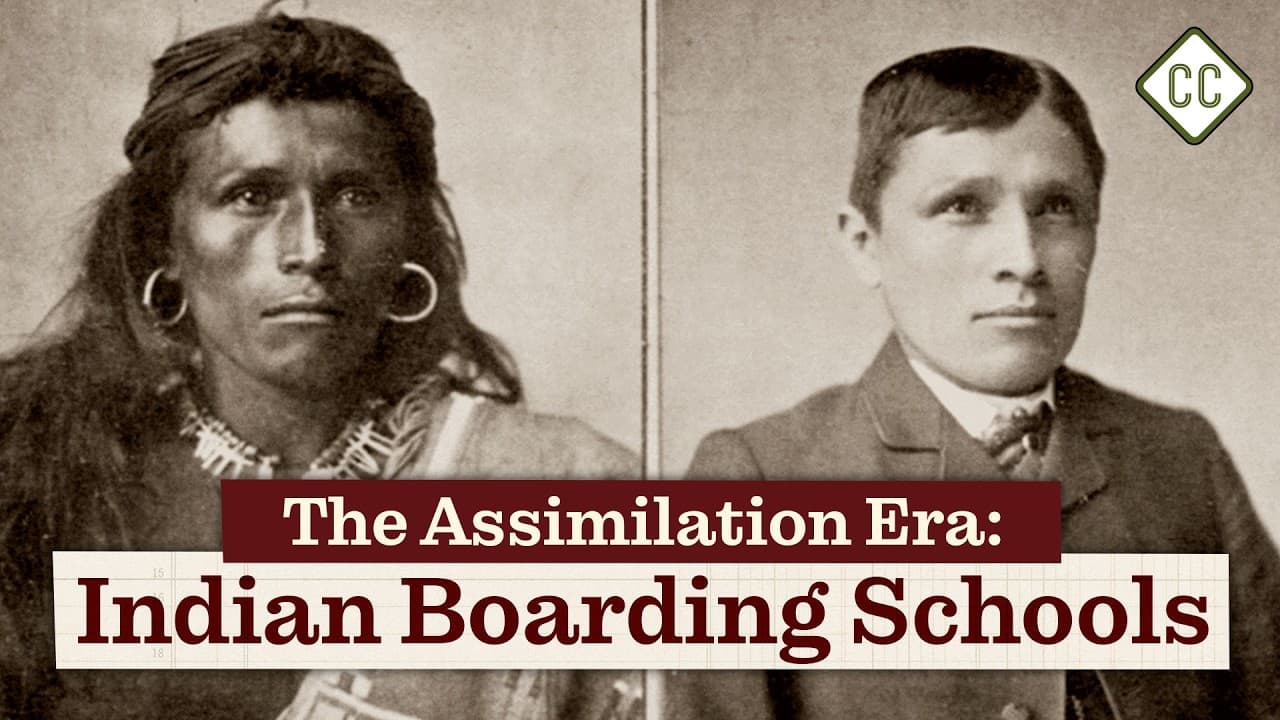
Miacademy & MiaPrep Learning ChannelMiacademy & MiaPrep Learning Channel

8mins 42s

Video
The History of Conflict in the Congo and Africa's World War

The History of Conflict in the Congo and Africa's World War

This educational video provides a comprehensive historical analysis of the Democratic Republic of Congo (DRC) from its decolonization in 1960 through the devastating conflicts known as "Africa's World War." Hosted by John Green, the video explores the structural challenges left by Belgian colonialism, the rise of the dictator Mobutu Sese Seko, and the complex geopolitical web that led to the First and Second Congo Wars. It specifically connects the Rwandan Genocide to the destabilization of the Congo, illustrating how regional ethnic tensions and refugee crises sparked continent-wide warfare. The content delves into key themes such as the "resource curse," examining how the Congo's vast mineral wealth (gold, diamonds, coltan) has paradoxically fueled violence and corruption rather than prosperity. It also analyzes the concepts of kleptocracy and clientelism under Mobutu, the impact of Cold War politics on African leadership, and the shifting dynamics of international intervention, ranging from Western financial institutions like the IMF to recent infrastructure deals with China. For educators, this resource is invaluable for teaching modern World History, African Studies, and Geopolitics. It helps students move beyond stereotypes of "backwardness" to understand the specific historical, economic, and political drivers of instability in Central Africa. The video provides a rigorous framework for discussing difficult topics like genocide, neo-colonialism, and the ethics of global supply chains, making it highly relevant for high school and undergraduate classrooms dealing with post-colonial history and international relations.

CrashCourseCrashCourse

12mins 57s

Video
Exploring the People, Culture, and Economy of the Caribbean

Exploring the People, Culture, and Economy of the Caribbean

This educational video provides a comprehensive overview of the human geography of the Caribbean region, moving far beyond the typical tourist perspective. It begins by challenging viewers to estimate the population and identify the most populous islands, revealing that nearly 75% of the Caribbean's 44 million residents live on just two islands: Cuba and Hispaniola. The video breaks down the complex political status of the region, distinguishing between independent nations and territories held by the US, UK, France, and the Netherlands.

Miacademy & MiaPrep Learning ChannelMiacademy & MiaPrep Learning Channel

11mins 44s

Video
How Place Names Shape Identity and Power

How Place Names Shape Identity and Power

This episode of Crash Course Geography explores the subfield of Human Geography through the lens of "toponyms," or place names, illustrating how names reflect power, history, and culture. The video uses the specific case study of Denali (formerly Mount McKinley) in Alaska to demonstrate how political power at different scales—local, national, and global—influences the identity of a place. It explains that geography is not just about memorizing locations, but understanding the complex spatial relationships between people, power, and the environment. Key themes include the concepts of "Place" versus "Space," the impact of colonization on indigenous landscapes, and the geographic concept of "Scale." The video breaks down how naming a location is an act of claiming ownership and shaping perception. It details the historical struggle between the Athabascan name "Denali" and the imposed name "Mount McKinley," using this narrative to introduce broader geographic concepts like political, economic, and urban geography, as well as formal and perceptual regions. For educators, this video is an invaluable resource for introducing AP Human Geography concepts, specifically within the units on Cultural Patterns and Processes or Political Organization of Space. It provides a concrete, high-interest example of how abstract concepts like "cultural erasure" and "scales of analysis" play out in the real world. The video encourages students to critically examine the maps they use and understand the historical narratives embedded in the names of their own local communities.

CrashCourseCrashCourse

10mins 11s

Video
How Humans Use Resources and Change the Environment

How Humans Use Resources and Change the Environment

This engaging short video introduces young learners to the fundamental relationship between humans and the natural environment. It explains the concept of natural resources—such as air, water, soil, and wood—and demonstrates how people utilize these elements for survival and construction. The narrative gently guides students from recognizing the gifts of nature to understanding how human activities physically alter the world around us through urbanization and development. Key themes include the definition of natural resources, the difference between natural and man-made environments, and the impact of human construction on animal habitats. The video visually contrasts pristine natural settings with cities, roads, and factories, helping students visualize the cause-and-effect relationship between using resources and changing the landscape. It specifically highlights how building homes and infrastructure can displace local wildlife. The video serves as an excellent primer for environmental science and social studies units in early elementary grades. It promotes critical thinking about stewardship and sustainability by concluding with a powerful reminder that humans share the planet with other living things. Teachers can use this resource to spark discussions about where everyday objects come from, how cities are built, and the importance of protecting habitats while meeting human needs.

Next Generation ScienceNext Generation Science

1min 16s

Video
Island Hopping: A Journey Through Polynesian History and Culture

Island Hopping: A Journey Through Polynesian History and Culture

This educational video takes students on a comprehensive tour of Polynesia, exploring its geography, history, and rich cultural traditions. Hosted by an engaging narrator named Brian, the journey begins by defining the Polynesian Triangle—anchored by Hawaii, New Zealand, and Easter Island—and tracing the incredible maritime migration of the Lapita people thousands of years before European explorers. The video uses maps, historical photos, and animations to visualize the vast distances traveled by early settlers in outrigger canoes.

Miacademy & MiaPrep Learning ChannelMiacademy & MiaPrep Learning Channel

10mins 34s

Video
Native American Cultures and Spanish Colonization

Native American Cultures and Spanish Colonization

This high-energy educational video serves as the introductory episode to US History, challenging traditional narratives about pre-Columbian America and early Spanish colonization. Host John Green deconstructs the concept of "primitive" versus "civilized" societies, arguing against the Eurocentric view that Native Americans were backward simply because they lacked specific technologies like the wheel or written language. The video provides a sweeping overview of the diverse and complex Native American cultures that existed before 1492, ranging from the Pueblo peoples of the Southwest to the Iroquois Confederacy in the Northeast, highlighting their sophisticated political structures, religious beliefs, and approaches to property ownership. The narrative transitions to the arrival of the Spanish, detailing their exploration and colonization efforts in Florida and the American Southwest. It covers key figures like Ponce de León and Cabeza de Vaca, the devastating impact of European diseases, and the imposition of the Encomienda system. A significant portion of the video is dedicated to the Pueblo Revolt of 1680, a successful indigenous uprising that forced the Spanish to retreat and subsequently alter their colonial policies. The episode concludes by introducing the "Black Legend"—the idea that the English exaggerated Spanish cruelty to justify their own imperial ambitions—and emphasizes the importance of recognizing historical biases inherent in written records. For educators, this video is an invaluable tool for launching a US History course because it immediately establishes critical thinking habits regarding historical perspective and historiography. It moves beyond rote memorization of explorers' names to explore deep cultural clashes regarding gender roles, religion, and land use. The content is specifically aligned with AP US History (Period 1) frameworks but is accessible to general high school audiences. It provides rich opportunities to discuss how history is constructed, who gets to tell the story, and the complexity of cultural interactions beyond simple conqueror/conquered narratives.

CrashCourseCrashCourse

11mins 20s

Video
Reclaiming Sovereignty: The Land Back Movement Explained

Reclaiming Sovereignty: The Land Back Movement Explained

This episode of Crash Course Native American History explores the "Land Back" movement, a decentralized effort by Indigenous peoples to reclaim authority over stolen land and resources. Hosted by Che Jim, the video breaks down the concept beyond slogans and hashtags, defining it as a multifaceted approach to asserting tribal sovereignty. It examines various methods used to achieve these goals, ranging from legal battles and government settlements to voluntary "settler rent" and direct action protests like blockades.

CrashCourseCrashCourse

10mins 19s

Video
How Globalization Connects the World: Then and Now

How Globalization Connects the World: Then and Now

This engaging educational video explores the history and evolution of globalization, tracing human connection from ancient trade routes to the modern digital age. The narrator defines globalization as the process of increasing interconnectedness and dependence between people, businesses, and countries. The video contrasts early examples like the Silk Road, Indian Ocean trade networks, and the Columbian Exchange with today's high-speed, technology-driven global economy. It highlights three major catalysts for modern acceleration: technology, global supply chains, and international cooperation through supranational organizations.

Miacademy & MiaPrep Learning ChannelMiacademy & MiaPrep Learning Channel

10mins 35s

Video
Exploring the Geography and Cultures of East and Southeast Asia

Exploring the Geography and Cultures of East and Southeast Asia

This comprehensive educational video takes students on a geographic and cultural journey through East and Southeast Asia. The lesson begins by identifying the specific nations that make up these two distinct regions, from the steppes of Mongolia to the archipelagos of Indonesia. It provides a historical overview that touches on ancient civilizations, the Silk Road, European colonization, and the political shifts of the 20th century, including the rise of communism in China, North Korea, and Vietnam.

Miacademy & MiaPrep Learning ChannelMiacademy & MiaPrep Learning Channel

10mins 22s

Video
The History and Future of the World's Deadliest Disease

The History and Future of the World's Deadliest Disease

This comprehensive educational video explores the biological, historical, and sociological impact of Tuberculosis (TB), the deadliest infectious disease in human history. Hosted by John Green, the lecture bridges the gap between science and the humanities, explaining not only the pathology of the Mycobacterium tuberculosis bacterium but also how human culture has interpreted, romanticized, and stigmatized the disease over centuries. It traces the journey of TB from the "romantic" consumption of 19th-century poets to its modern status as a disease of poverty and inequality. The content delves into deep themes including the social construction of illness, the history of medicine, and systemic racism in public health. It examines how TB was once dubbed the "White Man's Plague" and associated with creative genius, only to be later weaponized as a mark of racial inferiority and filth once it became prevalent in marginalized communities. The video also covers the biological mechanisms of antibiotic resistance, the co-epidemic with HIV/AIDS, and the political economics of pharmaceutical development. For educators, this video serves as a powerful interdisciplinary tool. In biology classrooms, it illustrates bacterial growth, latency, and antibiotic resistance. In history and social studies, it provides a case study on how industrialization, colonialism, and prejudice shape public health outcomes. The narrative arc challenges students to consider who gets access to life-saving medical care and why, making it an excellent anchor for discussions on global health equity and bioethics.

CrashCourseCrashCourse

49mins 57s

Video
Reading the City: How Urban Spaces Are Structured

Reading the City: How Urban Spaces Are Structured

This educational video explores the internal structure of cities, treating them as texts that reveal their history, culture, and economic development. The host, Alizé Carrère, introduces key urban geography models, specifically the Concentric Zone Model based on Chicago, to explain how cities organize themselves around a Central Business District and expand outward in rings of varying land use. The video contrasts North American urban development—characterized by industrialization, suburban sprawl, and car dependency—with the historic structure of Islamic cities like Fez, Morocco, where climate and cultural values of privacy shape a very different urban form. Key themes include the impact of transportation technology on city layout, the concept of "invasion and succession" in neighborhoods, and the transition from monocentric to polycentric metropolitan structures. The video also delves into how physical geography and climate necessitate different architectural solutions, comparing wide American grids with the narrow, shaded streets of North African medinas. For educators, this video is an invaluable resource for AP Human Geography and social studies classrooms. It provides concrete examples of abstract concepts like urban models, gentrification, and zoning. It encourages students to look at their own local environments critically, identifying the historical layers and socio-economic patterns that define the neighborhoods they live in.

CrashCourseCrashCourse

11mins 52s

Video
Exploring U.S. Territories and Citizenship Rights

Exploring U.S. Territories and Citizenship Rights

This educational video provides a comprehensive overview of United States territories, clarifying the legal and political distinctions between states and territories. Hosted by a presenter interacting with an animated character named Mia, the video explores the geography, history of acquisition, and cultural makeup of five major U.S. territories: Puerto Rico, Guam, the U.S. Virgin Islands, the Northern Mariana Islands, and American Samoa. It specifically addresses the complex issue of citizenship, explaining why people born in these territories are generally U.S. citizens but lack full voting rights in federal elections. A significant portion of the video is dedicated to the unique case of American Samoa, where residents are U.S. nationals rather than citizens. The video presents a balanced examination of the arguments for and against granting birthright citizenship to American Samoans, weighing civil rights principles against concerns over preserving traditional cultural land ownership and customs (Fa'a Samoa). This deep dive helps students understand that citizenship laws are nuanced and deeply intertwined with history and culture. This resource is highly valuable for Civics, U.S. Government, and U.S. History classrooms. It helps students dismantle the misconception that the U.S. ends at the borders of the 50 states and introduces critical concepts such as sovereignty, federal representation, and the rights of citizens versus nationals. The content is structured with clear pause points and guiding questions, making it an excellent tool for prompting classroom debates about democracy, equality, and cultural preservation.

Miacademy & MiaPrep Learning ChannelMiacademy & MiaPrep Learning Channel

11mins 39s

Video
Urbanization, Labor, and Leisure in Industrial Britain

Urbanization, Labor, and Leisure in Industrial Britain

This educational video provides a comprehensive overview of life in Great Britain during the Industrial Revolution and the Victorian Era. It examines the massive demographic shift caused by urbanization as families moved from the countryside to crowded cities like Manchester and London in search of factory work. The content contrasts the brutal realities of working-class life—including dangerous working conditions, child labor, and unsanitary slums plagued by cholera—with the emergence of a middle class and the subsequent "Leisure Revolution." The video explores key themes such as the social and economic consequences of rapid industrialization, the widening wage gap between social classes, and the public health crises that resulted from poor urban planning. It also delves into the cultural shifts of the time, highlighting how different classes spent their free time, from seaside vacations and the Great Exhibition to reading "Penny Dreadfuls" and playing parlor games. For educators, this video serves as an excellent anchor for units on the Industrial Revolution, World History, or Economics. It connects abstract economic concepts like the wage gap and disposable income to tangible historical examples. The video's structured approach, utilizing guiding questions and pauses for reflection, makes it a ready-made classroom tool for stimulating discussion about the human cost of technological progress and the roots of modern urban society.

Miacademy & MiaPrep Learning ChannelMiacademy & MiaPrep Learning Channel

11mins 17s

Video
Exploring Ancient Israel and the History of the Hebrews

Exploring Ancient Israel and the History of the Hebrews

This educational video provides a comprehensive overview of Ancient Israel and the Levant, exploring how geography and history intertwined to shape the Hebrew civilization. The host uses engaging analogies, such as baking bread, to introduce the concept of the "Levant" as a rising region and a geographical crossroads between Europe, Africa, and Asia. The video details the physical landscape, including the importance of the Jordan River and the Dead Sea, and explains how early inhabitants adapted to the arid climate through innovations like cisterns.

Miacademy & MiaPrep Learning ChannelMiacademy & MiaPrep Learning Channel

10mins 40s

Video
Exploring Modes of Transportation on Land, Water, and Air

Exploring Modes of Transportation on Land, Water, and Air

This engaging video introduces young learners to the concept of transportation, exploring the various ways people and goods move from place to place. The host begins by demonstrating the physical effort of walking and running, leading into a discussion about how vehicles make travel easier and faster. The video categorizes transportation into clear modes: land travel (cars, bikes, trains), water travel (boats, ships), and air travel (planes, rockets), explaining the basic mechanics and uses for each. The lesson explores key themes such as human-powered versus engine-powered vehicles, the distinction between personal travel and cargo transport, and the different environments where vehicles operate. Specific examples include the difference between canoes and rowboats, the function of subways in cities, and how airplanes connect distant continents. It effectively uses visual aids like maps and diverse footage of vehicles to illustrate these concepts. For educators, this video serves as an excellent anchor for social studies and science units on communities and movement. It provides a structured way to help students categorize vehicles, understand the purpose of different modes of transport, and introduces basic geography concepts through a travel scenario. The content naturally leads to discussions about community helpers, trade, and engineering, making it a versatile tool for early elementary classrooms.

Miacademy & MiaPrep Learning ChannelMiacademy & MiaPrep Learning Channel

7mins 27s

Video
Island Hopping: A Journey Through Polynesian History and Culture

Island Hopping: A Journey Through Polynesian History and Culture

This educational video takes students on a comprehensive tour of Polynesia, exploring its geography, history, and rich cultural traditions. Hosted by an engaging narrator named Brian, the journey begins by defining the Polynesian Triangle—anchored by Hawaii, New Zealand, and Easter Island—and tracing the incredible maritime migration of the Lapita people thousands of years before European explorers. The video uses maps, historical photos, and animations to visualize the vast distances traveled by early settlers in outrigger canoes.

Miacademy & MiaPrep Learning ChannelMiacademy & MiaPrep Learning Channel

10mins 34s

Video
Exploring U.S. Territories and Citizenship Rights

Exploring U.S. Territories and Citizenship Rights

This educational video provides a comprehensive overview of United States territories, clarifying the legal and political distinctions between states and territories. Hosted by a presenter interacting with an animated character named Mia, the video explores the geography, history of acquisition, and cultural makeup of five major U.S. territories: Puerto Rico, Guam, the U.S. Virgin Islands, the Northern Mariana Islands, and American Samoa. It specifically addresses the complex issue of citizenship, explaining why people born in these territories are generally U.S. citizens but lack full voting rights in federal elections. A significant portion of the video is dedicated to the unique case of American Samoa, where residents are U.S. nationals rather than citizens. The video presents a balanced examination of the arguments for and against granting birthright citizenship to American Samoans, weighing civil rights principles against concerns over preserving traditional cultural land ownership and customs (Fa'a Samoa). This deep dive helps students understand that citizenship laws are nuanced and deeply intertwined with history and culture. This resource is highly valuable for Civics, U.S. Government, and U.S. History classrooms. It helps students dismantle the misconception that the U.S. ends at the borders of the 50 states and introduces critical concepts such as sovereignty, federal representation, and the rights of citizens versus nationals. The content is structured with clear pause points and guiding questions, making it an excellent tool for prompting classroom debates about democracy, equality, and cultural preservation.

Miacademy & MiaPrep Learning ChannelMiacademy & MiaPrep Learning Channel

11mins 39s

Video
How Cultures Connect and Change

How Cultures Connect and Change

This educational video provides a comprehensive overview of how cultures evolve and interact through the processes of diffusion, convergence, and divergence. Opening with the historical anecdote of the "Crash at Crush" train collision as a metaphor for cultural encounters, the video breaks down complex anthropological concepts into digestible lessons. It explores the origins of cultural traits in "hearths" and examines the various mechanisms—trade, invasion, colonization, and communication technology—that facilitate the spread of ideas and behaviors across the globe. The content vividly illustrates these abstract concepts with diverse historical and modern examples. Students learn about the Silk Road, the Roman Empire, and Spanish colonization to understand diffusion and assimilation. The video then pivots to modern cultural convergence, using relatable examples like global sports fandom (Super Bowl vs. World Cup) and the international popularity of Anime and Manga. Finally, it addresses cultural divergence through the poignant history of the Maori and Moriori peoples in New Zealand, demonstrating how isolation and environment shape cultural development. This resource is highly valuable for Social Studies and Geography classrooms as it connects historical events to contemporary student interests. By asking direct questions and providing pause points, it encourages active engagement and critical thinking about how students' own lives are influenced by global cultural flows. The video effectively bridges the gap between ancient history and the digital age, helping learners analyze the role of technology in accelerating cultural exchange.

Miacademy & MiaPrep Learning ChannelMiacademy & MiaPrep Learning Channel

11mins 17s

Video
Global Conflict and Total War: The End of World War I

Global Conflict and Total War: The End of World War I

This educational video provides a comprehensive overview of the latter half of World War I, detailing how a European conflict expanded into a global war involving Africa, Asia, and North America. It explains the strategic importance of colonies for resources, the entry of major powers like the United States and the Ottoman Empire, and the disastrous Gallipoli campaign. The narrative transitions into the concept of "Total War," illustrating how the conflict reshaped civilian life through mass mobilization, women entering the workforce, economic rationing, and government propaganda. The video explores several key historical themes including imperialism, the definition and impact of total war, the role of propaganda and censorship in shaping public opinion, and the geopolitical shifts that occurred as empires collapsed. It covers significant events such as the sinking of the Lusitania, the Russian Revolution, and the signing of the Treaty of Versailles. The content highlights the staggering human and economic costs of the war and foreshadows the rise of totalitarian regimes. For educators, this video serves as an excellent anchor for a unit on the Great War. It features clear definitions of complex terms like "Total War," "Price Controls," and "Armistice," supported by historical photographs and animated maps. The video structure, which includes built-in pauses for guiding questions, allows teachers to easily segment the lesson for note-taking and class discussion. It effectively connects military history with social history, making it valuable for exploring both the battlefield and the home front.

Miacademy & MiaPrep Learning ChannelMiacademy & MiaPrep Learning Channel

10mins 52s

Video
How Ancient Trade Routes Connected the World

How Ancient Trade Routes Connected the World

This video explores the concept of global interconnectedness long before the advent of the internet or modern transportation. Starting with a relatable family dinner scene, the narrator challenges viewers to consider the origins of their food and clothing, using this as a springboard to introduce the historical mechanism of trade. The video defines cultural diffusion and illustrates how ancient trade routes like the Silk Road, Indian Ocean maritime routes, Trans-Saharan network, and Mediterranean Sea served as the "superhighways" of the ancient world, linking distant civilizations. Key themes include the definition and impact of cultural diffusion, the geography of major ancient trade networks, and the specific exchange of goods, ideas, technologies, and religions. The video highlights how the Indian Ocean trade facilitated the spread of Islam, how the Trans-Saharan route moved gold and salt, and how the Mediterranean connected Europe to ancient wisdom. It also details the "Four Great Inventions" of Ancient China—paper, printing, the compass, and gunpowder—and their profound effects on global society. For educators, this video serves as an excellent introduction to units on World History, global trade, or ancient civilizations. It features built-in "pause points" that invite students to check the tags on their own clothes, brainstorm inventions, and reflect on historical impacts, making it highly interactive. By connecting the abstract concept of cultural diffusion to tangible items like spices and clothing, the video helps students visualize how historical economic activities shaped the political, religious, and technological landscape of the modern world.

Miacademy & MiaPrep Learning ChannelMiacademy & MiaPrep Learning Channel

11mins 42s

Video
How the Polynesians Migrated Across the Pacific

How the Polynesians Migrated Across the Pacific

This educational video provides a comprehensive overview of the Polynesian migration, explaining how ancient explorers traveled across the vast Pacific Ocean to settle within the Polynesian Triangle. It details the geographical boundaries of the region, identifying key islands like Hawaii, New Zealand, and Easter Island, and traces the ancestral roots of the Polynesian people back to Taiwan and Southeast Asia using linguistic and archaeological evidence.

Miacademy & MiaPrep Learning ChannelMiacademy & MiaPrep Learning Channel

4mins 37s

Video
How Languages Spread and Evolve Around the World

How Languages Spread and Evolve Around the World

This educational video from Crash Course Geography explores the fascinating spatial patterns of language, treating it as a dynamic cultural trait that moves and evolves alongside human migration. Host Alizé Carrère begins with a relatable example—the global etymology of the words "tea" and "chai"—to illustrate how trade routes determine the vocabulary we use today. The video breaks down complex geographic concepts such as relocation diffusion and contagion diffusion, using them to explain how languages spread from cultural hearths and modify over time through interaction.

CrashCourseCrashCourse

10mins 58s

Video
The Rise of Imperial Japan and the Pacific Theater

The Rise of Imperial Japan and the Pacific Theater

This educational video explores the rise of Imperial Japan and the specific events leading to the opening of the Pacific Theater in World War II. It begins with a unique hook connecting modern Japanese culture (manga and anime) to historical wartime propaganda, specifically the film 'Momotaro's Sea Eagles.' The narrative then transitions to the political climate of the 1930s, explaining the rise of ultranationalist factions like the Kodoha and the ideology of Shōwa Statism under Emperor Hirohito.

Miacademy & MiaPrep Learning ChannelMiacademy & MiaPrep Learning Channel

9mins 50s

Video
Exploring Oceania and Antarctica: Islands, Ice, and Ecosystems

Exploring Oceania and Antarctica: Islands, Ice, and Ecosystems

This educational video provides a comprehensive geographical and cultural overview of Oceania and Antarctica. Narrated by a guide named Brian, the video takes viewers on a journey across the vast Pacific Ocean, exploring the unique physical characteristics that define this region—not by land masses, but by the ocean that binds them together. It covers the geological formation of high and low islands, the extreme depths of the Mariana Trench, and the diverse climates ranging from the tropical islands of Polynesia to the frozen desert of Antarctica. The content delves into the biological diversity of the region, highlighting the Great Barrier Reef and various unique animal species, from cute koalas and penguins to deadly box jellyfish and cone snails. It also explores the human history of the region, tracing indigenous settlement patterns from 50,000 years ago to European colonization, and examines modern demographics, economies driven by tourism and agriculture, and political structures ranging from independent nations to territories. Designed as an interactive lesson, the video is an excellent tool for social studies and geography classrooms. It features built-in pause points that prompt students to predict natural disasters, identify economic activities, and hypothesize about government structures. Teachers can use this video to introduce concepts of plate tectonics, island formation, indigenous history, and international cooperation through the Antarctic Treaty, making it a versatile resource for cross-curricular learning.

Miacademy & MiaPrep Learning ChannelMiacademy & MiaPrep Learning Channel

9mins 25s

Video
World War II: Battles, Resources, and the Human Cost

World War II: Battles, Resources, and the Human Cost

This fast-paced educational video provides a comprehensive overview of World War II, moving beyond simple battle summaries to explore the complex causes, global scope, and devastating human cost of the conflict. Host John Green challenges the traditional Western-centric timeline by examining early aggression in China and Japan while covering major turning points like the Battle of Stalingrad, Pearl Harbor, and D-Day. The narrative weaves together military history with economic analysis, specifically arguing that the quest for food resources and land ('Lebensraum') was a primary driver for Axis aggression. The video delves into the darker realities of 'Total War,' discussing the blurring lines between soldiers and civilians, the Holocaust, and the strategic starvation policies like the Nazi Hunger Plan. It critically examines the 'Good vs. Evil' narrative by acknowledging the undemocratic nature of key Allied powers like the Soviet Union and the imperialist policies of Great Britain. The content highlights the contributions of often-overlooked nations, such as Canada and Argentina, providing a truly global perspective. For educators, this resource serves as an excellent synthesizer of vast historical information, perfect for introducing or reviewing the unit. It encourages critical thinking by prompting students to analyze how industrialization and 'progress' were weaponized to commit atrocities. The video's interrogation of Western civilization's moral standing post-WWII offers profound discussion starters for high school history and ethics classes.

CrashCourseCrashCourse

13mins 13s

Video
Why and How People Move: The Geography of Migration

Why and How People Move: The Geography of Migration

This educational video from Crash Course Geography provides a comprehensive overview of human migration, using the vast Indian diaspora as a primary case study to illustrate key concepts. Hosted by Alizé Carrère, the video breaks down the "how" and "why" of human movement, moving beyond simple definitions to explore the complex historical, economic, and environmental drivers behind migration. It covers a wide range of migration types, from the historical indentured labor systems in Trinidad and Tobago to ancient monsoon-driven trade routes, and modern political displacements like the 1972 expulsion of Asians from Uganda.

CrashCourseCrashCourse

11mins 16s

Video
The Global Ripple Effect of the Renaissance

The Global Ripple Effect of the Renaissance

This educational video explores the global impact of the Renaissance using the metaphor of a "ripple effect." Moving beyond the traditional focus on European art, the narrator explains how Renaissance principles of realism, perspective, and humanism spread to the Americas, Africa, and Asia through trade, exploration, and the invention of the printing press. The video illustrates how these ideas blended with local traditions to create unique cultural syntheses in architecture, art, and science. The content highlights specific examples of this cultural exchange, such as the blending of indigenous and European styles in Mexican churches, the influence of realism on Benin bronzes in West Africa, and the scientific exchanges with the Ottoman, Mughal, and Chinese empires. It also delves into how the philosophy of humanism challenged traditional authority structures, influencing leaders like Mughal Emperor Akbar and eventually sparking political changes that led to democratic movements, including the American Revolution. For educators, this video serves as an excellent tool to teach World History beyond a Eurocentric lens. It connects disparate regions through the theme of globalization and cultural diffusion. Teachers can use the specific examples provided—like the Taj Mahal or the US Capitol building—to help students visualize how historical events in one region can shape the cultural and physical landscape of the entire world.

Miacademy & MiaPrep Learning ChannelMiacademy & MiaPrep Learning Channel

12mins 39s

Video
How Technology and Trade Drove 19th Century Imperialism

How Technology and Trade Drove 19th Century Imperialism

In this installment of Crash Course World History, John Green explores the complex dynamics of 19th-century imperialism, moving beyond the simple narrative of European conquest to examine the economic and technological drivers behind it. The video focuses primarily on two major case studies: the breakdown of Chinese sovereignty through the Opium Wars and the rapid colonization of Africa known as the "Scramble for Africa." It explains how the Industrial Revolution provided both the motive (resources and markets) and the means (steamboats, quinine, and machine guns) for European dominance. Key themes include the shift from trading post empires to full colonial control, the role of technology in overcoming historical barriers to colonization (like disease in Africa), and the concept of "indirect rule." The video emphasizes that imperialism was not a monolithic process; it involved complex interactions where local rulers often retained power as intermediaries. It also highlights the agency of colonized peoples, discussing various forms of resistance—from the Chinese banning of opium to the Ethiopian victory at Adwa—and the eventual failure of that resistance due to the technological gap. This video is an excellent resource for high school World History classrooms as it connects economic concepts (balance of trade, trade deficits) with political history. It helps students understand the structural causes of imperialism rather than just the military events. Teachers can use this to spark discussions on the ethical implications of the drug trade as foreign policy, the impact of technology on history, and the lingering economic legacies of colonialism in the modern world.

CrashCourseCrashCourse

13mins 46s

Video
Exploring Early North American Settlement and Indigenous Cultures

Exploring Early North American Settlement and Indigenous Cultures

This educational video provides a comprehensive overview of early North American settlement, tracing the migration of the first peoples across the Beringia land bridge through various developmental periods including the Paleoindian, Archaic, Woodland, and Mississippian eras. It explores how geography influenced the development of distinct cultures across different regions, from the Arctic Inuit to the Southwest Pueblo peoples, highlighting specific adaptations in shelter, food sources, and social structures. Key themes include human migration, environmental adaptation, and cultural diversity. The video breaks down the timeline of pre-contact history, distinguishing between nomadic bands and complex tribal societies. It also addresses important sociological concepts, such as the distinction between a "tribe" and a "band," and provides a nuanced discussion on the terminology of "Indigenous Peoples" versus "Native Americans," emphasizing the importance of using specific self-identifiers. For educators, this resource serves as an excellent introduction to pre-Columbian US History. It encourages critical thinking by asking students to consider the utility and limitations of historical generalizations. The video includes built-in pause points with guiding questions, making it ready-to-use for checking comprehension and sparking classroom discussions about identity, geography, and the deep history of the American continent.

Miacademy & MiaPrep Learning ChannelMiacademy & MiaPrep Learning Channel

10mins 26s

Video
Exploring the Geography of Australia, Oceania, and Antarctica

Exploring the Geography of Australia, Oceania, and Antarctica

In this engaging geography lesson, viewers embark on a virtual journey to the Southern Hemisphere to explore the continents of Australia (within the region of Oceania) and Antarctica. The video clearly distinguishes between the continent of Australia and the broader region of Oceania, introducing the various island nations that comprise this area. It also travels further south to the frozen landscape of Antarctica, explaining its unique status as a continent dedicated to science rather than permanent settlement. The video covers key themes such as physical geography, climate variability, and biodiversity. It contrasts the hot, arid Australian Outback with the snowy peaks of New Zealand and the icy plains of Antarctica. Significant attention is given to the unique wildlife of these regions, including marsupials like kangaroos and wombats in Australia, and cold-adapted species like penguins and seals in Antarctica. It also touches on human geography, noting major cities like Sydney and the lack of countries in Antarctica. For educators, this resource serves as an excellent introduction to a world geography unit focusing on the Southern Hemisphere. It provides clear visual maps that help students understand the complex distinction between Australia as a country and a continent versus the region of Oceania. The video's segment on animal habitats creates natural cross-curricular connections to science, while the discussion of climate extremes offers opportunities to discuss weather patterns and human adaptation.

Miacademy & MiaPrep Learning ChannelMiacademy & MiaPrep Learning Channel

6mins 29s

Video
How Tacos Explain the History of Human Migration

How Tacos Explain the History of Human Migration

This engaging educational video uses the ingredients of a simple taco—corn tortillas, steak, and toppings—as a narrative framework to explore the entire history of human migration and globalization. Hosted by Justin, the video breaks down complex historical eras by tracing how these ingredients originated in different parts of the world and eventually came together. It covers major historical milestones including the "Out of Africa" theory, the Neolithic Revolution, the Age of Exploration, the Columbian Exchange, and the Industrial Revolution. The video explores key themes of geography and history, specifically focusing on the concept of "movement." It details the push and pull factors that have driven human migration throughout history, ranging from basic survival and the search for resources to trade routes, colonization, forced migration (slavery), and economic opportunities in industrializing cities. It addresses sensitive topics such as the devastation of indigenous populations and the Transatlantic Slave Trade within the context of global demographic shifts. For educators, this video serves as an excellent hook for World History or World Geography units. By grounding abstract historical forces in a relatable food item, it helps students understand how distant historical events directly shape their modern lives. It provides a structured timeline of human movement, defines academic terms like "nomadic" and "sedentary," and encourages critical thinking about the cultural blends that constitute modern societies.

Miacademy & MiaPrep Learning ChannelMiacademy & MiaPrep Learning Channel

11mins 3s

Video
How Imperialism Transformed the Pacific Rim

How Imperialism Transformed the Pacific Rim

This educational video explores the expansion of Western colonial powers into the Pacific Rim during the age of imperialism. It specifically examines three distinct case studies: the Dutch in the East Indies (modern-day Indonesia), the French in Indochina (specifically Vietnam), and the United States in Hawaii. The narrator guides students through the historical context of each region before colonization, the methods used by foreign powers to gain control, and the resulting economic and social shifts that occurred.

Miacademy & MiaPrep Learning ChannelMiacademy & MiaPrep Learning Channel

10mins 27s

Video
How 19th Century Imperialism Shaped the Modern World

How 19th Century Imperialism Shaped the Modern World

This episode of Crash Course European History explores the complex and often brutal history of 19th-century European imperialism. Host John Green examines the paradox of European nations expanding rights and democracy at home while simultaneously stripping rights and sovereignty from people across Asia, Africa, and the Pacific. The video details the economic motivations behind expansion, such as the demand for raw materials like palm oil, rubber, and diamonds, and the specific mechanisms used to enforce control. Key themes include the "Tools of Empire"—technological advancements like steamships, machine guns, railroads, and the medical breakthrough of quinine—that enabled Europeans to penetrate and dominate the interiors of Africa and Asia. The video also highlights the shift in justification for empire from religious conversion to "Social Darwinism," a pseudoscientific belief in racial superiority used to excuse exploitation. Crucially, the video moves beyond the perspective of the colonizers to focus on indigenous resistance and experience. It covers the Opium Wars in China, the Indian Rebellion of 1857, and forms of non-violent resistance such as "reproductive strikes" in the Congo and Caribbean. This resource is invaluable for helping students understand the systemic nature of colonialism, the technological disparity of the era, and the lasting geopolitical legacy of these events.

CrashCourseCrashCourse

13mins 14s

Video
How Captain Cook Mapped the Pacific and Why His Death Sparked a Debate

How Captain Cook Mapped the Pacific and Why His Death Sparked a Debate

In this episode of Crash Course World History, John Green explores the voyages, impact, and controversial death of British explorer Captain James Cook. The video details Cook's three major voyages across the Pacific Ocean, highlighting his contributions to mapping Australia, New Zealand, and Hawaii, while also critically examining the devastating effects of colonization on indigenous populations, including the introduction of disease and the disruption of local cultures. It connects these events to the broader context of the Enlightenment's scientific curiosity and the imperialist mindset of the 18th and 19th centuries. A significant portion of the video is dedicated to a fascinating historiographical debate regarding Cook's death in Hawaii. It presents two contrasting scholarly interpretations: Marshall Sahlins' theory that Hawaiians killed Cook because they mistook him for the fertility god Lono during a ritual cycle, and Gananath Obeyesekere's counter-argument that this interpretation projects European myths onto Hawaiians, arguing instead that the conflict was a rational political struggle. This segment serves as an excellent case study in how history is interpreted and written. For educators, this video is a powerful tool for teaching not just the facts of exploration, but the skills of historical thinking. It addresses complex themes like 'The White Man's Burden,' the reliability of historical sources, and the danger of cultural bias in recording history. It challenges students to think critically about who gets to tell historical stories and how indigenous agency is often erased or misinterpreted in Western narratives.

CrashCourseCrashCourse

10mins 33s

Video
Exploring the Geography and Cultures of Melanesia and Micronesia

Exploring the Geography and Cultures of Melanesia and Micronesia

This educational video provides a comprehensive geographical and cultural tour of two major subregions of Oceania: Melanesia and Micronesia. Hosted by "Brian from Oceania Explorers," the video uses maps, historical context, and cultural facts to distinguish these regions from one another and from Polynesia. It covers the etymology of the region names, their geological history (Sahul), and the specific island nations contained within each, including Fiji, Papua New Guinea, the Solomon Islands, Vanuatu, the Federated States of Micronesia, Kiribati, the Marshall Islands, Nauru, and Palau. Key themes include the interplay between physical geography and human history, specifically how vast ocean distances influence culture and governance. The video delves into the genetic and linguistic origins of the indigenous populations, differentiating Melanesians (Papuan/Austronesian mix) from Micronesians (Austronesian/Taiwanese origins). It also addresses complex historical topics such as the "Cannibal Isles" stereotype of Fiji, the impact of colonialism, WWII battles like Guadalcanal, and the modern geopolitical significance of US territories and military bases in the region. For educators, this video is a valuable tool for World Geography and Social Studies classrooms. It moves beyond simple map identification to explore concepts like "perceptual vs. formal regions," "Exclusive Economic Zones" (EEZ), and matriarchal societies. The video includes built-in pause points with reflection questions, making it ready-to-use for structured lessons on Pacific history, indigenous migration theories, and the challenges of island governance.

Miacademy & MiaPrep Learning ChannelMiacademy & MiaPrep Learning Channel

10mins 23s

Video
Exploring South America's Northern Tropics: Geography and Culture

Exploring South America's Northern Tropics: Geography and Culture

This video provides a comprehensive geographic and cultural overview of the Northern Tropics region of South America, specifically examining French Guiana, Suriname, Guyana, Venezuela, and Colombia. The narration breaks down the region's diverse physical geography, ranging from the Amazon rainforest and the Guiana Highlands to the Andean peaks and coastal plains. It contrasts the unique colonial histories of each territory, explaining how French, Dutch, British, and Spanish influences have shaped the modern linguistic and religious demographics of the population. Key themes include the economic reliance on natural resources and agriculture, with deep dives into Venezuela's oil-dependent economy and subsequent crisis, as well as Colombia's coffee industry and struggles with the illegal drug trade. The video also highlights the impact of historical migration patterns, including the legacy of the trans-Atlantic slave trade and Asian indentured servitude, on the current ethnic composition of these nations. For educators, this video serves as a powerful tool for comparative regional studies in geography and economics. It allows for rich discussions on human-environment interaction, the "resource curse" in developing economies, and the lasting effects of colonialism. The content bridges physical geography with contemporary social issues, making it ideal for units on Latin America, global economics, or cultural geography.

Miacademy & MiaPrep Learning ChannelMiacademy & MiaPrep Learning Channel

11mins 52s

Video
How Westward Expansion Led to the Civil War

How Westward Expansion Led to the Civil War

This educational video provides a comprehensive overview of the political tensions and legislative compromises in the United States between the Revolutionary War and the Civil War. It uses the metaphor of holding a "wolf by the ears" to explain the nation's precarious relationship with slavery. The video details how westward expansion forced the country to repeatedly confront the issue of slavery, leading to a series of fragile compromises designed to maintain a balance of power between free and slave states in Congress. Key historical events and legislation are broken down chronologically, including the Northwest and Southwest Ordinances, the Missouri Compromise, the Wilmot Proviso, and the Kansas-Nebraska Act. The narration explains how these events shifted the political landscape from a debate over representation to a moral conflict over the institution of slavery itself. It also explores the constitutional arguments regarding states' rights versus federal authority and how these differing interpretations justified secession for the South and preservation of the Union for the North. Teachers can use this video to help students visualize the geographic polarization of the country through its use of historical maps and political cartoons. It is an excellent tool for explaining complex political concepts like popular sovereignty and sectionalism. The video includes built-in pause points with guiding questions, making it ready-made for interactive classroom discussion or independent study.

Miacademy & MiaPrep Learning ChannelMiacademy & MiaPrep Learning Channel

12mins 20s

Video
The History of the Conflict in Israel and Palestine

The History of the Conflict in Israel and Palestine

This fast-paced educational video provides a comprehensive historical overview of the conflict between Israel and Palestine, challenging the common misconception that the struggle is the result of ancient religious hatreds. Narrated by John Green, the video traces the roots of the modern conflict back to the late 19th century, examining the rise of competing nationalisms—Zionism and Arab nationalism—under the Ottoman Empire and the subsequent British Mandate. It details the complex web of contradictory promises made by the British during World War I, the impact of the Holocaust and World War II, and the pivotal 1948 and 1967 wars that shaped the current geopolitical map. Key themes explored include the effects of colonialism and "divide and rule" policies, the role of international bodies like the United Nations, and the tension between security and sovereignty. The video covers critical events such as the UN Partition Plan, the Nakba, the Intifadas, the rise of the PLO and Hamas, and the failed peace processes of the 1990s and 2000s. It places significant emphasis on understanding the legitimacy of the historical narratives held by both sides, framing the conflict as a dispute over land and nationhood rather than purely theology. For educators, this video serves as an essential primer for High School World History or Current Events units. It models historical thinking by analyzing primary sources, maps, and shifting demographics. The content encourages students to move beyond polarizing headlines and understand the internal logic of both Israeli and Palestinian perspectives. It provides a neutral, fact-based foundation for discussing difficult topics like military occupation, terrorism, refugees, and the two-state solution, making it a powerful tool for fostering critical thinking and empathy.

CrashCourseCrashCourse

12mins 53s

Video
The 1811 German Coast Uprising: America's Largest Slave Revolt

The 1811 German Coast Uprising: America's Largest Slave Revolt

This educational video from Crash Course Black American History explores the Louisiana Rebellion of 1811, also known as the German Coast Uprising, which stands as the largest slave revolt in United States history. Hosted by Clint Smith, the video details how hundreds of enslaved men, led by Charles Deslondes, organized a strategic military-style march towards New Orleans inspired by the recent success of the Haitian Revolution. The narrative covers the planning, execution, and brutal suppression of the uprising, providing a nuanced look at resistance against the institution of slavery. Key themes explored include the international impact of the Haitian Revolution on American history, the geopolitics of the Louisiana Purchase, and the complex social hierarchy within the slave system, specifically the role of 'drivers' or overseers. The video also examines the severe backlash from the planter class, including the increased surveillance and violence used to maintain control, illustrating the constant state of fear under which the institution of slavery operated. For educators, this video serves as a vital tool for challenging the misconception of enslaved people as passive victims. It highlights Black agency, political organization, and the interconnectedness of Atlantic history. The content provides opportunities to discuss difficult historical realities, including the extreme violence used to uphold slavery, and prompts critical thinking about how historical success and failure are defined in the context of resistance movements.

CrashCourseCrashCourse

12mins 7s

Video
Exploring the Geography and Cultures of East and Southeast Asia

Exploring the Geography and Cultures of East and Southeast Asia

This comprehensive educational video takes students on a geographic and cultural journey through East and Southeast Asia. The lesson begins by identifying the specific nations that make up these two distinct regions, from the steppes of Mongolia to the archipelagos of Indonesia. It provides a historical overview that touches on ancient civilizations, the Silk Road, European colonization, and the political shifts of the 20th century, including the rise of communism in China, North Korea, and Vietnam.

Miacademy & MiaPrep Learning ChannelMiacademy & MiaPrep Learning Channel

10mins 22s

Video
Life and Government in Ancient Sparta

Life and Government in Ancient Sparta

This engaging educational video transports students back to Ancient Greece to explore the unique and rigorous society of Sparta. Unlike its neighbor Athens, which focused on arts and philosophy, Sparta is presented as a military-centric polis where life revolved around discipline, strength, and service to the state. The video breaks down the complex Spartan political structure, including its dual kingship and the powerful Ephors, while also detailing the rigid social hierarchy of Citizens, Perioikoi, and Helots. Key themes include the contrast between individual freedom and collective duty, the role of geography in shaping political alliances, and the cultural prioritization of military readiness. The narrative covers the intense upbringing of Spartan children, the formation of the Peloponnesian League, and the eventual conflict with Athens. Through animated characters and historical imagery, complex concepts like oligarchy and social stratification are made accessible. For educators, this video serves as an excellent resource for comparing Ancient Greek city-states. It provides clear definitions of specific historical terms and offers natural pause points for discussions about government types and social values. The content connects well with lessons on the Peloponnesian War, ancient political systems, and the diverse cultures within the ancient Mediterranean world.

Miacademy & MiaPrep Learning ChannelMiacademy & MiaPrep Learning Channel

9mins

Video
How the US Grew: Westward Expansion and the Civil War

How the US Grew: Westward Expansion and the Civil War

This educational video provides a comprehensive overview of United States history from the late 1700s through the end of the Civil War in 1865. Narrated by Maya, the video chronicles the rapid growth of the nation, starting with immigration from Europe and the addition of new states, moving through major land acquisitions like the Louisiana Purchase, and detailing the conflicts that arose from this expansion, including the War of 1812 and the Mexican-American War. It explains how economic differences and the moral crisis of slavery drove a wedge between the North and South, leading to the secession of Southern states. Key historical themes include Westward Expansion, the displacement of Native Americans, the industrial revolution's impact (railroads, cotton, coal), and the political turmoil surrounding slavery. The video introduces critical figures such as Meriwether Lewis, William Clark, Abraham Lincoln, Ulysses S. Grant, and Robert E. Lee. It also covers significant events like the Gold Rush, the Oregon Trail, and the assassination of President Lincoln. For educators, this video serves as an excellent timeline anchor, helping students visualize the chronological progression of the 19th century. It connects geography to history by showing how physical expansion fueled political conflict. The content is well-suited for introducing a unit on the Civil War or Westward Expansion, providing a high-level summary that can be paused for deeper dives into specific topics like the treatment of Indigenous peoples or the economics of the plantation system.

Miacademy & MiaPrep Learning ChannelMiacademy & MiaPrep Learning Channel

8mins 18s

Video
How Modern Monarchies Work Today

How Modern Monarchies Work Today

This educational video provides a comprehensive overview of modern-day monarchies, challenging the common misconception that kings and queens are merely relics of the past or fairy tales. The narrator, Brian, guides viewers through a detailed analysis of the 44 monarchies currently in existence, explaining how they function in the 21st century. The video breaks down the distinctions between hereditary and elected monarchies, as well as the critical differences between absolute and constitutional monarchies, using clear definitions, maps, and statistical breakdowns. Key themes explored include political geography, systems of government, and the balance of power. The video delves into complex concepts such as "Head of State" versus "Supreme Authority," and examines specific case studies ranging from the ceremonial monarchies of Scandinavia to the absolute power structures in the Middle East. It also highlights unique governance models like the diarchy in Eswatini and the landless Sovereign Military Order of Malta. A balanced discussion on the advantages (national identity, stability) and disadvantages (cost, potential for corruption) of these systems is also presented. For educators, this video is a valuable resource for Social Studies and Civics units on world governments. It offers a clear, visual way to compare authoritarian and democratic structures, making abstract political concepts concrete through real-world examples. The content supports learning objectives related to understanding global political systems, analyzing the roles of government leaders, and evaluating the pros and cons of different constitutional arrangements.

Miacademy & MiaPrep Learning ChannelMiacademy & MiaPrep Learning Channel

9mins 40s

Video
What Is a State? Understanding Political Geography

What Is a State? Understanding Political Geography

This educational video introduces students to the core concepts of political geography, specifically focusing on the precise definitions of 'state' and 'nation' which differ from their everyday usage. The host, Justin, clarifies the four essential characteristics required for a political entity to be considered a state: territory, population, government, and sovereignty. Through clear explanations and visual examples, the video distinguishes between political states (like countries) and subdivisions (like U.S. states), using California as a case study to explain the concept of sovereignty. The video further explores the complex relationships between nations (people) and states (political entities) by categorizing them into four types: nation-states, multinational states, multistate nations, and stateless nations. Real-world examples—including Japan, Canada, the Somali people, and the Kurdish people—are used to illustrate these concepts in a practice activity. The content also touches upon the powerful force of nationalism, explaining why groups seek self-determination and how nationalist movements can shape global politics. This resource is highly valuable for social studies and geography classrooms, particularly for AP Human Geography or World Geography courses. It addresses common misconceptions about political terminology and provides a framework for understanding current global conflicts and borders. The built-in quizzes and pause points allow teachers to check for understanding in real-time, making it an interactive tool for introducing complex political structures.

Miacademy & MiaPrep Learning ChannelMiacademy & MiaPrep Learning Channel

11mins 33s

Video
Exploring U.S. Territories and Citizenship Rights

Exploring U.S. Territories and Citizenship Rights

This educational video provides a comprehensive overview of United States territories, clarifying the legal and political distinctions between states and territories. Hosted by a presenter interacting with an animated character named Mia, the video explores the geography, history of acquisition, and cultural makeup of five major U.S. territories: Puerto Rico, Guam, the U.S. Virgin Islands, the Northern Mariana Islands, and American Samoa. It specifically addresses the complex issue of citizenship, explaining why people born in these territories are generally U.S. citizens but lack full voting rights in federal elections. A significant portion of the video is dedicated to the unique case of American Samoa, where residents are U.S. nationals rather than citizens. The video presents a balanced examination of the arguments for and against granting birthright citizenship to American Samoans, weighing civil rights principles against concerns over preserving traditional cultural land ownership and customs (Fa'a Samoa). This deep dive helps students understand that citizenship laws are nuanced and deeply intertwined with history and culture. This resource is highly valuable for Civics, U.S. Government, and U.S. History classrooms. It helps students dismantle the misconception that the U.S. ends at the borders of the 50 states and introduces critical concepts such as sovereignty, federal representation, and the rights of citizens versus nationals. The content is structured with clear pause points and guiding questions, making it an excellent tool for prompting classroom debates about democracy, equality, and cultural preservation.

Miacademy & MiaPrep Learning ChannelMiacademy & MiaPrep Learning Channel

11mins 39s

Video
How Decolonization Reshaped the World After WWII

How Decolonization Reshaped the World After WWII

This educational video explores the complex and often violent process of decolonization that reshaped the world following World War II. It examines how European powers lost control of their empires in Asia and Africa, highlighting the distinct paths to independence taken by nations such as India, China, Kenya, and Algeria. The narrative contrasts negotiated transfers of power with brutal wars of liberation, providing specific historical examples of the human cost involved in these transitions. Key themes include the impact of the Cold War on emerging nations, the concept of neo-imperialism, and the psychological dimensions of colonization as articulated by thinkers like Frantz Fanon. The video also discusses the phenomenon of reverse migration, where colonized peoples moved to Europe to rebuild war-torn infrastructure, facing racism and discrimination in the process. It connects these historical events to cultural shifts, such as the rejection of Western dress codes and the influence of immigrant musicians on Western pop culture. For educators, this video serves as a powerful resource for teaching 20th-century World or European History. It moves beyond simple dates and maps to address the nuances of post-colonial infrastructure, the economic dependence created by foreign aid systems, and the lasting legacy of partition violence. The video provides graphic primary source quotes that can spark deep classroom discussions about human rights, the ethics of war, and the ongoing challenges faced by the Global South.

CrashCourseCrashCourse

13mins 23s

Video
Restoring Order After Napoleon: The Congress of Vienna

Restoring Order After Napoleon: The Congress of Vienna

This educational video from Crash Course European History explores the aftermath of the French Revolution and the Napoleonic Wars, focusing on the Congress of Vienna in 1815. Host John Green explains how major European powers—Britain, Prussia, Russia, Austria, and a defeated France—convened to redraw the map of Europe and restore the "old order" of monarchy and aristocracy. The video details the political maneuvering of key figures like Klemens von Metternich and Charles Maurice de Talleyrand, illustrating how they established a "Balance of Power" intended to prevent future massive conflicts and check the expansion of nations like Russia. The video also delves deeply into the ideological and cultural shifts of the time. It contrasts the conservative political backlash, championed by thinkers like Edmund Burke who valued tradition and stability, against the lingering revolutionary spirit. Significant attention is given to the rise of Romanticism as a cultural reaction against Enlightenment rationality. Through examples in literature (Mary Shelley, Alexander Pushkin) and art, the video highlights how the era began to prioritize emotion, nature, and the past over reason and industrialization. For educators, this video serves as an excellent bridge between the age of revolutions and the modern era. It provides crucial context for understanding 19th-century geopolitics, the concept of the "Concert of Europe," and the tension between conservative institutions and rising liberal/nationalist movements. The juxtaposition of political history with art and literature offers interdisciplinary opportunities to discuss how cultural movements reflect and react to political realities, making it highly valuable for World History, European History, and Humanities curriculums.

CrashCourseCrashCourse

14mins 1s

Video
How Mexico Won Independence From Spain

How Mexico Won Independence From Spain

This engaging educational video provides a comprehensive overview of the Mexican War of Independence, tracing its roots from the Spanish conquest of the Aztec Empire to the final establishment of an independent Mexican nation. It explores the complex social and political factors that fueled the revolution, specifically focusing on the rigid caste system of New Spain that created deep resentment among Criollos, Mestizos, and Indigenous populations. The narrative follows key figures like Miguel Hidalgo, José María Morelos, and Agustín de Iturbide, explaining their unique roles in the struggle for freedom. The video delves into key themes such as colonialism, social stratification, and the influence of Enlightenment ideas on revolutionary movements. It breaks down the specific grievances of different social classes—from the land-dispossessed Indigenous peoples to the politically sidelined Criollos—helping students understand that revolutions are often driven by a convergence of different motivations. The video also clarifies common historical misconceptions, such as the difference between Mexico's Independence Day and Cinco de Mayo. For educators, this resource serves as an excellent anchor for units on Latin American history, world revolutions, or social justice. It connects historical events to broader questions about identity and justice, asking students to consider how personal experiences shape political ideology. The visual aids, including maps and social hierarchy pyramids, make complex sociopolitical structures accessible, while the narrative pacing keeps students engaged with the dramatic arc of the war.

Miacademy & MiaPrep Learning ChannelMiacademy & MiaPrep Learning Channel

11mins 12s

Video
Shaping the Post-War World: Human Rights and the Birth of Israel

Shaping the Post-War World: Human Rights and the Birth of Israel

This educational video examines the profound shift in United States foreign policy following World War II, specifically focusing on the emergence of international human rights. It connects the atrocities of the war, including the Holocaust and the use of atomic weapons, to the creation of new global institutions and legal frameworks intended to prevent future catastrophes. The narrative explains the founding of the United Nations, the drafting of the Universal Declaration of Human Rights, and the definition of genocide. The video also delves into the complex geopolitical landscape of the post-war era, covering the United States' role in the establishment of the State of Israel. It explores the competing motivations behind US support, ranging from humanitarian concerns and religious connections to Cold War strategy against Soviet influence. Crucially, the video presents multiple perspectives, acknowledging both the Jewish historical claim to the land and the Palestinian experience of displacement (the Nakba), as well as critiques regarding colonialism and self-determination. Designed for high school history classrooms, this resource serves as an excellent primer for units on the Cold War, international relations, or human rights. It encourages students to think critically about the tension between national sovereignty and international oversight, and how historical decisions continue to shape modern geopolitical conflicts. The inclusion of pause points and graphic organizer prompts makes it ready-made for interactive note-taking and classroom engagement.

Miacademy & MiaPrep Learning ChannelMiacademy & MiaPrep Learning Channel

12mins 1s

Video
Exploring the Geography and Climate of Southwestern Europe

Exploring the Geography and Climate of Southwestern Europe

This educational video takes students on a virtual field trip to Southwestern Europe, exploring the physical geography that defines the region. Hosted by a narrator named Brian, the lesson breaks down the area's location, political boundaries, and major physical features including the Alps, the Pyrenees, and the Mediterranean Sea. The video combines map analysis with stunning footage of landmarks to help students visualize the relationship between the land and the people who live there. The content covers several key geographical themes, such as the definition and identification of microstates, the impact of mountainous terrain on cultural isolation, and the specific mechanics of regional climates. Detailed explanations are provided for the Mediterranean climate versus the Maritime climate found in Northwest France. Additionally, the video introduces scientific concepts like plate tectonics in the formation of the Alps and the orographic effect, explaining how mountains influence weather patterns and vegetation. For educators, this video serves as an excellent core resource for units on European geography or Earth science. It provides clear visual models for map skills, specifically identifying peninsulas and countries. The explanation of the orographic effect offers a practical application of weather science, while the discussion on tourism and agriculture connects physical geography to human economic activity, making it versatile for cross-curricular lessons.

Miacademy & MiaPrep Learning ChannelMiacademy & MiaPrep Learning Channel

10mins 10s

Video
Exploring the US States and Capitals by Region

Exploring the US States and Capitals by Region

This educational video provides a comprehensive overview of the United States geography, breaking down the country into four major regions: the Northeast, Midwest, South, and West. Hosted by Kylie from Miacademy, the lesson guides viewers through all 50 states, identifying each state's location on the map and its capital city. Beyond simple memorization, the video introduces key geographical concepts such as how regions are defined by shared culture, climate, and history. Throughout the tour, the video highlights significant landmarks and interesting facts to help students retain information. Viewers learn about Mount Washington in the Northeast, the agricultural significance of the Midwest, the cultural musical roots of the South, and the diverse landscapes of the West, from Alaska's mountains to Hawaii's islands. It specifically addresses common points of confusion, such as the difference between Washington state and Washington D.C., and clarifies that New York City is not the capital of New York. This resource is highly valuable for elementary social studies classrooms as a foundational tool for U.S. geography units. Teachers can use it to introduce the concept of regionalism, practice map skills, or as a review tool for state capitals. The clear visual maps and distinct categorization make a large topic manageable, allowing for segmented viewing where classes can focus on one region at a time for deeper study.

Miacademy & MiaPrep Learning ChannelMiacademy & MiaPrep Learning Channel

8mins 2s

Video
Unpacking Native American Identity and Perseverance

Unpacking Native American Identity and Perseverance

This educational video from Crash Course explores the complex and often misunderstood topic of Native American identity. Host Che Jim dismantles common stereotypes, explaining that Native people are modern individuals who may or may not fit visual expectations. The video delves into the diversity of the hundreds of tribes that existed before colonization and how European contact disrupted indigenous ways of life, particularly regarding spirituality and language. It highlights the resilience of Native communities in reclaiming their heritage, using the specific example of the Wampanoag language revitalization. The central themes include the legal and cultural definitions of identity, the impact of colonization, and the concept of perseverance. The video explains difficult concepts like "blood quantum"—a controversial system measuring the amount of "tribal blood" a person has—and contrasts it with lineal descent. It also touches on federal recognition, the role of government rolls like the Dawes Rolls, and the modern sovereignty of tribes to determine their own membership criteria. For the classroom, this video is an invaluable resource for United States History, Civics, and Social Studies. It provides a nuanced look at how identity is constructed through law, culture, and ancestry. Teachers can use it to spark discussions about the long-term effects of government policies on indigenous populations, the relationship between language and culture, and the difference between race and political status. The video transforms a monolithic view of "Native Americans" into a rich tapestry of diverse, sovereign nations.

CrashCourseCrashCourse

12mins 13s

Video
How José de San Martín Led South America's Southern Liberation

How José de San Martín Led South America's Southern Liberation

This educational video explores the history of the independence movements in southern South America, focusing specifically on the Rio de la Plata region and the campaigns of José de San Martín. It begins by establishing the context of Spanish colonial administration, explaining the system of Viceroyalties (Virreinatos) and the geopolitical tensions with Portugal that led to the creation of the Viceroyalty of the Rio de la Plata. The narrative covers early unrest, including the rebellion of Túpac Amaru II, and the external catalysts like the Napoleonic Wars that sparked the drive for independence. The video details the life and military achievements of José de San Martín, tracing his journey from a Spanish military officer to a revolutionary leader. It highlights his strategic genius in crossing the Andes to liberate Chile alongside Bernardo O'Higgins and his subsequent campaign to liberate Peru. The video also touches upon the famous meeting between San Martín and Simón Bolívar in Guayaquil, offering historical theories about their secret discussion regarding the future government of the newly independent nations. Ideally suited for middle and high school World History or Latin American Studies curricula, this video provides a clear framework for understanding the complexities of Latin American independence. It addresses the diverse causes of revolution, the challenges of nation-building, and the persistent social inequalities facing indigenous populations even after political liberation. Teachers can use this resource to discuss military strategy, political philosophy (monarchy vs. republic), and the lasting legacy of colonialism.

Miacademy & MiaPrep Learning ChannelMiacademy & MiaPrep Learning Channel

10mins 2s

Video
Native American Cultures and Spanish Colonization

Native American Cultures and Spanish Colonization

This high-energy educational video serves as the introductory episode to US History, challenging traditional narratives about pre-Columbian America and early Spanish colonization. Host John Green deconstructs the concept of "primitive" versus "civilized" societies, arguing against the Eurocentric view that Native Americans were backward simply because they lacked specific technologies like the wheel or written language. The video provides a sweeping overview of the diverse and complex Native American cultures that existed before 1492, ranging from the Pueblo peoples of the Southwest to the Iroquois Confederacy in the Northeast, highlighting their sophisticated political structures, religious beliefs, and approaches to property ownership. The narrative transitions to the arrival of the Spanish, detailing their exploration and colonization efforts in Florida and the American Southwest. It covers key figures like Ponce de León and Cabeza de Vaca, the devastating impact of European diseases, and the imposition of the Encomienda system. A significant portion of the video is dedicated to the Pueblo Revolt of 1680, a successful indigenous uprising that forced the Spanish to retreat and subsequently alter their colonial policies. The episode concludes by introducing the "Black Legend"—the idea that the English exaggerated Spanish cruelty to justify their own imperial ambitions—and emphasizes the importance of recognizing historical biases inherent in written records. For educators, this video is an invaluable tool for launching a US History course because it immediately establishes critical thinking habits regarding historical perspective and historiography. It moves beyond rote memorization of explorers' names to explore deep cultural clashes regarding gender roles, religion, and land use. The content is specifically aligned with AP US History (Period 1) frameworks but is accessible to general high school audiences. It provides rich opportunities to discuss how history is constructed, who gets to tell the story, and the complexity of cultural interactions beyond simple conqueror/conquered narratives.

CrashCourseCrashCourse

11mins 20s

Video
How Eastern Europe's Empires Rose and Fell

How Eastern Europe's Empires Rose and Fell

This educational video from Crash Course European History explores the political and social development of Eastern Europe during the 17th century, specifically focusing on the Polish-Lithuanian Commonwealth, the Ottoman Empire, and Tsarist Russia. Host John Green contrasts the different styles of governance that emerged in these regions: the decentralized, consensus-based constitutionalism of Poland-Lithuania versus the centralized, absolutist approaches of the Ottoman Sultans and Russian Tsars. The video delves into key historical themes such as religious toleration, the expansion of empires, and the consolidation of state power. It highlights how the Polish-Lithuanian Commonwealth offered a unique model of religious pluralism and limited royal power, while the Ottoman Empire built a stable, long-lasting state through a complex bureaucracy and the Janissary system. Simultaneously, it traces the rise of Russia under Ivan the Terrible and the Romanovs, examining how autocracy and serfdom became entrenched in Russian society. For educators, this resource provides a critical counter-narrative to Western-centric history by centering Eastern European powers. It effectively explains complex geopolitical shifts, such as the struggle for control over Ukraine and the expansion into Siberia. The video is an excellent tool for teaching AP European History students about the varieties of state-building, the consequences of political instability (like Russia's Time of Troubles), and the diverse religious landscapes of early modern Europe.

CrashCourseCrashCourse

15mins 18s

Video
A Virtual Field Trip to Yellowstone National Park

A Virtual Field Trip to Yellowstone National Park

Take students on an immersive virtual field trip to Yellowstone, the world's first national park. This video provides a comprehensive overview of the park's history, geography, and stunning natural features, explaining that it was established by the US Congress in 1872 and spans across Wyoming, Montana, and Idaho. The narration effectively situates the park geographically while highlighting its immense size of nearly 9,000 square kilometers.

Next Generation ScienceNext Generation Science

2mins 42s

Video
Native American Cultures and Spanish Colonization

Native American Cultures and Spanish Colonization

This high-energy educational video serves as the introductory episode to US History, challenging traditional narratives about pre-Columbian America and early Spanish colonization. Host John Green deconstructs the concept of "primitive" versus "civilized" societies, arguing against the Eurocentric view that Native Americans were backward simply because they lacked specific technologies like the wheel or written language. The video provides a sweeping overview of the diverse and complex Native American cultures that existed before 1492, ranging from the Pueblo peoples of the Southwest to the Iroquois Confederacy in the Northeast, highlighting their sophisticated political structures, religious beliefs, and approaches to property ownership. The narrative transitions to the arrival of the Spanish, detailing their exploration and colonization efforts in Florida and the American Southwest. It covers key figures like Ponce de León and Cabeza de Vaca, the devastating impact of European diseases, and the imposition of the Encomienda system. A significant portion of the video is dedicated to the Pueblo Revolt of 1680, a successful indigenous uprising that forced the Spanish to retreat and subsequently alter their colonial policies. The episode concludes by introducing the "Black Legend"—the idea that the English exaggerated Spanish cruelty to justify their own imperial ambitions—and emphasizes the importance of recognizing historical biases inherent in written records. For educators, this video is an invaluable tool for launching a US History course because it immediately establishes critical thinking habits regarding historical perspective and historiography. It moves beyond rote memorization of explorers' names to explore deep cultural clashes regarding gender roles, religion, and land use. The content is specifically aligned with AP US History (Period 1) frameworks but is accessible to general high school audiences. It provides rich opportunities to discuss how history is constructed, who gets to tell the story, and the complexity of cultural interactions beyond simple conqueror/conquered narratives.

CrashCourseCrashCourse

11mins 20s

Video
Using Maps to Understand Life in the Western US

Using Maps to Understand Life in the Western US

This educational video takes students on a virtual road trip to the Western United States to master advanced map-reading skills. Hosted by a narrator named Justin, the lesson moves beyond simply identifying locations to teaching critical thinking skills: drawing conclusions and making inferences. The video explicitly distinguishes between these two concepts, defining drawing conclusions as forming ideas based on presented information, and making inferences as combining that information with prior knowledge to guess details not directly shown.

Miacademy & MiaPrep Learning ChannelMiacademy & MiaPrep Learning Channel

8mins 30s

Video
How the Oregon Trail and Treaties Shaped the American West

How the Oregon Trail and Treaties Shaped the American West

This educational video explores the history of United States expansion into the Oregon Country and the development of major overland trails during the mid-19th century. It details the progression from early exploration by Lewis and Clark to the economic activities of fur traders and mountain men, which paved the way for mass migration. The narrative explains the geopolitical tensions between the United States and Great Britain, culminating in the Oregon Treaty of 1846 which established the 49th parallel boundary. The video highlights the economic motivations behind westward expansion, specifically the lucrative beaver fur trade initiated by John Jacob Astor and the eventual allure of gold. It breaks down the specific routes travelers took—including the Oregon, California, Santa Fe, and Mormon trails—and connects these pathways to modern settlement patterns in the American West. Key historical figures like James K. Polk and his campaign slogan "54-40 or Fight" are discussed in the context of international diplomacy. Teachers can use this video to illustrate the concept of Manifest Destiny and the practical mechanics of how the American map was drawn. It provides excellent opportunities to discuss the intersection of economics, geography, and politics. The content is well-suited for explaining why specific cities like Salt Lake City and San Francisco developed where they did, and how natural geography and early trade routes shaped the political boundaries of the United States.

Miacademy & MiaPrep Learning ChannelMiacademy & MiaPrep Learning Channel

7mins 21s

Video
How Natural Resources and Innovation Built US Wealth

How Natural Resources and Innovation Built US Wealth

This educational video explores the primary factors that contributed to the United States becoming one of the wealthiest and most populous nations in the world. It provides a historical and geographical overview of how the country utilized its vast landscape and innovative spirit to build a global superpower. The narrative structure breaks down this growth into four distinct pillars: natural resources, transportation, communication technology, and the economic system of free enterprise. The video delves into specific historical details, ranging from the crops cultivated by Indigenous peoples (including forgotten plants like goosefoot and sumpweed) to the evolution of American industry from timber and coal to modern renewable energy. It traces the technological timeline from keelboats and steam engines to the internet, illustrating how shrinking travel and communication times accelerated economic growth. Finally, it examines the role of the American political and economic philosophy in fostering a competitive market. For educators, this video serves as an excellent synthesizer of geography, history, and economics. It helps students understand the causal links between physical resources (like rivers and mineral deposits) and human innovation (like canals and telegraphs). It is particularly useful for units on U.S. Geography, the Industrial Revolution, or Introduction to Economics, offering clear visual maps and data points that explain regional specializations within the United States.

Miacademy & MiaPrep Learning ChannelMiacademy & MiaPrep Learning Channel

9mins 27s

Video
Managing and Conserving the Colorado River Watershed

Managing and Conserving the Colorado River Watershed

This educational video provides a comprehensive look at water resource management using the Colorado River watershed as a primary case study. It begins by examining how major cities like Phoenix rely on freshwater for diverse needs ranging from agriculture and manufacturing to domestic use and recreation. The video illustrates the complexity of watersheds, explaining how multiple states and millions of people depend on the same interconnected water system, necessitating careful management and cooperation. The content explores the historical and modern challenges of water conservation, introducing the Colorado River Compact of 1922 which divided the watershed into Upper and Lower Basins to manage allocation. It transitions into current environmental challenges, using data visualization to show how rising temperatures and climate change are accelerating evaporation and causing droughts. The video distinguishes between human overuse and natural depletion, emphasizing that legal frameworks alone are insufficient to protect water supplies in a changing climate. Finally, the video outlines actionable solutions for water conservation across three levels: government regulations, technological innovations (like drip irrigation and desalination), and personal community actions. This resource is highly valuable for environmental science and geography classrooms as it connects abstract concepts like the water cycle to real-world civic issues, encouraging students to analyze data and consider their own role in sustainable resource management.

Miacademy & MiaPrep Learning ChannelMiacademy & MiaPrep Learning Channel

10mins 23s

Video
Exploring the US States and Capitals by Region

Exploring the US States and Capitals by Region

This educational video provides a comprehensive overview of the United States geography, breaking down the country into four major regions: the Northeast, Midwest, South, and West. Hosted by Kylie from Miacademy, the lesson guides viewers through all 50 states, identifying each state's location on the map and its capital city. Beyond simple memorization, the video introduces key geographical concepts such as how regions are defined by shared culture, climate, and history. Throughout the tour, the video highlights significant landmarks and interesting facts to help students retain information. Viewers learn about Mount Washington in the Northeast, the agricultural significance of the Midwest, the cultural musical roots of the South, and the diverse landscapes of the West, from Alaska's mountains to Hawaii's islands. It specifically addresses common points of confusion, such as the difference between Washington state and Washington D.C., and clarifies that New York City is not the capital of New York. This resource is highly valuable for elementary social studies classrooms as a foundational tool for U.S. geography units. Teachers can use it to introduce the concept of regionalism, practice map skills, or as a review tool for state capitals. The clear visual maps and distinct categorization make a large topic manageable, allowing for segmented viewing where classes can focus on one region at a time for deeper study.

Miacademy & MiaPrep Learning ChannelMiacademy & MiaPrep Learning Channel

8mins 2s

Video
Exploring the History and Secrets of Mount Rushmore

Exploring the History and Secrets of Mount Rushmore

This engaging educational video explores the fascinating history, construction, and significance of Mount Rushmore National Memorial. The narrator takes viewers on a journey to the Black Hills of South Dakota to explain not only who is carved into the mountain but also the incredible engineering feats required to create it. From the original concept intended to attract tourists to the specific reasons why George Washington, Thomas Jefferson, Abraham Lincoln, and Theodore Roosevelt were chosen, the video provides a comprehensive look at this iconic American landmark. The content covers several key themes, including U.S. history and geography, the engineering challenges of carving a mountain, and the cultural complexity of the site. It addresses the naming of the mountain after a New York lawyer, the use of dynamite and the "honeycomb technique" for carving, and the existence of a secret "Hall of Records" behind Lincoln's head. Crucially, the video also presents the perspective of the Lakota Sioux, explaining the sacred nature of the Black Hills and introducing the nearby Crazy Horse Memorial as a counter-monument commissioned by Chief Standing Bear. For educators, this video is a versatile tool for social studies and history classrooms. It moves beyond simple facts to discuss symbolism, historical perspectives, and engineering. Teachers can use it to spark discussions about how we choose to honor history, the technical difficulties of large-scale art, and the importance of understanding multiple cultural viewpoints regarding historical sites. It serves as an excellent launchpad for lessons on the U.S. Presidents, westward expansion, or the preservation of natural and historical spaces.

Miacademy & MiaPrep Learning ChannelMiacademy & MiaPrep Learning Channel

17mins 53s

Video
Push and Pull: The Story of Internal Migration in the U.S.

Push and Pull: The Story of Internal Migration in the U.S.

This educational video explores the dynamics of internal migration within the United States during the 19th and 20th centuries through the lens of "push and pull" factors. The narrator uses a relatable opening scenario about moving for college to introduce the concepts of why people leave their homes (push factors) and what draws them to new locations (pull factors). The video then dives into three major historical case studies: the migration of the Latter-day Saints to Utah, the First Great Migration of Black Americans from the South to the North and West, and the Dust Bowl migration of "Okies and Arkies" to California. The content examines the specific social, economic, and political drivers for each group. For the Mormon migration, it highlights religious persecution and the search for a "promised land." For the Great Migration, it frankly discusses the impact of Jim Crow laws, KKK violence, and the economic allure of industrial jobs in the North, alongside cultural explosions like the Harlem Renaissance. Finally, it details the environmental and economic devastation of the Dust Bowl that forced families to travel Route 66 in search of agricultural work in the West. Teachers can use this video to help students understand that migration is rarely random; it is driven by specific historical forces. The video is particularly valuable for its interdisciplinary approach, connecting geography, sociology, and history. It encourages students to analyze primary sources, specifically highlighting the photography of Dorothea Lange, and fosters historical empathy by examining the human cost of displacement and the resilience required to start over.

Miacademy & MiaPrep Learning ChannelMiacademy & MiaPrep Learning Channel

10mins 49s

Video
Exploring the Midwest Through Five Types of Maps

Exploring the Midwest Through Five Types of Maps

This educational video continues a virtual road trip across the United States, arriving in the Midwest region to explore how different types of maps provide unique information about a location. Hosted by a narrator named Justin, the video moves beyond basic road maps to introduce five specific thematic maps: political, physical, climate, population, and economic. Each segment explains the purpose of the specific map type and demonstrates how to read its legend and data within the context of the Midwest region. The content focuses on developing map literacy and geographic analysis skills. Key themes include understanding political boundaries and capital cities, identifying physical landforms like plains and the Great Lakes, interpreting climate data, analyzing population density, and understanding economic indicators like household income and natural resources. The video emphasizes that maps are like tools in a toolbox, each designed for a specific job. This resource is highly valuable for Social Studies and Geography classrooms as it transforms abstract map concepts into concrete examples. The video is structured with built-in pause points intended for students to complete accompanying worksheet activities, making it an ideal interactive lesson anchor. Teachers can use this to teach students how to synthesize information from multiple sources to build a comprehensive understanding of a geographic region.

Miacademy & MiaPrep Learning ChannelMiacademy & MiaPrep Learning Channel

5mins 47s

Video
How Transportation and Costs Shape the Global Economy

How Transportation and Costs Shape the Global Economy

This educational video explores the intricate relationship between transportation, industrial location, and the global economy through the lens of Transportation Geography. It breaks down complex economic theories into understandable concepts, starting with the journey of a simple banana to introduce shipping logistics. The core of the video explains Alfred Weber's "Least Cost Theory," using the historical example of the American automotive industry to illustrate why factories are located where they are based on transportation costs, labor, and agglomeration. The content covers critical geographic and economic concepts including bulk-reducing vs. bulk-gaining industries, the "Just-In-Time" production model pioneered in Japan, and the phenomenon of globalization. It examines how technological advancements have lowered transportation costs, allowing industries to prioritize cheap labor over proximity to markets—a concept known as the substitution principle. The video also discusses the social and political impacts of these shifts, such as outsourcing, deagglomeration, and the tension between multinational corporations and local economies. For educators, this video is an invaluable resource for teaching AP Human Geography, Economics, or History. It transforms abstract theories into concrete examples, visualizing how supply chains work and why industrial landscapes change over time. It provides a springboard for discussions on current events like supply chain disruptions, the ethics of outsourcing, and the environmental impact of global shipping.

CrashCourseCrashCourse

11mins 31s

Video
Manifest Destiny and the Mexican-American War

Manifest Destiny and the Mexican-American War

In this episode of Crash Course US History, John Green explores the complex and often controversial era of Westward Expansion in the mid-19th century. The video moves beyond the romanticized view of the Oregon Trail to examine the political and social realities of Manifest Destiny. It details how the United States acquired Texas and California, the demographic shifts that occurred, and the conflicts that arose with Mexico, Native Americans, and within the U.S. government itself.

CrashCourseCrashCourse

12mins 47s

Video
The Impact of Westward Expansion on Native Nations

The Impact of Westward Expansion on Native Nations

This educational video explores the complex and often devastating impact of United States Westward Expansion on Native American populations during the 19th century. Moving beyond the traditional narrative of "Manifest Destiny," the video examines how the U.S. government utilized three primary methods—trade, environmental transformation, and war—to displace indigenous people. It specifically highlights how economic assimilation and the systematic destruction of the North American bison herds were used as tools to weaken Native American societies and force them onto reservations. The video also emphasizes the resilience and agency of Native American tribes, detailing how they resisted expansion not just through combat, but through strategic reorganization and cultural adaptation. Key historical examples include Tecumseh's attempt to form an inter-tribal confederacy and the Seminole Nation's formation of a new cultural identity in Florida that blended various indigenous groups and escaped enslaved people. The content challenges students to look at history through multiple lenses, contrasting settler perspectives with indigenous voices like Sitting Bull. For educators, this resource provides excellent opportunities to teach historical empathy, data analysis, and visual literacy. It includes clear graphs comparing railroad growth to bison decline, offering a cross-curricular connection to math and science. The video also features historical artwork that can be analyzed to understand the concept of assimilation. It serves as a strong foundation for lessons on conflict, colonization, and the enduring sovereignty of Native American nations today.

Miacademy & MiaPrep Learning ChannelMiacademy & MiaPrep Learning Channel

11mins 16s

Video
Why Millions of Black Americans Left the South: The Great Migration

Why Millions of Black Americans Left the South: The Great Migration

In this episode of Crash Course Black American History, host Clint Smith explores the Great Migration, a pivotal demographic shift where approximately six million Black Americans moved from the rural South to the urban North and West between 1910 and 1970. The video examines the complex "push and pull" factors driving this movement, ranging from the economic traps of sharecropping and the devastation of the boll weevil to the lure of higher industrial wages in northern cities. The video provides a nuanced look at the realities of life in the South under Jim Crow, highlighting the systemic disenfranchisement and domestic terrorism—including lynching and riots—that forced many to flee as if they were refugees in their own country. It also frankly discusses the challenges migrants faced upon arrival in the North, such as segregated housing and new forms of discrimination, while acknowledging the cultural explosions (like the Harlem Renaissance) that resulted from these new urban communities. For educators, this resource is invaluable for teaching about agency, economic mobility, and systemic racism. It challenges students to reframe the Great Migration not just as a population shift, but as a deliberate act of resistance and self-determination by Black Americans seeking safety and citizenship. The video connects historical events to sociological concepts, making it a strong anchor for units on the early 20th century, Civil Rights, or human geography.

CrashCourseCrashCourse

12mins 40s

Video
Ancient Civilizations of the American Southwest

Ancient Civilizations of the American Southwest

This educational video explores the history and legacy of three major ancestral cultures of the American Southwest: the Mogollon, Hohokam, and Ancestral Pueblo people. Beginning with a retelling of the Pueblo creation story involving the emergence from previous worlds, the video transitions into an archaeological examination of these civilizations. It details where each culture was located, how they adapted to the harsh, arid environment through innovative agricultural techniques like canal irrigation and dry farming, and examines their unique architectural styles ranging from pit houses to cliff dwellings.

Miacademy & MiaPrep Learning ChannelMiacademy & MiaPrep Learning Channel

10mins 49s

Video
How Mercantilism Shaped the American Colonies

How Mercantilism Shaped the American Colonies

This engaging educational video explores the economic theory of mercantilism and its profound impact on the development of the American colonies. Through a mix of humor, historical dramatizations, and clear animated graphics, the video breaks down complex economic concepts like balance of trade, protectionism, and the Navigation Acts. It explains how England's desire for wealth and power shaped colonial life, trade restrictions, and regional economies. The content details the specific roles of the New England, Middle, and Southern colonies within the British Empire, illustrating how geography dictated economic specialization. It visualizes the Triangular Trade routes and the flow of raw materials, manufactured goods, and enslaved people. The video also critically examines the social consequences of this system, presenting a pyramid of colonial social order that places the wealthy gentry at the top and enslaved and indentured populations at the bottom. Teachers can use this video to introduce the economic motivations behind colonization or to bridge the gap between early settlement and the rising tensions that led to the American Revolution. The video includes built-in pause points for note-taking and guiding questions, making it an excellent tool for interactive classroom viewing or independent study. It effectively connects economic policy to social structures, helping students understand how money and power dictated the lives of early Americans.

Miacademy & MiaPrep Learning ChannelMiacademy & MiaPrep Learning Channel

11mins 52s

Video
How US Expansion Reshaped the Environment

How US Expansion Reshaped the Environment

This educational video explores the profound environmental consequences of United States westward expansion and industrial development from the 19th century through the 1930s. Using the dramatic backdrop of the Dust Bowl as a hook, the narrator guides viewers through a historical journey that examines how human settlement, farming practices, and resource extraction altered the physical landscape. The video connects historical events like the decimation of the bison population and the clearing of forests in the Pacific Northwest to ecological principles, illustrating the direct link between human activity and environmental health. Key themes include the interaction between humans and their environment, the unintended consequences of technological and agricultural progress, and the rise of the conservation movement. The video specifically highlights the causes of the Dust Bowl, the ecological role of keystone species like bison and bees, and the political response to environmental degradation led by figures like Theodore Roosevelt. It contrasts the destructive practices of the era with the establishment of the National Park system, fostering a discussion on stewardship and sustainability. For educators, this resource serves as an excellent bridge between Social Studies and Science curriculums. It effectively visualizes abstract historical concepts through primary source photography and engaging reenactments, making the environmental costs of expansion tangible for students. The built-in pause points and guiding questions provide ready-made opportunities for classroom discussion, checking for understanding, and critical thinking about how past environmental decisions continue to shape our world today.

Miacademy & MiaPrep Learning ChannelMiacademy & MiaPrep Learning Channel

11mins 57s

Video
The Geography of Water: Precipitation, Drought, and Rights

The Geography of Water: Precipitation, Drought, and Rights

This educational video from Crash Course Geography explores the vital connection between physical geography—specifically precipitation patterns—and human geography. It begins by explaining the science behind where and why rain falls, detailing concepts like the hydrological cycle, the continental effect, and orographic precipitation (rain shadows). The narrator, Alizé Carrère, uses maps to demonstrate the correlation between global precipitation and population density, establishing the fundamental rule that "where there is water, there are people." The video then shifts focus to the United States, examining the Great Plains and the Colorado River Basin as case studies for what happens when human settlement misaligns with physical reality. It covers historical events like the Dust Bowl, explaining how a misunderstanding of the semi-arid climate led to disaster. The narrative deepens into the politics of water, discussing the "Prior Appropriation Doctrine," the 1922 Colorado River Compact, and the construction of massive infrastructure like the Hoover Dam to control water resources. Finally, the video addresses modern geopolitical challenges, including the over-allocation of the Colorado River, the tension between urban growth and agricultural needs, and the proposal to privatize water rights. It highlights the often-overlooked water rights of Native American tribes and concludes with a discussion on whether water should be treated as a commodity or a human right. This resource is excellent for teaching the intersection of environmental science, history, and civics.

CrashCourseCrashCourse

10mins 30s

Video
How Hurricane Katrina Exposed Systemic Inequality

How Hurricane Katrina Exposed Systemic Inequality

This episode of Crash Course Black American History provides a profound and personal examination of Hurricane Katrina, framing it not merely as a natural disaster, but as a catastrophic failure of government and infrastructure exacerbated by systemic racism. Host Clint Smith, a native of New Orleans who was 17 when the storm hit, weaves his own traumatic experience of evacuation with a rigorous historical analysis of the event. The video explores how decades of housing segregation forced Black residents into the most vulnerable low-lying areas and how the subsequent levee failures were a result of engineering negligence rather than just the storm's fury. The content delves deep into the disparities of the evacuation and recovery efforts, highlighting how poverty and lack of transportation left over 100,000 people stranded. It covers specific incidents of injustice, such as police blocking the Crescent City Connection bridge and the Danziger Bridge shootings. Furthermore, the video analyzes the long-term demographic shifts of New Orleans due to gentrification and displacement, illustrating how the city's reconstruction often excluded the very Black families who had lived there for generations. For educators, this video serves as a powerful tool to teach the intersection of environmental science, sociology, and civics. It challenges students to look beyond the immediate weather event to understand the 'unnatural' causes of the disaster—specifically how policy decisions, funding priorities, and racial prejudice intersect to create vulnerability. It provides a crucial case study for discussions on federalism, environmental justice, climate change, and the ongoing impact of historical segregation on modern American life.

CrashCourseCrashCourse

15mins 4s

Video
Why Cities Spread Out: Urban Sprawl Explained

Why Cities Spread Out: Urban Sprawl Explained

This educational video uses Atlanta, Georgia, as a primary case study to explore the complex concept of urban sprawl. Hosted by an "urban planner in training," the video defines urban sprawl as the rapid expansion of cities into rural lands and investigates the root causes of this phenomenon, including the "Galactic City Model," population growth, and single-use zoning laws. It uses satellite imagery timelapses to visually demonstrate how green rural spaces are replaced by low-density urban development over decades. The video systematically breaks down the impacts of sprawl into social, economic, and environmental categories. It encourages critical thinking by asking viewers to categorize these impacts as positive (affordable housing, more space) or negative (traffic, pollution, loss of biodiversity). The narrative explains how decentralized "edge cities" create a car-dependent lifestyle that strains infrastructure and increases carbon footprints. Ideal for geography and social studies classrooms, this resource concludes by introducing "Smart Growth" solutions. It explains concepts like mixed-use development, public transportation expansion, and greenbelts as modern strategies to combat sprawl. The video is designed with built-in pause points and questions, making it an excellent interactive tool for introducing urban planning, human-environment interaction, and sustainable development.

Miacademy & MiaPrep Learning ChannelMiacademy & MiaPrep Learning Channel

12mins 1s

Video
Exploring Tropical Climates and Rainforests

Exploring Tropical Climates and Rainforests

This educational video provides a comprehensive overview of tropical climates, also known as equatorial climates. It explains the geographical location of these zones near the equator, covering approximately one-third of Earth's land surface. The video details the defining characteristics of tropical climates, specifically their consistent high temperatures year-round and significant rainfall, distinguishing their two-season cycle (wet and dry) from the four-season cycle found in temperate regions. The content highlights major tropical rainforest regions including the Amazon Basin in Brazil, the Congo Basin in Africa, and forests throughout Southeast Asia. It emphasizes the incredible biodiversity of these habitats, noting that they are the most diverse land ecosystems on Earth and home to millions of plant and animal species, many of which remain undiscovered. The video features high-quality footage of various rainforest animals such as monkeys, colorful frogs, exotic birds, and insects. The final segment addresses the critical environmental issue of deforestation, showing powerful imagery of logging and land clearing for agriculture and infrastructure. It concludes with a conservation message, urging viewers to understand the importance of protecting these vital ecosystems to ensure the survival of their unique flora and fauna for future generations.

Next Generation ScienceNext Generation Science

2mins 26s

Video
Global Conflict and Total War: The End of World War I

Global Conflict and Total War: The End of World War I

This educational video provides a comprehensive overview of the latter half of World War I, detailing how a European conflict expanded into a global war involving Africa, Asia, and North America. It explains the strategic importance of colonies for resources, the entry of major powers like the United States and the Ottoman Empire, and the disastrous Gallipoli campaign. The narrative transitions into the concept of "Total War," illustrating how the conflict reshaped civilian life through mass mobilization, women entering the workforce, economic rationing, and government propaganda. The video explores several key historical themes including imperialism, the definition and impact of total war, the role of propaganda and censorship in shaping public opinion, and the geopolitical shifts that occurred as empires collapsed. It covers significant events such as the sinking of the Lusitania, the Russian Revolution, and the signing of the Treaty of Versailles. The content highlights the staggering human and economic costs of the war and foreshadows the rise of totalitarian regimes. For educators, this video serves as an excellent anchor for a unit on the Great War. It features clear definitions of complex terms like "Total War," "Price Controls," and "Armistice," supported by historical photographs and animated maps. The video structure, which includes built-in pauses for guiding questions, allows teachers to easily segment the lesson for note-taking and class discussion. It effectively connects military history with social history, making it valuable for exploring both the battlefield and the home front.

Miacademy & MiaPrep Learning ChannelMiacademy & MiaPrep Learning Channel

10mins 52s

Video
The Scramble for Africa and the Struggle for South Africa

The Scramble for Africa and the Struggle for South Africa

This educational video provides a comprehensive overview of the "Scramble for Africa," explaining how European powers divided the African continent in the late 19th century without regard for existing ethnic or linguistic boundaries. The lesson begins with a relatable analogy of a stranger taking over one's house to help students empathize with the African experience of colonization. It then details the 1884-1885 Berlin Conference, the transition from subsistence farming to cash crops, and the exploitation of natural resources like diamonds and gold. The video specifically zooms in on the complex history of South Africa, detailing the conflicts between three main groups: the indigenous Zulu Kingdom, the Dutch settlers (Boers), and the British Empire. It covers key historical events including the Battle of Isandlwana, the Great Trek, and the Boer Wars. The narrative highlights the concepts of total war, guerilla warfare, and the establishment of concentration camps, while also acknowledging the often-overlooked role and suffering of Black South Africans during these European conflicts. For educators, this resource serves as an excellent core lesson for World History units on Imperialism. It simplifies complex geopolitical maneuvers using clear maps and analogies while encouraging critical thinking about the long-term impacts of colonization. The video includes built-in pause points with guiding questions, making it ready-to-use for checking understanding and facilitating classroom discussions about borders, sovereignty, and historical perspective.

Miacademy & MiaPrep Learning ChannelMiacademy & MiaPrep Learning Channel

10mins 5s

Video
Exploring Government Types and Geographical Challenges

Exploring Government Types and Geographical Challenges

This educational video explores the fundamental purpose of government and the various forms it takes around the world. Hosted by Justin, the lesson begins in Washington D.C., using familiar landmarks to introduce the core functions of government: maintaining sovereignty, defining territory, and managing populations through laws and services. It breaks down the four essential characteristics of a state, explaining why a government is necessary to uphold the other three.

Miacademy & MiaPrep Learning ChannelMiacademy & MiaPrep Learning Channel

11mins 26s

Video
The History of Conflict in the Congo and Africa's World War

The History of Conflict in the Congo and Africa's World War

This educational video provides a comprehensive historical analysis of the Democratic Republic of Congo (DRC) from its decolonization in 1960 through the devastating conflicts known as "Africa's World War." Hosted by John Green, the video explores the structural challenges left by Belgian colonialism, the rise of the dictator Mobutu Sese Seko, and the complex geopolitical web that led to the First and Second Congo Wars. It specifically connects the Rwandan Genocide to the destabilization of the Congo, illustrating how regional ethnic tensions and refugee crises sparked continent-wide warfare. The content delves into key themes such as the "resource curse," examining how the Congo's vast mineral wealth (gold, diamonds, coltan) has paradoxically fueled violence and corruption rather than prosperity. It also analyzes the concepts of kleptocracy and clientelism under Mobutu, the impact of Cold War politics on African leadership, and the shifting dynamics of international intervention, ranging from Western financial institutions like the IMF to recent infrastructure deals with China. For educators, this resource is invaluable for teaching modern World History, African Studies, and Geopolitics. It helps students move beyond stereotypes of "backwardness" to understand the specific historical, economic, and political drivers of instability in Central Africa. The video provides a rigorous framework for discussing difficult topics like genocide, neo-colonialism, and the ethics of global supply chains, making it highly relevant for high school and undergraduate classrooms dealing with post-colonial history and international relations.

CrashCourseCrashCourse

12mins 57s

Video
Why the Bronze Age Civilizations Collapsed

Why the Bronze Age Civilizations Collapsed

In this episode of Crash Course World History, John Green explores the mysterious collapse of the Bronze Age civilizations in the Eastern Mediterranean around 1200 BCE. The video challenges the traditional narrative of separate, isolated civilizations by demonstrating how Egypt, the Hittites, the Mycenaeans, and others formed a highly interconnected international system defined by trade, diplomacy, and war. It examines the evidence for this interdependence, including the famous Uluburun shipwreck and the Amarna Letters.

CrashCourseCrashCourse

12mins 58s

Video
How 19th Century Imperialism Shaped the Modern World

How 19th Century Imperialism Shaped the Modern World

This episode of Crash Course European History explores the complex and often brutal history of 19th-century European imperialism. Host John Green examines the paradox of European nations expanding rights and democracy at home while simultaneously stripping rights and sovereignty from people across Asia, Africa, and the Pacific. The video details the economic motivations behind expansion, such as the demand for raw materials like palm oil, rubber, and diamonds, and the specific mechanisms used to enforce control. Key themes include the "Tools of Empire"—technological advancements like steamships, machine guns, railroads, and the medical breakthrough of quinine—that enabled Europeans to penetrate and dominate the interiors of Africa and Asia. The video also highlights the shift in justification for empire from religious conversion to "Social Darwinism," a pseudoscientific belief in racial superiority used to excuse exploitation. Crucially, the video moves beyond the perspective of the colonizers to focus on indigenous resistance and experience. It covers the Opium Wars in China, the Indian Rebellion of 1857, and forms of non-violent resistance such as "reproductive strikes" in the Congo and Caribbean. This resource is invaluable for helping students understand the systemic nature of colonialism, the technological disparity of the era, and the lasting geopolitical legacy of these events.

CrashCourseCrashCourse

13mins 14s

Video
Imperialism in Western Asia and North Africa

Imperialism in Western Asia and North Africa

This educational video explores the history of European imperialism in Western Asia and North Africa during the 19th and early 20th centuries. It provides a detailed look at the decline of the Ottoman Empire and the subsequent power vacuum that led European powers, particularly Great Britain and Russia, to vie for control over strategic territories and resources. The video covers key historical events such as "The Great Game" over Afghanistan, the rise of economic imperialism in Persia (modern-day Iran), and the British occupation of Egypt following the construction of the Suez Canal. A central theme of the video is the distinction between direct military conquest and economic imperialism. It illustrates this through the example of the Anglo-Persian Oil Company and the Tobacco Regie concession in Persia, showing how foreign control of local industries sparked nationalist uprisings like the Persian Tobacco Boycott. The video also examines the modernization efforts in Egypt under Muhammad Ali and how the financial burden of the Suez Canal eventually led to the loss of Egyptian sovereignty. This resource is highly valuable for World History classrooms as it connects 19th-century imperialism to modern geopolitical tensions in the Middle East. By highlighting the long-term consequences of foreign intervention—such as the seeds of anti-Western sentiment and the "scars" of imperialism—it helps students understand current events through a historical lens. The video features clear definitions, maps, and guided questions, making it an effective tool for teaching complex concepts like spheres of influence and geopolitical strategy.

Miacademy & MiaPrep Learning ChannelMiacademy & MiaPrep Learning Channel

10mins 25s

Video
Reading the City: How Urban Spaces Are Structured

Reading the City: How Urban Spaces Are Structured

This educational video explores the internal structure of cities, treating them as texts that reveal their history, culture, and economic development. The host, Alizé Carrère, introduces key urban geography models, specifically the Concentric Zone Model based on Chicago, to explain how cities organize themselves around a Central Business District and expand outward in rings of varying land use. The video contrasts North American urban development—characterized by industrialization, suburban sprawl, and car dependency—with the historic structure of Islamic cities like Fez, Morocco, where climate and cultural values of privacy shape a very different urban form. Key themes include the impact of transportation technology on city layout, the concept of "invasion and succession" in neighborhoods, and the transition from monocentric to polycentric metropolitan structures. The video also delves into how physical geography and climate necessitate different architectural solutions, comparing wide American grids with the narrow, shaded streets of North African medinas. For educators, this video is an invaluable resource for AP Human Geography and social studies classrooms. It provides concrete examples of abstract concepts like urban models, gentrification, and zoning. It encourages students to look at their own local environments critically, identifying the historical layers and socio-economic patterns that define the neighborhoods they live in.

CrashCourseCrashCourse

11mins 52s

Video
Exploring Africa: Geography, History, and Culture

Exploring Africa: Geography, History, and Culture

This comprehensive educational video provides a detailed overview of the African continent, structured into four main sections: physical characteristics, history, people and culture, and economic structures. Hosted by Taylor, the video begins with an engaging safari skit before diving into a structured lesson that uses maps, images, and statistics to paint a broad picture of the diverse continent. It covers major geographical features like the Sahara, the Nile, and the Great Rift Valley, while also addressing the rich history of civilizations from Ancient Egypt to the Kingdom of Mali. The narrative addresses complex topics such as the origins of humanity, the impact of the transatlantic slave trade, European colonization, and the challenges of modern independence. It connects historical events—like the drawing of colonial borders—to current issues such as political conflict and economic struggles. The video highlights the contrast between Africa's immense natural wealth in resources like gold and diamonds versus its economic challenges, including low GDP per capita and infrastructure issues. Ideally suited for middle and high school social studies classrooms, this resource serves as an excellent introduction to African geography and history. It encourages active learning by prompting students to use a physical map to locate features and engages critical thinking with questions about the legacy of colonialism and future economic prospects. Teachers can use this video to launch units on world geography, discuss the effects of imperialism, or analyze global economic disparities.

Miacademy & MiaPrep Learning ChannelMiacademy & MiaPrep Learning Channel

15mins 37s

Video
Investigating U.S. Peacekeeping in the Gulf War and Somalia

Investigating U.S. Peacekeeping in the Gulf War and Somalia

This educational video uses a narrative framing device featuring a fictional journalist named David Miller to explore United States foreign policy and peacekeeping missions in the 1990s. Set against the backdrop of the post-Cold War era, the video investigates two major interventions: the Gulf War in Kuwait and Operation Restore Hope in Somalia. It provides historical context regarding decolonization, arbitrary borders, and resource dependence to explain the roots of instability in these regions before diving into the specific timelines and outcomes of U.S. involvement. The video explores key themes such as the legacy of colonialism, the concept of power vacuums, the economic motivations behind conflicts (like oil), and the complexities of humanitarian aid. It contrasts the swift military victory of Desert Storm with the protracted and complicated humanitarian mission in Somalia, culminating in the Battle of Mogadishu. Through interviews with fictionalized primary sources—a U.S. Army Sergeant and a UN aid volunteer—the content highlights both the intended positive outcomes (liberation, famine relief) and negative consequences (infrastructure damage, civilian casualties, anti-American sentiment). For educators, this video serves as an excellent case study tool for teaching modern U.S. history and international relations. It simplifies complex geopolitical situations into understandable narratives without shying away from the nuanced results of foreign intervention. The video actively prompts students to predict outcomes and evaluate the success of these missions, making it a strong springboard for classroom debates about the role of the U.S. as a global superpower and the ethics of international intervention.

Miacademy & MiaPrep Learning ChannelMiacademy & MiaPrep Learning Channel

12mins 29s

Video
Geography of Faith: How Religion Spreads and Shapes Culture

Geography of Faith: How Religion Spreads and Shapes Culture

This educational video explores the intricate relationship between geography, religion, and culture. Hosted by a narrator named Justin, the lesson begins by observing religious diversity in an urban setting before diving into the geographic origins of major world religions. It examines how faiths like Christianity, Islam, Hinduism, and Buddhism spread from their ancient cultural hearths through processes such as migration, trade, and colonization. The video introduces key human geography concepts, specifically focusing on 'cultural diffusion' and 'cultural integration.' It uses historical examples, such as the spread of Catholicism to Latin America and the subsequent blending with indigenous traditions (demonstrated through art analysis), to illustrate how religions evolve when they move to new regions. The content also addresses how religion influences modern society, shaping ethical codes, dietary restrictions, family structures, and even government systems through theocracies or religiously influenced laws. Teachers can use this video to introduce units on World Geography, Human Culture, or World Religions. It is particularly valuable for visualizing abstract concepts like cultural diffusion and integration. The video provides built-in pause points for classroom discussion on topics like migration effects and the ethics of colonization, making it an interactive tool for critical thinking about how belief systems shape the human experience across the globe.

Miacademy & MiaPrep Learning ChannelMiacademy & MiaPrep Learning Channel

12mins 31s

Video
Exploring the Geography, History, and Cultures of Southern Africa

Exploring the Geography, History, and Cultures of Southern Africa

This educational video provides a comprehensive overview of the countries in Southern Africa, excluding the nation of South Africa. It covers a wide range of topics including physical geography, history, economics, politics, and culture. The video uses maps, statistical data, and vibrant stock footage to illustrate the diversity and complexity of the region, touching upon nations like Angola, Botswana, Zimbabwe, Zambia, Mozambique, Namibia, Lesotho, and Eswatini (Swaziland). It breaks down complex geopolitical concepts into digestible segments suitable for middle and high school students. The content explores key themes such as the legacy of colonialism, the "resource curse" in economies heavily dependent on mining versus agriculture, and the struggle for political stability and democracy. It contrasts the development levels of different nations, highlighting Botswana's relative success compared to the challenges faced by countries like Zimbabwe and Angola. The video also delves into physical characteristics like the Kalahari Desert and Victoria Falls, as well as demographic trends, religious composition, and health statistics like life expectancy. For educators, this video serves as an excellent anchor for a unit on African geography or global studies. It provides distinct data points (GDP, Freedom House scores, population projections) that can be used for comparative analysis activities. The included discussion prompts about the relationship between agricultural employment and poverty, as well as the pros and cons of resource-based economies, offer immediate opportunities for critical thinking and classroom debate. The video's structured approach makes it easy to segment into lessons on geography, history, or economics.
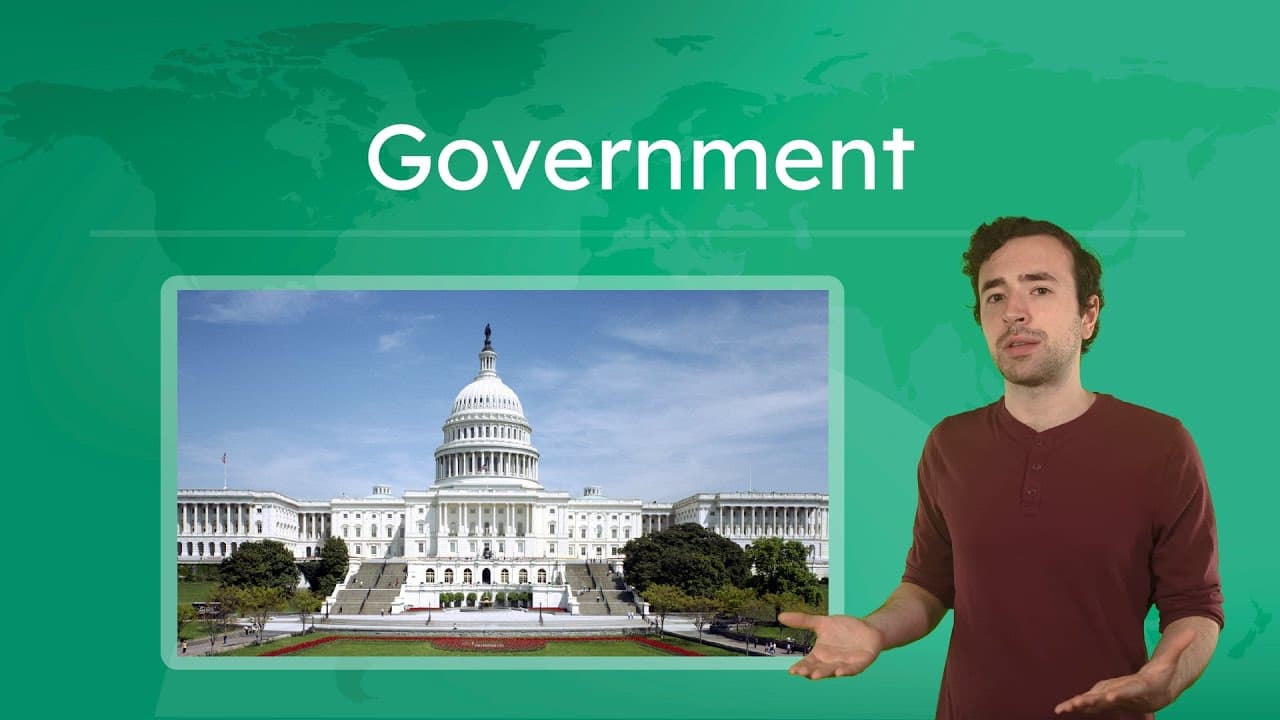
Miacademy & MiaPrep Learning ChannelMiacademy & MiaPrep Learning Channel

8mins 42s

Video
The Columbian Exchange: How Plants, Animals, and People Changed the World

The Columbian Exchange: How Plants, Animals, and People Changed the World

This educational video explores the profound global impact of the Columbian Exchange, starting with a relatable hook about pizza ingredients to illustrate how interconnected our modern food sources are. The host defines the Columbian Exchange as the transfer of plants, animals, people, and ideas between the Old World (Europe, Africa, Asia) and the New World (the Americas) following Columbus's voyages. The narrative is structured around three main pillars of impact: environmental changes, social shifts, and economic transformations. The video delves deep into specific examples of exchange, detailing how Old World livestock like cattle and horses transformed landscapes and lifestyles in the Americas, while New World crops like maize and potatoes fueled population explosions in Europe, Africa, and Asia. It does not shy away from the darker consequences of this era, explicitly discussing the environmental degradation caused by plantation farming and the human tragedy of the Atlantic slave trade. The content connects these historical events to the formation of a true global economy. For educators, this video serves as an excellent anchor for units on the Age of Exploration, global trade, or agricultural history. It moves beyond simple lists of traded goods to analyze cause-and-effect relationships, such as how the potato famine-proofed parts of Europe or how the horse revolutionized Native American warfare. The clear structure allows teachers to segment the video for focused discussions on environmental science, economics, or social justice within a historical context.

Miacademy & MiaPrep Learning ChannelMiacademy & MiaPrep Learning Channel

13mins 52s

Video
How the Columbian Exchange Reshaped the World

How the Columbian Exchange Reshaped the World

In this installment of Crash Course World History, John Green explores the profound and lasting impact of the Columbian Exchange—the transfer of plants, animals, diseases, and people between the Old World and the New World following Columbus's voyages. The video moves beyond the traditional narrative of conquest to focus on the biological and ecological transformation of the planet, arguing that this exchange homogenized the world's biological landscape and fundamentally altered human history.

CrashCourseCrashCourse

12mins 9s

Video
How Colonialism Shaped the World's Political Borders

How Colonialism Shaped the World's Political Borders

This educational video explores the complex relationship between political borders, cultural groups, and the history of colonization. Using the map of Africa as a primary case study, the narrator explains why modern political borders often fail to align with linguistic and cultural boundaries. The video defines key concepts such as empire, colonialism, and decolonization, illustrating how European powers drew borders to maximize resource extraction rather than to reflect the realities of indigenous nations. The content dives deep into the mechanisms of colonial rule, explaining how centralized governments were established to control territories and how indigenous resistance fueled the rise of nationalism and the push for self-determination. It addresses the "geography mystery" of why newly independent states chose to keep colonial borders despite their flaws, highlighting the fear of territorial disputes. Specific examples, such as the division of the Somali people and the water conflicts involving the Tigris and Euphrates rivers, demonstrate the real-world consequences of these historical decisions. For educators, this video is an excellent resource for units on Political Geography, World History, or AP Human Geography. It connects abstract concepts like sovereignty and nationalism to concrete visual examples. The video includes built-in pause points for note-taking and reflection, making it ready-made for classroom interaction. It encourages critical thinking about how historical events continue to shape modern geopolitical conflicts and resource management issues.

Miacademy & MiaPrep Learning ChannelMiacademy & MiaPrep Learning Channel

11mins 53s

Video
Exploring the Diverse Island Nations of Africa

Exploring the Diverse Island Nations of Africa

This educational video takes students on an interactive virtual tour of the island nations and territories surrounding the African continent. Hosted by a narrator named Brian, the lesson uses a quiz-based format to engage viewers, asking them to predict answers about geography, economics, and culture before revealing the facts. The video covers Madagascar, Seychelles, Mauritius, Comoros, and the French overseas territories of Réunion and Mayotte. It contrasts these nations against the mainland and each other, highlighting their unique biodiversity, political histories, and economic statuses. The content explores key themes such as the geological formation of islands, the impact of colonization, political stability versus instability, and economic disparities (comparing GDP per capita). It delves into cultural aspects, including the diverse religious landscapes (Christianity, Islam, Hinduism), linguistic heritage (Austronesian, French, Creole), and local cuisines—even mentioning adventurous foods like fruit bat curry. The video also touches on environmental issues like deforestation and the unique wildlife found only in these isolated ecosystems. For educators, this video serves as an excellent comparative geography resource. The built-in pause points and multiple-choice questions allow for active participation, making it easy to check for understanding in real-time. It effectively illustrates how political stability correlates with economic prosperity (the "Mauritian Miracle" vs. instability in Comoros and Madagascar) and introduces students to the concept of overseas territories. The engaging visuals and clear statistics make complex demographic and economic data accessible for middle and high school students.

Miacademy & MiaPrep Learning ChannelMiacademy & MiaPrep Learning Channel

13mins 55s

Video
How the Silk Roads Spread Ideas and Religions

How the Silk Roads Spread Ideas and Religions

This educational video explores the concept of cultural diffusion through the historical lens of the Silk Roads. While often remembered for the trade of luxury goods like silk and spices, the video argues that the most significant exchange was actually invisible: the spread of ideas, worldviews, and religious beliefs. Host Alizé Carrère guides viewers through how religions like Buddhism, Islam, and Christianity spread and evolved across Asia, Africa, and Europe via these networks, illustrating complex geographic concepts such as relocation, expansion, contagion, and hierarchical diffusion.

CrashCourseCrashCourse

11mins 30s

Video
Why and How People Move: The Geography of Migration

Why and How People Move: The Geography of Migration

This educational video from Crash Course Geography provides a comprehensive overview of human migration, using the vast Indian diaspora as a primary case study to illustrate key concepts. Hosted by Alizé Carrère, the video breaks down the "how" and "why" of human movement, moving beyond simple definitions to explore the complex historical, economic, and environmental drivers behind migration. It covers a wide range of migration types, from the historical indentured labor systems in Trinidad and Tobago to ancient monsoon-driven trade routes, and modern political displacements like the 1972 expulsion of Asians from Uganda.

CrashCourseCrashCourse

11mins 16s

Video
Push, Pull, and Policy: US Immigration in the 1990s

Push, Pull, and Policy: US Immigration in the 1990s

This educational video provides a comprehensive overview of the surge in immigration to the United States during the 1990s. It distinguishes between the concepts of "immigrants" and "refugees," using the story of a fictional family from El Salvador to illustrate the human side of these statistics. The video breaks down the specific "push factors" (such as economic instability, war, and natural disasters) and "pull factors" (such as family reunification policies, a booming tech economy, and safety) that drove over 13 million people to move to the U.S. during this decade. The content delves into specific historical contexts, including the collapse of the Soviet Union, civil wars in the Balkans and Afghanistan, and Hurricane Mitch in Central America. It explains how these global events directly influenced migration patterns. furthermore, the video analyzes key U.S. legislation from the era, contrasting expansive policies like the Immigration Act of 1990 and the Diversity Visa program with more restrictive measures passed in 1996, such as the Illegal Immigration Reform and Immigrant Responsibility Act and the Welfare Reform Act. For educators, this video is an excellent tool for Social Studies, U.S. History, and Civics classrooms. It simplifies complex sociological concepts like push/pull factors and asylum into accessible definitions. The built-in pause points and references to a graphic organizer make it ready-made for interactive note-taking. It helps students connect abstract policy decisions to real-world humanitarian crises and understand the roots of modern American multiculturalism.
Miacademy & MiaPrep Learning ChannelMiacademy & MiaPrep Learning Channel

10mins 12s

Video
Exploring Tropical Climates and Rainforests

Exploring Tropical Climates and Rainforests

This educational video provides a comprehensive overview of tropical climates, also known as equatorial climates. It explains the geographical location of these zones near the equator, covering approximately one-third of Earth's land surface. The video details the defining characteristics of tropical climates, specifically their consistent high temperatures year-round and significant rainfall, distinguishing their two-season cycle (wet and dry) from the four-season cycle found in temperate regions. The content highlights major tropical rainforest regions including the Amazon Basin in Brazil, the Congo Basin in Africa, and forests throughout Southeast Asia. It emphasizes the incredible biodiversity of these habitats, noting that they are the most diverse land ecosystems on Earth and home to millions of plant and animal species, many of which remain undiscovered. The video features high-quality footage of various rainforest animals such as monkeys, colorful frogs, exotic birds, and insects. The final segment addresses the critical environmental issue of deforestation, showing powerful imagery of logging and land clearing for agriculture and infrastructure. It concludes with a conservation message, urging viewers to understand the importance of protecting these vital ecosystems to ensure the survival of their unique flora and fauna for future generations.

Next Generation ScienceNext Generation Science

2mins 26s

Video
How Place Names Shape Identity and Power

How Place Names Shape Identity and Power

This episode of Crash Course Geography explores the subfield of Human Geography through the lens of "toponyms," or place names, illustrating how names reflect power, history, and culture. The video uses the specific case study of Denali (formerly Mount McKinley) in Alaska to demonstrate how political power at different scales—local, national, and global—influences the identity of a place. It explains that geography is not just about memorizing locations, but understanding the complex spatial relationships between people, power, and the environment. Key themes include the concepts of "Place" versus "Space," the impact of colonization on indigenous landscapes, and the geographic concept of "Scale." The video breaks down how naming a location is an act of claiming ownership and shaping perception. It details the historical struggle between the Athabascan name "Denali" and the imposed name "Mount McKinley," using this narrative to introduce broader geographic concepts like political, economic, and urban geography, as well as formal and perceptual regions. For educators, this video is an invaluable resource for introducing AP Human Geography concepts, specifically within the units on Cultural Patterns and Processes or Political Organization of Space. It provides a concrete, high-interest example of how abstract concepts like "cultural erasure" and "scales of analysis" play out in the real world. The video encourages students to critically examine the maps they use and understand the historical narratives embedded in the names of their own local communities.

CrashCourseCrashCourse

10mins 11s

Video
Managing and Conserving the Colorado River Watershed

Managing and Conserving the Colorado River Watershed

This educational video provides a comprehensive look at water resource management using the Colorado River watershed as a primary case study. It begins by examining how major cities like Phoenix rely on freshwater for diverse needs ranging from agriculture and manufacturing to domestic use and recreation. The video illustrates the complexity of watersheds, explaining how multiple states and millions of people depend on the same interconnected water system, necessitating careful management and cooperation. The content explores the historical and modern challenges of water conservation, introducing the Colorado River Compact of 1922 which divided the watershed into Upper and Lower Basins to manage allocation. It transitions into current environmental challenges, using data visualization to show how rising temperatures and climate change are accelerating evaporation and causing droughts. The video distinguishes between human overuse and natural depletion, emphasizing that legal frameworks alone are insufficient to protect water supplies in a changing climate. Finally, the video outlines actionable solutions for water conservation across three levels: government regulations, technological innovations (like drip irrigation and desalination), and personal community actions. This resource is highly valuable for environmental science and geography classrooms as it connects abstract concepts like the water cycle to real-world civic issues, encouraging students to analyze data and consider their own role in sustainable resource management.

Miacademy & MiaPrep Learning ChannelMiacademy & MiaPrep Learning Channel

10mins 23s

Video
Reclaiming Sovereignty: The Land Back Movement Explained

Reclaiming Sovereignty: The Land Back Movement Explained

This episode of Crash Course Native American History explores the "Land Back" movement, a decentralized effort by Indigenous peoples to reclaim authority over stolen land and resources. Hosted by Che Jim, the video breaks down the concept beyond slogans and hashtags, defining it as a multifaceted approach to asserting tribal sovereignty. It examines various methods used to achieve these goals, ranging from legal battles and government settlements to voluntary "settler rent" and direct action protests like blockades.

CrashCourseCrashCourse

10mins 19s

Video
Is History Everywhere? A Global Tour of Resistance and Remembrance

Is History Everywhere? A Global Tour of Resistance and Remembrance

In this engaging finale to a World History course, the narrator takes viewers on a virtual "world tour vacation" to demonstrate that history is present everywhere we look. Using a travel narrative framework, the video visits three distinct locations—Cusco, Peru; Isandlwana, South Africa; and Hiroshima, Japan—to explore how historical events shape modern landscapes and cultural identity. The video moves beyond a dry recitation of dates, instead focusing on the enduring legacy of resistance, conflict, and the universal desire for peace. The content highlights three specific historical moments: the rebellion of Túpac Amaru II against Spanish colonial rule in Peru, the Zulu victory over British forces at the Battle of Isandlwana, and the solemn remembrance of the atomic bombing at the Peace Memorial Park in Hiroshima. Through these examples, the video explores profound themes including indigenous resistance to colonialism, the fragility of imperial power, and the importance of historical memory in preventing future tragedies. This video serves as an excellent capstone for a World History unit or as a standalone lesson on historical significance. It demonstrates how to connect past events to present-day locations, encouraging students to look for history in their own surroundings. Educators can use the specific case studies to discuss the long-term impacts of imperialism and war, or use the video's framework to launch a "history is everywhere" inquiry project where students investigate local statues, battlefields, or memorials.

Miacademy & MiaPrep Learning ChannelMiacademy & MiaPrep Learning Channel

11mins 3s

Video
Exploring the People and Settlement of Latin America

Exploring the People and Settlement of Latin America

This educational video provides a comprehensive overview of the human geography of Latin America, focusing on the diverse origins of its people and their unique settlement patterns. The narrator breaks down the population into three primary historical groups: Native peoples who migrated across Beringia, European colonizers (primarily Spanish and Portuguese), and Africans brought via the slave trade. It further explores how these groups mixed over centuries to create distinct cultural identities like Mestizo and Mulatto, explaining the historical context and modern implications of these terms. The second half of the video shifts to settlement geography, analyzing where people live and why. It highlights the traditional preference for coastal living due to trade and transportation, but also examines the unique high-altitude settlements of the Andes, such as La Paz and La Rinconada. A significant portion is dedicated to the concept of a "forward capital," using Brasília as a case study for how governments attempt to shift population density and economic opportunity inland from the coast. For educators, this video serves as an excellent resource for World Geography, Social Studies, and Latin American History units. It connects historical events (colonization, slavery) directly to modern demographics and urban planning. The content covers essential geography concepts like urbanization, migration push/pull factors, and human-environment interaction, making it a versatile tool for teaching how history shapes the physical distribution of people today.

Miacademy & MiaPrep Learning ChannelMiacademy & MiaPrep Learning Channel

8mins 55s

Video
World War II: Battles, Resources, and the Human Cost

World War II: Battles, Resources, and the Human Cost

This fast-paced educational video provides a comprehensive overview of World War II, moving beyond simple battle summaries to explore the complex causes, global scope, and devastating human cost of the conflict. Host John Green challenges the traditional Western-centric timeline by examining early aggression in China and Japan while covering major turning points like the Battle of Stalingrad, Pearl Harbor, and D-Day. The narrative weaves together military history with economic analysis, specifically arguing that the quest for food resources and land ('Lebensraum') was a primary driver for Axis aggression. The video delves into the darker realities of 'Total War,' discussing the blurring lines between soldiers and civilians, the Holocaust, and the strategic starvation policies like the Nazi Hunger Plan. It critically examines the 'Good vs. Evil' narrative by acknowledging the undemocratic nature of key Allied powers like the Soviet Union and the imperialist policies of Great Britain. The content highlights the contributions of often-overlooked nations, such as Canada and Argentina, providing a truly global perspective. For educators, this resource serves as an excellent synthesizer of vast historical information, perfect for introducing or reviewing the unit. It encourages critical thinking by prompting students to analyze how industrialization and 'progress' were weaponized to commit atrocities. The video's interrogation of Western civilization's moral standing post-WWII offers profound discussion starters for high school history and ethics classes.

CrashCourseCrashCourse

13mins 13s

Video
How Simón Bolívar Liberated South America

How Simón Bolívar Liberated South America

This educational video provides a comprehensive overview of the life and legacy of Simón Bolívar, known as 'The Liberator' of South America. It contextualizes his work within the broader Age of Revolutions, connecting the Latin American independence movements to the American, French, and Haitian revolutions. The narrative follows Bolívar's journey from a wealthy Venezuelan creole to a revolutionary leader who played a crucial role in liberating six nations from Spanish rule. The video explores key historical themes including the rigid colonial social hierarchy (the caste system) that fueled resentment among creoles and mixed-race populations, the impact of Enlightenment ideals, and the geopolitical catalyst of Napoleon's invasion of Spain. It delves into the military and political struggles Bolívar faced, his partnership with Haiti, and the rise and eventual collapse of his dream of a unified Gran Colombia. For educators, this resource serves as an excellent case study for understanding the complexities of post-colonial nation-building. It highlights how social inequality drives revolution and illustrates the difficulties of establishing stable governance in diverse territories. The video uses maps, diagrams, and reenactments to make complex political history accessible, making it valuable for World History units on revolutions, Latin American history, or political science discussions on leadership and governance.

Miacademy & MiaPrep Learning ChannelMiacademy & MiaPrep Learning Channel

11mins 15s

Video
How the Columbian Exchange Reshaped the World

How the Columbian Exchange Reshaped the World

In this installment of Crash Course World History, John Green explores the profound and lasting impact of the Columbian Exchange—the transfer of plants, animals, diseases, and people between the Old World and the New World following Columbus's voyages. The video moves beyond the traditional narrative of conquest to focus on the biological and ecological transformation of the planet, arguing that this exchange homogenized the world's biological landscape and fundamentally altered human history.

CrashCourseCrashCourse

12mins 9s

Video
How the First People Migrated to the Americas

How the First People Migrated to the Americas

This educational video explores the scientific theory of how the first humans migrated to the Americas via the Beringia Land Bridge. It explains the geographical and climatic conditions of the Ice Age that lowered sea levels, exposing a land connection between present-day Russia and Alaska. The video details the migration routes taken by these early people as they moved through North America down to South America. The content covers key interdisciplinary concepts including geography, earth science, and anthropology. It defines important terms like "migration" and explains the push factors that cause populations to move, such as the search for food, resources, or safety. The video also introduces students to how scientists use evidence to reconstruct the past, specifically looking at how anthropologists use DNA analysis and how archaeologists use artifacts like bronze tools and jade masks to trace human origins. This resource is highly valuable for social studies and history classrooms studying early human civilizations or Native American history. It provides a clear visual representation of complex concepts like changing coastlines and migration patterns. Teachers can use this video to illustrate the intersection of geography and history, demonstrating how physical landscapes shape human movement and settlement patterns.

Miacademy & MiaPrep Learning ChannelMiacademy & MiaPrep Learning Channel

4mins 50s

Video
How the US Grew: Westward Expansion and the Civil War

How the US Grew: Westward Expansion and the Civil War

This educational video provides a comprehensive overview of United States history from the late 1700s through the end of the Civil War in 1865. Narrated by Maya, the video chronicles the rapid growth of the nation, starting with immigration from Europe and the addition of new states, moving through major land acquisitions like the Louisiana Purchase, and detailing the conflicts that arose from this expansion, including the War of 1812 and the Mexican-American War. It explains how economic differences and the moral crisis of slavery drove a wedge between the North and South, leading to the secession of Southern states. Key historical themes include Westward Expansion, the displacement of Native Americans, the industrial revolution's impact (railroads, cotton, coal), and the political turmoil surrounding slavery. The video introduces critical figures such as Meriwether Lewis, William Clark, Abraham Lincoln, Ulysses S. Grant, and Robert E. Lee. It also covers significant events like the Gold Rush, the Oregon Trail, and the assassination of President Lincoln. For educators, this video serves as an excellent timeline anchor, helping students visualize the chronological progression of the 19th century. It connects geography to history by showing how physical expansion fueled political conflict. The content is well-suited for introducing a unit on the Civil War or Westward Expansion, providing a high-level summary that can be paused for deeper dives into specific topics like the treatment of Indigenous peoples or the economics of the plantation system.

Miacademy & MiaPrep Learning ChannelMiacademy & MiaPrep Learning Channel

8mins 18s

Video
How Westward Expansion Divided America

How Westward Expansion Divided America

This educational video explores the complex history of Westward Expansion in the United States during the 19th century, linking the concept of Manifest Destiny to the eventual outbreak of the Civil War. It examines how the drive to settle the frontier was motivated by a desire for land, freedom, and the spread of democratic values, while simultaneously exposing deep hypocrisies regarding the treatment of Native Americans and the expansion of slavery. The narrator details the political mechanisms of statehood, such as the Northwest Ordinance, and explains how the addition of new territories upset the delicate balance of power in Congress. Key historical themes include the ideology of Manifest Destiny, the democratization of voting rights for white men, the forced removal of indigenous populations (Trail of Tears), and the economic entrenchment of slavery in the South. The video specifically highlights critical turning points like the Missouri Compromise of 1820 and the election of Abraham Lincoln, demonstrating how territorial growth fueled sectional tensions between the North and South. Ideally suited for middle and high school U.S. History curriculums, this video serves as an excellent primer on the causes of the Civil War. It encourages students to think critically about American values by contrasting the ideals of the Declaration of Independence with the realities of Indian Removal and slavery. Teachers can use the built-in guiding questions to facilitate class discussions on how geography shapes politics and how economic interests can drive social conflict.

Miacademy & MiaPrep Learning ChannelMiacademy & MiaPrep Learning Channel

11mins 23s

Video
How Water Engineered the Maya and Khmer Civilizations

How Water Engineered the Maya and Khmer Civilizations

In this episode of Crash Course World History, John Green explores the critical role of water management in the rise and fall of classical civilizations, shifting the focus from war and gold to hydraulic engineering. The video specifically examines the Maya civilization in the Yucatan Peninsula and the Khmer Empire in Southeast Asia, demonstrating how their mastery of water allowed them to flourish in difficult environments and how their reliance on these complex systems eventually contributed to their collapse.

CrashCourseCrashCourse

11mins 9s

Video
How José de San Martín Led South America's Southern Liberation

How José de San Martín Led South America's Southern Liberation

This educational video explores the history of the independence movements in southern South America, focusing specifically on the Rio de la Plata region and the campaigns of José de San Martín. It begins by establishing the context of Spanish colonial administration, explaining the system of Viceroyalties (Virreinatos) and the geopolitical tensions with Portugal that led to the creation of the Viceroyalty of the Rio de la Plata. The narrative covers early unrest, including the rebellion of Túpac Amaru II, and the external catalysts like the Napoleonic Wars that sparked the drive for independence. The video details the life and military achievements of José de San Martín, tracing his journey from a Spanish military officer to a revolutionary leader. It highlights his strategic genius in crossing the Andes to liberate Chile alongside Bernardo O'Higgins and his subsequent campaign to liberate Peru. The video also touches upon the famous meeting between San Martín and Simón Bolívar in Guayaquil, offering historical theories about their secret discussion regarding the future government of the newly independent nations. Ideally suited for middle and high school World History or Latin American Studies curricula, this video provides a clear framework for understanding the complexities of Latin American independence. It addresses the diverse causes of revolution, the challenges of nation-building, and the persistent social inequalities facing indigenous populations even after political liberation. Teachers can use this resource to discuss military strategy, political philosophy (monarchy vs. republic), and the lasting legacy of colonialism.

Miacademy & MiaPrep Learning ChannelMiacademy & MiaPrep Learning Channel

10mins 2s

Video
The Bald Eagle: America's Symbol of Strength and Freedom

The Bald Eagle: America's Symbol of Strength and Freedom

This educational video introduces young learners to the Bald Eagle as a primary national symbol of the United States. Hosted in a friendly "Clubhouse" setting, the video bridges the gap between science and social studies by explaining how the eagle's physical characteristics—such as its immense strength, keen eyesight, and impressive wingspan—make it a fitting representation of American values like freedom and power. It also defines what a "symbol" is, referencing previous lessons to build continuity. The content covers a wide range of topics including the geographical habitat of the Bald Eagle (exclusive to North America), the etymology of its name, and its significance in Native American cultures. A major portion of the video is dedicated to decoding the Great Seal of the United States, breaking down the specific meanings behind the olive branch, arrows, and the eagle's gaze. The video concludes with a segment featuring community helpers explaining what the eagle symbolizes to them personally. For educators, this video serves as an excellent anchor for units on American symbols, civics, and introductory geography. It provides concrete examples for abstract concepts like "symbolism" and "representation." The interdisciplinary nature allows teachers to connect social studies standards with science facts, while the "Mia on the Move" segment encourages social-emotional learning by linking national symbols to personal character traits like bravery and determination.

Miacademy & MiaPrep Learning ChannelMiacademy & MiaPrep Learning Channel

8mins 7s

Video
Touring the Seven Wonders of the World

Touring the Seven Wonders of the World

This educational video takes students on a virtual tour of seven of the most famous architectural and historical landmarks across the globe. Hosted by Kaleigh, the video provides a structured overview of the Roman Colosseum, Chichen Itza, the Pyramids of Giza, the Great Wall of China, Machu Picchu, Petra, and the Taj Mahal. For each location, the video highlights its geographical location on a world map, the dates of its construction, and its original historical purpose.

Miacademy & MiaPrep Learning ChannelMiacademy & MiaPrep Learning Channel

4mins 56s

Video
How Brazil Gained Independence Through a Bloodless Revolution

How Brazil Gained Independence Through a Bloodless Revolution

This engaging world history video explores the unique path Brazil took to achieve independence from Portugal, distinguishing it from the violent revolutions that characterized much of the Americas. Using a relatable analogy of a teenager losing their driver's license, the host explains how Brazil went from a colony to the seat of the Portuguese Empire and finally to an independent nation. The video details the economic foundations of colonial Brazil, primarily relying on red dye from Brazilwood and plantation agriculture driven by the forced labor of millions of enslaved Africans.

Miacademy & MiaPrep Learning ChannelMiacademy & MiaPrep Learning Channel

10mins 47s

Video
From Grave Robbing to Repatriation: A History of Native American Archaeology

From Grave Robbing to Repatriation: A History of Native American Archaeology

This episode of Crash Course Native American History explores the complex and often dark relationship between the fields of anthropology and archaeology and Native American communities. Host Che Jim guides viewers through the history of how early scientific curiosity led to the widespread unethical treatment of Indigenous peoples, including the looting of graves, the collection of human remains for museums, and the pseudo-scientific racism used to justify these actions. The video highlights specific historical figures like Thomas Jefferson and Franz Boas, illustrating how even renowned thinkers contributed to these harmful practices under the guise of 'salvage anthropology.' The narrative shifts to the Civil Rights era, focusing on the American Indian Movement (AIM) and the fight for legal protections. It details key legislation such as the National Historic Preservation Act and the landmark Native American Graves Protection and Repatriation Act (NAGPRA) of 1990. The video explains the significance of repatriation—returning ancestors and artifacts to their tribes—and the ongoing challenges tribes face in reclaiming their heritage from institutions. Finally, the video concludes with a look at modern, decolonized archaeology. It contrasts the extractive methods of the past with collaborative projects like the excavation of the Ozette site with the Makah tribe. By showcasing how Indigenous knowledge and scientific methods can work together, the video offers a hopeful perspective on the future of the field, making it an excellent resource for discussing ethics in science, civil rights history, and the importance of cultural sovereignty.

CrashCourseCrashCourse

11mins 37s

Video
The Impact of Westward Expansion on Native Nations

The Impact of Westward Expansion on Native Nations

This educational video explores the complex and often devastating impact of United States Westward Expansion on Native American populations during the 19th century. Moving beyond the traditional narrative of "Manifest Destiny," the video examines how the U.S. government utilized three primary methods—trade, environmental transformation, and war—to displace indigenous people. It specifically highlights how economic assimilation and the systematic destruction of the North American bison herds were used as tools to weaken Native American societies and force them onto reservations. The video also emphasizes the resilience and agency of Native American tribes, detailing how they resisted expansion not just through combat, but through strategic reorganization and cultural adaptation. Key historical examples include Tecumseh's attempt to form an inter-tribal confederacy and the Seminole Nation's formation of a new cultural identity in Florida that blended various indigenous groups and escaped enslaved people. The content challenges students to look at history through multiple lenses, contrasting settler perspectives with indigenous voices like Sitting Bull. For educators, this resource provides excellent opportunities to teach historical empathy, data analysis, and visual literacy. It includes clear graphs comparing railroad growth to bison decline, offering a cross-curricular connection to math and science. The video also features historical artwork that can be analyzed to understand the concept of assimilation. It serves as a strong foundation for lessons on conflict, colonization, and the enduring sovereignty of Native American nations today.

Miacademy & MiaPrep Learning ChannelMiacademy & MiaPrep Learning Channel

11mins 16s

Video
Exploring Spanish Colonization and the Conquistadors

Exploring Spanish Colonization and the Conquistadors

This comprehensive history lesson explores the era of Spanish colonization in the Americas, detailing the motivations, key figures, and lasting impacts of the Age of Exploration. Narrated by a host named Taylor, the video breaks down the concept of colonization and introduces the "Three Gs"—Gold, Glory, and God—that drove European expansion. It provides in-depth profiles of influential conquistadors including Hernán Cortés, Amerigo Vespucci, Juan Ponce de León, Vasco Núñez de Balboa, and Francisco Vázquez de Coronado, mapping their journeys and discoveries across North and South America. The content goes beyond simple biography by examining the complex interactions between European explorers and Indigenous civilizations, specifically the Aztec Empire. It visualizes the geography of the New World, from the floating gardens of Tenochtitlan to the coasts of Florida and the peaks of Panama. The video explains specific historical terms like "hierarchy," "chinampas," and "adobe," making advanced historical concepts accessible to students. Crucially, the lesson addresses the devastating consequences of colonization on Indigenous populations, including the introduction of European diseases and the implementation of the encomienda forced labor system. This balanced approach allows teachers to facilitate discussions on historical perspective, the clash of cultures, and the ethical implications of empire-building, making it an essential resource for units on World History, U.S. History, or Geography.

Miacademy & MiaPrep Learning ChannelMiacademy & MiaPrep Learning Channel

11mins 48s

Video
Exploring Tropical Climates and Rainforests

Exploring Tropical Climates and Rainforests

This educational video provides a comprehensive overview of tropical climates, also known as equatorial climates. It explains the geographical location of these zones near the equator, covering approximately one-third of Earth's land surface. The video details the defining characteristics of tropical climates, specifically their consistent high temperatures year-round and significant rainfall, distinguishing their two-season cycle (wet and dry) from the four-season cycle found in temperate regions. The content highlights major tropical rainforest regions including the Amazon Basin in Brazil, the Congo Basin in Africa, and forests throughout Southeast Asia. It emphasizes the incredible biodiversity of these habitats, noting that they are the most diverse land ecosystems on Earth and home to millions of plant and animal species, many of which remain undiscovered. The video features high-quality footage of various rainforest animals such as monkeys, colorful frogs, exotic birds, and insects. The final segment addresses the critical environmental issue of deforestation, showing powerful imagery of logging and land clearing for agriculture and infrastructure. It concludes with a conservation message, urging viewers to understand the importance of protecting these vital ecosystems to ensure the survival of their unique flora and fauna for future generations.

Next Generation ScienceNext Generation Science

2mins 26s

Video
Why and How People Move: The Geography of Migration

Why and How People Move: The Geography of Migration

This educational video from Crash Course Geography provides a comprehensive overview of human migration, using the vast Indian diaspora as a primary case study to illustrate key concepts. Hosted by Alizé Carrère, the video breaks down the "how" and "why" of human movement, moving beyond simple definitions to explore the complex historical, economic, and environmental drivers behind migration. It covers a wide range of migration types, from the historical indentured labor systems in Trinidad and Tobago to ancient monsoon-driven trade routes, and modern political displacements like the 1972 expulsion of Asians from Uganda.

CrashCourseCrashCourse

11mins 16s

Video
Global Conflict and Total War: The End of World War I

Global Conflict and Total War: The End of World War I

This educational video provides a comprehensive overview of the latter half of World War I, detailing how a European conflict expanded into a global war involving Africa, Asia, and North America. It explains the strategic importance of colonies for resources, the entry of major powers like the United States and the Ottoman Empire, and the disastrous Gallipoli campaign. The narrative transitions into the concept of "Total War," illustrating how the conflict reshaped civilian life through mass mobilization, women entering the workforce, economic rationing, and government propaganda. The video explores several key historical themes including imperialism, the definition and impact of total war, the role of propaganda and censorship in shaping public opinion, and the geopolitical shifts that occurred as empires collapsed. It covers significant events such as the sinking of the Lusitania, the Russian Revolution, and the signing of the Treaty of Versailles. The content highlights the staggering human and economic costs of the war and foreshadows the rise of totalitarian regimes. For educators, this video serves as an excellent anchor for a unit on the Great War. It features clear definitions of complex terms like "Total War," "Price Controls," and "Armistice," supported by historical photographs and animated maps. The video structure, which includes built-in pauses for guiding questions, allows teachers to easily segment the lesson for note-taking and class discussion. It effectively connects military history with social history, making it valuable for exploring both the battlefield and the home front.

Miacademy & MiaPrep Learning ChannelMiacademy & MiaPrep Learning Channel

10mins 52s

Video
How the Silk Roads Spread Ideas and Religions

How the Silk Roads Spread Ideas and Religions

This educational video explores the concept of cultural diffusion through the historical lens of the Silk Roads. While often remembered for the trade of luxury goods like silk and spices, the video argues that the most significant exchange was actually invisible: the spread of ideas, worldviews, and religious beliefs. Host Alizé Carrère guides viewers through how religions like Buddhism, Islam, and Christianity spread and evolved across Asia, Africa, and Europe via these networks, illustrating complex geographic concepts such as relocation, expansion, contagion, and hierarchical diffusion.

CrashCourseCrashCourse

11mins 30s

Video
How History Defined Europe as a Functional Region

How History Defined Europe as a Functional Region

This educational video explores the concept of Europe as a "functional region," examining how its boundaries and influence have been defined not just by physical geography, but by historical connections, trade networks, and cultural legacies. The narrator guides viewers through a chronological journey, starting with the Greco-Roman era and moving through the Crusades, the Age of Exploration, the Scramble for Africa, the Cold War, and finally the modern European Union. The video explains how these events created networks of interaction that extended Europe's "functional" borders far beyond its physical continent. Key themes include the difference between formal and functional regions, the lasting impact of Roman infrastructure and language, the spread of religion (Christianity and Islam), the geopolitical consequences of colonization, and the role of economic integration in the modern era. It specifically addresses how political ideologies during the Cold War divided the continent into two distinct functional zones and how the EU has since worked to reintegrate them through trade and a common currency. For educators, this video serves as an excellent bridge between geography and history, demonstrating how spatial relationships change over time. It provides concrete examples of abstract geographic concepts like "functional regions" and "spheres of influence." Teachers can use this resource to help students understand complex topics such as why French Guiana is part of Europe, how the Roman Empire laid the groundwork for modern Western culture, and the economic rationale behind the European Union.

Miacademy & MiaPrep Learning ChannelMiacademy & MiaPrep Learning Channel

9mins 54s

Video
How 19th Century Imperialism Shaped the Modern World

How 19th Century Imperialism Shaped the Modern World

This episode of Crash Course European History explores the complex and often brutal history of 19th-century European imperialism. Host John Green examines the paradox of European nations expanding rights and democracy at home while simultaneously stripping rights and sovereignty from people across Asia, Africa, and the Pacific. The video details the economic motivations behind expansion, such as the demand for raw materials like palm oil, rubber, and diamonds, and the specific mechanisms used to enforce control. Key themes include the "Tools of Empire"—technological advancements like steamships, machine guns, railroads, and the medical breakthrough of quinine—that enabled Europeans to penetrate and dominate the interiors of Africa and Asia. The video also highlights the shift in justification for empire from religious conversion to "Social Darwinism," a pseudoscientific belief in racial superiority used to excuse exploitation. Crucially, the video moves beyond the perspective of the colonizers to focus on indigenous resistance and experience. It covers the Opium Wars in China, the Indian Rebellion of 1857, and forms of non-violent resistance such as "reproductive strikes" in the Congo and Caribbean. This resource is invaluable for helping students understand the systemic nature of colonialism, the technological disparity of the era, and the lasting geopolitical legacy of these events.

CrashCourseCrashCourse

13mins 14s

Video
The Columbian Exchange: How Plants, Animals, and People Changed the World

The Columbian Exchange: How Plants, Animals, and People Changed the World

This educational video explores the profound global impact of the Columbian Exchange, starting with a relatable hook about pizza ingredients to illustrate how interconnected our modern food sources are. The host defines the Columbian Exchange as the transfer of plants, animals, people, and ideas between the Old World (Europe, Africa, Asia) and the New World (the Americas) following Columbus's voyages. The narrative is structured around three main pillars of impact: environmental changes, social shifts, and economic transformations. The video delves deep into specific examples of exchange, detailing how Old World livestock like cattle and horses transformed landscapes and lifestyles in the Americas, while New World crops like maize and potatoes fueled population explosions in Europe, Africa, and Asia. It does not shy away from the darker consequences of this era, explicitly discussing the environmental degradation caused by plantation farming and the human tragedy of the Atlantic slave trade. The content connects these historical events to the formation of a true global economy. For educators, this video serves as an excellent anchor for units on the Age of Exploration, global trade, or agricultural history. It moves beyond simple lists of traded goods to analyze cause-and-effect relationships, such as how the potato famine-proofed parts of Europe or how the horse revolutionized Native American warfare. The clear structure allows teachers to segment the video for focused discussions on environmental science, economics, or social justice within a historical context.

Miacademy & MiaPrep Learning ChannelMiacademy & MiaPrep Learning Channel

13mins 52s

Video
How Ancient Trade Routes Connected the World

How Ancient Trade Routes Connected the World

This video explores the concept of global interconnectedness long before the advent of the internet or modern transportation. Starting with a relatable family dinner scene, the narrator challenges viewers to consider the origins of their food and clothing, using this as a springboard to introduce the historical mechanism of trade. The video defines cultural diffusion and illustrates how ancient trade routes like the Silk Road, Indian Ocean maritime routes, Trans-Saharan network, and Mediterranean Sea served as the "superhighways" of the ancient world, linking distant civilizations. Key themes include the definition and impact of cultural diffusion, the geography of major ancient trade networks, and the specific exchange of goods, ideas, technologies, and religions. The video highlights how the Indian Ocean trade facilitated the spread of Islam, how the Trans-Saharan route moved gold and salt, and how the Mediterranean connected Europe to ancient wisdom. It also details the "Four Great Inventions" of Ancient China—paper, printing, the compass, and gunpowder—and their profound effects on global society. For educators, this video serves as an excellent introduction to units on World History, global trade, or ancient civilizations. It features built-in "pause points" that invite students to check the tags on their own clothes, brainstorm inventions, and reflect on historical impacts, making it highly interactive. By connecting the abstract concept of cultural diffusion to tangible items like spices and clothing, the video helps students visualize how historical economic activities shaped the political, religious, and technological landscape of the modern world.

Miacademy & MiaPrep Learning ChannelMiacademy & MiaPrep Learning Channel

11mins 42s

Video
Is History Everywhere? A Global Tour of Resistance and Remembrance

Is History Everywhere? A Global Tour of Resistance and Remembrance

In this engaging finale to a World History course, the narrator takes viewers on a virtual "world tour vacation" to demonstrate that history is present everywhere we look. Using a travel narrative framework, the video visits three distinct locations—Cusco, Peru; Isandlwana, South Africa; and Hiroshima, Japan—to explore how historical events shape modern landscapes and cultural identity. The video moves beyond a dry recitation of dates, instead focusing on the enduring legacy of resistance, conflict, and the universal desire for peace. The content highlights three specific historical moments: the rebellion of Túpac Amaru II against Spanish colonial rule in Peru, the Zulu victory over British forces at the Battle of Isandlwana, and the solemn remembrance of the atomic bombing at the Peace Memorial Park in Hiroshima. Through these examples, the video explores profound themes including indigenous resistance to colonialism, the fragility of imperial power, and the importance of historical memory in preventing future tragedies. This video serves as an excellent capstone for a World History unit or as a standalone lesson on historical significance. It demonstrates how to connect past events to present-day locations, encouraging students to look for history in their own surroundings. Educators can use the specific case studies to discuss the long-term impacts of imperialism and war, or use the video's framework to launch a "history is everywhere" inquiry project where students investigate local statues, battlefields, or memorials.

Miacademy & MiaPrep Learning ChannelMiacademy & MiaPrep Learning Channel

11mins 3s

Video
Exploring U.S. Territories and Citizenship Rights

Exploring U.S. Territories and Citizenship Rights

This educational video provides a comprehensive overview of United States territories, clarifying the legal and political distinctions between states and territories. Hosted by a presenter interacting with an animated character named Mia, the video explores the geography, history of acquisition, and cultural makeup of five major U.S. territories: Puerto Rico, Guam, the U.S. Virgin Islands, the Northern Mariana Islands, and American Samoa. It specifically addresses the complex issue of citizenship, explaining why people born in these territories are generally U.S. citizens but lack full voting rights in federal elections. A significant portion of the video is dedicated to the unique case of American Samoa, where residents are U.S. nationals rather than citizens. The video presents a balanced examination of the arguments for and against granting birthright citizenship to American Samoans, weighing civil rights principles against concerns over preserving traditional cultural land ownership and customs (Fa'a Samoa). This deep dive helps students understand that citizenship laws are nuanced and deeply intertwined with history and culture. This resource is highly valuable for Civics, U.S. Government, and U.S. History classrooms. It helps students dismantle the misconception that the U.S. ends at the borders of the 50 states and introduces critical concepts such as sovereignty, federal representation, and the rights of citizens versus nationals. The content is structured with clear pause points and guiding questions, making it an excellent tool for prompting classroom debates about democracy, equality, and cultural preservation.

Miacademy & MiaPrep Learning ChannelMiacademy & MiaPrep Learning Channel

11mins 39s

Video
How Decolonization Reshaped the World After WWII

How Decolonization Reshaped the World After WWII

This educational video explores the complex and often violent process of decolonization that reshaped the world following World War II. It examines how European powers lost control of their empires in Asia and Africa, highlighting the distinct paths to independence taken by nations such as India, China, Kenya, and Algeria. The narrative contrasts negotiated transfers of power with brutal wars of liberation, providing specific historical examples of the human cost involved in these transitions. Key themes include the impact of the Cold War on emerging nations, the concept of neo-imperialism, and the psychological dimensions of colonization as articulated by thinkers like Frantz Fanon. The video also discusses the phenomenon of reverse migration, where colonized peoples moved to Europe to rebuild war-torn infrastructure, facing racism and discrimination in the process. It connects these historical events to cultural shifts, such as the rejection of Western dress codes and the influence of immigrant musicians on Western pop culture. For educators, this video serves as a powerful resource for teaching 20th-century World or European History. It moves beyond simple dates and maps to address the nuances of post-colonial infrastructure, the economic dependence created by foreign aid systems, and the lasting legacy of partition violence. The video provides graphic primary source quotes that can spark deep classroom discussions about human rights, the ethics of war, and the ongoing challenges faced by the Global South.

CrashCourseCrashCourse

13mins 23s

Video
The History of Conflict in the Congo and Africa's World War

The History of Conflict in the Congo and Africa's World War

This educational video provides a comprehensive historical analysis of the Democratic Republic of Congo (DRC) from its decolonization in 1960 through the devastating conflicts known as "Africa's World War." Hosted by John Green, the video explores the structural challenges left by Belgian colonialism, the rise of the dictator Mobutu Sese Seko, and the complex geopolitical web that led to the First and Second Congo Wars. It specifically connects the Rwandan Genocide to the destabilization of the Congo, illustrating how regional ethnic tensions and refugee crises sparked continent-wide warfare. The content delves into key themes such as the "resource curse," examining how the Congo's vast mineral wealth (gold, diamonds, coltan) has paradoxically fueled violence and corruption rather than prosperity. It also analyzes the concepts of kleptocracy and clientelism under Mobutu, the impact of Cold War politics on African leadership, and the shifting dynamics of international intervention, ranging from Western financial institutions like the IMF to recent infrastructure deals with China. For educators, this resource is invaluable for teaching modern World History, African Studies, and Geopolitics. It helps students move beyond stereotypes of "backwardness" to understand the specific historical, economic, and political drivers of instability in Central Africa. The video provides a rigorous framework for discussing difficult topics like genocide, neo-colonialism, and the ethics of global supply chains, making it highly relevant for high school and undergraduate classrooms dealing with post-colonial history and international relations.
CrashCourseCrashCourse

12mins 57s

Video
Investigating U.S. Peacekeeping in the Gulf War and Somalia
Investigating U.S. Peacekeeping in the Gulf War and Somalia

This educational video uses a narrative framing device featuring a fictional journalist named David Miller to explore United States foreign policy and peacekeeping missions in the 1990s. Set against the backdrop of the post-Cold War era, the video investigates two major interventions: the Gulf War in Kuwait and Operation Restore Hope in Somalia. It provides historical context regarding decolonization, arbitrary borders, and resource dependence to explain the roots of instability in these regions before diving into the specific timelines and outcomes of U.S. involvement. The video explores key themes such as the legacy of colonialism, the concept of power vacuums, the economic motivations behind conflicts (like oil), and the complexities of humanitarian aid. It contrasts the swift military victory of Desert Storm with the protracted and complicated humanitarian mission in Somalia, culminating in the Battle of Mogadishu. Through interviews with fictionalized primary sources—a U.S. Army Sergeant and a UN aid volunteer—the content highlights both the intended positive outcomes (liberation, famine relief) and negative consequences (infrastructure damage, civilian casualties, anti-American sentiment). For educators, this video serves as an excellent case study tool for teaching modern U.S. history and international relations. It simplifies complex geopolitical situations into understandable narratives without shying away from the nuanced results of foreign intervention. The video actively prompts students to predict outcomes and evaluate the success of these missions, making it a strong springboard for classroom debates about the role of the U.S. as a global superpower and the ethics of international intervention.

Miacademy & MiaPrep Learning ChannelMiacademy & MiaPrep Learning Channel

12mins 29s

Video
Who Was the Greatest Mariner of the 15th Century?

Who Was the Greatest Mariner of the 15th Century?

This fast-paced World History video compares and contrasts three major 15th-century mariners: China's Zheng He, Portugal's Vasco da Gama, and Spain's Christopher Columbus. It moves beyond the traditional Eurocentric narrative of exploration to examine the massive scale of Chinese naval expeditions and the aggressive trading tactics of the Portuguese in the Indian Ocean. The host, John Green, deconstructs common myths surrounding these figures, particularly focusing on the technological disparities between their fleets and their differing motivations—ranging from imperial prestige to religious zeal and economic extortion. The video explores key historical themes such as the 'Tribute System' of the Ming Dynasty, the concept of a 'Trading Post Empire' established by the Portuguese, and the misconceptions regarding Columbus's navigational skills and beliefs. It provides a detailed look at maritime technology, contrasting the gigantic Chinese treasure ships with the modest European vessels, and explains the geopolitical shifts that led nations to either embrace or abandon naval exploration. For educators, this resource serves as an excellent tool for teaching comparative history and critical thinking. It encourages students to evaluate historical "greatness" through different lenses—administrative competence, navigational daring, or long-term historical impact. The video is particularly useful for units on the Age of Exploration, Global Trade Networks, and the shift from regional to global history.

CrashCourseCrashCourse

10mins 38s

Video
World War II: Battles, Resources, and the Human Cost

World War II: Battles, Resources, and the Human Cost

This fast-paced educational video provides a comprehensive overview of World War II, moving beyond simple battle summaries to explore the complex causes, global scope, and devastating human cost of the conflict. Host John Green challenges the traditional Western-centric timeline by examining early aggression in China and Japan while covering major turning points like the Battle of Stalingrad, Pearl Harbor, and D-Day. The narrative weaves together military history with economic analysis, specifically arguing that the quest for food resources and land ('Lebensraum') was a primary driver for Axis aggression. The video delves into the darker realities of 'Total War,' discussing the blurring lines between soldiers and civilians, the Holocaust, and the strategic starvation policies like the Nazi Hunger Plan. It critically examines the 'Good vs. Evil' narrative by acknowledging the undemocratic nature of key Allied powers like the Soviet Union and the imperialist policies of Great Britain. The content highlights the contributions of often-overlooked nations, such as Canada and Argentina, providing a truly global perspective. For educators, this resource serves as an excellent synthesizer of vast historical information, perfect for introducing or reviewing the unit. It encourages critical thinking by prompting students to analyze how industrialization and 'progress' were weaponized to commit atrocities. The video's interrogation of Western civilization's moral standing post-WWII offers profound discussion starters for high school history and ethics classes.

CrashCourseCrashCourse

13mins 13s

Video
How the Silk Road Connected the Ancient World

How the Silk Road Connected the Ancient World

In this engaging installment of Crash Course World History, John Green explores the complex network of trade routes known as the Silk Road. He clarifies that it wasn't a single road nor made of silk, but rather a vast system linking the Mediterranean to East Asia that facilitated the exchange of goods, ideas, and culture. The video uses the journey of a modern t-shirt to illustrate the concept of global interconnectedness, drawing parallels between ancient trade and modern globalization. The video covers several key historical themes, including the pivotal role of nomadic peoples in Central Asia as facilitators of trade, the economic impact of silk production in China and Rome, and the significant cultural diffusion that occurred along these routes. specifically, it details how Buddhism spread and transformed into Mahayana Buddhism as it moved East. It also addresses the darker side of interconnection: the spread of devastating diseases like the Bubonic Plague. For educators, this resource is an excellent tool for visualizing the abstract concept of "cultural diffusion." It moves beyond simple maps to explain the mechanisms of trade (relay systems) and the unintended consequences of connectivity. The humor and fast-paced animations make complex economic and religious history accessible to high school students, while the "Open Letter to Billionaires" provides a springboard for discussing wealth distribution and the political power of the merchant class throughout history.

CrashCourseCrashCourse

10mins 31s

Video
How Arbitrary Borders Create Conflict: The Tyranny of the Map

How Arbitrary Borders Create Conflict: The Tyranny of the Map

This video explores the concept of "The Tyranny of the Map," illustrating how political borders drawn by powerful figures often disregard the cultural, ethnic, and linguistic realities of the people living within them. Using the Berlin Conference of 1884 as a starting point, it explains how European colonial powers carved up Africa with straight lines that forced rival groups together and split united groups apart, creating a legacy of conflict that persists today. The video defines key political geography terms like state, nation, nation-state, and multinational state to help viewers understand the structural roots of these conflicts. The narrative focuses heavily on a case study of Mali, detailing how the arbitrary borders inherited from French colonialism have marginalized the Tuareg people of the north. It traces the history of the Mali and Songhai empires, the environmental divide between the Sahara and the savanna, and how these factors contributed to modern-day rebellions, coups, and instability. This specific example serves as a broader lesson on how state sovereignty and internal demographics interact. Finally, the video brings the concept of drawing lines to manipulate power into a context familiar to Western students by discussing gerrymandering in the United States. It connects the large-scale drawing of international borders with the local-scale drawing of voting districts, showing that map-making is inherently a political act. This resource is excellent for helping students understand that maps are not just objective representations of the world, but tools of power that shape human history and governance.

CrashCourseCrashCourse

11mins 16s

Video
Push, Pull, and Policy: US Immigration in the 1990s

Push, Pull, and Policy: US Immigration in the 1990s

This educational video provides a comprehensive overview of the surge in immigration to the United States during the 1990s. It distinguishes between the concepts of "immigrants" and "refugees," using the story of a fictional family from El Salvador to illustrate the human side of these statistics. The video breaks down the specific "push factors" (such as economic instability, war, and natural disasters) and "pull factors" (such as family reunification policies, a booming tech economy, and safety) that drove over 13 million people to move to the U.S. during this decade. The content delves into specific historical contexts, including the collapse of the Soviet Union, civil wars in the Balkans and Afghanistan, and Hurricane Mitch in Central America. It explains how these global events directly influenced migration patterns. furthermore, the video analyzes key U.S. legislation from the era, contrasting expansive policies like the Immigration Act of 1990 and the Diversity Visa program with more restrictive measures passed in 1996, such as the Illegal Immigration Reform and Immigrant Responsibility Act and the Welfare Reform Act. For educators, this video is an excellent tool for Social Studies, U.S. History, and Civics classrooms. It simplifies complex sociological concepts like push/pull factors and asylum into accessible definitions. The built-in pause points and references to a graphic organizer make it ready-made for interactive note-taking. It helps students connect abstract policy decisions to real-world humanitarian crises and understand the roots of modern American multiculturalism.
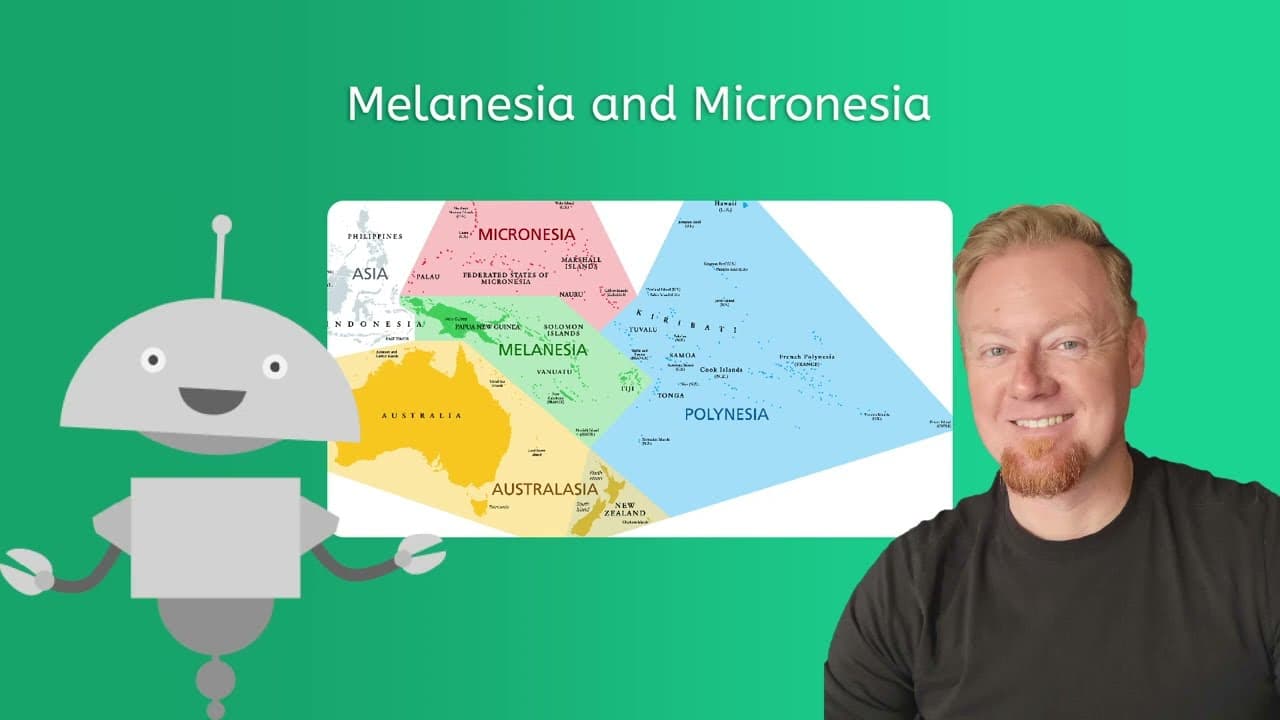
Miacademy & MiaPrep Learning ChannelMiacademy & MiaPrep Learning Channel

10mins 12s

Video
Journey Through Five Ancient African Kingdoms

Journey Through Five Ancient African Kingdoms

This engaging video takes students on a historical journey through the African continent to explore five major ancient civilizations beyond the well-known Ancient Egypt. It introduces viewers to the kingdoms of Nubia, Axum, Ghana, Mali, and Zimbabwe, highlighting their unique geographical locations, cultural achievements, and economic power. The narrator uses a friendly, "time-traveler" theme to break down complex historical concepts into accessible segments, making comparisons between these societies and their better-known neighbor, Egypt. The content focuses on key themes such as trade economics (specifically gold, salt, and ivory), architectural innovation (from Nubian pyramids to Zimbabwe's dry stone walls), and cultural developments like written languages and religious shifts. It emphasizes the interconnectedness of these civilizations through trade networks across the Mediterranean and Indian Ocean, while also celebrating their distinct local traditions, such as the Griot storytellers of Mali and the warrior queens of Nubia. For educators, this video serves as an excellent core resource for World History or Social Studies units on Ancient Africa. It challenges the common curriculum bias that focuses solely on Egypt by providing concrete examples of other advanced African societies. The video includes built-in review questions and pause points, making it ready-made for interactive classroom viewing. It provides a solid foundation for lessons on geography, economic history, and the analysis of primary sources like artifacts and architecture.

Miacademy & MiaPrep Learning ChannelMiacademy & MiaPrep Learning Channel

12mins 56s

Video
How Colonialism Shaped the World's Political Borders

How Colonialism Shaped the World's Political Borders

This educational video explores the complex relationship between political borders, cultural groups, and the history of colonization. Using the map of Africa as a primary case study, the narrator explains why modern political borders often fail to align with linguistic and cultural boundaries. The video defines key concepts such as empire, colonialism, and decolonization, illustrating how European powers drew borders to maximize resource extraction rather than to reflect the realities of indigenous nations. The content dives deep into the mechanisms of colonial rule, explaining how centralized governments were established to control territories and how indigenous resistance fueled the rise of nationalism and the push for self-determination. It addresses the "geography mystery" of why newly independent states chose to keep colonial borders despite their flaws, highlighting the fear of territorial disputes. Specific examples, such as the division of the Somali people and the water conflicts involving the Tigris and Euphrates rivers, demonstrate the real-world consequences of these historical decisions. For educators, this video is an excellent resource for units on Political Geography, World History, or AP Human Geography. It connects abstract concepts like sovereignty and nationalism to concrete visual examples. The video includes built-in pause points for note-taking and reflection, making it ready-made for classroom interaction. It encourages critical thinking about how historical events continue to shape modern geopolitical conflicts and resource management issues.

Miacademy & MiaPrep Learning ChannelMiacademy & MiaPrep Learning Channel

11mins 53s