Analytical frameworks for interpreting history, geography, and civic information. Equips learners with tools for chronological sequencing, map literacy, and critical evaluation of primary and secondary sources.
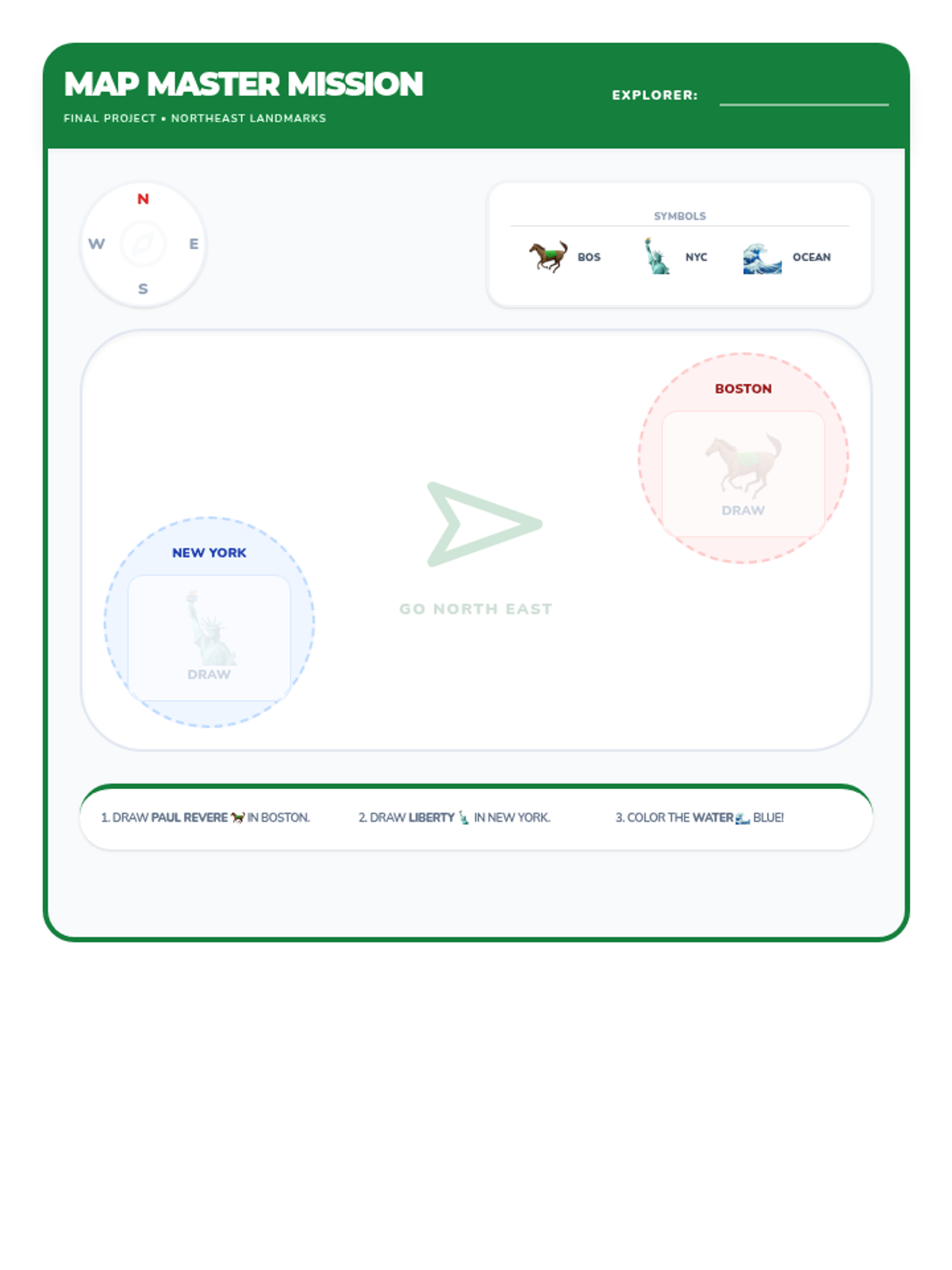
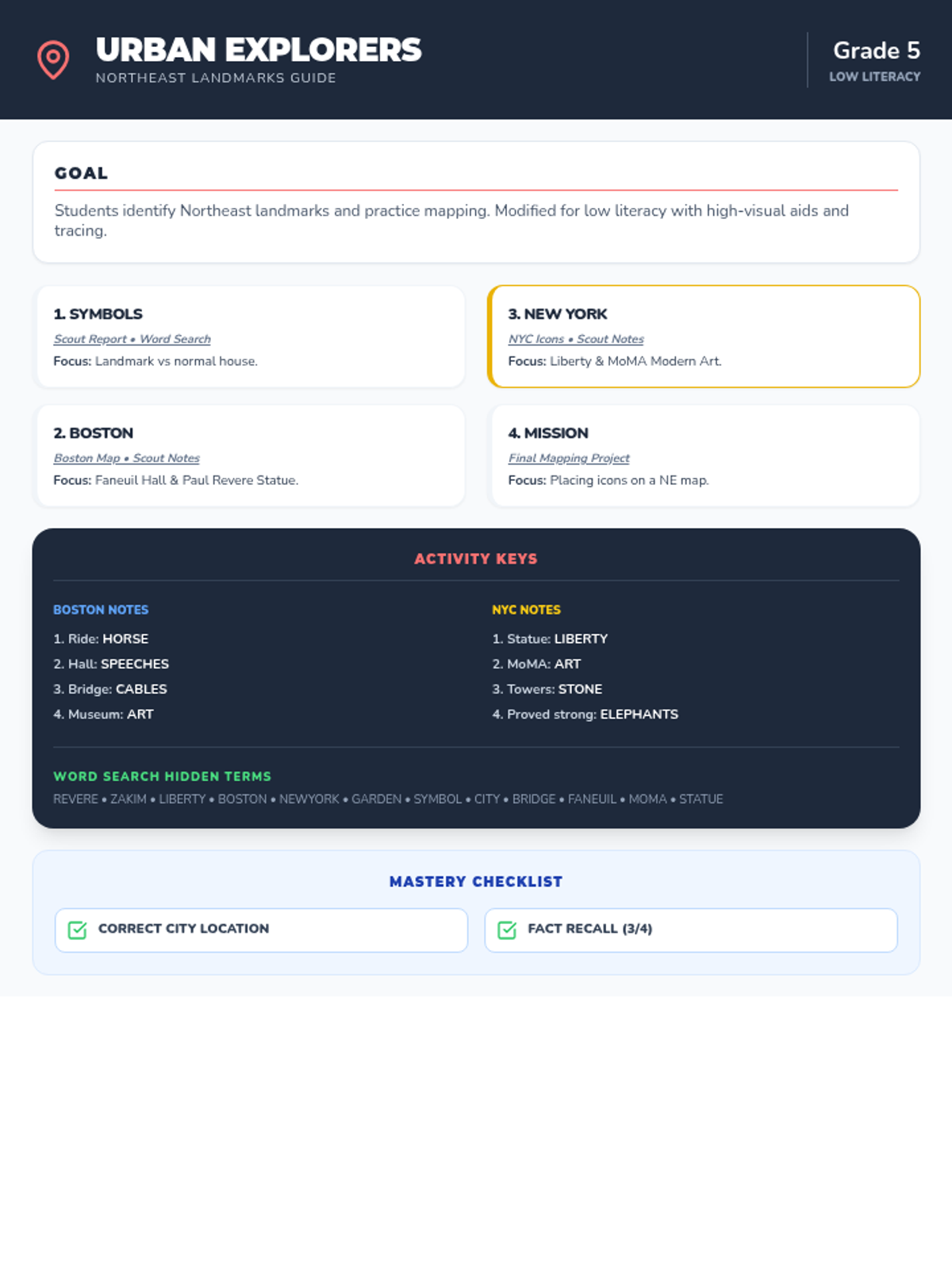
A culminating mapping activity where students place Northeast landmarks on a regional map and identify their locations relative to one another.
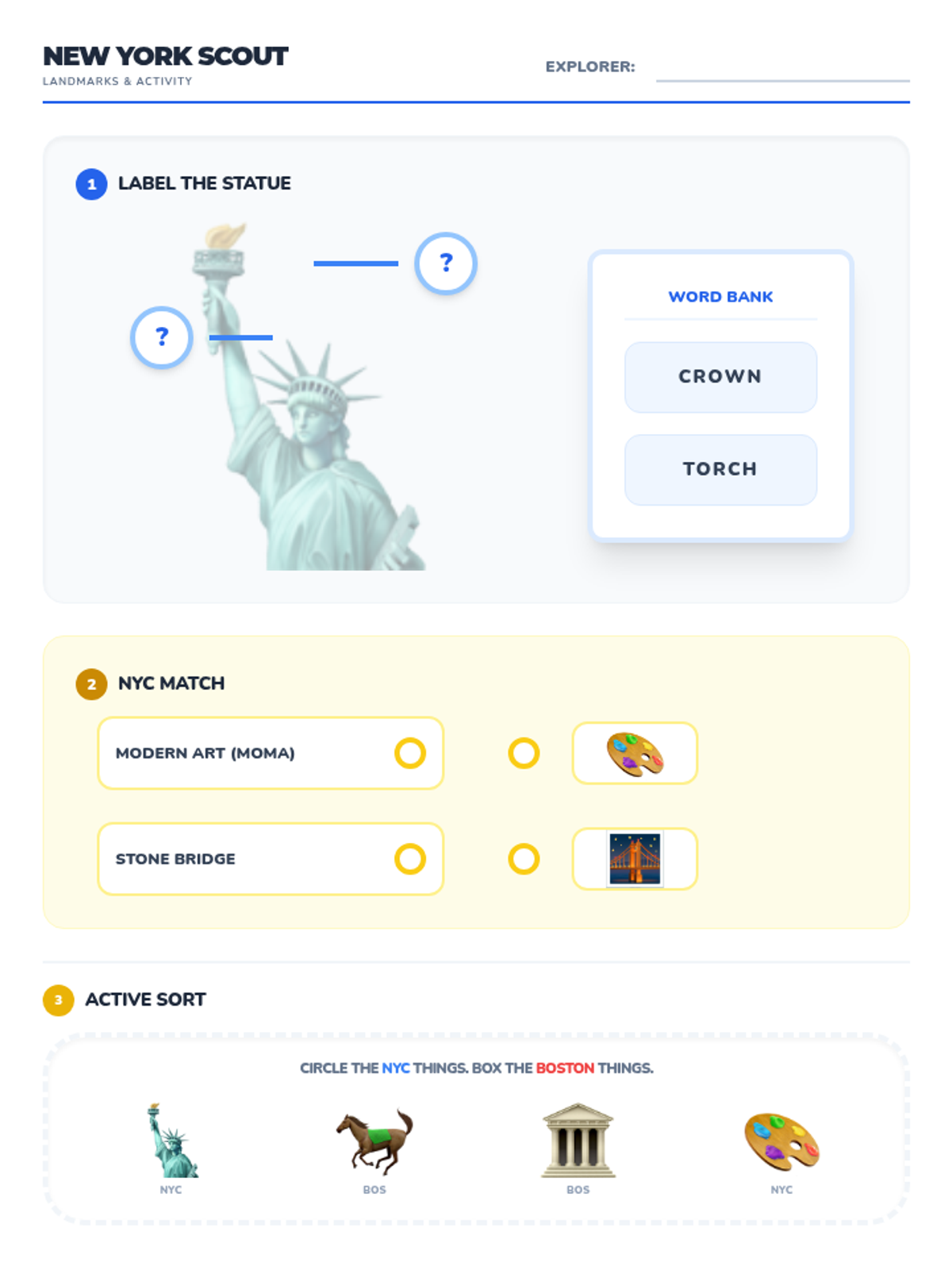
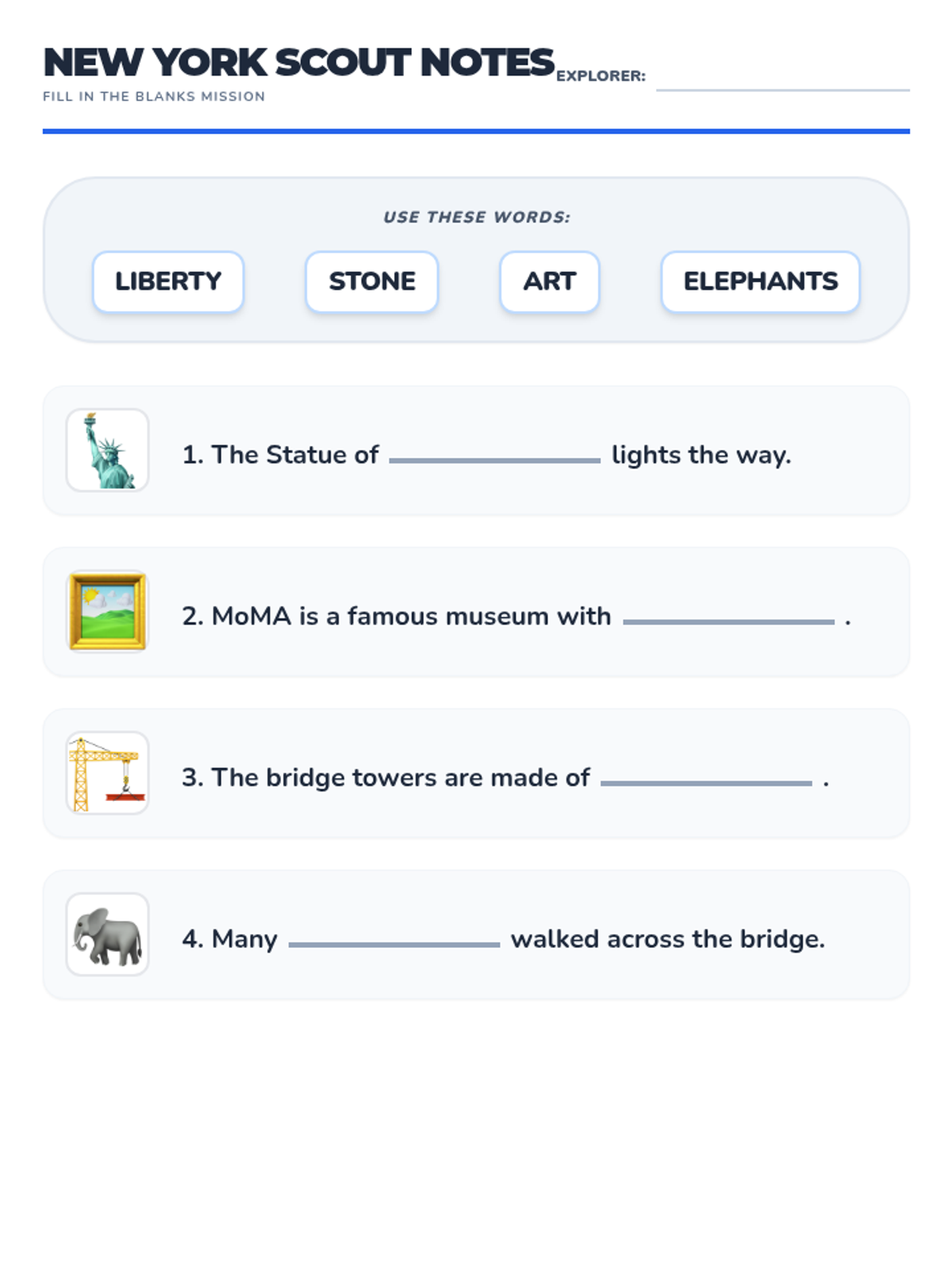
Focuses on iconic New York City landmarks: the Statue of Liberty and the Brooklyn Bridge. Students learn historical significance through visual storytelling.
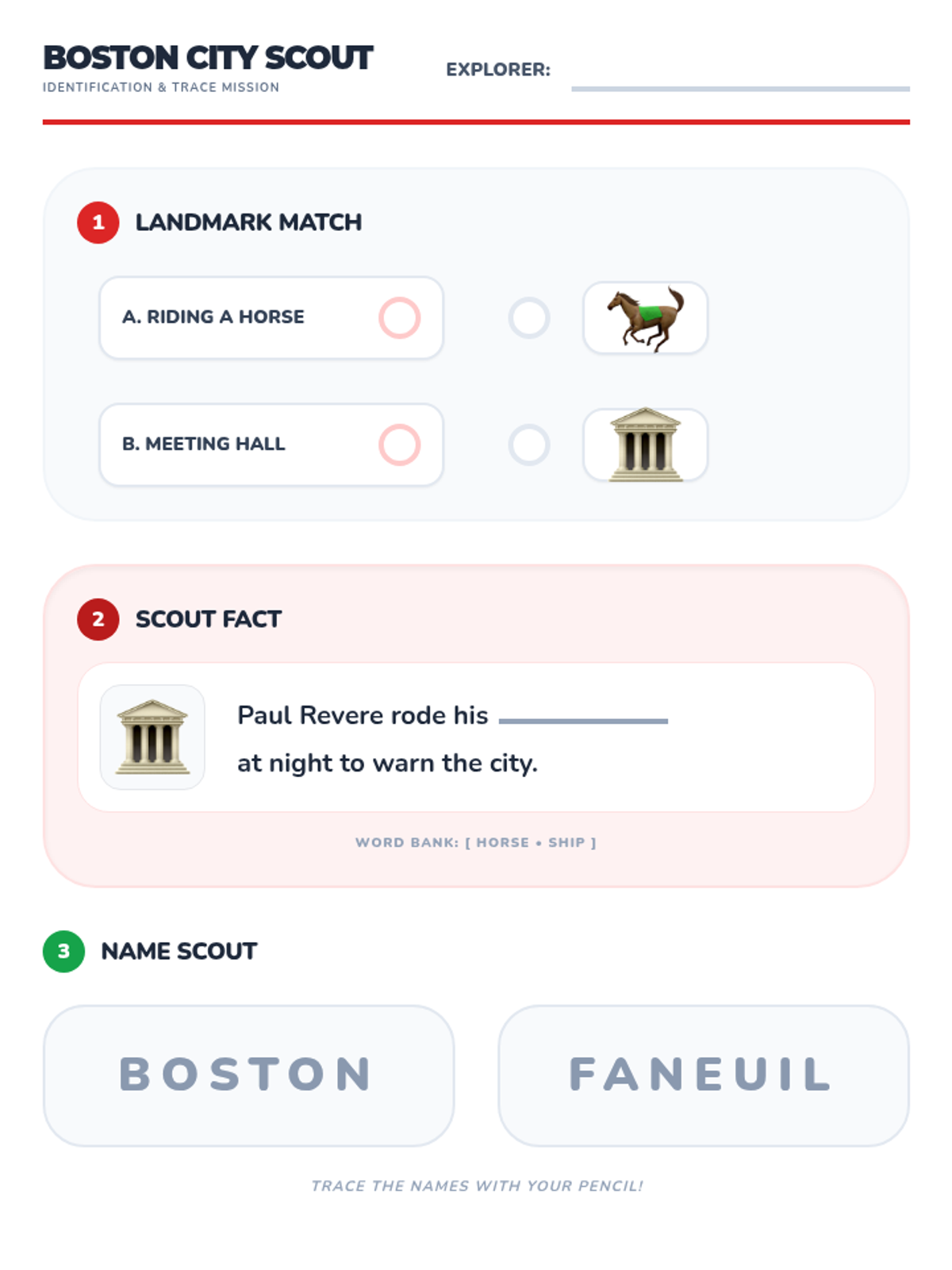
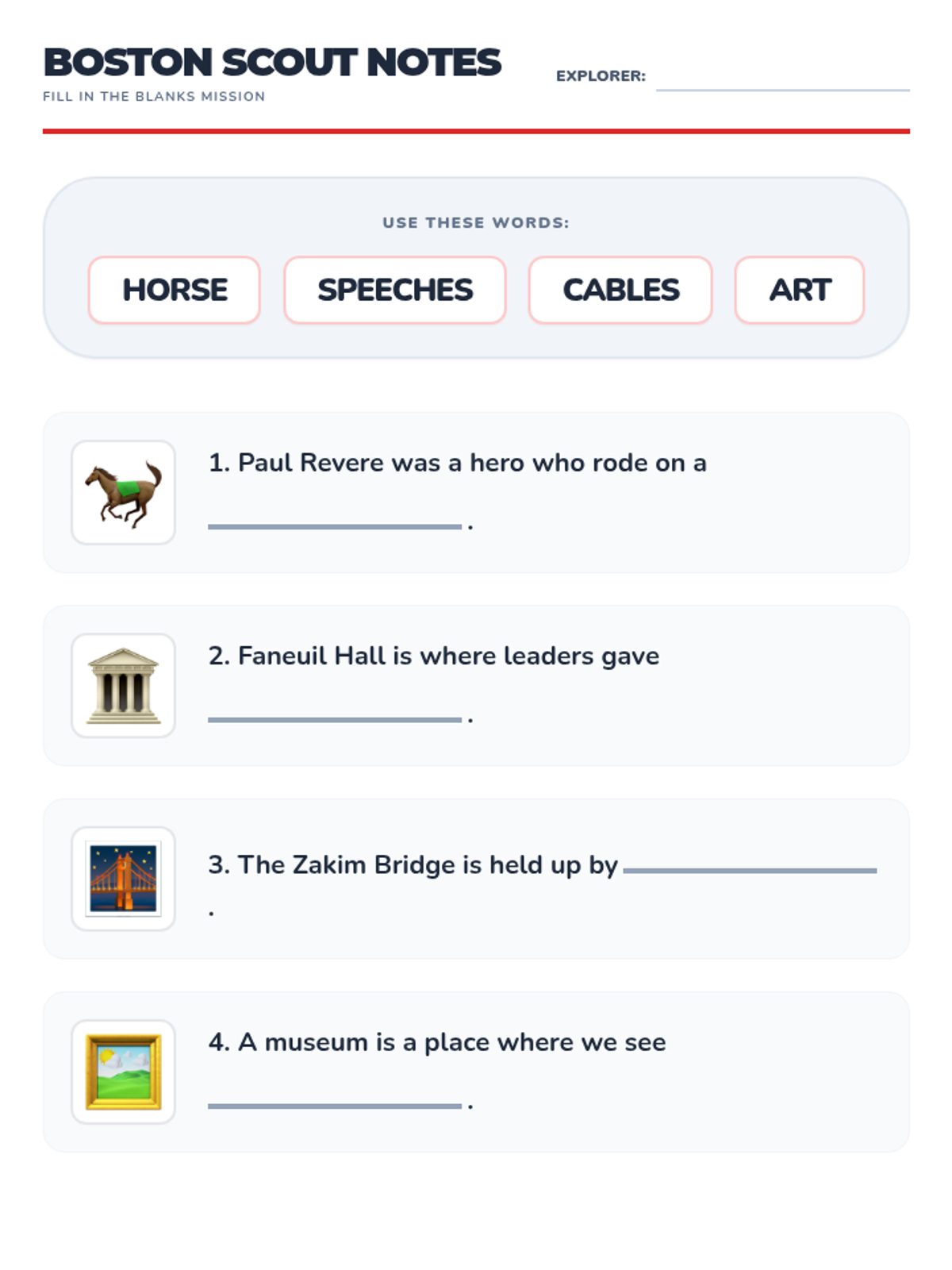
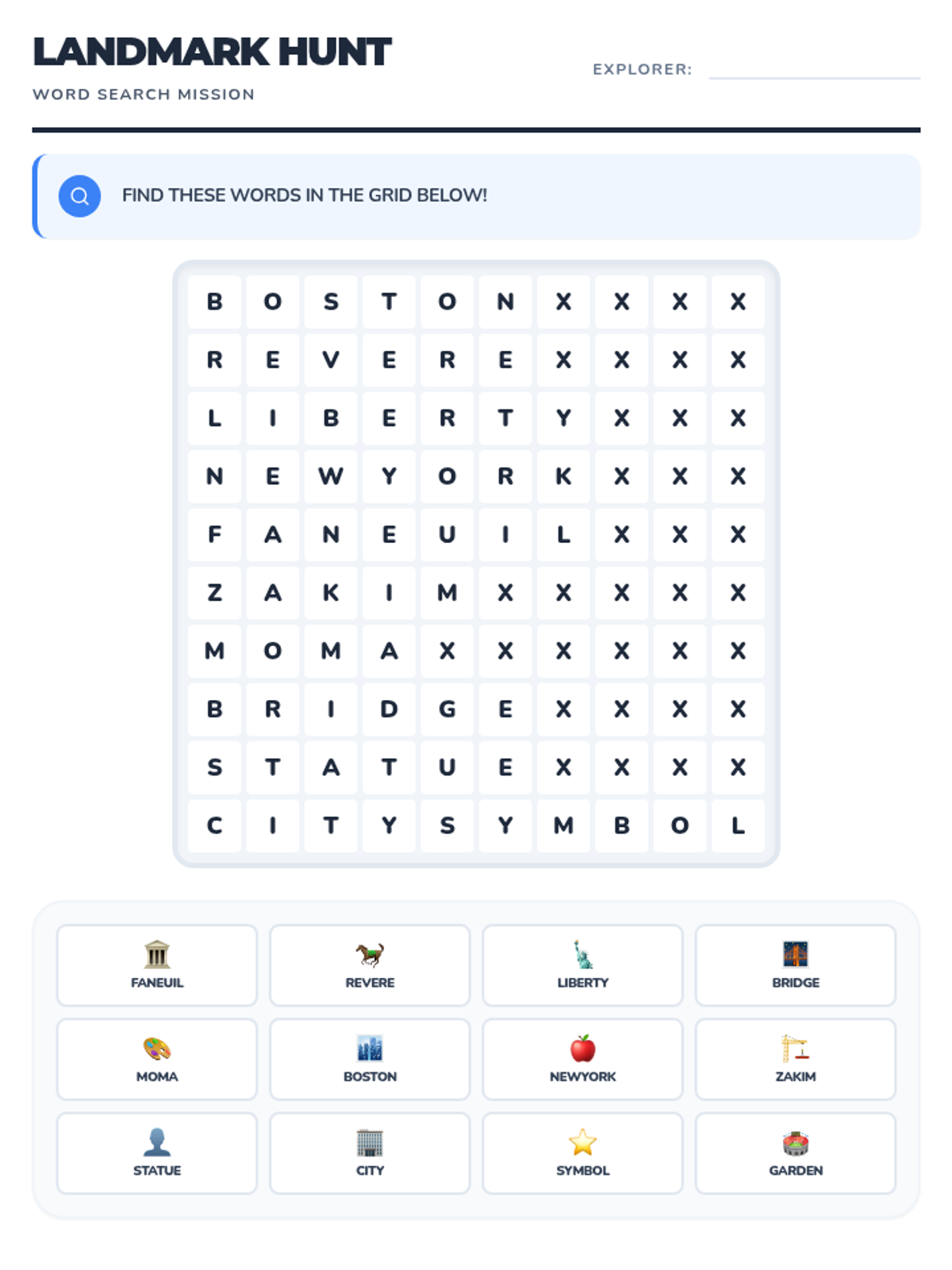
Explores specific landmarks in Boston, including the Paul Revere Statue, Zakim Bridge, and TD Garden. Focuses on historical facts and their location on a city map.
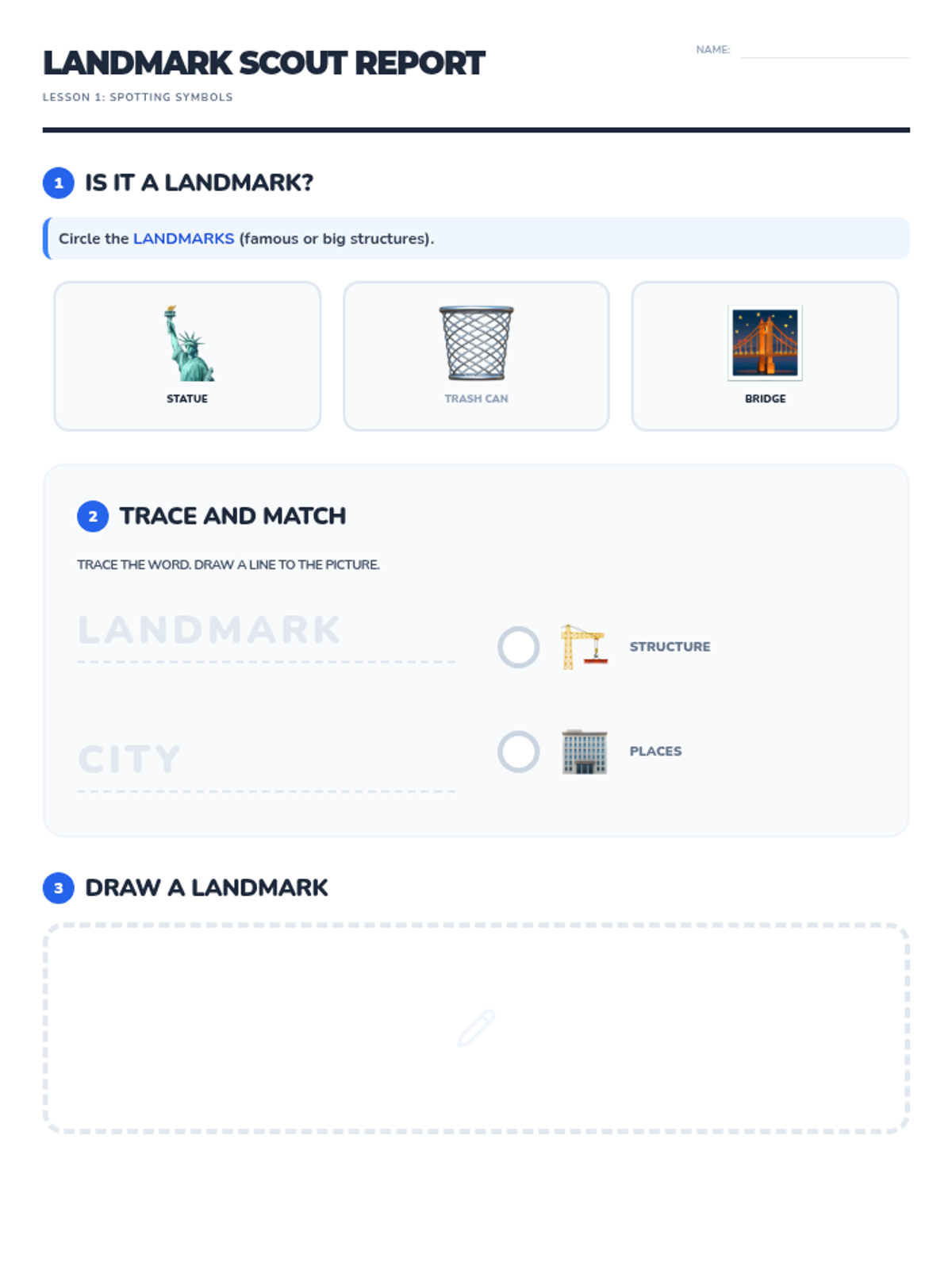
Introduces the concept of a landmark as a recognizable place or structure with historical or cultural significance. Students learn to identify landmarks using visual cues.
Students share their final video with the school community and reflect on their learning journey.
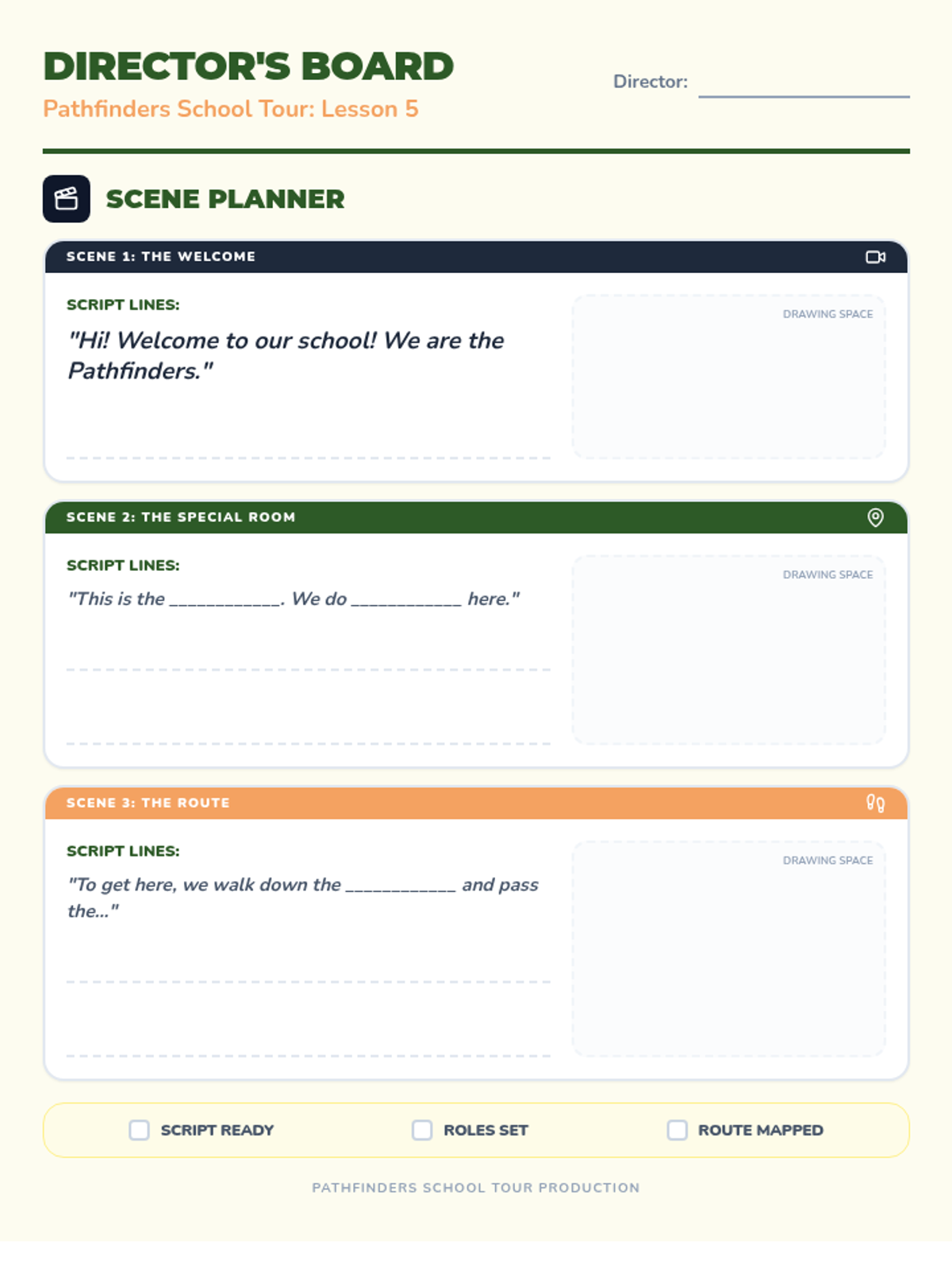
Students script and film their video tour, applying their knowledge of school roles and locations.
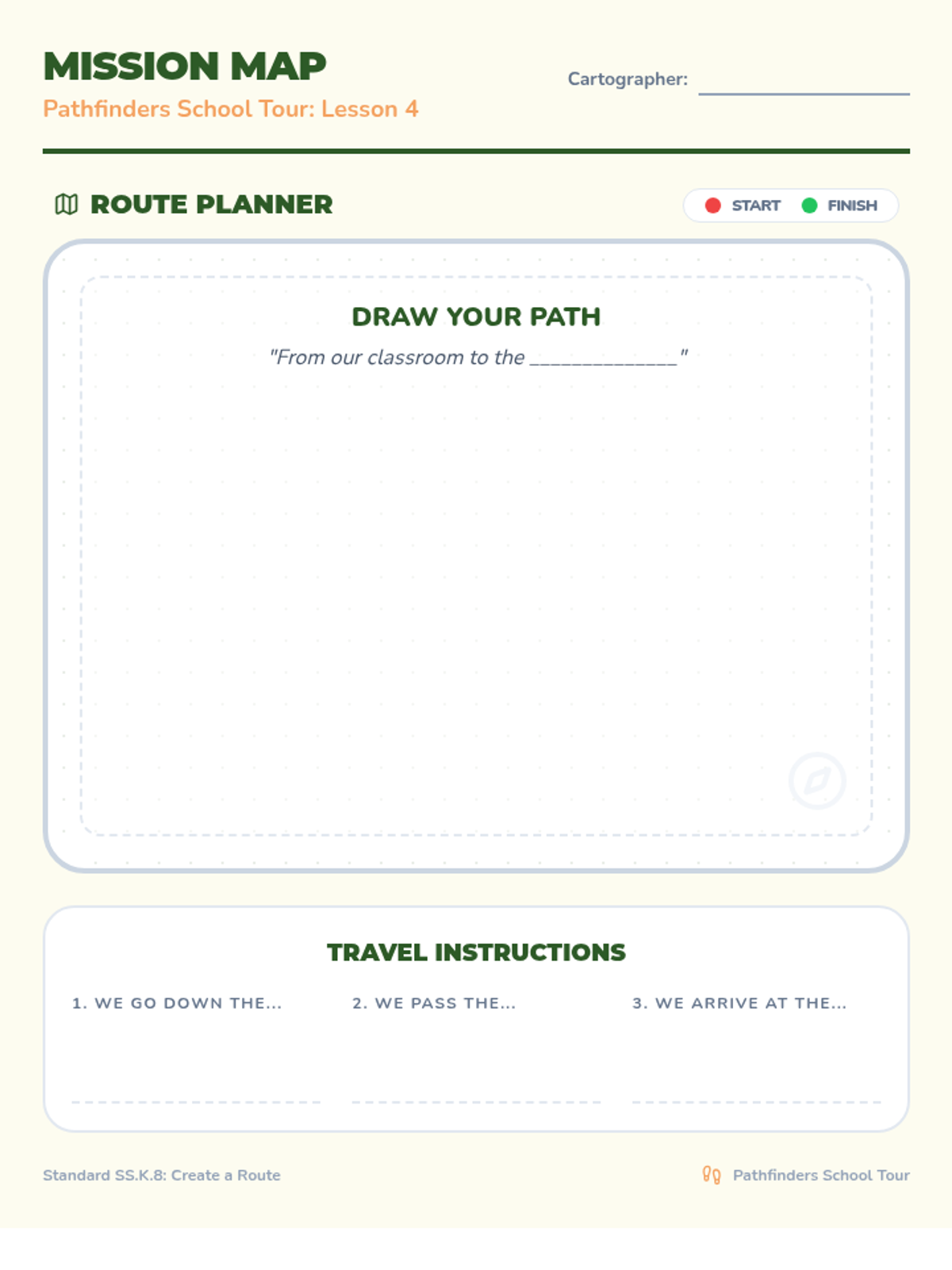
Students learn to use geographic tools to create specific routes and paths between important school locations.
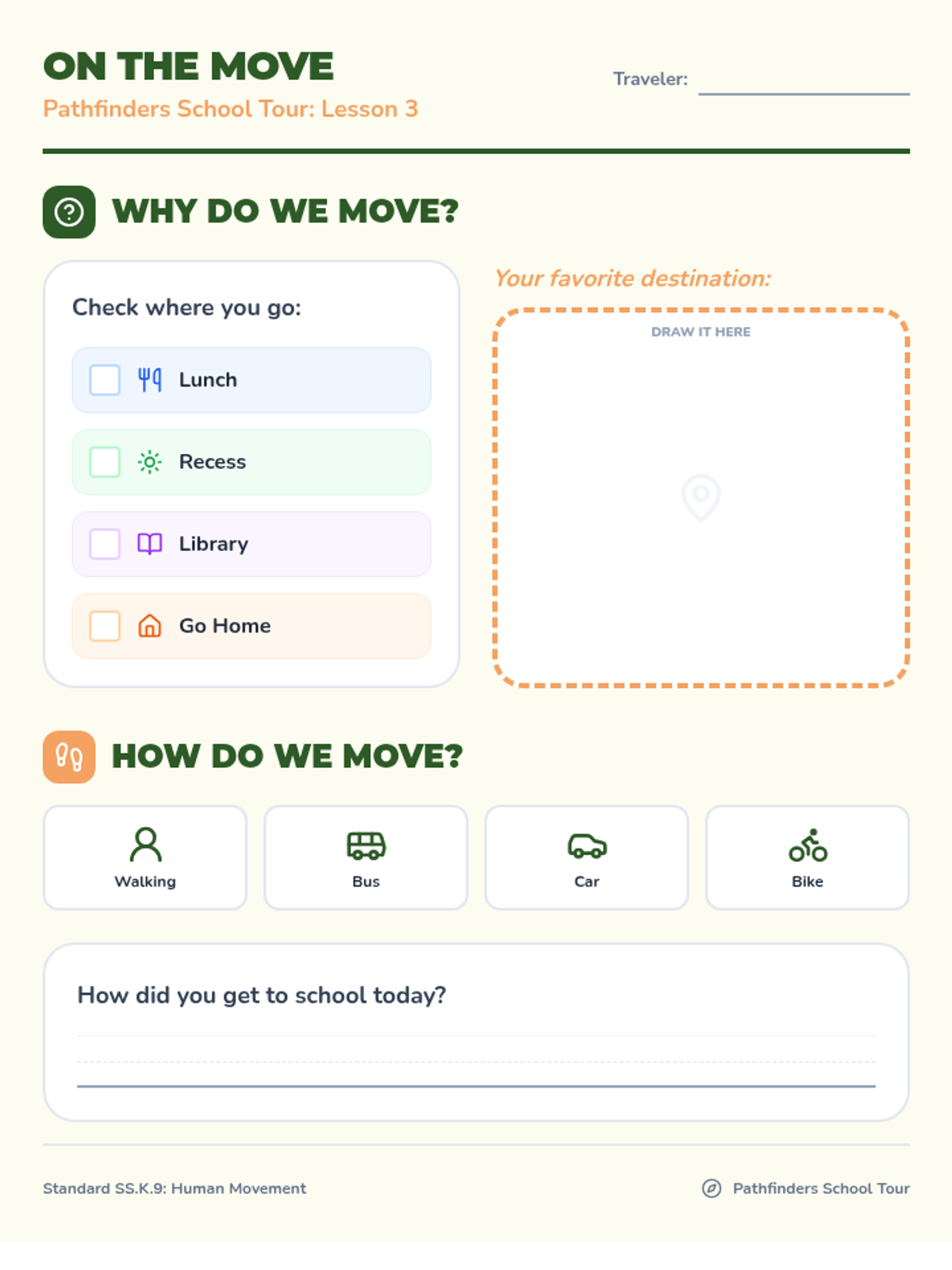
Students analyze the reasons why we move through the school and the different ways we travel from place to place.
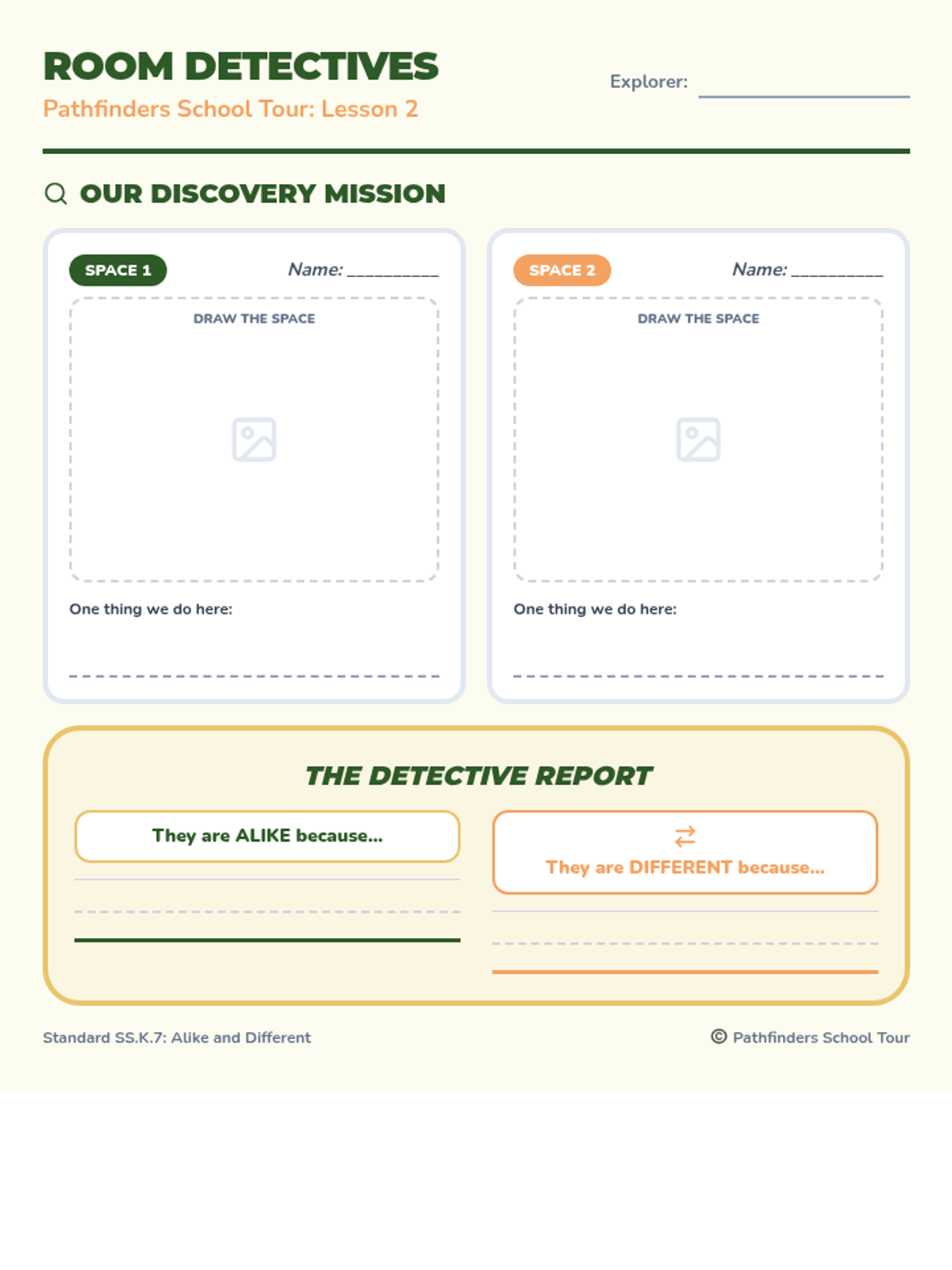
Students investigate different areas of the school to discover how spaces are alike and different in purpose and appearance.
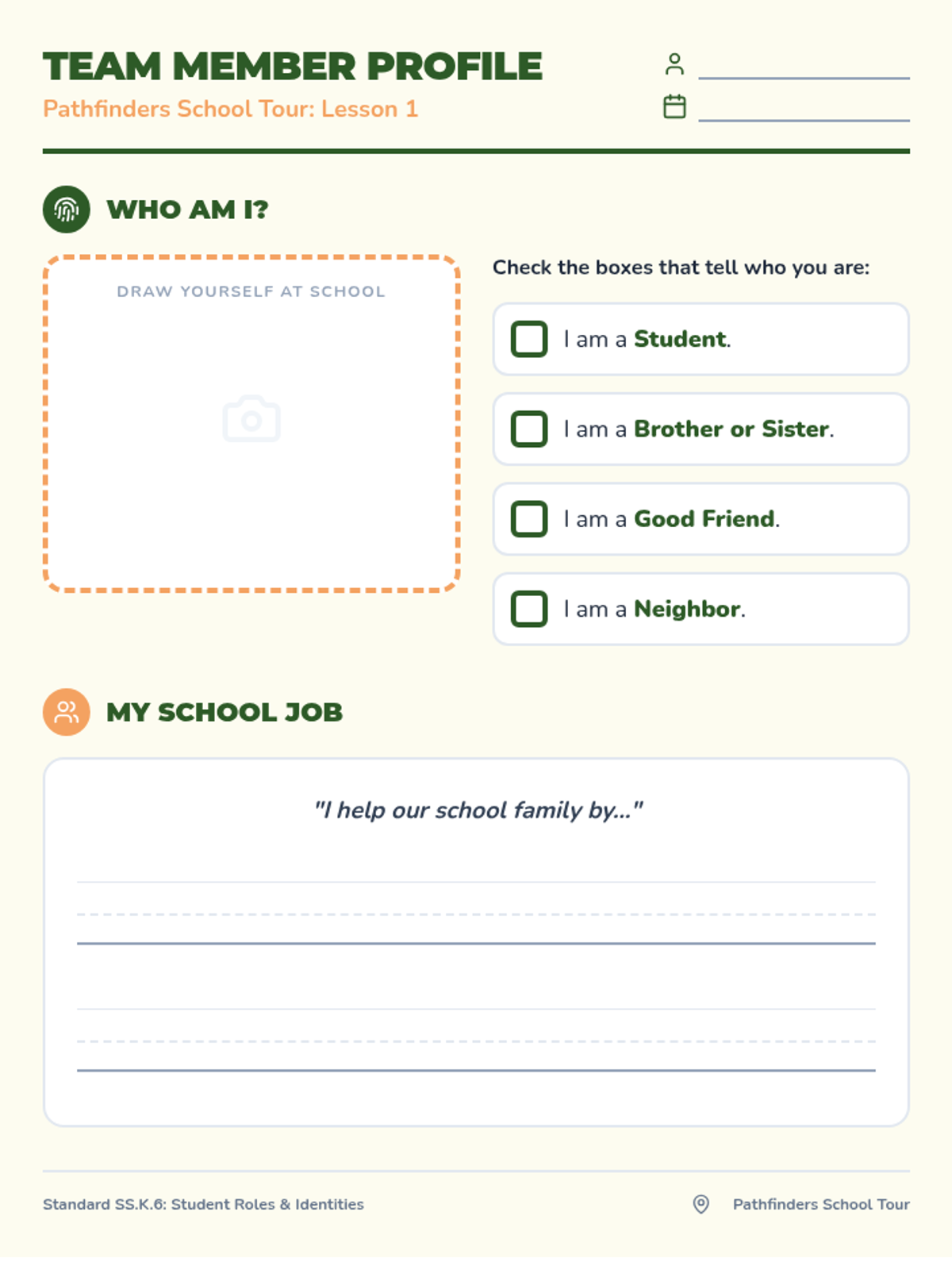
Students explore their identities as members of the school family and identify the different roles people play to make the school work.
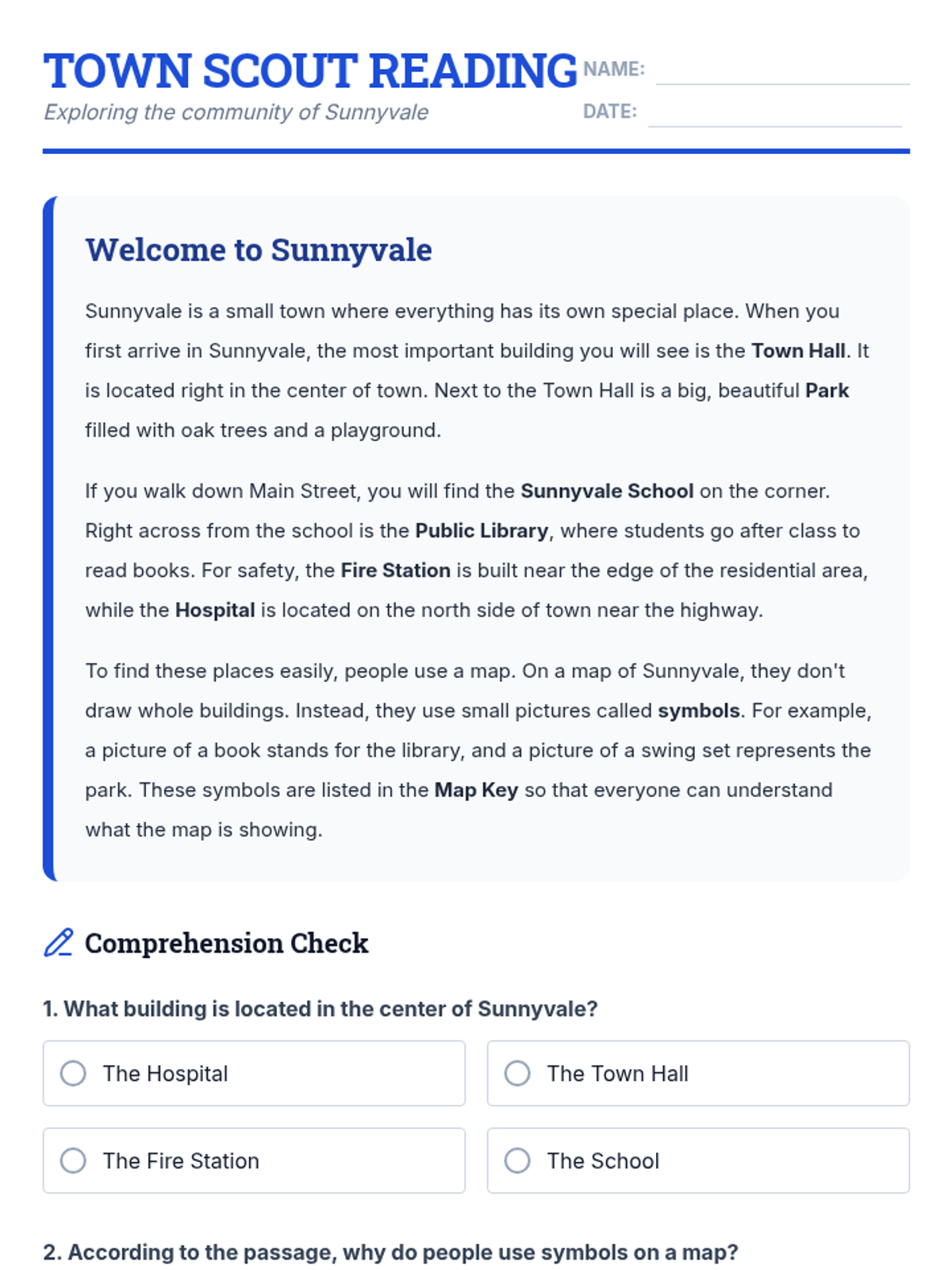
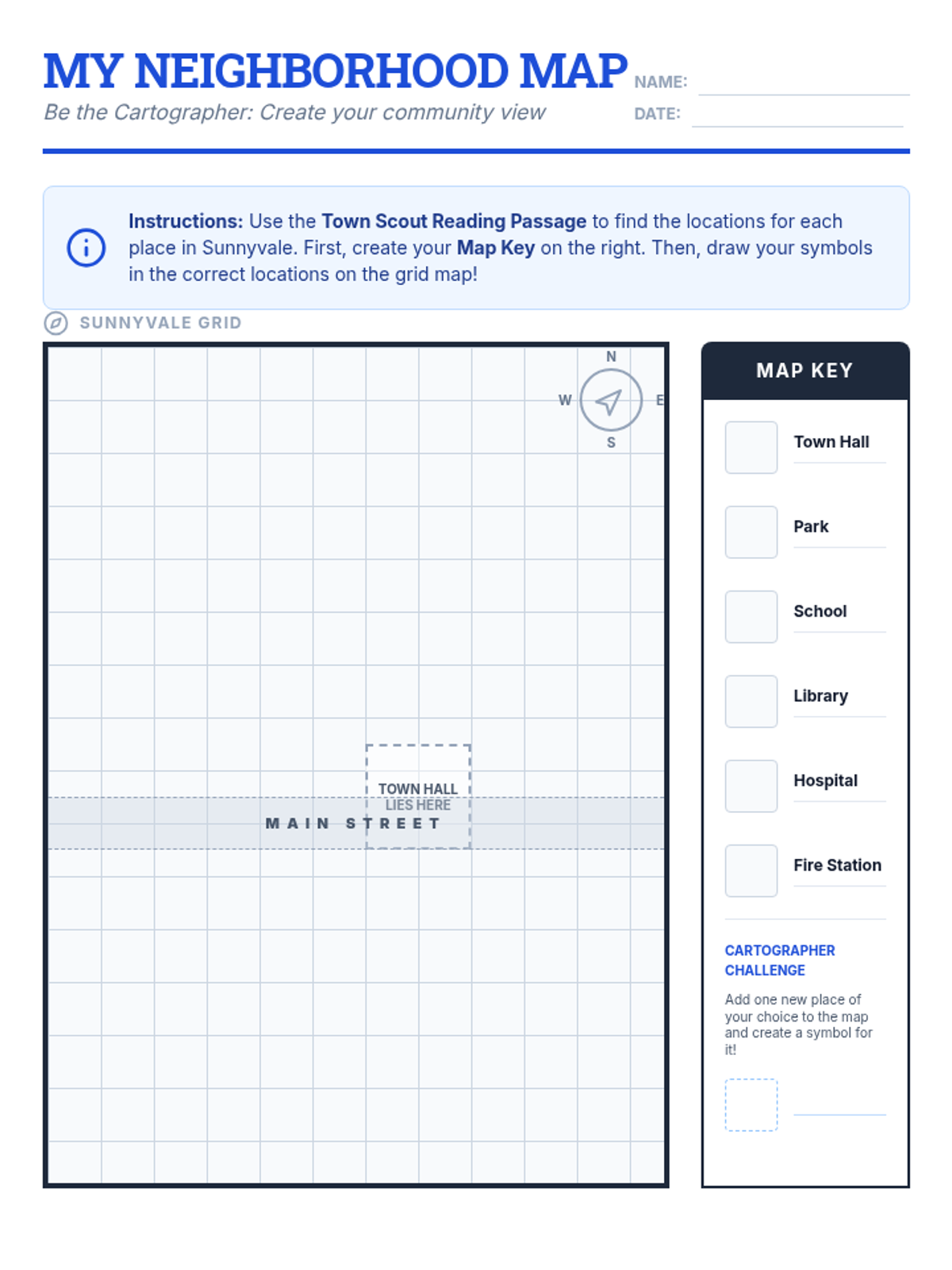
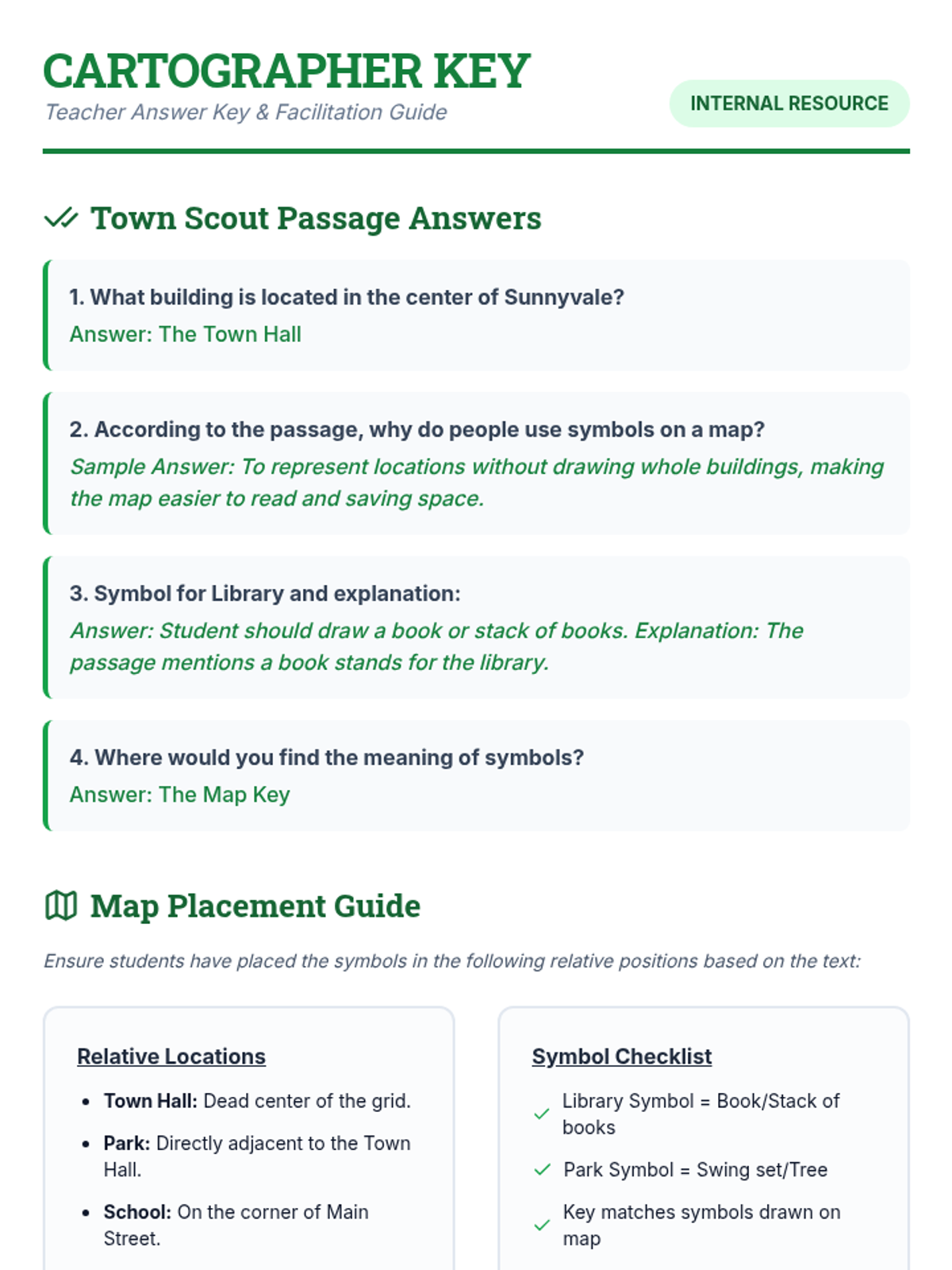
Students will learn to navigate their local community by mastering map keys and symbols. This lesson includes instructional slides, a reading passage, and a hands-on mapping activity.
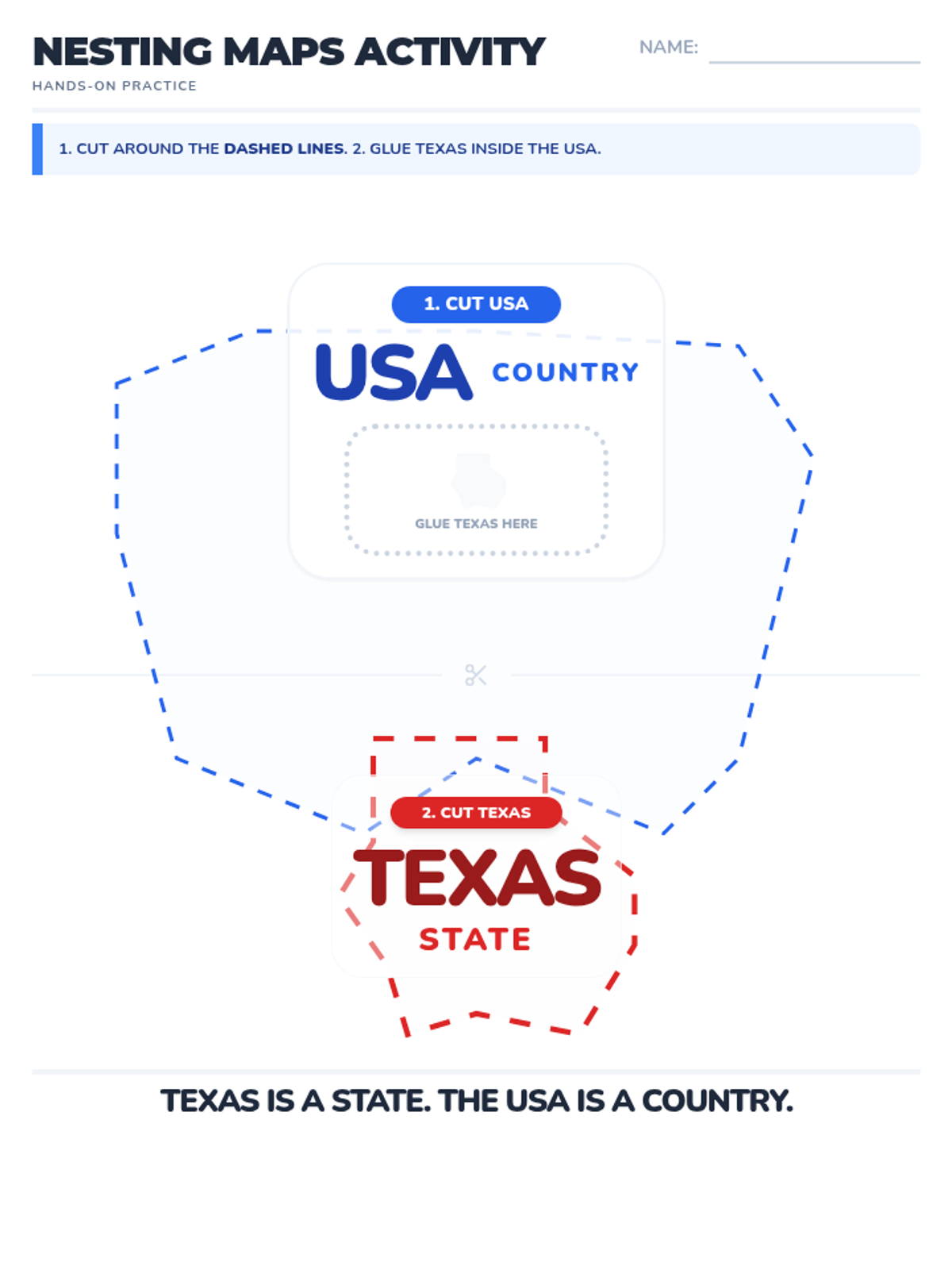
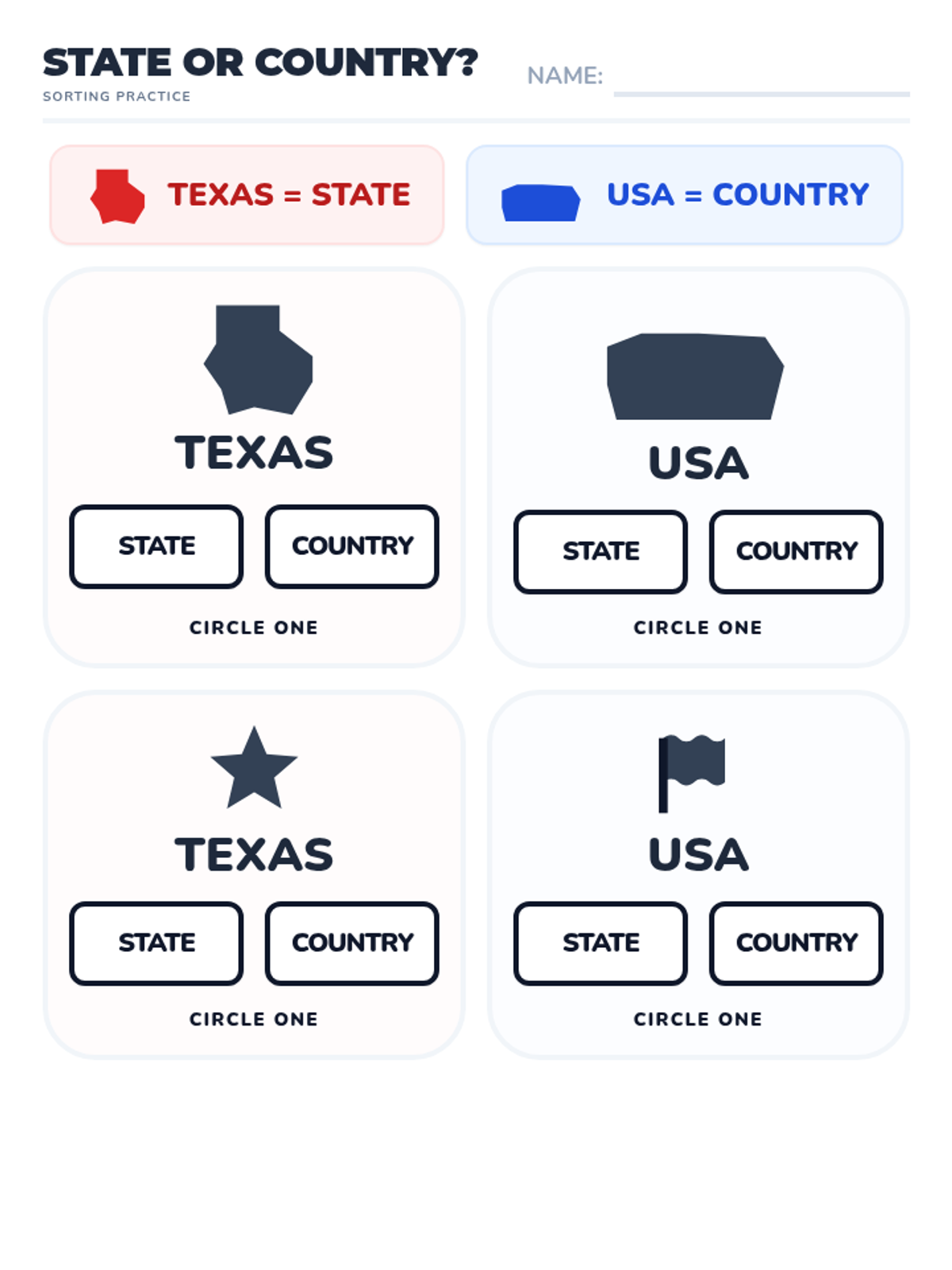
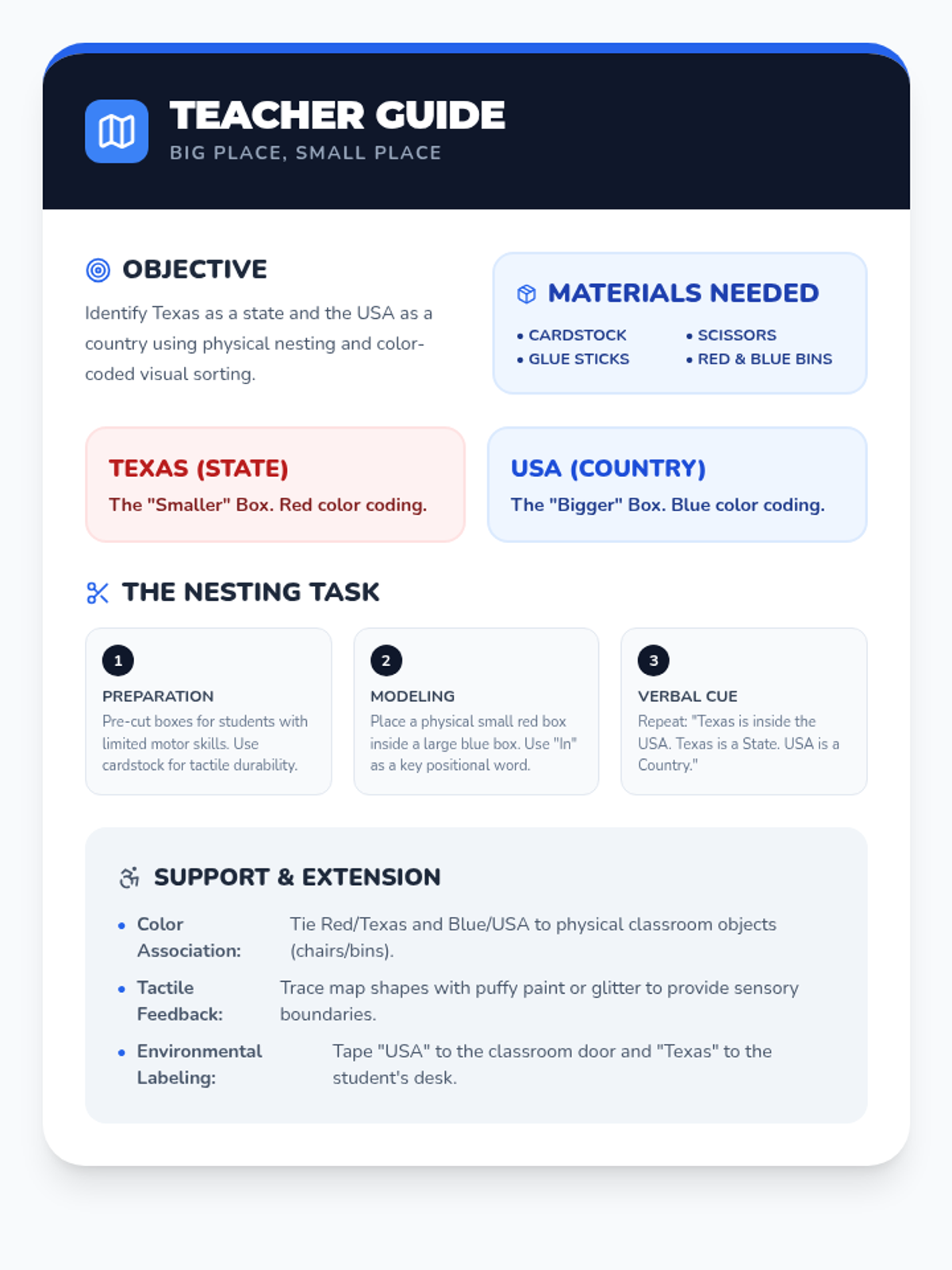
A foundational geography lesson designed for early emergent learners to distinguish between their state (Texas) and their country (USA) using visual nesting and simple categorization.
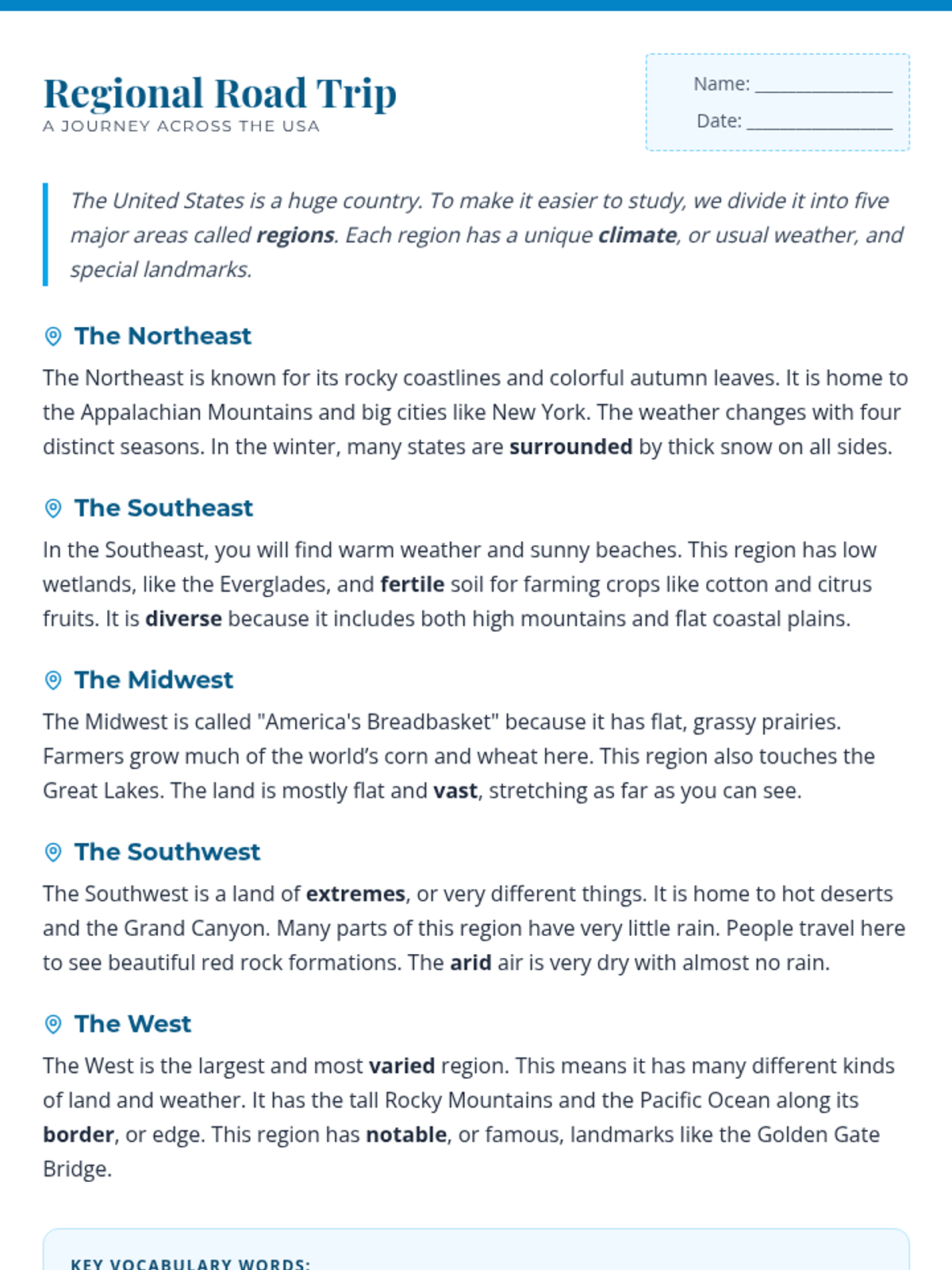
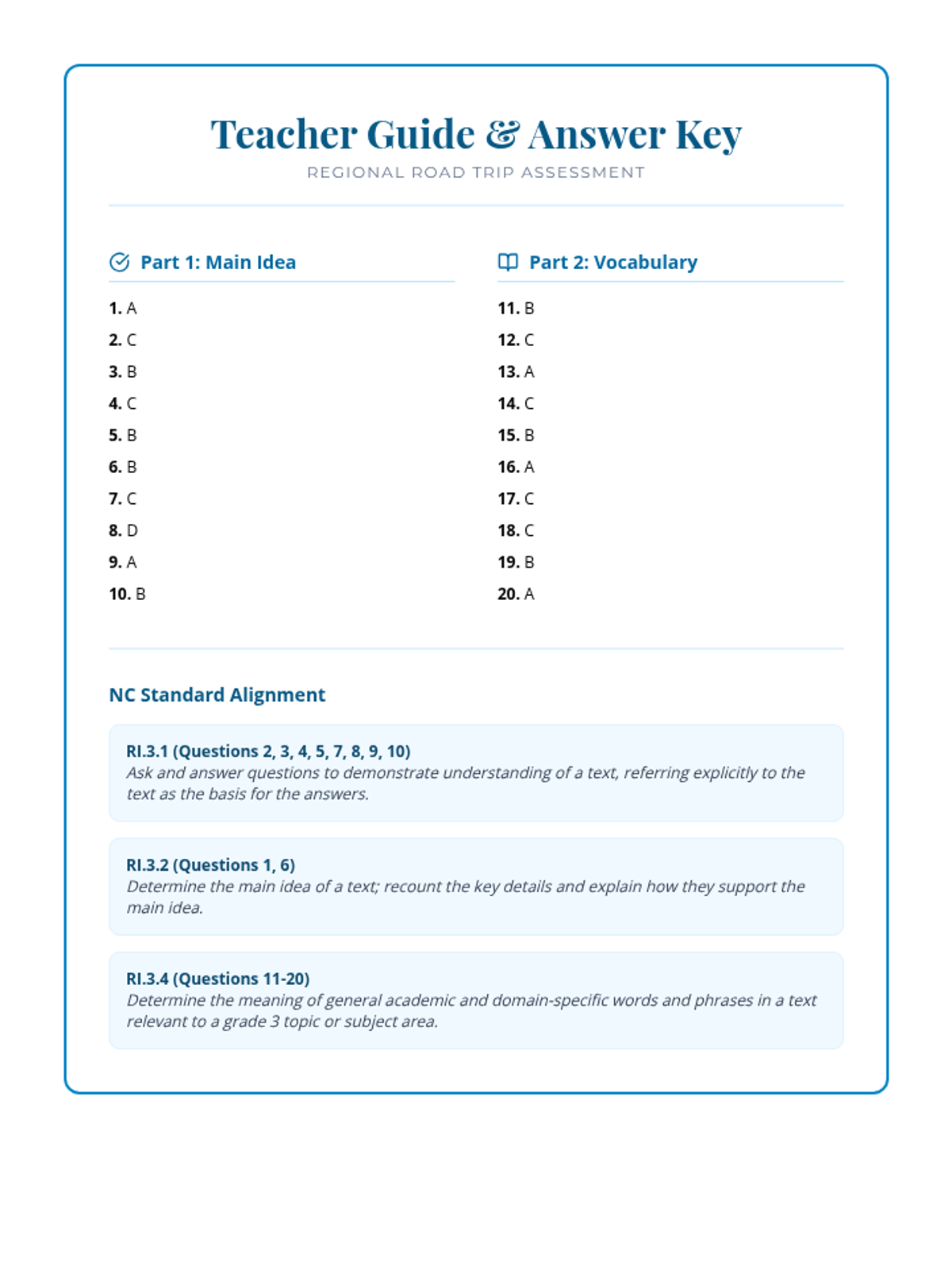
A comprehensive lesson exploring the five major regions of the United States, focusing on key geographic features and vocabulary through informational text.
A lesson exploring the development and importance of writing in ancient Mesopotamia, specifically cuneiform and the role of scribes.
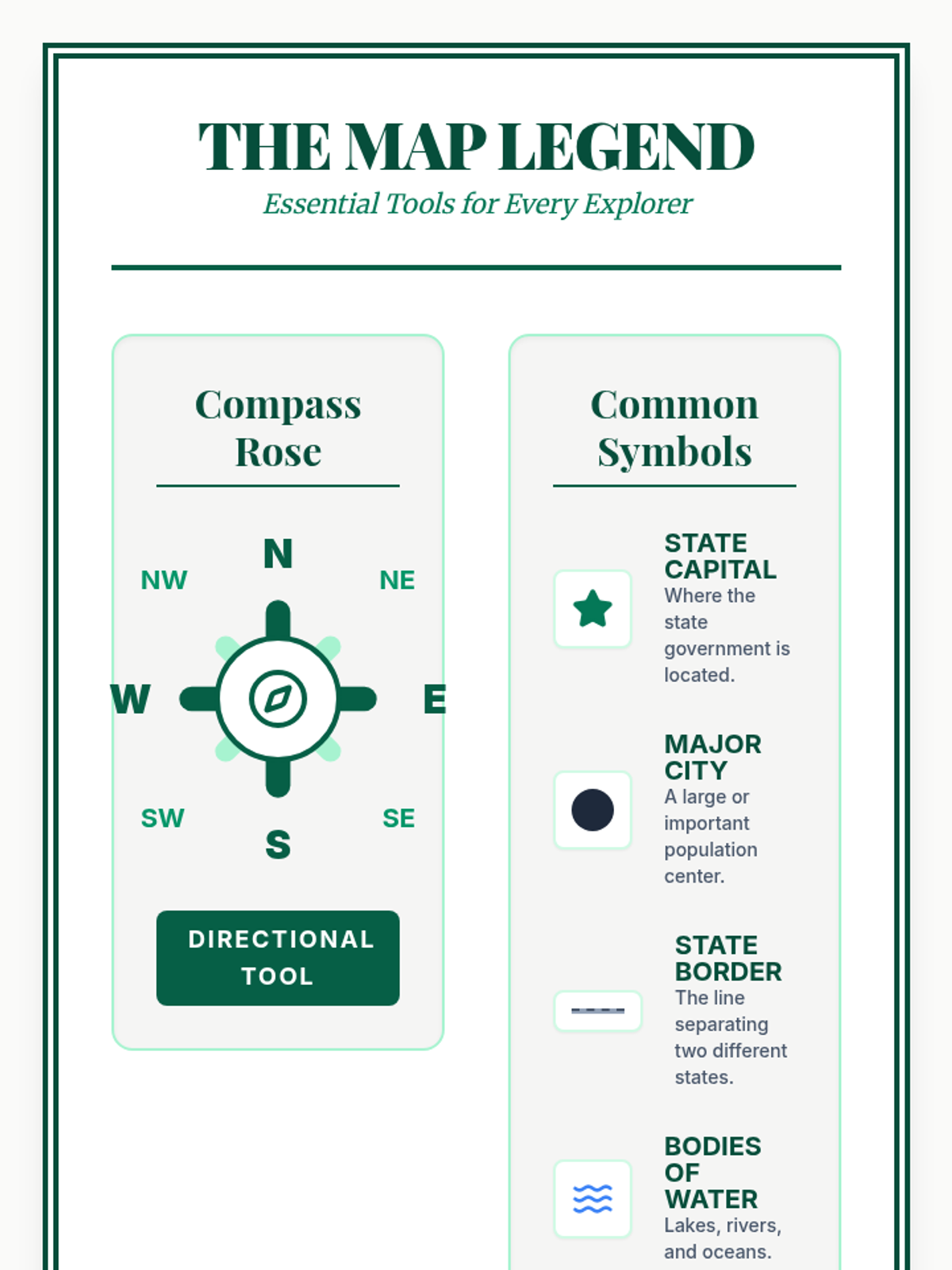
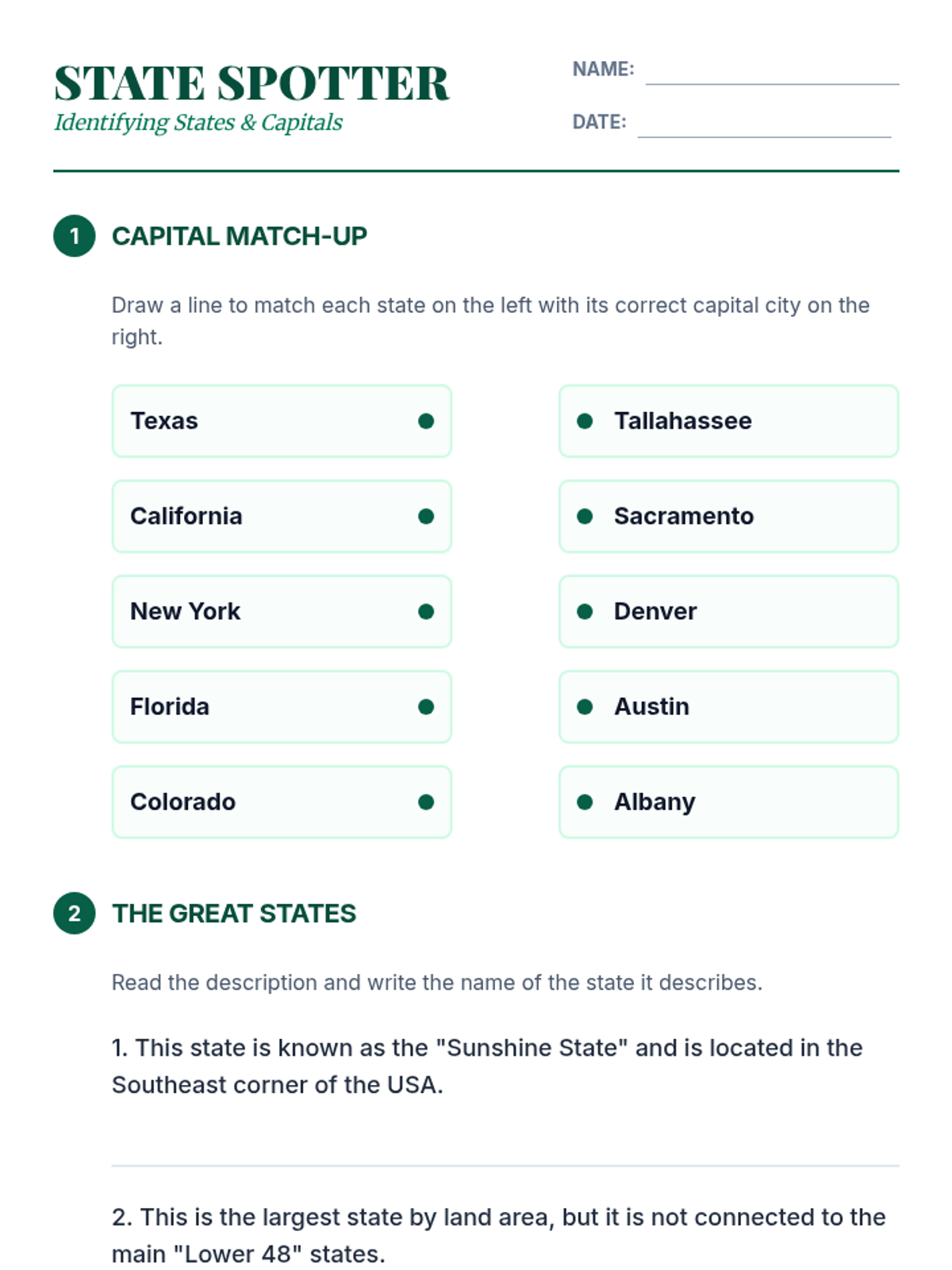
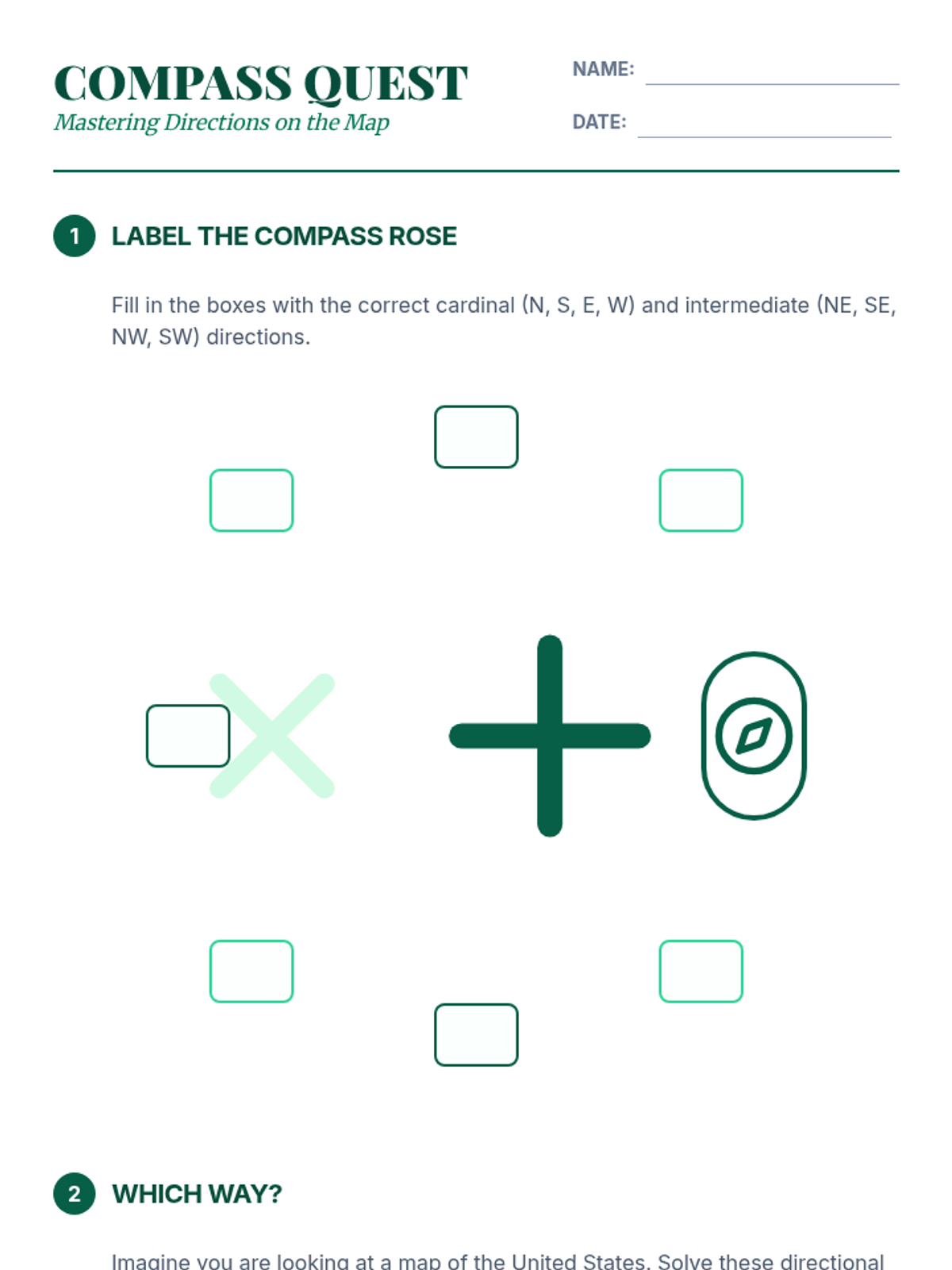
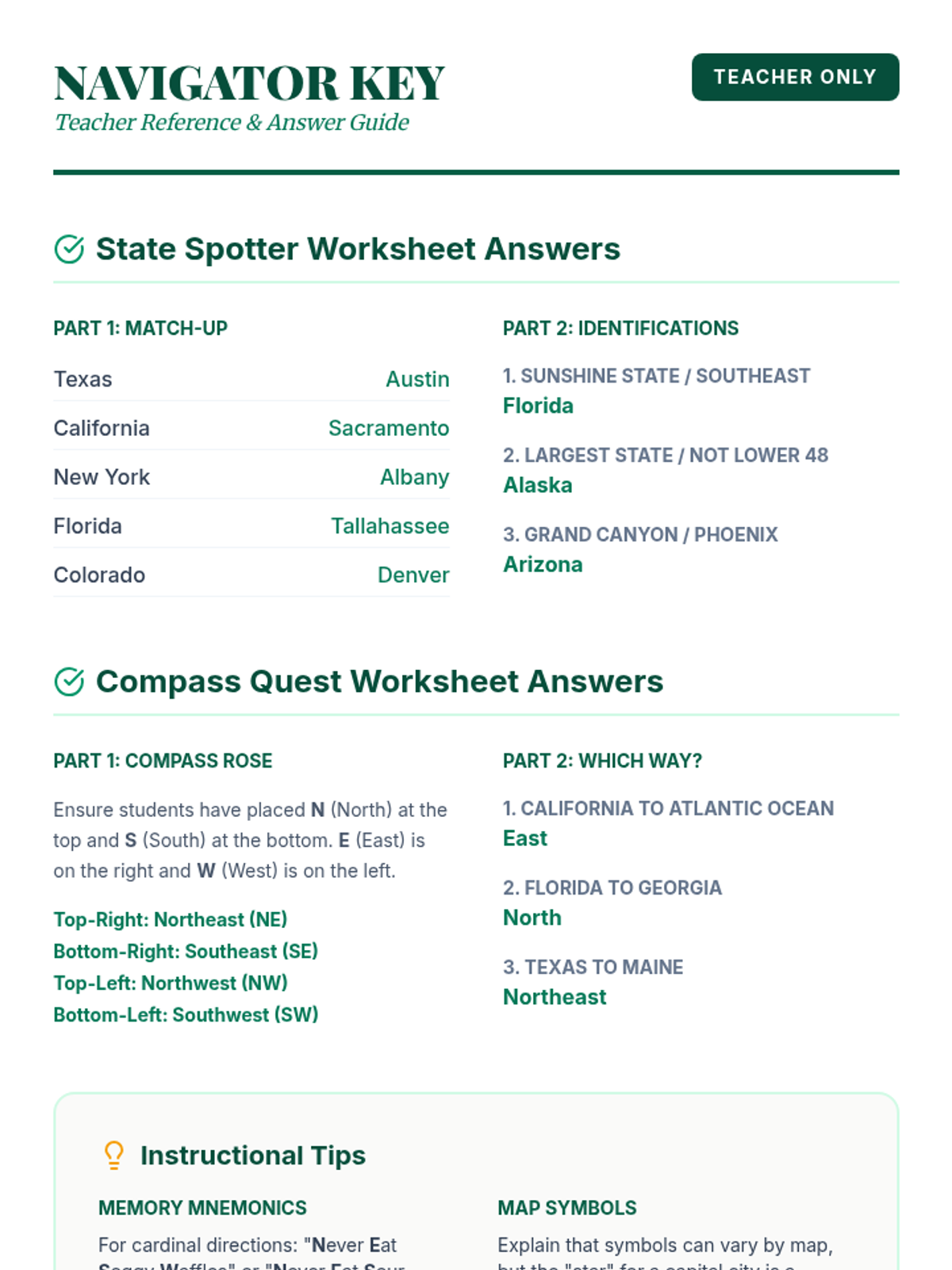
An introductory lesson on United States geography, focusing on state identification, capital cities, and the practical use of a compass rose for navigation.
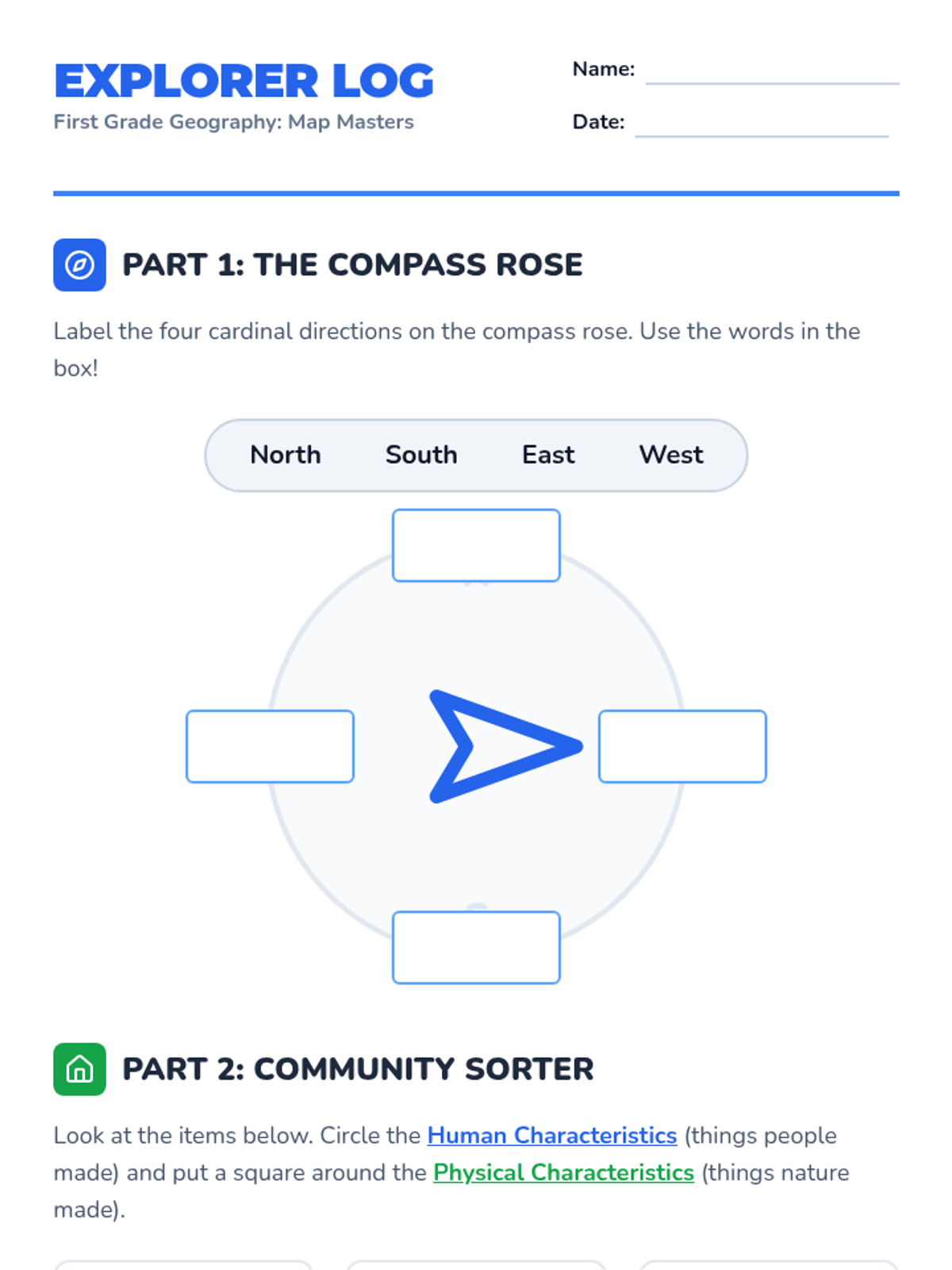
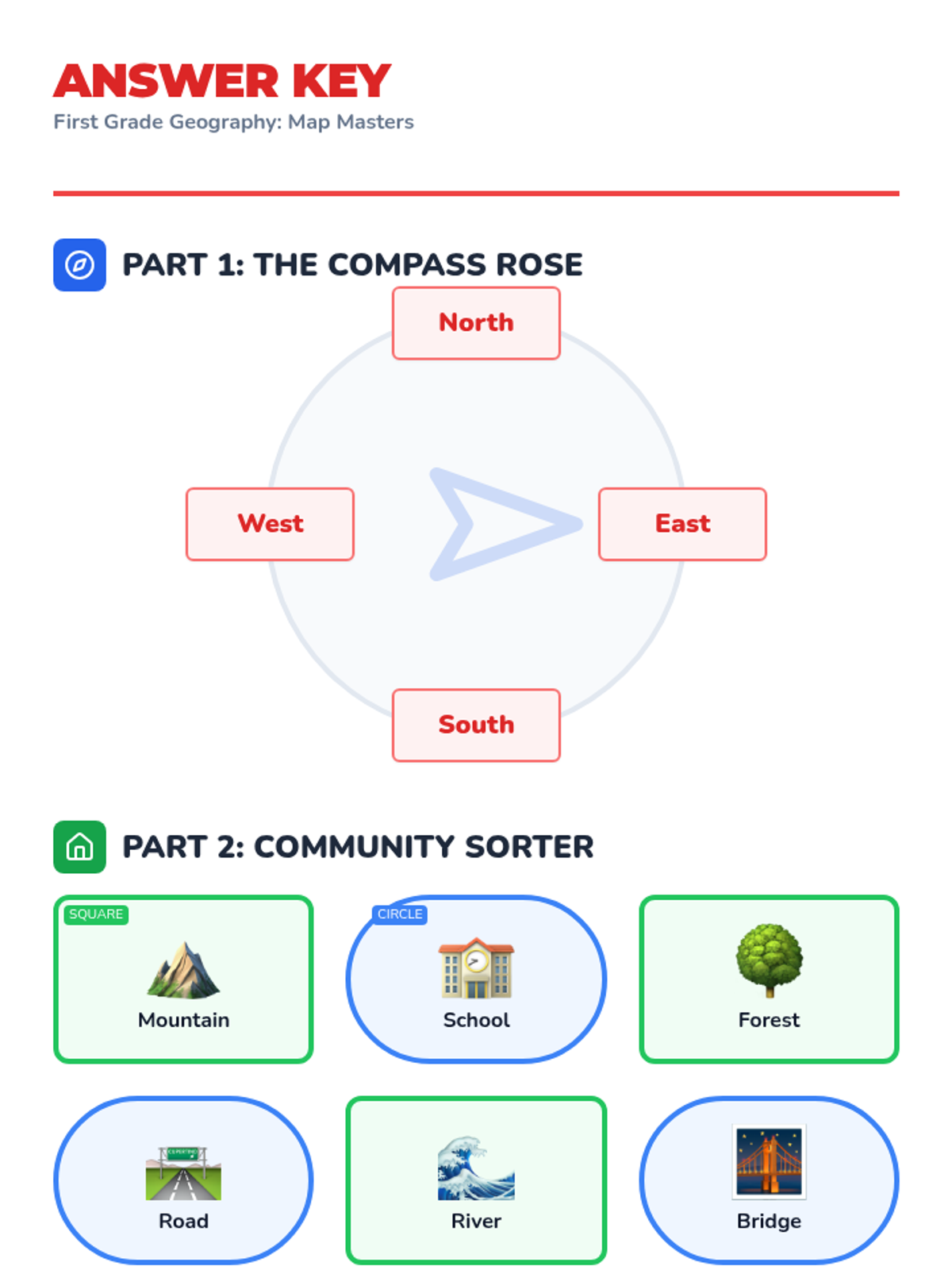
A first-grade geography lesson where students explore maps and globes, master cardinal directions, and distinguish between physical and human characteristics of their community.
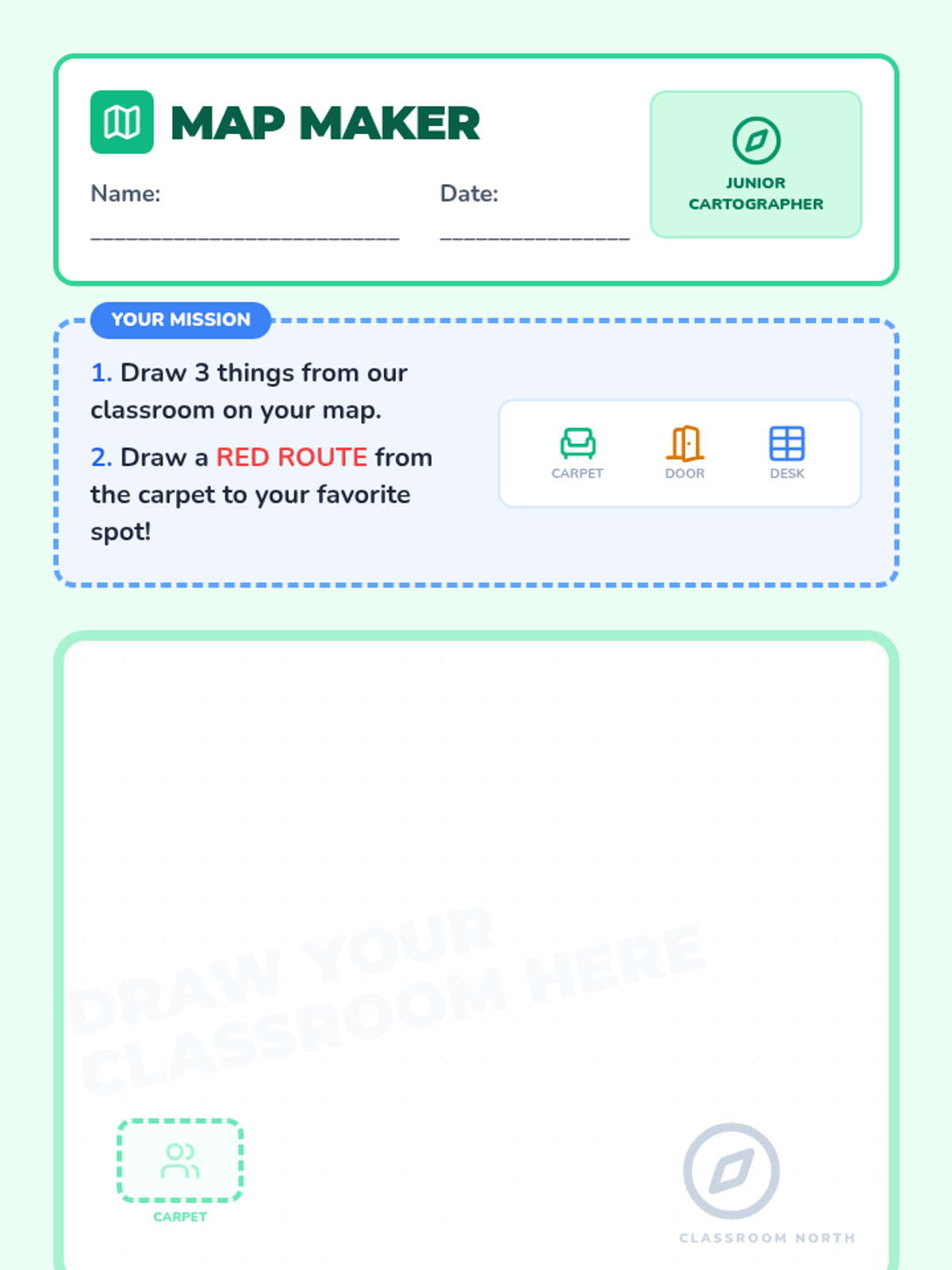
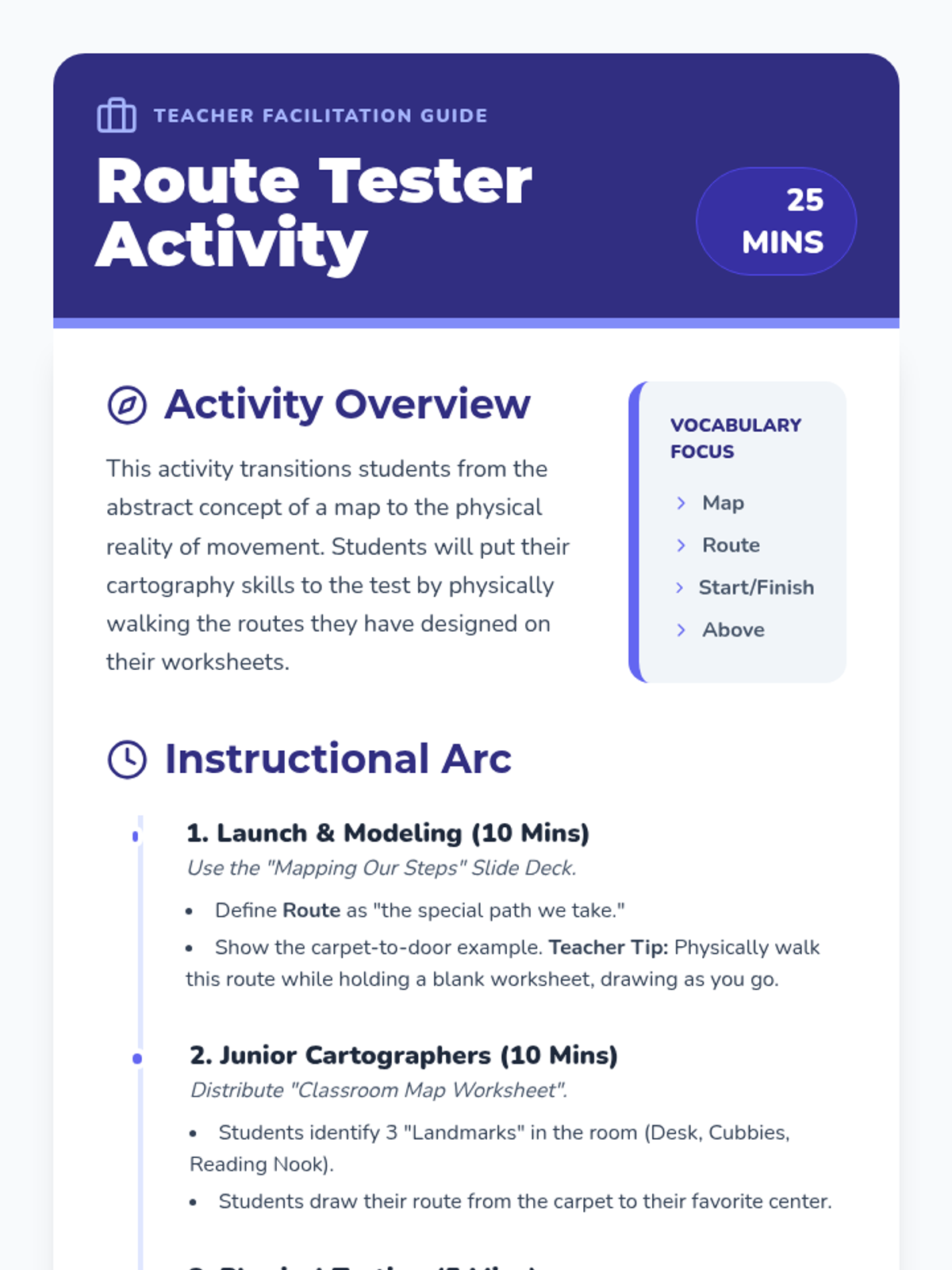
A hands-on introduction to spatial awareness where Kindergarten students learn to define a 'route' and create their own simple classroom maps to navigate from one spot to another.
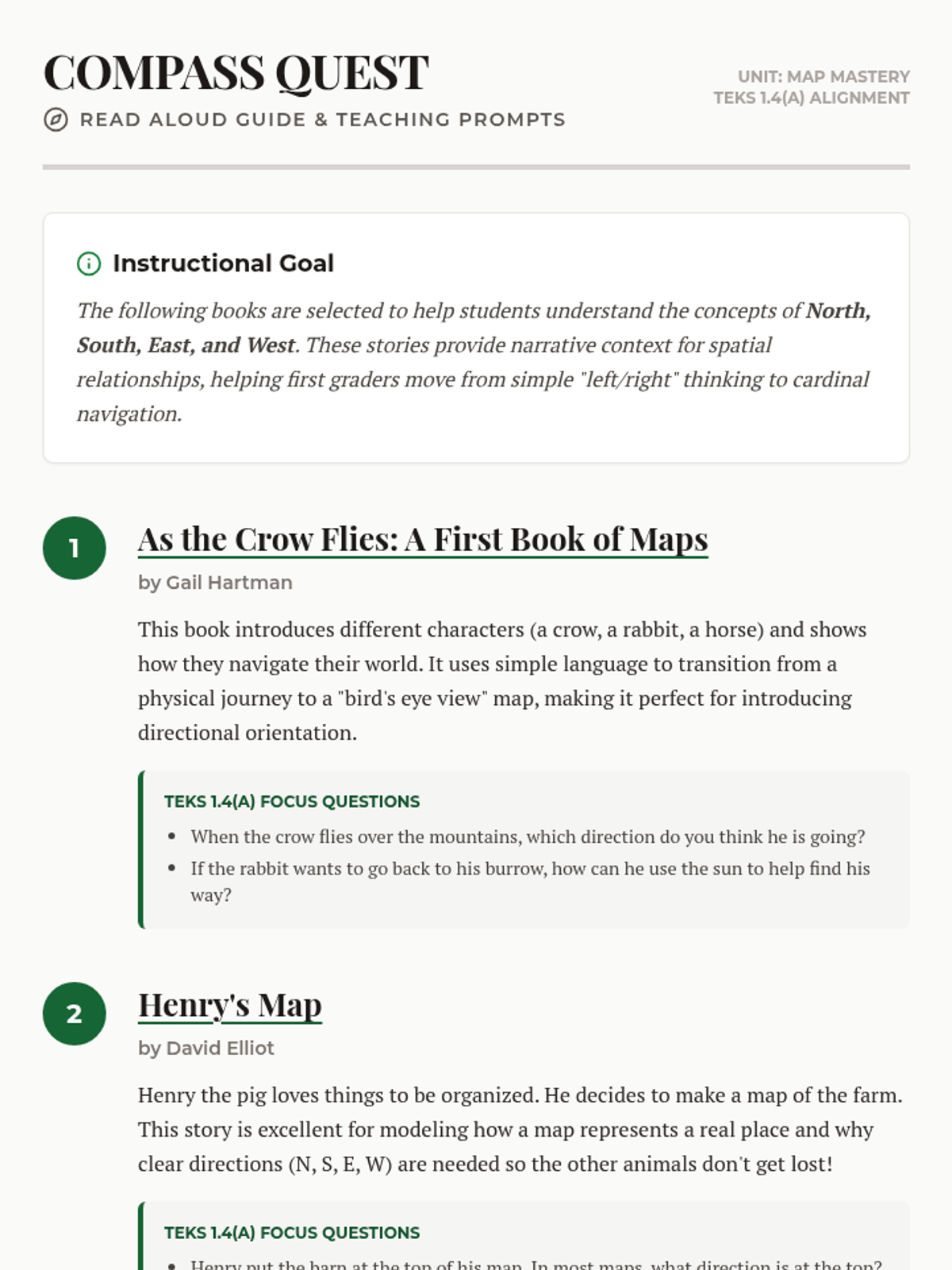
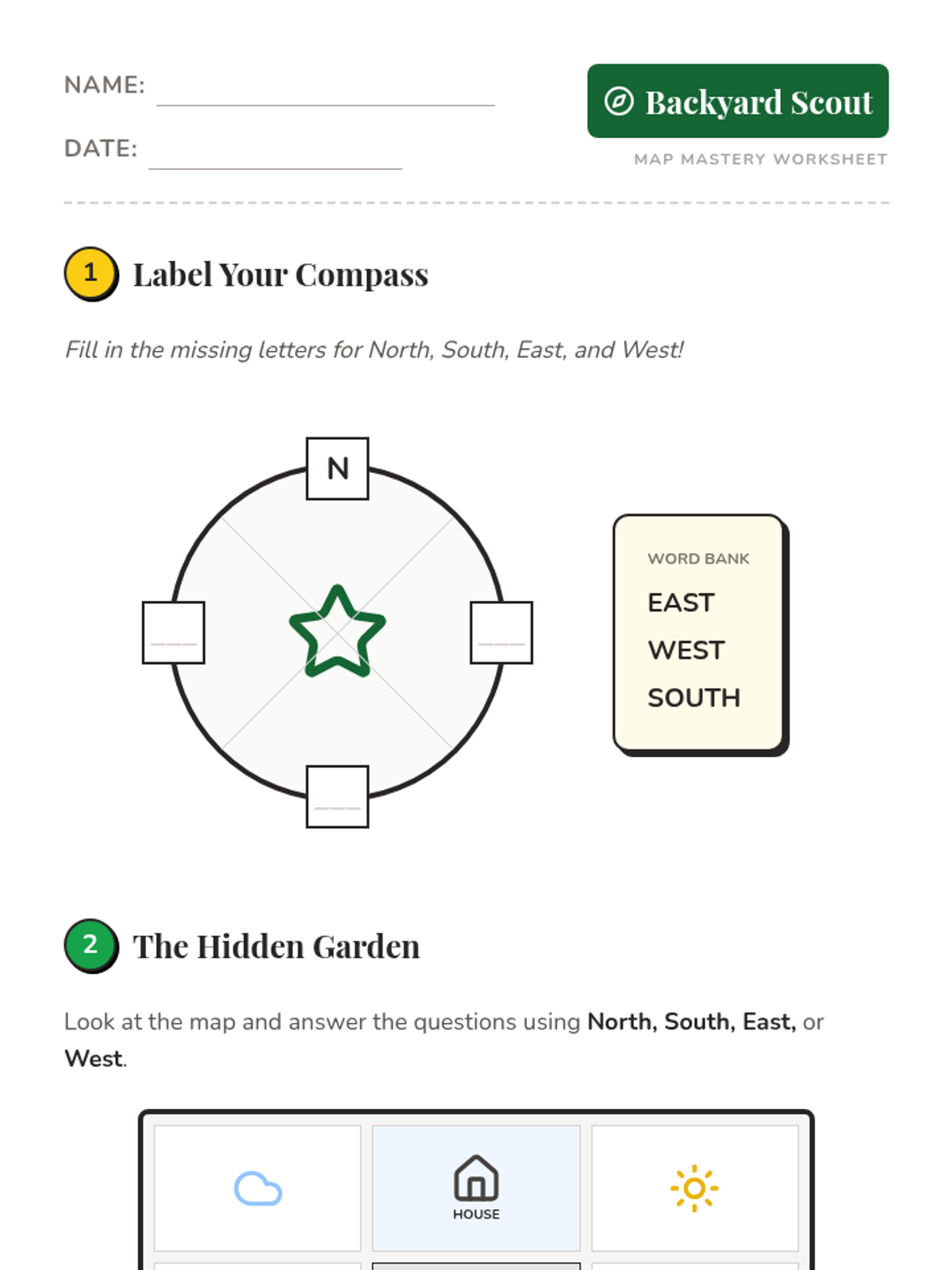
A foundational geography lesson for first graders focusing on identifying and using the four cardinal directions (North, South, East, West) to navigate and describe locations. Students will explore literature and hands-on mapping activities to build spatial awareness.
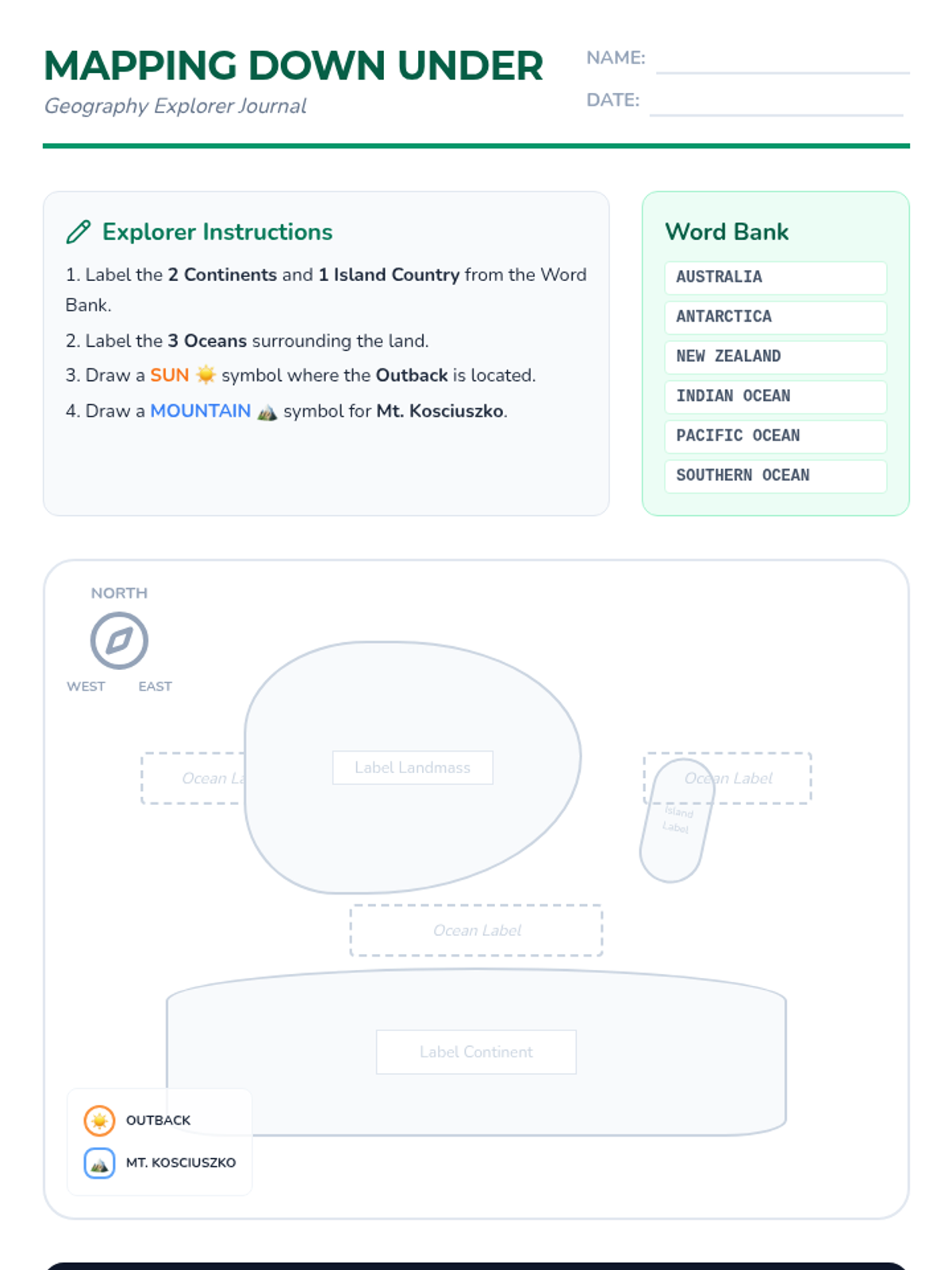
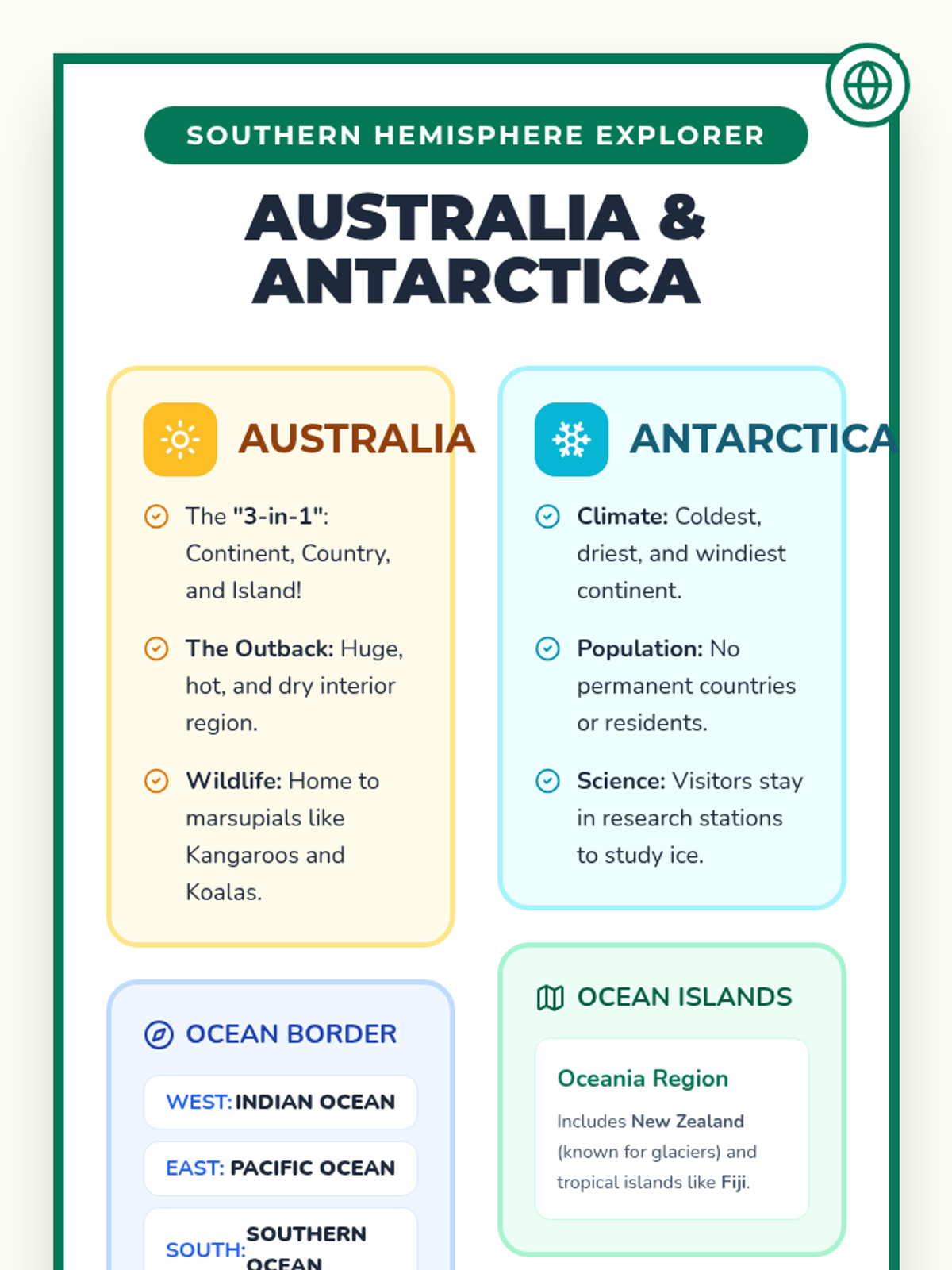
A geography lesson for 3rd graders focused on Australia and Antarctica. Students explore the unique features, climates, and locations of these Southern Hemisphere landmasses through video analysis and mapping activities.
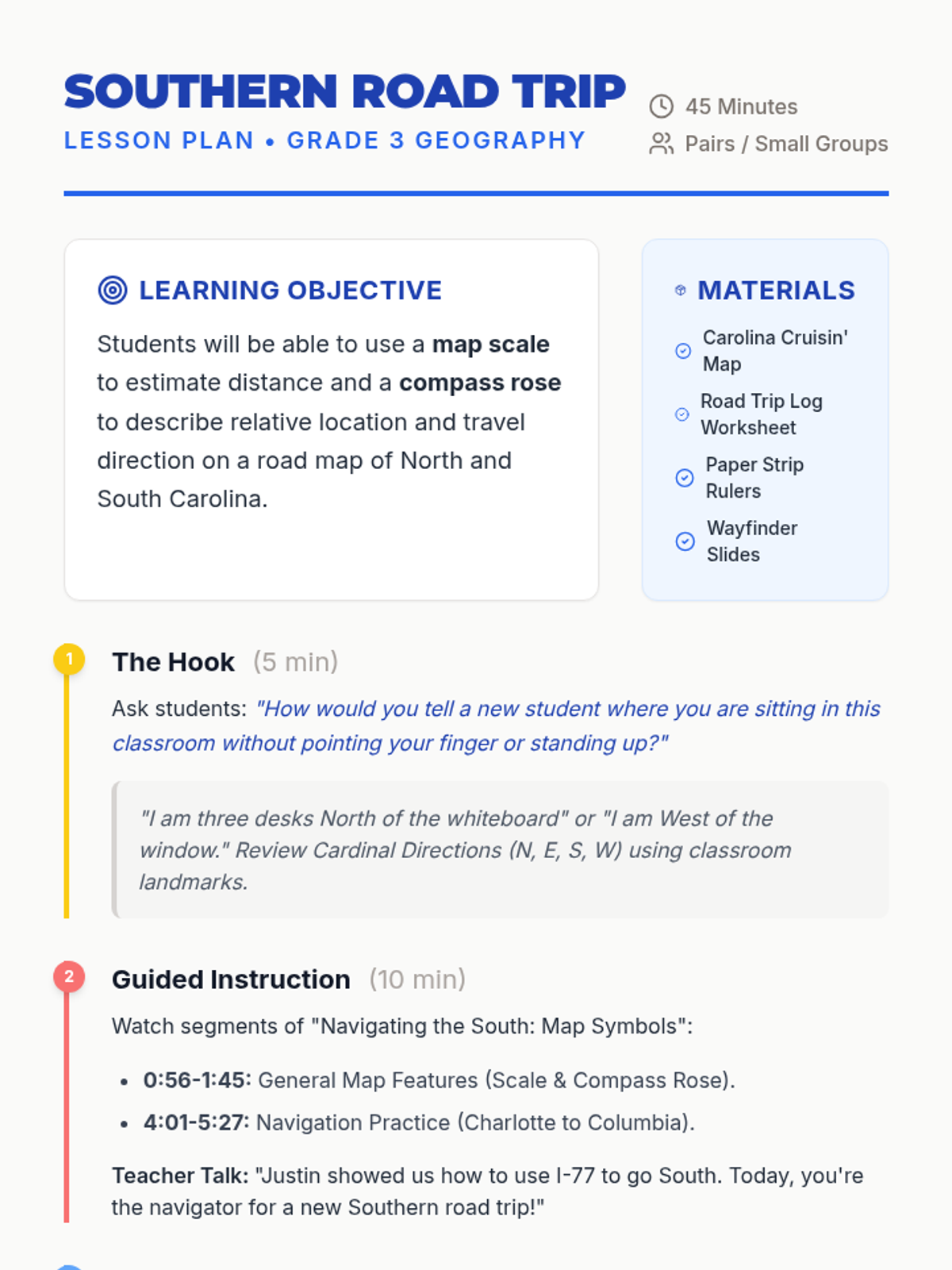
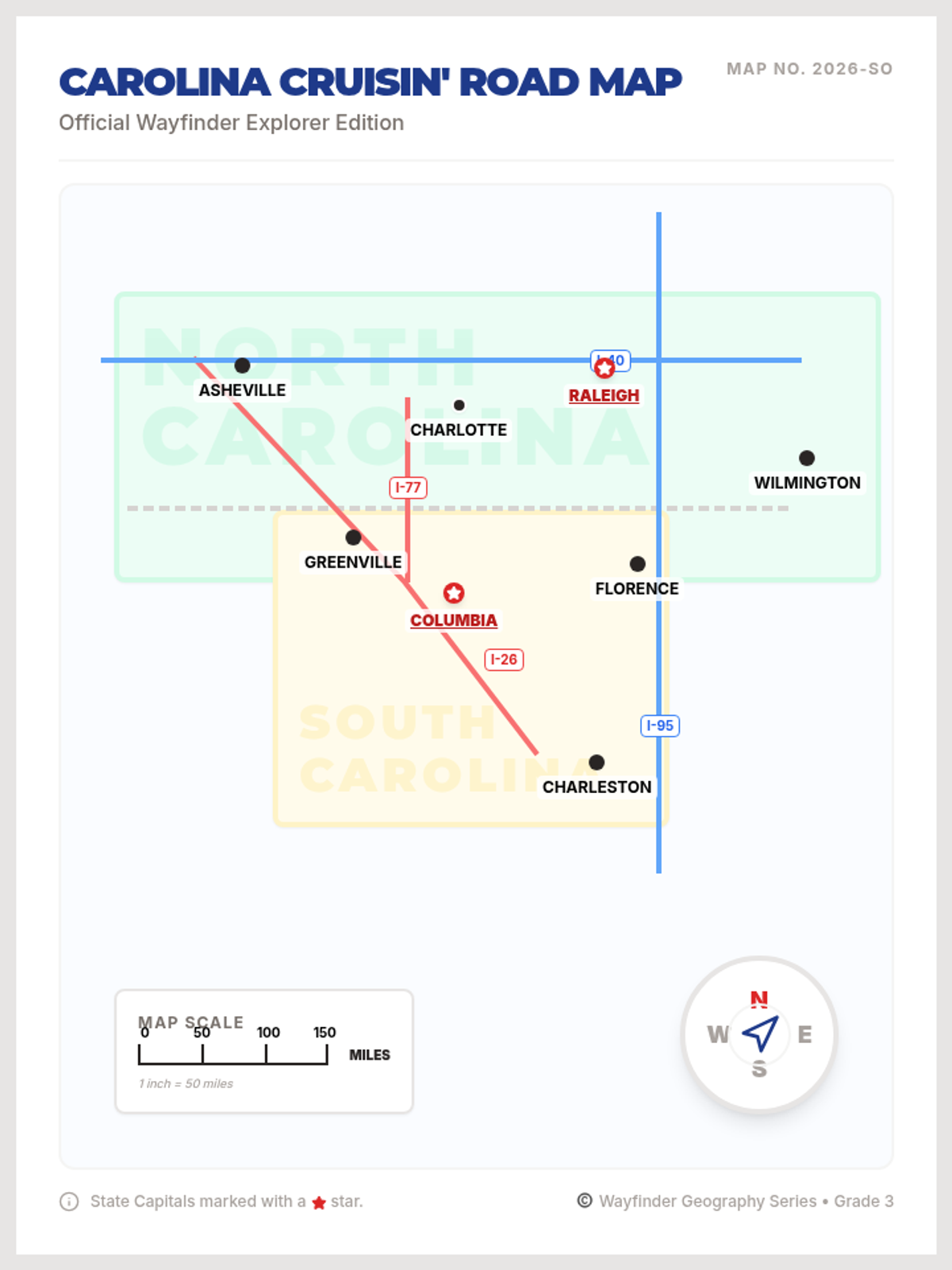
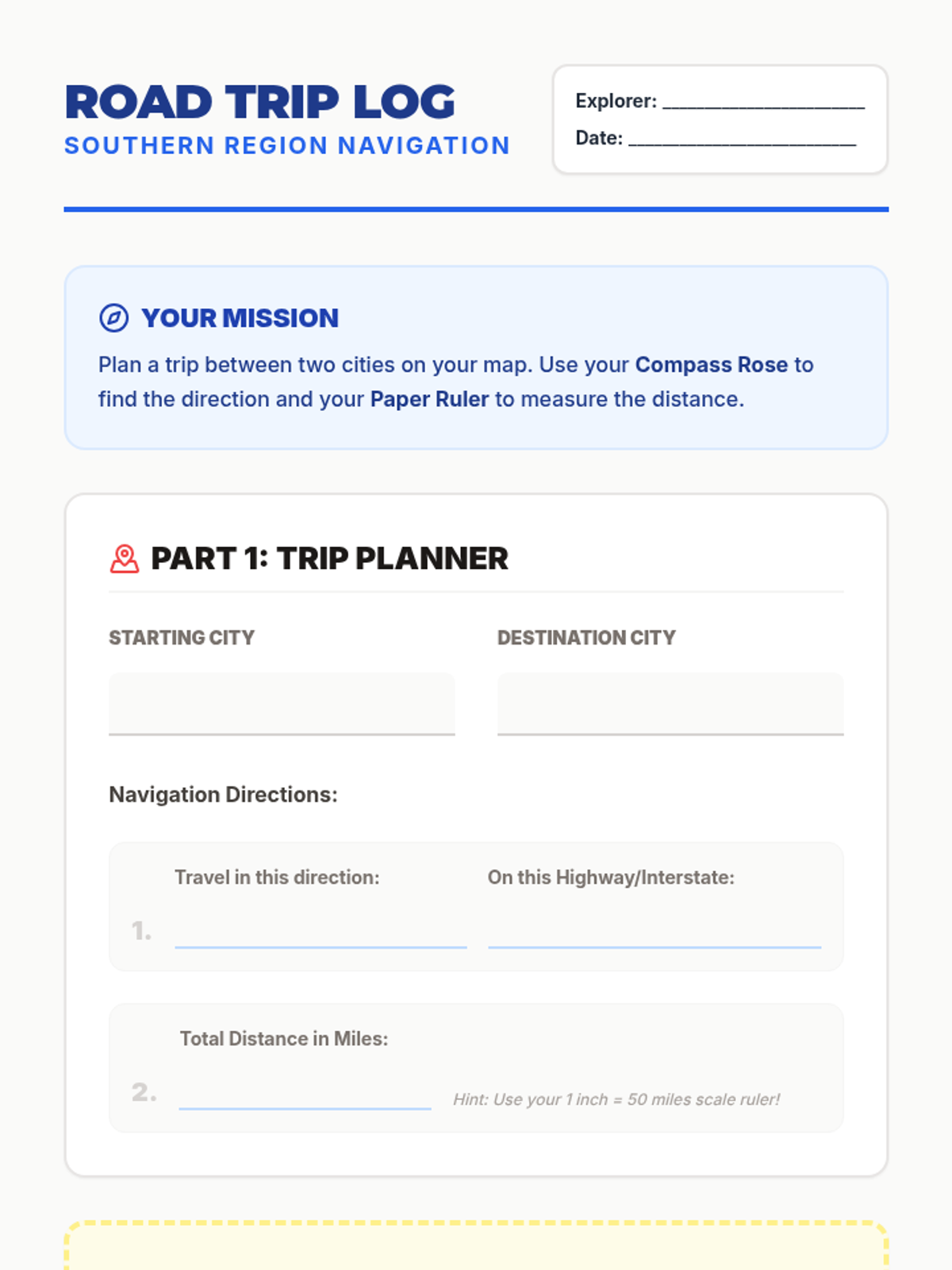
A 3rd-grade geography lesson where students use map scales and compass roses to navigate and calculate distances across North and South Carolina.
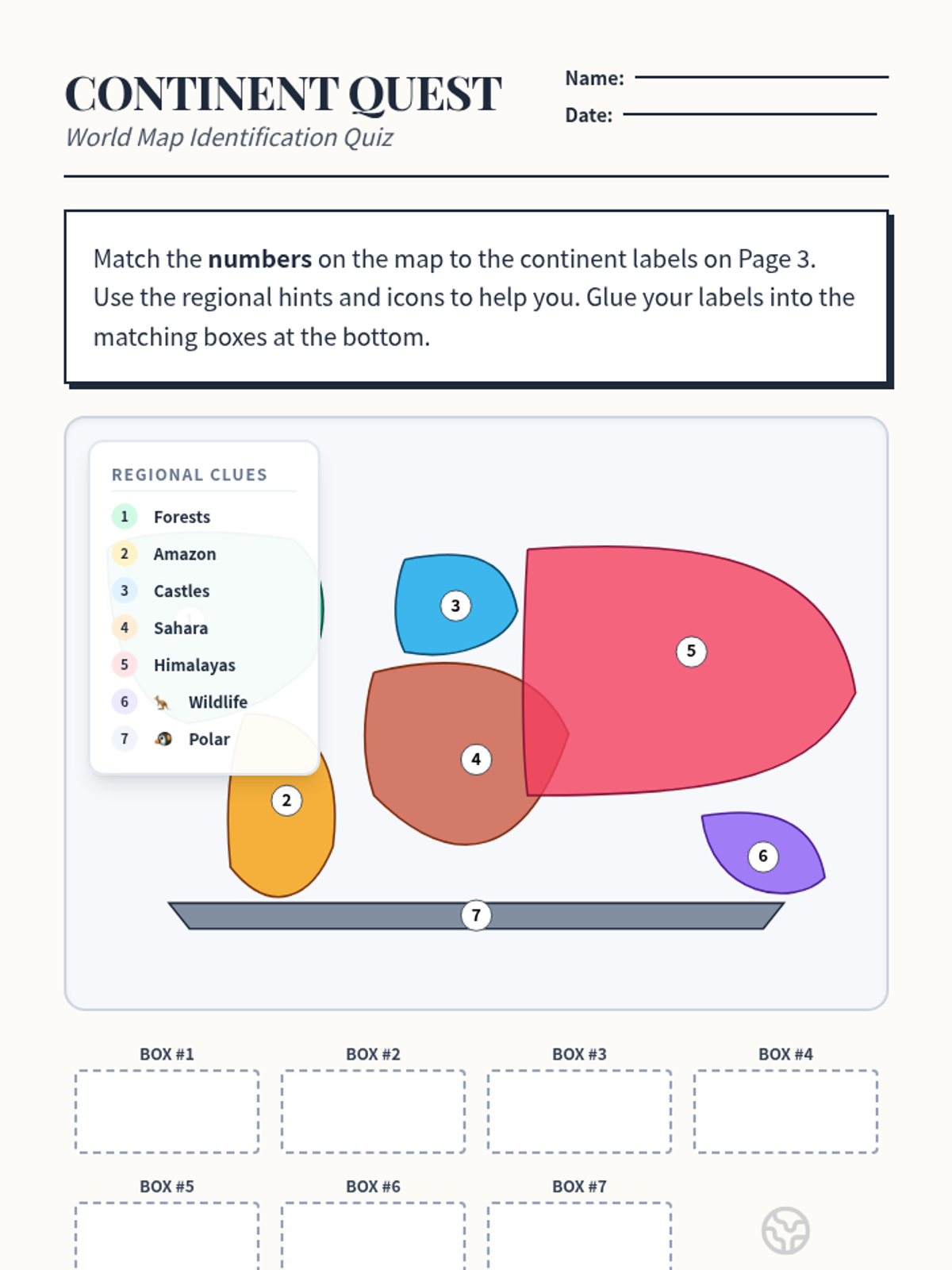
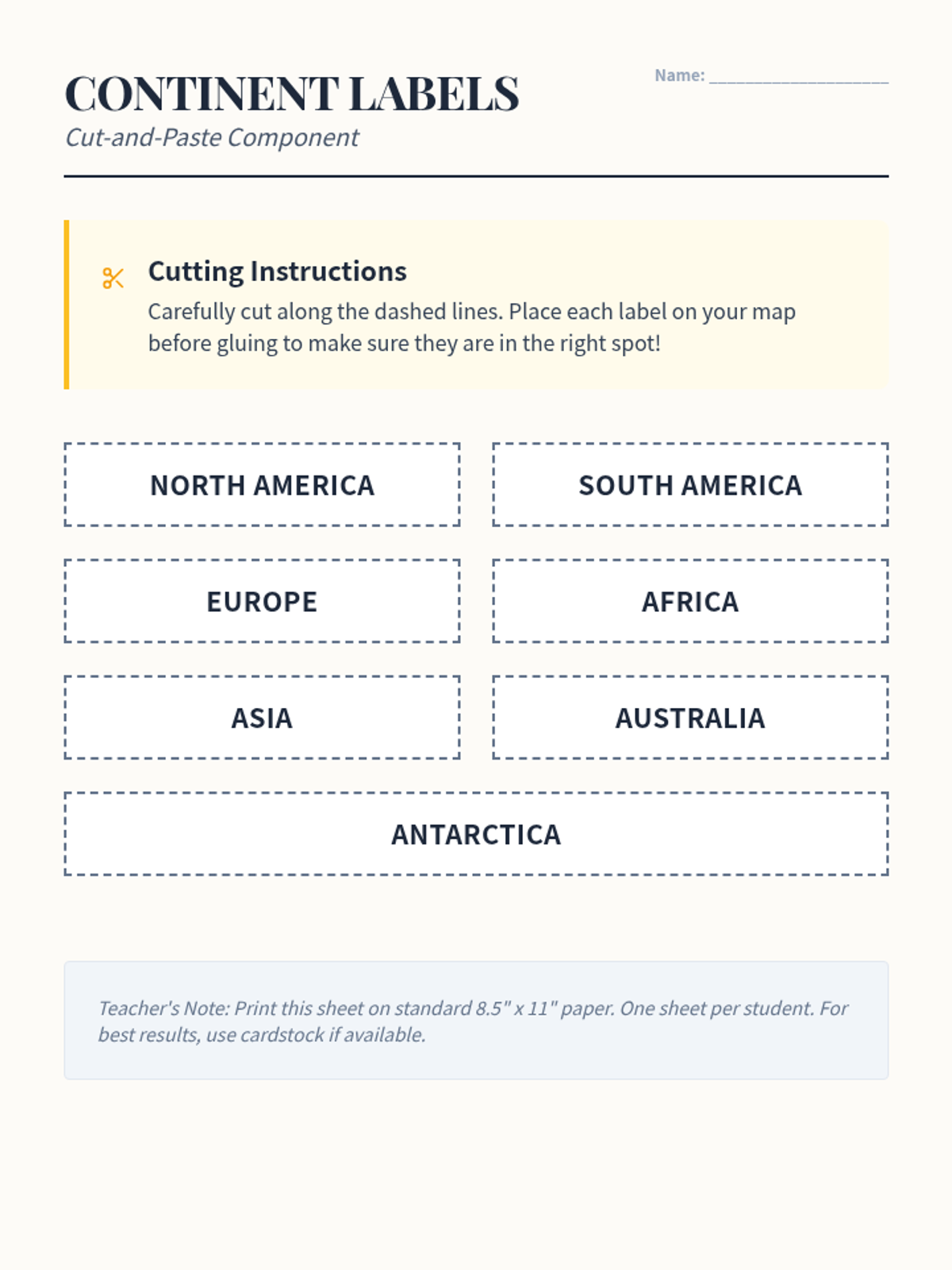
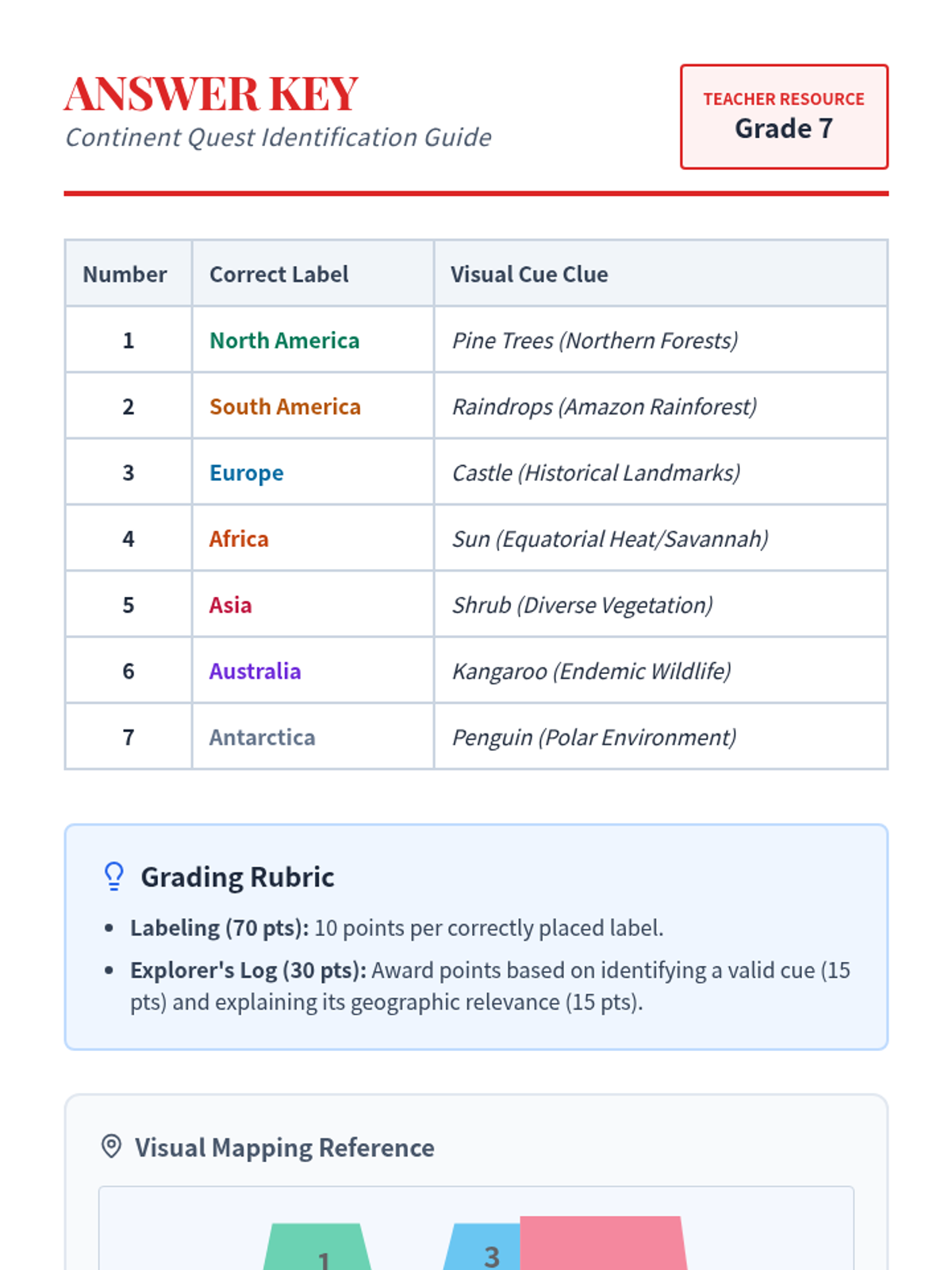
A foundational lesson on global geography focusing on identifying and labeling the seven continents using visual cues and spatial relationships.
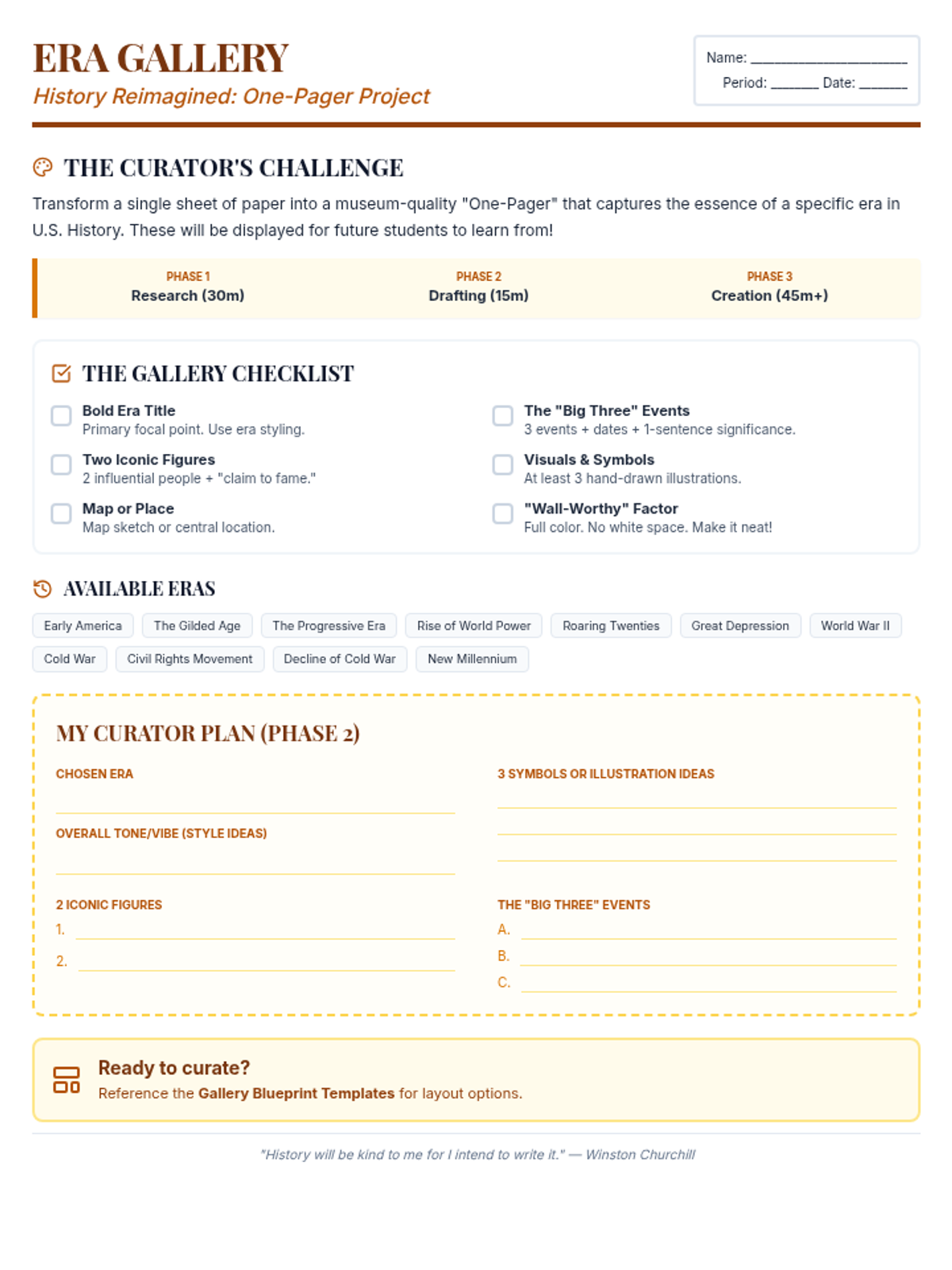
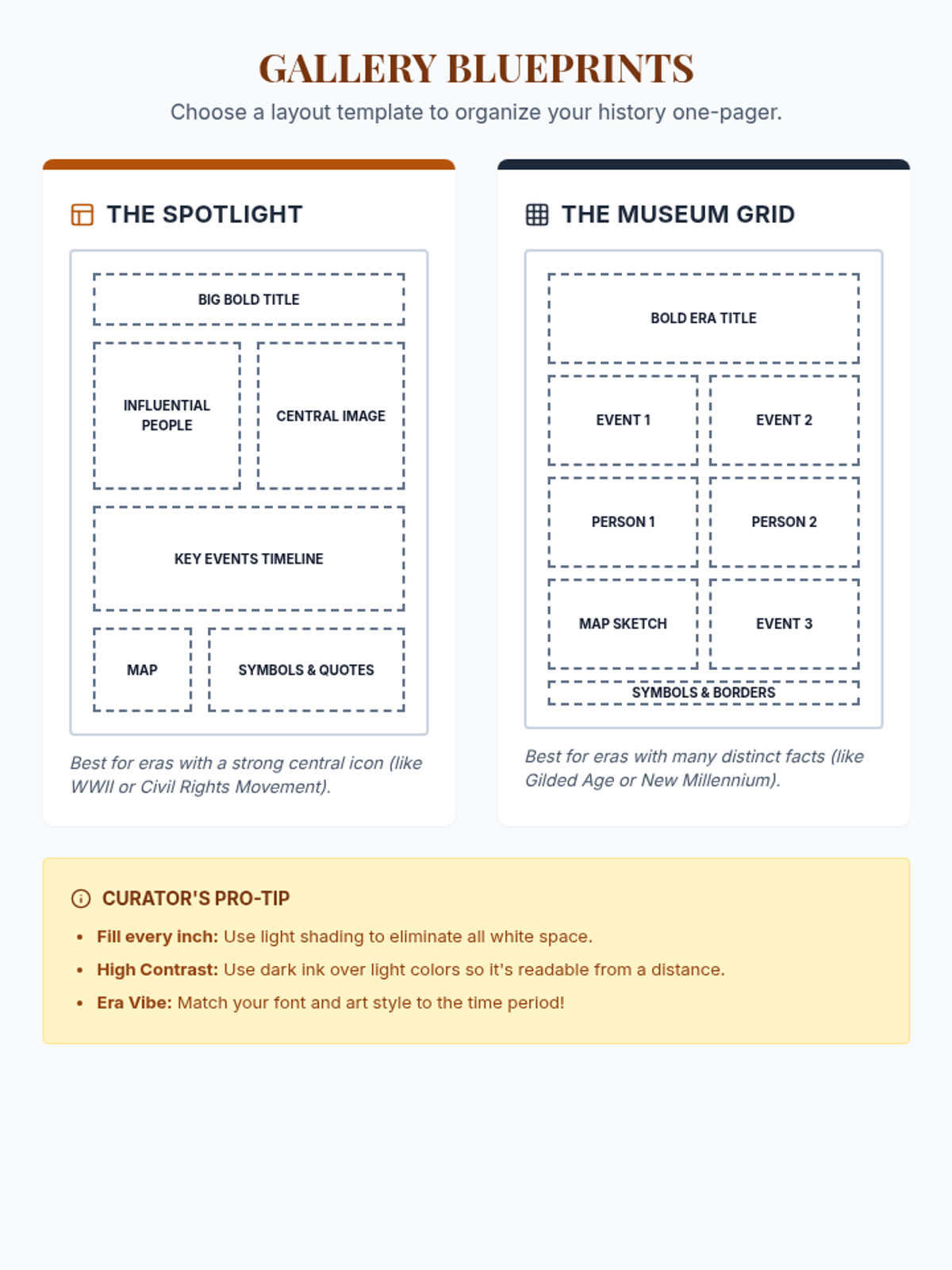
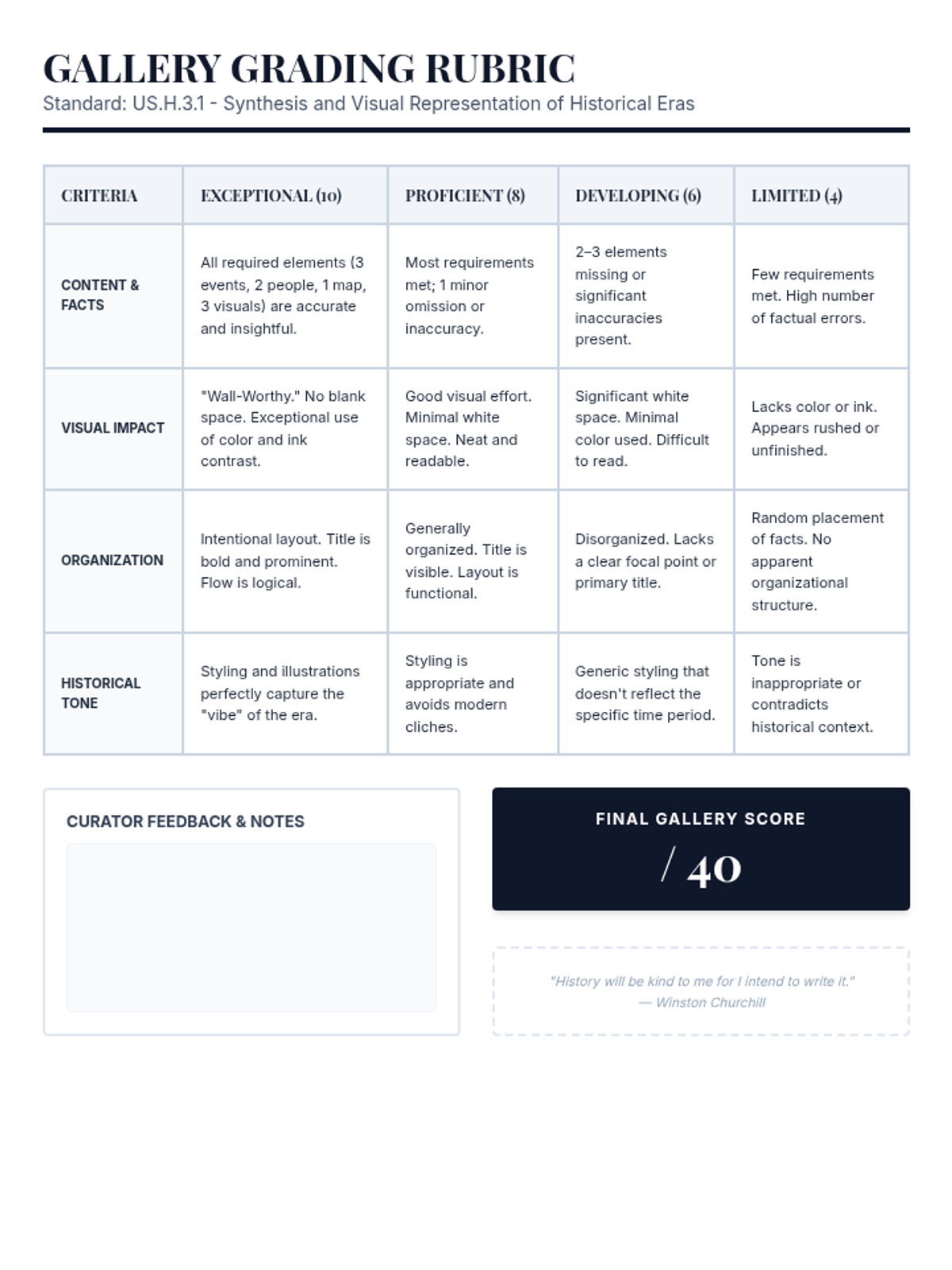
A fast-paced, creative project where students curate a visually stunning 'One-Pager' poster for a specific era of U.S. History, designed to be high-quality enough for classroom display.
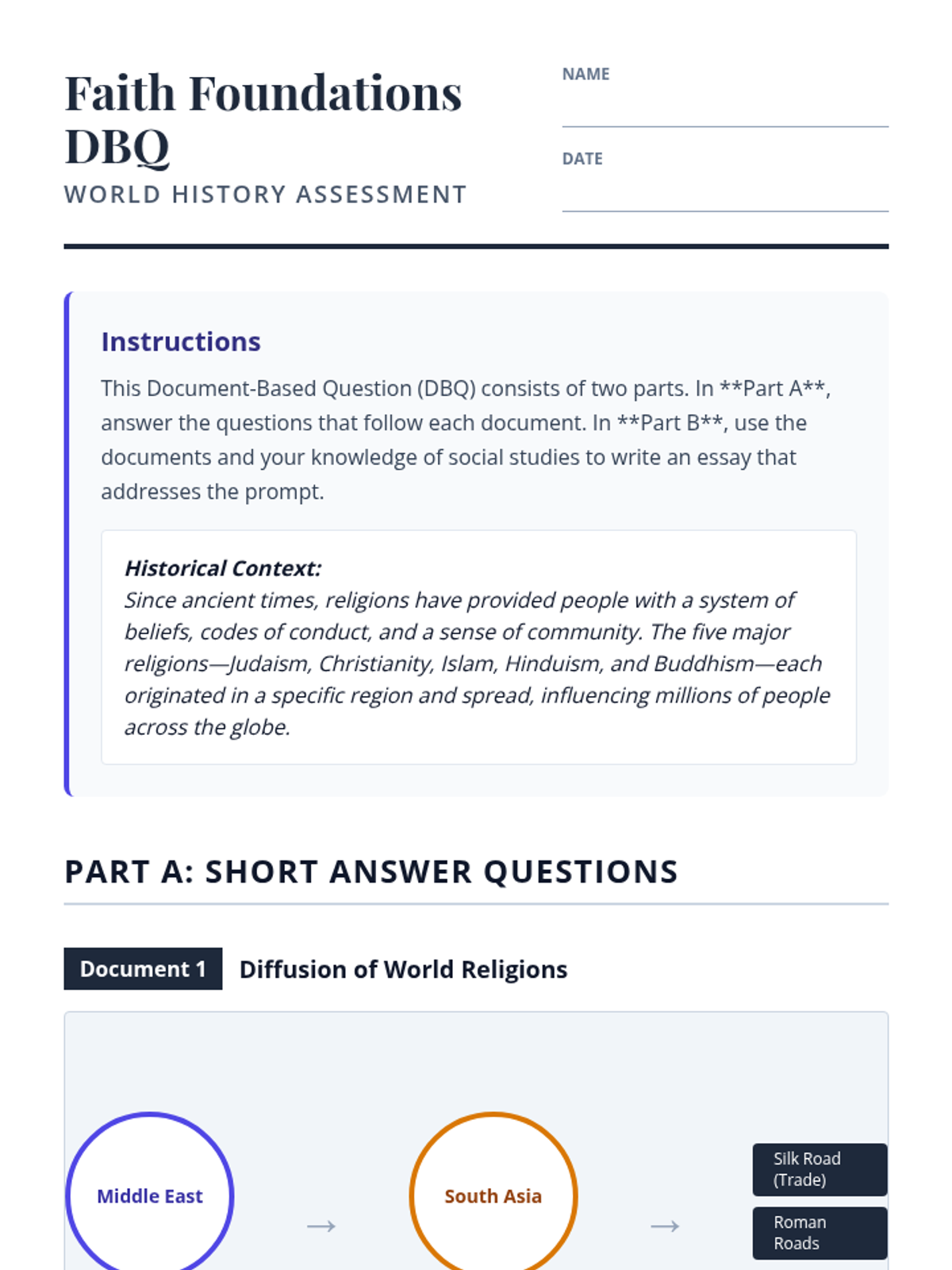
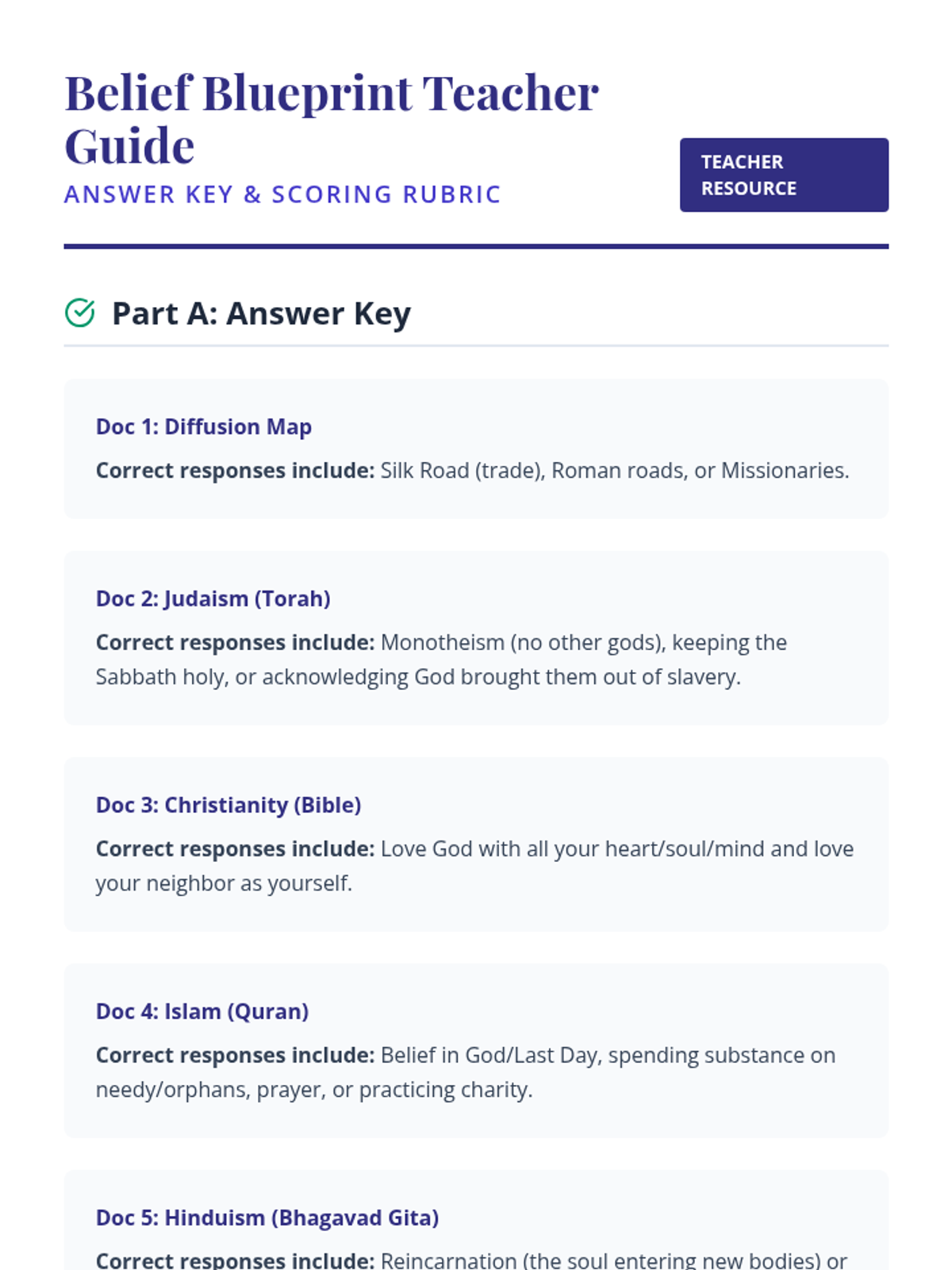
A comprehensive assessment package focused on the Five Major World Religions, utilizing a New York State Document-Based Question (DBQ) format with maps and sacred text analysis.
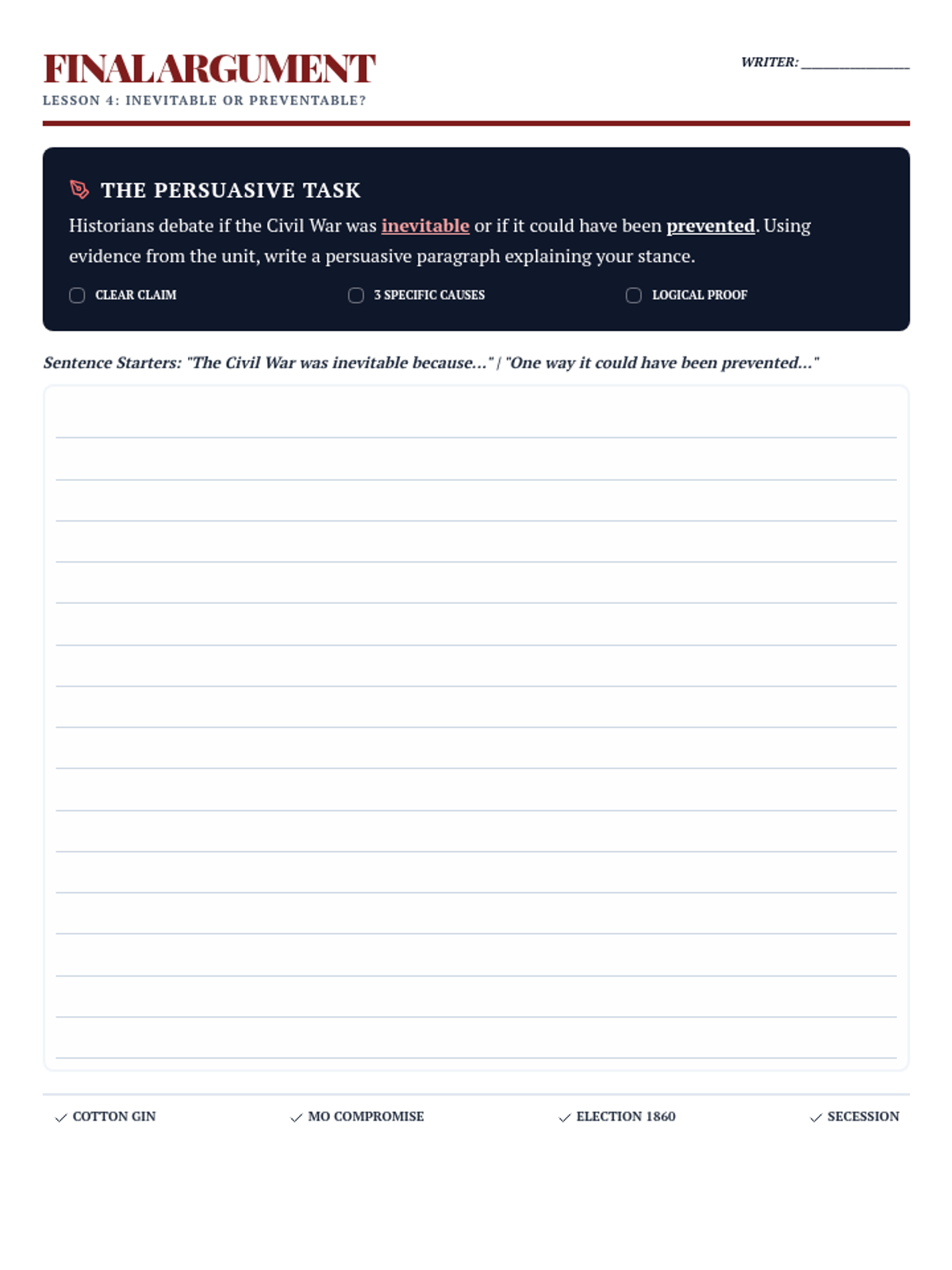
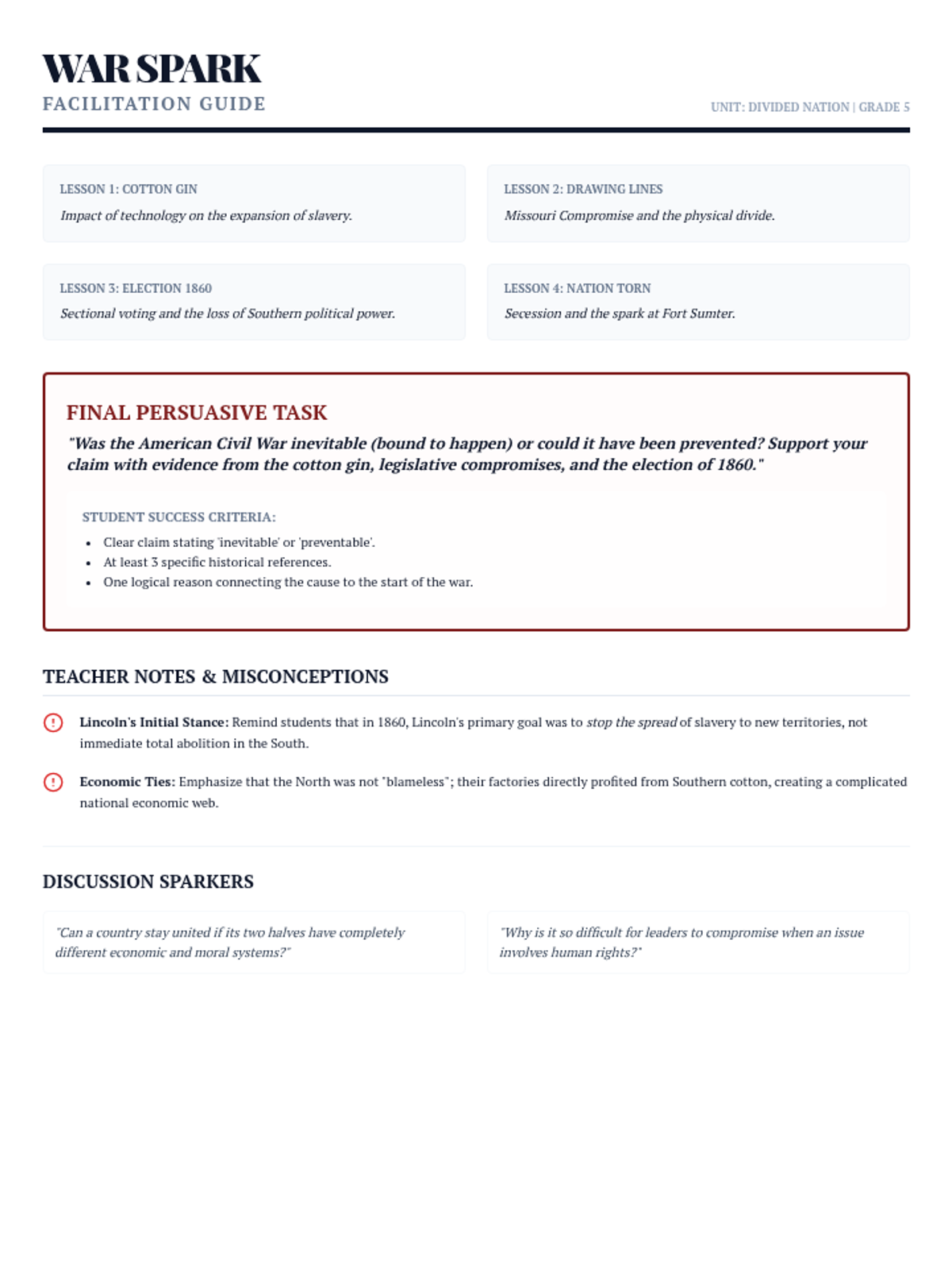
Analyzes the formal withdrawal of Southern states from the Union and culminates in a persuasive writing task about the inevitability of the conflict.
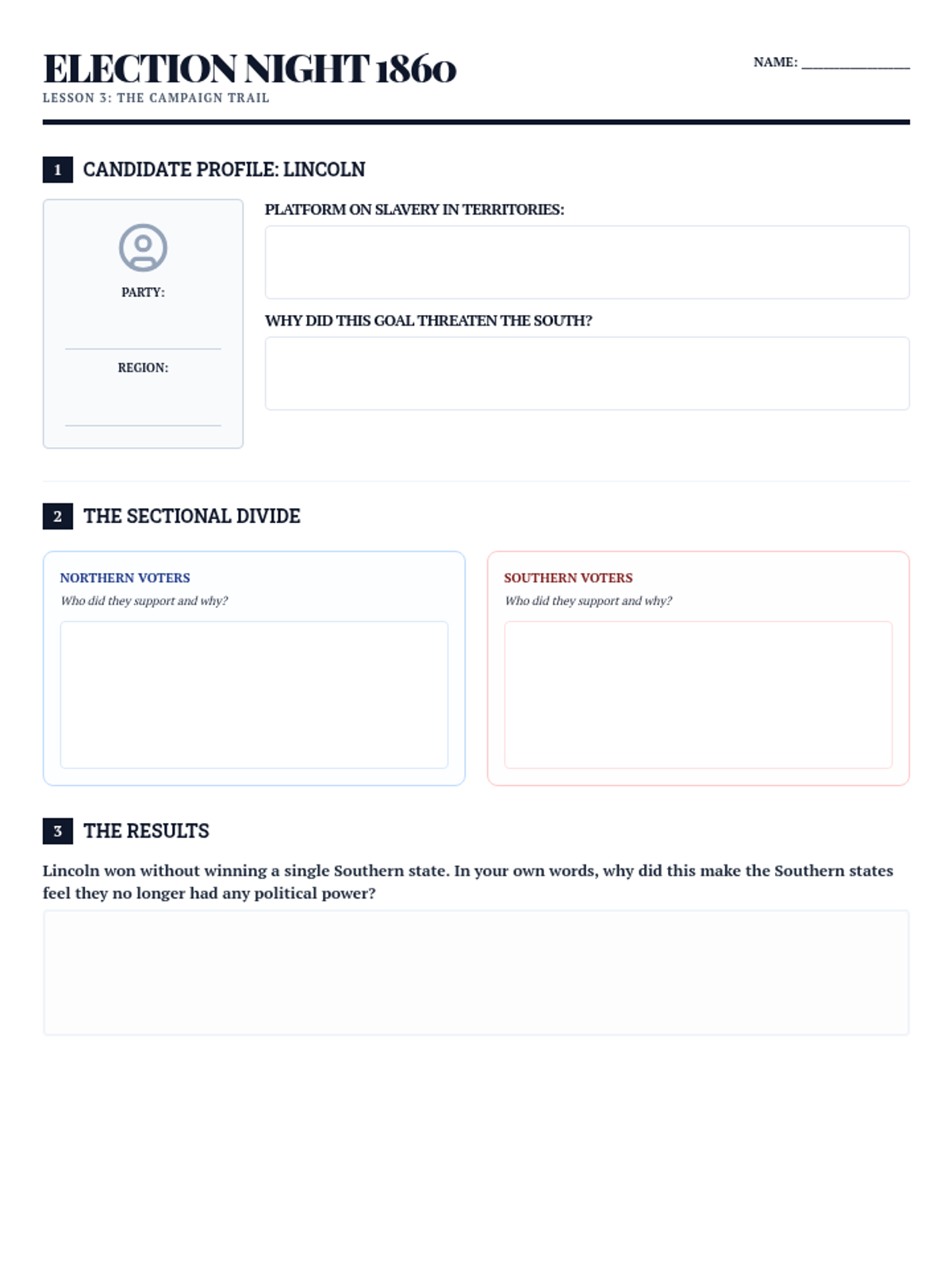
Explores the high-stakes election of Abraham Lincoln and how it served as the final straw for many Southern states.
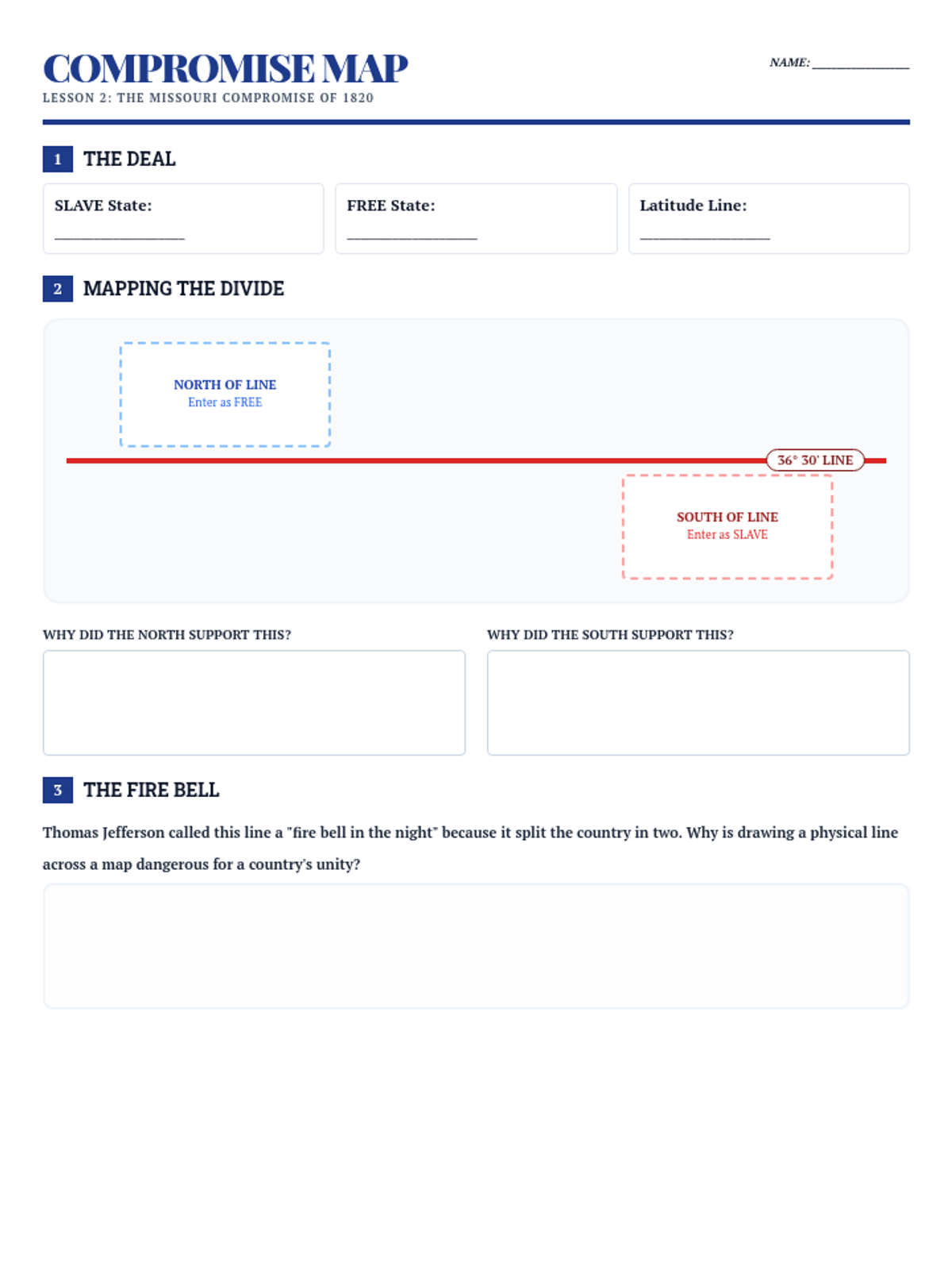
Investigates the legislative attempts to balance power between free and slave states, focusing on the 36°30′ line and its long-term consequences.
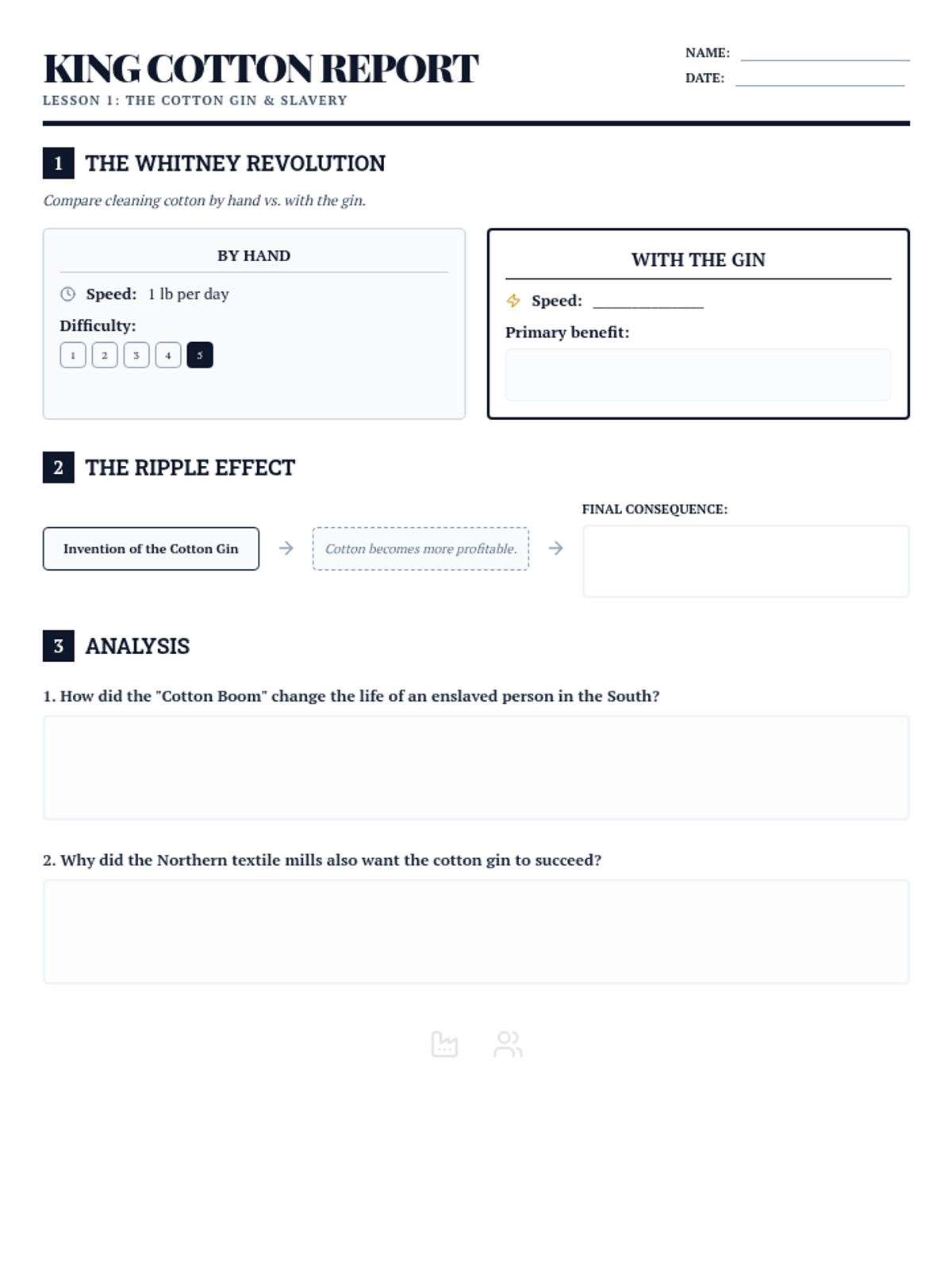
Examines how Eli Whitney's invention of the cotton gin revolutionized the Southern economy and deeply entrenched the institution of slavery.
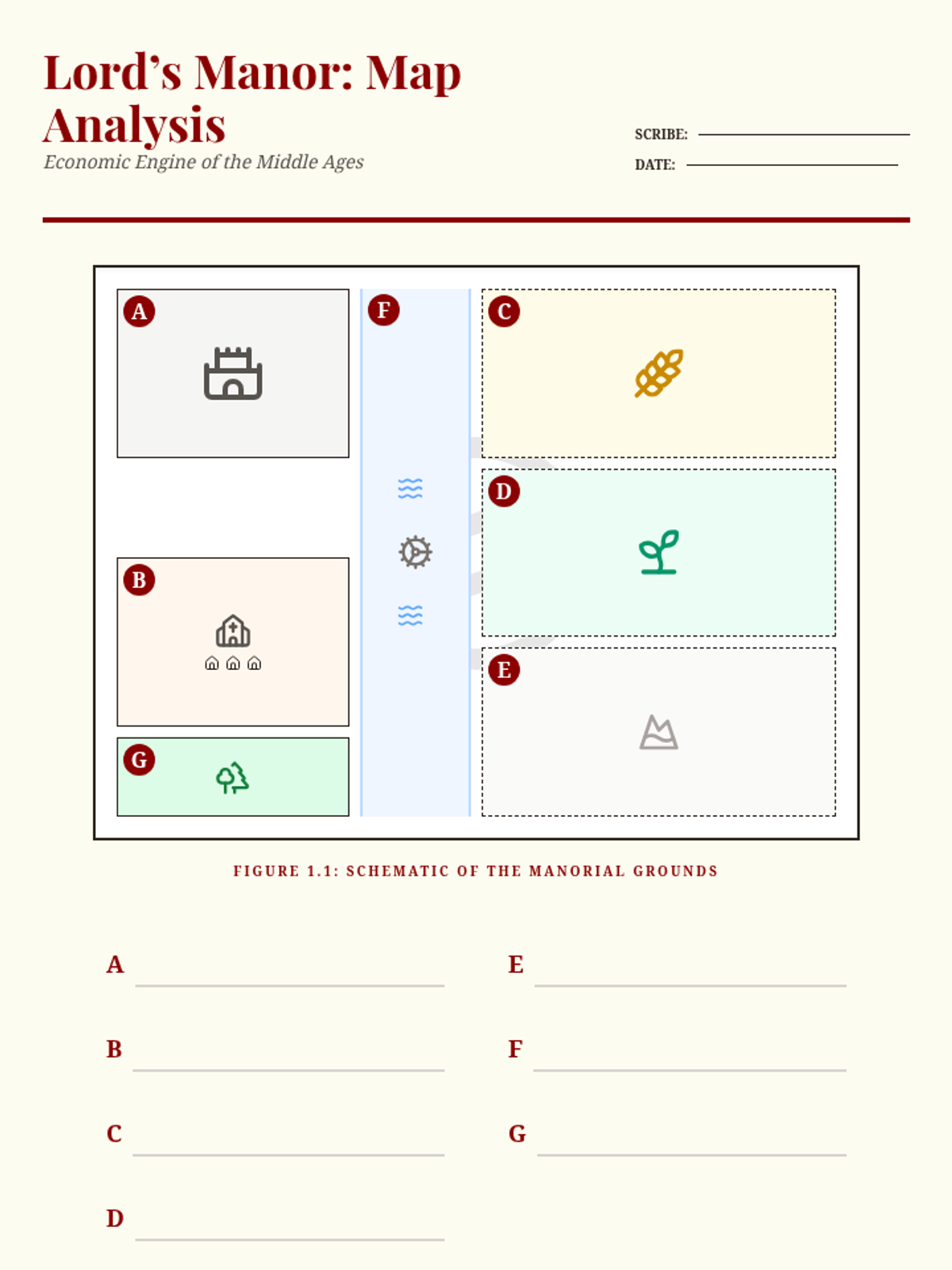
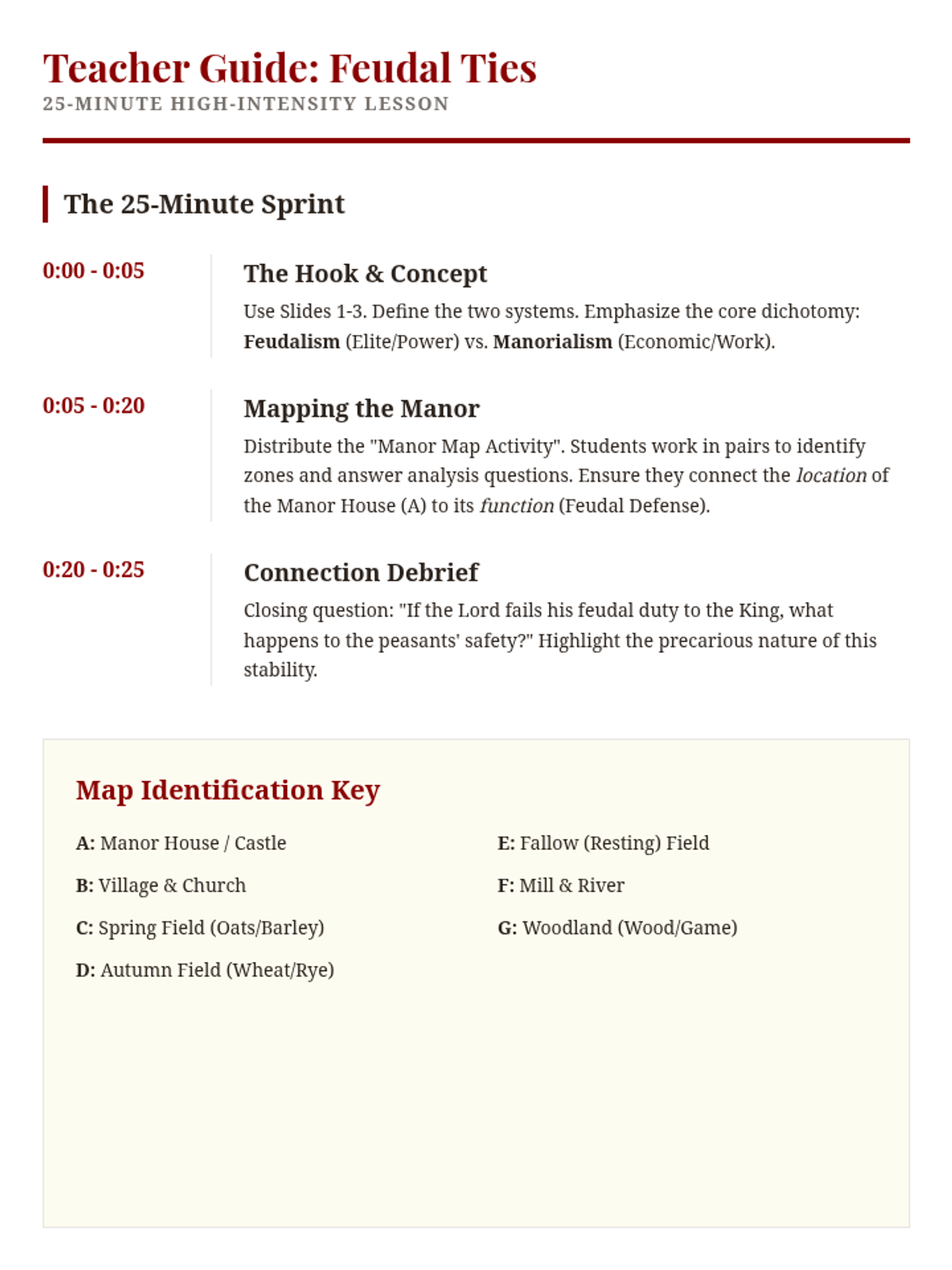
A high-intensity look at the interconnected systems of Feudalism and Manorialism, focusing on the physical and economic structure of the medieval manor.
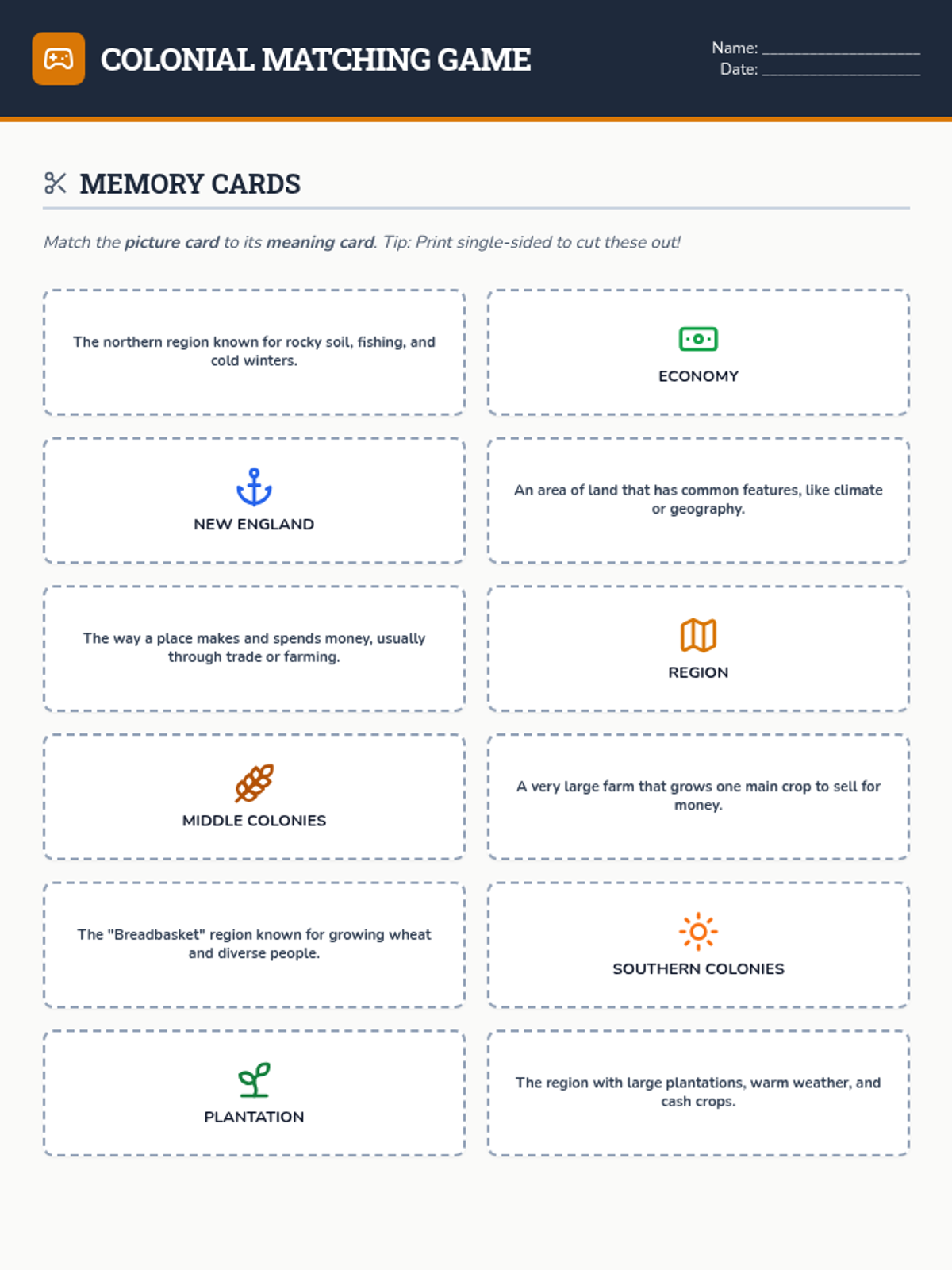
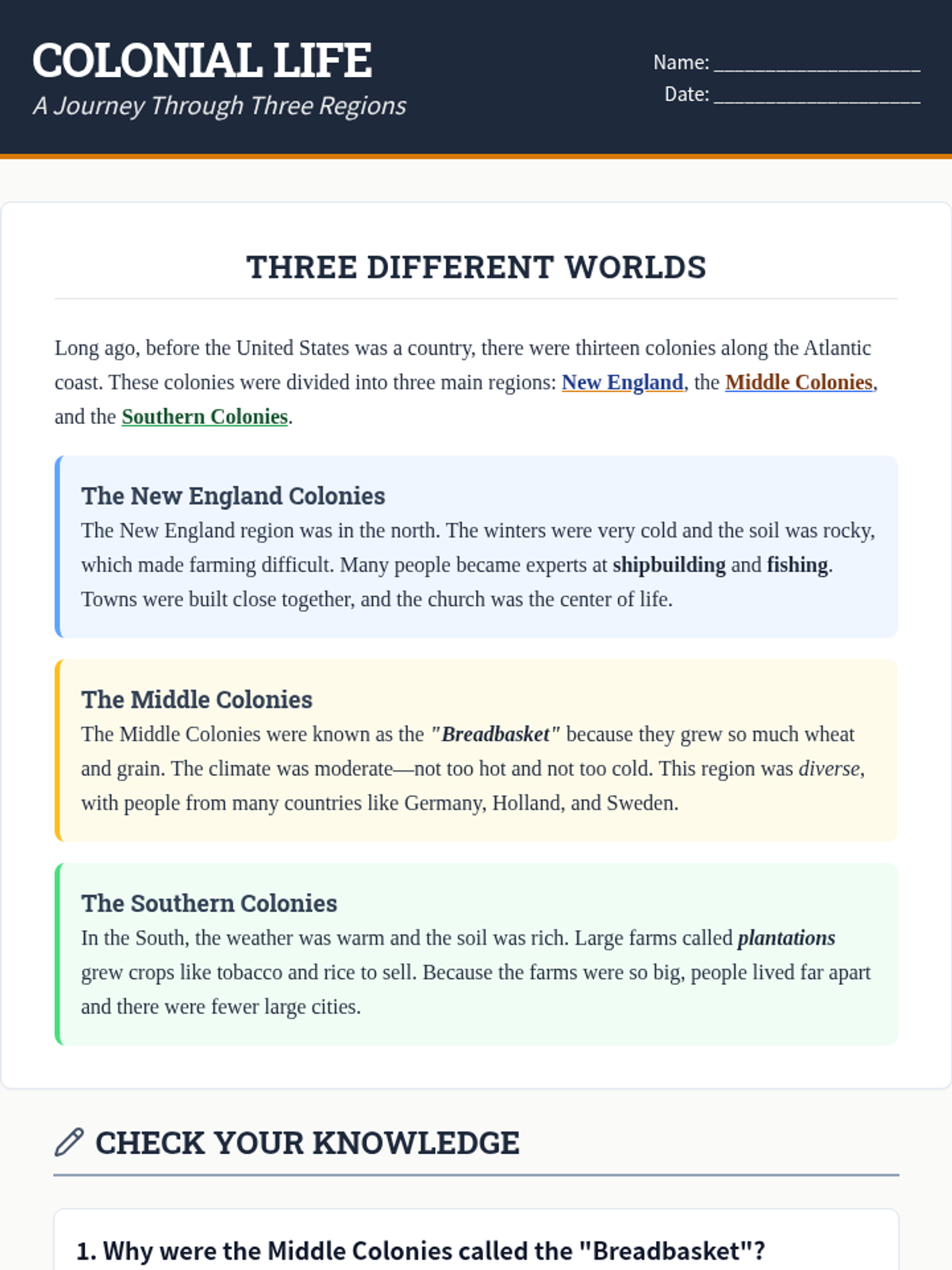
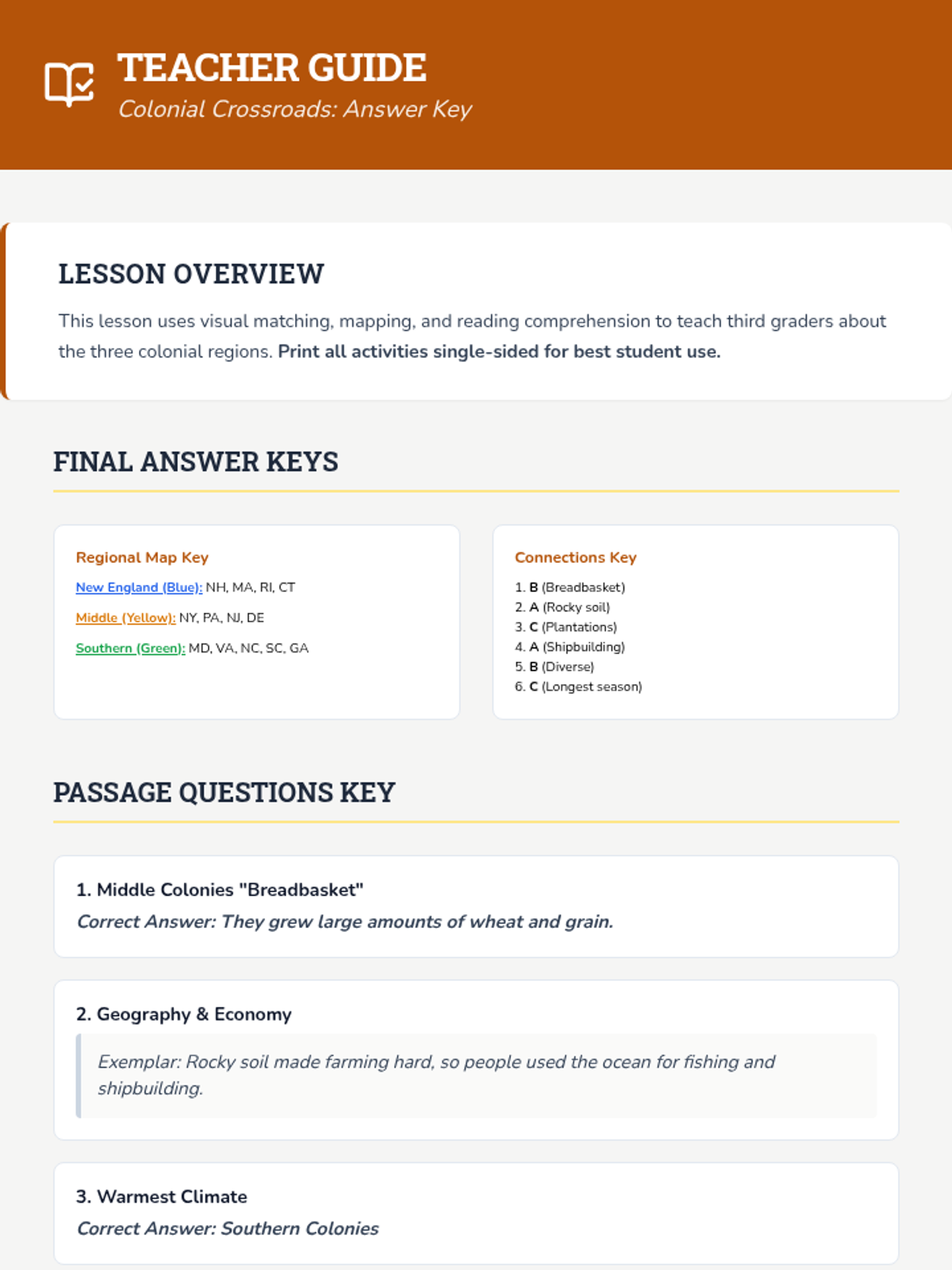
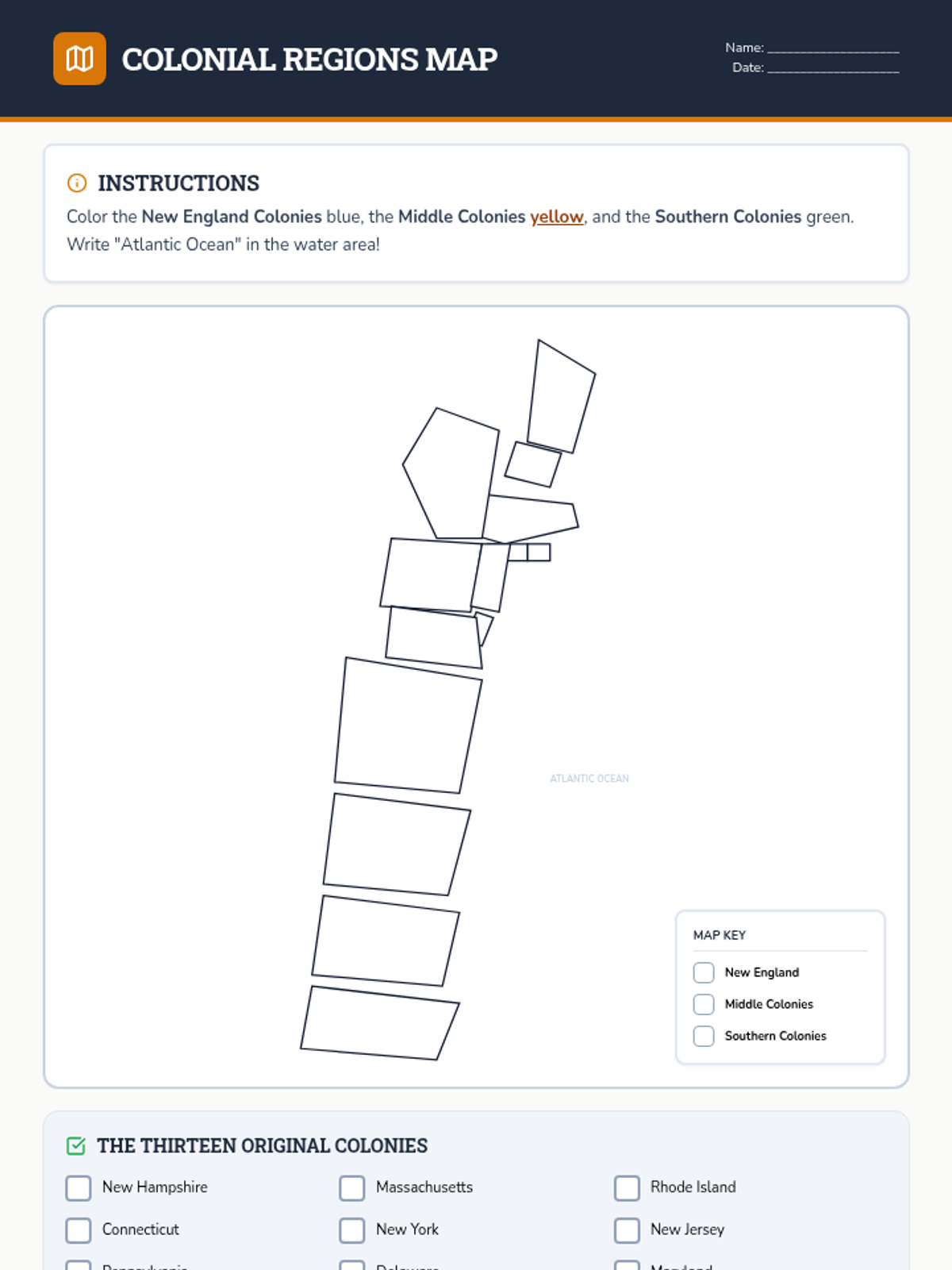
An introductory lesson for third graders to explore the distinct regions of the original thirteen colonies, focusing on geography, climate, and daily life.
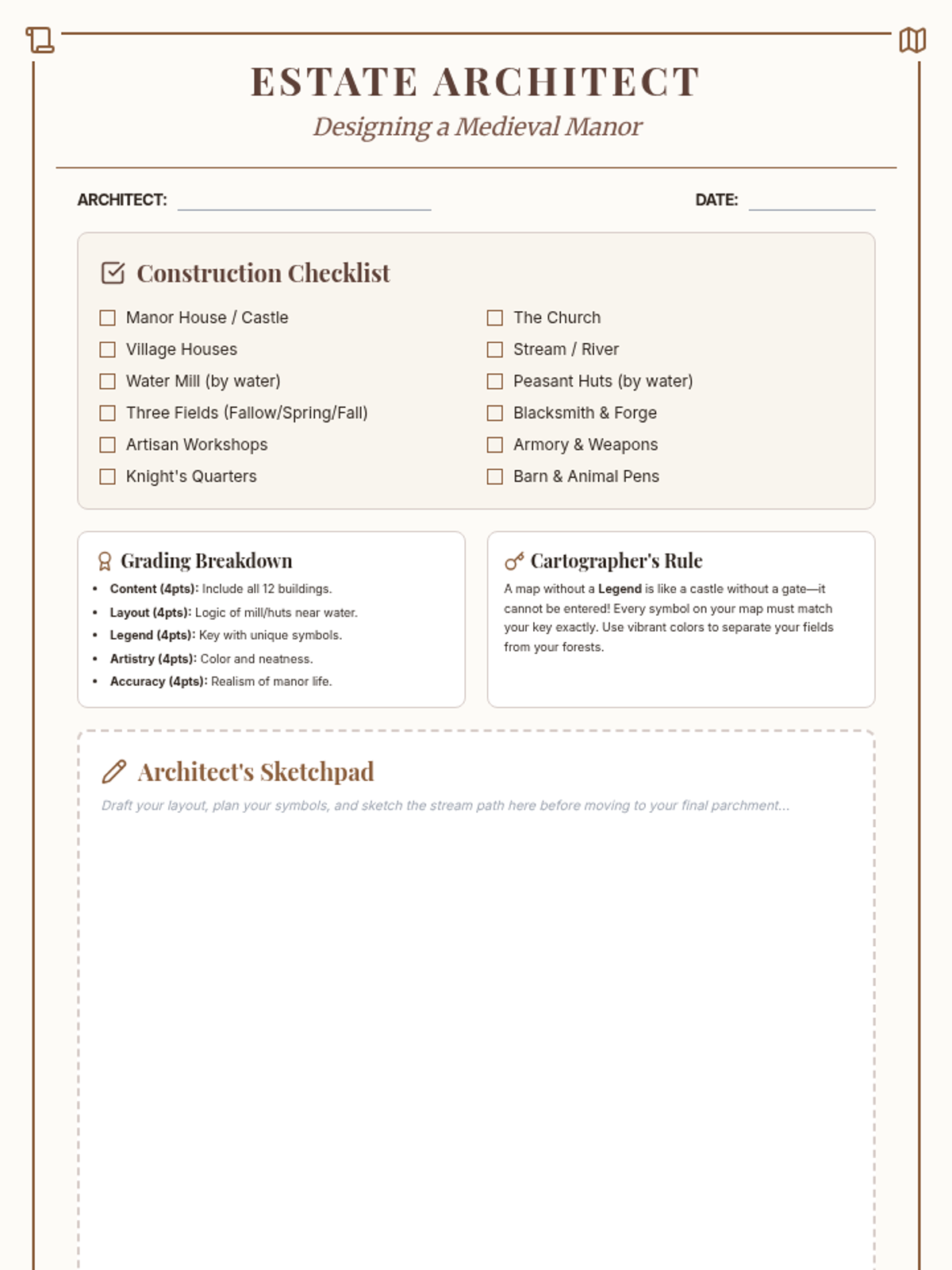
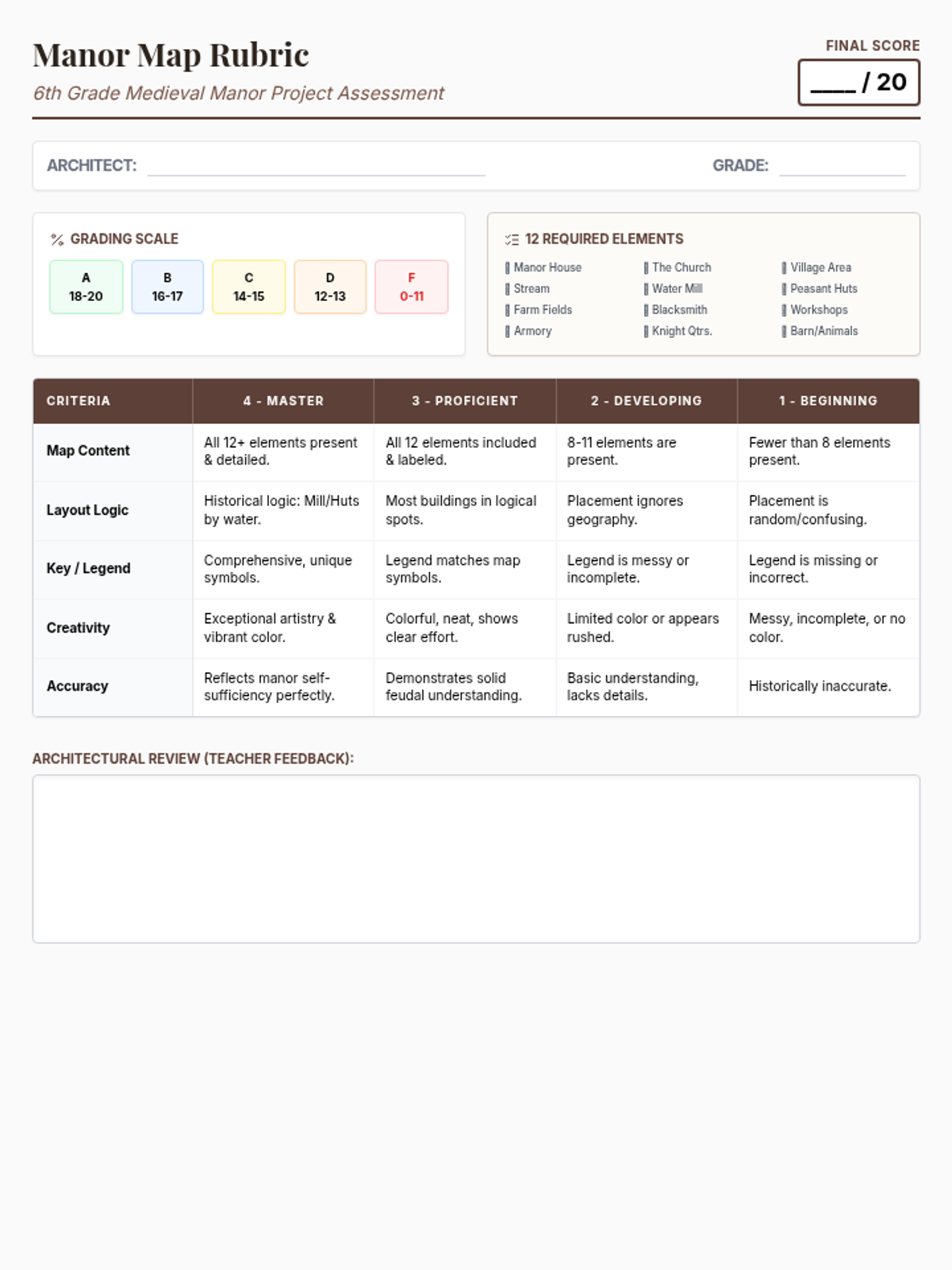
A creative project-based lesson where students design and map a medieval manor, demonstrating their understanding of feudal self-sufficiency and social structure.
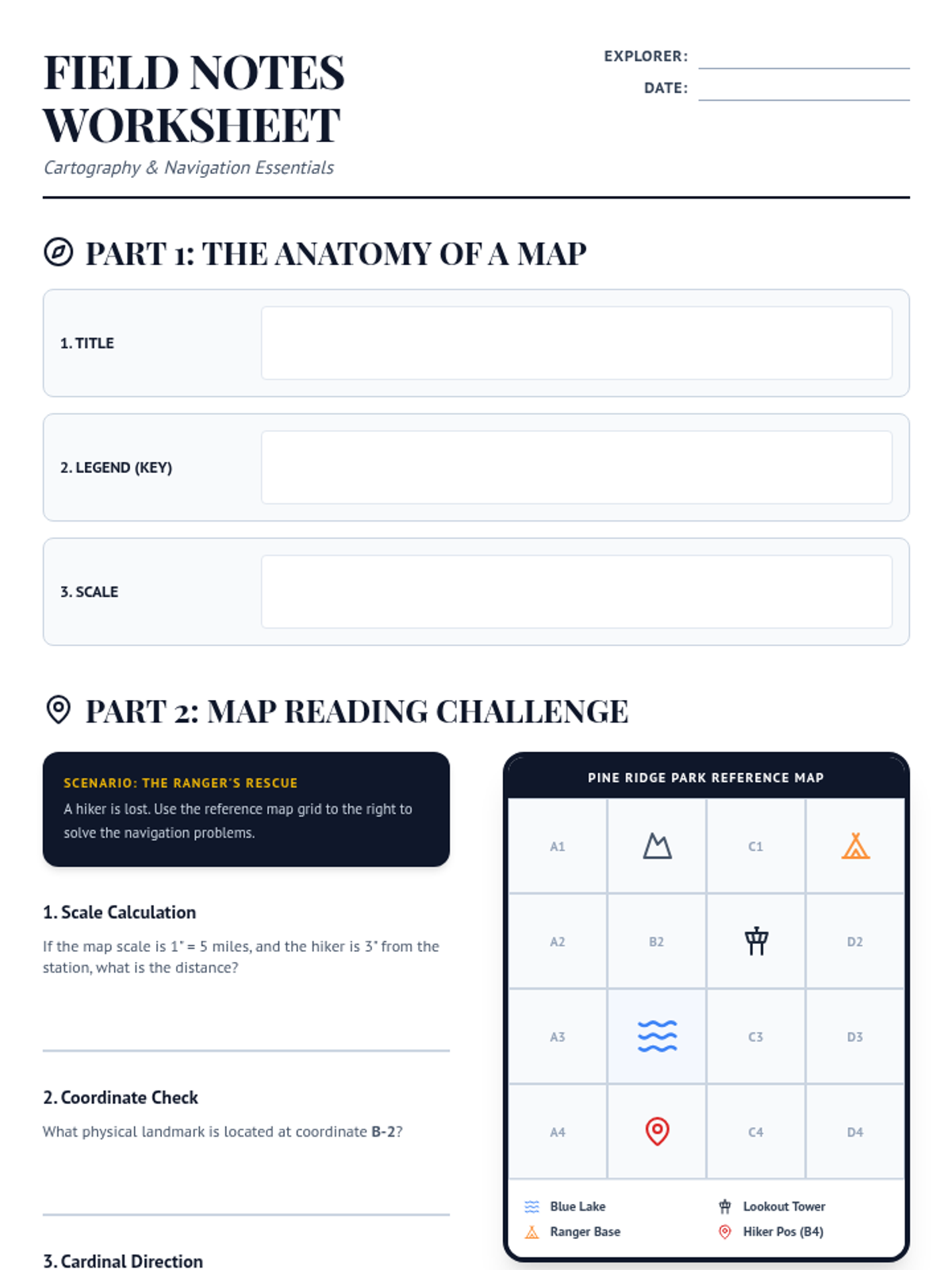
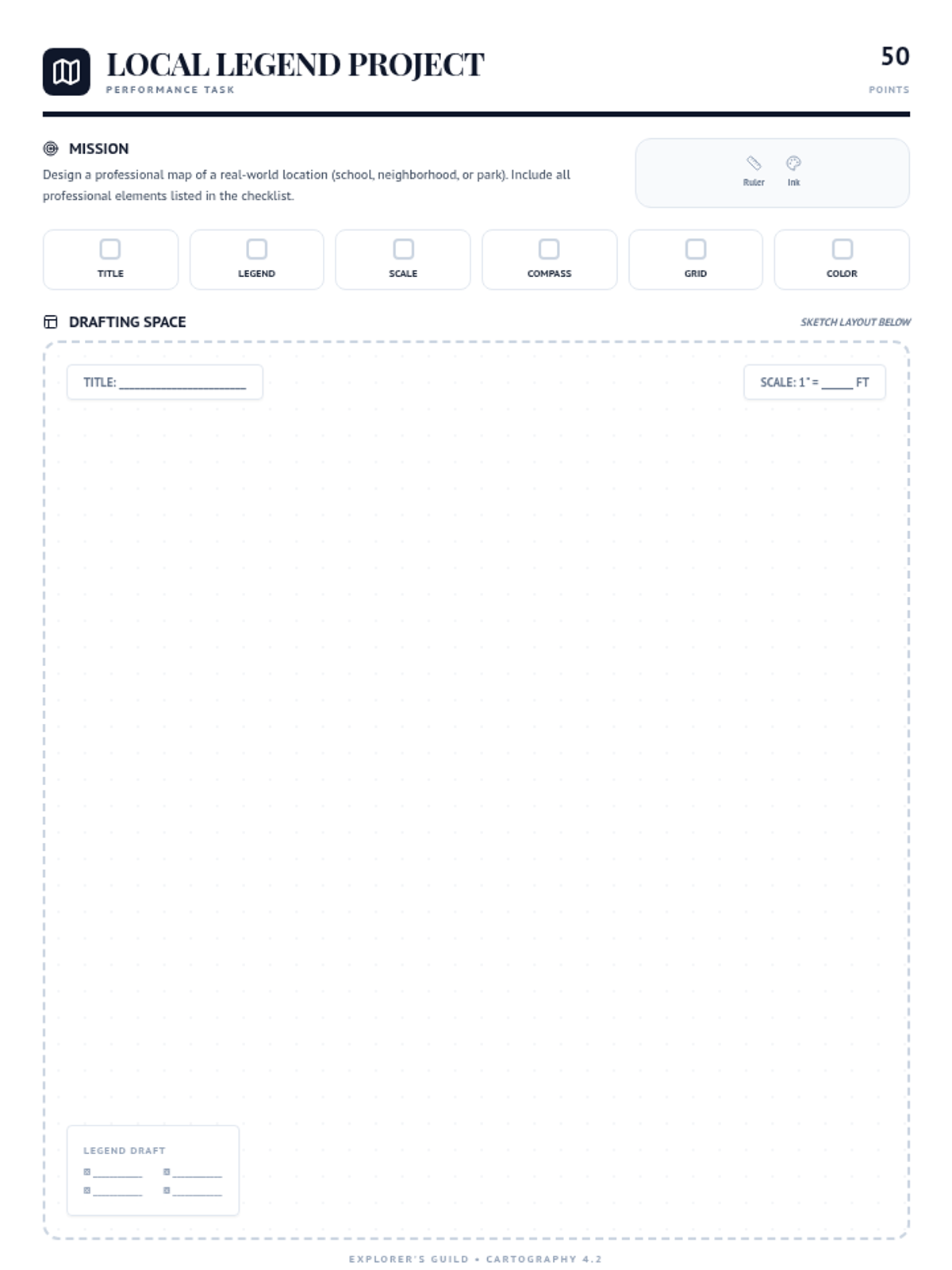
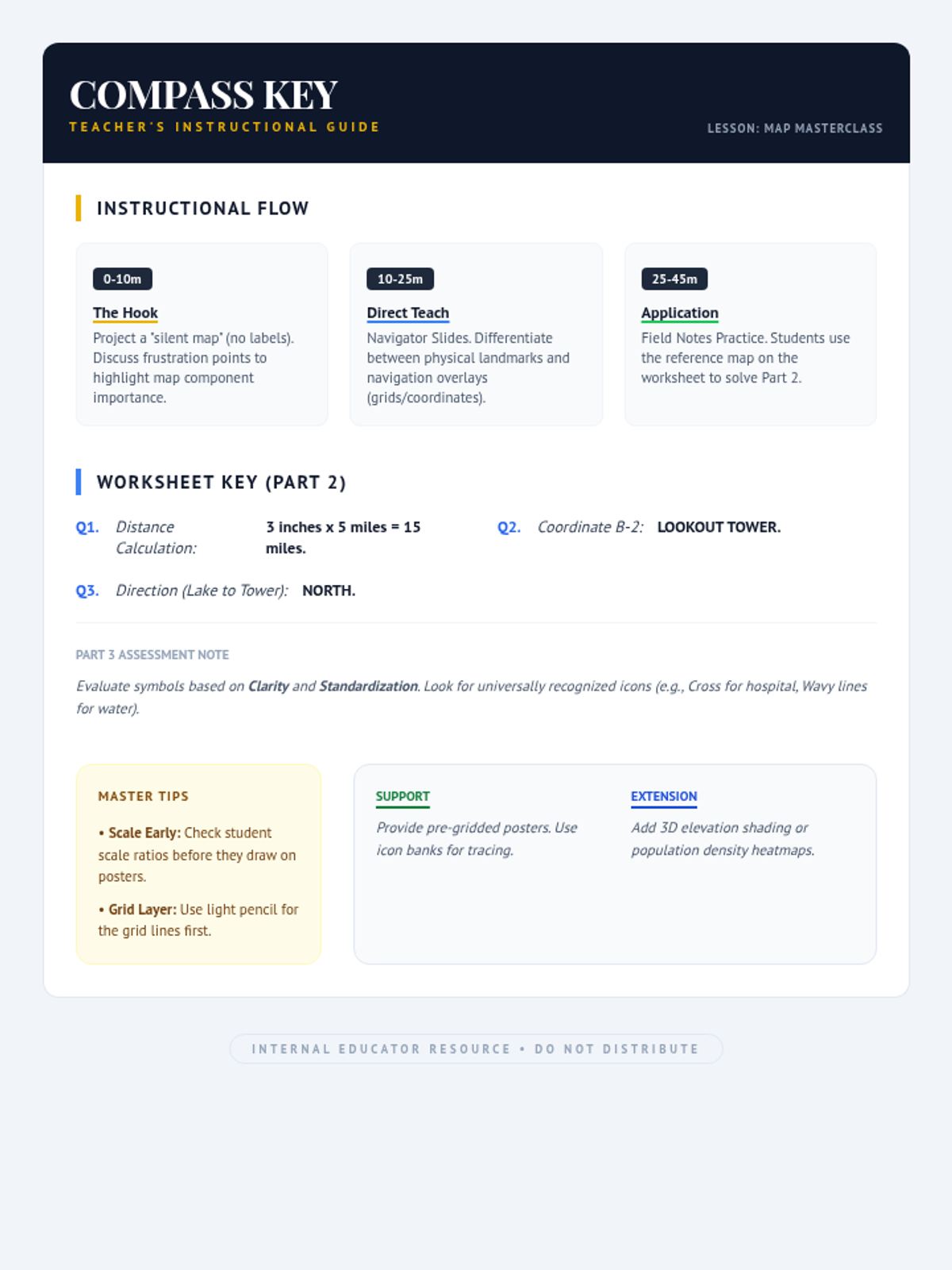
Students learn the foundational skills of cartography, focusing on how to read, interpret, and create maps using real-world symbols, scales, and coordinates.
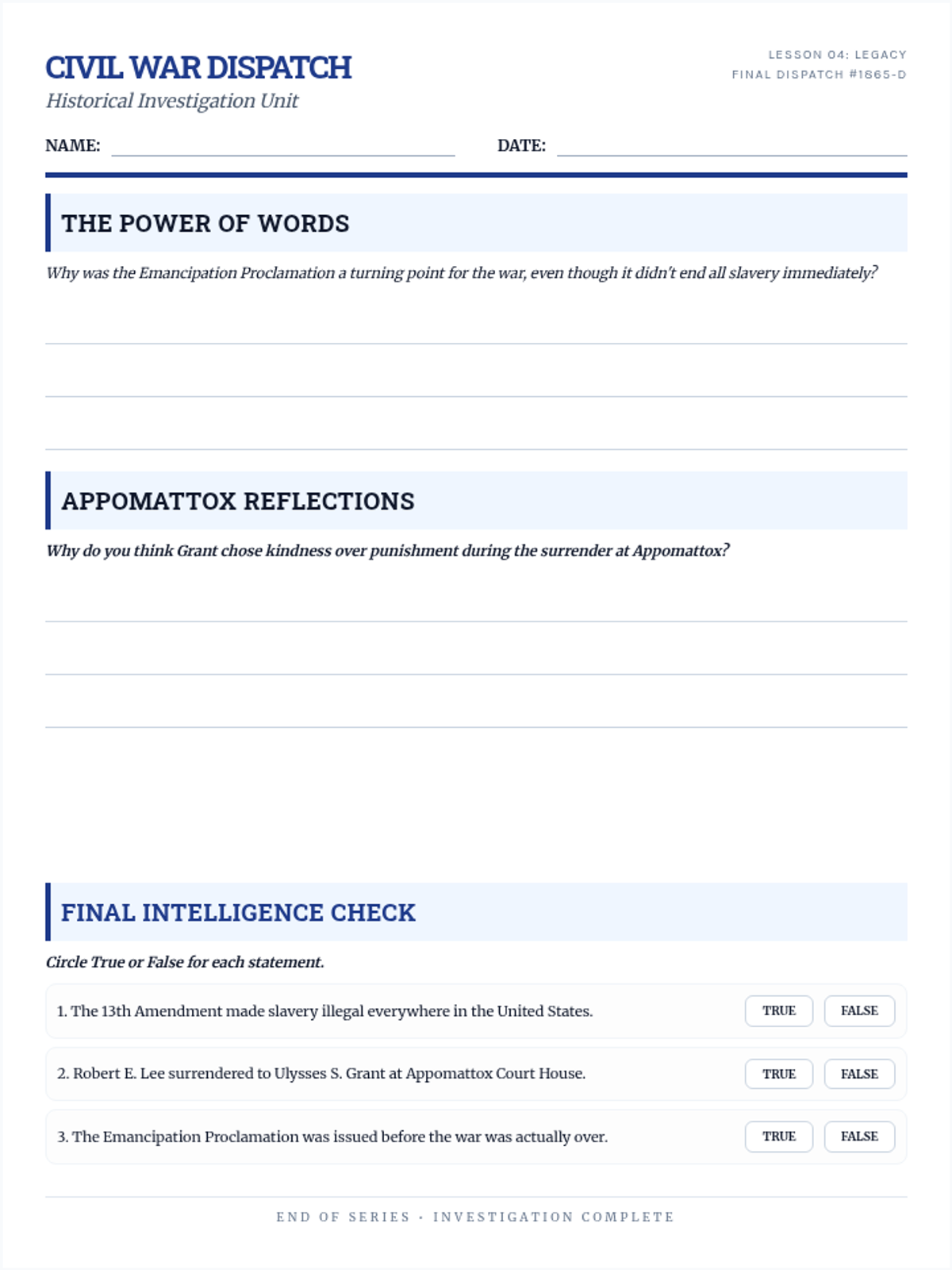
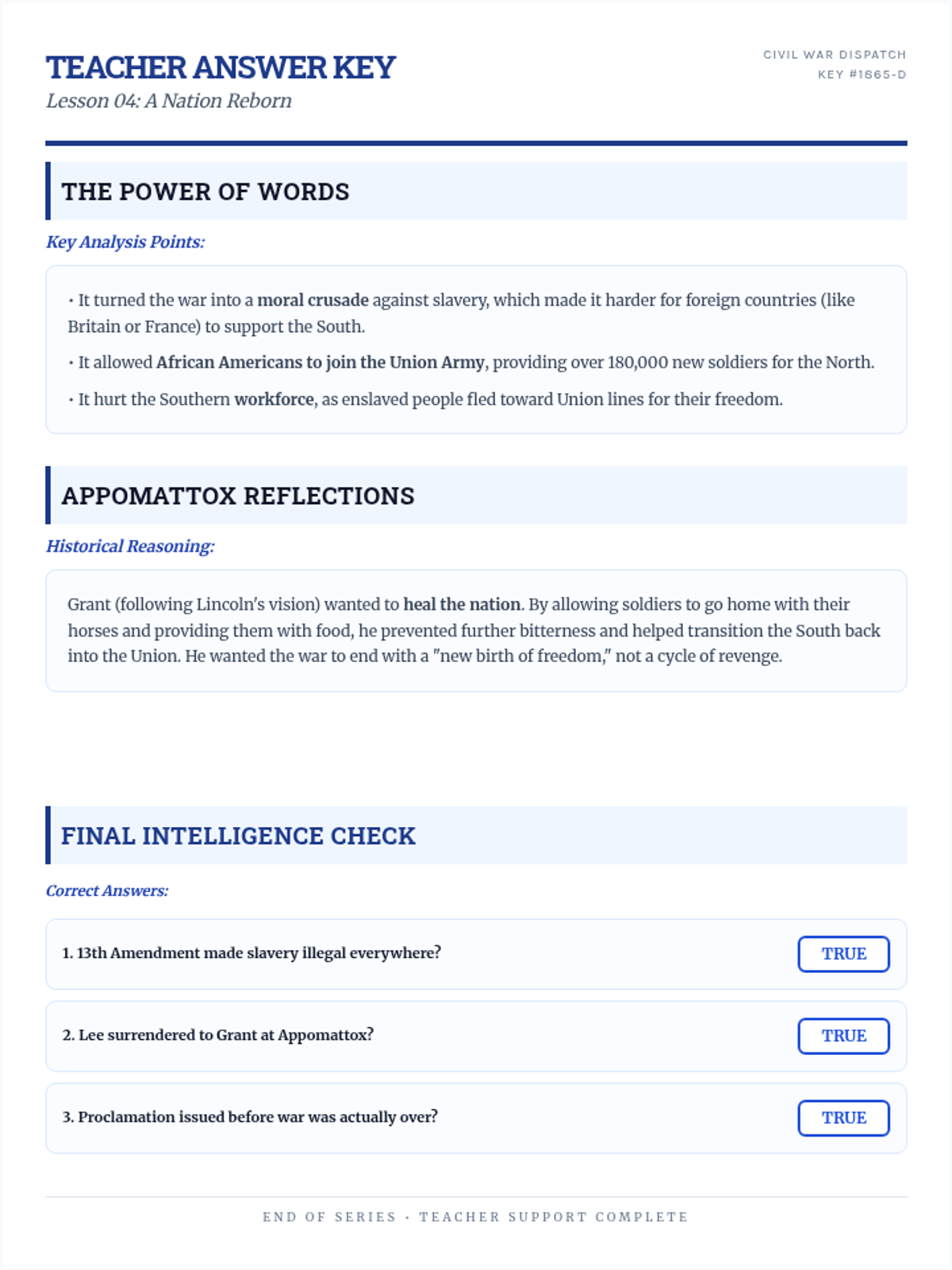
Covers the Emancipation Proclamation, the surrender at Appomattox, and the initial steps toward healing a divided nation.
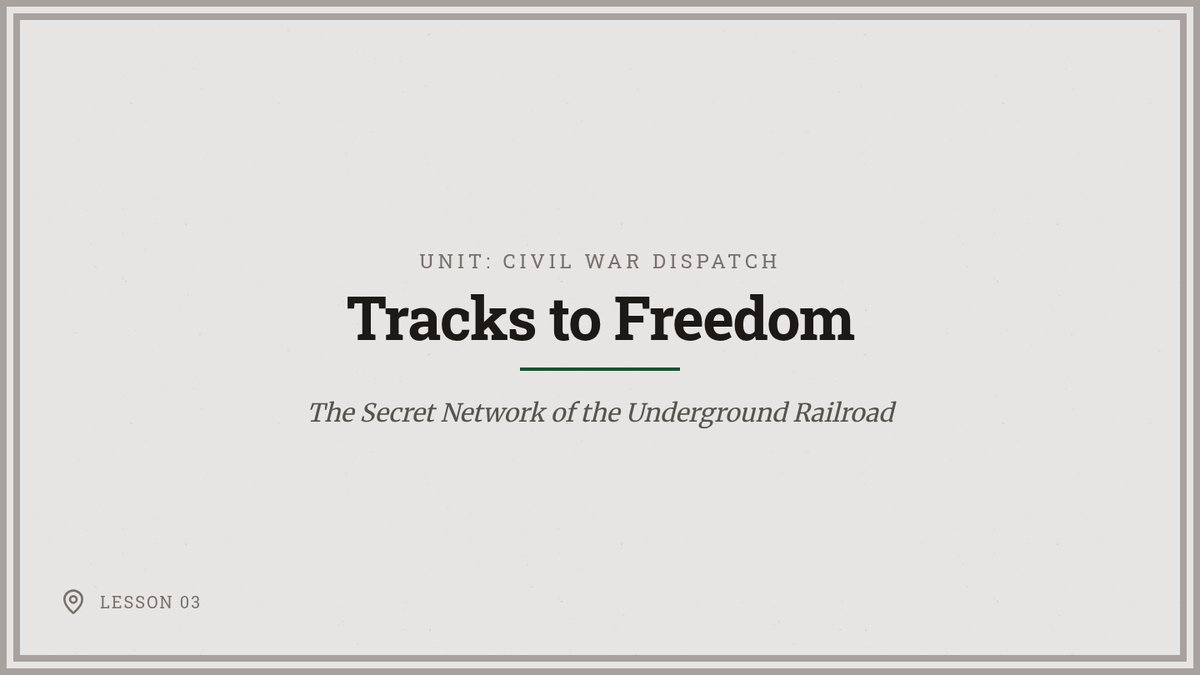
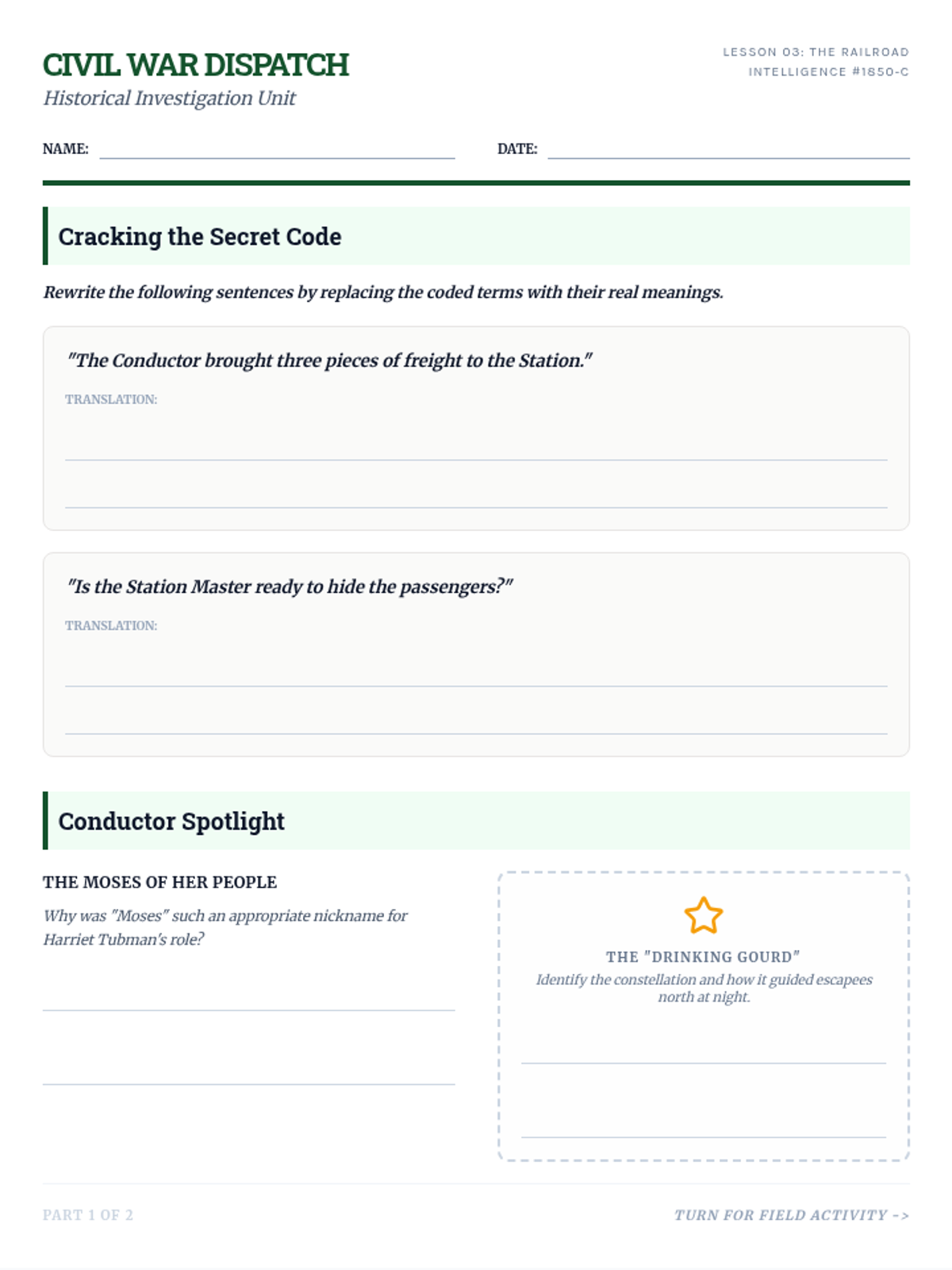
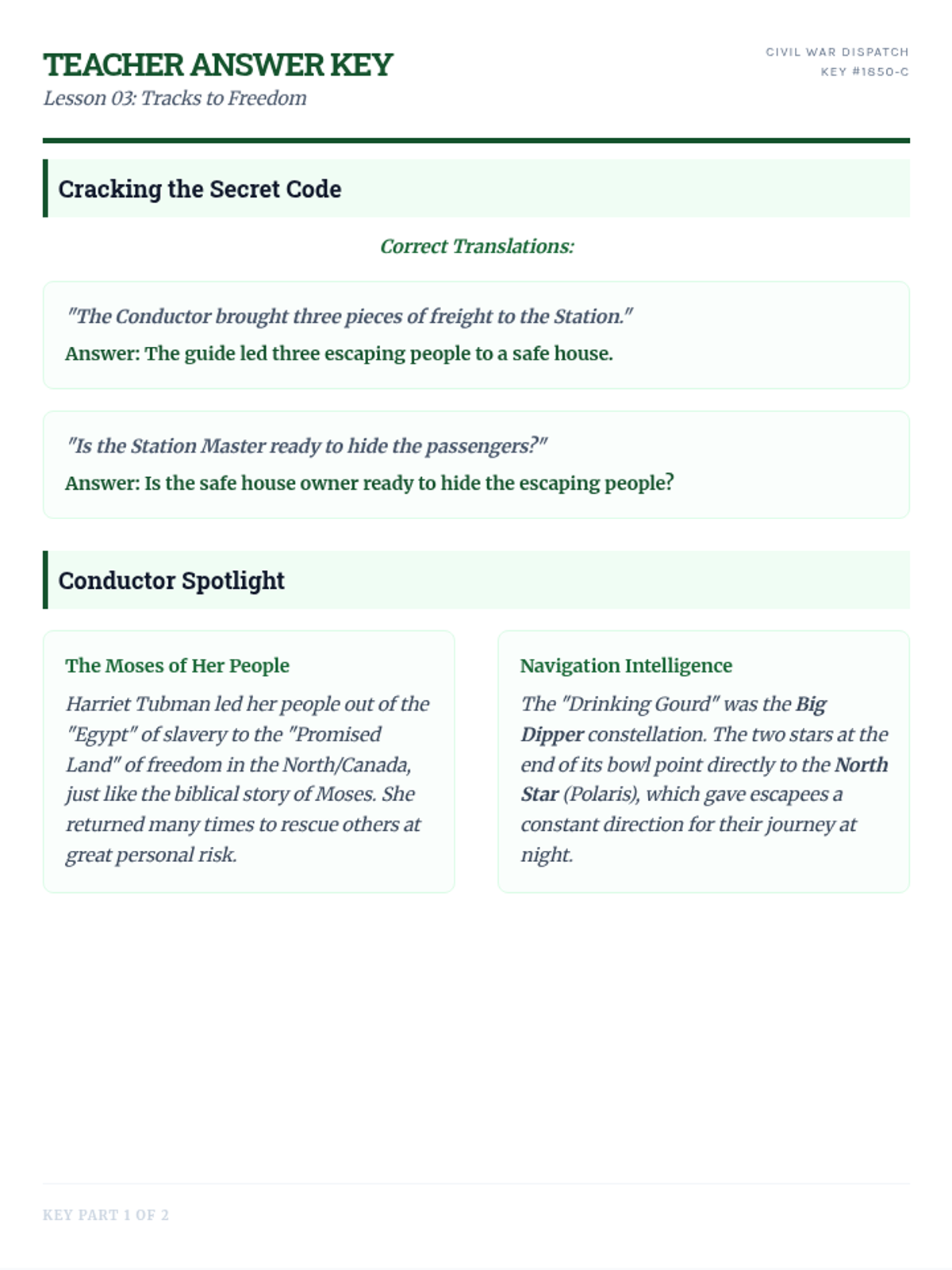
Details the secret network of the Underground Railroad and the heroic efforts of Harriet Tubman and abolitionists.
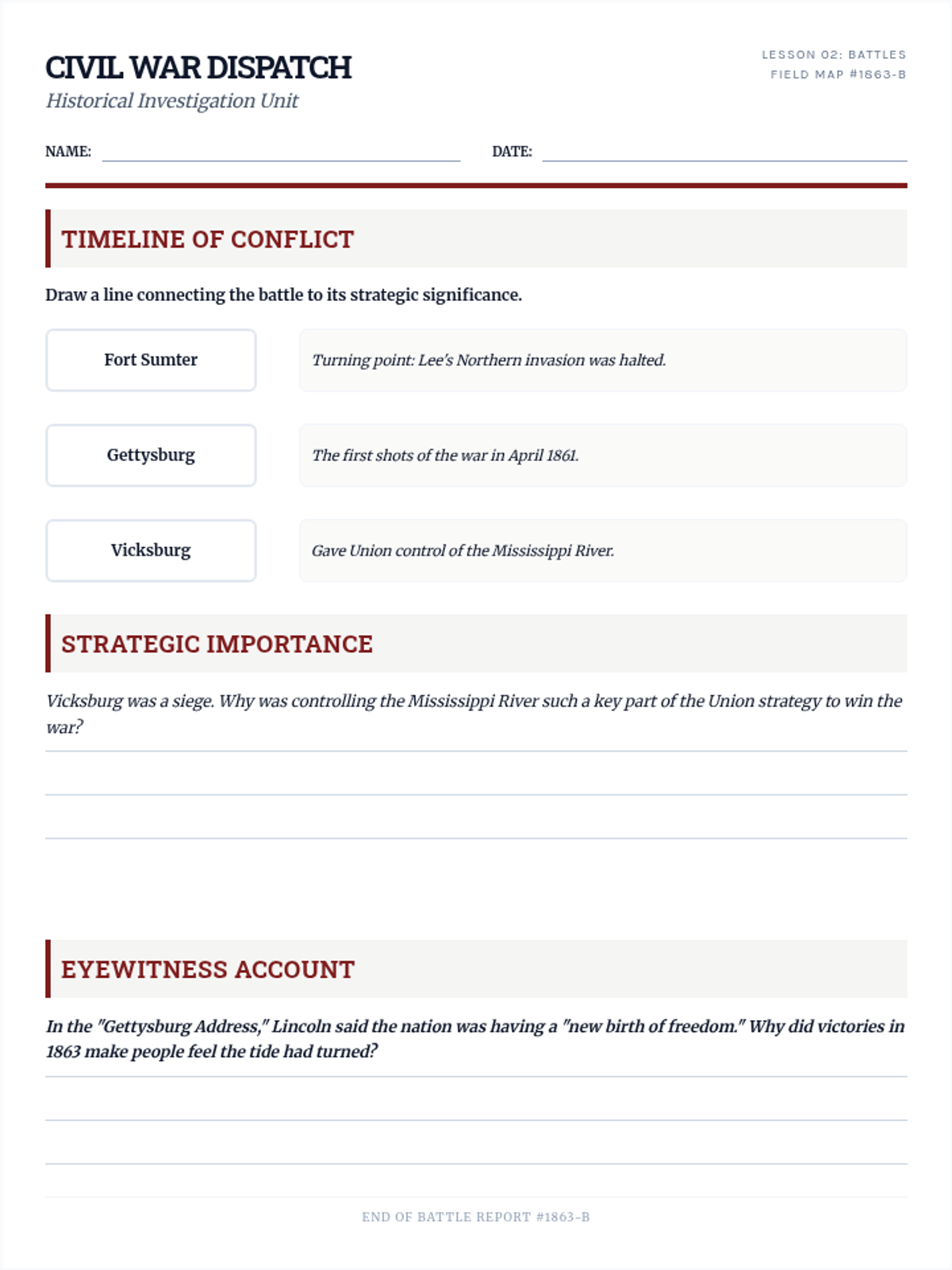
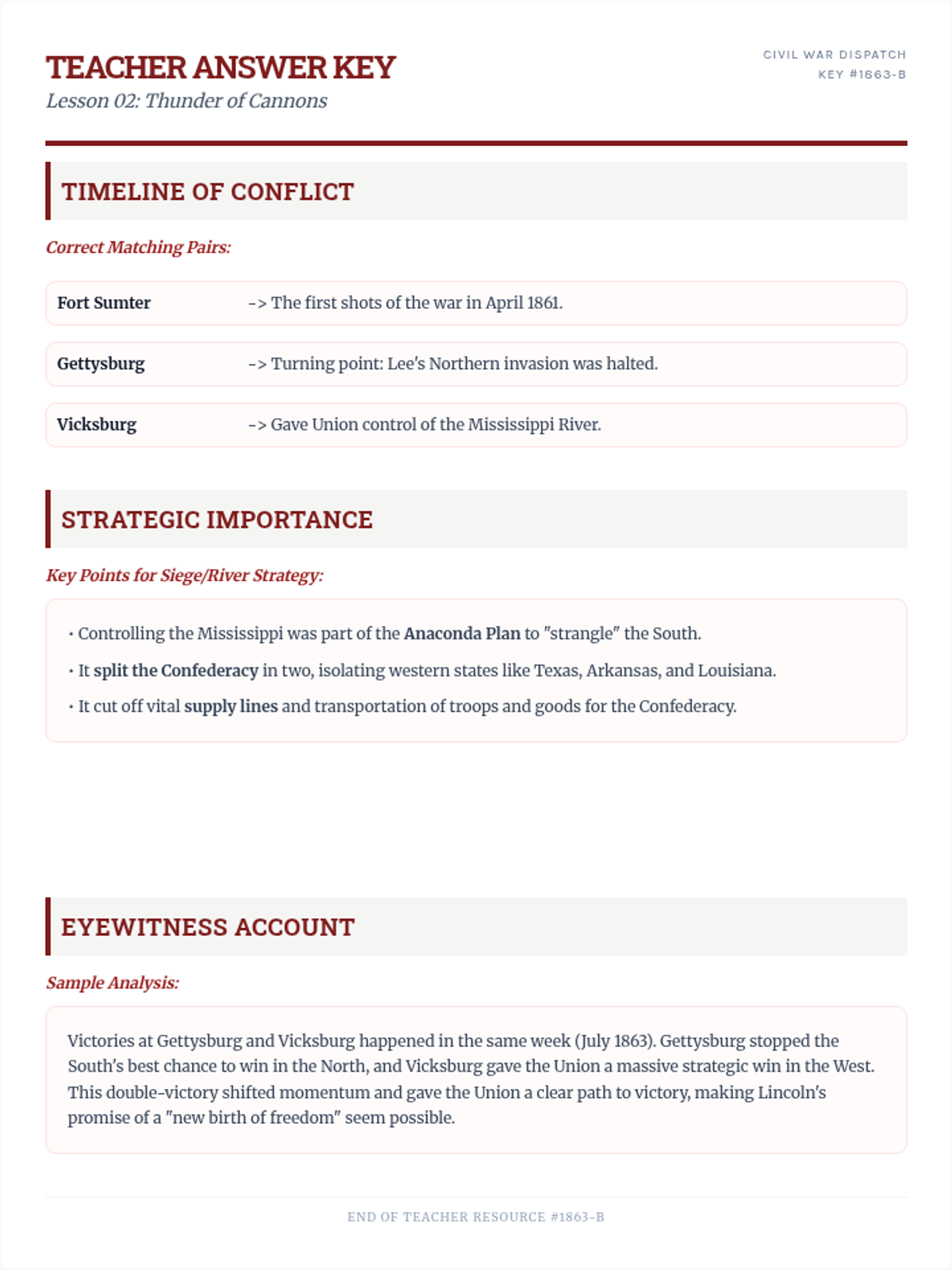
Explores the strategic significance of Fort Sumter, Gettysburg, and the turning points of the war.
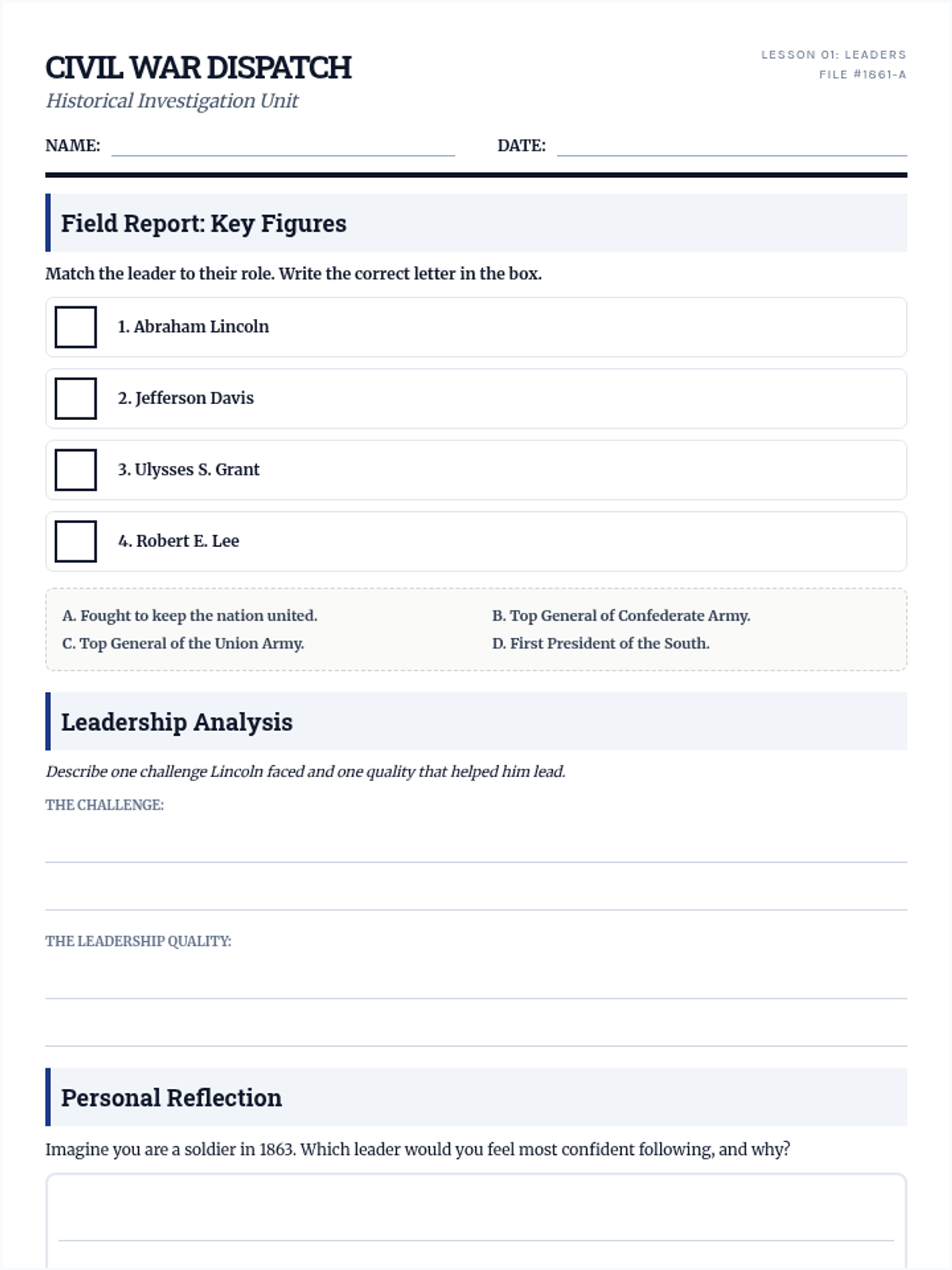
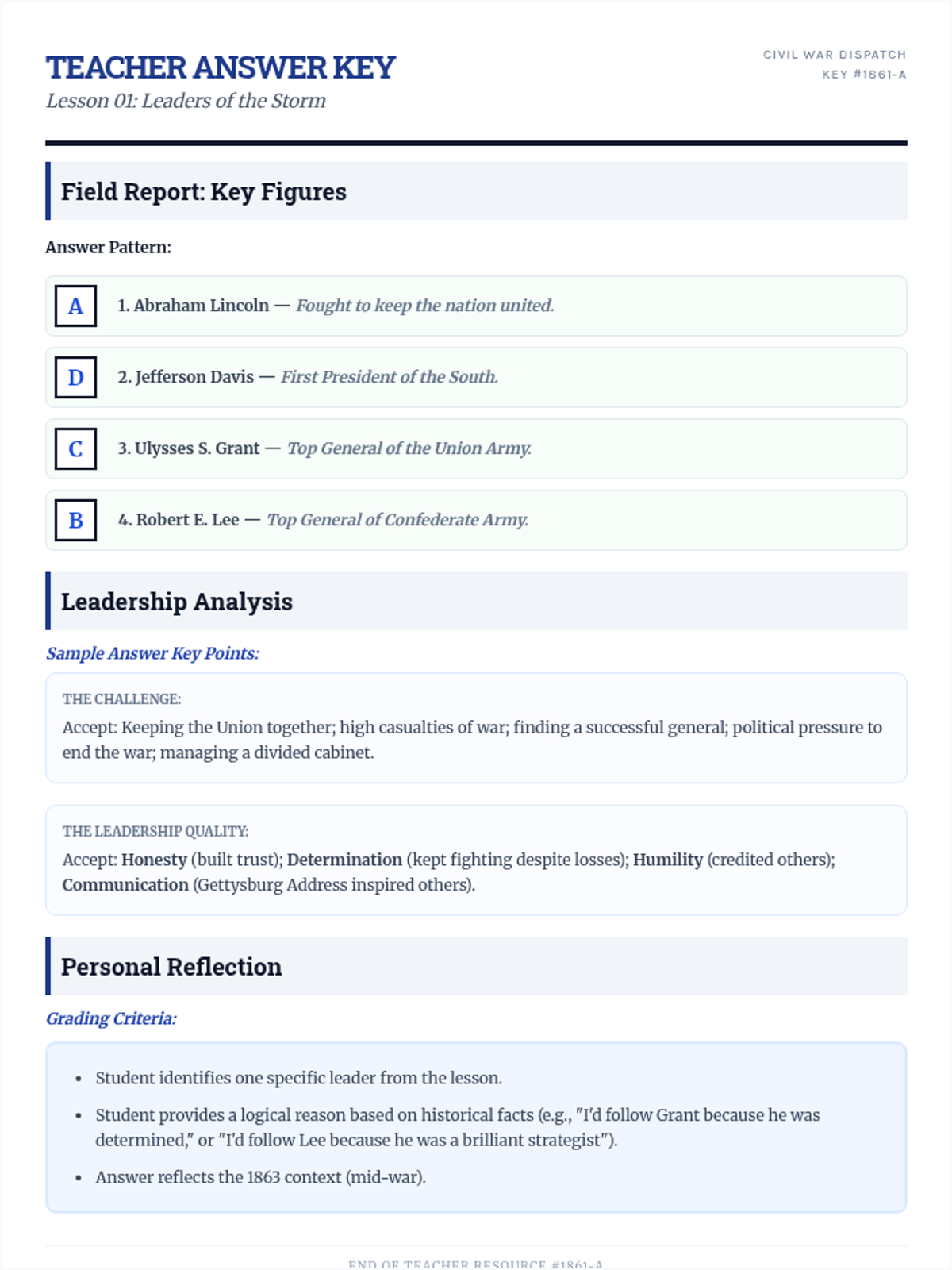
Introduces the primary political and military leaders of the Union and Confederacy, focusing on Lincoln, Grant, Lee, and Davis.
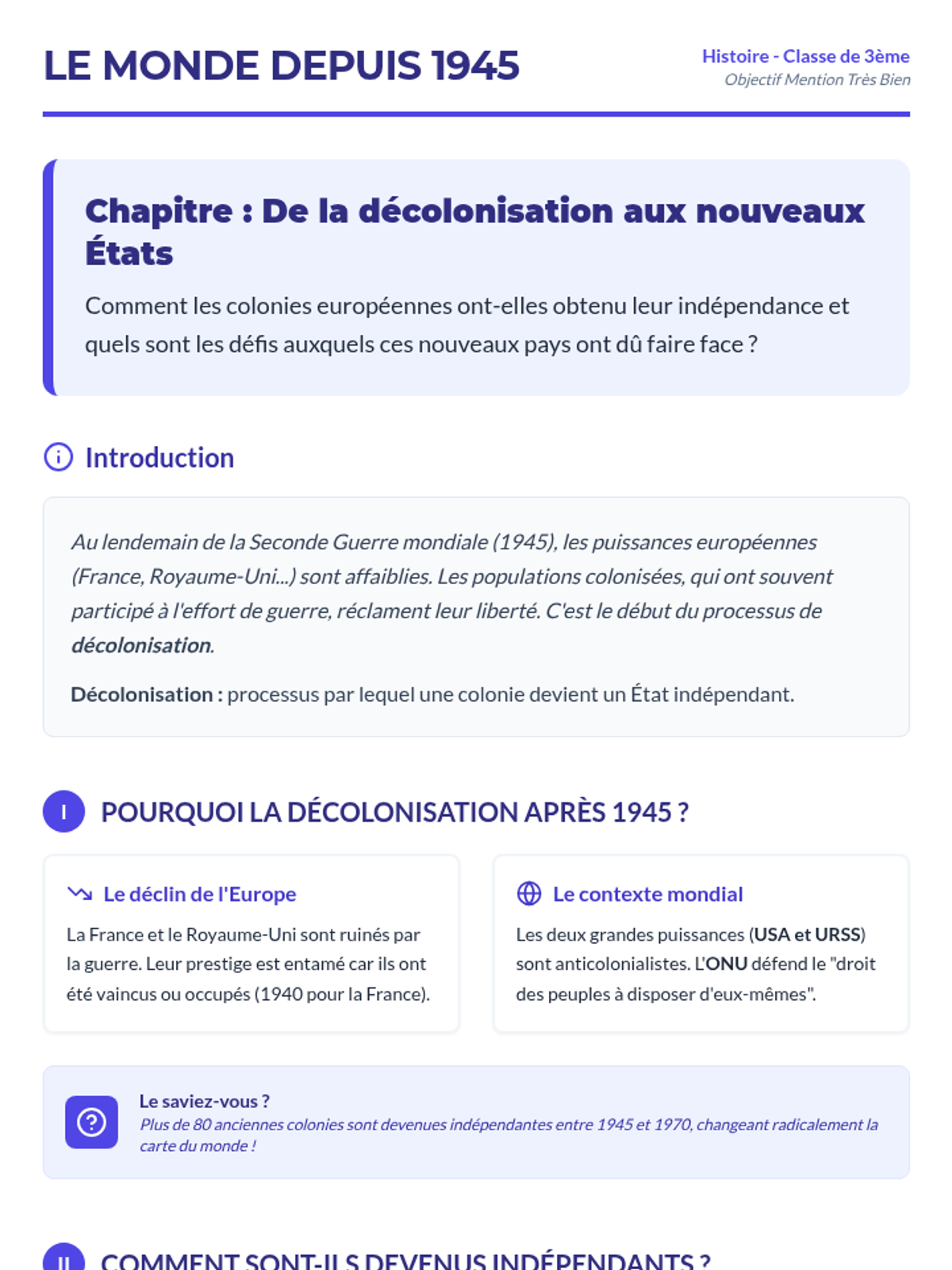
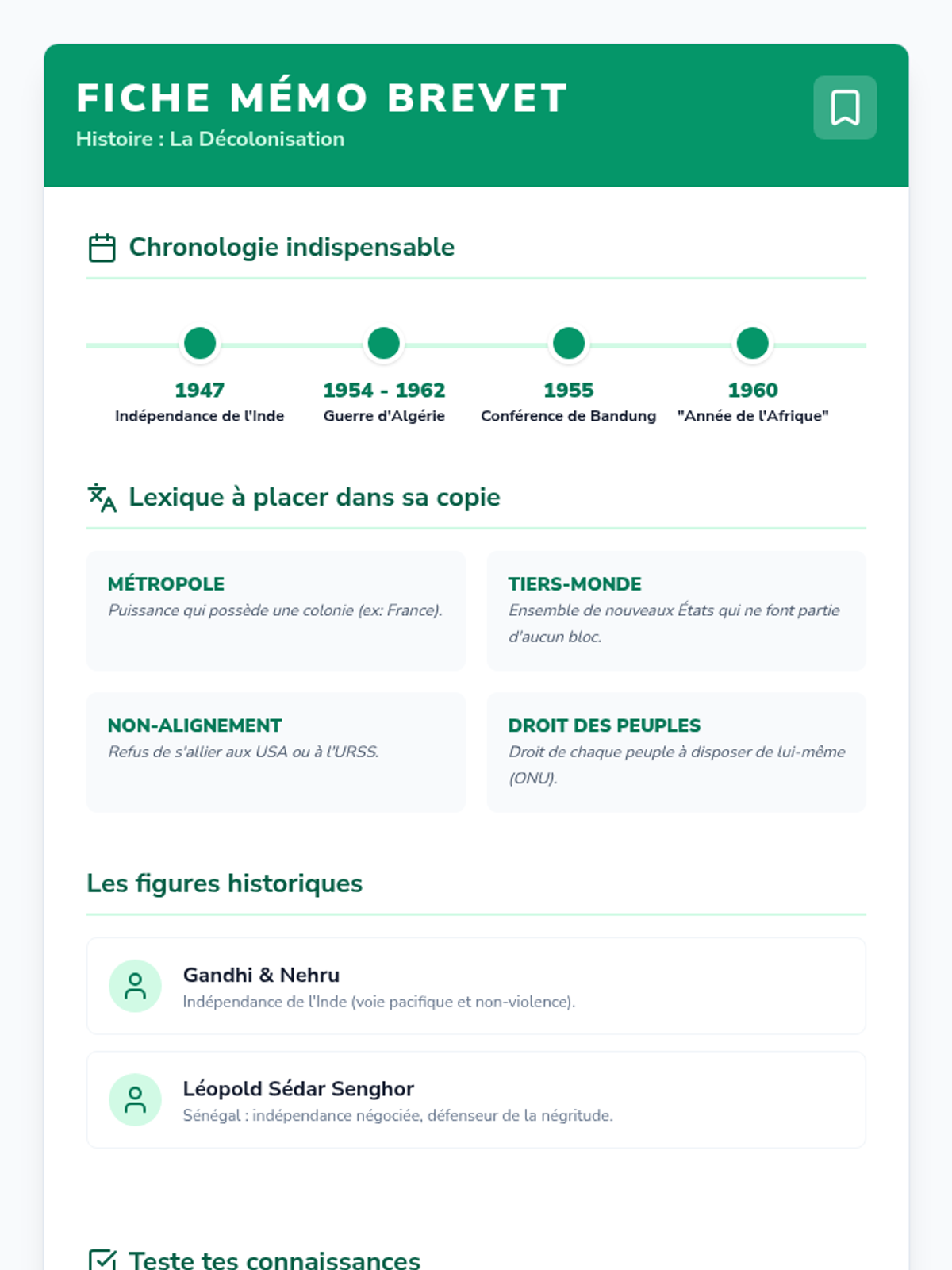
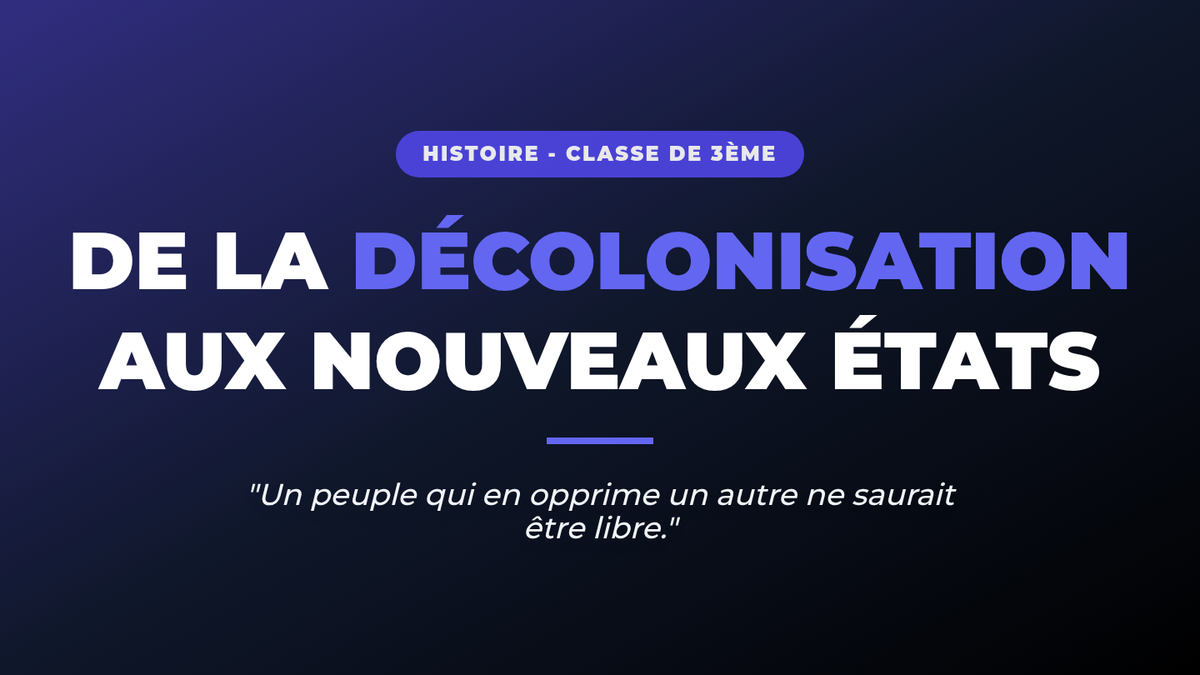
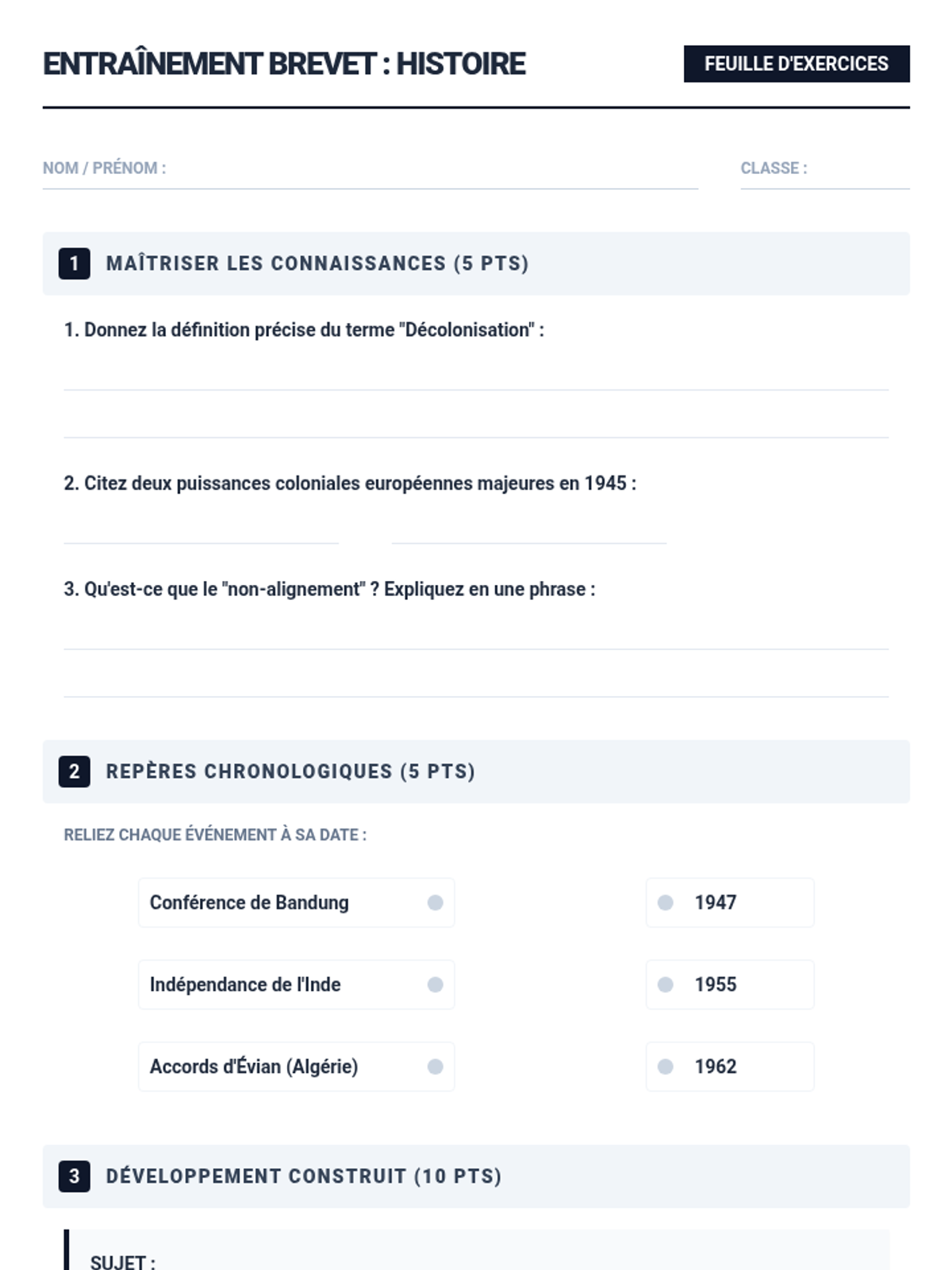
Un cours complet et une fiche de révision sur la décolonisation et l'émergence du tiers-monde, conçu pour la réussite au Brevet des collèges.
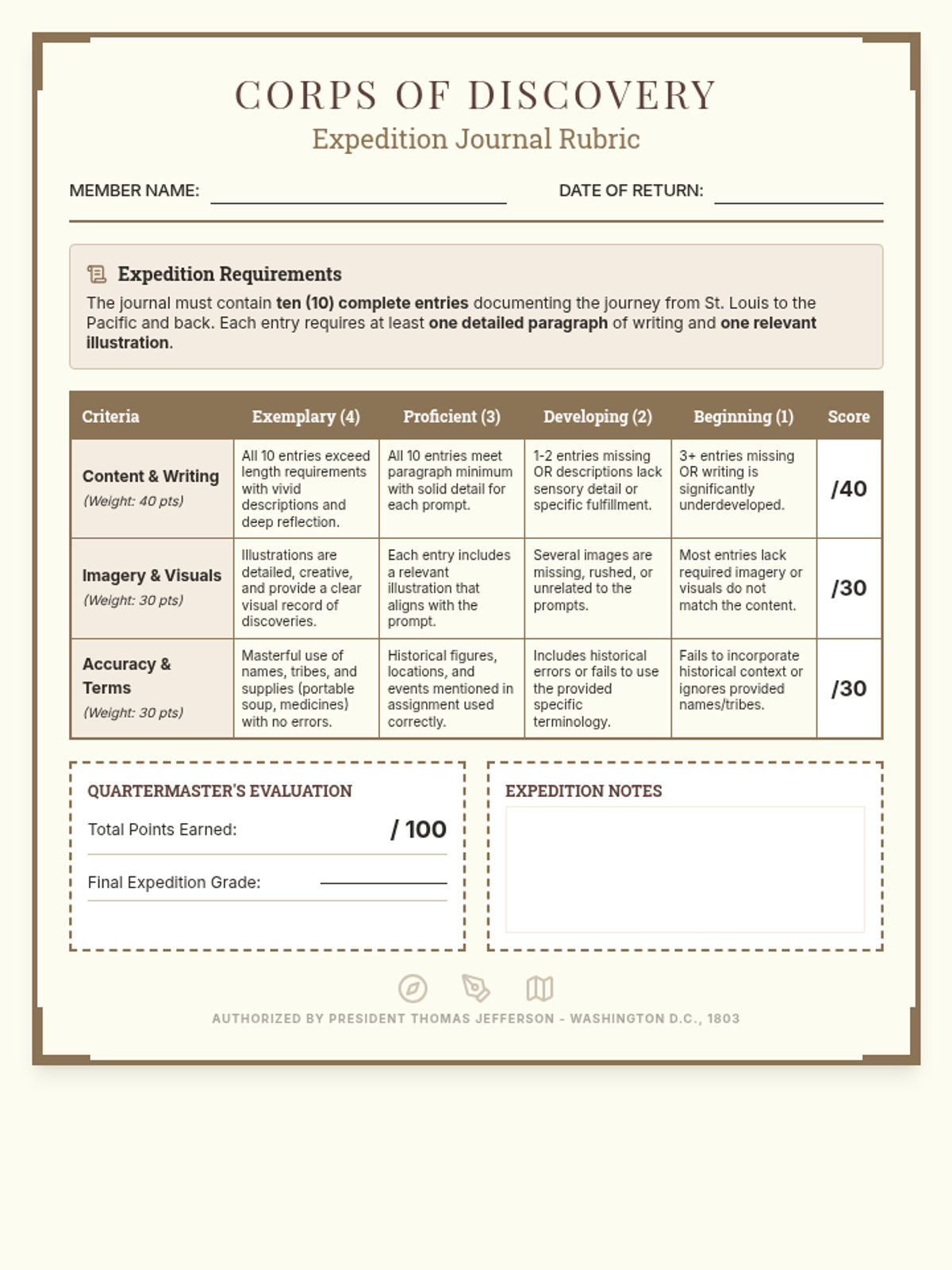
A rubric and assessment tool for the Lewis and Clark Road Trip journal assignment, focusing on content, imagery, and historical accuracy.
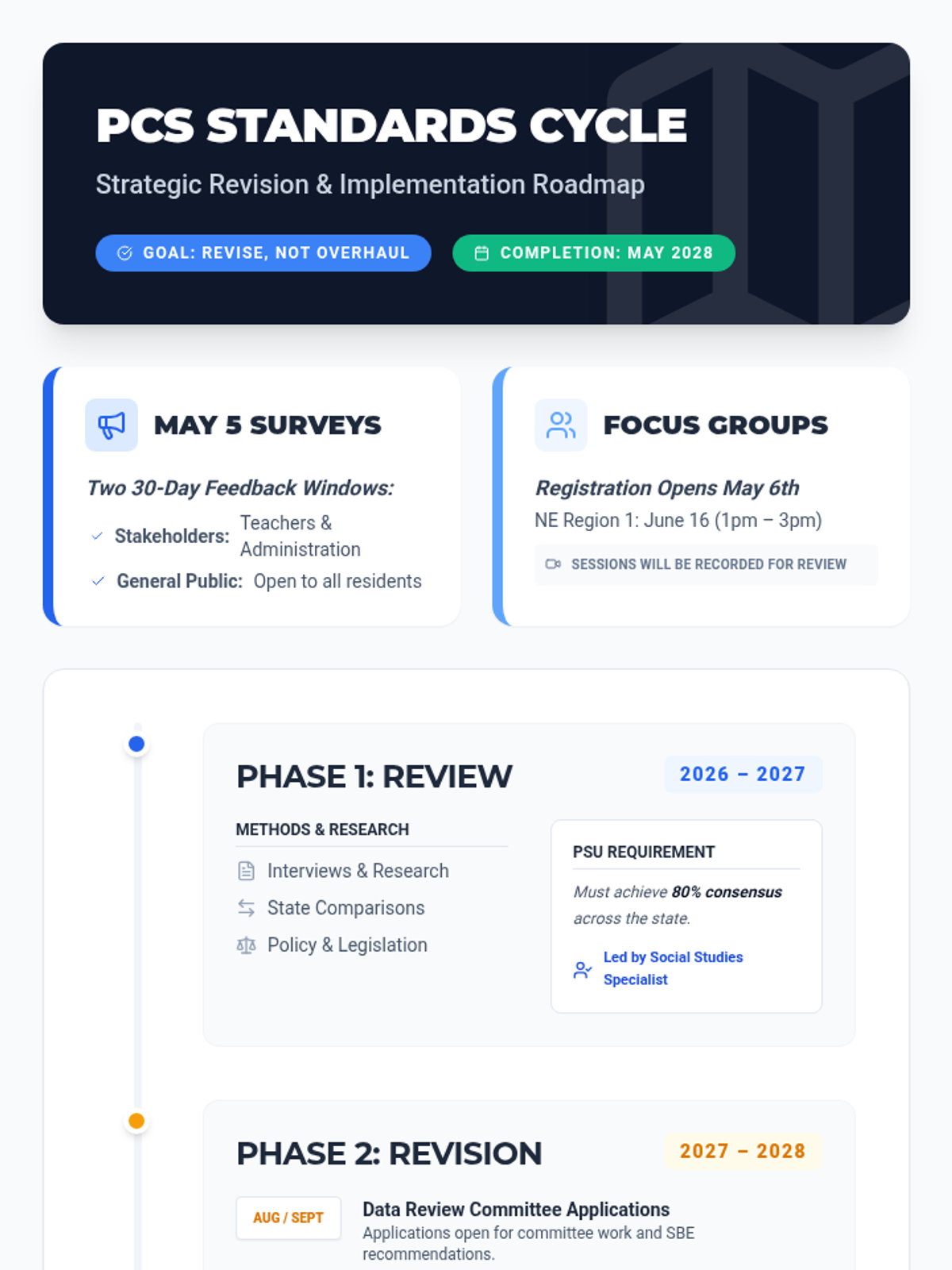
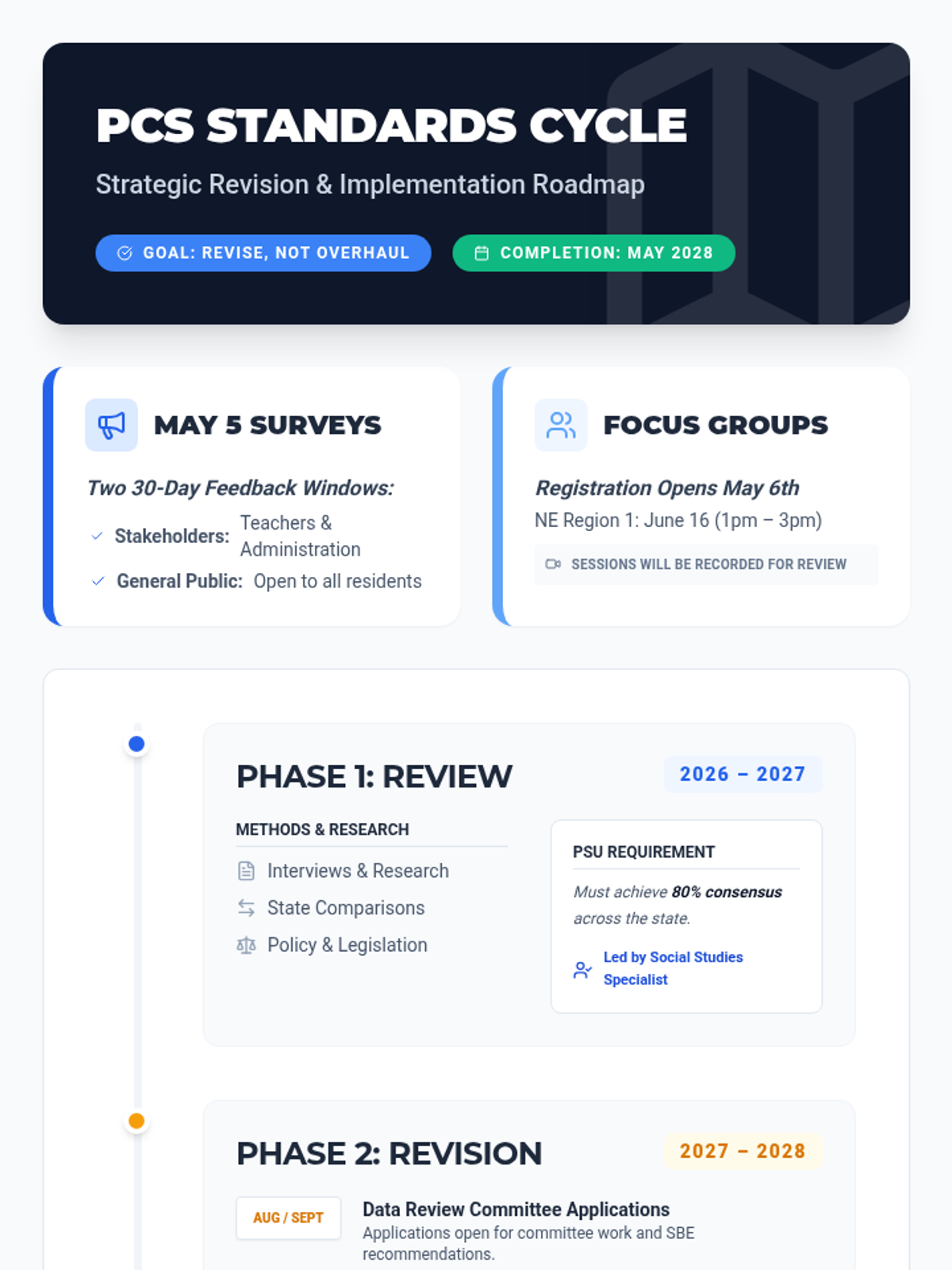
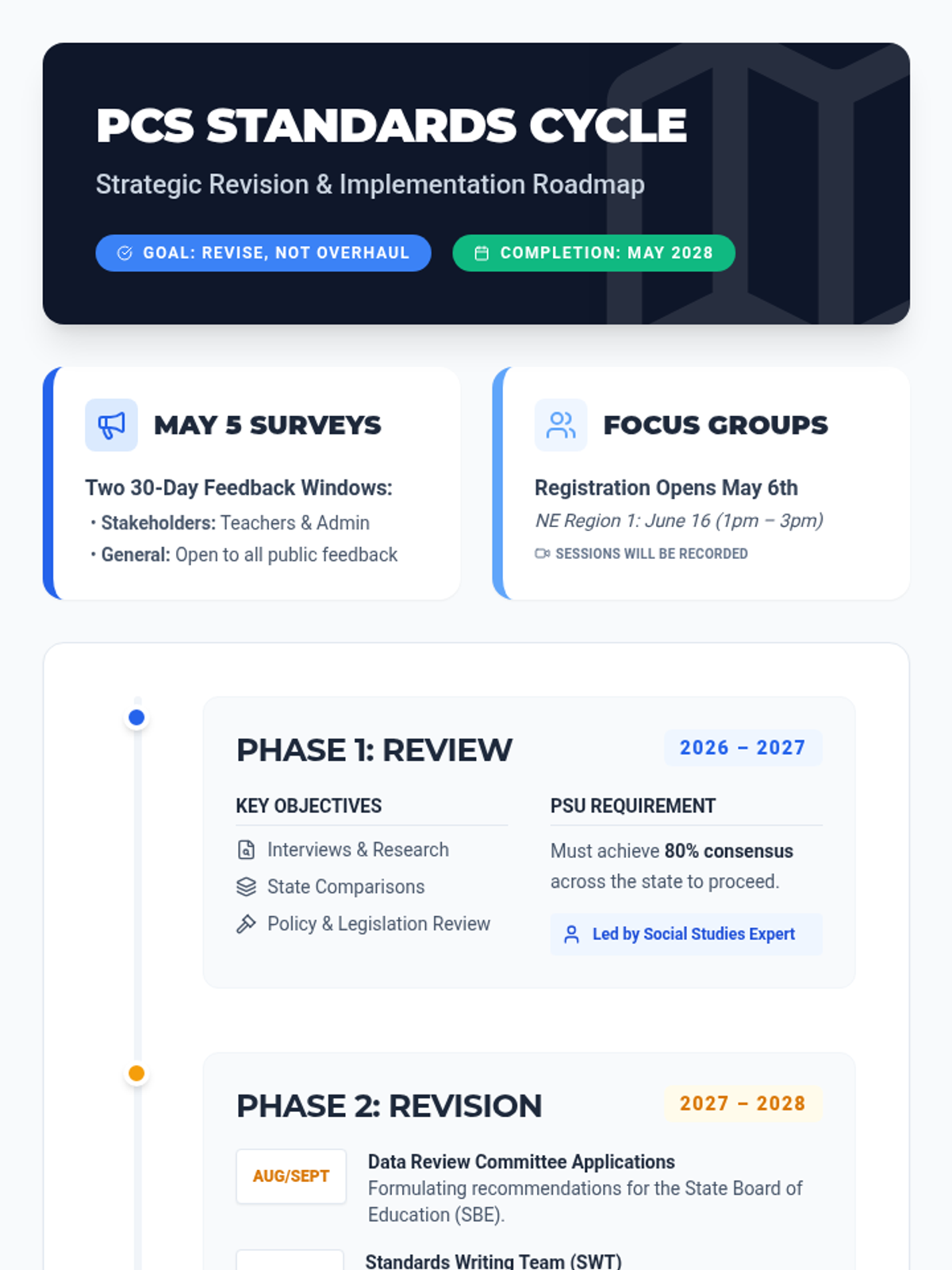
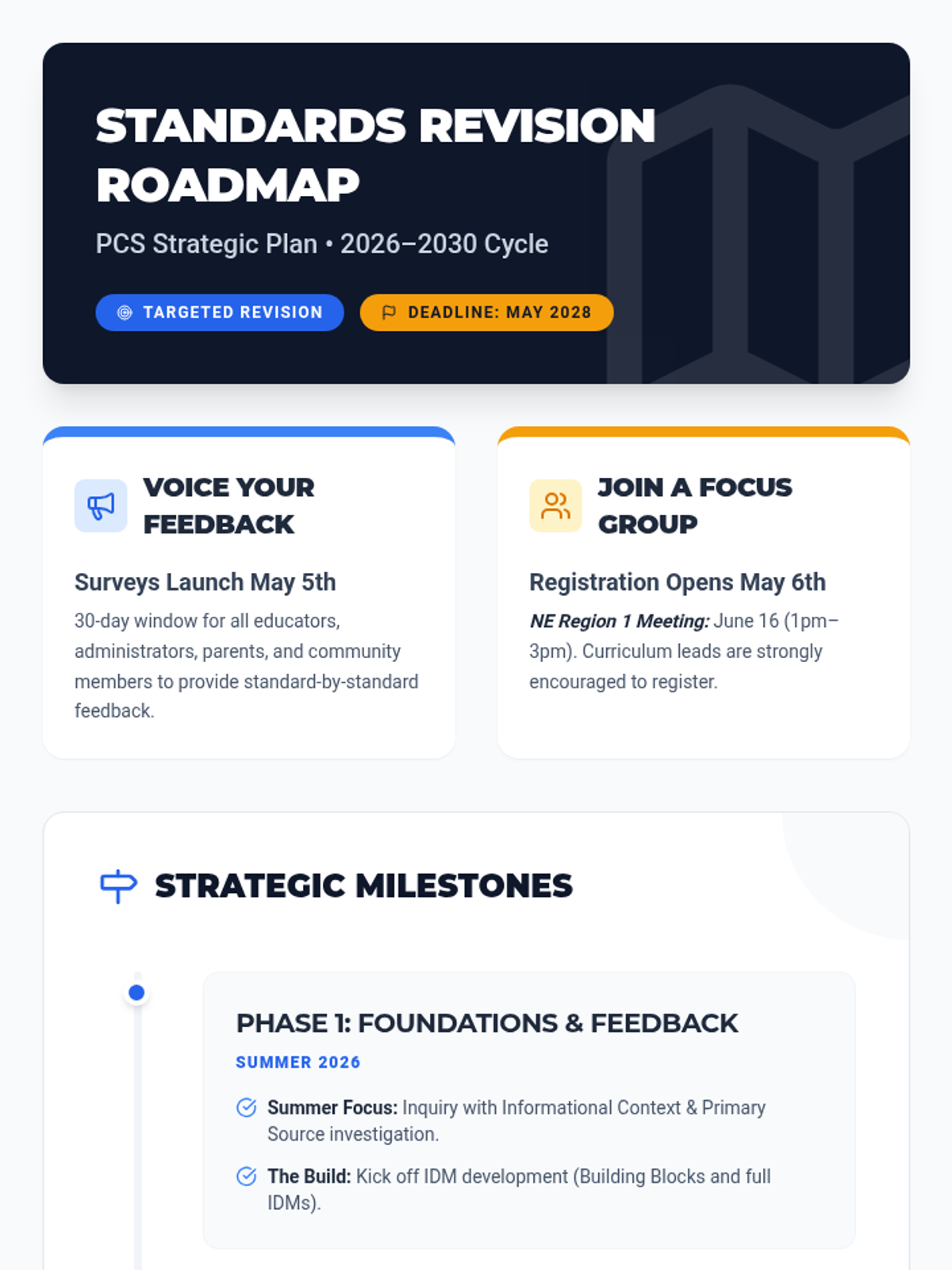
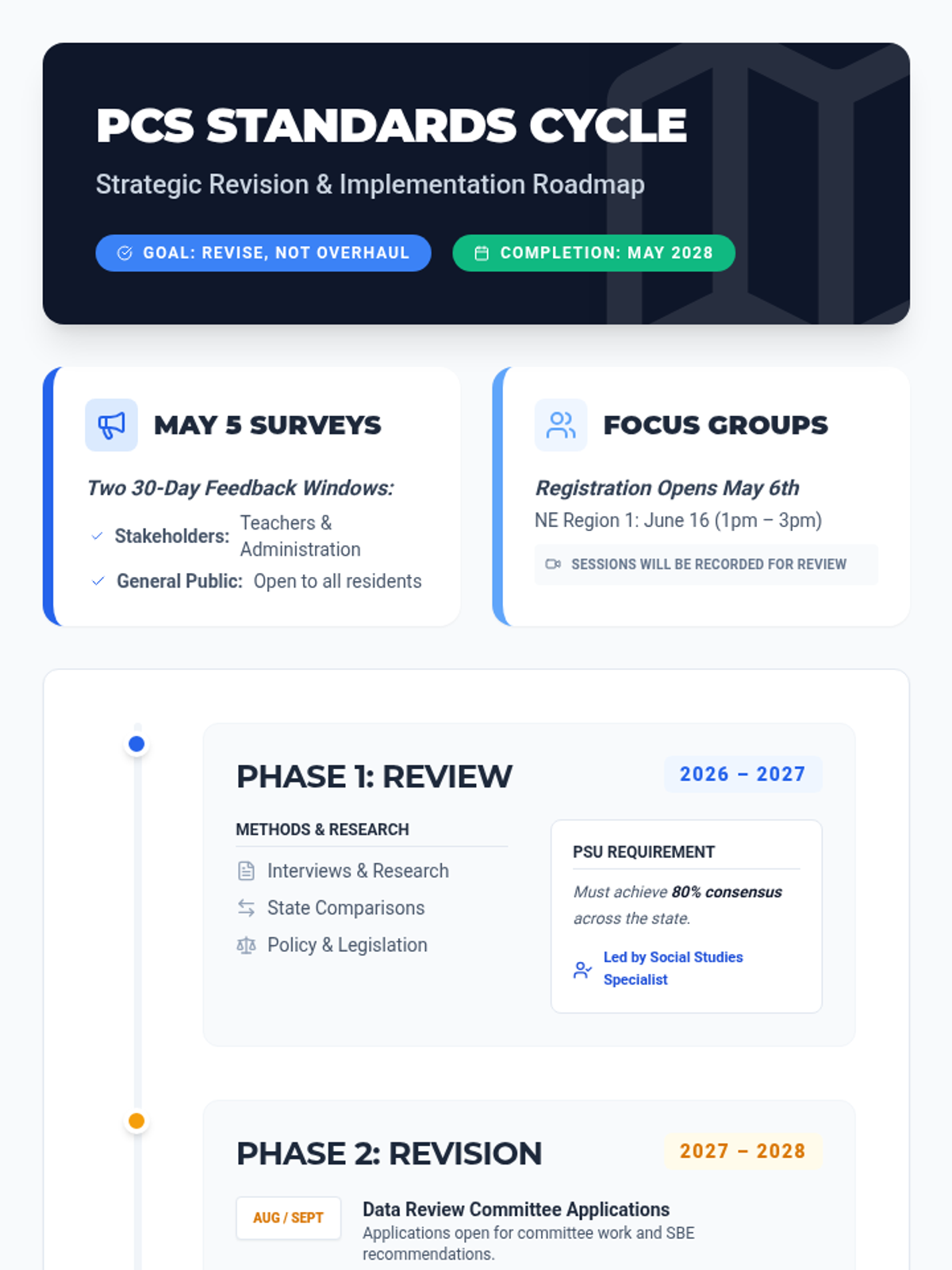
A comprehensive guide to the PCS standards revision process, including the multi-year timeline, feedback cycles, and curriculum build phases from 2026 to 2030.
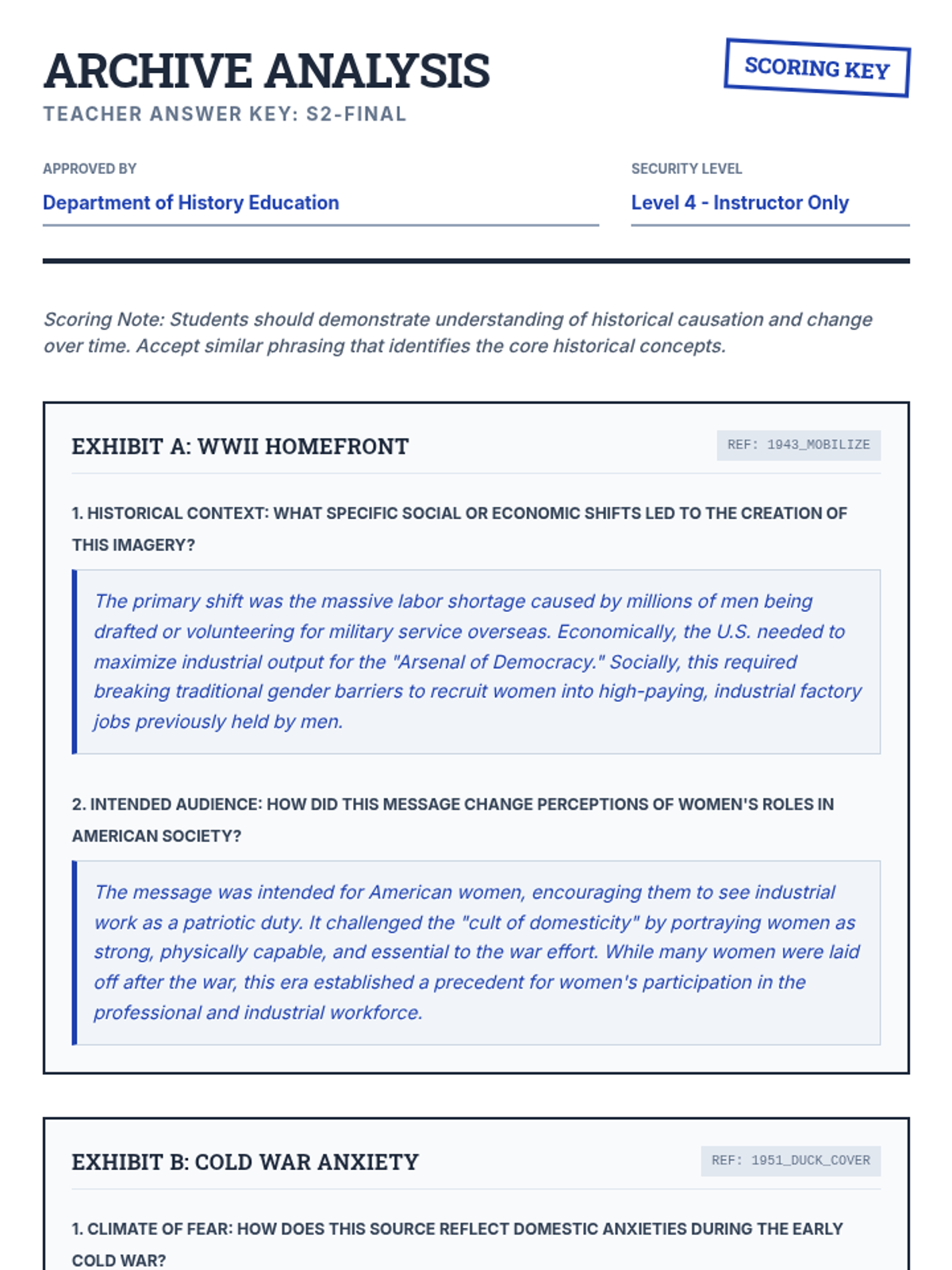
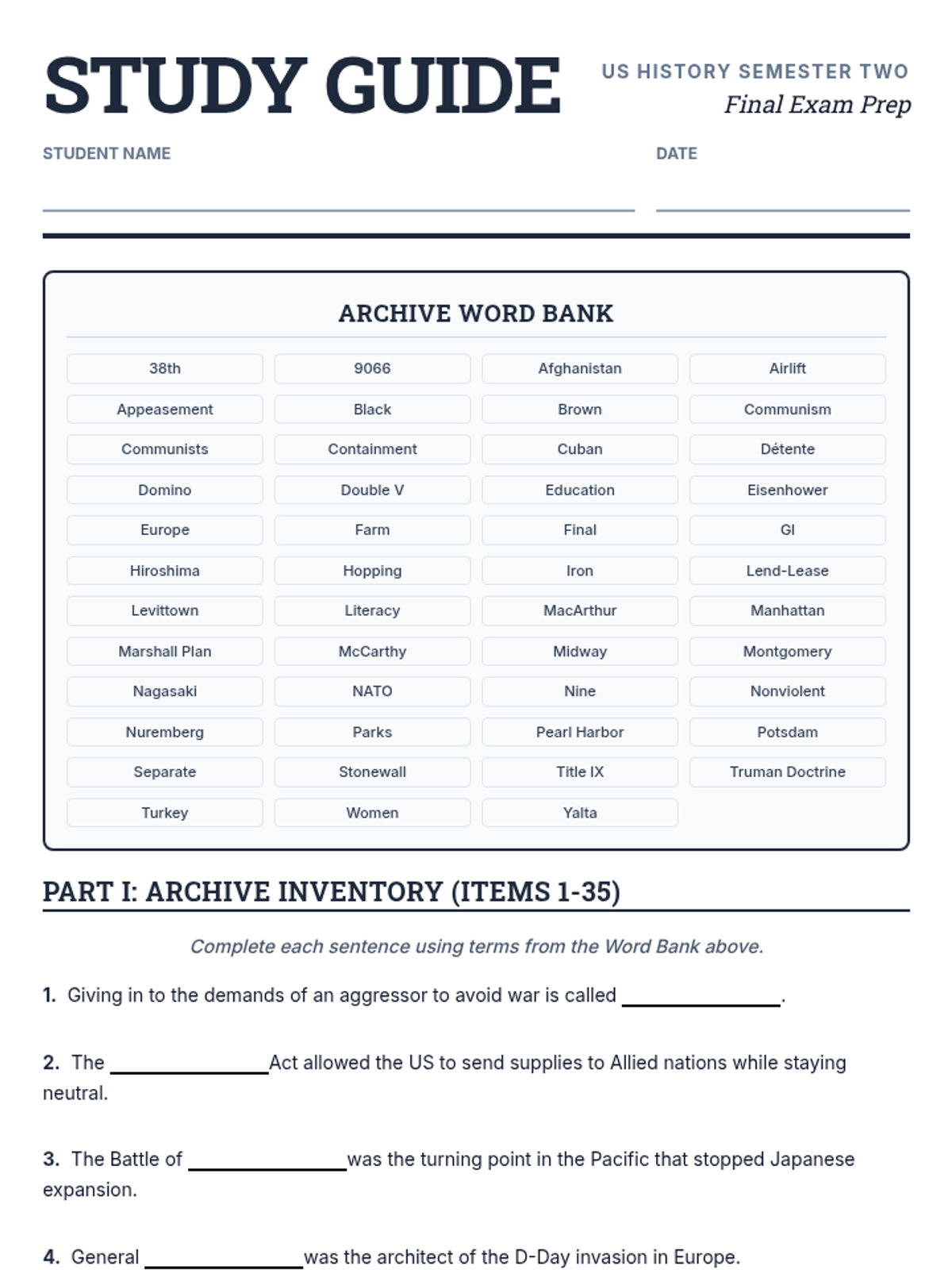
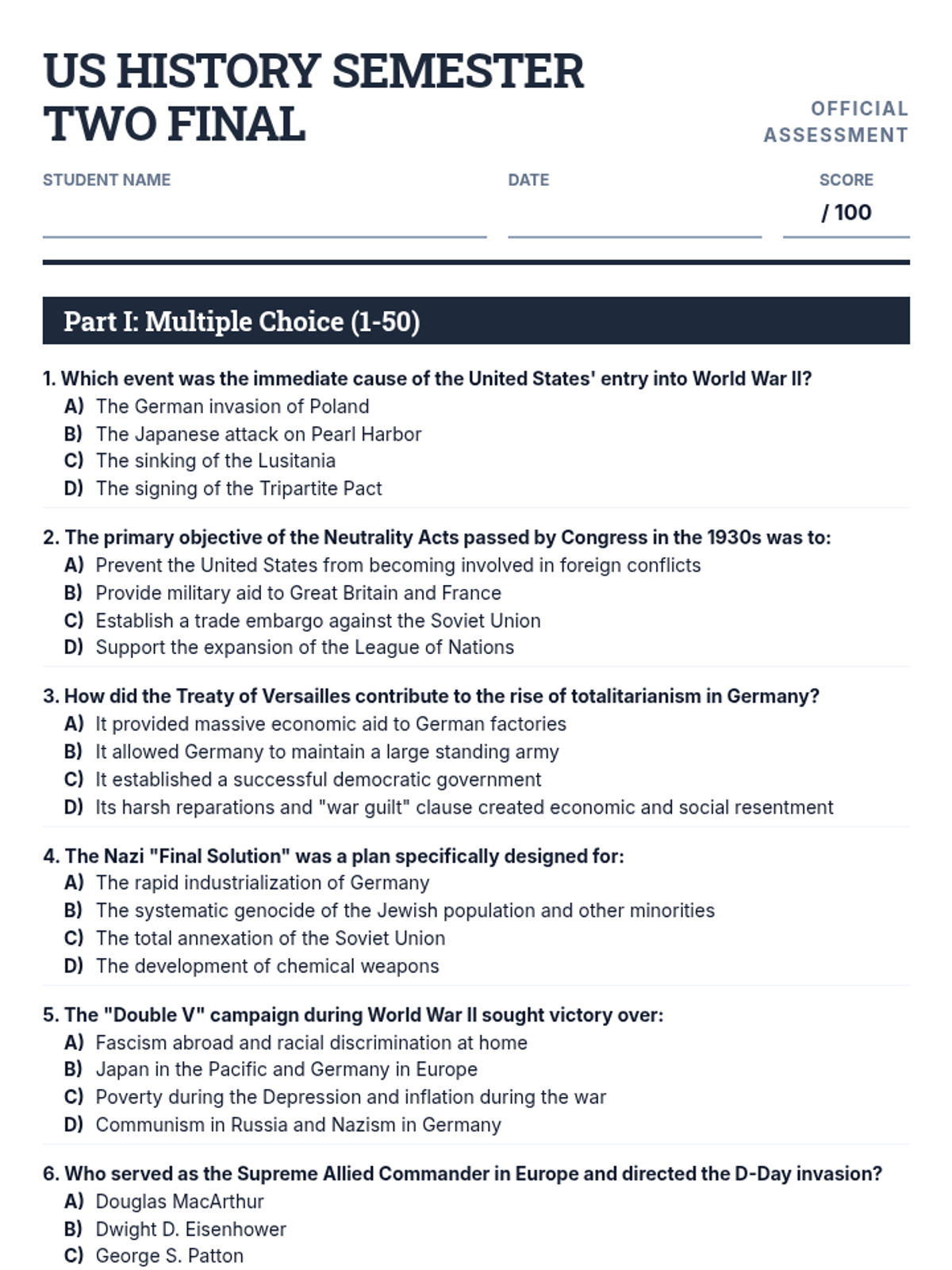
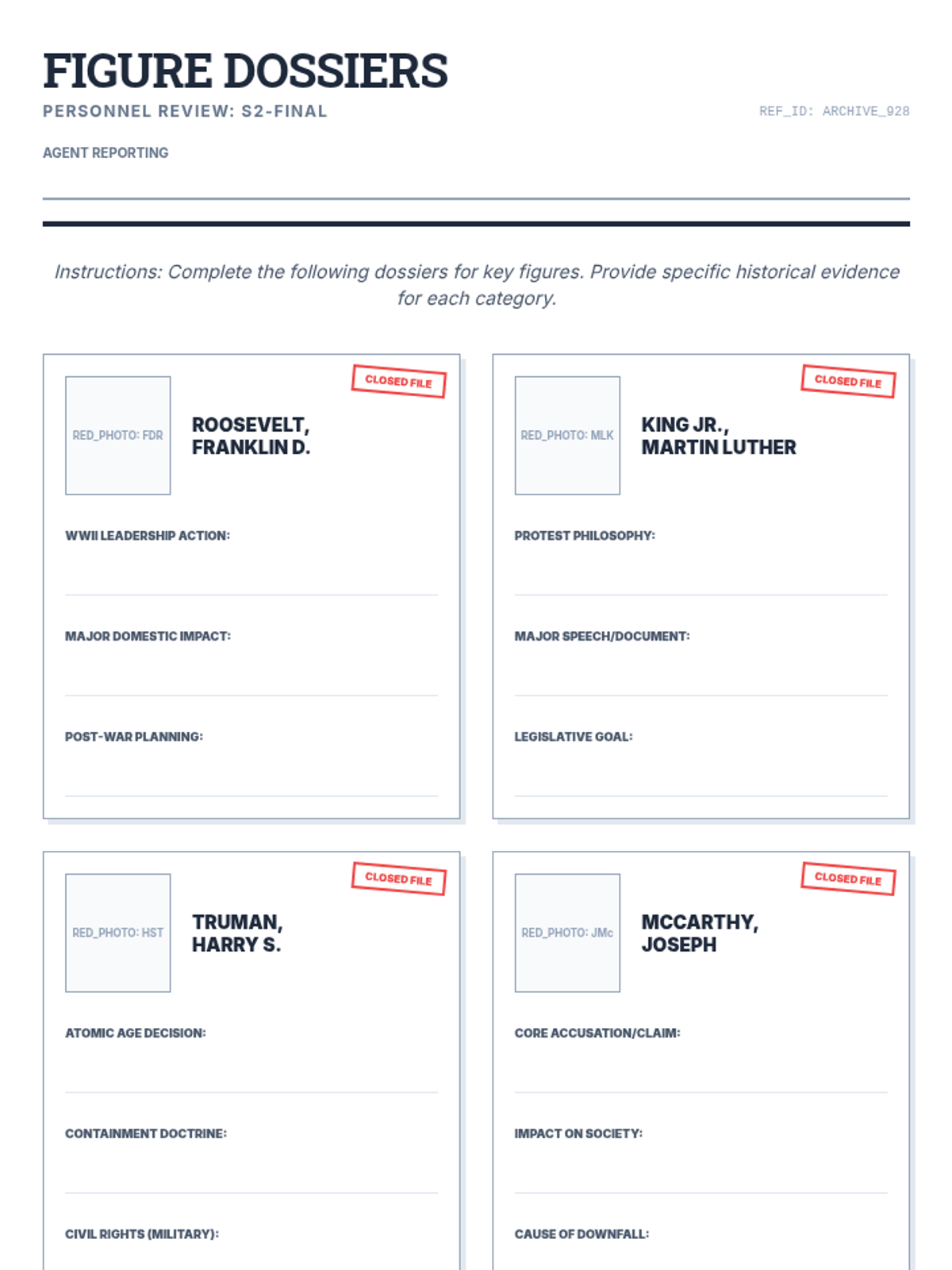
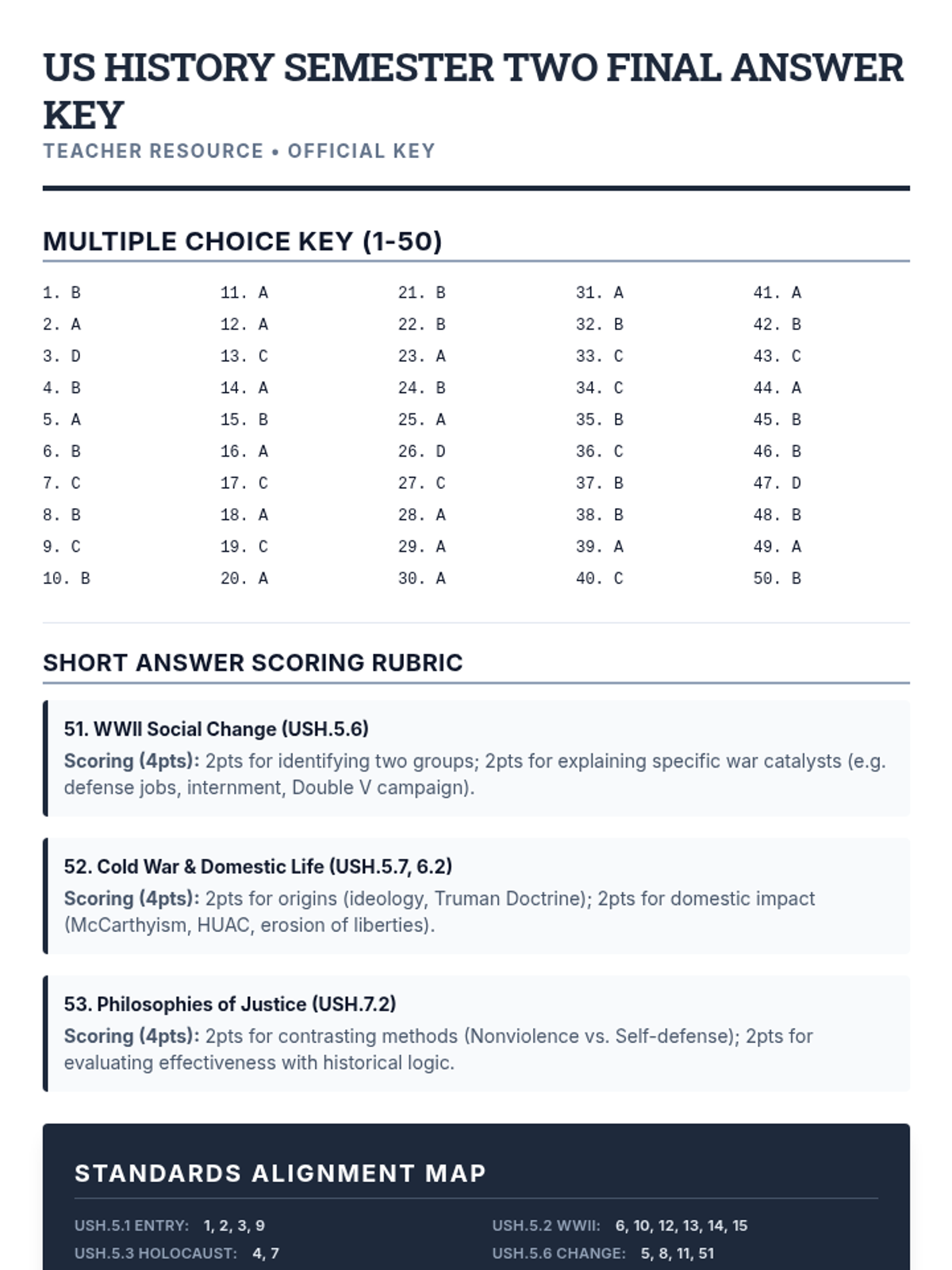
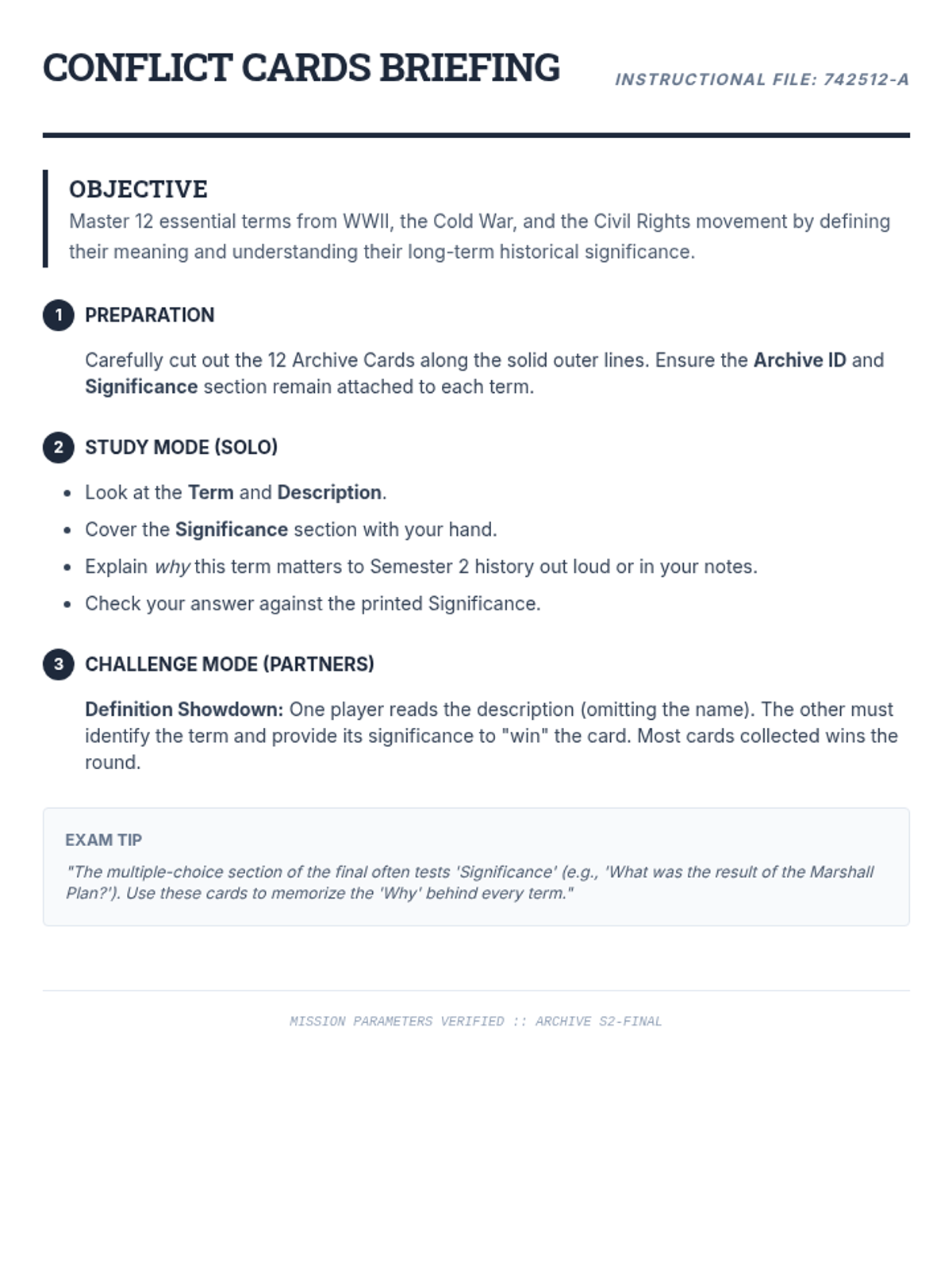
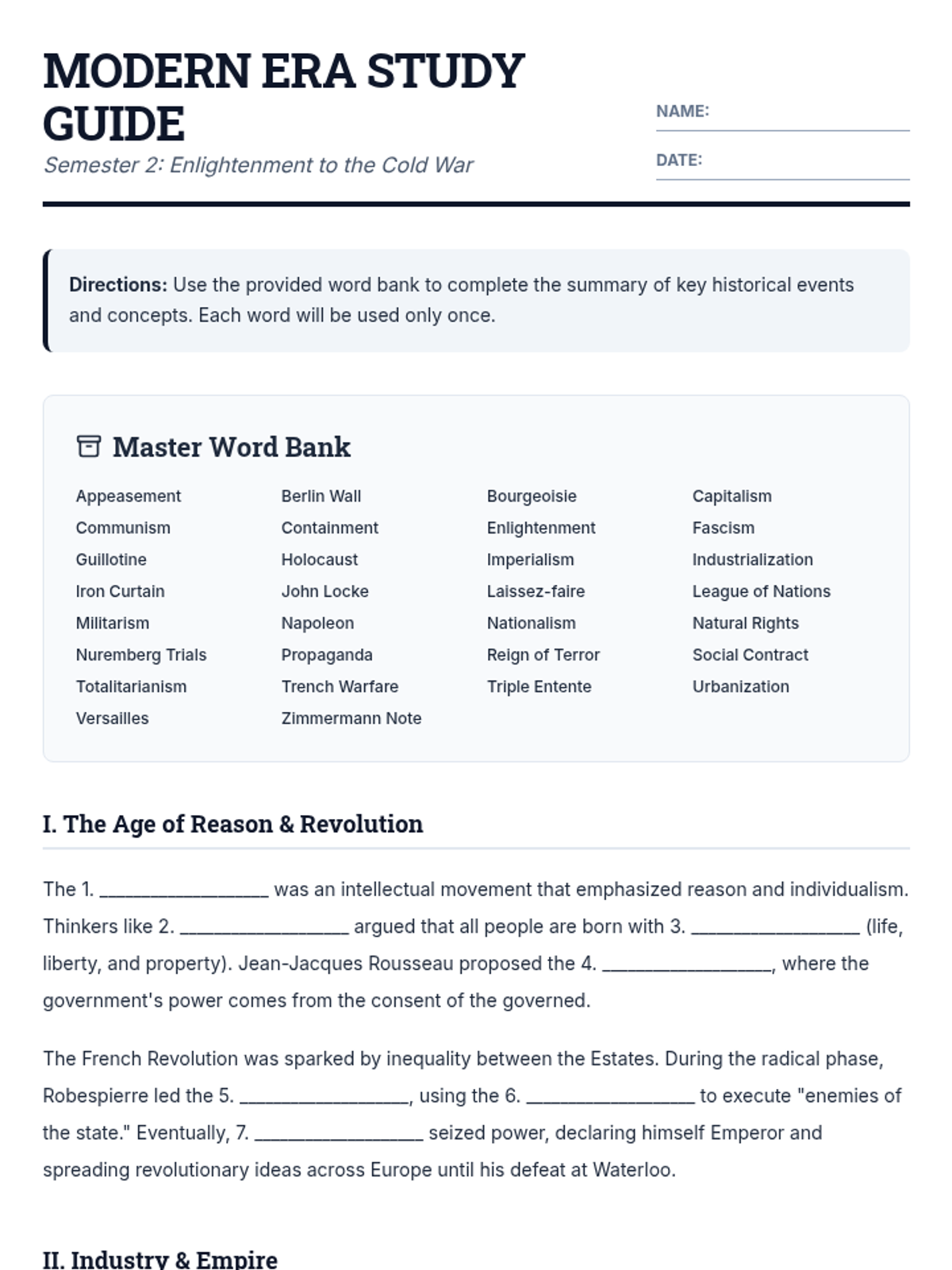
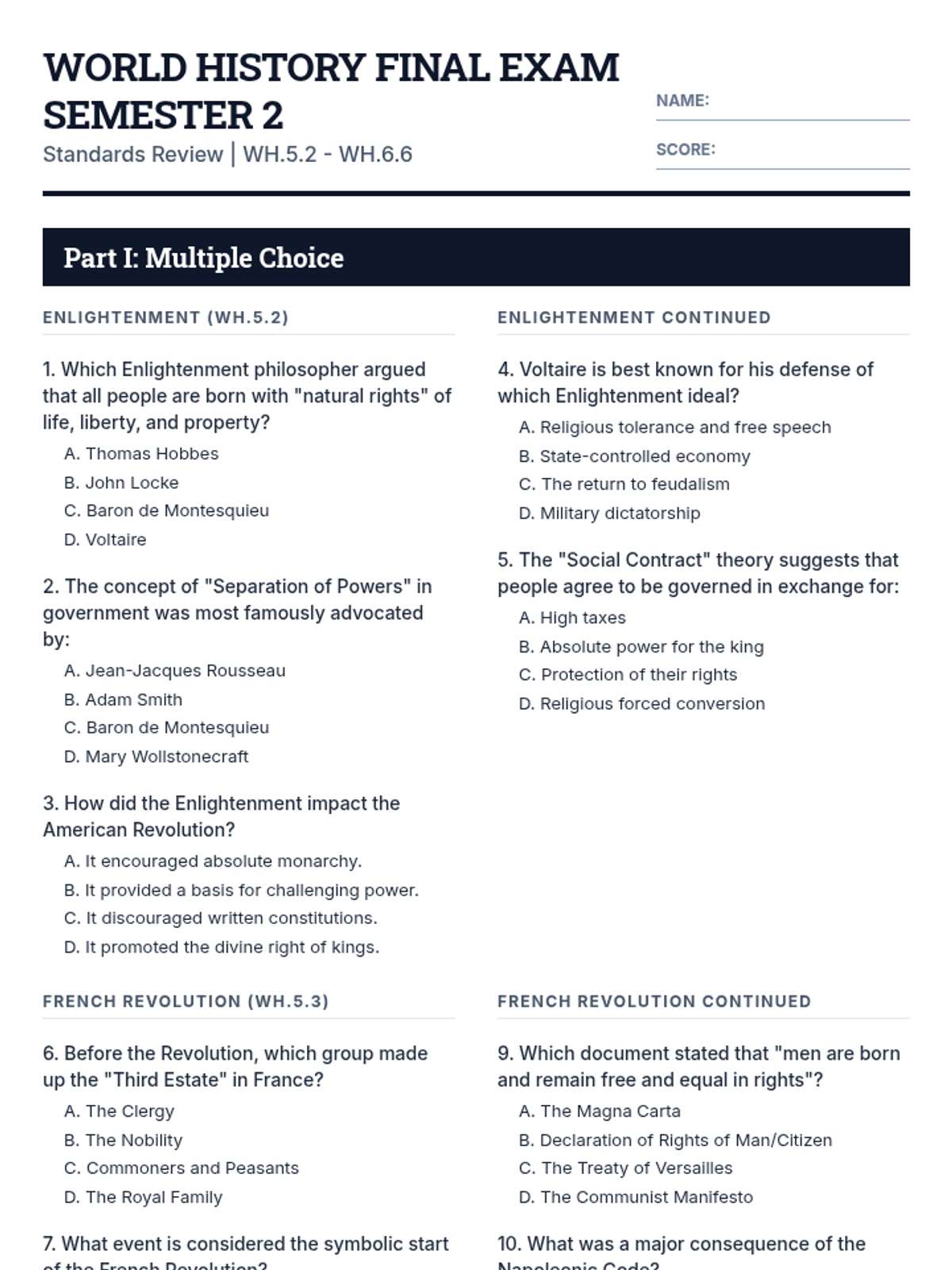
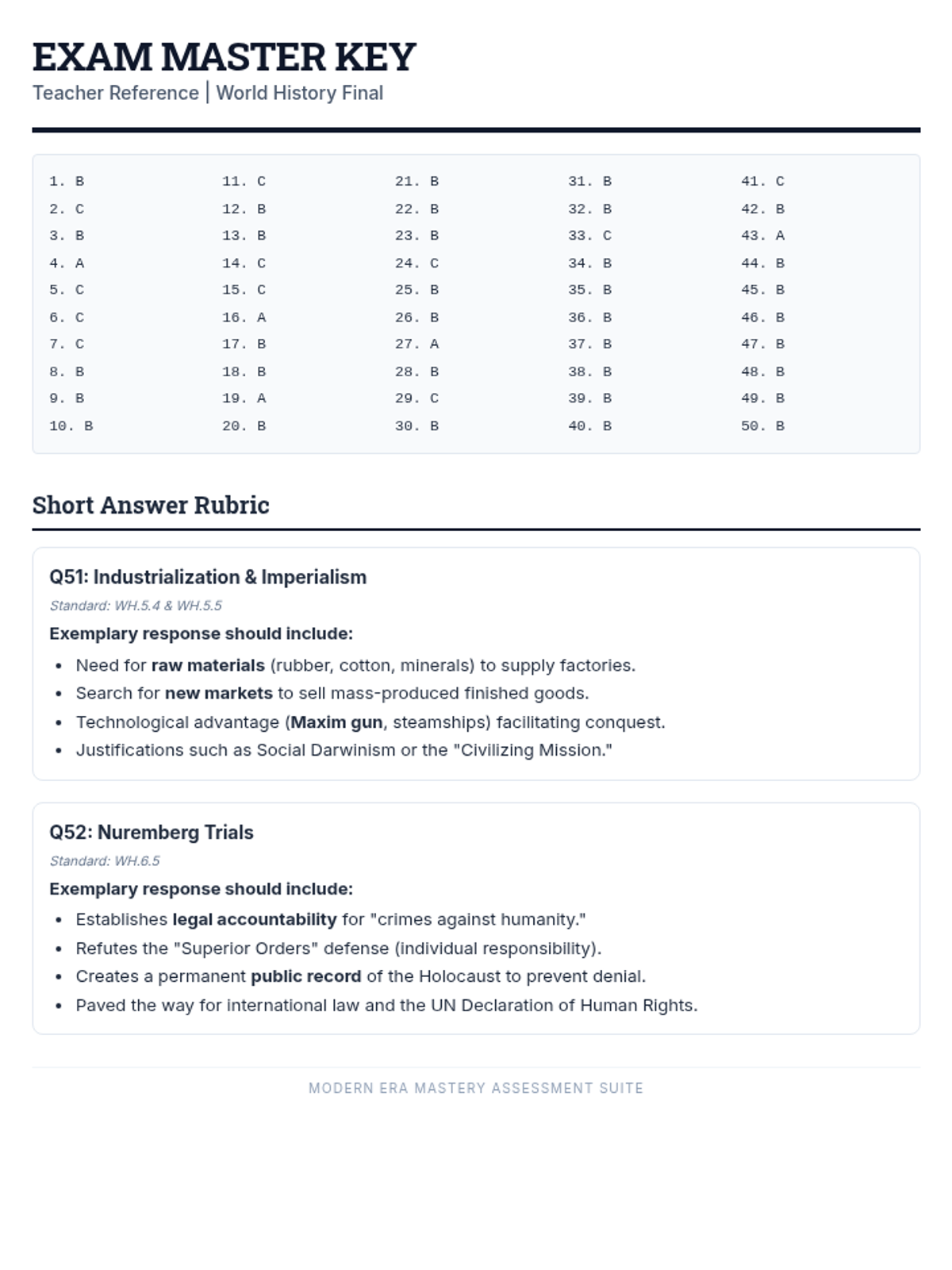
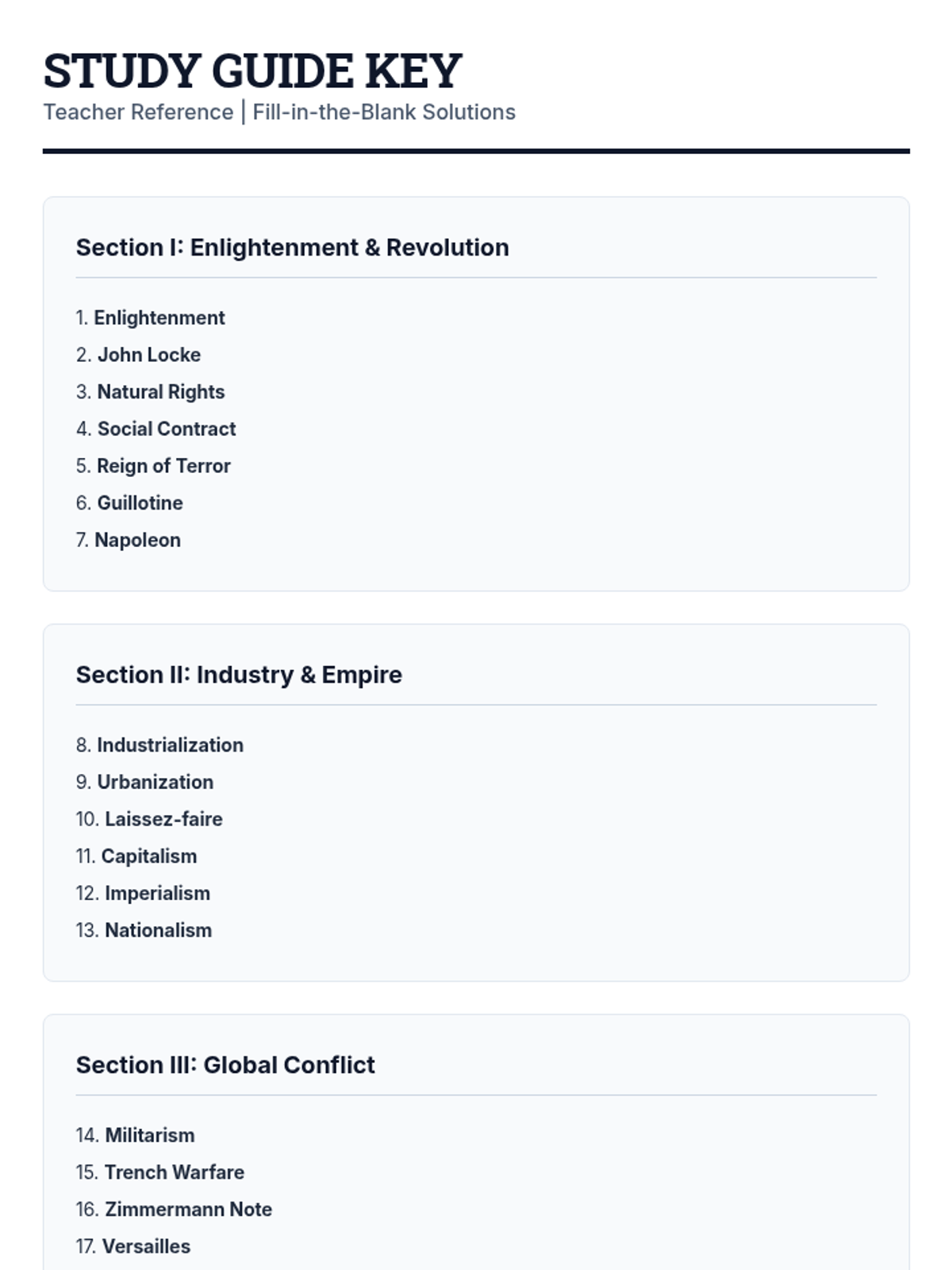
The final assessment phase for Semester 2, including a structured study guide and a comprehensive 50-question exam with short answer components.
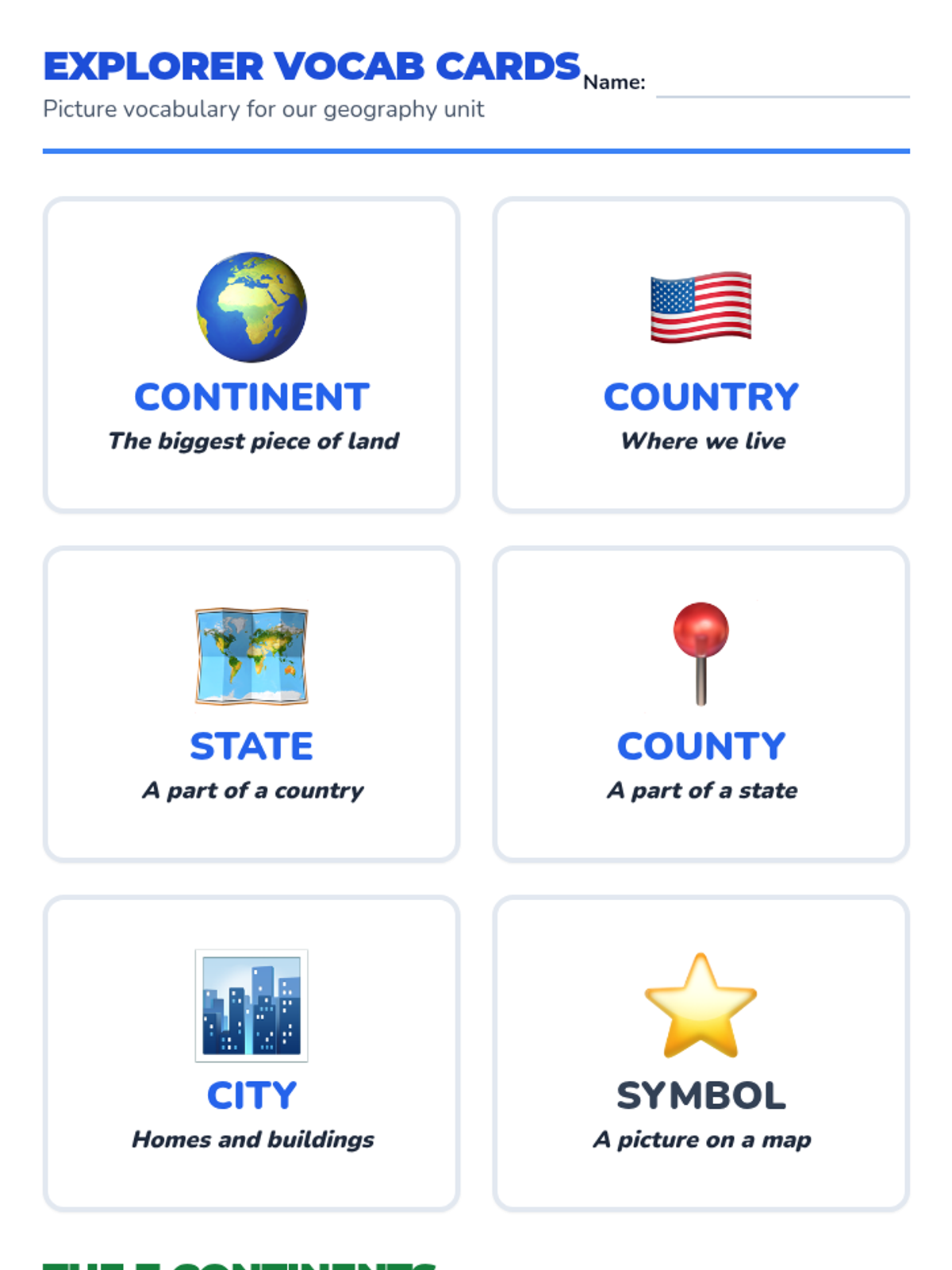
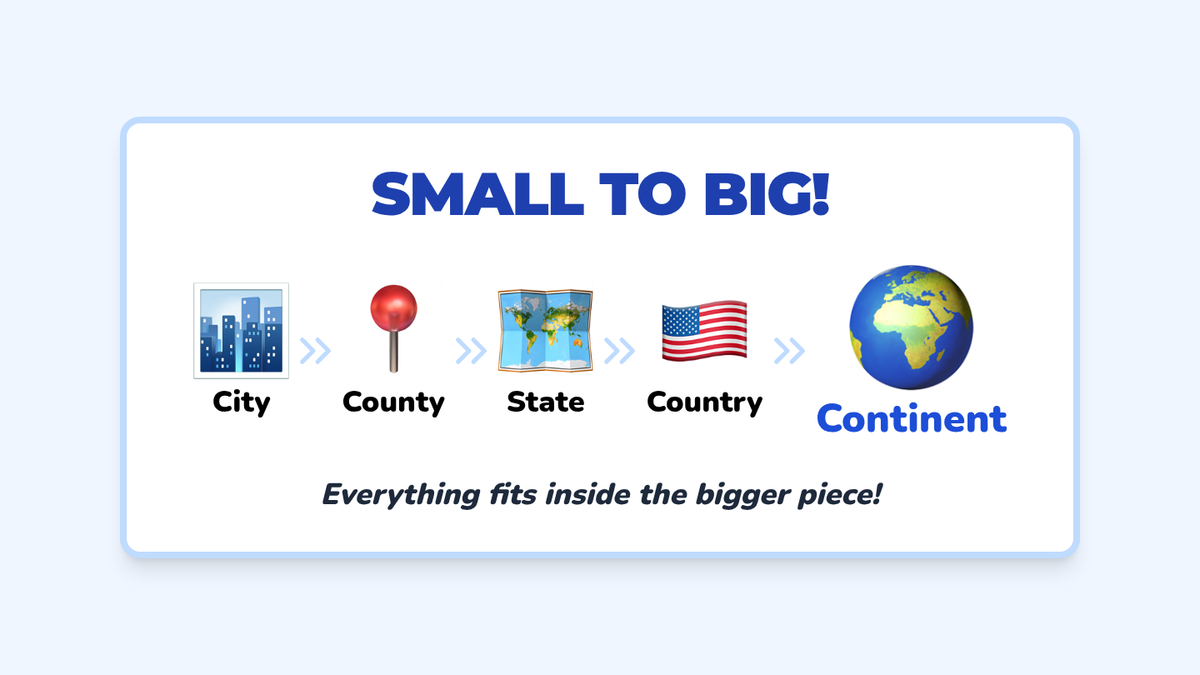
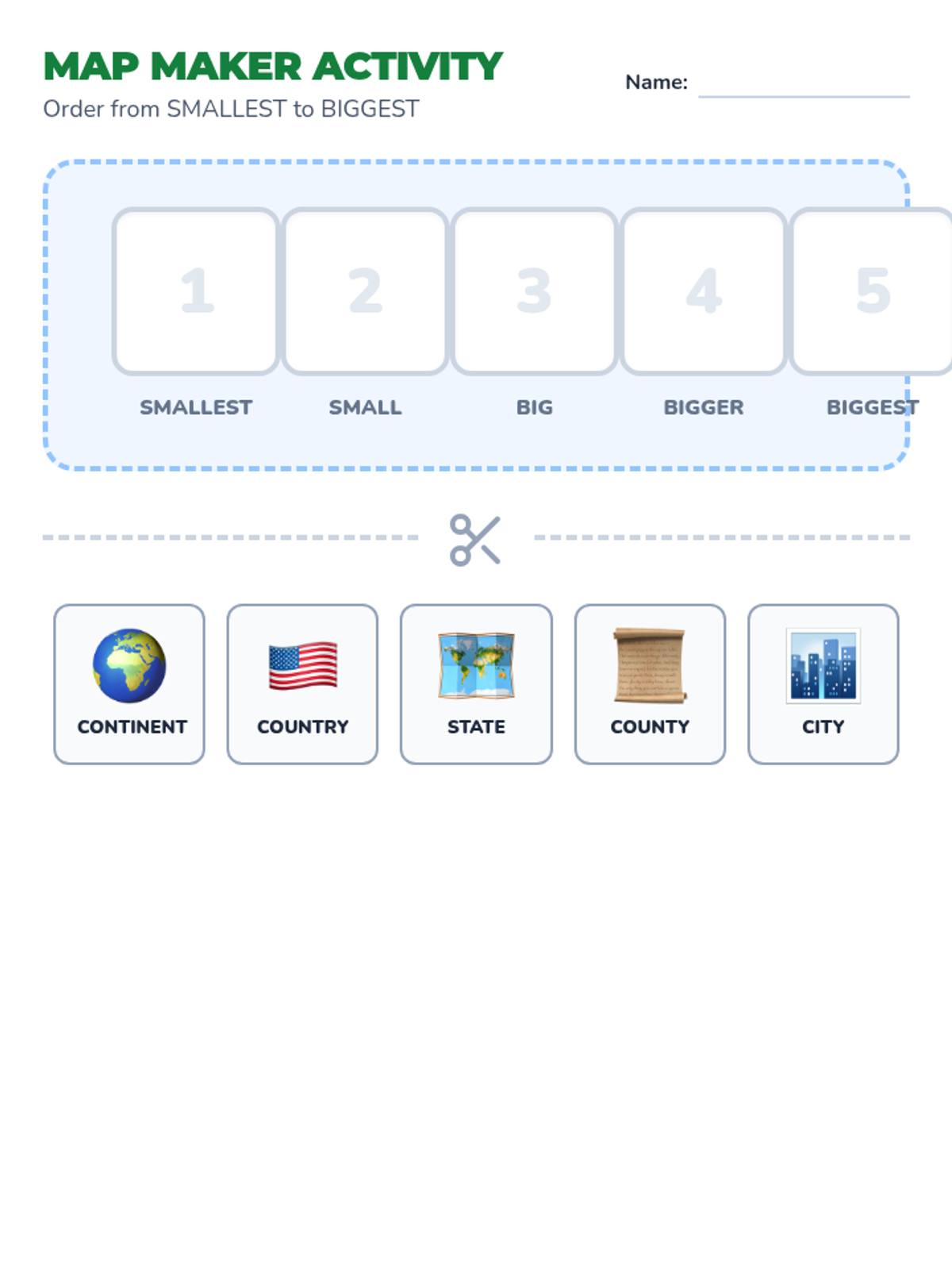
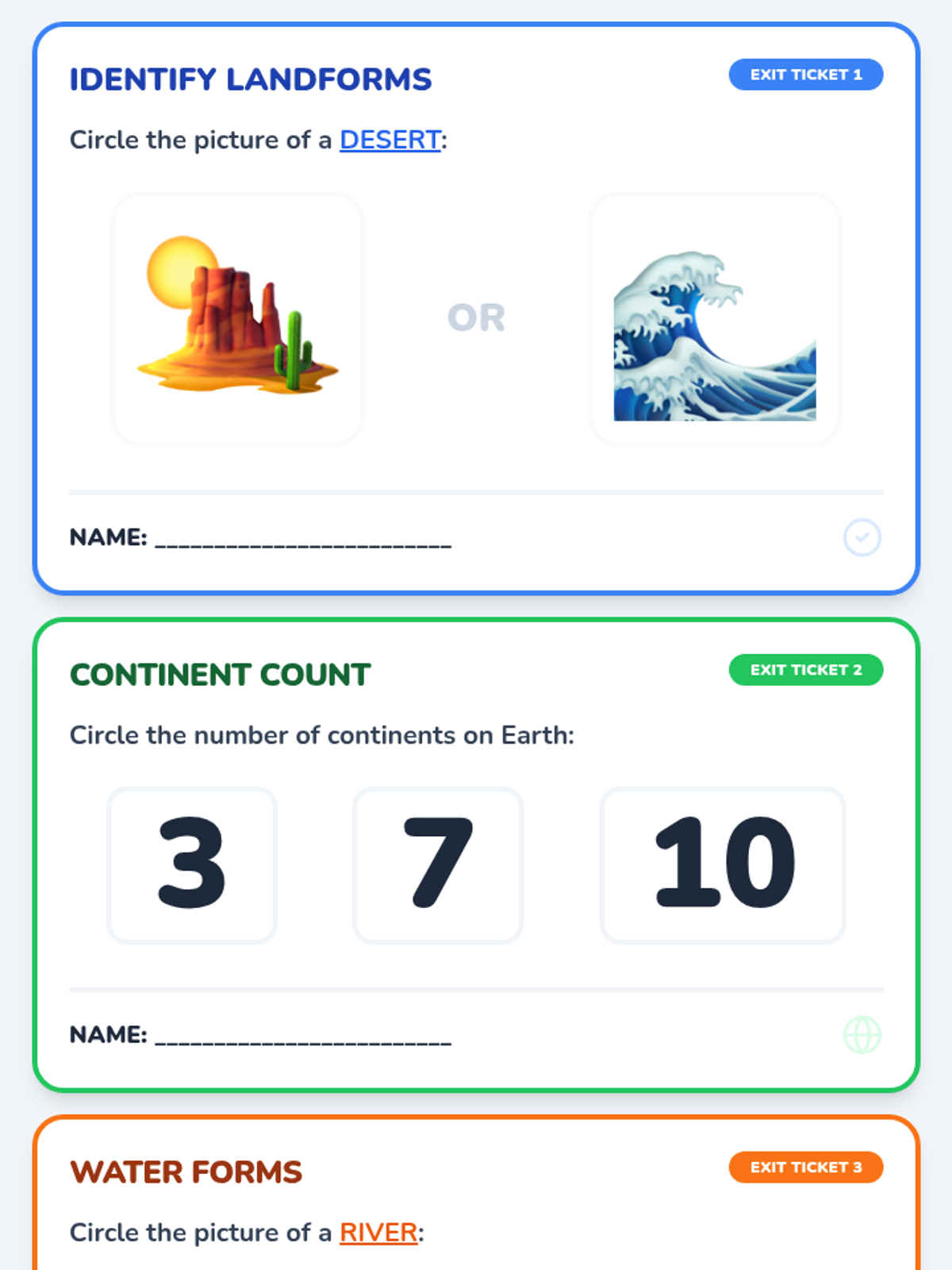
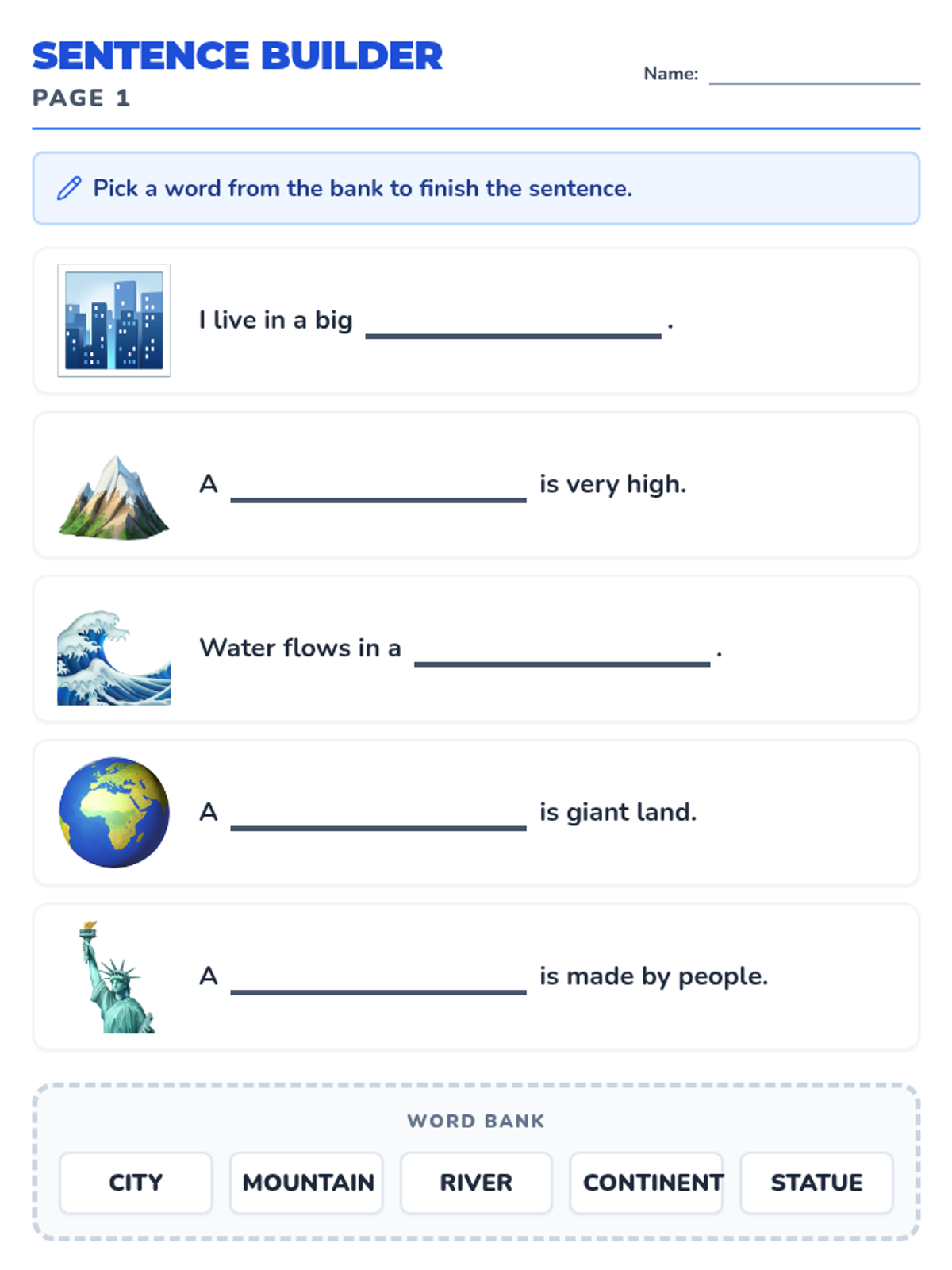
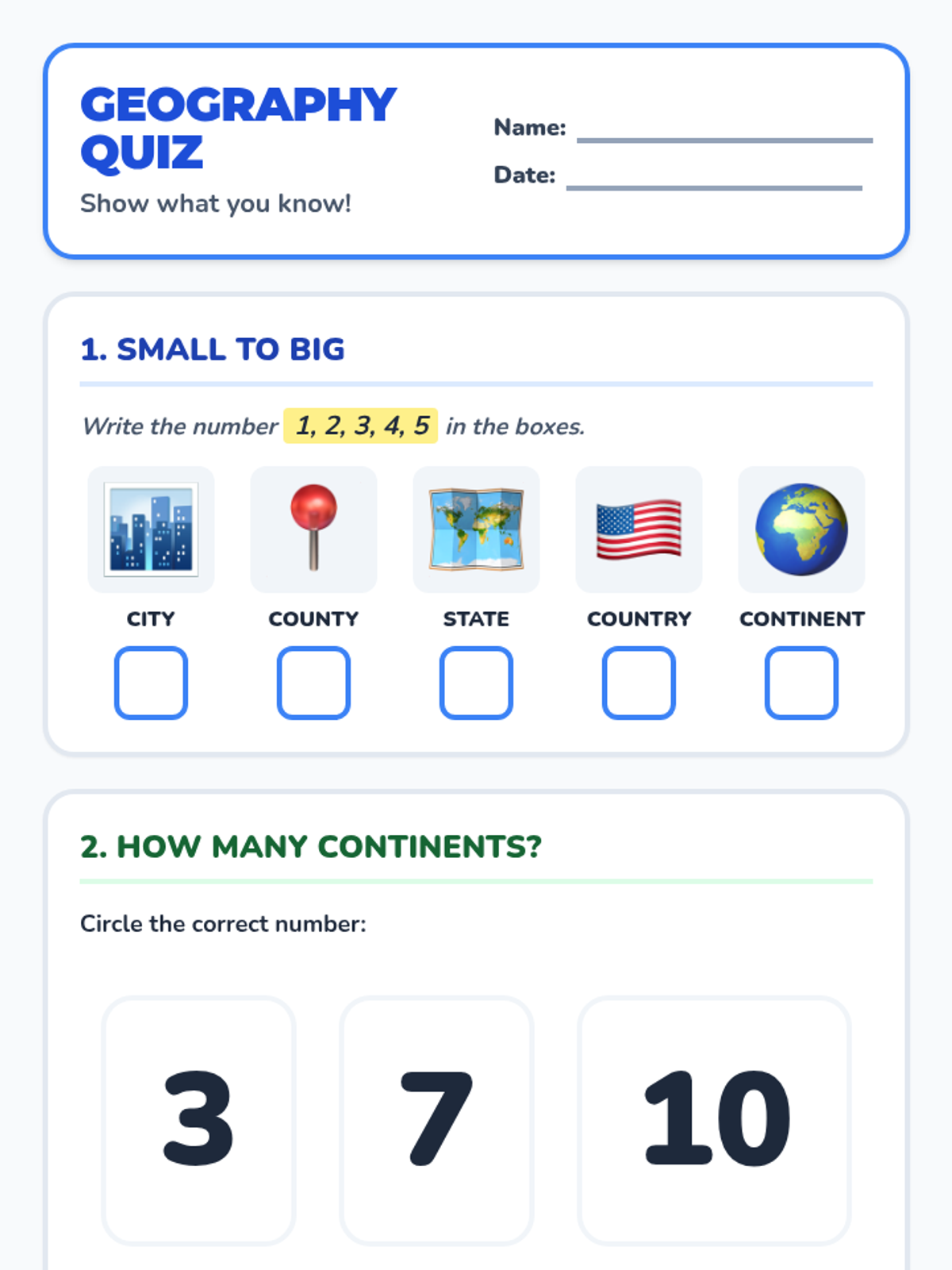
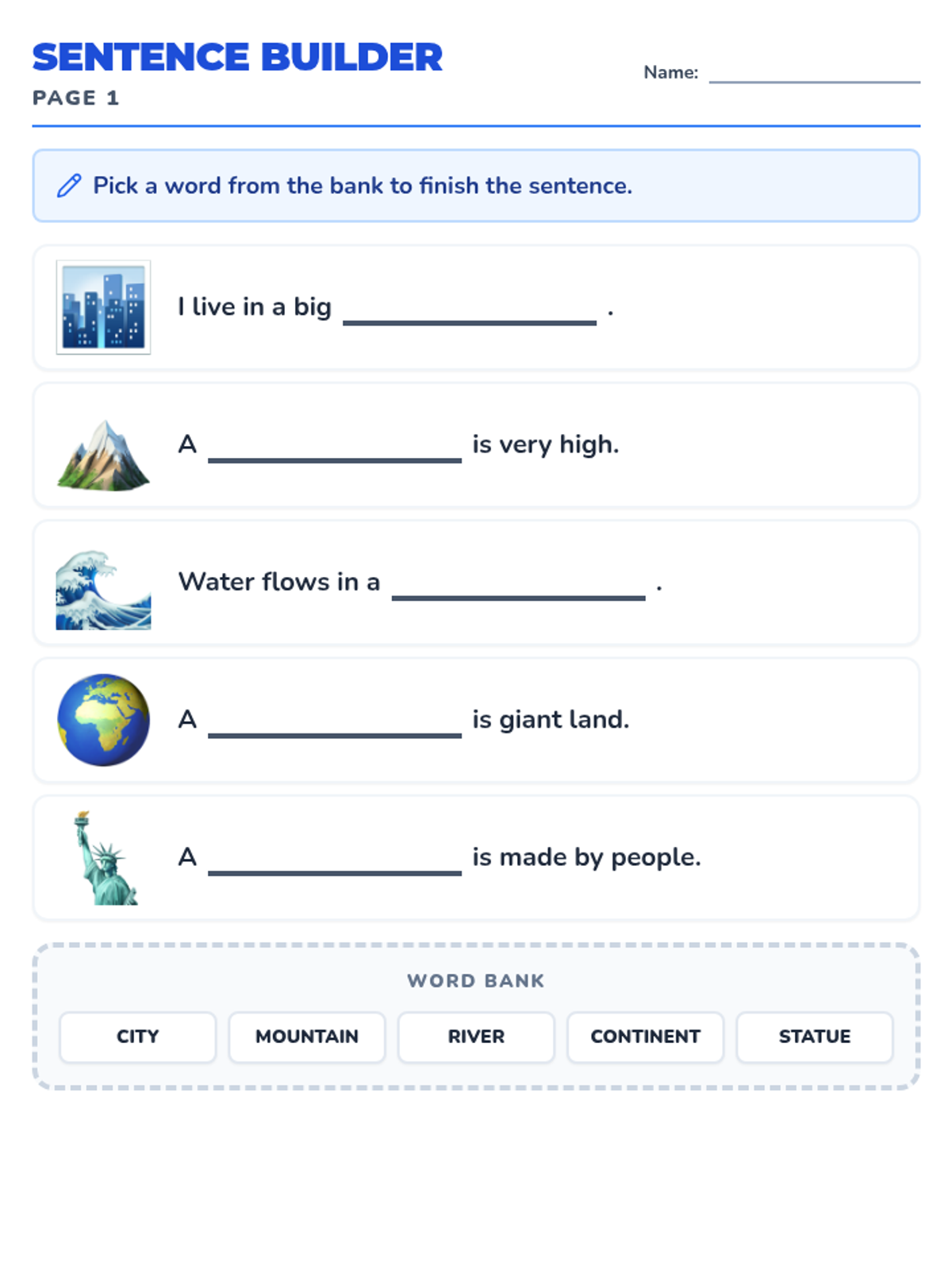
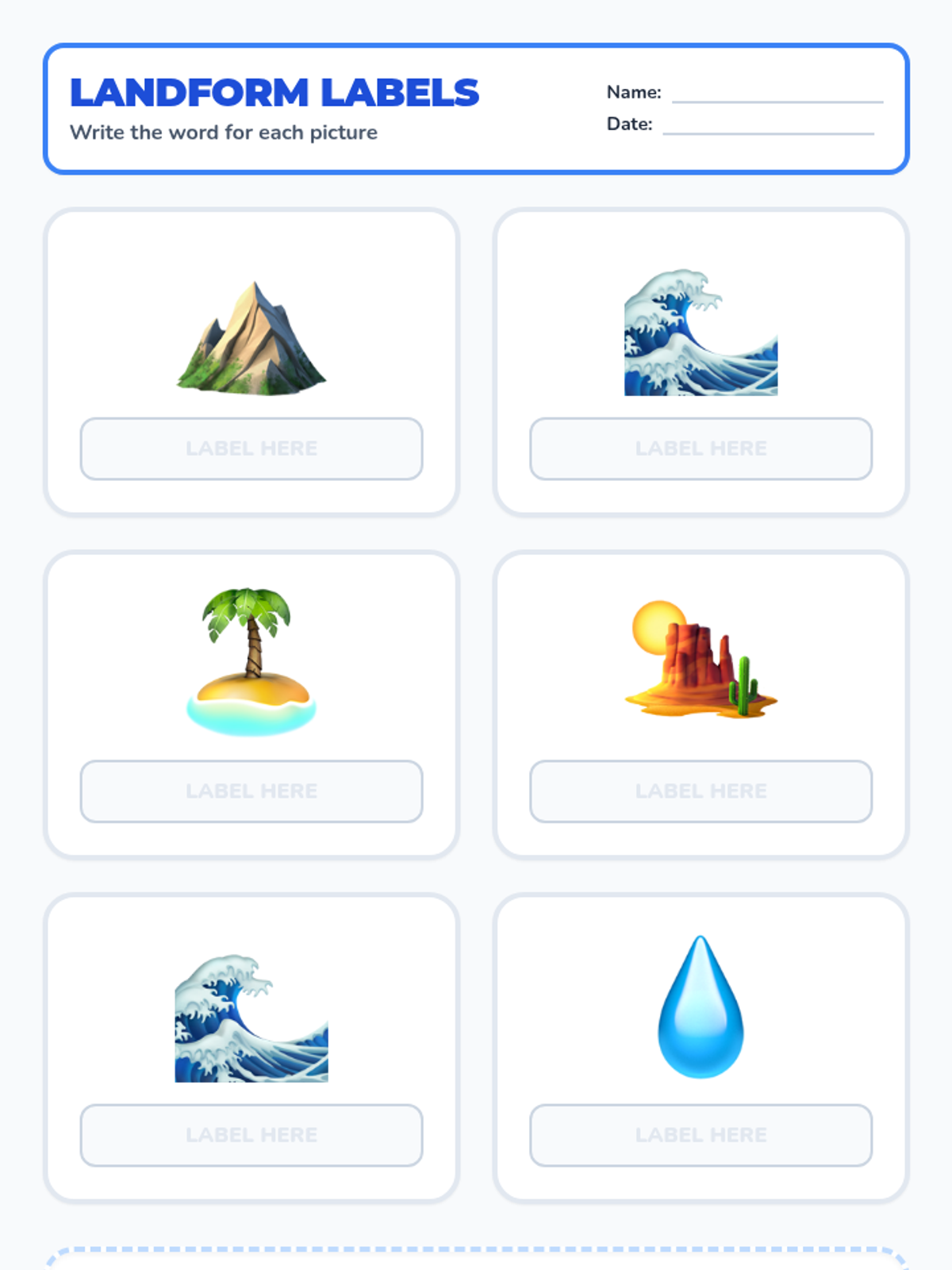
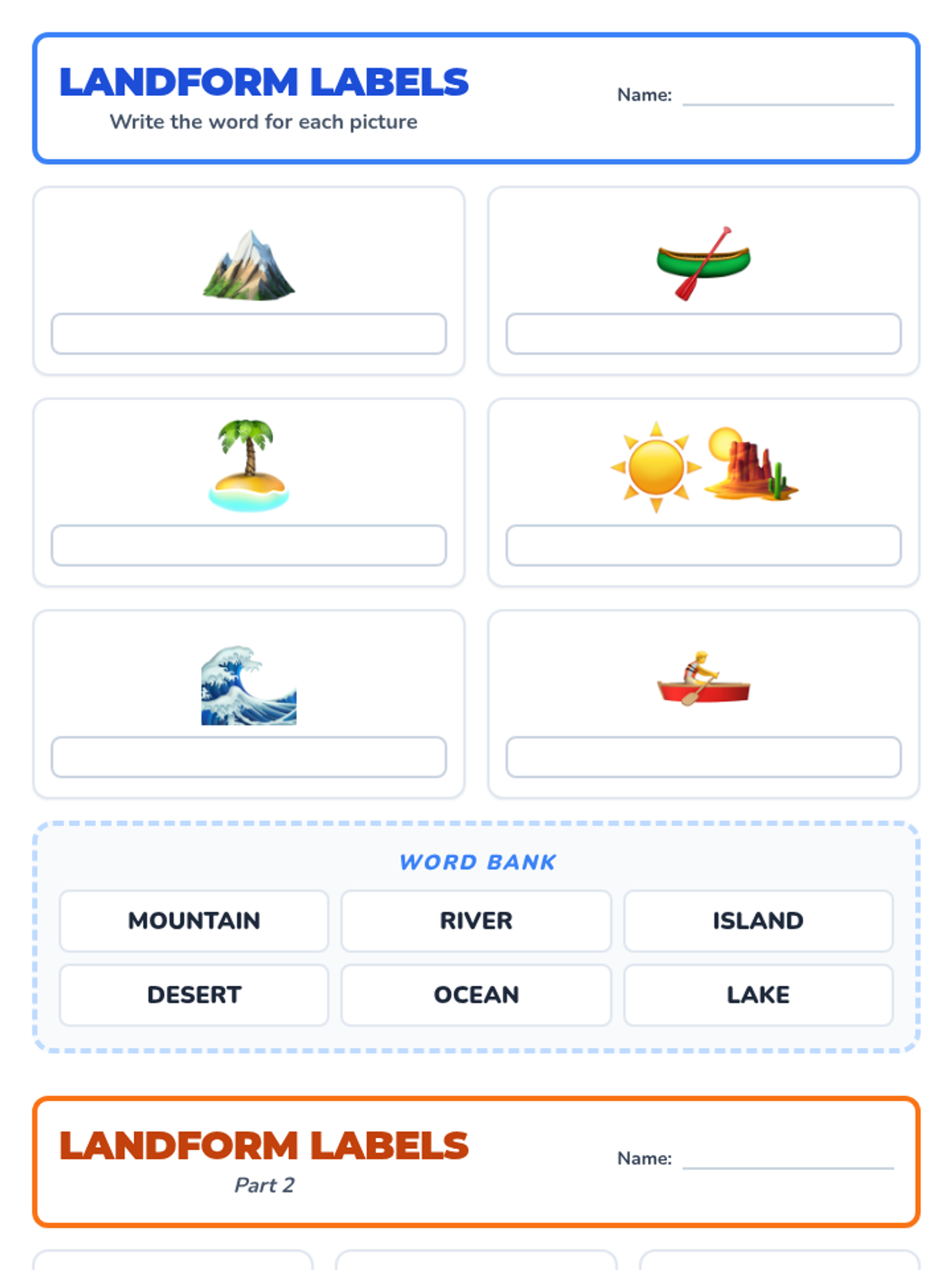
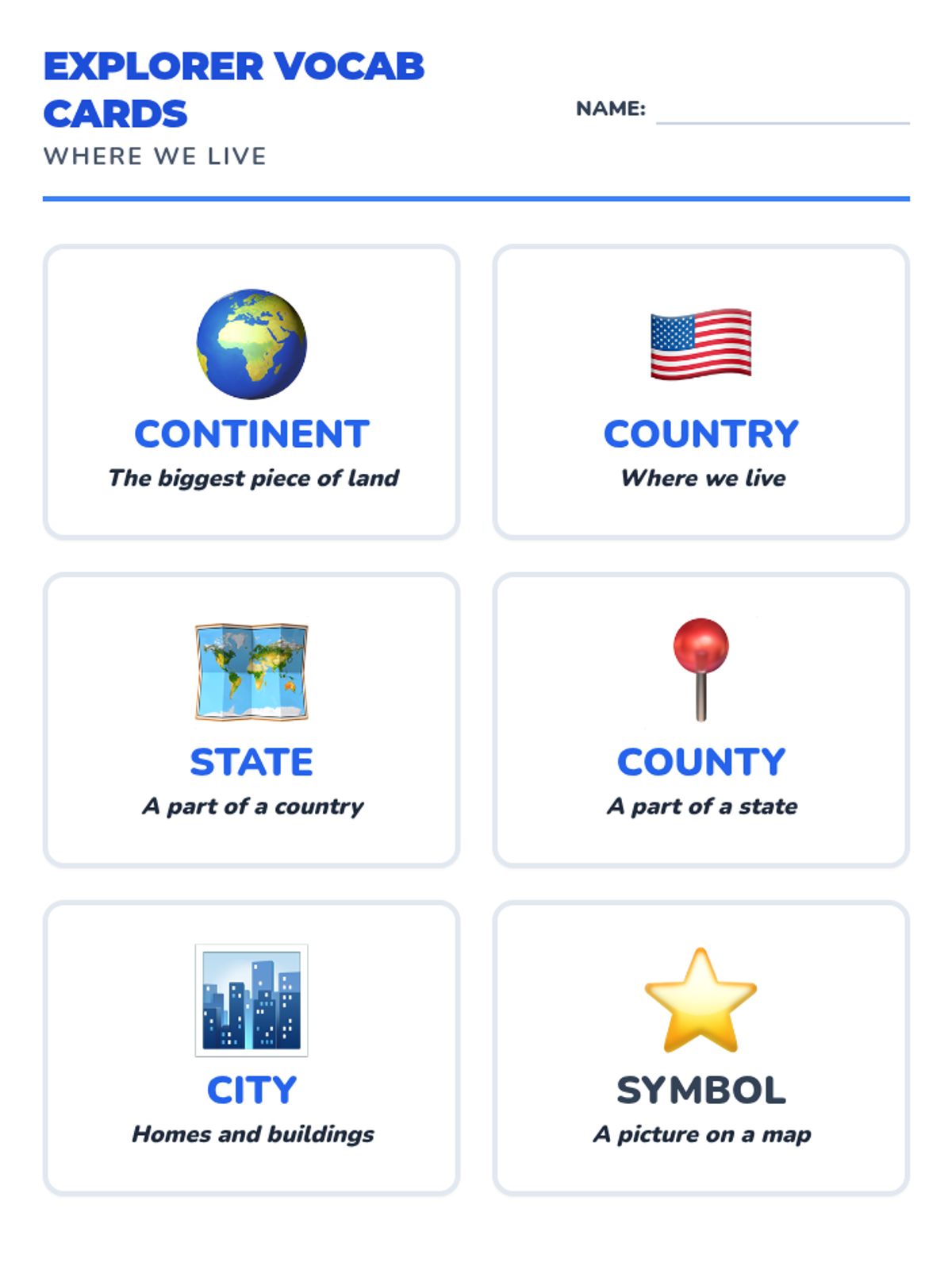
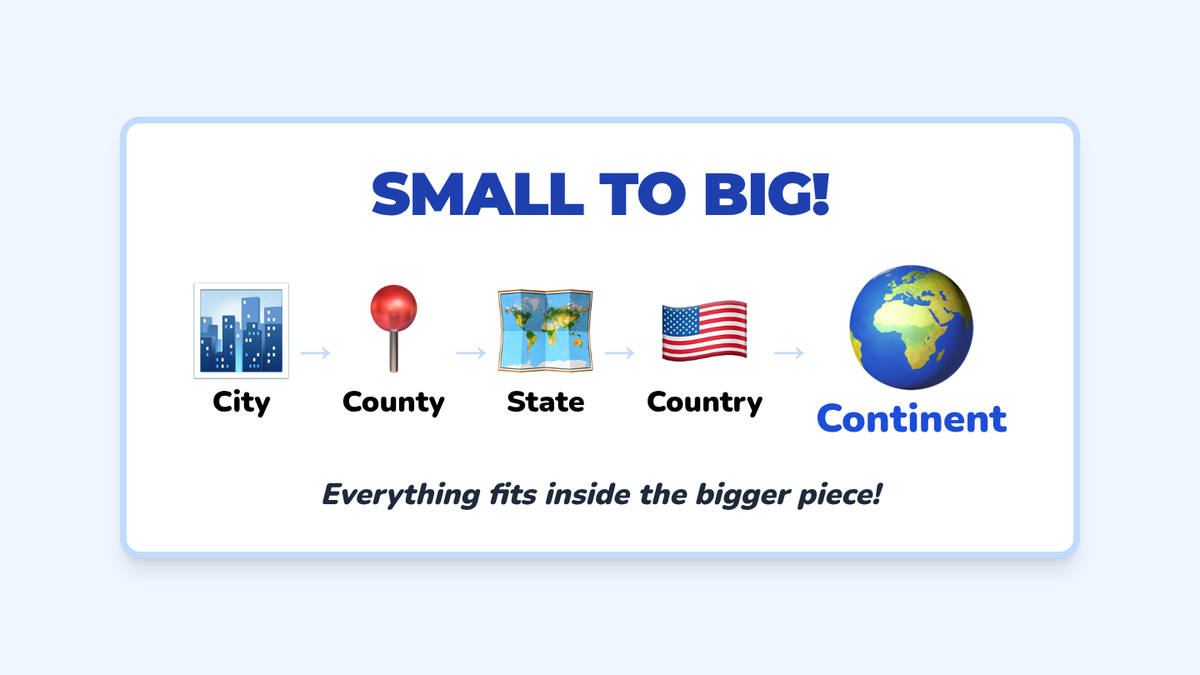
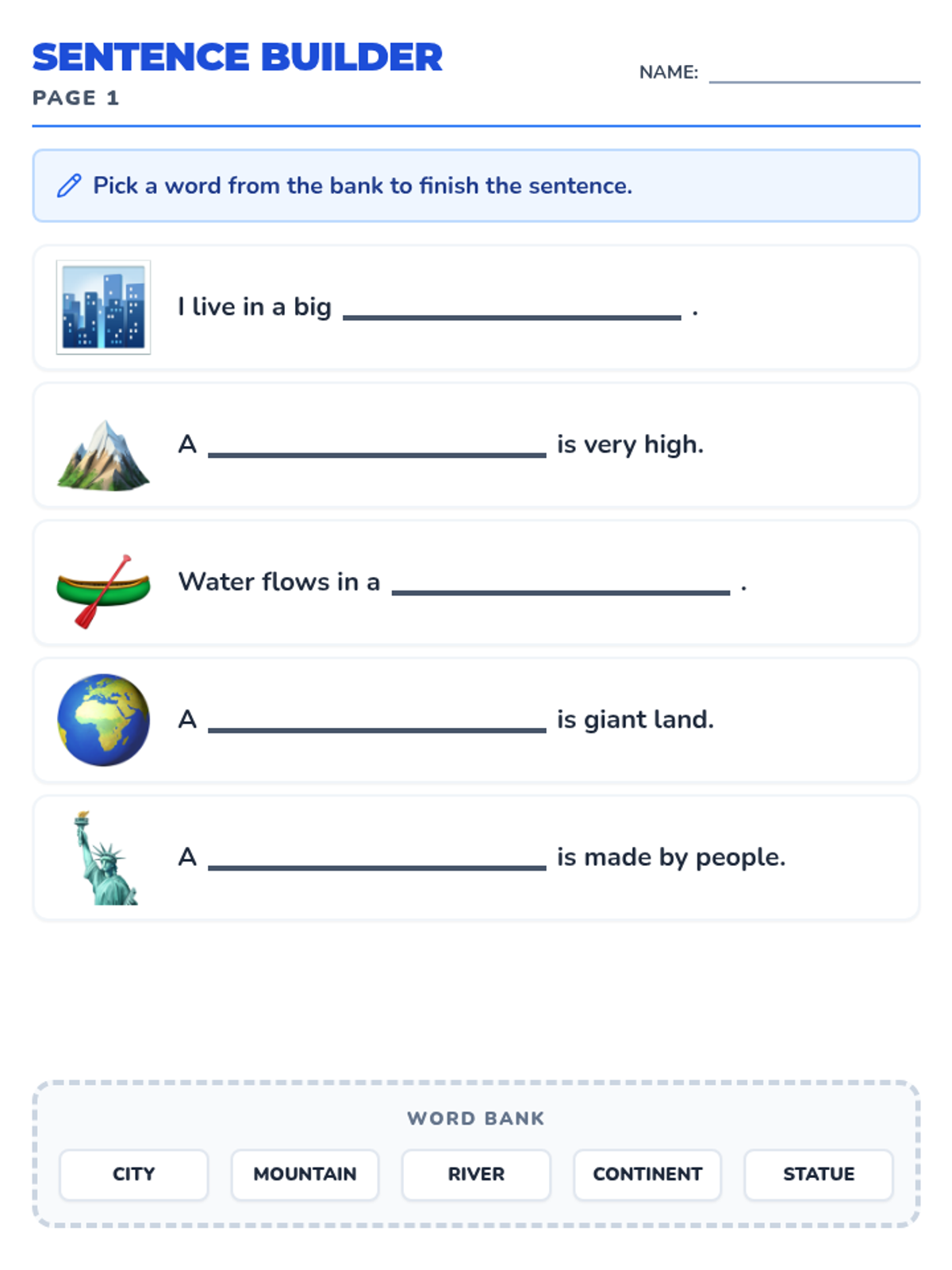
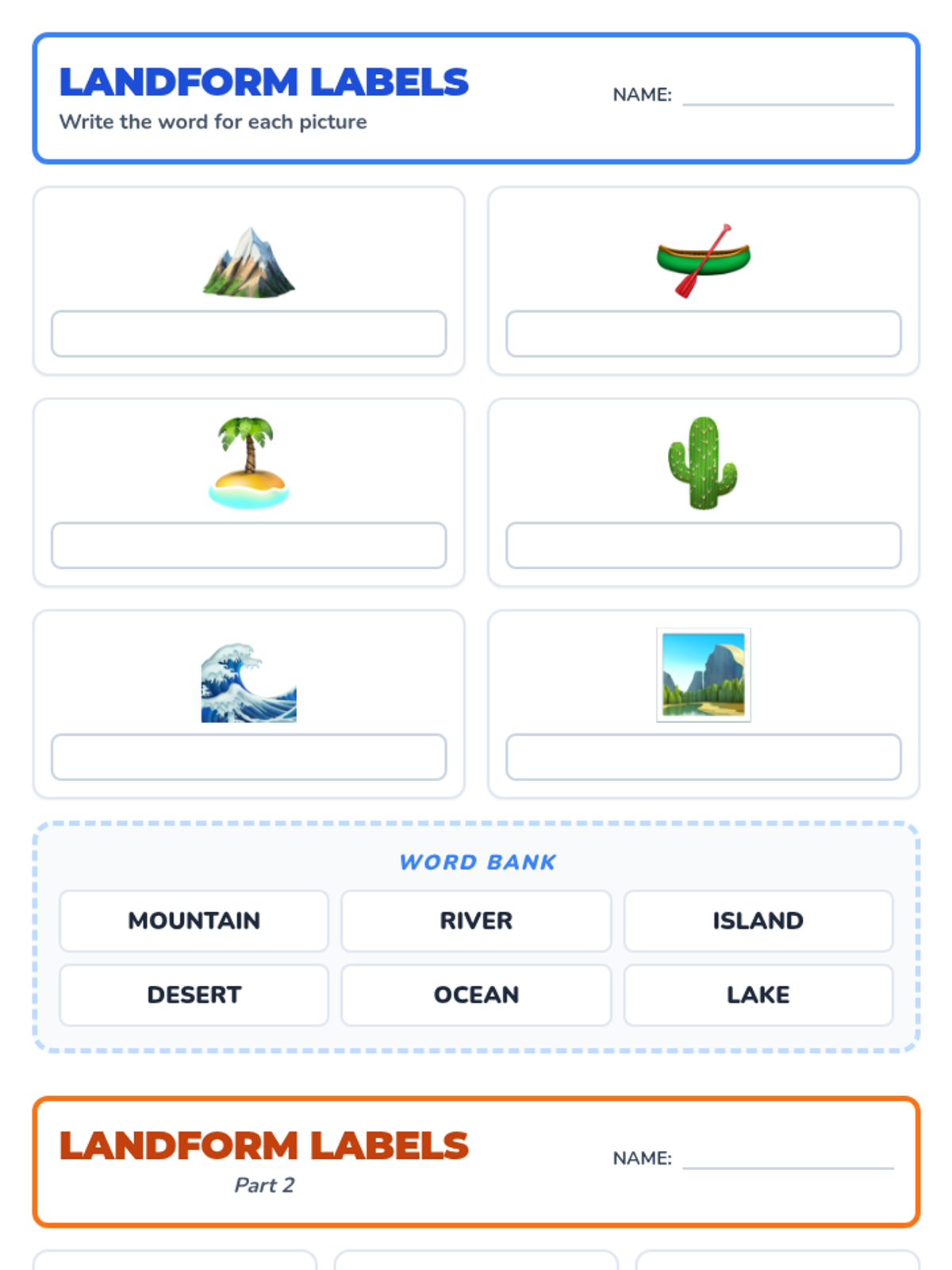
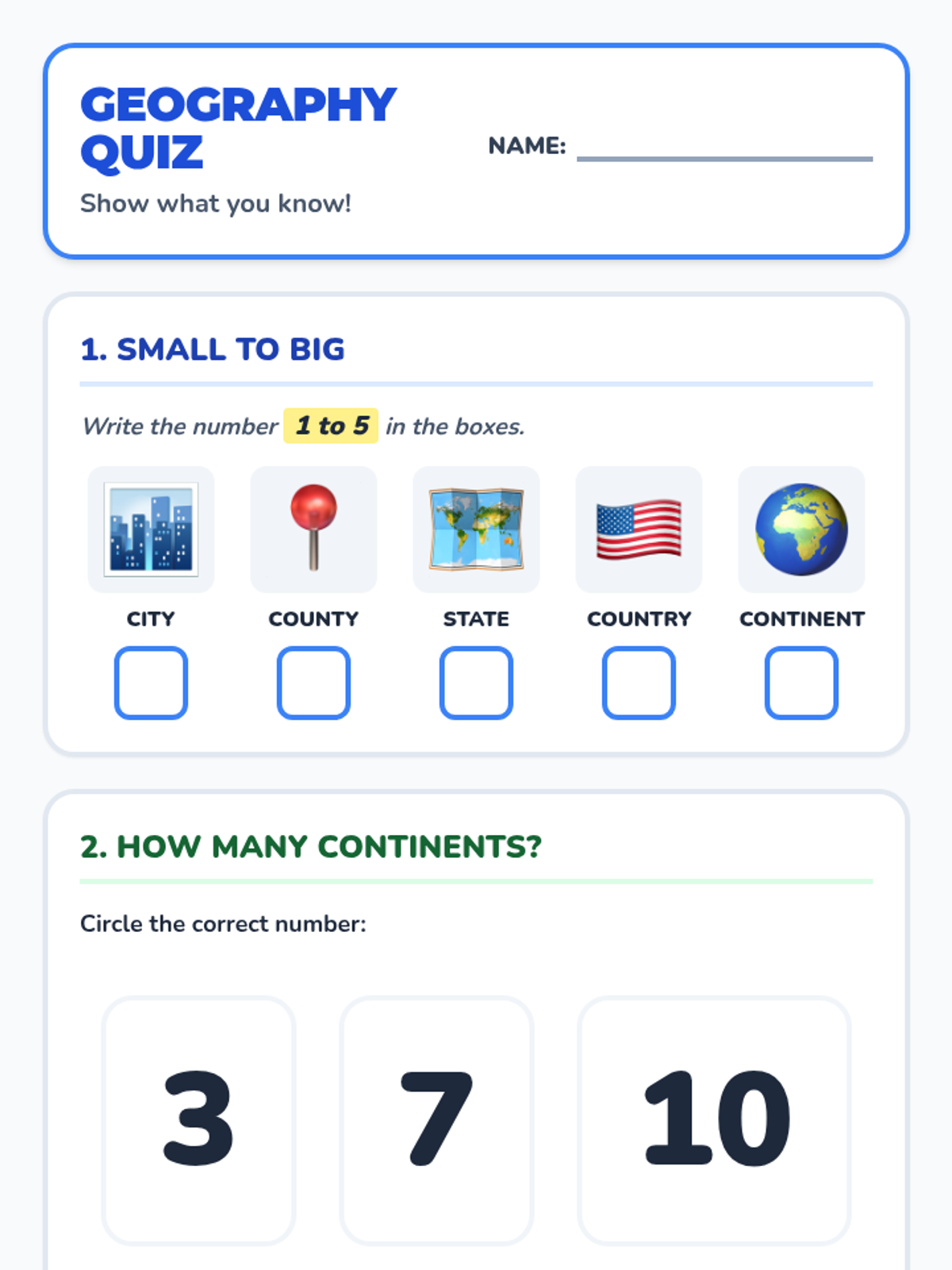
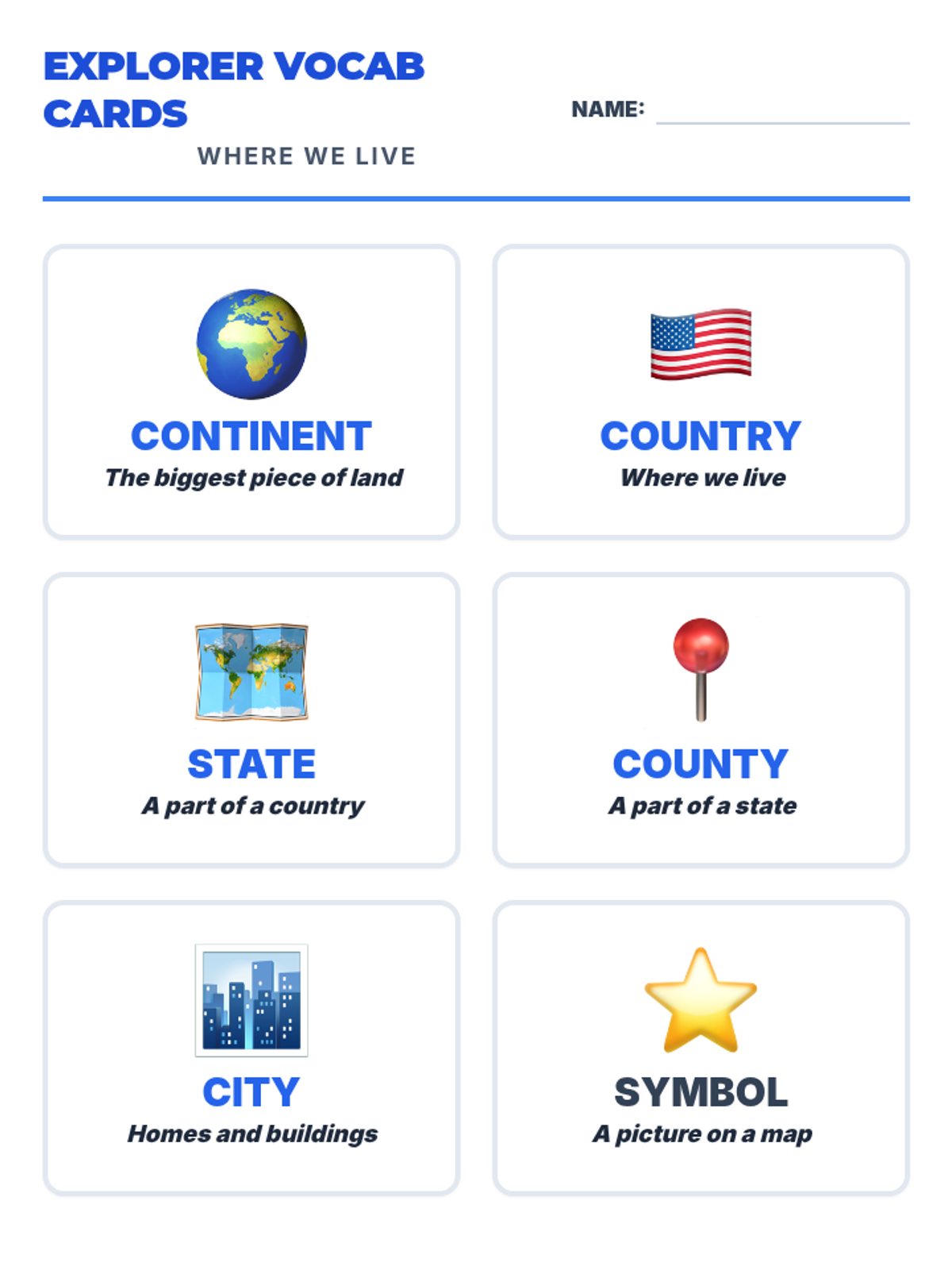
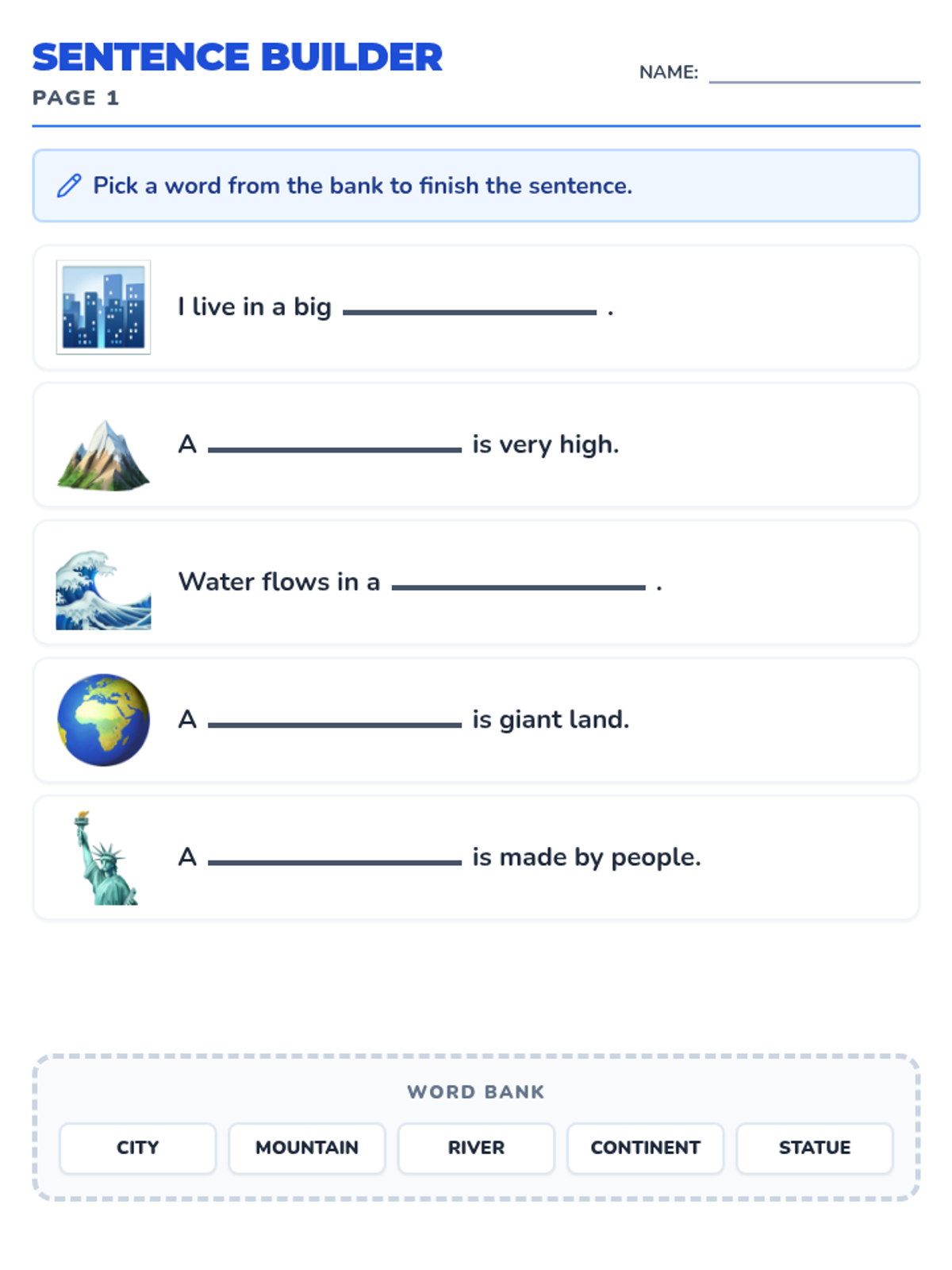
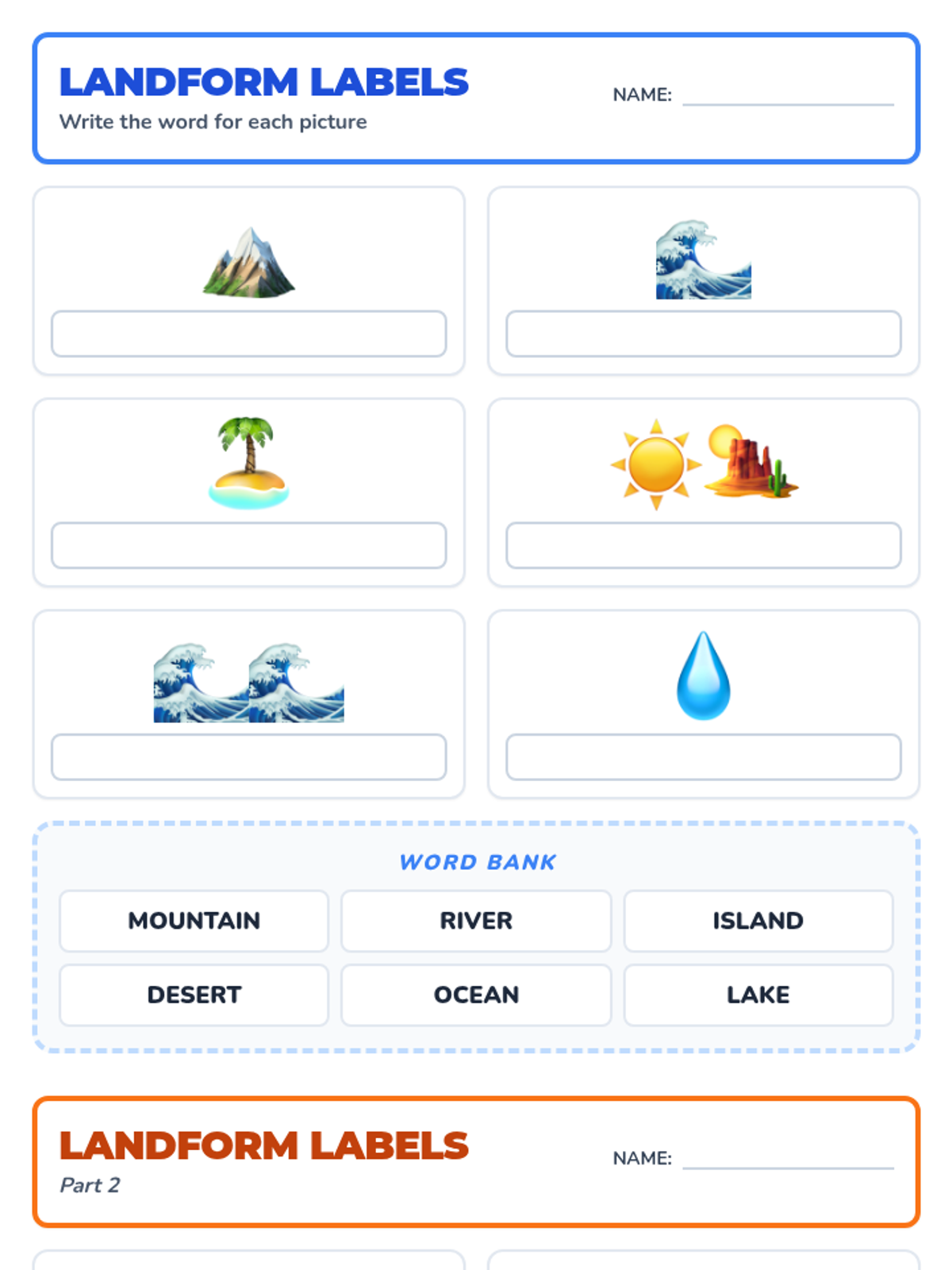
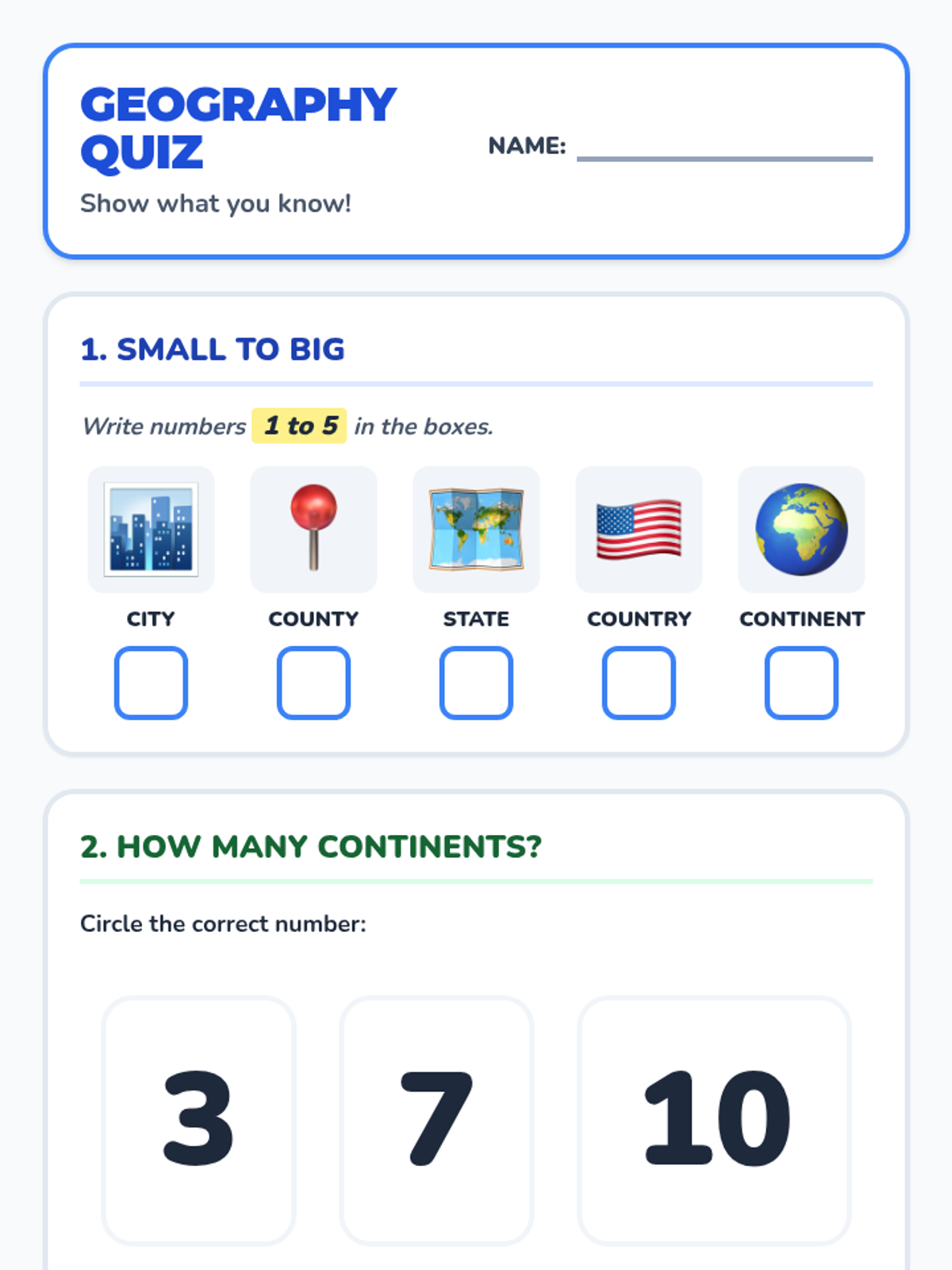
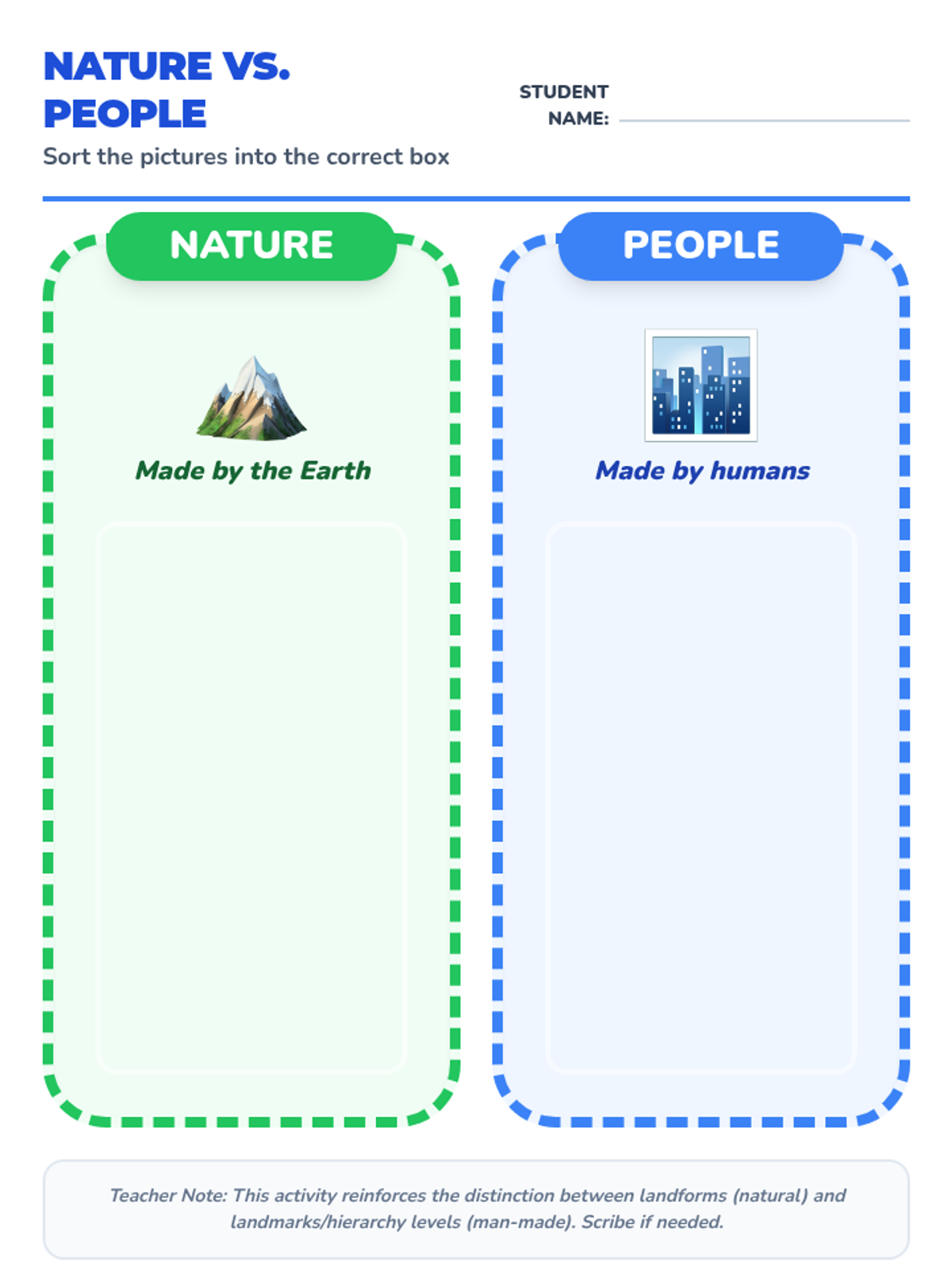
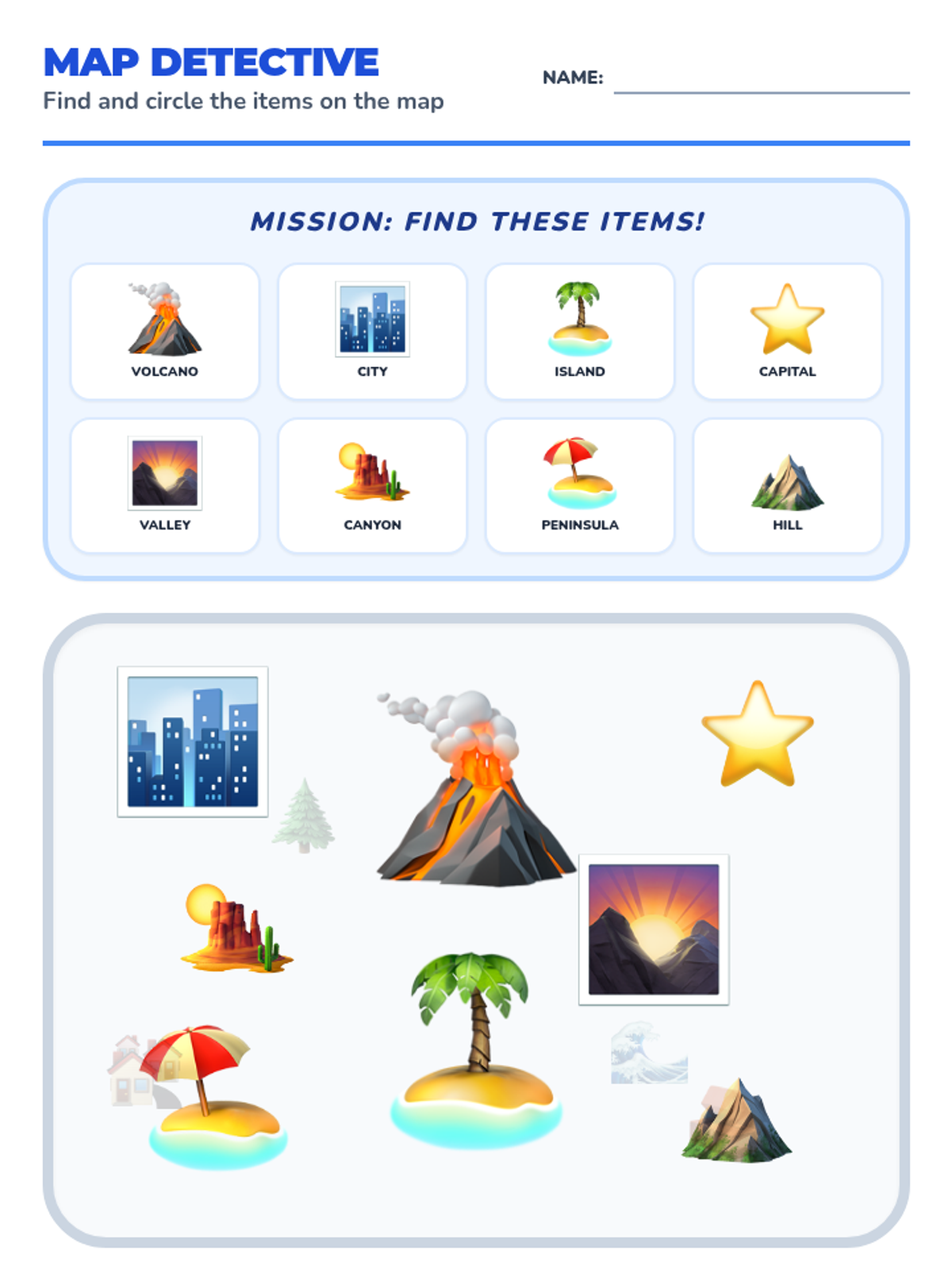
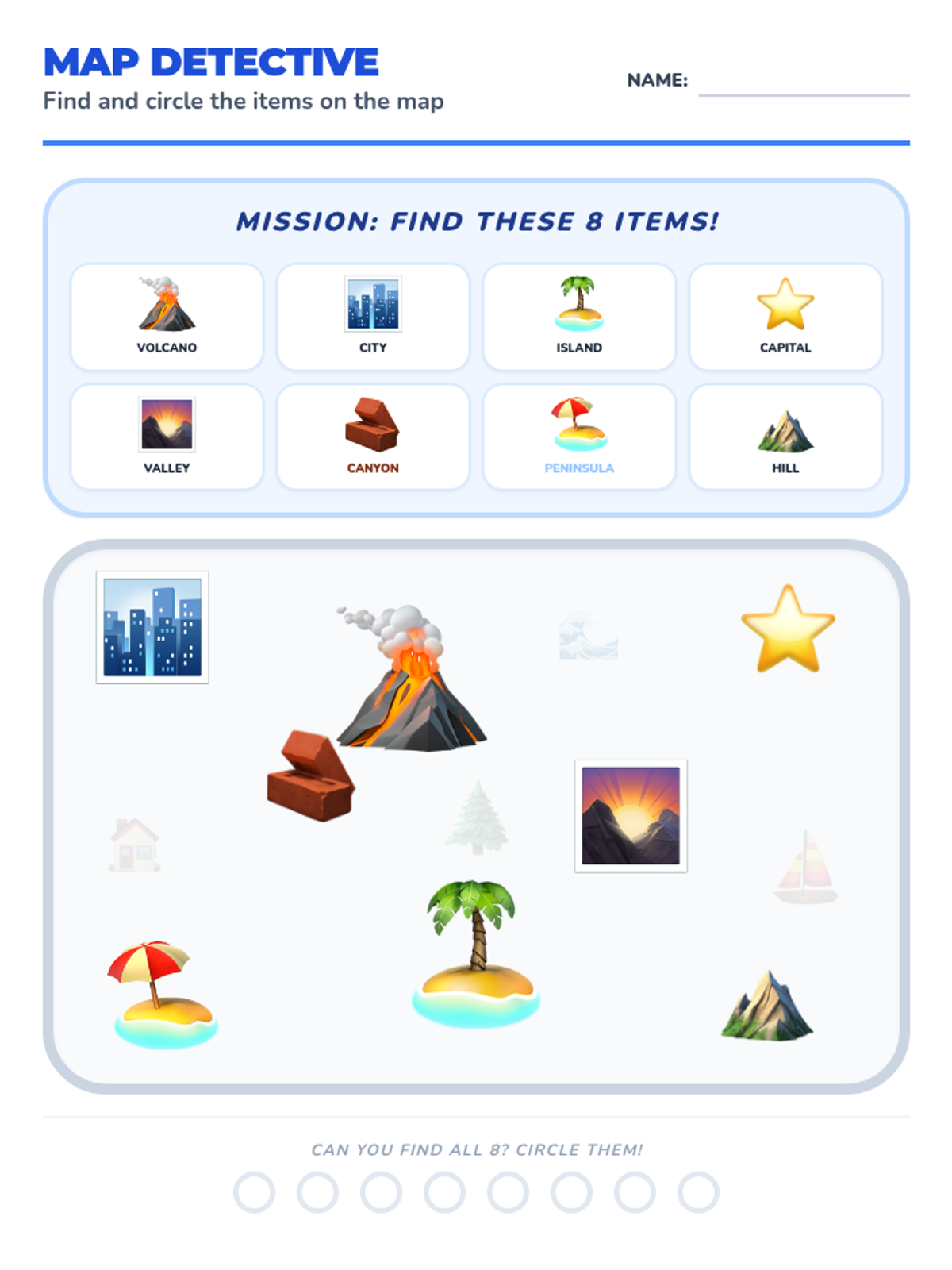
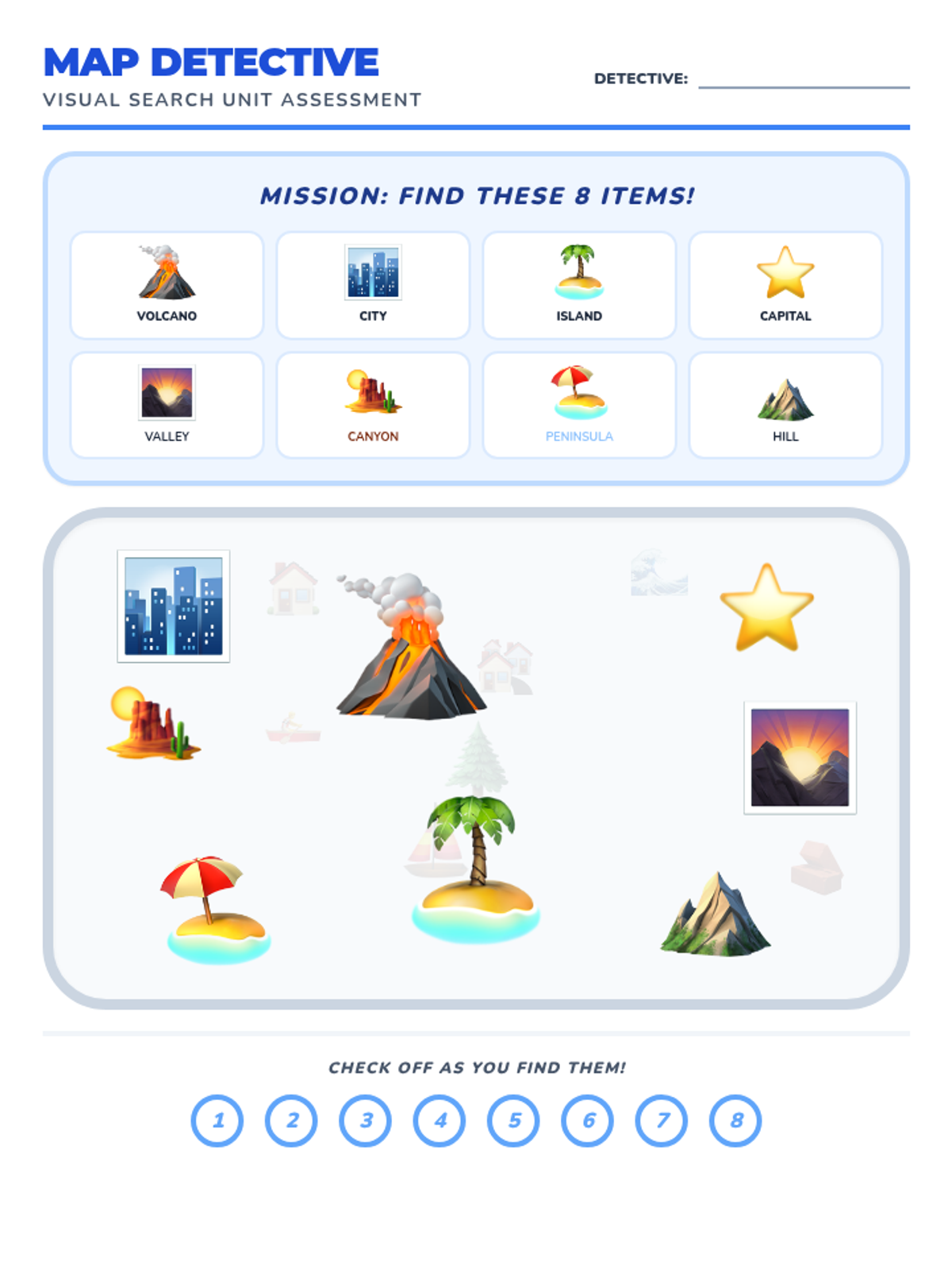
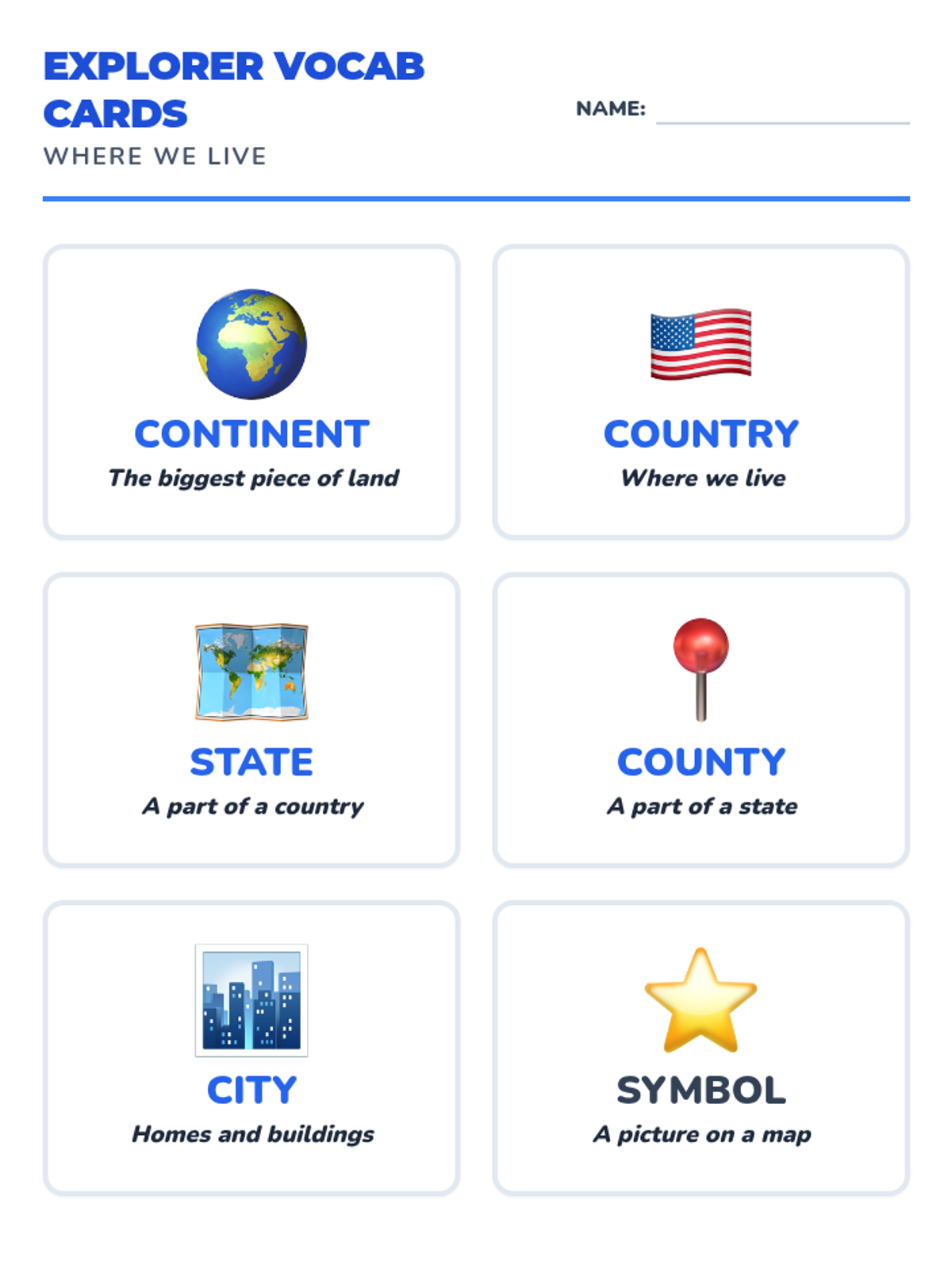
A visual-heavy lesson introducing map symbols, the hierarchy of place from city to continent, and major landforms and landmarks around the world.
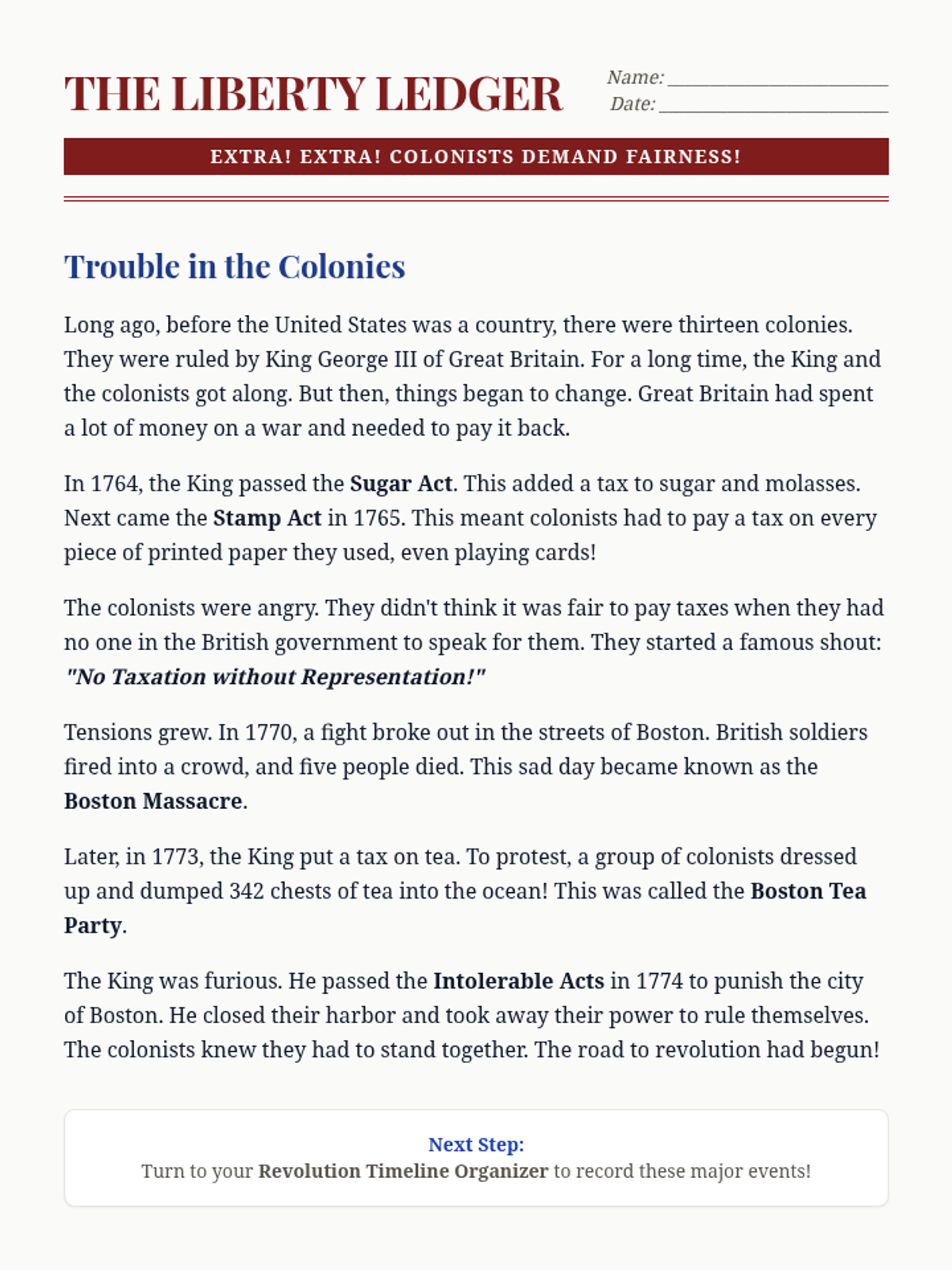
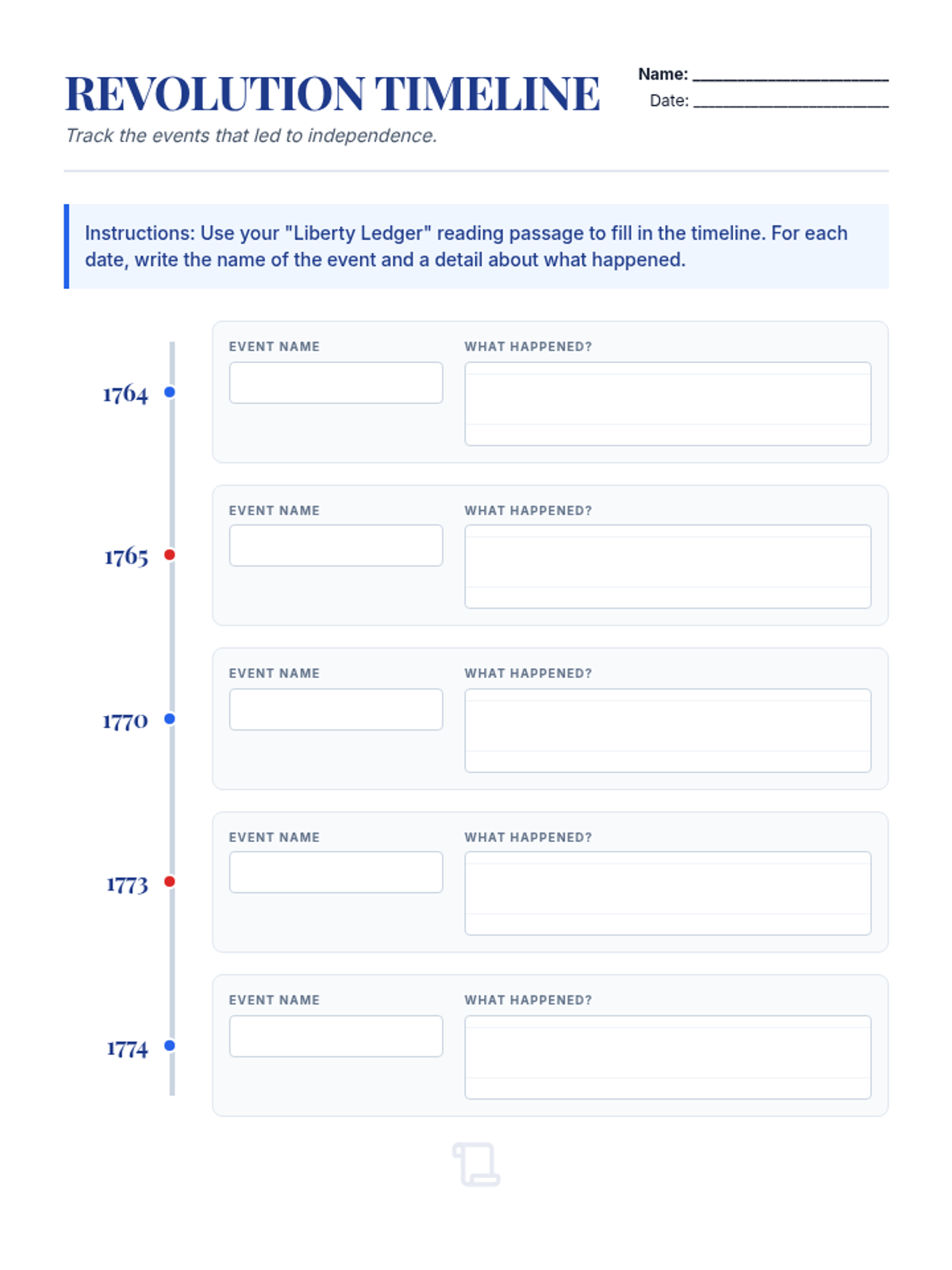
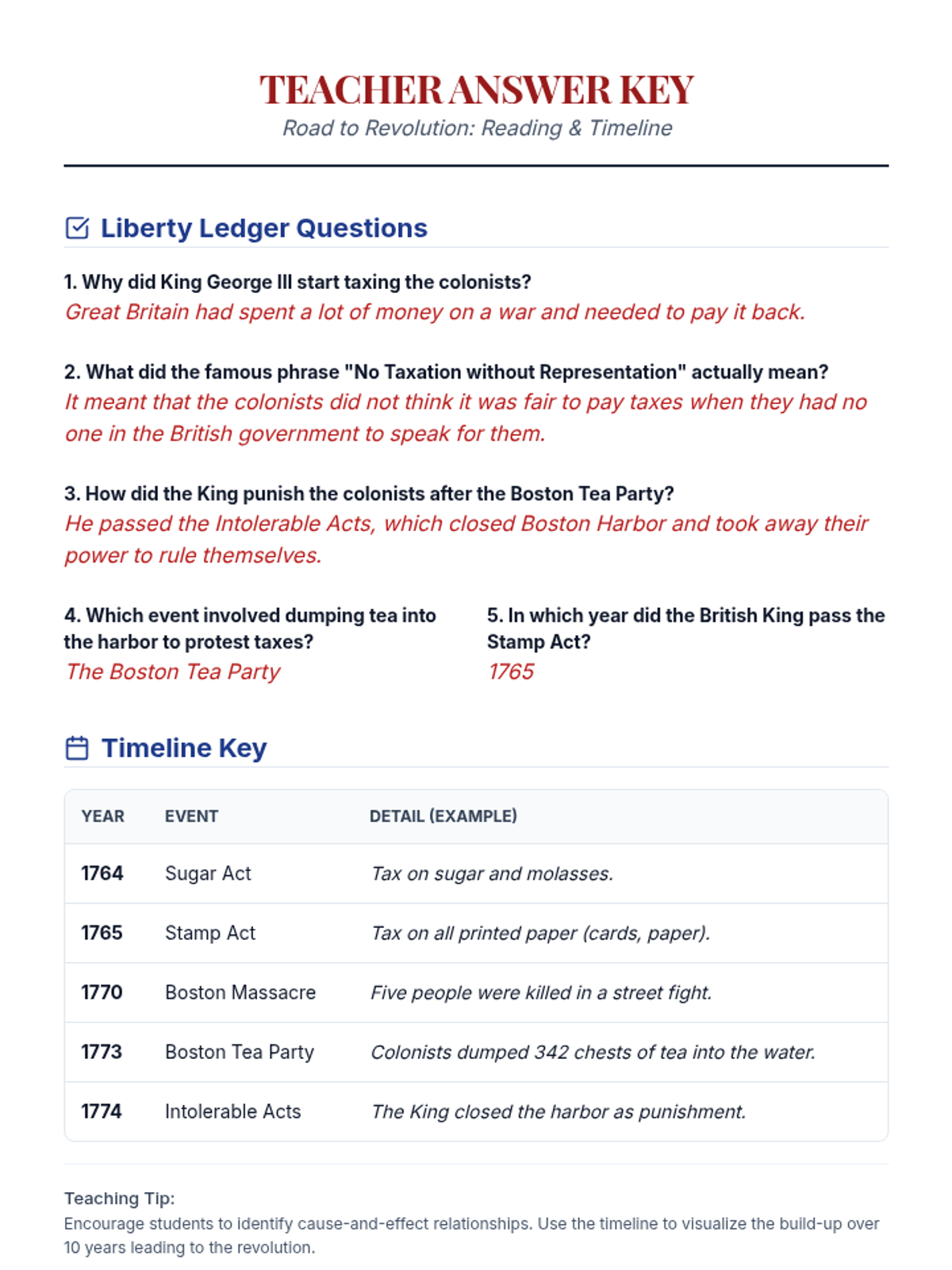
A lesson introducing 3rd graders to the key events that sparked the American Revolution, focusing on the tension between the colonies and Great Britain.
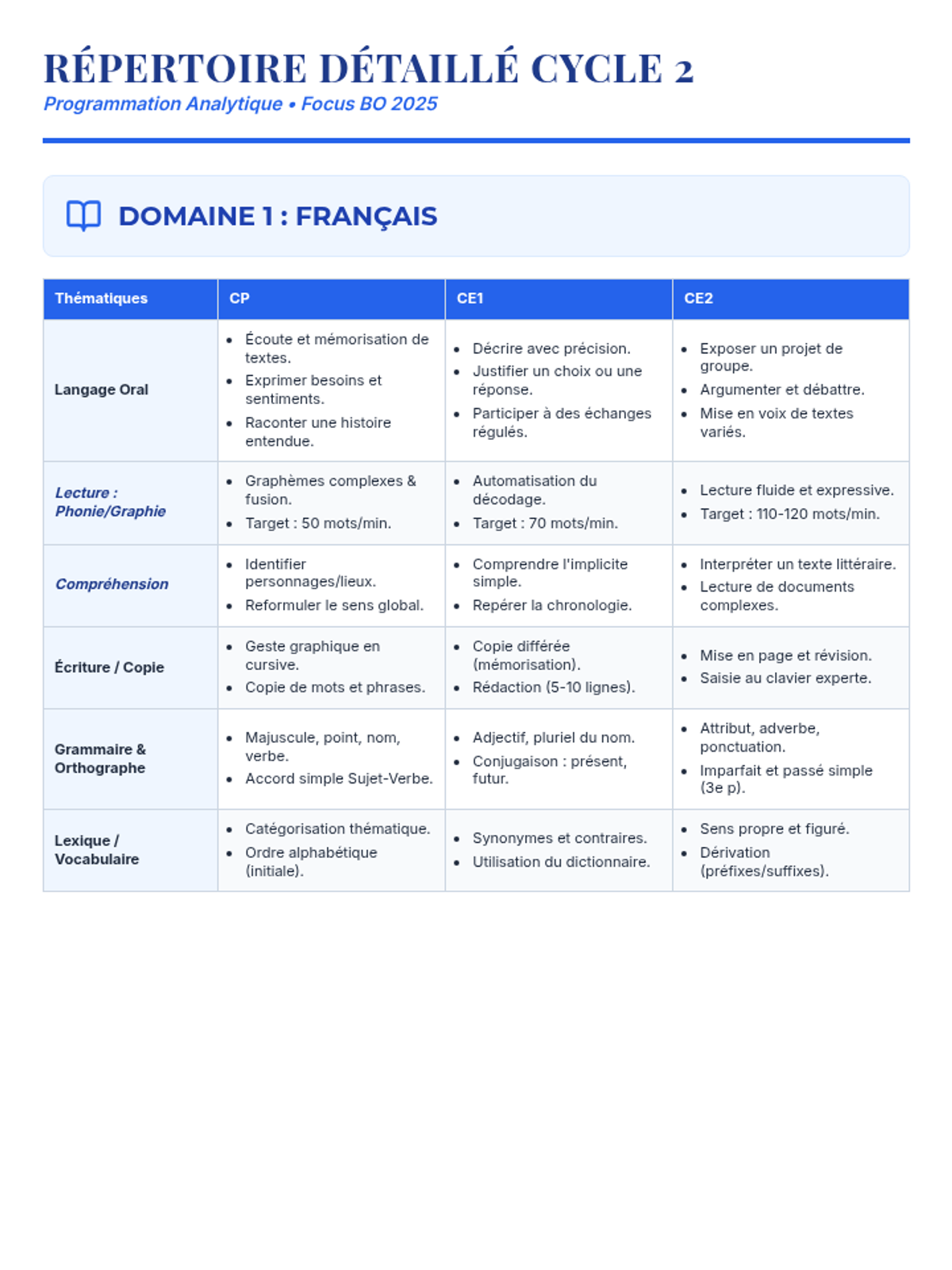
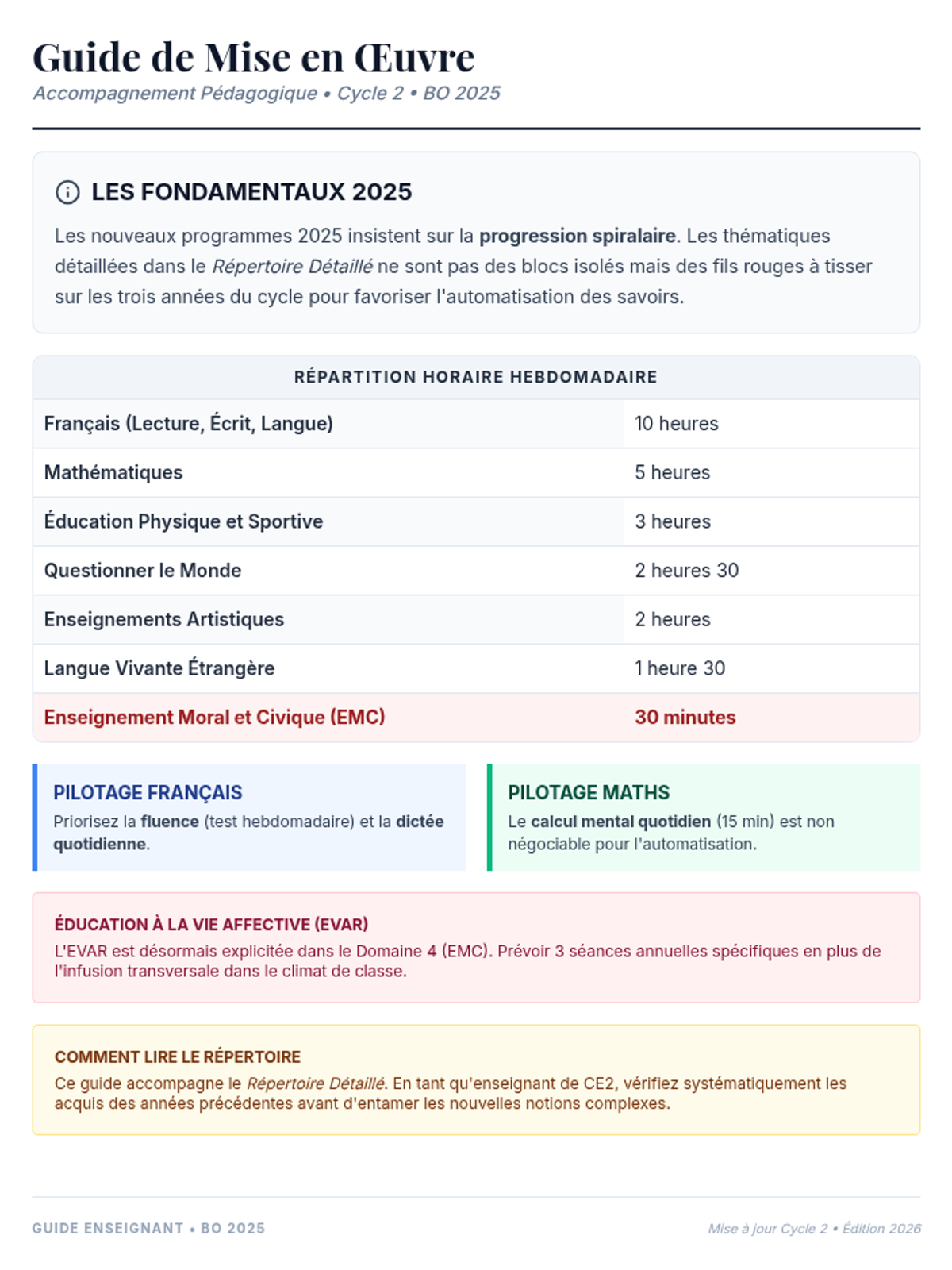
Une programmation complète pour le Cycle 2 basée sur les nouveaux programmes de 2025, structurée par thématiques et par année (CP, CE1, CE2) pour toutes les matières.
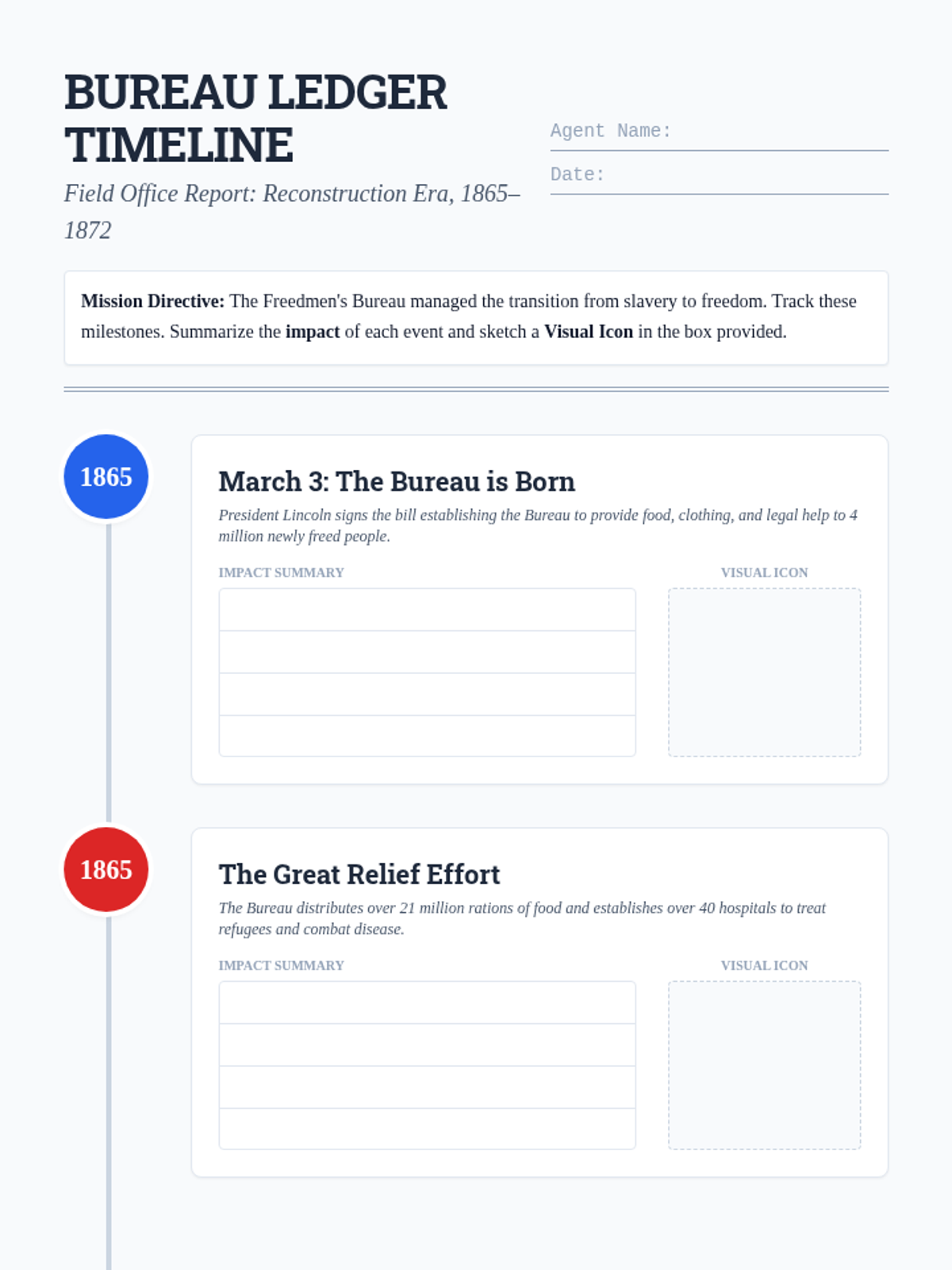
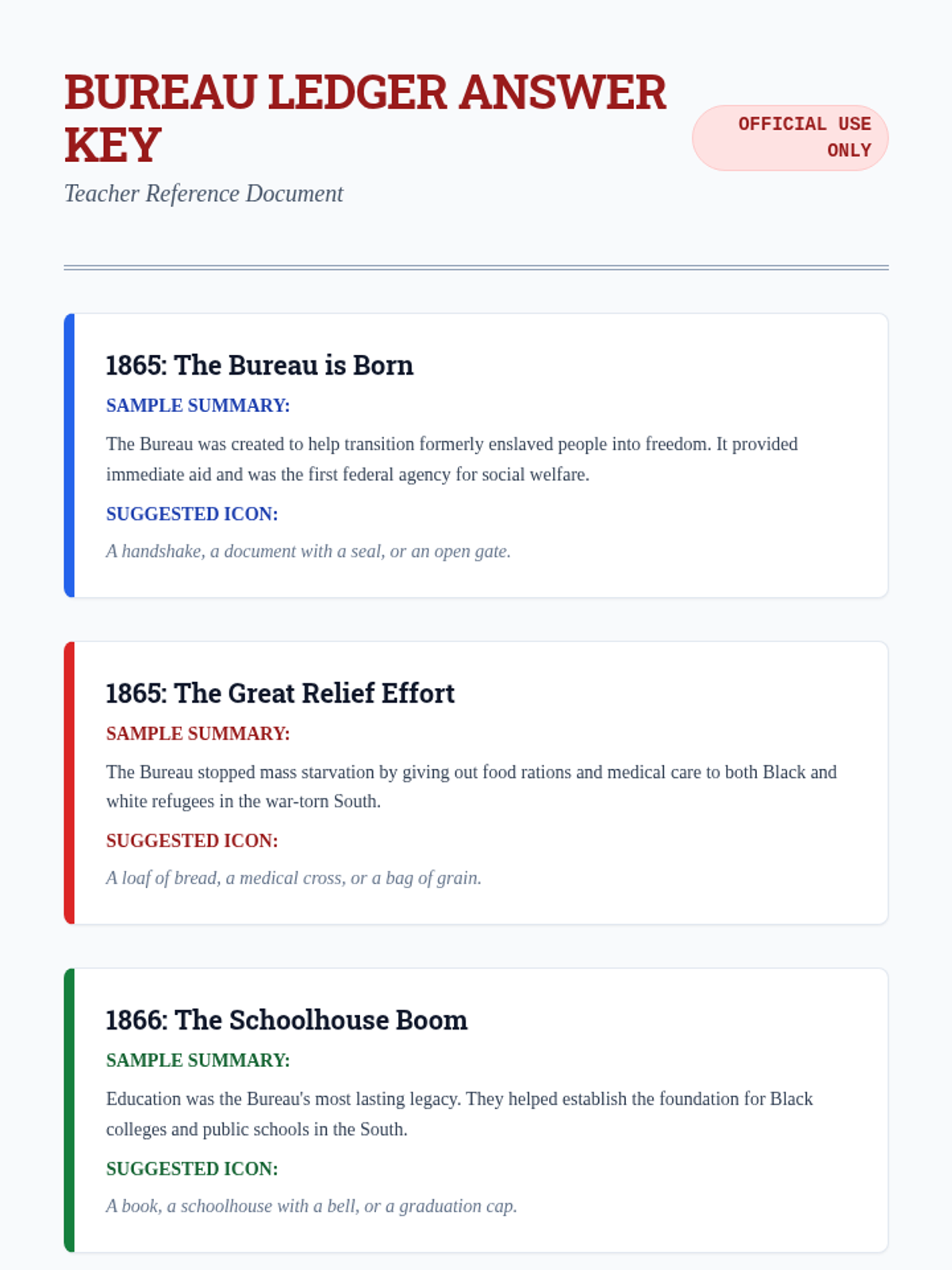
A lesson exploring the impact of the Freedmen's Bureau during the Reconstruction Era through a visual timeline and primary source analysis.
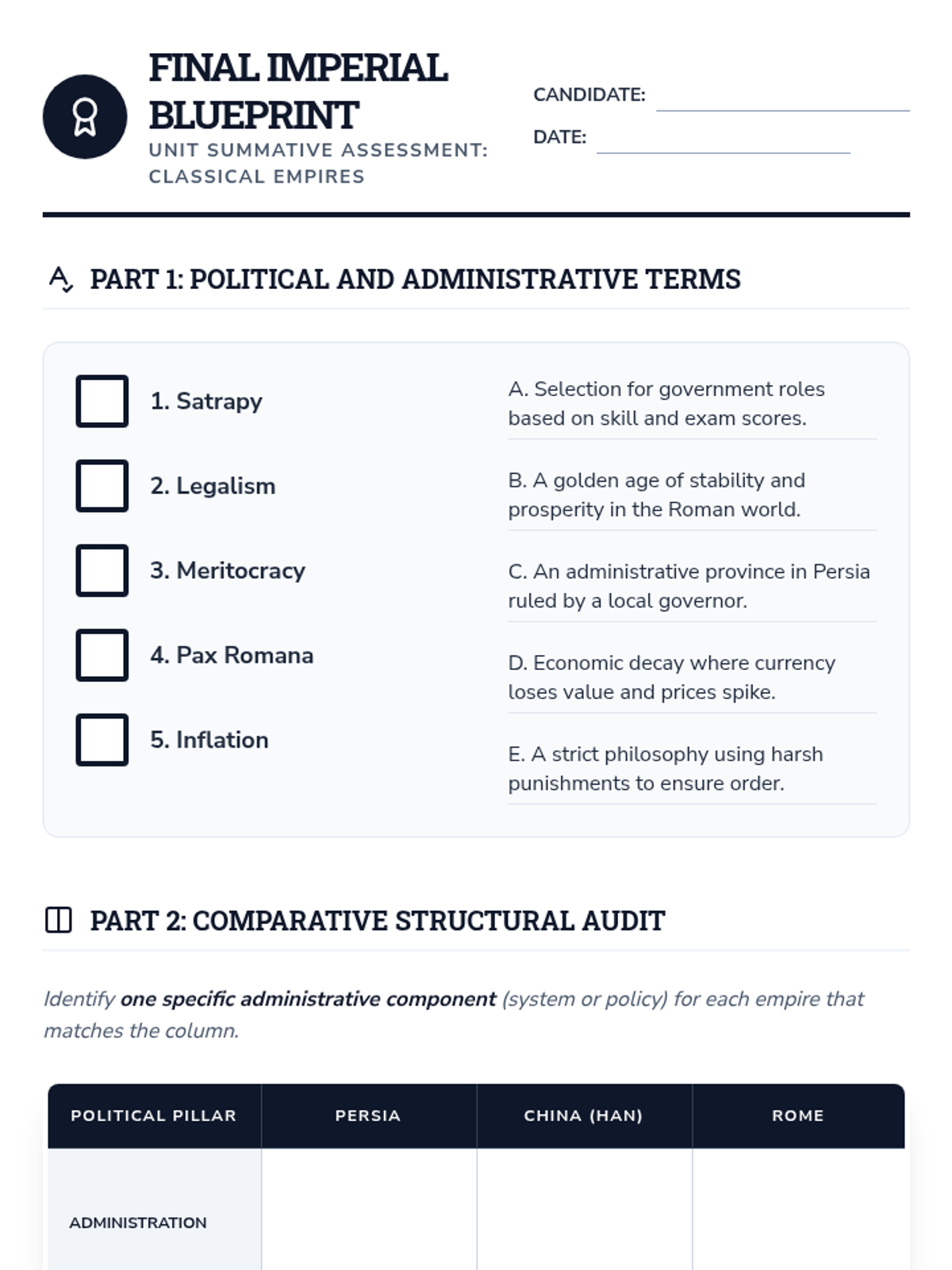
A final comparative analysis of all three empires (Persia, China, Rome), evaluating the universal patterns of imperial rise and fall.
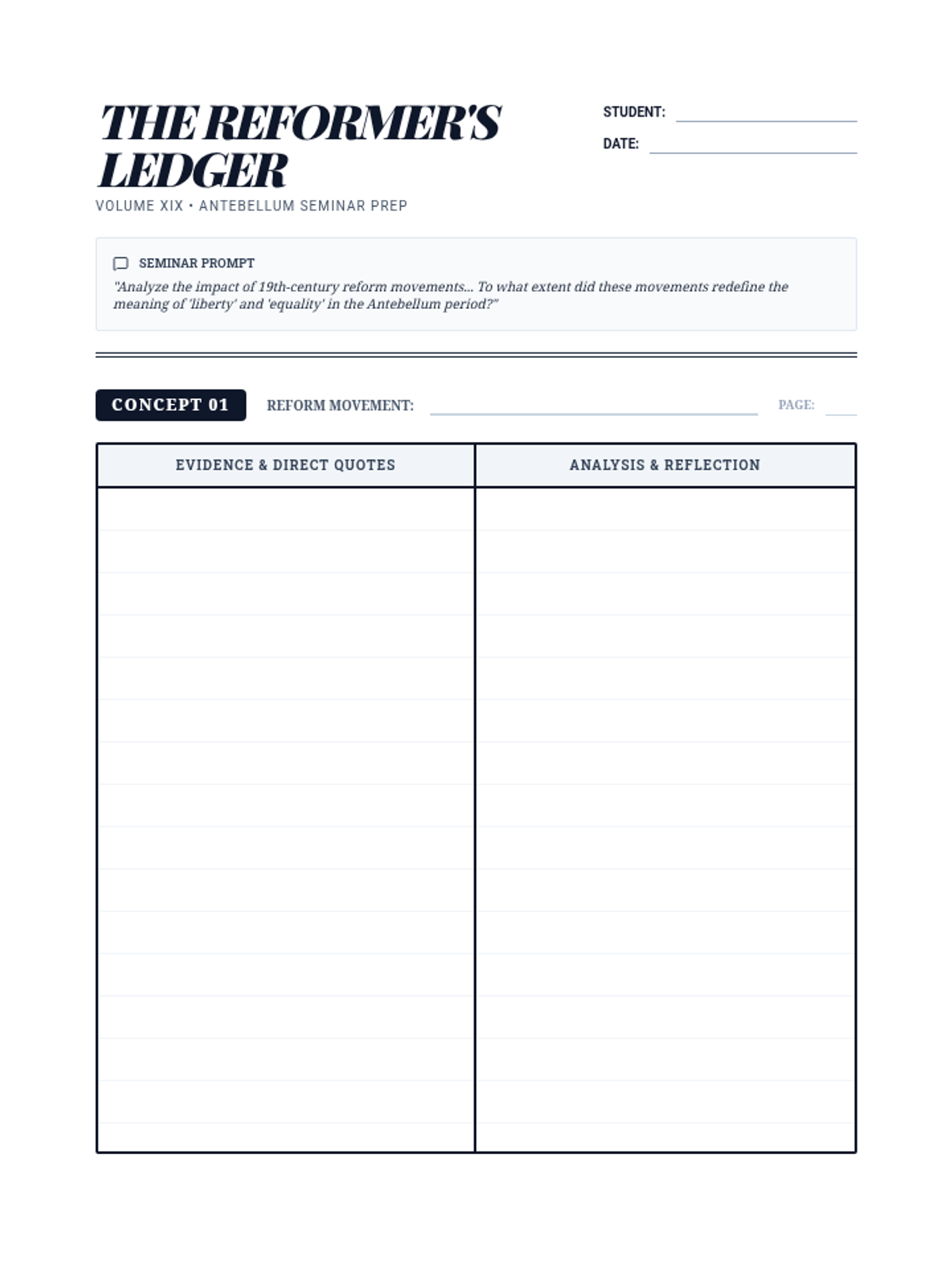
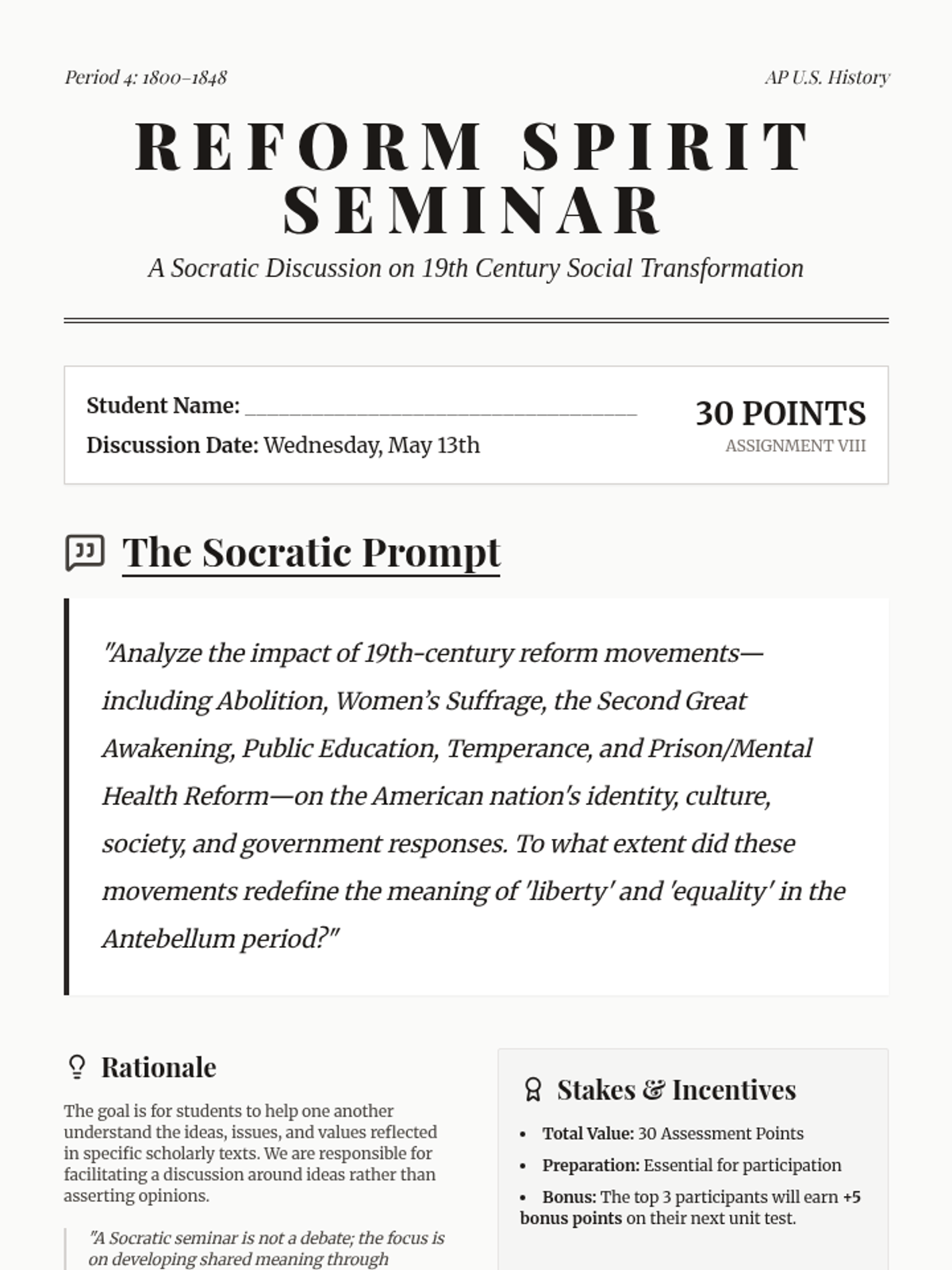
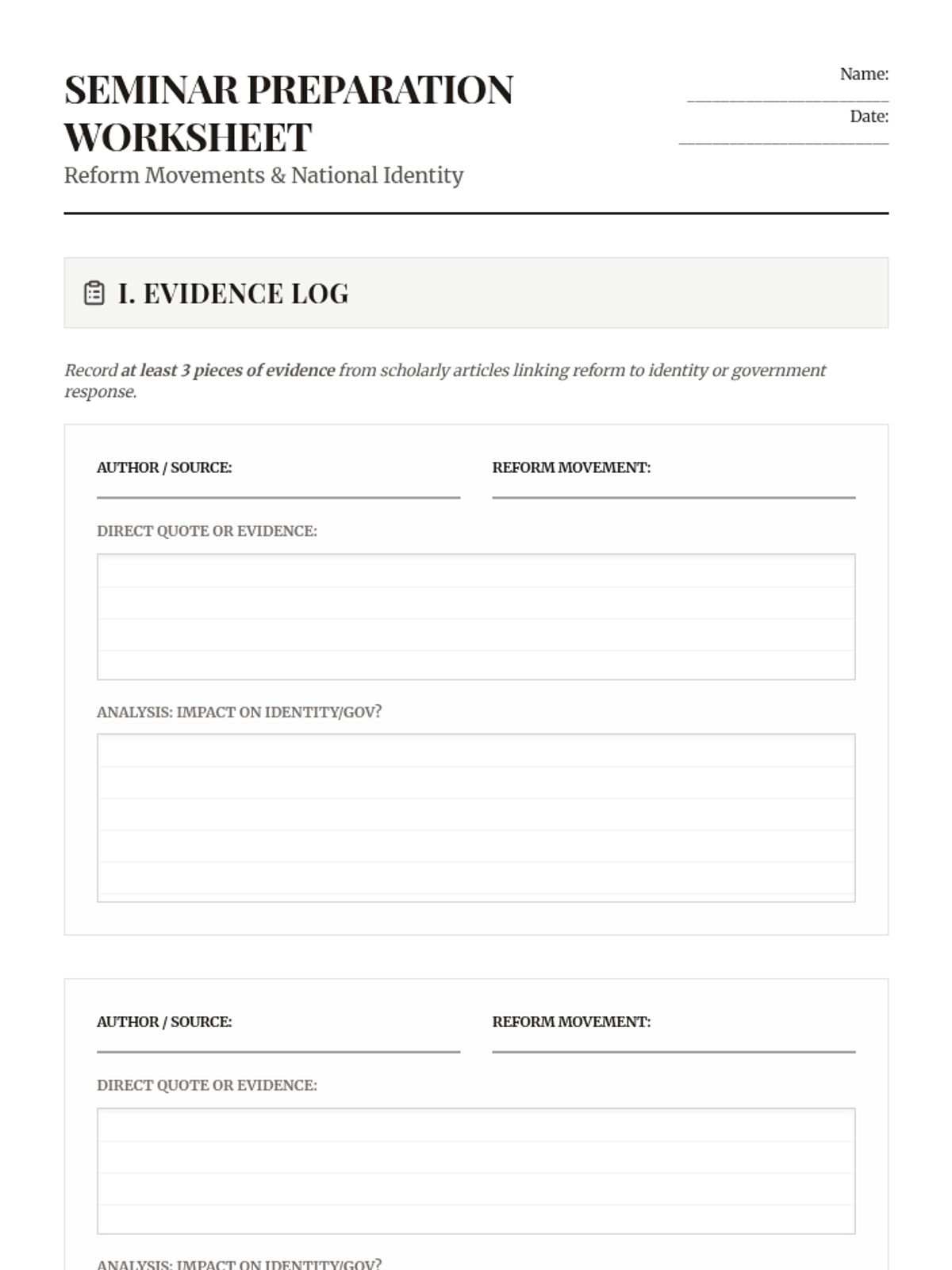
A Socratic Seminar preparation lesson focusing on 19th-century reform movements and their impact on American identity. Students analyze primary and secondary sources to evaluate how these movements redefined liberty and equality.
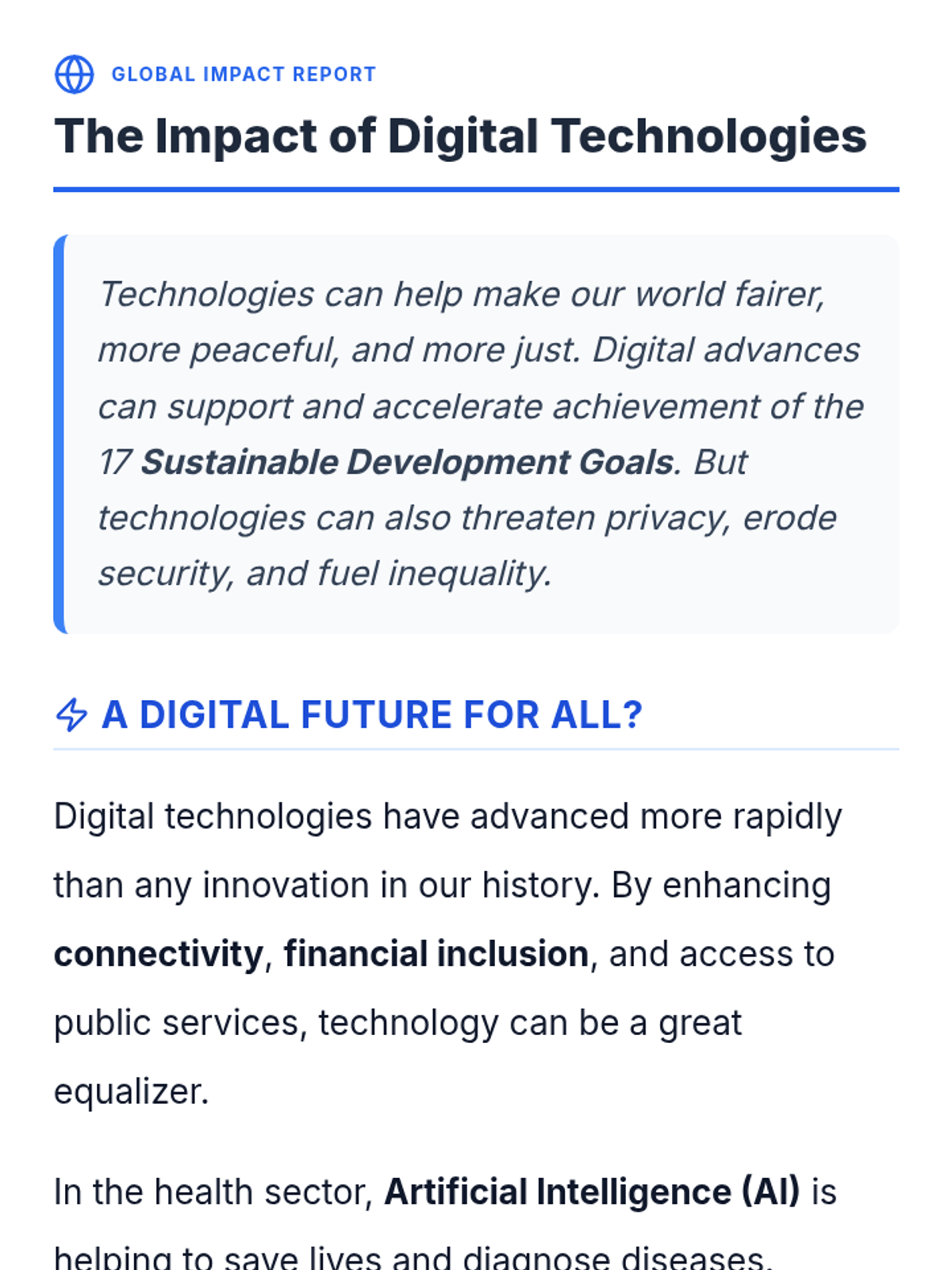
A lesson exploring the dual nature of digital advancements, focusing on their potential to either bridge social gaps or widen inequalities based on UN reports.
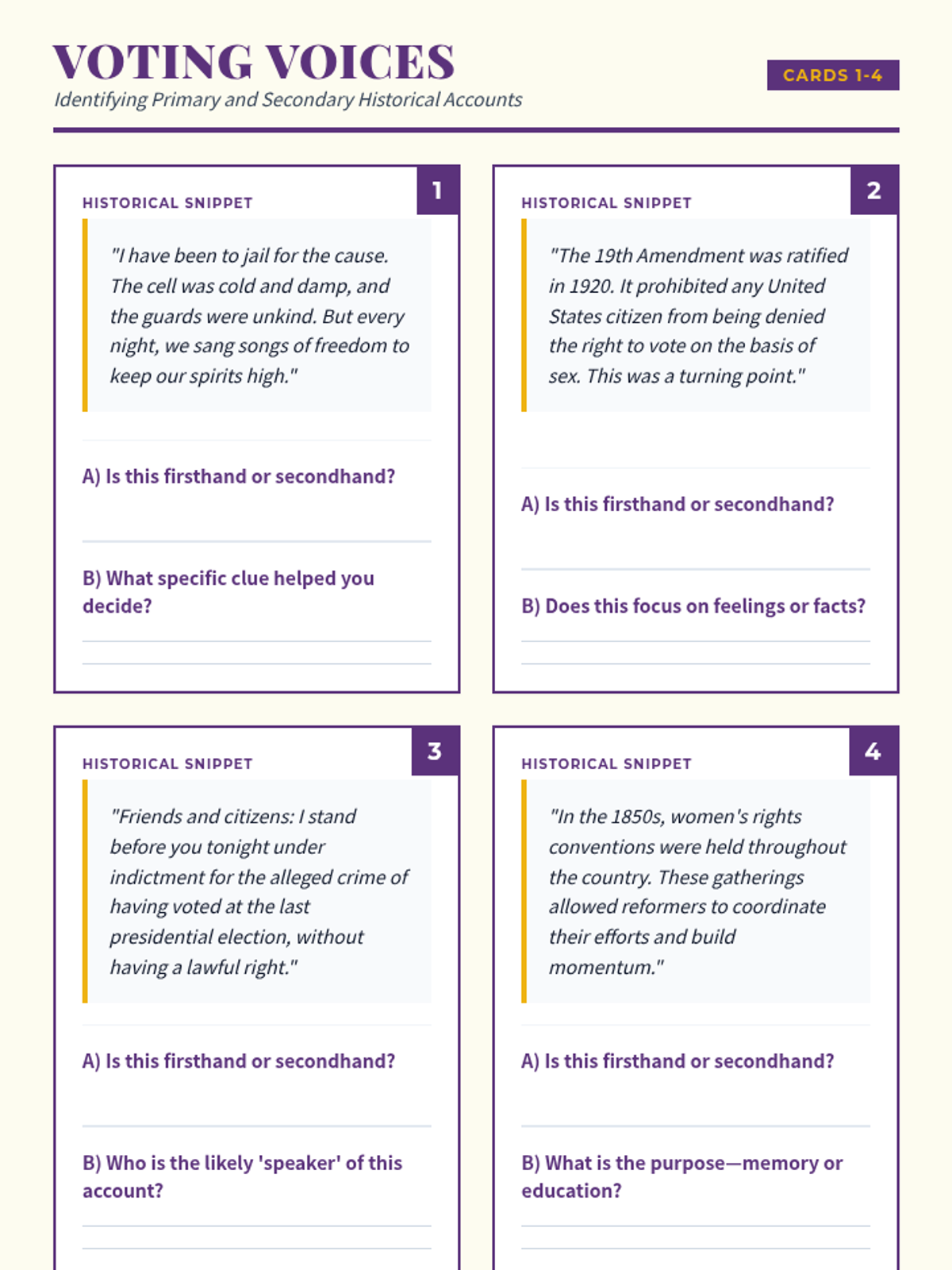
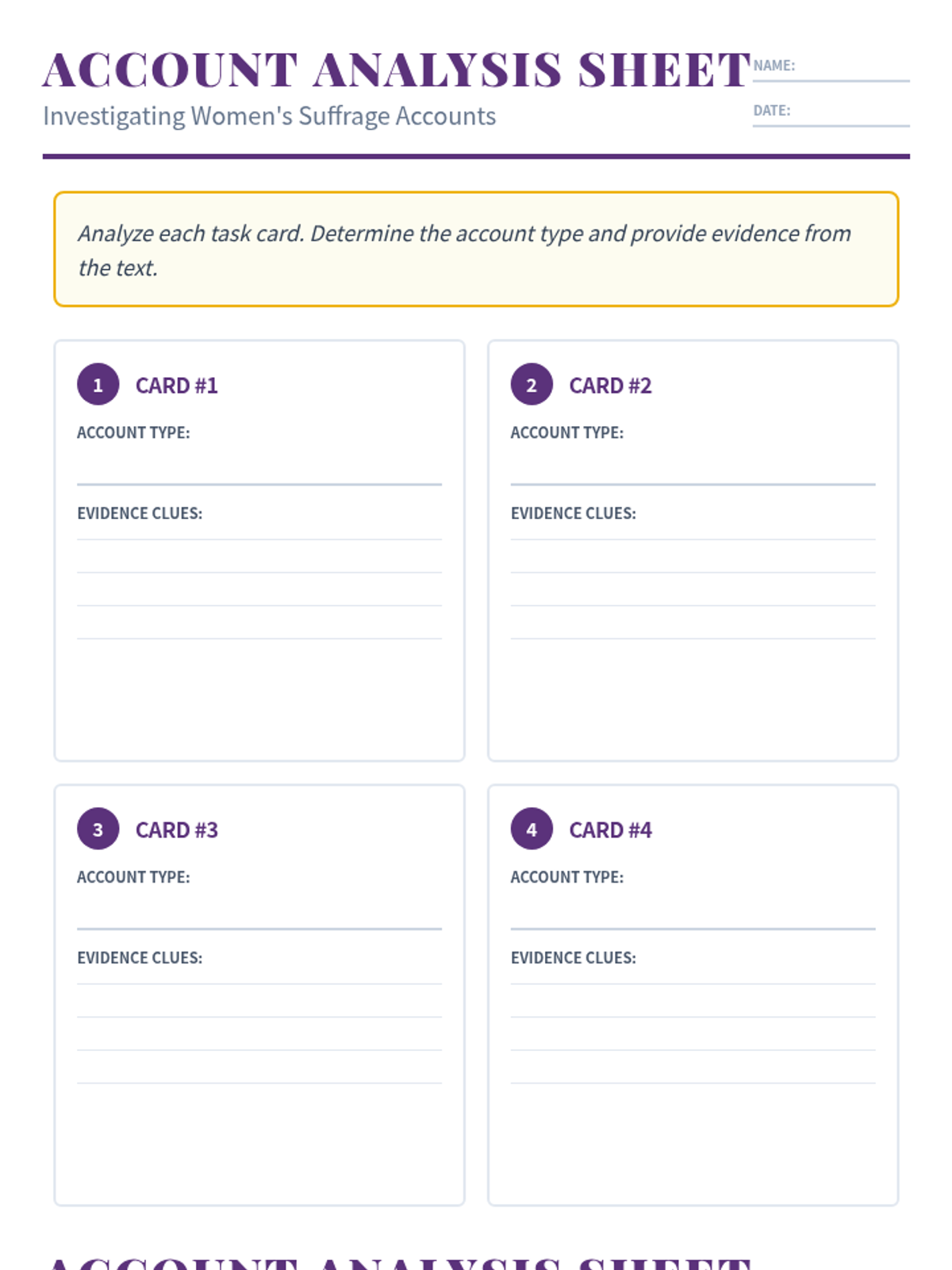
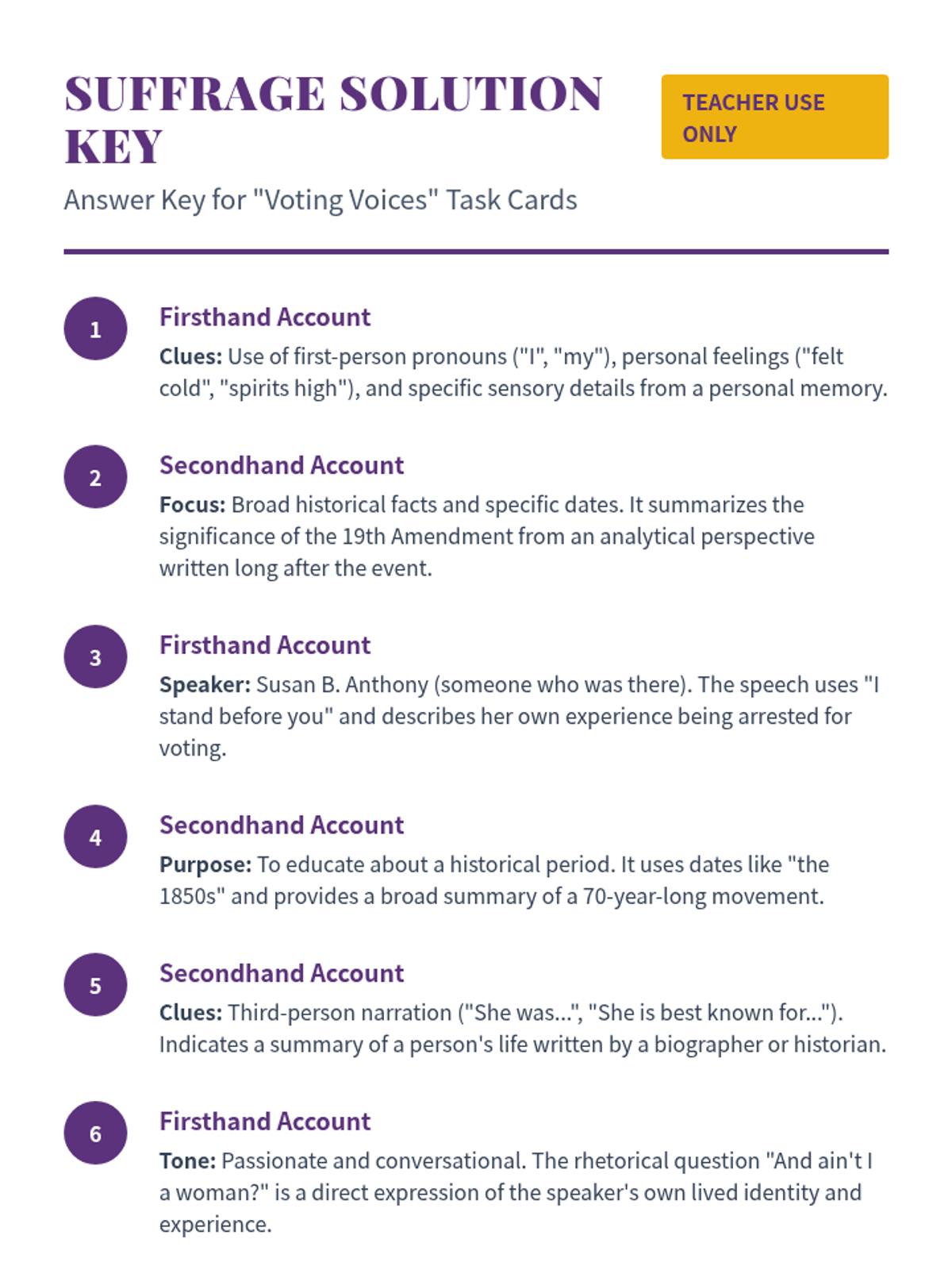
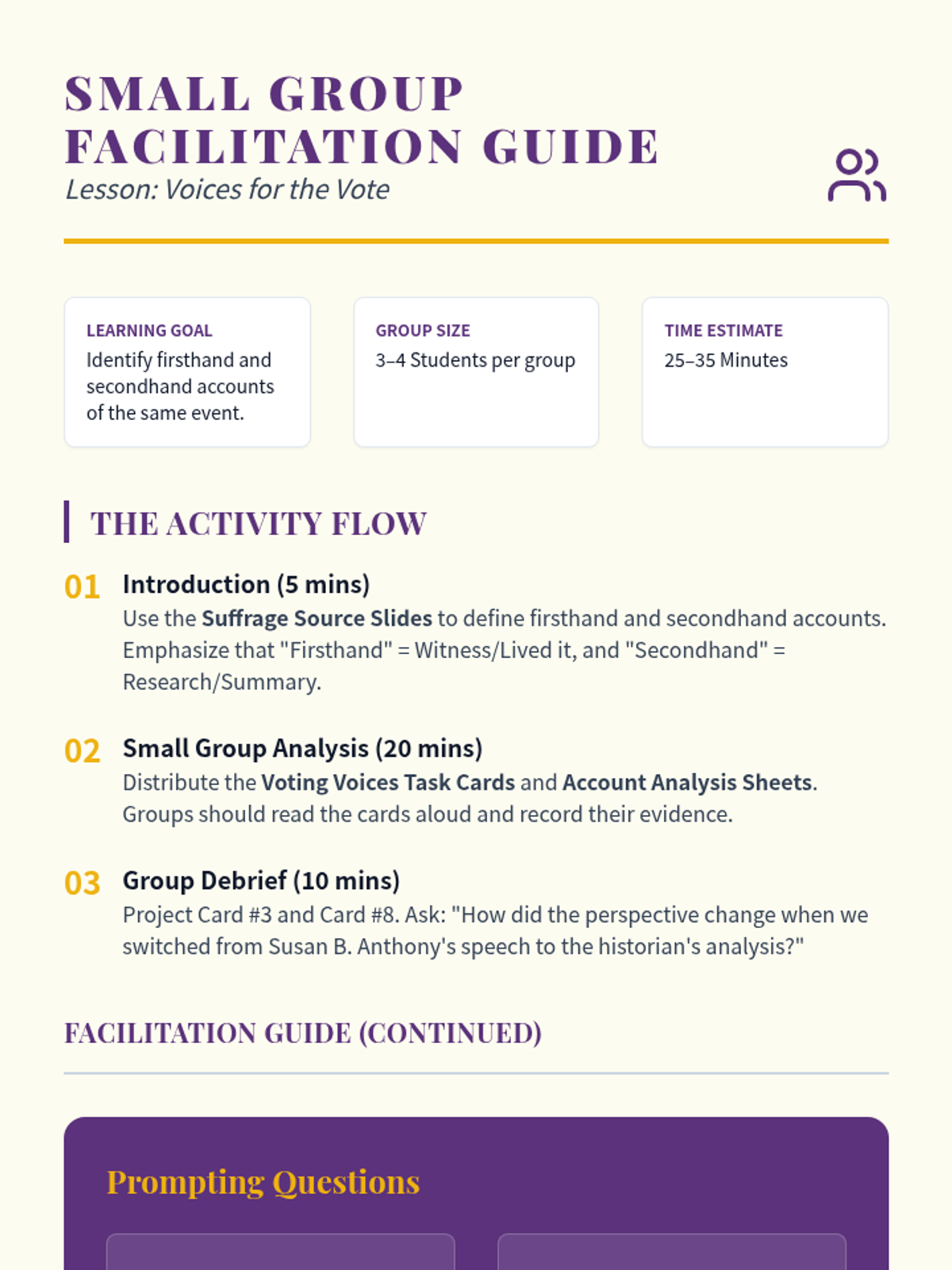
A lesson focused on distinguishing between firsthand and secondhand accounts through the lens of the Women's Suffrage Movement. Students will analyze primary and secondary sources to understand different perspectives and historical reporting.
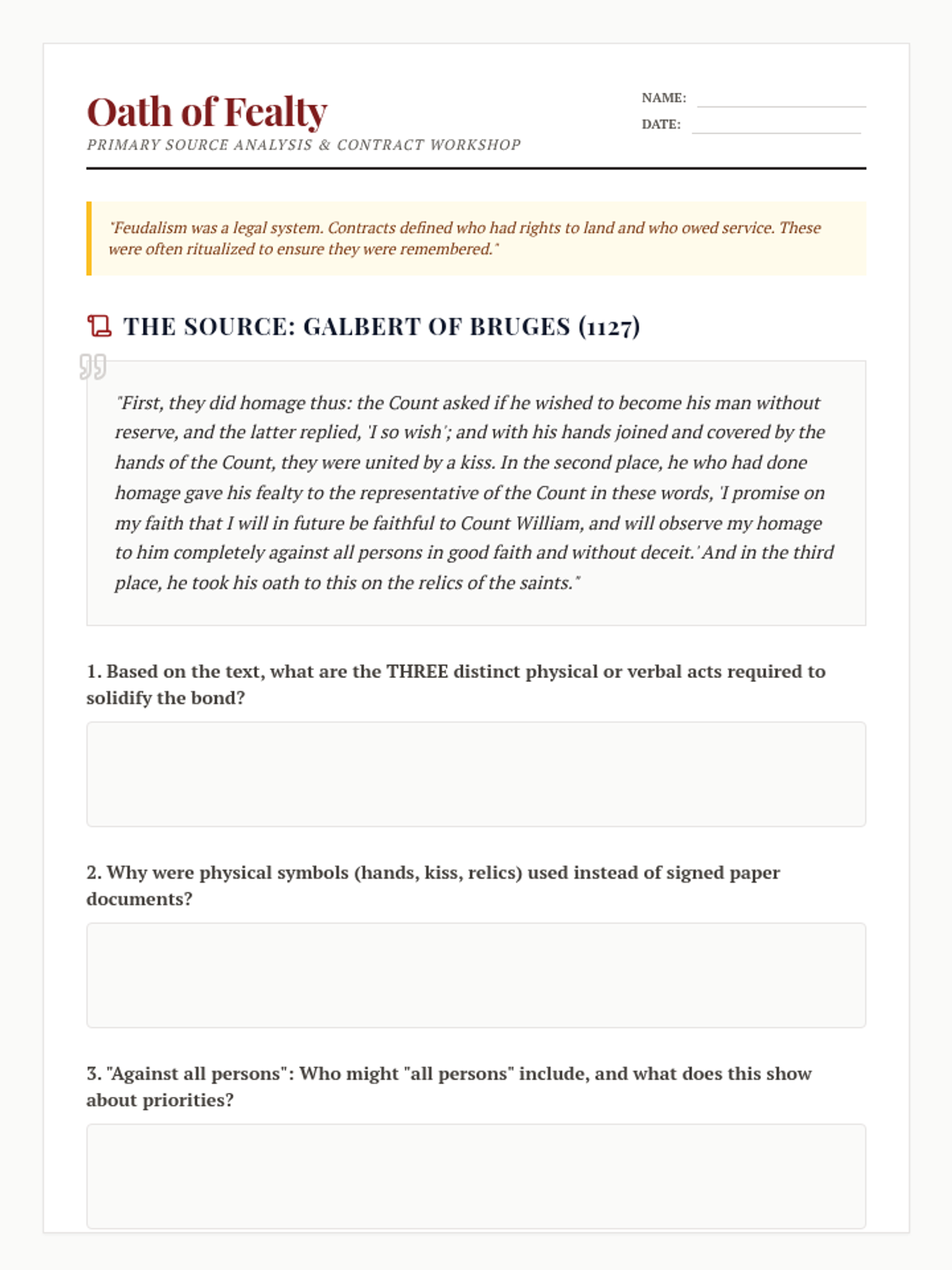
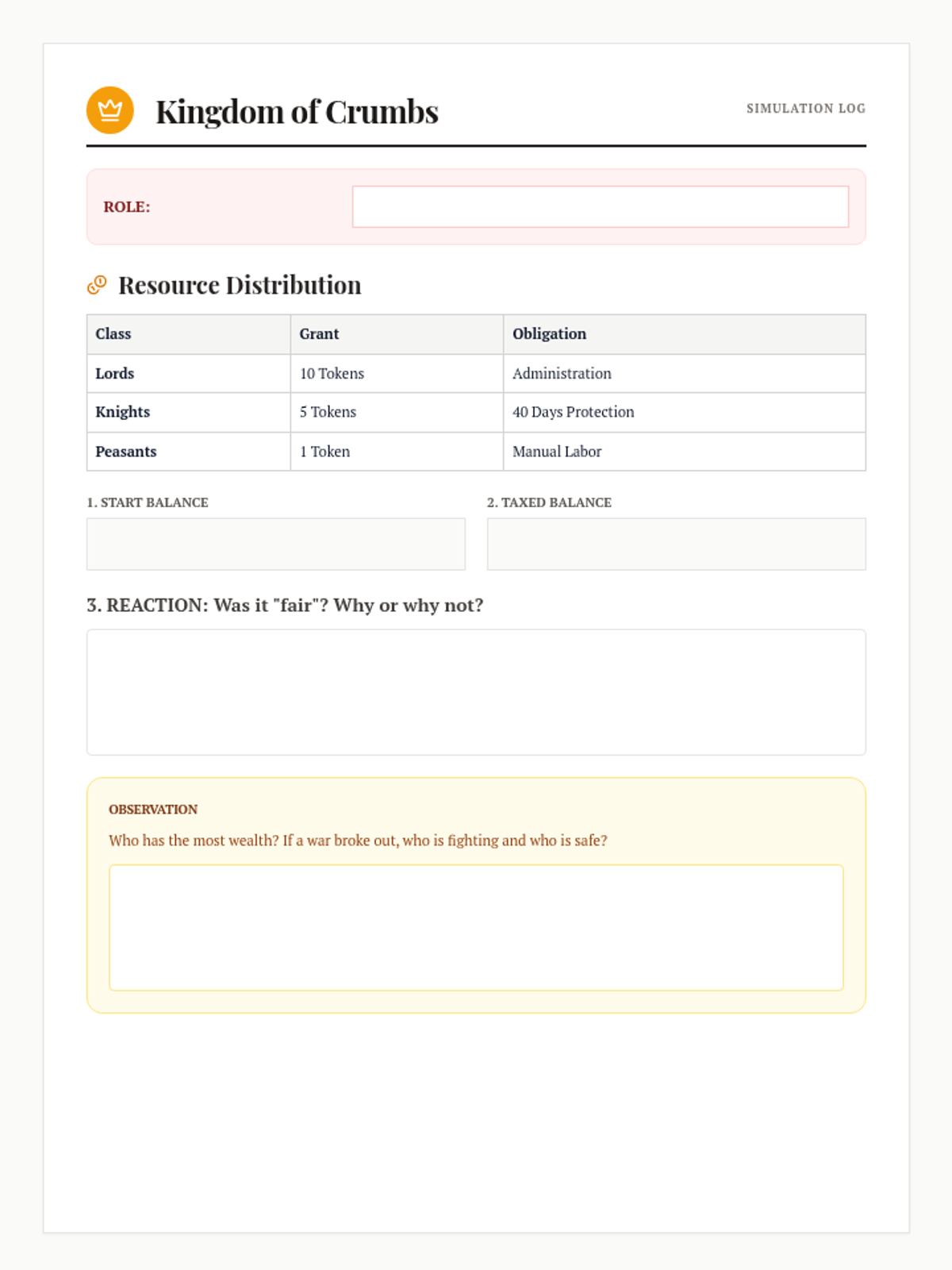
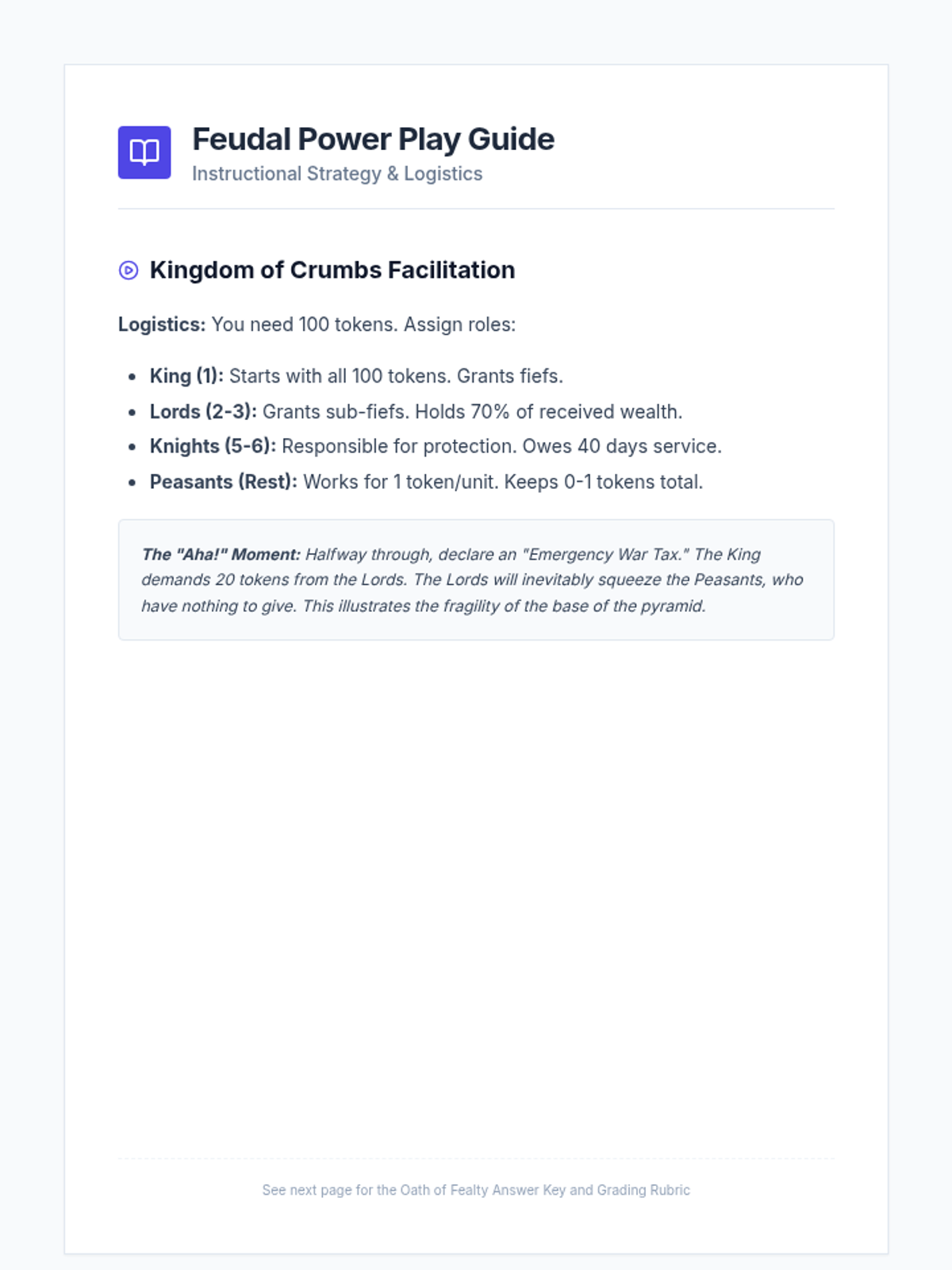
A deep dive into the reciprocal obligations of the feudal system through primary source analysis and a hands-on power dynamics simulation. Students explore how land, loyalty, and labor fueled the Middle Ages.
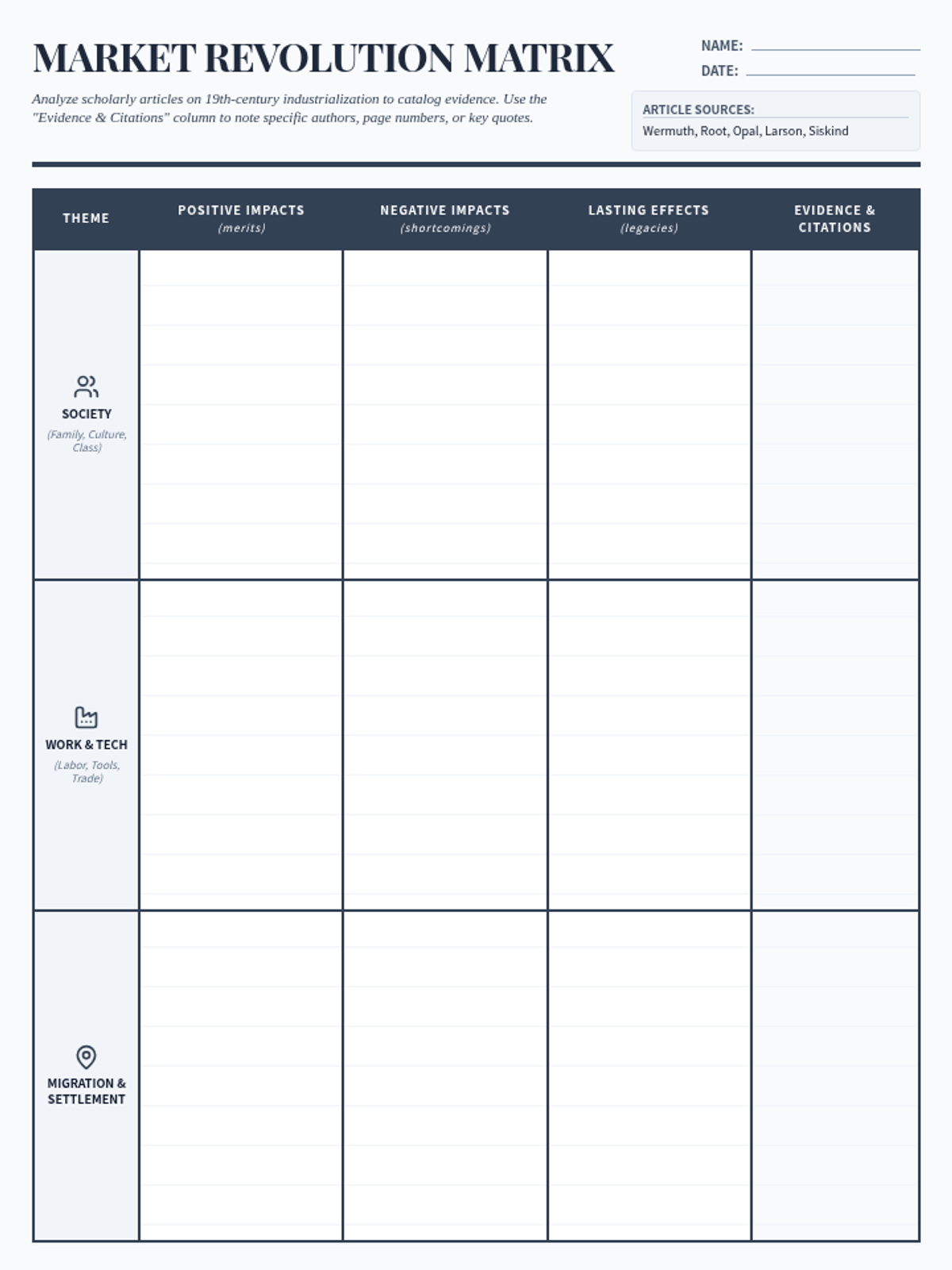
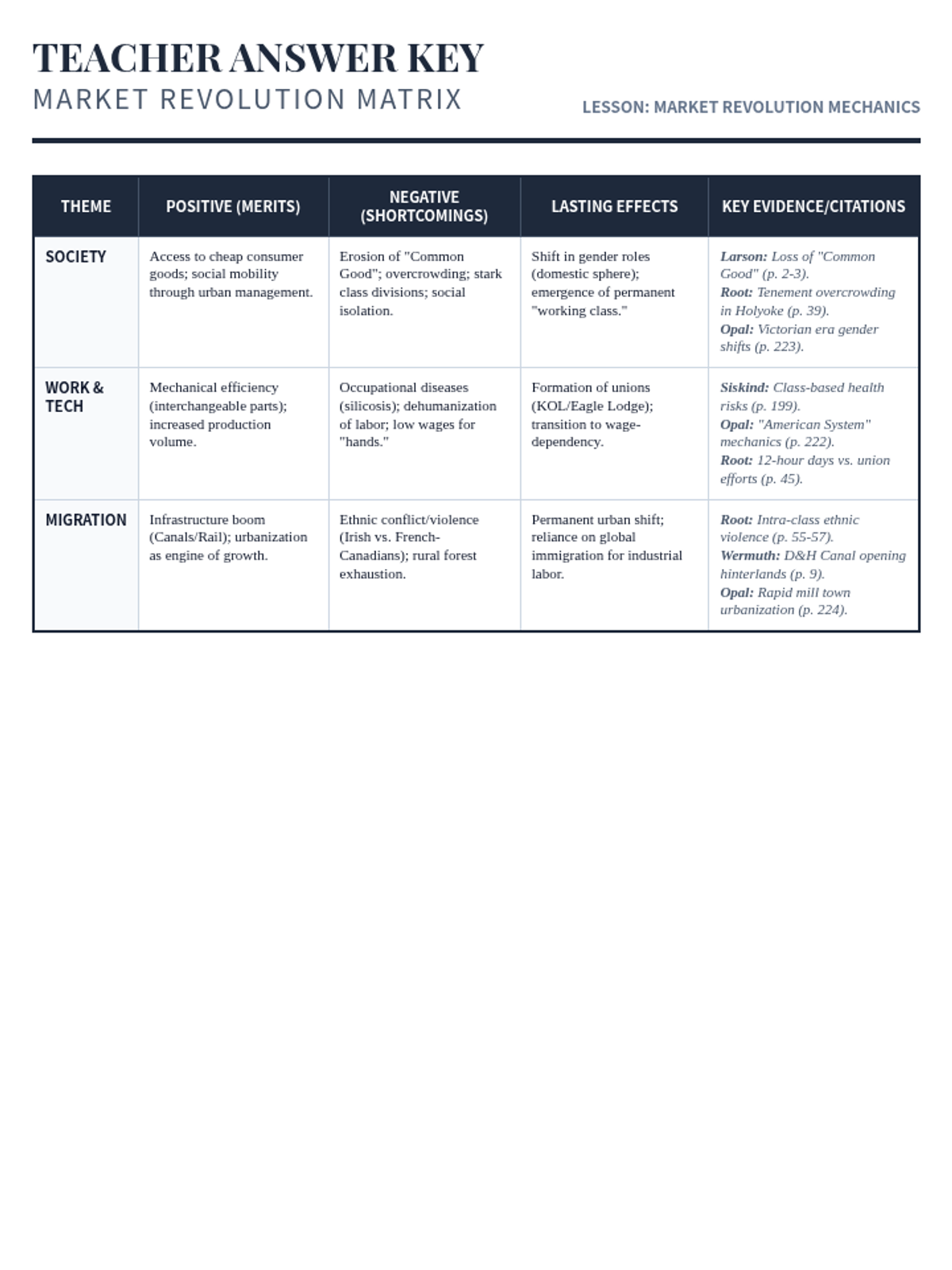
Students analyze the transformative period of industrialization and the market revolution in the 19th-century United States through scholarly articles, exploring the complex balance of economic progress against social and human costs.
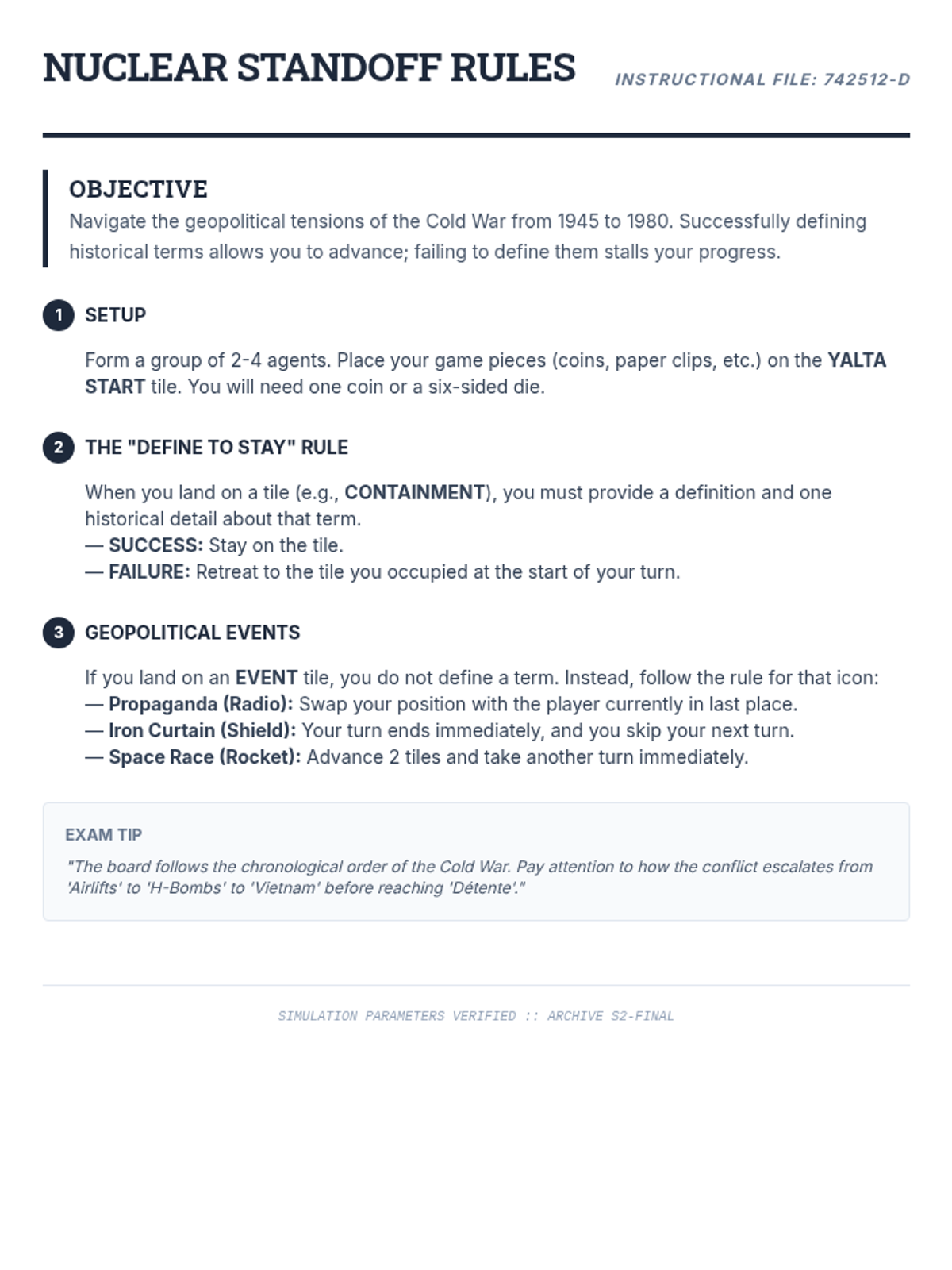
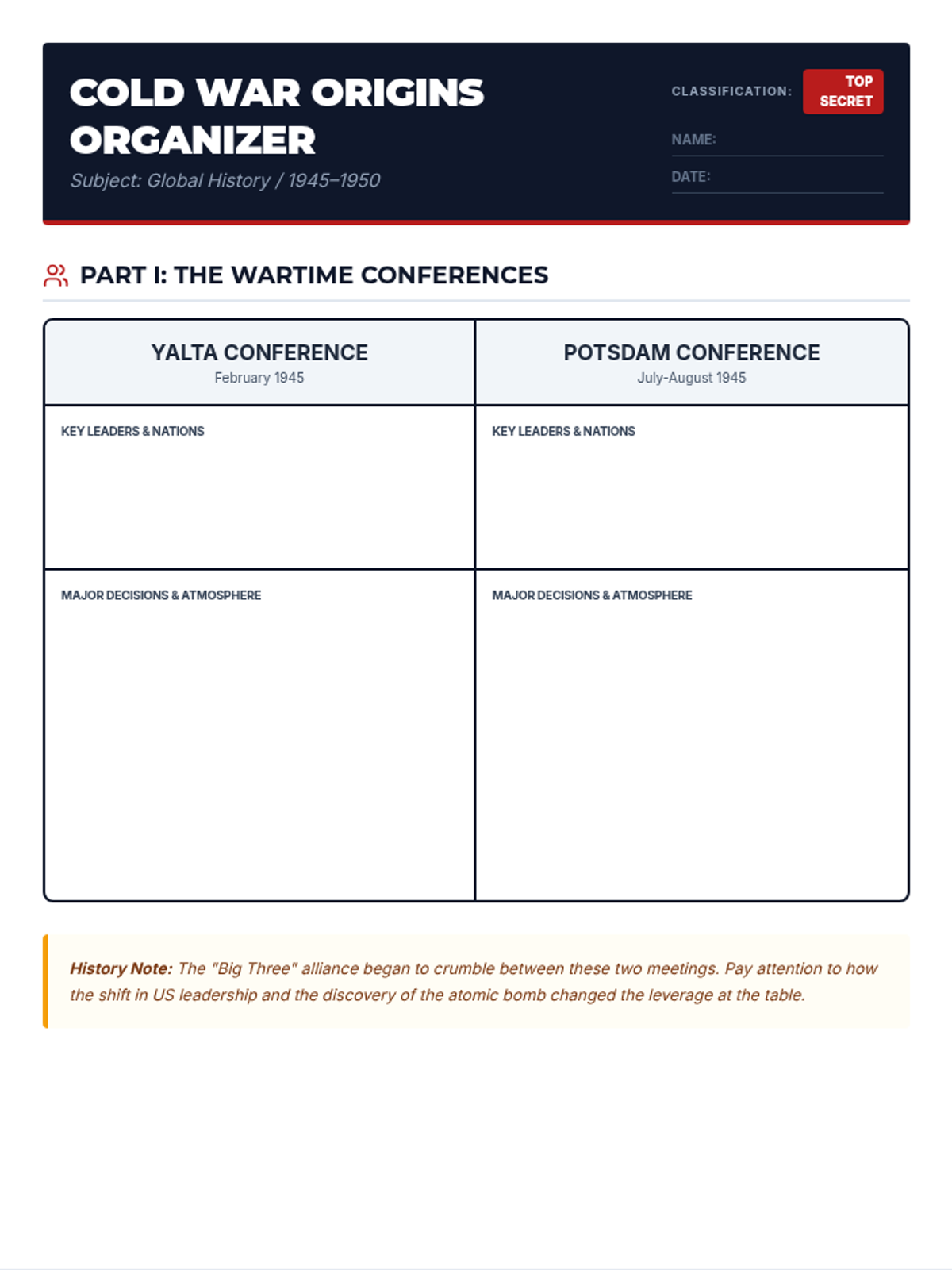
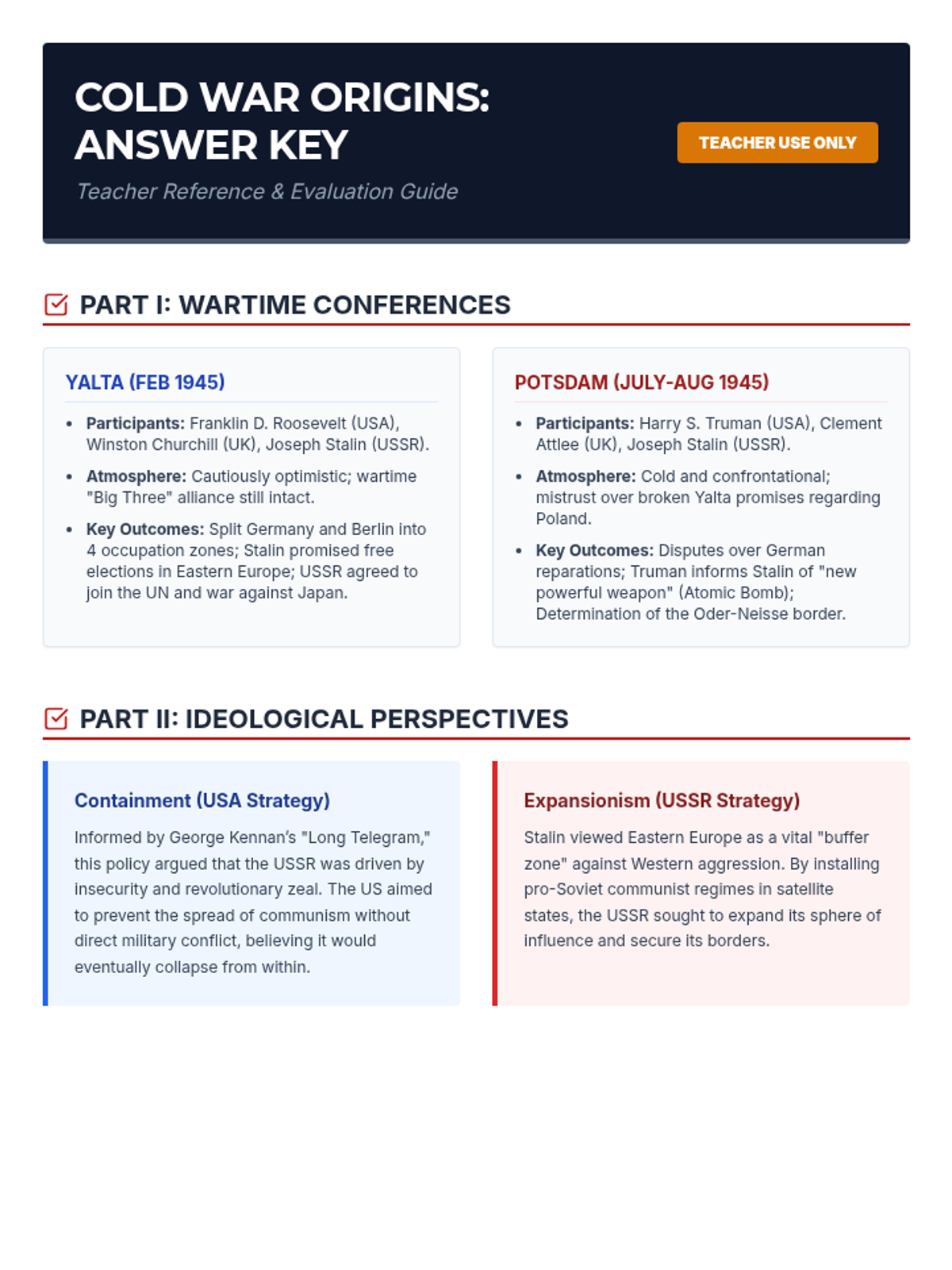
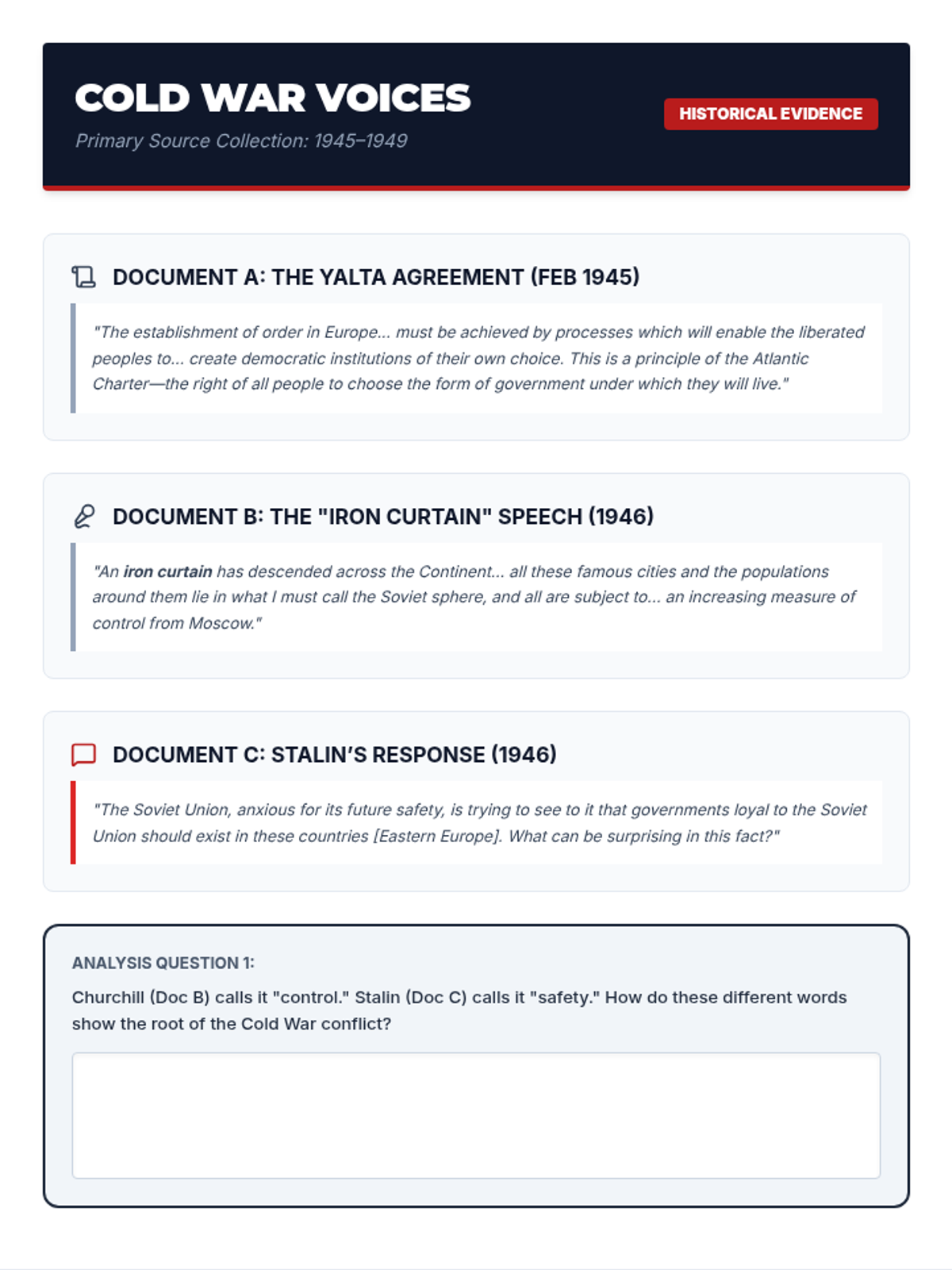
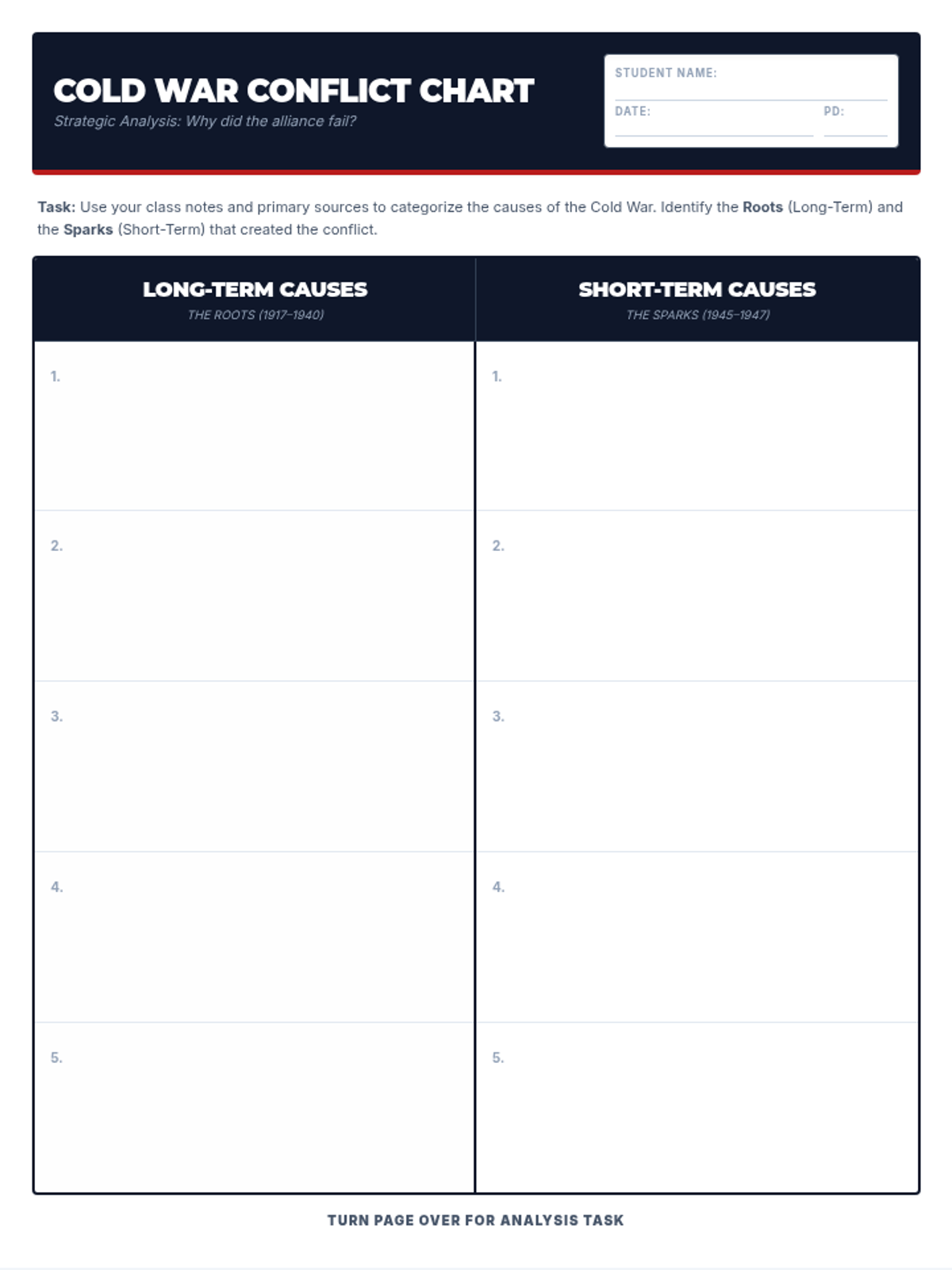
A lesson exploring the ideological, economic, and military causes of the Cold War, focusing on the shift from wartime cooperation to global rivalry.
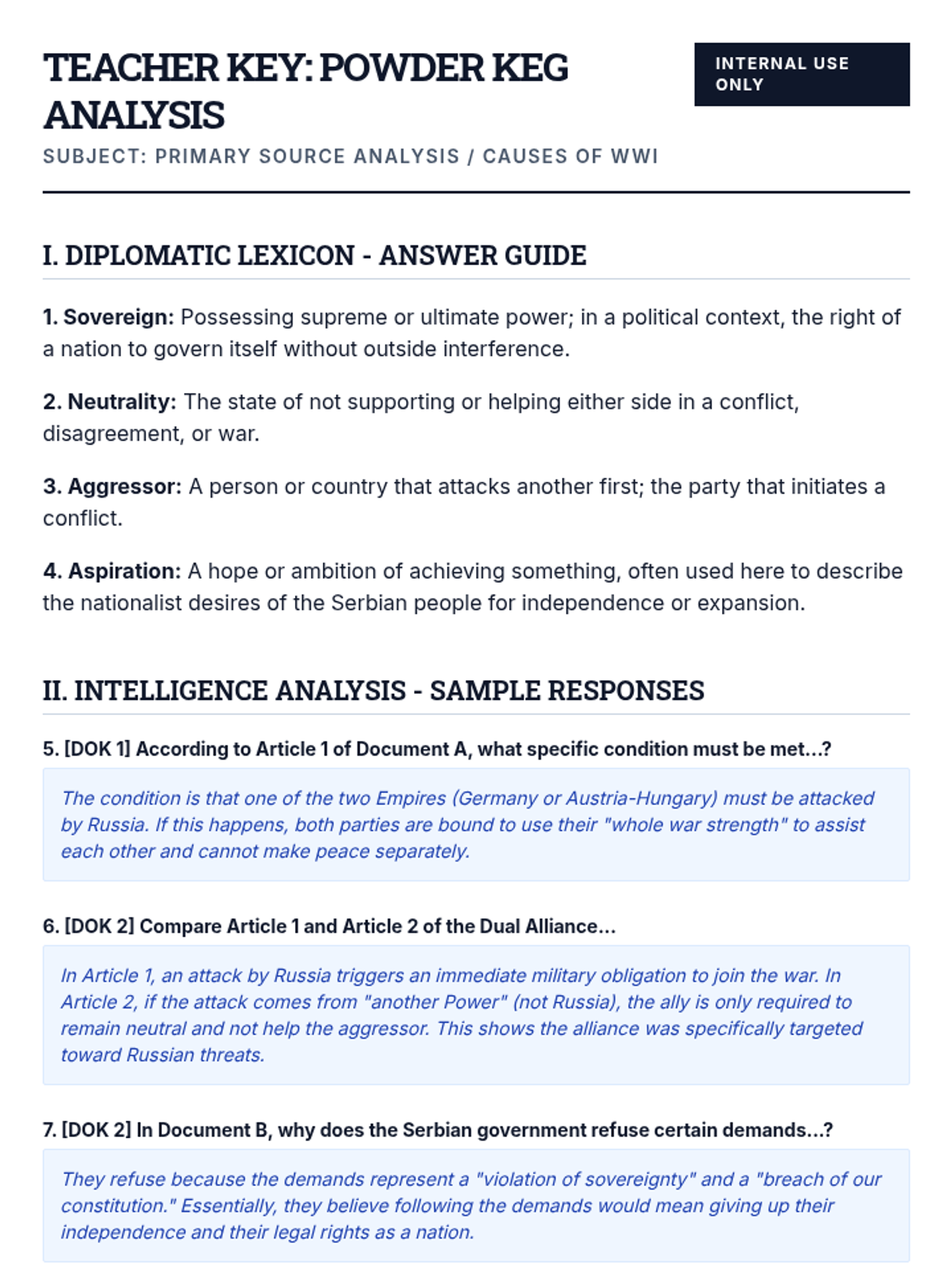
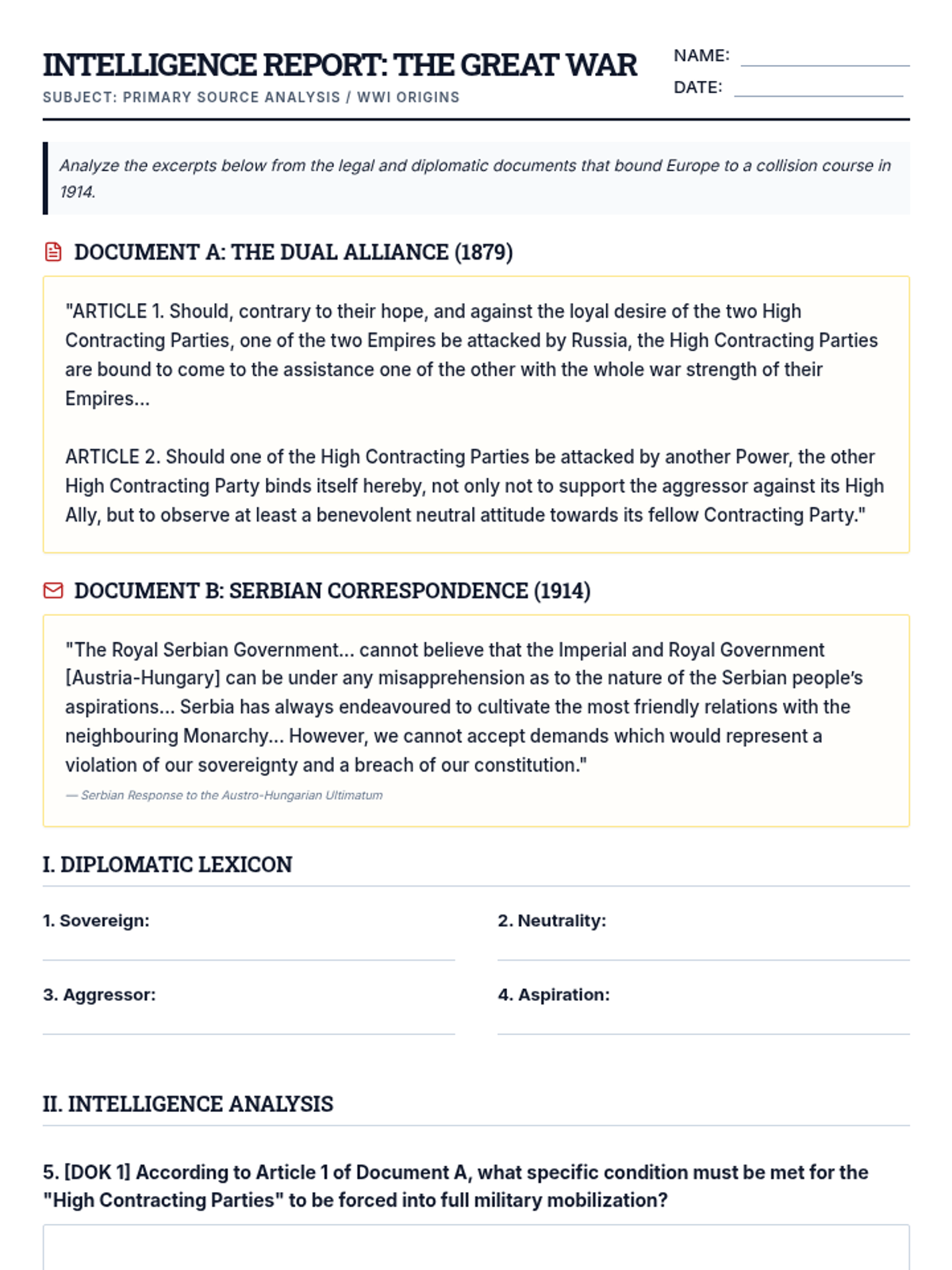
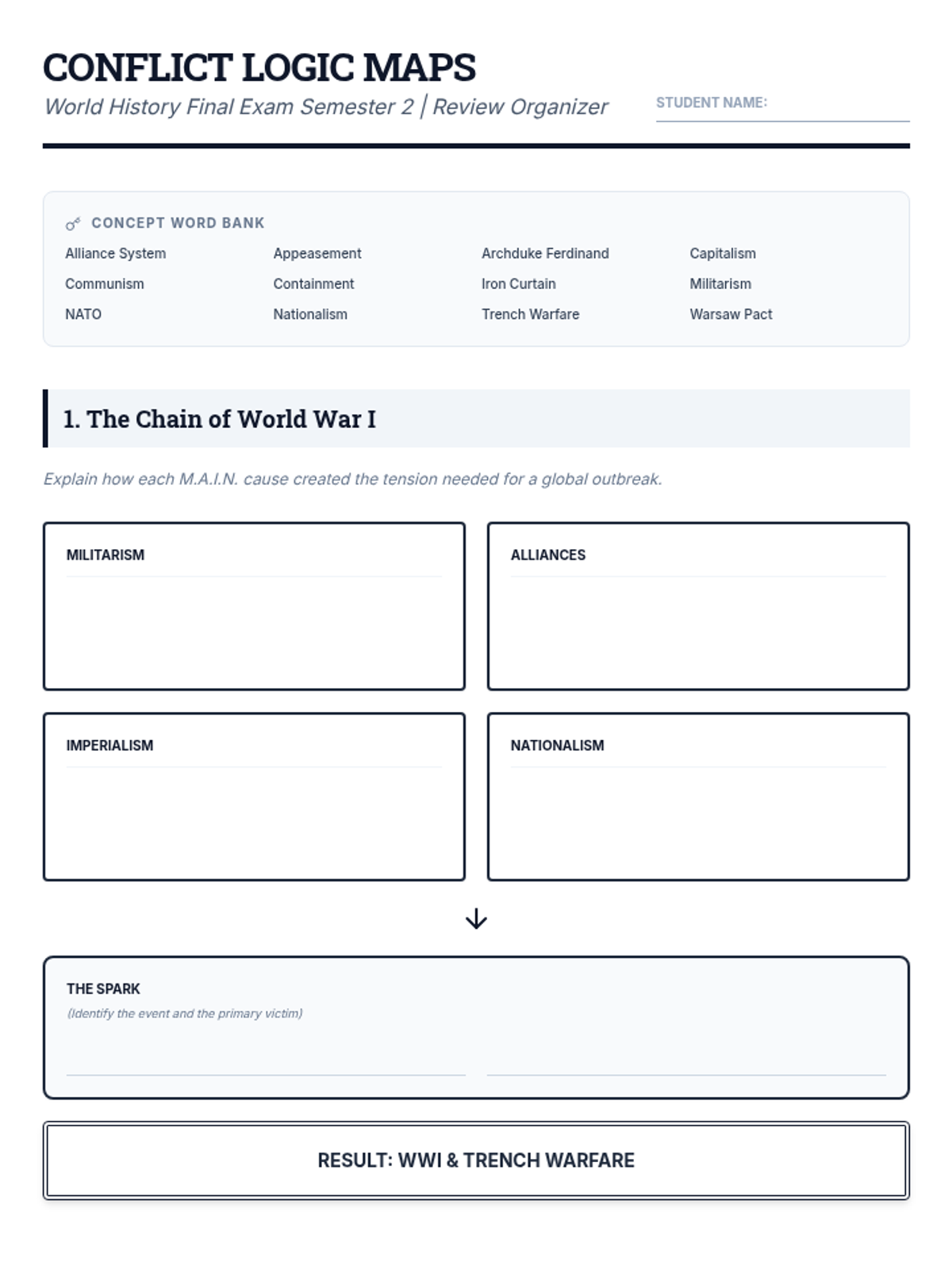
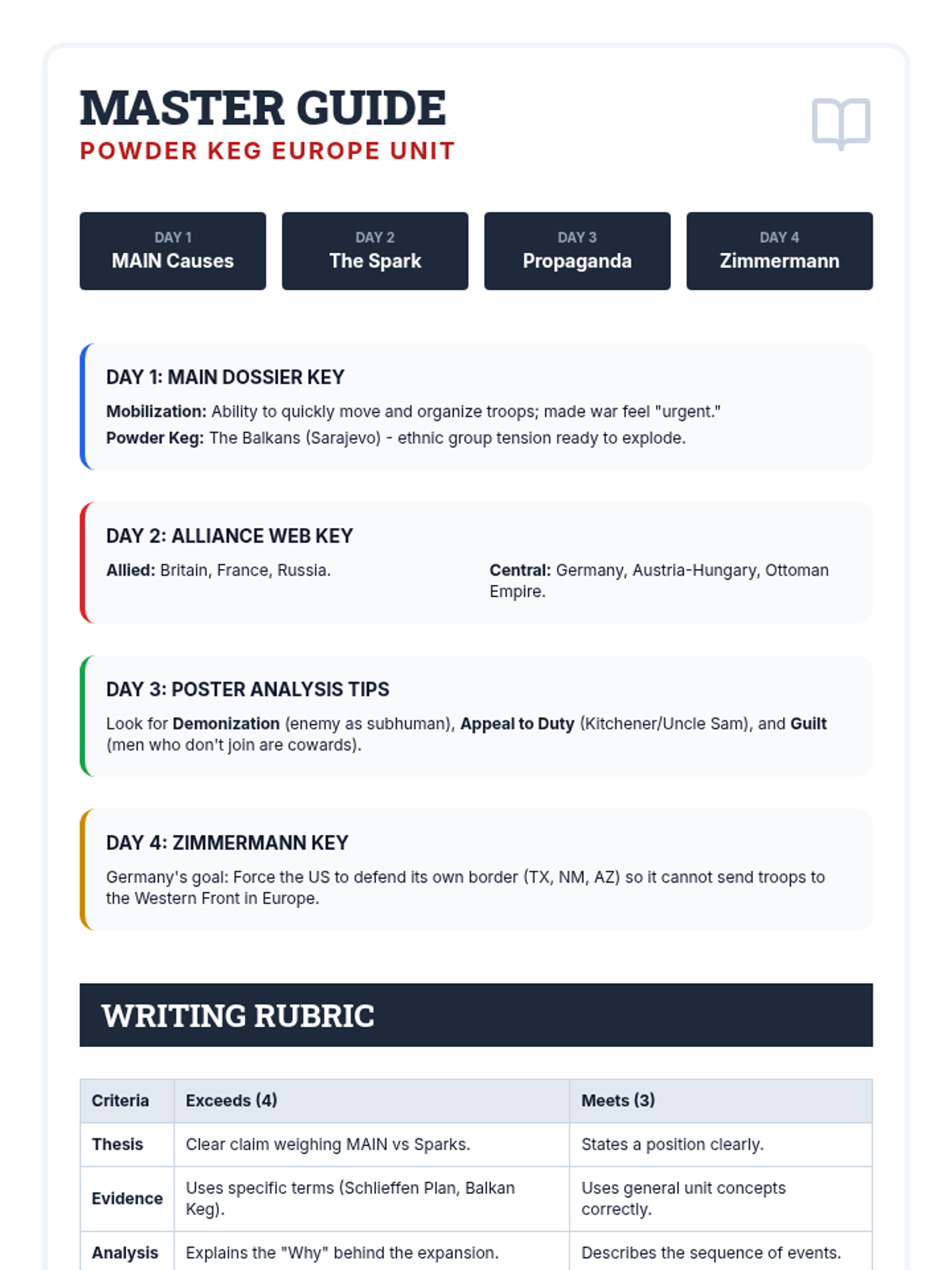
An in-depth look at the complex causes of World War I through the lens of primary source analysis, focusing on the alliance system and Balkan tensions.
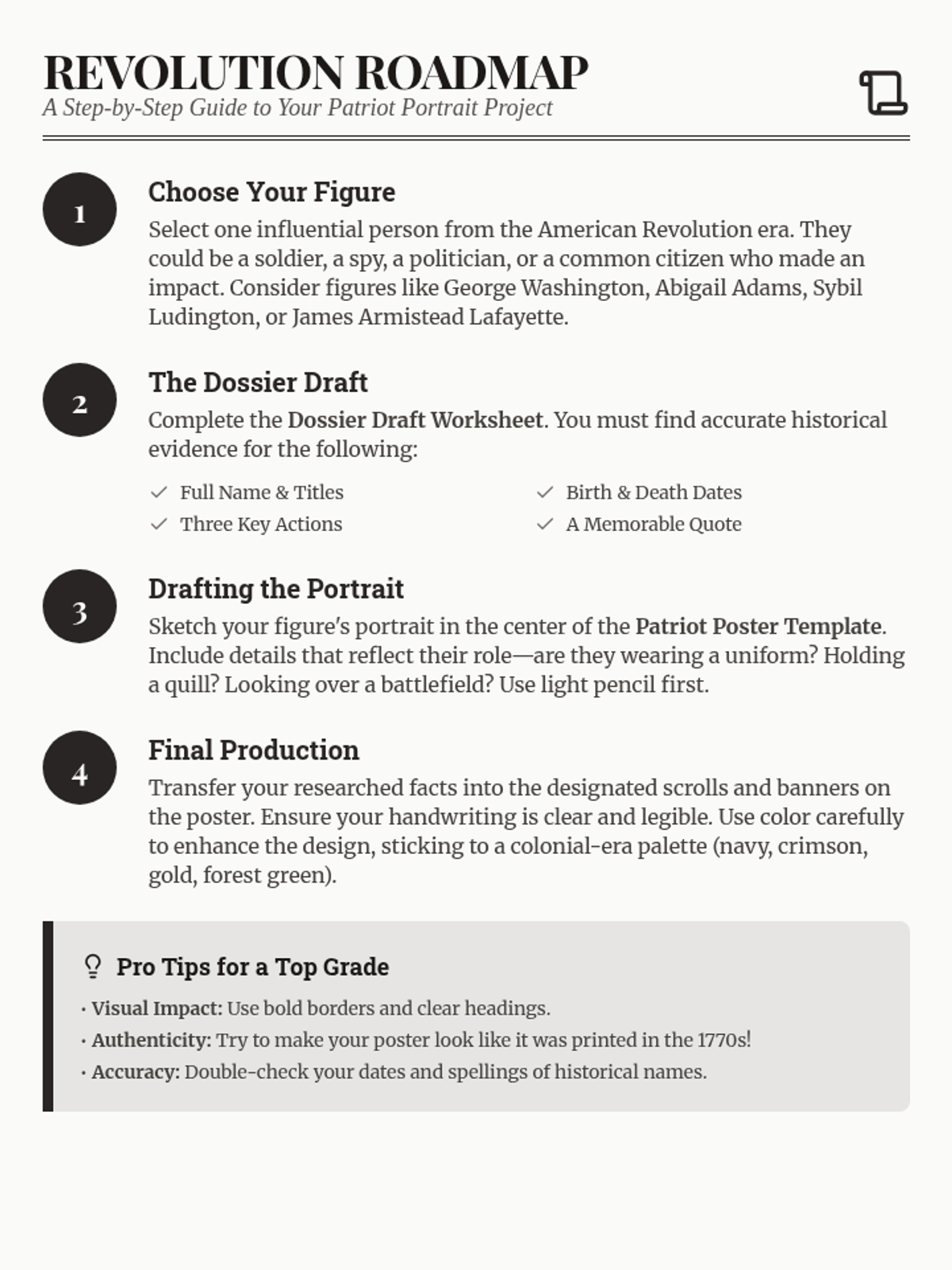
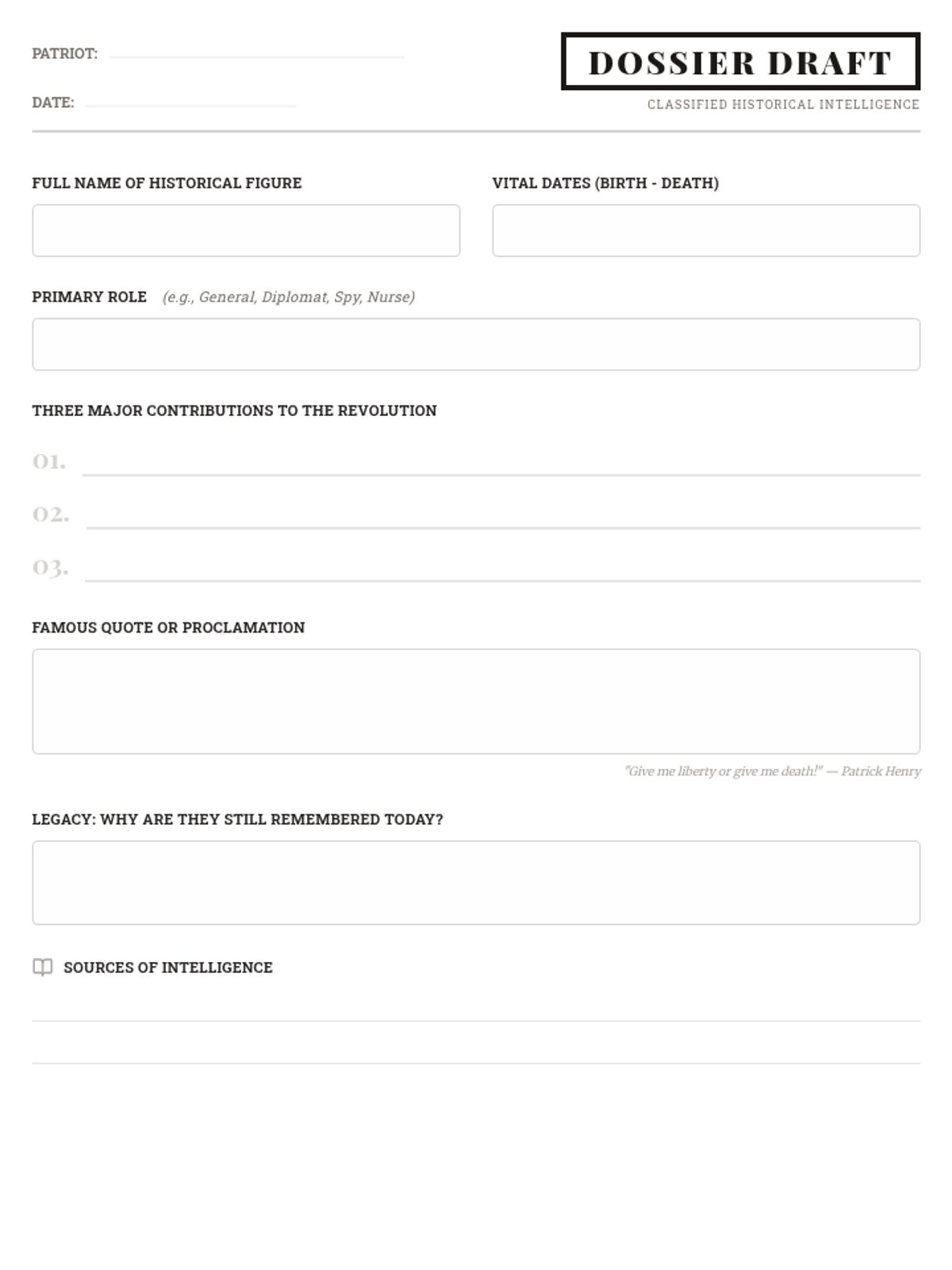
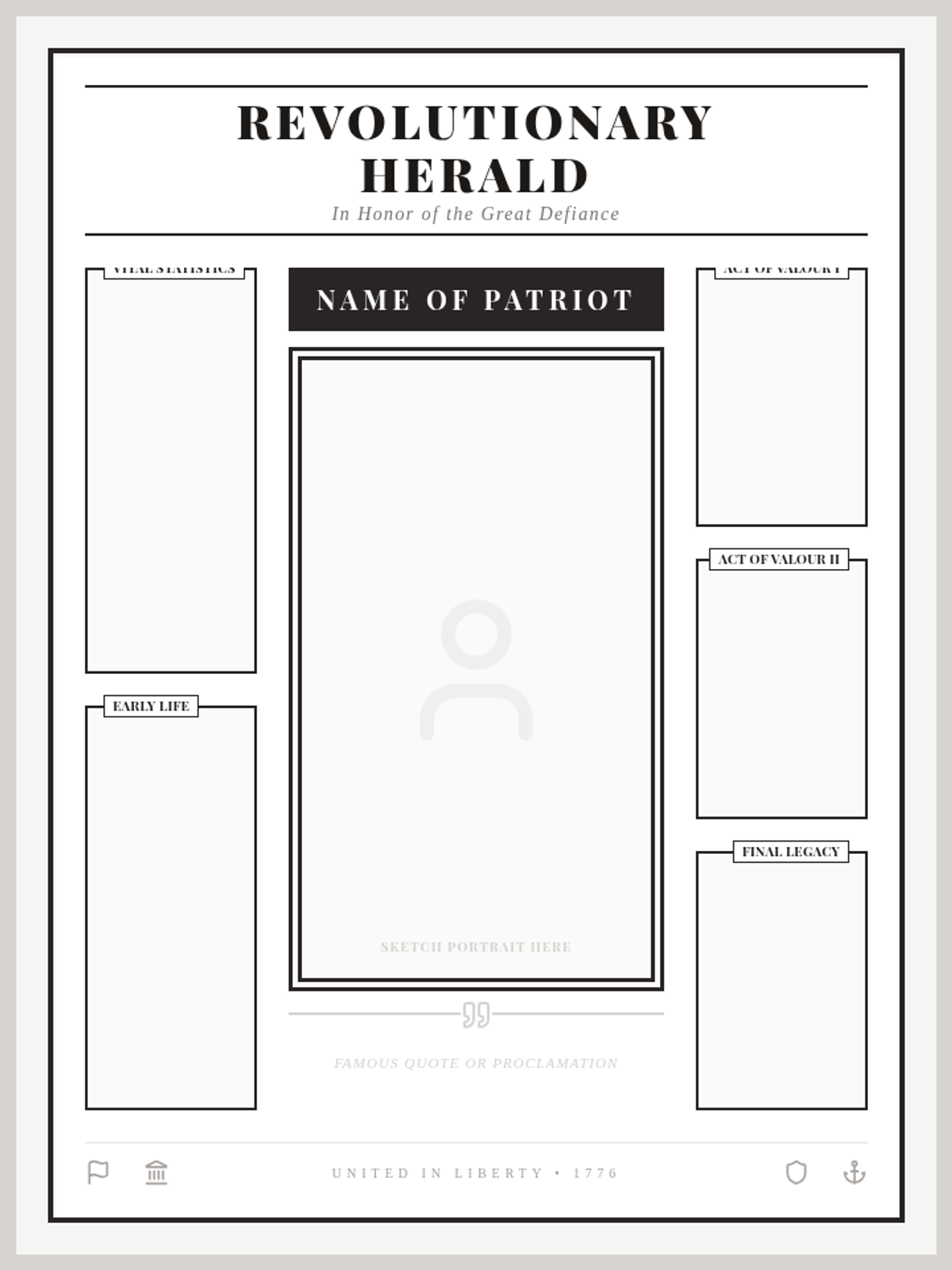
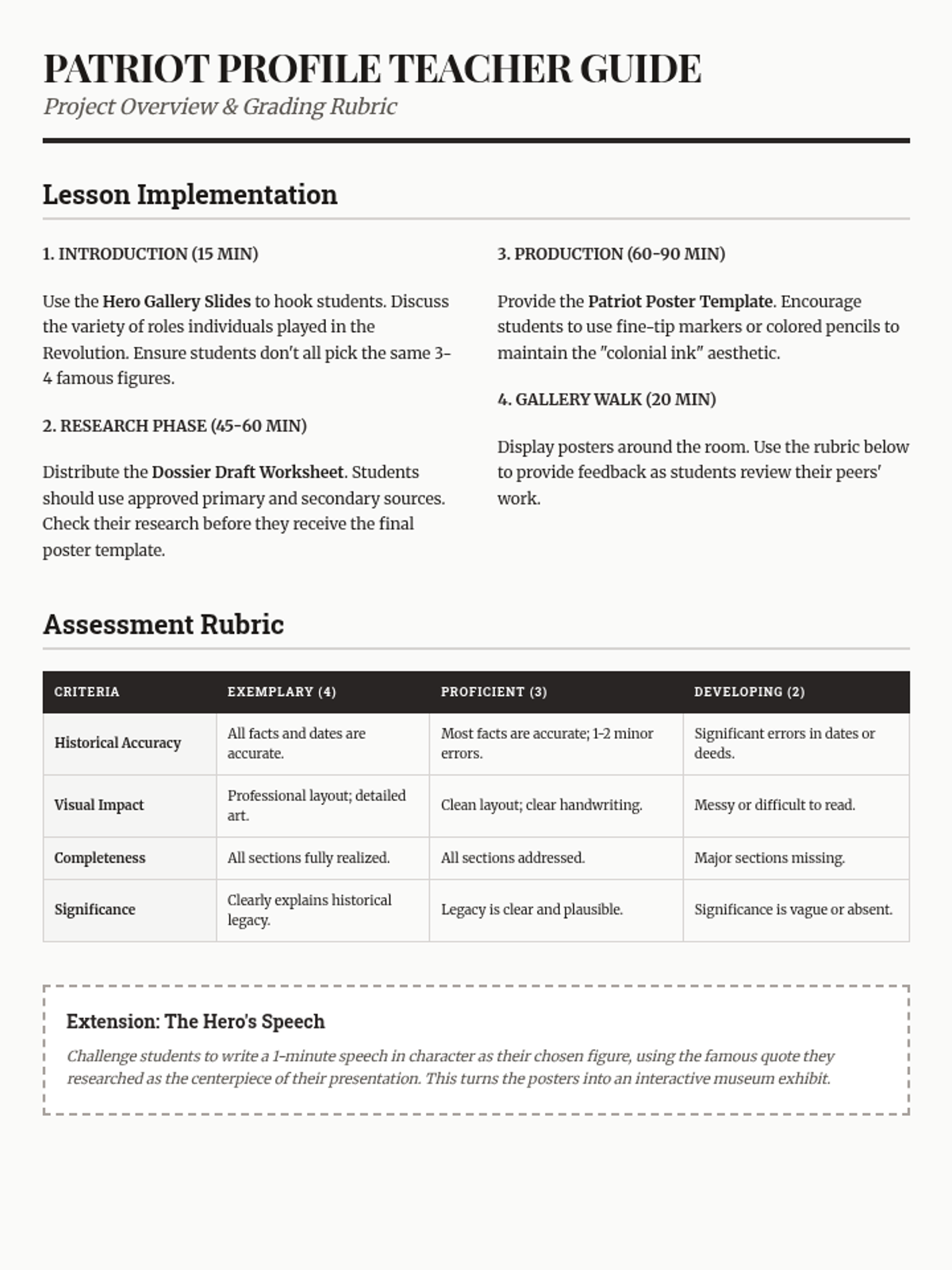
A hands-on history project where students research and design a commemorative poster for a key figure of the American Revolution. Includes research organizers, templates, and instructional guides.
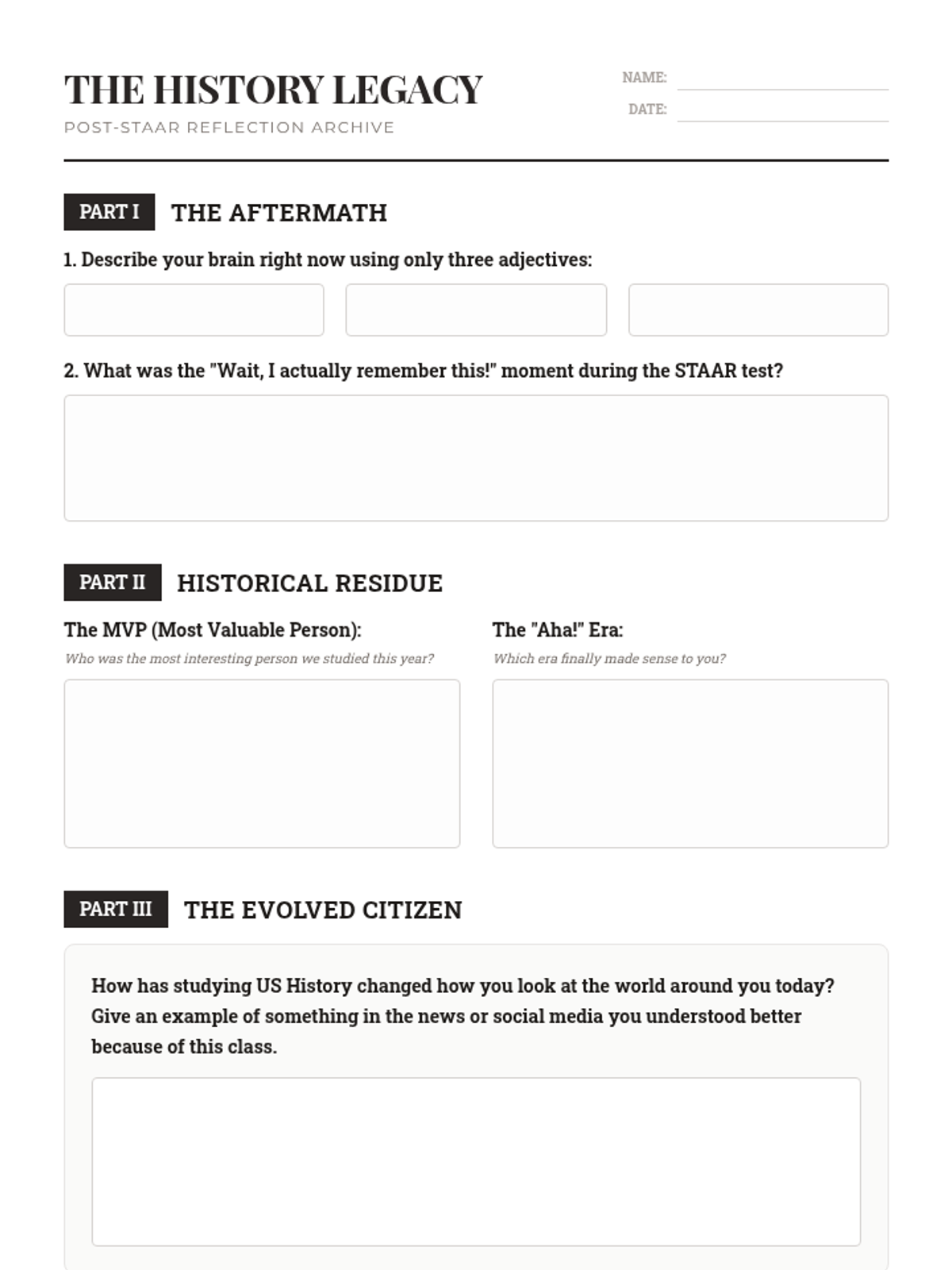
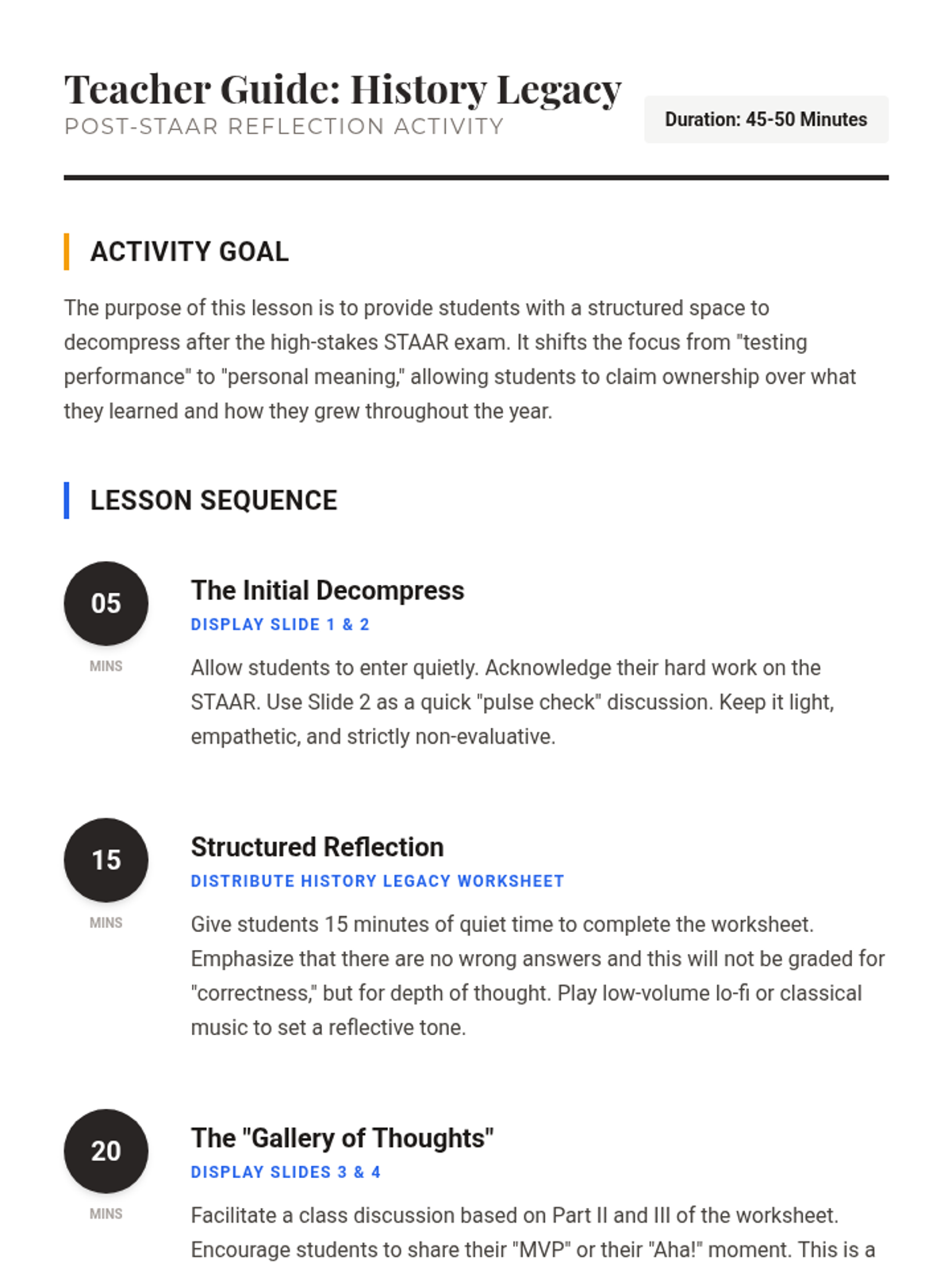
A one-period reflective experience for students to decompress after the US History STAAR exam, focusing on content mastery and personal growth.
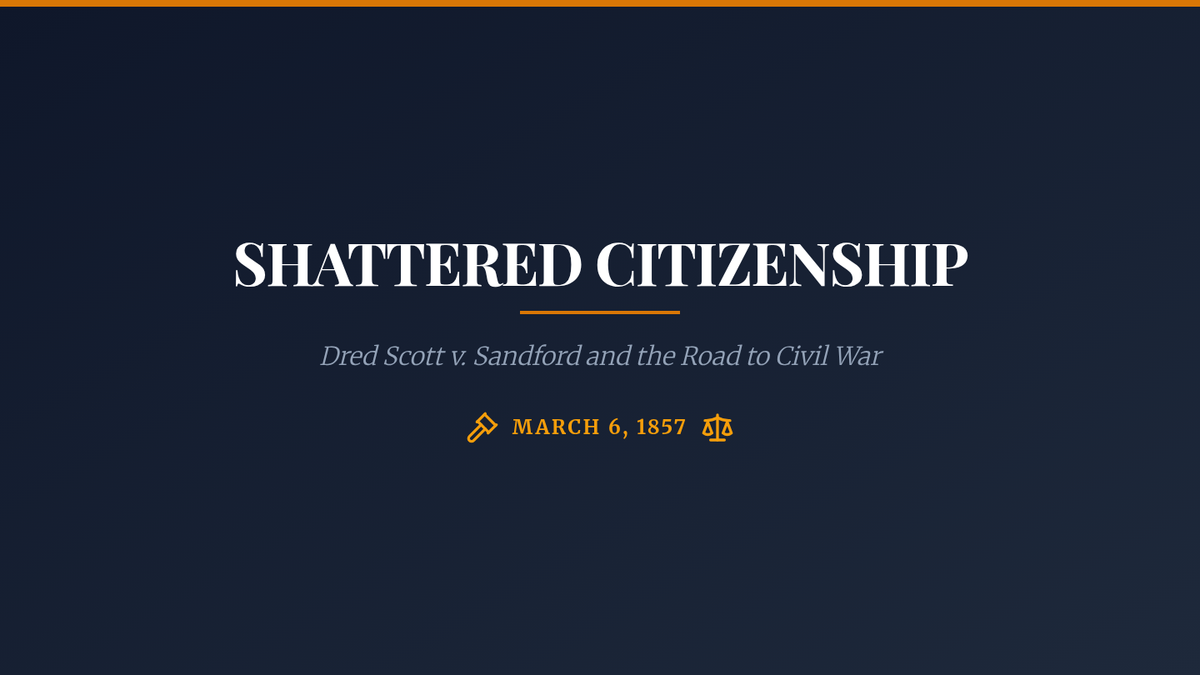
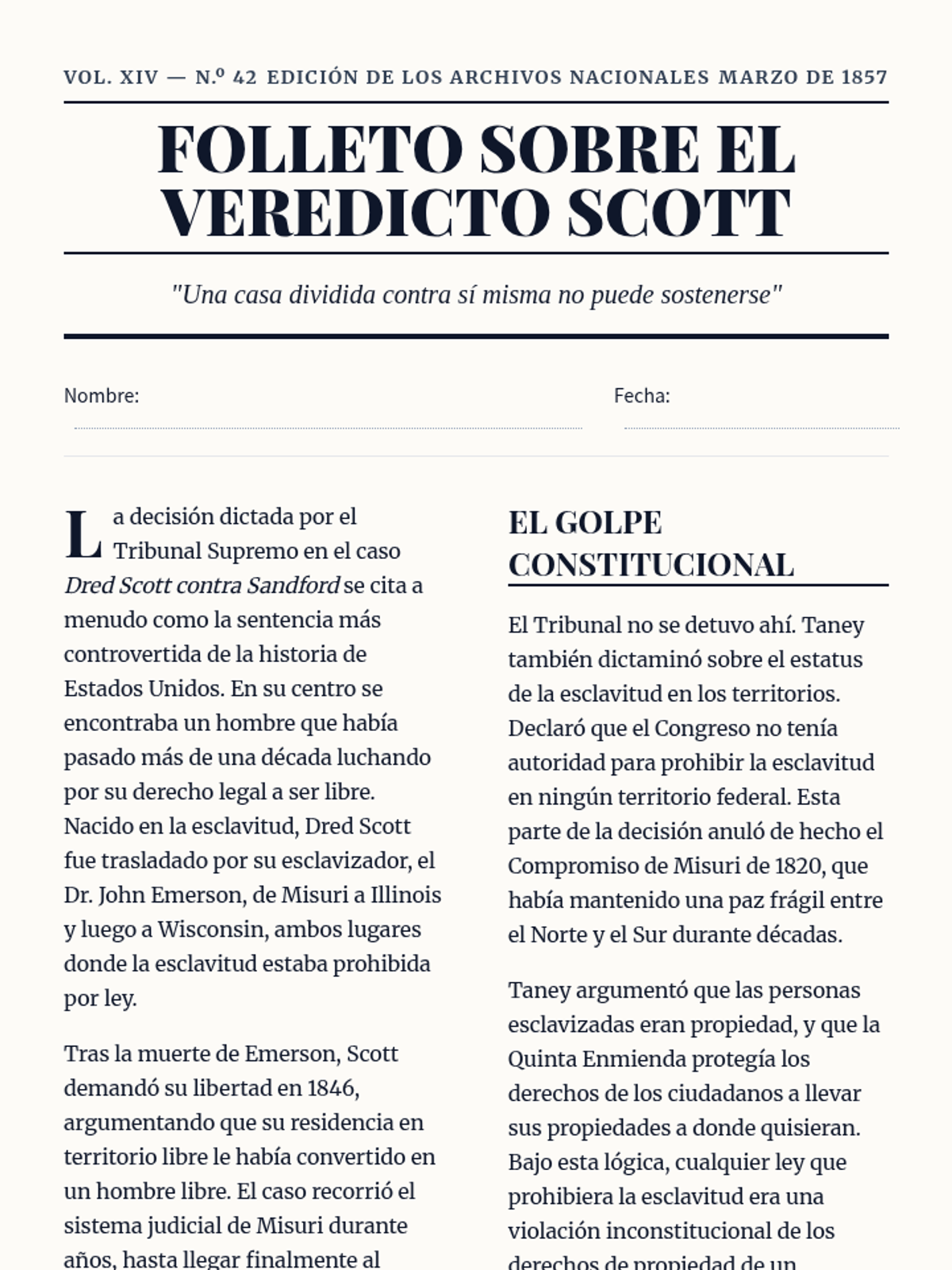
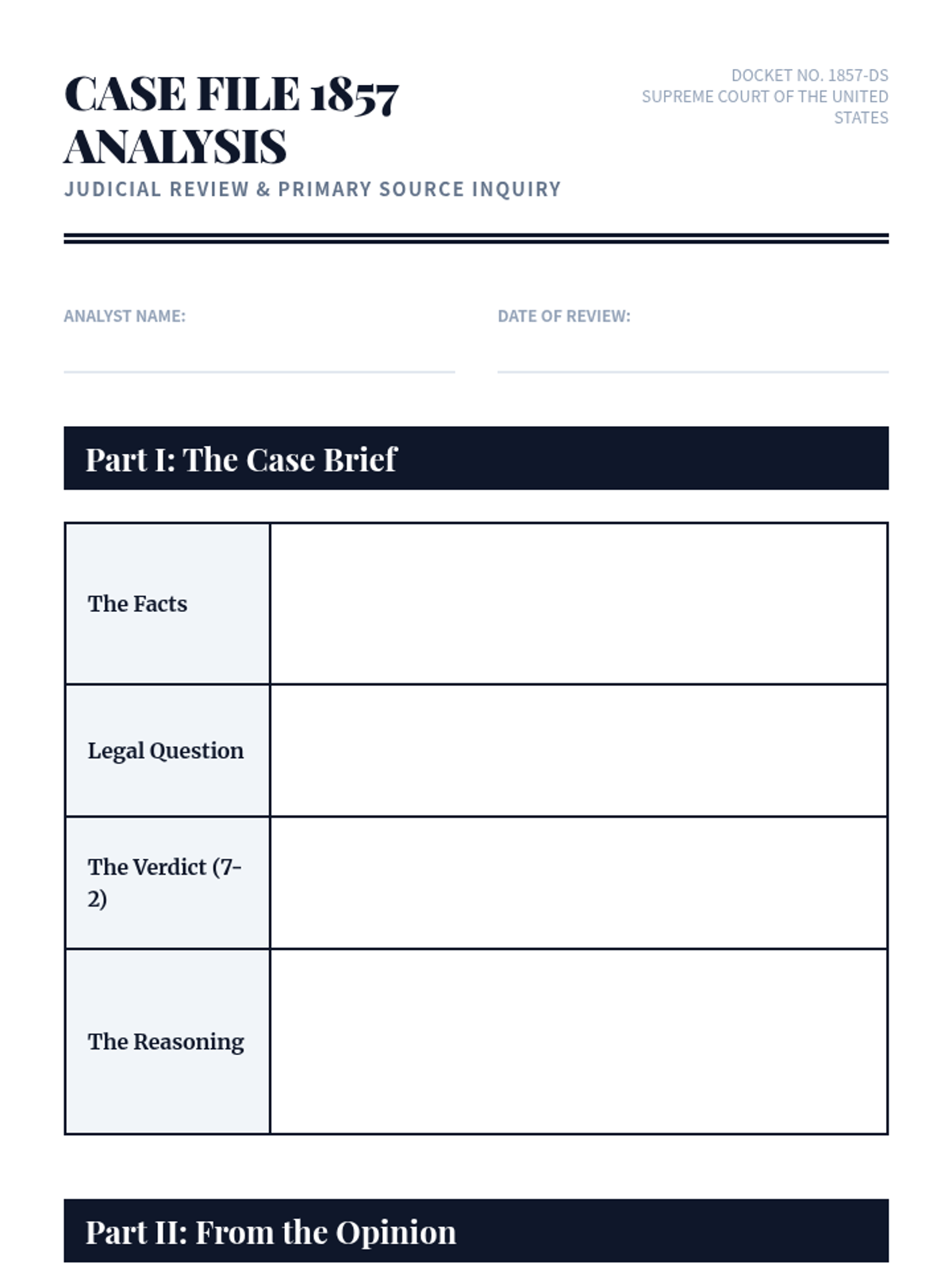
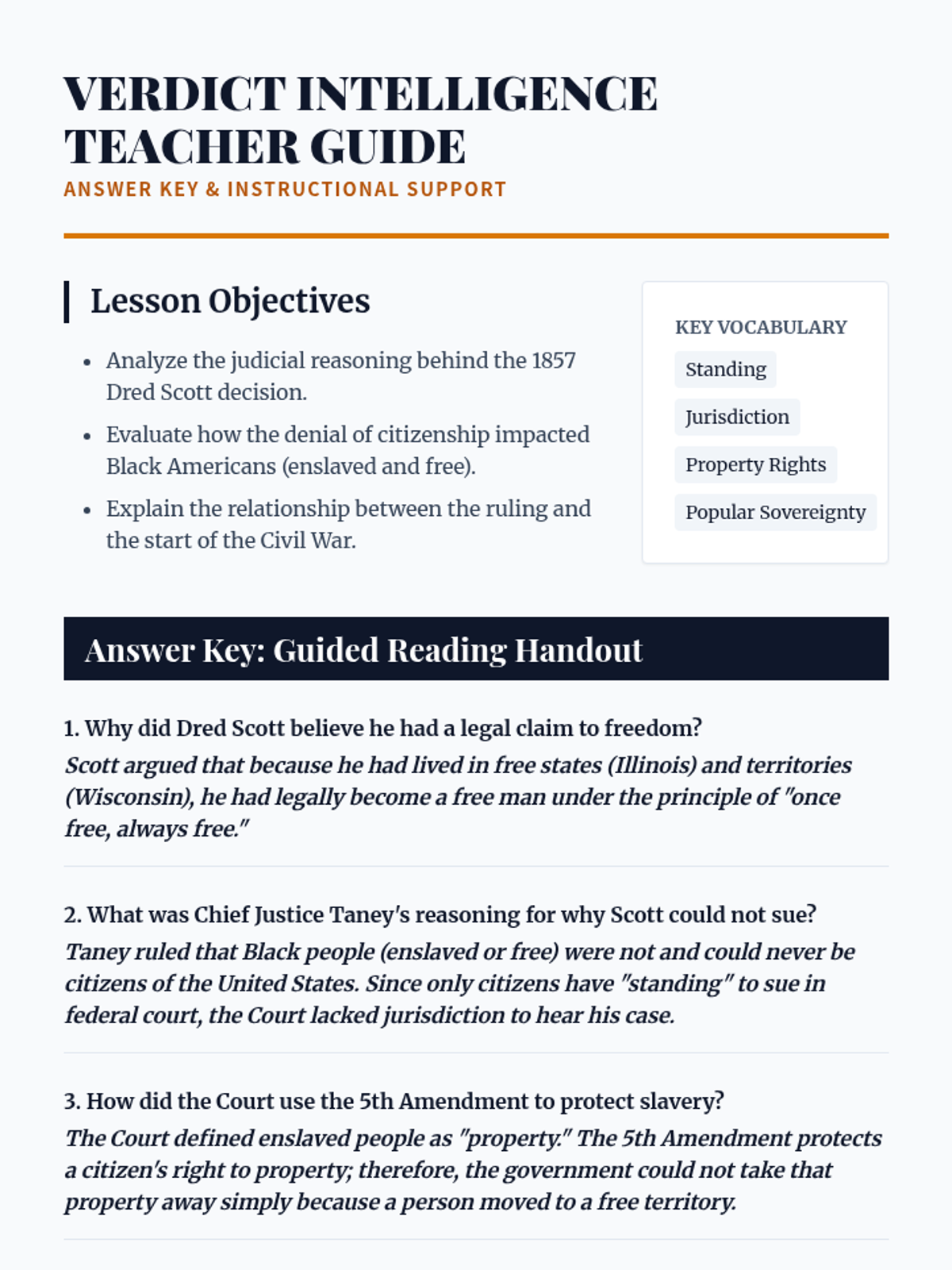
Explore the landmark Dred Scott v. Sandford case, focusing on the definition of American citizenship and the decision's role as a catalyst for the American Civil War. Students analyze primary source excerpts and the legal reasoning of the Taney Court.
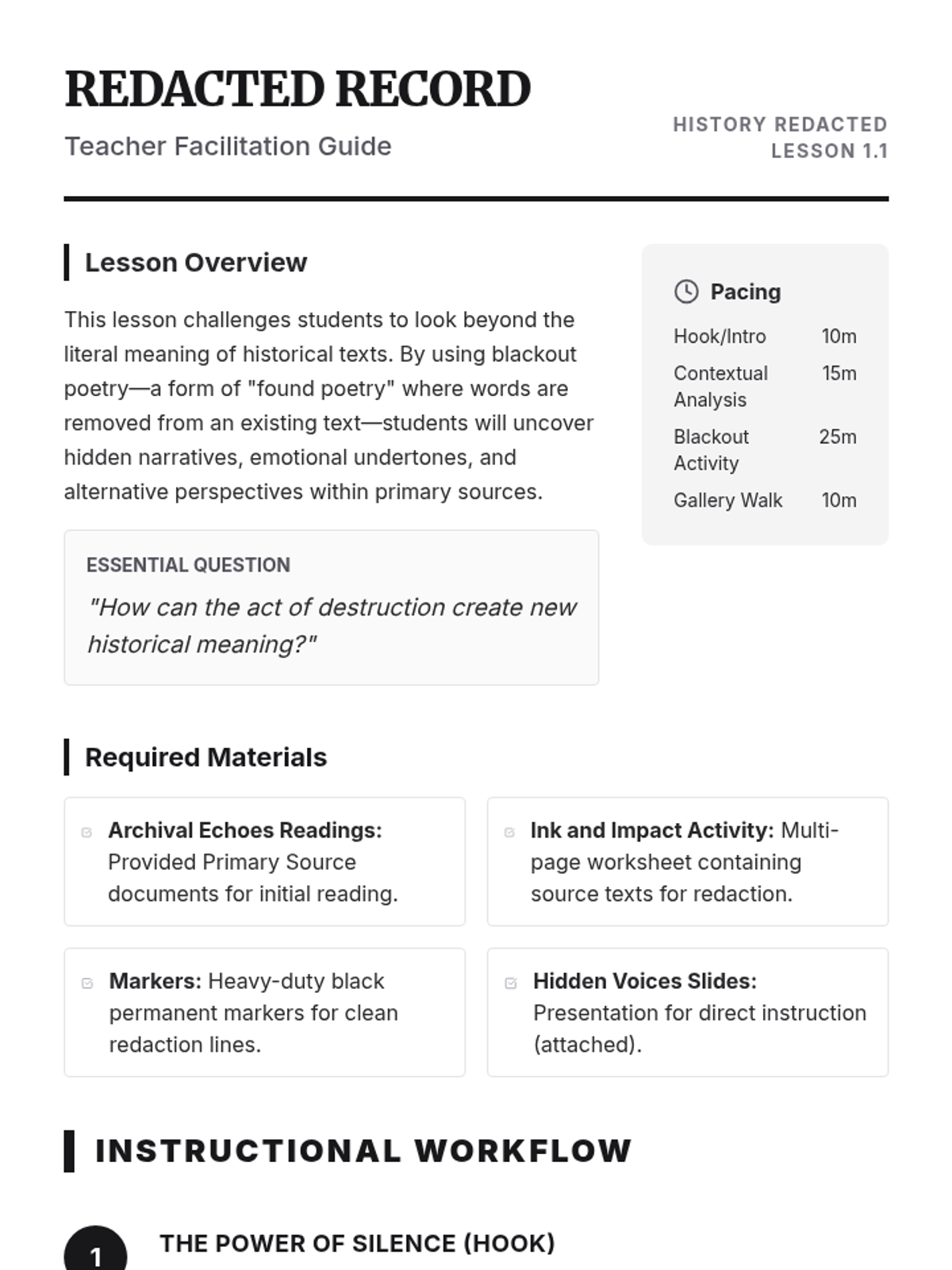
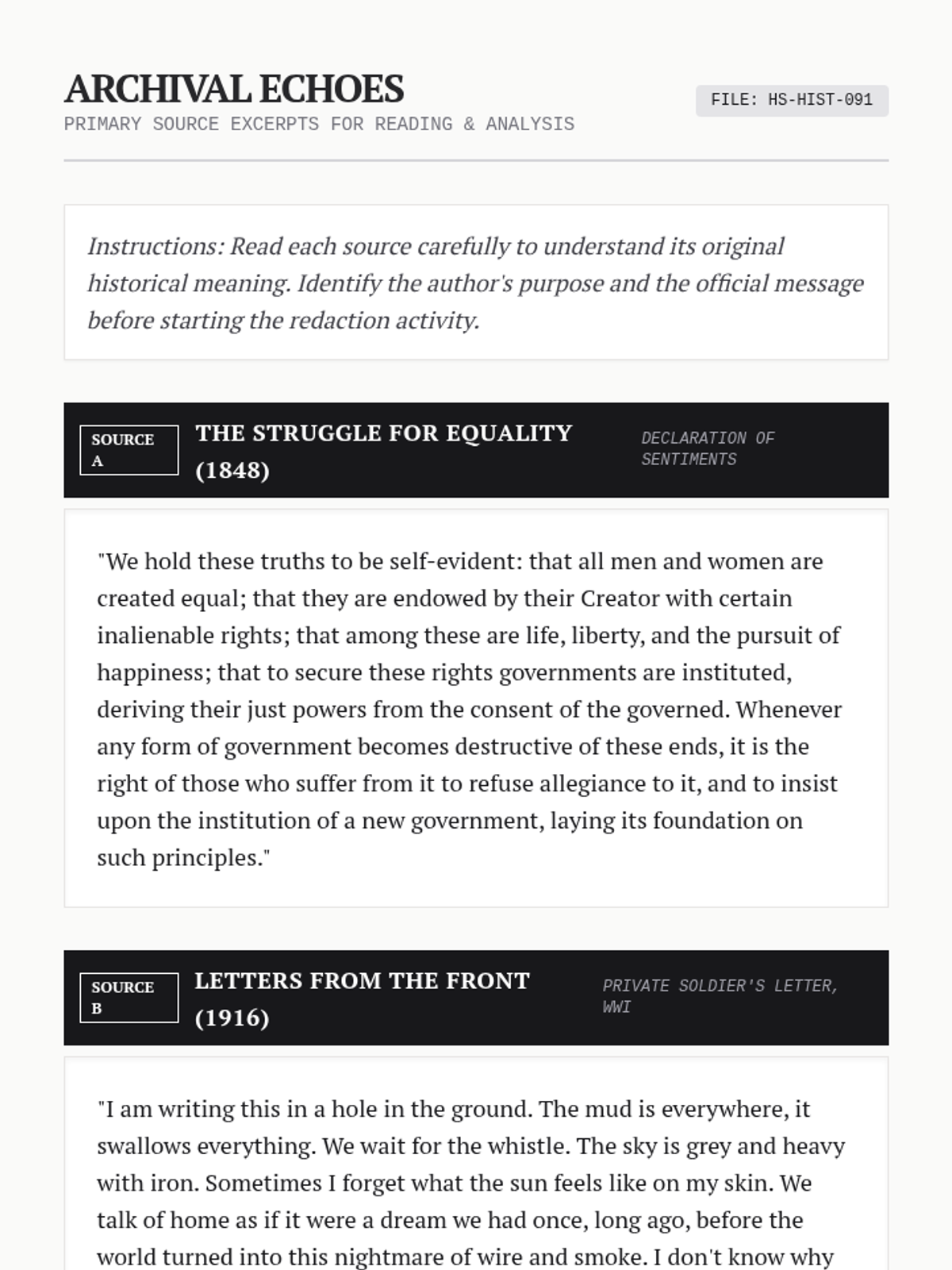
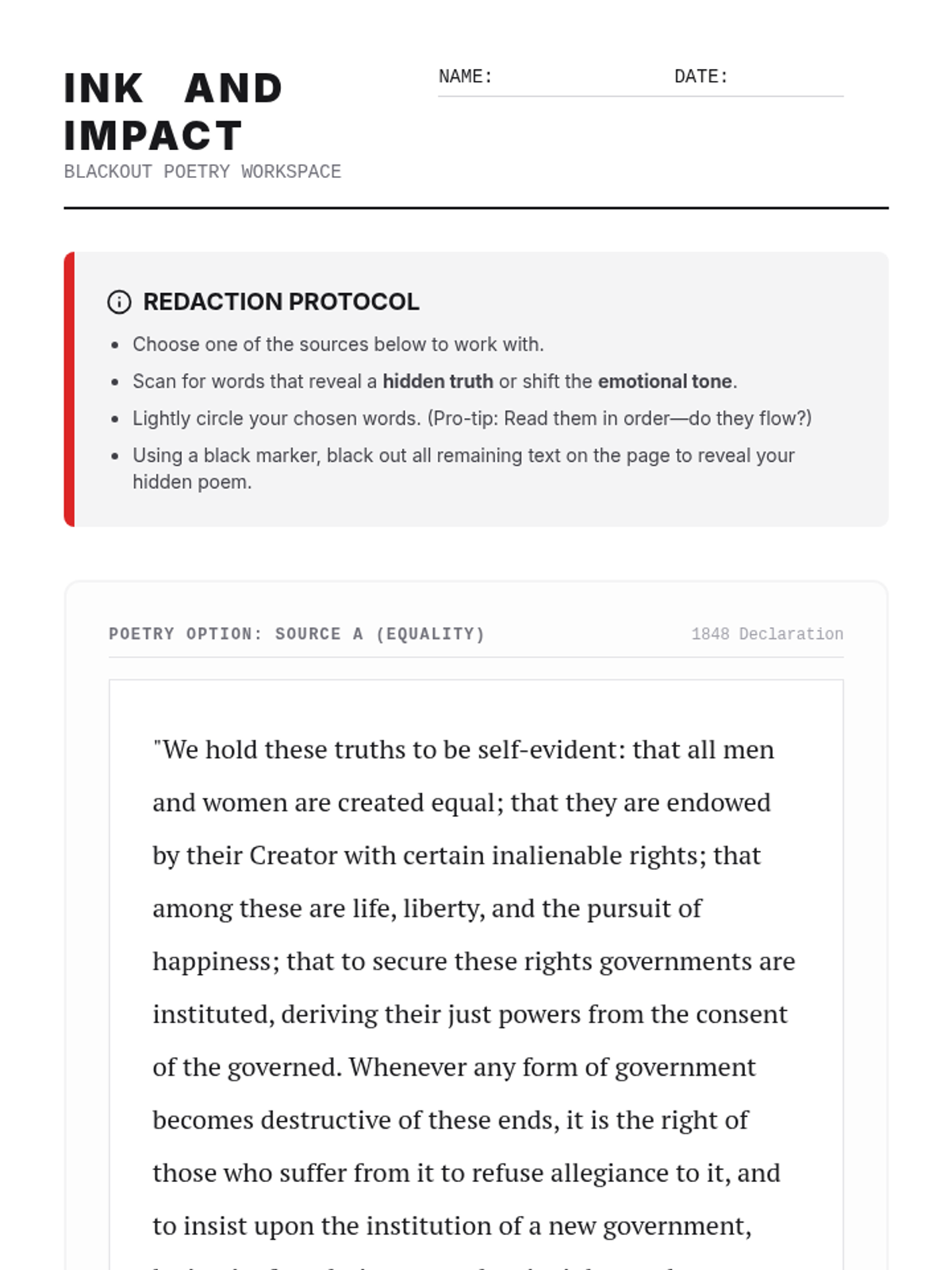
A high school history and ELA integration lesson where students use blackout poetry to extract new emotional truths and perspectives from primary source documents. Students explore how language can be repurposed to highlight voices that have been marginalized or silenced throughout history.
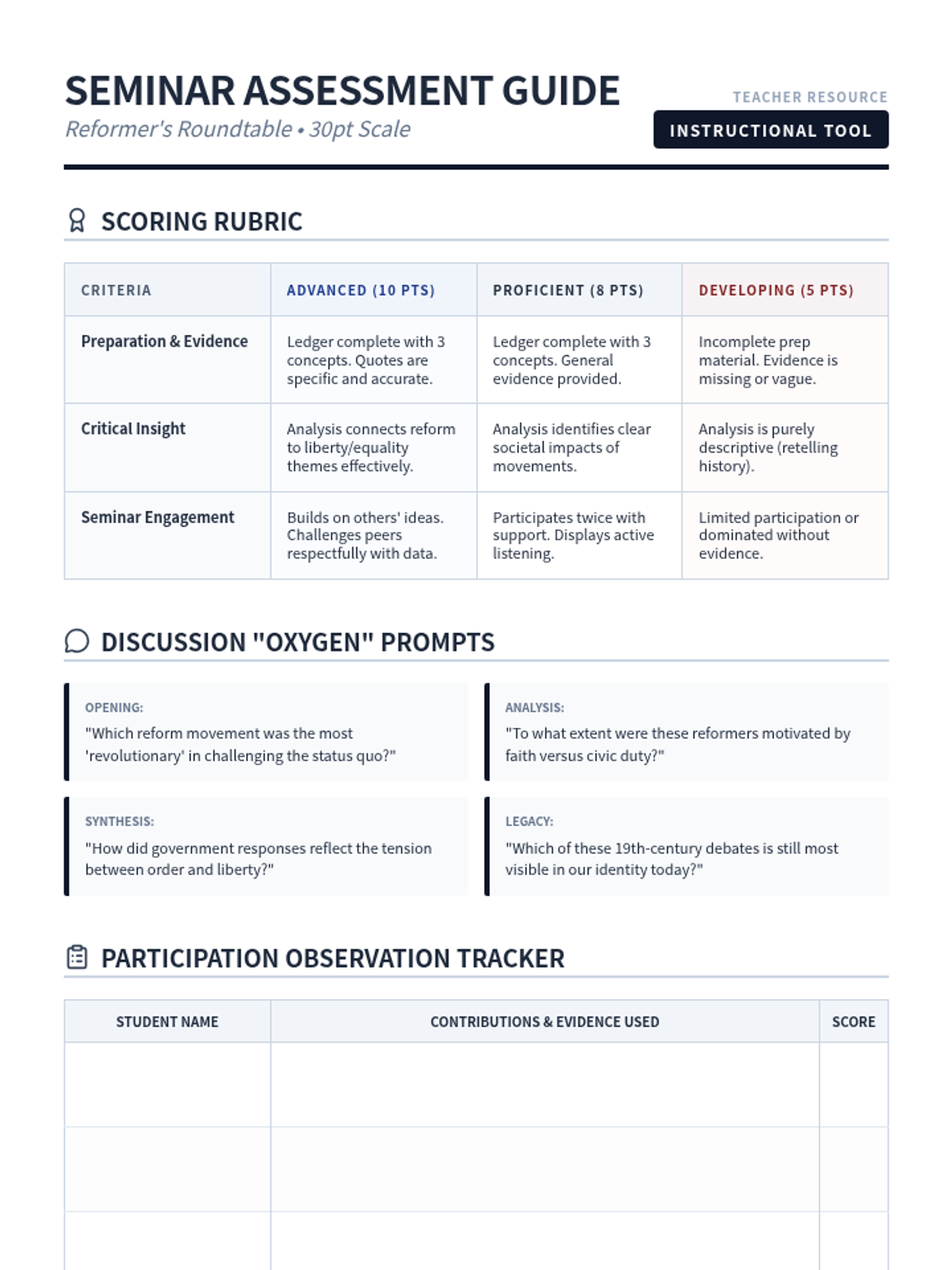
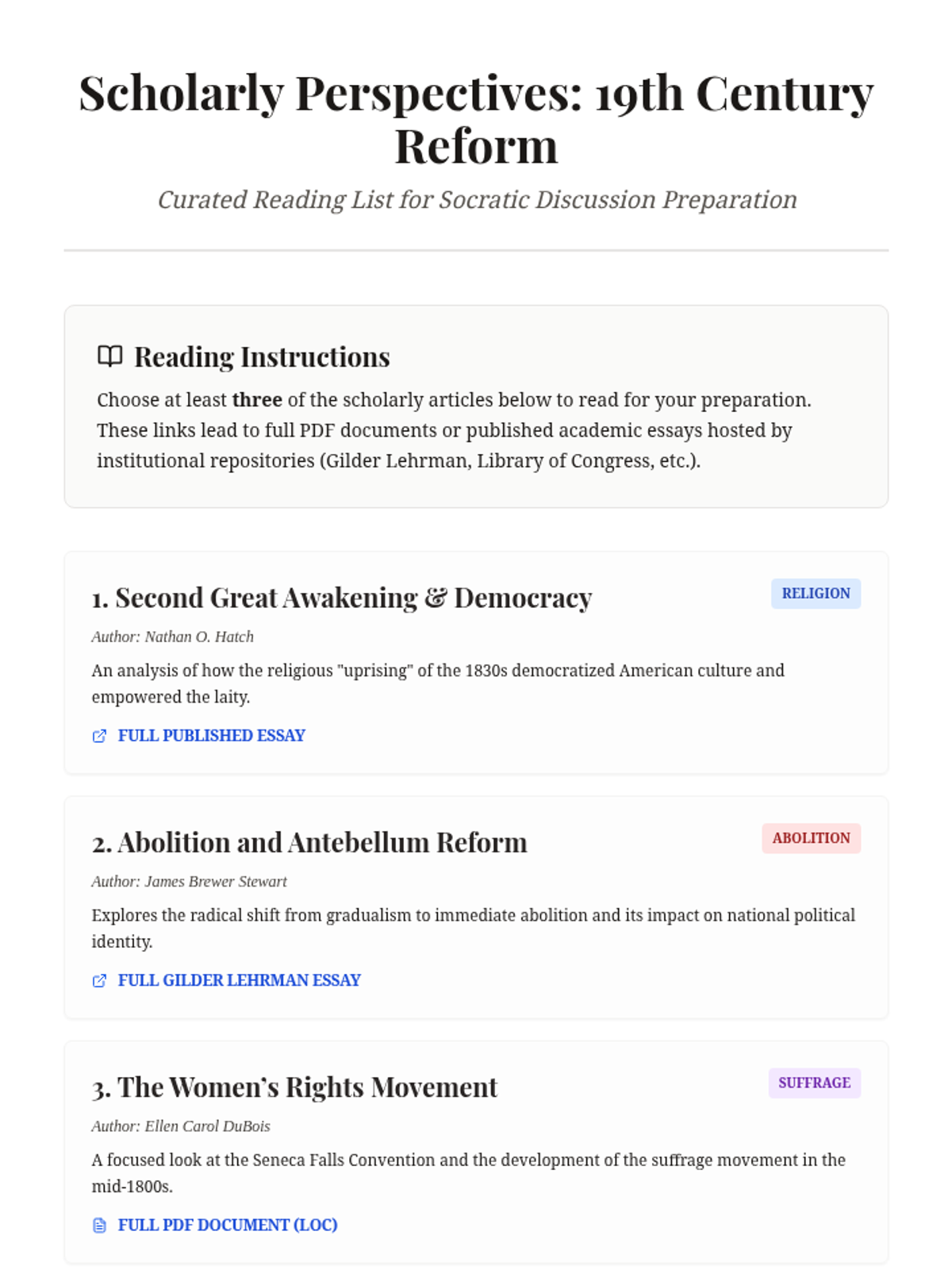
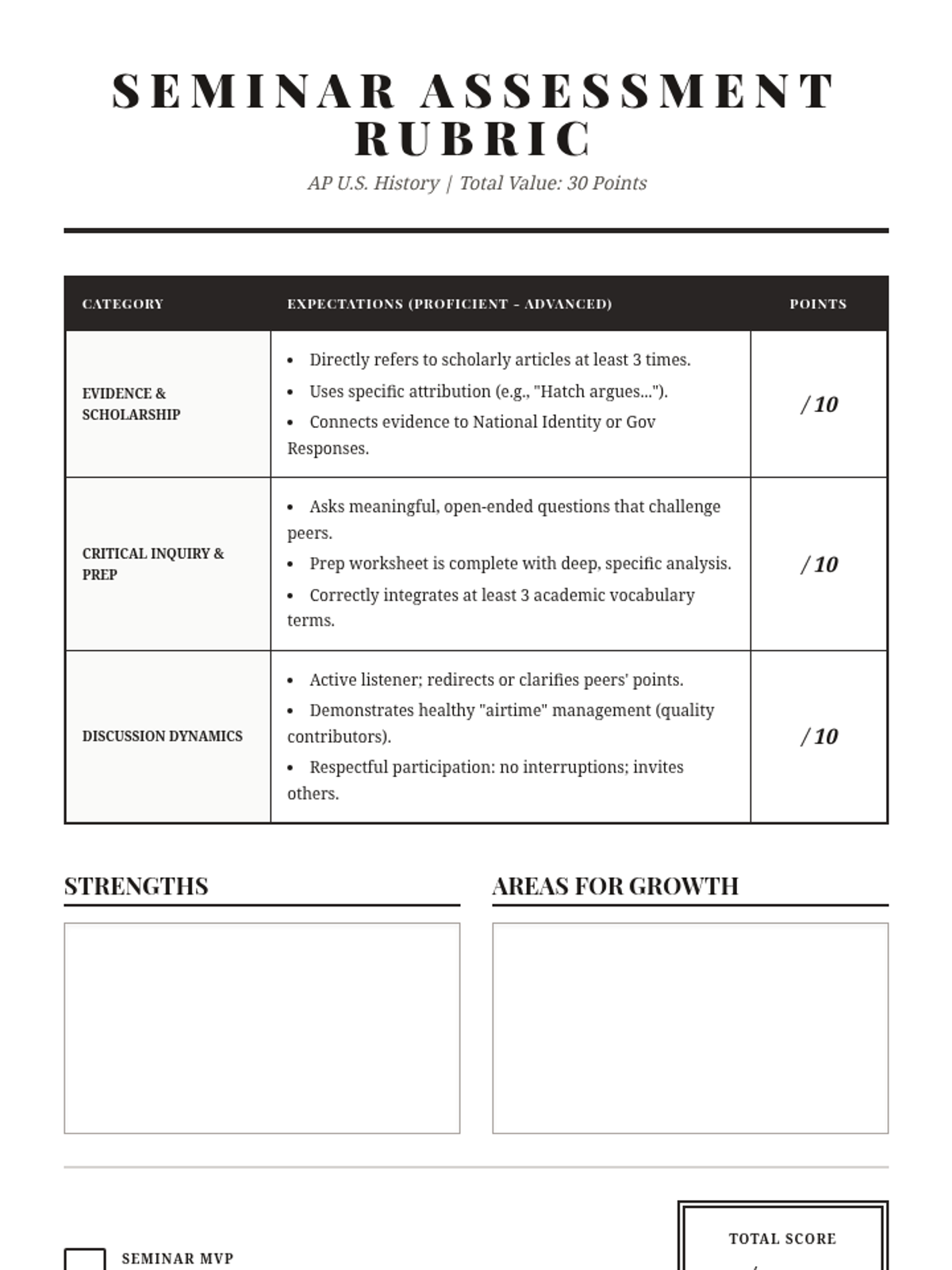
A comprehensive Socratic Seminar unit focused on 19th-century reform movements, including scholarly reading links, preparation guides, and a formal 30-point evaluation rubric.
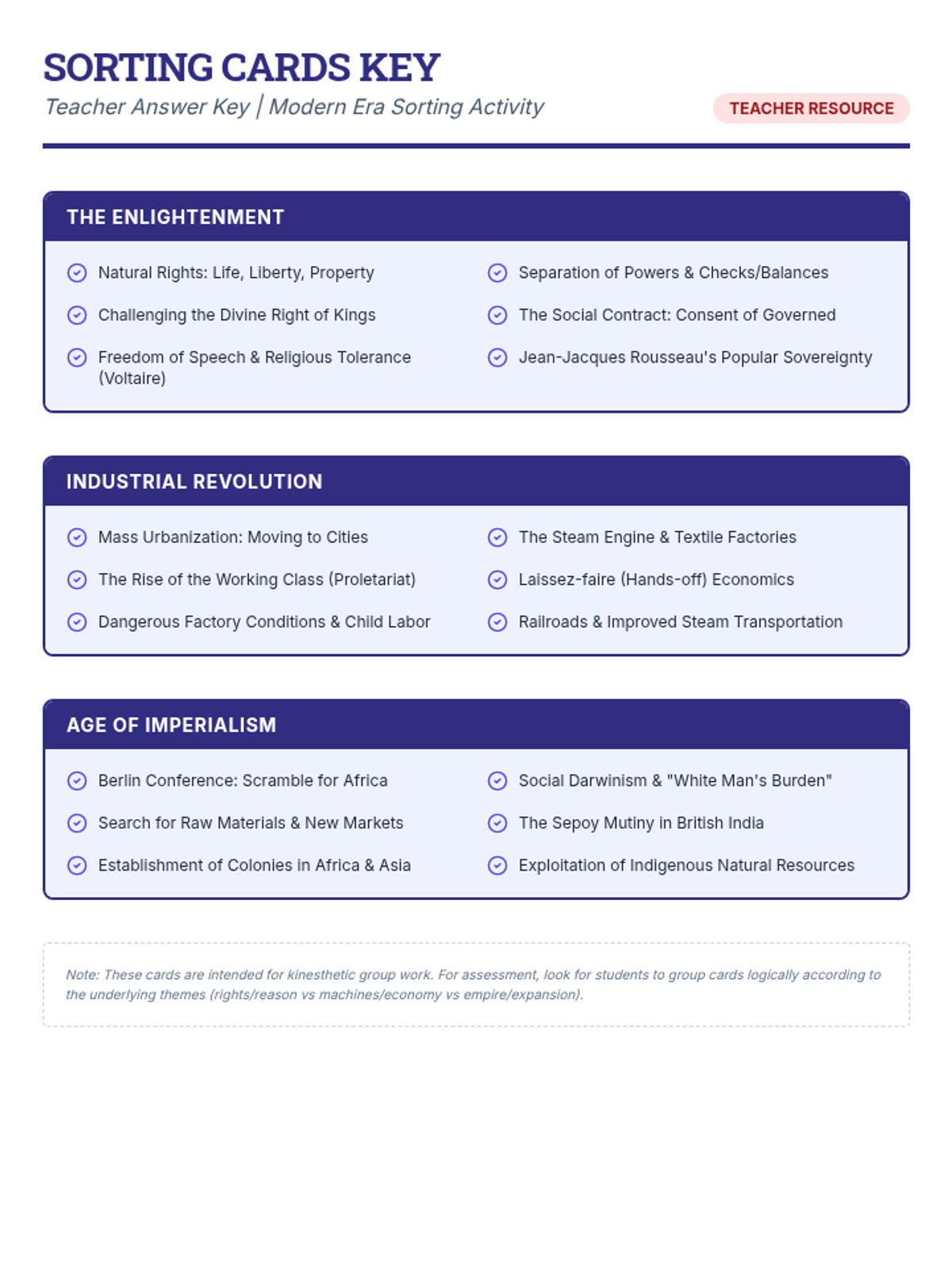
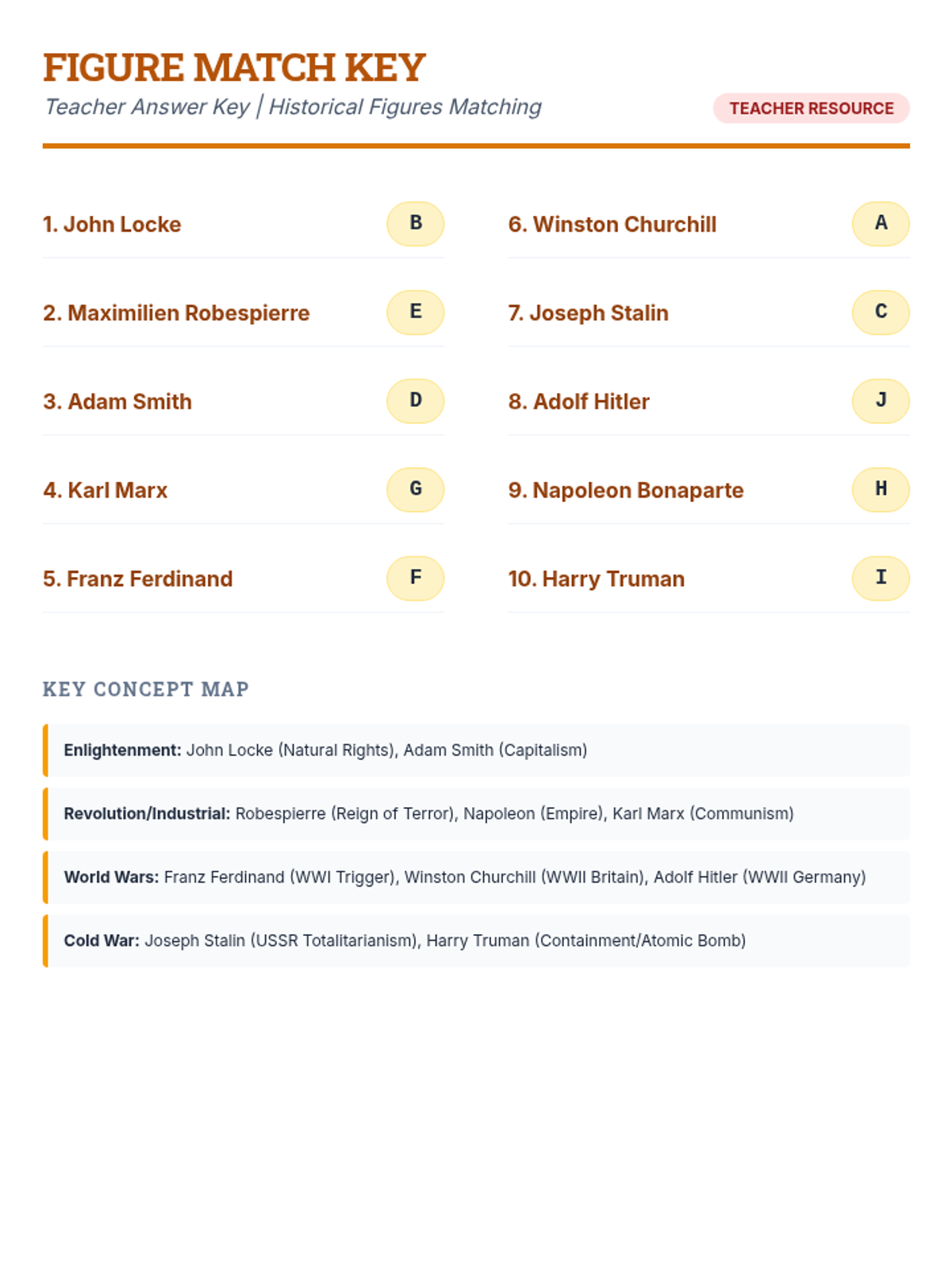
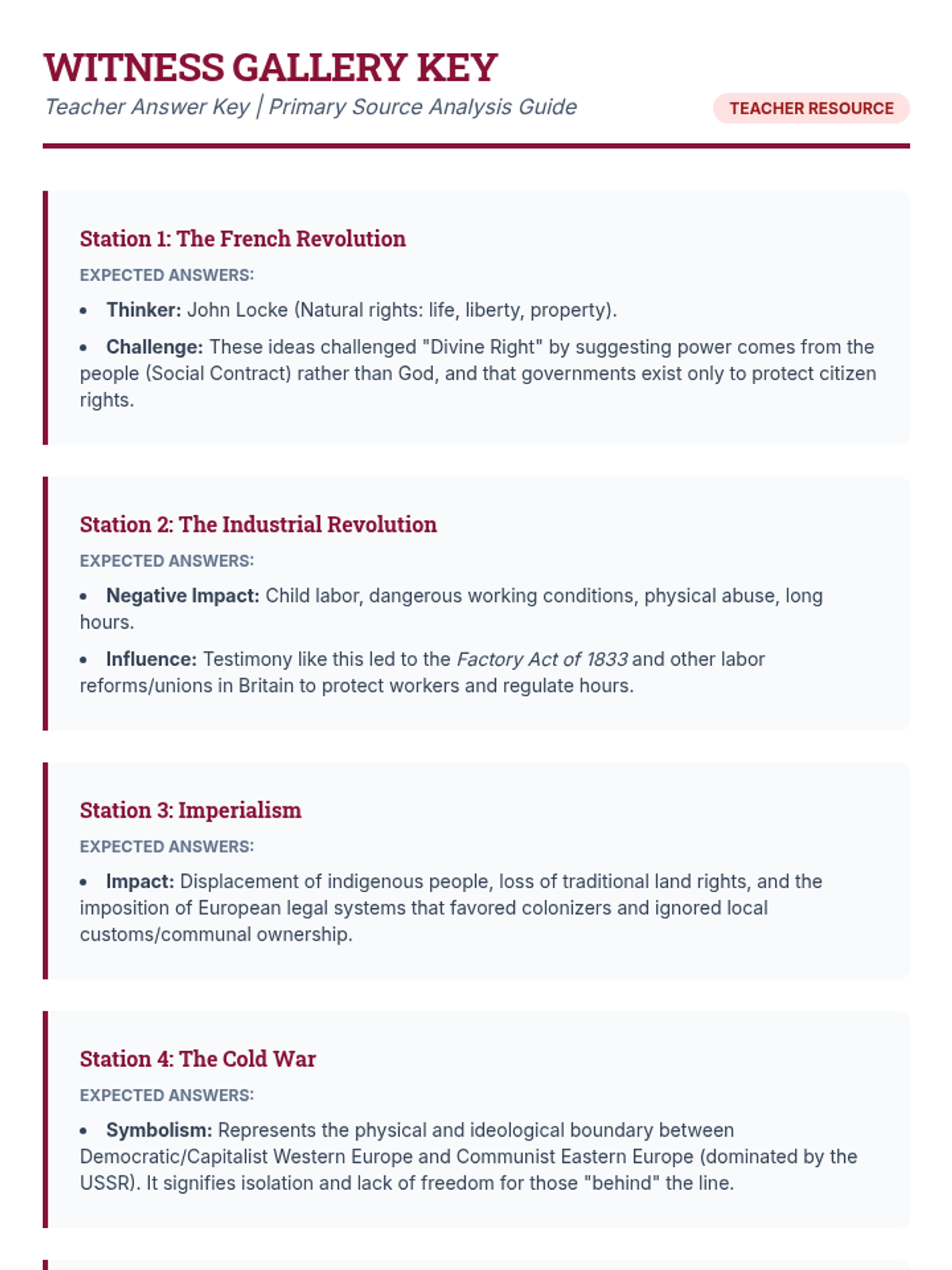
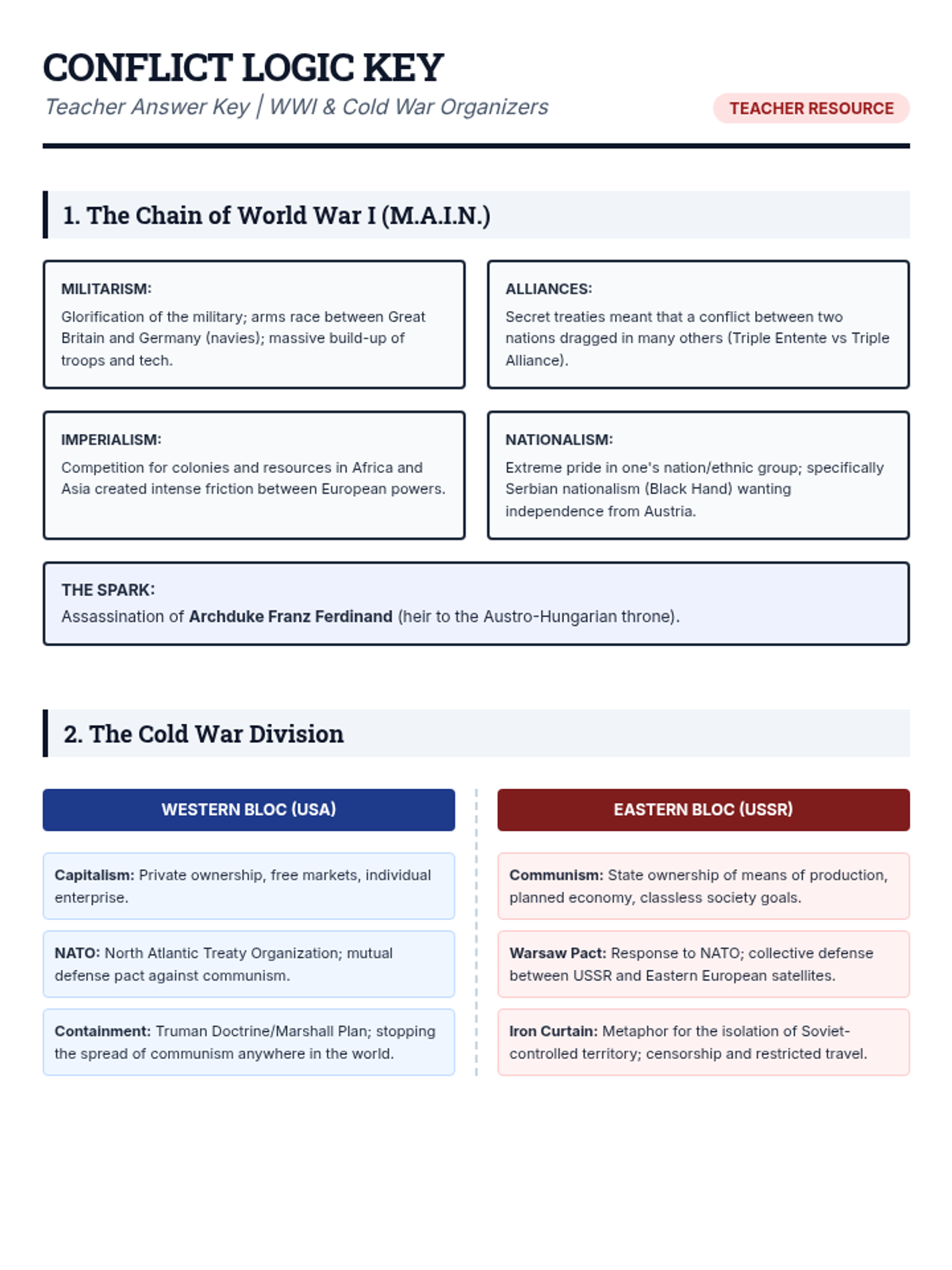
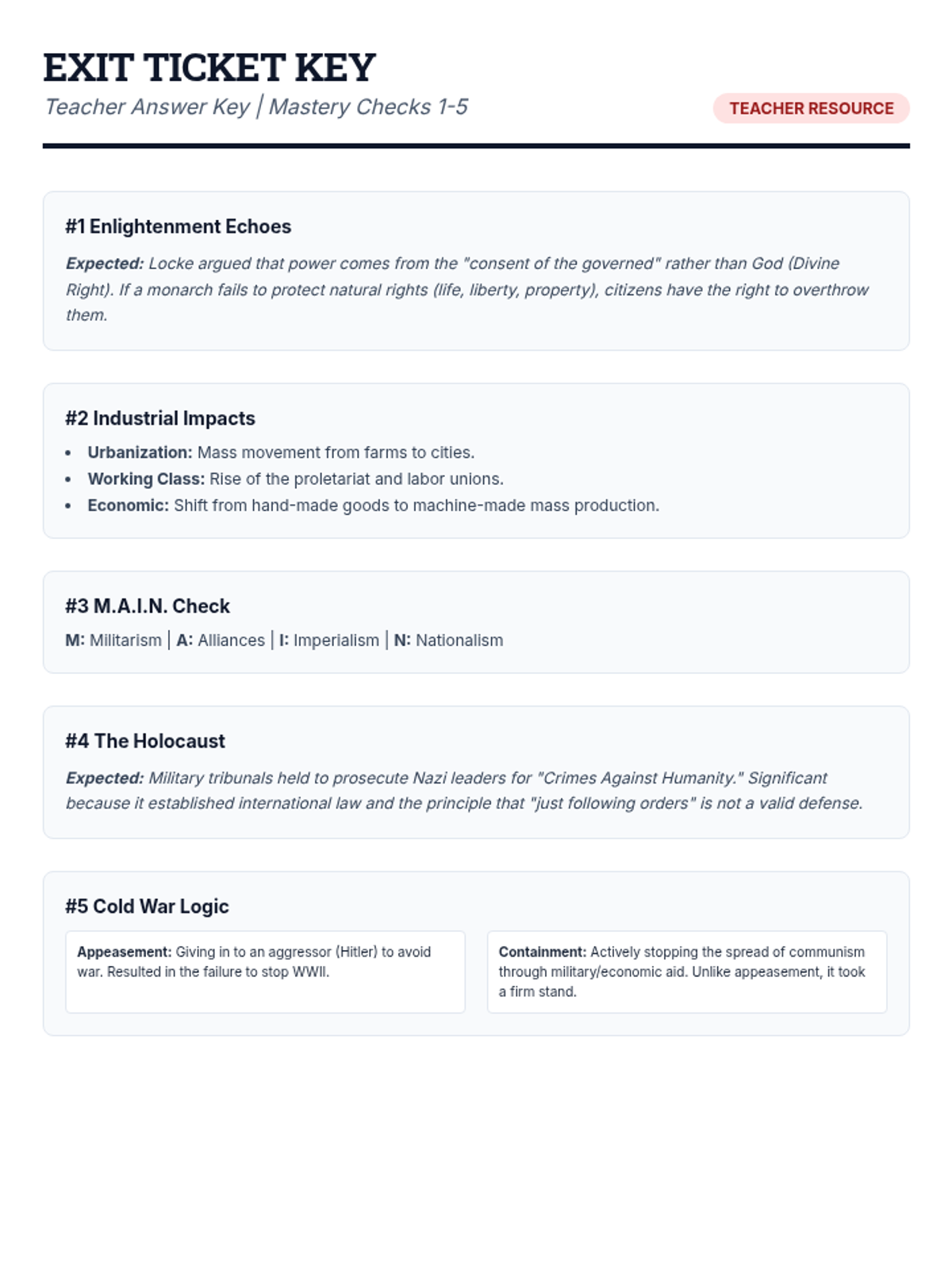
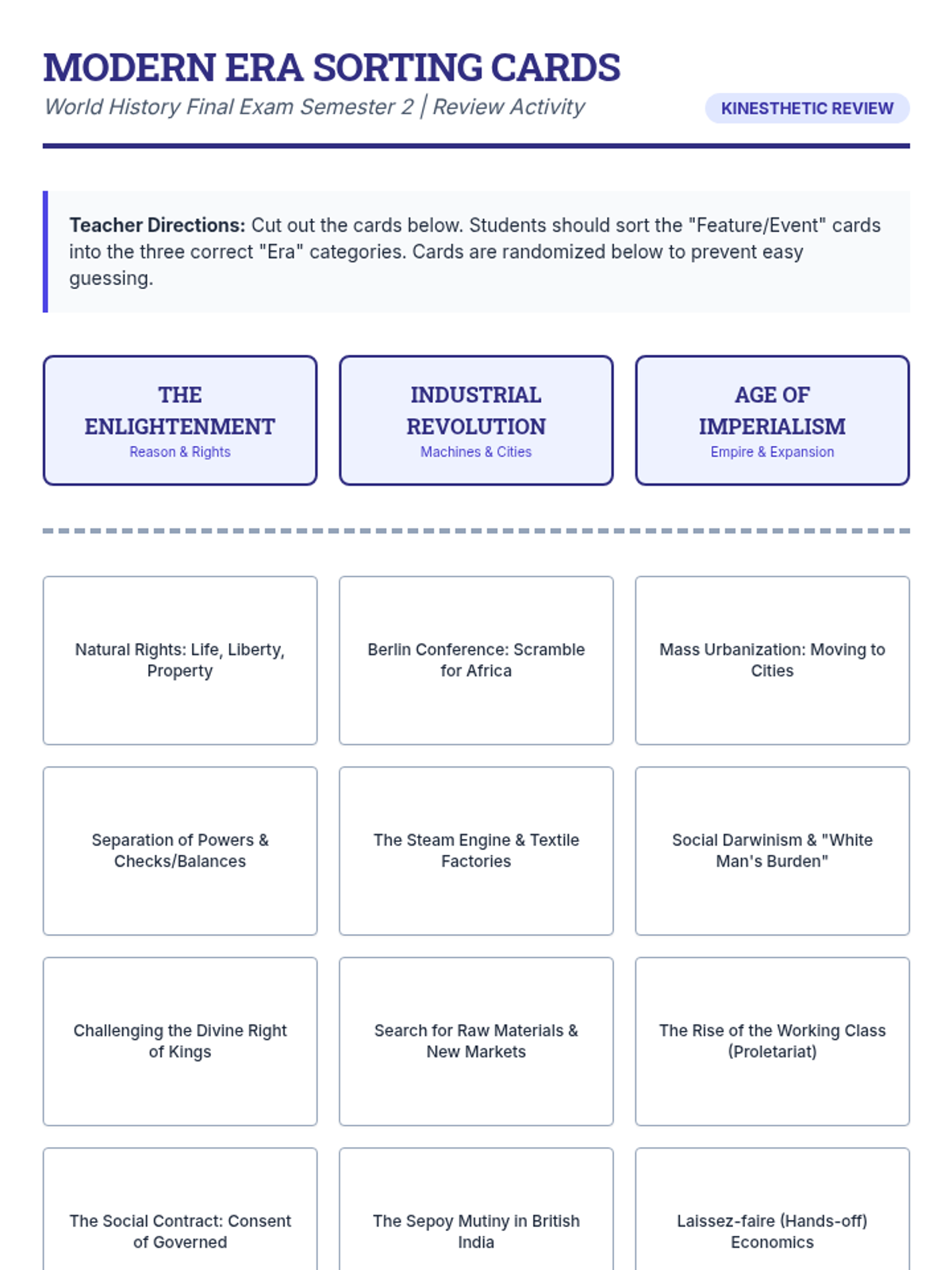
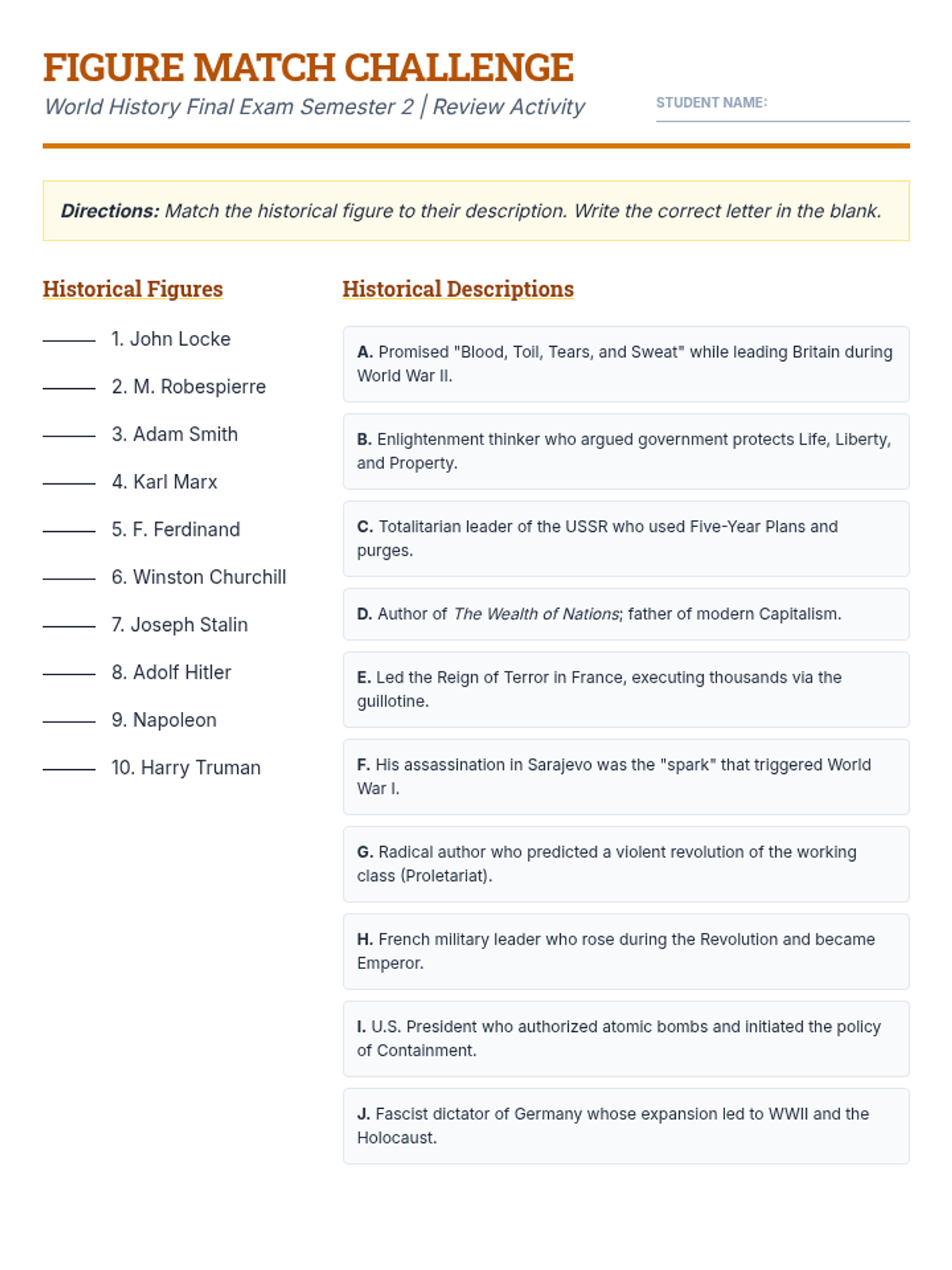
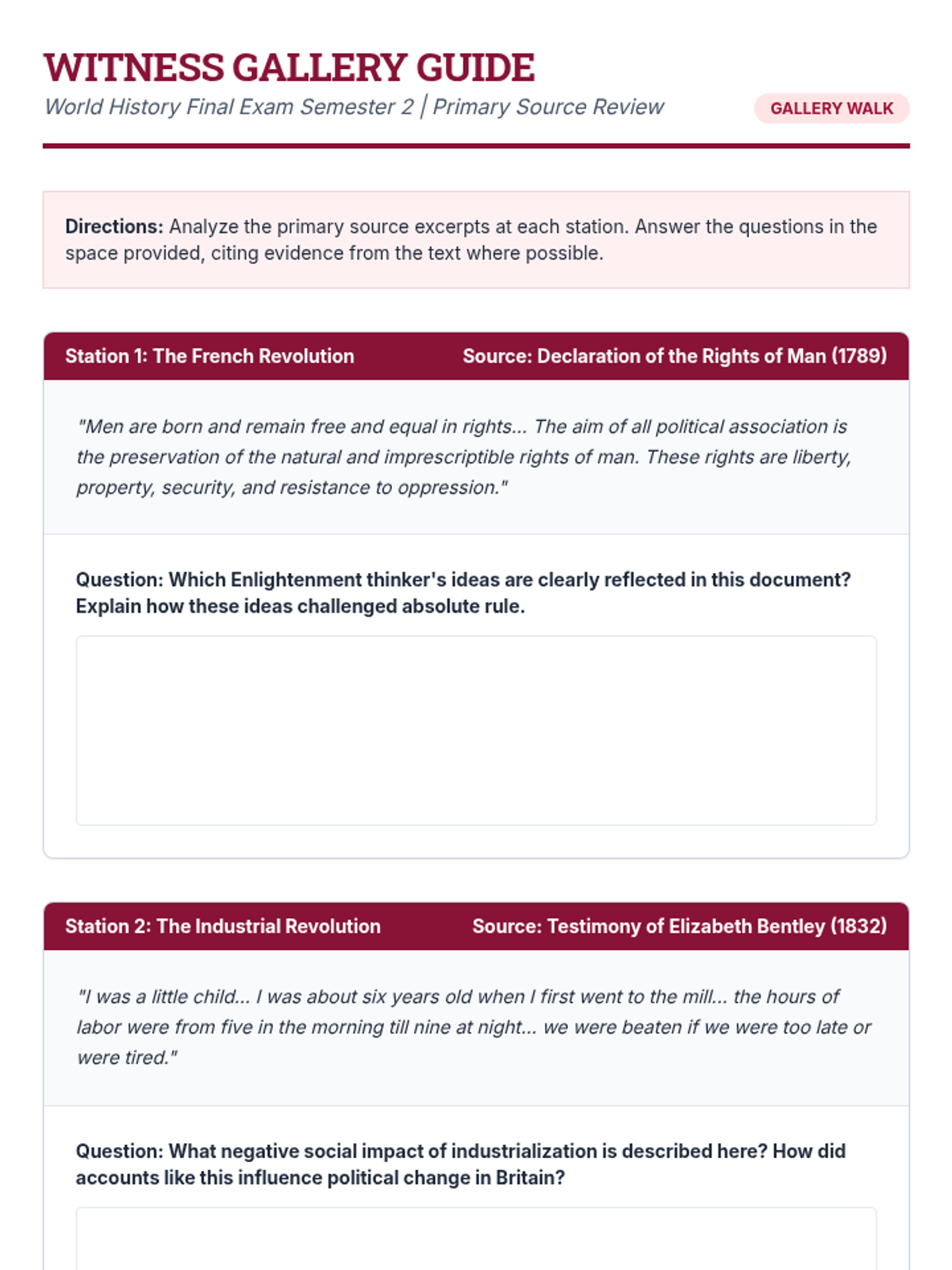
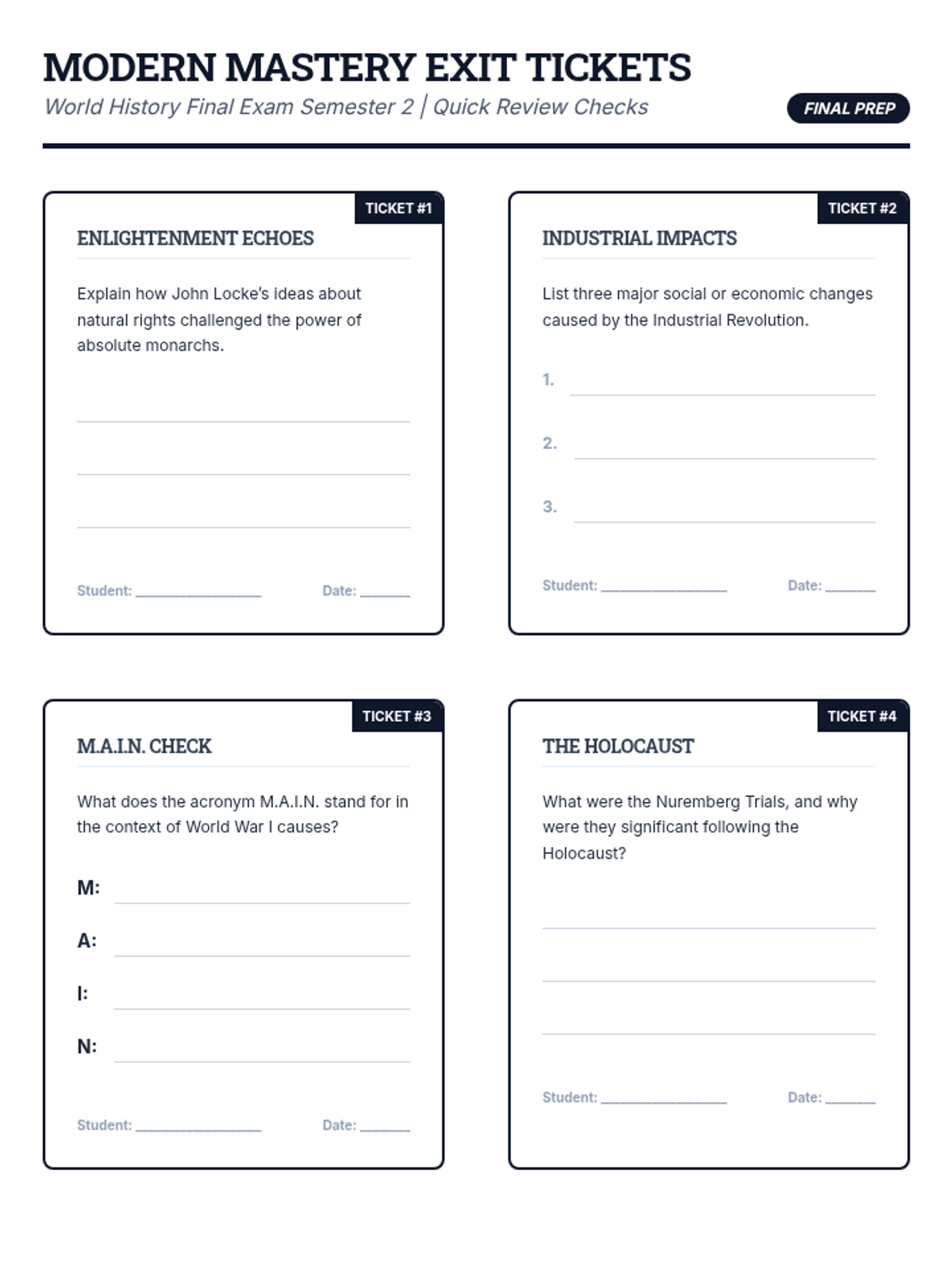
A comprehensive review and assessment package covering World History from the Enlightenment through the Cold War, aligned with state standards.
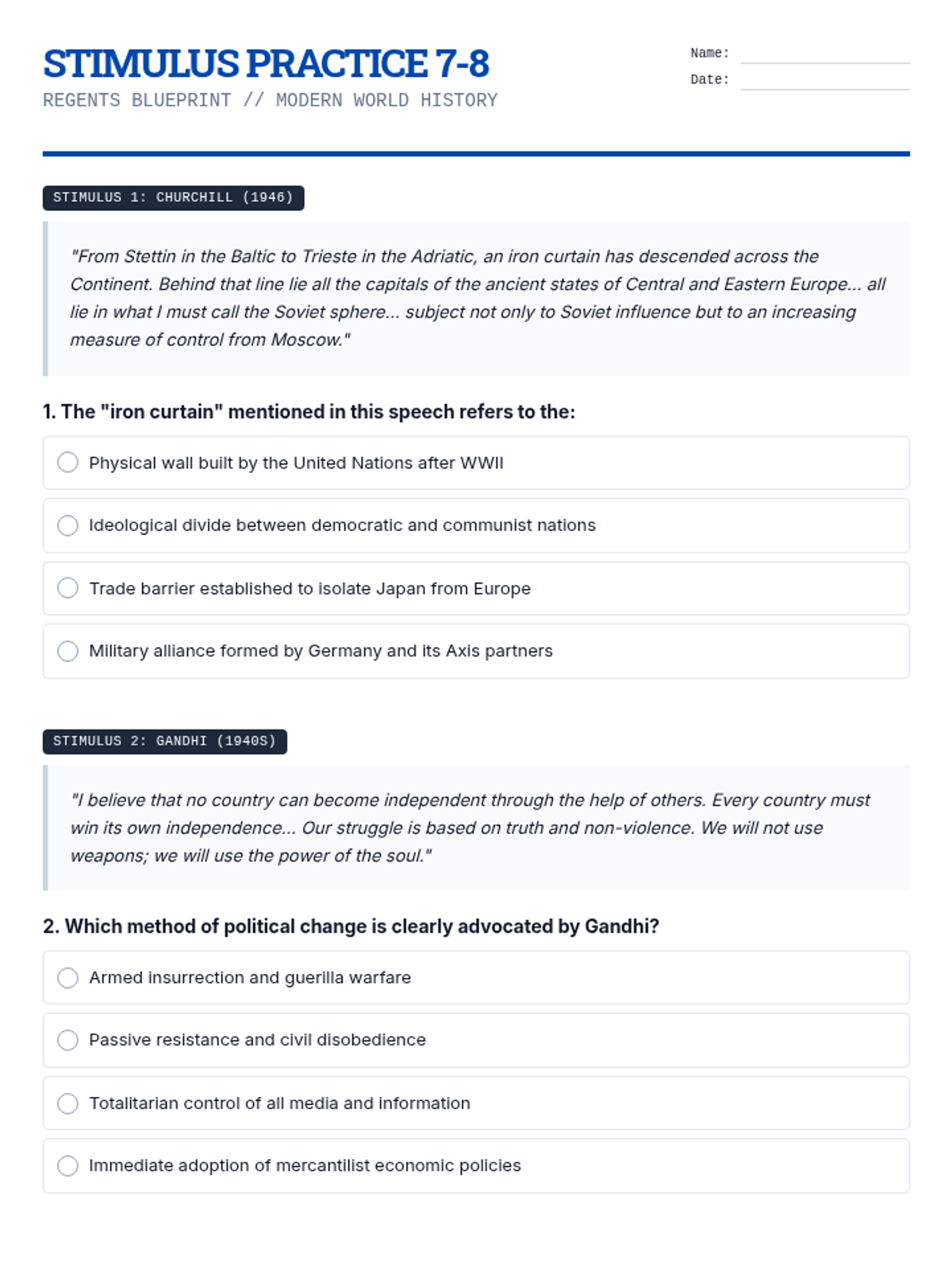
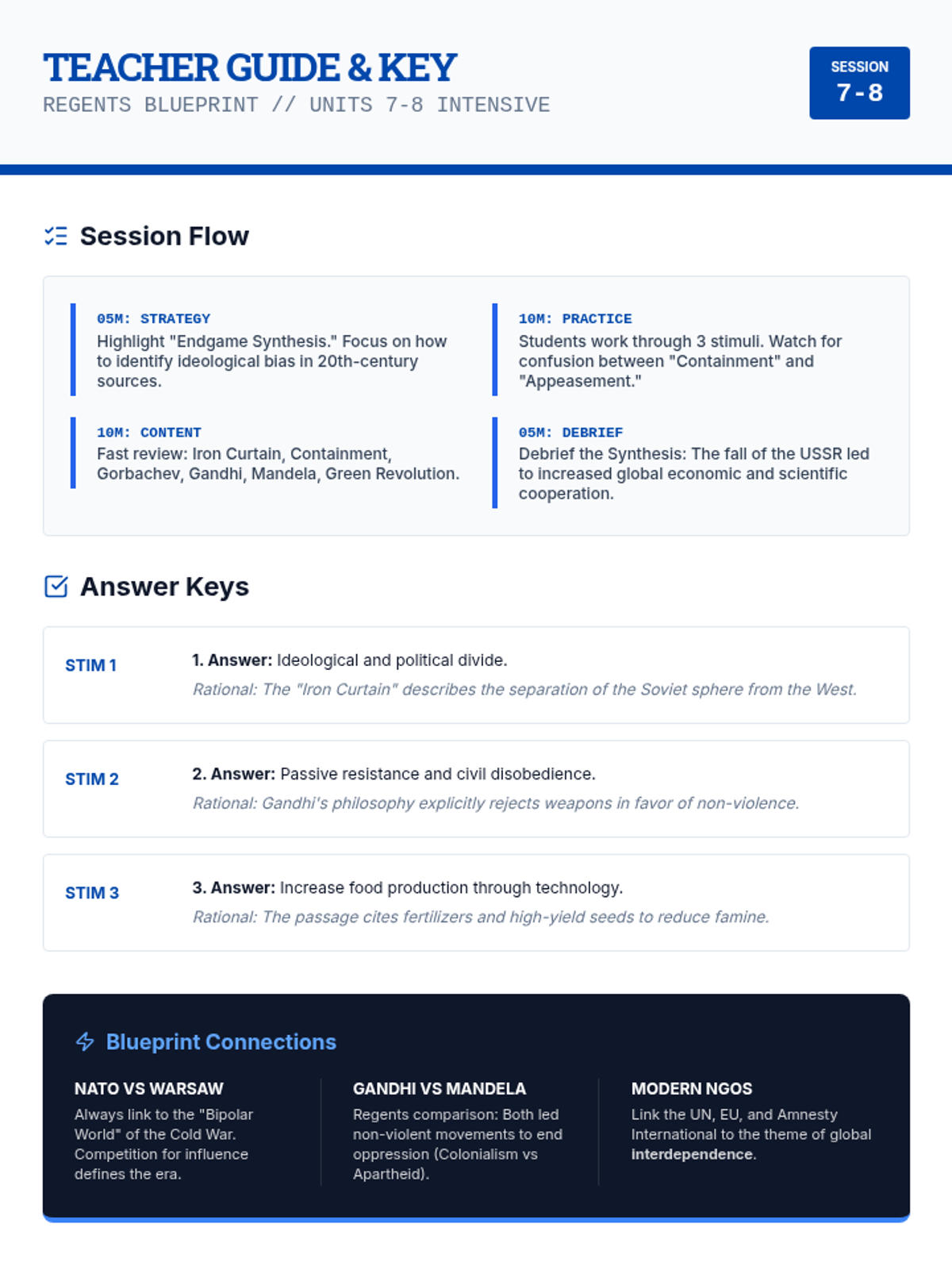
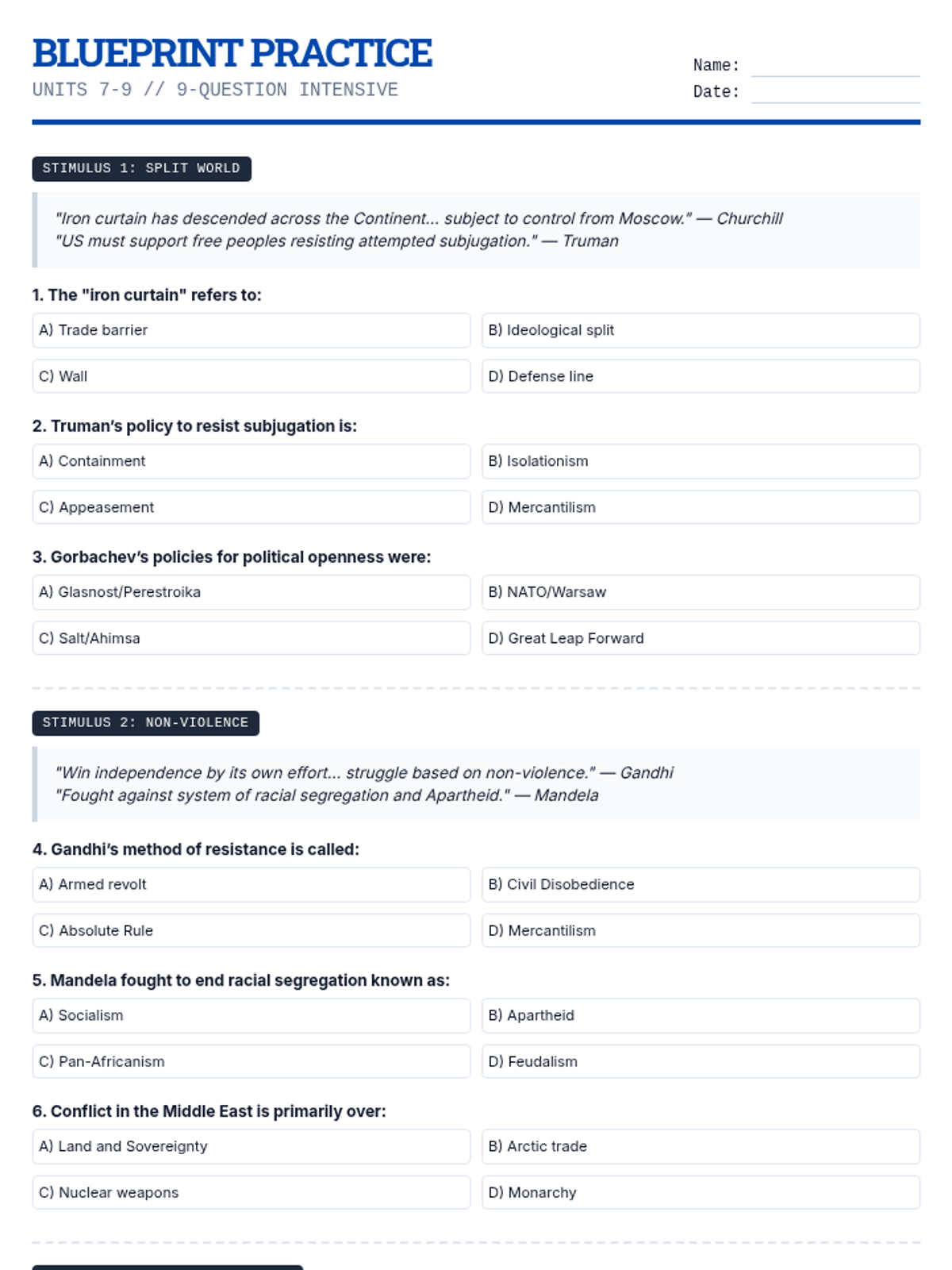
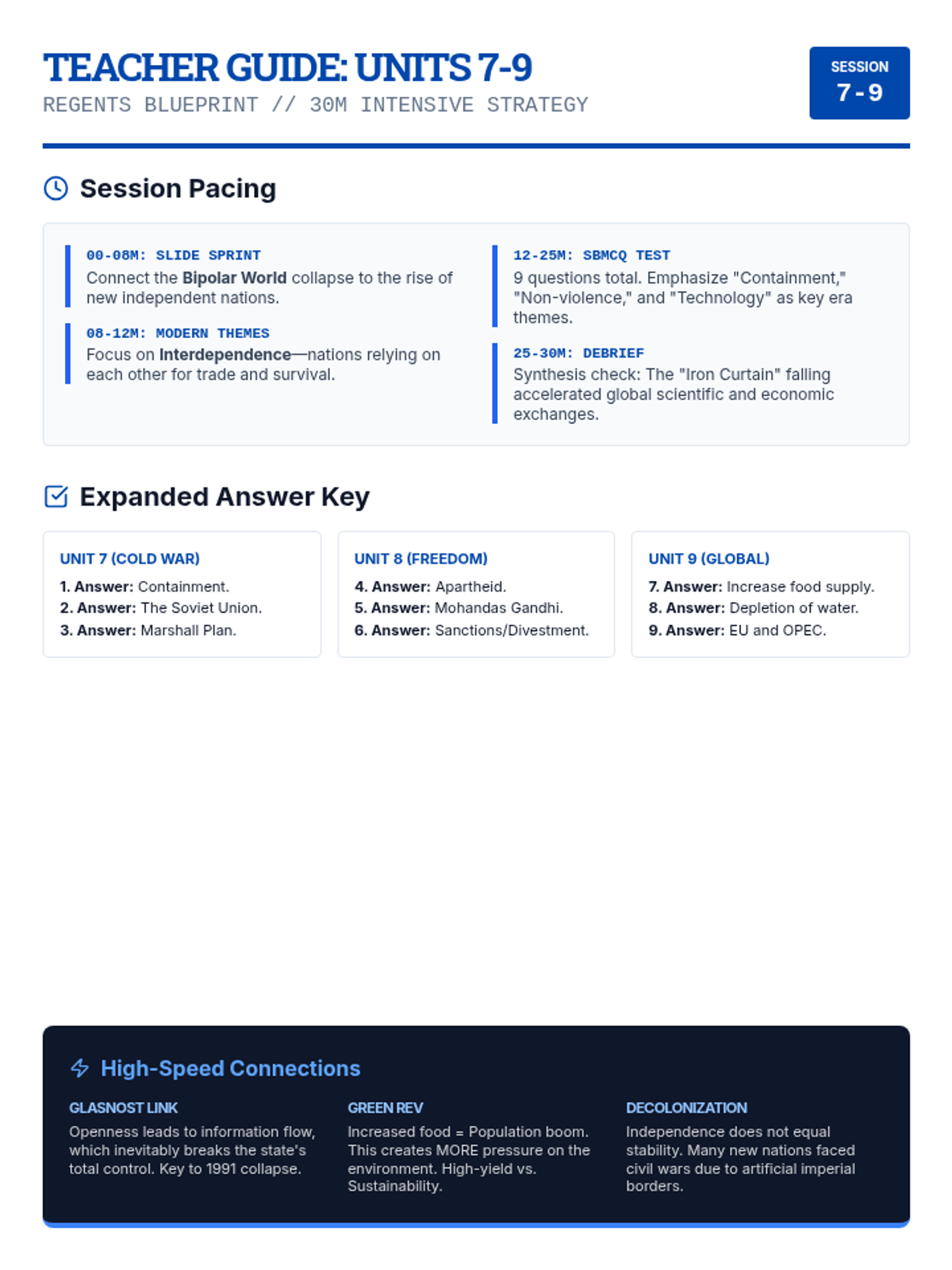
A high-impact 30-minute Regents review session focusing on Units 7-8 of the Modern World History curriculum, covering the Cold War, Decolonization, and Global Issues.
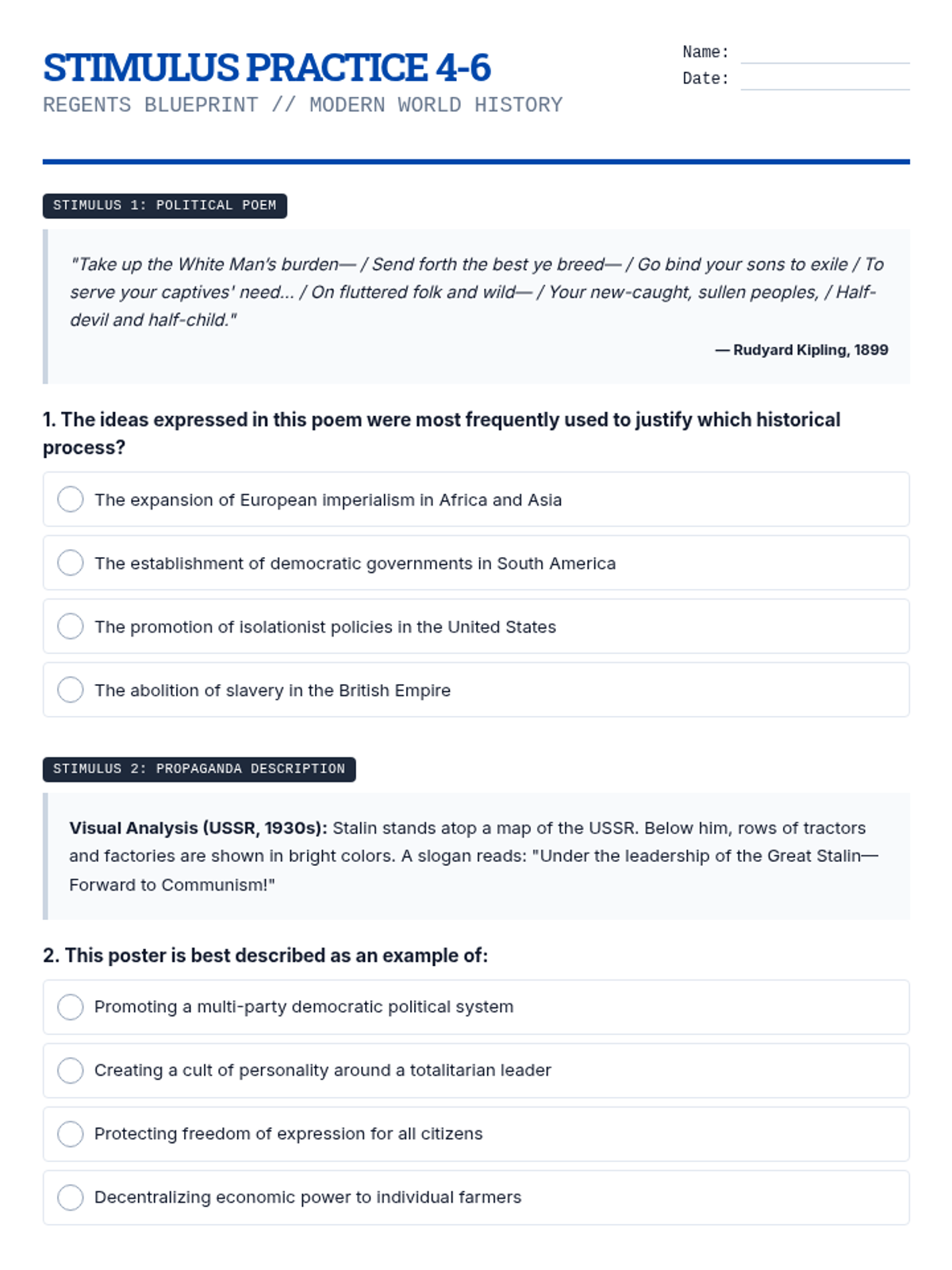
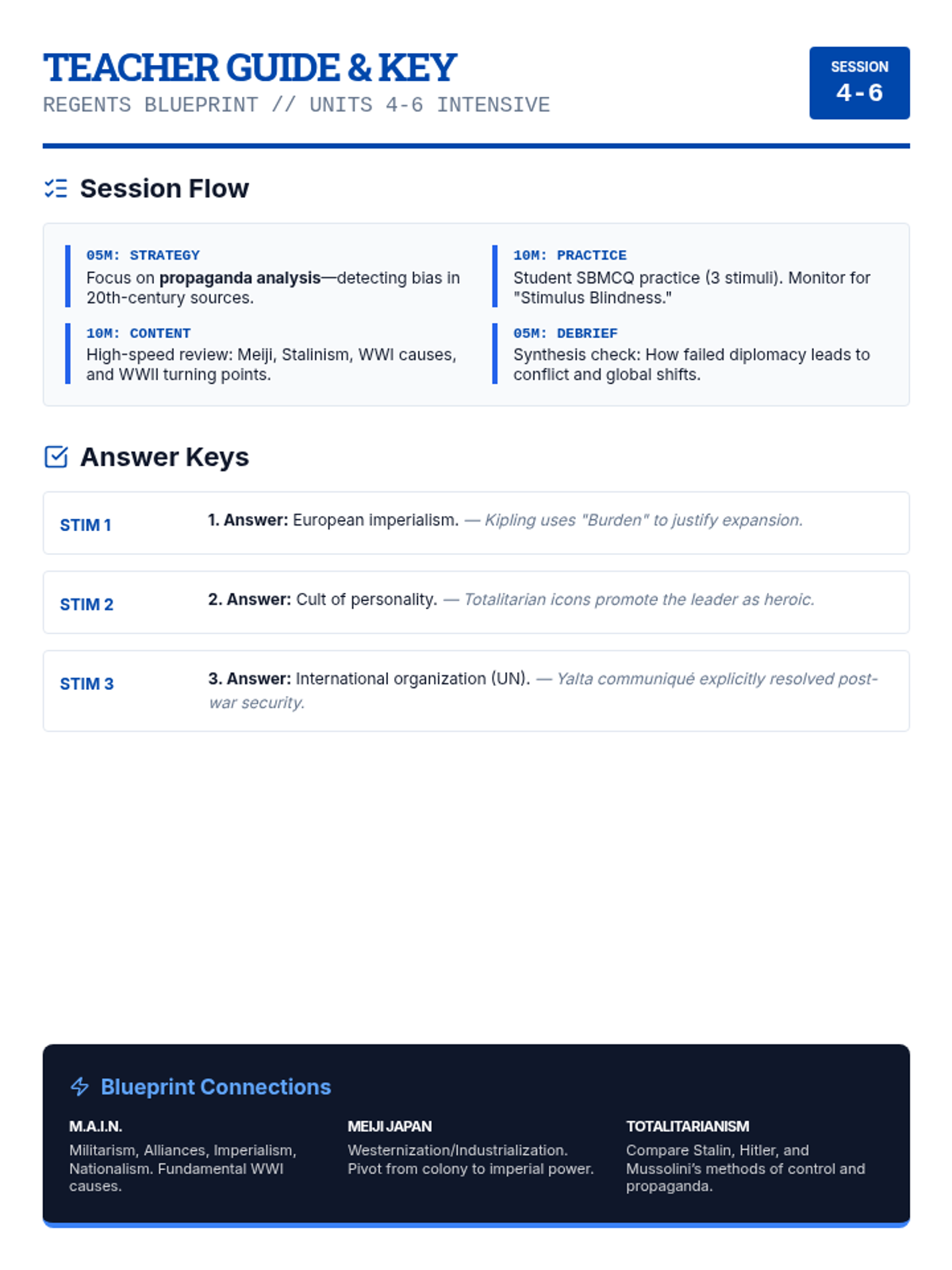
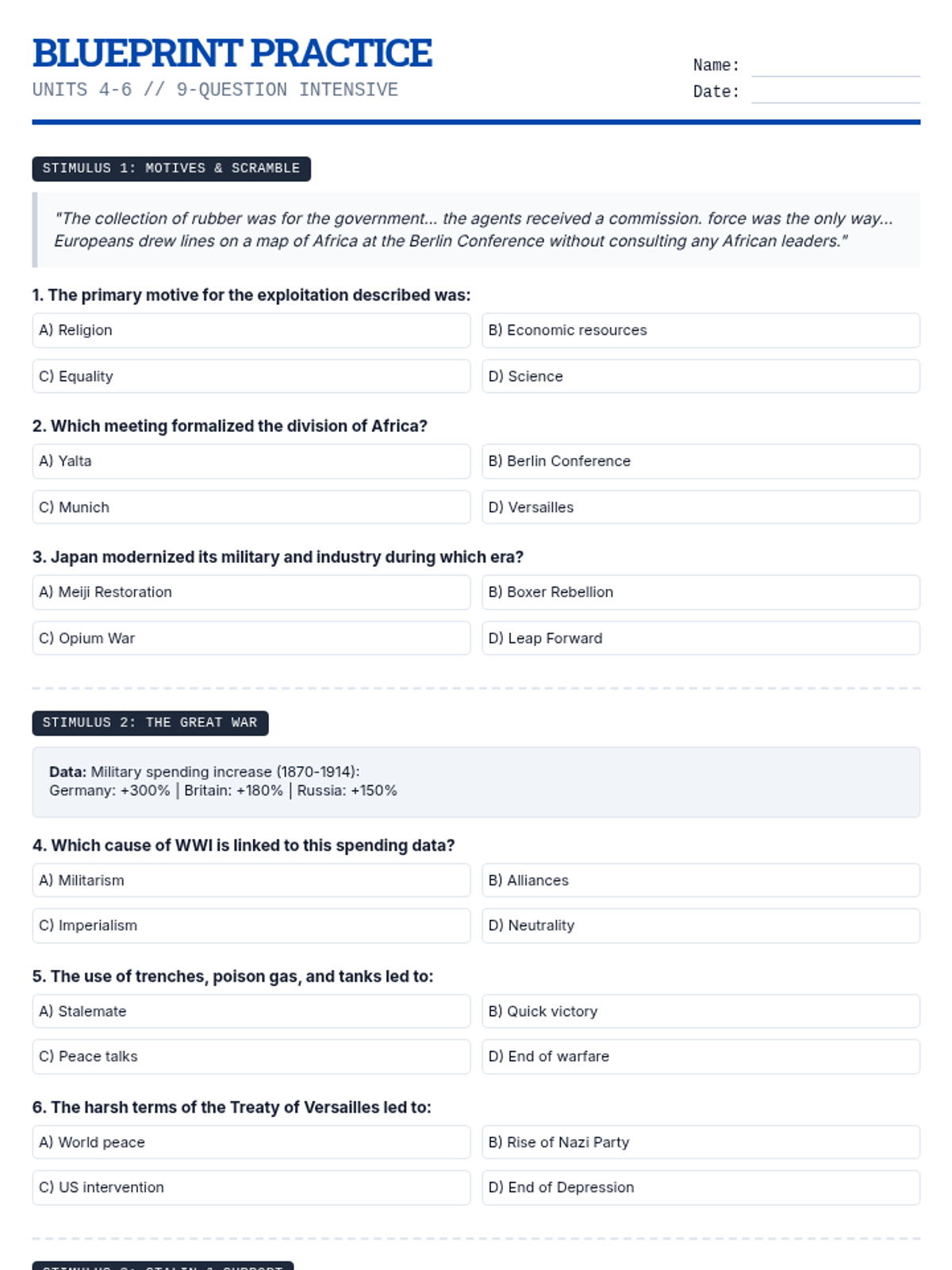
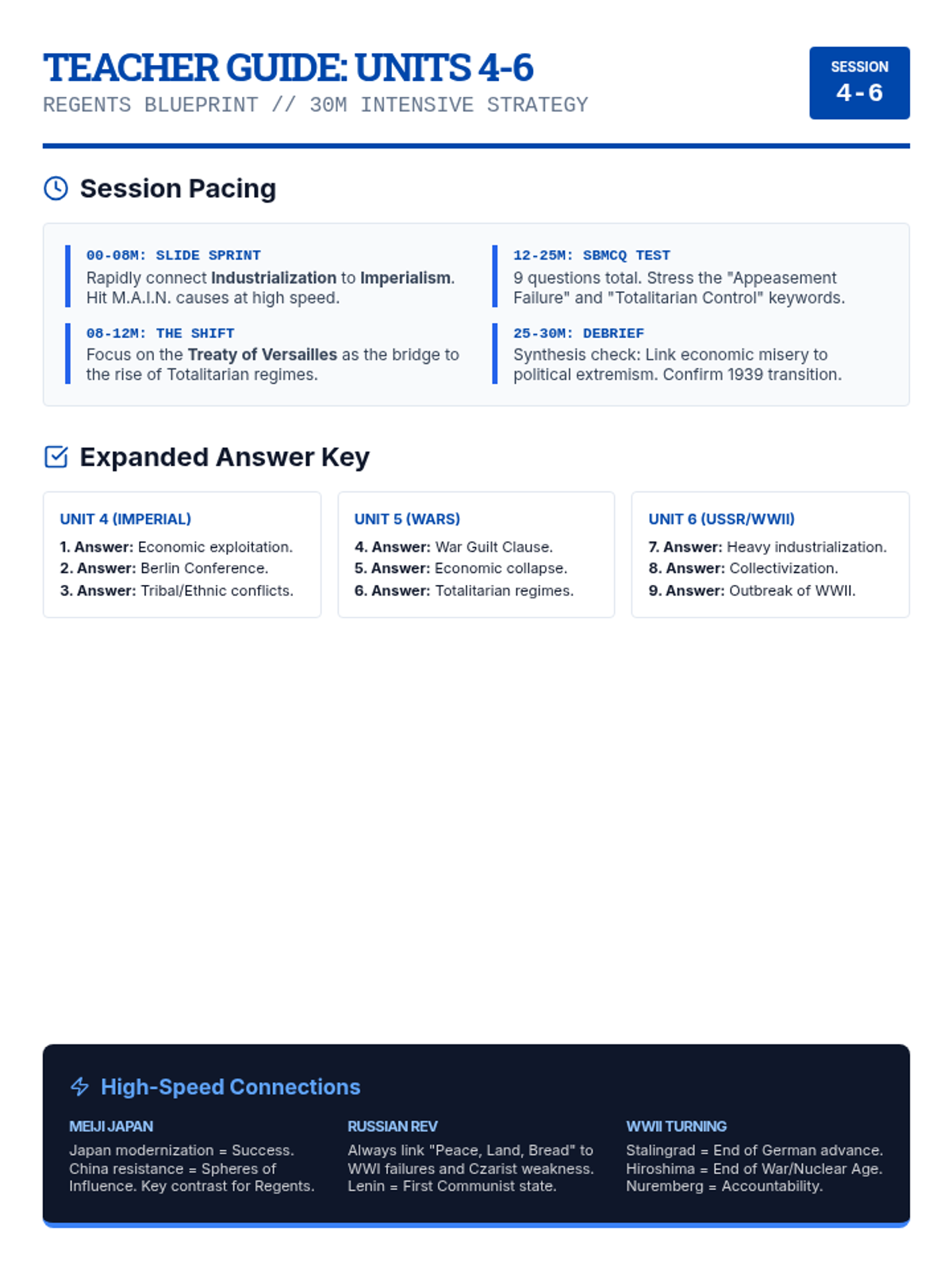
A 30-minute Regents review session for Units 4-6 of the Modern World History curriculum, covering Imperialism, WWI, the Russian Revolution, and WWII.
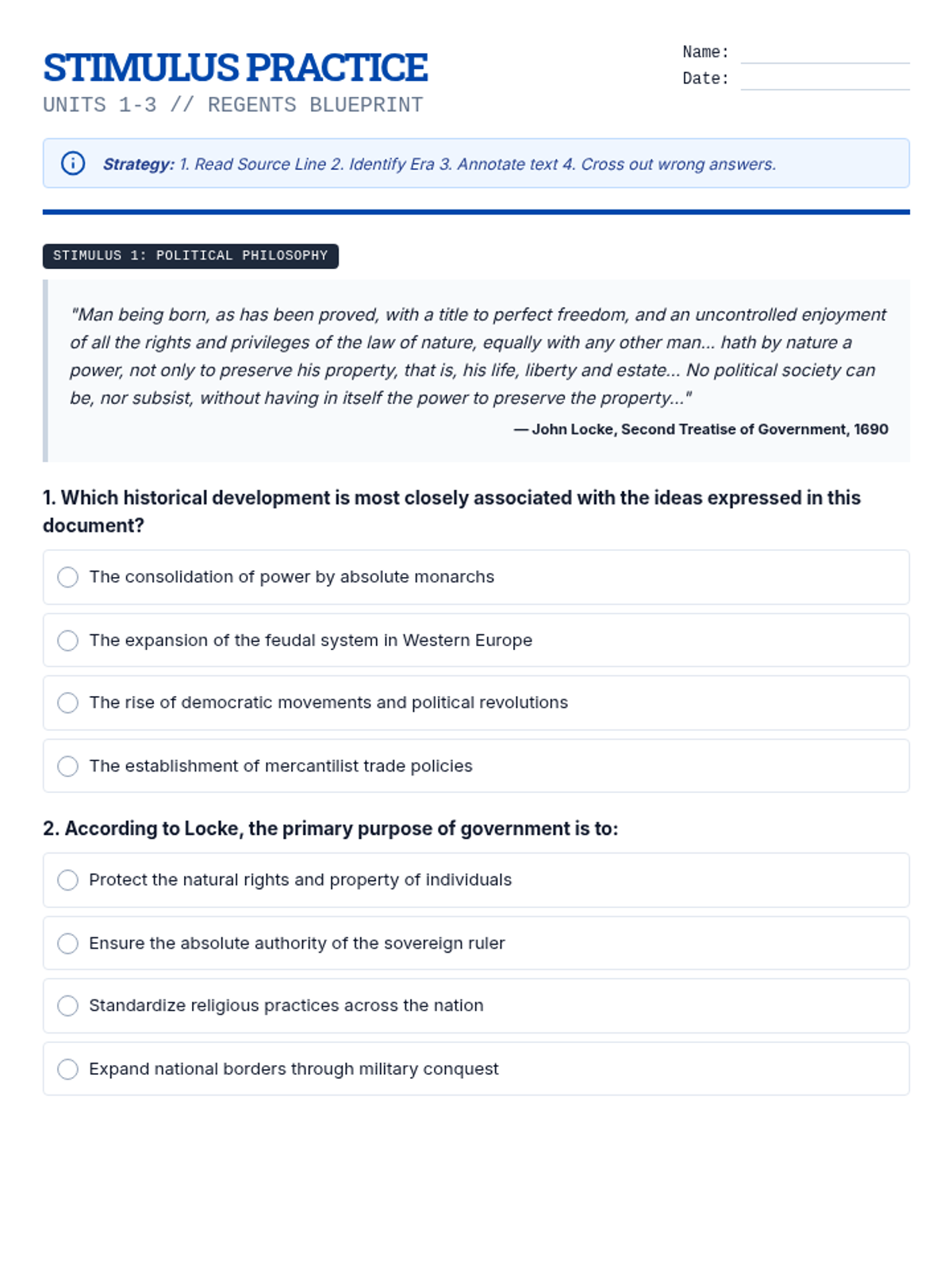
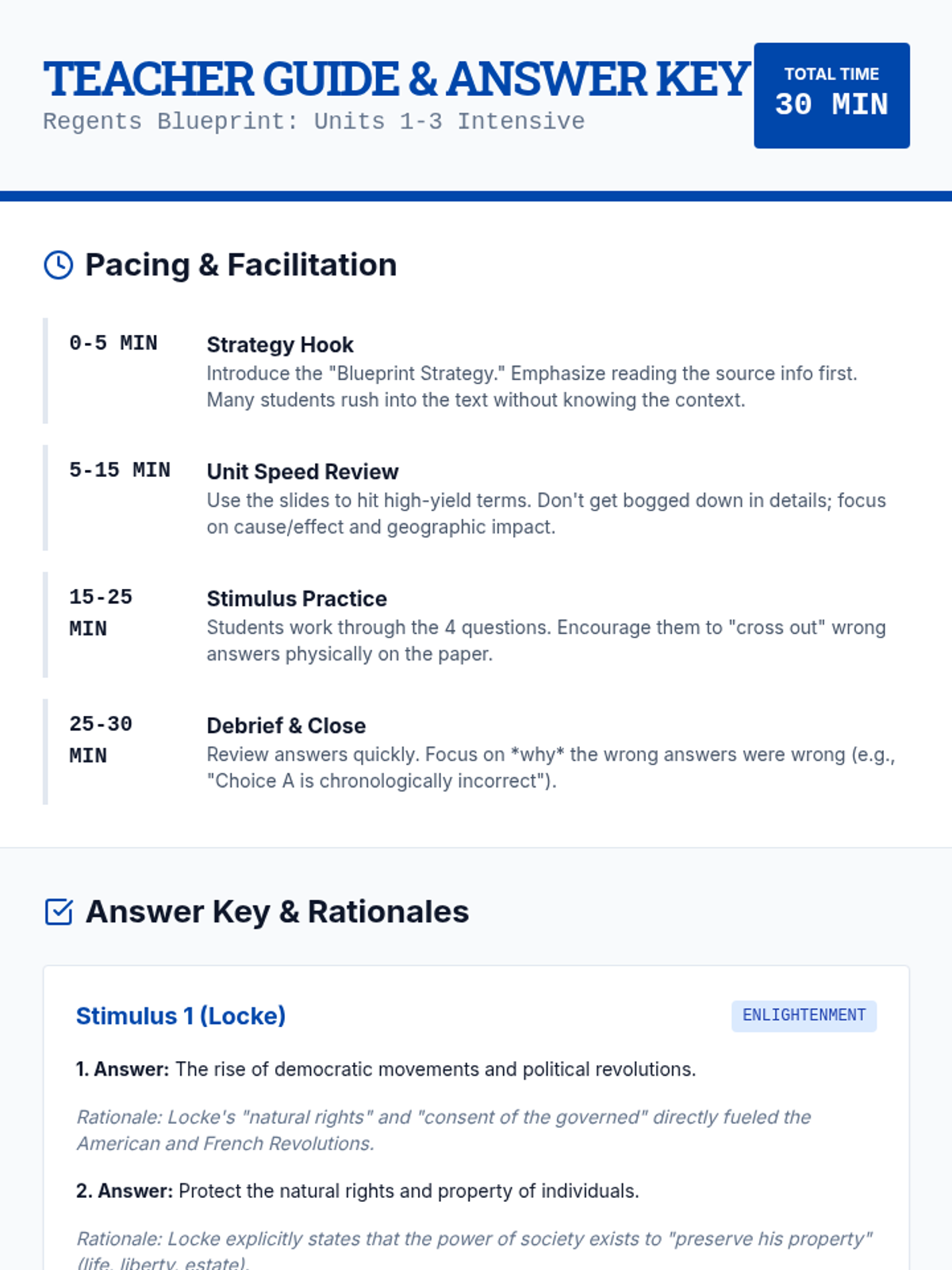
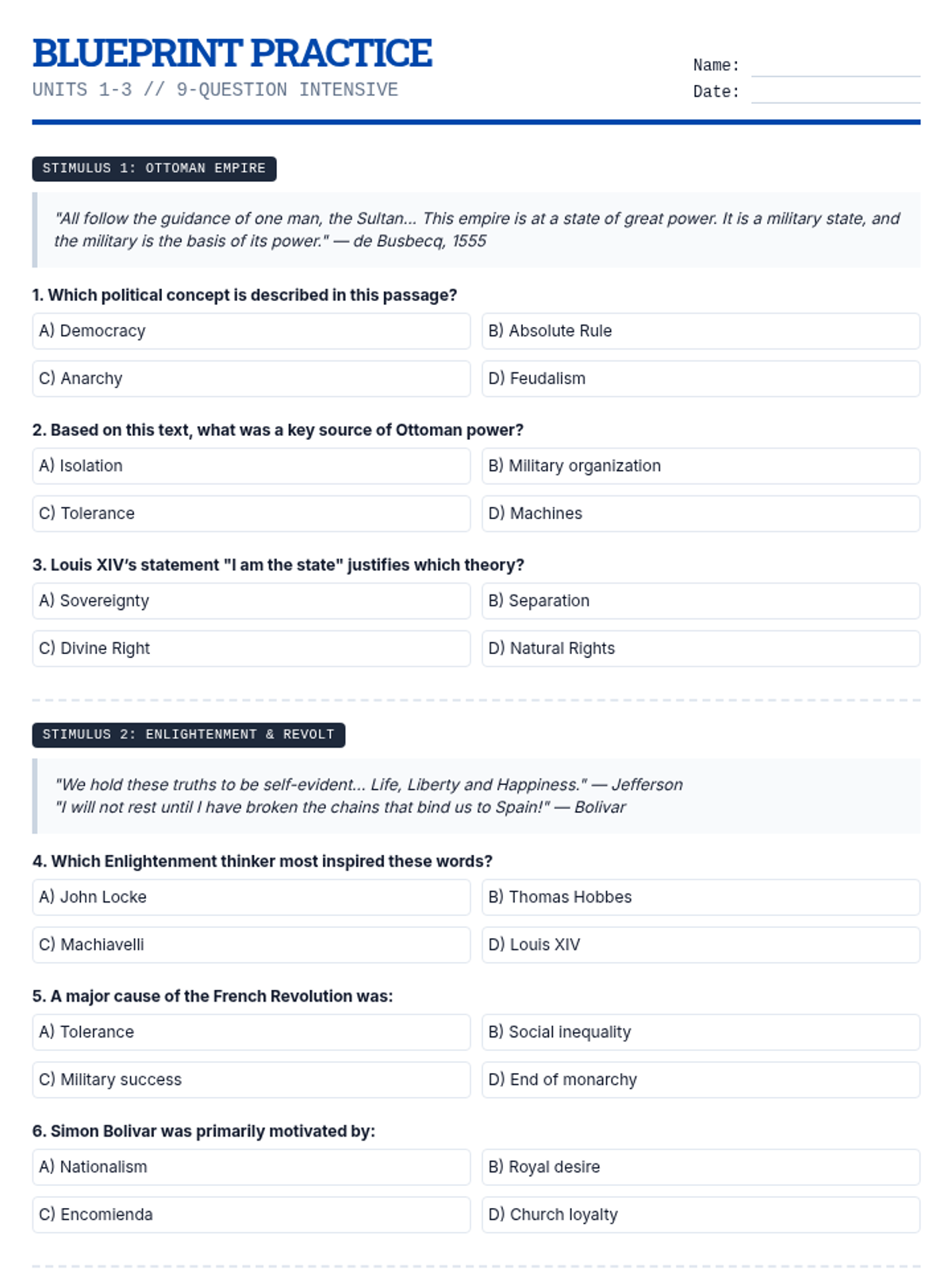
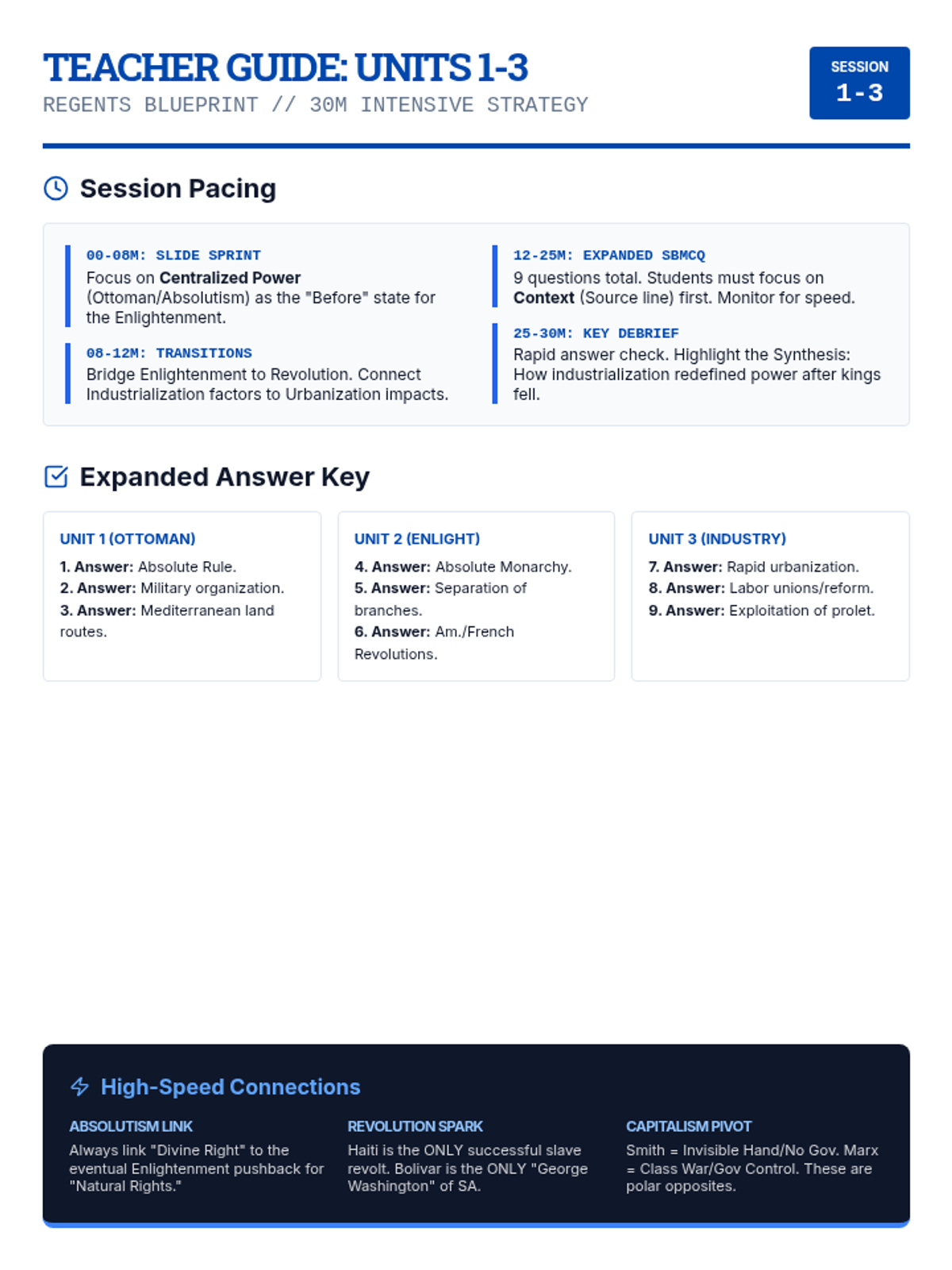
A high-impact 30-minute Regents review session focusing on Units 1-3 of the Modern World History curriculum, featuring stimulus-based multiple choice practice and test-taking strategies.
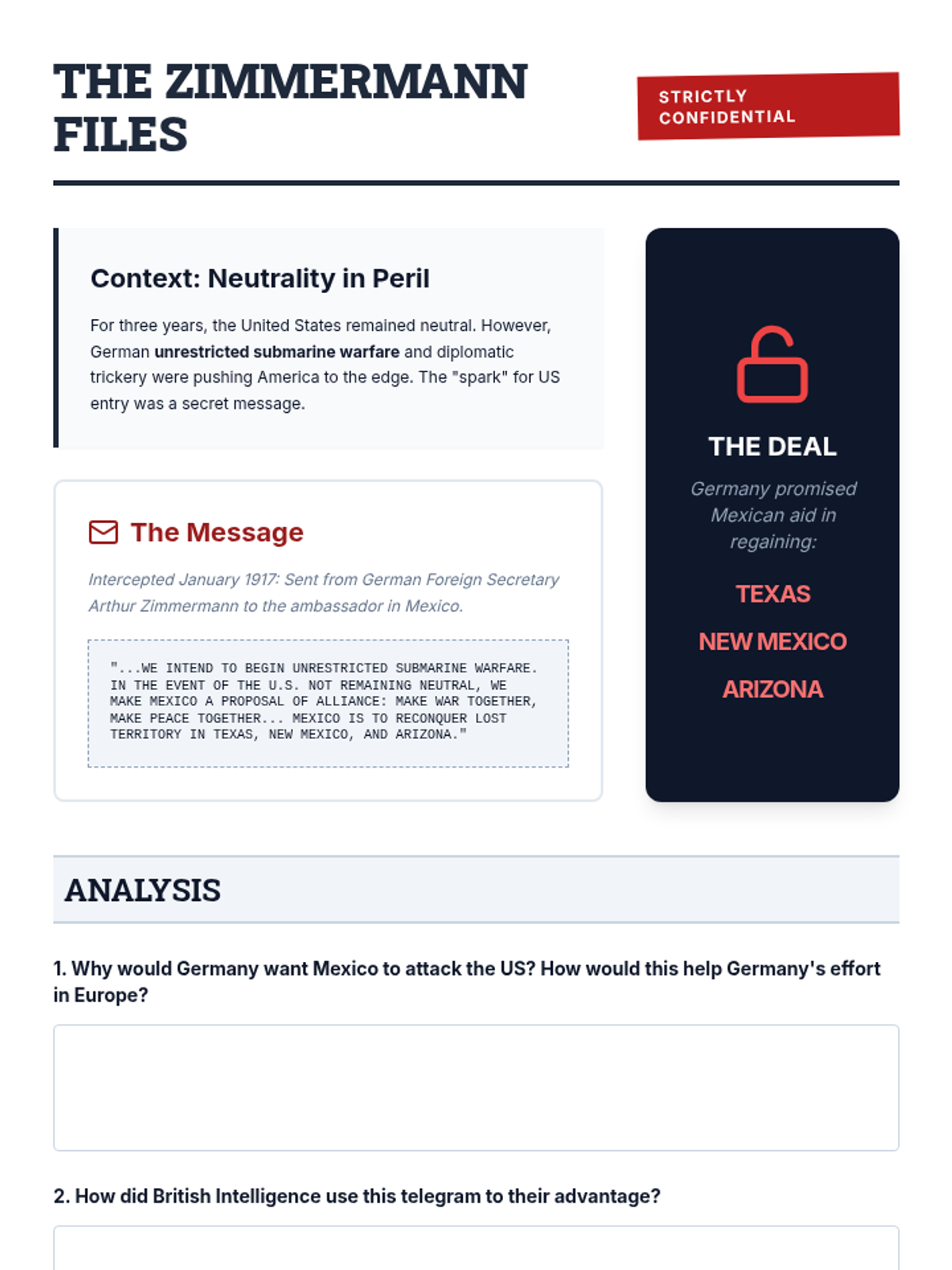
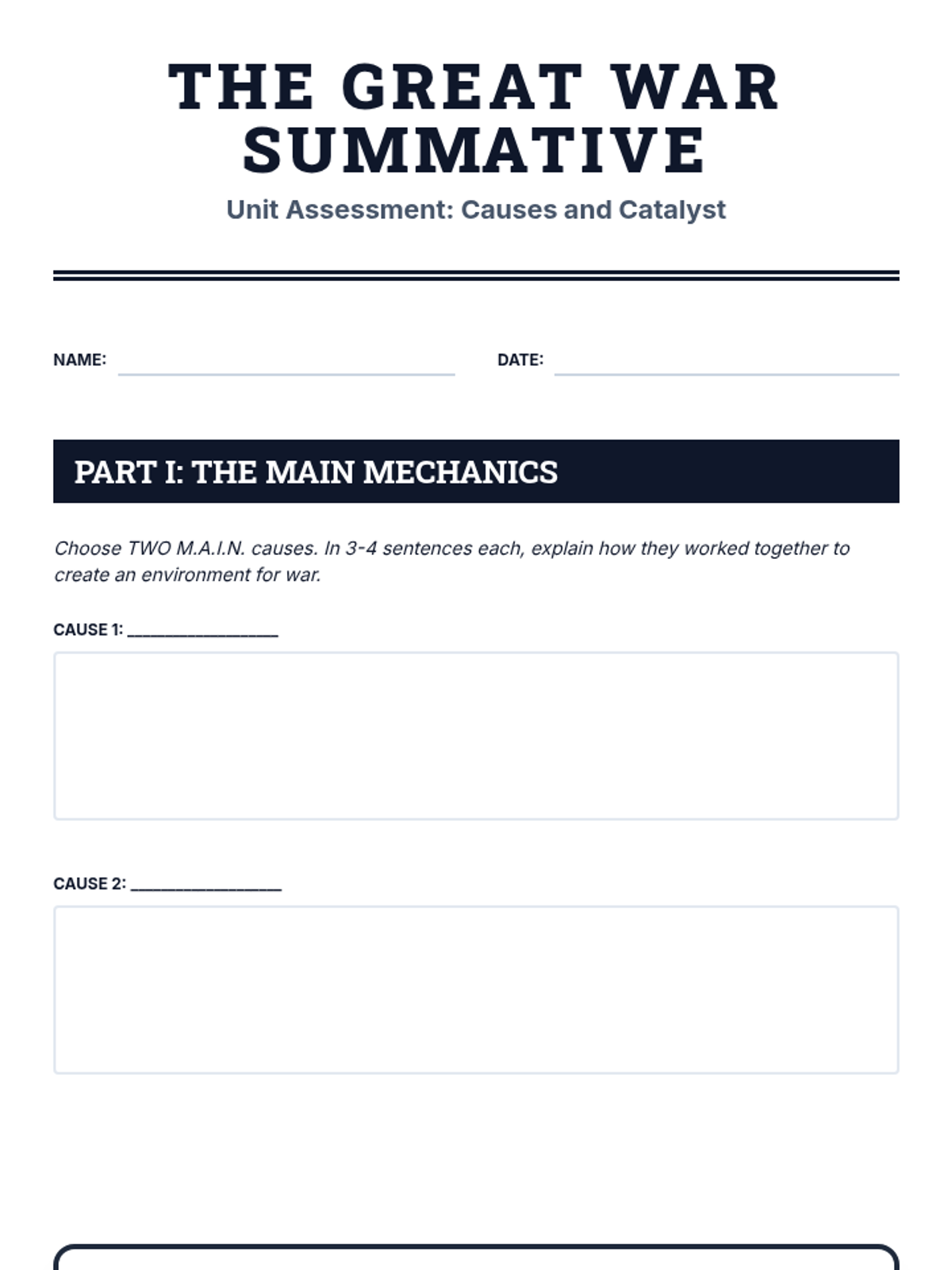
Examine the Zimmermann Telegram and its role in ending American neutrality, followed by a summative writing assessment.
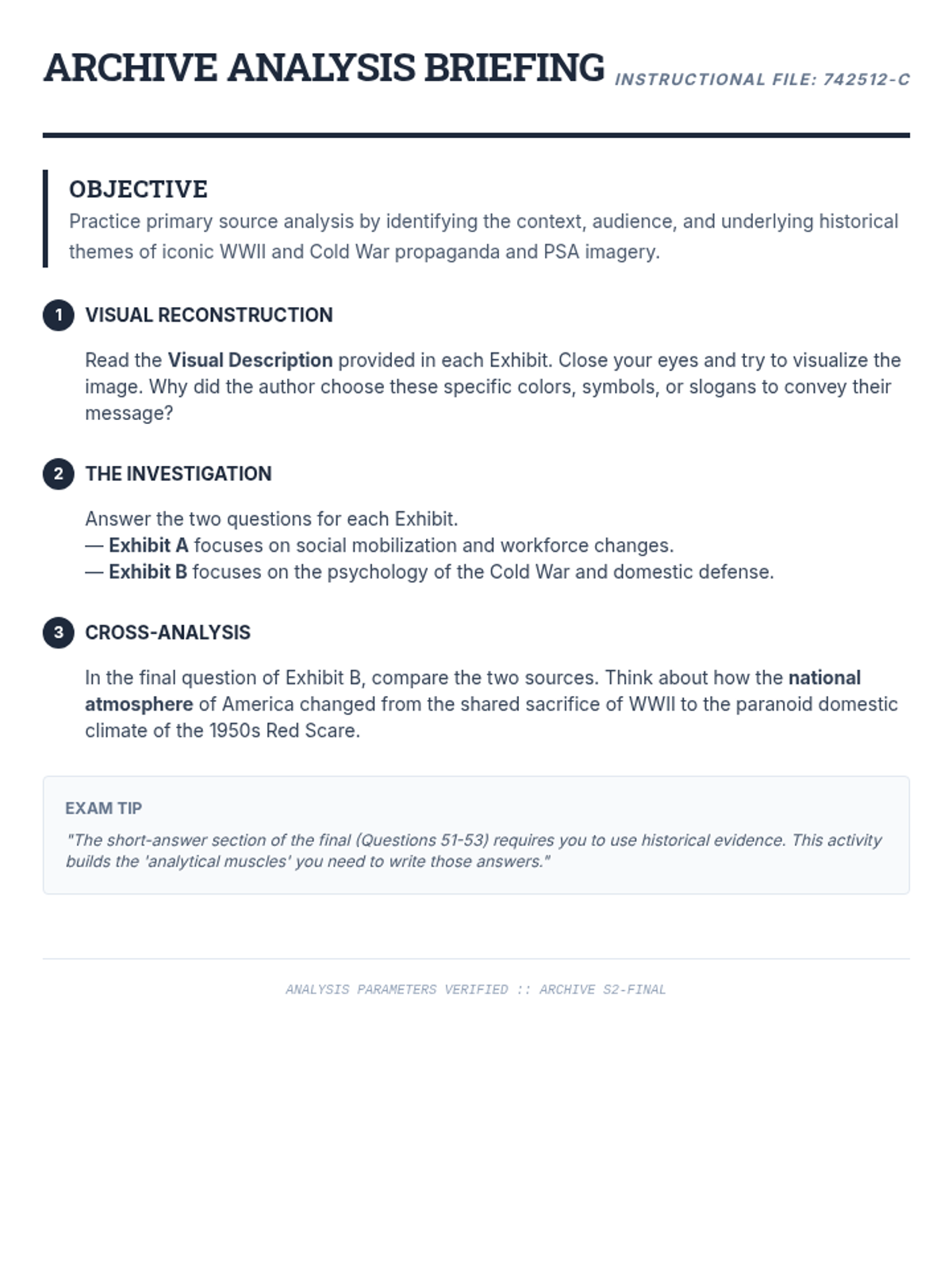
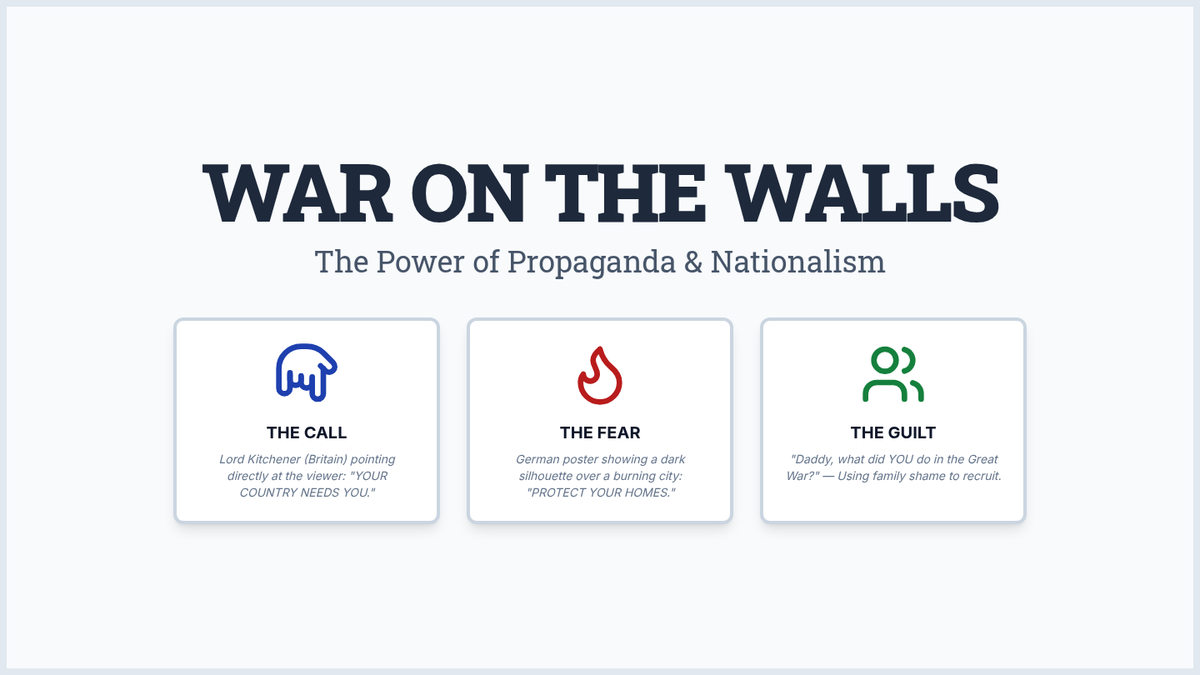
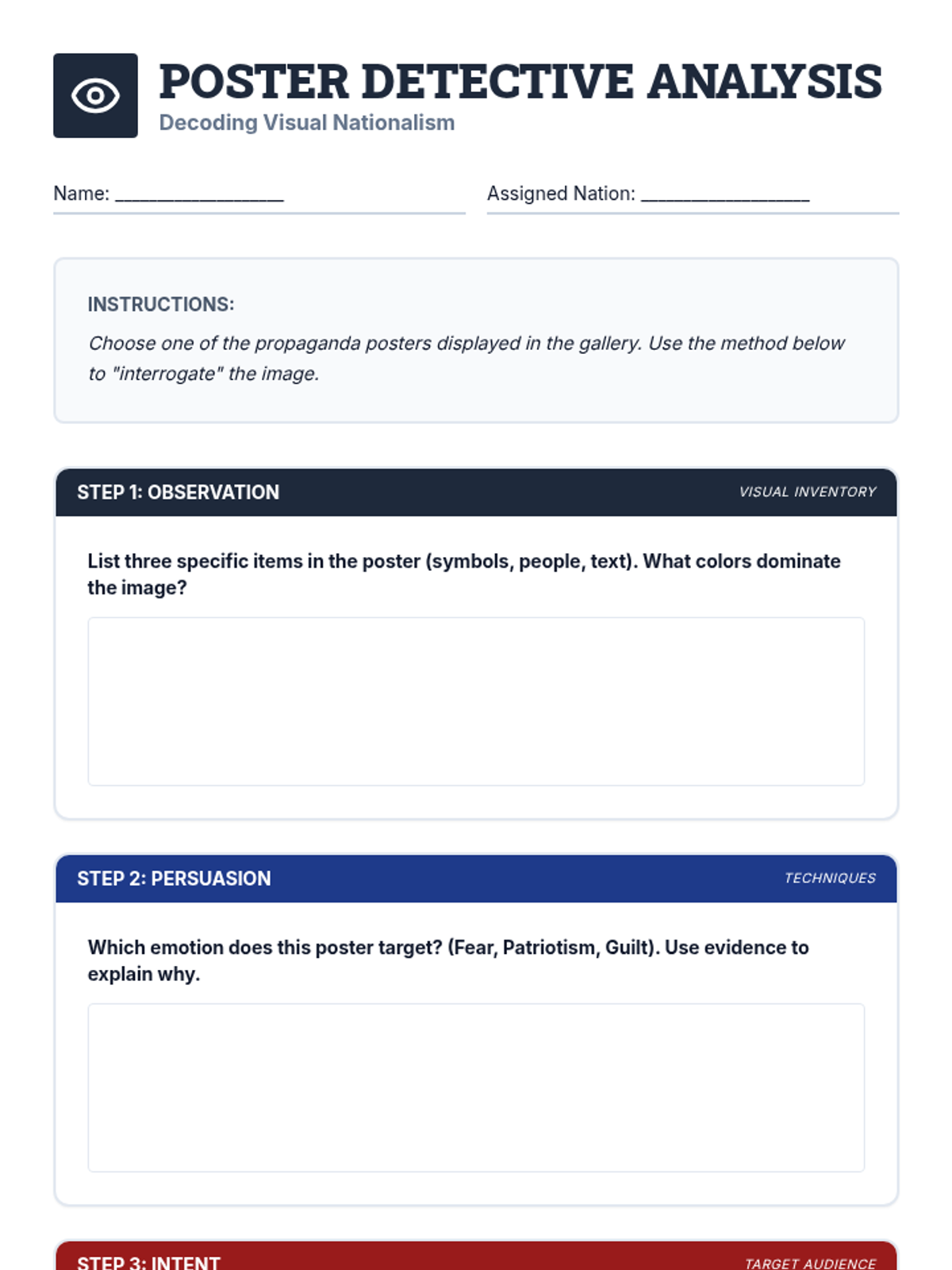
Analyze the role of nationalism through primary source propaganda posters from various nations during WWI.
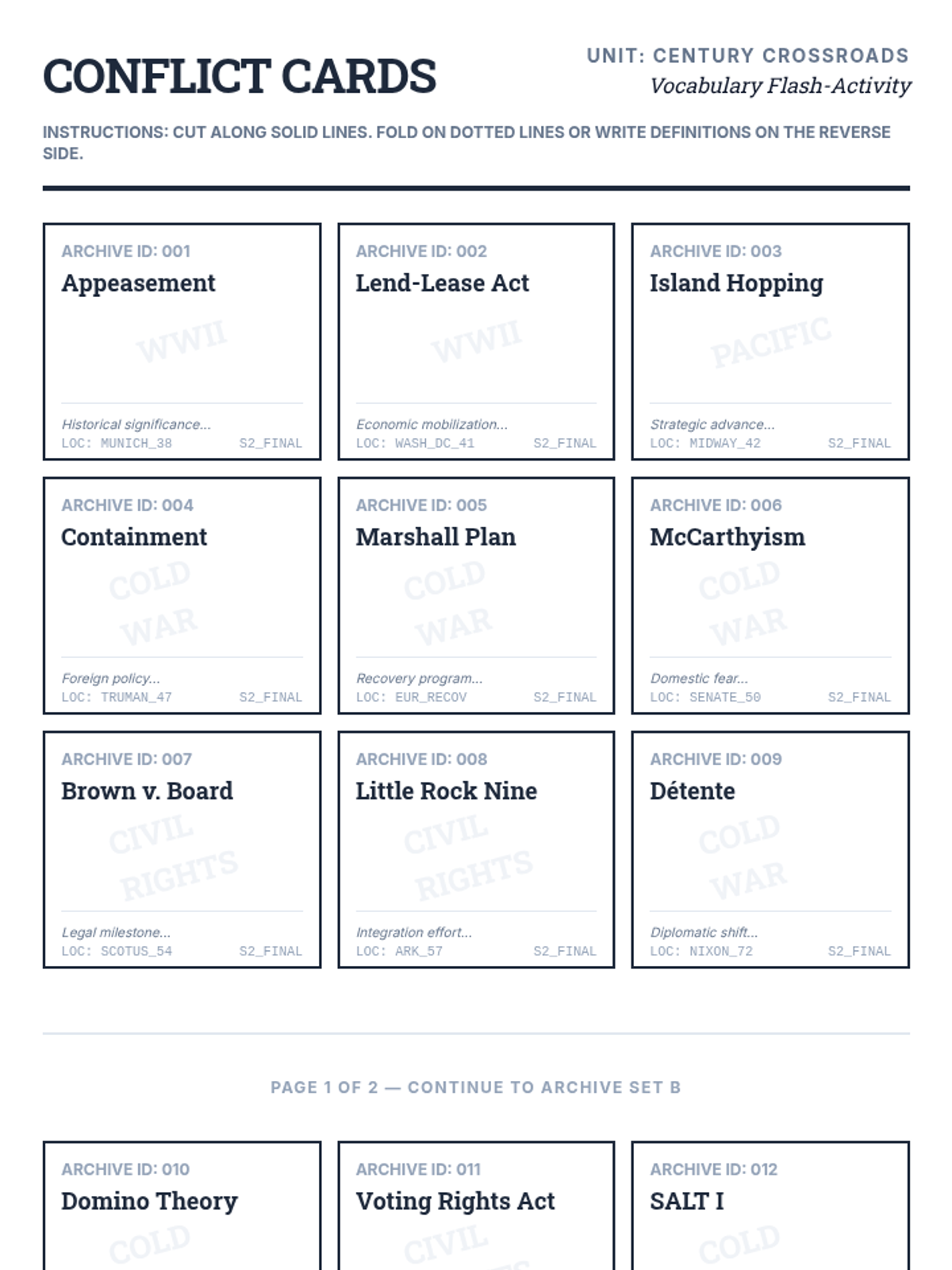
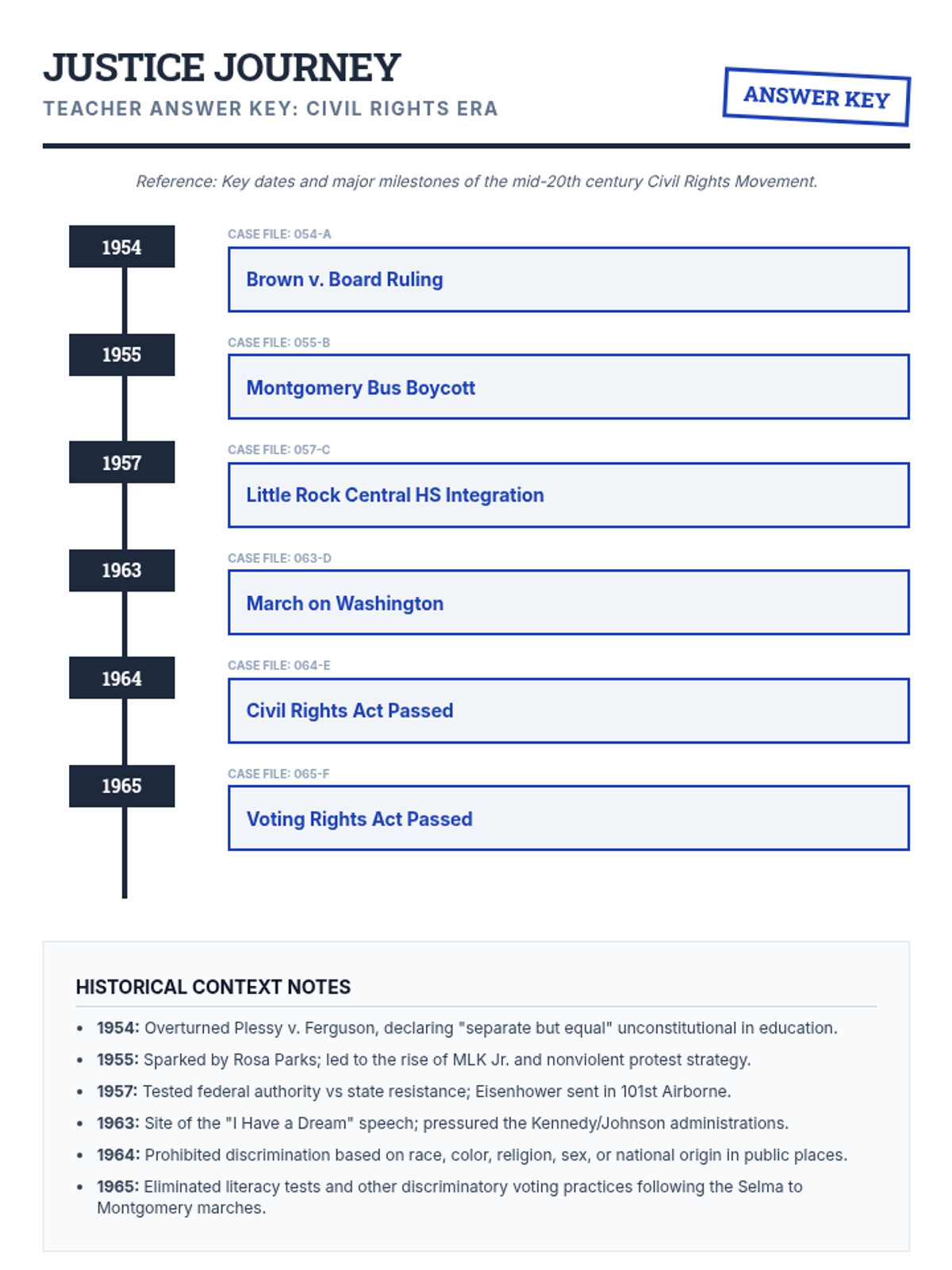
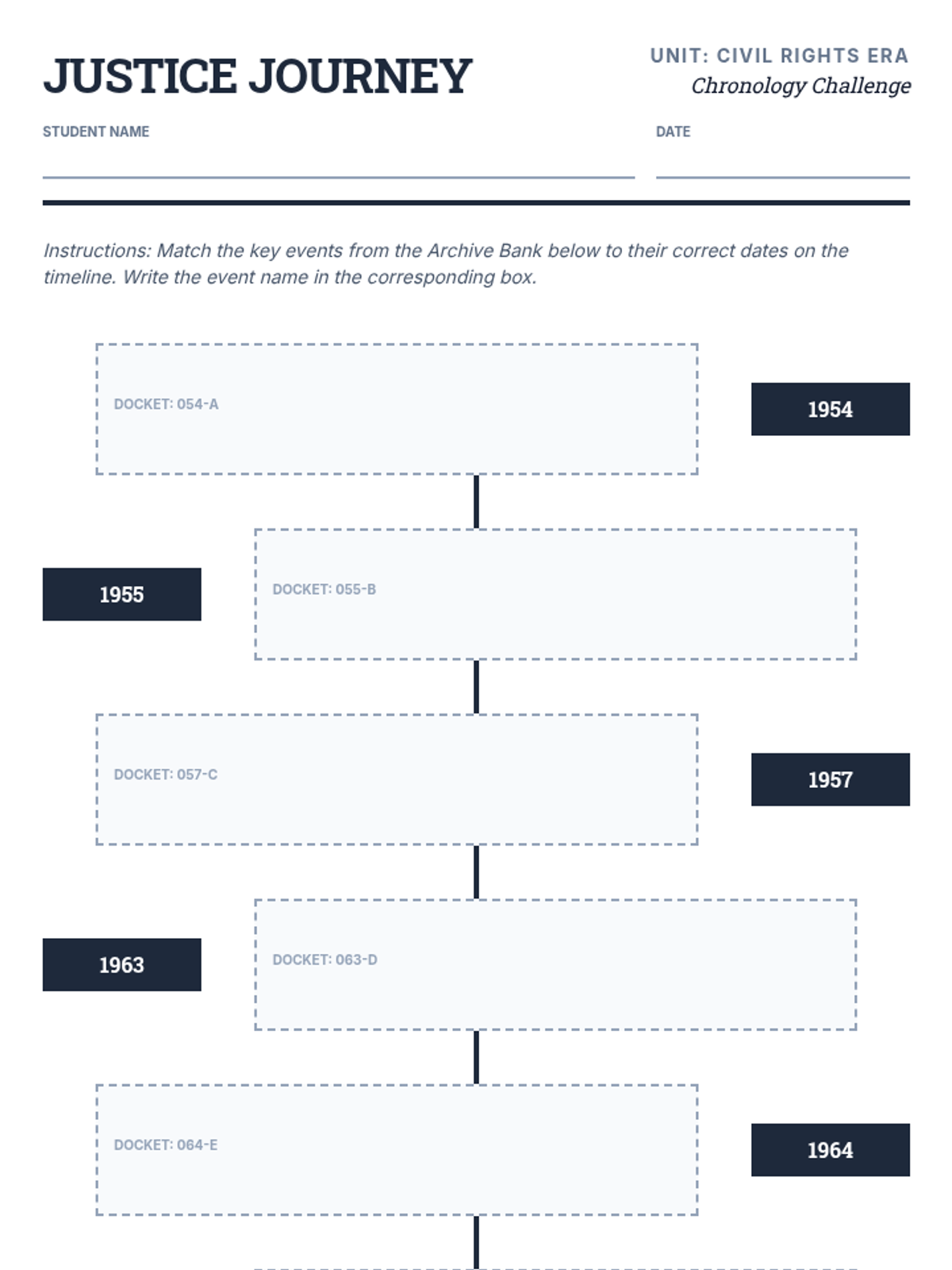
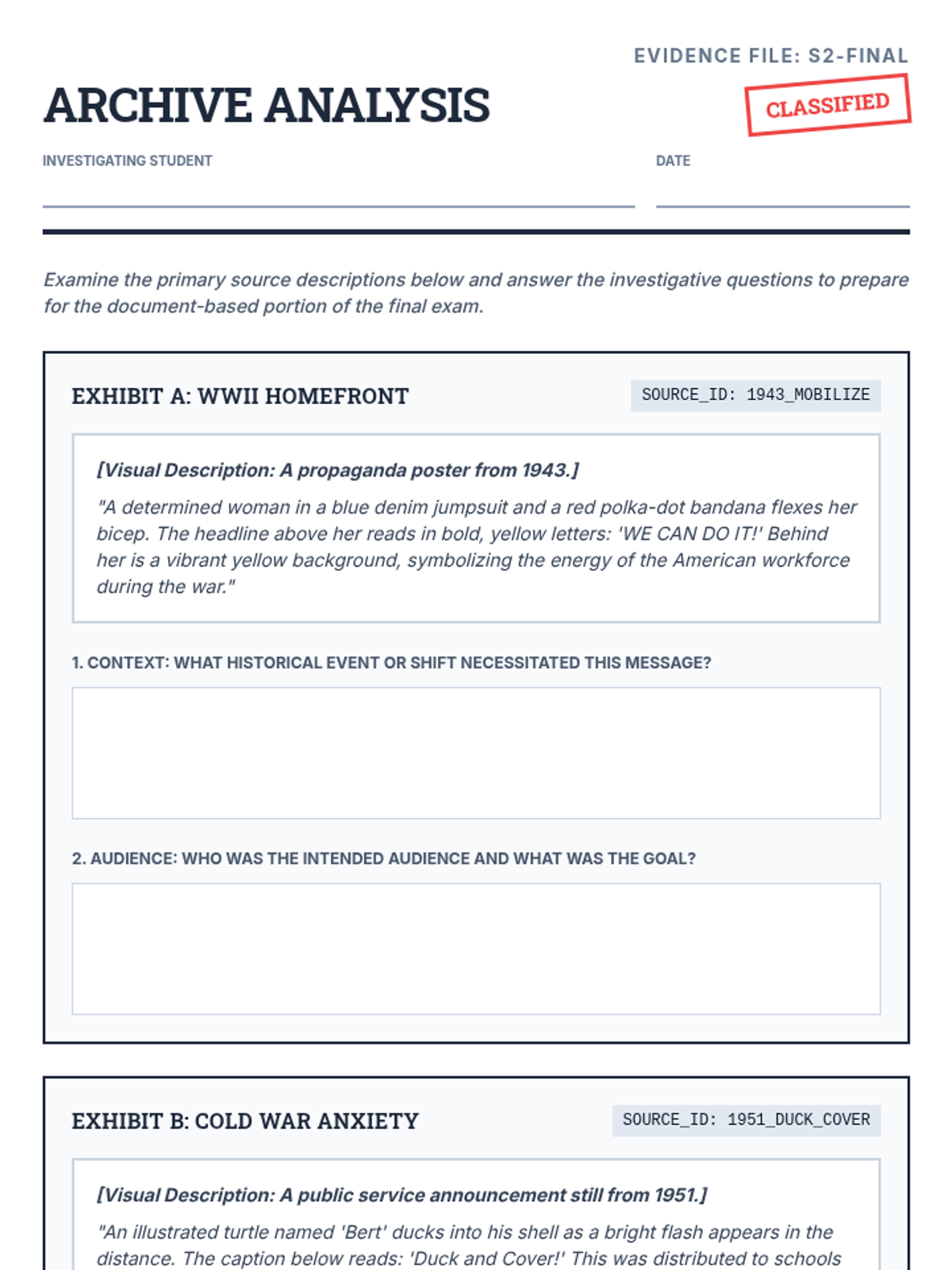
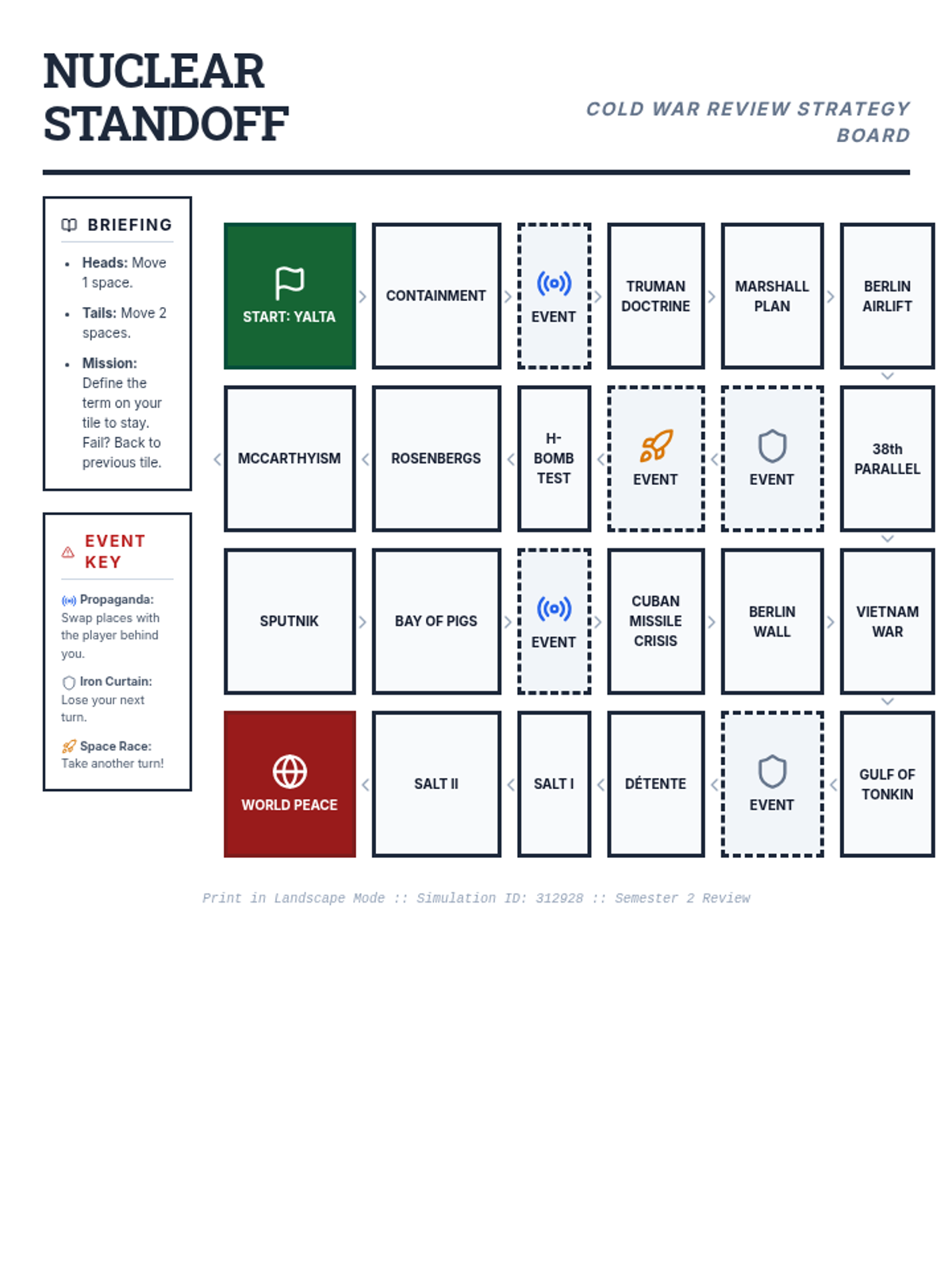
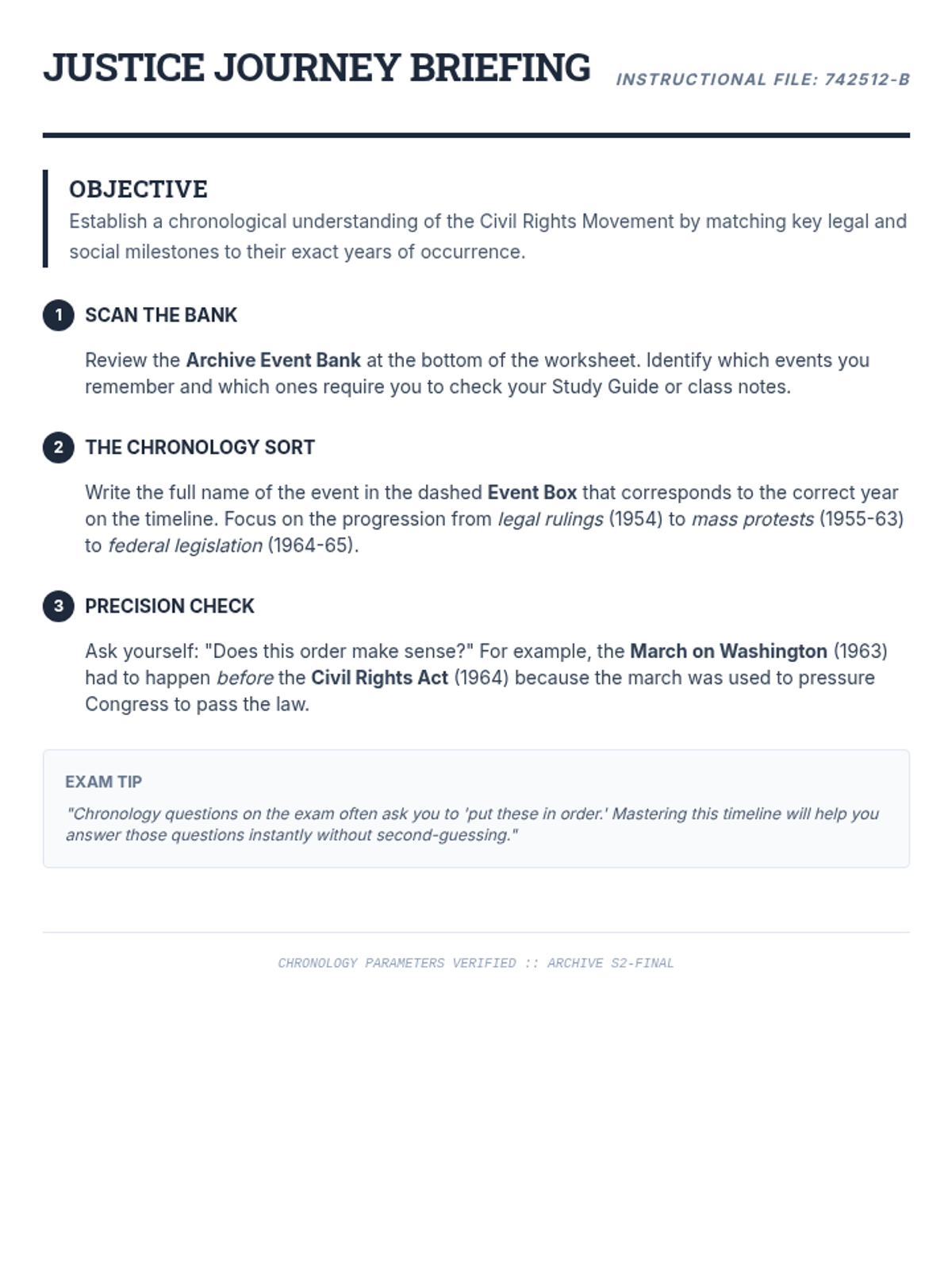
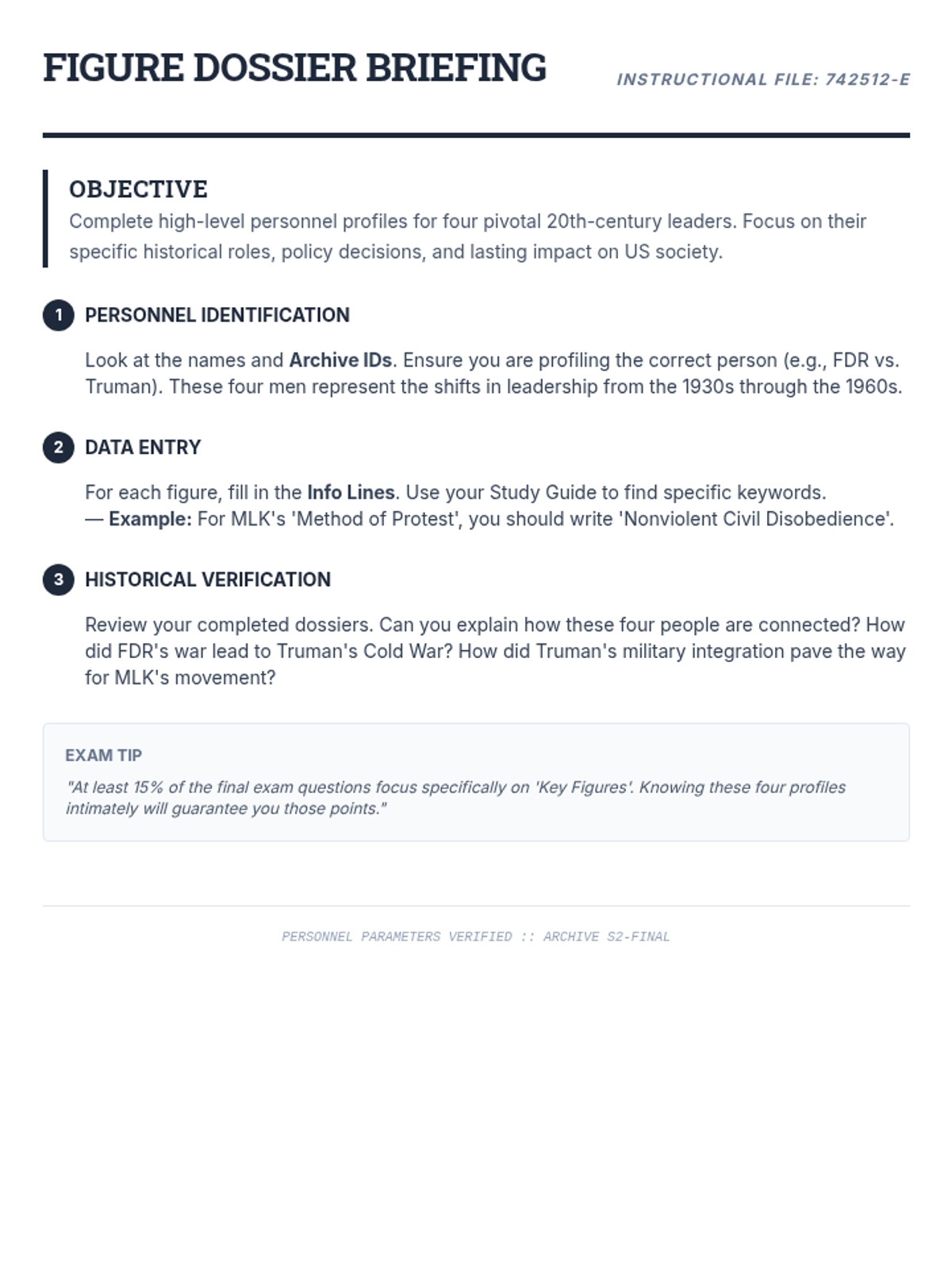
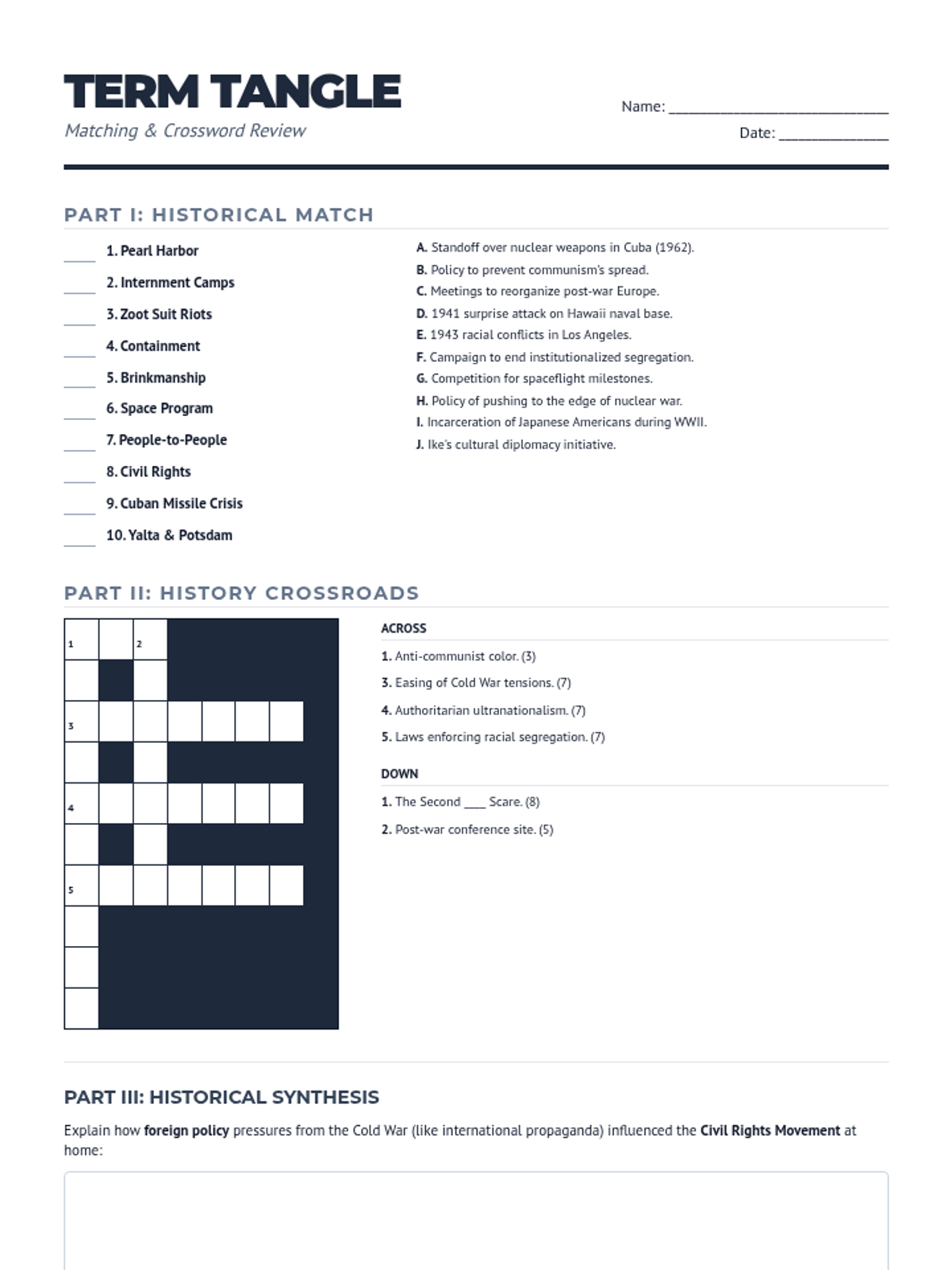
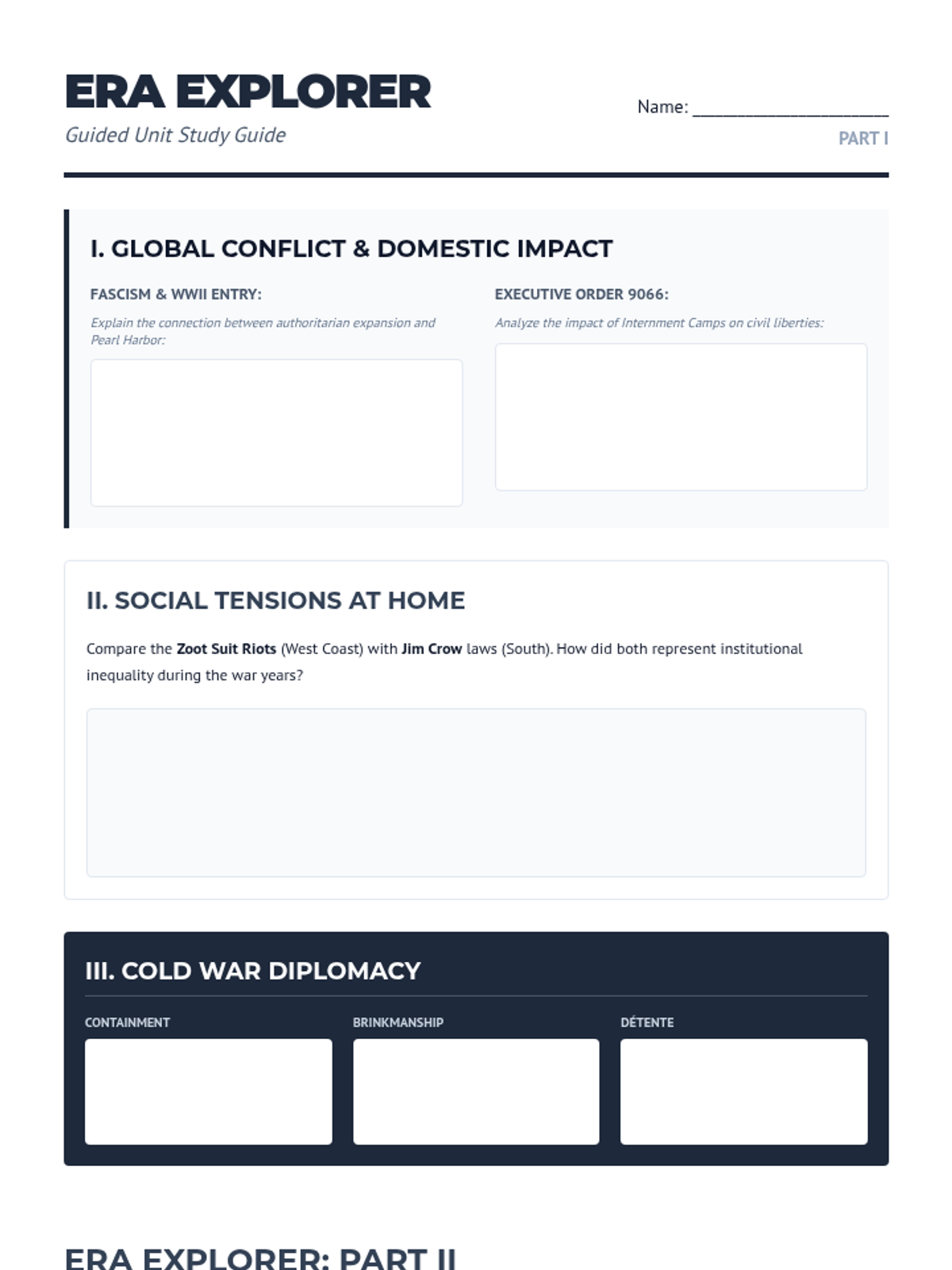
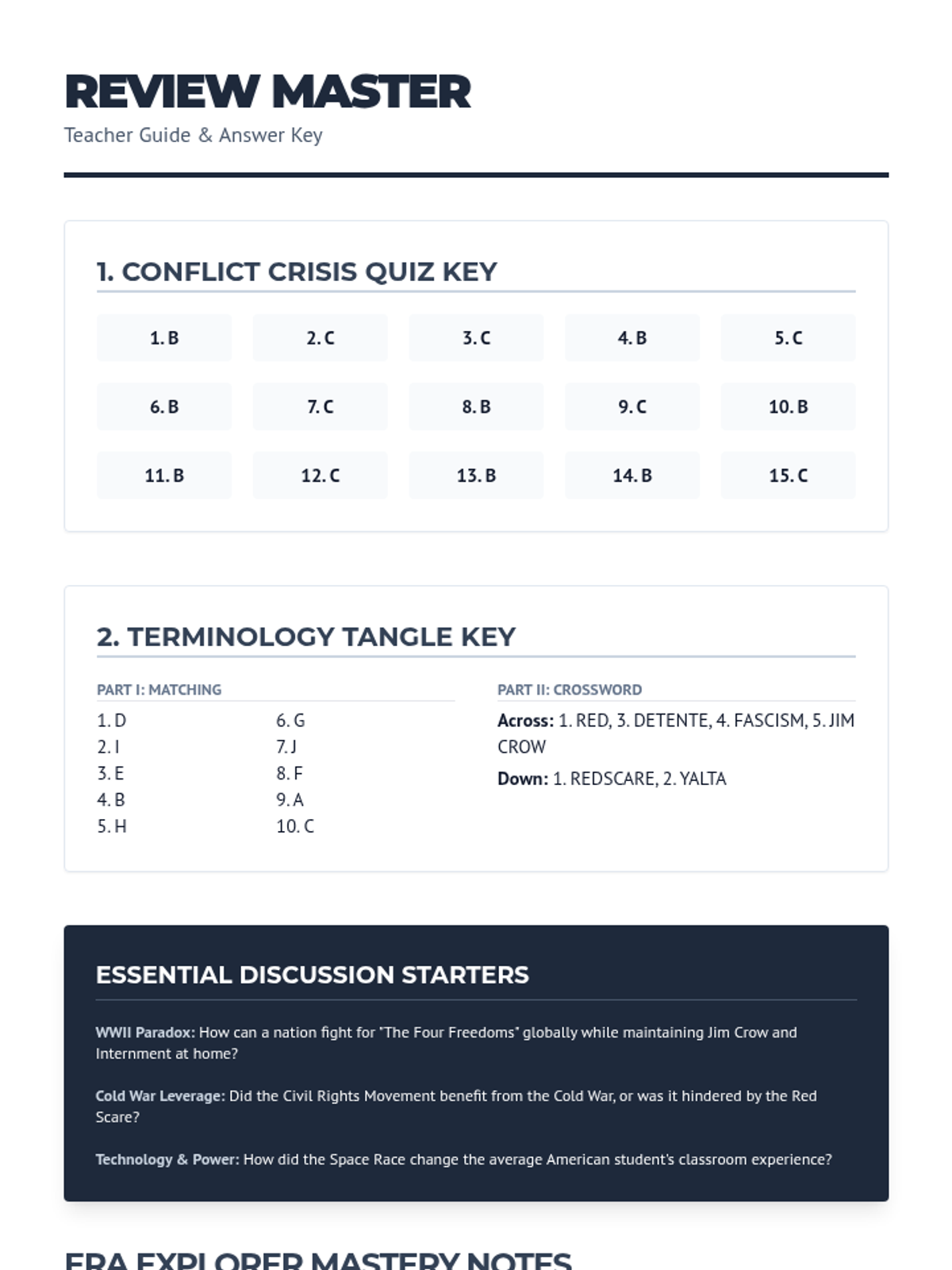
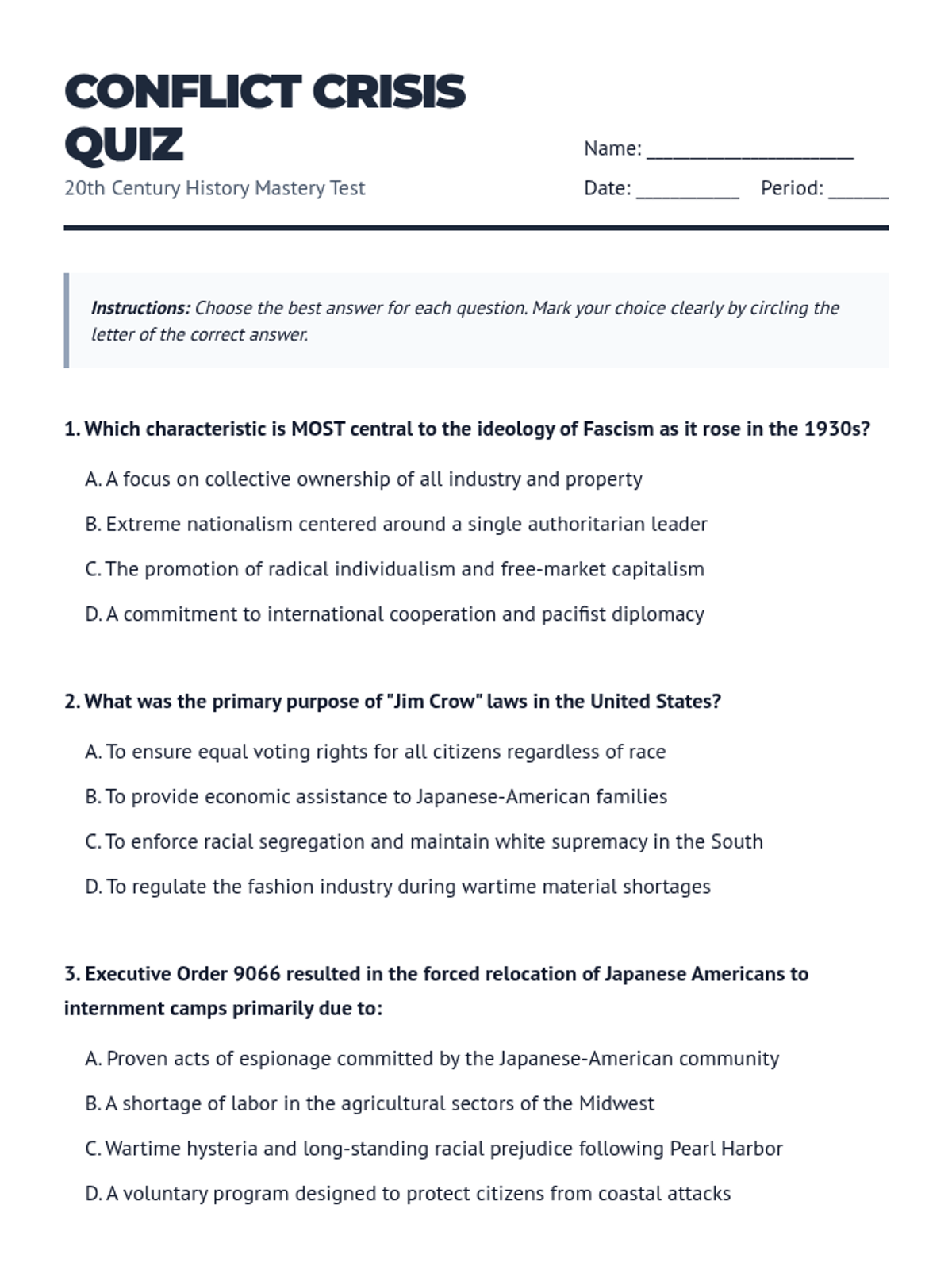
A comprehensive review lesson covering major 20th-century events from the rise of Fascism through the Civil Rights Movement and the Cold War. Students will engage with vocabulary, cause-and-effect relationships, and key historical facts through matching, crosswords, and guided study templates.
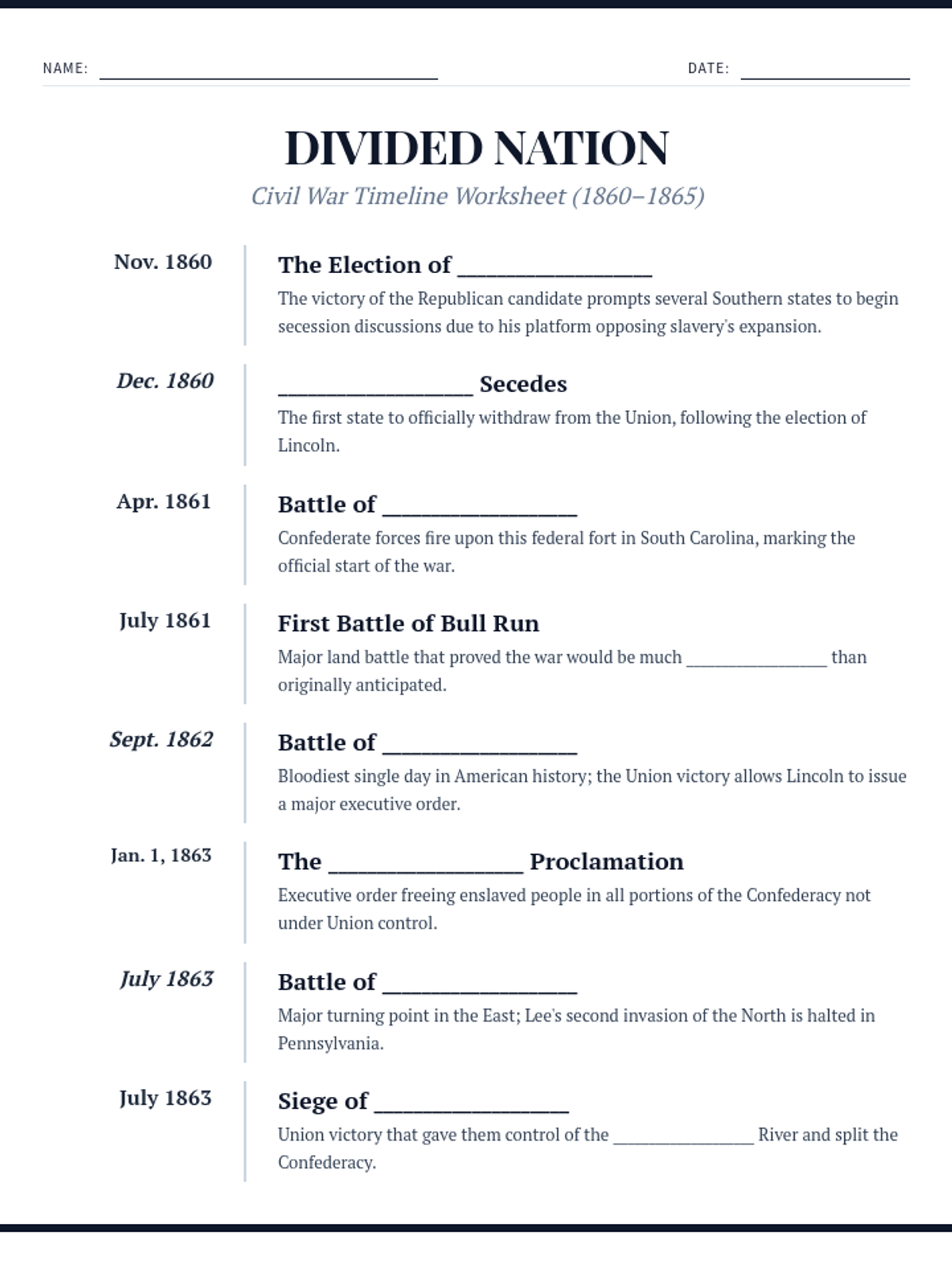
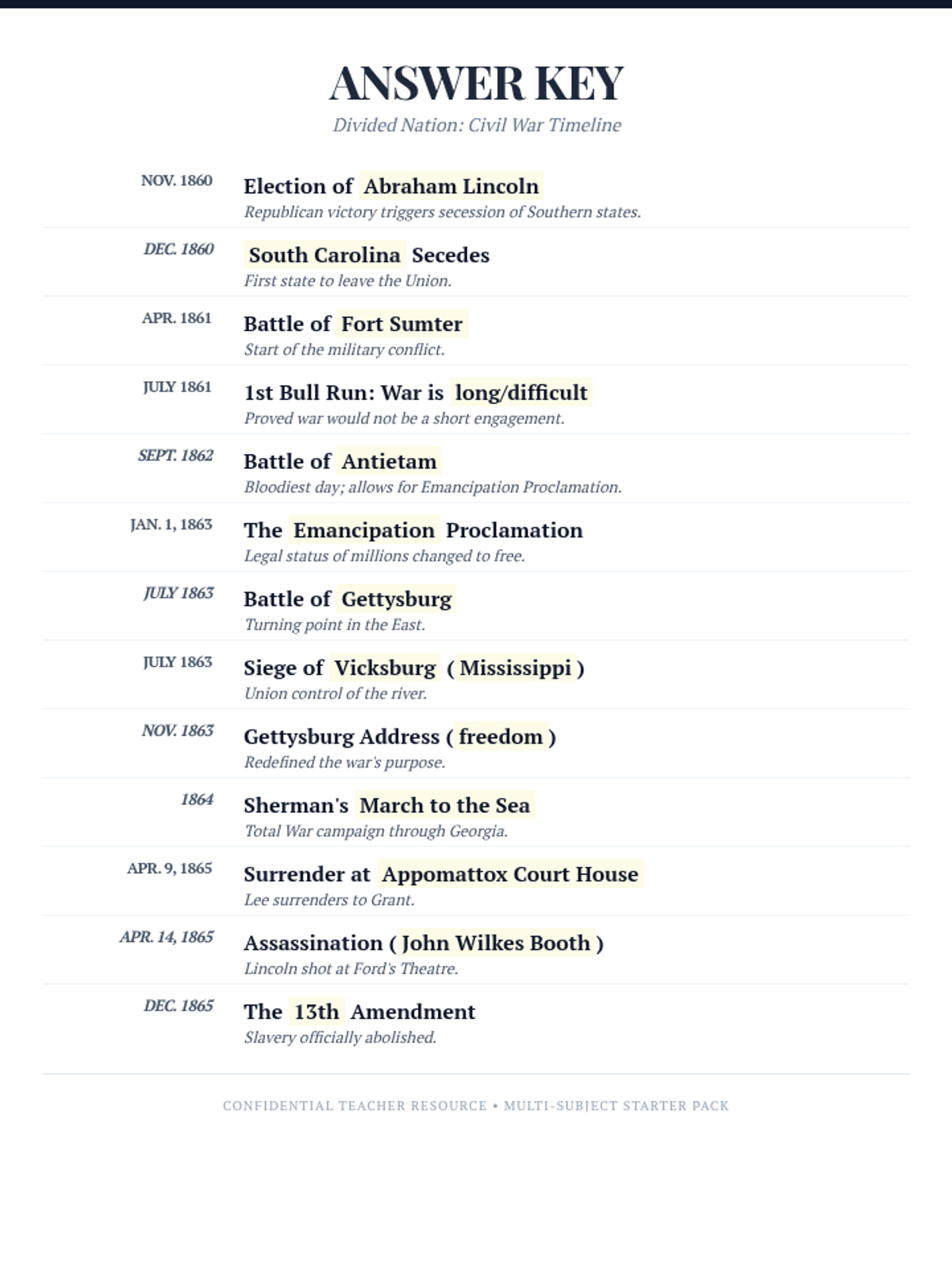
A comprehensive exploration of the American Civil War's key events through a detailed timeline activity for high school students.
An engaging visual guide to the process of photosynthesis, designed for 7th-grade life science students.
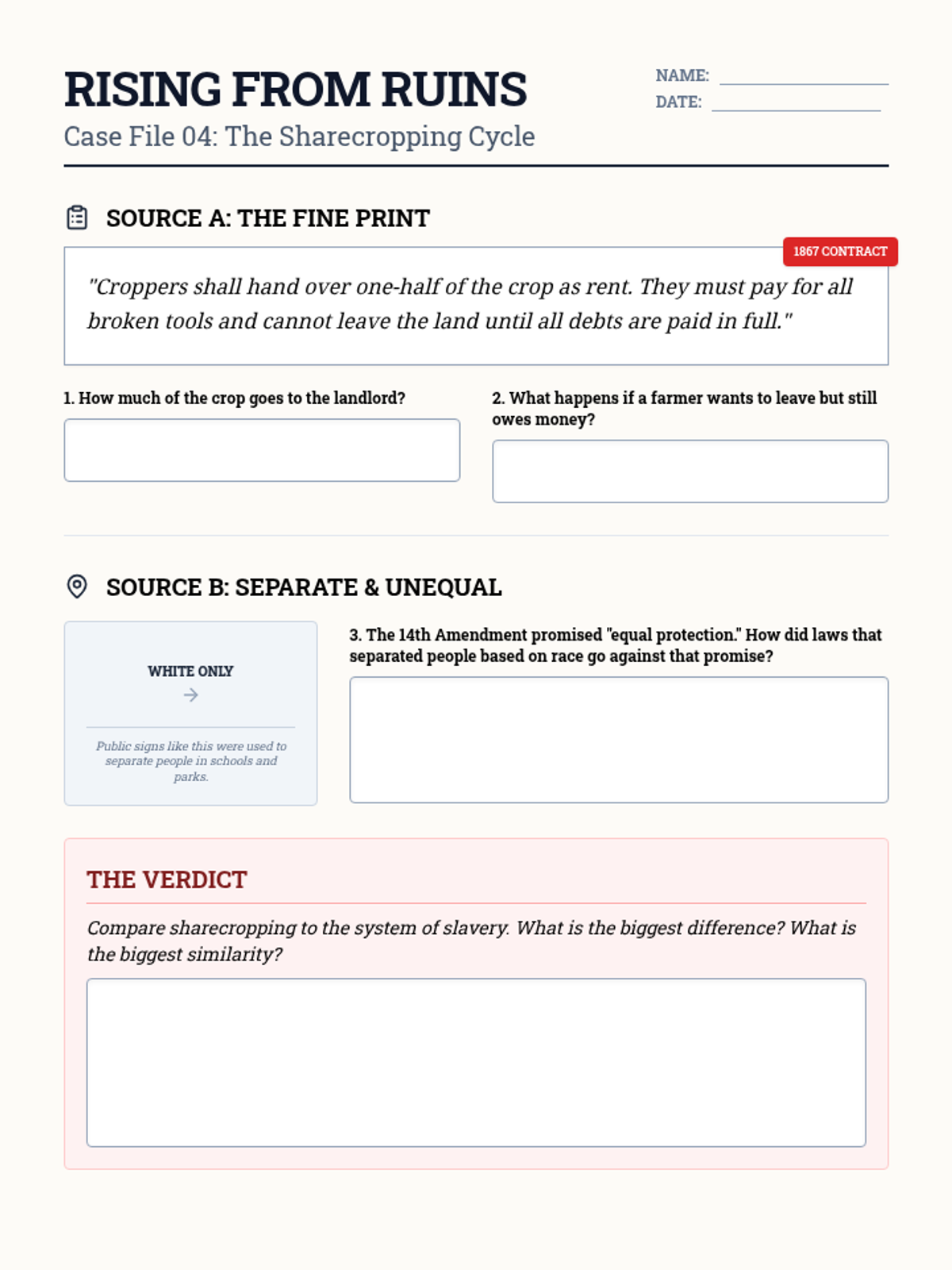
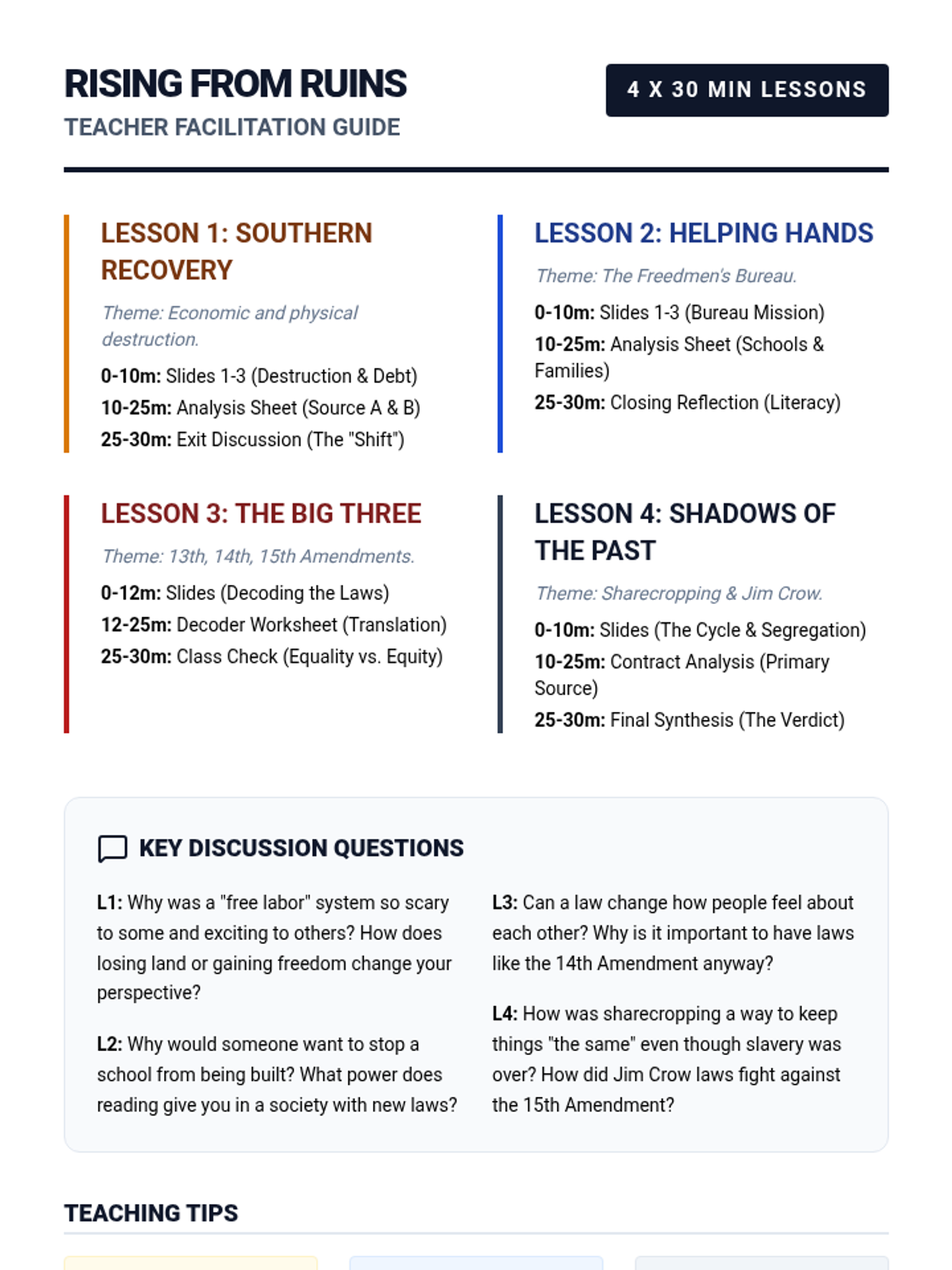
Students explore the limitations of Reconstruction through the lens of sharecropping and the emergence of Jim Crow laws.
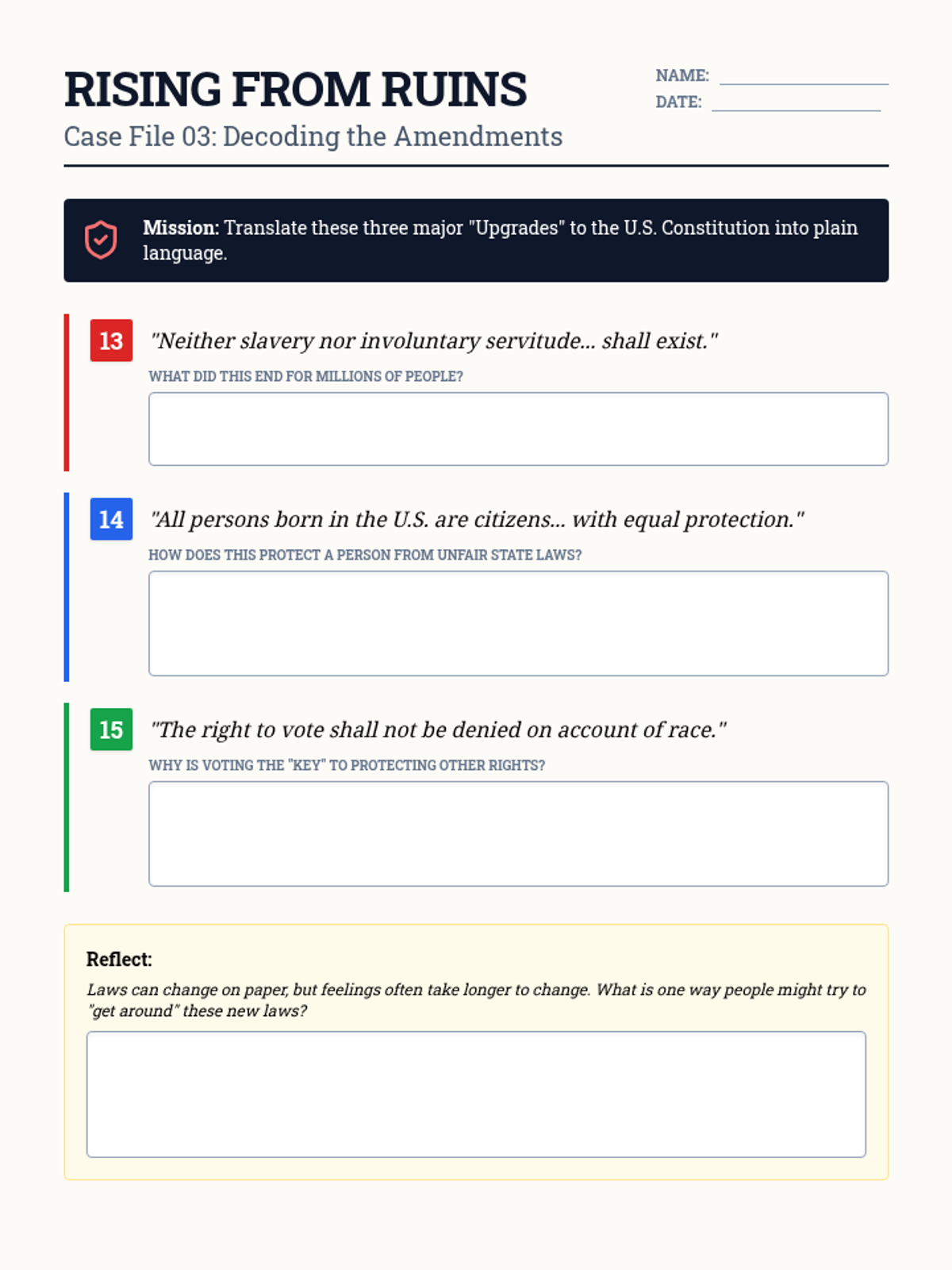
A deep dive into the 13th, 14th, and 15th Amendments and how they aimed to redefine American citizenship and rights.
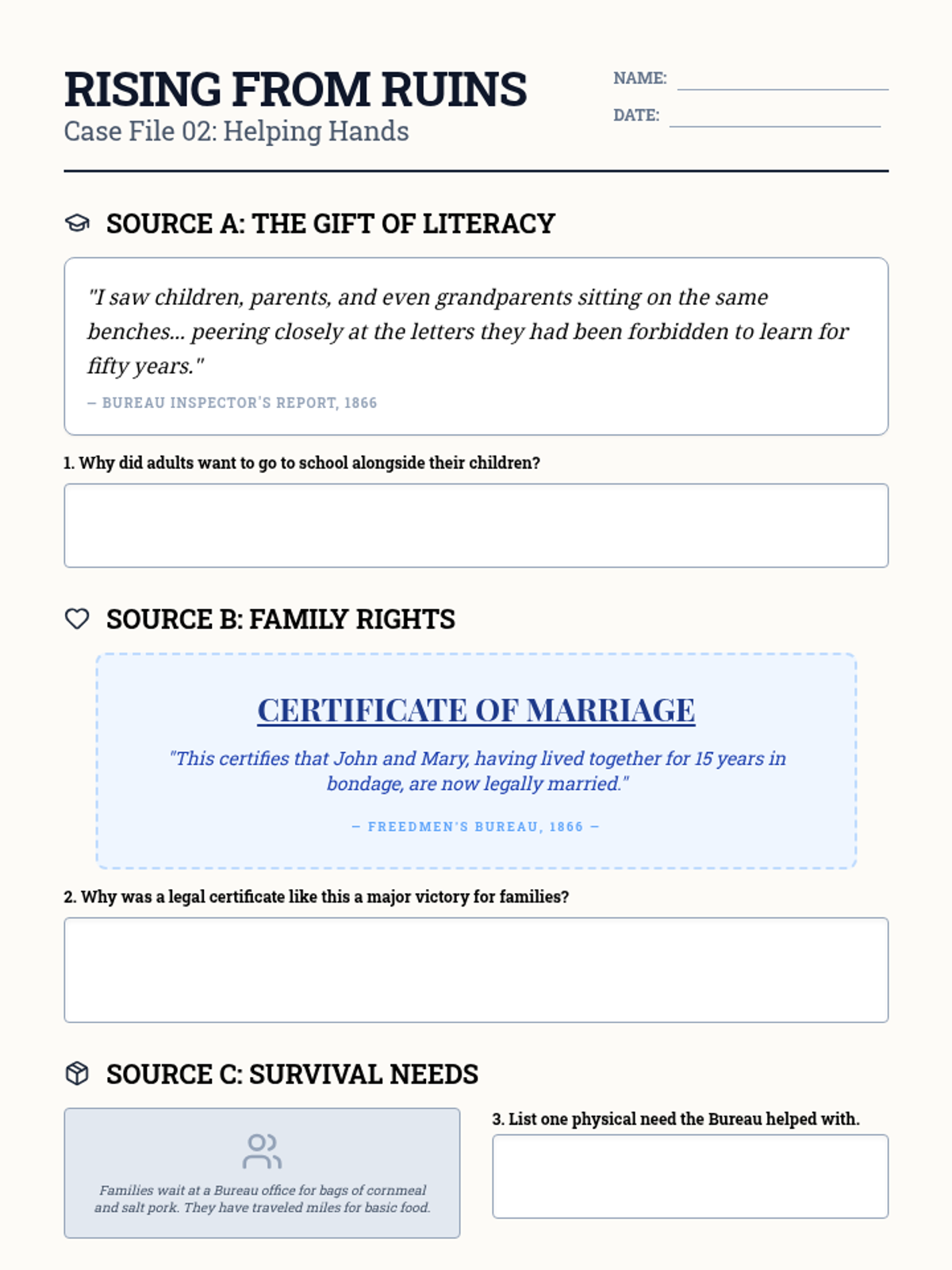
An investigation into the Freedmen's Bureau and its role in providing education, healthcare, and legal assistance to formerly enslaved people.
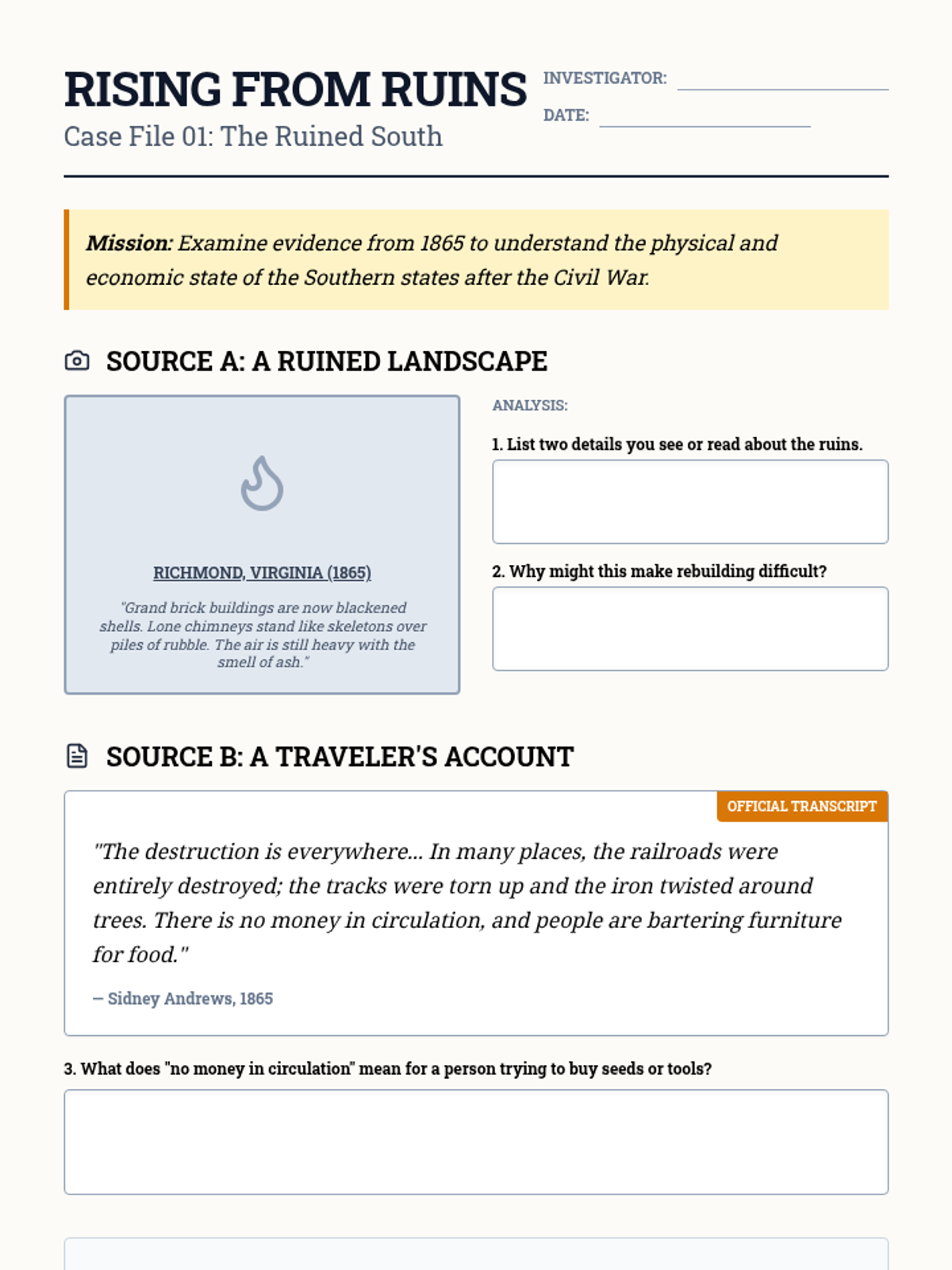
Students examine the physical and economic destruction of the South and the initial challenges of transitioning to a free labor system.
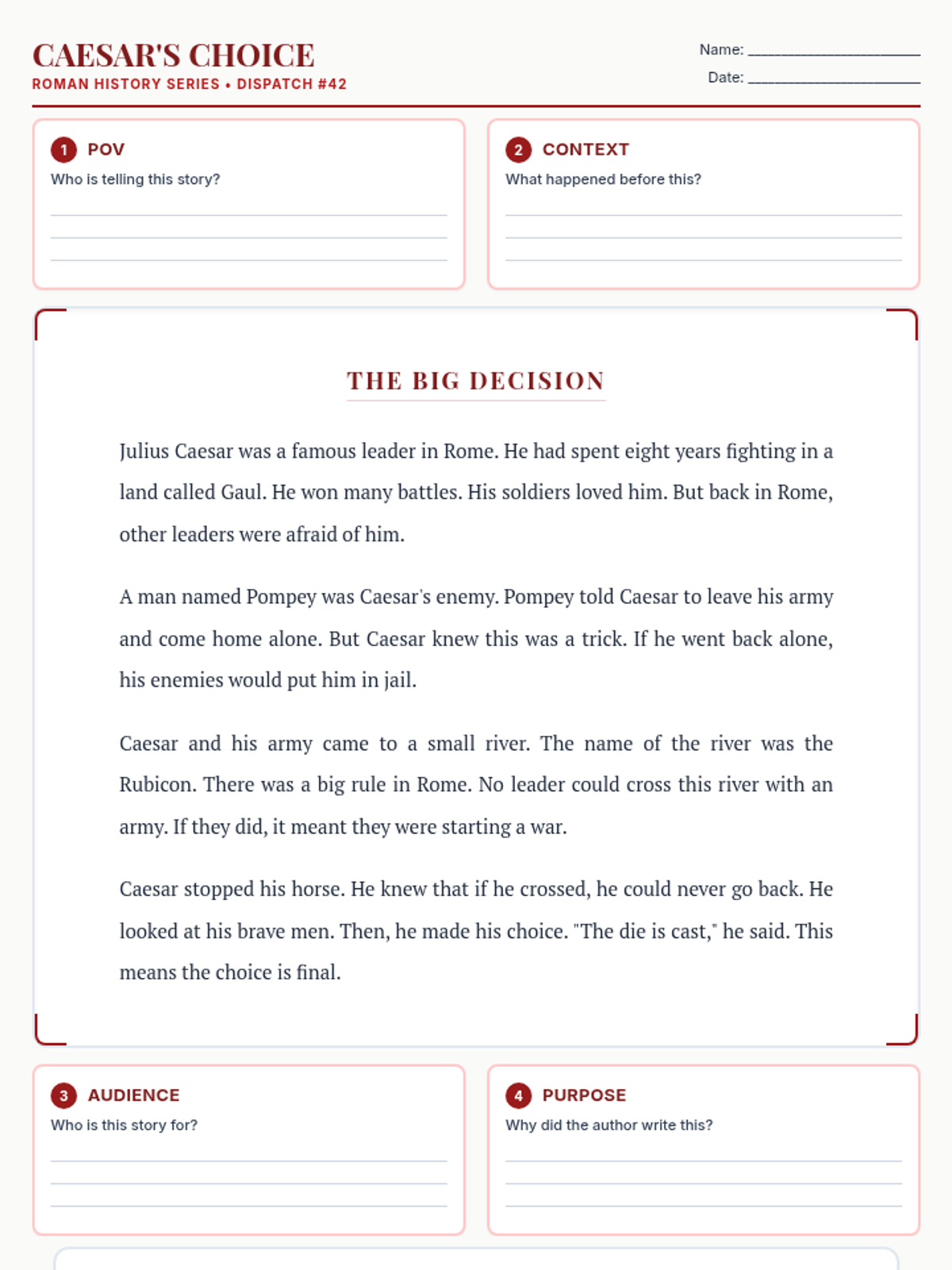
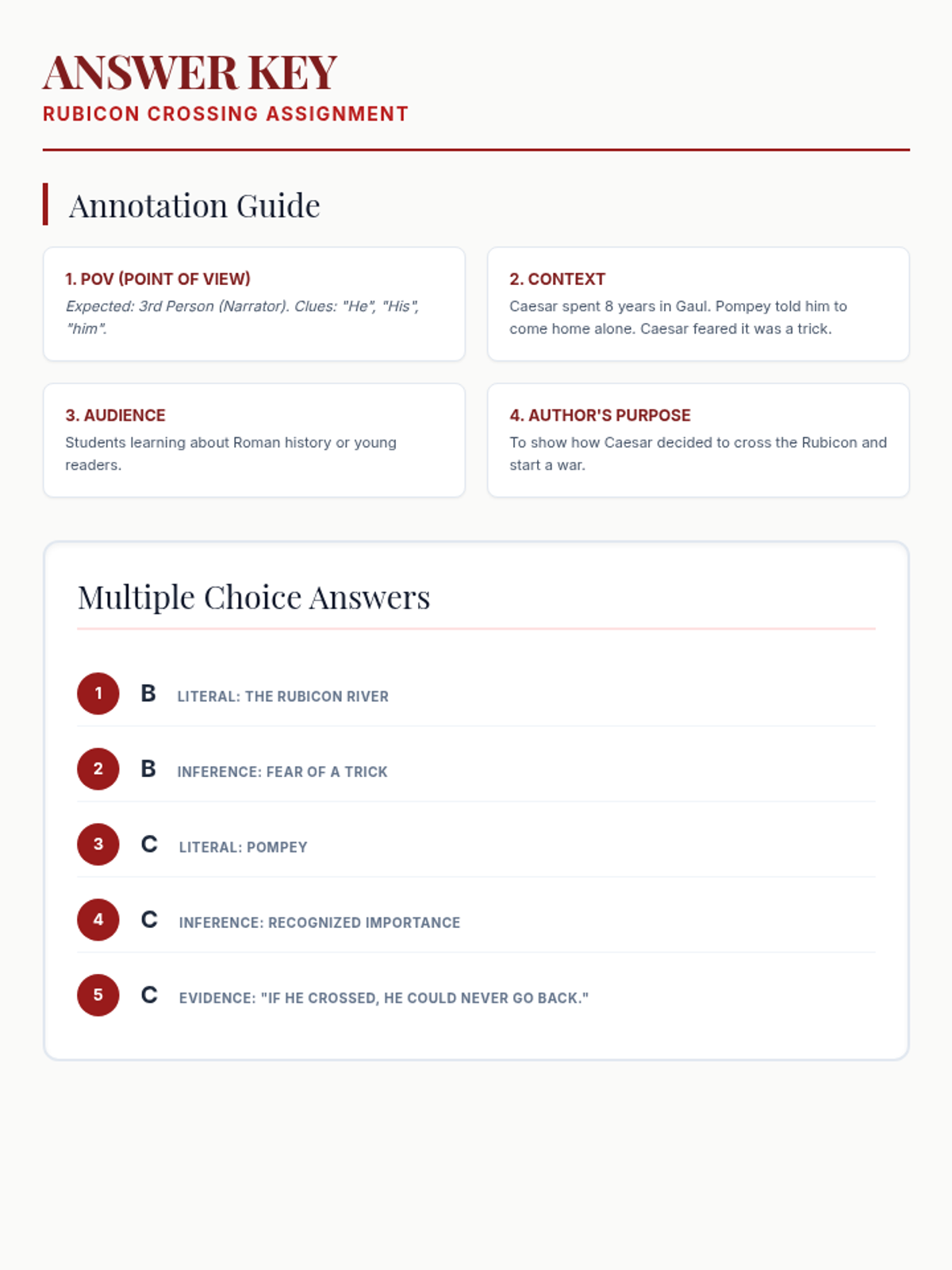
A lesson exploring Julius Caesar's historic decision to cross the Rubicon river, focusing on simple narrative structure and reading comprehension for young learners.
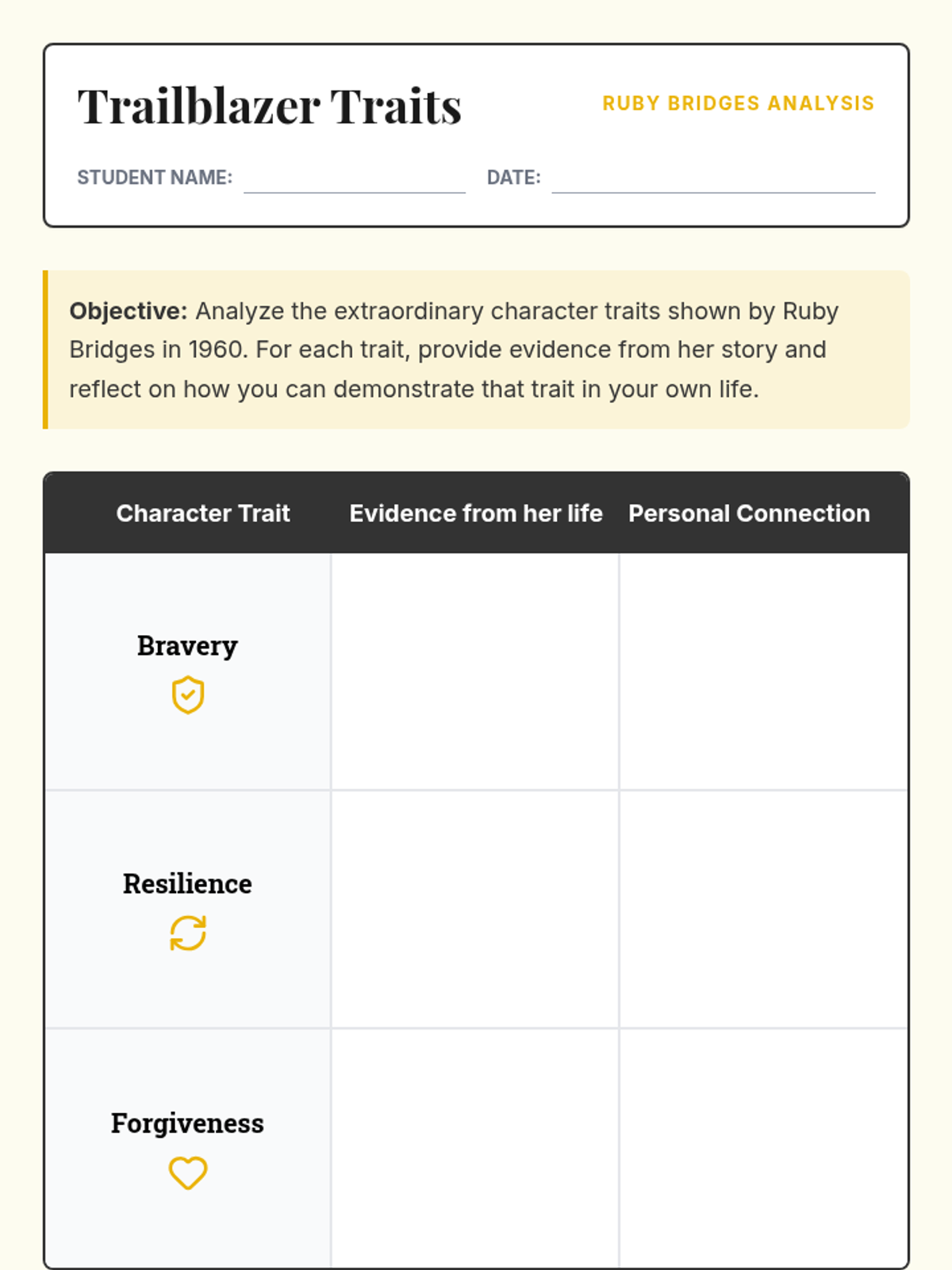
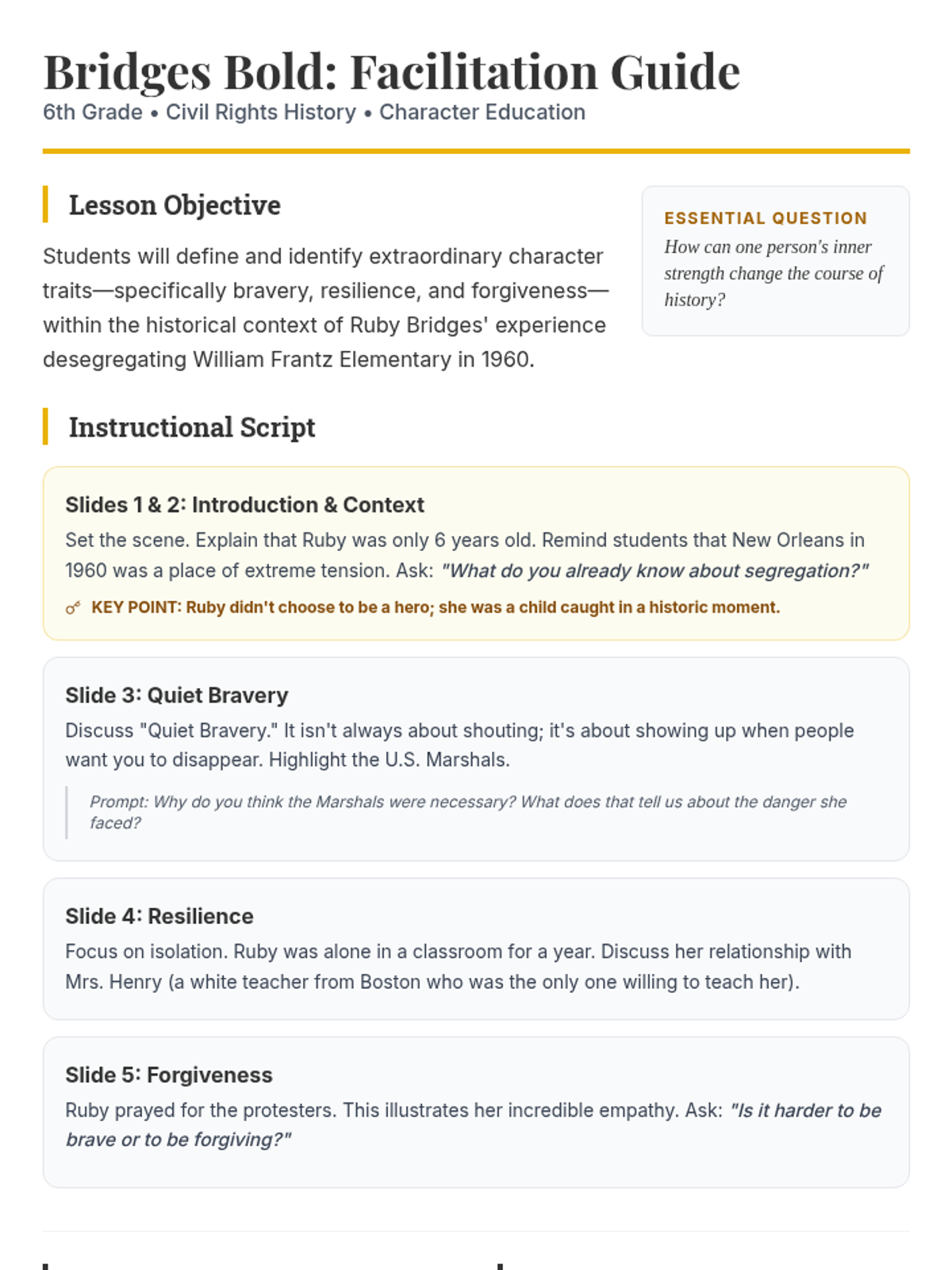
A lesson exploring the extraordinary character traits of Ruby Bridges, focusing on her bravery, resilience, and impact on the Civil Rights Movement. Students will analyze primary source accounts and reflect on how they can apply these traits in their own lives.