Barrier Breakers Teacher Guide Barrier Breakers
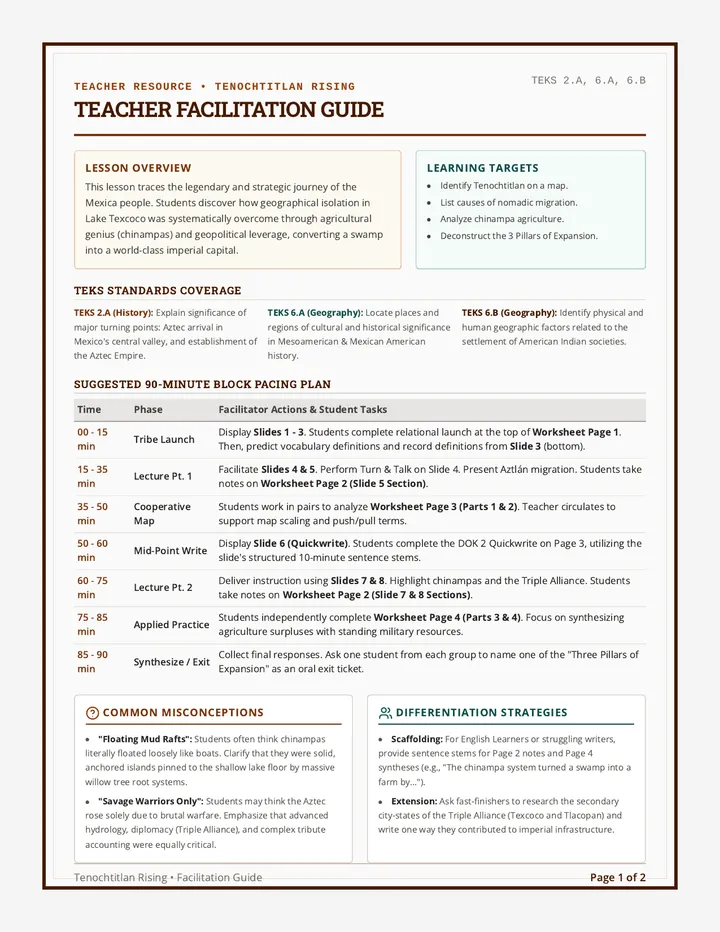
Teacher Facilitation Guide
CIVICS / SOCIAL STUDIES
Grades 10-12
Pacing
Hook 5m
Video Analysis 5m
Deep Dive 15m
Policy Audit 15m
Extension Ongoing
Materials
• Systemic Stigma Slides
• Policy Audit Handouts
• Highlighters (2 colors)
• ADA Reference Sheet
Objective
Students will analyze how institutional policies create systemic barriers for mental health and propose equitable policy reforms in schools and workplaces.
1. The Hook (5 min)
Goal: Activate prior knowledge about organizational rules.
Display Slide 2. Ask: "What kinds of rules does a building or a company have?" Push past basic rules like "don't smoke" to "how do they decide who to hire?" or "how do they treat people who get sick?"
2. Video Analysis (5 min)
Goal: Define Institutional Stigma visually.
Watch the video "Different Types of Stigma." Focus specifically on 2:18-2:53 .
Ask: "What visual was used for institutional stigma?" (The contract/building).
Ask: "What examples were given?" (Funding cuts and hiring discouragement).
3. Deep Dive: "Systemic" (15 min)
Goal: Distinguish between individual bias and structural barriers.
Defining "Systemic"
It's built into the system (rules, laws, culture) rather than just being one person's opinion. Use the analogy of a "broken rulebook" vs. a "mean coach."
The Impact
Unlike public stigma, which affects social interactions, institutional stigma affects rights : income, housing, and education.
4. Policy Audit Challenge (15 min)
Goal: Application of knowledge to real-world scenarios.
Hand out the Fictional Policy Documents and Policy Audit Worksheet .
1
Identify (Red Highlighter)
Students find language that stigmatizes (e.g., "unstable," "unpredictable," "perfect attendance") or creates a barrier.
2
Rewrite (Worksheet)
Students draft a new version of the policy that protects organizational goals (e.g., productivity) while being equitable for mental health.
5. Extension: Legal Protections
Introduce the Americans with Disabilities Act (ADA) . Many of the policies in the fictional documents are actually illegal under federal law. Use the ADA Reference Sheet to have students check their "Rewrites" against real civil rights protections.
Critical Discussion Prompts
"Why might a company think a policy like 'perfect attendance' is good, and how does it accidentally hurt someone with a chronic illness?"
"If a rule is 'the same for everyone,' does that automatically make it fair? Why or why not?"
Systemic Stigma Slides Systemic Barriers
Institutional Stigma & Policy Reform
What rules live here?
Think about a large building—a school, a hospital, or a corporate headquarters.
Rules in these buildings decide:
Who gets to come inside?
Who is allowed to keep their job?
Who is "fit" to lead?
"A building isn't just bricks; it's a collection of policies."
Analyzing the Source
Focus: Institutional Stigma (2:18 - 2:53)
Watch Carefully
Embedded media
Key Term: Systemic
The Definition
Relating to an entire system, rather than just individual parts or specific people.
"It’s not about one person being 'mean.' It’s about the rulebook being broken."
Public Stigma
Personal attitudes and individual bias from people.
Institutional Stigma
Official policies that create structural barriers.
Examples of Barriers
Funding Cuts
Government programs reducing money for mental health research while increasing it for physical health.
Budgetary Stigma
Hiring Policies
Rules that require applicants to disclose past treatment or "stability" as a condition for employment.
Workplace Stigma
Policy Audit Challenge
You are now the Institutional Review Board. Your goal is to find the subtle language that creates barriers and rewrite it for equity.
Identify Barriers
Rewrite Policies
Fictional Policy Documents Summit Corporate
Employee Handbook • Confidential
POLICY DOCUMENT #42-B
REVISED: JAN 2026
Section 4.1: Attendance and Reliability
Summit Corporate prides itself on a "100% Availability" culture. To maintain maximum productivity, all employees are required to be present for their scheduled shifts without exception. We believe that consistent attendance is the primary indicator of professional commitment and psychological stability.
"Unplanned absences for non-physical illnesses may result in a 'Reliability Review' and potential reassignment to lower-responsibility roles."
Section 7.3: Professional Conduct
Employees must maintain a "Level-Headed Demeanor" at all times. The company reserves the right to terminate any employee whose behavior becomes unpredictable, moody, or emotionally inconsistent, as these traits are viewed as detrimental to office morale and client relationships.
"Any employee undergoing long-term psychiatric treatment must disclose this to Human Resources to ensure they are fit for high-stress projects."
Section 12.2: Promotions and Leadership
Leadership roles are reserved for individuals who demonstrate "unwavering mental fortitude." Applicants with a history of medical leaves related to stress management or mental health will be deferred for a period of two years to prove their resilience before being reconsidered for management.
Westside High
Student Code of Conduct • 2025-26
ADMINISTRATIVE CODE
"Excellence Through Discipline"
Regulation 15: Extracurricular Eligibility
To represent Westside High in sports or clubs, students must be in "Sound Mind and Body." Students currently receiving intensive counseling or participating in behavioral health programs are ineligible for leadership positions (Captains, Presidents) to prevent potential disruptions to the team.
Regulation 22: Behavior and Discipline
Westside High maintains a "Zero-Tolerance" policy for unpredictable emotional outbursts. Students who display signs of "instability" or "unpredictable behavior" will be immediately removed from the general classroom setting and placed in alternative off-campus instruction until a medical professional certifies they are "cured."
Regulation 30: Academic Deadlines
Deadlines are absolute. Exceptions are only made for documented physical injuries (broken bones, surgery). Anxiety, depression, or general "mental health days" are not considered valid excuses for late work, as these are seen as a lack of time-management skills.
Policy Audit Worksheet Policy Audit Worksheet
Institutional Reform Task Force
NAME:
DATE:
Instructions
Review the Summit Corporate and Westside High documents. Identify policies that create institutional stigma by discriminating against or creating unnecessary barriers for people with mental health conditions.
Policy ID The Barrier (Why is this stigmatizing?) The Rewrite (Equitable Policy) Ex: 4.1
Systemic Reflection
"If a rule is 'the same for everyone,' why might it still be unfair to someone with a mental health condition?"
Goal: To recognize and challenge stigma so that people are treated equally and fairly.
ADA Rights Reference ADA Civil Rights Reference
Mental Health & The Law
"The ADA protects you from discrimination based on a mental health condition."
The Americans with Disabilities Act (ADA) is a federal civil rights law passed in 1990. It prohibits discrimination against people with disabilities, including mental health conditions like depression, anxiety, PTSD, and bipolar disorder.
Title I: Employment Rights
Qualification: Employers cannot refuse to hire or promote you because of a mental health condition if you are qualified for the job.
Privacy: In most cases, employers cannot ask about your diagnosis or medical history during an interview.
Reasonable Accommodations: Employers must provide changes to the workplace (e.g., flexible schedules, quiet workspaces) to help you do your job, unless it causes "undue hardship."
Title II: State & Local Government (Schools)
Equal Access: Public schools and universities cannot exclude you from programs, sports, or leadership roles due to a mental health disability.
Self-Correction: Schools must allow for modifications to rules (like attendance or deadlines) when a student's disability makes it necessary for equal participation.
Section 504 (Education Specific)
Ensures that students with mental health conditions receive accommodations to level the playing field.
Extended Deadlines
Quiet Testing Rooms
Flexible Attendance
Counseling Support
Policy Check:
Look at your "Rewritten Policies." Do they meet the legal requirements of the ADA? How does the ADA help "break" institutional stigma?
ADA Reference Handout U.S. Department of Justice (Informed Summary)