A deep dive into Wim Wenders' film 'Perfect Days' using existentialist philosophy to analyze the protagonist's repetitive routine and radical choices. Students explore themes of the absurd, authenticity, and 'komorebi' through critical theory.
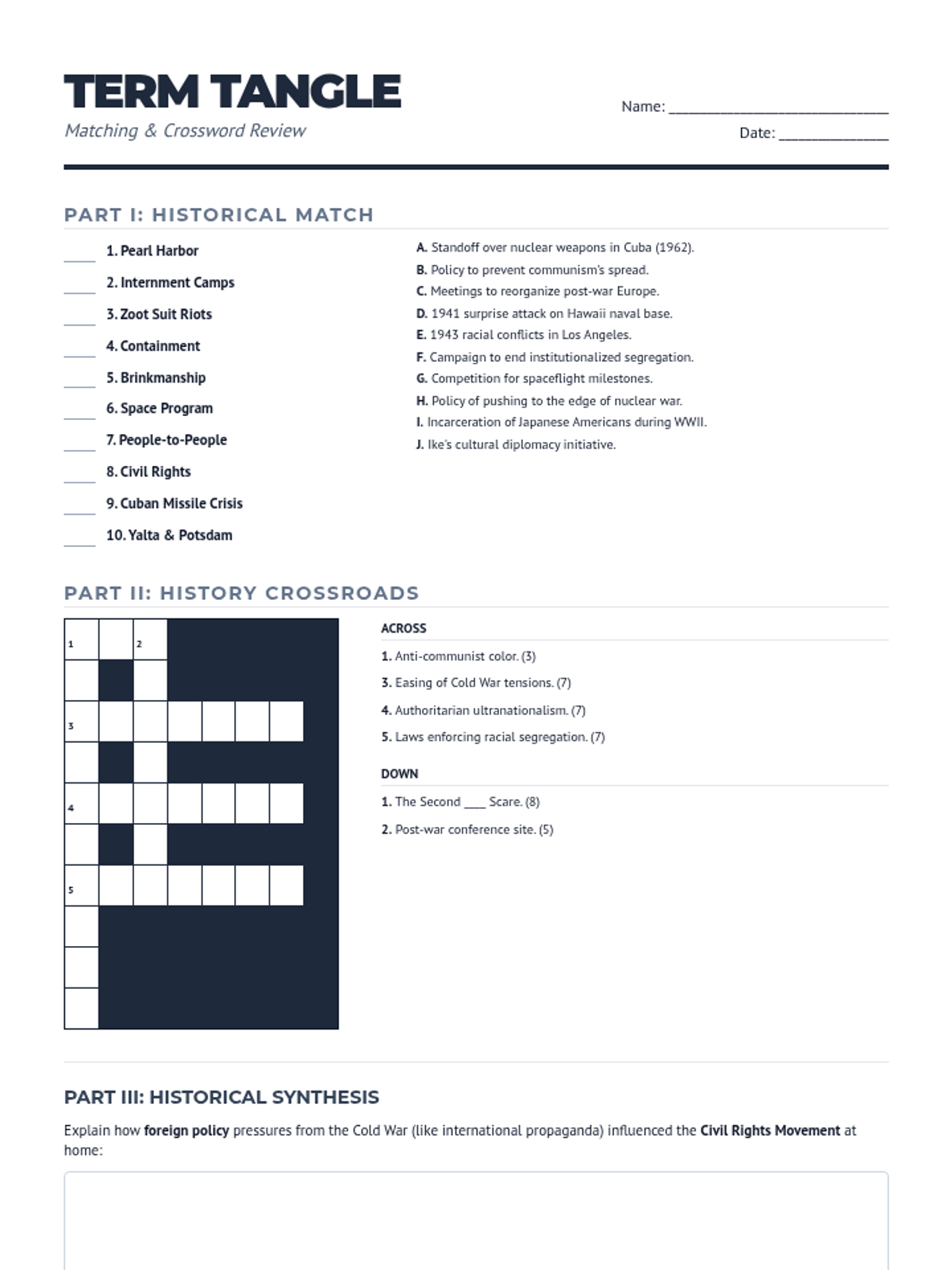
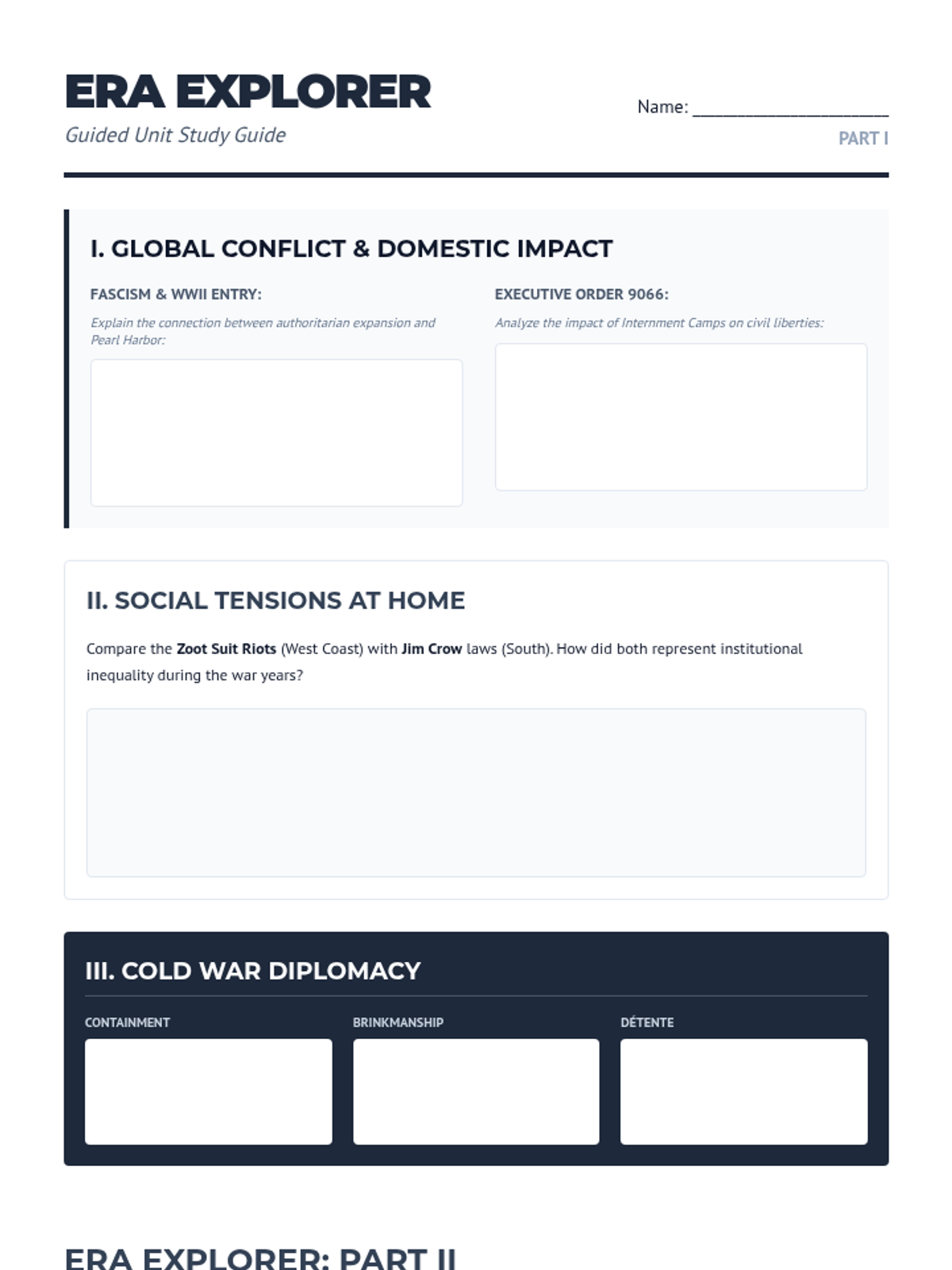
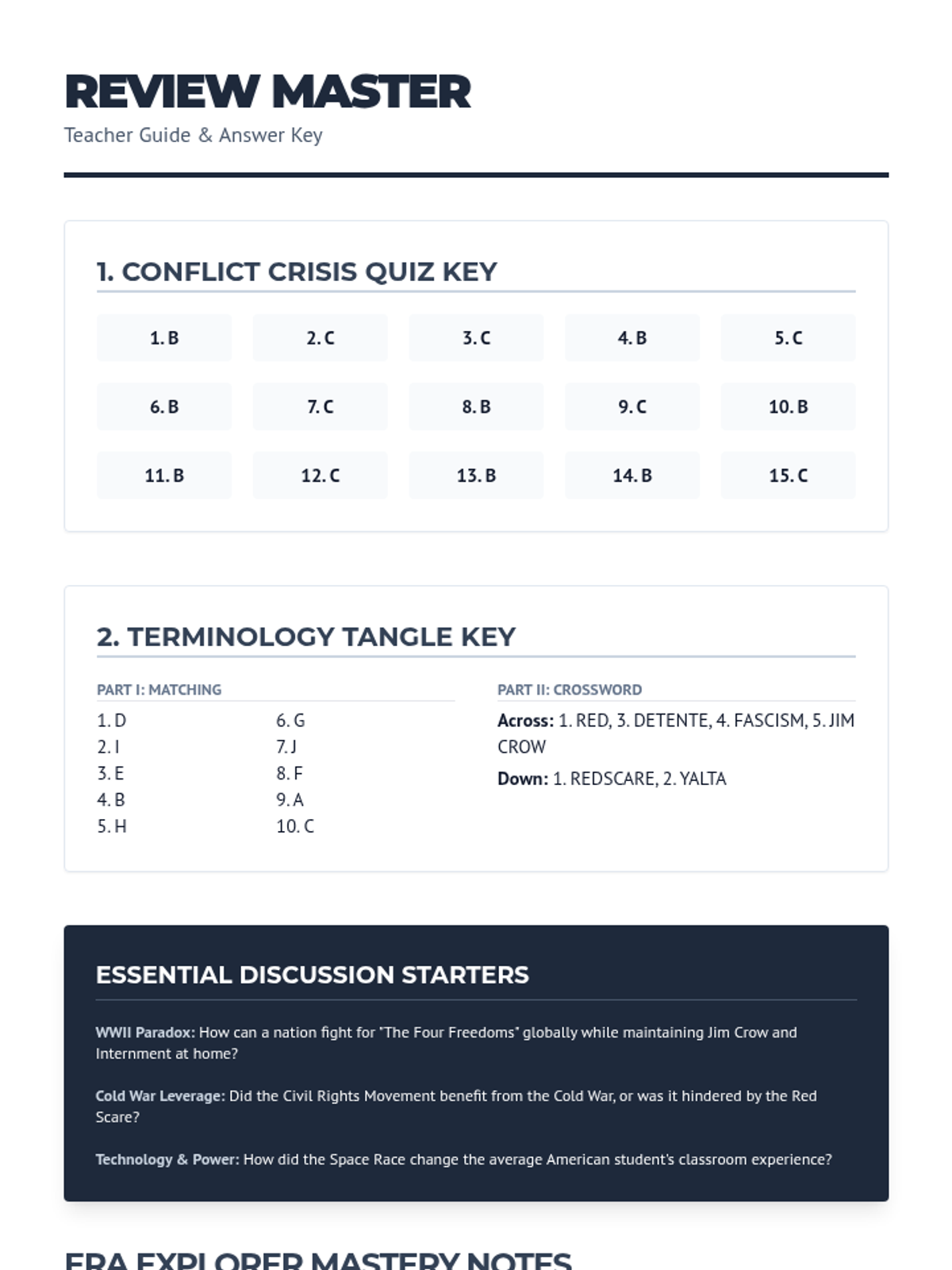
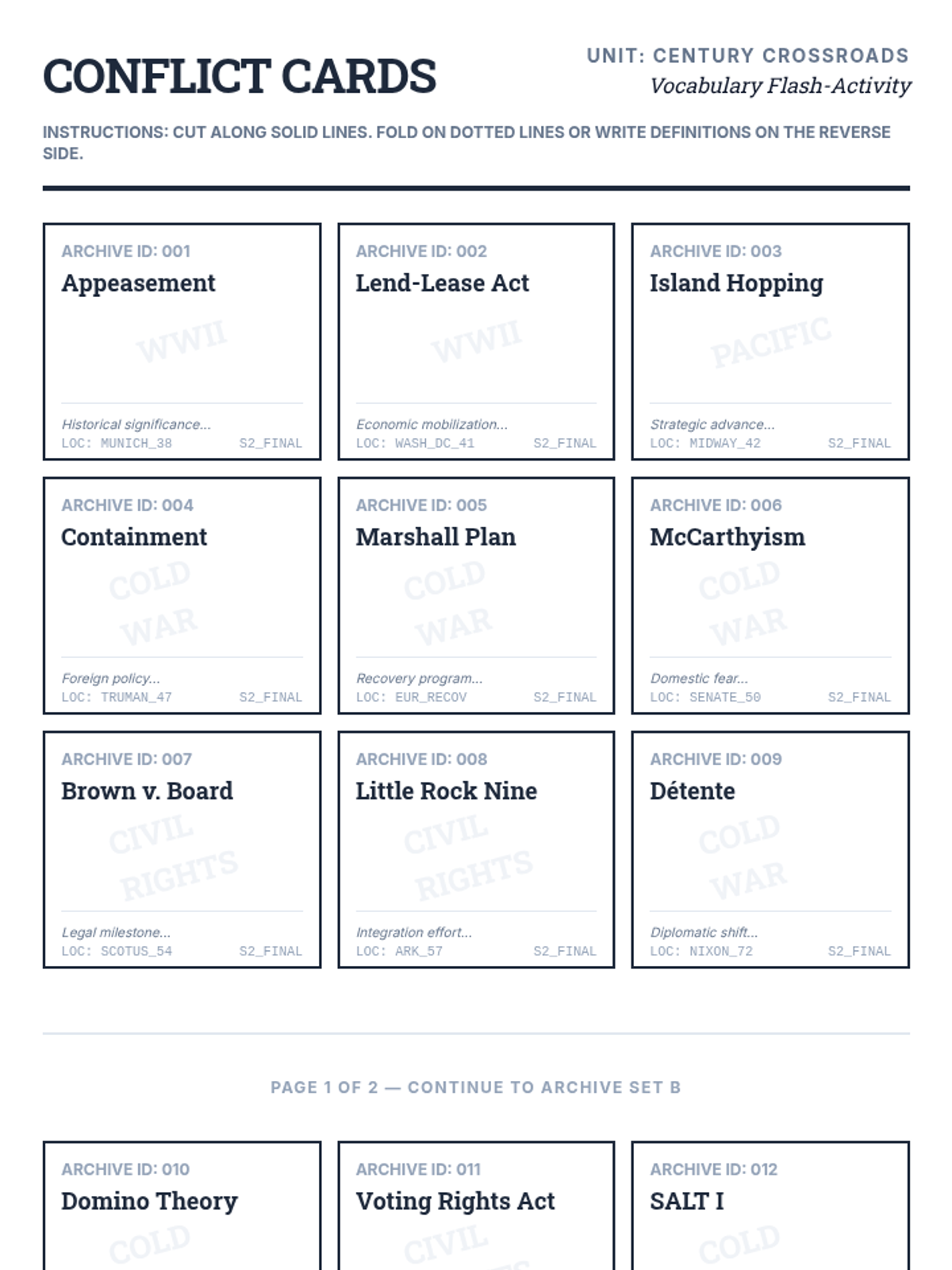
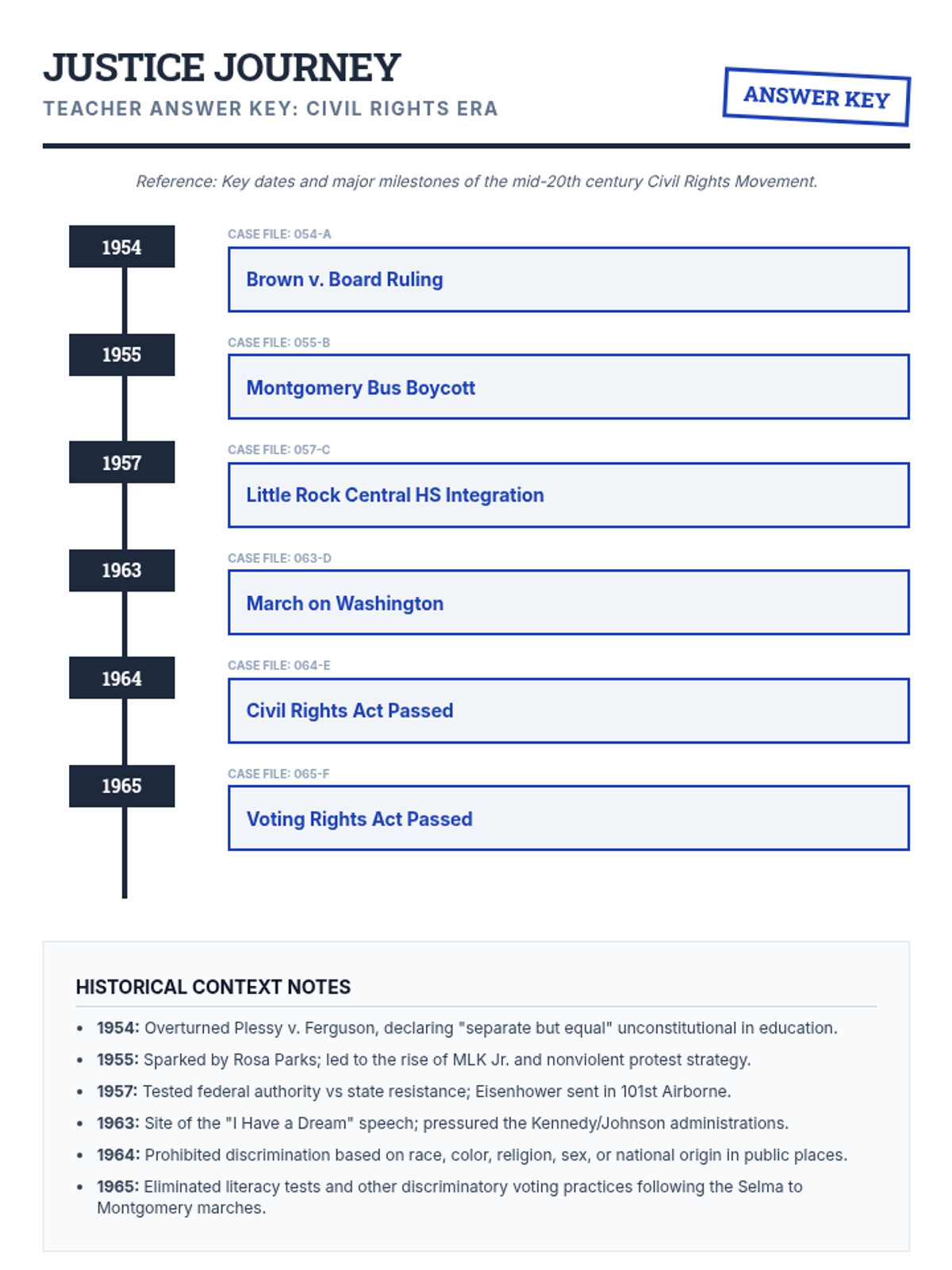
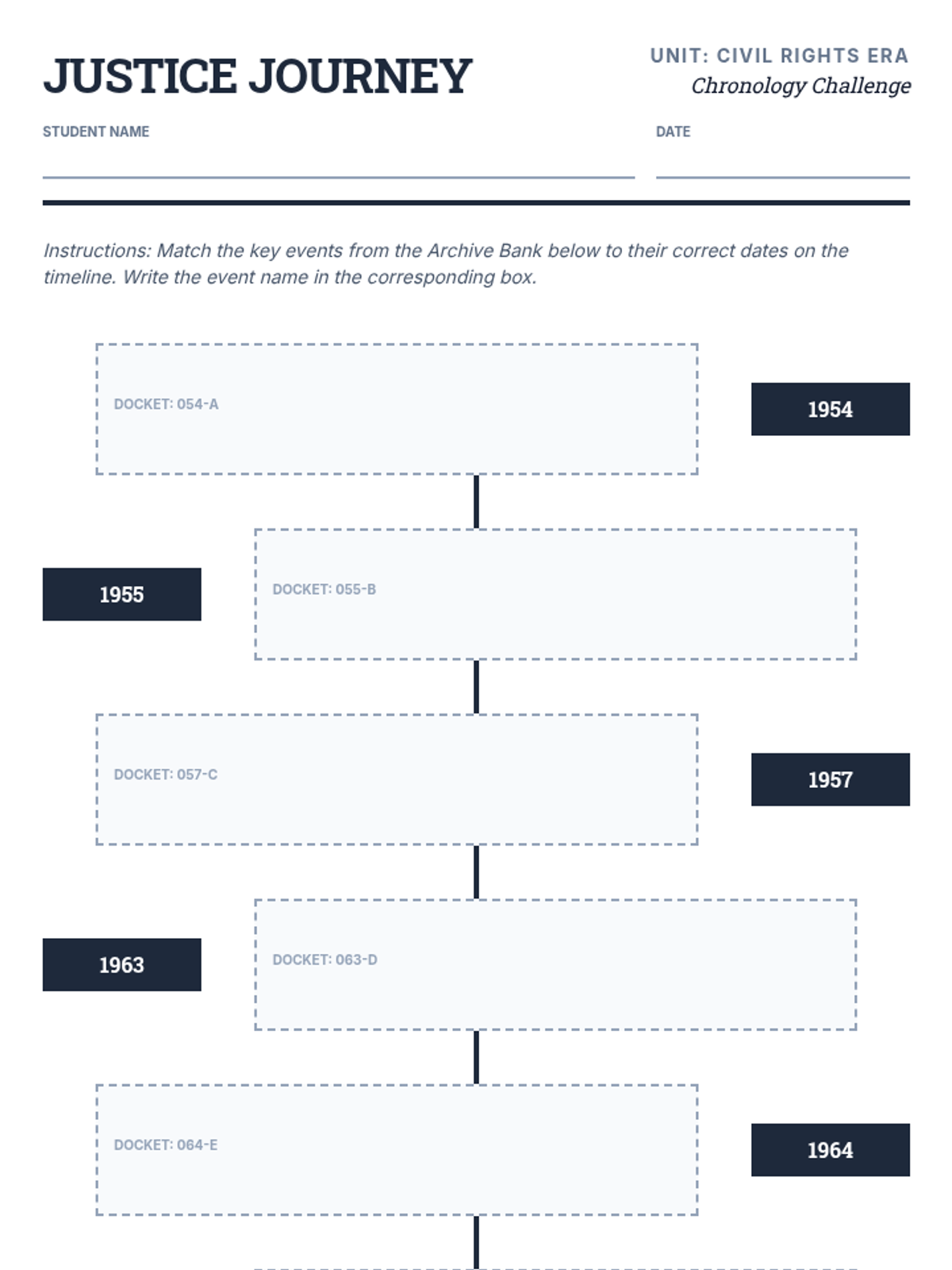
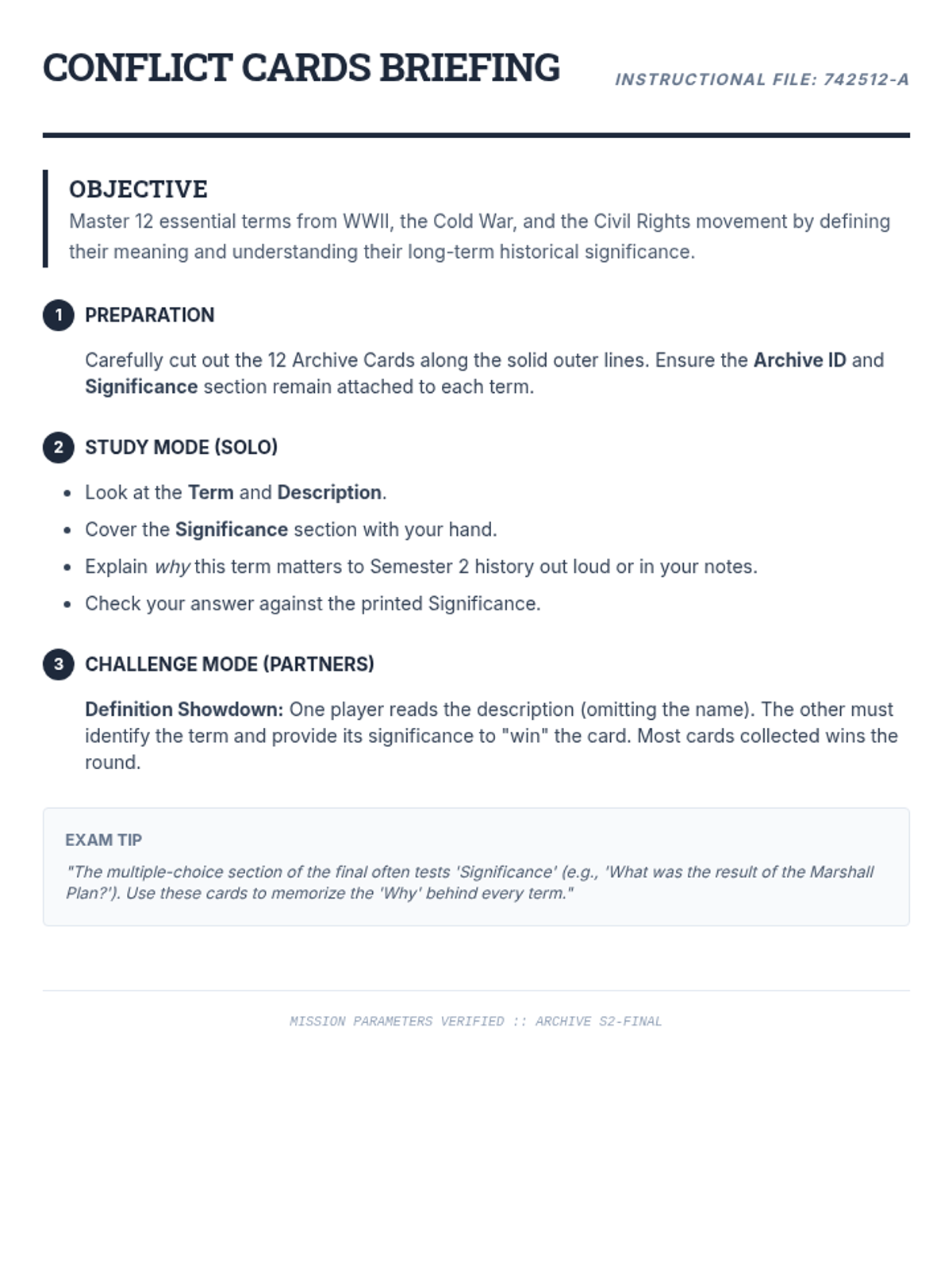
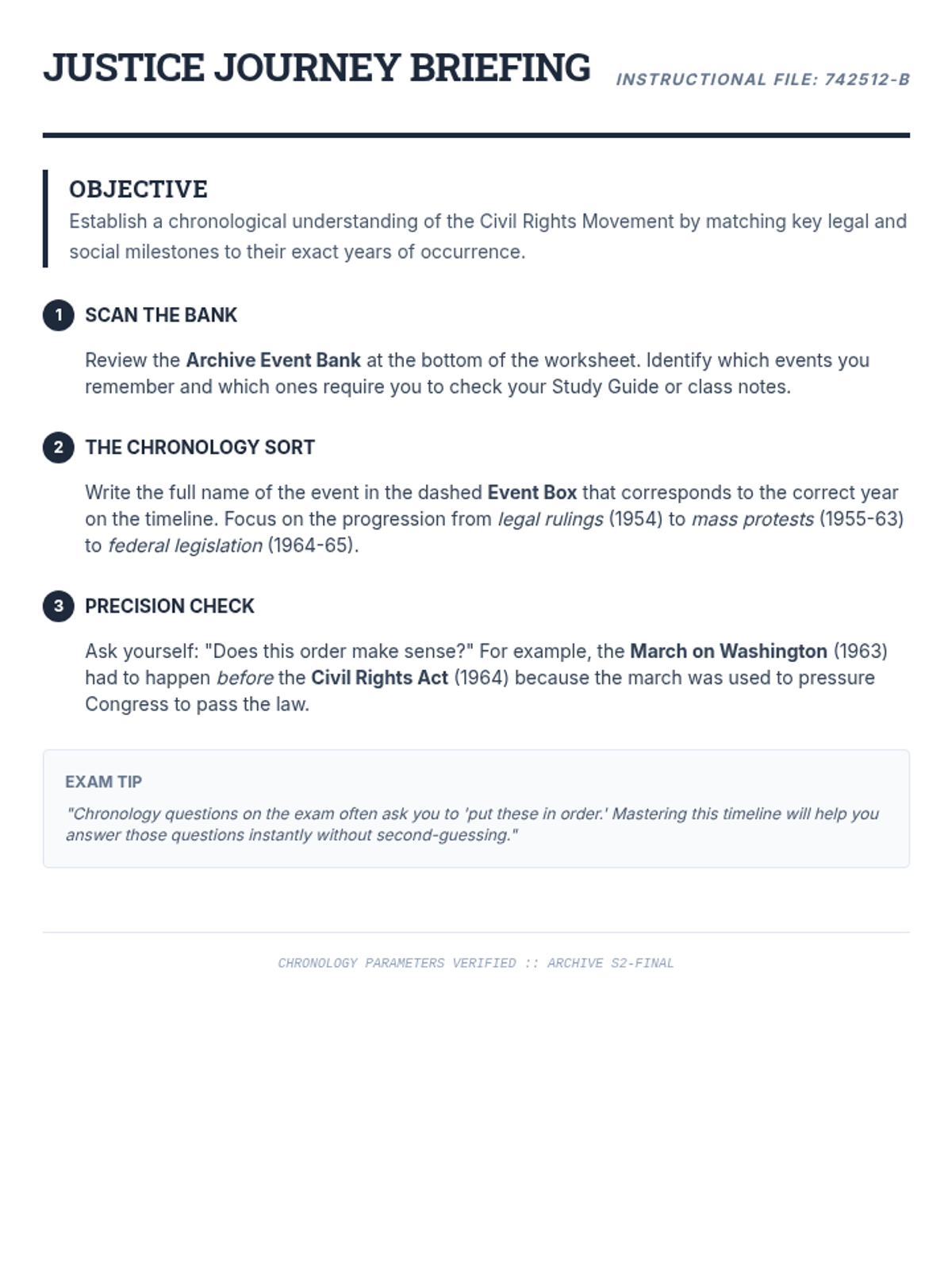
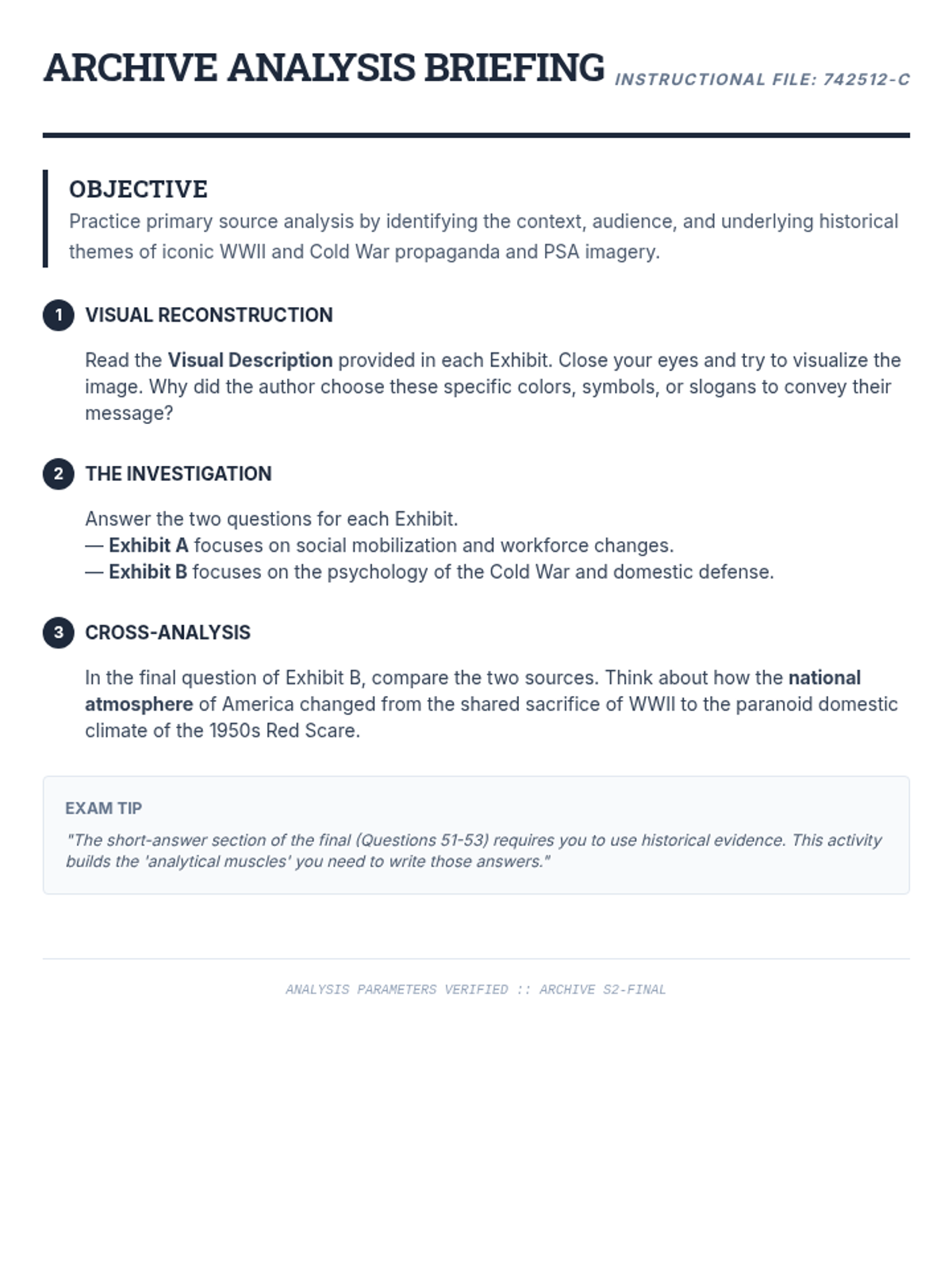
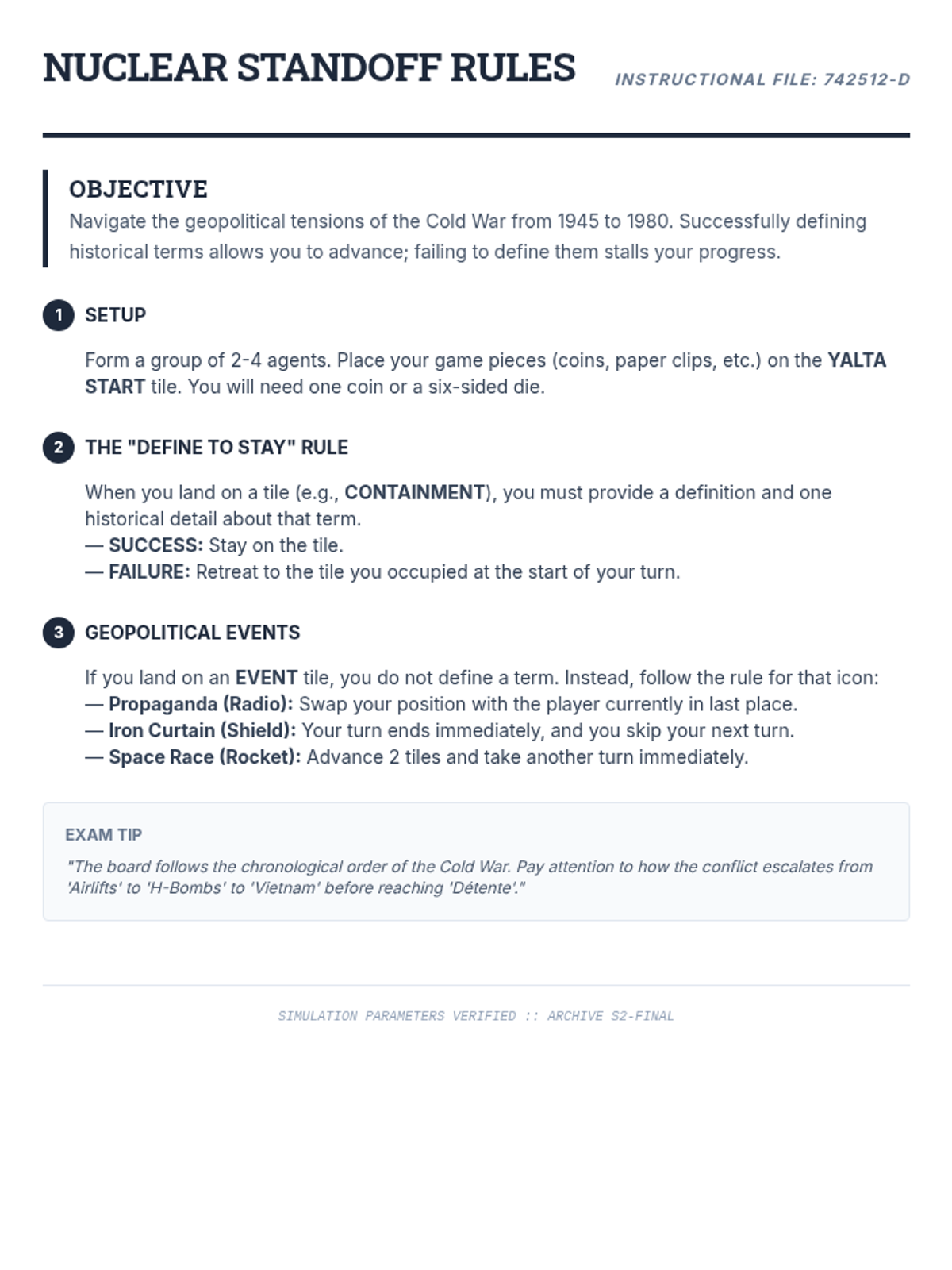
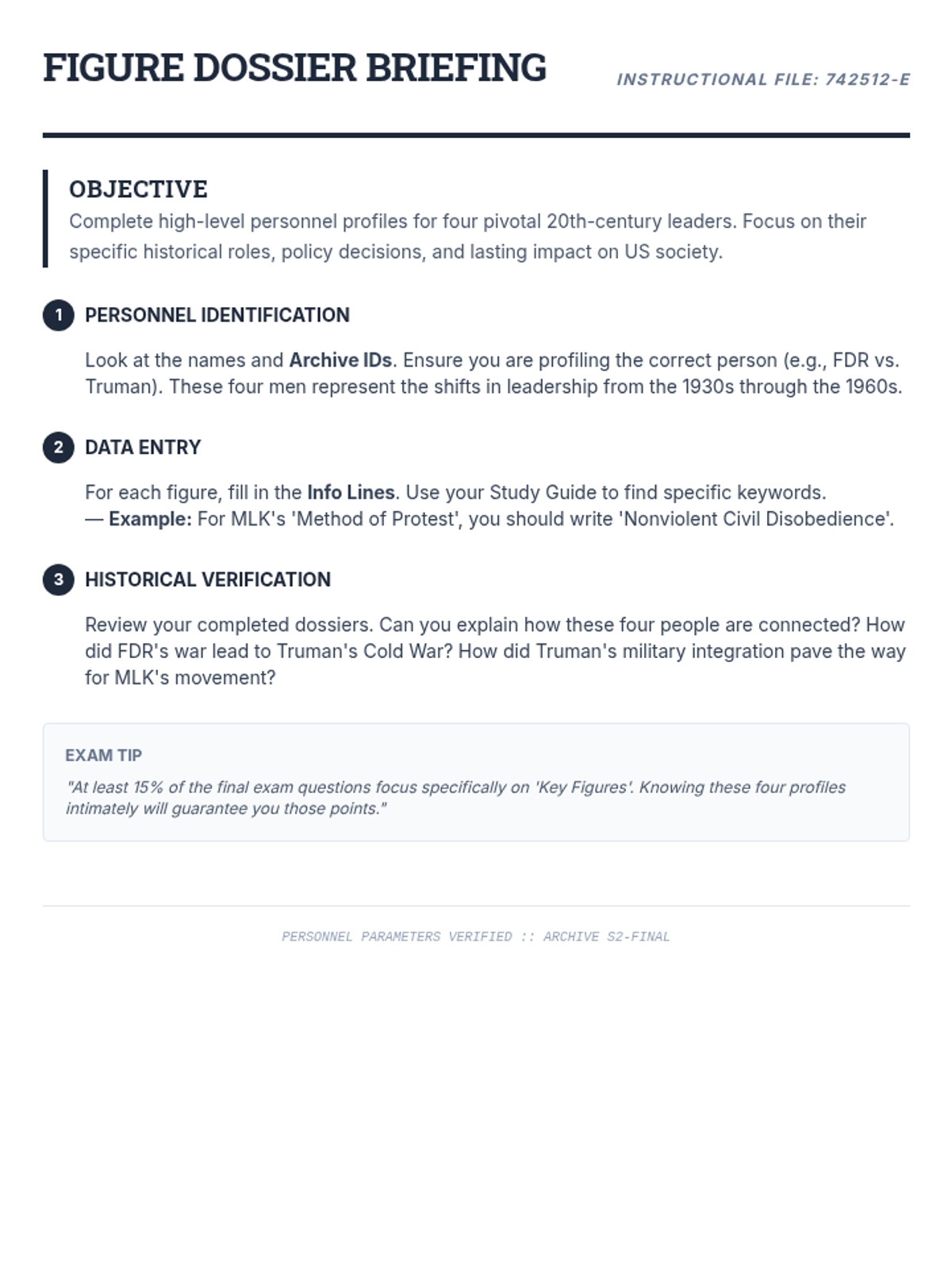
A comprehensive review lesson covering major 20th-century events from the rise of Fascism through the Civil Rights Movement and the Cold War. Students will engage with vocabulary, cause-and-effect relationships, and key historical facts through matching, crosswords, and guided study templates.
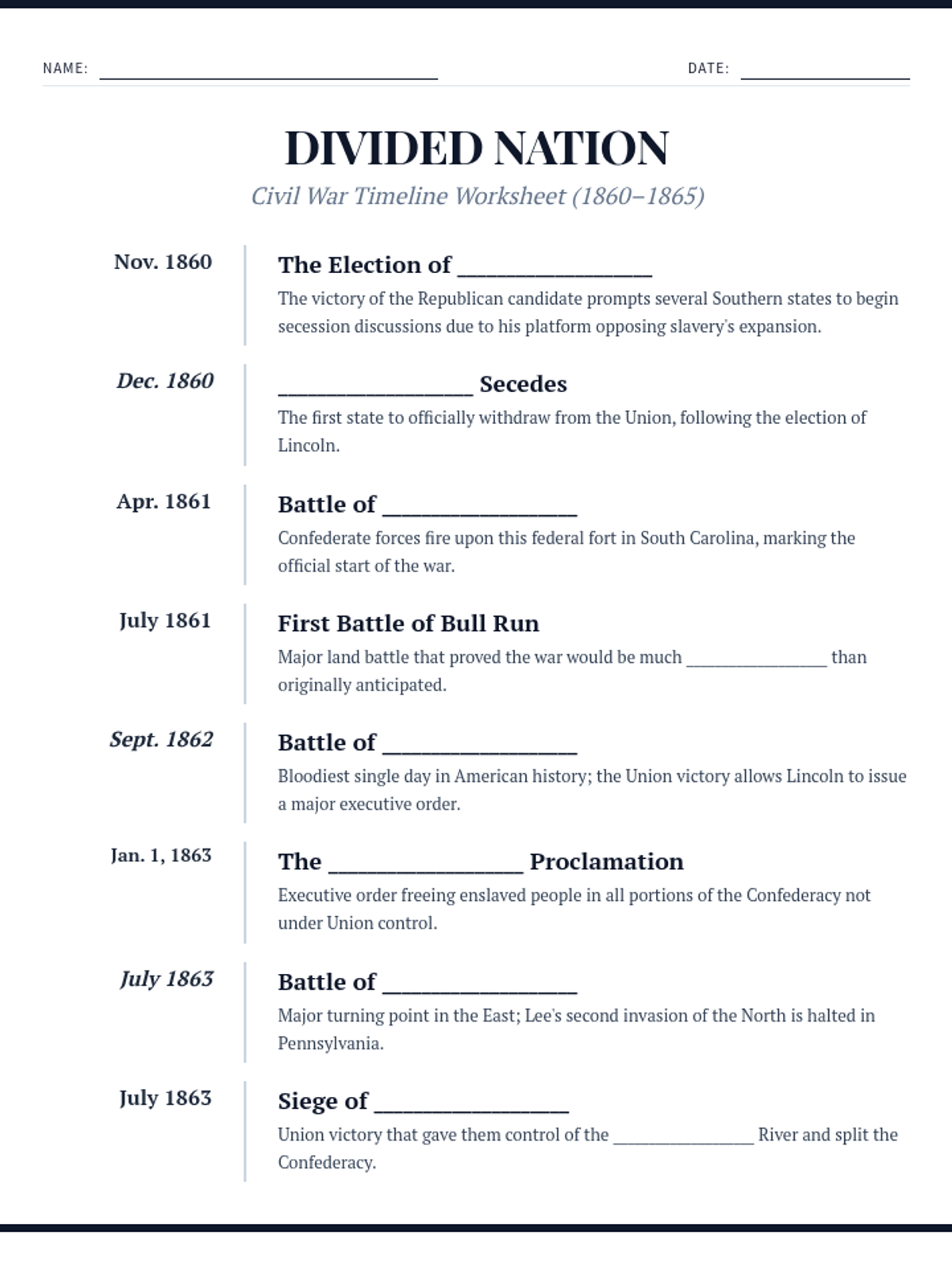
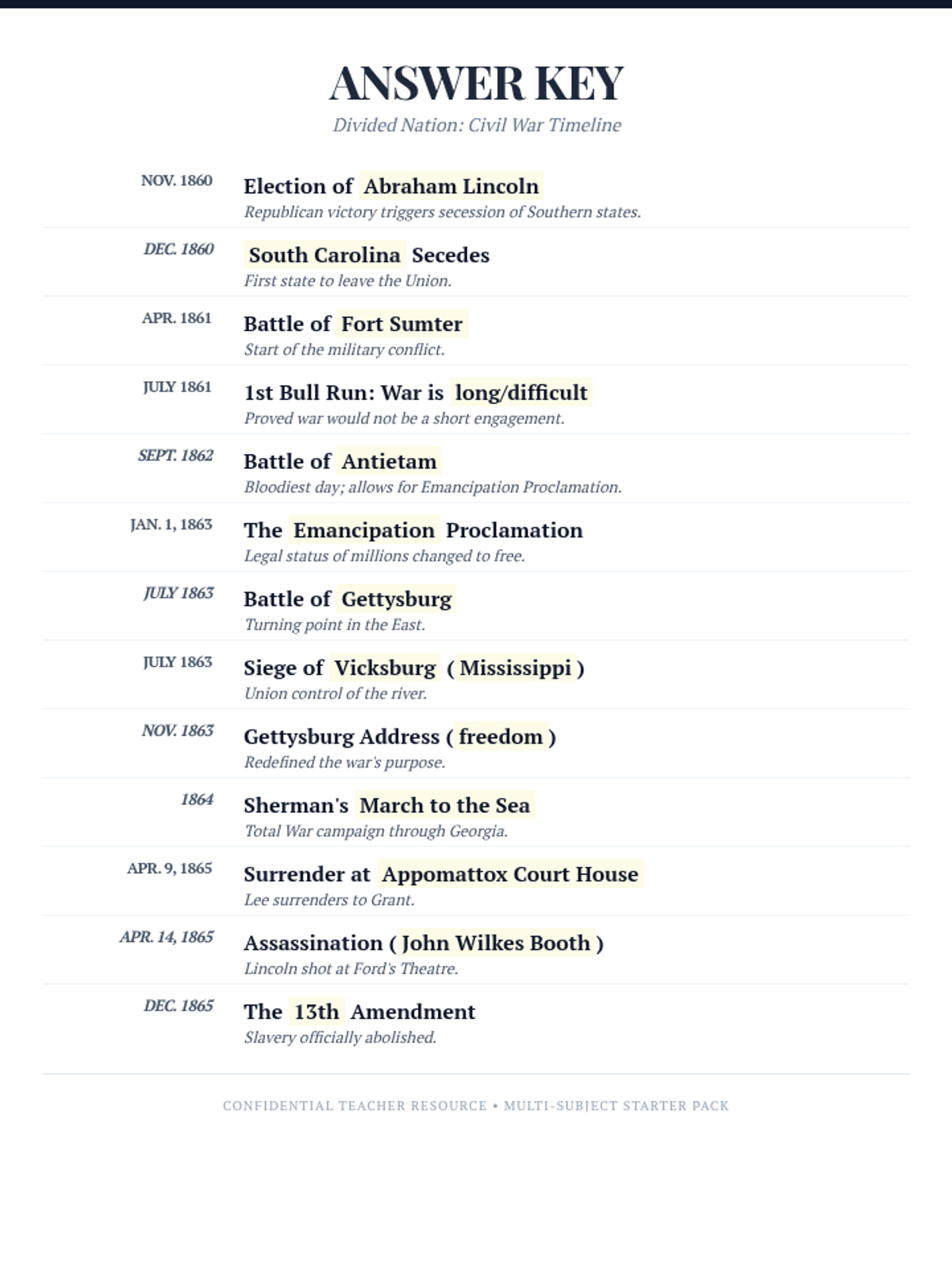
A comprehensive exploration of the American Civil War's key events through a detailed timeline activity for high school students.
An engaging visual guide to the process of photosynthesis, designed for 7th-grade life science students.
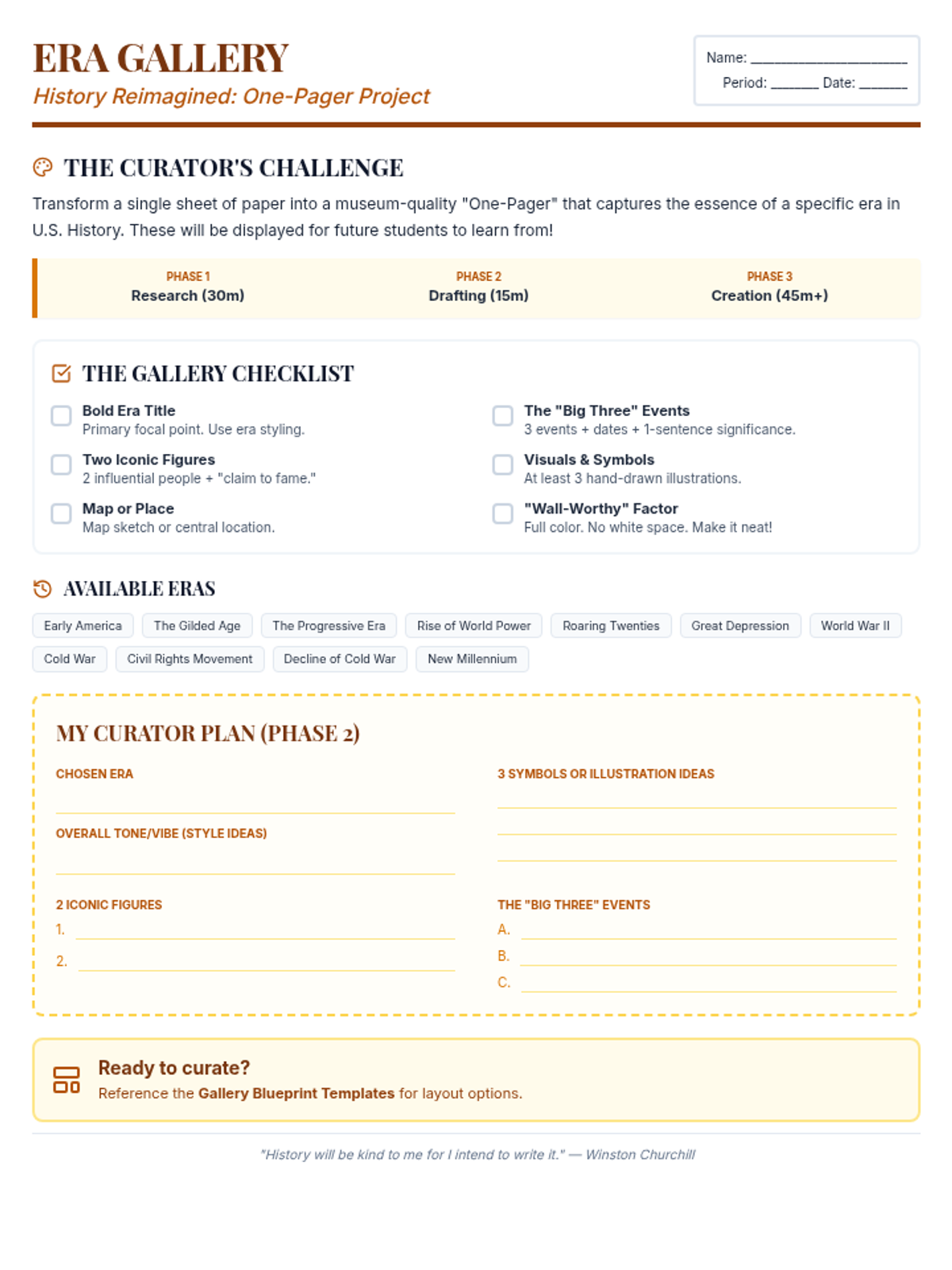
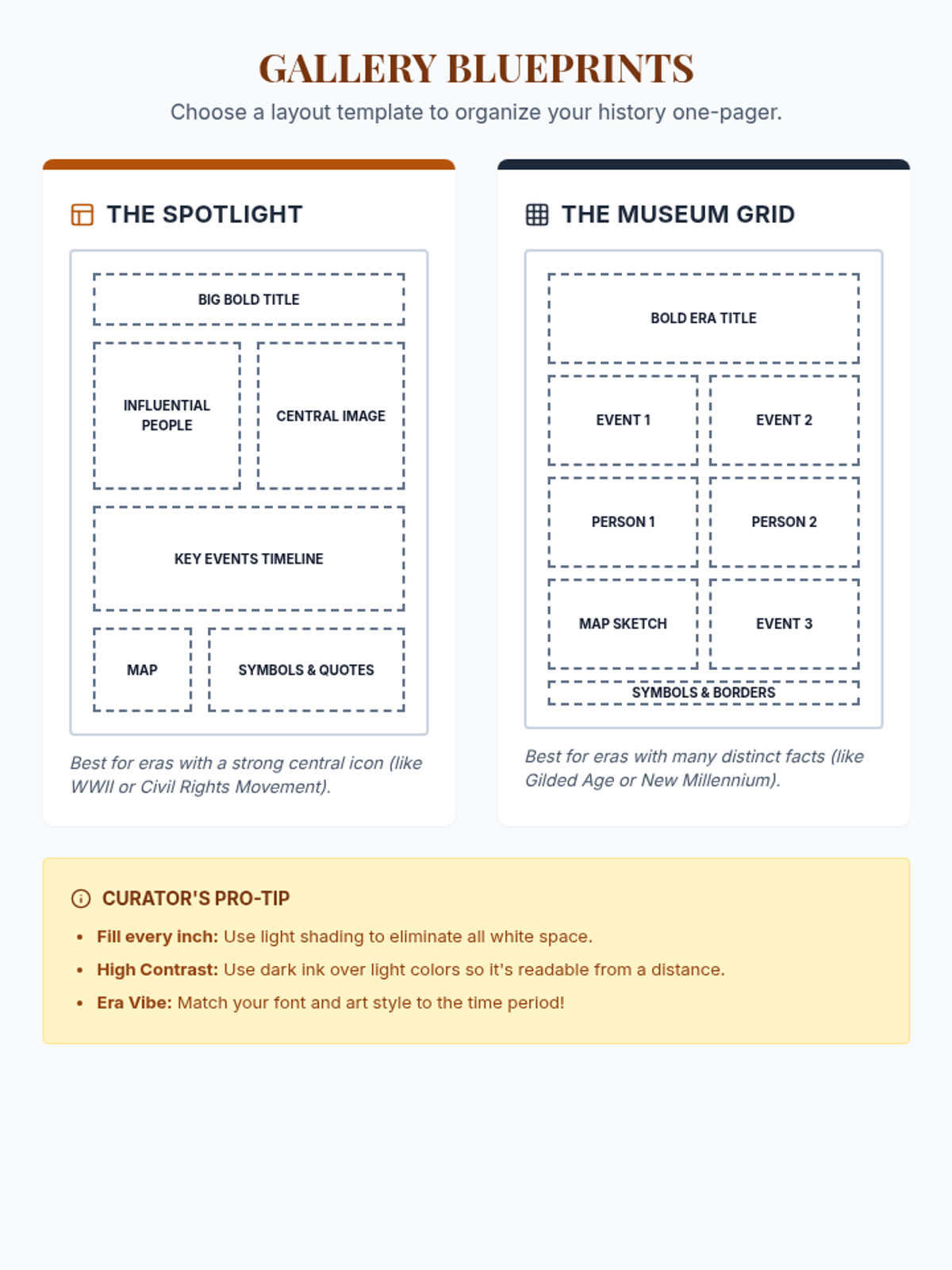
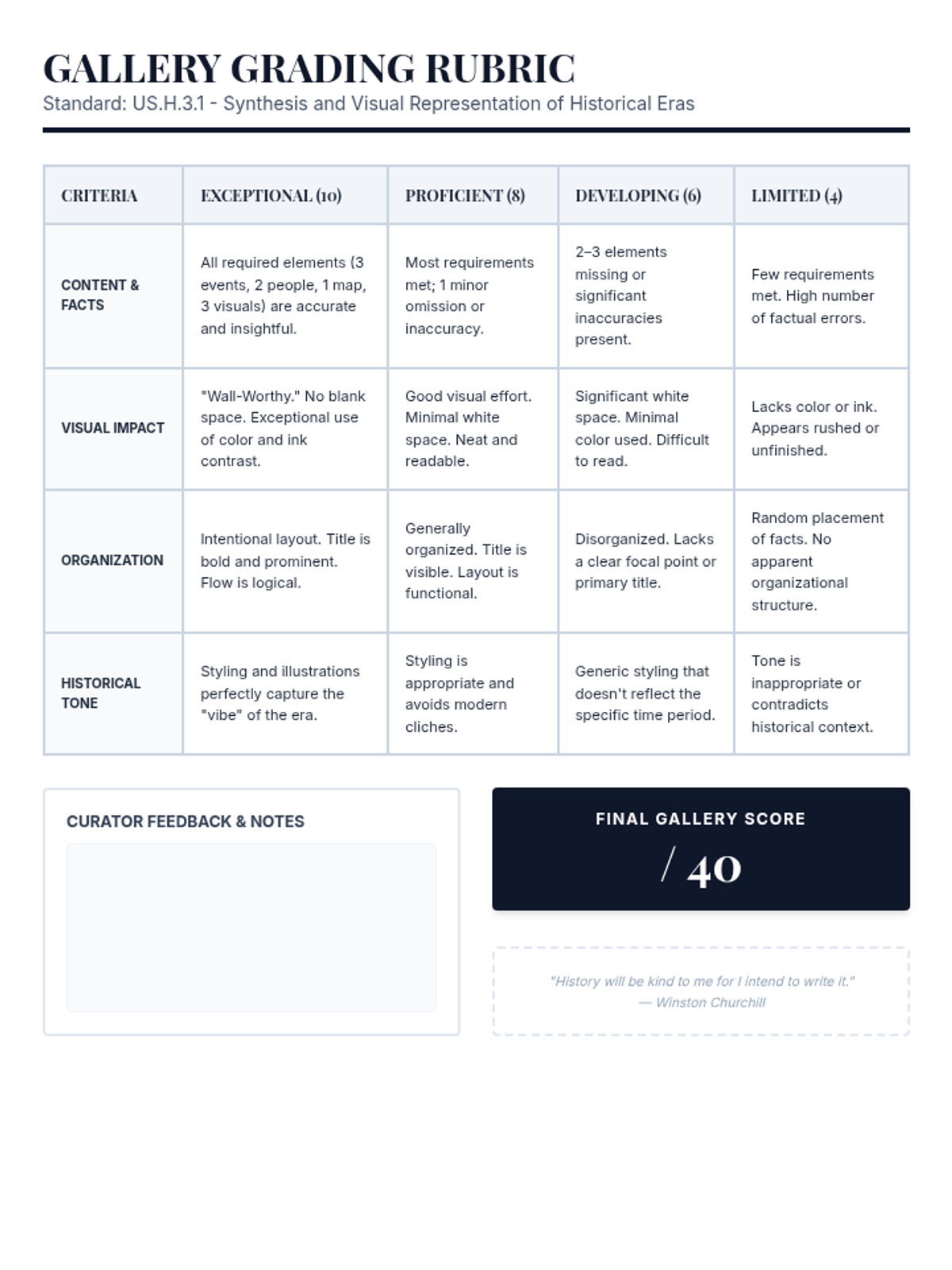
A fast-paced, creative project where students curate a visually stunning 'One-Pager' poster for a specific era of U.S. History, designed to be high-quality enough for classroom display.
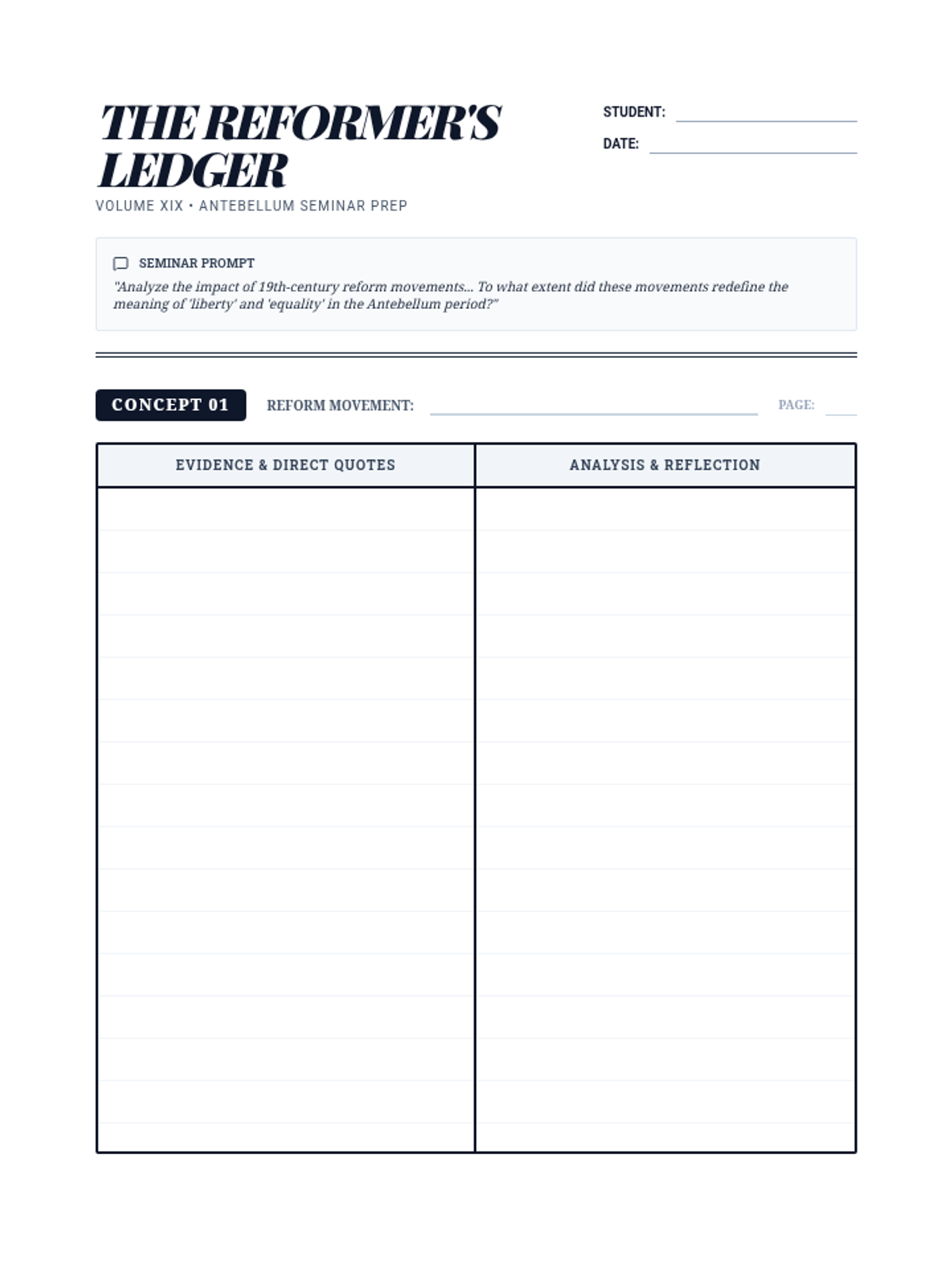
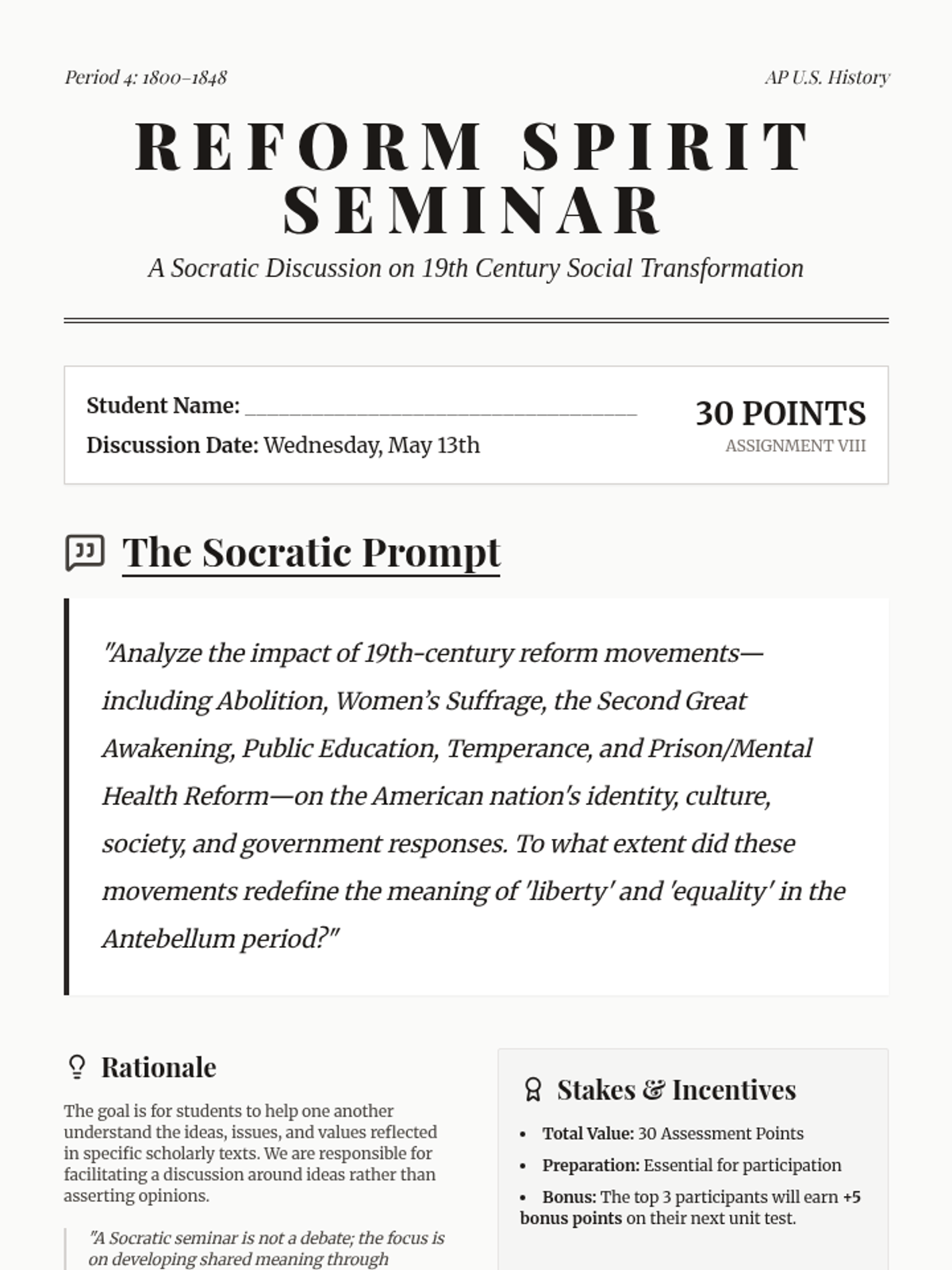
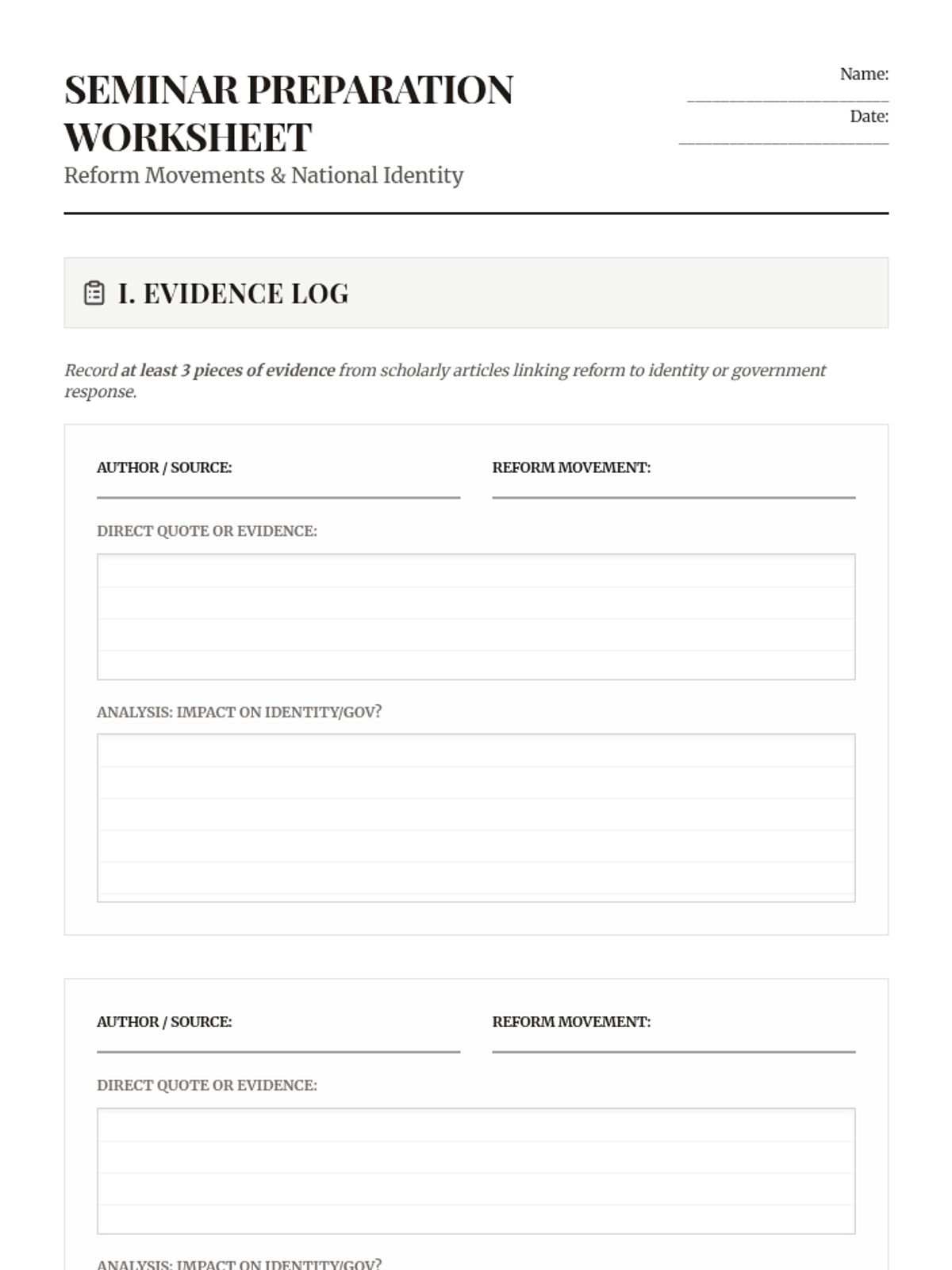
A Socratic Seminar preparation lesson focusing on 19th-century reform movements and their impact on American identity. Students analyze primary and secondary sources to evaluate how these movements redefined liberty and equality.
A lesson exploring the dual nature of digital advancements, focusing on their potential to either bridge social gaps or widen inequalities based on UN reports.
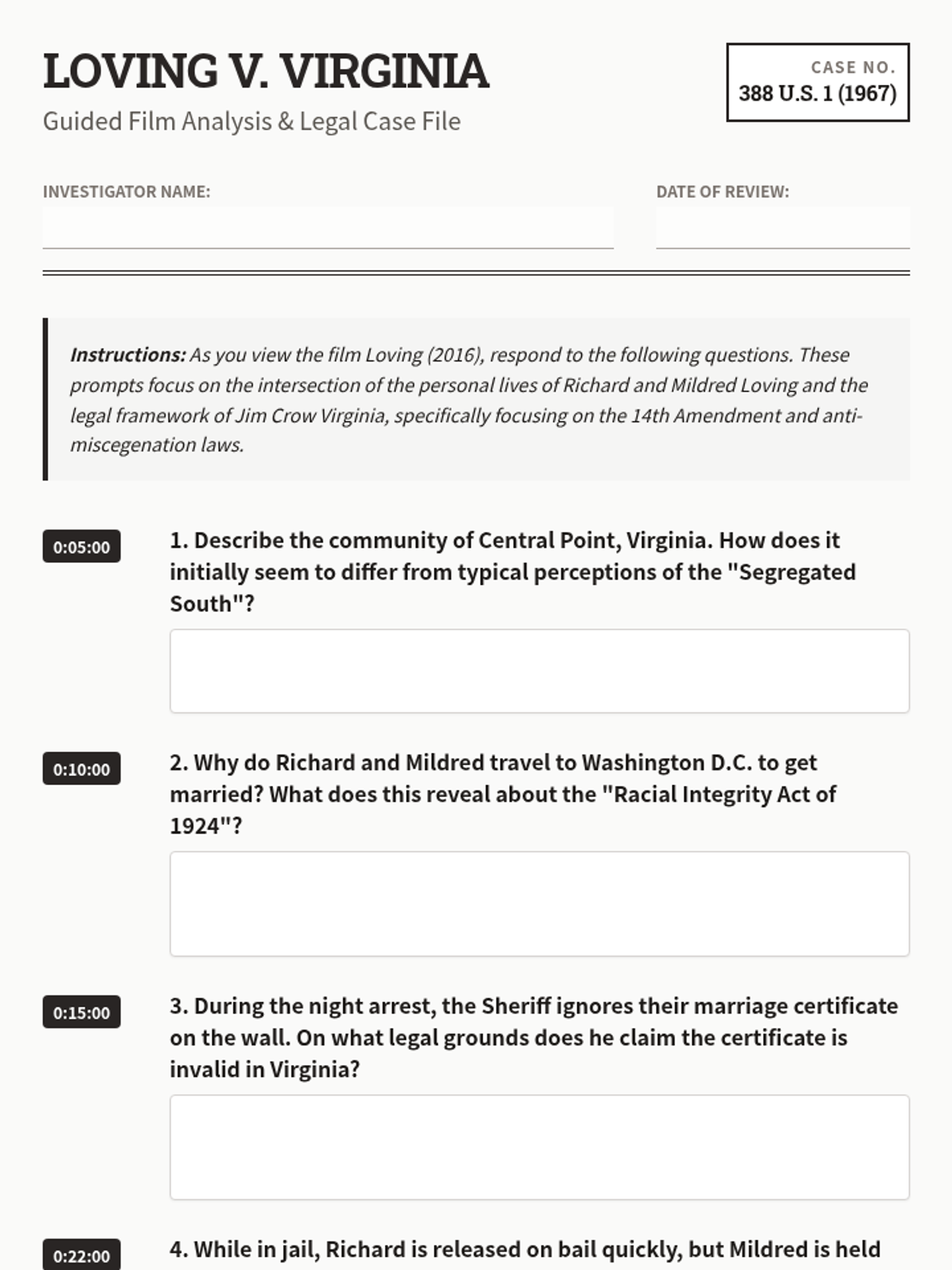
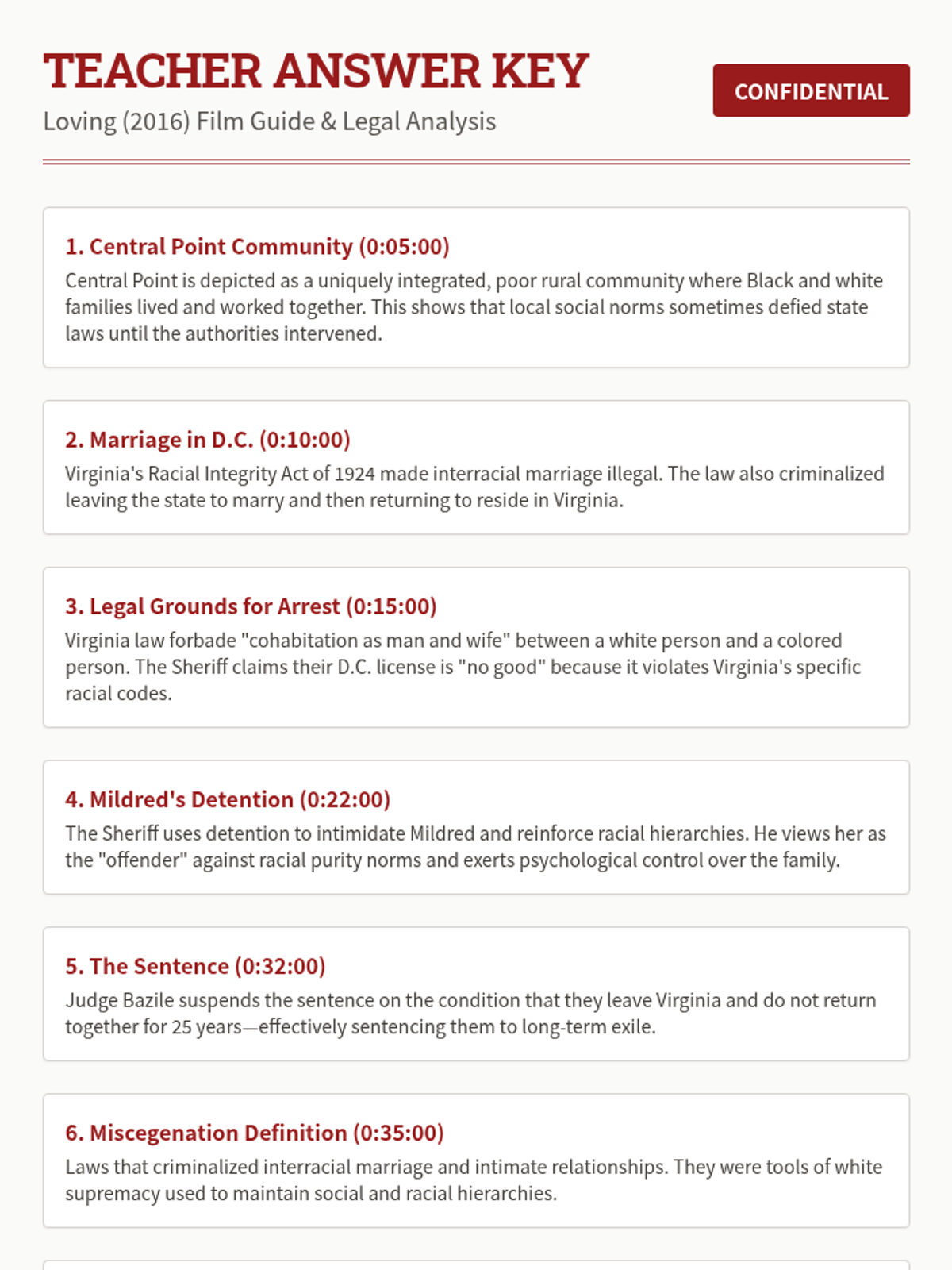
A guided exploration of the landmark Supreme Court case Loving v. Virginia through the lens of the 2016 film. Students analyze the 14th Amendment, Jim Crow laws, and the human impact of anti-miscegenation legislation.
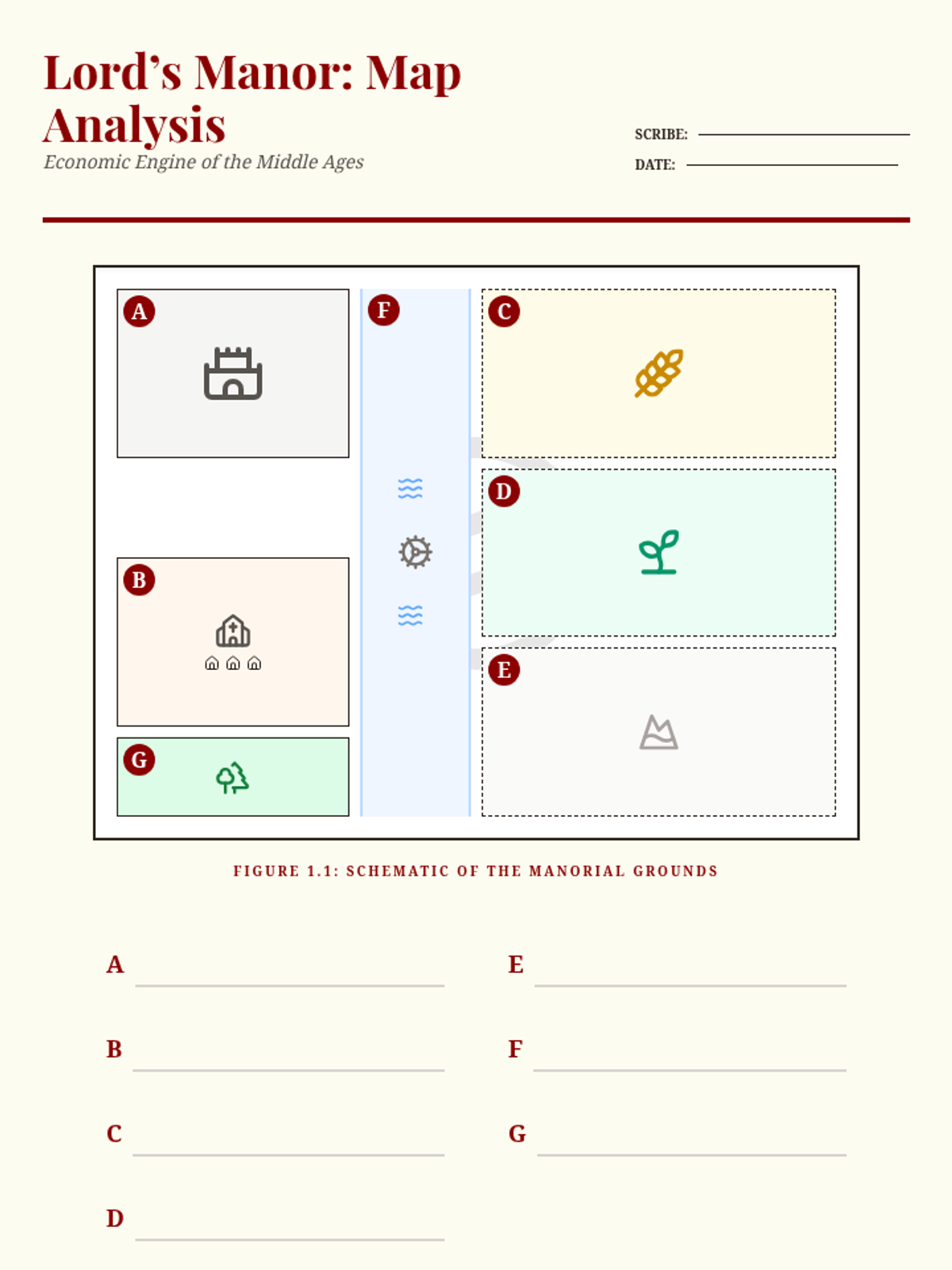
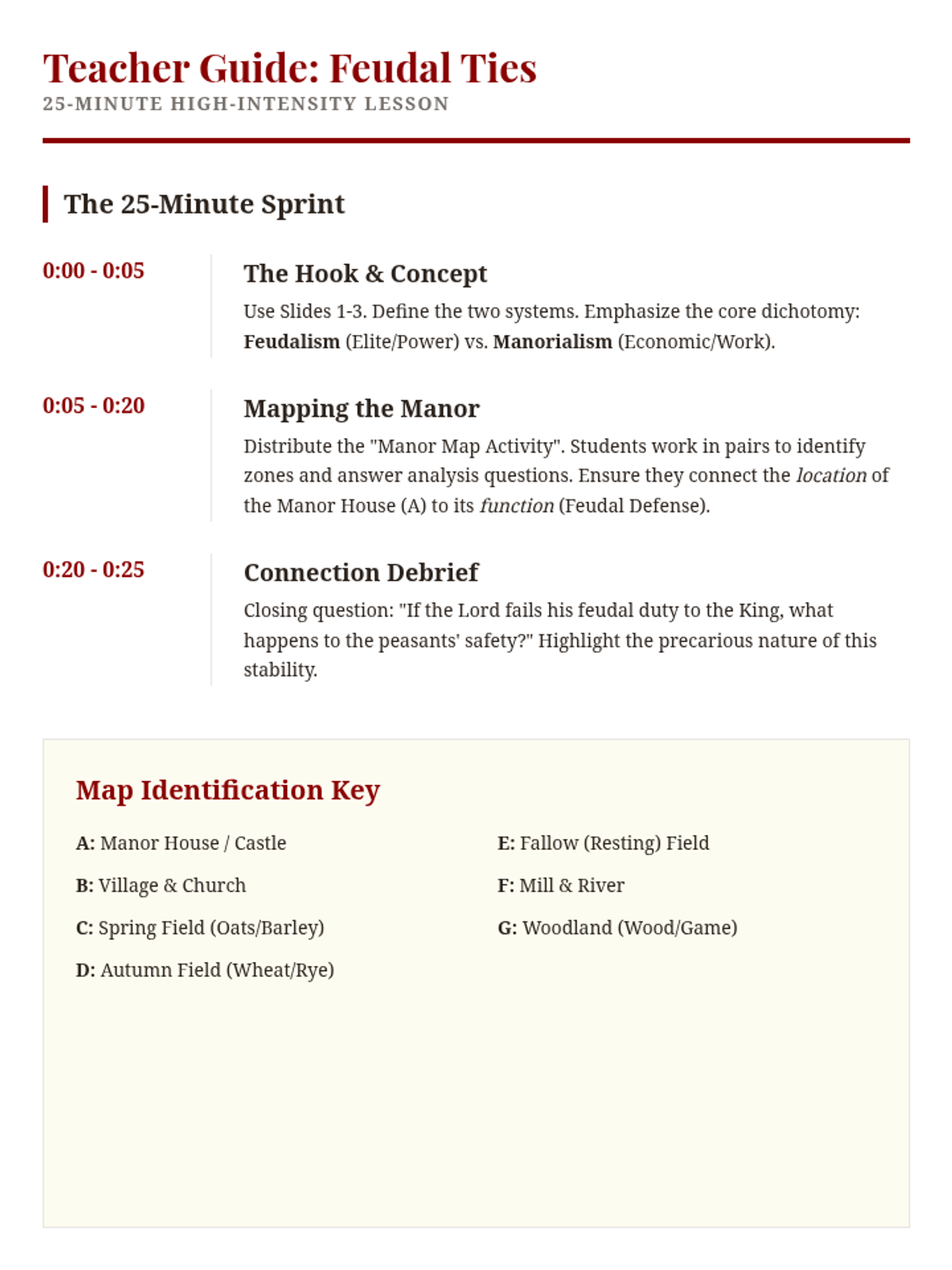
A high-intensity look at the interconnected systems of Feudalism and Manorialism, focusing on the physical and economic structure of the medieval manor.
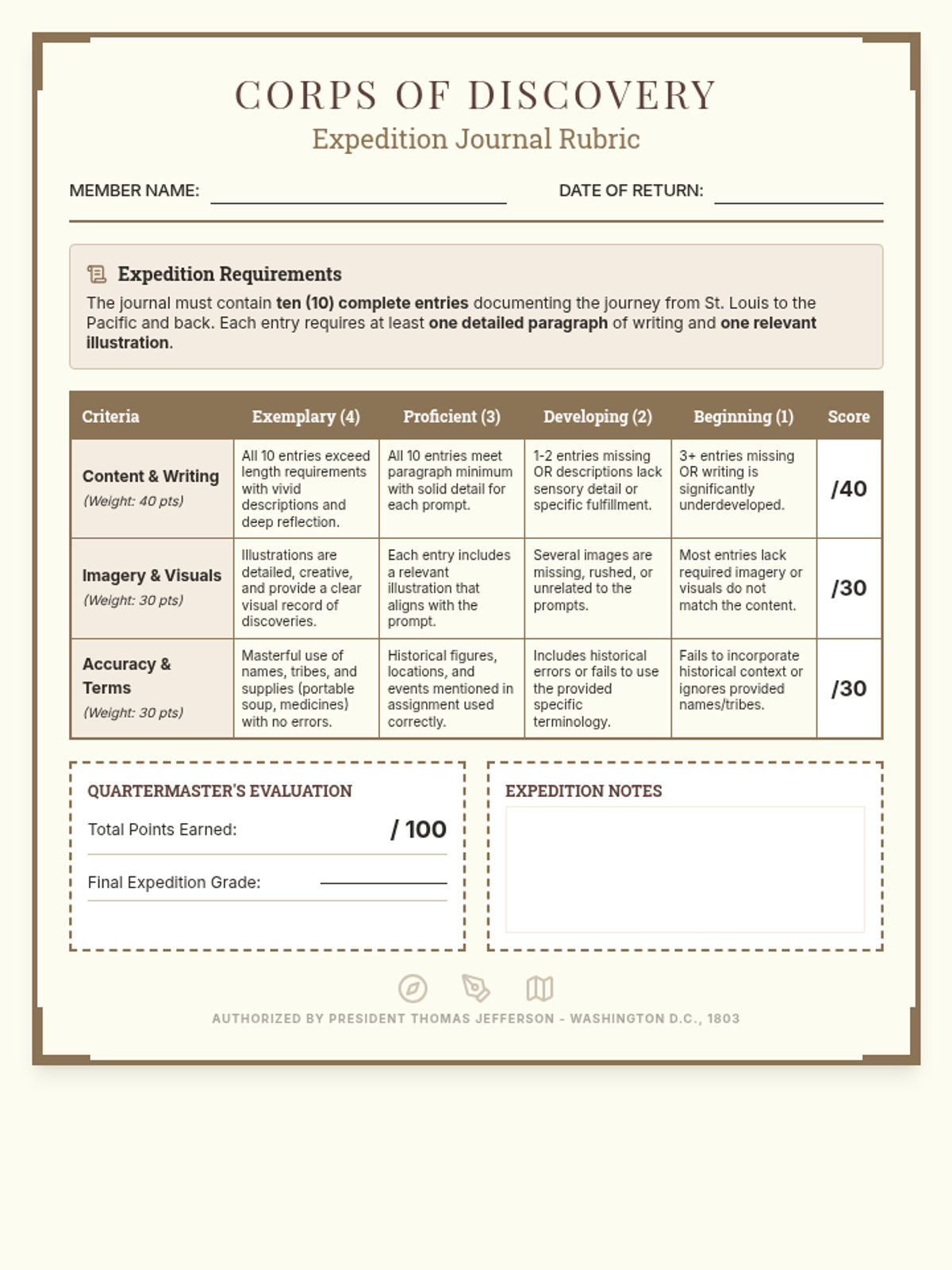
A rubric and assessment tool for the Lewis and Clark Road Trip journal assignment, focusing on content, imagery, and historical accuracy.
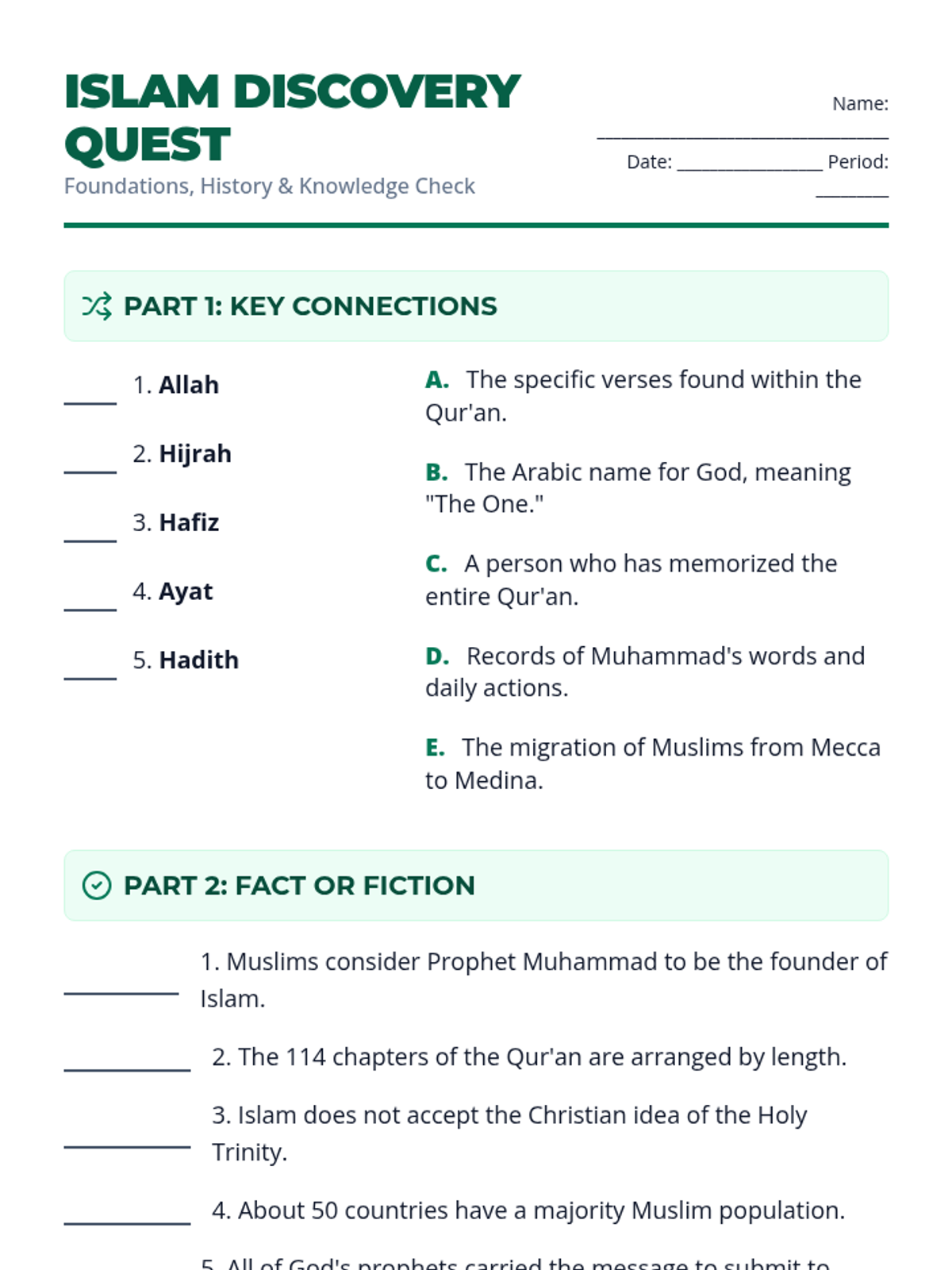
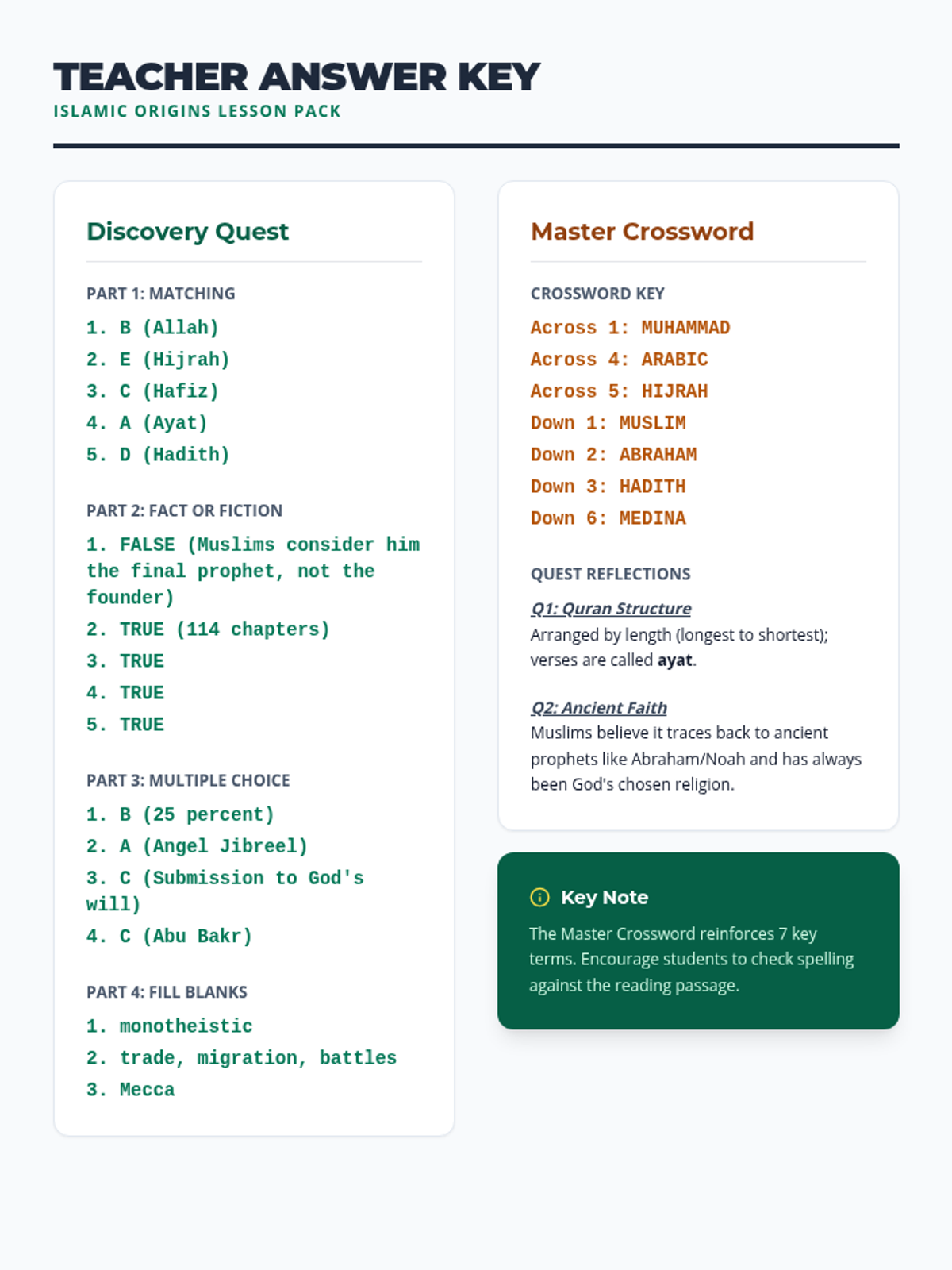
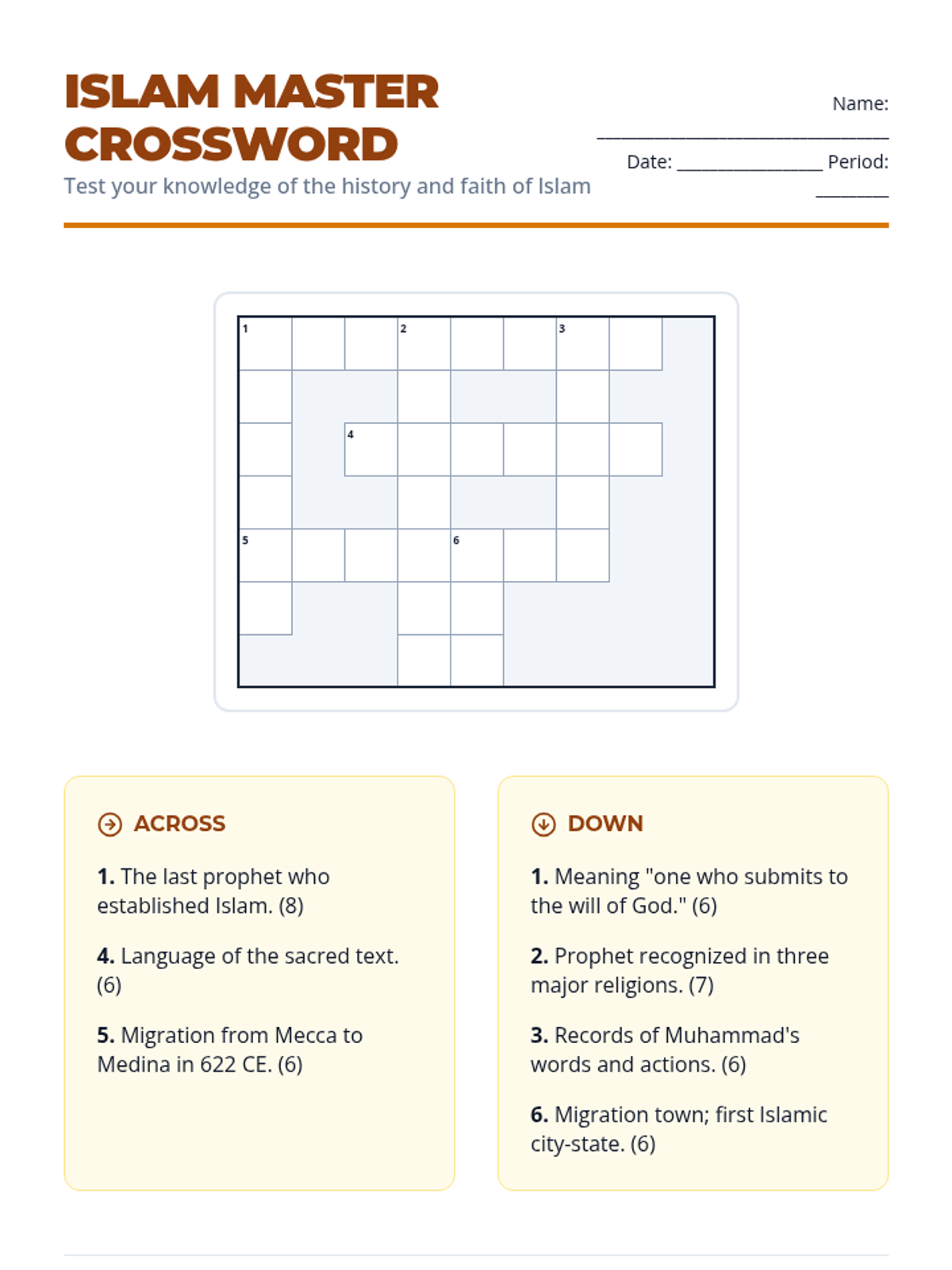
A foundational exploration of the origins of Islam, the life of Prophet Muhammad, the significance of the Quran, and the growth of the Islamic empire.
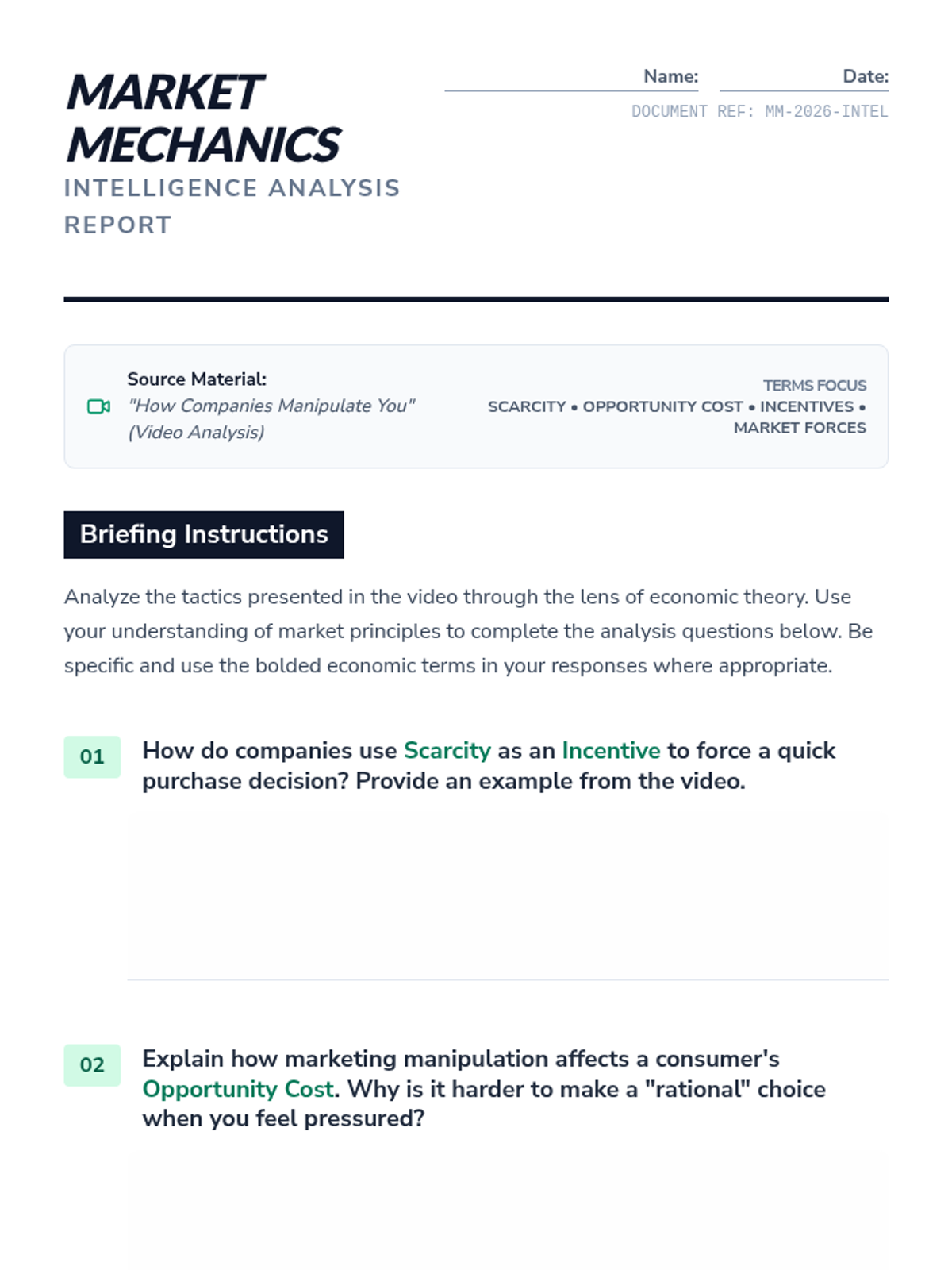
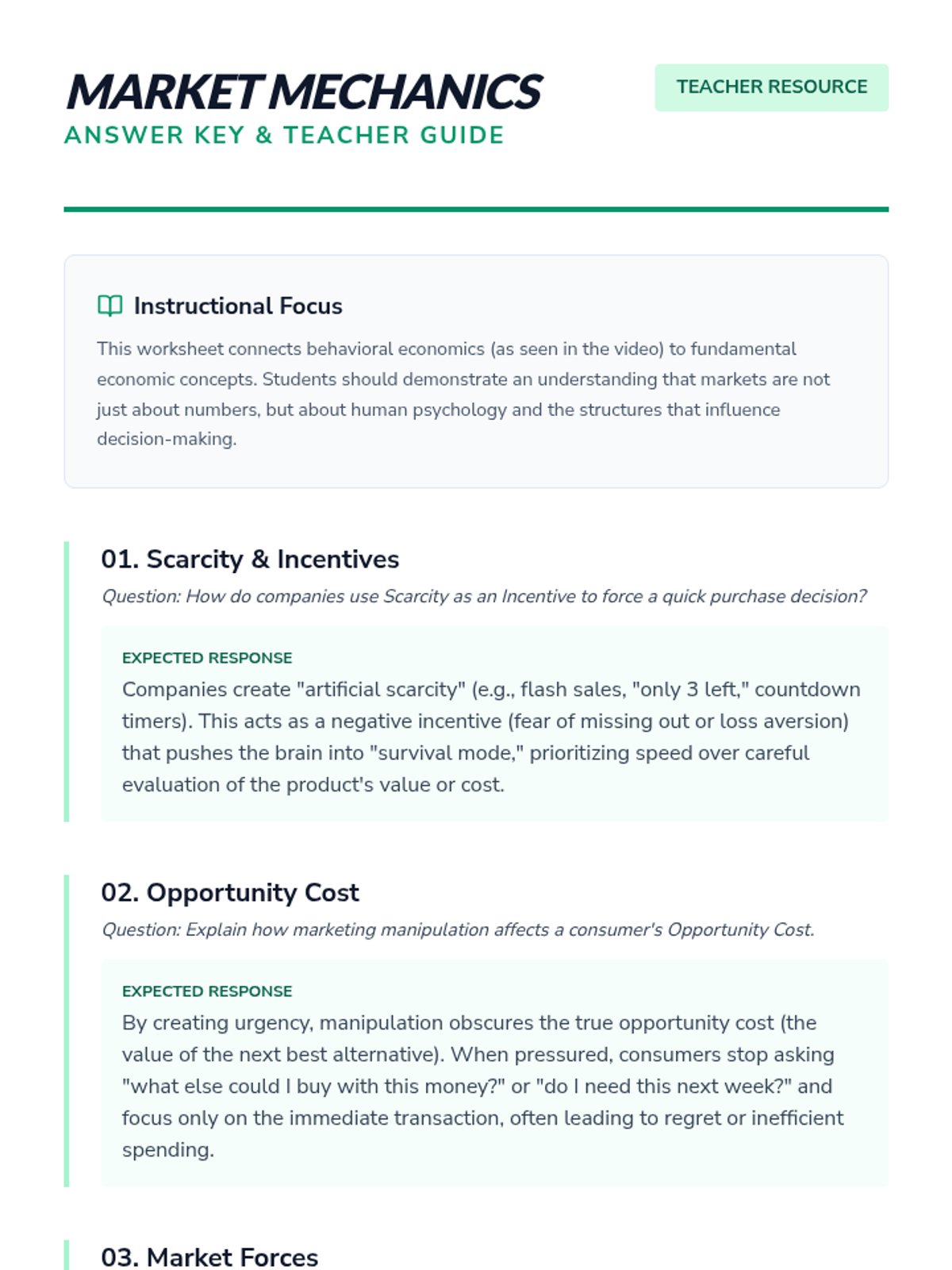
A deep dive into how economic principles like scarcity, incentives, and market forces shape consumer behavior and market structures. Students analyze real-world marketing tactics through the lens of economic theory.
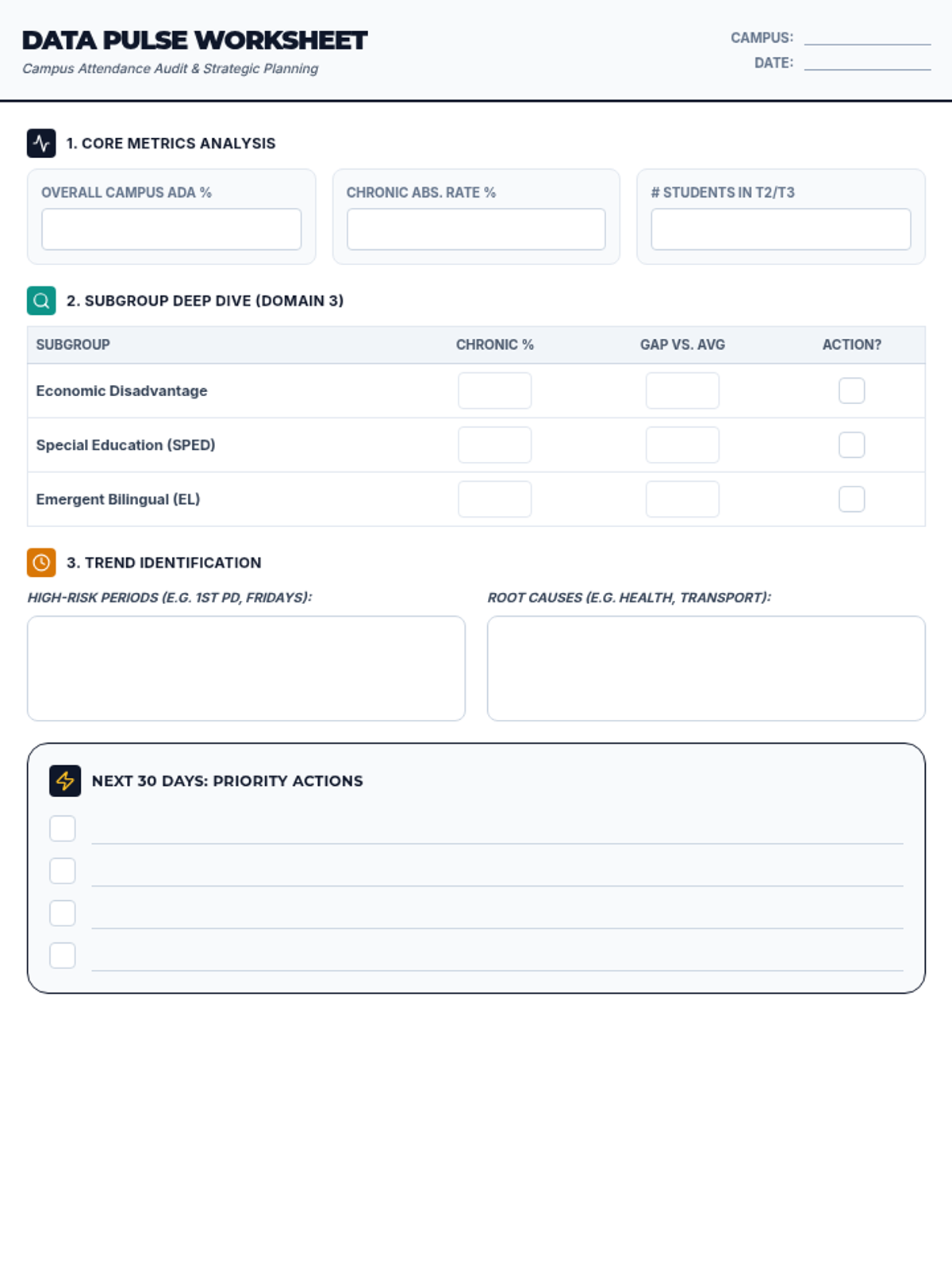
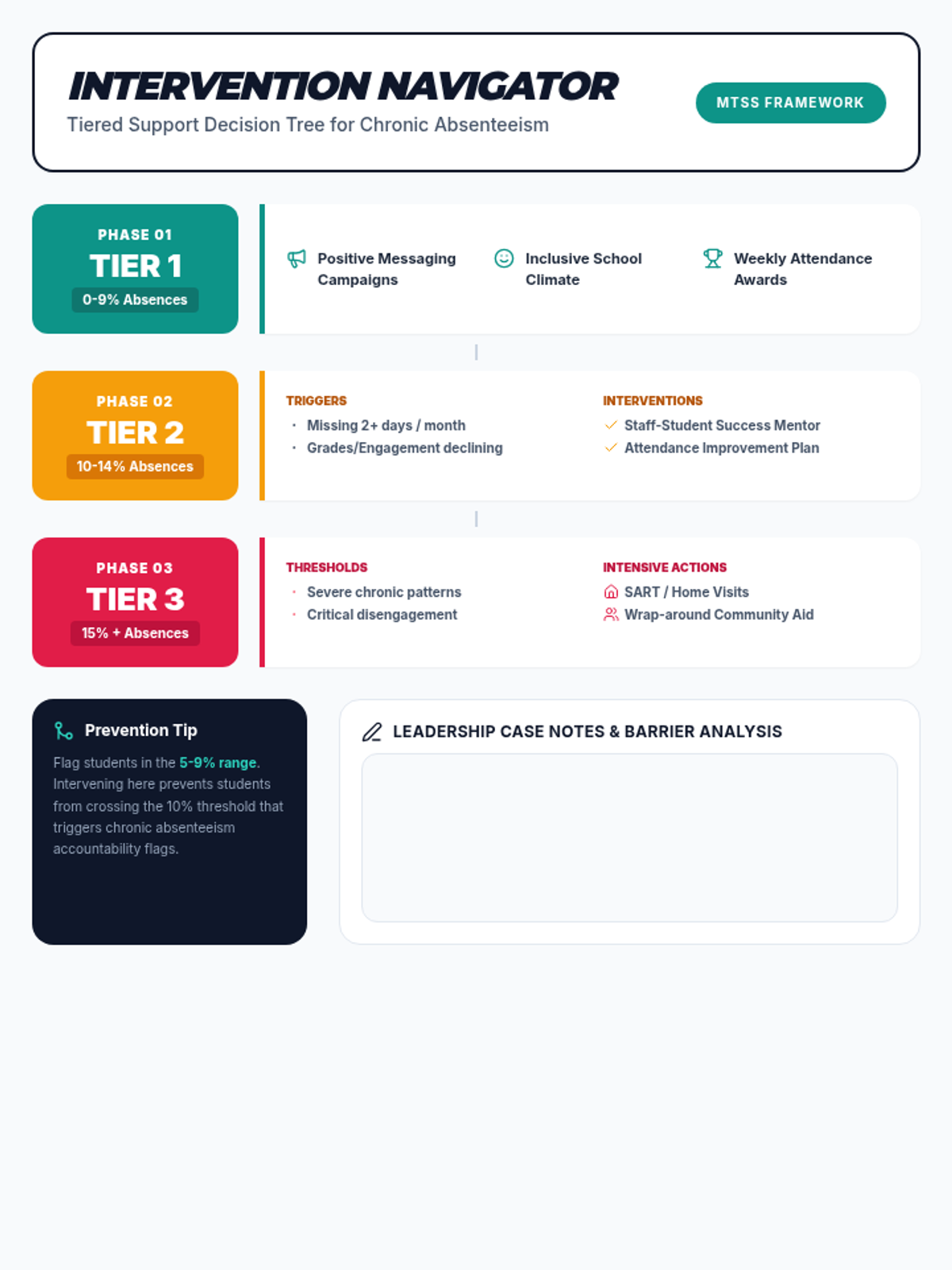
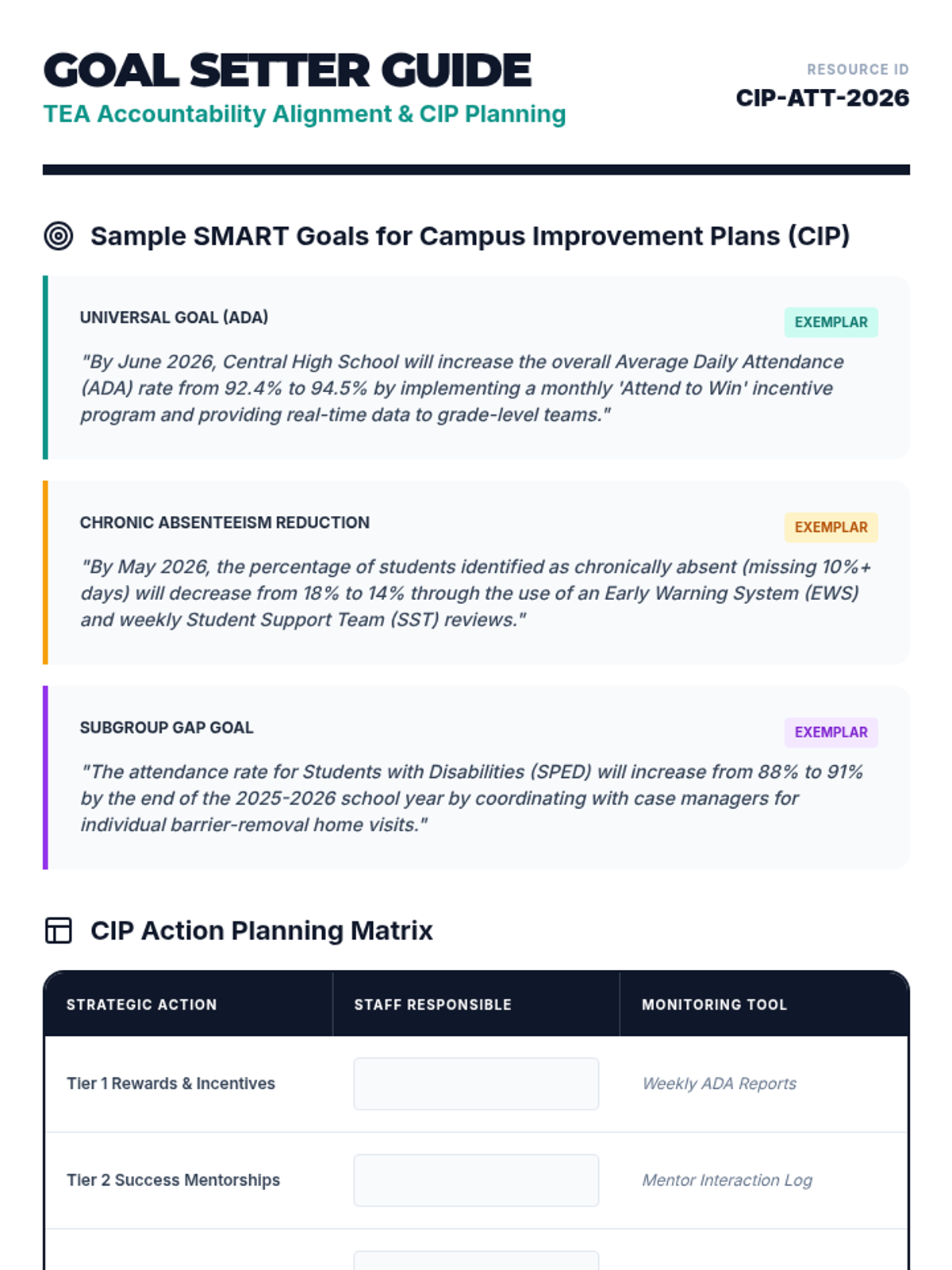
A comprehensive toolkit for high school leaders to analyze attendance data, distinguish chronic absenteeism from average daily attendance, and implement TEA-aligned tiered interventions to improve campus accountability.
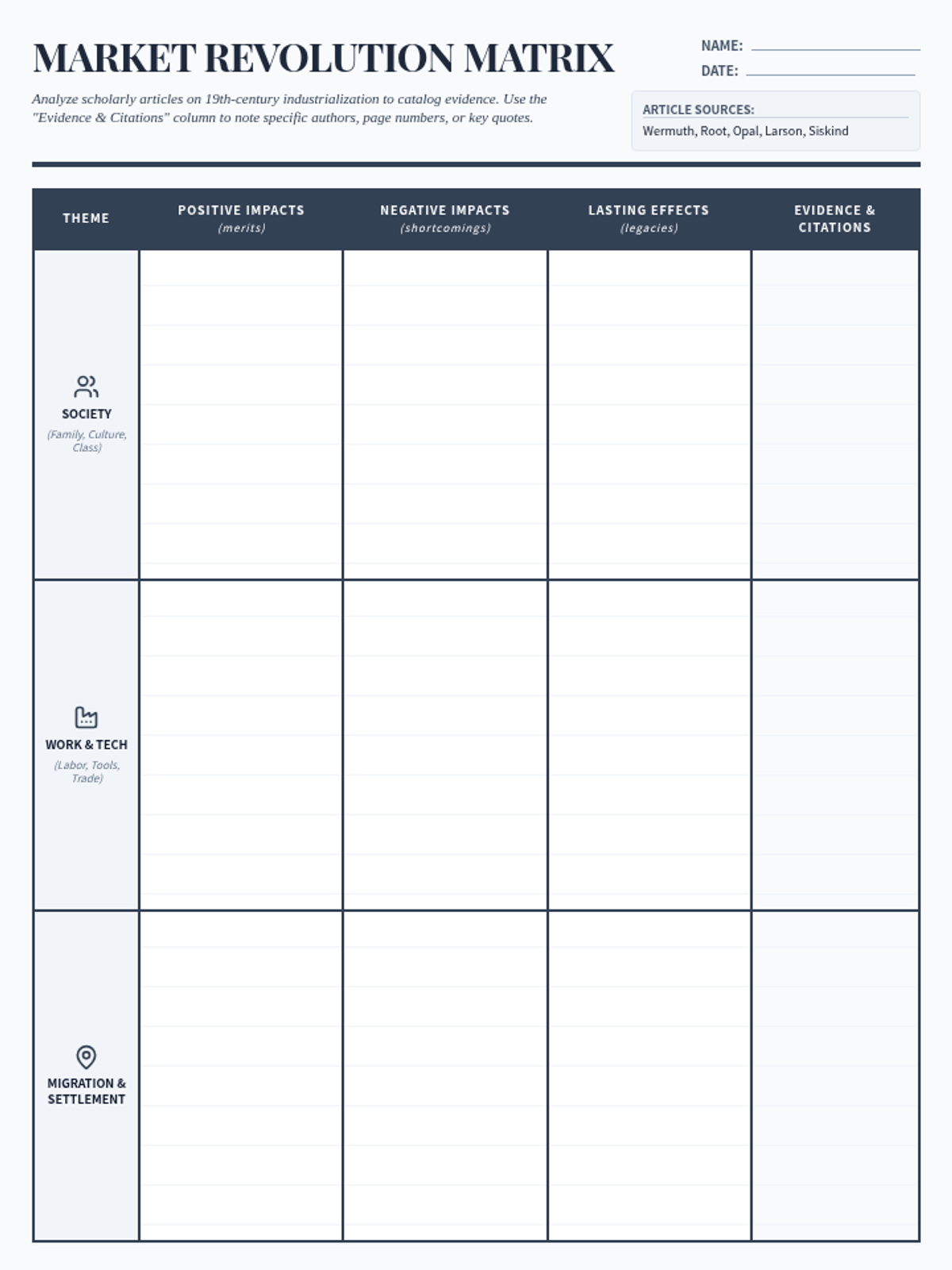
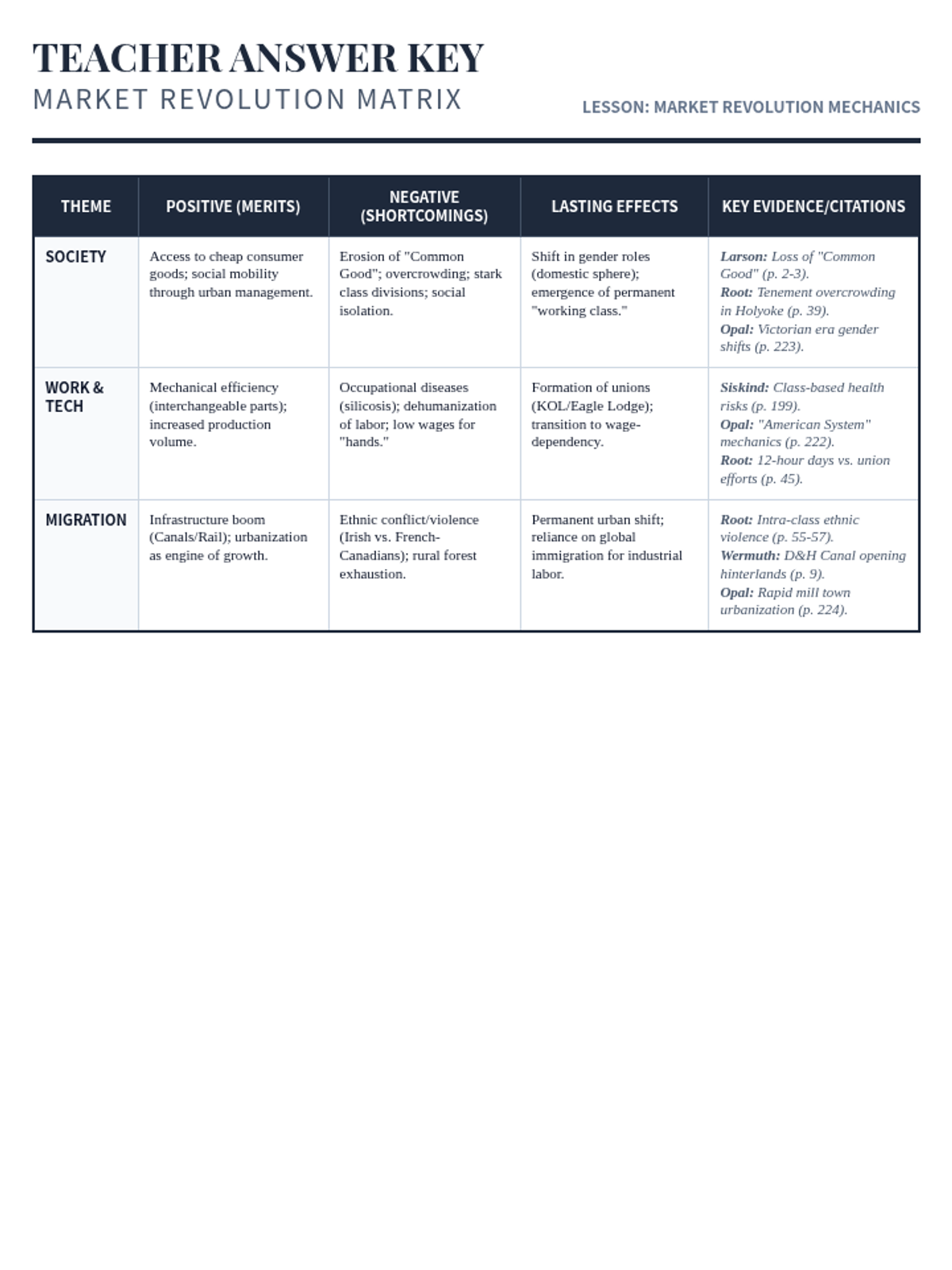
Students analyze the transformative period of industrialization and the market revolution in the 19th-century United States through scholarly articles, exploring the complex balance of economic progress against social and human costs.
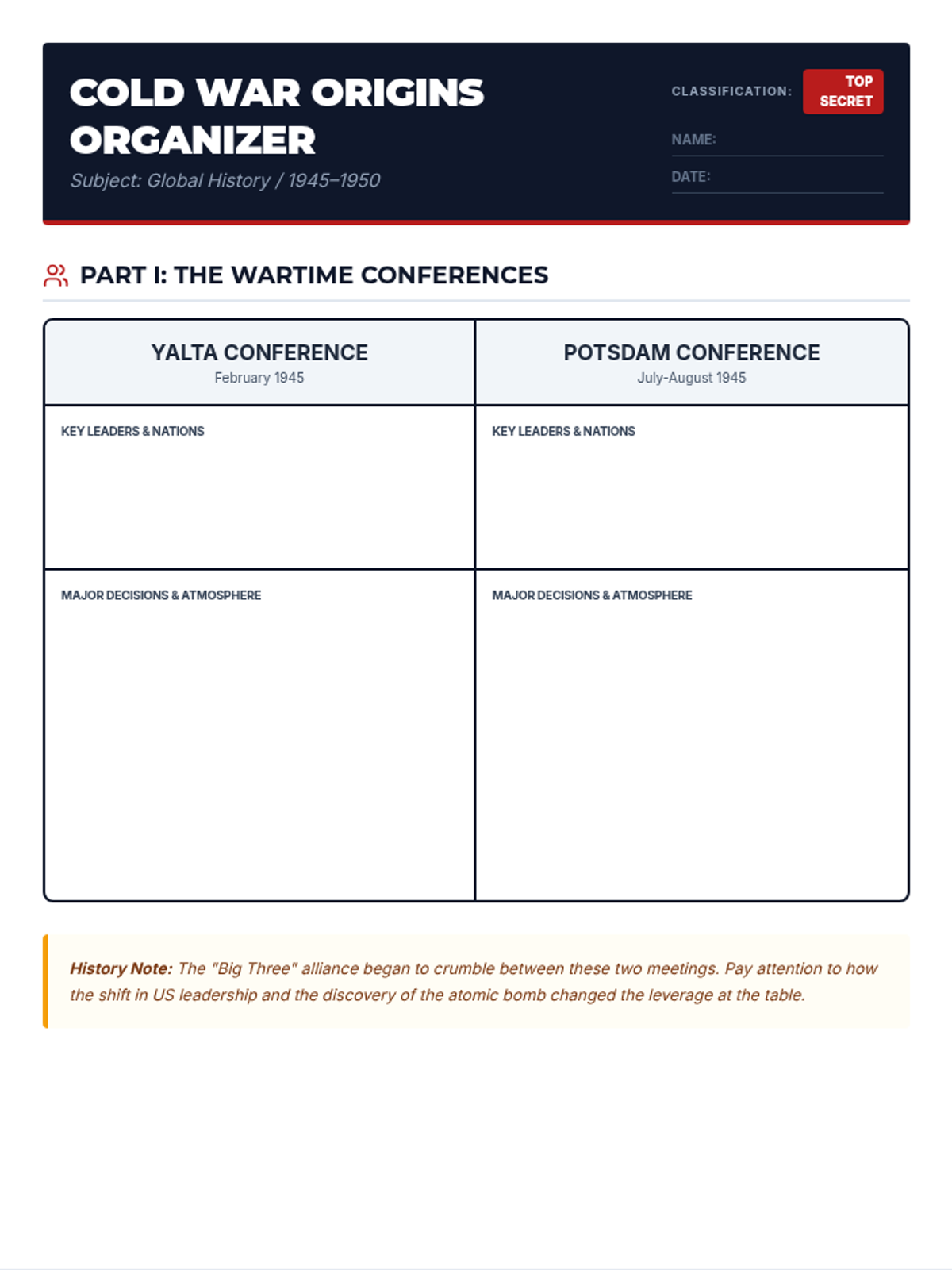
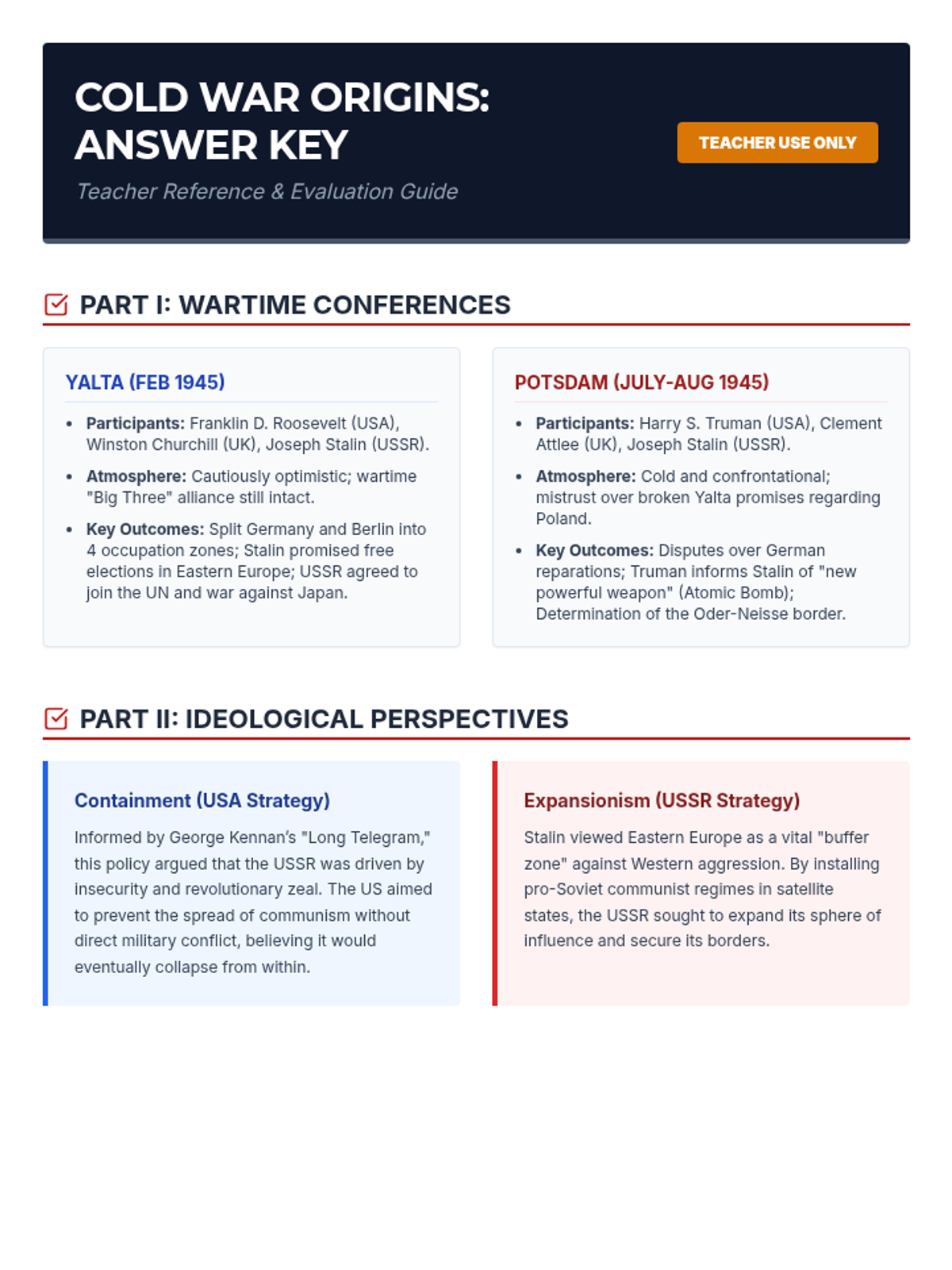
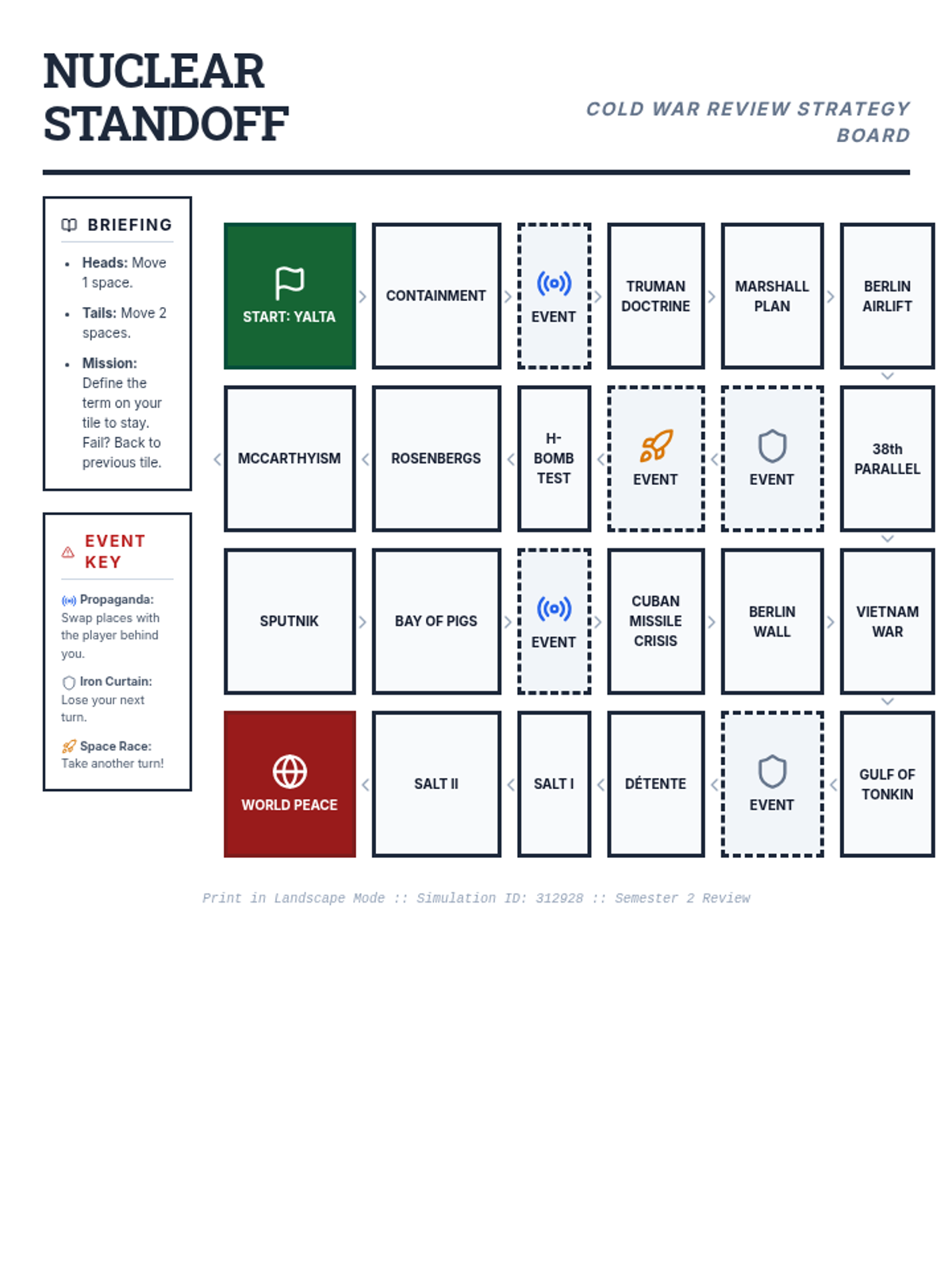
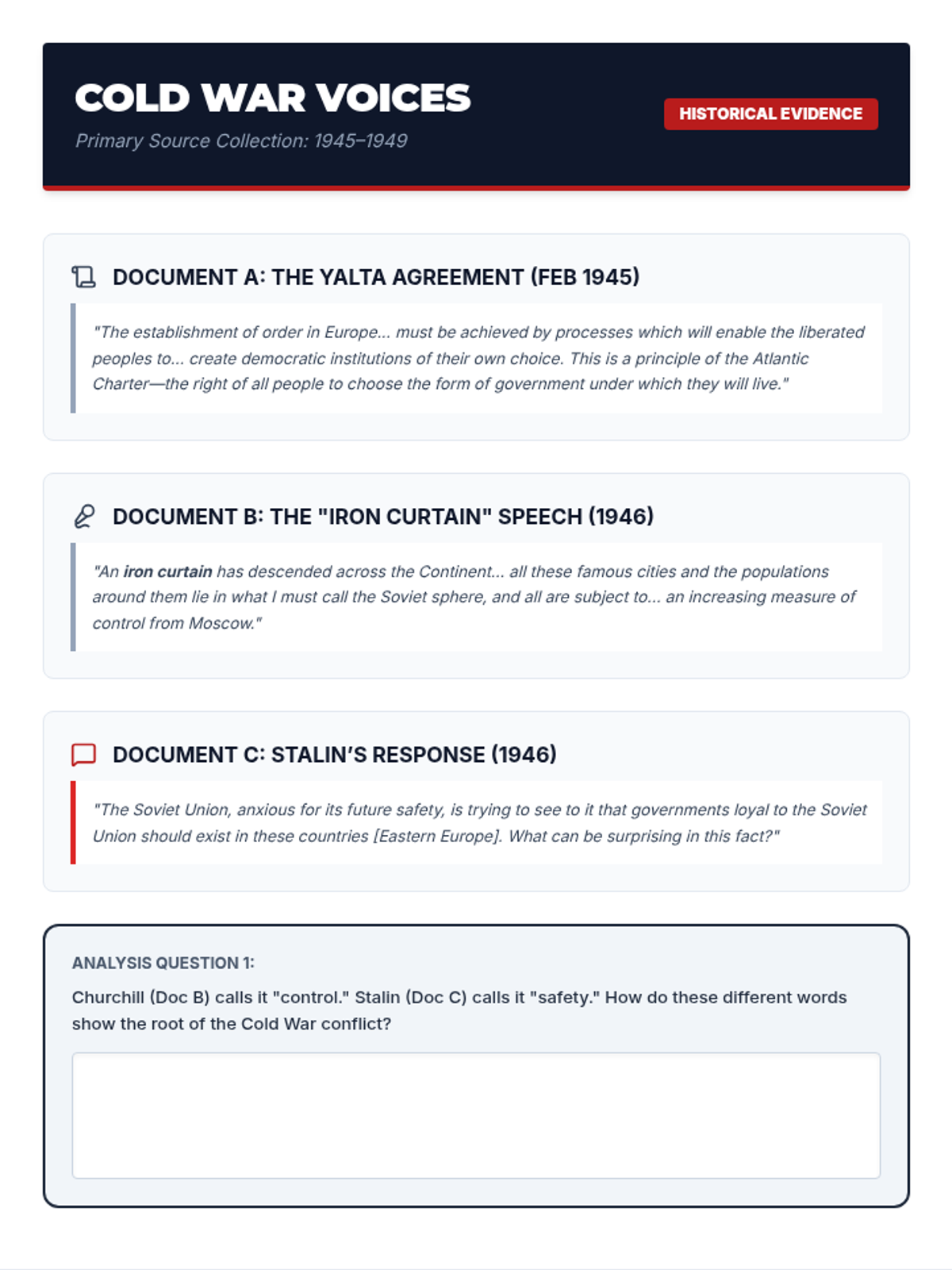
A lesson exploring the ideological, economic, and military causes of the Cold War, focusing on the shift from wartime cooperation to global rivalry.
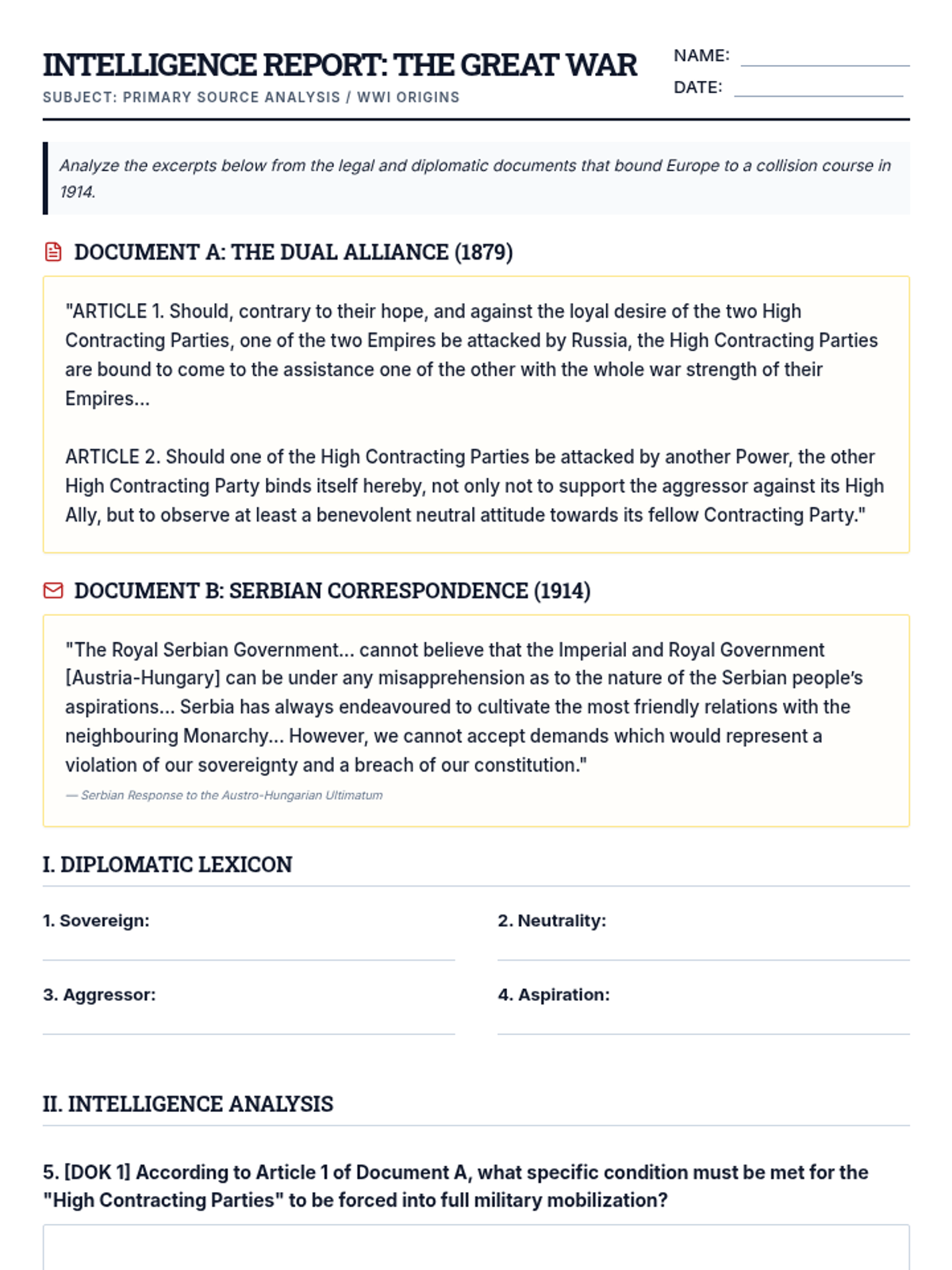
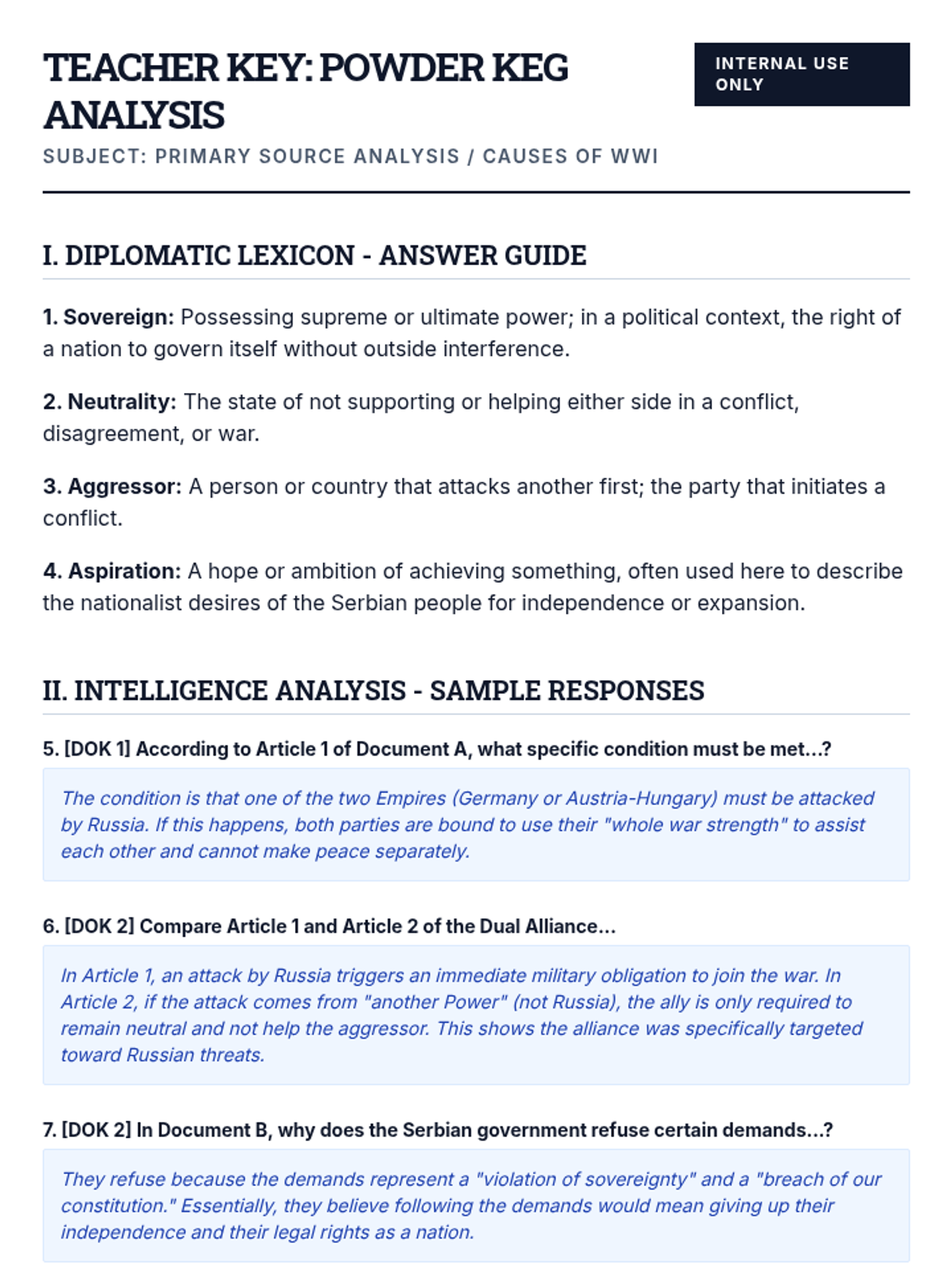
An in-depth look at the complex causes of World War I through the lens of primary source analysis, focusing on the alliance system and Balkan tensions.
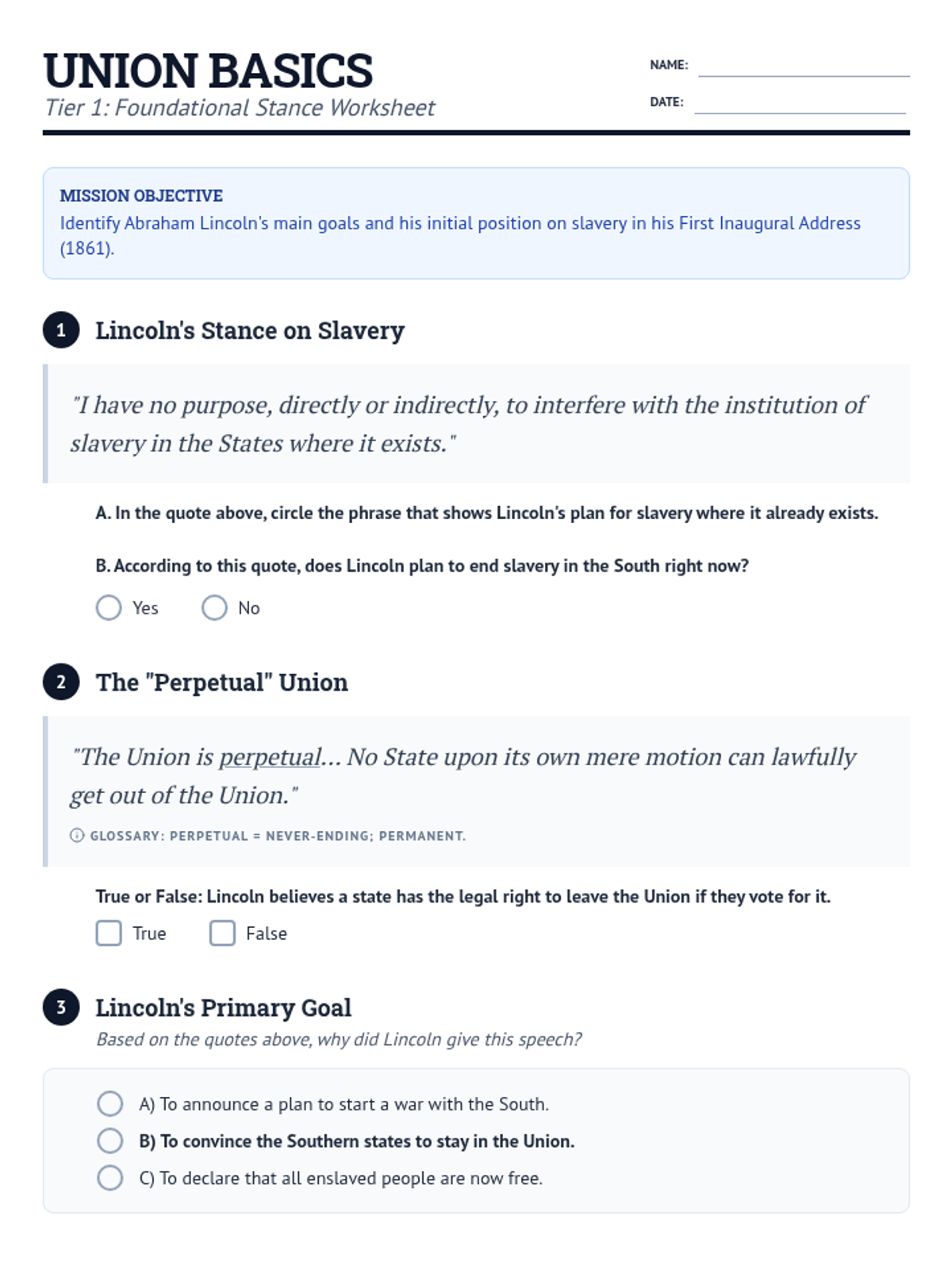
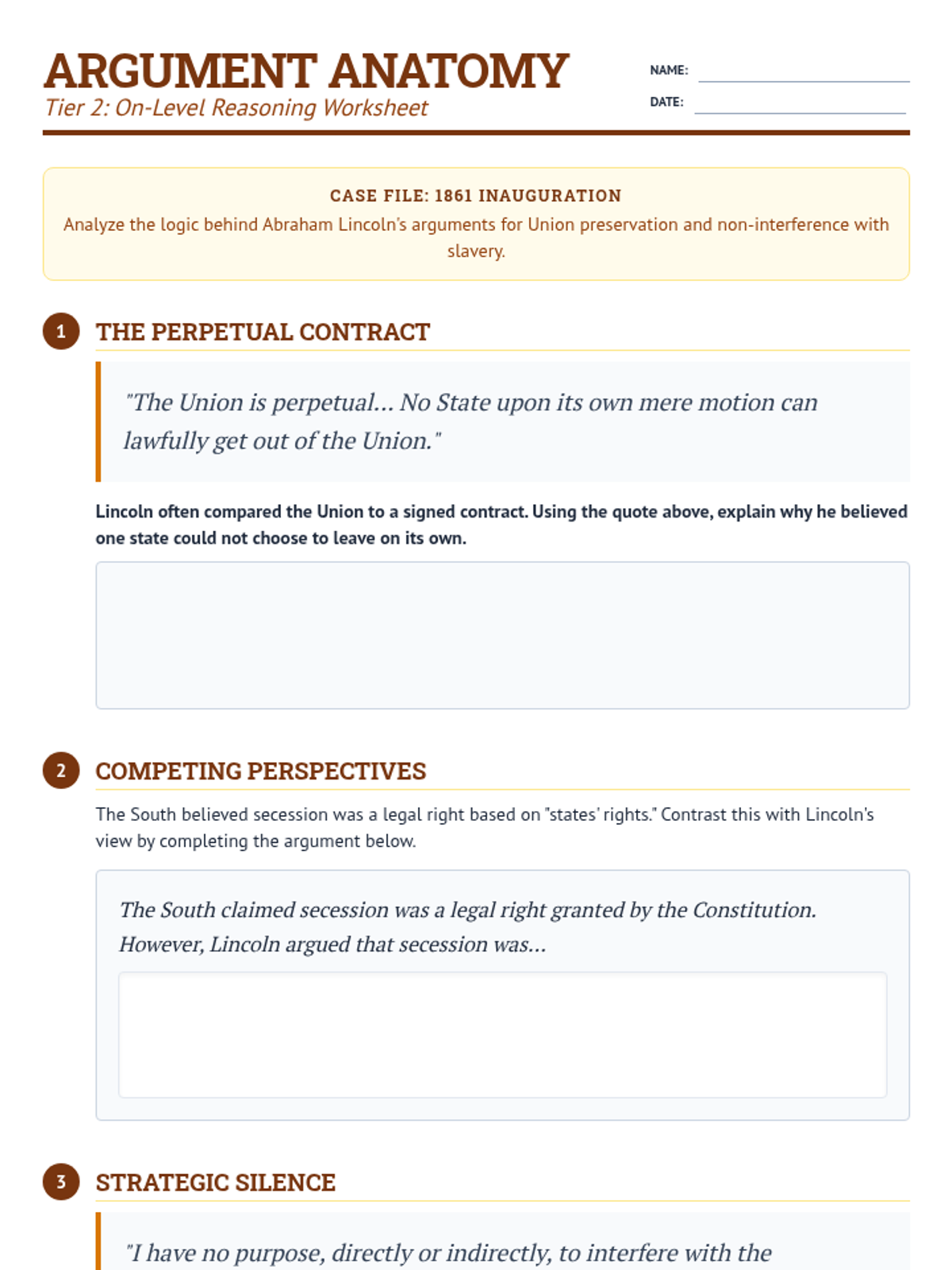
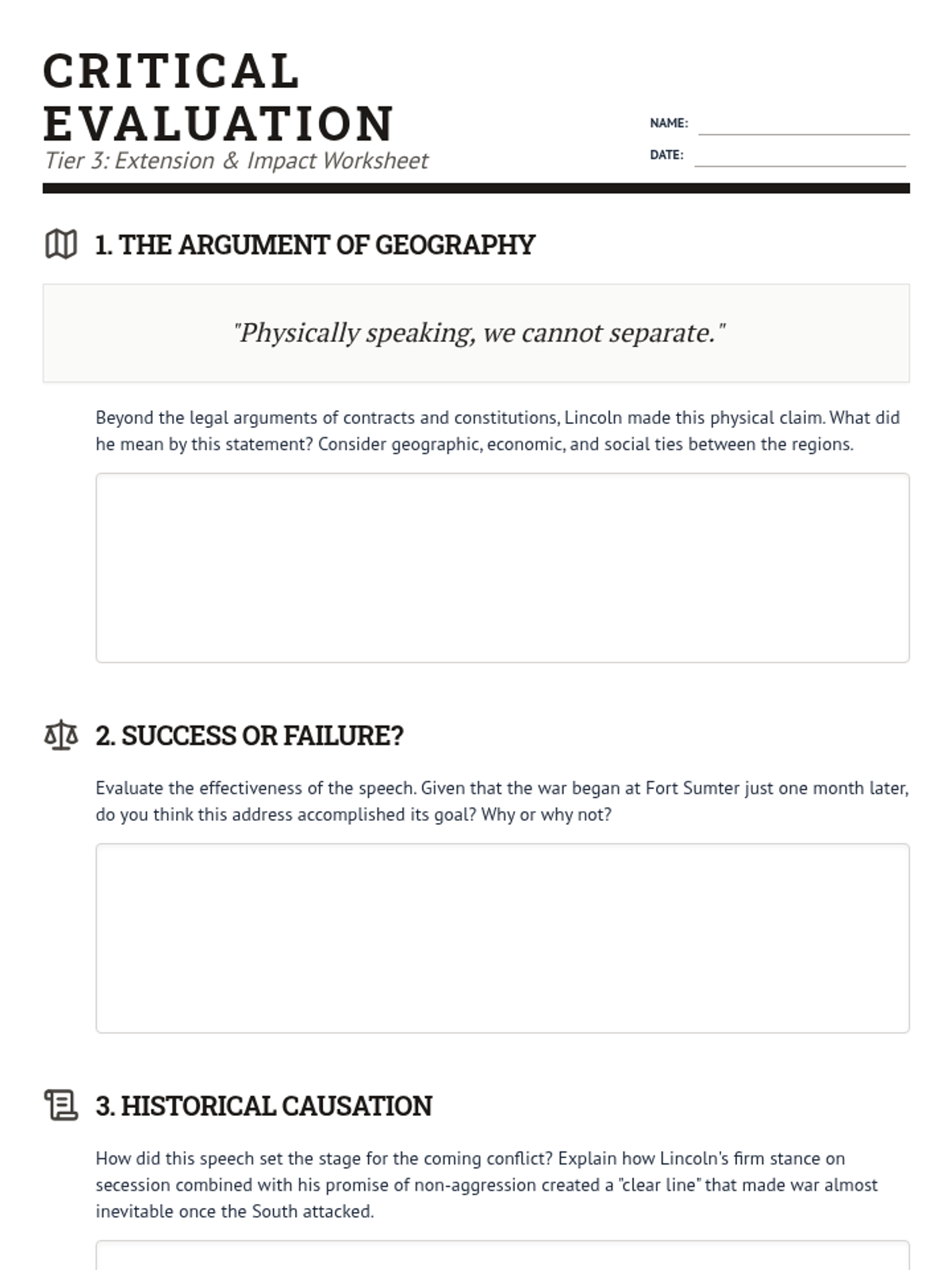
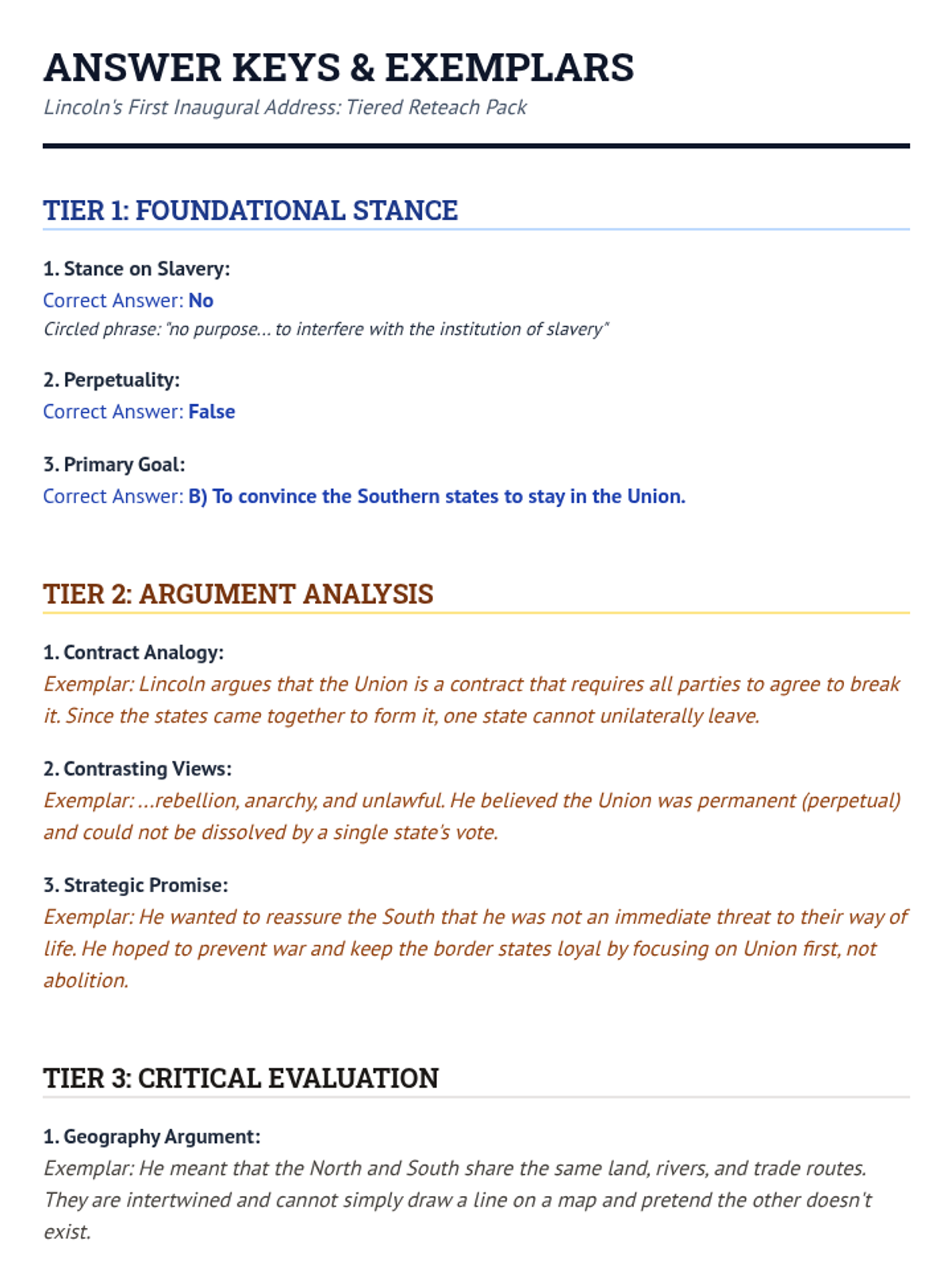
A targeted reteach lesson focused on correcting misconceptions about Abraham Lincoln's First Inaugural Address, specifically his initial stance on slavery, the legality of secession, and his intentions toward the South.
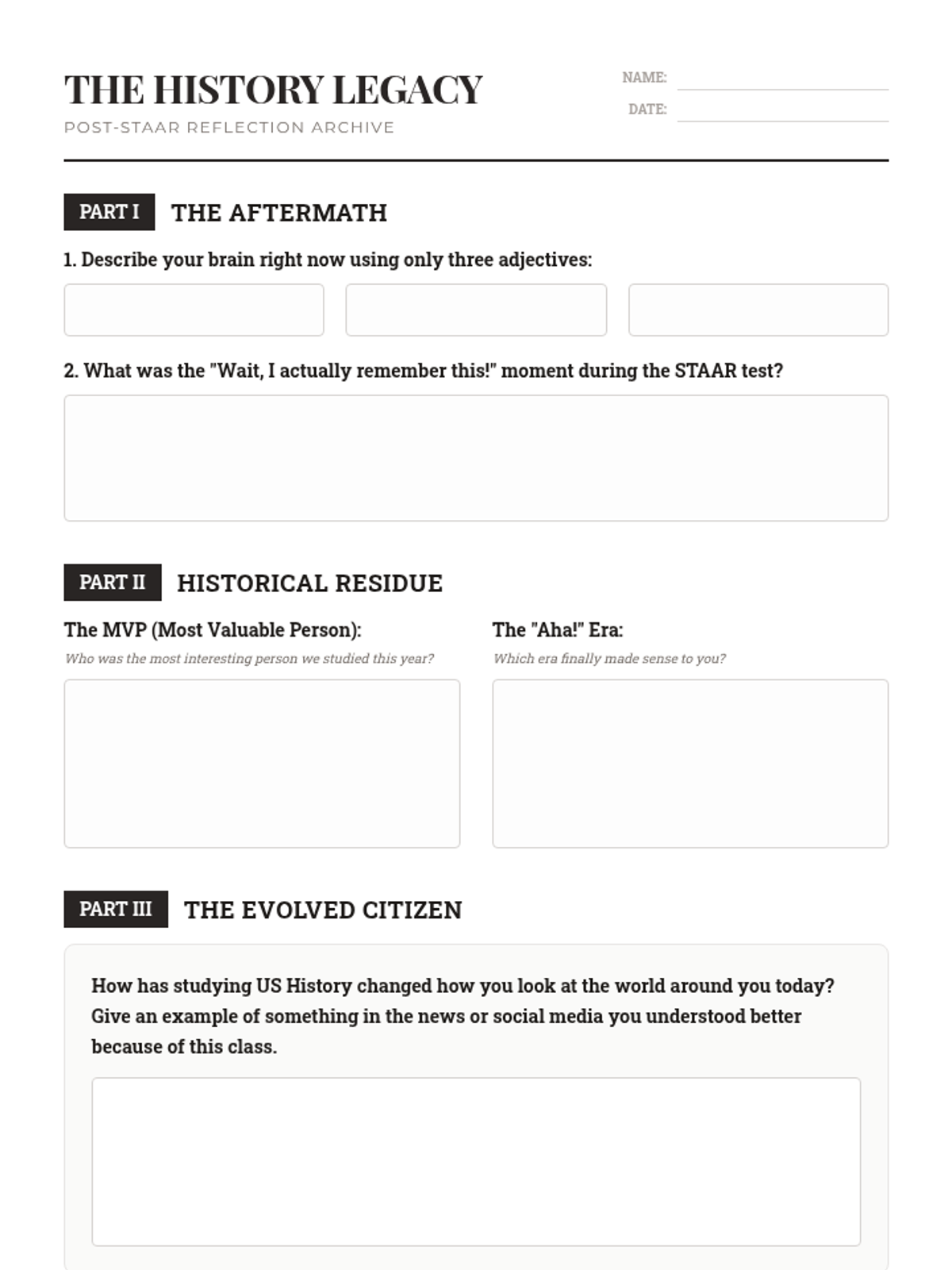
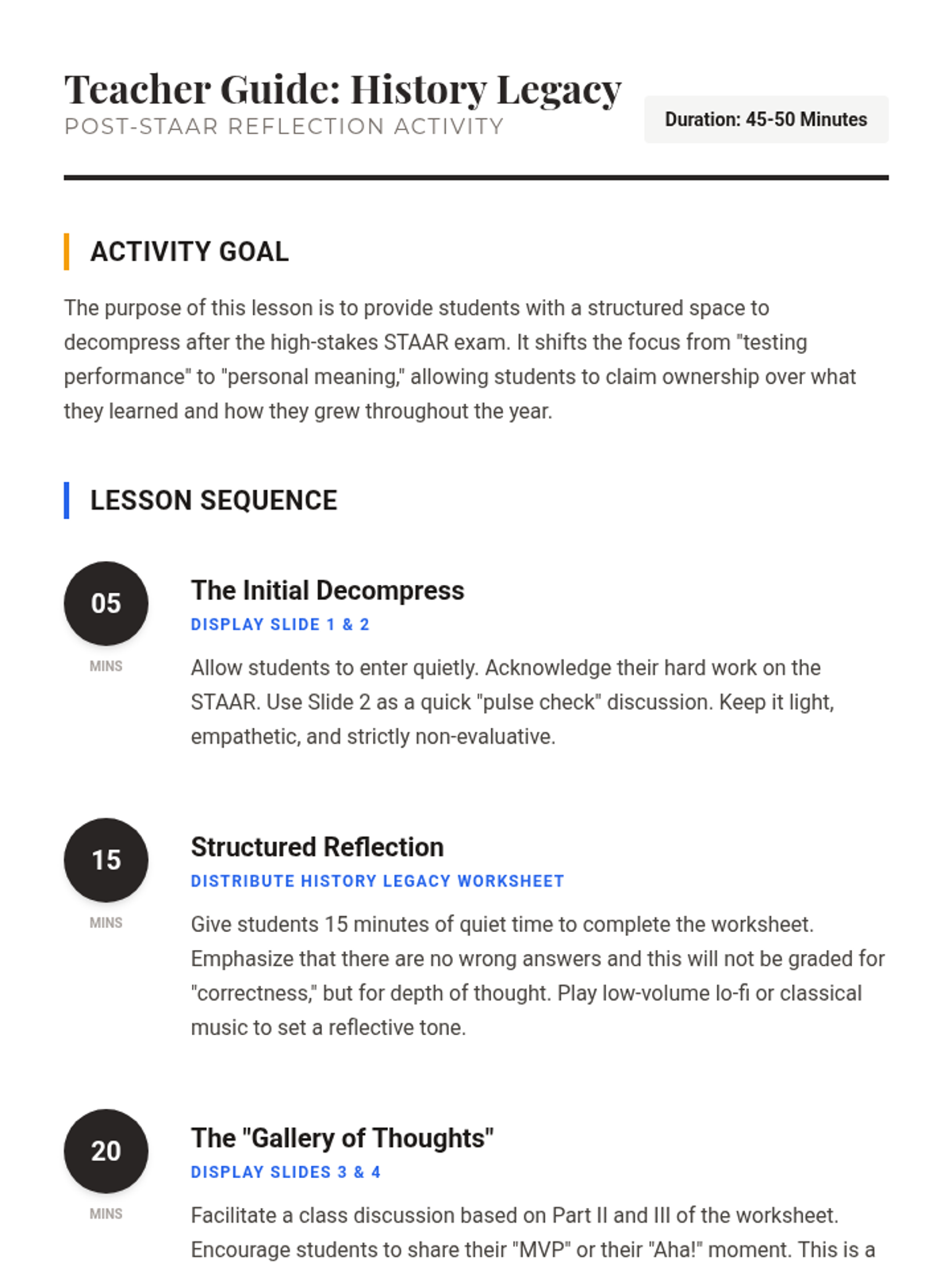
A one-period reflective experience for students to decompress after the US History STAAR exam, focusing on content mastery and personal growth.
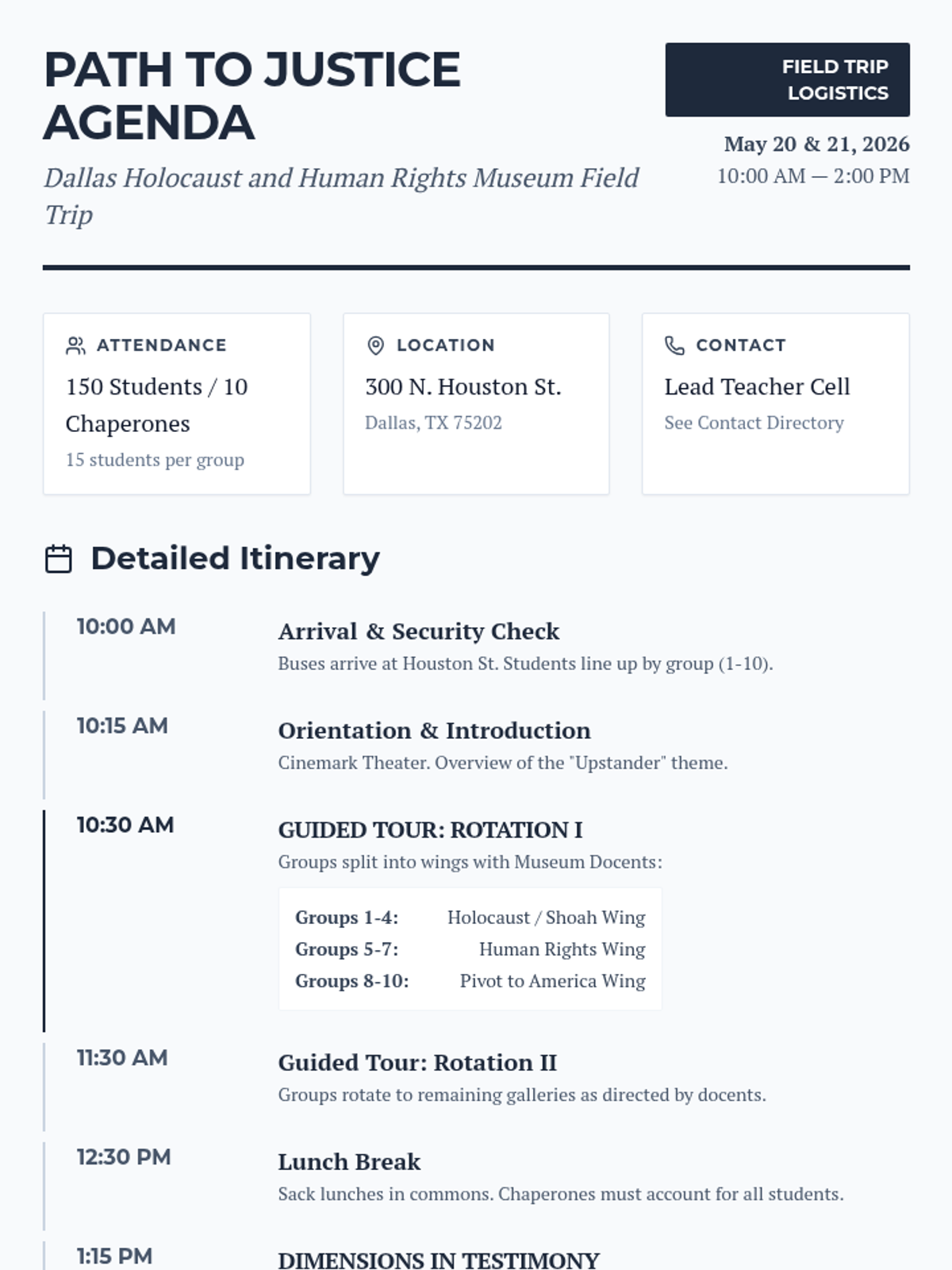
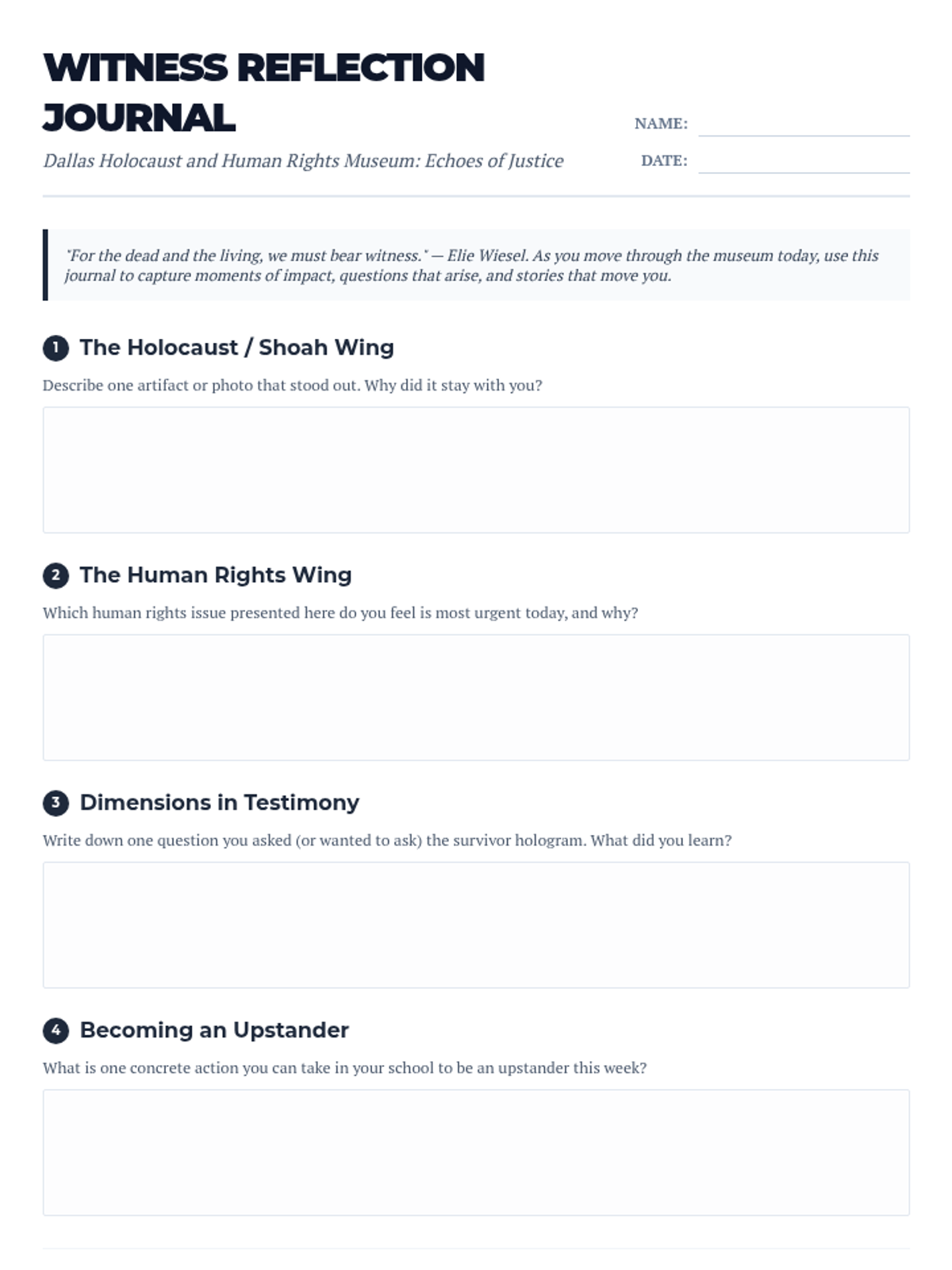
A comprehensive field trip plan for a visit to the Dallas Holocaust and Human Rights Museum, focusing on the history of the Holocaust, human rights struggles, and the importance of upstander behavior.
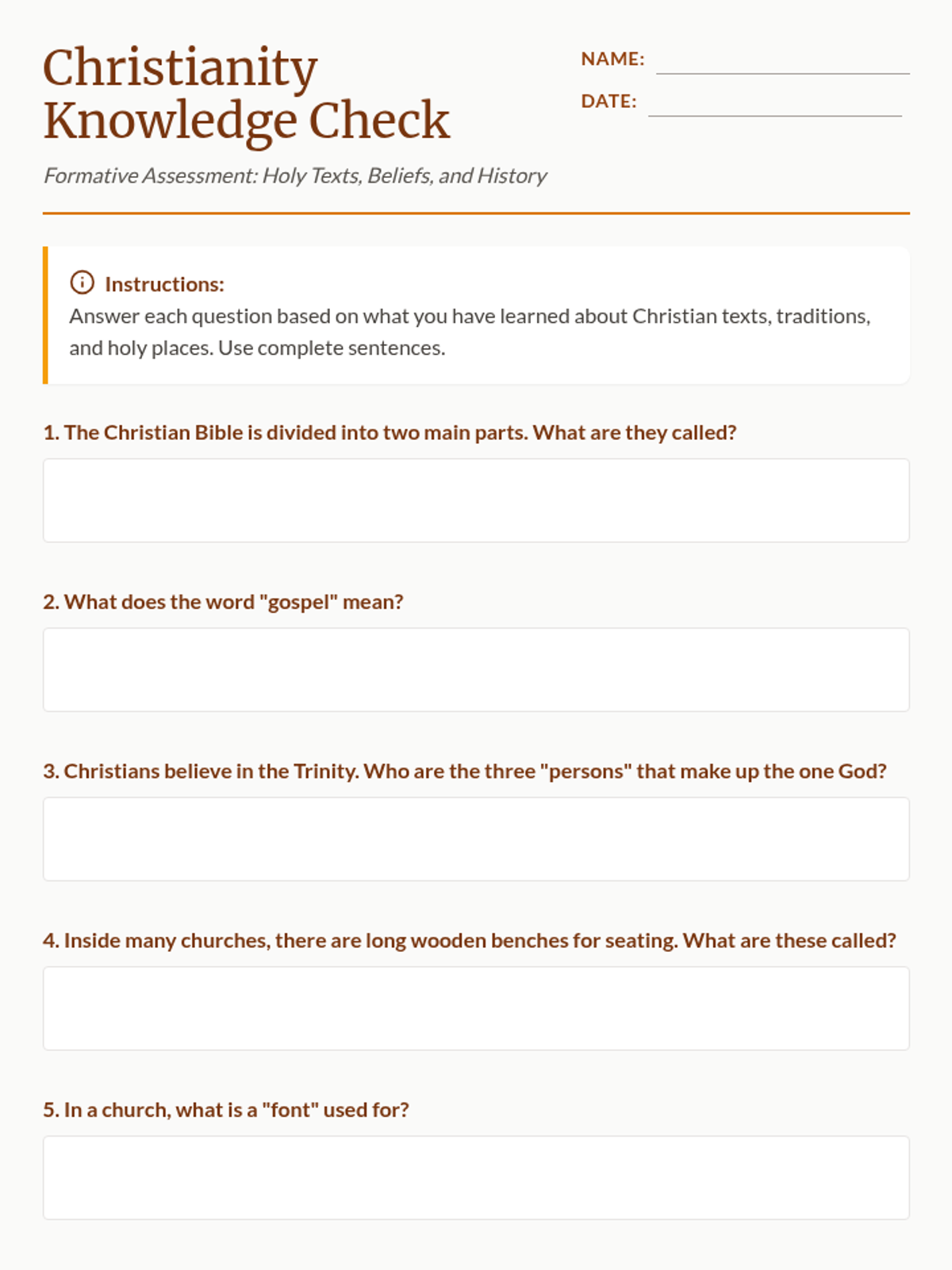
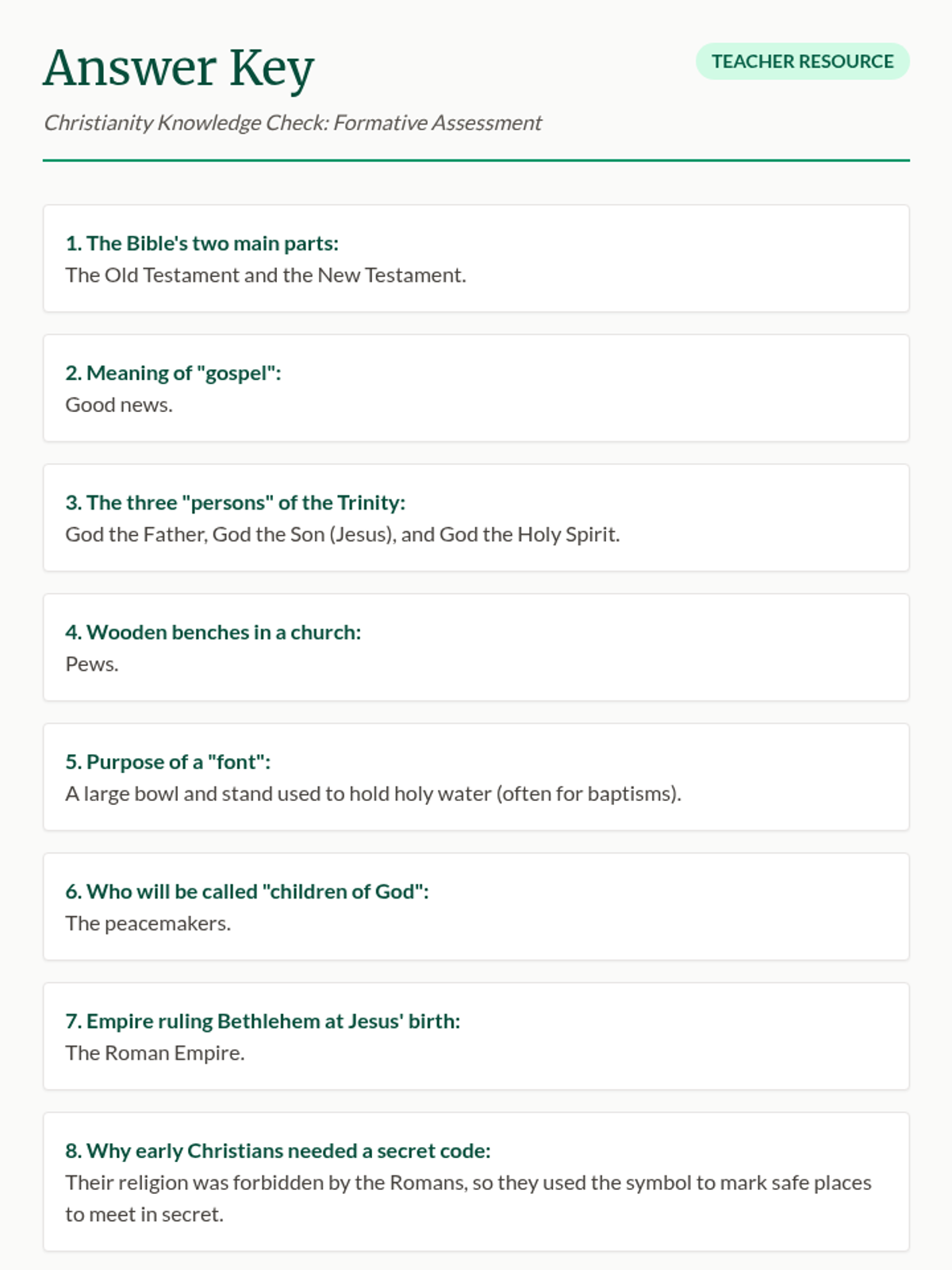
A lesson exploring the foundational texts, beliefs, and history of Christianity through the study of holy texts, sacred spaces, and key historical figures.
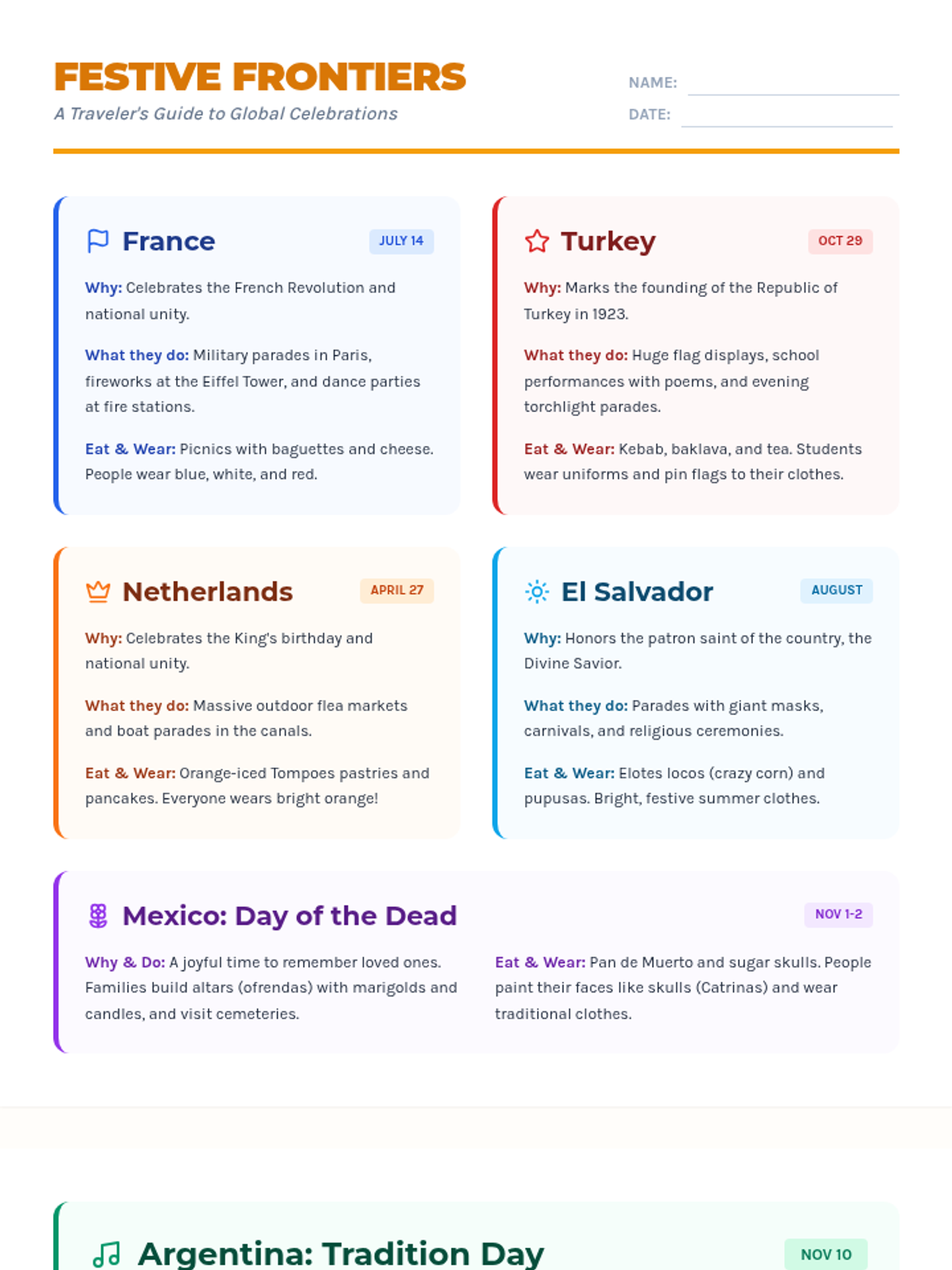
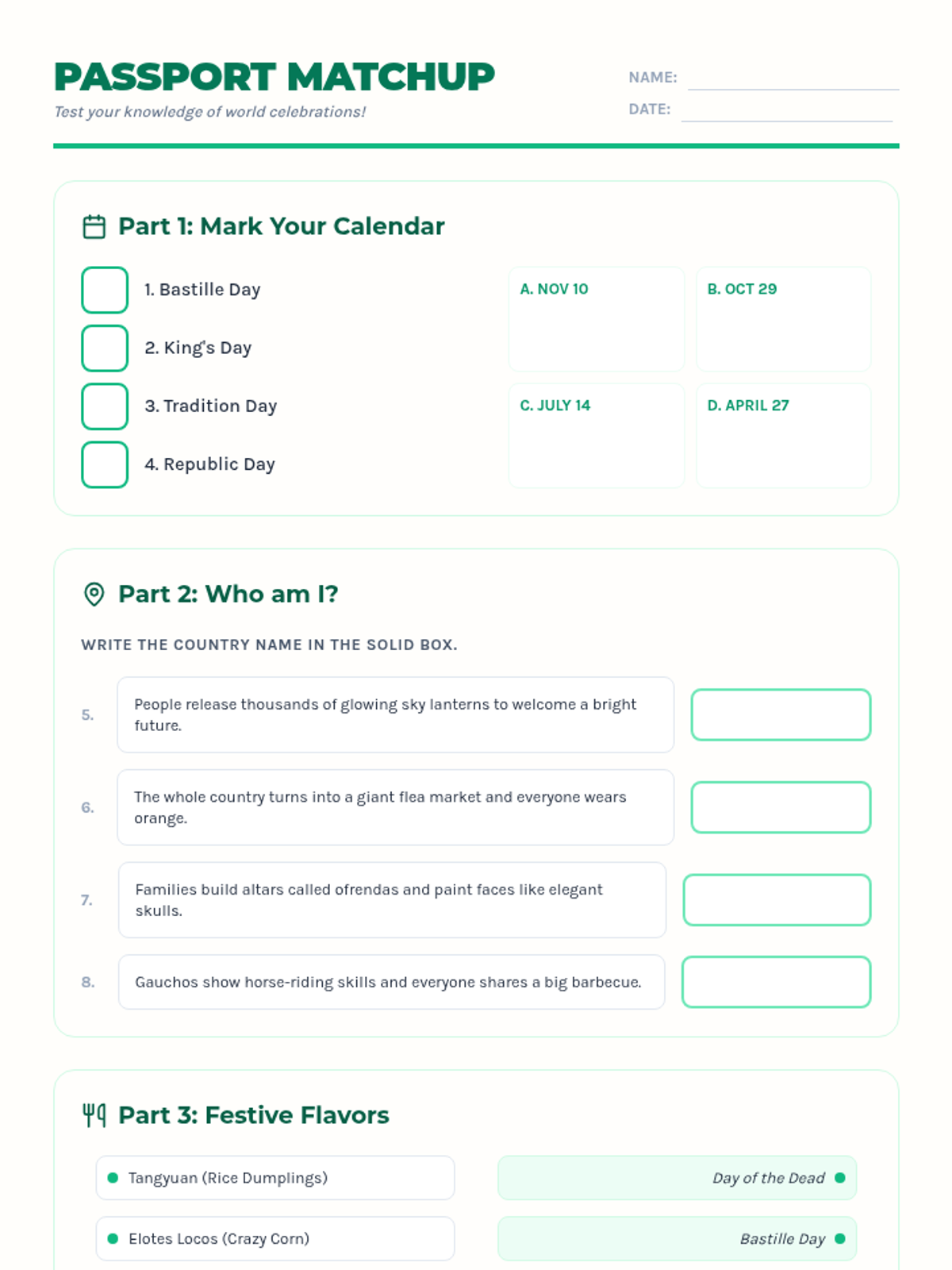
Explore traditional festivals from seven different countries through detailed reading passages and interactive matching activities designed for upper-intermediate ESL students.
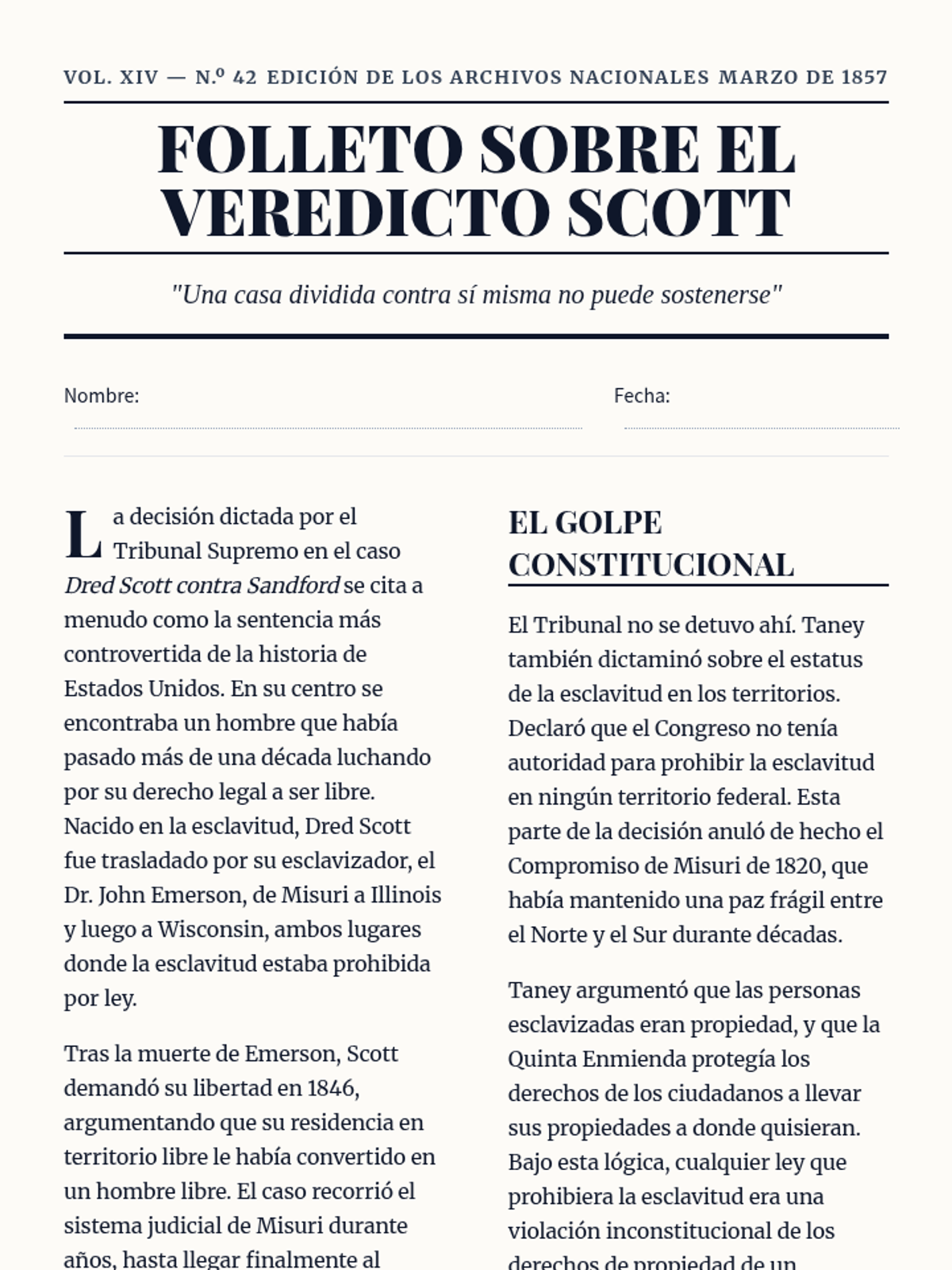
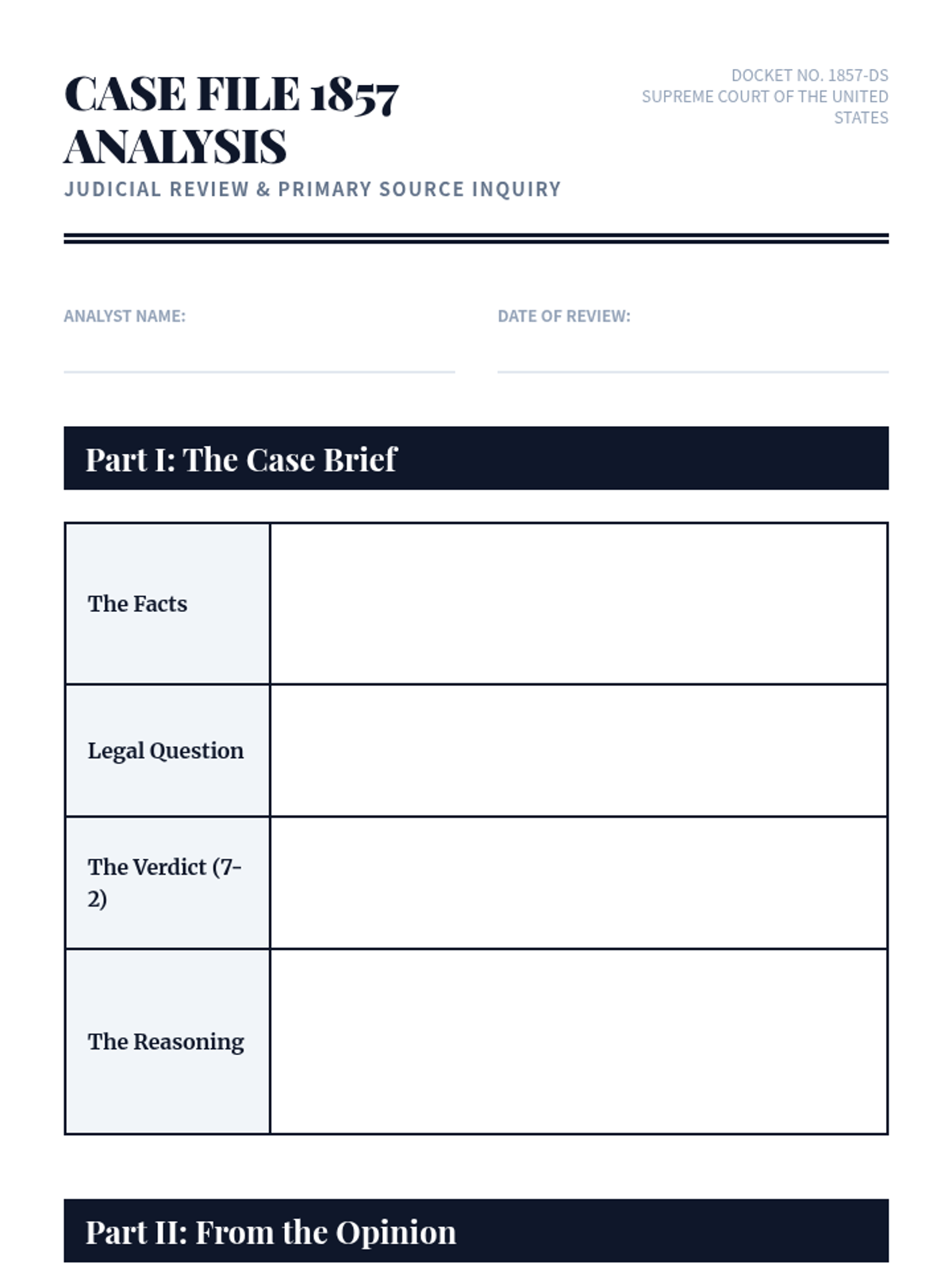
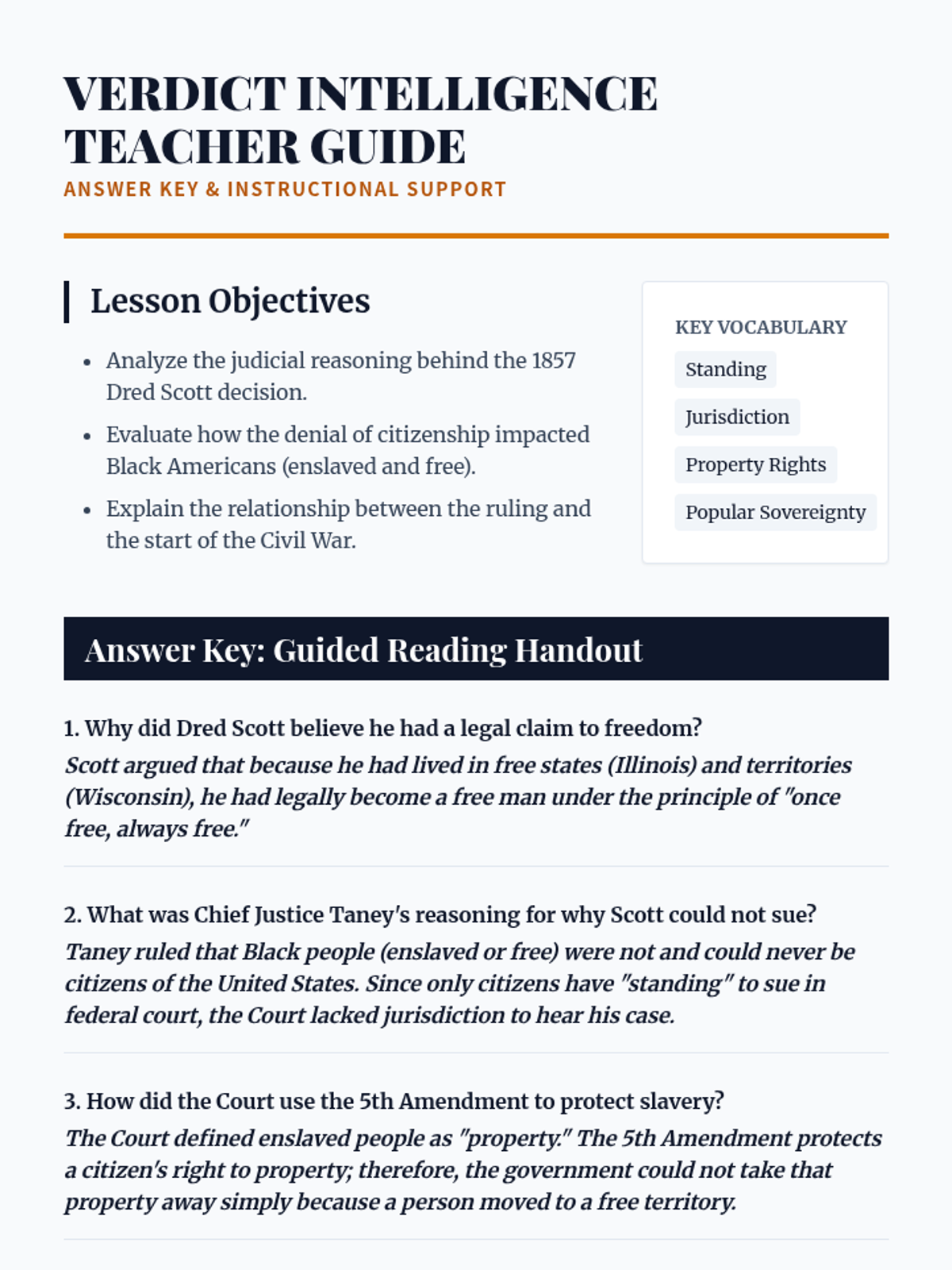
Explore the landmark Dred Scott v. Sandford case, focusing on the definition of American citizenship and the decision's role as a catalyst for the American Civil War. Students analyze primary source excerpts and the legal reasoning of the Taney Court.
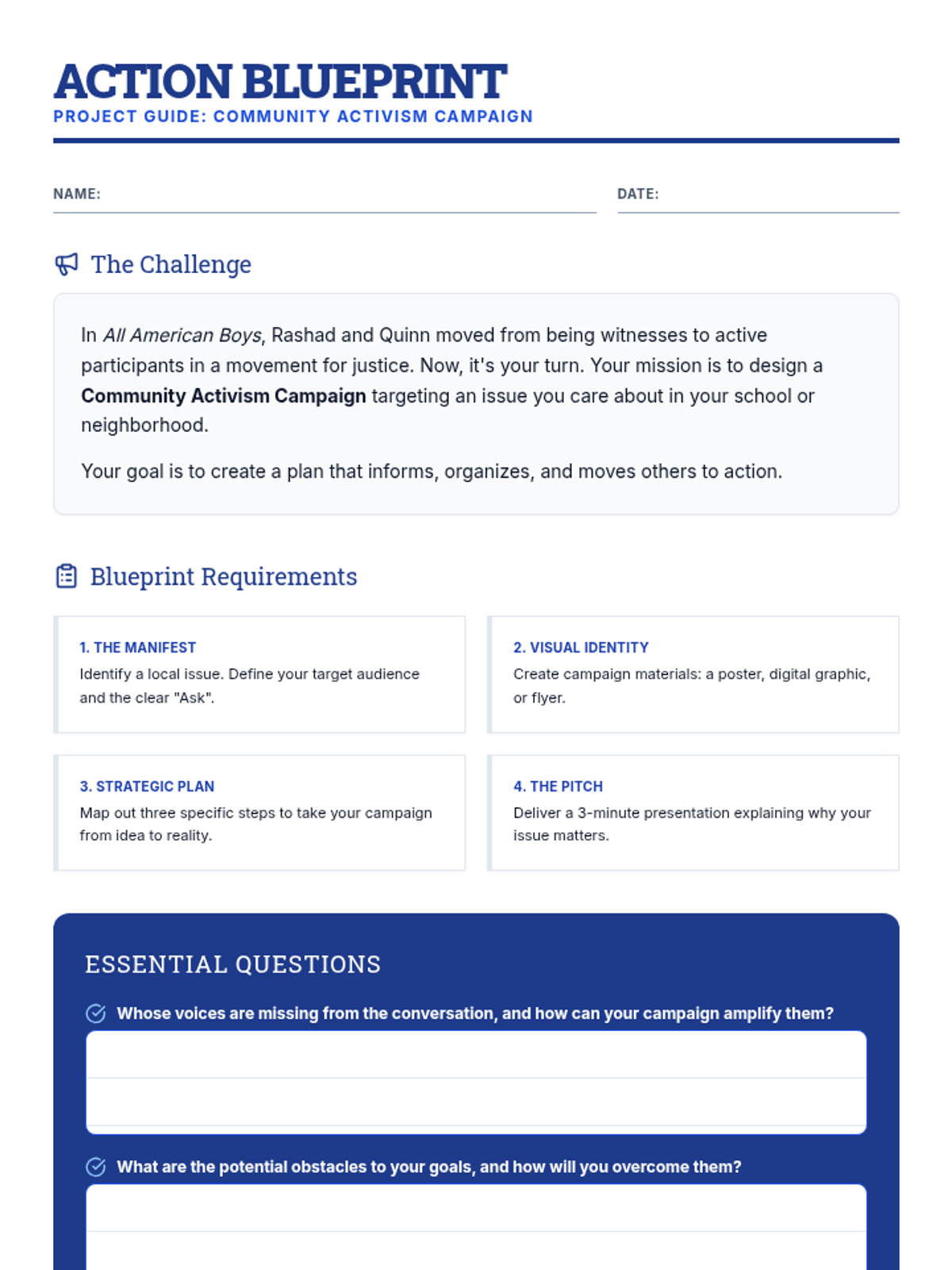
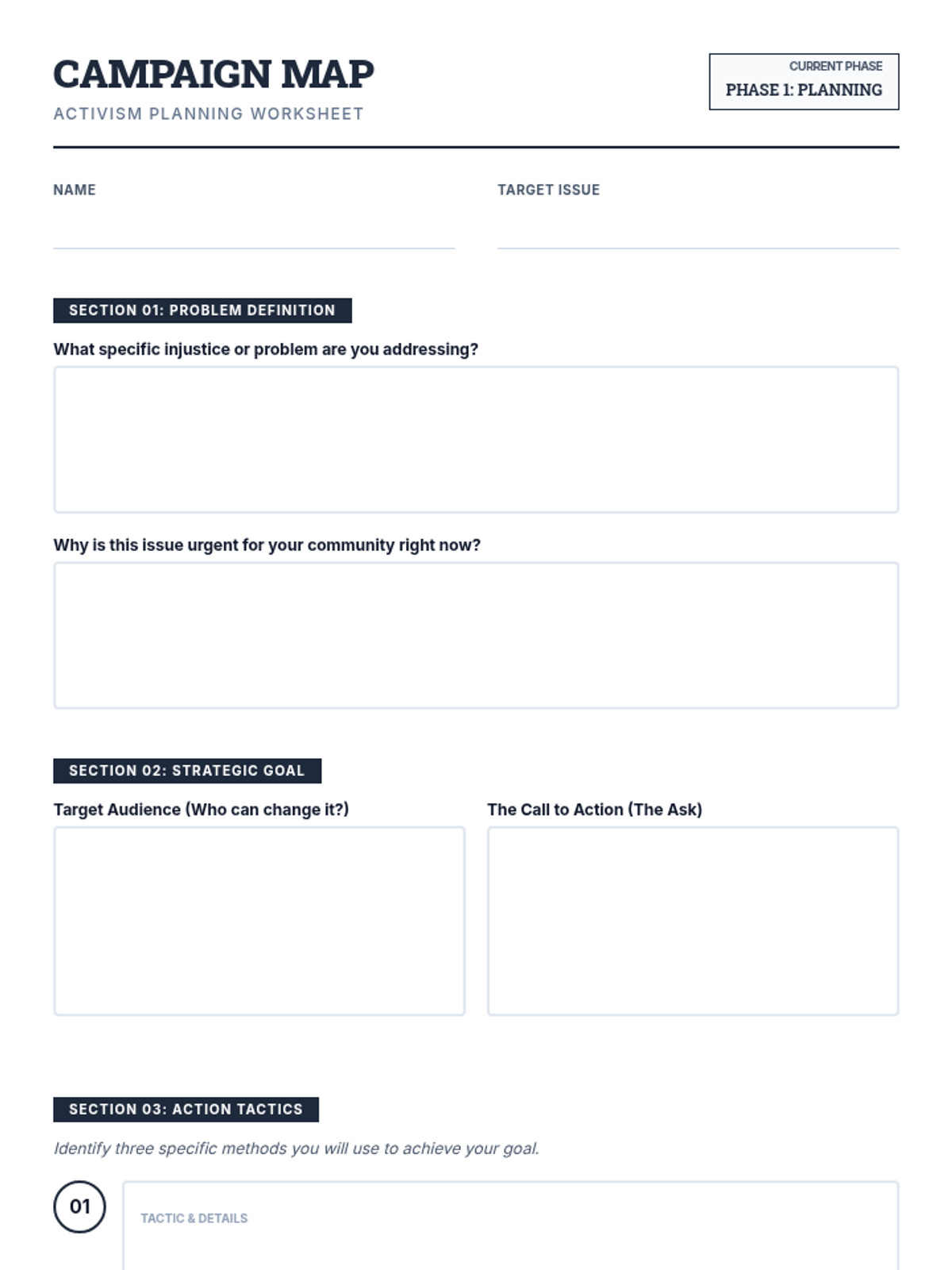
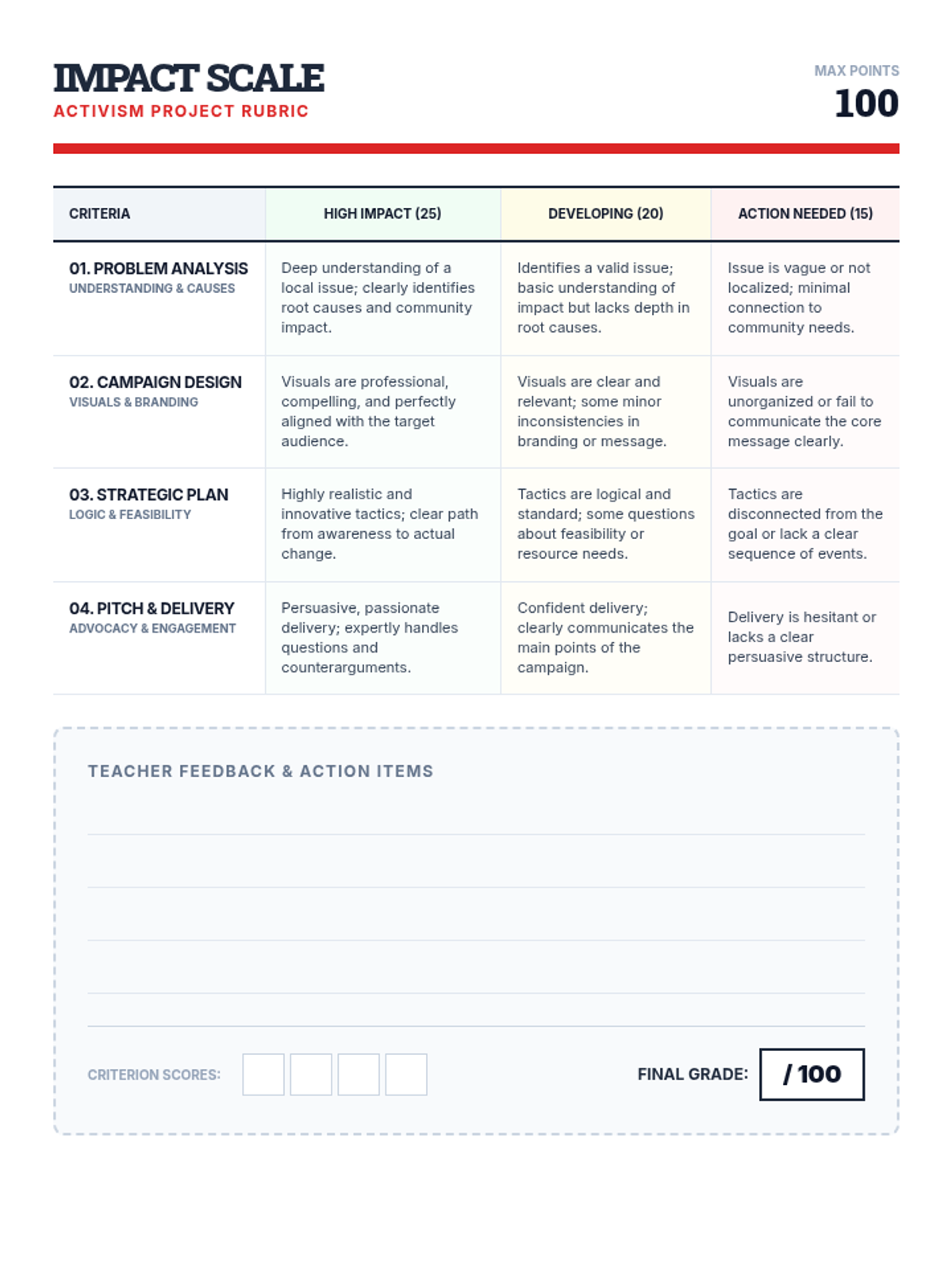
A project-based lesson where students design and launch a community activism campaign inspired by the themes of justice and civic engagement in All American Boys.
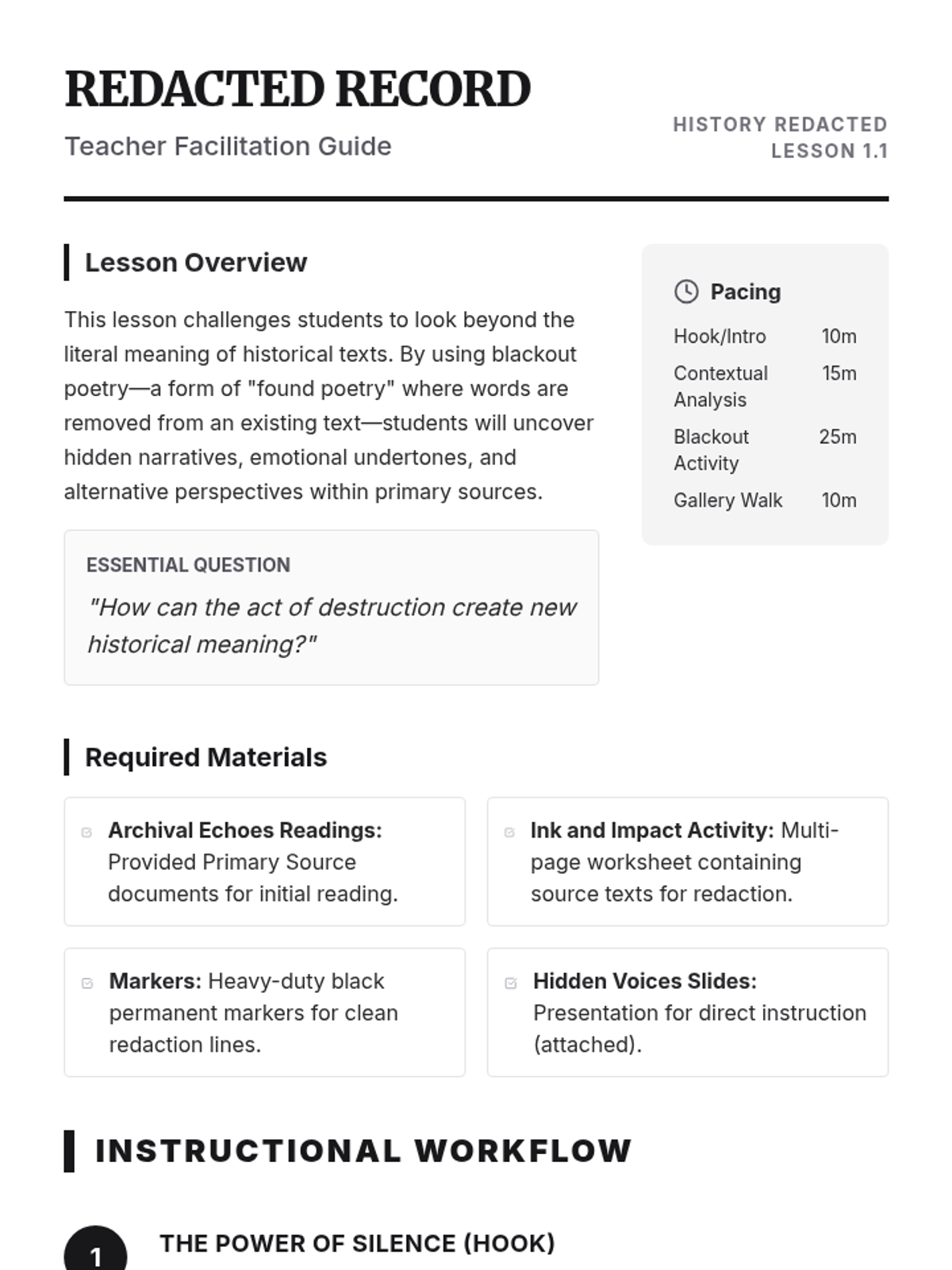
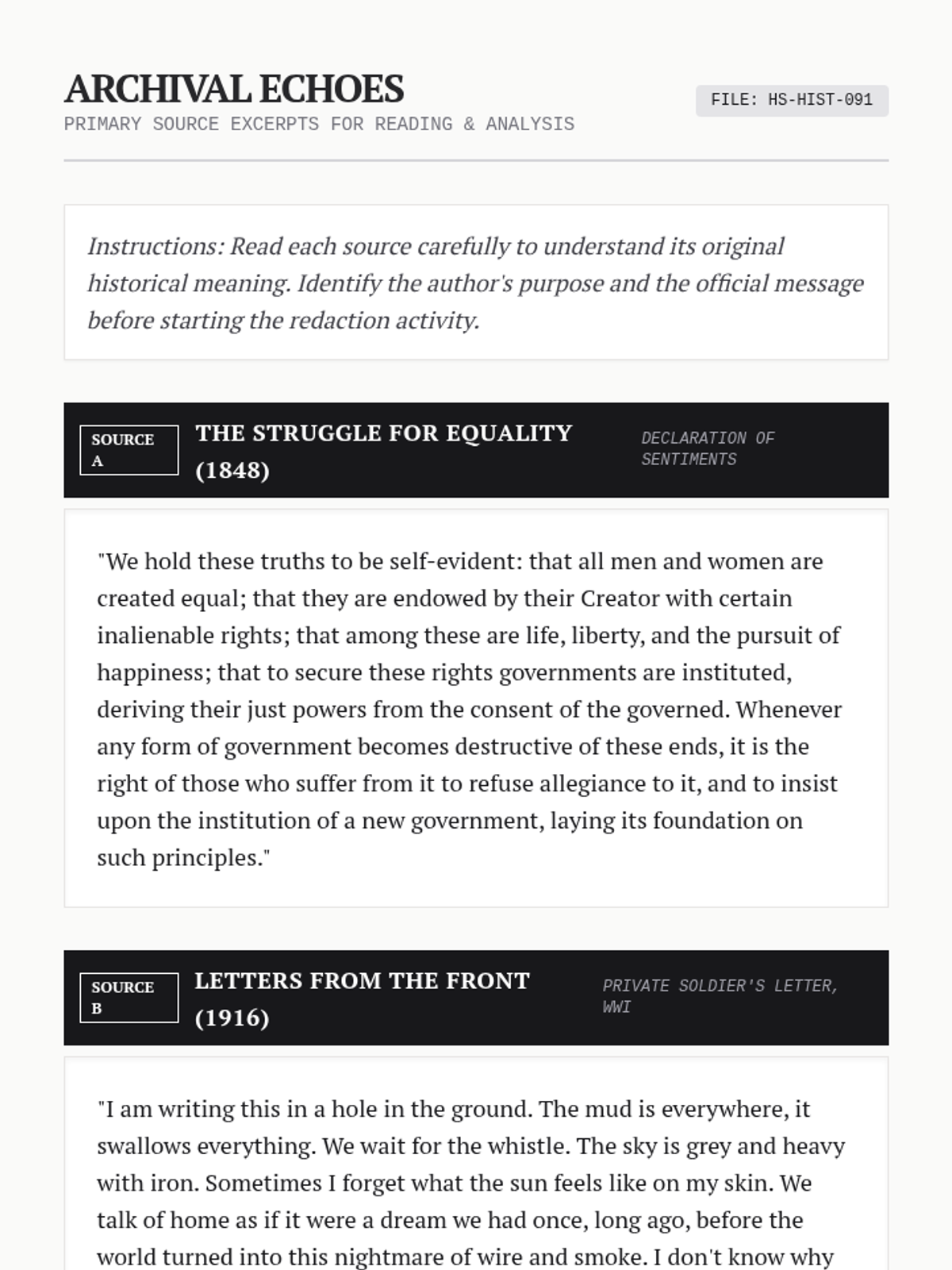
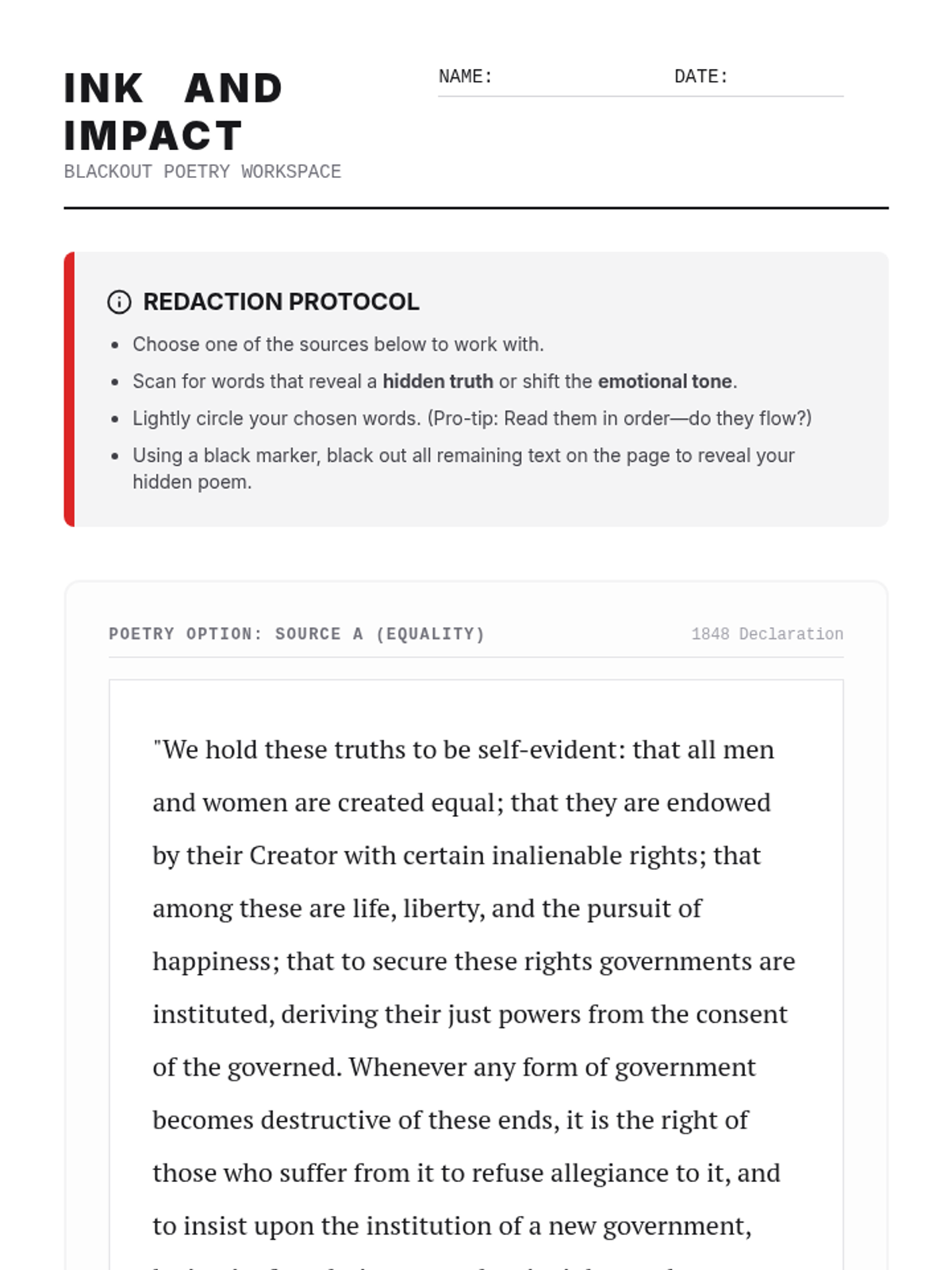
A high school history and ELA integration lesson where students use blackout poetry to extract new emotional truths and perspectives from primary source documents. Students explore how language can be repurposed to highlight voices that have been marginalized or silenced throughout history.
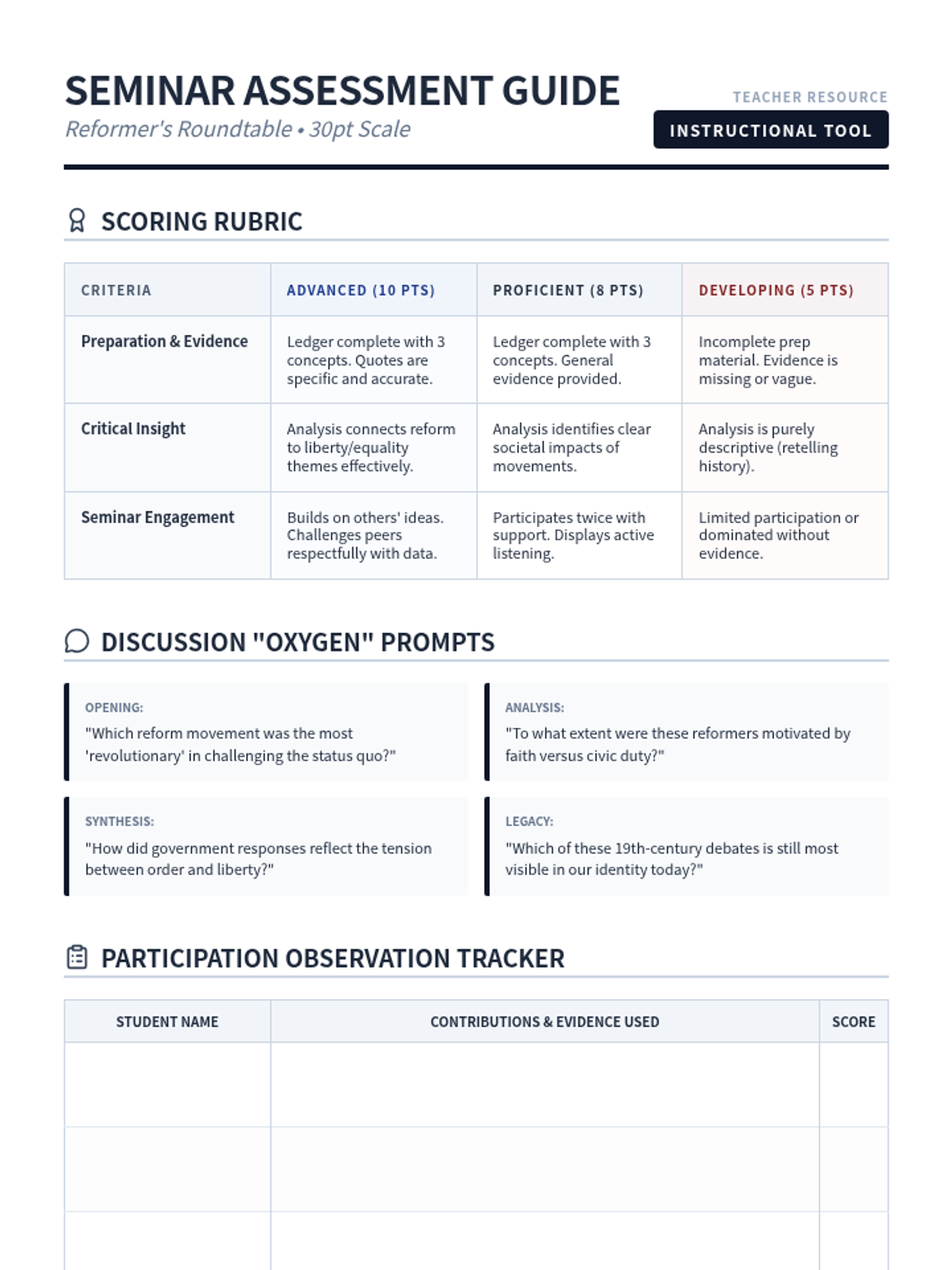
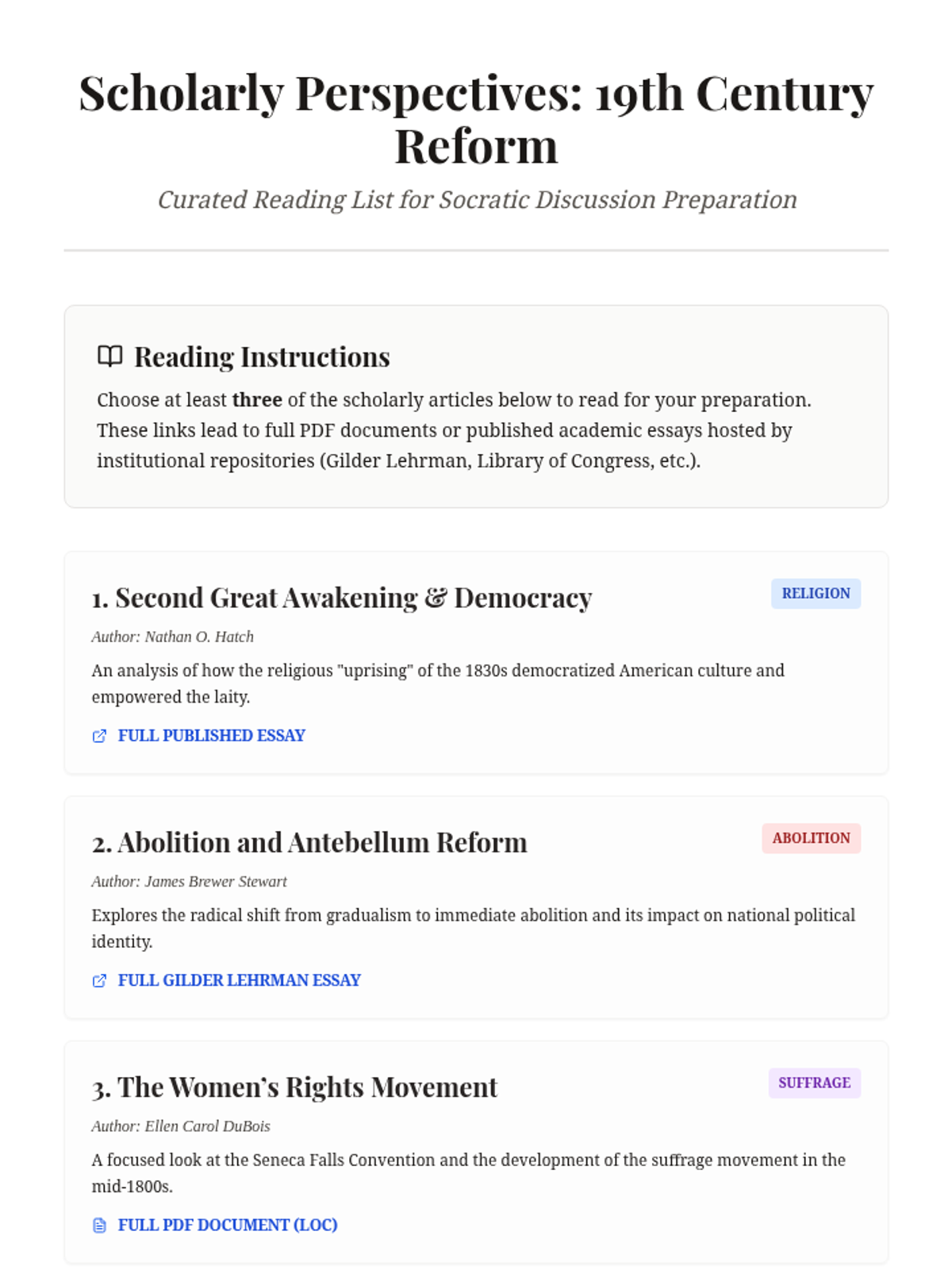
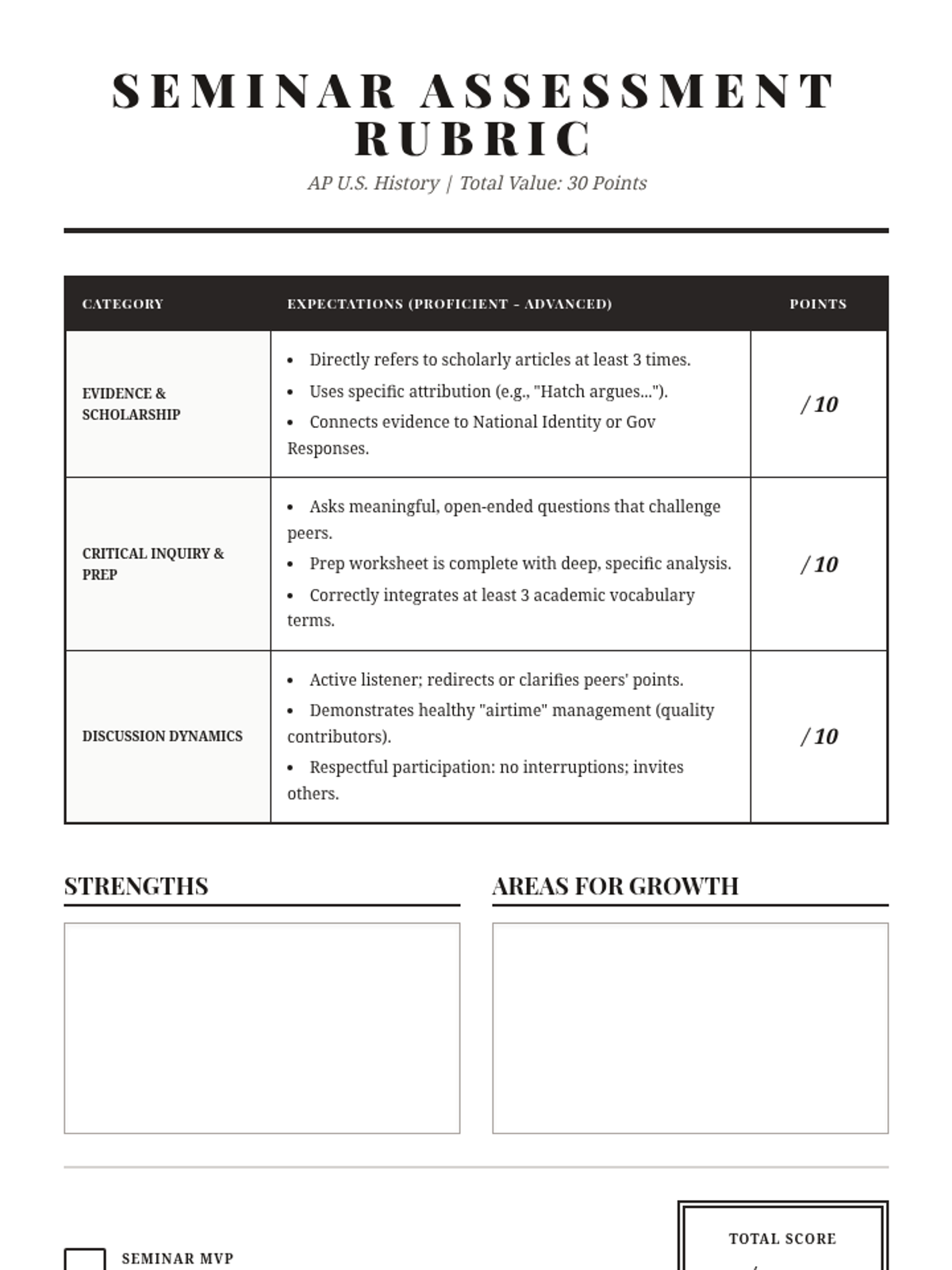
A comprehensive Socratic Seminar unit focused on 19th-century reform movements, including scholarly reading links, preparation guides, and a formal 30-point evaluation rubric.
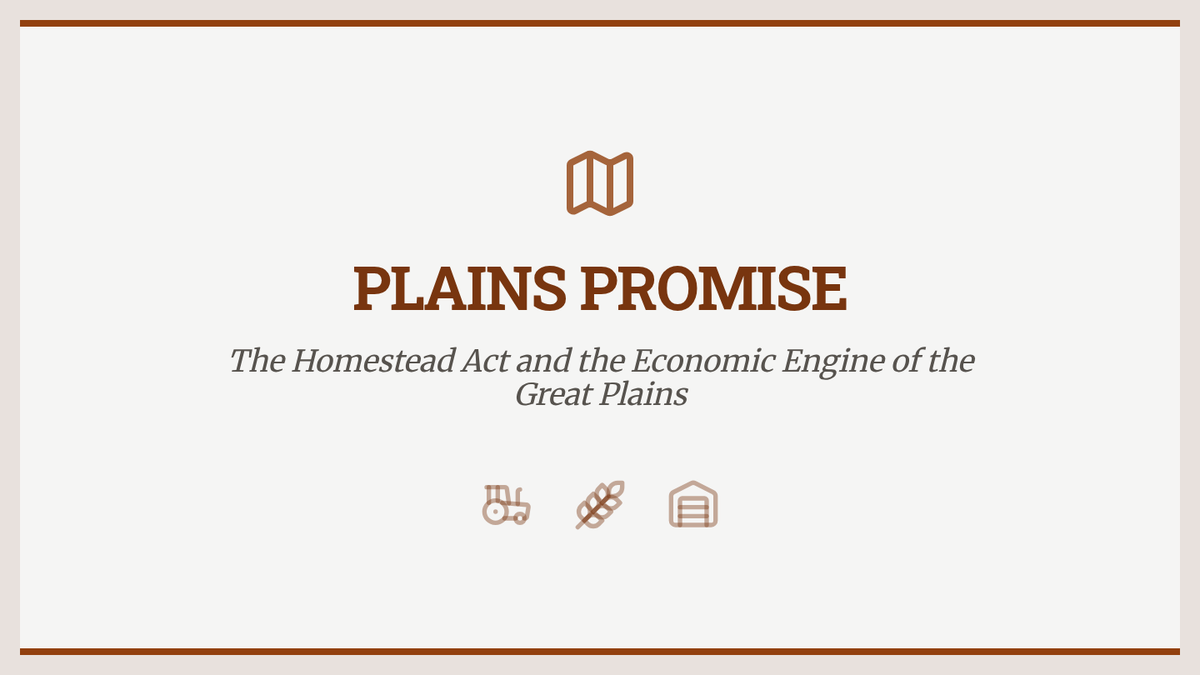
This lesson explores the Homestead Act of 1862, focusing on the economic motivations that drove settlers to the Great Plains and the resulting transformation of the American Midwest into an agricultural powerhouse. Students will analyze the requirements of the act, the challenges of frontier life, and the long-term impact on national growth.
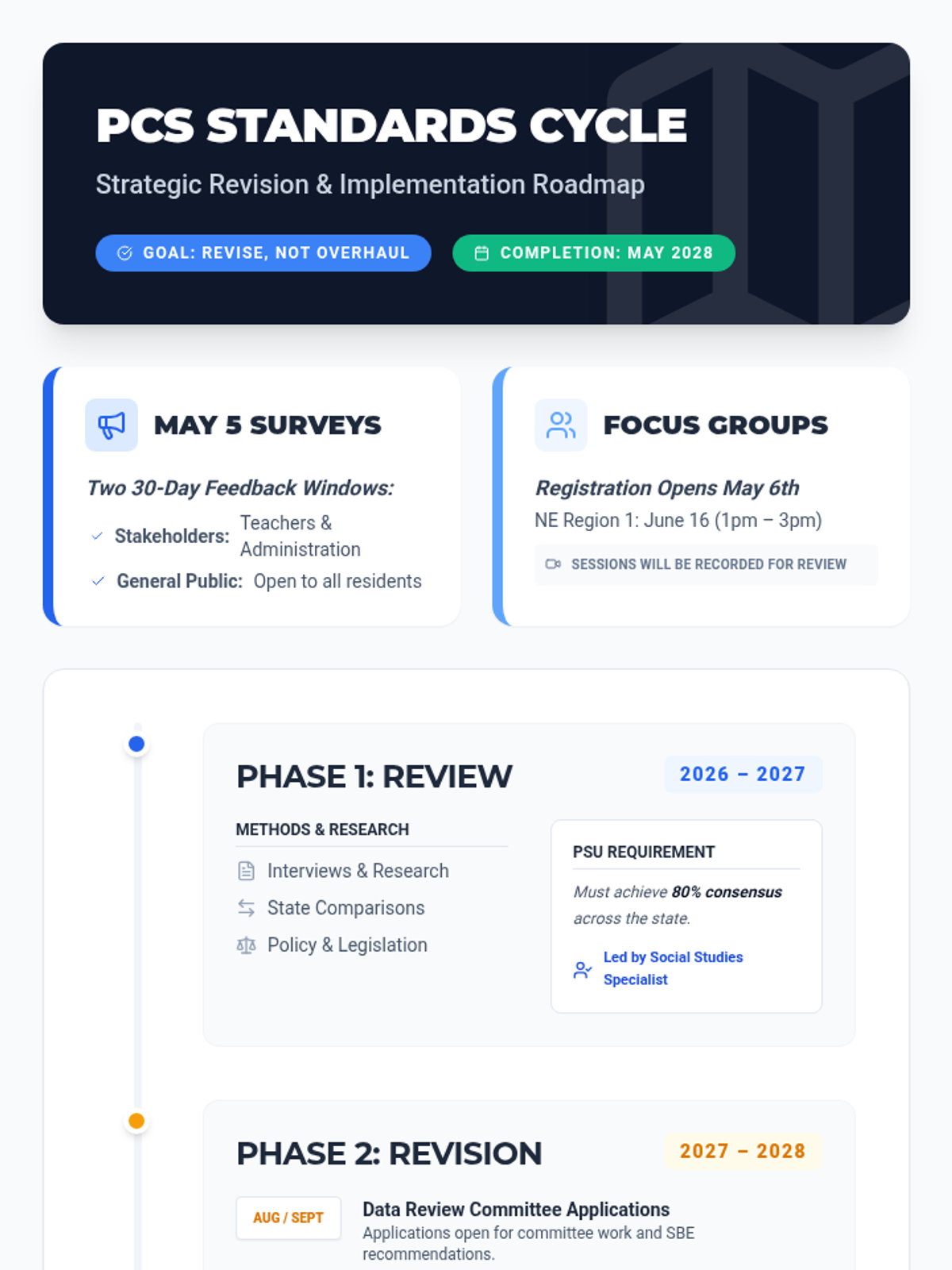
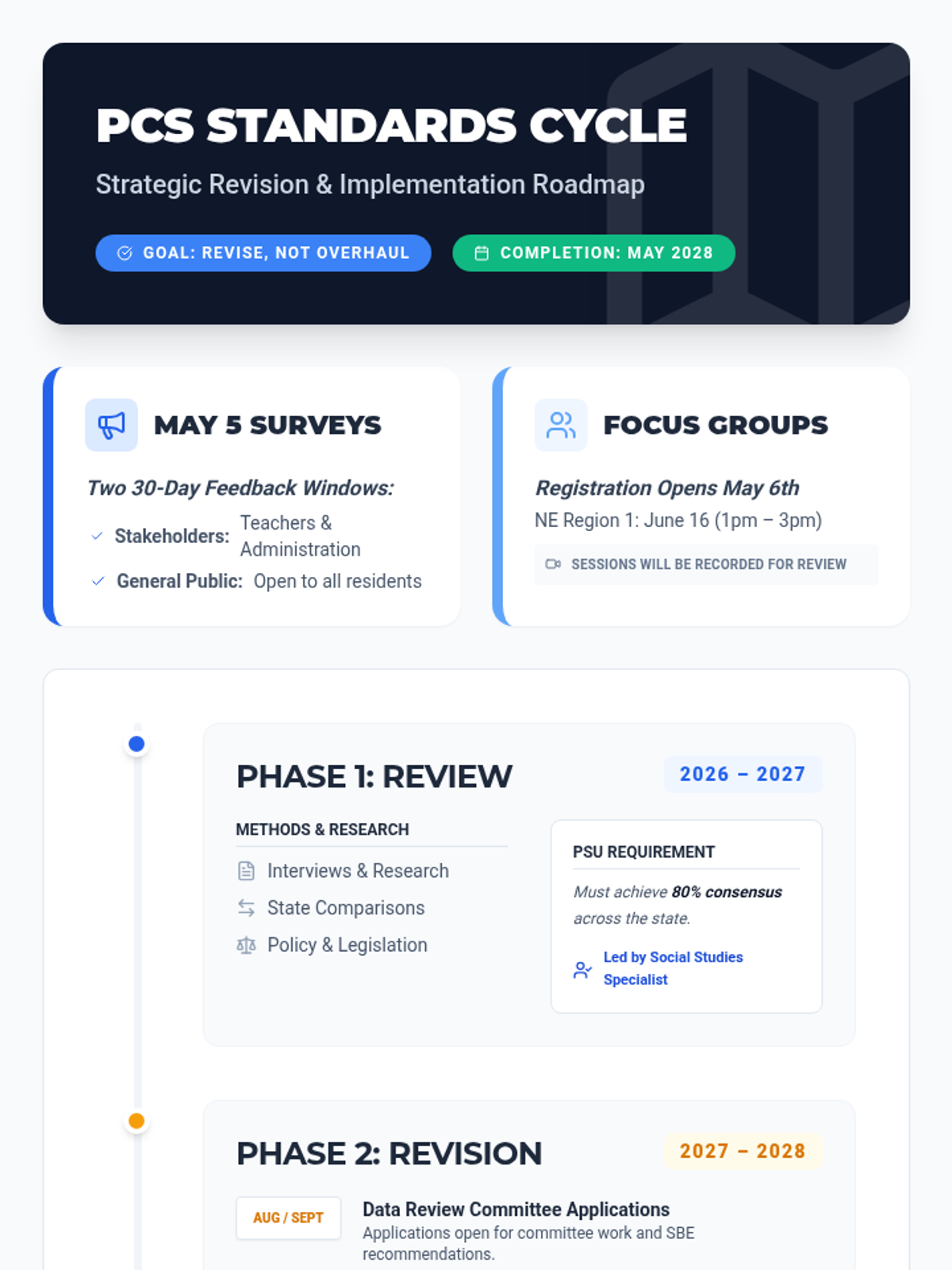
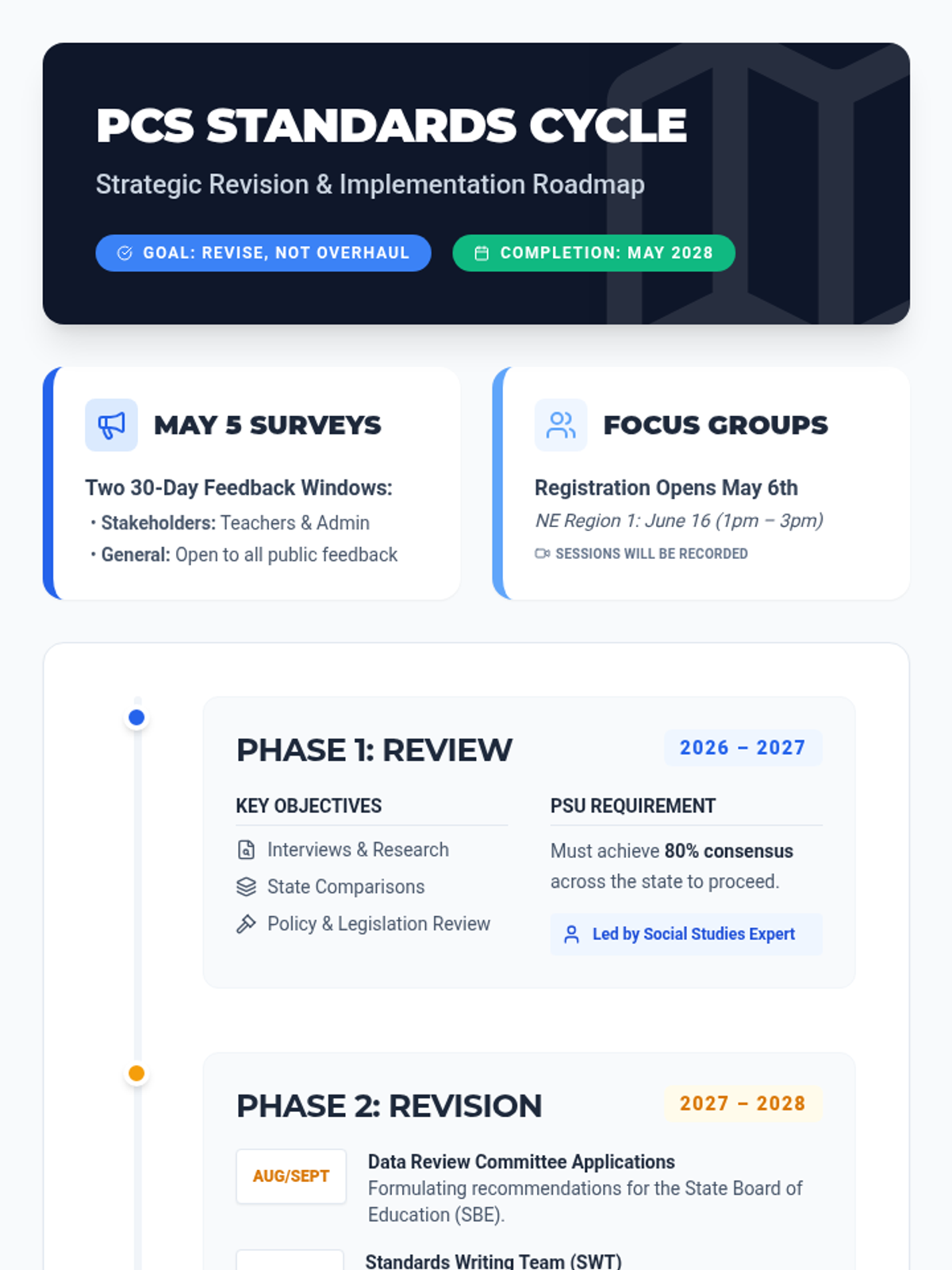
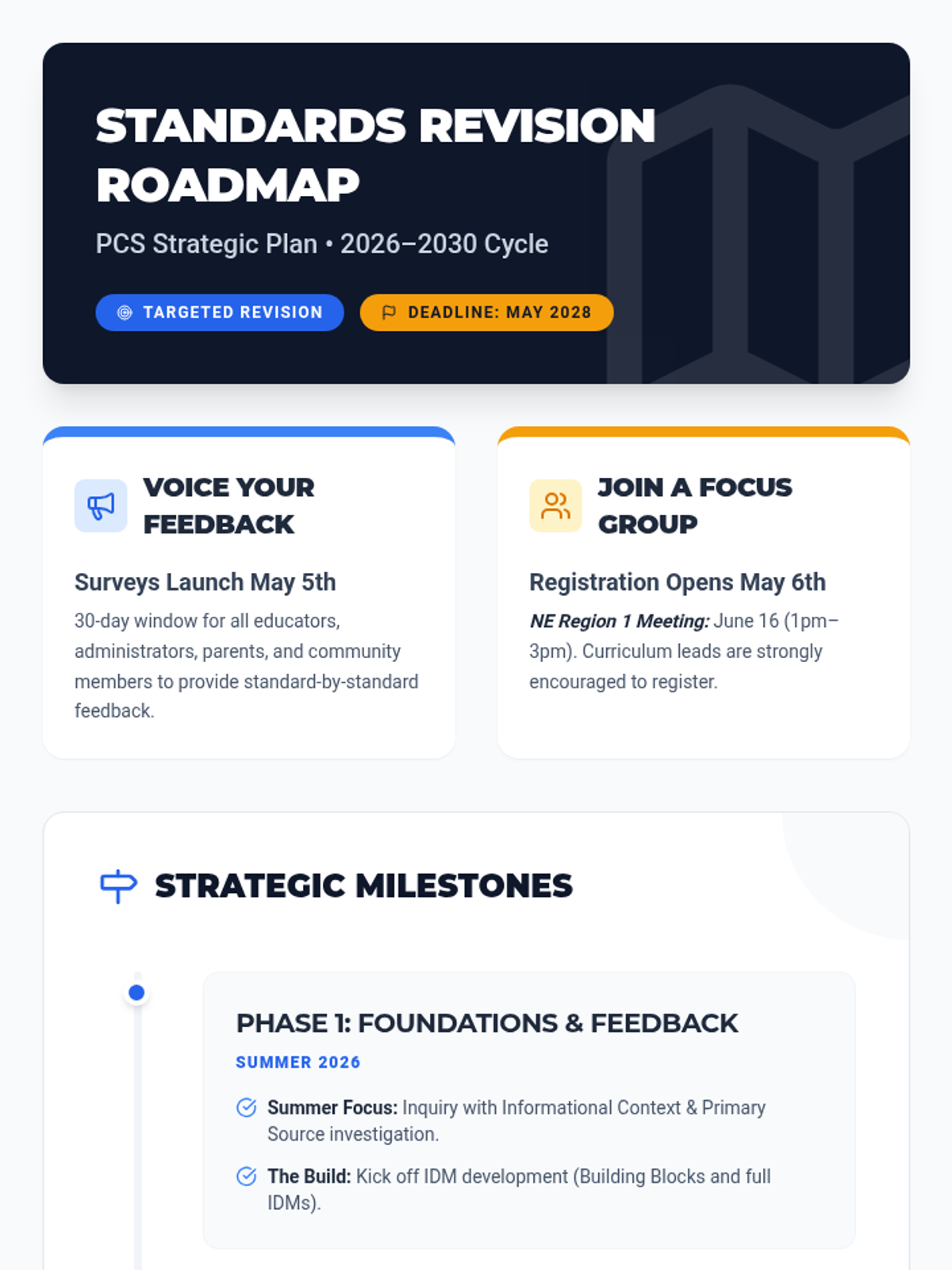
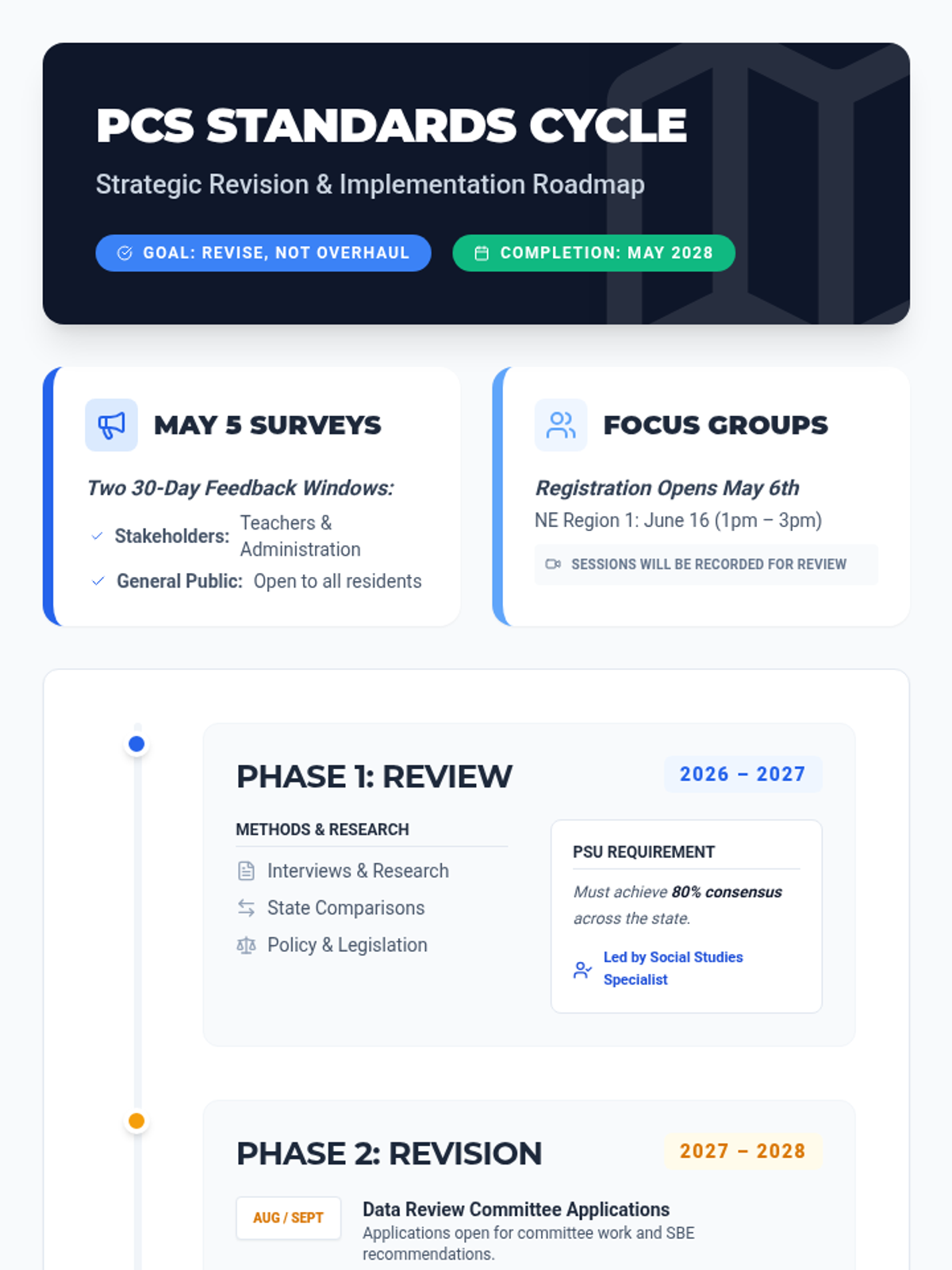
A comprehensive guide to the PCS standards revision process, including the multi-year timeline, feedback cycles, and curriculum build phases from 2026 to 2030.
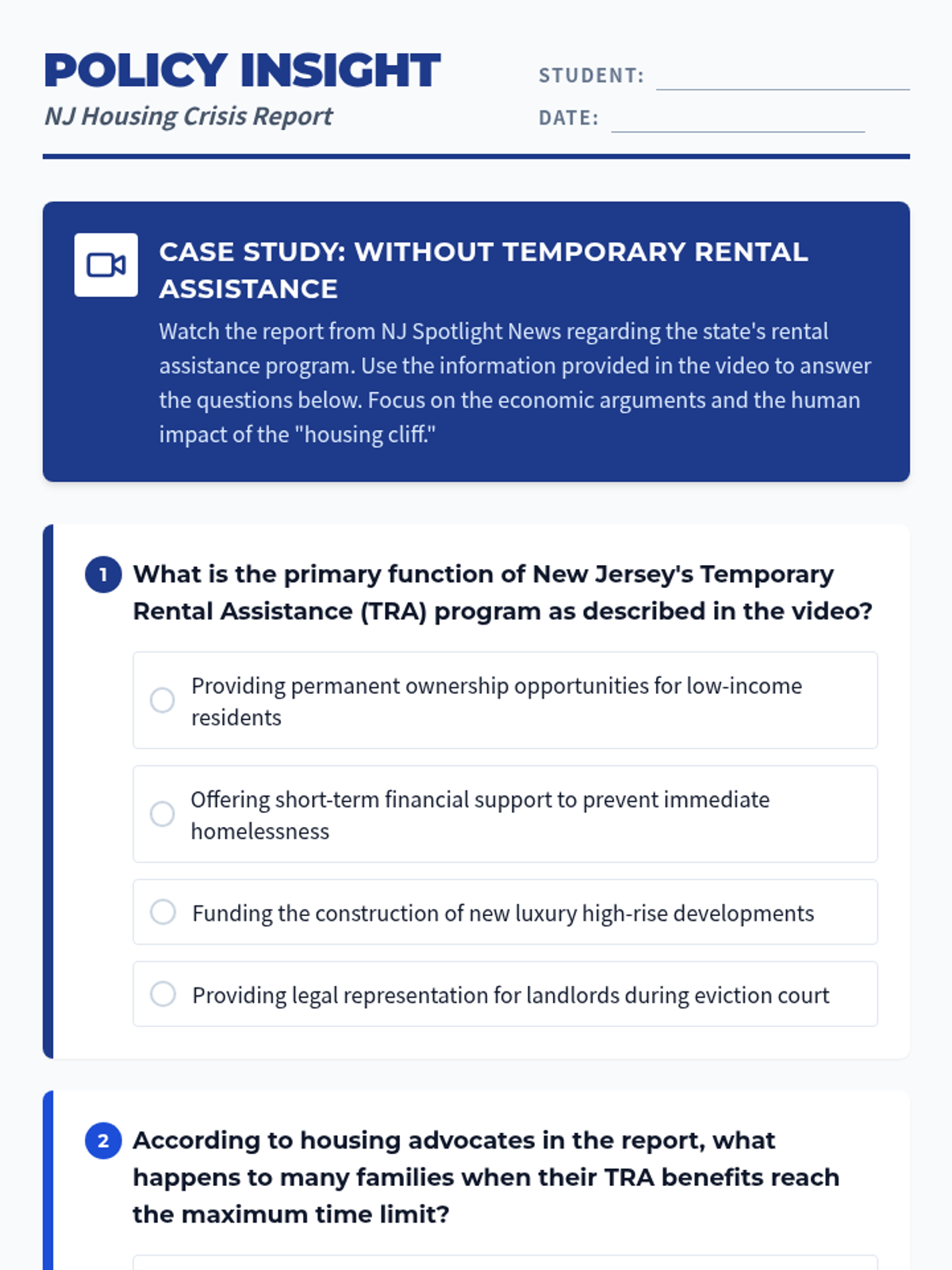
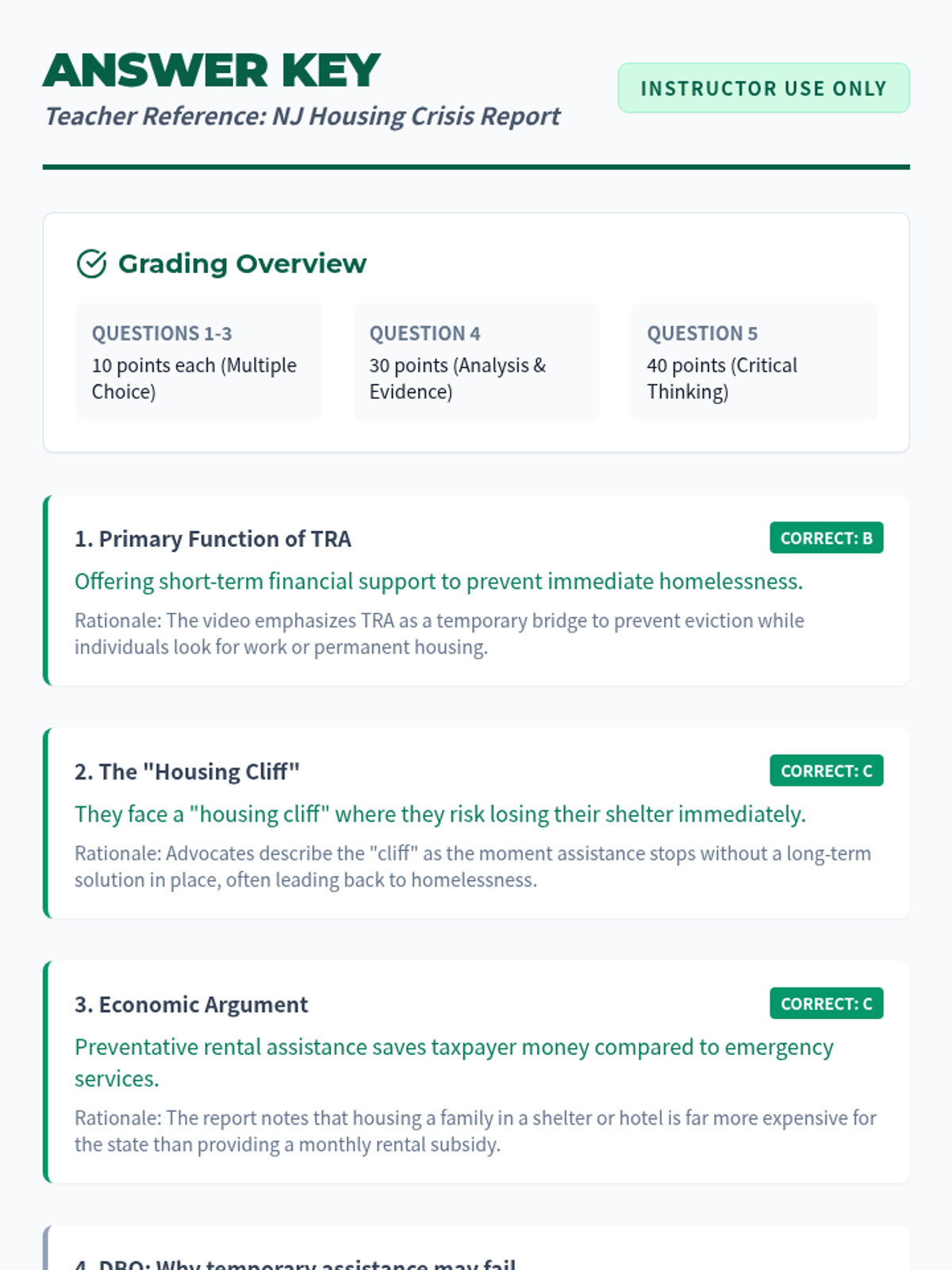
This lesson explores the impact of New Jersey's Temporary Rental Assistance (TRA) program on preventing homelessness, analyzing the economic and social benefits of housing stability through a news report lens.
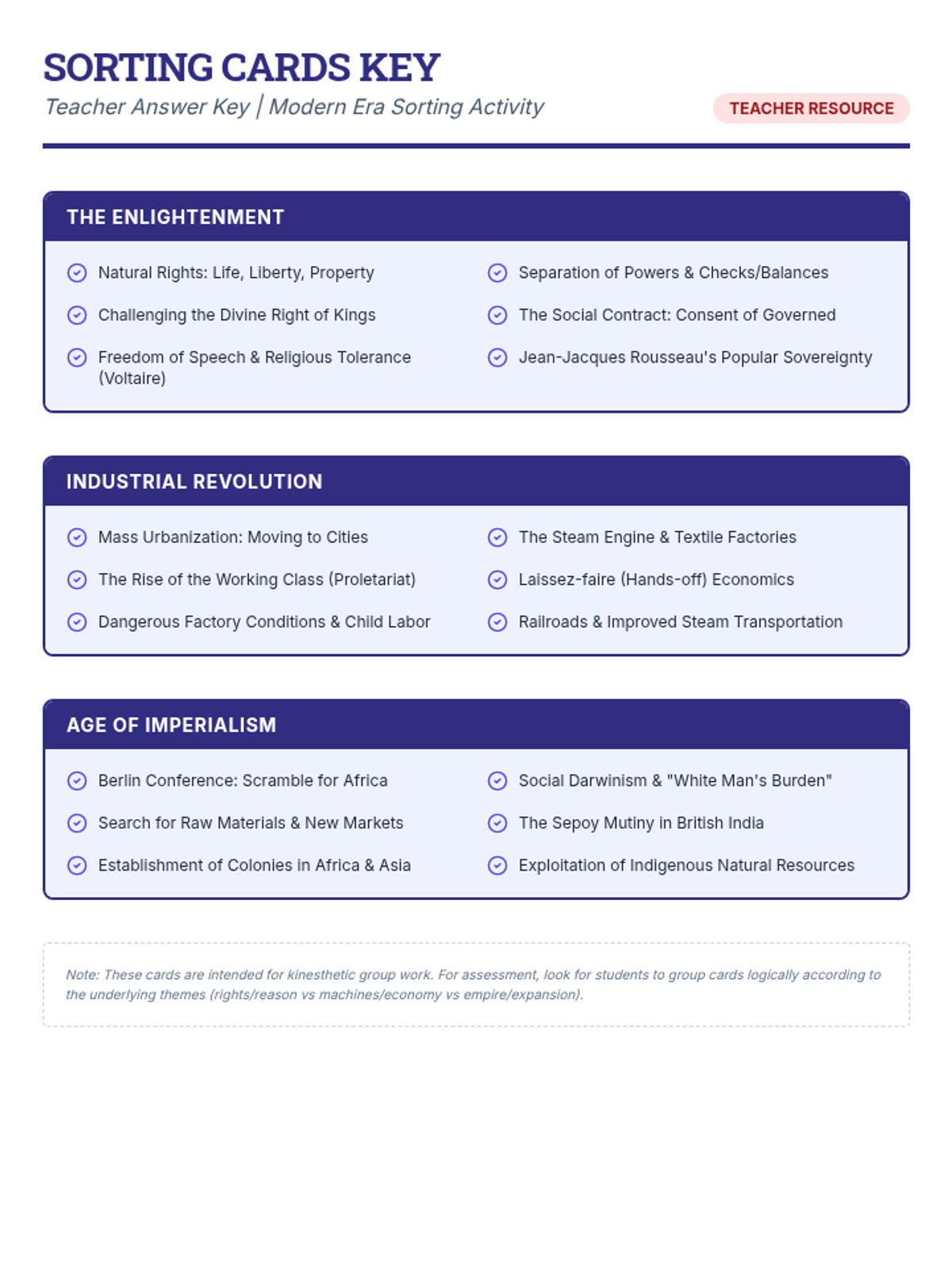
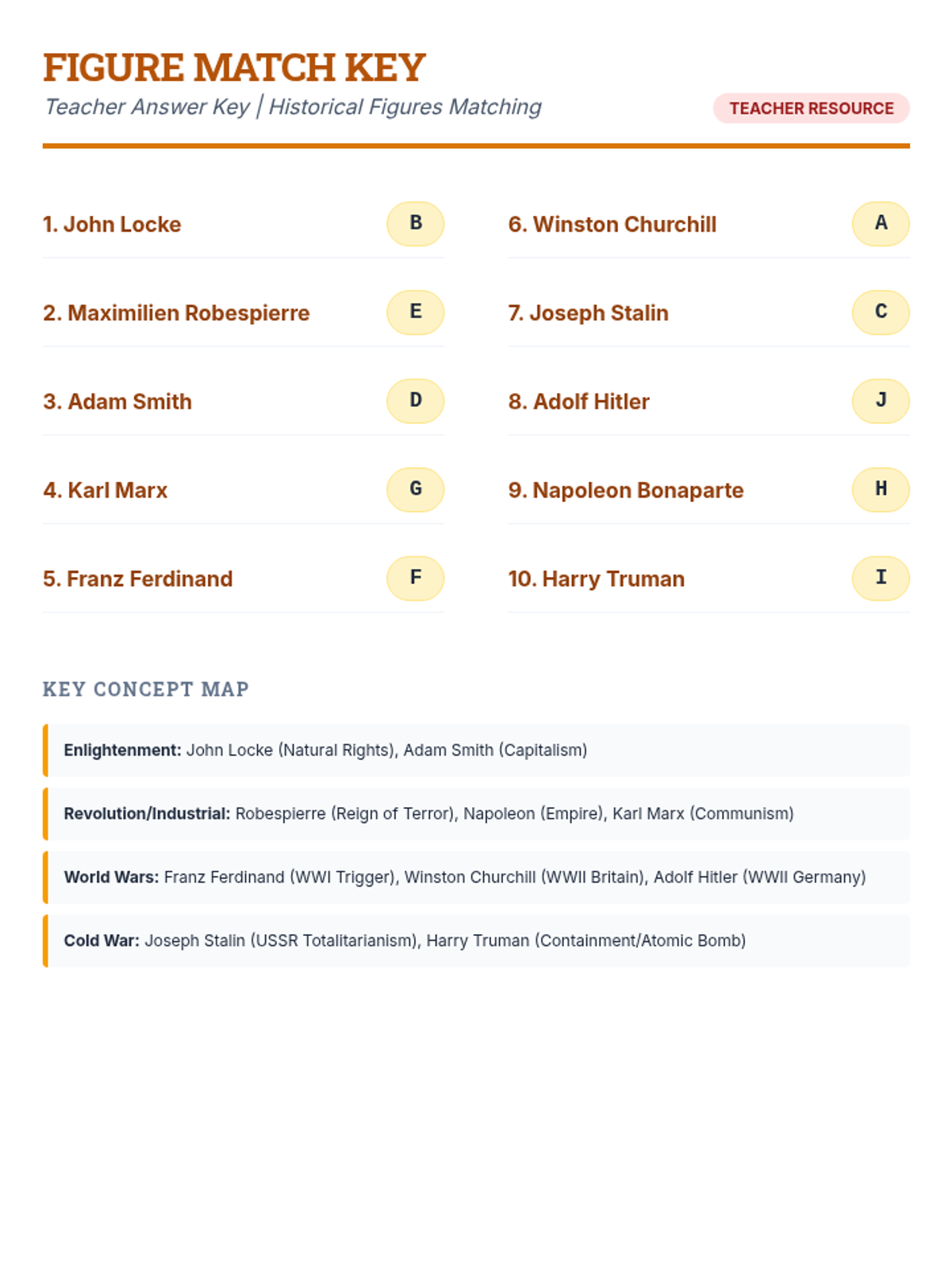
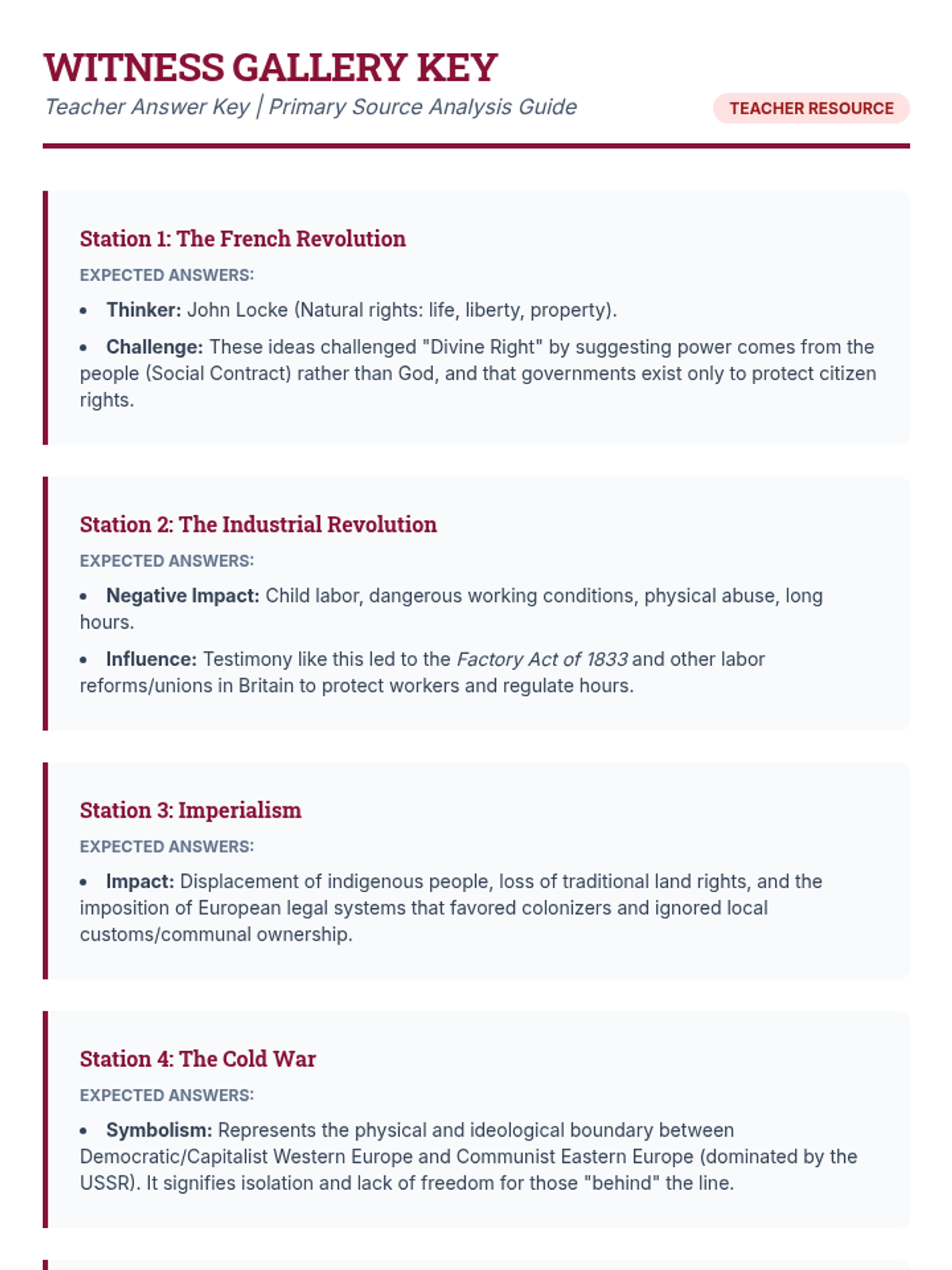
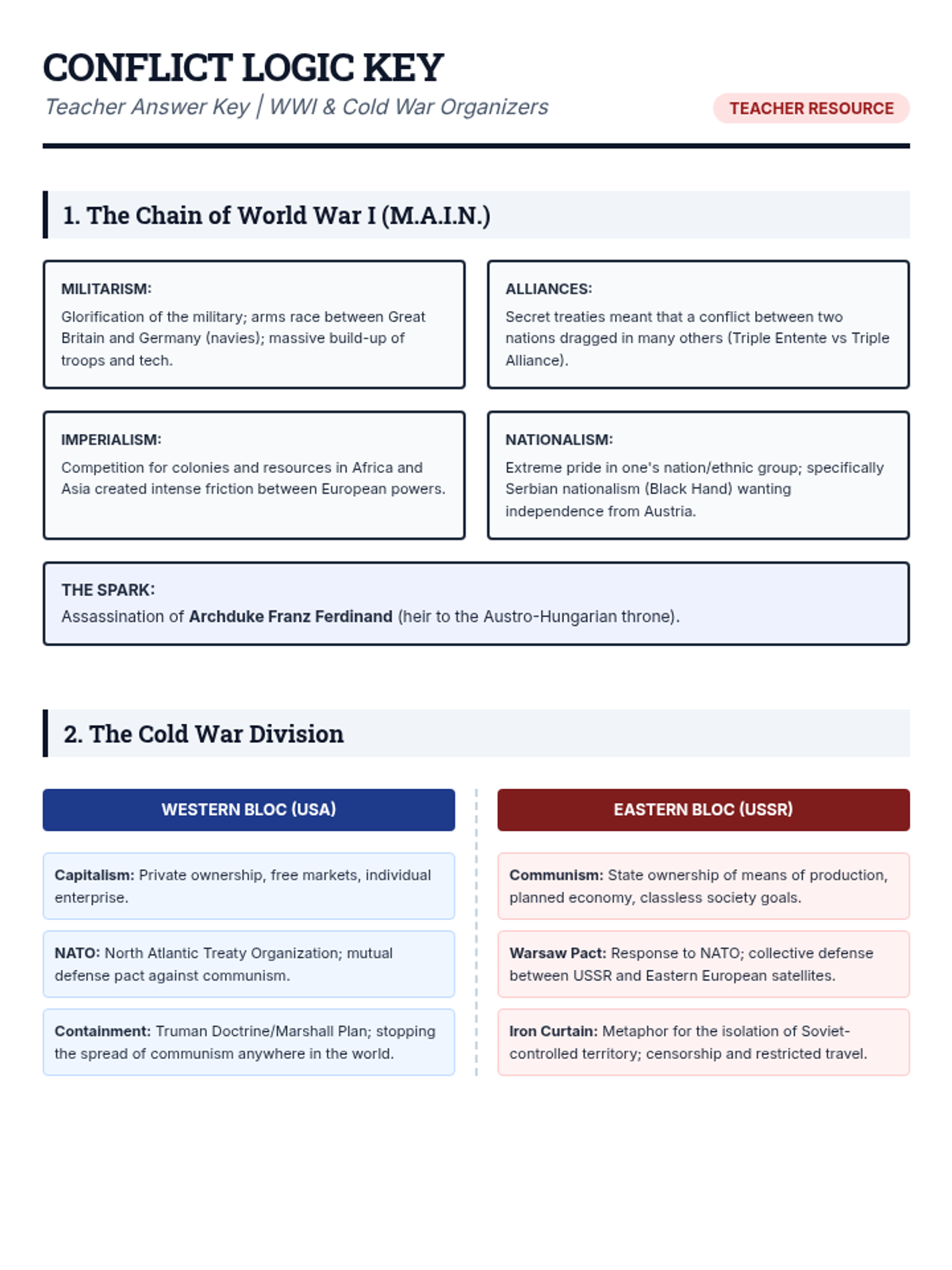
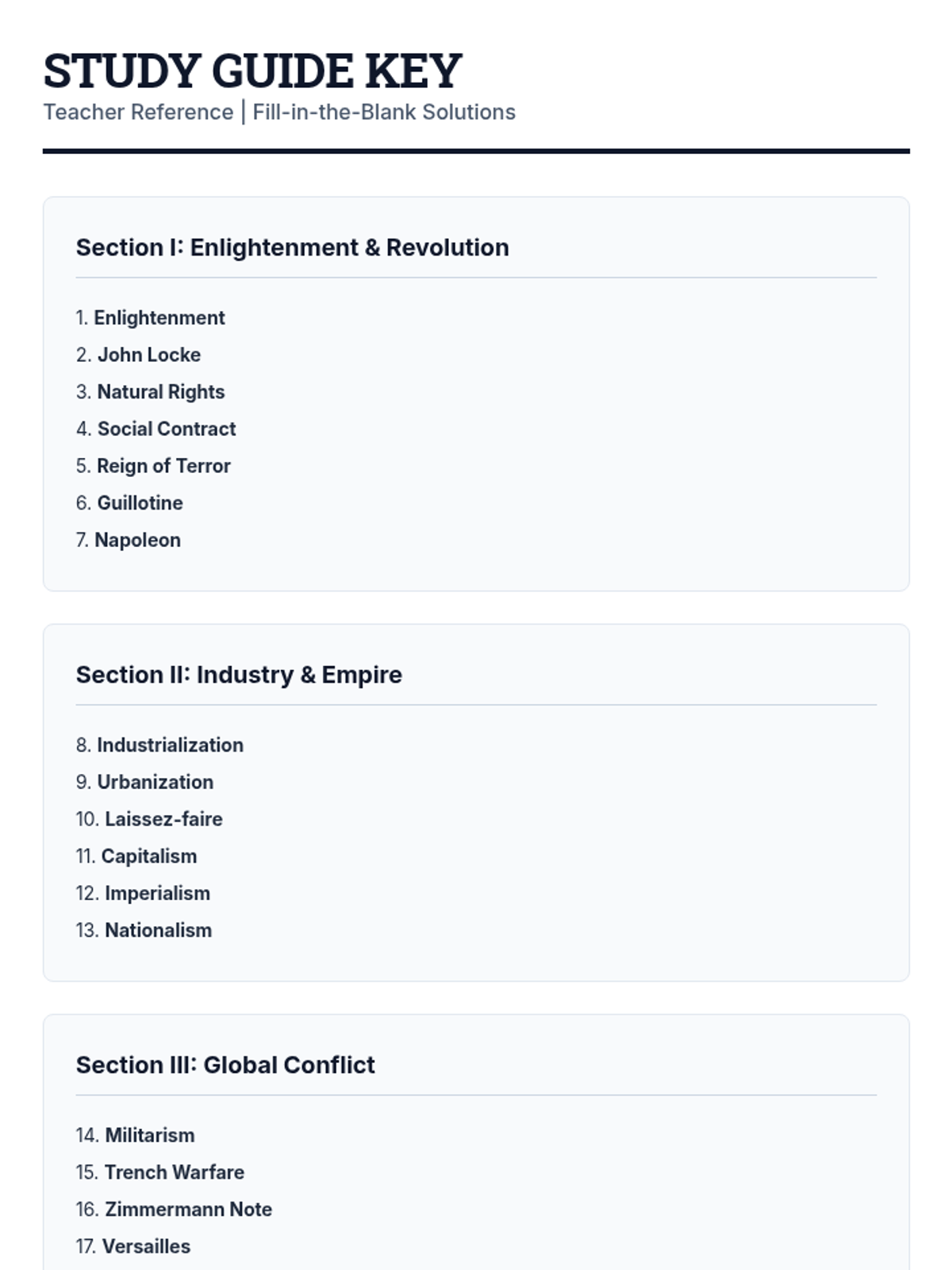
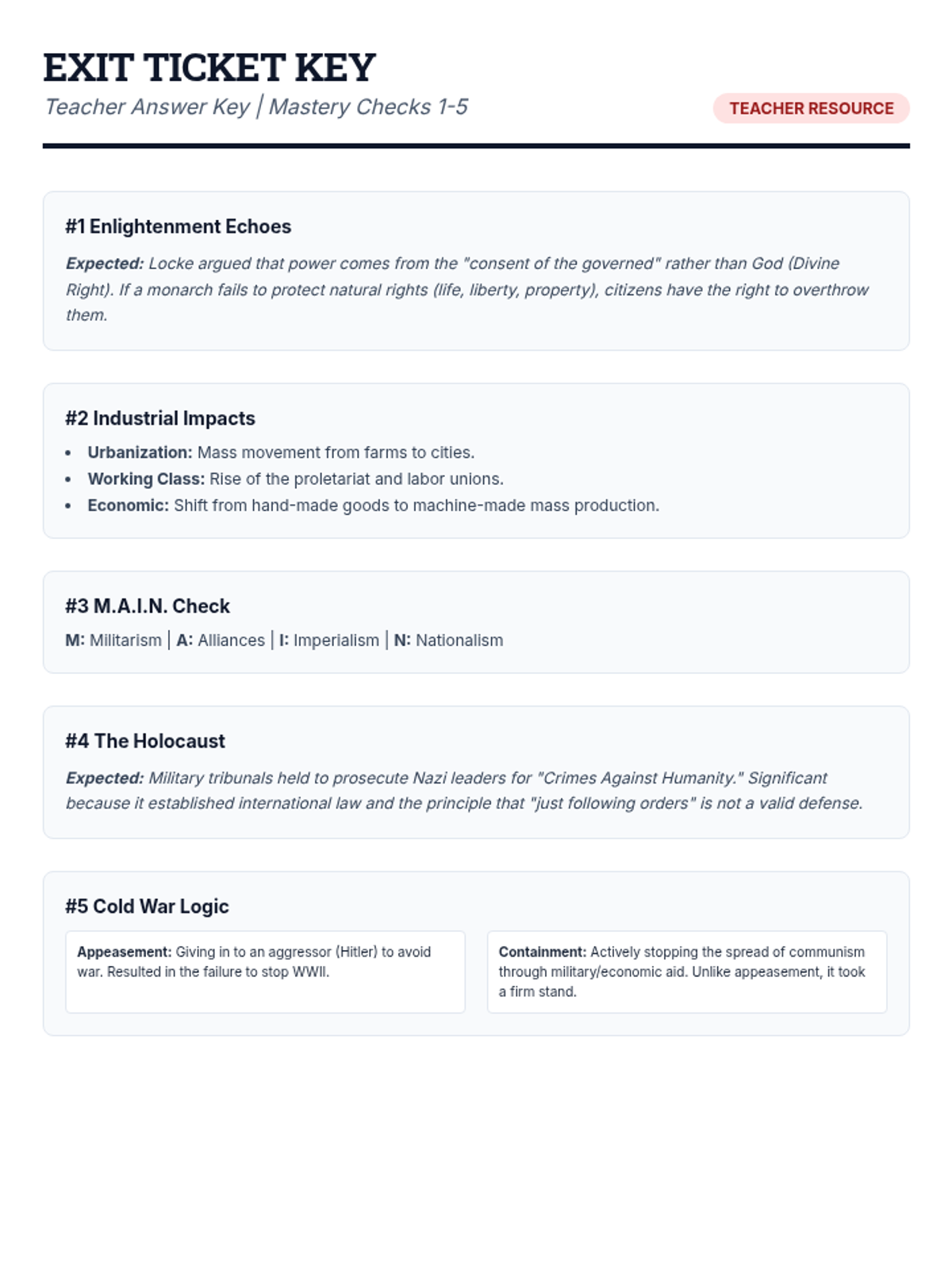
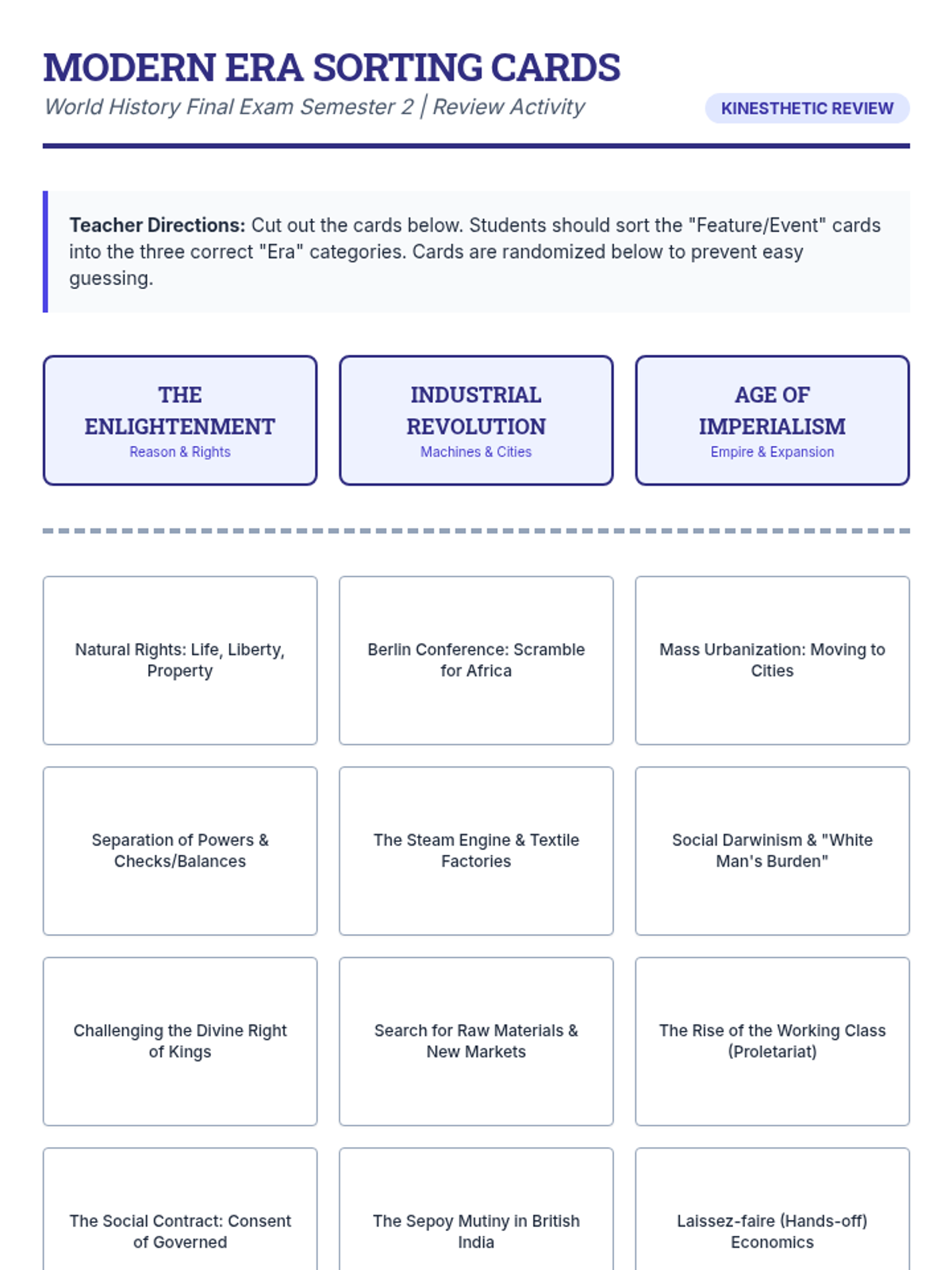
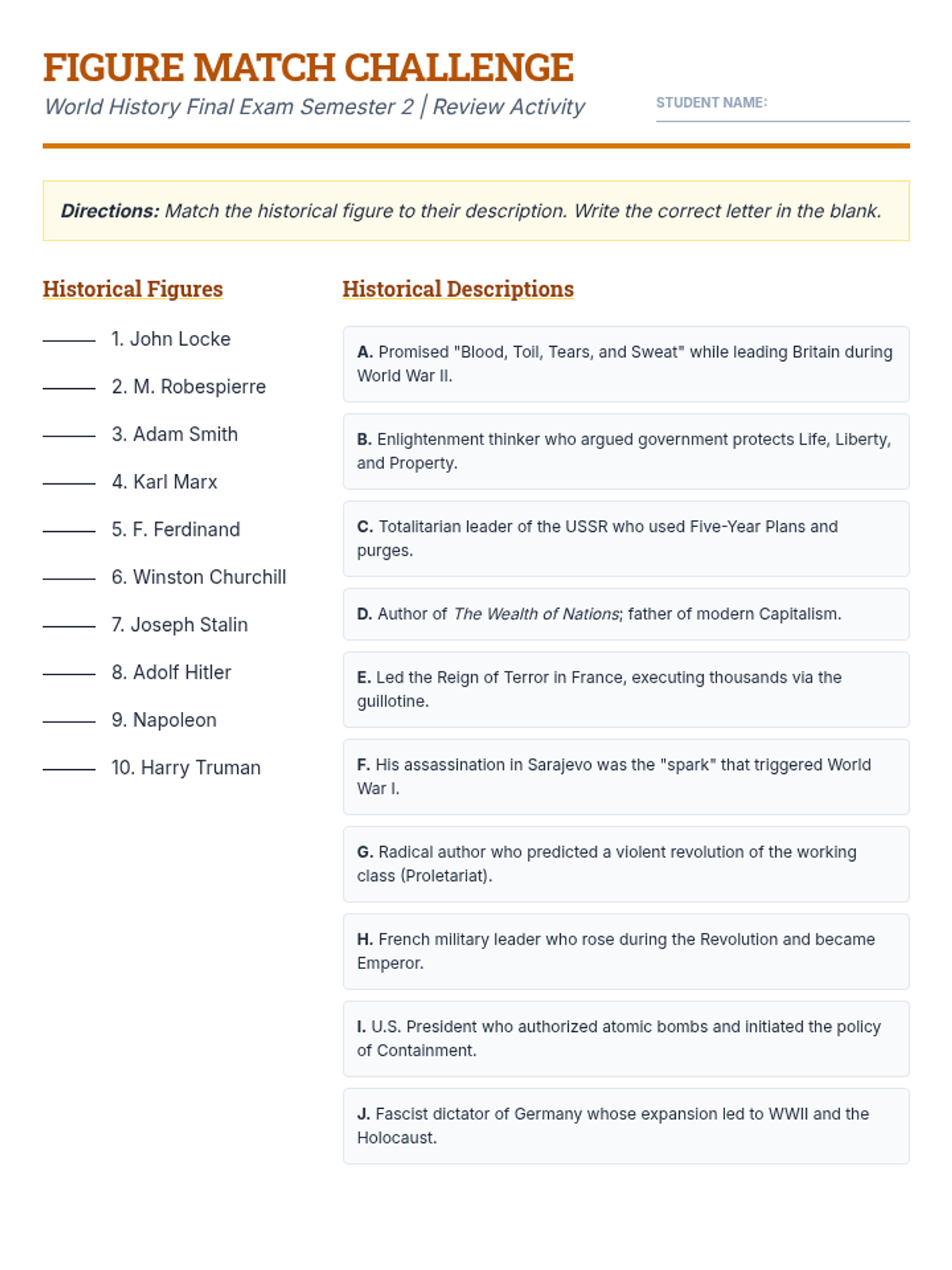
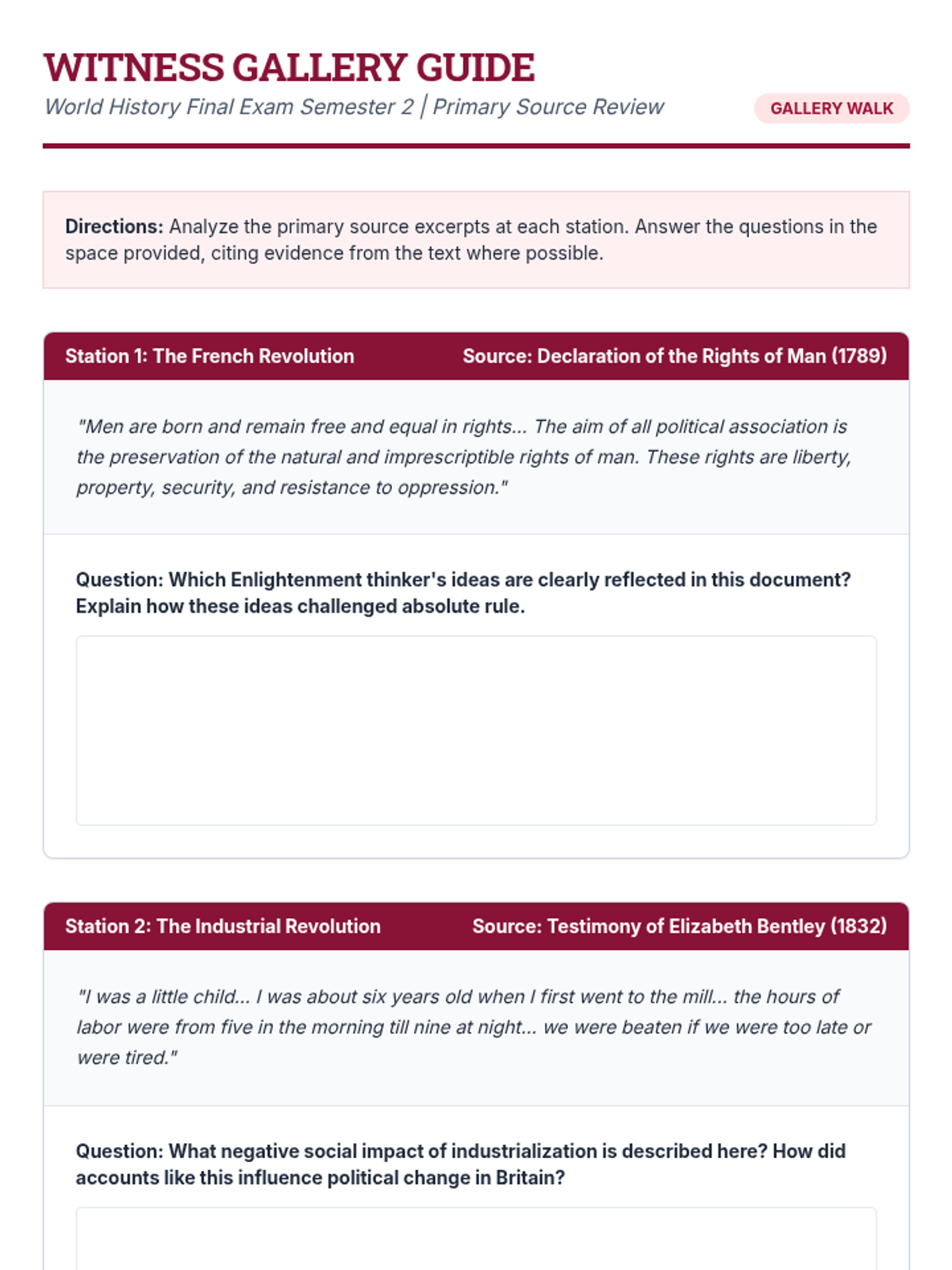
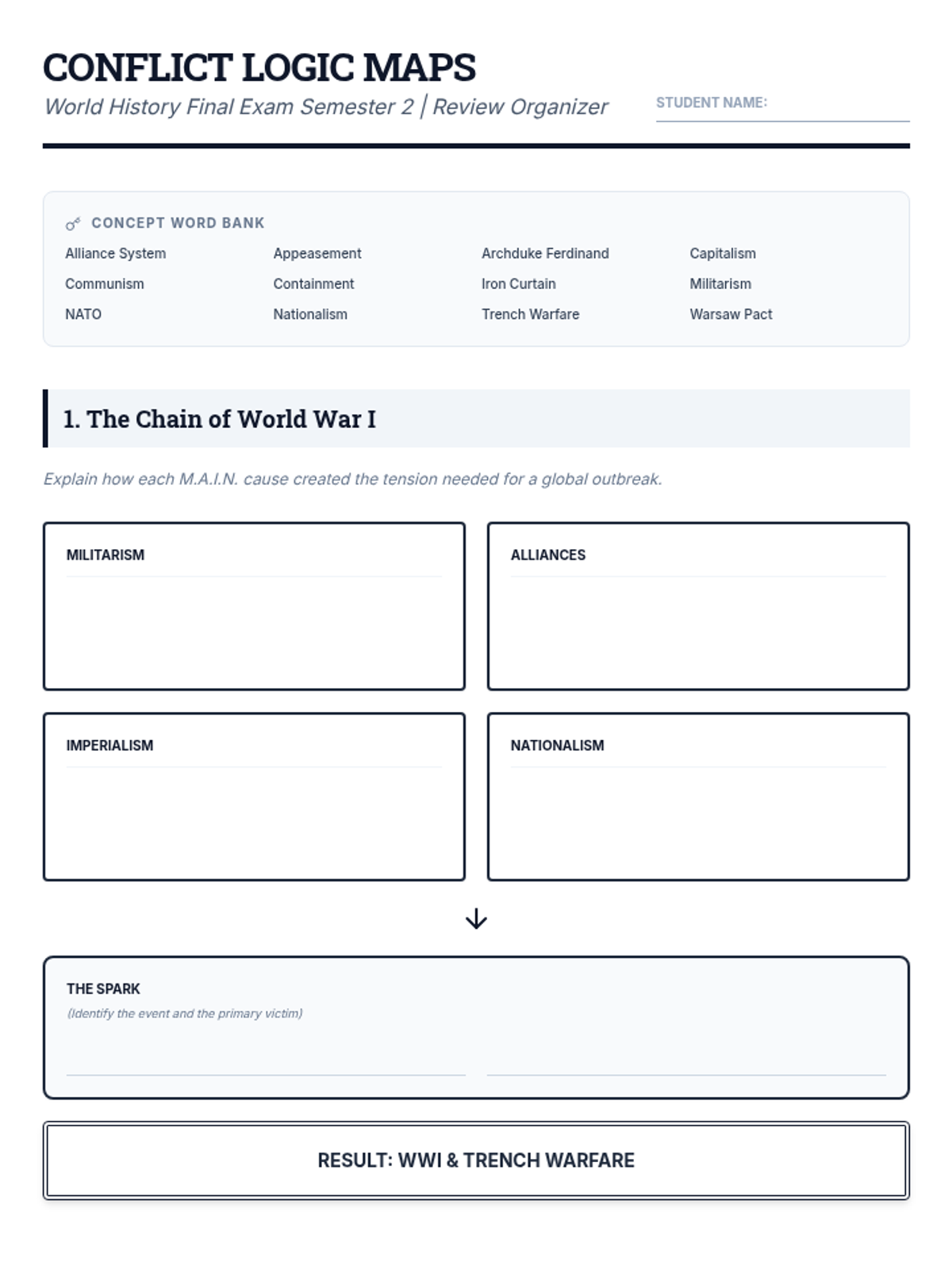
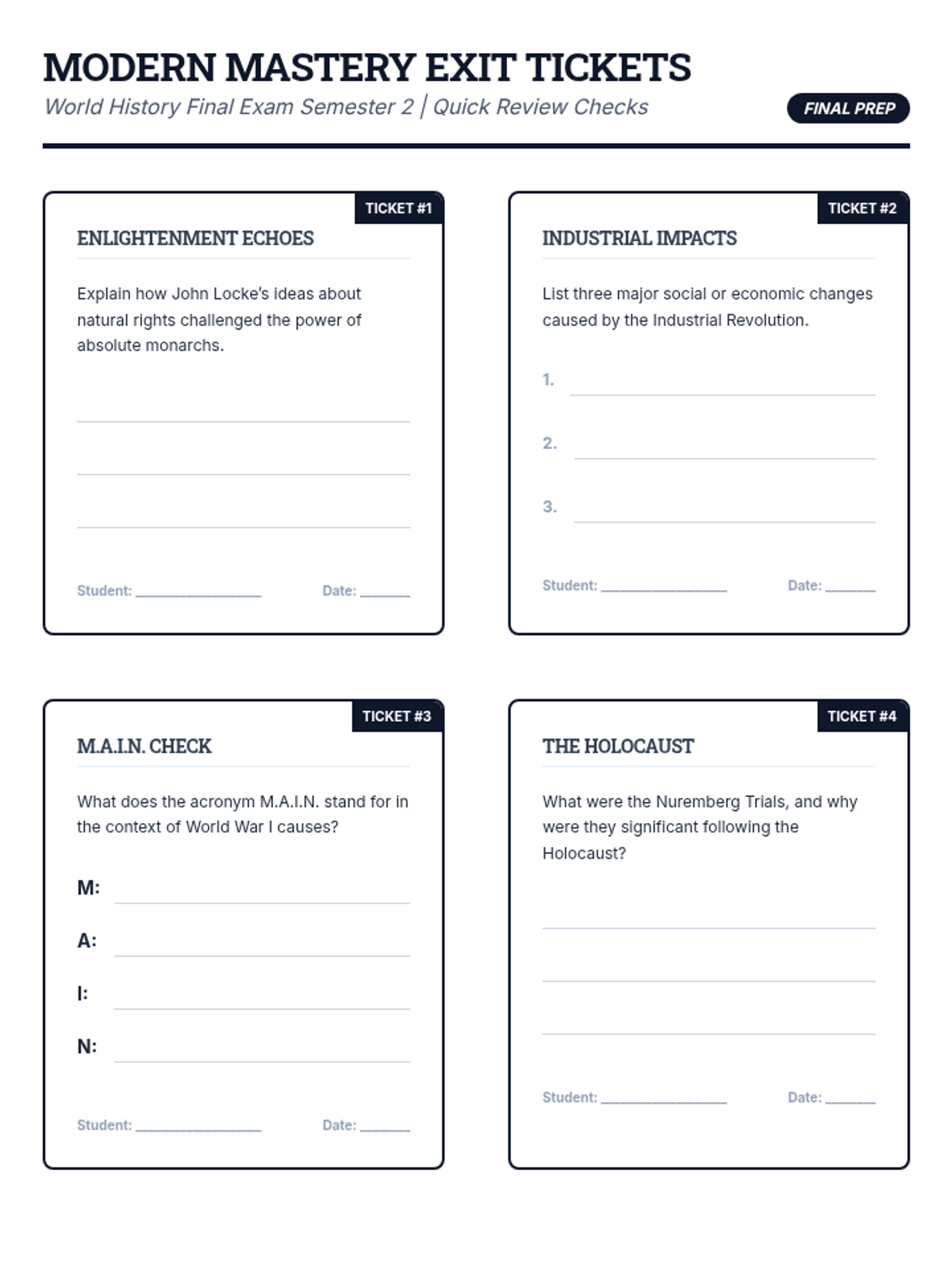
A comprehensive review and assessment package covering World History from the Enlightenment through the Cold War, aligned with state standards.
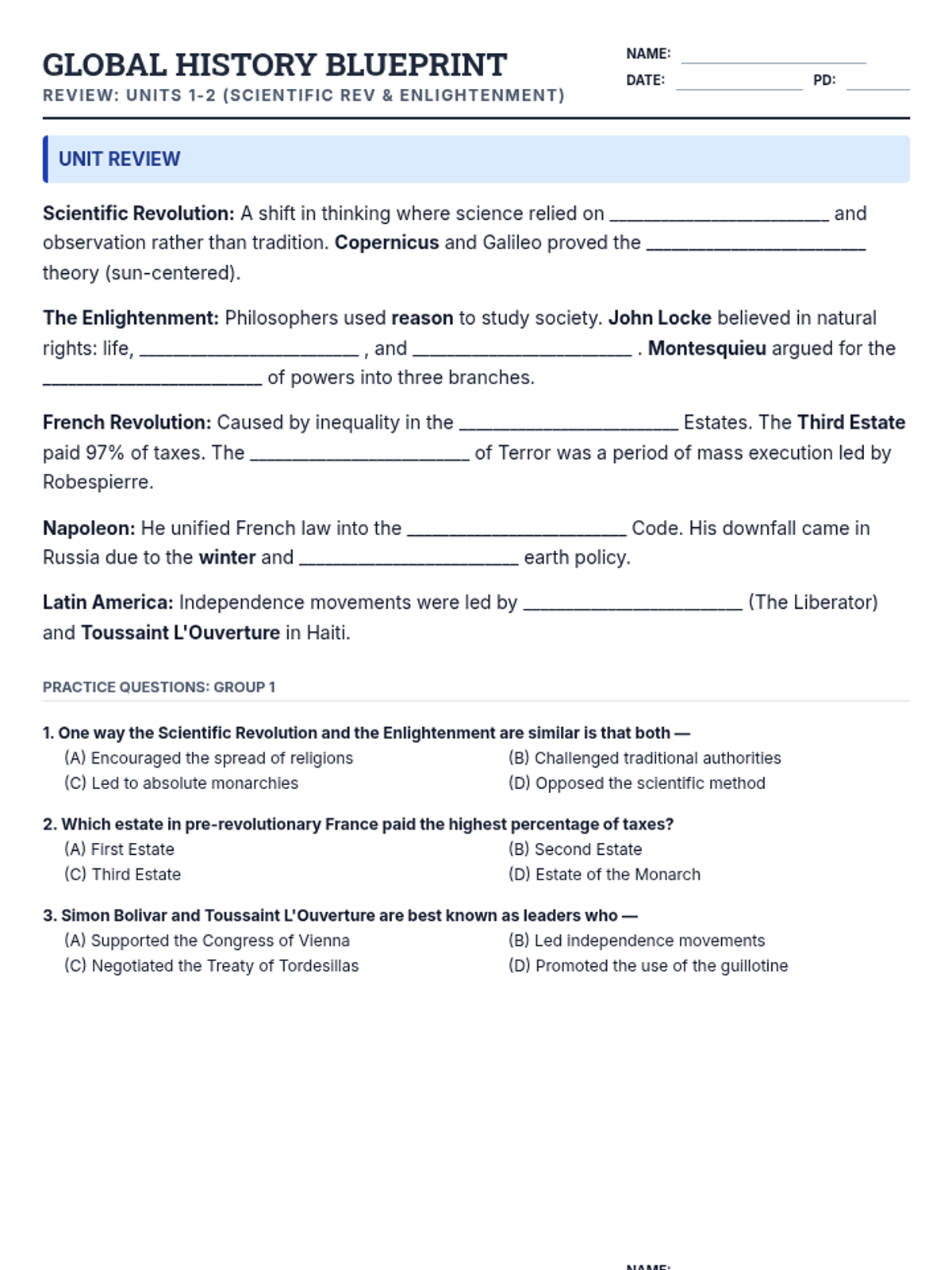
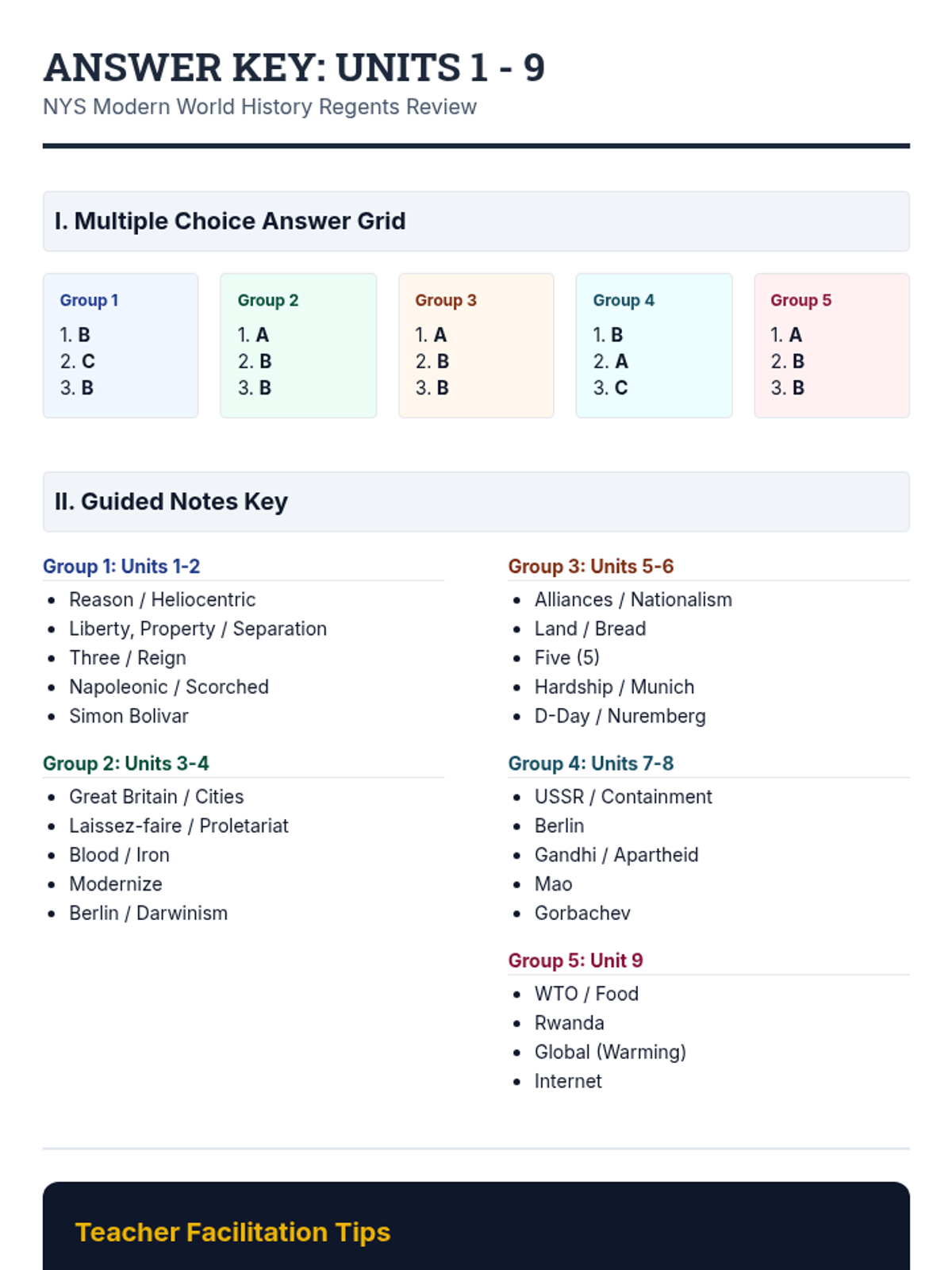
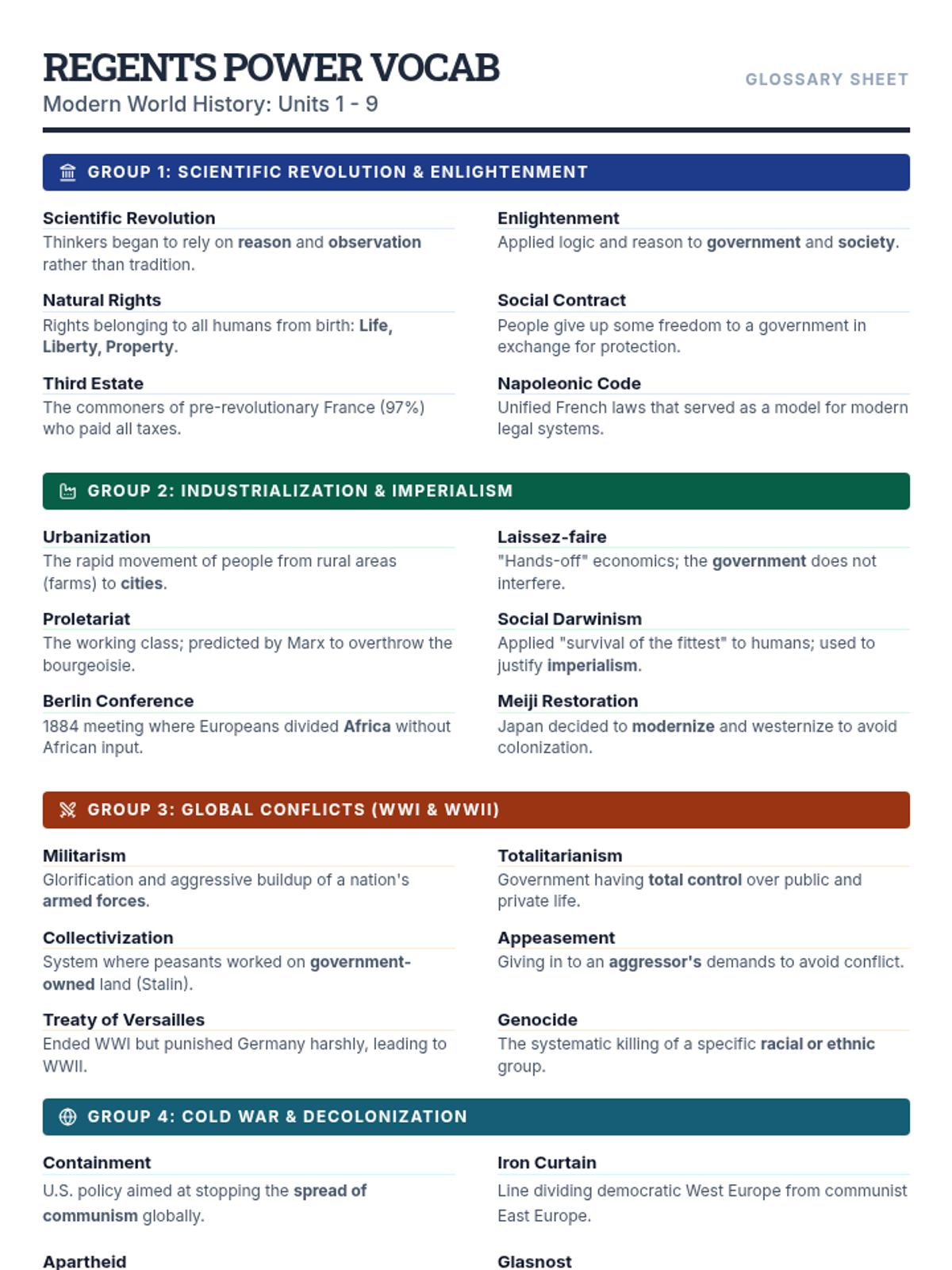
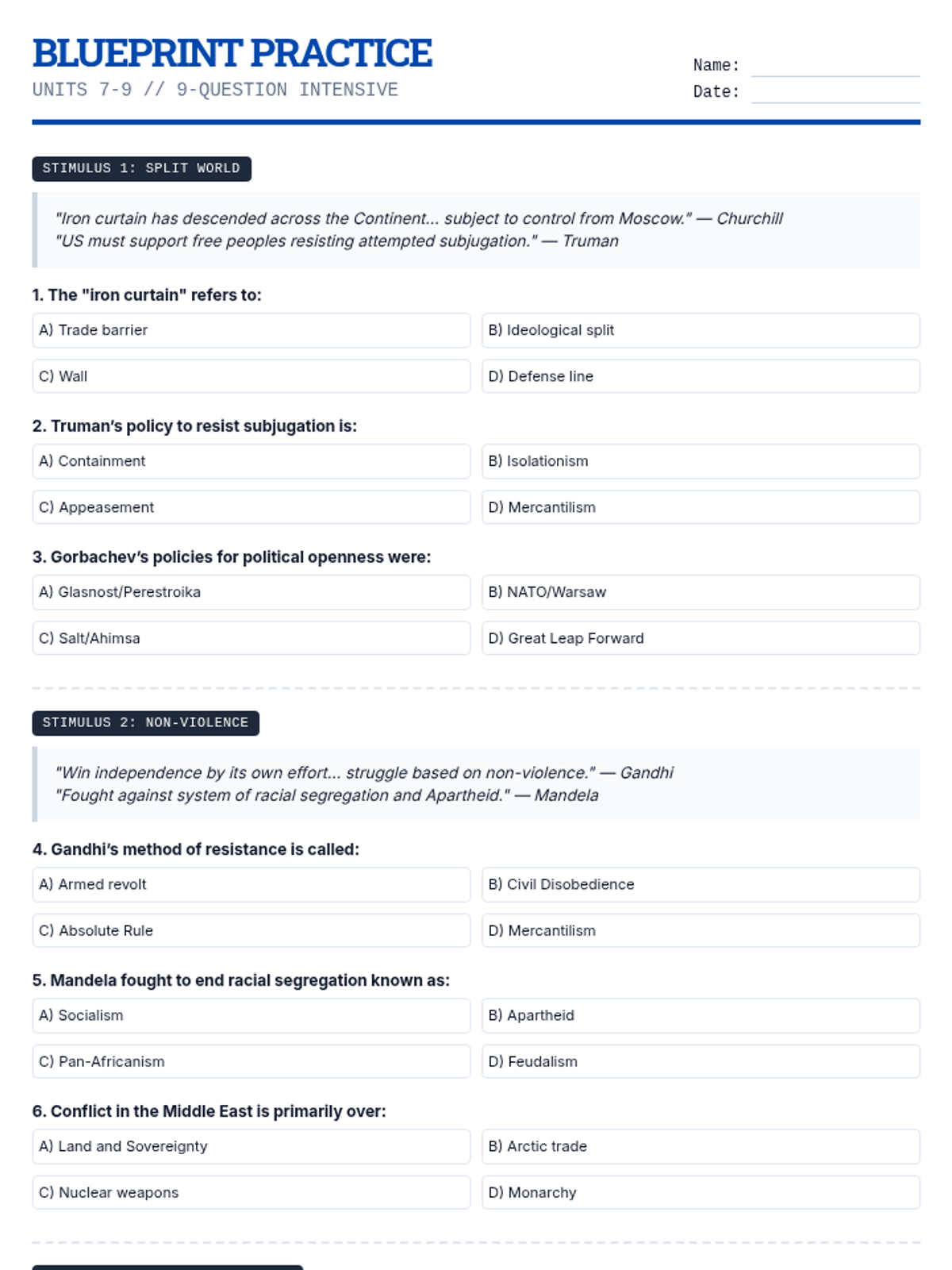
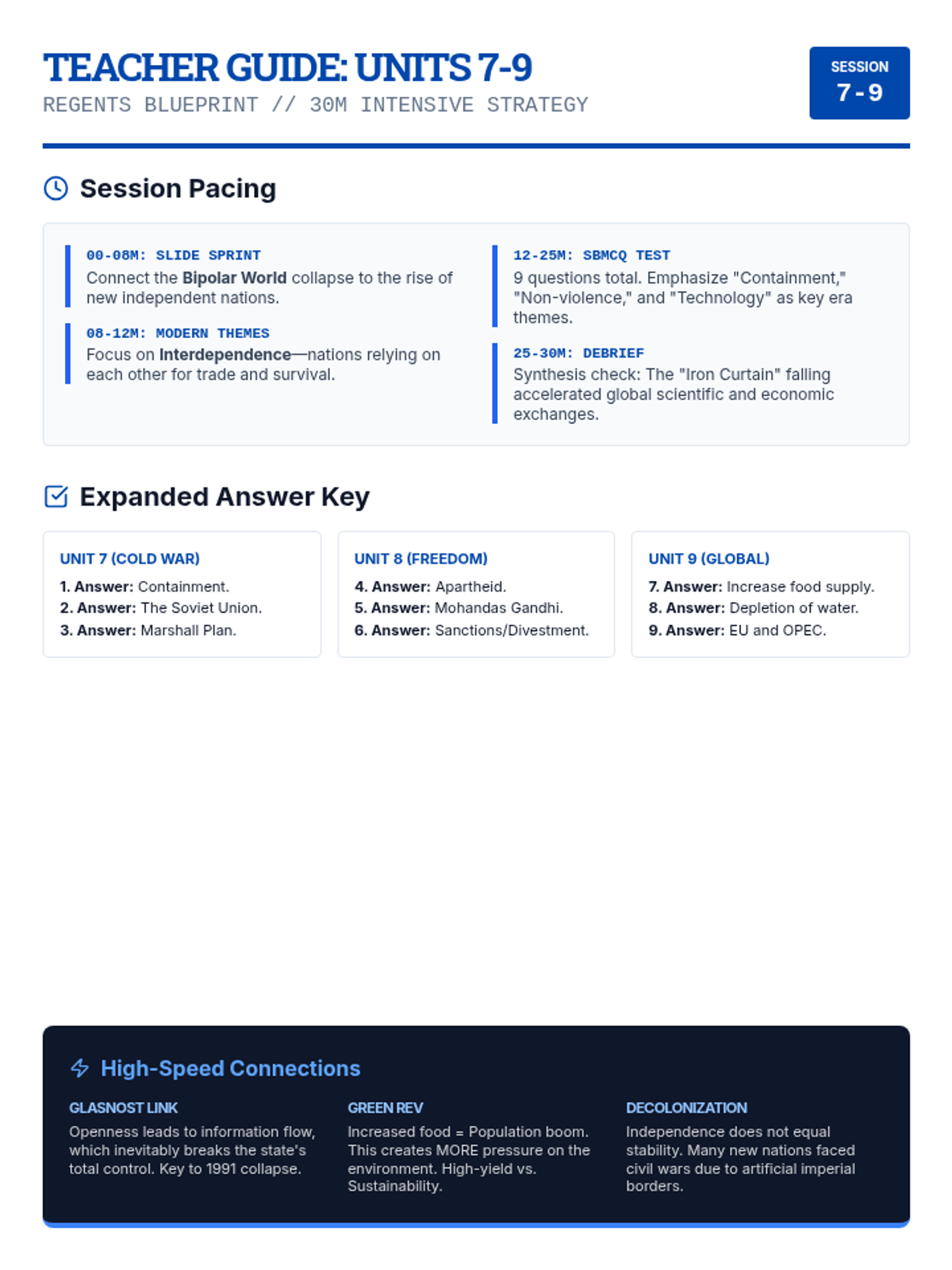
An intensive review session covering the Enlightenment through contemporary global issues (Units 1-9), featuring guided instruction and integrated Regents-style practice.
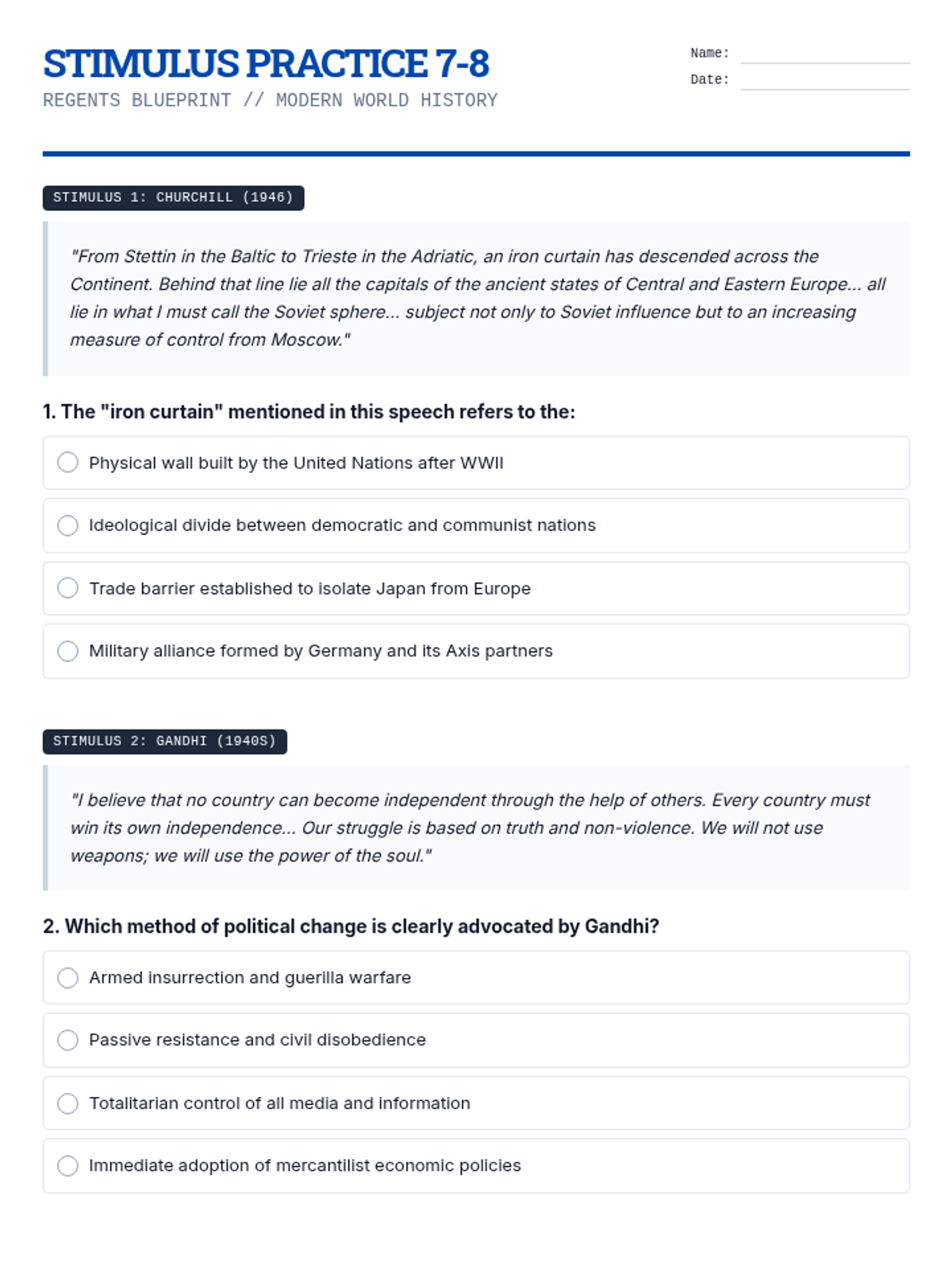
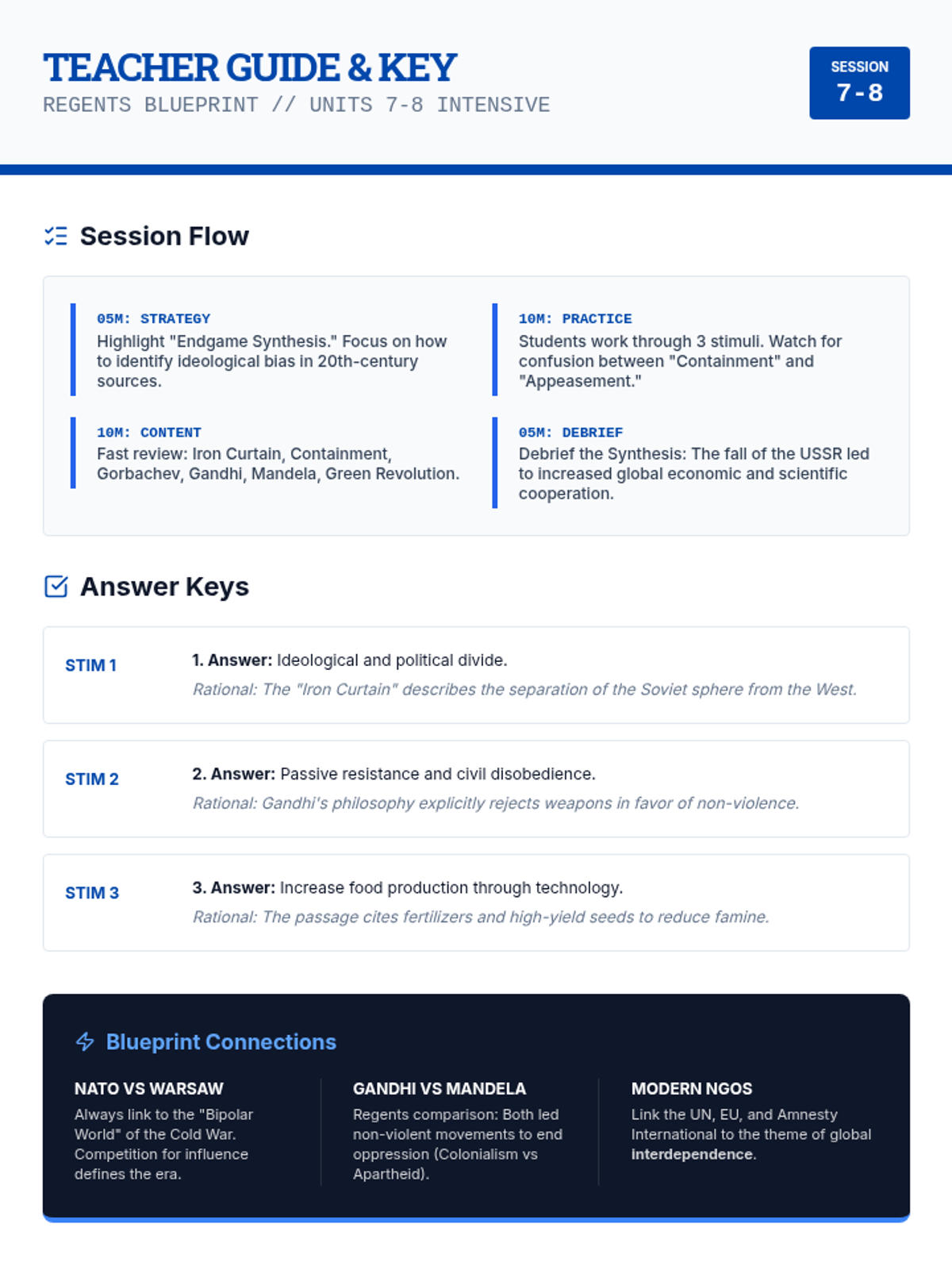
A high-impact 30-minute Regents review session focusing on Units 7-8 of the Modern World History curriculum, covering the Cold War, Decolonization, and Global Issues.
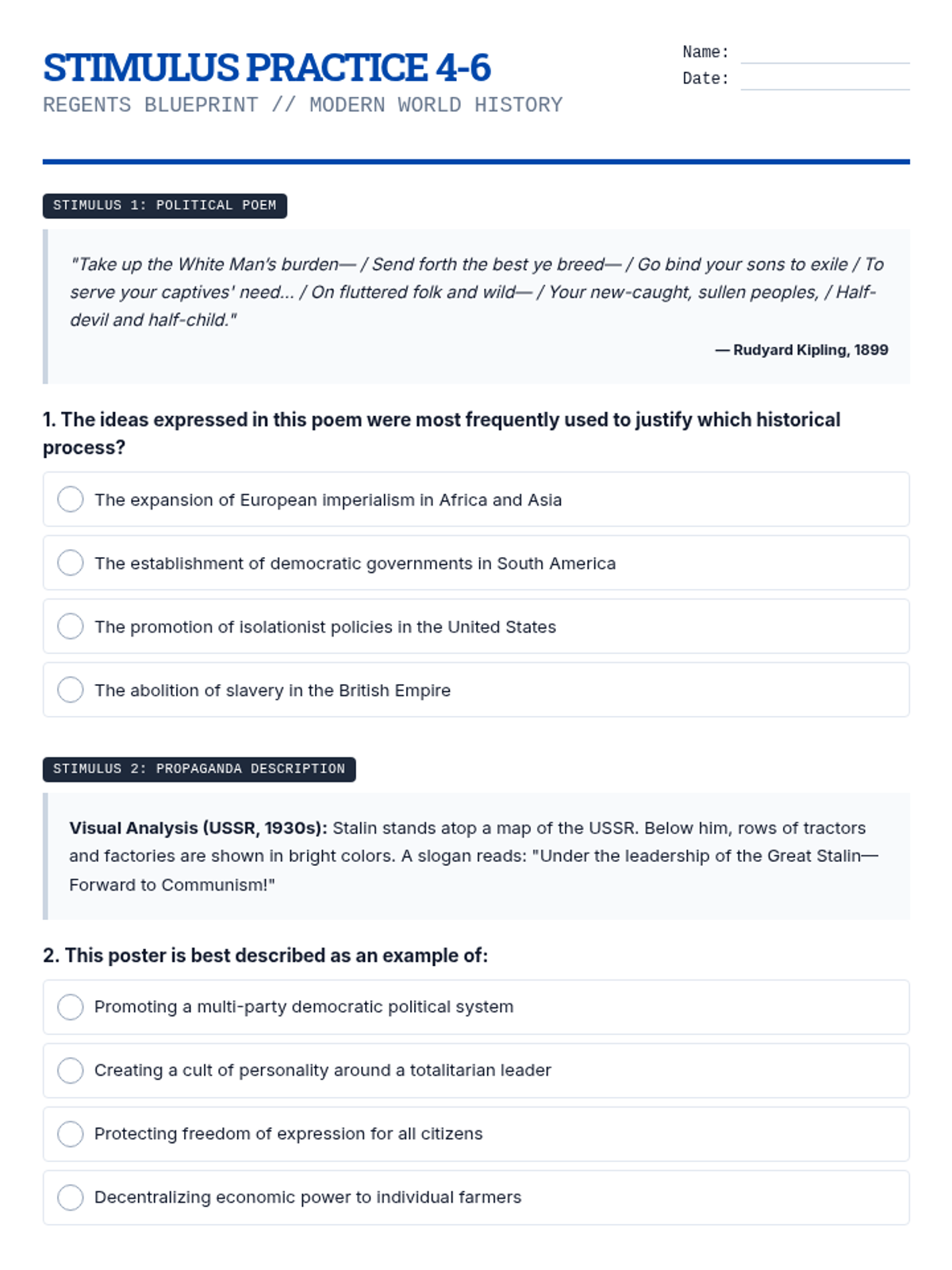
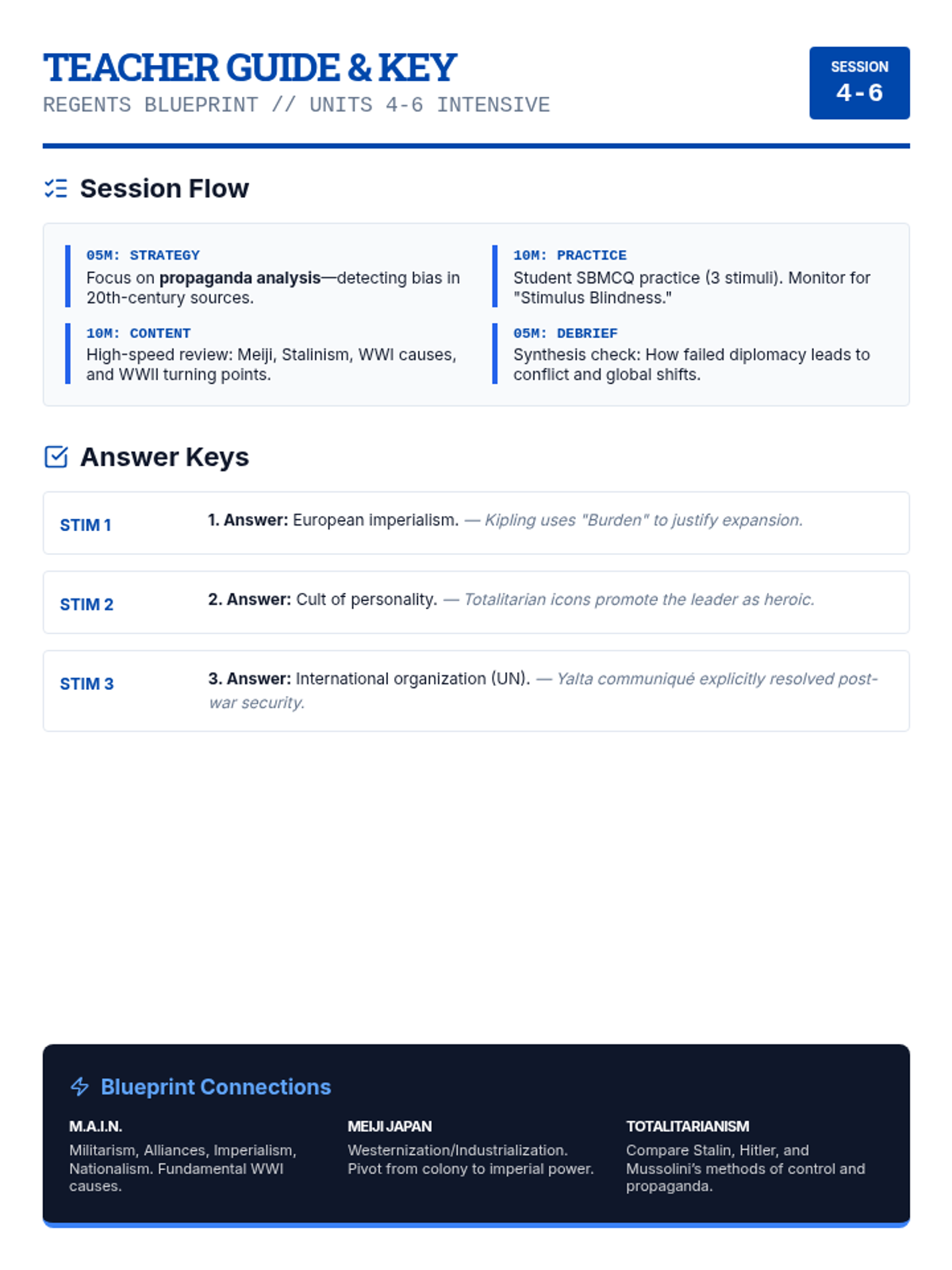
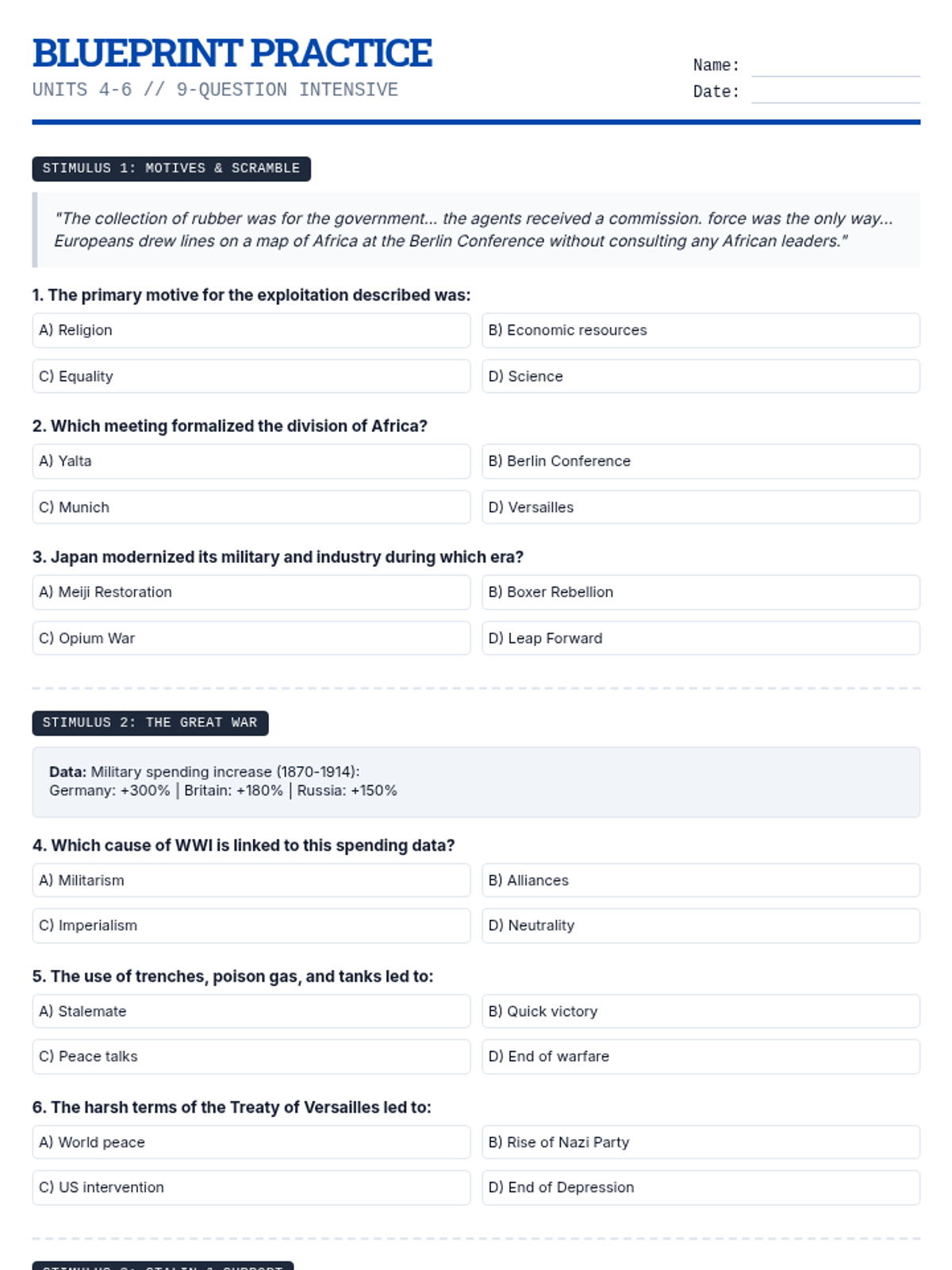
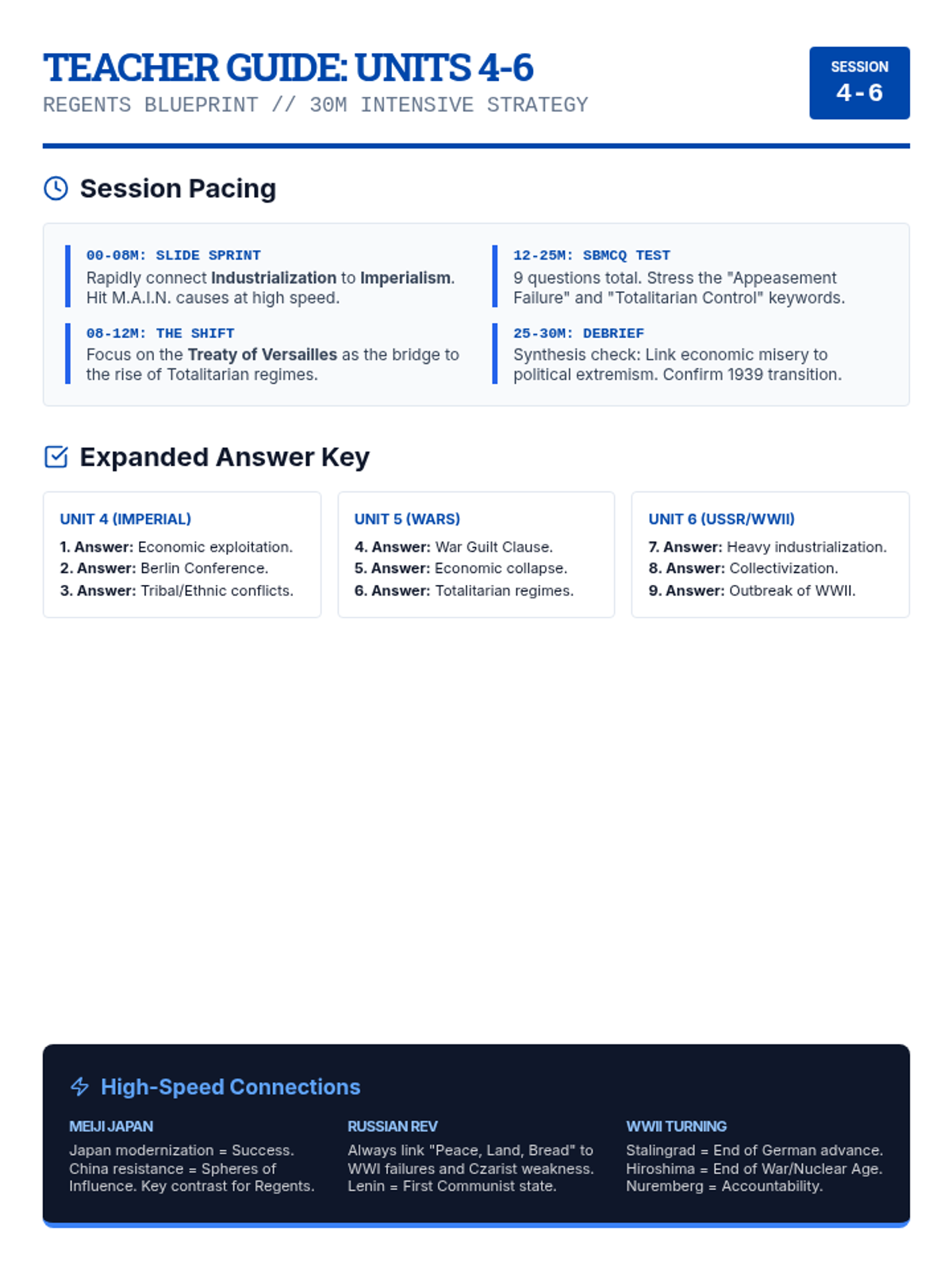
A 30-minute Regents review session for Units 4-6 of the Modern World History curriculum, covering Imperialism, WWI, the Russian Revolution, and WWII.
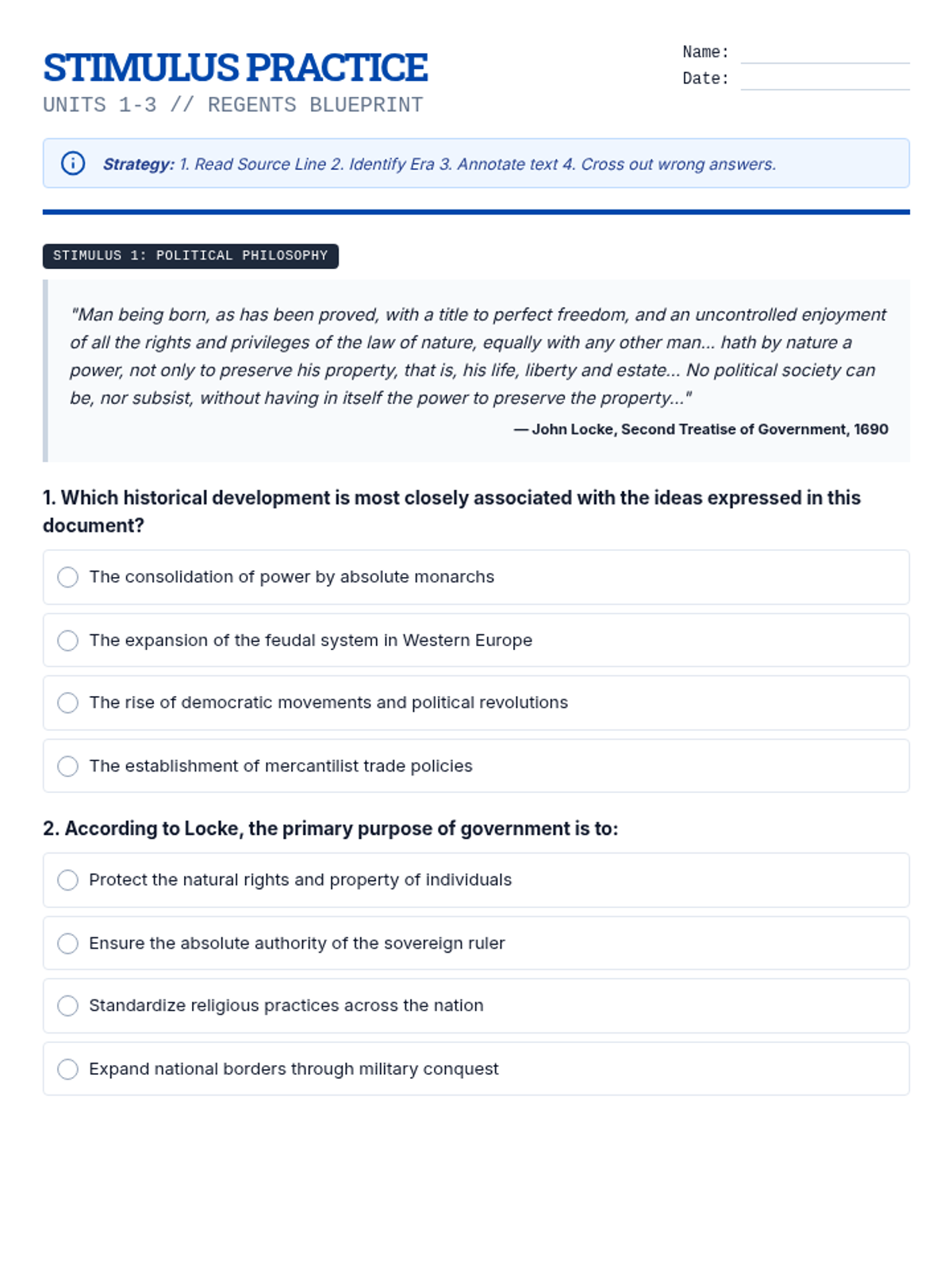
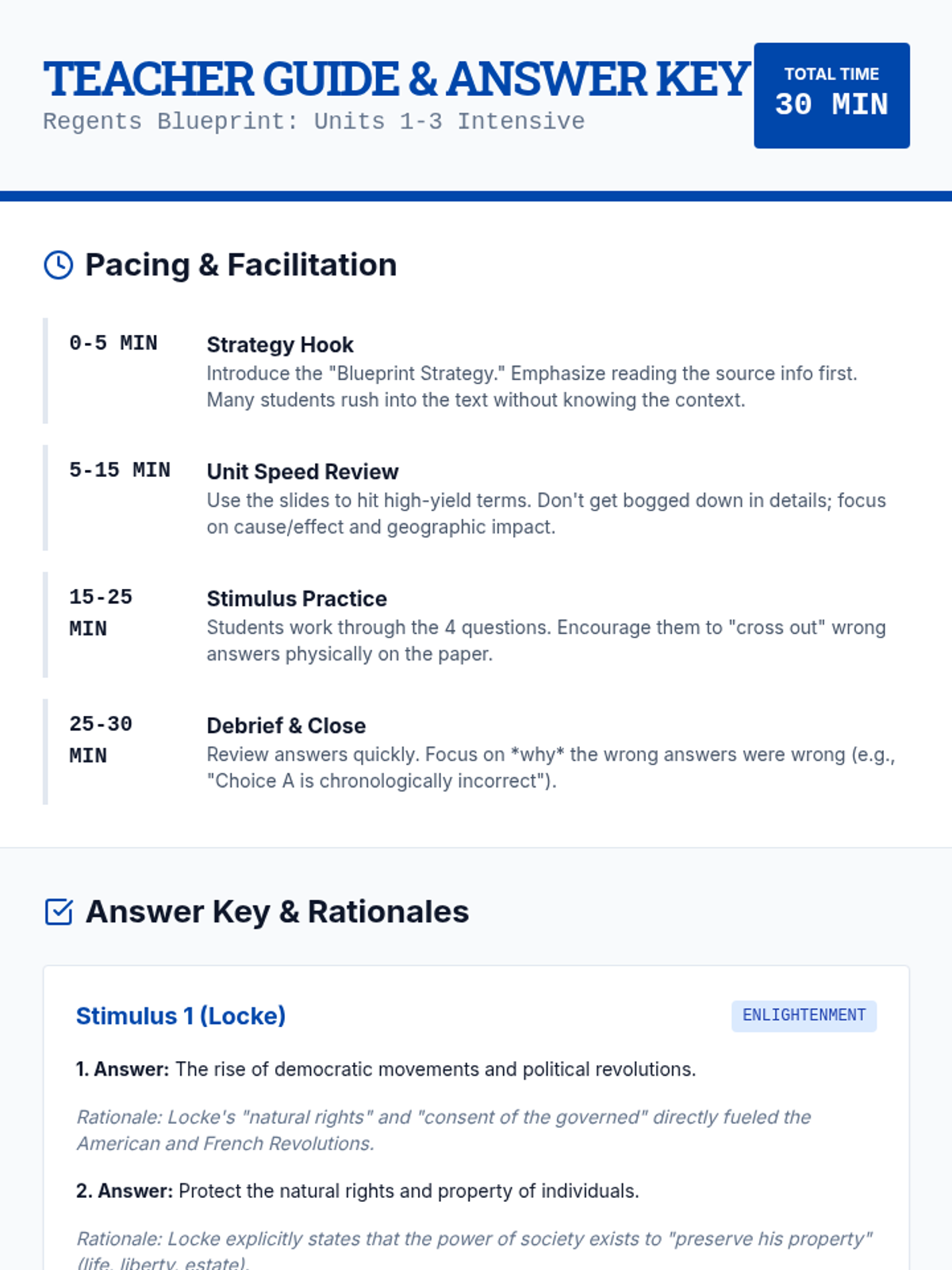
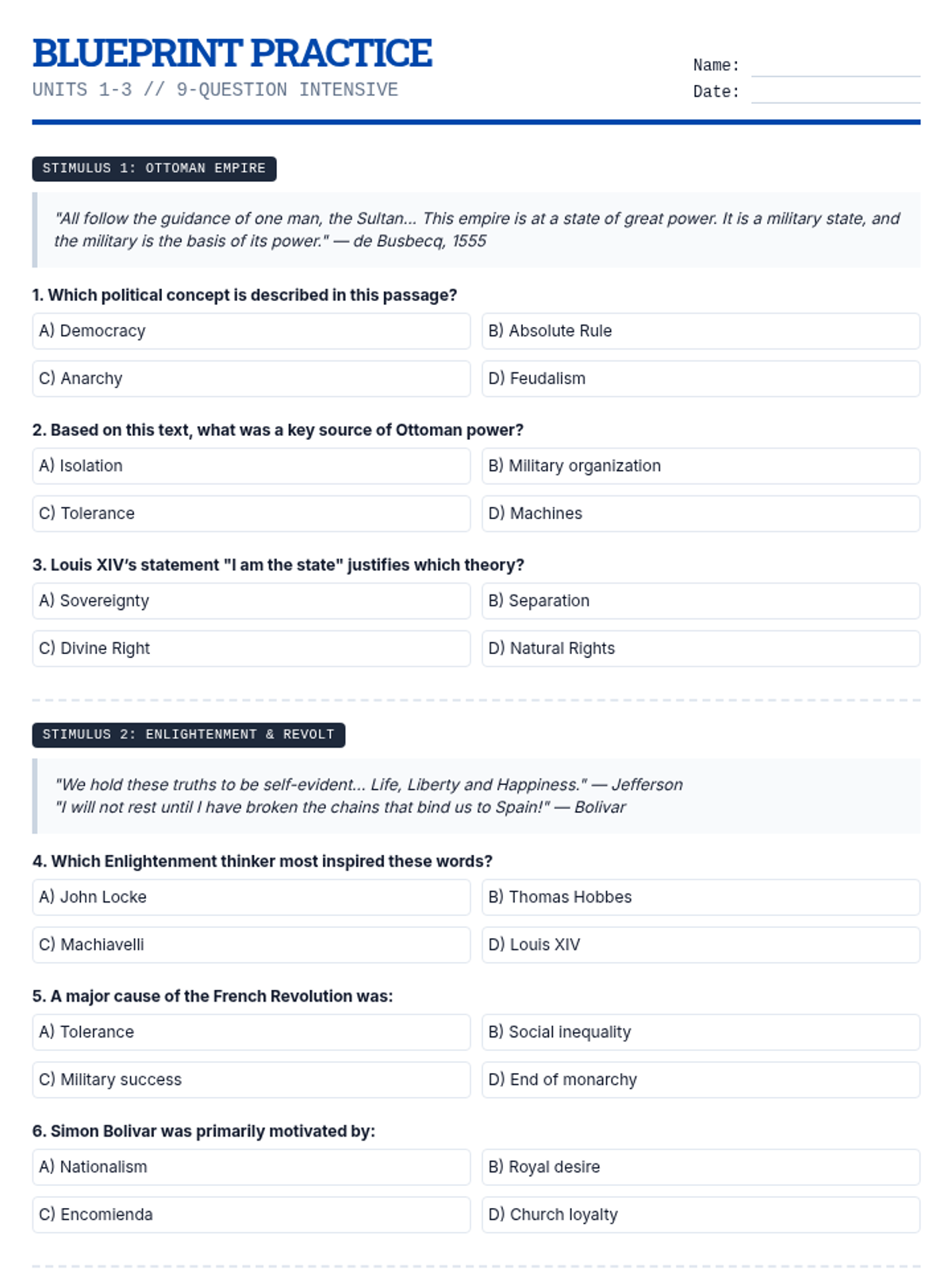
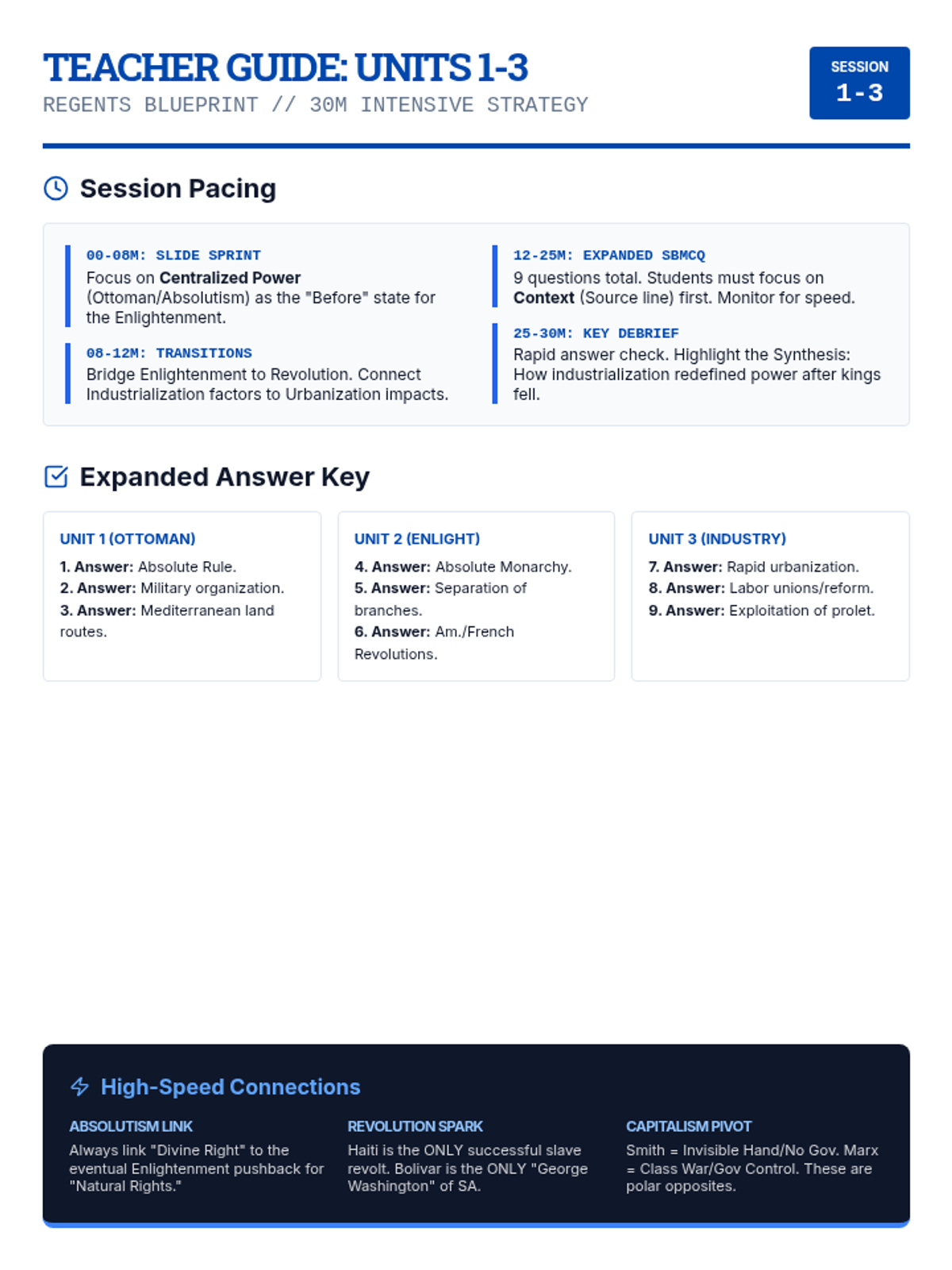
A high-impact 30-minute Regents review session focusing on Units 1-3 of the Modern World History curriculum, featuring stimulus-based multiple choice practice and test-taking strategies.
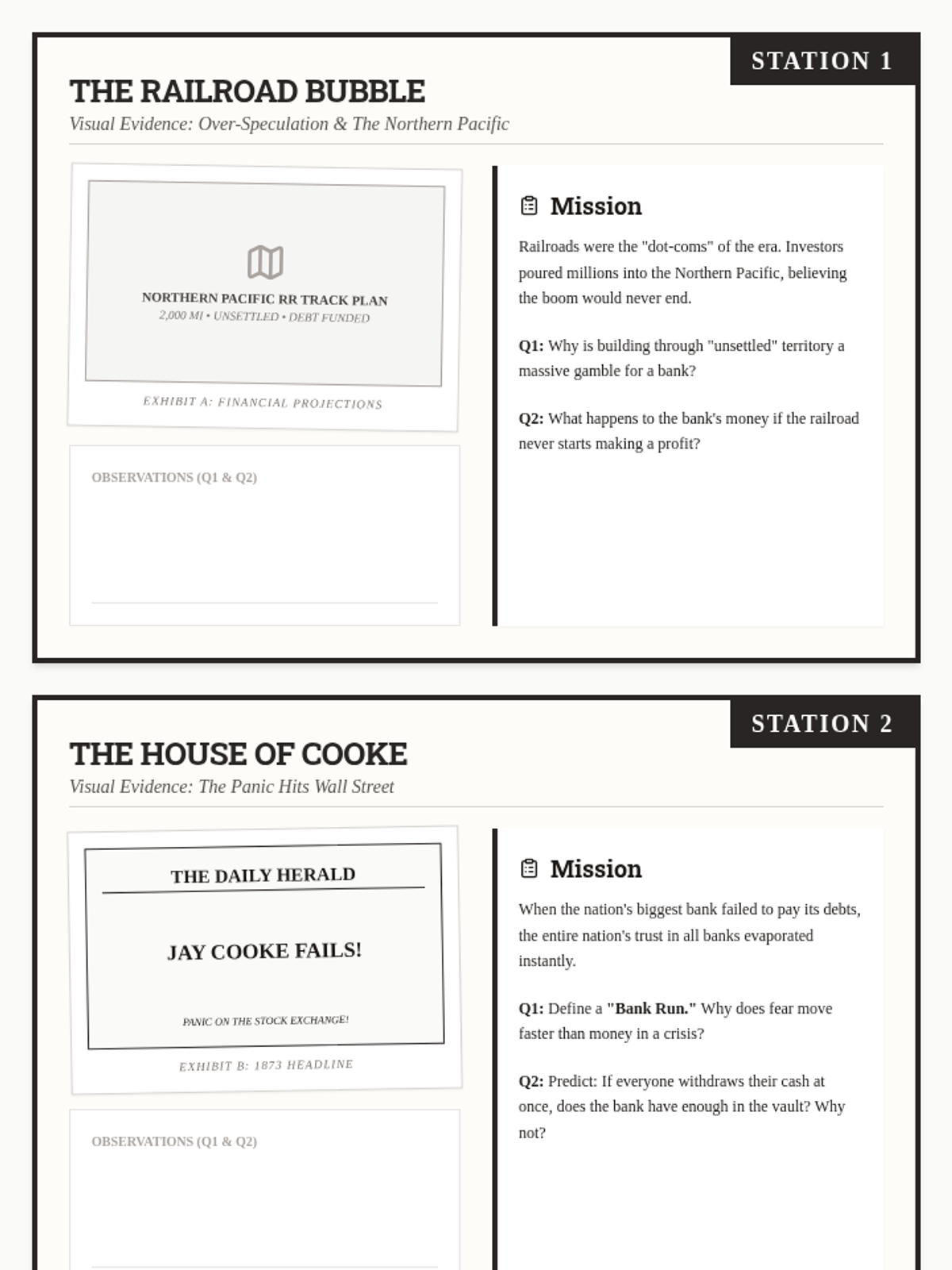
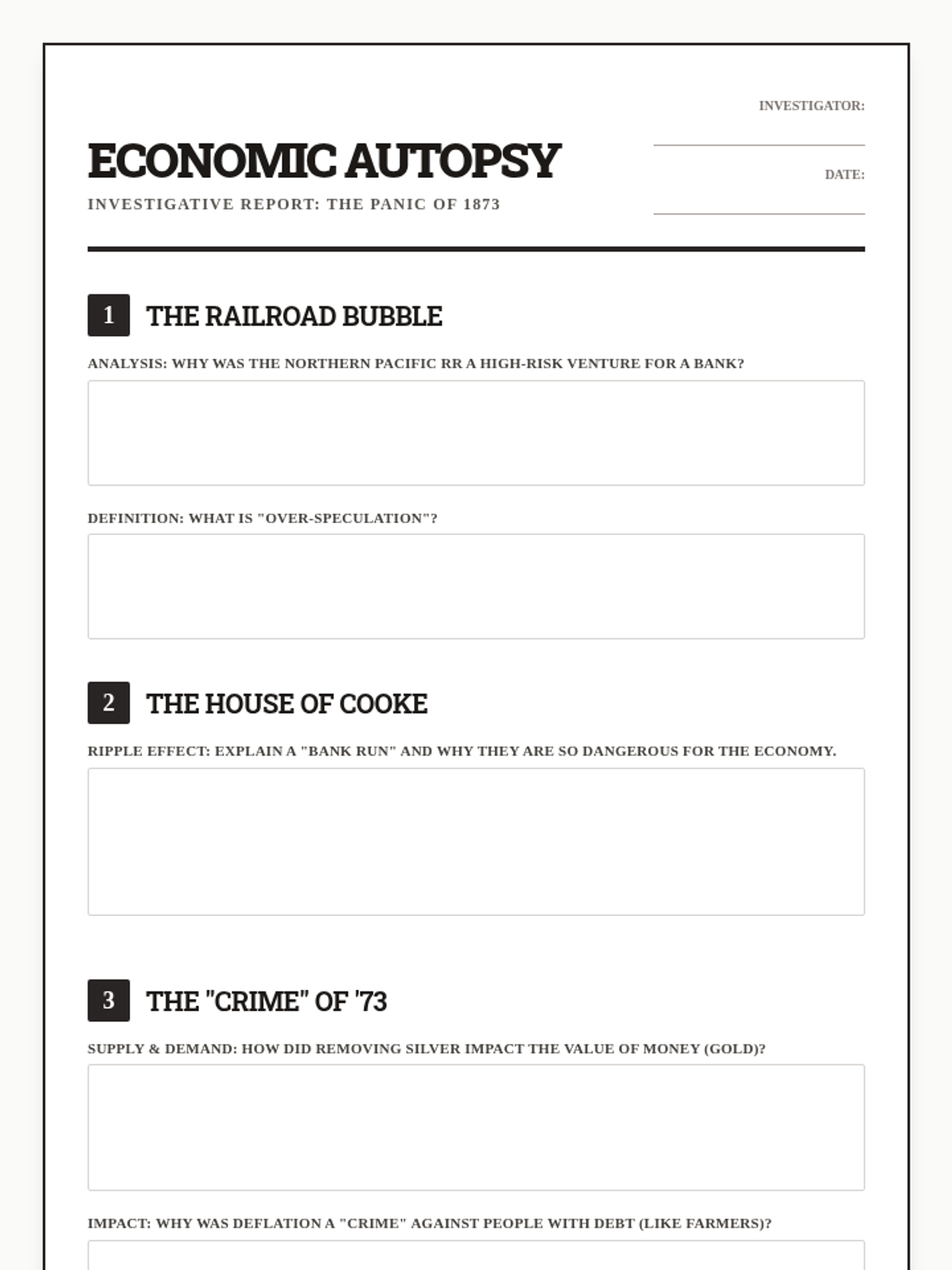
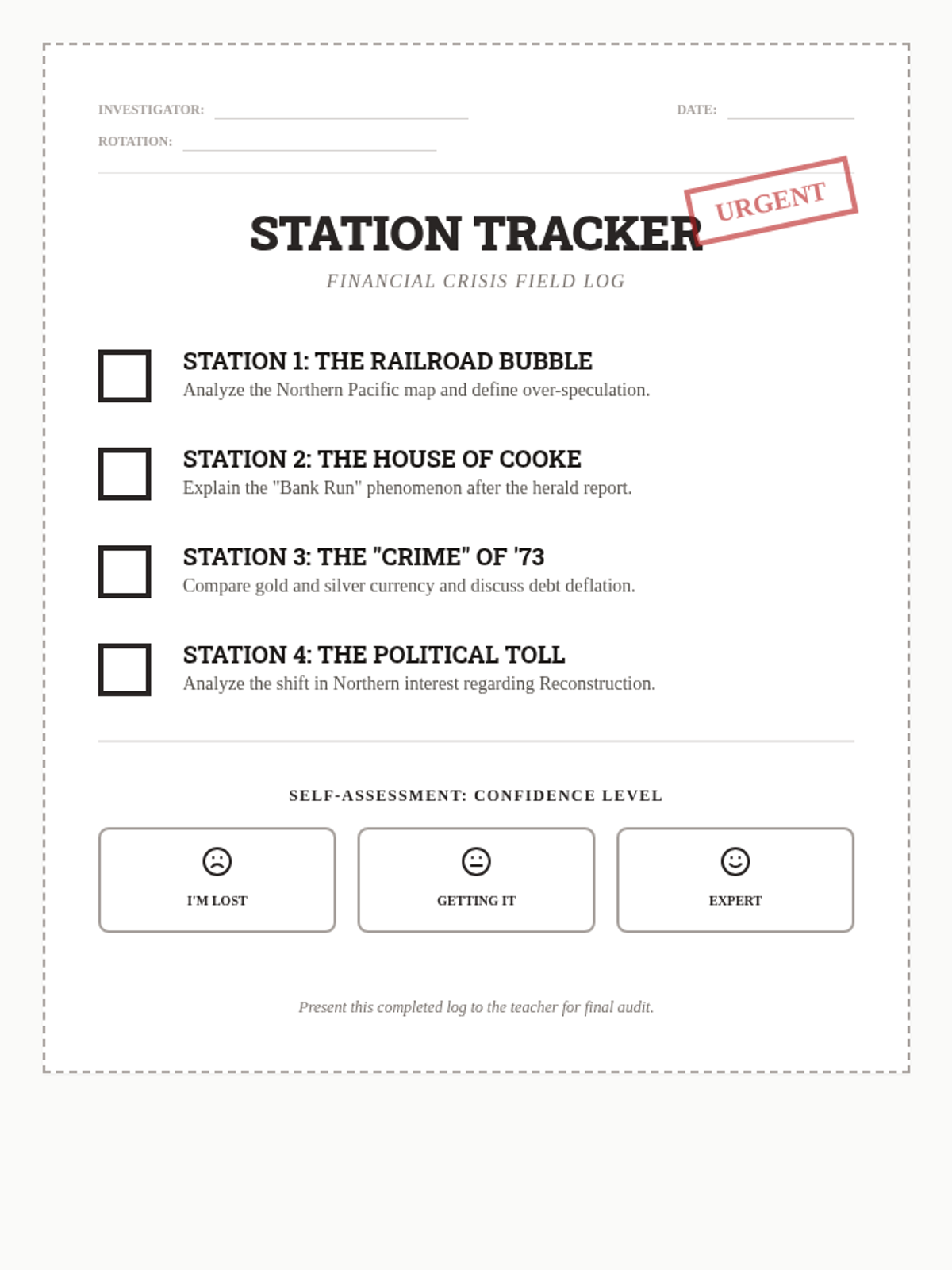
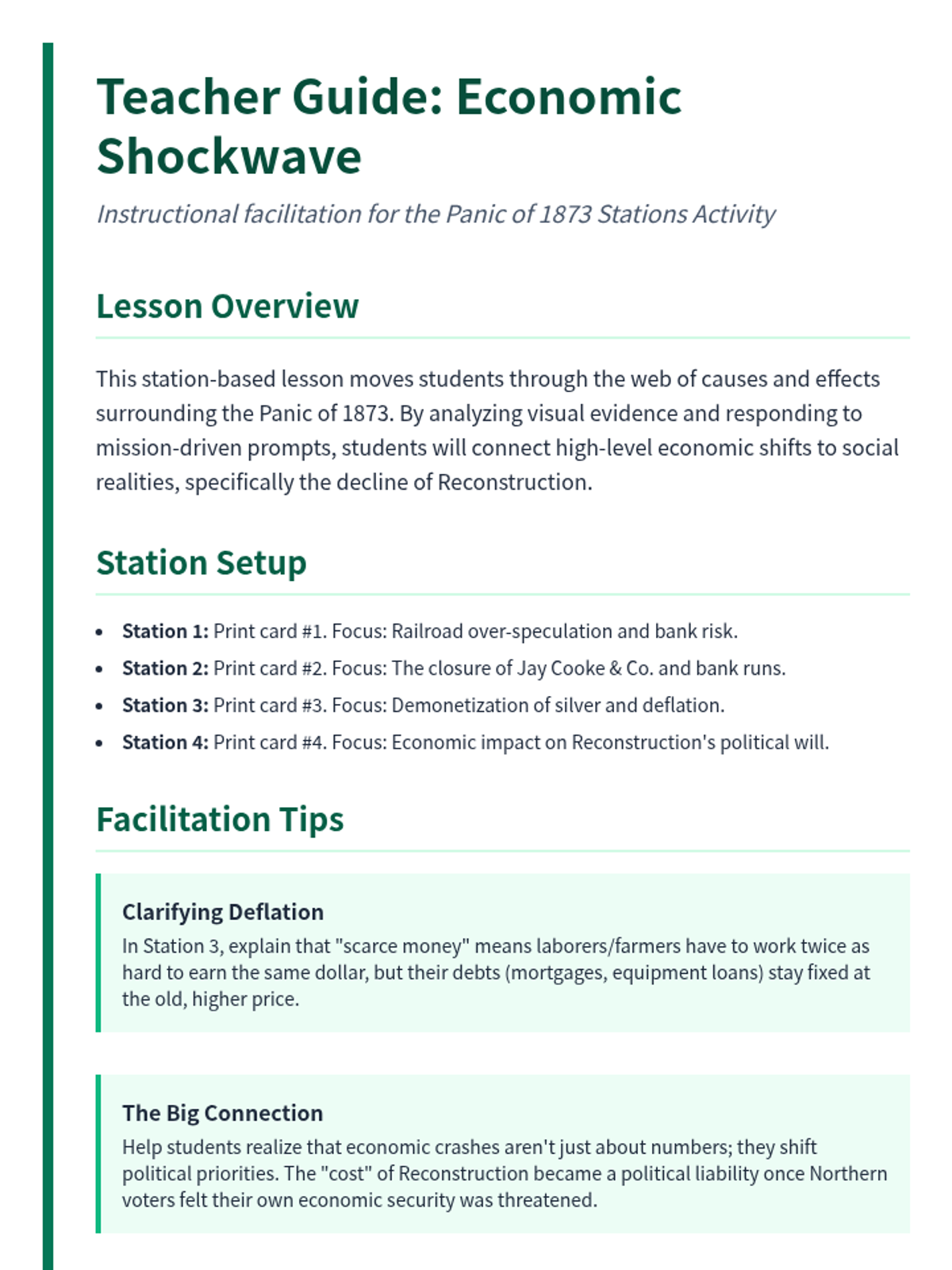
An immersive stations-based lesson exploring the causes and consequences of the Panic of 1873, focusing on railroad over-speculation, banking failures, and its impact on Reconstruction.
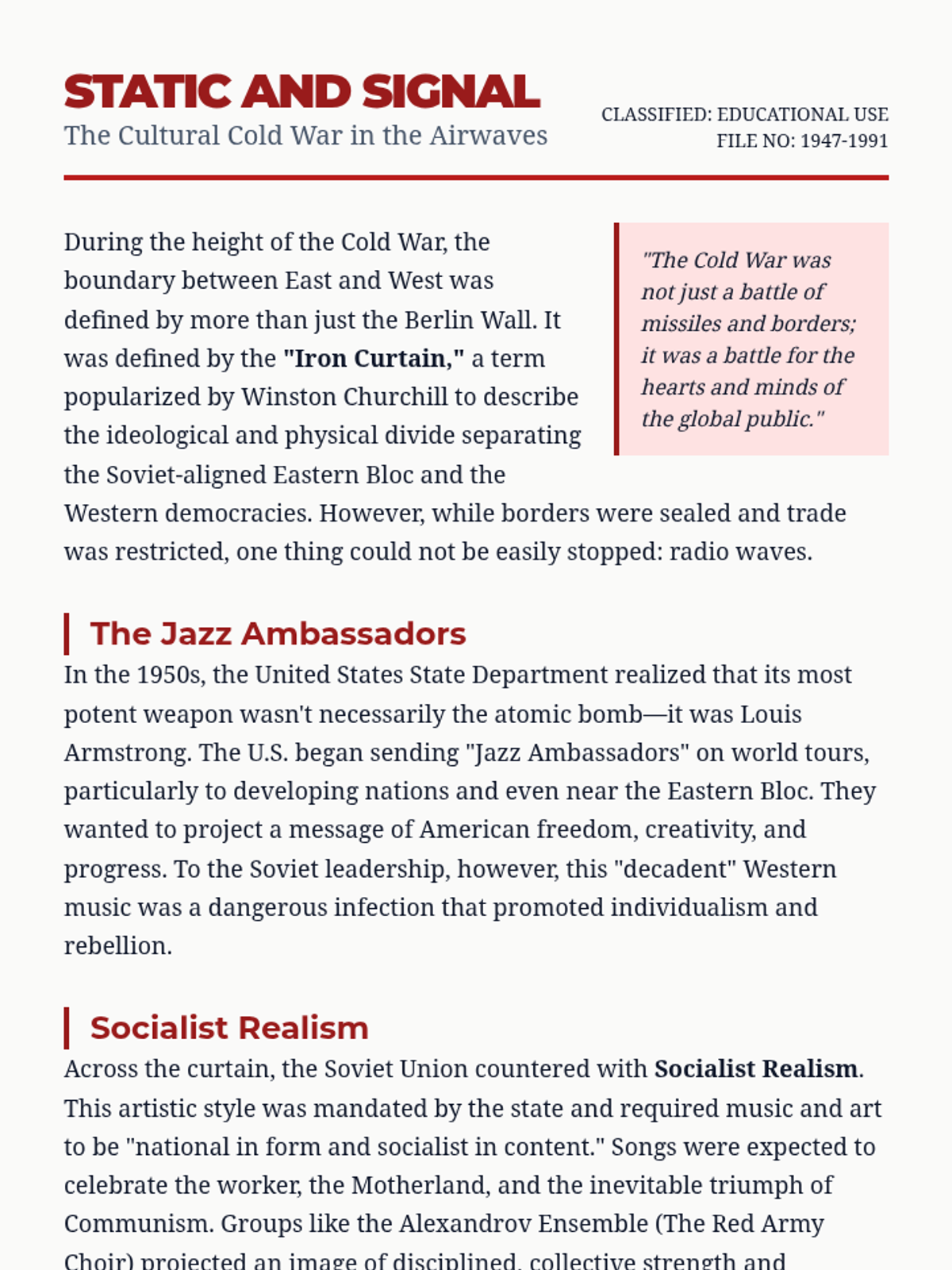
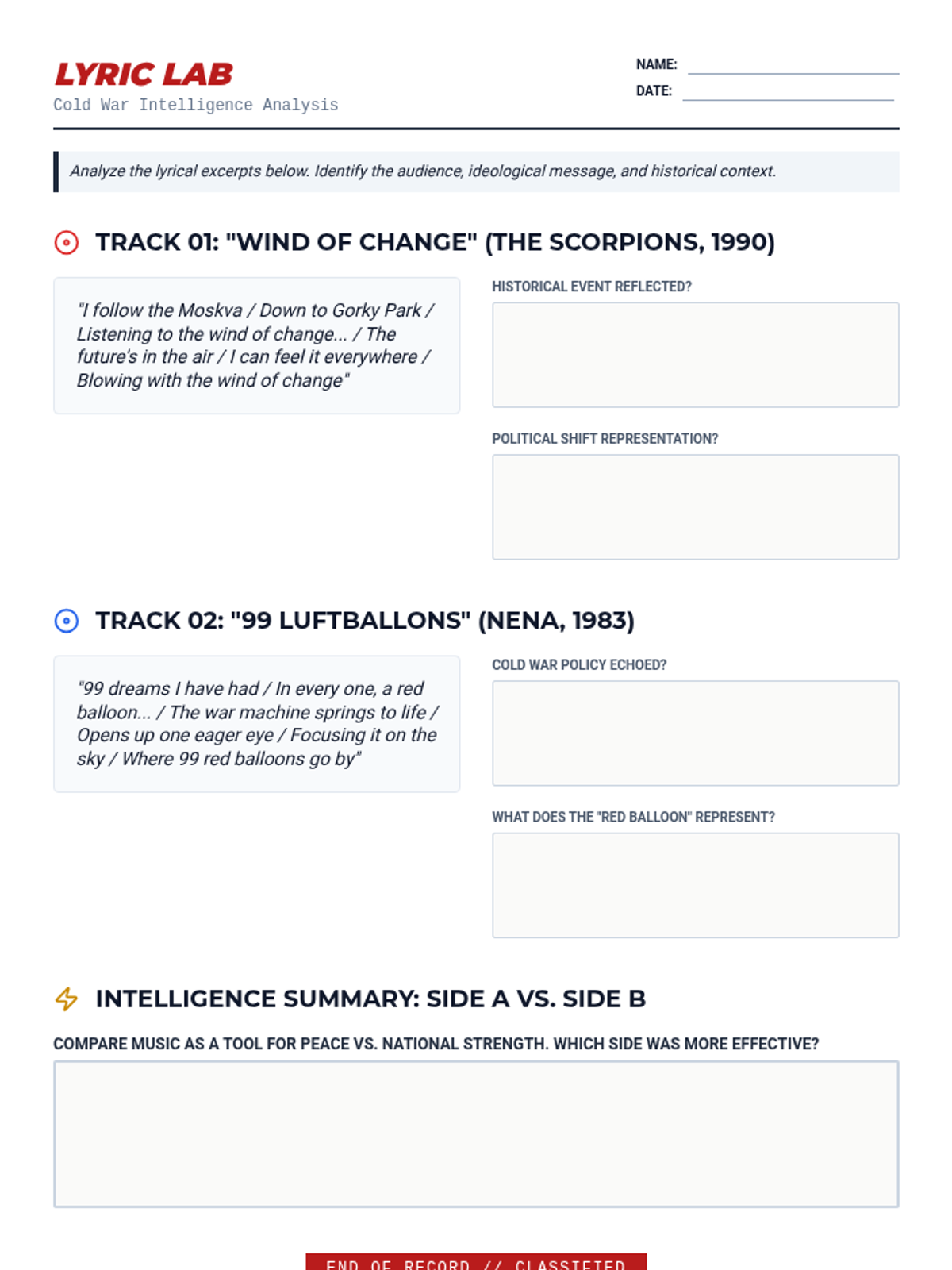
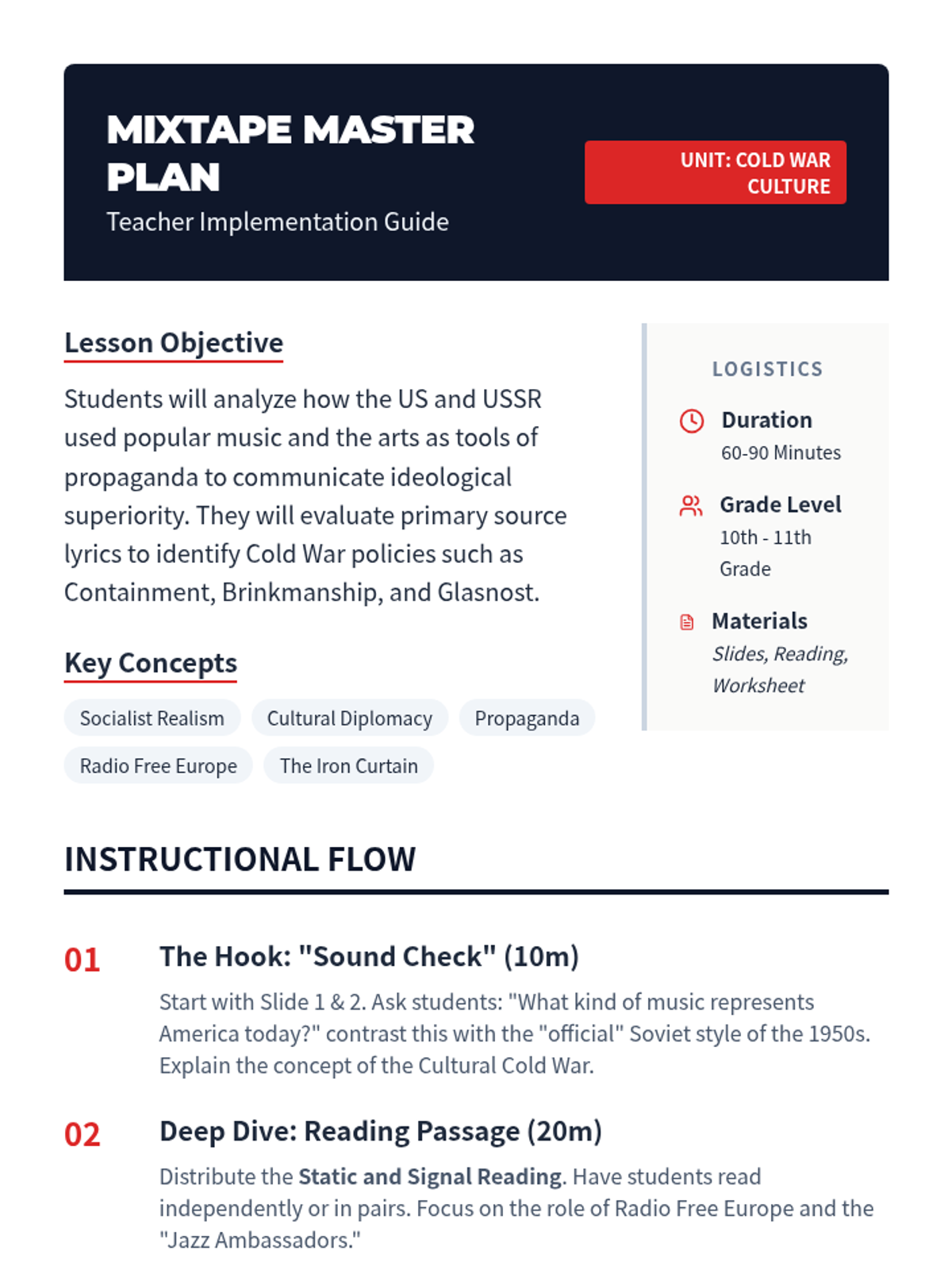
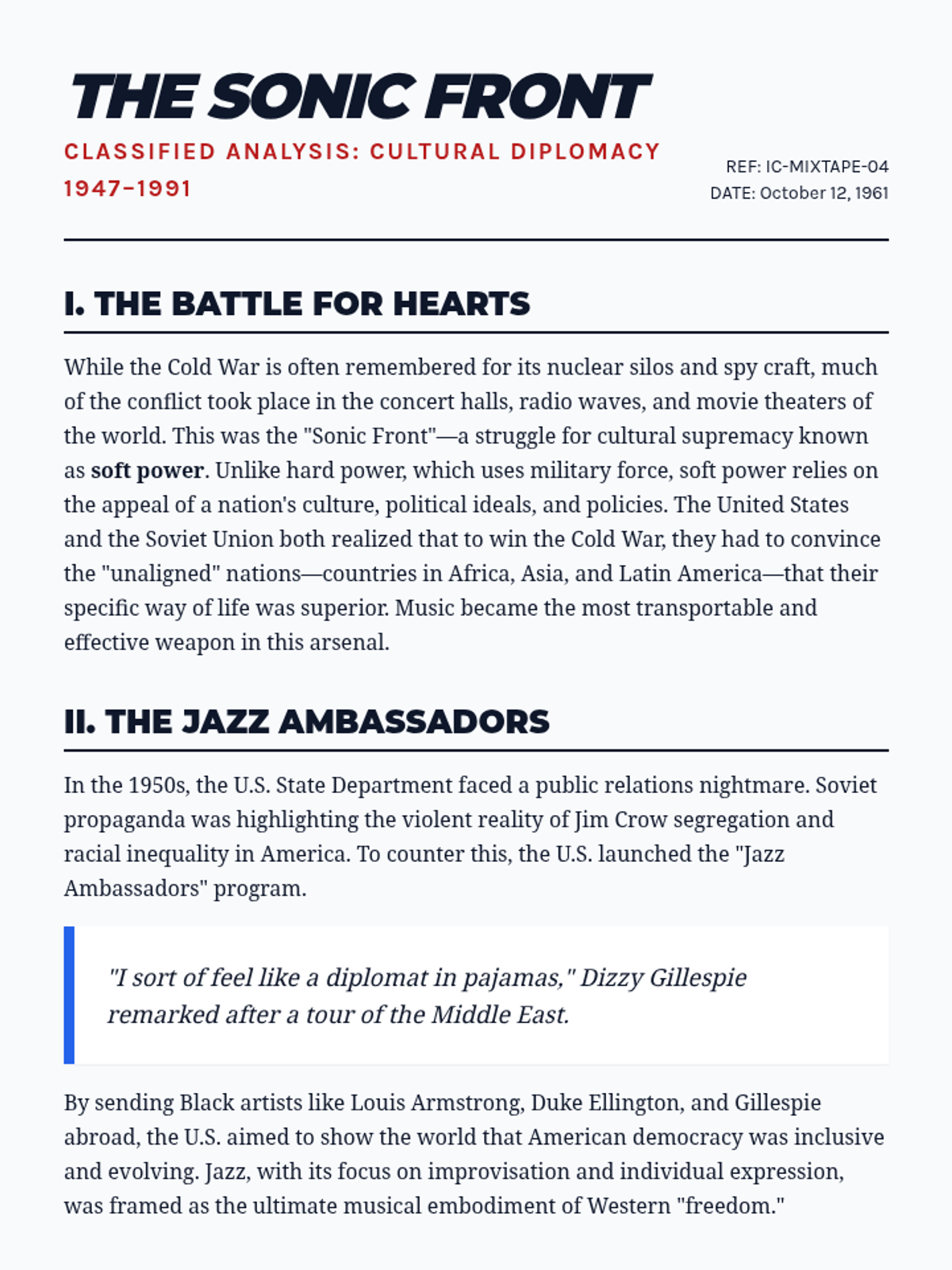
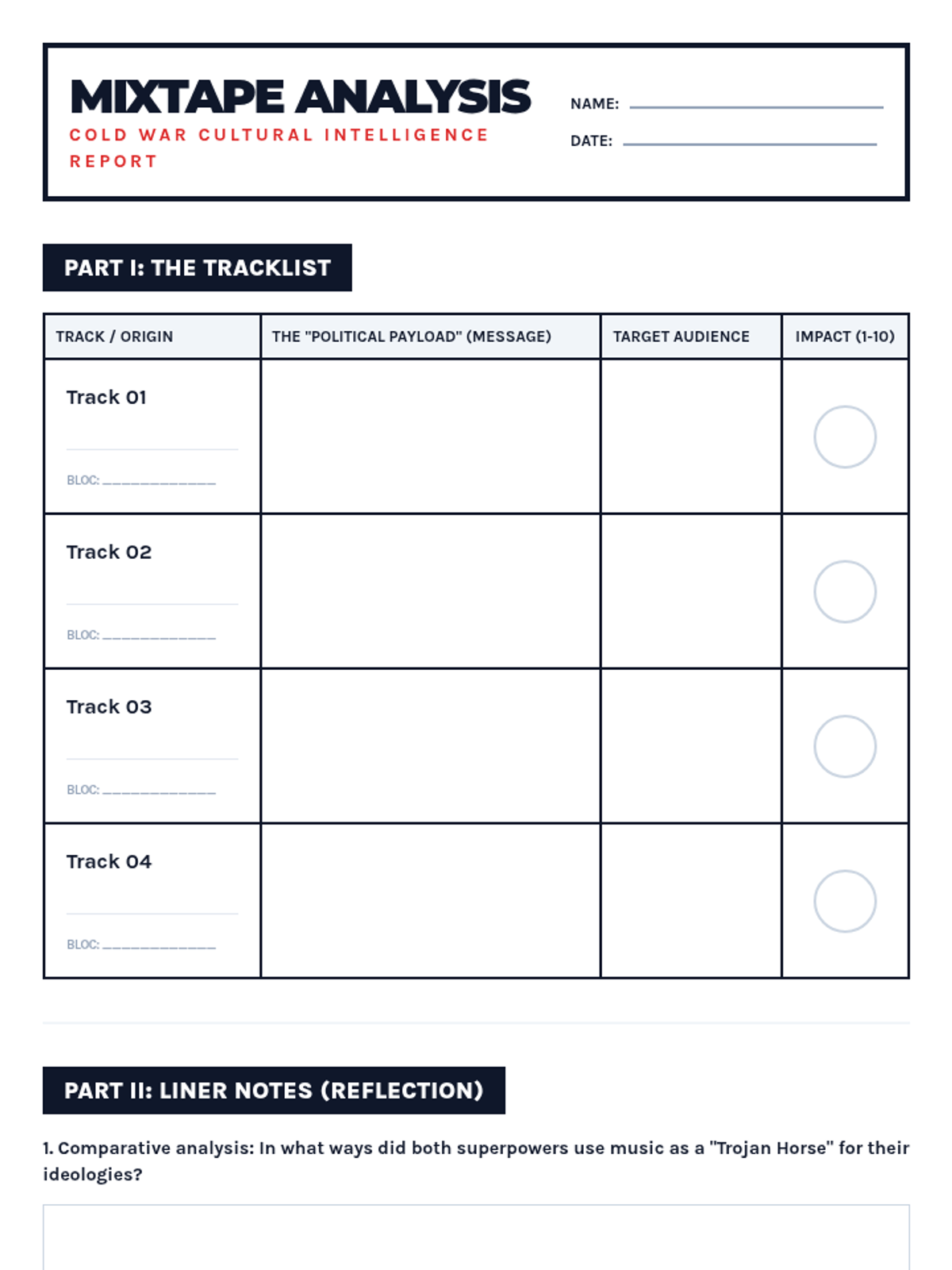
A high school history lesson exploring Cold War tensions through music and cultural propaganda, analyzing how both the US and USSR used the arts to project power and ideology.
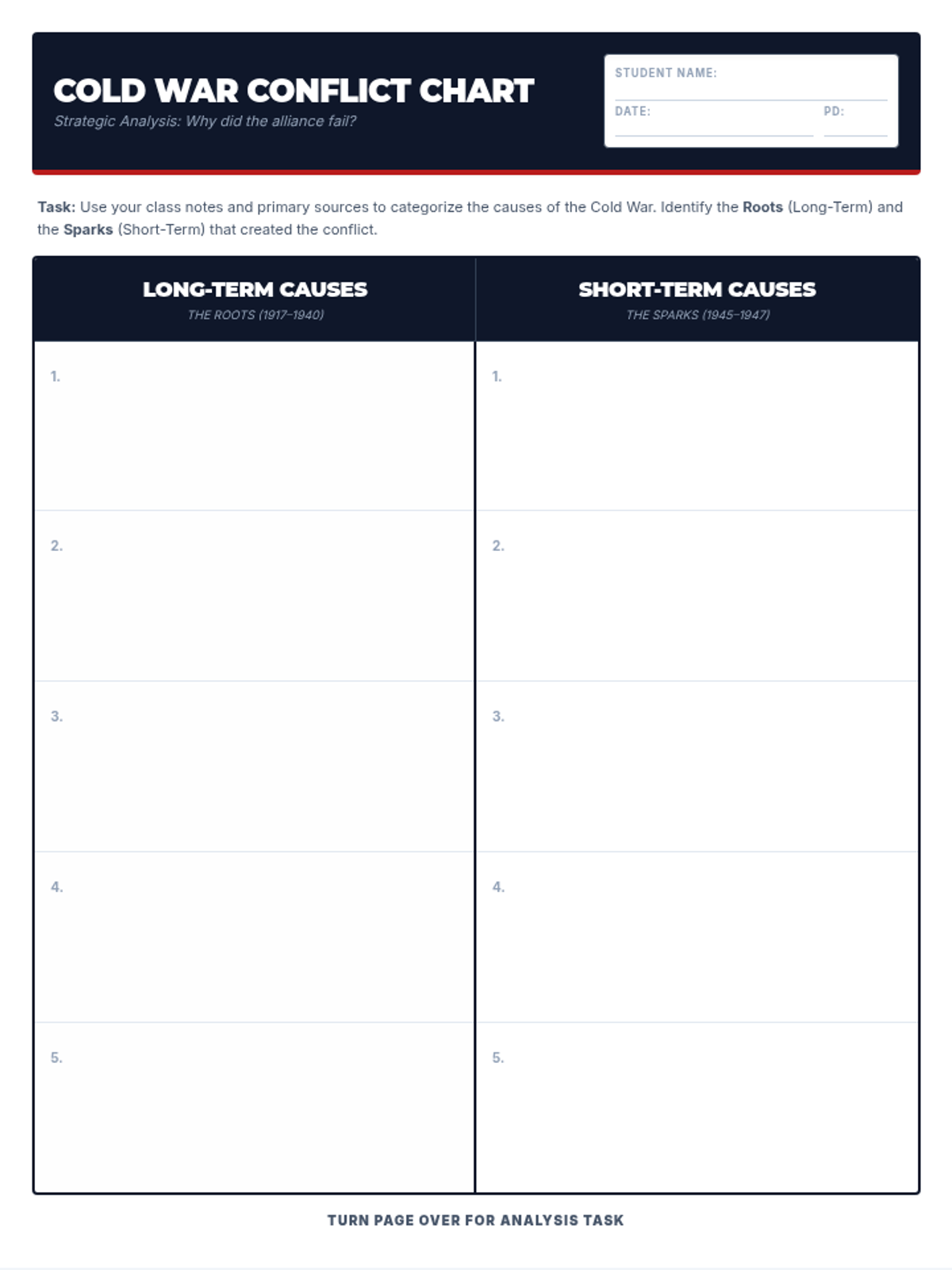
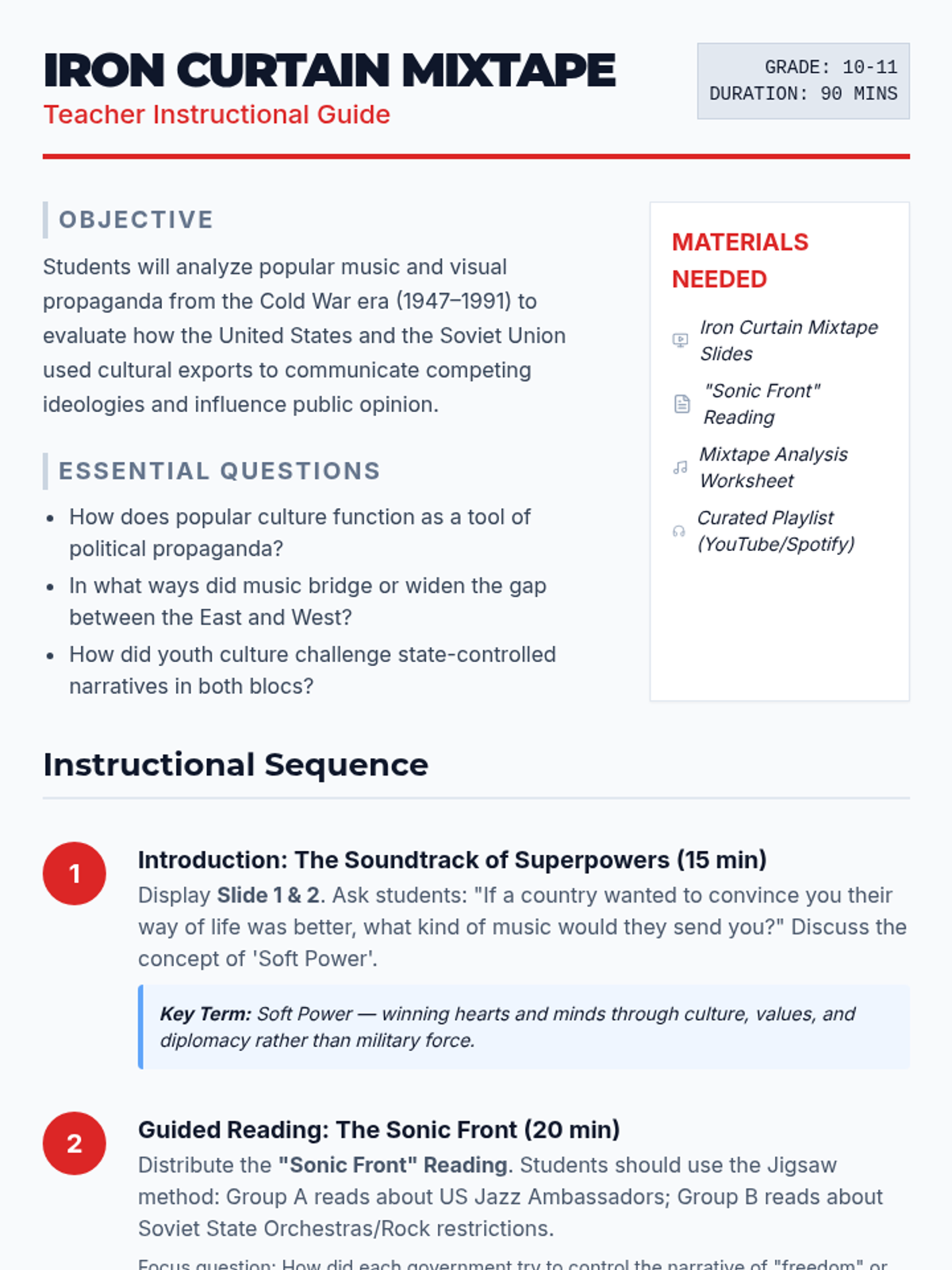
A cultural exploration of the Cold War where students analyze popular music and propaganda from both sides of the Iron Curtain to understand ideological warfare.
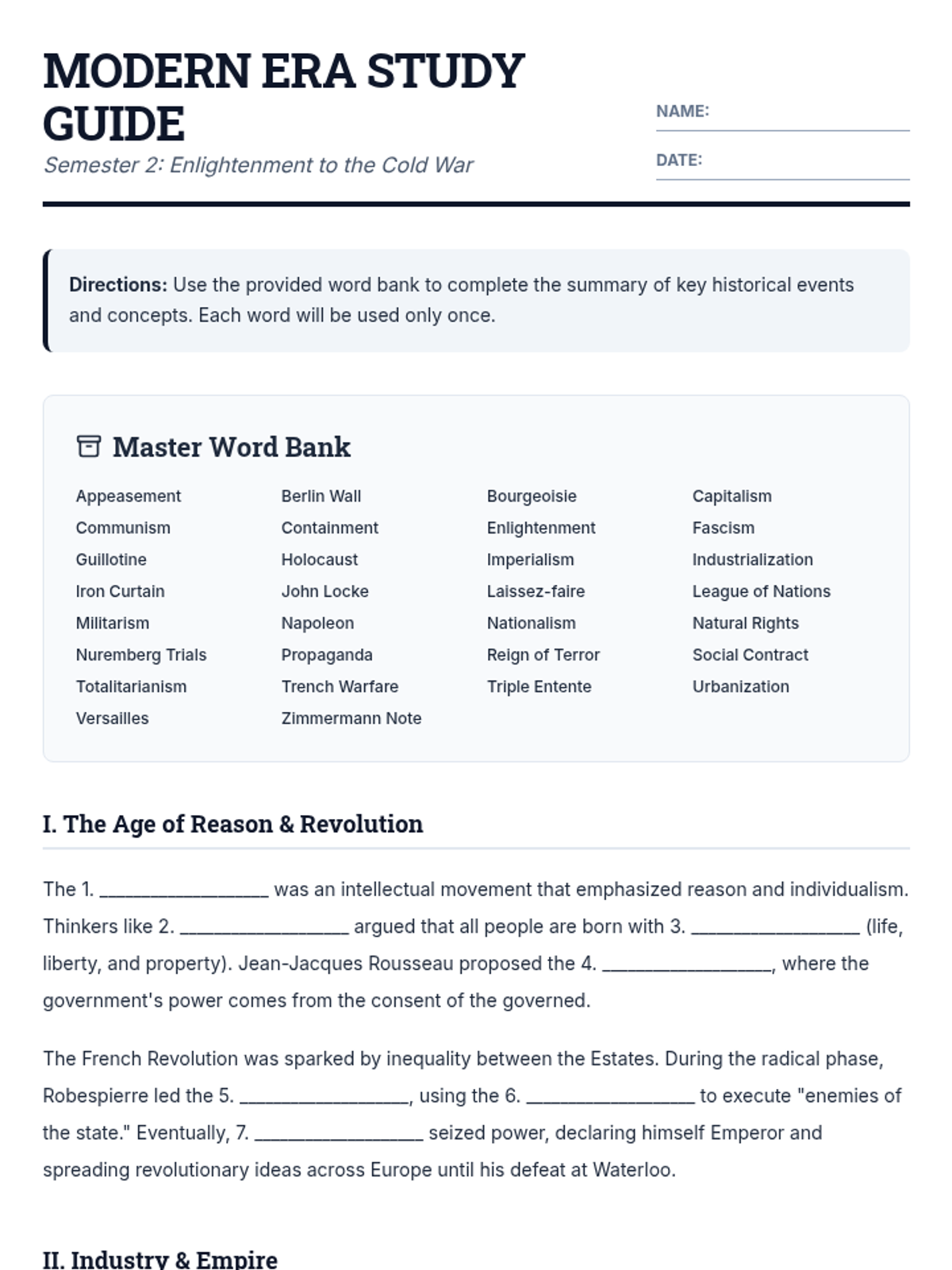
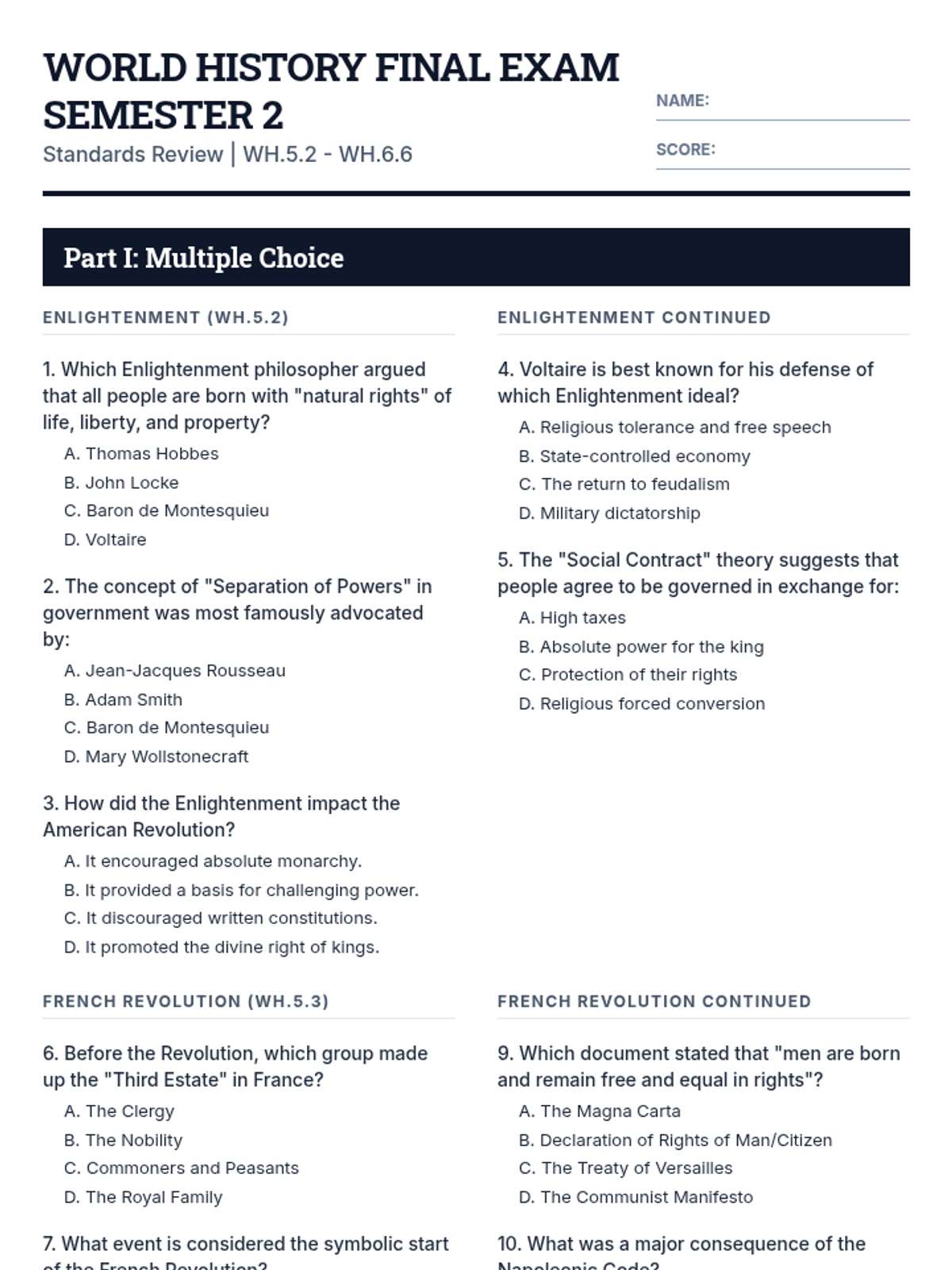
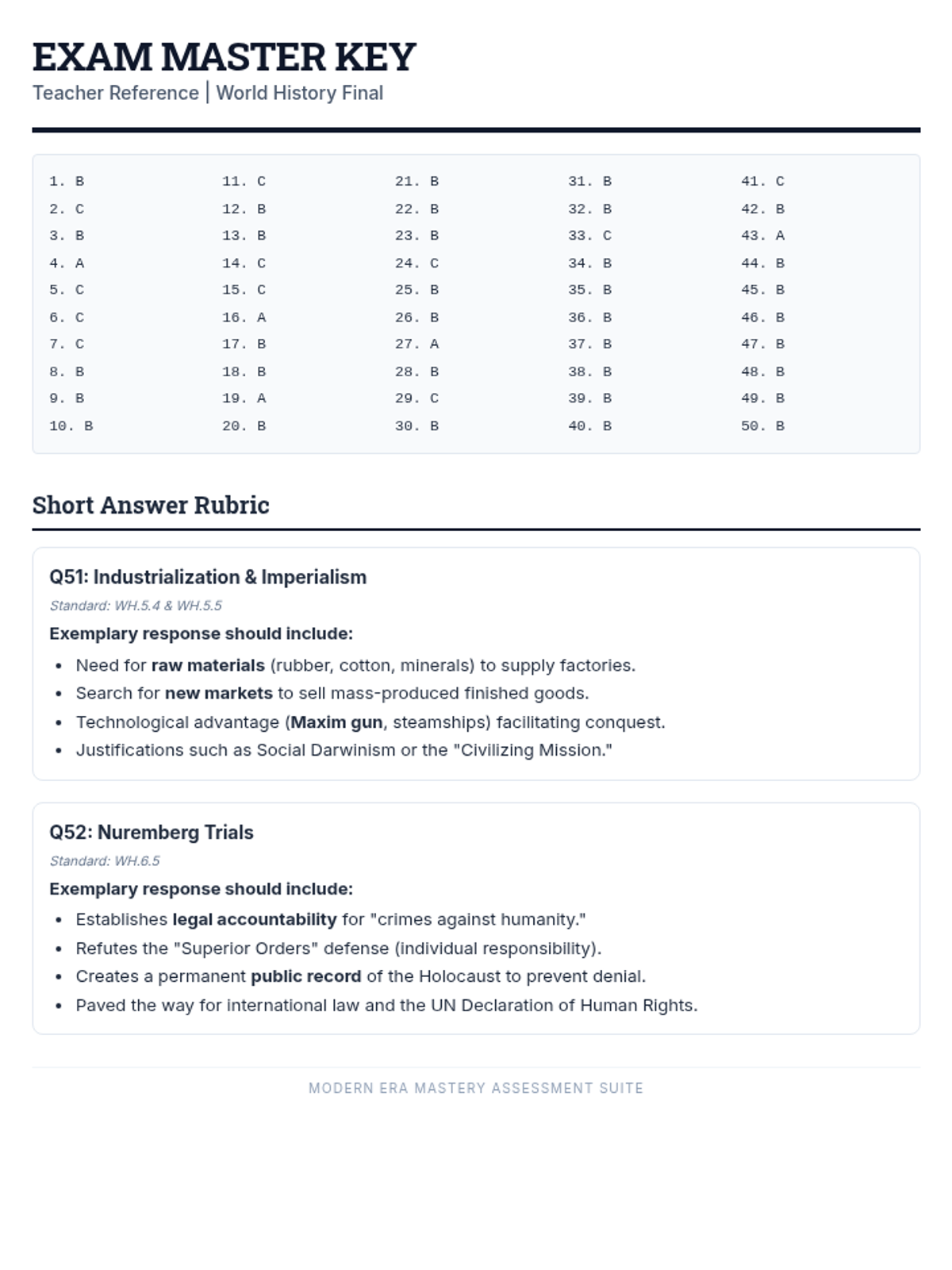
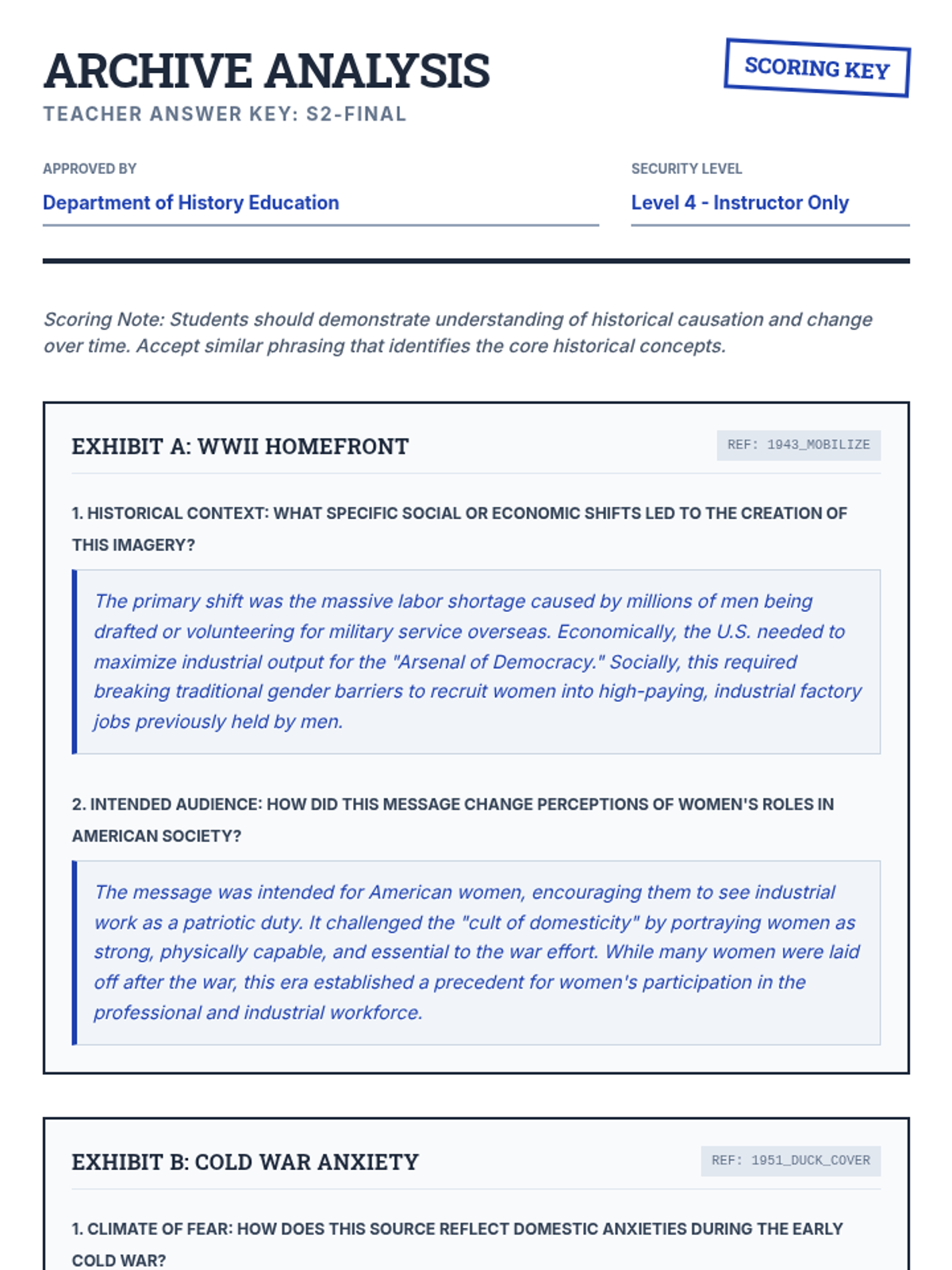
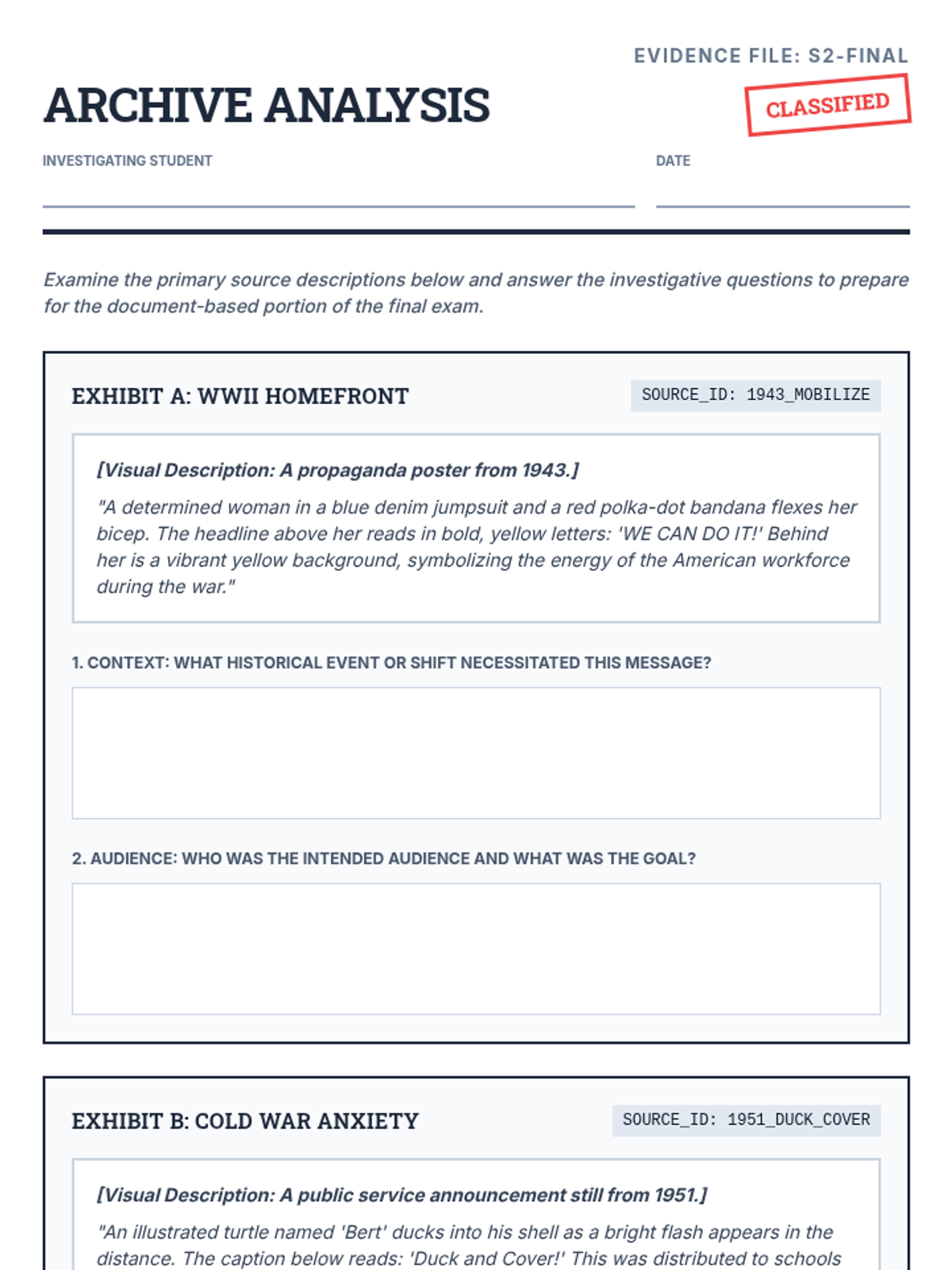
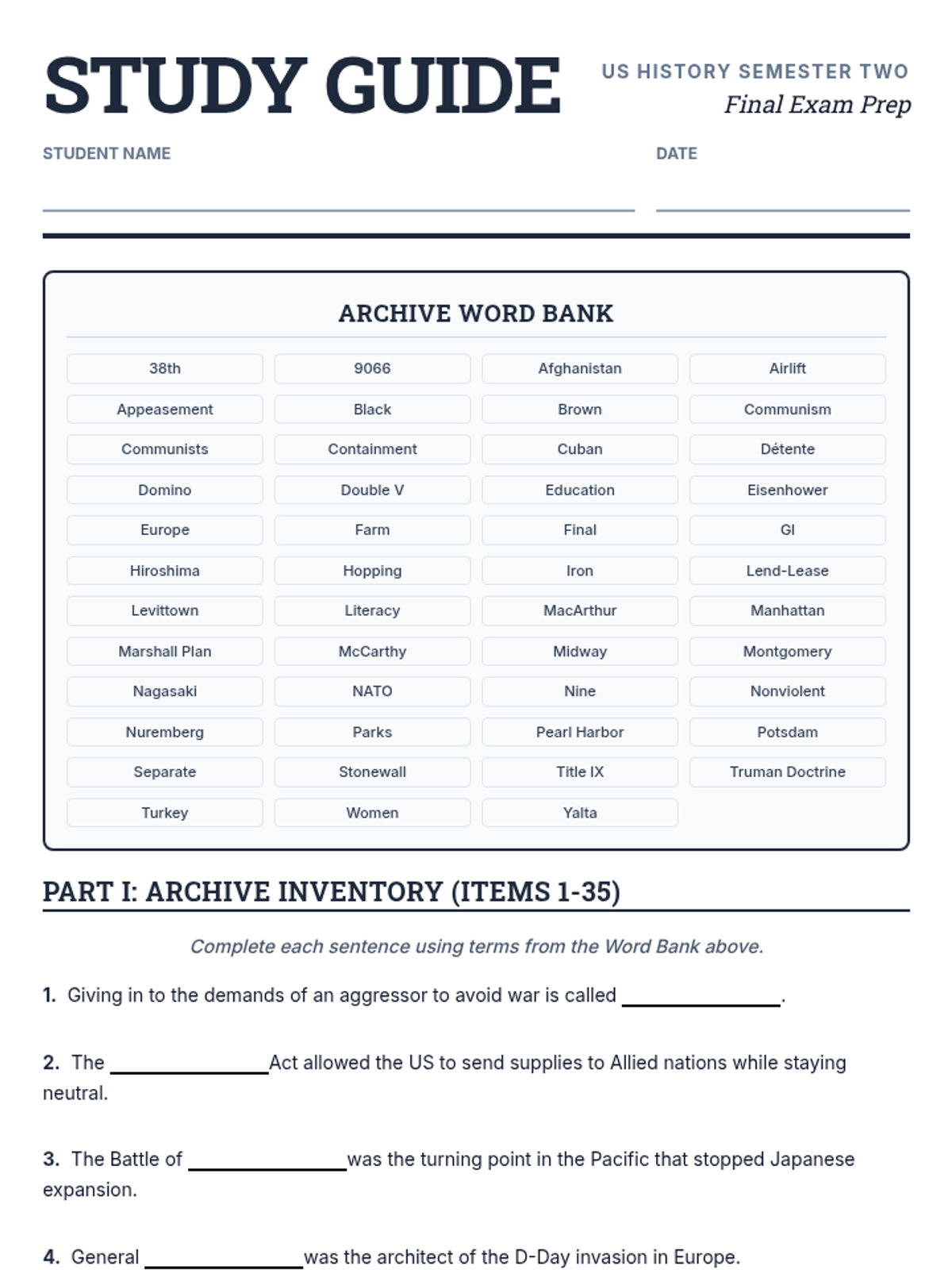
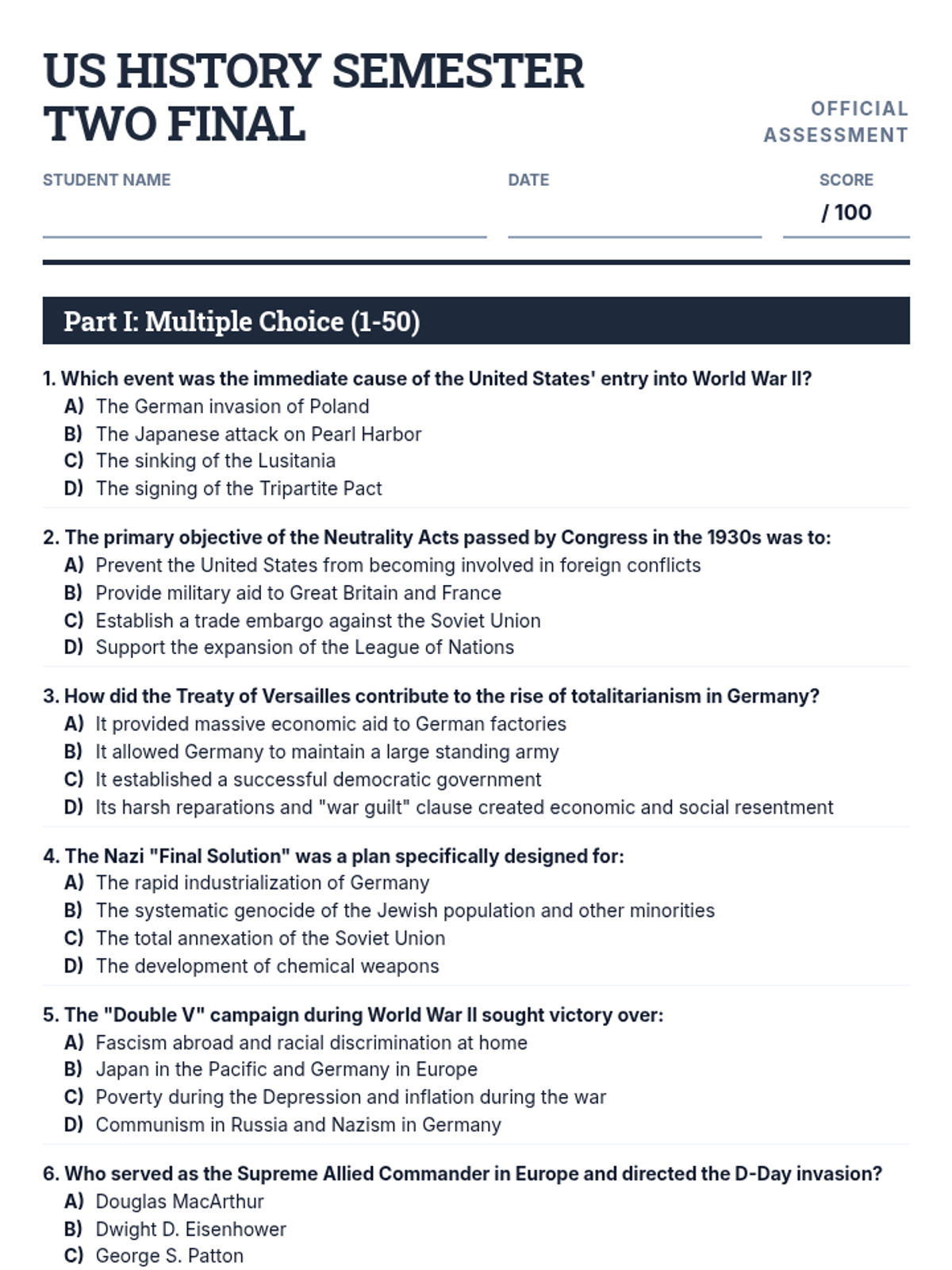
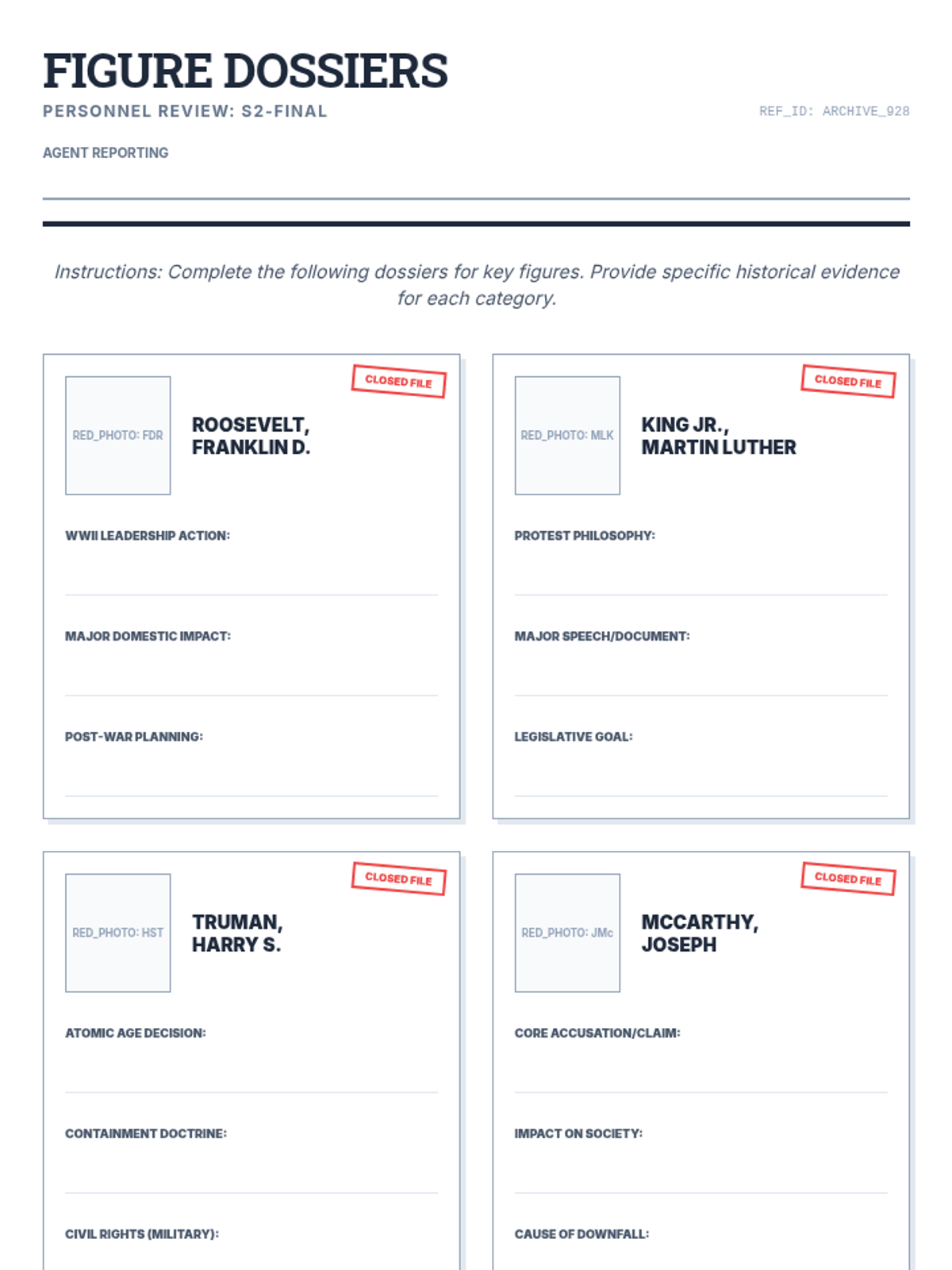
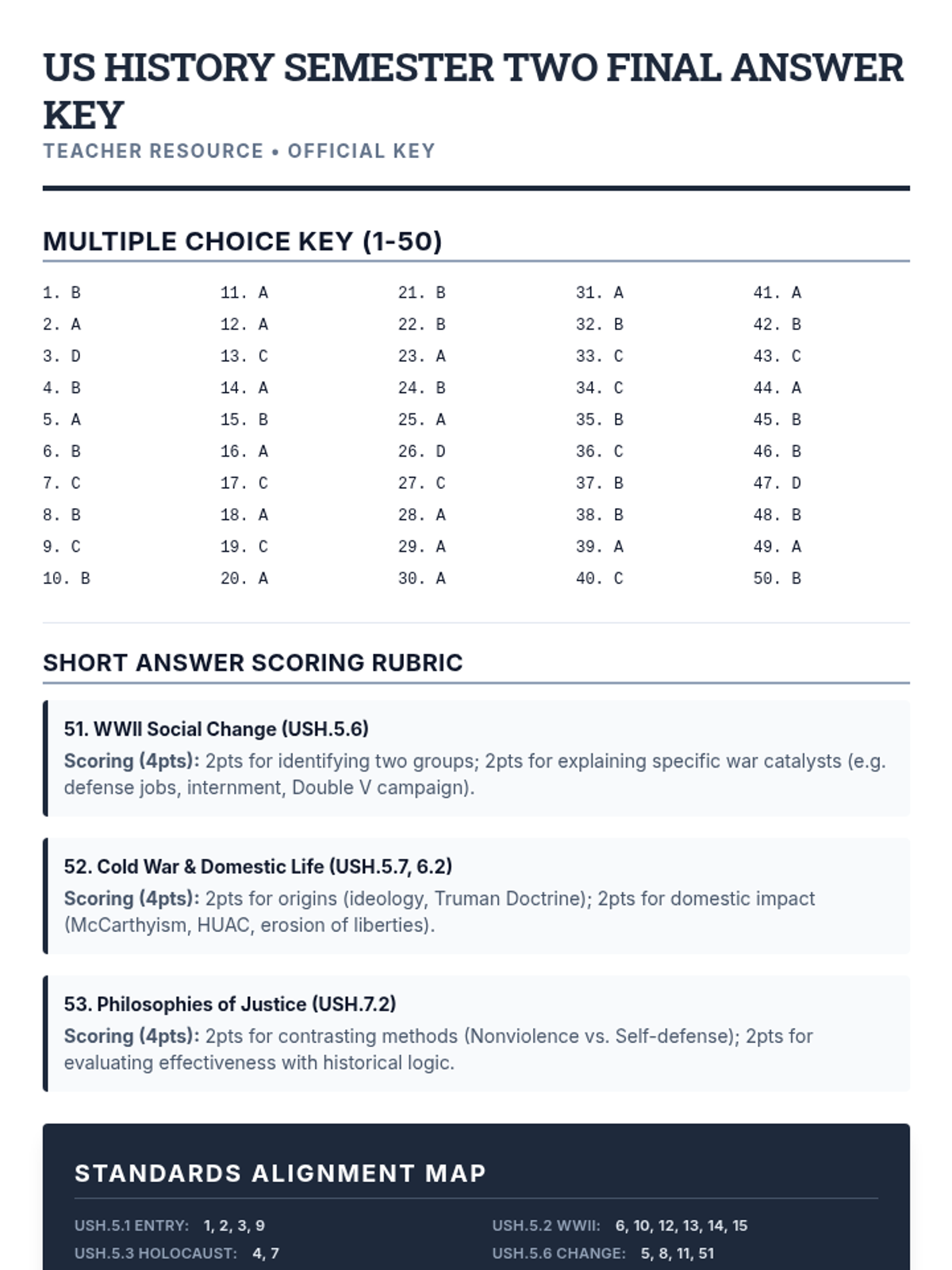
The final assessment phase for Semester 2, including a structured study guide and a comprehensive 50-question exam with short answer components.