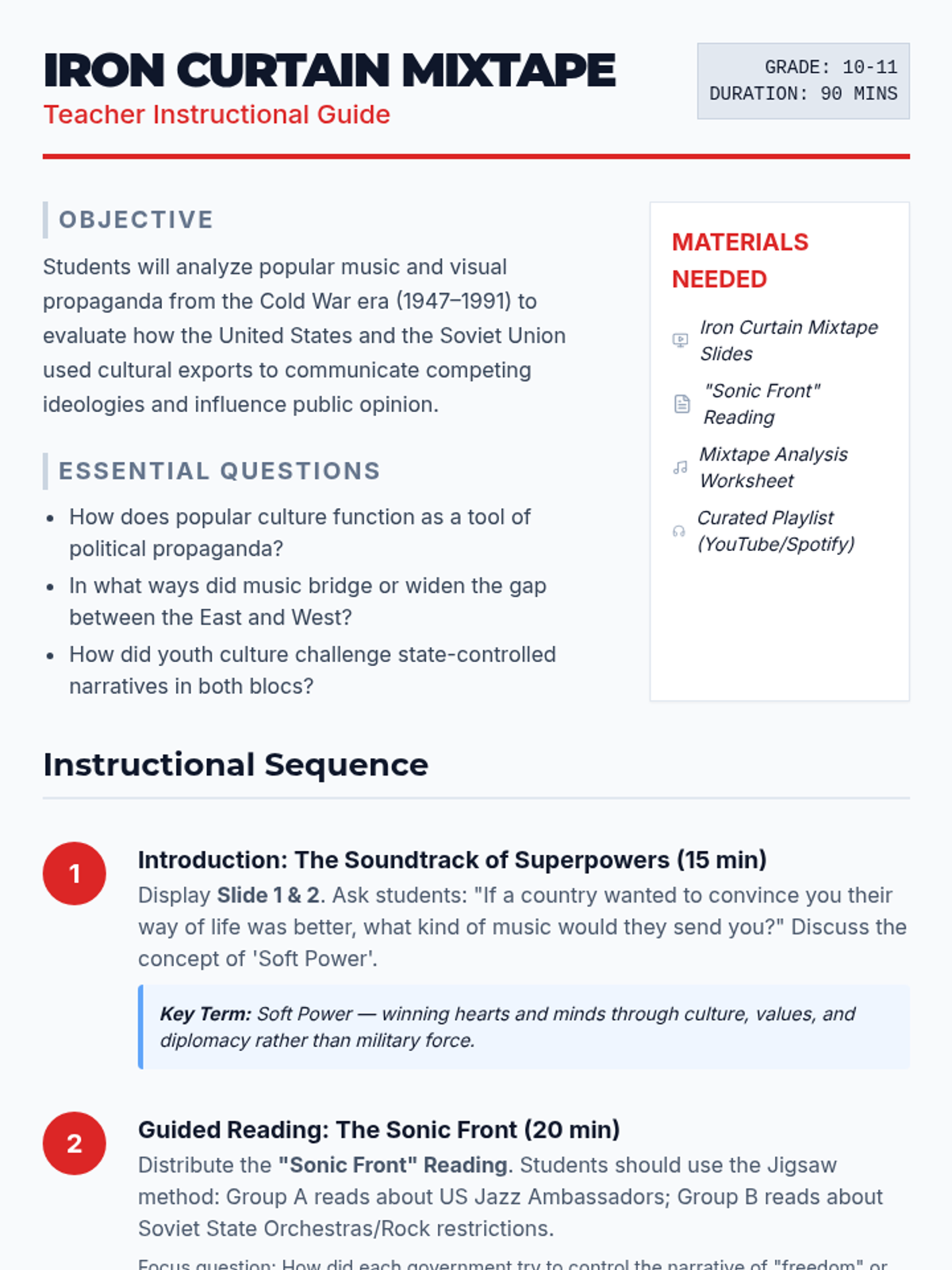
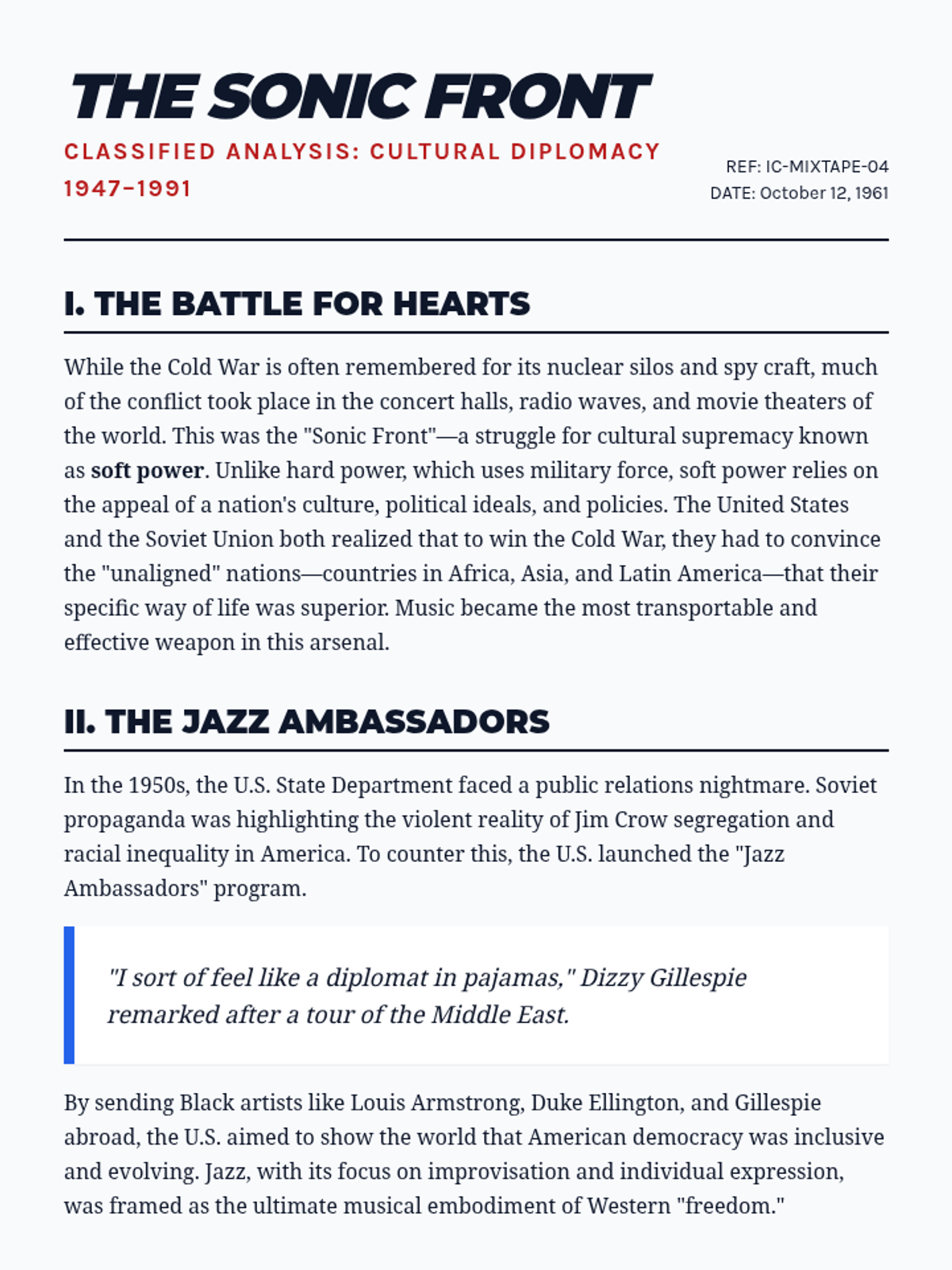
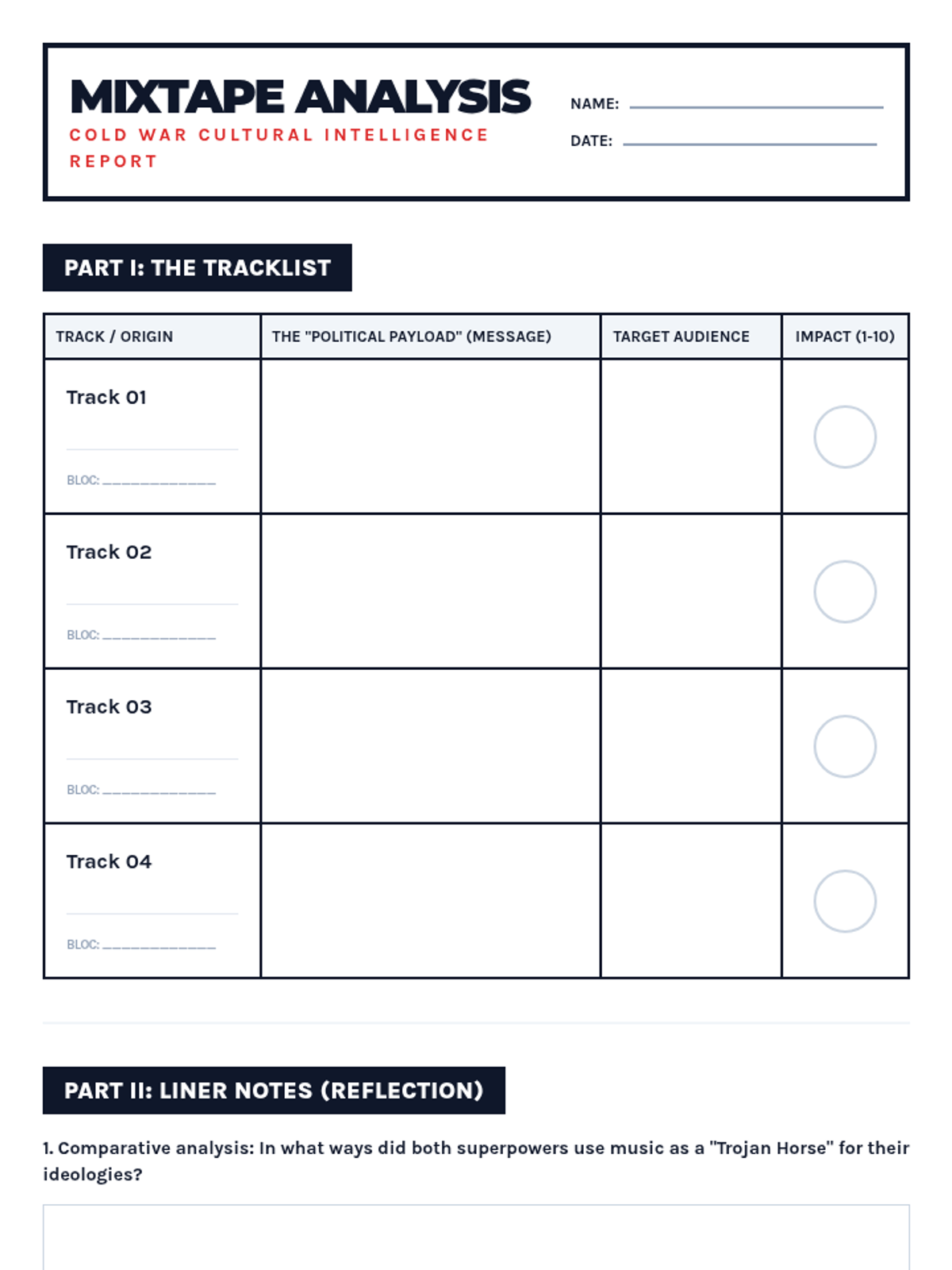
A high school history lesson exploring Cold War tensions through music and cultural propaganda, analyzing how both the US and USSR used the arts to project power and ideology.
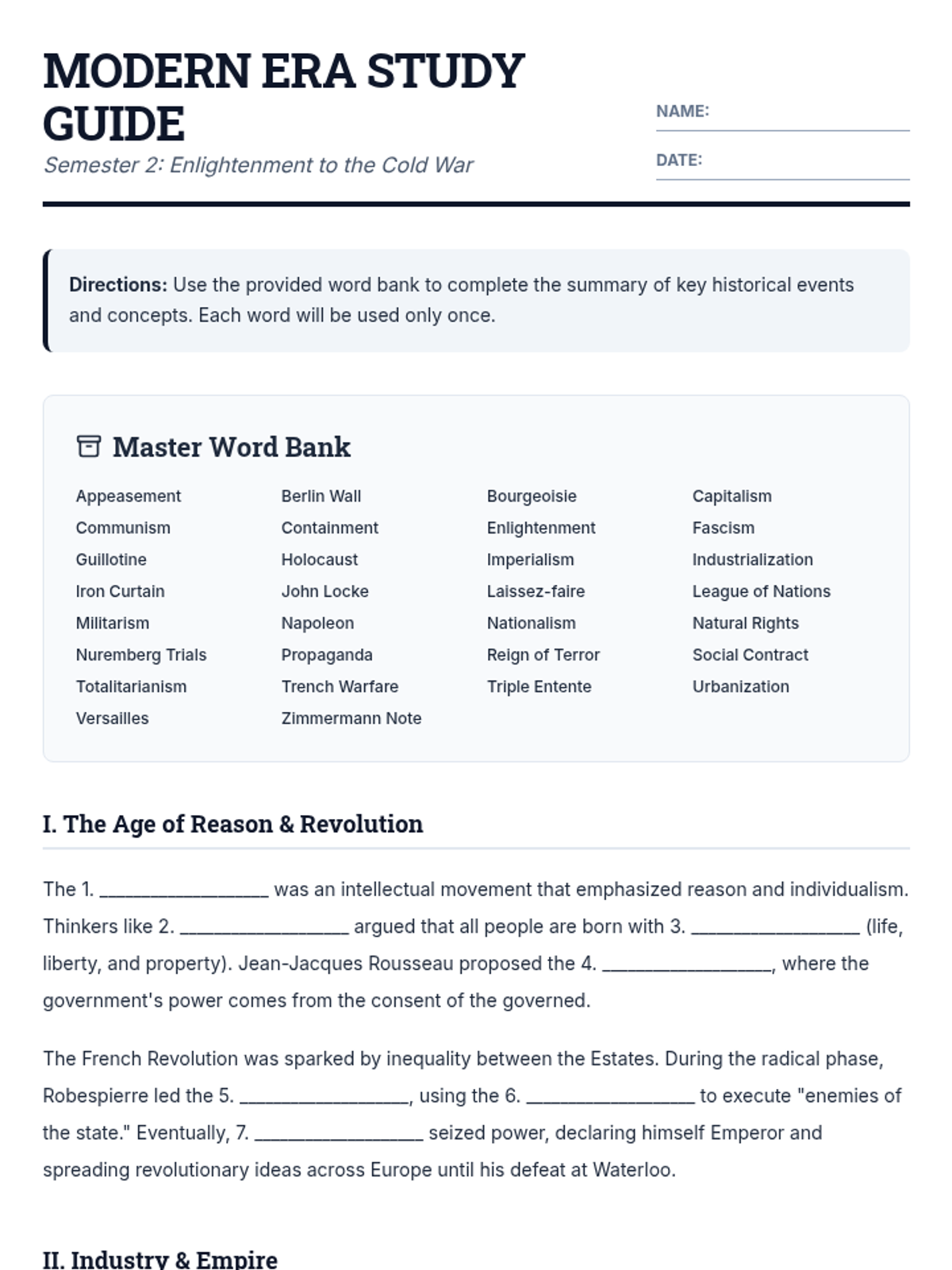
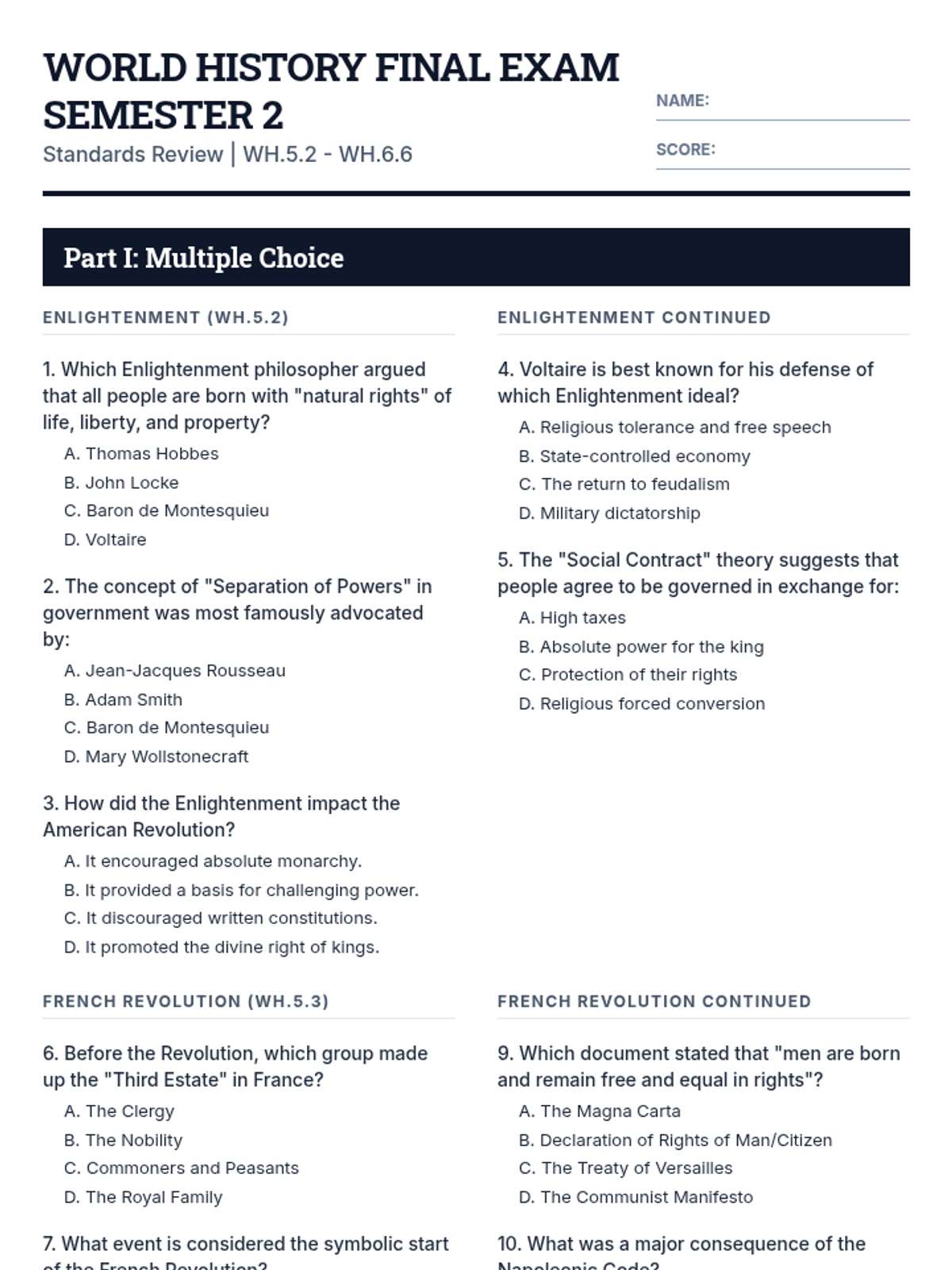
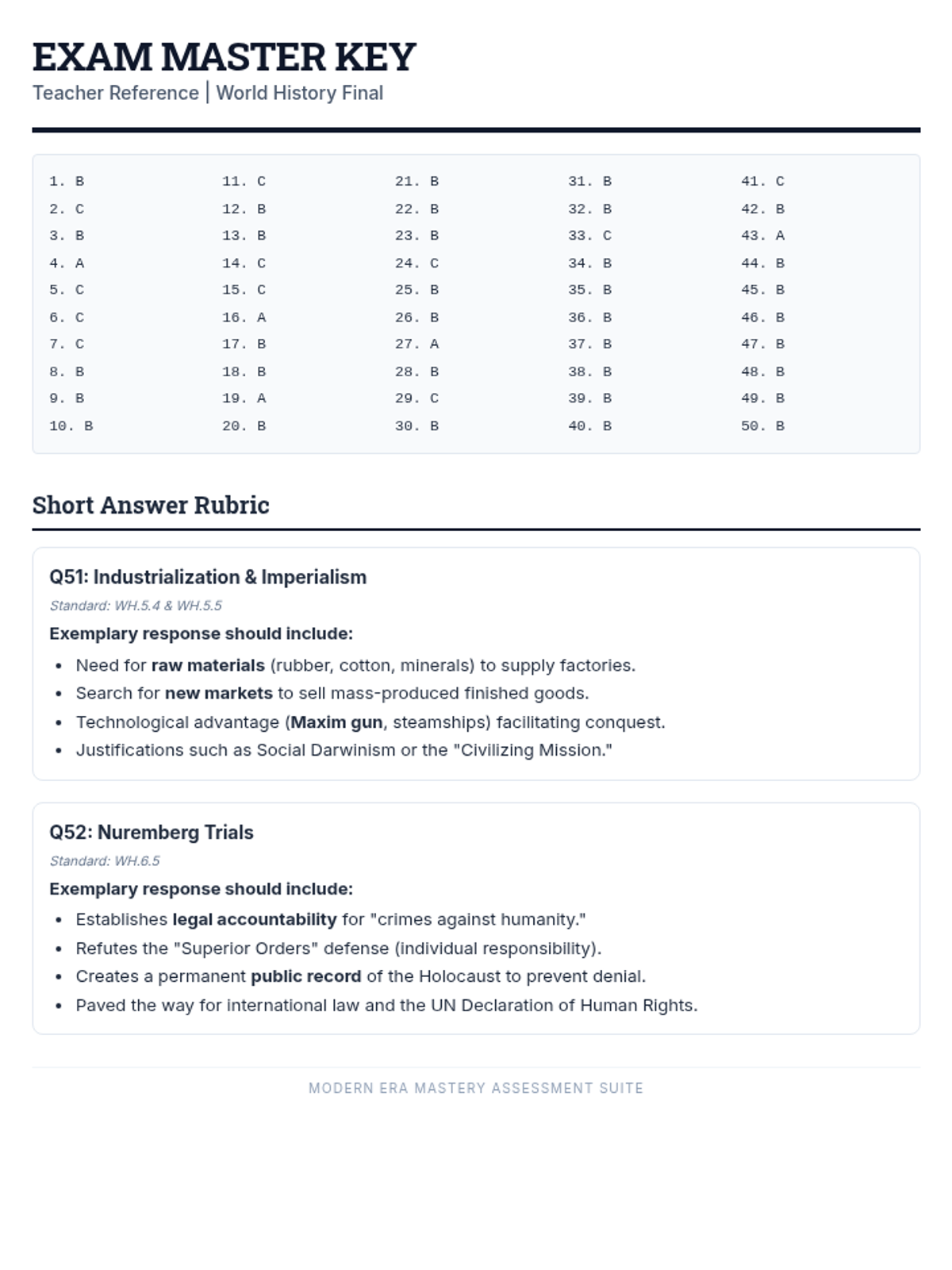
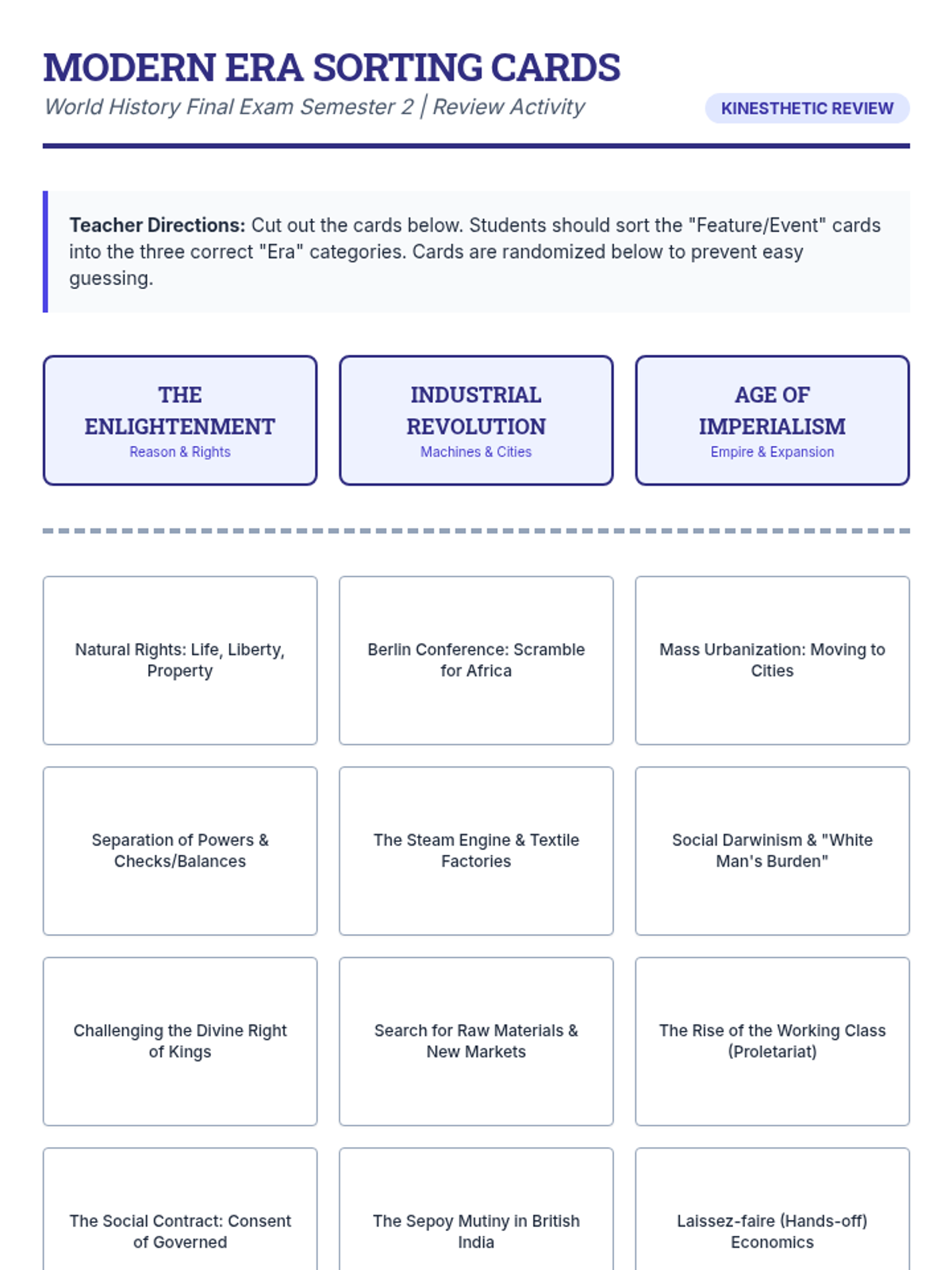
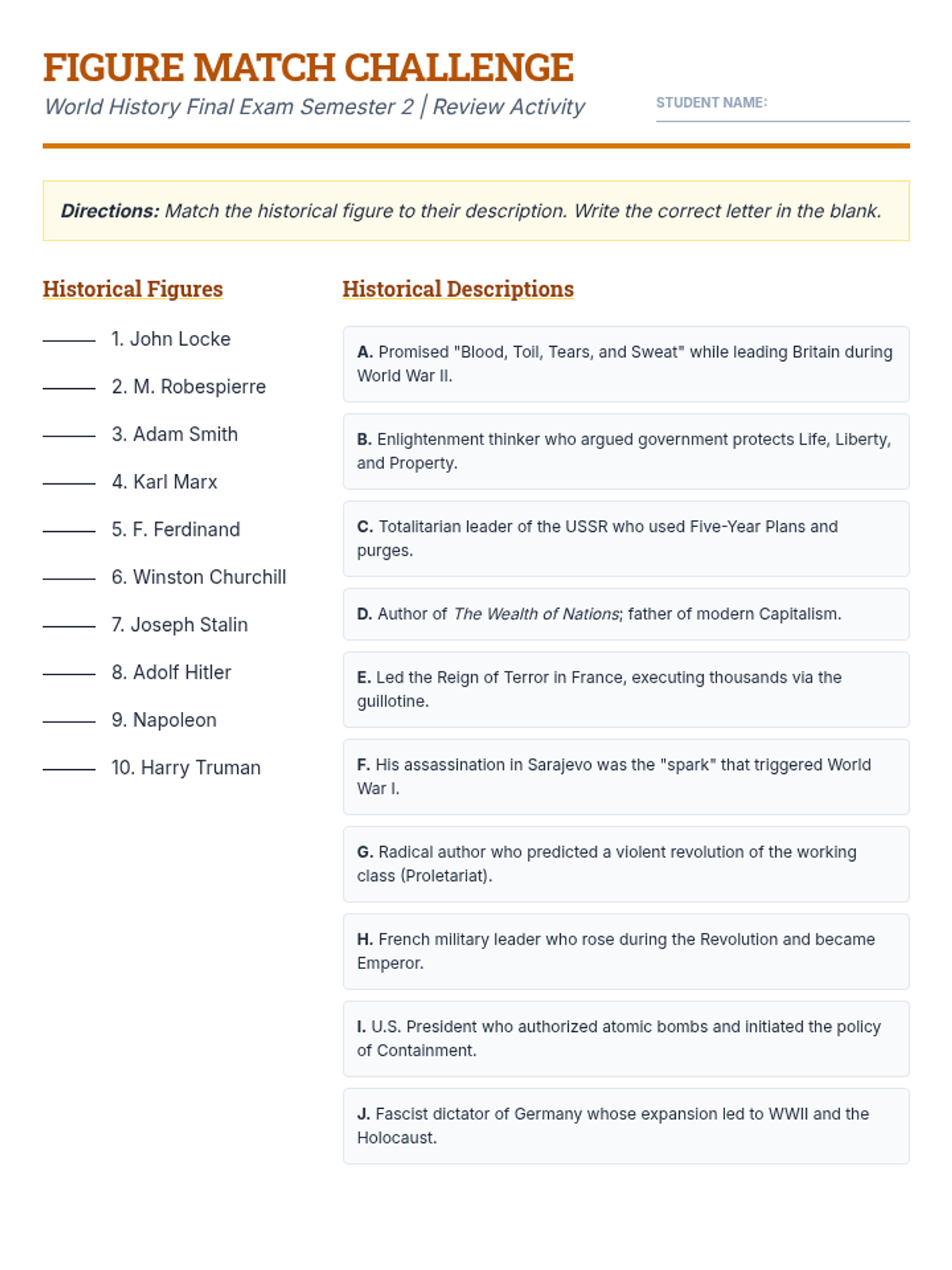
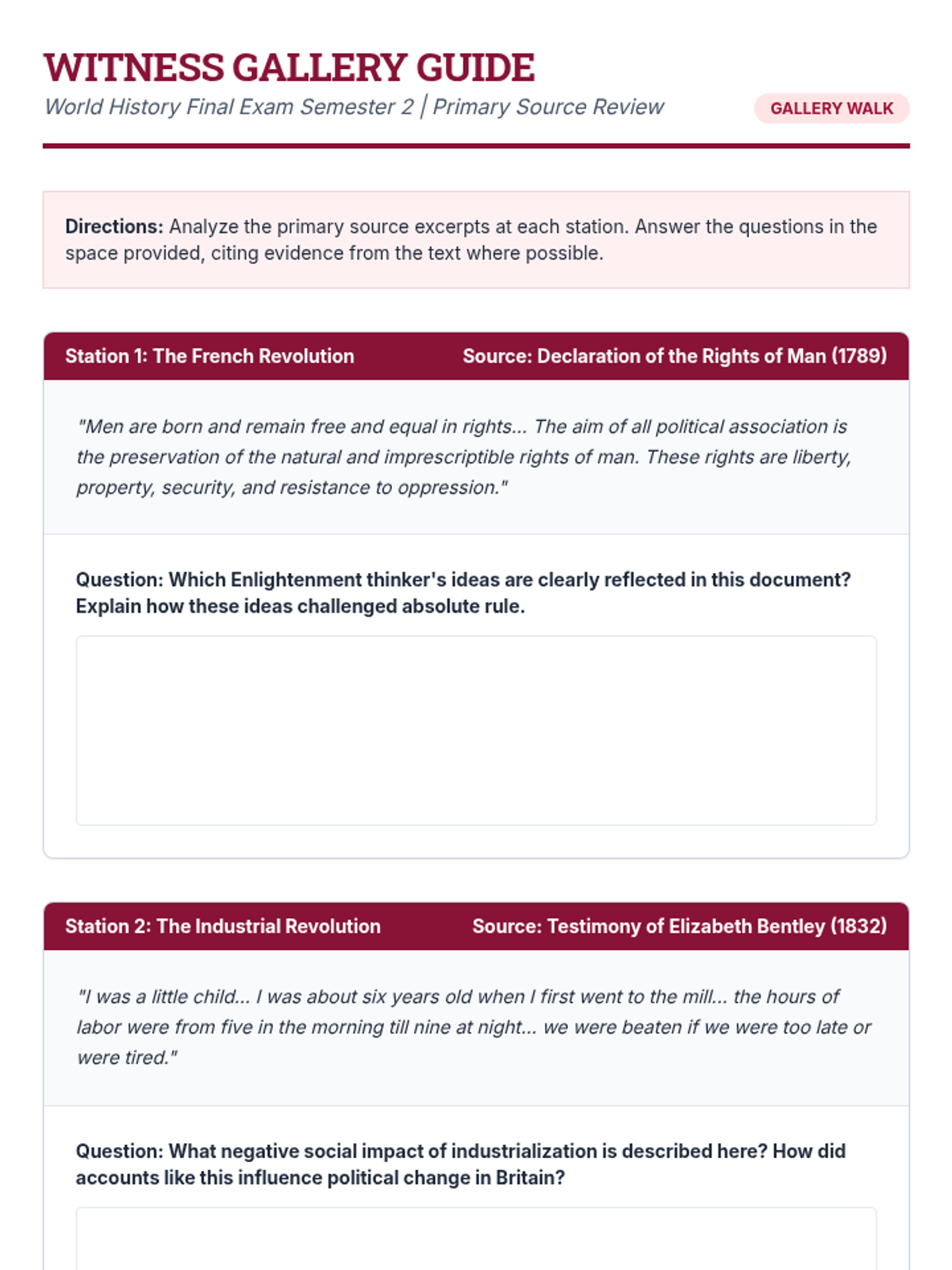
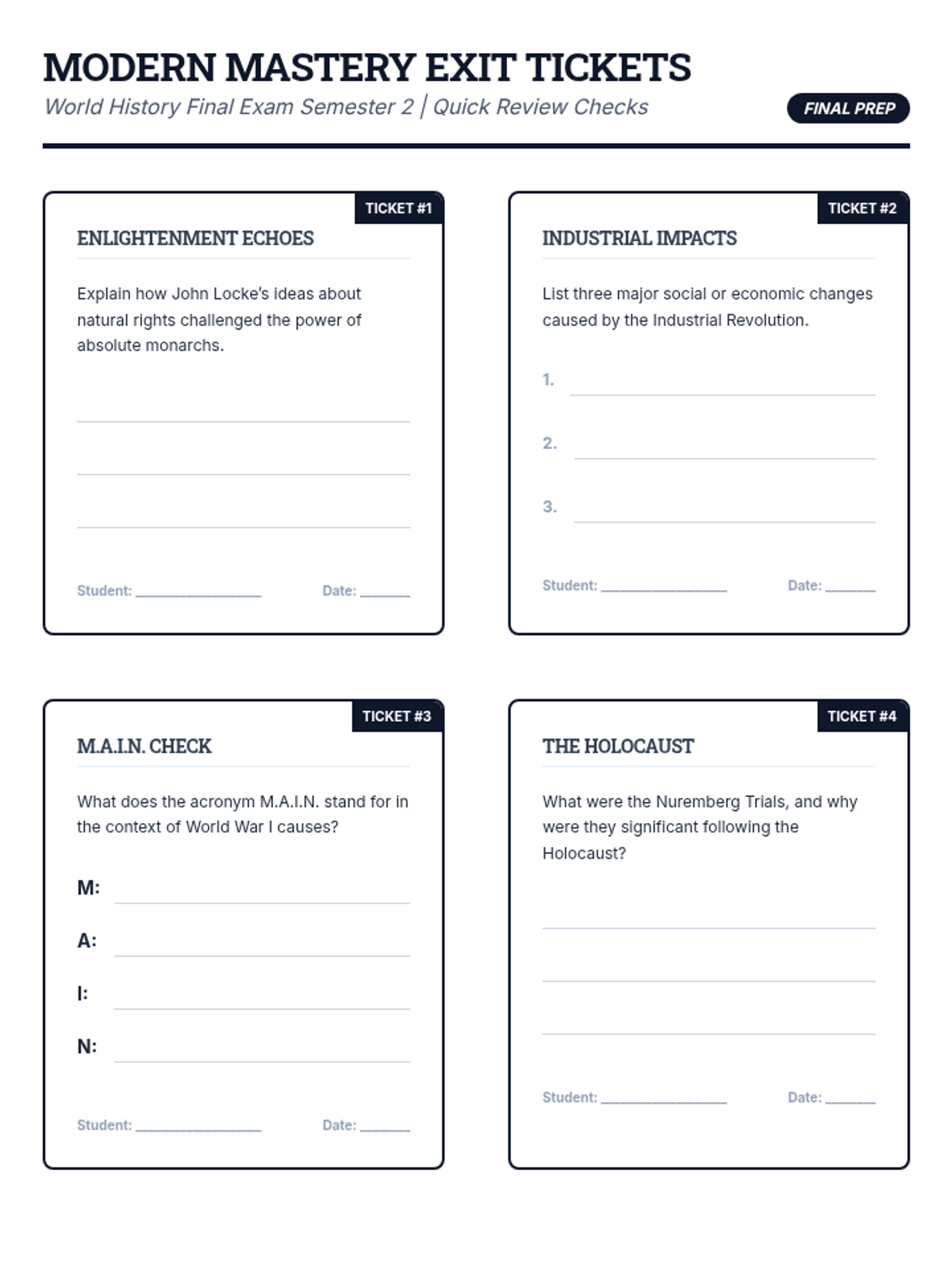
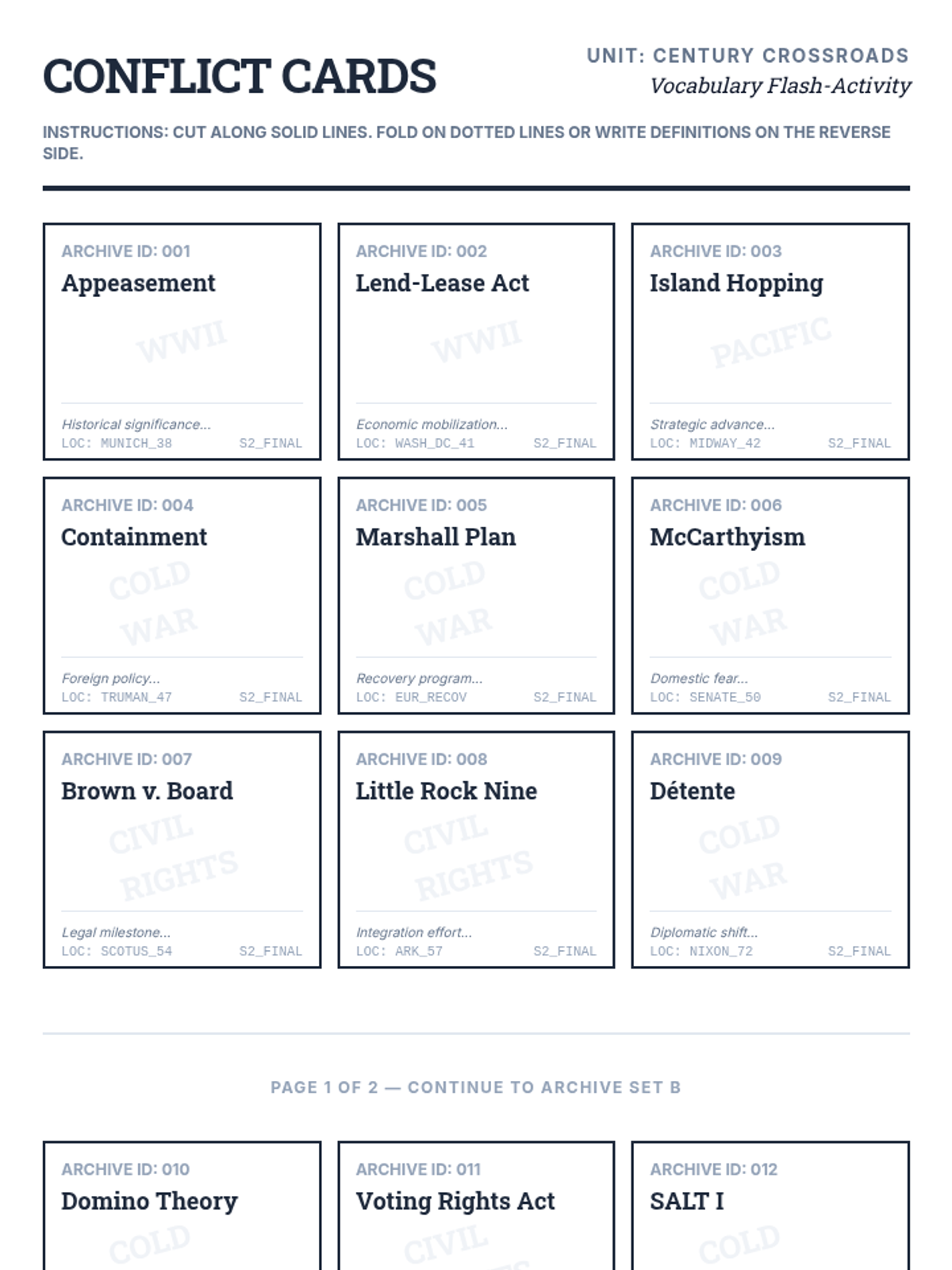
A comprehensive review and assessment package covering World History from the Enlightenment through the Cold War, aligned with state standards.
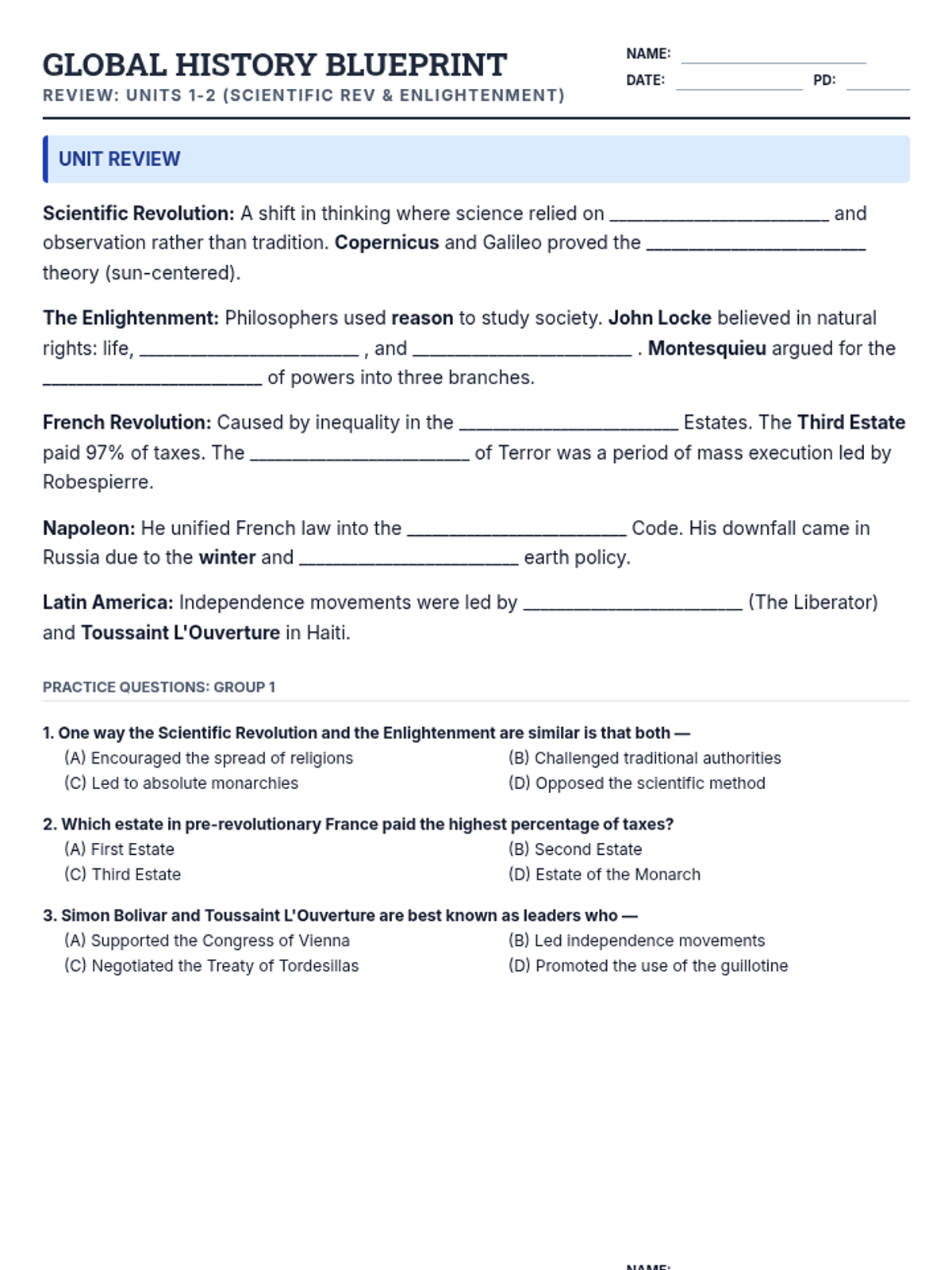
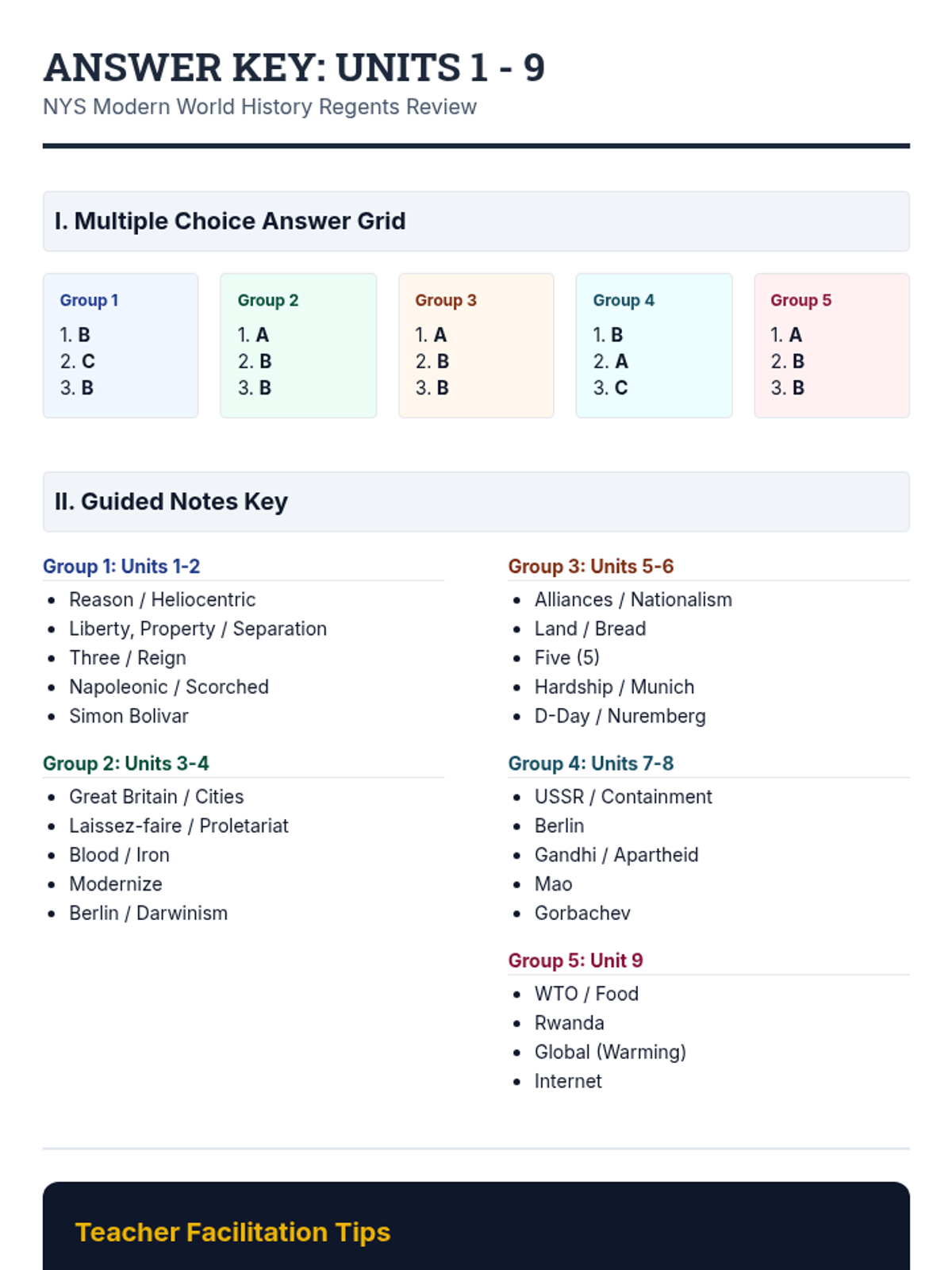
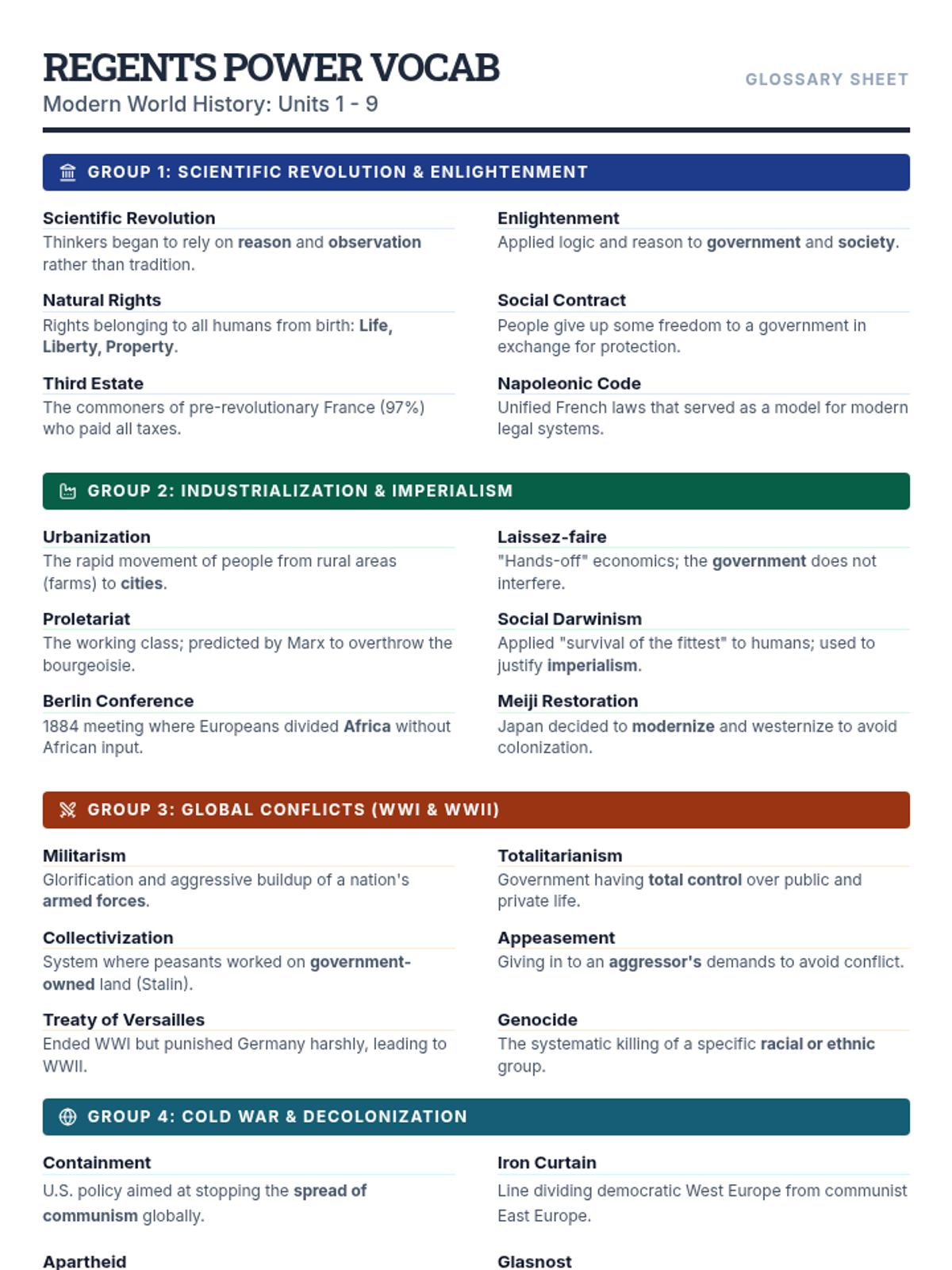
An intensive review session covering the Enlightenment through contemporary global issues (Units 1-9), featuring guided instruction and integrated Regents-style practice.
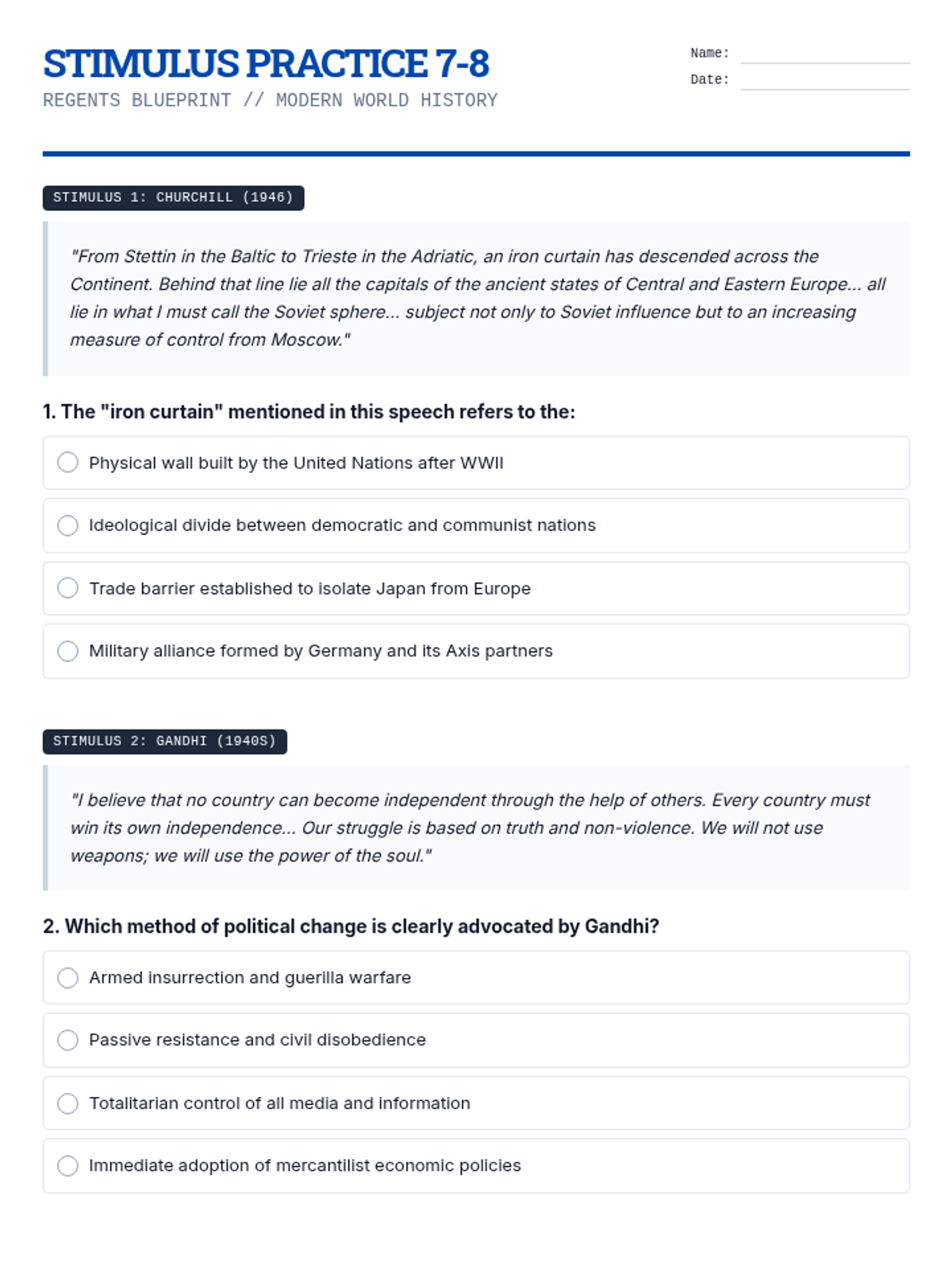
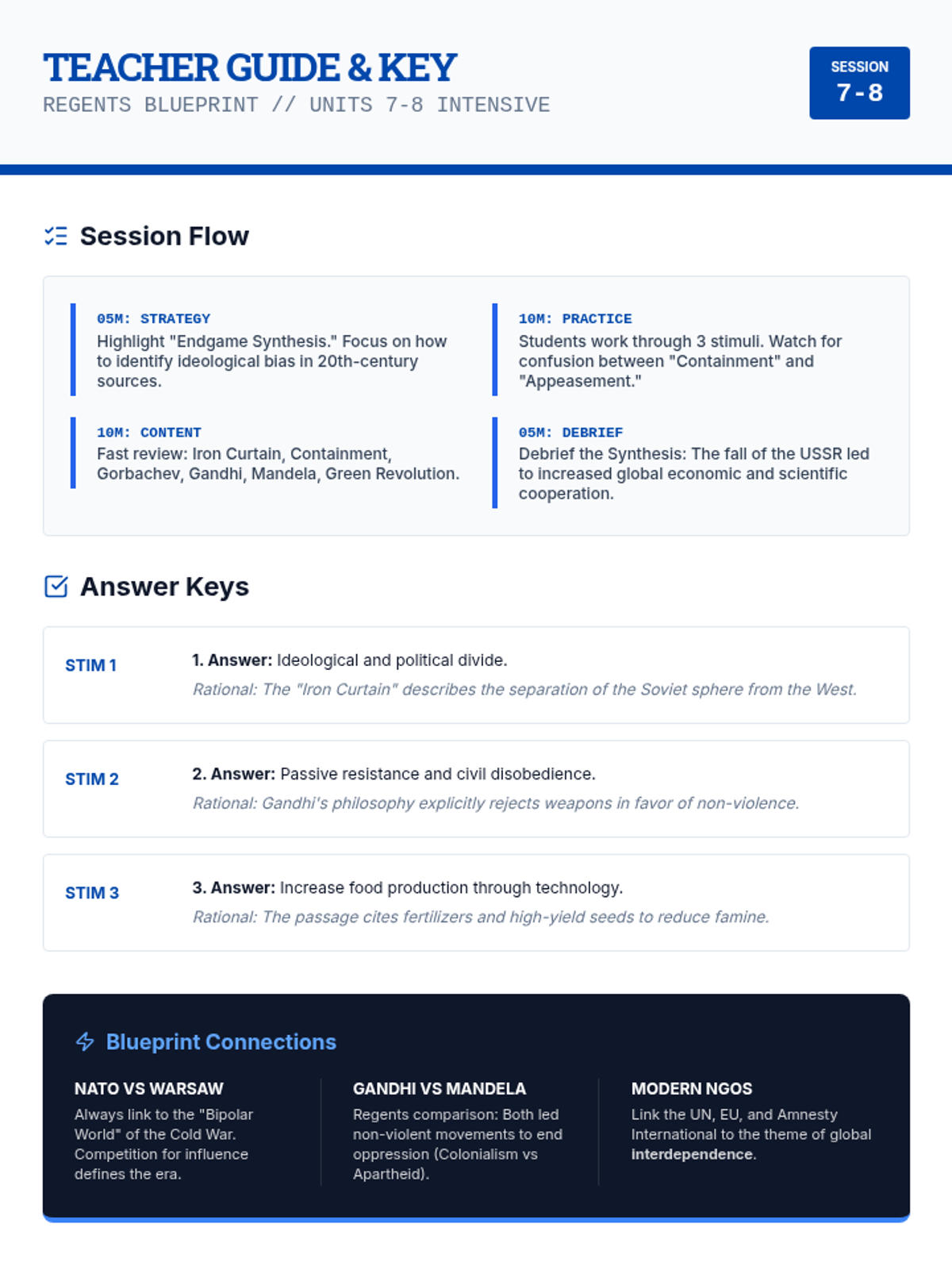
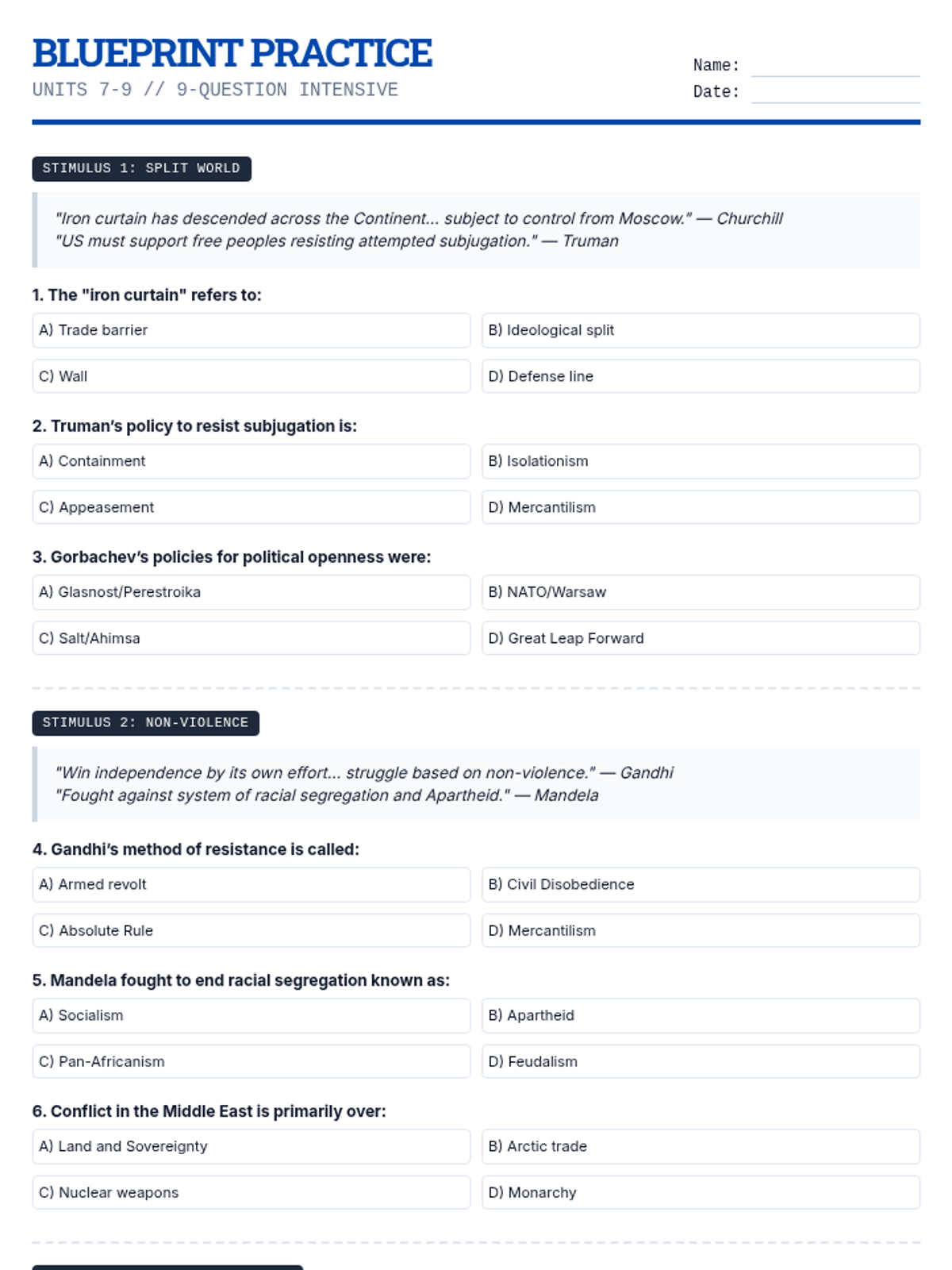
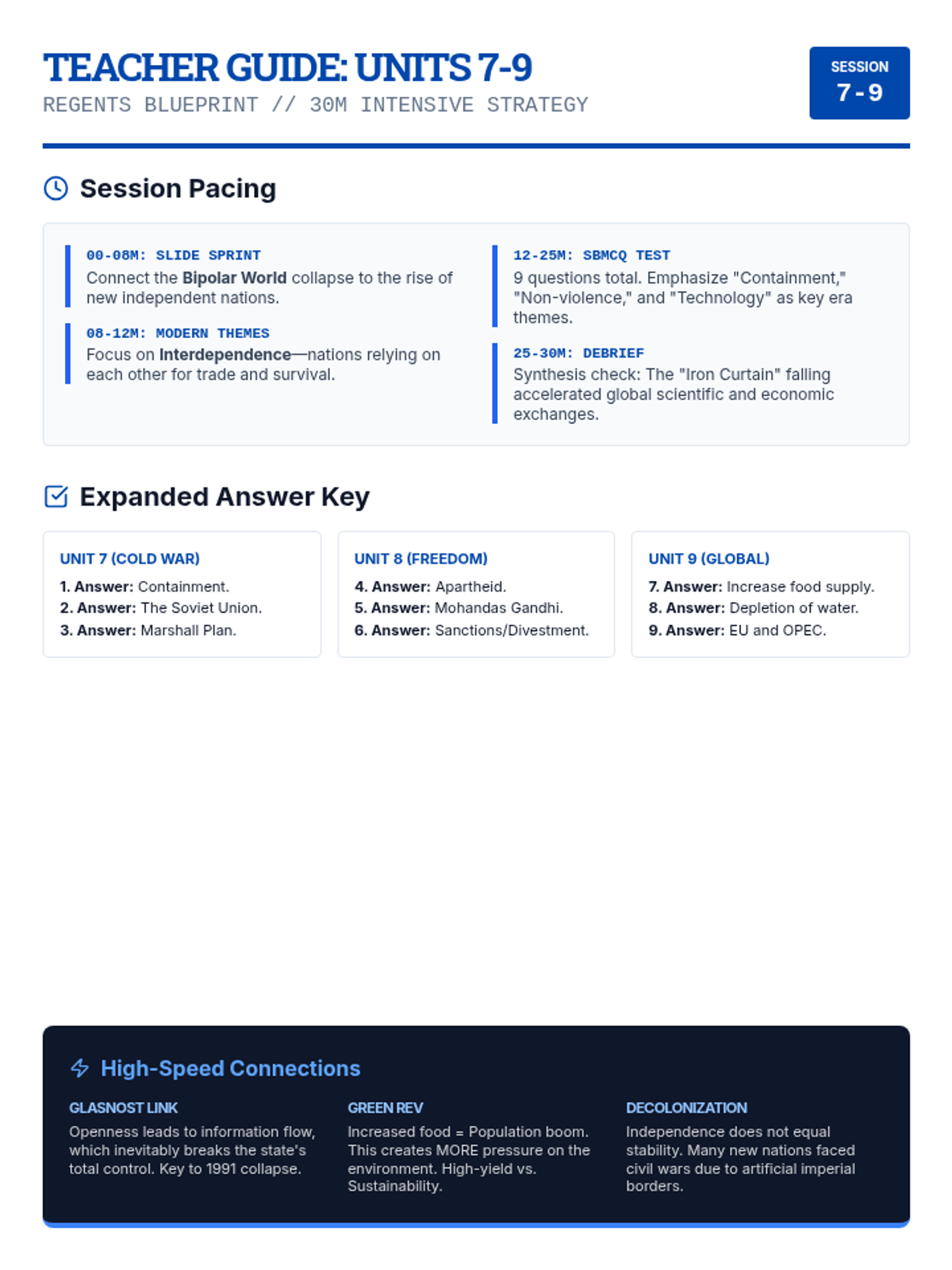
A high-impact 30-minute Regents review session focusing on Units 7-8 of the Modern World History curriculum, covering the Cold War, Decolonization, and Global Issues.
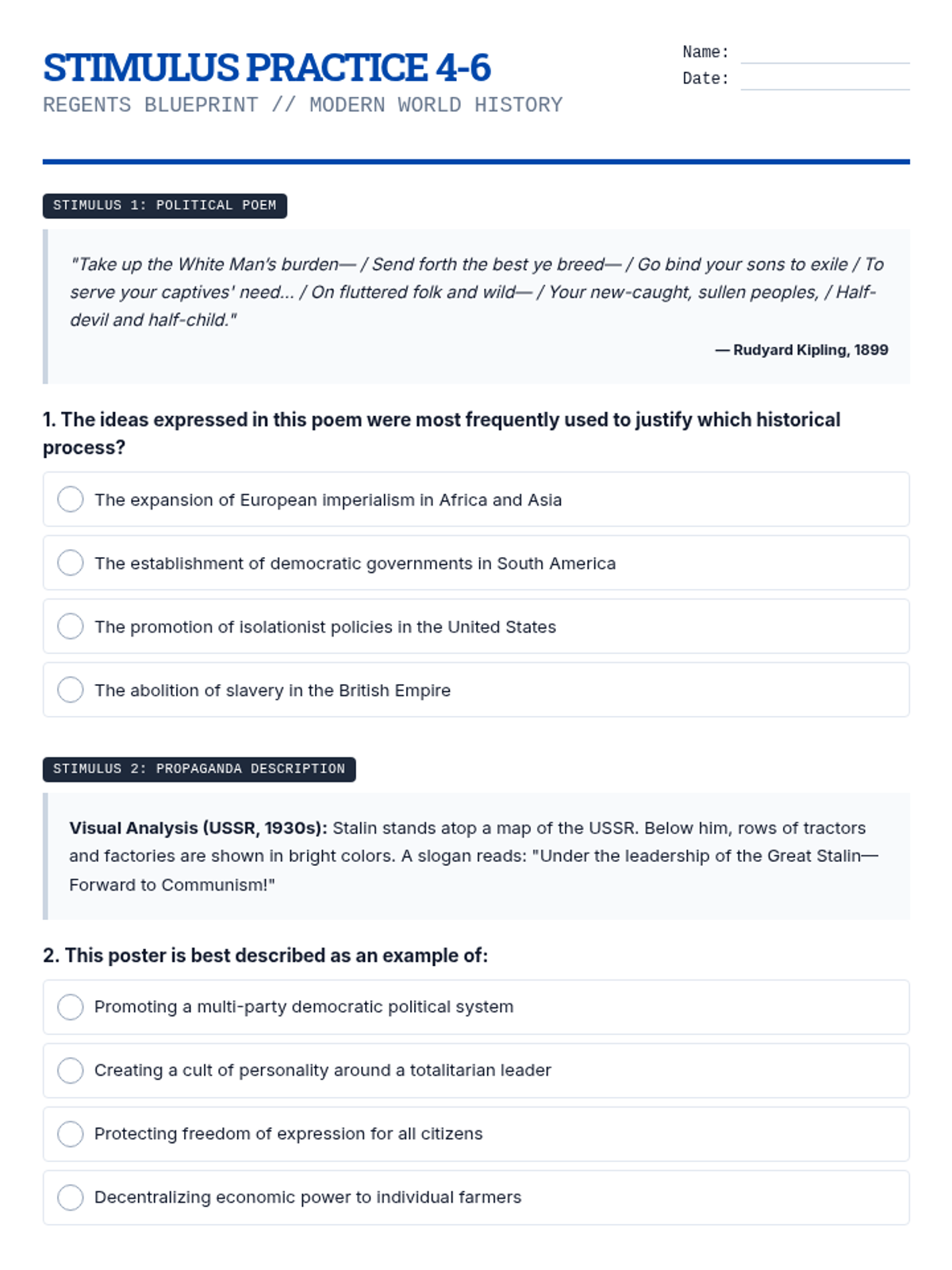
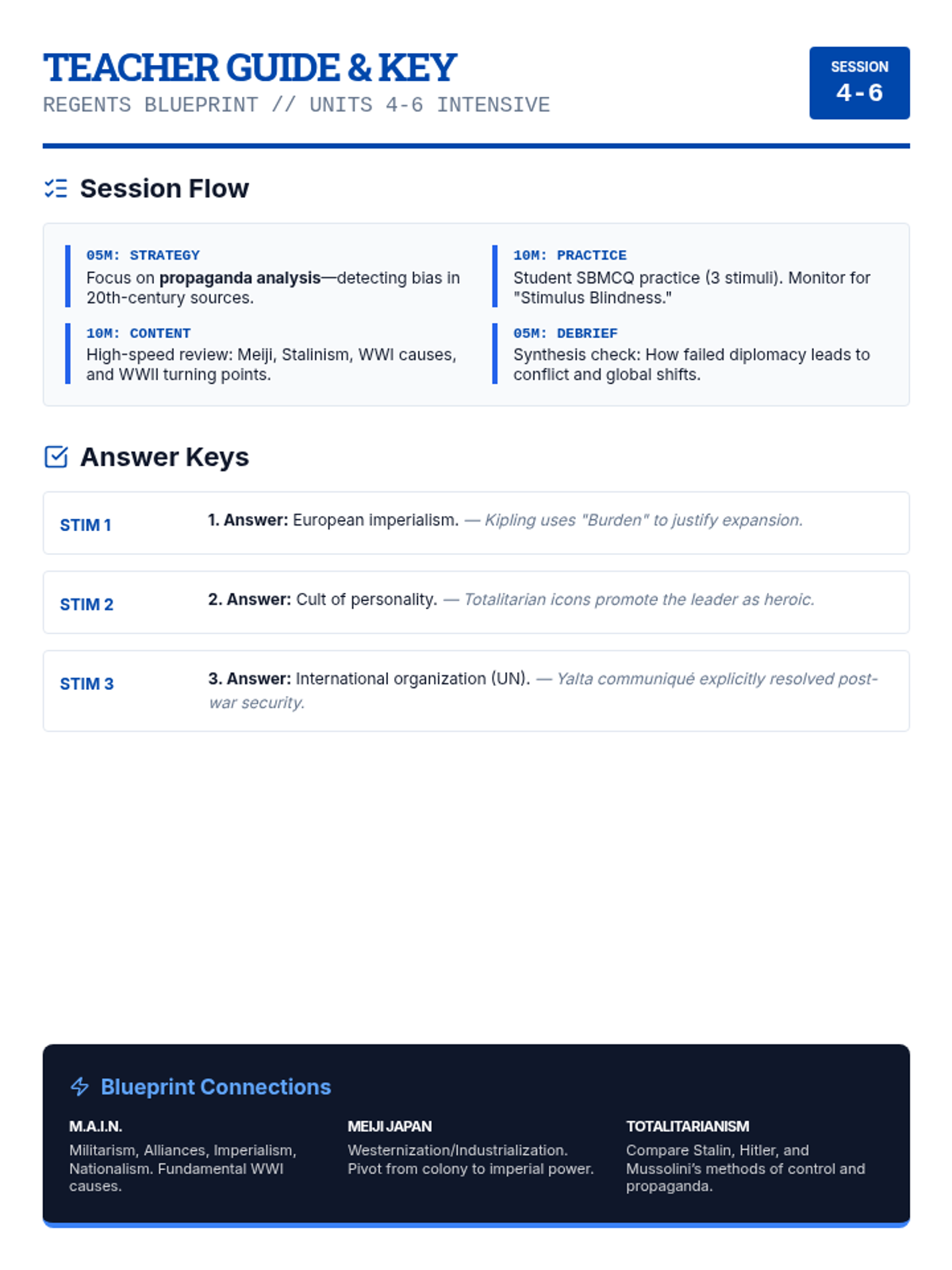
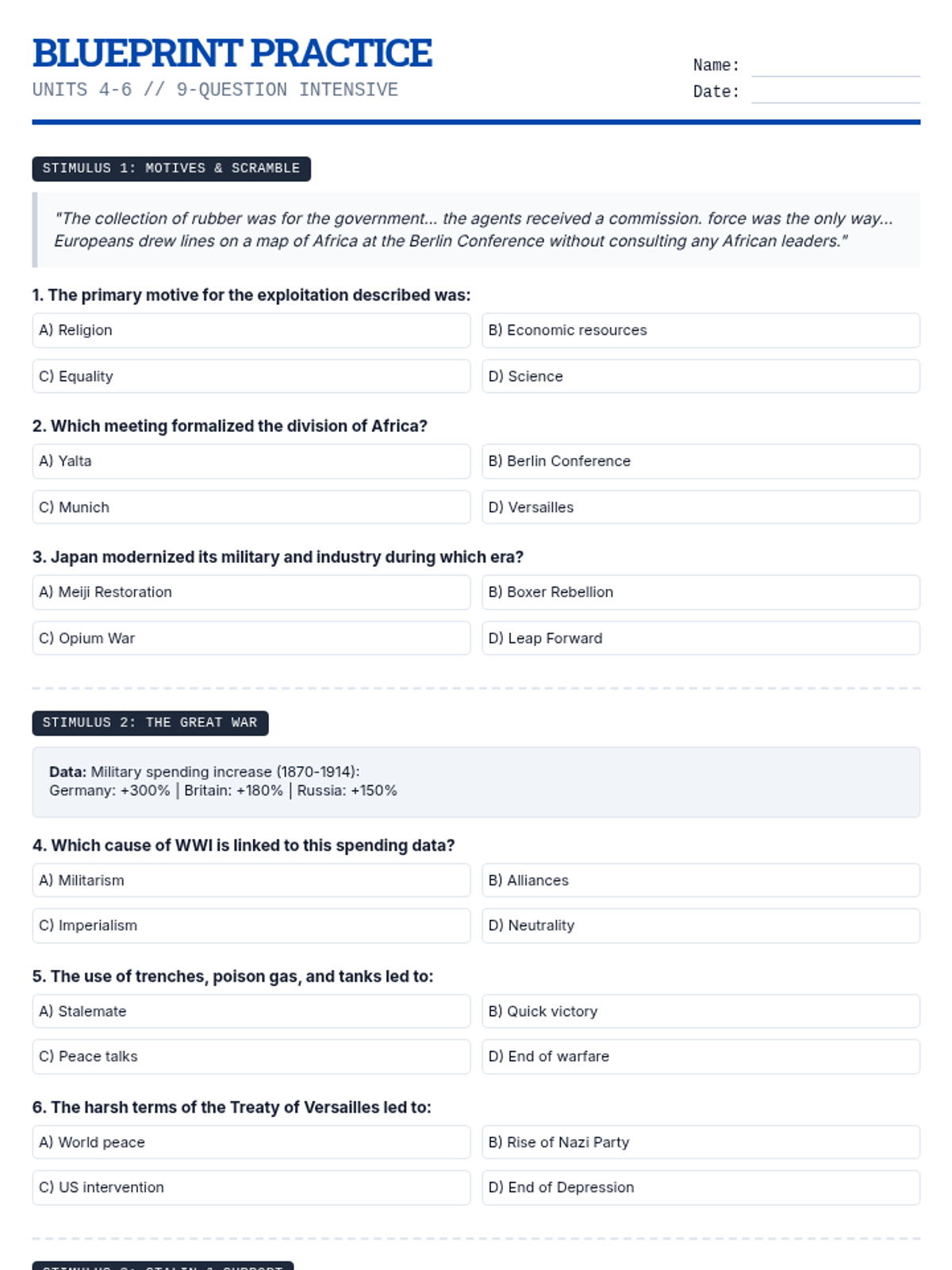
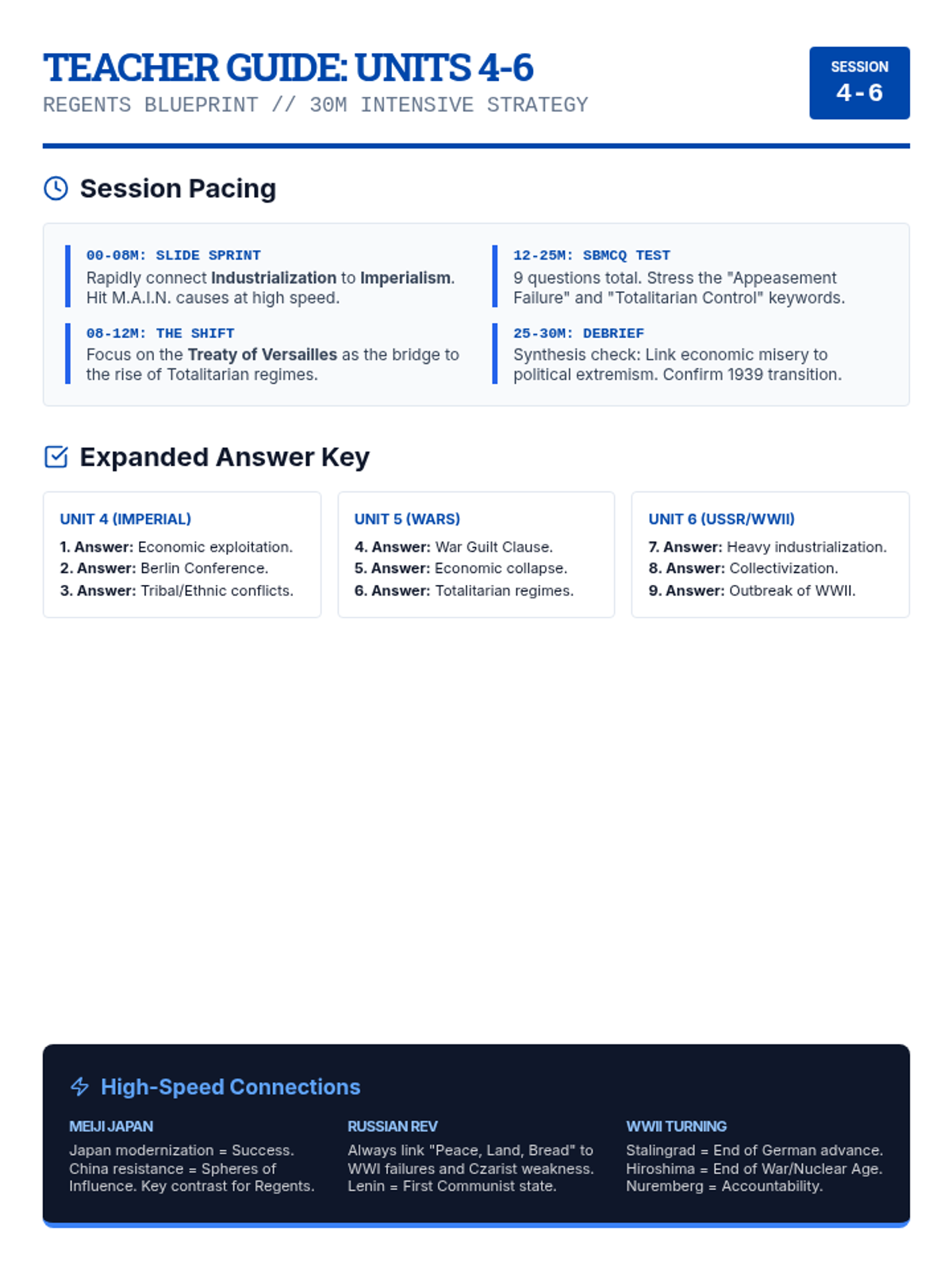
A 30-minute Regents review session for Units 4-6 of the Modern World History curriculum, covering Imperialism, WWI, the Russian Revolution, and WWII.
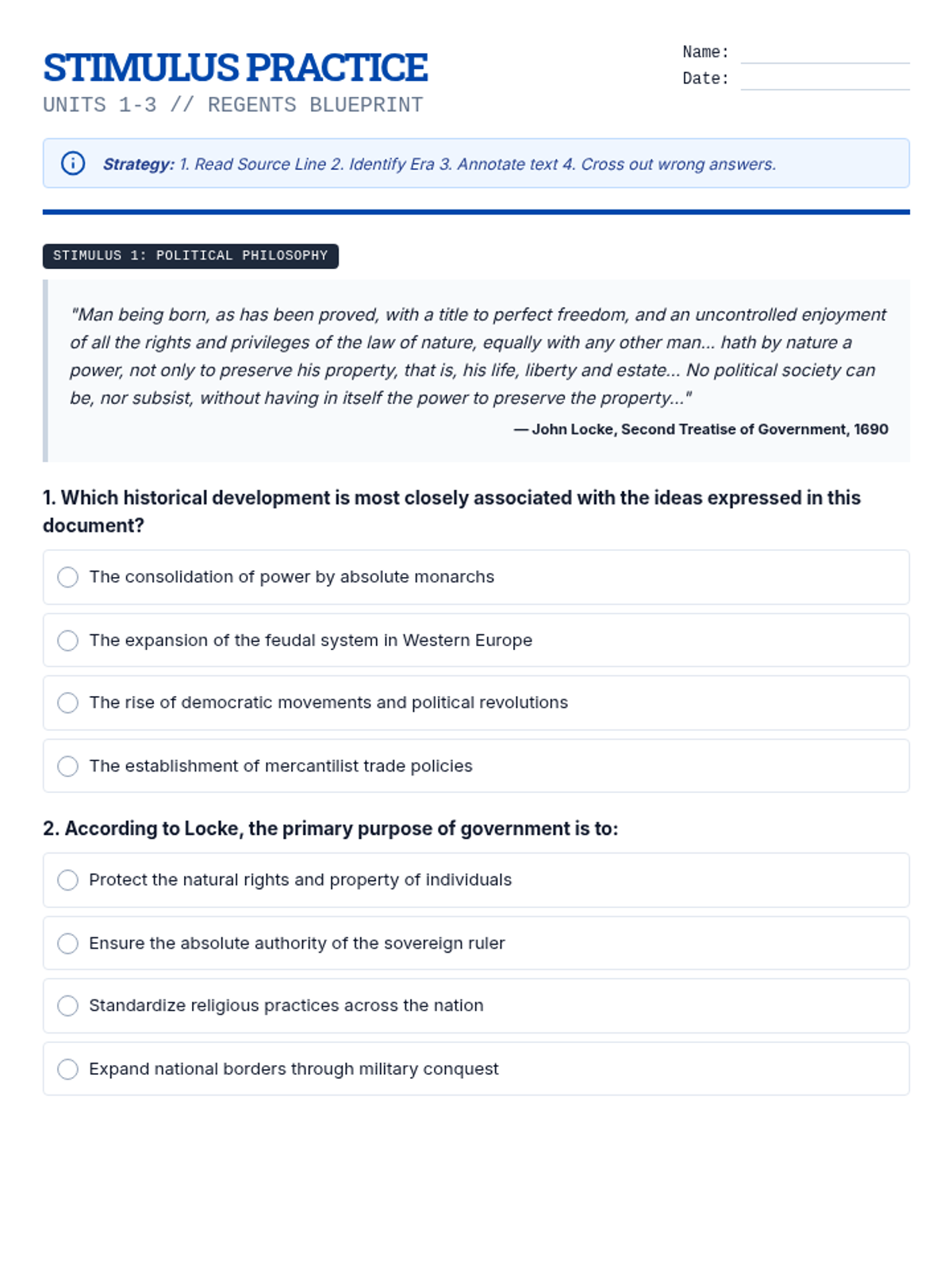
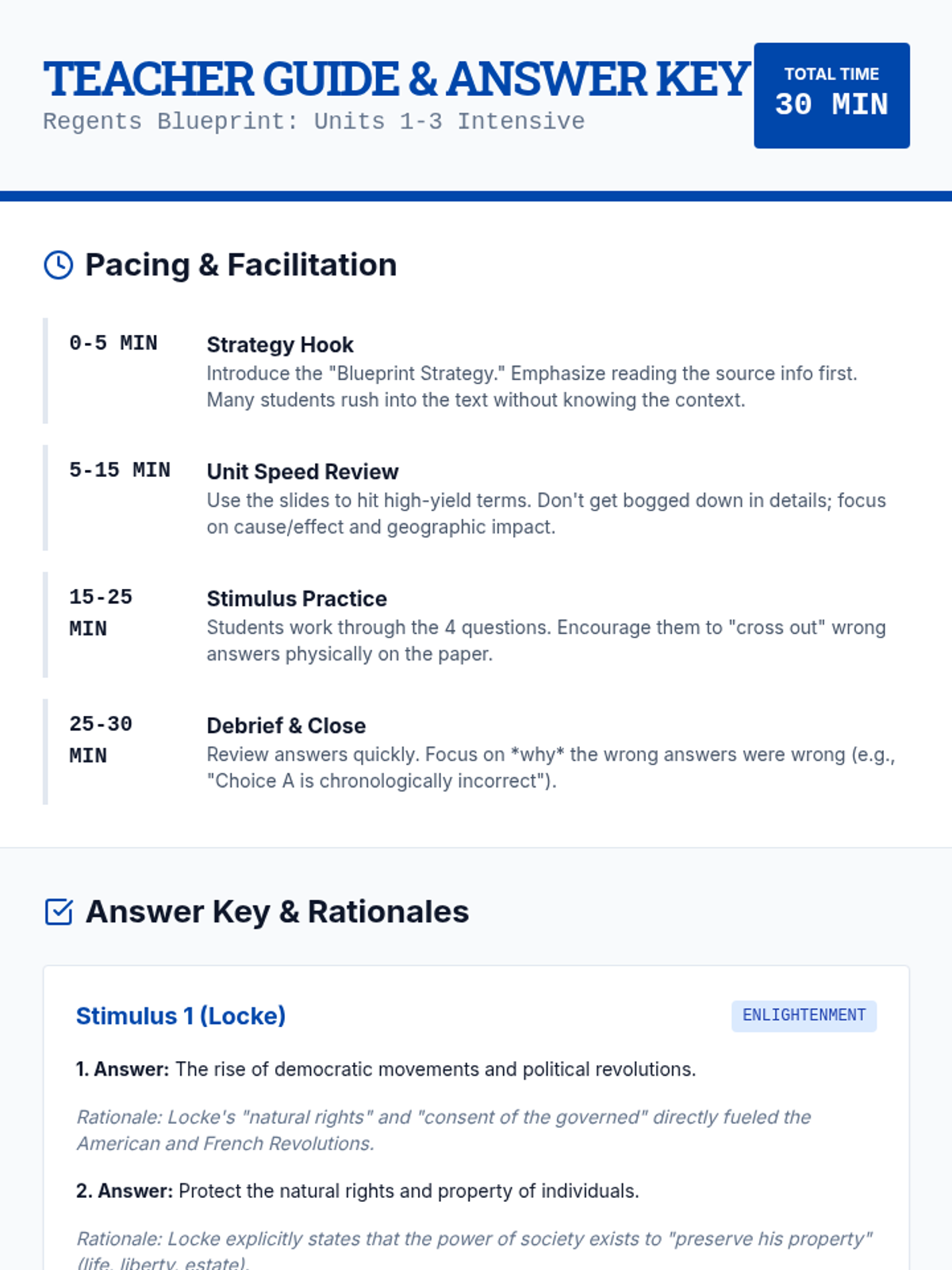
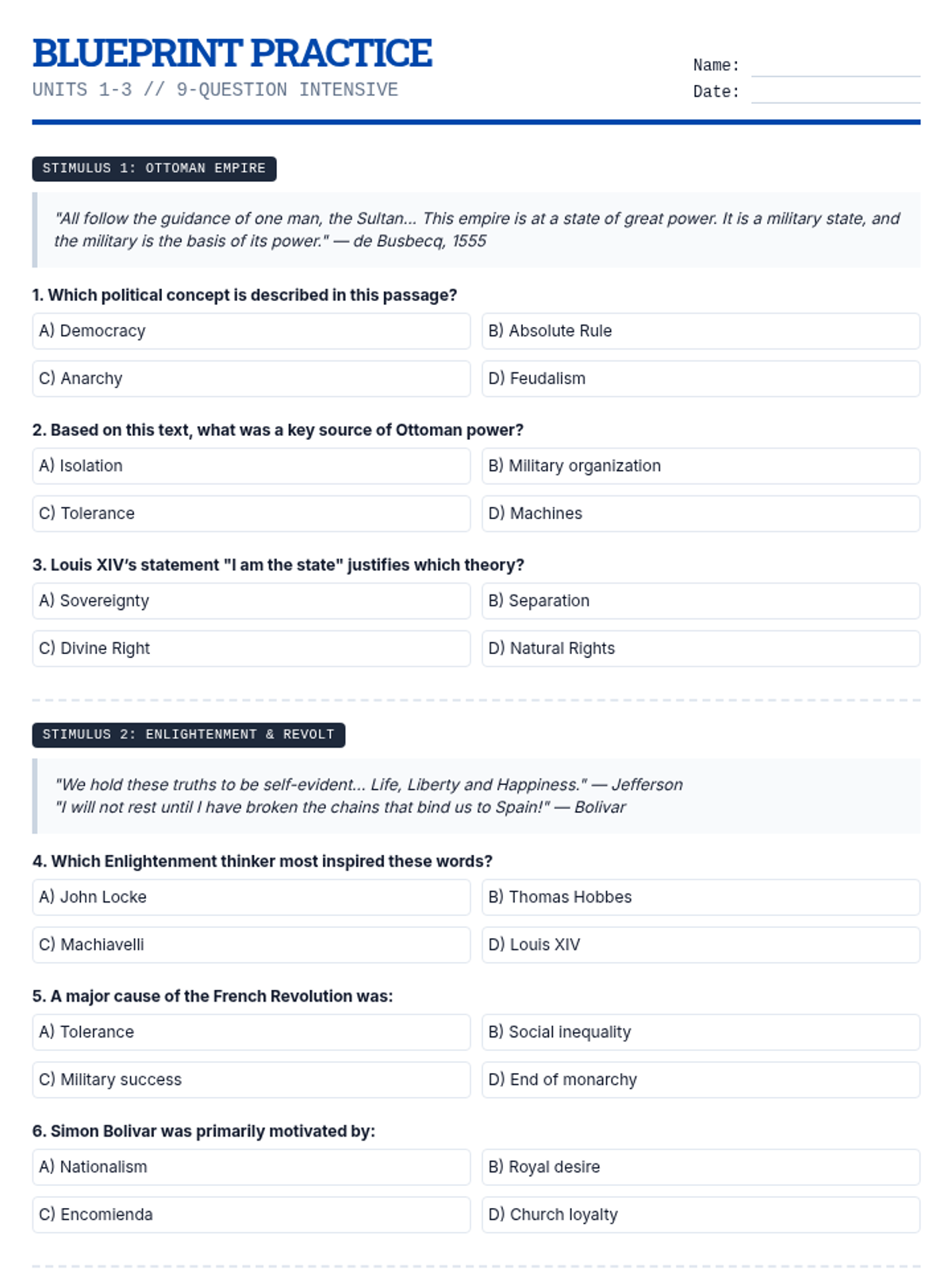
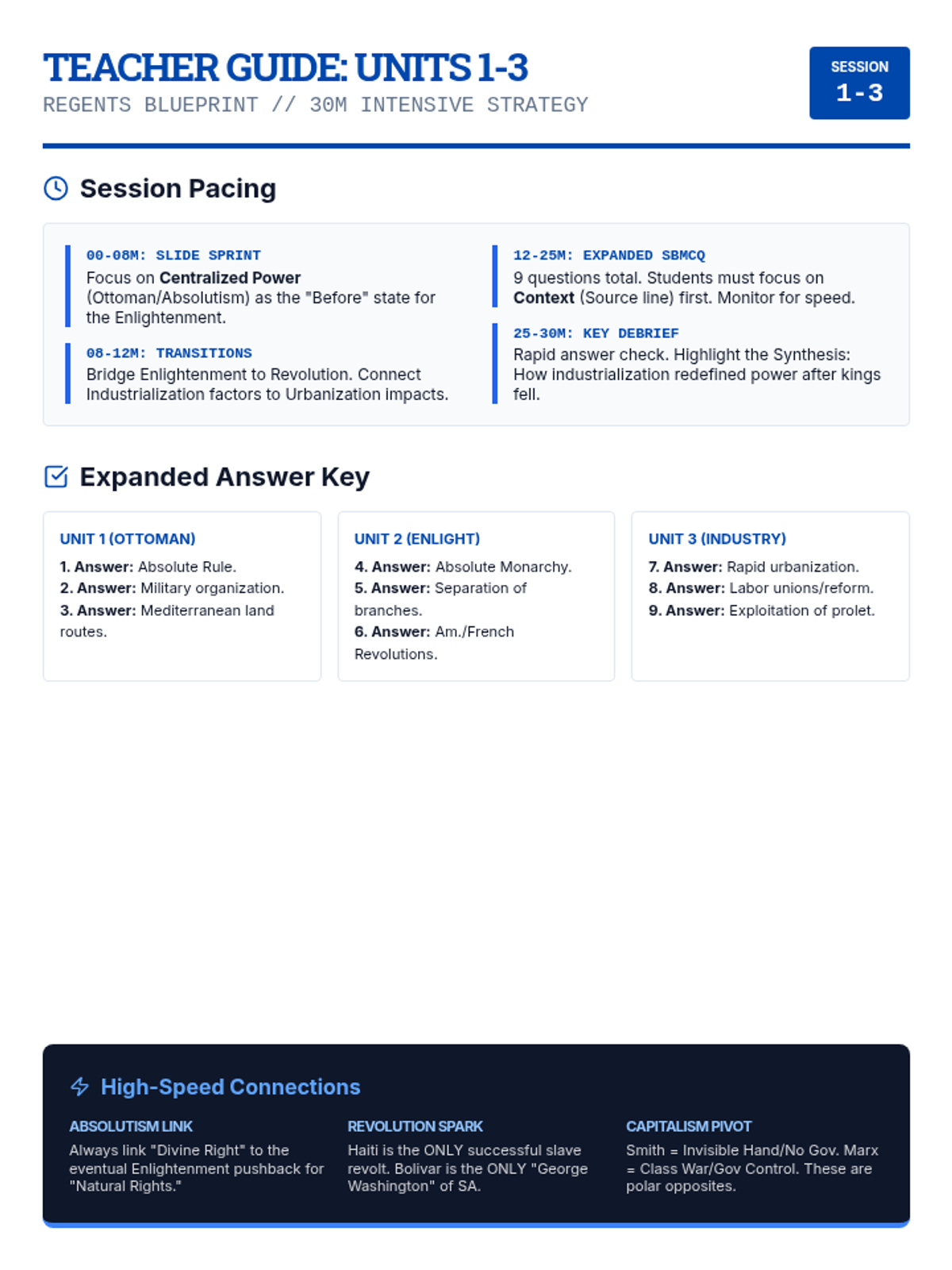
A high-impact 30-minute Regents review session focusing on Units 1-3 of the Modern World History curriculum, featuring stimulus-based multiple choice practice and test-taking strategies.
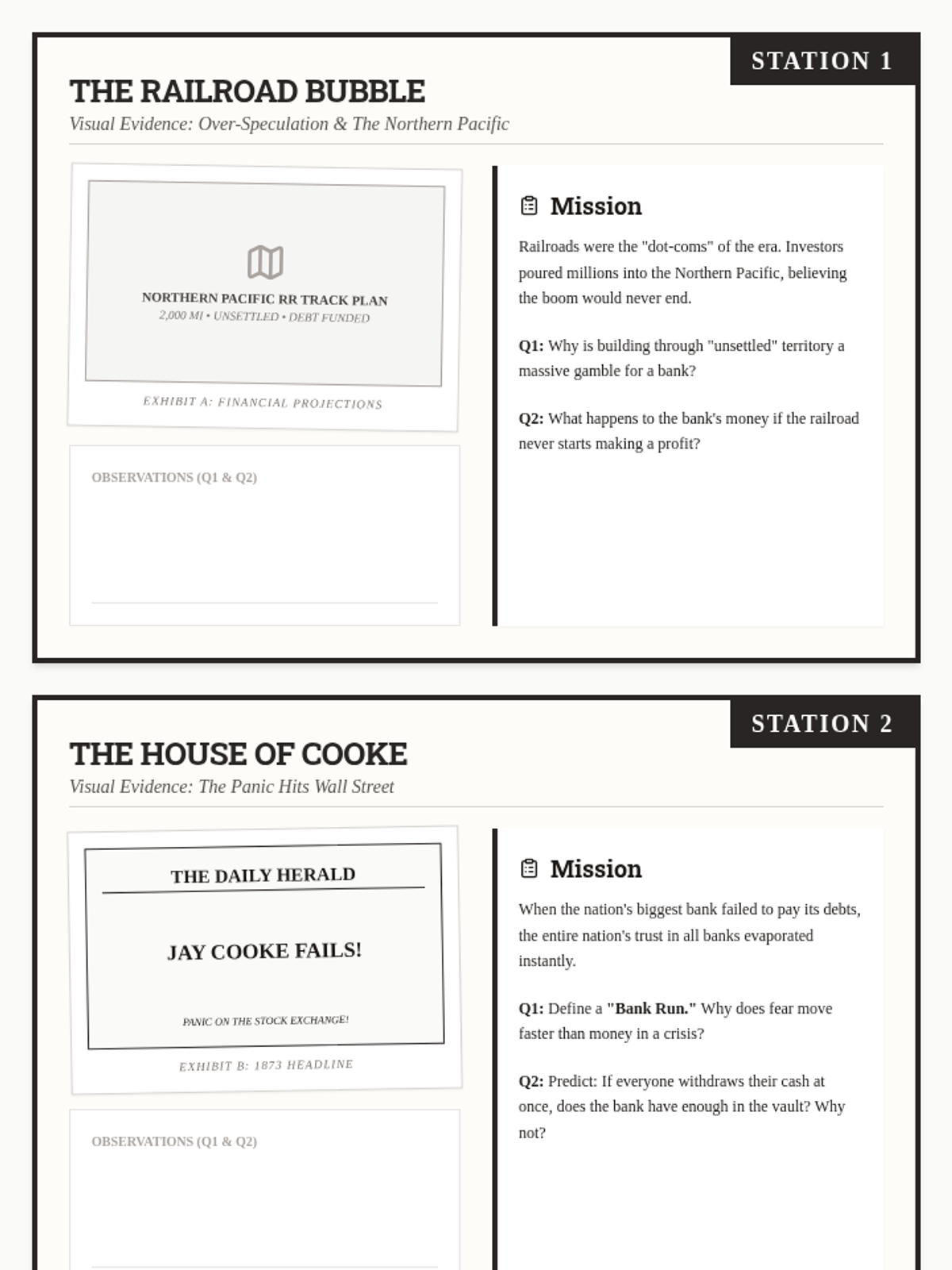
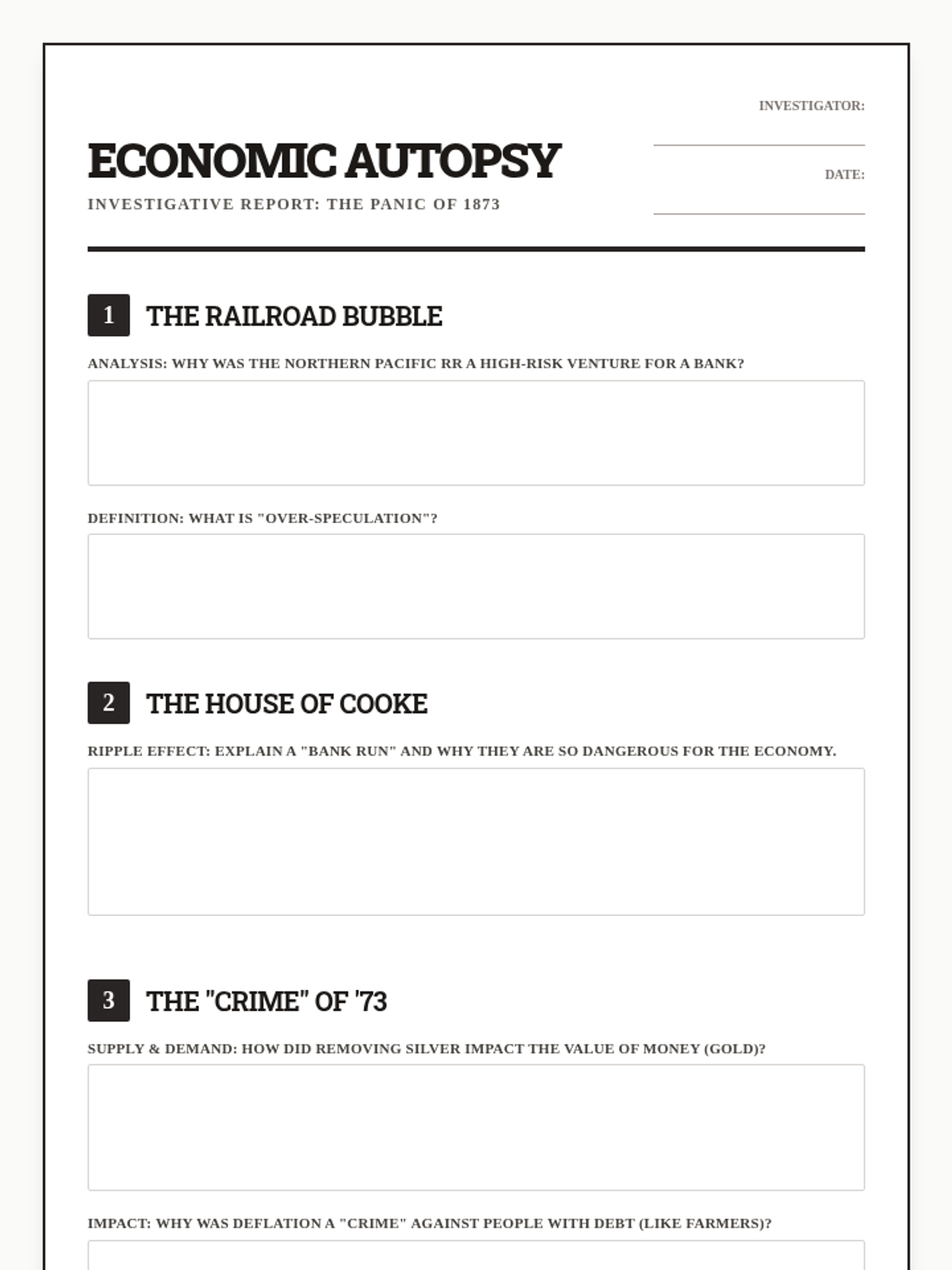
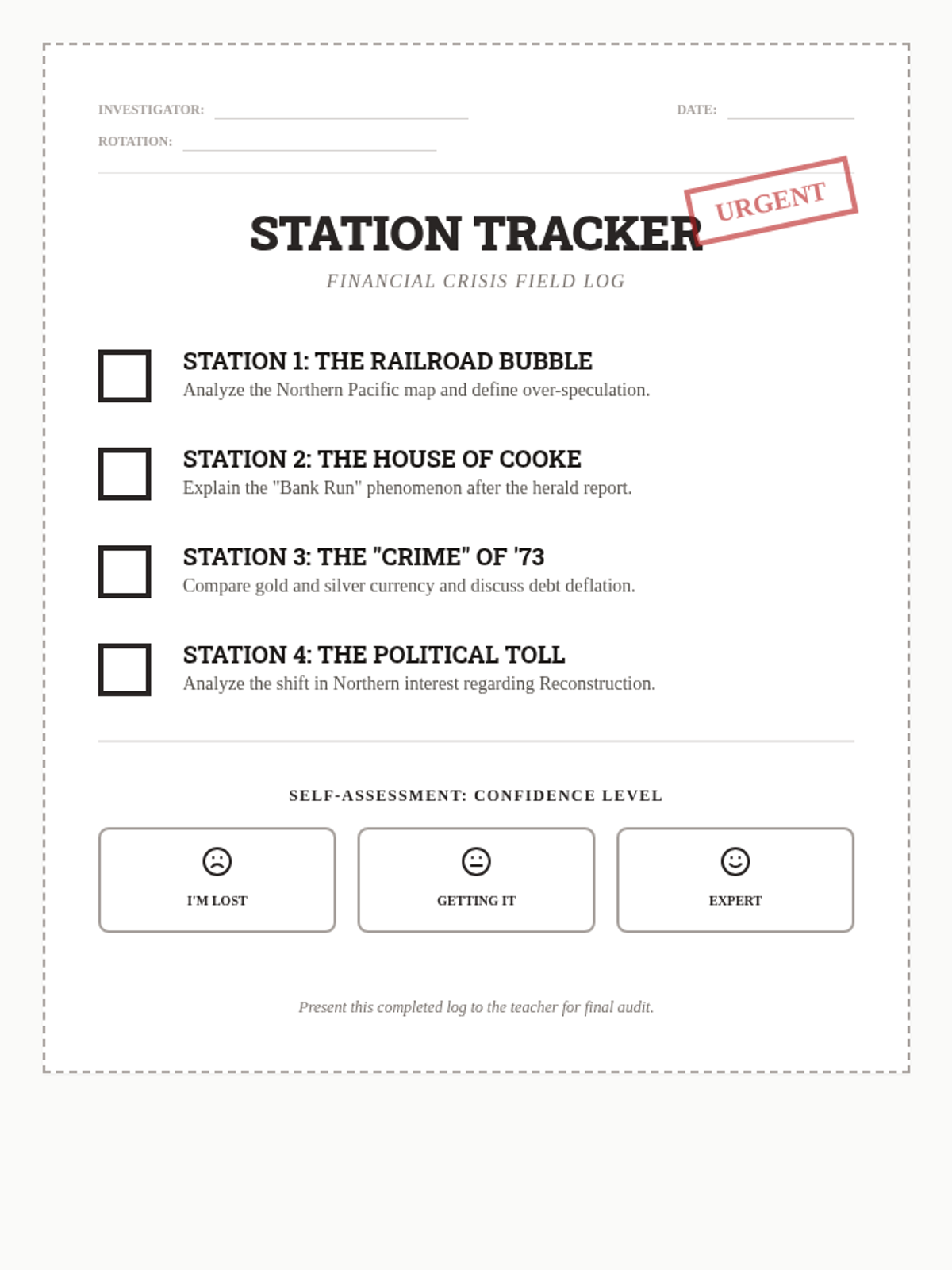
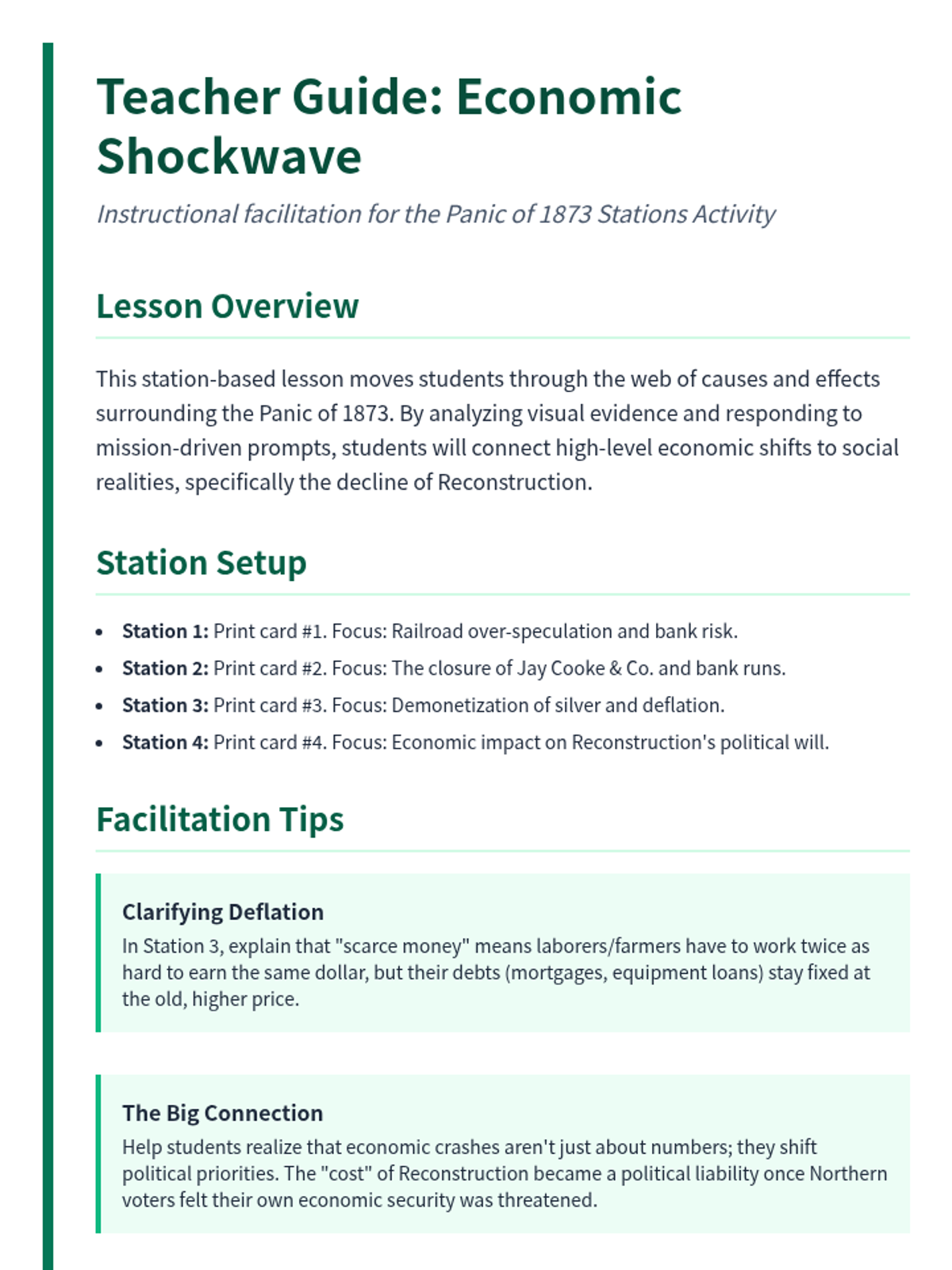
An immersive stations-based lesson exploring the causes and consequences of the Panic of 1873, focusing on railroad over-speculation, banking failures, and its impact on Reconstruction.
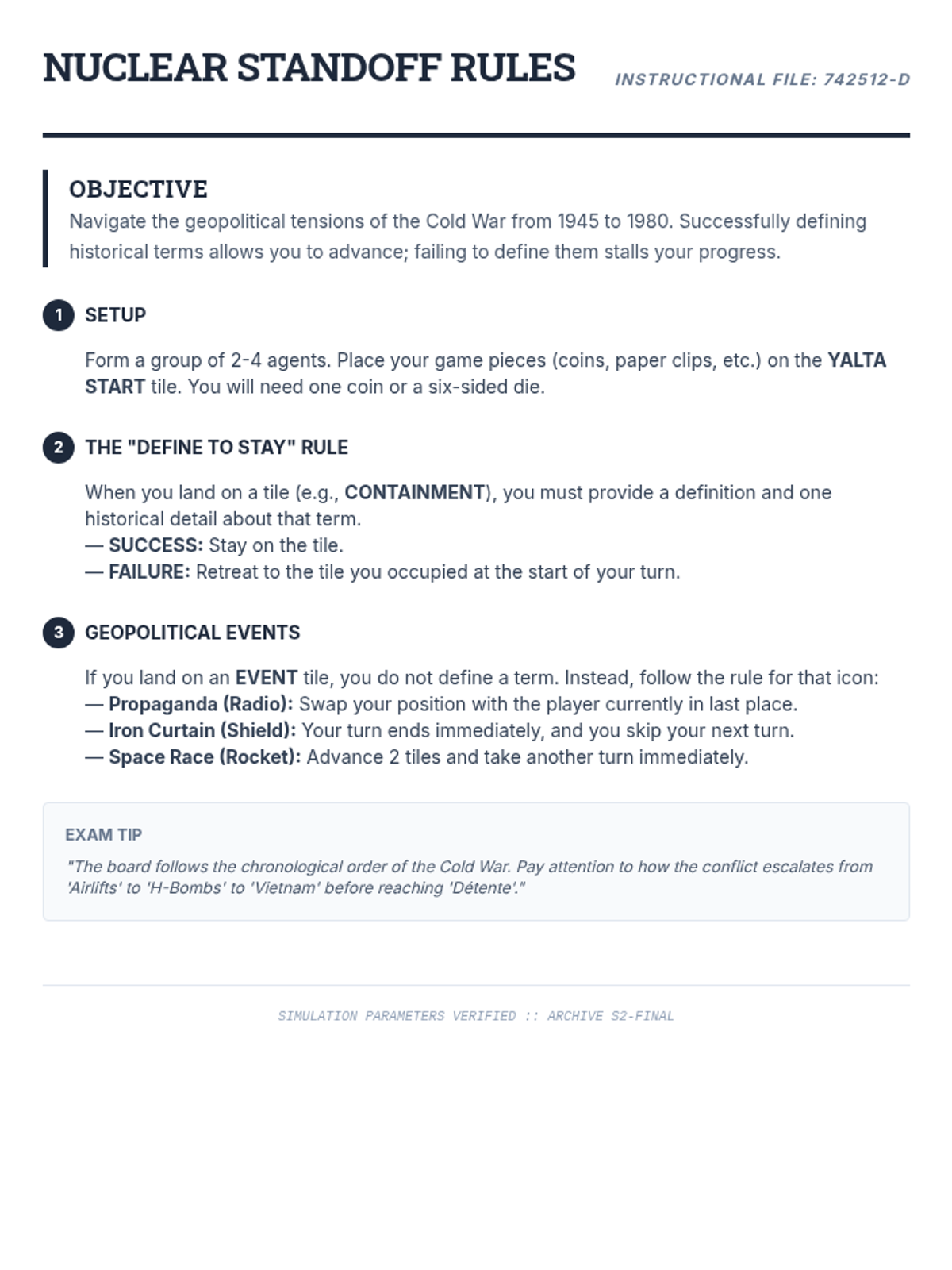
A cultural exploration of the Cold War where students analyze popular music and propaganda from both sides of the Iron Curtain to understand ideological warfare.
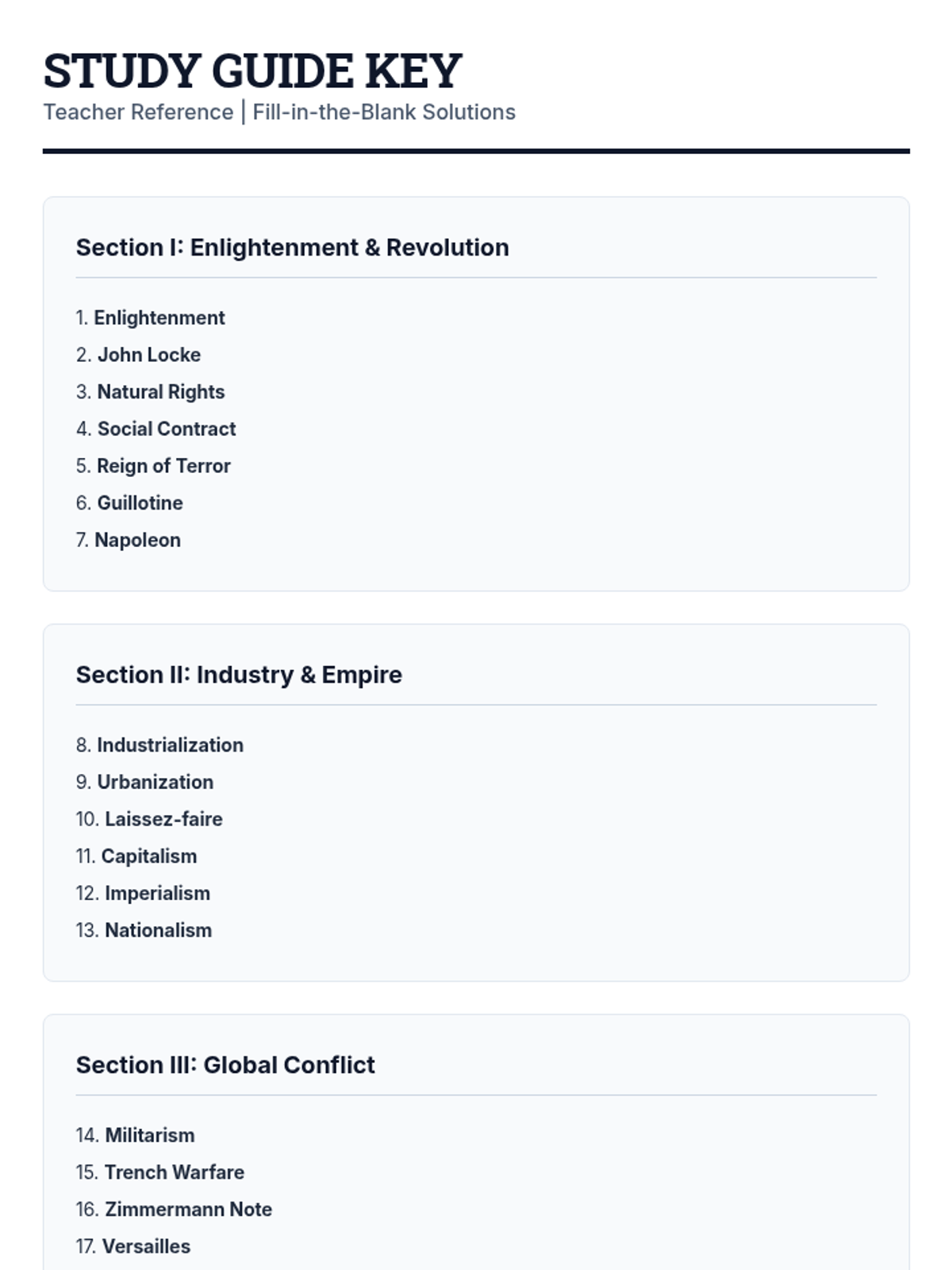
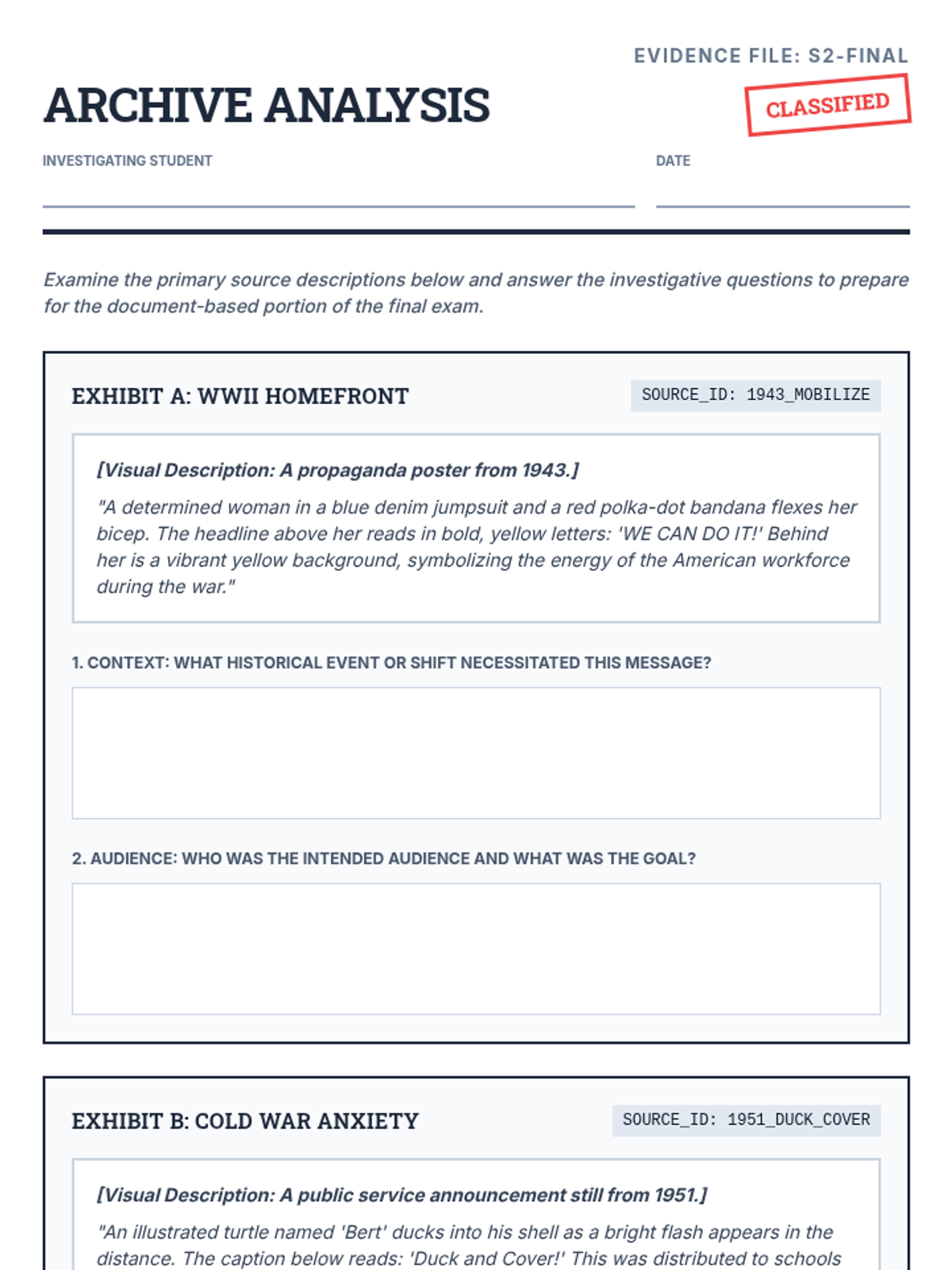
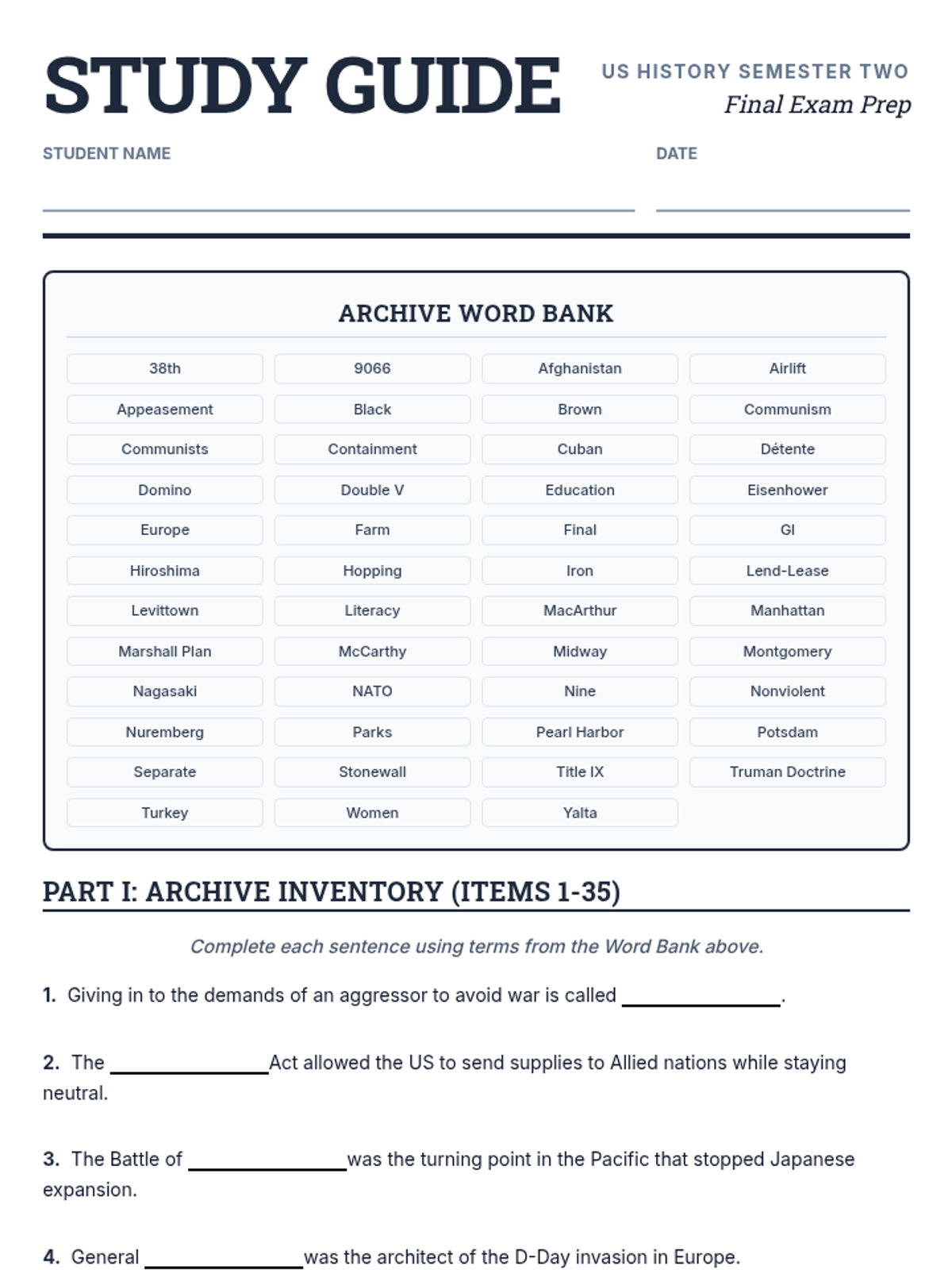
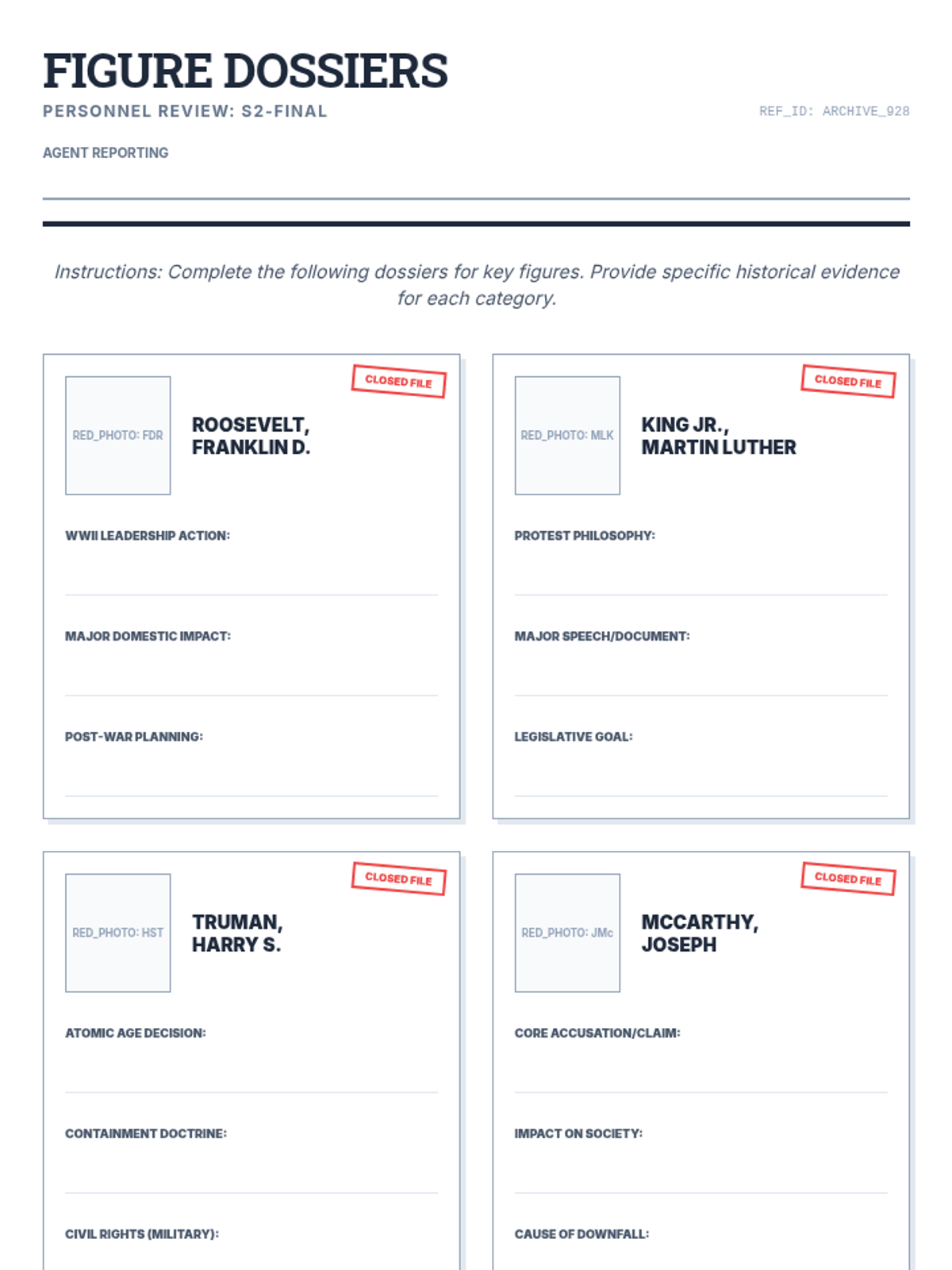
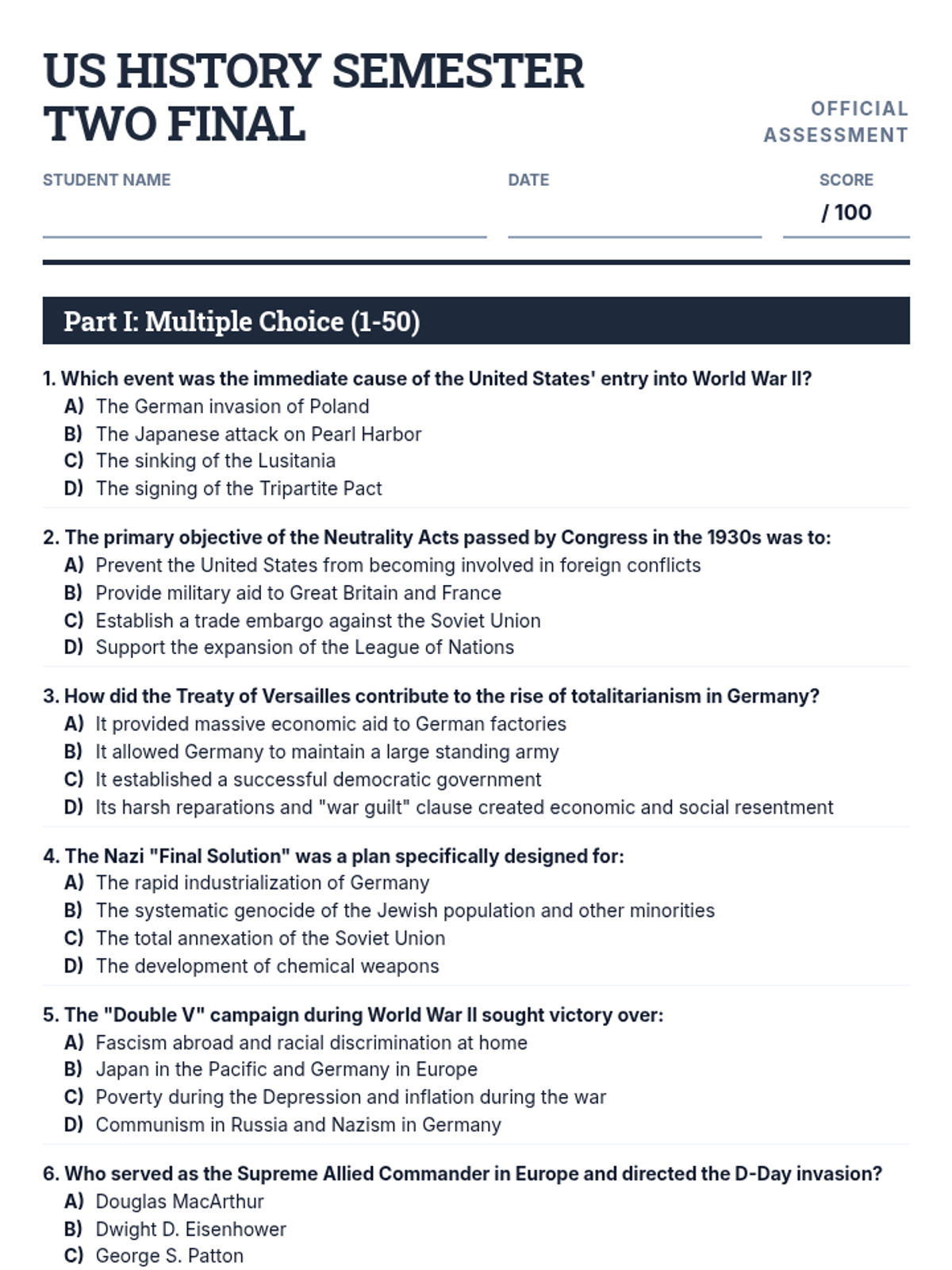
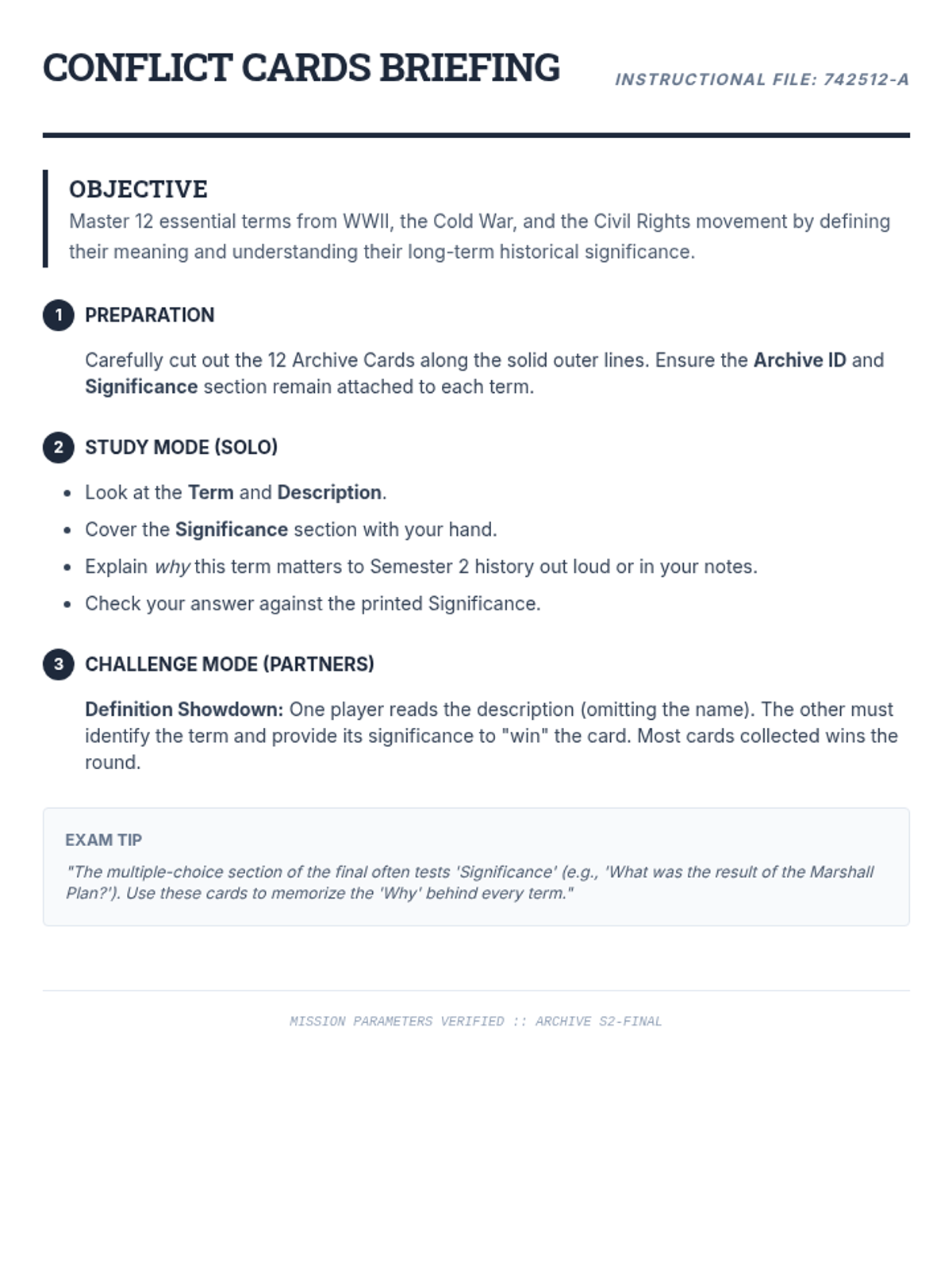
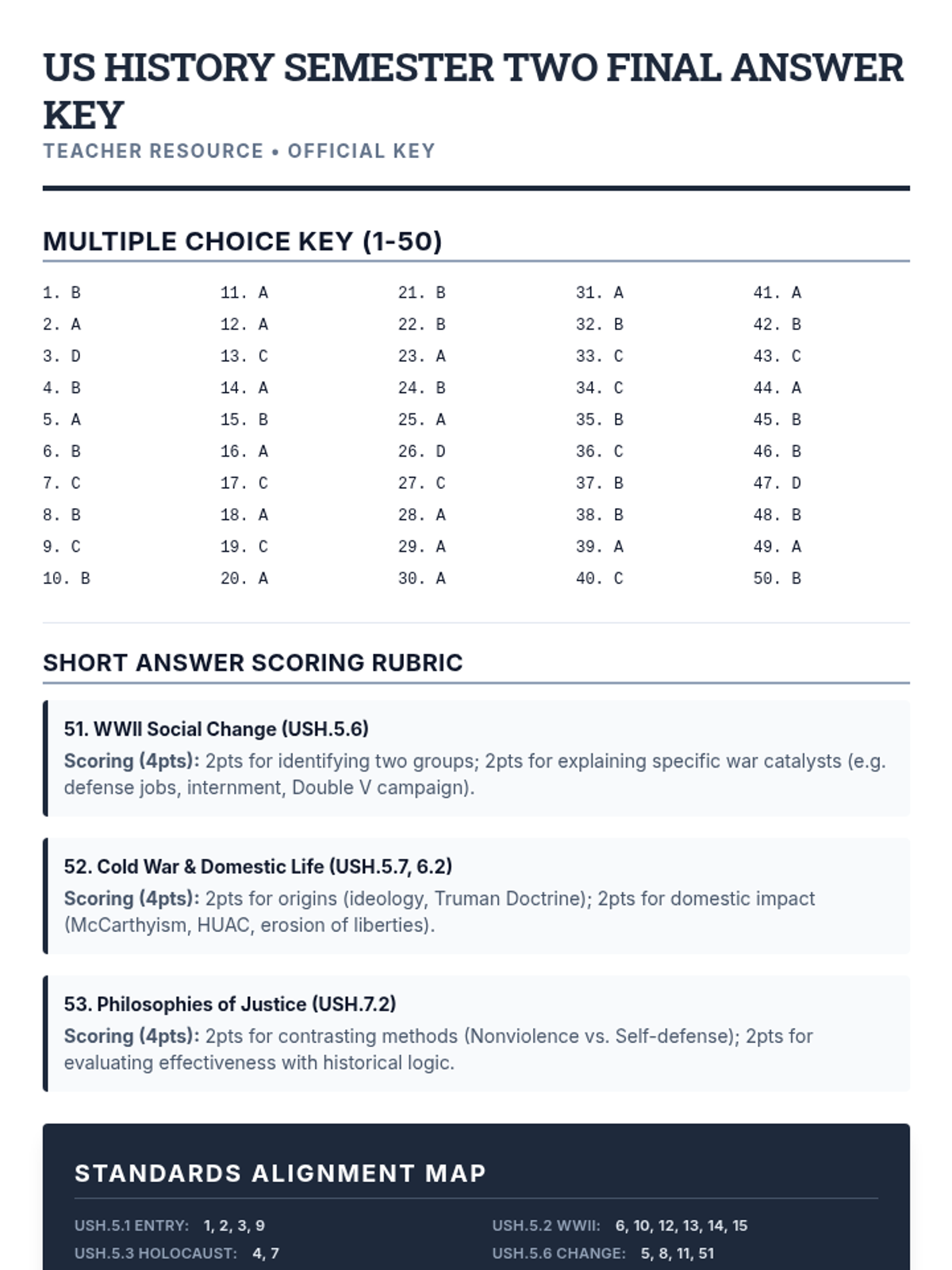
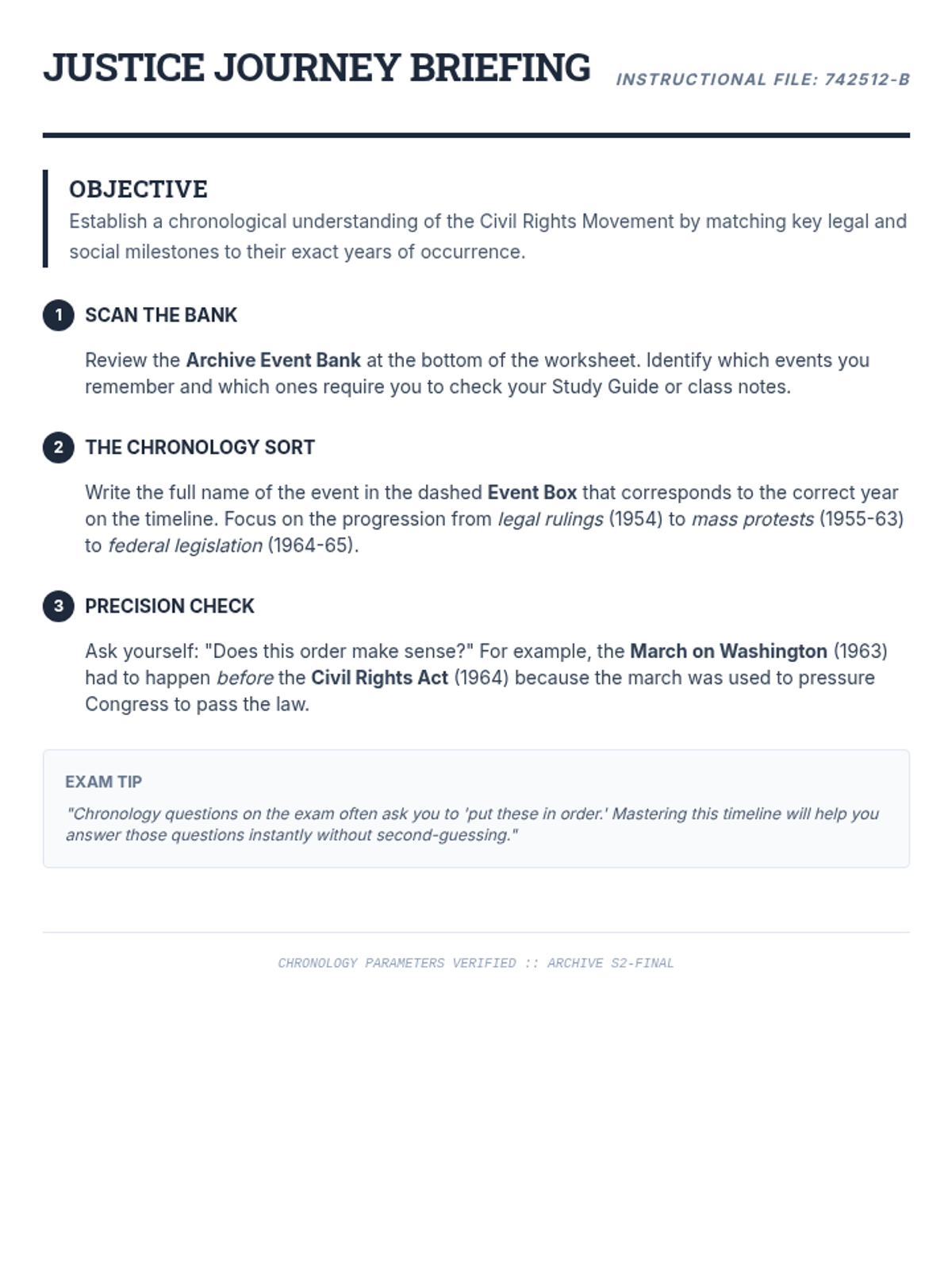
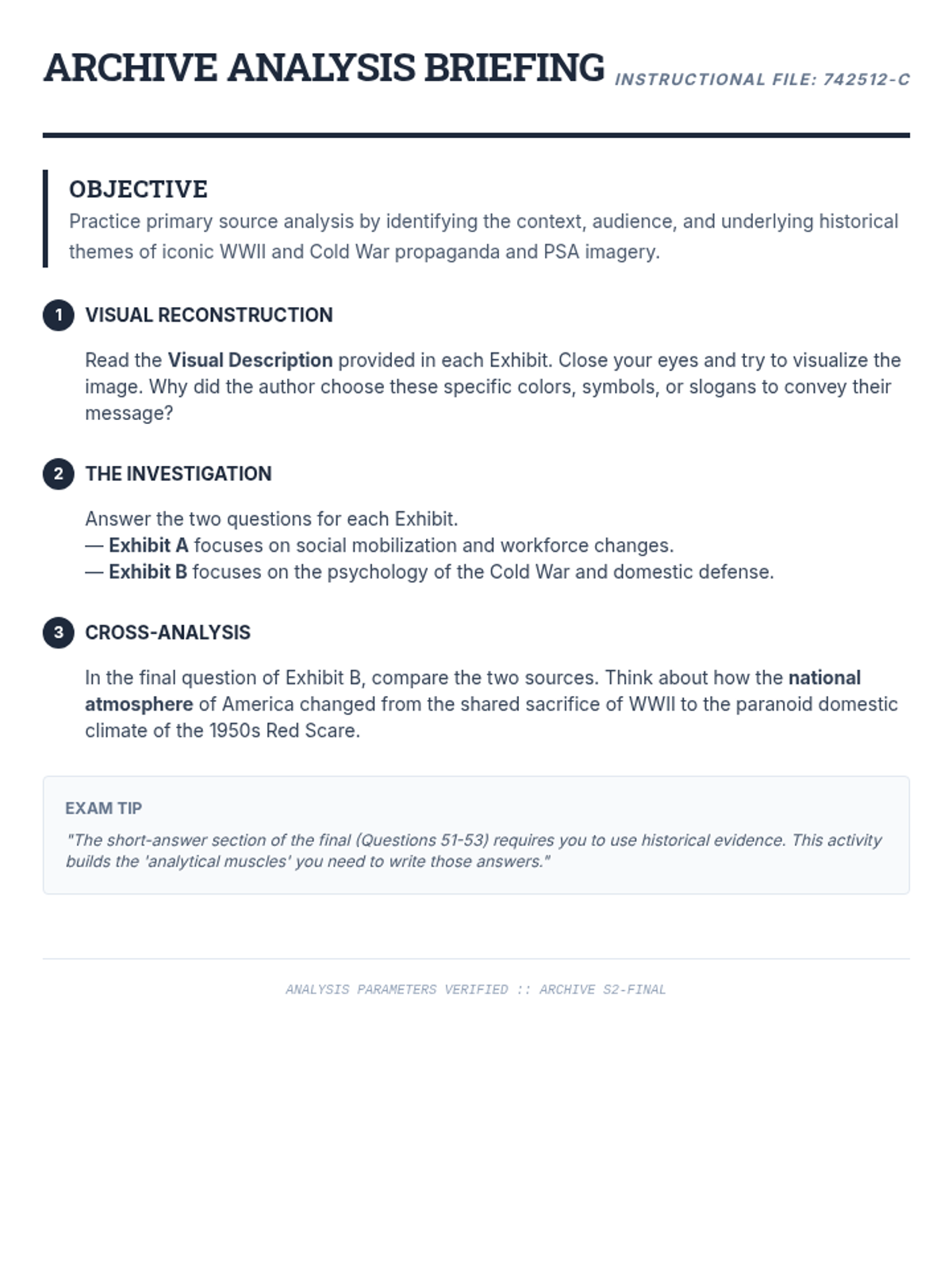
The final assessment phase for Semester 2, including a structured study guide and a comprehensive 50-question exam with short answer components.
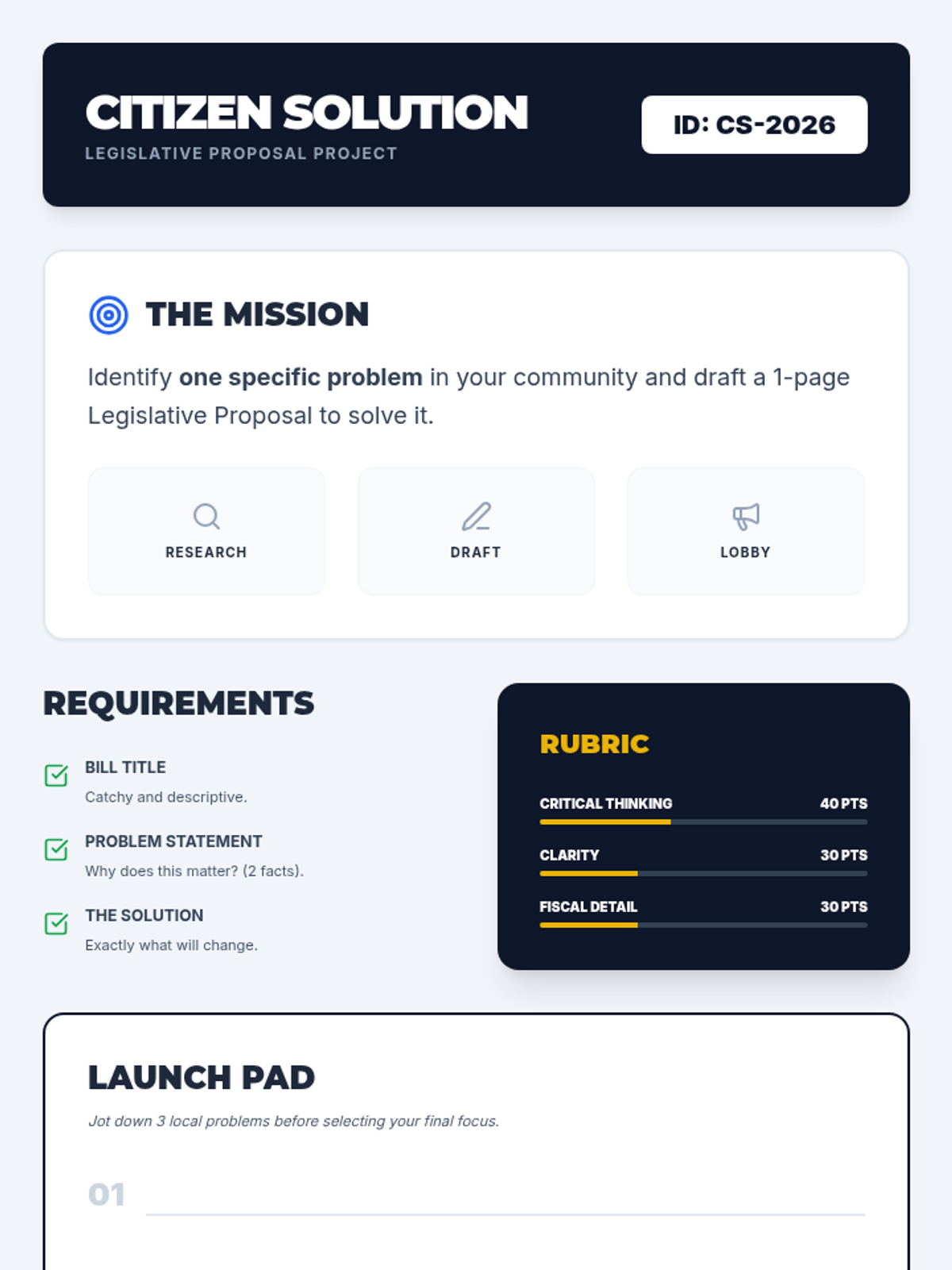
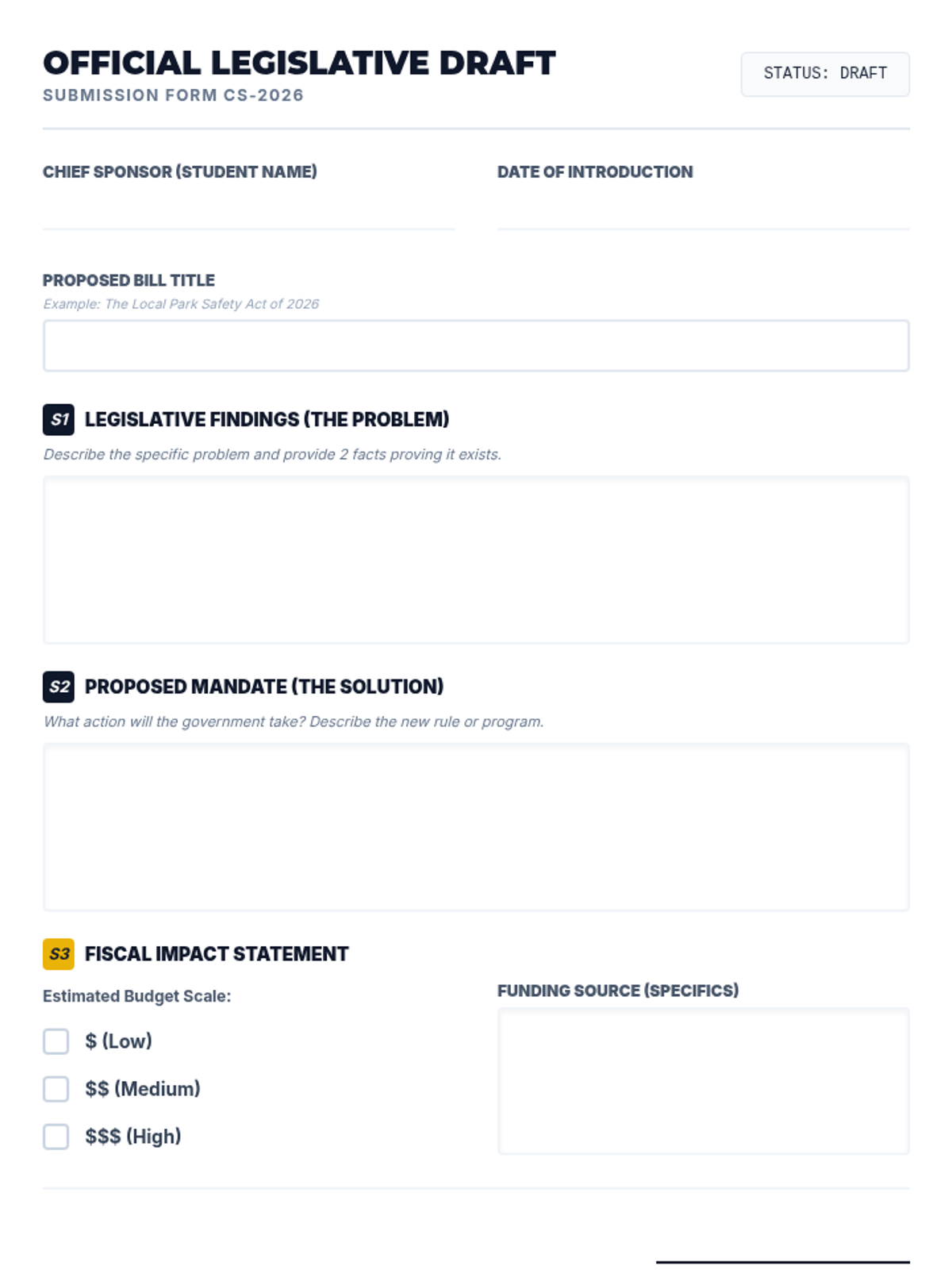
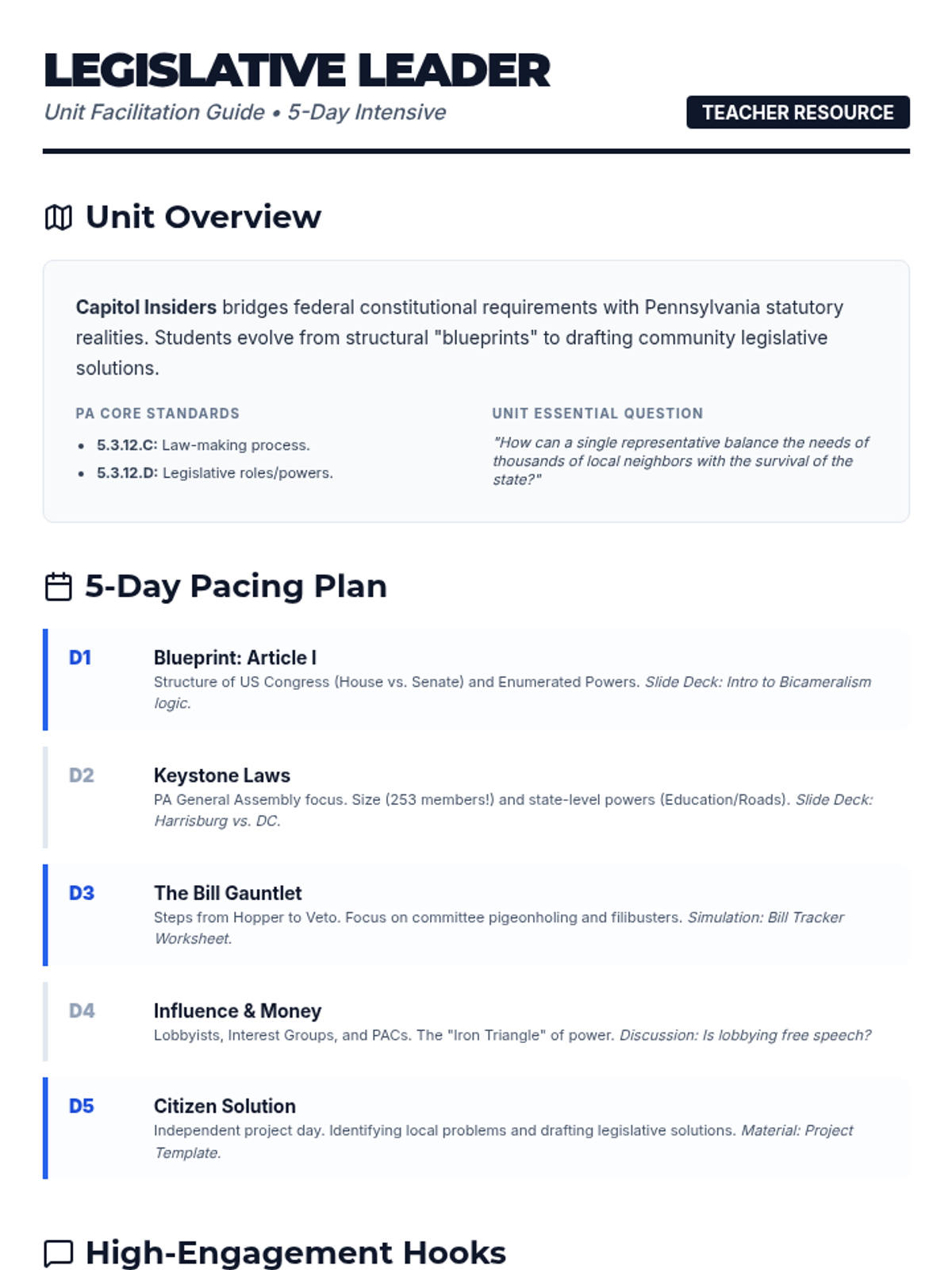
A culminating lesson where students apply their knowledge to identify a local problem and draft a simple legislative solution.
Examines the external forces that shape legislation, including lobbying, special interest groups, and constituent pressure.
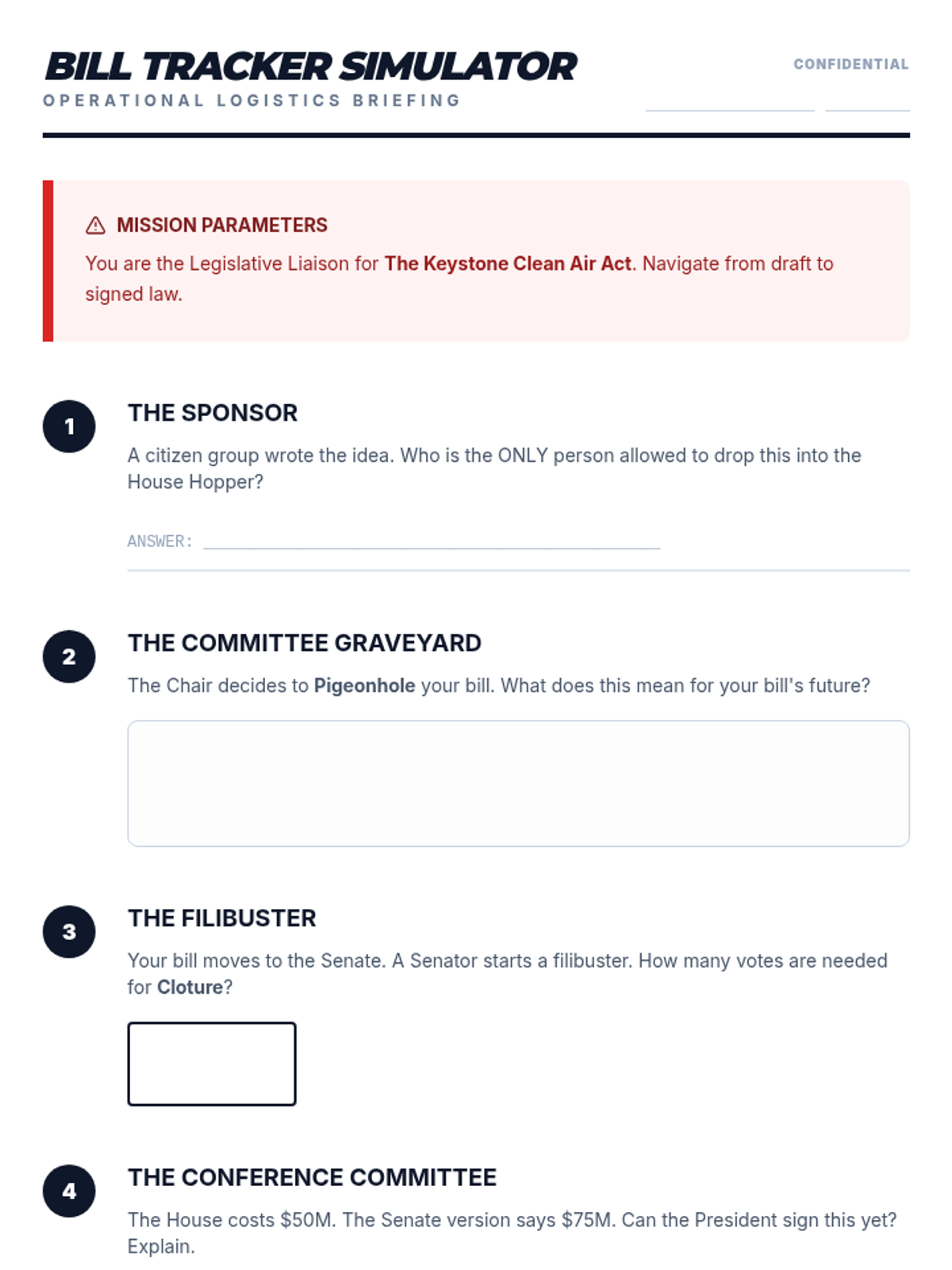
A deep dive into the complex journey of a bill from introduction to presidential or gubernatorial signature, including the role of committees and filibusters.
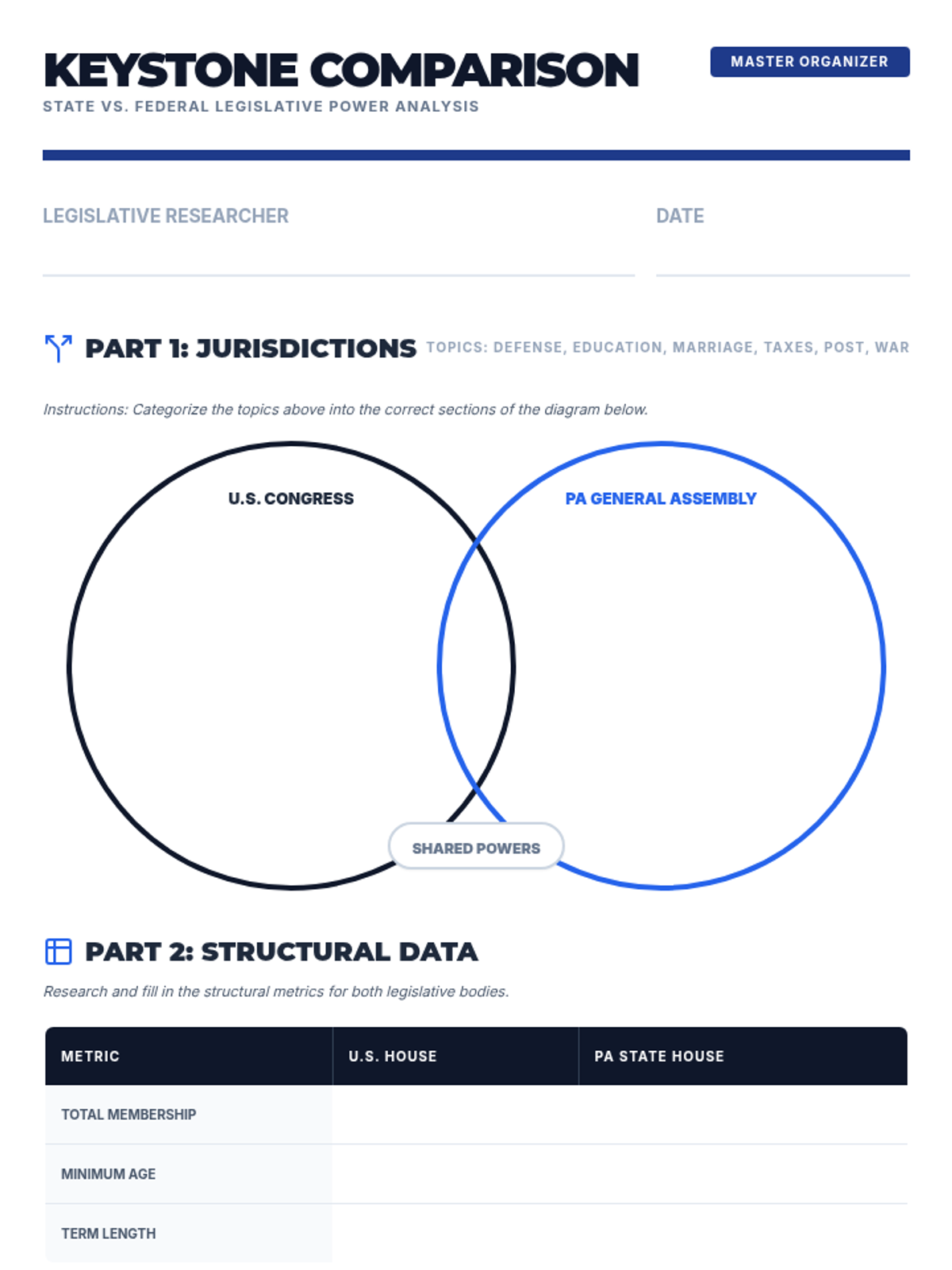
Explores the specific structure and functions of the Pennsylvania General Assembly, comparing and contrasting it with the federal system to meet PA state standards.
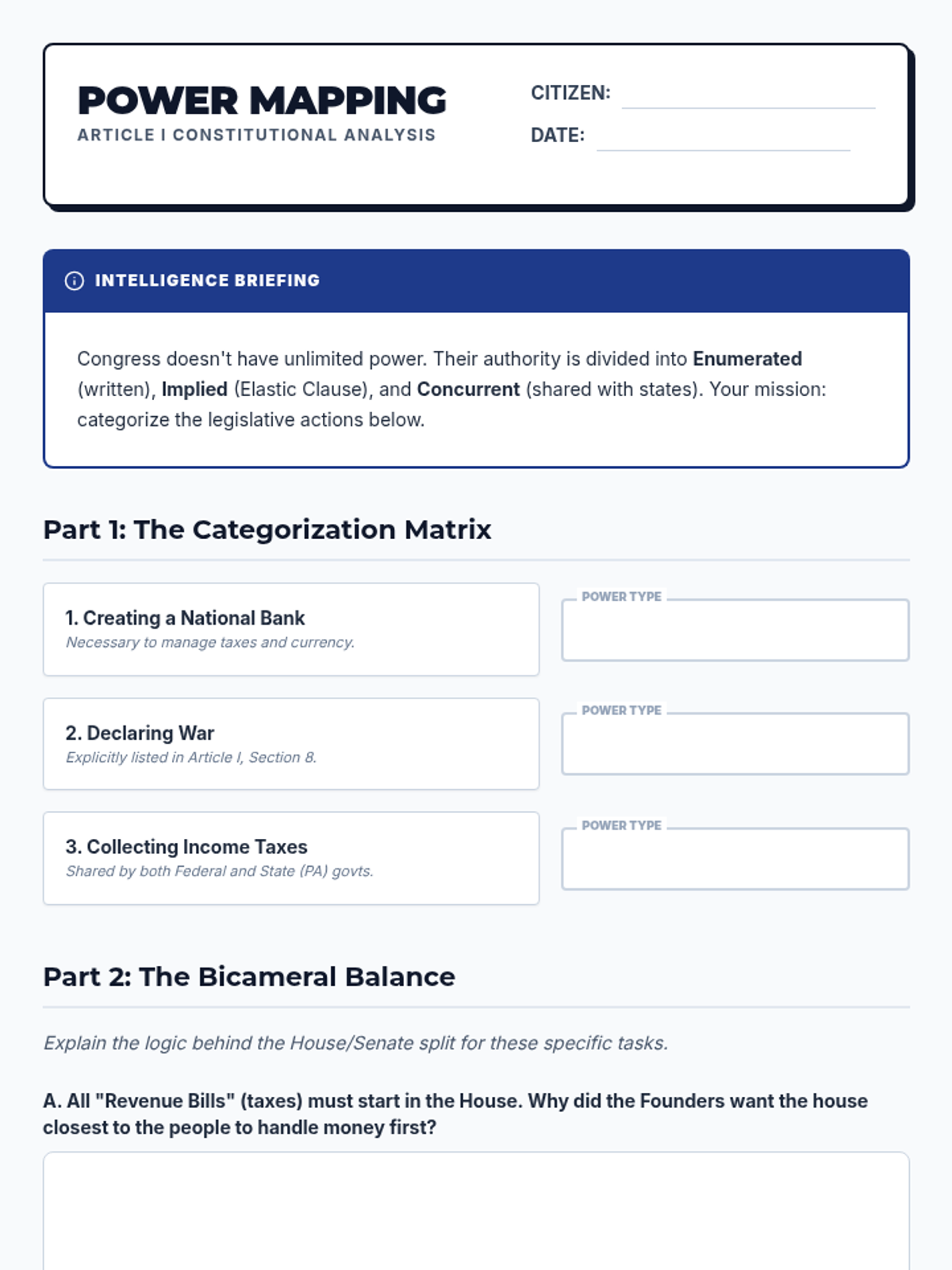
Focuses on the structure, bicameralism, and enumerated powers of the United States Congress as outlined in Article I of the Constitution.
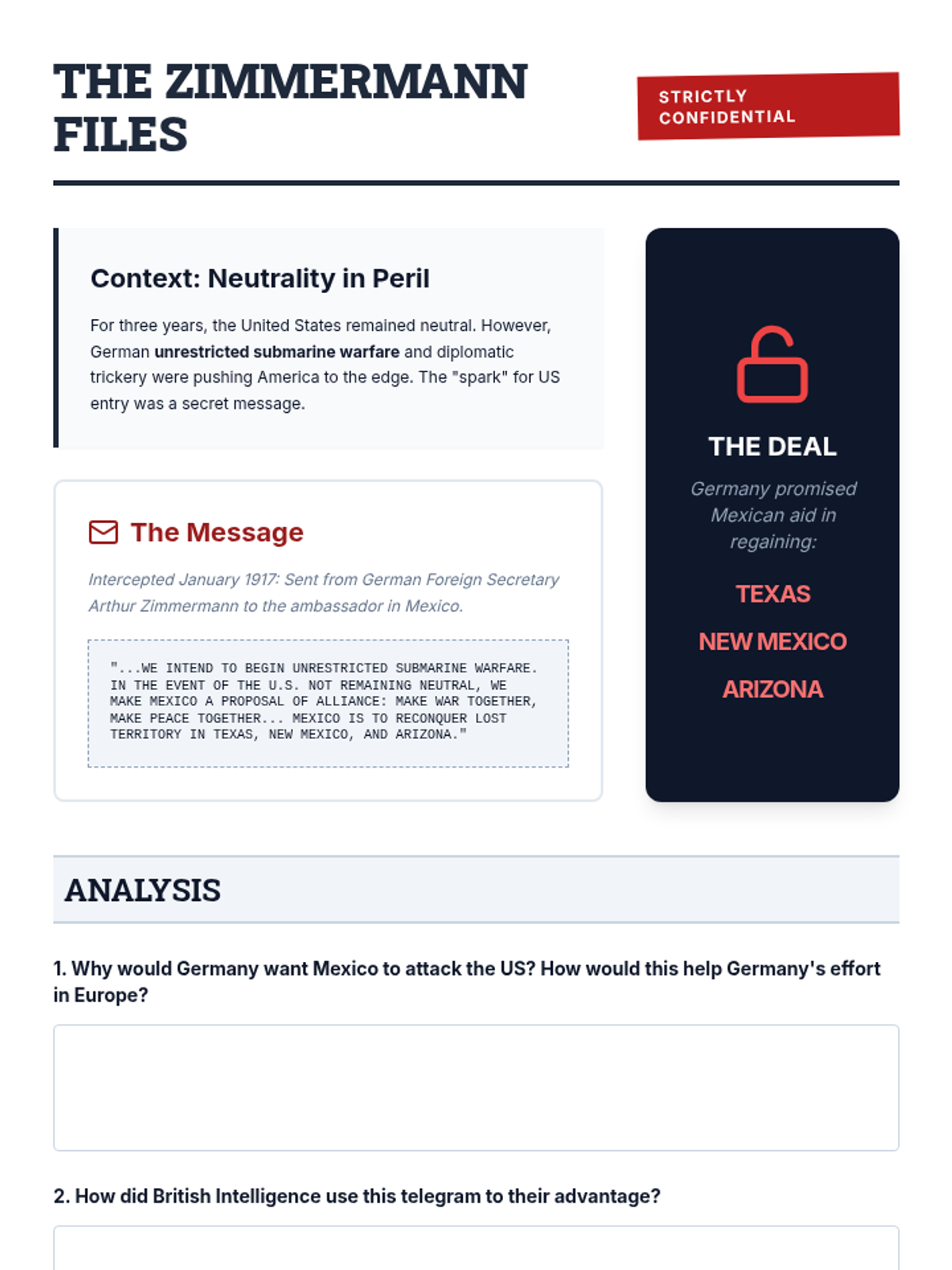
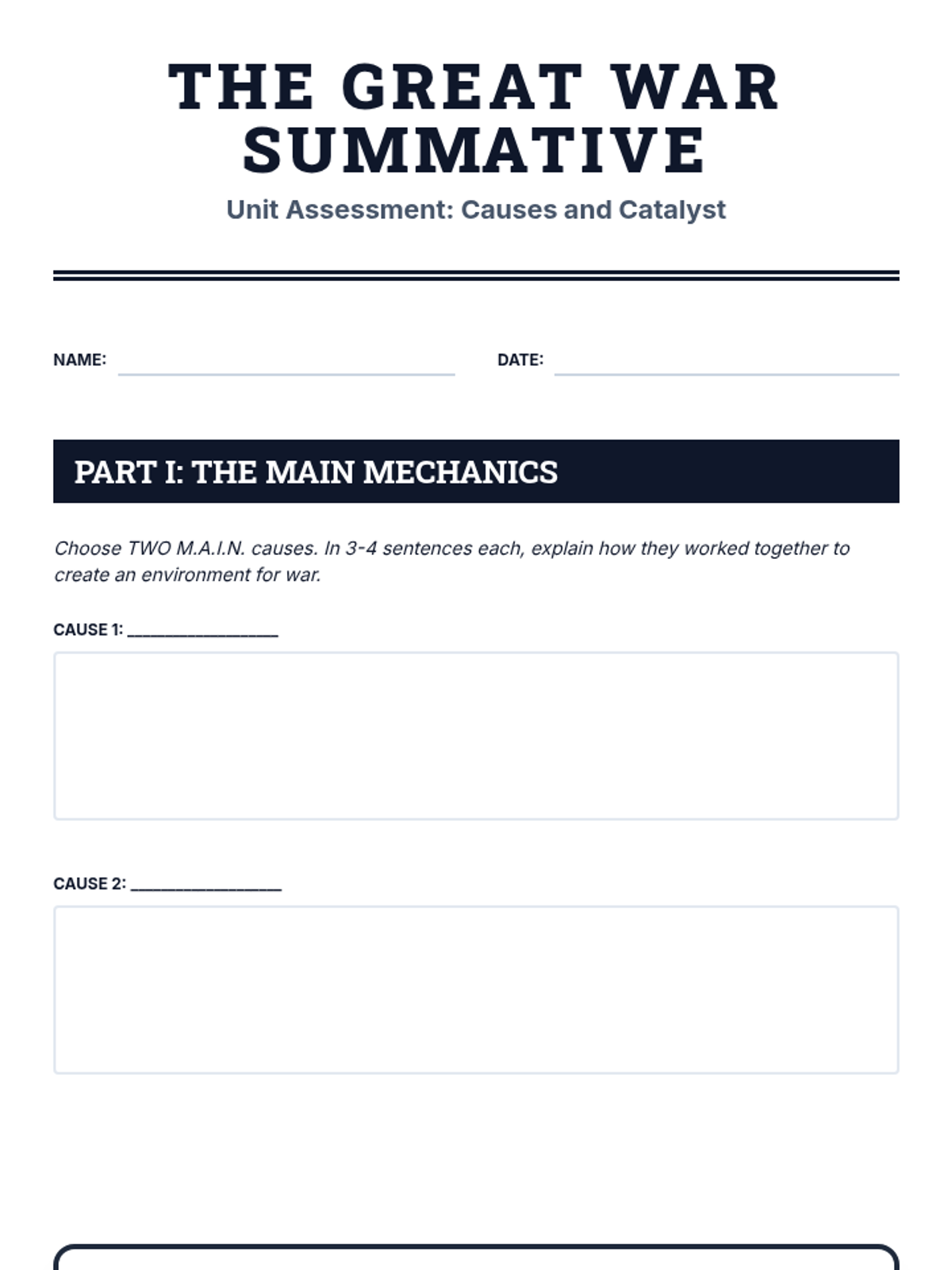
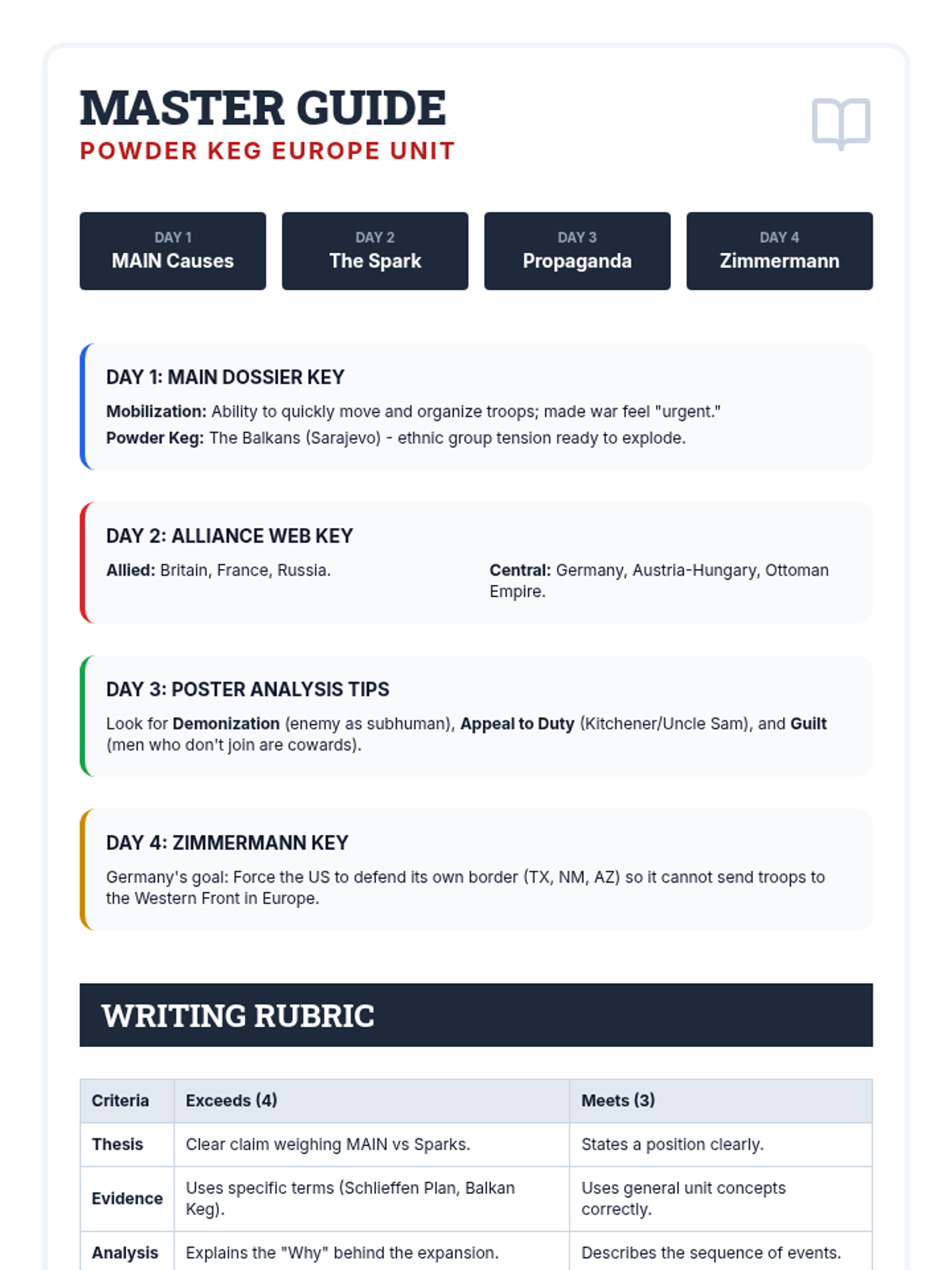
Examine the Zimmermann Telegram and its role in ending American neutrality, followed by a summative writing assessment.
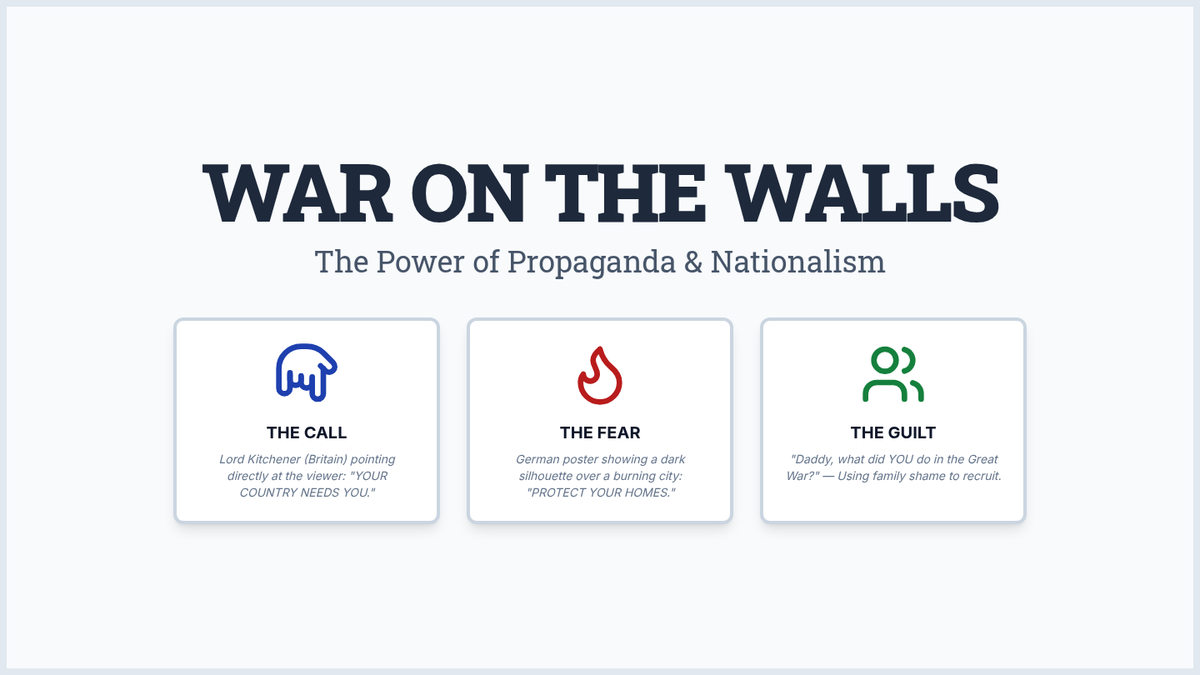
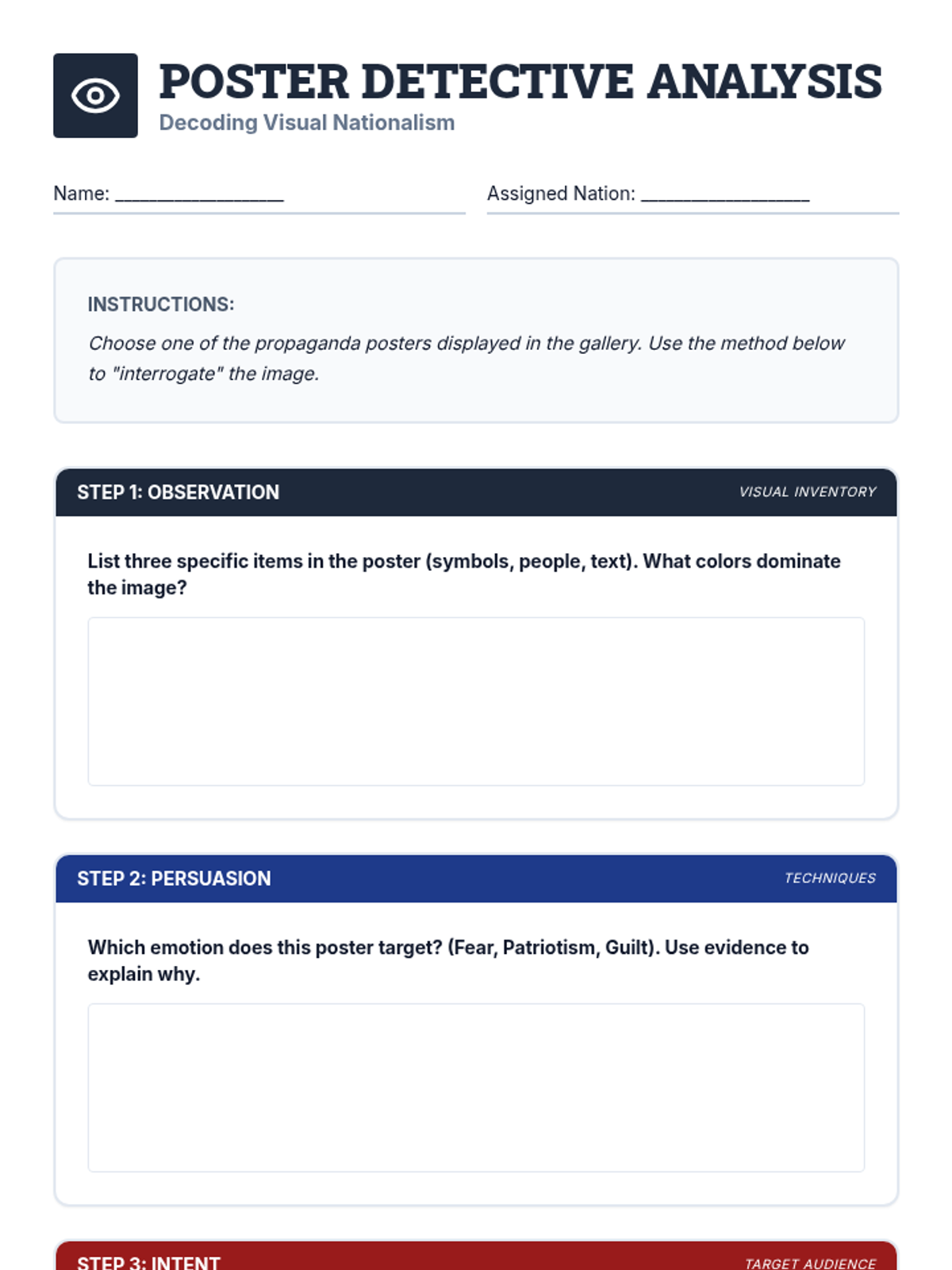
Analyze the role of nationalism through primary source propaganda posters from various nations during WWI.
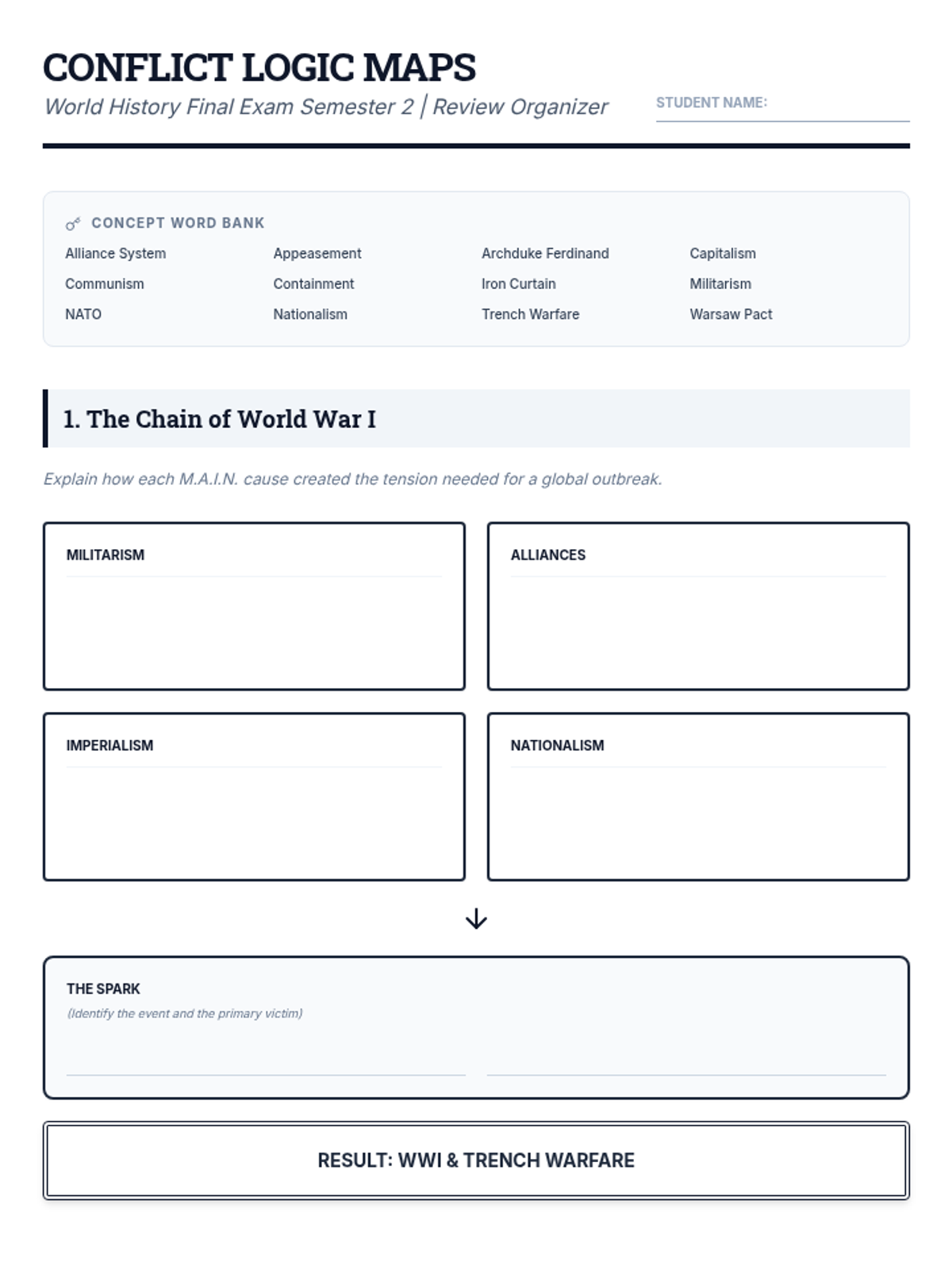
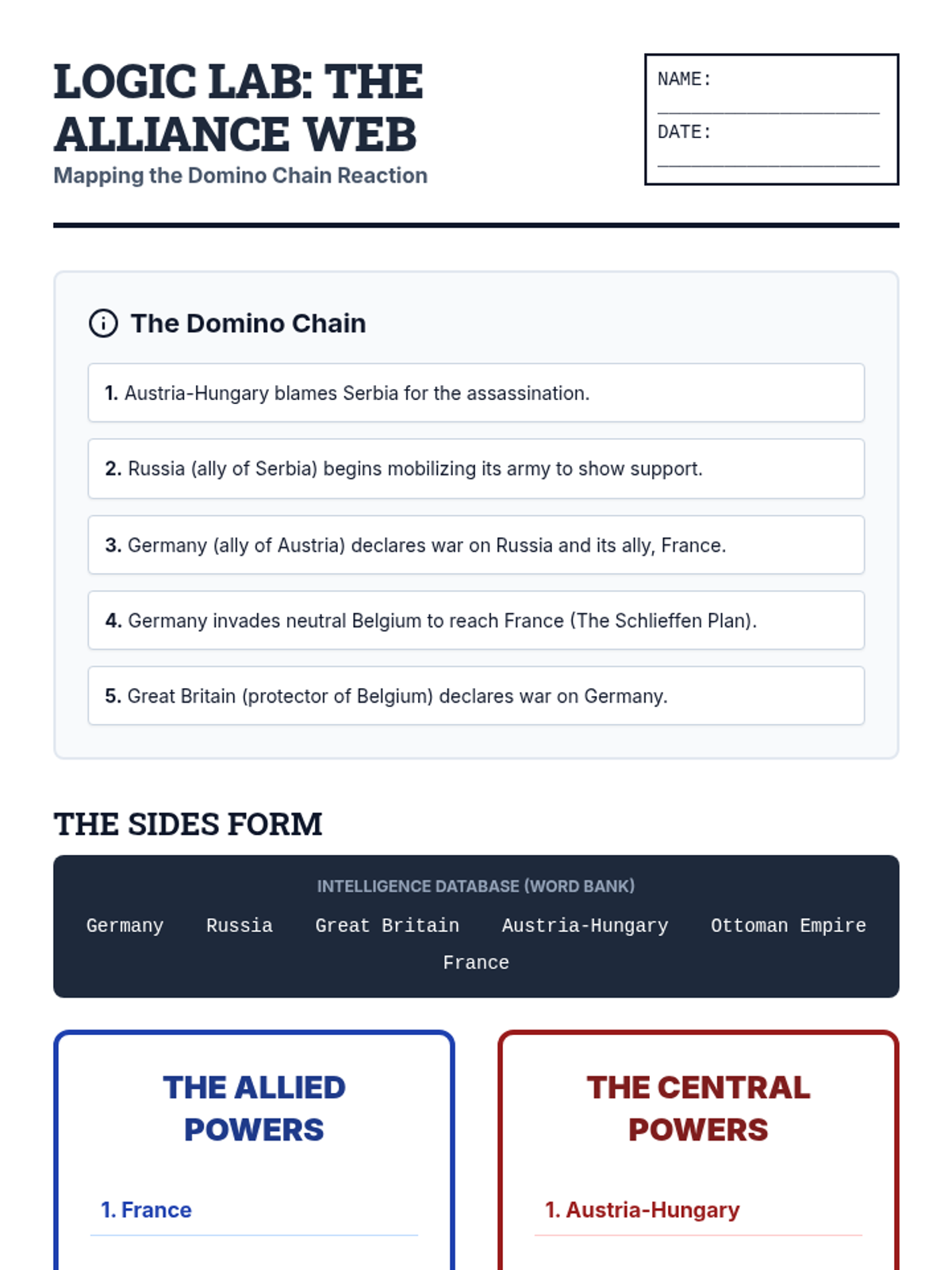
Explore the assassination of Archduke Franz Ferdinand and how the complex web of alliances pulled the world into a global conflict.
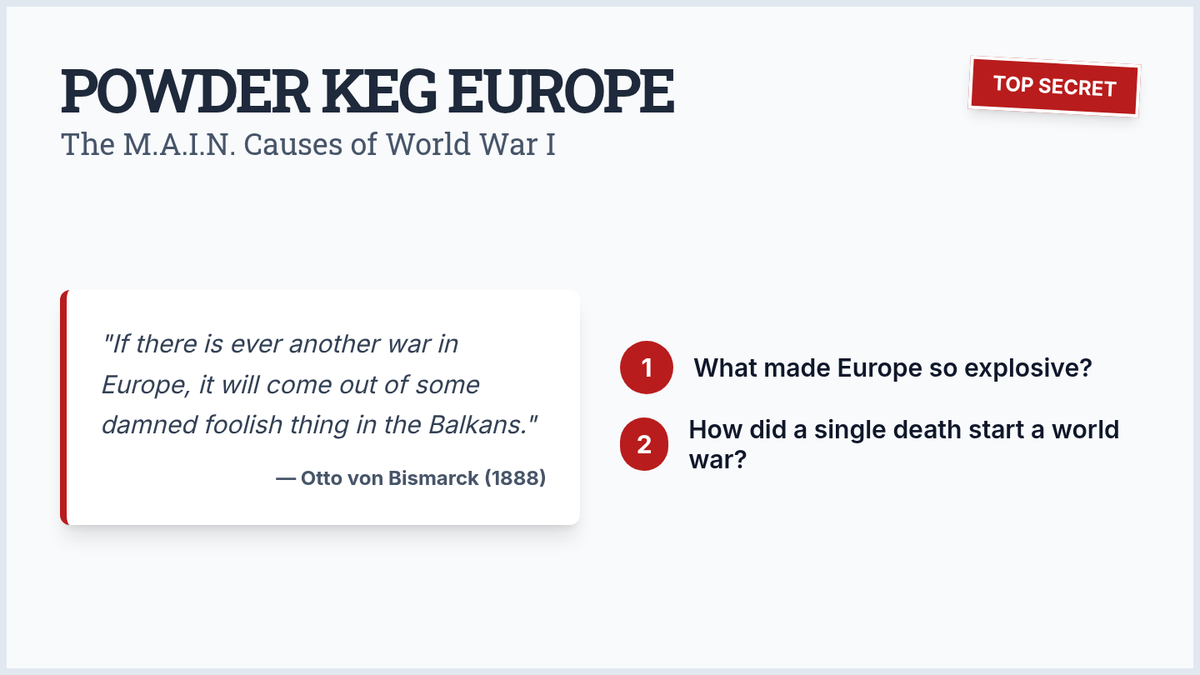
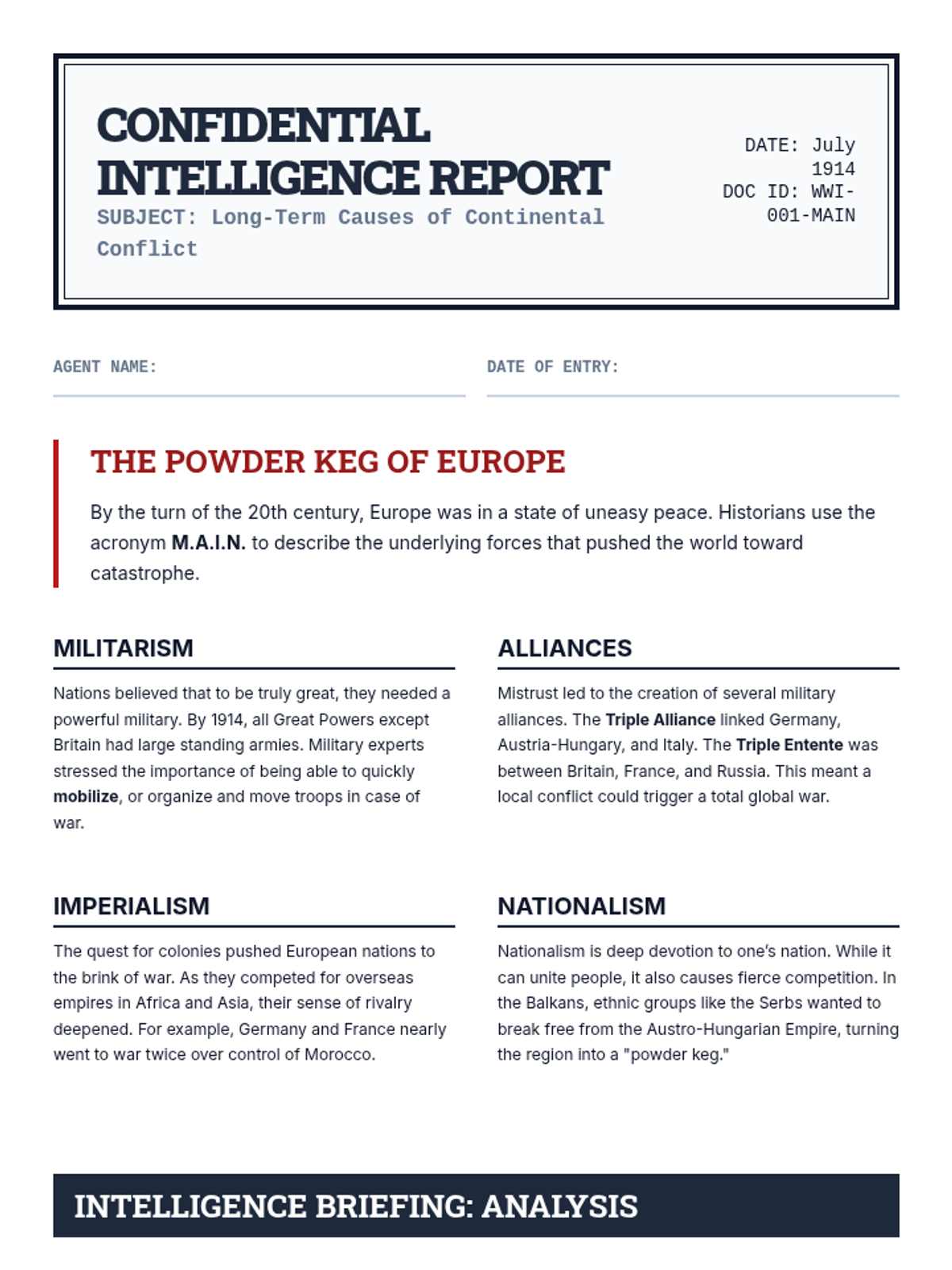
Introduce the long-term causes of WWI using the M.A.I.N. acronym: Militarism, Alliances, Imperialism, and Nationalism.
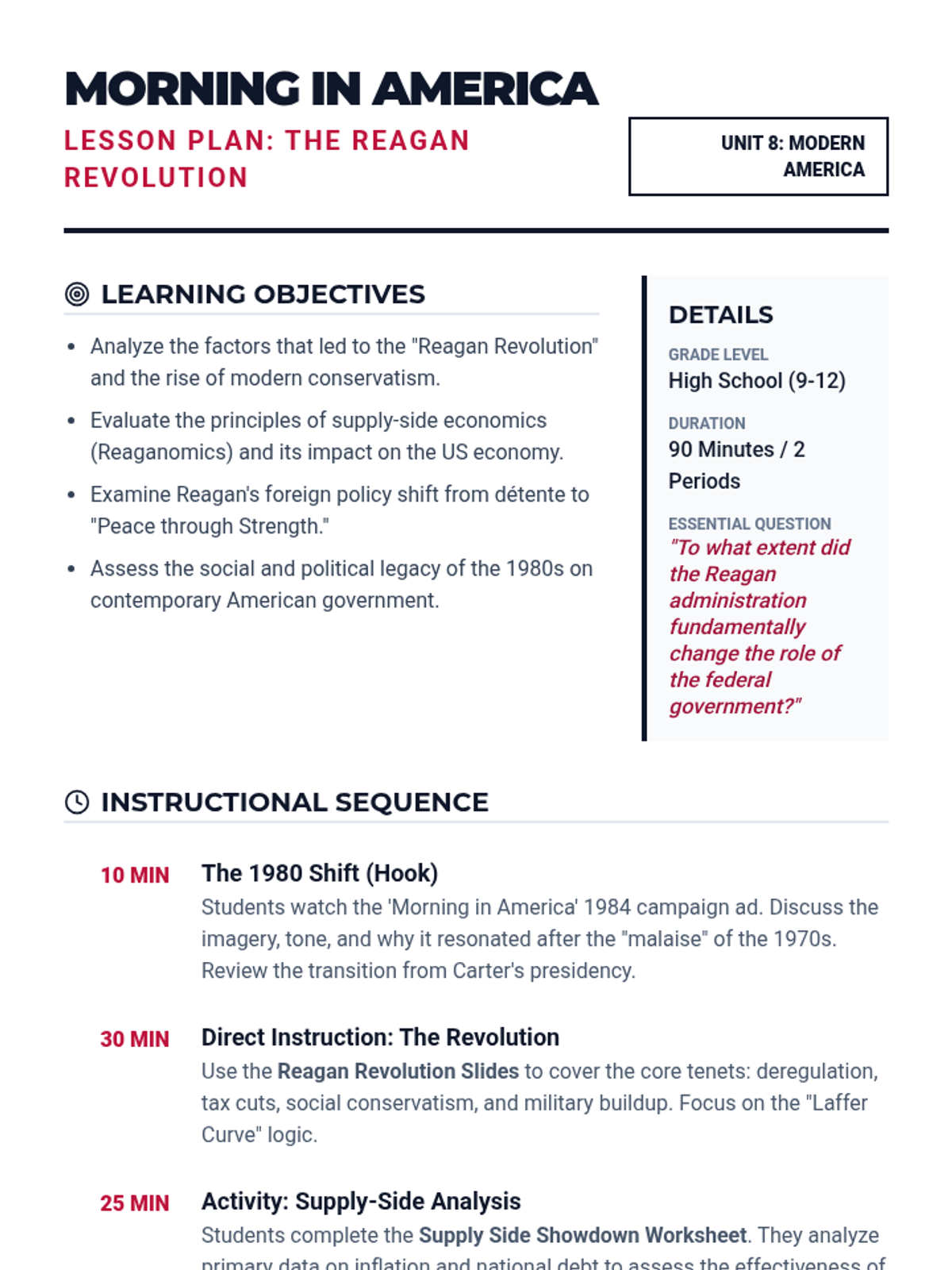
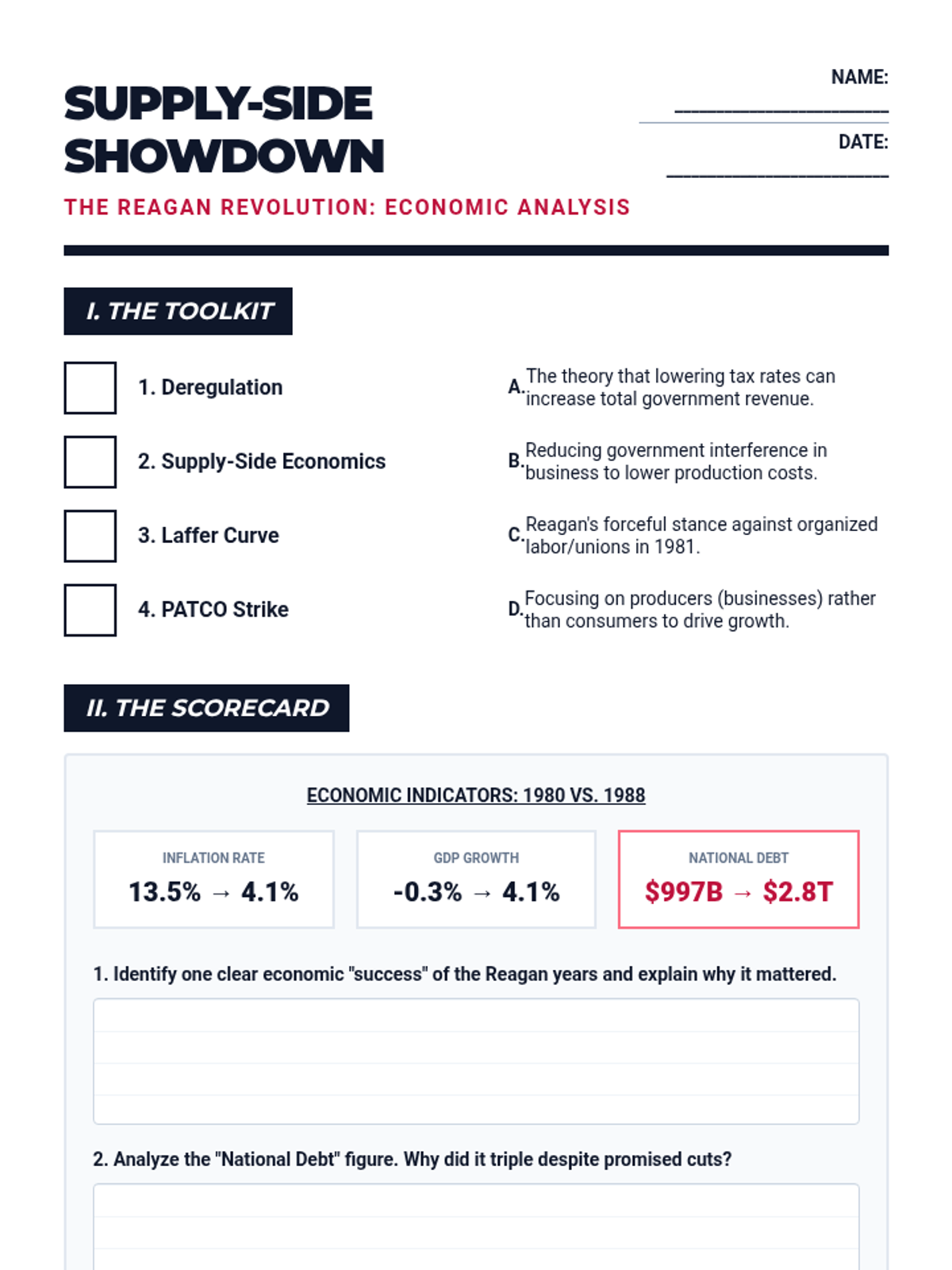
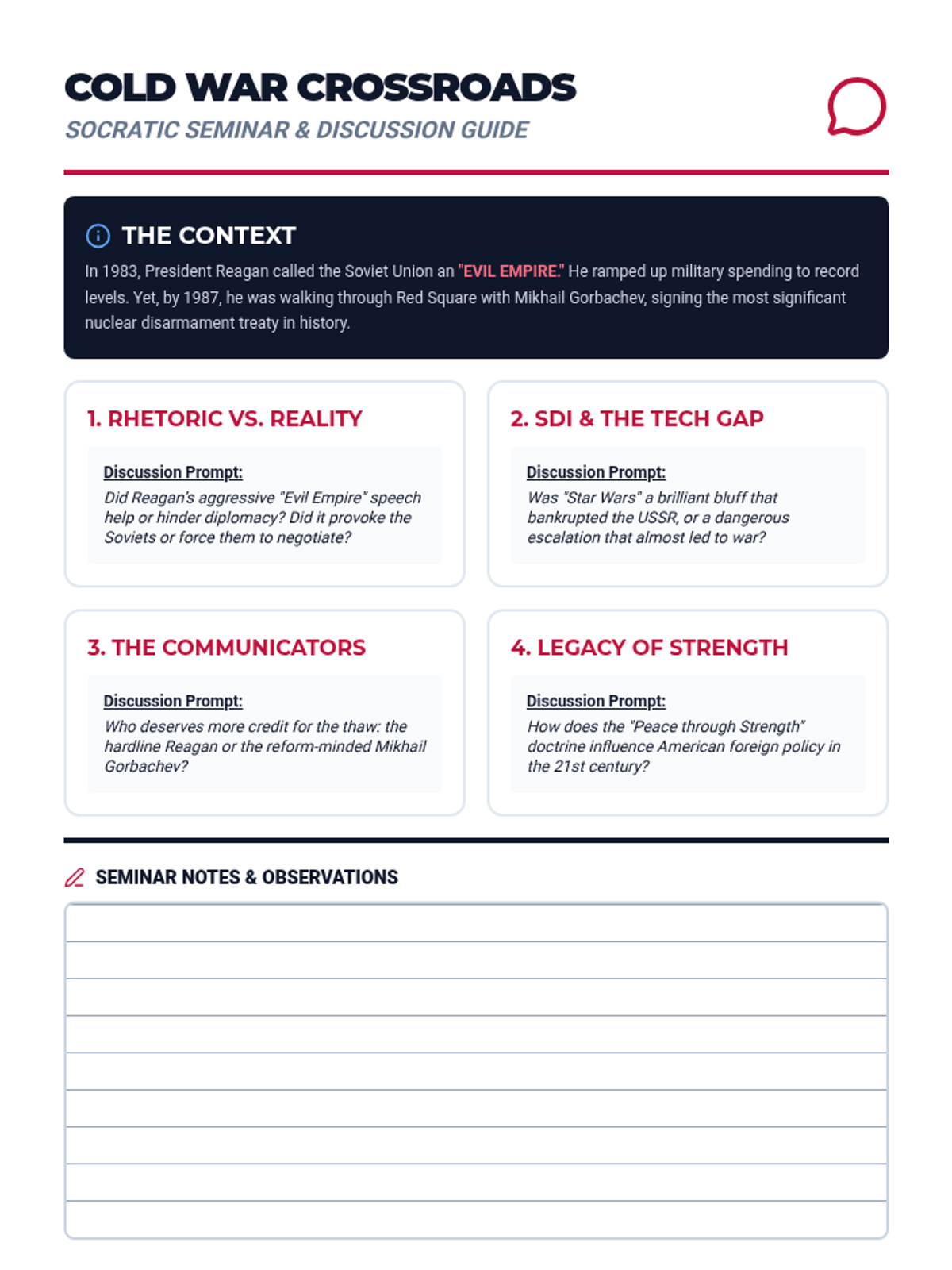
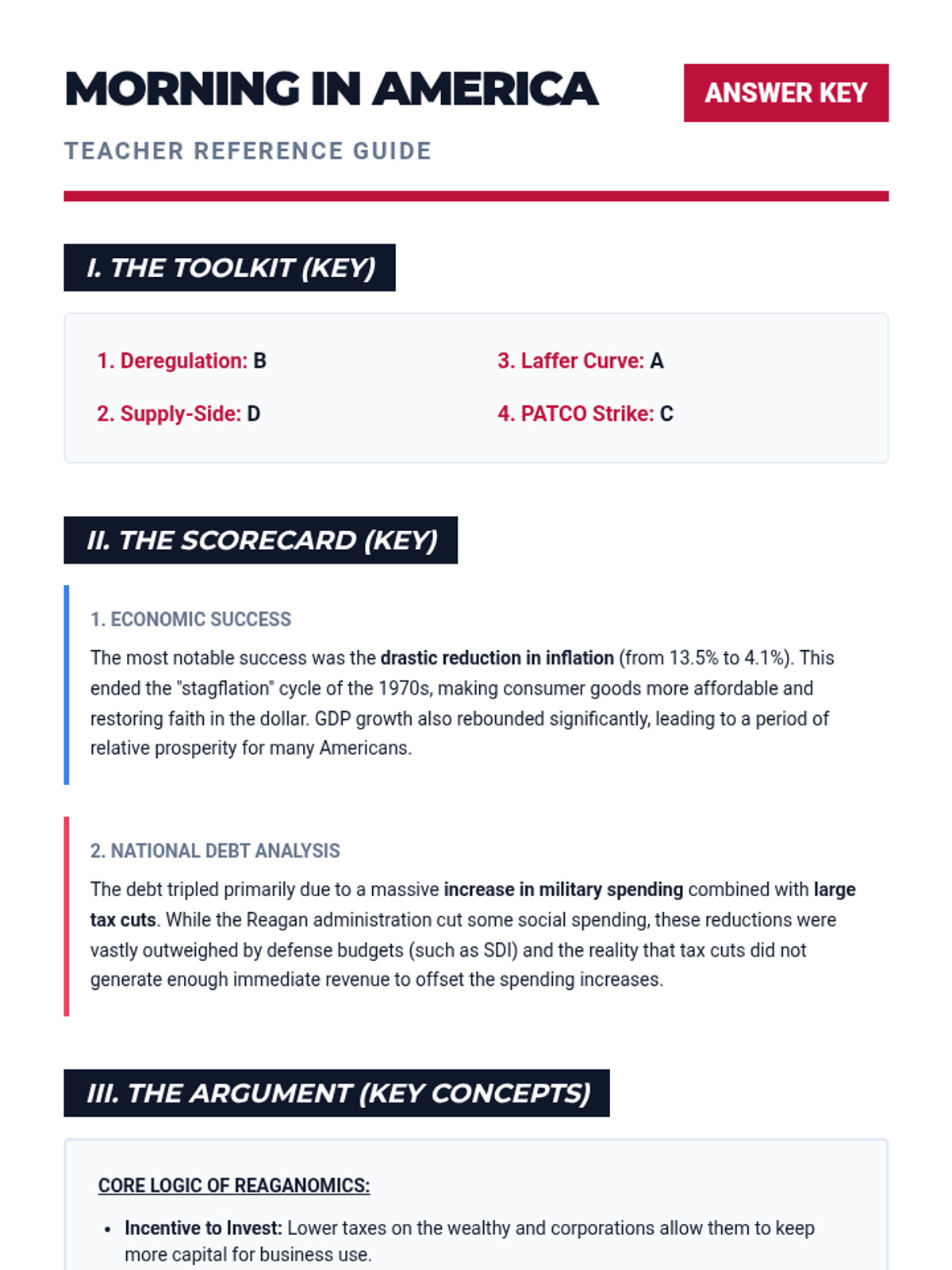
A comprehensive look at the Reagan Revolution, exploring the shift toward modern conservatism, supply-side economics, and the escalations of the late Cold War. Students analyze the 'Morning in America' campaign and its lasting impact on American politics.