Mechanisms of modeling and imitation based on Albert Bandura’s social learning theory. Examines cognitive processes including attention, retention, and vicarious reinforcement in behavior acquisition.
Une série de modules de formation destinés aux conseillers pédagogiques pour renforcer leur expertise en ingénierie de formation continue, spécifiquement appliquée à l'enseignement du français à l'école primaire.
A three-day psychology unit for 7th graders exploring the reasons behind cheating through the lenses of nature vs. nurture and person vs. situation, culminating in a structured 20-minute debate.
A comprehensive introductory psychology sequence for university students, exploring the biological, cognitive, and social foundations of human behavior through a lens of scientific inquiry and critical analysis.
A comprehensive unit focused on the psychological debate of Nature vs. Nurture, culminating in a major literature review research paper. Students will explore theoretical frameworks and synthesize existing research.
A graduate-level psychology sequence exploring the intersection of Albert Bandura's Social Learning Theory with modern neuroscience (mirror neurons) and digital ecosystems (algorithms, AI, and social media). Students critically synthesize classical theory with contemporary research to propose theoretical updates for the digital age.
This 10th-grade psychology sequence explores the transition from strict behaviorism to Social Learning Theory. Students analyze Bandura's Bobo Doll experiments, the four stages of modeling, and the roles of vicarious reinforcement and mirror neurons in human behavior.
This workshop-style sequence explores the psychological principles of observational learning, focusing on Albert Bandura's concepts of self-efficacy and the four stages of modeling. Students transition from theoretical understanding to practical application by designing and testing instructional tutorials that optimize skill acquisition for their peers.
A project-based sequence where students investigate the 'Prosocial' and 'Antisocial' effects of observational learning in contemporary media, culminating in a content analysis presentation.
An 11th-grade psychology sequence exploring cognitive learning theories, including latent learning, observational learning, learned helplessness, and metacognition. Students move from theoretical understanding to personal application through a 'Cognitive Optimization Plan'.
An advanced graduate seminar sequence exploring Albert Bandura’s Social Learning Theory, focusing on the cognitive mechanisms of observational learning, neurobiological correlates, and contemporary applications in digital environments. Students analyze reciprocal determinism, the agentic perspective, and mirror neuron systems to design research-based interventions.
A comprehensive undergraduate-level exploration of Social Cognitive Theory, moving from the foundational Bobo Doll experiments to contemporary neurological research and behavioral intervention design. Students critically analyze the cognitive mechanisms of modeling and the impact of vicarious reinforcement on human behavior.
A comprehensive 12th-grade psychology unit exploring Albert Bandura's Social Learning Theory, the cognitive mechanisms of modeling, the neurobiology of mirror neurons, and the societal impact of media influence on behavior.
This lesson uses a relatable analogy of a candy store tantrum to introduce the complex historical concept of appeasement, helping students understand why giving in to aggression can lead to greater conflict.
A comprehensive assessment covering developmental domains, brain growth, major ECE theorists, and strategies for supporting young children's self-concept and identity.
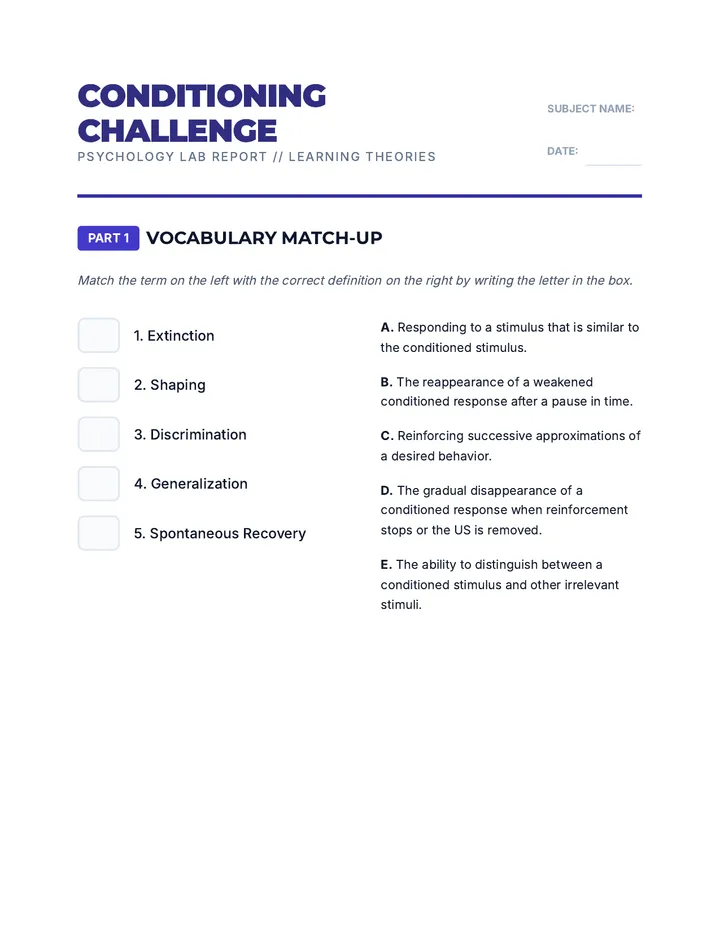
A comprehensive review session covering the three primary modes of learning in psychology: classical conditioning, operant conditioning, and observational learning. This lesson uses varied activities to solidify student understanding of behavioral principles.
A comprehensive lesson introducing Lev Vygotsky's sociocultural theory of cognitive development. Students will explore the Zone of Proximal Development, the role of Scaffolding, and the importance of the More Knowledgeable Other through collaborative activities.
A high school social science lesson exploring the ethical complexities and foundational impact of the Stanford Prison Experiment, Little Albert, and Bobo Doll studies. Students analyze the tension between scientific discovery and human rights while learning about modern ethical standards like informed consent and IRBs.
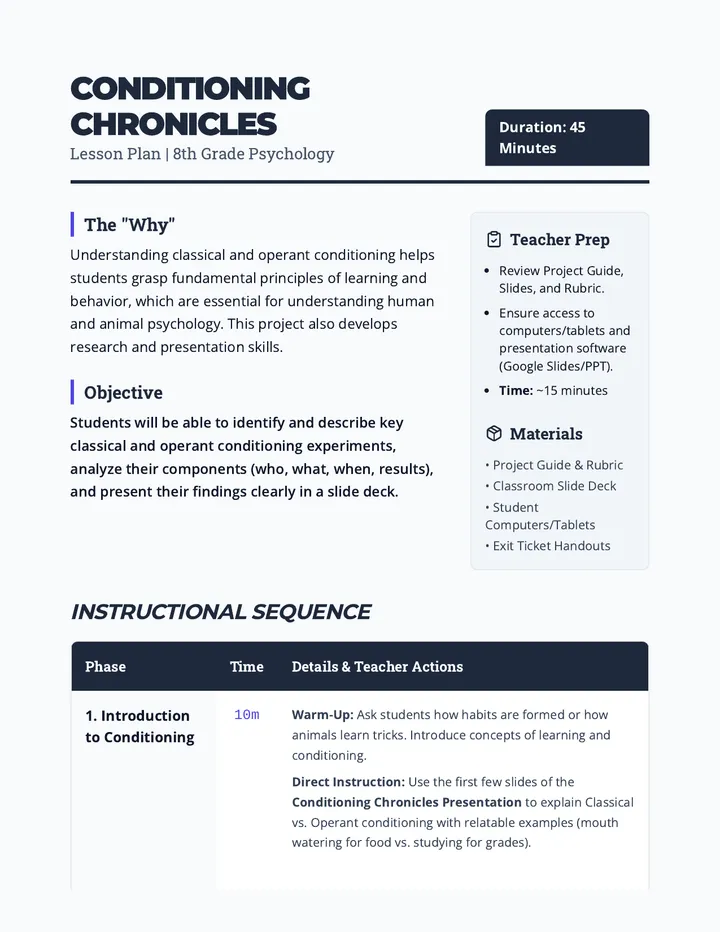
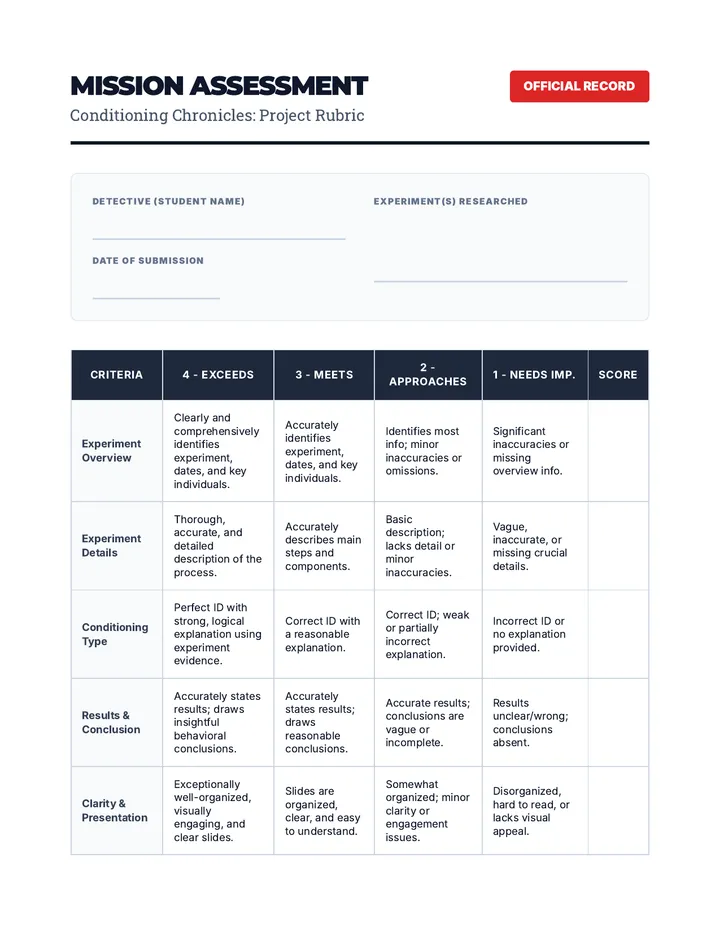
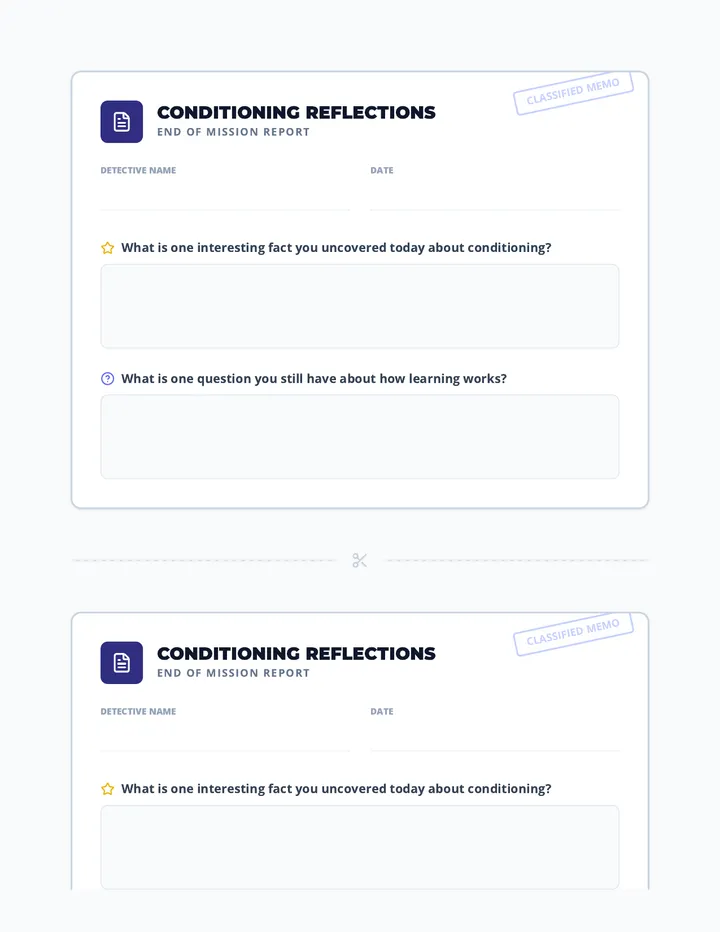
A 45-minute psychology project where 8th-grade students act as detectives to research and analyze famous classical and operant conditioning experiments, culminating in a slide presentation.
This lesson explores Collective Learning, a threshold of complexity that allows humans to accumulate knowledge over generations. Students analyze the 'ratchet effect' of technology, comparing the slow progress of early hominids to the explosive innovation of Homo Sapiens.