A comprehensive assessment and answer key covering the Aztec, Maya, and Inca civilizations, focusing on their culture, leadership, and eventual conquest.
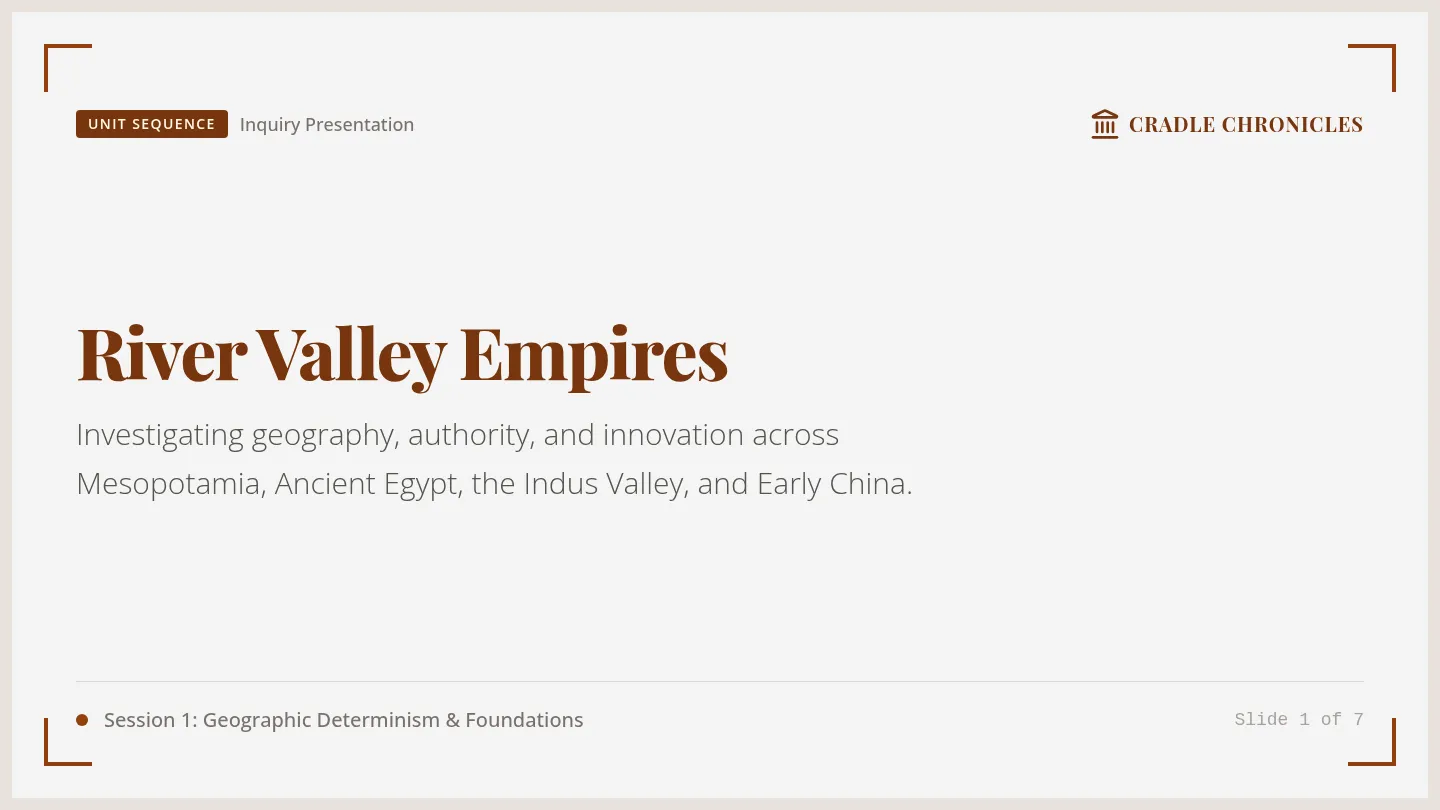
A premium comparative inquiry bundle exploring the foundational 'Big Four' ancient river valley civilizations (Mesopotamia, Egypt, Indus Valley, and Ancient China). Designed with high-quality primary sources, structured guided notes, and analytical rubrics to foster deep historical investigation.
Une leçon immersive conçue comme un jeu de combat intellectuel ("Bagarre d'Idées") où les élèves incarnent des figures historiques et scientifiques. Cette leçon propose des joutes verbales et des débats philosophiques adaptés au collège (argumentation) et au lycée (dilemmes éthiques).
Diaporama pour la classe présentant l'activité de joutes verbales. Il introduit les règles de la "Bagarre d'Idées", les affrontements épiques Hobbes contre Rousseau et Curie contre Edison, ainsi que les stratégies pour emporter le combat rhétorique.
A comprehensive 6th-grade social studies unit exploring the trajectory of human history, from nomadic hunter-gatherers and the cognitive evolution of early humans, to the agricultural revolution, and finally the development of structured ancient governments.
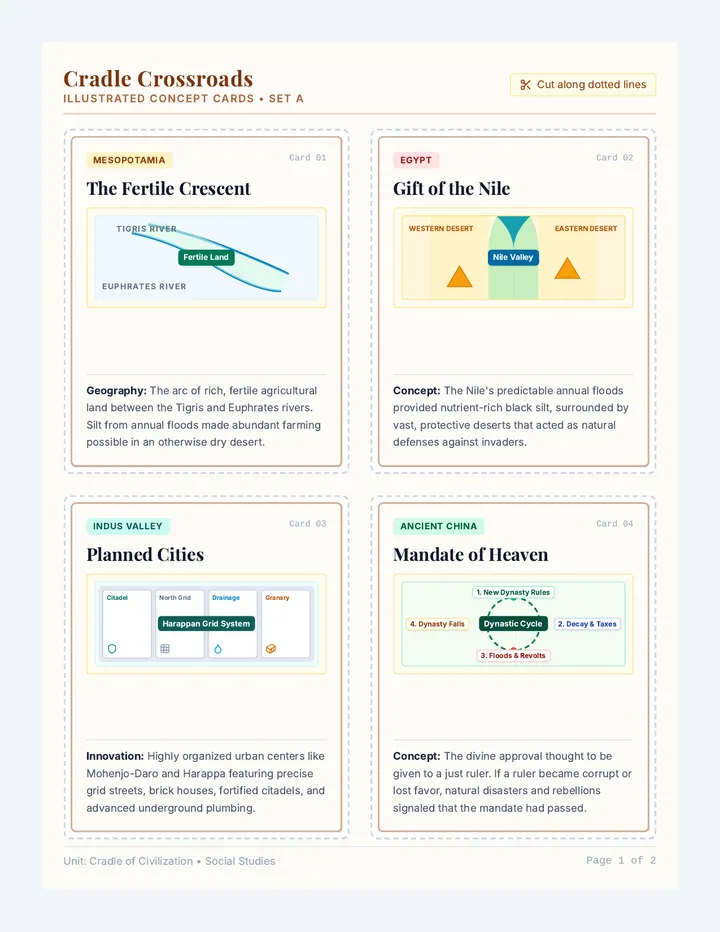
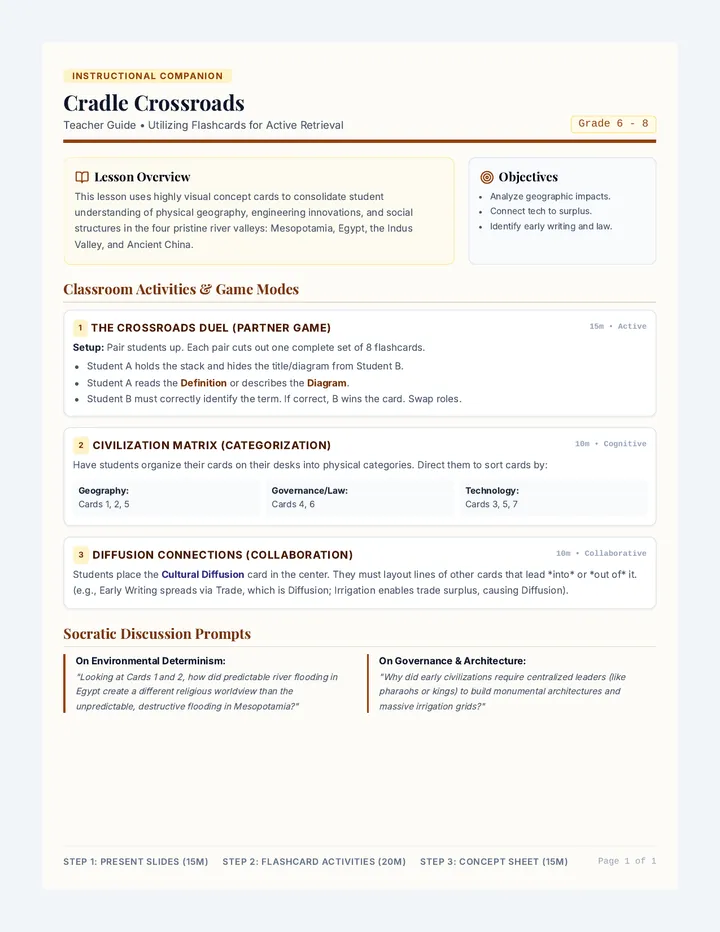
A lesson exploring the four major River Valley Civilizations (Mesopotamia, Ancient Egypt, Indus Valley, and Ancient China) through illustrated flashcards, active classroom games, and a conceptual study worksheet.
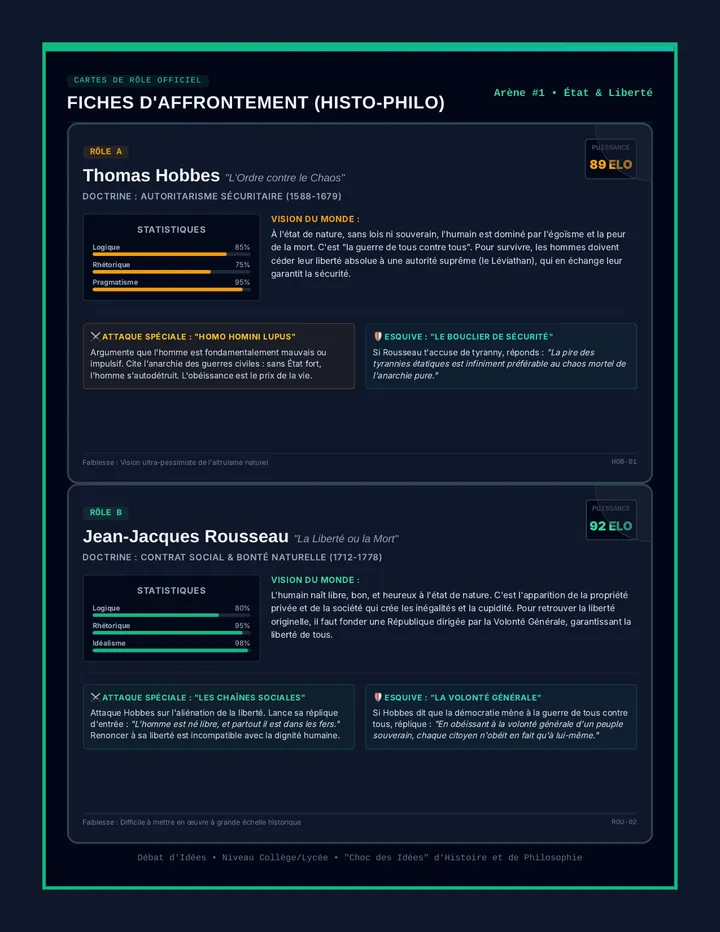
Fiches de jeu de rôle prêtes à imprimer sous forme de cartes de combat. Elles contiennent les biographies, statistiques, arguments clés (Attaques Spéciales) et parades rhétoriques de Thomas Hobbes, Jean-Jacques Rousseau, Marie Curie et Thomas Edison.
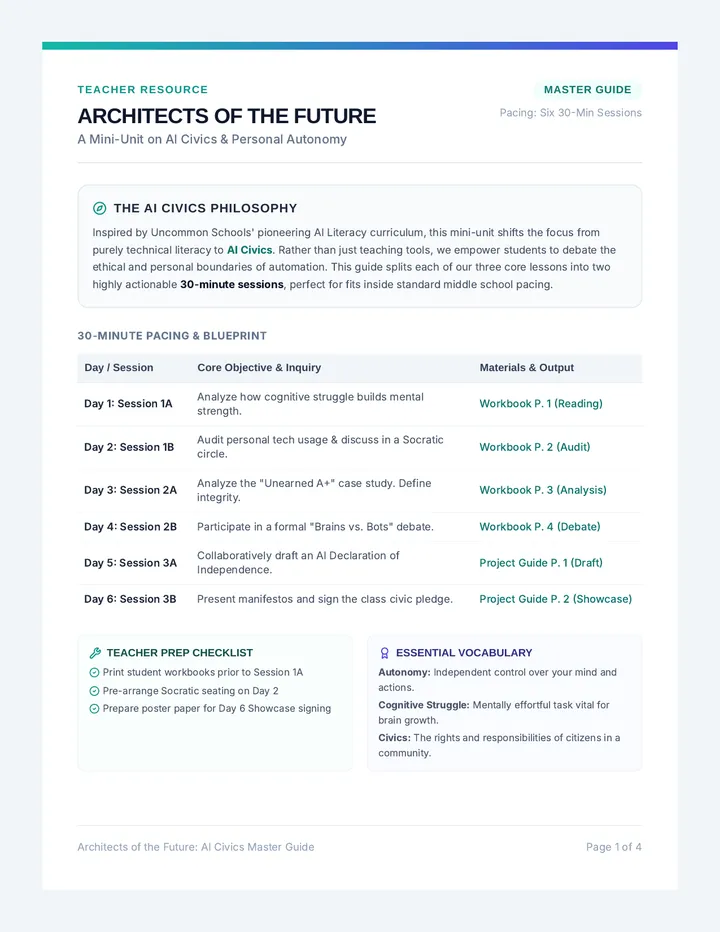
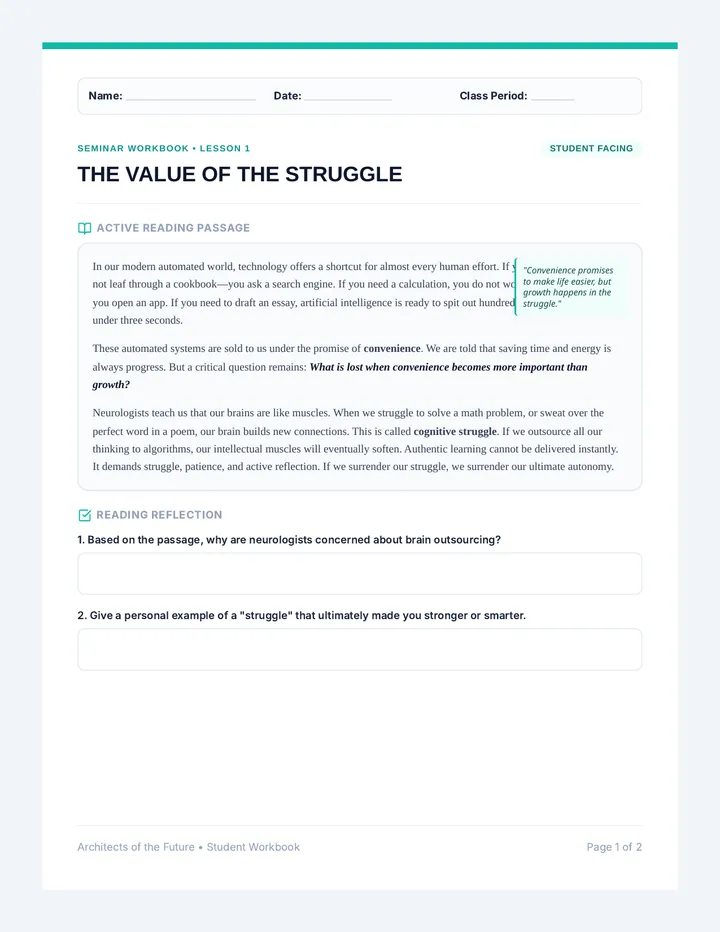
A middle school mini-unit on AI civics, empowering students to think critically about autonomy, convenience, and human potential. Inspired by Uncommon Schools' pioneering AI Literacy curriculum, students debate the role of technology and craft their own Civic Declarations.
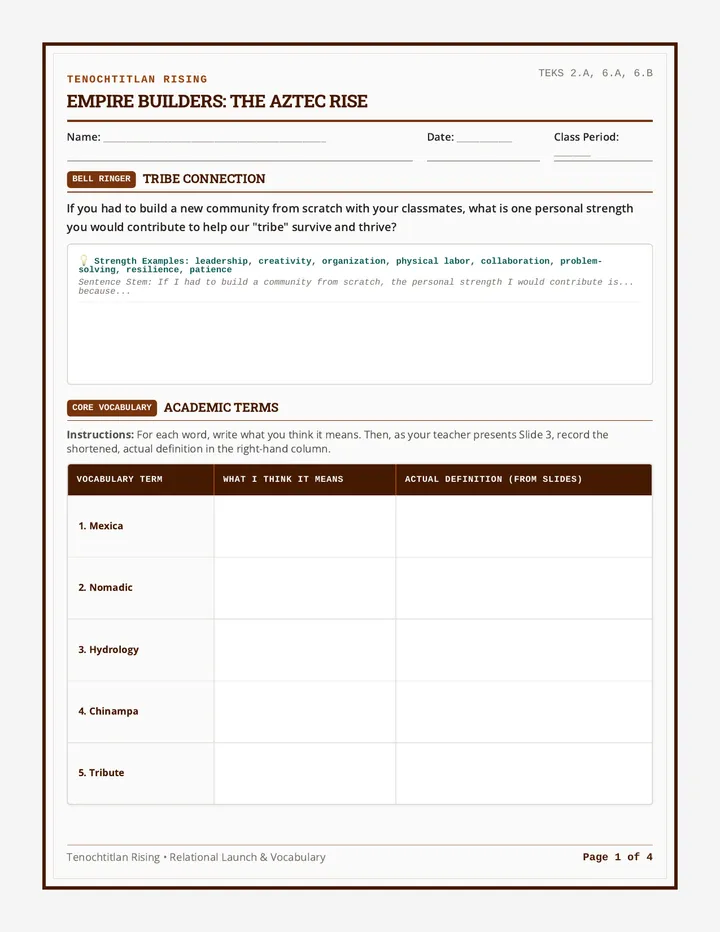
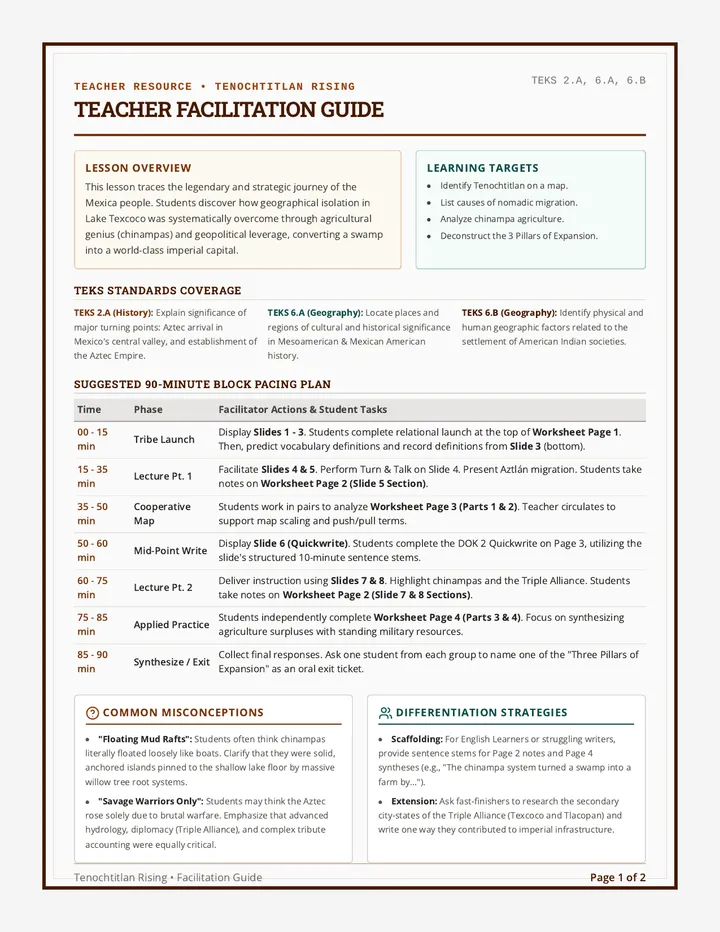
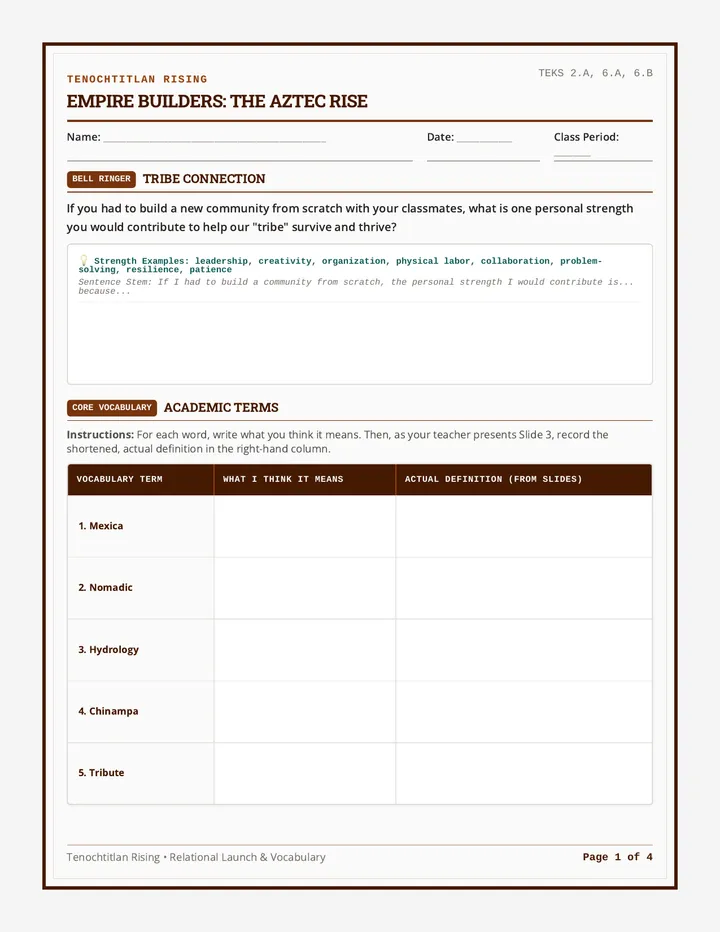
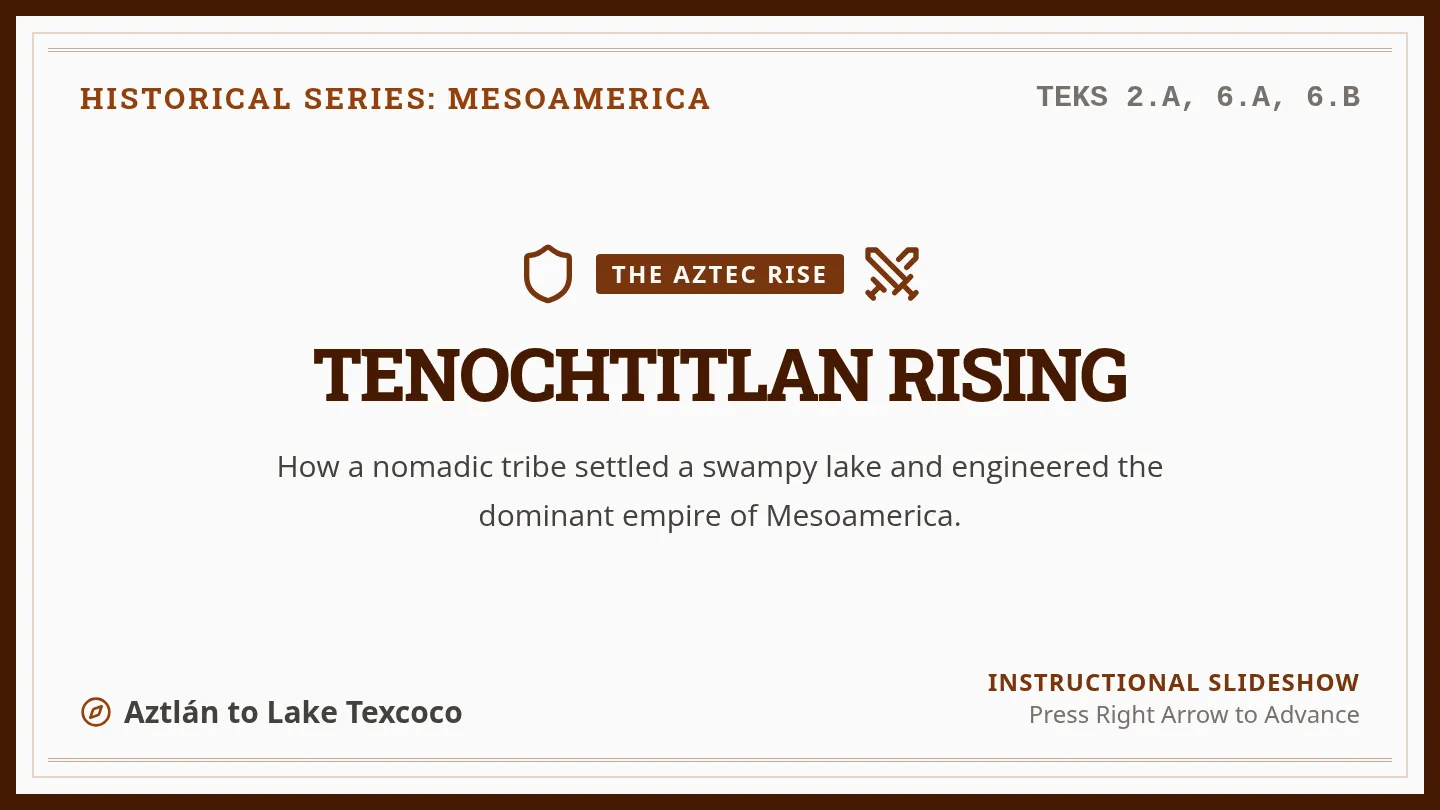
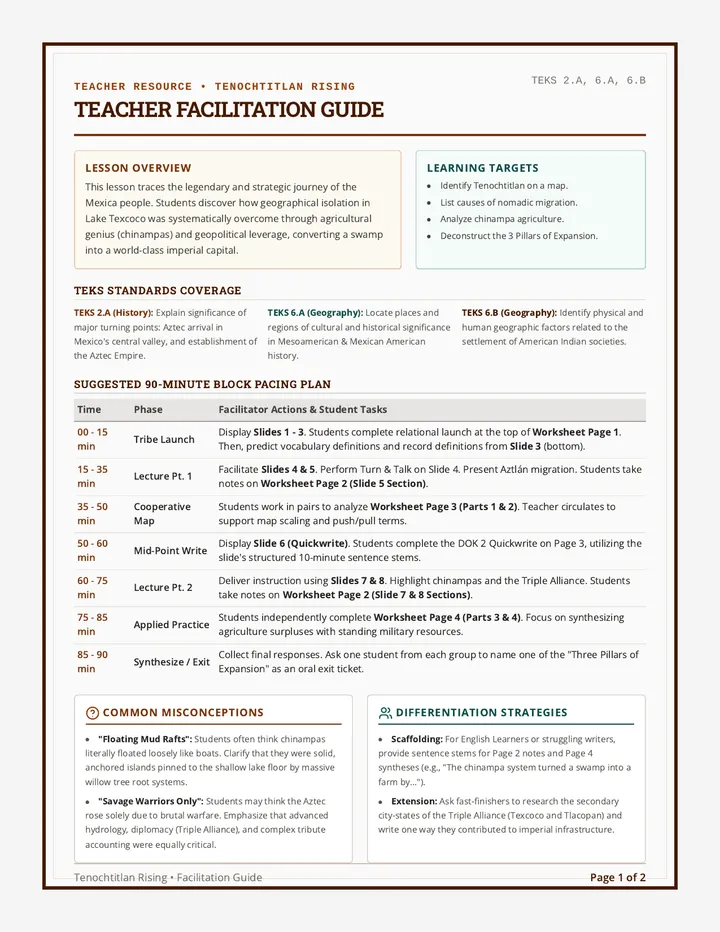
A comprehensive lesson exploring how the Mexica migrated from Aztlán, settled in the Valley of Mexico, and leveraged geography, agriculture, and military strategies to build the Aztec Empire. This lesson includes interactive presentation slides, a graphic organizer worksheet for student analysis, and a detailed teacher facilitation guide.
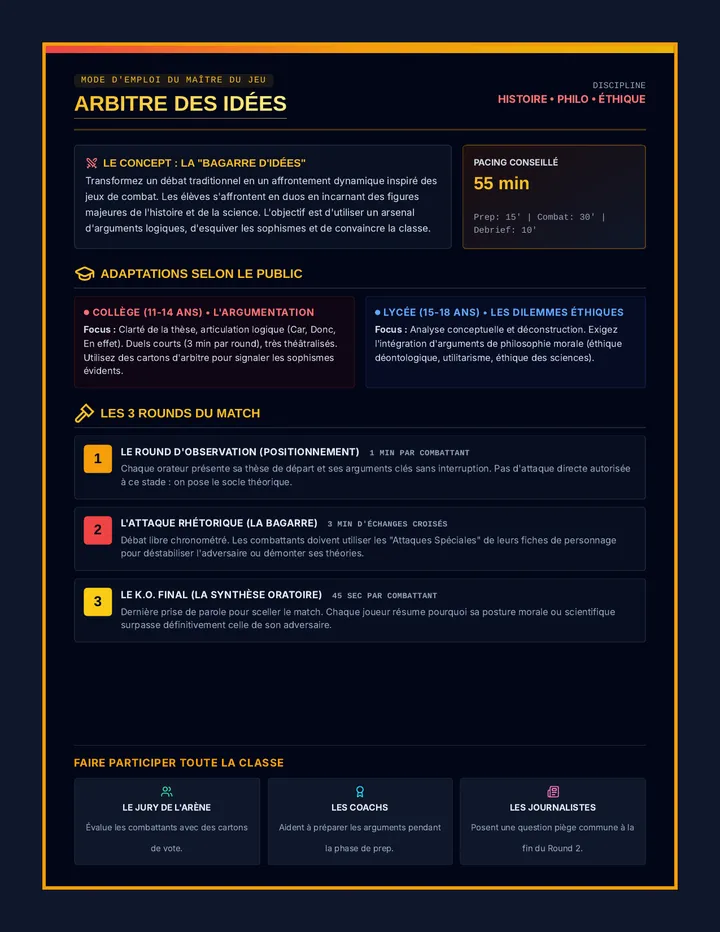
Ce guide destiné à l'enseignant (l'Arbitre) structure les règles de la "Bagarre d'Idées", organise les rounds de débat, attribue des rôles actifs à toute la classe, et fournit des outils de notation et d'arbitrage pour les niveaux Collège et Lycée.
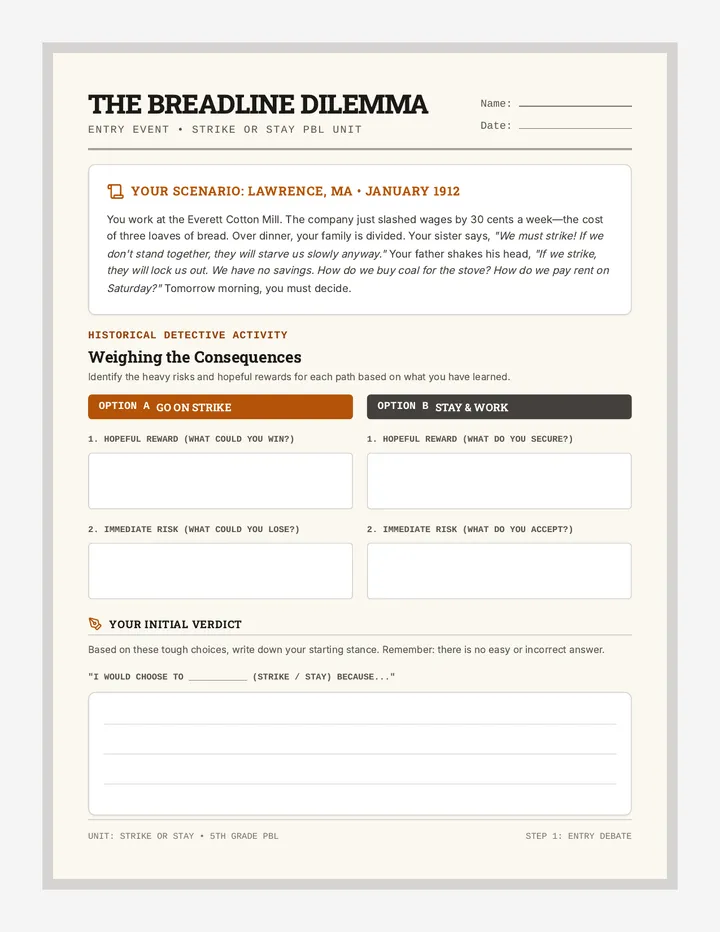
A 5th-grade project-based learning experience where students investigate labor rights and the intense choices workers face during a strike. Students research historical local or regional strikes and roleplay a community town hall debate.
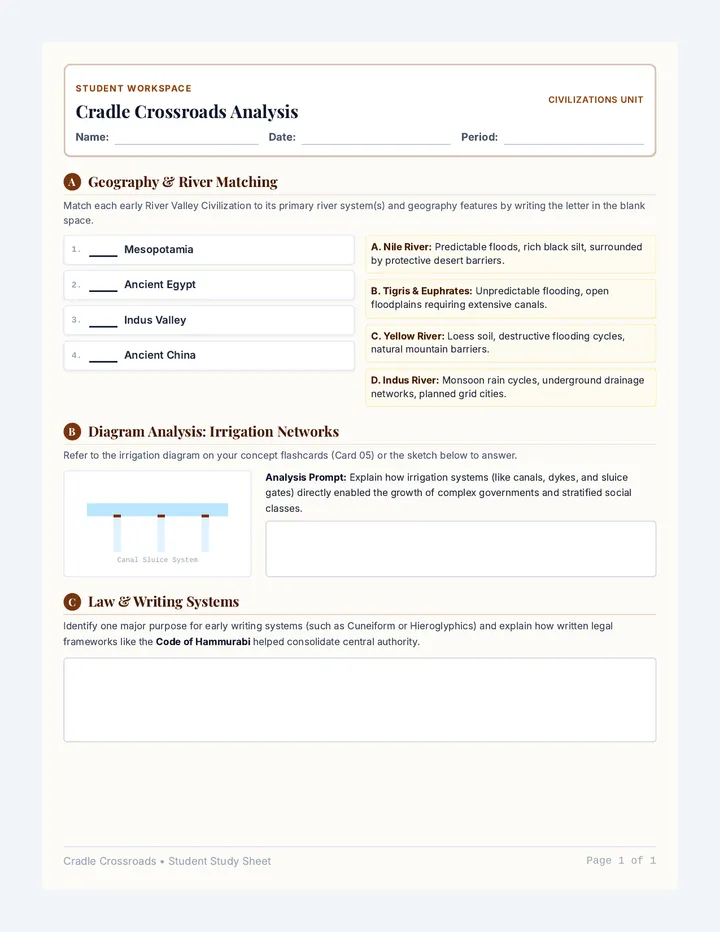
A conceptual matching and structured analysis worksheet for students to consolidate physical, social, and technological structures of early River Valley Civilizations.