This lesson focuses on the critical role of active listening in historical diplomacy and oral history. Students investigate the Cuban Missile Crisis as a case study in effective listening and practice historical interviewing techniques.
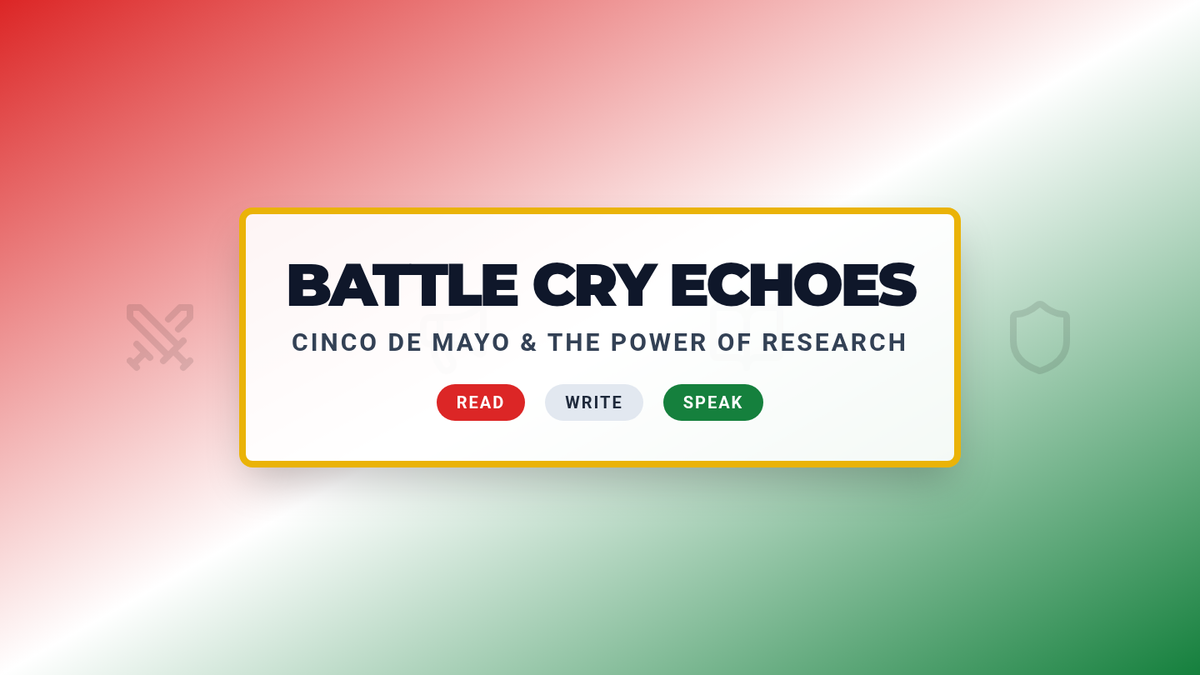
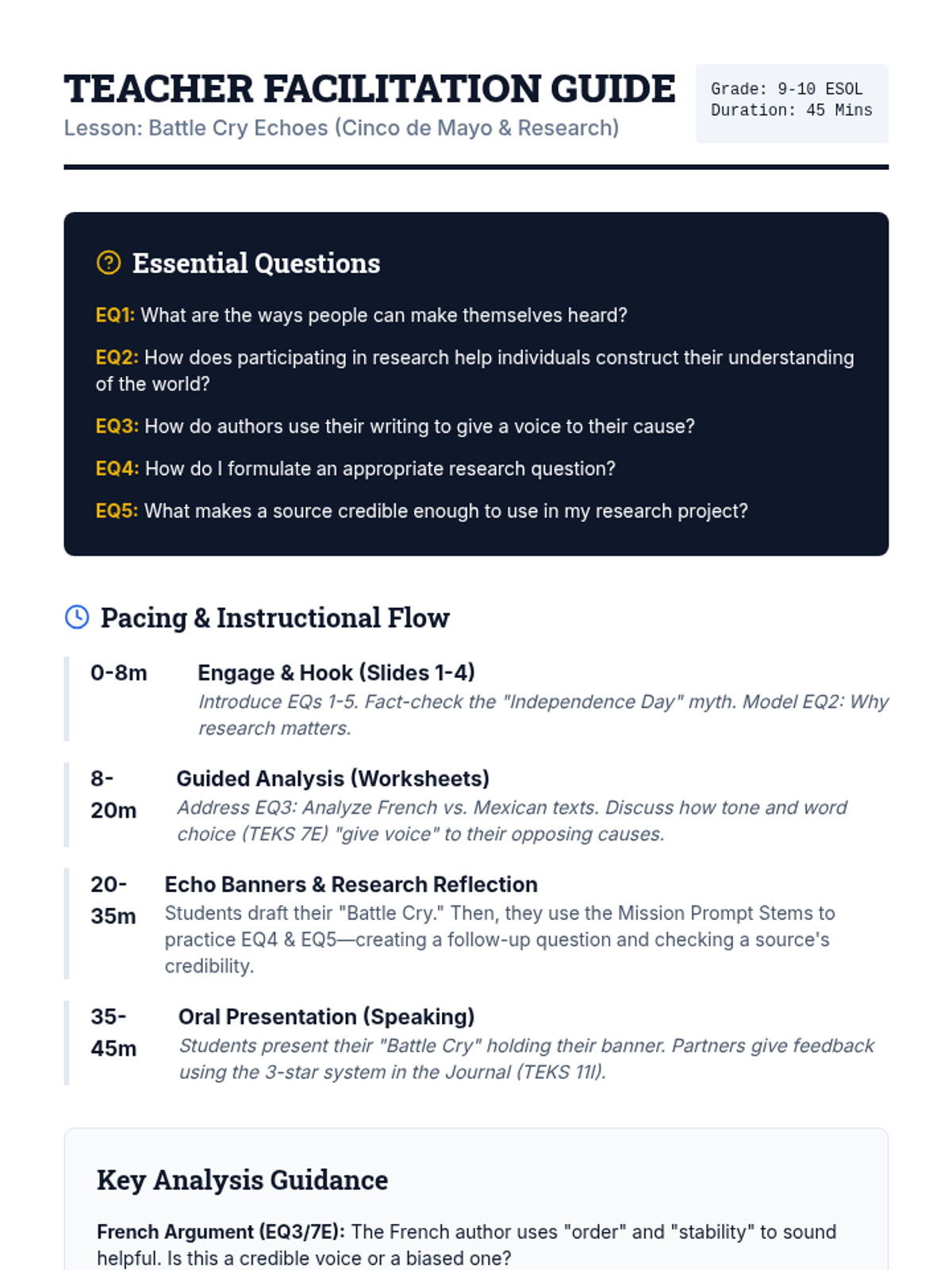
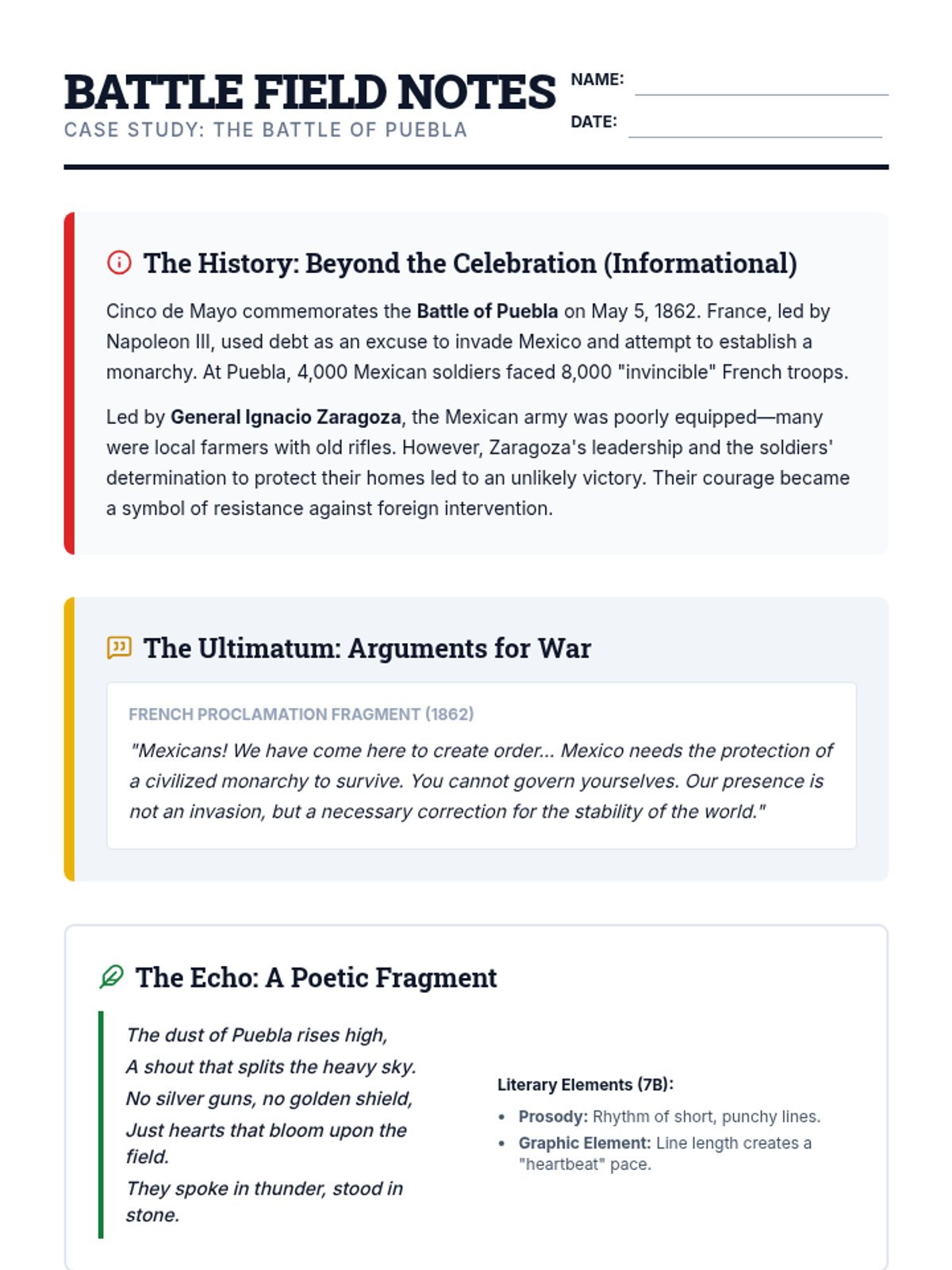
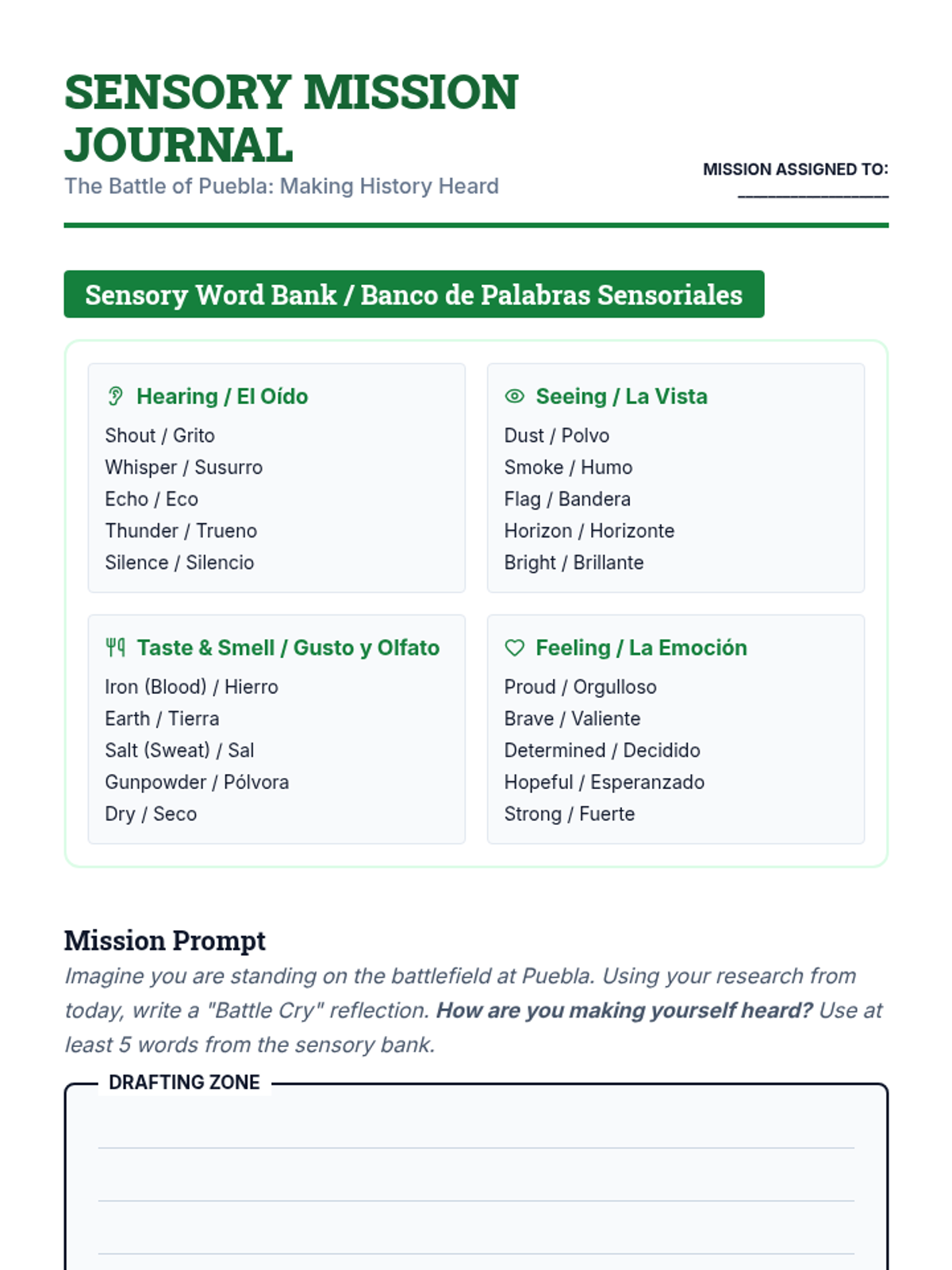
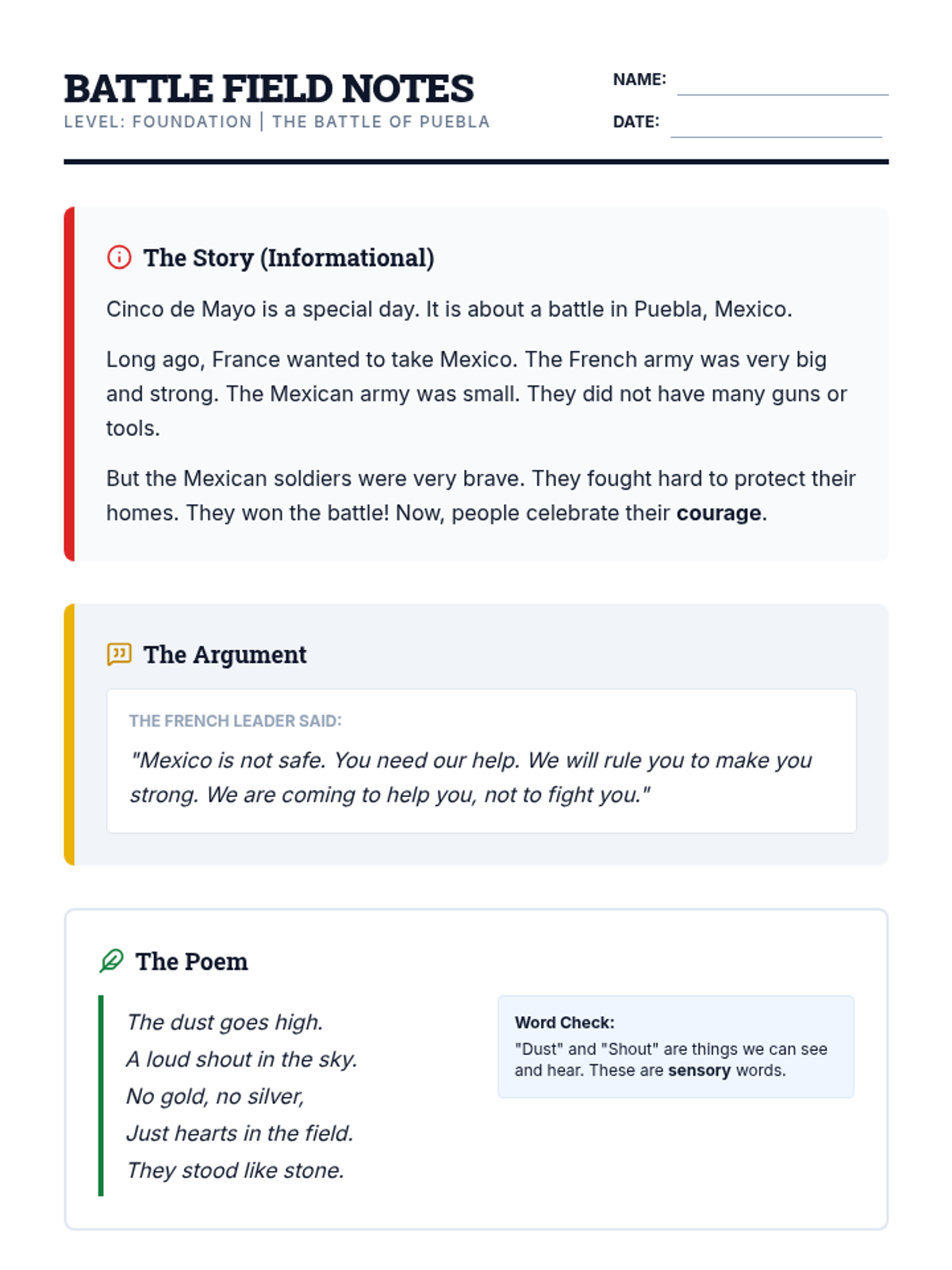
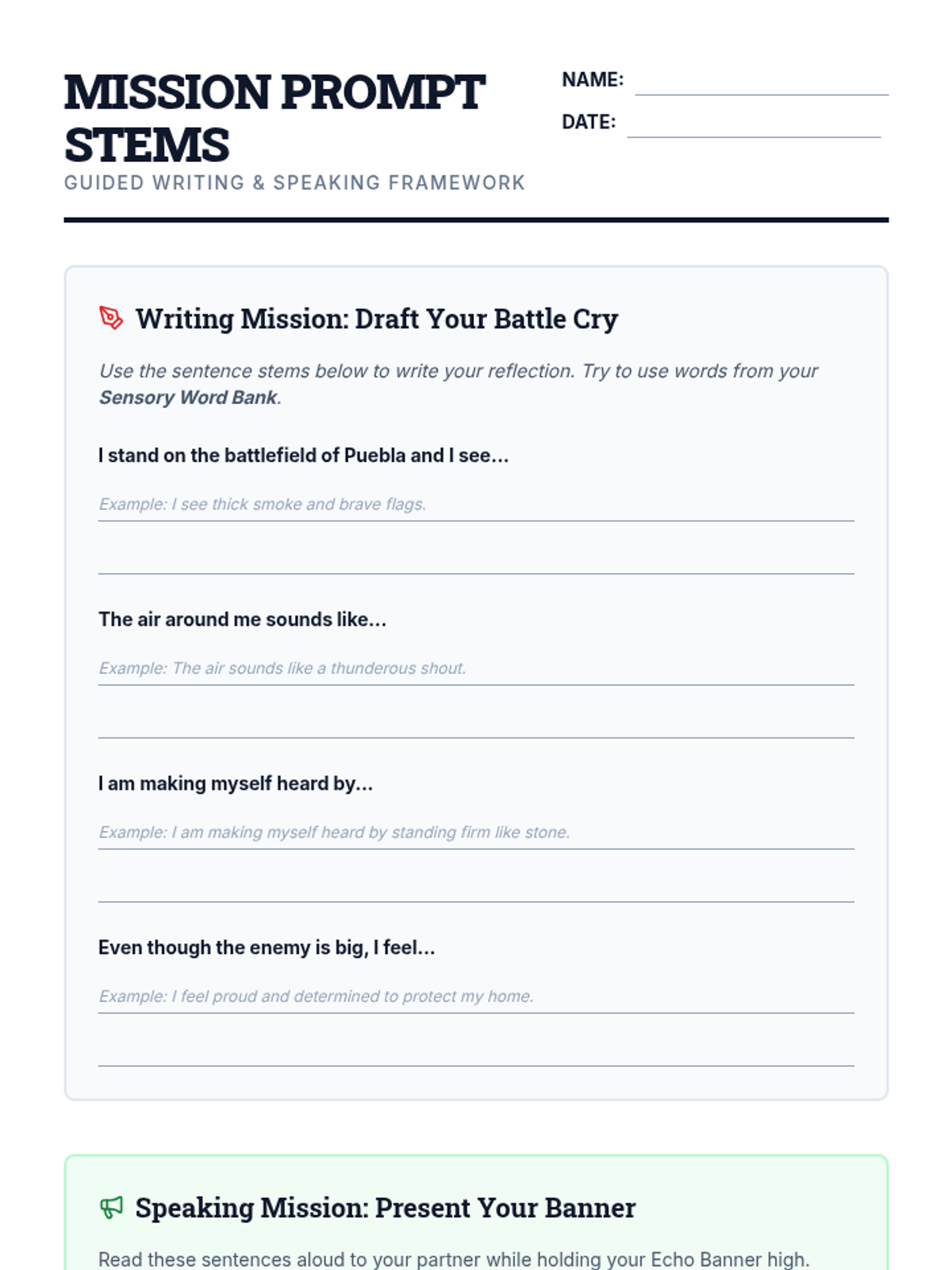
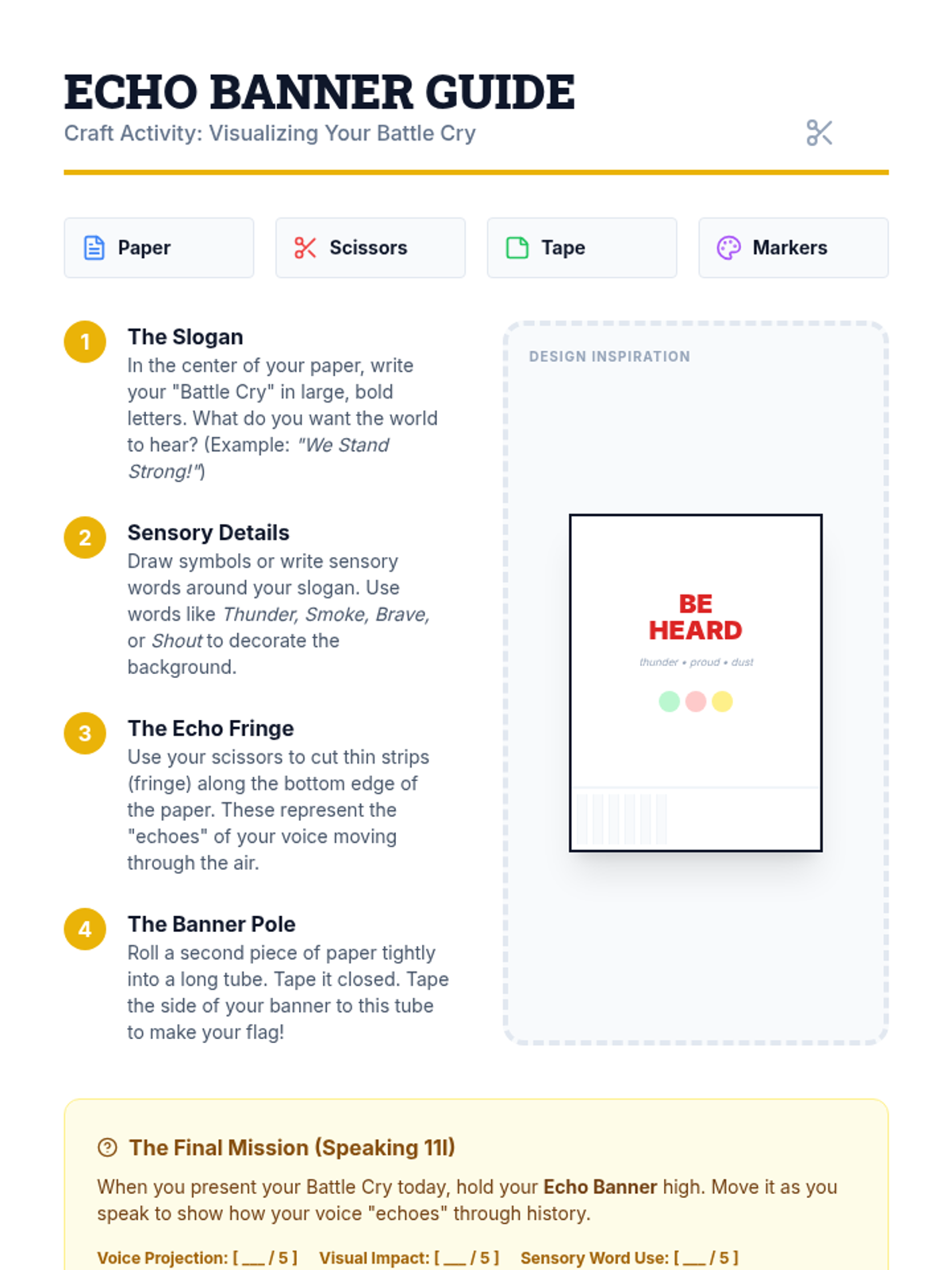
A 45-minute ESOL lesson exploring the Battle of Puebla and Cinco de Mayo. Students analyze informational texts and poetry to answer essential questions about making oneself heard and the value of research, culminating in a sensory writing and speaking activity.
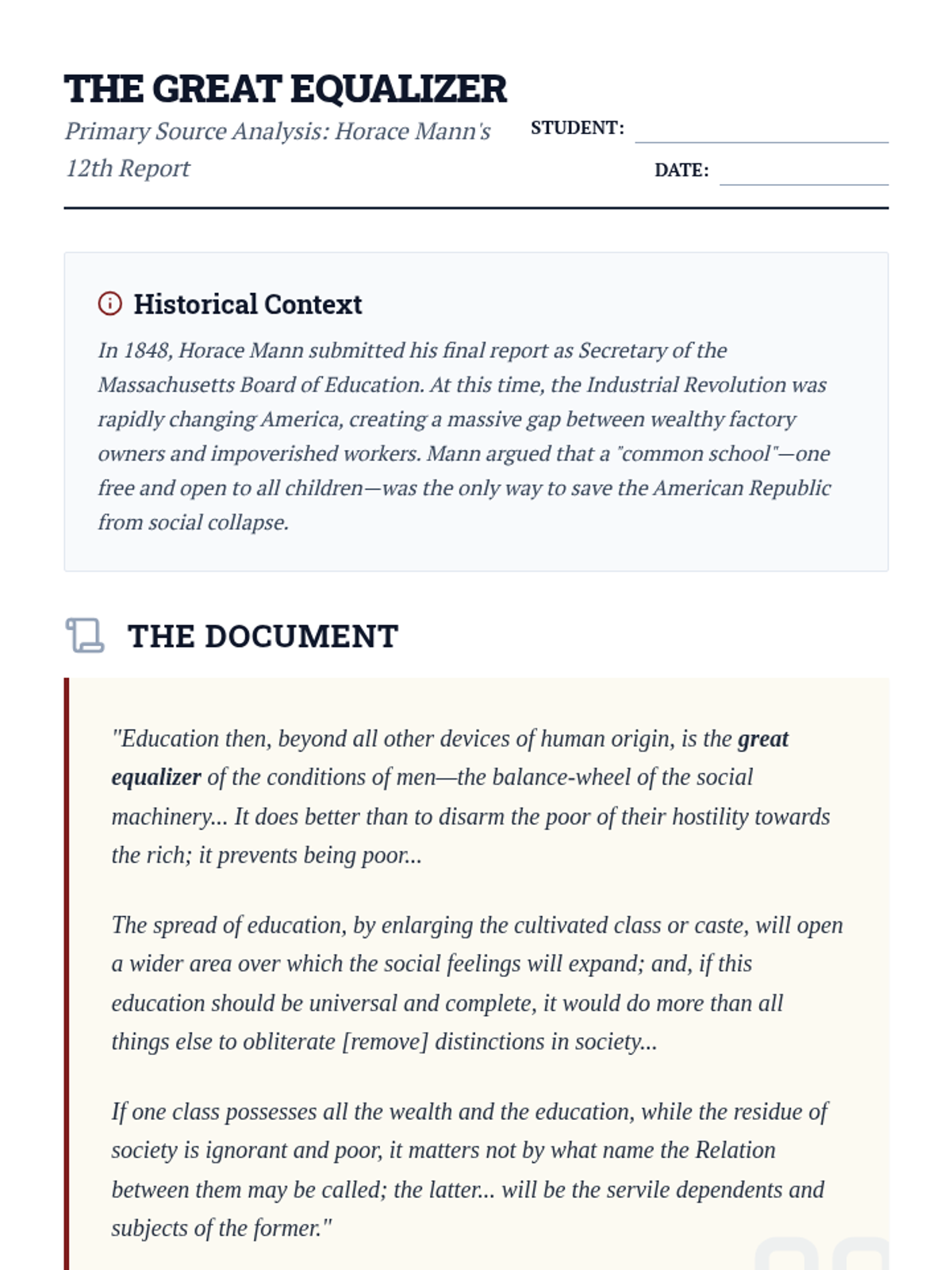
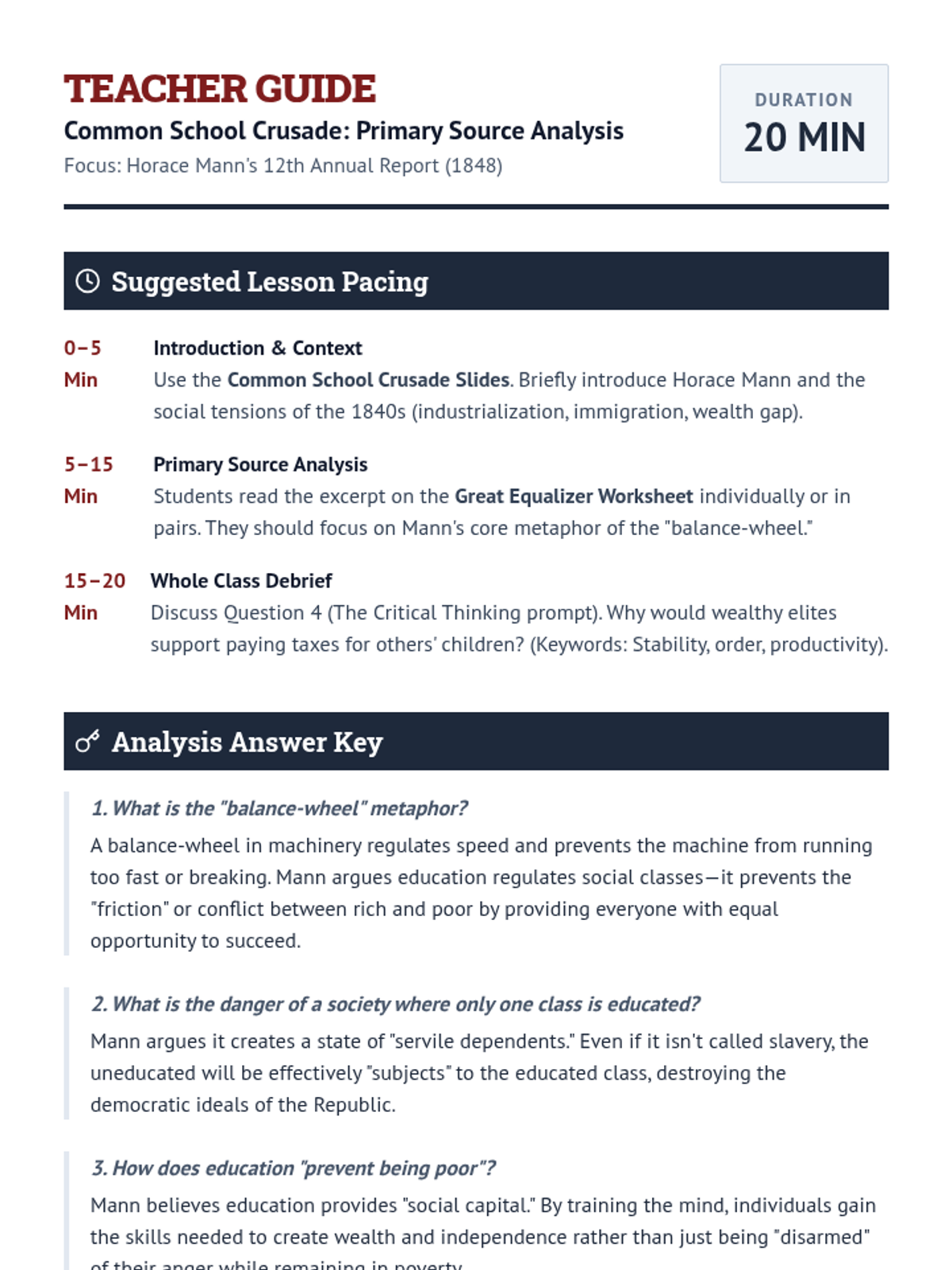
A focused 20-minute analysis of Horace Mann's 12th Annual Report to the Massachusetts Board of Education, exploring the ideals and motivations behind the American Common School Movement.
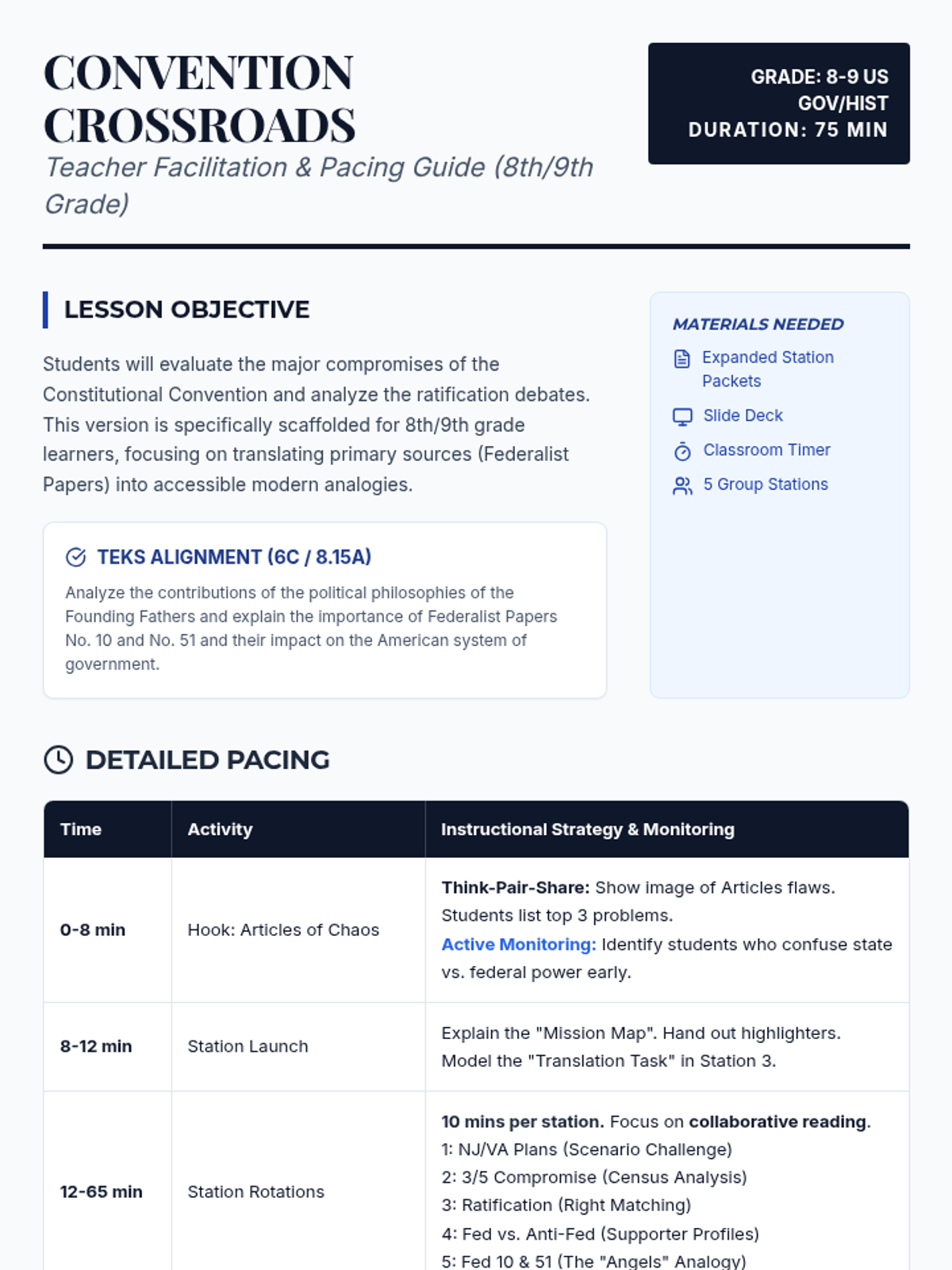
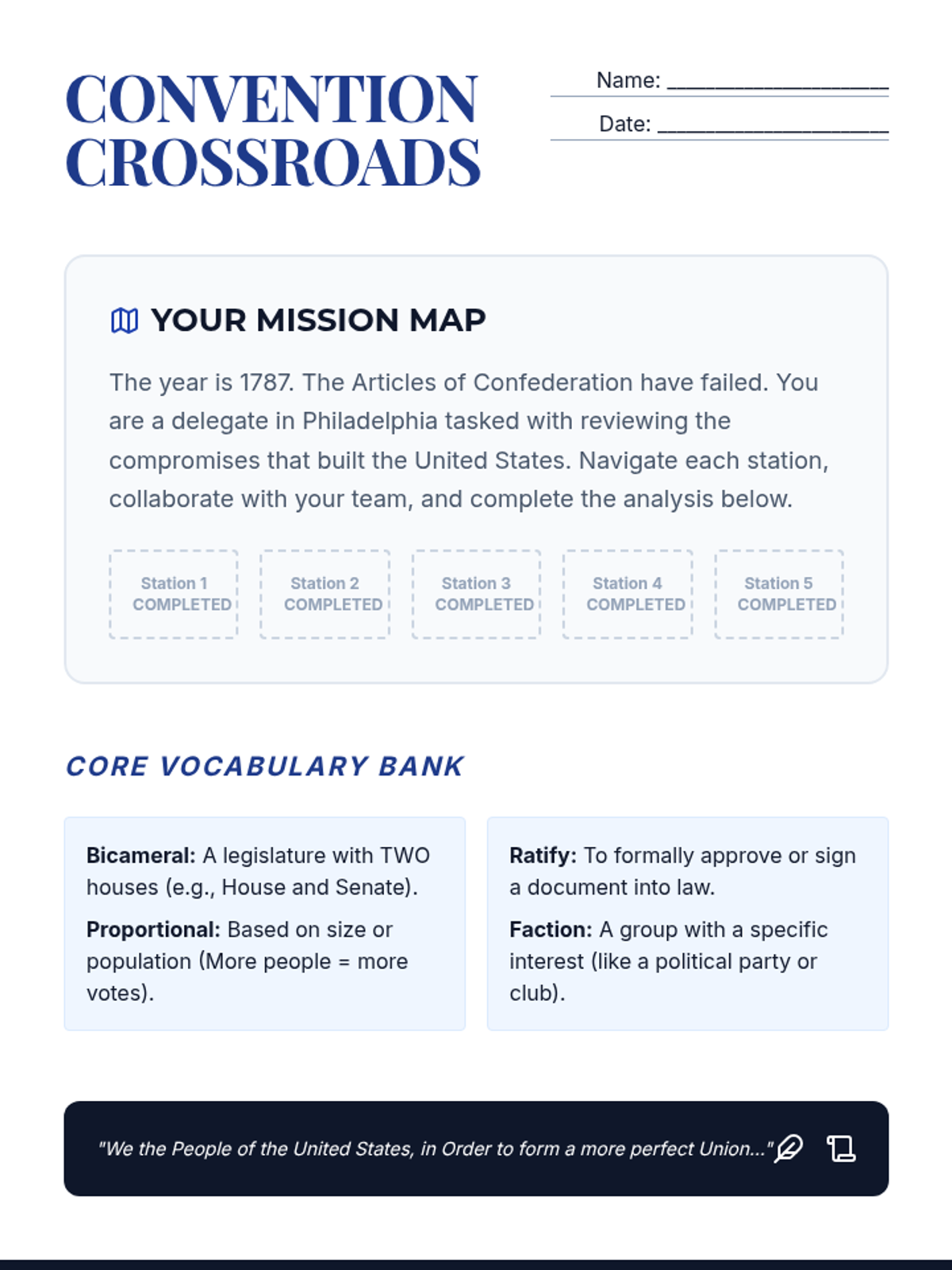
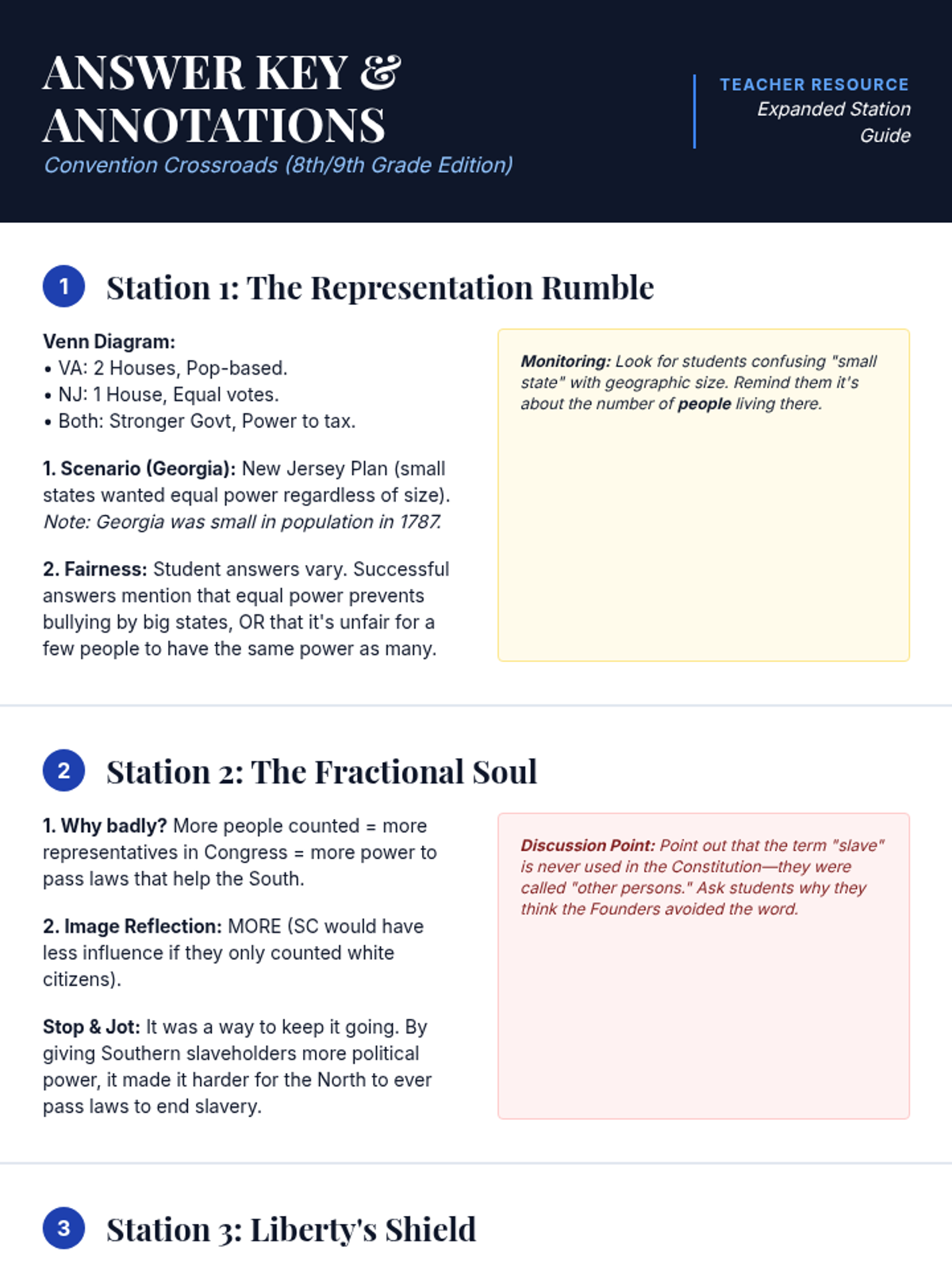
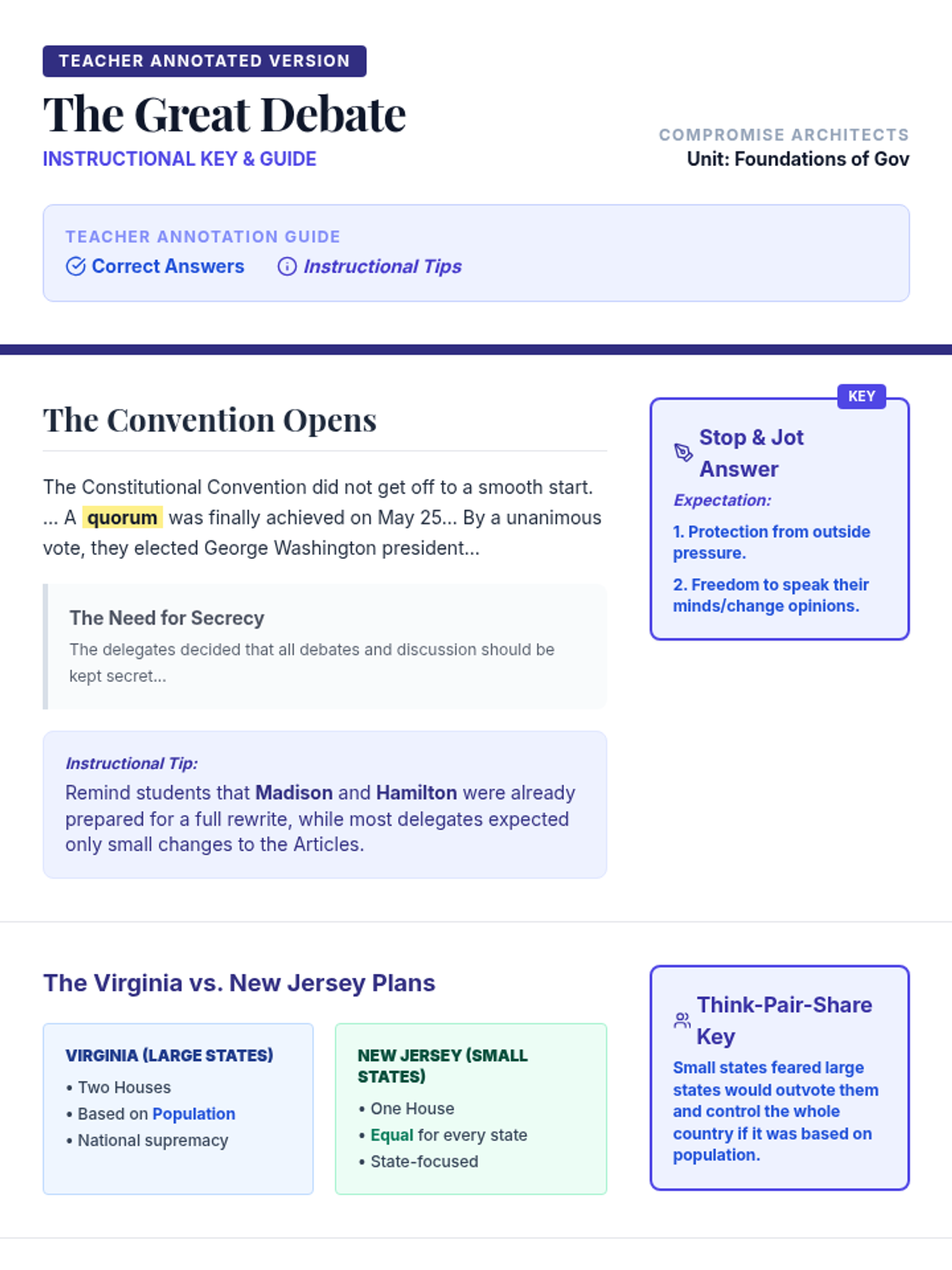
A comprehensive, station-based review lesson covering the Constitutional Convention, key compromises, Federalist vs. Anti-Federalist debates, and analysis of Federalist Papers 10 and 51. Designed for high school US Government students with heavy scaffolding for IEP and LEP learners.
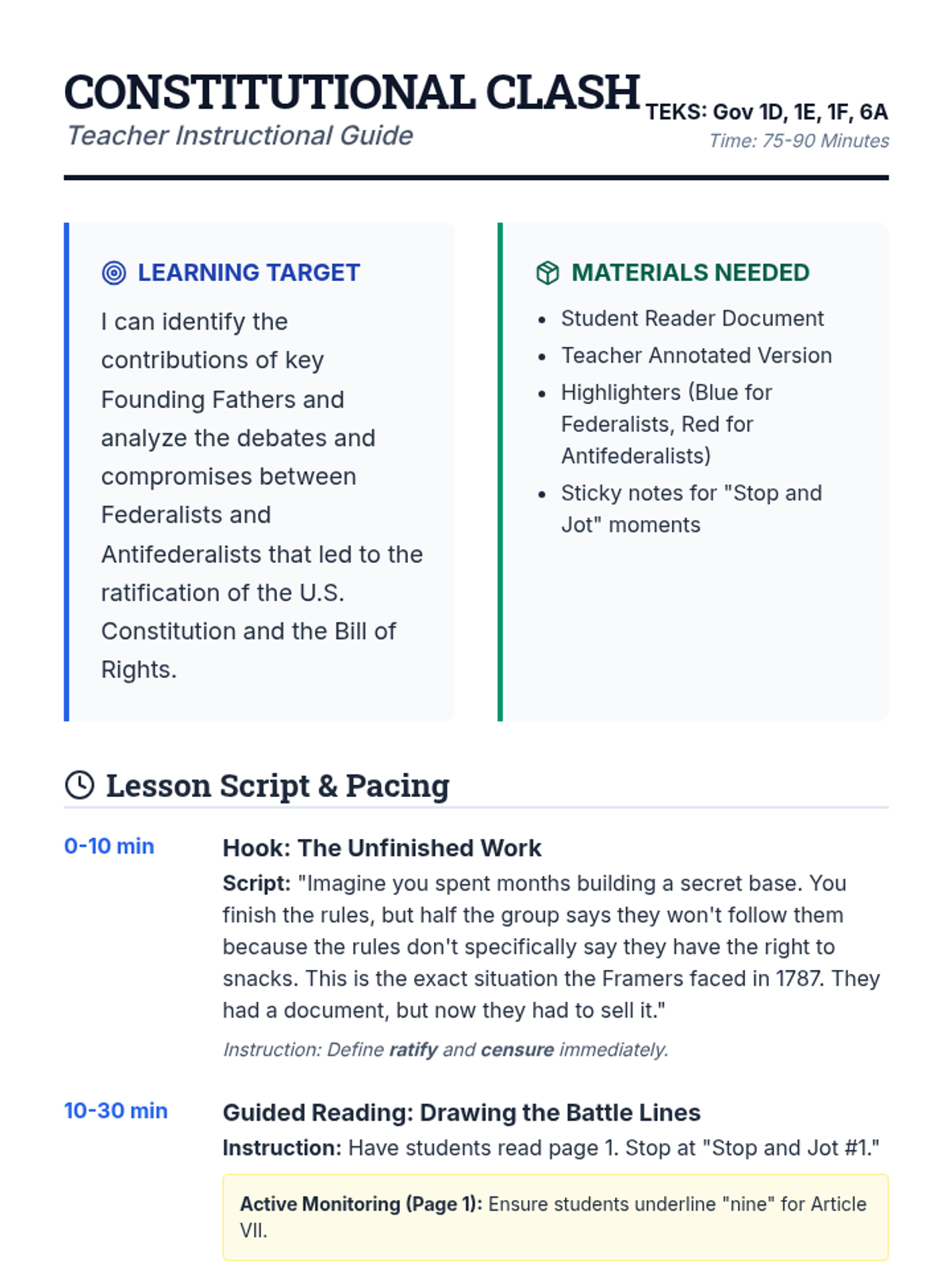
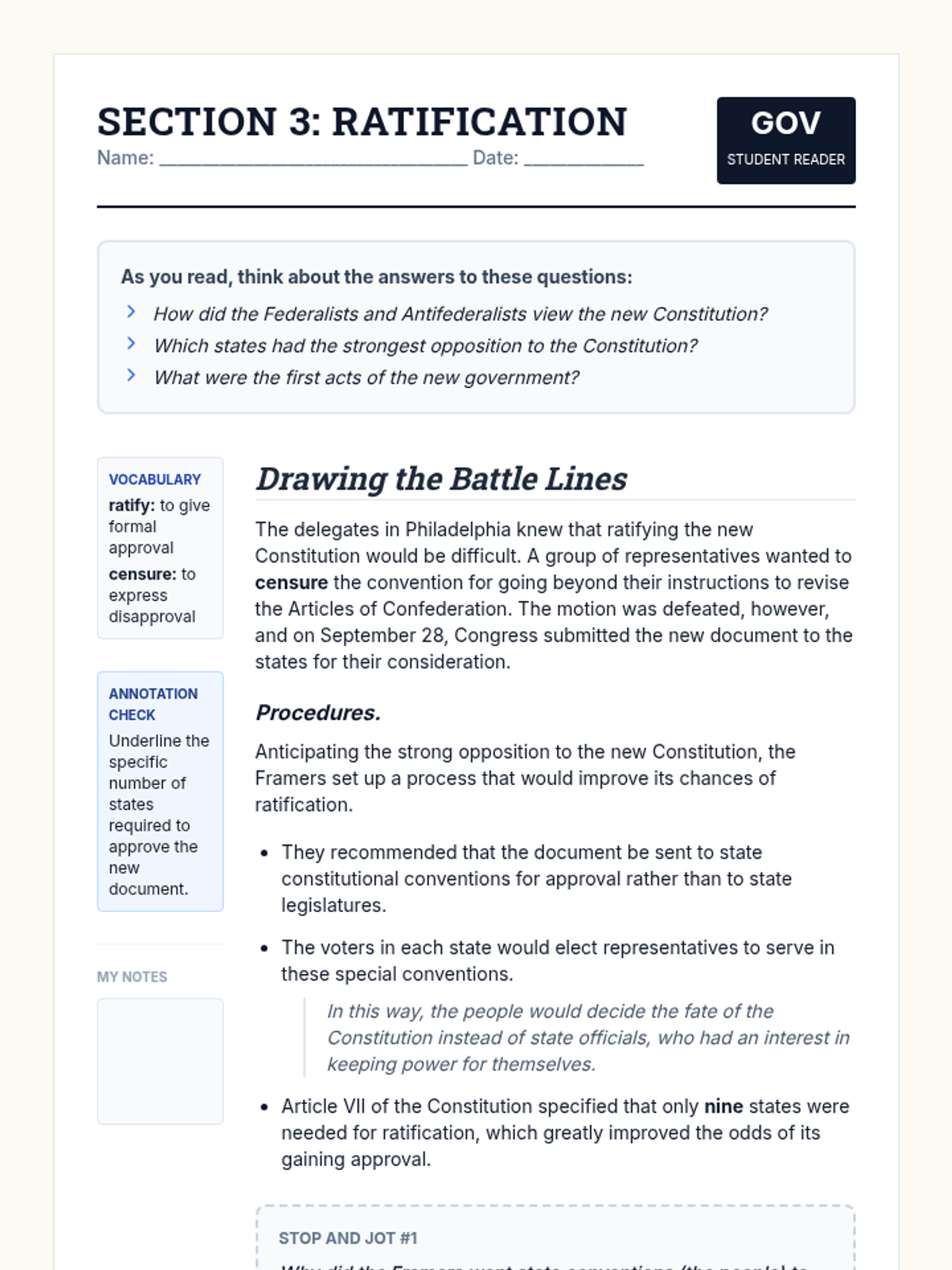
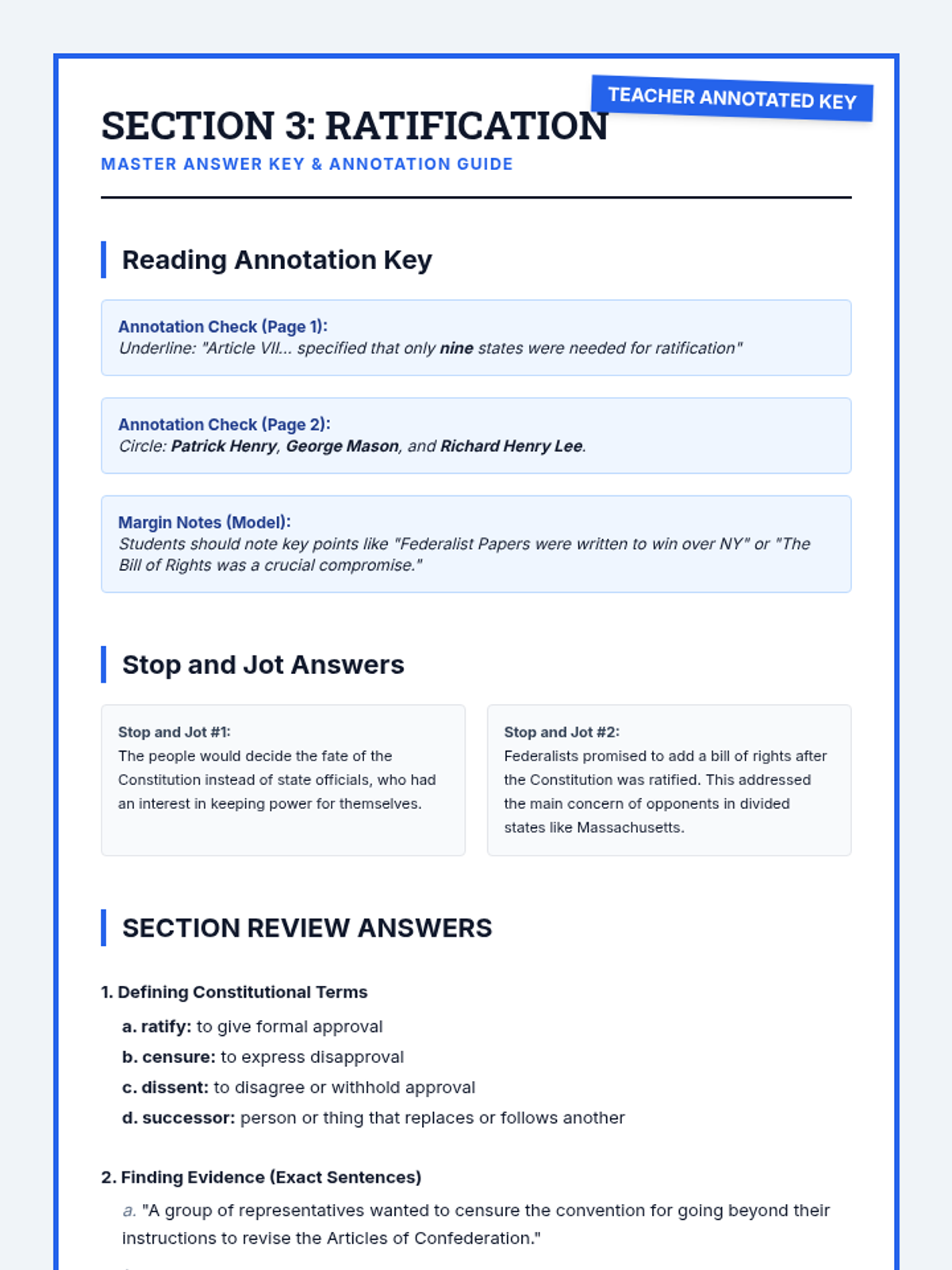
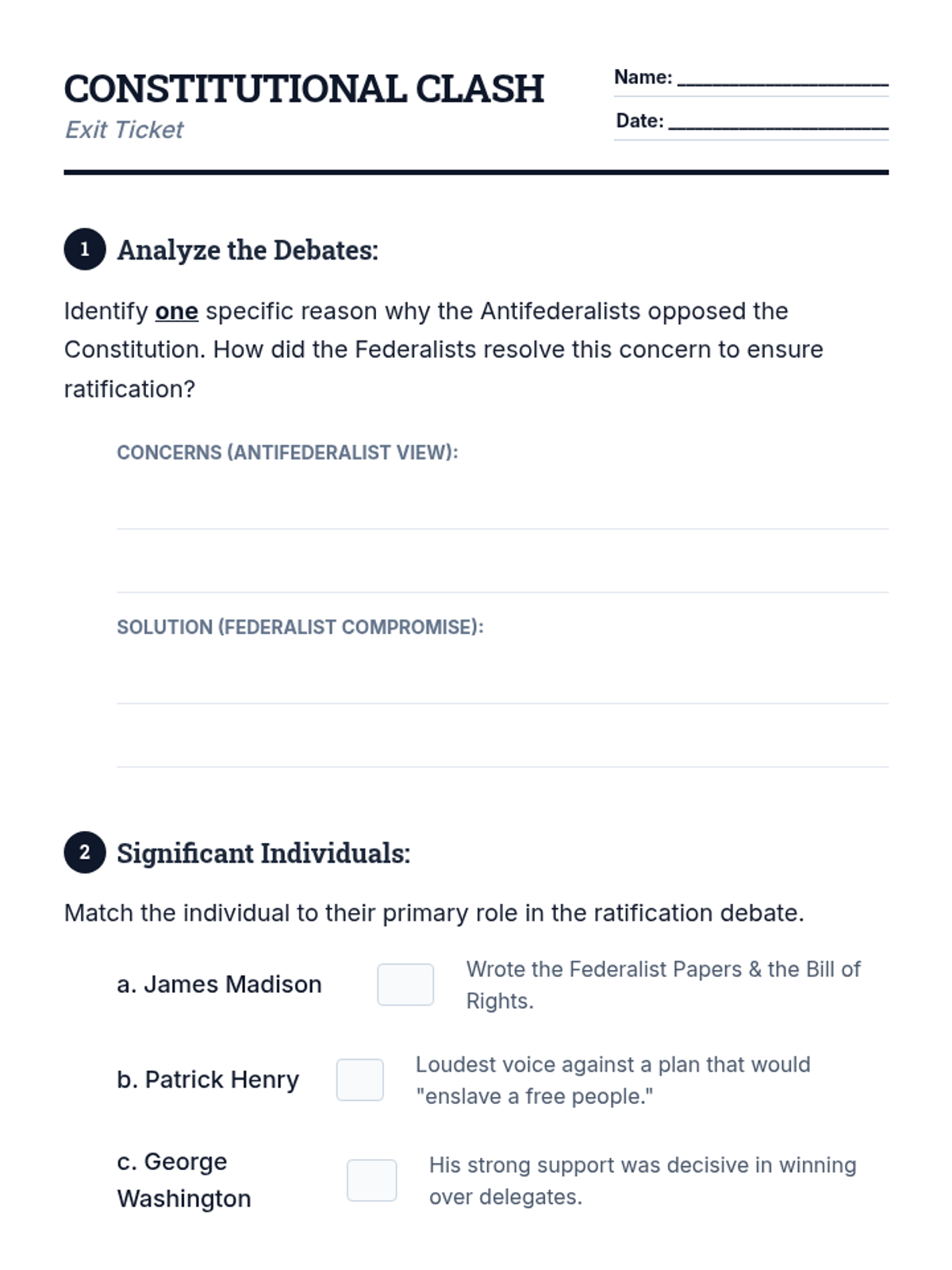
A comprehensive lesson on the ratification of the U.S. Constitution, focusing on the debates between Federalists and Antifederalists, the role of the Bill of Rights, and the contributions of key Founding Fathers.
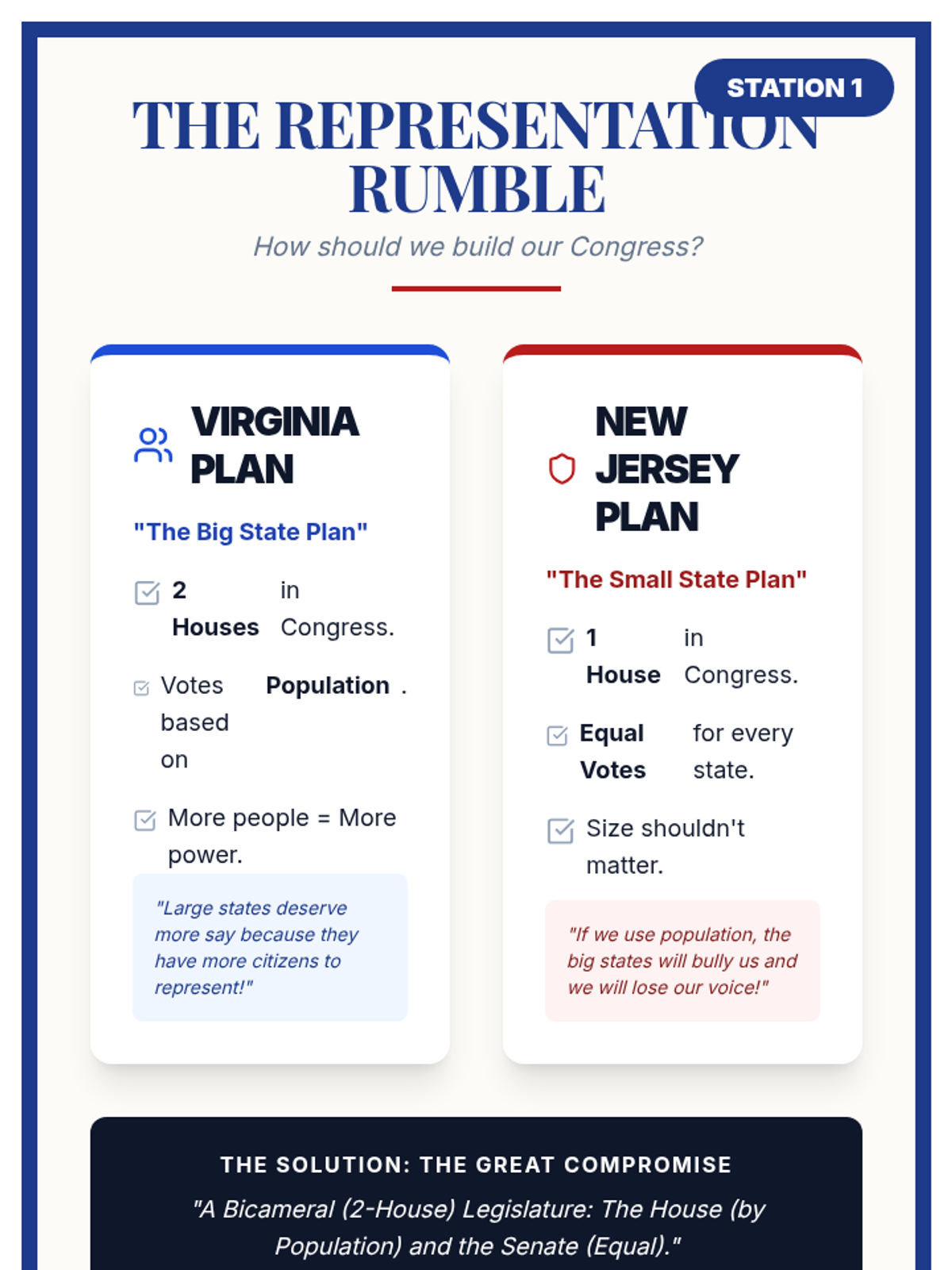
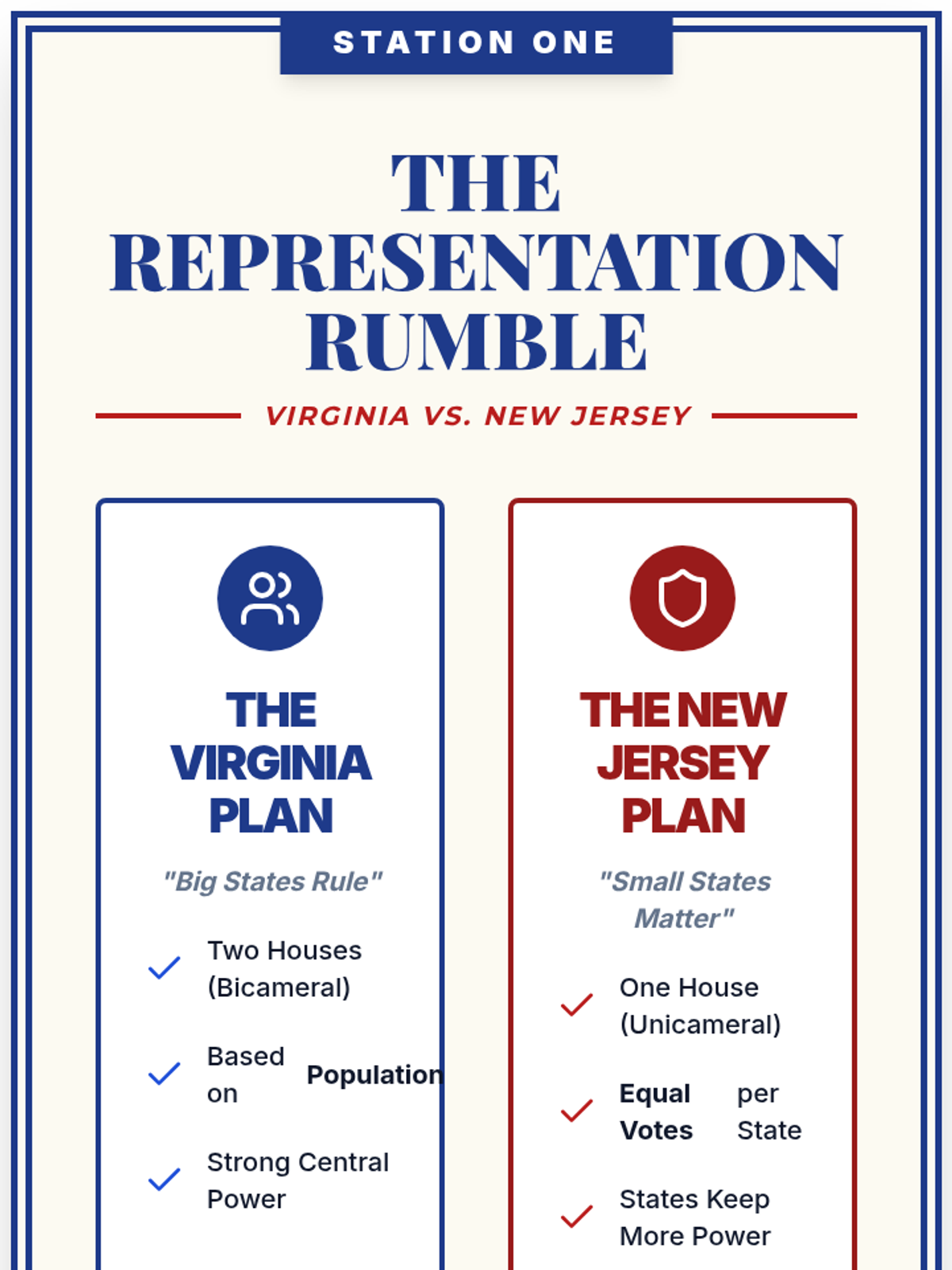
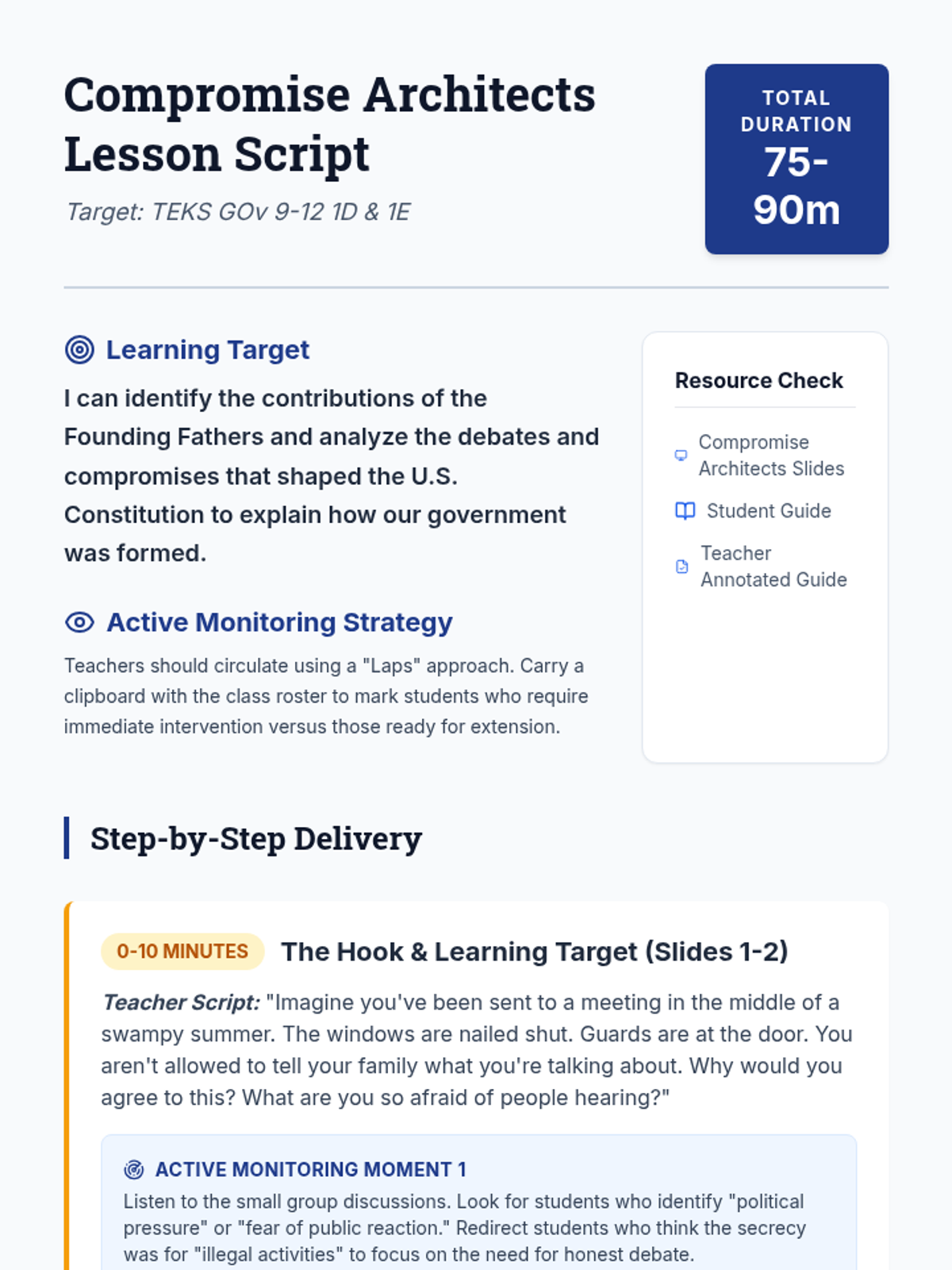
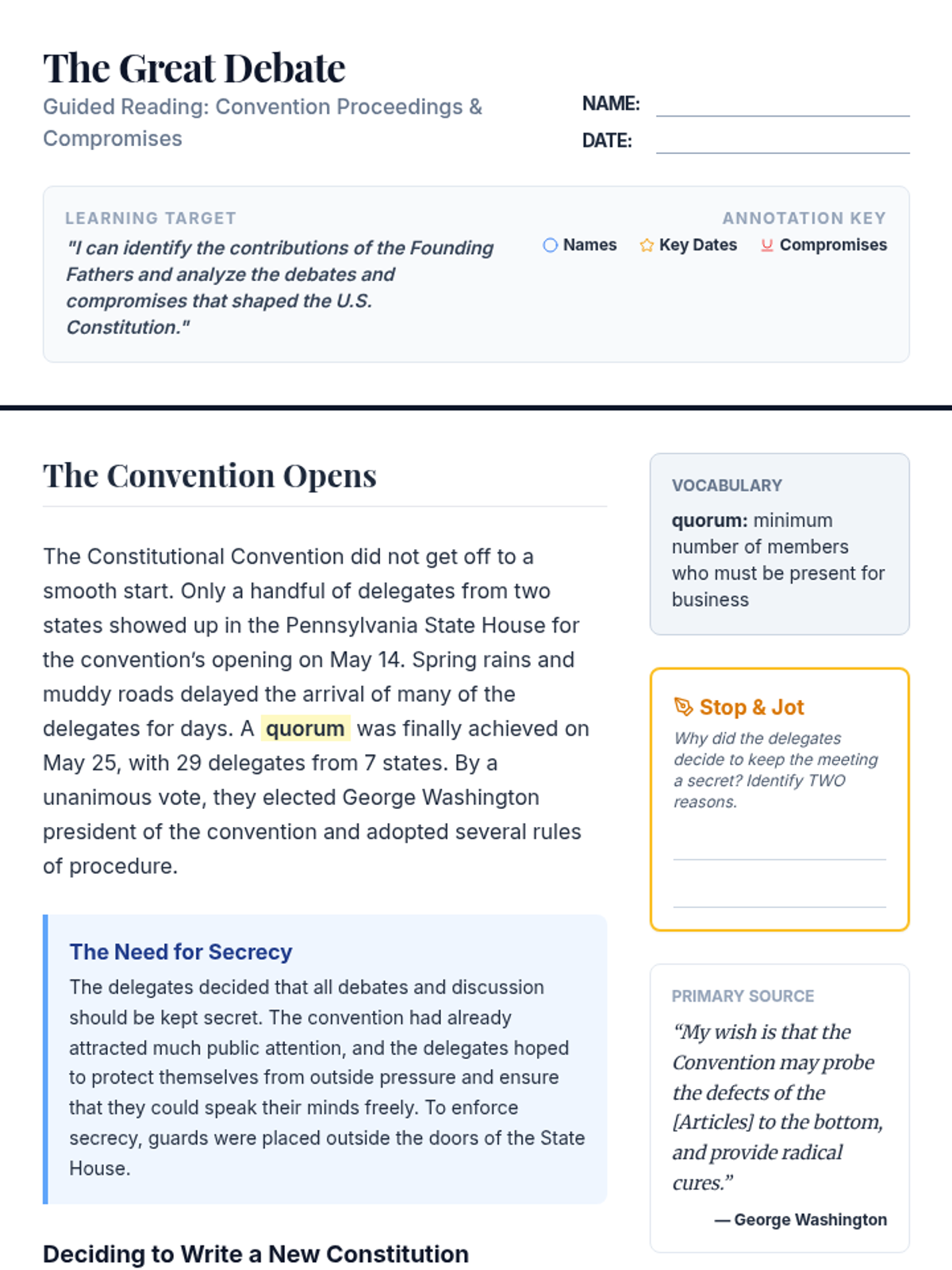
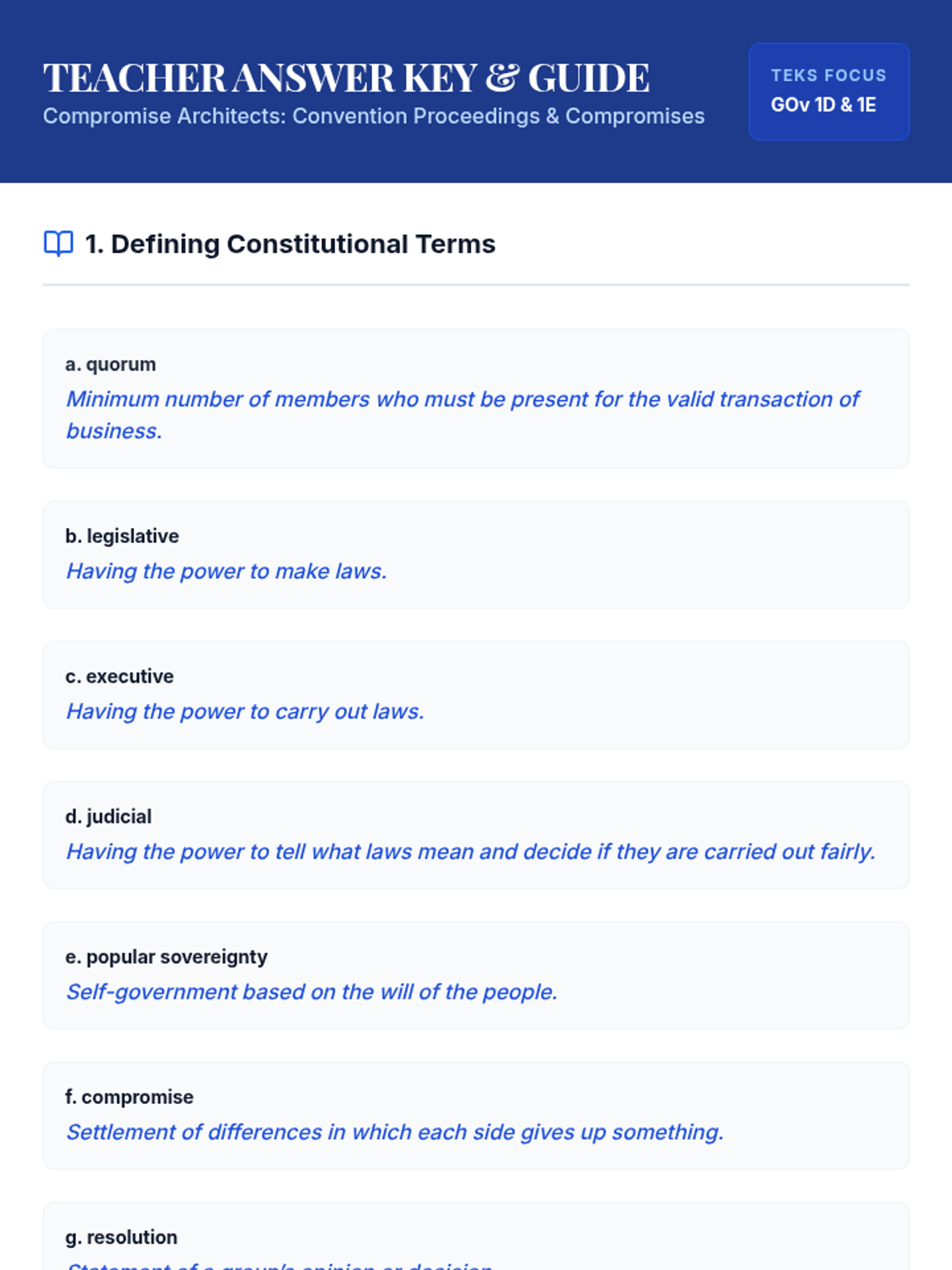
This lesson covers the proceedings of the Constitutional Convention, focusing on the conflicting Virginia and New Jersey Plans and the crucial compromises (Great Compromise, Three-Fifths Compromise, and Commerce/Slave Trade) that shaped the U.S. government. Students will analyze the contributions of key Founding Fathers and evaluate how these debates led to the creation of the Constitution.
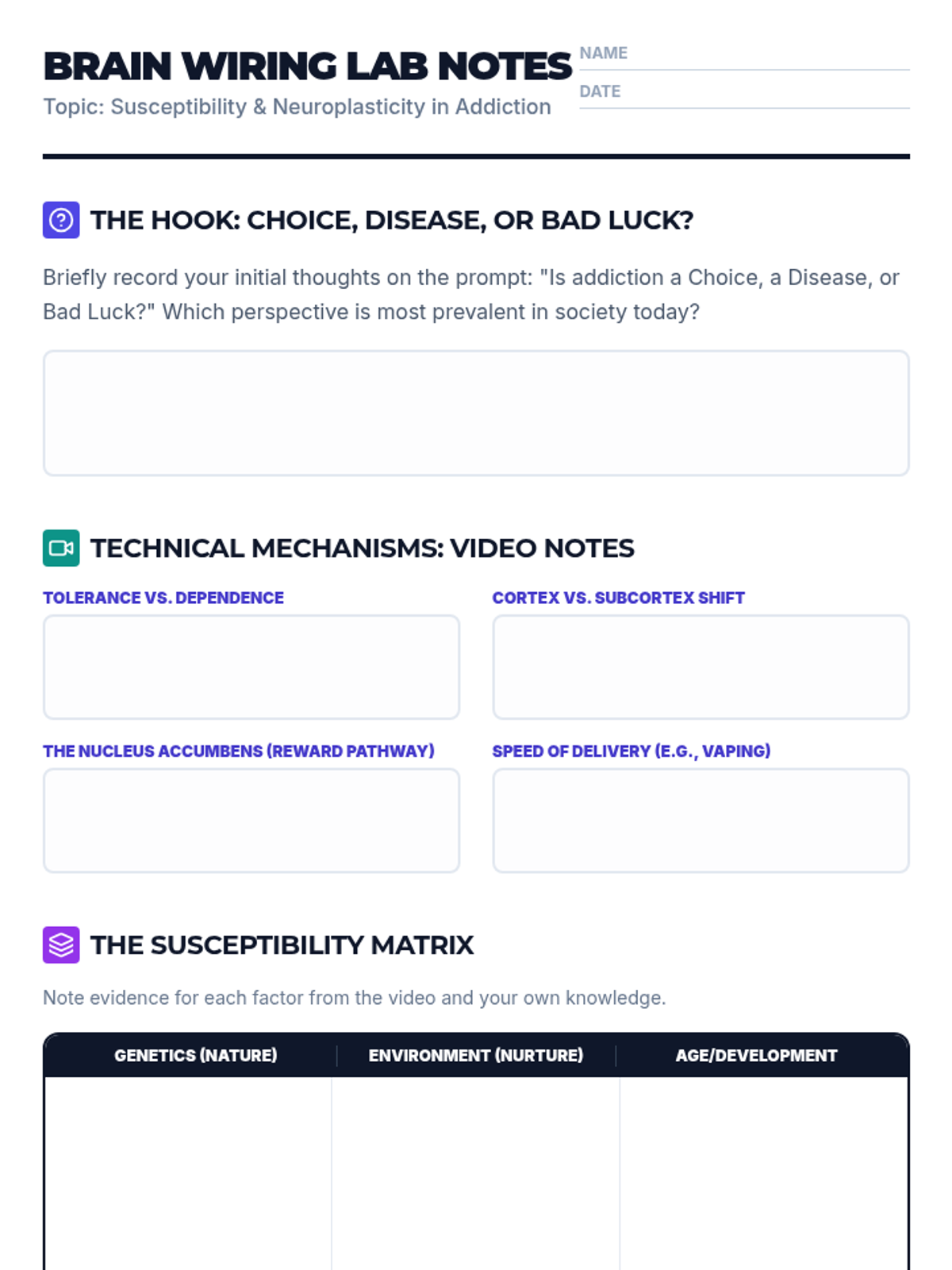
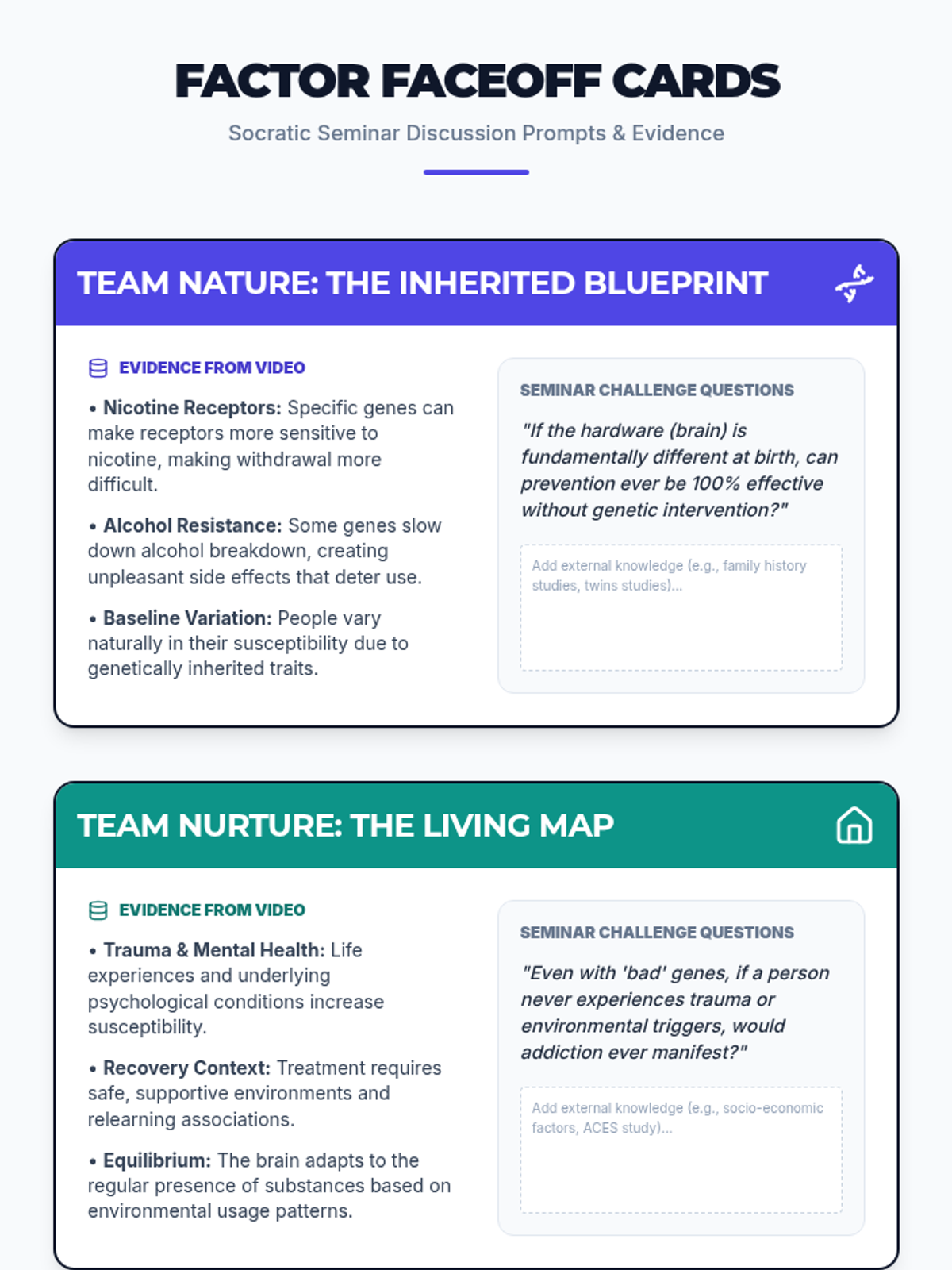
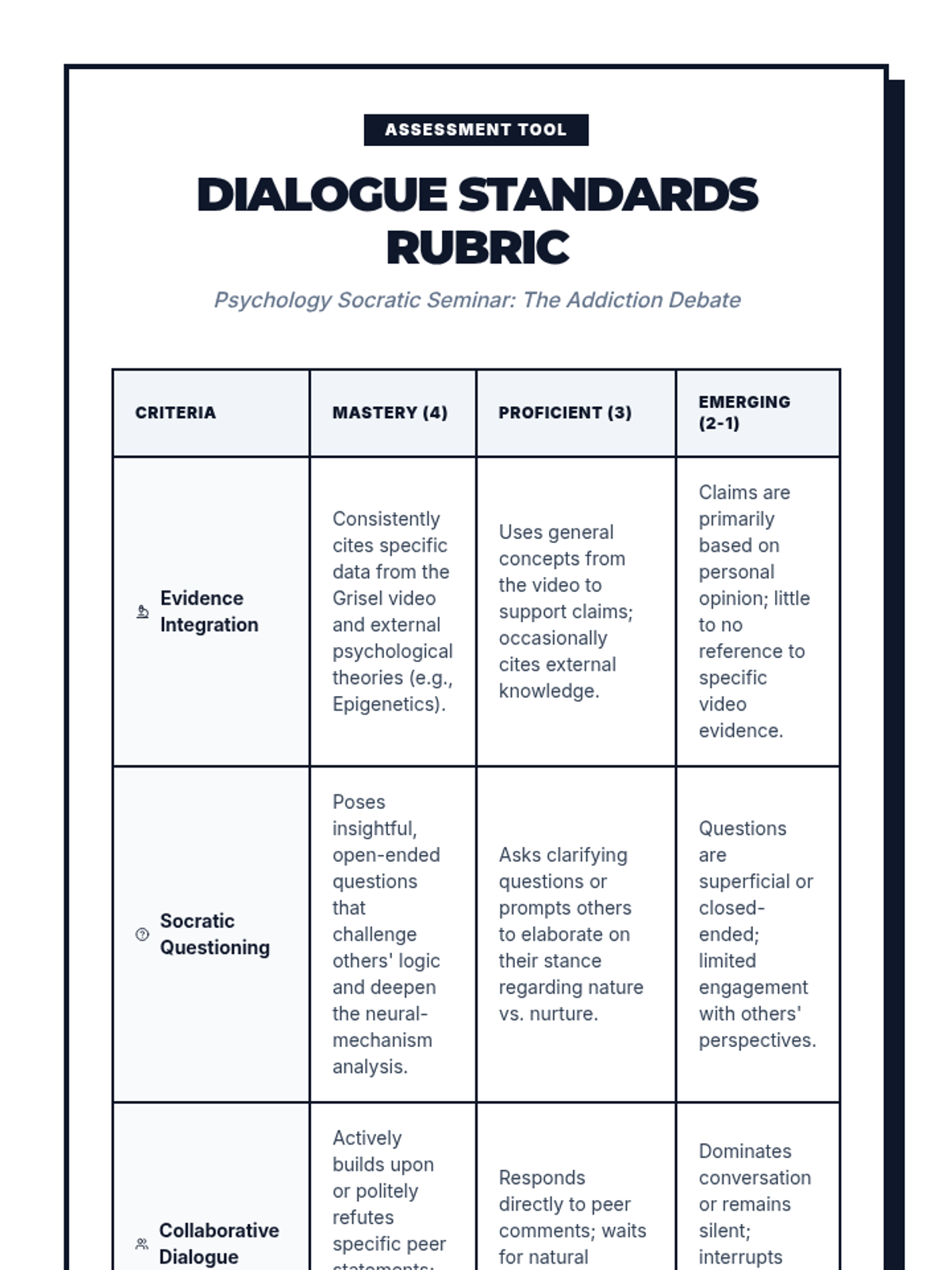
Students evaluate the 'Nature vs. Nurture' debate regarding susceptibility to addiction through a video analysis and a Socratic seminar.
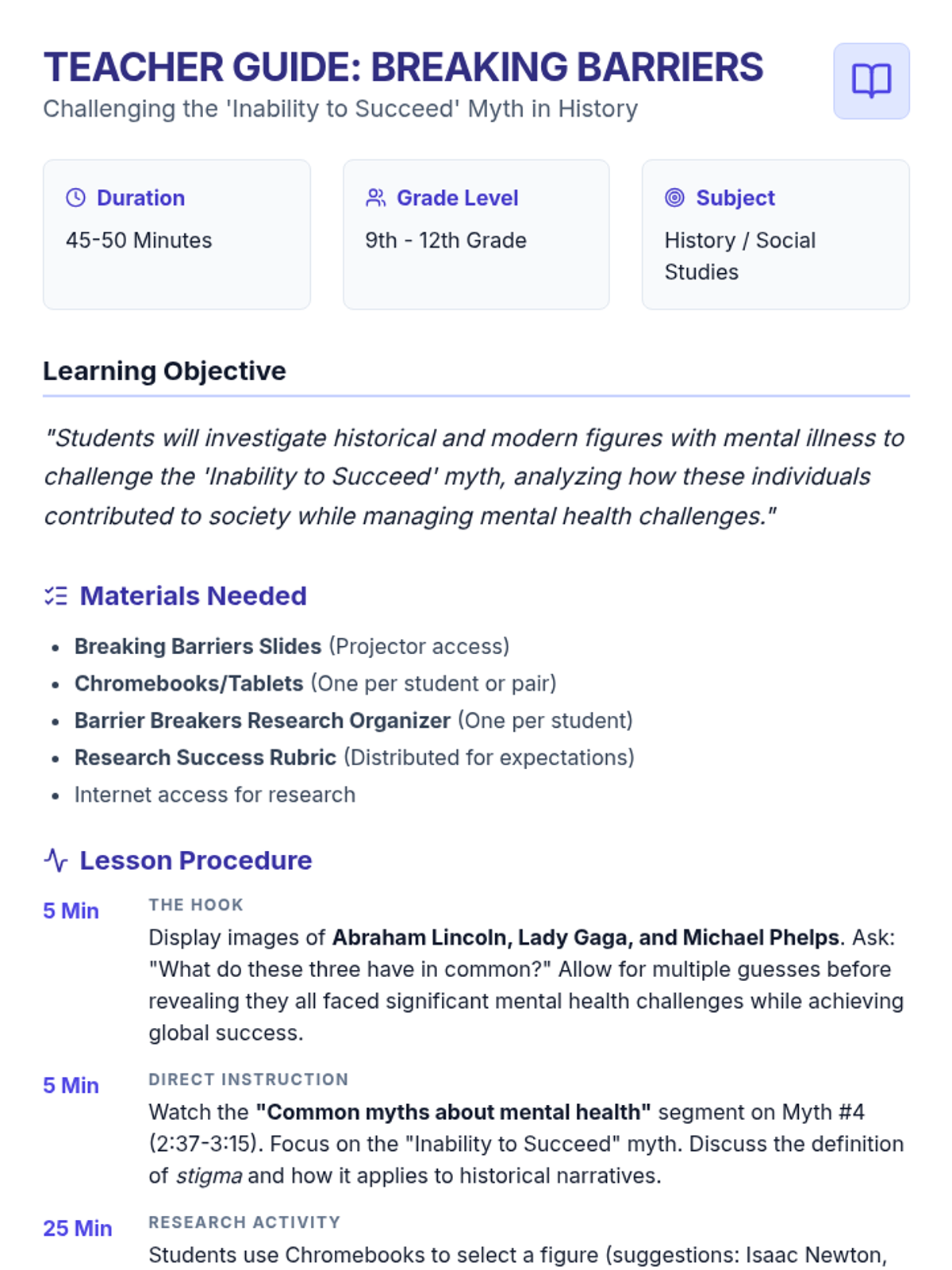
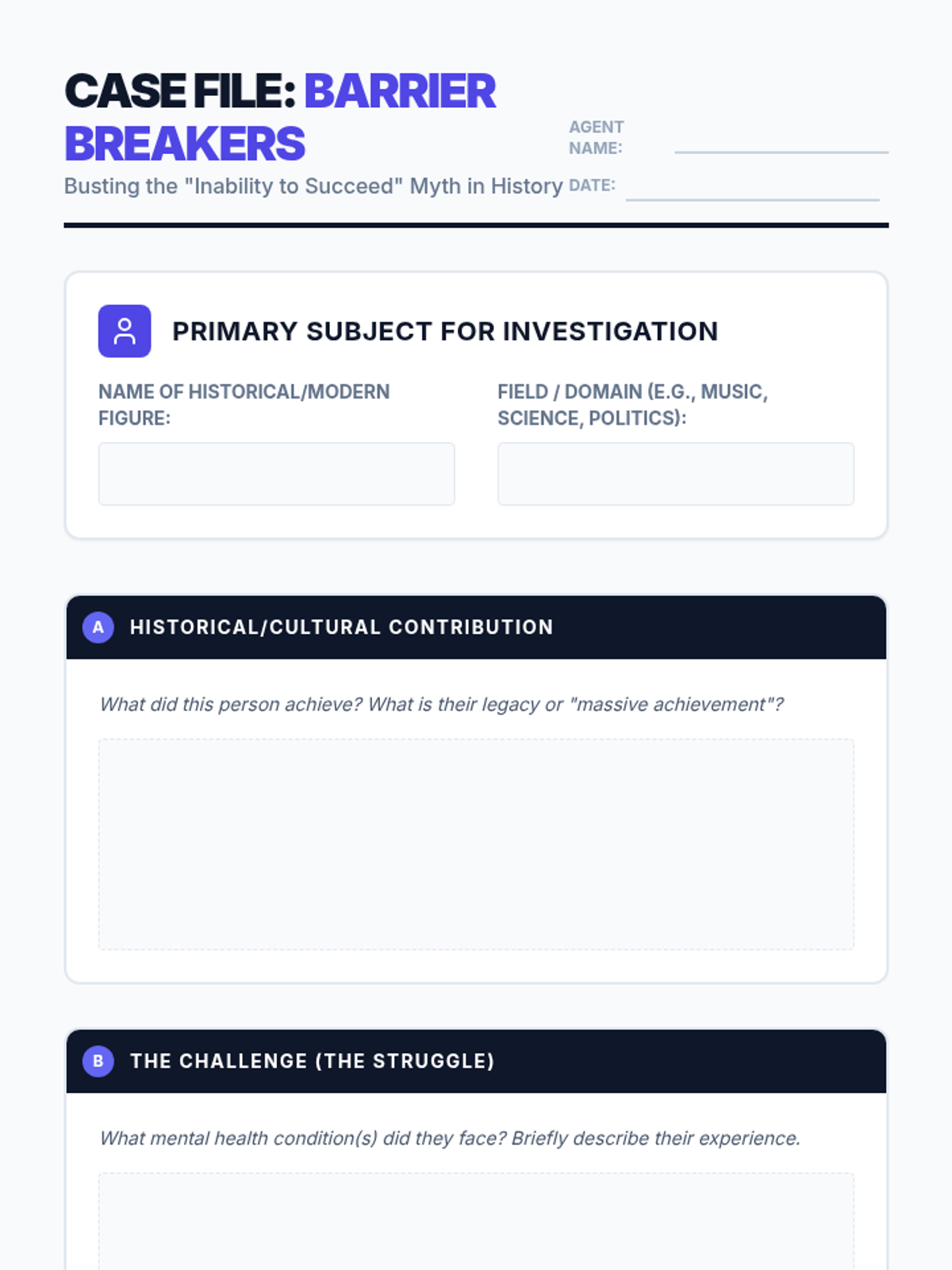
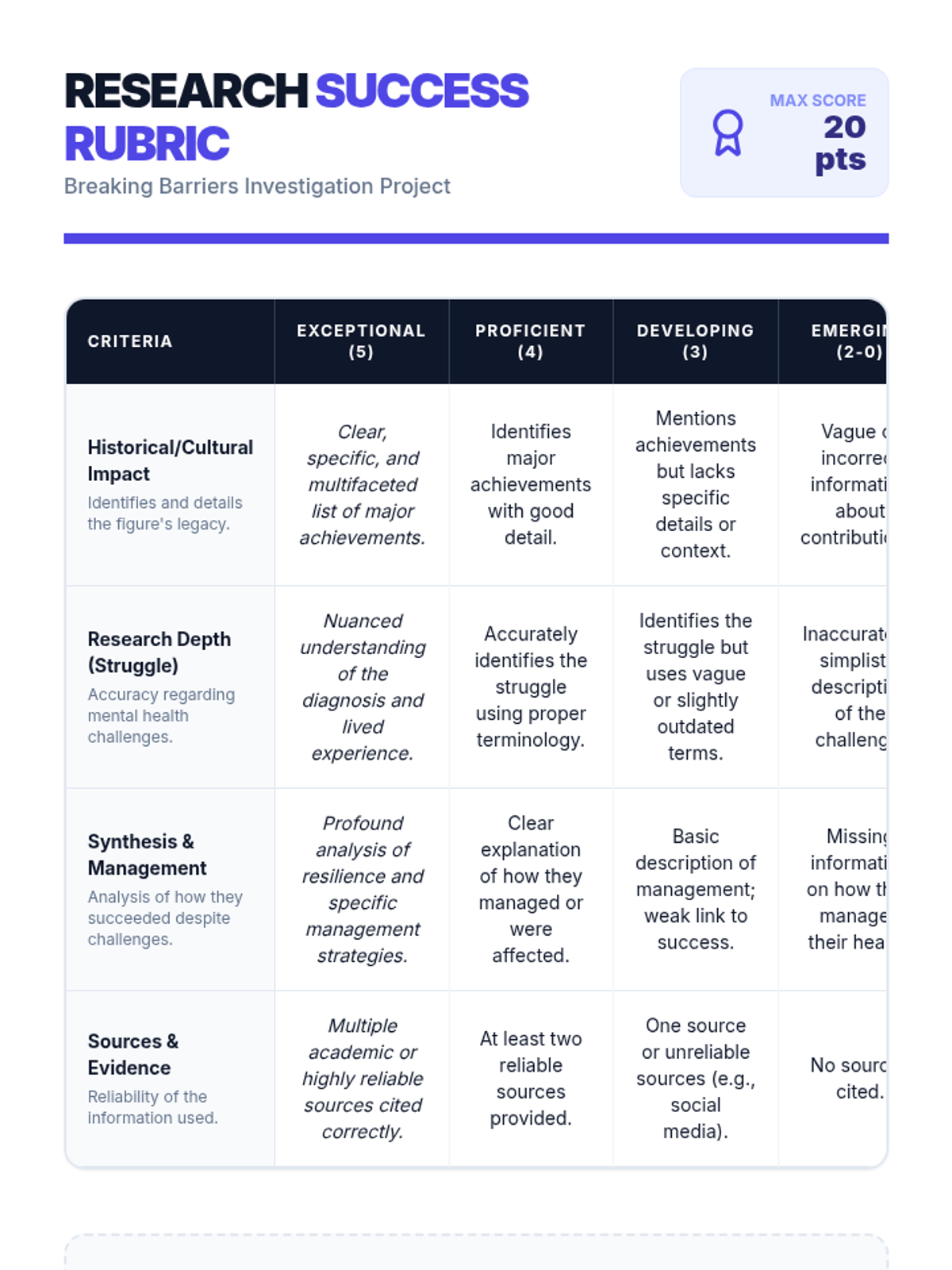
This lesson challenges the 'Inability to Succeed' myth surrounding mental health by having students investigate the achievements and struggles of historical and modern figures. Students engage with media, conduct independent research, and share their findings to demystify mental illness in a social studies context.
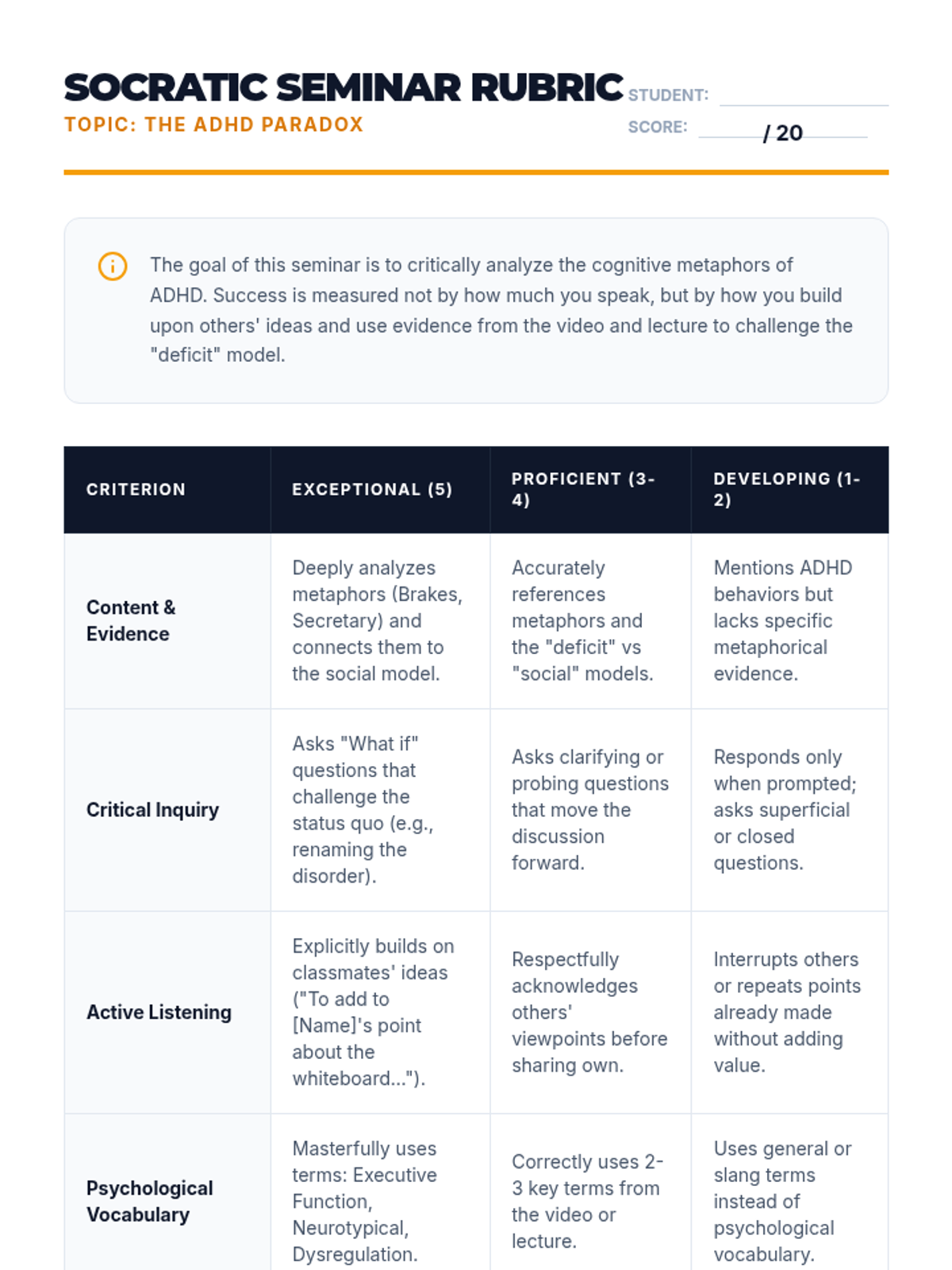
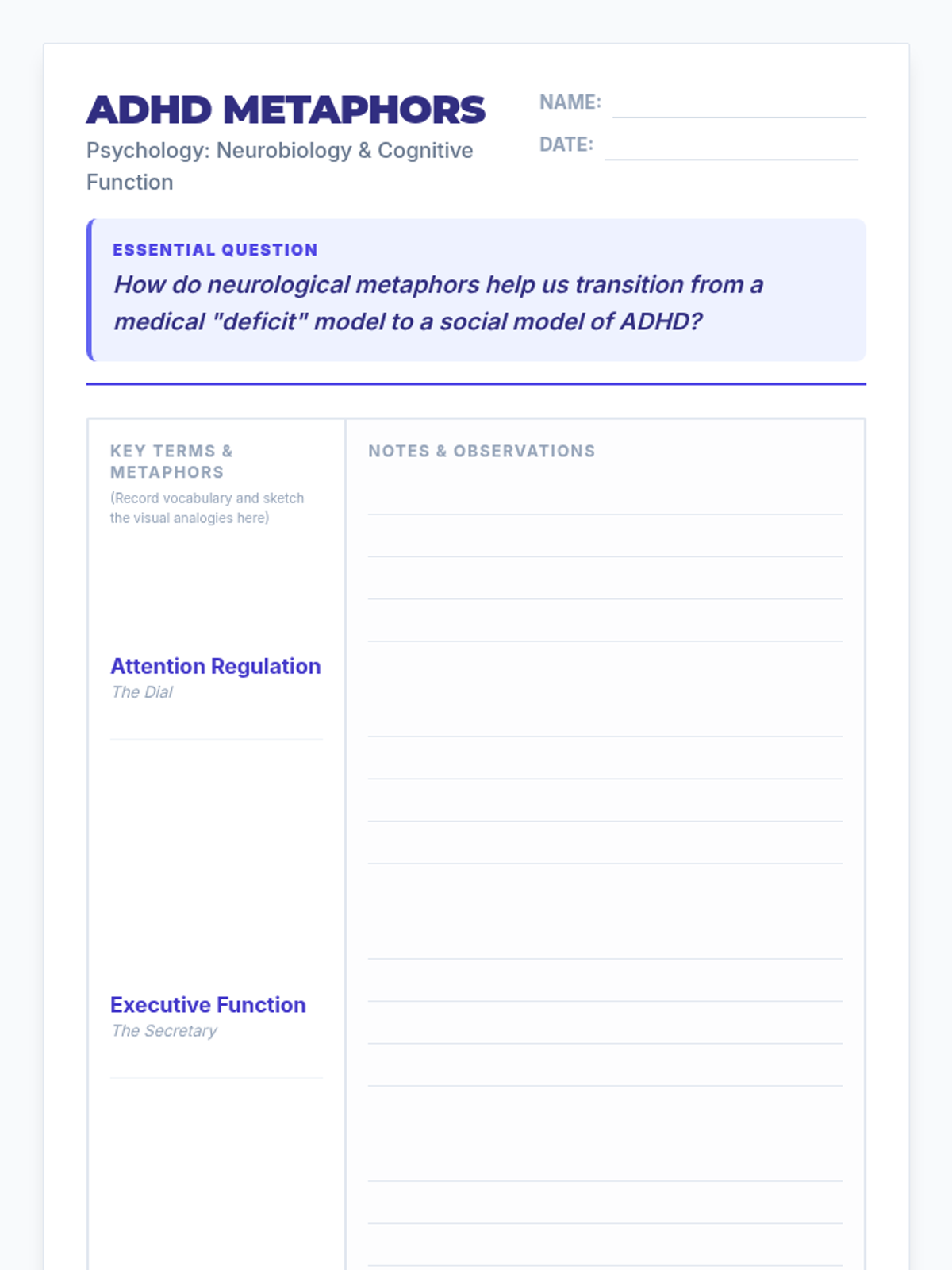
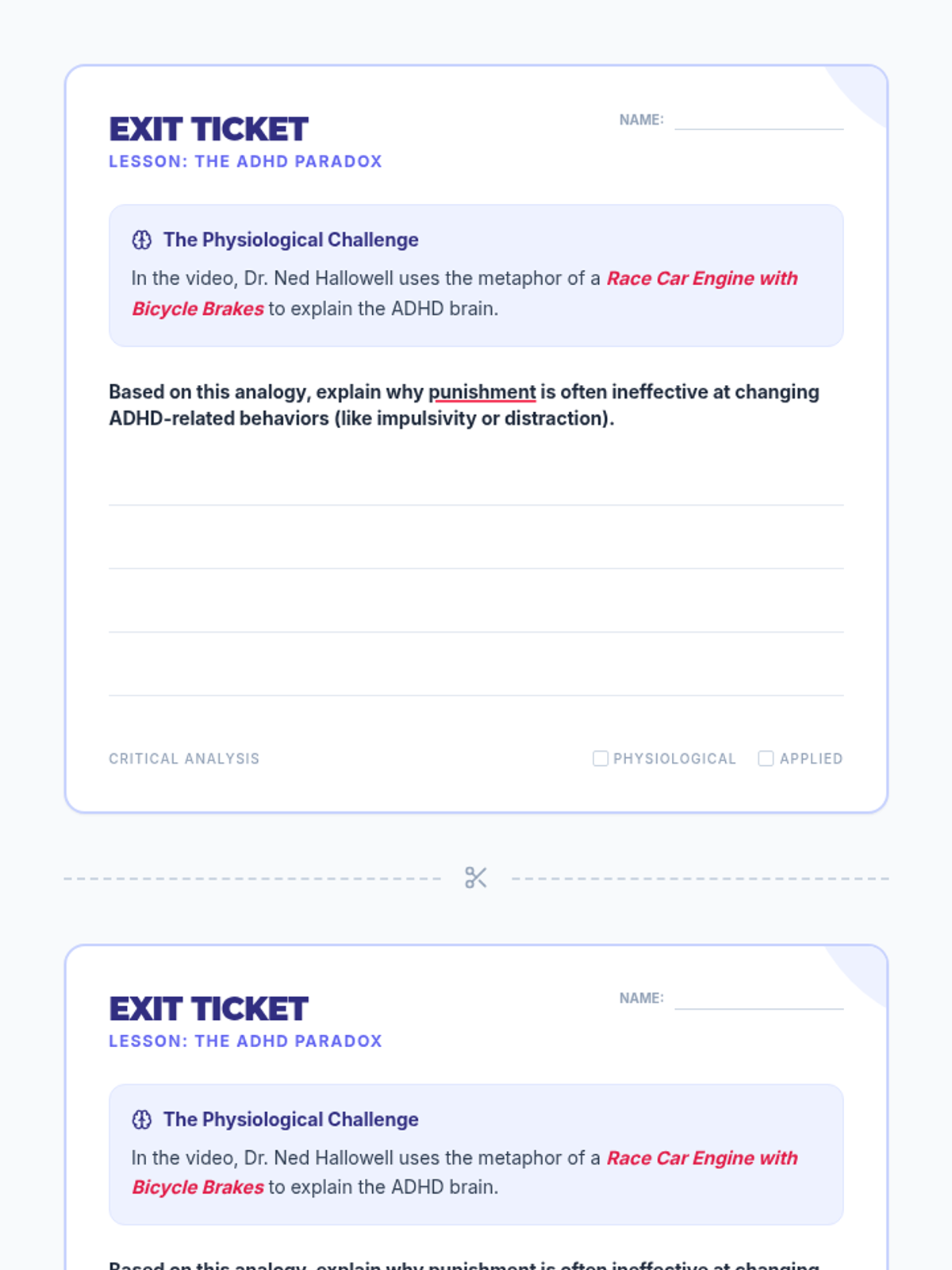
Students investigate the neurobiology of ADHD through metaphorical frameworks, challenging the traditional 'deficit' model of the disorder and exploring the social model of disability.
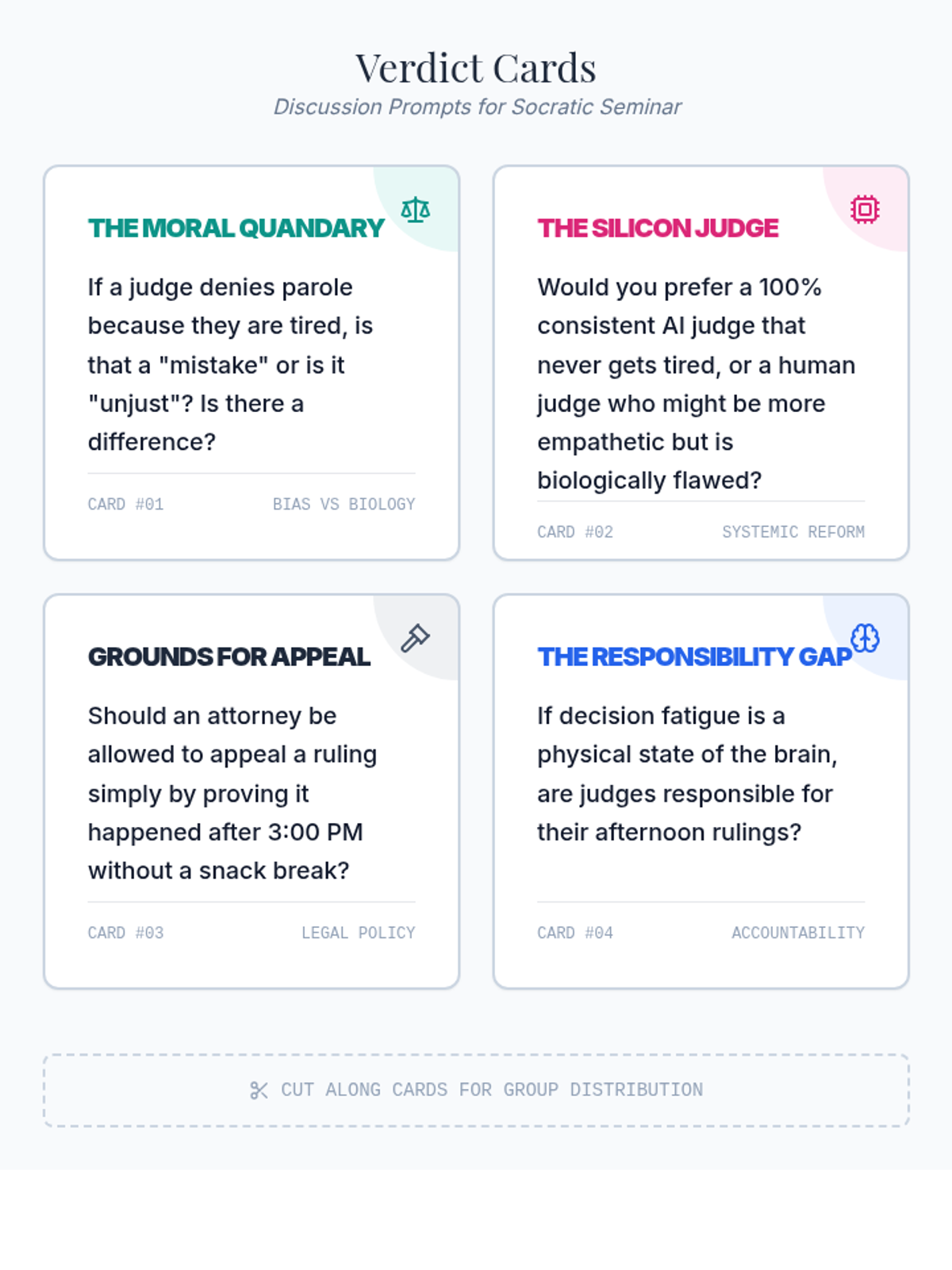
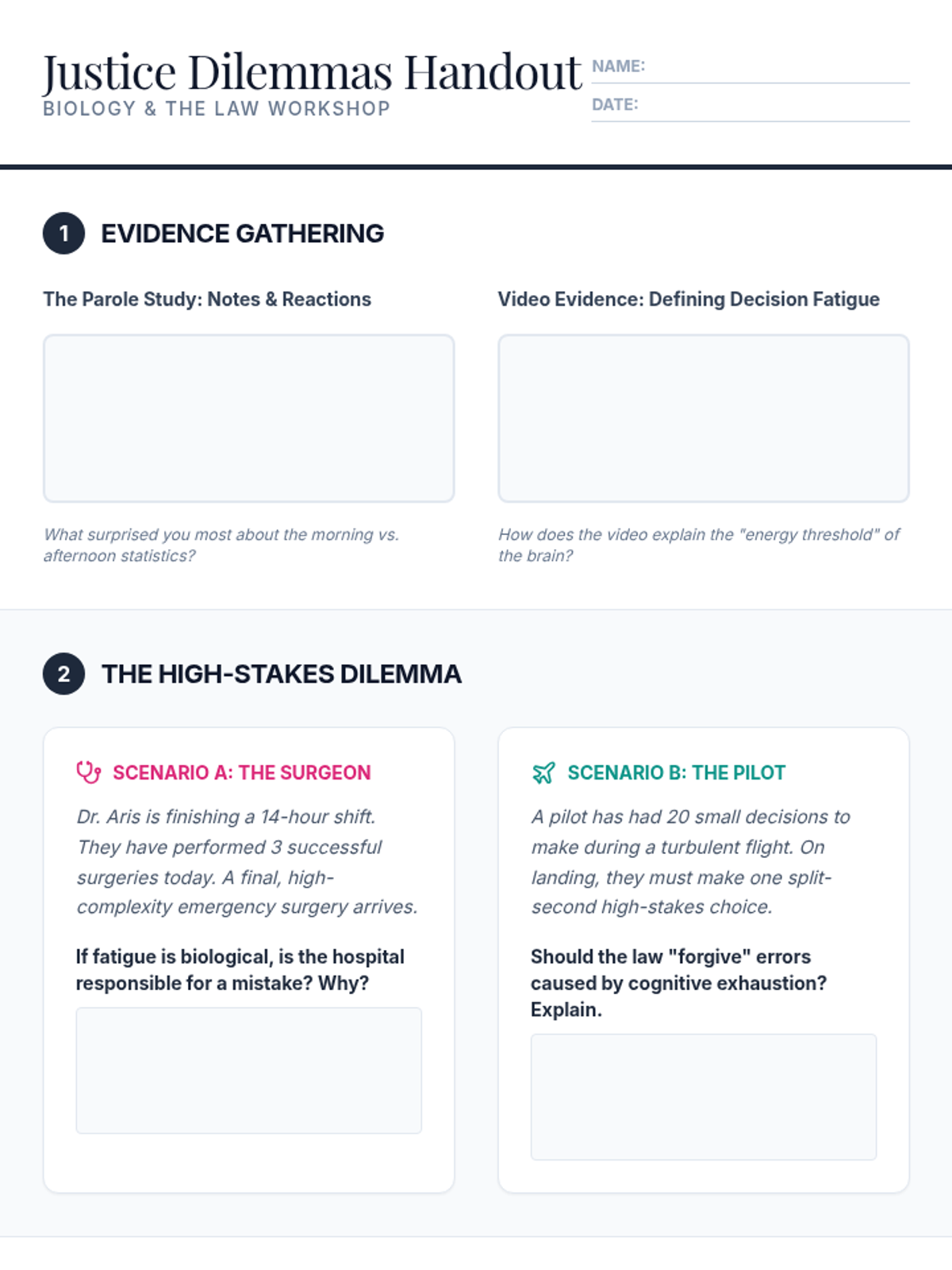
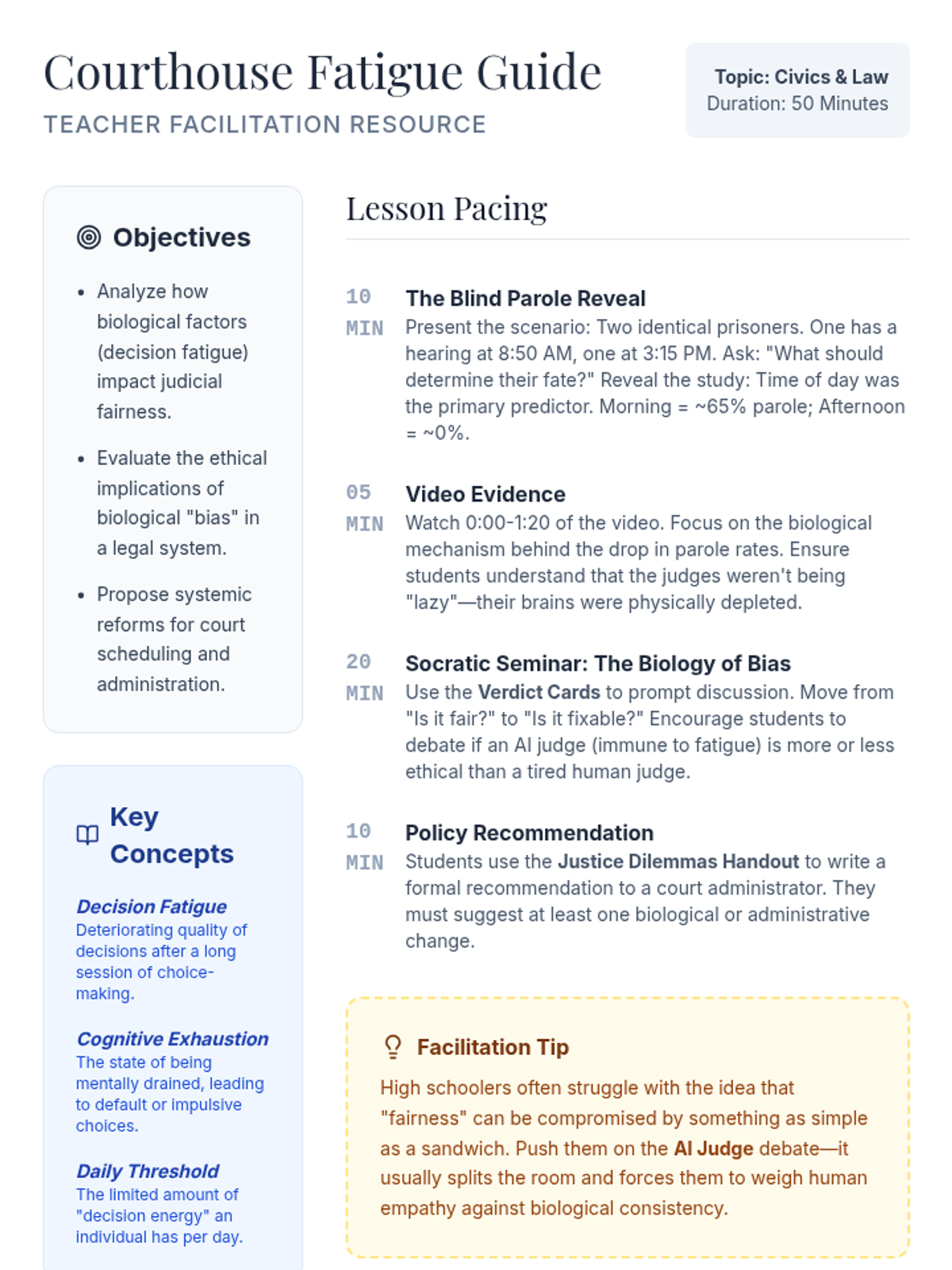
Students explore the intersection of biology and law through the lens of 'decision fatigue' in judicial rulings, culminating in a Socratic seminar and policy proposal for systemic reform.
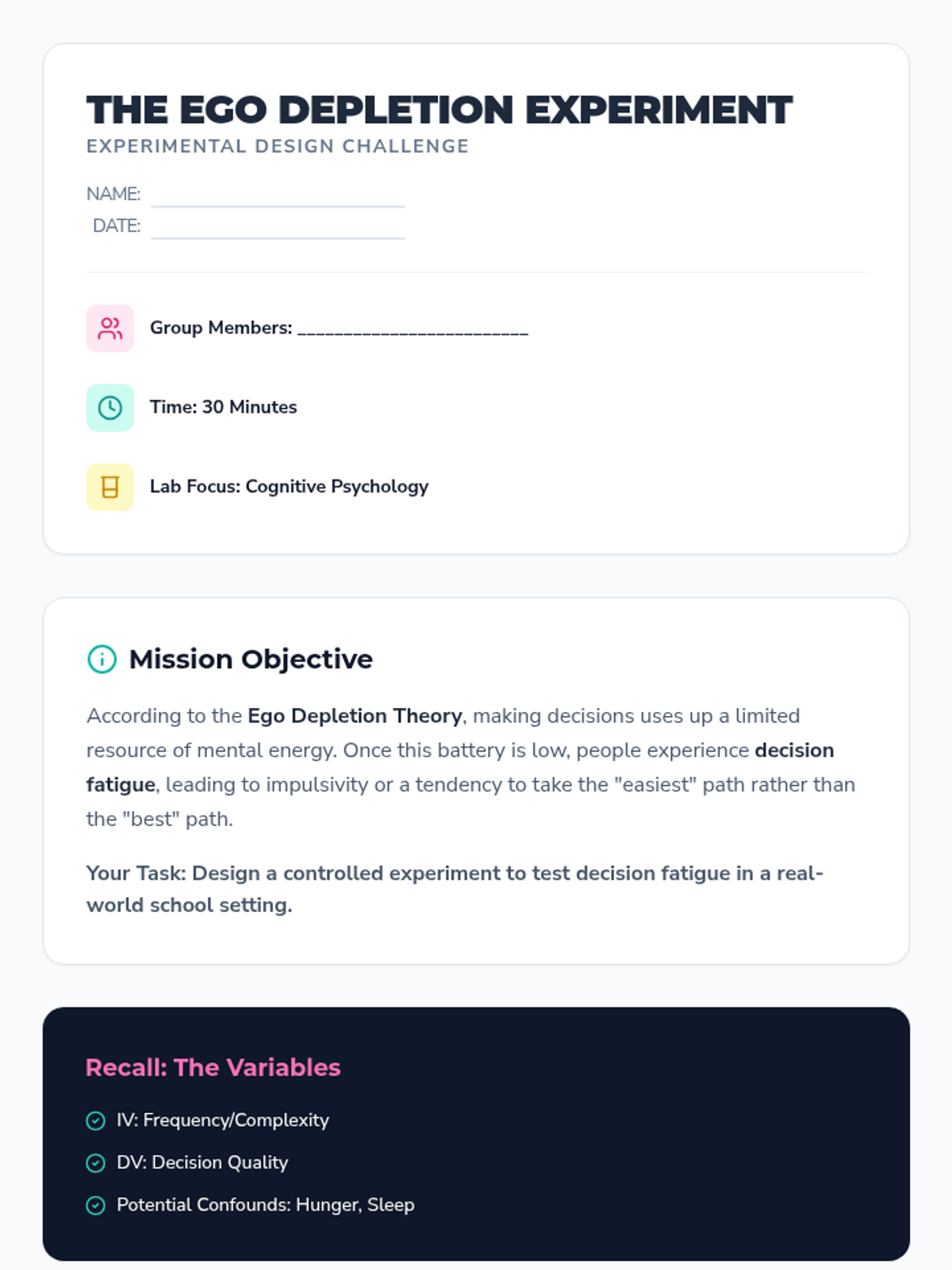
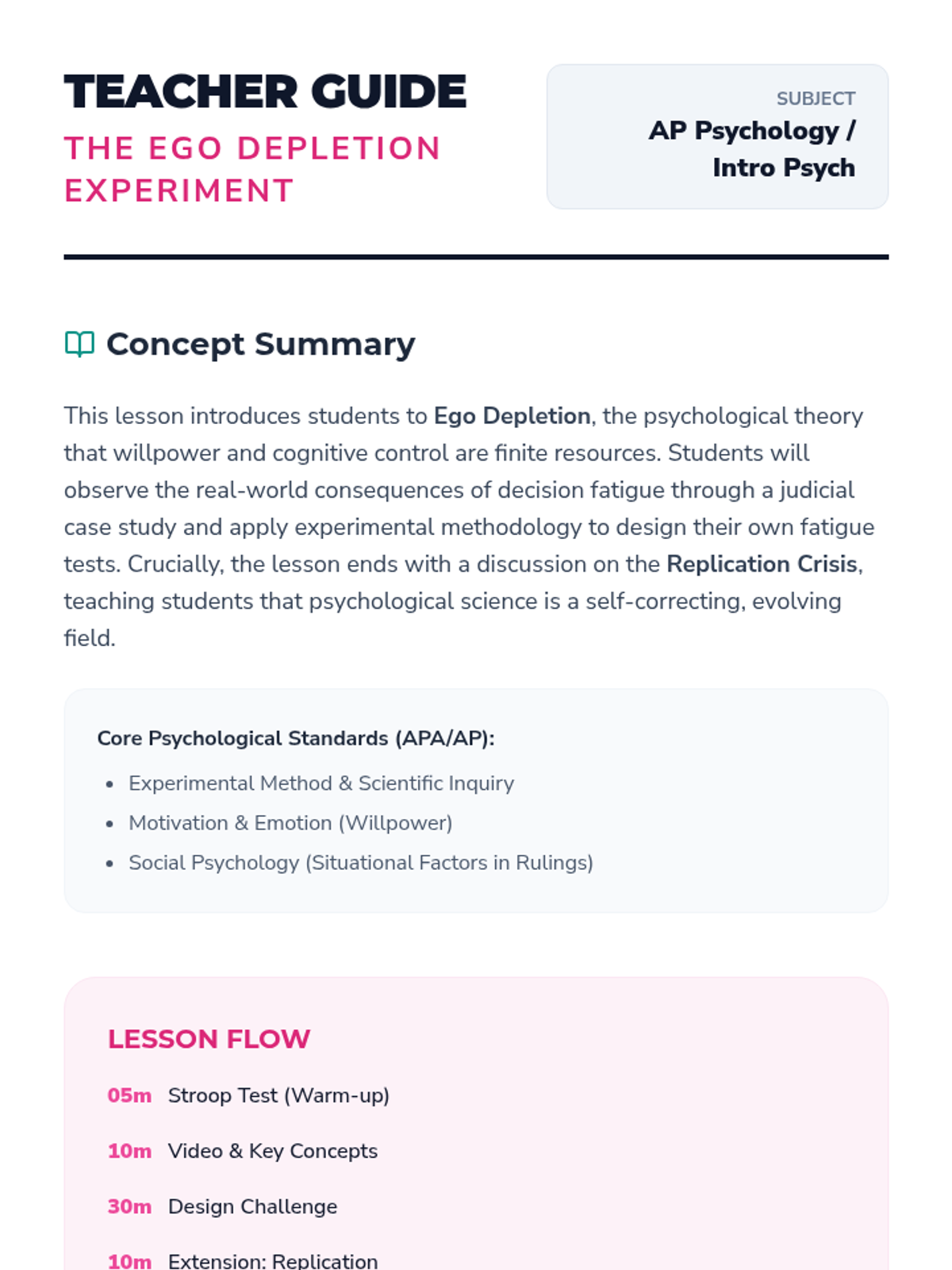
Students explore the psychological theory of Ego Depletion and decision fatigue through an interactive Stroop test, a video case study on judicial parole decisions, and a collaborative experimental design project. The lesson concludes with a critical look at the replication crisis in psychology.