Battle Cry Slides Battle Cry Echoes
Cinco de Mayo & The Power of Research
Read Write Speak
Our Essential Questions (1-2)
Question 1
"What are the ways people can make themselves heard?"
Question 2
"How does participating in research help individuals construct their understanding of the world?"
Continuing Our Inquiry (3-5)
Question 3
"How do authors use their writing to give a voice to their cause?"
Question 4
"How do I formulate an appropriate research question?"
Question 5
"What makes a source credible enough to use in my research project?"
Fact vs. Fiction
Fiction
Cinco de Mayo is Mexican Independence Day.
Fact
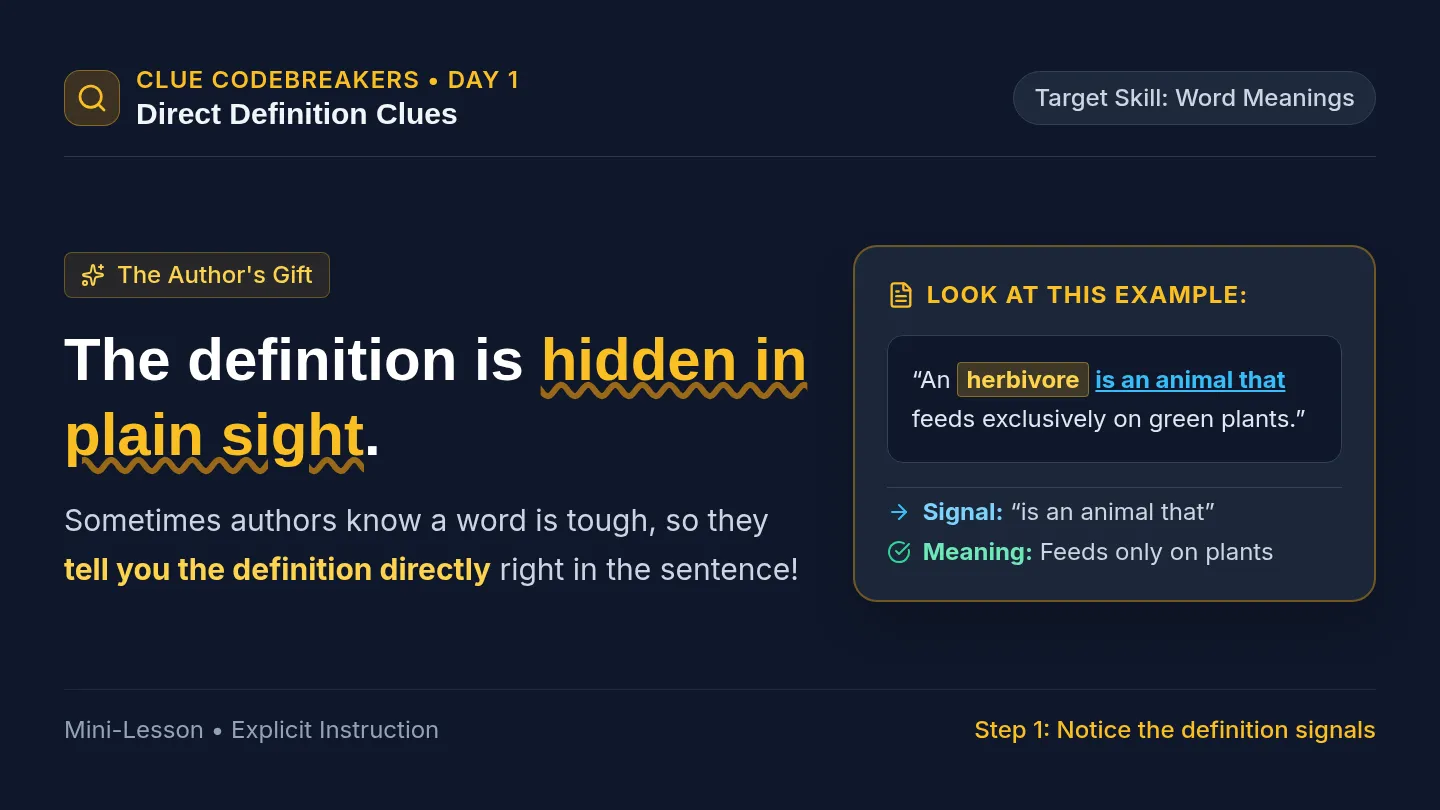
It celebrates the victory at the Battle of Puebla (1862) against the French army.
Research helps us find the truth behind the celebration.
Analyzing the Author
Why did the author write this? (Persuade, Inform, Entertain?)
Who is the target audience? Students? Historians? General public?
What is the central message or theme?
Researcher's Tip (EQ3)
"Authors use specific words and structures to give a voice to their cause. Is the tone proud? Or is it cold and demanding?"
Making Heard
How did General Zaragoza's army speak without words?
Action
Standing firm against a bigger army is a powerful statement.
Poetry
Writers use "prosody" (rhythm) to capture the feeling of battle.
Unity
Coming together tells the world "We belong here."
Sensory Words / Palabras Sensoriales
Hearing / El Oído
Echo (Eco), Shout (Grito), Thunder (Trueno)
Seeing / La Vista
Dust (Polvo), Smoke (Humo), Bright (Brillante)
Feeling / La Emoción
Proud (Orgulloso), Brave (Valiente), Tired (Cansado)
Smelling-Tasting / Olfato-Gusto
Iron (Hierro), Earth (Tierra), Salt (Sal)
We will use these for our final writing and speaking task!
Mission Log
1
Analyze: Read the Field Notes and Poem.
2
Write: Draft a sensory reflection on making yourself heard.
3
Present: Share your findings with a partner.
Battle Cry Teacher Guide Teacher Facilitation Guide
Lesson: Battle Cry Echoes (Cinco de Mayo & Research)
Grade: 9-10 ESOL
Duration: 45 Mins
Essential Questions
EQ1: What are the ways people can make themselves heard?
EQ2: How does participating in research help individuals construct their understanding of the world?
EQ3: How do authors use their writing to give a voice to their cause?
EQ4: How do I formulate an appropriate research question?
EQ5: What makes a source credible enough to use in my research project?
Pacing & Instructional Flow
0-8m
Engage & Hook (Slides 1-4)
Introduce EQs 1-5. Fact-check the "Independence Day" myth. Model EQ2: Why research matters.
8-20m
Guided Analysis (Worksheets)
Address EQ3: Analyze French vs. Mexican texts. Discuss how tone and word choice (TEKS 7E) "give voice" to their opposing causes.
20-35m
Echo Banners & Research Reflection
Students draft their "Battle Cry." Then, they use the Mission Prompt Stems to practice EQ4 & EQ5—creating a follow-up question and checking a source's credibility.
35-45m
Oral Presentation (Speaking)
Students present their "Battle Cry" holding their banner. Partners give feedback using the 3-star system in the Journal (TEKS 11I).
Key Analysis Guidance
French Argument (EQ3/7E): The French author uses "order" and "stability" to sound helpful. Is this a credible voice or a biased one?
Researching (EQ4/EQ5): Guide students to ask: "What were the effects of this battle on the U.S. Civil War?" (Good research question). Check: "Is a blog post as credible as a museum archive?"
Poetry (7B): The "thunder" and "stone" imagery connects to EQ1. Even without expensive tools, their presence was a "shout."
Differentiation & Scaffolds
The Echo Banner Craft
For students with lower English proficiency, the visual banner allows them to express theme (TEKS 4E) through symbols/color before perfecting their written reflection.
Language Support
The bilingual word bank is essential. Use "Think-Pair-Share" for the Research EQ to allow verbal processing before writing.
TEKS 6(A) TEKS 7(B,D,E) TEKS 8(A) TEKS 9(B,C) TELPAS S,L,R,W
Battle Field Notes Simplified Worksheet Battle Field Notes
Level: Foundation | The Battle of Puebla
Name:
Date:
The Story (Informational)
Cinco de Mayo is a special day. It is about a battle in Puebla, Mexico.
Long ago, France wanted to take Mexico. The French army was very big and strong. The Mexican army was small. They did not have many guns or tools.
But the Mexican soldiers were very brave. They fought hard to protect their homes. They won the battle! Now, people celebrate their courage .
The Argument
The French Leader Said:
"Mexico is not safe. You need our help. We will rule you to make you strong. We are coming to help you, not to fight you."
The Poem
The dust goes high.
A loud shout in the sky.
No gold, no silver,
Just hearts in the field.
They stood like stone.
Word Check:
"Dust" and "Shout" are things we can see and hear. These are sensory words.
Your Mission
1. Voice for a Cause (EQ3): The French leader says they came to "help." Do you think they really want to help, or do they want to rule Mexico? Why?
2. Character: Use one word to describe the Mexican soldiers. Why did you pick that word?
3. Making Heard (EQ1): In the poem, how did the soldiers "speak" without words? (Example: shouting or standing like stone)
4. Learning the Truth (EQ2): Before today, did you think Cinco de Mayo was Independence Day? How did reading this story help you learn the truth?
Battle Field Notes Worksheet Battle Field Notes
Case Study: The Battle of Puebla
Name:
Date:
The History: Beyond the Celebration (Informational)
Cinco de Mayo commemorates the Battle of Puebla on May 5, 1862. France, led by Napoleon III, used debt as an excuse to invade Mexico and attempt to establish a monarchy. At Puebla, 4,000 Mexican soldiers faced 8,000 "invincible" French troops.
Led by General Ignacio Zaragoza , the Mexican army was poorly equipped—many were local farmers with old rifles. However, Zaragoza's leadership and the soldiers' determination to protect their homes led to an unlikely victory. Their courage became a symbol of resistance against foreign intervention.
The Ultimatum: Arguments for War
French Proclamation Fragment (1862)
"Mexicans! We have come here to create order... Mexico needs the protection of a civilized monarchy to survive. You cannot govern yourselves. Our presence is not an invasion, but a necessary correction for the stability of the world."
The Echo: A Poetic Fragment
The dust of Puebla rises high,
A shout that splits the heavy sky.
No silver guns, no golden shield,
Just hearts that bloom upon the field.
They spoke in thunder, stood in stone.
Literary Elements (7B):
Prosody: Rhythm of short, punchy lines.Graphic Element: Line length creates a "heartbeat" pace.
Critical Thinking & Research
1. Giving Voice to a Cause (EQ3): How does the author of the French Proclamation use words like "civilized" and "protection" to give a voice to their cause for war?
2. Character & Theme: How does General Zaragoza's leadership (characterization) help develop the theme of courage in the informational text?
3. Making Heard (EQ1): How does the poem use imagery (like "hearts that bloom" or "shout") to show how the soldiers made themselves heard without many weapons?
4. Constructing Understanding (EQ2): How did researching the actual history (vs. popular myths) change your view of Cinco de Mayo?
Sensory Mission Journal Sensory Mission Journal
The Battle of Puebla: Making History Heard
Mission Assigned To: ____________________
Sensory Word Bank / Banco de Palabras Sensoriales
Hearing / El Oído
Shout / Grito
Whisper / Susurro
Echo / Eco
Thunder / Trueno
Silence / Silencio
Seeing / La Vista
Dust / Polvo
Smoke / Humo
Flag / Bandera
Horizon / Horizonte
Bright / Brillante
Taste & Smell / Gusto y Olfato
Iron (Blood) / Hierro
Earth / Tierra
Salt (Sweat) / Sal
Gunpowder / Pólvora
Dry / Seco
Feeling / La Emoción
Proud / Orgulloso
Brave / Valiente
Determined / Decidido
Hopeful / Esperanzado
Strong / Fuerte
Mission Prompt
Imagine you are standing on the battlefield at Puebla. Using your research from today, write a "Battle Cry" reflection. How are you making yourself heard? Use at least 5 words from the sensory bank.
Drafting Zone
Revision Checklist (9C)
I added a specific sensory word.
My sentence shows how I am "heard."
Research Impact (EQ2)
How did reading the facts first change what you wrote?
Oral Presentation / Presentación Oral
Instructions:
Stand tall and make eye contact with your partner.
Read your Battle Cry with a voice that matches your emotion (Brave, Strong, etc.).
Explain: "Research helped me understand this world by..."
Listener Feedback (Speaking 11I)
Clear Voice / Voz Clara
Eye Contact / Contacto Visual
Sensory Words Used
Mission Prompt Stems Worksheet Mission Prompt Stems
Guided Writing & Speaking Framework
Name:
Date:
Writing Mission: Draft Your Battle Cry
Use the sentence stems below to write your reflection. Try to use words from your Sensory Word Bank .
I stand on the battlefield of Puebla and I see...
Example: I see thick smoke and brave flags.
The air around me sounds like...
Example: The air sounds like a thunderous shout.
I am making myself heard by...
Example: I am making myself heard by standing firm like stone.
Even though the enemy is big, I feel...
Example: I feel proud and determined to protect my home.
Speaking Mission: Present Your Banner
Read these sentences aloud to your partner while holding your Echo Banner high.
"Hello, my name is ____________________."
"My Echo Banner represents the Battle of Puebla."
"One way I make myself heard is ________________________________________________."
"I used the sensory word ____________________ to show _____________________________."
Research Mission: Constructing Understanding
Reflection (EQ2)
Researching the real history helped me understand that...
Formulating Questions (EQ4)
I want to learn more! One appropriate research question I have about the Battle of Puebla or Cinco de Mayo is...
Example: How did people in the U.S. react to the victory in 1862?
Checking Credibility (EQ5)
What makes a source credible (trustworthy)? I know a source is good to use if...
Example: If it comes from a history museum or has a bibliography.
Echo Banner Craft Guide Echo Banner Guide
Craft Activity: Visualizing Your Battle Cry
Paper
Scissors
Tape
Markers
1
The Slogan
In the center of your paper, write your "Battle Cry" in large, bold letters. What do you want the world to hear? (Example: "We Stand Strong!" )
2
Sensory Details
Draw symbols or write sensory words around your slogan. Use words like Thunder, Smoke, Brave, or Shout to decorate the background.
3
The Echo Fringe
Use your scissors to cut thin strips (fringe) along the bottom edge of the paper. These represent the "echoes" of your voice moving through the air.
4
The Banner Pole
Roll a second piece of paper tightly into a long tube. Tape it closed. Tape the side of your banner to this tube to make your flag!
Design Inspiration
BE
thunder • proud • dust
The Final Mission (Speaking 11I)
When you present your Battle Cry today, hold your Echo Banner high. Move it as you speak to show how your voice "echoes" through history.
Voice Projection: [ ___ / 5 ] Visual Impact: [ ___ / 5 ] Sensory Word Use: [ ___ / 5 ]