Audio-narrated stories and poems paired with highlighted text. Builds reading fluency and vocabulary through multisensory engagement with literature.
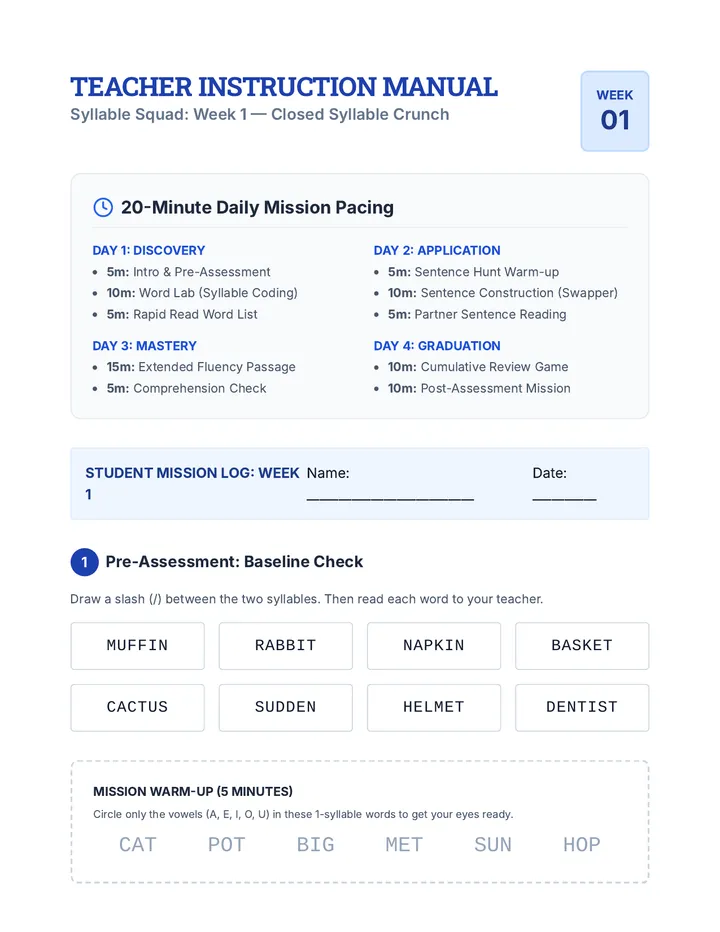
A comprehensive 5-week phonics intervention focused on decoding two-syllable words across five major syllable types. Each week includes a pre-assessment, daily lessons with specific targets, student practice sheets, and a post-assessment.
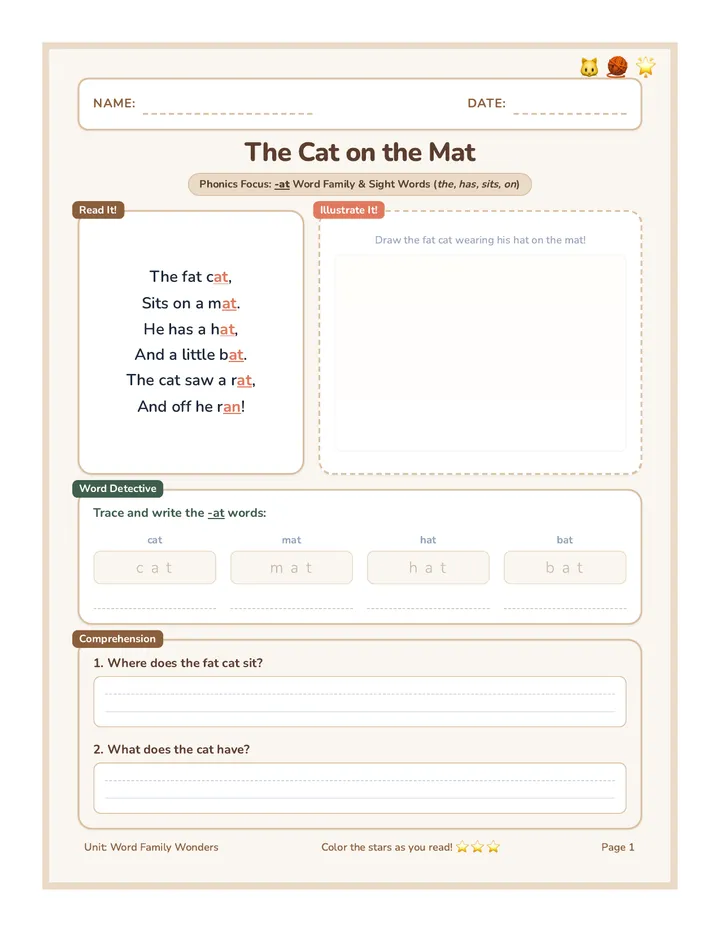
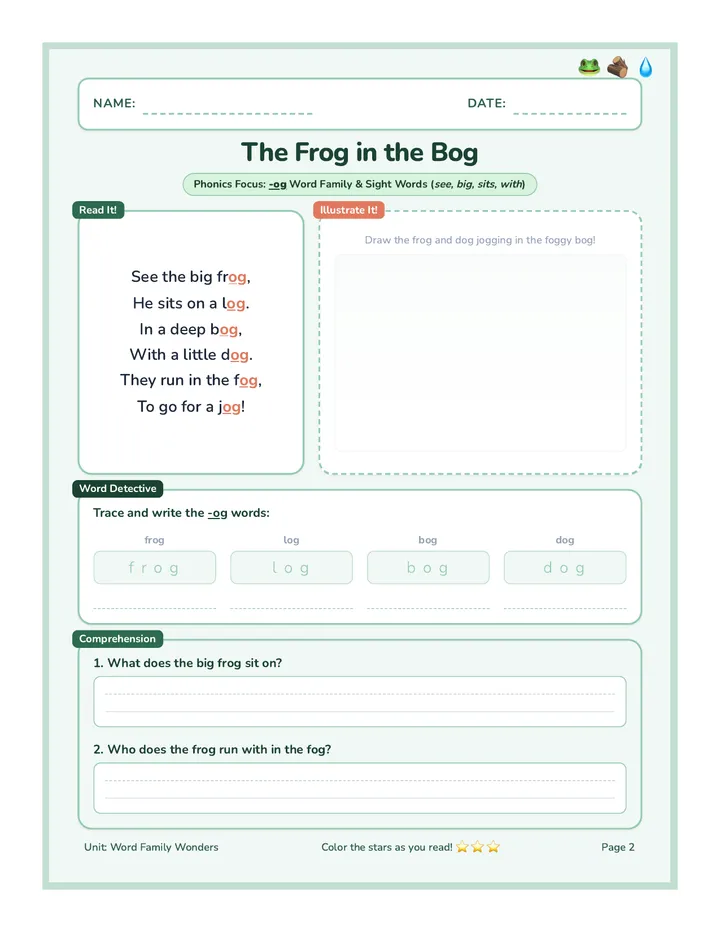
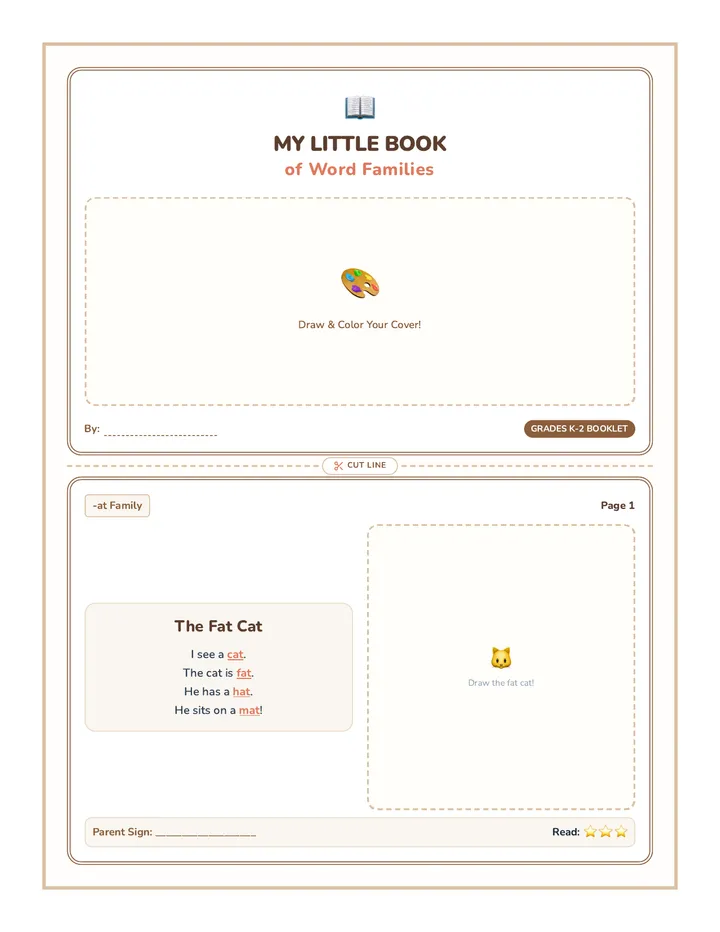
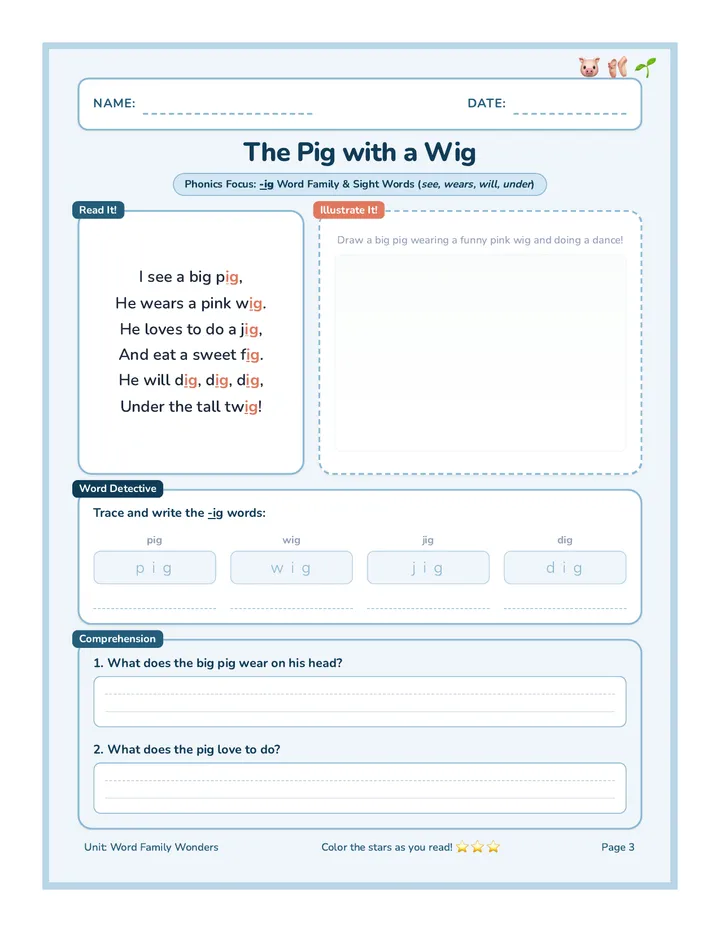
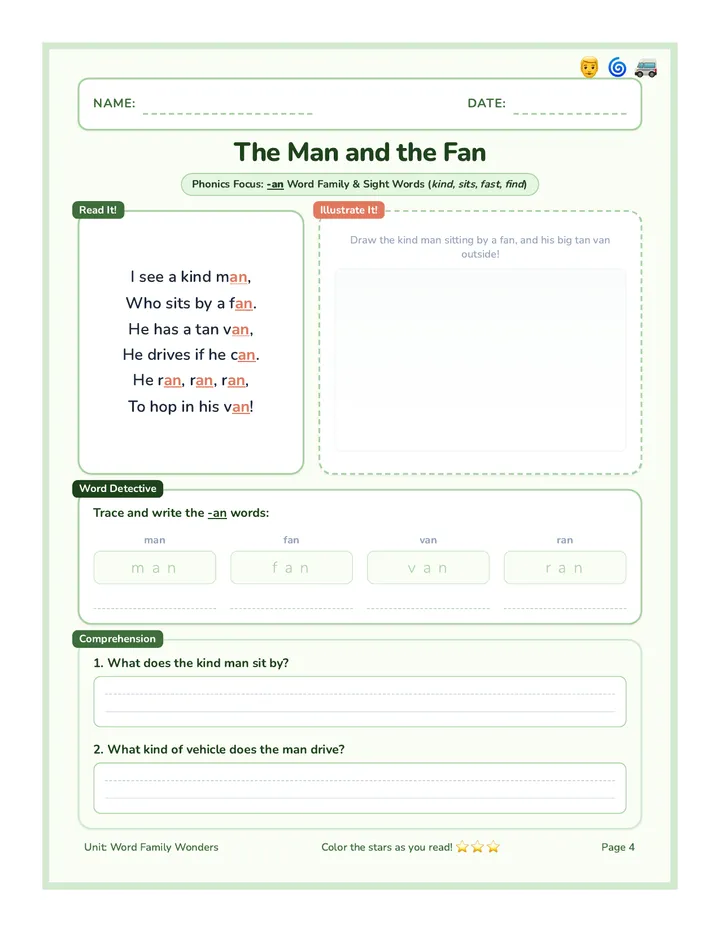
A foundational literacy sequence designed for grades K-2, using engaging, simple rhyming poems to reinforce key reading skills, seasonal themes like Spring, phonics word families, and sight words. Students build fluency, word recognition, and reading comprehension through interactive reading, illustrating, and text-based questions.
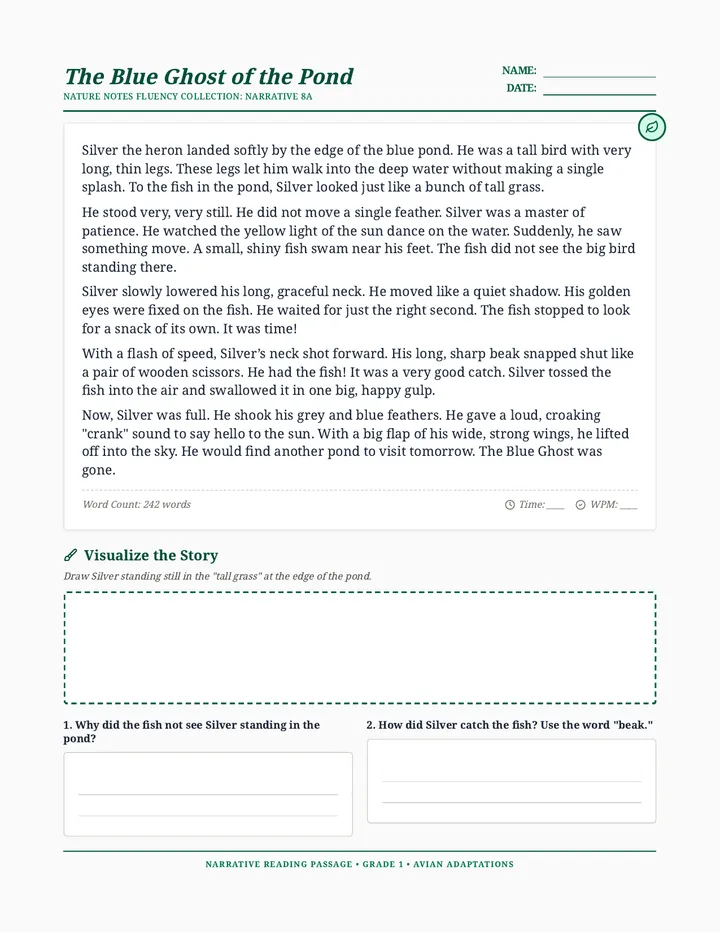
A comprehensive set of decodable fluency passages across grade levels, focusing on nature, wildlife, and ecosystems to build reading stamina and accuracy.
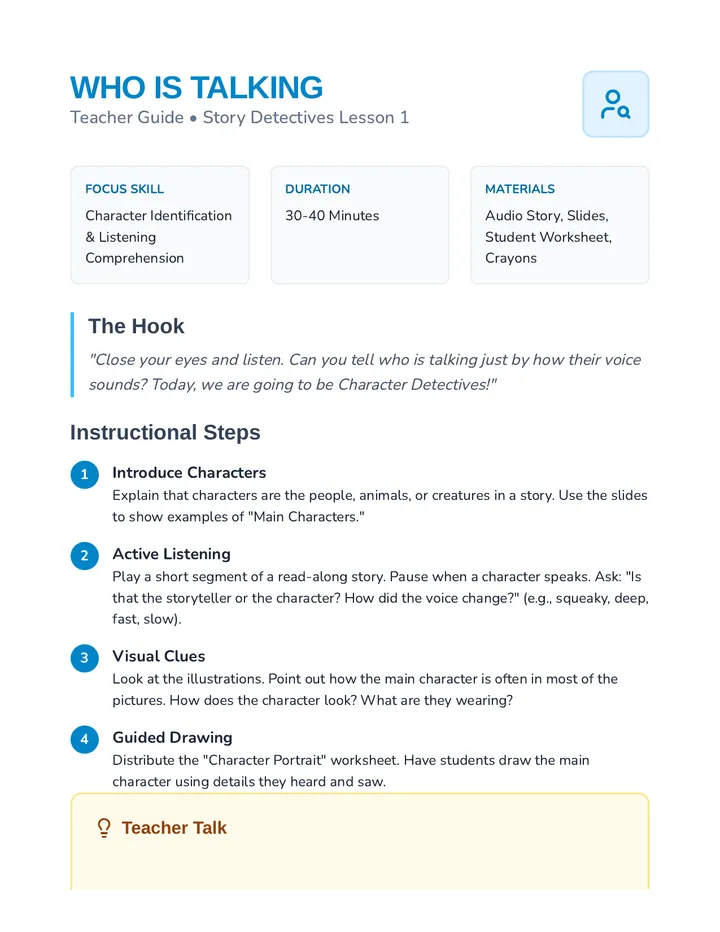
A Kindergarten ELA sequence focused on analyzing character and setting through audio-narrated stories, helping students build listening comprehension and visualization skills.
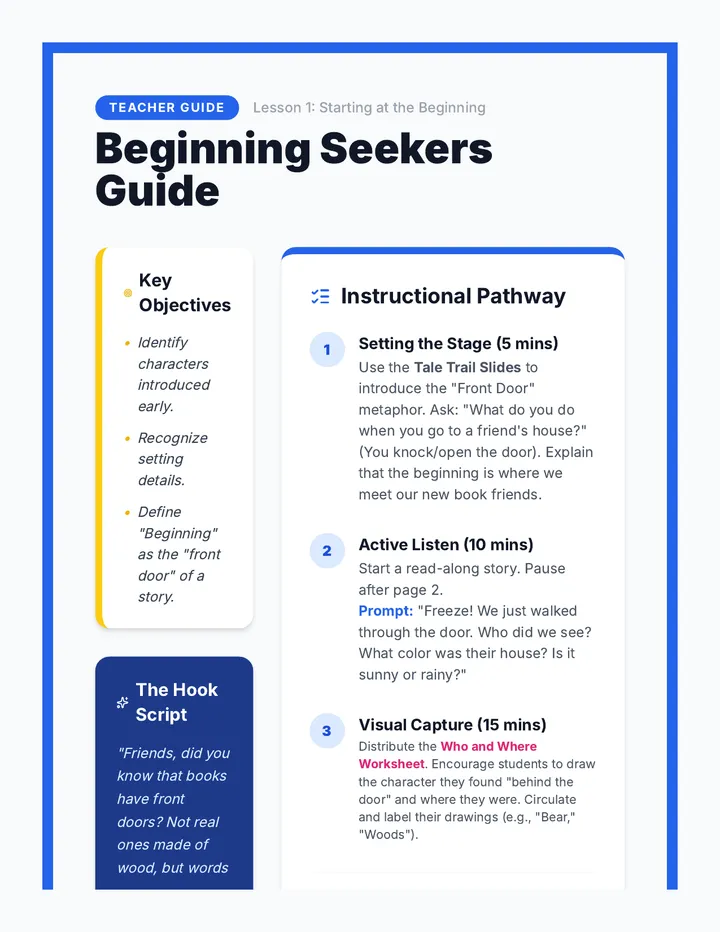
A foundational Pre-K sequence introducing the concepts of beginning, middle, and end through interactive read-alongs. Students learn to identify narrative structure, spot story problems, and sequence events using visual aids.
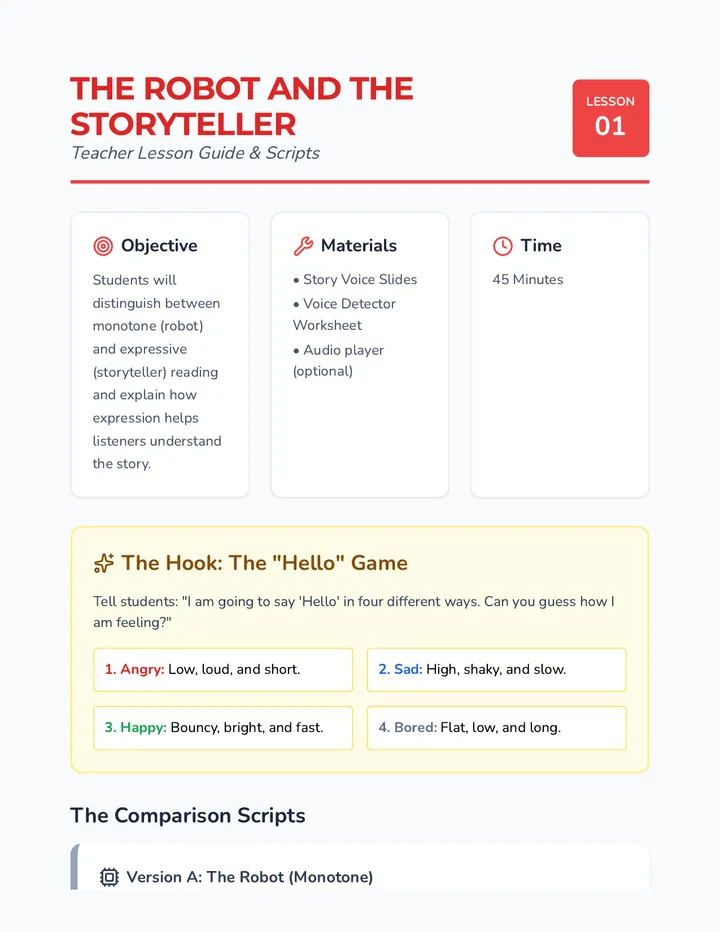
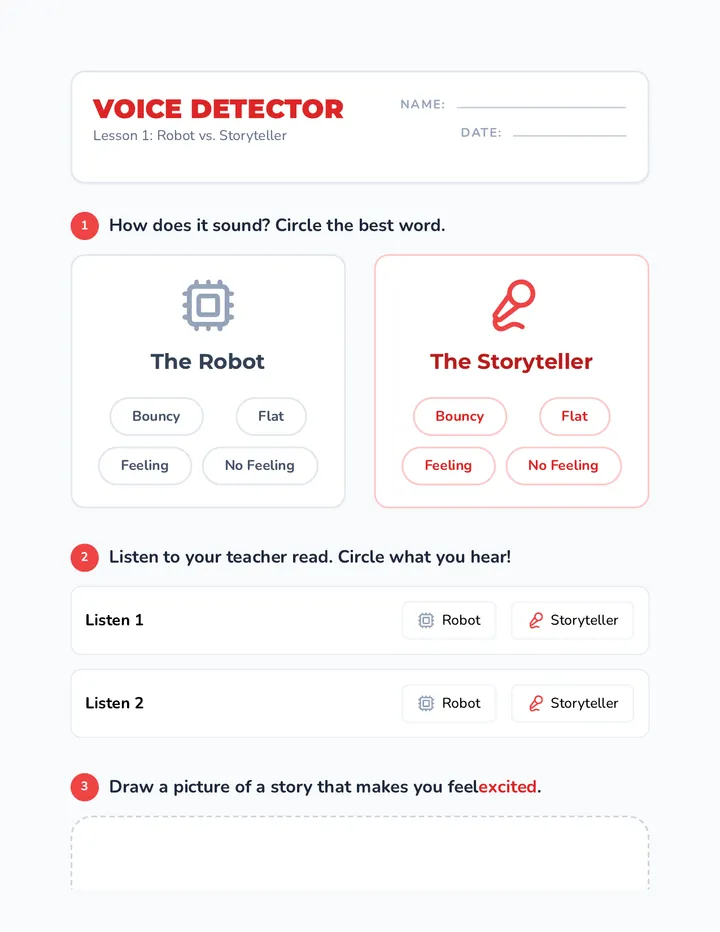
This sequence focuses on developing oral reading fluency and expression in 1st-grade students using read-along tools. Students learn to differentiate between monotone and expressive reading, match their voice to emotions and punctuation, and perform stories with prosody.
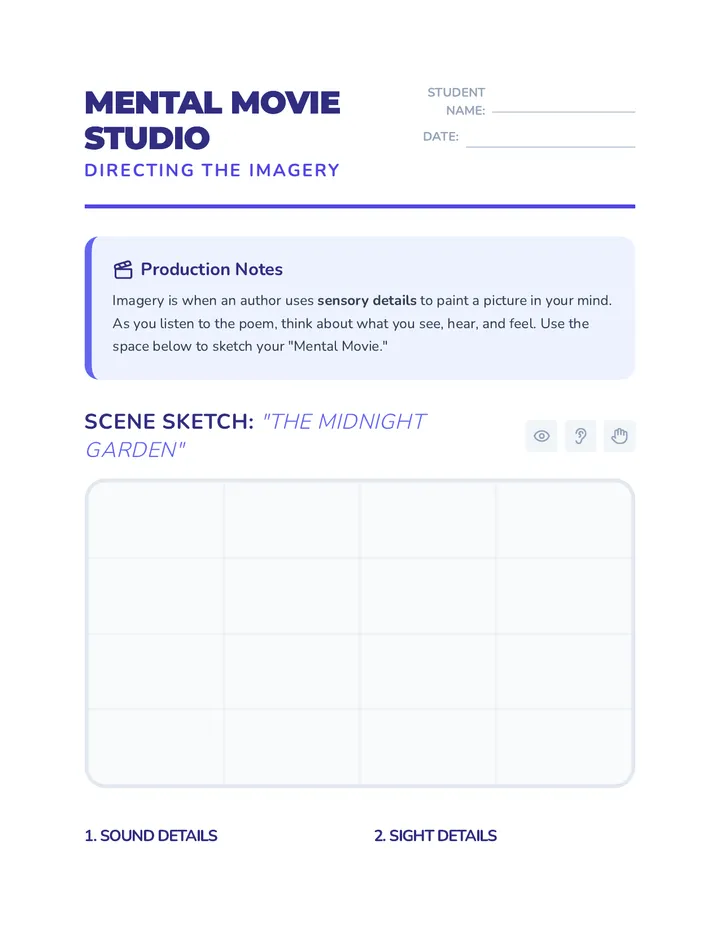
This 3rd-grade sequence explores how imagery, rhythm, and sound devices create meaning in poetry through a multisensory read-along approach. Students progress from visualizing sensory details to analyzing structural elements and finally synthesizing their understanding by creating their own audio-enhanced poetry experiences.
A 2nd-grade sequence focusing on developing oral reading fluency and prosody using audio-narrated literary texts. Students progress from listening for emotion to recording their own expressive readings, bridging the gap between decoding and comprehension.
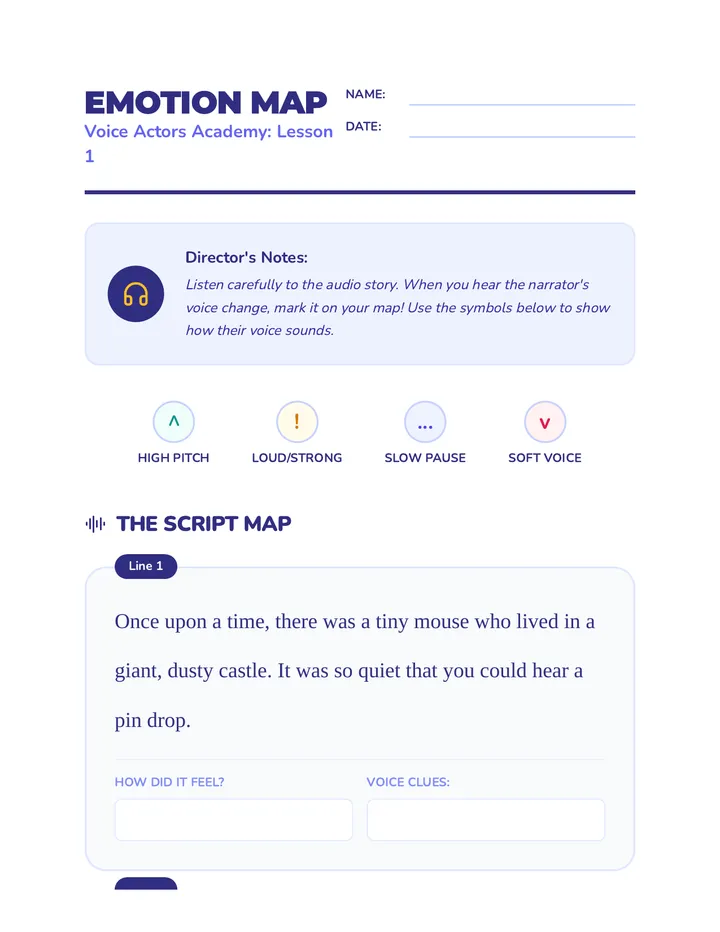
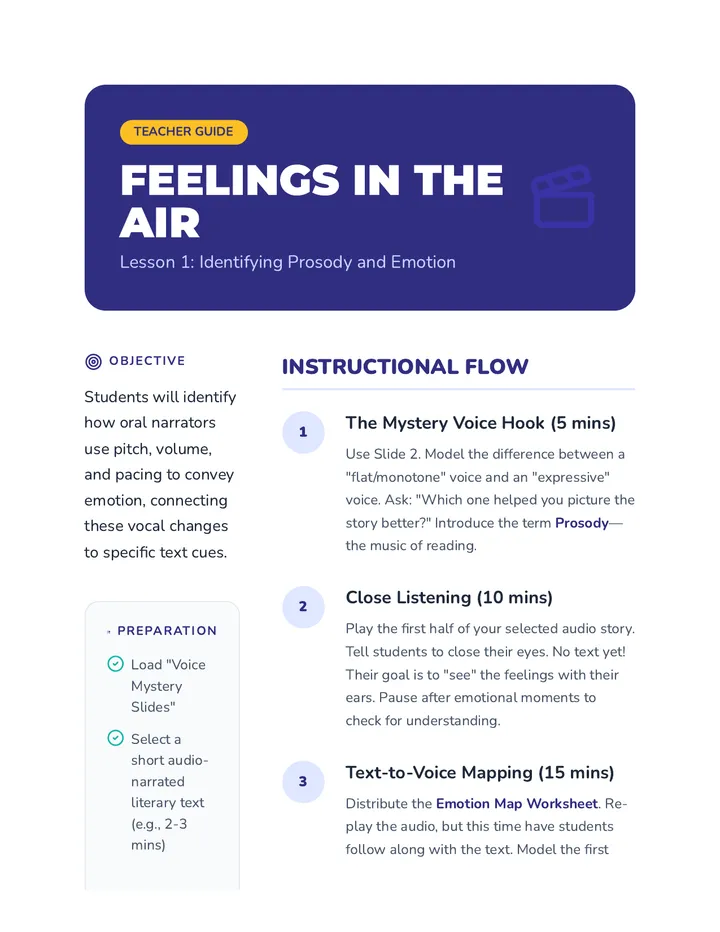
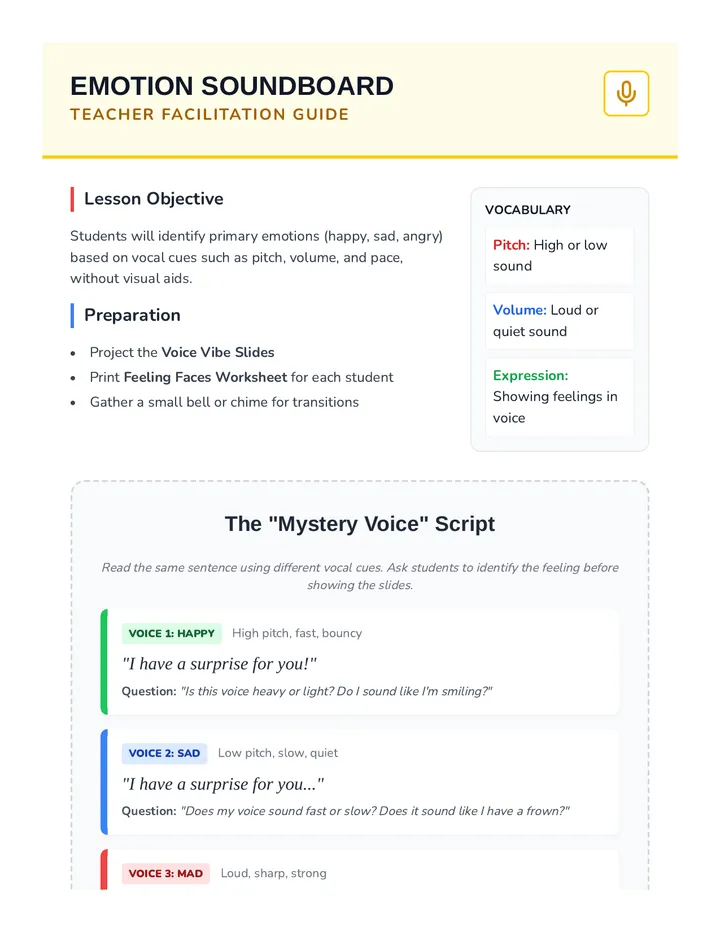
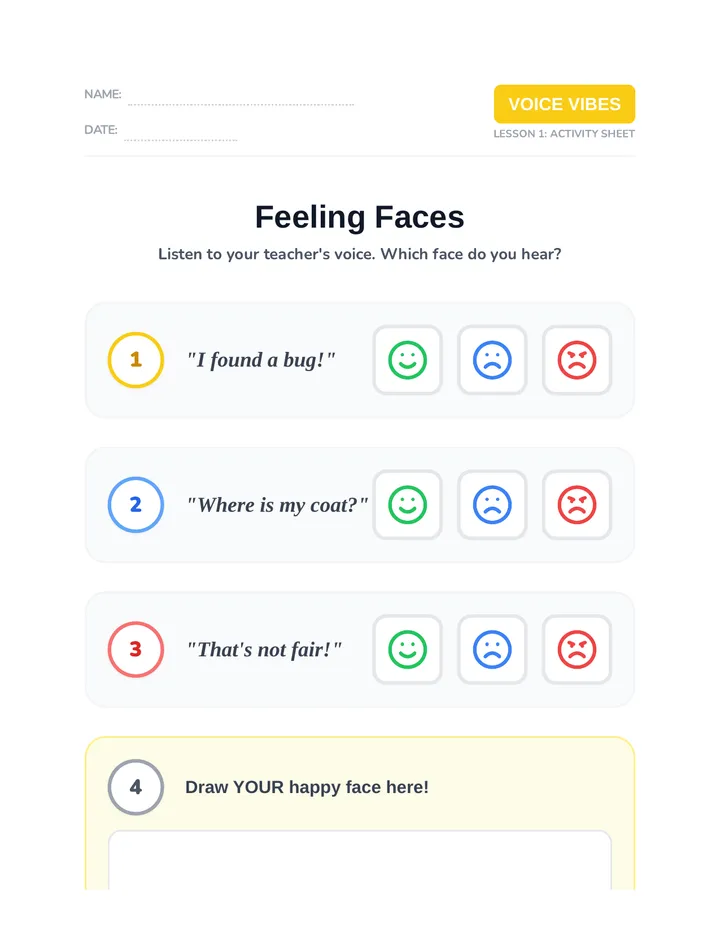
This Kindergarten ELA sequence focuses on developing oral fluency and prosody by exploring how voice modulation (pitch, volume, speed) conveys emotion and meaning in read-aloud literary texts. Students progress from identifying emotions in tone to practicing character voices and punctuation-based intonation, culminating in their own expressive reading performances.
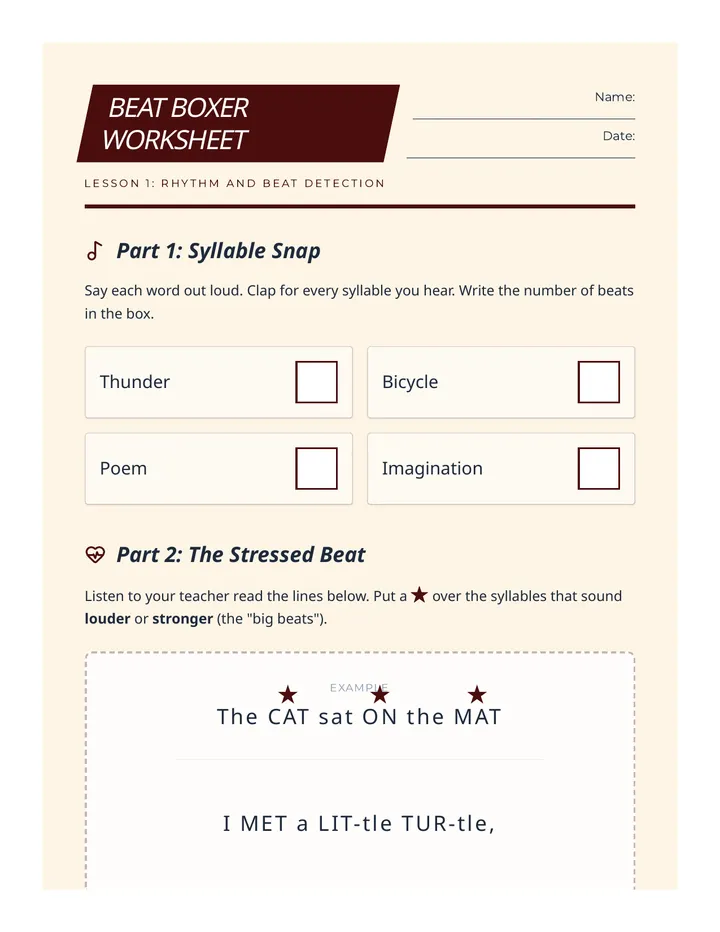
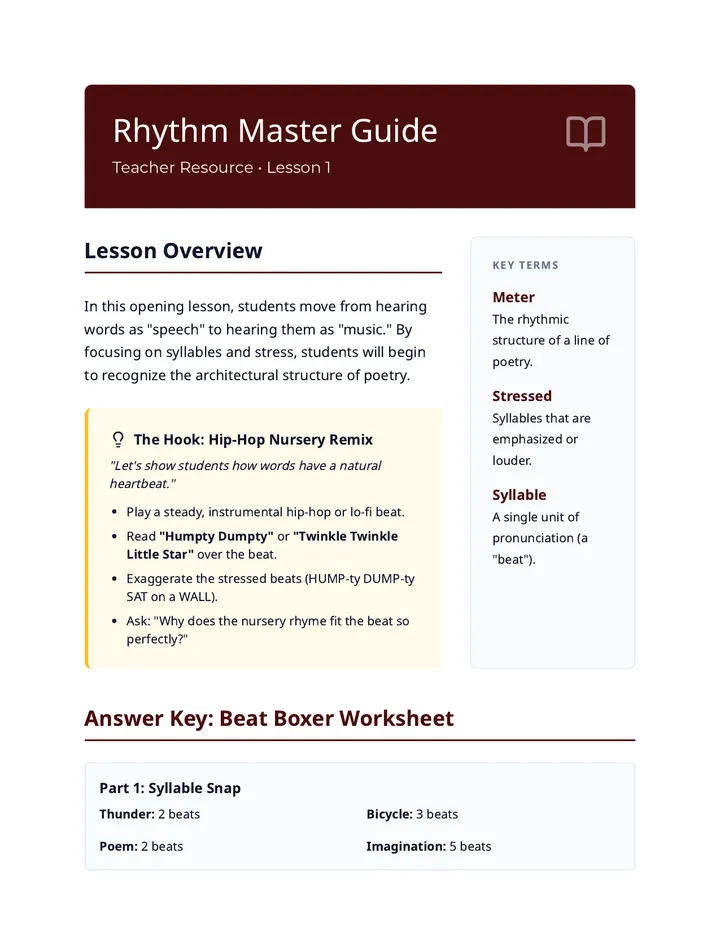
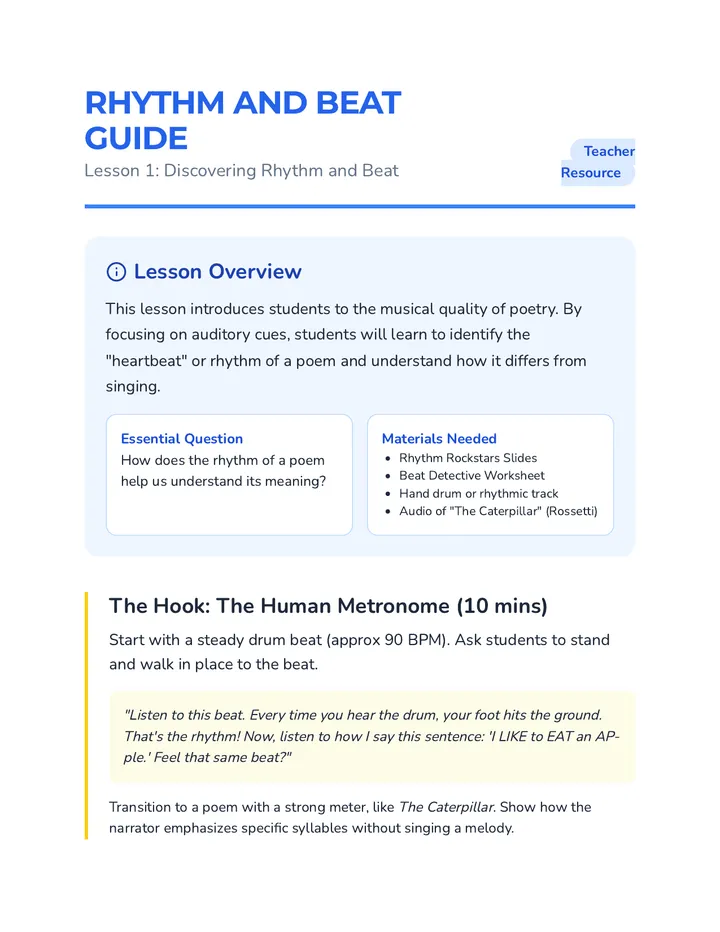
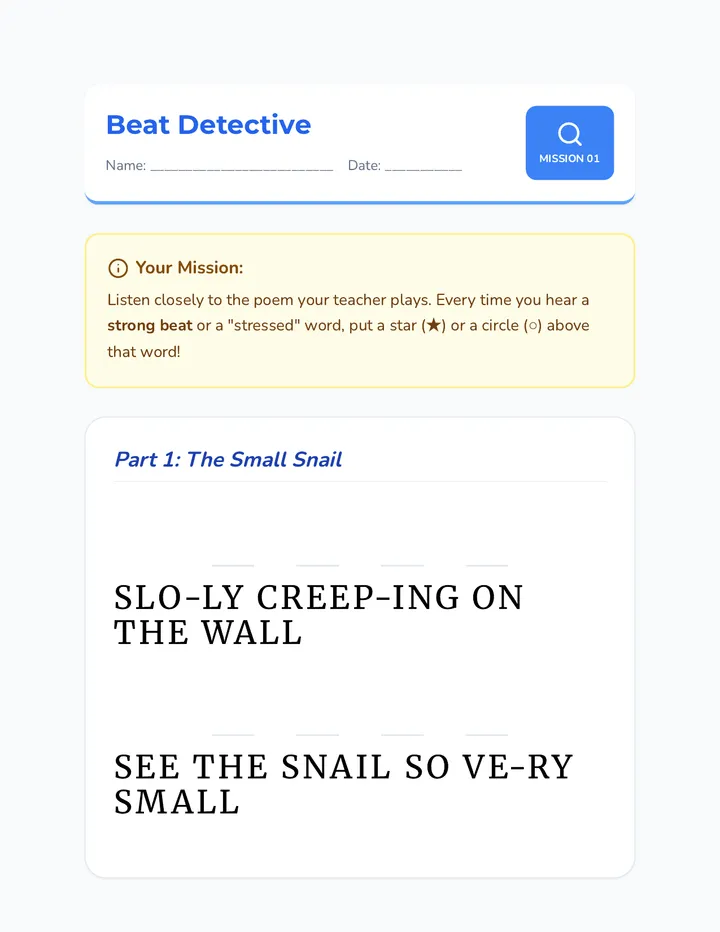
A 3rd-grade ELA sequence focused on rhythm, rhyme, and performance in poetry. Students learn to analyze the auditory elements of poems and perform them in a 'Poetry Cafe' setting.
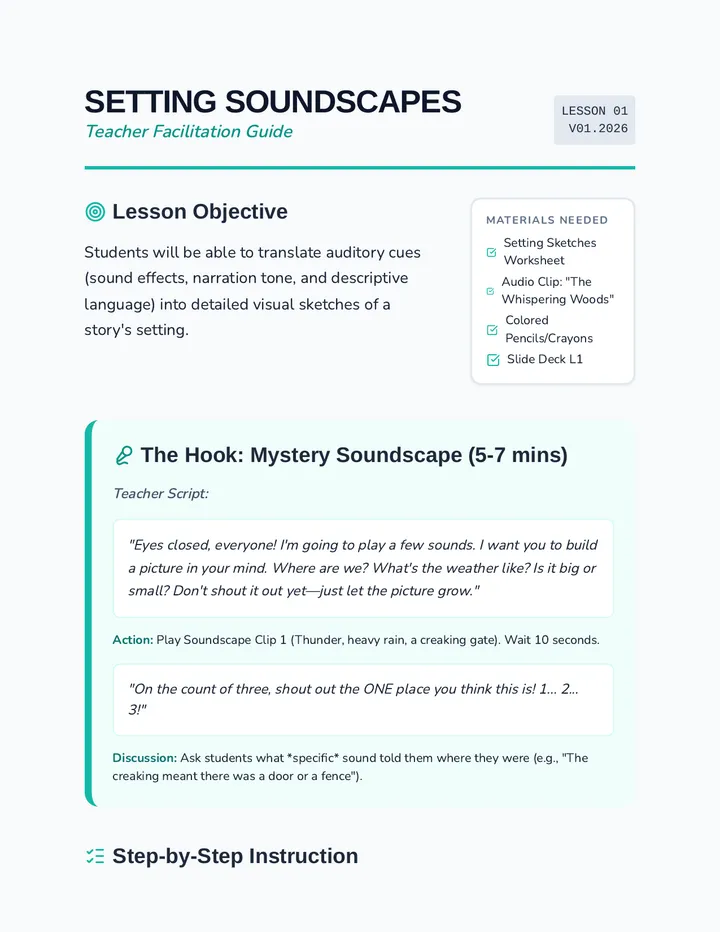
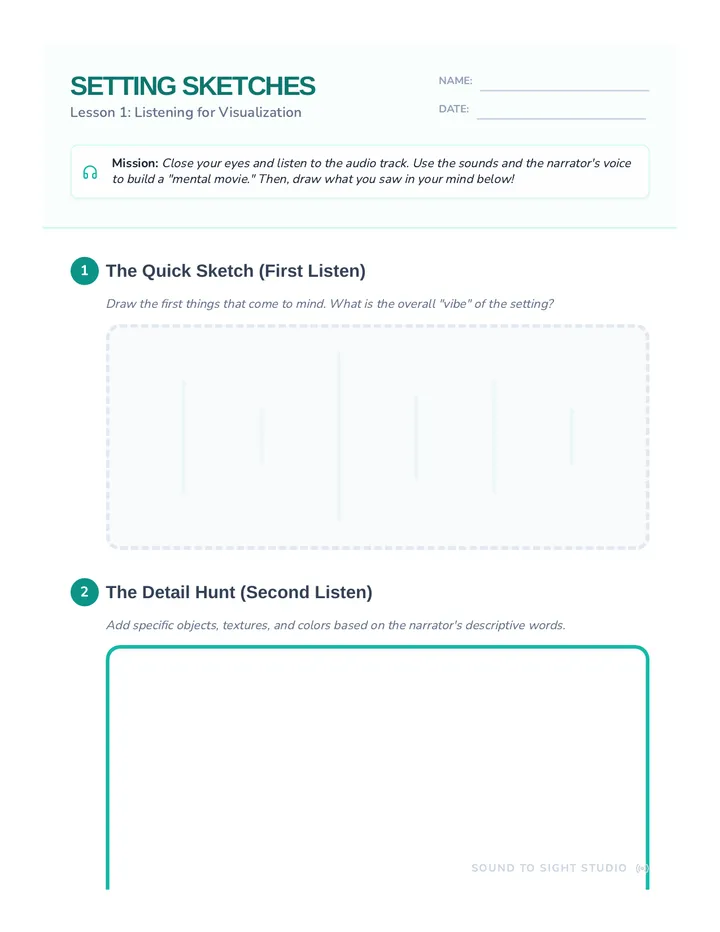
A project-based sequence where 3rd-grade students use auditory cues from read-along texts to strengthen their visualization and story mapping skills. Students progress from sketching settings and characters to creating a full storyboard synchronized with audio narration.
A 2nd-grade ELA sequence focused on rhythm, rhyme, and mood in poetry through read-along experiences. Students explore how the musicality of language enhances meaning and practice recitation.
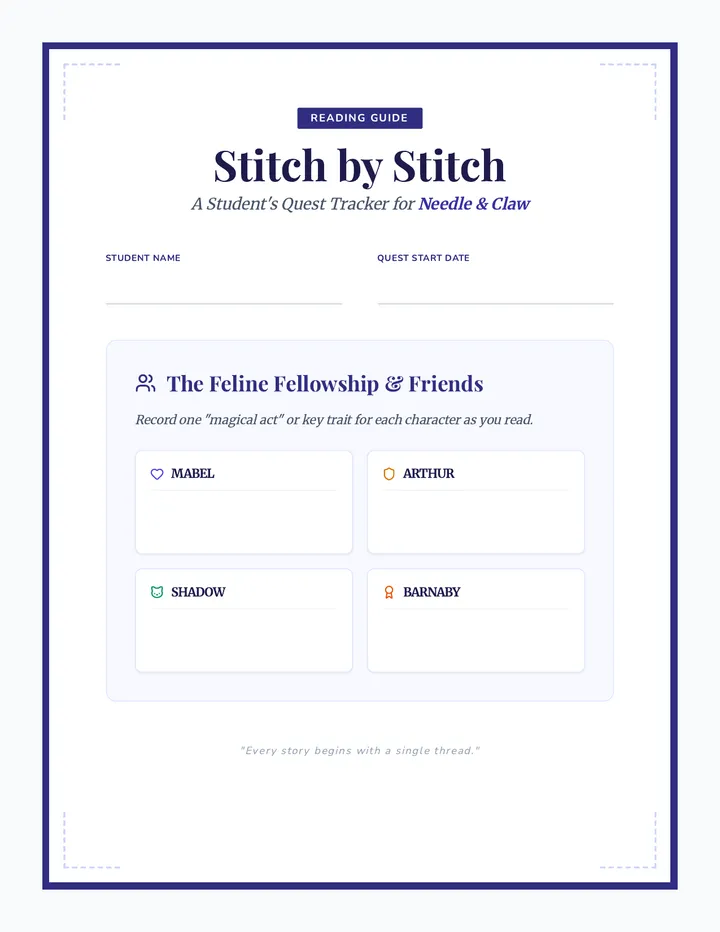
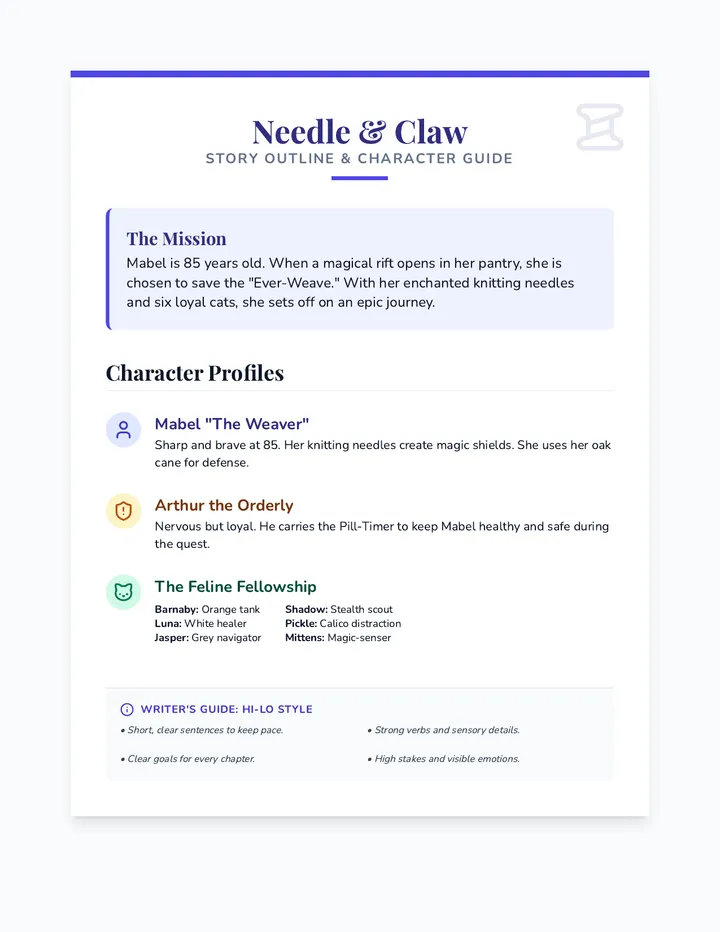
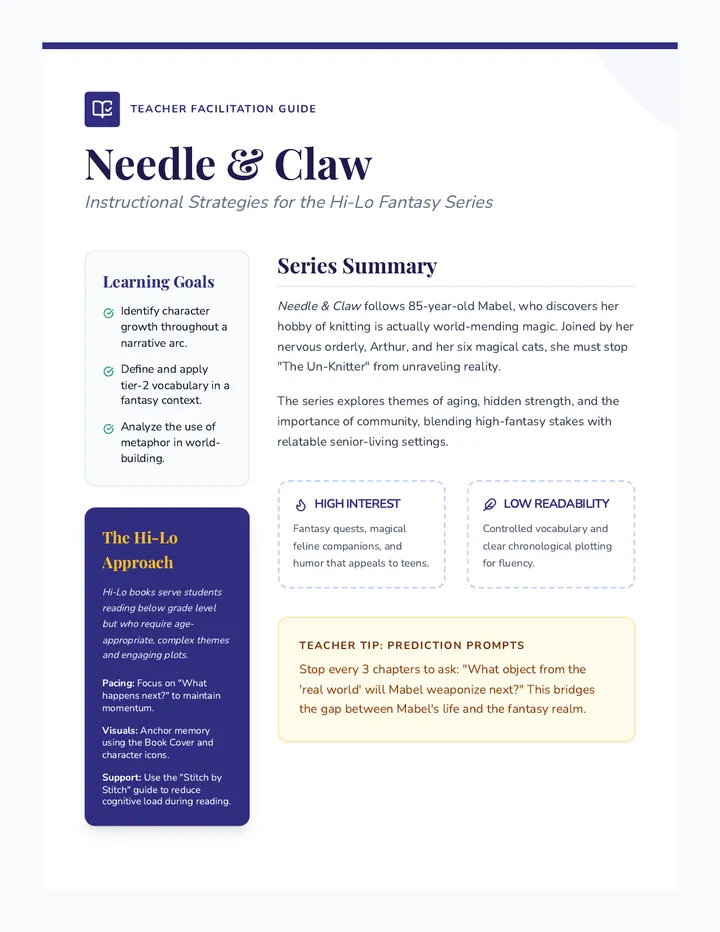
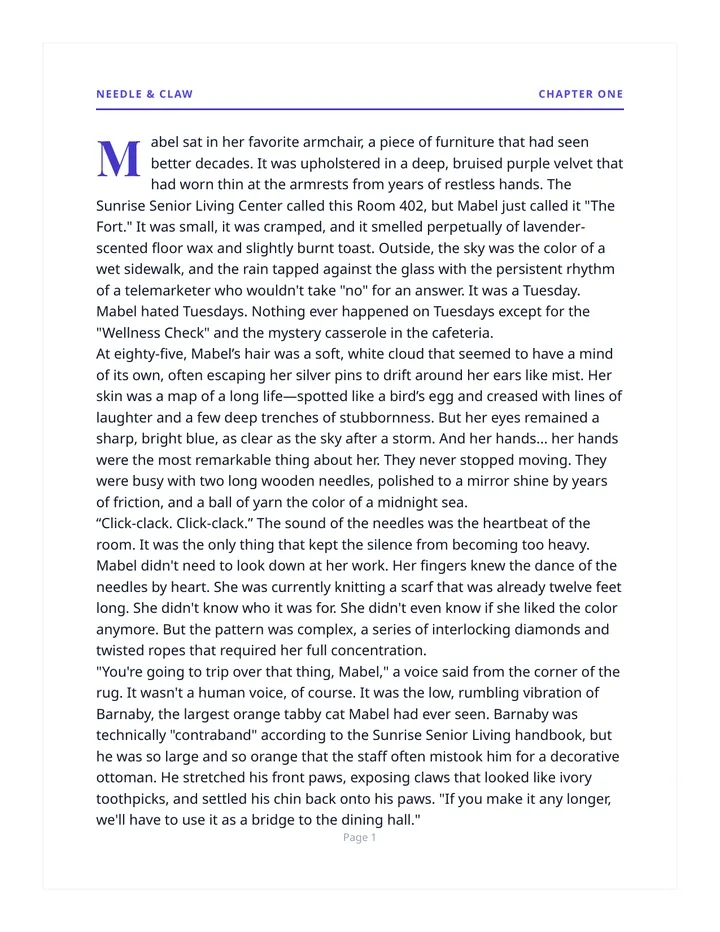
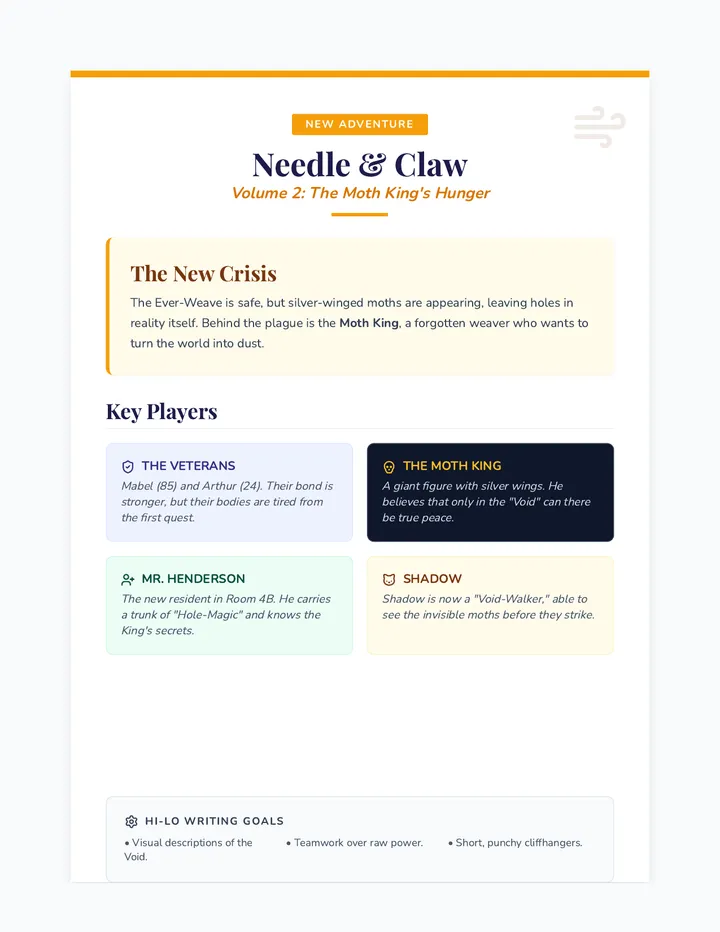
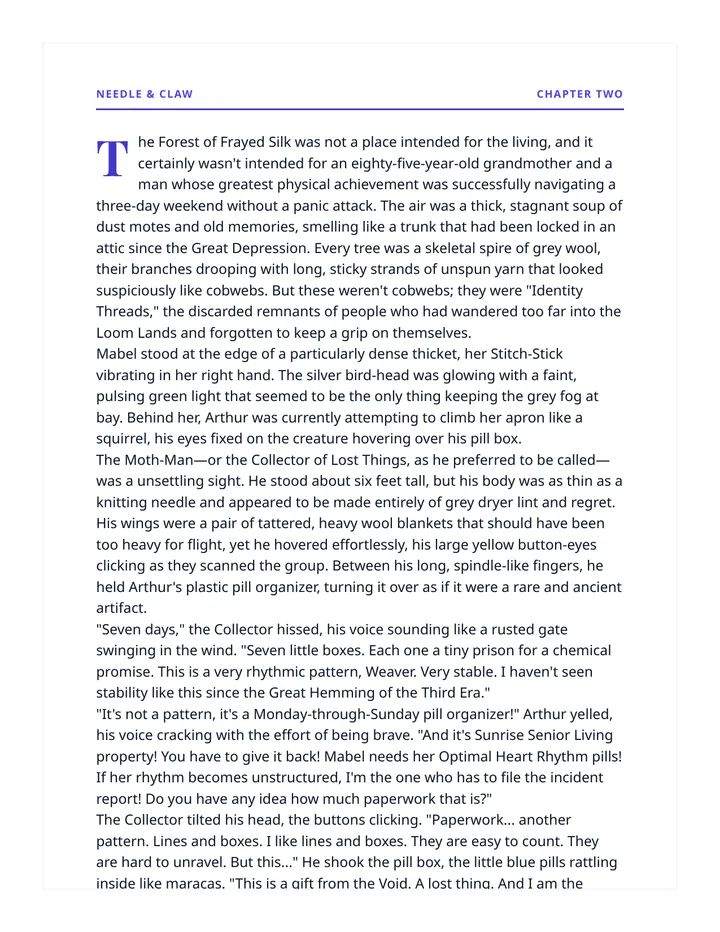
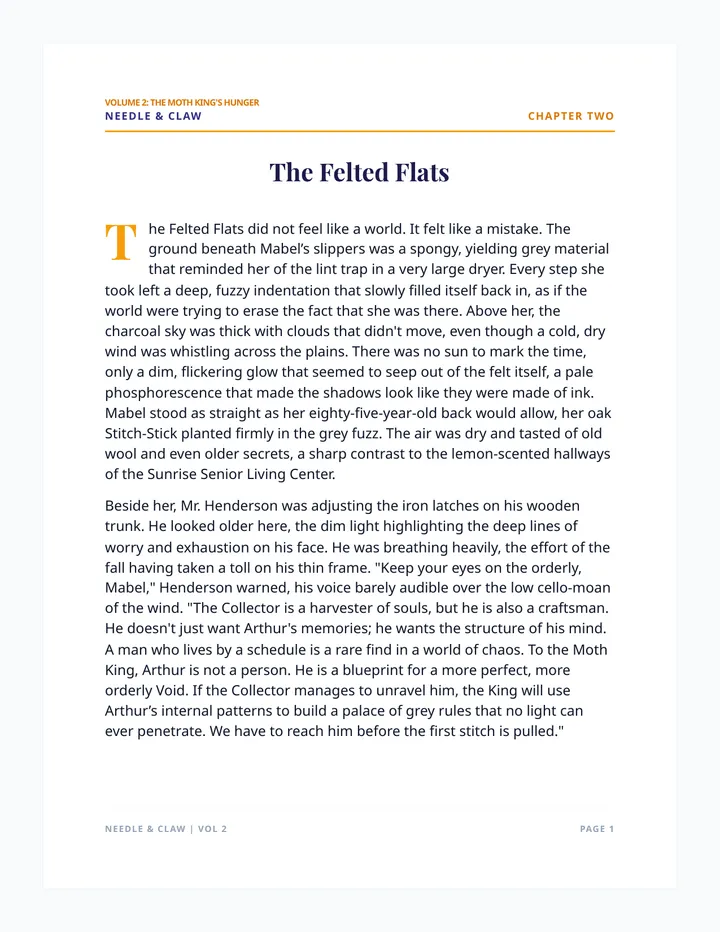
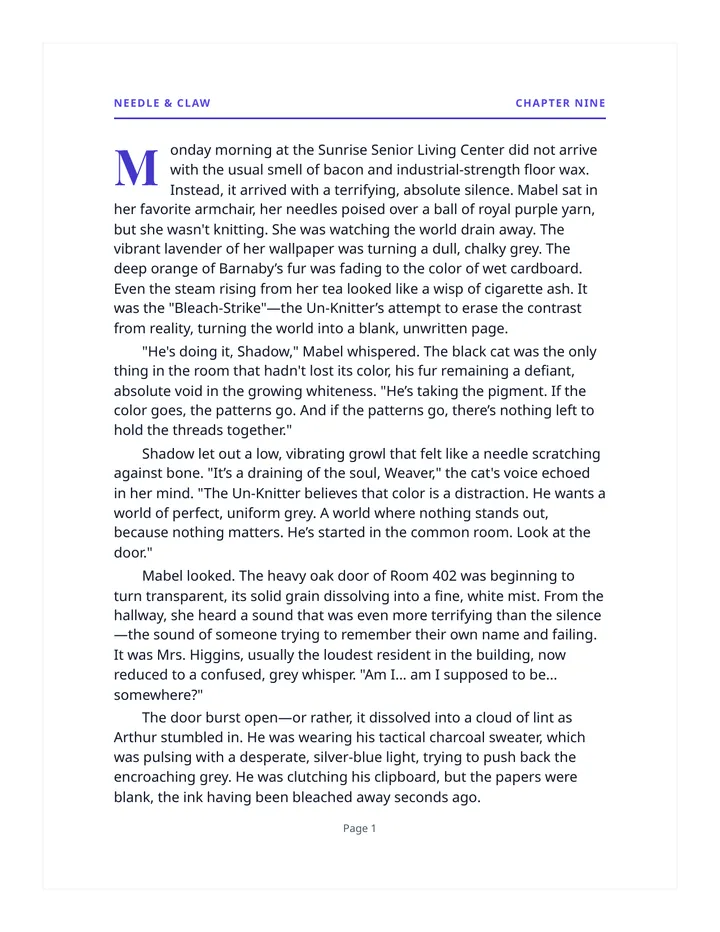
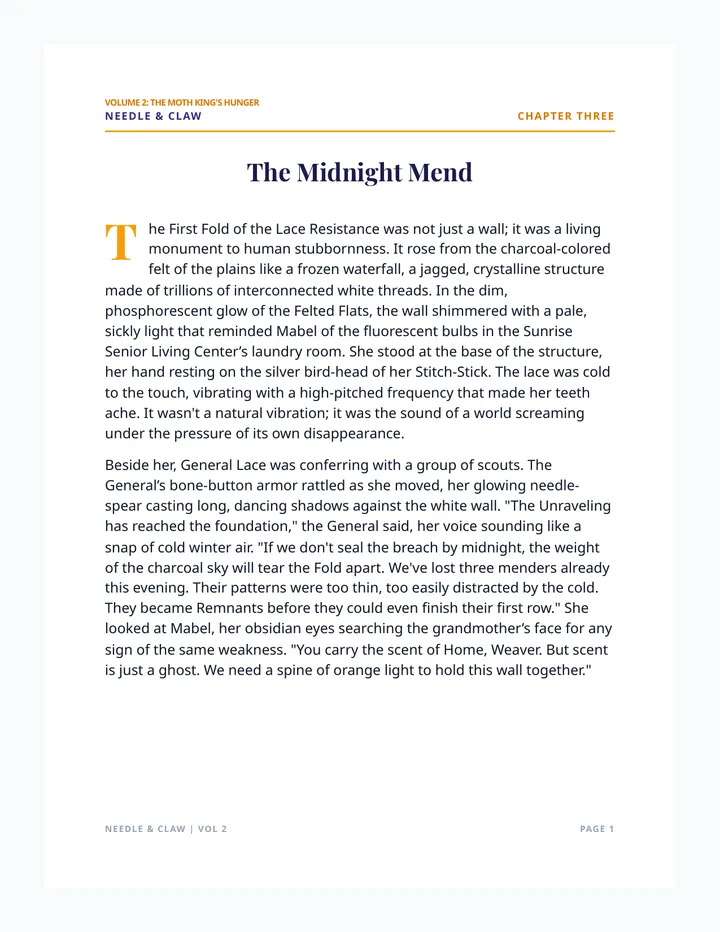
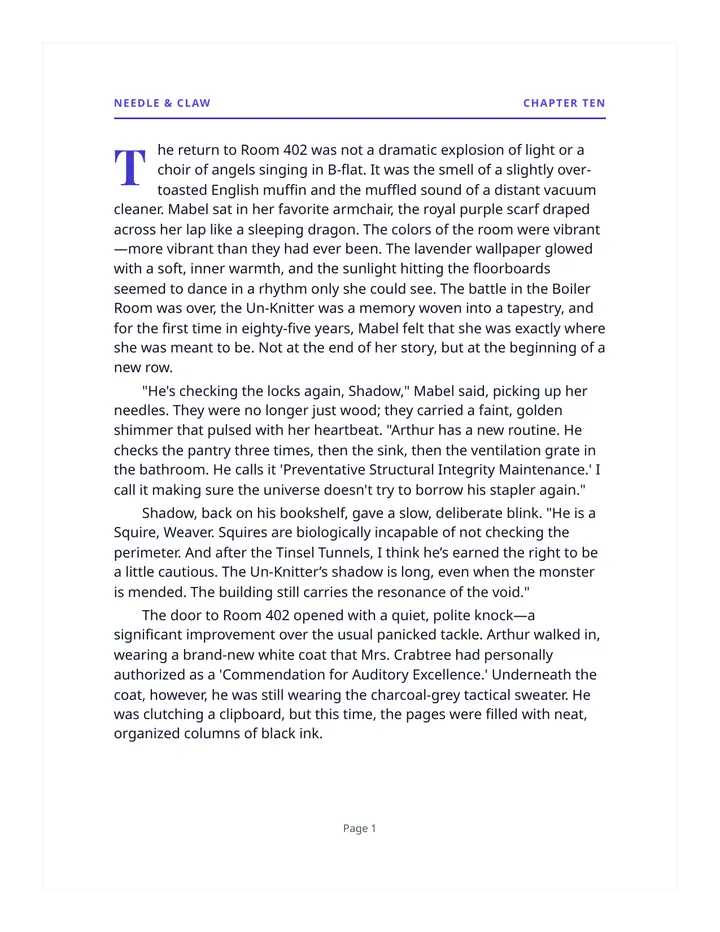
A creative story outline and character guide for a high-interest, low-readability (Hi-Lo) novel featuring an elderly protagonist in a fantasy world.
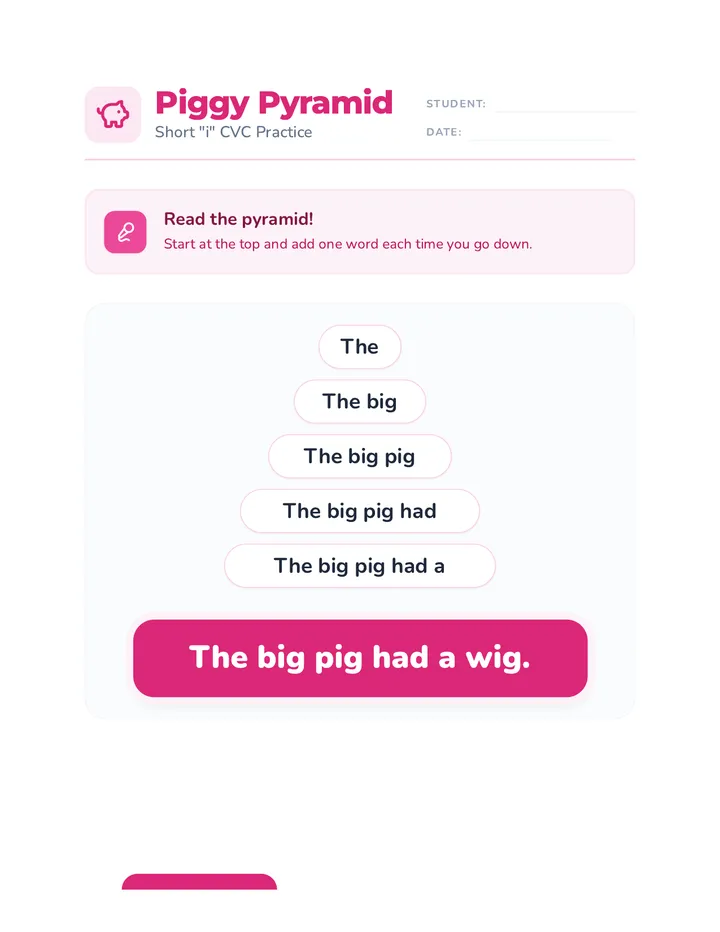
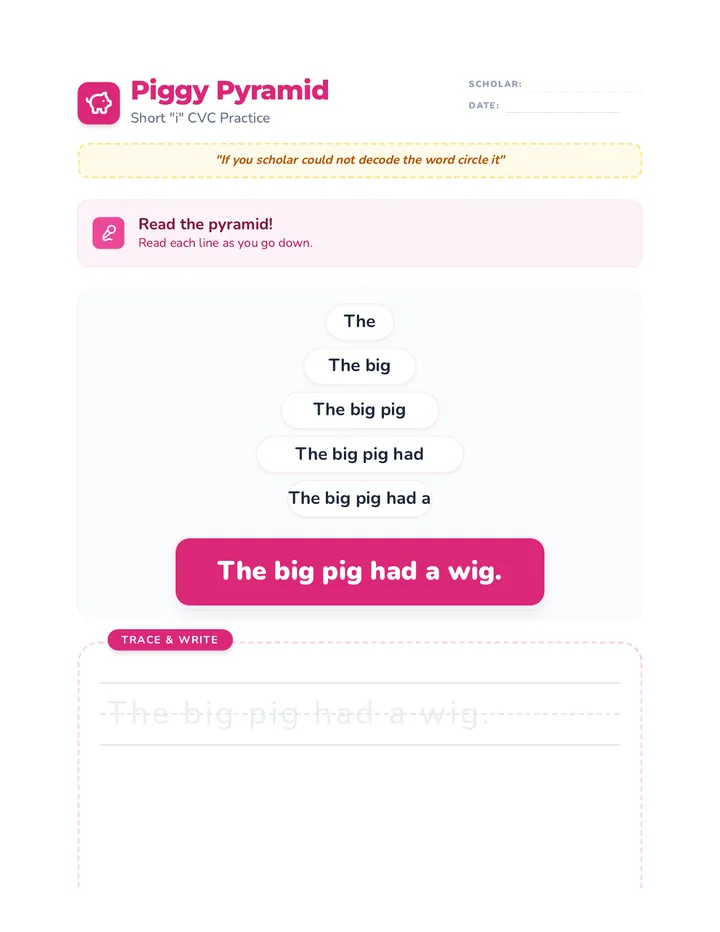
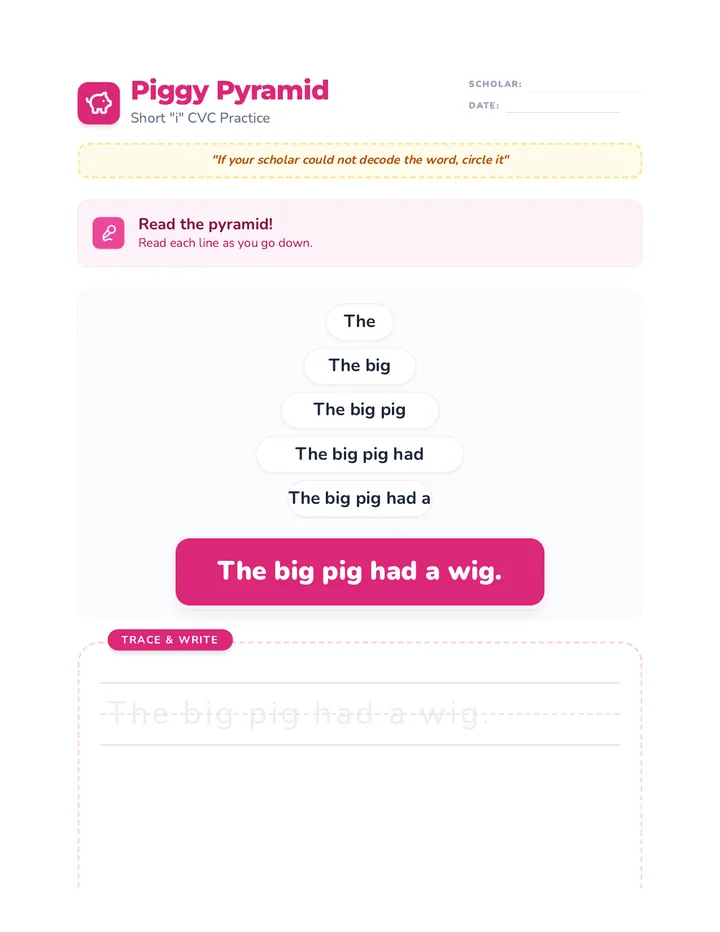
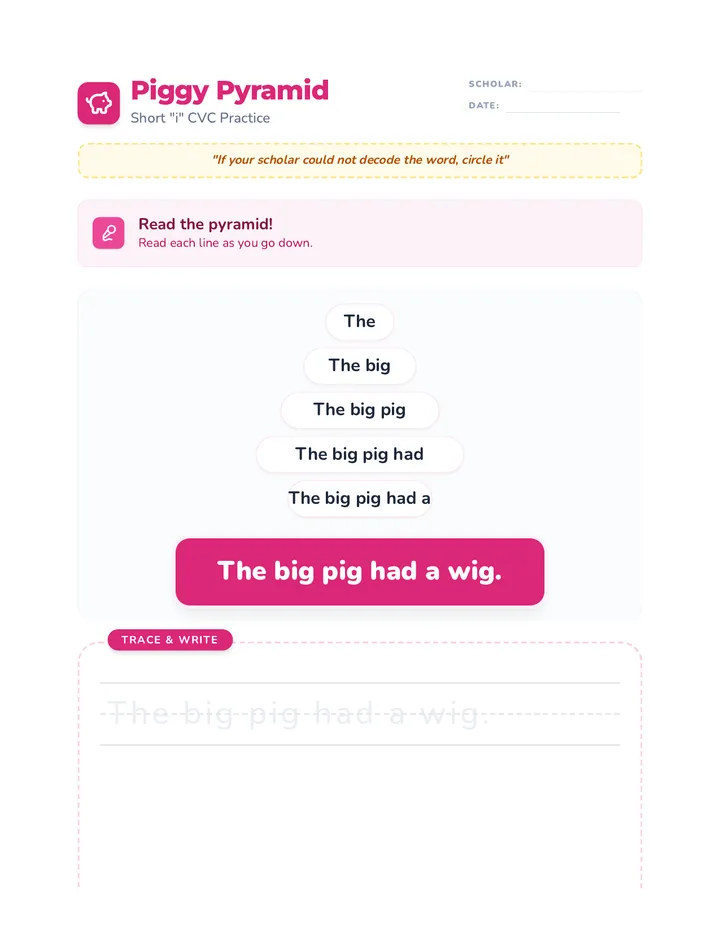
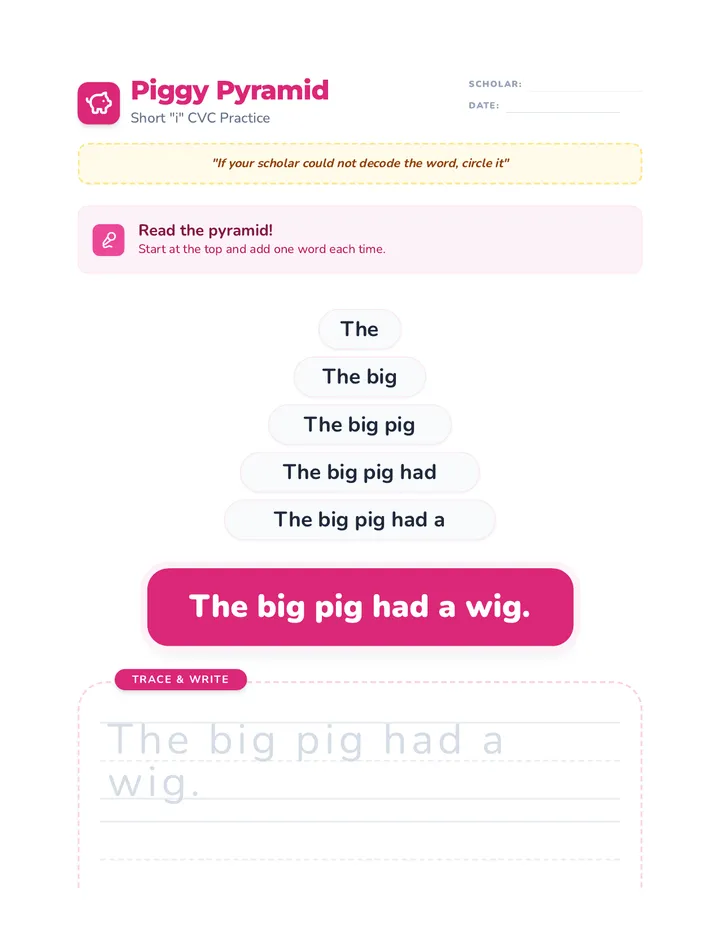
A phonics lesson focusing on short 'i' CVC words through a structured fluency pyramid and comprehension questions.
A structured literacy lesson focused on the letter C /k/ and glued sounds -an and -am, using the decodable text 'The Cat Can'. This lesson follows a backwards planning approach to ensure students can decode and encode CVC words and nasalized vowels.
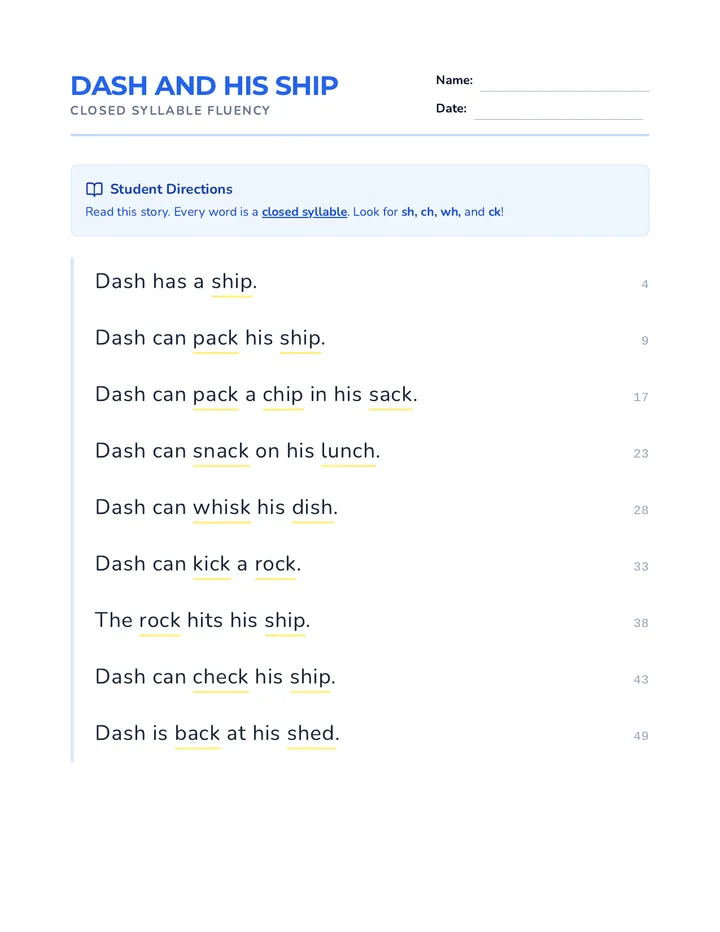
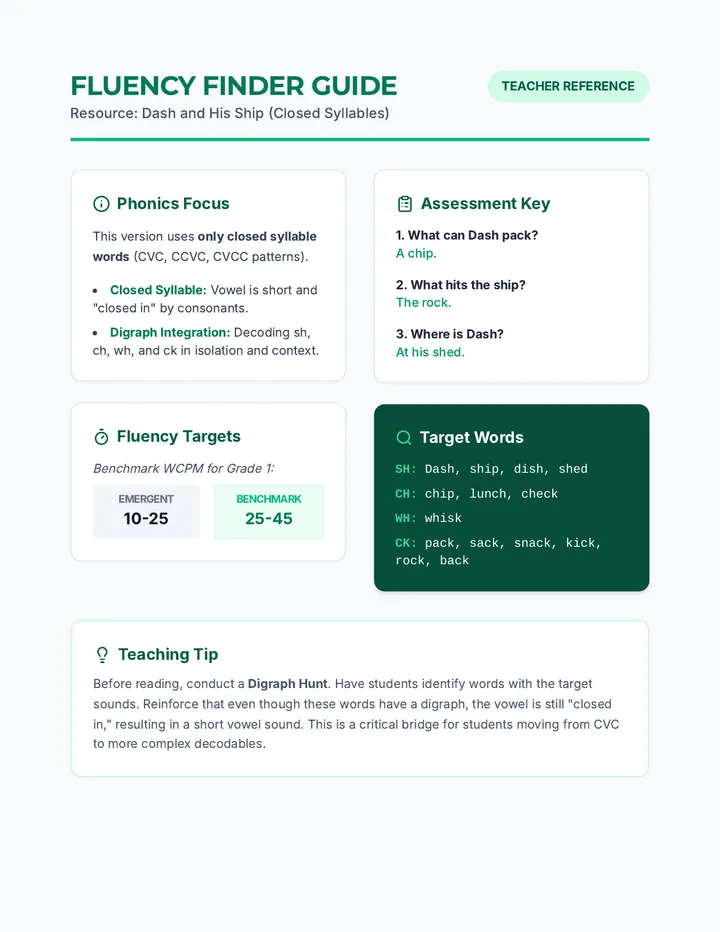
A foundational phonics lesson focusing on identifying and reading words with the digraphs wh, sh, ch, and ck within a beach-themed narrative. Students will practice oral reading fluency and basic reading comprehension.
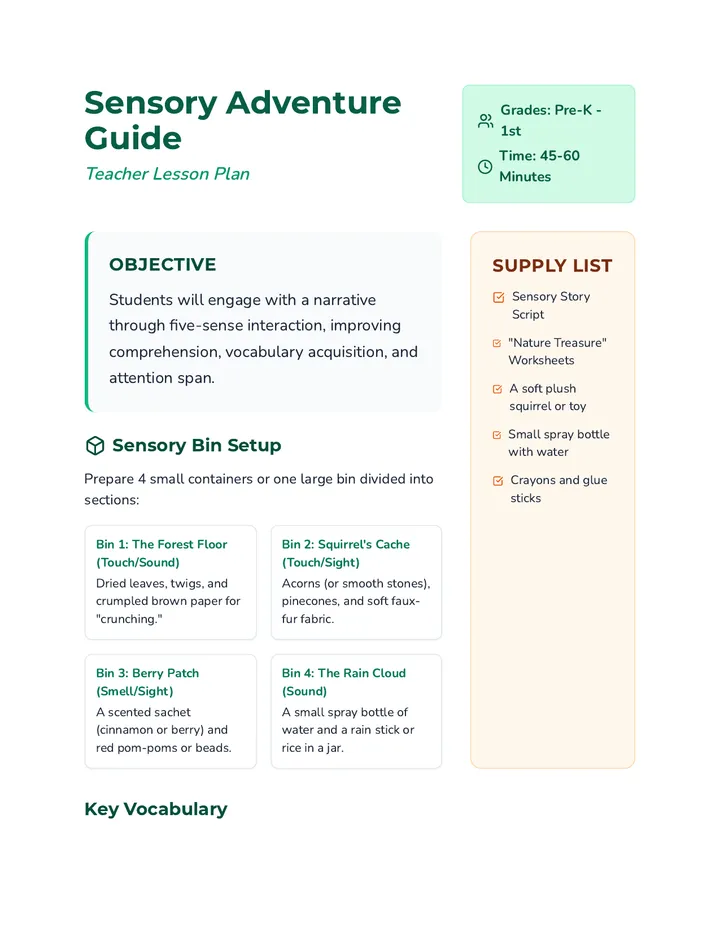
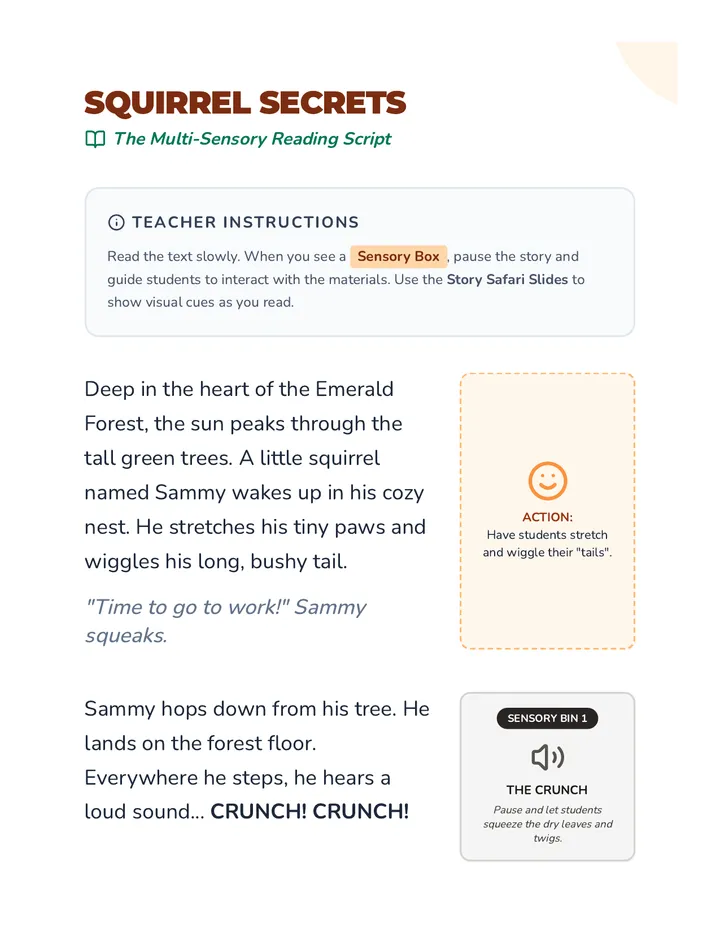
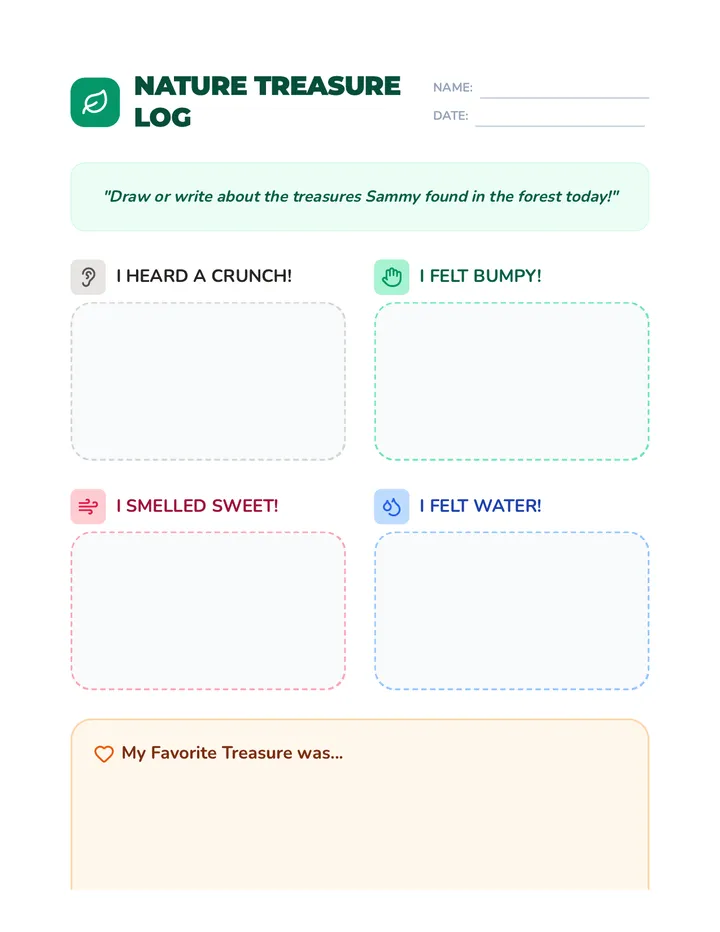
A multi-sensory literacy experience for early learners, using tactile objects, sounds, and smells to bring a story about a forest animal to life.
A Kindergarten read-aloud lesson for 'The Tree in the Ancient Forest' focusing on developing oral language skills through the 'Notice and Wonder' strategy. Students explore ecosystem connections while practicing sharing their observations and questions.
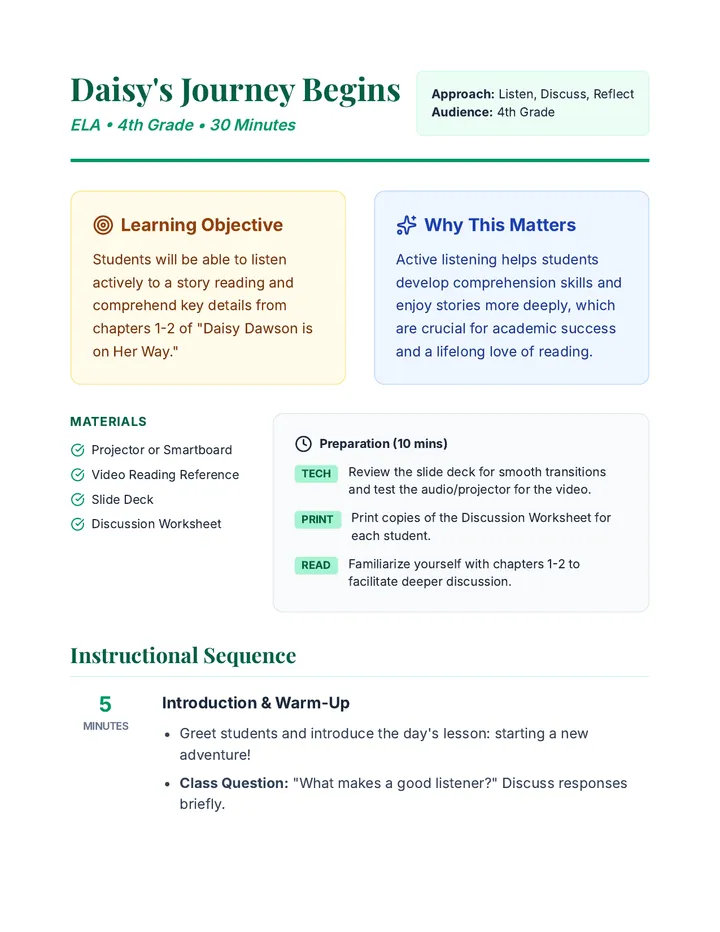
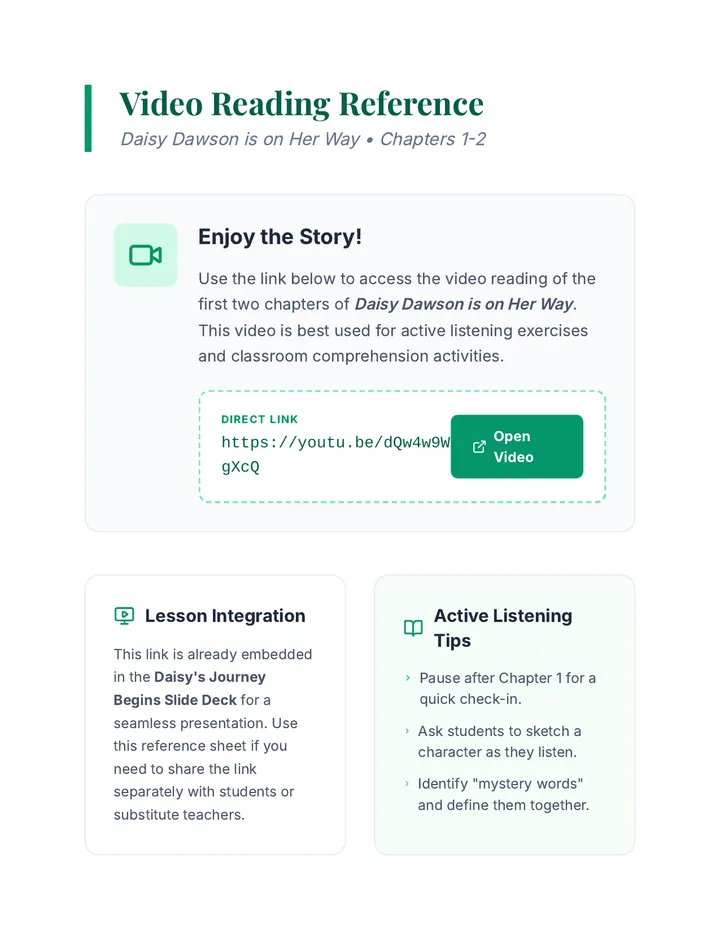
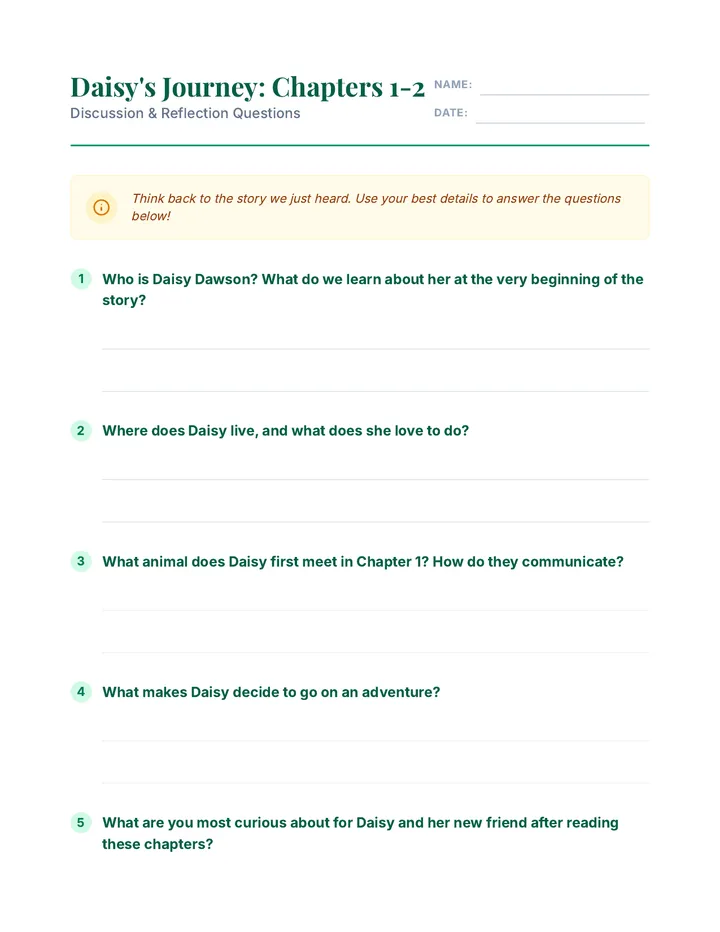
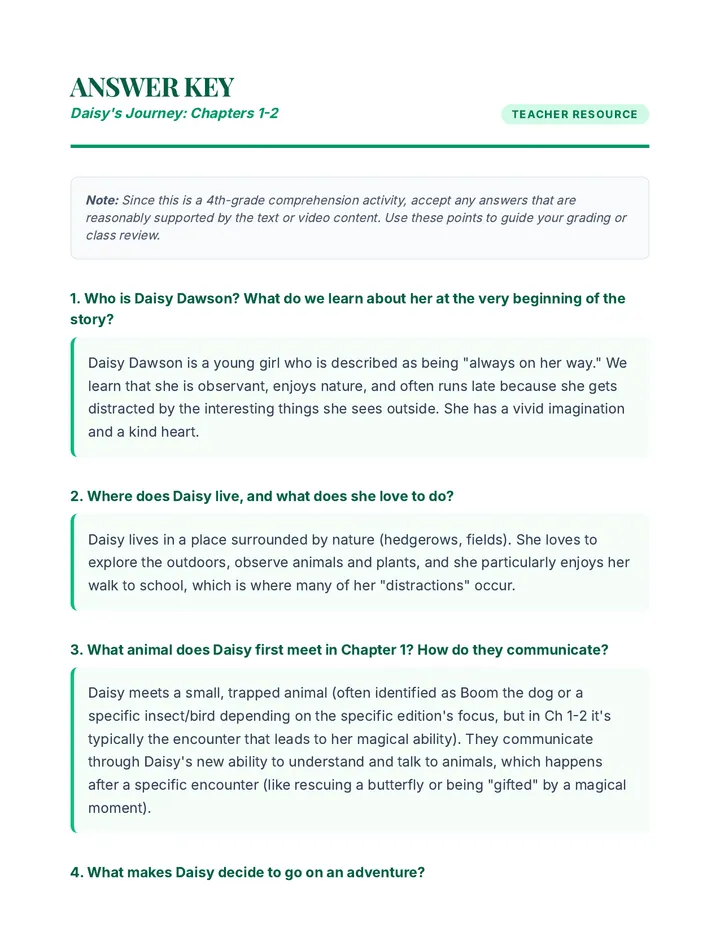
An introductory lesson for 4th graders on 'Daisy Dawson is on Her Way', focusing on active listening and comprehension of the first two chapters through a video reading and guided discussion.
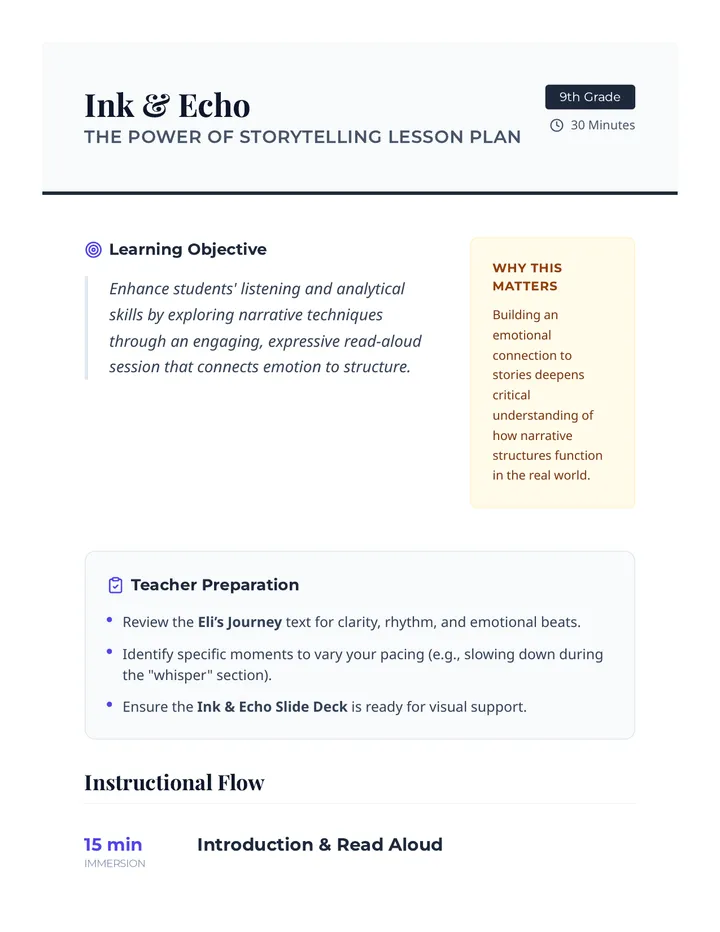
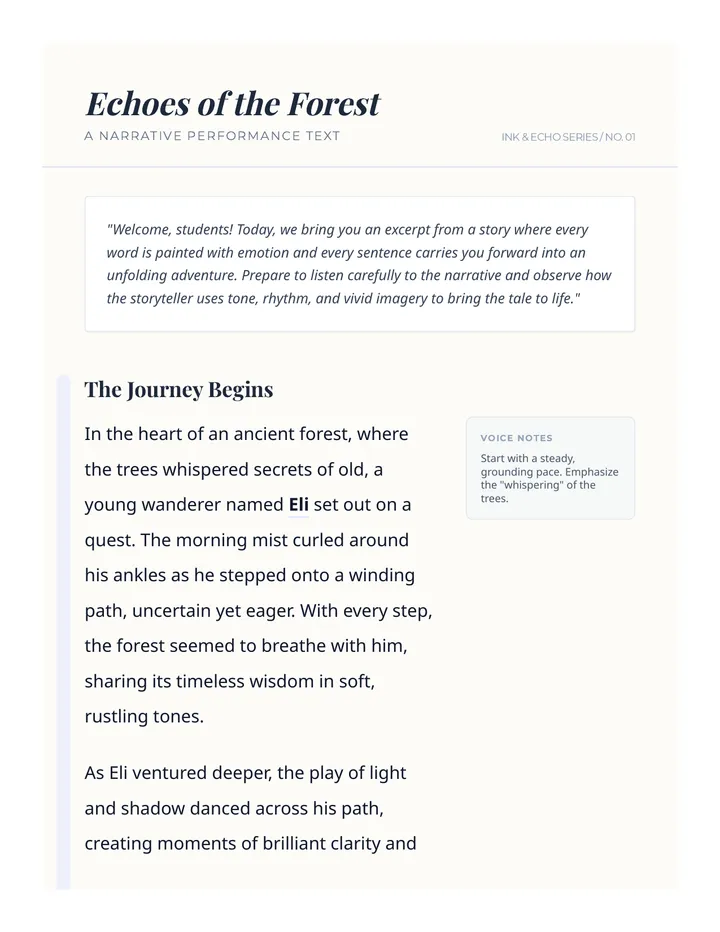
An immersive 30-minute read-aloud session designed for 9th graders to explore narrative techniques and emotional resonance through a guided story experience.
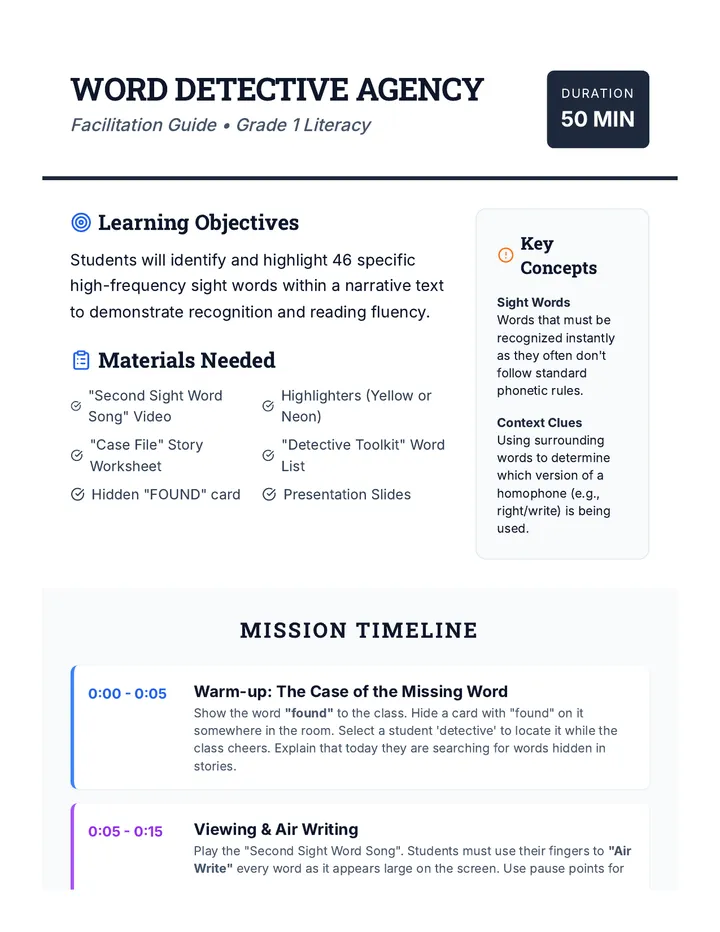
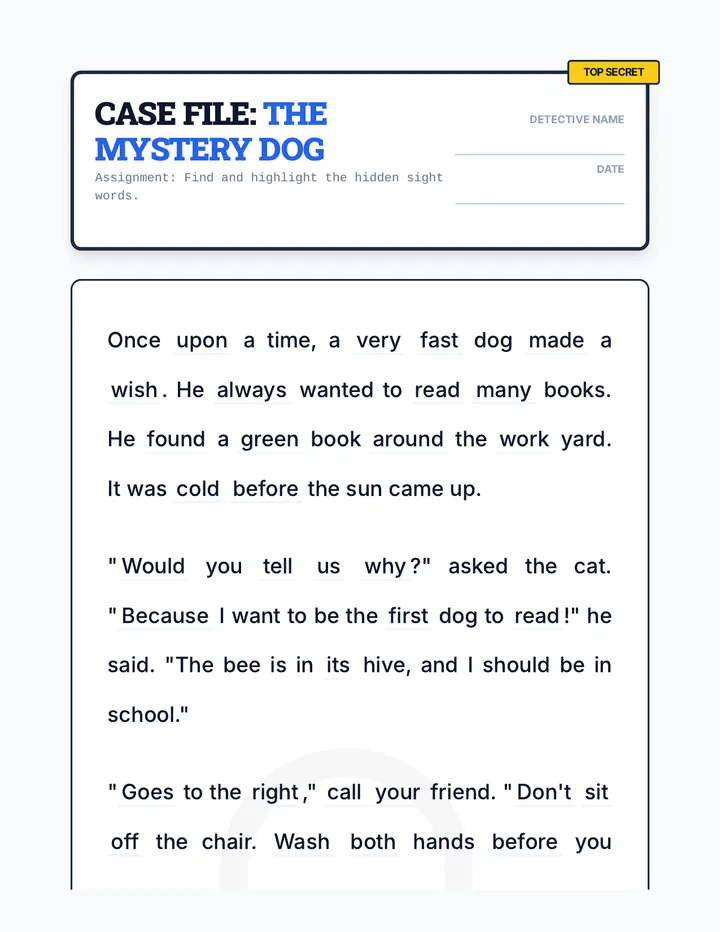
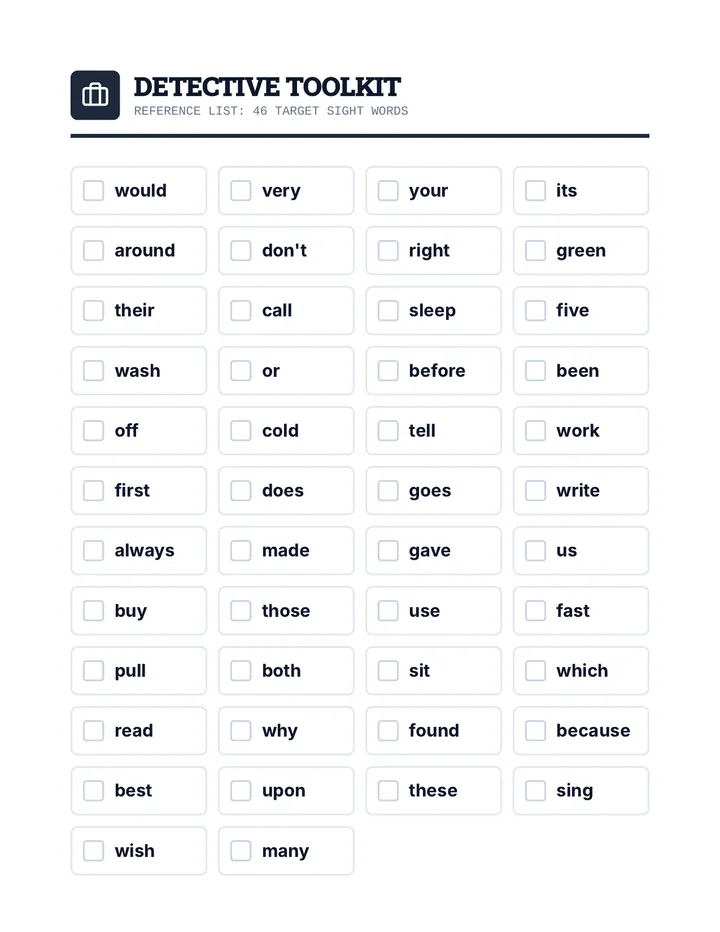
Students become 'Word Detectives' to identify 46 high-frequency sight words from the 'Second Sight Word Song'. The lesson involves a classroom search, air-writing during video viewing, and a text-based highlighting mission.
An introductory lesson for 4th-grade students on 'Daisy Dawson is on Her Way', focusing on active listening and comprehension through a video reading of the first two chapters.