Lenny.com
Explore
Create
ActivitiesNewMathEnglish Language ArtsScience & EngineeringSocial StudiesGlobal LanguagesHealth & Physical EducationSpecial EducationCounseling & Life SkillsArts & CreativityESL
Lenny.com
Lenny.com
Explore
Create
ActivitiesNewMathEnglish Language ArtsScience & EngineeringSocial StudiesGlobal LanguagesHealth & Physical EducationSpecial EducationCounseling & Life SkillsArts & CreativityESL
Lenny.com
Lenny.com

Solutions

Lenny for EducatorsLenny for SchoolsLenny for Districts

Product

ExploreSign inCreateSupportAbout

Resources

Getting startedMTSS Acceleration Program

© 2026 Lenny Learning Inc.

TermsPrivacyAccessibility
LinkedInInstagramX
Lenny

Nouns and Adjectives

Classification of people, places, and things alongside descriptive modifiers to enhance sentence detail. Strengthens foundational grammar skills through identification and practical application in writing.

English Language ArtsPhonics & Reading FoundationsLetter IdentificationLearn Letters A-ZLowercase and Uppercase LettersConsonants and VowelsLetter-Sound AssociationsLetter-Sound Associations: LowercaseLetter-Sound Associations: UppercaseBeginning and Ending SoundsRhymingBlending And SegmentingShort VowelsShort Vowel SoundsConsonant BlendsConsonant DigraphsBlends, Digraphs, and TrigraphsDigraphs, Blends, and Silent LettersLong Vowel SoundsLong Vowel PatternsShort and Long VowelsShort and Long Vowel PatternsSilent EVowel SoundsVowel TeamsR-Controlled VowelsDiphthongs: Oi, Oy, Ou, OwVariant VowelsVariant, Diphthong, And R Vowel PatternsSoft G And CSight WordsIrregular WordsWord RecognitionSyllablesSyllable TypesTwo-Syllable WordsMultisyllabic WordsPhoneme ManipulationDecodable TextsVocabularyAction WordsQuestion WordsNouns and AdjectivesClassify WordsCompound WordsSynonyms and AntonymsHomophonesHomophones and HomonymsShades of MeaningContext CluesPrefixes and SuffixesGreek and Latin RootsAnalogiesIdioms and AdagesForeign Words and ExpressionsWord Choice and UsageReference SkillsReading ComprehensionRead-Along Literary TextsRead-Along Informational TextsReality vs. FictionStory ElementsCharacterSequenceMain IdeaCause And EffectCompare And ContrastReading StrategiesText StructureAuthor's PurposeAuthor's Purpose And ToneAuthor's PerspectivePoint Of ViewThemeInference And ThemeInference And AnalysisPoetry ElementsLiterary DevicesAnalyzing LiteratureAnalyzing Informational TextsComparing TextsAudience, Purpose, And ToneBusiness DocumentsNovel StudyNonfiction Book StudyGrammar & MechanicsSentencesNounsVerbsAdjectivesPronounsCapitalizationPunctuationContractionsConjunctionsPrepositionsArticlesAdjectives And AdverbsVerb TypesVerb TensePronouns And AntecedentsPronoun TypesSubject-Verb AgreementDirect And Indirect ObjectsSentences, Fragments, And Run-OnsPhrases And ClausesCommasSemicolons, Colons, And CommasDashes, Hyphens, And EllipsesSpellingAbbreviationsFormattingVerb Tense And MoodMisplaced ModifiersWritingDescriptive DetailsCreative WritingOpinion WritingTopic SentencesOrganizing WritingLinking WordsSentence VarietyIntroductions And ConclusionsPersuasive And Opinion WritingExpository WritingPersuasive StrategiesDeveloping And Supporting ArgumentsTopic Sentences And Thesis StatementsSummarizingResearch SkillsEditing And RevisingActive And Passive Voice=Writing Clearly And ConciselyDebate & Public SpeakingPublic Speaking BasicsPersuasive TechniquesClaims and EvidenceTypes of ArgumentsReasoning TypesLogical FallaciesTopic ResearchOrganizing EvidenceDebate Speech OrganizationAttacking and Defending ArgumentsClash and EngagementImpact CalculusQuestioning and Cross-ExaminationCritical ThinkingInformal LogicFormal LogicInductive Reasoning

Videos

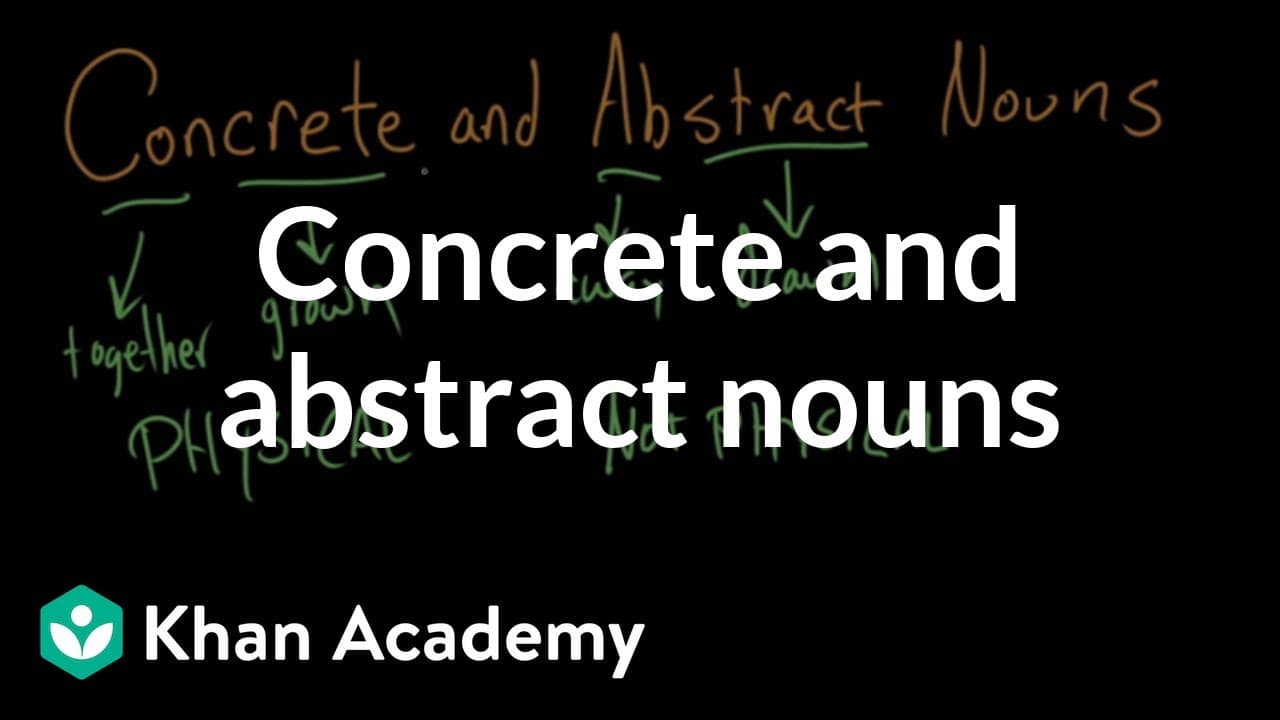
Concrete vs. Abstract Nouns: The Difference Between Objects and Ideas

Concrete vs. Abstract Nouns: The Difference Between Objects and Ideas

This video provides a clear and engaging explanation of the difference between concrete and abstract nouns, utilizing etymology to deepen student understanding. The narrator breaks down the Latin roots of both terms—"concrete" meaning "grown together" or physical, and "abstract" meaning "drawn away" or conceptual—to help students visualize the distinction. Through a digital whiteboard demonstration, the lesson contrasts tangible objects that can be sensed with intangible ideas, emotions, and states of being. The content focuses on key grammatical concepts including the definition of nouns as not just persons, places, and things, but also *ideas*. It explores how abstract nouns like "sadness," "freedom," and "permission" function grammatically (often using suffixes like "-ness") despite lacking physical form. The video specifically addresses the nuance between an abstract concept and its physical manifestations, using the example of "freedom" versus the "ice cream" one is free to eat. For educators, this resource offers a robust foundation for grammar instruction in upper elementary and middle school. It moves beyond simple memorization by providing a logic-based framework (the "physical vs. not physical" test) that students can apply to new vocabulary. The video is particularly useful for introducing abstract nouns, a concept that often challenges students transitioning from basic concrete noun identification, and can serve as a springboard for lessons on sensory imagery and descriptive writing.

Khan AcademyKhan Academy

3mins 43s

Mastering Intentional Word Choice in Creative Writing

Mastering Intentional Word Choice in Creative Writing

This engaging video lesson explores the power of intentional word choice in creative writing, demonstrating how specific vocabulary transforms flat descriptions into vivid, immersive experiences for readers. Through a "writer's escape room" narrative, the host guides students through the concepts of denotation and connotation, illustrating how words with similar definitions can evoke vastly different emotional responses. The lesson uses practical examples, including excerpts from Kenneth Grahame's *The Wind in the Willows*, to show how authors use language to establish mood, setting, and character traits. The video breaks down three specific strategies for selecting the perfect words: visualizing the scene to brainstorm descriptors, choosing words that emphasize key character or setting traits, and considering the intensity of synonyms to match the intended atmosphere. It provides concrete examples for each strategy, such as shifting from "old" to "dilapidated" to "derelict" to increase intensity, or distinguishing between "childlike" and "childish" to understand positive versus negative connotations. Ideal for English Language Arts classrooms, this resource helps move students beyond basic vocabulary toward more sophisticated writing techniques. It encourages learners to treat writing as an art form where every word matters, providing them with actionable tools to revise their own drafts. The video concludes with a modeling exercise where the narrator applies these strategies to write a scene, allowing students to see the immediate impact of intentional word choice on narrative quality.

Miacademy & MiaPrep Learning ChannelMiacademy & MiaPrep Learning Channel

10mins 32s

Exploring the Vocabulary Words Recently and Voyage

Exploring the Vocabulary Words Recently and Voyage

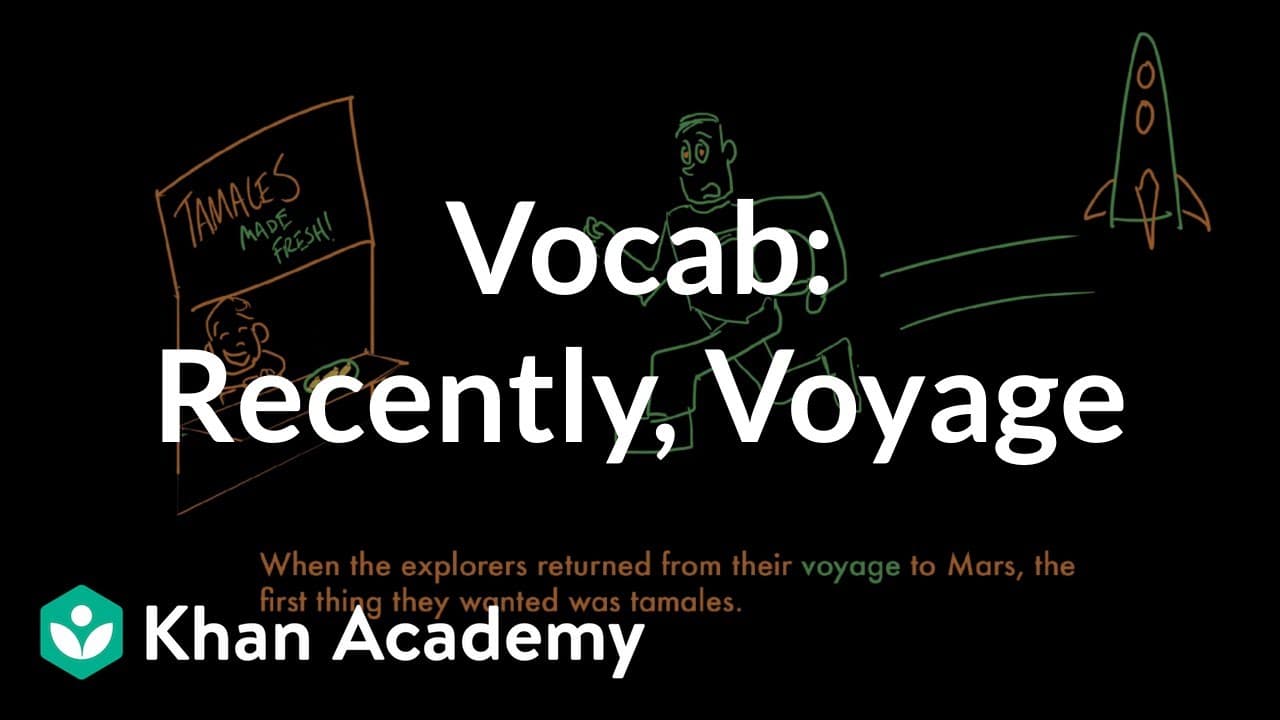
In this engaging vocabulary lesson, the narrator introduces students to two specific words: "recently" and "voyage." Through a blend of humor, storytelling, and simple illustrations, the video breaks down the definitions, parts of speech, and grammatical rules associated with each word. Specifically, it explains how the suffix "-ly" transforms adjectives into adverbs and how a single word like "voyage" can function as both a noun and a verb. The video explores key grammatical concepts in an accessible way. It defines "recently" as an adverb meaning "happening a short time ago" and demonstrates how adjectives like "happy" and "quick" become adverbs with the addition of "-ly." It then defines "voyage" as a long journey, providing examples of its use as a noun (taking a trip) and a verb (the act of traveling). The narrator uses humorous example sentences involving astronomers and astronauts craving tamales to solidify understanding. For educators, this video is a valuable tool for reinforcing parts of speech and expanding vocabulary. It can be used to introduce the concept of suffixes, specifically how word endings change grammatical function. The clear definitions and contextual examples make it an excellent resource for ELA lessons focused on grammar, reading comprehension, and creative writing, encouraging students to use new vocabulary in their own sentences.

Khan AcademyKhan Academy

2mins 29s

Defining and Using the Words Examine, Resource, and Pollution

Defining and Using the Words Examine, Resource, and Pollution

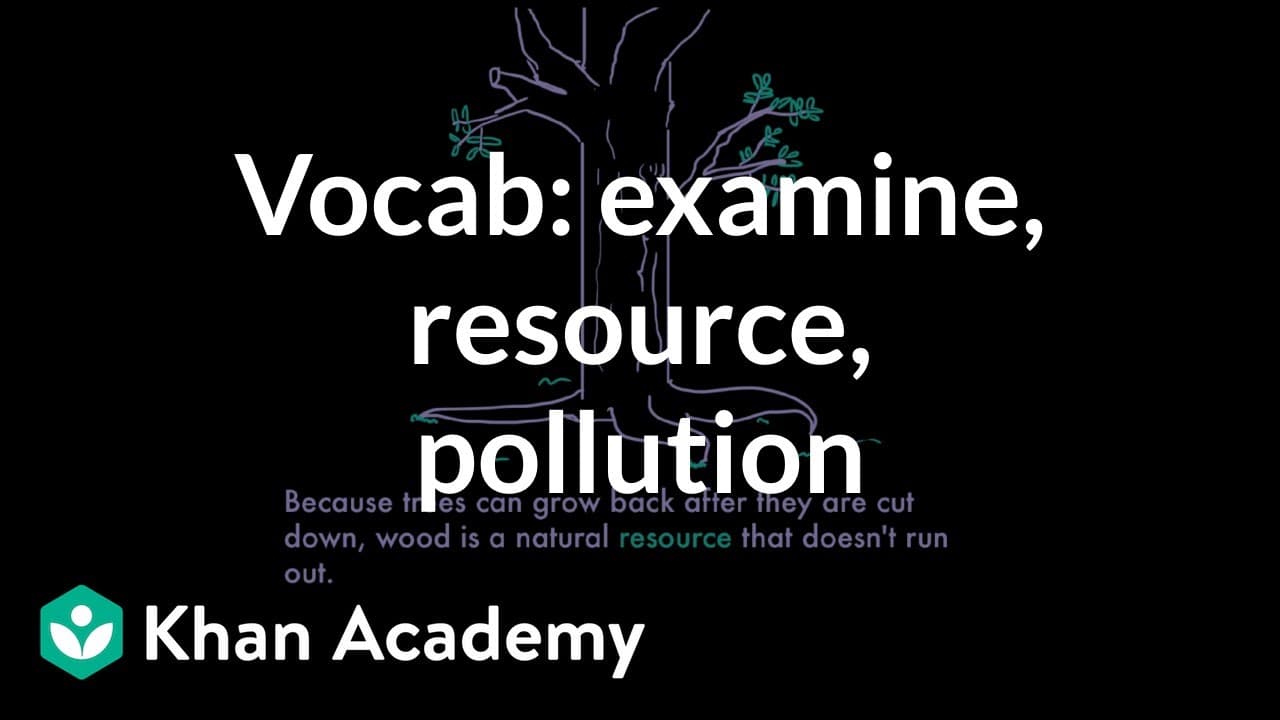
This educational video introduces and defines three specific vocabulary words: "examine," "resource," and "pollution." Using a "blackboard" style visual approach with colorful handwritten text and simple illustrations, the narrator breaks down each word by identifying its part of speech (verb or noun), providing a clear definition, and explaining its etymology or morphological structure (such as the suffix "-tion"). The video explores the meanings in depth before showing them in context. For example, it connects "examine" to the familiar concept of taking an "exam," expands the definition of "resource" from natural materials to school libraries, and breaks down "pollution" as the act of dirtying the environment. Each segment concludes with an illustrated sentence that demonstrates the word being used correctly in a real-world scenario. Teachers can use this video as a versatile tool for both English Language Arts and Science instruction. It serves as an excellent model for how to learn new vocabulary—by defining, connecting to known words, and using in context. Additionally, the specific words chosen bridge nicely into science units regarding scientific observation (examining), natural resources, and environmental stewardship (pollution).

Khan AcademyKhan Academy

2mins 59s

Adjectives: The Words That Describe Nouns

Adjectives: The Words That Describe Nouns

This engaging educational video introduces students to the concept of adjectives as part of speech. It begins by reviewing nouns (people, places, and things) to establish a foundation, then defines adjectives as words that describe nouns or tell us more about them. The narrator uses clear, illustrated examples—such as a "tall, smart" doctor and a "clean, tan" desk—to demonstrate how adjectives function in a sentence. The video progresses through a series of practice scenarios using real-world images, challenging viewers to identify descriptive words for colorful faces, angry toys, tall forests, and splashing water. This visual approach helps students connect the abstract grammatical concept to tangible observations they can make about the world around them. Key vocabulary includes descriptive terms related to size, emotion, cleanliness, and color. Finally, the lesson concludes with an interactive "Adjective Game," a multiple-choice style quiz where students identify the adjective in a given sentence. This video is an excellent resource for early elementary classrooms to introduce grammar concepts, support descriptive writing skills, and encourage vocabulary development through interactive participation.
Homeschool PopHomeschool Pop

8mins 33s

Mastering High-Frequency Sight Words Through Song: List 3

Mastering High-Frequency Sight Words Through Song: List 3

This engaging educational music video is designed to help early elementary students master a specific set of high-frequency sight words often found in "List 3" of common sight word curriculums. Through a catchy, rhythmic song, the video visually presents each word on a colorful background while the narrator sings the word clearly multiple times. This multisensory approach helps reinforce word recognition, spelling, and pronunciation for developing readers. The video focuses on key literacy themes including reading fluency, word recognition, and vocabulary development. It covers a diverse list of functional words ranging from number words like "six" and "seven" to common verbs like "grow," "laugh," and "carry," as well as abstract concepts like "about" and "if." The repetition built into the song structure ensures that students have ample opportunity to encode these words into their visual memory. For the classroom, this video serves as an excellent warm-up, transition activity, or center station for literacy blocks. It supports differentiated learning by providing auditory cues for students who struggle with traditional flashcards. Teachers can use this video to introduce new vocabulary, review previously taught words, or as a fun "brain break" that keeps the focus on learning. The steady pacing allows students to read along, making it a valuable tool for building confidence in reading aloud.

Have Fun TeachingHave Fun Teaching

4mins 5s

Materials

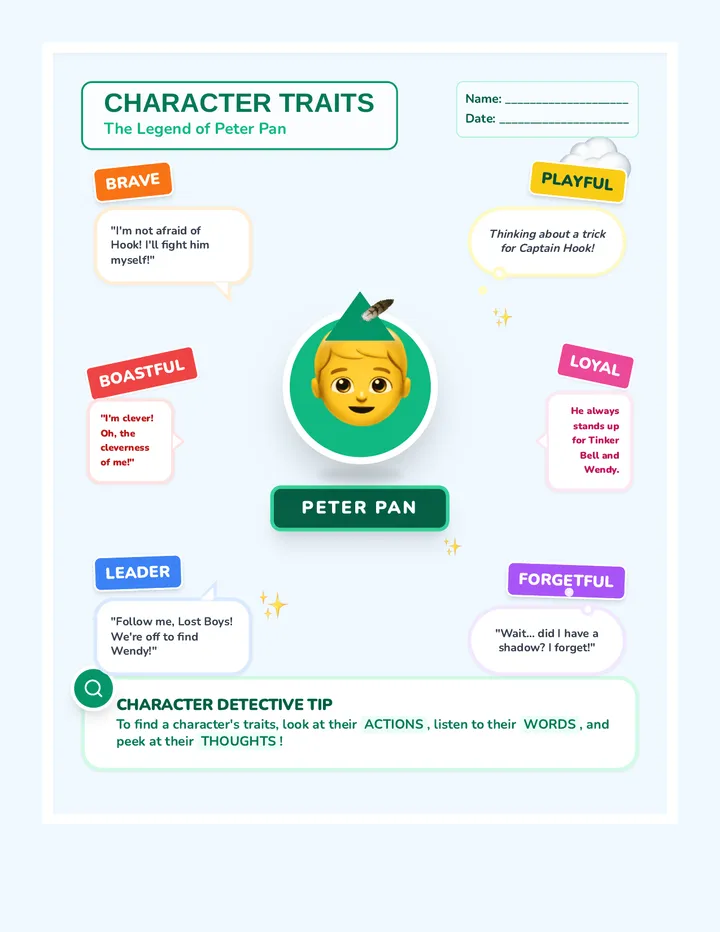
Neverland Legend Poster Bubbles Updated

Neverland Legend Poster Bubbles Updated

An updated visual character traits poster for Peter Pan featuring iconic speech bubbles with tails and cloud-like thought bubbles with trailing circles. The layout is optimized to fit on a single page while maintaining high-impact visuals and clear instructional tips for Grade 3.

A

amagalhaes

Sensory Sentences Worksheet

Sensory Sentences Worksheet

A vibrant, print-ready two-page worksheet designed to help students master sensory and descriptive vocabulary. Features 10 color-coded nouns, action verbs, and vivid adjectives with expanded handwriting lines and a combo challenge.

C

carlsond

Noun Verb Showdown Worksheet

Noun Verb Showdown Worksheet

A print-ready, high-contrast grayscale first-grade student worksheet for sorting 10 simple nouns and verbs (including CVC words 'dog' and 'den', and active verb 'kick'). Features a classic, clean black-and-white layout with check-off boxes, primary handwriting lines, and custom visual icons including a running person for verbs.

JB

Julia Butz

Heartfelt Words Worksheet

Heartfelt Words Worksheet

A warm and inviting worksheet for students to list 15 adjectives describing a special female caregiver. Includes an expanded 'Idea Sparker' word bank and new sections for the caregiver's two favorite colors. All font sizes increased for better readability and column alignment perfected.

JK

Juli Kibbe

Critter Color Flashcards

Critter Color Flashcards

Printable, high-quality large coloring flashcards for early childhood vocabulary, handwriting, and sorting. Features beautiful geometric black-and-white vector outlines of a cat, dog, pig, hen, fox, and rat alongside bold bubble letters for coloring and individual school-line handwriting tracing boxes.

MC

Milena Criniti

Memory Snapshot Organizer

Memory Snapshot Organizer

A comprehensive two-page graphic organizer for paragraph writing. Page 1 features memory selection and a detailed sensory word bank. Page 2 provides a spacious blueprint for drafting the topic, details, and conclusion with sentence starters and clear sections.

J

JENNIFER.SOBOLESKI

Sequences

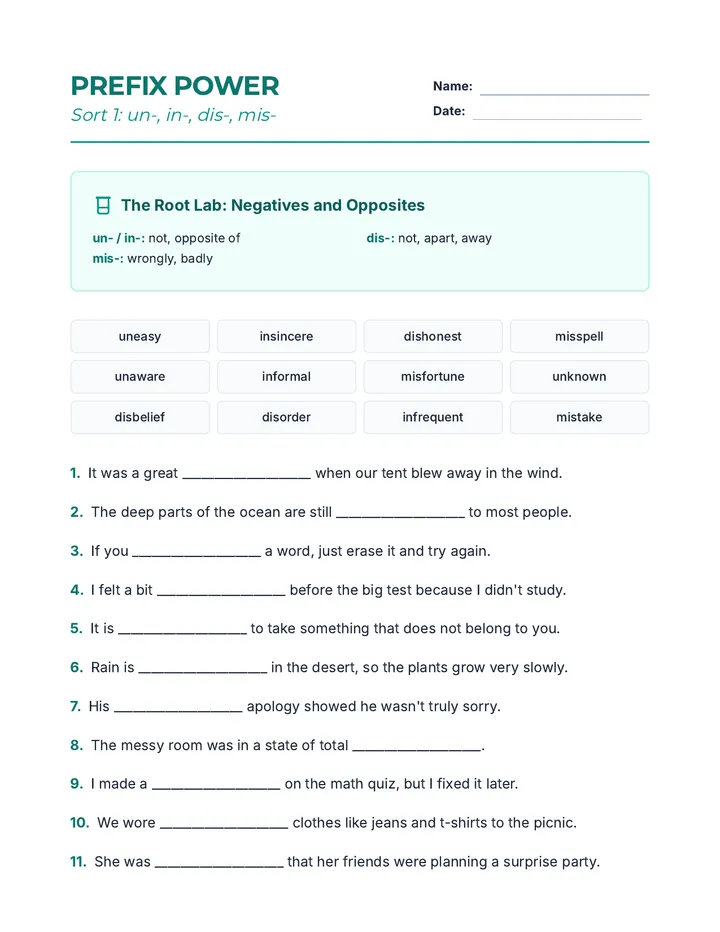
Prefix Power Sort 1 Worksheet

Word Wizard Packet

A comprehensive vocabulary and morphology curriculum covering prefixes, suffixes, Latin roots, and Greek roots through fill-in-the-blank exercises and engaging word puzzles.

N

nmack

137
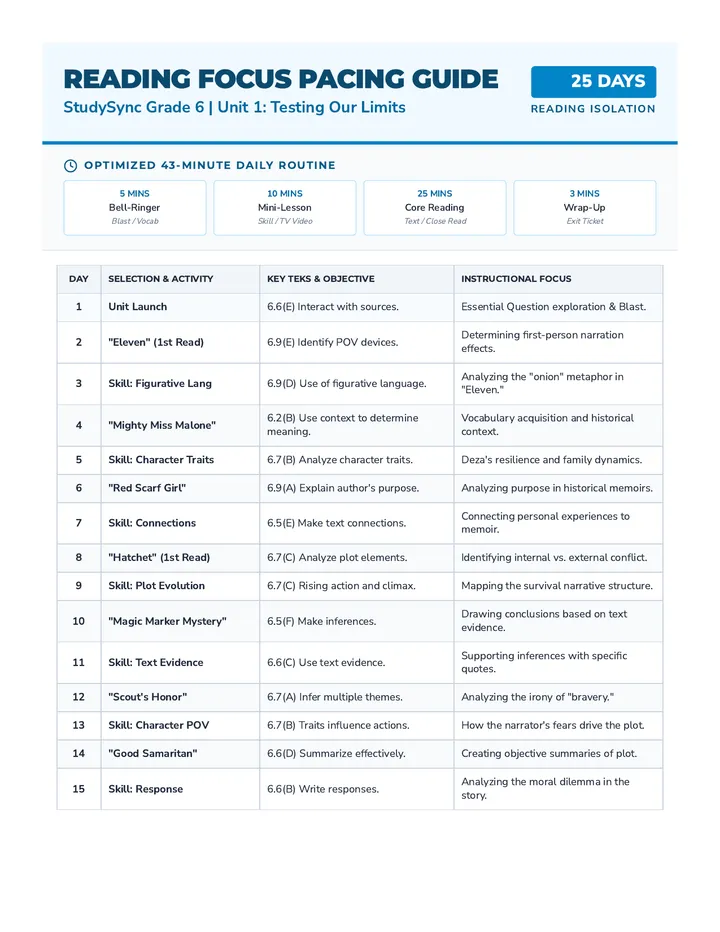
Reading Focus Pacing Guide

Testing Our Limits Unit

A 25-day comprehensive unit for StudySync Grade 6 that explores the theme of courage and resilience through isolated reading and writing tracks, aligned to ELA TEKS.

DM

Dawn Mustian

79
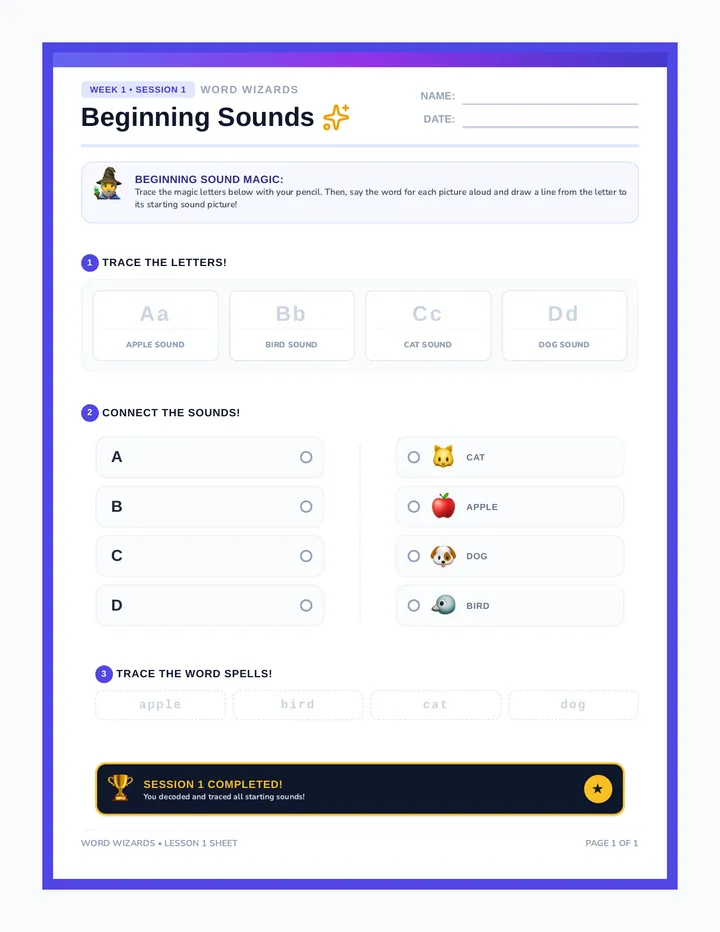
Beginning Sounds Worksheet

Word Wizards

An engaging, high-impact 4-week literacy skills program for young learners. Features highly visual, fun printable worksheets focusing on beginning letter sounds, CVC phonics blending, sight word reading, and short stories.

Z

ziad

18
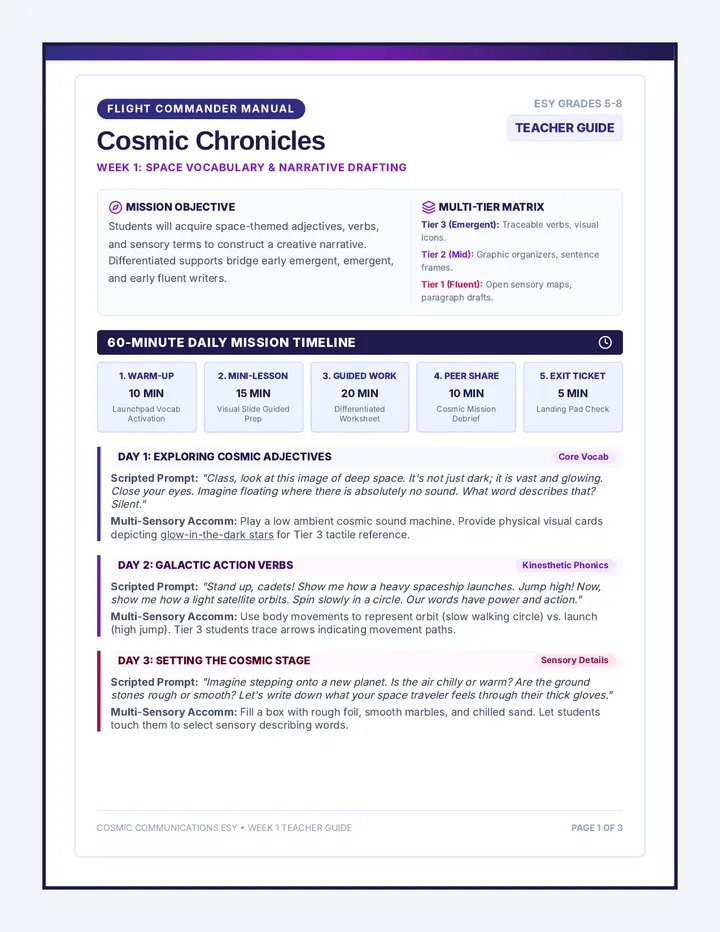
Cosmic Chronicles Teacher Guide

Cosmic Communications ESY

A comprehensive, space-themed 4-week Extended School Year (ESY) ELA curriculum designed for middle school students with disabilities (grades 5-8). It features daily scaffolded learning structures, differentiated materials spanning early emergent to early fluent readers, and visual sensory supports that make ELA skill acquisition accessible, engaging, and structured.

S

samantha.davis

16
Doggy Blueprint Slides Enhanced

Canine Chronicles Unit

A 4-lesson unit exploring the organizational structures and graphic elements of non-fiction through the lens of the Dachshund breed, featuring a complex 1200 Lexile informational text.

LF

Lindsey Foulks

22
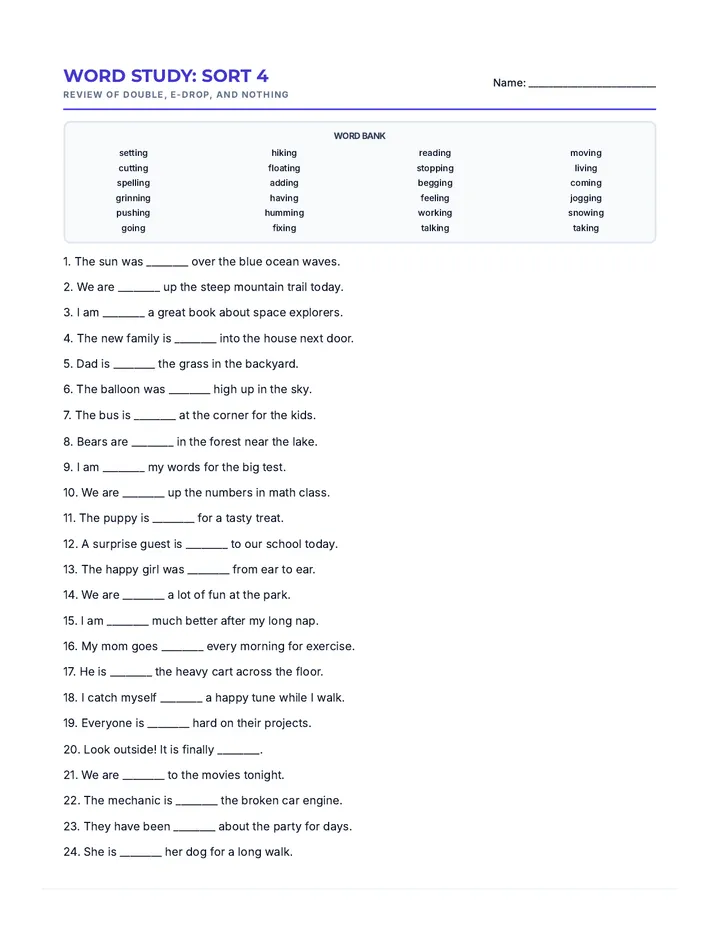
Inflections and Past Tense Worksheets 2 v2

Word Study Master Collection

A comprehensive collection of 56 word study sorts for 4th-grade students, covering everything from basic vowel patterns and inflected endings to advanced syllable junctures, prefixes, and suffixes.

N

nmack

15

Lessons

Dahl Dreamers Choice Board

Dahl Dreamers

A collection of print-ready, high-interest ELA choice board activities and accompanying worksheets designed for 6th-grade early finishers. Rooted in Amplify 6A, students explore Roald Dahl's novels, connect them to his autobiography 'Boy', practice R.A.C.E. writing responses, engage in gobbledegook word play, and draft narrative responses.

A

Amy.Cannon

5
Narrative Navigator Slides

Journal Journey Cultural Bridge

An advanced 8th-grade ELA lesson exploring the intersection of Filipino and American identities through personal narrative. Students analyze the immigrant experience, master advanced vocabulary via a 'Quiz Bee,' and draft narratives that bridge their cultural heritage with their current journey.

V

vivianbelarmino

13
Progression Annuelle Grammaire Guide Pedagogique

Portrait de Monstre

Une leçon complète pour étudier la structure du portrait d'un personnage imaginaire (l'ogre) à travers l'analyse d'un texte littéraire et documentaire. Elle comprend des fiches de lecture, d'analyse de structure et de vocabulaire pour guider les élèves vers la rédaction autonome de leur propre créature légendaire.

LP

LAURENT PERCHE

24
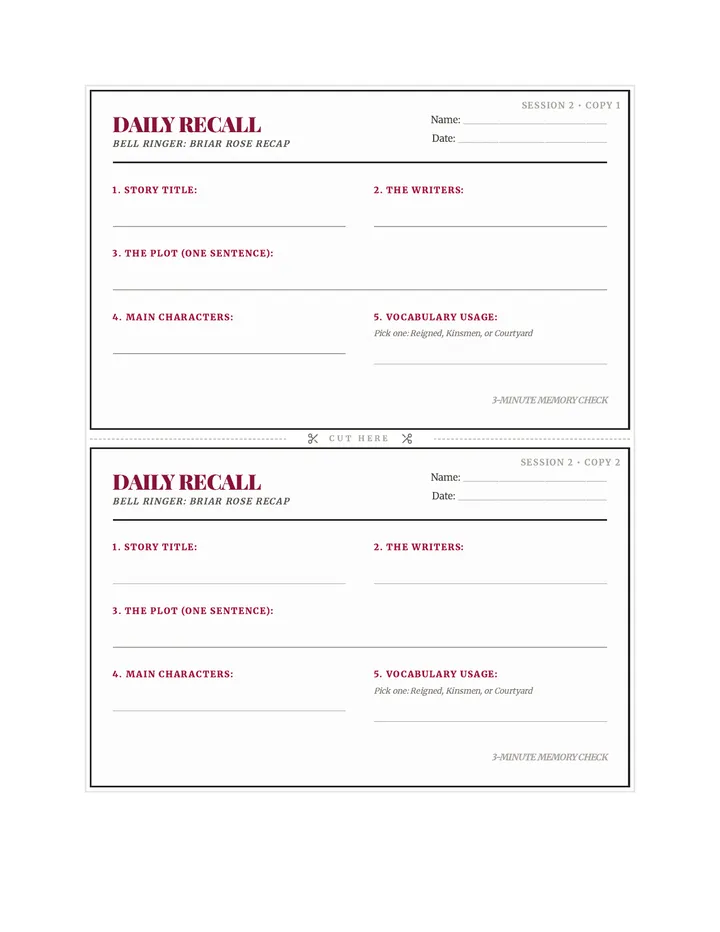
Briar Thorns Session 2 Recall Handout Final

Briar Thorns

A quick exploration of theme and moral within the classic Brothers Grimm tale 'Briar Rose', featuring a focused bell ringer and exit ticket.

V

vivianbelarmino

45
Lucky Legends Slides

Lucky Legends Writing

A whimsical St. Patrick's Day narrative writing lesson for third graders where students brainstorm, draft, and publish their own 'Lucky Legend' about finding a leprechaun, complete with a festive paper craft.

EG

Elva Garcia

10
River Analysis Answer Key

River Roots

A comprehensive 8th-grade ELA lesson on Langston Hughes's 'The Negro Speaks of Rivers,' exploring themes of heritage, endurance, and identity through the metaphor of ancient rivers. The lesson includes a vocabulary quiz bee, poem analysis, and differentiated choice boards.

V

vivianbelarmino

11