Lenny.com
Explore
Create
ActivitiesNewMathEnglish Language ArtsScience & EngineeringSocial StudiesGlobal LanguagesHealth & Physical EducationSpecial EducationCounseling & Life SkillsArts & CreativityESL
Lenny.com
Lenny.com
Explore
Create
ActivitiesNewMathEnglish Language ArtsScience & EngineeringSocial StudiesGlobal LanguagesHealth & Physical EducationSpecial EducationCounseling & Life SkillsArts & CreativityESL
Lenny.com
English Language ArtsPhonics & Reading FoundationsLetter IdentificationLearn Letters A-ZLowercase and Uppercase LettersConsonants and VowelsLetter-Sound AssociationsLetter-Sound Associations: LowercaseLetter-Sound Associations: UppercaseBeginning and Ending SoundsRhymingBlending And SegmentingShort VowelsShort Vowel SoundsConsonant BlendsConsonant DigraphsBlends, Digraphs, and TrigraphsDigraphs, Blends, and Silent LettersLong Vowel SoundsLong Vowel PatternsShort and Long VowelsShort and Long Vowel PatternsSilent EVowel SoundsVowel TeamsR-Controlled VowelsDiphthongs: Oi, Oy, Ou, OwVariant VowelsVariant, Diphthong, And R Vowel PatternsSoft G And CSight WordsIrregular WordsWord RecognitionSyllablesSyllable TypesTwo-Syllable WordsMultisyllabic WordsPhoneme ManipulationDecodable TextsVocabularyAction WordsQuestion WordsNouns and AdjectivesClassify WordsCompound WordsSynonyms and AntonymsHomophonesHomophones and HomonymsShades of MeaningContext CluesPrefixes and SuffixesGreek and Latin RootsAnalogiesIdioms and AdagesForeign Words and ExpressionsWord Choice and UsageReference SkillsReading ComprehensionRead-Along Literary TextsRead-Along Informational TextsReality vs. FictionStory ElementsCharacterSequenceMain IdeaCause And EffectCompare And ContrastReading StrategiesText StructureAuthor's PurposeAuthor's Purpose And ToneAuthor's PerspectivePoint Of ViewThemeInference And ThemeInference And AnalysisPoetry ElementsLiterary DevicesAnalyzing LiteratureAnalyzing Informational TextsComparing TextsAudience, Purpose, And ToneBusiness DocumentsNovel StudyNonfiction Book StudyGrammar & MechanicsSentencesNounsVerbsAdjectivesPronounsCapitalizationPunctuationContractionsConjunctionsPrepositionsArticlesAdjectives And AdverbsVerb TypesVerb TensePronouns And AntecedentsPronoun TypesSubject-Verb AgreementDirect And Indirect ObjectsSentences, Fragments, And Run-OnsPhrases And ClausesCommasSemicolons, Colons, And CommasDashes, Hyphens, And EllipsesSpellingAbbreviationsFormattingVerb Tense And MoodMisplaced ModifiersWritingDescriptive DetailsCreative WritingOpinion WritingTopic SentencesOrganizing WritingLinking WordsSentence VarietyIntroductions And ConclusionsPersuasive And Opinion WritingExpository WritingPersuasive StrategiesDeveloping And Supporting ArgumentsTopic Sentences And Thesis StatementsSummarizingResearch SkillsEditing And RevisingActive And Passive Voice=Writing Clearly And ConciselyDebate & Public SpeakingPublic Speaking BasicsPersuasive TechniquesClaims and EvidenceTypes of ArgumentsReasoning TypesLogical FallaciesTopic ResearchOrganizing EvidenceDebate Speech OrganizationAttacking and Defending ArgumentsClash and EngagementImpact CalculusQuestioning and Cross-ExaminationCritical ThinkingInformal LogicFormal LogicInductive Reasoning

Literary Devices

Figurative language techniques including metaphor, irony, and symbolism used to deepen narrative meaning. Equips students with tools to analyze authorial intent and enhance creative writing.

Lenny.com

Solutions

Lenny for EducatorsLenny for SchoolsLenny for Districts

Product

ExploreSign inCreateSupportAbout

Resources

Getting startedMTSS Acceleration Program

© 2026 Lenny Learning Inc.

TermsPrivacyAccessibility
LinkedInInstagramX
Lenny

Videos

How to Read a Poem: Structure and Meaning

How to Read a Poem: Structure and Meaning

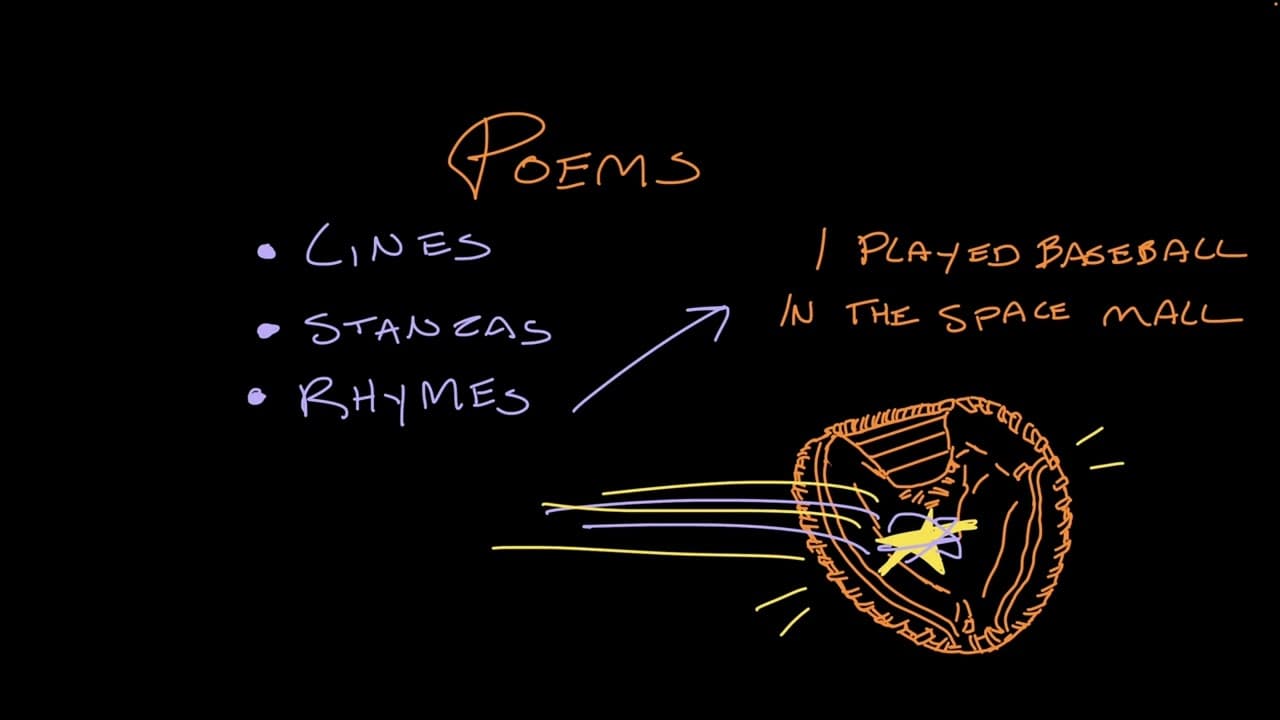
This educational video serves as an engaging introduction to poetry analysis, specifically focusing on how structure contributes to meaning. The narrator, David, welcomes viewers to "The Poem Zone" and breaks down the fundamental building blocks of poetry: lines, line breaks, stanzas, and rhyme. He defines poetry simply as "art made out of words" and explains that while poems play with sound and rhythm, they don't always have to rhyme. The visual style uses a blackboard aesthetic with handwritten text that appears in real-time to illustrate concepts. The core of the video features an original piece titled "Egg Poem," which the narrator reads and then dissects stanza by stanza. Through this close reading, the video demonstrates how a poem's structure can organize ideas and build an emotional arc. The narrator highlights how the poem uses a repeating structure ("Morning is...") to anchor each stanza while progressing from a calm morning to a chaotic one. For educators, this video is a powerful tool for bridging the gap between simply reading poetry and analyzing it. It explicitly teaches students to ask how lines and stanzas build meaning, rather than just identifying them as structural elements. The video introduces the concept of extended metaphor in a highly accessible way by connecting the cooking terms "easy," "medium," and "hard" to both the state of an egg and the speaker's emotional state, providing a clear model for students to use in their own literary analysis.

Khan AcademyKhan Academy

4mins 6s

Mastering Figurative Language: Similes, Metaphors, and More

Mastering Figurative Language: Similes, Metaphors, and More

This engaging educational video provides a clear and humorous introduction to figurative language, distinguishing it from literal speech. Through the use of hand-drawn animations and dynamic text, the narrator breaks down five essential figures of speech: simile, metaphor, personification, hyperbole, and allusion. The video explains that figurative language involves saying one thing but meaning another to express truths more vividly, using the example of an "eagle-eyed editor" to demonstrate the concept. The content is structured systematically, dedicating a segment to each literary device. It defines similes as comparisons using "like" or "as" (e.g., "hungry as a wolf"), contrasts them with metaphors which make direct comparisons (e.g., "love is a rose"), and explores how personification attributes human traits to inanimate objects. It also covers hyperbole as purposeful exaggeration for effect and explains allusion as a reference to shared cultural knowledge, citing examples like Superman and Gollum. For educators, this video serves as an excellent primer or review tool for English Language Arts units on literary devices or creative writing. It provides accessible definitions and memorable visual examples that help students grasp abstract linguistic concepts. The humor and pacing make it suitable for upper elementary and middle school students, helping them move beyond literal interpretations to understand nuance, imagery, and emphasis in writing.
Khan AcademyKhan Academy

5mins 58s

Exploring Understatement and Overstatement in Language

Exploring Understatement and Overstatement in Language

This engaging video features grammar experts David and Rosie exploring the rhetorical concepts of understatement and overstatement. Through humorous, handwritten examples on a digital whiteboard, they demonstrate how writers and speakers often say less or more than they literally mean to convey stronger emotions. The hosts act out scenarios—such as reacting to a kidnapped dog or a bad test grade—to show how these literary devices function in everyday communication. The video covers key literary themes including hyperbole, irony, and subtext. It specifically defines understatement as deliberately minimizing a serious event to highlight its gravity, and overstatement (or hyperbole) as using extreme exaggeration to express intense emotion. The discussion concludes with an insightful look at cultural nuances in American English, explaining how social norms often encourage the repression of strong emotions through understated language. For educators, this resource provides an excellent entry point for teaching figurative language and tone. It moves beyond simple definitions to show how these devices affect the reader or listener emotionally. Teachers can use this video to help students analyze dialogue in literature, write more expressive creative pieces, and understand the complex relationship between a speaker's actual words (text) and their intended meaning (subtext).

Khan AcademyKhan Academy

5mins 43s

What Are Idioms? Learning Common English Expressions

What Are Idioms? Learning Common English Expressions

This engaging animated video introduces students to the concept of idioms—phrases that hold a figurative meaning different from their literal words. Using humor and clear visual examples, the narrator breaks down common English expressions like "raining cats and dogs," "break a leg," and "butterflies in your stomach." The video effectively contrasts the hilarious literal interpretations of these phrases with their actual meanings to help students grasp the difference between literal and figurative language. Key themes include vocabulary development, figurative language, and reading comprehension. The video defines an idiom explicitly and provides a memorable "surprising fact" about the sheer volume of idioms in the English language (around 25,000). It systematically moves through five specific examples, explaining the meaning of each while reinforcing the core definition of what an idiom is. This resource is highly valuable for English Language Arts classrooms, particularly for introducing figurative language units or supporting English Language Learners (ELLs). The clear visual metaphors make abstract linguistic concepts concrete, helping students visualize why we use these strange phrases. Teachers can use this video to spark creative writing assignments, idiom illustration projects, or discussions about how language evolves to express feelings and situations in colorful ways.

Homeschool PopHomeschool Pop

6mins 1s

When to Quote vs. When to Paraphrase in Essays

When to Quote vs. When to Paraphrase in Essays

This instructional video guides high school students through the critical writing decision of when to use a direct quote versus a paraphrase in analytical essays. Using Toni Morrison's novel 'Beloved' as a case study, the presenter demonstrates how to integrate evidence effectively to support a thesis statement about literary motifs and character memory. The video distinguishes between analyzing specific language (which requires quotes) and summarizing events (which uses paraphrasing). The content covers key writing concepts including thesis statements, full direct quotes, partial quotes, paraphrasing, explanation sentences, and analysis sentences. It provides visual examples of how to structure a body paragraph, showing text on screen that integrates evidence with the student's own voice. The lesson emphasizes that the choice of evidence format depends entirely on the writer's purpose and what they intend to analyze. For educators, this video serves as an excellent model for teaching evidence integration and literary analysis. It moves beyond simple definitions to show the *why* and *how* of writing. Teachers can use this to help students move away from "quote bombing" (dropping quotes without context) and towards sophisticated embedding of partial quotes and meaningful analysis of diction and syntax.

Miacademy & MiaPrep Learning ChannelMiacademy & MiaPrep Learning Channel

10mins 30s

Using Analogical Reasoning to Deepen Reading Comprehension

Using Analogical Reasoning to Deepen Reading Comprehension

This educational video introduces students to the concept of analogical reasoning as a critical reading comprehension strategy. It begins by distinguishing between explicit and implicit ideas before defining analogical reasoning as the process of making logical connections between different situations, objects, or systems to deepen understanding. The host uses accessible examples—such as the phrase "a contagious smile" and the fable of "The Boy Who Cried Wolf"—to demonstrate how readers use background knowledge and comparisons to draw conclusions. The video features a detailed literary analysis of an excerpt from O. Henry's "The Gift of the Magi." By examining the author's use of comparisons (likening hair to jewels and waterfalls) and contrasting them with descriptions of worn clothing, the video guides viewers through the process of making sophisticated inferences. This segment models how to identify text evidence and use it to predict character actions. Teachers can use this video to scaffold lessons on inference, metaphor, and literary analysis. It provides a clear visual and verbal explanation of how active readers think, making abstract cognitive processes concrete. The inclusion of a classic literary text makes it an excellent companion for units on short stories or narrative writing, helping students move beyond surface-level reading to analytical thinking.

Miacademy & MiaPrep Learning ChannelMiacademy & MiaPrep Learning Channel

6mins 35s

Materials

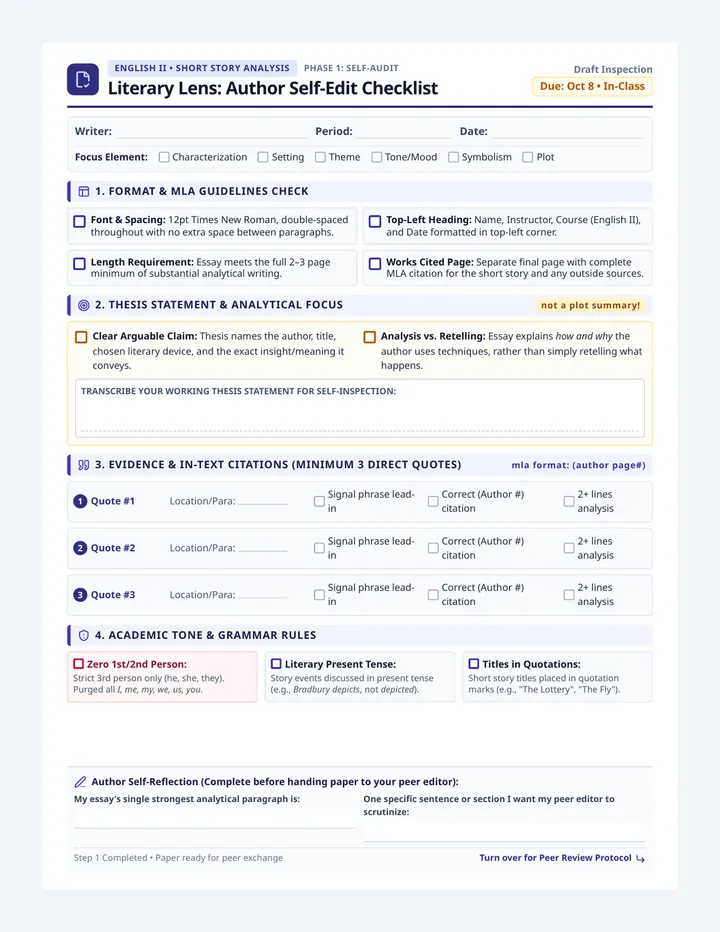
Literary Lens Editing Checklist

Literary Lens Editing Checklist

A comprehensive two-stage self-edit and peer-edit checklist designed for English II students assessing their short story literary analysis essays against assignment requirements, MLA guidelines, and analytical depth.

J

jmitchell

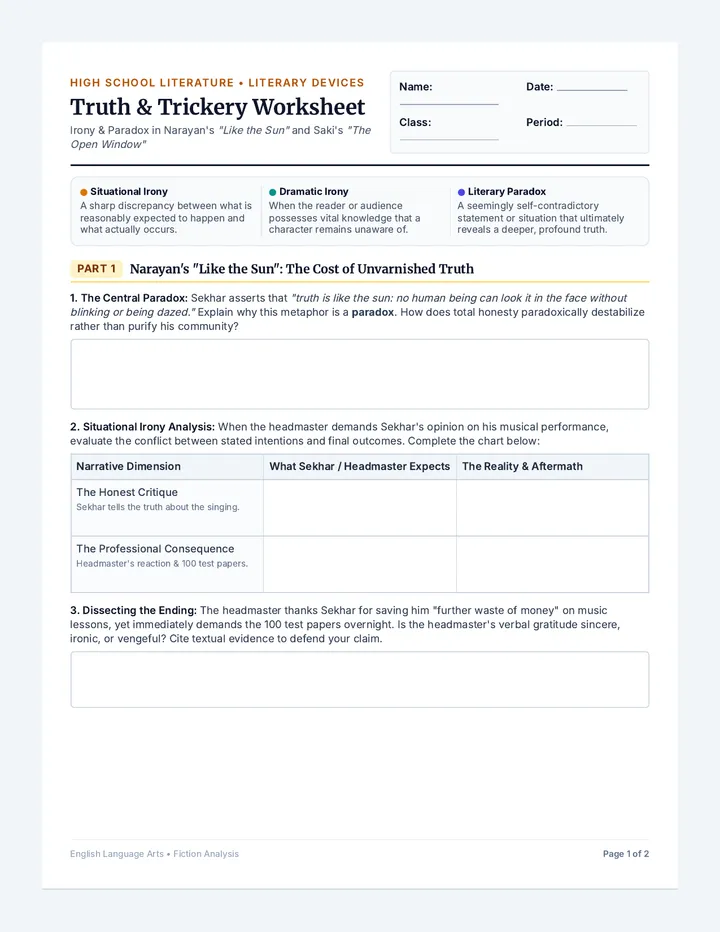
Truth and Trickery Worksheet

Truth and Trickery Worksheet

A rigorous two-page printable literary analysis worksheet exploring irony (situational, dramatic, verbal) and paradox through R.K. Narayan's 'Like the Sun' and Saki's 'The Open Window'. Includes textual analysis, comparative organizers, and synthesis response spaces for high school English students.

PR

Paula Rein

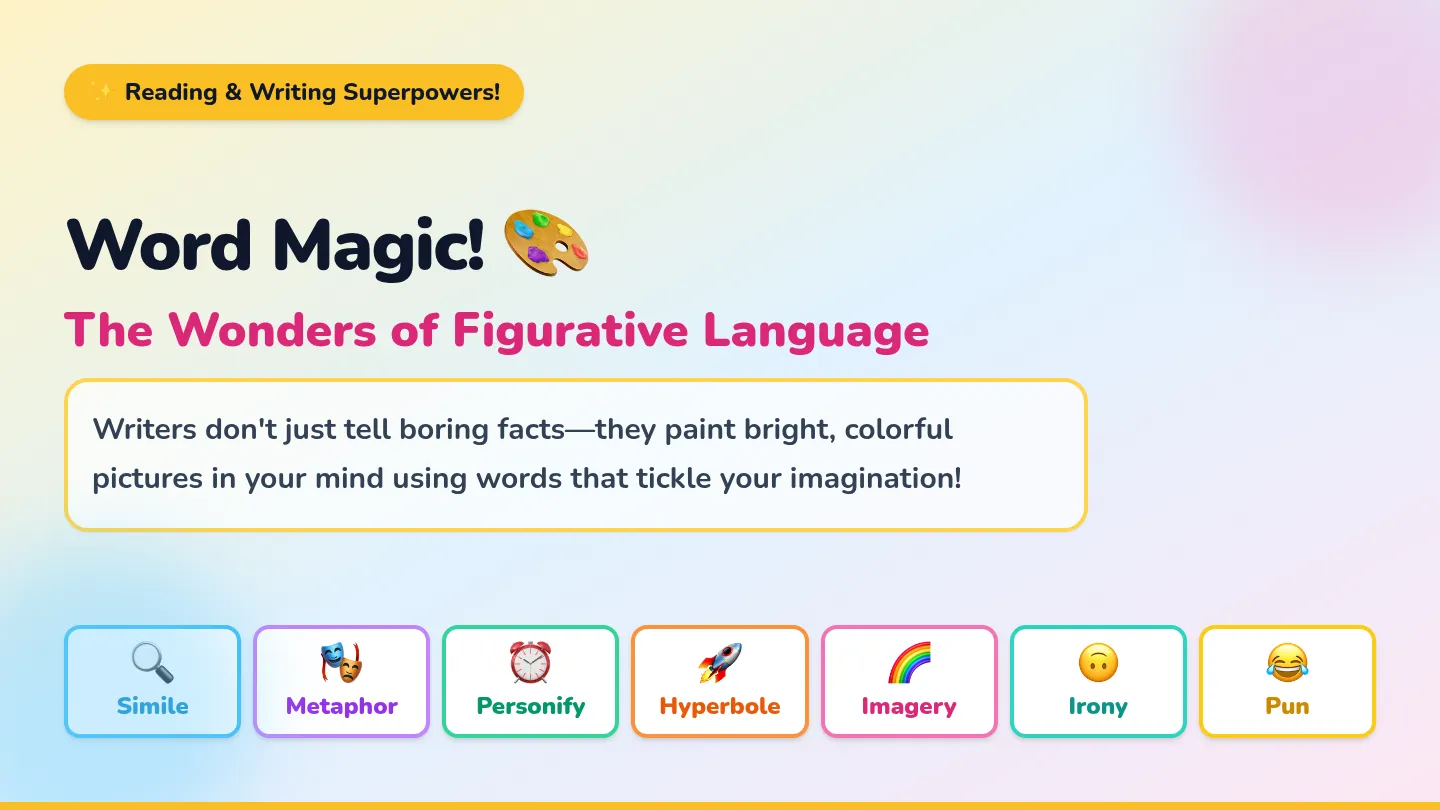
Figurative Language Slides

Figurative Language Slides

An elementary-friendly, brightly colored 9-slide presentation introducing figurative language with playful illustrations, kid-friendly examples, vibrant themes, and an interactive detective game.

M

mngillis

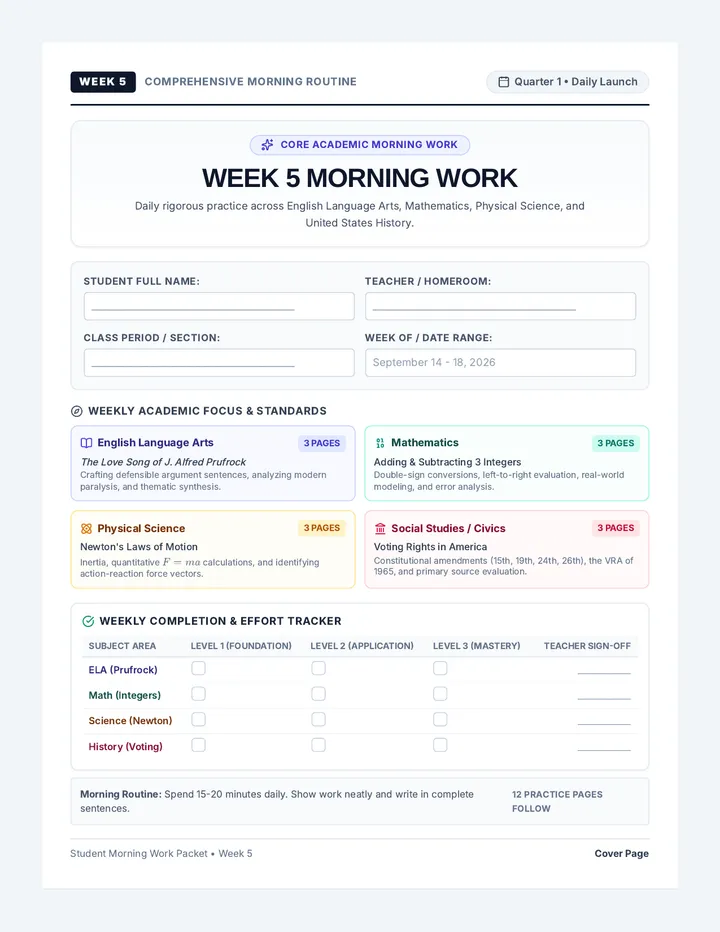
Morning Spark Student Packet

Morning Spark Student Packet

A complete 13-page student morning work packet for Week 5, beginning with an all-inclusive Cover Page and Weekly Progress Tracker, followed by 12 differentiated practice pages across four core subjects (ELA, Mathematics, Science, and US History) with scaffolded, moderate, and independent tiers.

K

kyle.hill

ILEARN Caminos Blueprint Guide

ILEARN Caminos Blueprint Guide

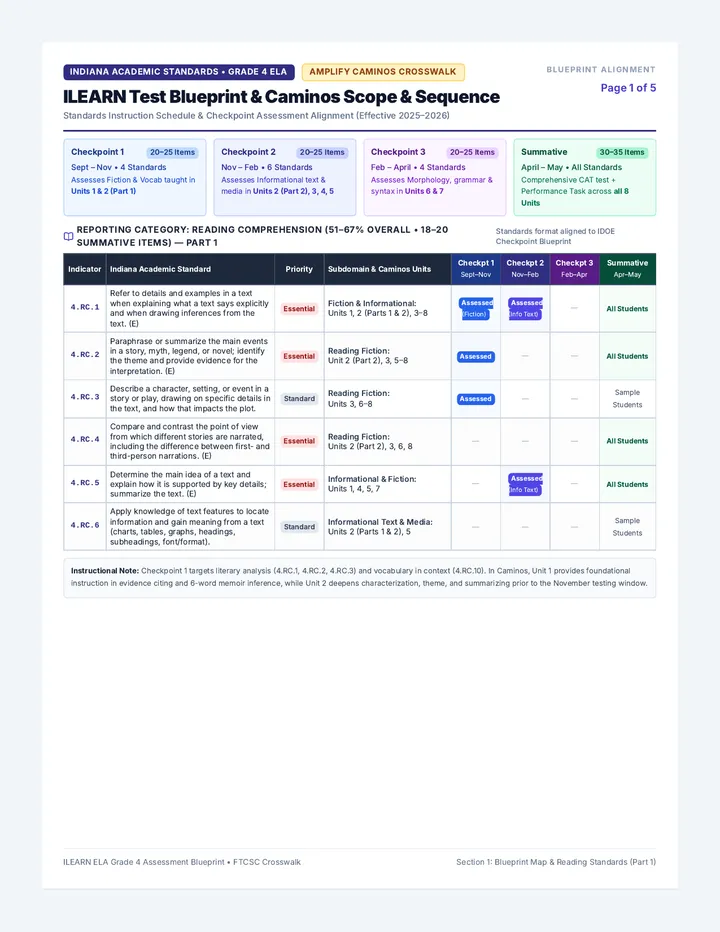
Comprehensive Grade 4 ILEARN Test Blueprint and Amplify Caminos Scope & Sequence crosswalk. Formatted to match the state ILEARN checkpoint blueprint, showing exactly when Indiana Academic Standards (Reading, Vocabulary, Writing, Grammar, and Communication) are taught across Units 1–8 and assessed in Checkpoints 1, 2, 3, and the Summative Assessment.

A

Amy.Hacker

Mariposas Chapter Seven Packet

Mariposas Chapter Seven Packet

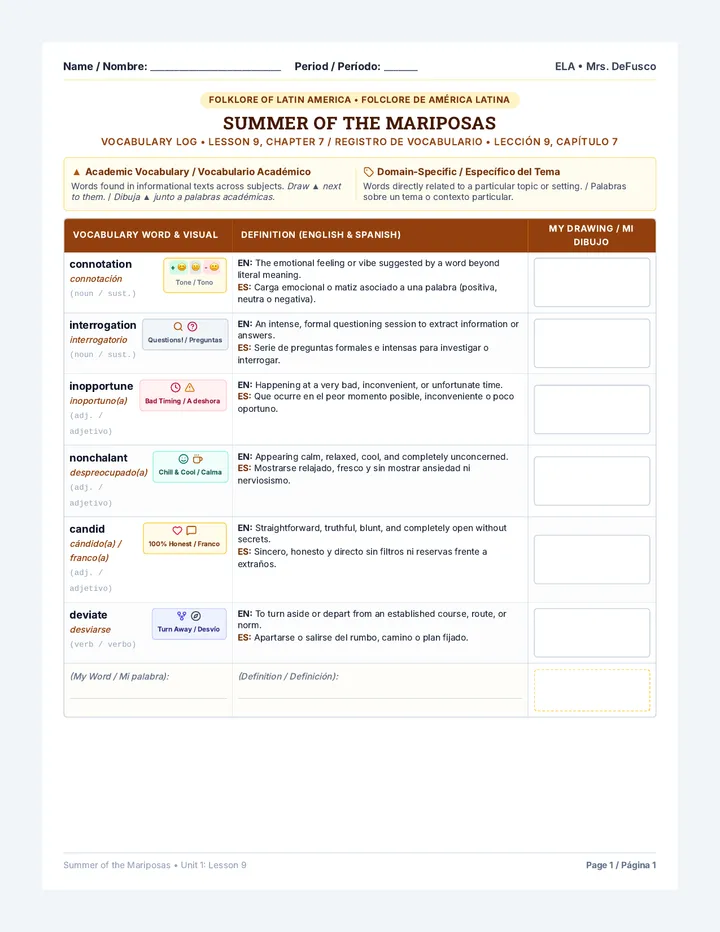
A 5-page bilingual student packet for Summer of the Mariposas (Lesson 9, Chapter 7). Page 5 now focuses exclusively on Question 1, transformed into a guided R.A.C.E. deep-dive with bilingual word banks, scaffolded fill-in-the-blank sentence stems for Restating, Answering, Citing, and Explaining, and dedicated final response writing lines.

N

nebouchard

Sequences

Lesson Plan 1 Introduction

Literary Device Detectives

A comprehensive multi-unit sequence for 3rd and 4th grade students covering key literary devices: Introduction to Figurative Language, Onomatopoeia, Similes, Metaphors, Personification, and Idioms. Each unit provides 5 lesson plans, interactive notebook resources, and a wide variety of activities and stories designed to improve descriptive writing and reading comprehension.

JS

Janette Sullivan

105
Value Vault Teacher Guide

Metamorphosis Mastery

An 8-week deep dive into Kafka's Metamorphosis for special education students, focusing on abstract thinking, social value, and the human condition through high-engagement activities and visual organizers.

C

Ceeasia.walker

58
Prophecy and Power Slides

Shadows and Crowns

A series of lessons exploring Shakespeare's Macbeth, specifically designed for 10th-grade emergent bilingual students to master complex characterization and thematic elements.

DC

Dylan Clark

30
Verse and Veracity Teacher Guide

Media Center Year Curriculum

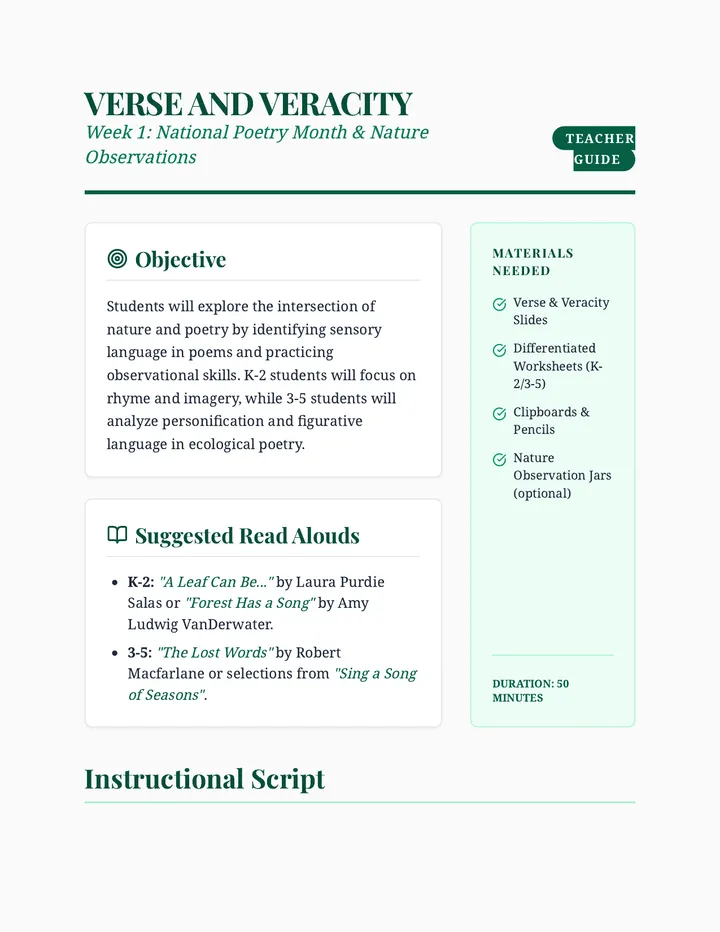
A comprehensive K-5 Media Center curriculum spanning August to May. Each month features a thematic unit integrating library skills (Dewey Decimal System, research, digital citizenship), literacy (poetry, biographies, informational texts), and STEM/Maker Space challenges. Resources are differentiated for K-2 and 3-5.

B

bethany.nied

50
Copenhagen Clues Slides

Resistance Chronicles

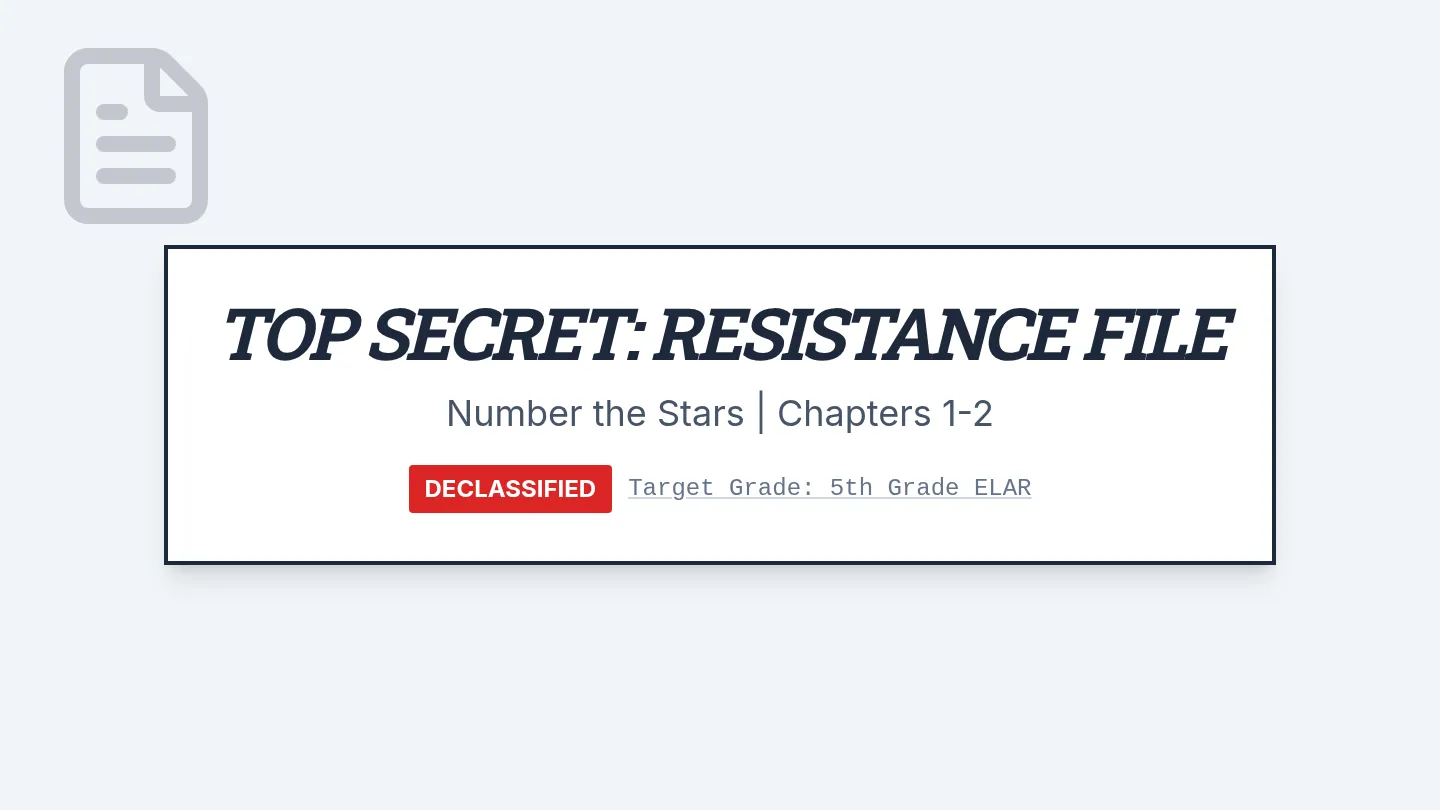
A 9-day novel study for Number the Stars centered on 5th Grade ELAR TEKS, focusing on character development, plot analysis, and historical context through the lens of a Resistance Secret File.

LH

Lucy Hellerman

79
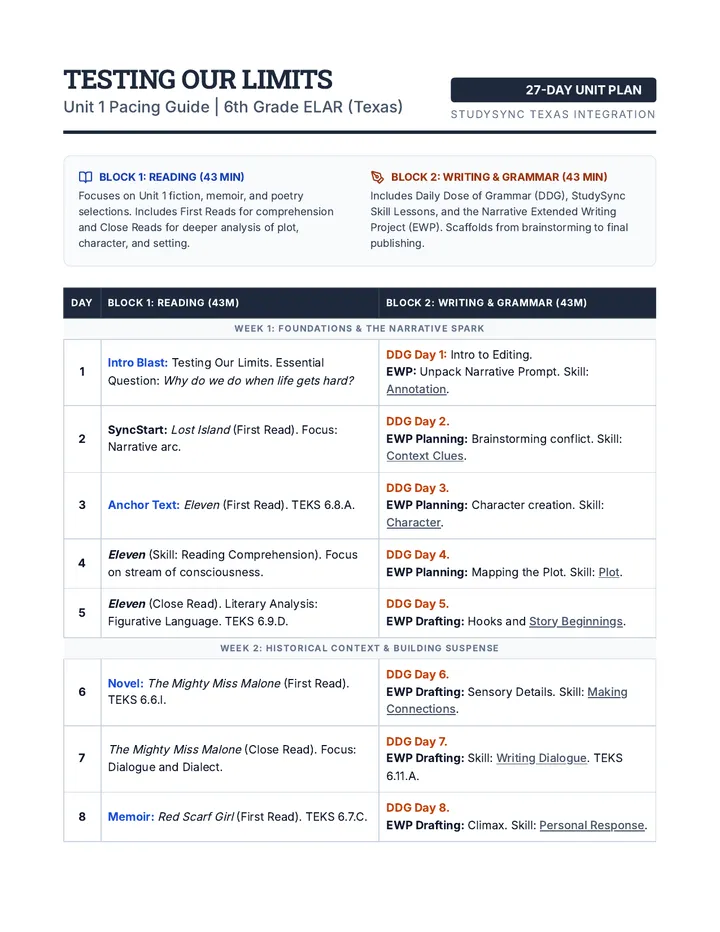
Unit 1 Pacing Guide Document

Testing Our Limits Unit Sequence

A 27-day instructional sequence for 6th Grade ELAR Unit 1: Testing Our Limits, featuring dual blocks for Reading and Writing with daily grammar and skill scaffolding.

DM

Dawn Mustian

81

Lessons

Stamina Navigator Student Tracker

EOG Stamina Stations

A comprehensive 6-station test-preparation rotation designed to build stamina and teach time management for the NC 6th Grade ELA EOG. Features 52 standards-aligned multiple-choice questions across informational, fictional, and poetic texts with a built-in stamina-break tracking system.

D

destiny.lanier

10
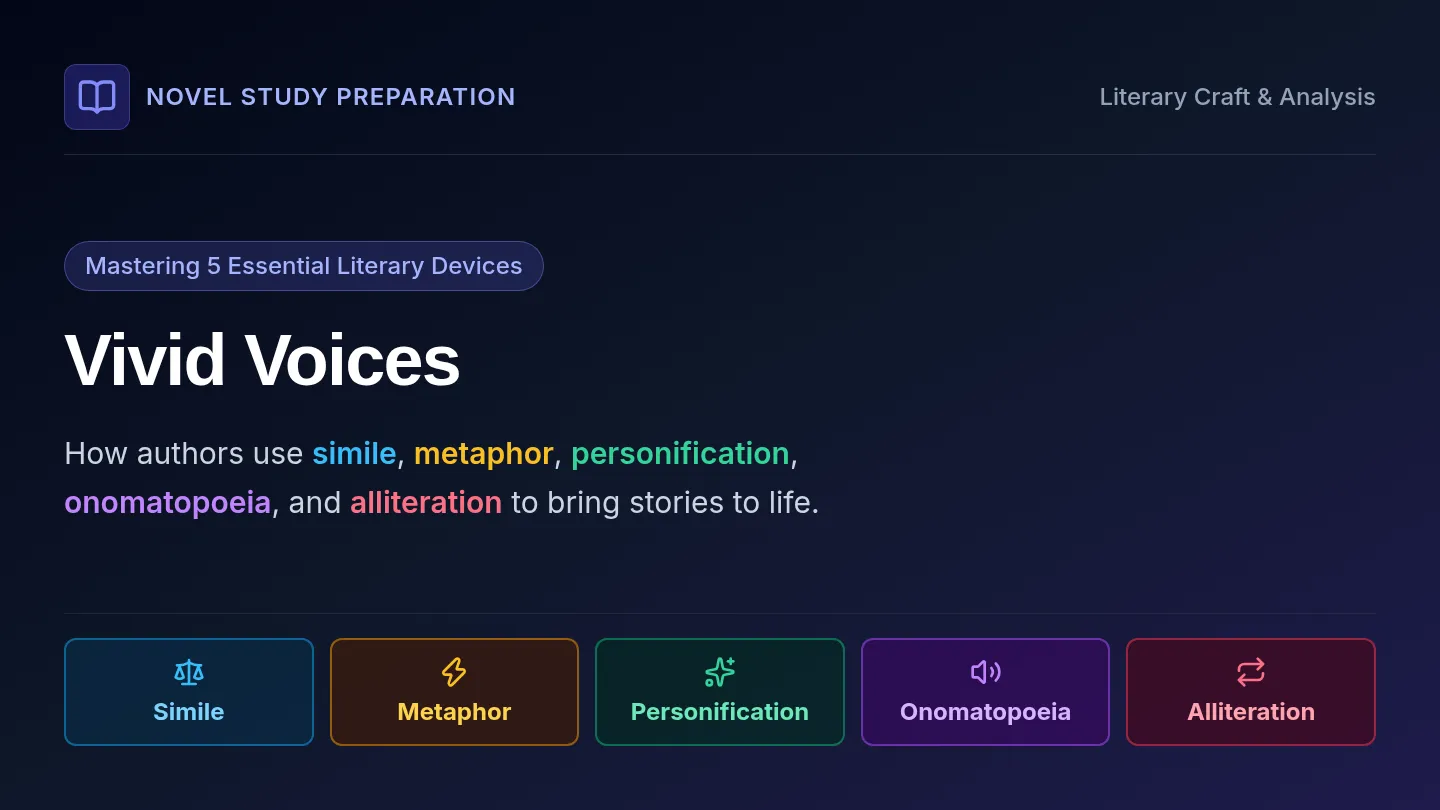
Vivid Voices Slides

Vivid Voices

A comprehensive introductory and review lesson exploring five essential figurative language devices—metaphor, onomatopoeia, alliteration, personification, and simile—to prepare students for analyzing their novel. Features color-coded visual toolkits, scaffolded sentence frames, and excerpt-based practice.

DO

Darcy O'Connor

4
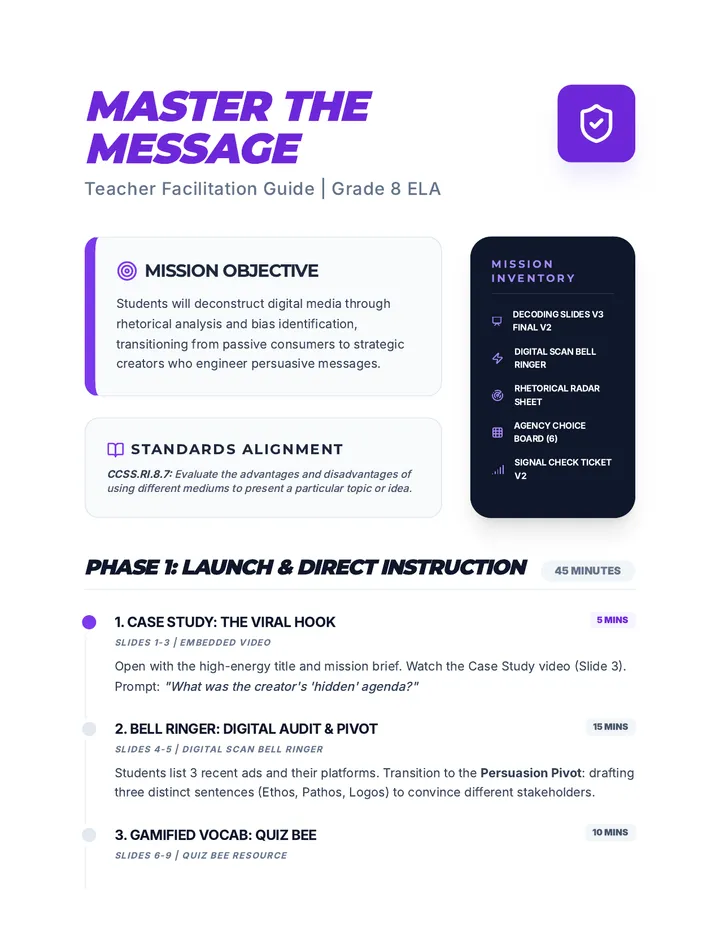
Master the Message Teacher Guide v2

Media Message Mastery

An 8th-grade ELA lesson focused on deconstructing digital media messages through the lens of rhetorical appeals (ethos, pathos, logos) and identifying bias in various online formats. Students transition from passive consumers to critical analysts of news clips, social media, and advertisements.

V

vivianbelarmino

36
Awakening Words Bell Ringer

Stolen Seconds

A comprehensive lesson exploring Tanith Lee's 'Awake,' a subversion of Sleeping Beauty, focusing on structural choices and source material transformation (RL.5 and RL.9). Students will analyze character conflict and the concept of 'the gift of time.'

V

vivianbelarmino

25
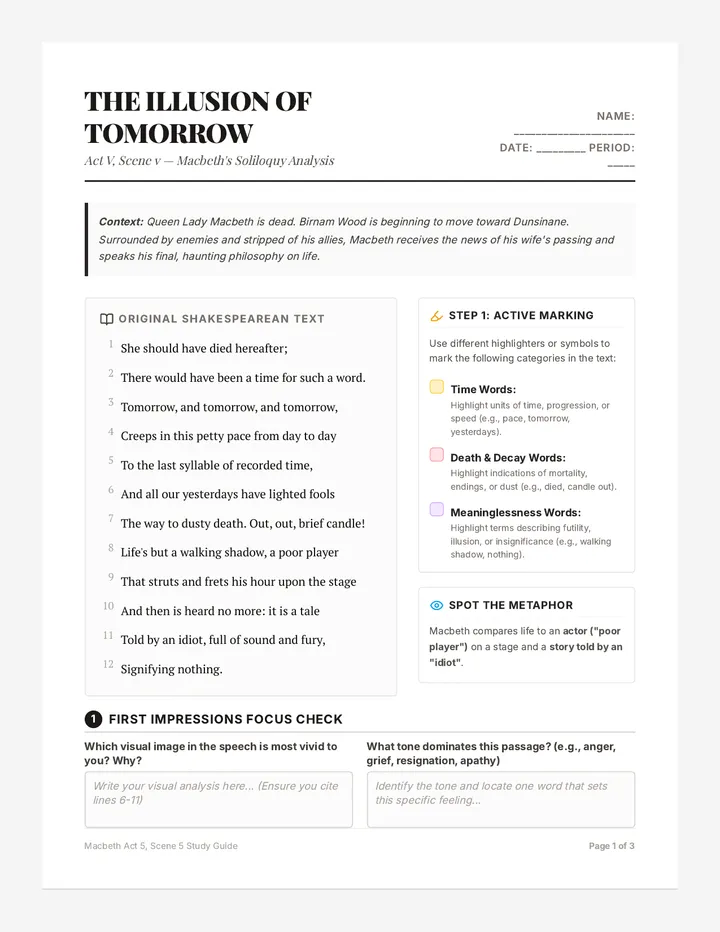
Tomorrow Speech Worksheet

The Illusion of Tomorrow

A comprehensive 10th-grade ELA lesson analyzing Macbeth's famous 'Tomorrow, and tomorrow, and tomorrow' speech from Act 5, Scene 5. Students explore Macbeth's psychological state—whether he is depressed, defeated, or finally realizing the truth of his ambitions—using textual annotation, group evidence organizers with scaffolded sentence stems, a Philosophical Four Corners debate, and a reflective exit ticket.

EC

Erin Cloutier

5
Narrative Navigator Slides

Journal Journey Cultural Bridge

An advanced 8th-grade ELA lesson exploring the intersection of Filipino and American identities through personal narrative. Students analyze the immigrant experience, master advanced vocabulary via a 'Quiz Bee,' and draft narratives that bridge their cultural heritage with their current journey.

V

vivianbelarmino

13