Lenny.com
Explore
Create
ActivitiesNewMathEnglish Language ArtsScience & EngineeringSocial StudiesGlobal LanguagesHealth & Physical EducationSpecial EducationCounseling & Life SkillsArts & CreativityESL
Lenny.com
Lenny.com
Explore
Create
ActivitiesNewMathEnglish Language ArtsScience & EngineeringSocial StudiesGlobal LanguagesHealth & Physical EducationSpecial EducationCounseling & Life SkillsArts & CreativityESL
Lenny.com
English Language ArtsPhonics & Reading FoundationsLetter IdentificationLearn Letters A-ZLowercase and Uppercase LettersConsonants and VowelsLetter-Sound AssociationsLetter-Sound Associations: LowercaseLetter-Sound Associations: UppercaseBeginning and Ending SoundsRhymingBlending And SegmentingShort VowelsShort Vowel SoundsConsonant BlendsConsonant DigraphsBlends, Digraphs, and TrigraphsDigraphs, Blends, and Silent LettersLong Vowel SoundsLong Vowel PatternsShort and Long VowelsShort and Long Vowel PatternsSilent EVowel SoundsVowel TeamsR-Controlled VowelsDiphthongs: Oi, Oy, Ou, OwVariant VowelsVariant, Diphthong, And R Vowel PatternsSoft G And CSight WordsIrregular WordsWord RecognitionSyllablesSyllable TypesTwo-Syllable WordsMultisyllabic WordsPhoneme ManipulationDecodable TextsVocabularyAction WordsQuestion WordsNouns and AdjectivesClassify WordsCompound WordsSynonyms and AntonymsHomophonesHomophones and HomonymsShades of MeaningContext CluesPrefixes and SuffixesGreek and Latin RootsAnalogiesIdioms and AdagesForeign Words and ExpressionsWord Choice and UsageReference SkillsReading ComprehensionRead-Along Literary TextsRead-Along Informational TextsReality vs. FictionStory ElementsCharacterSequenceMain IdeaCause And EffectCompare And ContrastReading StrategiesText StructureAuthor's PurposeAuthor's Purpose And ToneAuthor's PerspectivePoint Of ViewThemeInference And ThemeInference And AnalysisPoetry ElementsLiterary DevicesAnalyzing LiteratureAnalyzing Informational TextsComparing TextsAudience, Purpose, And ToneBusiness DocumentsNovel StudyNonfiction Book StudyGrammar & MechanicsSentencesNounsVerbsAdjectivesPronounsCapitalizationPunctuationContractionsConjunctionsPrepositionsArticlesAdjectives And AdverbsVerb TypesVerb TensePronouns And AntecedentsPronoun TypesSubject-Verb AgreementDirect And Indirect ObjectsSentences, Fragments, And Run-OnsPhrases And ClausesCommasSemicolons, Colons, And CommasDashes, Hyphens, And EllipsesSpellingAbbreviationsFormattingVerb Tense And MoodMisplaced ModifiersWritingDescriptive DetailsCreative WritingOpinion WritingTopic SentencesOrganizing WritingLinking WordsSentence VarietyIntroductions And ConclusionsPersuasive And Opinion WritingExpository WritingPersuasive StrategiesDeveloping And Supporting ArgumentsTopic Sentences And Thesis StatementsSummarizingResearch SkillsEditing And RevisingActive And Passive Voice=Writing Clearly And ConciselyDebate & Public SpeakingPublic Speaking BasicsPersuasive TechniquesClaims and EvidenceTypes of ArgumentsReasoning TypesLogical FallaciesTopic ResearchOrganizing EvidenceDebate Speech OrganizationAttacking and Defending ArgumentsClash and EngagementImpact CalculusQuestioning and Cross-ExaminationCritical ThinkingInformal LogicFormal LogicInductive Reasoning

Pronouns And Antecedents

Connects pronouns to their specific antecedents while maintaining agreement in number, person, and gender. Addresses common errors like vague references and pronoun-antecedent disagreement.

Lenny.com

Solutions

Lenny for EducatorsLenny for SchoolsLenny for Districts

Product

ExploreSign inCreateSupportAbout

Resources

Getting startedMTSS Acceleration Program

© 2026 Lenny Learning Inc.

TermsPrivacyAccessibility
LinkedInInstagramX
Lenny

Videos

How Pronouns and Antecedents Work Together

How Pronouns and Antecedents Work Together

This educational video provides a clear and accessible introduction to pronoun-antecedent agreement, a fundamental concept in English grammar. The narrators, David and Beth, begin by breaking down the etymology of the word "antecedent" to help students understand its meaning as "something that goes before." Through a digital whiteboard demonstration, they illustrate how pronouns function as stand-ins for nouns and why they must align logically with the words they replace. The video explores two primary types of agreement: gender and number. Using the example of a character named Jillian, the lesson demonstrates how to select the correct gendered pronouns (she/her) to avoid confusion. It then moves to a plural example involving snowballs and monkeys to explain number agreement, showing why "they" is the correct pronoun for a plural noun while "it" would be incorrect. The narrators use humor and simple illustrations to make these abstract grammatical rules concrete and memorable. For educators, this resource serves as an excellent tool for introducing or reviewing sentence structure and mechanics. It addresses common student errors in writing, particularly the mismatch between singular nouns and plural pronouns or vice versa. The visual nature of the explanation, where words are highlighted and connected with arrows on screen, provides a strong scaffold for visual learners to grasp the relationship between different parts of speech.

Khan AcademyKhan Academy

4mins 7s

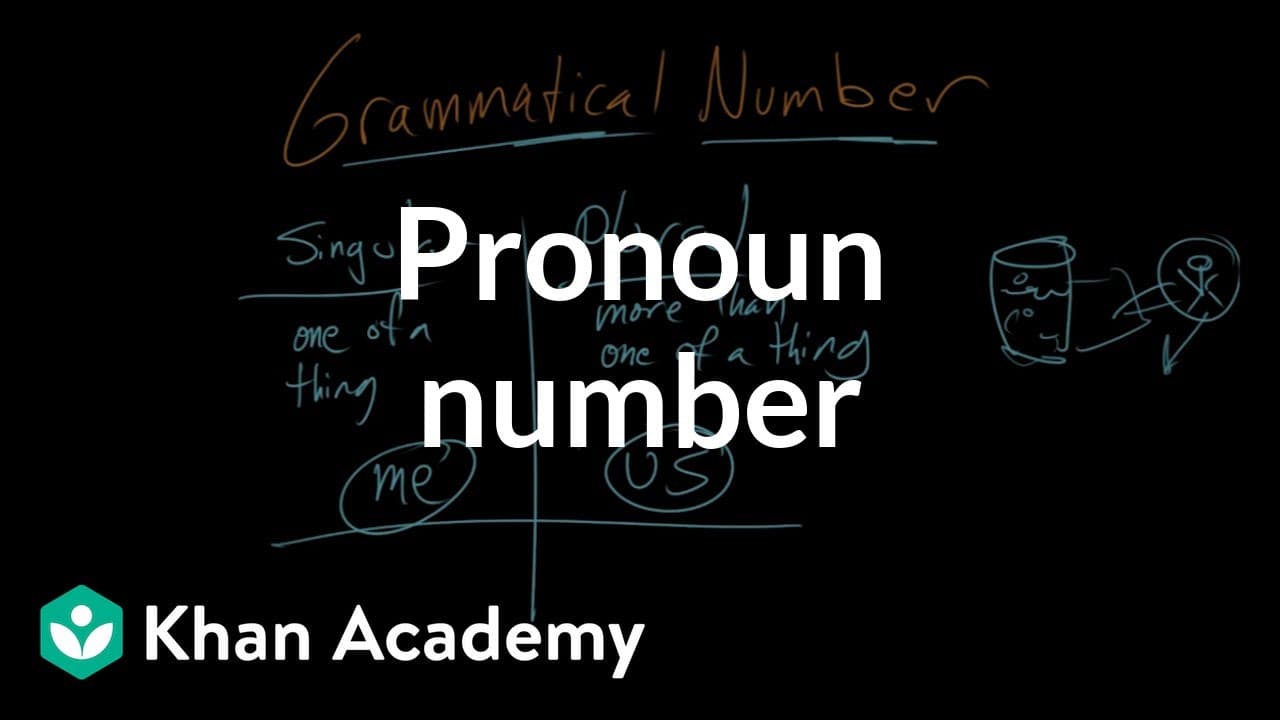
Understanding Grammatical Number and Pronoun Agreement

Understanding Grammatical Number and Pronoun Agreement

This video provides a clear and engaging introduction to the concept of grammatical number in English, specifically focusing on the distinction between singular (one) and plural (more than one). The narrator uses handwritten text and simple drawings to visualize how nouns and pronouns must agree in number, explaining that "singular" refers to one thing while "plural" refers to multiple things. The video highlights how this concept is encoded into the language, particularly within pronouns like "me" versus "us." Key themes include pronoun-antecedent agreement, the importance of consistency in writing to avoid confusion, and specific exceptions to standard rules. The narrator uses humorous and memorable examples—such as a sci-fi cloning machine to explain the shift from "me" to "us," and a confusing scenario about sharing a single watch to illustrate agreement errors. The video also briefly touches upon "you" and "they" as flexible pronouns that can function as both singular and plural. For educators, this resource is excellent for introducing or reviewing the mechanics of pronoun usage and sentence structure. It moves beyond rote memorization by providing context for *why* grammar rules exist: to prevent ambiguity. Teachers can use the video's specific examples, like the "cantaloupe" test at the end, to help students identify antecedents and ensure their own writing maintains logical consistency between subjects and pronouns.

Khan AcademyKhan Academy

5mins 18s

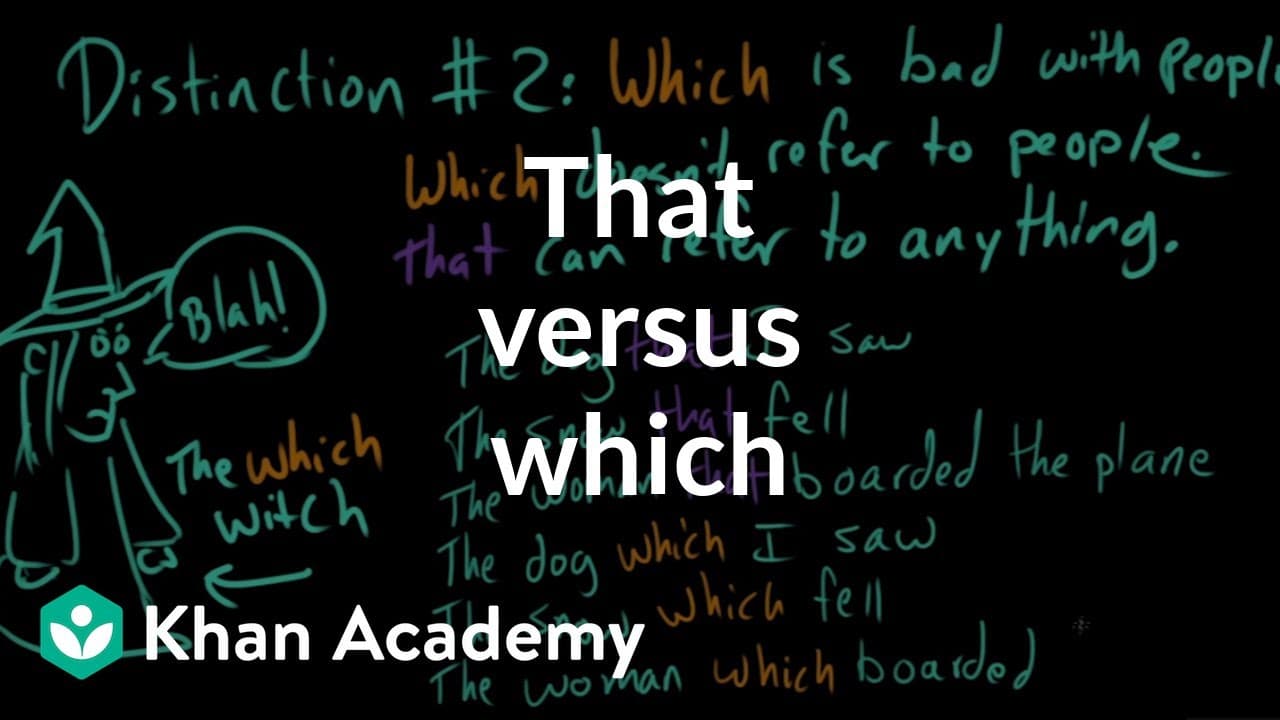
How to Use That vs. Which Correctly

How to Use That vs. Which Correctly

This educational video clarifies the often-confusing grammatical distinction between the relative pronouns "that" and "which." It begins by framing the discussion within the broader linguistic debate between prescriptivists, who value strict adherence to rules, and descriptivists, who observe how language is actually used. The narrator positions himself in the middle, offering a practical synthesis to help writers make the right choice. The video explores two primary distinctions to guide usage. First, it demonstrates how "that" functions with restrictive clauses and explains why it should generally not be used with commas (non-restrictive clauses), using clear sentence examples about a carrot. Second, it uses a memorable mnemonic involving a cranky "witch" to explain why "which" should not be used when referring to people. The content covers restrictive vs. non-restrictive clauses, comma usage, and pronoun-antecedent agreement. For educators, this video provides an accessible tool for teaching complex grammar mechanics without getting bogged down in overly technical jargon. It is excellent for middle and high school English classes, particularly during writing workshops or editing phases. The visual examples and humorous mnemonics make abstract grammatical rules concrete and easier for students to retain and apply in their own writing.

Khan AcademyKhan Academy

5mins 41s

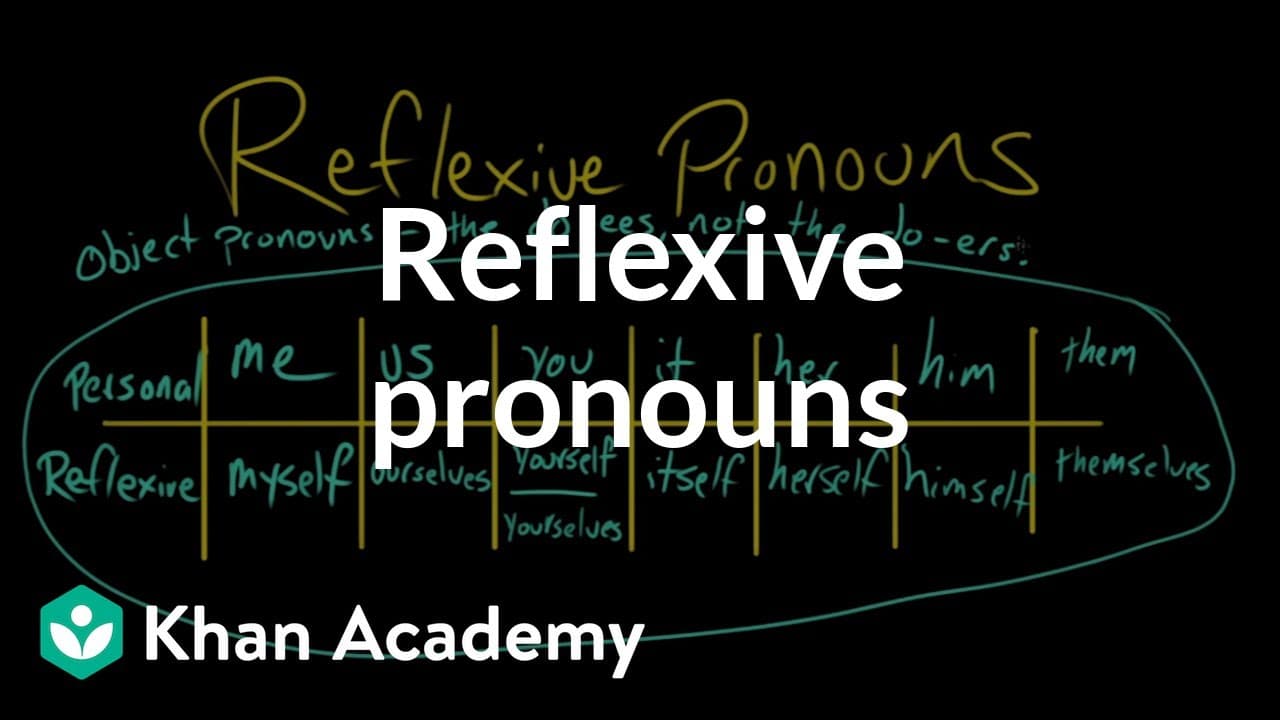
How to Use Reflexive Pronouns Correctly: Me vs. Myself

How to Use Reflexive Pronouns Correctly: Me vs. Myself

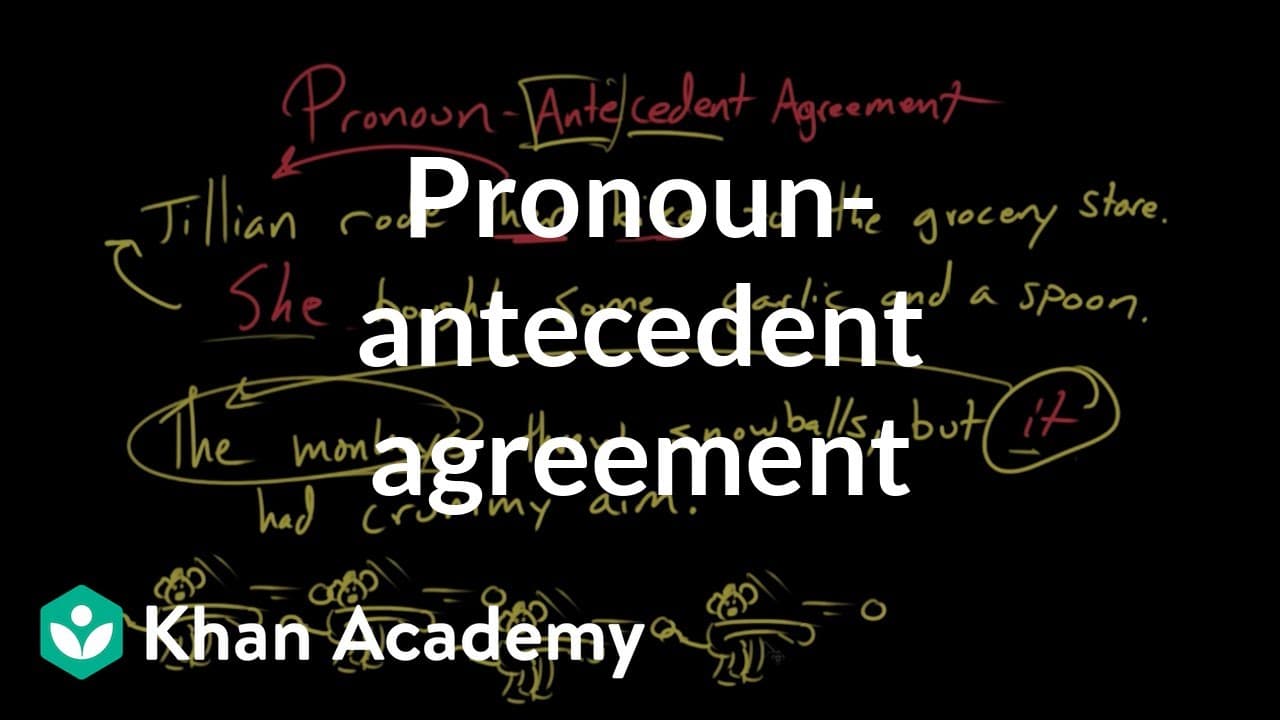
This video provides a clear and practical guide to understanding and correctly using reflexive pronouns in English grammar. The narrator, David, breaks down the difference between personal pronouns (like 'me', 'us', 'him') and reflexive pronouns (like 'myself', 'ourselves', 'himself') by creating a visual chart comparing the two forms across first, second, and third-person perspectives. He explains the fundamental rule that reflexive pronouns are only used when the subject and the object of a sentence refer to the same person or thing. The content explores key grammatical themes including subject-verb-object agreement, the function of object pronouns in the predicate, and the distinction between singular and plural forms (e.g., 'yourself' vs. 'yourselves'). Through specific examples involving characters like Janelle and Roderick, the video illustrates how changing the object of a sentence from a different person to the subject itself necessitates the switch to a reflexive pronoun. It clarifies that these words are 'do-ees' (receivers of action) rather than 'do-ers'. For the classroom, this video is highly valuable for addressing common writing pitfalls, particularly the misuse of reflexive pronouns in compound objects (e.g., 'Talk to Vidya or myself'). The narrator offers a simple, foolproof 'substitution test' that students can use to check their own writing. This makes it an excellent resource for upper elementary and middle school language arts lessons focused on sentence structure, editing skills, and formal standard English usage.
Khan AcademyKhan Academy

5mins 10s

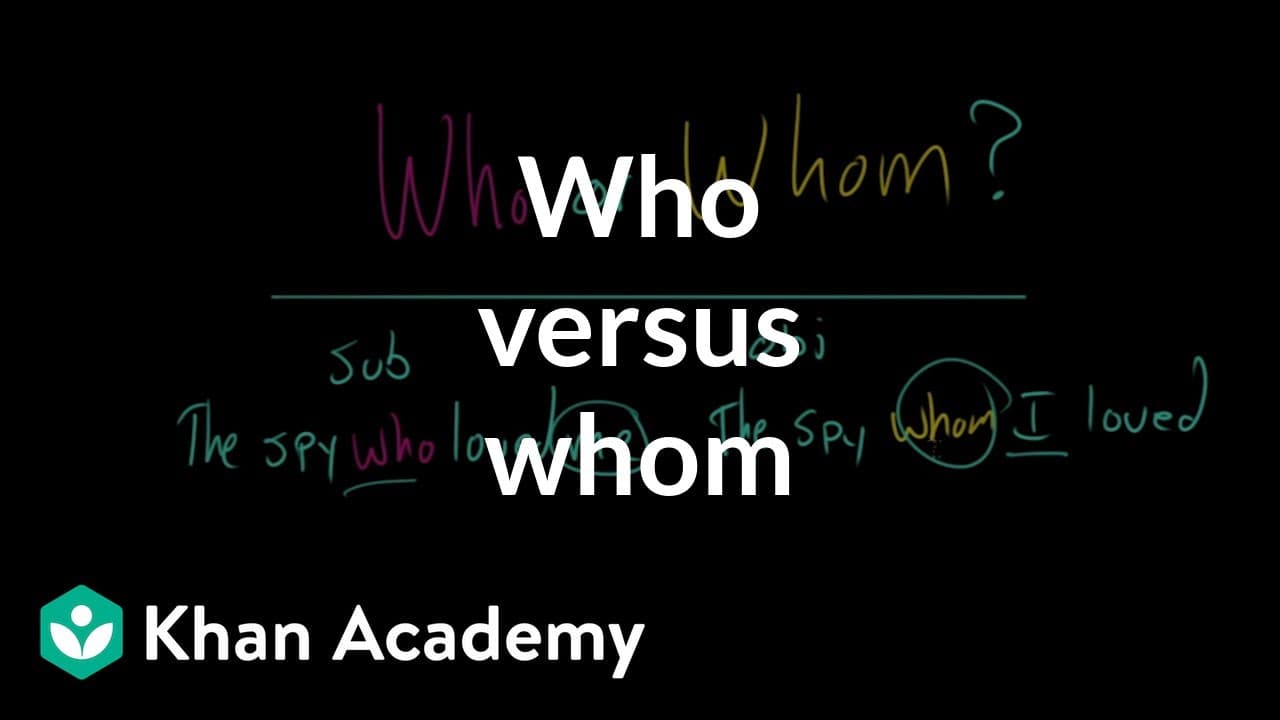
How to Choose Between Who and Whom

How to Choose Between Who and Whom

This video provides a nuanced explanation of the grammatical difference between "who" and "whom," moving beyond rigid rules to explore how these pronouns are actually used in modern English. The narrator explains the traditional distinction—that "who" is for subjects (like "he" or "she") and "whom" is for objects (like "him" or "her")—using the memorable example of "The spy who loved me." The lesson uses simple sentence diagrams to visualize the subject-object relationship. The content goes deeper by introducing the concept of linguistic evolution, describing the rule as a "one-way street." It explains that while "whom" is strictly an object pronoun, "who" has expanded to function as both subject and object in casual usage. The video draws a fascinating parallel to the archaic pronoun "whoso," illustrating how language naturally sheds complex forms over time, and predicts that "whom" may eventually disappear entirely from the language. For educators, this resource is valuable because it distinguishes between technical correctness and social acceptability (register). It empowers students to understand that language rules change and helps them navigate the choice between "who" and "whom" based on the desired tone—formal vs. informal—rather than just memorizing a binary rule. It creates a comfortable space for students who find grammar intimidating by validating their natural speech patterns while teaching them the formal structures needed for academic writing.

Khan AcademyKhan Academy

4mins 47s

Mastering Personal Pronouns for Better Writing

Mastering Personal Pronouns for Better Writing

This educational video provides a clear and engaging introduction to personal (subject) pronouns, explaining their function as substitutes for nouns. Through a whiteboard animation style, the narrator reviews the difference between common nouns and proper nouns before introducing pronouns as a tool to make writing flow more naturally. The video breaks down the etymology of the word (prefix "pro" meaning "for") and demonstrates how pronouns prevent repetitive, choppy sentences. The content highlights the seven main subject pronouns: I, you, he, she, it, we, and they. A central segment uses a practical writing example—a paragraph about a cat named "Stripes"—to show how repetitive using a proper noun can become, and how swapping in the pronoun "he" transforms the text. It further categorizes pronouns by gender (he/she), inanimate objects (it), and grouping (we vs. they), illustrating each with distinct visual scenarios. Teachers can use this video to introduce parts of speech or as a specific intervention for students who write repetitive sentences. The visual examples effectively demonstrate the mechanics of substitution, making abstract grammar concepts concrete. The video is particularly useful for teaching the "why" behind grammar rules—showing students that pronouns aren't just a rule to memorize, but a tool to make their communication clearer and less redundant.

GrammarSongs by MelissaGrammarSongs by Melissa

5mins 12s

Materials

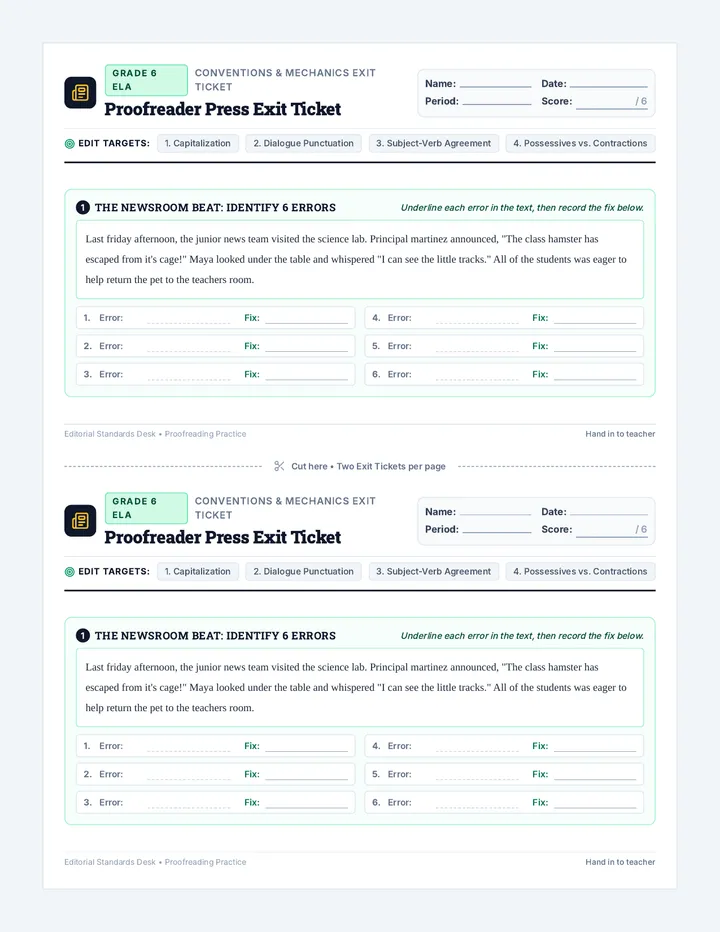
Proofreader Press Exit Ticket

Proofreader Press Exit Ticket

A print-ready 2-up half-sheet exit ticket for Grade 6 containing the newsroom editing passage with 6 targeted errors covering capitalization, dialogue punctuation, subject-verb agreement, and possessives.

TE

Tesa Etchieson

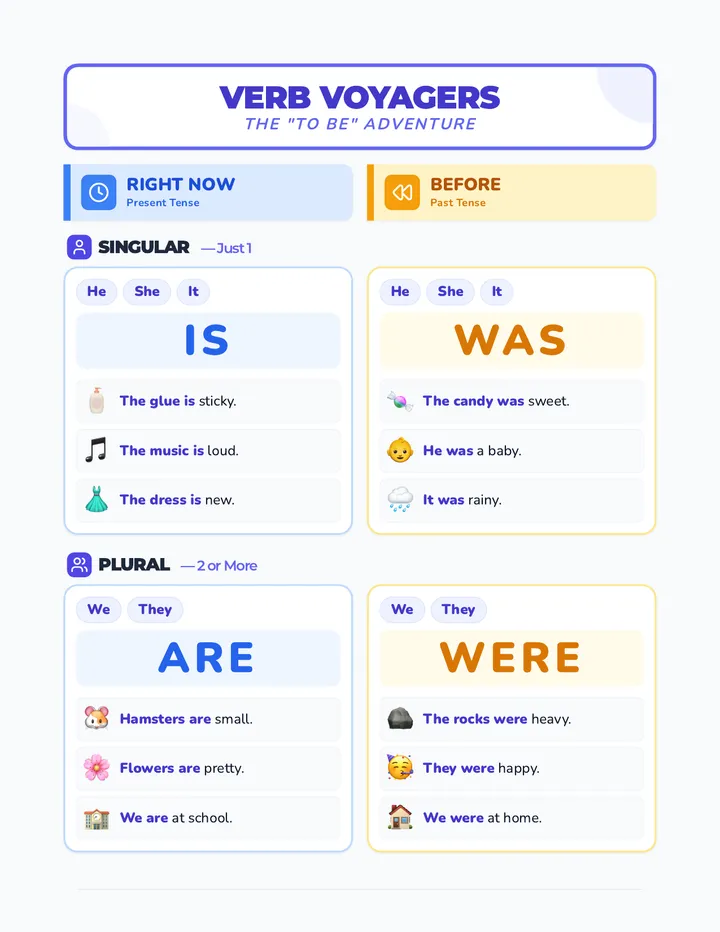
Verb Voyagers Anchor Chart Revised

Verb Voyagers Anchor Chart Revised

A condensed version of the Verb Voyagers anchor chart, removing student information sections and adjusting spacing and font sizes to ensure it fits perfectly on a single printable page.

T

tdunbar

ECR Polish Checklist Document

ECR Polish Checklist Document

A single-page, print-ready revising and editing checklist for 7th-grade Extended Constructed Responses (ECR), featuring prompt-alignment color coding, desert detection, sentence pattern crafting, evidence analysis verification, and CUPS proofreading.

K

knessa

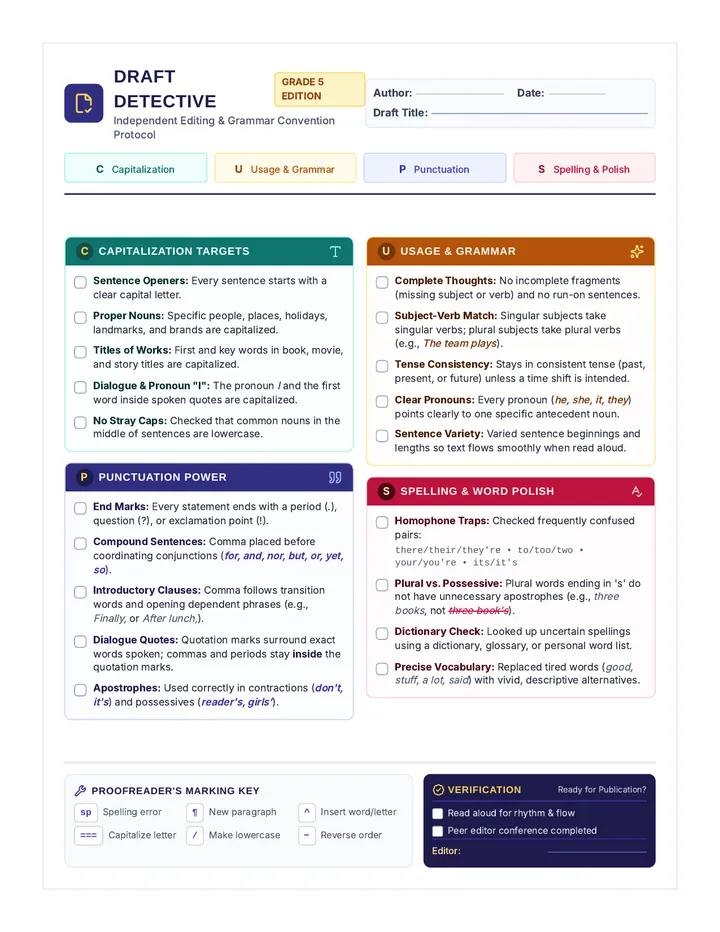
Draft Detective Checklist

Draft Detective Checklist

A comprehensive, independent one-page editing and grammar checklist for 5th graders structured around the CUPS framework (Capitalization, Usage, Punctuation, Spelling) with proofreading marks and an author sign-off badge.

AG

Alyssa Greenberg

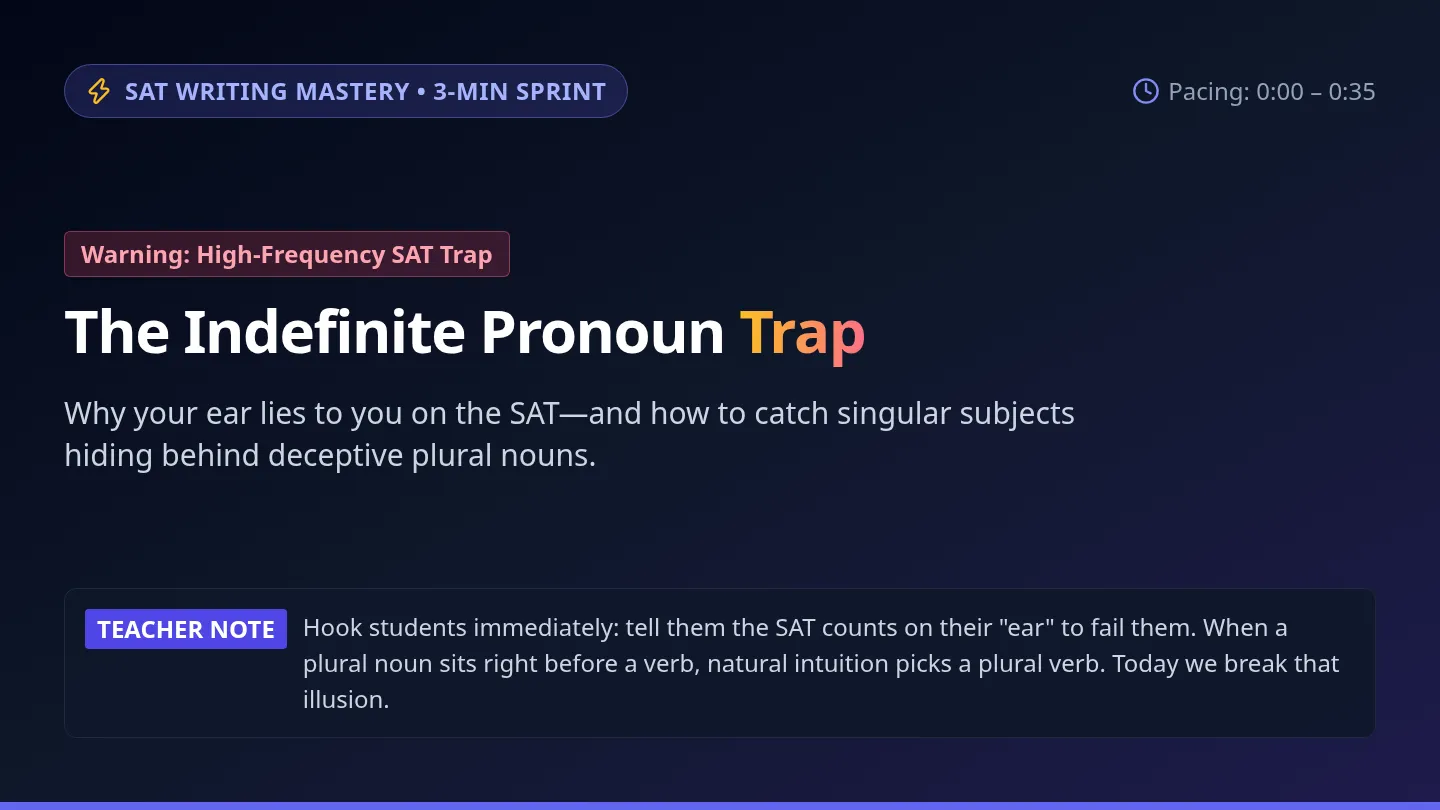
Indefinite Pronoun Trap Slides

Indefinite Pronoun Trap Slides

A concise 3-minute SAT grammar slide deck focusing on indefinite pronouns (everyone, each, nobody, someone, neither) and how to navigate intervening plural prepositional phrases to ensure correct singular subject-verb agreement.

J

JENNY.WEIS

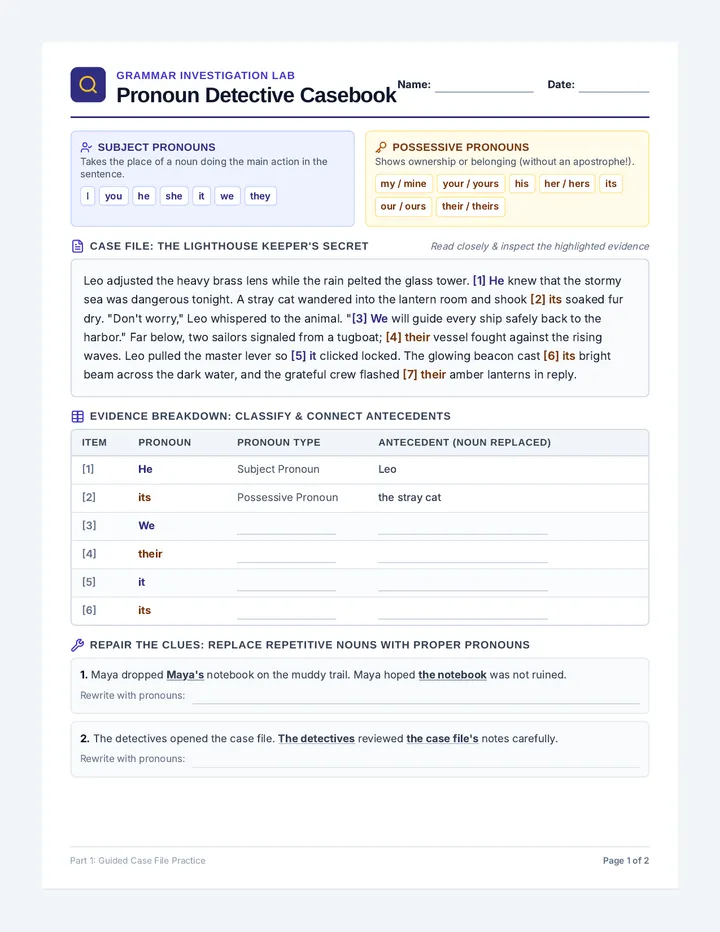
Pronoun Detective Worksheet

Pronoun Detective Worksheet

A two-page printable worksheet and reading checklist that guides students through identifying subject and possessive pronouns in a practice passage before applying a structured tracking checklist to their independent reading.

KD

kathy dale

Sequences

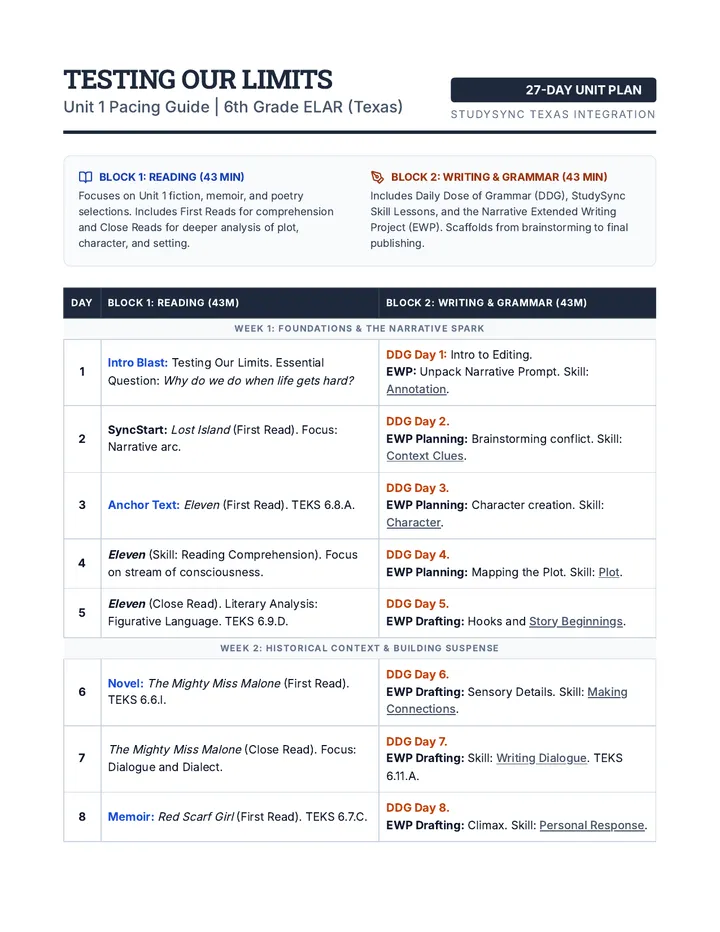
Unit 1 Pacing Guide Document

Testing Our Limits Unit Sequence

A 27-day instructional sequence for 6th Grade ELAR Unit 1: Testing Our Limits, featuring dual blocks for Reading and Writing with daily grammar and skill scaffolding.

DM

Dawn Mustian

81
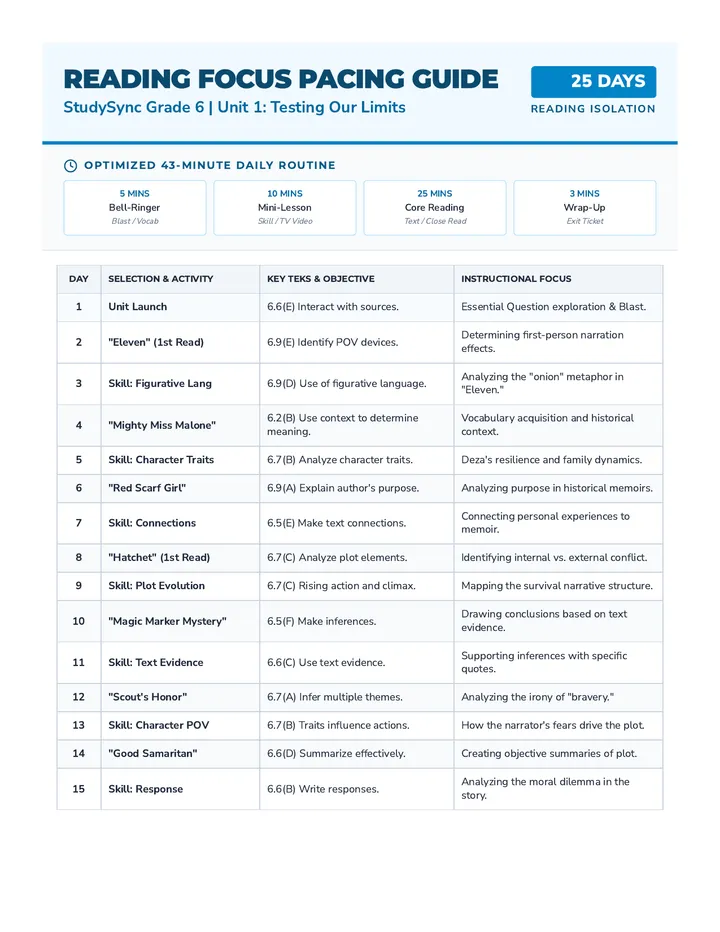
Reading Focus Pacing Guide

Testing Our Limits Unit

A 25-day comprehensive unit for StudySync Grade 6 that explores the theme of courage and resilience through isolated reading and writing tracks, aligned to ELA TEKS.

DM

Dawn Mustian

79
Literary Dossier Packet

The STAAR Files Web Quest Extended Mission

A comprehensive 380-minute digital web quest for STAAR English 2 preparation, divided into 9 high-intensity missions of 45 minutes or less, covering the top five most tested TEKS.

LF

Lindsey Foulks

13
Life Legacy Organizer

Curators Quest

A collection of 5th-grade ELA and Grammar resources focusing on biographical research, summary writing, and language mastery.

CO

Catherine Onessimo

30
Grammar Quest Log Worksheet

EOC Geography Review

A 10-day review series that integrates English 1 EOC revising and editing skills with World Geography core content, designed for daily warm-ups.

PR

Penne Reed

3
History Rewritten Tracker Worksheet

History Rewritten EOC Review

A 10-day English 2 EOC review sequence integrated with World History content, focusing on high-frequency revising and editing TEKS.

PR

Penne Reed

2

Lessons

Second Proof Assessment Plus Added Question

The Editors Desk

A comprehensive lesson on advanced revising and editing for 10th grade, focusing on organizational structure, parallel construction, sentence effectiveness, and grammatical precision. Students will learn to transform drafts into polished, professional pieces of writing.

SM

Samantha Moore

6
Lexicon Large Print Part 1 Reference

The Bards Cipher

A hands-on activity where students learn to decode and encode Shakespearean language by writing secret messages or insults, then swapping them with peers to translate.

AP

Alexis Paolini

17
Camden Prep Weekly Planning Matrix

Multilingual Lesson Planning

A simplified, daily planning tool designed to streamline lesson design for multilingual learners. This tool aligns Common Core Standards with WIDA ELD Framework objectives while maintaining a landscape matrix view.

MS

Marisa Satterfield

4
TSIA2 ELAR Practice Test

TSIA2 ELAR Mastery

A comprehensive preparation toolkit for the Texas Success Initiative Assessment 2.0 (TSIA2) English Language Arts and Reading (ELAR) section, featuring a balanced 30-question practice test and an exhaustive step-by-step explanatory answer key.

P

psreed75

2
Grammar Guru Guide Reference

Grammar Greatness

A comprehensive 5th-grade grammar review covering essential skills from parts of speech to complex sentence structure, designed with a fun, preppy aesthetic.

MA

Madelyne Ashbaugh

11
Whose Story Lesson Plan

Whose Story Is It

This lesson helps 3rd-grade students identify the use of first- and third-person point of view in stories. Students will learn to recognize key pronouns and analyze narrative perspectives to deepen their comprehension and character analysis skills.

TM

Tracey Mitchell

11