5 Correct Choice: C
Why it's correct: The metaphor of a "living cathedral" highlights how Weaver views the complex tickings and gears not as dead junk, but as a grand, organized, and beautiful masterpiece of precision.
Incorrect choices: A is incorrect because the passage does not argue for religious sanctity, but rather artistic appreciation. B is wrong because Weaver works in a small workshop with "delicate brass," not a massive clock tower. D is wrong as it takes the word "cathedral" literally rather than metaphorically.
Page 1 of 6 • TSIA2 ELAR Master Explanations
TSIA2 ELAR Mastery Toolkit Questions 6–10
Questions 6–10 Rationales (Passages B, C & D)
6 Correct Choice: C
Why it's correct: The final sentence indicates that "a fraction of a millimeter’s error" would completely ruin his month of work, showing that he performs his delicate tasks despite knowing how easily they could fail.
Incorrect choices: A is wrong because the text describes him as having "unexpected grace," suggesting high competence. B is incorrect because Weaver's focus is on meticulous accuracy rather than raw speed. D is wrong because grandfather clocks are not discussed.
7 Correct Choice: B
Why it's correct: The author explicitly states that "this linguistic homogenization served economic interests; books printed in a standardized... language sold far better." Competitive market forces forced printers to standardize.
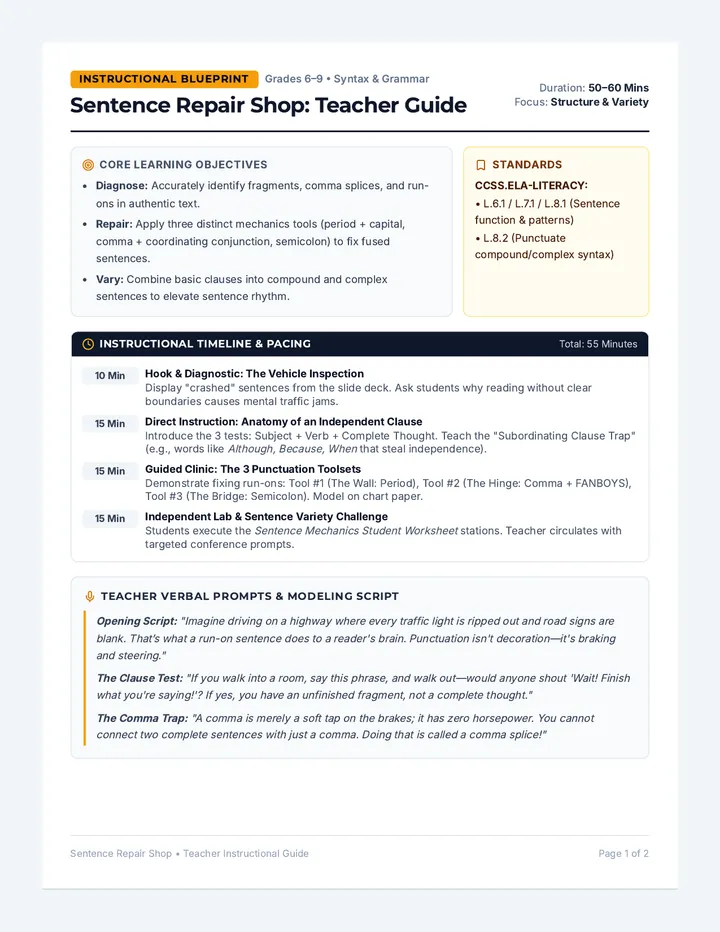
Incorrect choices: A is incorrect as political mandates are never mentioned. C is wrong because the text states it standardized the language, not that it reduced literacy rates. D is incorrect because the standardization was a deliberate commercial tactic, not an accidental technical byproduct.
8 Correct Choice: B
Why it's correct: The passage asserts that localized dialects had poor sales compared to a standardized language that could reach a much wider consumer audience. Therefore, regional dialects were phased out of major print runs.
Incorrect choices: A is incorrect because the passage cites economic incentive, not legal bans. C is incorrect; the limitation was market size, not technical machinery limitations. D is incorrect because standardized texts were widely accepted and sold extremely well.
9 Correct Choice: B
Why it's correct: The author describes history using factual evidence, logical causal links (printing press → commercial standard → national languages), and avoids personal biases, which represents an objective, analytical tone.
Incorrect choices: A is wrong as there is no skepticism. C is wrong as there is no nostalgic longing for localized scripts. D is wrong as the author maintains a scholarly distance.
10 Correct Choice: A
Why it's correct: Passage 1 describes AI as an "advanced brush" that expands creative horizons. Passage 2 explicitly states that "algorithmic engines do not create; they synthesize and replicate patterns," dismissing the tool's creative validity.
Incorrect choices: B is wrong because Passage 1 calls it simple ("democratization") and Passage 2 highlights that it replaces actual training, but neither focuses on master difficulties. C is wrong because commercial gains vs. scientific accuracy is not the primary point of division. D is wrong because neither passage classifies AI as a "temporary trend."
Page 2 of 6 • TSIA2 ELAR Master Explanations
TSIA2 ELAR Mastery Toolkit Questions 11–15
Questions 11–15 Rationales (Passages D & E)
11 Correct Choice: C
Why it's correct: The author of Passage 2 believes that art requires "deliberate, physically exhausting translation of subjective emotion" and "human craftsmanship." Bypassing training and using prompts devalues this core human element.
Incorrect choices: A is wrong as Passage 2 never mentions restricting art to elites. B is wrong as paint-mixing details are absent. D is wrong because Passage 2 focuses on the devaluation of human artistry, not a critique of tech developers' profits.
12 Correct Choice: B
Why it's correct: Both passages are directly arguing over what defines an "artist" and "artistic value" now that generative AI software can compile images based on text prompts.
Incorrect choices: A is wrong because specific programming languages are never mentioned. C is wrong because salary averages are not provided or analyzed. D is wrong because environmental/energy footprint issues are entirely out of scope.
13 Correct Choice: B
Why it's correct: Passage E states that these pioneering organisms "chemically break down the volcanic rock into rudimentary soil," which provides the baseline substrate for future, more complex plants.
Incorrect choices: A is biologically impossible and scientifically absurd (plants cannot stop volcanic eruptions). C is incorrect because shrubs arrive *after* these lichens have already established soil. D is wrong because lichens do not provide significant shade.
14 Correct Choice: B
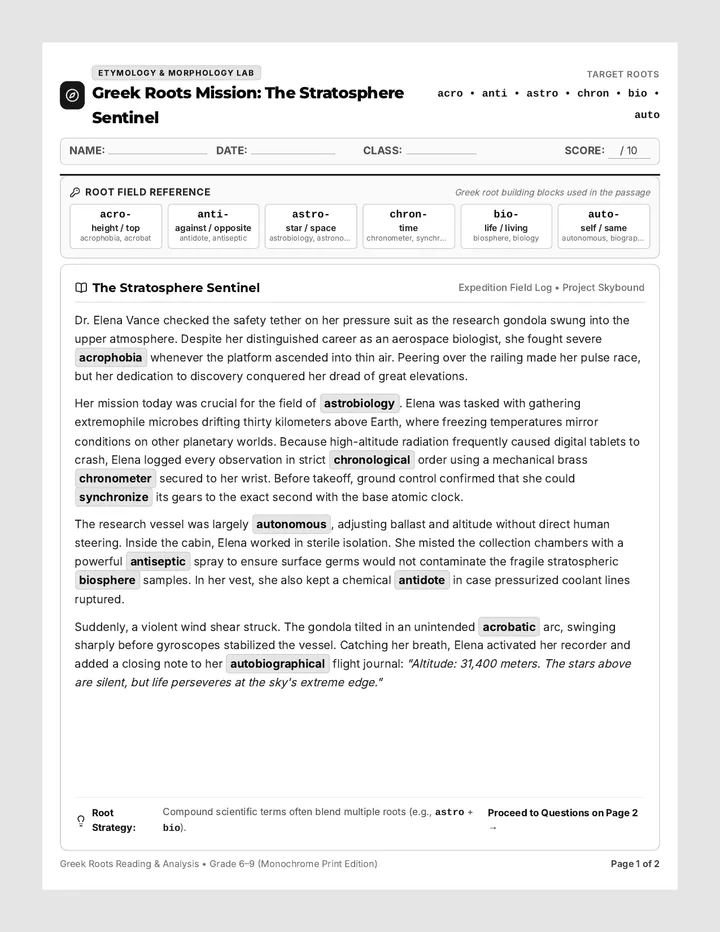
Why it's correct: In ecological terms, a "pioneering" species is the first or "initial" lifeform to colonize a barren, sterile habitat.
Incorrect choices: A ("exploratory") implies conscious intent to search, which mosses lack. C is incorrect because these organisms are physically simple, not complex. D is incorrect as they are remarkably hardy, not fragile.
15 Correct Choice: B
Why it's correct: The passage explains ecological succession: how sterile lava fields are converted by mosses and lichens into complex hardwood forests.
Incorrect choices: A is incorrect because the passage focuses on biological *recovery*, not devastation. C is incorrect because it does not compare their anatomical structures.
Page 3 of 6 • TSIA2 ELAR Master Explanations
TSIA2 ELAR Mastery Toolkit Questions 16–20
Questions 16–20 Rationales (Writing Section)
16 Correct Choice: B
Why it's correct: Option B utilizes an introductory dependent clause followed by a comma and a single independent clause, which is grammatically correct and fluid.
Incorrect choices: A contains a comma splice (joining two complete sentences with only a comma and "then"). C is a run-on sentence because it fuses two complete ideas with no punctuation at all.
17 Correct Choice: A
Why it's correct: The subject is "A wide assortment," which is singular. The prepositional phrase "of antique books, in addition to several rare maps," is parenthetical and does not change the singular subject. Therefore, the singular verb "was sold" is correct.
Incorrect choices: B and C incorrectly use plural verbs ("were," "are").
18 Correct Choice: B
Why it's correct: Changing "any student" (singular) to "all students" (plural) resolves the antecedent conflict with the plural pronouns "they" and "their" while maintaining smooth, non-gendered, natural flow.
Incorrect choices: A is grammatically correct but results in an extremely wordy, awkward phrasing ("he or she must submit his or her"). C incorrectly changes the perspective to second person ("you").
19 Correct Choice: C
Why it's correct: Option C maintains strict parallel structure using three parallel adjectives acting as subjective complements: "energy-efficient," "visually striking," and "fiscally responsible."
Incorrect choices: A breaks parallelism with "within budget limits" (a prepositional phrase mixed with adjectives). B switches to an active verb form ("visually strike").
20 Correct Choice: C
Why it's correct: The modifying phrase "Looking through the telescope" must modify the subject of the main clause. In Option C, "Dr. Ramirez" is the subject, so the modifier is correctly placed.
Incorrect choices: A has a dangling modifier ("Looking through the telescope, the rings..." implies the rings were looking). B is passive and implies the rings of Saturn were looking.
Page 4 of 6 • TSIA2 ELAR Master Explanations
TSIA2 ELAR Mastery Toolkit Questions 21–25
Questions 21–25 Rationales (Writing Section)
21 Correct Choice: A
Why it's correct: The relationship between the two statements is one of concession or contrast. "Although" is the appropriate subordinating conjunction to establish that contrast clearly and concisely.
Incorrect choices: B uses "Since," establishing an incorrect cause-and-effect relationship (the rain did not cause them to continue). C is punctuated incorrectly with a comma splice before "consequently."
22 Correct Choice: B
Why it's correct: The second sentence describes the direct result/consequence of the first sentence. "Therefore" is the proper cause-and-effect transitional word.
Incorrect choices: A is wrong because "Conversely" indicates contrast. C is wrong because "Specifically" is used for detailing examples. D is wrong as "Still" indicates a concession or despite-the-fact relationship.
23 Correct Choice: A
Why it's correct: In active voice, the subject performs the action. "The author completed the novel..." is direct, clean, active, and removes the awkward, wordy passive construction of "were endured by her."
Incorrect choices: B contains a dangling modifier ("After enduring months of isolation, the novel was completed..."). C retains passive structure elements.
24 Correct Choice: B
Why it's correct: A colon is the appropriate punctuation mark to introduce a formal list when the introductory text is a complete independent clause.
Incorrect choices: A incorrectly uses a semicolon to introduce a list. C uses an incorrect mixture of colons and semicolons that breaks structural consistency.
25 Correct Choice: A
Why it's correct: The correct idiomatic preposition following the verb "comply" is "with." We say "comply with the rules."
Incorrect choices: B ("to"), C ("by"), and D ("for") are unidiomatic and grammatically incorrect pairings for the verb "comply."
Page 5 of 6 • TSIA2 ELAR Master Explanations
TSIA2 ELAR Mastery Toolkit Questions 26–30
Questions 26–30 Rationales (Passage F Draft)
26 Correct Choice: A
Why it's correct: Option A turns a weak, repetitive, and simple statement ("had humble beginnings") into a sophisticated, academic thesis statement that sets up the essay's core contrast.
Incorrect choices: B is overly casual and wordy ("all over the entire globe"). C misrepresents the historical focus of the paragraph.
27 Correct Choice: B
Why it's correct: Option B utilizes a present participle phrase ("mixing them...") to subordinately connect the action, eliminating the fused run-on of the original sentence.
Incorrect choices: A is still a run-on sentence due to the comma splice before "they then mixed." C is grammatically fractured and uses non-parallel verb structures.
28 Correct Choice: B
Why it's correct: Sentence 3 is a comma splice ("frothy, it was..."). Correcting it requires a comma followed by a coordinating conjunction ("and"), making B the perfect choice.
Incorrect choices: A is wrong because a semicolon shouldn't be paired with a coordinating conjunction in this simple structure. C results in another comma splice with the conjunctive adverb "furthermore."
29 Correct Choice: C
Why it's correct: The essay shifts from the ancient Maya (thousands of years ago) to Spanish explorers arriving in Europe. "Centuries later" is the most accurate temporal transition.
Incorrect choices: A ("Consequently") is incorrect because the explorers' arrival was not caused by Maya currency. B is wrong because there is no contrast.
30 Correct Choice: A
Why it's correct: Option A uses a relative clause ("..., where elites added...") to link the two ideas seamlessly, highlighting the location of the action and improving narrative flow.
Incorrect choices: B is wordy and creates a repetitive sentence structure. C uses "however," which creates an illogical contrast.
Page 6 of 6 • TSIA2 ELAR Master Explanations