Lenny.com
Explore
Create
ActivitiesNewMathEnglish Language ArtsScience & EngineeringSocial StudiesGlobal LanguagesHealth & Physical EducationSpecial EducationCounseling & Life SkillsArts & CreativityESL
Lenny.com
Lenny.com
Explore
Create
ActivitiesNewMathEnglish Language ArtsScience & EngineeringSocial StudiesGlobal LanguagesHealth & Physical EducationSpecial EducationCounseling & Life SkillsArts & CreativityESL
Lenny.com
Lenny.com

Solutions

Lenny for EducatorsLenny for SchoolsLenny for Districts

Product

ExploreSign inCreateSupportAbout

Resources

Getting startedMTSS Acceleration Program

© 2026 Lenny Learning Inc.

TermsPrivacyAccessibility
LinkedInInstagramX
Lenny

Comparing Texts

Techniques for identifying similarities and differences in perspective, structure, and theme across diverse genres. Equips students to synthesize information and evaluate how different mediums approach shared topics.

English Language ArtsPhonics & Reading FoundationsLetter IdentificationLearn Letters A-ZLowercase and Uppercase LettersConsonants and VowelsLetter-Sound AssociationsLetter-Sound Associations: LowercaseLetter-Sound Associations: UppercaseBeginning and Ending SoundsRhymingBlending And SegmentingShort VowelsShort Vowel SoundsConsonant BlendsConsonant DigraphsBlends, Digraphs, and TrigraphsDigraphs, Blends, and Silent LettersLong Vowel SoundsLong Vowel PatternsShort and Long VowelsShort and Long Vowel PatternsSilent EVowel SoundsVowel TeamsR-Controlled VowelsDiphthongs: Oi, Oy, Ou, OwVariant VowelsVariant, Diphthong, And R Vowel PatternsSoft G And CSight WordsIrregular WordsWord RecognitionSyllablesSyllable TypesTwo-Syllable WordsMultisyllabic WordsPhoneme ManipulationDecodable TextsVocabularyAction WordsQuestion WordsNouns and AdjectivesClassify WordsCompound WordsSynonyms and AntonymsHomophonesHomophones and HomonymsShades of MeaningContext CluesPrefixes and SuffixesGreek and Latin RootsAnalogiesIdioms and AdagesForeign Words and ExpressionsWord Choice and UsageReference SkillsReading ComprehensionRead-Along Literary TextsRead-Along Informational TextsReality vs. FictionStory ElementsCharacterSequenceMain IdeaCause And EffectCompare And ContrastReading StrategiesText StructureAuthor's PurposeAuthor's Purpose And ToneAuthor's PerspectivePoint Of ViewThemeInference And ThemeInference And AnalysisPoetry ElementsLiterary DevicesAnalyzing LiteratureAnalyzing Informational TextsComparing TextsAudience, Purpose, And ToneBusiness DocumentsNovel StudyNonfiction Book StudyGrammar & MechanicsSentencesNounsVerbsAdjectivesPronounsCapitalizationPunctuationContractionsConjunctionsPrepositionsArticlesAdjectives And AdverbsVerb TypesVerb TensePronouns And AntecedentsPronoun TypesSubject-Verb AgreementDirect And Indirect ObjectsSentences, Fragments, And Run-OnsPhrases And ClausesCommasSemicolons, Colons, And CommasDashes, Hyphens, And EllipsesSpellingAbbreviationsFormattingVerb Tense And MoodMisplaced ModifiersWritingDescriptive DetailsCreative WritingOpinion WritingTopic SentencesOrganizing WritingLinking WordsSentence VarietyIntroductions And ConclusionsPersuasive And Opinion WritingExpository WritingPersuasive StrategiesDeveloping And Supporting ArgumentsTopic Sentences And Thesis StatementsSummarizingResearch SkillsEditing And RevisingActive And Passive Voice=Writing Clearly And ConciselyDebate & Public SpeakingPublic Speaking BasicsPersuasive TechniquesClaims and EvidenceTypes of ArgumentsReasoning TypesLogical FallaciesTopic ResearchOrganizing EvidenceDebate Speech OrganizationAttacking and Defending ArgumentsClash and EngagementImpact CalculusQuestioning and Cross-ExaminationCritical ThinkingInformal LogicFormal LogicInductive Reasoning

Videos

Synthesizing Sources: The Costume Dilemma

Synthesizing Sources: The Costume Dilemma

This educational video uses a relatable narrative about finding a theater costume to teach students the importance of researching and synthesizing information from multiple sources. The host, Justin, shares his initial failure to find a Mozart costume at a thrift store because he lacked specific knowledge about the era. He then observes a text message conversation between two friends, Liz and Rachel, who are successfully researching 1960s fashion for a different play.

Miacademy & MiaPrep Learning ChannelMiacademy & MiaPrep Learning Channel

6mins 54s

Comparing Firsthand and Secondhand Accounts

Comparing Firsthand and Secondhand Accounts

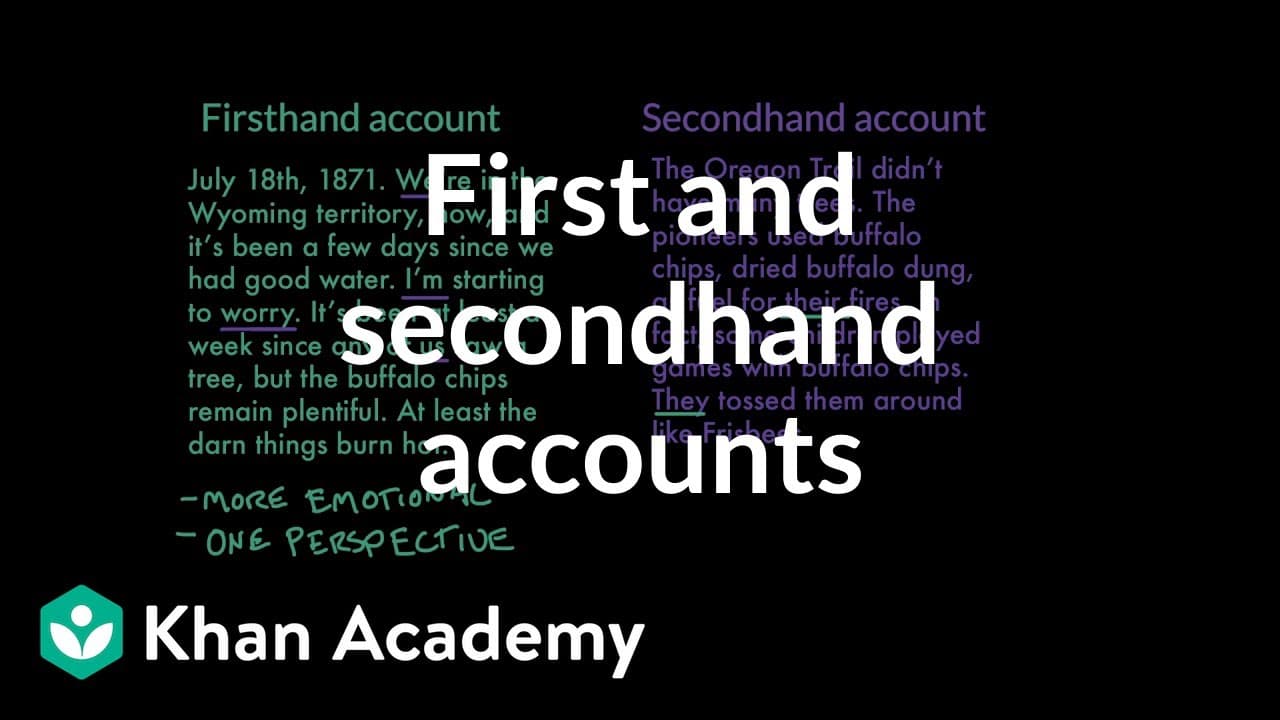
This engaging educational video clarifies the distinction between firsthand (primary) and secondhand (secondary) accounts using the historical context of the Oregon Trail. Narrator David introduces the concepts through two contrasting books: a fictional travel diary from 1871 and a modern history textbook. By analyzing how each text describes the use of "buffalo chips" (dried dung) for fuel, the video demonstrates the unique characteristics of each source type.

Khan AcademyKhan Academy

4mins 20s

Identifying Tone in Writing: The Case of the Missing Mascot

Identifying Tone in Writing: The Case of the Missing Mascot

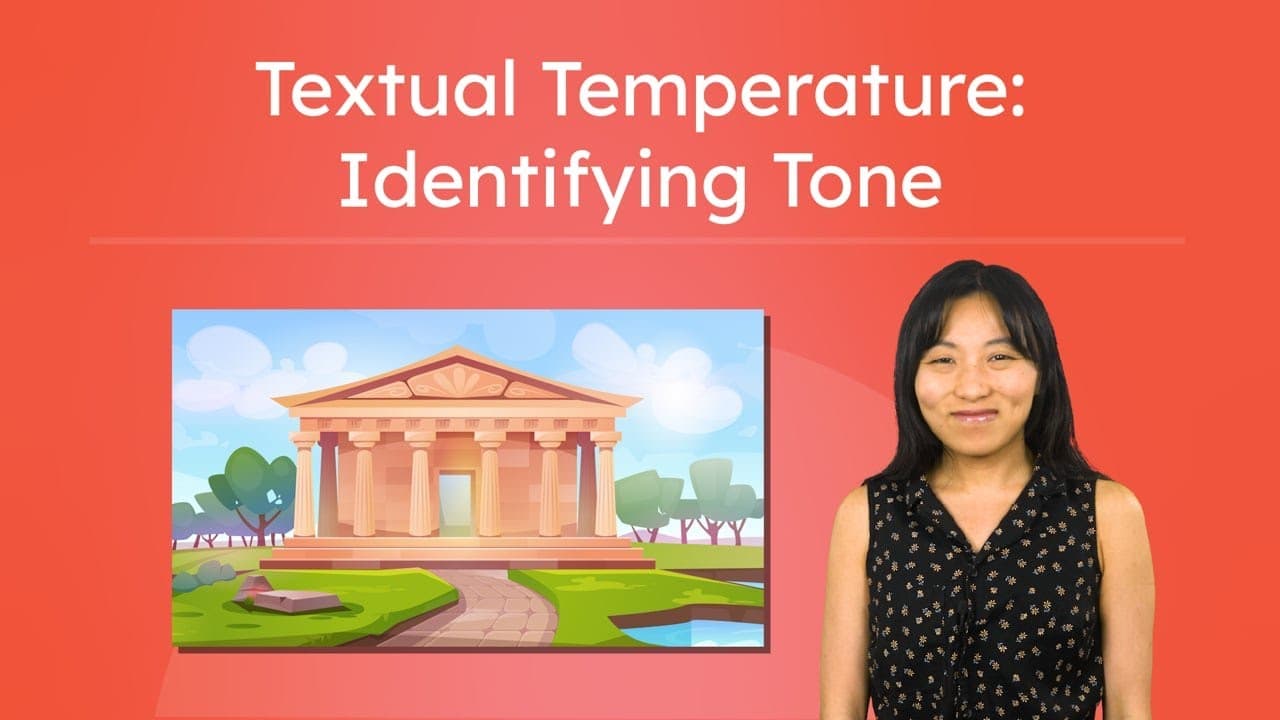
This engaging animated lesson uses a mystery narrative to teach students how to identify and analyze tone in written texts. Set in the fictional town of Persuasia, the video follows the investigation of a missing mascot, Wartimer the Warthog. Students learn that by analyzing the tone of a mysterious note left at the scene and comparing it to writing samples from three suspects, they can identify the culprit.

Miacademy & MiaPrep Learning ChannelMiacademy & MiaPrep Learning Channel

10mins 19s

How to Evaluate Arguments and Evidence in Texts

How to Evaluate Arguments and Evidence in Texts

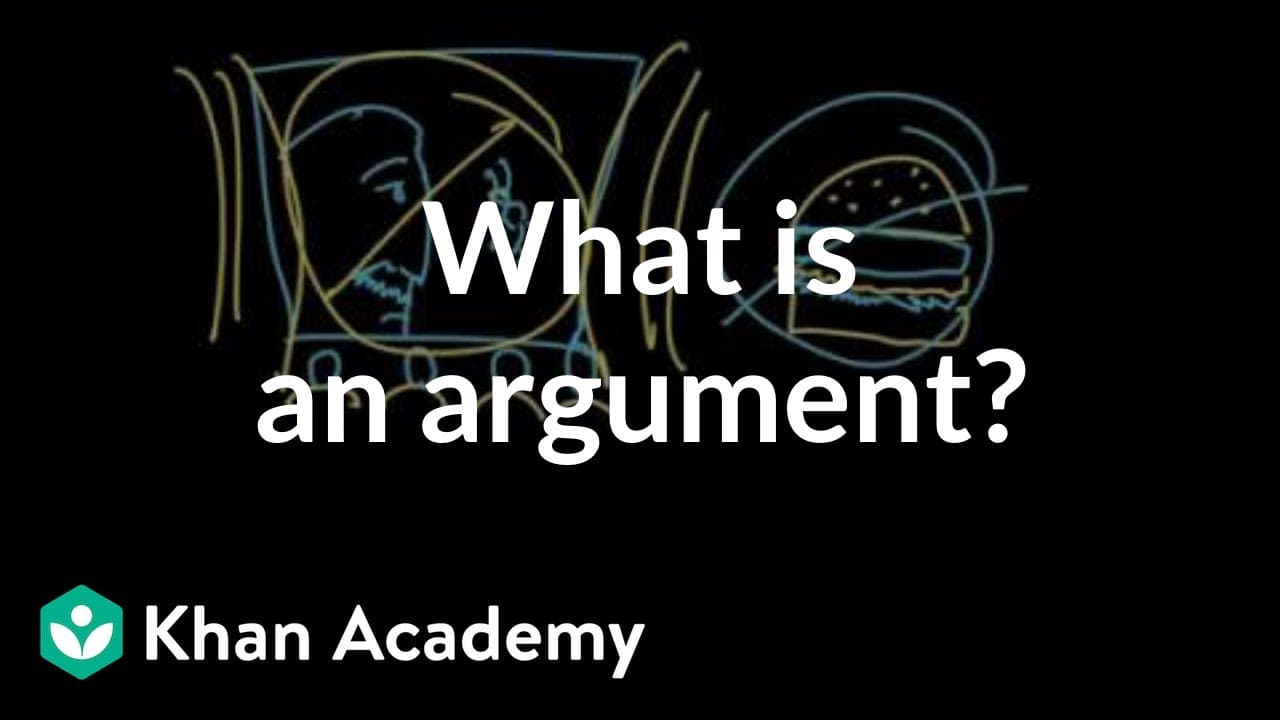
This educational video provides a clear, step-by-step guide on how to identify and evaluate arguments within a text. Using a "rhetorical combat" framework, the narrator distinguishes between subjective opinions (like movie reviews) and formal arguments, emphasizing that valid arguments must be supported by verifiable evidence, data, and reasoning rather than just personal preference. The core of the video analyzes two opposing texts regarding a proposed "soda tax." The narrator models critical reading strategies by dissecting the claims made in both texts. He demonstrates how to identify logical gaps, such as a lack of evidence linking a tax to behavioral change, and how to spot potential unintended consequences, such as the disproportionate economic impact on lower-income individuals. He also encourages readers to consider what an author is *not* saying to understand the full scope of an argument. This resource is highly valuable for ELA classrooms focusing on non-fiction analysis, argumentative writing, or media literacy. It moves beyond simple definitions to model the actual metacognitive process of skepticism and critique. Teachers can use this to introduce the standards of tracing and evaluating arguments, helping students transition from reading for content to reading for structure and validity.

Khan AcademyKhan Academy

4mins 37s

Using Graphs and Charts to Support Arguments

Using Graphs and Charts to Support Arguments

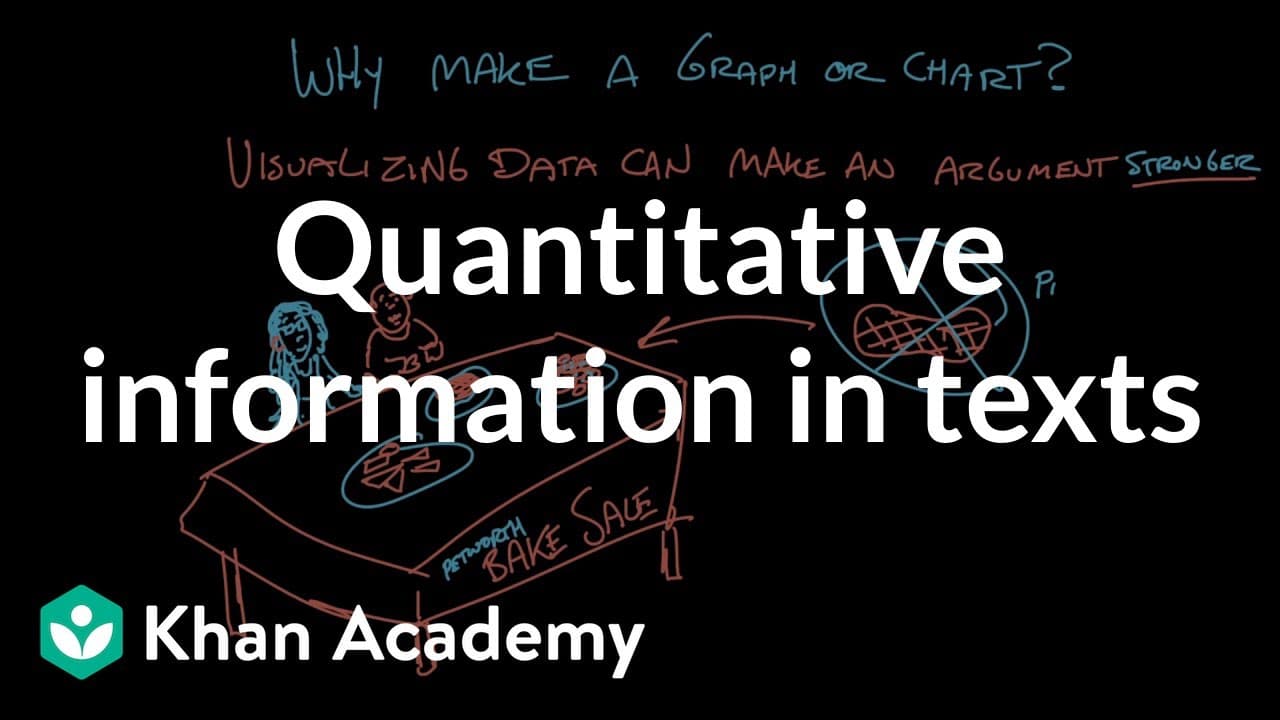
This educational video explores the relationship between written text and quantitative information, specifically demonstrating how graphs and charts can strengthen written arguments. Using a relatable analogy of describing a galloping horse followed by a practical example of a neighborhood bake sale, the narrator illustrates how visual data provides efficiency and clarity that words alone sometimes lack. The video breaks down the specific roles of text versus visuals: text provides context and severity (e.g., the danger of allergies), while graphs provide specific breakdown and prevalence (e.g., exact numbers of people allergic to specific nuts). The key themes include the efficiency of communication, the synthesis of information from multiple sources, and the function of text features in informational writing. It specifically covers how to read and interpret bar graphs and pie charts in the context of a persuasive argument, highlighting how authors use these tools to back up claims with evidence. For the classroom, this video is an excellent resource for bridging English Language Arts and Math skills (data literacy). It helps students meet standards related to integrating information from diverse formats and evaluating the advantages of using different mediums. Teachers can use this to introduce text features, support lessons on persuasive writing, or help students practice synthesizing quantitative and qualitative data to fully understand a topic.

Khan AcademyKhan Academy

4mins 51s

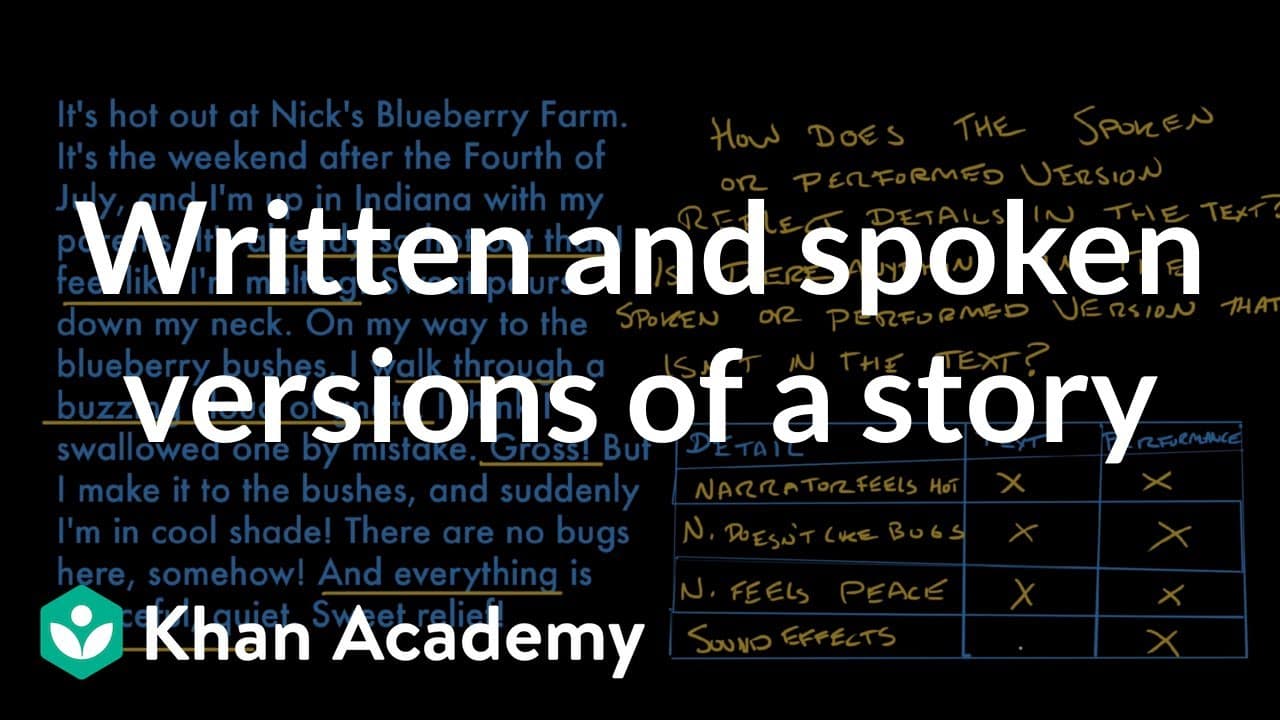
Comparing Written Text to Audio Performance

Comparing Written Text to Audio Performance

This video serves as an engaging English Language Arts lesson that explores the differences between reading a text silently and experiencing it as an oral performance. The narrator guides students through a comparative analysis using a short story set on a blueberry farm, first asking them to read it to themselves, and then performing it with expressive vocal modulation and sound effects. This side-by-side comparison helps illuminate how a reader's internal experience differs from an external performance. The content focuses on key literary and dramatic concepts such as tone, mood, pacing, and sensory details. It specifically highlights how a performer makes creative choices—such as stretching out words to indicate heat or tightening lips to show disgust—to reflect the narrator's feelings. Additionally, the video introduces the concept of non-textual elements, like sound effects, and how they contribute to atmosphere and storytelling without changing the actual words of the text. For educators, this video is an excellent tool for teaching standards related to comparing and contrasting different versions of a story (text vs. audio). It models critical thinking by using a T-chart to map textual details to performance choices, providing a clear framework for students to analyze media. It can spark lessons on reading fluency, the importance of expression in oral reading, and how multimedia elements influence a viewer's understanding and emotional engagement with a narrative.

Khan AcademyKhan Academy

3mins 56s

Materials

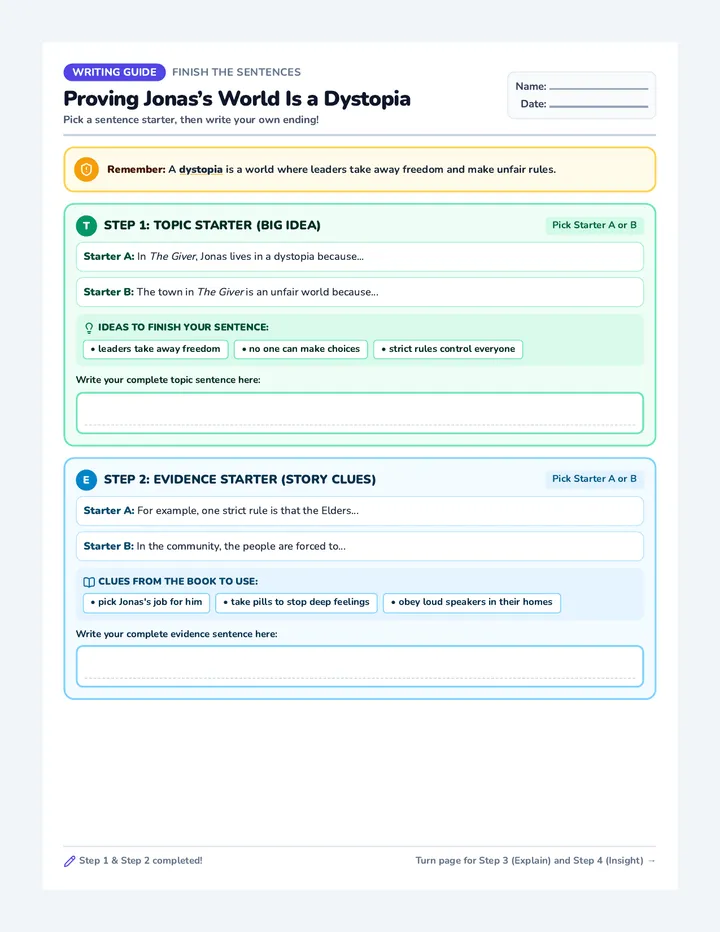
Giver Dystopia Reference Sheet

Giver Dystopia Reference Sheet

A simplified 2-page writing guide for a second-grade reading level. Features structured sentence starters with ending prompt banks and dedicated handwriting lines, allowing students to complete their own analysis to prove The Giver is a dystopian setting.

AM

Ashley McGregor

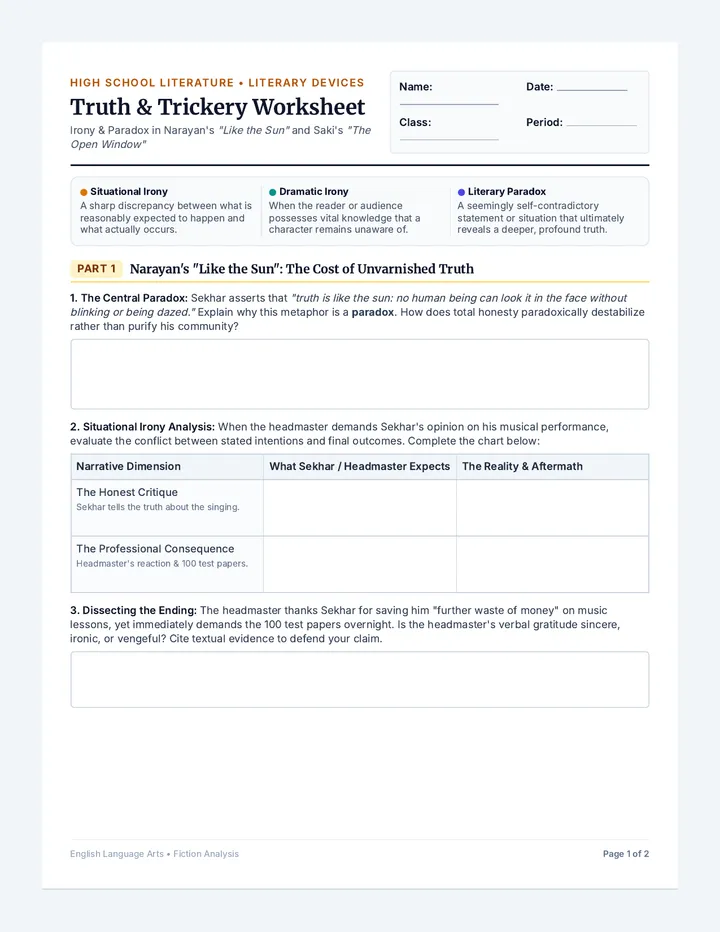
Truth and Trickery Worksheet

Truth and Trickery Worksheet

A rigorous two-page printable literary analysis worksheet exploring irony (situational, dramatic, verbal) and paradox through R.K. Narayan's 'Like the Sun' and Saki's 'The Open Window'. Includes textual analysis, comparative organizers, and synthesis response spaces for high school English students.

PR

Paula Rein

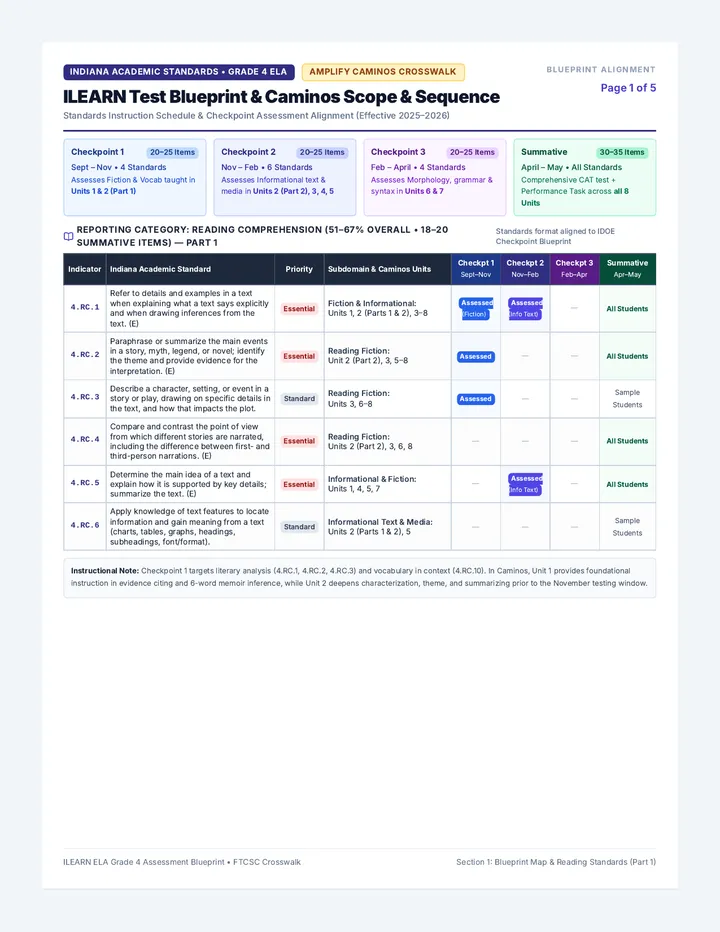
ILEARN Caminos Blueprint Guide

ILEARN Caminos Blueprint Guide

Comprehensive Grade 4 ILEARN Test Blueprint and Amplify Caminos Scope & Sequence crosswalk. Formatted to match the state ILEARN checkpoint blueprint, showing exactly when Indiana Academic Standards (Reading, Vocabulary, Writing, Grammar, and Communication) are taught across Units 1–8 and assessed in Checkpoints 1, 2, 3, and the Summative Assessment.

A

Amy.Hacker

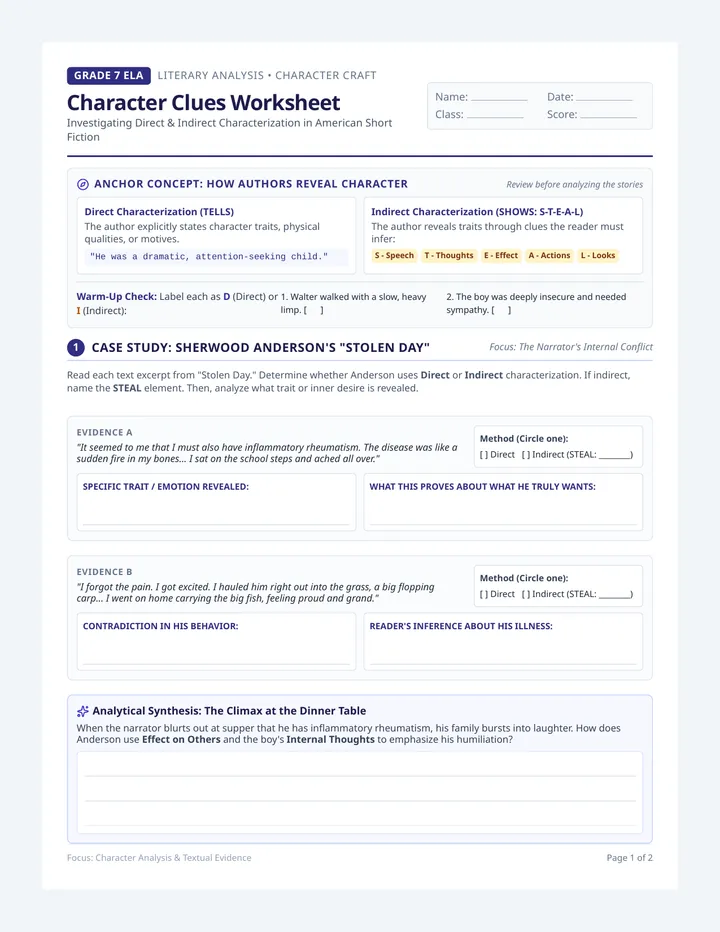
Character Clues Worksheet

Character Clues Worksheet

A two-page 7th grade ELA worksheet analyzing direct and indirect characterization through the STEAL method across Sherwood Anderson's 'Stolen Day' and James Thurber's 'The Night the Bed Fell'. Students examine text evidence, categorize character clues, and compare how authors use internal thoughts versus external comic actions to shape reader perception.

PR

Paula Rein

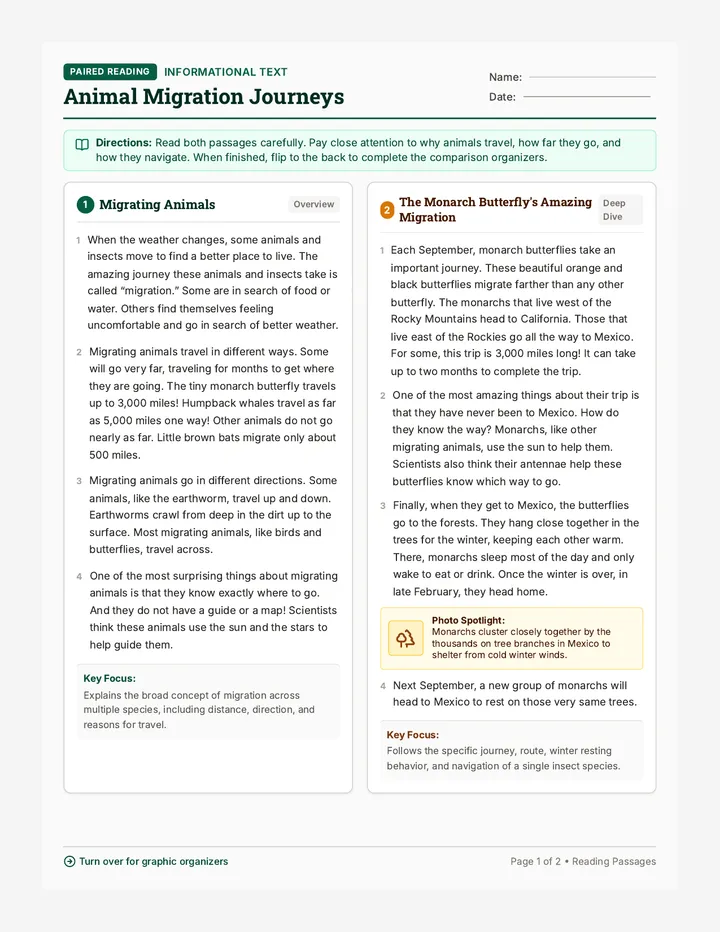
Animal Migration Paired Worksheet

Animal Migration Paired Worksheet

A two-sided paired-text reading worksheet featuring 'Migrating Animals' and 'The Monarch Butterfly\'s Amazing Migration' arranged in two parallel reading columns on page one. Page two provides a comprehensive T-chart and Venn diagram graphic organizer with overlapping visual circles for comparing and contrasting text evidence.

TD

Taylor Doucet

Compassion Transforms ECR Slides

Compassion Transforms ECR Slides

A comprehensive 12-slide instructional presentation for an ECR analyzing how unexpected compassion transforms a young person, comparing Langston Hughes's 'Thank You, M'am' and the narrative nonfiction article 'A Police Stop Changed This Teenager's Life'.

TJ

Tasha Jaramillo

Sequences

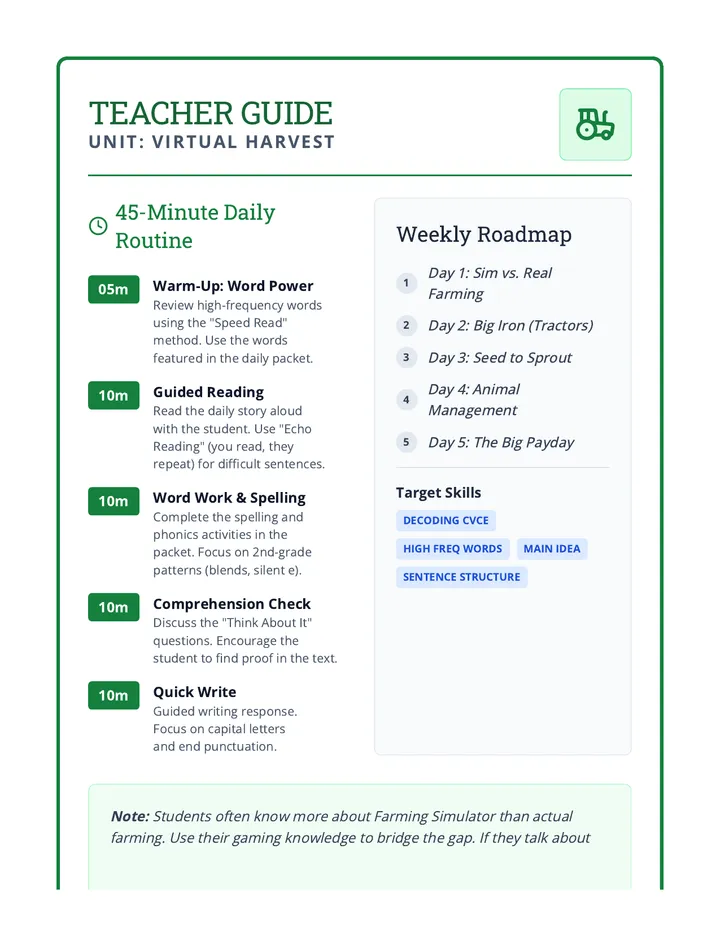
Virtual Harvest Teacher Guide

Digital Dirt

A 5-day reading comprehension and writing unit for struggling readers, blending the world of Farming Simulator with real-world agriculture. Focuses on 2nd-grade level literacy skills within a high-interest 5th-grade context.

CM

carley Martin

30
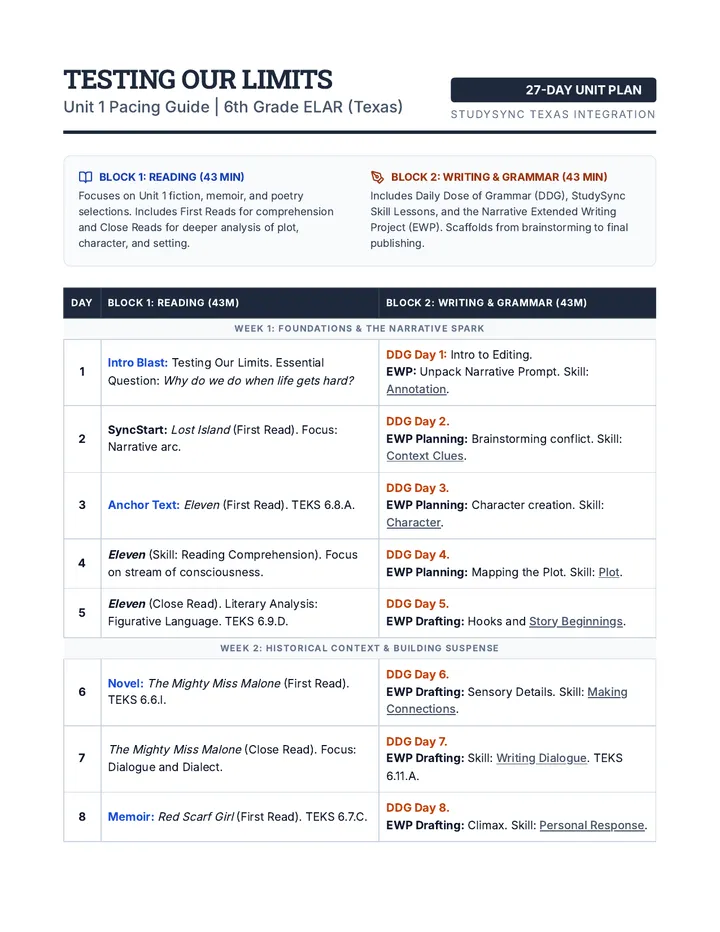
Unit 1 Pacing Guide Document

Testing Our Limits Unit Sequence

A 27-day instructional sequence for 6th Grade ELAR Unit 1: Testing Our Limits, featuring dual blocks for Reading and Writing with daily grammar and skill scaffolding.

DM

Dawn Mustian

81
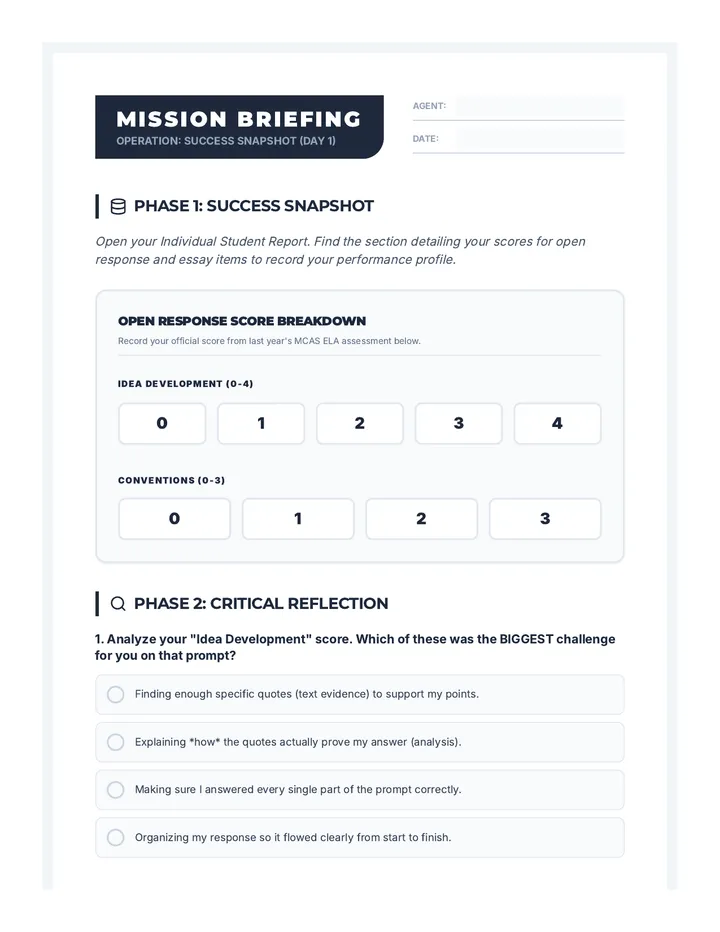
Mission Briefing Worksheet

Mastery Mission

A project-based learning unit designed to help middle school students analyze their past MCAS ELA performance, deconstruct scoring rubrics, and create a personalized strategy playbook for upcoming assessments. Students move from 'investigating' their scores to 'rebooting' their responses and 'finalizing' their test-taking toolkit.

M

mhbutterworth

18
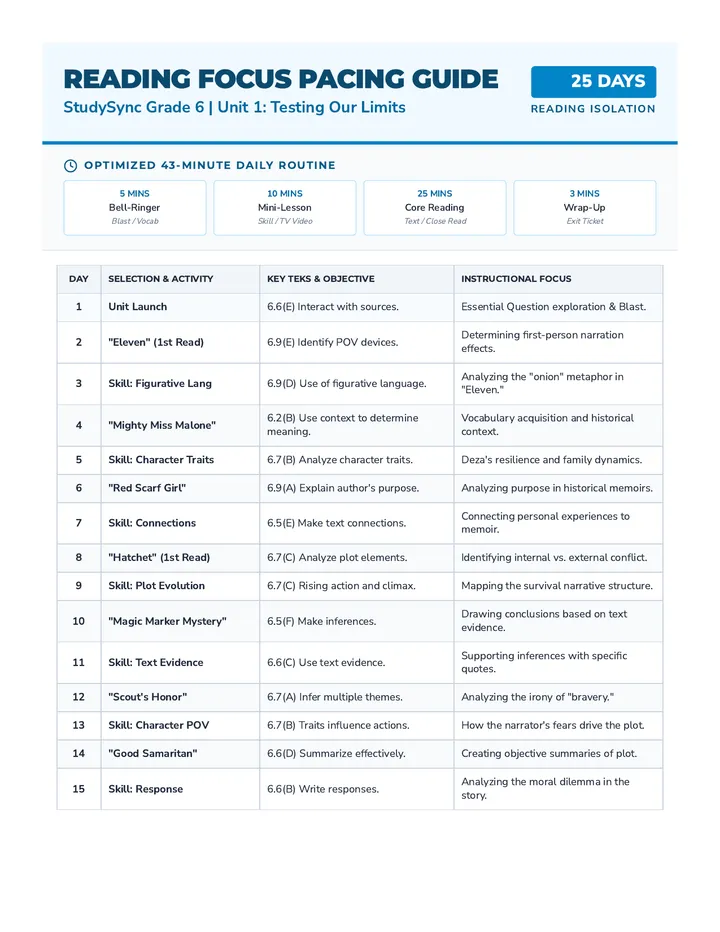
Reading Focus Pacing Guide

Testing Our Limits Unit

A 25-day comprehensive unit for StudySync Grade 6 that explores the theme of courage and resilience through isolated reading and writing tracks, aligned to ELA TEKS.

DM

Dawn Mustian

79
Master Pacing Guide Teacher Resource

Literacy Mastery Lab

A comprehensive year-long intervention sequence for 8th-grade literacy, focusing on STAR 360 and OSAS benchmark skills. The sequence follows a 3-day weekly instructional cycle (Instruction, Practice, Application) to supplement 2 days of choice reading.

SA

Senta Agnello-Shelton

60
Detective Entry Exam Assessment

Defense Detectives

A 10-session Tier 2 intervention for 4th-grade students focused on vocabulary and comprehension, aligned with EL Education Module 2 (Animal Defenses). Students act as 'Defense Detectives' to investigate how animals survive in the wild.

S

svallely

29