Lenny.com
Explore
Create
ActivitiesNewMathEnglish Language ArtsScience & EngineeringSocial StudiesGlobal LanguagesHealth & Physical EducationSpecial EducationCounseling & Life SkillsArts & CreativityESL
Lenny.com
Lenny.com
Explore
Create
ActivitiesNewMathEnglish Language ArtsScience & EngineeringSocial StudiesGlobal LanguagesHealth & Physical EducationSpecial EducationCounseling & Life SkillsArts & CreativityESL
Lenny.com
Lenny.com

Solutions

Lenny for EducatorsLenny for SchoolsLenny for Districts

Product

ExploreSign inCreateSupportAbout

Resources

Getting startedMTSS Acceleration Program

© 2026 Lenny Learning Inc.

TermsPrivacyAccessibility
LinkedInInstagramX
Lenny

Informal Logic

Logical fallacy identification, evidence evaluation, and natural language argument construction. Develops critical thinking skills through the analysis of everyday reasoning and rhetorical strategies.

English Language ArtsPhonics & Reading FoundationsLetter IdentificationLearn Letters A-ZLowercase and Uppercase LettersConsonants and VowelsLetter-Sound AssociationsLetter-Sound Associations: LowercaseLetter-Sound Associations: UppercaseBeginning and Ending SoundsRhymingBlending And SegmentingShort VowelsShort Vowel SoundsConsonant BlendsConsonant DigraphsBlends, Digraphs, and TrigraphsDigraphs, Blends, and Silent LettersLong Vowel SoundsLong Vowel PatternsShort and Long VowelsShort and Long Vowel PatternsSilent EVowel SoundsVowel TeamsR-Controlled VowelsDiphthongs: Oi, Oy, Ou, OwVariant VowelsVariant, Diphthong, And R Vowel PatternsSoft G And CSight WordsIrregular WordsWord RecognitionSyllablesSyllable TypesTwo-Syllable WordsMultisyllabic WordsPhoneme ManipulationDecodable TextsVocabularyAction WordsQuestion WordsNouns and AdjectivesClassify WordsCompound WordsSynonyms and AntonymsHomophonesHomophones and HomonymsShades of MeaningContext CluesPrefixes and SuffixesGreek and Latin RootsAnalogiesIdioms and AdagesForeign Words and ExpressionsWord Choice and UsageReference SkillsReading ComprehensionRead-Along Literary TextsRead-Along Informational TextsReality vs. FictionStory ElementsCharacterSequenceMain IdeaCause And EffectCompare And ContrastReading StrategiesText StructureAuthor's PurposeAuthor's Purpose And ToneAuthor's PerspectivePoint Of ViewThemeInference And ThemeInference And AnalysisPoetry ElementsLiterary DevicesAnalyzing LiteratureAnalyzing Informational TextsComparing TextsAudience, Purpose, And ToneBusiness DocumentsNovel StudyNonfiction Book StudyGrammar & MechanicsSentencesNounsVerbsAdjectivesPronounsCapitalizationPunctuationContractionsConjunctionsPrepositionsArticlesAdjectives And AdverbsVerb TypesVerb TensePronouns And AntecedentsPronoun TypesSubject-Verb AgreementDirect And Indirect ObjectsSentences, Fragments, And Run-OnsPhrases And ClausesCommasSemicolons, Colons, And CommasDashes, Hyphens, And EllipsesSpellingAbbreviationsFormattingVerb Tense And MoodMisplaced ModifiersWritingDescriptive DetailsCreative WritingOpinion WritingTopic SentencesOrganizing WritingLinking WordsSentence VarietyIntroductions And ConclusionsPersuasive And Opinion WritingExpository WritingPersuasive StrategiesDeveloping And Supporting ArgumentsTopic Sentences And Thesis StatementsSummarizingResearch SkillsEditing And RevisingActive And Passive Voice=Writing Clearly And ConciselyDebate & Public SpeakingPublic Speaking BasicsPersuasive TechniquesClaims and EvidenceTypes of ArgumentsReasoning TypesLogical FallaciesTopic ResearchOrganizing EvidenceDebate Speech OrganizationAttacking and Defending ArgumentsClash and EngagementImpact CalculusQuestioning and Cross-ExaminationCritical ThinkingInformal LogicFormal LogicInductive Reasoning

Videos

Strengthening Arguments by Addressing Opposing Viewpoints

Strengthening Arguments by Addressing Opposing Viewpoints

This video explores the rhetorical strategy of acknowledging and incorporating opposing viewpoints to strengthen argumentative writing. Using a martial arts analogy, the narrator explains that effective arguments do not simply "steamroll" opposition but rather engage with it constructively. The video outlines two primary applications for this technique: maintaining neutrality in journalistic reporting and fortifying persuasive arguments by anticipating and dismantling counter-claims. The video uses two distinct examples to illustrate these concepts. First, a humorous dispute over stolen cookies between fictional characters (Ms. Adeyemi and Mr. Dupont) demonstrates how to describe a conflict neutrally without injecting personal bias. Second, the historical mystery of the Lost Colony of Roanoke is used to show how addressing alternative theories (like disease or violence) and refuting them with evidence actually supports the author's main thesis that the colony's fate remains unknown. This resource is highly valuable for English Language Arts classrooms focusing on persuasive writing, debate, and media literacy. It provides a concrete framework (the "Block and Strike" method) for students to understand the function of counter-arguments and rebuttals. It also encourages critical reading by teaching students to be suspicious of authors who ignore opposing viewpoints entirely.

Khan AcademyKhan Academy

5mins 35s

How to Win Arguments Using Claims and Evidence

How to Win Arguments Using Claims and Evidence

This engaging video lesson breaks down the components of a persuasive argument using a relatable scenario: a teenager negotiating with her mother via text message for a new phone. The narrator analyzes the conversation in real-time, highlighting how the character, Liz, effectively uses rhetorical strategies to make her case. The video transforms a common daily interaction into a clear model for argumentative thinking. The content focuses on three core concepts of argumentation: Claims (stating a position), Evidence (providing specific facts to support the position), and Counterclaims (anticipating and addressing opposing arguments before they are fully raised). It specifically highlights how to evaluate the strength of different types of evidence, demonstrating why connecting the problem to schoolwork is more persuasive to a parent than connecting it to gaming. For educators, this video serves as an excellent hook or modeling tool for units on argumentative writing or speech. It takes abstract terms like 'counterclaim' and 'preemptive argument' and grounds them in a context every student understands. It is particularly useful for visual learners who benefit from seeing the argument structure unfold as a text message thread.

Miacademy & MiaPrep Learning ChannelMiacademy & MiaPrep Learning Channel

4mins 50s

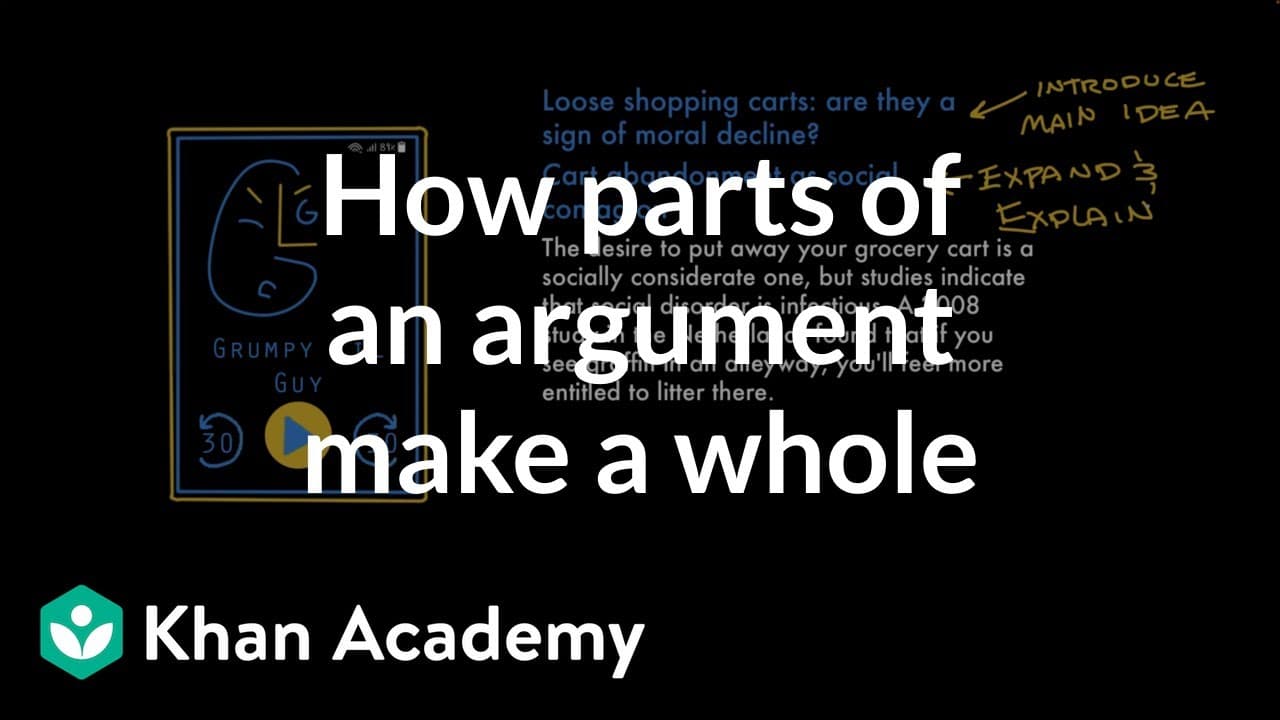
How Authors Develop Claims and Arguments

How Authors Develop Claims and Arguments

This engaging video lesson uses a fictional podcast called "Grumpy Lil Guy" to teach students how authors structure arguments and develop claims across a text. The narrator breaks down the podcast episode into distinct sections, analyzing how the host introduces a claim, expands on it with research, provides specific examples, and addresses counter-arguments. By treating the text analysis as a "pause and discuss" session, the video makes abstract rhetorical concepts concrete and accessible. The core themes explore rhetorical structure, argumentative writing, and critical reading. It specifically focuses on identifying the function of different paragraphs within a larger text—moving from the "what" (the claim) to the "why" (explanation), the "proof" (examples), and the "defense" (counter-arguments). It also touches on the concept of civic responsibility through the humorous example of returning shopping carts. For educators, this video is an excellent tool for Middle and High School ELA classrooms. It models the exact type of analytical thinking required for standardized testing and essay writing but does so with humor and a relatable format. Teachers can use this to introduce the components of a strong argument before asking students to write their own or to help students visualize how to trace an author's line of reasoning in informational texts.

Khan AcademyKhan Academy

4mins 33s

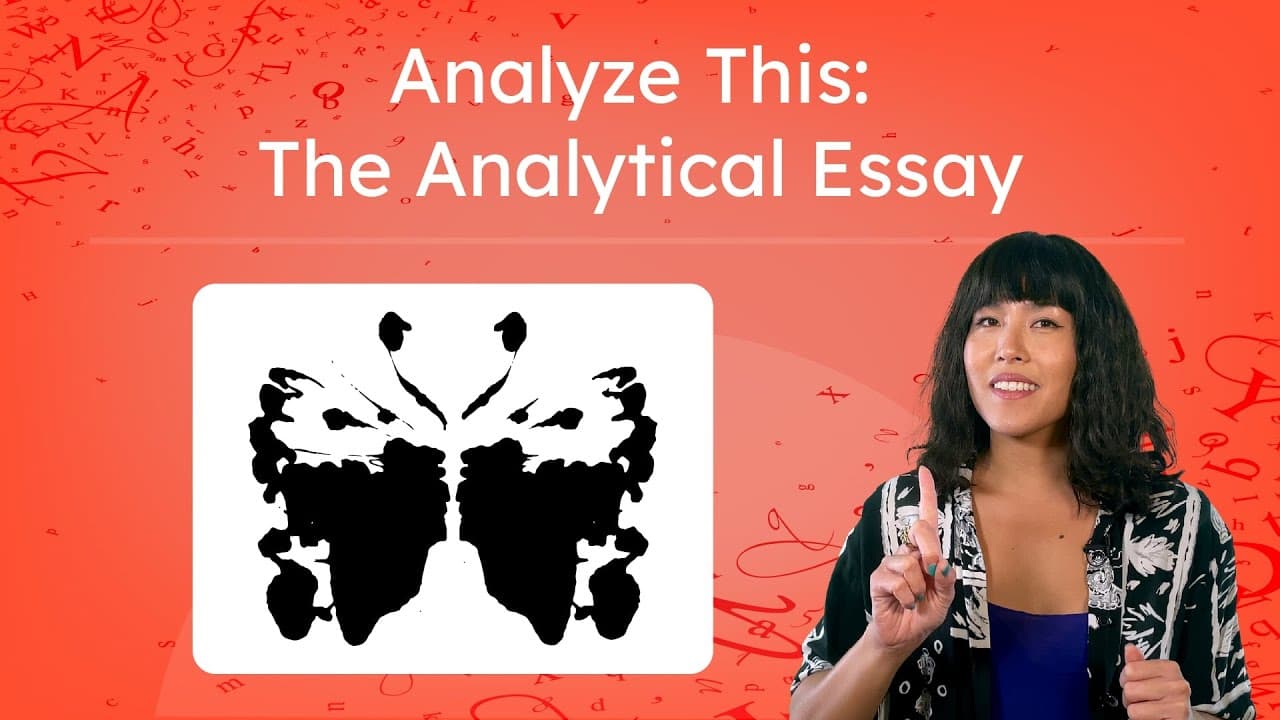
How to Write an Analytical Essay: From Observation to Claim

How to Write an Analytical Essay: From Observation to Claim

This video provides a comprehensive guide to high school analytical writing, breaking down the complex cognitive process of analysis into three manageable steps: observing, reflecting, and making a claim. Through a clever opening skit featuring "Dr. Rorschach," the narrator distinguishes between simple observation (what you see) and psychological interpretation (what it means), setting the stage for how students should approach texts and images in the classroom. The content explores key themes such as the difference between summary and analysis, the importance of creating specific and arguable thesis statements, and the fallacy of trying to guess "authorial intent." It uses Vincent van Gogh's famous painting "The Starry Night" as a central case study, modeling exactly how to move from listing visual details (colors, shapes, scale) to formulating a sophisticated argument about the insignificance of humanity compared to the power of nature. For educators, this video serves as an excellent foundational lesson for any unit on essay writing, literary analysis, or document-based historical inquiry. It offers a clear, repeatable framework that helps students overcome "blank page syndrome" by giving them concrete tasks—starting with simple observation—before asking them to generate complex arguments. The video is structured to function as a standalone workshop with built-in pause points for student practice.
Miacademy & MiaPrep Learning ChannelMiacademy & MiaPrep Learning Channel

9mins 21s

Evaluating Evidence and Claims in Informational Text

Evaluating Evidence and Claims in Informational Text

This engaging video lesson teaches students how to critically evaluate informational text by distinguishing between reliable claims and baseless assertions. Through a humorous comparison between a fictional "Moon Goblin" conspiracy theory and a well-researched article about the 1969 Moon Landing, the narrator demonstrates the importance of skepticism and the necessity for authors to "show their work."

Khan AcademyKhan Academy

7mins 22s

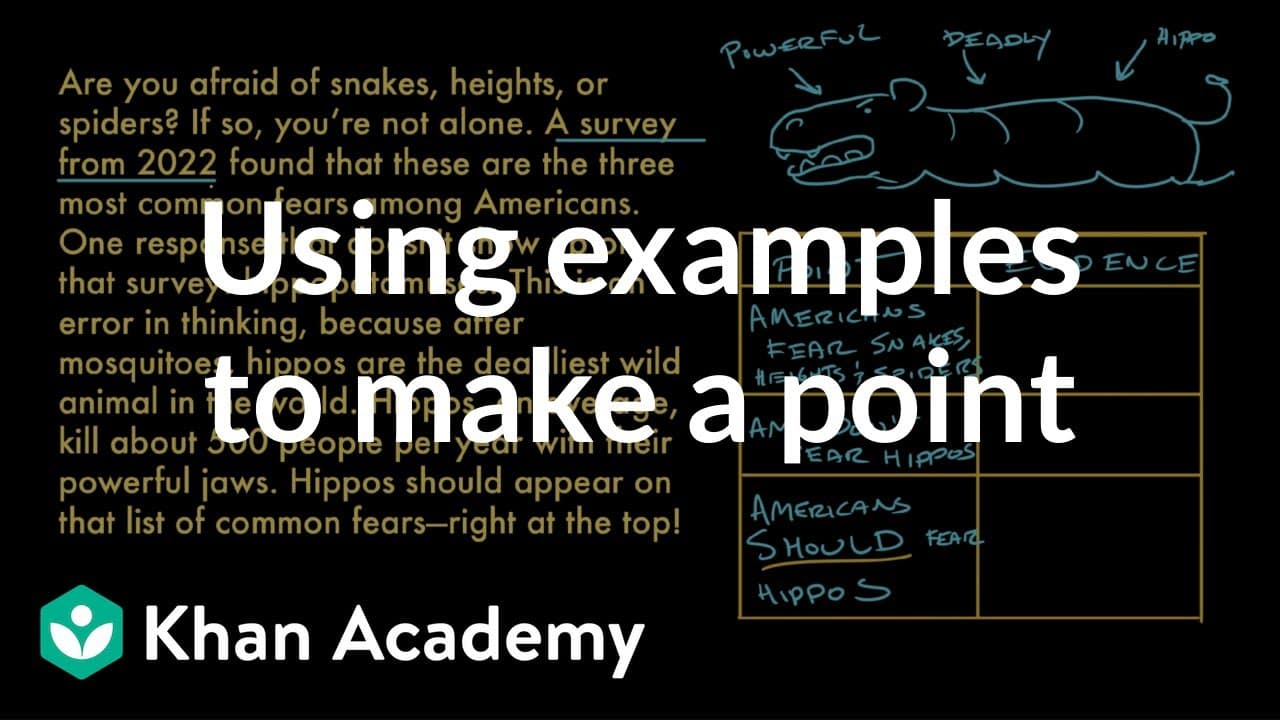
How to Identify Evidence and Support Claims

How to Identify Evidence and Support Claims

In this engaging educational video, narrator David introduces students to the concept of textual evidence through a fictional game show called "Prove It!" The video breaks down the abstract concept of argumentation into a clear, three-step process: identifying the author's main point, locating the specific evidence provided, and drawing connections between the two. Through humor and relatable examples, students learn that writers cannot just make claims; they must support their ideas with facts, statistics, or logic. The video uses two distinct examples to illustrate these concepts. First, it uses a simple, funny comparison between fictional movies ("Lil Tony 3" vs. "Lil Tony 4") to show how box office numbers or reviews serve as evidence. Then, it transitions to a more complex informational text about common fears versus actual dangers (specifically involving hippopotamuses). This progression from simple to complex helps scaffold the learning, allowing students to practice the skill of linking claims to data in real-time. For educators, this video is an excellent tool for introducing or reviewing standards related to reading informational texts and argumentative writing. It provides a shared language ("Prove It!") that teachers can adopt in the classroom when asking students to support their answers. The visual demonstration of mapping points to evidence in a t-chart offers a concrete strategy that students can replicate in their own reading and writing assignments.

Khan AcademyKhan Academy

4mins 4s

Materials

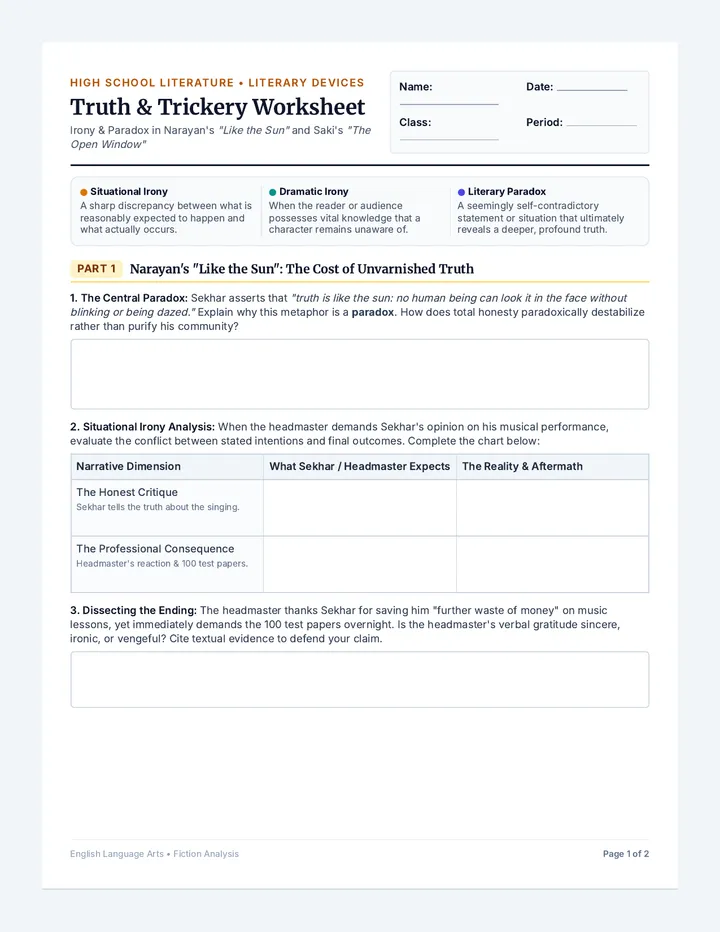
Truth and Trickery Worksheet

Truth and Trickery Worksheet

A rigorous two-page printable literary analysis worksheet exploring irony (situational, dramatic, verbal) and paradox through R.K. Narayan's 'Like the Sun' and Saki's 'The Open Window'. Includes textual analysis, comparative organizers, and synthesis response spaces for high school English students.

PR

Paula Rein

GOAT Showdown Slides

GOAT Showdown Slides

An interactive 10-slide debate deck comparing Michael Jordan and LeBron James for the title of basketball's Greatest of All Time. Features head-to-head statistics, core arguments for both legends, debate ground rules, and three structured round prompts.

NA

Nicholas Alford

Argument Pro Rubric

Argument Pro Rubric

A comprehensive 100-point rubric for 10th-grade argumentative essays, featuring detailed criteria for claims, evidence, analysis, and counter-claims. Designed with a clean, professional aesthetic for easy grading and clear student feedback.

D

dmclaurin

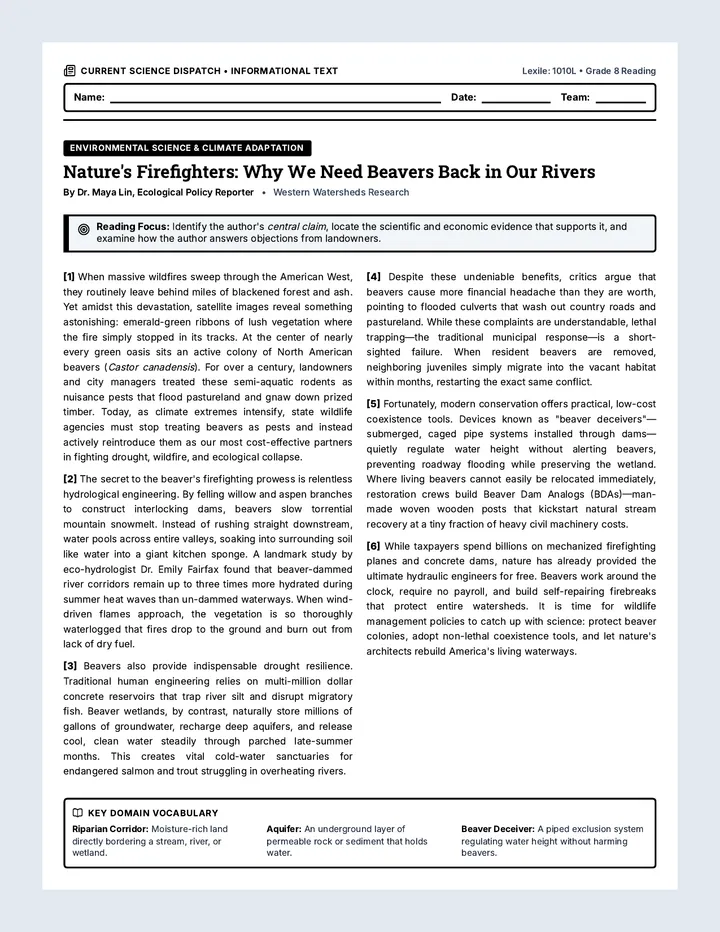
Beaver Architects Article Worksheet

Beaver Architects Article Worksheet

An 8th-grade informational text reading and analysis worksheet featuring an environmental science article on beaver rewilding. Specially formatted for crisp black-and-white photocopy printing with high-contrast monochrome styling, darkened borders, and an expanded 8-line paragraph writing area with a clean student self-checklist.

CE

Clifford Ernst

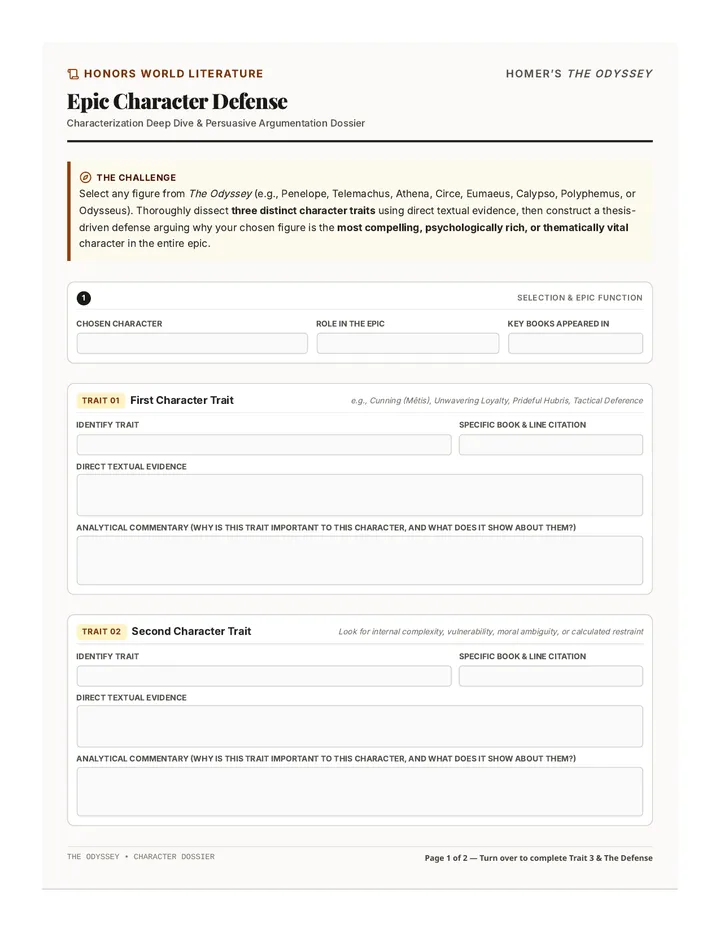
Epic Character Defense Assignment

Epic Character Defense Assignment

A streamlined honors-level character analysis and persuasive defense assignment for Homer's Odyssey. Students analyze three distinct traits with textual evidence before writing a concise argumentative paragraph defending why their chosen figure is the best character in the epic.

JM

Julia Maturo

Point Counterpoint Debate Worksheet

Point Counterpoint Debate Worksheet

A two-page junior high debate graphic organizer featuring 2-column pro/con brainstorming layouts across four engaging school life and civic ethics topics with structured space for three arguments per side.

RK

Reva Kanner

Sequences

Value Vault Teacher Guide

Metamorphosis Mastery

An 8-week deep dive into Kafka's Metamorphosis for special education students, focusing on abstract thinking, social value, and the human condition through high-engagement activities and visual organizers.

C

Ceeasia.walker

58
Prophecy and Power Slides

Shadows and Crowns

A series of lessons exploring Shakespeare's Macbeth, specifically designed for 10th-grade emergent bilingual students to master complex characterization and thematic elements.

DC

Dylan Clark

30
Master Pacing Guide Teacher Resource

Literacy Mastery Lab

A comprehensive year-long intervention sequence for 8th-grade literacy, focusing on STAR 360 and OSAS benchmark skills. The sequence follows a 3-day weekly instructional cycle (Instruction, Practice, Application) to supplement 2 days of choice reading.

SA

Senta Agnello-Shelton

60
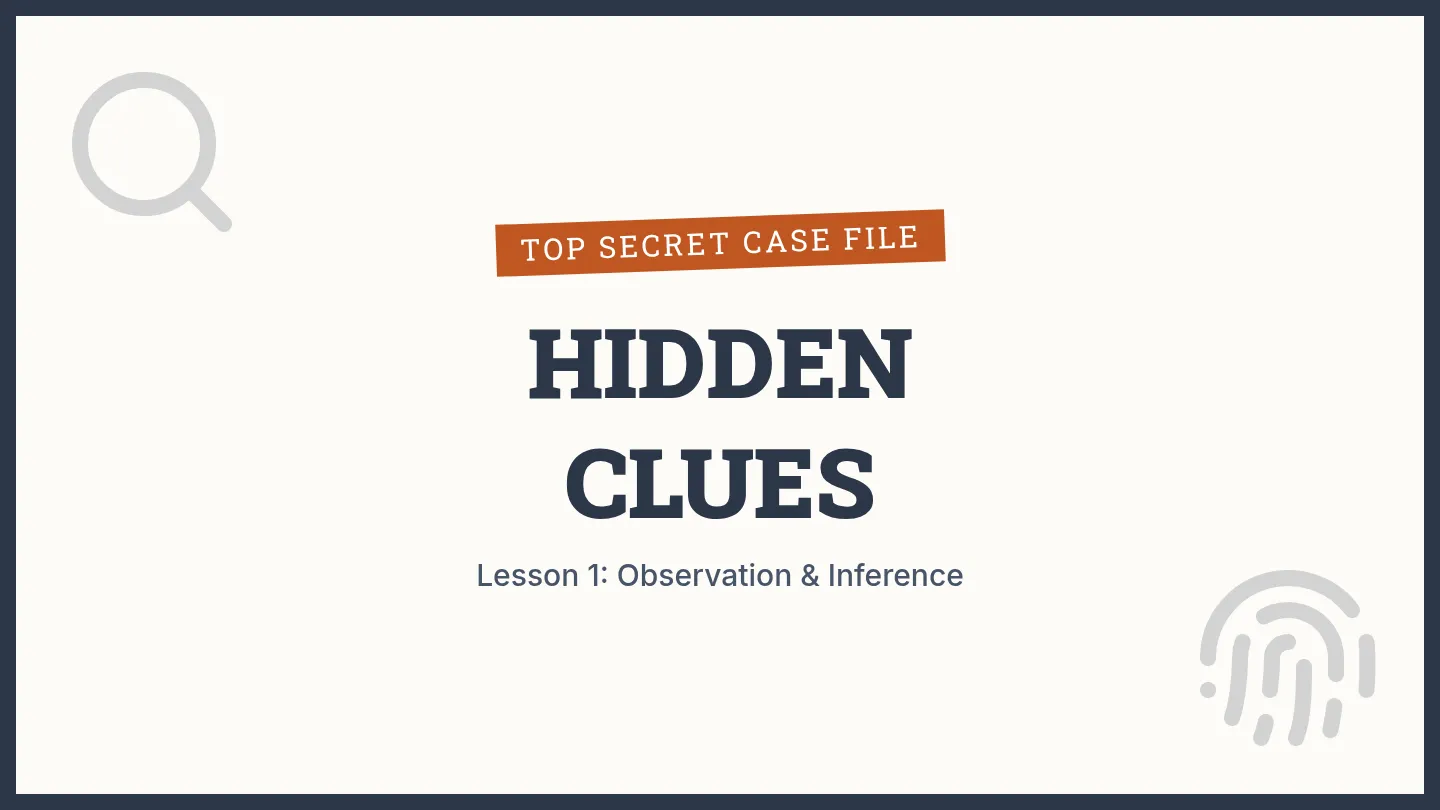
Crime Scene Slides

Detective Diaries

A comprehensive English Language Arts unit that uses a mystery-investigation theme to develop reading, writing, listening, and speaking skills. Students act as detectives to analyze evidence, interview witnesses, and present their final case.

AP

AMANDA PAULA ALEXIUS KPM-Guru

11
Landlady Reading Passage

Evidence Files

A four-day investigative unit focused on citing textual evidence and making inferences across various genres, including short stories, non-fiction, and poetry. Students act as 'Evidence Detectives' to solve literary and factual mysteries while engaging in collaborative discussions.

BR

Brandon Ruffin

26
Argument Ace Slides

Argument Ace

A comprehensive 3-lesson unit designed to prepare HSED/GED students for the RLA Extended Response by teaching them how to analyze opposing arguments, evaluate evidence, and craft a high-scoring argumentative essay.

VL

V Lundgren

14

Lessons

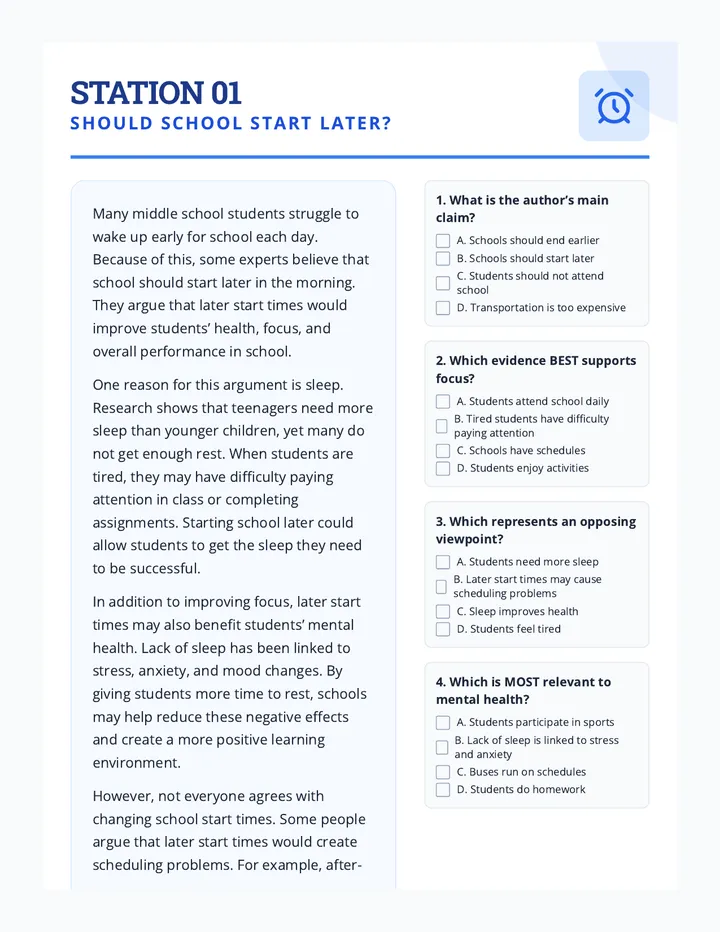
Reading Relay Posters

Reading Relay

A set of literacy stations designed to build comprehension, argumentative analysis, and theme identification skills through six diverse reading passages.

D

destiny.lanier

7
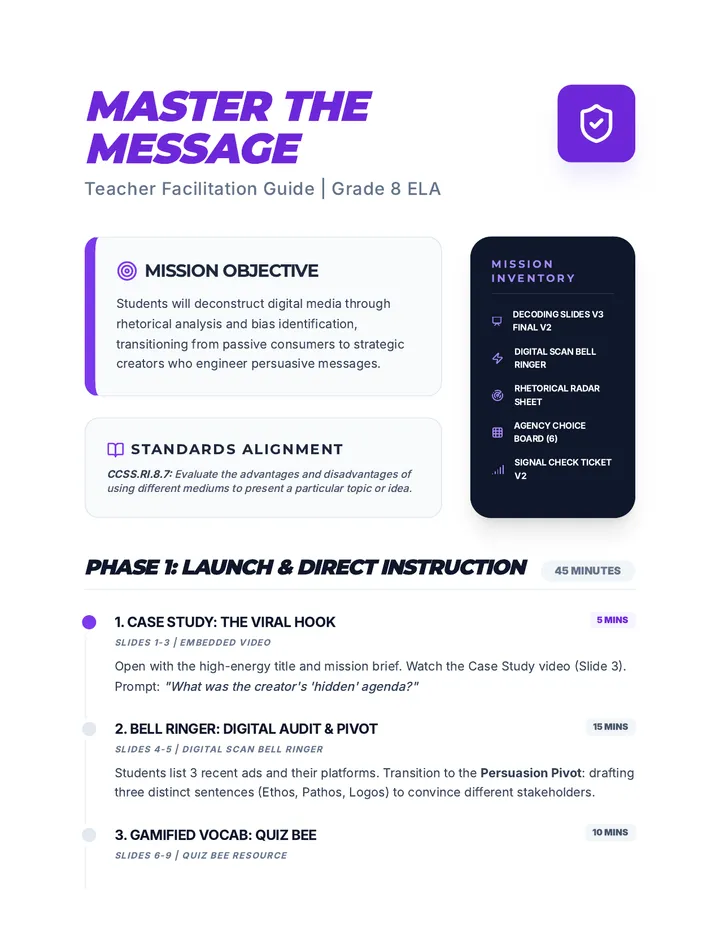
Master the Message Teacher Guide v2

Media Message Mastery

An 8th-grade ELA lesson focused on deconstructing digital media messages through the lens of rhetorical appeals (ethos, pathos, logos) and identifying bias in various online formats. Students transition from passive consumers to critical analysts of news clips, social media, and advertisements.

V

vivianbelarmino

36
Awakening Words Bell Ringer

Stolen Seconds

A comprehensive lesson exploring Tanith Lee's 'Awake,' a subversion of Sleeping Beauty, focusing on structural choices and source material transformation (RL.5 and RL.9). Students will analyze character conflict and the concept of 'the gift of time.'

V

vivianbelarmino

25
Cosmic Frontier Assessment

Starbound Bridge Assessment

A summative assessment package focused on middle school ELA standards (RL.6/RI.6) through the lens of a persuasive text regarding NASA funding and its historical impact.

J

jtiburcio

7
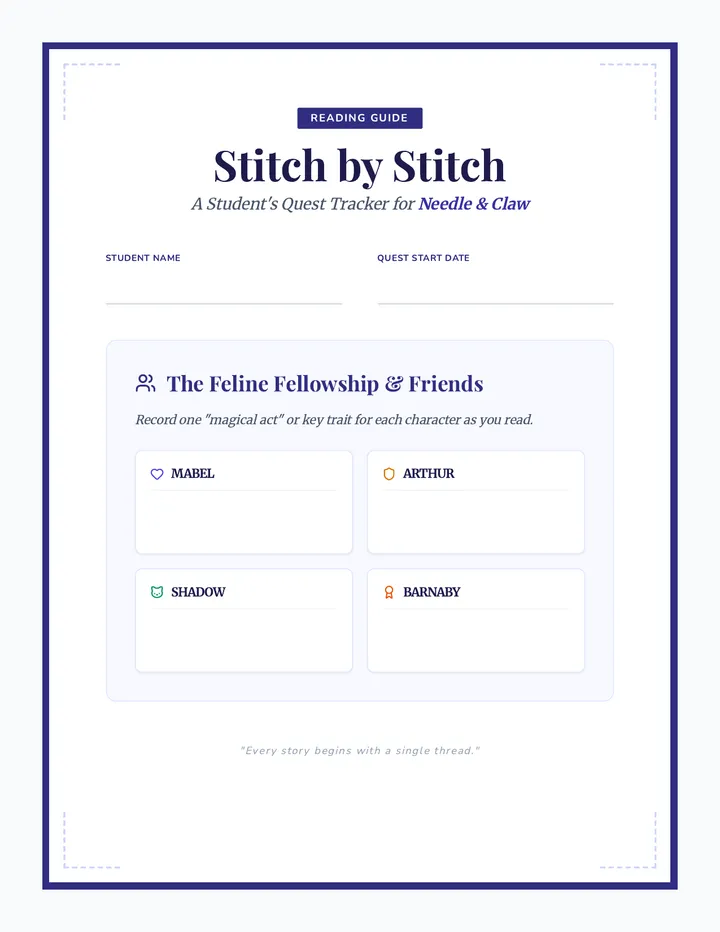
Stitch by Stitch Reading Guide

Needle and Claw

A creative story outline and character guide for a high-interest, low-readability (Hi-Lo) novel featuring an elderly protagonist in a fantasy world.

AP

Alexis Paolini

27
Cosmic Race Reading Text

Stellar Rivalry

A comprehensive exploration of the Space Race, highlighting the technological competition between the US and USSR, the essential contributions of African American women at NASA, and the international agreements that keep space a peaceful frontier.

RM

Robyn MacDonald

16