Argument Ace Slides Argument Ace
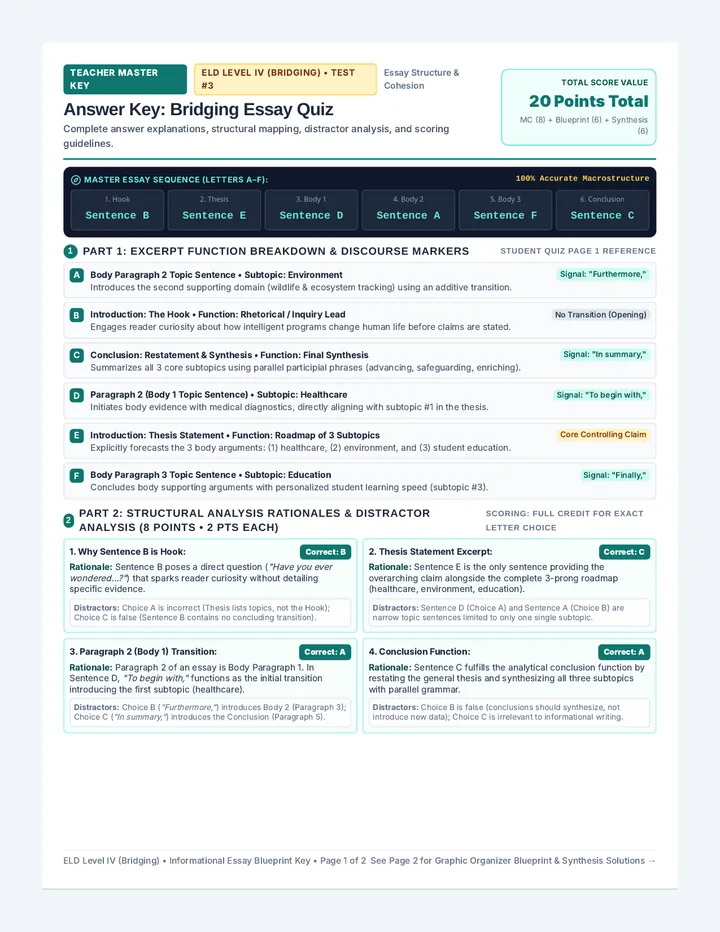
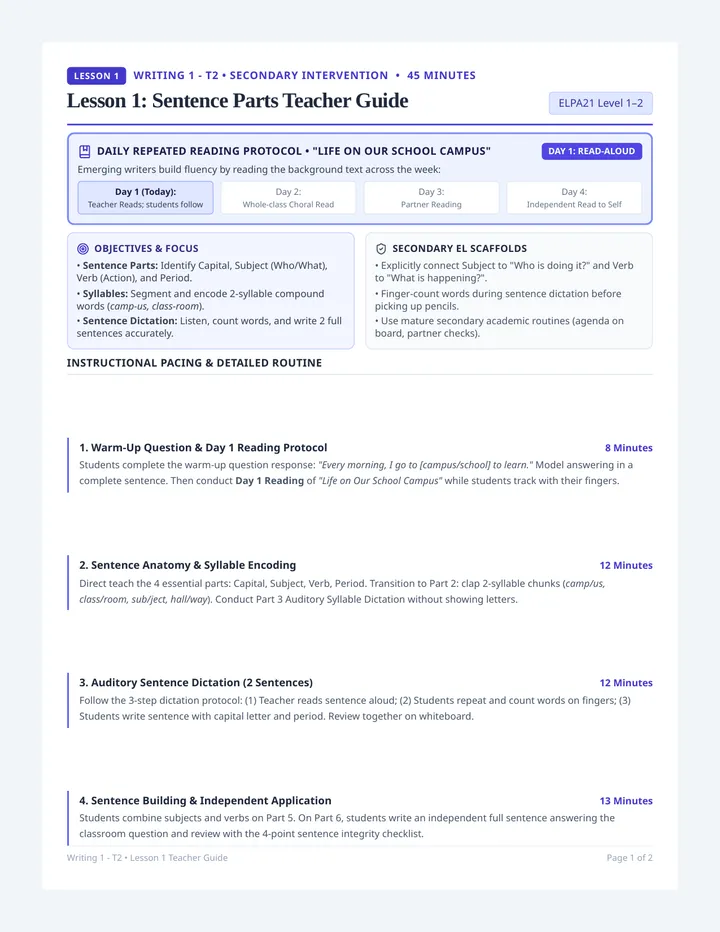
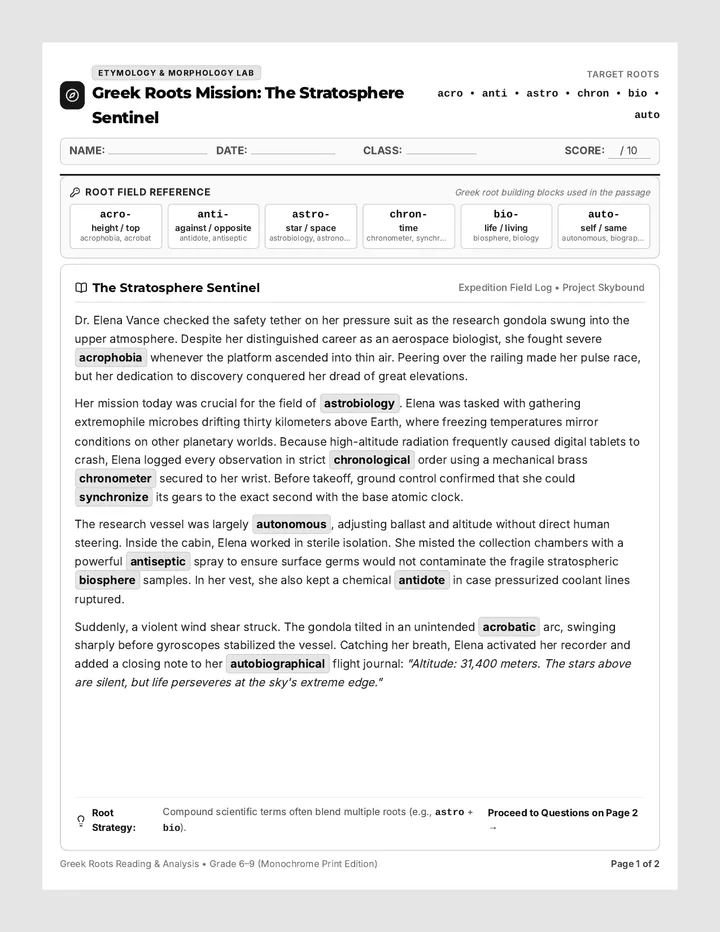
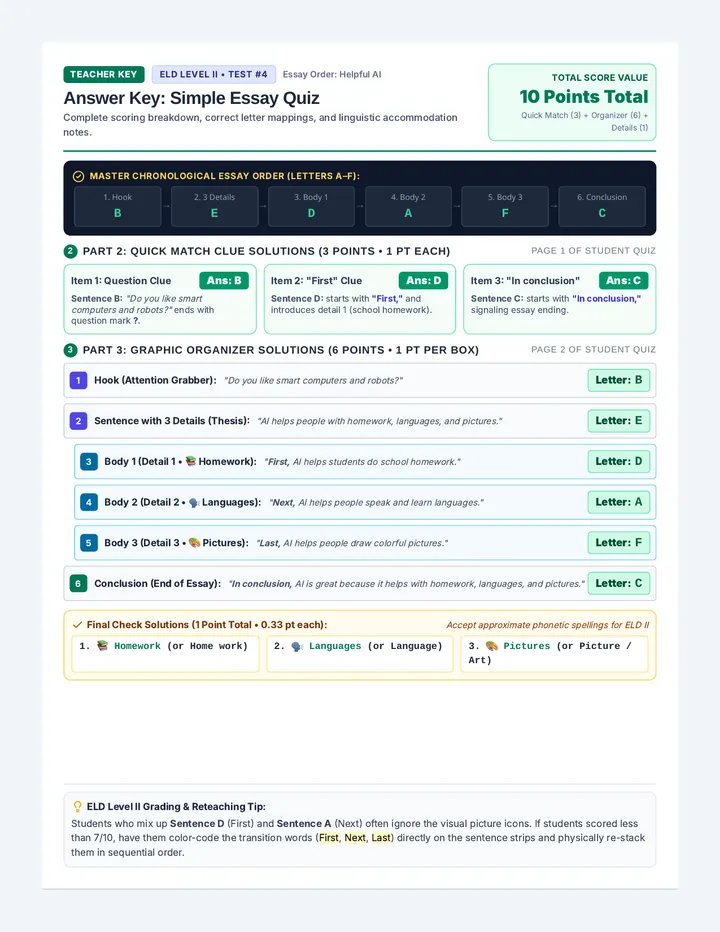
Mastering the GED RLA Extended Response
Analyze
Evaluate
Write
The GED RLA Challenge
The Task
Read two texts with opposing views. Decide which one is better supported by evidence and explain why.
45 Minutes: Total time to read, plan, and write.No "Right" Answer: Focus on the evidence, not your opinion.
The Golden Rule:
"The test graders care about your ability to analyze the provided text , not your personal feelings on the topic."
Focus on the Facts
Claim vs. Evidence
The Claim
The author's main point or position.
"Year-round schooling improves student test scores."
The Evidence
Facts, data, or logic used to prove the claim.
"A 2022 study showed a 15% increase in math scores for districts using the new calendar."
Strength of Support
Strong Support
Specific Data (85% of people...)
Expert Testimony (Dr. Smith says...)
Scientific Research
Logical Connections (If A, then B)
Weak Support
Vague Phrases (Many people believe...)
Personal Anecdotes (My cousin says...)
Emotional Appeals
Bias or Unchecked Opinions
The "Better Supported" argument has more Strong evidence.
The Winning Blueprint
1
Introduction
Hook the reader and state your thesis statement.
2
Stronger Side
Explain the best evidence from the side you chose.
3
Weaker Side
Explain why the other side's support is flawed .
4
Conclusion
Summarize and restate your final verdict.
Today's Mission
Track the evidence in the Automated Delivery debate.
Grab your Evidence Tracker!
Delivery Debate Reading The Great Debate
HSED RLA Extended Response Case Study
REF NO: GED-RLA-042
TOPIC: AUTOMATED DELIVERY
Name: _________________________________
Date: ________________
The Prompt
Analyze the two following passages. In your response, develop an argument in which you explain how one position is better supported than the other. Use relevant and specific evidence from both sources to support your response.
POSITION 1: THE EFFICIENCY ADVANTAGE
Sky-High Solutions: The Case for Drone Delivery
The future of commerce is no longer on our congested roads; it is in the air. Automated delivery drones represent the single greatest leap in logistics efficiency since the invention of the steam engine. According to a 2024 report by the Global Logistics Institute, drone delivery could reduce standard delivery times by up to 75% for small packages. In metropolitan areas, where traffic gridlock adds an average of 40 minutes to every ground delivery route, drones bypass the chaos entirely.
Furthermore, the environmental impact is undeniable. A study conducted by Green-Tech Analytics found that electric-powered drones emit 98% less carbon dioxide per mile than traditional diesel delivery trucks. By removing just 20% of delivery vans from city streets, we could see a measurable decrease in urban air pollution and road wear-and-tear.
Safety is also a primary benefit. Humans are prone to fatigue and distraction; drones are not. National Highway Traffic Safety data shows that 3,500 accidents involving delivery vehicles occur annually. Automated systems, guided by precise GPS and obstacle-avoidance technology, operate with a safety record that far exceeds human drivers. The cost savings are equally impressive, with analysts estimating a reduction in shipping costs from $5.00 per package to just $0.25. The data is clear: the technology is ready, the benefits are proven, and the sky is the limit.
POSITION 2: THE HUMAN COST
Grounded Reality: Why Drones Aren't the Answer
While technology enthusiasts paint a rosy picture of a drone-filled sky, they ignore the significant human and social consequences of automation. Our economy relies on workers, not machines. If drone delivery is fully implemented, we risk the livelihoods of over 1.5 million delivery drivers in the United States alone. These are honest, hardworking citizens whose jobs cannot simply be replaced by "tech maintenance" roles.
There are also severe privacy and noise concerns that proponents fail to address. Imagine thousands of drones hovering over private neighborhoods, many equipped with cameras for navigation. The "buzzing" sound of a single drone is an annoyance; the collective roar of a fleet would destroy the peace of our residential communities. Many citizens have expressed deep discomfort at the idea of constant aerial surveillance.
Finally, let us consider the reliability of these machines. While GPS is helpful, it is not foolproof. A technical glitch or a sudden storm could send a ten-pound package plummeting onto a crowded sidewalk or a moving car. As local resident Mary Jenkins stated, "I don't care about getting my toothpaste five minutes faster if it means I'm constantly looking up to make sure nothing falls on my head." We must prioritize public safety and job security over the mere convenience of slightly faster shipping times. Efficiency is not more important than people.
End of Reading Material — Proceed to Analysis
Evidence Tracker Worksheet Evidence Tracker
Lesson 1: Deconstructing the Debate
UNIT: ARGUMENT ACE
PHASE: ANALYSIS
Name: _________________________________
Date: ________________
Instructions
Read the two passages about automated delivery drones. Use this sheet to identify the main claim of each author and the specific evidence they provide. Then, evaluate if the evidence is Strong (data, experts, facts) or Weak (opinions, anecdotes).
Passage 1
Sky-High Solutions
Main Claim (The Author's Core Position):
Supporting Evidence (Quotes or Paraphrases) Type (Strong/Weak)
Passage 2
Grounded Reality
Main Claim (The Author's Core Position):
Supporting Evidence (Quotes or Paraphrases) Type (Strong/Weak)
Initial Verdict
Based ONLY on the evidence you found above, which author did a better job proving their point? Explain why.
Service Debate Reading The Great Debate
HSED RLA Extended Response Practice Set B
REF NO: GED-RLA-088
TOPIC: MANDATORY SERVICE
Name: _________________________________
Date: ________________
The Prompt
The following passages present two different perspectives on whether high schools should require students to complete community service hours to graduate. Analyze the two passages and determine which position is better supported.
POSITION 1: THE CIVIC ADVANTAGE
Building Better Citizens: The Requirement for Service
Education is not merely about what happens inside a textbook; it is about preparing young people to be active, contributing members of society. Implementing a mandatory community service requirement for high school graduation is the most effective way to foster civic responsibility. Data from the National Center for Education Statistics (NCES) indicates that students who participate in service-learning are 22% more likely to vote in local elections as adults and 30% more likely to volunteer later in life.
Furthermore, the professional benefits are quantifiable. A 2023 survey of 500 college admissions officers revealed that 85% of selective universities view consistent community service as a "significant factor" in differentiating between high-achieving applicants. Beyond college entry, service teaches soft skills—such as teamwork, empathy, and problem-solving—that are highly valued by employers in the modern workforce.
Some critics argue that "forced" volunteering is a contradiction, but the results speak for themselves. Schools in Maryland, which has a statewide service requirement, have seen a 15% decrease in juvenile delinquency rates over the past decade. By engaging students in real-world problems, we provide them with a sense of purpose and a deeper connection to their communities. The evidence is overwhelming: mandatory service is an investment in both the student's future and the health of our nation.
POSITION 2: THE FREEDOM OF CHOICE
Volunteering Should Be Voluntary: The Case Against Mandates
While the idea of helping the community is noble, forcing students to volunteer is a fundamental misunderstanding of the word "volunteer." High school students are already under immense pressure from rigorous coursework, extracurricular activities, and part-time jobs. Adding a mandatory service requirement creates an unnecessary burden that can lead to burnout and resentment. As student council president Liam Thompson noted, "We are already stressed enough. Forcing us to work for free just feels like another chore we have to check off a list, rather than a meaningful experience."
The quality of service also suffers when it is mandated. When students are only there to fulfill a requirement, they often choose the easiest path possible rather than the most impactful one. This "checkbox mentality" does little to help community organizations, which must spend limited resources training students who may not even want to be there. Many local non-profits have expressed concern that uninterested students can actually disrupt their operations.
Service Evidence Tracker Worksheet Evidence Tracker
Case File B: Mandatory Community Service
UNIT: ARGUMENT ACE
PHASE: ANALYSIS
Name: _________________________________
Date: ________________
Analysis Task
Deconstruct the debate on mandatory service. Find the specific facts, statistics, or logic used by each side. Remember: Strong evidence uses verifiable data or credible experts, while Weak evidence relies on personal feelings or anecdotes.
Passage 1
The Civic Advantage
Author's Main Claim:
Key Evidence Found Evidence Type Strength Example: NCES Data
Passage 2
The Freedom of Choice
Author's Main Claim:
Key Evidence Found Evidence Type Strength Example: Liam Quote
The Winning Argument
Which side is better supported ? Identify the passage and explain why its evidence is more reliable than the other.
School Week Debate Reading The Great Debate
HSED RLA Extended Response Practice Set C
REF NO: GED-RLA-102
TOPIC: SCHOOL CALENDARS
Name: _________________________________
Date: ________________
The Prompt
Analyze the two following passages regarding the implementation of a four-day school week. In your response, develop an argument in which you explain how one position is better supported than the other.
POSITION 1: THE FOUR-DAY REVOLUTION
Quality Over Quantity: Why Four Days is Enough
The traditional five-day school week is a relic of the industrial age that no longer serves the needs of modern students or educators. Transitioning to a four-day schedule—typically with Mondays or Fridays off—offers measurable benefits for school districts. According to the 2024 Education Budget Review, districts that switched to a four-day week saw an average reduction of 20% in transportation costs and a 15% decrease in utility expenses. These savings allow schools to reinvest in classroom technology and teacher salaries.
Teacher retention, a crisis in many states, is also significantly improved. A study by the National Education Association (NEA) found that 82% of teachers in four-day districts reported higher job satisfaction and lower burnout rates. When teachers are rested and have more time for professional development, the quality of instruction naturally increases. Furthermore, student attendance rates in the Granite Valley School District rose by 8% within two years of implementing the new calendar.
The extended weekend provides students with the "brain break" necessary for mental wellness. With one less day of commuting and a more concentrated four-day curriculum, students can focus more deeply on their core subjects. The data clearly demonstrates that a four-day week creates a more sustainable, efficient, and effective learning environment for everyone involved.
POSITION 2: THE COST OF CLOSURE
The Missing Fifth Day: Why Shortened Weeks Fail
While the promise of a three-day weekend is enticing, the reality of a four-day school week is fraught with hidden dangers for students and families. The most immediate concern is the loss of instructional time. Compressing five days of learning into four results in longer, more exhausting school days that exceed the attention spans of younger children. As local parent Sarah Miller noted, "My second-grader is already tired by 2:00 PM. Keeping her in class until 4:30 PM just to save a few bucks on gas is ridiculous. She isn't learning anything in those extra hours."
Furthermore, the four-day week creates a massive childcare crisis for working parents. Many families cannot afford an extra day of daycare or babysitting every week, leading to unsupervised "latchkey" children roaming neighborhoods on their day off. Additionally, for the 30 million students in the U.S. who rely on free or reduced-price school meals, the fifth day of closure often means a day of food insecurity and hunger.
School Week Evidence Tracker Worksheet Evidence Tracker
Case File C: The Four-Day School Week
UNIT: ARGUMENT ACE
PHASE: ANALYSIS
Name: _________________________________
Date: ________________
Analysis Task
Analyze the evidence for and against the four-day school week. Identify the author's main claim and categorize the evidence as Strong (verifiable data, studies, experts) or Weak (opinions, anecdotes, personal beliefs).
Passage 1
The Four-Day Revolution
Author's Main Claim:
Key Evidence Found Evidence Type Strength
Passage 2
The Cost of Closure
Author's Main Claim:
Key Evidence Found Evidence Type Strength
Comparative Verdict
Based on your audit, which side is better supported ? Briefly explain why the winning side's evidence is more reliable.
Service Evidence Tracker Worksheet Evidence Tracker
Case File B: Mandatory Community Service
UNIT: ARGUMENT ACE
PHASE: ANALYSIS
Name: _________________________________
Date: ________________
Analysis Task
Deconstruct the debate on mandatory service. Find the specific facts, statistics, or logic used by each side. Remember: Strong evidence uses verifiable data or credible experts, while Weak evidence relies on personal feelings or anecdotes.
Passage 1
The Civic Advantage
Author's Main Claim:
Key Evidence Found Evidence Type Strength Example: NCES Data
Passage 2
The Freedom of Choice
Author's Main Claim:
Key Evidence Found Evidence Type Strength Example: Liam Quote
The Winning Argument
Which side is better supported ? Identify the passage and explain why its evidence is more reliable than the other.
School Week Evidence Tracker Worksheet Evidence Tracker
Case File C: The Four-Day School Week
UNIT: ARGUMENT ACE
PHASE: ANALYSIS
Name: _________________________________
Date: ________________
Analysis Task
Analyze the evidence for and against the four-day school week. Identify the author's main claim and categorize the evidence as Strong (verifiable data, studies, experts) or Weak (opinions, anecdotes, personal beliefs).
Passage 1
The Four-Day Revolution
Author's Main Claim:
Key Evidence Found Evidence Type Strength
Passage 2
The Cost of Closure
Author's Main Claim:
Key Evidence Found Evidence Type Strength
Comparative Verdict
Based on your audit, which side is better supported ? Briefly explain why the winning side's evidence is more reliable.
Essay Blueprint Worksheet Essay Blueprint
Planning Your Response
UNIT: ARGUMENT ACE
PHASE: PLANNING
Name: _________________________________
Date: ________________
1 Step 1: The Verdict (Thesis Statement)
Complete this sentence to create your thesis statement. This is the most important sentence in your essay!
While both passages address the topic of drone delivery, the argument presented in __________________________________________ is better supported because _____________________________________________________________________________________________________.
2 Step 2: The Structure
Paragraph 2: Strengthening Your Choice
Best evidence from the side you chose:
Paragraph 3: Analyzing the Weakness
Why is the other side weaker? (Lack of data, opinions, etc.)
Paragraph 4: Final Closing
Restate your claim in a new way:
GED Tip: Transition Words
Use words like "Furthermore," "Conversely," and "In contrast" to connect your ideas. Graders look for these transitions to award higher scores!
Transition Toolbox Cheat Sheet Transition Toolbox
Essential Connector Phrases for the Extended Response
Student Reference
Transitions act as bridges between your ideas. Using them shows the GED graders that your writing is logical, organized, and professional.
Starting the Analysis
While both passages discuss...
Upon careful analysis...
Although both authors present valid points...
The central debate revolves around...
Pointing to the Text
According to the author...
Specifically, the text states...
The author provides data from...
For example, the passage notes...
Highlighting the Weaker Side
Conversely, the second passage...
In contrast to the first author...
While the second argument claims...
However, this point lacks support...
Adding Extra Support
Furthermore, the text suggests...
In addition to this evidence...
Moreover, the data indicates...
Notably, the author also points out...
Concluding Phrases
Ultimately...
In conclusion...
As a result...
"Pick two phrases above and use them in your Blueprint today."
Drafting Guide Worksheet The Final Verdict
Drafting Your Extended Response
45 MINUTE TIMER
Name: _________________________________
Date: ________________
Introduction & Thesis Statement
Analysis of the Stronger Argument
Analysis of the Weaker Argument
Final Conclusion
The Ace Checklist (Self-Evaluation)
Did I state a clear thesis?
My first paragraph clearly says which side is "better supported" (not just which one I like).
Did I use evidence from BOTH passages?
I used specific details or data from the winning side AND I mentioned the losing side's flaws.
Did I explain WHY the evidence is strong or weak?
I didn't just list facts; I explained that statistics and expert testimony make an argument more credible.
Is my essay organized into clear paragraphs?
I have a distinct introduction, body paragraphs for analysis, and a conclusion.
"Focus on analysis, not opinion."
GED Scoring Rubric Guide GED RLA Scoring Rubric
Official Alignment: Extended Response Criteria
ASSESSMENT TOOL
UNIT: ARGUMENT ACE
Trait 1 Score
Analysis / Evidence
Trait 2 Score
Organization
Trait 3 Score
Language / Grammar
Trait 1: Analysis of Arguments & Use of Evidence
Score: 2 (Proficient) Score: 1 (Developing) Score: 0 (Minimal)
Clearly identifies which side is "better supported."
Uses specific, relevant evidence from both passages.
Explains why the evidence is strong or weak.
|
Identifies a stronger side but reasoning is vague.
Uses evidence from only one passage or limited evidence from both.
Weak analysis of the actual quality of support.
|
No clear choice made.
Summarizes without analyzing.
Includes only personal opinion without text evidence.
|
Trait 2: Development of Ideas & Structure
Score: 2 (Proficient) Score: 1 (Developing) Score: 0 (Minimal)
Effective use of paragraphs.
Smooth transitions connect ideas logically.
Clear intro, body, and conclusion.
|
Basic organization present.
Occasional use of transitions.
Some ideas seem disconnected or out of order.
|
Lack of clear paragraphs.
Difficult to follow the flow of thought.
Incomplete or overly brief response.
|
Trait 3: Clarity & Command of English Conventions
Score: 2 (Proficient) Score: 1 (Developing) Score: 0 (Minimal)
Standard grammar, spelling, and punctuation.
Varied sentence structure.
Formal, professional academic tone.
|
Teacher Playbook Guide Teacher Playbook
Unit: Argument Ace (GED RLA)
Instructional Guide
Unit Goal
Students will master the ability to analyze two opposing arguments, determine which is better supported, and write a cohesive analysis essay. This unit mirrors the exact task required in the GED/HSED RLA Extended Response.
Time
180 Minutes
Target Score
4+ (on GED Rubric)
Materials List
Argument Ace Slides
Debate Readings (A, B, C)
Evidence Trackers
Essay Blueprint
Drafting Guide
Evidence Master Keys
Set A: Drone Delivery
Stronger Side: Pro-Drone
Why: Uses organizational data & stats.
75% time reduction (Logistics Inst.)
98% less CO2 (Green-Tech Study)
3,500 accidents (NHTSA data)
Weaker Side: Anti-Drone
Why: Relies on anecdotes & hypotheticals.
1.5m drivers (Good stat, but single focus)
Resident Mary Jenkins (Anecdote)
"Buzzing" noise (Opinion-based)
Set B: Mandatory Service
Stronger Side: Pro-Requirement
Why: Uses research orgs & admissions data.
22% more likely to vote (NCES)
85% of admissions officers (Survey)
15% delinquency drop (Maryland data)
Weaker Side: Anti-Requirement
Why: Focuses on emotional appeals & quotes.
Liam Thompson (Student quote)
"Altruism comes from heart" (Philosophical)
Equity (Valid, but unquantified)
Set C: Four-Day School Week
Stronger Side: Pro-Change
Why: Hard financial data & teacher surveys.
20% transport / 15% utility drop (Budget Review)
82% teacher satisfaction (NEA)
8% attendance rise (Granite Valley data)
Weaker Side: Anti-Change
Why: Parental quotes & hypothetical fears.
Sarah Miller (Parent quote)
30m students on meals (Good context)
"Far from settled" (Vague expertise)