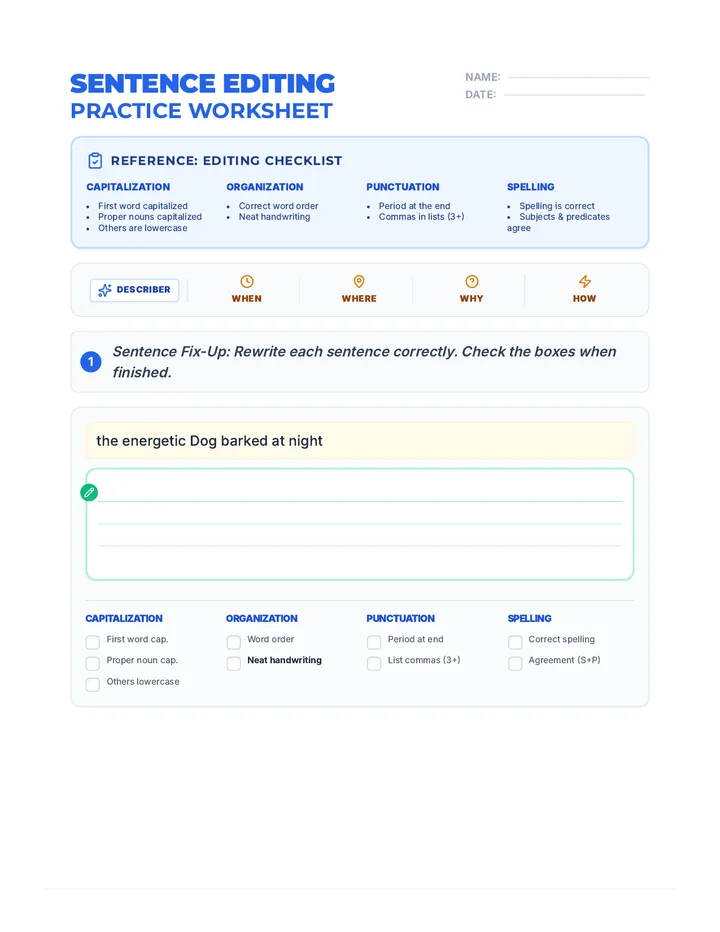
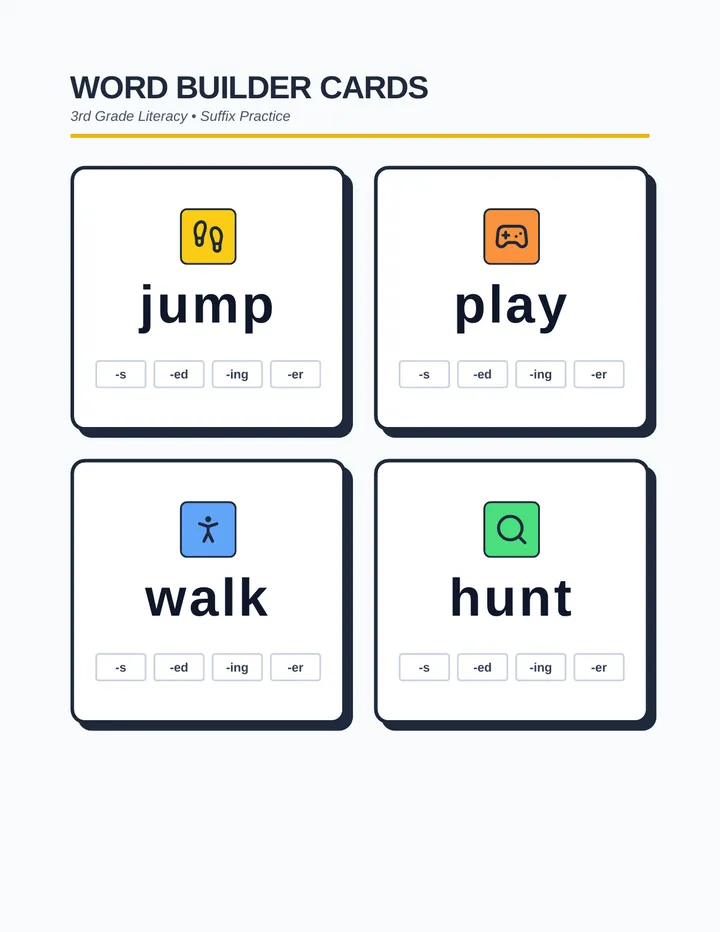
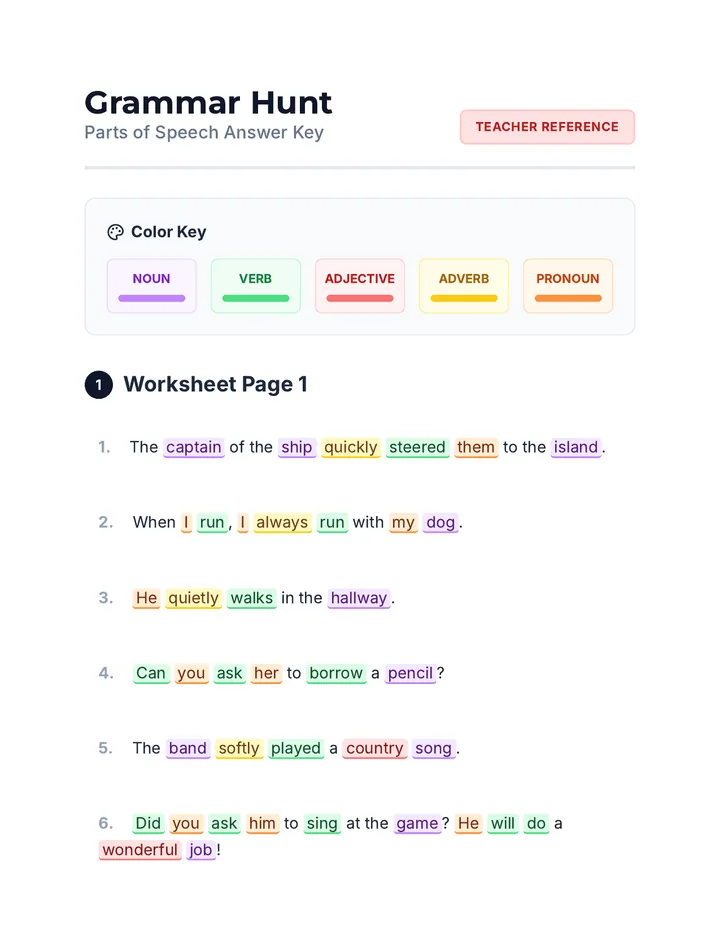
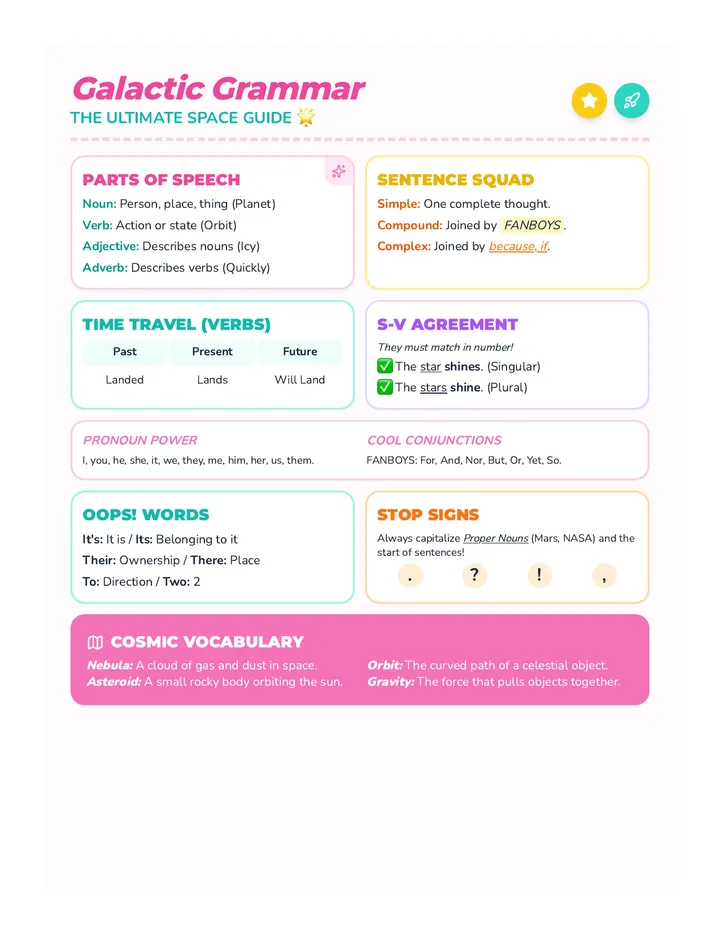
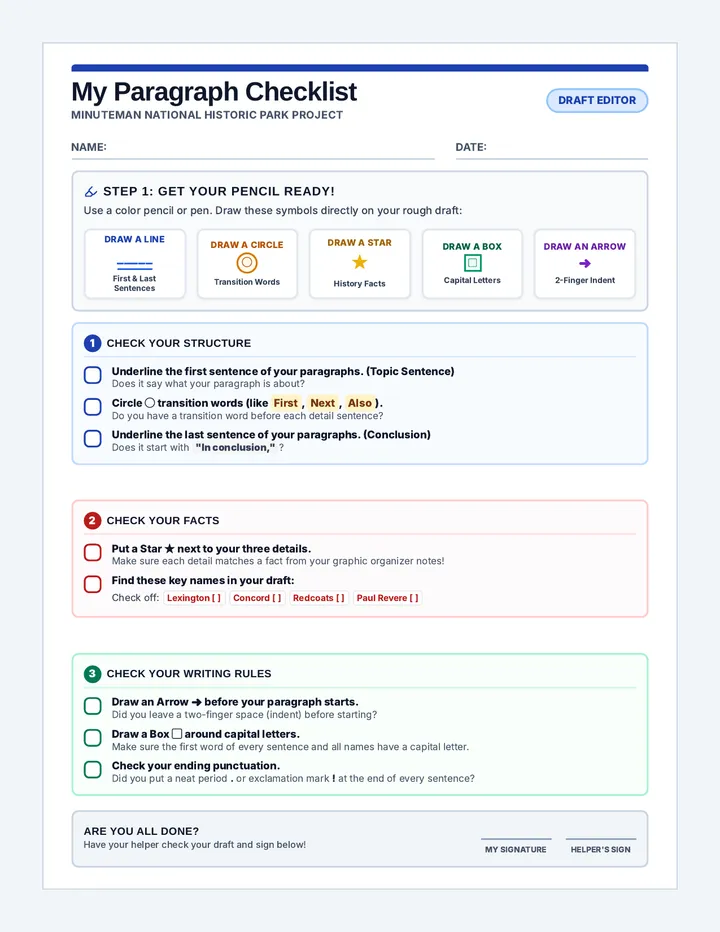
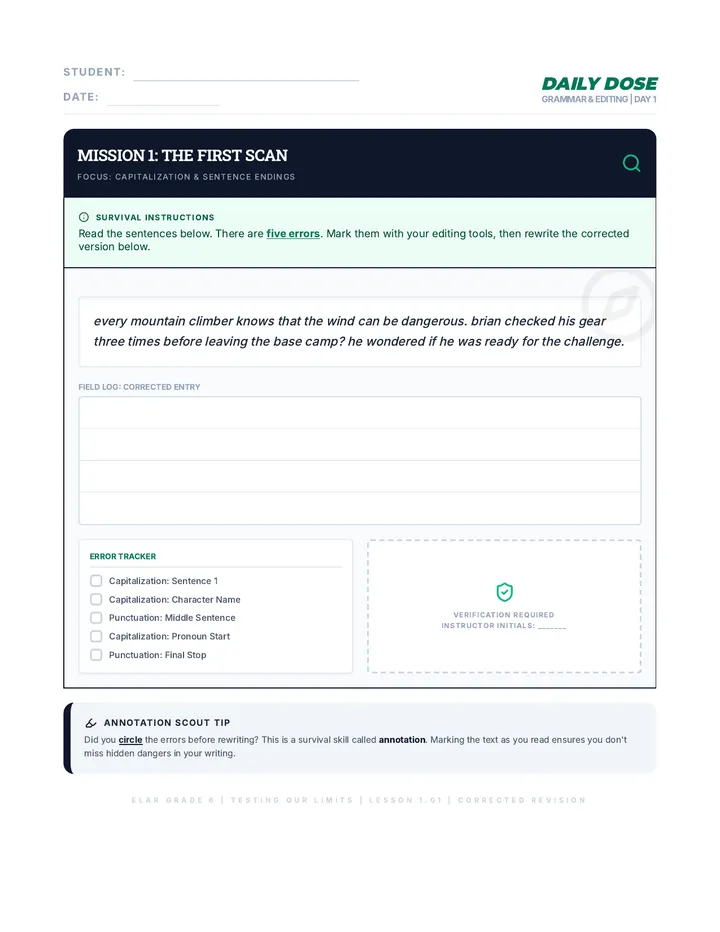
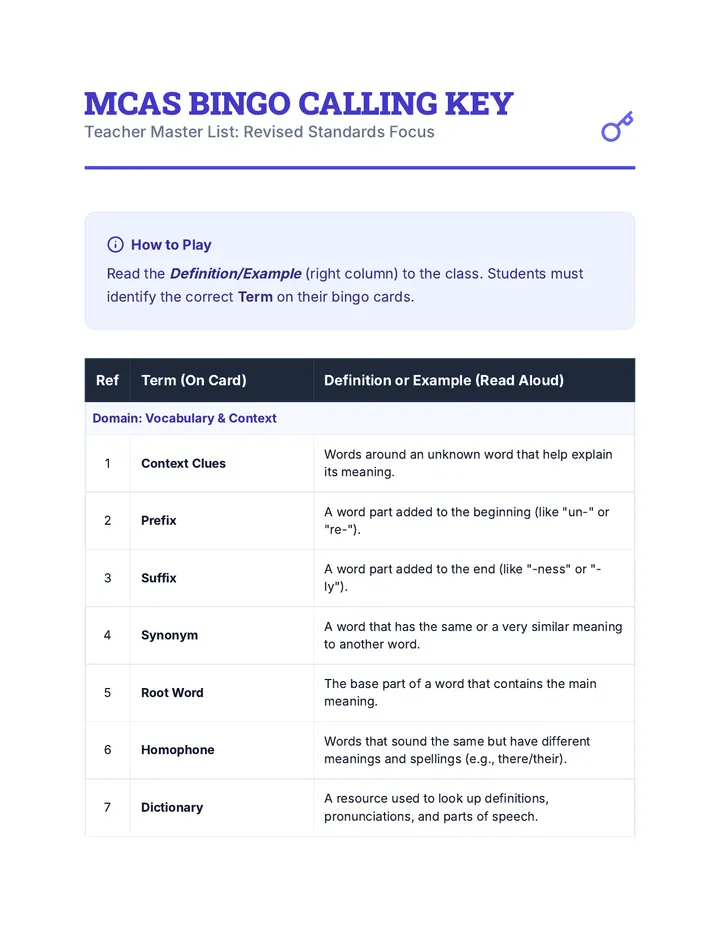
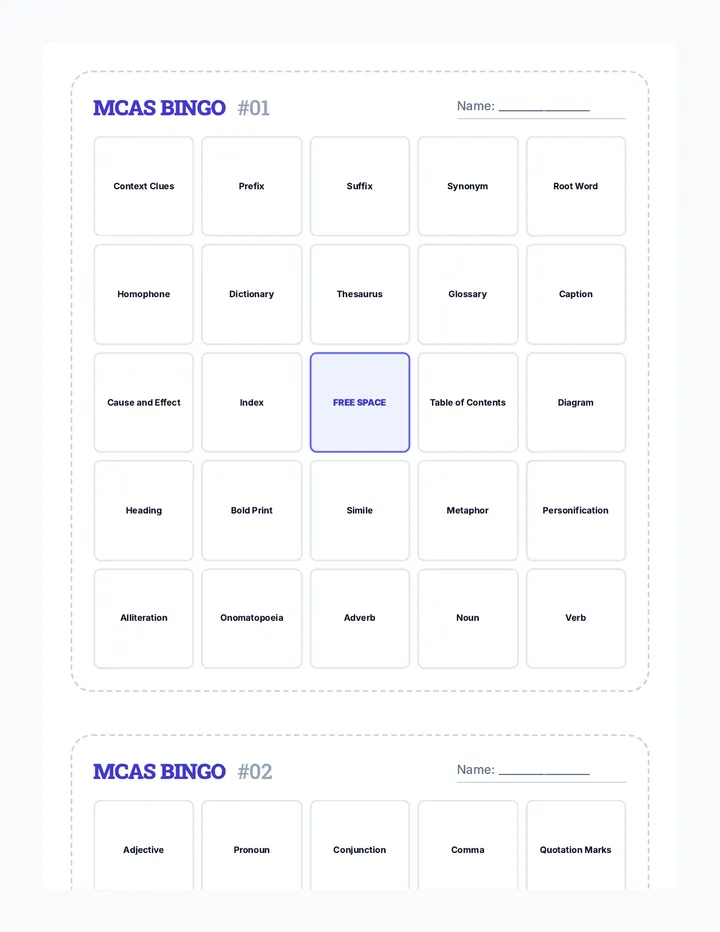
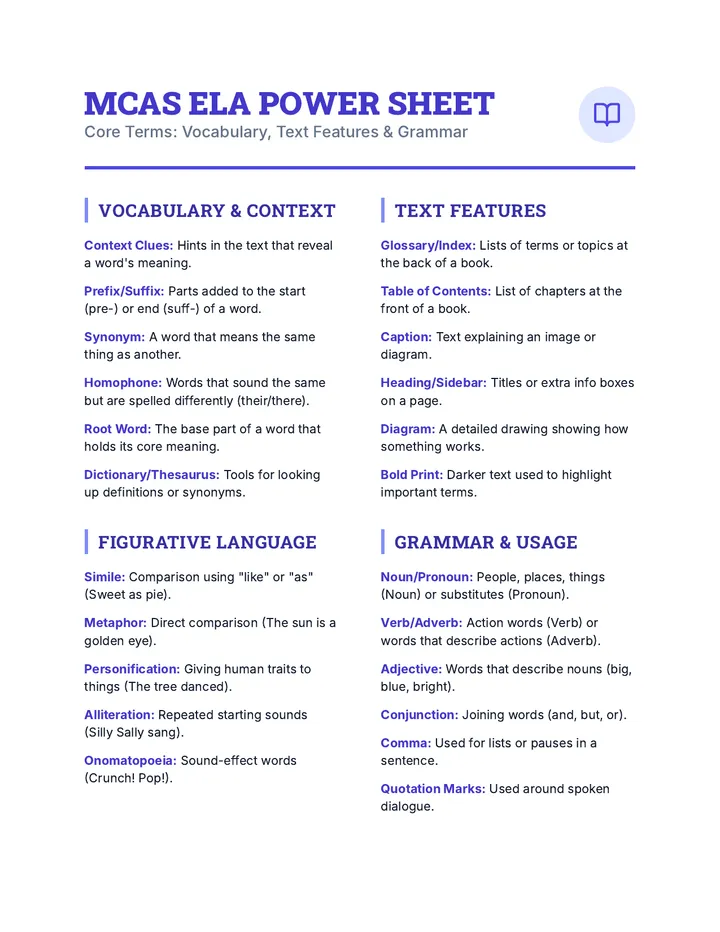
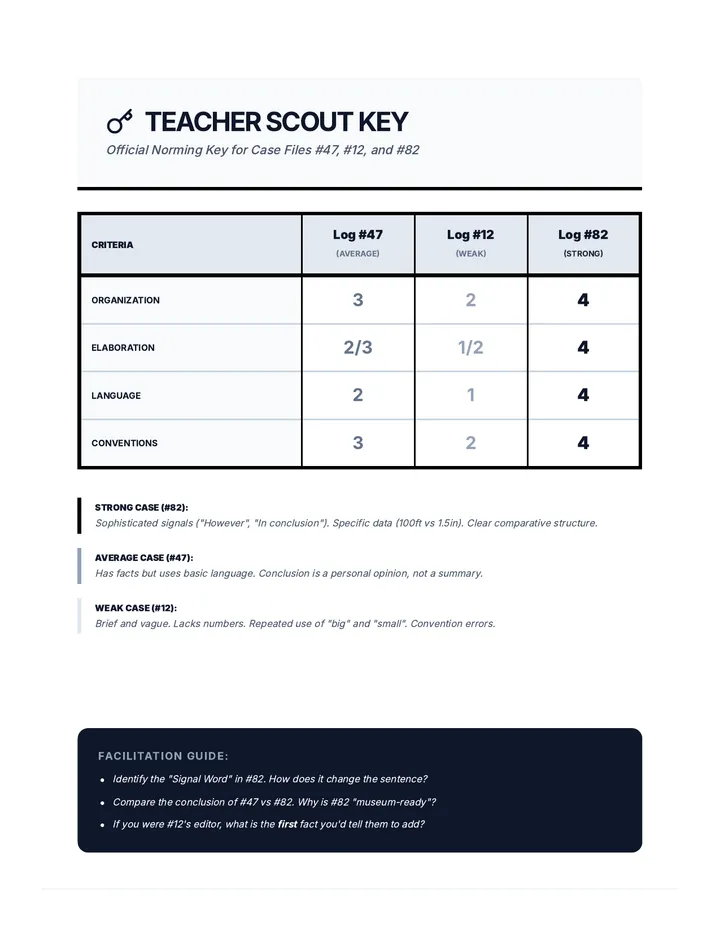
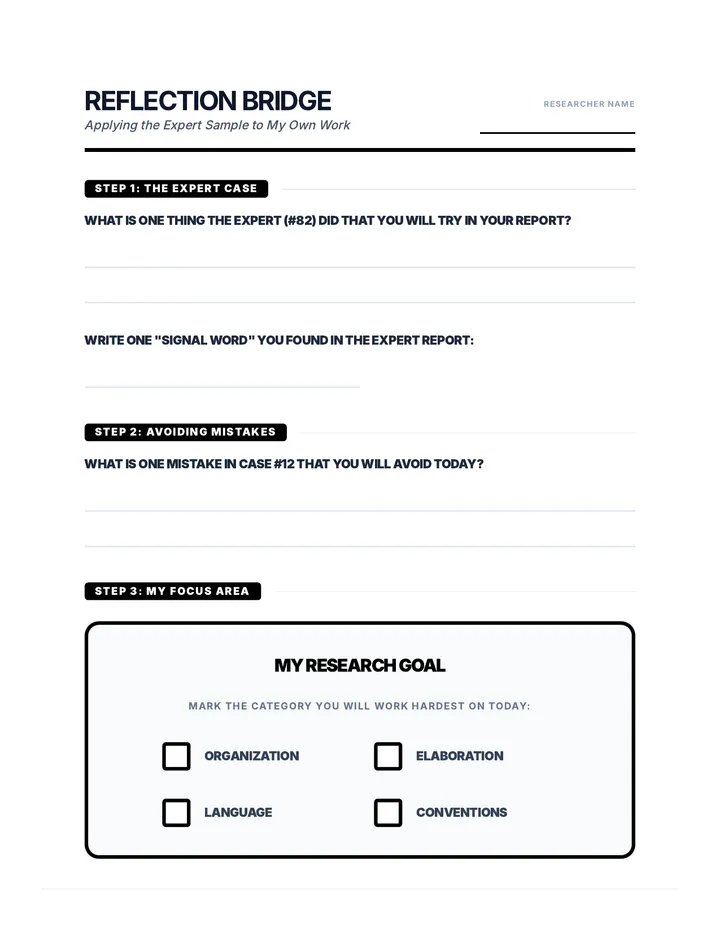
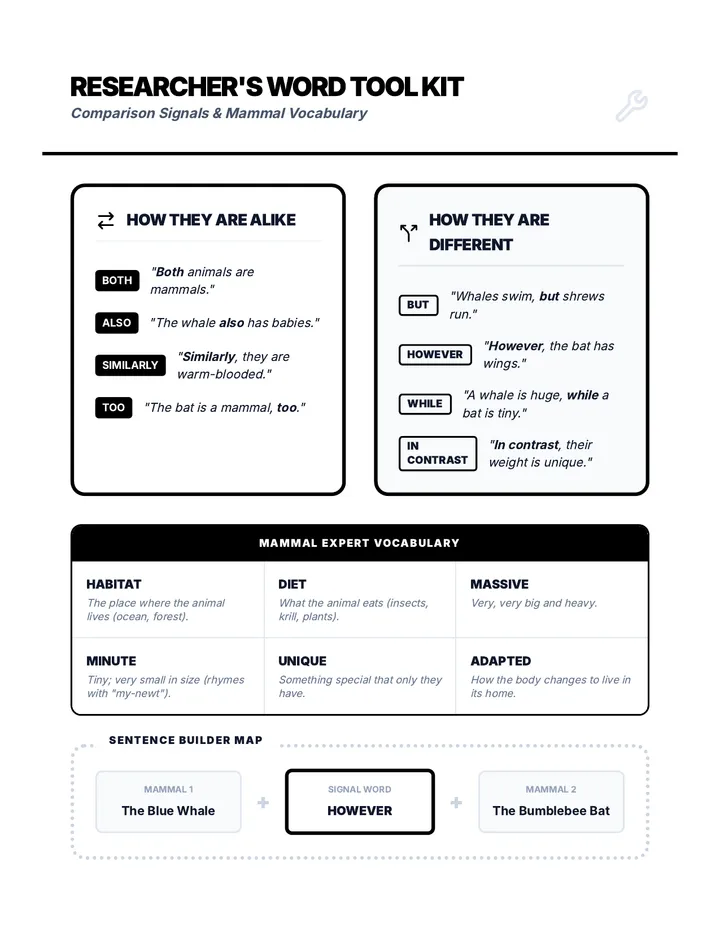
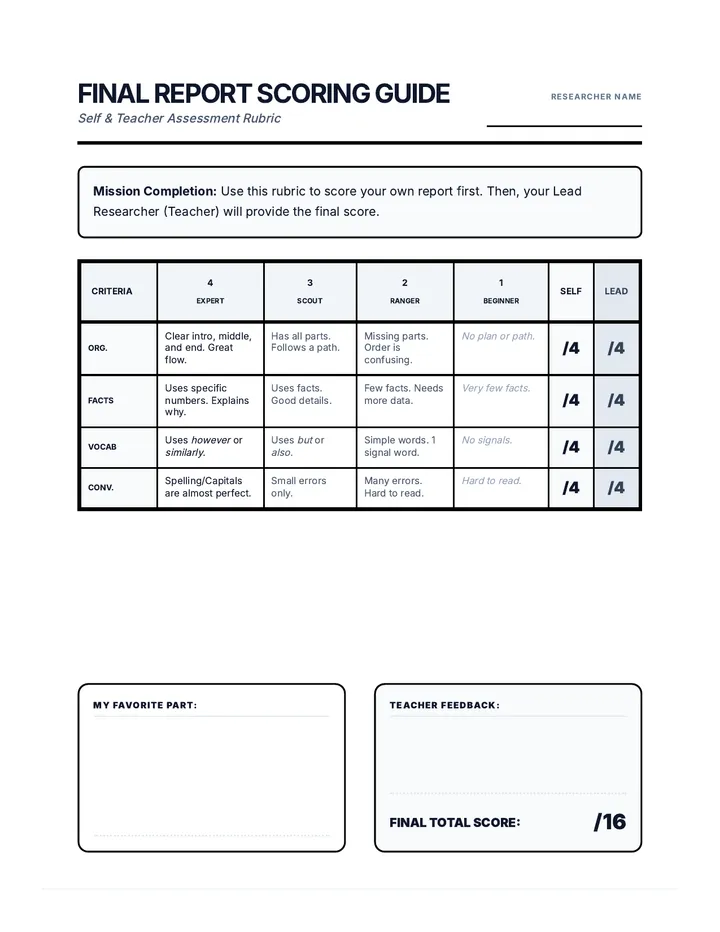
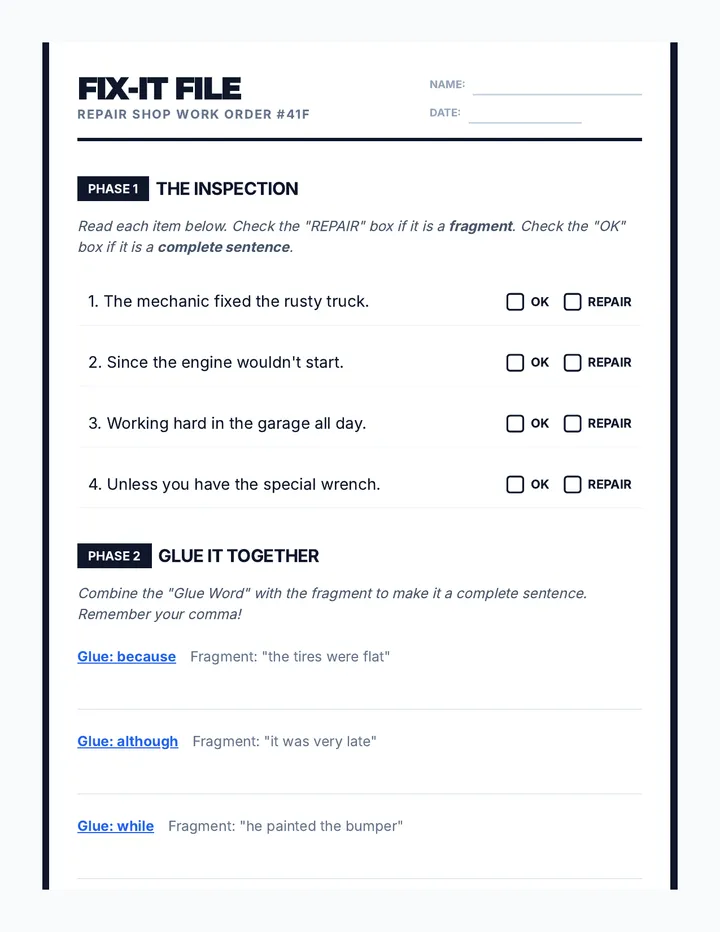
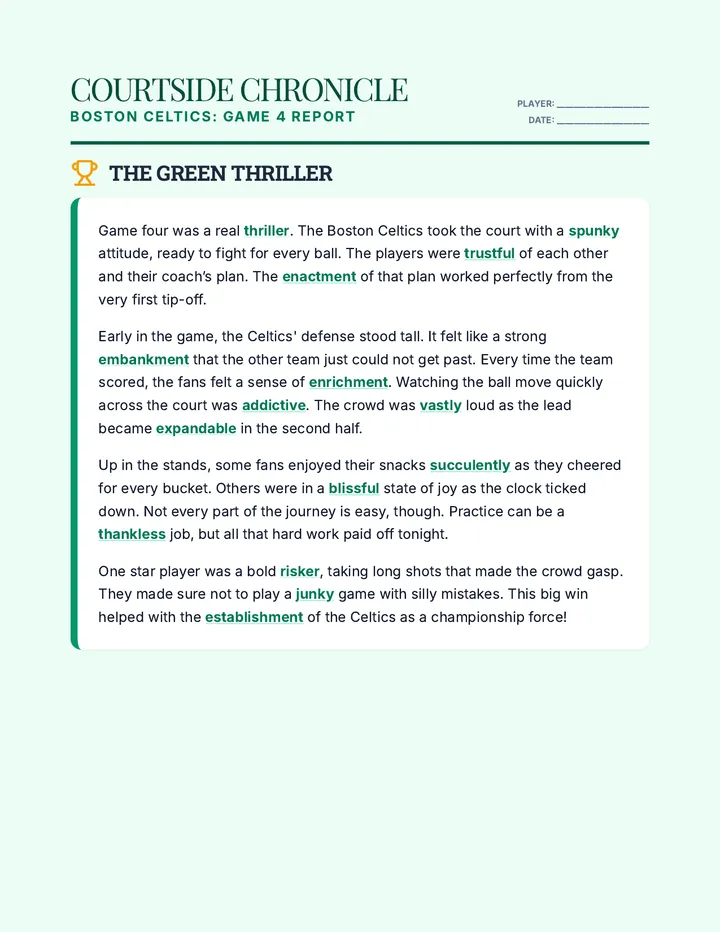
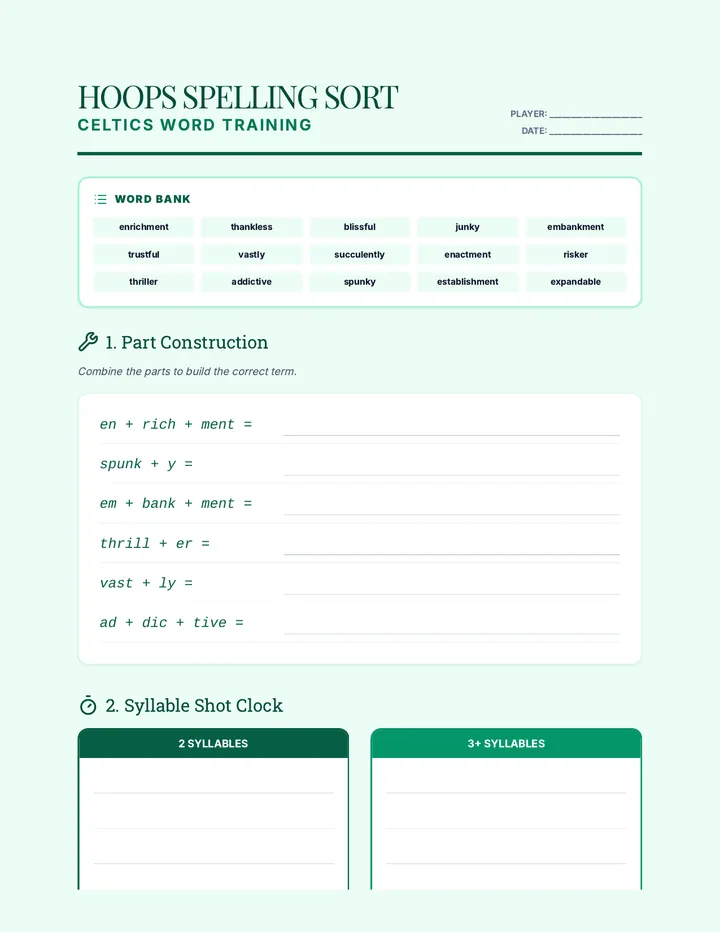
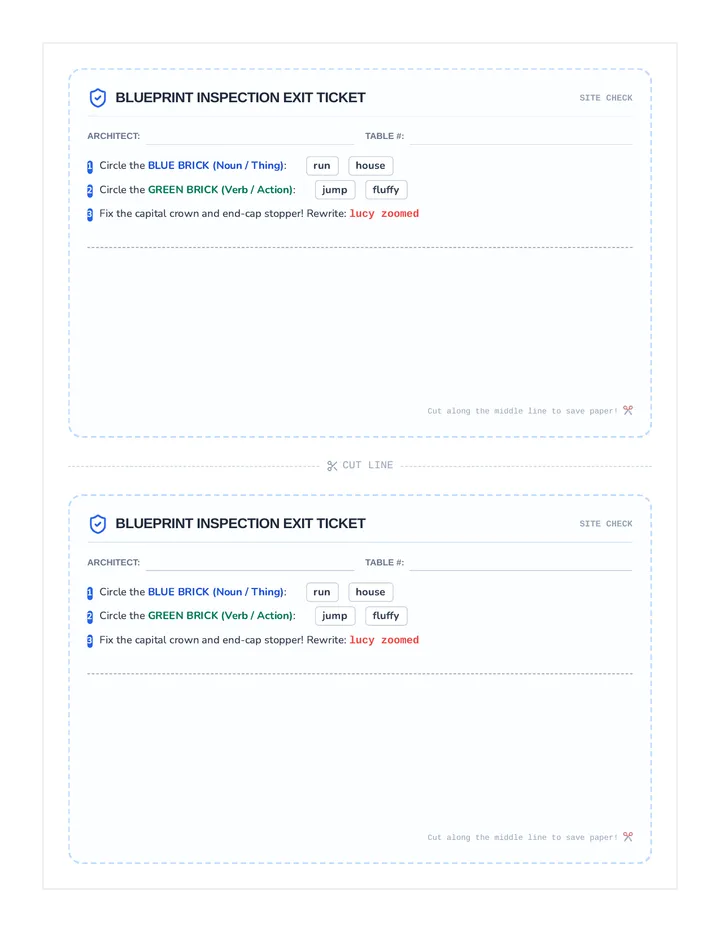
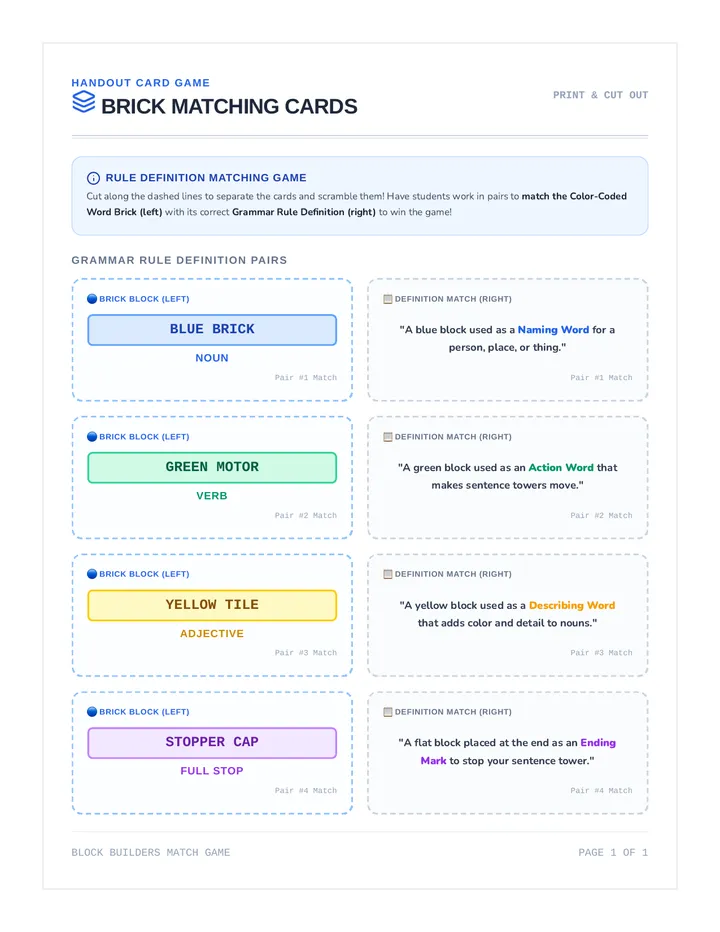
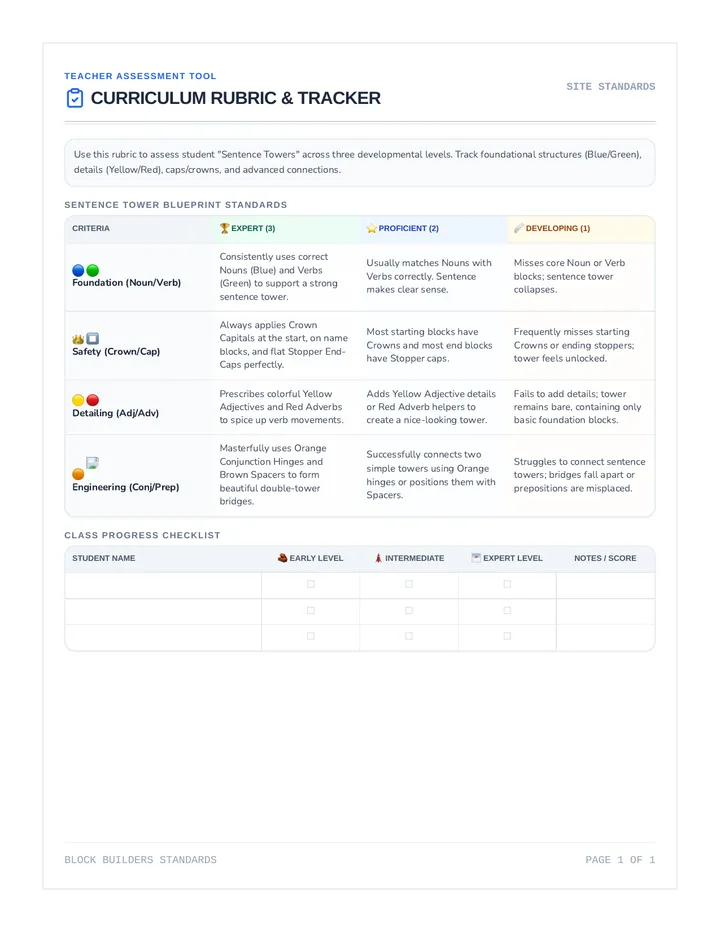
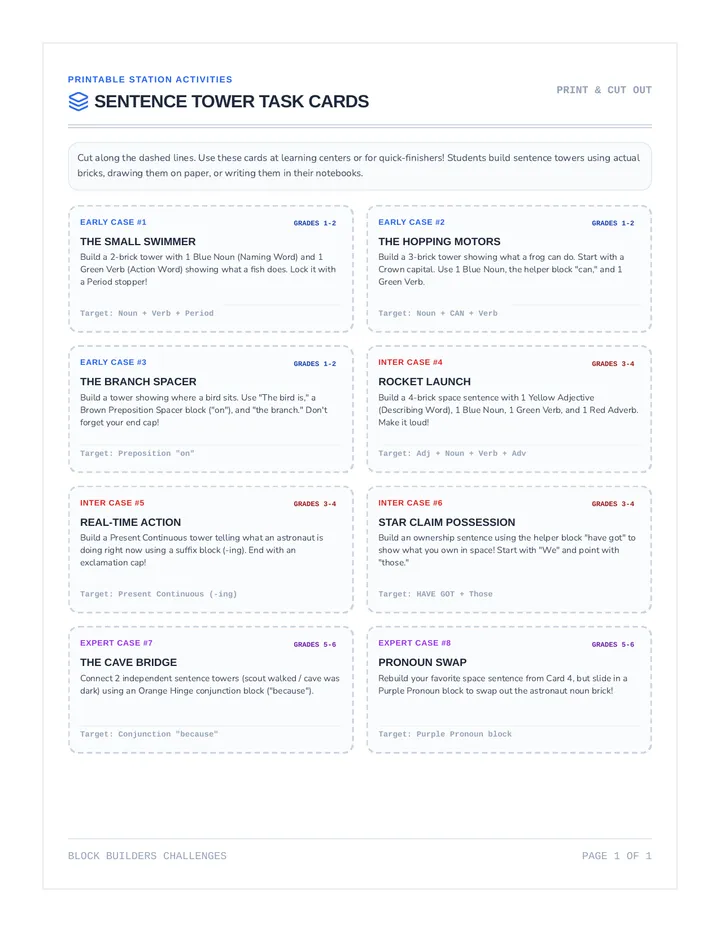
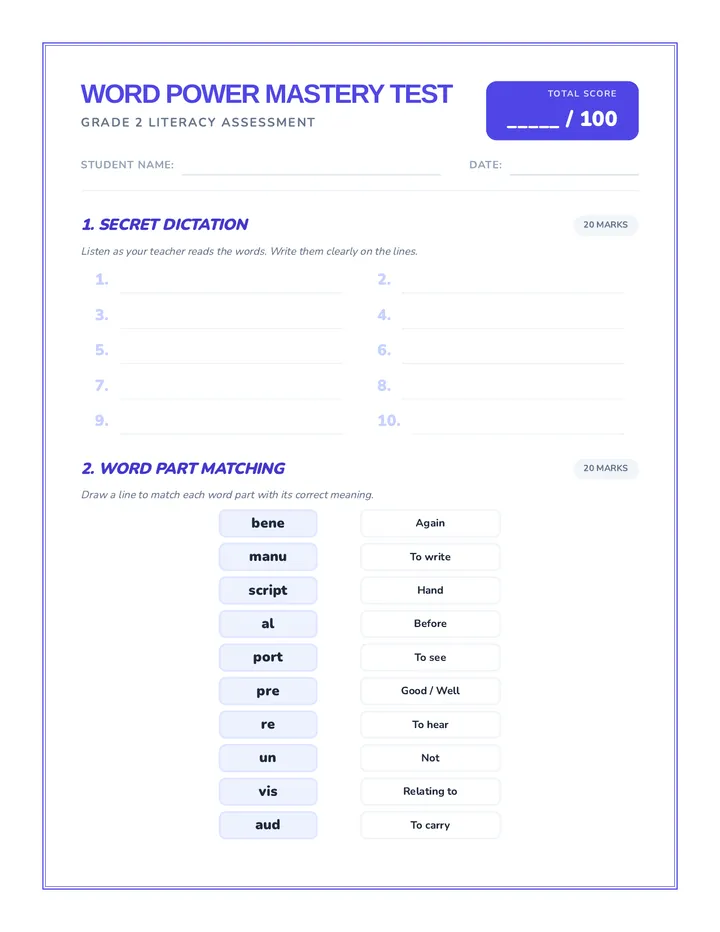
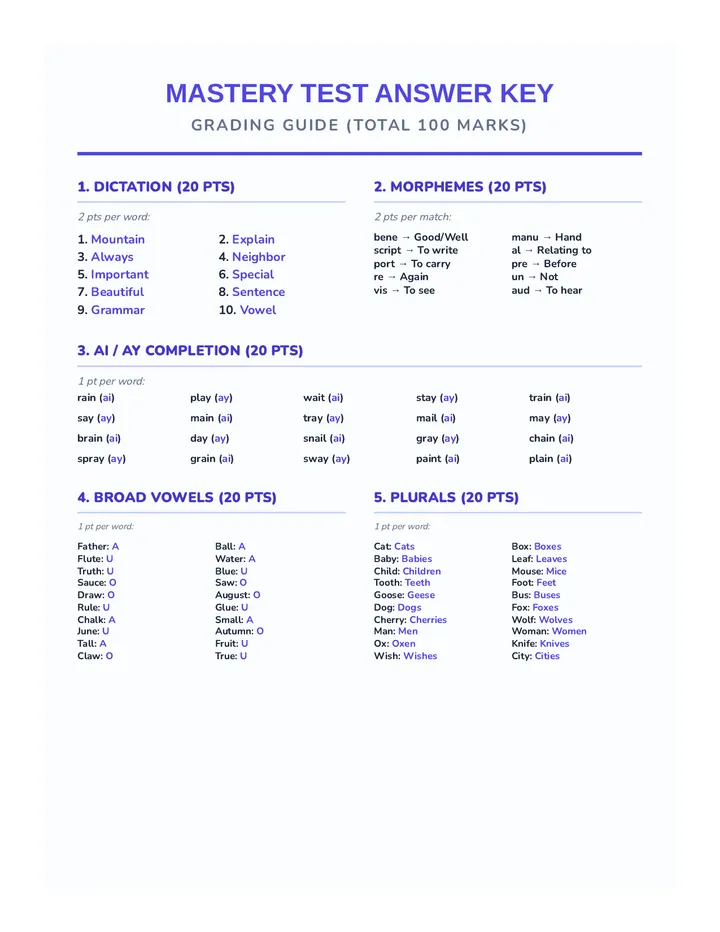
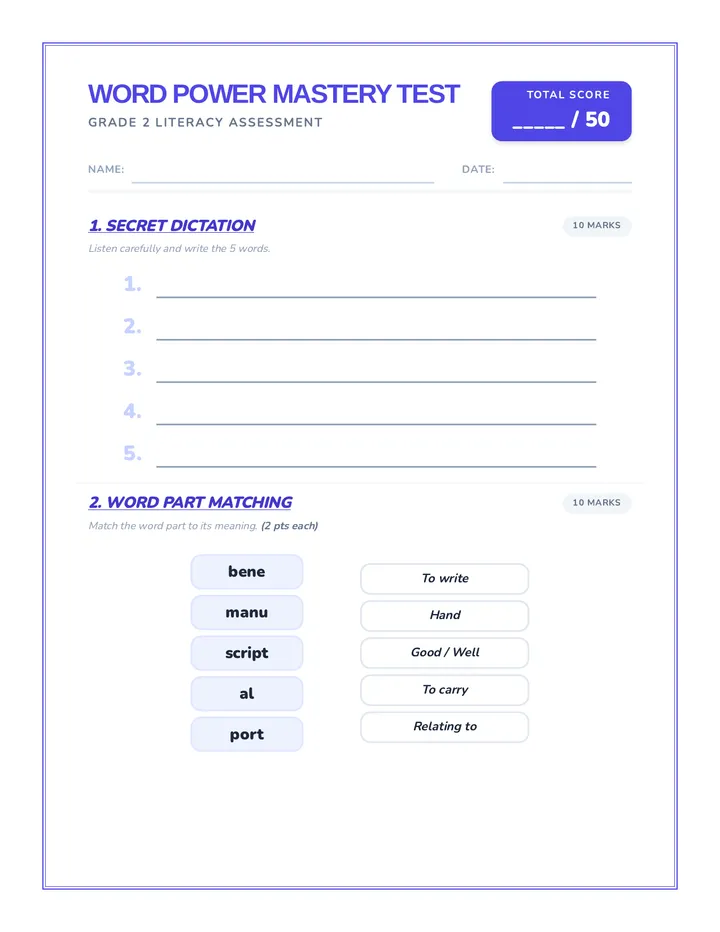
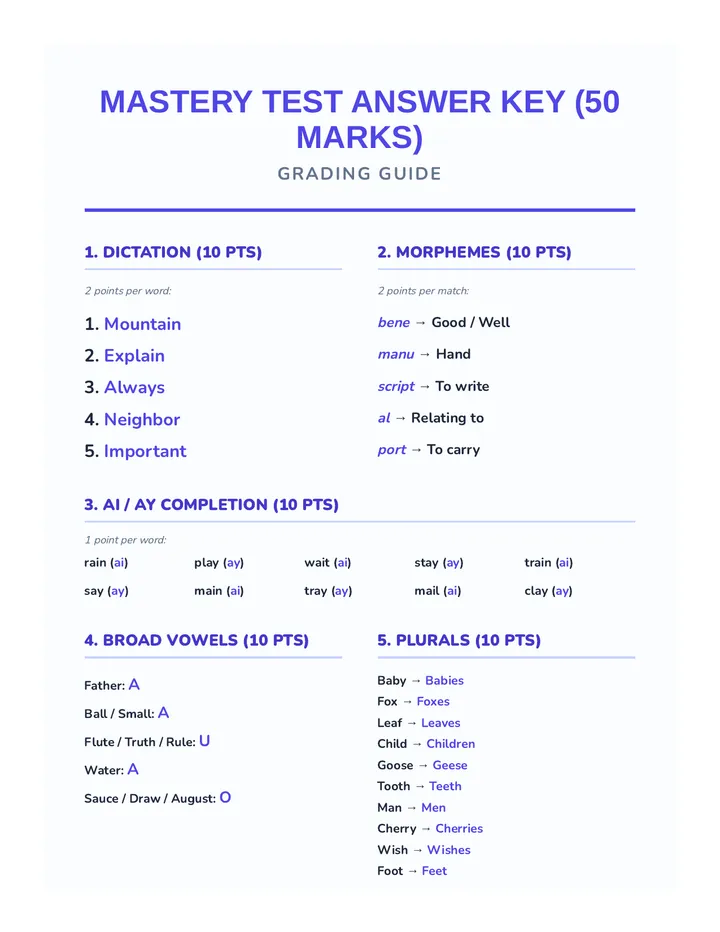
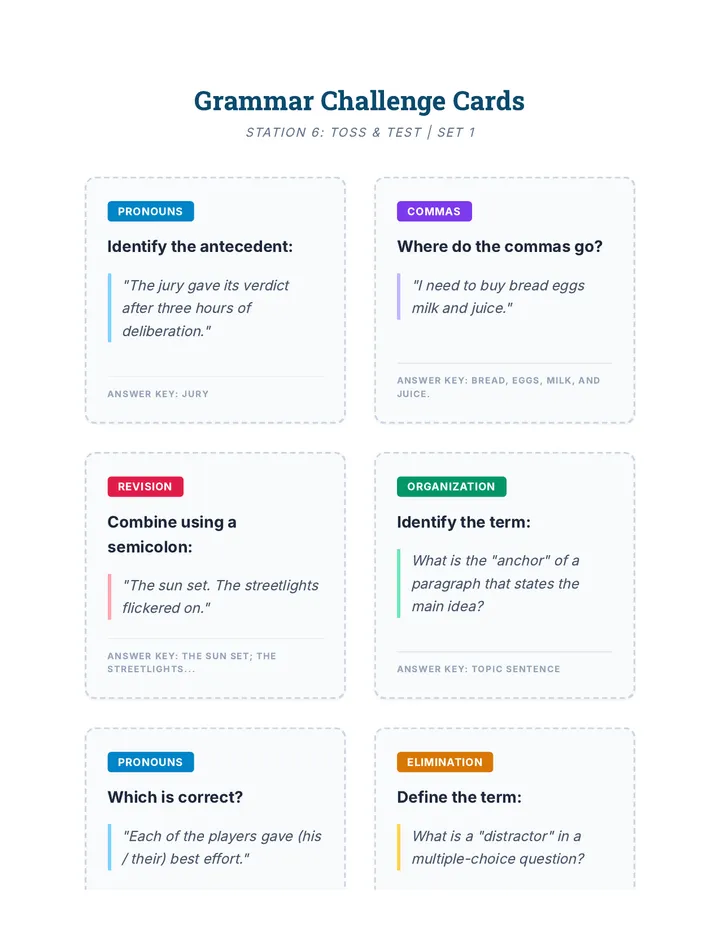
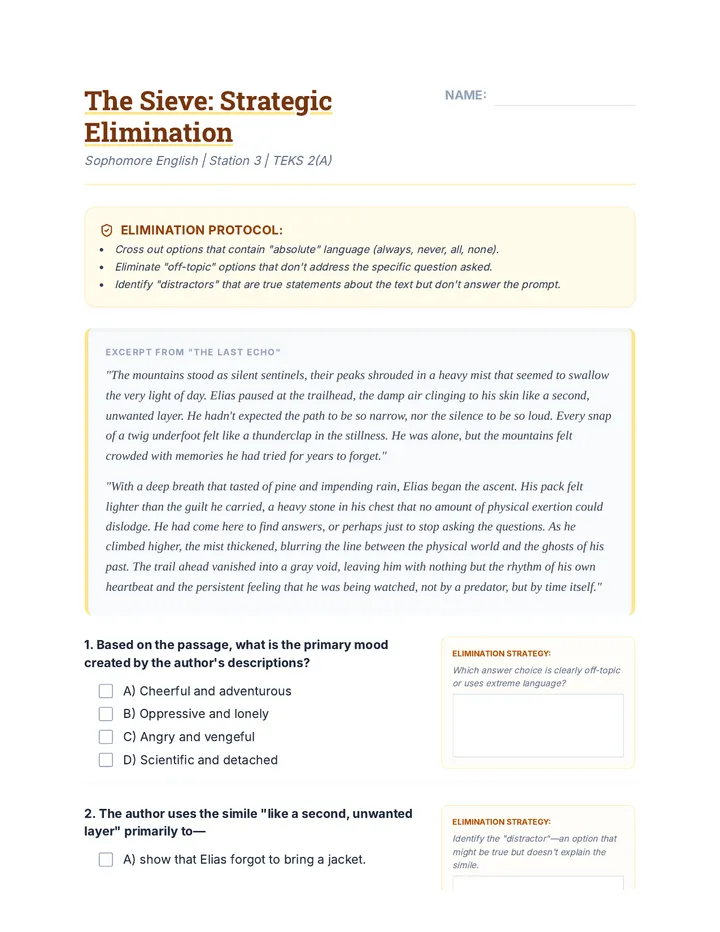
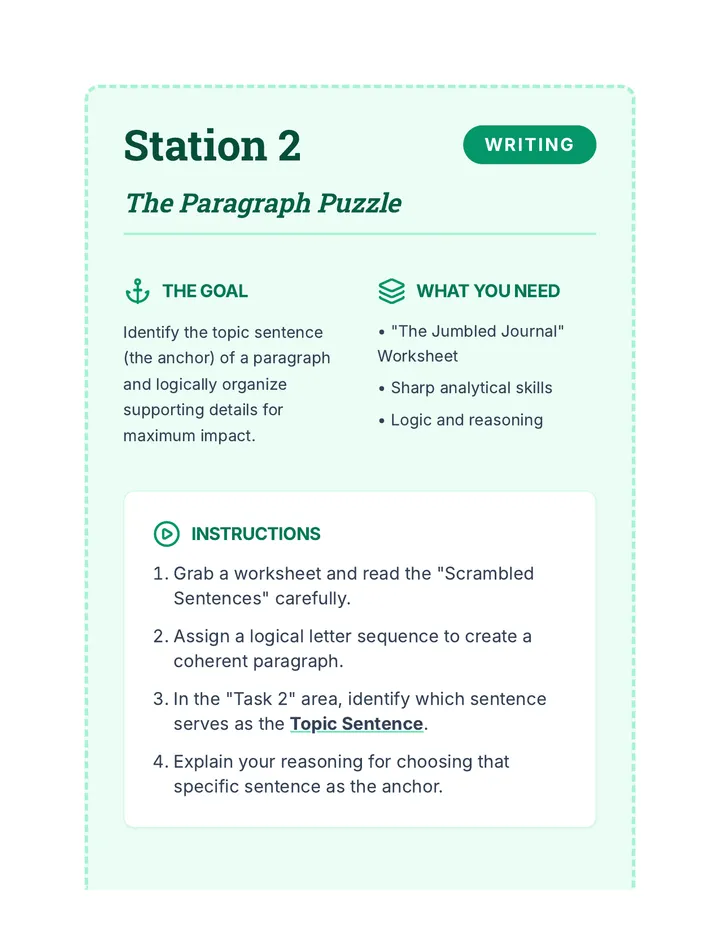
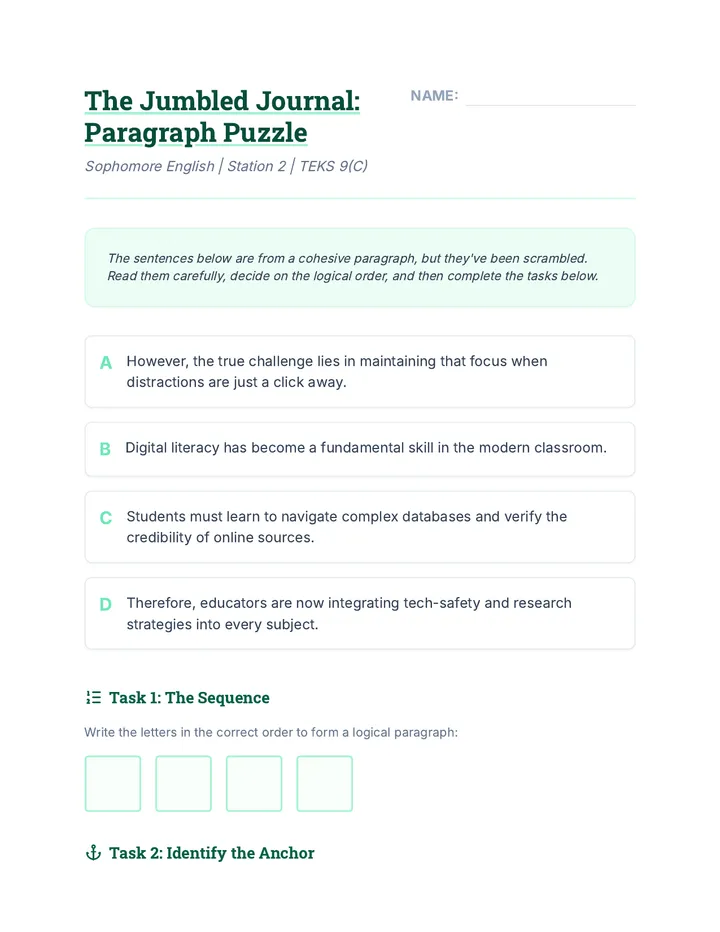
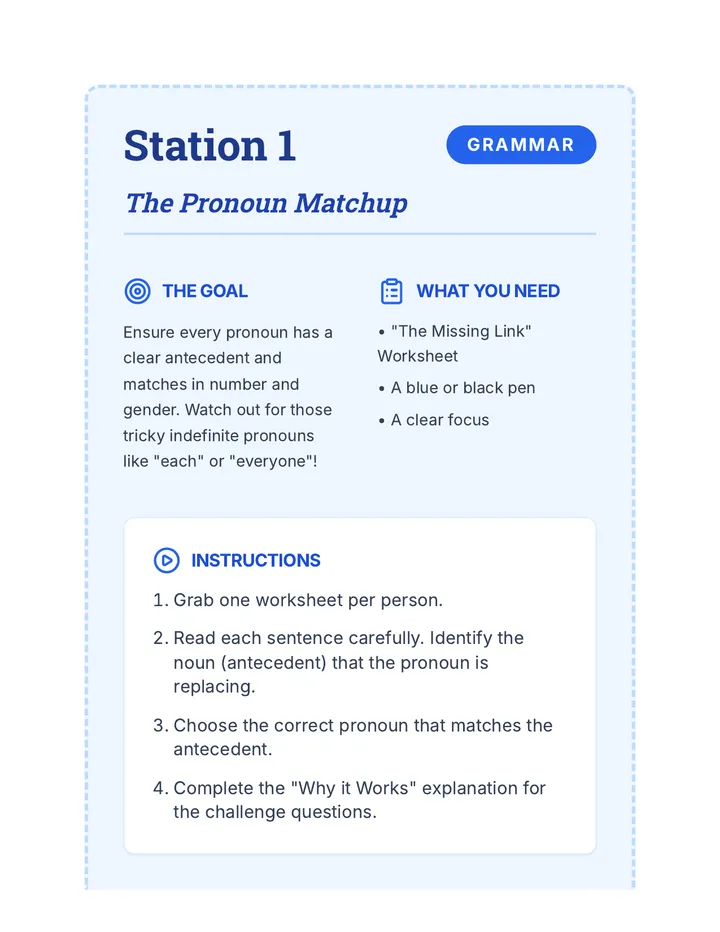
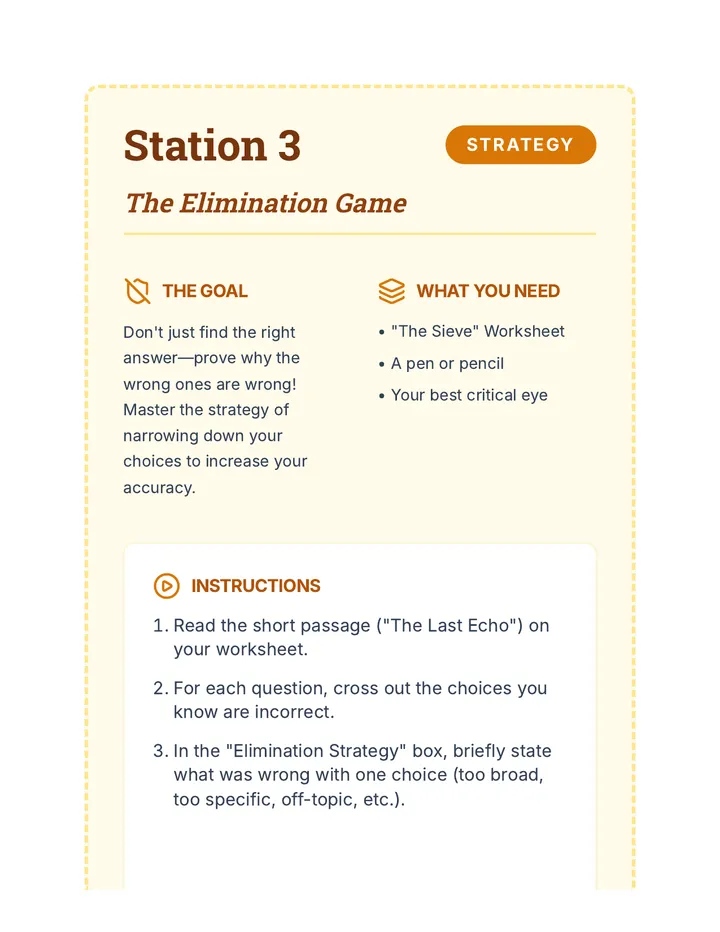
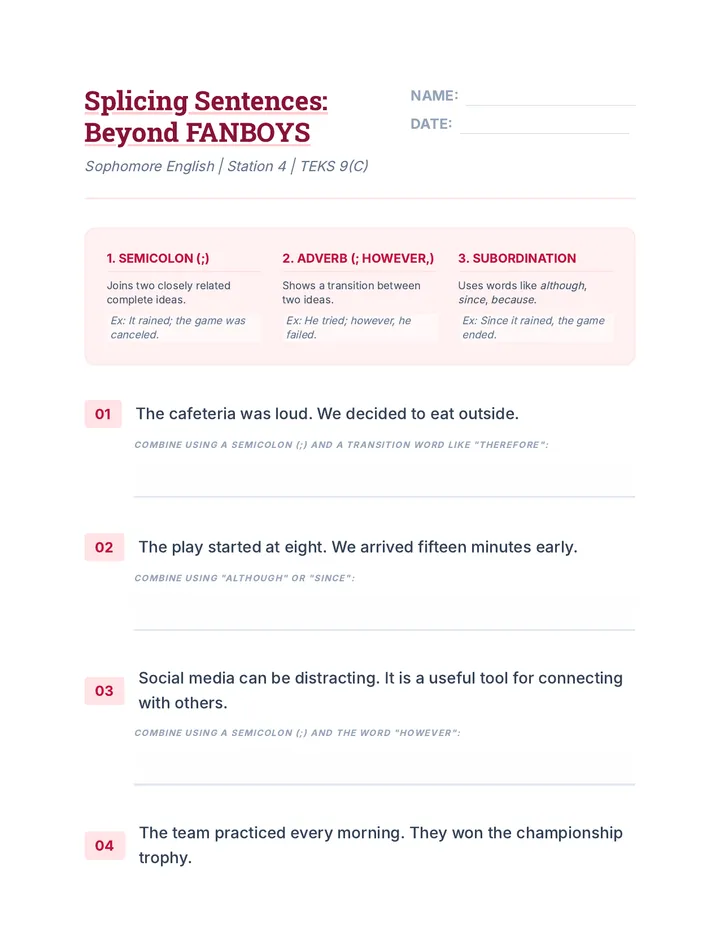
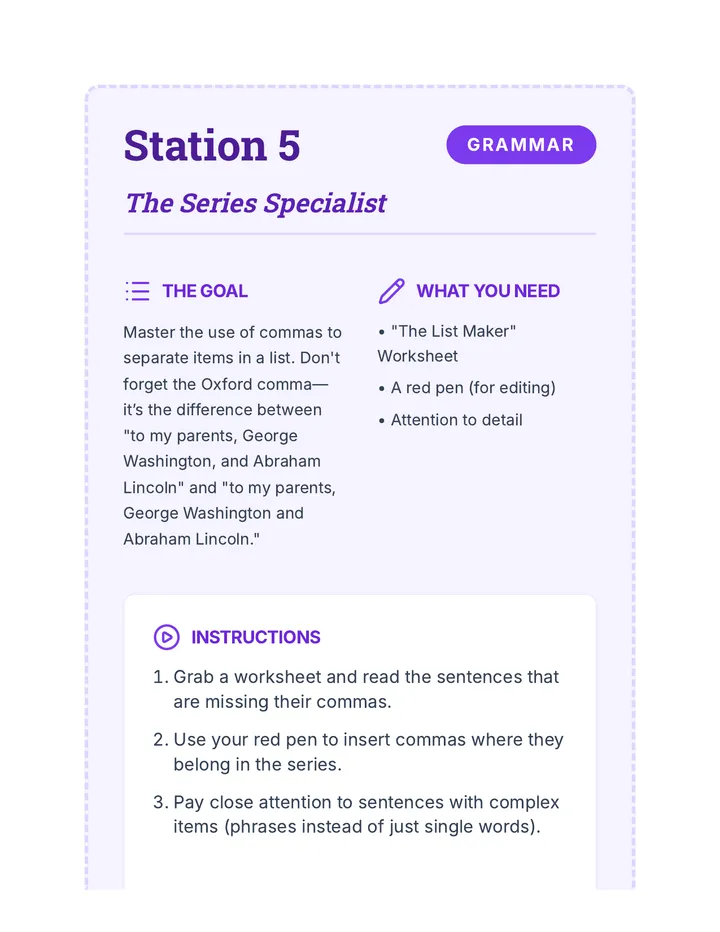
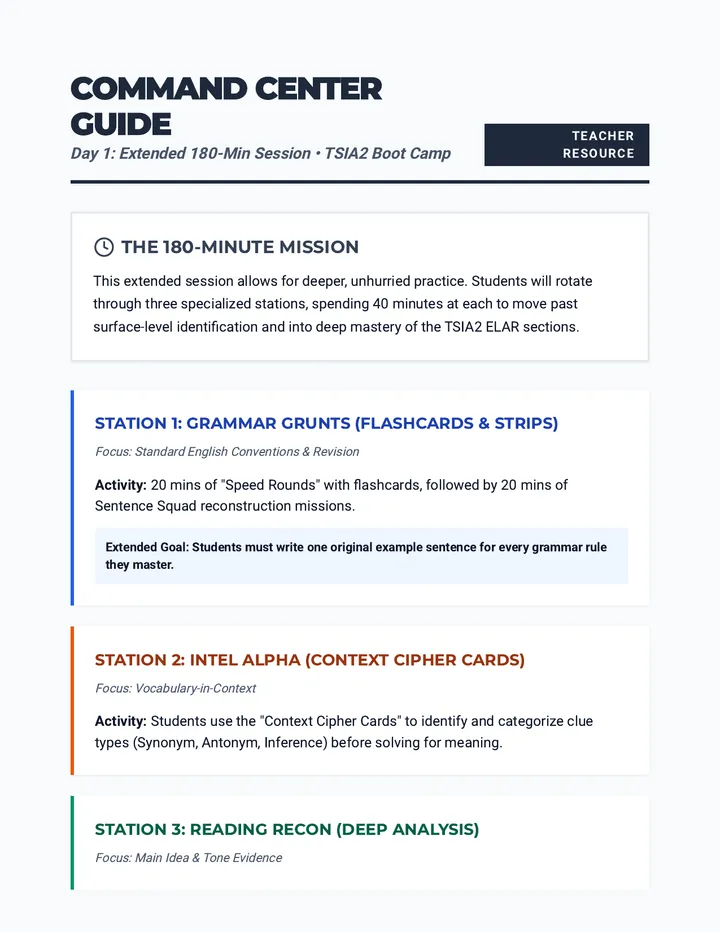
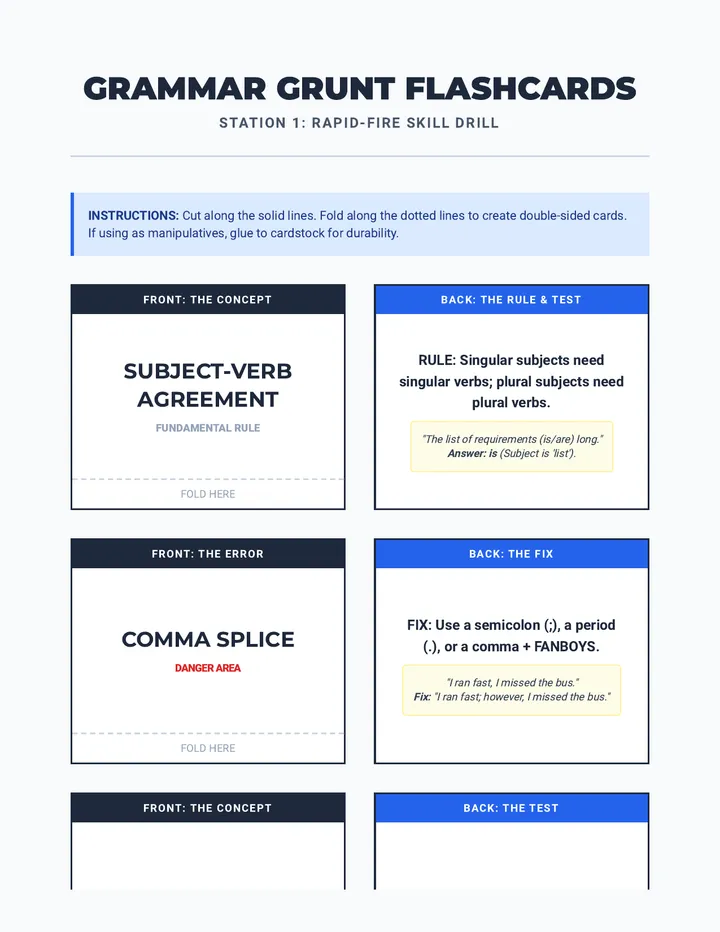
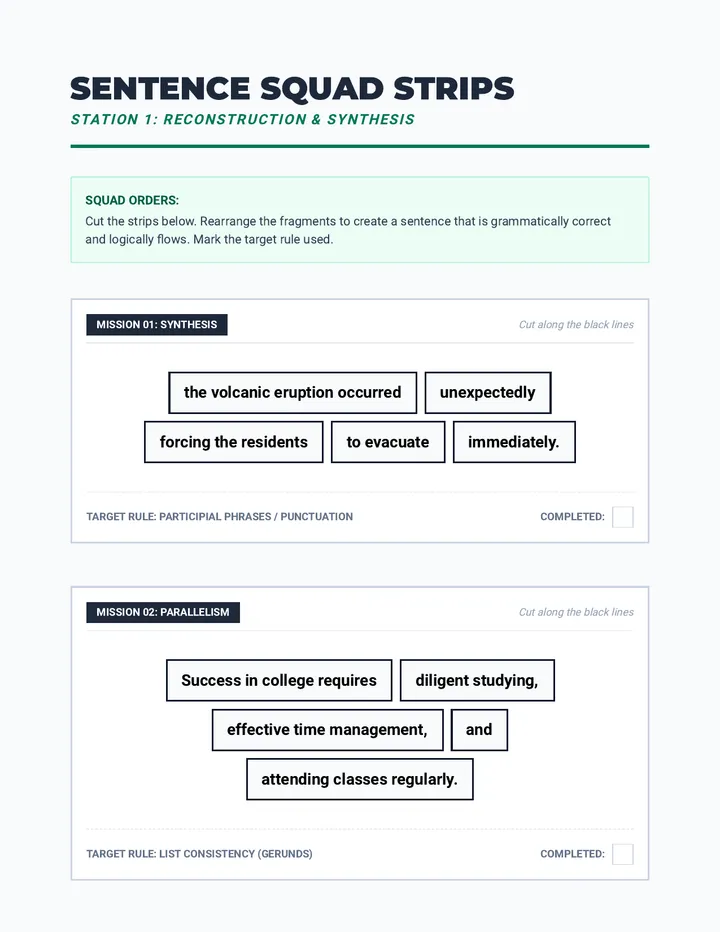
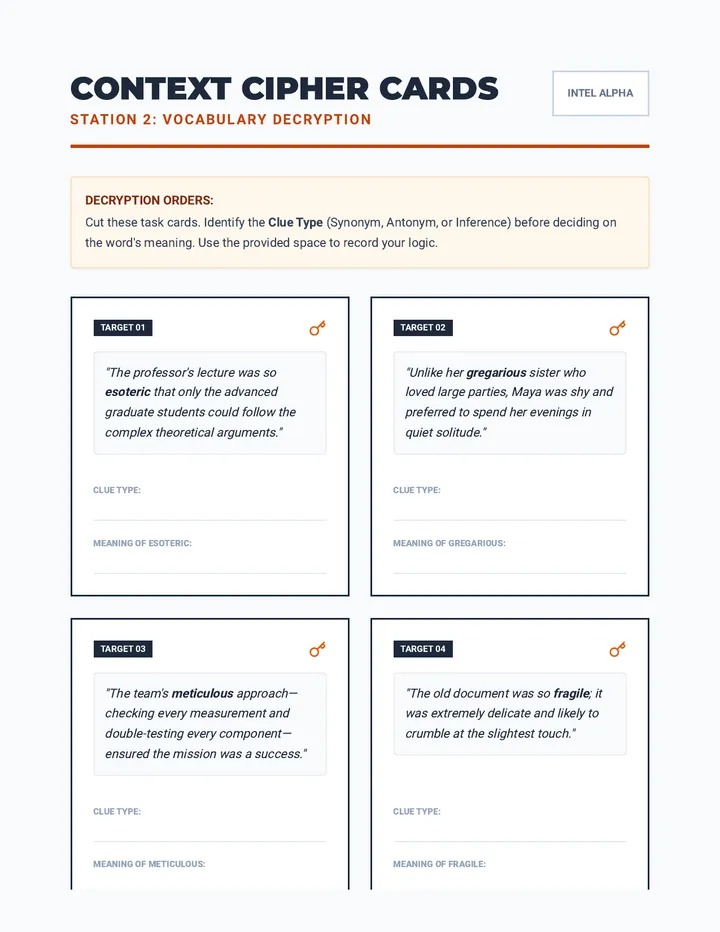
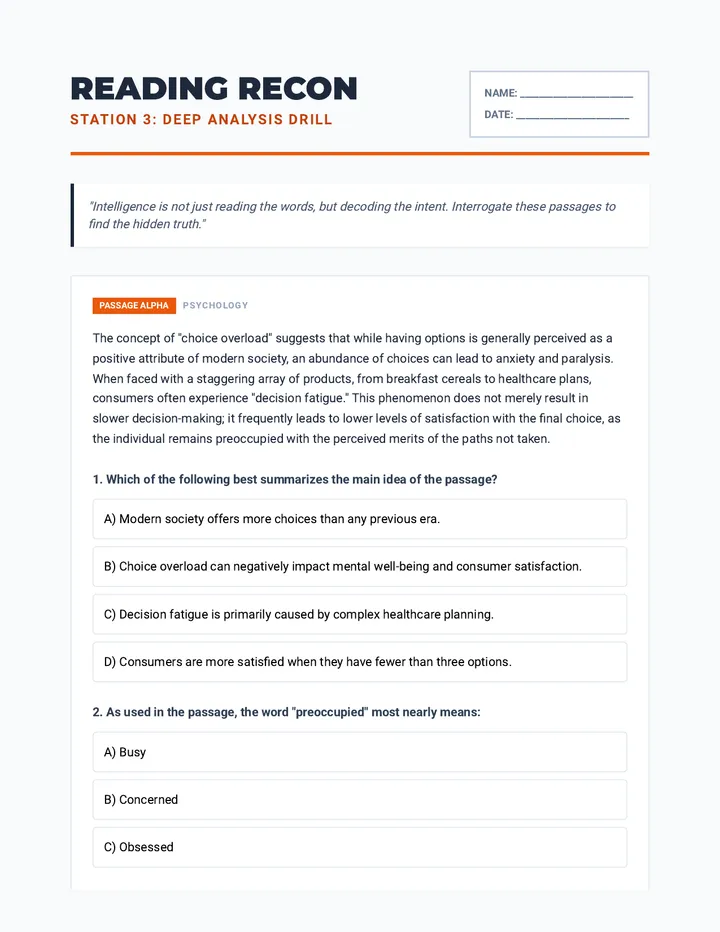
Sentence structure fundamentals, subject-verb agreement, and precise usage of parts of speech including pronouns, conjunctions, and adjectives. Targets technical accuracy through mastery of capitalization, punctuation, spelling, and verb mood.
A week-long ELA homework series centered around a narrative about a squirrel's search for a rare acorn. The materials are differentiated for Kindergarten, 2nd Grade, and 4th Grade learners.
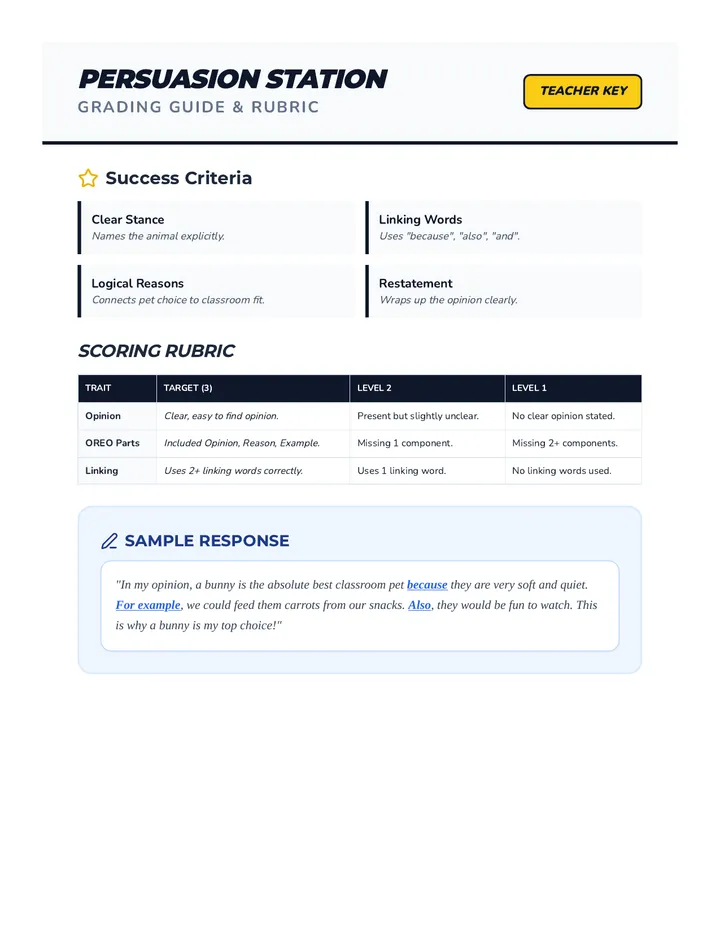
A foundational writing sequence for early learners focused on developing opinion writing skills. Students progress from stating simple preferences to supporting their opinions with reasons and descriptive details using 'I like' and 'because'.
A unit focused on mastering various parts of speech and word parts to build stronger, more descriptive sentences in 5th grade.
A 15-day introductory unit for Kindergarten students focused on identifying, stating, and supporting opinions using the bridge word 'because'. The sequence includes a pre-assessment, mid-point check, and post-assessment, with daily visual slides and printable practice activities.
A collection of curriculum overview and alignment resources for 11th Grade English, focusing on societal change and civic rights.
A 9th-grade English RLA unit exploring the physical and emotional intersection of love and pain through scientific analysis and poetic metaphor. Students synthesize Eric Jaffe's 'Why Love Literally Hurts' with Carol Ann Duffy's poem 'Valentine' to craft argumentative synthesis correspondence.
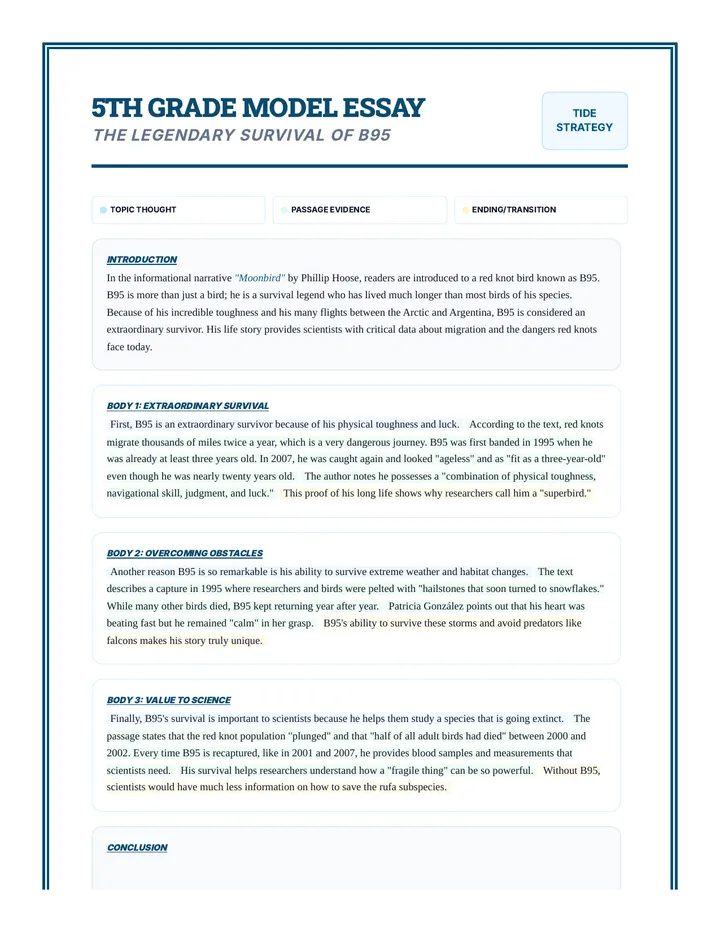
A 10-session unit for 5th graders focusing on the transition from paragraph to essay writing through the lens of biography. The unit covers sentence variety, chronological sequencing, paragraph structure, and grammar, tailored for small group instruction with differentiated support.
A 6-day RLA unit for 8th grade focusing on 'The Bass, the River, and Sheila Mant'. Students explore character complexity (8.9F) and non-linear plot elements (8.9A) through the lens of sacrifice and love.
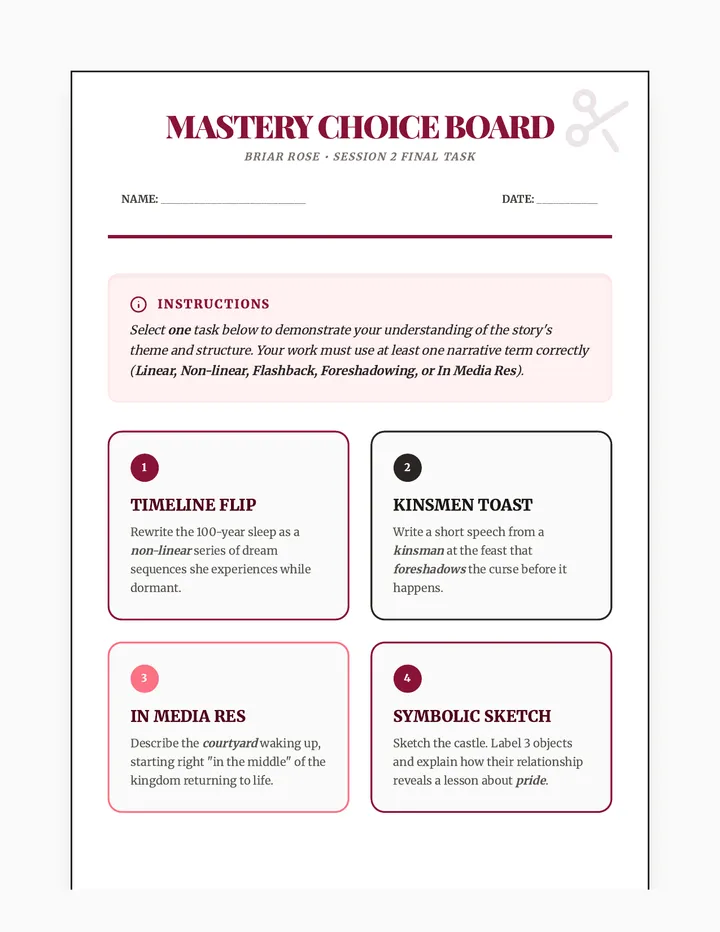
A 4-day intensive study of Nathaniel Hawthorne's 'The Minister's Black Veil,' focusing on literary analysis, theme development, and argumentative writing through the lens of Dark Romanticism and Puritan values. Students explore the ambiguity of symbols and the complexities of human guilt while mastering appositive phrases and constructing high-quality academic responses.
A two-day exploration of Edgar Allan Poe's 'The Raven', analyzing poetic craft, gothic elements, and the emotional descent of the narrator through creative performance tasks and analytical writing.
A 3-day research unit focused on the historical context of Night by Elie Wiesel, specifically covering liberation, concentration camps, and death marches, concluding with student presentations.
A short sequence focused on advanced grammar applications in creative and narrative writing for 7th and 8th graders, exploring how mechanical choices impact style and meaning.
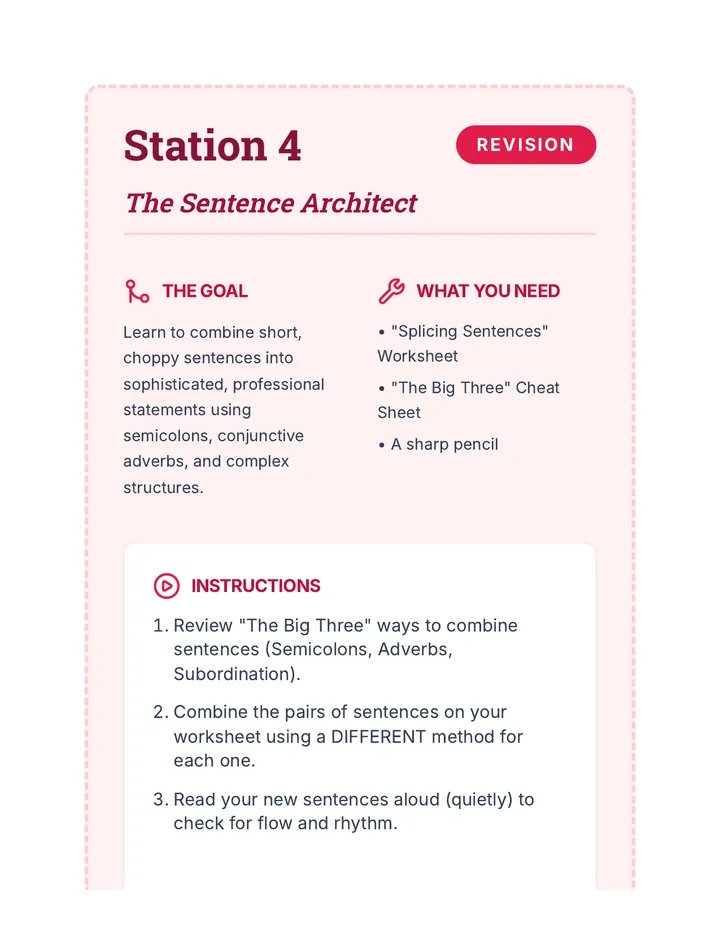
A series of lessons focused on advanced sentence structure and syntax for high school writers, emphasizing clarity, flow, and sophisticated punctuation.
A lesson sequence focused on mastering coordinating conjunctions to improve writing flow and sentence variety. Students transition from short, choppy sentences to fluent compound sentences using the FANBOYS mnemonic.
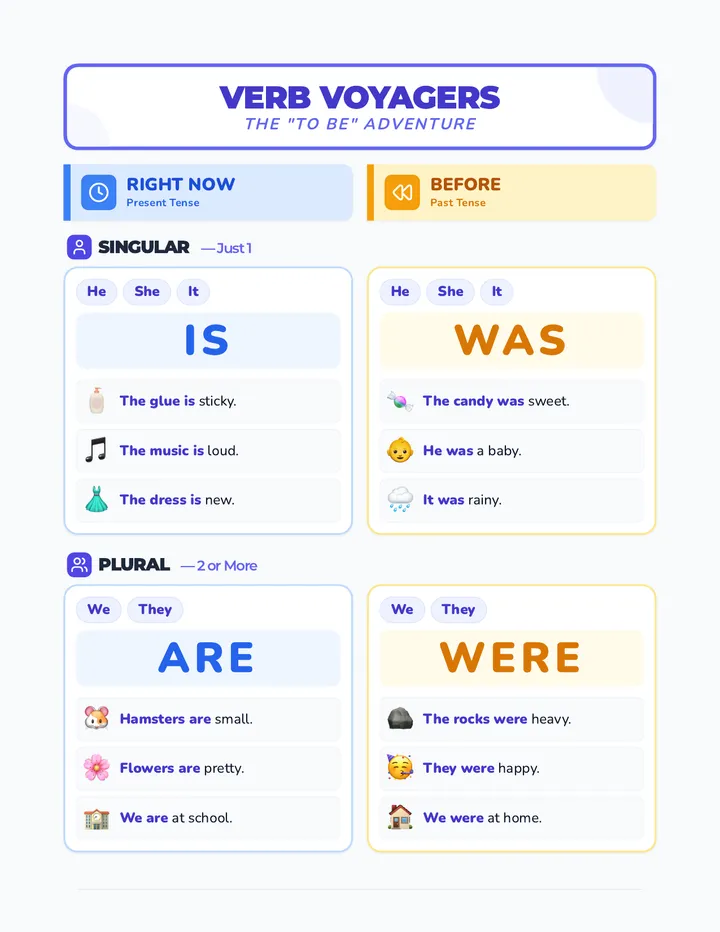
A grammar unit focused on mastering verb aspects and tenses through creative, hands-on activities.
This sequence teaches 3rd-grade students how to use Text-to-Speech (TTS) as a powerful proofreading tool. Students transition from identifying errors in provided texts to applying auditory feedback strategies to their own writing, focusing on missing words, sentence flow, and homophones.
This sequence teaches 2nd-grade students how to use Text-to-Speech (TTS) technology as a powerful editing tool for their writing. Students progress from identifying simple missing words to using TTS for punctuation, fluency, and spelling, culminating in a polished final project.
A 5-lesson sequence for 6th-grade students on using text-to-speech technology as a proofreading and editing tool to improve writing clarity, mechanics, and flow.
This sequence teaches 4th-grade students how to use Text-to-Speech (TTS) technology as a revision tool. Students learn to identify skipped words, awkward phrasing, and punctuation errors by listening to their writing read aloud, moving from guided error detection to independent revision of their own work.
A comprehensive 4th-grade grammar unit focusing on the four primary parts of speech: nouns, verbs, adjectives, and adverbs. Through an adventure-themed quest, students master identifying and using these word classes in their writing.
A series of lessons exploring Shakespeare's Macbeth, specifically designed for 10th-grade emergent bilingual students to master complex characterization and thematic elements.
A thematic unit centered on winter and snow, exploring grammar, functional language, and descriptive comparison skills.
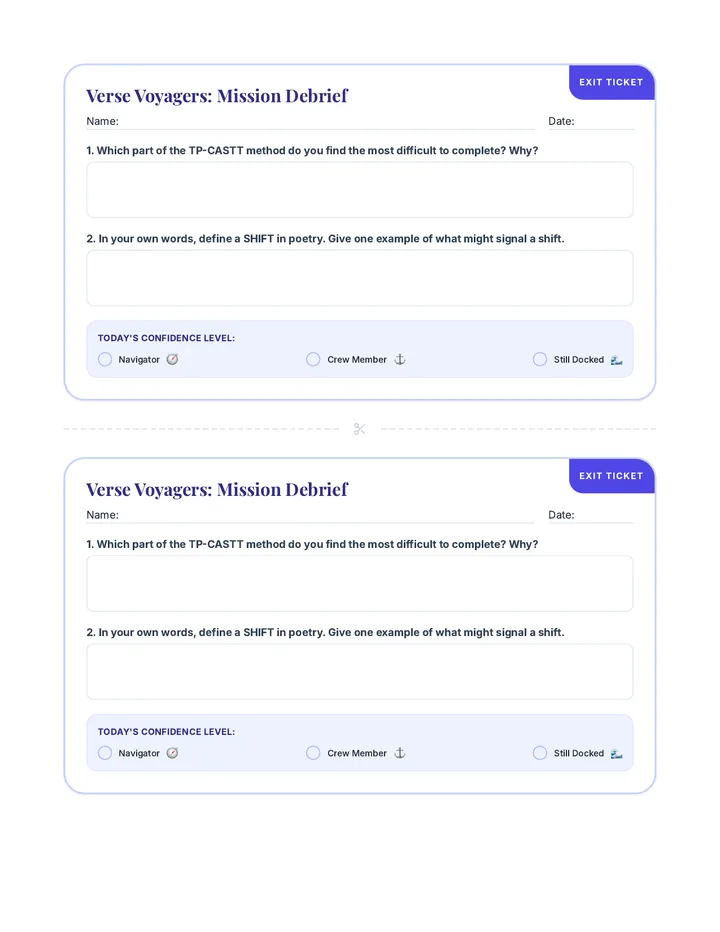
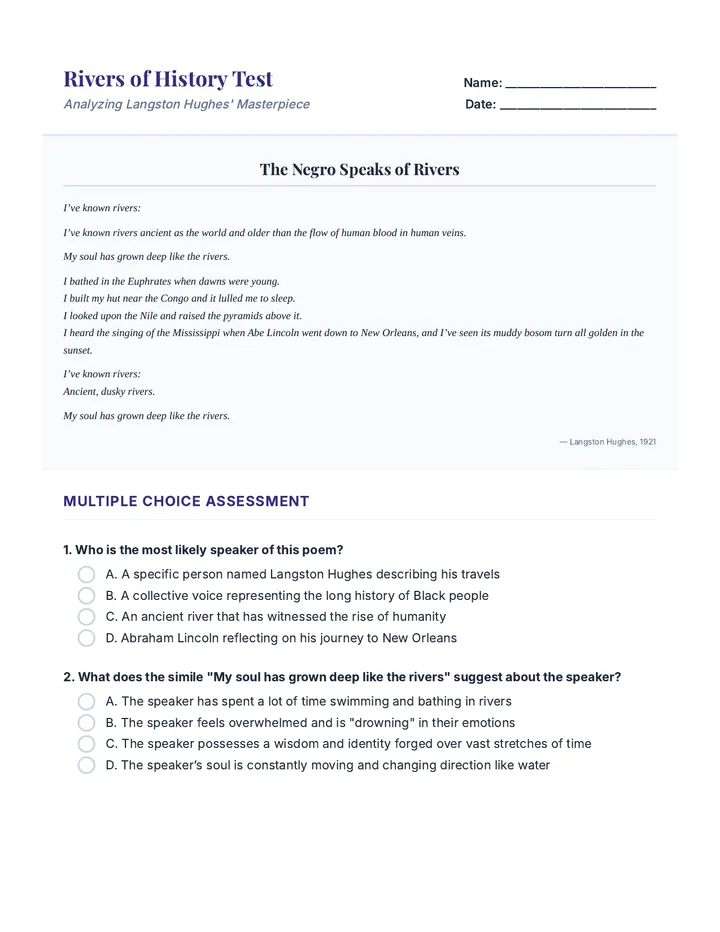
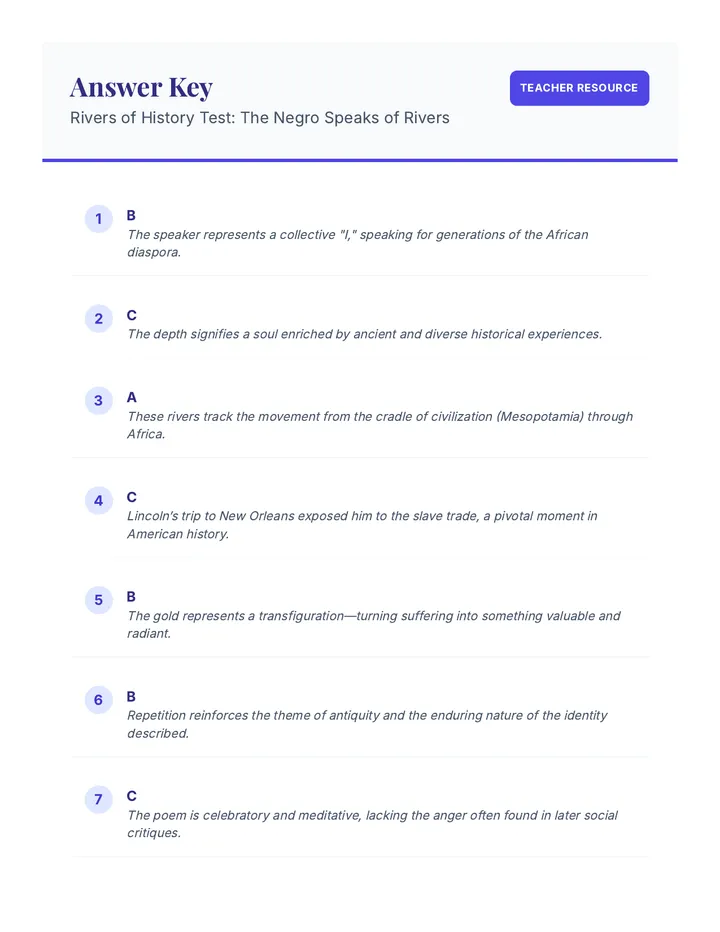
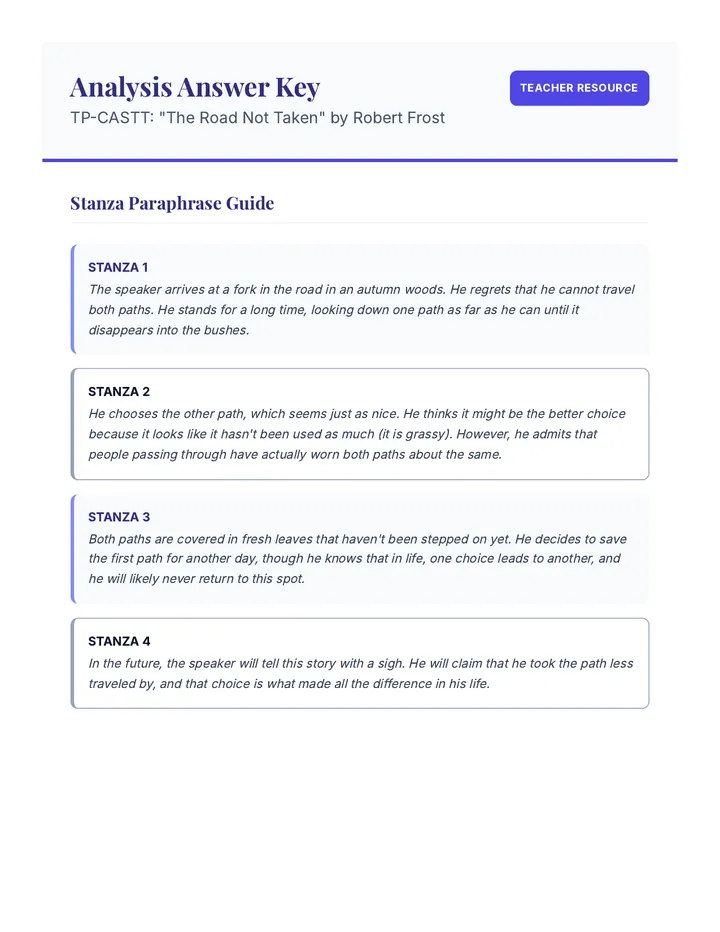
An ELA 8 unit exploring the theme of 'Pathways' through poetry, short stories, and narrative writing. Students analyze choices, consequences, and the symbolic nature of journeys in literature and life.
A curriculum development sequence focused on helping teachers bridge ELA and History through linguistics and etymology.
A remedial/review sequence for 4th-6th grade students focusing on parts of speech through a desert-themed adventure quest. Students identify and apply nouns, verbs, adjectives, and adverbs while building a descriptive map.
A punchy, superhero-themed lesson sequence focused on how the suffixes -ity and -ic transform base words into different parts of speech, inspired by Vocabulary Man.
A foundational grammar sequence for first graders that uses a 'Word Detective' theme to explore adjectives through sensory exploration, sorting, and descriptive writing. Students learn to use their five senses to identify and apply adjectives to describe the world around them.
A comprehensive 2nd-grade sequence focusing on the distinction between count and non-count nouns and how they dictate article usage ('a', 'an', or 'zero article'). Using a grocery and food theme, students move from basic categorization to creating complex phrases with quantifiers and designing their own restaurant menus.
A comprehensive 4th-grade grammar sequence focusing on the nuances of using articles with geographic names and proper nouns. Students act as travel agents to master the complex rules of 'the' through inquiry, games, and project-based writing.
A 1st-grade ELA sequence exploring coordinating conjunctions 'and' and 'or' through the metaphor of 'word glue'. Students learn to join nouns, verbs, and ideas to build longer, more interesting sentences.
A comprehensive ELA sequence for Kindergarten students to master the use of articles ('a' and 'an') by distinguishing between singular count nouns, plural nouns, and non-count nouns through hands-on workshops and creative projects.
A project-based sequence where 1st-grade students build 'Contraction Creatures' to master how two words combine into one. Students plan, differentiate from possessives, construct, and present their physical word models.
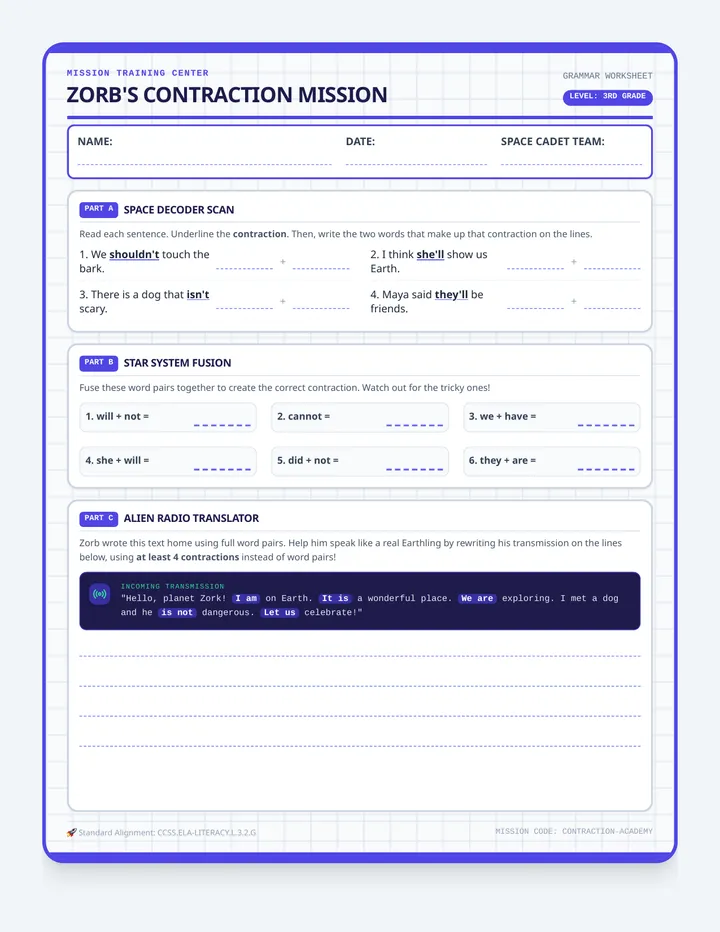
This comprehensive 4th Grade grammar sequence uses a 'Contraction Clinic' theme to teach students how to form and use contractions correctly. From 'performing surgery' on words to mastering tricky homophones and editing dialogue, students move from basic mechanics to sophisticated application.
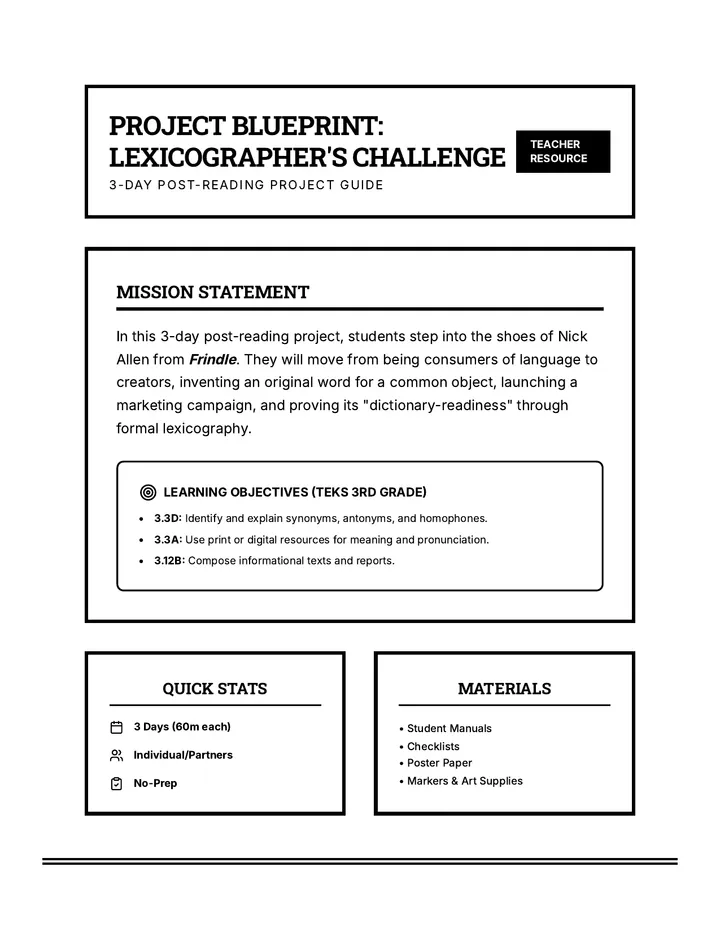
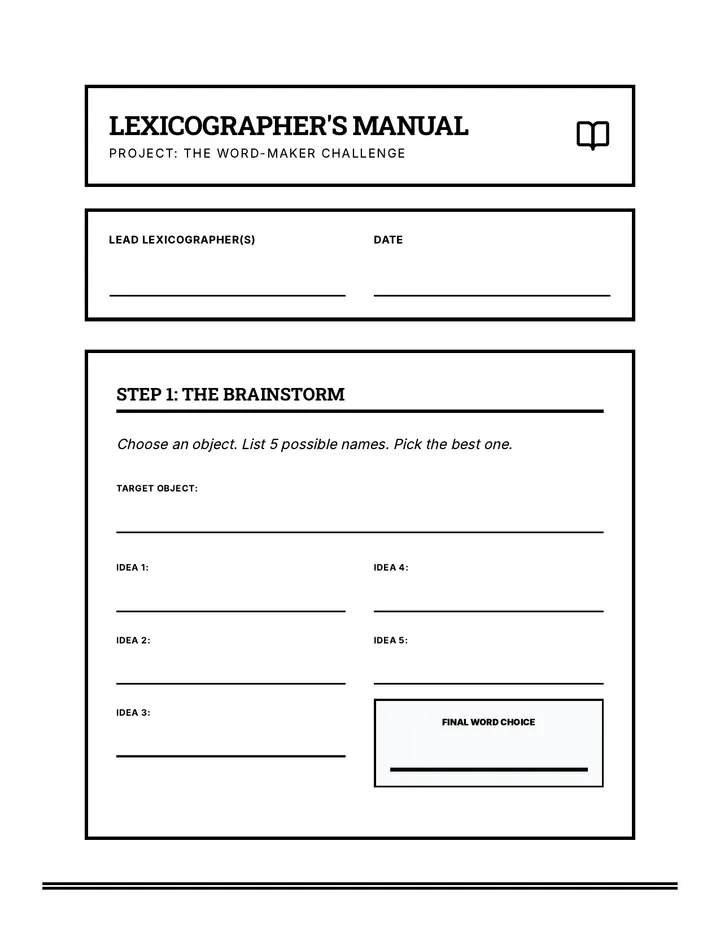
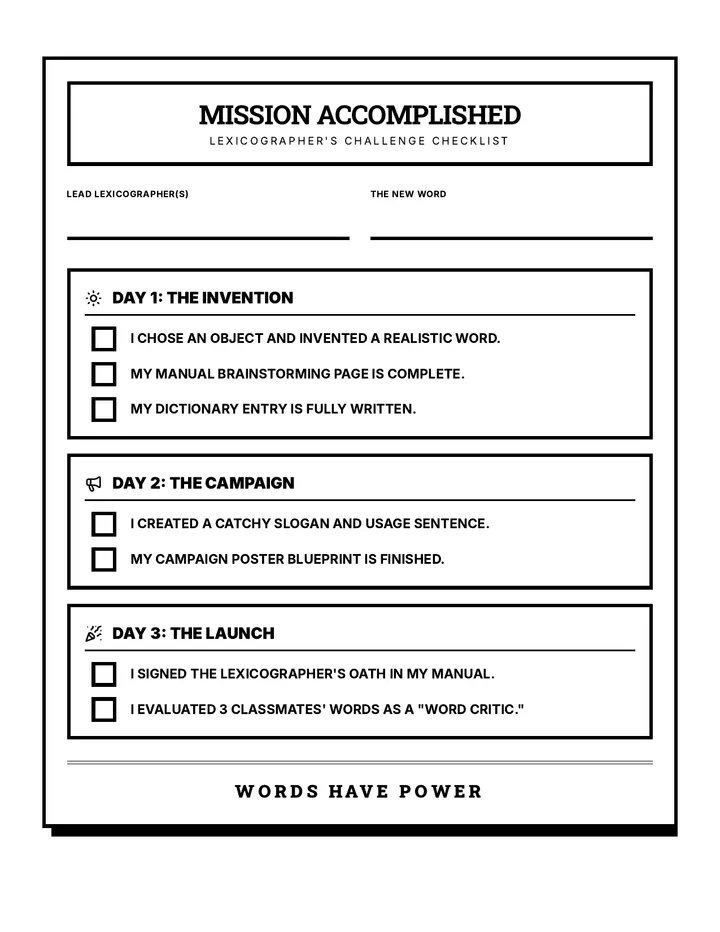
This undergraduate-level sequence explores the academic field of lexicography, focusing on historical dictionary principles, etymological tracing of Indo-European roots, and the tension between descriptive and prescriptive linguistics. Students develop proficiency in using the OED and specialized disciplinary glossaries to produce a comprehensive 'word biography' as a final project.
A rigorous sequence for 11th-grade students focusing on high-level academic confusables, paronyms, and homophones commonly found in college-level writing and standardized tests. Students move from diagnostic assessment to deep usage analysis and competitive mastery.
A systematic sequence for 4th Grade students focusing on the standard English conventions of open, closed, and hyphenated compound words through a 'Word Mechanics' workshop theme.
A 4th-grade ELA sequence focused on using compound words to enhance descriptive narrative writing. Students progress from sensory brainstorming to drafting and editing a descriptive paragraph using open, closed, and hyphenated compound words.
This mastery-based sequence for 9th-grade students focuses on advanced academic homophones (Tier 2 and 3) such as elicit/illicit, discrete/discreet, and affect/effect. Students progress from self-assessment to contextual analysis and final proficiency, bridging the gap between vocabulary acquisition and precise academic writing.
A lesson sequence focusing on the nuances of grammar, specifically the distinction between the adjective 'good' and the adverb 'well', with a focus on sensory verbs.
A 5-lesson sequence for 2nd-grade students exploring narrative writing through speech-to-text technology. Students learn oral rehearsal, dictation commands, and descriptive storytelling to bridge the gap between their imagination and the page.
This sequence guides 3rd-grade students through the process of using dictation (speech-to-text) to compose narrative stories. It focuses on the 'Think-Say-Check' workflow to manage the cognitive load of drafting verbally, moving from oral rehearsal to full narrative production and auditory editing.
An 11th-grade ELA sequence focused on the strategic use of adjectives and adverbs in professional, journalistic, and academic writing. Students transition from identifying biased modifiers to mastering the economy of language and logical precision in high-stakes editing.
A high-level grammar unit for 11th-grade students focusing on the precise use of modifiers to enhance syntactic clarity and logic. Students move from basic placement to complex hyphenation and sophisticated sentence construction.
A 5-lesson workshop-style sequence for 11th grade ELA focusing on the precise use of adjectives and adverbs. Students move from replacing weak adverbs with strong verbs to mastering the nuances of cumulative vs. coordinate adjectives and eliminating redundancy.
A high school ELA sequence exploring how adjectives and adverbs function as rhetorical tools to shape tone, atmosphere, and narrator reliability. Students progress from analyzing simple connotations to writing full rhetorical analyses of modifier choices in classic and modern texts.
A 9th-grade grammar and rhetoric unit focused on how adjectives and adverbs influence bias, connotation, and persuasion in media and non-fiction. Students move from understanding word nuance to analyzing news and advertising, culminating in writing a persuasive editorial.
This 9th-grade ELA sequence transforms grammar instruction into a creative toolset. Students move beyond identifying adjectives and adverbs to strategically applying them for atmospheric effect, imagery, and tone in narrative writing, culminating in a polished descriptive scene.
A comprehensive 9th-grade grammar unit focusing on the technical mastery of adjectives and adverbs. Students progress from basic identification in complex structures to correcting advanced syntactical errors like dangling modifiers.
A 1st-grade grammar workshop focusing on adverbs that tell 'how' and distinguishing them from adjectives to build descriptive sentences through movement and creative writing.
A comprehensive 4-part grammar unit for 4th grade focusing on verb tenses (Simple and Continuous) through the lens of a Time Travel Academy. Students learn to navigate the 'Now Zone', 'Yesterday Yard', and 'Tomorrow Trail' to master grammar.
A lesson sequence for high school ELL students focusing on the Simple Aspect of verbs (Past, Present, and Future) using a timeline-based approach and sentence construction.
A sequence focused on the critical revision workflow for students using speech-to-text technology. Students learn to identify and fix common errors like homophone confusion, run-on sentences, and informal tone to turn raw dictation into polished academic writing.
This sequence teaches undergraduate students how to leverage dictation technology to draft academic papers. It moves from oral brainstorming and outlining to drafting body paragraphs with transitions, managing complex citations via voice, maintaining formal academic tone, and utilizing text-to-speech for final auditory polishing.
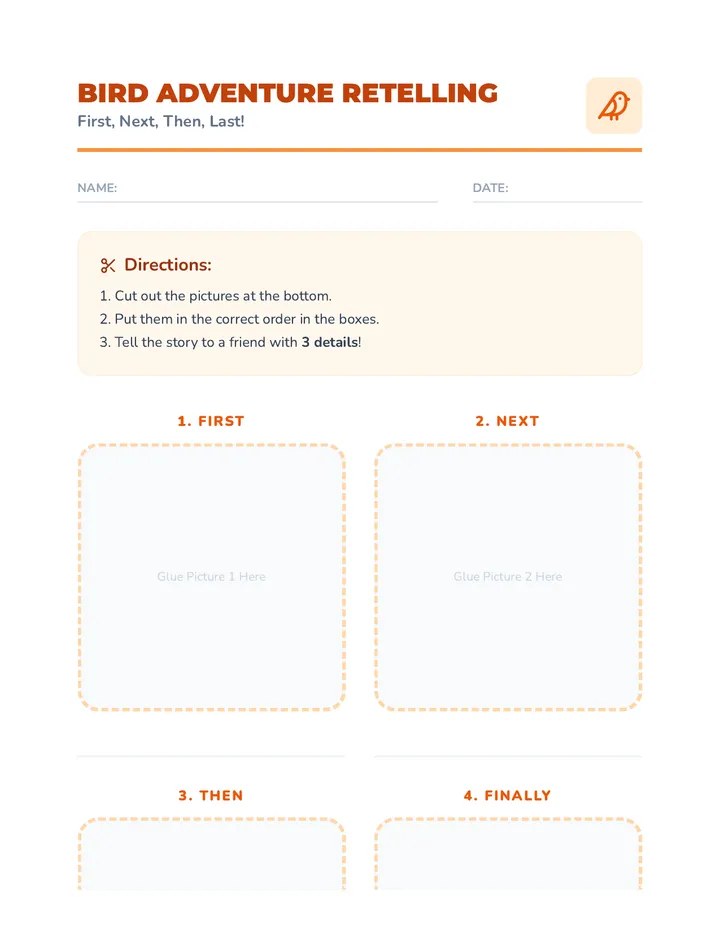
This sequence introduces 1st Grade students to procedural writing using flowcharts. It focuses on breaking down tasks into three distinct steps (First, Next, Last) through physical movement, visual organizers, action verbs, and scaffolded sentence writing.
A 1st-grade grammar sequence exploring conditional and subjunctive moods through the lens of imagination. Students learn to use 'If/Then' structures, express wishes with 'I wish I were', and use helper verbs to describe possibilities and hypothetical worlds.
A 1st Grade ELA sequence focused on the interrogative mood. Students learn to distinguish between statements and questions, use the 5 Ws, manipulate sentence structure to form questions, and conduct peer interviews.
This sequence introduces 1st Grade students to the imperative mood through the concept of 'Bossy Verbs.' Students will move from identifying commands in speech to writing their own multi-step 'How-To' guides, focusing on clarity, punctuation, and sequencing.
A whimsical ELA unit for 2nd graders focusing on the conditional and subjunctive moods. Through the lens of 'wishing' and 'imagining', students learn to use 'if/then' structures and the 'If I were' pattern to express hypothetical scenarios and creative stories.
This sequence guides 2nd Grade students through the foundational concepts of verb tenses. Students will move from identifying action verbs in the present to mastering regular and irregular past tense, as well as future tense, culminating in writing narratives with consistent verb usage.
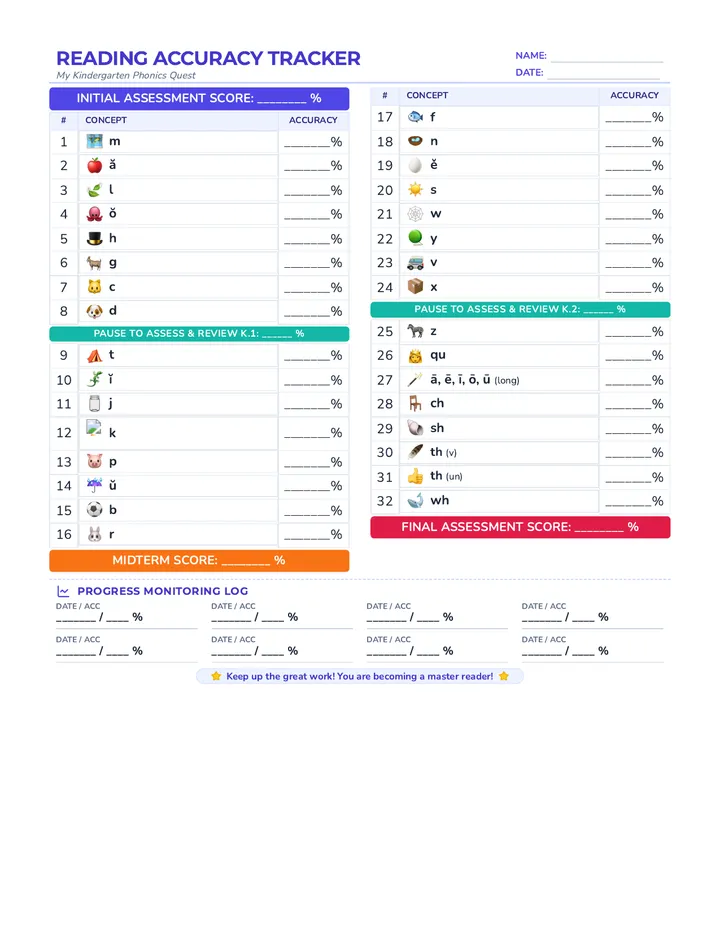
A comprehensive kindergarten writing unit focused on stating opinions and supporting them with a reason using the word 'because'. Students explore personal preferences, compare options, and learn to communicate their thoughts clearly through drawing and writing.
A comprehensive 10th-grade ELA unit on Marjane Satrapi's 'Persepolis', focusing on visual literacy, character development, and the historical context of the Iranian Revolution. Students will explore how the graphic novel medium conveys complex emotional and thematic depth.
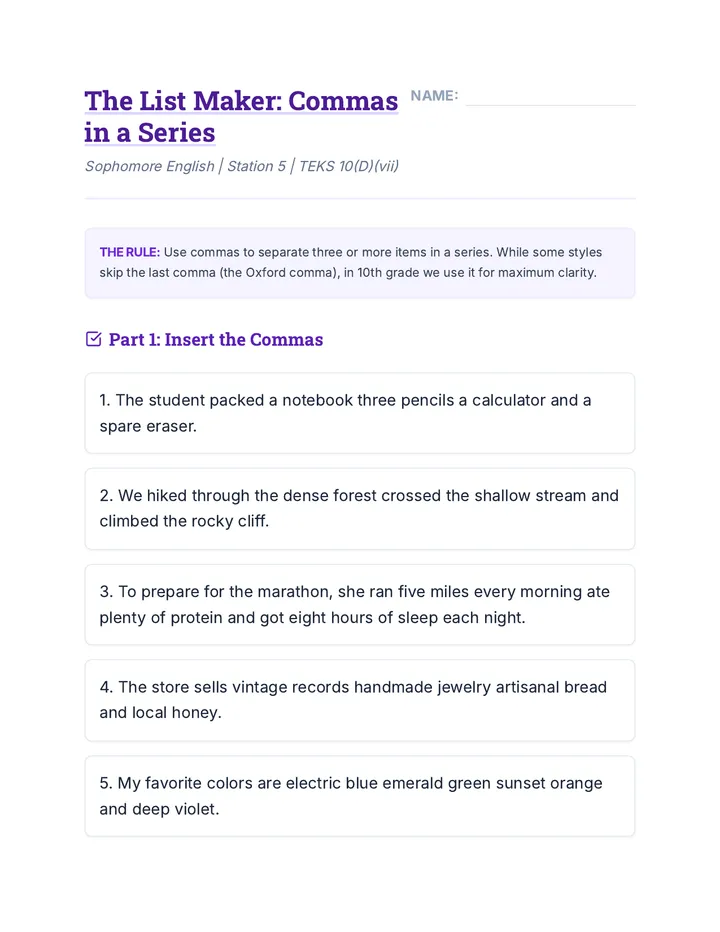
A short unit focusing on the power of punctuation, specifically the Oxford comma, to prevent ambiguity and the role of appositives in sentence structure.
This sequence teaches 5th-grade students how to leverage Text-to-Speech (TTS) technology as a powerful revision and proofreading tool. Students transition from using TTS as a reading accommodation to using it as an active editing strategy, discovering how hearing their own writing helps identify errors that the eye often misses.
A 12th-grade sequence exploring the transformative power of Text-to-Speech (TTS) as a tool for writing revision, rhetorical analysis, and research management. Students move from basic error detection to analyzing the rhythm of their own persuasive prose.
A comprehensive 11th-grade sequence focused on advanced annotation and highlighting techniques for research synthesis. Students progress from evaluating single-source credibility to cross-referencing multiple perspectives and drafting a literature review using a synthesis matrix.
A comprehensive 5th-grade lesson on mastering 'there', 'their', and 'they're' using the Substitution Test strategy. Students role-play as 'Grammar Doctors' to diagnose and treat errors in text.
A series of lessons focused on mastering frequently confused homophones through visual color-coding and active participation.
A first-grade grammar sequence focusing on the formation of contractions through a creative 'Word Surgery' theme. Students progress from identifying word pairs to physically 'operating' on words to insert apostrophes.
A Kindergarten ELA sequence where students become 'Word Wizards' to learn how pronouns and verbs combine into contractions. Students explore 'I'm', 'he's', 'she's', 'it's', 'we're', and 'they're' through magic-themed activities, crafts, and games.
A 4th-grade grammar unit focused on identifying and using direct and indirect objects through game-based simulation and creative writing. Students learn the mechanics of action transfer in sentences using a 'logistics' and 'delivery' theme.
A comprehensive 6th-grade ELA sequence exploring the mechanics of direct and indirect objects. Students transition from identifying basic transitive action to manipulating complex sentence patterns and applying these structures in narrative writing using a 'Sentence Logistics' theme.
A writing workshop sequence focused on the practical application of homophones in composition. Students move from error identification in anonymous samples to mastering high-frequency homophones and performing peer edits, culminating in a comprehensive proofreading assessment.
A 9th-grade ELA sequence focused on mastering high-frequency homophones through a professional editing lens. Students move from diagnostic analysis to peer review and self-reflection, developing metacognitive strategies for grammatical precision in formal writing.
A 12th-grade sequence exploring the social, psychological, and linguistic implications of homophone errors in the digital age, focusing on credibility and the evolution of language.
A 1st-grade writing sequence that teaches homophones through functional writing tasks and the 'Think-Write-Check' strategy. Students move from simple sentence starters to writing short narrative reports and creative stories.
A comprehensive sequence for 4th graders to master high-frequency homophones including there/their/they're, to/too/two, your/you're, its/it's, and whose/who's through a detective-themed exploration of grammar cues.
A 5th-grade sequence focused on mastering frequently confused homophones and homonyms. Students progress from basic grammar functions to advanced academic vocabulary and proofreading skills, ending with a creative narrative assessment.
A 5-lesson sequence for 8th-grade students focused on mastering high-frequency homophones (their/there/they're, to/too/two, its/it's, your/you're) in academic writing. Students progress from diagnostic analysis to peer editing, emphasizing how grammatical accuracy impacts credibility.
A rigorous writer's workshop sequence targeting homophone accuracy in formal writing. Students master common and advanced homophones through grammatical analysis and peer-editing cycles.
A rigorous, inquiry-based unit for 6th graders exploring how grammatical context and parts of speech dictate the spelling of homophones. Students analyze sentence structure, use replacement tests, and construct their own context-rich writing to master word choice.
A 5th-grade sequence focused on the practical application of homophone knowledge through proofreading and editing. Students analyze real-world errors, create editing checklists, and engage in peer review to understand the importance of spelling precision for clear communication.
A simulation-based ELA sequence where 7th-grade students act as junior copywriters for a marketing firm, learning the professional importance of homophone and homonym precision through real-world case studies and document editing.
A systematic sequence for 5th-grade students to master high-frequency homophones including there/their/they're, to/too/two, and possessive vs. contraction pairs through direct instruction and writing application.
A 5-lesson sequence for 3rd graders on editing and refining speech-to-text dictation. Students take on the role of 'Robot Editors' to detect errors, fix homophones, and apply punctuation to dictated drafts.
Students explore how contractions affect the 'voice' of a sentence, making it sound more natural and conversational. This 5-lesson sequence guides 1st graders from identifying stiff 'robot' speech to editing and publishing their own stories with smooth sentence flow.
A 1st Grade sequence focused on identifying and categorizing contractions into word families like 'will', 'are', and 'not'. Students act as detectives to discover patterns and rules for shrinking words using apostrophes.
A systematic ELA sequence for Kindergarten students exploring how to form negative contractions with 'not'. Students learn the pattern of replacing 'o' with an apostrophe through hands-on simulations, games, and sentence building.
A whimsical journey for Kindergarteners to understand the apostrophe as a letter-replacing mark. Through storytelling, puppets, and 'surgery', students master the concept of contractions by visualizing the apostrophe as a placeholder for missing letters.
A 4th-grade ELA sequence where students act as professional copyeditors to master homophones. Students learn systematic proofreading strategies, focusing on precision, logical reasoning, and collaborative editing.
An 8th-grade ELA unit that frames homophone mastery as a professional essential. Students act as a copy editing firm, analyzing the financial and reputational costs of homophone errors through real-world simulations, resume reviews, and newsroom scenarios.
A 5-lesson unit for 3rd graders on identifying and correcting speech-to-text recognition errors. Students learn to spot homophones, enunciation errors, missing words, and context-based mistakes to become expert editors of their own dictated work.
A sequence for 10th-grade students focused on building sensory visualization skills. Students progress from identifying sight and sound imagery to constructing complex mental maps of settings and characters, using a cinematic 'Mind Cinema' theme to make internal processes concrete.
A comprehensive 4th-grade ELA sequence that teaches students to distinguish phrases from clauses, understand independent and dependent structures, and combine them into complex sentences using a 'Writing Architect' theme. Students progress from diagnosing fragments to revising narratives for improved flow and variety.
A 5-lesson unit on misplaced and dangling modifiers for 7th grade, using humor and visual imagery to help students identify and correct grammatical ambiguity. Students progress from basic identification to complex revision in context.
A comprehensive 8th-grade grammar sequence focusing on the identification and correction of misplaced, limiting, and squinting modifiers to ensure sentence clarity and precision.
This sequence introduces the fundamental relationship between modifiers and the words they describe. Students begin by identifying basic adjectives and adverbs, then progress to prepositional phrases, learning that proximity determines meaning in English syntax. Through a workshop model, students practice moving modifiers within sentences to observe how meaning shifts based on placement. By the end of the sequence, students will be able to identify misplaced modifiers in simple sentences and rewrite them for logical clarity.
A rigorous 9th-grade grammar sequence focusing on modifiers as tools for sentence craftsmanship. Students move from identifying noun-modifier targets to mastering prepositional, participial, and adjectival clauses, culminating in a descriptive writing project.
Students move beyond simple preposition identification to understanding how these words enhance descriptive writing. They analyze mentor texts, use sensory cues, and master sentence variety to paint vivid pictures for their readers.
A comprehensive 3rd-grade grammar sequence focusing on the structure and function of prepositional phrases. Students move from identifying the 'formula' (Preposition + Object) to using phrases for sentence expansion and navigating subject-verb agreement challenges.
A 3rd-grade grammar sequence focusing on temporal prepositions (before, after, during, until, etc.) to help students order events in narratives and instructions. Students progress from distinguishing time vs. space prepositions to applying them in their own procedural and narrative writing.
A 5-lesson 3rd-grade grammar sequence focused on spatial prepositions. Students progress from kinesthetic movement to visual mapping and descriptive writing, mastering words that describe where objects are located relative to one another.
A rigorous editorial workshop sequence for 10th-grade students focusing on the mechanics of modifiers, ranging from basic identification to complex editorial simulations and mastery-based assessment.
A 1st-grade writing sequence that teaches students how to use prepositional phrases to expand simple sentences, focusing on 'where' and 'when' details.
A project-based ELA sequence for 1st Grade students focusing on prepositions. Students analyze picture books, design a 'dream playground', and use spatial language to describe relative positions in their designs.
A 4th-grade grammar sequence focusing on temporal and logical prepositions. Students move from basic time sequencing to complex logical analysis and syntax mastery through a detective-themed 'Grammar Lab' approach.
A comprehensive 4th-grade writing sequence focused on using prepositional phrases to expand sentences, improve variety, and enhance descriptive writing. Students move from basic expansion drills to crafting and revising a descriptive paragraph, mastering both the grammar and mechanics of prepositions.
A 5-lesson unit for 4th graders on using prepositions and prepositional phrases to describe spatial relationships, culminating in a creative map-making and navigation project.
A specialized sequence for 12th-grade students focusing on the transition from mechanical speech-to-text to high-level academic composition. Students master cognitive strategies, outlining for voice, technical citation commands, and auditory revision techniques to produce rigorous academic papers without keyboard reliance.
This sequence teaches 4th-grade students how to transition from 'speakers' to 'editors' when using voice recognition software. Students learn to identify common AI errors, navigate homophone confusion, and use text-to-speech tools for proofreading to create polished final drafts.
A comprehensive sequence designed for 6th-grade students to master the art of editing and refining text produced by speech recognition software. Students act as 'Digital Detectives' to identify AI glitches, apply systematic editing workflows, and format raw transcripts into professional documents.
A comprehensive project-based sequence for 11th-grade students to master academic composition using speech recognition technology. Students learn to outline for oral delivery, manage the drafting process, and refine dictated text into professional academic essays.
This 5-lesson sequence guides 7th-grade students through the process of writing academic essays using speech-to-text assistive technology. It covers the entire writing process from rapid brainstorming and outlining to drafting, structuring arguments, and final formatting, all using voice commands.
This sequence teaches 11th-grade students how to use dictation (voice-to-text) to draft structured, high-quality academic essays. It moves from cognitive planning and outlining to specialized skills like dictating citations, transitions, and editing for formal tone.
A project-based sequence for 10th-grade students focusing on using dictation technology to compose academic arguments. Students learn brainstorming, complex sentence structure, citation integration, and revision through voice.
A specialized sequence for 2nd-grade students focusing on identifying and mapping cause-and-effect relationships using visual organizers. This series scaffolds from physical role-play to analyzing informational texts and creating complex event chains.
A 5-lesson sequence designed to help 4th-grade students, particularly those with executive function challenges, master sequential writing through the use of flow charts and structured graphic organizers. Students transition from understanding the necessity of order to drafting and testing their own 'How-To' procedural texts.
This sequence helps 6th-grade students with executive functioning needs transition from brainstorming to structured expository writing. Using the 'Blueprint for Writing' theme, students master visual organizers like web maps, table structures, and Venn diagrams to draft coherent informational articles.
This sequence supports 3rd-grade students in the pre-writing and drafting process using text structure graphic organizers. Students learn to deconstruct model texts, brainstorm using topic webs, and plan sequential paragraphs before drafting their final pieces.
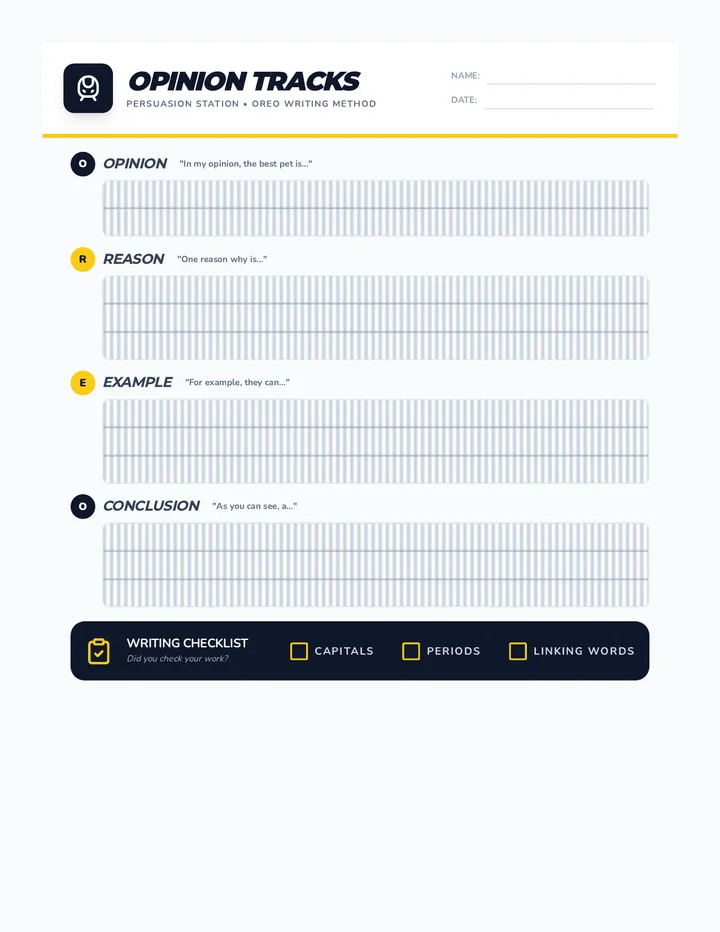
A Kindergarten sequence focused on teaching the structure of opinion writing through a visual sandwich graphic organizer. Students learn to distinguish facts from opinions, use the word 'because' to link reasons, and present their preferences clearly.
A first-grade sequence that introduces cause and effect through physical exploration, narrative analysis, and informational texts, concluding with a creative comic project. Students learn to use signal words like 'because' and 'so' to connect events and outcomes.
A project-based unit where 3rd-grade students master the use of articles (a, an, the) through the creation of a 'Field Guide to Strange Creatures'. Students analyze how articles introduce and specify subjects in informational texts, culminating in a professional-grade descriptive writing project.
A 5-lesson sequence for 3rd graders focusing on the phonetic rules of indefinite articles 'a' and 'an', moving from sound identification to mastery in complex sentences.
A comprehensive sequence for 4th graders to master the use of indefinite articles 'a' and 'an' based on phonetic sounds. Students progress from sound identification to complex exceptions and editing skills.
A technical grammar sequence for 5th graders focusing on phonetic exceptions for 'a' and 'an'. Students move from basic vowel sound awareness to handling silent letters and acronyms, culminating in a proofreading challenge.
A 5th-grade ELA sequence exploring how the choice of articles (a, an, the) shifts meaning and tone in headlines, geography, science, and persuasion. Students move beyond simple grammar rules to analyze the semantic impact of these 'tiny' words.
A workshop-style grammar sequence for 5th graders focusing on the stylistic power of articles (a, an, the). Students move from analyzing mentor texts to drafting and revising descriptive scenes, learning how articles control reader focus and specificity.
A 1st Grade sequence exploring the function of definite and indefinite articles through inquiry, simulation, and narrative sequencing. Students learn to distinguish between general items and specific references.
A Kindergarten ELA sequence focused on identifying and using action verbs to build simple sentences. Students progress from oral matching to illustrating and writing their own action-oriented sentences.
A newsroom-themed sequence where 7th-grade students master the art of writing clearly and concisely through journalistic techniques like the inverted pyramid, headline writing, and lead paragraph construction.
A series of detective-themed spelling units for 4th grade, focusing on complex digraphs, blends, and vowel patterns through investigative activities.
This workshop-style sequence equips 9th-grade students with essential keyboard shortcuts for academic writing and editing, moving from basic cursor navigation to advanced document formatting and review.
A 3rd-grade project-based sequence where students use speech-to-text assistive technology to draft, develop, and publish a creative narrative. This sequence focuses on overcoming writing barriers and expanding expressive vocabulary through dictation.
This sequence introduces 2nd-grade students to grammatical mood through the functions of statements, questions, and commands. Students use a 'News Bureau' theme to explore how verb forms change based on whether they are reporting facts, asking for info, or giving orders.
A 3rd-grade grammar sequence focusing on the indicative, interrogative, and imperative moods. Students become 'Voice Scientists' in a lab setting, experimenting with how verb placement and punctuation change the intent of a sentence.
An advanced 10th-grade grammar sequence focusing on the linguistic logic and professional application of adjectives and adverbs. Students act as forensic editors to master modification hierarchies, degrees of comparison, and predicate adjectives.
This 10th-grade ELA sequence explores the rhetorical power of adjectives and adverbs in narrative writing, moving from basic identification to the intentional manipulation of tone, clarity, and precision through modifier selection and placement.
A comprehensive Kindergarten ELA unit focused on mastering future tense with 'will' and common irregular past tense verbs. Students use narratives, timelines, and role-play to explore how language describes different points in time.
A comprehensive graduate-level sequence focused on the professional revision process, moving from macro-structural diagnosis to micro-level prose polishing and final market positioning. Students develop the critical distance necessary for high-level editorial work and MFA-style workshops.
A comprehensive sequence for 7th graders focusing on mechanical accuracy through the mastery of frequently confused homophones. Students move from diagnostic assessment to applied narrative writing, focusing on grammatical functions like possessives vs. contractions and noun-verb distinctions.
This sequence focuses on the practical application of homophone mastery through the lens of editing and professional communication. Students diagnose errors, master high-frequency triads, tackle advanced vocabulary, and apply their skills in real-world professional contexts before concluding with a peer-editing workshop.
A comprehensive 3rd-grade sequence focused on mastering the most common homophones (there/their/they're, to/too/two, and its/it's) through a workshop and case-study approach. Students move from rule acquisition to professional-level editing and original sentence construction.
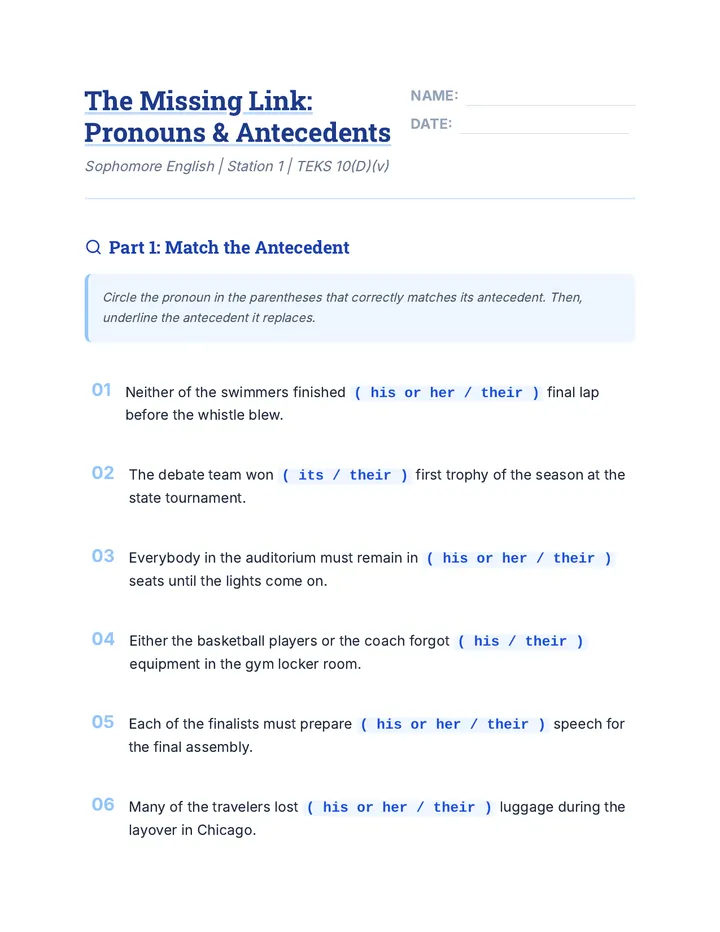
A 12th-grade ELA sequence exploring the intersection of grammar and creative writing, focusing on how pronouns and antecedents shape narrative perspective, suspense, and character clarity.
An advanced 12th-grade sequence exploring the rhetorical impact of pronoun choice and antecedent manipulation in political discourse, literature, and persuasion. Students move beyond basic grammar to analyze how "we," "you," and "they" shape identity, power, and perspective.
An advanced 12th Grade English Language Arts sequence focused on the technical challenges of pronoun-antecedent agreement. Students apply mathematical-style logic to solve complex syntax puzzles, mastering indefinite pronouns, proximity rules, intervening phrases, and case distinction.
A 12th-grade ELA sequence exploring the linguistic evolution of pronoun-antecedent agreement, focusing on the singular 'they', modern style guide standards, and professional inclusivity. Students transition from historical inquiry to practical application and future prediction.
An advanced 12th-grade sequence on the rhetorical application of modifiers. Students progress from correcting syntactical errors (misplaced/dangling modifiers) to mastering stylistic control, focusing on precision, economy of language, and the impact of modifiers on tone and pacing in professional writing.
This sequence guides 5th-grade students through the nuances of adjectives and adverbs, focusing on their specific functions in sentences. From distinguishing foundational differences to mastering complex modifiers and correcting common errors, students conclude by revising their own writing for high-resolution descriptive precision.
A comprehensive unit on misplaced and dangling modifiers using a 'Linguistic Detective' theme. Students progress from intuitive ear-testing to technical categorization and stylistic analysis of split infinitives, culminating in a mastery escape room challenge.
A 7th-grade grammar sequence focusing on misplaced modifiers through a 'Syntax Surgery' theme. Students move from diagnosing structural issues to performing linguistic surgery and constructing complex, clear sentences.
This workshop-style sequence for 8th Grade students focuses on misplaced and dangling modifiers within descriptive writing. Students move from analyzing mentor texts to drafting, expanding, and peer-editing their own narrative scenes to ensure clarity and precision.
A comprehensive 4th-grade grammar sequence focusing on the identification and differentiation of direct and indirect objects. Using a 'Grammar Garage' theme, students build, repair, and map sentence structures through five hands-on lessons.
This foundational sequence introduces 8th-grade students to the grammatical mechanics of active and passive voice. Students move from identifying agents of action to mastering the conversion of sentences, ultimately applying these skills to improve the clarity and impact of their own writing.
A comprehensive 7th-grade writing unit focused on the mechanics of active and passive voice. Students learn to identify agents of action, use the 'Zombie Test' for diagnosis, and intentionally construct or revise sentences for clarity and impact across five progressive lessons.
This sequence explores the rhetorical and stylistic implications of choosing active or passive voice. Students learn to use voice intentionally across different genres—media, science, mystery, and persuasion—to influence reader perception and focus.
A comprehensive 5-lesson sequence designed to move 9th-grade students from basic identification of active and passive voice to sophisticated rhetorical use and revision in their own writing.
A comprehensive 8th-grade grammar unit focusing on the structural mechanics of active and passive voice. Students move from identifying agents of action to mastering the 'to be + past participle' formula and transforming sentences while maintaining tense consistency.
A structured 5-lesson sequence for 7th-grade students to master active and passive voice. The sequence follows an investigative theme, moving from identifying agents to performing 'sentence surgery' for voice conversion.
This sequence explores the rhetorical power of active and passive voice in media, politics, and public relations. Students move from basic grammatical mastery to analyzing how sentence structure can obscure agency, deflect responsibility, and shape public perception of truth and bias.
This sequence explores active and passive voice as sophisticated stylistic tools rather than rigid rules. Students learn to use active voice for narrative vigor and passive voice for scientific objectivity and structural cohesion in academic writing.
A comprehensive writing workshop that moves 9th-grade students from basic recognition of active and passive voice to stylistic mastery, focusing on clarity, vigor, and intentional rhetorical choices.
This sequence guides 10th-grade students through the transition from passive to active voice to improve the clarity, authority, and concision of their writing. Students progress from basic grammatical identification to rhetorical analysis and final editorial revision of their own drafts.
This sequence teaches 6th-grade students to master the passive voice in formal reporting. Students move beyond basic grammar to understand the strategic use of passive voice in science, journalism, and process writing.
A college-preparatory sequence for 11th grade ELA focusing on the rhetorical and strategic implications of active and passive voice. Students move beyond basic identification to understand how voice choice shapes agency, objectivity, and political narrative.
A project-based sequence for 9th-grade students exploring the rhetorical power of active and passive voice. Students move from basic identification to analyzing how voice affects accountability in news and politics, and eventually master the use of strong, vivid verbs to enhance their writing style.
This 9th-grade grammar sequence explores the functional roles of action, linking, and helping verbs. Through inquiry and analysis, students learn to distinguish between verb types, understand the nuances of modality, and evaluate how verb choice impacts tone and pacing in literature.
A comprehensive 6th-grade ELA sequence focused on the functions and categories of verbs. Students move from basic action identification to the sophisticated use of linking and helping verbs to enhance their writing.
A project-based grammar sequence for 8th graders focusing on verb precision, active/passive voice, and the impact of verb connotation on tone and persuasion.
A comprehensive unit for 4th-grade students covering simple and progressive verb tenses, as well as indicative, interrogative, imperative, and conditional moods through a mix of detective-themed inquiries and workshop-style practice.
An advanced inquiry into the rhetorical power of active and passive voice, exploring how grammatical choices influence agency, responsibility, and narrative focus across media, science, and literature.
A writing workshop sequence for 11th graders focusing on the intentional use of active and passive voice to enhance clarity, conciseness, and cohesion in academic writing.
A comprehensive workshop series for undergraduate students focusing on the strategic use of active and passive voice in academic writing. Students move from basic diagnostics of 'bureaucratic bloat' to sophisticated paragraph-level cohesion and discipline-specific conventions.
A high-school level sequence exploring the nuances of the passive voice in academic and journalistic contexts, focusing on agentless passives, impersonal structures, and causative forms to enhance objectivity.
A comprehensive unit on the subjunctive mood, focusing on formal suggestions, demands, and wishes in high-level academic and professional communication. Students engage in simulations and formal writing to master complex grammatical structures.
An advanced English grammar sequence for 8th graders focusing on the nuances of agency and objectivity through advanced passive voice structures, culminating in an investigative journalism project.
A 3rd-grade sequence exploring how different long vowel spellings create homophones with distinct meanings. Students progress from auditory matching to creative comic production.
An advanced exploration of Free Indirect Discourse (FID) for graduate students, tracing its development from 19th-century realism to high modernism. The sequence focuses on linguistic markers, the 'double-voiced' nature of narration, and the breakdown of the boundary between objective and subjective experience.
This workshop-style sequence for 10th Grade Advanced English focuses on the rhetorical power of sentence inversion and cleft sentences. Students will transition from standard syntax to sophisticated grammatical structures used in persuasive writing and public speaking.
A comprehensive 8th-grade grammar sequence focusing on mixed conditionals, the subjunctive mood, and inverted conditionals through the lens of history, policy, and formal debate. Students master hypothetical language to enhance their persuasive and academic writing.
A comprehensive sequence designed for 10th-grade students to master the art of scholarship essay writing. Students will move from analyzing successful essays and identifying their own unique narratives to drafting a versatile 'master essay' and learning how to adapt it for various prompts and word counts.
This sequence teaches 8th-grade students to master voice recognition technology as a tool for formal essay writing. It focuses on the transition from oral brainstorming to sophisticated composition and auditory revision.
An advanced punctuation sequence for 8th Grade students focusing on the formal applications of hyphens, en-dashes, em-dashes, and ellipses. Students act as editors to master technical writing conventions, clarify ambiguity, and use ellipses ethically in research.
A comprehensive 8th-grade ELA unit focusing on the rhetorical and stylistic impact of dashes, hyphens, and ellipses. Students move from analysis of mentor texts to practical application, culminating in a revision project that demonstrates how punctuation controls narrative pacing and voice.
A skills-focused grammar sequence for 7th graders focusing on the functional and stylistic uses of hyphens, dashes, and ellipses. Students learn to use these marks to improve clarity in compound modifiers, create dramatic emphasis, and control narrative pacing.
A comprehensive 6th-grade ELA sequence exploring the functional and stylistic uses of hyphens, en-dashes, em-dashes, and ellipses to enhance voice and clarity in writing.
An advanced ELA sequence for 12th graders focused on the rhetorical and syntactic power of adjectives. Students progress from analyzing connotation and nuance to mastering complex structures like cumulative, coordinate, and compound adjectives, ultimately refining their own prose for economy and sensory precision in college-level writing.
A high-energy, gamified unit where 4th graders act as 'Master Builders' to master the identification, categorization, and formation of open, closed, and hyphenated compound words.
A 4th-grade ELA sequence where students become 'Word Detectives' to investigate the structure, types, and meanings of compound words using context clues and grammatical analysis.
A comprehensive 7th-grade spelling sequence exploring prefix assimilation (chameleon prefixes) and structural analysis. Students learn the logic behind double consonants and hyphenation rules through inquiry, game-based learning, and linguistic decoding.
This sequence transforms students into professional copyeditors by teaching systematic workflows for mechanical formatting. Students move from manual error detection to automated tool mastery, culminating in a high-stakes proofreading simulation.
This sequence targets the sophisticated use of punctuation and capitalization to control syntax, rhythm, and nuance in undergraduate writing. Students move from basic correctness to stylistic mastery, using mechanics as tools for formatting complex ideas.
This sequence moves students beyond basic punctuation rules to understanding the rhetorical impact of mechanics on voice and pacing. Students analyze complex texts to see how authors use semicolons, colons, em-dashes, and ellipses to control reader attention and sentence rhythm, culminating in a stylistic rewrite challenge.
This sequence explores advanced punctuation as a tool for rhetoric and style. Students analyze how authors use semicolons, colons, dashes, and varied capitalization to control pacing, tone, and emphasis in literary and political texts.
This sequence explores the mechanics of academic manuscript formatting, comparing MLA and APA styles. Students learn how standardized formatting protects intellectual property and facilitates scholarly communication through precise manuscript setup, citation punctuation, and bibliographic construction.
A comprehensive 10th-grade sequence on formatting dialogue and narrative mechanics. Students master quotation marks, paragraphing for multiple speakers, em-dashes for interruptions, and formatting internal thoughts to enhance clarity and pacing in creative writing.
A comprehensive exploration of advanced punctuation as a tool for rhetorical control. 10th-grade students learn to manipulate semicolons, colons, em-dashes, and hyphens to control pacing, emphasis, and tone in their writing.
This 6th-grade ELA sequence guides students through the use of commas, parentheses, and dashes to set off parenthetical elements. Students investigate the rhetorical impact of each mark and learn to make intentional stylistic choices in their writing.
An advanced rhetorical study of foreign words and expressions in professional and literary contexts, focusing on the tension between prestige and alienation. Students move from technical mechanics and common misuses to analyzing code-switching in literature and designing corporate style policies.
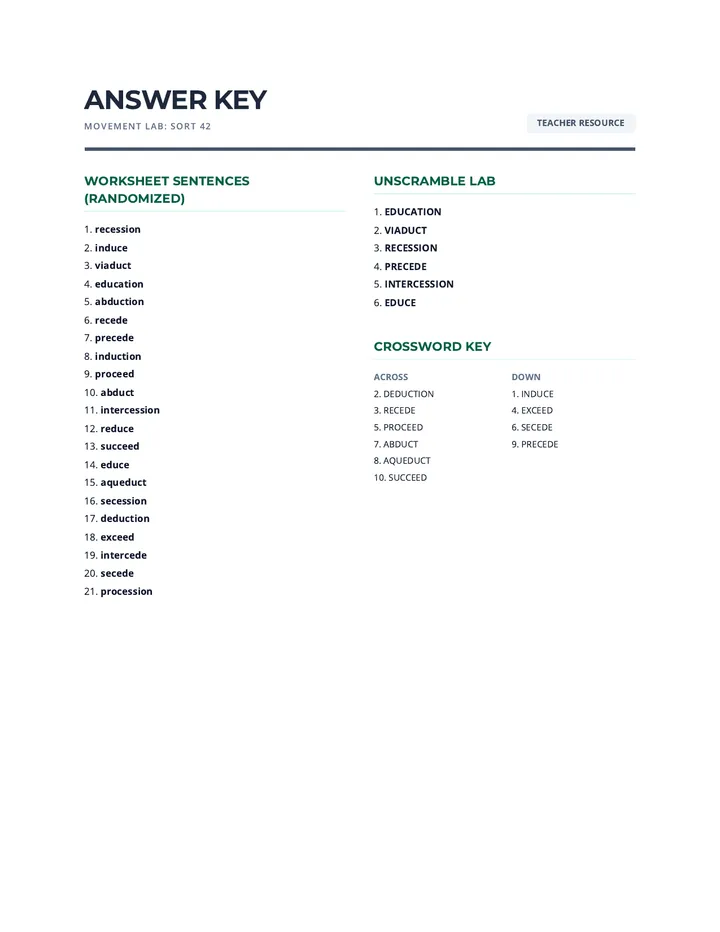
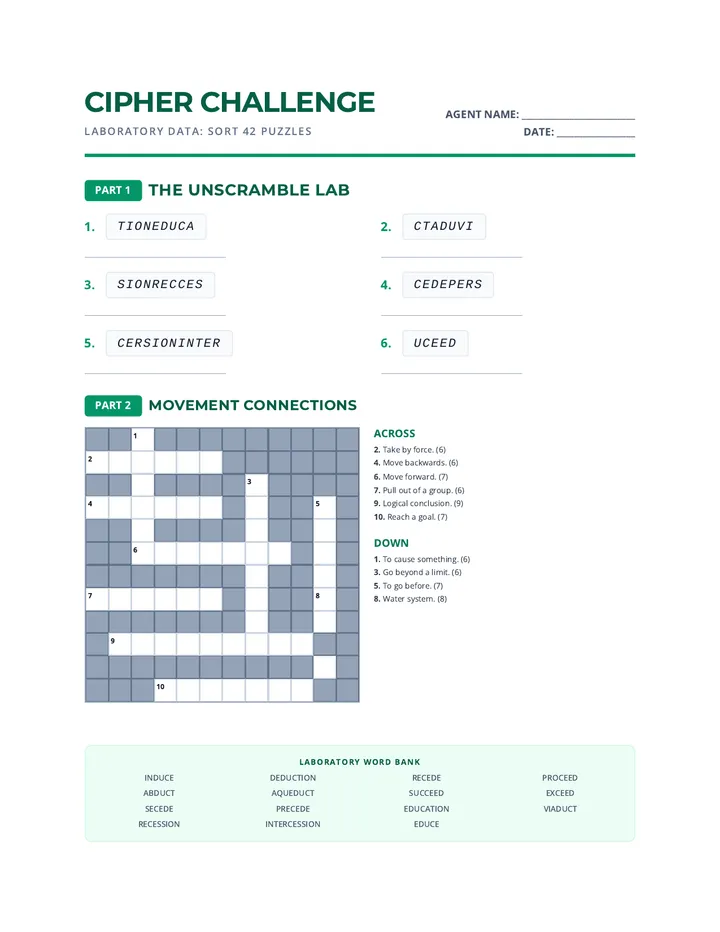
This sequence explores the nuances of language through lexicography, etymology, and specialized reference materials, moving from historical word analysis to intentional stylistic choices in writing.
A comprehensive unit for 9th-grade students on integrating Latin phrases into formal writing and argumentation. Students transition from understanding basic abbreviations to applying complex rhetorical and legal terms in a culminating persuasive editorial.
A simulation-based sequence where students act as communications professionals, exploring the real-world impact of homophone accuracy in business and digital environments. Students master common homophones while developing professional writing skills and audience awareness.
A 1st-grade grammar sequence focusing on identifying and writing common abbreviations for titles, days, months, and street names. Students use the 'Word Shrinking Machine' concept to understand how to shorten words while maintaining their meaning.
A comprehensive 1st-grade sequence exploring common abbreviations for titles, days, months, and street names through a "Shortcut Squad" spy theme. Students learn the mechanics of capitalization and punctuation (the period) to decode and encode shorter forms of words.
This mastery-based sequence teaches 5th-grade students the mechanics of editing and proofreading abbreviations, focusing on punctuation, capitalization, and style consistency through a newsroom-inspired 'editor's eye' lens.
This inquiry-based sequence explores the nuances of acronyms, initialisms, and Latin-based abbreviations found in informational text. Students investigate the origins of these terms, distinguish between those pronounced as words versus individual letters, and produce an informational guide for their peers.
A 5th-grade grammar sequence focusing on the standardized abbreviations used in addresses, maps, and postal delivery. Students progress from learning street suffixes and compass directions to mastering state postal codes and formal envelope formatting, culminating in a community map design project.
A comprehensive 5th-grade sequence on abbreviations focusing on personal titles, days, months, and time indicators through a 'Grammar Detectives' theme.
A mastery-based sequence where 4th-grade students act as editors for 'The Daily Dot' newsroom. They learn to proofread for periods, capitalization, context, and ambiguity in abbreviations, culminating in a final manuscript edit to earn their Senior Editor badges.
This sequence explores the social and formal rules of abbreviating titles for people. Using a case-study approach, students analyze formal letters, biographies, and business cards to understand how titles like Mr., Dr., and Gov. establish identity and respect. Students practice identifying these titles and writing them with proper capitalization and punctuation. The sequence concludes with students writing a formal letter to a community leader.
A comprehensive sequence for 4th graders to master abbreviations related to days, months, time (a.m./p.m.), and historical eras through gamified challenges and real-world application.
A 4th-grade sequence focused on the mechanics and application of measurement abbreviations in technical contexts like recipes, science labs, and instructions. Students learn the distinction between customary and metric abbreviation rules through workshop-style activities and culminate in a technical writing project.
This sequence immerses students in the practical application of abbreviations related to geography, mailing addresses, and locations. Through a simulation of a classroom post office, students learn the specific conventions for street suffixes, state codes, and directional markers.
A 5-lesson ELA sequence for 3rd graders focused on identifying and using measurement abbreviations in recipes and technical instructions. Students bridge ELA and math by learning how precision in shorthand (tsp., tbsp., oz., in., etc.) prevents 'baking disasters' and construction errors.
A 3rd-grade grammar sequence that uses a 'Secret Agent' theme to master common abbreviations through game-based learning. Students move from recognition and categorization to punctuation mastery and text expansion.
A 5-lesson sequence for 6th-grade students on mastering dictation editing. Students move from identifying AI errors to mastering voice commands and a hybrid editing workflow that combines voice and manual corrections.
A high-stakes investigative sequence where students act as professional editors to uncover and correct communication failures caused by misplaced and squinting modifiers in news, law, and signage.
This sequence guides 7th-grade students through the process of identifying and correcting misplaced and dangling modifiers. Students move from diagnostic reading to active revision, ultimately applying these grammar skills to their own writing to enhance clarity and flow.
A high-stakes grammar sequence where students act as professional editors, mastering misplaced modifiers to ensure credibility and clarity in legal, technical, and journalistic contexts. Students analyze real-world impacts of ambiguous language and learn to communicate with professional precision.
An advanced 8th-grade grammar sequence focusing on the structural differences between misplaced and dangling modifiers. Students move from inquiry-based discovery to clinical diagnosis and masterful construction of complex sentences.
A game-based grammar sequence where 8th-grade students explore the absurdity of misplaced modifiers. Through visualization, headline analysis, and unscrambling challenges, students master the logic of sentence structure and the importance of syntactical precision.
This sequence guides 6th-grade students through the intricacies of dangling modifiers and introductory phrases. Using a detective-themed 'Mystery' approach, students learn to identify, diagnose, and fix grammatical errors where the subject of a sentence doesn't logically match the opening action.
A simulation-based sequence where students act as professional editors, mastering misplaced modifiers to ensure clarity and credibility in non-fiction writing.
A deep dive into the logic of English grammar through the lens of misplaced modifiers. Students use inquiry and humor to master sentence structure and clarity.
A 5-lesson 6th Grade ELA unit that uses visualization and illustration to help students identify and correct misplaced modifiers, culminating in a gallery walk of 'Before' and 'After' sentence corrections.
A high-level exploration of prosody and sound mechanics for 12th-grade students, focusing on how the auditory elements of poetry—meter, phonemes, and rhyme—subconsciously influence emotional and thematic reception.
An advanced creative writing sequence for graduate students exploring the intersection of sensory perception, linguistic texture, and emotional resonance through the lens of literary theory and craft.
A high-level grammar and rhetoric sequence for 9th-grade advanced students, focusing on negative inversion, cleft sentences, and emphatic structures to enhance persuasive writing and speaking.
A 5-lesson workshop for 7th-grade students on using advanced grammatical structures like inversion, cleft sentences, and fronting to create suspense and dramatic emphasis in narrative writing. Students explore the 'noir' style of mystery and thriller prose to master syntax manipulation.
A mystery-themed ELA sequence for 2nd graders that teaches the use of interrogatives (Who, What, Where, When, Why, How) through a simulated investigation of a missing classroom mascot. Students act as detectives, using specific question words to gather evidence, identify suspects, and solve the case.
A comprehensive first-grade sequence exploring singular and plural nouns. Students learn to distinguish between 'one' and 'more than one' and master the application of -s and -es suffixes through interactive activities, scavenger hunts, and sentence building.
This sequence guides Pre-K students from identifying action words (verbs) in illustrations to constructing simple two-word sentences. Using a 'detective' theme, students explore movement through storytelling, matching games, and creative expression.
This 5-lesson sequence transforms 2nd-grade students into 'Action Agents' as they master the power of verbs. Students progress from physical identification to grammatical precision, exploring subject-verb agreement, simple tenses, and shades of meaning to construct descriptive and accurate sentences.
A comprehensive 3rd-grade grammar unit focusing on action verbs and the three simple tenses (past, present, and future) through the lens of a "Time Traveler" adventure. Students learn to identify actions, conjugate regular verbs, and maintain tense consistency in their writing.
A 5-lesson sequence for 3rd graders on subject-verb agreement, using a space-themed 'Grammar Galaxy' motif to make grammar rules engaging and memorable. Students progress from singular and plural subjects to pronouns and compound subjects, ending in a mastery challenge.
This inquiry-based sequence explores the evolving nature of grammar, specifically addressing the debate around the singular 'they' and gender-neutral language. Students move from analyzing historical style guides to evaluating modern usage in journalism and academia.
A comprehensive 11th-grade grammar sequence focusing on subject-verb agreement in complex sentences. Students progress from identifying intervening phrases to mastering indefinite pronouns, inverted syntax, and collective nouns, culminating in a professional copy-editing simulation.
This 7th-grade sequence explores the evolution of pronouns, focusing on the historical use of the generic 'he,' the transition to 'he or she,' and the modern adoption of the singular 'they.' Students learn to balance grammatical precision with inclusive language through strategies like pluralizing antecedents and navigating various academic style guides.
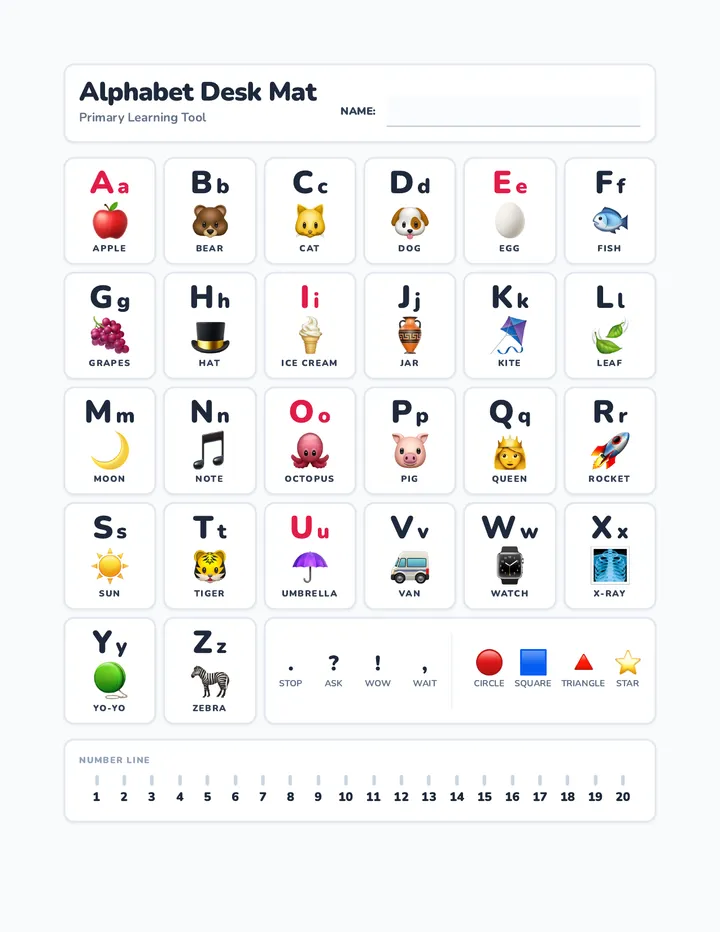
This sequence connects letter recognition to early writing conventions through a project-based approach. Students explore the specific roles of uppercase letters as signals in text, moving beyond simple identification to application in context. The lessons guide students through the rules of capitalization—sentences, names, and the pronoun 'I'—culminating in an editing project where they correct text. This bridges the gap between phonics foundations and writing skills.
Students step into the role of professional editors at 'The Clarity Chronicle,' a top-tier editing agency. Over five lessons, they master the nuance of homophones and frequently confused words by analyzing context, creating mnemonics, and proofreading high-stakes documents to ensure semantic accuracy.
A 5-lesson unit for 7th graders focusing on high-frequency homophones and commonly confused words through the lens of professional editing and journalism. Students move from basic mnemonics to complex grammatical analysis, culminating in a newsroom simulation.
This sequence explores the stylistic impact of pronoun choice, specifically focusing on consistency in person (point of view). Students analyze how shifting from first to second or third person changes the tone and distance of a piece, moving from identifying awkward shifts to making intentional choices in narrative and argumentative writing.
A rigorous grammar workshop focused on pronoun-antecedent agreement in academic editing, moving from basic diagnostics to complex collective nouns and indefinite pronouns.
A first-grade ELA sequence focused on using the conjunctions 'but' and 'because' to express contrast and cause-and-effect relationships. Students move from oral identification to writing complex sentences through inquiry, games, and storytelling.
This sequence explores the technical and structural organization of nonfiction texts. Students act as professional editors, analyzing table of contents, paratextual features like footnotes, data visualizations, and syntactic complexity to understand how information architecture influences readability and impact.
An advanced creative writing sequence for graduate students focusing on the mechanics of interiority, psychological realism, and the rendering of human consciousness through syntax, narrative distance, and subtext.
A lesson sequence exploring the concept of Standard American English as a versatile tool for communication, emphasizing that language varies by context and that all dialects are valid. Students analyze the 'car analogy' from Khan Academy to distinguish between fundamental grammar rules and social conventions.