Word relationships and logical reasoning patterns including synonyms, antonyms, and part-to-whole connections. Builds vocabulary and critical thinking skills through systematic comparison.
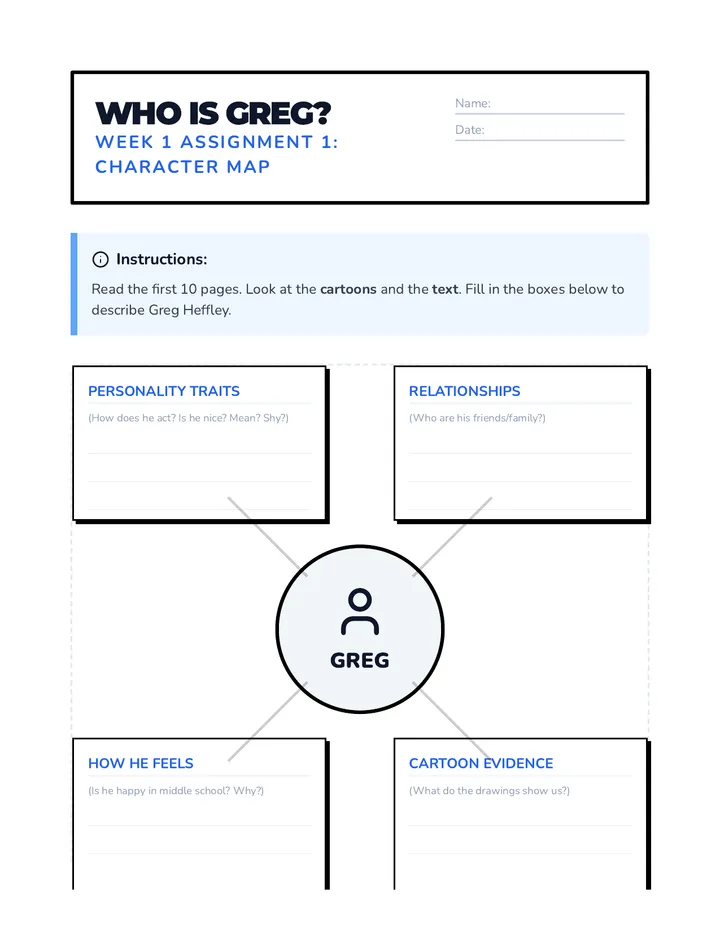
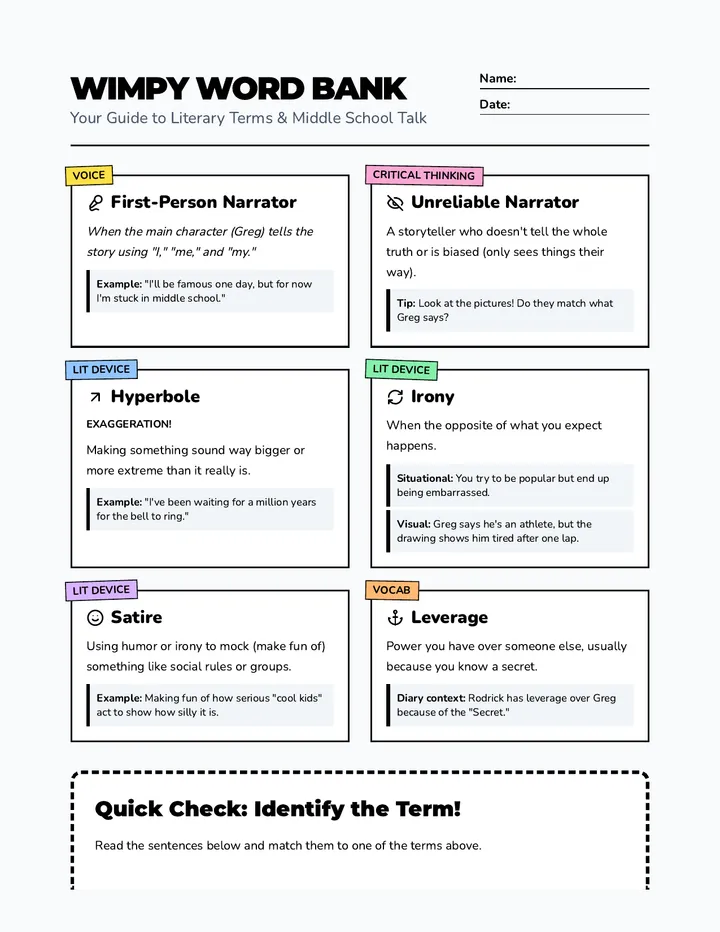
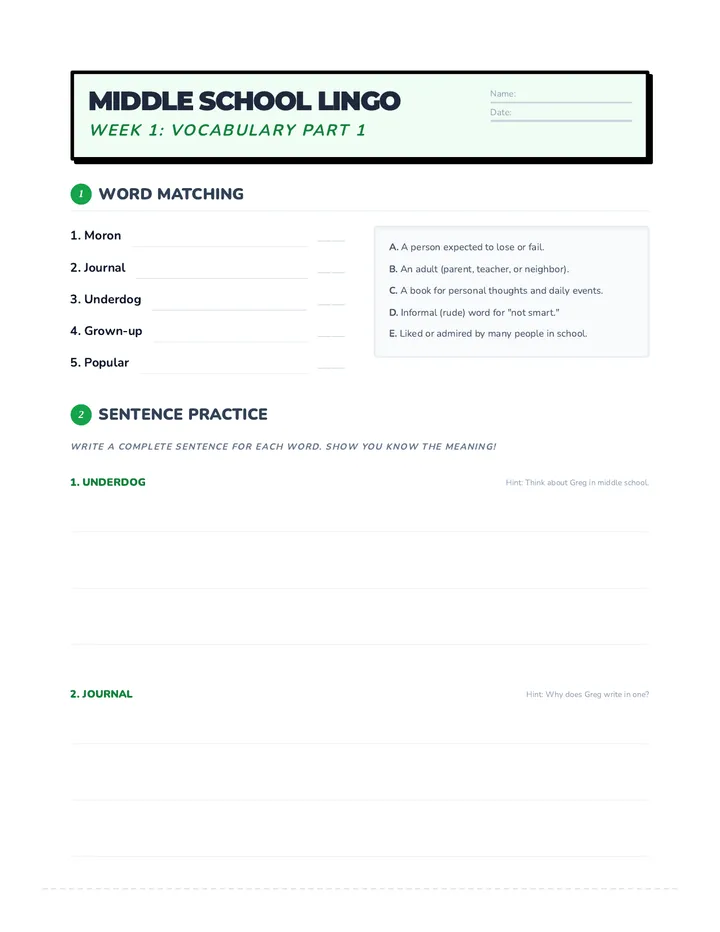
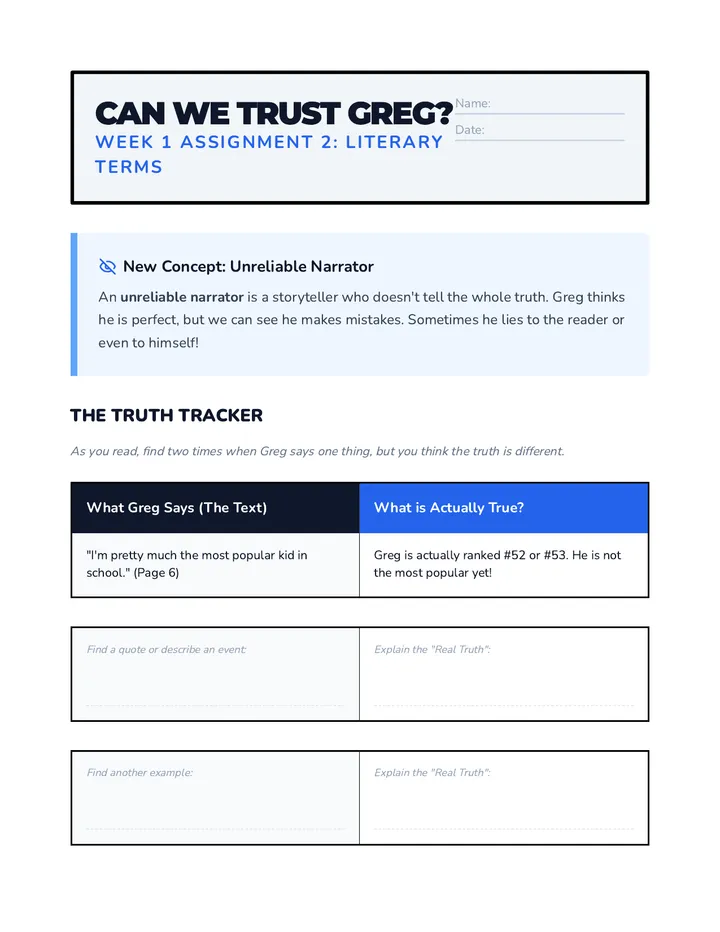
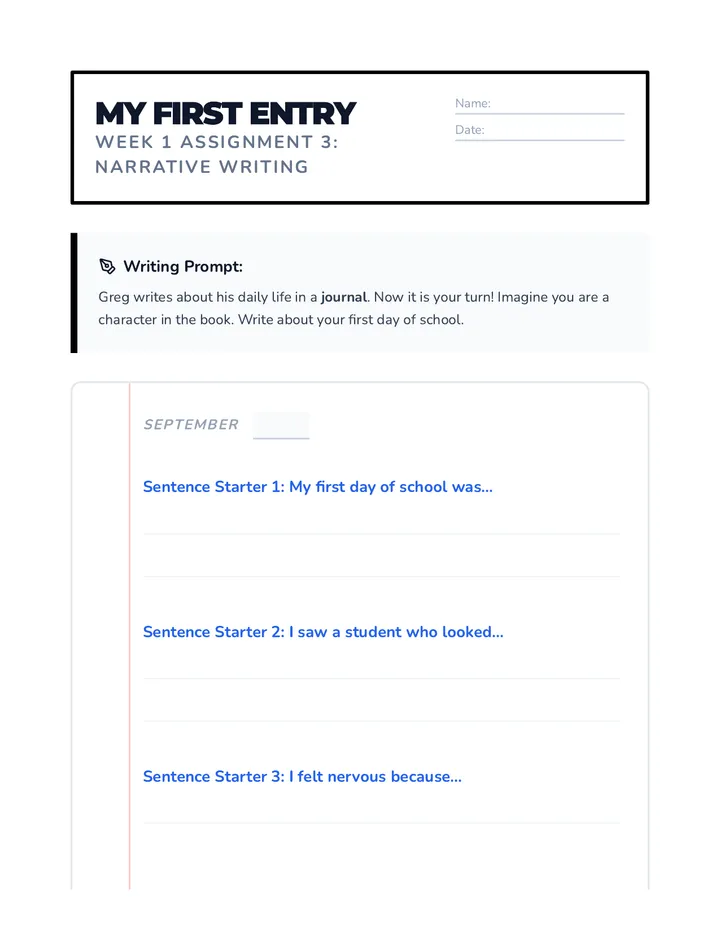
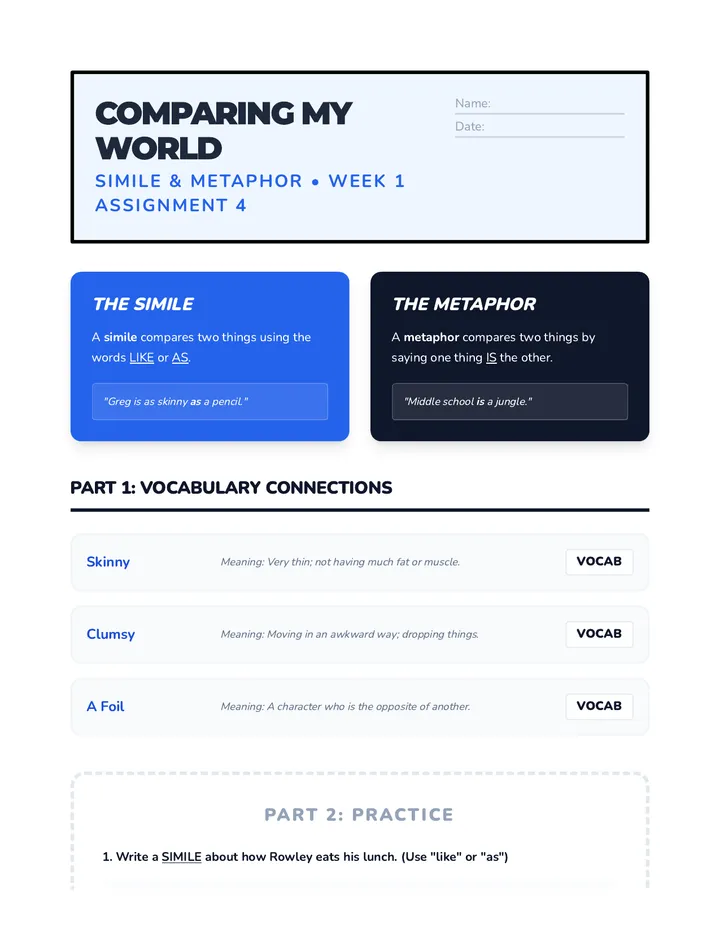
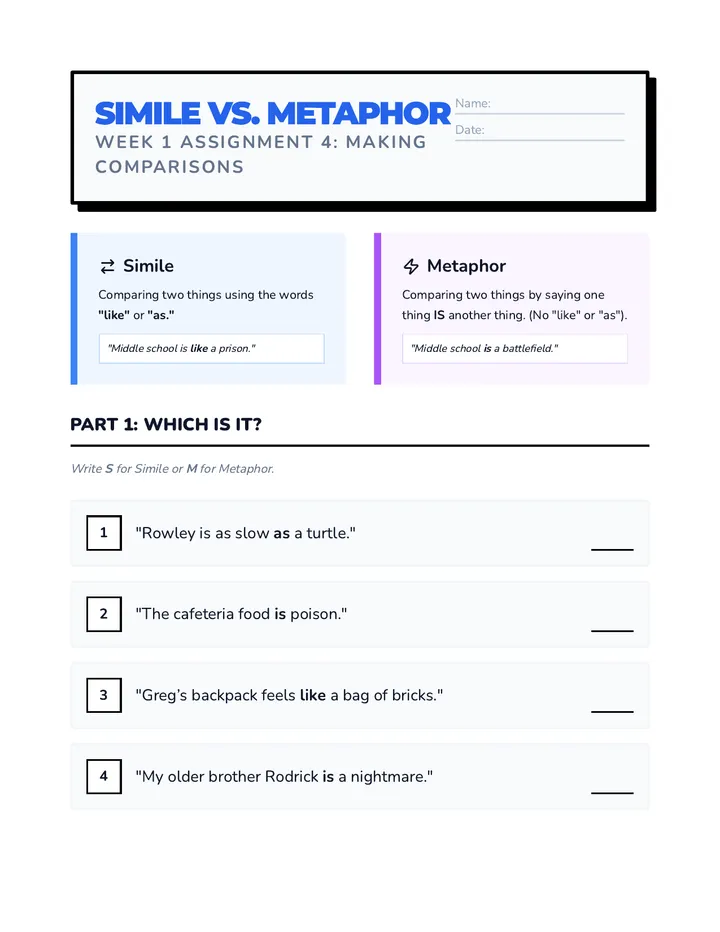
A comprehensive 6-week 8th-grade ELL curriculum split between Book 1 and 'Rodrick Rules'. Students explore narrative voice and a full suite of literary devices (simile, metaphor, alliteration, personification, hyperbole, satire, irony, foreshadowing, symbolism, and oxymoron) through visual literacy and intensive vocabulary building.
A reading comprehension sequence for 4th graders focusing on science and nature. Students will develop skills in text structure, vocabulary analysis, and finding textual evidence through engaging passages about the natural world.
A series of grade-banded NC ELA EOG preparation resources, providing students with standardized strategies for both elementary and middle school assessments.
A 3-day intensive deep dive into the core skills of STAAR English I, focusing on Fiction, Informational, and Argumentative genres through the lens of 'The Architect's Blueprint.' Students analyze how authors construct meaning and apply those structures to their own writing.
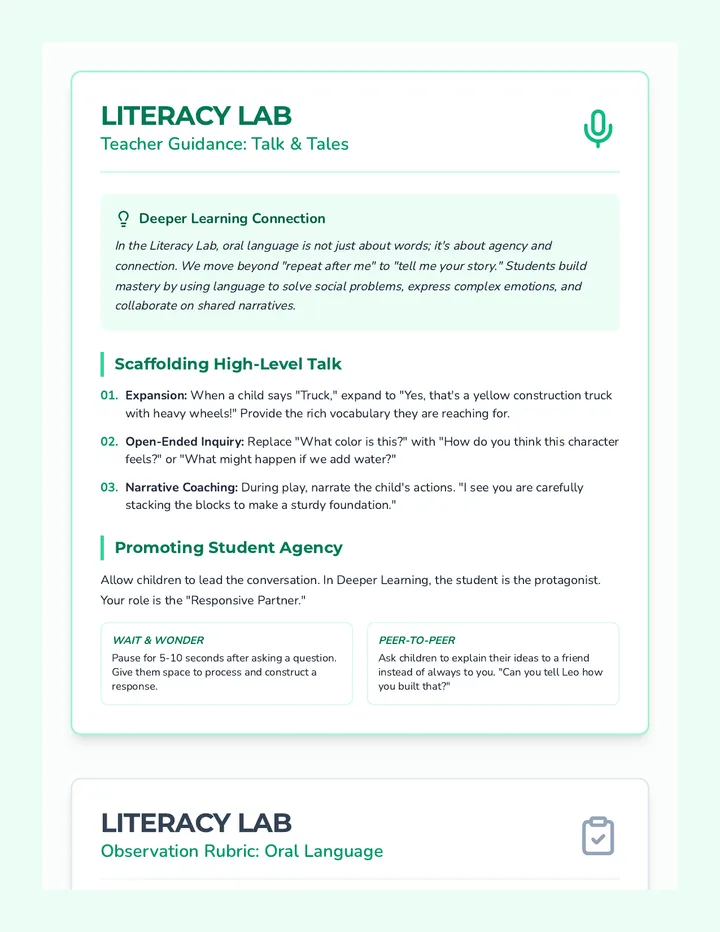
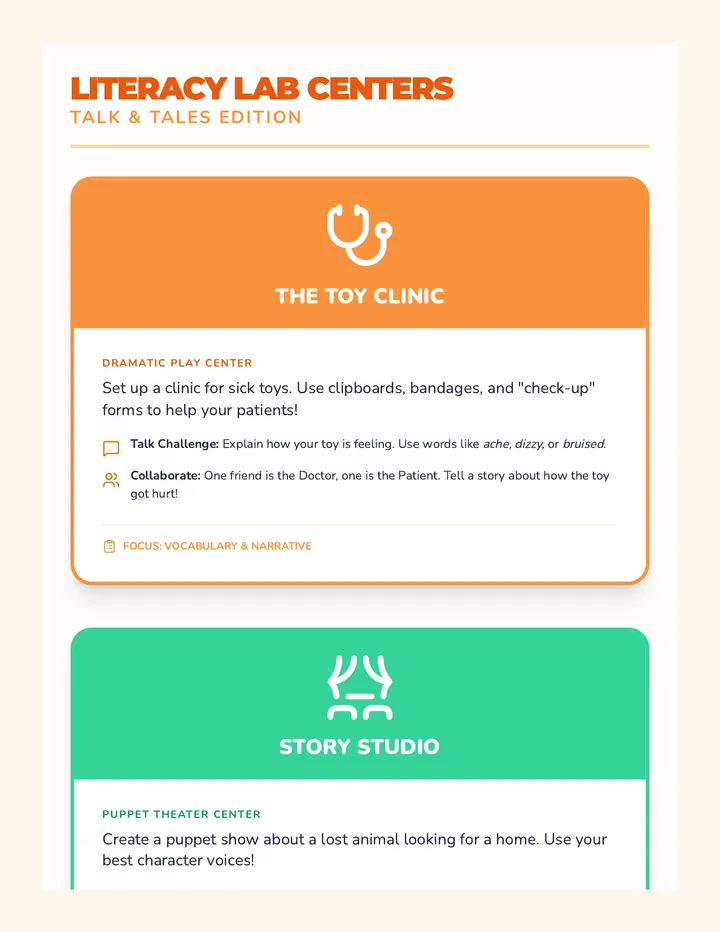
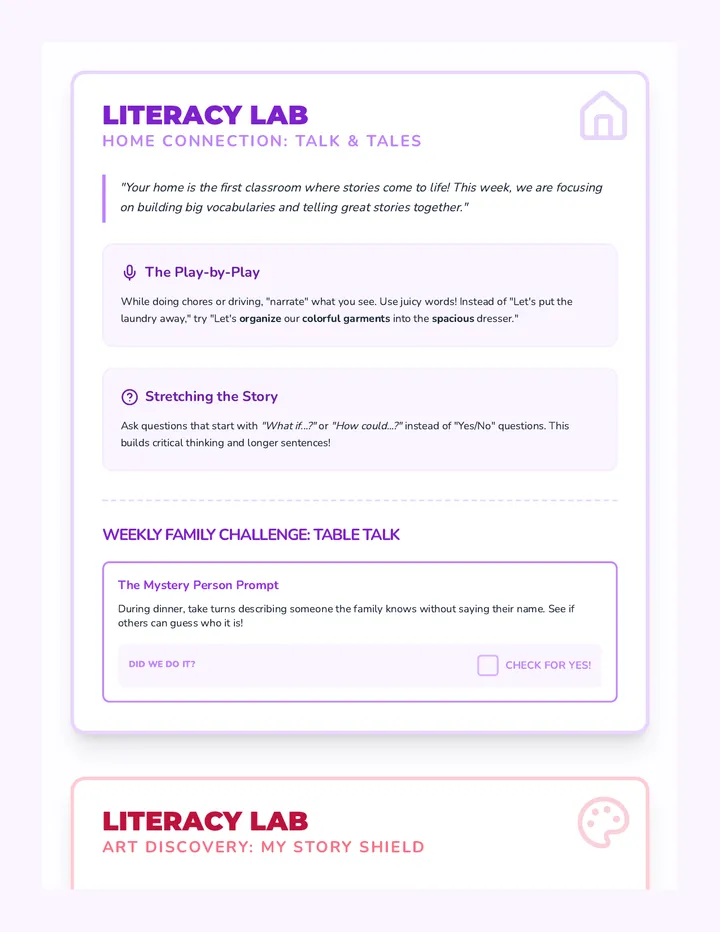
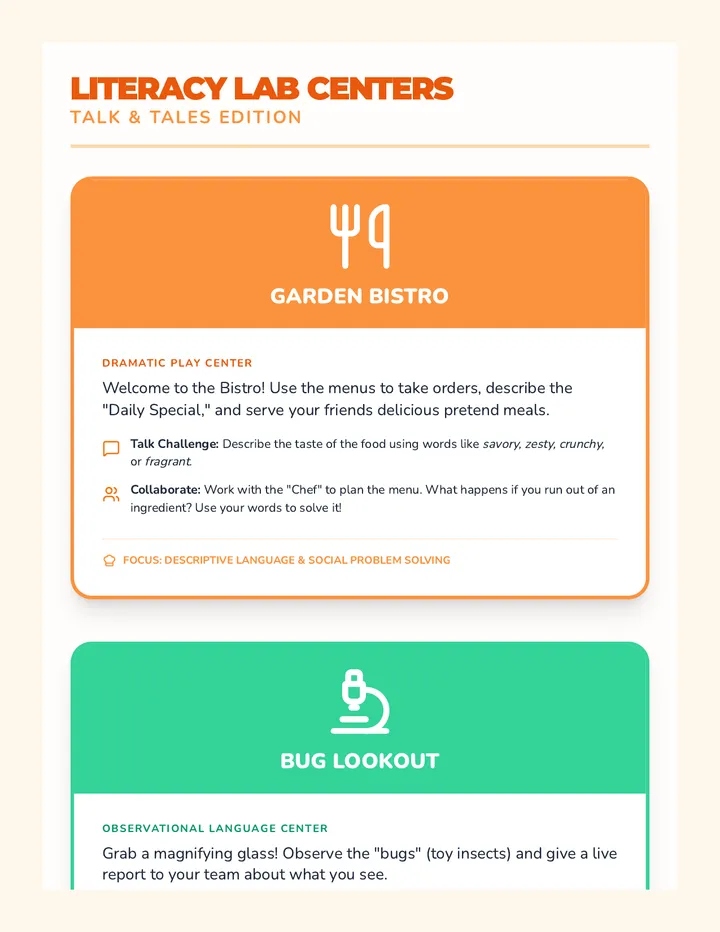
A comprehensive preschool literacy program designed around Deeper Learning principles. It focuses on developmentally appropriate stages from oral language to emergent writing, using play-based exploration and authentic communication.
A 9th-grade sequence focused on decoding complex informational texts by analyzing text features, visual data, metaphors, and specialized vocabulary. Students develop critical reading skills to understand how technical information is communicated to a general audience.
A high-intensity vocabulary sequence for 10th graders focusing on the logic of analogies. Students progress from basic pattern recognition to designing their own complex logic puzzles, treating language as a series of solvable equations.
A comprehensive sequence for 10th-grade students focused on mastering verbal analogies through logical bridge sentences and categorical relationship types. Students progress from basic relationship identification to analyzing degrees of intensity, structural hierarchies, and causal functions, culminating in high-level application and assessment.
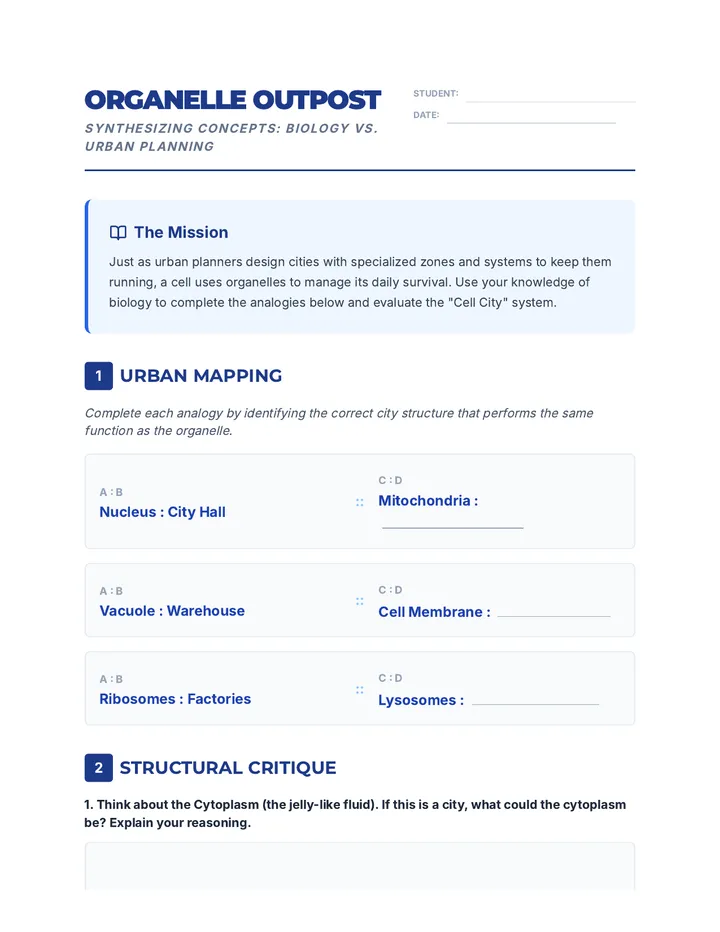
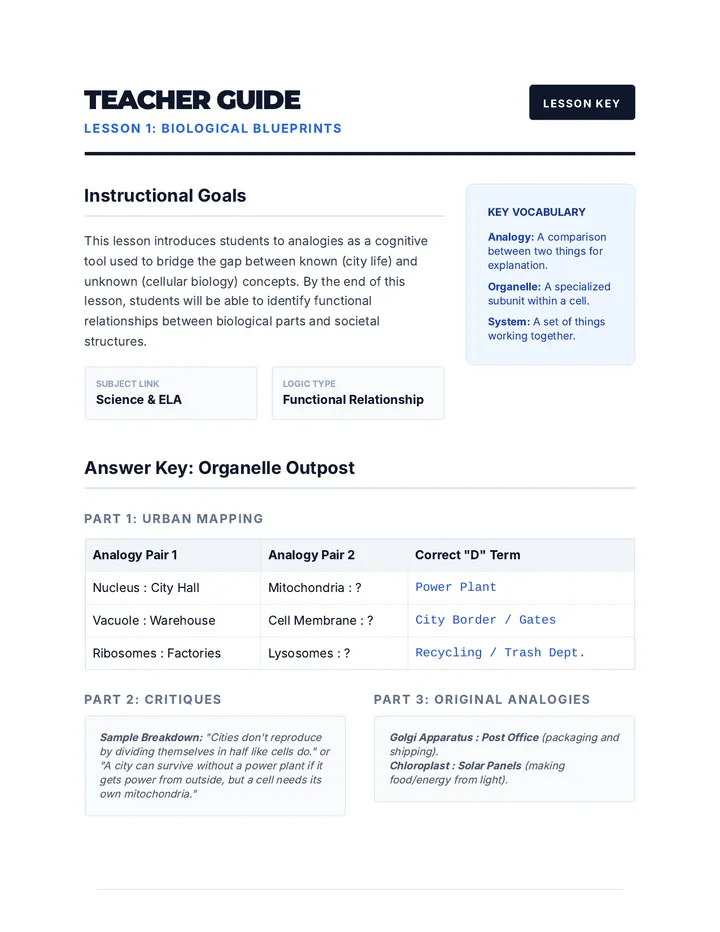
This sequence connects 6th grade vocabulary standards with science, social studies, and math by using analogies as cognitive tools. Students analyze complex systems and historical events through structural comparisons, culminating in an original analogy-based concept map project.
A gamified ELA sequence for 6th grade students to master analogies through speed drills, simulations, and project-based learning. Students progress from basic pattern recognition to creating their own analogy-based games.
This sequence introduces 6th-grade students to the structure of analogies, focusing on identifying specific relationship types using the 'bridge sentence' strategy. Students progress from simple synonym/antonym pairs to complex structural and functional relationships.
An advanced 11th-grade ELA sequence exploring semantic nuance through analogies. Students analyze word intensity, connotation, taxonomy, and paradoxical relationships to master verbal precision and logical reasoning.
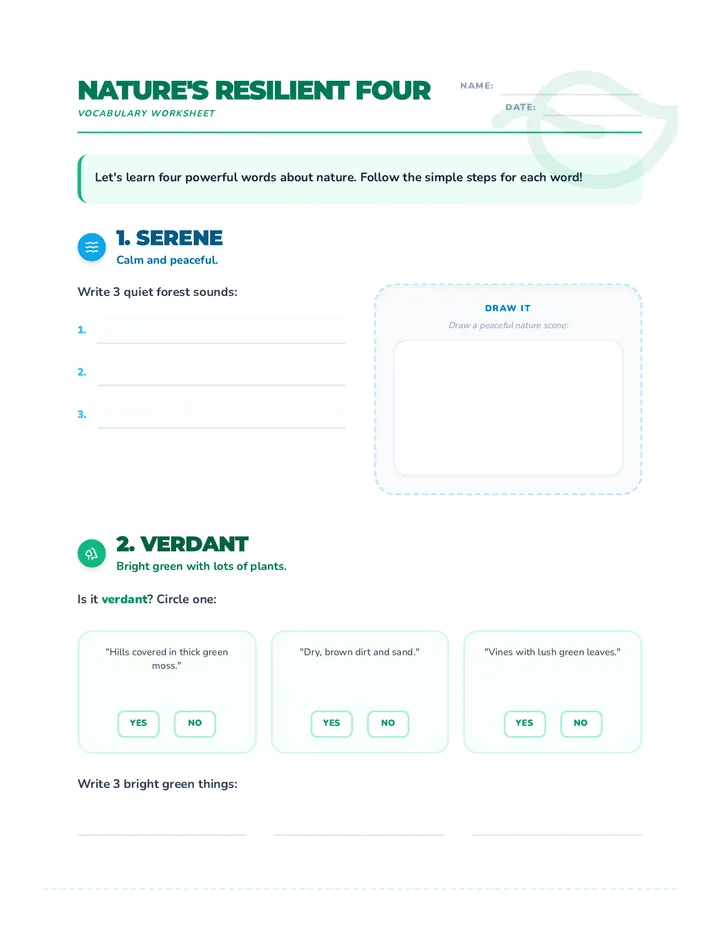
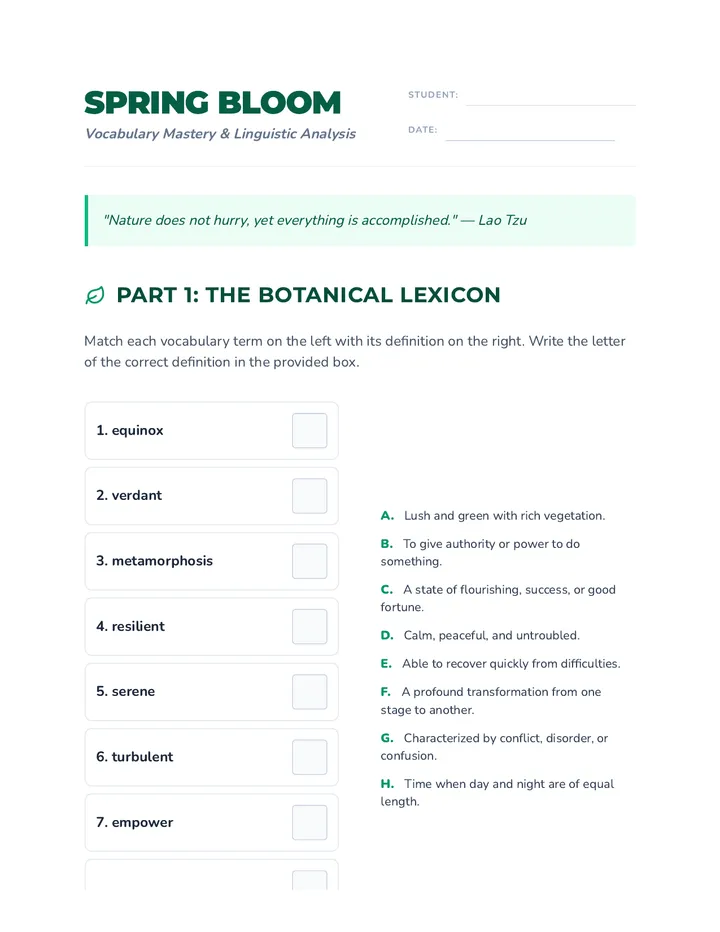
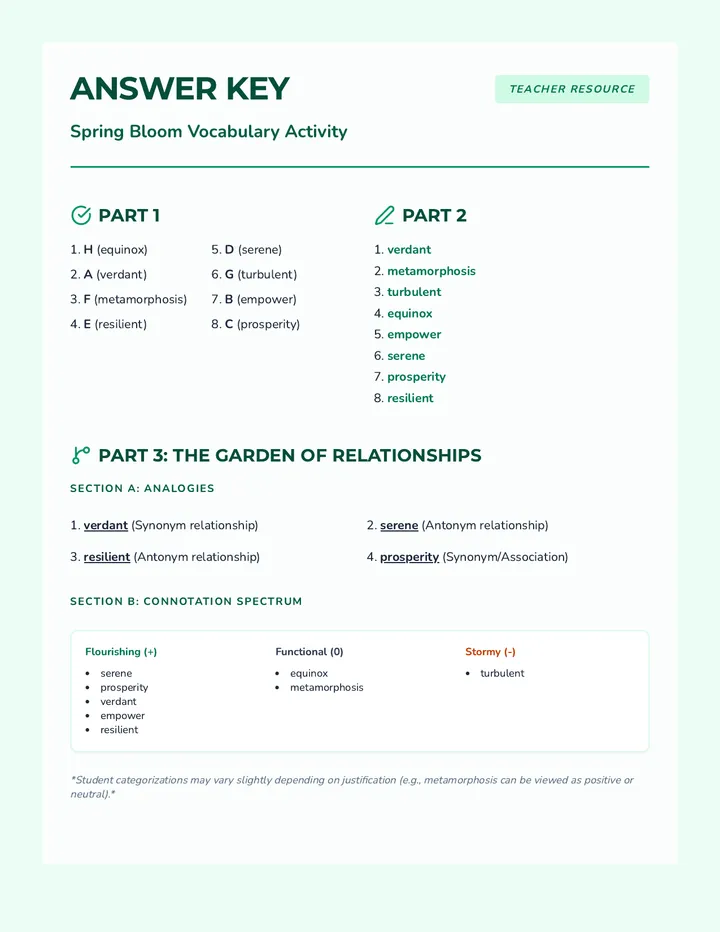
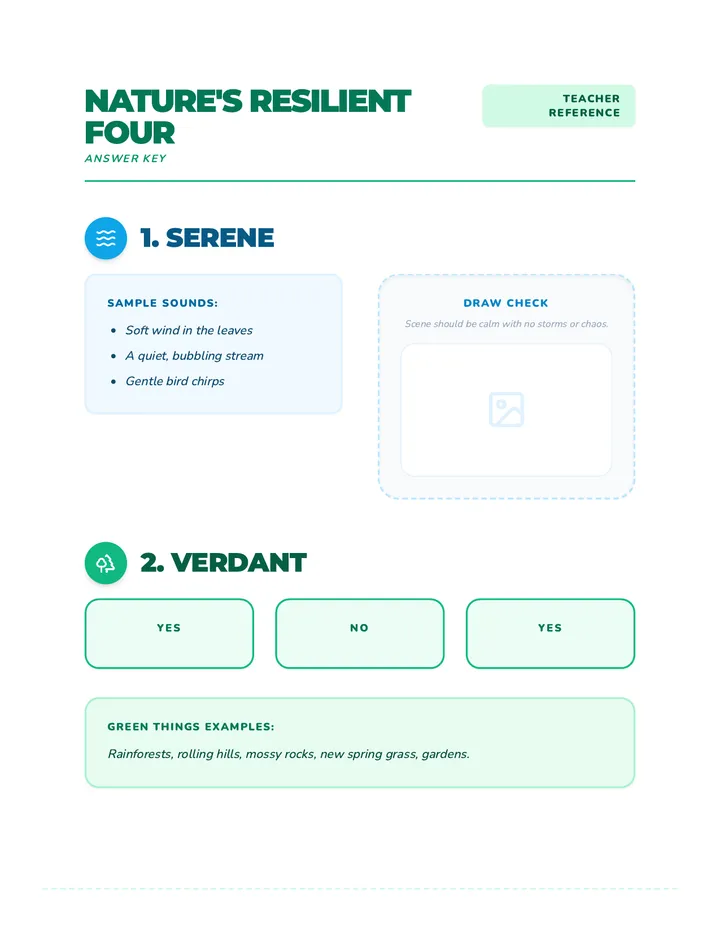
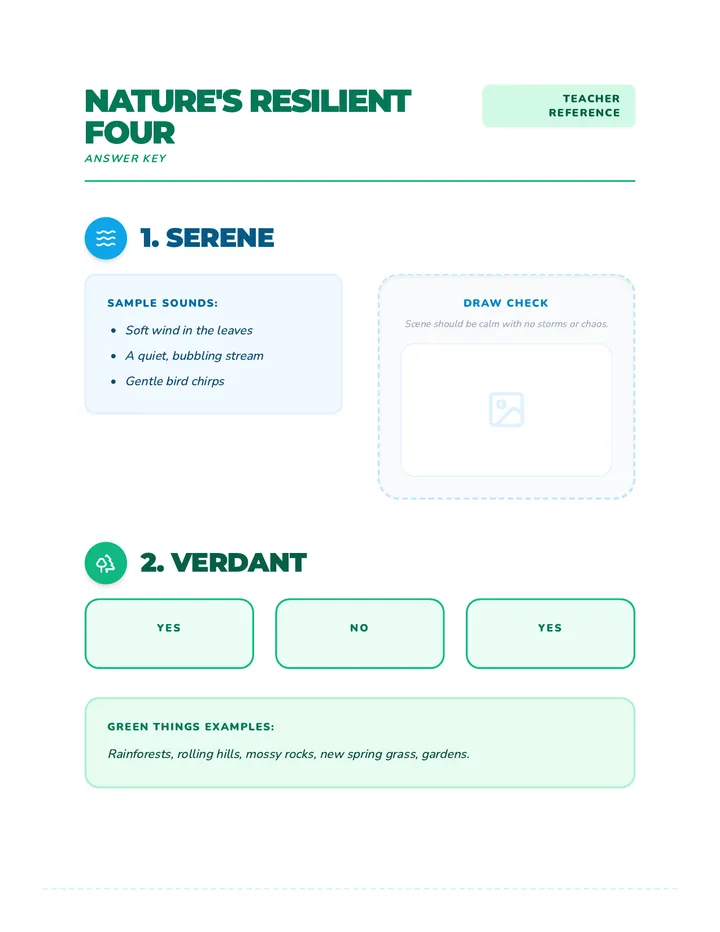
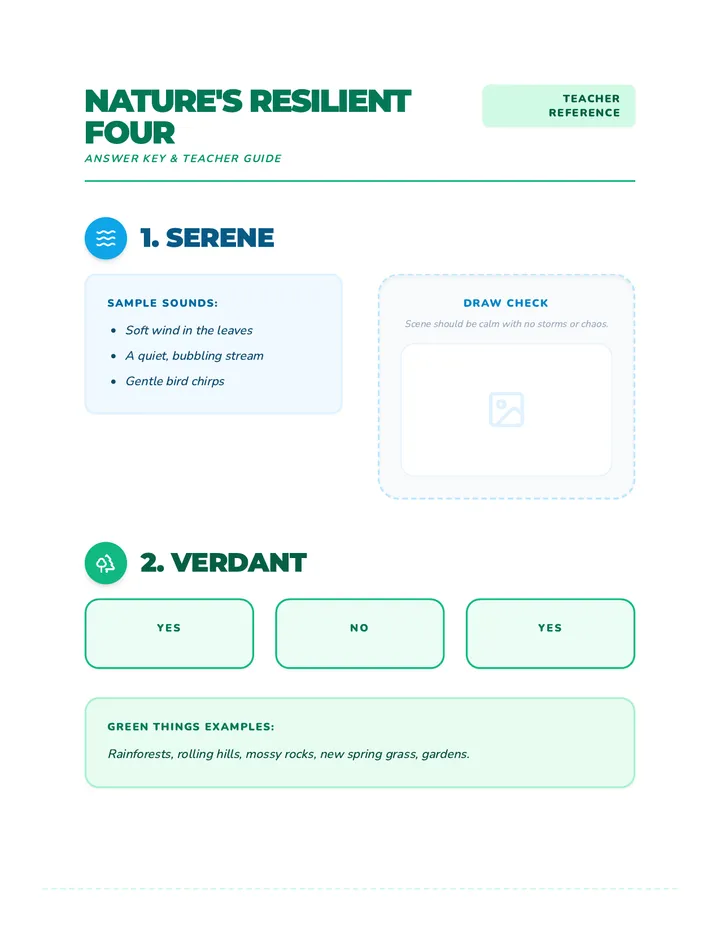
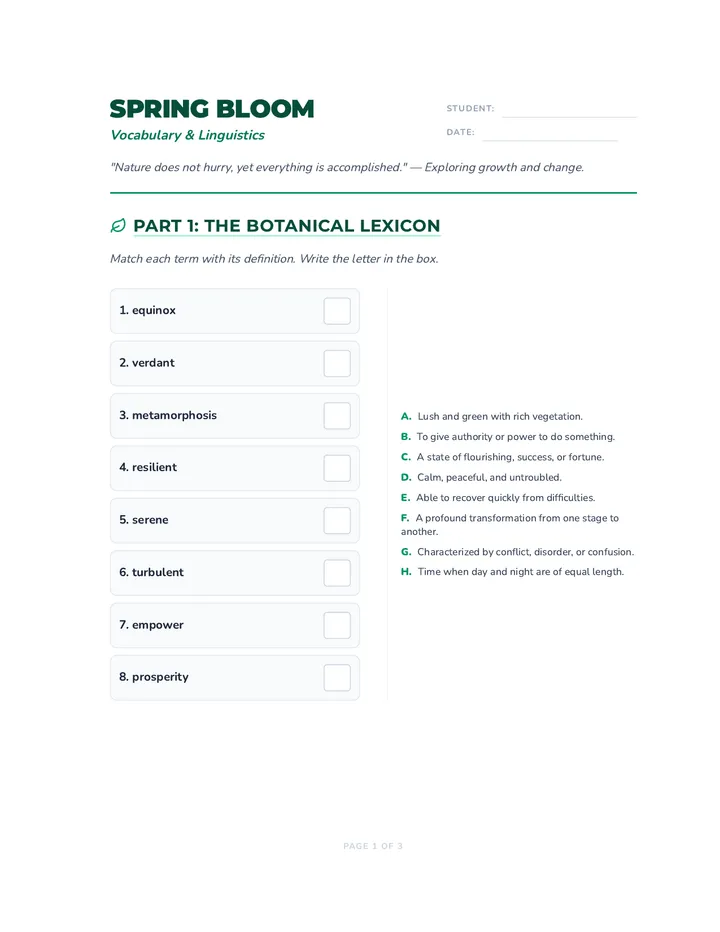
A vocabulary and linguistics lesson exploring themes of transition, growth, and strength. Students master eight high-level terms—equinox, verdant, metamorphosis, resilient, serene, turbulent, empower, and prosperity—through context analysis and creative application.
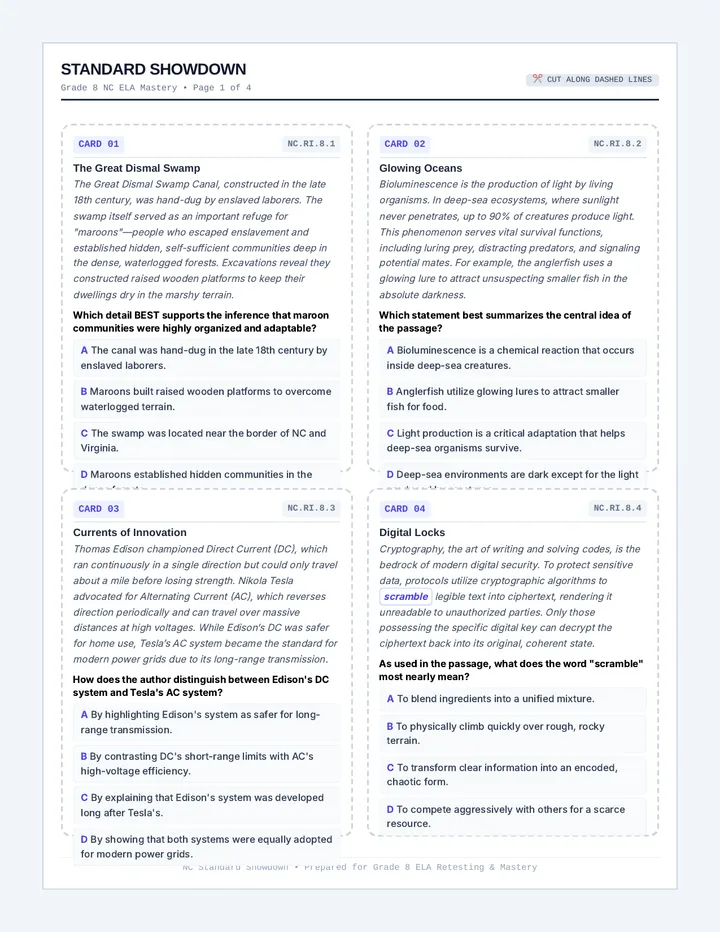
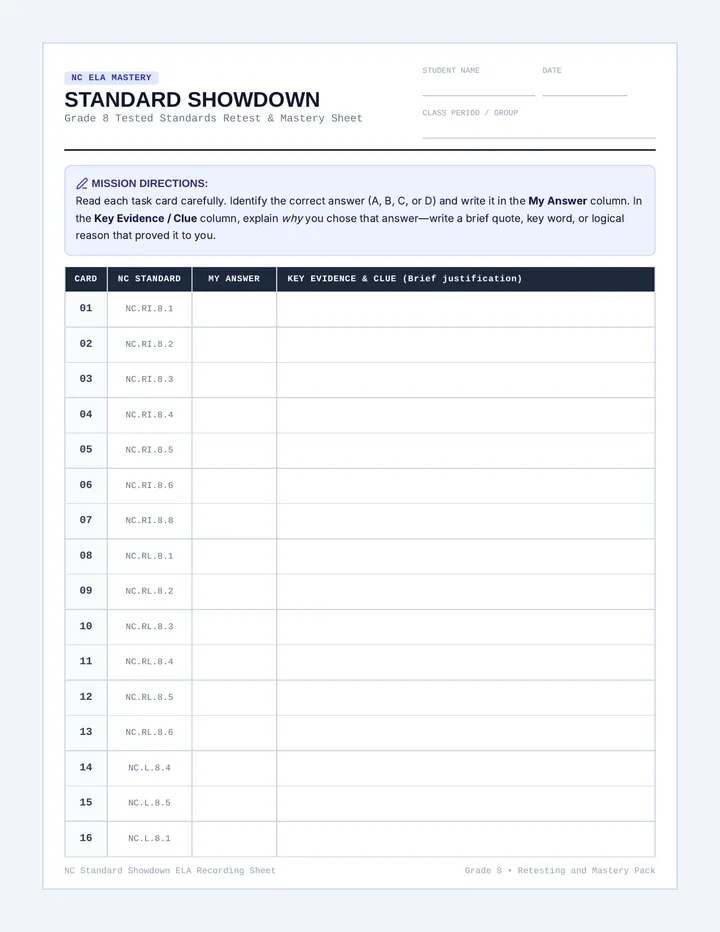
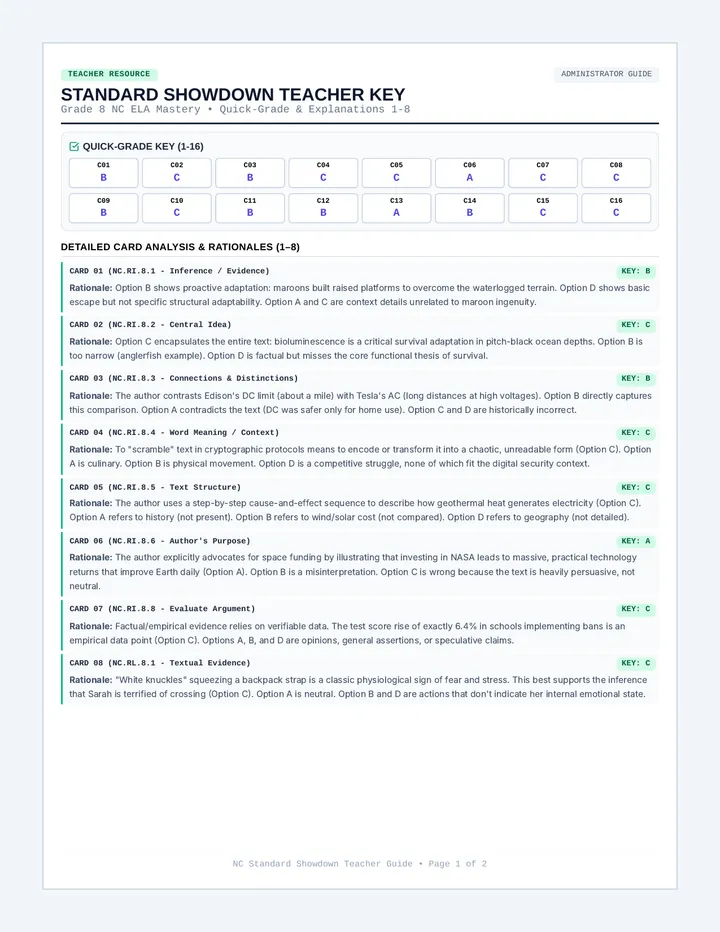
A mastery-focused lesson pack containing 16 Grade 8 ELA task cards aligned to the North Carolina Standard Course of Study (NCSCOS). Designed for retesting and remedial support, the pack includes 4-per-page task cards, a student recording sheet for active thinking, and a comprehensive teacher guide with full answer explanations.
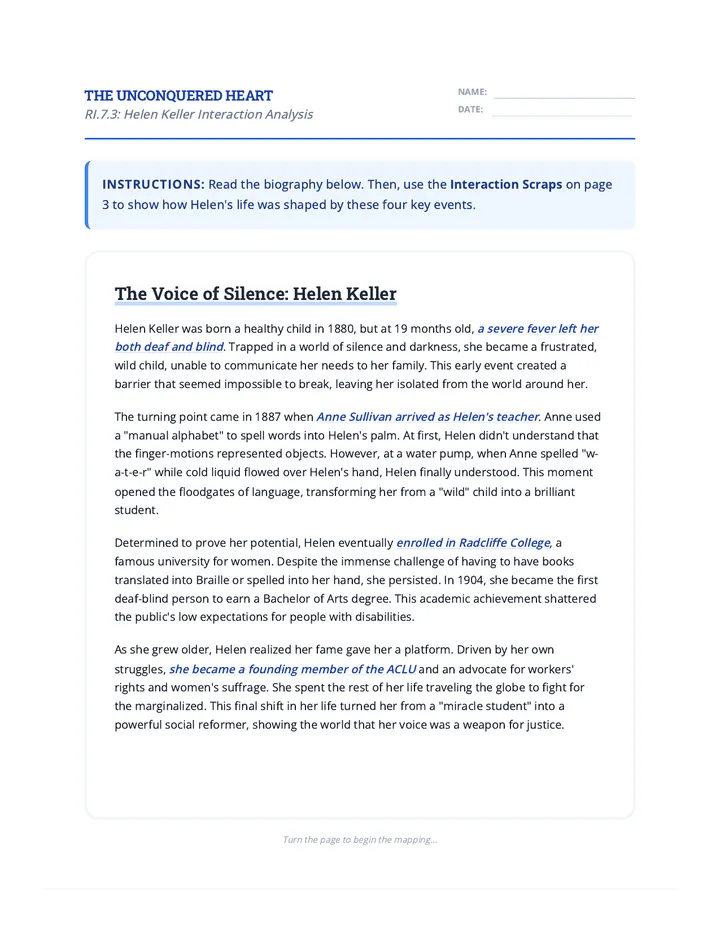
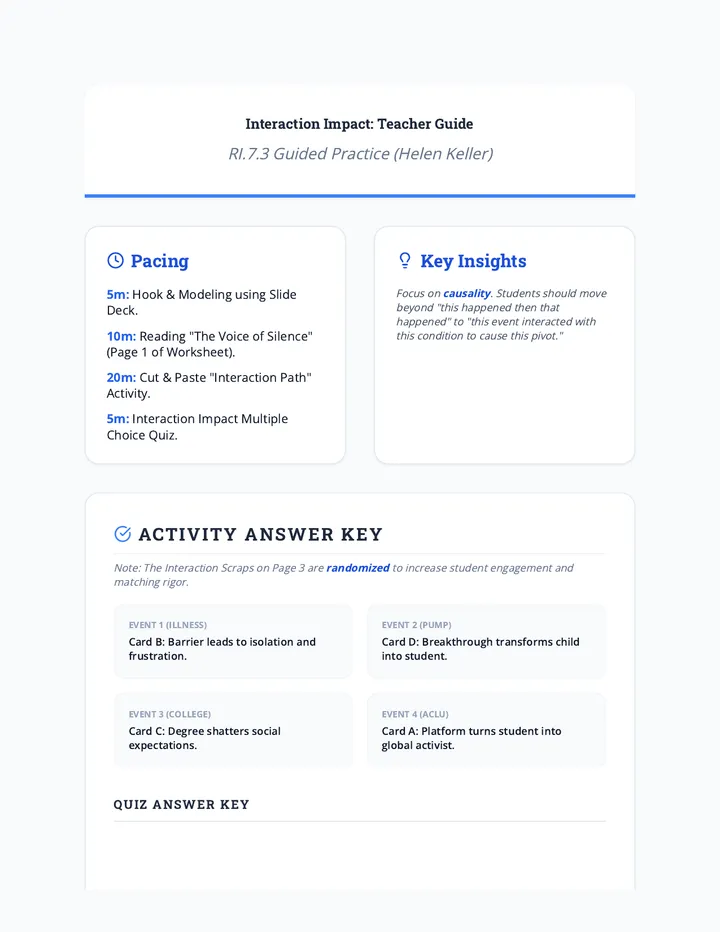
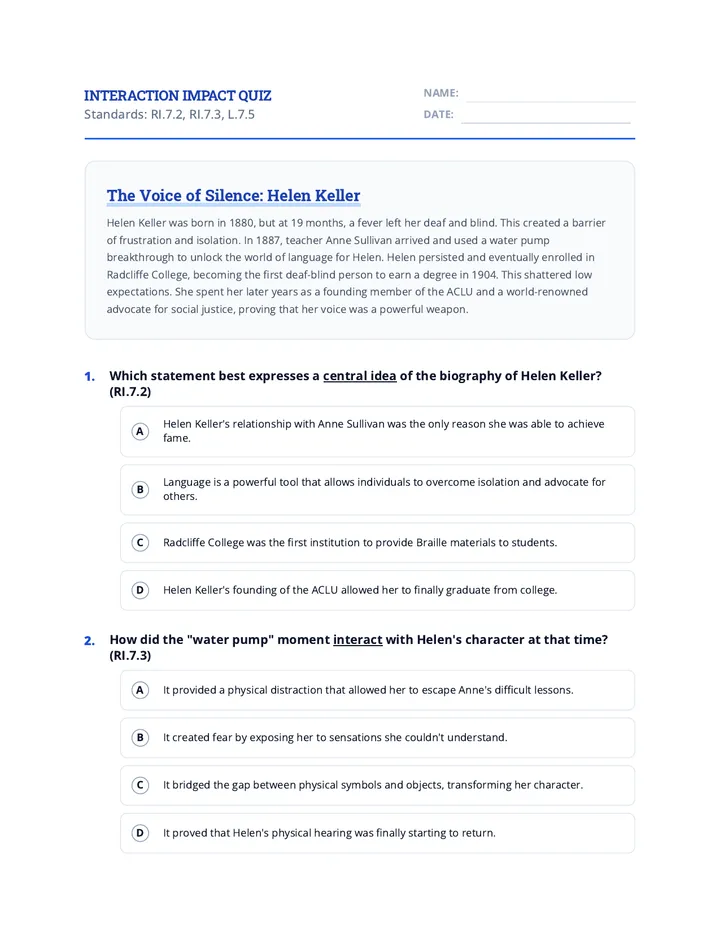
A guided practice lesson focused on RI.7.3, analyzing how significant events in the life of Helen Keller shaped her development, achievements, and legacy as an activist.
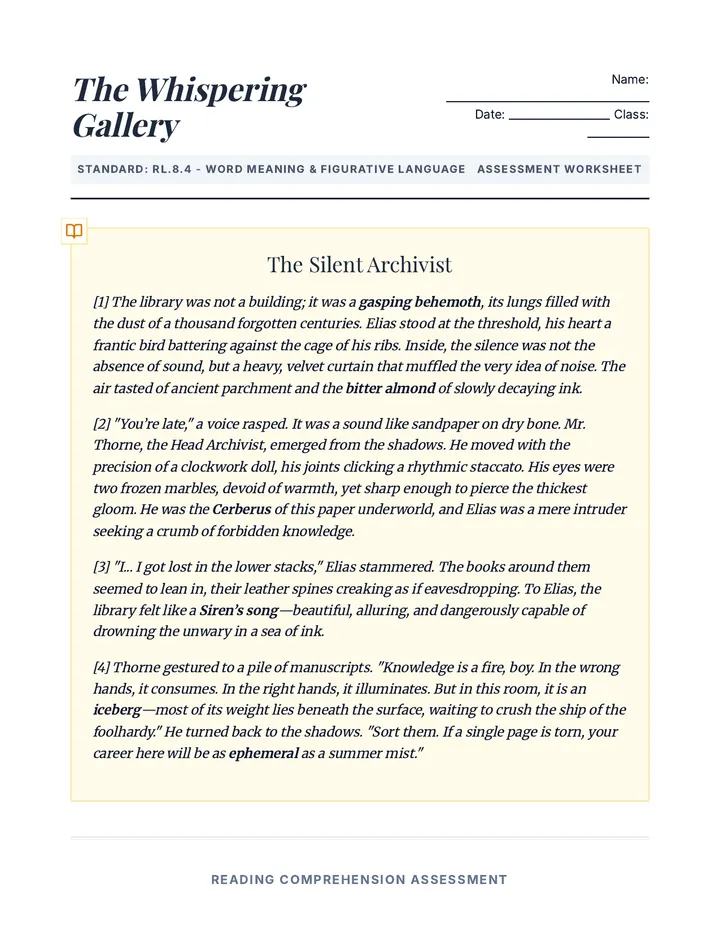
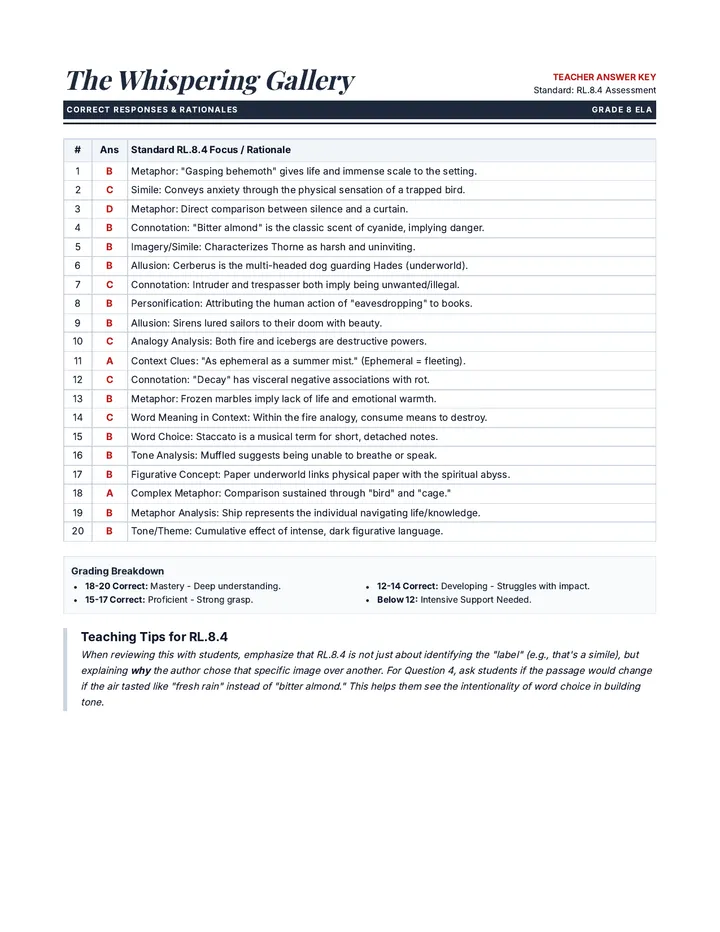
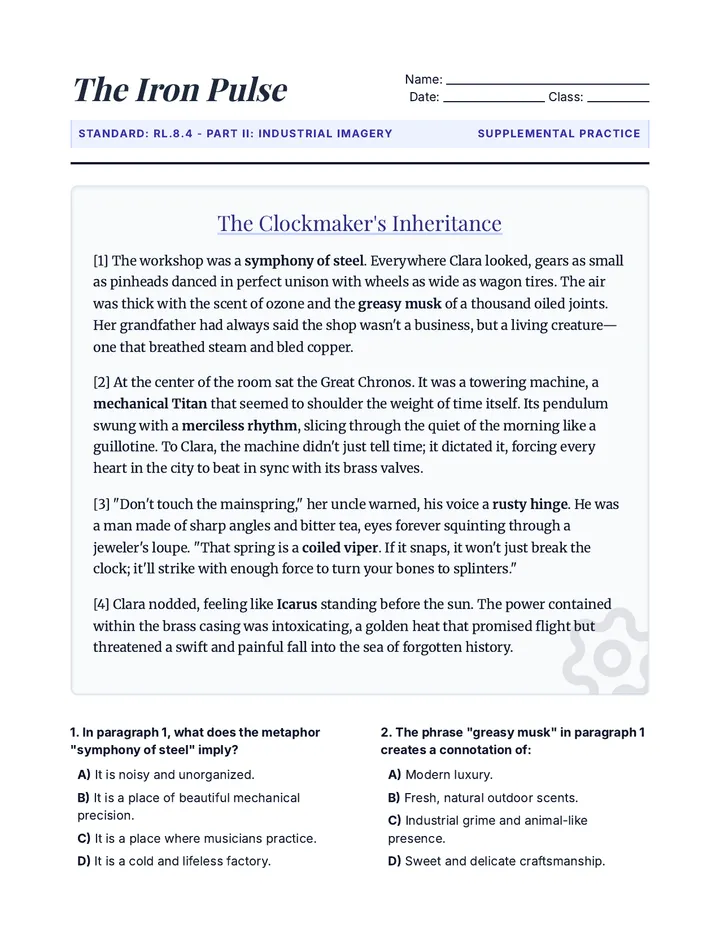
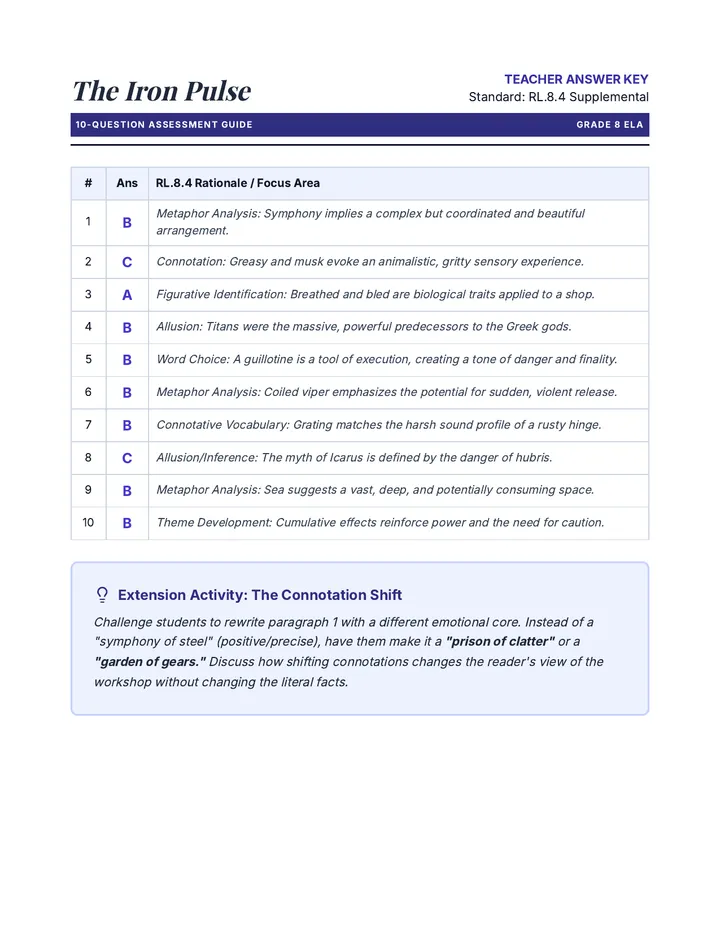
A focused lesson on RL.8.4 standards, analyzing figurative and connotative meanings through a rigorous literary passage and a 20-question practice set.
A comprehensive review of NC Standard RI 8.4, focusing on context clues, connotation, tone, and vocabulary types to prepare students for the 8th grade EOG.
A comprehensive lesson focused on 7th-grade word study, including word relationships (synonyms, antonyms, analogies), morphology (roots, prefixes, suffixes), and part-of-speech functions.
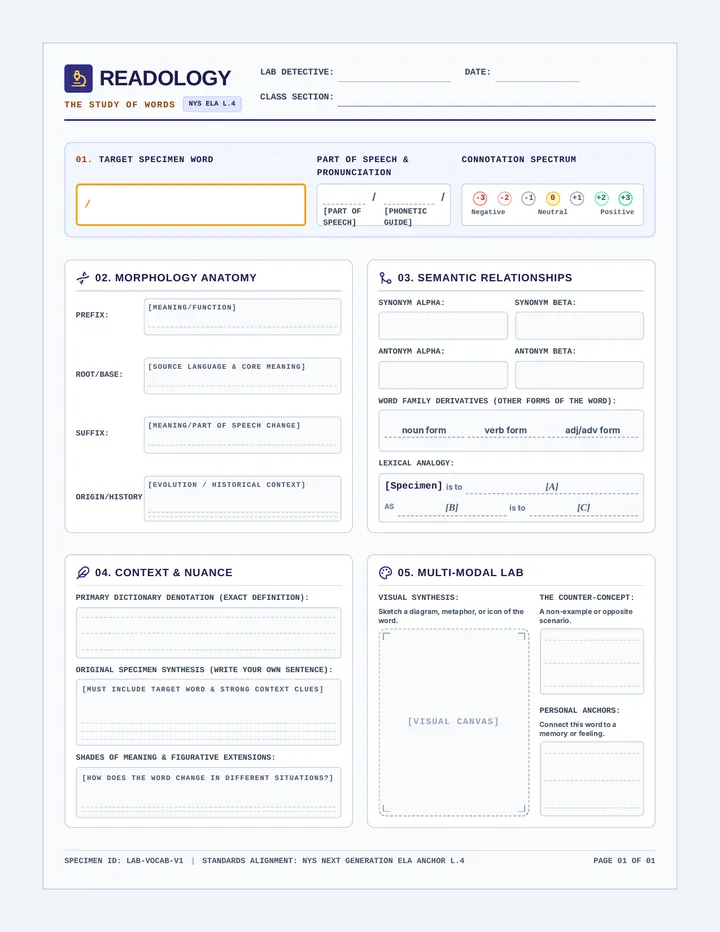
A lesson dedicated to breaking down words into their root structures, semantic relationships, and contextual nuances to build deep, permanent vocabulary comprehension.
A lesson focused on identifying and completing analogies based on synonym and antonym relationships, designed for 7th-grade students.
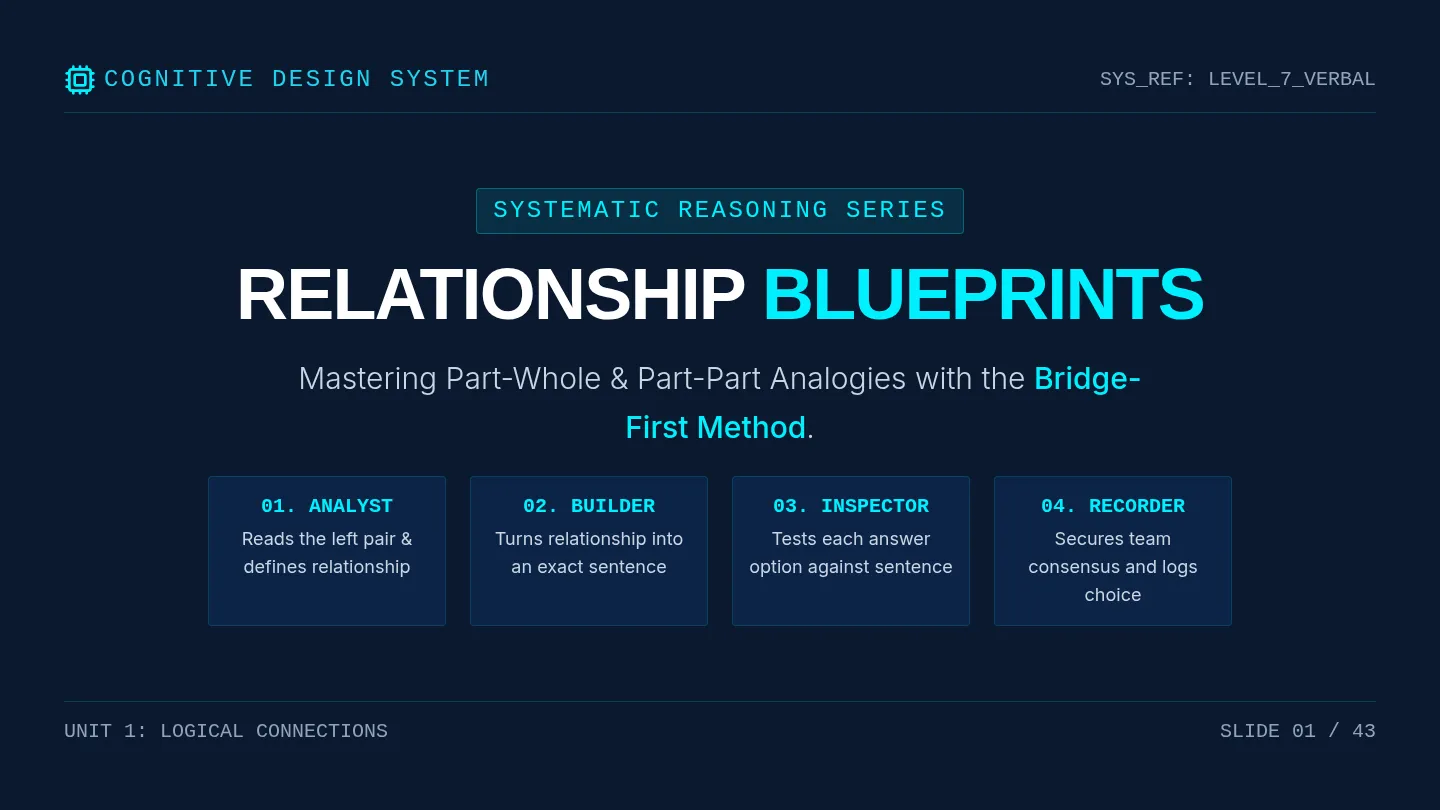
An interactive slide deck focusing on part-whole and part-part analogies for seventh graders, emphasizing the strategy of formulating the relationship before viewing multiple-choice options.
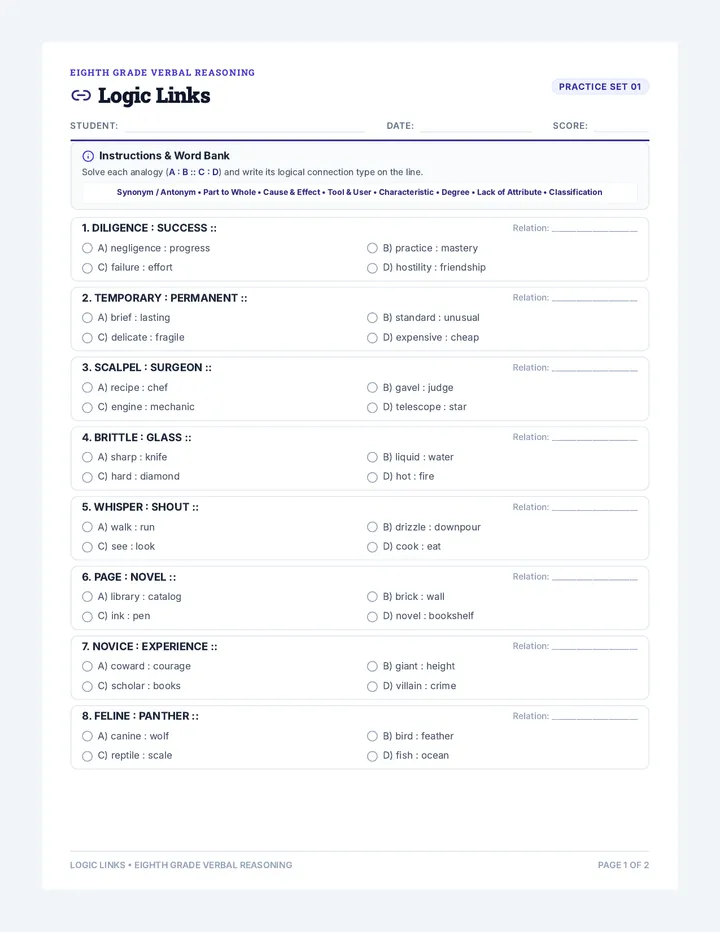
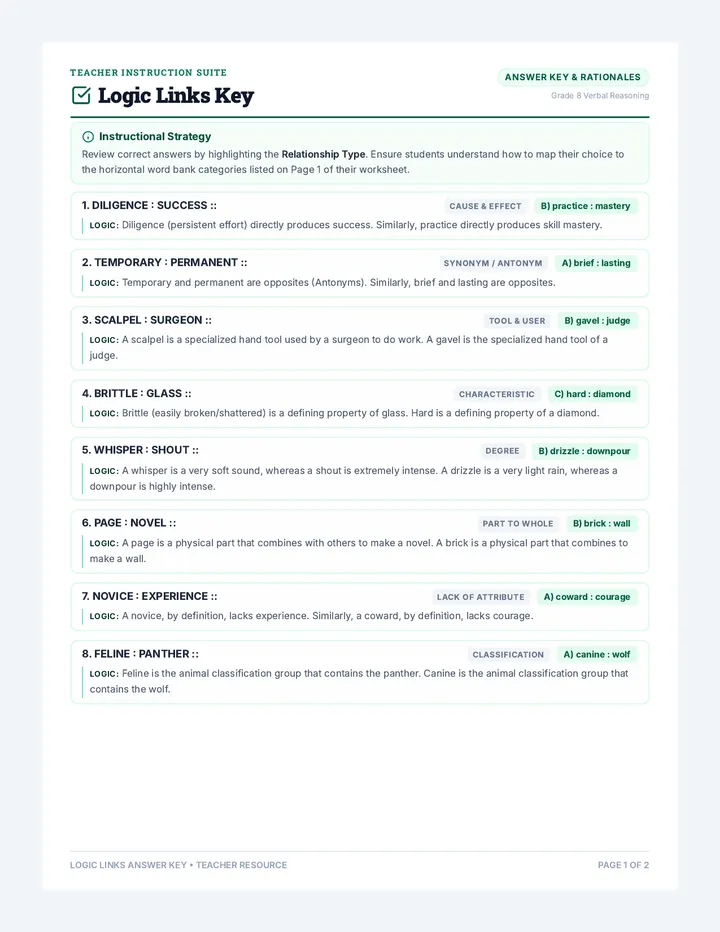
A comprehensive lesson designed for 8th-grade students to master verbal analogies. This lesson features a dual-set of materials: an engaging, structured student worksheet with 15 mixed-type analogies, and a corresponding teacher answer key containing detailed logical rationales for each question.
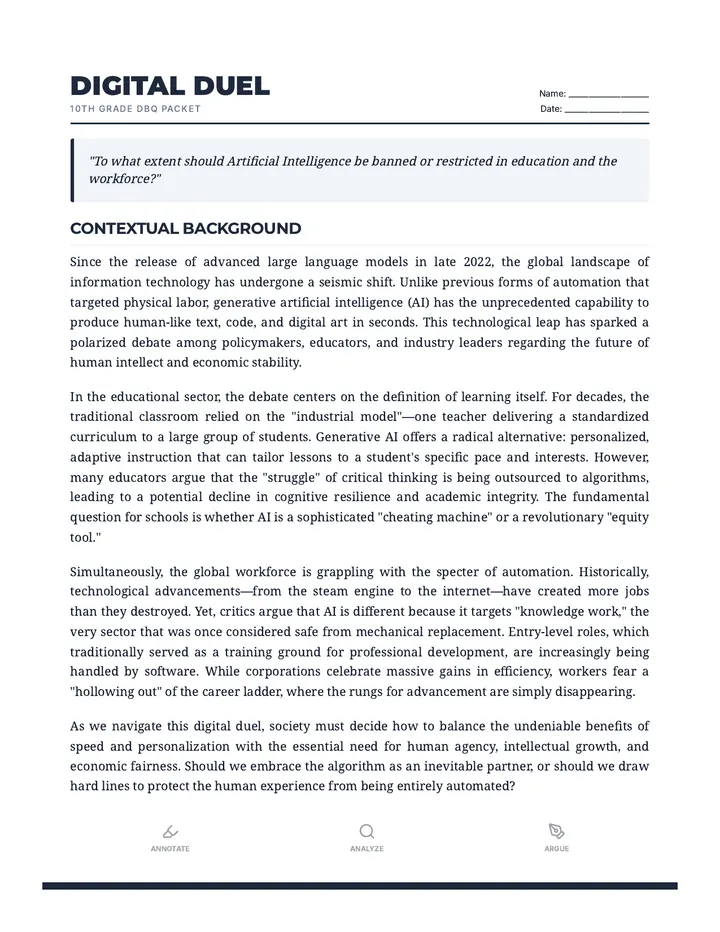
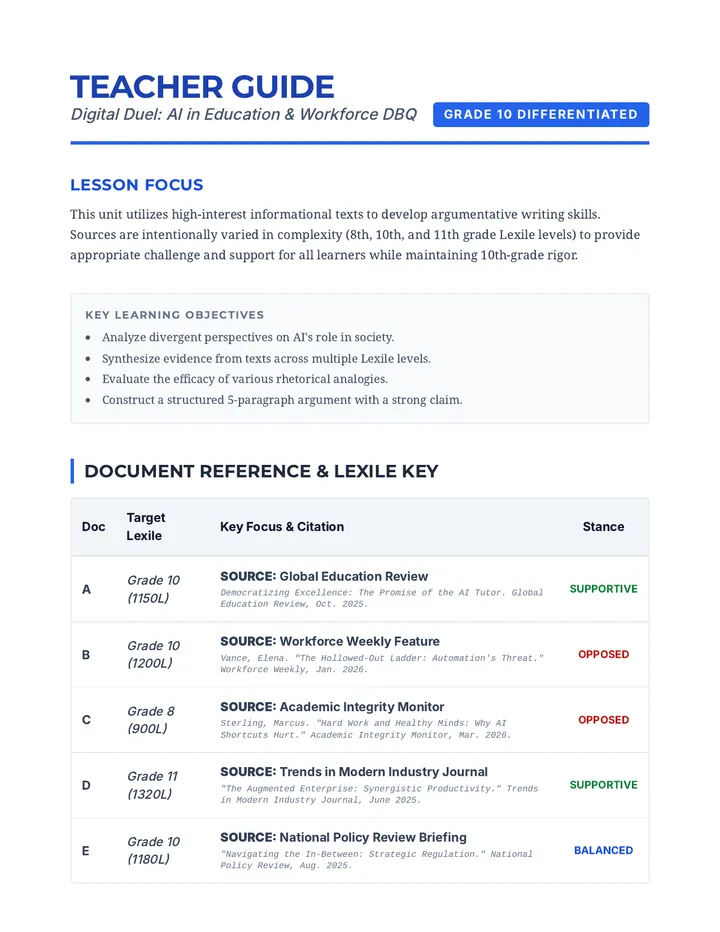
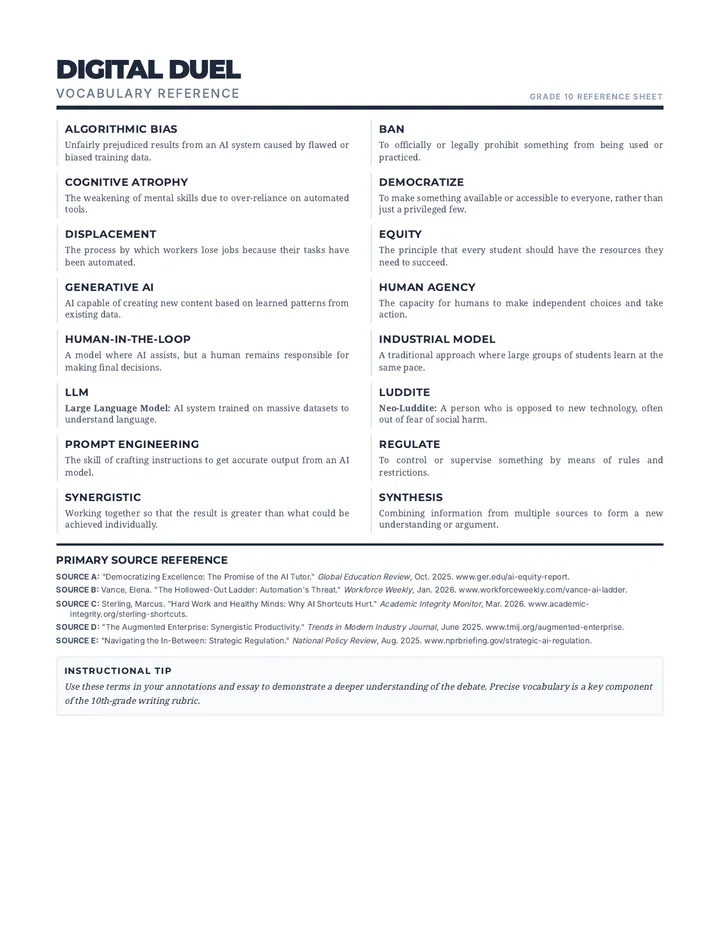
A comprehensive Document-Based Question (DBQ) unit for 10th-grade students to explore the impact of Artificial Intelligence on education and the workforce, culminating in a structured five-paragraph argumentative essay.
A vocabulary-focused lesson using terms from the 6th Grade EOG ELA curriculum to reinforce definitions and term recognition.