Lenny.com
Explore
Create
ActivitiesNewMathEnglish Language ArtsScience & EngineeringSocial StudiesGlobal LanguagesHealth & Physical EducationSpecial EducationCounseling & Life SkillsArts & CreativityESL
Lenny.com
Lenny.com
Explore
Create
ActivitiesNewMathEnglish Language ArtsScience & EngineeringSocial StudiesGlobal LanguagesHealth & Physical EducationSpecial EducationCounseling & Life SkillsArts & CreativityESL
Lenny.com
Lenny.com

Solutions

Lenny for EducatorsLenny for SchoolsLenny for Districts

Product

ExploreSign inCreateSupportAbout

Resources

Getting startedMTSS Acceleration Program

© 2026 Lenny Learning Inc.

TermsPrivacyAccessibility
LinkedInInstagramX
Lenny

Author's Purpose And Tone

Identification of persuasive, informative, and entertaining intent alongside analysis of word choice to determine emotional stance. Equips students to differentiate between objective reporting and biased perspectives.

English Language ArtsPhonics & Reading FoundationsLetter IdentificationLearn Letters A-ZLowercase and Uppercase LettersConsonants and VowelsLetter-Sound AssociationsLetter-Sound Associations: LowercaseLetter-Sound Associations: UppercaseBeginning and Ending SoundsRhymingBlending And SegmentingShort VowelsShort Vowel SoundsConsonant BlendsConsonant DigraphsBlends, Digraphs, and TrigraphsDigraphs, Blends, and Silent LettersLong Vowel SoundsLong Vowel PatternsShort and Long VowelsShort and Long Vowel PatternsSilent EVowel SoundsVowel TeamsR-Controlled VowelsDiphthongs: Oi, Oy, Ou, OwVariant VowelsVariant, Diphthong, And R Vowel PatternsSoft G And CSight WordsIrregular WordsWord RecognitionSyllablesSyllable TypesTwo-Syllable WordsMultisyllabic WordsPhoneme ManipulationDecodable TextsVocabularyAction WordsQuestion WordsNouns and AdjectivesClassify WordsCompound WordsSynonyms and AntonymsHomophonesHomophones and HomonymsShades of MeaningContext CluesPrefixes and SuffixesGreek and Latin RootsAnalogiesIdioms and AdagesForeign Words and ExpressionsWord Choice and UsageReference SkillsReading ComprehensionRead-Along Literary TextsRead-Along Informational TextsReality vs. FictionStory ElementsCharacterSequenceMain IdeaCause And EffectCompare And ContrastReading StrategiesText StructureAuthor's PurposeAuthor's Purpose And ToneAuthor's PerspectivePoint Of ViewThemeInference And ThemeInference And AnalysisPoetry ElementsLiterary DevicesAnalyzing LiteratureAnalyzing Informational TextsComparing TextsAudience, Purpose, And ToneBusiness DocumentsNovel StudyNonfiction Book StudyGrammar & MechanicsSentencesNounsVerbsAdjectivesPronounsCapitalizationPunctuationContractionsConjunctionsPrepositionsArticlesAdjectives And AdverbsVerb TypesVerb TensePronouns And AntecedentsPronoun TypesSubject-Verb AgreementDirect And Indirect ObjectsSentences, Fragments, And Run-OnsPhrases And ClausesCommasSemicolons, Colons, And CommasDashes, Hyphens, And EllipsesSpellingAbbreviationsFormattingVerb Tense And MoodMisplaced ModifiersWritingDescriptive DetailsCreative WritingOpinion WritingTopic SentencesOrganizing WritingLinking WordsSentence VarietyIntroductions And ConclusionsPersuasive And Opinion WritingExpository WritingPersuasive StrategiesDeveloping And Supporting ArgumentsTopic Sentences And Thesis StatementsSummarizingResearch SkillsEditing And RevisingActive And Passive Voice=Writing Clearly And ConciselyDebate & Public SpeakingPublic Speaking BasicsPersuasive TechniquesClaims and EvidenceTypes of ArgumentsReasoning TypesLogical FallaciesTopic ResearchOrganizing EvidenceDebate Speech OrganizationAttacking and Defending ArgumentsClash and EngagementImpact CalculusQuestioning and Cross-ExaminationCritical ThinkingInformal LogicFormal LogicInductive Reasoning

Videos

Understanding Point of View and Tone Through Text Messages

Understanding Point of View and Tone Through Text Messages

This video uses a relatable text message conversation between two friends to teach students about literary point of view, tone, and perspective-taking. A narrator guides viewers through an unfolding drama between Liz, who wants to hang out spontaneously, and Kim, who keeps saying no. By analyzing the word choice and brevity of the text messages, the narrator demonstrates how characters' differing situations influence their perspectives and communication styles. The video explores key themes of empathy, miscommunication in digital spaces, and the difference between explicit statements and implied meanings. It highlights how a lack of context can lead to false assumptions, as seen when Liz interprets Kim's refusal as dislike rather than an inability to be spontaneous due to family responsibilities. The resolution teaches students to look beyond surface-level reactions to understand the underlying reality of others. For the classroom, this is an excellent tool for English Language Arts lessons on analyzing character interactions and determining point of view. It also serves as a strong social-emotional learning resource regarding digital citizenship and empathy. Teachers can use the video to spark discussions about how text-based communication strips away tone, leading to conflicts that can only be resolved by understanding another person's "reality" or context.

Miacademy & MiaPrep Learning ChannelMiacademy & MiaPrep Learning Channel

5mins 35s

How Differences in Point of View Create Dramatic Irony

How Differences in Point of View Create Dramatic Irony

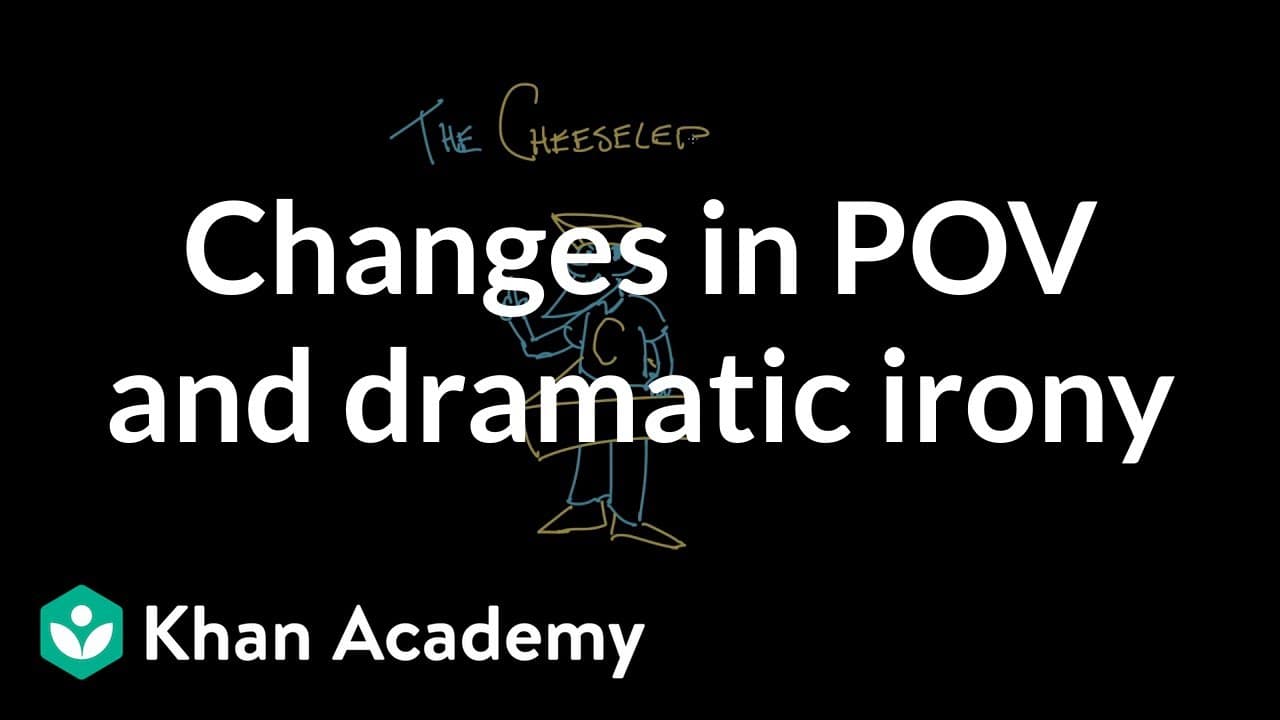
This video explores how differences in point of view between characters, narrators, and the audience shape narrative structure and create specific literary effects. It uses accessible examples, including characters from "Avatar: The Last Airbender" and a humorous original scenario involving a villain named "The Cheeseler," to demonstrate complex concepts. The narrator breaks down how authors control the flow of information to manipulate the reader's experience. The core themes include literary analysis of perspective, the definition and function of dramatic irony, and the creation of suspense through information asymmetry. It distinguishes between what characters know versus what the audience knows, explaining how this gap generates tension and how the closing of that gap leads to resolution. For educators, this resource provides a clear, engaging visual definition of dramatic irony that moves beyond the dictionary definition into practical application. It is an excellent tool for English Language Arts classrooms to help students move from simply identifying point of view (e.g., first person, third person) to analyzing *why* an author chose that perspective and how it impacts the story's emotional weight and conflict.

Khan AcademyKhan Academy

4mins 55s

Reading the Room: How to Identify Mood in Stories

Reading the Room: How to Identify Mood in Stories

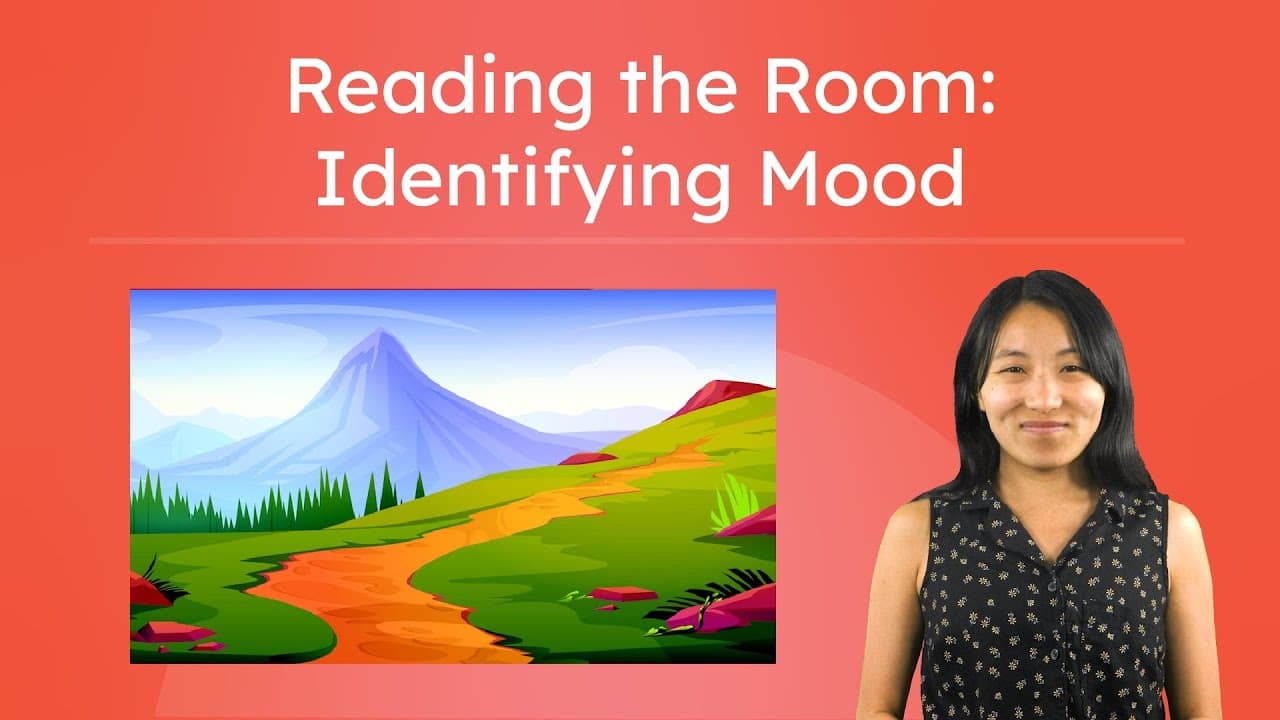
In this engaging Language Arts adventure, viewers join a narrator and her robot companion, Mia, on a quest through the "Valley of Vibes." To succeed, they must face the "Vibe Master" and pass a series of "vibe checks" by correctly identifying the mood of various narrative passages. The video combines a fantasy storyline with direct instruction to teach students how to analyze literature, moving beyond simple emotional descriptors to more precise literary vocabulary. The video focuses on the concept of "mood" in narrative writing, defining it as the emotional atmosphere an author creates for the reader. It systematically breaks down how writers construct mood using specific tools: characterization, setting, conflict, and word choice. The lesson guides students through three distinct examples, transitioning from guided analysis to independent practice, and introduces sophisticated vocabulary words such as "melancholy," "exuberant," "triumphant," and "foreboding" to replace simpler terms like "sad," "happy," or "scary." This resource is highly valuable for upper elementary and middle school classrooms as it models the thought process behind literary analysis. By explicitly highlighting text evidence—such as "plodded" versus "strode" or "gloomy" versus "emerald grass"—it shows students exactly how to locate and interpret clues within a text. The video includes built-in pause points for student reflection and participation, making it an excellent tool for interactive whole-class instruction or self-paced learning stations focused on reading comprehension and author's craft.

Miacademy & MiaPrep Learning ChannelMiacademy & MiaPrep Learning Channel

10mins 49s

Mastering the Art of Persuasion: Rhetoric, Devices, and Appeals

Mastering the Art of Persuasion: Rhetoric, Devices, and Appeals

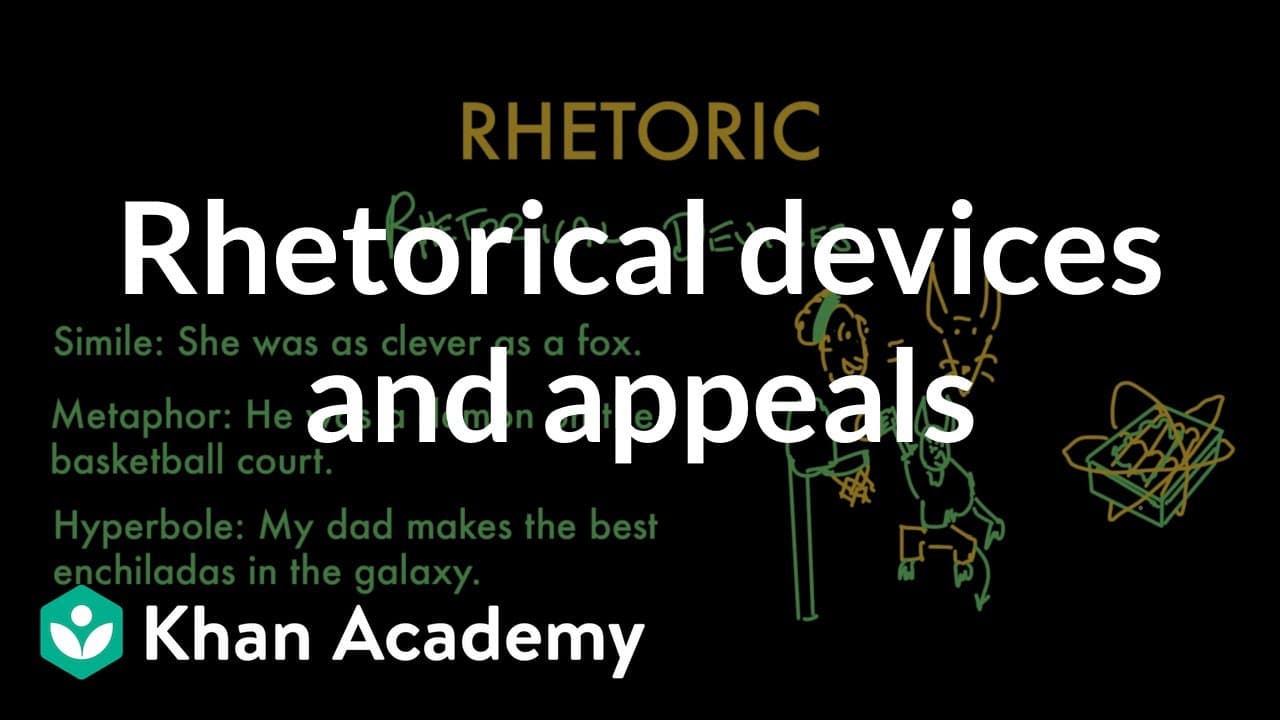
This educational video introduces students to the concept of rhetoric, defined as the art of persuasion. The narrator breaks down the subject into two main categories: rhetorical devices (figures of speech like similes, metaphors, and hyperbole) and rhetorical appeals (strategic modes of persuasion). Through clear narration and simple hand-drawn illustrations, the video explains how these tools are used to construct arguments and influence audiences. The content covers key rhetorical terminology including specific devices and the three classical appeals: Logos (logic/reason), Pathos (emotion), and Ethos (authority/credibility). The narrator uses relatable, humorous examples—such as "galactic enchiladas" for hyperbole and a sad puppy for pathos—to make abstract concepts concrete. It also touches on more complex ideas like apophasis to show the depth of the field. For educators, this video serves as an excellent foundational tool for English Language Arts units on persuasive writing, speech analysis, or media literacy. It empowers students not only to craft more effective arguments themselves but also to critically analyze the messages they encounter in the world. By understanding these mechanisms, students become more discerning consumers of information and more powerful communicators.

Khan AcademyKhan Academy

4mins 3s

How to Evaluate Sources and Detect Bias

How to Evaluate Sources and Detect Bias

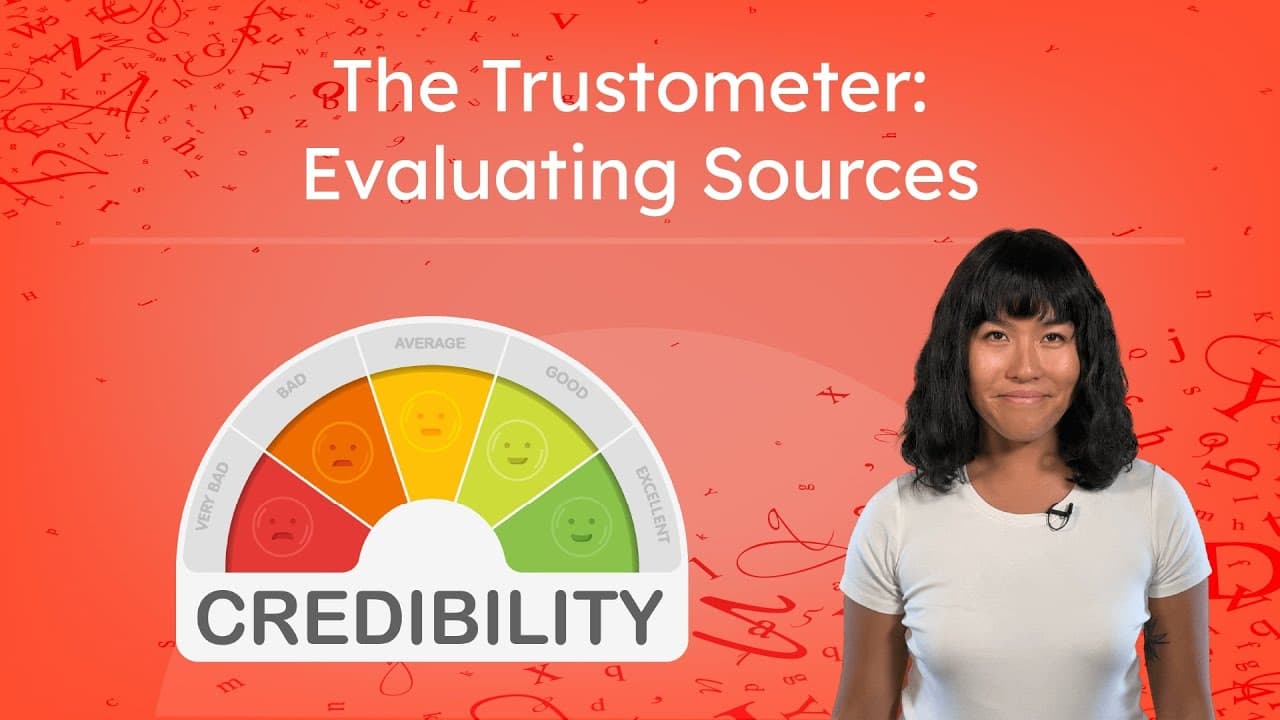
This comprehensive video guide teaches students the essential skills of information literacy, specifically focusing on how to evaluate sources for credibility and how to identify bias. Using a relatable research question about social media's impact on teen mental health, the narrator introduces a fictional tool called the "Trustometer" to demonstrate the critical thinking process required to assess information. The video breaks down source evaluation into four key criteria: Author's Credibility, Purpose, Timeliness, and Accuracy.

Miacademy & MiaPrep Learning ChannelMiacademy & MiaPrep Learning Channel

14mins 8s

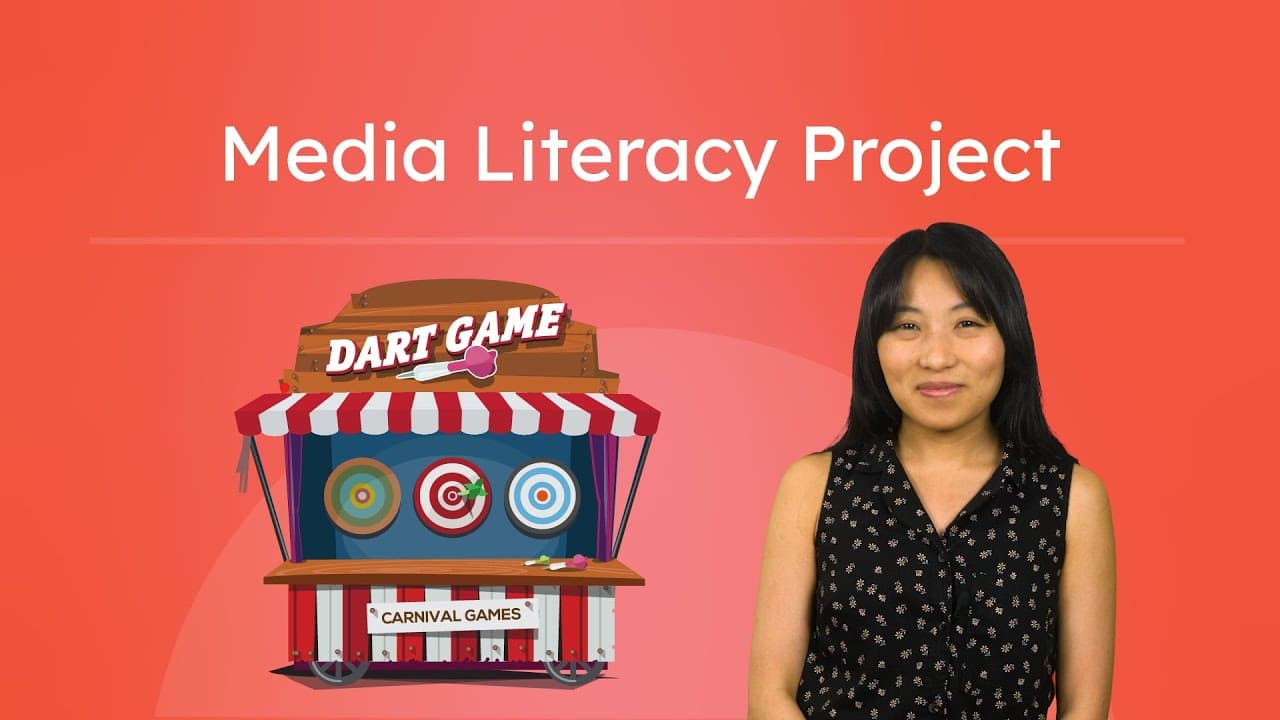
Mastering Media Literacy: Review Game and Final Project

Mastering Media Literacy: Review Game and Final Project

This educational video serves as a comprehensive review and project launch for a unit on media literacy. Set in the fictional "Media Metropolis," the video is divided into two distinct segments. The first half features an interactive "Dart Game," a quiz-show style review that tests students' knowledge on various media concepts ranging from advertising techniques and social media algorithms to film angles and comic book terminology. The second half transitions into a project-based learning initiative, where the presenter introduces a "Media Literacy Project" commissioned by the city's Mayor.

Miacademy & MiaPrep Learning ChannelMiacademy & MiaPrep Learning Channel

10mins 35s

Materials

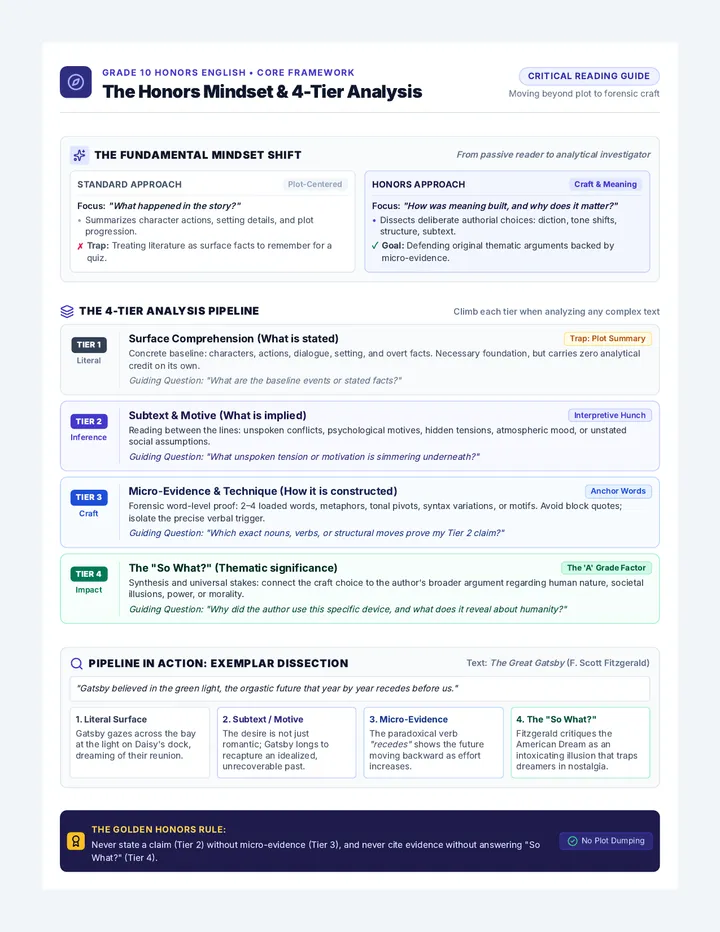
Honors Reading Guide

Honors Reading Guide

A single-page reference guide for 10th-grade honors students showcasing the mindset shift from plot summary to craft analysis alongside the 4-tier textual analysis pipeline and a complete literary walkthrough.

K

kmai

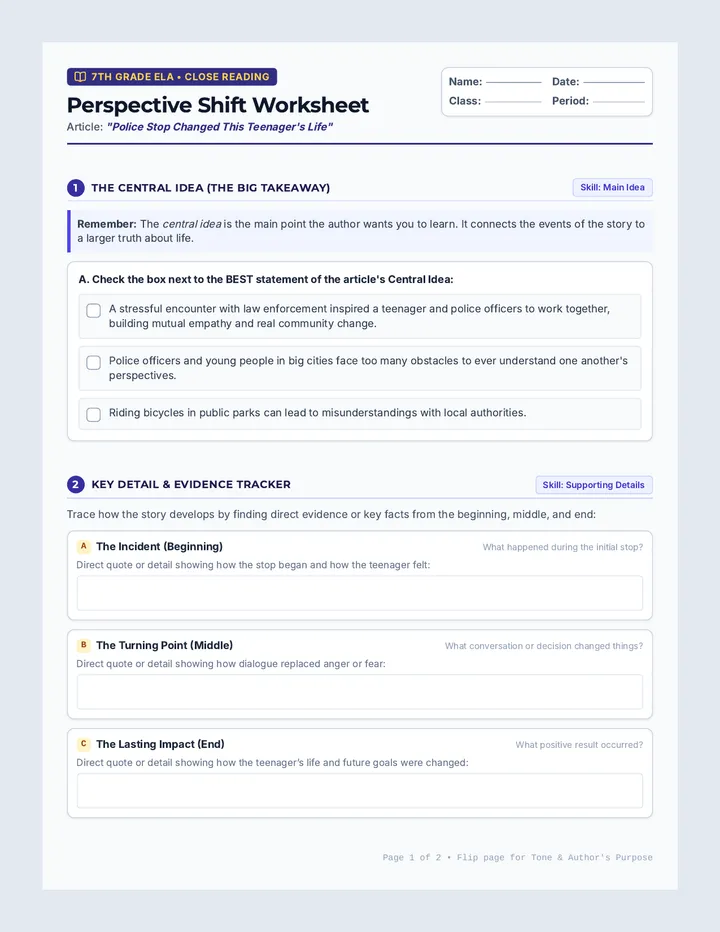
Perspective Shift Worksheet

Perspective Shift Worksheet

A simplified 7th-grade ELA close reading worksheet for 'Police Stop Changed This Teenager's Life', featuring scaffolded central idea practice, a sequential 3-part evidence tracker, tone word analysis with a word bank, and perspective shift charts.

TJ

Tasha Jaramillo

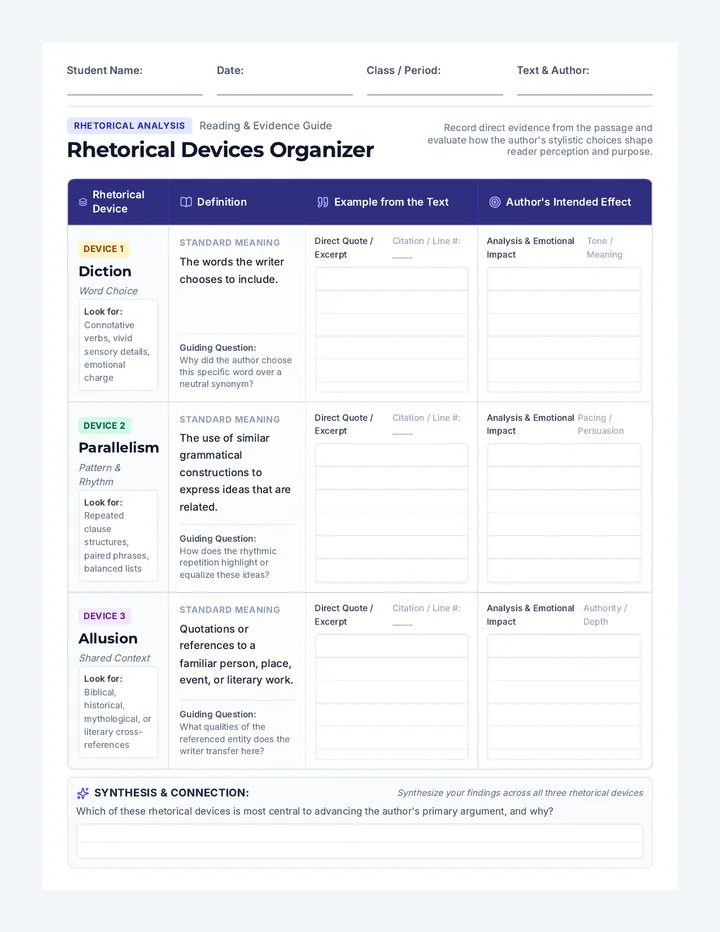
Rhetorical Devices Graphic Organizer

Rhetorical Devices Graphic Organizer

A printable, single-page ELA graphic organizer designed for rhetorical analysis, guiding students to analyze Diction, Parallelism, and Allusion with pre-filled definitions and structured evidence-and-effect writing spaces.

LF

Lindsey Foulks

Text Decoders Reference Poster

Text Decoders Reference Poster

A high-impact, single-page ELA CCSS standards reference poster for 8th-grade Reading. Redesigned with the modern Poppins font for titles and labels, paired with a highly readable body text font. Features color-coded columns for Reading Literature (RL) and Reading Informational Text (RI) with concise, student-focused definitions and clear visual icon associations.

SP

Sheridan Pickett

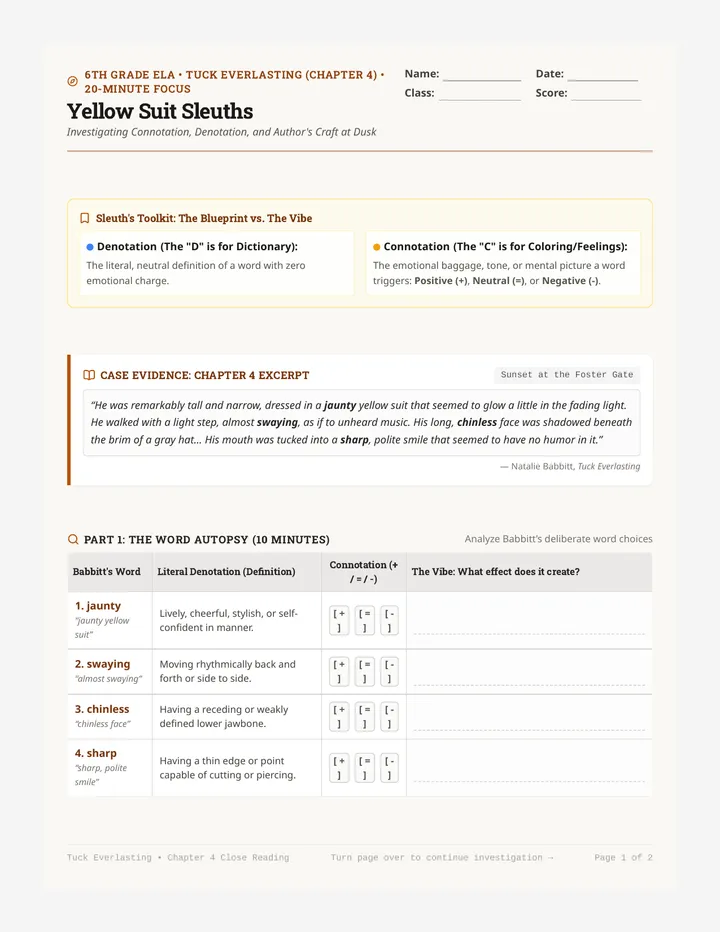
Yellow Suit Sleuths Activity Worksheet

Yellow Suit Sleuths Activity Worksheet

A 6th-grade close-reading activity investigating Natalie Babbitt's use of connotation and denotation in Chapter 4 of Tuck Everlasting. Students analyze the eerie description of the Man in the Yellow Suit, map word charges along a spectrum, and rewrite the passage to manipulate the scene's mood.

KM

Kierstyn Murley

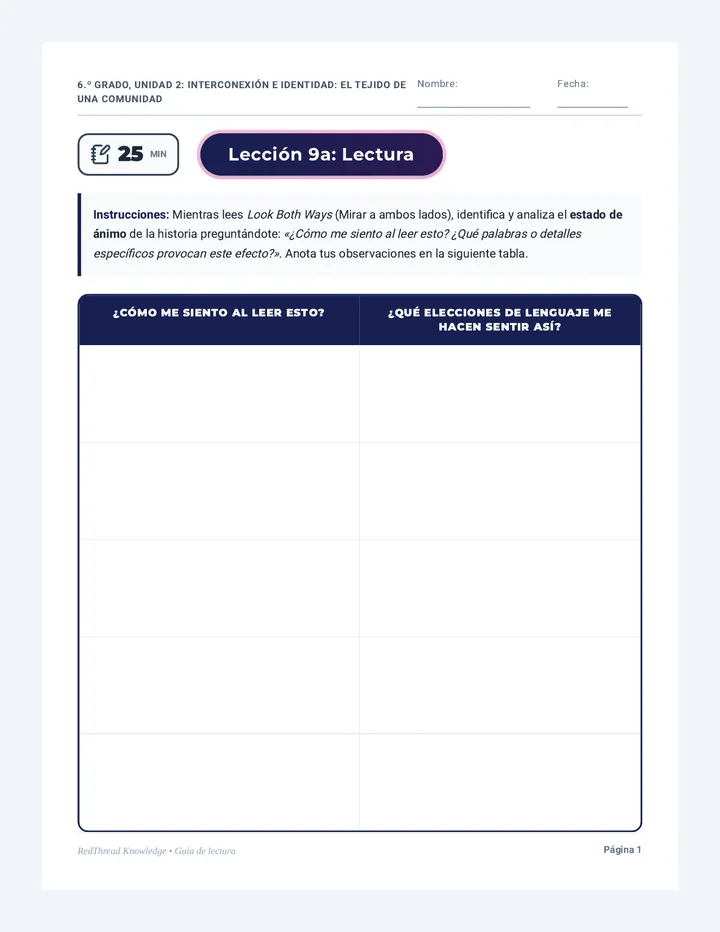
Story Moods Worksheet

Story Moods Worksheet

Hoja de trabajo en español para el análisis del estado de ánimo literario en la lectura de Jason Reynolds, incluyendo una tabla de registro de evidencias lingüísticas y una consigna de escritura rápida.

N

nlewis

Sequences

Invention Quest Slides

Frindle Frenzy Novel Study

A 9-day novel study for 'Frindle' by Andrew Clements, aligned to 3rd Grade ELAR TEKS, focusing on character development, vocabulary, and plot analysis.

LH

Lucy Hellerman

56
Prophecy and Power Slides

Shadows and Crowns

A series of lessons exploring Shakespeare's Macbeth, specifically designed for 10th-grade emergent bilingual students to master complex characterization and thematic elements.

DC

Dylan Clark

30
Question Anatomy Slides

Insight Investigators

A 6-week reading intervention unit for 5th graders focused on making inferences, analyzing questions, and using text evidence. Themes include mysteries, sports (baseball and basketball), and dragons to engage high-interest readers.

MK

Meg Keene

48
Copenhagen Clues Slides

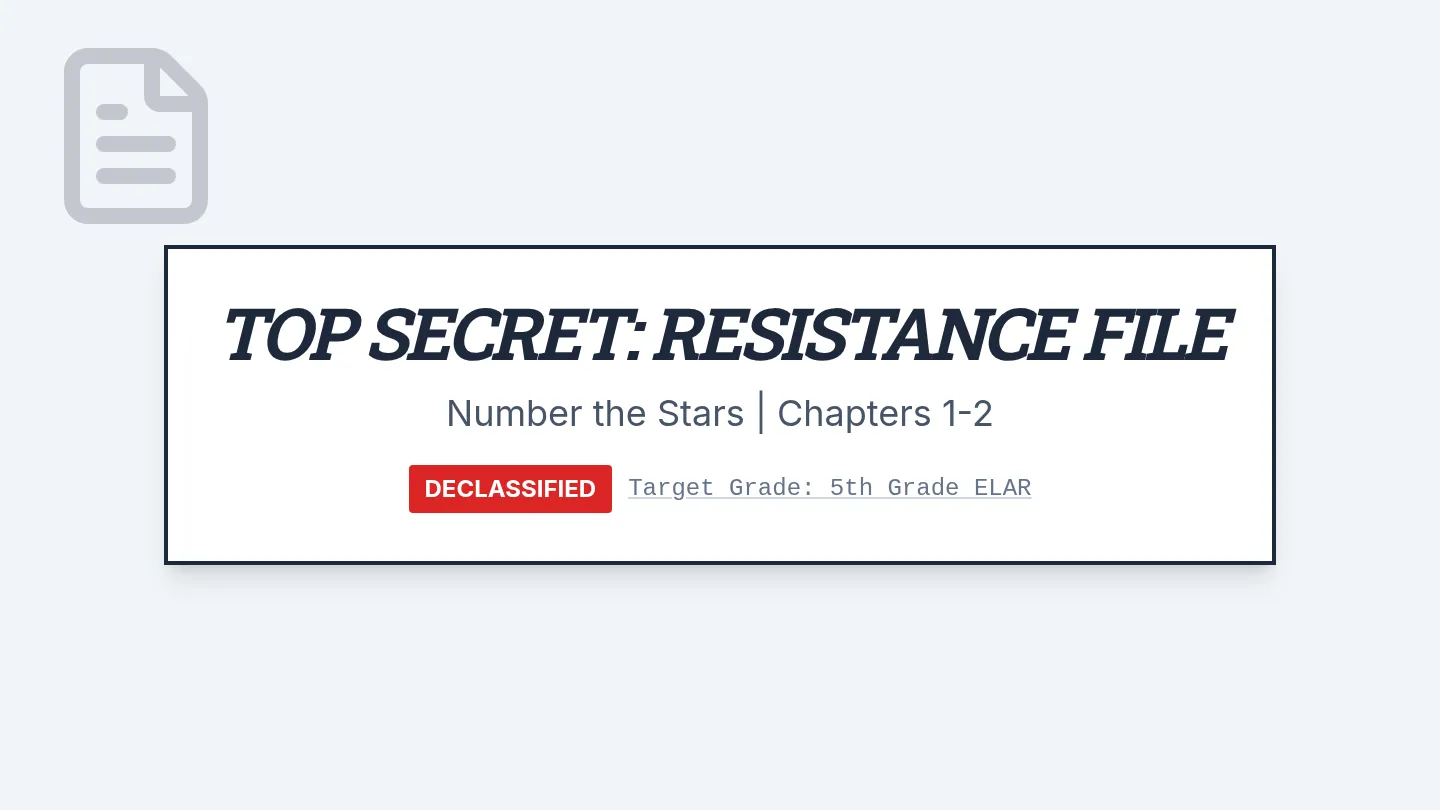
Resistance Chronicles

A 9-day novel study for Number the Stars centered on 5th Grade ELAR TEKS, focusing on character development, plot analysis, and historical context through the lens of a Resistance Secret File.

LH

Lucy Hellerman

79
Unit 1 Pacing Guide Document

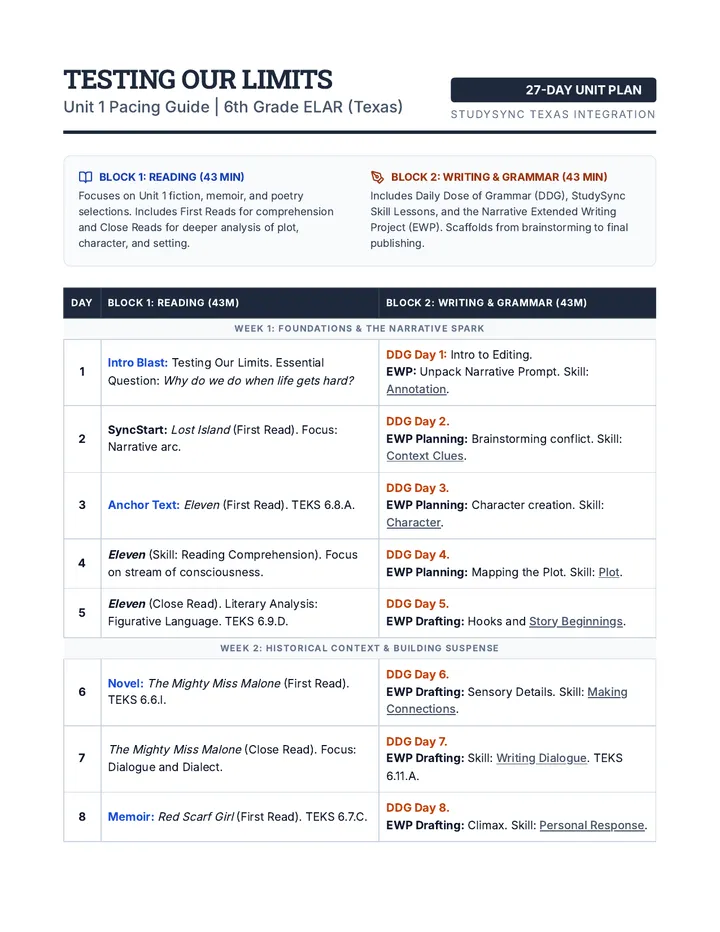
Testing Our Limits Unit Sequence

A 27-day instructional sequence for 6th Grade ELAR Unit 1: Testing Our Limits, featuring dual blocks for Reading and Writing with daily grammar and skill scaffolding.

DM

Dawn Mustian

81
Mission Briefing Worksheet

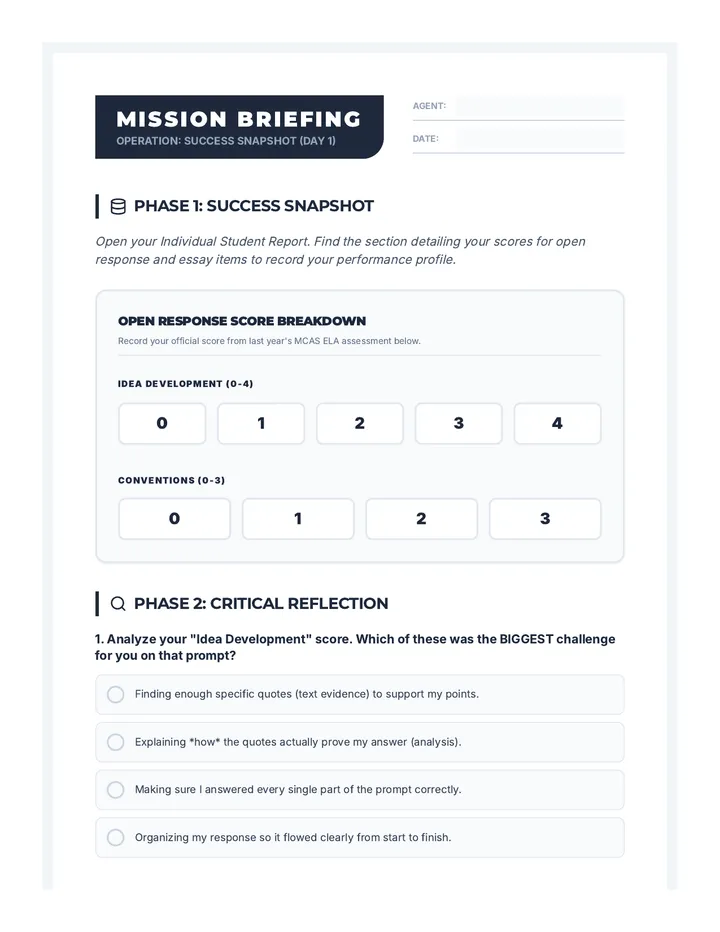
Mastery Mission

A project-based learning unit designed to help middle school students analyze their past MCAS ELA performance, deconstruct scoring rubrics, and create a personalized strategy playbook for upcoming assessments. Students move from 'investigating' their scores to 'rebooting' their responses and 'finalizing' their test-taking toolkit.

M

mhbutterworth

18