Lenny.com
Explore
Create
ActivitiesNewMathEnglish Language ArtsScience & EngineeringSocial StudiesGlobal LanguagesHealth & Physical EducationSpecial EducationCounseling & Life SkillsArts & CreativityESL
Lenny.com
Lenny.com
Explore
Create
ActivitiesNewMathEnglish Language ArtsScience & EngineeringSocial StudiesGlobal LanguagesHealth & Physical EducationSpecial EducationCounseling & Life SkillsArts & CreativityESL
Lenny.com
English Language ArtsPhonics & Reading FoundationsLetter IdentificationLearn Letters A-ZLowercase and Uppercase LettersConsonants and VowelsLetter-Sound AssociationsLetter-Sound Associations: LowercaseLetter-Sound Associations: UppercaseBeginning and Ending SoundsRhymingBlending And SegmentingShort VowelsShort Vowel SoundsConsonant BlendsConsonant DigraphsBlends, Digraphs, and TrigraphsDigraphs, Blends, and Silent LettersLong Vowel SoundsLong Vowel PatternsShort and Long VowelsShort and Long Vowel PatternsSilent EVowel SoundsVowel TeamsR-Controlled VowelsDiphthongs: Oi, Oy, Ou, OwVariant VowelsVariant, Diphthong, And R Vowel PatternsSoft G And CSight WordsIrregular WordsWord RecognitionSyllablesSyllable TypesTwo-Syllable WordsMultisyllabic WordsPhoneme ManipulationDecodable TextsVocabularyAction WordsQuestion WordsNouns and AdjectivesClassify WordsCompound WordsSynonyms and AntonymsHomophonesHomophones and HomonymsShades of MeaningContext CluesPrefixes and SuffixesGreek and Latin RootsAnalogiesIdioms and AdagesForeign Words and ExpressionsWord Choice and UsageReference SkillsReading ComprehensionRead-Along Literary TextsRead-Along Informational TextsReality vs. FictionStory ElementsCharacterSequenceMain IdeaCause And EffectCompare And ContrastReading StrategiesText StructureAuthor's PurposeAuthor's Purpose And ToneAuthor's PerspectivePoint Of ViewThemeInference And ThemeInference And AnalysisPoetry ElementsLiterary DevicesAnalyzing LiteratureAnalyzing Informational TextsComparing TextsAudience, Purpose, And ToneBusiness DocumentsNovel StudyNonfiction Book StudyGrammar & MechanicsSentencesNounsVerbsAdjectivesPronounsCapitalizationPunctuationContractionsConjunctionsPrepositionsArticlesAdjectives And AdverbsVerb TypesVerb TensePronouns And AntecedentsPronoun TypesSubject-Verb AgreementDirect And Indirect ObjectsSentences, Fragments, And Run-OnsPhrases And ClausesCommasSemicolons, Colons, And CommasDashes, Hyphens, And EllipsesSpellingAbbreviationsFormattingVerb Tense And MoodMisplaced ModifiersWritingDescriptive DetailsCreative WritingOpinion WritingTopic SentencesOrganizing WritingLinking WordsSentence VarietyIntroductions And ConclusionsPersuasive And Opinion WritingExpository WritingPersuasive StrategiesDeveloping And Supporting ArgumentsTopic Sentences And Thesis StatementsSummarizingResearch SkillsEditing And RevisingActive And Passive Voice=Writing Clearly And ConciselyDebate & Public SpeakingPublic Speaking BasicsPersuasive TechniquesClaims and EvidenceTypes of ArgumentsReasoning TypesLogical FallaciesTopic ResearchOrganizing EvidenceDebate Speech OrganizationAttacking and Defending ArgumentsClash and EngagementImpact CalculusQuestioning and Cross-ExaminationCritical ThinkingInformal LogicFormal LogicInductive Reasoning
Lenny.com

Solutions

Lenny for EducatorsLenny for SchoolsLenny for Districts

Product

ExploreSign inCreateSupportAbout

Resources

Getting startedMTSS Acceleration Program

© 2026 Lenny Learning Inc.

TermsPrivacyAccessibility
LinkedInInstagramX
Lenny

Introductions And Conclusions

Hook strategies, thesis placement, and background information for effective essay openings. Guides students in synthesizing main points and providing final insights to wrap up arguments.

Videos

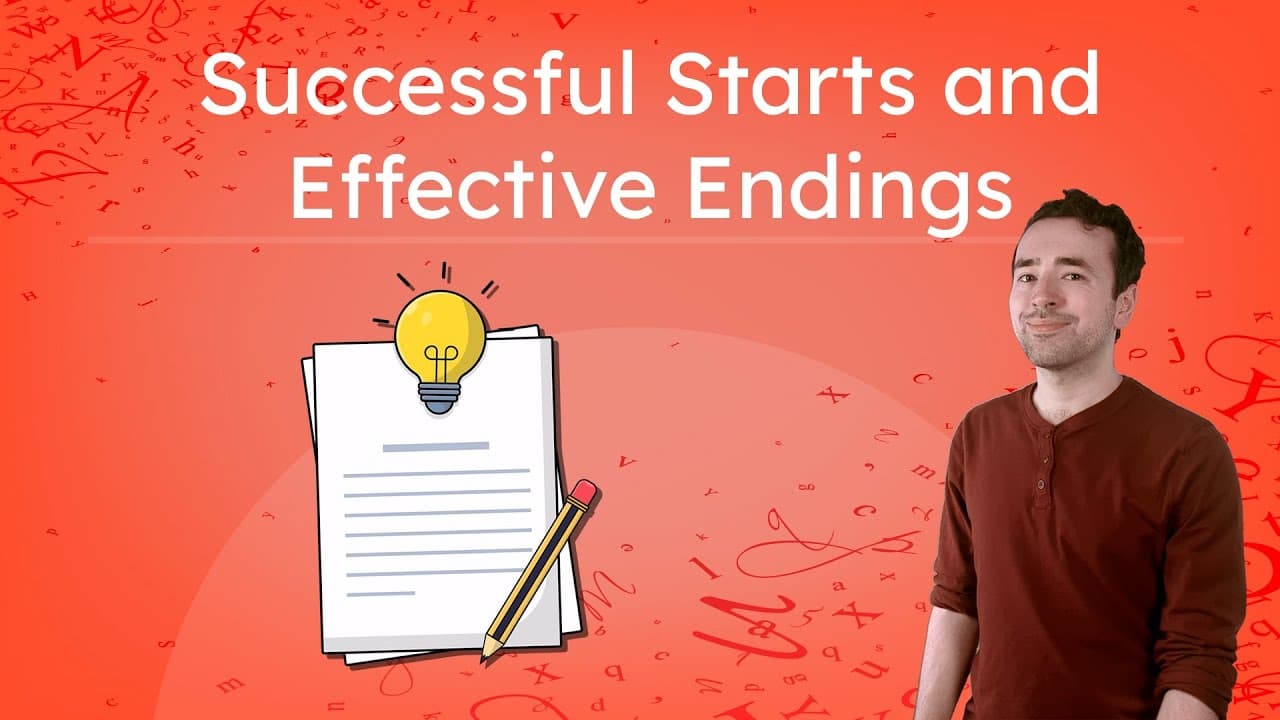
How to Write Powerful Starts and Satisfying Endings

How to Write Powerful Starts and Satisfying Endings

This engaging creative writing lesson guides aspiring writers through the critical process of crafting opening and closing scenes for a novel. Hosted by an energetic presenter in a library setting, the video breaks down the specific goals of these pivotal moments: grabbing the reader's investment at the start and rewarding that investment at the end. It distinguishes between the plot events themselves and the "craft" of how those events are presented to the audience. The content introduces specific literary techniques and terminology for structuring narratives. For beginnings, it covers strategies like "In Medias Res" (starting in the middle of action), setting-focused openings, and character-focused introductions. For endings, it explores the use of epilogues, ambiguous endings that leave room for interpretation, and "callbacks" that reference earlier story details. Each concept is illustrated with clear definitions and relatable examples. Ideal for middle and high school English Language Arts classrooms, this video serves as a practical workshop tool. It includes built-in pause points that prompt students to reflect on their own reading experiences and apply the concepts to their own writing projects. Teachers can use this resource to introduce narrative structure units, support NaNoWriMo projects, or help students revise their creative writing pieces for greater impact.

Miacademy & MiaPrep Learning ChannelMiacademy & MiaPrep Learning Channel

9mins 58s

Exploring Informative Text Types: Descriptive, Comparative, and Procedural

Exploring Informative Text Types: Descriptive, Comparative, and Procedural

In this engaging Language Arts lesson set in the fictional village of "Informatown," students learn how to analyze and categorize different types of informative non-fiction texts. The video begins by reviewing the general characteristics of informative writing—logical structure, objective central ideas, and precise language—before diving into three specific text structures: Descriptive, Comparative, and Procedural. Through the narrative of organizing a messy library, the host guides viewers in examining three distinct sample texts about Nigerian culture, the Dominican Republic, and Lakota Dreamcatchers. Students learn to identify specific structural clues and transition words that distinguish one text type from another, such as looking for sensory details in descriptive texts, contrasting words in comparative texts, and chronological steps in procedural texts. This video is highly valuable for upper elementary and middle school classrooms as it moves beyond simple reading comprehension to structural analysis. It provides concrete strategies for recognizing how authors organize information to achieve specific purposes. Teachers can use this video to introduce a unit on non-fiction text structures, support lessons on transition words, or as a model for students' own informative writing projects.

Miacademy & MiaPrep Learning ChannelMiacademy & MiaPrep Learning Channel

8mins 48s

Planning and Writing Key Novel Scenes

Planning and Writing Key Novel Scenes

In this engaging instructional video, host Justin presents the final challenge of a 'Writer's Escape Room' unit, tasked with guiding students through the process of writing three key scenes for their original novels. The video combines a playful narrative frame with concrete writing instruction, asking students to demonstrate their mastery of written craft by selecting specific scenes from their previously created outlines. Justin emphasizes the importance of intention in writing, challenging students to not just write what happens, but to craft how the reader experiences it. The content reviews essential creative writing techniques covered in previous lessons, including narrative point of view, intentional word choice, sensory details, pacing, and strong beginnings and endings. A significant portion of the video is dedicated to the pre-writing phase, where students are asked to pause and set specific goals for reader impact (what they want readers to think or feel) and then select the appropriate literary tools to achieve those effects. An example of a high-stakes car chase illustrates how techniques like sentence fragmentation and sensory metaphors can build tension. This resource is highly valuable for middle and high school creative writing classrooms as it bridges the gap between outlining and drafting. It moves students beyond simple plot summary into the realm of artistic craftsmanship. Teachers can use this video to launch a final unit project, anchoring the drafting process in specific, measurable writing goals. The included 'escape room' narrative adds a layer of gamification that can be extended into classroom activities, making the often-daunting task of writing novel chapters feel like an achievable and exciting quest.

Miacademy & MiaPrep Learning ChannelMiacademy & MiaPrep Learning Channel

7mins 44s

How to Write a Strong Essay Introduction

How to Write a Strong Essay Introduction

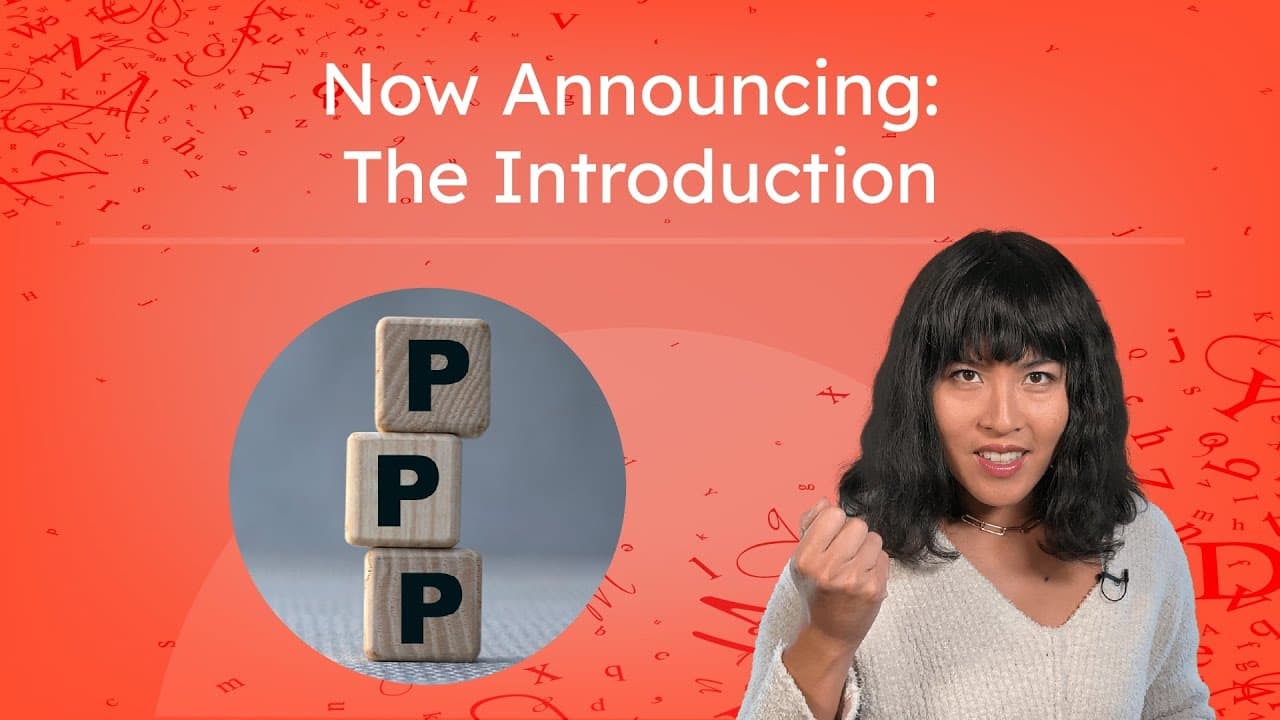
This engaging video lesson breaks down the art of writing an effective introduction paragraph for an academic essay. Using a theatrical opening and clear visual aids, the narrator demystifies the purpose of an introduction, explaining why it is often easier to write this paragraph last—after the thesis and body paragraphs are established. The content addresses common student anxieties about starting an essay, whether from having too much to say or writer's block, and offers a strategic approach to overcome these hurdles. The core of the lesson introduces the "Three Ps" framework: Pique, Provide, and Produce. Students learn how to "Pique" the reader's interest with a strong hook while avoiding clichés like rhetorical questions or dictionary definitions. They learn to "Provide" necessary background information to contextually ground the reader, and finally, to "Produce" a clear thesis statement. The video provides specific examples of weak versus strong hooks and demonstrates how these elements come together in a sample paragraph about Queen Victoria. For educators, this video serves as an excellent direct instruction tool or review for middle and high school English Language Arts classes. It tackles specific writing pitfalls—such as the overused "Webster's Dictionary defines..." opening—and offers concrete alternatives like anecdotes or setting descriptions. The clear segmentation of the introduction into three distinct components makes it easy for students to self-assess their writing and ensures they include all necessary elements in their essays.

Miacademy & MiaPrep Learning ChannelMiacademy & MiaPrep Learning Channel

7mins 10s

How to Write a Powerful Essay Conclusion

How to Write a Powerful Essay Conclusion

This engaging instructional video breaks down the specific purpose and structure of an essay's conclusion paragraph, designed specifically for high school writers. Using a blend of humor, clear explanations, and concrete examples, the host demystifies the conclusion by simplifying it into a 'one-two punch': restating the thesis and explaining the argument's significance. The video uses a recurring example essay about behaviorism in schools to demonstrate exactly how to transform an introduction thesis into a powerful concluding statement. The content covers key rhetorical concepts including the three main appeals—Ethos, Logos, and Pathos—and demonstrates how to use them to answer the 'so what?' question at the end of an essay. It explicitly addresses the common student struggle of feeling repetitive by showing how to paraphrase effectively rather than copy-pasting previous ideas. The visual examples provide side-by-side comparisons of thesis statements and their restated counterparts. For educators, this video serves as an excellent standalone lesson or flipped classroom resource for writing units. It includes built-in pause points for student practice, making it interactive rather than passive. The clear distinction between 'reminding' the reader and 'articulating care' provides a simple, memorable framework that students can immediately apply to their own writing drafts to improve the impact of their final paragraphs.

Miacademy & MiaPrep Learning ChannelMiacademy & MiaPrep Learning Channel

5mins 18s

How to Outline and Write a Comparative Essay

How to Outline and Write a Comparative Essay

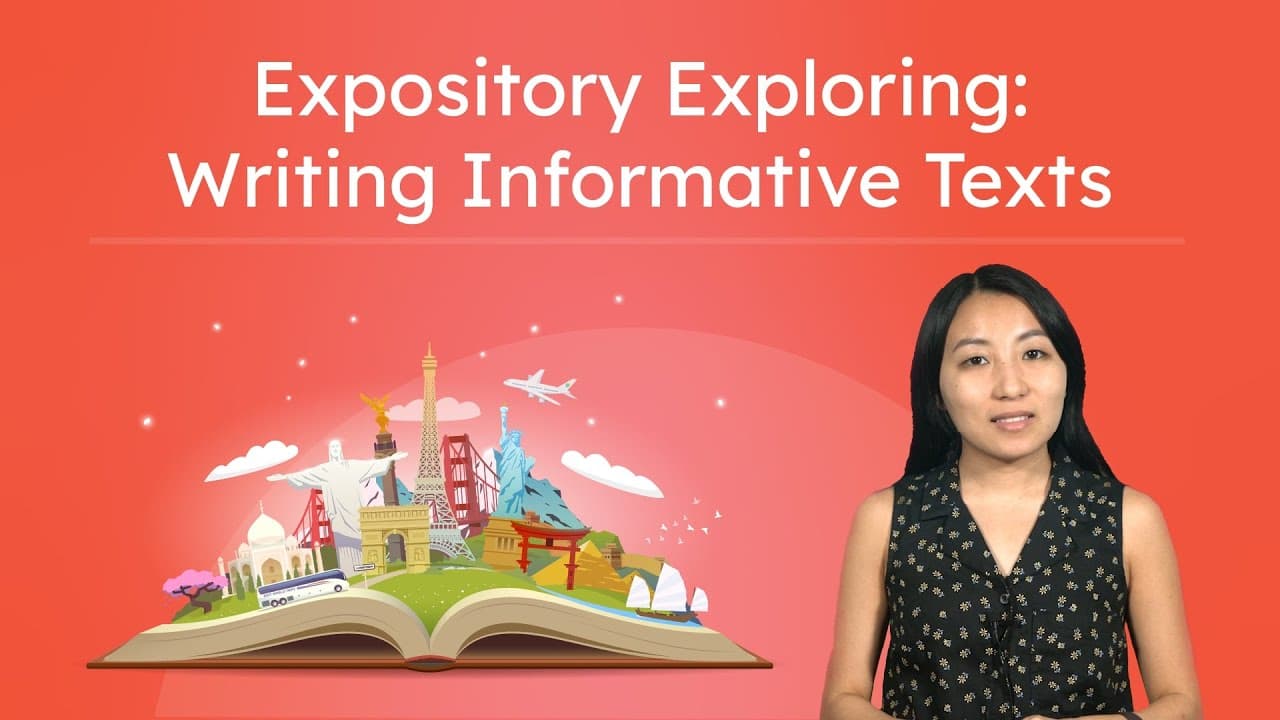
This educational video guides students through the process of writing an informative comparative essay, using the specific example of comparing traditional Korean music (Gugak) with modern K-pop. The lesson takes place in the fictional setting of "Informatown," where the host explains how to take raw information—in this case, a fact sheet about South Korean music—and transform it into a structured, cohesive text. The video emphasizes the importance of planning before writing, using analogies like drawing outlines to explain the concept. The content covers the complete writing lifecycle: selecting the appropriate text type based on the data (comparative), grouping information logically to form body paragraphs, creating a structured outline with Roman numerals, and drafting the essay with attention to topic sentences, transitions, and hooks. It specifically breaks down the structure of an essay into an introduction (hook, background, central idea), body paragraphs (grouped by theme rather than just listing facts), and a conclusion. The video models each step, providing clear examples of how to turn bullet points into flowing prose. For educators, this video serves as an excellent model for a writing workshop. It scaffolds the writing process by breaking it down into manageable chunks, making the often-daunting task of essay writing approachable. By using a culturally relevant and engaging topic (K-pop), it captures student interest while teaching fundamental literacy skills such as synthesizing information, organizing ideas hierarchically, and using transitional phrases to improve flow. The video includes built-in pause points for student practice, making it ready-to-use for direct instruction.
Miacademy & MiaPrep Learning ChannelMiacademy & MiaPrep Learning Channel

11mins 27s

Materials

Gatsby Loathsome Character Blueprint

Gatsby Loathsome Character Blueprint

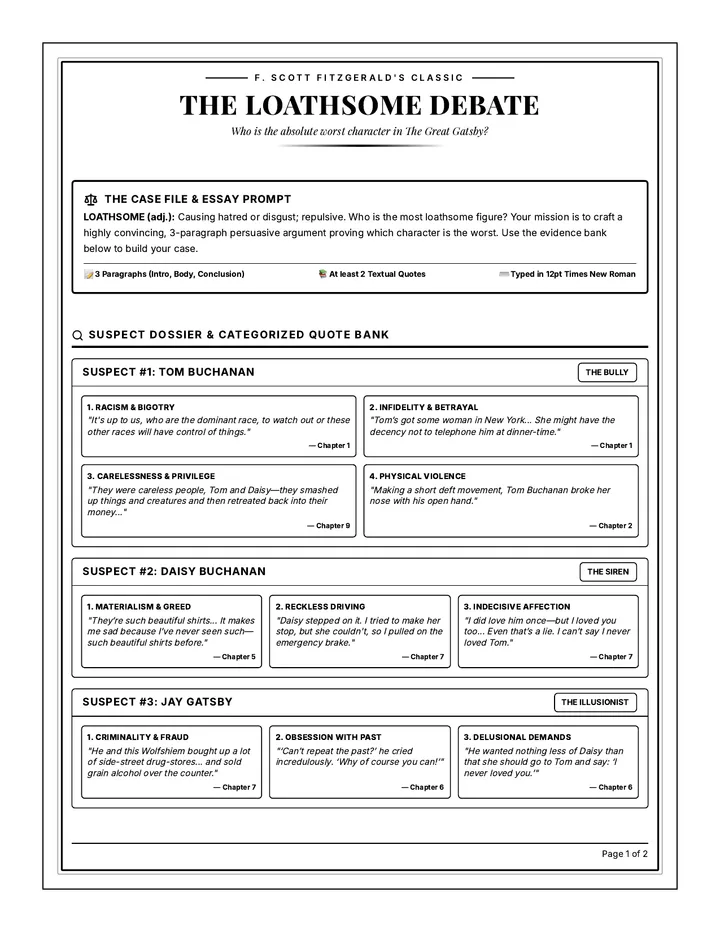
A two-page printable graphic organizer and quote bank in a high-contrast black-and-white theme with zero color or gray fills. Page 1 presents the 'Suspect Dossier' with clear borders, white backgrounds, and pure black text, while Page 2 features the highly structured essay outline and sentence starters with solid black-and-white print-friendly writing guides and page numbers.

KR

Kirstin Reed

Rainforest Adventure Titles Worksheet Project

Rainforest Adventure Titles Worksheet Project

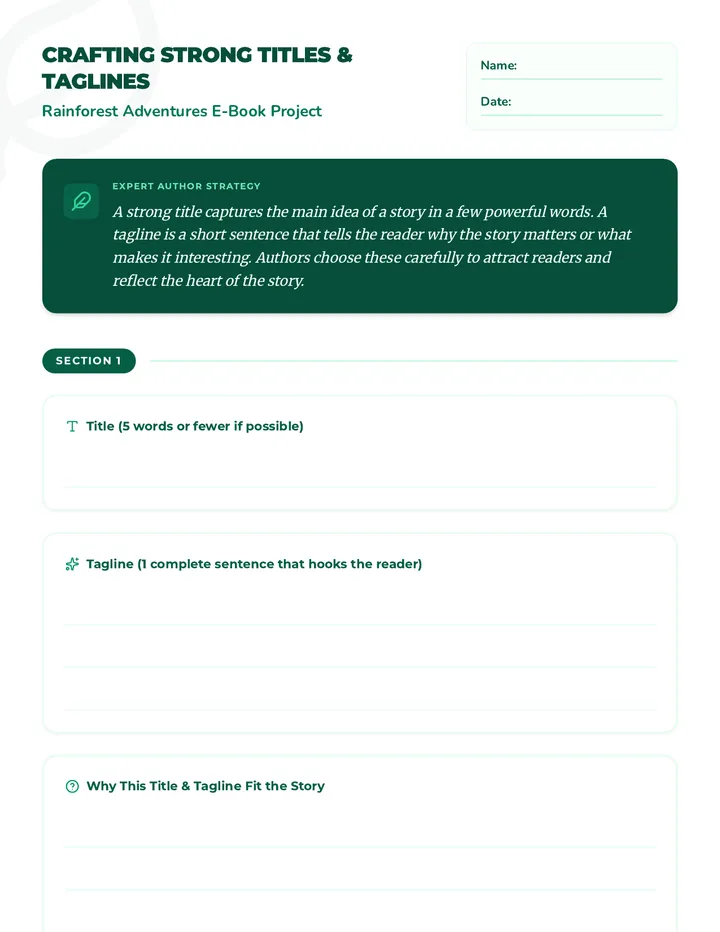
A professional 2-page printable worksheet for student authors to brainstorm and refine titles and taglines for their rainforest-themed e-books. It features a cohesive rainforest aesthetic across two structured pages, providing space for two distinct draft sections and a final synthesis reflection.

BJ

Brandon Jackson

Multi Paragraph Writing Packet

Multi Paragraph Writing Packet

A 5-page IEP goal work packet for 7th grade students focusing on multi-paragraph essay mastery with cellphone-themed informative and argumentative prompts, source briefs, step-by-step graphic organizers, ruled drafting pages, and self-monitoring rubrics.

Z

Zimmer

Clincher Champions Ring Cards

Clincher Champions Ring Cards

Printable ring and lanyard cards for 4th grade students featuring formula and pattern prompts for writing conclusion sentences in 2-point constructed responses. Includes cut lines, hole-punch markers, color-coded sentence formulas, mentor examples, and a self-check rubric card.

L

lgangi

Character Verdict Handout

Character Verdict Handout

An ELL Level 2 friendly Graphic Organizer Handout to scaffold a 3-paragraph persuasive character essay. It features pre-writing questions to help students choose between the 'Loathsome' or 'Pitiful' prompt, structured quote planners with sentence frames, a paragraph-by-paragraph outline, and a checklist matching the user's requirements. This version has been updated to remove all background color fills, gray boxes, and color highlights for a clean, ink-friendly black-and-white layout.

KR

Kirstin Reed

Birthday Wishes Worksheet Final

Birthday Wishes Worksheet Final

A revised version of the Birthday Wishes Worksheet where sentence starters and word bank items are placed in boxes, requiring students to choose and write them on primary-style handwriting lines. Optimized for a single-page layout.

J

jielmeus

Sequences

Question Anatomy Slides

Insight Investigators

A 6-week reading intervention unit for 5th graders focused on making inferences, analyzing questions, and using text evidence. Themes include mysteries, sports (baseball and basketball), and dragons to engage high-interest readers.

MK

Meg Keene

48
Echo Showdown Quiz

Statement Chasers

A writing sequence focused on the 'Echo Method'—teaching students to transform writing prompts into strong topic statements by reusing prompt keywords.

KB

Krista Bodkin

18
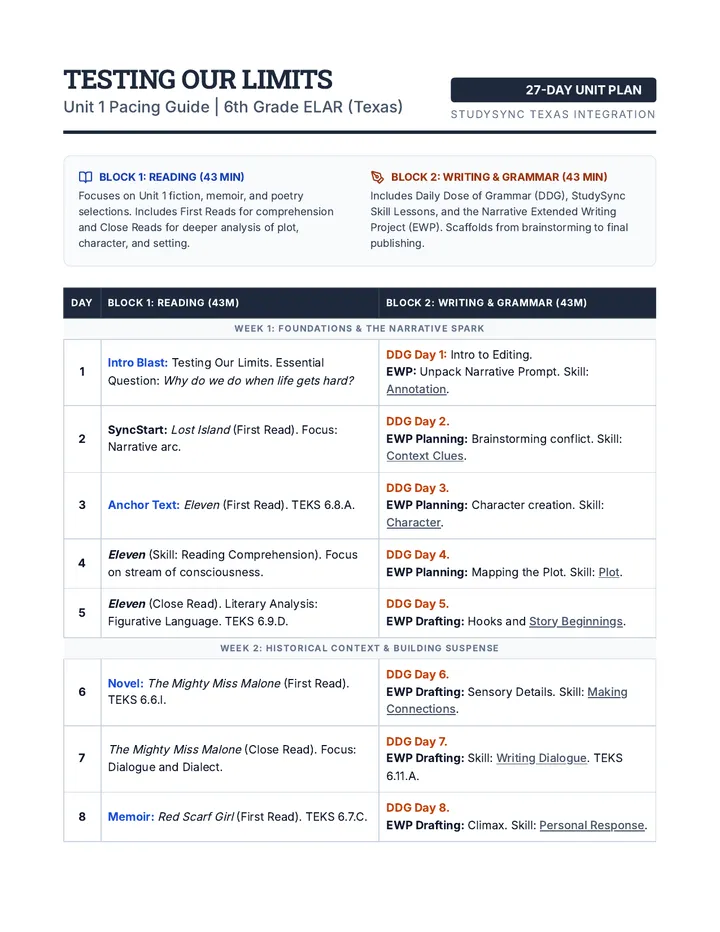
Unit 1 Pacing Guide Document

Testing Our Limits Unit Sequence

A 27-day instructional sequence for 6th Grade ELAR Unit 1: Testing Our Limits, featuring dual blocks for Reading and Writing with daily grammar and skill scaffolding.

DM

Dawn Mustian

81
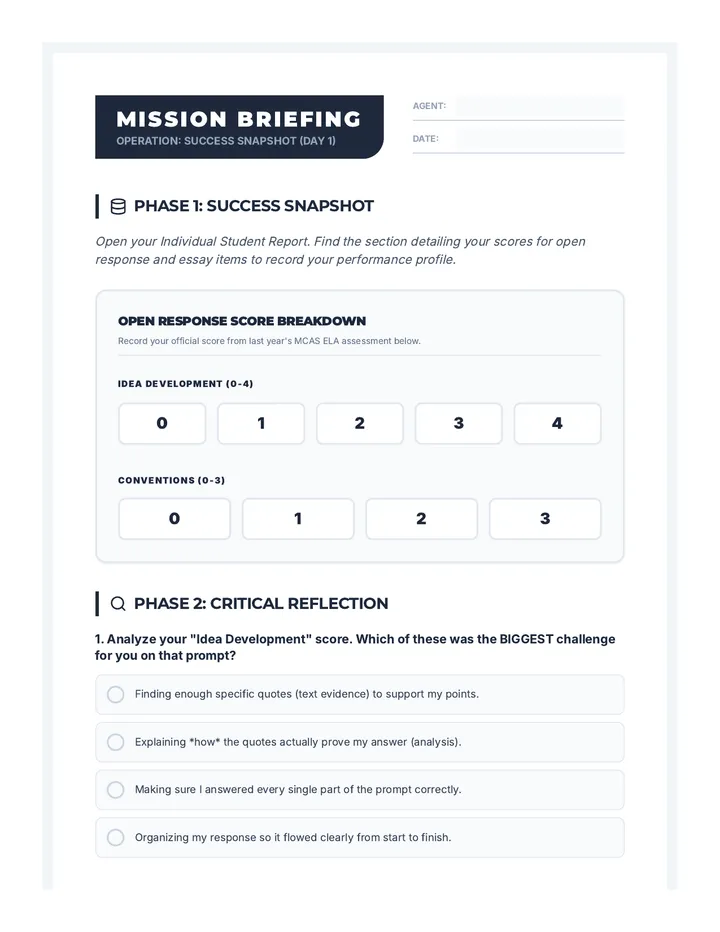
Mission Briefing Worksheet

Mastery Mission

A project-based learning unit designed to help middle school students analyze their past MCAS ELA performance, deconstruct scoring rubrics, and create a personalized strategy playbook for upcoming assessments. Students move from 'investigating' their scores to 'rebooting' their responses and 'finalizing' their test-taking toolkit.

M

mhbutterworth

18
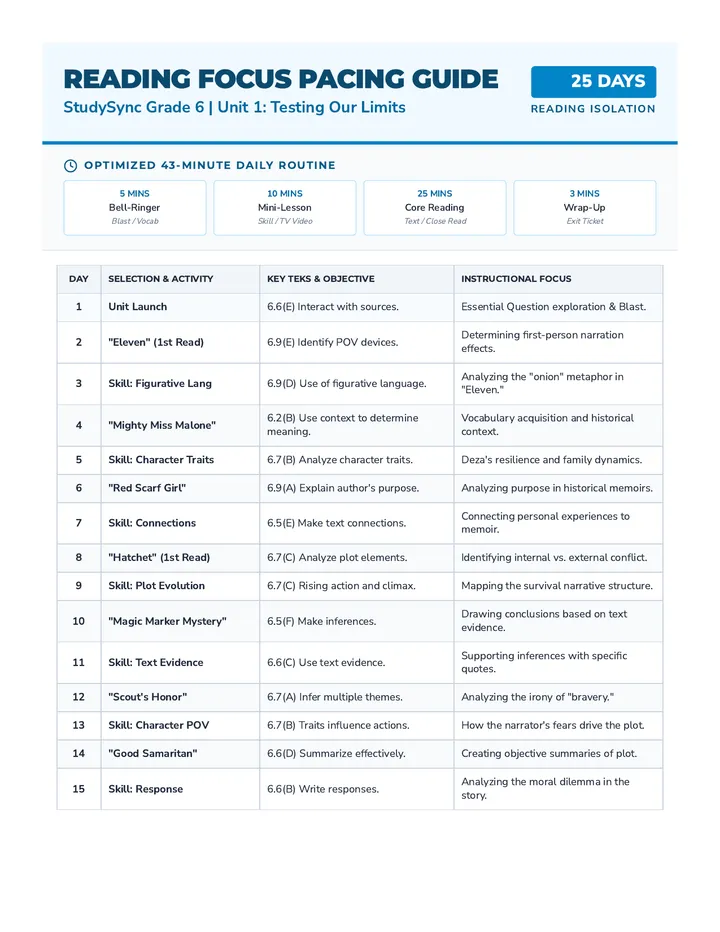
Reading Focus Pacing Guide

Testing Our Limits Unit

A 25-day comprehensive unit for StudySync Grade 6 that explores the theme of courage and resilience through isolated reading and writing tracks, aligned to ELA TEKS.

DM

Dawn Mustian

79
Burger Builder Slides

Paragraph Foundations

A foundational paragraph writing unit designed for early writers and SpEd students to master core paragraph structures through narrative, opinion, and informational writing with heavy visual scaffolding.

E

ecreamer

23