Lenny.com
Explore
Create
ActivitiesNewMathEnglish Language ArtsScience & EngineeringSocial StudiesGlobal LanguagesHealth & Physical EducationSpecial EducationCounseling & Life SkillsArts & CreativityESL
Lenny.com
Lenny.com
Explore
Create
ActivitiesNewMathEnglish Language ArtsScience & EngineeringSocial StudiesGlobal LanguagesHealth & Physical EducationSpecial EducationCounseling & Life SkillsArts & CreativityESL
Lenny.com
Lenny.com

Solutions

Lenny for EducatorsLenny for SchoolsLenny for Districts

Product

ExploreSign inCreateSupportAbout

Resources

Getting startedMTSS Acceleration Program

© 2026 Lenny Learning Inc.

TermsPrivacyAccessibility
LinkedInInstagramX
Lenny

Reasoning Types

Deductive, inductive, and analogical frameworks for constructing logical arguments. Identifies common fallacies and evaluates the structural integrity of persuasive claims.

English Language ArtsPhonics & Reading FoundationsLetter IdentificationLearn Letters A-ZLowercase and Uppercase LettersConsonants and VowelsLetter-Sound AssociationsLetter-Sound Associations: LowercaseLetter-Sound Associations: UppercaseBeginning and Ending SoundsRhymingBlending And SegmentingShort VowelsShort Vowel SoundsConsonant BlendsConsonant DigraphsBlends, Digraphs, and TrigraphsDigraphs, Blends, and Silent LettersLong Vowel SoundsLong Vowel PatternsShort and Long VowelsShort and Long Vowel PatternsSilent EVowel SoundsVowel TeamsR-Controlled VowelsDiphthongs: Oi, Oy, Ou, OwVariant VowelsVariant, Diphthong, And R Vowel PatternsSoft G And CSight WordsIrregular WordsWord RecognitionSyllablesSyllable TypesTwo-Syllable WordsMultisyllabic WordsPhoneme ManipulationDecodable TextsVocabularyAction WordsQuestion WordsNouns and AdjectivesClassify WordsCompound WordsSynonyms and AntonymsHomophonesHomophones and HomonymsShades of MeaningContext CluesPrefixes and SuffixesGreek and Latin RootsAnalogiesIdioms and AdagesForeign Words and ExpressionsWord Choice and UsageReference SkillsReading ComprehensionRead-Along Literary TextsRead-Along Informational TextsReality vs. FictionStory ElementsCharacterSequenceMain IdeaCause And EffectCompare And ContrastReading StrategiesText StructureAuthor's PurposeAuthor's Purpose And ToneAuthor's PerspectivePoint Of ViewThemeInference And ThemeInference And AnalysisPoetry ElementsLiterary DevicesAnalyzing LiteratureAnalyzing Informational TextsComparing TextsAudience, Purpose, And ToneBusiness DocumentsNovel StudyNonfiction Book StudyGrammar & MechanicsSentencesNounsVerbsAdjectivesPronounsCapitalizationPunctuationContractionsConjunctionsPrepositionsArticlesAdjectives And AdverbsVerb TypesVerb TensePronouns And AntecedentsPronoun TypesSubject-Verb AgreementDirect And Indirect ObjectsSentences, Fragments, And Run-OnsPhrases And ClausesCommasSemicolons, Colons, And CommasDashes, Hyphens, And EllipsesSpellingAbbreviationsFormattingVerb Tense And MoodMisplaced ModifiersWritingDescriptive DetailsCreative WritingOpinion WritingTopic SentencesOrganizing WritingLinking WordsSentence VarietyIntroductions And ConclusionsPersuasive And Opinion WritingExpository WritingPersuasive StrategiesDeveloping And Supporting ArgumentsTopic Sentences And Thesis StatementsSummarizingResearch SkillsEditing And RevisingActive And Passive Voice=Writing Clearly And ConciselyDebate & Public SpeakingPublic Speaking BasicsPersuasive TechniquesClaims and EvidenceTypes of ArgumentsReasoning TypesLogical FallaciesTopic ResearchOrganizing EvidenceDebate Speech OrganizationAttacking and Defending ArgumentsClash and EngagementImpact CalculusQuestioning and Cross-ExaminationCritical ThinkingInformal LogicFormal LogicInductive Reasoning

Videos

Thinking Like a Detective: Assessing Logic and Evidence

Thinking Like a Detective: Assessing Logic and Evidence

This engaging educational video uses a relatable scenario—interpreting a text message conversation about a crush—to teach students the fundamentals of logical reasoning and evidence evaluation. The host begins by referencing Sherlock Holmes to introduce the concept of using facts to build a logical conclusion. The core of the video analyzes a dialogue between two friends, Liz and Maya, where Liz jumps to conclusions based on weak evidence, allowing the narrator to demonstrate the difference between insufficient facts and a solid argument. Key themes include critical thinking, distinguishing relevant from irrelevant details, identifying sufficient evidence, and assessing the validity of an argument. The video explicitly connects these skills to reading comprehension strategies like finding the main idea and analyzing word choice. It models the internal monologue of a critical thinker who questions whether the "pieces of the puzzle" actually fit together. For educators, this video serves as an excellent hook for units on argumentative writing, debate, or reading comprehension. It takes an abstract concept (assessing reasoning) and applies it to a social situation students instinctively understand, making the learning concrete. It can be used to spark discussions about what constitutes "proof" in both literature and real-world arguments, helping students move beyond surface-level assumptions.

Miacademy & MiaPrep Learning ChannelMiacademy & MiaPrep Learning Channel

5mins 33s

Sequences

Master Pacing Guide Teacher Resource

Literacy Mastery Lab

A comprehensive year-long intervention sequence for 8th-grade literacy, focusing on STAR 360 and OSAS benchmark skills. The sequence follows a 3-day weekly instructional cycle (Instruction, Practice, Application) to supplement 2 days of choice reading.

SA

Senta Agnello-Shelton

60
Crime Scene Slides

Detective Diaries

A comprehensive English Language Arts unit that uses a mystery-investigation theme to develop reading, writing, listening, and speaking skills. Students act as detectives to analyze evidence, interview witnesses, and present their final case.

AP

AMANDA PAULA ALEXIUS KPM-Guru

11
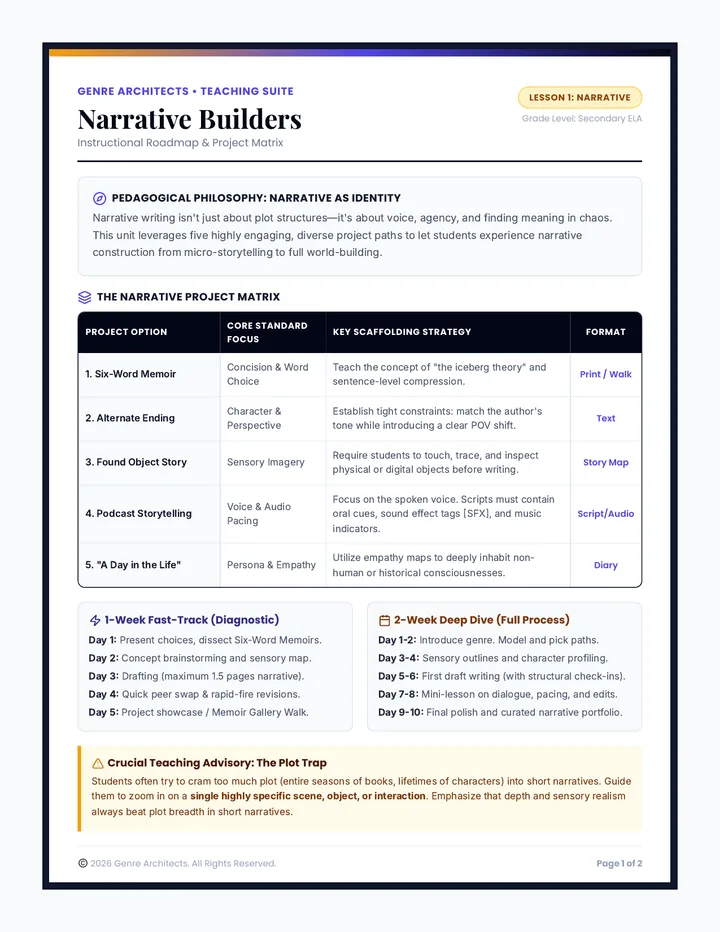
Narrative Builders Teacher Companion

Genre Architects

A comprehensive, multi-genre writing project suite that transforms secondary ELA classrooms. This sequence features 25 creative, high-engagement projects categorized into Narrative, Expository, Argumentative, Persuasive, and Multi-Genre masterpieces, complete with teacher guides, student workbooks, and introductory slide decks.

MC

Makaela Carias

19
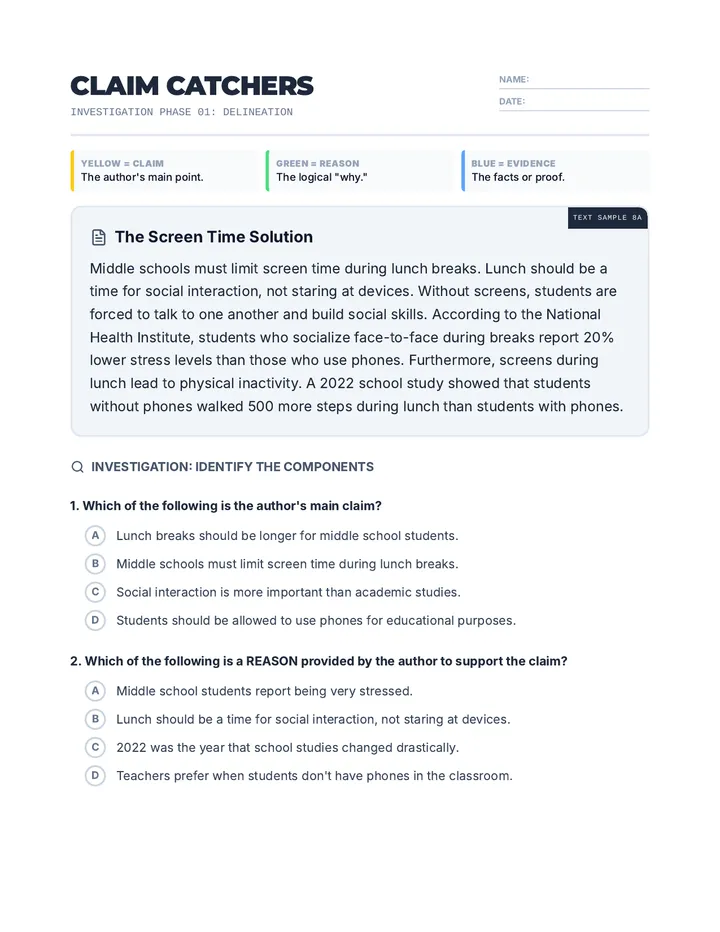
Claim Catchers Worksheet

Evidence Lab

A 2-day unit focused on RI.8.8, teaching students to delineate and evaluate arguments through the lens of a lab investigation. Students will identify claims, assess evidence for relevance and sufficiency, and identify irrelevant information in grade-level texts.

BR

Brandon Ruffin

9
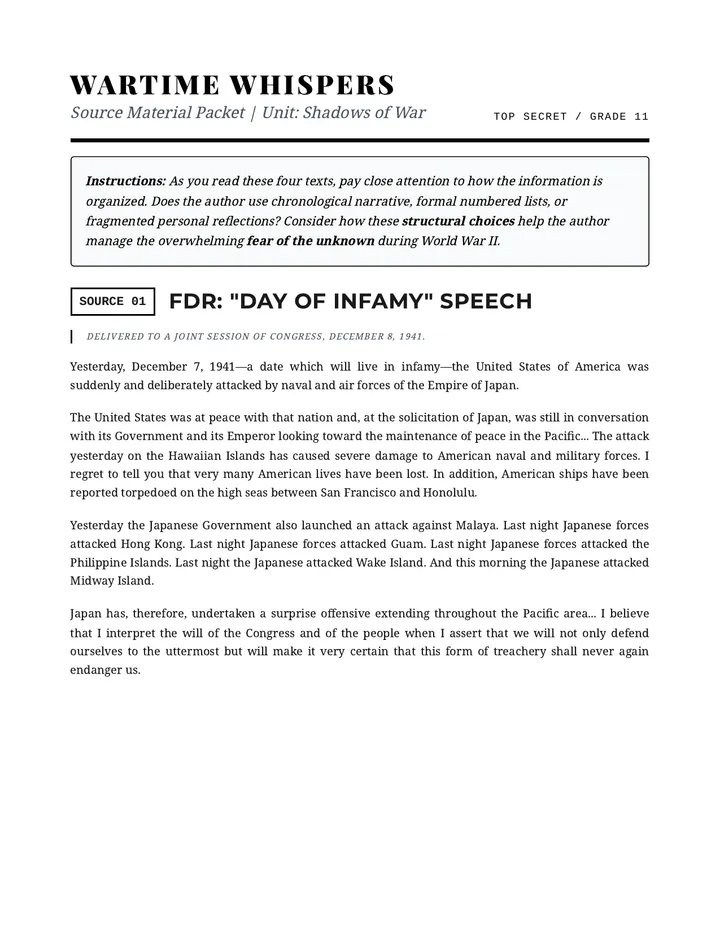
Wartime Whispers Text Packet

Shadows of War

A 4-part unit for 11th-grade English/History analyzing text structure and author's purpose through the lens of fear and the unknown during WWII, examining political rhetoric, legal orders, personal diaries, and wartime superstition.

LF

Lindsey Foulks

18
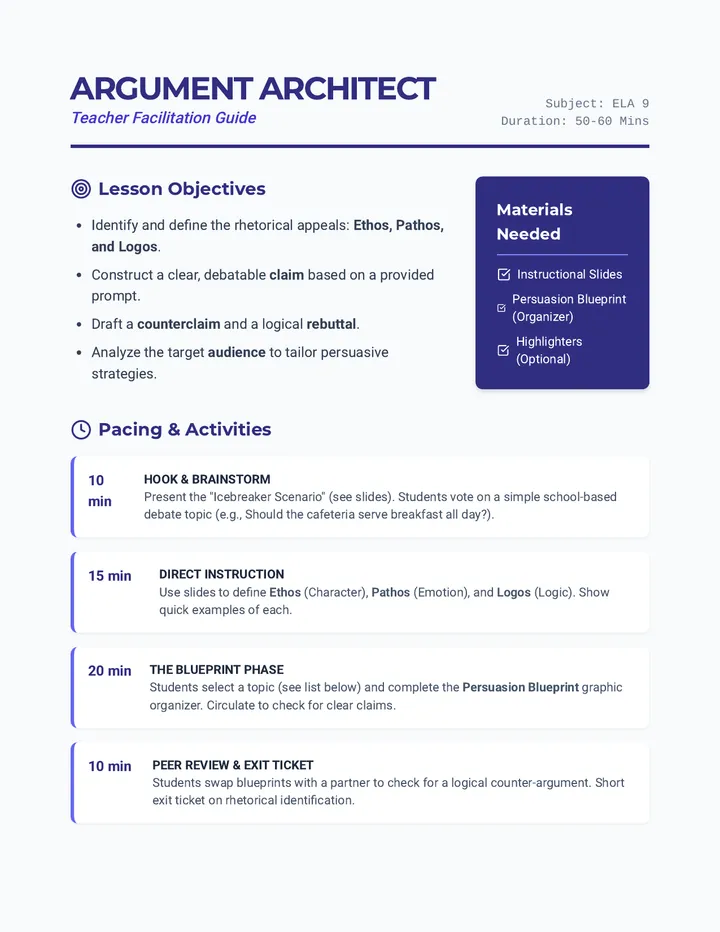
Argument Guide Teacher Resource

Persuasion Mastery Series

A scaffolded progression of persuasive writing mastery, moving from 9th-grade foundations of Ethos, Pathos, and Logos to 11th-grade advanced rhetorical strategies including Kairos and logical fallacy analysis.

LC

Leeah Cavanaugh

15

Lessons

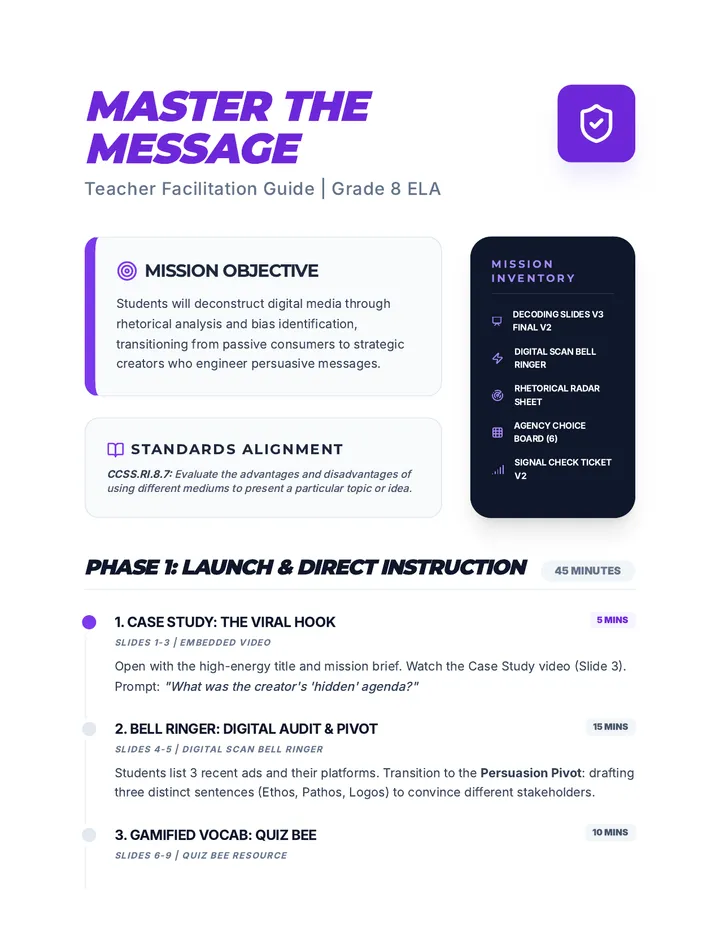
Master the Message Teacher Guide v2

Media Message Mastery

An 8th-grade ELA lesson focused on deconstructing digital media messages through the lens of rhetorical appeals (ethos, pathos, logos) and identifying bias in various online formats. Students transition from passive consumers to critical analysts of news clips, social media, and advertisements.

V

vivianbelarmino

36
Ad Academy Lesson Plan

Ad Academy Persuasion

A comprehensive two-day introduction to advertising persuasion techniques, teaching students to identify and analyze slogans, repetition, bandwagoning, testimonials, emotional appeals, and expert opinions.

SB

Shanna Brady

4
Mirror and Aging Handout

Reflective Aging

A 50-minute lesson focused on synthesizing Sylvia Plath's poem 'Mirror' with a modern article on the benefits of aging, emphasizing the contrast between subjective perception and objective reality.

SM

Samantha Moore

5
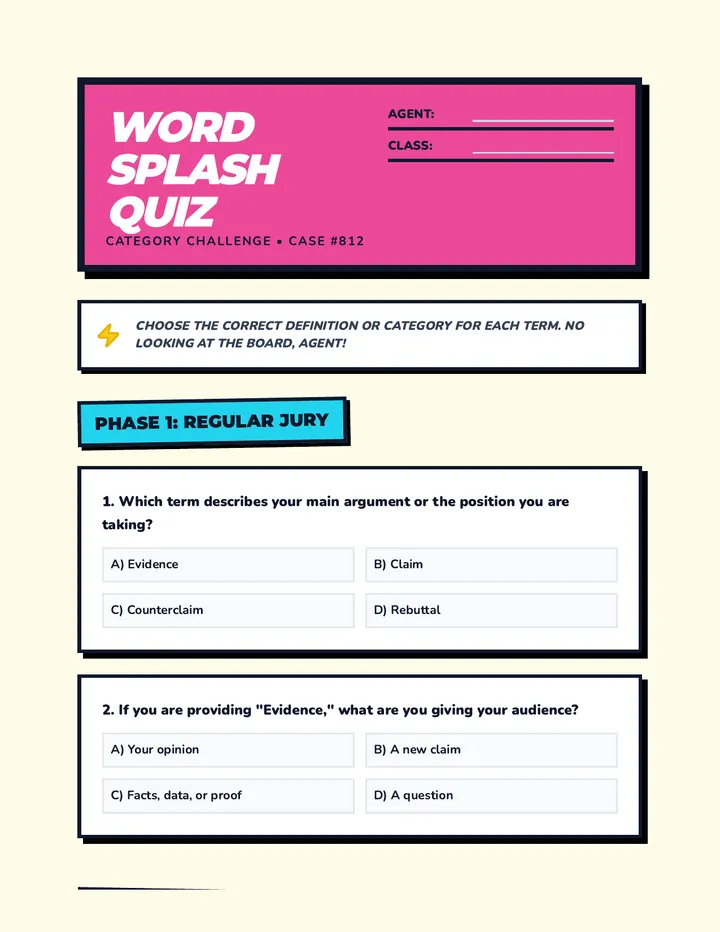
Word Splash Quiz Worksheet

Argument Arsenal

A comprehensive lesson on the structural pillars of argumentative writing, using a courtroom theme to master claims, evidence, and counter-arguments through fast-paced, high-impact activities.

V

vivianbelarmino

11
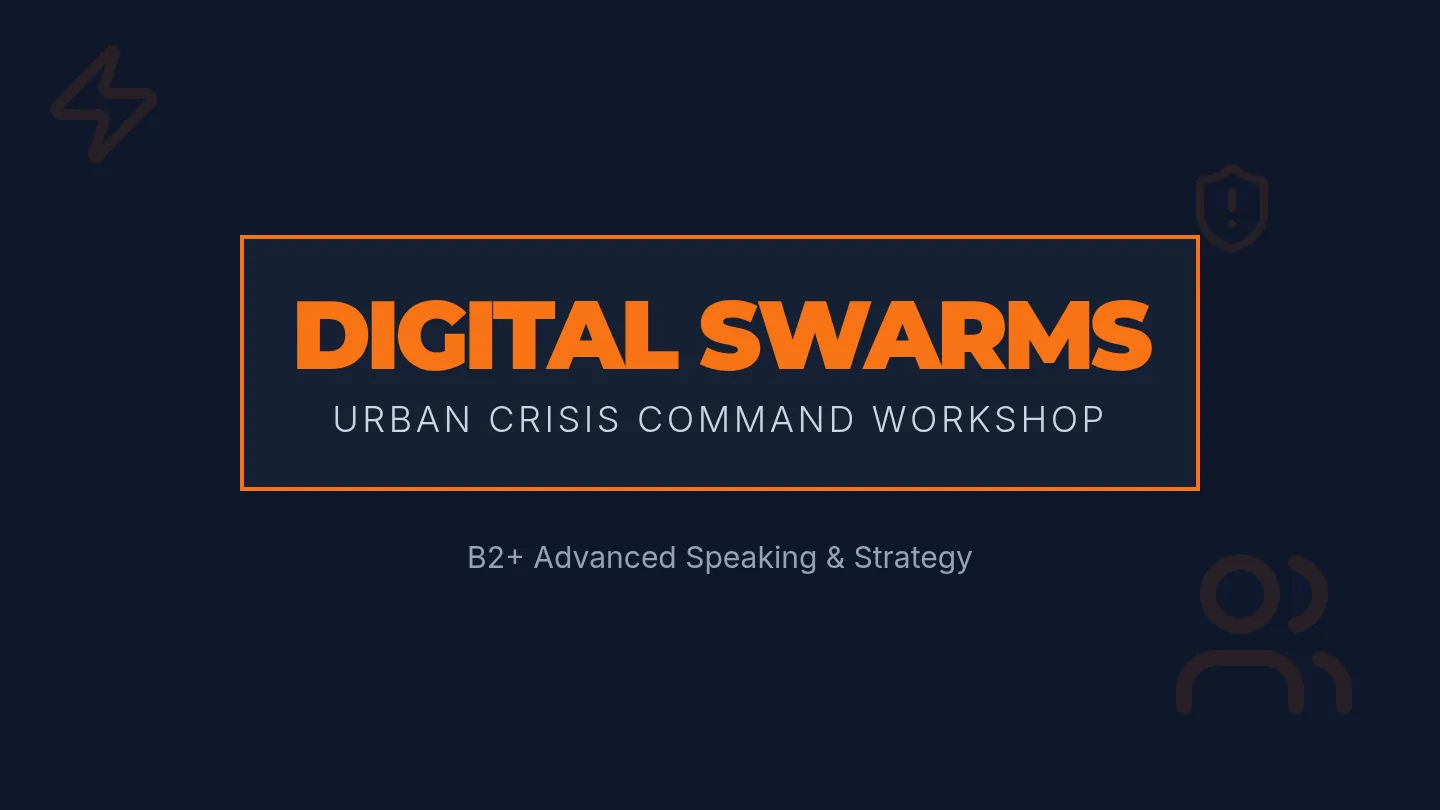
Digital Swarms Slides

Digital Swarms

A problem-solving workshop for B2+ students based on social media flash mobs. Students act as a city's 'Digital Response Team' to design innovative solutions for urban chaos triggered by viral trends.

IL

Ies Loslirios

7
Unlucky Science Slides

Unlucky Science and Superstitions

A 45-minute lesson exploring the origins of superstitions surrounding the number 13 and Friday the 13th, focusing on TELPAS speaking, listening, reading, and writing skills for 9th and 10th grade ELLs.

KB

Kathleen Basoco

5