Lenny.com
Explore
Create
ActivitiesNewMathEnglish Language ArtsScience & EngineeringSocial StudiesGlobal LanguagesHealth & Physical EducationSpecial EducationCounseling & Life SkillsArts & CreativityESL
Lenny.com
Lenny.com
Explore
Create
ActivitiesNewMathEnglish Language ArtsScience & EngineeringSocial StudiesGlobal LanguagesHealth & Physical EducationSpecial EducationCounseling & Life SkillsArts & CreativityESL
Lenny.com
Lenny.com

Solutions

Lenny for EducatorsLenny for SchoolsLenny for Districts

Product

ExploreSign inCreateSupportAbout

Resources

Getting startedMTSS Acceleration Program

© 2026 Lenny Learning Inc.

TermsPrivacyAccessibility
LinkedInInstagramX
Lenny

Dashes, Hyphens, And Ellipses

Distinguishes between em-dashes, en-dashes, and hyphens while applying rules for compound words and parenthetical information. Addresses the functional use of ellipses to signal omitted text or stylistic pauses.

English Language ArtsPhonics & Reading FoundationsLetter IdentificationLearn Letters A-ZLowercase and Uppercase LettersConsonants and VowelsLetter-Sound AssociationsLetter-Sound Associations: LowercaseLetter-Sound Associations: UppercaseBeginning and Ending SoundsRhymingBlending And SegmentingShort VowelsShort Vowel SoundsConsonant BlendsConsonant DigraphsBlends, Digraphs, and TrigraphsDigraphs, Blends, and Silent LettersLong Vowel SoundsLong Vowel PatternsShort and Long VowelsShort and Long Vowel PatternsSilent EVowel SoundsVowel TeamsR-Controlled VowelsDiphthongs: Oi, Oy, Ou, OwVariant VowelsVariant, Diphthong, And R Vowel PatternsSoft G And CSight WordsIrregular WordsWord RecognitionSyllablesSyllable TypesTwo-Syllable WordsMultisyllabic WordsPhoneme ManipulationDecodable TextsVocabularyAction WordsQuestion WordsNouns and AdjectivesClassify WordsCompound WordsSynonyms and AntonymsHomophonesHomophones and HomonymsShades of MeaningContext CluesPrefixes and SuffixesGreek and Latin RootsAnalogiesIdioms and AdagesForeign Words and ExpressionsWord Choice and UsageReference SkillsReading ComprehensionRead-Along Literary TextsRead-Along Informational TextsReality vs. FictionStory ElementsCharacterSequenceMain IdeaCause And EffectCompare And ContrastReading StrategiesText StructureAuthor's PurposeAuthor's Purpose And ToneAuthor's PerspectivePoint Of ViewThemeInference And ThemeInference And AnalysisPoetry ElementsLiterary DevicesAnalyzing LiteratureAnalyzing Informational TextsComparing TextsAudience, Purpose, And ToneBusiness DocumentsNovel StudyNonfiction Book StudyGrammar & MechanicsSentencesNounsVerbsAdjectivesPronounsCapitalizationPunctuationContractionsConjunctionsPrepositionsArticlesAdjectives And AdverbsVerb TypesVerb TensePronouns And AntecedentsPronoun TypesSubject-Verb AgreementDirect And Indirect ObjectsSentences, Fragments, And Run-OnsPhrases And ClausesCommasSemicolons, Colons, And CommasDashes, Hyphens, And EllipsesSpellingAbbreviationsFormattingVerb Tense And MoodMisplaced ModifiersWritingDescriptive DetailsCreative WritingOpinion WritingTopic SentencesOrganizing WritingLinking WordsSentence VarietyIntroductions And ConclusionsPersuasive And Opinion WritingExpository WritingPersuasive StrategiesDeveloping And Supporting ArgumentsTopic Sentences And Thesis StatementsSummarizingResearch SkillsEditing And RevisingActive And Passive Voice=Writing Clearly And ConciselyDebate & Public SpeakingPublic Speaking BasicsPersuasive TechniquesClaims and EvidenceTypes of ArgumentsReasoning TypesLogical FallaciesTopic ResearchOrganizing EvidenceDebate Speech OrganizationAttacking and Defending ArgumentsClash and EngagementImpact CalculusQuestioning and Cross-ExaminationCritical ThinkingInformal LogicFormal LogicInductive Reasoning

Videos

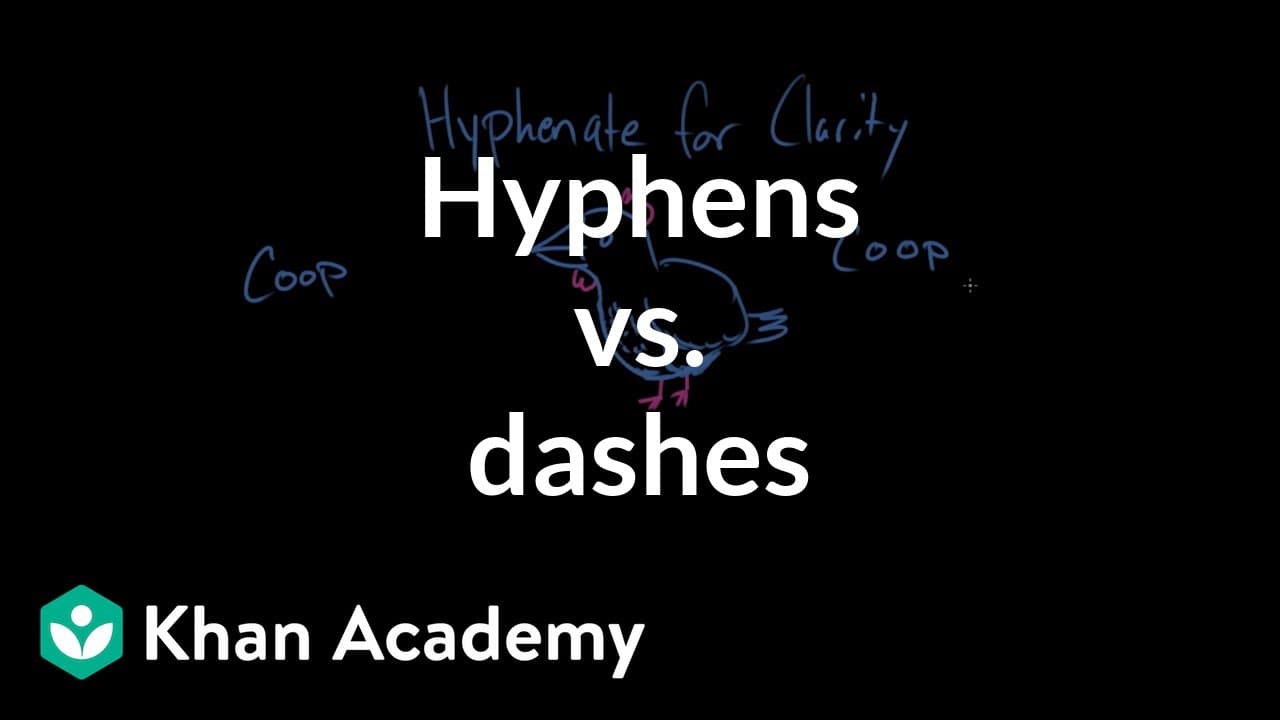
How and When to Use Dashes in Writing

How and When to Use Dashes in Writing

In this engaging grammar tutorial, Khan Academy educators David and Paige explore the versatile world of dashes. The video clearly distinguishes the dash from the hyphen and outlines its four primary functions in English writing: marking interruptions in sentence structure, acting as parenthetical pairs, serving as a substitute for a colon to introduce ideas, and indicating abrupt interruptions in speech. through handwritten examples and conversational dialogue, the hosts demonstrate how dashes can change the "flavor" or pacing of a sentence compared to other punctuation marks. Key themes include the nuance of punctuation, sentence structure, and the stylistic choices writers make. The video introduces the concept of the dash as a dramatic "actor" that can perform the roles of commas, parentheses, and colons, but with a more emphatic or abrupt tone. It also touches briefly on formatting conventions, such as spacing rules according to style guides like the Chicago Manual of Style. This video is highly valuable for English Language Arts classrooms as it moves beyond basic punctuation rules to discuss style and voice. It provides clear, concrete examples that help students understand not just *how* to use a dash, but *why* they might choose it over other options to create specific effects like suspense, emphasis, or naturalistic dialogue. It is an excellent resource for refining student writing and encouraging more complex sentence structures.
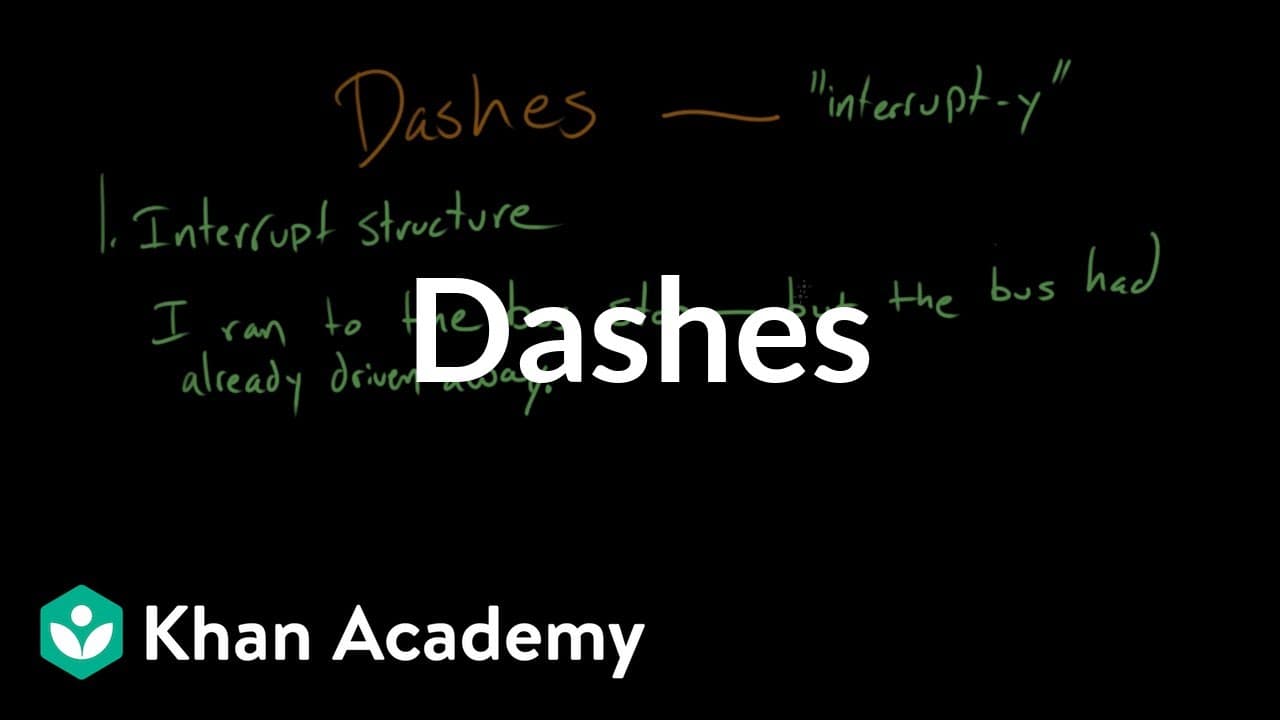
Khan AcademyKhan Academy

6mins 20s

How to Use Hyphens to Connect Words

How to Use Hyphens to Connect Words

This educational video provides a clear and engaging overview of how to properly use hyphens in English grammar. Hosted by David and Paige, the lesson distinguishes the hyphen from the longer dash, explaining their different functions—specifically that hyphens join words while dashes separate ideas. Through visual examples written on a blackboard, the hosts demonstrate how hyphens combine two words into a single concept, such as "yellow-green," and contrast this with sentences where a dash acts more like a semicolon.

Khan AcademyKhan Academy

4mins 51s

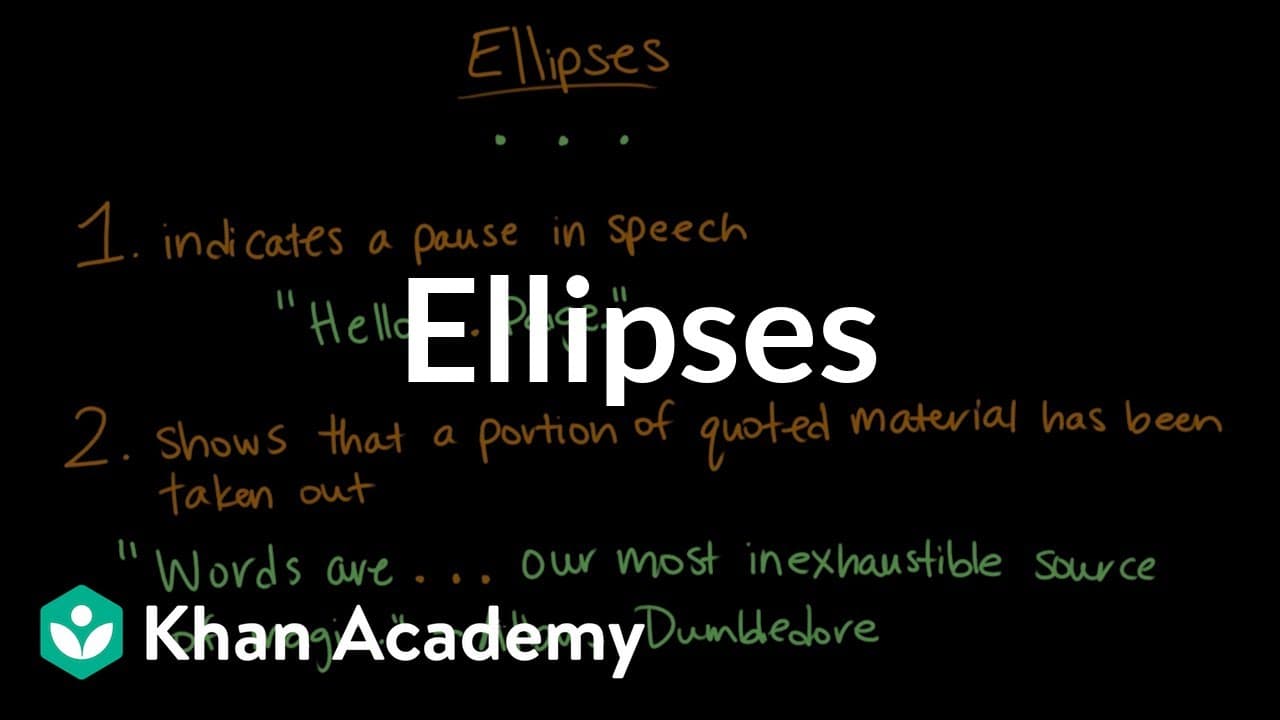
How to Use Ellipses in Writing and Speech

How to Use Ellipses in Writing and Speech

This educational video from Khan Academy explores the definition and proper usage of the ellipsis, a punctuation mark consisting of three periods. The hosts, David and Paige, break down the two primary functions of ellipses: indicating a pause or hesitation in speech, and showing where words have been omitted from a direct quote. Through clear handwritten examples on a digital whiteboard, they demonstrate how these small dots can significantly alter the pacing of dialogue or condense information in academic writing. A major theme of the video is the ethical responsibility involved in quoting sources. Using a famous quote from Albus Dumbledore, the narrators demonstrate how removing words without using ellipses—or removing the wrong words—can completely change the speaker's intended meaning. They provide a humorous example of how unethical editing could twist Dumbledore's words into a meaningless statement, emphasizing that writers must preserve the original intent of the source material. For the classroom, this video is an excellent resource for English Language Arts units on punctuation, creative writing, and research skills. It clarifies the often-confusing rules around spacing and terminal punctuation (when to use four dots). Furthermore, the discussion on misrepresentation provides a perfect launchpad for lessons on media literacy and the importance of context, moving beyond simple grammar mechanics into critical thinking about information integrity.

Khan AcademyKhan Academy

5mins 12s

Materials

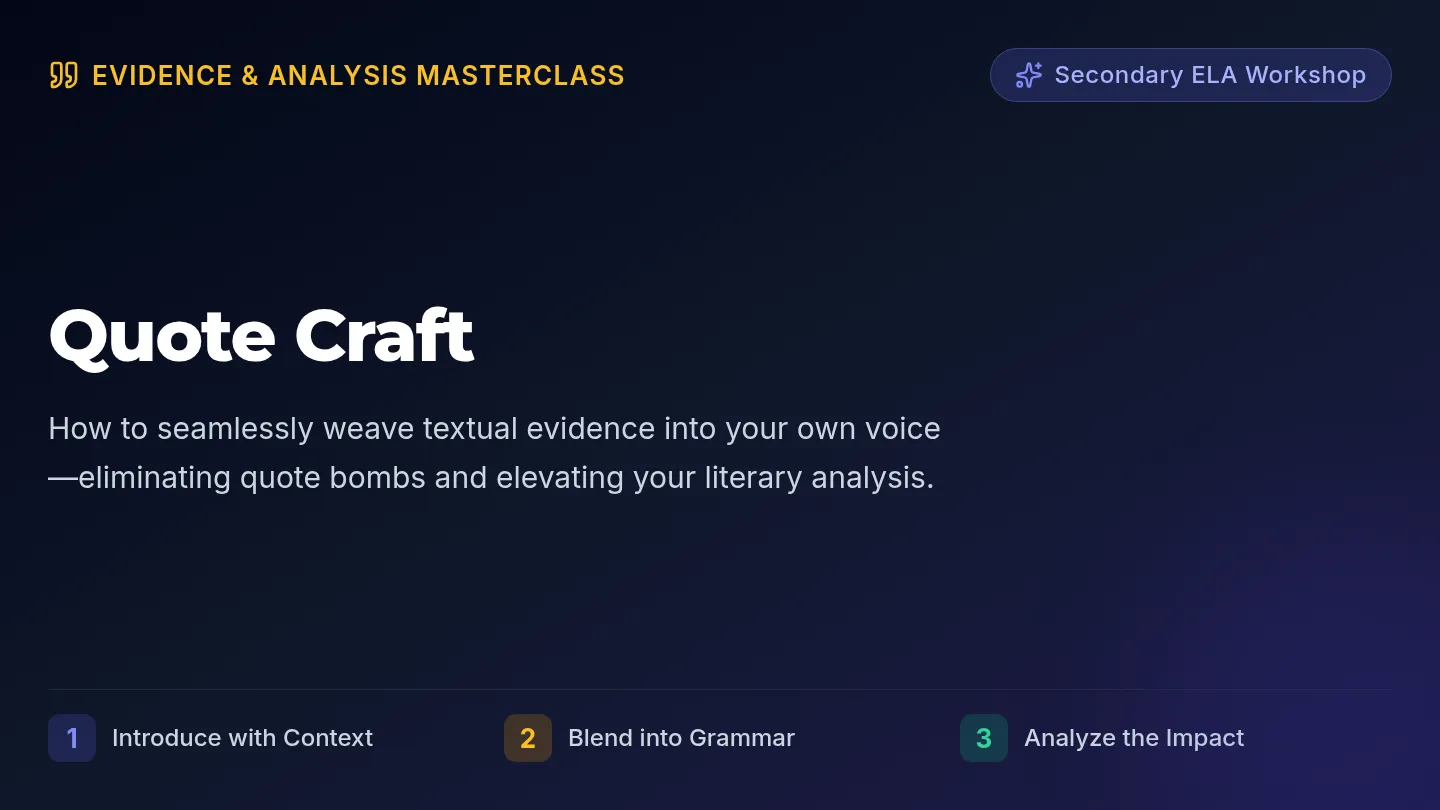
Quote Craft Slides

Quote Craft Slides

An instructional slide deck designed for middle and secondary English language arts classrooms to teach seamless quotation integration. The presentation guides students through common quotation errors, the Introduce-Cite-Explain framework, syntactic blending strategies, punctuation rules, and analytical follow-up.

JT

Jennifer Tzall

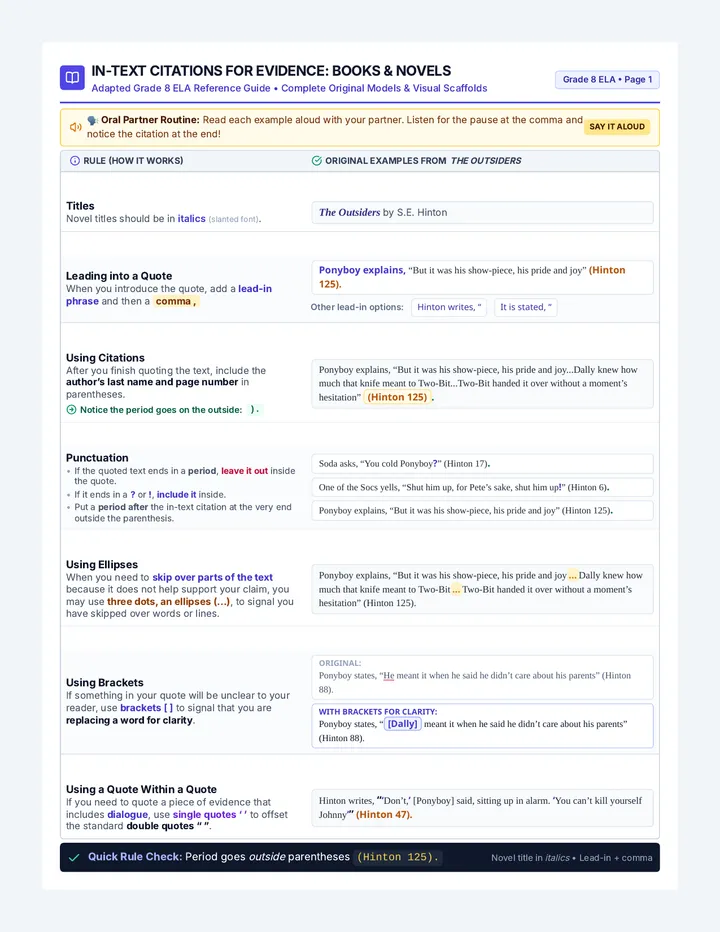
Evidence Citation Adapted Guide

Evidence Citation Adapted Guide

A fully adapted Grade 8 ELA reference guide containing 100% of the original assignment's quotes, literary examples, and rules from The Outsiders, Robert Frost, and William Wordsworth. Scaffolds language for WIDA Level 1-2 (Entering/Emerging) reading/writing through color-coded visual annotations, chunked rule breakdowns, and vocabulary keys, while leveraging Level 4 (Expanding) oral strengths with structured partner talk cues.

CQ

Colleen Quinn

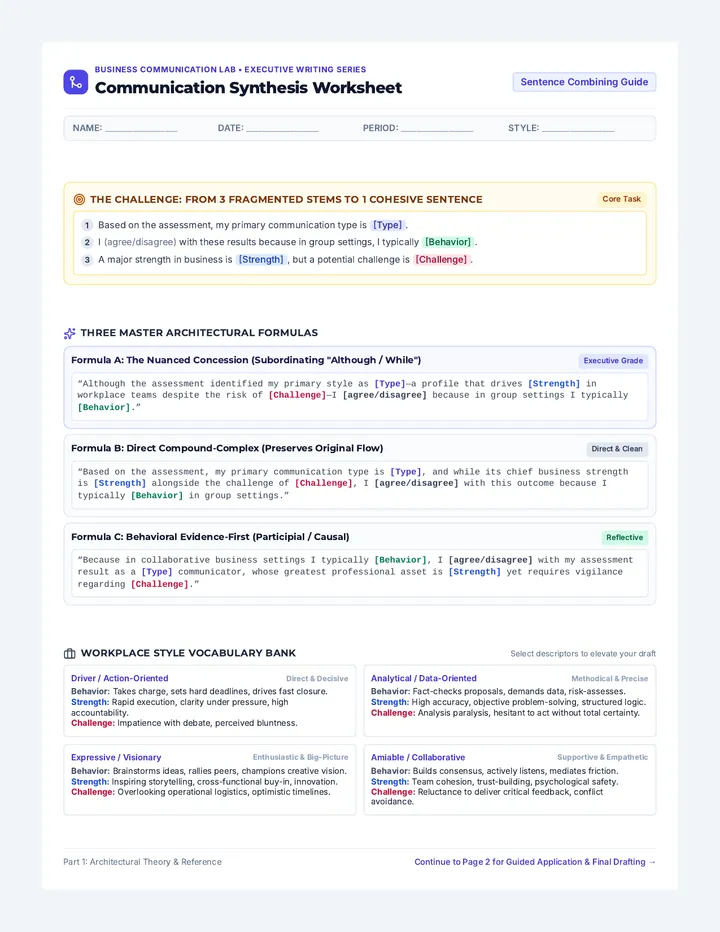
Communication Synthesis Worksheet

Communication Synthesis Worksheet

A two-page guided worksheet and sentence-crafting resource that teaches students how to synthesize multi-part communication style assessment reflections into a single, cohesive, professional sentence.

Sequences

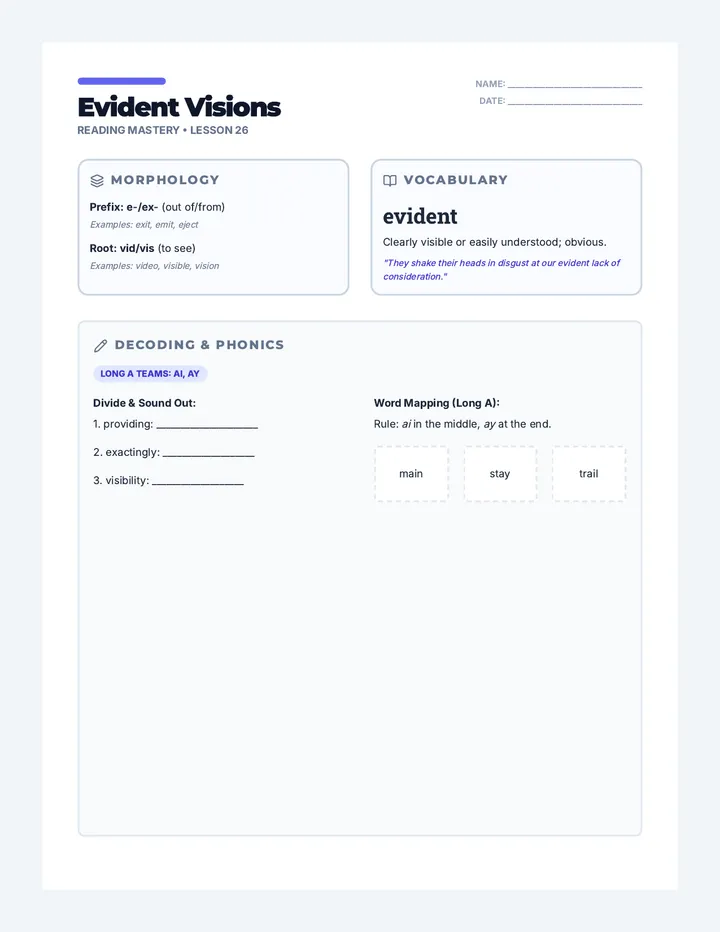
Integrated Mastery Handouts 26-40

Reading Power Pack

A comprehensive literacy intervention sequence for high school TESOL students (Lessons 16-25) focused on morphology, academic vocabulary, systematic decoding, and vowel mastery.

AP

Alexis Paolini

30
Architecture of Voice Teacher Guide

The Architecture of Voice

An 8-day intensive unit titled 'The Architecture of Voice.' Students analyze four diverse mentor texts—Hurston, de Vaca, Tan, and Cofer—to understand how craft elements like figurative language, imagery, syntax, and diction shape an author's tone and perspective. For each text, students produce a structured paragraph, culminating in a comprehensive autobiographical essay that explores the various forces (culture, challenges, people, and places) that have shaped their own voices.

LF

Lindsey Foulks

24
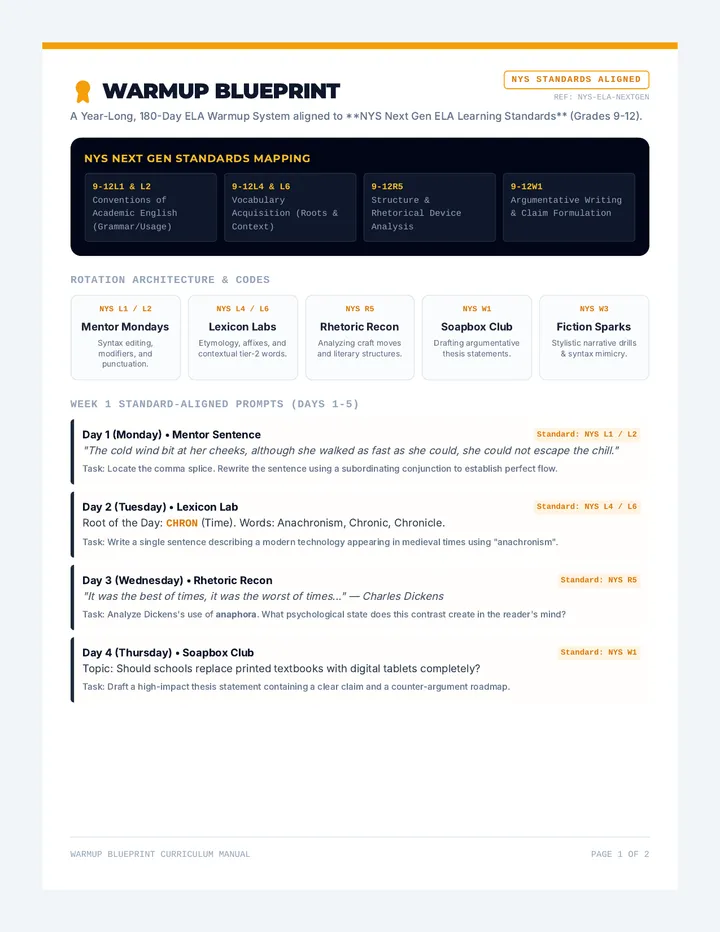
Warmup Blueprint Teacher Guide

Daily Rhetoric Warmups

A year-long, 180-day curriculum of high-impact 6-minute daily ELA warm-ups designed for high school students. Structured into rotating weekly themes that target vocabulary, grammar, analytical writing, and rhetoric.

MJ

Mr. J. Pfluke

5
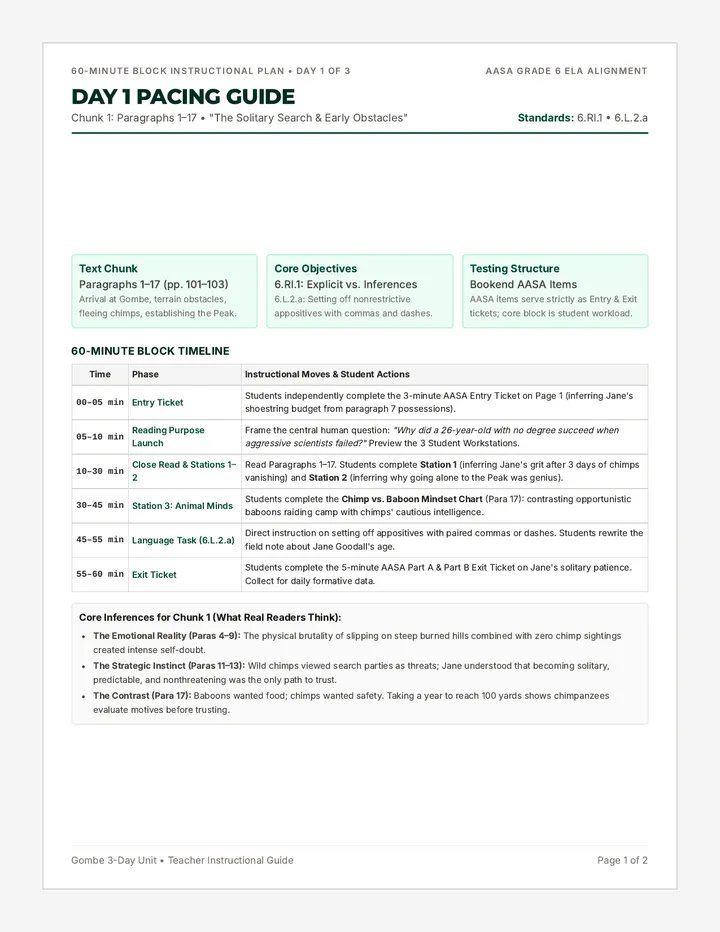
Day 1 Pacing Guide

Gombe 3-Day Expedition Unit

A streamlined 3-day unit for 60-minute blocks, chunking Jane Goodall's *My Life with the Chimpanzees* into three cohesive sections (omitting paragraphs 19–24, 27–30, 50, and 51–53). Masterfully targets 6.RI.1, 6.RI.3, and 6.L.2.a with Pearson/AASA assessment tasks.

JW

Jessica Whynott

12
Mystery Unit Pacing Guide

Everyone Loves a Mystery Unit

A comprehensive 26-day 8th Grade ELAR unit exploring mystery, suspense, and the mechanics of narrative writing. This unit integrates StudySync's 'Everyone Loves a Mystery' curriculum with parallel daily Reading and Writing blocks aligned to Texas TEKS.

DM

Dawn Mustian

16
Mind Spark Bell Ringer

Testing Our Limits

A 25-day reading isolation unit for StudySync Grade 6, focusing on "Testing Our Limits." The unit covers various literary skills including character analysis, plot evolution, POV, and summarization across multiple texts.

DM

Dawn Mustian

28

Lessons

Identity Files Slides

Identity Files Appositives

A lesson focused on identifying and using appositives to add detail and variety to sentences, using a detective-themed 'Identity Files' approach.

MG

Melissa Gonzalez

4
Pacing Blueprint Teacher Guide

Progress ELA Level H Pacing Guide

A comprehensive lesson framework containing the pacing guide and matching weekly planning presentation slides for Sadlier Progress ELA Level H (Grade 8), covering three distinct trimesters.

JA

Judith Arroyo

5
GeoGrammar Student Tracker

GeoGrammar EOC Prep

A 15-day bell ringer sequence combining Texas English I EOC Revising & Editing skills with Texas World Geography content. This lesson integrates core grammatical standards with geographic literacy.

PR

Penne Reed

3
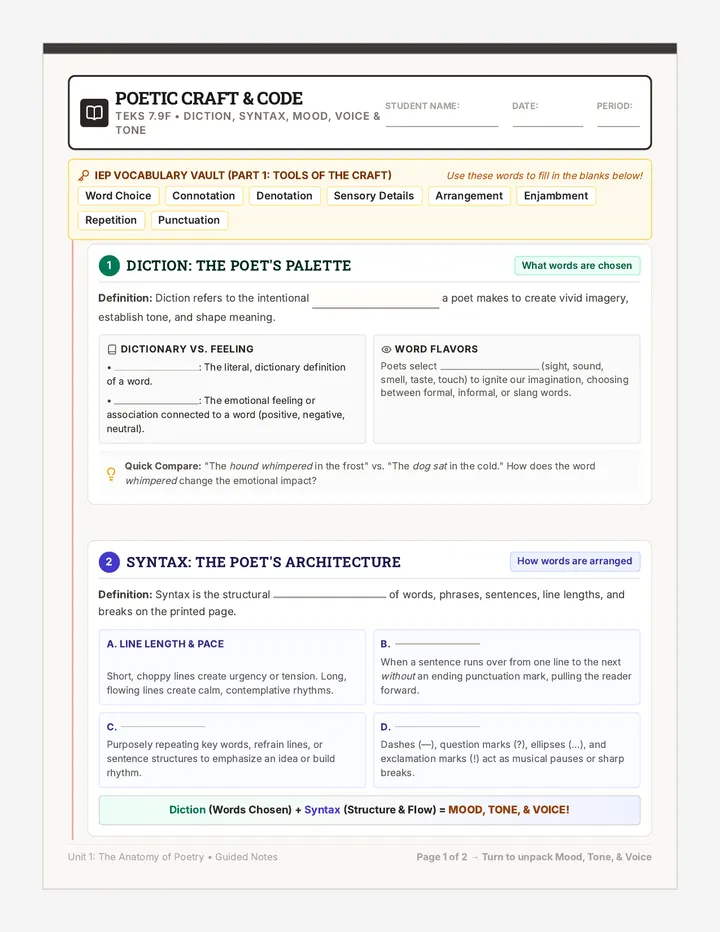
Poetic Pulse Student Notes

Poetic Pulse

A targeted seventh-grade reading and language arts lesson centered on TEKS 7.9F. Students examine how poets manipulate diction (word choice) and syntax (structure and arrangement) to craft mood, voice, and tone across poetic texts.

AS

Adrienne Synatschk

5
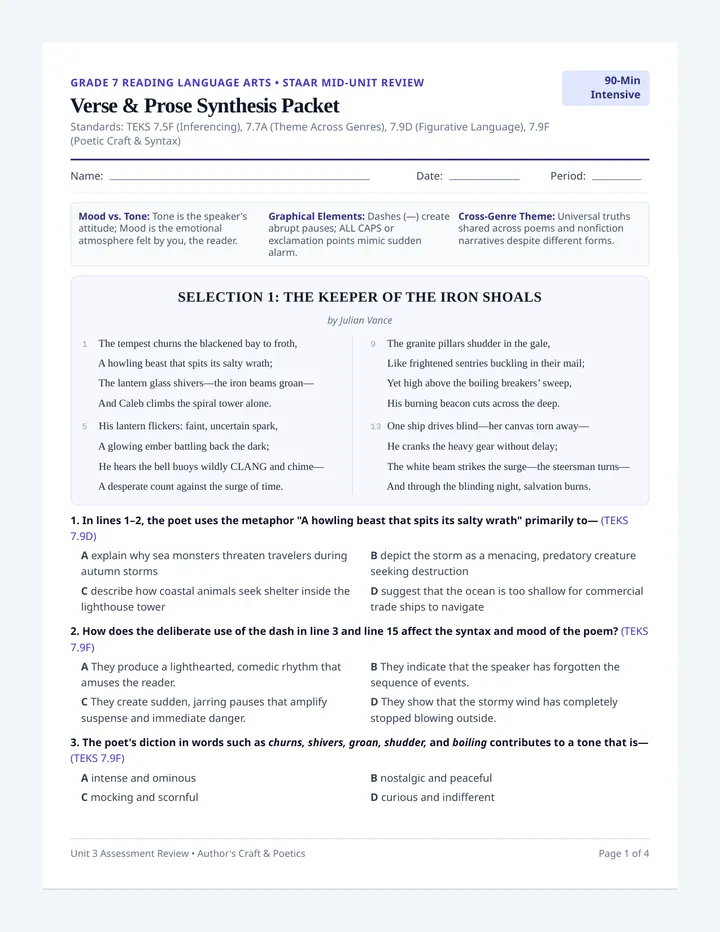
Stanza Showdown Student Packet

Stanza Showdown

A comprehensive 90-minute STAAR-aligned review lesson preparing 7th-grade students for their mid-unit poetry and cross-genre assessment covering mood, tone, theme across genres, graphical elements, figurative language, and constructed responses.

AS

Adrienne Synatschk

4
Newsroom Briefing Teacher Guide

Giving Credit Where It Belongs

A 45-minute lesson for 6th grade students on the ethical and technical aspects of using direct quotes in journalism. Students learn formatting rules, the importance of journalistic integrity, and how to select impactful quotes for their news articles.

S

schrauthb

4